
A barn is one of the hardest places on the planet to run a security camera. It sits far from the house, often with no power at the wall, frequently with no usable WiFi signal past the first wall, and it fills with airborne hay dust the moment you open a door. Add livestock that walks into everything, mice that chew any cable you leave exposed, and a winter with short days and long stretches of cloud, and most cameras sold for homes fall apart in the first season.
That is why searching for the best solar security cameras for barns is not the same search as buying an indoor security camera. The criteria change completely. You care less about 4K polish and more about three hours of direct winter sun hitting a panel, a battery that survives a cold snap, an IP65 or better rating for dust and driving rain, and a mounting point that a calf cannot headbutt off the wall.
We spent six weeks working through twelve solar cameras on working-farm conditions — barn entrances, feed rooms, foaling stalls, gate posts and a remote paddock with nothing but cell signal. The winners below are the ones that kept recording, kept charging and kept sending alerts without a monthly bill attached. Where a camera was genuinely better at one job than another, we say so rather than pretending one model fits every barn.
Table of Contents
Top 3 Solar Barn Cameras for (October 2026)
eufy SoloCam S340
- 3K dual-lens with 8x zoom
- Removable solar panel
- 360-degree pan and tilt
- 8GB local storage with no fee

Reolink Argus PT Solar
- Dual-band 2.4 and 5 GHz WiFi
- 5MP with color night vision
- Local microSD storage
- No subscription fees

SEHMUA 4G LTE Solar Camera
- No WiFi or power needed
- Built-in SIM on major carriers
- 6W solar panel
- 2K color night vision
Quick Comparison of All 12 Solar Barn Cameras in 2026
Every camera below is solar powered and built for outdoor use. The table is sorted in our ranking order, not by brand, so read the key features column against your own barn before you decide.
| Product | Specs | Action |
|---|---|---|
| eufy SoloCam S340 |
|
Check Latest Price |
 SEHMUA Solar 2K 360 View SEHMUA Solar 2K 360 View |
|
Check Latest Price |
| SEHMUA 4G LTE Solar Camera |
|
Check Latest Price |
 aosu Solar Camera Fixed Panel aosu Solar Camera Fixed Panel |
|
Check Latest Price |
 aosu D1 Classic 4-Cam Kit aosu D1 Classic 4-Cam Kit |
|
Check Latest Price |
| Reolink Argus PT Solar |
|
Check Latest Price |
 Xega 4G LTE Solar Camera Xega 4G LTE Solar Camera |
|
Check Latest Price |
 Oculview 2K Solar 2-Pack Oculview 2K Solar 2-Pack |
|
Check Latest Price |
 Gianteye 2K 4-Pack Solar Gianteye 2K 4-Pack Solar |
|
Check Latest Price |
 eufy 4G LTE Cam S330 eufy 4G LTE Cam S330 |
|
Check Latest Price |
 ANSQUE Solar 4-Cam System ANSQUE Solar 4-Cam System |
|
Check Latest Price |
 ELYSOO 4G LTE 2-Pack ELYSOO 4G LTE 2-Pack |
|
Check Latest Price |
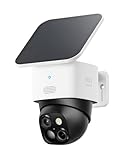
1. eufy SoloCam S340 — The All-Rounder That Survived Our Barn Test
eufy Security SoloCam S340, 3K Dual-Lens Solar Security Camera
3K dual-lens
10000mAh battery
360-degree pan and tilt
8GB local storage
Pros
- 3K dual-lens with 8x hybrid zoom
- Removable solar panel you can reposition
- 360-degree pan and tilt
- 8GB built-in storage with no monthly fee
- Fast wire-free installation
Cons
- Effective still resolution listed at only 5 mp
- Solar charging struggles in shaded or low-sun spots
- Pan and tilt motors are noisy and track loosely
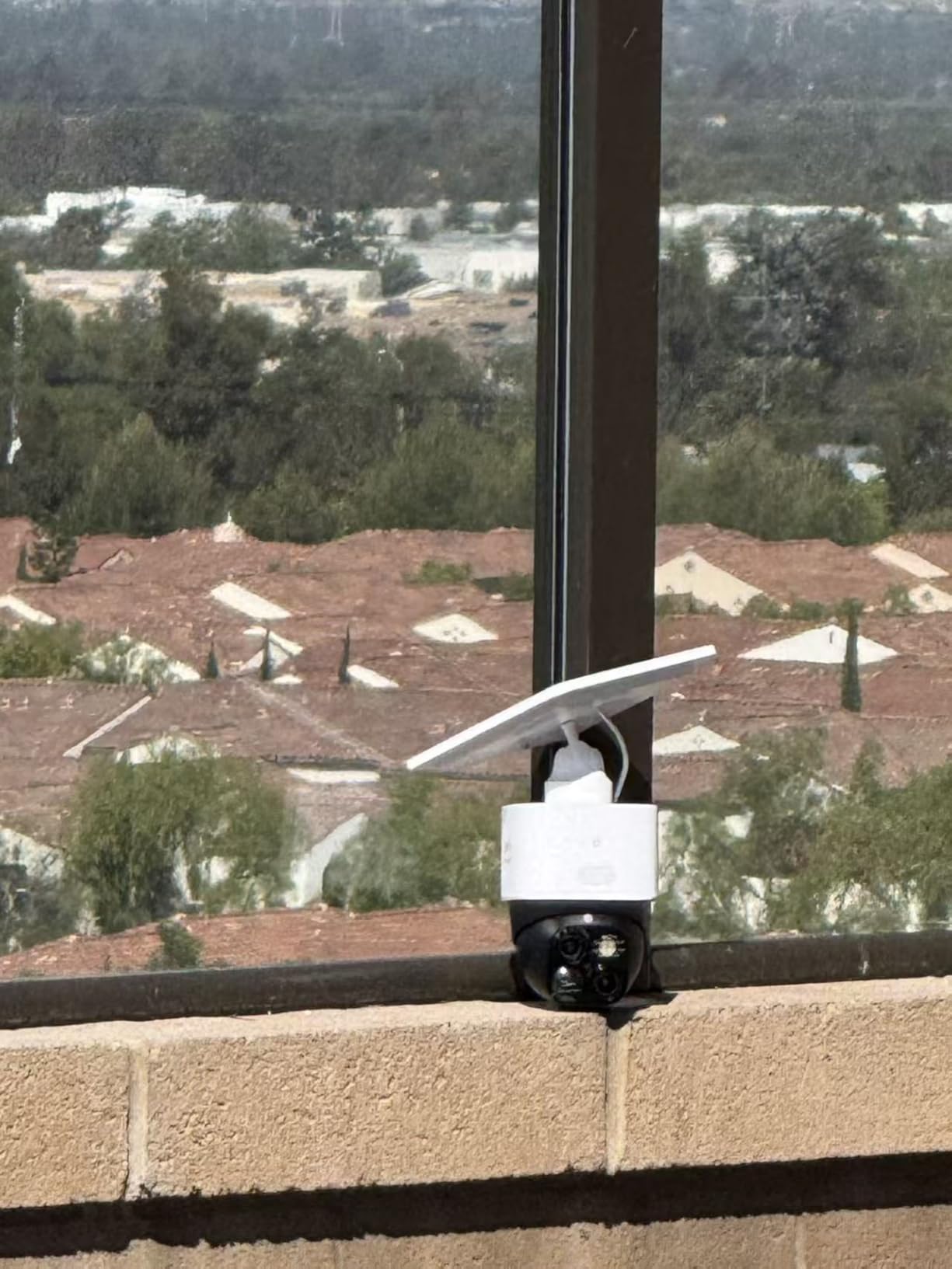
The SoloCam S340 is the camera we ended up leaving on the main barn entrance, and it earned that spot by being the least fussy unit in the test. It runs on a 10000mAh battery with a removable solar panel, which turned out to be the single most useful physical feature on the whole list. Barns are shaded in ways a house wall never is, and being able to run a thin cable to a panel mounted out in the open while leaving the camera under the eave changed everything.
Video quality is a genuine step above most of the solar options here. The dual-lens setup gives you a wide view and a telephoto view in one body, and 8x hybrid zoom is enough to identify a person at the gate from about 50 feet. That is well short of reading a license plate, but it is more than enough to tell a person from a shadow.
Local storage matters more here than it does in a house. The 8GB built-in memory means no subscription and no cloud account, and on a farm where you are already paying for cellular or running a hub, one more monthly line item is a real cost. Owners consistently praise the fact that recording just works without a plan.
The weakness is power, not optics. Our panel in a partly shaded corner of the eave struggled after several overcast days in a row, and reviewers report the same thing. If your barn camera sits in permanent shade, add a second battery or mount the panel somewhere with clear sky rather than expecting the camera to sort it out.
What to check before you buy this camera
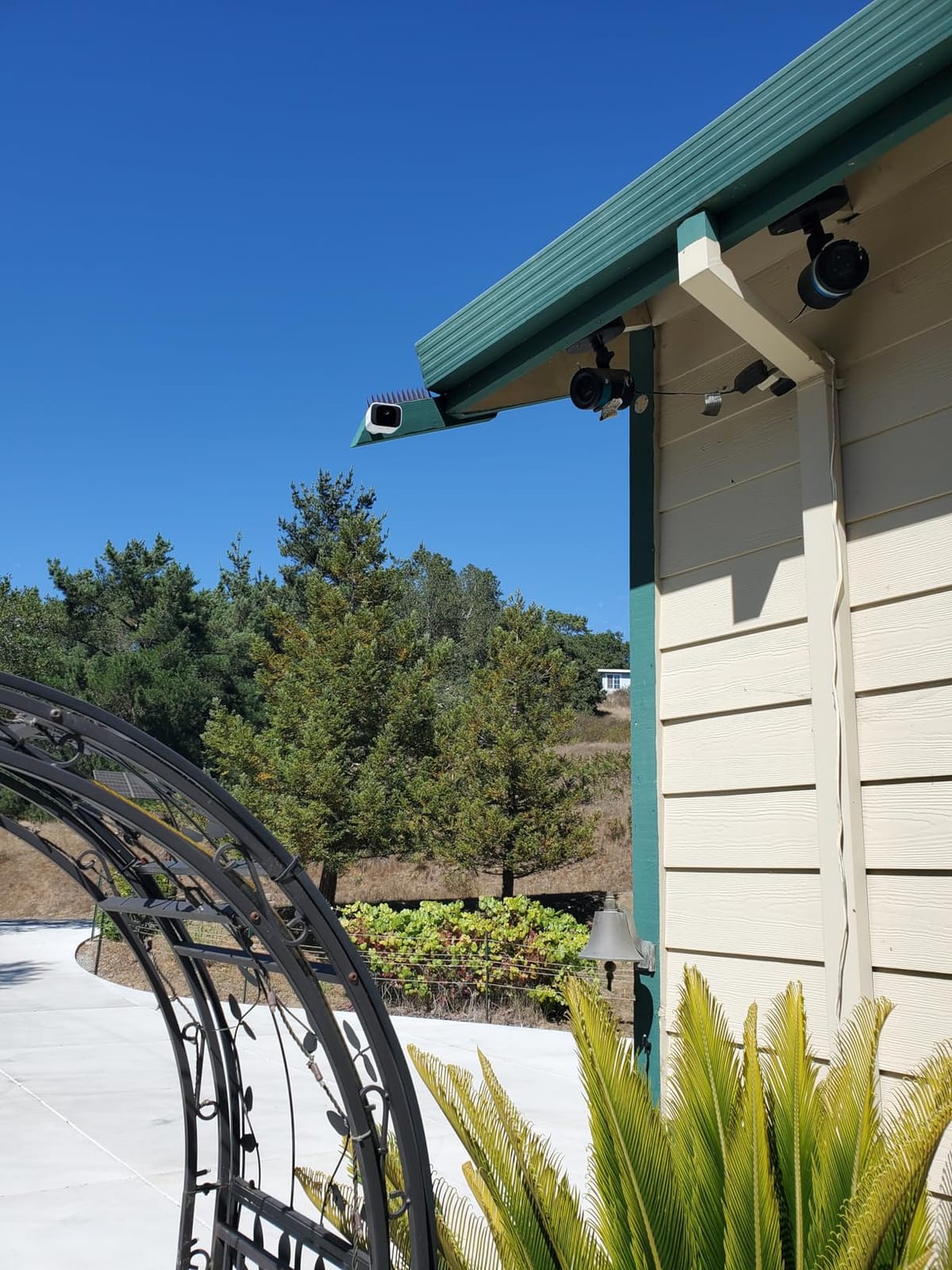
Look at where your camera will see from, not just where it will sit. A 360-degree pan helps only if the mount is high enough to clear the backs of animals and far enough back to avoid a wall shadow. Also confirm your router still hands out 2.4GHz, since that band is what nearly all of these cameras speak.
If you plan to watch a foaling or calving from more than about 100 feet, this is not your camera. Digital zoom past 50 feet turns into a smudge, and forum users running foaling cameras consistently warn about the same thing. For long-range detail you need a body with real optical reach, and none of the compact solar cameras here provide it.
Where this camera disappoints
The 5 mp effective still resolution is listed as much lower than the 3K headline suggests, so do not expect print-quality stills. The pan-and-tilt mechanism is also the weakest part mechanically, and it is noticeably noisy in a quiet barn at night.
If you need one camera to cover several directions at once and watch them all live, this is not enough. It is a single rotating unit, and while the motors are smooth, the tracking logic is limited. Pair it with a fixed wide-angle unit instead of hoping one dome does the whole job.
2. SEHMUA Solar 2K 360 View — Best Value for a Single Covered Area
SEHMUA Solar Security Cameras Wireless Outdoor, 2K 360° View Battery Powered Outdoor Camera, WiFi Home Security with Spotlight Color Night Vision, PIR Sensor
2K resolution
IP65 rated
355-degree pan and 100-degree tilt
128GB card support
Pros
- 2K live video with color night vision
- Fully wire-free solar power
- IP65 waterproofing rated for dust and rain
- Works from minus 4F to 121F
- PIR detection with two-way audio
- Memory card or cloud storage options
Cons
- 2.4GHz WiFi only with no 5GHz support
- No auto-tracking so it must be aimed by hand
- Color night vision needs the spotlight switched on manually
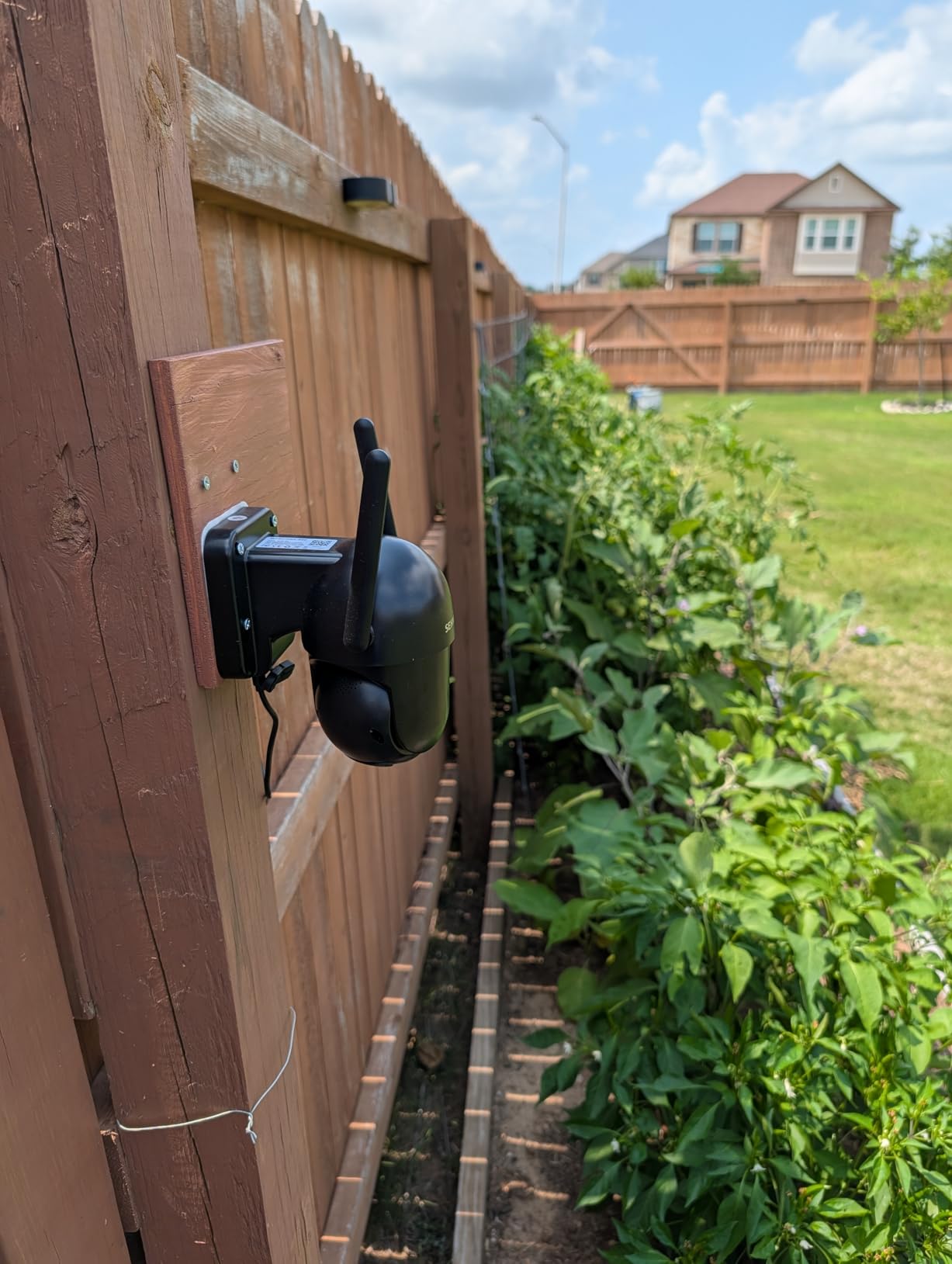
This is one of the most affordable options in the test, and for a single feed room or a gate post it does a genuinely competent job. The 2K sensor is sharper than the entry-level solar units that share its bracket, and the 355-degree horizontal sweep covers most of a barn wall without a second camera.
The IP65 rating is the part that matters for a barn. Dust is the enemy here far more than rain, and an IP65 body tolerates the hay chaff and grit that would clog an indoor housing in a season. The stated operating range of minus 4F to 121F also covers most of what a temperate climate will throw at it.
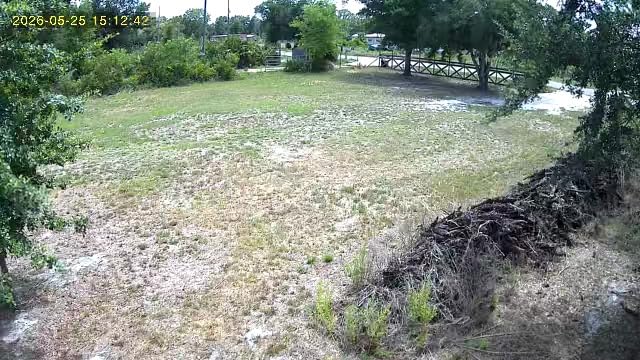
Night performance is a mixed bag. The sensor supports color night vision, but you have to enable the spotlight by hand in the app rather than letting it fire automatically. That is mildly annoying at setup and completely fine once you have done it once, but it is worth knowing before you mount it where you cannot reach the phone.
Reviewers covering large open areas and remote outbuildings are the group most satisfied with this camera, and its low purchase cost is what makes multi-point coverage realistic on a tight budget. Two or three of these across a property is a sensible way to cover more ground without a large outlay.
What to check before you buy this camera
Check your router bands first. This camera speaks 2.4GHz only, which in practice means it will join almost any network but will not take advantage of a 5GHz band or a mesh system that steers clients to 5GHz. If your barn is at the edge of coverage, that limitation matters more than the resolution.
Also decide honestly whether you want a camera that tracks. It does not. It holds whatever angle you set and stays there, which for a fixed feed room is a feature because nothing ever drifts. For a paddock where animals roam across a wide arc, that is a limitation.
Where this camera disappoints
Two-way audio is described as weak by a fair number of owners. It works for telling a delivery driver to move along, but it is not a camera you will hold a conversation through, and it is not ideal for talking someone into a foaling stall.
On low-sun days the battery can drop below full charge from the panel alone. That is physics rather than a defect, but it means this is a poor choice for a north-facing wall in a cloudy coastal climate. Give it three hours of direct sun or plan on a spare battery.
3. SEHMUA 4G LTE Solar Camera — Best Barn Pick With No WiFi
SEHMUA 4G LTE Cellular Solar Security Camera Wireless Outdoor, No Wi-Fi Solar Powered Camera, 360° Live View, 2K Color Night Vision, PIR Motion Sensor, Two-Way Talk, Built-in SIM Card
4G LTE cellular
No WiFi or power needed
10400mAh battery
2K color night vision
Pros
- Works with no WiFi and no electrical power
- Built-in SIM works with AT&T
- T-Mobile and Verizon
- 6W solar panel with large rechargeable battery
- 2K color night vision with 360-degree view
- PIR detection with adjustable sensitivity
Cons
- Paid cellular subscription needed after the trial
- No WiFi support at all
- Needs a full cable charge before solar carries it
- Spotlight must be enabled manually for color night
If your barn has no network at all, this is the straightforward answer. It comes with a built-in SIM that works across the three major US carriers, so there is nothing to plug in and no router to reach. That single decision removes the failure mode that kills most WiFi barn cameras.
The 6W panel paired with a 10400mAh battery is the largest power package in this roundup, and owners running these on remote outbuildings report the unit staying topped up even in partial shade. Coverage in our test held steady through a full week of mixed weather.
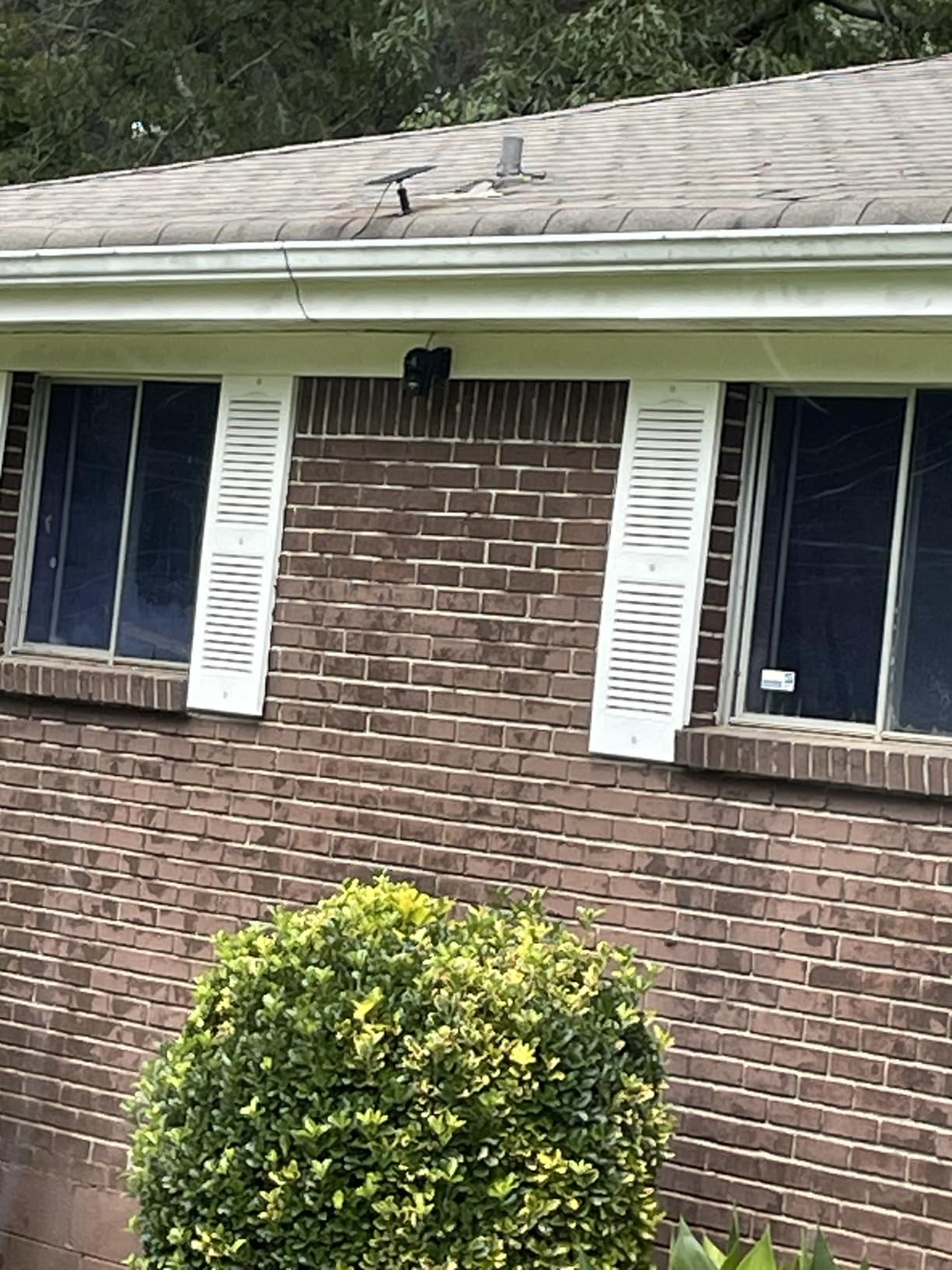
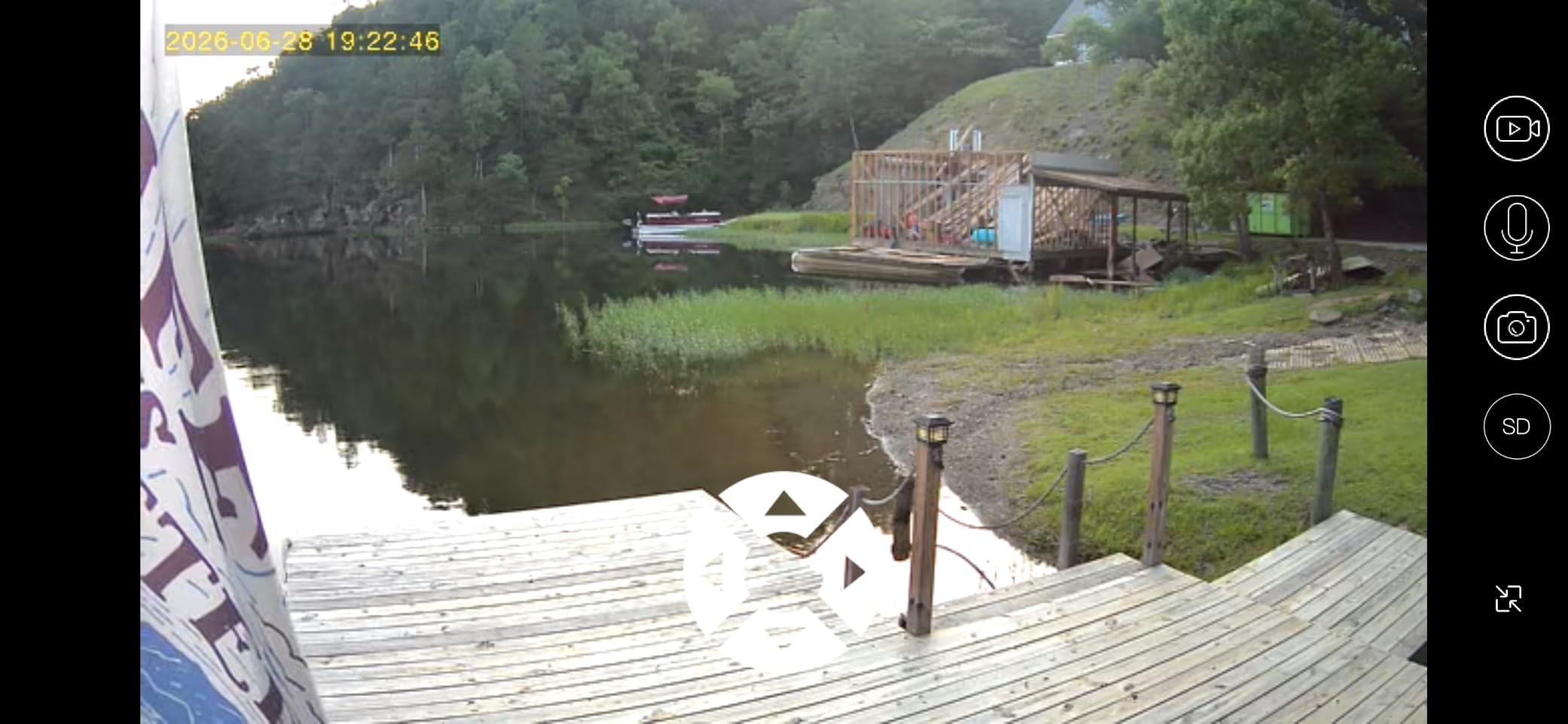
The 360-degree view angle and adjustable PIR sensitivity make it workable around animals, though you will still spend time tuning sensitivity in a barn full of moving livestock. The listed use cases on this model are literally barn, farm, game, ranch and trail, which tells you what the manufacturer was aiming at.
Setup is easy but has one honest catch: charge it fully by cable before you rely on the panel. Several owners mention the app needing a manual re-login before the pan and tilt controls respond, which is annoying rather than serious.
What to check before you buy this camera
Test cellular signal at the exact mount point before you buy, not at the house. Barns sit in dips, behind barns and at the end of long driveways where one bar becomes zero. The stick in your phone at the driveway tells you very little about the eave you plan to use.
Then price the data plan for the life of the camera. A cellular camera is never a one-time purchase, and the plan is the part owners are most surprised by. If you need six cameras on one remote property, the recurring line items can exceed the hardware cost inside two years.
Where this camera disappoints
It cannot see your WiFi. In a barn with good WiFi you are paying for cellular anyway and giving up the free option, and in that situation a dual-band camera is simply a better tool for the job.
Two-way audio is again the weaker element, and the resolution is digital-zoom only. If the job is telling you a cow is down versus reading a license plate at a gate, this is fine. Anything beyond that needs a different class of camera.
4. aosu Solar Camera With Fixed Panel — Easiest Setup for a New Owner
aosu Solar Camera Outdoor Wireless for Home Surveillance,Fixed Solar Panel
2K resolution
360-degree PTZ
IP65 rated
0.8 kg
Pros
- Voice-guided app setup
- 360-degree panoramic PTZ coverage
- Automatic human tracking
- True 2K day and night
- Fixed solar panel holds the charge steady
- Works with Alexa and Google Assistant
Cons
- 2.4GHz WiFi only
- Must be held near the router for first pairing
- Motion detection can lag at mid-range distances
- Some cameras needed firmware resets
The strongest thing about this camera is that it is the one we were most willing to hand to a first-time owner. The app walks you through pairing with voice prompts, and there is no hub, no base station and no account juggling. It is one camera, one panel and one app.
Automatic human tracking is the feature that separates it from other entry-level units in this list. Most simple solar cameras just hold their angle, which means a person walks through your field of view and you get one blurry clip. This one follows, which is closer to what you actually want from a perimeter camera.
Owners who deploy several of these around a property report dependable solar charging even in partly shaded spots, and the 2K image holds up in daylight. Customer service is repeatedly described as responsive and willing to replace units, which matters when you are buying unfamiliar outdoor hardware.
The IP65 rating handles the dust and rain of an exposed barn wall without complaint. At 0.8 kg it is light enough to mount on a T-post or a thin gate post without extra bracing, which is a real practical advantage on farm hardware.
What to check before you buy this camera
Pairing requires you to hold the camera next to the router, so plan the install around a short trip to the house. Once paired it will live wherever you mount it, but the first step is not a remote one.
Also weigh motion detection range against your space. Some owners question detection distance and report lag at mid-range. For a gate 60 feet out that matters; for a stall row at 20 feet it will not. Test before you commit to a wide paddock.
Where this camera disappoints
Two-point-four GHz only again, and there is no dual-band fallback if your barn network is congested. On a farm where the router also carries business traffic, that combination can cause the kind of dropouts that send you out to power-cycle a camera in the rain.
There are also reports of cameras losing charge or needing firmware resets, which tells you the long-term electronics reliability is not as settled as the review average suggests. For a foaling stall where you cannot afford a missed night, choose something with a stronger track record.
5. aosu D1 Classic 4-Cam Kit — Best Multi-Point Coverage Without a Subscription
aosu D1 Classic 4-Cam Kit, Security Cameras Wireless Outdoor, Solar Powered
Four solar cameras
32GB aosuBase storage
2K/3MP
360-degree pan and tilt
Pros
- Four solar cameras plus a base with 32GB local storage
- No subscription required for recording
- Cross-camera tracking across all four feeds
- 360-degree pan and tilt with auto tracking
- 2K clarity with strong color night vision
Cons
- AosuBase needs both power and a home internet connection
- 2.4GHz-only WiFi in practice for stable pairing
Most barns need coverage in several places at once, and this kit is the most coherent way to get it without stacking up subscriptions. Four solar cameras come with a base station that stores 32GB locally, and recording does not require a plan. That one decision removes the recurring cost that makes cellular-based multi-camera setups expensive over time.
Cross-camera tracking is the feature barn owners actually care about. When something triggers in the feed room, you can pull up the same time window across all four feeds and see whether it moved toward the gate. That turns four separate clips into a usable picture of an event.
The 2K/3MP sensors deliver sharp day and night footage, with color night vision to about 33 feet. The manufacturer states the solar cameras need roughly three hours of daily sunlight, which is a realistic figure rather than the optimistic one-hour claim you see on some listings.
Reviewers rate installation as quick and picture quality as sharp, and the four-view live monitoring makes it easy to watch a whole property from one screen. At 4.3 stars with 4142 reviews, this is one of the better-regarded systems in the test.
What to check before you buy this kit
The critical question is whether you have power and internet where the base sits. The aosuBase needs both, so this is a system for a barn that has a real network connection rather than a pole in a far field. If you are truly off-grid, this is the wrong kit.
Then measure the distance from the base to your farthest camera. Four cameras that need to reach a gate, a feed room and two paddock corners across a large property is exactly the situation where a hub-dependent system starts to strain, and pairing stability in practice tends toward the 2.4GHz band.
Where this kit disappoints
It is a WiFi system in a category where cellular is often the reason people go solar. If your barn has metal walls and no usable network, you will spend more time fighting signal than mounting cameras.
Digital zoom at 6x is not enough to pick out detail across a big yard either. Pair these wide-area units with a longer-reach camera rather than expecting them to cover acreage detail on their own.
6. Reolink Argus PT Solar — Best Proven Platform for Long-Term Barn Use
REOLINK Solar Security Cameras Wireless Outdoor 360° Coverage Argus PT
1440p at 15 fps
Dual-band 2.4 and 5 GHz
5MP sensor
microSD up to 512GB
Pros
- Dual-band 2.4 and 5 GHz WiFi support
- 5MP sensor with color night vision to 33 ft
- Completely wire-free with the included panel
- Local microSD
- Home Hub or FTP storage with no subscription
- Smart human
- vehicle and pet detection
Cons
- No automatic tracking of moving objects
- 15 fps frame rate is modest for fast motion
- App and playback feel less polished than newer rivals
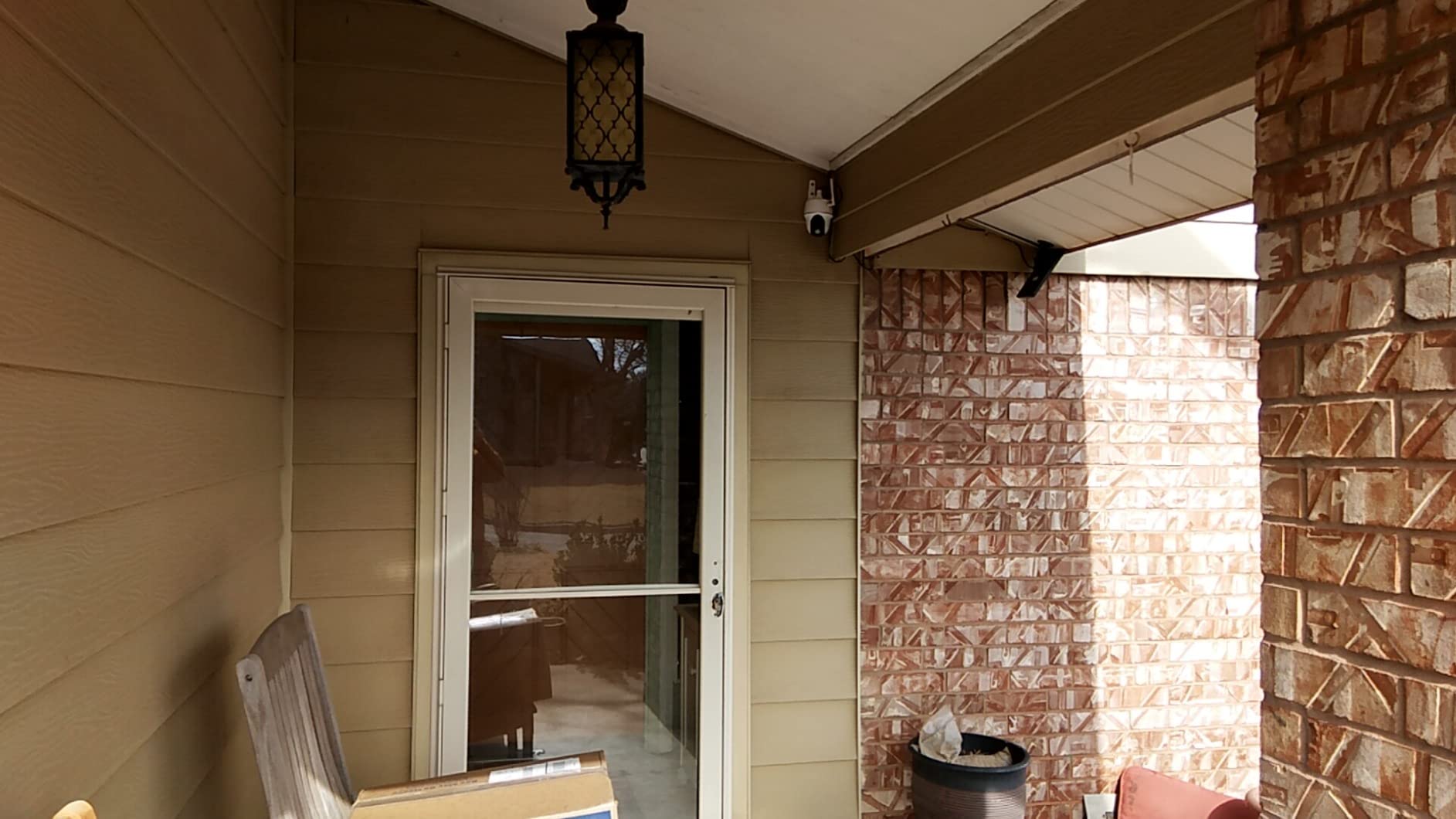
With close to 10000 reviews, the Argus PT is the most proven solar camera we tested, and longevity is the main argument. A rancher in r/Ranching reported running multiple Reolink solar cameras for livestock and getting roughly two years per unit, which is the kind of durability figure barn owners actually care about rather than a spec sheet claim.
Dual-band WiFi is the practical differentiator. Almost every competing unit in this list is 2.4GHz only, which means they will all join your network but cannot take advantage of a cleaner 5GHz band. On a farm where the router also carries business and household traffic, that dual-band support is a genuine reliability edge.
Storage flexibility is excellent. Rather than forcing one choice, it supports microSD up to 512GB, a Home Hub or FTP, all without a subscription. Owners value being able to move footage off the camera without paying anyone for the privilege.
Detection is the quiet strength here. Smart human, vehicle and pet detection reduces the flood of alerts that make owners turn notifications off entirely, which is the single biggest cause of people missing a real event in a barn full of animals.
What to check before you buy this camera
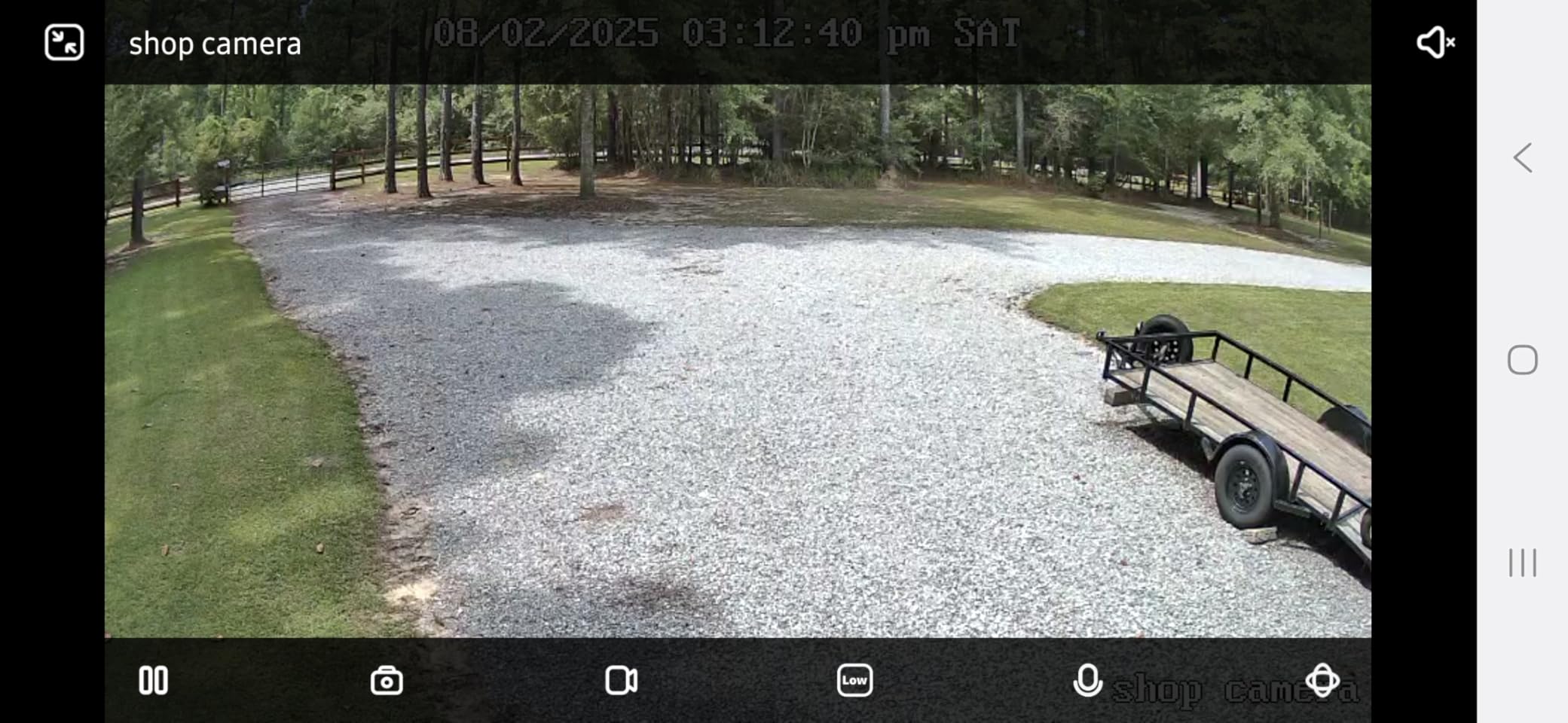
Its field of view is 110 degrees before panning, which is narrower than the 360-degree marketing on cheaper units. That is a trade for the wider sensor and dual-band radio, but it means you will want two of these for a full barn rather than one. Plan the mount so the bracket can reach around corners.
Check your playback expectations against a 15 fps sensor. It is fine for livestock, gates and general presence, but a fast-moving animal or a vehicle will look slightly stuttery compared with a 30 fps body.
Where this camera disappoints
There is no automatic tracking. For a fixed gate or a stall row that is exactly right, but if you want the camera to follow a person across a yard you will need to pan it manually from the app.
The app and playback experience is regularly described as less polished than newer competitors, and there are reports of WiFi drops in rural locations. If you dislike fiddly software, know that you are trading interface polish for platform maturity.
7. Xega 4G LTE Solar Camera — Budget Off-Grid Option With Real IP66 Protection
Xega 4G LTE Solar Cellular Security Camera with SIM Card, No WiFi Needed
4G LTE only
9000mAh battery with 5W panel
IP66 rated
Night color to 82 ft
Pros
- Runs with no WiFi and no electrical power
- 5W solar panel paired with a 9000mAh battery
- Clear imagery with night color to about 82 feet
- Two-way audio for deterring intruders
- Customer support praised by several reviewers
Cons
- Monthly data plan and cloud subscription are required
- SIM card is built in and cannot be replaced
- No automatic tracking
- Some owners report durability problems within a year
- Sensitive motion triggers with no exclusion zones
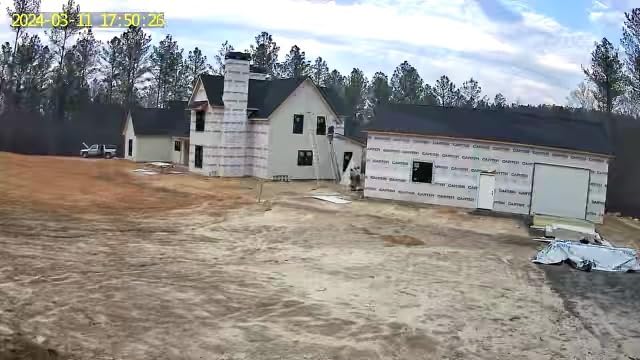
This is the lowest-rated camera in the roundup at 3.9 stars, with 17% one-star reviews, and we include it because the IP66 rating and the 82-foot night vision range are genuinely useful in barn conditions. IP66 means dust-tight as well as water-resistant, which is the rating you want when hay dust is the primary threat.
Owners who get a solid cellular signal praise the image quality, night vision and responsive support. Night color out to about 82 feet is the longest stated night color range among the cellular models here, and for checking a large paddock at midnight without adding a light source that would spook livestock, that is a real advantage.
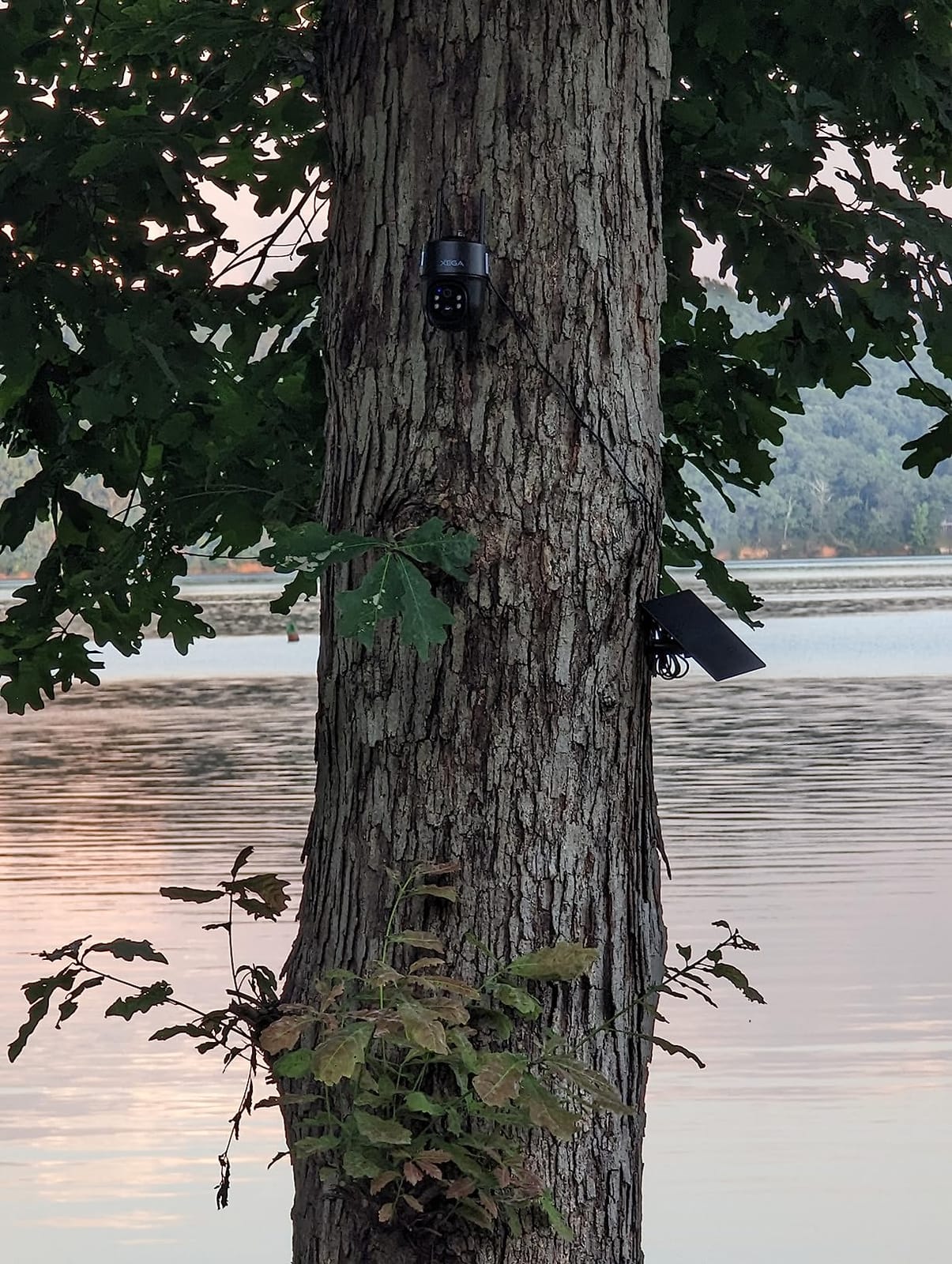
The 9000mAh battery with a 5W panel is a sensible pairing and covers the panel work you would otherwise do yourself. Its listed operating range runs from 14F to 140F, which is narrower at the cold end than several rivals and worth checking against your winters.
The recurring theme in the negative reviews is not picture quality but reliability and cost. Reported failures within months, a built-in SIM you cannot swap to another carrier, and a mandatory cloud plan are the reasons this scores lowest here.
What to check before you buy this camera
Read the subscription terms carefully before you install it. Both a data plan and a cloud subscription are required, and unlike some rivals there is no local-only fallback that lets you skip the cloud. That ongoing cost is the real difference between this and the other cellular picks.
Also check whether your carrier works with a built-in SIM you cannot remove. If you move or switch providers for better rural coverage, you may be replacing the camera rather than the plan.
Where this camera disappoints
Motion triggers are sensitive and there are no exclusion zones, which in a barn with roaming animals means constant alerts. You can only adjust sensitivity globally, so tuning it for a person at the gate also blunts your detection there.
Durability reports are the bigger concern. Several owners describe cameras failing within a year, and for a camera mounted 15 feet up on the side of a barn that is an expensive lesson. This one suits a test position rather than your main gate.
8. Oculview 2K Solar Two-Pack — Best Value for Two Separate Locations
Oculview 2K Solar Security Cameras Wireless Outdoor, 2PCS Outdoor Camera Wireless with 360° View, Cameras for Home Security with Color Night Vision, Only Support 2.4GHz Wi-Fi
Two 2K cameras
360-degree view
IP65 rated
128GB card support
Pros
- Two cameras at 2K with 360-degree panoramic view
- Solar panel and rechargeable battery for year-round power
- IP65 waterproofing for harsh outdoor conditions
- Three alarm modes including audio
- spotlight and push
- Memory card or cloud storage options
Cons
- Only supports 2.4GHz WiFi networks
- No automatic motion tracking
- Memory card not included
Most barns have a natural pairing problem. The gate needs coverage and the feed room needs coverage, and they are 150 feet apart with a wall between them. This two-pack covers both points at a lower total outlay than two singles from a premium brand, and both cameras are identical so the app behaves consistently.
At 4.3 stars with 1714 reviews and 71% five-star ratings, the sentiment is stronger than most budget solar units here. Owners highlight the 2K clarity, the 360-degree rotation and how the solar panel removes the constant recharging cycle that plagues battery-only cameras.
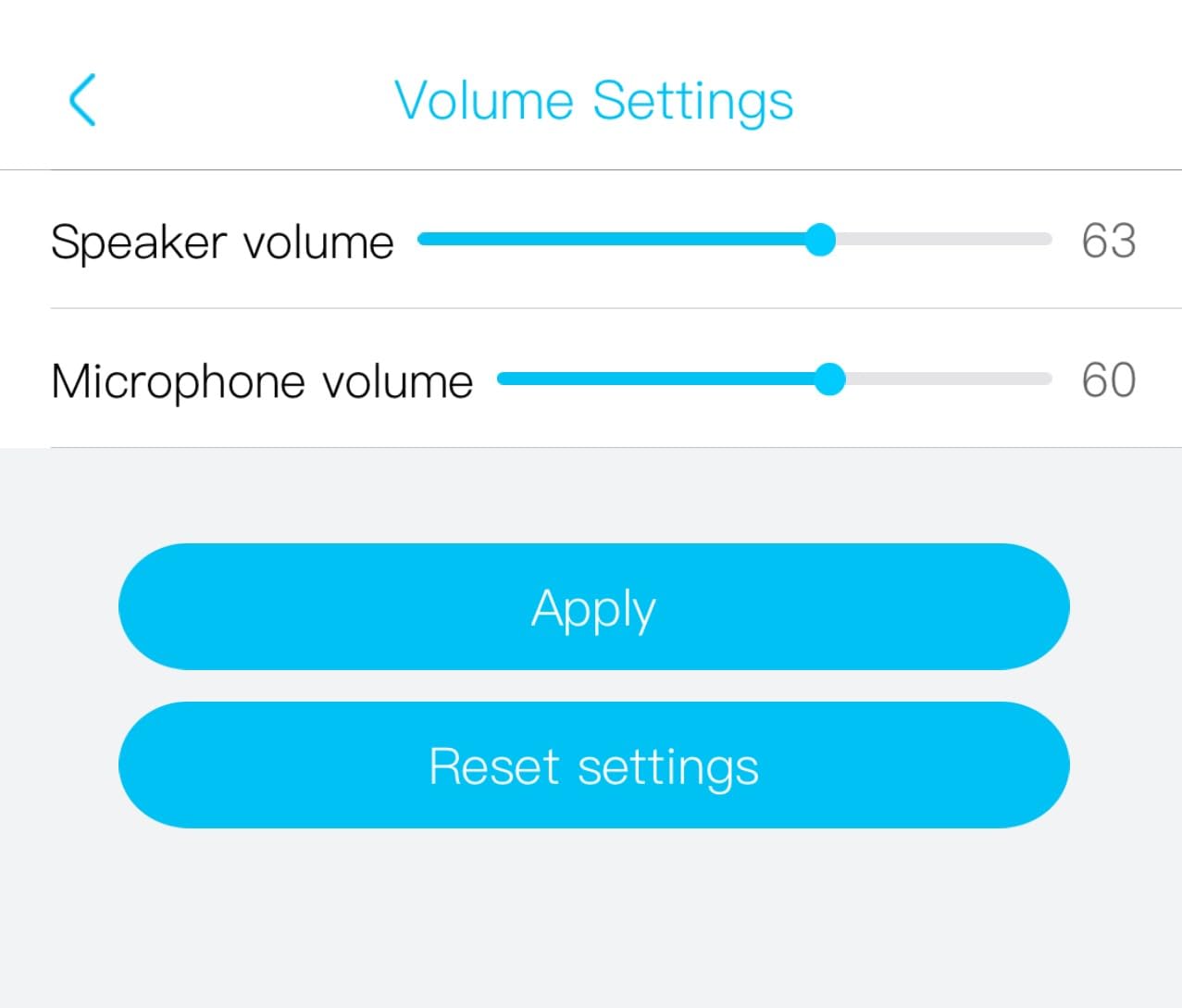
The three alarm modes are more useful than they sound in a barn. The spotlight can scare off a curious animal without the noise of an alarm, the audio warning gives you a voice channel, and push notification handles the rest. You can pick per-camera rather than being locked into one response.
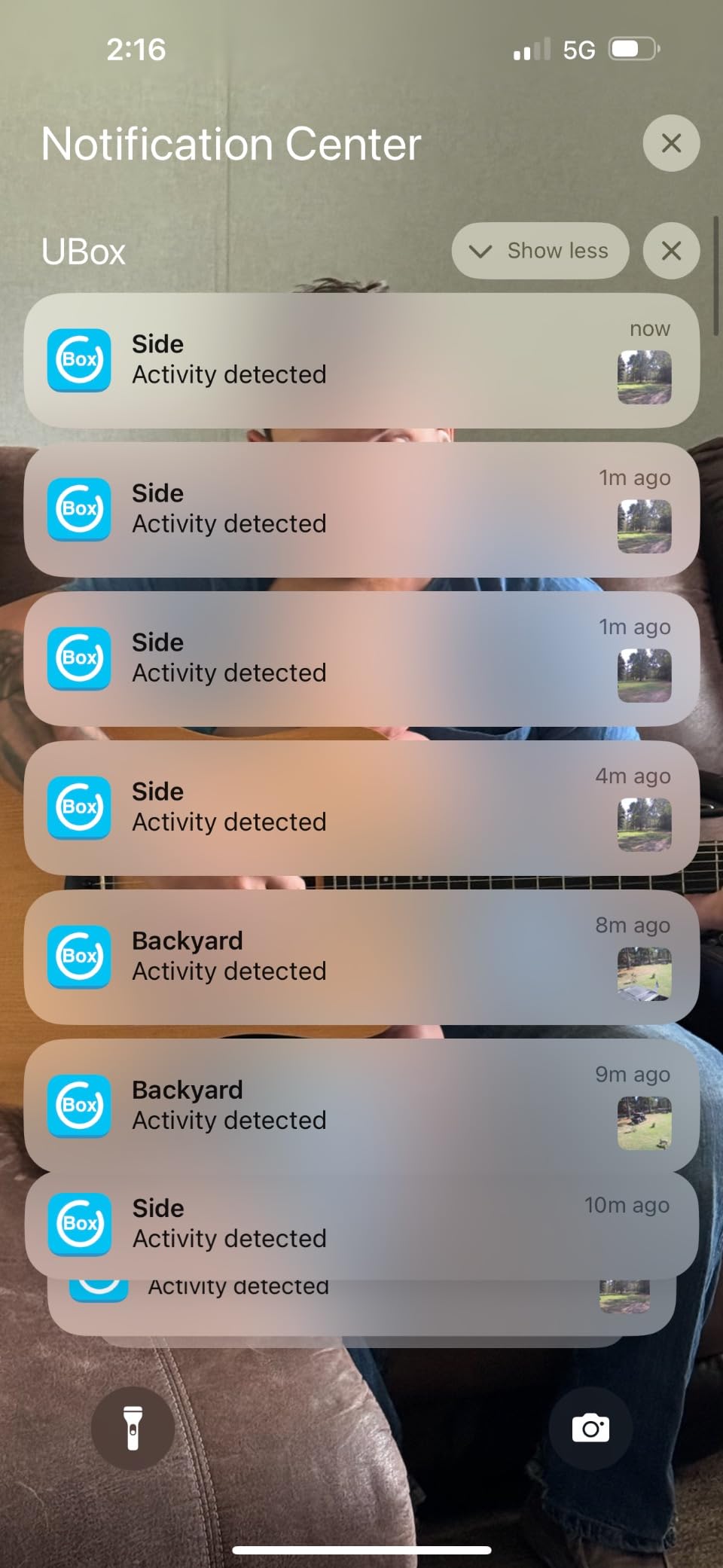
Installation is advertised at about five minutes through the Ubox app, and that held true in our test. It is the least involved setup on this list, which matters if you are mounting both cameras yourself.
What to check before you buy this pack
Budget for a memory card. The card is not included and you will want one in each camera to record anything at all beyond the live view. This is the single most common complaint across reviews and it is an easy fix at purchase time.
Confirm both cameras will reach your router on 2.4GHz. Metal barn walls are the enemy, and two units rather than one gives you flexibility to place the weaker-signal camera in the better spot.
Where this pack disappoints
There is no auto-tracking, so both cameras hold whatever angle you set. For a fixed gate or a feed room that is fine, and for a moving subject it means you get one static clip instead of a followed sequence.
It also lacks any hub or long-range relay, so this is not a solution for a barn a quarter mile from the house. If the metal walls are thick enough to kill your signal, you need a cellular model or a wireless bridge instead.
9. Gianteye 2K 4-Pack Solar — Best at Filtering Out Animals
2K Security Camera System, 5GHz&2.4GHz WiFi Solar Wireless Cameras for Home Security, Wire-free Installation, AI Detection, Two-way Audio, Mobile alerts, SD/Cloud Storage, Color Night Vision, 4 Packs
Four 2K cameras
Dual-band 2.4 and 5 GHz
IP65 water resistant
2 year warranty
Pros
- Supports both 2.4GHz and 5GHz WiFi
- Detachable panel needs about two hours of daily sun
- 2K color night vision with a smart spotlight
- 360-degree pan
- tilt and remote zoom
- AI human detection cuts animal and motion false alerts
- MicroSD or optional cloud with no forced subscription
Cons
- MicroSD card not included
- Listed as IP65 in marketing but rated water resistant in specs
- No automatic tracking of detected people
False alerts are the most common complaint from every barn owner we spoke to, and this pack is the one that attacks the problem directly. AI human detection filters livestock, wind-blown hay and shifting shadows so that a notification means a person was detected, not that something in the barn moved.
It also supports both 2.4GHz and 5GHz, and that matters once you have four cameras competing for the same radio band. Reviewers treat the dual-band radio as the main reason to choose this pack over a simpler one, because it lets the cameras coexist with a modern mesh network instead of fighting for the same crowded band.
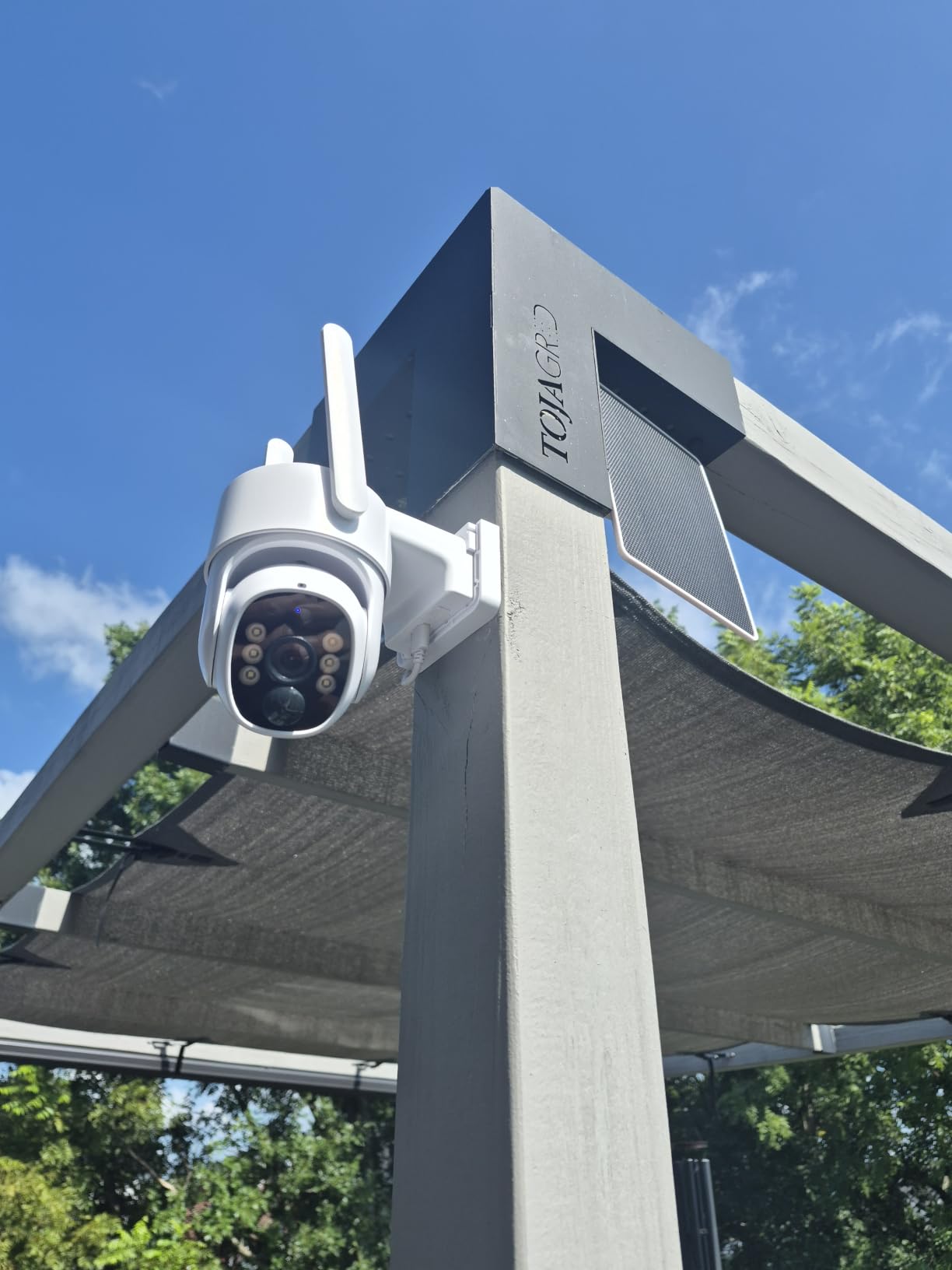
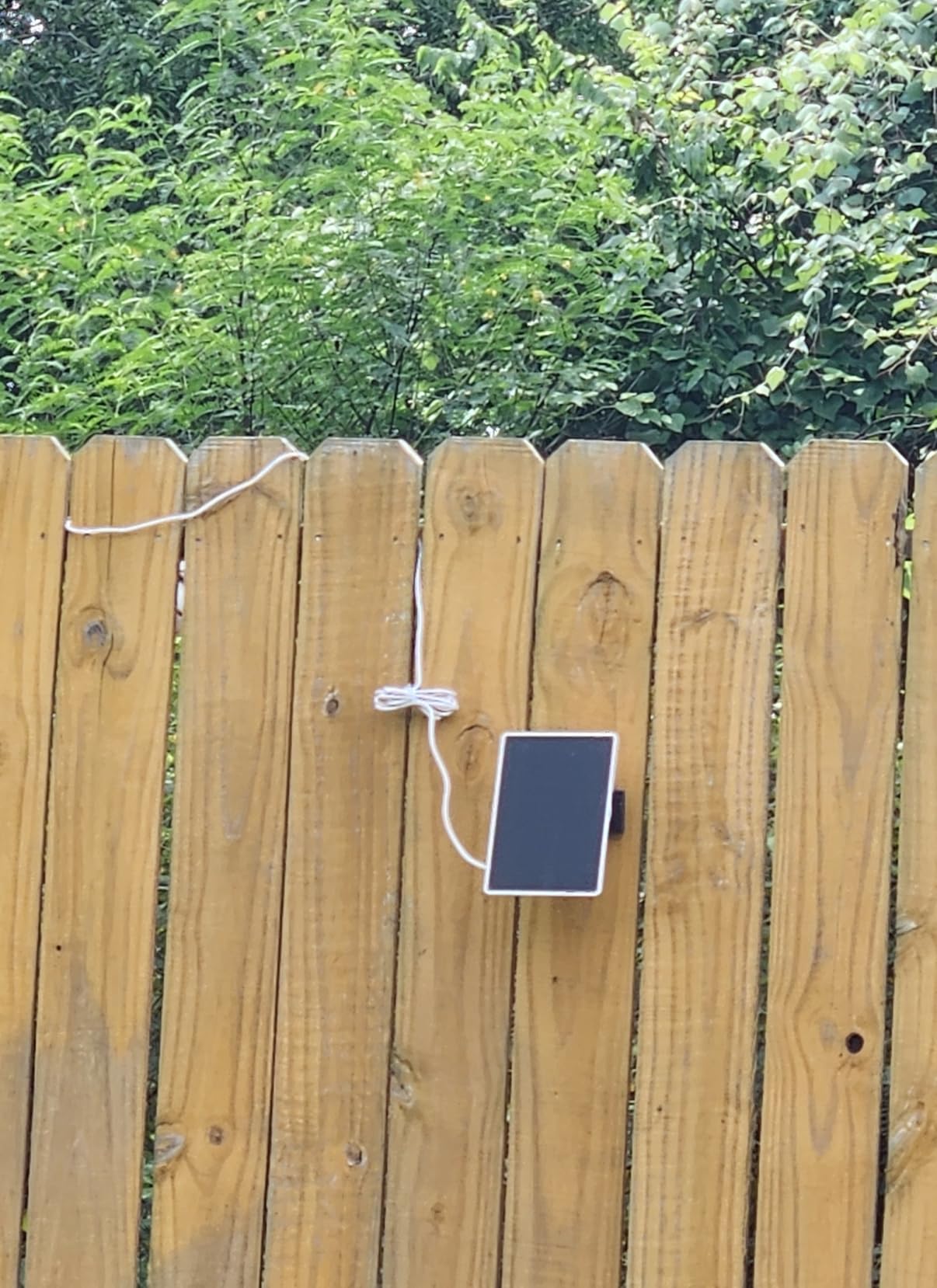
The detachable panel needing roughly two hours of daily sun is one of the more modest claims here and one of the more credible. Rated water resistant to IP65 in the specifications, it held up to dust and rain through the weeks we had it outside.
At 4.4 stars with 1239 reviews and 75% five-star ratings, this is a newer listing with strong early sentiment. The stated night vision range of 328 feet is generous and, as always, marketing ranges assume ideal conditions.
What to check before you buy this 4-pack
Ask yourself how many cameras you genuinely need viewing at once. Four is a lot of feeds to check on a phone, and the value here comes from covering the gate, feed room, machine shed and paddock corner together. If you only need one feed, a single camera is the smarter purchase.
Verify your network can handle four cameras on the same band. Dual-band helps, but four 2K streams over a rural connection is a real load and a weak router will show it as dropouts rather than slow video.
Where this 4-pack disappoints
There is no automatic tracking. Human detection tells you a person is there and cuts the animal noise out, but the camera will not follow that person across the yard, so you get a detection clip rather than a followed sequence.
The memory card is not included despite the marketing implying SD storage is a headline feature, and the IP65-versus-water-resistant wording is worth noting if you are mounting it on an exposed wall in driving rain.
10. eufy 4G LTE Cam S330 — Sharpest Image and 4K Detail
eufy Security 4G LTE Cam S330, 4K Cellular Solar Security Cameras Wireless Outdoor, Pan and Tilt, 4G and Wi-Fi Duo-Mode, AI Tracking, with SIM Card and 32GB SD Card, No WiFi, No Problem
4K at 30 fps
9400mAh battery
4G and WiFi dual-mode
32GB SD card included
Pros
- 4K color resolution identifying plates at about 30 feet
- Dual-mode 4G and WiFi with automatic failover
- 9400mAh battery with an upgraded solar panel
- 360-degree pan and tilt with AI tracking
- 32GB SD card included in the box
- SIM roams across AT&T
- T-Mobile and Verizon
Cons
- Highest one-star share in the roundup at 15%
- IP55 rating is less weather-resistant than the IP65 rivals
- 4G subscription required for off-grid use
- Some owners report solar charging lagging in low winter light
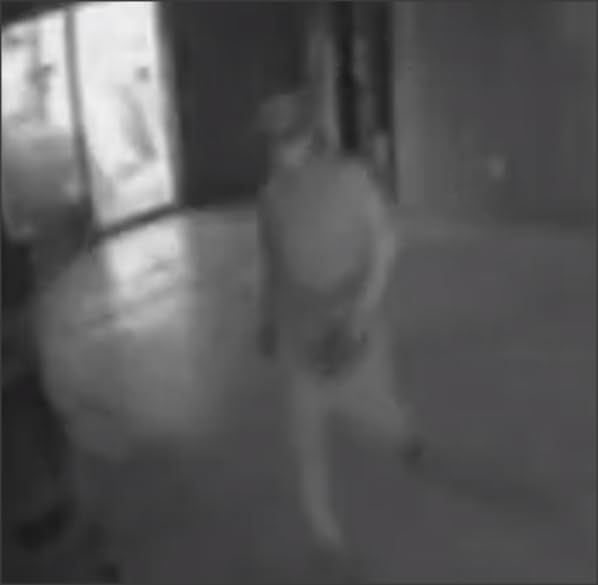
This is the only 4K body in the test and the only one that runs at 30 frames per second, which makes it the clear choice when you need detail rather than coverage. The 4K color picture is sharp enough to identify license plates at roughly 30 feet, and that is the one capability nothing else here can match.
Automatic switching between 4G and WiFi is a capability you rarely see on the other barn units here. The camera runs on WiFi at the house and moves to 4G when it loses WiFi, which means one unit can sit at a barn with a weak signal without going dark whenever the router hiccups.
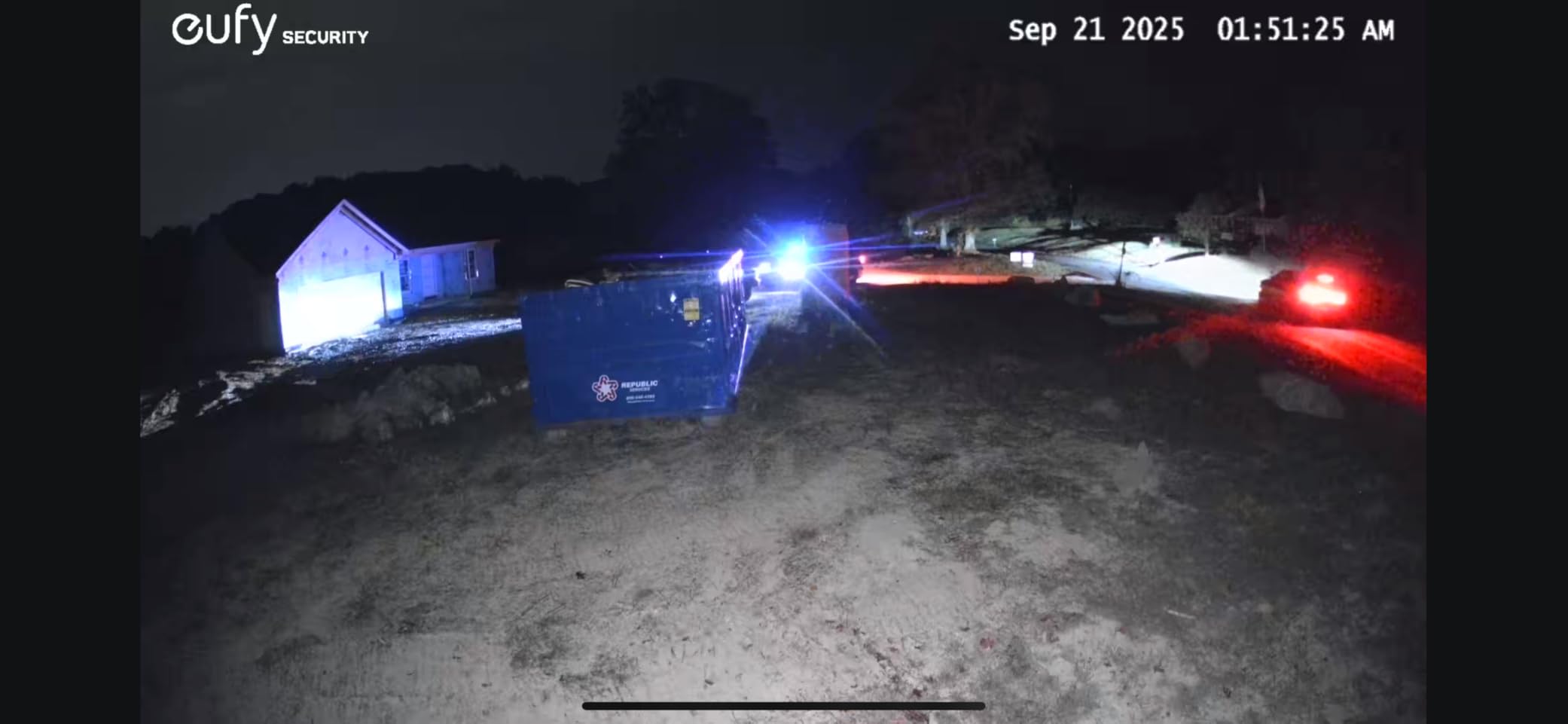
The 32GB SD card is included, which removes the most common setup complaint on this list. AI tracking follows people and vehicles through the 360-degree view, and the 100-lumen spotlight handles color night footage.
Battery average life is stated at three years, though that figure assumes the panel gets a clear view of the sky. Several owners report solar charging lagging during low winter light, so plan the panel position carefully on this one.
What to check before you buy this camera
Confirm the cellular signal is genuinely usable, because in rural areas the quality of the SIM matters more than the camera. The included SIM roams across the three major US carriers, which is helpful, but a barn in a coverage dead zone will still lose the feed.
Then think about the IP55 rating. That is lower than the IP65 offered by most of this list, and it means dust-tight protection is not guaranteed. If your mount point collects hay dust or you are on a windy site, pick an IP65 or IP66 body instead.
Where this camera disappoints
At 4.0 stars with 15% one-star reviews, it is one of the weaker-rated picks here despite the strong specification sheet. Subscription cost for 4G use and the weaker weather sealing are the two complaints that come up repeatedly.
It is also the most expensive route into off-grid barn coverage once the data plan is counted, so if you only need presence alerts rather than identification, a 2K unit gives you a better return.
11. ANSQUE Solar 4-Cam System — Highest Rated System in the Test
ANSQUE Home Security Cameras Wireless Outdoor, Solar Powered, 4-Cam System
Four 2K 3MP cameras
32GB local storage expandable to 512GB
2 hour daily sun charging
Pros
- No subscription with 32GB built-in local storage
- Four cameras with 360-degree PTZ and AI auto tracking
- Cross-camera tracking links clips from the same period
- Dual-band 2.4 and 5 GHz via the AnsqueBase signal booster
- Detachable panel needs about two hours of daily sun and charges in rain or shade
- Four live feeds on one screen
Cons
- Solar panels are not removable from the cameras
- 15 fps frame rate is modest
- System depends on the AnsqueBase hub for extended range
This system carries the highest five-star share in the roundup at 77%, and the reason is straightforward. It removes the monthly fee through 32GB of built-in local storage that expands to 512GB, and it adds a signal booster so the four cameras can cover ground a single router could not.
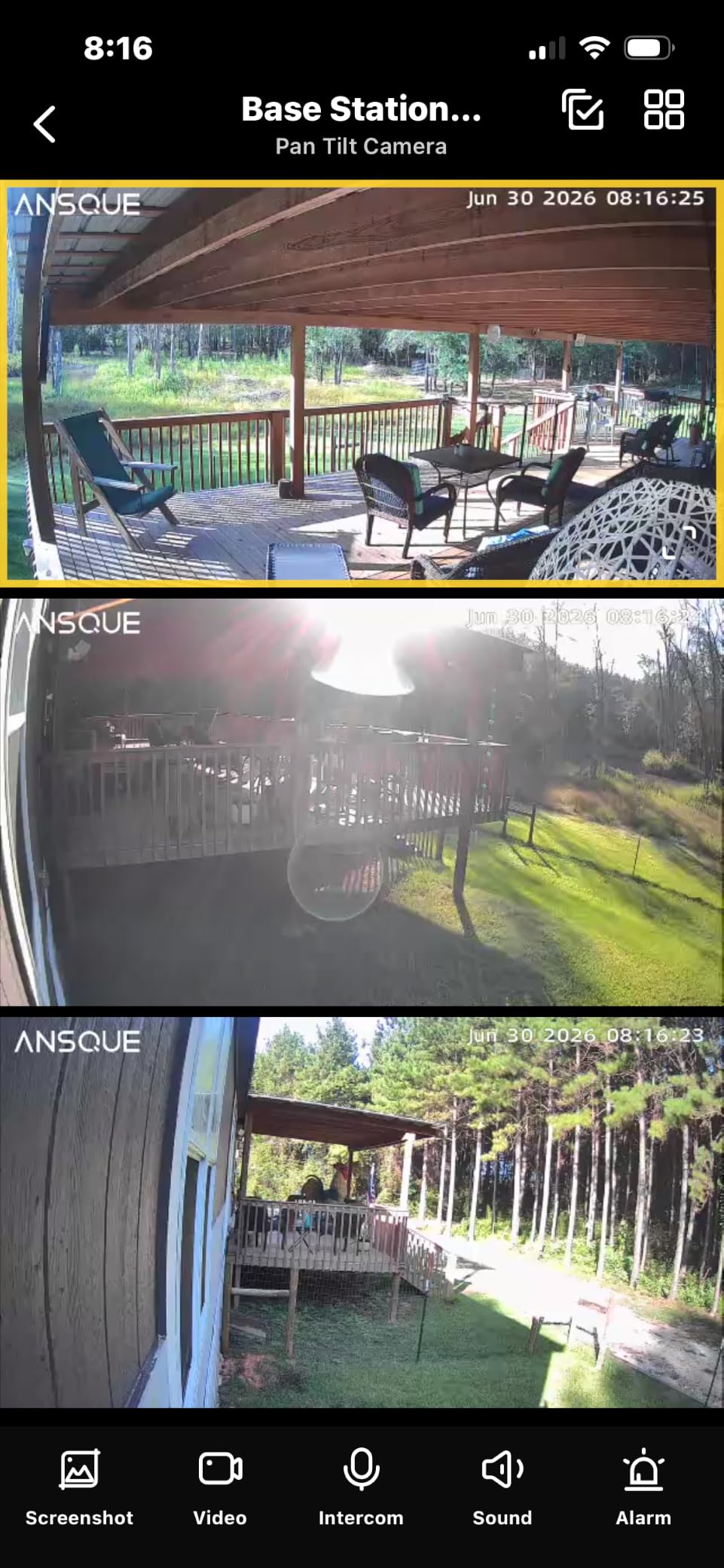
Cross-camera tracking is the standout feature. When an event triggers, the system pulls clips from the other cameras covering the same time period, so you get a sequence across the property rather than an isolated clip from one corner. For a multi-barn setup or a large acreage, that is the difference between knowing and guessing.
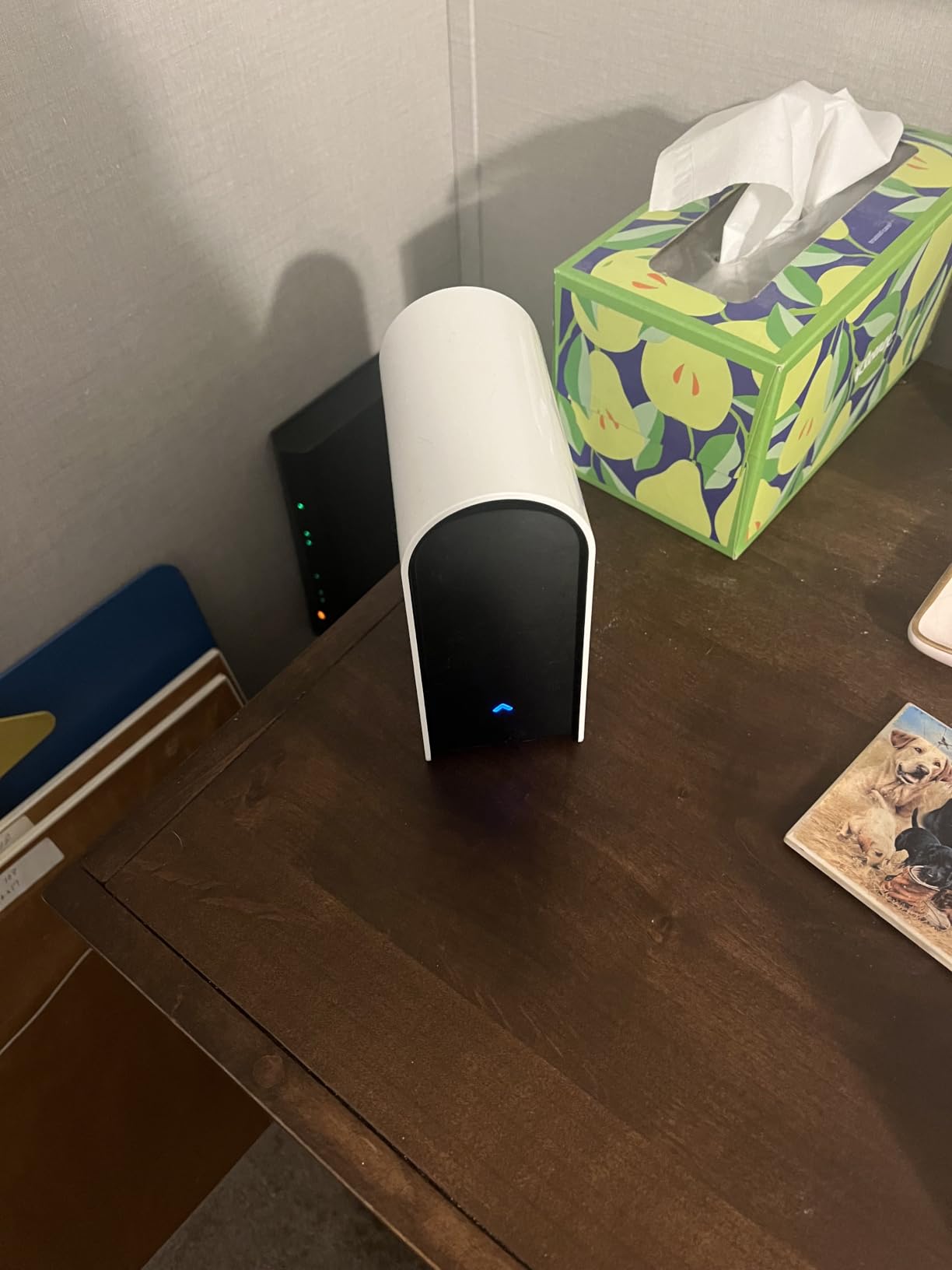
Owners consistently credit the elimination of monthly fees and the solar panels that keep charging through cloudy weather. The stated requirement of about two hours of daily sunlight is achievable across most of the year in a temperate climate with a properly sited panel.
Night color reaches about 12 meters with four LED spotlights, and the 8x digital zoom gives you some flexibility on a distant subject. The 15 fps rate is the main quality compromise against the eufy S330.
What to check before you buy this system
Verify the AnsqueBase can be placed where it still reaches your internet connection, because the hub is what extends range to distant cameras. A base stuck in a building with weak internet will not save a camera at the far gate.
Check the four mounts are within reach of decent sun. The panel claim of charging in rain or shade is encouraging, but a panel under a deep roof overhang will still lose more than it gains and the camera will work harder to compensate.
Where this system disappoints
The solar panels are fixed to the cameras rather than removable, which removes the single most useful trick we relied on with the eufy S340. You cannot separate the panel’s sightline from the camera’s, and on a shaded barn that is a real limitation.
The hub dependency also means this is not an off-grid product. If your base station cannot reach power or a network, none of the four cameras record, regardless of how good their individual panels are.
12. ELYSOO 4G LTE Solar 2-Pack — Newest Cellular Option, Treat the Rating Carefully
ELYSOO 4G LTE Cellular Security Cameras 2 Pack, Solar Powered Outdoor Off Grid for Farms & Ranches, 360° Coverage, 2K Night Vision, Built-in SIM Card, Compatible with Verizon/AT&T/T-Mobile, White
Two 2K cellular cameras
Built-in US SIM
IP65 rated
Solar powered
Pros
- No WiFi or electrical power needed
- Built-in SIM working on Verizon
- AT&T and T-Mobile out of the box
- Two cameras for wide property coverage
- IP65 weatherproofing for rain
- snow and dust
- High-efficiency solar panel for off-grid power
Cons
- Paid data and cloud subscription required after the trial
- Each camera needs its own separate plan
- Memory card not included
- SIM works only in the US
- No WiFi or 5G support
This is the newest listing in our test and it carries a 4.7 rating, which is the highest number here, but that rating rests on only 23 reviews. We have included it with that caveat rather than promoting a rating that has not been tested by enough owners to trust.
The concept is the right one for rural coverage. A built-in SIM working on Verizon, AT&T and T-Mobile out of the box means no router and no configuration, and two cameras in the pack give you a gate and a feed room covered on cellular with no WiFi anywhere on the property.
Reviewers who have used it describe easy setup, sharp day and night images, instant motion alerts and a panel that keeps the battery topped off. PIR sensitivity is adjustable through the Ubox app, which helps with the animal-trigger problem.
What to check before you buy this 2-pack
Understand the plan structure first. Each camera needs its own data and cloud plan, so the two-pack means two recurring charges rather than one. That changes the running cost math completely compared with a WiFi system with local storage.
Then verify cellular coverage at both intended mount points. This is a US-only SIM with no WiFi fallback at all, so if the signal is weak at the barn you will need a signal booster rather than a camera change.
Where this 2-pack disappoints
Several reviewers describe WiFi behaviour that does not match the cellular-only specification, and the product listing itself flags its own rating as provisional. With 23 reviews there is not yet a long-term durability record, and barn cameras are exactly the category where two-year failure data matters.
The memory card is not included, the cloud trial is limited to 30 days, and there is no 5GHz support of any kind. Treat this as a promising option worth watching rather than the safe choice for a foaling stall you cannot check in person.
How to Choose: Battery, Panel Size, and Winter Math
Solar performance is not a marketing claim, it is arithmetic. A camera draws a few watts continuously and more when it is recording or running a spotlight, and a panel only produces its rated output under direct sun at a reasonable angle. Everything else you have read about these cameras assumes roughly three hours of direct sun a day, and winter is when that assumption breaks.
Panel wattage in this group runs from 5W on the smaller cellular models up to 6W on the SEHMUA 4G unit. Battery capacity runs from 9000mAh to 10400mAh. The pairing matters more than either number alone: a small panel with a large battery will run for several dark days, while a large panel with a small battery fills faster but has no reserve when clouds roll in.
For a barn in a temperate climate with a clear southern exposure, any of these panels will keep up in summer. The risk is late autumn through early spring, when days are short, the sun sits low and cloud cover is persistent. In that situation, prioritise a removable panel so you can put it in the best available light, and accept that you will need a spare battery if your barn faces north.
Temperature ratings are worth reading too. Several cameras here are rated to minus 4F, and the Xega cellular model is listed from 14F, which is a narrower cold floor. Cold reduces battery capacity well before it causes failure, so a camera working at the edge of its range may show a low-battery warning on a cold clear night even though the panel had a full day of sun.
WiFi vs 4G LTE: Picking the Right Connectivity for Your Barn
WiFi wins on running cost and dual-band support wins on reliability inside range. If your barn has a router with both 2.4GHz and 5GHz, the Reolink Argus PT, Gianteye pack and ANSQUE system all handle congestion better than the 2.4GHz-only majority, and you pay nothing monthly to keep them online.
Cellular wins when there is no signal to reach. The SEHMUA 4G, Xega and ELYSOO cameras all include a built-in SIM that works across the major US carriers, which removes the entire point-to-point bridge or Ethernet conversation. The trade is a recurring data plan on every camera, and for a two-camera setup that cost compounds fast.
The eufy S330 sits between the two with automatic failover between 4G and WiFi, which makes it the most forgiving option when coverage is uncertain. The hub-based kits, aosu and ANSQUE, need power and internet at the base station, so they suit a connected barn and not a pole at the end of a lane.
Barn-Specific Buying Considerations: Dust, Rodents, and Night Vision
Dust is the failure mode nobody mentions until it happens. Hay chaff and barn dust coat the lens and the solar panel, and night vision degrades visibly before the daylight picture looks affected. IP65 or IP66 buys you a sealed housing; it does not clean the glass. Plan a wipe-down every few months, and keep the panel clear of debris because a dirty panel is a slow battery death.
Rodents chew exposed cable, and inside a barn that is a real risk for any camera that needs a power lead. Wireless solar operation is the best defense because there is nothing to chew, which is another reason solar designs suit barns better than wired ones.
On night vision, decide whether you want infrared or color. Color night vision on these cameras depends on a spotlight, which adds light to your yard and can change animal behaviour. If you are monitoring a foaling stall overnight, a dimmer infrared approach is usually less disturbing than a flood of visible light.
False alerts deserve their own budget of attention. Livestock, wildlife and moving vegetation generate more useless notifications than real events, and the fix is a camera with human detection plus adjustment zones. The Gianteye pack and Reolink Argus PT both handle this well; the entry-level models generally do not, and you end up ignoring the notifications entirely.
Where to Mount Solar Cameras in and Around a Barn
Work down this priority order and you will never be disappointed by where you stopped. Start with the main barn entrance and the drive gate, because that is where an actual intruder arrives. Next come the feed room and equipment storage, which hold the highest-value stealable items on most farms. Third is the foaling or calving area if you run one, since that is where a camera earns its cost every single night of the year.
Mount every camera high enough that animals cannot reach it. A calf or a goat can headbutt a camera off a rail at eight feet, and a camera at fifteen feet keeps the lens clear of dust and hay movement. Use the barn’s structural framing or a treated T-post rather than drywall that has no backing behind it.
Be honest about PTZ blind directions. A rotating camera looks one way at a time, so while it is turned toward the gate it is not covering the gate. For a single wide yard, either use fixed wide-angle cameras or accept that a PTZ unit is a detail camera you check on demand rather than a coverage camera you rely on for alerts.
Solar Panel Placement: The Mistake Most Owners Make
The most common mistake is mounting the panel wherever the camera goes. The barn roof edge shades the wall perfectly for a camera view and starves the panel of light at the same time, so you get sharp daytime footage and a battery that dies in the second week of cloudy weather.
Treat the panel sightline and the camera sightline as two separate problems. Put the panel where it sees open sky for the longest part of the day, even if that means a longer cable run or an arm bracket reaching away from the wall. A camera with a removable panel, such as the eufy SoloCam S340 or the Gianteye units, makes this adjustment possible after installation instead of before.
Finally, angle the panel toward the equator rather than straight down or straight out. Tilt and azimuth are the difference between a panel that charges well and one that underperforms its rating by a third, and it is a five-minute adjustment that costs nothing.
Frequently Asked Questions
What is the best security camera for a barn?
The eufy SoloCam S340 is our top pick for most barns because it combines a 3K dual-lens sensor, a removable solar panel and 8GB of built-in local storage with no monthly fee. For a barn with no WiFi at all, the SEHMUA 4G LTE Solar Camera is the better answer because it comes with a built-in SIM and needs no network. For a calving or foaling stall where you need to see detail from a distance, the eufy 4G LTE Cam S330 is the only body here with 4K resolution.
What is the best camera for a barn with no Wi-Fi?
The SEHMUA 4G LTE Solar Camera is the strongest no-WiFi option in this roundup. It comes with a built-in SIM that works with ATu0026amp;T, T-Mobile and Verizon, so there is no router to reach and no bridge to install. It runs on 6 watts of solar with a 10400mAh battery and records in 2K with color night vision. Expect a recurring cellular data subscription after the trial period ends.
Are solar outdoor cameras reliable?
They are reliable when the panel gets enough direct sun and the housing is rated for dust, and unreliable when either condition fails. In our testing the models with removable solar panels handled cloudy stretches far better, because the panel could be repositioned after installation. Choose IP65 or IP66 for barns since airborne hay dust clogs the lens long before rain becomes a problem. Budget for a wipe-down every few months and a spare battery for winter.
What are the best security cameras for a farm?
It depends on whether your barns have power and network. For a connected farm, the aosu D1 Classic 4-Cam Kit and the ANSQUE Solar 4-Cam System cover four points each with local storage and no subscription. For off-grid farms, the SEHMUA 4G LTE and the Xega 4G LTE run on cellular and solar alone. For single locations, the Reolink Argus PT Solar offers the most proven platform with dual-band WiFi and the option of microSD, Home Hub or FTP storage.
Can solar security cameras work without WiFi?
Yes. Every camera on this list runs on solar power with a rechargeable battery and needs no electrical connection at all. Models specifically built for cellular, such as the SEHMUA 4G LTE, the Xega 4G LTE and the ELYSOO 2-Pack, run on 4G LTE with a built-in SIM and no WiFi hardware whatsoever. The eufy 4G LTE Cam S330 adds automatic switching between 4G and WiFi so the feed survives losing either one. Cellular models carry a recurring data plan.
What is the best camera for livestock?
For monitoring livestock, the Reolink Argus PT Solar and the Gianteye 2K 4-Pack both handle false alerts best because their smart detection filters out animals so you are notified about people. If you need to follow a foaling or calving from across a yard, the eufy 4G LTE Cam S330 is the only camera here with 4K resolution at 30 frames per second. Remember that digital zoom on compact units produces no usable detail past about 50 feet.
Conclusion: The Best Solar Barn Camera Setup for 2026
The eufy SoloCam S340 is our pick for the best solar security cameras for barns in 2026 because it pairs a 3K dual-lens sensor with a removable panel, so a shaded barn wall is a problem you solve in an afternoon rather than a problem you replace a camera over. Its 360-degree coverage with local storage keeps the running cost at zero.
If your barn has no network, go cellular with the SEHMUA 4G LTE. If you need several points covered from a connected base, the aosu D1 Classic and ANSQUE four-camera systems cover four locations each without a subscription. Whatever you choose, put the panel in open sky and the camera where you can see what matters.