

A rack mount preamp is a standalone 19-inch rack-mountable microphone preamplifier that takes a microphone’s low-level output and drives it to line level before your audio interface converts it to digital. That extra stage exists for one reason: to give you clean gain, a low noise floor, and a repeatable analog tone that an interface’s built-in preamp cannot. If you record lead vocals on an SM7B or a passive ribbon, that stage is where your signal stops fighting.
Most roundups on this topic cover preamps in general. This one is filtered to rack-mount format only, because the format decision is the part that actually breaks people. A half-rack unit, a full 19-inch 1U, and a desktop box need different shelves, different power, and different budgets, and buying the wrong one is a return nobody enjoys. We compared 10 rack-mount preamps across tube, solid-state, and channel-strip designs, from a 1U strip that does everything at once to a transformer-balanced flagship. Updated for 2026.
One thing worth saying up front: the microphone matters more than the preamp. A preamp shapes what your mic already produced, so a great preamp in front of a mediocre mic still records a mediocre vocal. What a rack mount preamp genuinely fixes is gain and headroom, and it fixes that better than any other single purchase in the chain.
Table of Contents
Top 3 Rack Mount Vocal Preamps (October 2026)
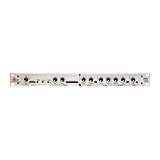
dbx 286S Channel Strip
- 1U channel strip with preamp
- compressor
- de-esser
- gate and enhancer
- Loop-out insert for external processors
- Five-segment LED status metering

Scarlett OctoPre Dynamic
- Eight mic preamps with per-channel analogue compression
- ADAT optical expansion with Word Clock I/O
- 48V phantom on all eight channels

ART TPS II Tube Preamp
- All-tube voicing with variable input impedance
- Automatic instrument and mic switching
- LED input meter plus analog output meter
Quick Overview of All 10 Rack Mount Vocal Preamps
Every entry below installs into a standard 19-inch rack, and every one takes a balanced XLR microphone input with 48V phantom power. The differences are topology (tube, solid-state, or a full channel strip), how many channels you get per rack space, and whether the dynamics and EQ sections are built in or handled entirely in your plugins.
| Product | Specs | Action |
|---|---|---|
| dbx 286S Channel Strip |
|
Check Latest Price |
 PreSonus StudioChannel PreSonus StudioChannel |
|
Check Latest Price |
| ART TPS II Tube Preamp |
|
Check Latest Price |
| Focusrite Scarlett OctoPre Dynamic |
|
Check Latest Price |
 ART VoiceChannel ART VoiceChannel |
|
Check Latest Price |
 Neve 1073SPX Neve 1073SPX |
|
Check Latest Price |
 Warm Audio WA73 Warm Audio WA73 |
|
Check Latest Price |
 Golden Age Pre-73 MKIV Golden Age Pre-73 MKIV |
|
Check Latest Price |
 Heritage Audio HA73 Elite Heritage Audio HA73 Elite |
|
Check Latest Price |
 Behringer 1273 Behringer 1273 |
|
Check Latest Price |
1. dbx 286S Channel Strip – the Best All-in-One Rack Mount Vocal Preamp
dbx DBX286SV Instrument, Microphone Preamp & Channel Strip Processor, with Compression, De-Esser, Enhancer, Expander/Gate, Loop-Out. Metering LEDs, XLR and ¼” inputs. Rack Mountable 1U. Silver
Solid-state channel strip
1 channel
1U 19-inch rack
Loop-out insert
LED status metering
Pros
- Preamp plus compressor de-esser gate and EQ in a single 1U space
- Clean low-noise amplification at high mic gain settings
- De-esser genuinely tames vocal sibilance
- Expander cuts background noise for speech and streaming
- Loop-out insert lets you add outboard gear
Cons
- Monaural only with one channel per rack space
- Gate attack and release are not user-adjustable
- Processing order cannot be re-routed like a patch bay
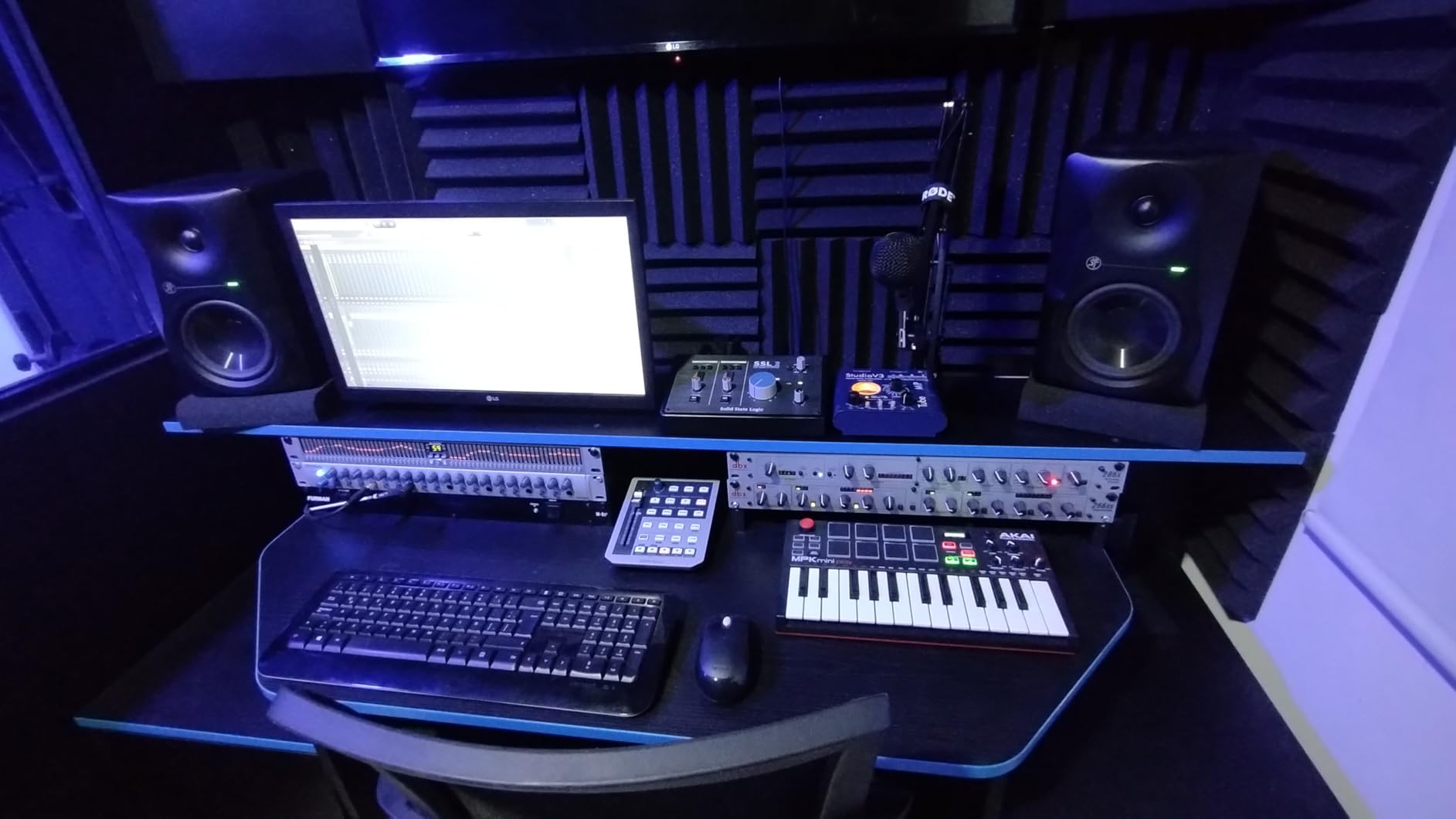
The 286S packs more processing into one rack space than anything else here, and that is our editor’s choice for a simple reason. You get amplification, dbx compression, a dedicated de-esser, an expander gate, an enhancer, and shelving EQ in a single 1U box. For a vocal, that means the sibilance and room noise problems get solved before the signal ever reaches your converter.
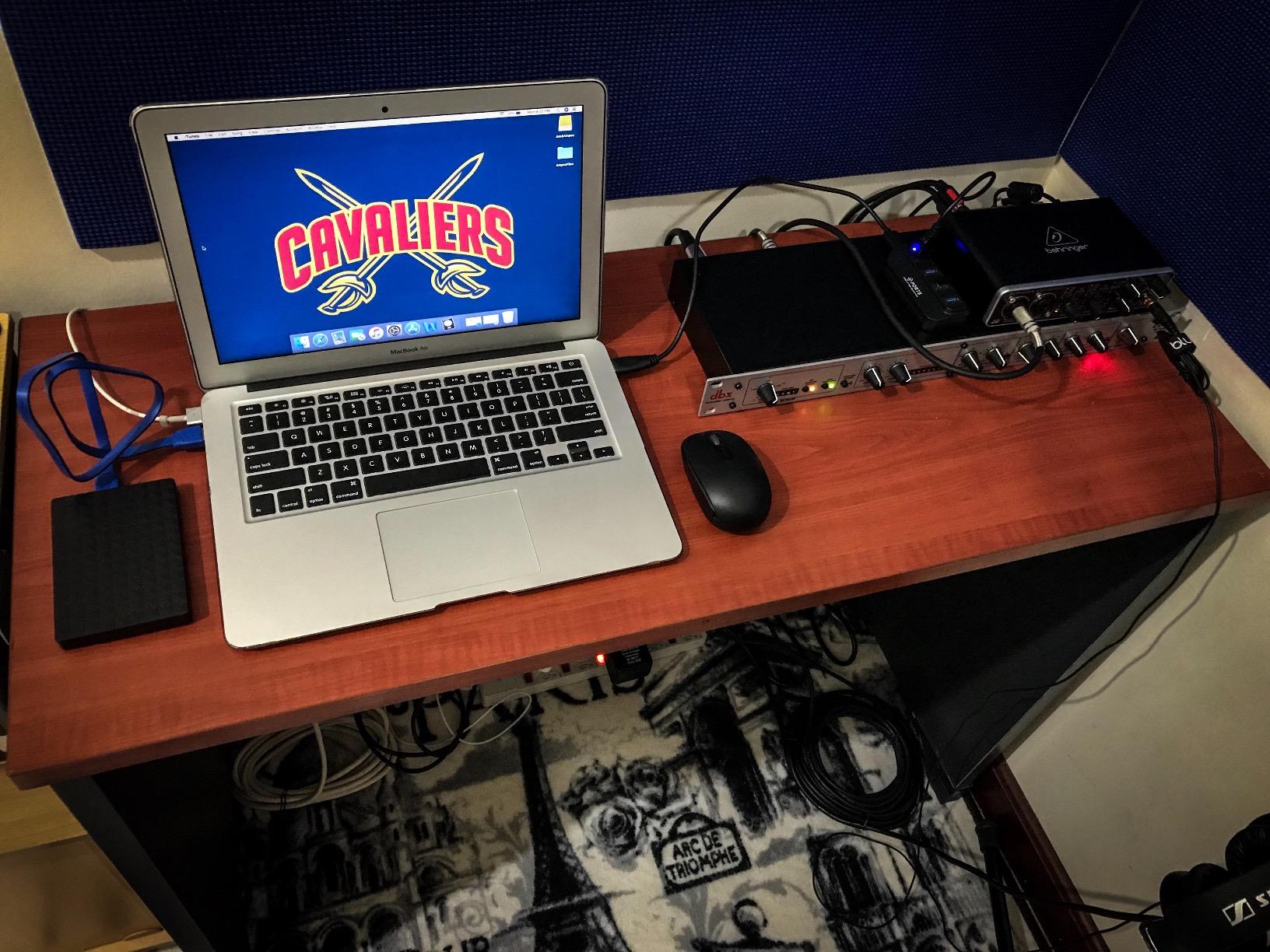
The de-esser is the feature that surprises people. It is tuned for voice rather than for a general purpose, and it does a cleaner job on an ‘s’ than most software de-essers set at a lower oversampling rate. The expander is what makes it work for podcast and voiceover, cutting background noise between phrases.
The enhancer sits after compression and lifts high and low frequency detail, which is what gives the unit its slightly forward vocal presence. The shelving EQ then lets you tilt the low end down and the top end down or up without a three-band parametric layout getting in the way of a fast vocal session.
Its processing chain is fixed, and that is the honest limitation. You cannot re-route the order with a patch bay the way you would on a higher-end unit, and the gate’s attack and release are not exposed. Reviewers also note that a very bright transient can still slip through when the EQ stage is engaged late in the chain.
Status LEDs report metering and processor state for each stage, which saves you guessing whether the gate has actually closed on a quiet passage. The 2.3 kg chassis slides into a rack without the two-handed lift that a tube design demands.
Best for vocalists who want one box to do the job
If your room needs help and you want the de-esser and gate handled in hardware rather than in plugins, this is the pick. It suits podcasting, voiceover, streaming, and lead vocals in a home room where untreated background noise is the main complaint.
Where it falls short for a serious vocal chain
It processes one channel per rack space, so tracking harmony stacks means buying several boxes. And the fixed signal path means you cannot insert an external compressor or a high-end EQ in the middle of it, which limits how far you can build a treated vocal chain around it.
2. PreSonus StudioChannel – the Best Tube Rack Preamp for Full Control
PreSonus STUDIOCHANNEL Vacuum-Tube Channel Strip, Blue
Class A 12AX7 tube preamp
1 channel
Compressor plus parametric EQ
1U 19-inch rack
Pros
- Warm smooth tube character that adds fullness to vocals
- Compressor and three-band EQ in one 1U channel strip
- Variable-Q parametric mid band for broad tonal moves
- Handles instruments line inputs and microphones alike
- Compact steel chassis works in a rack or on a desk
Cons
- Noticeable noise floor when the tube is driven hard
- Many detents per control make it fiddly for beginners
- Power switch sits on the rear panel and the adapter is bulky
The StudioChannel gives you a complete vocal chain in 1U with real analog depth. The preamp stage is a high-voltage Class A 12AX7 design, which means the tube character is present before anything else in the chain touches the signal, which is where tube color is supposed to live.
The compressor is a variable VCA design with auto attack and release and a soft or hard knee switch, and the EQ is a three-band layout with a variable-Q parametric mid plus peak or shelving low and high bands. Owners repeatedly single out that parametric mid as the control they reach for first on voice, because broad moves around 300 to 500 Hz are easy to dial in and hard to make sound wrong.
Instrument, line, and microphone inputs are all on the front, so the same channel handles a condenser lead, a guitar DI, or a keyboard line feed without a patch panel. That makes it a useful single box for a singer-songwriter tracking everything themselves.
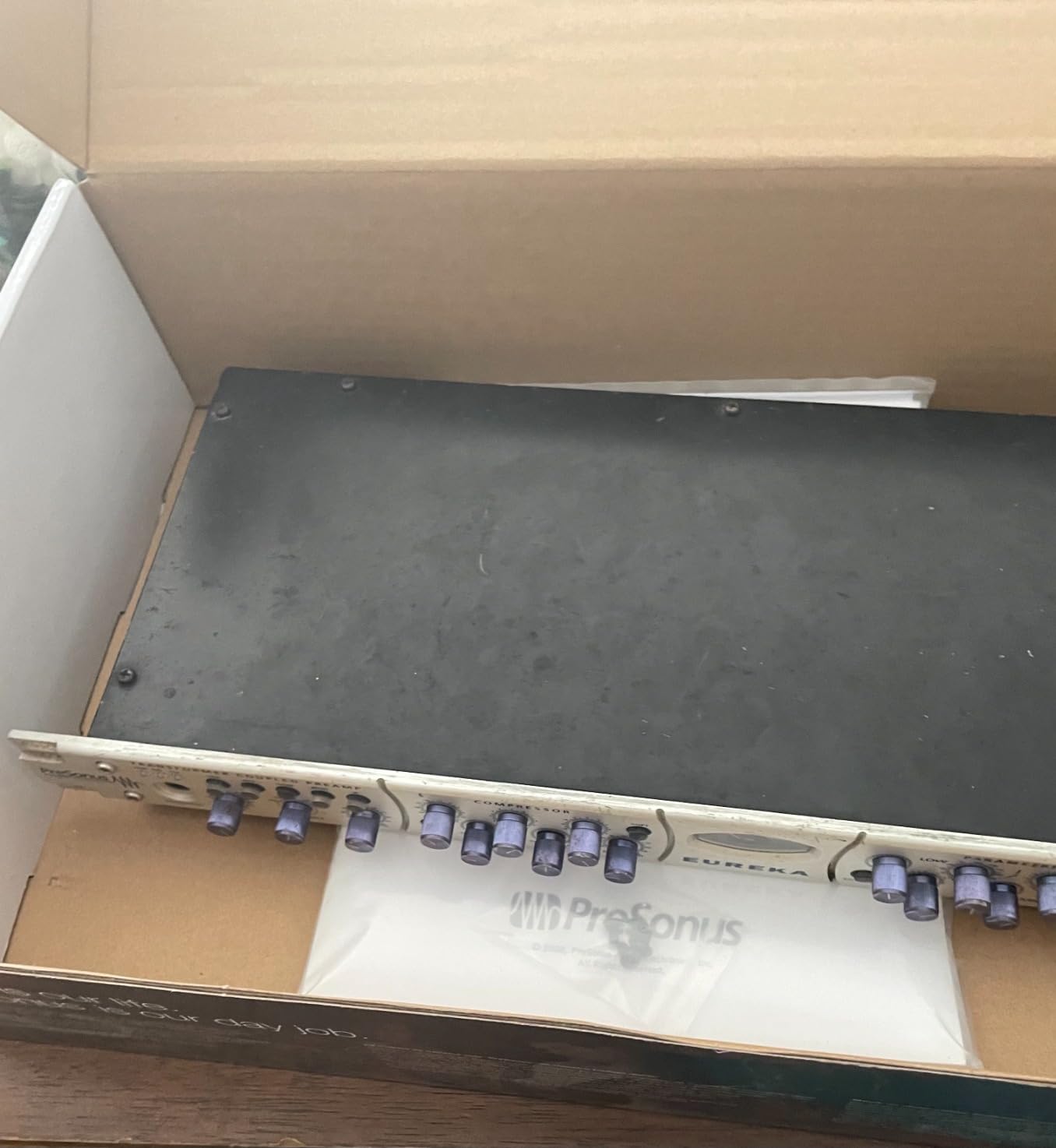
The tube drive control is a second gain stage rather than a volume pot, which means pushing it adds harmonic content instead of turning the signal down. Used gently it thickens a vocal; pushed hard it is where the noise complaint starts.
The criticisms are consistent across the feedback. Push the tube drive hard and the noise floor becomes obvious in a quiet room. Every control has many small detents, which sounds fine in a spec sheet and is genuinely fiddly when you are tracking. And the power switch is on the back, so you have to reach into the rack to power cycle it.
Best for singers who want EQ and dynamics in hardware
This is my pick when the vocal needs shaping hardware instead of plugins, or when you want a warm lead vocal chain you can commit to print and mix around later. It also handles instruments well, so a singer-songwriter tracking acoustic guitar can use the same box for both.
Where the tube design costs you
If your room is untreated and quiet, a solid-state preamp will record a cleaner file with less fuss. The tube here is charming at moderate drive and unfriendly when pushed, and the meter registers little level in normal use, so the limiter mode is the more useful meter setting.
3. ART TPS II – the Best Budget Tube Rack Mount Preamp
ART TPS II Tube Preamplifier System
All-tube preamp
1 channel
Variable input impedance
LED and analog metering
Pros
- All-tube voicing delivers the warm tone of classic preamps
- Variable input impedance lets you shape the tone per microphone
- Analog input and output meters give a clear reference
- Output protection limiter guards downstream gear
- Automatic switching between instrument and mic inputs
Cons
- Single-channel design limits tracking flexibility
- Basic metering with no detailed gain staging readout
- Owner ratings sit among the lowest in this group
The TPS II is a straightforward way to get an all-tube rack mount preamp in front of a condenser, and the variable input impedance is the feature that makes it more than a novelty. Impedance shapes how a microphone’s frequency balance behaves, and being able to switch it means you can match the preamp to a condenser one day and a ribbon the next.
The V3 Variable Valve Voicing stage, the LED input meter, and the analog output meter give you enough reference to gain stage by ear and by eye. The output protection limiter is a safety net for a unit in this class, and the toroidal transformer output stage keeps the low end weight reasonable.
The output stage and metering tell you what the unit is doing, and the LED input meter is what you set your gain structure from. Owners use both together because neither one alone tells you whether the signal is being compressed by the tube stage or just made louder.
Be realistic about the feedback here. Its owner rating sits among the lowest in the group, with complaints clustering around one channel per box and metering that only tells you so much. Treat it as a first tube preamp rather than a studio centrepiece.
Best for a first tube preamp on a tight budget
If you have a condenser microphone and want to hear what tube voicing does to a vocal, this is the shortest path. The auto-switching instrument and mic inputs also make it a quick way to compare a guitar DI against a vocal in the same session.
Where it is not the answer
One channel means no fast parallel tracking of harmony passes, and there is no EQ or dynamics section to lean on. If you need to record stacked vocals in one sitting, a two-channel or multi-channel design serves the session far better.
4. Focusrite Scarlett OctoPre Dynamic – the Best Multi-Channel Rack Mount Preamp
Focusrite Scarlett OctoPre Dynamic 8-In/8-Out ADAT Mic Preamp
Solid-state preamp
8 channels
Per-channel compression
ADAT optical
Word Clock I/O
Pros
- Eight clean natural-sounding mic preamps in one 1U box
- Per-channel analogue compression useful for tracking vocals directly
- ADAT optical expands an interface's channel count
- Word Clock I/O keeps it synchronised with external gear
- Five-segment LED metering makes gain staging quick
Cons
- No per-channel EQ since only compression is built in
- Requires an ADAT-equipped interface to be useful at all
- Fixed 8-channel topology may not suit smaller setups
The OctoPre Dynamic solves a problem no other unit on this list addresses: how do you track eight singers, or a lead plus a five-part harmony stack, without eight rack spaces and eight cables. Eight preamps, eight balanced line inputs and outputs, dual front-panel instrument inputs, and 48V phantom on every channel, all in 1U.
The per-channel analogue compression is the feature that matters for vocals. Setting it lightly on each channel gives you a consistent starting point on a harmony pass without committing to a vocal sound, and the five-segment LED input metering makes gain staging fast even with eight mics live.
The catch is obvious. There is no EQ on any channel, so the vocal chain is preamp, compression, then plugins. And it does nothing at all without an ADAT-equipped interface in the chain, which rules it out as a first rack purchase for many people.
Best for singers recording harmony stacks and ensembles
If you track layered vocals, live bands with several mics, or a room with multiple performers, this is the most efficient use of a single rack space when the session needs many microphones at once. The optimised headroom also suits loud sources like drums overheads when the same rack is doing double duty.
Where it falls short
If your interface has no ADAT input, this unit is a very expensive paperweight. And because there is no EQ, everything tonal happens after capture, which is a real limitation for anyone who wants to hear the fix while tracking.
5. ART VoiceChannel – the Best Rack Mount Vocal Preamp with Digital Outputs
ART VoiceChannel Tube Channel Strip With Digital Outs
Tube vocal channel strip
1 channel
Compressor expander de-esser gate
ADAT AES S/PDIF and USB
Pros
- Tube preamp stage delivers warmth and definition suited to voice
- Compressor expander de-esser and gate give full dynamics control
- Broad digital output choice including ADAT Lite-pipe AES/EBU S/PDIF and TOSLink
- USB direct-connect records without a separate interface
- Operates up to 192 kHz
Cons
- Single-channel processing only
- Digital outs still require conversion hardware or a computer to capture
The VoiceChannel is built around a single problem: a singer wants a tube preamp and a vocal dynamics section, but their interface has no room for either. It puts the ART tube preamp stage, a compressor, an expander, a de-esser, and a gate into one channel, which covers most of what a modern vocal chain asks for before you touch a plugin.
What makes it unusual in this roundup is the connectivity. Digital outputs cover ADAT Lite-pipe, AES/EBU, S/PDIF, and TOSLink, plus a USB direct-connect path for recording straight to a computer or laptop. For someone building a vocal chain without a conventional interface, that is a real advantage.
The dynamics section is the reason to choose it over a plain preamp. The de-esser handles sibilance and the gate or expander tames room noise between phrases, so a dry vocal can be captured in a way that survives a mix with heavy processing layered on top.
The limits are the same ones that apply to any single-channel vocal tool. It processes one channel, and digital output still means you need a converter or a computer somewhere downstream to capture the audio.
Best for podcasting and voiceover with a room that is not treated
The gate and expander are the deciding factors if your vocal is captured in an untreated room and you are doing voiceover, audiobook, or broadcast-style delivery. For music, the tube warmth is a bonus on top of a chain you would otherwise assemble from plugins.
Where the single channel becomes a problem
Layering harmony vocals one pass at a time works, but it is slower than a multi-channel design. If your sessions depend on capturing several performers at once, this unit will not keep up with the way you work.
6. Neve 1073SPX – the Best Rack Mount Preamp for a Signature Vocal Sound
Neve 1073SPX Microphone Preamp and EQ
Transformer-balanced Class A
1 channel
80dB of gain
Three-band EQ
Polarity reverse
Pros
- Musical rather than surgical tone that flatters vocals
- Essentially noiseless operation in practice
- EQ bands are hard to push into an unmusical sound
- Three transformers covering mic line and output stages
- Owners use it on nearly every source
Cons
- Not perfectly transparent because transparency is not the design goal
- Service requires returning the unit to the manufacturer
- Very high cost for a single channel of preamp and EQ
The 1073SPX is a deliberately coloured circuit: transformer-balanced Class A topology with three transformers across the mic, line, and output stages, delivering 80 dB of gain and a three-band EQ. On a vocal it produces a midrange-forward, present sound that sits well in a mix without much EQ.
Owners describe the EQ bands as hard to push into an unmusical sound, which is the most useful thing to know about the unit, because an EQ that cannot go wrong changes how you record. They also describe the amplification as essentially noiseless in normal use.
It handles mic, line, and DI sources, includes polarity reverse, and comes in a stainless steel enclosure with a two-year warranty. Audio engineering forum threads repeatedly name the 1073 as the default for vocals specifically because of the midrange character and presence it hands you.
The trade-offs are real. This is one channel in 1U, which is an expensive use of a single rack space, and it is not designed to be invisible. Servicing also means sending the unit back to the manufacturer rather than working on it locally.
Best for a lead vocal you want to sit forward in the mix
If you track lead vocals for rock, pop, or anything with a big front-of-mix vocal, the midrange push is the whole point and you will hear it on almost every take. It is also the pick when you want an EQ you can trust to stay musical.
Where it does not make sense
If you are tracking stacks, spending three rack spaces for the same sound is a poor trade. And if you want a neutral starting point to shape yourself with plugins, this is the opposite of what you asked for.
7. Warm Audio WA73 – the Best Warm Rack Mount Preamp for Vocals
Warm Audio WA73 Microphone Preamp
Single channel mic line and instrument preamp
Warm full-bodied sound profile
Balanced line-level output
Metal enclosure
Pros
- Warm full-bodied tone well suited to vocal recording
- Single channel with mic line and instrument inputs
- Metal enclosure in a rack-friendly format
- Balanced line-level output integrates easily with interfaces
Cons
- Preamp only with no compression or EQ section
- Only ten ratings on record so long-term data is thin
- No processing means the chain is built in software
The WA73 does one job: warm, full-bodied amplification of a single channel. It accepts mic, line, and instrument inputs, outputs a balanced line-level signal, and comes in a metal enclosure that suits a rack. If your vocal chain is otherwise handled in software, that restraint is the appeal.
Owners consistently point at the tone rather than the features. A vocal recorded through it arrives with more body and less edge, which suits singers whose microphones already capture a lot of top-end detail and who do not want another brightness problem to solve later.
Because it is a preamp only, the chain stays simple: gain staging happens here and everything else happens in your DAW. That makes it easy to A/B against other preamps because nothing downstream is colouring the comparison.
The limitation to weigh honestly is the feedback base. With only ten ratings on record, the long-term reliability picture is thin, and there is no compressor or EQ to help you in a room that needs it.
Best for a clean software chain with a warm analog front end
This suits someone who mixes in plugins and wants a front end that adds weight rather than processing. It is also a straightforward choice for tracking a single lead vocal without thinking about hardware dynamics.
Where you will outgrow it
There is no de-esser, no gate, and no EQ here, so an untreated room stays untreated. Once you are recording voiceover, podcast, or multi-mic work, a channel strip or a multi-channel preamp serves the session better.
8. Golden Age Project Pre-73 MKIV – the Best Value 80 dB Rack Preamp
Golden Age Project Pre-73 MKIV Mic/Line/Instrument Preamplifier
Discrete 1-channel preamp
80dB of gain
Output level and polarity invert
Highpass filter
Pros
- 80dB of gain gives plenty of headroom to drive an interface
- Simple layout with output level polarity invert highpass and phantom
- Microphone line and instrument inputs cover the main sources
- Owners report clear recordings at practical gain settings
Cons
- Preamp only with no compressor or EQ section
- One reported unit arrived with a damaged knob
- Only a handful of ratings on record limits insight
The Pre-73 MKIV is the answer to a specific problem: your interface runs out of clean gain with an SM7B or a passive ribbon, and you do not want to change the interface. Eighty decibels of mic gain in a single channel gives you enough level to leave the interface’s preamp almost untouched, which is where the noise reduction comes from.
Owners report exactly that outcome, describing recordings that came back clear at sensible settings rather than requiring the interface to be pushed. The front panel keeps the essentials in one place: output level control, polarity invert, a highpass filter, and phantom power.
Mic, line, and instrument inputs cover the sources most vocalists actually use, so the same box can handle a condenser lead, a ribbon, and an acoustic guitar DI. It operates up to 192 kHz and carries a two-year warranty.
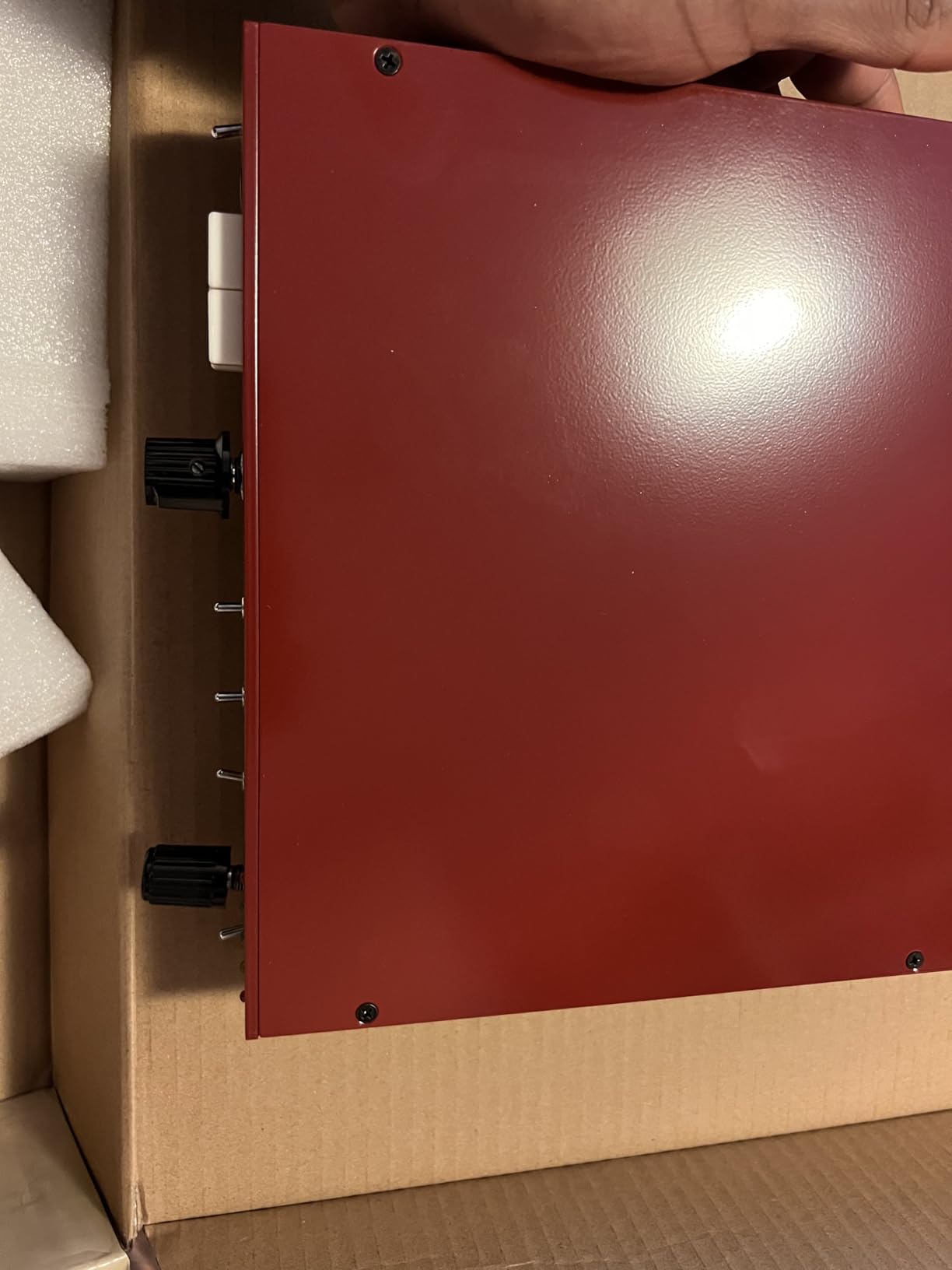
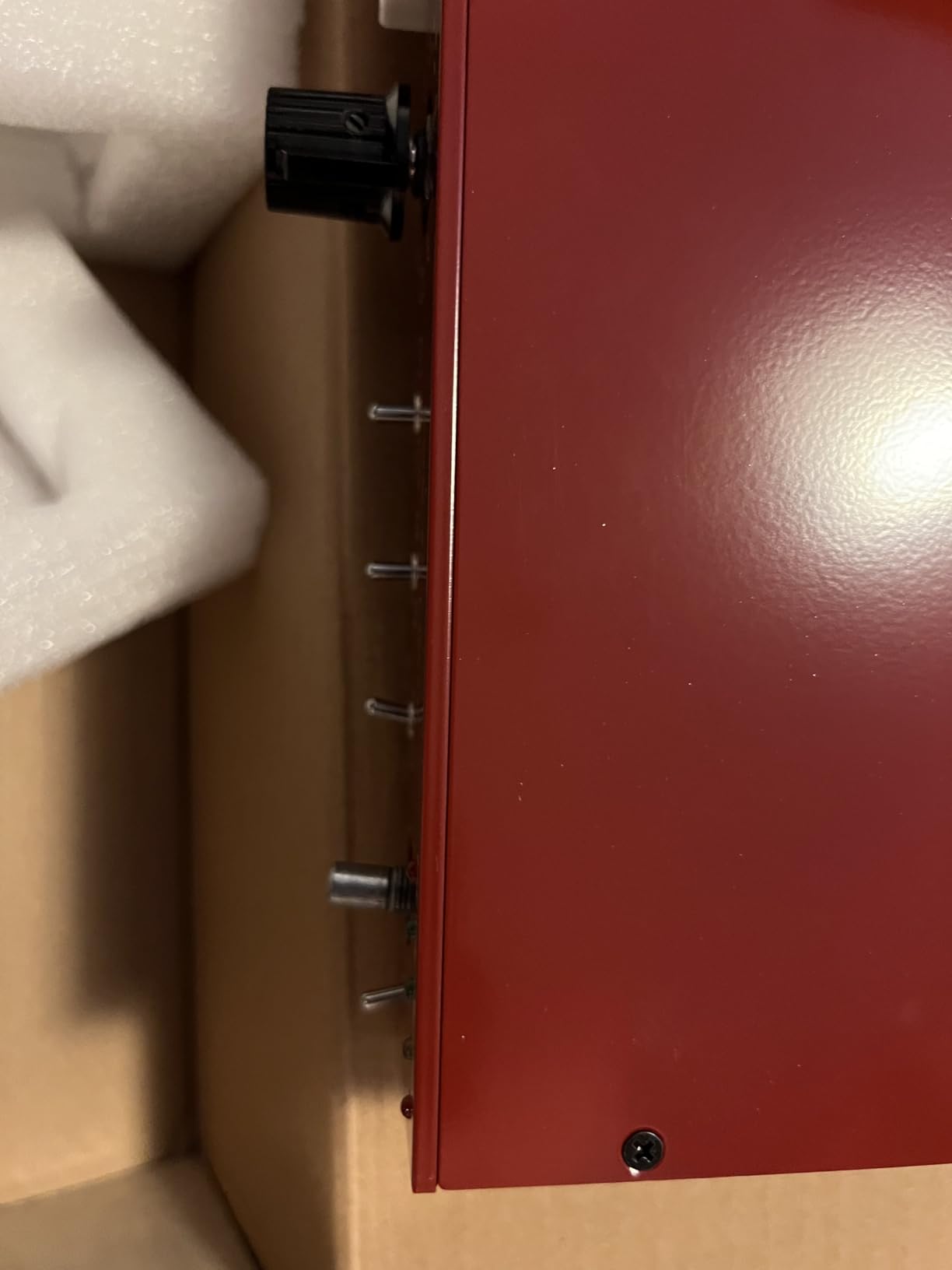
What it is not is a channel strip. There is no dynamics and no EQ, so every decision happens after capture. The feedback base is also small, and one review reports a unit arriving with a loose knob.
The output level control is the piece people underrate. Because gain and output are separate, you can run the amplifier stage into its comfortable working range and then trim the level into your interface without losing the relationship between mic level and preamp drive.
Polarity invert matters more than it looks in a stacked vocal session. If you double a part and the two takes drift out of phase, flipping polarity on one pass recovers some of the low-mid weight that cancels out.
Best for solving an interface gain problem
If your only complaint is that a dynamic microphone runs hot and your converter is picking up noise at the level you need, this is the most direct fix in the roundup. Half-rack units are also discussed regularly on audio engineering forums as a sensible choice when a full 19-inch shelf space is not available.
Where the bare preamp is not enough
Nothing here tames sibilance or room noise. If your vocal needs de-essing before it is captured, or you want to commit to a hardware sound, a channel strip like the dbx 286S or the PreSonus StudioChannel does more for you.
9. Heritage Audio HA73 Elite – the Best 1073-Style Starter Rack Preamp
Heritage Audio HA73 Elite – Single Channel Mic Preamp
Class A solid-state
1 channel
80dB of gain
20dB pad
80Hz highpass
DI input
Pros
- Class A topology with 80dB of gain across a wide mic range
- 20dB pad tames loud sources such as ribbons
- 80Hz highpass rejects rumble and reduces plosive energy
- DI input covers instruments on the same channel
- Lightweight 3.8 lb chassis is easy to lift into a rack
Cons
- Only a single rating on record so owner feedback is untested
- No built-in compression or EQ
- Class A solid-state adds no harmonic coloration by design
The HA73 Elite is a straight Class A preamp with 80 dB of gain, a 20 dB pad, an 80 Hz highpass filter, and a DI input on the same channel. That pad is the part to understand before you buy it. Passive ribbon microphones put out very little signal, and without enough clean gain they sit at a level where any noise in the system becomes the signal.
That is why forum threads comparing Neve-style preamps at different tiers keep circling back to gain range as the deciding factor. Eighty decibels with a pad in front of it covers ribbons, SM7B, condensers, and loud sources without pushing any stage into distortion.
The highpass at 80 Hz is a sensible default that removes handling rumble and a good share of plosive energy before you capture. The DI input means an acoustic guitar or a bass can share the channel when you are not using the microphone input.
Be clear-eyed about the evidence. There is a single rating on record, so owner feedback is effectively untested, and the feature set is bare apart from the pad and filter.
Best for ribbon microphones and loud dynamics
Choose this when a passive ribbon is your main vocal microphone and the pad is the difference between a usable recording and a noisy one. The Class A topology also suits anyone who wants a solid-state starting point without a channel strip’s processing.
Where you need more than gain
There is no EQ and no compressor, so nothing shapes the tone while you track. And with a single rating on record, there is no long-term owner history to reassure you about a unit you are installing permanently in a rack.
10. Behringer 1273 – the Best Dual-Channel 1073-Style Rack Preamp
Behringer 1273 2-Channel Microphone Preamplifier and Equalizer
2-channel preamp and EQ
Three-band EQ per channel
Custom Midas transformers
Highpass and tone switch
Pros
- Two channels of preamp with three-band EQ in one unit
- Custom Midas transformers on the signal and output stages
- Highpass filter and tone switch for source shaping
- XLR and quarter-inch TRS cover mic line and instrument sources
Cons
- Only a single review on record so long-term feedback is untested
- Heavy 14.3 lb chassis for a two-channel box
- Two channels still limit very large harmony sessions
The Behringer 1273 gives you two channels of preamp with a three-band EQ each, using custom Midas transformers at the signal and output stages. Two channels is the practical sweet spot for vocalists: enough to double a lead, or to record a lead and a harmony in the same pass.
The EQ is the differentiator against a plain dual preamp. A three-band layout means you can address a nasal midrange, a boxy low-mid, and sibilance at the top before the signal is captured, rather than trying to reconstruct those moves later on an unprocessed file.
Each channel also carries a highpass filter and a tone switch, and XLR plus quarter-inch TRS connectivity covers microphone, line, and instrument sources. For someone tracking an acoustic guitar and a vocal together, that covers a lot of sessions without extra hardware.
The honest caveats are the weight at 14.3 pounds and the feedback base. There is a single review on record, so the long-term owner story is untested.
Best for doubling vocals and tracking two sources at once
If your sessions depend on a lead plus a double, or on capturing a vocal and an instrument together, two channels in one rack space beats two single-channel boxes. The three-band EQ lets you commit to a vocal sound at capture time.
Where the heavy chassis and limited history matter
A 14.3 pound box is awkward to move between a rack and a desk, and you will do that more than you expect. With only one review on record, you are buying on the spec sheet rather than on owner history.
Rack Format Explained: 19-Inch, Half-Rack, 500 Series, and Desktop
The rack format decision comes before the tone decision, because it determines what you can physically install. Four formats cover most preamps sold today, and each one has a different cost and a different expansion path.
Full 19-inch 1U is the standard studio format and the safest choice. Every rack, every road case, and every studio accepts it, and you can add channels later by adding rack spaces. It is the format most of the preamps in this roundup use.
Half-rack boxes are roughly 10 inches wide and need a half-rack shelf or mounting hardware to sit in a 19-inch rack. They are the efficient choice when rack space is tight, and the Golden Age Pre-73 MKIV is the example here. Audio engineering forums regularly raise the question of whether the extra shelf hardware is worth it, and the answer is usually yes only when you genuinely cannot spare a full rack space.
500 Series and Lunchbox formats are single modules that need a separate chassis and power supply before they do anything. The chassis is a real budget item that is easy to forget, and it is the single most common surprise for people planning their first rack. If you want a flagship module later, budget for the host unit now.
Desktop 1U boxes are excluded from this roundup deliberately. They are not rack mount preamps, they need shelf space, and they usually offer fewer features per channel than a rack box at the same level.
One more format worth knowing about is the half-rack shelf as a product of its own. Buying a half-rack preamp without the shelf is the most common hardware mistake in a first rack build, and it is easy to miss because the preamp and the shelf are sold separately.
Rack weight is worth checking before you commit to a tube design in a small studio. Several of the boxes here weigh several kilograms each, and a lightly built domestic rack with limited depth can reach its limit long before you run out of rack spaces.
Tube vs Solid-State vs Hybrid: What Actually Changes for Vocals
Tube preamps add harmonic content as signal level rises, which softens transients and thickens a vocal as you push into the gain range. The PreSonus StudioChannel and both ART boxes on this list use 12AX7 designs. The trade-off is a noise floor that becomes audible in a quiet room when the tube is driven hard, and the hum and microphonics that untreated rooms make worse.
Solid-state preamps stay quiet and hold their character at any level, which makes them the safer default in an untreated room. The Neve 1073SPX shows that solid-state does not have to mean neutral, since it is transformer-balanced and deliberately coloured. If you want the cleanest possible capture to shape yourself, this is the topology to buy.
Channel strips combine a preamp with dynamics and EQ, so the topology question becomes less important because the signal is being shaped regardless. That is exactly why the dbx 286S wins here: it decides the questions for you before the signal reaches the converter.
Engineers disagree about whether preamp character survives compression and EQ, and the honest answer is that it mostly does on the low end and the transient. If your vocal needs body and presence rather than correction, the preamp choice matters more than most people expect.
That is also why channel strips complicate the argument. When a unit compresses and equalises in hardware, it is impossible to isolate what the preamp contributed and what the compressor did. Treat a channel strip as a vocal sound you are buying, not as a preamp you are auditioning.
Matching Preamp Character to Vocal Style
Rap and spoken word need forward, present delivery that cuts through a dense beat. A crisper transformer-balanced preamp like the 1073SPX, or a channel strip with a working de-esser like the dbx 286S, keeps the consonants intact. Smooth, dark preamps work against you here because the articulation is the performance.
Intimate singer-songwriter ballads are the opposite problem. A warm preamp such as the WA73 or a tube channel strip adds body that sits nicely under acoustic instruments, and the lack of top-end aggression keeps the vocal from sounding thin on phone speakers and small systems.
Belted pop and rock vocals want a midrange push that survives a loud mix. This is where the 1073-style units earn their cost, and where the Behringer 1273’s three-band EQ lets you commit to that sound at capture time rather than fighting for it later.
Stacked harmony vocals are a channel-count problem, not a tone problem. The Scarlett OctoPre Dynamic captures eight singers at once so every pass is comparable, which matters more to a harmony stack than any single-channel character difference.
Voiceover and podcast are a dynamics problem. A working gate, expander, and de-esser before capture saves a large amount of editing time, which is why the ART VoiceChannel and the dbx 286S both earn their place outside the music-only use case.
Gain Staging: Pairing Your Rack Preamp With an Audio Interface
The whole point of adding a rack preamp is that your interface’s gain stage never has to work hard. Run the microphone into the rack preamp, set the output to drive your interface to roughly -12 dBFS peaks, and set the interface preamp as low as it will go while still reaching full scale. The extra noise the interface would have added at a hot setting mostly disappears.
For an SM7B, the practical target is to reach around -18 dBFS peaks on a loud pass and turn the preamp down from there. If you cannot get there with your current chain, that is a gain problem, and the units with 80 dB of gain such as the Pre-73 MKIV and the HA73 Elite exist specifically to solve it. Passive ribbons need even more, which is why a pad in front of a very clean preamp beats an inline booster in most racks.
Watch the digital link. If your rack preamp is feeding a converter over ADAT optical, gain staging happens once at the preamp and nowhere else, and the only thing that can clip after that is your converter’s own ceiling. The Scarlett OctoPre Dynamic’s Word Clock I/O exists for exactly this arrangement.
Preamp gain and output level being separate controls is what lets you change how hard you drive the front end for harmonic content while keeping the recorded level constant.
How to Choose a Rack Mount Vocal Preamp
1. Decide the channel count first. Count how many singers or mics need to be recorded at once. One singer tracking a lead and harmony one pass at a time is fine with 1U single-channel boxes. Multiple performers at once means you want two channels or more, which changes the shortlist entirely.
2. Match the rack format to the space you actually have. Measure the rack before buying anything. Full 19-inch is the safe default; half-rack needs a shelf; 500 Series needs a chassis and power supply before the module does anything.
3. Get the gain range right. Add up what your microphone actually needs. An SM7B wants clean gain in the high 50s to low 60s dB. A passive ribbon needs considerably more, and a 20 dB pad in front of a clean amplifier gets you there without distorting the stage.
4. Choose topology based on the room. A quiet, treated room rewards solid-state. An untreated room with hum and handling noise is made worse by a tube unit at high drive. If you cannot control the room, start with the channel strips that include a gate.
5. Decide how much processing you want in hardware. Preamp only means every decision happens in software. A channel strip commits to compression, de-essing, and EQ at capture time, which is faster to mix around but harder to undo.
6. Check the deal-breakers. No phantom power rules out condenser and ribbon microphones. No loop-out or insert means no outboard processing. No digital I/O means you need an ADAT-equipped interface for anything like the OctoPre Dynamic.
Budget the chassis and shelf hardware as part of the price, not as an afterthought. It is the most common reason a first rack build costs more than expected.
Finally, read the review counts before you read the ratings. A five-star average built on one review tells you very little, and three of the units here have fewer than a dozen ratings on record. Weight long-running owner feedback far more than the headline number.
Frequently Asked Questions
What is the best rack mount preamp?
The best rack mount preamp for most vocalists is the dbx 286S, because it fits one 19-inch rack space and includes a de-esser, gate, compressor, and EQ alongside the preamp. For a single clean vocal chain the Neve 1073SPX is the reference, and for eight singers at once the Scarlett OctoPre Dynamic is the efficient choice.
What are the best preamps for vocals?
The best preamps for vocals depend on the mic and the room. For gain and processing in one box the dbx 286S leads our list. For a warm single-channel tone the Warm Audio WA73 or the PreSonus StudioChannel fits. For ribbons and low-output dynamics look for 80 dB of gain with a pad, such as the Pre-73 MKIV or the HA73 Elite.
What is the best vocal preamp for live performances?
For live use, reliability and gain staging matter more than tone, so a solid-state channel strip with a gate and a hard limiter is usually the right choice over a tube unit. The dbx 286S and the ART VoiceChannel both include a gate and dynamics, which prevents an open mic in an untreated room from feeding noise into the PA.
What are the best Neve 1073 preamp settings for vocal recording?
Start with the pad out, gain set for roughly -18 dBFS peaks on your loudest pass, and the EQ flat. Cut 300 to 500 Hz by 2 or 3 dB to clear boxiness, add 2 dB around 3 kHz for presence, and use the highpass to remove rumble below 80 Hz. Engineers trust this circuit specifically because the bands stay musical when pushed.
Can you provide a review of the API 3124V preamp?
The API 3124V did not make our list of 10 rack mount vocal preamps, largely because its four channels make it a poor fit for a single-vocalist rack. Forum consensus treats API circuits as crisp and forward, which suits present vocals but is more often reached for acoustic and drum recording. Our 1073-style picks cover similar forward territory for lead vocals.
Which Neve preamp is considered the best?
The Neve 1073SPX is generally regarded as the best Neve for vocals because it combines 80 dB of gain with a three-band EQ and transformer-balanced Class A circuitry in a single rack space. Engineers name its midrange character and presence as the reason it sits well in a mix, and its rating across owners reflects that consistency.
What is the holy grail of microphones?
There is no single answer, and the honest reply is that the microphone matters more to your vocal than the preamp does. A preamp shapes a signal the microphone already produced, so spending on a great preamp in front of the wrong mic will not fix the recording. Choose the microphone for your voice first, then pick a preamp that gives it enough clean gain.
Conclusion: The Best Rack Mount Preamps for Vocals
The dbx 286S is the best rack mount preamp for vocals overall, because it solves gain, dynamics, sibilance, and room noise in one 1U space that costs you nothing extra in rack space. If your budget is lower and you specifically want tube voicing, the ART TPS II is the shortest path there.
Going up, the Neve 1073SPX is the pick when you want a lead vocal that sits forward without much work, and the Scarlett OctoPre Dynamic is the pick when you record several singers at once. For warm single-channel tone the WA73 does the job, and for ribbon microphones look to anything with 80 dB of gain and a pad.
Whatever you choose, measure the rack first and gain stage second. Those two decisions decide more about your vocal file than the preamp itself. This roundup was updated for 2026.