
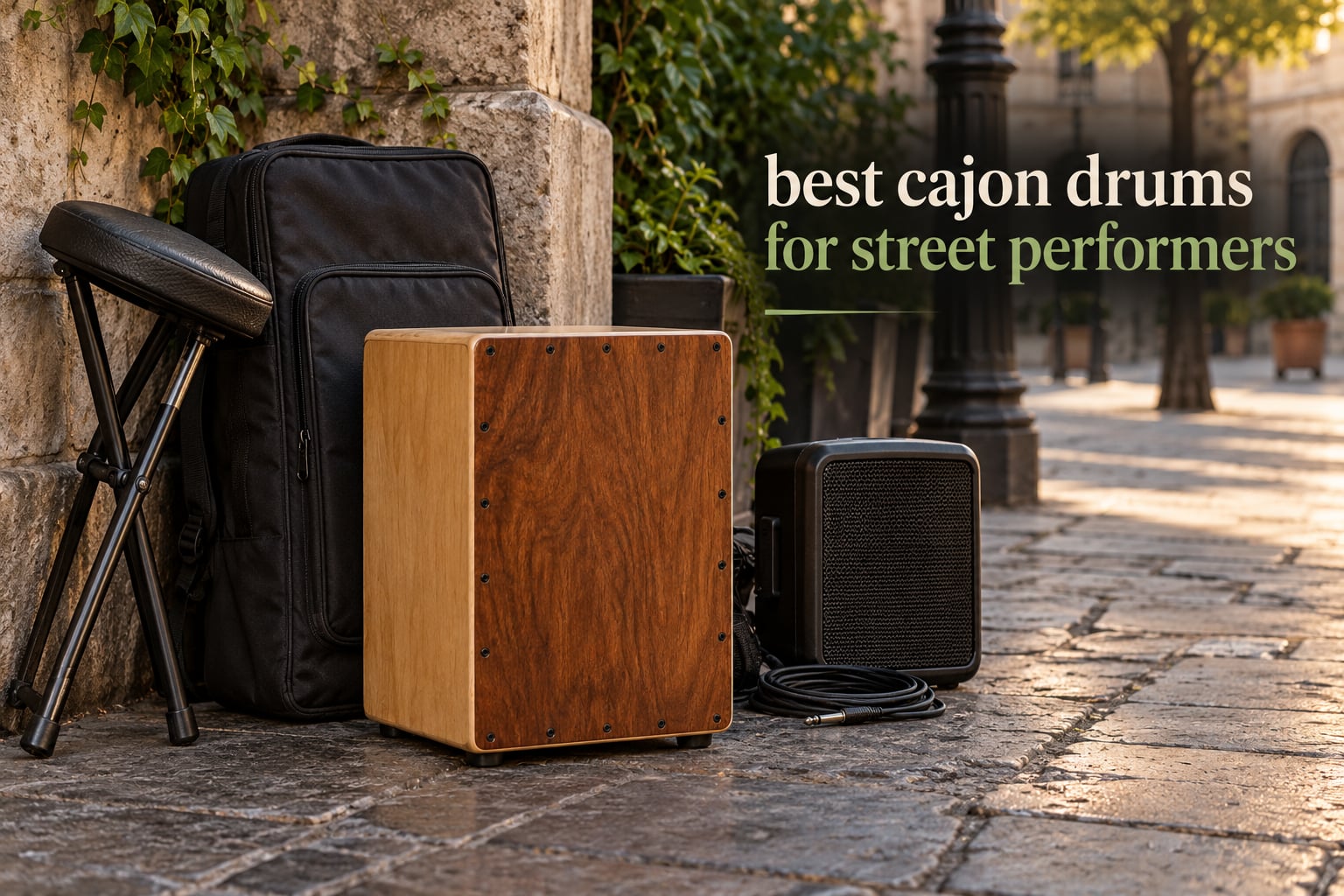
A cajon is the only drum a street performer can carry on one hip, set up in under a minute, and still fill a pitch with a kick and a snare. The best cajon drums for street performers in 2026 are not the heaviest studio boxes or the prettiest display models. They are the ones that survive the walk to the pitch and cut through traffic noise once you arrive.
Four constraints decide everything, and almost no cajon roundup talks about them: how much weight you carry, whether you can be heard over a bus lane, whether you can amplify it, and whether it tolerates damp pavements and grit. Weight alone is the complaint that comes up most often in busking circles, because a full-size box plus a stool plus a PA and cables is a multi-item carry, not a backpack.
Our top pick is the Meinl Percussion Jam Cajon JC50LBNT. At roughly six pounds with a real 4-inch rear sound port and solid Baltic birch construction, it is the lightest box here that still projects bass rather than a polite tap. If your pitch is loud enough to play unamplified and you want a fuller tone, the Meinl Percussion Pickup Woodcraft PWC100B is the one to buy, because three internal piezo pickups remove the microphone stand from your setup entirely.
We weighed carry burden, tone, snare adjustability, amplification options and outdoor durability across eight boxes, and compared what owners actually say after playing them rather than what the listings claim.
Table of Contents
Top 3 Picks for Street Performing (October 2026)


Meinl String Cajon HCAJ3AWA
- Adjustable snare strings
- White ash front plate
- Full-size 19.75 in height
Best Cajon Drums for Street Performers in 2026
Every box below is a sit-down design rather than a lap cajon, because the eight-player set we could verify all fall into that family. Weight is the first column we look at after the badge, since it decides how far you can walk between pitches.
| Product | Specs | Action |
|---|---|---|
| Meinl Jam Cajon JC50LBNT |
|
Check Latest Price |
| Pyle PCJD18.5 Stringed Cajon |
|
Check Latest Price |
| Meinl String Cajon HCAJ3AWA |
|
Check Latest Price |
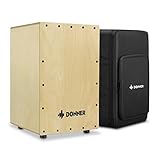 Donner EC1291 Donner EC1291 |
|
Check Latest Price |
 Gecko CL12SS Gecko CL12SS |
|
Check Latest Price |
 POGOLAB 3635GW Three-tone Cajon POGOLAB 3635GW Three-tone Cajon |
|
Check Latest Price |
 Pearl Primero PBC123BBR Pearl Primero PBC123BBR |
|
Check Latest Price |
 Meinl Pickup Woodcraft PWC100B Meinl Pickup Woodcraft PWC100B |
|
Check Latest Price |
1. Meinl Percussion Jam Cajon JC50LBNT – the lightest box that still has real bass
Meinl Percussion Cajon, MADE IN EUROPE — Sit-On Box Drum, Snare & Bass Tone
Baltic birch body
10.25 x 15 x 10.25 in
About 6 lb
Two fixed snare wire sets
4-inch rear sound port
Pros
- Lightest carry burden of any full-footprint box here
- Deep punchy bass with a convincing snare
- 4-inch rear port doubles as a mic position
- Silicone feet stop vibration on hard surfaces
- Two-year Meinl warranty
Cons
- Compact size can feel squat for taller players
- Non-adjustable snare
- Easy to ding if bumped
This is the box I keep coming back to for street work, and the reason is simple arithmetic. At about six pounds it is the only sit-down model in this list where the box itself does not dominate what you are carrying, so adding a stool and a lead cable still leaves a manageable load for a walk between pitches.
The tone is the surprise. Owners consistently describe a deep, punchy bass with a genuinely convincing snare from the two fixed steel wire sets, and the fit-and-finish is solid European Baltic birch with no glued-on laminates. For a first or second full-size box this is the one I would put in your hands.
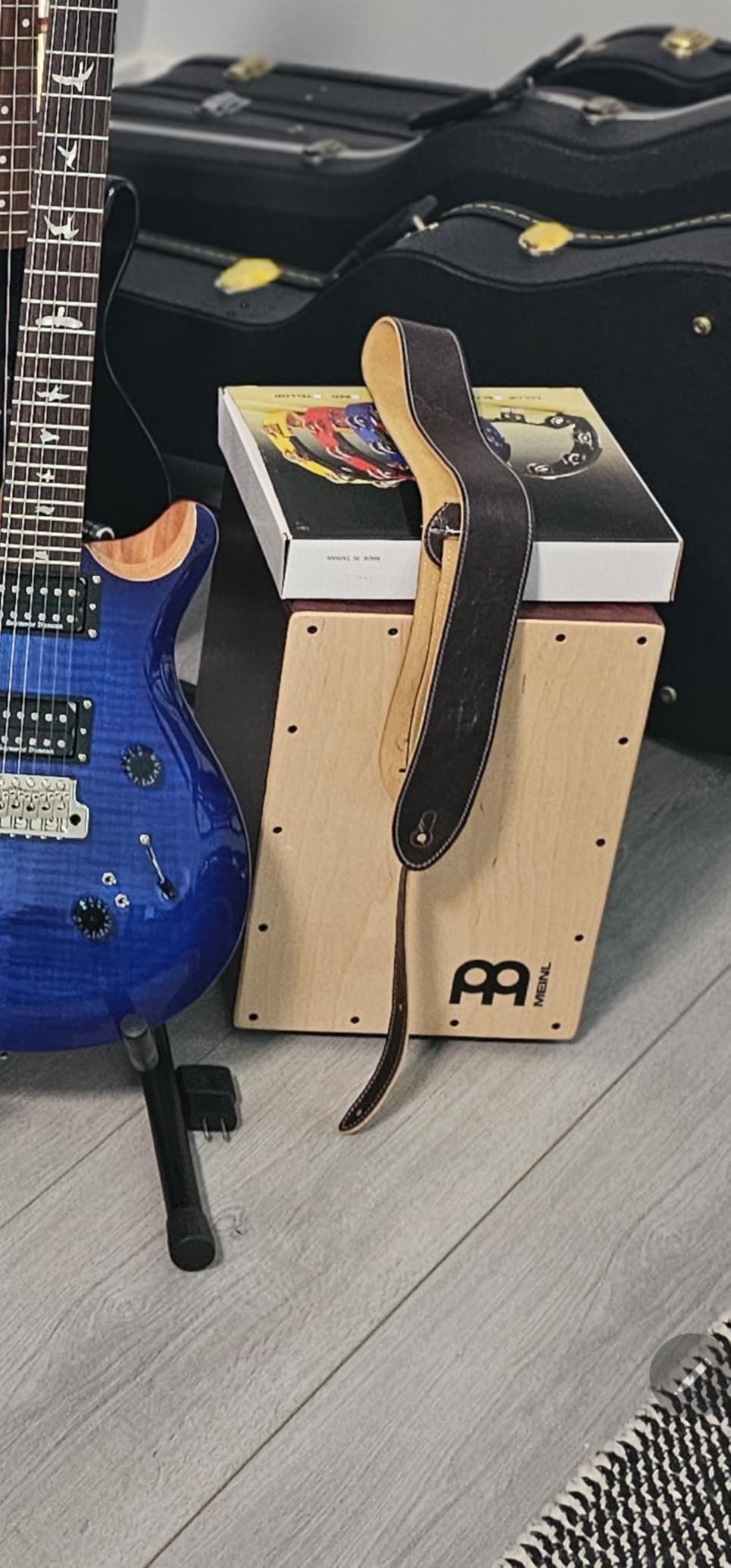
Meinl describes the sound profile as balanced with prominent lows and highs, and that balance is what lets you play behind a singer without swamping them. Unplugged, it is quieter than the big ash box further down this list, which is a fair trade for the weight you are not carrying.
There is one design decision worth flagging before you commit. The Jam Cajon is a compact 15-inch-tall box rather than a full-size 19-20 inch one, so tall players sometimes find the seated position cramped and their knees ride higher than they expect. Measure your seated knee height against the 15-inch height before you order, because that single number decides whether this box is comfortable or annoying for your body.

What you get in the tone trade
You get a bass that carries through mid-level street noise without any electronics, which is the whole reason this box earned the top spot. The rear 4-inch port is not only a tone hole, it doubles as a natural microphone position if you decide to add amplification later.
You give up snare tuning. The two wire sets are fixed, so there is no tension adjustment to move the snare from tight and crisp to loose and laid back. Owners report the snare runs slightly softer than premium wire-snare models, which matters if your set leans heavily on sharp slaps.
Where it falls short on the street
The light shell is the trade for the light weight, and it dents if you knock it against a bollard or a bus shelter post. A padded gig bag matters more here than with the heavier boxes in this list.
If you play very tall and very loud, the compact proportions may fatigue your legs before your back. In that case the Donner EC1291 further down carries a full-size footprint and a backpack, and it is the better tool for a loud street pitch.
2. Pyle PCJD18.5 Stringed Cajon – the best value box for a first busking pitch
Pyle Stringed Jam Wooden Cajon, Handcraft Compact And Lightweight Percussion Box With Internal Guitar Strings, Rubber Capped Feet, Suitable For All Ages
Birch wood body
12 x 12 x 18 in
10.9 lb weight
Internal guitar strings
Rubber-capped feet
Pros
- Large review base for a first instrument
- Compact body for the weight
- Internal guitar strings give a smooth snare
- Handcrafted birch panel frame
- Rubber-capped feet clean up the tone
Cons
- Shallower bass than larger full-size boxes
- Snare strings cannot be adjusted
This is the box I recommend to someone who has decided to start busking and is still working out whether they will keep it. With more than two thousand reviews averaging well above four stars, the pattern in owner feedback is remarkably consistent: easy to learn, easy to carry, pleasant to play, and light on the bass compared with bigger boxes.
The body is 12 by 12 by 18 inches of handcrafted birch panel, and the internal guitar strings produce a smooth, rhythmic snare that responds well to a light touch. That responsiveness is what makes it forgiving for a player who has never played a box drum before.
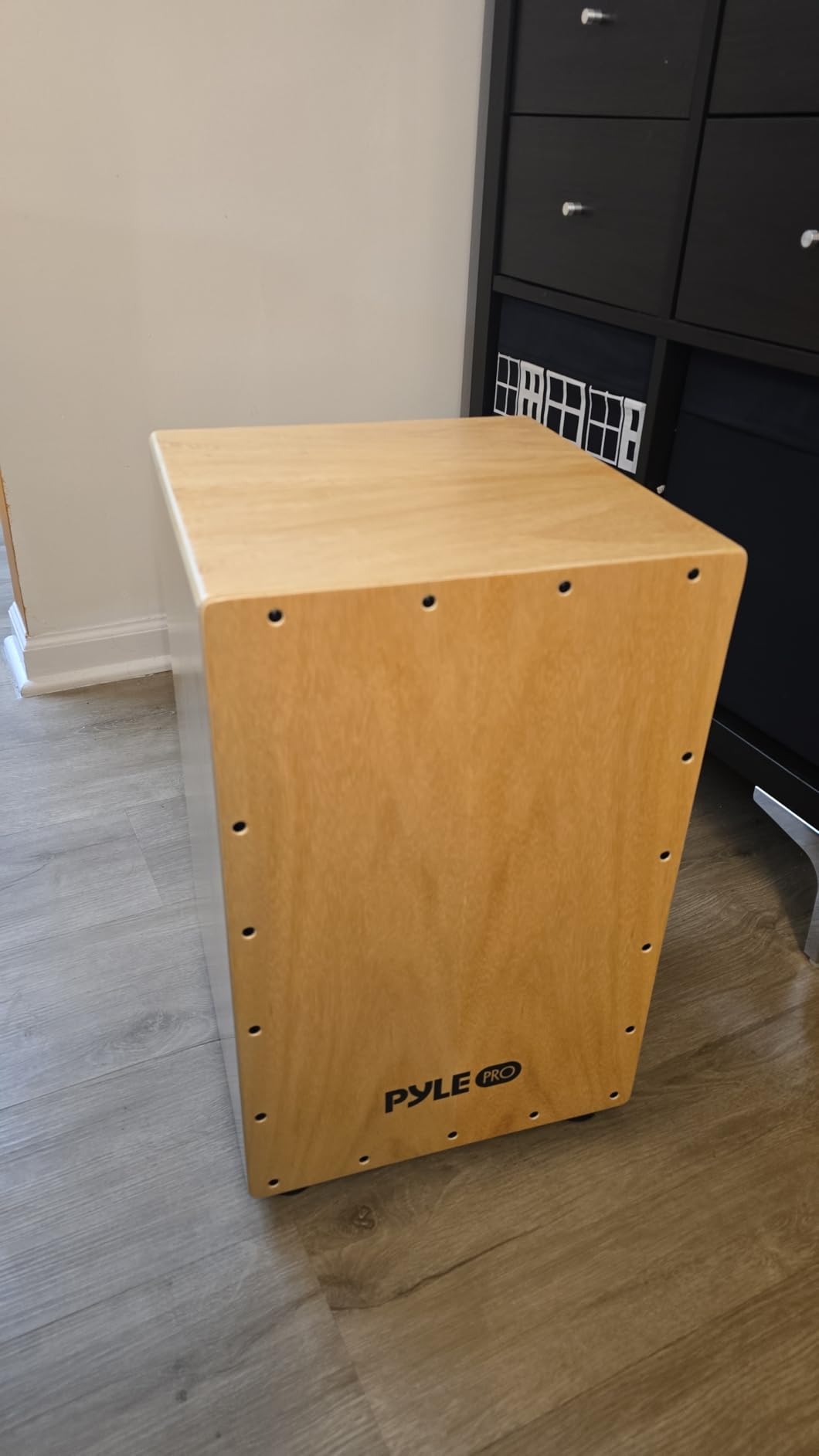
The honest limitation is low end. Owners who move up to a larger box later almost always cite the bass as the reason, not the snare. On a quiet street or a pedestrianised plaza that is a fair trade, but if you are pitching beside a main road you will be reaching for volume you cannot get from this one.
You also cannot tune the snare. The strings are fixed in place, so the tone is whatever the builder set, which means you cannot brighten it for a particular song or dull it for a loud spot. Pyle covers this with a one-year warranty, shorter than the two years on the Meinl models.
Where it fits in a busking kit
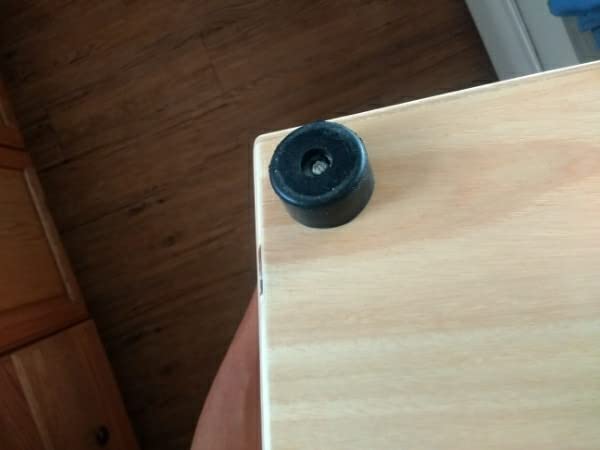
This is a good first box for a pedestrian pitch, a busker working a plaza, or a small courtyard set where you are not fighting traffic. The 18-inch height means more adult legroom than the Meinl Jam Cajon, so taller players are comfortable here.
Owners rate it highly as a practice, worship and small-room instrument too, and it plays convincingly alongside an acoustic guitar without pushing the mix. If your set is mostly brushed patterns and light slap work, the smoother snare suits it well.
Where it falls short
Ten and a half pounds is not the lightest carry here, and there is no gig bag in the box, so you will be improvising a strap or a trolley for the walk from the station. Budget for a padded case separately if you move locations.
The bass depth will not fill a noisy street, and the fixed strings mean there is no way to tune around that. If your pitch sits on a traffic-heavy corner, spend the extra and look at the Meinl String Cajon with adjustable snare strings and a taller body.
3. Meinl Percussion String Cajon HCAJ3AWA – tunable snare, full-size volume
String Cajon Box Drum Instrument with Internal Snare Strings, Adjustable — NOT MADE IN CHINA — Play with Your Hands, 2-YEAR WARRANTY
White ash playing surface
11.75 x 12 x 19.75 in
10.4 lb weight
Two adjustable snare string sets
2-year warranty
Pros
- Adjustable snare strings with hex key included
- Punchy bass with warm mids
- Full-size adult height
- Four silicone feet for stability
- Highest-rated body build here
Cons
- Heaviest carry in this group at 10.4 lb
- No bag included
- Front panel shows transport wear
This is the box for a performer who has played a few pitches already and knows they want a proper instrument. The two sets of adjustable micro-coiled steel snare strings, with a hex key in the box, are the most-praised feature across owner reviews, because they let you move the snare from defined and punchy to loose and laid back.
That adjustability is not cosmetic on a street. A slap-heavy song at a loud pitch wants a tighter snare, and a softer fingerstyle pattern on a quiet street wants it opened up. Being able to change it in thirty seconds between pitches is worth more to a busker than any fixed tone.
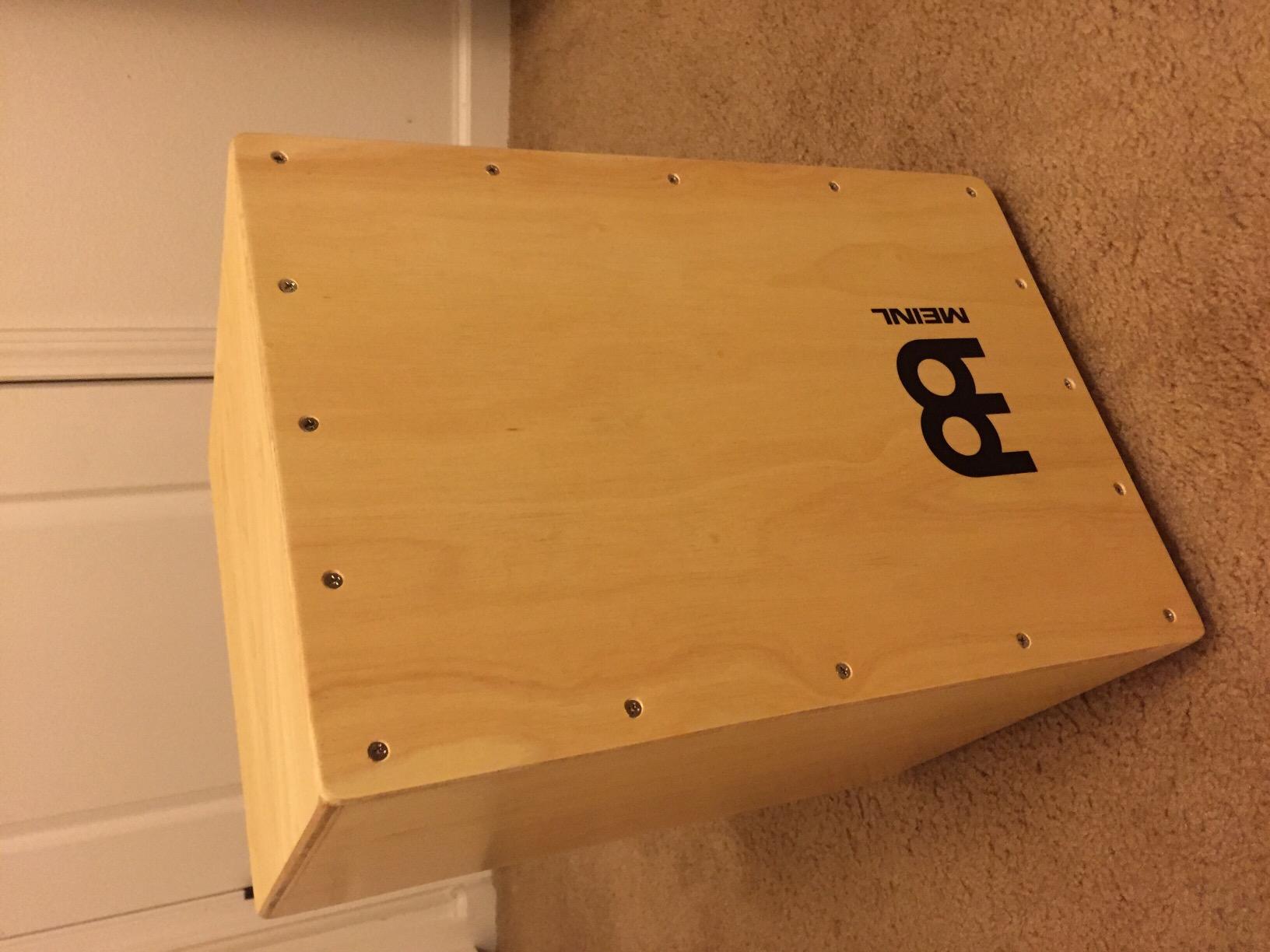
The playing surface is American white ash with no cheap laminates, and owners describe punchy bass, warm mids and crisp highs. At 19.75 inches tall it gives full adult legroom, and the four silicone feet keep the shell stable and vibration-free on a stone pitch.
Meinl characterises the sound profile as balanced with emphasis on low-end and snare effect, which matches what players report: enough body to sit with guitars and worship bands without dominating them. The finish is a matte stain, which also hides street grime better than gloss would.
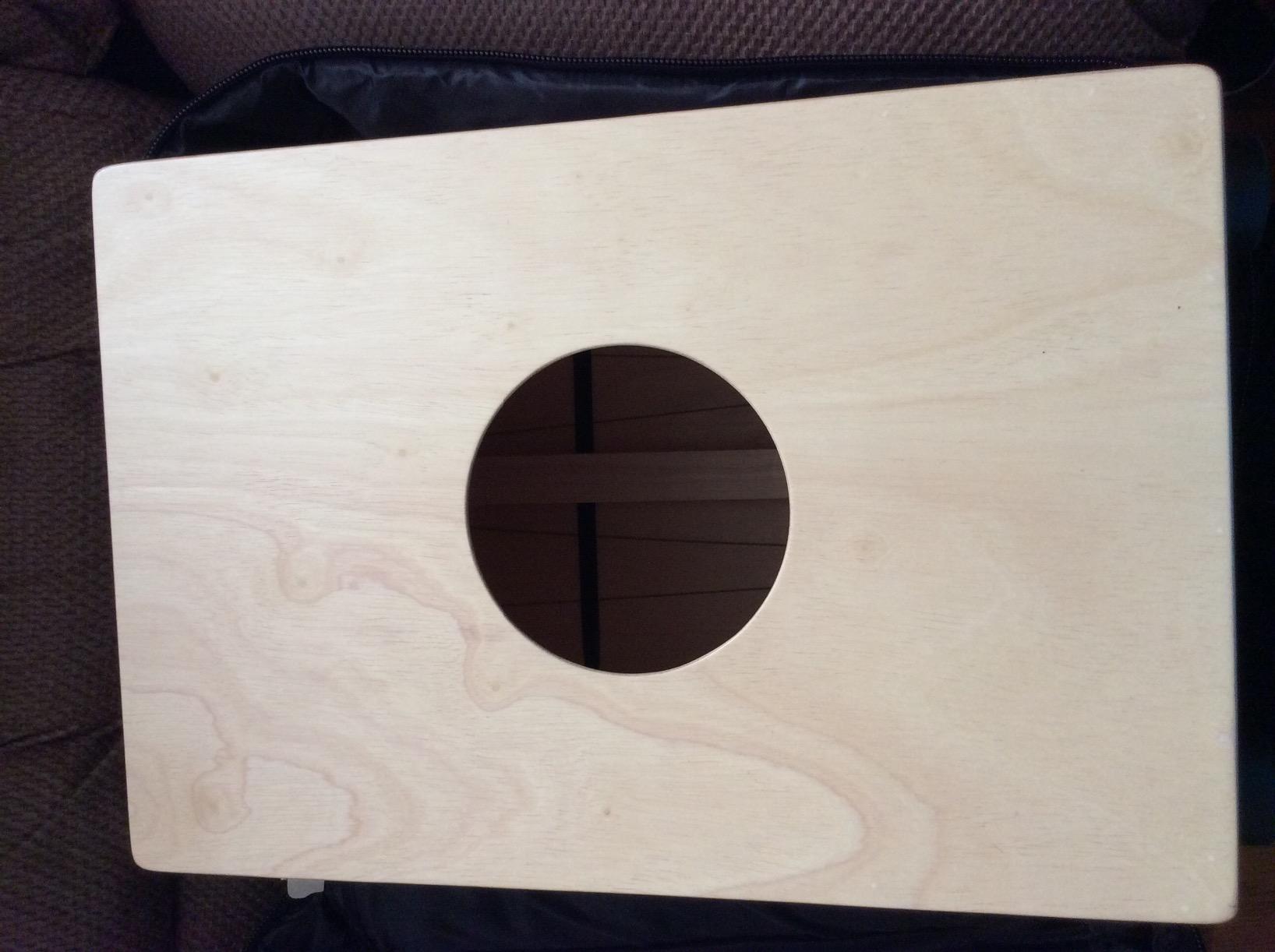
Why the snare adjustment matters outdoors
Air changes the tone. A box tuned tight indoors goes sizzle-thin outdoors in dry wind, and that is exactly the condition where you want the loose setting. Owners who tour this box between rooms consistently use the tension screws to match the space rather than the song.
The full-size body also means less cramped posture. If you play three-hour sets on a low street stool, legroom and back angle matter more than a lighter load, and this is where a taller box earns its extra weight.
Where it falls short
At 10.4 pounds this is the heaviest box in our list, and no carry bag is included. If your busking route involves a long walk or transit, that weight compounds quickly with a stool and any amplification.
Owners also note the front panel picks up visible wear and dents from regular transport, which is a fair argument for the included backpack that comes with the Donner. A padded case and careful handling will protect the ash face, but plan for it from day one.
4. Donner EC1291 – the only full-size box here with a backpack
Donner Cajon Box Drum Full Size, Percussion Instrument Gifts for Adults Teens, Hand Crafted Birchwood Beat Box, Jam Cajon Drum Box, Portable with Adjustable Straps Travel Backpack
Birch wood body
11.81 x 12.13 x 18.9 in
9.9 lb weight
10mm padded nylon backpack included
Speaker-style hall section
Pros
- Backpack included so you can carry hands-free
- Speaker-cabinet hall section adds real bass
- Adjustable internal guitar strings
- Hand-crafted birch with rounded edges
- Good against acoustic guitar
Cons
- Arrival damage to corners reported by some owners
- Strings may need adjusting out of the box
- Backpack bulk adds to the carry
This is the pick I recommend to someone who moves between pitches rather than setting up in one spot. The 10mm padded nylon backpack with adjustable straps and a reinforced base is the standout accessory here, and owner reviews single it out as the reason the box works for gigging.
The sound design is unusual for this category. Donner uses a speaker-cabinet approach with a dedicated hall section inside the box, which produces genuinely rich bass depth and sustain rather than the hollow knock of a simpler shell. That extra low end is what lets it punch against an acoustic guitar in an open space.
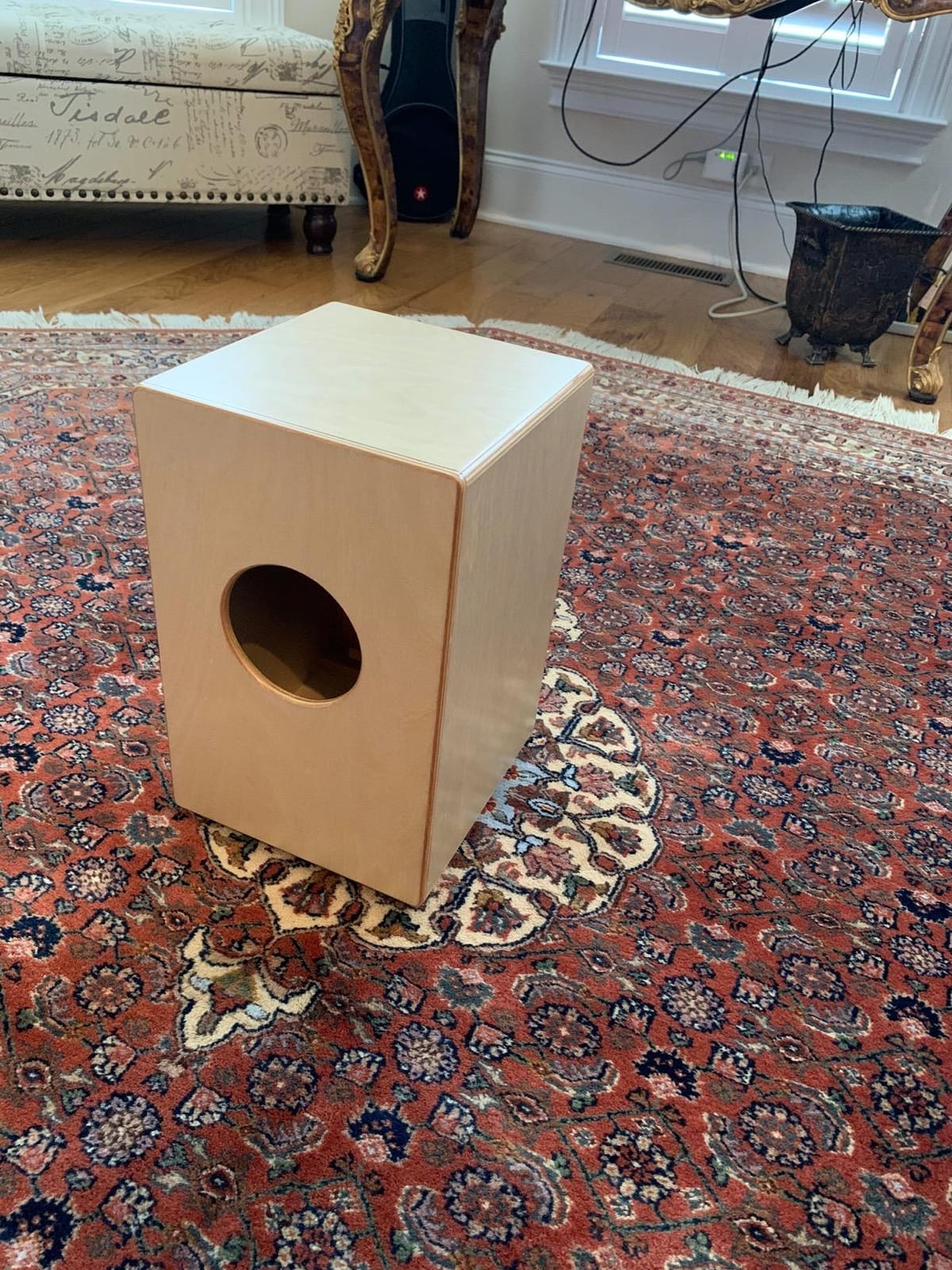
The body is hand-crafted birch with tight joints and rounded edges, sized at 11.81 by 12.13 by 18.9 inches, which gives adult legroom without the bulk of a very tall box. Rubber-capped feet isolate the shell so the tone stays clear on a hard surface.
Internal guitar strings produce a sharp slap response and come with an Allen wrench, so you can tune them once at home and then leave them alone. Owners rate the box highly as a full-size instrument that holds its own acoustically in small-to-medium outdoor settings.
What the hall section actually changes
Bass depth and sustain. A conventional cajon moves air through a rear port and loses some of it; this design routes it through a shaped internal section, so the low end holds together when you play hard. For a street set where the bass is the part that carries through traffic, that is a real advantage.
The padded backpack is the second half of the argument. It moves the load off one hand and onto both shoulders, which is the difference between a comfortable three-hour session and sore arms by the second hour.
Where it falls short
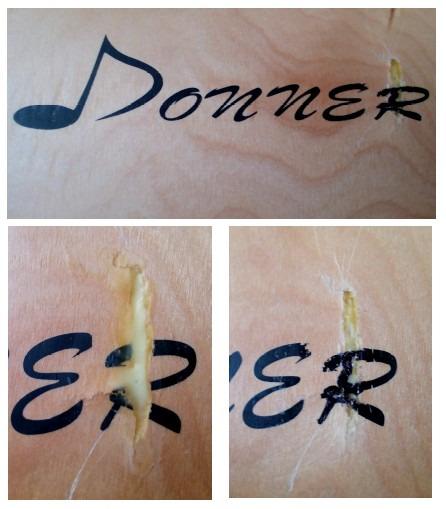
A small minority of owners report units arriving with cracked corners or damaged panels, and several of those were replaced under warranty. Inspect the box the moment it reaches you, before you rely on it at a pitch.
The backpack adds bulk and its own weight to the carry, so the total load is higher than the bare box weight suggests. The strings also arrive needing adjustment for some players before you get the crisp snare tone the design is capable of.
5. Gecko CL12SS – a carry-bag full-size box for small pitches
GECKO Cajon BOX Drum-Wooden Percussion Box, with Internal Adjustable Guitar Strings
Birch wood construction
12 x 12.2 x 19 in
Adjustable guitar-string snare
Carrying bag included
Protective bottom pad
Pros
- Carry bag included in the box
- Adjustable internal snare strings
- Solid full wood shell with a good appearance
- Good sound for jam sessions and small gigs
Cons
- Tuning hex key not included
- No written tuning instructions
- Some owners report damaged corners on arrival
- Less bold volume than larger boxes
This box makes a strong case for anyone who wants adult proportions and a snare they can adjust, without paying for a brand badge or chasing a house tone. The 12 by 12.2 by 19 inch birch shell sits at the tall end of the compact range, which is exactly what makes it comfortable on a street stool.
The carry bag with straps is included, which removes the single most common complaint about cheaper cajons. Owner reviews mention the bag by name as the reason the box is easy to move between spots, and it doubles as protection for the shell on a rough walk.
The internal guitar strings are adjustable, so you can tighten them for a crisper slap once you know what you are listening for. Gecko describes the sound profile as a sensitive middle with strong high and bass response, and players report it holds up well in jam sessions and on small gigs.
There is a protective pad on the bottom of the box body, which is the right place for it. Set a cajon down on wet stone or a gritty kerb and the base takes the punishment, so anything protecting that panel is worth having.
Who this suits
A player who wants a full-size-feeling box at a smaller footprint than the 20-inch models, and who moves between pitches without a dedicated gear van. The bag means one hand stays free for a guitar case, a collecting hat, or a bus fare.
It also suits a busker who plays jam formats rather than a set repertoire, because the adjustable snare can move between a tight groove and a looser feel without a tool pouch. Just budget ten minutes to tune it properly the first time.
Where it falls short
The hex key for adjusting the strings is not included and there are no written tuning instructions, so you may need to borrow a tool or work it out yourself. That is an odd gap on a box whose main feature is adjustability.
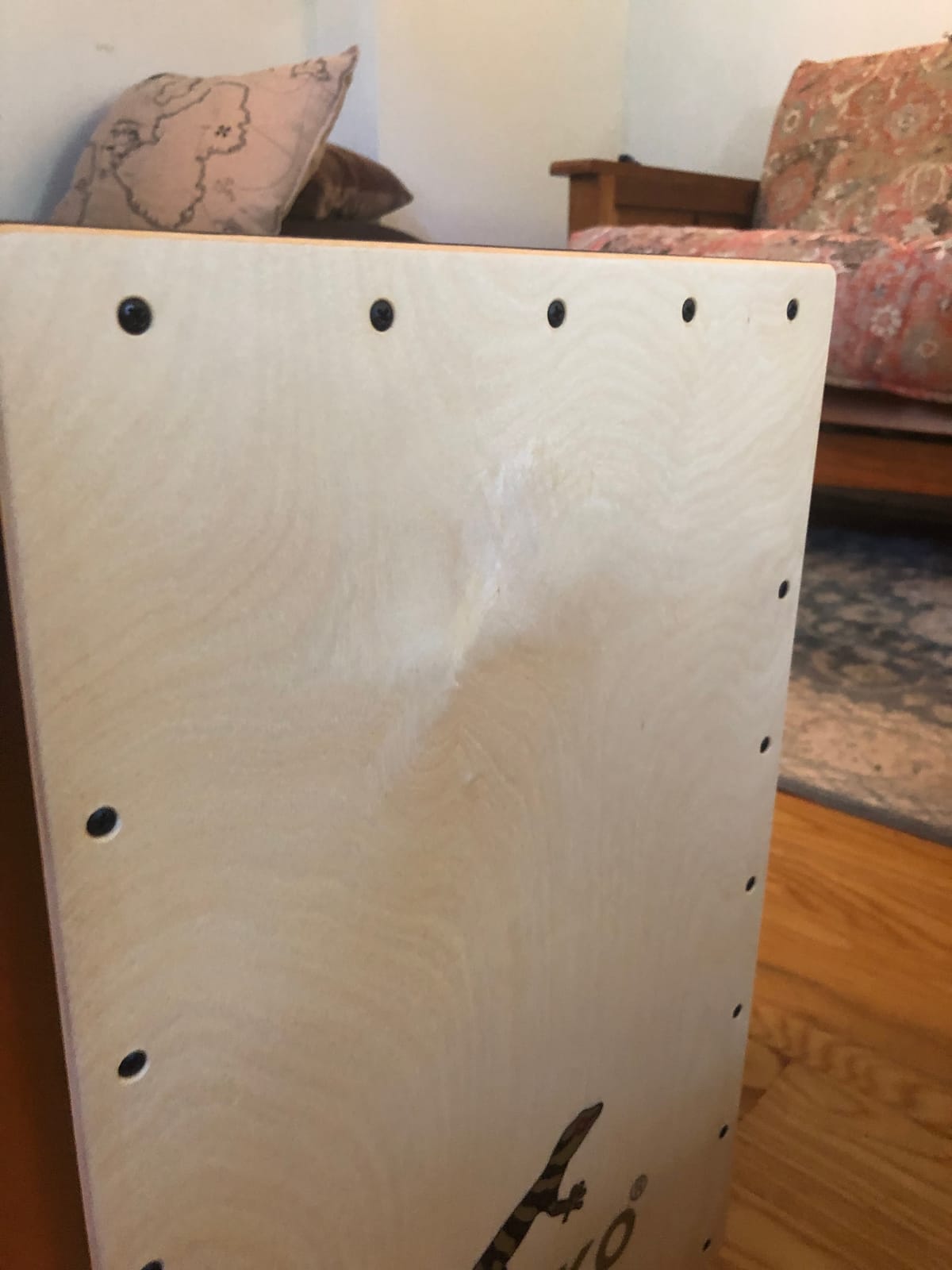
Volume is less bold than larger full-size cajons, which limits it to small pitches. Some owners also report damaged corners on arrival, so check the shell before you rely on it outdoors.
6. POGOLAB 3635GW – the travel option that fits in hand luggage
POGOLAB Three-tone Cajon, Portable Travel Drum Box with Adjustable Strap, Unique Appearance, Easy to Carry, for Home and Outdoor, Beautiful Percussion Instrument Gift (Green & White)
Three playing zones
Adjustable strap buckles
Light enough for carry-on luggage
Smooth burr-free surface
One-year warranty
Pros
- Three playing zones for quick variety
- Strap lets you carry it hands-free
- Light enough to travel with
- No deep bass but strong rhythmic identity
- Distinctive heptagonal shape
Cons
- No deep front-plate bass tone
- Snare wire sound is fixed and not tunable
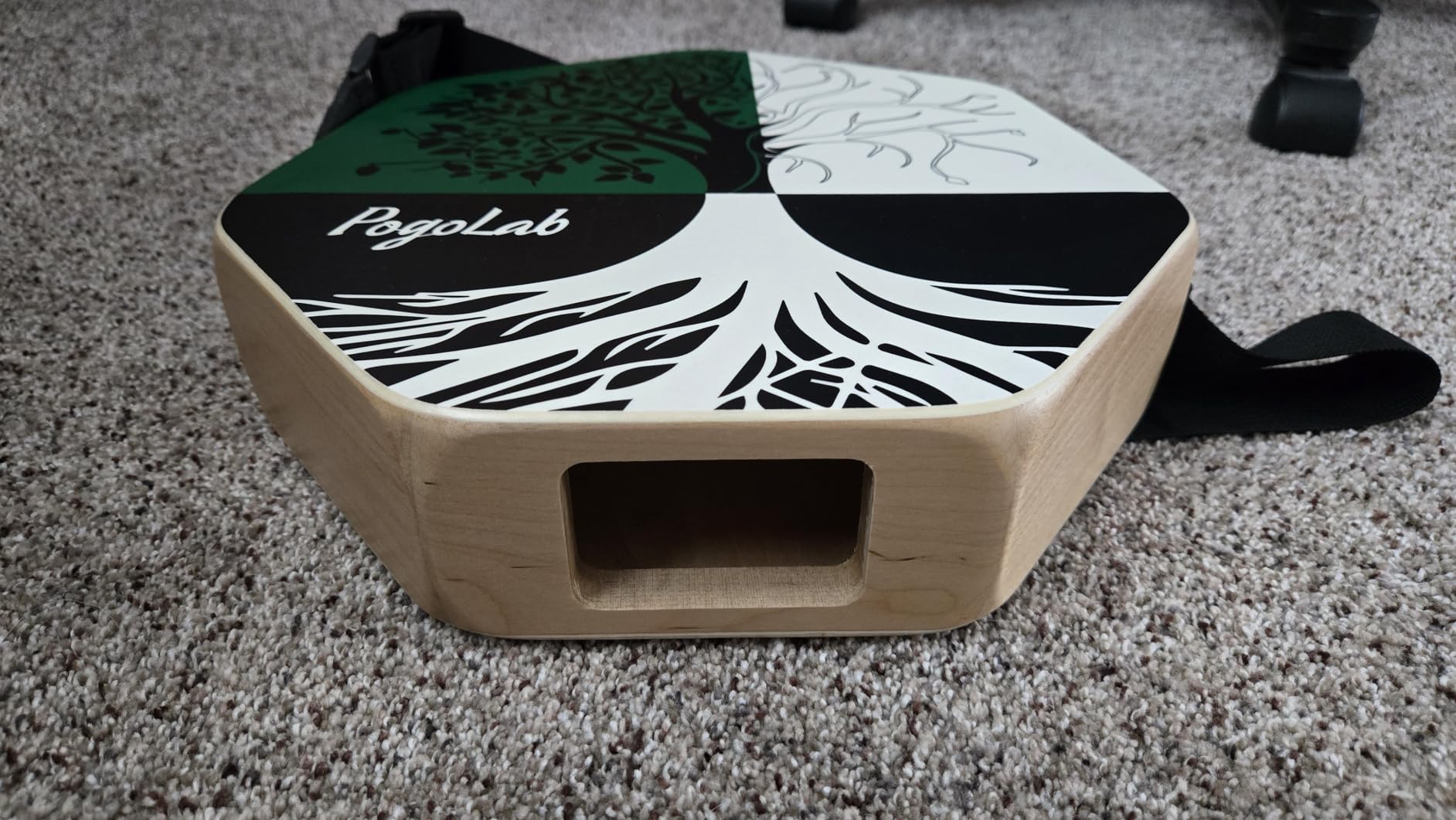
This is not a cajon in the classic sense and that is exactly why it is on the list. It has three playing zones instead of one: a warm low bongo area, a crisp high bongo area, and a built-in snare wire at the base. You can switch between timbres in a single phrase without changing your technique.
The reason it earns a place in a street roundup is the strap and the weight. The adjustable side strap buckles let you wear it hands-free, and owners report it is light enough to pack into carry-on luggage. For a performer who tours between cities or plays a walking route, that changes what is possible.
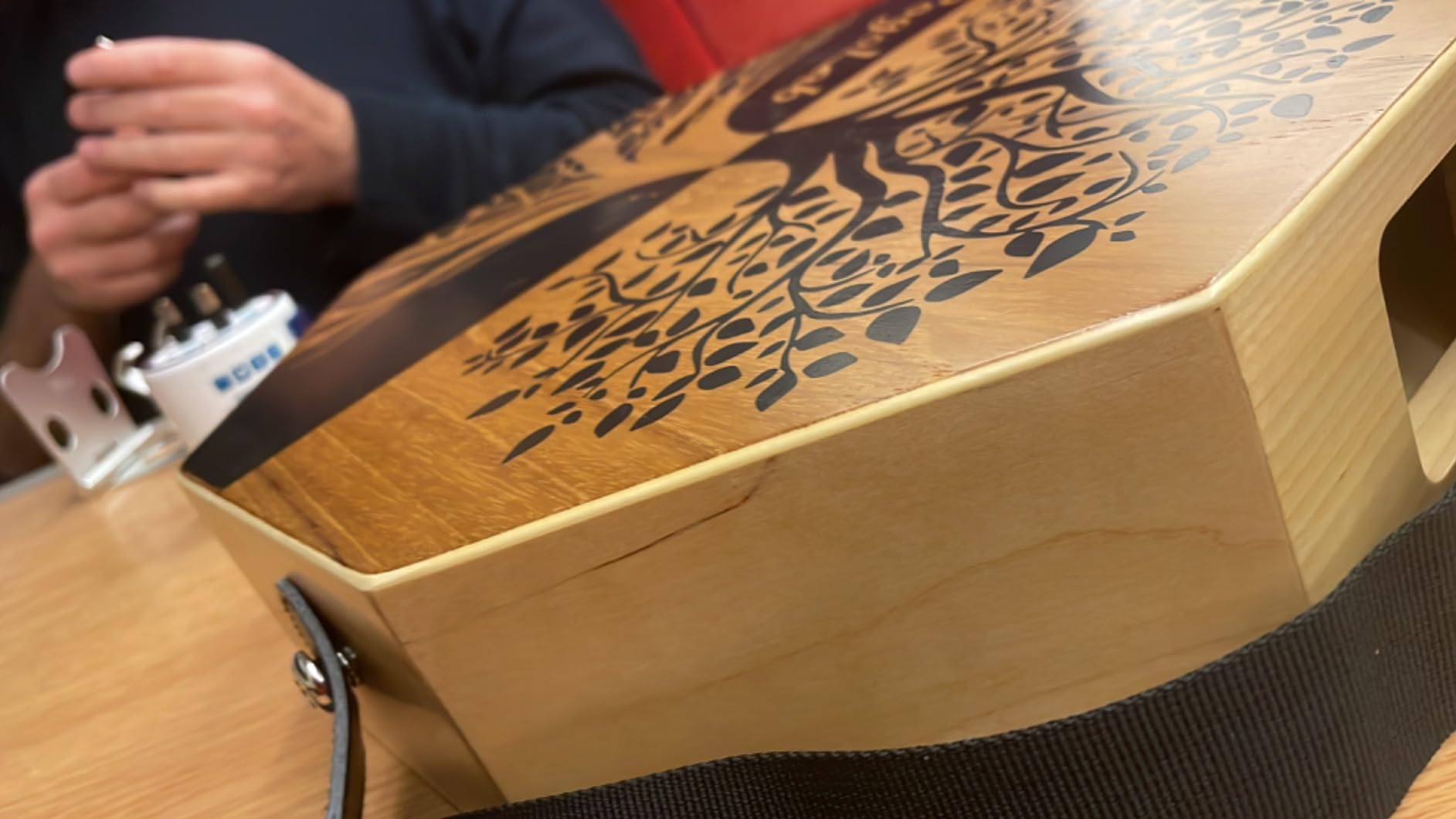
The surface is smooth and burr-free with rounded corners, which matters more than it sounds when you are playing for two hours on a street corner. The heptagonal shape and decorative wood grain also make it a conversation piece, and street pitches benefit from an instrument that looks unusual.
Owners consistently position it as a travel and street-friendly rhythm box rather than a deep-bass instrument. If your set relies on a walking kick drum pattern you will feel the absence of a front plate immediately, and that is the honest limitation.
When this format wins
It wins when portability is the whole problem: multi-city tours, transit-heavy routes, festival sets where you carry everything yourself, or a pitch where you are constantly moving to follow foot traffic. No other box in this list solves that as directly.
It also wins as a secondary instrument. A full-size cajon gives you the kick, and a three-zone box like this gives you hand percussion variety, percussion solos, or an answering pattern between songs without needing a second setup.
Where it falls short
There is no deep bass tone like a traditional front-playing cajon, and the snare wire sound is fixed with no tuning path. If you are used to playing bass-heavy patterns on the front plate, this will feel like a completely different instrument rather than a smaller one.
The one-year warranty is the shortest here, and the box has no padded case. Strap and hand carriage also take a toll on a player’s back over a long day compared with a sit-down box and stool.
7. Pearl Primero PBC123BBR – the easiest first cajon at adult height
Pearl Primero Crate-style Cajon – Music Genre
19.25 in adult height
11.75 x 11.75 in footprint
Engineered wood body
Meranti faceplate
Patented rear bass port
Pros
- Highest average rating in our group
- Patented rear port gives fuller low end
- Adult 19.25 inch height suits taller players
- Crisp present snare from two wire sets
- Two-year warranty
Cons
- Snare wires cannot be tuned
- MDF body feels less solid than birch or ash
- Painted faceplate scuffs with regular use
Pearl built this crate-style box around a patented built-in rear bass port, and the effect is that a design which looks like a lightweight crate produces a fuller low end than you would expect. Owners consistently note that the bass surprises them.
It also has the highest average rating in our group, with a large share of five-star reviews describing an easy-to-play, attractive first cajon. At 19.25 inches tall it gives full adult legroom, which removes the cramped-knee problem that puts some players off compact boxes.
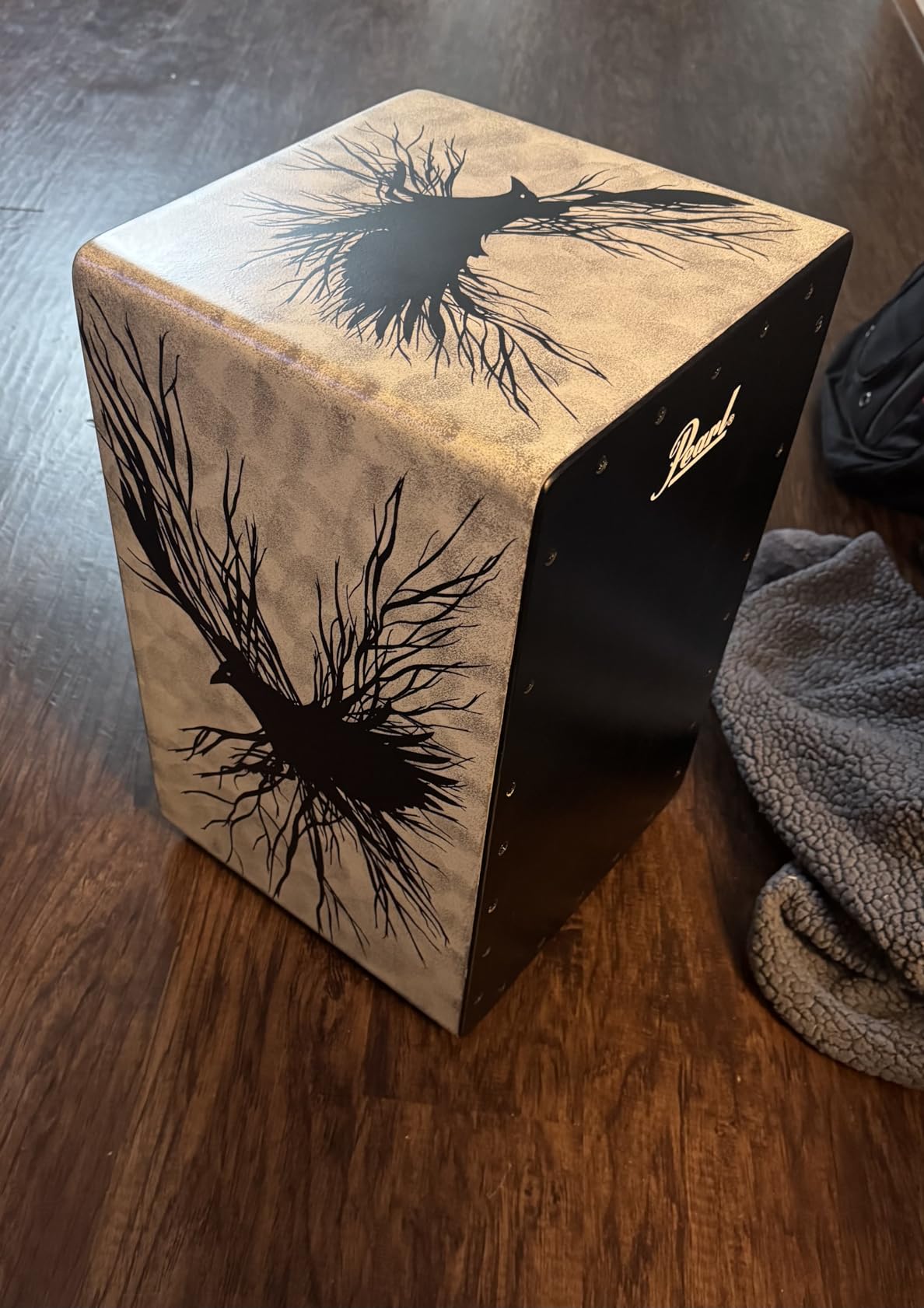
The two sets of fixed curly snare wires give a crisp, present snare that sits above traffic noise better than the rounder snares on cheaper boxes. The silkscreened faceplate with a music genre design is distinctive and looks good on a street corner or a small stage.
The body is MDF with a meranti faceplate and a painted finish, covered by a two-year Pearl warranty. That construction will not feel as solid or as resonant as the birch and ash shells elsewhere in this list, and buyers notice the difference in feel.
Why the port placement matters on a street
A rear port that is properly shaped and sized moves more air than an open hole in the back wall. That extra air movement is what produces low end with a shorter decay, which is more useful outdoors than a long sustain that disappears into background noise.
The tall body also means you play with your knees lower and your back straighter. On a long set that is worth a great deal, and it is the clearest reason to choose this box over a smaller one when you are buying your first full-size instrument.
Where it falls short
The fixed snare wires cannot be tuned, so the tone is set at the factory. Players who want to change the snare character between a loud street pitch and a quiet courtyard set should look at an adjustable-string model instead.
The painted faceplate shows scuffs from regular busking use, and the engineered-wood body has less solidity than the heavier birch-shell instruments. If you are rough on gear, expect visible wear on the finish.
8. Meinl Percussion Pickup Woodcraft PWC100B – the amplified choice
Pickup String Cajon Box Drum with Electronics for Amp or PA System and Snare Effect — NOT MADE IN CHINA — Play with Your Hands, Baltic Birch, 2-YEAR WARRANTY
Three internal piezo pickups
Volume and tone dials
Output and link quarter-inch jacks
Baltic birch
11.75 x 12 x 19.75 in, 4 kg
Pros
- Three factory-installed piezo pickups
- No microphone stand needed at a pitch
- Volume and tone dials for cutting through a mix
- No batteries required
- Plays convincingly unplugged too
Cons
- Cable not included
- Snare character takes practice to dial in
- Some units report face plate vibration
- Heaviest and priciest option here
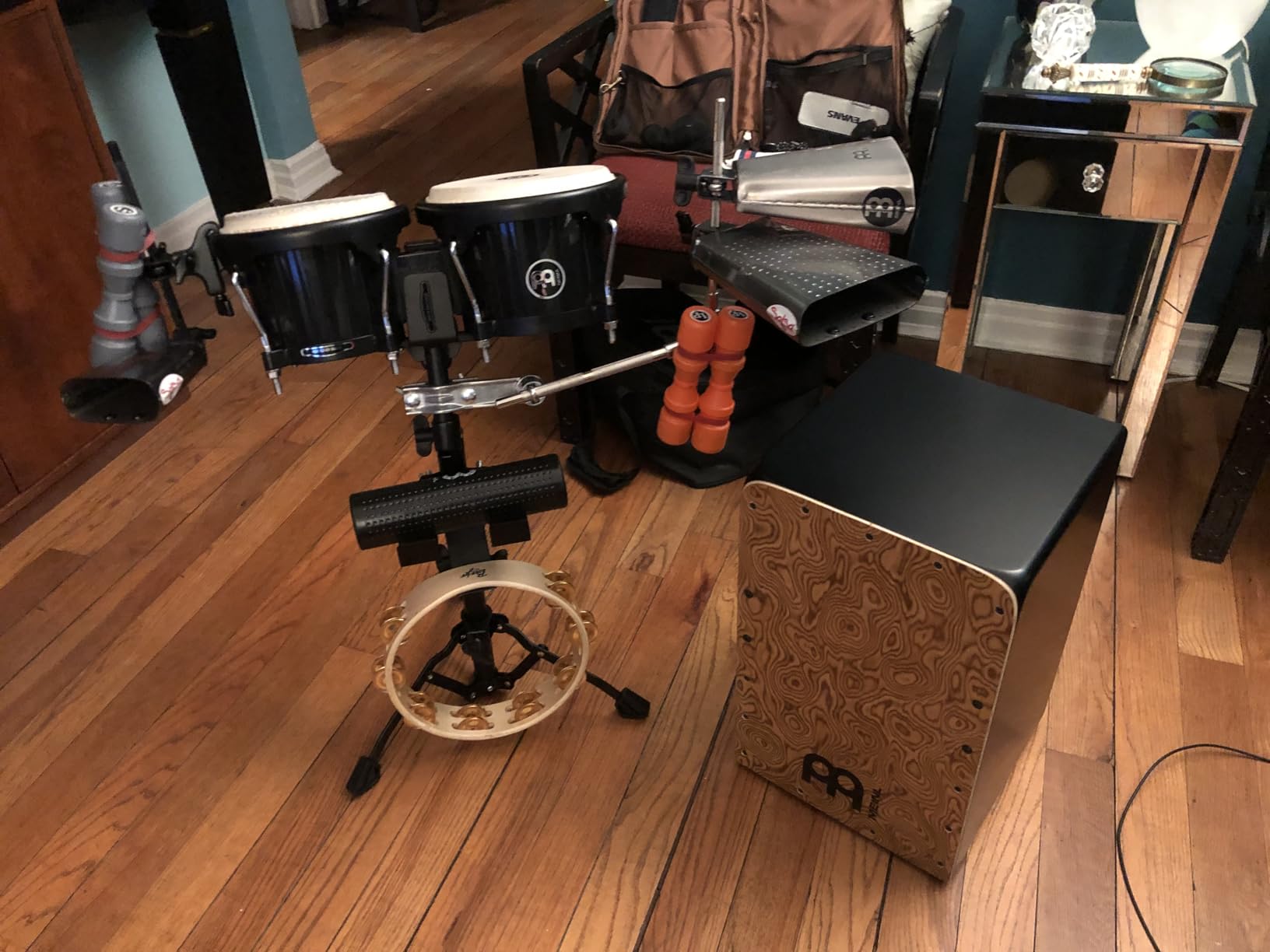
This is the model I would buy if your pitch is loud enough that an unamplified box disappears. Three factory-installed internal piezo pickups run straight into a small PA or amp through a quarter-inch cable, which means no microphone stand, no boom, and nothing to set up on a sloped pitch.
The placement is thoughtful rather than generic. Two pickups sit near the snare strings and one in the bass area, which is why owners describe the amplified tone as natural rather than harsh. Volume and tone dials let you cut through a mix in a busy outdoor spot, and a link jack lets you chain other Meinl passive pickup instruments.
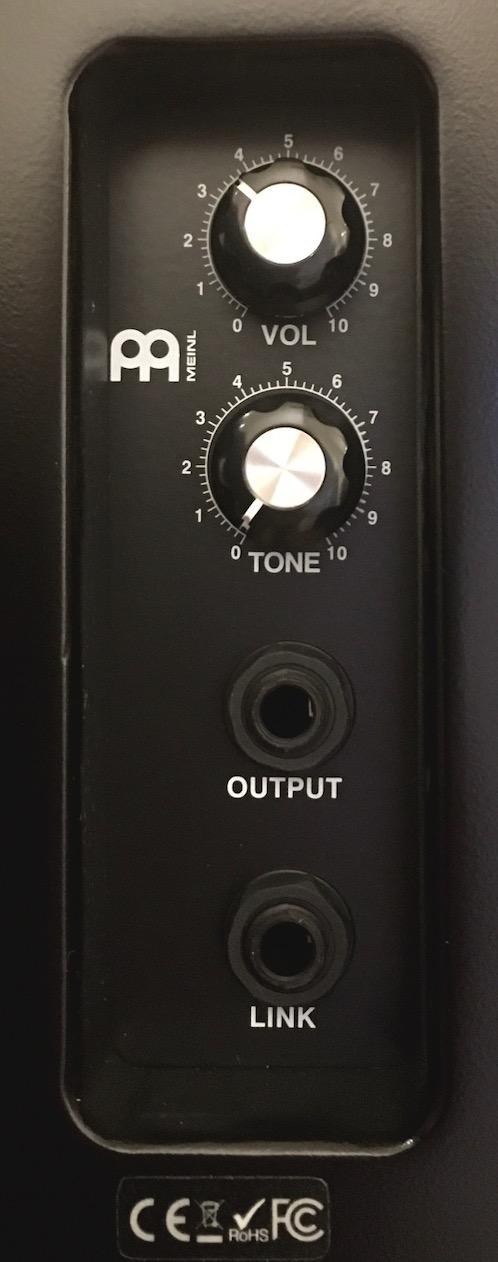
There are no batteries to manage, which matters on a street where you cannot chase a mains socket. Players who previously amplified an acoustic cajon with a microphone describe the switch to a pickup as a big improvement in reliability and setup speed.
The shell is 100 percent Baltic birch at 11.75 by 12 by 19.75 inches and 4 kg, with a two-year warranty. Unplugged it plays as a normal cajon, so the electronics are an addition rather than a dependency, and you can walk out and play acoustically if the pitch turns quiet.
When amplification is the difference
Traffic noise sits in the same frequency range as your voice but below where a slap peaks. A cajon unamplified loses that fight. With a pickup and a small PA you control your own level, and pedestrians hear a clean kick and snare instead of a thud.
Setup speed is the quieter benefit. A microphone on a cajon means a stand, a clip, a cable run and a feedback check every time you move. A pickup means one cable and a volume dial, which is a two-minute pitch change instead of a ten-minute one.
Where it falls short
No quarter-inch cable is included, so allow for that in your kit list. The snare on this model can sound punchier than it delivers out of the box and takes practice to dial in, which is the most common complaint from players moving up from an acoustic box.
A minority of owners report the face plate itself vibrating along with the snare wires, which adds a rattle you do not want on a PA. At 4 kg it is also the heaviest option here, so the electronics budget comes with a carry cost.
How to Choose a Cajon for Street Playing
Work through these five decisions in order. Most buyers get the order wrong by starting with tonewood, which matters far less than whether you can get the instrument to your pitch.
1. Set your carry budget first. Add up everything you will haul: cajon, stool, PA, cables, bag. If you are walking a route or riding transit, anything above about ten pounds on the instrument itself will dominate. The Meinl Jam Cajon at roughly six pounds and the Pyle at 10.9 pounds bracket that decision.
2. Decide whether you will amplify. If yes, your shortlist is short: only the Meinl Pickup Woodcraft PWC100B in this group has factory-installed electronics. If no, you can save the weight and money, but you should pitch somewhere quieter than a main road.
3. Pick your format. A sit-down box needs a stool and gives you full bass and adult legroom. A lap or strap-mounted box means no stool and less bass. Sitting on a low street stool all afternoon is fine if the box is tall enough to keep your knees low.
4. Choose the snare system. Fixed wire sets are simple and consistent but you cannot change them. Adjustable strings let you move from a tight, defined snare to a loose groove as the pitch and the set change. For street work that flexibility is genuinely useful.
5. Look at the wood and the build last. Baltic birch and white ash give the most consistent tone and the best feel in this list. Engineered wood with a veneer faceplate is lighter and cheaper but feels less solid under a hard hand. Judge the shell by joint tightness and rounded edges, not by the finish.
Then check the two street-specific items nobody mentions: whether a padded bag is included, and whether the port faces away from you. A rear port is fine for a solo player, and forward-facing ports are what manufacturers credit for projecting toward an audience in acoustic venues.
Do You Need a Pickup? Amplifying a Cajon on a Street PA
You need one if your pitch is beside moving traffic or a busy plaza. Unamplified, a cajon produces a low-frequency thump that loses to engine noise at almost any distance, and no amount of playing technique fixes that.
A piezo pickup captures the sound electrically inside the box and needs nothing but a cable. A microphone captures the room as well as the instrument, which means it also picks up traffic, wind, people talking and your own taps on the shell. That is why players moving from a mic to a pickup describe the result as cleaner and more reliable.
The one real problem with pickups is the low end. A small PA pushed hard on a cajon’s bass turns muddy fast, because most compact systems cannot reproduce the sub frequencies without clipping. Raise the volume on the kick, not the whole mix, and cut the bass dial when you hear the speaker fighting.
Battery power is the other advantage worth knowing. A pickup cajon needs no batteries itself, and a small battery PA runs for hours on a charge, which is what makes an amplified pitch possible where mains power is not. Check your local amplification rules before you set up in a busy spot, since several cities cap street performance volume.
Frequently Asked Questions
What is the best portable cajon drum?
The Meinl Percussion Jam Cajon JC50LBNT is the lightest sit-down box we found that still projects real bass, at roughly six pounds with a 4-inch rear sound port and solid Baltic birch construction. If you want to go smaller rather than lighter, the POGOLAB 3635GW is light enough for hand luggage and has three playing zones, but it has no deep front-plate bass. For a strap-free setup, look at an adjustable-string model such as the Gecko CL12SS, which includes a carry bag.
How much should I spend on a cajon for busking?
Spend based on your format, not on prestige. Entry boxes cover everything a beginner needs to play a pitch and are the right choice if you are unamplified and working close to a small crowd. The middle band adds adjustable snare strings, a taller adult-height body and better tone woods such as Baltic birch or white ash. Above that you are paying for built-in pickups and amplification control, which only pays off if your pitch is loud enough to need them.
Do I need a pickup for busking?
You need one if your pitch sits beside traffic or heavy foot traffic, because an unamplified cajon loses to engine noise almost immediately. A piezo pickup sends the instrument straight into a small PA through one cable, with no microphone stand to set up and no batteries in the box itself. It also avoids capturing wind, chatter and taps on the shell. Without one you can still busk successfully, but you should choose a quieter spot and pitch toward pedestrians rather than distance.
Is a cajon loud enough for the street?
Unamplified, no. The bass of a cajon sits low, which is exactly where traffic and wind noise live, so the instrument disappears at distance. What does carry is the transient of a slap, which is why a box with a well-shaped rear bass port and a crisp snare is more street-friendly than a heavier box with a dull one. At close range in a pedestrian area an acoustic cajon works well. Anything near a main road wants a pickup and a small PA.
Should I buy a slaptop cajon or a sit-down box?
Buy a sit-down box if you will bring a stool and want full bass and adult legroom. It is the better choice for long sets and for playing behind a singer, because you get the largest internal volume and the deepest low end. Buy a lap or strap-mounted cajon if you want to play standing, move constantly, or carry everything on your body. Expect less bass and a snappier snare in exchange for losing the stool from your kit.
How hard is the cajon to learn?
Less hard than almost any other drum, because there are no sticks, no pedals and no cymbal heights to coordinate. Two sounds dominate: a low tone from the front playing face and a snare from the slats under the seat. Owners of the boxes in this roundup mostly describe the learning curve in terms of consistent tone rather than difficulty, and the entry models are the most forgiving because the strings respond well to a light touch. Practise tone control, not just rhythm.
Our Verdict for Street Performers
For most street performers in 2026, the Meinl Percussion Jam Cajon JC50LBNT is the right first box, because it puts the least weight on your shoulders while still giving you a bass note that carries. If you move between pitches, take the Donner EC1291 for the backpack it includes, and if you want to tune the snare, the Meinl String Cajon HCAJ3AWA is the stronger instrument.
Buy the Meinl Pickup Woodcraft PWC100B only when your pitch is loud enough to need amplification. Check your local volume rules first, pack a cable with it, and use the tone dial to keep the low end out of the mud.