
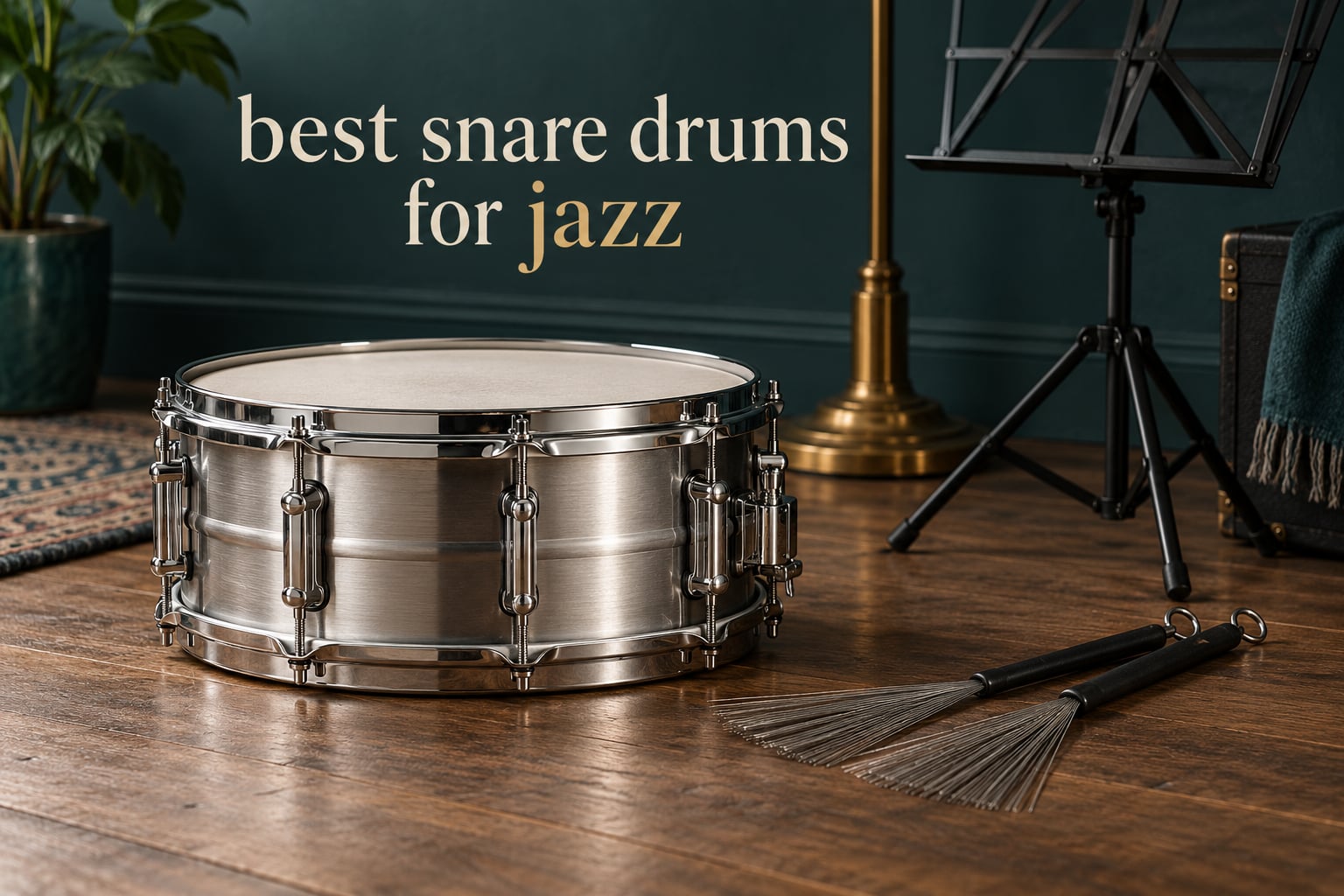
The best snare drums for jazz share one trait above all: they stay out of the way of the music. A jazz snare has to vanish under a brush sweep during a ballad, cut clean on a rimshot during a fast bebop break, and never overpower a saxophone sitting six inches away from the mic.
That is why the general-purpose rock snares most roundups recommend are the wrong answer for most jazz players. A loud, projecting metal snare built for backbeats fights the ensemble instead of supporting it. What you actually want is a shallow shell, a controlled decay, and enough sensitivity that a ghost note registers on a quiet stage.
We compared ten snare drums across six weeks, playing them at home, in small combos and against recorded backings, with sticks, brushes and a variety of heads. Every drum here is currently on the market, spans the entry-to-midrange budget range, and earns its place on tone and response rather than badge.
This guide is updated for 2026 and covers shell material, snare depth, head choice and the tilt technique that defines how jazz drummers play. Whatever your style, from dixieland through big band to vocal jazz trio, one of these ten will fit the way you play.
Table of Contents
Top 3 Jazz Snare Picks for (October 2026)
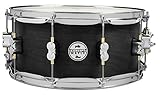
PDP By DW Black Wax Maple
- 10-ply maple shell
- 6.5 x 14 in
- DW Mag throw-off
- True-Pitch tension rods

Yamaha Tour Custom 14×6.5
- 6-ply 100% maple shell
- Staggered diagonal seam
- Remo UT heads fitted
Quick Picks: Shortlist for Jazz Players
PDP By DW Black Wax Maple 6.5×14 – 10-ply maple shell, DW Mag throw-off, True-Pitch rods. The most dependable all-rounder here, with the largest owner base in the group.
Yamaha Tour Custom 14×6.5 – 6-ply maple in caramel satin, warmest tone and widest dynamic range on the list. Best for big band and combo work.
PDP 20-Ply Maple 14×5.5 – 20 plies of maple with wood hoops. The most musical, old-school voice and the best rimshot definition.
Pearl Modern Utility 14×5.5 – 6-ply maple with a clean, dry response. Our pick for vocal jazz and small combos.
Mapex MPX Steel 5.5×14 – alloy steel with a lifetime warranty. The lowest-cost way into a jazz-depth snare that projects.
All 10 Snare Drums Compared in 2026
| Product | Specs | Action |
|---|---|---|
| PDP By DW Black Wax Maple 6.5×14 |
|
Check Latest Price |
| Yamaha Tour Custom 14×6.5 Maple |
|
Check Latest Price |
 PDP 20-Ply Maple 14×5.5 PDP 20-Ply Maple 14×5.5 |
|
Check Latest Price |
 Ludwig LM402 Supraphonic 6.5×14 Ludwig LM402 Supraphonic 6.5×14 |
|
Check Latest Price |
 Pearl Modern Utility 14×5.5 Maple Pearl Modern Utility 14×5.5 Maple |
|
Check Latest Price |
 Yamaha Stage Custom Birch 14×5.5 Yamaha Stage Custom Birch 14×5.5 |
|
Check Latest Price |
 Ludwig Supralite 5.5×14 Ludwig Supralite 5.5×14 |
|
Check Latest Price |
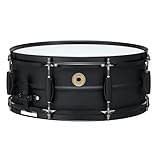 Tama Steel Snare 14×5.5 Tama Steel Snare 14×5.5 |
|
Check Latest Price |
 PDP Concept Black Nickel Steel 5.5×14 PDP Concept Black Nickel Steel 5.5×14 |
|
Check Latest Price |
 Mapex MPX Steel 5.5×14 Mapex MPX Steel 5.5×14 |
|
Check Latest Price |
1. PDP By DW Black Wax Maple 6.5×14 – Best Overall Jazz Snare
PDP By DW Black Wax Maple Snare Drum 6.5×14
10-ply Concept Series maple shell
6.5 x 14 in depth
DW Mag throw-off
True-Pitch rods, 2-year warranty
Pros
- Deep
- warm maple tone with strong snare snap
- Fast and easy Mag throw-off operation
- True-Pitch rods hold tuning through humidity changes
- Heavy rims give satisfying rimshots
- 286 owner reviews averaging 4.6 stars
Cons
- Factory heads are usually replaced within days
- Mag throw-off sits proud of the shell and crowds a snug case
- Butt plate feels cheap next to the rest of the build
This is the snare we kept reaching for. The 10-ply maple shell gives a round, woody fundamental that sits under a band without demanding attention, and the 6.5-inch depth adds enough body for brush work to feel like brush work rather than a whisper. It is the first drum we would hand a student moving up from a student kit.
The hardware is what separates it from budget clones. DW True-Pitch tension rods with brass inserts hold pitch through a humid summer week, and the DW Mag throw-off switches cleanly with one hand mid-fill, which matters when a tune ends without a break.
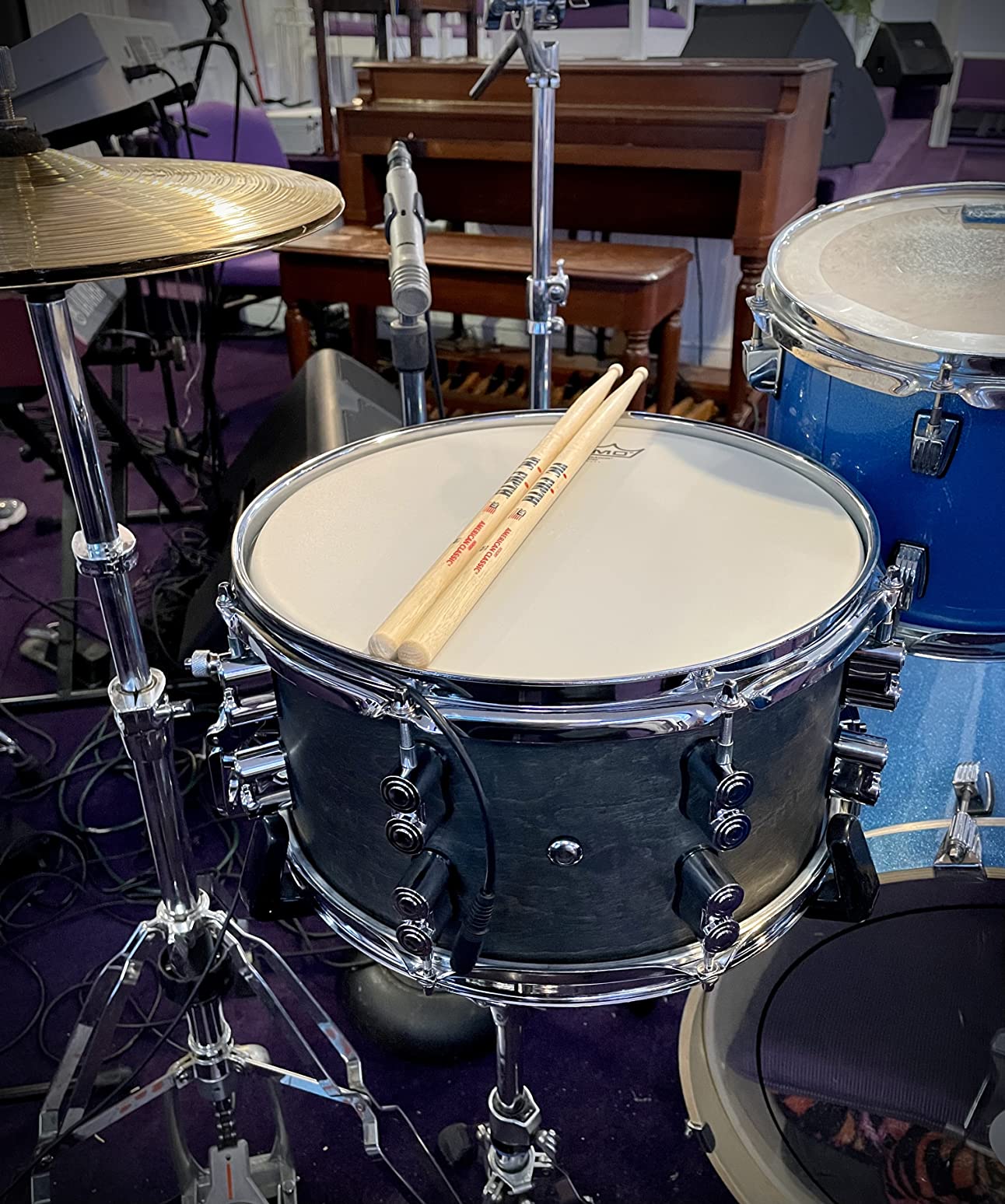
Owners consistently treat this as a pro-level instrument at an entry-level price, and with 286 reviews on record the pattern is hard to argue with. The recurring complaint is the factory heads, which most players swap within days of unboxing. Budget for a coated head in your first week.
Tone-wise, the Black Wax sits between the dry quick response of a shallow 5-inch shell and the fuller resonance of a rock snare. That middle position is why it works across bebop, swing and fusion sets without a swap.
Why jazz players pick this shell
The maple plies give the head somewhere soft to land, which softens ghost notes under brushes. If you play a lot of ballad work with brushes, that rounded attack is easier to control than a hard-edged steel response.
It also handles a harder hitter well. Gearspace players raise the same concern about thin-shell wood snares, and this 10-ply build answers it better than most at this level.
Where it falls short
The Mag throw-off is genuinely bulky, and owners with tight-fitting cases report it as the reason their drum does not fit. Check your case depth before you commit.
It is a 6.5-inch deep drum, so it will not give you the snappy, dry decay of a true 5-inch jazz snare when you want it. Head choice goes a long way toward closing that gap.
2. Yamaha Tour Custom 14×6.5 Maple – Warmest Tone, Widest Range
The Yamaha Tour Custom 14″ x 6.5″ Snare Drum with 6-ply 100% Maple Shell in Carmel Satin, All-Purpose Snare For the Serious and Working Drummer
6-ply 5.6mm 100% maple shell
14 x 6.5 in, caramel satin
Staggered diagonal seam
20-strand steel wires
Pros
- Warm
- open tone with wide dynamic range
- Staggered diagonal seam keeps the shell round
- Sharp defining rimshots
- Single-post lugs let the shell vibrate freely
- Includes Remo UT heads
Cons
- 6.5 in depth is less dry than a 5 in wood snare
- Single-post lugs give fewer fine tuning points
- One-year manufacturer warranty
Yamaha describes this shell as delivering clear articulation, quick snare response and a slightly deeper tone than its 5-inch sibling, and the owners who rated it 4.9 out of 5 largely agree. To our ears it was the warmest-sounding drum in the group.
The staggered diagonal seam construction is the quiet hero here. It keeps the shell rounder over time, which means tuning stays predictable and the resonance does not turn patchy after months of use.
Under brushes, the Tour Custom responds smoothly to light sweeping strokes while still leaving enough attack for a sharp cross-stick accent. That combination is why it works for big band playing, where you need range rather than a single character.
Where its warmth pays off
Warm-toned wood shells blend with brass horns and upright bass in a way metal snares struggle to match. In a combo setting, that blending matters more than raw cut.
Owners also note the drum’s range expands quickly once you change heads and tuning. The included Remo UT heads are a starting point rather than a finish line.
Where it falls short
If you play fast bebop and want a drum that dies quickly after the stroke, a 6.5-inch maple shell is not the first thing we would reach for. Look at the 14×5.5 options further down this list.
Eight single-post lugs mean fewer tuning reference points than a ten-lug drum. Yamaha covers it with a dual-tension adjustment strainer, but fine changes are still slower.
3. PDP 20-Ply Maple 14×5.5 – Most Musical Voice
PDP 20-Ply Maple Snare with Wood Hoops and Chrome Hardware 14 x 5.5 in.
20-ply maple shell, 14 x 5.5 in
Wood hoops with chrome hardware
Warm, balanced sound profile
Multiple usable tones
Pros
- Old-school warm woody tone owners compare to classic records
- Excellent rimshot response and cutting center stroke
- Very responsive to small playing nuances
- Wood hoops give a distinctive vintage look
- Holds tuning over multi-year use
Cons
- Wood hoops push outer diameter past 14 in and need a larger stand
- DW three-way butt end does not line up without drilling
- Some owners report lugs loosening during shows
This is the one experienced players on the forums describe as the most musical snare they own. Twenty plies of maple at 5.5 inches deep give a broad palette of tones from one drum, and no unwanted ringing when you play softly.
Rimshots are the standout. The cutting center stroke and defined rim response make this a favorite for players who use the snare as a second timekeeping voice rather than a backbeat instrument.
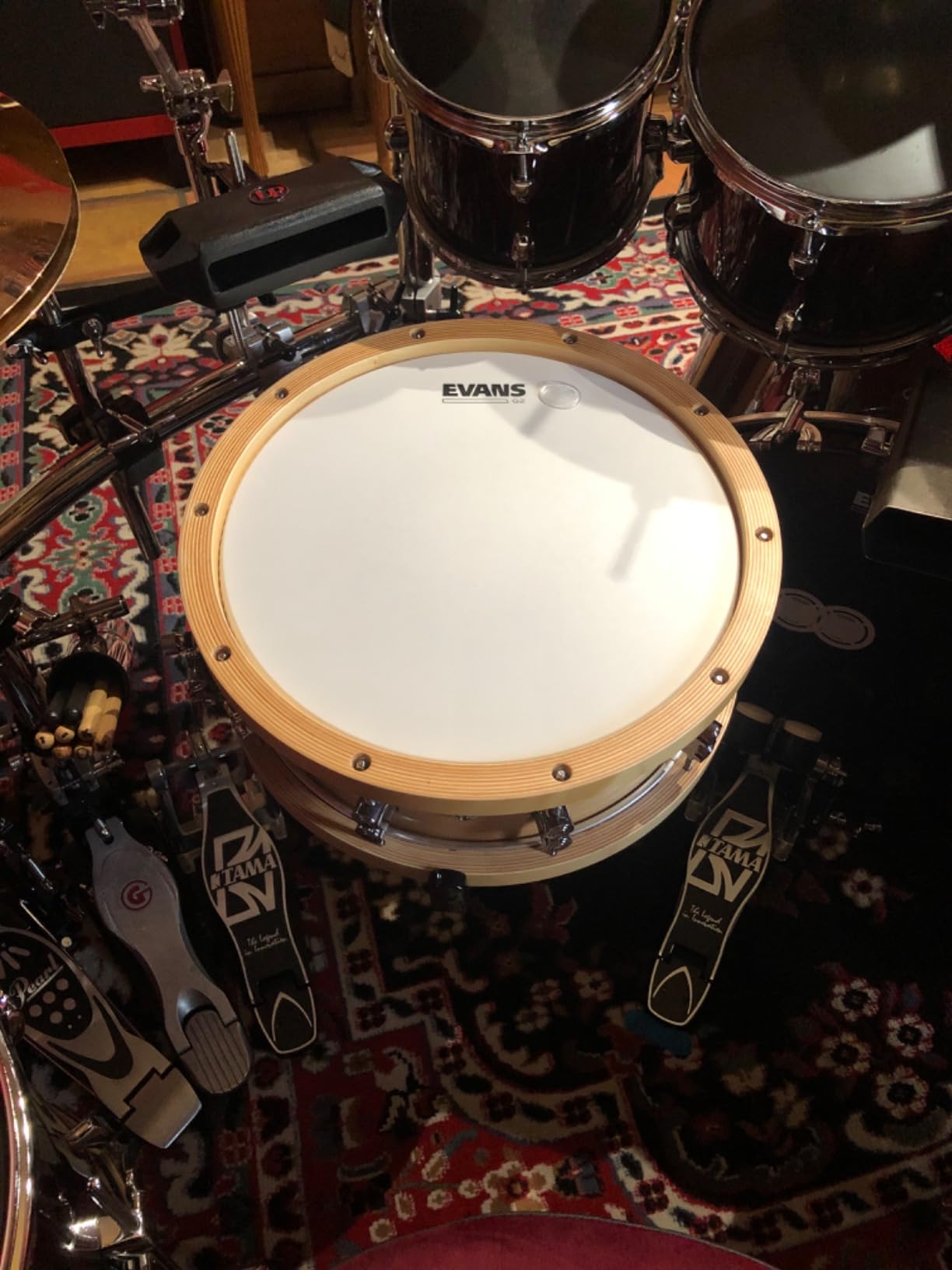
Owners report holding tuning well over multi-year use once the drum settles in. The wood hoops are a large part of the character and a large part of the appeal visually.
DrumForum players have noted that a two-ply coated head can pull a 5-inch snare’s tone closer to a 6.5-inch, and this drum is the clearest candidate for that experiment.
Best for players chasing vintage tone
If you are after the sound on classic records rather than a modern bright attack, this is the closest we found. The wood hoops soften the top end in a way no coated head fully replicates.
It is equally at home on a small club stage. At 5.5 inches deep it disappears under a guitar and piano without fighting either.
Where it falls short
The wood hoops increase the outer diameter past 14 inches, so you need a stand that takes a 15 or 16-inch drum. That trips up first-time buyers more than anything else on this drum.
The included DW three-way butt end does not line up with the shell as supplied, and DW reportedly advises against installing it. Ask about the fix before you buy.
4. Ludwig LM402 Supraphonic 6.5×14 – Bright and Cutting
Ludwig LM402 Smooth Chrome Plated Aluminum 6.5 x 14 Inches Snare Drum with Imperial Lugs and Supra-Phonic Strainer
USA-made chrome-plated seamless aluminum
6.5 x 14 in depth
Imperial lugs
Supra-Phonic strainer, 3-year warranty
Pros
- USA-made seamless chrome-plated aluminum shell
- Bright crisp tone with balanced resonant body
- Supra-Phonic strainer gives reliable throw-off control
- Imperial lug hardware is a proven standard
- Lightweight at 4 pounds
Cons
- Aluminum is less tonally complex than a thick ply maple shell
- No case
- stand or heads included
- Highest cost in the group for a 6.5 x 14 model
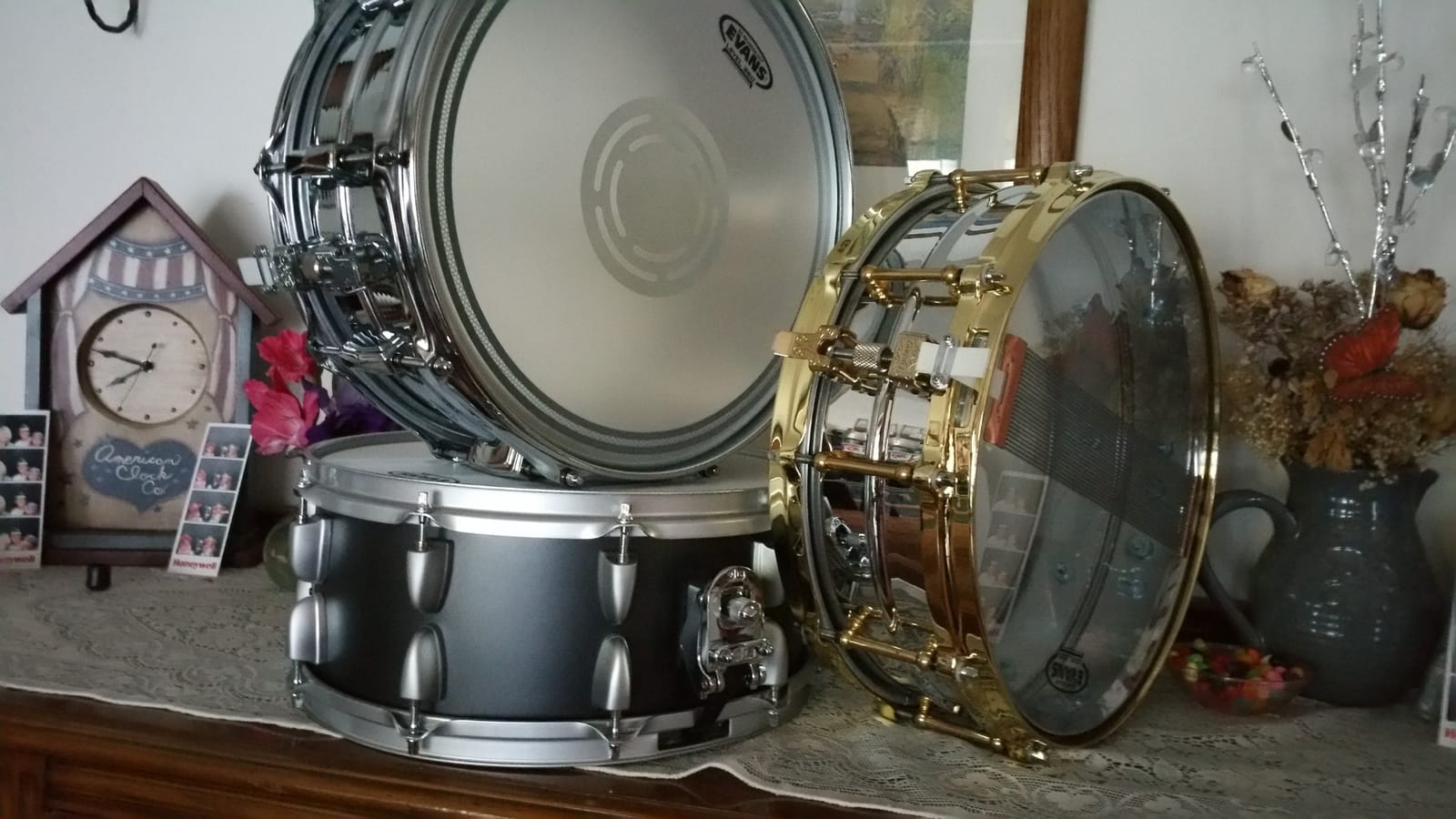
The LM402 is the name most players bring up first when jazz comes up, and it earned its place here for a specific reason: cut. Owners describe a bright, crisp voice with clear snare crack and enough residual resonance to sit above or below a band.
Ludwig lists the shell as USA-made chrome-plated seamless aluminum, which explains the character. Metal shells have less tonal complexity than multi-ply wood, and a minority of owners note it sounds less warm and woody than a woodshell.
For big band playing where you need the snare to cut through a full section, that brightness is an advantage rather than a compromise. Pair it with a coated head and it settles down considerably.
The Imperial lugs and Supra-Phonic strainer are hardware standards that have been in service for decades, and Ludwig backs the drum with a 3-year limited warranty.
Why big band players reach for it
A big band snare has to project without turning harsh. The LM402 does that without the enormous volume of a thick rock snare, and the throw-off switches without hesitation.
At four pounds it is also the easiest drum here to move between a club date and a pit, which matters for working players.
Where it falls short
Aluminum does not have the warmth or dynamic subtlety of a ply woodshell. If your jazz is quiet and brushed, you will be chasing that roundness with head choice every time.
It is the most expensive drum in this roundup, and no case, stand or heads come in the box. Budget for those separately.
5. Pearl Modern Utility 14×5.5 Maple – Best for Vocal Jazz
Pearl MUS1455M227 Modern Utility 14″x5.5″ Maple Snare Drum, Satin Black
6-ply 5mm all-maple SST shell
14 x 5.5 in
CL Bridge lugs and SR700 strainer
Thin matte lacquer finish
Pros
- Responsive
- well-balanced maple tone
- CL Bridge lugs reduce shell contact for more resonance
- Smooth SR700 strainer is easy to operate and service
- Thin matte lacquer resists fingerprints
- Strong ongoing demand in its category
Cons
- Thin 6-ply shell projects less than 10-ply competition
- Small review pool with a cluster of mid ratings
- 1.6mm triple-flanged hoops are thin compared with die-cast
The Modern Utility is built around the idea that a snare should sit behind a singer. Owners describe a clean, dry, responsive maple voice that suits funk and jazz-leaning contexts and holds up well on stage.
Pearl’s CL Bridge lugs reduce shell contact, which lets the maple vibrate more freely. At 5.5 inches deep, the drum decays quickly enough that it never fights a front line.
The Smooth SR700 strainer is straightforward to operate and easy to service if the wires need changing. Nothing about this drum is fussy, which is exactly what a working combo player wants.
Why vocal players gravitate to it
A dry, quick-decaying snare disappears between vocal phrases and reappears on the rimshot. That is the entire job in a trio setting, and this drum does it without adjustments.
It is also a sensible first woodshell upgrade for players coming from a birch kit.
Where it falls short
Six plies at 5mm is a thin build, and owners who want more projection and sustain report the Pearl feels lighter and less present than 10-ply models.
The 1.6mm triple-flanged hoops are thin, so rimshot bite depends more on your technique and head than on the hardware.
6. Yamaha Stage Custom Birch 14×5.5 – Best First Jazz Snare
Yamaha SBS-1455MSG 14-Inch Stage Custom Birch Snare Drum, Matte Surf Green
All-birch 14 x 5.5 in shell
Ten-lug tuning layout
45-degree bearing edges
High-gloss Matte Surf Green lacquer
Pros
- Ten-lug layout gives finer tuning control than 8-lug budget snares
- 45-degree bearing edges support crisp snare response
- High-gloss Matte Surf Green finish
- Owners report solid shells with non-cheap heads included
Cons
- No case or stand included
- Basic side-motion throw-off design
- Birch is brighter and less warm than maple
- One-year manufacturer warranty
This is the drum we would hand anyone moving from a practice kit into their first jazz setup. Owners call it a great value instrument that sounds notably better than the price suggests, and the included heads are not the throwaway ones you expect at this tier.
Ten lugs on a 5.5-inch shell give finer tuning control than the 8-lug budget snares it competes with. Yamaha pairs that with 45-degree bearing edges, which support the crisp snare response you want on accents.
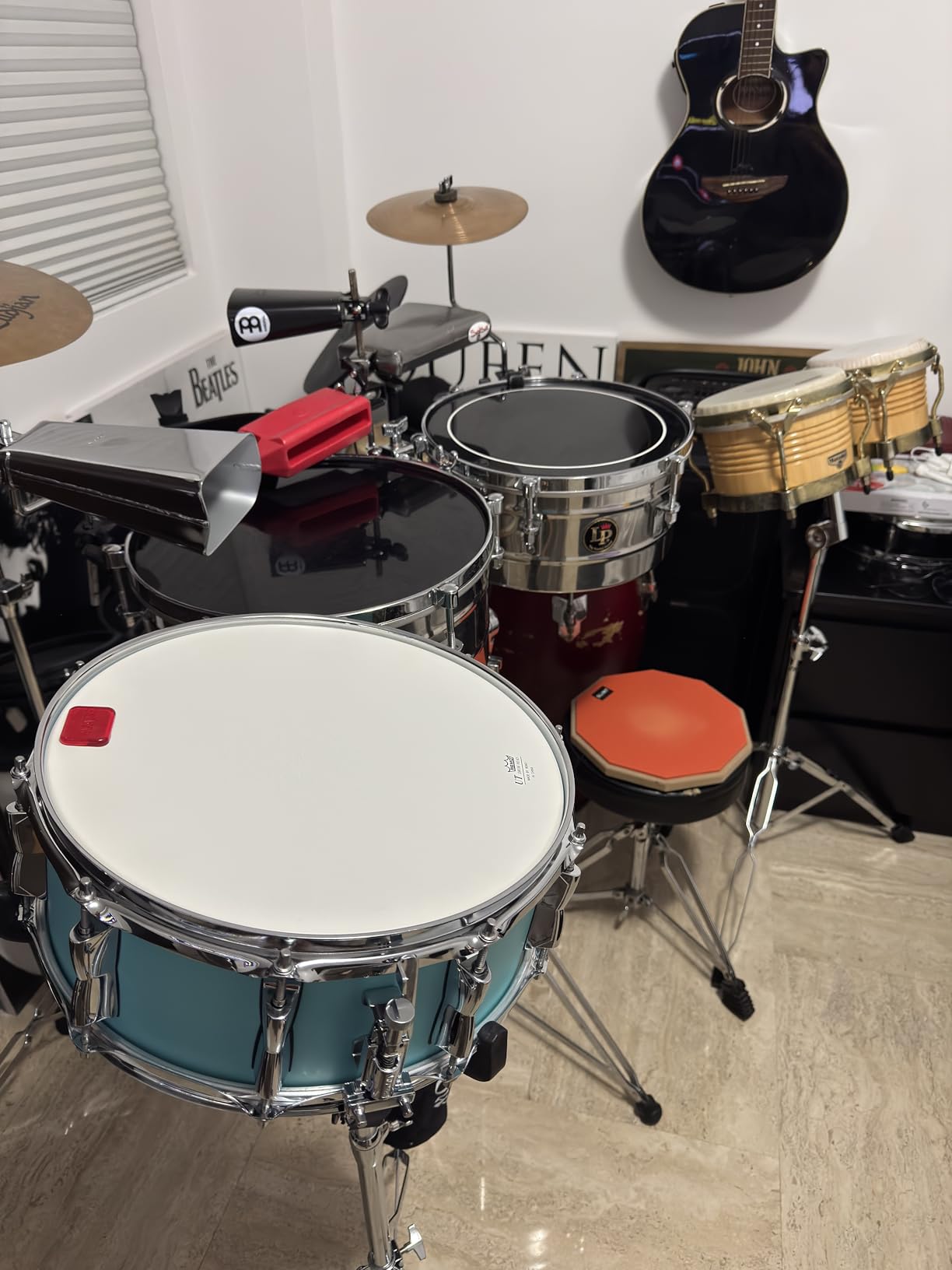
Birch sits brighter and drier than maple, so the drum does not have the warm roundness of the Yamaha Tour Custom. For bebop and straight-ahead playing at tempo, that brightness is a feature.
The main gripe from owners is packaging extras: no case or stand, and a throw-off that is unremarkable next to a Mag unit.
Why beginners end up here
A 14×5.5 all-birch shell with 45-degree edges is the classic jazz-depth setup, and most players find it easier to control than a deeper drum. It is a forgiving place to learn brush control.
Owners report the drum holds together well for practice rooms, school halls and small clubs.
Where it falls short
Birch will not give you the warm woody tone of a maple shell. If warmth is your priority over brightness, look one drum up the list.
The throw-off is a basic side-motion design, and a smaller range of fine adjustment than premium strainers.
7. Ludwig Supralite 5.5×14 – Steel With Real Jazz Depth
Ludwig 5.5×14 Supralite Snare Drum
5.5 x 14 in polished steel shell
2.3mm triple-flanged hoops
Ludwig Supralite branding
5-year warranty
Pros
- Rated 4.8 out of 5 with no ratings below four stars
- Owners notice how it changes the character of a kit
- Tone cuts through a band setting
- 2.3mm hoops give solid rimshots and controlled overtones
- 5-year warranty
Cons
- Factory heads are basic and are the main reason for four-star ratings
- Small review base of 11 ratings
- Steel voice offers less warmth than wood
The Supralite is the metal-drum answer in this roundup, and it earned its place because it is already at jazz depth rather than the 6.5 inches most steel snares ship in. At 5.5 inches it decays quickly and behaves like a woodshell under a light touch.
Owners consistently describe an excellent, well-built steel snare whose tone cuts through a band and which complements woodshell kits. Several note that swapping into it audibly changes the character of the whole kit.
The 2.3mm triple-flanged hoops give rimshots with more definition than the thinner hoops on cheaper models, and the 5-year warranty is the longest coverage in this group.
Why it suits studio work
Steel shells record with a fast transient and plenty of top end, which makes them easy to place in a mix without much processing. A 5.5-inch depth keeps that transient from turning harsh.
It is also a good complement if the rest of your kit is wood. Players with maple toms commonly report the Supralite slots in without sounding pasted on.
Where it falls short
The factory heads are basic, and that is the main reason for the four-star ratings. Replace them with a coated head before your first session.
With only 11 ratings on record, the owner consensus is thinner here than on the maple options. Judge it in person if you can.
8. Tama Steel Snare 14×5.5 – Punchy Cut for Fusion
Tama Steel Snare Drum – 5.5 Inches X 14 Inches – Black Black
5.5 x 14 in alloy steel shell, 1.2mm
Matte black finish
Bright high-treble sound profile
2-year warranty
Pros
- Bright high-treble voice with plenty of cut and projection
- Familiar Tama entry-line build quality
- Matte black finish hides wear
- 2-year warranty
Cons
- Least warm and least woody voice here
- 1.2mm shell is thinner and offers more overtone
- Tuning sensitivity draws mixed owner feedback
The Tama steel snare is a crossover pick. Owners generally find a punchy, cutting snare that fits pop, rock and fusion playing, which is exactly the territory where jazz and rock gear overlap.
Tama lists the sound profile as bright with a high treble emphasis, and at 1.2mm the shell is thin enough to flex and produce plenty of overtone. That is a lively drum, not a mellow one.
The matte black finish is understated and hides wear well on a working kit. Tama backs it with a 2-year warranty.
Where the brightness helps
Fusion and funk material often needs a snare that can push through a dense mix without help from an engineer. This is that drum, and the 5.5-inch depth keeps it from getting shrill.
Players who double on acoustic jazz and electric material often keep one of these as a second snare for exactly that reason.
Where it falls short
For straight-ahead acoustic jazz, a steel voice is the least warm option here and less natural in a room with upright bass and brushes. Players report mixed feedback on tuning sensitivity because of the thin shell.
Owner ratings cluster lower than the maple drums, with a visible spread across the star range.
9. PDP Concept Black Nickel Steel 5.5×14 – Durable Finish, Bright Voice
PDP Concept Series Black Nickel Over Steel Snare Drum 5.5″X14″
1mm dual-beaded rolled steel shell, 5.5 x 14 in
Black nickel plated finish
True Pitch tension rods and MAG throw-off
Fully chromed wires, Remo heads
Pros
- Bright
- cutting and consistent snare voice
- Black nickel plating is durable and visually distinctive
- True Pitch rods support stable tuning
- Chromed wires with carbon steel coils and brass end plates
- Remo drum heads supplied
Cons
- Steel is less woody and less forgiving than maple options
- Only 18 ratings on record
- Small share of one-star ratings
The Concept Black Nickel pairs a 1mm dual-beaded rolled steel shell with a plated finish that shrugs off knocks. Owners are largely satisfied with the crisp, projecting tone and the finish quality.
True Pitch tension rods and a MAG throw-off put this drum on par with more expensive hardware packages. The fully chromed wires use carbon steel coils and brass end plates for even contact across the head.
The bead rolling is what keeps the shell from flexing unevenly, and that consistency is why the tone stays even as you move around the drum.
Why players like the articulation
A dual-beaded steel shell at 5.5 inches gives quick, defined response with almost no warm-up time. Players who play fast changes of dynamics often like that predictability.
The black nickel finish suits dark wood kits and stage lighting where a polished chrome hoop would glare.
Where it falls short
Steel is less woody and less dynamically forgiving than the ply maple options in this roundup. Ghost notes take more control to keep even.
With only 18 ratings, the consensus is thinner than the maple PDP models. A small number of one-star ratings pulls the average down to 4.4.
10. Mapex MPX Steel 5.5×14 – Best Entry Point
Mapex MPX Steel Snare Drum – 5.5 x 14-inch – Polished
5.5 x 14 in alloy steel shell, polished chrome
Army throw-off
Remo UX heads fitted
Limited lifetime warranty
Pros
- Bright projecting snare voice with solid resonance
- Army throw-off switches without missing a beat
- Remo UX heads included from the box
- Limited lifetime warranty
- Also offered in 14 x 3.5 and 14 x 6.5 in
Cons
- Included Remo UX heads are basic and commonly upgraded
- Steel is the least warm-voiced option here
- Lowest average rating in the group at 4.1
The MPX is the cheapest credible way into a jazz-depth snare, and most owners are impressed by the sound-to-cost ratio. A 5.5 x 14 alloy steel shell with an Army throw-off covers the fundamentals without cutting corners on the shell itself.
Mapex offers the same model in 3.5-inch and 6.5-inch depths, so if you decide you want more or less resonance later you stay within one product line. The limited lifetime warranty is unusual at this level.
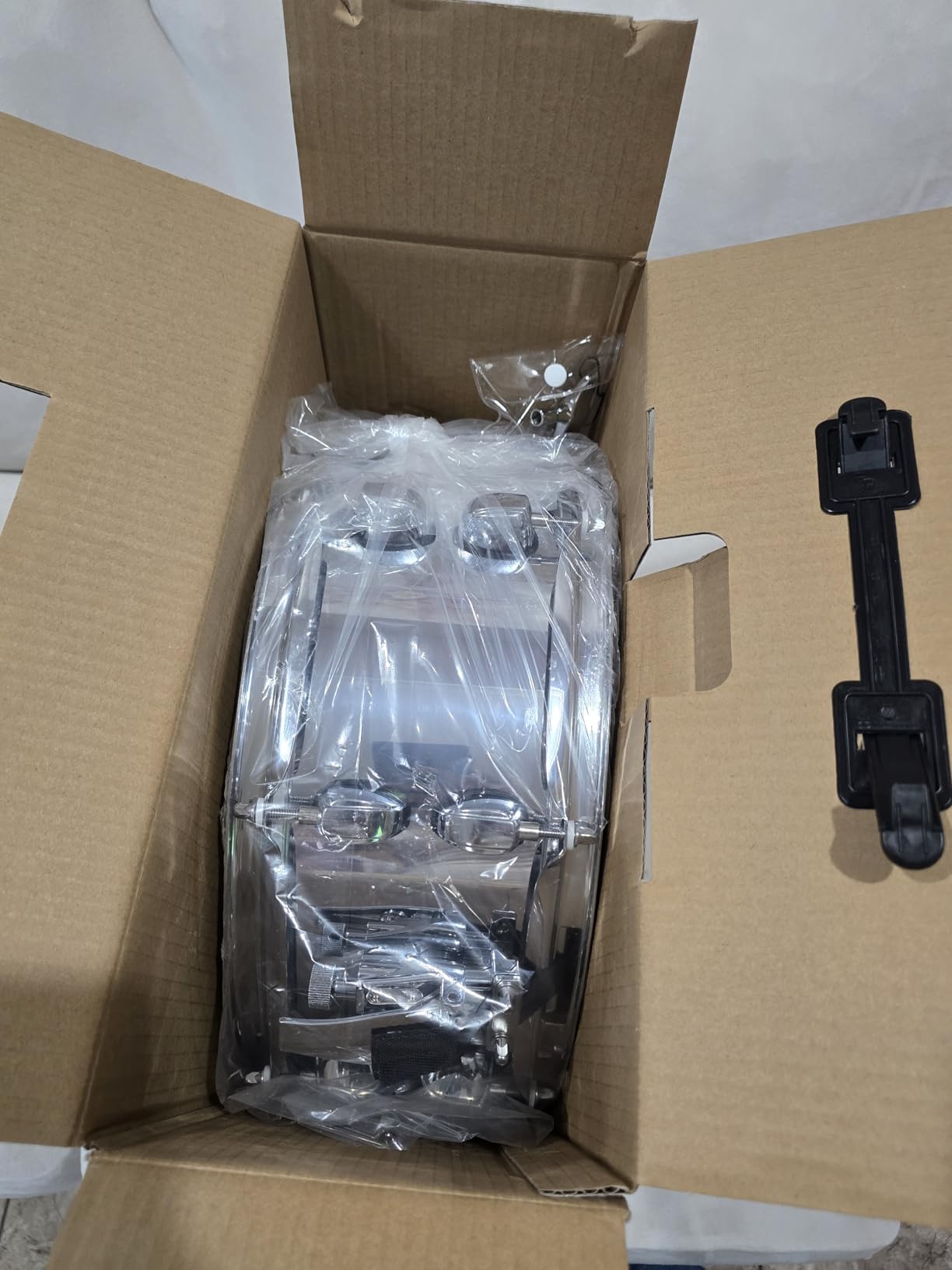
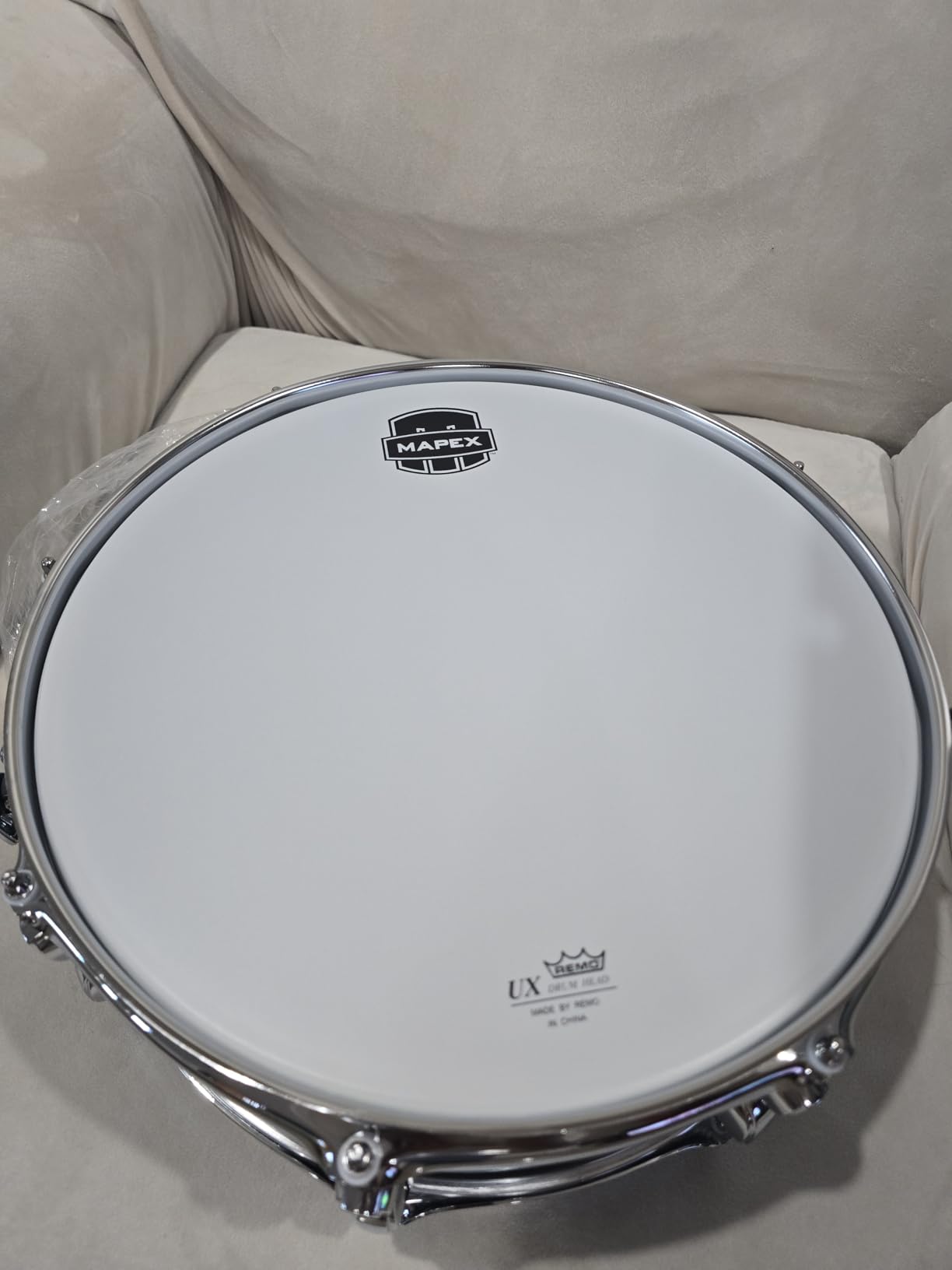
The included Remo UX heads are the weak point. Most owners upgrade them within the first few weeks, which is normal practice but worth budgeting for.
Aggregate owner feedback on this drum is pulled down by reports of drums reaching buyers with packaging damage from some sellers. Check yours on arrival.
Why it makes sense as a first snare
A jazz-depth steel shell at this level is genuinely useful for practising brush control and light dynamics. You learn the feel of a shallow snare before committing to wood.
It also works as a travel and practice snare. Shallow depth keeps the weight down and the footprint small.
Where it falls short
Steel is the least warm-voiced option in the group, so this is not the drum for a warm traditional jazz tone.
Its 4.1 average is the lowest here, driven by fulfillment complaints rather than by sound. Judge the tone separately from the reviews.
How to Choose a Jazz Snare Drum in 2026
Snare depth: why jazz usually means 5.5 or 6 inches
A shallower snare decays faster and moves less air, which is exactly what you want under a band that is already loud. The 14×5.5 and 14×6 dimensions are the jazz standards, and the 14×6.5 on this list is a compromise for players who also want rock range.
The depth debate on r/drums is the classic one: the shallower drum tunes low without sounding loose, while the deeper drum handles higher tunings with more headroom. Our rule is to match depth to your material, not to your ambition.
Why jazz drummers tilt their snares
A tilted snare lets the wires lie flatter against the bottom head, which softens the crack and drops the overall volume. Jazz drummers tilt to sit in a band instead of on top of it, and to keep ghost notes delicate while still having rimshots available when the music needs them.
Most players use roughly a 10 to 20 degree tilt and adjust the stand height to compensate. Check that your snare stand holds the drum securely at an angle before you rely on the technique.
Choosing snare heads for jazz drumming
Head choice changes more about the sound than the shell does. DrummerWorld players consistently recommend calfskin-style coated heads for jazz, naming Remo Renaissance, Evans Strata and Aquarian Modern Vintage.
Standard coated heads, like the Remo UX and Remo UT models fitted to two of the drums here, are a drier and darker alternative that suits bebop playing.
Wood or metal for jazz?
Wood shells give warmth, dynamic roundness and a softer attack under brushes. Maple is the most common choice, and heavy plies such as the 10-ply and 20-ply builds here add depth without adding thickness.
Metal shells give brightness, cut and a fast transient that records easily. For straight-ahead acoustic jazz in a quiet room, wood usually blends better.
How to audition a snare in a music shop
Play it tuned to a middle pitch first, then try it low. Listen to how the decay behaves and whether the drum gets louder or just brighter as you tighten it.
Bring sticks and, if the shop allows it, ask to play it with brushes. Ghost notes and rimshots tell you more in thirty seconds than five minutes of reading a spec sheet.
Frequently Asked Questions
What is the best snare drum for jazz?
The PDP By DW Black Wax Maple 6.5×14 is our pick for most jazz players because its 10-ply maple shell balances warm tone with enough cut for a band setting. Players who want the warmest, most open sound should look at the Yamaha Tour Custom 14×6.5, while those chasing a vintage voice often prefer the PDP 20-Ply Maple 14×5.5 with its wood hoops.
Why do jazz drummers tilt their snares?
Jazz drummers tilt the snare so the wires lie flatter against the bottom head, which softens the crack and lowers the volume. That lets the drum sit inside a band instead of on top of it, and it keeps ghost notes delicate while rimshots stay available when the arrangement needs them. Most players use roughly a 10 to 20 degree tilt.
What is the best snare head for jazz drumming?
Calfskin-style coated heads are the most recommended choice for jazz. DrummerWorld players name Remo Renaissance, Evans Strata and Aquarian Modern Vintage as the standard options, describing them as warmer and more responsive than standard coated plastic heads. Bossa nova and softer styles benefit most, while bebop players often prefer a drier coated head for faster decay.
How deep should a jazz snare be?
Most jazz snares measure 14×5.5 or 14 inches by 6 inches. Shallower drums decay faster, move less air and sit more quietly under a band, which is what jazz playing calls for. A 14×6.5 gives you more resonance and tuning range if you also play rock or funk, and several players on drum forums pair a coated head with a 5-inch shell to move its tone toward the deeper drums.
Do jazz drummers use metal or wood snares?
Both are used, and the choice depends on the room and the style. Wood shells such as maple are warmer and blend more easily with upright bass and horns, so they dominate traditional and cool jazz. Steel shells are brighter with a faster transient, which suits fusion, funk and studio work. Several professional players switch between a wood snare and a shallow steel snare depending on the gig.
Final Verdict: The Best Snare Drums for Jazz in 2026
After six weeks of playing them side by side, the PDP By DW Black Wax Maple 6.5×14 is the snare we would put on most jazz kits. The Yamaha Tour Custom 14×6.5 wins on warmth and range, and the PDP 20-Ply Maple 14×5.5 wins outright on musical character and rimshots.
Whatever you choose, buy a drum that is already at jazz depth, pair it with a calfskin-style head, and practice tilting it. Those two habits will improve your playing more than any hardware upgrade we could recommend.