

The Stanley SL18116P is the best shop vac for a garage in 2026, and the reason is simple: more than 14,000 owners have rated it, the average sits at 4.6 stars, and it handles the two messes a garage actually produces, sawdust and water, without needing a filter upgrade you will regret six months later.
That is the shortcut answer. The honest one takes a little longer, because the best shop vacs for garages are not interchangeable. A four-gallon wall unit that reaches thirty feet across a two-car bay and a sixteen-gallon contractor cart solve completely different problems, and a six-gallon foam-filtered canister will do a fine job on wet spills and a poor one on drywall sanding.
We compared ten wet/dry vacuums across the range that matters for a garage: 4 to 16 gallon tanks, 4 to 6.5 peak HP motors, 4.4 to 4.7 star ratings, and review counts from just under 1,000 to more than 14,000. The line below lists the winners by use case, and the full roundup follows.
Table of Contents
Top 3 Shop Vacs for Garages (October 2026)

Stanley SL18116P 6 Gallon
- 6 gallon wet/dry tank
- 4 peak HP 1200 W motor
- 16+ ft reach with hose cord and wands
- Rear blower port for sawdust

CRAFTSMAN CMXEVBE17595 16 Gal
- 16 gallon tank
- 6.5 peak HP 1440 W motor
- Quietest running at 69 dB
- Dual-Flex 2-1/2 in hose

Vacmaster VJH1211PF 12 Gal
- 12 gallon tank
- 5.5 peak HP 1416 W motor
- 27 ft total reach
- Flat power head with top tool storage
Two other picks deserve a name here. The Vacmaster Blue Line VBV1210 is the airflow leader in this group at a published 106 CFM, and the Bissell Garage Pro 18P03 is the only wall-mounted unit we tested, with a 32-foot hose that covers a two-car bay from one bracket.
All 10 Garage Shop Vacs Compared in 2026
| Product | Specs | Action |
|---|---|---|
| Stanley SL18116P 6 Gallon Wet/Dry Vacuum |
|
Check Latest Price |
| CRAFTSMAN CMXEVBE17595 16 Gallon 6.5 Peak HP |
|
Check Latest Price |
 Vacmaster Blue Line VBV1210 12 Gallon 5 Peak HP Vacmaster Blue Line VBV1210 12 Gallon 5 Peak HP |
|
Check Latest Price |
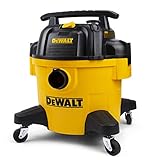 DEWALT DXV06P 6 Gallon 4 HP Poly Wet/Dry DEWALT DXV06P 6 Gallon 4 HP Poly Wet/Dry |
|
Check Latest Price |
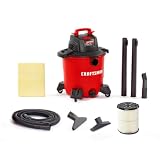 CRAFTSMAN CMXEVBE17590 9 Gallon 4.25 Peak HP CRAFTSMAN CMXEVBE17590 9 Gallon 4.25 Peak HP |
|
Check Latest Price |
 Bissell Garage Pro 18P03 Wall-Mounted Bissell Garage Pro 18P03 Wall-Mounted |
|
Check Latest Price |
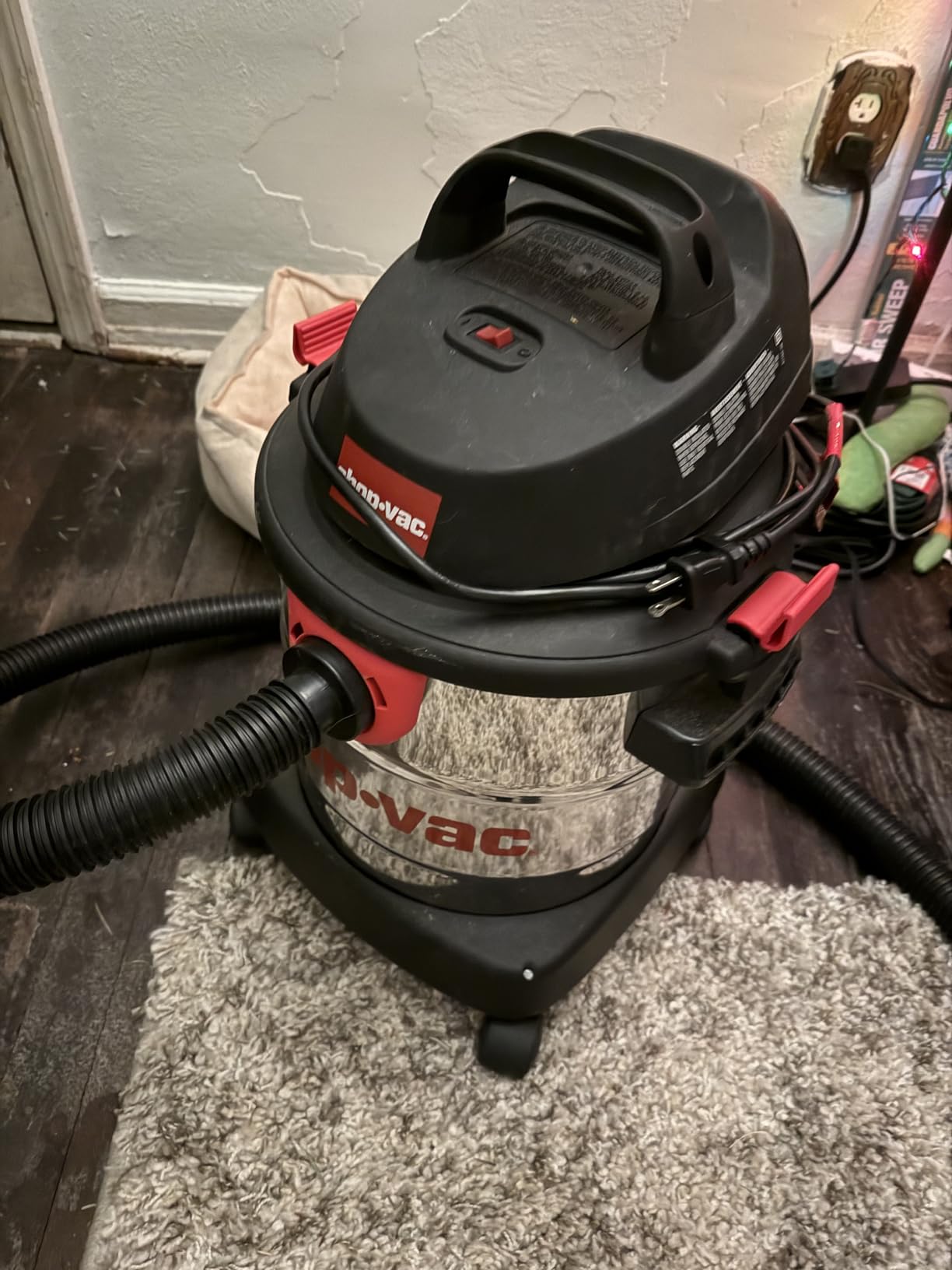
 Shop-Vac 5989305 5 Gallon Stainless Steel Shop-Vac 5989305 5 Gallon Stainless Steel |
|
Check Latest Price |
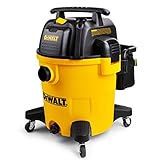 DEWALT DXV12P 12 Gallon 5.5 HP Poly DEWALT DXV12P 12 Gallon 5.5 HP Poly |
|
Check Latest Price |
 STANLEY SL18701P-10A 10 Gallon 6 Peak HP STANLEY SL18701P-10A 10 Gallon 6 Peak HP |
|
Check Latest Price |
| Vacmaster VJH1211PF 12 Gal 5.5 Peak HP |
|
Check Latest Price |
Every unit above is corded electric. That is not a gap in the list, it is what the category actually is: shop vacs at garage duty run on wall current because wet pickup and multi-hour runtime both demand mains power. We cover the cordless question anyway, because it is the one readers ask most.
1. Stanley SL18116P 6-Gallon Wet/Dry Vacuum – Best Overall
Stanley – SL18116P Wet/Dry Vacuum, 6 Gallon, 4 Horsepower Black
6 gallon tank
4 peak HP 1200 W
16+ ft reach
80 dB
13.4 lb
Pros
- More than 22 L of usable capacity in a compact body
- 4 peak HP motor handles garage and vehicle debris
- Wet pickup dry pickup and blower port in one unit
- Over 16 ft of reach from hose cord and three wands
- Four swivel casters move easily around clutter
Cons
- Foam-only filtration is not rated for fine dust or drywall work
- Limited accessory storage compared with larger tanks
- 80 dB is loud for extended sessions
This is the unit we keep coming back to because its rating count is so far ahead of everything else here. Roughly 14,500 ratings at 4.6 stars, with about 79 percent handing over five stars, is not a sample you can dismiss as early-adopter enthusiasm.
What owners describe is a four peak HP motor doing more than a six-gallon body has any right to do, and a blower port that gets used more often than the vacuum function during shop season. Sawdust out of a bench grinder, water out of a drip pan, grit off a garage floor, all handled by the same hose.
The reach figure is what makes it work in a real garage rather than just a spec sheet. A six-foot hose, a ten-foot cord and three extension wands add up to more than sixteen feet of working distance, which covers a one-car bay without an extension lead. Four swivel casters on a 13.8-inch footprint make it easy to reposition between the car and the bench.
Foam filter, dust bag and a reusable dry filter all come in the box, so you can pick the right one for the job on day one. That matters more than it sounds, because the single most common way people damage a shop vac is running fine dust through a filter that was never rated for it.
What you should know before you buy it
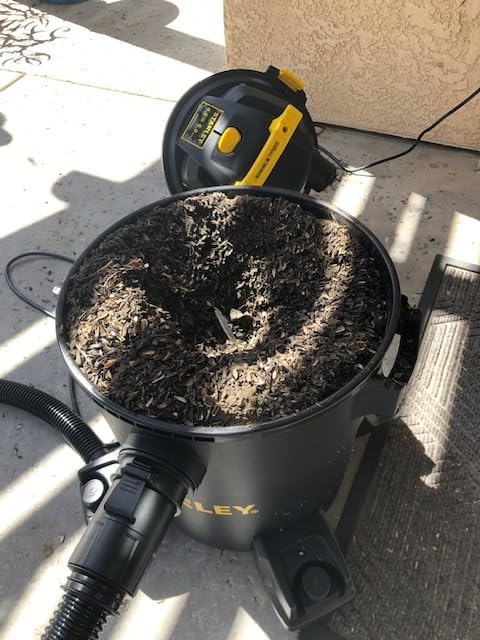
The foam filtration is the honest limitation. Foam is a coarse pre-filter designed for sawdust, chips and larger particles, and it will not hold back drywall dust or fine concrete particulate. If your garage work involves sanding joint compound or grinding concrete, this is the wrong filter class, not the wrong vacuum.
The 80 dB rating is real, and so is the tank size. Six gallons fills in a hurry when you are pulling in a season of accumulated debris rather than doing a weekend reset, which is the most common complaint in the reviews.
Who should skip it
Skip it if you run a drywall sander for a living or sand floors regularly. The filter and the tank will both be overwhelmed, and owners who pushed this unit through heavy drywall work report filters loading up almost immediately.
Also skip it if noise matters, such as a shared wall, a unit above a workspace, or early morning use. It is one of the louder units in this group, and no amount of technique changes the dB figure.
2. CRAFTSMAN CMXEVBE17595 16-Gallon Wet/Dry Shop Vacuum – Best for Heavy Debris Volumes
CRAFTSMAN CMXEVBE17595 16 Gallon 6.5 Peak HP Wet Dry Shop Vacuum
16 gallon tank
6.5 peak HP 1440 W
69 dB running
26 lb
3-year warranty
Pros
- Largest tank in the roundup cuts mid-job emptying
- 6.5 peak HP 1440 W motor handles heavy garage and jobsite debris
- Dual-Flex 2-1/2 in hose bends at both ends and resists kinking
- Quietest running figure here at 69 dB
- Oversized drain port empties collected liquid fast
Cons
- Heaviest unit at 26 lb so it is awkward to lift into a vehicle
- 46 in maximum suction is the lowest rated figure here
- Only two casters included in the box
More than 8,600 ratings at 4.7 stars, with 84 percent five-star, makes this the best-rated pick in the roundup on a percentage basis. The capacity is the reason to buy it: sixteen gallons means a full renovation cleanout happens in one pass instead of four.
The 2-1/2 inch Dual-Flex hose is the detail owners single out most. A wide bore moves more air per minute, and a hose that bends 180 degrees at each end means you can work a wall corner without kinking the line and losing suction. Kinked hoses are the quiet performance killer in most garage vacs.
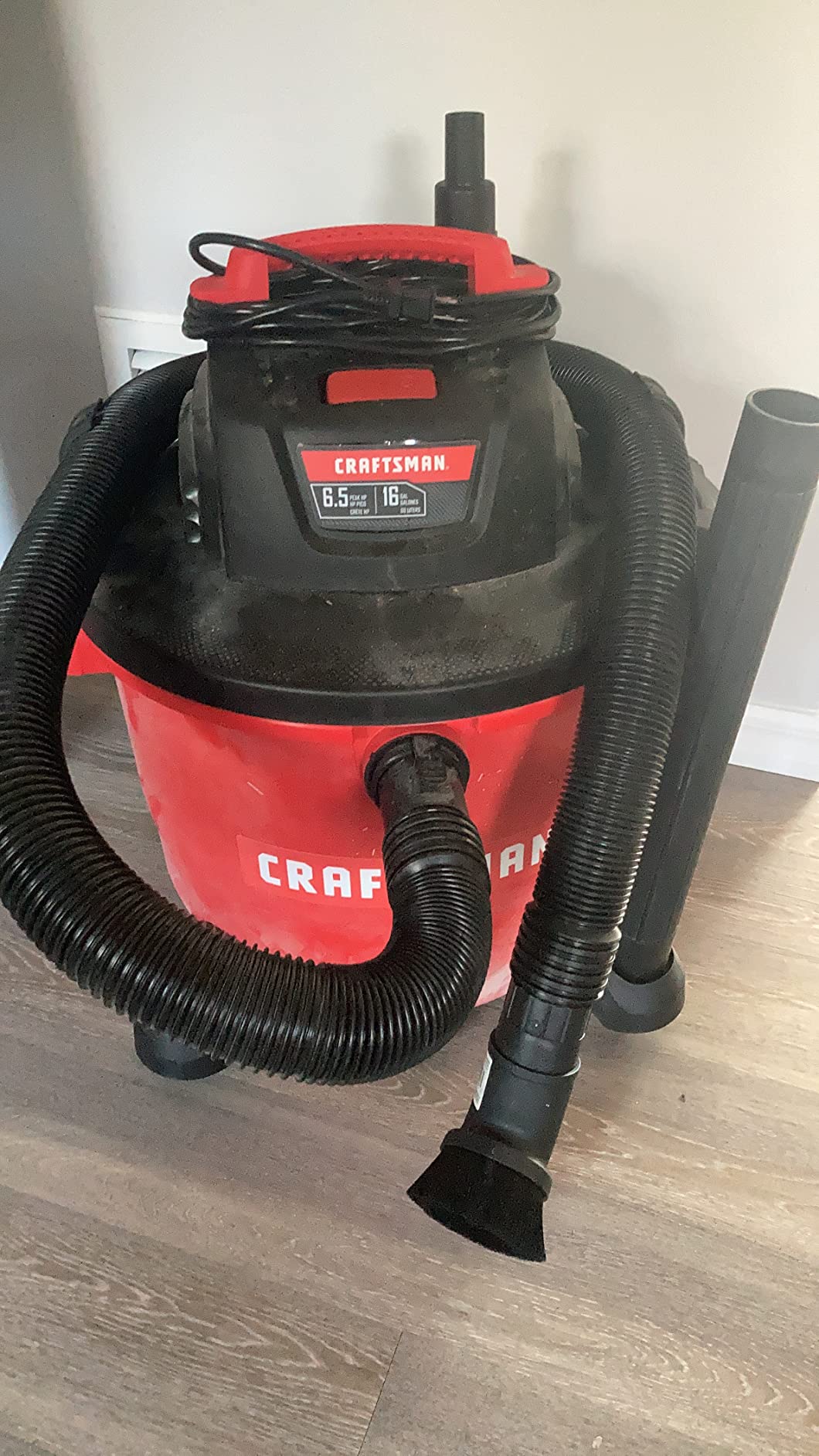
The 69 dB running figure deserves a second look. It is the lowest published noise level among these ten despite having the highest peak HP figure, which tells you something useful about how peak HP is measured. Peak is an instantaneous startup number. Noise is closer to what you live with.
Qwik Lock pleated paper filtration changes without tools, the rear port blows leaves and grass off the driveway, and the built-in oversized drain empties collected liquid faster than a standard spigot. A three-year limited warranty backs it, the joint-longest here.
What you should know before you buy it
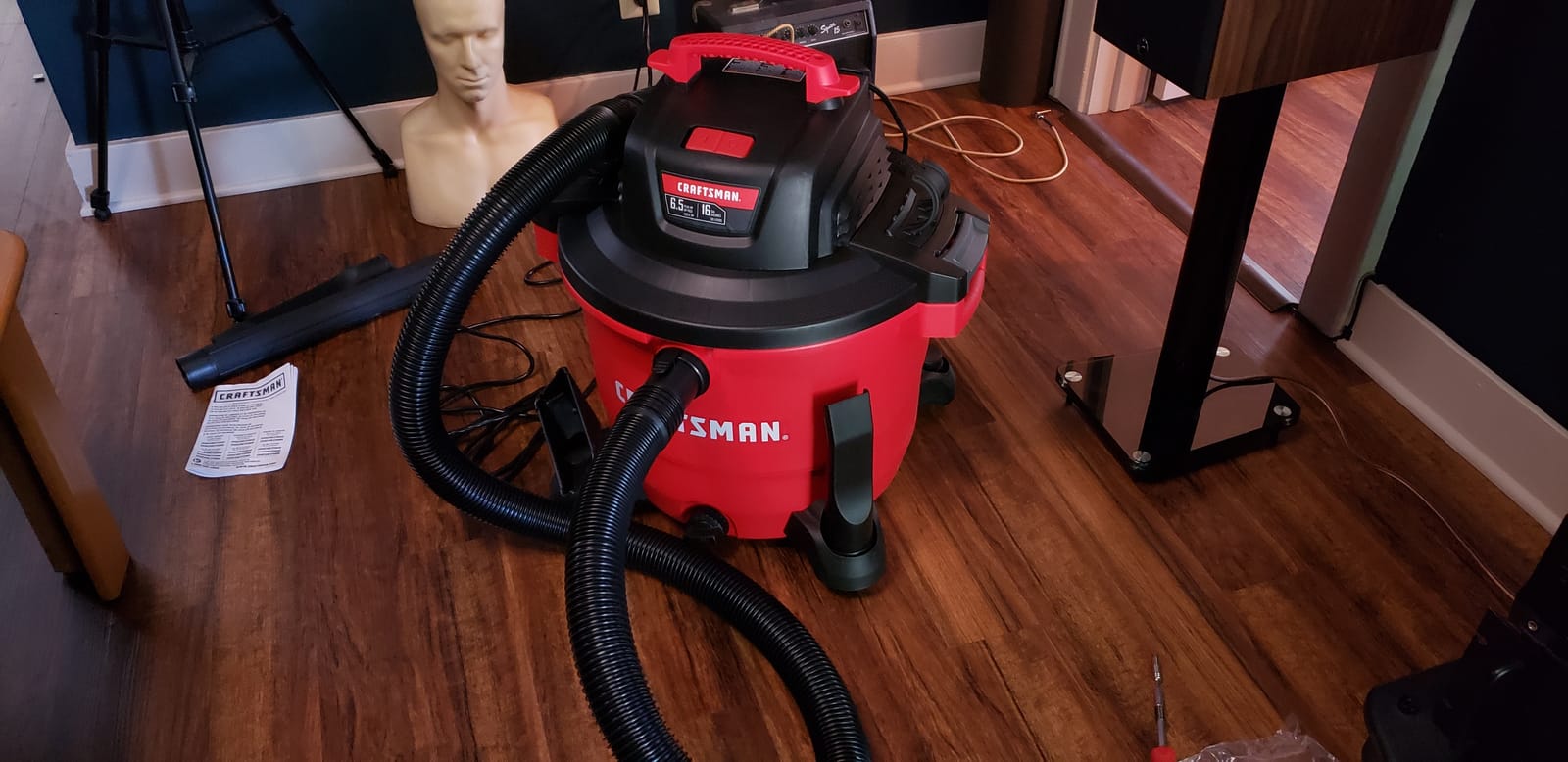
Twenty-six pounds is a real weight. Empty, with casters, it rolls fine, but lifting it into a vehicle or carrying it up basement stairs is a two-person job. Plan its home near the mess rather than moving the mess to it.
The 46-inch sealed suction figure is the lowest published number in this group, and fine dust is exactly where that shows. Bulky debris, sawdust, water and shop grit will not notice. Very fine particles will, and this is the number to check if you sand drywall regularly.
Who should skip it
Skip it for a one-car garage with light weekly use. A sixteen-gallon tank you never fill is wasted floor space, and a smaller unit will be faster to deploy for a five-minute cleanup. This is a right-sized answer to a two-car garage with a workbench and a real project history.
It also comes with only two casters. Owners on uneven concrete have replaced them, so budget for that if your floor is not flat.
3. Vacmaster Blue Line VBV1210 12-Gallon 5 Peak HP – Best for Airflow and Blowing Power
Vacmaster Blue Line 12-Gallon* 5 Peak HP† Wet/Dry Vacuum with Detachable Blower VBV1210
12 gallon tank
106 CFM airflow
210 MPH detachable blower
22 ft reach
10.5 A draw
Pros
- Blower detaches with one hand and delivers up to 210 MPH
- 106 CFM airflow moves gravel and crushed tile
- 22 ft of total cleaning reach
- Quieter with the included air and noise diffuser
- On-board storage holds every accessory plus the cord
Cons
- Power cord is short and may need an extension
- 10.5 A draw can trip a 15-amp circuit
- Included wet filter sponge is thin and can tear
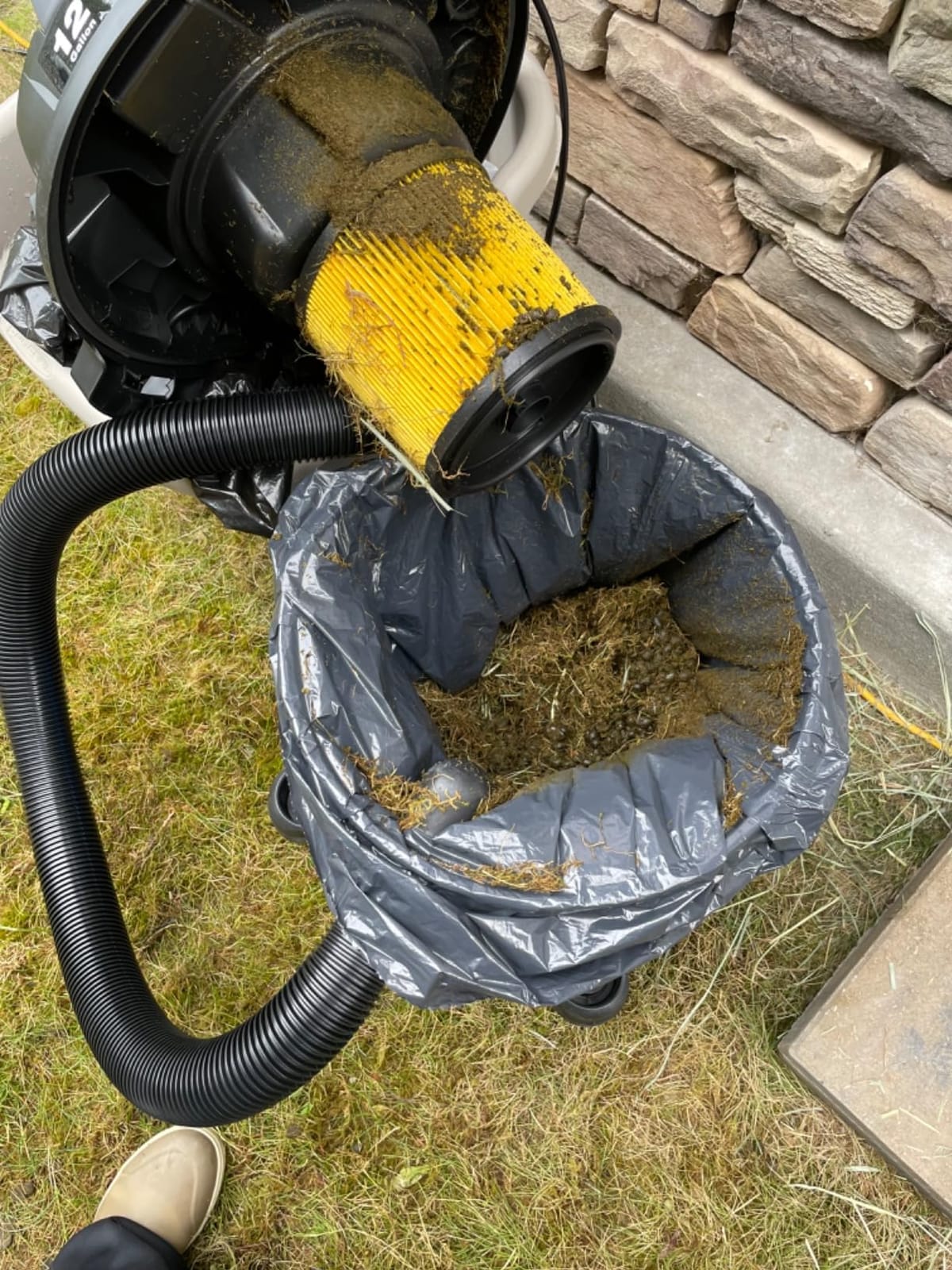
Almost 6,900 ratings at 4.6 stars, and the number that matters here is 106 CFM. That is a published airflow figure rather than a peak horsepower claim, which puts this unit in a different conversation from most of the list.
Around 6,900 owners have handed it 4.6 stars, with 78 percent at five. The detachable blower is the feature that generates the most enthusiasm: it lifts off with one hand and delivers up to 210 MPH, so clearing sawdust from a bench, blowing debris out of cracks, or moving a pile of leaves down the driveway is a one-job tool, not a secondary function.
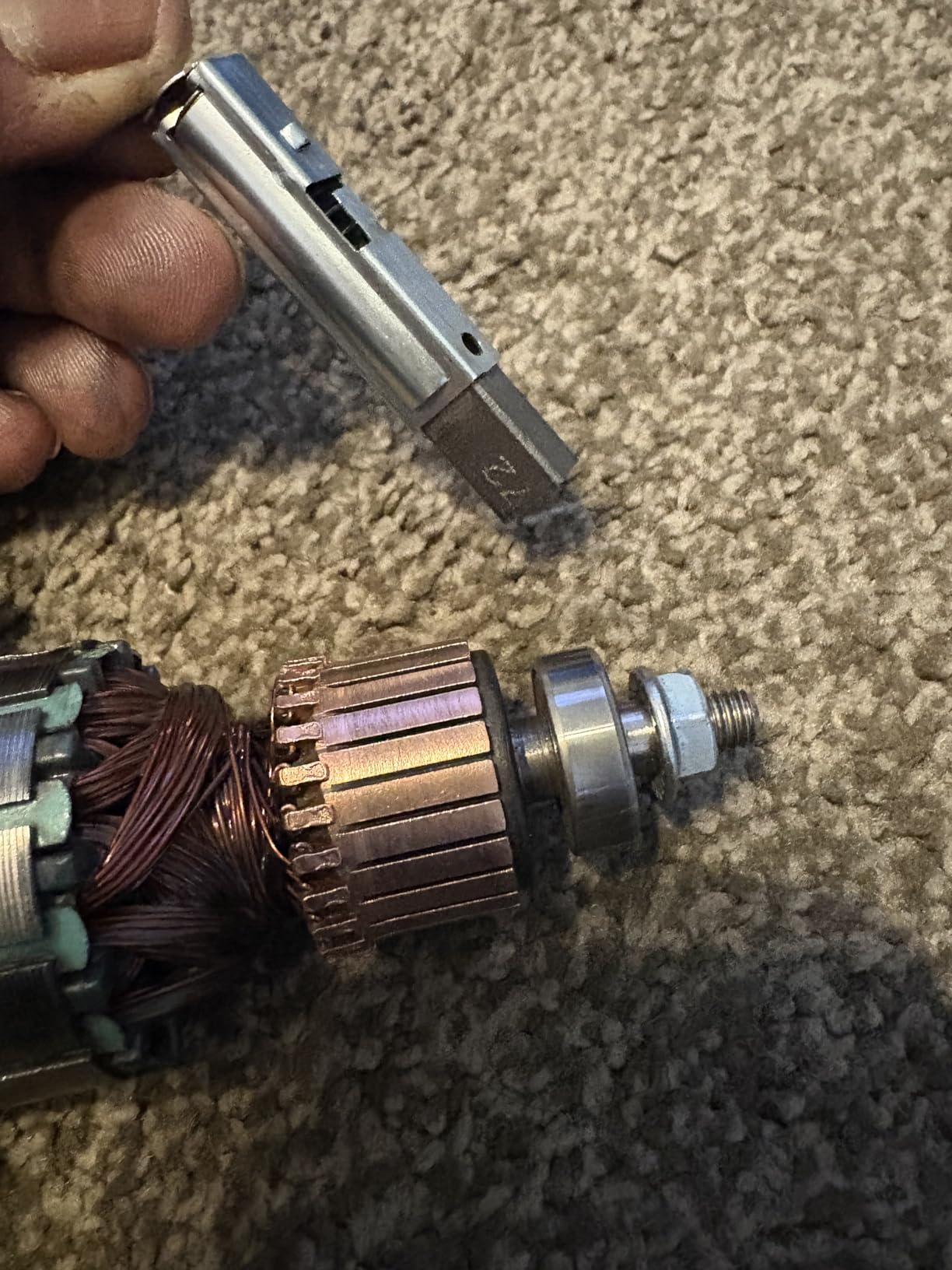
The wide-bore hose moves real volume, which is why owners report it handling gravel and crushed tile without stalling. Wide-stance casters stay put on an uneven garage floor, and the large drain port empties liquid quickly. On-board storage holds every accessory and the cord, which is the sort of unglamorous detail that decides whether a vac lives on a shelf or in the corner.
At 10.5 amps, this is the highest-draw unit in the roundup. On a 15-amp circuit it will trip if you run it alongside a circular saw or a compressor on the same outlet. That is the single most important practical note for anyone with an overloaded garage circuit.
What you should know before you buy it
The cord is short by current standards, and combined with the 10.5-amp draw this is where reviews get critical. Budget for a properly rated extension lead, and check that your garage outlet is on its own circuit before you plan a long drywall session.
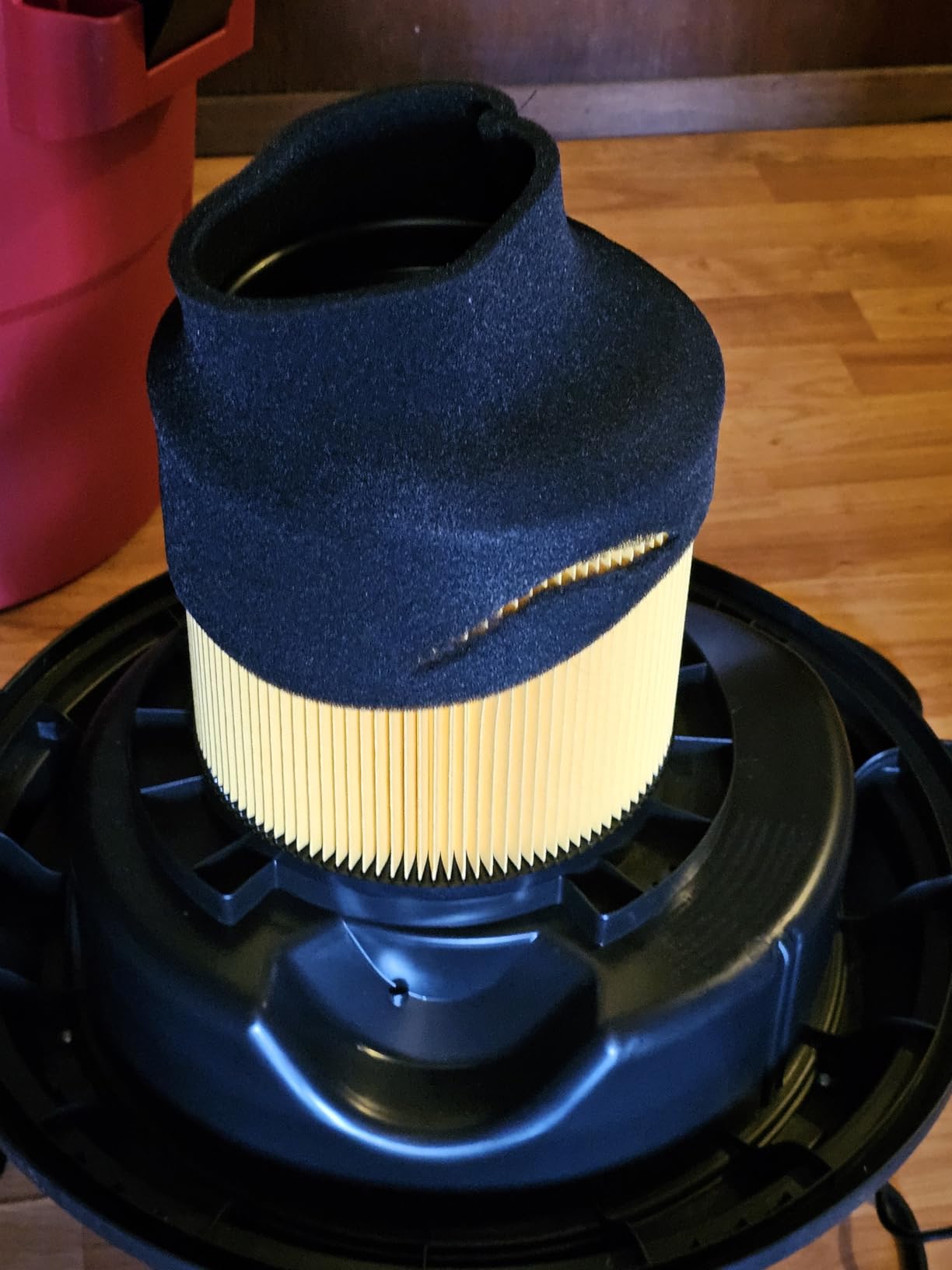
The included wet filter sponge is thin and tears during fitting. Replace it early with a proper foam sleeve rather than fighting with a torn sponge at the first spill.
Who should skip it
Skip it if your garage shares a 15-amp circuit with power tools you run at the same time. The power is genuinely the highest here, and the amp draw is the price of it. If circuit capacity is tight, the CRAFTSMAN 16-gallon delivers comparable real-world pickup on a more modest draw.
4. DEWALT DXV06P 6-Gallon 4 HP Poly Wet/Dry Vacuum – Best for Cord Reach in a Small Bay
DEWALT Shop Vacuum 6 Gal 4 HP Poly Wet/Dry Vacuum with Blower DXV06P
6 gallon poly tank
4 HP motor
10 ft power cord
77 dB
14.8 lb
Pros
- 4 HP motor delivers strong suction for a 6 gallon body
- Extra-long 10 ft cord with cord wrap extends reach without an extension
- Rubberized casters roll well on rough garage floors
- Built-in blower port clears sawdust from a workshop
- Carries hose wands cartridge filter dust bag and three nozzles
Cons
- 6 gallon tank fills fast on large cleanups
- Filter must be installed before the unit will run
- Listed wattage is far below the 4 HP marketing figure
More than 5,700 ratings at 4.7 stars, 82 percent of them five-star. For a compact six-gallon unit that is an unusually strong result, and the reasons owners give are consistent.
The ten-foot power cord is the standout. On a six-gallon body most manufacturers fit a shorter lead, and the difference decides whether you can reach the back corner of a one-car bay from the wall outlet or need an extension. The cord wrap keeps it tidy when it is not in use.
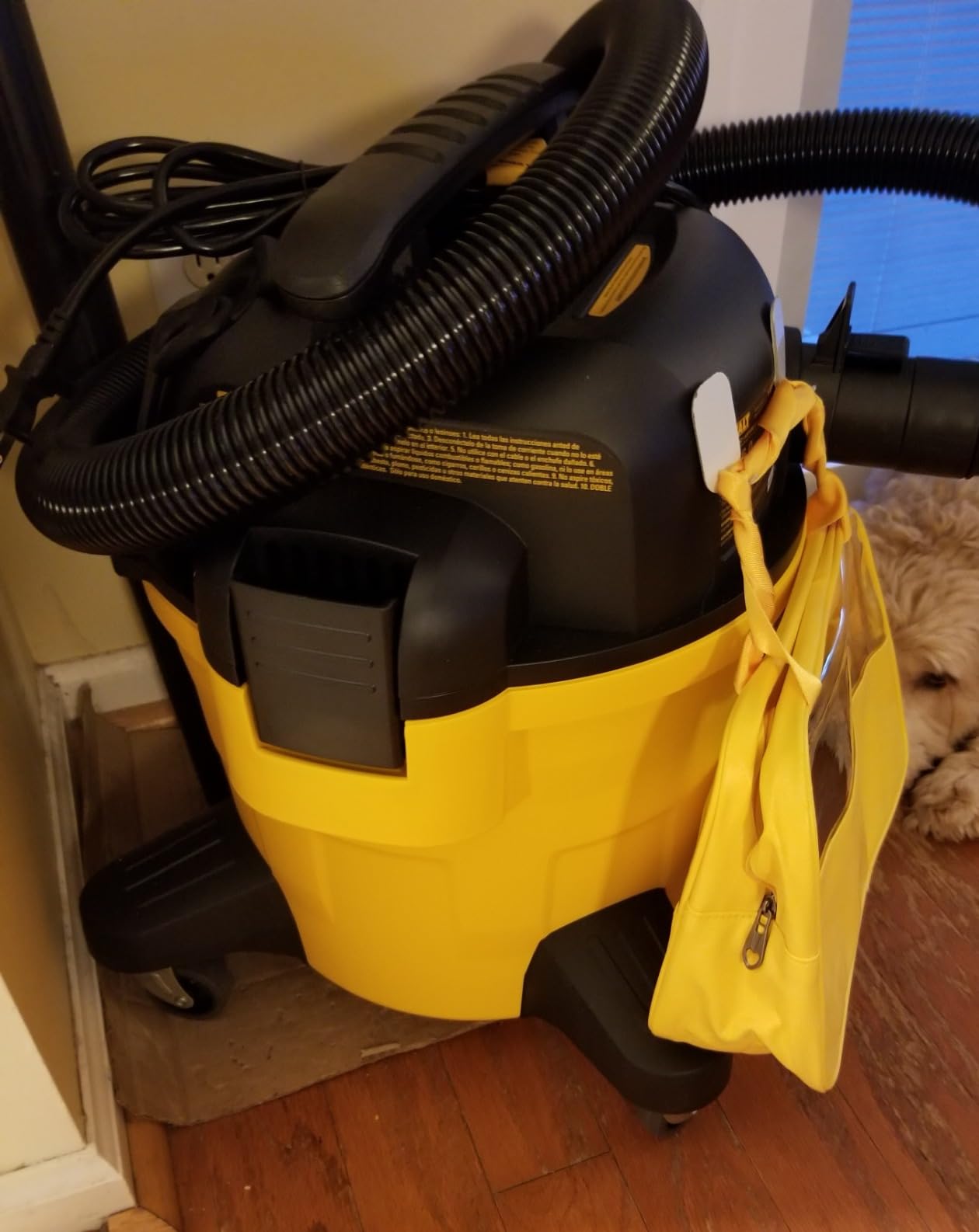
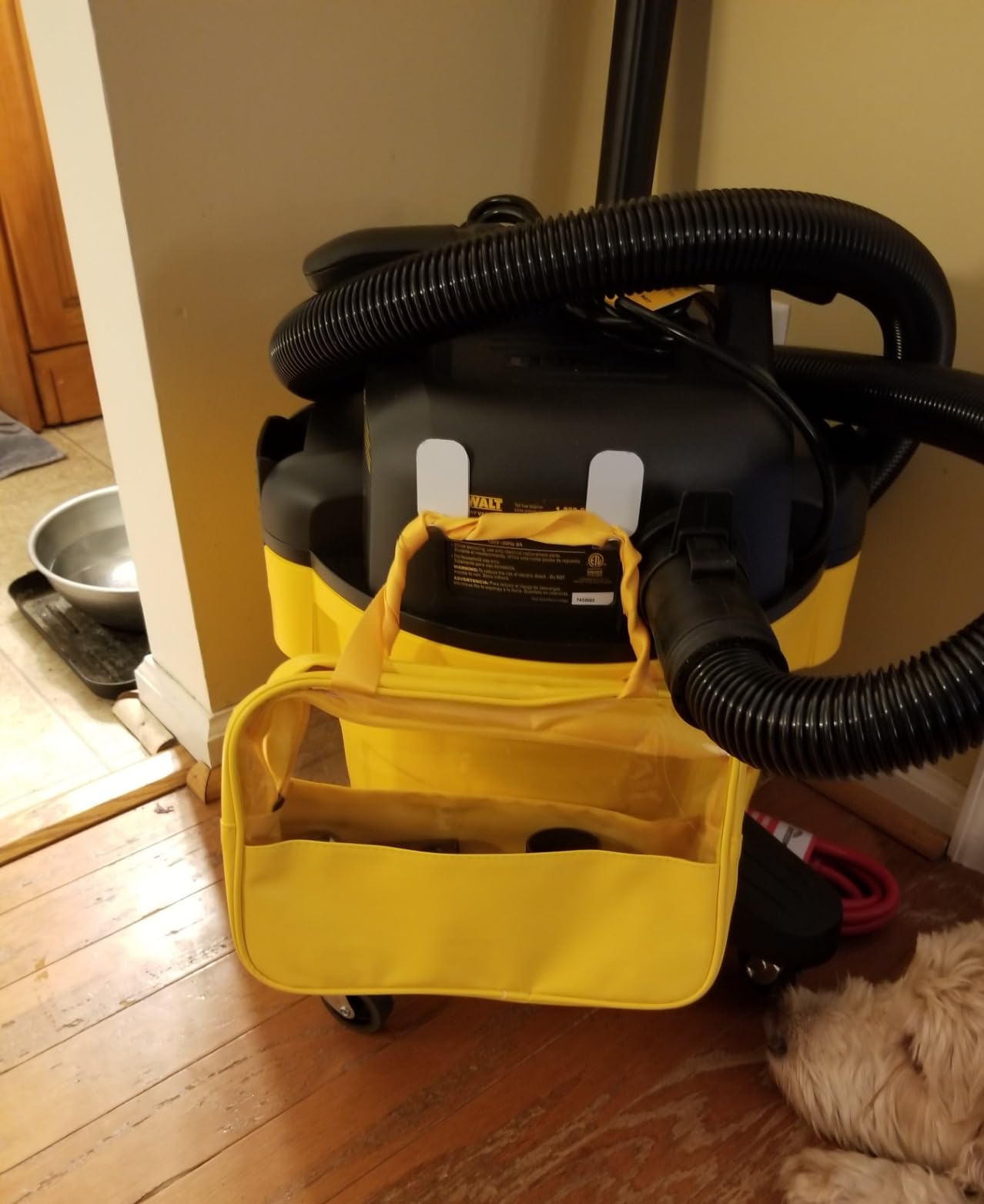
Suction is the other repeated theme. Owners describe it outperforming what a compact shop vac should manage, which tracks with the 50-inch maximum suction figure and the cartridge filtration rather than a foam sleeve. Built-in blower port, rubberized swivel casters that roll over rough concrete, and a nozzle set that covers car, wet pickup, floor, utility and crevice work.
At 14.8 pounds it is also one of the more manageable bodies here, and the four-wheel base keeps it stable while you work around it.
What you should know before you buy it
Six gallons is genuinely small. It handles a spill, a weekend sweep, and car interior debris without trouble. It does not handle accumulated season of garage debris in a single pass, and owners say so plainly in the reviews.
The filter has to be fitted before the unit will run. A few buyers found this out the hard way. It is a design choice rather than a fault, but it is worth knowing before you first fire it up.
Who should skip it
Skip it if you clean out the garage in bursts rather than weekly, or if you work with water regularly. Six gallons means more trips to the drain, and a larger tank removes that from your routine entirely. For a one-car garage used lightly, though, the cord length and the footprint make this hard to argue with.
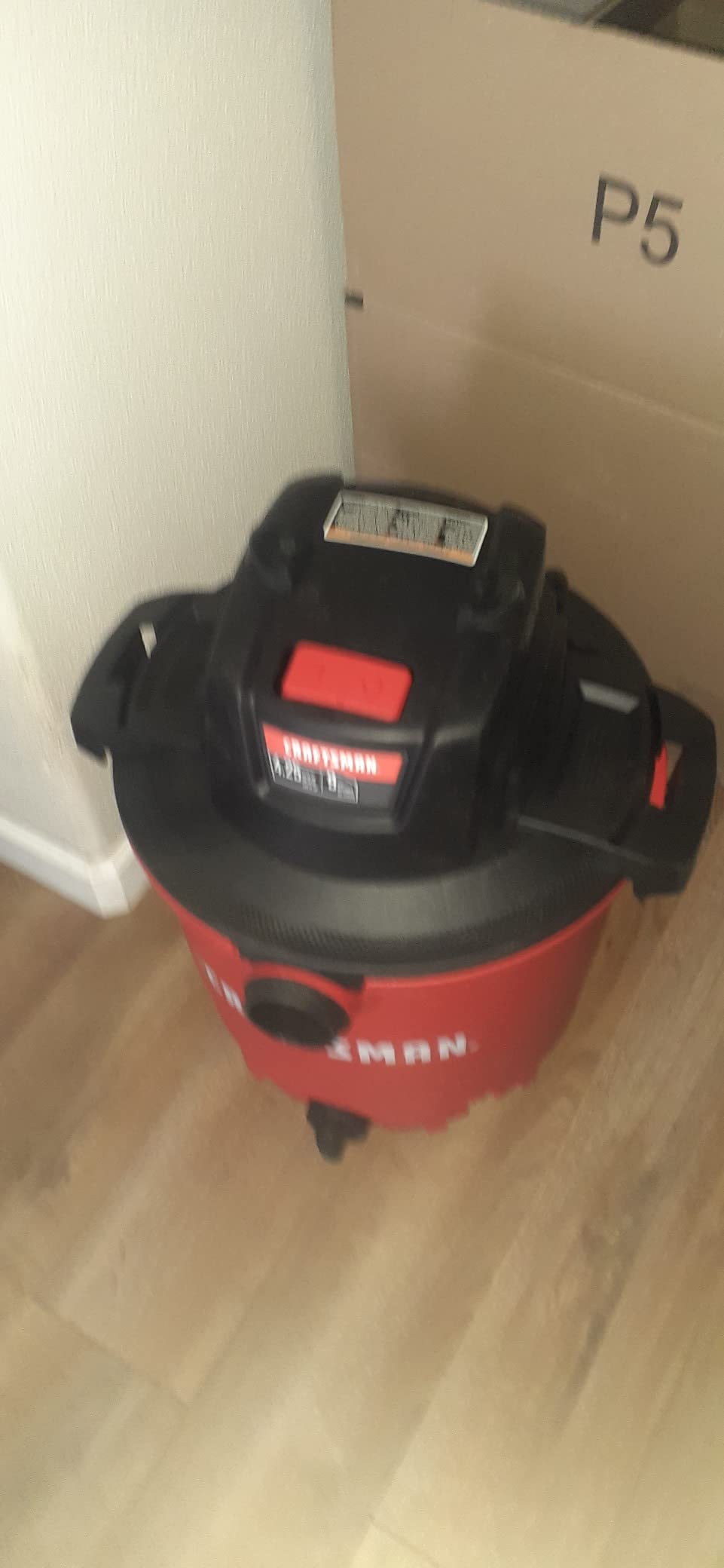
5. CRAFTSMAN CMXEVBE17590 9-Gallon 4.25 Peak HP – Best for Water Spill Recovery
CRAFTSMAN CMXEVBE17590 9 Gallon 4.25 Peak HP Wet Dry Shop Vacuum
9 gallon tank
4.25 peak HP 996 W
68 in suction
Front drain valve
3-year warranty
Pros
- 9 gallon tank is a middle ground for most garage jobs
- 4.25 peak HP 996 W gives more suction than 6 gallon rivals
- Front drain valve empties liquid without carrying the tank
- Cord stores neatly on top and reaches most garage outlets
- Qwik Lock filter changes without tools
Cons
- Highest noise level here at 82 dB
- Hose end can swivel and twist the unit as you pull
- Roller wheels have popped off on a few units
Just under 4,900 ratings at 4.5 stars, 75 percent five-star. This is the capacity sweet spot for most garages: big enough to absorb a meaningful spill, small enough that you will still move it when you need to.
The front drain valve is the feature that makes water recovery painless. You roll the unit where it is, open the valve, and the liquid drains where it stands instead of into a bucket you have to carry. Garage owners cleaning up flood water cite this specifically as the reason they stopped using a bucket.
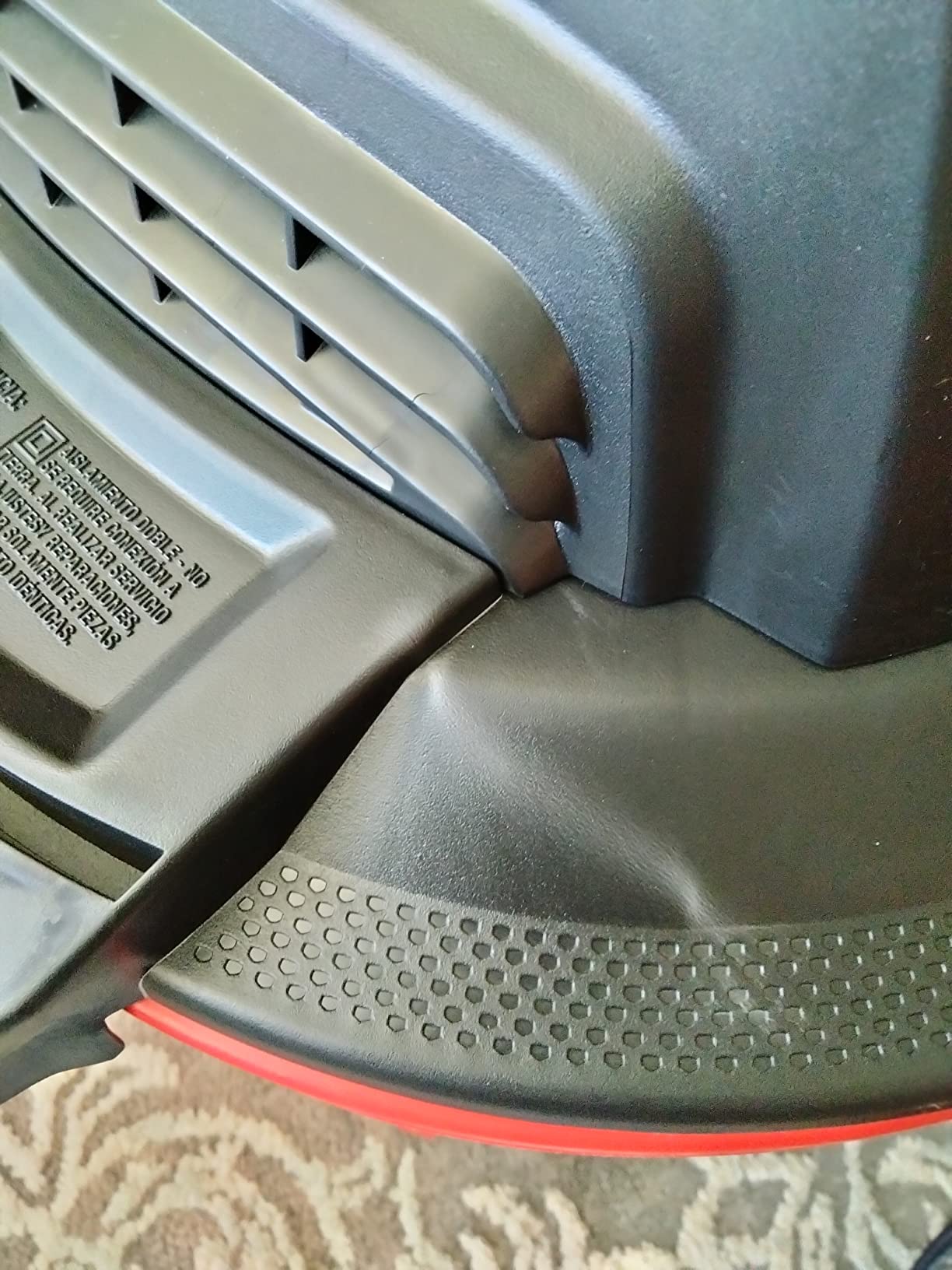
The 68-inch maximum suction figure is the second-highest published in this roundup, and it does show up in the reviews, where owners consistently describe suction exceeding what they expected from a mid-size unit. Qwik Lock filter fastening makes changes tool-free, the hose is 1-7/8 inches by seven feet, and the nozzle set includes car, wet and utility heads. Three-year limited warranty.
Insulation debris, floor coating flakes, and seasonal water are the real-world jobs reviewers describe, which is a good description of what a nine-gallon garage vac actually gets asked to do.
What you should know before you buy it
Eighty-two decibels is the highest published figure among these ten. That is not subtle. If you share a wall with a workspace or run it before the neighbors are up, you will notice it every time. Ear protection is not optional here.
The swivel hose end can rotate the unit as you pull, which is a genuine handling issue on a nine-gallon body rather than a complaint about the product failing. Hold the body steady and it does not matter. A few owners have also had roller wheels pop off, which snap back on.
Who should skip it
Skip it in a shared-space or early-morning household. Every other function here is well suited to a garage, and noise is the one deal-breaker. If you are in a detached workshop or a shop with a door, this is a strong middle-size choice.
6. Bissell Garage Pro 18P03 Wall-Mounted Wet/Dry Vacuum – Best for Wall-Mounted Storage
Bissell Garage Pro Wall-Mounted Wet Dry Vacuum/Blower, 18P03
4 gallon tank
32 ft hose
Wall mounting kit included
6.3 lb
12 A
Pros
- 32 ft of hose covers a two-car garage and stairs from one unit
- Wall mounting frees floor space and keeps the vac out of the way
- Only 6.3 lb so it is easy to move between car and bench
- Converts to a blower for pushing debris off floors and out of cracks
- Semi-translucent tank shows fill level at a glance
Cons
- Smallest tank here at 4 gallons so frequent emptying on garage jobs
- Highest price in this roundup
- Mounting requires drilling a suitable wall
Roughly 3,700 ratings at 4.5 stars, 77 percent five-star. The format is the product, and owners who bought it are unambiguous about why: it hangs on the wall, it stays there, and the hose reaches.
Thirty-two feet of hose from a wall bracket is a different operating experience from rolling a cart and uncoiling a cord. Grab the hose, clean the spill, wind it back. In a two-car bay that is the difference between a thirty-second job and a five-minute job of setup, which is the reason wall-mounted units come up so often in garage forum threads.
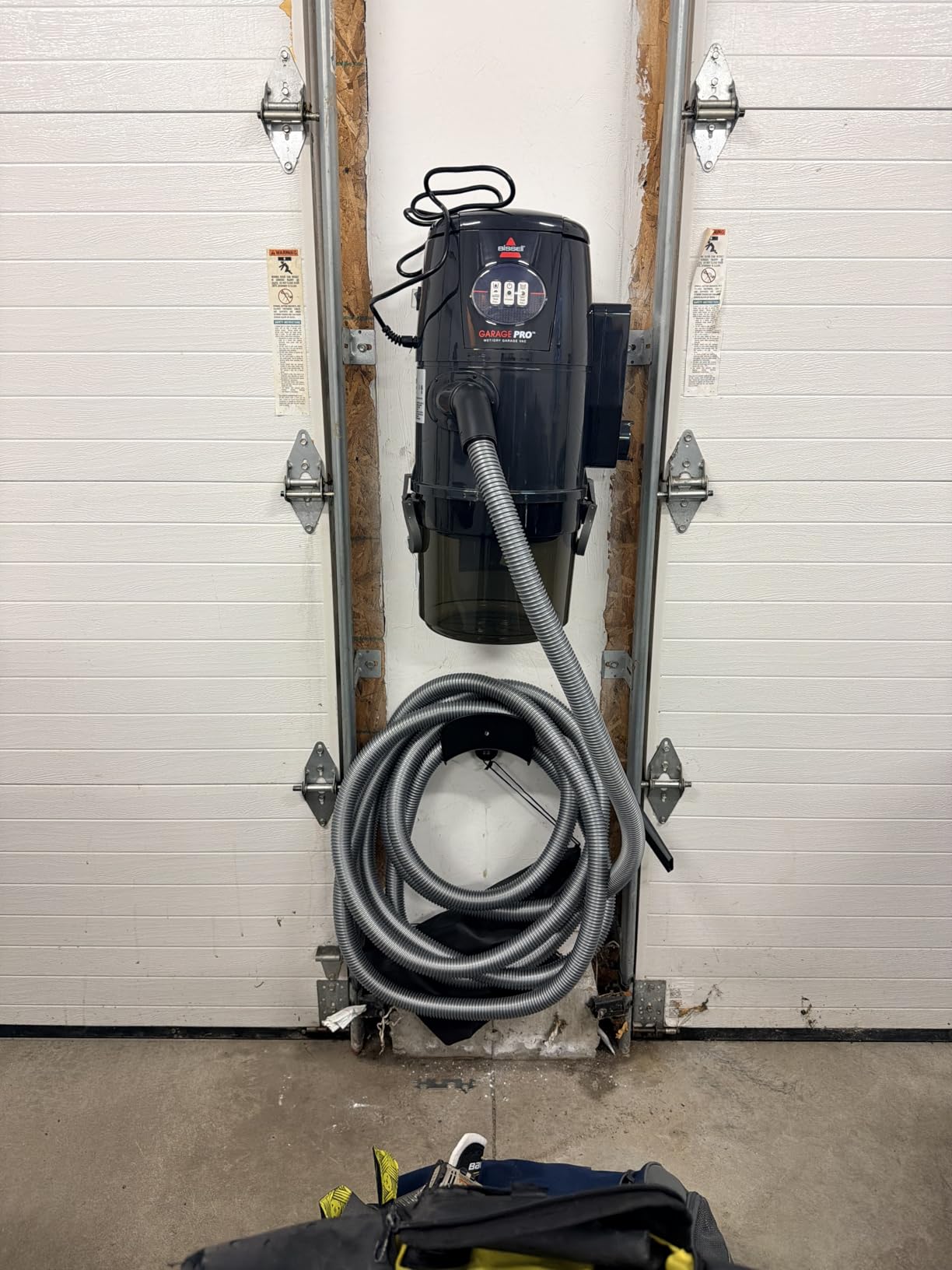
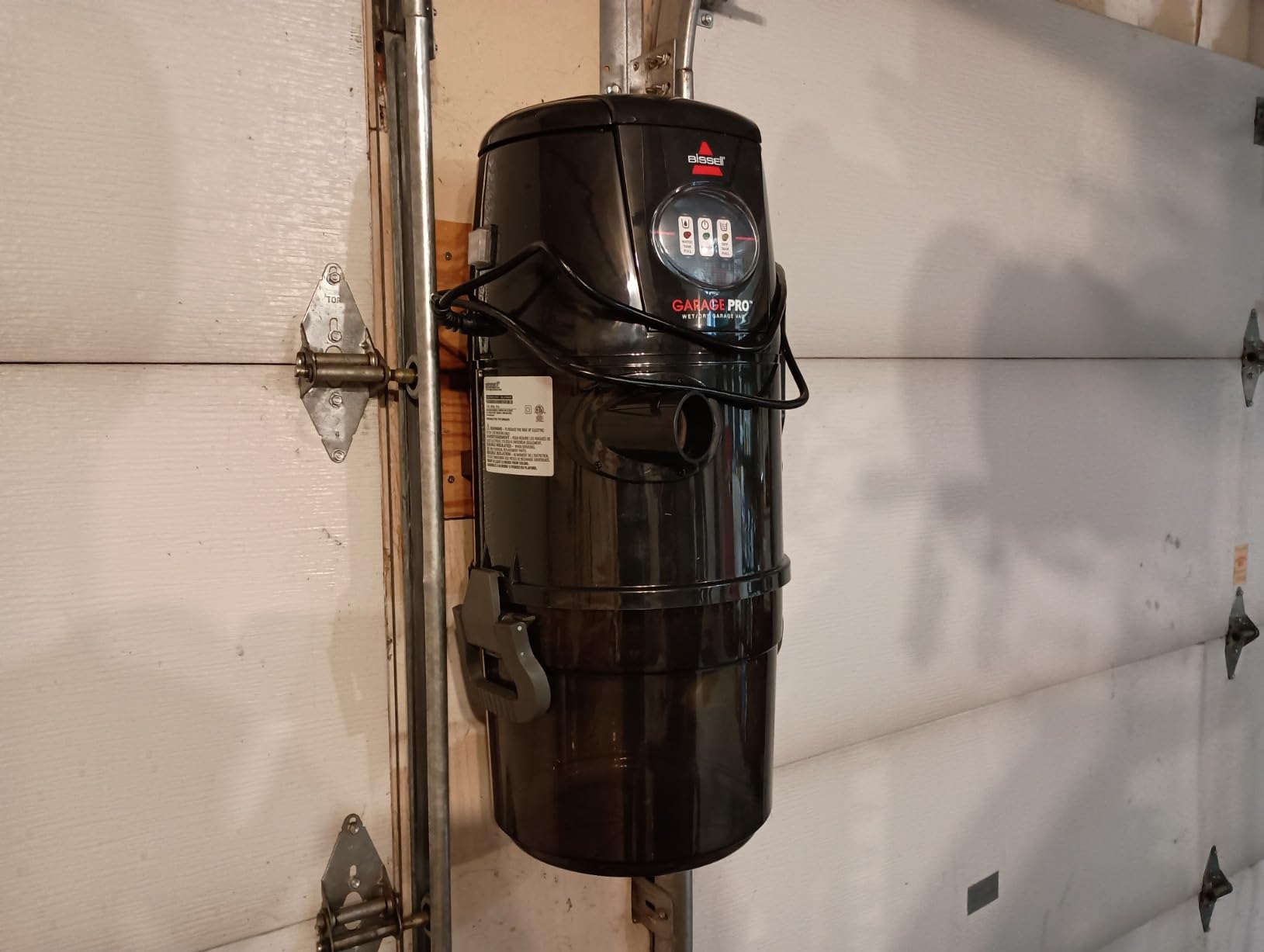
At 6.3 pounds it is the lightest unit here by a wide margin, so moving it between the car and the workbench is genuinely easy. It converts to a blower, seven attachments plus an accessory bag cover bare floor, carpet and upholstery, and the semi-translucent tank lets you see when it needs emptying. Two-year limited warranty.
Twelve amps at 1,400 watts gives it real pickup for a four-gallon body, and at 80 dB it is quiet enough to use without thinking about it in a way most shop vacs are not.
What you should know before you buy it
Four gallons is the smallest tank in the roundup, and on a garage floor with real volume that means frequent emptying. The fill window helps you see the level, but it does not change the number of trips. For a shop that mostly handles small spills and car interiors, that is fine.
There are no wheels. This is a carry-and-hang unit, and the 6.3-pound weight is what makes that acceptable. Installing the mount means drilling, and you are committed to that spot. Locating it near a garage door or central wall pays back better than putting it in a corner.
Who should skip it
Skip it if your garage is a one-car space and you already own a wheeled unit. You would be paying for reach you do not need and capacity you cannot use. It is also the most expensive option here, and that only makes sense when the mounting solves a real problem.
7. Shop-Vac 5989305 5-Gallon Stainless Steel Wet/Dry Vacuum – Best for a Stainless Steel Tank
Shop-Vac 5989305 5 Gallon 4.5 Peak HP Wet/Dry Vacuum with Blower Function
5 gallon stainless tank
4.5 peak HP
59 in suction
3-year warranty
14.5 lb
Pros
- Stainless steel tank resists rust and tolerates wet garage use
- 4.5 peak HP gives more suction than most 5 gallon rivals
- Full-circumference dolly plus top and side carry handles
- Blower function for pushing debris out of corners
- Cartridge filter foam sleeve and bag all included
Cons
- Lowest average rating here at 4.4 stars
- Stainless tank adds weight for only 5 gallons of capacity
- 6 ft hose is shorter than the 7 ft offered by several rivals
Around 3,500 ratings at 4.4 stars, 72 percent five-star. That is the lowest average of the ten, and we are listing it anyway because the stainless tank answers a problem the poly tanks do not: rust.
Poly tanks are lighter and cheaper, and in a dry climate that is the right trade. In a garage that sees standing water, a wet floor, condensation off a cold slab, or chemical spills, a stainless tank simply outlasts the substrate. Shop-Vac is a long-established wet/dry brand and backs this one with three years.
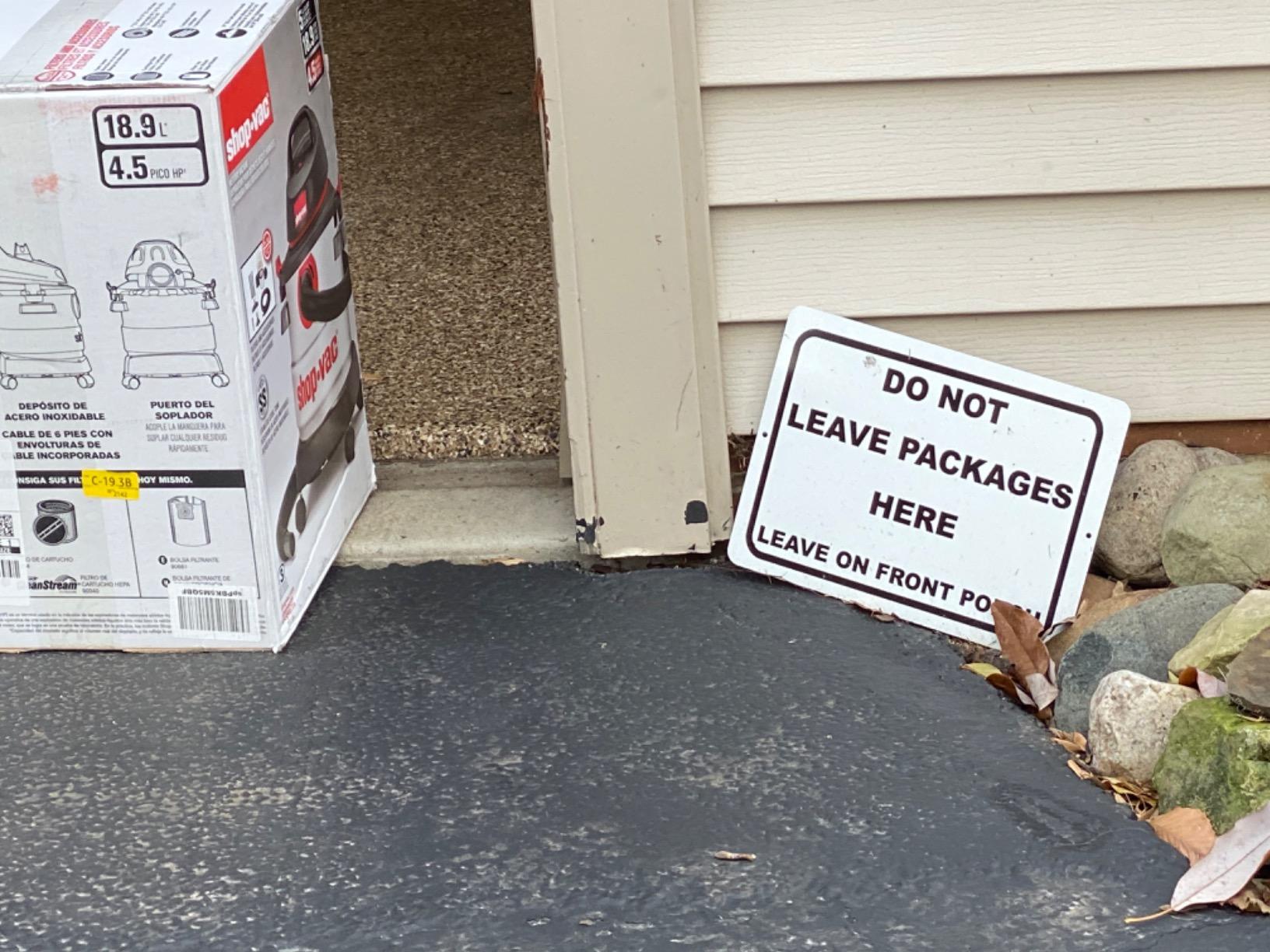
The full-circumference dolly is worth noting. It wraps the base rather than sitting on four corner casters, so the unit tracks straight over a garage floor seam instead of catching and pivoting. Top and side carry handles mean you can lift it from whichever orientation is convenient. Four and a half peak HP on five gallons is genuinely competitive, and the accessory set is broad: hose, three wands, crevice tool, gulper and floor nozzles, cartridge filter, foam sleeve and bag.
At 78 dB it sits in the middle of the noise range here, and at 14.5 pounds it is heavier than the poly units of similar size for the reason above.
What you should know before you buy it
The 4.4-star average is the honest part of this section. It is still a clearly positive rating, but it is the weakest consensus in the roundup, and the critical reviews focus on value against higher-rated peers of similar capacity rather than on defects.
The six-foot hose is one foot shorter than the seven feet fitted on the DEWALT, CRAFTSMAN and Vacmaster units here. Combined with the cord, reach is adequate for a one-car bay and short for a two-car one without an extension.
Who should skip it
Skip it if your garage is dry and you want the strongest rating consensus. There is nothing wrong with this vac, but a poly tank with a higher rating will suit most people. Buy the stainless if corrosion is a genuine feature of your garage, not as a default.
8. DEWALT DXV12P 12-Gallon 5.5 HP Poly Wet/Dry Vacuum – Best Balanced Capacity and Power
DEWALT 12 Gal. 5.5 HP Poly Wet/Dry Vacuum with Hose and Accessories DXV12P
12 gallon poly tank
5.5 peak HP
85 in maximum suction
3-year warranty
23.2 lb
Pros
- 12 gallon capacity with 5.5 peak HP is a strong ratio
- 85 in maximum suction ties the highest rated figure here
- Wet pickup dry pickup and blower in one housing
- Rated for both indoor and outdoor use
- Three-year limited warranty
Cons
- 23.2 lb is heavy to lift
- 80 dB is loud for indoor use
- 7 ft hose gives less total reach than the 16 gallon CRAFTSMAN
Just over 2,100 ratings at 4.7 stars, and 85 percent five-star. That is the highest five-star share of any pick in this roundup, which is a meaningful signal on a smaller sample rather than a rounding error.
The combination that matters is twelve gallons of capacity with 5.5 peak HP and an 85-inch maximum suction figure. The suction ties the highest published number here, and paired with a twelve-gallon tank it means you are not choosing between holding volume and holding power. Wet pickup, dry pickup and blower all run in the same housing, so there is no swapping attachments to change mode.
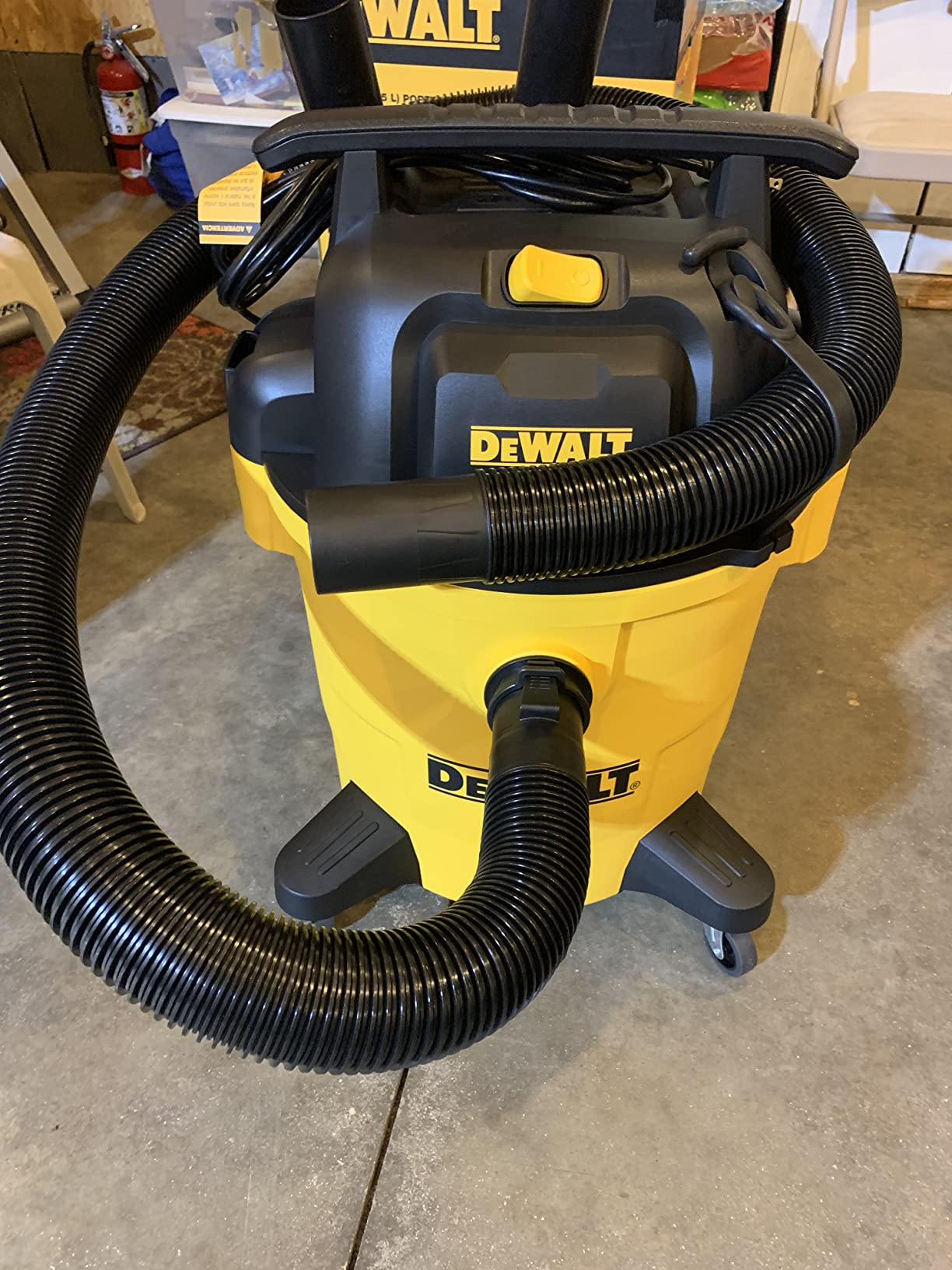
The large drain port empties collected liquid quickly, which is the part of wet pickup that actually takes time. Four casters, a top handle, and a three-year limited warranty put it level with the best-supported units in the list. It is rated for both indoor and outdoor use, so a covered porch or carport is in scope.
For renovation debris, garage clearouts and vehicle work, this is the shape most garages end up needing. It is not the loudest option and not the quietest, but the noise figure is comparable to the rest of the field.
What you should know before you buy it
Twenty-three pounds is heavy to lift into a vehicle, and that is the practical limit on an otherwise well-balanced unit. Keep it on the garage floor and move debris to it rather than the reverse.
The published listing is sparse on detail, with minimal information about included components. Check what comes in the box before you plan a drywall sander hookup or a detailing kit, because the accessory set is the part this listing describes least. The seven-foot hose is standard rather than extended.
Who should skip it
Skip it if you need very fine dust control and care about the low published detail. It is a strong generalist, not a specialist. If your garage work is concrete grinding or heavy drywall, choose a unit with a clearly stated fine-dust filter class instead.
9. STANLEY SL18701P-10A 10-Gallon 6 Peak HP – Best for Flood and Rainwater Cleanups
STANLEY 10 Gallon Wet Dry Vacuum, 6 Peak HP Poly Built-in Drain Shop Vac Blower with Powerful Suction, Multifunctional Shop Vacuum W/ 6 Horsepower Motor for Job Site, Garage, Basement, Van, Workshop
10 gallon poly tank
6 peak HP
24+ ft reach
Auto shut-off buoy
Garden hose drain adaptor
Pros
- 6 peak HP copper motor delivers strong suction per dollar
- Over 24 ft of reach from an 18 ft cord 6 ft hose and 2 wands
- Automatic shut-off buoy protects the motor at the water line
- Garden hose adaptor drains straight to a sump pump or outside
- On-board accessory slots and a cord hook
Cons
- Loud in operation with reviewers calling it near ear-piercing
- Only 2-year warranty against 3-year alternatives
- Bulky 10 gallon body is larger than buyers expected
Around 1,600 ratings at 4.5 stars, 79 percent five-star. Suction is the headline across nearly every review, and the automatic shut-off buoy is the detail that makes it the right unit for water rather than merely capable of it.
That buoy floats up when liquid reaches the fill line and stops the motor. Without it, running a shop vac into a flooded corner is how motors die. Owners cleaning up flood water specifically call this out as the reason the unit survived the job.
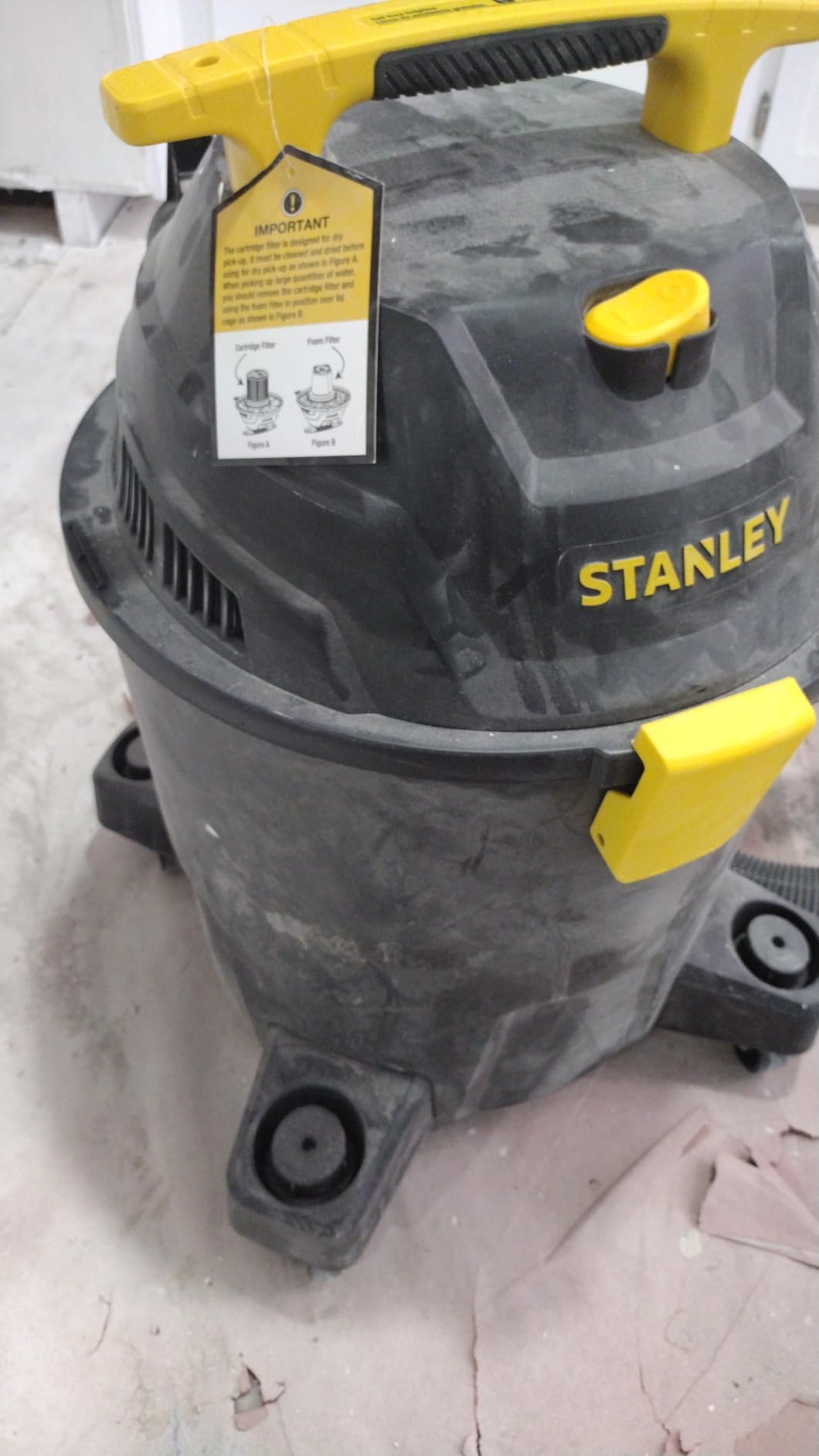
The garden hose adaptor is the other practical touch: instead of carrying a full ten-gallon tank to a drain, you connect a hose and empty it into a sump pump or outside. Combined with more than twenty-four feet of reach from an eighteen-foot cord, a six-foot hose and two wands, a two-car garage is comfortably covered.
Six peak HP from a pure-copper motor, dry pickup, wet pickup and blower in one unit, four casters, a large top handle, and on-board storage for the accessory set. The two-year limited warranty here is the shortest in the roundup, against the three-year cover on the CRAFTSMAN, DEWALT and Shop-Vac units.
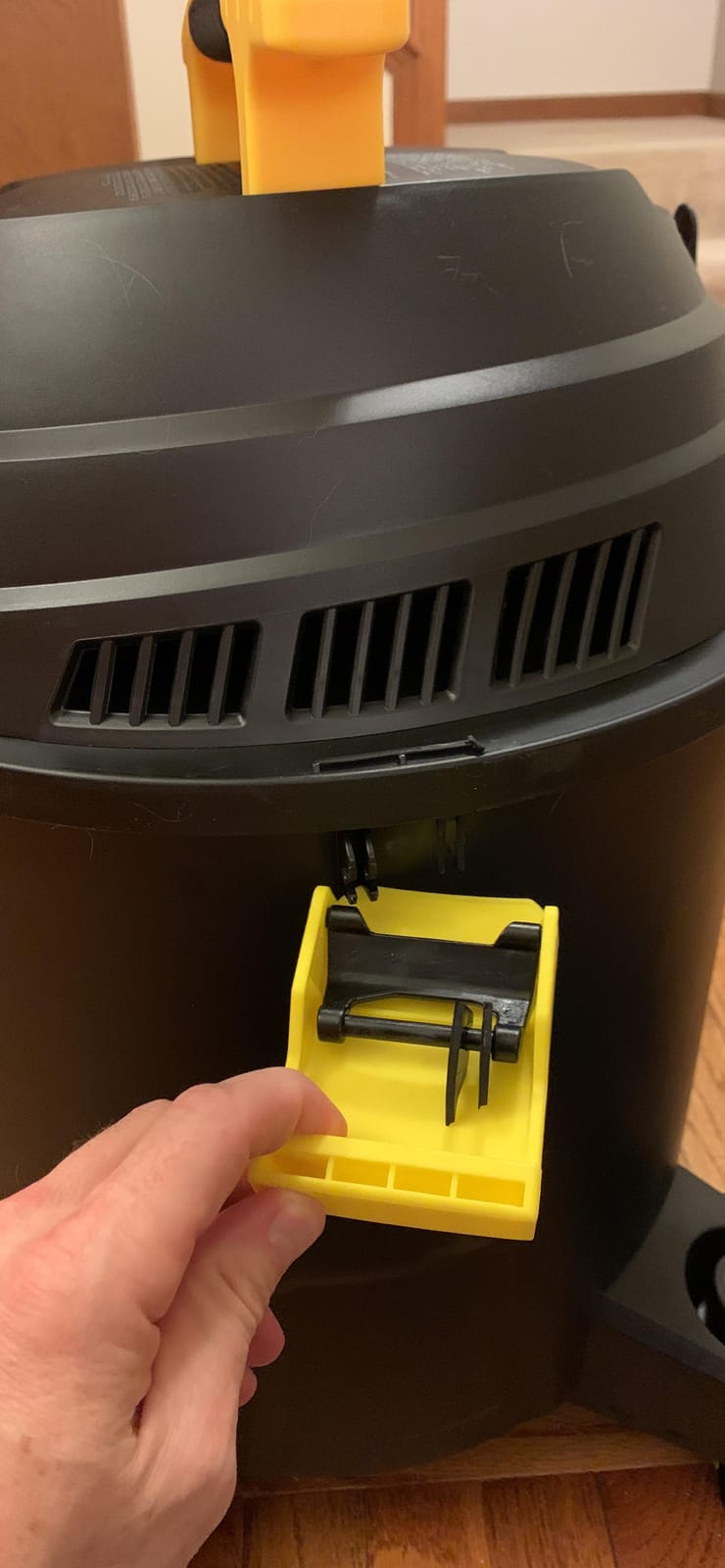
What you should know before you buy it
It is loud. Reviewers describe it as near ear-piercing at full power, and the 80 dB published figure is consistent with that. This is not a unit for early mornings next to a shared wall.
Foam filter and a disposable bag come in the box, but cartridge-only filter options for this model are more limited than on the DEWALT and CRAFTSMAN units. If you plan to run fine dust through it, check the replacement filter availability before you commit.
Who should skip it
Skip it if noise tolerance is low, or if you need to run a drywall sander. The suction is excellent and the water handling is well designed, but fine dust is not what this filter is for. For gutters, drains, rainwater and one-off water cleanups, it is very hard to argue against.
10. Vacmaster VJH1211PF 12-Gallon 5.5 Peak HP – Best Value
Vacmaster VJH1211PF 1101 12-Gal 5.5 Peak HP Heavy-Duty Wet/Dry Vac Red
12 gallon poly tank
5.5 peak HP 1416 W
27 ft reach
Flat power head
4 casters
Pros
- Best capacity per dollar here at 12 gallons
- 5.5 peak HP 1416 W motor is among the most powerful in the list
- 27 ft of reach from a 20 ft cord and kink-resistant hose
- Flat power head lets nozzles sit flat on top for easy access
- Oversized latches create a secure seal on the lid
Cons
- Heaviest unit here at 24.1 lb
- Fewest reviews at under 1000 so durability data is thinner
- 60 in maximum suction is modest for a 5.5 peak HP claim
Just under 1,000 ratings at 4.6 stars, with 81 percent five-star. It is the smallest review base in the roundup, and we treat that as the main reason to look before buying rather than after.
What the number buys you is twelve gallons of capacity and a 5.5 peak HP, 1,416-watt motor for less than the twelve-gallon units from the other major brands. On capacity per dollar this is the value answer in the list, and the 4.6-star average from owners who have already bought it supports that.
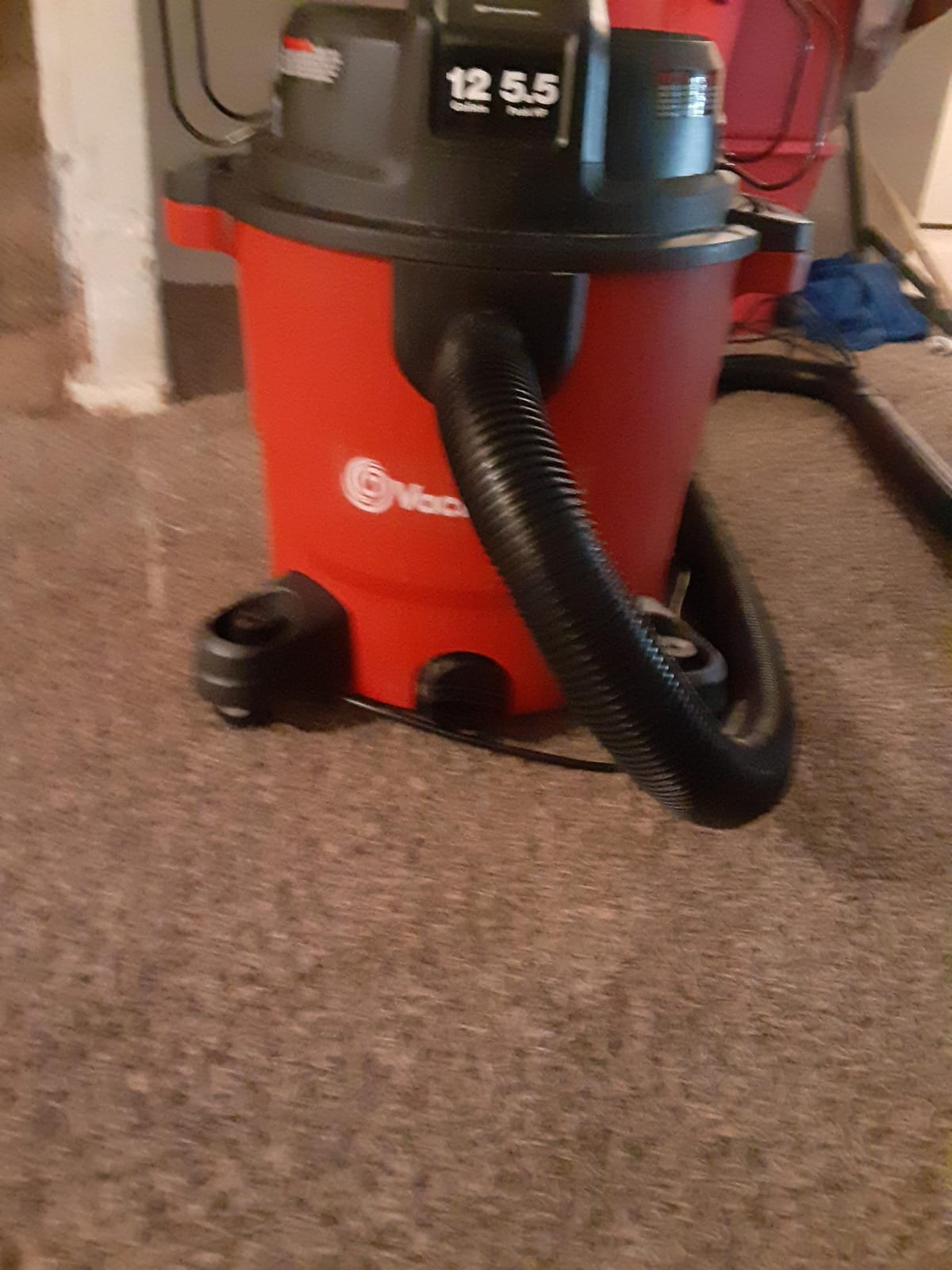
The 27 feet of total reach from a twenty-foot cord and a kink-resistant hose is the longest published reach among these ten, which matters in a two- or three-car bay. The flat power-head design puts nozzles flat on the top so they are accessible while you work rather than needing to be unpacked from a side clip. Nine accessories including a cartridge filter and dust bag, on-board hose, cord and accessory storage, oversized latches for a secure lid seal, and a large drain port. Converts easily to a blower.
Four casters and four handles cover the ways you might reposition a 24-pound unit, which is heavy but not immovable once it is rolling.
What you should know before you buy it
The sixty-inch maximum suction figure is modest against a 5.5 peak HP claim. Peak horsepower is a startup number, so a low sealed-suction figure alongside it usually means real airflow that is adequate for debris rather than exceptional for fine dust. Bulky material is not affected.
At 24.1 pounds it is the heaviest unit here. And with under 1,000 ratings, the long-term reliability picture is less established than the other nine. The three-year warranties elsewhere in this roundup come with a decade of owner reports behind them; this one does not yet.
Who should skip it
Skip it if you want a proven long-term record, or if you need very fine dust control. Buy it if capacity and reach are your priority and you want the most tank you can get for the money. A cyclone pre-separator is a sensible later addition if you plan to move into fine dust work.
How to Pick the Right Shop Vac for Your Garage
Match the tank to the mess volume, not the marketing
Capacity is the easiest decision to get wrong in both directions. Too small and you spend your weekend walking a full tank to the drain. Too large and you have a 26-pound object occupying prime floor space in a one-car garage for a five-minute job.
Six gallons covers a one-car garage, weekly sweeps, and car interior debris. Nine to ten gallons is the middle ground for regular use, spill recovery, and renovation debris in a two-car bay. Twelve to sixteen gallons is for a shop that generates real volume: floor grinding, insulation removal, a car restoration, or a garage that gets cleared out rather than maintained.
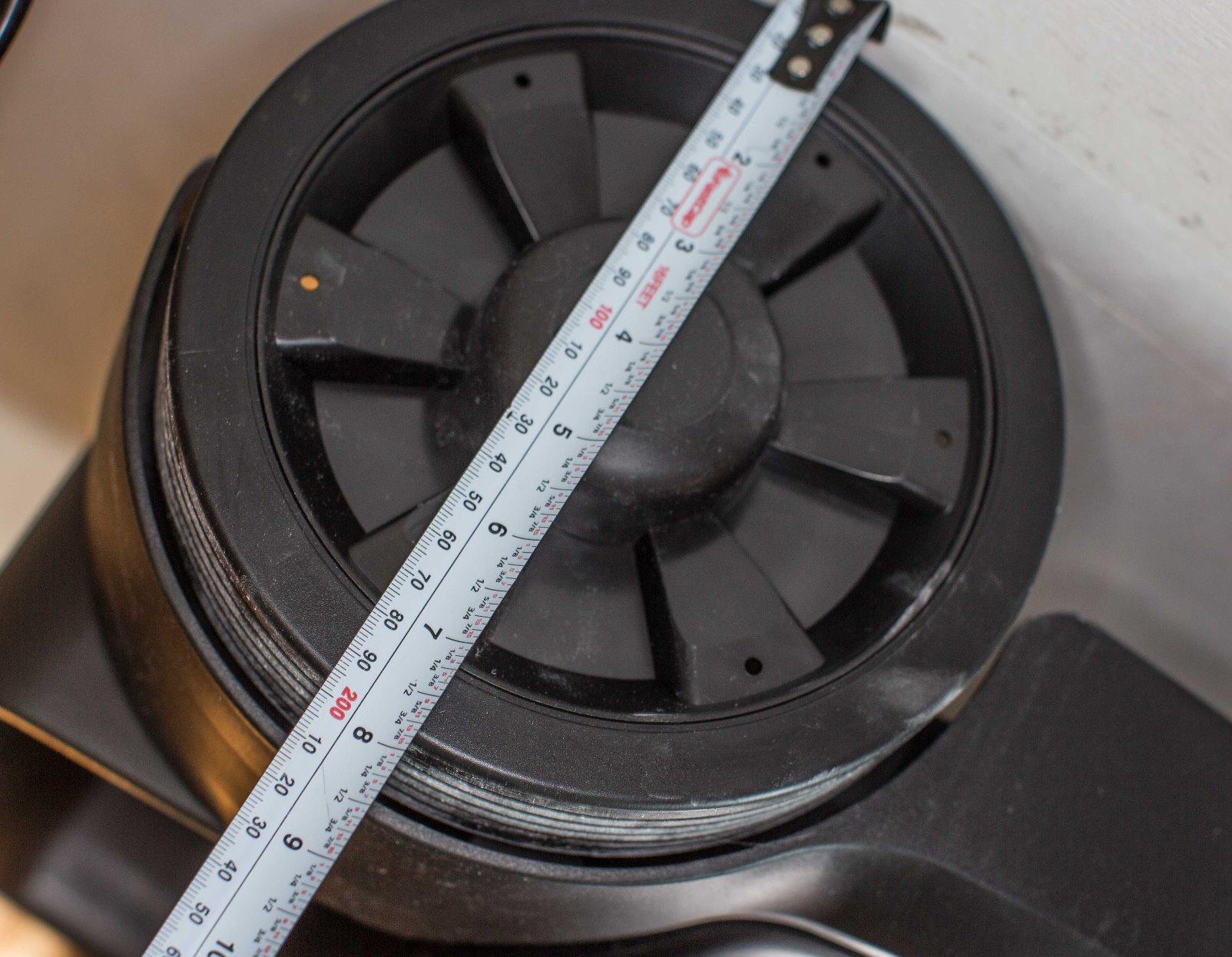
Worth knowing when you compare sizes: the Vacmaster VBV1210 and the Vacmaster VJH1211PF both carry twelve gallons, and the Craftsman 16-gallon measures over twenty-one inches long by nearly twenty-four wide. A bigger tank is a real floor commitment, not a spec-sheet upgrade.
Peak HP is a marketing peak, so read airflow and sealed suction
Peak horsepower is the instantaneous figure at motor startup. It is not the number that tells you how much debris moves per minute. Two specs do that job, and only one of them appears on most retail listings.
Airflow in CFM measures the volume of air moved, which is what determines dry pickup. Water lift, or sealed suction in inches, measures how hard the vacuum pulls at the end of a blocked hose, which is what determines wet pickup. In this roundup, the Vacmaster Blue Line is the only unit with a published CFM figure at all, at 106, and the honest comparison forum users draw is that a 5-peak-HP machine with real airflow beats a 6.5-peak-HP machine with a low sealed-suction figure for most garage work.
Suction figures across these ten range from 46 inches on the Craftsman 16-gallon to 85 inches on both the Stanley 6-gallon and the DEWALT 12-gallon. A 46-inch figure is not a defect for sawdust and gravel. It is a limitation for very fine dust, and that is exactly the trade the larger tank is paying for.
Filter choice decides whether the vac survives drywall season
Filter clogging is the complaint that comes up most often in garage vacuum discussions, and most of those cases are filter-choice errors rather than product defects. Running fine drywall dust through a foam sleeve, or a filter rated for sawdust, will load it in minutes and drive the motor hot.
The decision runs like this. For sawdust, chips, gravel and general shop debris, the included foam or cartridge filter is correct and cheap. For drywall dust, concrete grinding dust and fine sanding, a fine dust filter is required, and a high-efficiency filter bag is the better tool still because it keeps particulate out of the tank. For concrete grinding, stone or masonry, you are into silica territory and need a filter class rated for it, not a generic fine filter. A cyclone pre-separator, the Dust Deputy style, spins the bulk of the dust into a separate bucket and is often a better investment than moving up to a larger tank.
One caution for carpeted garages. If the floor is molded carpet rather than sealed concrete and you are dealing with leaves, standing water or anything with a mildew smell, do not run an ordinary shop vac through it. Pulling contaminated residue through any vacuum is how you end up distributing it. Dry sweeping and manual removal first, then assess.
Wall mount or wheeled, and why noise matters less than reach
Wall-mounted units are the most common garage forum recommendation, and the reason is workflow rather than performance. Rolling a cart, uncoiling hose and cord, working, then re-coiling and stowing takes minutes. Grabbing a hose off a wall bracket takes about thirty seconds.
The Bissell Garage Pro 18P03 is the only wall-mounted unit here, and its 32-foot hose is the reason it works across a two-car bay and a set of stairs. The cost is a four-gallon tank and a commitment to drilling a mount. In a one-car garage with an existing wheeled vac, a second wall unit is a luxury.
For wheeled units, check the caster count and quality, because cheap casters are a repeated failure point, and confirm your reach. Hose length plus cord length decides whether you cover the bay or hunt for an extension. Total reach on the units here runs from roughly 16 feet on the Stanley 6-gallon to 27 feet on the Vacmaster 12-gallon.
What to check before you plug it in
Amperage is the last thing people look at and the first thing that matters. The Vacmaster Blue Line draws 10.5 amps, which will trip a 15-amp circuit if you run a saw or compressor alongside it. The Bissell draws 12. At 8 to 9 amps, most of the rest of the list leaves headroom for a shared outlet.
Then check the warranty length and whether replacement filters, bags and casters are sold at ordinary big-box stores. Availability of parts at the store you already drive past is worth more over ten years than a small spec advantage, and the two and three-year warranties in this group only matter if you can get a part.
Finally, consider noise honestly. The range here runs from 69 dB on the Craftsman 16-gallon to 82 dB on the Craftsman 9-gallon. That is a real difference if you share a wall or work early, and irrelevant if you are in a detached shop with the door shut.
Frequently Asked Questions
What is the best vacuum cleaner for a garage?
The Stanley SL18116P is the best shop vac for a garage, rated 4.6 stars across more than 14,000 owner ratings. Its 4 peak HP motor, 6 gallon wet/dry tank, rear blower port and more than 16 feet of combined hose and cord reach cover the two things a garage produces most: sawdust and shop debris, plus water spills. For heavier debris volumes, step up to a 12 or 16 gallon tank.
Which shop vac has the strongest suction?
The Vacmaster Blue Line VBV1210 has the strongest published airflow in this roundup at 106 CFM, and it detaches into a blower delivering up to 210 MPH. On sealed suction, the Stanley SL18116P 6-gallon and the DEWALT DXV12P 12-gallon tie the highest figure at 85 inches. Peak horsepower alone is not a suction measure, since it is a startup figure rather than continuous airflow.
How many gallons does a garage shop vac need?
Six gallons suits a one-car garage with weekly sweeps and car interior debris. Nine to ten gallons covers regular use, spill recovery and renovation debris in a two-car bay. Twelve to sixteen gallons is for shops generating real volume such as floor grinding, insulation removal or car restoration. Bigger tanks are a real floor commitment, not just a spec upgrade.
Do I need a HEPA filter for my garage shop vac?
For most garage work, no. The included foam or cartridge filter is correct for sawdust, chips and gravel. For drywall dust, concrete grinding dust and fine sanding, buy a fine dust filter and use a high-efficiency filter bag so particulate stays out of the tank. For concrete, stone or masonry you are dealing with silica and need a filter class rated for it.
Is a cordless shop vac strong enough for a garage?
For routine garage pickups such as dust, debris and car interior mess, yes, and cordless removes the cord and outlet problem entirely. For wet pickup, large debris loads or extended sessions, a corded unit is stronger because mains power delivers continuous suction without battery fade. A sensible approach is a cordless stick vac for daily touch-ups and a corded wet/dry shop vac for the heavy work.
Our Final Verdict on the Best Shop Vacs for Garages
The Stanley SL18116P wins 2026‘s roundup because it is the one unit here that more than 14,000 owners have already stress-tested, and it does the two jobs a garage produces most without a filter upgrade. Pick it for a one-car garage, car interiors, sawdust and shop debris.
Move up in capacity when volume demands it. The CRAFTSMAN CMXEVBE17595 handles renovation debris in a 16-gallon tank and runs at the quietest 69 dB of the ten. The DEWALT DXV12P and the Vacmaster VJH1211PF cover the twelve-gallon middle, and the Vacmaster Blue Line VBV1210 wins on airflow at 106 CFM plus a detachable blower.
Change the format, not the tier, for reach: the Bissell Garage Pro 18P03 mounts on the wall and covers a two-car bay on a 32-foot hose. And for water rather than dust, the STANLEY SL18701P-10A has the automatic shut-off buoy and the garden hose drain that make a flood cleanup a hose job instead of a bucket job.
Whichever one you choose, the filter you pair with it matters more than the tank. Match the filter class to the mess, and the vacuum will still be running in ten years.