
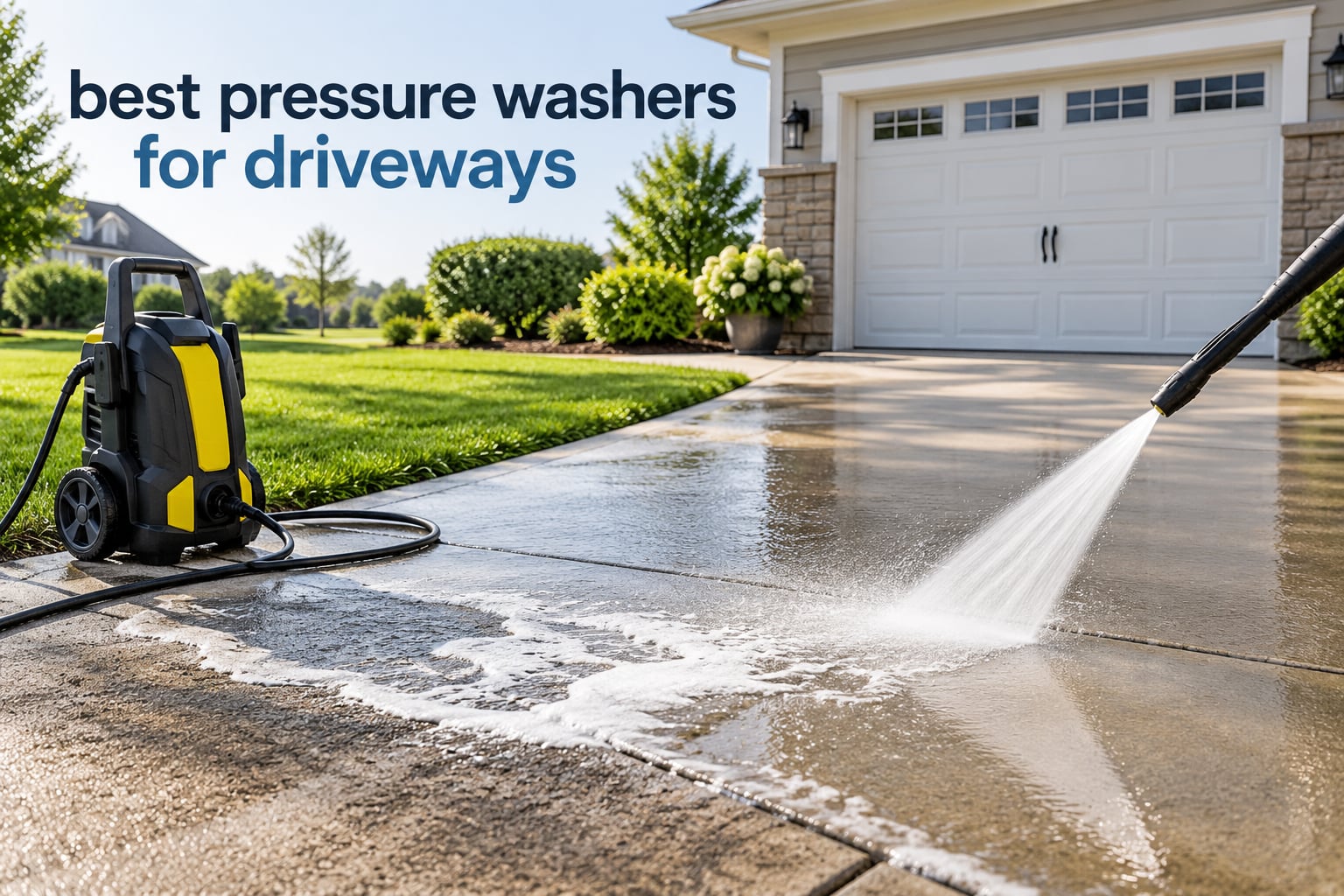
For standard, fully cured concrete driveways, the best pressure washer delivers 2,500 to 3,000 PSI at roughly 2.0 to 3.0 gallons per minute. That combination of pressure and flow is what lifts embedded oil, algae, tire rubber and road salt out of the slab instead of just pushing it around. Below 2,000 PSI you are rinsing dust; above 3,500 PSI on old concrete you risk etching the surface permanently.
PSI is only half the equation, and it is the half most buyers misread. PSI breaks the bond between grime and concrete, while GPM carries the loosened debris away across a flat surface. Multiply the two and you get the CU score, and on a big driveway CU matters more than raw PSI. A machine with 3,000 PSI and 1.2 GPM will frustrate you on a four-car drive; a 2,300 PSI machine at 2.3 GPM will finish the job.
We went through twelve of the most-reviewed pressure washers sold for driveway work and sorted them by measured output, pump type, hose length, warranty and the complaints owners actually report. The list below covers the whole range, from a carryable unit for cars and walkways to a Honda-powered triplex pump for full-size slabs. Every rating and review count is copied straight from the listing, and every spec is the rated figure rather than the marketing maximum wherever the manufacturer publishes both.
A word on the numbers in the listings, because this trips up a lot of first-time buyers. A “2,500 max PSI” electric washer may be rated at only 2,030 PSI, and the 1.76 GPM maximum usually happens at low pressure, not at the nozzle. When both figures are available, we use the rated ones. Driveway cleaning is mostly about moving a lot of water steadily, so flow deserves at least as much attention as pressure as you read the picks.
Table of Contents
Top 3 Pressure Washer Picks for Driveways (October 2026)

Sun Joe SPX3000
- 2030 PSI rated and 1.2 GPM rated
- Five quick-connect nozzles
- Dual 0.9 L detergent tanks
- 20-foot hose

Westinghouse ePX3500
- 2500 max PSI and 1.76 max GPM
- Anti-tipping wheeled chassis
- 25-foot braided hose
- Three-year warranty

Simpson PowerShot 3300
- 3300 PSI and 2.5 GPM triplex pump
- Honda GX200 engine
- 25-foot MorFlex hose
- 10-inch pneumatic tires
Those three cover the realistic ends of the driveway market. The Sun Joe is the one most households will actually buy, the Westinghouse is the highest-rated electric in the group, and the Simpson is what you step up to when the slab is bigger than a hobby.
All 12 Pressure Washers for Driveways Compared in 2026
| Product | Specs | Action |
|---|---|---|
| Sun Joe SPX3000 |
|
Check Latest Price |
| Westinghouse ePX3500 |
|
Check Latest Price |
| Simpson PowerShot 3300 |
|
Check Latest Price |
 Westinghouse ePX3050 Westinghouse ePX3050 |
|
Check Latest Price |
 Greenworks GPW2003 Greenworks GPW2003 |
|
Check Latest Price |
 Simpson Clean Machine 3400 Simpson Clean Machine 3400 |
|
Check Latest Price |
 DeWalt DXPW3300-S DeWalt DXPW3300-S |
|
Check Latest Price |
 Greenworks GPW3002A Greenworks GPW3002A |
|
Check Latest Price |
 Westinghouse ePX3100 Westinghouse ePX3100 |
|
Check Latest Price |
 Greenworks GPW2300 Greenworks GPW2300 |
|
Check Latest Price |
 Karcher K1700 Karcher K1700 |
|
Check Latest Price |
 Craftsman CMEPW1700 Craftsman CMEPW1700 |
|
Check Latest Price |
Read the flow column before the pressure column. The four machines at the bottom of that ordering all deliver around 1.2 GPM, which is fine for a walkway and slow for a two-car driveway, while every machine above 2.0 GPM will noticeably reduce the time you spend holding a wand.
1. Sun Joe SPX3000 – the Best Pressure Washer for Most Driveways
Sun Joe Pressure Washer, Electric Power Washer, 2500 Max PSI, SPX3000
2030 PSI rated
1.2 GPM rated
1.76 GPM max
20-foot hose
24.3 pounds
Pros
- Dual 0.9 L detergent tanks for switching solutions
- Five quick-connect nozzles covering 0 to 40 degrees
- Stainless steel lance with brass fittings
- Very large verified review base
Cons
- 1.2 GPM rated flow is slow across large flat concrete
- 20-foot hose limits reach from the spigot
The Sun Joe SPX3000 is the machine I recommend to anyone who wants one washer for the driveway, the siding and the cars without dealing with fuel. It is a 13 Amp corded unit rated at 2,030 PSI and 1.2 GPM, with a 1.76 GPM maximum that kicks in at lower pressure. Twenty-four pounds and a compact 19.5 by 15 by 22 inch body mean it lives in a garage corner rather than taking up a bay.
What stands out on a driveway job is the detergent setup. Two separate 0.9 liter tanks let you keep a concrete degreaser and an algae treatment loaded at the same time and switch between them with the soap nozzle, which saves a lot of mixing and rinsing mid-project. The five quick-connect tips cover 0, 15, 25, 40 degrees and soap, which is a fuller set than most machines at this level ship with.
Reviewers are consistent about where this machine shines and where it does not. Owners with a 64,000-plus review history rate it at 4.4 out of 5, and roughly seventy percent of those reviews are five star, with praise for the compact corded design and the detergent flexibility on routine home cleaning. The same reviewers repeatedly name the same limitation: 1.2 GPM is genuinely slow when you are covering a wide slab with a wand rather than a surface cleaner.
The stainless steel lance with brass fittings is a real quality touch that costs the competing plastic units nothing to copy. It resists corrosion at the fittings and does not flex when you lean on it against tire marks and embedded algae. The 20-foot hose is the weak point for driveway work, because most spigots sit at the house end of a two-car drive and you will be repositioning the machine repeatedly.
Will it actually clean a stained driveway?
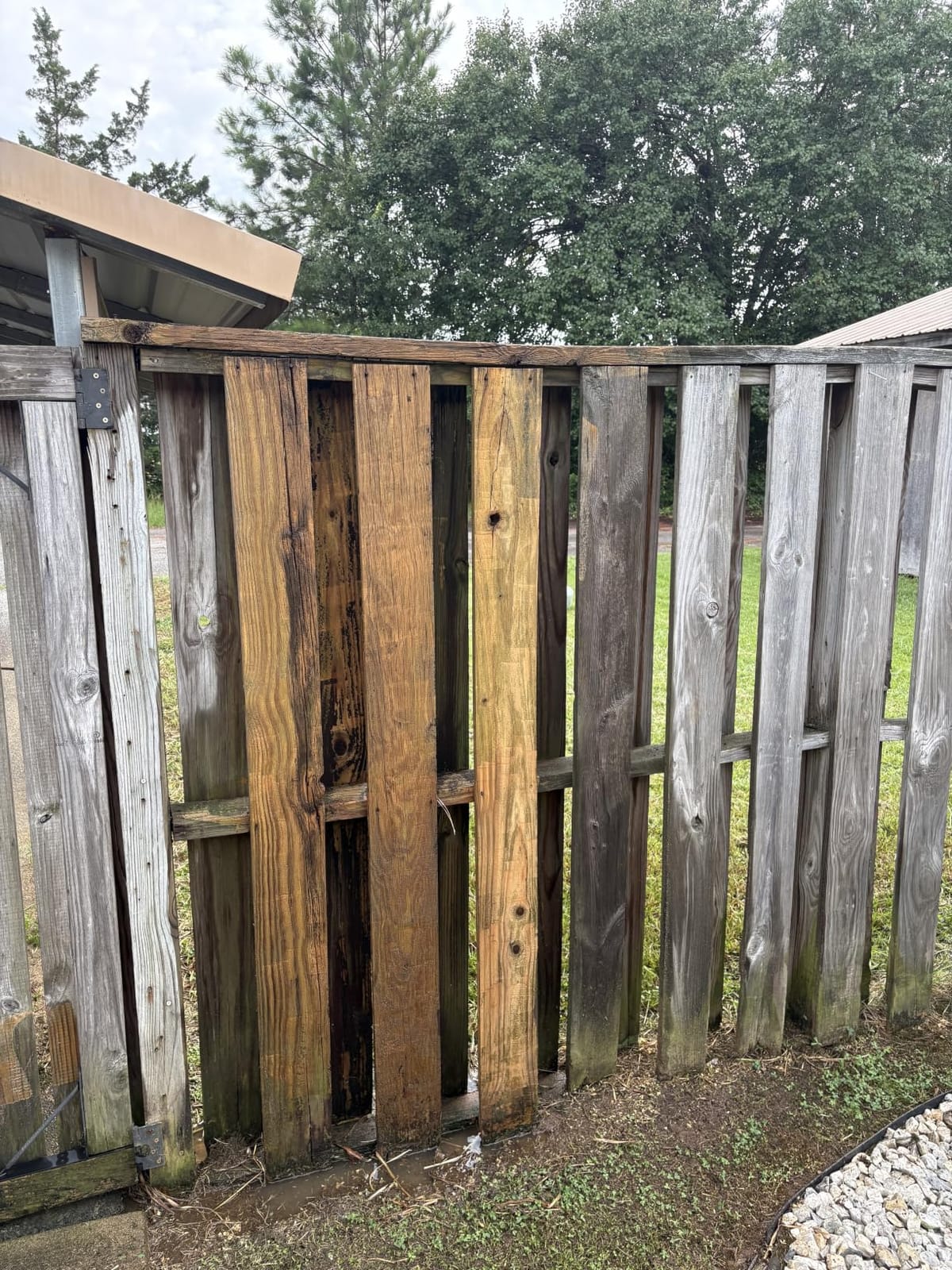
Yes, on moss, algae, road salt, tire marks and general grime, provided you give the detergent ten to fifteen minutes of dwell time and use the 25 or 40 degree tip. For a fresh oil stain, pre-treat with a degreaser, then work it with the turbo nozzle rather than the red tip.
The honest limit is area, not power. Two car lengths of driveway is comfortable. A four-car drive with heavy staining will test your patience long before it tests the pump, and that is a flow problem, not a pressure problem.
Who should skip it?
If your driveway is larger than about 500 square feet, or if you clean it alongside decks, fences and a lot of vehicle detail, the 1.2 GPM figure will frustrate you and you would be replacing the machine eventually. In that case the Westinghouse ePX3500 or the brushless Greenworks gives you more flow for the same corded convenience.
It is also the wrong tool for fresh concrete. Give any new pour at least 28 days, and a full year before you pressure wash it hard enough to matter.
2. Westinghouse ePX3500 – Highest-Rated Electric for Driveway Work
Westinghouse ePX3500 Electric Pressure Washer, 2500 Max PSI 1.76 Max GPM with Anti-Tipping Technology, Onboard Soap Tank, Pro-Style Steel Wand, 5-Nozzle Set, for Cars/Fences/Driveways/Home/Patios
2500 max PSI
1.76 max GPM
2000 rated PSI
25-foot hose
19 pounds
Pros
- Highest-rated electric in the group at 4.6
- Compact 16.5 inch body stores easily
- Anti-tipping low center of gravity
- 25-foot braided hose plus total-halt pump auto-stop
Cons
- 1.2 GPM rated flow once pressure climbs
- Electric duty is residential rather than contractor workload
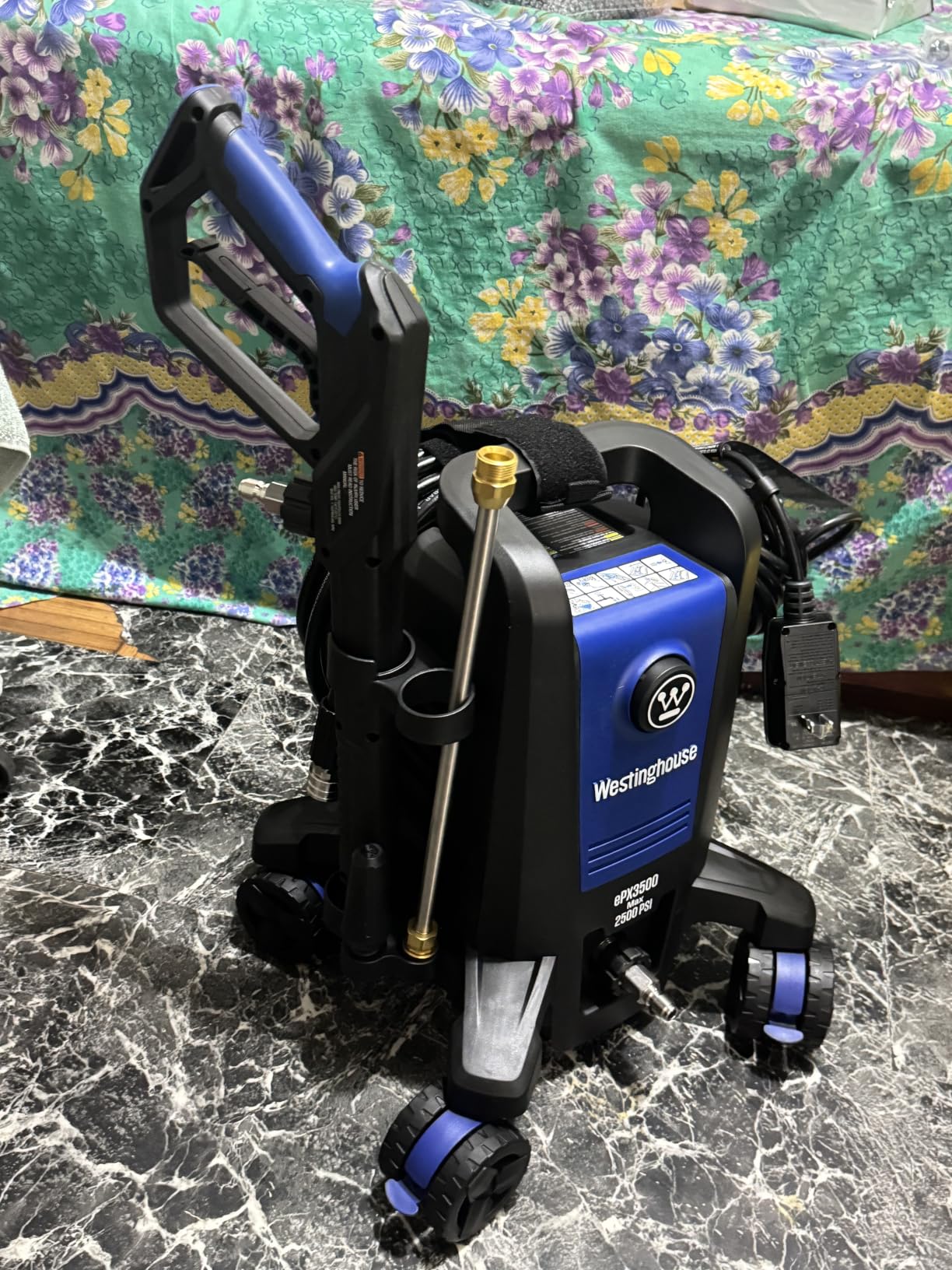
The Westinghouse ePX3500 is the highest-rated machine in this roundup at 4.6 out of 5 across more than 7,000 reviews, and it tops the pressure washer category chart in the marketplace listings. It is rated at 2,000 PSI and 1.2 GPM, with 2,500 PSI and 1.76 GPM available as maximums at lower pressure. That is a slightly more honest spec sheet than most of the electrics competing with it.
The anti-tipping chassis is the detail that matters most on a driveway. Four 360-degree quick-lock steering wheels and a low center of gravity keep the unit planted when you pull the trigger sideways against a stubborn stain, which is exactly the movement that tips a conventional upright washer onto its back. At 19 pounds and 16.5 inches tall it also stores flat against a wall instead of demanding a full corner of the garage.
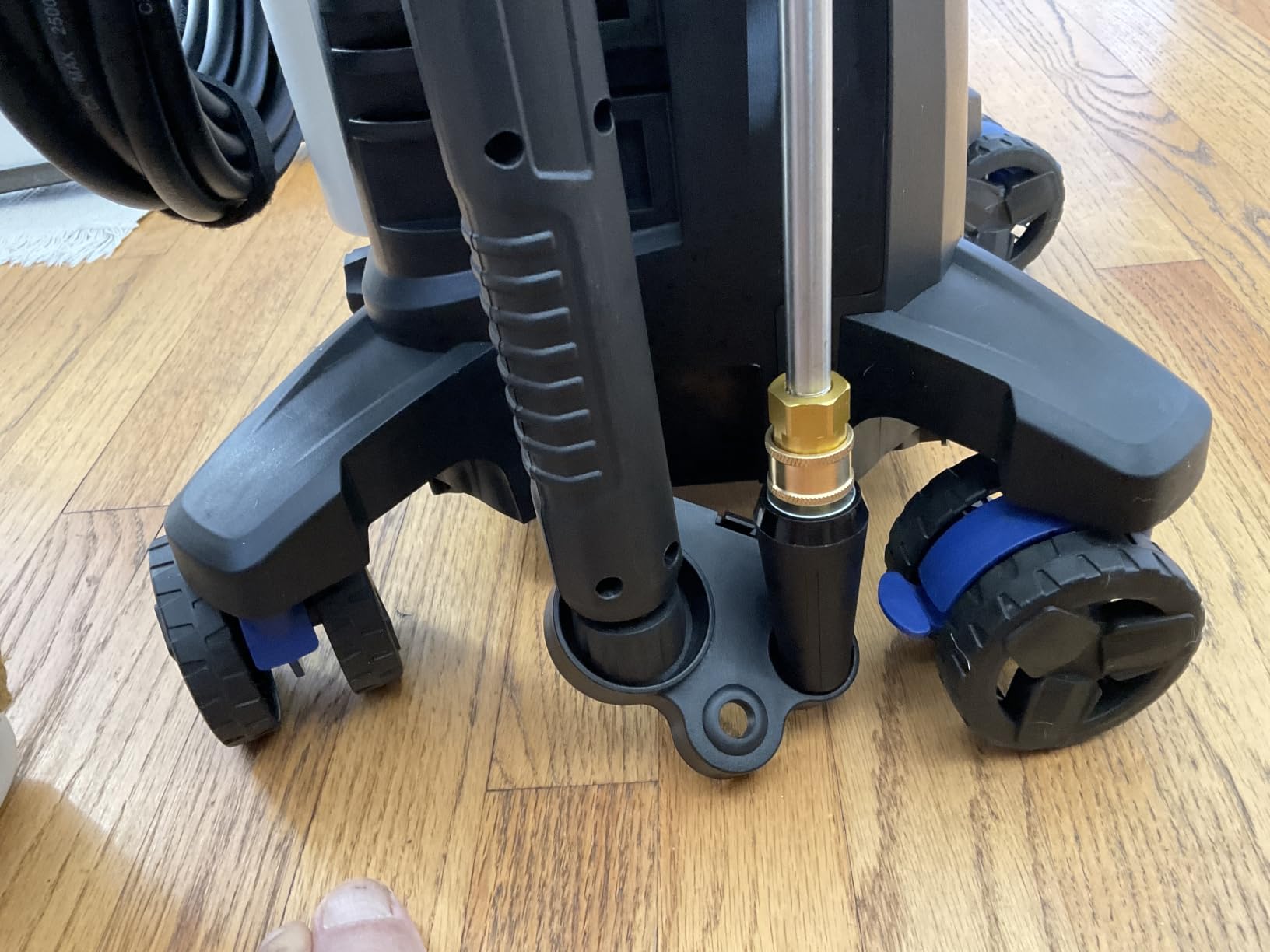
The 25-foot easy-coil nylon braided hose is longer than most machines in this price bracket, and braided construction means it resists the kinking that makes cheap hoses frustrating. It also carries a total-halt function that stops the pump when you release the trigger, which extends pump life over years of intermittent use compared with units that run continuously.
Reviewers describe it as strong for its size, easy to store, and stable on the ground, with the standard electric caveat repeated often: this is a residential-duty machine, not a contractor unit. If your cleaning schedule is a weekend every spring and a driveway under about 600 square feet, that limitation will never touch you.
Why the rating is higher than the Sun Joe
The Westinghouse wins on the spec sheet, not the badge. More flow at the nozzle, a longer braided hose, a three-year limited warranty against two years, and a chassis that does not tip when you work an edge. Reviewers notice the 25-foot hose and the compact storage footprint more than anything else.
Worth noting the difference in maximums. The 1.76 GPM figure appears at the lowest pressure setting, so on a heavy oil stain where you need pressure you are back near the 1.2 GPM rated flow. Judge it on rated output, the same way you would judge any corded electric.
Who should pick this over the Sun Joe?
Pick the Westinghouse if your garage is tight, if you want the longest hose in the electric category here, or if you plan to keep the machine for a decade rather than a few seasons. Pick the Sun Joe if you want two detergent tanks and a metal lance instead of a steel wand.
Both are correct answers for a normal two-car driveway. The Westinghouse is simply the one with fewer compromises in the details that show up after a year of use.
3. Simpson PowerShot 3300 – Best Gas-Powered Pick for Big Concrete
SIMPSON Cleaning PS3228 PowerShot 3300 PSI Gas Pressure Washer, 2.5 GPM, Honda GX200 Engine, Includes Spray Gun and Extension Wand, 5 QC Nozzle Tips, 5/16-inch x 25-foot MorFlex Hose, 49-State
3300 PSI
2.5 GPM
Honda GX200 engine
74.8 pounds
25-foot hose
Pros
- AAA triplex plunger pump built for long service life
- Honda GX200 starts on the first pull
- 10-inch pneumatic tires clear gravel and curbs
- Same parts and model still produced after a decade
Cons
- Gasoline engine noise at work
- Short handle makes uneven ground awkward
- 25-foot hose is short for large driveways
- 49-state compliant and not sold in California
The Simpson PowerShot 3300 is the machine I would use on a driveway large enough to be a genuine project. It delivers 3,300 PSI at 2.5 GPM from a maintenance-free AAA triplex plunger pump with an integrated unloader and thermal relief, driven by a Honda GX200 engine with low-oil shutdown. At 8,500 cleaning units it out-muscles every electric in this roundup by a wide margin.
The pump is the headline. A triplex plunger pump is the same architecture you find on contractor machines, and it tolerates the sustained high-pressure work that destroys cheaper axial pumps. Owners running this machine for years report that the same model and the same parts are still available, which matters a great deal if you plan to own it for more than a few seasons.
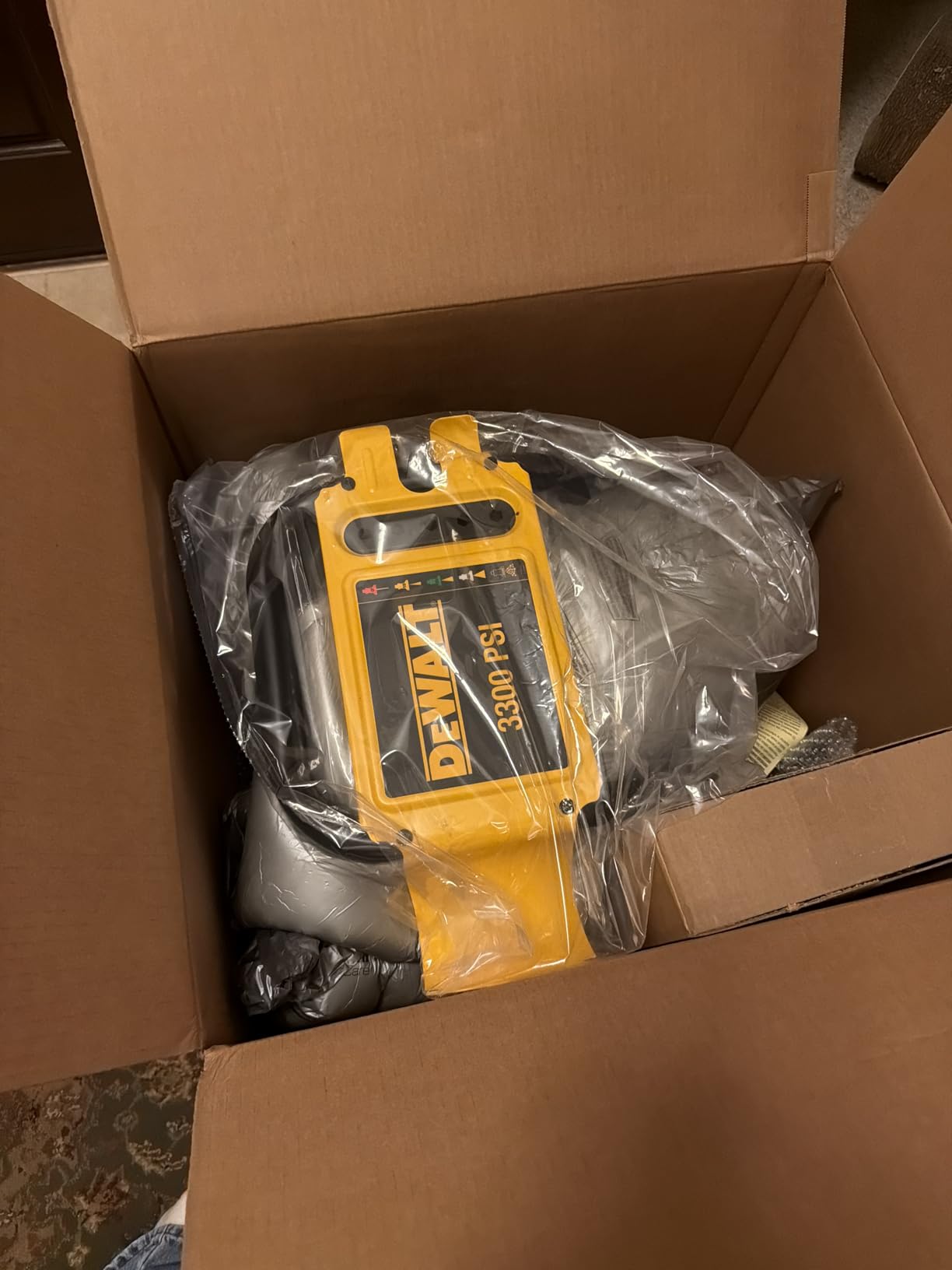
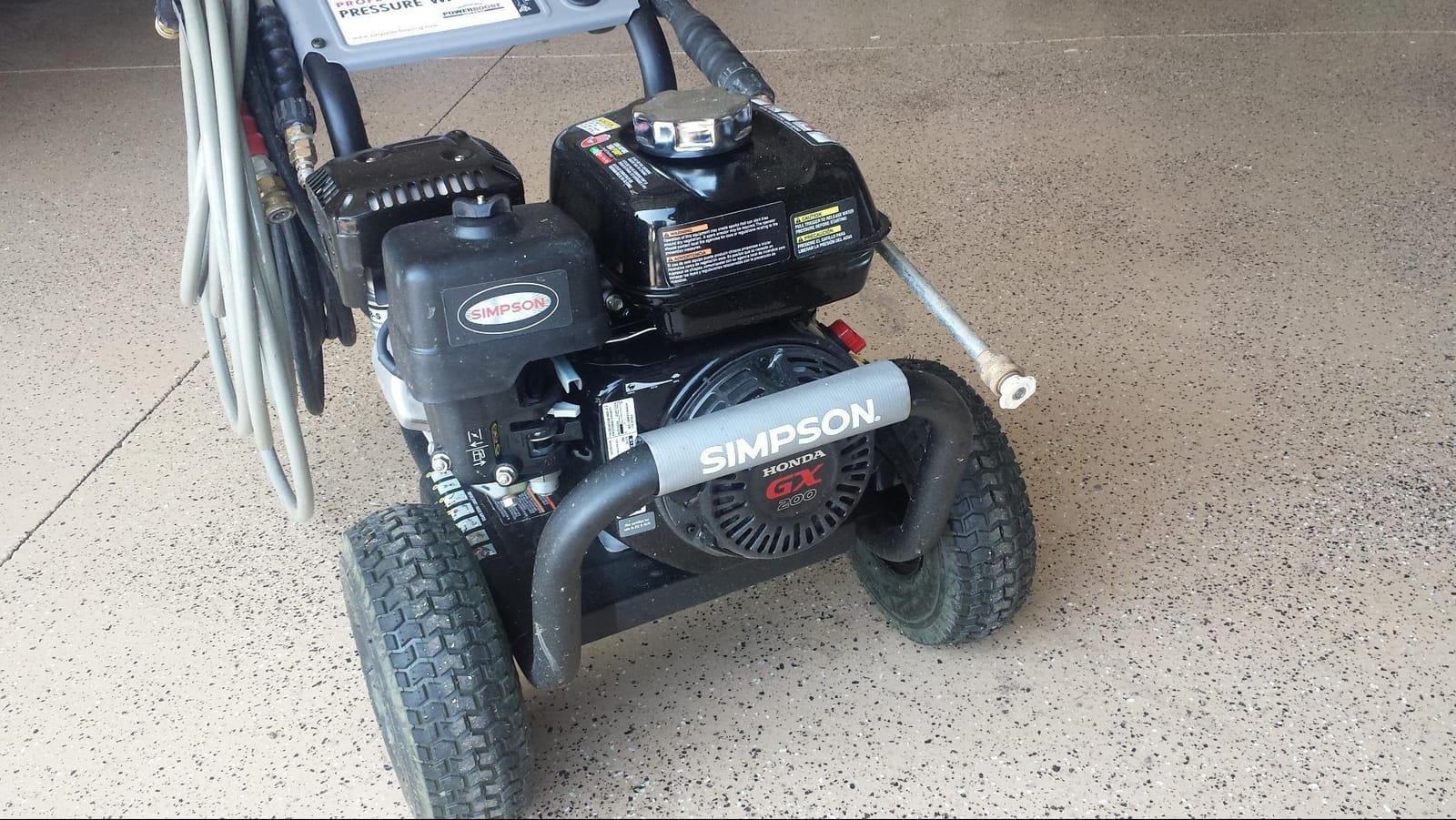
The 10-inch pneumatic tires are not a gimmick. They roll over gravel shoulders, grass edges and curbs without the dragging that small wheels suffer, and the powder-coated welded steel frame takes the abuse. Paired with a rotary surface cleaner, this is the configuration that turns a full afternoon of wand work into an hour of steady, streak-free passes.
At 74.8 pounds with a 34 by 21 by 24 inch frame, it is a real piece of equipment. You will feel every pound getting it down basement steps, and the reviewers who complain most about the short handle are usually the ones working on sloped or uneven ground.
What does the Honda engine actually buy you?
Two things: it starts on the first pull even after sitting for months, and it does not care about ambient temperature or whether your driveway is 1,200 feet from the nearest outlet. The low-oil shutdown protects the engine if you forget to check the oil, which is the single most common reason small gas engines die early.
The trade-off is straight across the board. Gasoline noise, fuel storage, oil changes and an exhaust hose to route away from your work area. On a driveway with neighbors close, the electric machines are simply more pleasant to run.
What should you know before buying?
Check two things. First, the pump protection: some owners report high-pressure relief valve or pump seal failures around the two-year mark, so keep the pump topped with the recommended oil and flush it after heavy detergent work. Second, hose length. The included 25-foot 5/16-inch MorFlex hose is a quality hose, but many owners upgrade to 50 feet so they can park the machine once and reach the whole drive.
If you live in California, this unit is not sold there. The 49-state certification rules out the emissions configuration, and the Simpson Clean Machine 3400 below is the alternative in this roundup.
4. Westinghouse ePX3050 – Best Budget Pick with a Foam Cannon
Westinghouse ePX3050 Electric Pressure Washer, 2100 Max PSI 1.76 Max GPM with Foam Cannon and Turbo Nozzle, for Cars/Fences/Driveways/Home/Patios
2100 max PSI
1800 rated PSI
1.76 max GPM
17 pounds
Foam cannon included
Pros
- Foam cannon included for detergent work
- 17-pound body one person can lift easily
- Turbo nozzle proven on mossy concrete
- Three-year limited warranty
Cons
- 20-foot hose is short and stiff
- Stiff plastic hose kinks easily
- 2100 max PSI is low for heavy buildup
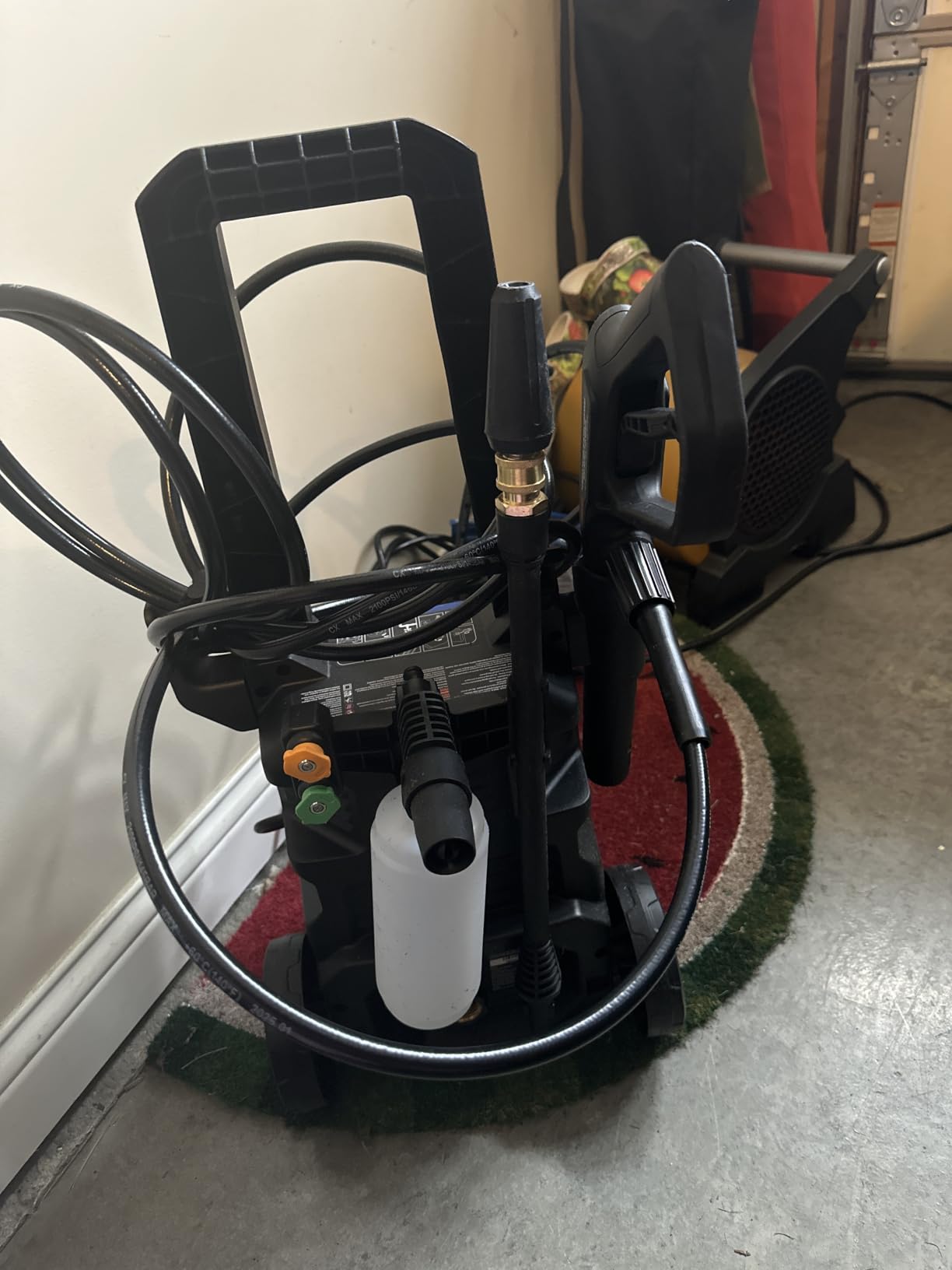
The Westinghouse ePX3050 is the value pick that makes sense if your driveway problem is organic rather than oily. It is rated at 1,800 PSI and 1.2 GPM, with 2,100 PSI and 1.76 GPM as maximums, and it ships with a foam cannon. That foam cannon is the reason this machine works so well on moss, algae and green film, because a thick foam sits on the surface far longer than a thin spray from a soap nozzle.
Weighing 17 pounds with a 12.4 by 11.3 by 25.8 inch body, it is one of the easiest machines here to carry, reposition and lift. One reviewer put it plainly, saying a person in their seventies could manage it, which is the metric that matters if you are moving between the driveway and a side path several times in one session.
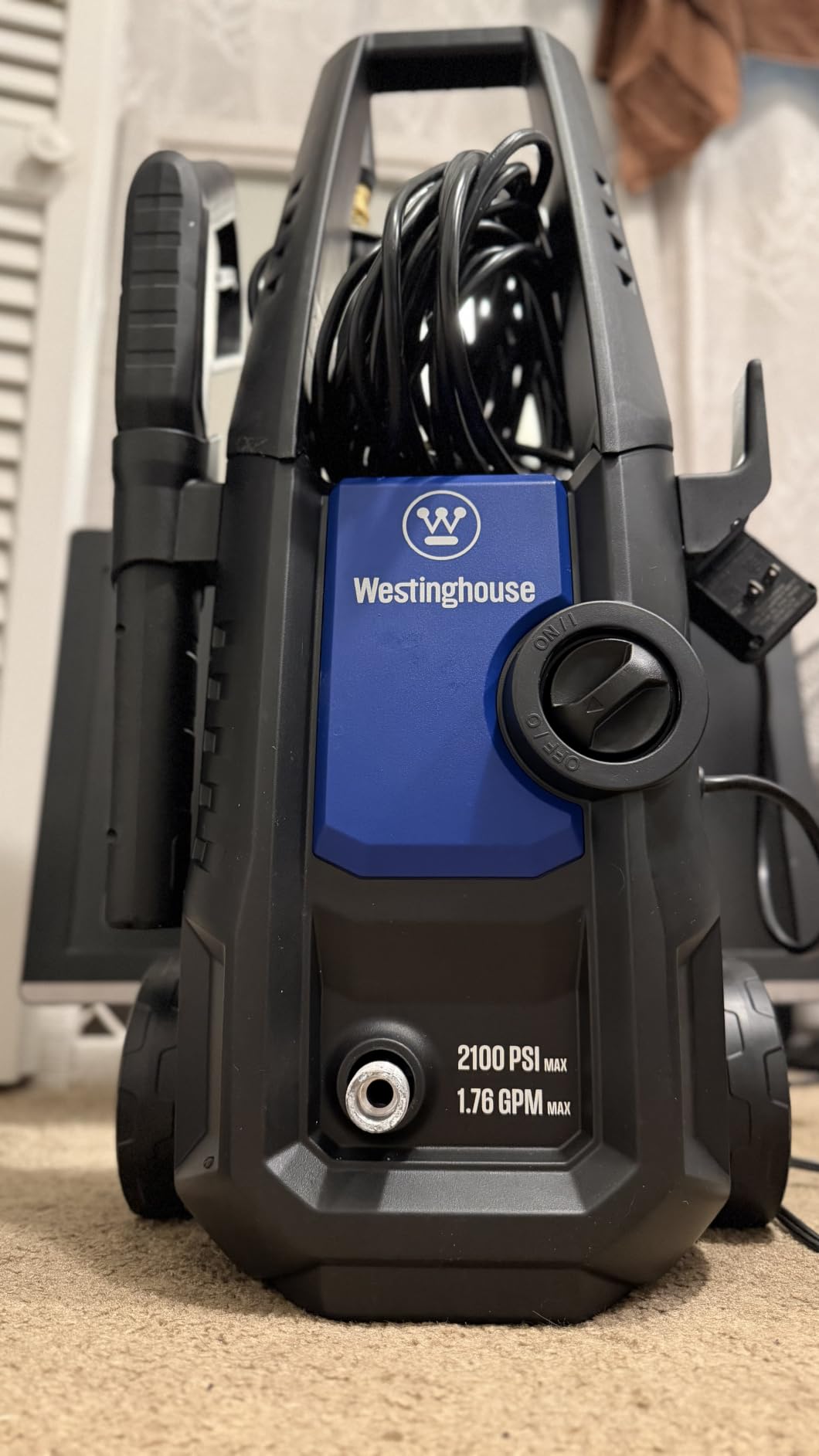
The 35-foot GFCI cord with 5-inch never-flat wheels gives it better reach than the short internal hose would suggest. M22 fittings mean a surface cleaner or a different foam cannon will bolt straight on, so the low starting pressure is not a permanent ceiling on what this machine can do for you.
Owners rate it at 4.5 and describe it as inexpensive, portable and effective for cars, decks, walkways and siding. The complaints repeat in a predictable pattern: the 20-foot Super Flex hose is short, it is stiff plastic, and it kinks if you drag it around a corner, and one review reports arriving with a missing wheel.
Is it strong enough for real driveway staining?
For algae, moss, mildew and road salt, yes. The turbo nozzle concentrates the available pressure into a rotating pattern that breaks down organic growth, and the foam cannon lets the treatment dwell properly. For decades of embedded oil staining on concrete, 1,800 rated PSI is genuinely marginal, and no amount of technique changes that number.
My rule of thumb: this is the right machine for a driveway that has gone green and slippery, and the wrong machine for a driveway stained by a vehicle that parked on it for ten years.
What about the hose?
Replace it. A 20-foot stiff plastic hose is the most common thing owners upgrade first on this machine, and doing so removes the most repeated complaint. Budget for a 25 or 30 foot replacement with a kink-resistant jacket before you start, and the machine feels like a different product.
The rest of the package is well-judged for the money: automatic motor stop, quick-connect nozzles in 15 and 25 degree plus turbo, and a three-year warranty that most competitors in this bracket do not match.
5. Greenworks GPW2003 – Best Compact Electric for Small Driveways
Greenworks 2000 PSI (1.2 GPM) Electric Pressure Washer
2000 PSI
1.2 GPM
PWMA certified
25-foot hose
Removable handle
Pros
- Quiet operation with no fuel handling
- Automatic trigger-off shutdown protects the pump
- Removable handle for shelf storage
- Light enough to lift and reposition alone
Cons
- Supplied hose and nozzles hold back delivered pressure
- Aluminum fittings can corrode against brass
- Turbo nozzle covers a small pattern
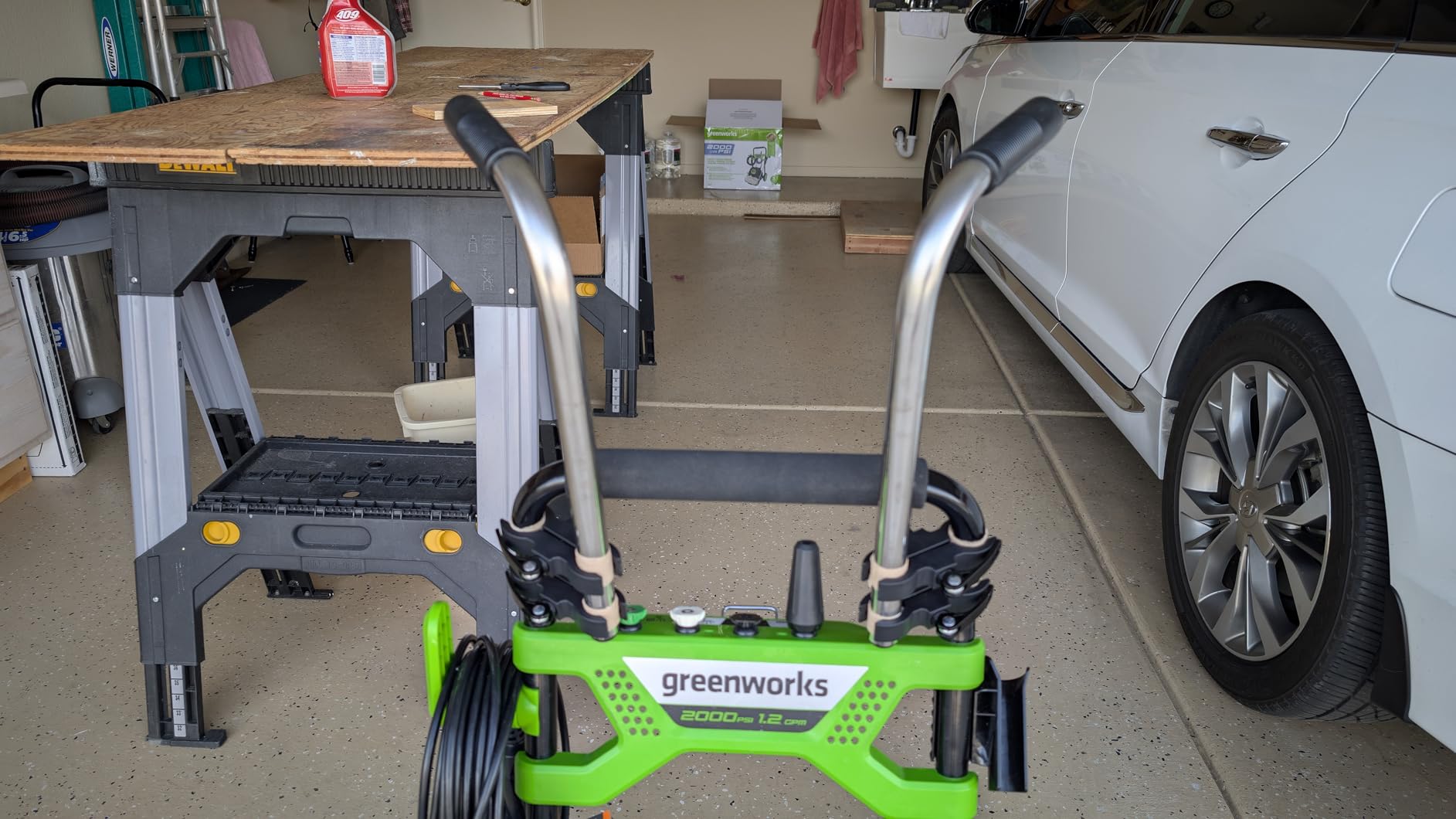
The Greenworks GPW2003 is PWMA performance tested and certified, which matters more than it sounds. Independent certification means the 2,000 PSI and 1.2 GPM on the box have been verified by a third party rather than measured at the factory outlet. It is a 14 Amp unit with push-button start and automatic shutoff when you release the trigger, and the removable handle lets it store on a shelf rather than taking a wheelbarrow of floor space.
For a small driveway, a patio, and a couple of cars, this is a genuinely pleasant machine to own. There is no fuel to store, no oil to check and no exhaust hose to route, and reviewers consistently praise how quiet it is next to a gas unit of similar capability.
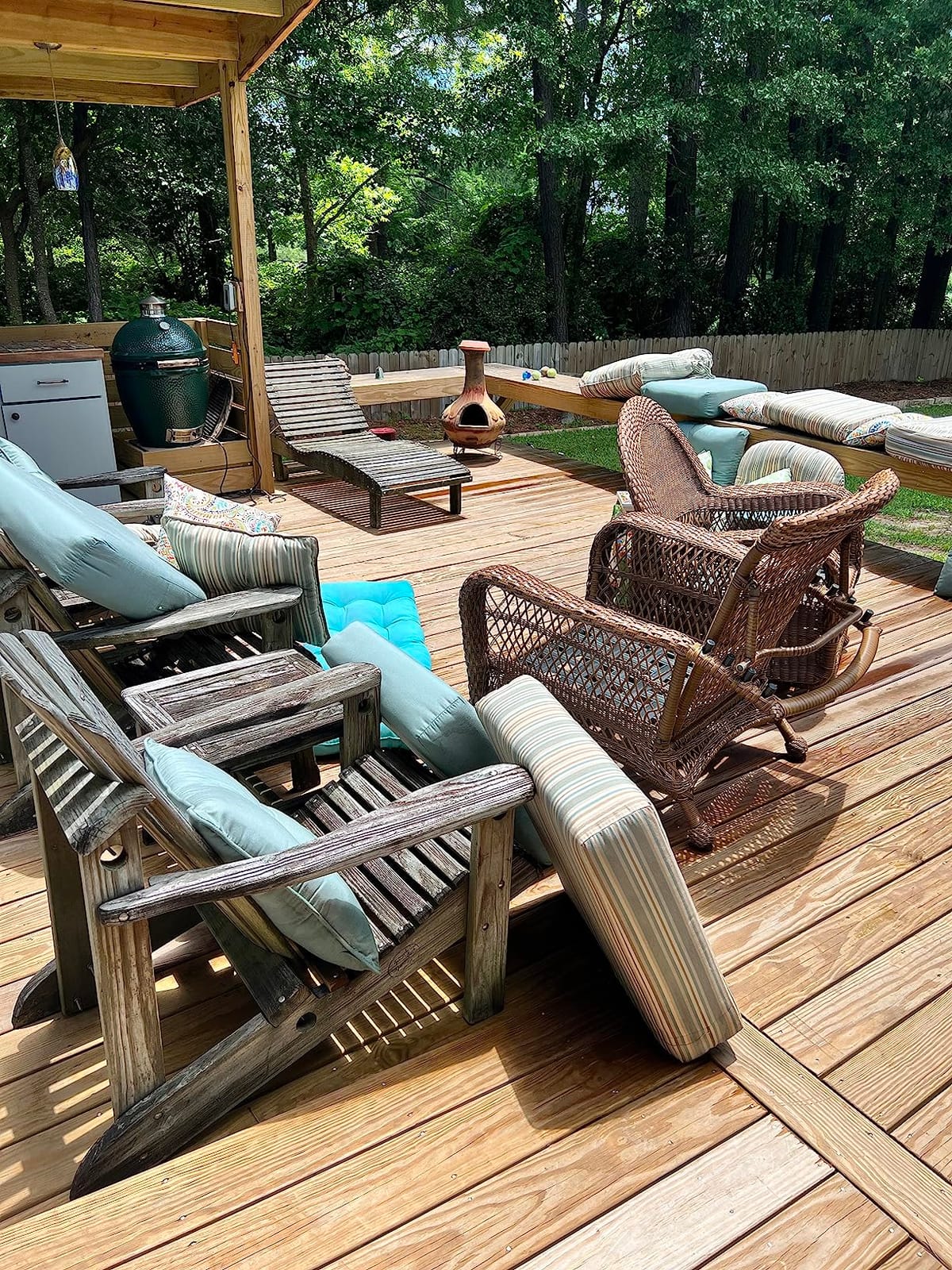
The large wheels with wire-clip retention roll over grass and gravel without dragging, and the onboard soap tank with a soap tip on the wand handles detergent without any fuss. Owners also like that one person can lift and reposition it without a fight.
The most common thread in the reviews is that the supplied hose and nozzle set hold the machine back. Many owners upgrade both and describe the result as a transformation. There are also reports of aluminum-anodized fittings corroding where they meet brass fittings, so a matched set of brass quick-connects is worth adding at the same time.
How big is too big for this machine?
At 1.2 GPM, roughly 400 square feet is a comfortable session. Beyond that you are spending more time repositioning than cleaning, and the wand work starts to feel like a second job. If your driveway is a two-car slab of 500 square feet or more, spend the money on a machine with 2.0 GPM or more.
The turbo nozzle also covers a smaller circular pattern than the 25 or 40 degree tips, which means more passes on a wide surface. Learn which tip suits each job and you cut your time noticeably.
What should you upgrade first?
The hose, then the nozzles. A 25-foot kink-resistant hose in the same fitting standard removes the biggest complaint, and adding a 25 and 40 degree tip set gives you the spray patterns you actually need for concrete. Avoid mixing fitting standards carelessly, since that anodized-aluminum-against-brass pairing is exactly what reviewers report causing leaks.
Everything else on this machine is well matched to its purpose. Just size it to a small driveway rather than a large one and it will serve you for years.
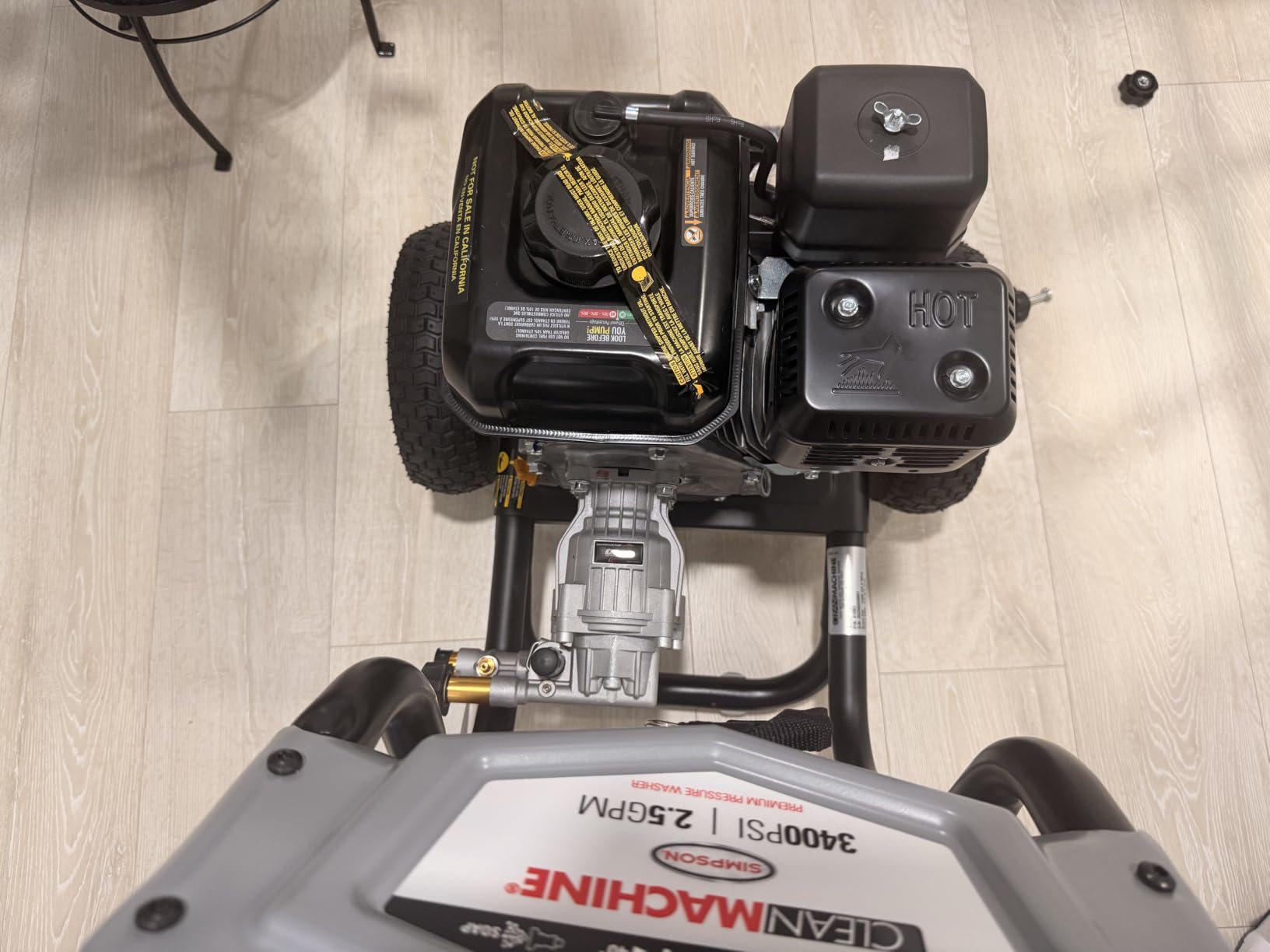
6. Simpson Clean Machine 3400 – Best for Large Flat Concrete
Simpson Clean Machine 3400 PSI Gas Pressure Washer, 2.5 GPM, CRX engine
3400 PSI
2.5 GPM
208 cc CRX engine
61 pounds
25-foot hose
Pros
- High pressure and flow for homeowner-grade driveway work
- Low-profile 21 inch height for garage storage
- Quick-connect hose fittings speed setup
- Pneumatic tires roll over gravel and curbs
Cons
- Axial cam pump sits below contractor triplex pumps
- Only four nozzle tips supplied
- Gas engine noise
- Not sold in California
The Simpson Clean Machine 3400 is the homeowner step-up from a corded electric, and it is the value-conscious route into gas power. It puts out 3,400 PSI at 2.5 GPM, which is 8,500 CU, through a 208 cc CRX engine with low-oil shutdown driving an OEM Technologies axial cam pump with thermal relief. The pump is maintenance-free, which removes the main reason people hesitate to own a gas washer.
What separates it from the smaller machines here is the 21-inch frame height. It is genuinely low profile for a gas unit, so it slides under a standard residential workbench in a garage that would never accommodate a taller cart. The 10-inch pneumatic tires and powder-coated welded steel frame handle the same gravel and curb work as the larger Simpson.
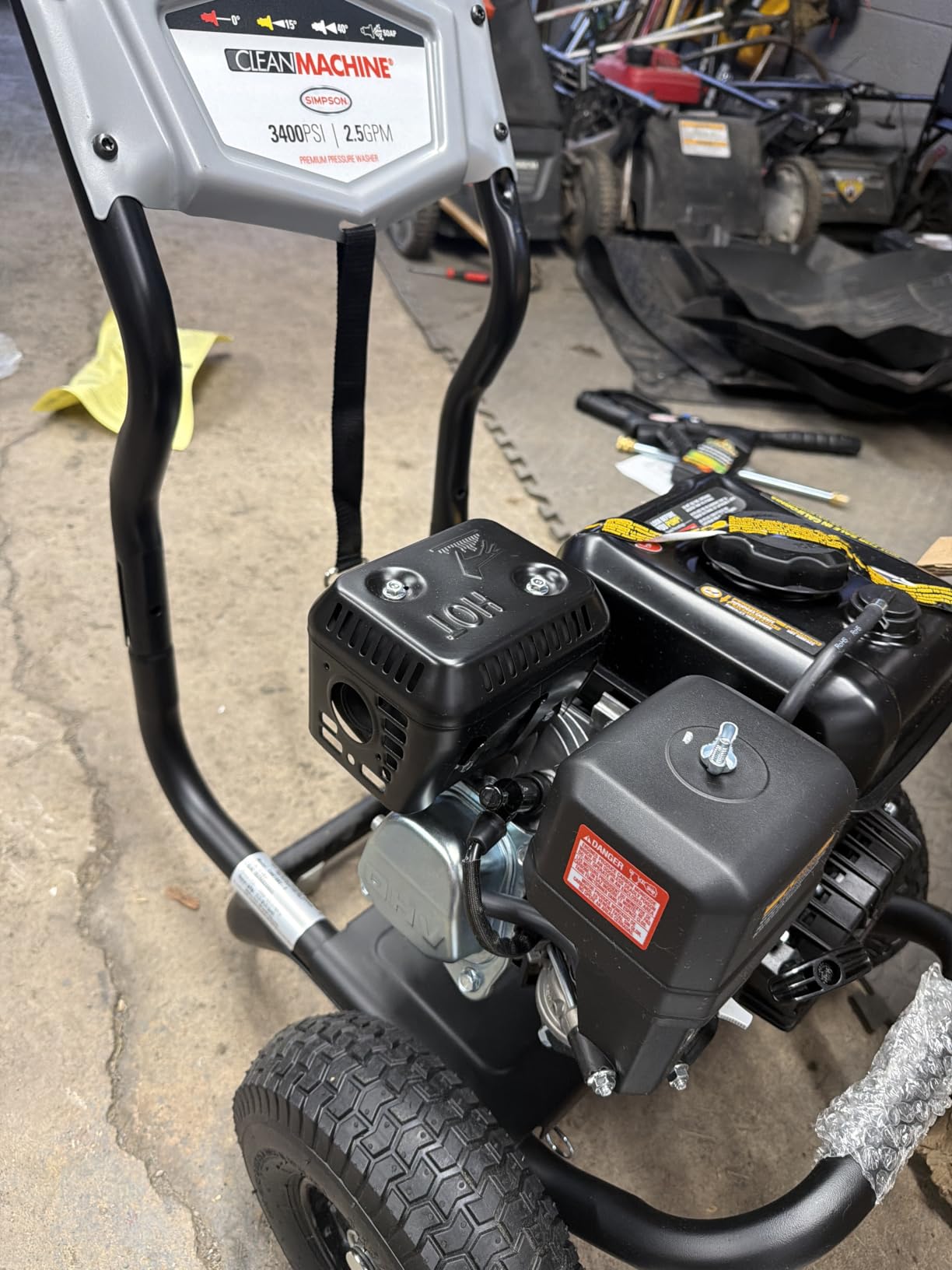
Quick-connect fittings on the 25-foot MorFlex hose make setup noticeably faster, and the front-load M22 gun with a 16-inch wand is a sensible layout for a machine you maneuver around a driveway rather than carry. At 61 pounds it is a manageable lift for most people, noticeably lighter than the 74.8 pound Honda-powered unit.
Reviewers like the raw pressure and the low-profile frame, and they accept the usual gasoline drawbacks. The honest limitation is the pump: an axial cam pump is a mid-grade residential component, and it will not tolerate the sustained commercial workloads that the triplex pump in the PowerShot handles. It is built for a few hours at a time, not all day, every day.
PowerShot or Clean Machine?
Choose the Clean Machine if this is a once-a-year homeowner job on a driveway you can reach within 25 feet of the machine, and you want a low frame and quick-connect convenience. Choose the PowerShot if you want a Honda engine, a triplex pump, 10-inch tires and a warranty path that has held up over a decade of ownership reports.
Both deliver essentially the same working pressure and flow. The difference is the engine, the pump longevity and the parts story, and the PowerShot costs meaningfully more for both reasons.
What is missing from the box?
You get four quick-connect tips: 0, 15, 40 degree and soap. There is no 25 degree tip and no turbo, which are exactly the two you want most for concrete. Budget for a nozzle set with 25 degree and turbo before you start, since that is a two-minute job and it changes how the machine handles tire marks.
The 49-state certification also means it is not sold in California, so buyers there should look at the electric options in this roundup instead.
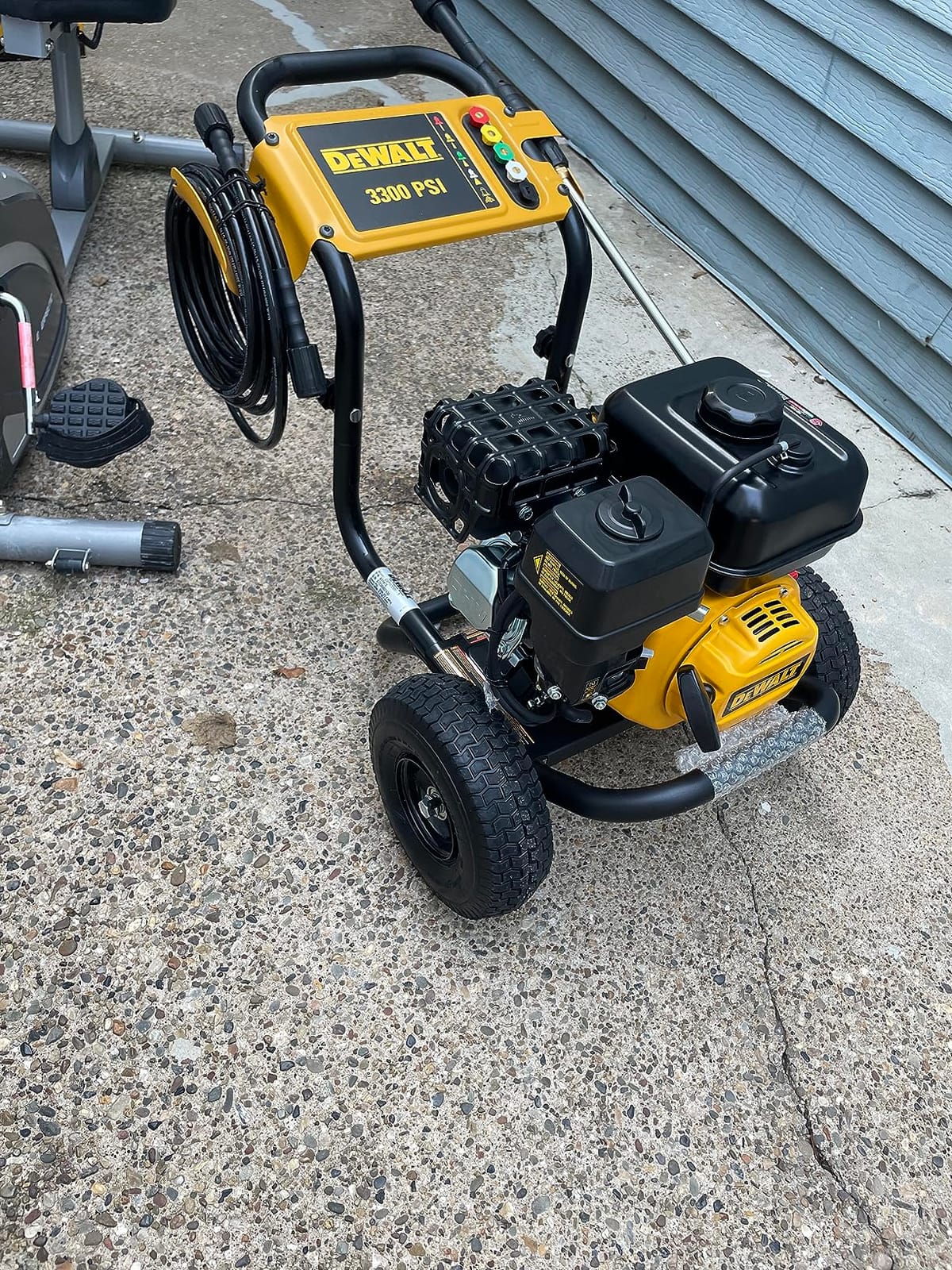
7. DeWalt DXPW3300-S – Best Warranty Cover on a Gas Unit
DeWalt 3300 PSI Gas Pressure Washer, 2.4 GPM, Residential Model DXPW3300-S
3300 PSI
2.4 GPM
208cc DeWalt engine
64 pounds
16-inch wand
Pros
- Strong 3300 PSI and 2.4 GPM for large concrete
- Longest warranty in the group at 5-year frame and 3-year pump
- Full five-nozzle set including soap
- Useful for prepping exteriors before painting
Cons
- Gas engine noise and fuel maintenance
- Not sold in California
The DeWalt DXPW3300-S is the one to look at if warranty length is part of your decision. It carries a 5-year frame, 3-year pump and 2-year engine warranty, which is longer than anything else in this roundup. For a machine most owners expect to keep for many years, that coverage is worth more than a modest spec difference.
Performance is squarely in driveway territory: 3,300 PSI at 2.4 GPM, or 7,920 CU, from a 208cc DeWalt engine driving an OEM Technologies axial cam pump with a thermal relief valve. The welded steel frame has a powder-coated finish and rides on 10-inch pneumatic tires, so it moves around a yard without dragging.
The accessory situation is the best-equipped gas machine here. You get a 25-foot abrasion-resistant hose, an ergonomic spray gun, a 16-inch steel wand and a full five-nozzle set in 0, 15, 25, 40 degrees and soap, which is complete for driveway work without a single extra purchase. Most competing gas units ship with four tips and leave the 25 degree out.
Reviews center on dependable starting, straightforward assembly and adequate power for driveway and siding jobs. With 960 reviews at 4.3, the sample is smaller than the other gas units here, so treat the consensus with slightly more caution than the 2,000-plus review counts on the Simpsons.
Is the extra warranty the deciding factor?
For a large driveway cleaned once or twice a year, yes. A 3-year pump warranty on an axial cam pump covers roughly the entire realistic service life of the pump, and the 5-year frame warranty means a bent or cracked frame is not your problem. No other unit in this list offers that combination.
For a buyer who cleans weekly and runs a gas machine hard, warranty length matters less than pump architecture, and that is the argument for the triplex pump in the Simpson PowerShot instead.
What are the practical drawbacks?
Standard gasoline-machine compromises. Engine noise, fuel and oil servicing, and storage that requires thinking about ventilation. It is also 49-state compliant, so it is not sold in California.
At 64 pounds and 41 inches long, it is the longest machine in this roundup, which makes turning around in a tight driveway slightly awkward. Measure your storage path before committing.
8. Greenworks GPW3002A – Best Heavy-Duty Electric for Driveways
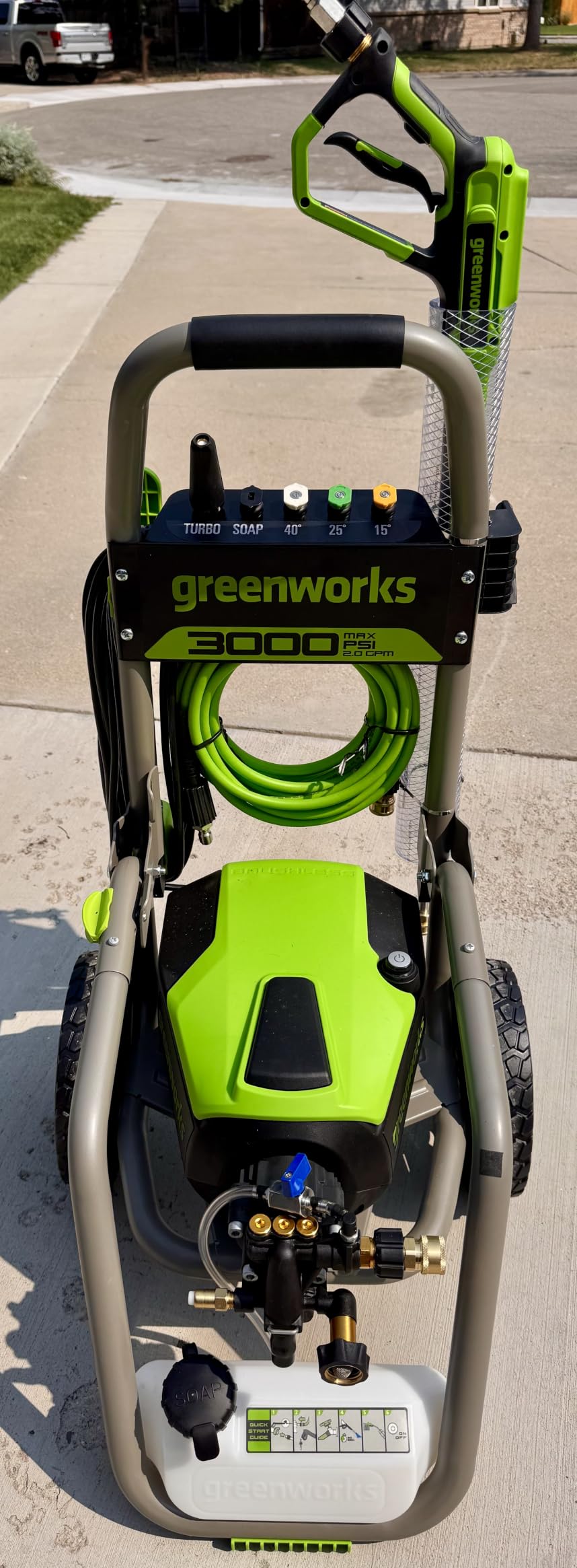
Greenworks 3000 PSI (2.0 GPM Max) Brushless Electric Pressure Washer
3000 PSI
2.0 GPM
14 Amp brushless motor
Lab-verified output
23 kilograms
Pros
- Highest verified electric pressure here with no fuel handling
- Brushless motor ran 8 hours continuous without complaint
- Uberflex hose resists kinking
- Metal gun feels more durable than plastic
Cons
- Heavy current draw needs a dedicated circuit
- Motor bypasses rather than fully stopping on trigger release
- Larger footprint than compact units
The Greenworks GPW3002A is the electric machine that finally makes corded cleaning a serious option for a large driveway. It delivers 3,000 PSI at up to 2.0 GPM, which puts it within striking distance of the gas units on paper, and the 14 Amp TruBrushless motor is rated at 3,300 CU. Owners measuring at the nozzle report around 2,550 PSI actually delivered.
Two details set it apart from the rest of the electrics. The stated PSI and GPM were independently lab verified rather than self-reported, and JETTFLOW technology claims up to 50 percent more flow than a conventional arrangement at comparable pressure. The 25-foot kink-resistant Uberflex hose and a metal spray gun are also upgrades over the plastic hardware most machines in this bracket ship with.
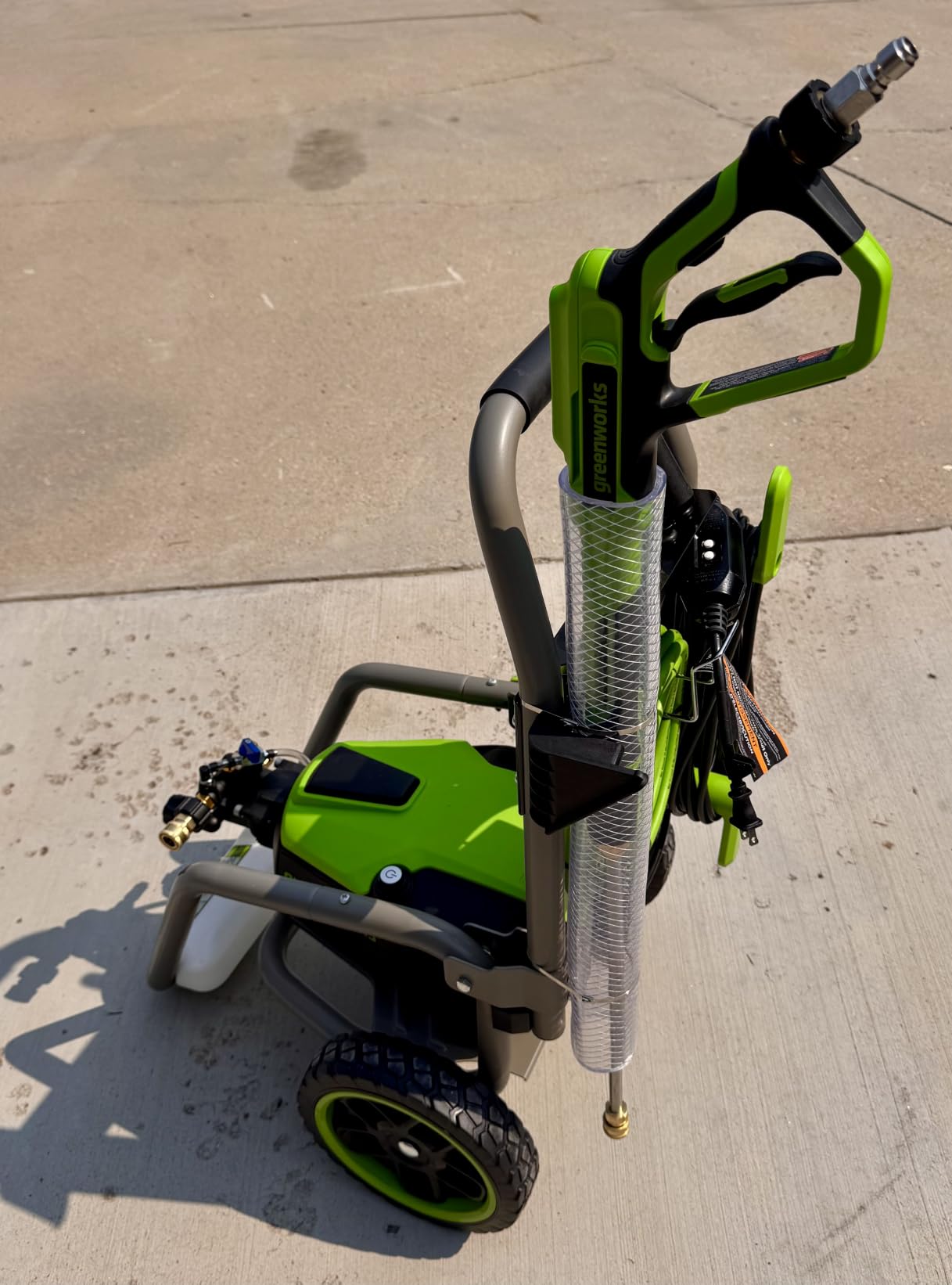
Reviewers report that the brushless motor has run for eight hours of continuous use without complaint, which speaks directly to the durability question that hangs over every electric washer. The nozzle set covers 15, 25 and 40 degrees plus soap and turbo, and the maximum inlet water temperature of 104 degrees F is a useful ceiling to know.
With 316 reviews at 4.4, this is the smallest review base in the roundup, so the long-term durability picture is not yet proven. The early pattern is positive on build quality and measured pressure, and negative on one specific electrical issue that owners repeat often enough to take seriously.
What is the electrical catch?
Current draw. This machine pulls hard enough that it wants a dedicated circuit, and owners report it tripping GFCI breakers when run off an extension cord. Use a direct outlet with a GFCI-protected receptacle, not a long extension run, and it behaves itself.
The second issue is that the motor bypasses rather than fully stopping when you release the trigger. That means it draws power more often than a total-stop unit, which is worth knowing if you care about long-term component wear.
Gas or this, for a large driveway?
Take this if noise, fuel storage and engine maintenance are deal-breakers for you and your driveway is under roughly 800 square feet. Take the gas unit if you are cleaning more than that, working in cold weather, or running multiple surfaces in one session where sustained high-pressure output matters.
For oil and grease specifically, this is the strongest corded option here: 3,000 PSI with 2.0 GPM gives you both the pressure to break the bond and the flow to carry the contamination off the slab.
9. Westinghouse ePX3100 – Best for Tight Storage
Westinghouse ePX3100 Electric Pressure Washer, 2300 Max PSI 1.76 Max GPM with Anti-Tipping Technology, Onboard Soap Tank, Pro-Style Steel Wand, 5-Nozzle Set, for Cars/Fences/Driveways/Home/Patios
2300 max PSI
1900 rated PSI
1.24 rated GPM
25-foot hose
19 pounds
Pros
- 4.5 average across more than 7000 reviews
- Compact and light at 19 pounds
- 25-foot braided hose outruns similar competitors
- Anti-tipping design with three-year warranty
Cons
- 1.24 GPM rated flow is modest for very large driveways
- Motor is rated for residential duty only
The Westinghouse ePX3100 is the machine to buy when garage space is the constraint. At 19 pounds and 16.5 inches tall with a 14 by 13.5 inch footprint, it is one of the smallest wheeled units in this roundup, and the anti-tipping chassis with four 360-degree quick-lock wheels keeps it upright and stable while you work.
Specs sit in the middle of the electric range: 1,900 rated PSI at 1.24 GPM, with 2,300 PSI and 1.76 GPM available as maximums at low pressure. The 25-foot easy-coil nylon braided hose is longer than most machines at this level, and the extendable 17.5-inch pro-style steel wand with five quick-connect nozzles is a proper accessory kit rather than a token set.
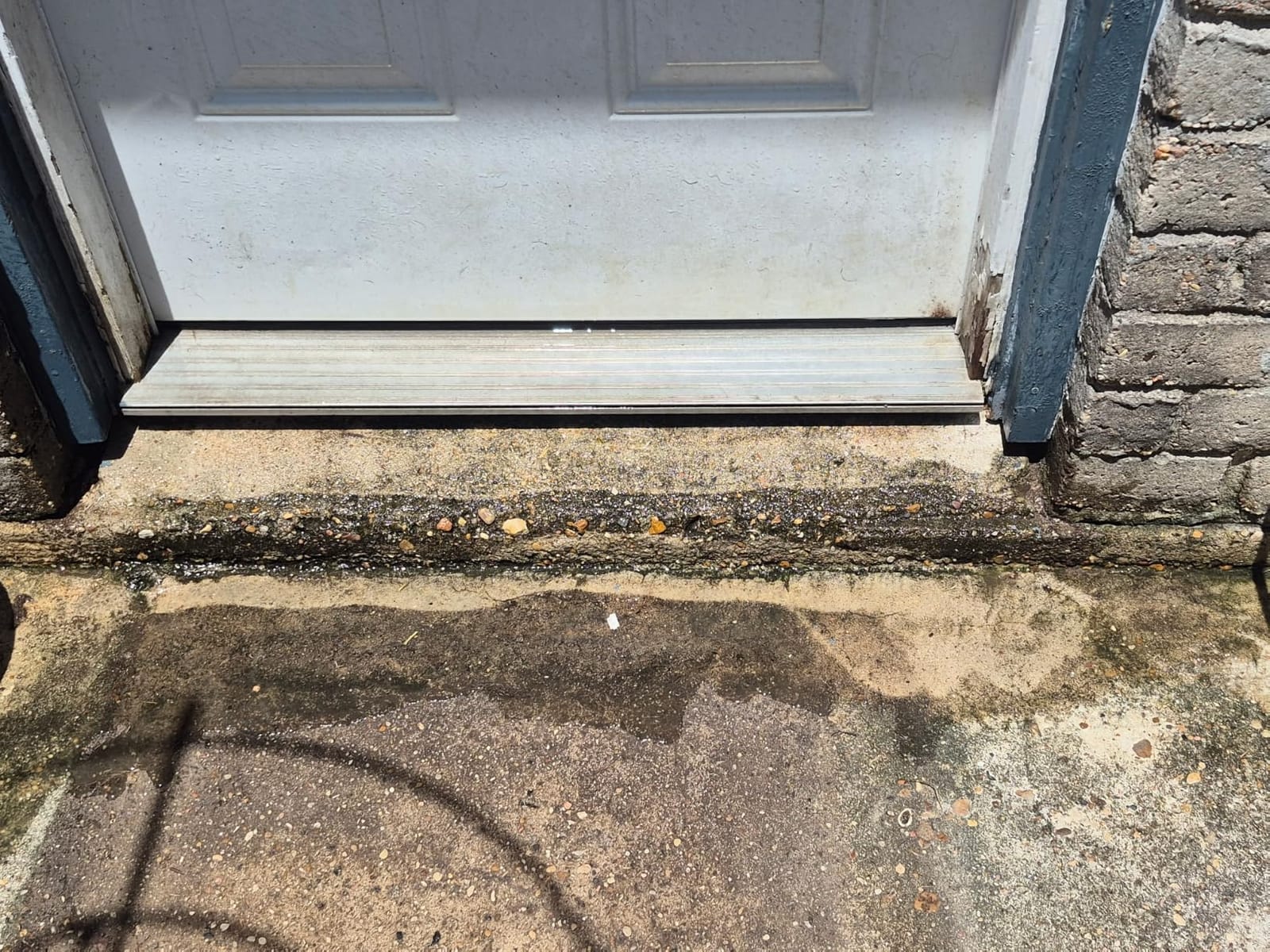
With a 4.5 rating across more than 7,000 reviews, this is one of the best-proven machines in the list. Owners highlight the combination of compact size, hose length and a three-year parts and service warranty as the reason it feels like good value for driveway and vehicle cleaning, and they note the total-halt pump auto-stop as a quiet plus.
The 20-ounce onboard soap tank is small, so you will be refilling it more often than with a gallon tank, but it covers the pre-treatment step on a driveway without any complication. The braided hose resists the kinking that ruins cheap hoses after one season.
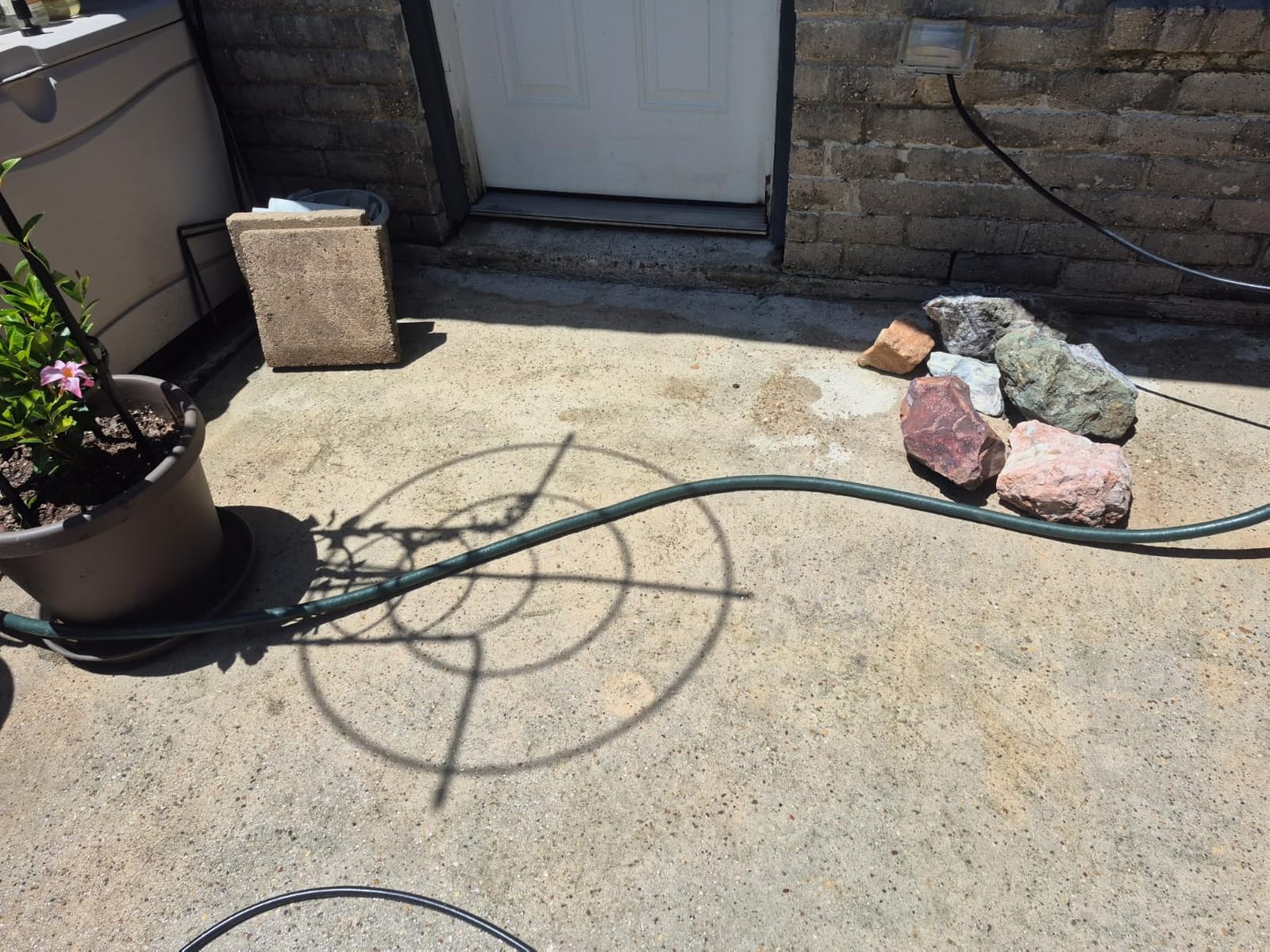
ePX3100 or ePX3500?
They are the same chassis and the same anti-tipping design, one step apart in output. The ePX3500 gives you 2,000 rated PSI instead of 1,900, and it is the one I would pick for a driveway because the extra headroom helps on embedded stains.
Choose the ePX3100 if the lower number is fine for your surface, which on a driveway with surface grime, algae and road salt it usually is, and if the cost difference is better spent elsewhere in your setup.
What are the limits?
Two, and both are the same limit: residential duty at modest flow. 1.24 GPM rated output covers a standard two-car driveway in a reasonable session, but it will not scale to a four-car drive or a long weekend project without dragging. The motor is not built for contractor-level hours per day.
If you already know your driveway is on the large side, skip both Westinghouse electrics and look at the 2.0 to 2.5 GPM machines instead.
10. Greenworks GPW2300 – Best Flow From a Corded Electric
Greenworks 2300 PSI (2.3 GPM Max) Electric Pressure Washer
2300 max PSI
2.3 GPM max
3-year tool warranty
10-year motor warranty
41 pounds
Pros
- 2.3 GPM is among the highest flow figures for an electric
- Kink-resistant 25-foot hose
- Large 10-inch wheels roll over rough ground
- Onboard accessory storage
Cons
- Lowest average rating here at 4.2
- Axial cam pump is a residential component
- Brushless motor warranty may be hard to claim
The Greenworks GPW2300 is unusual because its headline number is flow rather than pressure. At 2.3 GPM maximum it moves more water than anything else on the corded list, and on a large flat driveway that is the number that determines how long you will be standing there. The TruBrushless motor with Smart Flow claims 50 percent more water flow, and pressure-sensing technology modulates output as you work.
The warranty is also the strongest in the group: 3 years on the tool and 10 years on the brushless motor. Nothing else here comes close on that number, and for a machine whose motor is the expensive part, it is a meaningful signal about expected motor life.
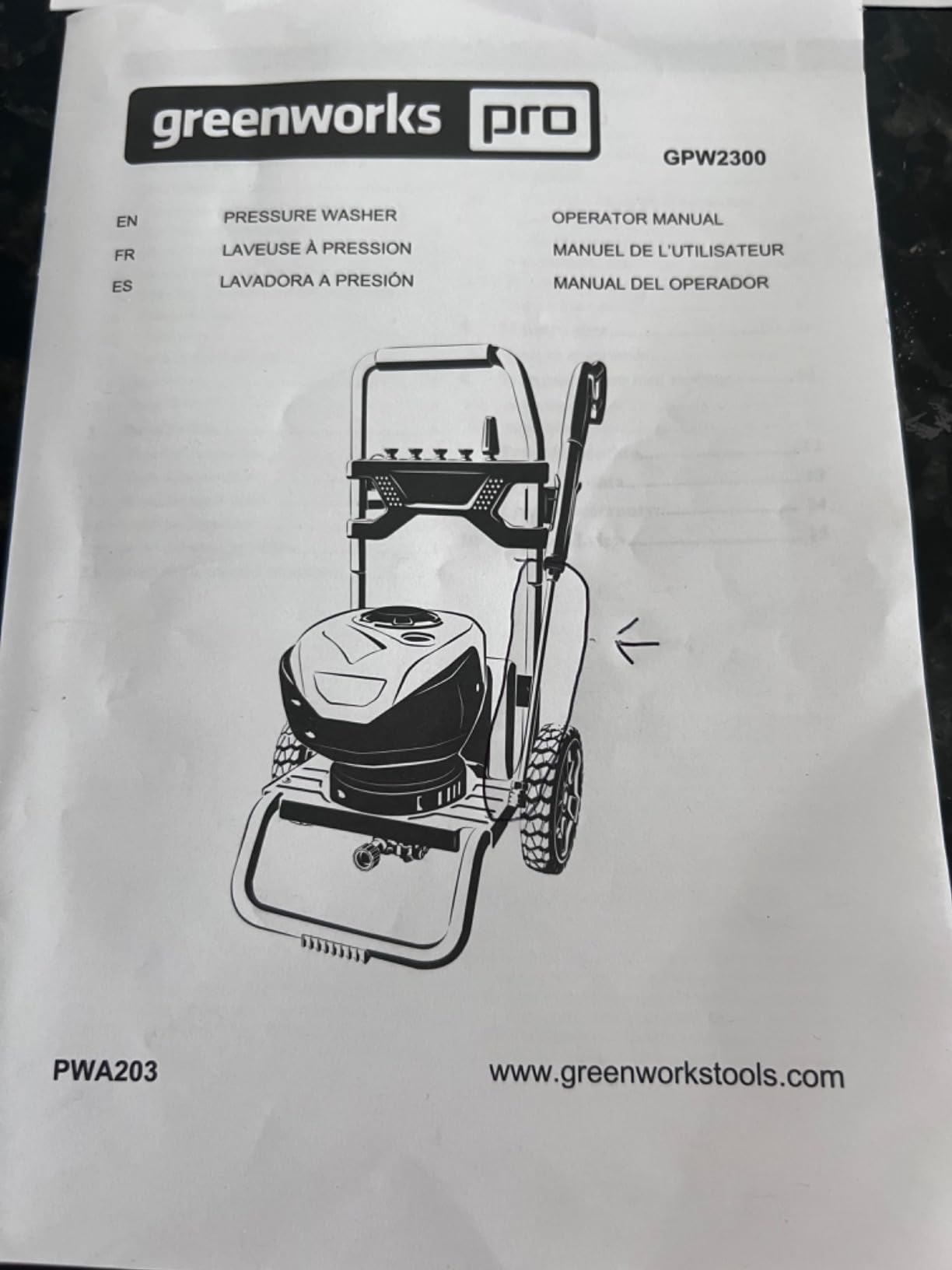
Hardware is good throughout. You get a 25-foot kink-resistant hose, a 35-foot power cord with an inline GFCI, large 10-inch wheels, a metal quick-connect wand and 15, 25, 40 degree plus soap and turbo nozzles, and onboard storage that keeps the tips and wand organized instead of rattling loose in the frame. PWMA certified, as well.
At 4.2 out of 5 across 1,295 reviews, this is the lowest-rated machine in the roundup, and the gap shows in the review mix. Buyers report a larger share of one-star feedback about durability and support than any other model here, so the motor warranty is worth reading carefully before you rely on it.
Is the flow worth the lower rating?
If your driveway is large and flat, yes. Going from 1.2 GPM to 2.3 GPM roughly halves the time you spend moving water across the slab, and on a 700 square foot driveway that difference is measured in hours rather than minutes. For a small driveway, the flow advantage is wasted and the rating gap is what you are left with.
The pattern in the reviews is that people who bought it for flow are largely satisfied, and the complaints cluster around long-term durability and getting support issues resolved.
Which Greenworks should you buy?
Take the GPW2300 for maximum corded flow and the 10-year motor warranty. Take the GPW3002A for more pressure, 3,000 PSI against 2,300, plus lab-verified output and a metal gun. Take the GPW2003 for a small driveway and a low price.
All three are legitimate. Choosing between them is a matter of whether your driveway is big enough to reward flow, which for most two-car slabs it is not.
11. Karcher K1700 – Best for Quiet Operation
Kärcher Pressure Washer K1700, CETA Certified, 3 Spray Nozzles, Detergent Tank, for Cars, Driveways, Siding, Patios, 1.2 max. GPM
1700 PSI
1.2 GPM
19-foot hose
20.7 pounds
Three nozzles
Pros
- Quiet gas-free operation owners compare to gas units
- Light at 20.7 pounds with never-flat wheels
- Foot switch plus automatic trigger shutoff
- Multiple owners report years of reliable use
Cons
- 1700 PSI is the lowest here and weak on stained concrete
- M22-14 fittings mean many accessories will not fit
- No built-in hose storage and the hose springs out
The Karcher K1700 exists for a specific reason: people who owned a noisy gas washer and replaced it with something they could run at seven in the morning. The CETA-certified TruPressure pump delivers 1,700 PSI at 1.2 GPM, and the on/off foot switch means you never have to hold a trigger down for an entire session. At 20.7 pounds with never-flat wheels, it crosses a gravel drive without dragging.
It ships with three nozzles, a 15 degree, a turbo and a 65 degree, plus a 0.5 gallon detergent tank. Multiple owners report years of reliable use, and the quiet, gas-free operation is the reason most of them bought it.
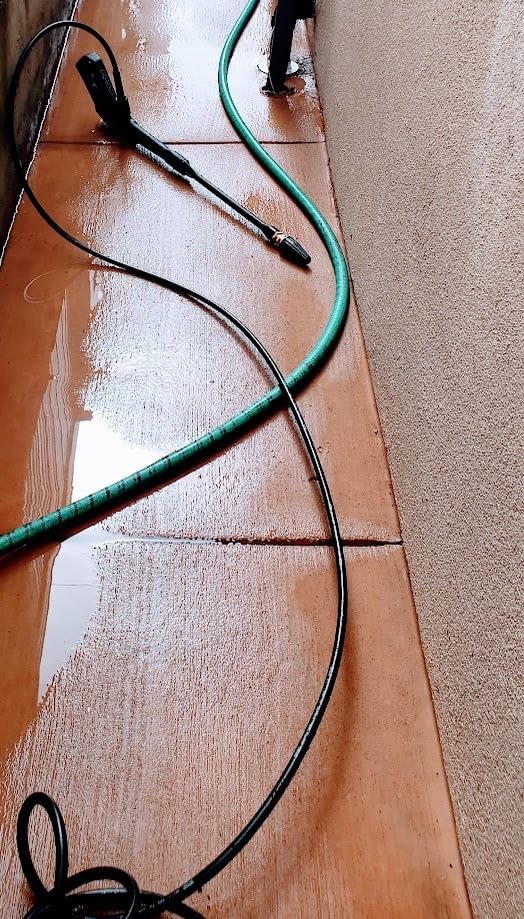
Here is what you need to know before committing. 1,700 PSI is the lowest rated output in this roundup, and owners say plainly that it is not enough for stained concrete. It is a car and light-duty machine that happens to handle a driveway refresh, not a driveway machine.
The fittings are the bigger trap. This unit uses M22-14 high-pressure fittings rather than the M22-15 standard used by most electric units, so a large share of third-party guns, foam cannons and surface cleaners will not bolt straight on without adapters. Plan to buy adapters, and factor that into your accessory budget before you start.
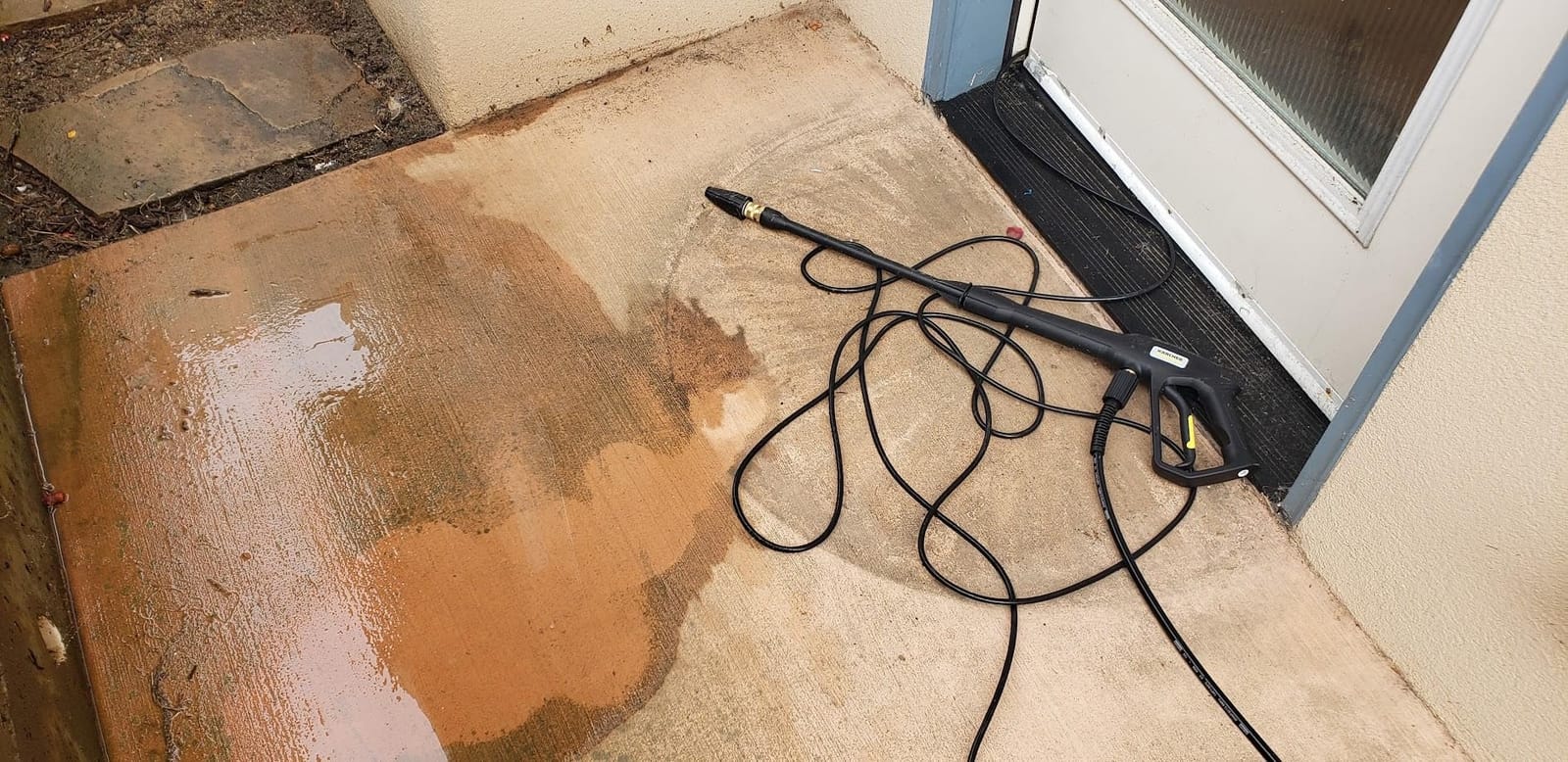
Is 1,700 PSI ever enough for a driveway?
For annual maintenance on a slab that is dirty but not damaged, yes. Road salt, light algae, general grime and a sealed surface all come back with 1,700 PSI at a distance, given patience and a 40 degree or 65 degree tip rather than a concentrated red one.
For oil stains, heavy moss in the joints, decades of embedded tire rubber or a surface that has never been cleaned, no. Below 2,000 PSI you are rinsing rather than cleaning, and you will be there all afternoon.
What should you know about the hardware?
There is no good built-in hose storage, and the 19-foot hose is stiff and tends to spring out of its clips. The detergent tank produces thin suds rather than foam, so if you want to pre-treat with foam you need a separate foam cannon, which means solving the fitting question above first. The supply-hose inlet fitting is hard plastic and can leak at the connection.
Owners replacing noisy gas machines love it. Owners buying it to attack a stained concrete slab are the ones who end up buying a second machine.
12. Craftsman CMEPW1700 – Best for Carrying and Small Jobs
CRAFTSMAN Electric Pressure Washer, Cold Water, Lightweight Corded Power Washer for Cars, Driveways, Patio and Garage, Powerful 1700-PSI, 1.2-GPM, Compact, Easy to Use (CMEPW1700)
1700 PSI
1.2 GPM
17.5 pounds
20-foot hose
35-foot cord
Pros
- Light enough to carry with one hand or take onto scaffolding
- 35-foot cord with inline GFCI and velcro strap
- Onboard storage for nozzle hose cord and wand
- Quiet operation with automatic shutoff
Cons
- Supplied hose and soap applicator are low quality
- 1.2 GPM is slow on large concrete areas
- Some reports of pump or motor failure after a season or two
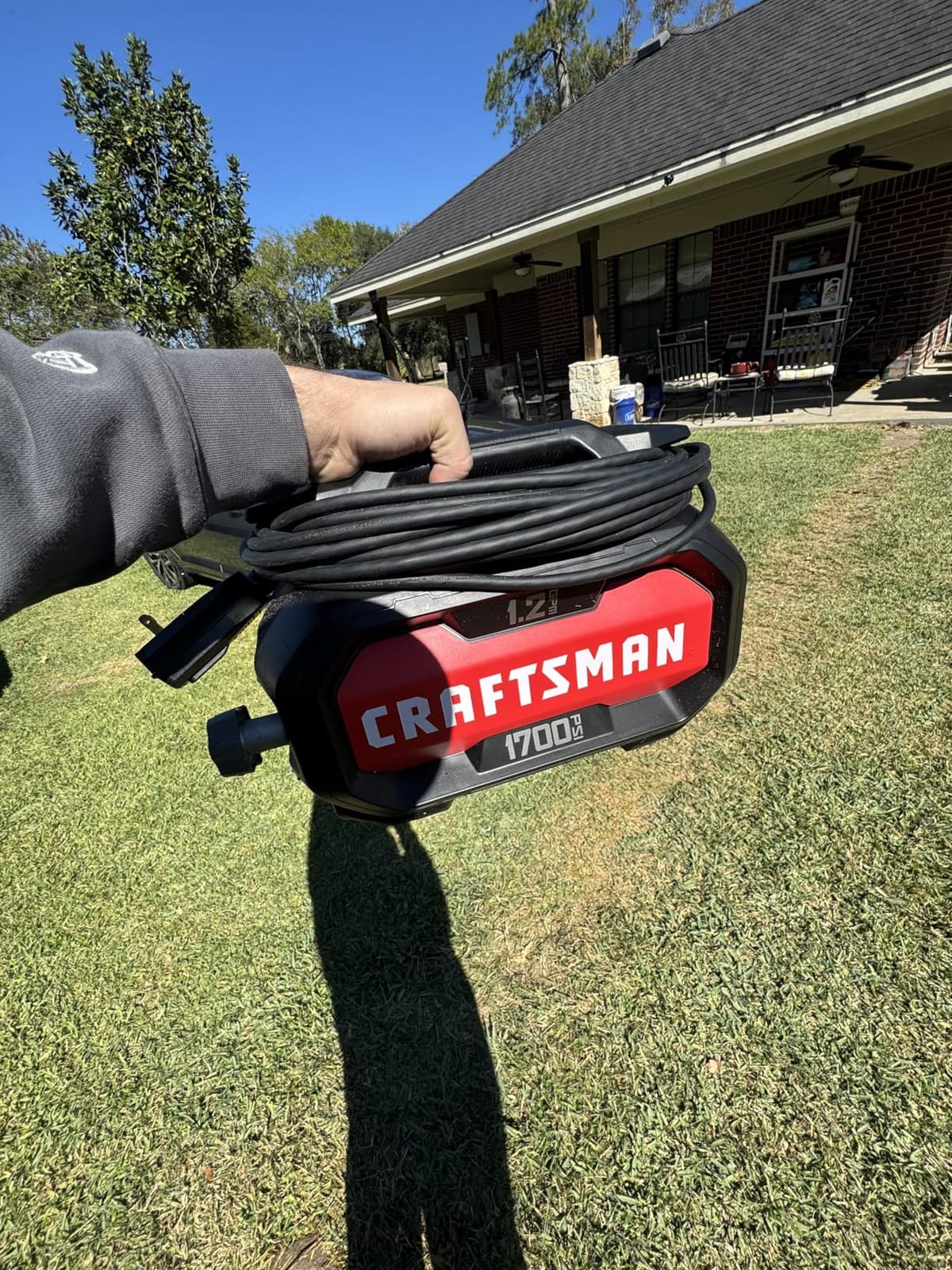
The Craftsman CMEPW1700 is the odd one out in this roundup because it is not a wheeled cart. At 17.5 pounds with an 18.3 by 10.4 by 11.3 inch body, it is a carryable machine, and owners use it on car bodies, garage floors and even on scaffolding where a wheeled unit would be unusable. It is CETA certified with a 3-year limited warranty.
For driveway work it is a spot tool rather than the main event. 1,700 PSI at 1.2 GPM will handle a walkway, a step, an oil spot on the pad and the annual rinse-down of a small driveway, and it will do that quietly, quickly and without any setup.
The 35-foot power cord with an inline GFCI and a velcro storage strap is a genuinely thoughtful detail, since reach is the usual complaint on machines this size. The onboard storage holds the nozzle, hose, cord and wand in the housing, so nothing rattles loose, and the hand-pull trigger reduces finger fatigue on longer sessions.
Owners rate it at 4.3 across 3,520 reviews and like that the plastic housing wipes clean and does not walk around during use. The consistent complaint is the supplied hose and foam applicator, which reviewers routinely replace with aftermarket parts, plus reports of pump or motor failure after a season or two of storage.
When does a carryable machine win?
When the job is vertical, narrow or high. Car bodies, siding, a balcony, garage shelving and the steps leading up to a porch are all places a wheeled cart cannot go. For a flat driveway, carrying 17.5 pounds back and forth is effort with no payoff.
The 40 degree and turbo nozzles included cover the two patterns you need most for concrete, and the soap applicator bottle handles pre-treatment on a small area without any fuss.
What should you replace first?
The hose, and the foam applicator if you plan to use detergent regularly. Both are the most repeated items in the reviews, and upgrading them is inexpensive relative to the machine. Beyond that, the design is serviceable enough for what it is, but the non-serviceable construction means failures are usually replaced rather than repaired.
Buy it for the car and the small jobs. For a driveway, buy something with more flow.
How to Choose a Pressure Washer for Your Driveway
What PSI do driveways actually need?
For standard, fully cured concrete, 2,500 to 3,000 PSI is the safe and effective target. Below 2,000 PSI you are rinsing dust and the film that a hose leaves behind. Between 2,000 and 2,500 PSI you can handle road salt, algae and general grime if you give detergent proper dwell time. Above 3,000 PSI, move the wand back and keep it moving, because that is where etching starts.
Match the pressure to the surface, not to the machine:
Concrete, aged and unsealed: 2,500 to 3,000 PSI with a 25 or 40 degree tip
Concrete that is sealed or stamped: 1,500 to 2,000 PSI, since sealers strip off above that
Brick or paver driveways: 1,500 to 2,500 PSI, and check for polymeric sand first
Asphalt: 1,200 to 2,000 PSI only, because asphalt erodes under high pressure
One hard rule: never pressure wash new concrete until it is at least 28 days cured, and wait a full year for a serious wash. Pressure this early can craze the surface permanently.
Why GPM decides how long the job takes
PSI breaks the bond between grime and concrete. GPM carries the loosened debris away. On a large flat surface, the second job is the bottleneck, which is why experienced users consistently argue that flow matters more than pressure for driveways. High pressure with low flow just moves dirt around and lets it settle in a new pattern.
Multiply the two numbers and you get the CU score, the single most useful comparison figure across machines with different architectures:
Under 2,500 CU: cars, siding, patios, small walkways
2,500 to 4,000 CU: a standard two-car driveway with routine grime
4,000 to 6,000 CU: a large driveway with heavy staining, moss and tire marks
Above 6,000 CU: multi-surface projects and near-contractor workloads
Also compare rated figures rather than maximums where the manufacturer publishes both. Several machines here advertise 1.76 GPM maximum and deliver 1.2 GPM rated once pressure climbs at the nozzle, which is the number that matters when you are actually cleaning.
Gas, electric or brushless electric?
Electric is quieter, cheaper to run, starts instantly and needs no fuel storage. It draws more than one extension cord can safely carry, so you plan around a dedicated outlet, and it cools down between sessions rather than running indefinitely.
Gas gives you sustained output, no cord limits and freedom from the outlet. It costs you noise, fuel and oil servicing, an exhaust hose to route and more frequent maintenance, and it is louder in every scenario that matters.
Brushless electric sits between the two and is the category most buyers overlook. The Greenworks GPW3002A proves the middle ground works: 3,000 PSI at 2.0 GPM with a lab-verified output, in a machine with no fuel and no engine. If your driveway is under roughly 800 square feet and you dislike gas, that is the tier to shop in.
Surface cleaner attachment and nozzle color codes
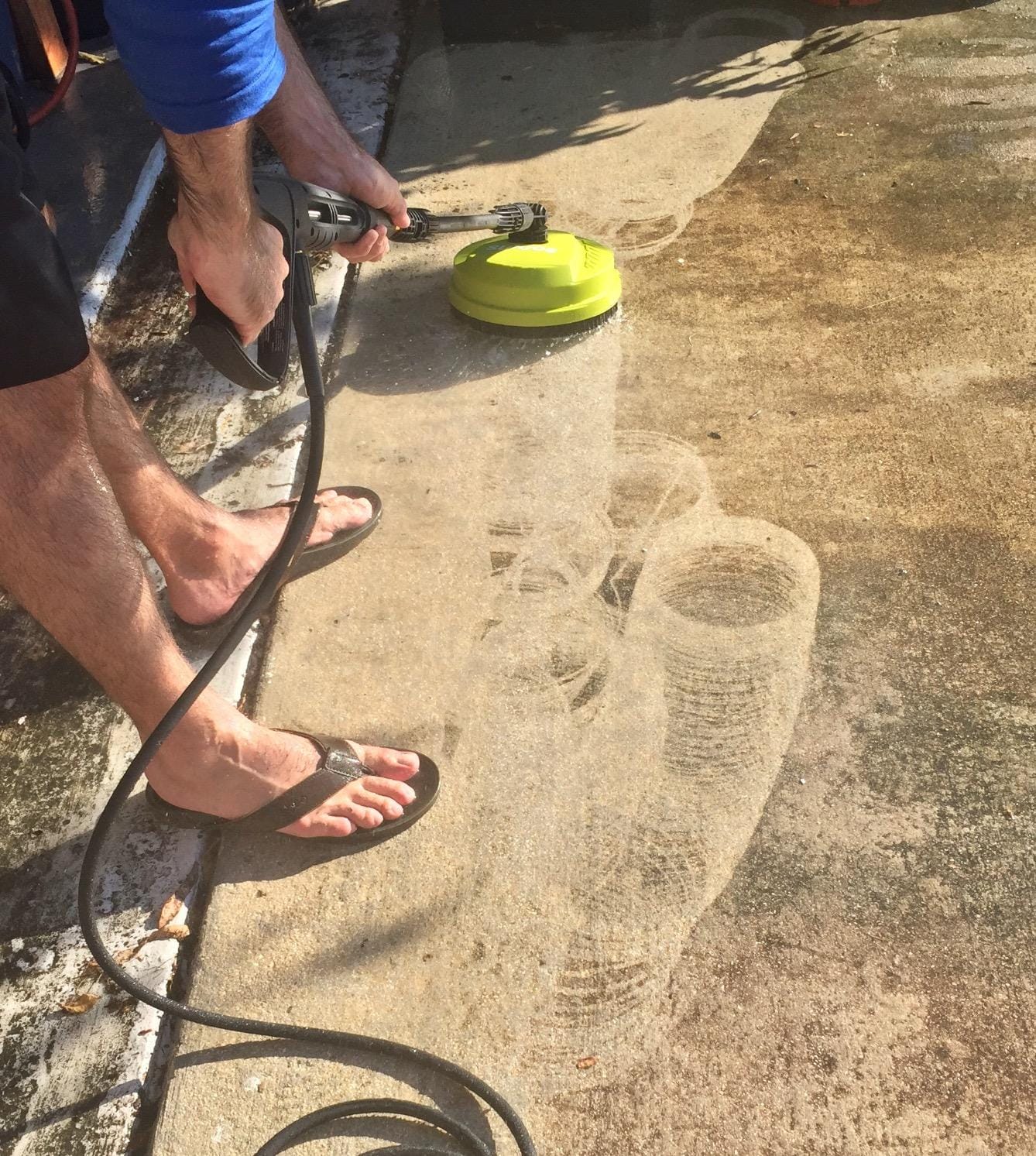
Yes, buy a surface cleaner. This is the single most important accessory for driveway work, and the reason is streaking rather than cleaning power. A wand concentrates pressure into a narrow jet, so a fast pass leaves a light lane and a slow pass leaves a dark one, producing the tiger striping and zebra banding that make a clean driveway look worse than a dirty one.
A rotary surface cleaner holds two or more rotating nozzles at a fixed height, so every pass lays down identical pressure across its full width. Overlap your passes by a few inches and the result is uniform. For a two-car driveway this can cut cleaning time more than a pressure upgrade would.
Know the nozzle color codes before you start:
Red, 0 degree: point-blank, for spot treatment of stubborn stains. Never use this on concrete over a wide area
Yellow, 15 degree: narrow and intense, for tire marks and oil spots at close range
Green, 25 degree: the driveway workhorse, for general cleaning on concrete
White, 40 degree: wide and gentle, for the whole slab once the heavy work is done
Black or grey, soap: detergent application, always with the machine on low pressure
Check the fitting standard before you buy an attachment. Most units use M22-15 quick-connect, but the Karcher K1700 in this roundup uses M22-14, and it will not accept standard accessories without adapters.
Detergent, dwell time and sealing afterward
Sweep first, always. Debris left on the slab gets driven into the surface when you hit it with a jet, and it is the fastest route to a driveway that looks dirtier after you finish. Then apply a concrete-specific cleaner or degreaser with the soap nozzle, let it sit for ten to fifteen minutes, and only then start the mechanical work.
Detergent does the breaking; the pressure does the lifting. Skipping the dwell time is the most common reason people believe their machine is underpowered. For oil stains, a degreaser plus fifteen minutes of dwell will outperform a much stronger machine applied dry.
After the slab dries fully, seal it with a silane-siloxane sealer if it was previously sealed. Sealing locks out road salt and moisture that would otherwise work their way into the concrete over the winter, and it makes the next spring clean dramatically faster.
Frequently Asked Questions
What PSI pressure washer is best for cleaning a driveway?
For a standard, fully cured concrete driveway, 2,500 to 3,000 PSI at 2.0 to 3.0 GPM is the ideal range. Below 2,000 PSI you are rinsing rather than cleaning, and above 3,500 PSI on aged concrete you risk etching the surface permanently. Always start with the widest spray pattern that will do the job and only step down to narrower tips for stubborn spots.
Is 3000 PSI enough for a driveway?
Yes, 3,000 PSI is comfortably in the safe range for fully cured concrete, and several machines in our roundup deliver it. The number that matters more is flow, so pair 3,000 PSI with at least 2.0 GPM for a large slab. Keep the wand moving, hold it 12 to 18 inches back, and use a 25 or 40 degree tip for the wide passes rather than a concentrated red jet.
Is 2000 PSI enough to clean a driveway?
For a driveway with general grime, algae and road salt, 2,000 PSI is enough if you pre-treat with a concrete cleaner and give it ten to fifteen minutes of dwell time. For oil stains, heavy moss in the joints or decades of embedded tire rubber, 2,000 PSI will leave you disappointed. Those jobs need 2,500 PSI or more plus a surface cleaner for even results.
Can you pressure wash a driveway with an electric pressure washer?
Yes, and for most two-car driveways an electric unit is the better machine. It is quieter, needs no fuel servicing and starts instantly. The limitation is flow, since most corded electrics deliver around 1.2 GPM, so a large slab takes noticeably longer. Brushless models at 2.0 to 2.3 GPM narrow that gap considerably, and you need a dedicated outlet rather than a long extension cord.
Do I need a surface cleaner attachment for pressure washing a driveway?
Strongly recommended, and it is usually a better investment than a pressure upgrade. A wand concentrates power into a narrow jet, so uneven speed produces light and dark lanes across the slab, which is the tiger striping that makes clean concrete look dirty. A rotary surface cleaner holds nozzles at a fixed height for uniform passes. Check that its fittings match your machine before buying, since fitting standards vary.
How often should you pressure wash a concrete driveway?
Once a year is right for most homes, and in salt-heavy regions a late spring clean that flushes the winter road salt is close to ideal. Test the surface first by running a coin over it. If the top layer wears away easily, it is spalling and needs professional attention rather than more pressure. Avoid washing new concrete until it is at least 28 days cured, and preferably a year.
The Bottom Line on the Best Pressure Washers for Driveways
The Sun Joe SPX3000 is the best pressure washer for driveways for most households, because a 4.4 rating across more than 64,000 reviews and dual detergent tanks solve the two problems that matter most on a driveway: organic growth and the need to switch chemicals mid-job. The Westinghouse ePX3500 is the better-built electric if your garage is tight, and the Simpson PowerShot 3300 is where to go when the slab is large enough that flow stops being optional.
Whatever you choose, buy a surface cleaner before you buy anything else, pre-treat every stain and give it time to work, and stay at 12 to 18 inches with a 25 or 40 degree tip. Those three habits matter more than another thousand PSI ever will.