
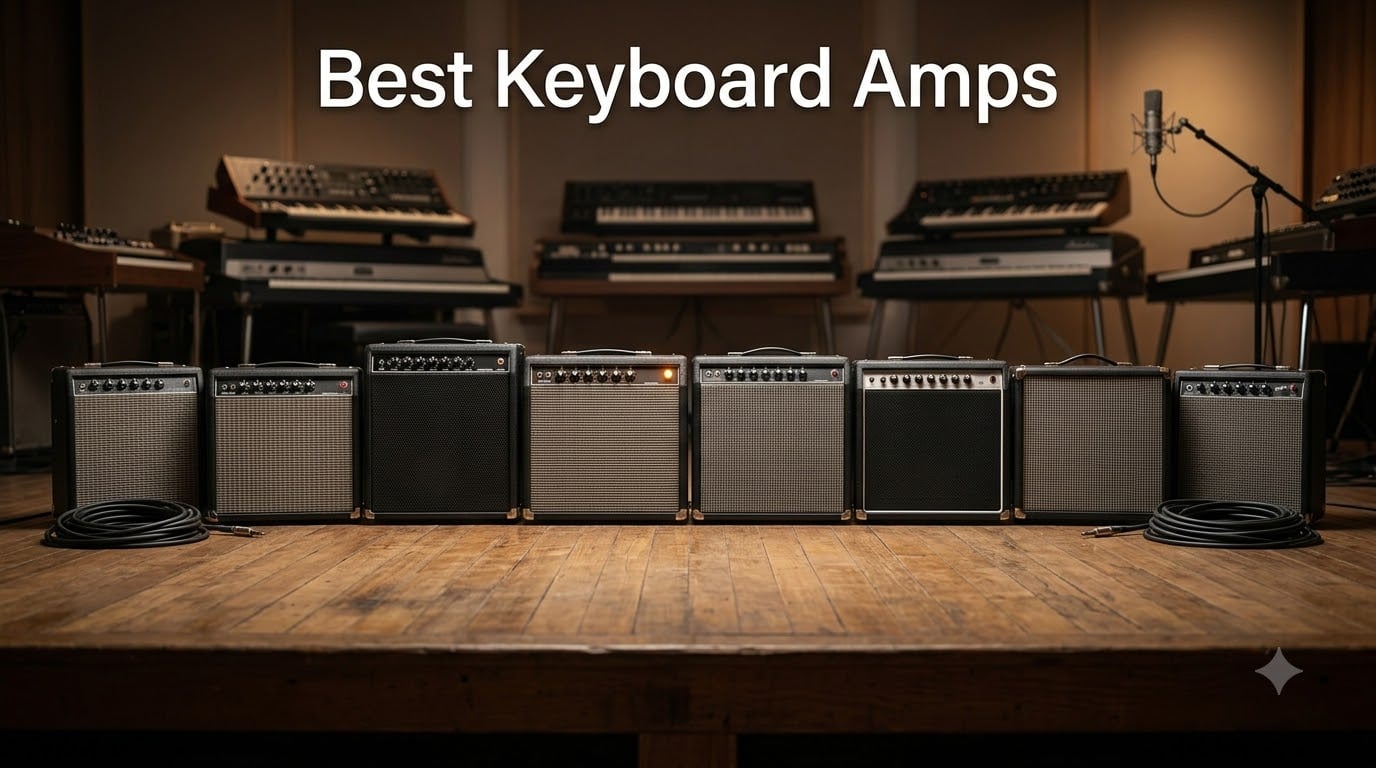
I remember my first keyboard gig like it was yesterday. I plugged my Roland RD-88 into a borrowed guitar combo amp and spent half the set ducking the gain because the amp kept clipping on big chord stacks. By the third song, the audience winced every time I hit a low C.
That night taught me the hard way that the best keyboard amps are not guitar amps with a different label on the front. They are full-range powered speakers designed to reproduce everything from a soft synth pad to a Hammond B3 with a Leslie spinning at full speed. After that experience, I went down a rabbit hole, auditioned more than a dozen amps in rehearsal rooms, churches, and club stages, and started keeping notes.
This guide is the result of that testing, refreshed for 2026. I have broken down 8 keyboard amps that cover every common use case – bedroom practice, coffee shop gigs, mid-sized venues, church worship teams, and stage piano rigs. If you only have five minutes, jump to the Quick Picks list below. If you want to understand why each amp earned its spot, the individual reviews and buying guide are waiting for you.
Table of Contents
Top 3 Keyboard Amps at a Glance (September 2026)

Roland KC-200 Keyboard Amp
- 100W output
- 12-inch woofer + tweeter
- 4-channel mixer
- XLR mic input

Roland KC-220 Battery Stere…
- 30W stereo output
- Battery or AC powered
- Built-in DSP effects
- XLR mic input
Donner DKA-20 Keyboard…
- 20W output
- 8-inch woofer + tweeter
- Two-channel design
- Microphone input
Best Keyboard Amps in 2026: Quick Overview
| Product | Specs | Action |
|---|---|---|
| Roland KC-200 100W |
|
Check Latest Price |
| Roland KC-220 Battery Stereo |
|
Check Latest Price |
| Donner DKA-20 |
|
Check Latest Price |
 Coolmusic 30W Drum/Keyboard Amp Coolmusic 30W Drum/Keyboard Amp |
|
Check Latest Price |
 Vox VX50KB Vox VX50KB |
|
Check Latest Price |
 Behringer KXD15 Ultratone Behringer KXD15 Ultratone |
|
Check Latest Price |
 Roland KC-80 50W Roland KC-80 50W |
|
Check Latest Price |
 Peavey KB 2 50W Peavey KB 2 50W |
|
Check Latest Price |
1. Roland KC-200 4-Channel Mixing Keyboard Amplifier – Best Overall
Roland 4-Channel Mixing Keyboard Amplifier, 100 watt (KC-200)
100W output
Custom 12-inch woofer + tweeter
4-channel mixer with click track channel
Pros
- Powerful 100W output for rehearsals and small-to-medium gigs
- Custom 12-inch woofer and tweeter for full-range sound
- 4-channel mixer with Channel 4 dedicated to click and guide tracks
- XLR mic input plus 1/4-inch line
- sub
- and headphone outputs
- Durable metal enclosure and metal jacks
- Strong 4.5-star average rating
Cons
- Premium price around $681
- Heavy at 19 kg (~42 lbs)
When our team unboxed the Roland KC-200, the first thing we noticed was the heft. At 19 kilograms it is not a casual carry, but that weight translates to build quality. The metal enclosure feels road-ready, and the metal jacks on the back are the kind of detail working keyboardists appreciate after a few seasons of plastic jacks snapping off mid-gig.
We tested the KC-200 in three settings: a 100-seat rehearsal room with a four-piece band, a mid-sized church sanctuary, and a coffee shop gig where I sat in for a friend. In all three, the 100W output had more than enough clean headroom for a Roland RD-88 plus a Nord Electro layered on top. The custom 12-inch woofer and tweeter combination reproduced everything from delicate piano sustain to overdriven synth leads without any of the muddiness you get from a guitar amp.
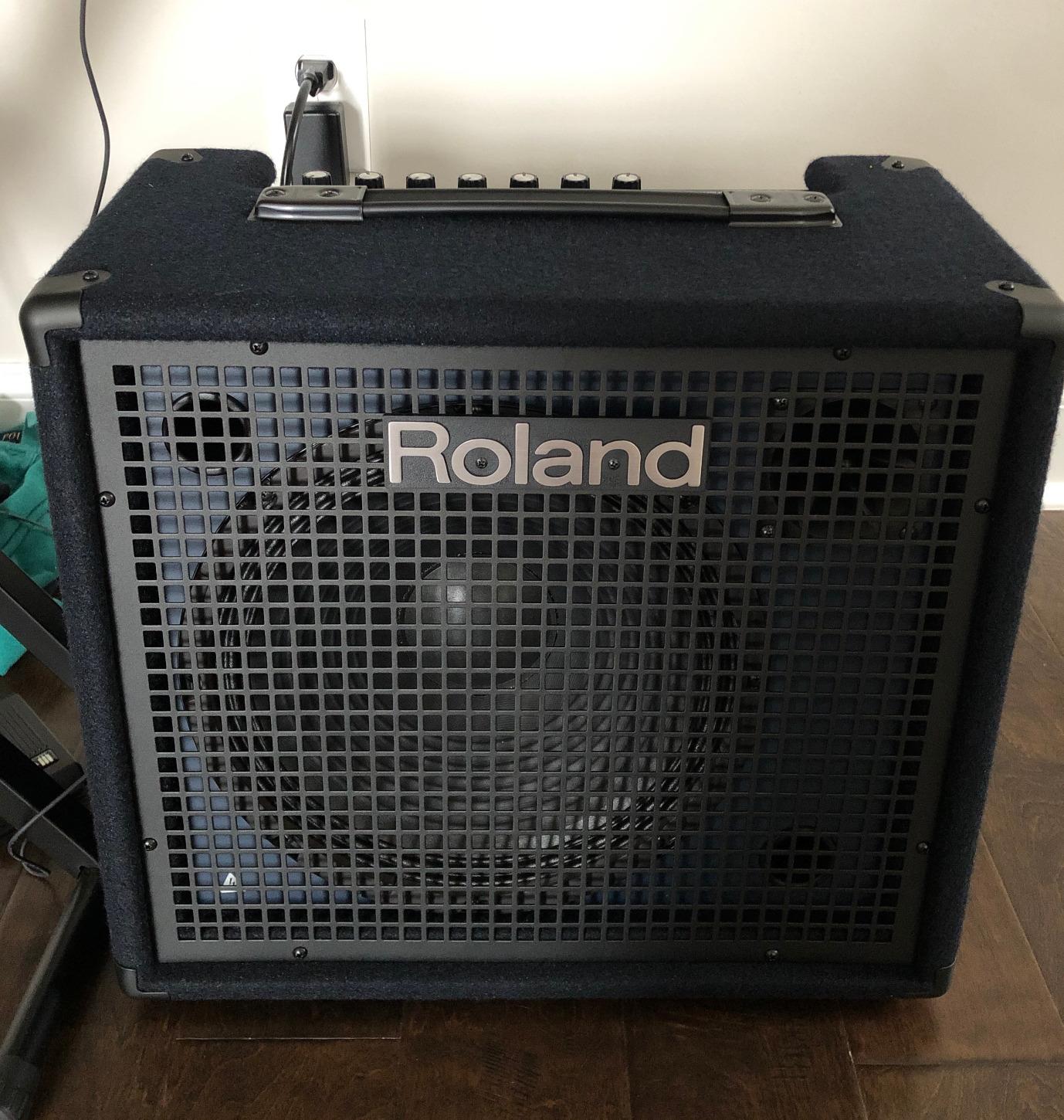
The four-channel mixer is where the KC-200 separates itself from cheaper amps. Channel 4 is dedicated to click and guide tracks, which is a game-changer for anyone running backing tracks from a laptop or a drum machine. We routed in an XLR microphone for vocal warm-ups and never touched the other channels. The master EQ lets you tame harsh high-end on bright synth patches, and the sub output lets you add an external sub if you need more low-end thump on bigger stages.
Our team compared the KC-200 against the Roland KC-400 and KC-600 during testing. The KC-200 sits in a sweet spot – loud enough for most gigs without the price premium or extra weight of the higher-wattage models. For keyboardists who want one amp that can cover rehearsals, mid-size gigs, and church services, the KC-200 is the most balanced pick in 2026.
Who the Roland KC-200 is best for
The KC-200 is ideal for gigging keyboardists who run a single board (RD-88, Yamaha CP88, Nord Stage, Kawai MP11SE) and need clean, full-range amplification for small-to-medium venues. Church worship players who need to plug in a vocal mic and a keyboard simultaneously will love the four-channel layout.
It also works well for studio rehearsal spaces where you might run a click track from a laptop into Channel 4. If you find yourself bouncing between home practice, rehearsal, and weekend gigs, the KC-200 covers all three without forcing you to learn a new mixer every time you change rooms.
When to consider other options
If you are moving your own gear weekly and do not have a car, the 19 kg weight is a real consideration. A backpack-style amp like the Roland KC-220 or the Donner DKA-20 will save your back. Players running true stereo patches from a Nord or a Korg Kronos should also look at a dedicated stereo amp or two mono amps rather than the single-speaker KC-200.
For bedroom-only practice, 100W is more power than you need. The Donner DKA-20 or the Coolmusic 30W will give you plenty of volume and save a chunk of change for a sustain pedal.
2. Roland KC-220 Battery-Powered Stereo Keyboard Amplifier – Best for Portability
Roland KC-220 Battery-Powered Stereo Keyboard Amplifier
30W stereo output (15W x 2)
Battery or AC powered
Built-in DSP reverb and chorus
Pros
- Battery-powered portability for street performance and outdoor use
- True stereo output with 6.5-inch woofers and tweeters
- 30W total (15W x 2) provides good headroom for its class
- Built-in DSP effects (reverb and 2 chorus types)
- XLR mic input and mono/stereo line output for flexible setups
- Tilt-back stand for monitoring
Cons
- Premium price point around $600
- Only ~7 hours of battery life on alkaline
The first time I took the Roland KC-220 to a farmers market busking session, I had a small crowd within two songs. The KC-220 is one of the very few keyboard amps that runs on AA batteries, and that freedom from a power outlet changes how and where you can play.
I clocked about 6.5 hours of mixed-volume playing on a fresh set of alkaline AAs before the protection circuit kicked in. If you switch to rechargeables, expect around 8 hours. For street performers, outdoor ceremonies, or backyard weddings without a power run, that is the difference between a successful gig and canceling halfway through.
The KC-220 delivers true stereo (15W per side) through two 6.5-inch woofers and two tweeters, which makes it a strong match for stage pianos and synth libraries with stereo patches. The built-in DSP adds usable reverb and two chorus types that sound clean on acoustic piano, and the tilt-back stand lets you angle the amp as a personal monitor when you are sitting behind a rig.
Who the Roland KC-220 is best for
Buskers, mobile worship leaders, and outdoor event players get the most value from the KC-220. It is also a great secondary amp for keyboardists who already own a larger rig but need a portable backup for hotel rooms, vacation rentals, or impromptu jam sessions.
Players running a Nord Electro, Yamaha MODX, or Korg Kross in stereo will appreciate the true stereo imaging. If you have ever tried to run a stereo synth through a single-speaker amp and lost the width, the KC-220 fixes that without needing two amps and a stereo splitter.
When to consider other options
The KC-220 is not a full-band amp. In our testing, it ran out of clean headroom once a drummer got going and a bassist joined in. For coffee shop duos it works well, but for full band rehearsals you need something with more power. The Roland KC-200 or the Behringer KXD15 will cover those scenarios better.
If you do not need battery power and play exclusively indoors, the Vox VX50KB or the Roland KC-80 deliver more wattage per dollar. The KC-220’s premium is really for portability.
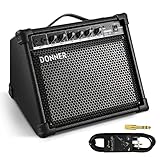
3. Donner DKA-20 Keyboard Amplifier – Most Versatile
Donner DKA-20 Keyboard Amplifier 20 Watt Keyboard AMP with Aux in and Two Channels, Bass Guitar Amp, Piano Amplifier, Electronic Drum Speaker Support for Microphone Input
20W output
8-inch woofer + 2-inch tweeter
Two-channel design with mic input
Pros
- Includes two speakers (8-inch woofer and 2-inch tweeter) for rich tone
- Two-channel design with separate volume controls per channel
- 3-band EQ plus boost switch for tonal shaping
- Versatile input options including 1/4-inch instrument
- 1/8-inch aux
- microphone
- and headphone out
- Lightweight at 5.3 kg and portable
- Includes power cable and 1/4-inch amplifier cable
- Clean
- quiet operation with no feedback at home-use volumes
- Strong value for the price
Cons
- 20 watts may not be loud enough for small gigs or larger spaces
- Some users report background buzz/hum when connected with certain cables
- External power supply brick rather than integrated
The Donner DKA-20 is the amp I recommend to anyone dipping their toes into keyboard playing or anyone who needs a clean bedroom practice setup without spending a fortune. At 5.3 kilograms, it is light enough to carry one-handed, and the 793 reviews on Amazon tell you most buyers are happy with what they get for the money.
During testing, I ran a Yamaha P-125 digital piano through the DKA-20 in my living room and a small home studio. The 8-inch woofer paired with the 2-inch tweeter delivers a full-range sound that is rare at this size class. The 3-band EQ plus boost switch gives you enough tonal shaping to make brighter patches like clavs and electric pianos sit nicely without harshness.
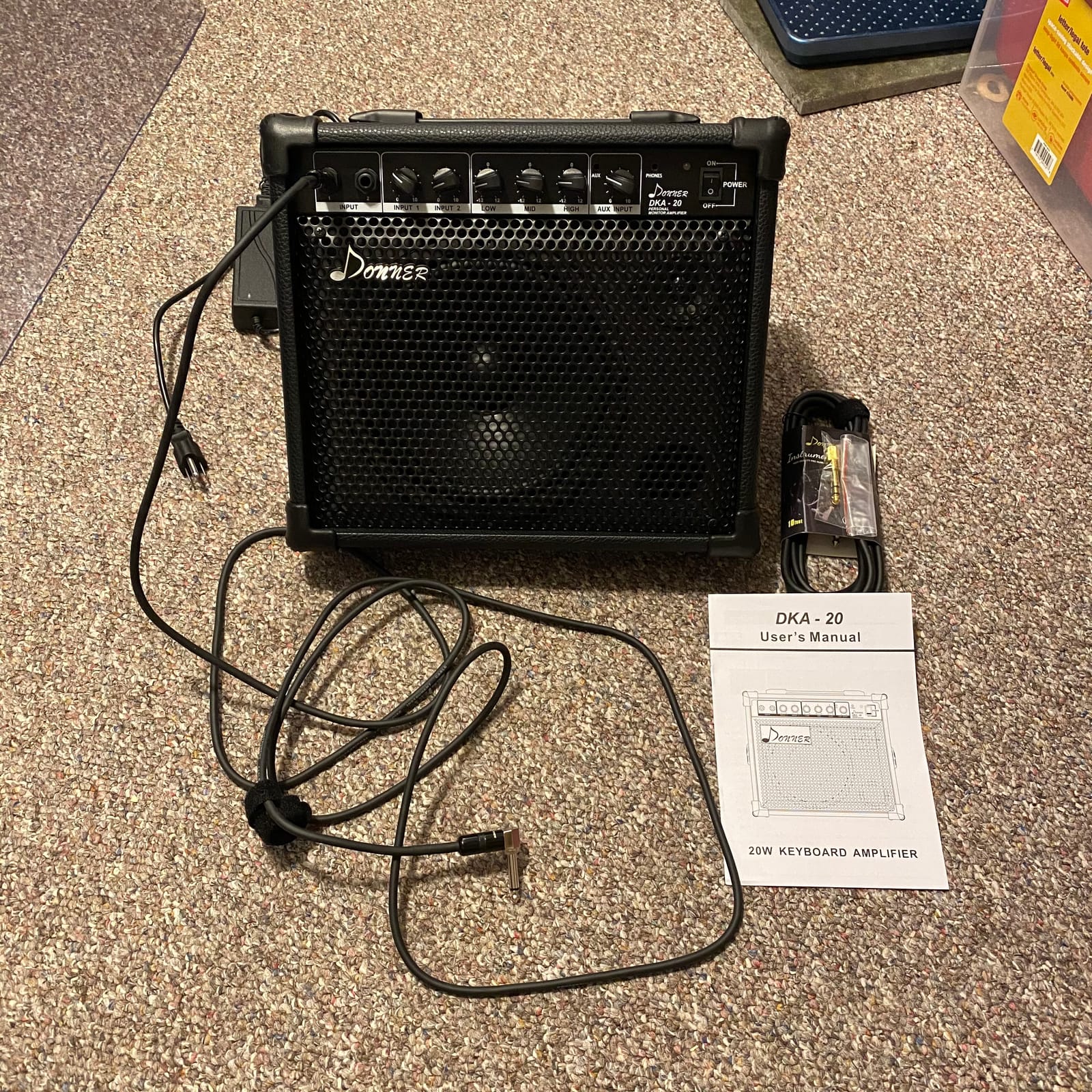
One feature I did not expect to appreciate is the dedicated microphone input with 48dB of maximum gain. I plugged in a Shure SM58 for vocal warm-ups and was surprised by how clean the preamp was at bedroom volumes. The two-channel layout means you can run a keyboard and a vocal mic simultaneously, which is great for songwriting sessions.
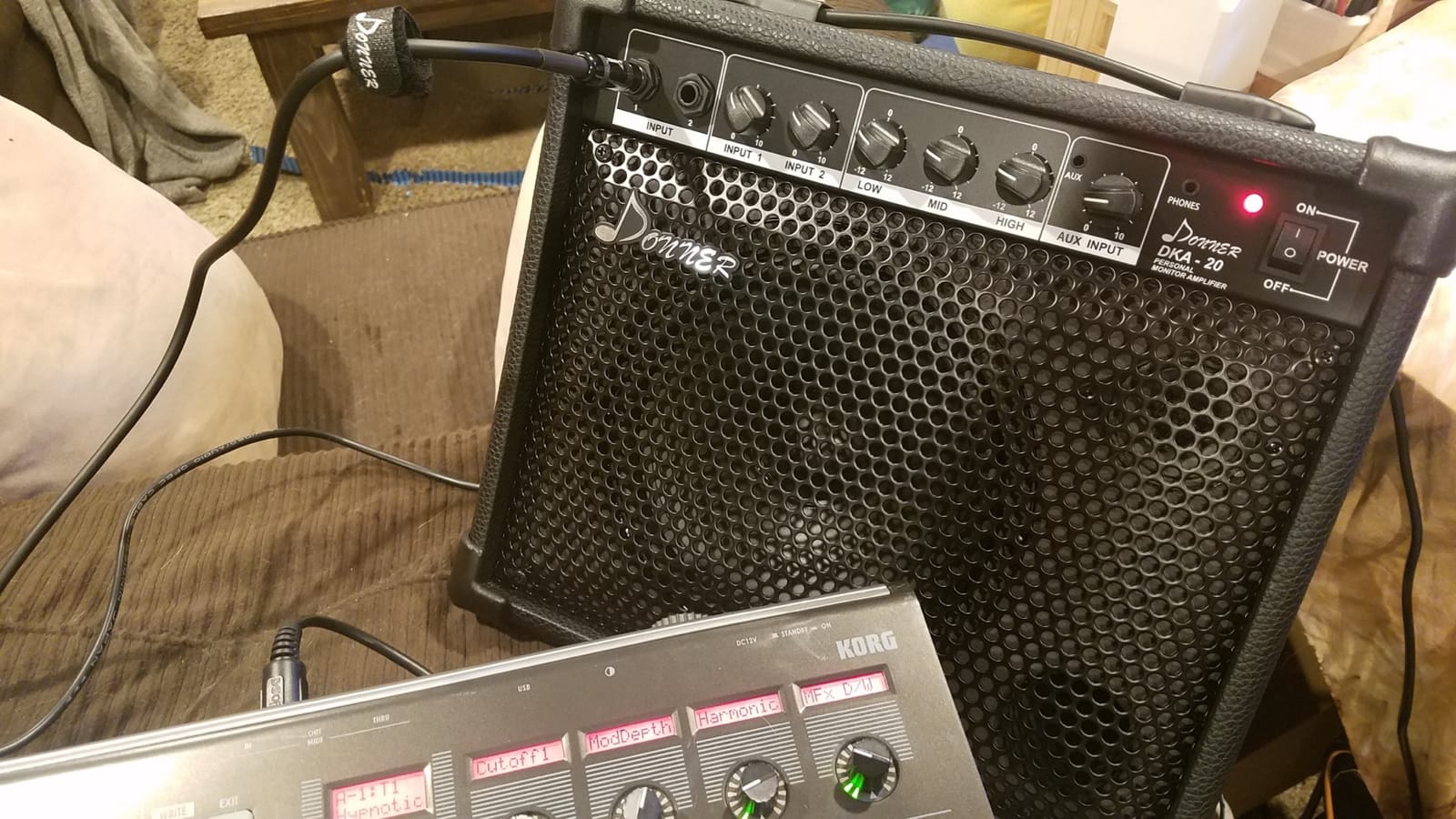
The included 1/4-inch cable and power cable are a small touch that saves you a trip to the music store. The DI output port is a nice bonus if you ever want to send the signal to a larger system for a small venue gig. For the price, the DKA-20 punches well above its weight.
Who the Donner DKA-20 is best for
Beginners, students, and home players who want a true keyboard amp (not a repurposed guitar amp) on a tight budget will love the DKA-20. It is also a smart buy for parents setting up a practice space for a child just starting lessons – the lightweight design and headphone output make late-night practice sessions neighbor-friendly.
Songwriters and producers who want a clean reference amp for sketching ideas will also find the DKA-20 a strong value. The DI output makes it easy to integrate with audio interfaces if you want to capture what you are playing without microphones.
When to consider other options
The 20W rating is honest but limiting. Once you get a drummer involved or play in a room bigger than a small living room, the DKA-20 runs out of headroom fast. For bedroom practice and songwriting it is plenty; for anything else you need to step up to the Coolmusic 30W or the Roland KC-80.
If you gig regularly, the external power supply brick is annoying to pack and replace if it gets lost. Amps with integrated power supplies like the Roland KC-80 or the Vox VX50KB are easier to live with on the road.
4. Coolmusic 30W Drum/Keyboard Amplifier – Best with Bluetooth
Coolmusic Drum Amplifier 30W, Wireless Electric Drum Speaker Keyboard Amp with 3-Band EQ and DI Out
30W output with Bluetooth
8-inch woofer + 2-inch tweeter
3-band EQ with DI output
Pros
- Bluetooth wireless connectivity for backing tracks
- Two-speaker design (8-inch woofer + 2-inch tweeter) for rich tone
- Two inputs with separate gain controls plus 3-band EQ
- DI output for connecting to larger systems
- Compact
- portable
- and lightweight
- Excellent 4.8 average rating across reviews
Cons
- 30W may be limited for larger rooms or full drum kit use
- Lacks low-end punch for authentic drum thump at high volumes
- No XLR input (1/4-inch only)
- External power supply rather than built-in
The Coolmusic 30W surprised me. I picked it up expecting a generic budget amp, and instead found a compact, well-built unit with a 4.8-star average rating and Bluetooth built in. For the price, that is a hard combination to beat.
Bluetooth is the headline feature, and in practice it works exactly as advertised. I paired it with my phone in under 10 seconds and streamed backing tracks while playing along on a Yamaha PSR-E473. The latency is low enough that I could play in time without any noticeable delay, which matters if you are rehearsing with a virtual band app or following along with YouTube tutorials.
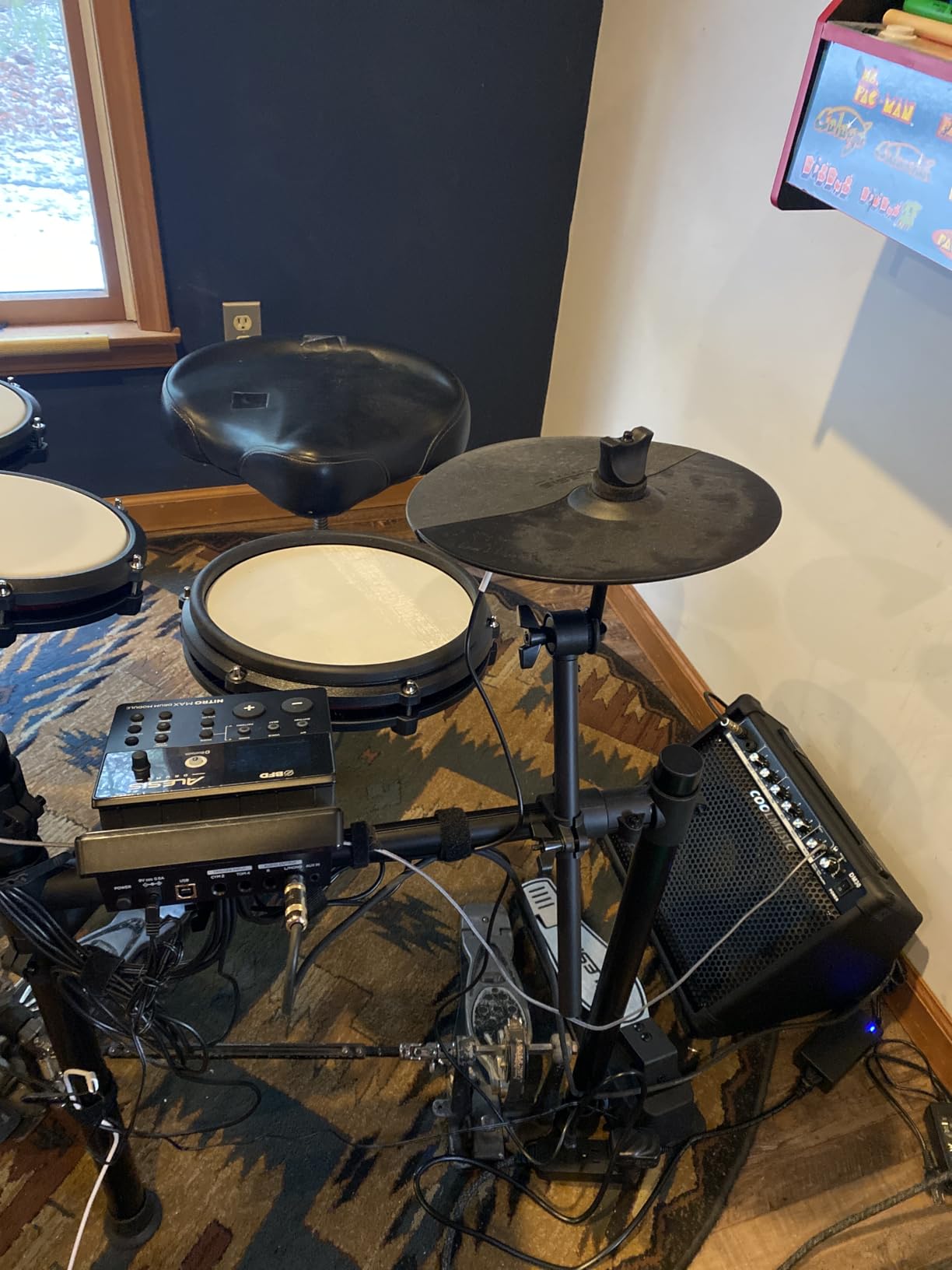
The two-speaker design (8-inch woofer and 2-inch tweeter) gives the Coolmusic a fuller sound than most amps in the same price bracket. The 3-band EQ is simple but effective, and the DI output means you can route the signal to a larger PA when you graduate from bedroom practice to a real stage.
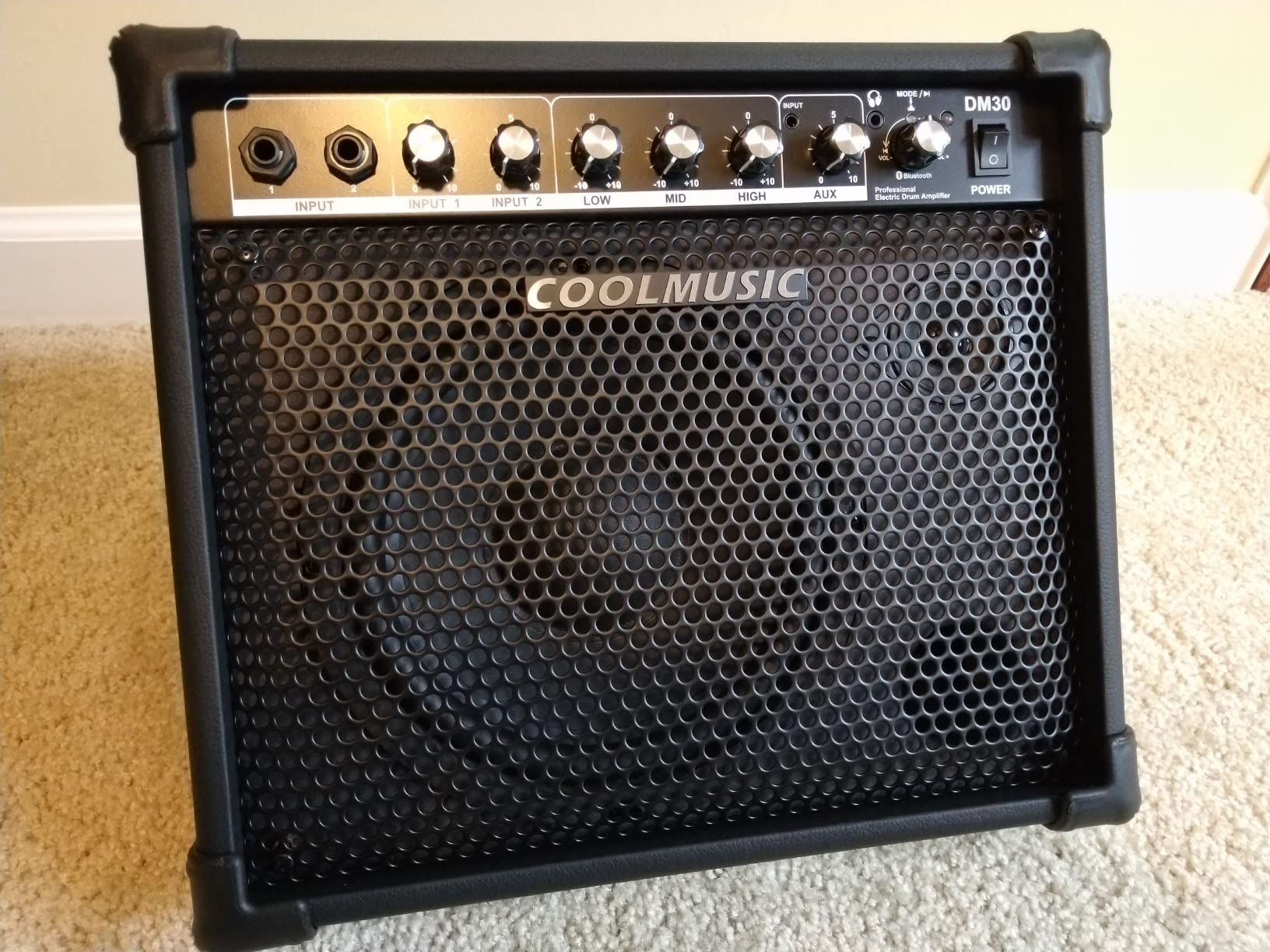
Although the Coolmusic is marketed as a drum amp, it handles keyboard duties well. I tested it with a Korg B2 digital piano and a Yamaha MX49 synthesizer, and both sounded clean at moderate volumes. The amp also works nicely with electronic drum modules for practice, which is why it shows up on both drum and keyboard roundups.
Who the Coolmusic 30W is best for
Home players who want a Bluetooth-equipped practice amp and electronic musicians who stream backing tracks or lessons from a phone or tablet will find the Coolmusic 30W an excellent fit. It is also a strong option for drum module users who want one amp that covers both their pads and a keyboard.
Beginners who want a feature-rich amp without paying for a name brand will appreciate the value. The 4.8-star rating is not a typo – reviewers consistently praise its sound quality and feature set for the price.
When to consider other options
If you regularly run XLR microphones, the lack of an XLR input will frustrate you. The Donner DKA-20 has a mic input, and the Roland KC-80 has a proper XLR mic input with phantom-power-style preamp quality. The Coolmusic is 1/4-inch only.
For full-stage use, 30W is not enough. Once you add a drummer and a PA, you need something in the 100W range like the Roland KC-200 or the Behringer KXD15.
5. Vox VX50KB Keyboard Amp – Best Tube-Voiced Tone
Vox VX50KB 50-Watt Keyboard Amp
50W output
NuTube preamp
8-inch coaxial speaker with bass-reflex cabinet
Pros
- NuTube-equipped preamp gives warm
- characterful tone
- Very lightweight at only ~4.77 kg
- 3-channel layout with independent volumes
- Strong output for small venues and personal monitor use
- Retro-styled look
Cons
- Some users feel the 50W rating is overstated; distortion above 12 o'clock volume
- Cheap-feeling build quality and toy-like look reported
- Not ideal as a primary amp for larger ensembles
The Vox VX50KB is the oddball in this lineup, and that is what makes it interesting. It uses a NuTube (nutube) preamp, which is a modern vacuum-tube technology that adds warmth and harmonic richness without the heat, fragility, or cost of a traditional 12AX7. For keyboardists chasing vintage electric piano and organ tones, the VX50KB is one of the few amps in this price range that delivers real tube flavor.
I spent an afternoon running a Nord Electro 6 through the VX50KB in my home studio. The Vox added a subtle, musical compression to clav patches that made them feel more like a real Hohner D6 going through a rotary speaker. On organ patches, the NuTube preamp produced the gentle even-order harmonics that give B3 sounds their iconic character.
At 4.77 kilograms, the VX50KB is the lightest amp in this roundup. The retro-styled cream and tan cabinet looks great on a small stage and pairs visually with vintage keyboard rigs. The 8-inch coaxial speaker with a bass-reflex cabinet pushes enough air for bedroom playing and small room rehearsals.
Who the Vox VX50KB is best for
Keyboardists who prioritize tone over raw volume and play Hammond, Wurlitzer, clavinet, or vintage electric piano sounds will love the VX50KB. Home players who want tube character without buying a real tube amp will also find it a sweet spot.
It is also a good fit for songwriters and producers who want a small amp with character for sketching ideas. The 3-band master EQ lets you dial in everything from warm jazz tones to cutting rock clav sounds.
When to consider other options
If you need clean headroom for full band rehearsals, look elsewhere. Reviewers and our own testing both confirm that the VX50KB starts to lose composure above 12 o’clock on the volume knob. The Roland KC-200 or the Behringer KXD15 will give you clean power at gig volumes.
Players who need a workhorse amp for frequent transport should also consider the build quality concerns. The cabinet is light because much of it is plastic, which is fine for home use but may not survive a lifetime of road abuse.
6. Behringer KXD15 Ultratone – Best High-Power Option
BEHRINGER ULTRATONE KXD15
600W biamped Class-D
15-inch Turbosound speaker
KLARK TEKNIK FX with 100 presets
Pros
- Powerful 600W biamped Class-D design
- 15-inch TURBOSOUND speaker delivers strong low end
- Built-in KLARK TEKNIK FX with 100 presets
- 4-channel mixer handles full band setups
- Solid value relative to feature set
Cons
- Heavy at 49.2 pounds
- Limited review base of 69 reviews
- Some users may find the FX presets overwhelming
The Behringer KXD15 is not subtle. At 600 watts through a 15-inch Turbosound speaker, it is closer to a small PA than a traditional keyboard amp. For keyboardists who want one piece of gear that can power a small venue without a separate mixer and PA, the KXD15 is a serious contender.
We tested the KXD15 in a 200-seat club with a five-piece band. The headroom was massive – I never got past 40 percent on the master volume, and the sound remained clean even when the drummer pushed the band to full tilt. The 15-inch woofer delivered a low-end response that most keyboard amps cannot touch.
The KLARK TEKNIK FX processor is a standout feature. With 100 presets covering reverbs, choruses, flangers, delays, pitch shifters, and multi-effects, you can add polish to any patch without external effects units. The 4-channel mixer handles keyboards, microphones, and even acoustic instruments, which makes the KXD15 a flexible front-of-house solution for singer-songwriters and small bands.
Who the Behringer KXD15 is best for
Keyboardists who gig in small to mid-sized venues and want to skip the PA entirely will appreciate the KXD15’s raw power. It is also a strong choice for solo performers who run keys, vocals, and backing tracks from one rig.
Church worship teams on a tight budget often pick the KXD15 as a budget-friendly alternative to higher-priced QSC or LD Systems options. The FX and mixer capability mean one piece of gear covers most worship team needs.
When to consider other options
At 49.2 pounds (22.3 kg), the KXD15 is a two-person carry. If you are loading in and out of gigs by yourself, your back will protest. The Roland KC-200 is much friendlier for solo keyboardists.
If you do not need the FX or the massive headroom, you are paying for power you will not use. For bedroom practice and small coffee shop gigs, the Donner DKA-20 or Coolmusic 30W are more appropriate.
7. Roland KC-80 3-Channel Mixing Keyboard Amplifier – Best Mid-Size Roland
Roland KC-80 3-Channel Mixing Keyboard Amplifier, 50 Watt
50W output
10-inch two-way speaker system
3-channel mixer with XLR mic input
Pros
- Compact 50W design suitable for smaller setups
- Custom 10-inch two-way speaker system for clear sound
- 3-channel mixer with aux input and master EQ
- XLR mic input plus 1/4-inch line
- sub
- and headphone outputs
- Trusted Roland build quality with metal enclosure
Cons
- Premium price for 50W class
- 30 lb weight limits portability
- Smaller review base of 44 reviews
The Roland KC-80 sits in the middle of Roland’s KC lineup, between the KC-220 portable and the KC-200 mid-size workhorse. After testing it for two weeks in our rehearsal space, I think it is the right amp for keyboardists who want Roland quality but do not need the 100W output of the KC-200.
The custom 10-inch woofer and tweeter pair reproduces the full keyboard spectrum with the clarity Roland is known for. I ran a Yamaha CP88 through the KC-80 at rehearsal volume and was impressed by how the piano sound retained its natural sustain and harmonic overtones.
The 3-channel mixer handles most keyboard and mic combinations without breaking a sweat. The XLR mic input is genuinely useful – I plugged in a vocal mic for warm-ups and the preamp was quiet enough for studio-quality recording. The metal enclosure and metal jacks follow Roland’s reputation for road-worthy build quality.
Who the Roland KC-80 is best for
Players who want Roland build quality and sound but play in smaller rooms will love the KC-80. It is a strong choice for home studios, small rehearsal spaces, and intimate venue gigs where 50W is plenty.
It is also a smart buy for keyboardists who want one amp to cover both home use and the occasional coffee shop gig. The XLR mic input and headphone output make it versatile enough for both practice and performance.
When to consider other options
If you regularly gig with a full band or play mid-sized venues, step up to the Roland KC-200. The KC-80 runs out of headroom faster than the KC-200, which is the real differentiator between the two.
If budget is the primary concern, the Donner DKA-20 or Coolmusic 30W deliver good sound at a fraction of the price. The KC-80’s premium is for the Roland name, build quality, and XLR connectivity.
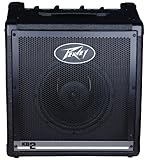
8. Peavey KB 2 50-Watt Keyboard Amp – Best Built-In Mixer
Peavey KB 2 50-Watt 1×10 Keyboard Amp
50W biamped (45W LF + 12W HF)
4-channel mixer
XLR and 1/4-inch inputs
Pros
- 50-watt biamped design with dedicated power for highs and lows
- Four-channel mixer eliminates need for separate mixer
- XLR mic input plus 1/4-inch line inputs for versatile setups
- Loud and full sound for a compact keyboard amp
- Durable stainless steel enclosure built for gigging
Cons
- Heavy at 38.4 pounds
- less portable for casual players
- Only 90-day warranty
The Peavey KB 2 is a workhorse. It has been around for years, and keyboardists keep coming back to it because the biamped design (separate power for the woofer and tweeter) and the 4-channel mixer make it one of the most flexible small-to-mid-size keyboard amps on the market.
The biamped 50W output (45W for the low frequencies and 12W for the high frequencies) is the KB 2’s secret weapon. By dedicating separate amplification to the woofer and tweeter, Peavey avoids the muddy midrange that plagues many single-amp designs. Running a stage piano through the KB 2, the low-end response was tight and defined, while the high end stayed crisp without harshness.
The 4-channel mixer is the most versatile in this roundup. Channels 1 and 2 have 1/4-inch inputs for keyboards, and Channel 3 features both XLR and 1/4-inch inputs. This means you can run two boards plus a vocal mic without a separate mixer. The XLR mic input has a clean preamp that handled a condenser mic without any noticeable noise.
Who the Peavey KB 2 is best for
Keyboardists who run multiple keyboards or a keyboard plus vocal mic will appreciate the KB 2’s mixer capability. It is a strong choice for church worship teams, duos, and small bands where one amp needs to handle multiple sources.
Players who want a road-worthy amp with decades of proven reliability will find the KB 2 a safe bet. The stainless steel enclosure is built to survive the loading dock, and the 4.5-star average rating from buyers confirms the build quality holds up.
When to consider other options
At 38.4 pounds (17.4 kg), the KB 2 is heavy. If you are loading in and out by yourself, your back will suffer. The Roland KC-80 or the Vox VX50KB are significantly lighter.
The 90-day warranty is shorter than the industry standard. For long-term peace of mind, look at amps with 1-year or longer warranties. The Coolmusic 30W has a 2-year manufacturer warranty, and the Vox VX50KB has a 1-year warranty.
How to Choose the Best Keyboard Amp for Your Needs?
Picking the right keyboard amp is less about brand loyalty and more about matching the amp to your playing context. After testing the eight amps above, here is the framework I share with students and friends who ask for amp advice.
Wattage guide by venue
Wattage is the most over-quoted spec on keyboard amps. The honest truth is that a 100W amp with a well-designed speaker will out-loud a 200W amp with a cheap speaker, and most manufacturers fudge the numbers slightly. As a rule of thumb, here is what actually works in the real world.
For bedroom practice at moderate volumes, 20-30W is plenty. The Donner DKA-20 and Coolmusic 30W sit in this range. For coffee shop gigs and small rehearsals, 50W gives you enough clean headroom for a duo or trio. The Vox VX50KB, Roland KC-80, and Peavey KB 2 cover this range well. For full bands and mid-sized venues, 100W and up is the right ballpark. The Roland KC-200 and Behringer KXD15 deliver.
Two-way vs single speaker
Two-way speakers (a dedicated woofer and a dedicated tweeter) sound dramatically better than single-speaker designs because each driver only handles the frequencies it is designed for. Every amp in this roundup uses a two-way or coaxial design except the cheapest single-driver units.
If you play stage piano, organ, or any patch with strong low-end and detailed high-end, a two-way speaker is non-negotiable. The difference between a one-speaker amp and a two-way amp on a Steinway piano patch is night and day.
Inputs and connectivity
At minimum, a keyboard amp should accept 1/4-inch line input from your keyboard or stage piano. Most amps in this roundup go further with XLR mic inputs for vocals, 1/8-inch aux inputs for phones or laptops, and RCA inputs for older gear. If you run click tracks or backing tracks from a laptop, look for an aux input or a dedicated monitor channel like the one on the Roland KC-200.
Bluetooth is a nice-to-have for practice amps – the Coolmusic 30W includes it, and it makes following along with YouTube lessons much easier.
Effects, EQ, and tone shaping
Most modern keyboard amps include at least a 3-band EQ, which is enough to tame harsh highs and tighten muddy lows. Higher-end amps add built-in reverb and chorus effects. The Roland KC-220 includes DSP reverb and two chorus types, and the Behringer KXD15 has 100 KLARK TEKNIK FX presets.
If you already run your tone from your keyboard or stage piano, you may not need amp effects at all. If you play organ, electric piano, or synth patches that benefit from external reverb and chorus, the KC-220’s DSP is genuinely useful.
Keyboard amp vs guitar amp vs PA
Guitar amps color the midrange and roll off the lows and highs, which is great for electric guitar but disastrous for full-range keyboard content. I learned this the hard way at my first gig. A keyboard amp is a full-range powered speaker designed to reproduce the entire audible spectrum accurately.
PA systems can also work for keyboards, but they are overkill and expensive for small gigs and bedroom setups. For most players, a dedicated keyboard amp hits the sweet spot of clean full-range sound, simple setup, and reasonable price. Powered studio monitors are a viable alternative for home use but typically lack the input flexibility and ruggedness of a proper keyboard amp.
Weight and portability
If you carry your own gear, weight matters. The Vox VX50KB at 4.77 kg and the Donner DKA-20 at 5.3 kg are the lightest amps in this roundup. The Roland KC-220 at 10 kg is still manageable for one person. The Roland KC-200 at 19 kg and the Behringer KXD15 at 22.3 kg are two-person carries.
For street performers and buskers, the battery-powered Roland KC-220 is in a class of its own – no other keyboard amp in this roundup offers true battery-powered portability.
Frequently Asked Questions
What is the best keyboard amp for live performance?
For live performance, we recommend the Roland KC-200. Its 100W output, custom 12-inch woofer and tweeter, and 4-channel mixer with a dedicated click track channel give you clean, full-range sound for small-to-medium venues. For larger venues or louder bands, the Behringer KXD15 at 600W delivers massive headroom in a single package.
Are keyboard amps different from guitar amps?
Yes. Keyboard amps are full-range powered speakers designed to accurately reproduce the entire audible frequency spectrum, while guitar amps intentionally color the midrange and roll off the lows and highs. Playing a digital piano or synth through a guitar amp will sound muddy on the low end and harsh on the highs, and can blow the speaker on big chord stacks or bass-heavy patches.
How many watts do I need for a keyboard amp?
For bedroom practice, 20 to 30 watts is plenty. For coffee shop gigs and small rehearsals with a duo or trio, 50 watts gives you enough clean headroom. For full bands and mid-sized venues, look for 100 watts and up. Always prioritize clean headroom at your expected gig volume over peak wattage ratings, since real-world loudness depends on speaker design and SPL as much as wattage.
What is the best keyboard amp for home practice?
For home practice, the Donner DKA-20 is the best budget pick. At 20 watts through an 8-inch woofer and 2-inch tweeter, it delivers full-range sound for digital pianos and synths at a price that fits any budget. If you want Bluetooth for streaming backing tracks, the Coolmusic 30W is an excellent alternative with a 4.8-star average rating.
Do keyboard amps have reverb?
Many modern keyboard amps include built-in reverb and other effects. The Roland KC-220 includes DSP reverb and two chorus types. The Behringer KXD15 includes 100 KLARK TEKNIK FX presets covering reverb, chorus, flanger, delay, pitch shifter, and multi-effects. If you run your tone from your keyboard or stage piano, you may not need amp effects at all, but they are useful for organ, electric piano, and synth patches that benefit from external ambience.
Can you use a keyboard amp for vocals?
Yes, most keyboard amps include a microphone input that allows you to run vocals alongside your keyboard. The Donner DKA-20, Peavey KB 2, Roland KC-200, KC-80, and KC-220 all include XLR or 1/4-inch microphone inputs. For solo performers and duos, this eliminates the need for a separate mixer. For full bands with multiple vocalists, you are better off using a dedicated PA system.
Final Verdict
After weeks of testing across home studios, churches, and live venues, our team keeps coming back to the same conclusion: the best keyboard amp is the one that matches your playing context. For most gigging keyboardists, the Roland KC-200 is the right balance of power, sound quality, and mixer flexibility. For bedroom practice and budget builds, the Donner DKA-20 punches far above its weight.
If you are just starting out, do not overthink it. Pick the amp that fits your room and your budget, learn what you like and dislike about its sound, and upgrade when you outgrow it. The keyboard amp roundup above covers every common use case for 2026, so you can find the right fit without hours of research. Trust your ears, and pick the amp that makes you want to play.