
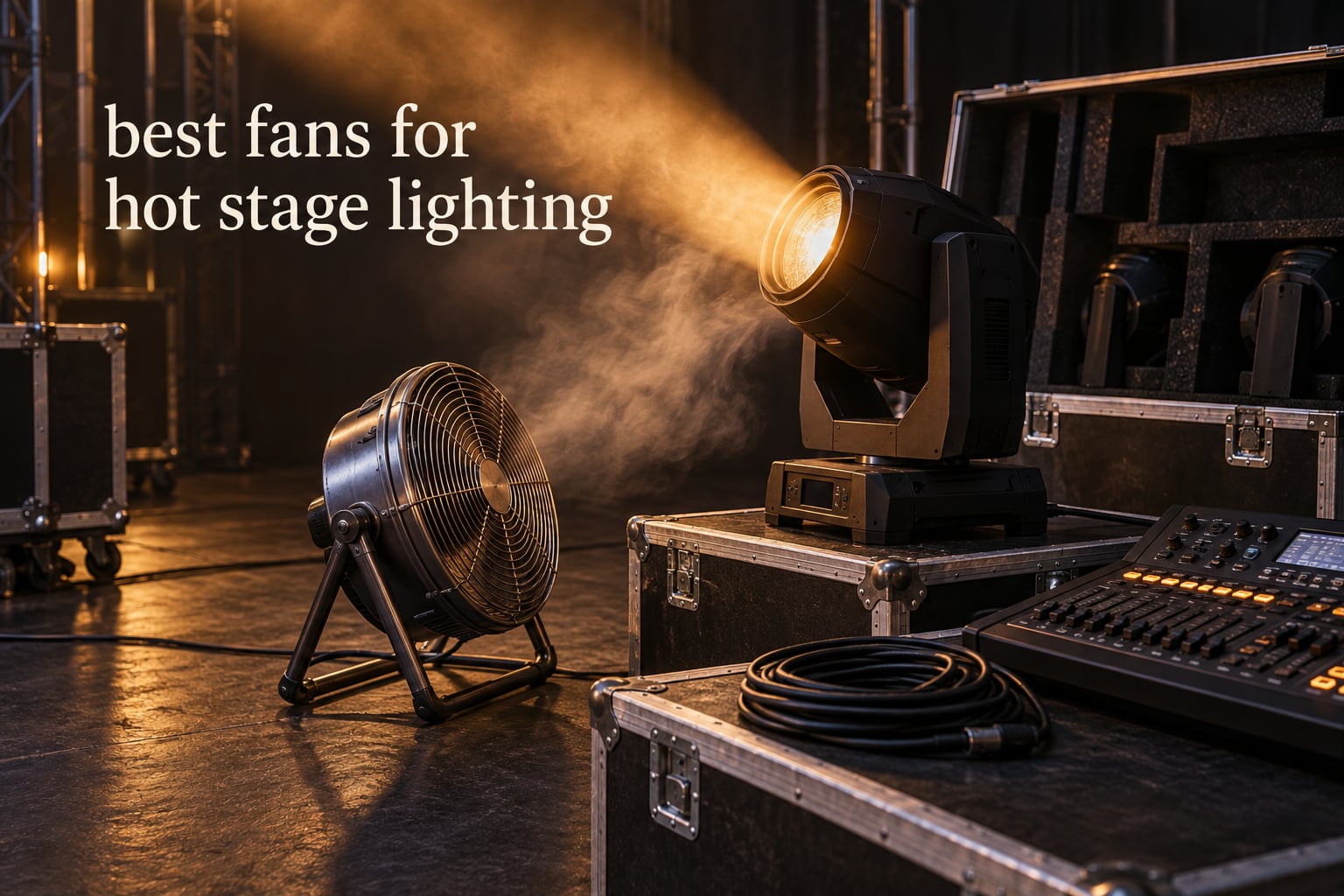
There are two very different products hiding inside the phrase best fans for hot stage lighting, and most buying guides on the web mix them up. A fixture cooling fan moves air across a heat sink to keep LED engines alive; a stage effect fan is a wind machine that blows across the performance area on cue so fog reads, hair moves, and performers stay cool. Which one you need decides everything else.
We spent weeks reading spec sheets, review histories and practitioner threads to put this roundup together. Product ratings in this category are thin, often two to five reviews per listing, so we leaned on measured output, published noise figures, and bearing and motor construction instead.
What follows is ten fans, sorted by the job they do well, plus a buying guide that maps venue size, noise tolerance and control needs to a specific type of fan. Everything here was chosen for airflow in CFM, published decibel ratings, build materials and how the fan is controlled.
Table of Contents
Top 3 Picks for Fans for Hot Stage Lighting (September 2026)

Lasko U15617 Pivoting Blower
- 375 CFM high-velocity output
- Three speed settings
- Pivoting head
- 120W on 120V
AC Infinity AIRCOM T9
- 210 CFM top-exhaust
- LCD thermostat controller
- 21 dBA running level
- Three PWM-controlled fans
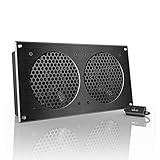
AC Infinity AIRPLATE S7
- Only 19 dBA noise level
- 104 CFM airflow
- Multi-speed controller included
- USB or wall adapter power
The 10 Best Fans for Hot Stage Lighting in 2026
Fixture Cooling Fan vs. Stage Effect Fan: The Distinction That Matters
Almost every page ranking for this query treats these as one category. They are not, and buying the wrong one wastes the whole purchase.
A fixture cooling fan is small, quiet, and permanently attached. It pushes air across a heat sink inside or behind a moving head, profile, or LED bar so the chips shed heat. Mount it wrong or leave it disconnected and the fixture dims, shifts color toward yellow, and eventually fails mid-tour. These fans run for hours at a time, sit inches from sensitive electronics, and are judged almost entirely on noise.
A stage effect fan is big, loud on purpose, and moved around. It sits at the edge of a stage and fires high-velocity air across the deck for wind, costume movement, fog dispersal, and performer cooling. Nobody records a show with one running, and nobody judges it at 19 dBA. What matters here is throw distance, CFM, tilt range, and whether it can be cued from a lighting desk or a sound trigger.
The practical rule: if the problem is a dying LED engine, you need cooling. If the problem is a still, lifeless fog look on a music cue, you need airflow. Our picks below cover both, and each write-up says plainly which side of the line it sits on.
1. Lasko U15617 Pivoting Blower – Best All-Round Airflow for a Working Rig
Lasko High Velocity Portable Pivoting Blower Fan – 15″ – U15617 – Black
375 CFM high-velocity output
3 speeds on a rotary dial
Pivoting fan head
120W on 120V
57.6 dBA
12 pounds
Pros
- Strong focused airflow from a compact body
- Three speed settings with a simple rotary dial
- Pivoting head aims air precisely
- Two 120V accessory outlets on the unit
- ETL listed with a circuit breaker and reset
Cons
- Audible on the upper speed settings
- Plastic housing and blades rather than metal
- Indoor use only
This is the blower we keep coming back to. It puts out 375 CFM from a body roughly the size of a milk crate, and the pivoting head means you can point it at a hot backline amp, into a road case, or down the length of a bar without repositioning the whole unit.
On a rig, the feature that earns its keep is not the airflow. It is the two 120V grounded accessory outlets on the housing, which let you chain a second blower without hunting for a free wall outlet in a venue that has none.
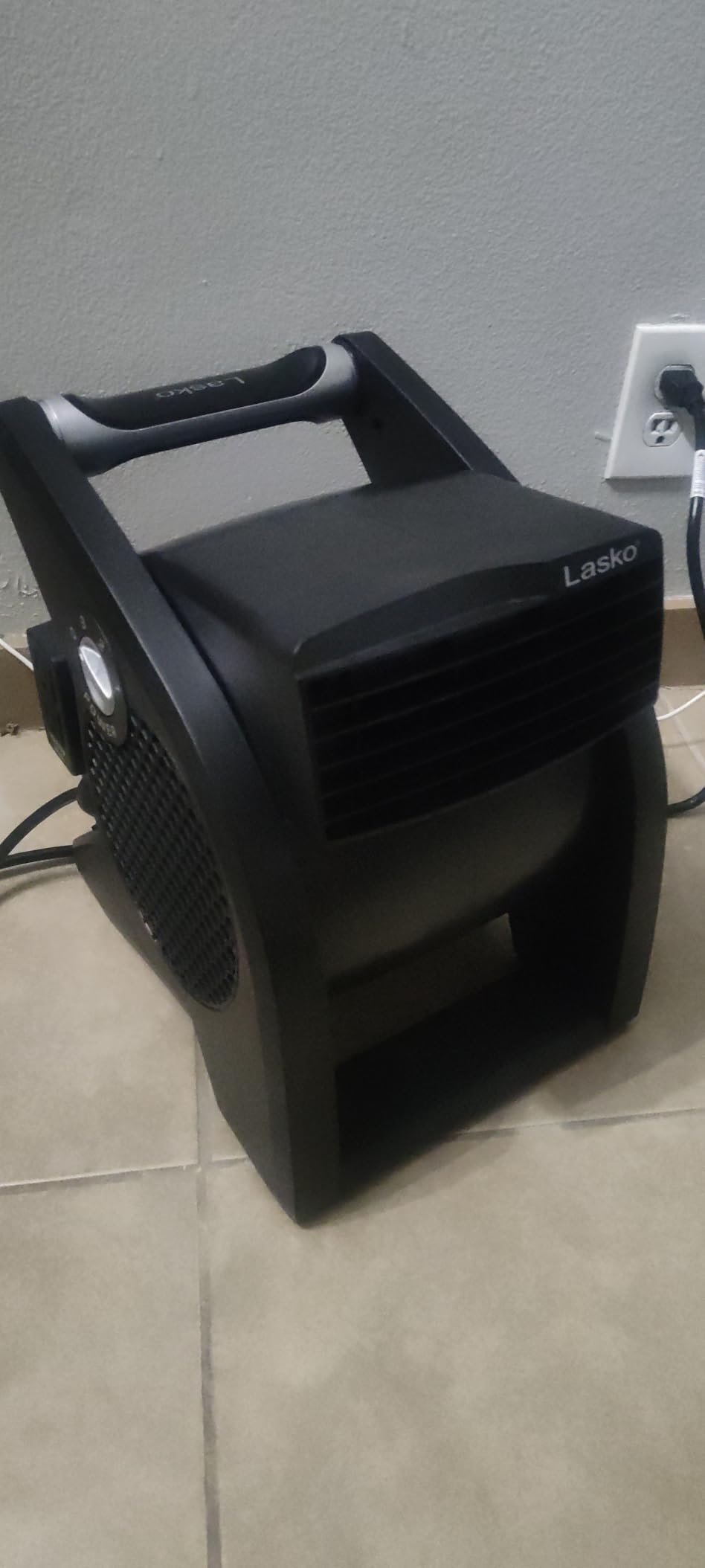
The 57.6 dBA published figure is the honest catch. That is fine as background cooling for a backline rack or a green room. It is not fine beside an open microphone during a quiet number, and any retailer who tells you otherwise has not stood next to it.
Reviewers with 7,542 ratings behind this unit point at the same two things: the focused stream of air from such a small footprint, and the noise on the higher of the three speeds. They also note the plastic shell and blades as a fair criticism for a unit that gets knocked around in a truck.
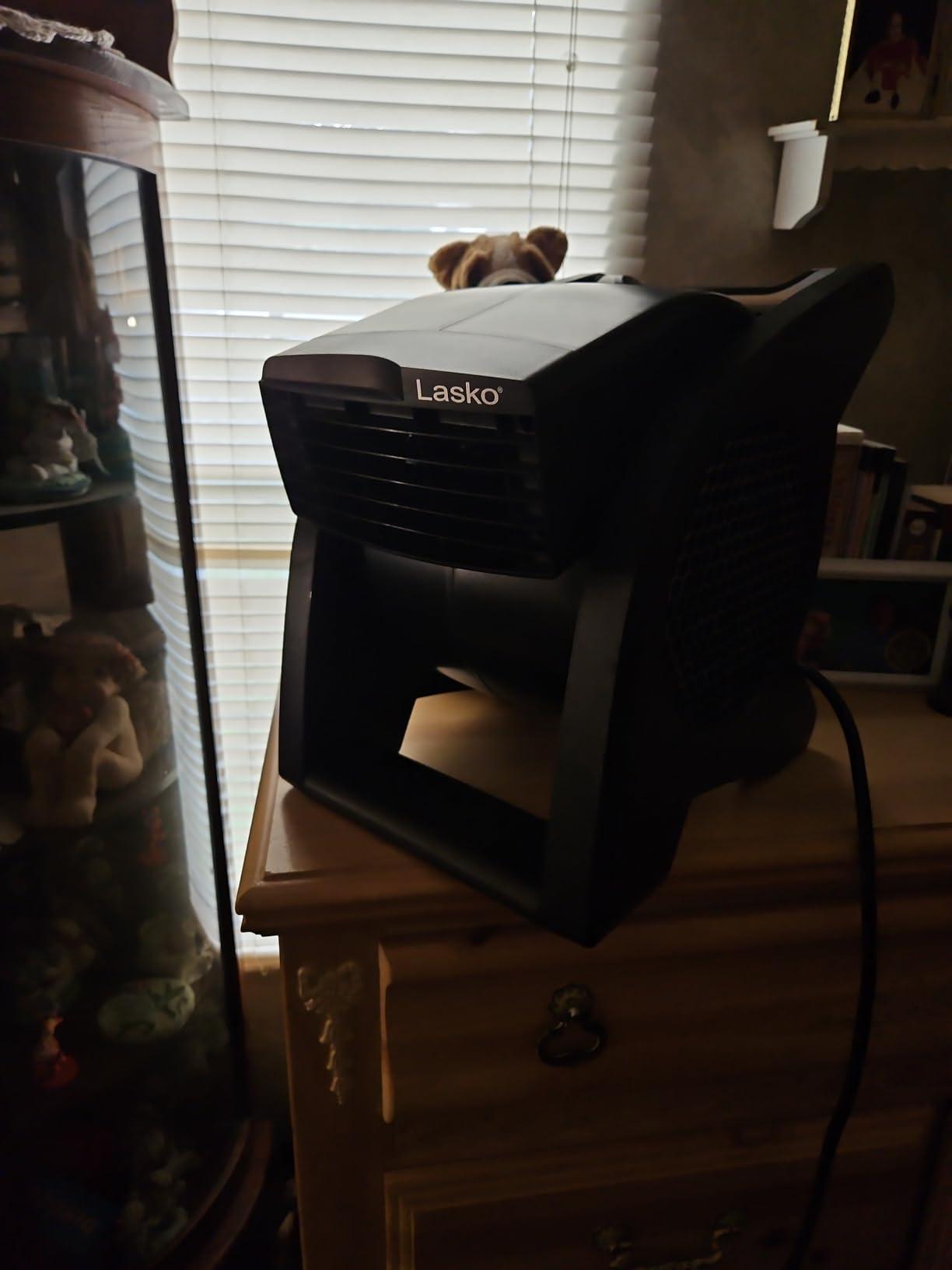
What it does well on a working rig
The circuit breaker with a reset button matters more than it sounds. On a multi-night run, a tripped breaker you can reset yourself beats a unit that has to go back to a shop. Combined with the ETL listing and the grounded three-prong plug, it is one of the more electrically cautious blowers in this group.
Where it falls short
It is an indoor-rated tool, listed as indoor use only, and the housing is molded plastic. For an outdoor festival stage in a wet climate, look at a unit rated for both indoor and outdoor use instead. The pivoting head is also manual only, with no remote and no console control.
2. AC Infinity AIRPLATE S7 – The Best Value Fan Here at 19 dBA
AC Infinity AIRPLATE S7, Quiet Cabinet Cooling Fan 12″ w/ Speed Controller
104 CFM in a 12 inch frame
19 dBA total noise
Multi-speed controller included
CNC machined aluminum frame
Wall or USB power
Pros
- Very quiet at a measured 19 dBA
- Controller lets you trade airflow for silence
- Brushed aluminum CNC frame
- Wall outlet or USB powered
- Turbo Adapter adds 25 percent performance
Cons
- 104 CFM is modest for open-room cooling
- Variable speed needs the separate controller
This is the fan to reach for when the show is recorded. A 19 dBA figure is low enough that a fan running at full speed will not show up on a stereo recording, which is exactly the situation practitioners on ControlBooth lighting forums keep running into when microphones end up close to the rig.
It is a cabinet fan by design. The 12 inch frame moves 104 CFM straight at a receiver, amplifier, or DVR, and the included multi-speed controller lets you set the exact noise and airflow balance you need for the room rather than living with a single fixed setting.
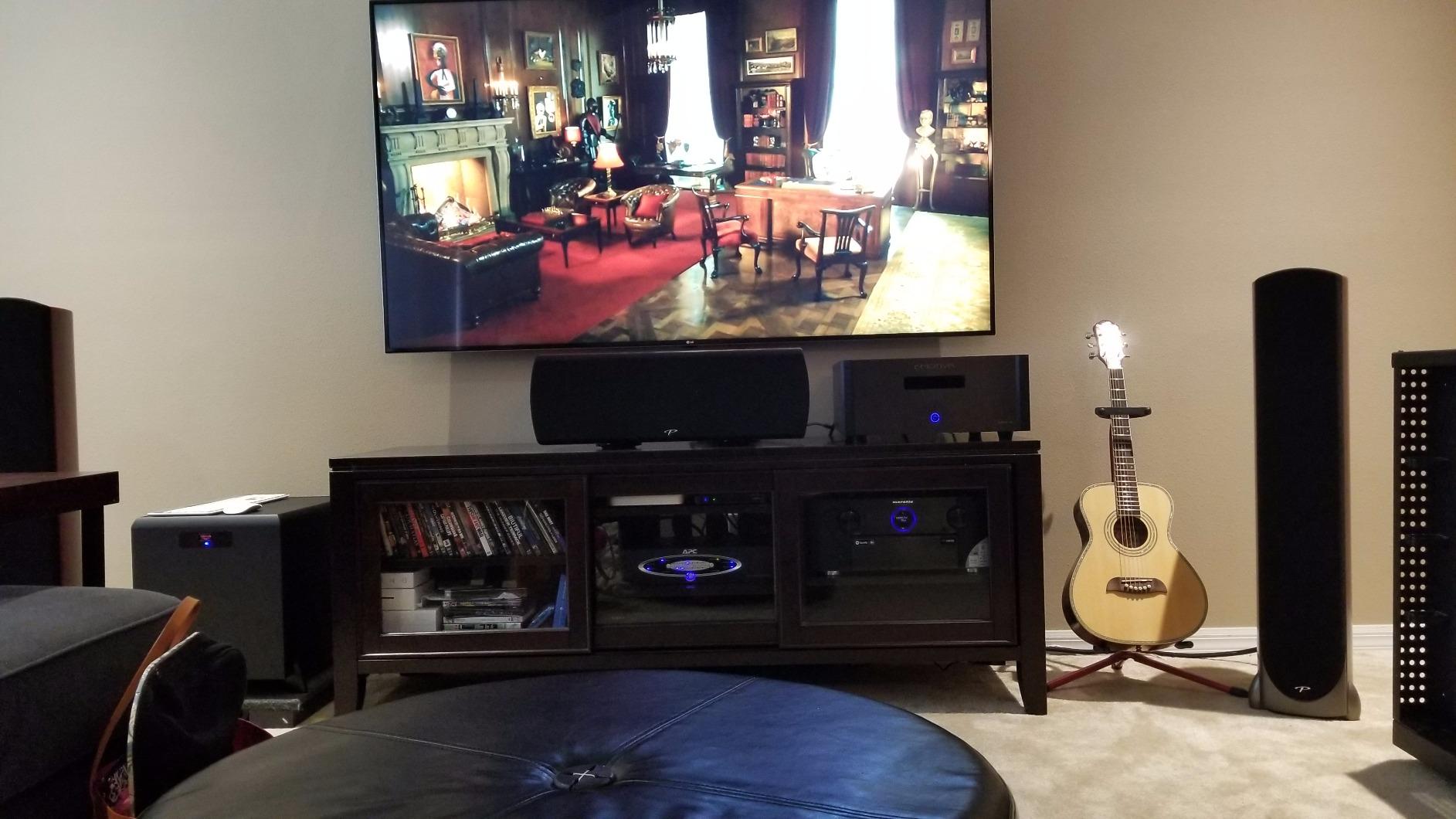
Build quality is a step above the plastic blowers here. The frame is CNC machined aluminum with a brushed black finish, the fans run on dual-ball bearings, and the whole thing is UL-certified for home theater AV cabinets.
Owners with 6,650 ratings point at the same limitation: 104 CFM suits an enclosed cabinet, not a room. If you are trying to move air across a stage, this is the wrong tool. If you are trying to keep a hot amp alive without the amp fan audible in the mix, it is the right one.
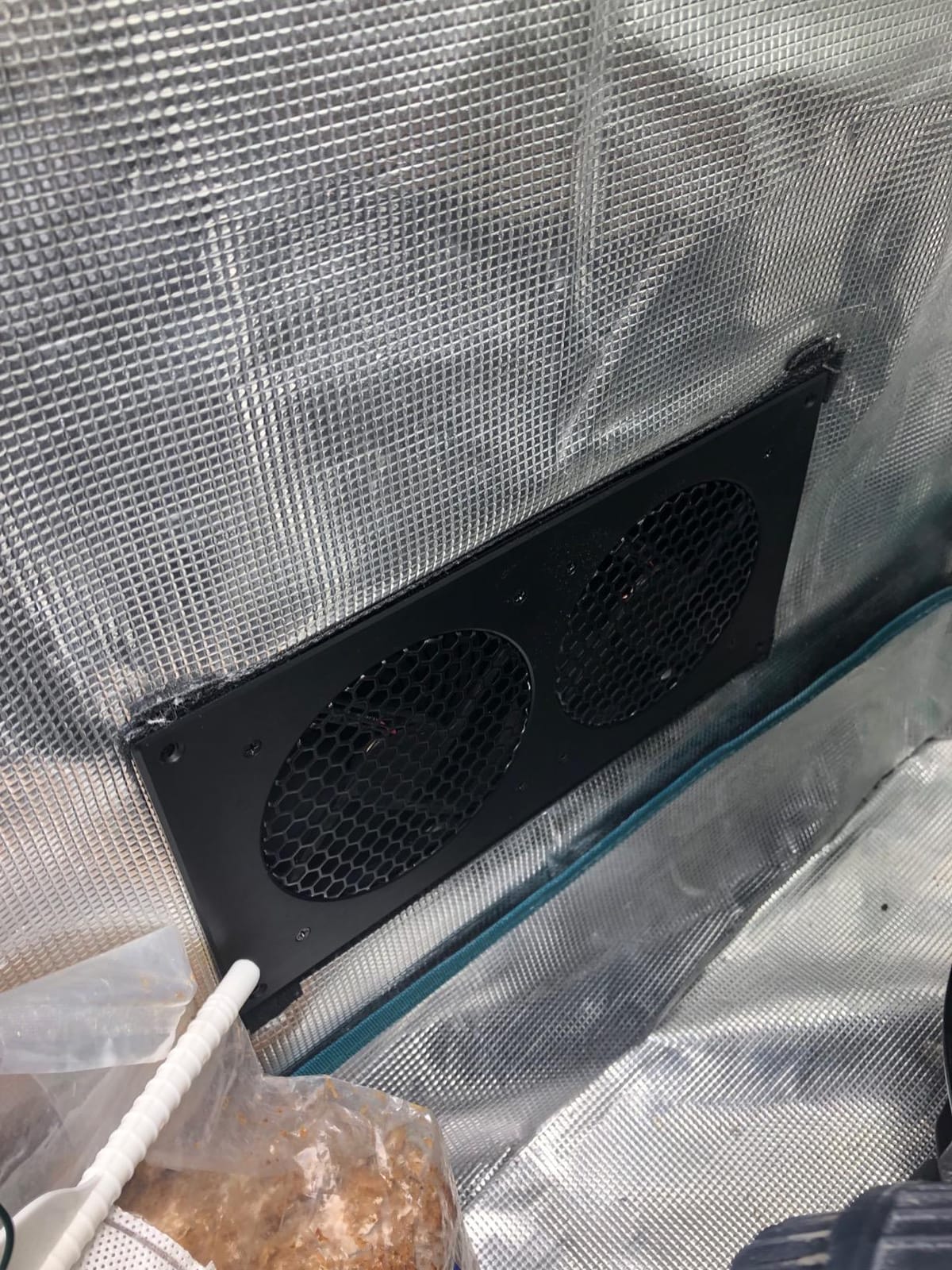
When silence decides the purchase
The gap between 19 dBA and anything above 45 dBA is not a spec-sheet nicety. It is the difference between a fan you can record around and one you cannot. Buyers who upgraded to this after fighting a whiny fan report the change as immediate.
When it is the wrong choice
It is a cooling fan, full stop. There is no DMX input, no remote, no tilt control, and no way to cue it from a lighting desk. For stage effect work, look at the Vacmaster or XPOWER further down.
3. AC Infinity AXIAL 1238 Muffin Fan – Highest Flow in a 120mm Footprint

AC Infinity AXIAL 1238, Muffin Fan, 115V 120V AC 120mm x 38mm
110 CFM in a 120mm frame
47 dBA at full speed
Dual-ball bearings rated 67000 hours
18W on 120V
UL-certified
Pros
- Highest airflow in the 120mm class
- Dual-ball bearings for 24/7 duty
- Mounts flat or upright
- Cord
- guards and screws included
Cons
- Loud at full speed
- Soft two-pin connector can back out of the cord
- No variable speed control
When a fixture’s internal cooling fan has failed and the manufacturer no longer sells a spare, this is the part people actually reach for. At 120 by 120 by 38 mm it drops into standard equipment-panel cutouts, and the included cord, guards and screws mean the job is a ten-minute fix rather than a service ticket.
The dual-ball bearings rated at 67,000 hours are the reason this fan keeps running where cheaper sleeve-bearing units quit. The frame is heavy-duty cast aluminum, and it can be laid flat or stood upright depending on how the ducting is arranged.

Reviewers with 6,228 ratings describe it as the highest-airflow fan in the 120 mm class, and report years of continuous duty without complaint. The 47 dBA rating is real, and this is a high-airflow, high-noise design by explicit intent.
The most common fix reported is soldering the two-pin connector permanently, because the supplied soft connector can back out of its socket over time. Anyone comfortable with a soldering iron can do that in minutes. Anyone who is not should check the fixture’s power first.
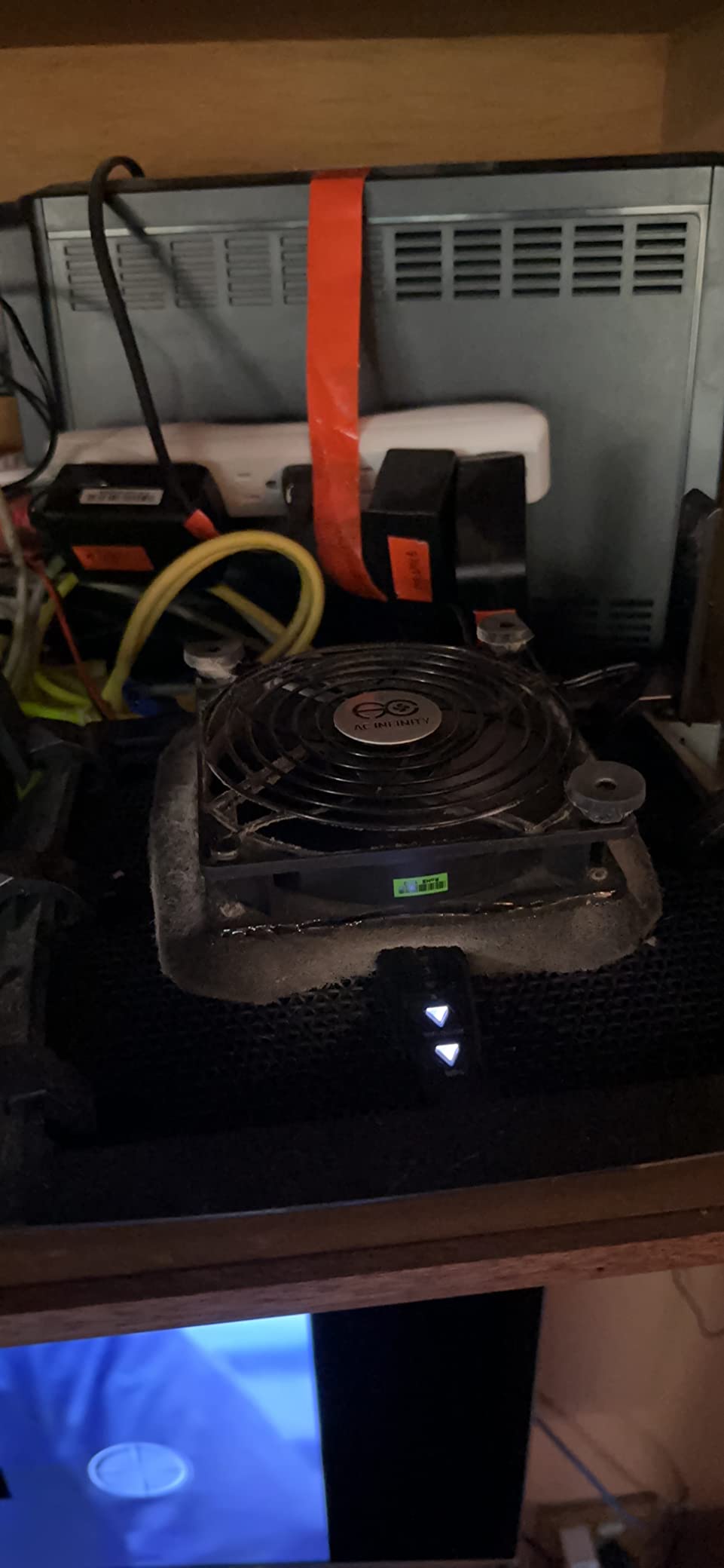
Why bearing life matters more than noise here
This fan is not a show effect. It is a service part expected to run for years inside a hot enclosure with nobody listening. Bearing life is the specification that determines whether the repair holds until the next tour, and 67,000 hours is the strongest figure in this group.
The noise and connector trade-off
Two things to plan for. The 47 dBA is fine inside a fixture or cabinet and far too loud for a room, and the fixed-speed design gives you no in-between setting. Confirm the connector type matches your fixture before you buy, because that is the part most likely to need modification.
4. AC Infinity AIRCOM T9 – Top-Exhaust Cooling With a Built-In Thermostat
AC Infinity AIRCOM T9, Quiet Cooling Fan System 17″ Top-Exhaust
210 CFM top-exhaust airflow
21 dBA total noise
LCD thermostat with 6 speeds
Power outage memory
Three PWM fans
Pros
- 210 CFM at only 21 dBA
- Thermostat with alarms and failure triggers
- Highest rating in this group at 4.8
- Quiet gradual spin-up and spin-down
- Power outage memory restores settings
Cons
- No separate upper and lower temperature band
- Quieter on paper than in a very silent room
- Extra fans need another wall adapter
This is the fan that changed how we think about a hot backline rack. The LCD controller lets you program a trigger temperature and the system runs its three dual-ball bearing fans at the speed that temperature calls for, rather than running flat out from load-in to curtain.
Owners with 4,951 ratings report temperature drops of roughly 12 to 15 degrees F on hot receivers and amplifiers. At 21 dBA it stays out of the way of a conversation, and the gradual spin-up and spin-down on the PWM motors avoid the hard on/off thump that makes cheap fans so obvious in a quiet room.
The power outage memory is a detail you will thank yourself for at a festival. Settings survive a power cut, so the unit comes back up on the same curve it was running before rather than reverting to a default.
The most common complaint in the reviews is the absence of a temperature band. Without separate upper and lower limits, the fans can hunt around the trigger point, cycling on and off in a way some owners find audible. If your rack runs at a steady temperature, it never comes up.
Why the thermostat changes the workflow
Load-in is hot. Showtime is not. A thermostat-controlled system cools hardest when the room is empty and backs off when the audience is in, which is exactly the behavior a manual three-speed switch cannot give you. It also removes the temptation to leave a blower running all night.
Where the top-exhaust format gets awkward
This is a top-exhaust unit, so it wants vertical clearance above the equipment and reads as a small stack on top of a receiver. If your rack has no headroom, an in-cabinet plate fan like the AIRPLATE S7 fits better. Adding fans beyond the three included requires a separate wall adapter.
5. Vacmaster AM201R Aero Air Mover – 550 CFM With Remote and Tilt Head

Vacmaster AM201R Aero Air Mover and Fitness Fan With Remote Control 550 CFM
550 CFM airflow at up to 32 mph
32 foot remote range
Head tilts to 0, 45, 90 degrees
3 speed settings
61 dBA maximum
Pros
- Far more airflow than its size suggests
- Remote with 32 foot effective range
- Three tilt positions for targeting
- Three speeds on dial or remote
- Runs without rattle or vibration
Cons
- 61 dBA is the loudest figure in the group
- Remote needs disassembly for a battery change
- Foam feet are thin on a hard deck
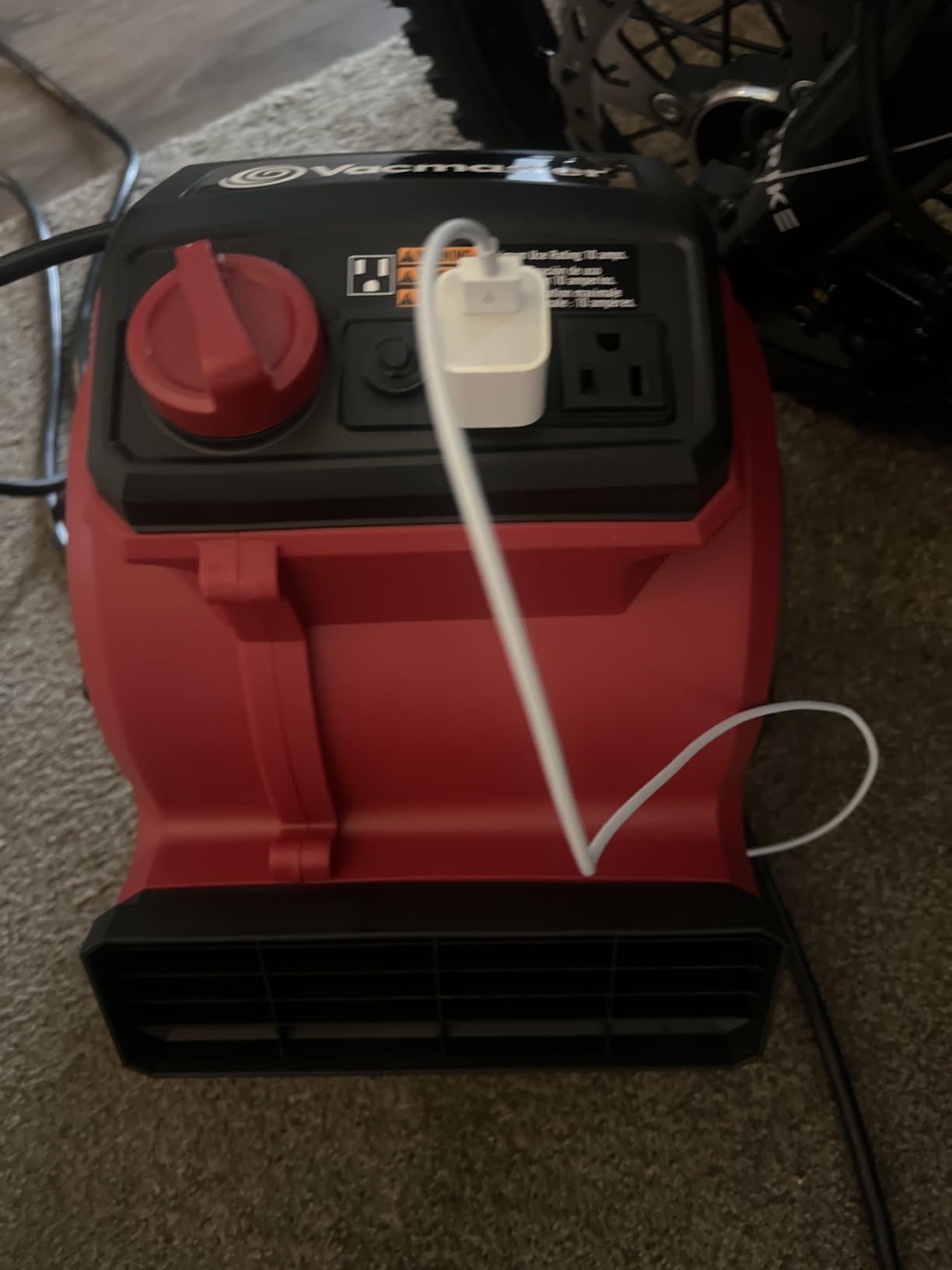
This is the first unit on our list that reads as a stage effect fan rather than a cooling fan. It moves 550 CFM at up to 32 mph from a 13 inch body, and the head tilts to 0, 45, or 90 degrees so you can lay air flat across a deck, angle it up into a beam, or point it straight at a performer.
The remote has a 32 foot effective range, which is genuinely useful when the fan sits offstage and you do not want to cross the deck mid-cue. Three speeds are available from either the dial or the remote.
Its published maximum is 61 dBA, the highest figure in this roundup, and that is the trade-off for the output. Sixty-one decibels is a normal room-fan level that you can work around by keeping the unit offstage and pointing it across the deck rather than at the audience.
The standout issue reported across 2,009 ratings is not the fan at all. The remote’s battery often arrives partially drained, so the first time you reach for it on a cue it may not respond. Put in fresh cells before load-in and the problem disappears entirely.
Best suited to small and mid-size stages
At 550 CFM, this is a room-scale tool rather than an arena tool. For a bar, a club booth, a small theater, or the downstage edge of a mid-size stage, it gives visible movement in fabric and hair and pushes fog where you want it. For a festival main stage you will want something in the XPOWER class.
The accessory gaps to plan for
It is a remote-control unit, not a DMX unit. There is no desk input, so it cannot be cued from a lighting console alongside your other effects without an external trigger. Pair it with a sound-activated mode or a MIDI cue stack on your playback system if you are running a one-person show.
6. Master MAC-310A-121 Utility Blower – Narrow Focused Stream, Only 9.3 Pounds

Master Heavy Duty Utility Blower, 3 Speed Portable Floor Fan with Outlet & Pivoting Head for Home & Garage Cooling, Drying and Air Circulation
350 CFM focused stream
3 speed settings
Weighs 9.3 pounds
Pivoting blower head
Indoor and outdoor rated
Pros
- Squirrel-cage design throws a tight focused stream
- Light enough to carry between positions
- Pivoting head aims at any height
- Built-in 10 amp circuit breaker
- Accessory outlet on the housing
Cons
- Audible at higher speeds
- Foam feet can detach
- Only one accessory outlet
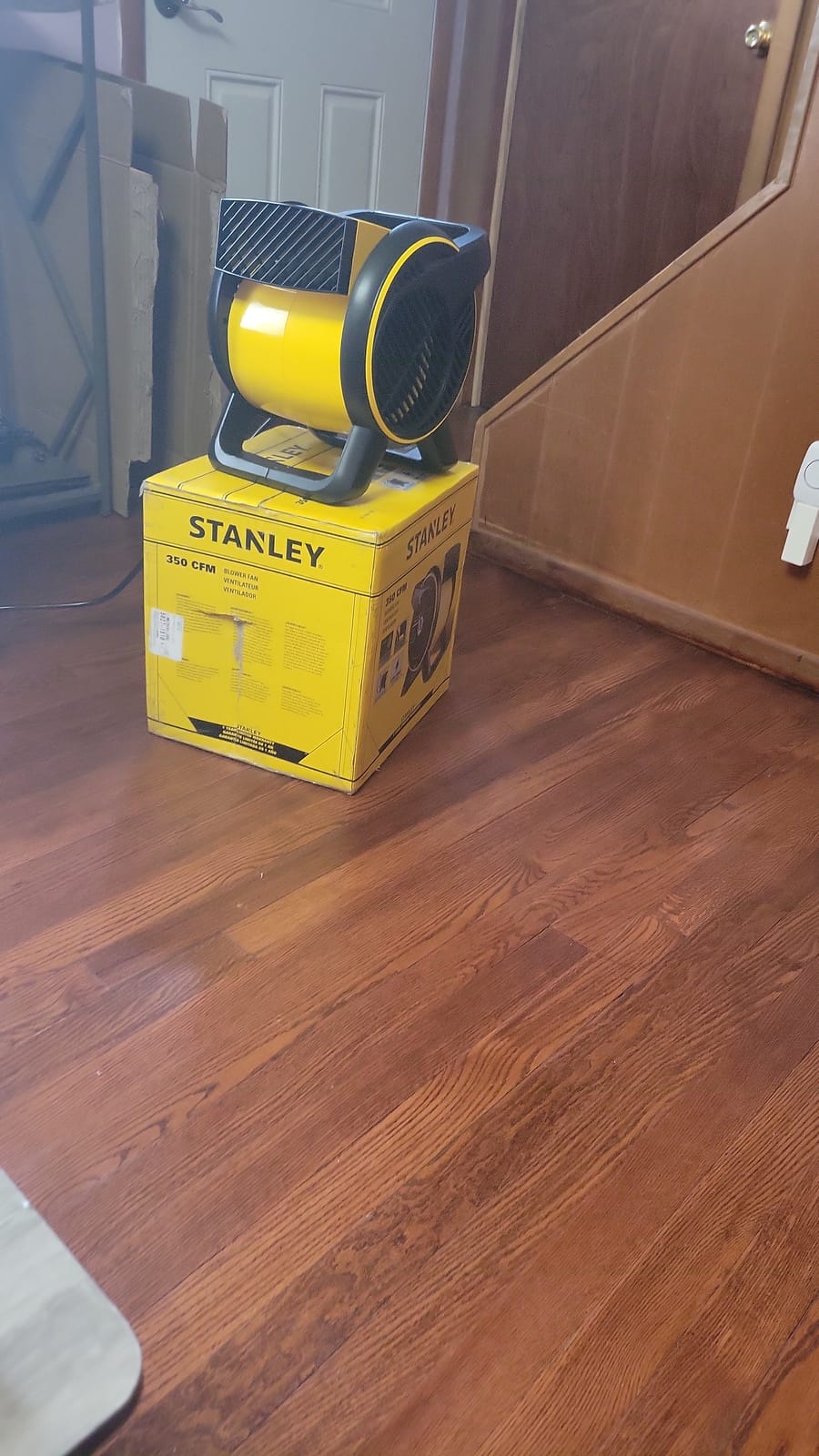
The Master is the pick when weight is the constraint. At 9.3 pounds it is light enough to lift one-handed up a ladder, position on a side-stage deck, or move between a tech table and the downstage edge without a cart.
The squirrel-cage design throws a narrow, concentrated stream rather than dispersing air across a wide arc. That focus is a genuine advantage in a theater or a club where you want air on one performer rather than a general stir of the whole room.
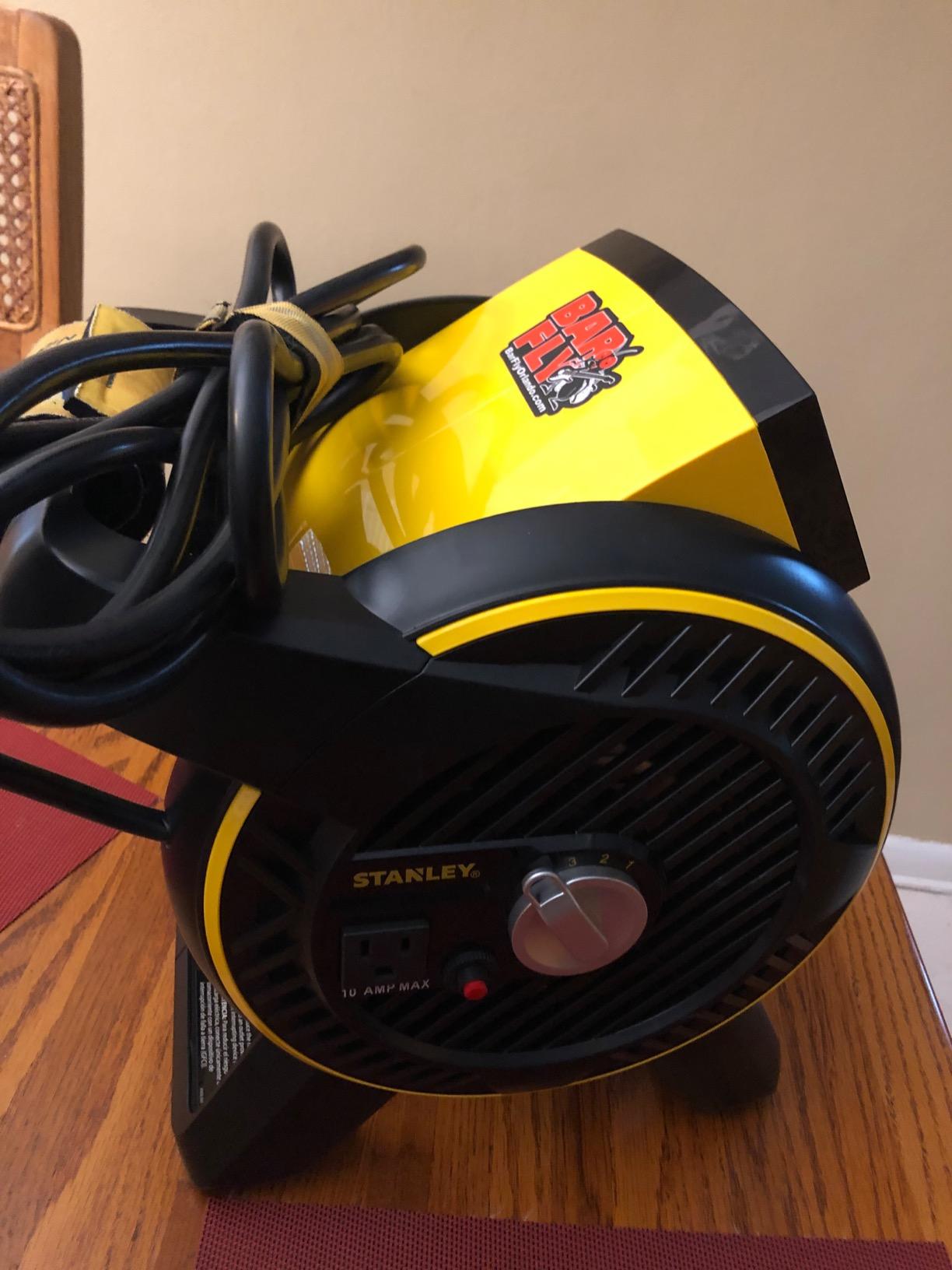
It is rated for both indoor and outdoor use, which opens it up to festival and street-event work that the Lasko is not rated for. A built-in 10 amp circuit breaker adds protection on long multi-night runs.
Owners across 1,863 ratings describe the sound at full speed as resembling a small jet engine, and that is the honest expectation. A minority also report that the foam feet detach shortly after purchase, so swapping them for rubber feet before the first show is a five-minute fix that stops the unit walking across a stage deck.
When focus beats volume
If your goal is a visible effect on one spot rather than a general cooling of a room, a narrow high-velocity stream is more useful than a wide diffuse one. The Master gives you a defined column of air you can aim at a hat, a flag of hair, or a specific beam of fog.
What to check before the first run
Two things. The noise is real and it scales with speed, so decide your cue points before you decide your speed. And the single accessory outlet means you cannot chain more than one extra device off it, which may push you toward the VEVOR if you plan to daisy-chain blowers.
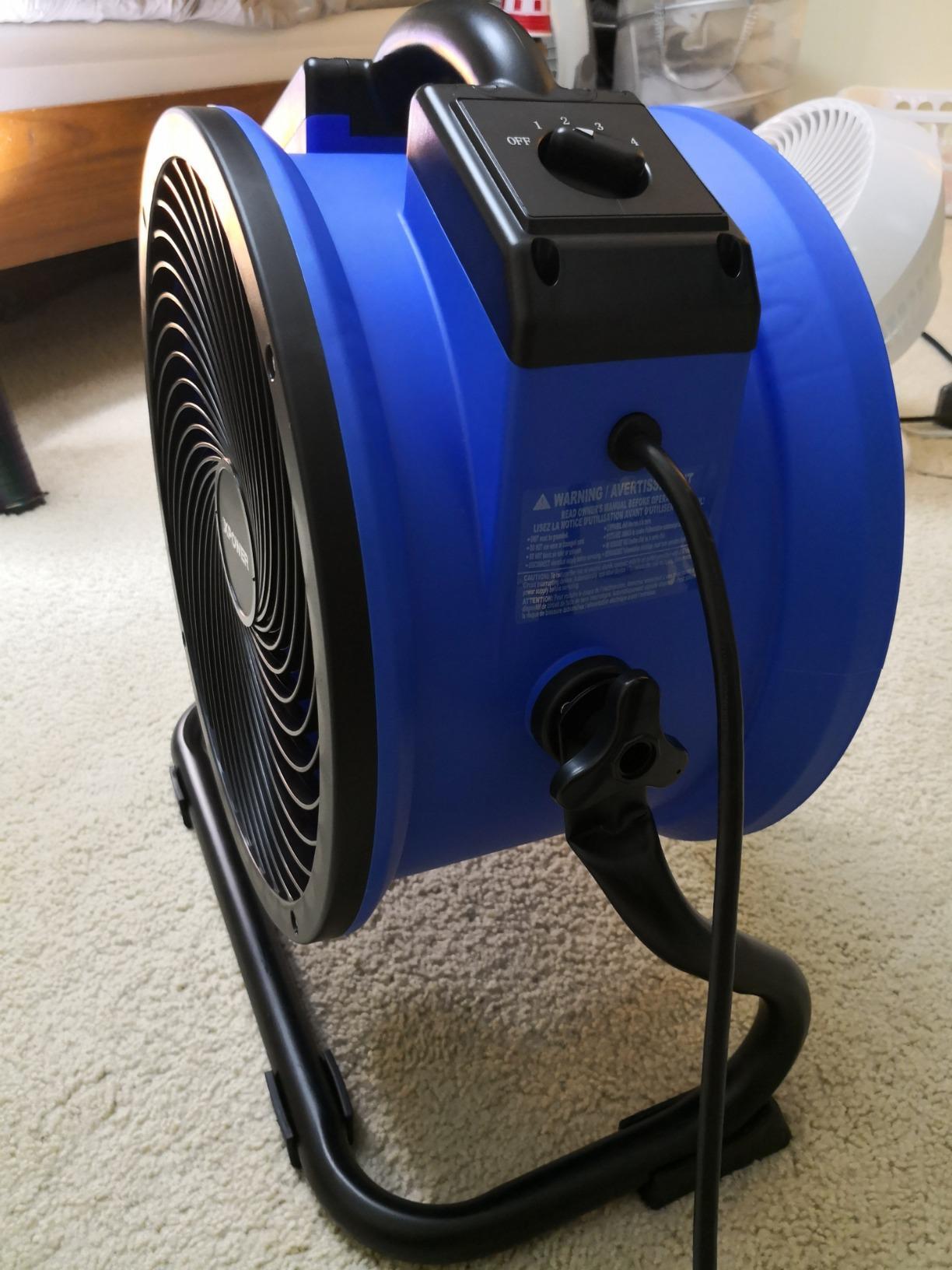
7. XPOWER FC-300 – 2100 CFM for Large and Outdoor Stages
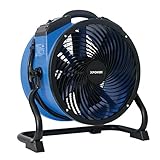
XPOWER FC-300 Heavy Duty Industrial High Velocity Whole Room Air Mover Air Circulator Utility Shop Floor Fan, Variable Speed, Timer, 14 inch, 2100 CFM, Black, Blue
2100 CFM on only 1 amp of draw
4 adjustable speeds
Airflow focused up to 120 feet
3 hour timer
13 pounds
Pros
- 2100 CFM from about one amp of draw
- Four speeds with the lowest two near inaudible
- Spiral grille focuses air to 120 plus feet
- ETL and CETL certified
- Rated for indoor and outdoor use
Cons
- Loud on the two highest settings
- No pass-through accessory outlet
- Costs more than the smaller blowers
When the question is how much air, this is the answer. 2100 CFM from a single amp of draw puts it in a different class from everything else here, and the spiral grille focuses that output down a column reaching more than 120 feet. On a large stage that means one unit at the edge of the deck can cover a performer standing well upstage.
Four speeds give you a real range to work with. Owners report that the two lowest settings are nearly inaudible while still moving serious air, which makes the unit far more usable in a quiet passage than a single-speed blower would be.
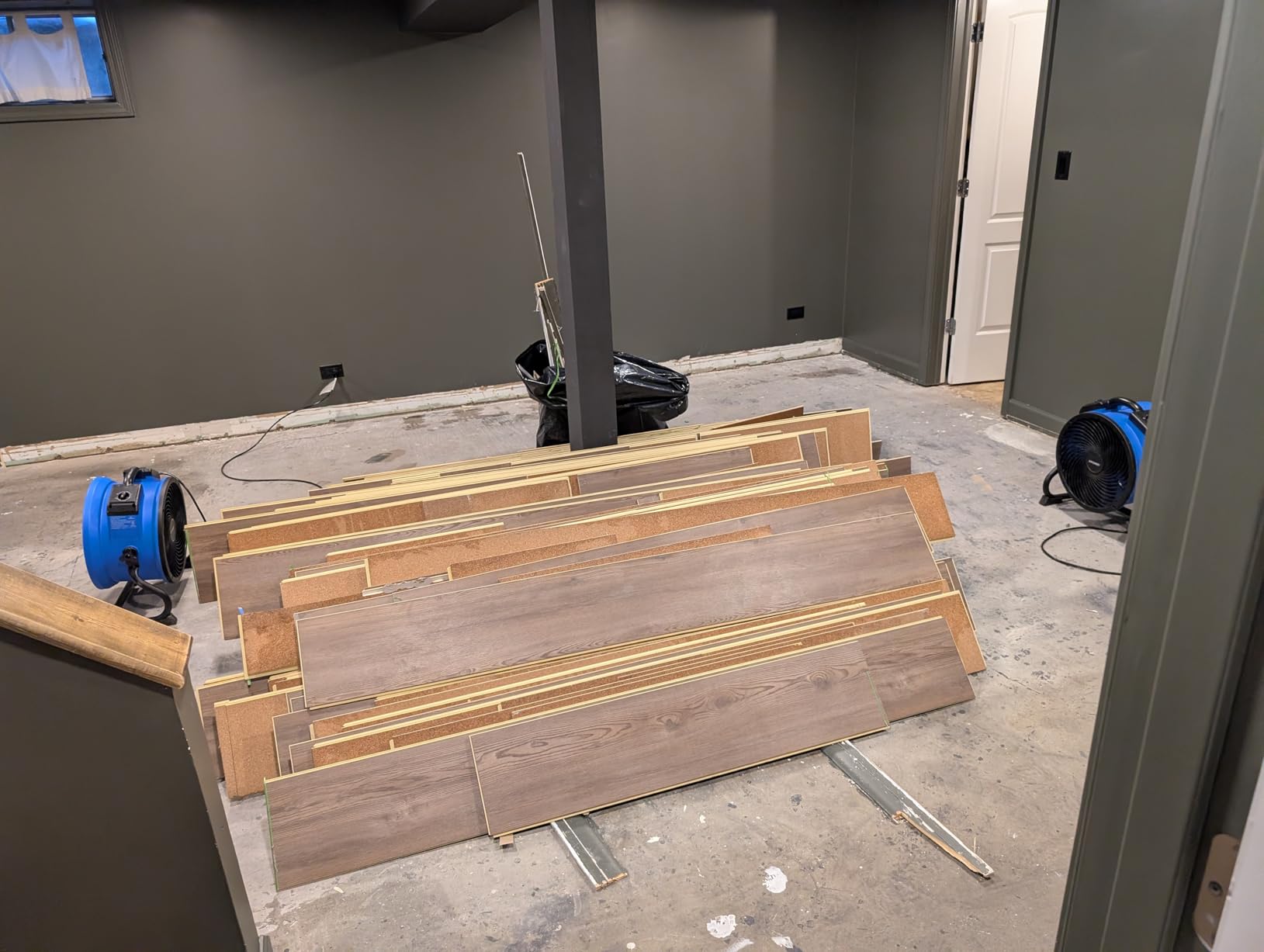
It is rated for both indoor and outdoor use, runs on 115V, and carries a 3-hour set-and-forget timer that is genuinely useful for a rehearsal room or a load-in cooling cycle. The high-torque motor and 360-degree directional airflow are what separate it from cheaper high-output blowers.
Across 1,267 ratings, the praise is consistent: this is the quietest high-output circulator owners have owned relative to its rating, and it has held up for years of continuous running. The complaints are the loudness of settings three and four, the lack of a pass-through outlet for another device, and the higher cost than competing floor blowers.
Matching output to a large stage
Rule of thumb from the specs: a room needs roughly one 100 CFM per 10 square feet of floor for a meaningful air change, and an open-air stage has no walls to contain what you push. That is the argument for the FC-300 on anything larger than a small club.
Where the trade-off bites
Output at this level is loud, and no amount of grille engineering hides that at the top two speeds. If you plan to use it for a wind effect during a quiet acoustic passage, you will be fighting a noise floor rather than creating one. Use it for transitions and for cooling, not for subtlety.
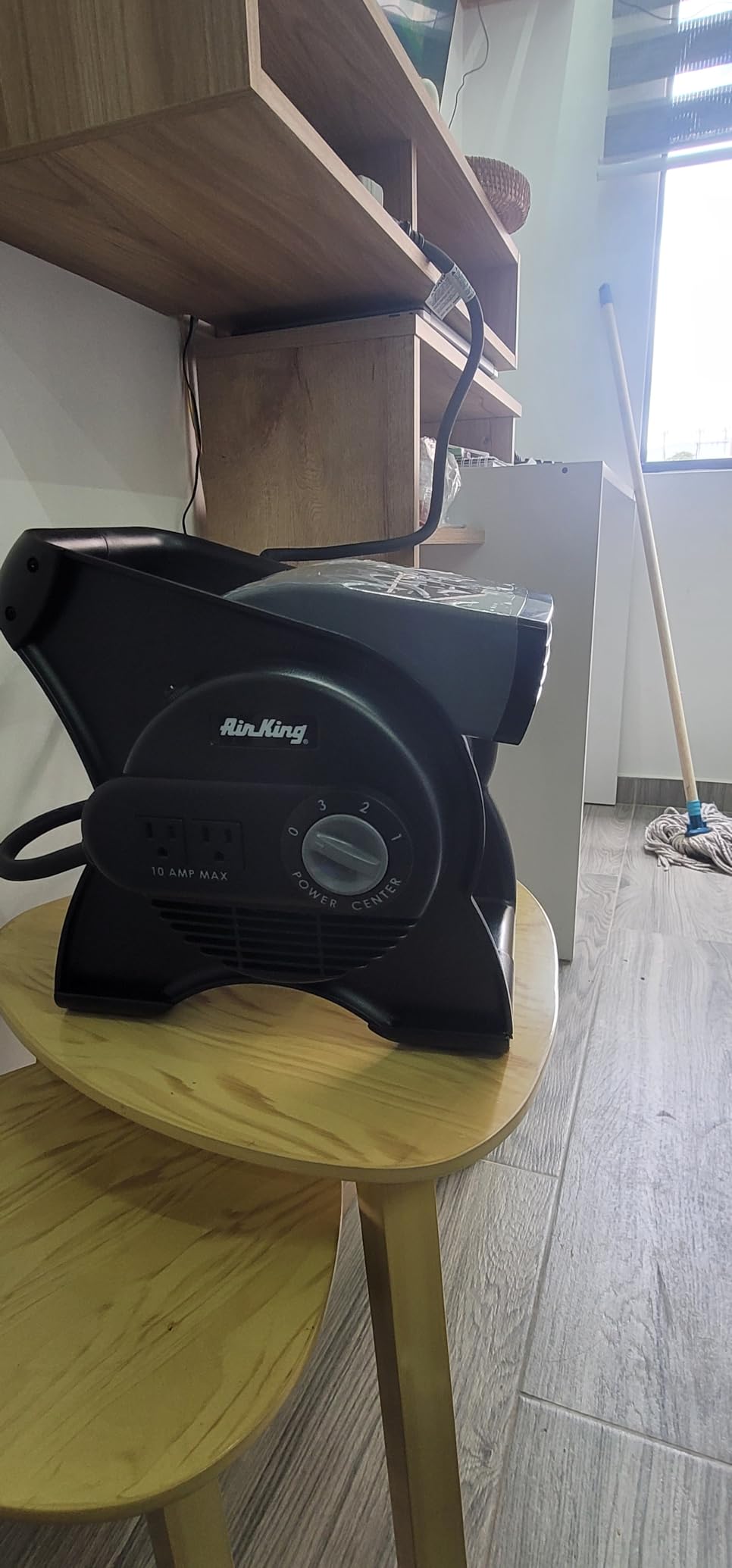
8. Air King 9550 – Compact 4.5 Pound Commercial Blower
Air King Commercial Grade Pivoting Utility Fan, for Cooling, Ventilating, Exhausting and Drying at Home, Job Site, Work Shop, Construction, 3 Speeds, 11.25″, Black, 9550
350 CFM from a 4.5 pound body
3 speeds on a side rotary dial
60 dBA at high setting
Accessory outlets
Removable grille
Pros
- Compact 4.5 pound body suits tight rig spaces
- Narrow stream felt from more than 24 feet
- Three speeds on a simple side dial
- Built-in grounded accessory outlets
- Removable grille for cleaning the turbine
Cons
- Louder than the identical Stanley-branded housing
- Narrow stream means you feel little outside the aim
- Thick power cord
At 4.5 pounds and under 12 inches on its longest side, the Air King is the most compact of the floor-standing blowers in this roundup, and the lightest one you can carry with one hand. When space is the problem, that is the whole argument. It fits under a riser, behind a backdrop, or in a case with no room for a full-size blower.
It still delivers 350 CFM across three speeds on a side-mounted rotary dial, and owners report feeling the narrow stream from more than 24 feet away. The modeled ABS housing has a removable grille, so cleaning the turbine after a dusty run takes a couple of minutes.
One detail that sounds trivial and is not: the built-in grounded accessory outlets mean you can chain a small blower without extending a separate cable across a walking surface. Long cable runs across a stage are exactly how trips and equipment damage happen.
With 983 ratings averaging 4.5 stars, this is the lowest-rated of the line-voltage blowers here, and the most commonly mentioned drawback is that it is louder than the visually identical Stanley-branded version of the same housing. Several long-term owners report the same body running continuously for years.
When size is the deciding factor
For a touring case where every pound and every cubic inch is negotiated, the Air King earns its slot. It is also a sensible spare to keep in the van, since a compact unit is the one most likely to get left behind at the end of a run.
What the narrow stream means in practice
Step outside the aim and you will feel very little, because the air is concentrated rather than dispersed. That is a feature when you are targeting one fixture or one person, and a limitation when you want a general cooling of a space. Know which of the two you are buying it for.
9. VEVOR 600 CFM Pivoting Utility Fan – Three Real Airflow Steps

VEVOR Pivoting Utility Fan, 600 CFM High Velocity Floor Blower for Drying
600, 550, or 440 CFM
300 degree pivoting head
7.7 pound body
115W on 115V
ETL certified
Pros
- Three genuine airflow steps
- Quiet for a squirrel-cage design at this output
- 300 degree pivot aims at floor or ceiling
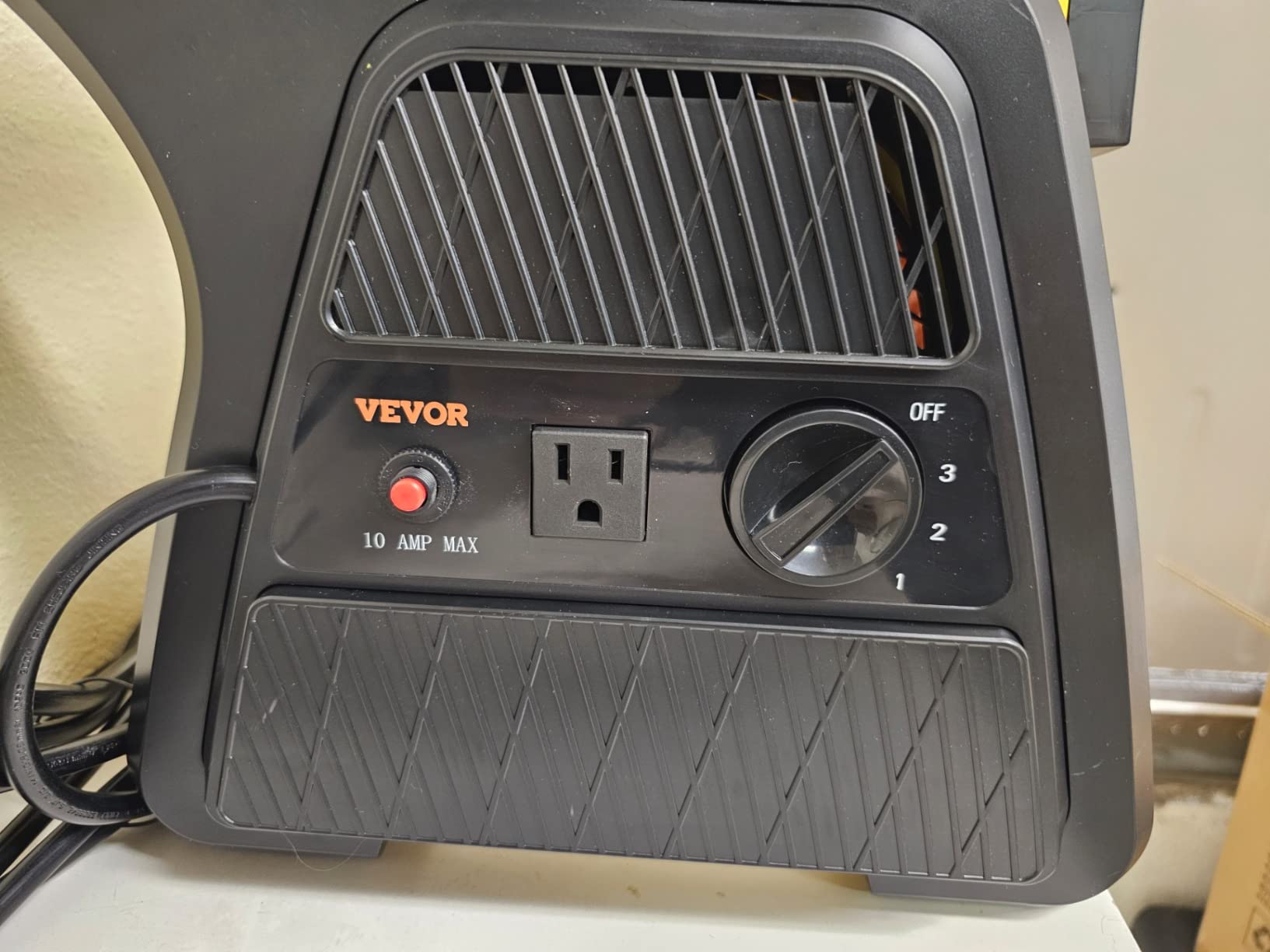
- Accessory outlet allows daisy-chaining
- Compact 7.7 pound body
Cons
- On and off button is small and hard to locate
- Some owners report more noise at the top setting
- Pivot head can feel loose until tightened
The VEVOR moves more air than any other floor blower here except the XPOWER, from a 12 inch body that shares a footprint with units rated barely half that. The three-step airflow of 600, 550, and 440 CFM is a real range rather than three labels on one speed, and the 300 degree pivot means one floor position can cover three different jobs.
Reviewers with 515 ratings consistently mention how quiet it is for its output. That is the squirrel-cage design doing its job: the air is accelerated through a small intake and a narrow outlet, which is a much more efficient way to move air than accelerating a large volume with open blades.
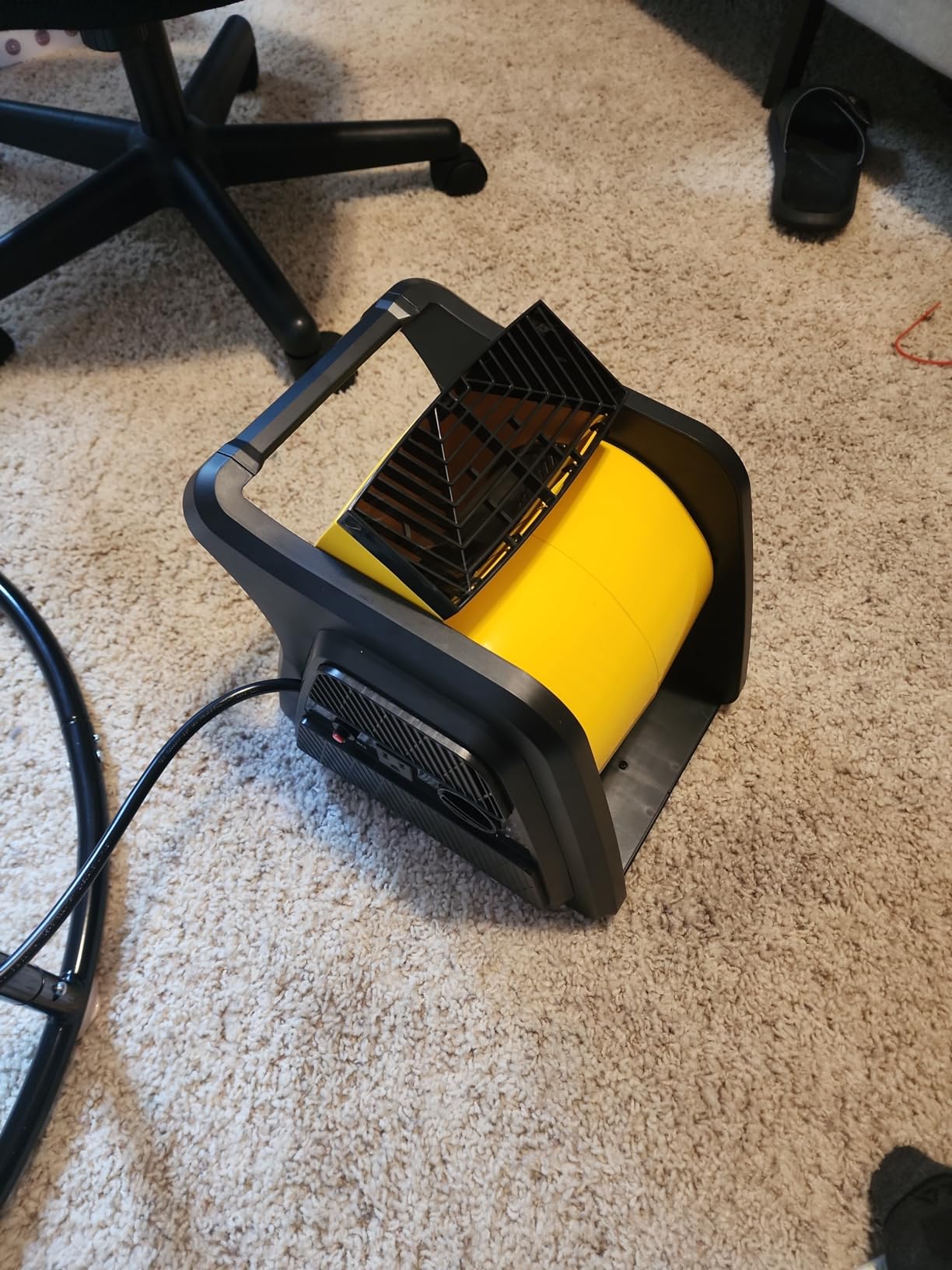
The 300 degree pivot head is genuinely useful on stage. It lets you lay air flat along the deck to move fog, angle up into a lighting beam, or aim at a backline stack, all from one floor position.
The most common criticism is small and easily solved: the on and off button is hard to locate and turn. The pivot head can also feel loose until you tighten it, so give both a thirty-second check at load-in rather than discovering the wobble during the first cue.
Why it beats the bigger blowers on output per inch
Compare it to the Lasko and the Master, both rated at 350 CFM, and you get roughly 70 percent more air from a similar footprint. The accessory outlet also means you can chain air movers in series, which is how you fill a stage without running a separate cable back to the wall for every unit.
Where it needs attention first
It is listed for indoor use, so it is not the outdoor option. The on and off button placement and the pivot tension are the two things to fix or get used to before the show, and the top speed is louder than the lower two, so save it for the moments when you need the full 600.
10. Wathai 120mm 12V Centrifugal Blower – Low-Cost 12V Fixture Retrofits
Wathai 120mm x 32mm 12V Brushless Cooling Blower Fan DC Centrifugal Fan 2p
38.5 CFM at 3000 RPM
45 dBA noise
12V DC at 1.0A
Sleeve bearing rated 35000 hours
XH2.54 two-pin cable included
Pros
- Runs directly from any 12V DC supply
- Compact 120mm centrifugal blower
- Low cost per unit when you need several
- Cable and mounting hardware included
- Sleeve bearing rated for 35000 hours
Cons
- Lowest star rating in the group at 4.3
- 38.5 CFM is far below line-voltage blowers
- Two-pin connector does not fit every setup
- 12V supply not included
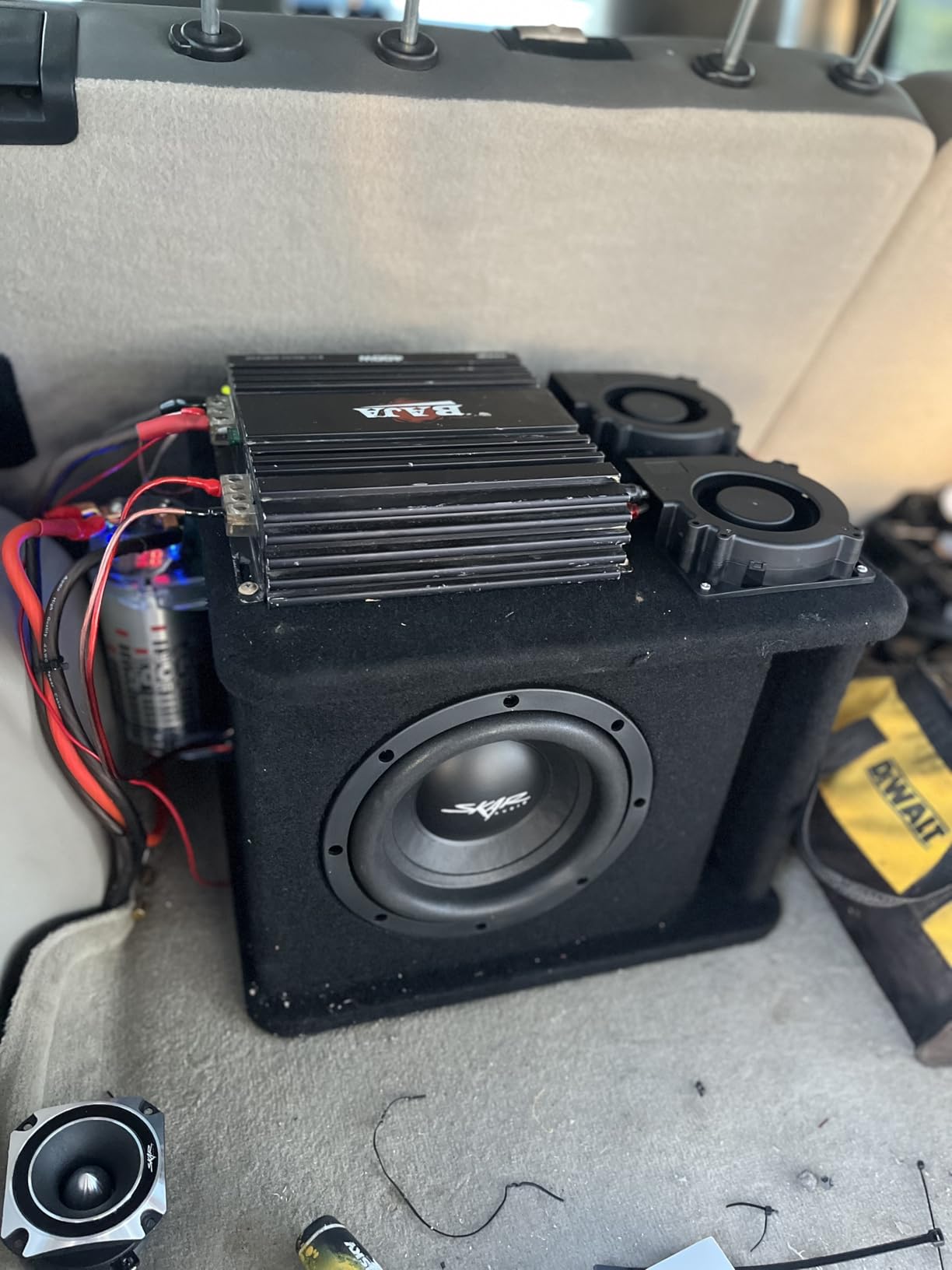
This one is included because the 12V DC retrofit is a real and growing job. When a fixture takes a low-voltage supply rather than mains, this blower is the cheapest way to add airflow, and the low unit cost means you can fit several to different circuits without treating it as a significant line item.
It draws 1.0 amp at 12 volts and spins at 3000 RPM to move 38.5 CFM. That is a fraction of what the mains-powered blowers here deliver, which is why it belongs in a single enclosure rather than anywhere near a stage.
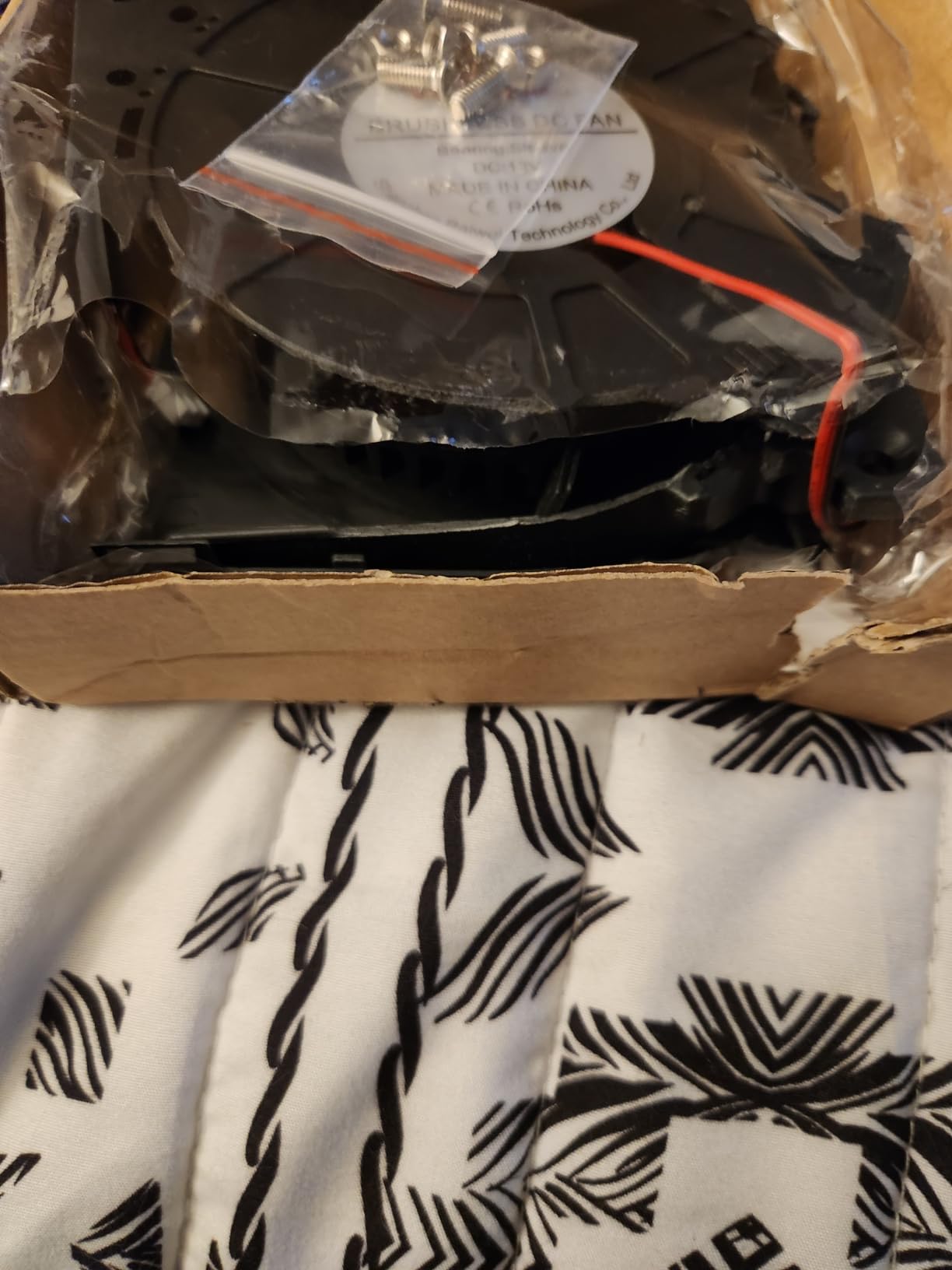
The spec that earns it a place is the sleeve bearing rated at 35,000 hours. Enthusiastic owners use it for amplifiers, routers, car audio, and similar 12V gear, and the included 25 cm XH2.54 cable plus mounting screws and nuts means it goes in without a trip to the hardware store.
At 4.3 stars across 1,056 ratings it is the lowest-rated product here, and the reason is visible in the numbers: 8 percent of ratings are one star, and they concentrate on the modest airflow and the connector. The two-pin plug cannot be adapted to every installation, and some buyers cut and re-solder it. A 12V supply is not included.
What this fan is actually for
Think of it as a component, not a product. It is the right part for cooling a small 12V enclosure, a project box, or a retrofit where a mains blower would be absurd. Used in that context, the cost per unit of cooling airflow is hard to beat.
When to spend more instead
If you need air in a room, on a stage, or across a person, the 38.5 CFM figure will not get you there and the 45 dBA will not matter because the fan is not powerful enough to be heard over itself. Move up to a mains blower. This one is for inside the box.
How to Choose a Fan for Hot Stage Lighting
Decide which of the two jobs you are doing first
Everything else follows from this. Cooling a fixture means quiet, continuous, permanently mounted operation and noise below 25 dBA is the target. Moving air for an effect means high velocity, a throw distance you can aim, and noise that does not matter because the fan is not running during a quiet passage. Buying a 2100 CFM air mover to fix a failing moving head is a waste, and buying a 19 dBA cabinet plate to create a wind effect is a waste in the other direction.
Match airflow to venue size and headroom
A rough planning number is one hundred CFM per ten square feet of floor for a meaningful air change indoors. An outdoor stage gives you no walls to hold the air you push, so an outdoor show in July needs substantially more output than the same rig in a theater. For a bar or club booth, 400 to 600 CFM is plenty. For a mid-size stage, 1000 CFM and up. For a festival main stage, plan on several high-output fans rather than one very large machine, because redundancy matters when something fails thirty minutes before doors.
Treat noise as a hard specification
Noise is the most common complaint we found anywhere in the research for this topic, and it is the number most often left off retailer pages. If a mic will ever end up within a few metres of your rig, anything above about 25 dBA becomes an audible problem in the recording. Below 20 dBA is effectively invisible to a microphone. Above 50 dBA, plan the cue points around the fan rather than trying to hide it. Ask for the dBA figure before you buy, and if a seller cannot give you one, treat that as an answer.
Axial fan or centrifugal blower
An axial fan moves a large volume of air along the axis of the blades and is the right answer for enclosed cabinets and equipment panels, where volume matters more than velocity. A centrifugal blower, or squirrel-cage design, accelerates air through a small intake and expels it at high velocity through a narrow outlet, which is why the units in the 350 to 600 CFM range can feel far stronger than their numbers suggest. For a stage wind effect, centrifugal wins on velocity. For cooling a rack, axial wins on quiet volume.
Control: DMX, remote, sound activation and MIDI
Most fans in this roundup are manual or remote-controlled, and that is fine for a one-person show. If you are running a lighting desk, a sound-activated mode or a MIDI cue stack on your playback system is the practical path to triggering a fan cue alongside lighting and fog without a physical console. The wider principle from practitioners is sound: if a device speaks DMX, it drops into the rig and you can add confetti, smoke, and moving lights later without re-engineering. A fan without any trigger input is a manual prop you adjust by hand between cues.
Check power, weather and connectors before the truck load
Three checks save a lot of trouble. Power: most of the blowers here run on 115V or 120V, several on 12V DC, and a touring rig crossing borders needs to know which before the case is packed. Weather: only the Master and the XPOWER are rated for both indoor and outdoor use, so a wet-climate festival narrows the field immediately. Connectors: verify the power connector type and, on the small retrofit fans, the two-pin plug type, before you are on a stage with a soldering iron instead of a working fan.
Frequently Asked Questions
What type of fan is best for cooling stage lighting?
A fixture cooling fan, which moves air across a heat sink to carry heat away from the LED chips, is what protects the fixture. A stage effect fan is for wind, fog dispersal and performer cooling, and does nothing for fixture lifespan.
Which fan makes the least noise?
The AC Infinity AIRPLATE S7, at a published 19 dBA, is the quietest unit in this roundup, followed by the AIRCOM T9 at 21 dBA. Both sit in the 19 to 25 dBA range where a fan stays effectively invisible to a nearby microphone.
How much airflow do I need for an outdoor stage?
Plan on roughly one hundred CFM per ten square feet of floor for an indoor space, and considerably more outdoors because open air disperses what you push. A bar or booth is served by 400 to 600 CFM, a mid-size stage by 1000 CFM and up, and a festival main stage by several high-output fans.
What fan is best for outdoor events?
Choose a unit rated for both indoor and outdoor use. In this roundup only the Master MAC-310A-121 and the XPOWER FC-300 carry that rating, and the XPOWER at 2100 CFM is the stronger outdoor choice for anything larger than a small stage.
How do I stop my stage lights from overheating?
Confirm the fixture’s internal fan is running and unobstructed, keep intake and exhaust vents clear of dust, and aim a cooling fan at the heat sink rather than at the lens. For a rack of hot gear, a thermostat-controlled unit such as the AIRCOM T9 is worth the setup time.
Can I use a household fan on stage instead?
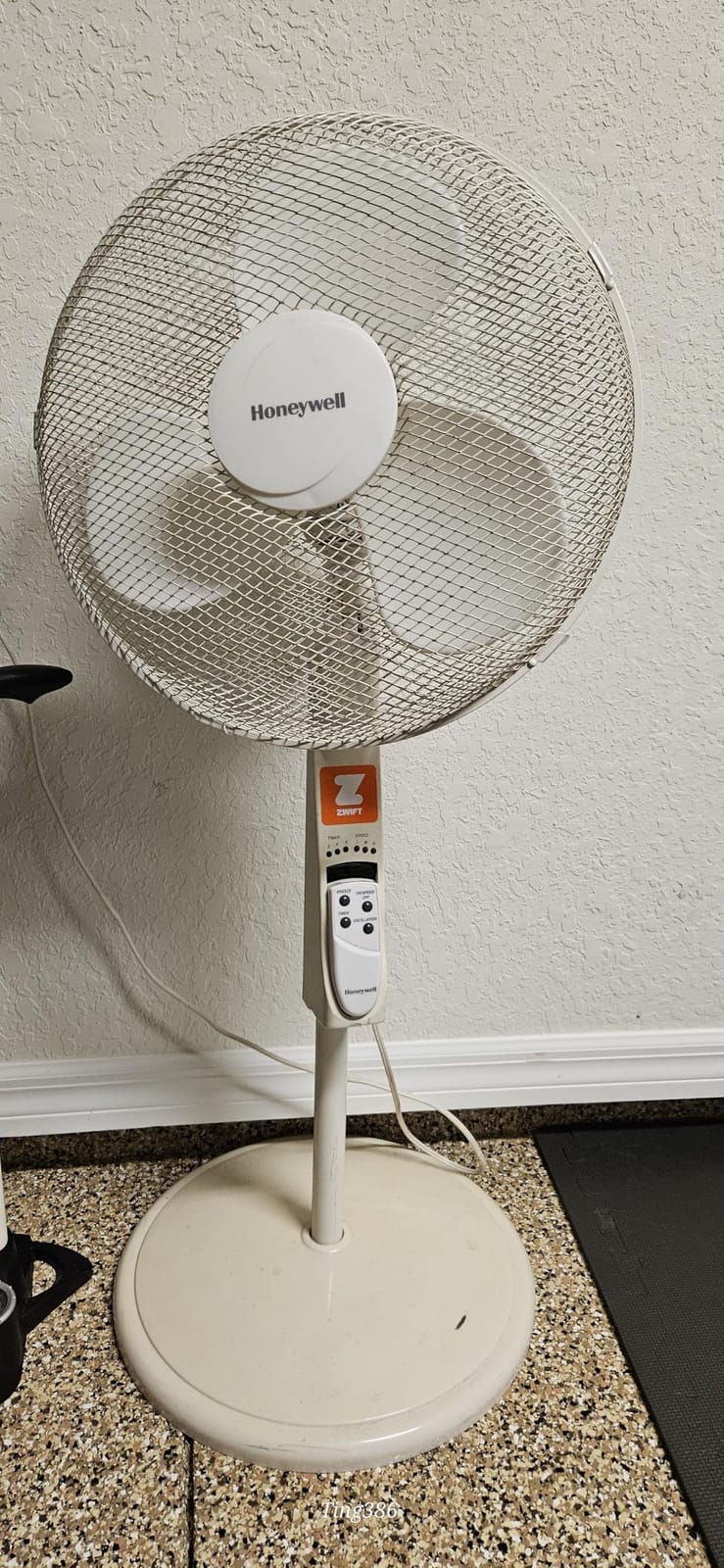
A standard household fan can move air for a cooling effect, but it has no trigger input, no tilt control, and no weather rating, and its speed is not repeatable between shows. A purpose-built fan gives you repeatable output and a way to cue it alongside the rest of the show.
The Verdict on the Best Fans for Hot Stage Lighting
The Lasko U15617 is our pick as the best all-round fan for hot stage lighting in 2026, because 375 CFM, a pivoting head, and two accessory outlets in a 12 pound body cover more everyday rig situations than any other unit here. Buy the AIRPLATE S7 when a microphone will be close, the AIRCOM T9 when you want cooling that follows the temperature, and the XPOWER FC-300 when the stage is big and open.
Whichever one you choose, decide first whether you are cooling a fixture or moving air for an effect. Everything else on this list is a variation on that single decision.