
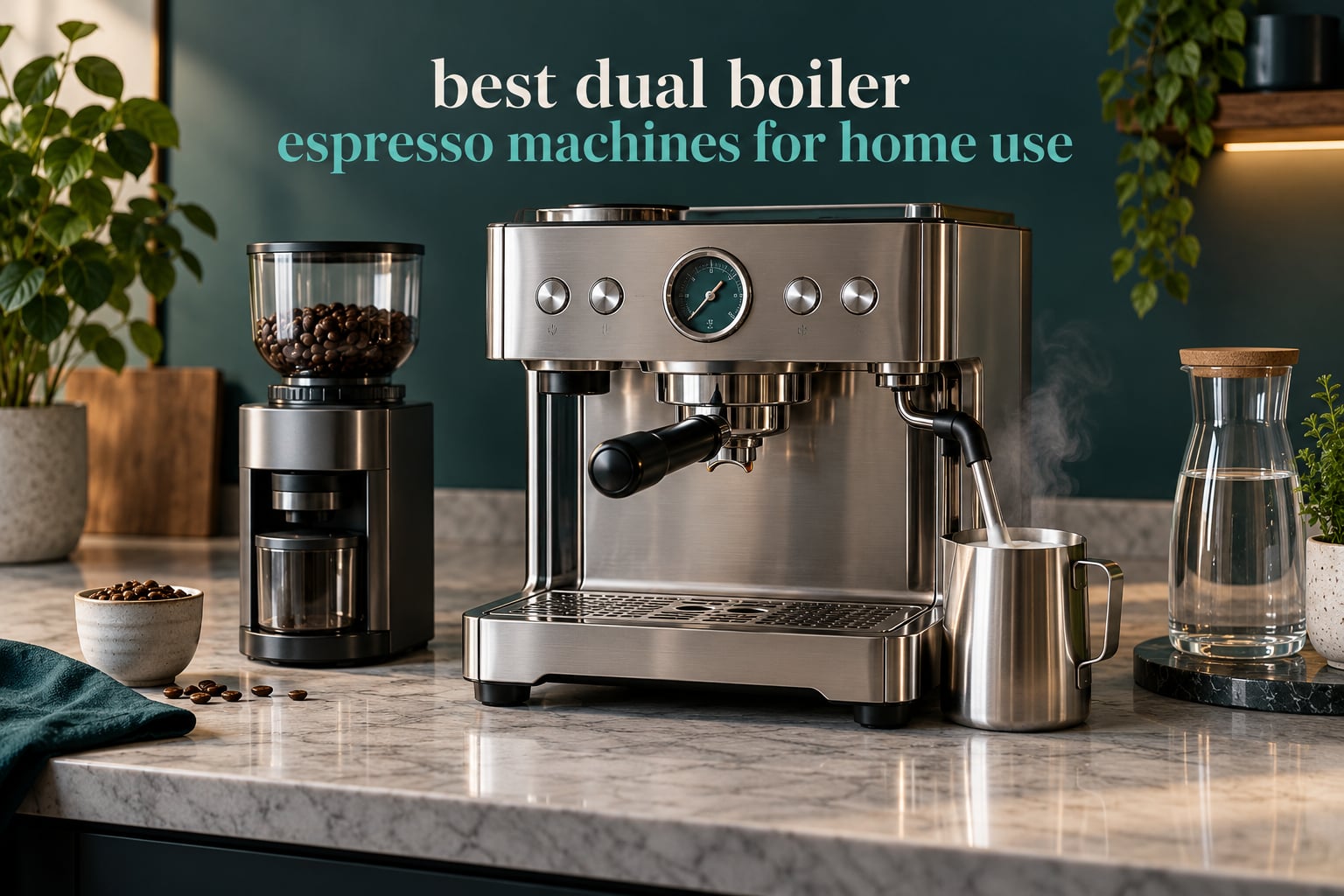
The best dual boiler espresso machine for most home kitchens is the AIRMSEN 20 Bar model, because it gives you two independent boilers, a 20 bar pump with pre-infusion, and an automatic frother in one compact body. If you want a manual steam wand and hand-textured microfoam instead, the Breville BES920XL Dual Boiler is the stronger long-term buy.
That conditional answer matters, because dual boiler is not one category. The machines in this roundup range from a compact plastic-and-steel body with a 51mm portafilter to a wide stainless steel machine with a heated group head and a full 58mm commercial basket. They all heat two separate vessels, but they are not interchangeable.
Before we get into the picks, here is what a dual boiler actually does. Two boilers means two independent jobs: one holds brew water near brewing temperature, the other holds steam water hot enough to drive a steam wand. Because neither boiler has to trade heat with the other, you can pull a shot and texture milk at the same time, and the brew temperature does not sag while you steam.
That is the whole idea, and it is the reason these machines exist. Everything else in this guide – group head types, PID control, steam boiler size, rotary versus vibratory pumps, 58mm versus 54mm baskets – is a detail about how well a given machine executes that basic promise.
We spent weeks reading owner reviews, comparing specification sheets, and looking at what people regret after a year of ownership rather than after a week of unboxing. Our rule for ranking was simple: how stable the machine is shot to shot, how fast it recovers steam, whether the parts are serviceable, and whether the thing actually helps the drinks you make. Product ratings and review counts below come straight from the manufacturer and customer data, not from our own scoring.
One thing to settle early: the grinder. A dual boiler fixes temperature and workflow. It does not fix stale beans or a blade grinder. If buying the machine means the grinder budget shrinks, buy a decent hand grinder and a cheaper machine instead, and come back to this page later.
Table of Contents
Top 3 Dual Boiler Espresso Machines for Home Use (October 2026)

AIRMSEN 20 Bar Dual Boiler
- Dual boiler 1350W plus 1000W
- 20 bar pump with pre-infusion
- Detachable auto frother
- 7.9 inch wide footprint

Breville BES920XL Dual Boiler
- Dual stainless steel boilers with heated group
- PID accurate to plus or minus 2F
- 58mm portafilter
- Manual articulating steam wand
Gevi Dual Boiler with Grinder
- Built-in burr grinder with 30 settings
- NTC and PID temperature control
- 58mm portafilter
- 2.8 liter tank
All 8 Dual Boiler Espresso Machines Side by Side in 2026
| Product | Specs | Action |
|---|---|---|
| AIRMSEN 20 Bar Dual Boiler |
|
Check Latest Price |
| Breville BES920XL Dual Boiler |
|
Check Latest Price |
| Gevi Dual Boiler with Built-In Grinder |
|
Check Latest Price |
 Electactic 15 Bar Dual Boiler with Grinder Electactic 15 Bar Dual Boiler with Grinder |
|
Check Latest Price |
 AMZCHEF 9 Bar OPV Dual Boiler AMZCHEF 9 Bar OPV Dual Boiler |
|
Check Latest Price |
 Breville Dynamic Duo Bundle Breville Dynamic Duo Bundle |
|
Check Latest Price |
 Tuni E2 Gen3 Dual Boiler Tuni E2 Gen3 Dual Boiler |
|
Check Latest Price |
 Kismile 20 Bar Dual Boiler with Grinder Kismile 20 Bar Dual Boiler with Grinder |
|
Check Latest Price |
What a Dual Boiler Actually Is, and What It Is Not
A single boiler machine heats one tank and does everything with it. That tank has to reach steam temperature to make milk drinks, which means it overshoots brewing temperature, then has to fall back down and wait. The temperature swings are why cheap single boilers feel inconsistent shot to shot, and why milk drinks take longer than they should.
A heat exchanger machine, by contrast, has one boiler for steam and routes brew water through a hot internal tube on the way to the group. It brews and steams at the same time, which surprises people. What it cannot do is hold a precise brew temperature, because the brew water picks up whatever heat the steam boiler happens to be carrying.
A dual boiler splits the two jobs into two vessels with two separate sensing and control loops. That is where dual PID and dual sensor language comes from, and it is the actual reason to spend more. You get a brew temperature you can set and repeat, plus steam that does not interrupt your extraction.
What it does not buy you is a better grind, fresher beans, or a machine that cleans itself. Every machine here needs backflushing, a purge, and a water filter cartridge replaced on a schedule. Owners on home espresso forums say it plainly and often: use scale-free water, and none of these boilers will suffer for it.
That last point is worth pausing on. Two boilers means roughly twice the internal water volume of a single boiler machine, which means twice the surface area for mineral scale to settle on. Hard water is the fastest way to shorten the life of the machine you just saved up for.
1. AIRMSEN 20 Bar Dual Boiler – The Best All-Round Pick for Most Homes
AIRMSEN 20 Bar Espresso Machine with Automatic Milk Frother, Cappuccino & Latte Coffee Maker with Quick Brew Dual Boiler (1350W + 1000W), Stainless Steel, 60oz Water Tank, Touchscreen
Dual boiler 1350W brew plus 1000W steam
20 bar pump with pre-infusion
7.9 x 10.2 x 12 inch body
Pros
- Brews and steams at the same time
- 20 bar pump with pre-infusion
- Detachable automatic frother cleans in seconds
- Touchscreen keeps drink selection simple
- Compact body fits smaller counters
Cons
- 51mm portafilter is narrower than the 58mm enthusiast standard
- Automatic frother gives less control than a manual wand
- Plastic body parts temper long-term durability
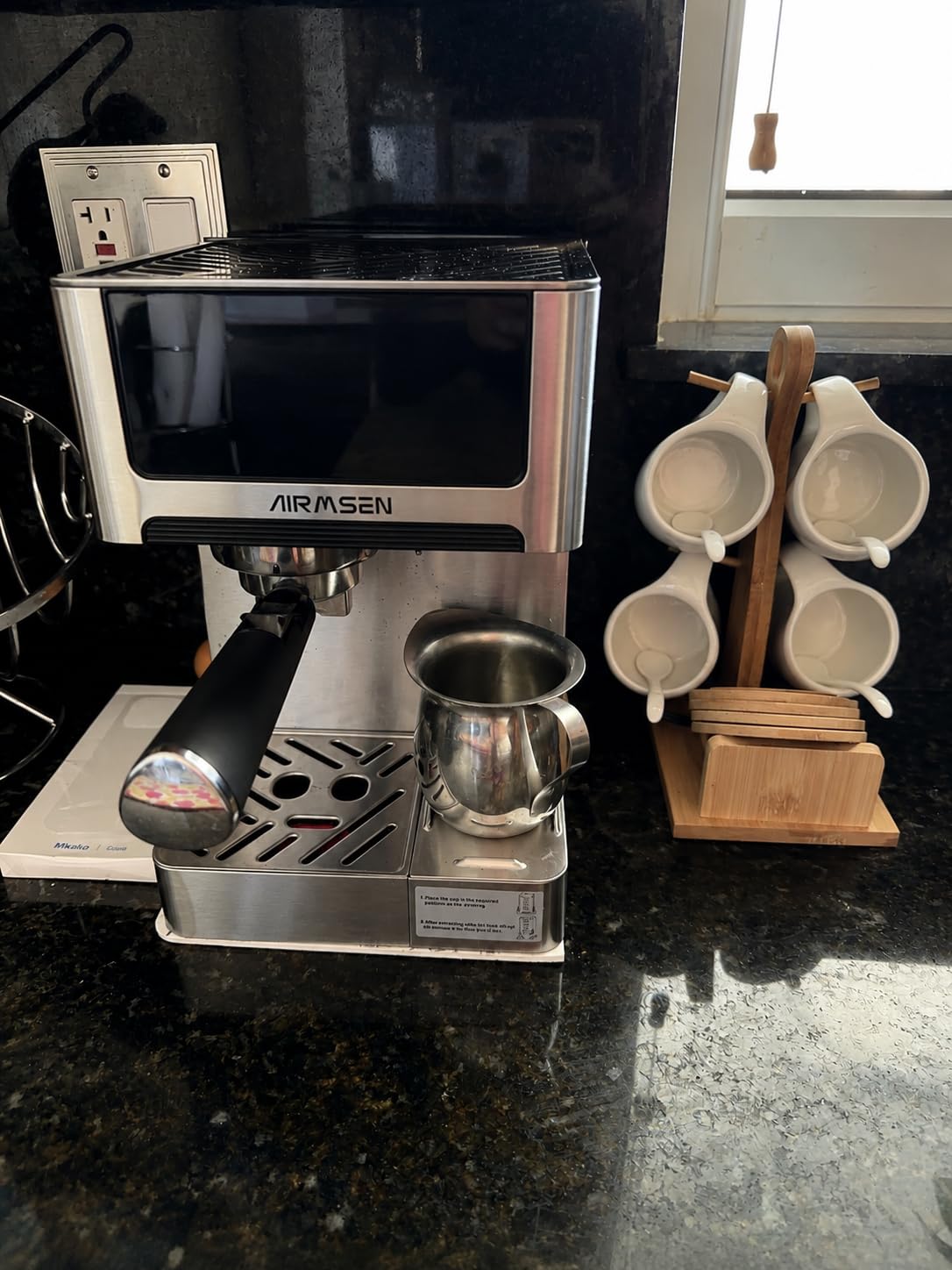
This is the machine we kept coming back to while assembling this list. It does the defining dual boiler thing – a 1350W brew boiler and a 1000W frothing boiler running side by side – and it does it inside a footprint of 7.9 by 10.2 by 12 inches. Almost nothing else in this roundup fits under a cabinet that easily.
The 60oz tank means you refill roughly every four or five days depending on how many drinks you make. That is a real convenience, because pulling a reservoir out from the back and refilling it is the chore that quietly decides whether a machine stays on the counter or gets pushed into a cupboard.
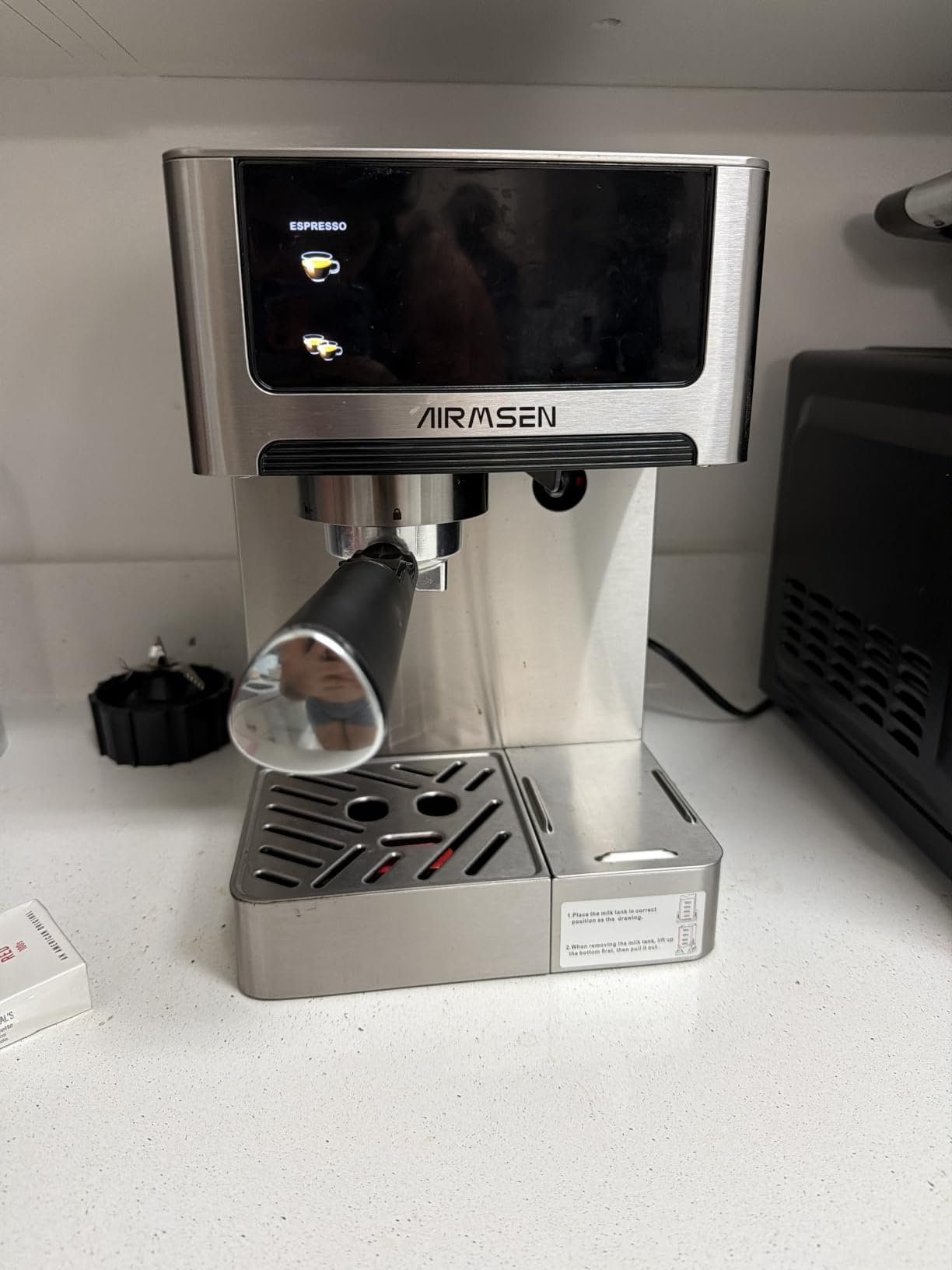
The 20 bar pump with pre-infusion is the number that gets advertised, but the useful part is the pre-infusion itself, which wets the puck gently before full pressure hits it. Owners report shots with good crema even after modest dialing in, and the 4.2 average across 599 reviews is the largest review base in this group.
The touchscreen is genuinely easier than a row of physical buttons for anyone who does not want to memorise a sequence. Cup clearance reaches 4.1 inches, which will not take a tall latte glass without moving the machine, but it handles a cappuccino bowl fine.
Who the AIRMSEN suits best
This suits a household that wants cappuccinos and lattes without learning manual milk texturing. The detachable automatic frother does the vortex for you, and because it detaches, cleaning it takes seconds rather than the wipe-and-purge routine a steam wand demands.
It also suits anyone working with a genuinely small kitchen. At 12 inches tall and 9.3 pounds, it is the easiest machine here to move, store, and pull forward for refilling.
Who should skip it
Skip it if you already know you want to practise latte art, because an automatic frother removes the exact skill you would be practising. The 51mm basket is also narrower than the 58mm baskets used by enthusiast machines, so your dosing tools and distribution gadgets will not transfer across.
Avoid it as an only machine if you care about longevity. Reviews do include build-quality complaints from a minority of buyers, and the plastic components mean it is not the choice for someone hoping to keep a machine running for a decade.
2. Breville BES920XL Dual Boiler – Best for Hand-Textured Microfoam
Breville BES920XL Dual Boiler Espresso Machine, Brushed Stainless Steel
Dual stainless steel boilers
Heated group head with PID at plus or minus 2F
58mm portafilter, 28.4 pounds
Pros
- Brews and steams simultaneously
- PID and heated group give repeatable shots
- 58mm basket suits specialty dosing
- Articulating wand for manual microfoam
- LCD shot clock and auto-on timer
Cons
- Boiler leaks and o-ring failures appear in some reviews
- Thin cladding over plastic dents and can loosen
- No grinder so dose prep is a separate job
If your goal is hand-textured microfoam, the Breville BES920XL is the machine in this list built for it. The articulating steam wand moves freely, which is what lets you roll the pitcher surface to stretch the milk and then settle it into a glossy finish. Automatic frothers simply cannot imitate that control.
Thermally it is the most thoughtfully engineered machine here. Two stainless steel boilers, a heated group head, and PID control accurate to plus or minus 2 degrees F, with a low-pressure pre-infusion stage and an over pressure valve to keep bitter compounds out of your cup. That is a real engineering brief, not a sticker.
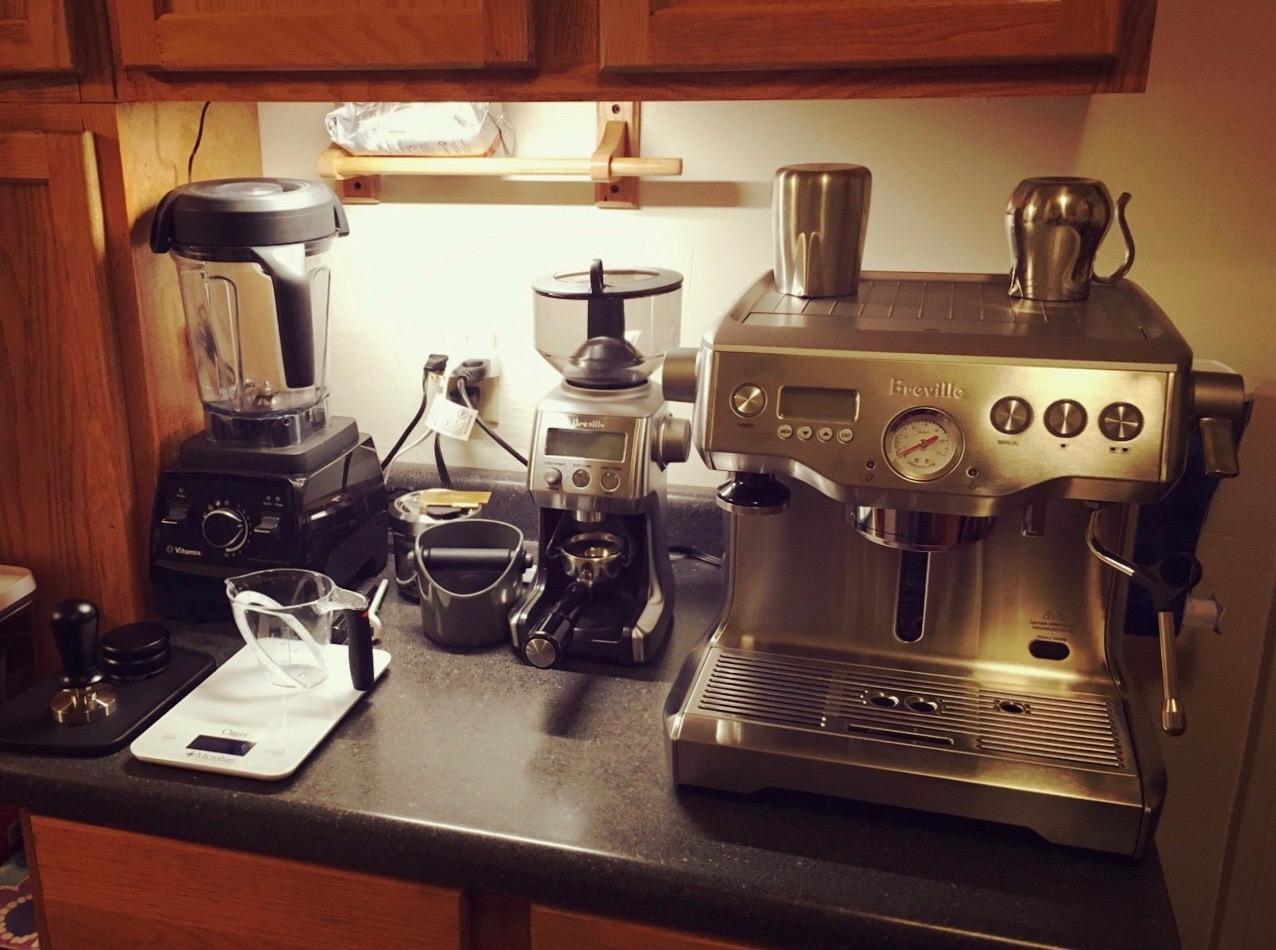
The 58mm stainless steel portafilter sized for 19 to 22 gram doses is the other reason enthusiasts gravitate here. The same baskets, distributors, and dosing rings work across a huge range of enthusiast machines, so nothing you buy for it is wasted. A two year limited warranty is included, along with a Razor dosing tool, an integrated tamper, and a water hardness test strip in the box.
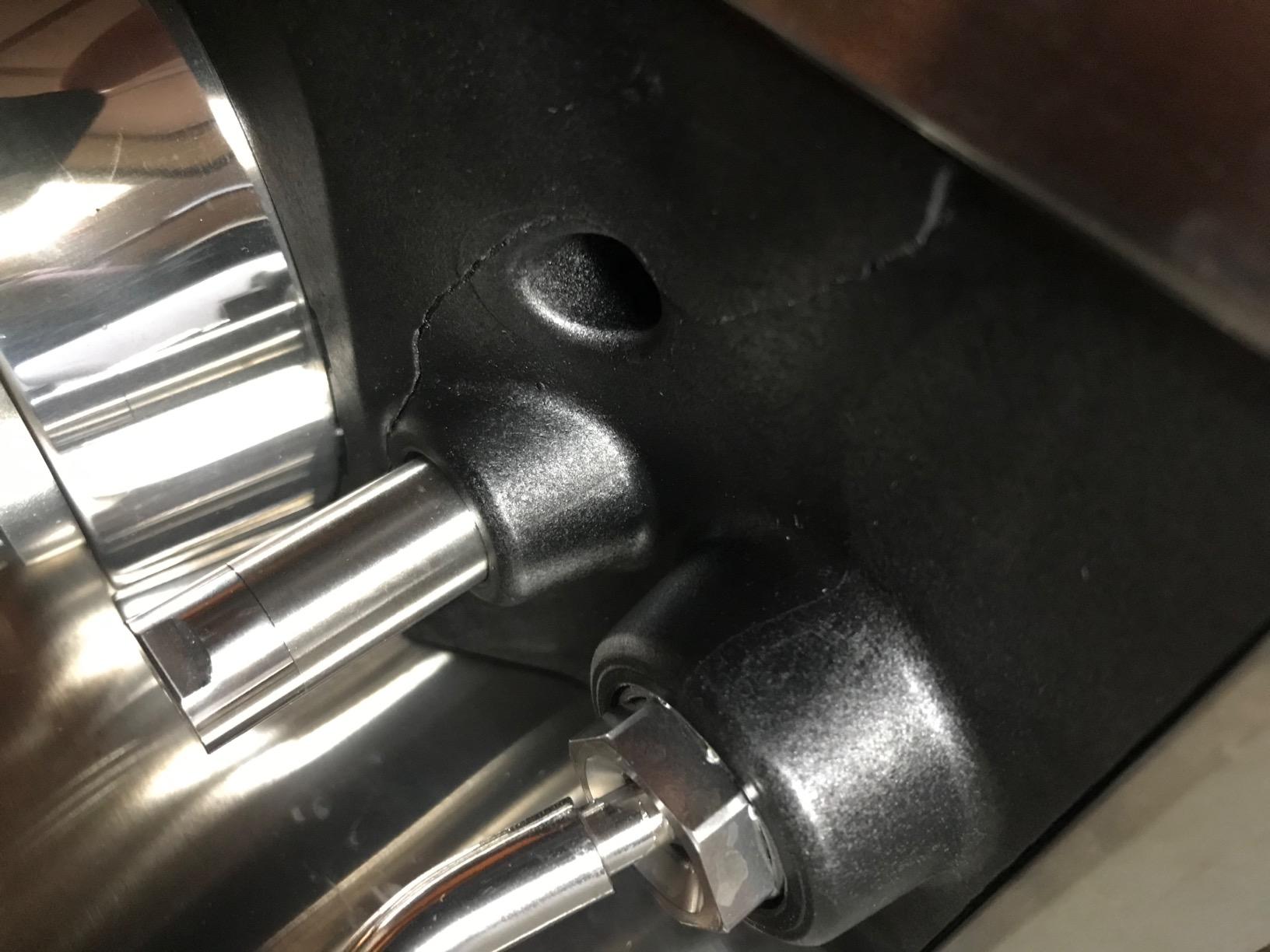
Reliability is the honest weak point. Across 389 reviews holding a 4.2 average, owners repeatedly describe boiler leaks and o-ring failures sometimes appearing within months, plus steam boiler problems after a few years. This is the machine that home espresso forum regulars talk about when they say it is a great dual boiler that needs attention.
What you should know before buying
It is heavy at 28.4 pounds and 14.8 inches wide, which is fine on a worktop but impossible on a small shelf. Under-cabinet clearance needs measuring, and the water tank is 84oz so refills are infrequent but the reservoir is large.
It also does not clean itself. Water filters and cleaning tablets are an ongoing cost, and none of the descale cycles on machines like this are gentle on a steam boiler if your water is hard.
Who should look elsewhere
Choose something else if reliability over a long ownership period is your top priority, or if you want latte art without a manual wand. For a first machine with no grinder, you would also be starting with two separate purchases, since nothing is built in.
3. Gevi Dual Boiler with Built-In Grinder – Best Value Pick
Gevi Dual Boiler Espresso Machine With Built‑In Burr Grinder
Dual boiler with NTC and PID control
Built-in conical burr grinder, 30 settings
58mm portafilter, 2.8 liter tank
Pros
- Brews and steams at the same time
- PID plus NTC keeps shots consistent
- Built-in grinder removes a second purchase
- 58mm basket with manual water control
- Large 2.8 liter tank
Cons
- No user-adjustable brew temperature or pre-infusion
- Integrated grinder is adequate rather than enthusiast grade
- Around 15 cups of dialing in needed first
- Larger footprint variant takes real counter space
The Gevi solves the problem most buyers hit first, which is that a machine plus a grinder is two purchases and a lot of money. The built-in conical burr grinder offers 0 to 30 grind settings and doses into the 58mm portafilter, so you can go from beans to a shot without a second appliance on your counter.
It runs a dual boiler layout with NTC and PID temperature control regulating extraction and frothing independently, plus a professional steam wand for cappuccinos, lattes, and flat whites. A 2.8 liter tank cuts down on refills, and the tank and drip tray both detach for cleaning. At 4.5 across 385 reviews, it pairs one of the strongest ratings in this group with a review base large enough to trust.
What you give up is control. There is no user-selectable brew water temperature and no pre-infusion time adjustment, and both are exactly the settings an experienced user reaches for first when chasing a specific flavour.
How the learning curve feels
Owners consistently report roughly 15 cups of dialing in before results settle down. That is not a defect, it is a manual machine with no automation guiding you, and it means you will be adjusting dose and grind rather than pressing a button and walking away.
The 58mm portafilter is a genuine plus. Single and double wall baskets are included, and manual water addition gives you more control than a preset drink machine, which is the direction most beginners should be heading.
Who should skip it
Skip it if you want to change brew temperature by the degree, or if you plan to grow into flow control and pressure profiling later. The grinder is also the part of this machine that most enthusiasts eventually replace, so treat it as a capable starting point rather than a final one.
Measure your counter first. The larger of the two footprint variants is 16.61 inches deep by 15.66 inches wide by 18.85 inches tall, which is genuinely large for a kitchen machine.
4. Electactic 15 Bar Dual Boiler with Grinder – Best on a Tight Budget
Electactic 15 Bar Espresso Machine with Grinder & Milk Frother, 58mm Expresso Coffee machines, Stainless Steel Coffee Maker for Cappuccino and Latte, Perfect for Home and Café Use-Dual Boiler
Dual boiler brewing and steaming
PID control with pre-infusion
Integrated grinder and 58mm portafilter
Pros
- Brews and steams simultaneously
- Integrated grinder for fresh grounds
- PID plus pre-infusion gives repeatable shots
- Steam wand handles microfoam
- Runs quieter than expected for its size
Cons
- Integrated grinder can stop working after a few months
- Rinse cycles waste a noticeable amount of water
- 26.2 pound body and wide footprint
- Support responsiveness is a recurring complaint
If the word in your head is budget, this is the machine to look at. You get a genuine dual boiler system, PID temperature control, low-pressure pre-infusion, a professional steam wand, and an integrated grinder in one box. Very few setups under this price tier include all four.
The pre-infusion design wets the grounds before full extraction pressure arrives, which reduces channeling and evens out the shot. Buyers who came from super-automatic machines rate the espresso, crema, and microfoam well above what they expected at this level. At 4.1 across 249 reviews, it is the lowest rated here, and the gap tells you what the compromises are.
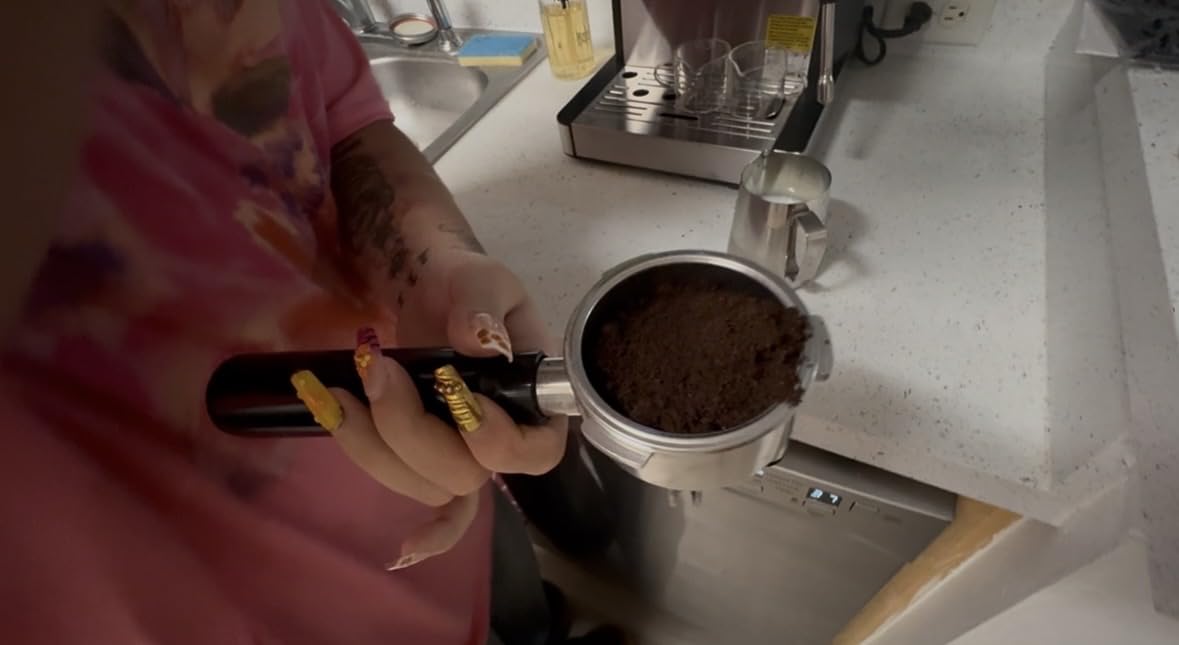
The 58mm portafilter ships with four precision filters, a tamper, a cleaning kit, and a milk pitcher, so the accessory bill is basically zero. That 58mm standard is worth more than it sounds: it means the baskets, distributors, and tampers you buy for it work with most enthusiast machines too.
The grinder is the component to watch. Owners report it can stop working after a few months, and when that happens vendor responsiveness becomes the next problem. Treat the integrated grinder as a convenience for the first year rather than an asset you will keep for a decade.
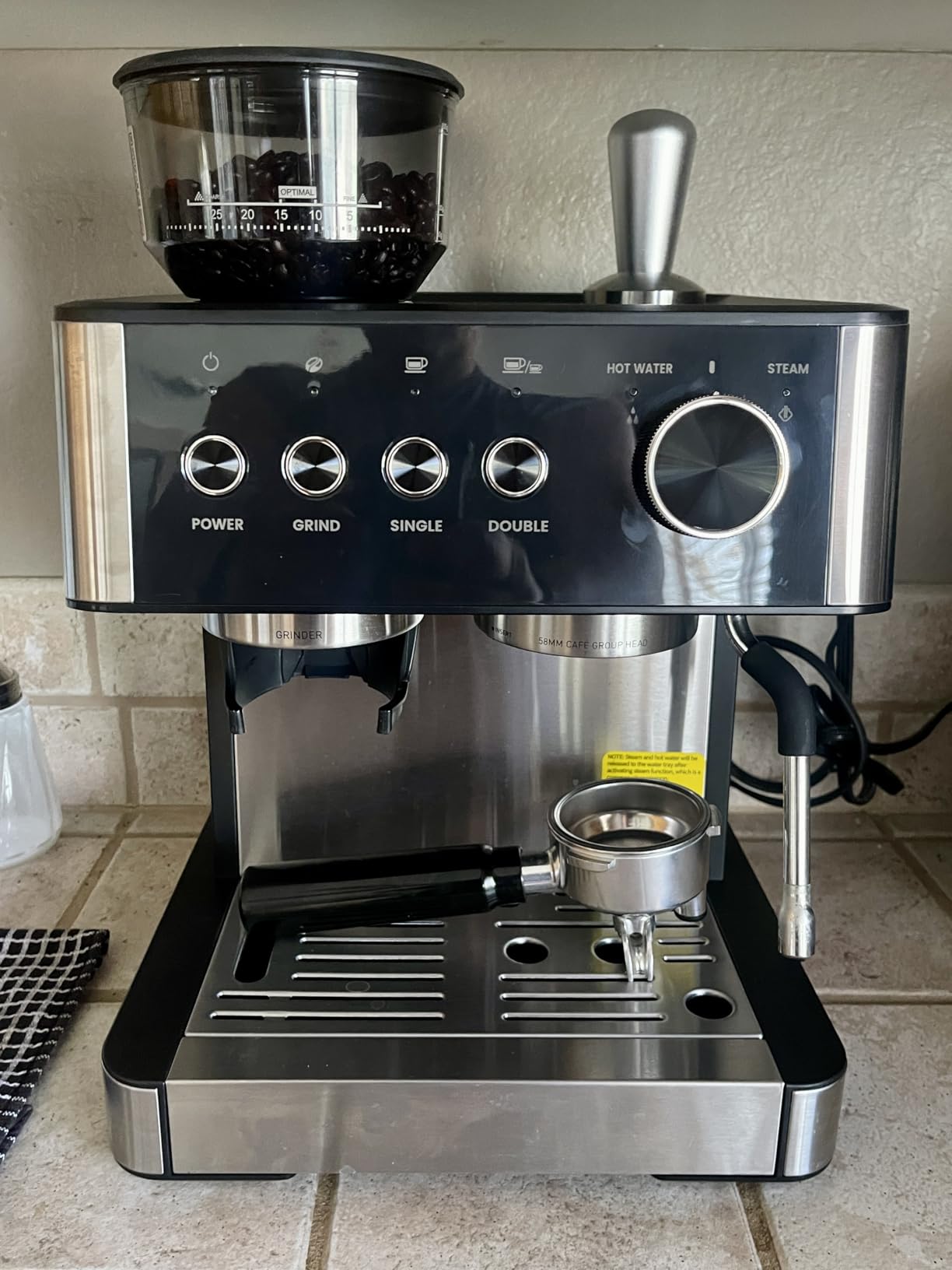
Best fit for a first machine
This suits someone moving up from a pod or super-automatic setup who wants a manual workflow and a grinder without doubling their spending. The learning curve is real but short, because a 58mm basket and manual tamping teach the fundamentals quickly.
It also suits anyone who wants espresso and milk drinks at the same time and does not care about dial-in precision to the gram.
Where it falls short
At 26.2 pounds and 16.34 inches wide by 15.75 inches tall, this is a big appliance that will dominate a counter. Measure the space, including clearance above the hopper if it goes under cabinets.
Some owners also report needing a second button press to reach full extraction strength, and the machine uses a noticeable amount of water during rinsing cycles. Neither is serious, but both are things you will notice every morning.
5. AMZCHEF 9 Bar OPV Dual Boiler – Best for Temperature Control
AMZCHEF 9 Bar OPV Espresso Machine with Automatic Milk Frother, Dual Boiler
Dual PID controllers and dual NTC sensors
OPV pressure window of 9 to 12 bar
Brew temperature 190-205F with PTC group heater
Pros
- Dual PID and dual NTC give very steady temperature
- Real-time pressure and temperature displays
- Extensive brew temperature and pre-wetting control
- 1650W steam system heats quickly
- Automatic frothing station is hands-free
Cons
- Number of settings takes real time to learn
- No integrated grinder so beans are ground separately
- Steam wand less forceful than premium manual wands
This is the machine for someone who thinks in degrees and seconds. Dual PID controllers with dual NTC sensors handle brew and steam separately, and you can set brew temperature anywhere from 190 to 205F and milk temperature from 113 to 194F. Pre-wetting is adjustable from 0 to 30 seconds and extraction time from 10 to 120 seconds.
Pressure is handled properly too, through an OPV that regulates extraction in a 9 to 12 bar window rather than simply pushing a headline number. The active PTC group head heater keeps the brew path warm alongside the PID loop, which is the detail that separates stable shots from drifting ones.
Two independent 1650W heating systems mean no waiting between extraction and frothing, and a dual display shows brewing pressure, water temperature, and extraction time while you work. The 4.6 average is the highest star rating in this roundup, though it comes from 76 reviews, so treat it as promising rather than proven.
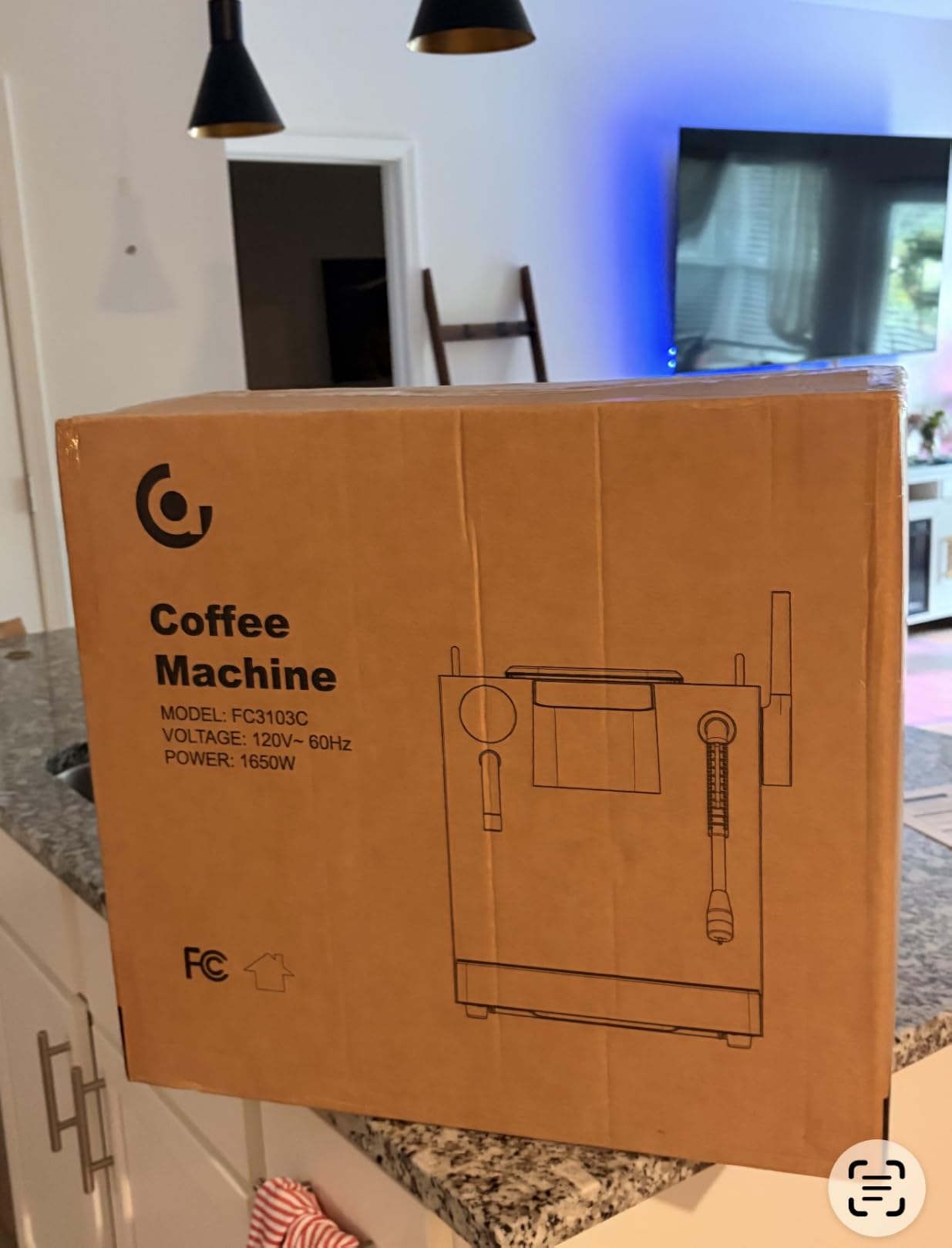
The automatic angled frothing station positions the pitcher at the correct angle for a consistent vortex, with a dual-hole nozzle. You get smooth repeatable microfoam without watching the milk, which is a real advantage if you are making several drinks in a row.
Who will get the most from it
This suits a drinker who rotates roasts and wants to change brew temperature to suit them. It is one of the few machines at this level where the adjustment is genuinely exposed rather than hidden behind a menu, and the dual displays tell you what is happening instead of leaving you to guess.
It also suits someone who wants espresso and milk drinks back to back without waiting, given the dedicated steam system.
Who should pass
Pass if you want a hands-off first machine. The number of settings is the single most common criticism, and consistency arrives only once you know what each control does. There is also no integrated grinder, so beans have to be ground separately before any of this matters.
The steam wand is also reported as less forceful than premium manual wands, which matters if you are batching milk for more than two drinks. And the included milk pitcher markings are faint.
6. Breville Dynamic Duo Bundle – Best Complete Starter Setup
Breville Dynamic Duo Espresso Machine Bundle | Dual Boiler + Smart Grinder Pro | Stainless Steel | BEP920BSS
Dual boiler machine plus Smart Grinder Pro
60 grind settings with auto grind and dose
15 bar pump delivering 9 bar after pre-infusion
Pros
- Machine and grinder in one purchase
- 60 grind settings with auto grind and dose
- Dual boilers plus heated group brew and steam together
- 58mm portafilter holds a 22g dose
- 266F steam for fast microfoam
Cons
- Inherits the Breville dual boiler reliability questions
- 45 pound bundle is heavy and awkward to move
- Machine and grinder carry different warranty terms
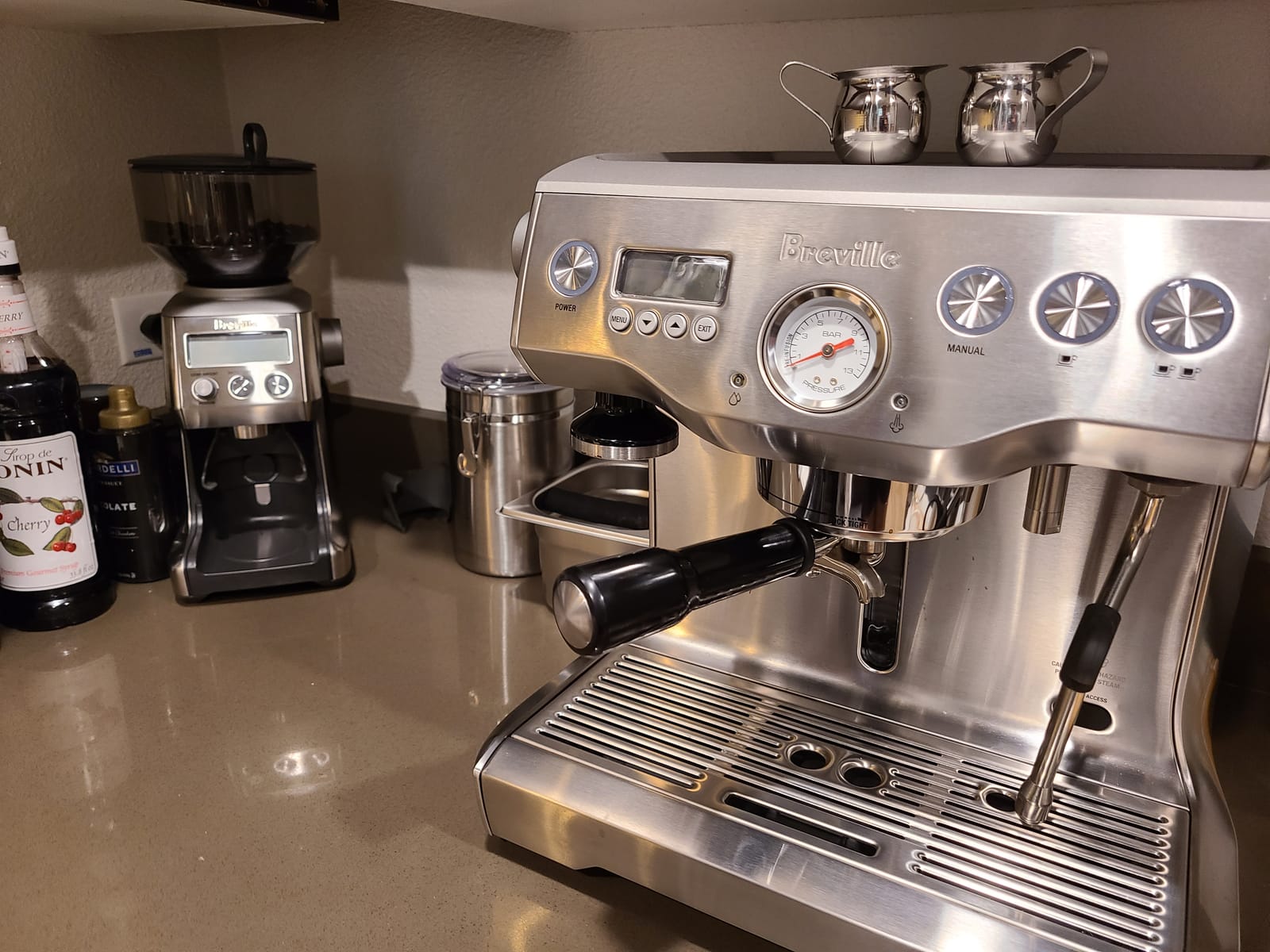
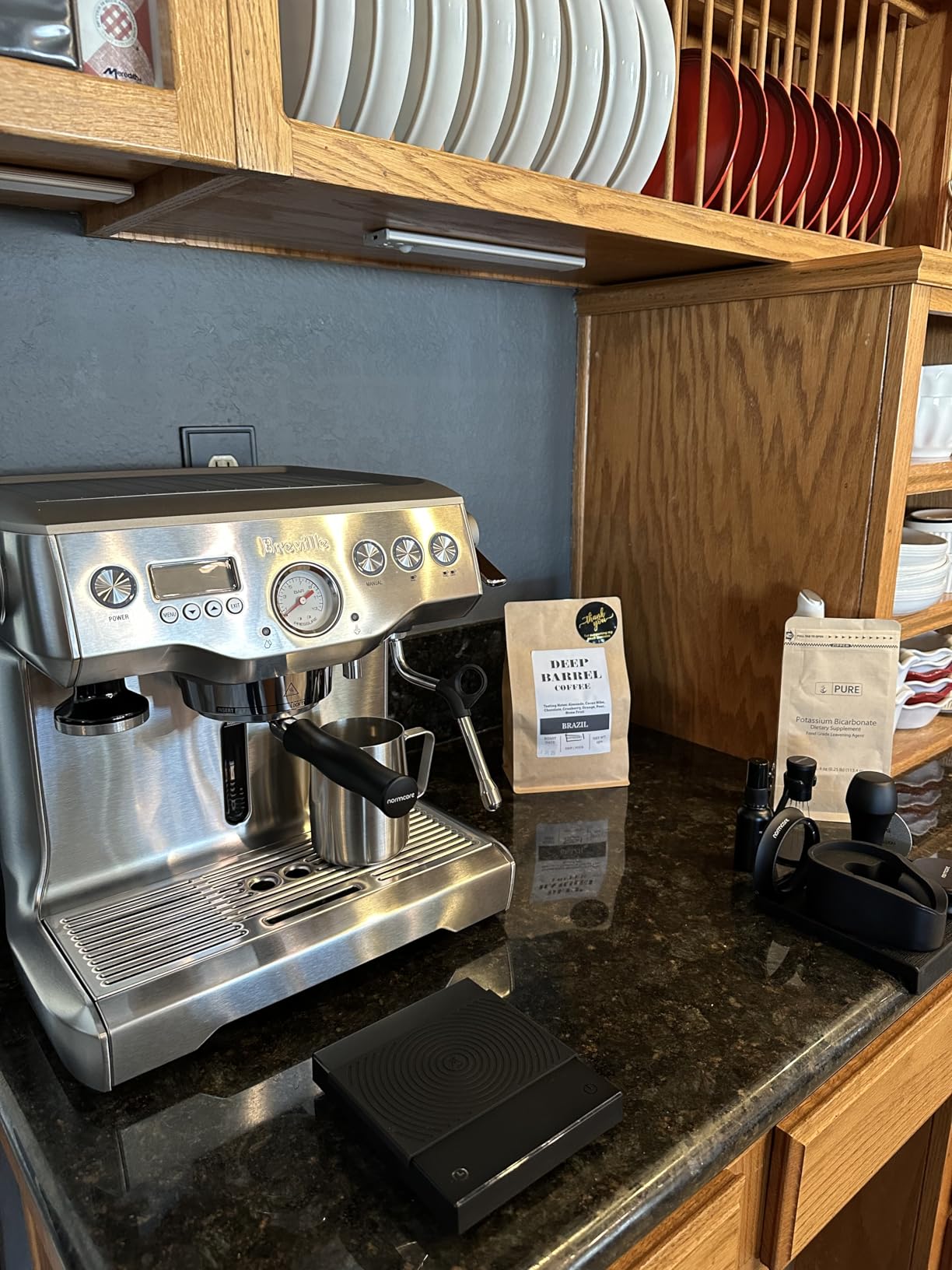
Buyers rate this bundle highly, and 81 percent of the 138 reviews are five star. The reason is straightforward: it arrives as a working cafe-grade home setup rather than a machine you then have to pair. The Smart Grinder Pro has 60 grind settings with auto grind and dose, which removes the two steps beginners get wrong most.
Underneath, it is the same dual boiler architecture as the standalone Breville, with a heated group head under PID control, a 15 bar Italian pump delivering 9 bar extraction after low-pressure pre-infusion, and a 58mm stainless steel portafilter that holds a 22g dose with dual and single wall filters.
Volumetric or timed shot control lets you start on automatic and move to manual as you learn, and 266F steam produces microfoam quickly. It is genuinely the shortest path from opening the box to a drink that tastes like the ones you pay for away from home.
The trade-offs in this bundle
Warranty terms differ between the two components: two years on the machine, one year on the grinder. That is worth knowing if the grinder is the part most likely to fail first, and it is a reminder that the warranty clock on the machine and the warranty clock on the grinder do not run together.
The bundle weighs 45 pounds. Locking wheels help, but if your counter is tucked into a corner this is a two-person job to reposition.
Who should buy it
Buy this if you are setting up your first real espresso station and you have already decided the machine and grinder go together. The pairing removes an entire category of decision and an entire category of mistake.
Skip it if the grinder is already sorted, since you would be paying for something you own. The underlying dual boiler reliability concerns owners report on the standalone model carry over here too, along with the manual descaling and water filter upkeep the machine does not handle for you.
7. Tuni E2 Gen3 Dual Boiler – Best for Small Kitchens
Tuni E2 Gen3 Dual Boiler Espresso Machine with Super+ Steam Power, Ivory
All-metal 58mm brew head with pressure gauge
20 bar ULKA pump
Dual boiler with Super Steam mode, 13.2 inch tall
Pros
- Froths immediately after pulling a shot
- All-metal 58mm group with good heat stability
- Visible pressure gauge for real-time monitoring
- Super Steam mode gives dry powerful steam
- Compact footprint for the feature set
Cons
- Needs a separate grinder
- 20 bar figure is marketing rather than a regulated OPV
- One year warranty extendable by six months with registration
- Smaller review base than the rest of this group
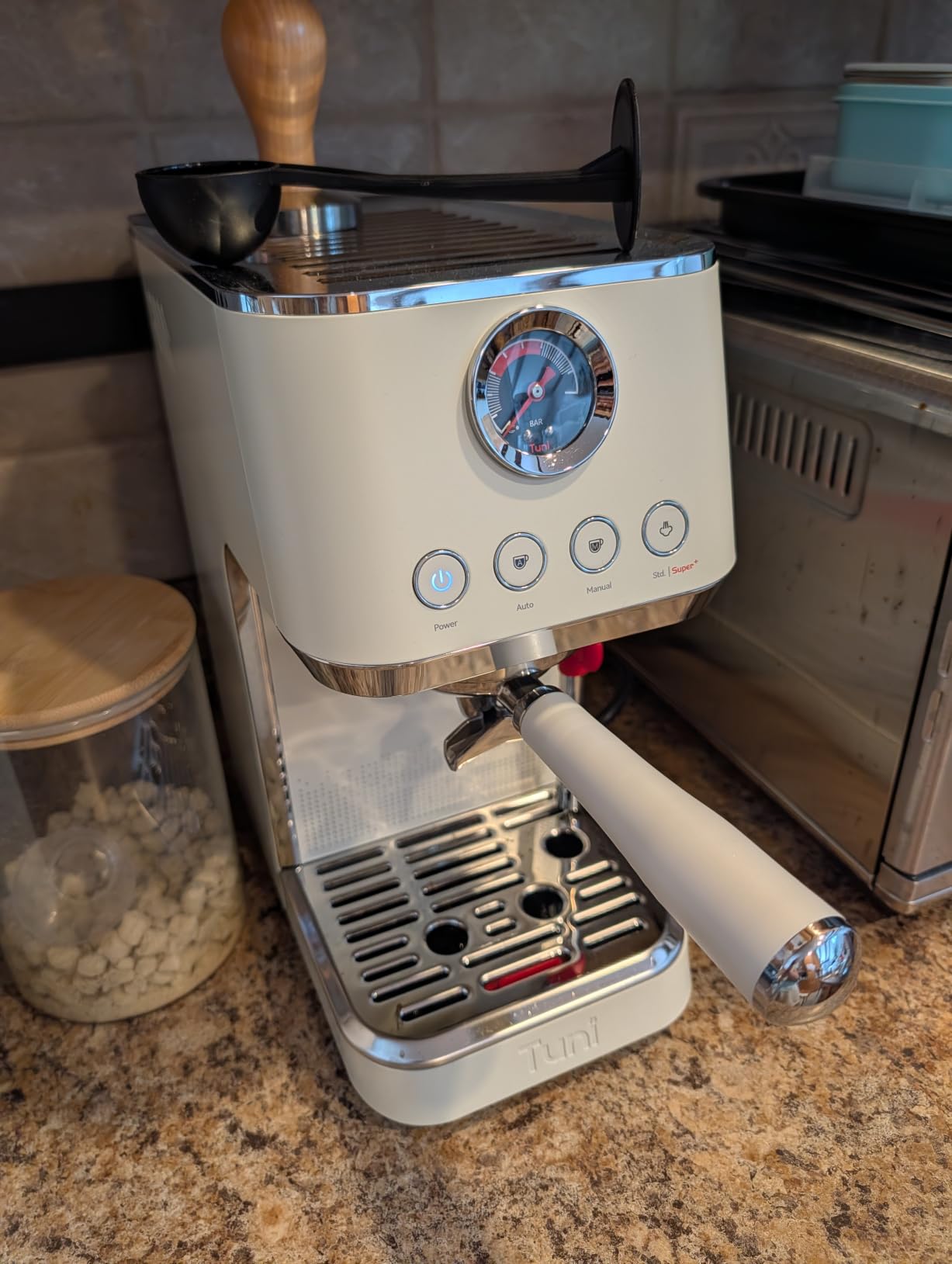
The Tuni E2 Gen3 packs a surprising amount into 12.9 by 7.4 by 13.2 inches. The brew head is a commercial-grade 58mm all-metal assembly with a visible pressure gauge, which means you can watch extraction pressure while the shot runs instead of trusting the machine to hold it. That gauge alone changes how you learn to dial in.
It runs a dual boiler structure with PID plus NTC temperature control and a built-in auto pressure release after extraction, so the portafilter does not spit when you knock out the puck. The Super Steam mode gives continuous, dry steam for fine microfoam, and owners confirm you can froth immediately after extraction without waiting.
Hot and cold brewing are both supported, using ice water in the tank, which covers espresso, latte, cappuccino, americano, and cold brew from one machine. Five colour options are offered, which is a small thing but a real one if the machine is living in a visible kitchen.
What the compact body means in practice
At 13 pounds it moves easily, and the narrow 7.4 inch width means it can sit beside a stand mixer. Cup clearance and reservoir access are both straightforward because there is no grinder tower to work around, which is the usual reason a machine that measures small still feels awkward.
The 400ml milk pitcher suits one or two drinks rather than batching, which fits a household rather than a home cafe.
Where to be cautious
The 40-review base is the smallest among the well-reviewed machines here, and newer listings carry less long-term data. The 20 bar ULKA pump figure is marketing pressure rather than a regulated OPV window, so do not read it as the same thing the AMZCHEF machine actually does.
The warranty is one year standard, extendable by six months with registration. Register it. And plan on buying a grinder separately, because there is none built in.
8. Kismile 20 Bar Dual Boiler with Grinder – Best for Quiet Mornings
Kismile 20 Bar Dual Boiler Espresso Machine with Grinder & Milk Steamer
Dual boiler with PID within plus or minus 2C
Built-in burr grinder, 30 grind settings
Grinds directly into the 58mm portafilter
Pros
- Brews and steams at the same time
- Integrated grinder good enough to start with
- 58mm basket delivers a strong double shot
- Quieter than comparable machines
- Front-opening tank makes refilling easy
Cons
- Some owners report a steam wand with no steam output
- Bean hopper is small and needs frequent refills
- Bulky body needs a dedicated sturdy counter
- Manual mode means regular descale and backflush
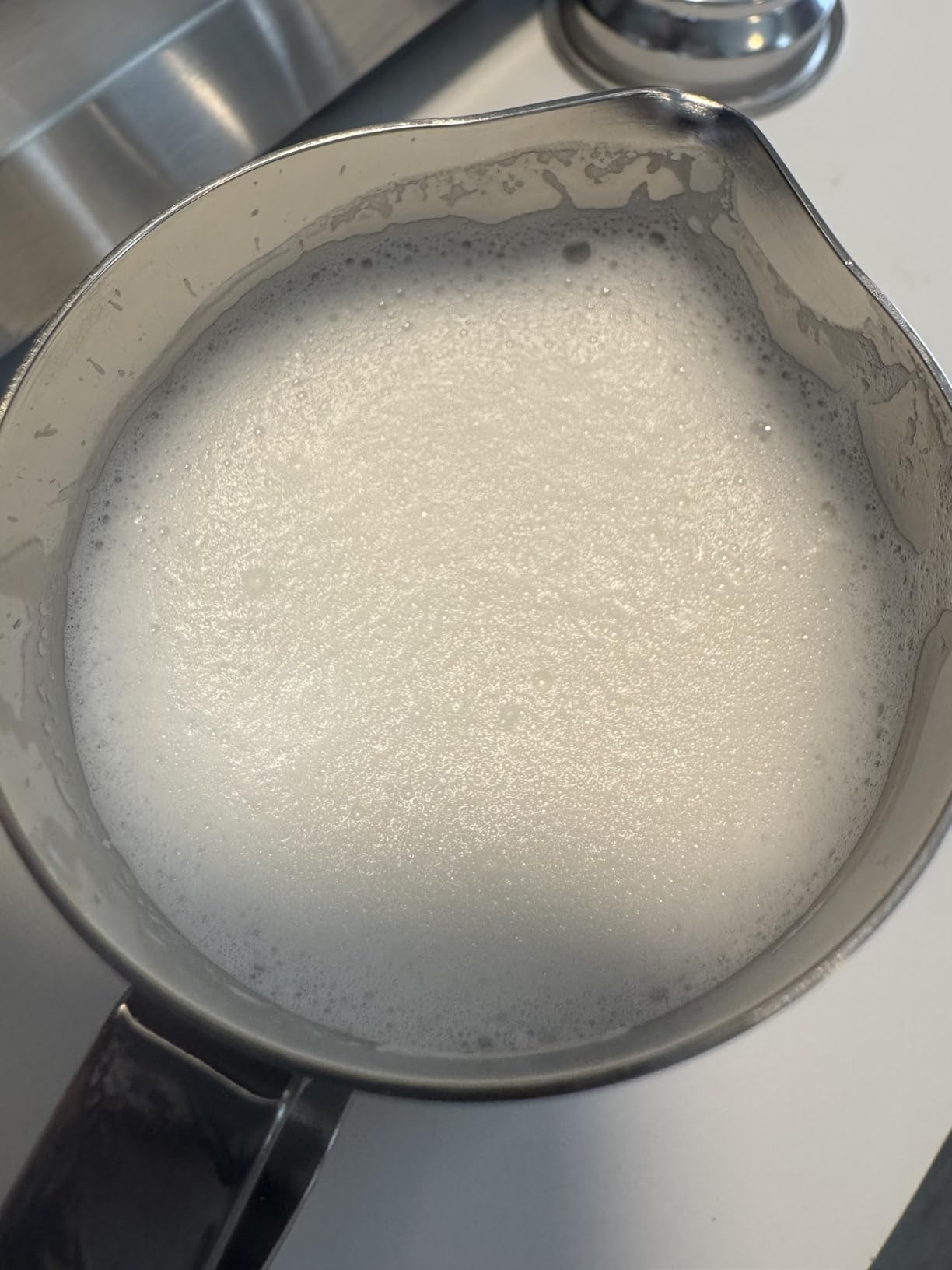
The Kismile is the quietest thing in this roundup, and for an early-morning kitchen that matters more than any spec sheet. Reviewers who received a working machine describe a genuinely capable dual boiler with separate heating elements, simultaneous extraction and steaming, and frothing quality that is consistently praised.
The dual boiler system warms quickly and holds temperature within plus or minus 2C, with PID control and a dual LED screen setup showing grind time, brew status, and pressure. A pressure gauge is included, which is unusual at this level and useful when you are learning what an even shot looks like.
The front-opening hinged water tank is the detail owners mention most warmly. Refilling does not mean pulling the machine out from under a cabinet and lifting a tank over your head, and on a 12.05 by 13.78 by 13.78 inch footprint that convenience matters.
What it does well
The integrated conical burr grinder with 30 settings doses straight into the 58mm portafilter, so you grind and tamp without moving beans around. Reviewers say that is good enough that a separate grinder is not an immediate purchase, which changes the total cost of getting started.
One knob switches between steam and hot water, and the hot water function handles tea and wand rinsing. Stainless steel construction wipes down easily, and the full kit includes baskets, tamper, cleaning pin, brush, and a toolbox.
What to check before ordering
There are reports of machines arriving with a steam wand that produces no steam at all. That is a manufacturing variance rather than a design fault, but it is the single most serious negative in the reviews and you should know it before you buy.
Also expect a small bean hopper that needs frequent refilling, a bulkier body than the class suggests, and hopper height to be measured if the machine goes under cabinets. Manual mode with no automated cleaning means regular descaling and backflushing, and moving the machine can cause the bottom seal to leak a little water. At 17 reviews this is the thinnest evidence base here.
How to Choose a Dual Boiler: 7 Criteria That Matter
1. Group head design. A saturated group, like the all-metal 58mm assembly on the Tuni, holds its own heat and delivers stable shots. A thermosiphon design relies on a loop of water circulating through the group, which is efficient but more sensitive to pump and plumbing behaviour. A saturated group is the harder-working, more forgiving option at home.
2. PID versus basic thermostat control. PID holds a set temperature far more tightly than an on-off thermostat, which is why every machine here advertises one. Dual PID or dual sensor control extends that to the steam side. Check what is actually adjustable by the user, not just what the panel displays.
3. Portafilter diameter. This is the accessory ecosystem you are joining. A 58mm portafilter is the enthusiast standard and works across brands, so baskets, distributors, and dosing rings are reusable. The 51mm basket on the AIRMSEN is smaller, which limits what you can buy for it later.
4. Steam boiler capacity and recovery. This is what decides whether you can make four flat whites in a row without waiting. Look at the steam wattage and boiler size rather than the steam wand tip. A 1650W dedicated steam system heats fast; a smaller element recovers slowly between drinks.
5. Pump type. A vibratory pump is cheaper and adequate. A rotary pump is quieter, smoother, and easier on the puck because flow is steadier. Where manufacturers advertise a high bar figure, check whether an OPV actually regulates it into a sane window, as the AMZCHEF machine does, rather than simply pushing maximum pressure at the puck.
6. Reservoir or plumbed in. None of these machines is really designed for permanent plumbing. Reservoir capacity decides how often you refill, and the front-loading or hinged tanks on the Gevi and Kismile make a measurable difference to daily friction.
7. Counter footprint and cup clearance. The machines here range from 7.9 inches wide and 12 inches tall to 16.34 inches wide and 18.85 inches tall. Measure the space above the machine for the cup and above the hopper if a grinder is built in, not just the footprint on the counter.
And the criterion that is not on any spec sheet: spend at least 40 percent of your total budget on the grinder. A mediocre grinder will make a dual boiler look like it does not work.
Water Hardness, Descaling, and What Fails First
Dual boilers are more vulnerable to scale than single boiler machines, because there is more internal water volume and more heated surface. The most repeated maintenance instruction across home espresso forum threads is blunt: use scale-free water. Treat it as part of the purchase, not an afterthought.
Test your tap water with the strips included with machines like the Breville, then treat it. A water filter or a scale inhibitor cartridge is cheap next to replacing a steam boiler element. Owners are consistent on this point: a large dual boiler on untreated hard water is a more expensive mistake than a modest machine on treated water.
How to descale safely:
Run a full backflush cycle with the machine at temperature, using a cleaning tablet rather than a descaling solution, to clear the brew path.
Descale the steam boiler separately with a solution labelled for your machine, keeping the brew boiler isolated where the manufacturer allows it.
Keep the machine powered during the descale so sensors stay alive, and never interrupt the cycle partway.
Rinse thoroughly with several tank refills afterwards, then let the machine run a blank shot.
Reset or confirm the descale indicator cleared, and note the date so the next interval is based on your water rather than the calendar.
Forum owners warn that built-in descale cycles can overheat the steam boiler on some machines, and that a persistent descale warning message during warm-up is a common complaint on Breville units. If the warning will not clear, the machine is telling you something real.
What typically fails first, in order: group gaskets and O-rings that dry out, crack, and need regular replacement; then scale-affected steam boiler elements; then probes and water level sensors. Nobody in our reading reported a group head failure, which tells you the replaceable parts are the ones that go, and they are replaceable.
Expected service life varies far more by water and maintenance habits than by brand. A well-treated dual boiler with fresh gaskets and annual descales can run for many years. The same machine on hard water with a two-year descale interval will not.
When You Should NOT Buy a Dual Boiler
Do not buy one as your first espresso machine. This is the most repeated warning in the forums and the most common regret. A dual boiler solves problems you have not met yet, and learning grind, dose, extraction, and milk texturing on a machine with more variables makes every lesson harder.
Do not buy one if you drink one or two coffees a day and mostly drink them black. You are paying for simultaneous brewing and steaming that will sit unused, and for temperature stability that a single boiler with a decent group can partly provide.
Do not buy one if it takes money from the grinder. This is the wrong trade every time. Buy a hand grinder and a good single boiler or heat exchanger first, learn on that, and upgrade once you know what you want the second machine to do.
Do not buy one if you drink one to two milk drinks a day and never host. A heat exchanger brews and steams at the same time, has far less internal volume to descale, costs considerably less, and will not punish hard water the way two boilers do. It is the correct answer for a lot of people who land on this page.
Frequently Asked Questions
Which dual boiler espresso machine is best for home use?
The best dual boiler espresso machine for most home kitchens is the AIRMSEN 20 Bar model, because it combines two independent boilers, a 20 bar pump with pre-infusion, and an automatic frother in a compact 12 inch tall body. If you want a manual steam wand and hand-textured microfoam, the Breville BES920XL Dual Boiler is the better long-term buy.
Which dual boiler coffee machine is the most reliable?
Reliability is usually a function of water and maintenance rather than brand. Machines with a 58mm commercial group, dual PID control, and a documented parts supply tend to be easiest to keep running, because gaskets, probes, and elements can be replaced. The key habits are using scale-free water, running a backflush weekly, and descaling on a schedule set by your water hardness rather than by the calendar.
What is the best priced dual boiler espresso machine?
The most affordable route to a genuine dual boiler plus integrated grinder is the Electactic 15 Bar model. The cheapest machine that still gives you two boilers with no grinder attached is the AIRMSEN 20 Bar model. The best value once you factor in the accessory ecosystem and adjustability is the Gevi, because its 58mm portafilter and grinder make it a complete station. If you can stretch, the Breville BES920XL gives you a heated group head and a manual steam wand.
What is the difference between a dual boiler and a heat exchanger?
A heat exchanger has one steam boiler and sends brew water through a hot internal tube on the way to the group, so it brews and steams simultaneously but cannot hold a precise brew temperature. A dual boiler has two separate vessels with independent control, so you get simultaneous brewing and steaming plus a brew temperature you can set and repeat shot to shot.
Do I need a dual boiler for latte art?
You do not strictly need one, but it helps. Latte art requires a steam wand with real authority and quick recovery between pitchers, and that is what the larger steam boiler gives you. A manual wand on a single boiler or heat exchanger can produce excellent microfoam, it just takes longer between drinks. If you practise latte art, a dual boiler simply removes the waiting.
How long does a dual boiler take to heat up?
Most dual boiler machines need roughly 20 to 30 minutes to reach full thermal stability, and brew boilers are usually ready before the steam boiler. Plan your first shot around that window rather than the time-to-brew indicator. Machines with an auto-on timer can be powered up on a schedule so the boiler is ready when you are, which is why the Breville models include one.
Are dual boiler machines harder to maintain?
Somewhat, because there is roughly twice the internal water volume to descale and both boilers need attention. A weekly backflush, a regular descale cycle on the steam boiler, periodic group gasket replacement, and scale-free water cover most of it. None of these machines clean themselves, and cleaning tablets and filter cartridges are an ongoing cost you should budget for.
Is a dual boiler espresso machine worth it?
It is worth it if you make two or more milk drinks back to back most days, entertain regularly, brew light roasts, or want to deliberately change and hold brew temperature. It is not worth it if you drink one or two drinks a day, mostly drink espresso black, or are buying your first machine. And it is never worth it if the purchase takes money away from your grinder.
Final Verdict: The Best Dual Boiler Espresso Machines for Home Use
After weighing all eight, the AIRMSEN 20 Bar Dual Boiler is our pick for the best dual boiler espresso machines for home use, because it delivers real two-boiler performance inside one of the most compact footprints here and the simplest workflow of the group. Buy it if you want milk drinks without manual texturing, and pair it with a separate burr grinder rather than the 51mm basket ecosystem.
For hand-textured microfoam and a proper 58mm workflow, the Breville BES920XL Dual Boiler earns its place. For the best complete setup in one box, the Gevi and the Breville Dynamic Duo bundle both work, with the bundle pairing the machine with a 60-setting grinder.
Whatever you choose, measure your counter, test your water before the first shot, and give the grinder a real share of the budget. Then take your time learning. The machine is only half of it, and in 2026 the best dual boiler is the one you actually understand.