
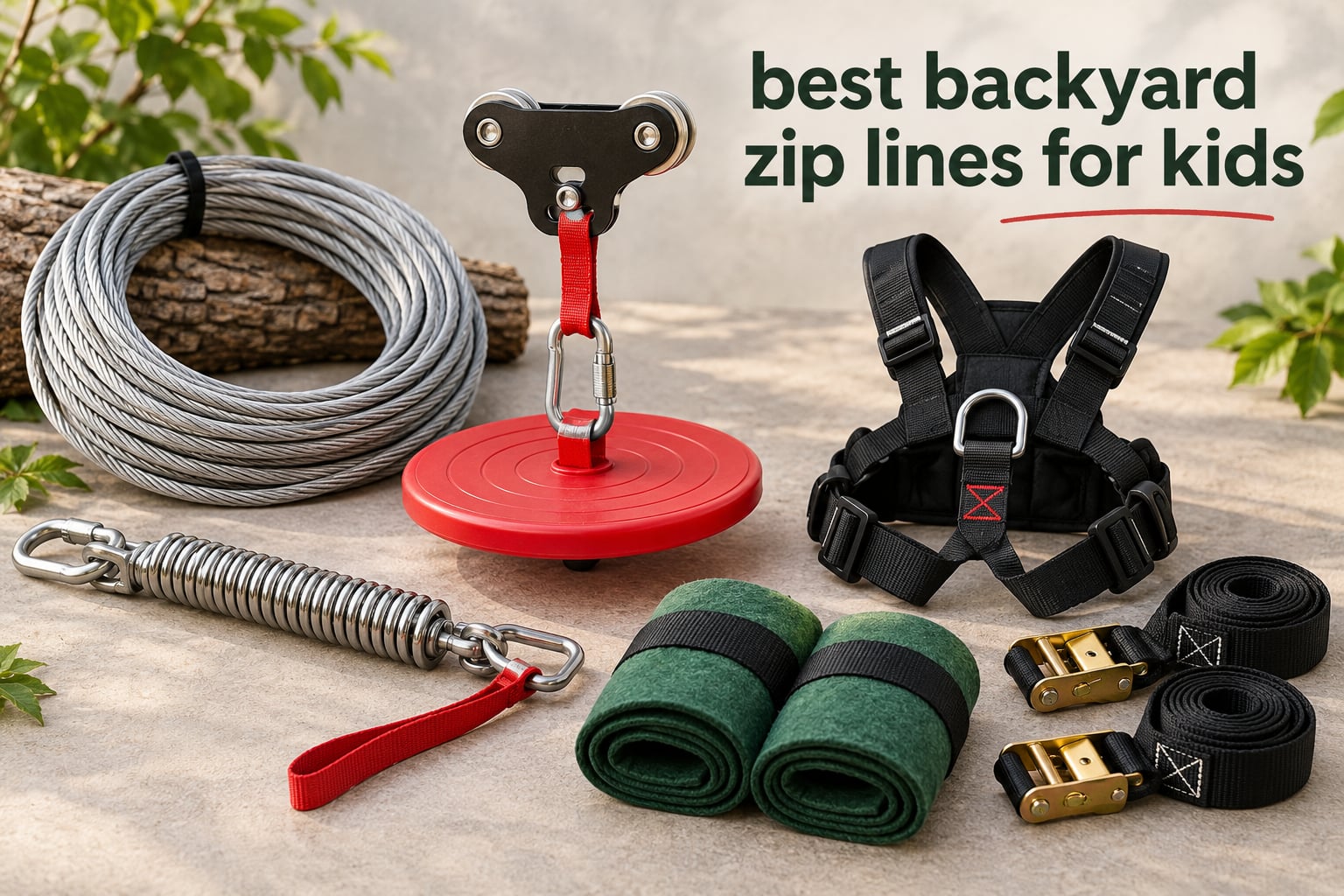
A backyard zip line for kids is a steel cable strung between two anchors, with a trolley that rolls along it, a seat or full body harness to hang from, and a mechanical brake at the far end that stops your child before they reach the anchor tree. The brake is the single most important variable on the whole rig. A rider who arrives at the anchor with no way to slow down will hit the tree, the fence behind it, or something much worse.
After spending weeks reading specifications, digging through owner reviews and comparing hardware across the ten kits below, the pattern was clear. The kits that get recommended most often are not the ones with the longest spans. They are the ones where the box contains everything you need, the brake is real, and the anchor hardware holds. Our pick for 2026 is the CTSC 105 FT kit, because it ships with a spring brake, harness, seat, tree protectors and a tensioning kit in one box, and it has the deepest review base of any kit we looked at.
This guide covers the best backyard zip lines for kids across every yard type, from a 40 ft run between two small trees to a 200 ft span for a family of teens. We also cover the safety variables that decide whether a backyard zipline is fine to use, how long the line should be, how to tension it, and what to do when your yard has no mature trees at all.
Table of Contents
Top 3 Backyard Zip Lines for Kids Right Now (October 2026)

CTSC 105 FT All-in-One Kit
- 105 FT cable with 7 FT sling
- 6.4 ft stainless spring brake
- Harness
- seat and tensioning kit included

Hyponix 100 FT Spring Brake
- 100 ft stainless cable
- Up to 350 lb rider weight
- 10 year warranty
All 10 Kits at a Glance in 2026
This is the comparison none of the shopping carousels can give you: all ten kits lined up on the variables that actually change how a backyard zipline performs. Scan the length and capacity columns first, because those two numbers decide whether a kit fits your yard before anything else does.
| Product | Specs | Action |
|---|---|---|
| CTSC 105 FT Zipline Kit |
|
Check Latest Price |
| Hyponix 100 FT Zipline Kit |
|
Check Latest Price |
 X XBEN 65 FT Zipline Kit X XBEN 65 FT Zipline Kit |
|
Check Latest Price |
 HOKINETY 100 FT Quick Tighten Kit HOKINETY 100 FT Quick Tighten Kit |
|
Check Latest Price |
 Slackers 40 FT Falcon Kit Slackers 40 FT Falcon Kit |
|
Check Latest Price |
 iZipline 95 FT Kit iZipline 95 FT Kit |
|
Check Latest Price |
 Perantlb 100 FT Zipline Kit Perantlb 100 FT Zipline Kit |
|
Check Latest Price |
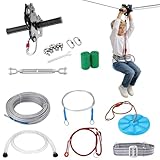 VEVOR 60 FT Zipline Kit VEVOR 60 FT Zipline Kit |
|
Check Latest Price |
 FAHKNS 200 FT Zipline Kit FAHKNS 200 FT Zipline Kit |
|
Check Latest Price |
| HOKINETY 150 FT Zipline Kit |
|
Check Latest Price |
1. CTSC 105 FT Zipline Kit: the Best Backyard Zip Line Overall
CTSC Zipline for Kids and Adult, Zip line Kits for Backyard with Stainless Steel Spring Brake, Cable Tensioning Kit, Safety Harness, 2 Tree Protectors and Full Set of Zip line Accessories
105 ft cable plus 7 ft sling
6.4 ft stainless steel spring brake
Harness, seat, tensioning kit and 2 tree protectors
Pros
- Most complete box: tensioning tools
- harness
- seat
- spring brake and tree protectors all included
- Nylon webbing tree protectors instead of cheap PVC tubing
- Ratchet strap tensioning system cuts install time
Cons
- Manufacturer notes cables are consumable and can rust in humid conditions
- Instructions are minimal so setup takes patience
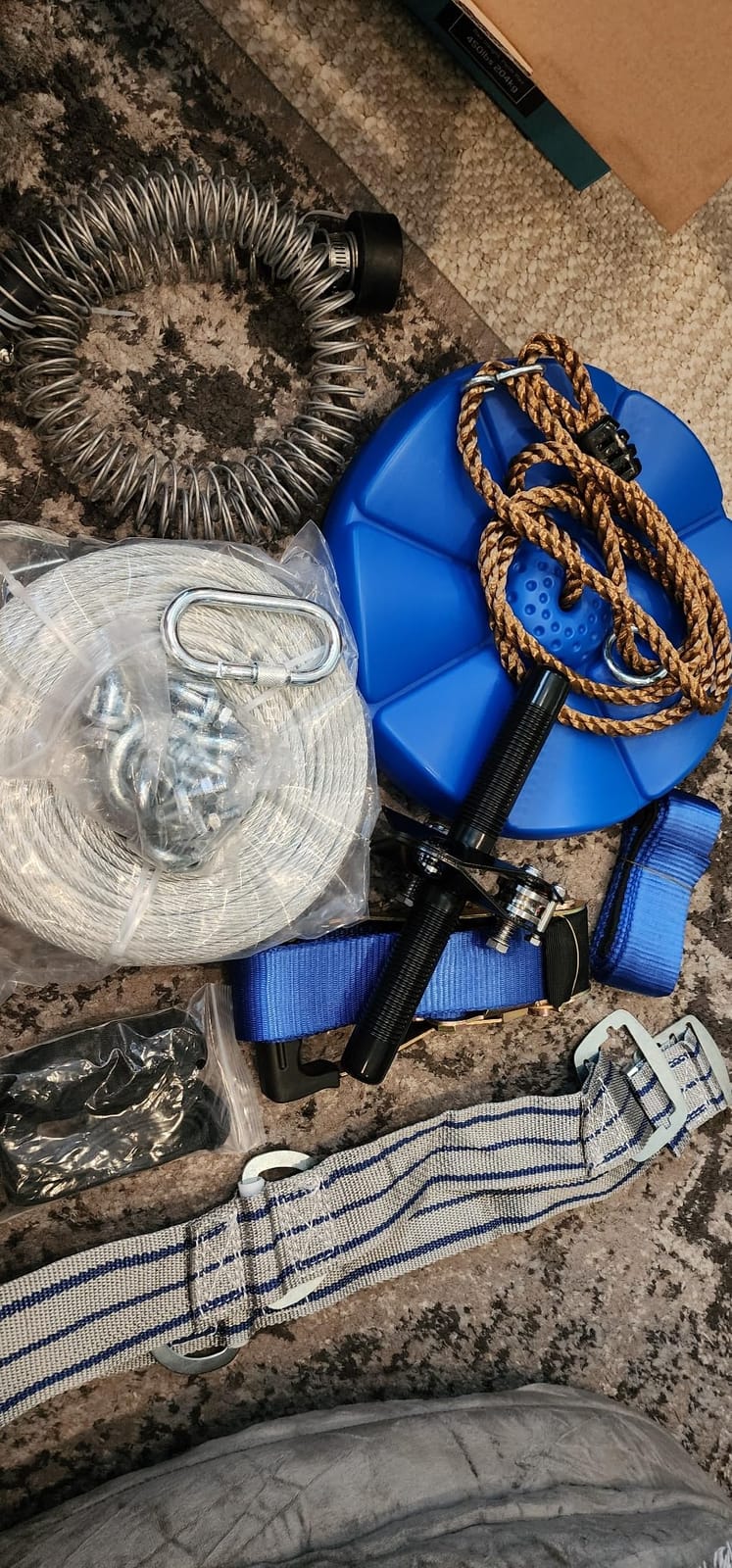
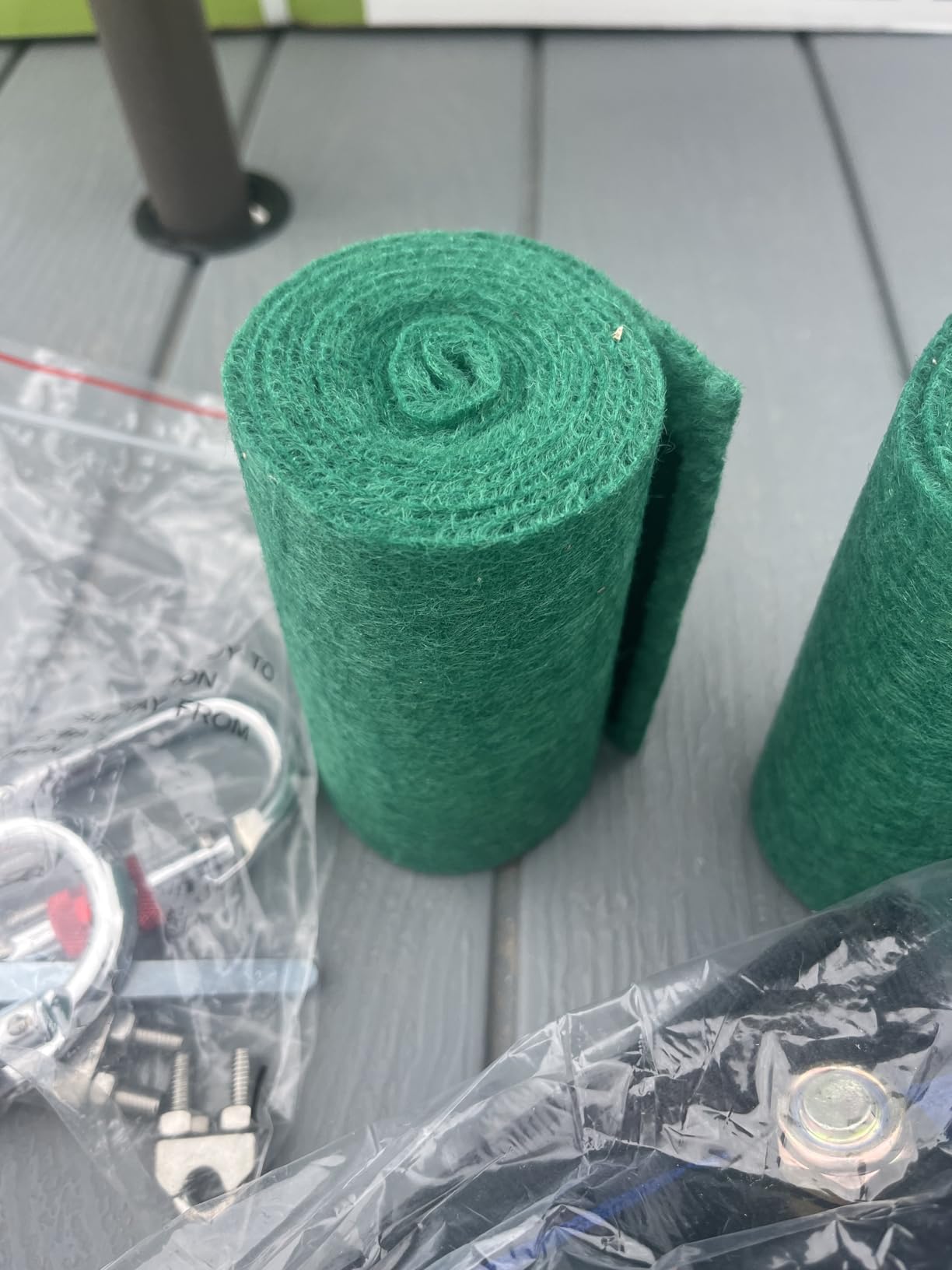
The CTSC kit was the first one we looked at that did not need a second order to be usable. The box holds a 105 ft main cable, a 7 ft sling cable for the start tree, an adjustable safety harness, a seat, a 6.4 ft stainless steel spring brake, a ratchet strap tensioning kit and two tree protectors. That completeness is the whole reason it took the top slot in our list of the best backyard zip lines for kids.
Reviewers repeatedly single out the nylon webbing tree protectors as an upgrade over the PVC tubing most kits ship with, and the ratchet tensioning system genuinely does make the install faster than fighting turnbuckles. At 4.6 stars across 2775 ratings, this is also the deepest review base in the group, which means the long-term opinions are based on real years of use rather than a handful of early buyers.
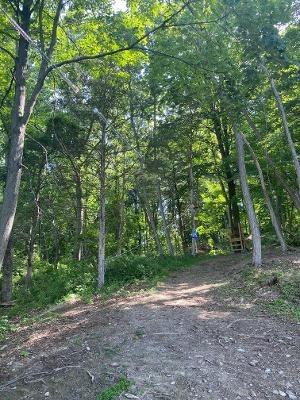
The honest drawback is on the durability side. The manufacturer states plainly that the cable is a consumable item that can rust in humid conditions and needs periodic inspection. If you live somewhere damp, or you leave the rig up through a wet winter, treat the cable as something you will eventually replace rather than something that lasts indefinitely.
The second drawback is the manual. Owners describe it as minimal, so expect to work out a few steps yourself or find a walkthrough video before you start. Budget a full afternoon for the first install and the second setup will take half that.
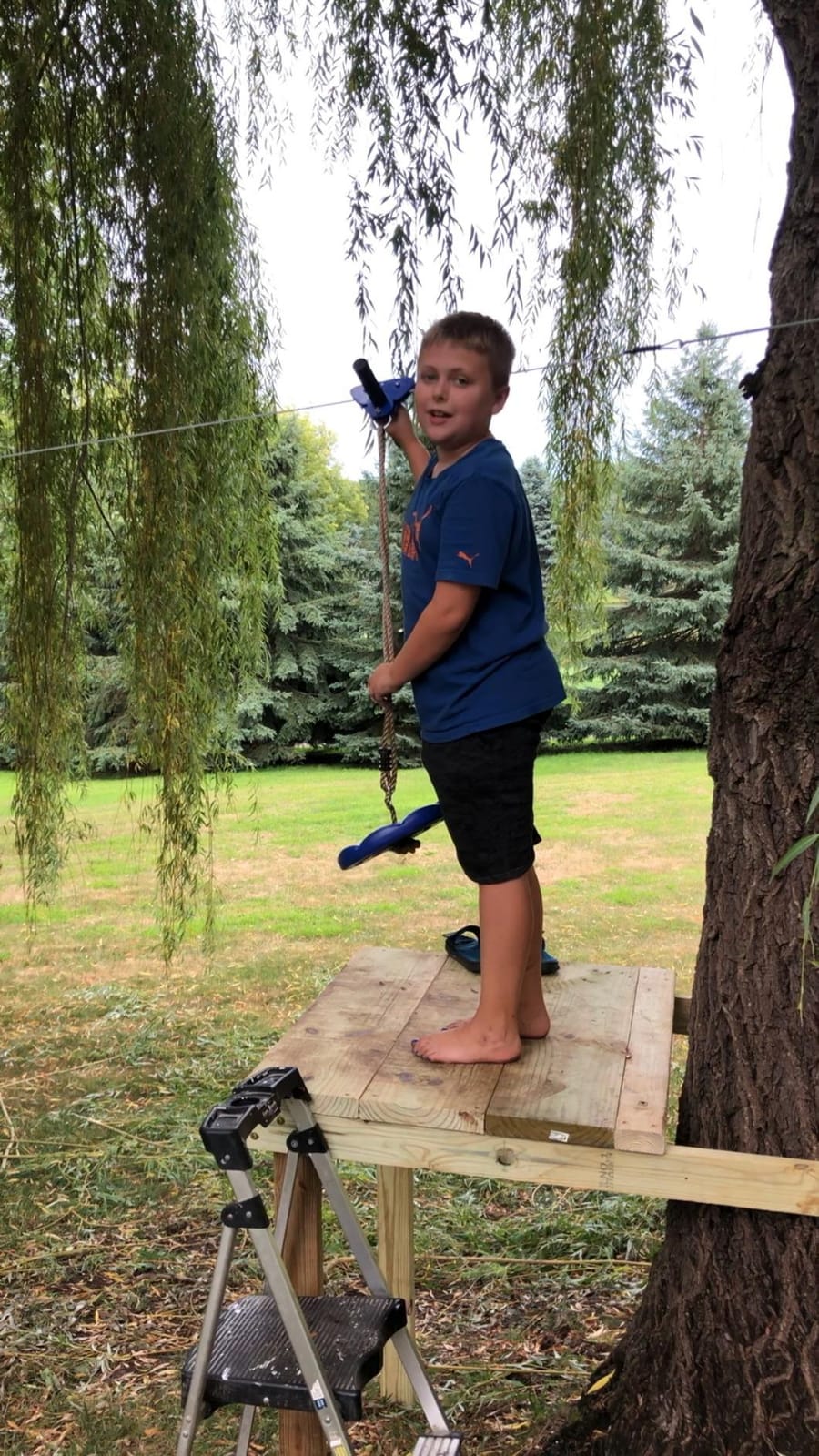
Who this kit suits best
This is the kit to buy if you want one product that covers kids and adults on a long run without a shopping list. The 105 ft main cable gives a genuinely fast ride once you have the slope right, and the included tensioning kit means you are not hunting for hardware at a hardware store on install day.
It is also a sensible default for a first build, because the spring brake is 6.4 ft long and the harness and seat are both in the box. Nothing about the assembly depends on a part you forgot to order.
Where it falls short
If your anchor trees are much closer together than 100 ft, you will end up with a very long cable coiled in your garage, and the cable is not cheap to cut down. Measure your actual span against the anchor loops before ordering rather than after.
Families who want a hands-off install experience will also be disappointed. If you would rather pay a professional or follow a fully illustrated manual, one of the kits with color-photo instructions fits that preference better.
2. Hyponix 100 FT Zipline Kit: Best Value for Long Runs
Hyponix Zip Line Kit for Backyard Kids and Adults 100 ft, Up to 350 Lbs
100 ft stainless steel cable
Rated up to 350 lb riders
Spring brake with rubber stoppers and 10 year warranty
Pros
- Seatbelt-style harness with adjustable seat height fits a range of riders
- Dual turnbuckles keep the cable tight and stable
- Stainless spring brake with rubber stoppers gives a gentle stop
- 10 year warranty coverage is rare at this level
Cons
- Heavier stainless components make the kit bulkier to carry
- Adult riders may still find sag on the longer variants
The Hyponix is the pick we keep coming back to for families who will actually use the line year after year. The stainless steel spring brake with rubber stoppers produces a gentler stop than most spring brakes we reviewed, and buyers mention the seating experience specifically: the harness and adjustable seat height let the same rig work for a five year old and a full grown adult.
A 10 year warranty is rare at this level and it changes the calculation. The dual turnbuckles keep tension stable over a season, which matters because most complaints in this category come from a line that slowly goes slack and starts kissing the ground.
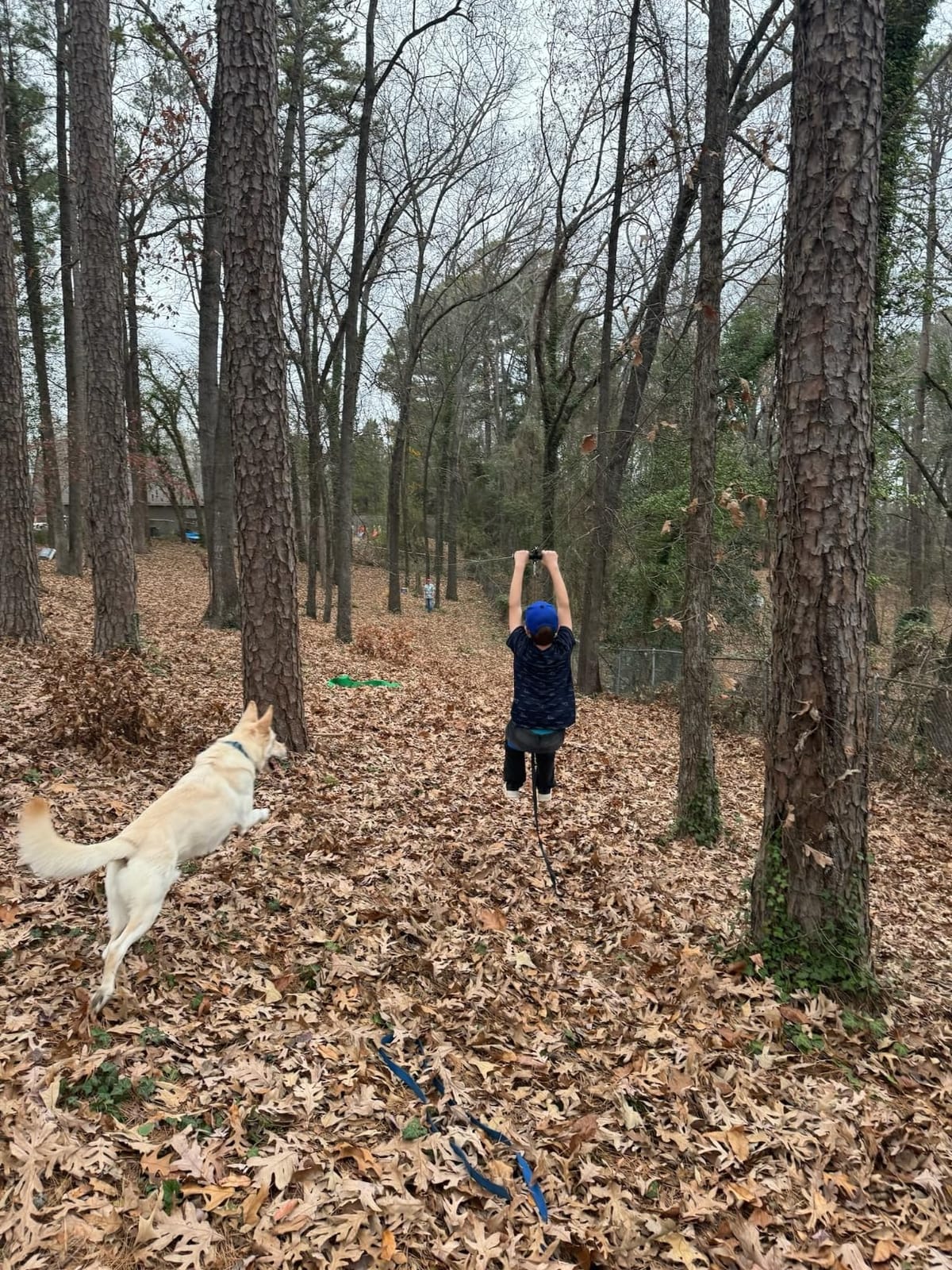
The tradeoff is weight. The stainless components make this a bulkier package than the aluminium-heavy kits, and if you plan to take the line down for winter you will feel it. It weighs in at 8.84 kg before you add tools.
The second tradeoff shows up with heavier riders. Owners of the longer variants report that adults in particular can still produce enough sag to make the run feel soft. For kids and light adults, that is a non-issue.
Who this kit suits best
Pick this one if you want a line that a teenager and a small child can share without changing hardware. The 350 lb rating covers the whole family in most cases, and the adjustable seat is the reason reviewers call out multi-age use so often.
It is also a strong choice for a yard with enough run-out that the gentle spring brake stop matters more than raw stopping force. The rubber stoppers take the edge off, which younger riders feel.
Where it falls short
It will not fit a small suburban yard. One hundred feet of main cable needs either two substantial trees or a proper pole build, and it is heavier to carry than the 60 ft and 65 ft kits here.
If you are installing in a humid climate and plan to leave it up year round, check the cable coating on an annual basis. Stainless resists corrosion better than coated steel, but fittings and the brake plug are still worth a look.
3. X XBEN 65 FT Kit: Best Entry-Level Pick for a First Line
X XBEN Zip line Kits for Backyard 65FT, Ziplines for Kids and Adults
65 ft cable
Seat adjustable 3.6 ft to 7.5 ft
5.3 ft stainless spring brake and ball-bearing trolley
Pros
- Entry-level kit that still includes a seat
- brake and steel trolley
- Sturdy cable and hardware that owners describe as well made
- Every part needed for installation is in the box
Cons
- Cable is hard to tension tightly and takes real effort
- Included turnbuckles have been reported to fail after short use
- Some buyers report thin instructions and weak post-sale support
At 65 ft with a seat, a spring brake and a sealed ball bearing trolley in the box, the X XBEN is a direct way to get a complete backyard zip line kit rather than a partial build. Owners describe the cable and hardware as sturdier than the price suggests, and the seat adjusts from 3.6 ft to 7.5 ft, which covers a wide spread of child sizes.
It is a popular choice in our research precisely because it does not need a second purchase. Everything required for installation is in the box, which matters a lot when you are trying to get a line up in an afternoon.
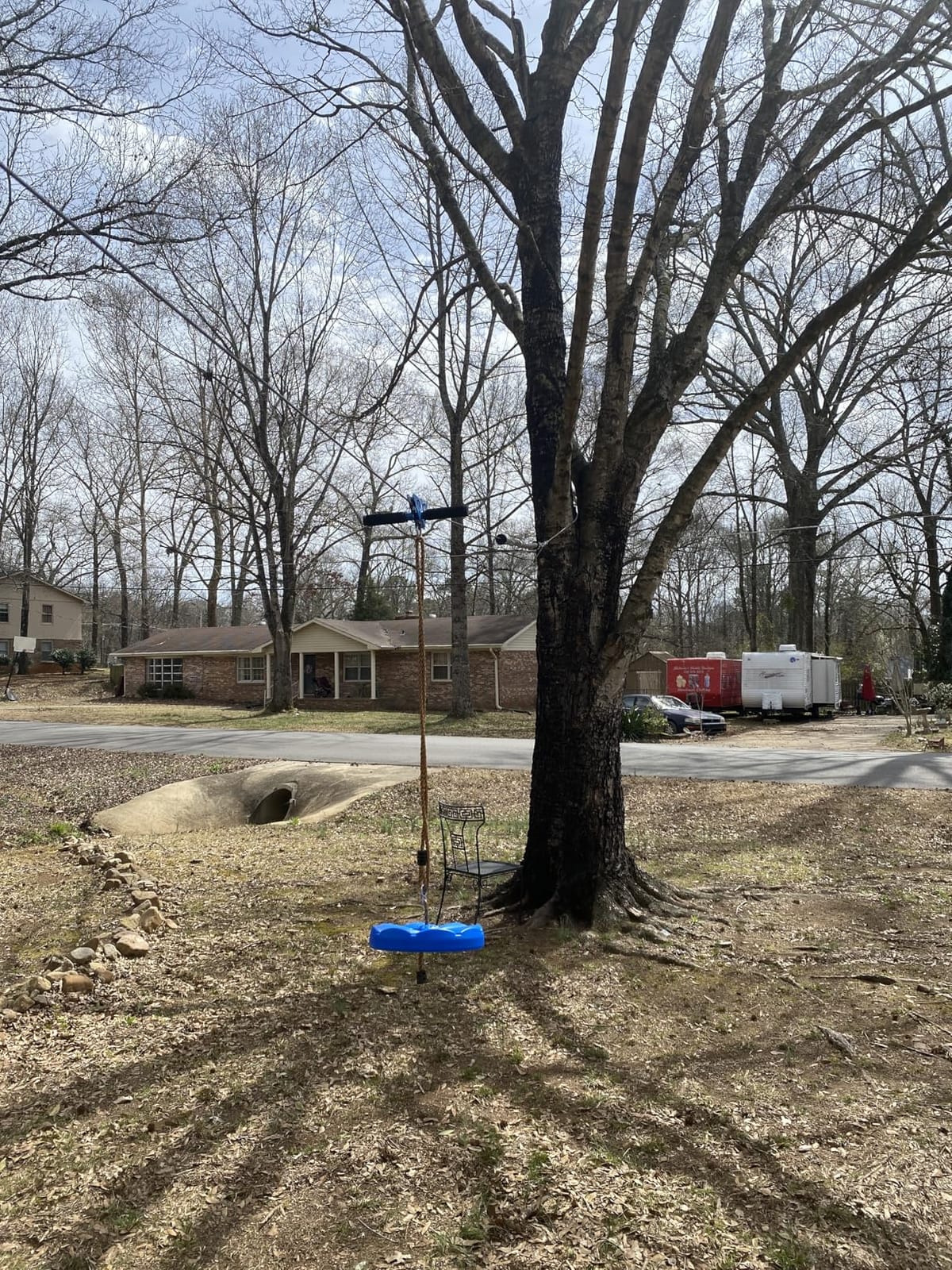
Where it gets difficult is tension. Reviewers are consistent that the cable is hard to pull tight and takes real physical effort to tension, so plan on a ratchet come-along from the start rather than trying to muscle the included turnbuckles.
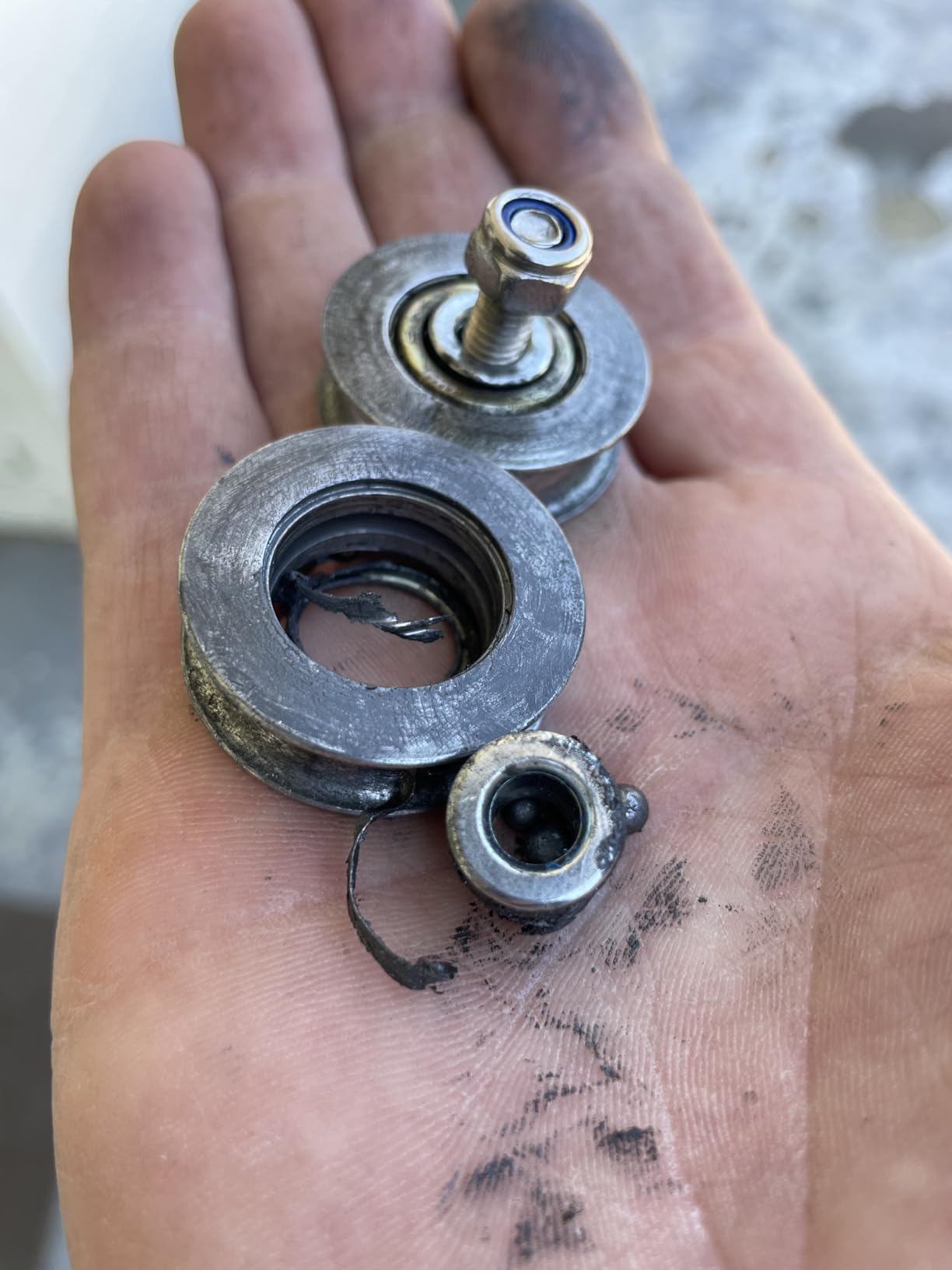
The turnbuckles themselves are the main durability complaint. Some owners report failures after short use, which is why we would upgrade that one component before anything else. Post-sale support is also the weakest in this group, so keep the box and the paperwork.
Who this kit suits best
This is the right kit for a first line, a middle-sized yard and a family that wants to see how much the kids actually use it before investing in a longer span. Sixty five feet is short enough to tension by hand in a realistic amount of time.
It suits younger riders particularly well because the seat height range covers small children, and the run is slow enough at that length that first attempts are not frightening.
Where it falls short
It is not the kit for adults sharing the line. At 65 ft with a modest cable gauge, the run is a kid ride rather than a family ride, and heavier riders will bottom out the sag quickly.
If your trees are far apart, this length will not stretch to cover the span without splicing, which is a job most parents should not take on for a first build.
4. HOKINETY 100 FT Quick Tighten Kit: Best for Fast, Tool-Free Setup
HOKINETY Zip Line Kit for Kids Adults : 100FT Up to 380Lbs – Quick Tighten Zipline for Backyard Outdoor with 100% Rust Proof Removable Trolley Seat Spring Brake
100 ft cable rated to 380 lb
Ratchet quick-tighten install system
Removable trolley with sealed ball bearings
Pros
- Ratchet tightening is quicker than traditional turnbuckle setups
- Removable double-steel trolley with sealed ball bearings glides smoothly
- Materials hold up well and show good durability
Cons
- Instructions are poor and a step-by-step video would help
- Getting the line tight enough for adult riders can be difficult and the trolley can derail
The defining feature here is the ratchet quick-tighten installation system, and it is the reason this kit ranks first in its category on the shopping results. Instead of turning a turnbuckle for an uncomfortable number of rotations, you ratchet the webbing line to tension. Two people with basic tools can get this up quickly, which matters if you are not confident with cable work.
The removable trolley is the second thing owners praise. It is a double-steel trolley on sealed ball bearings with non-slip rubber grips, so it glides smoothly, and because it detaches you can take the whole line down for winter without unwiring anything.
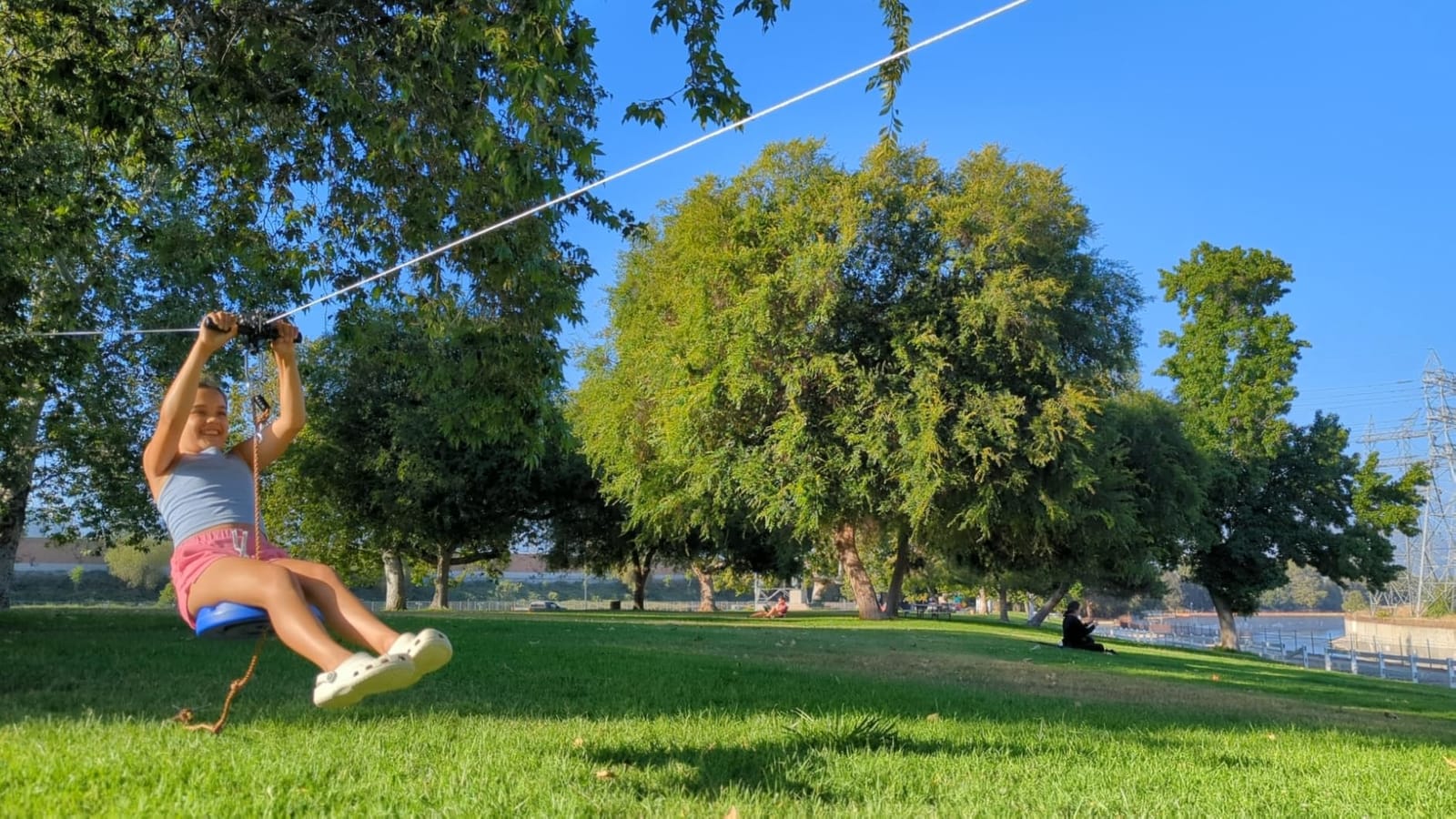
Getting the line tight enough for adult riders is the recurring difficulty. If the webbing is not tensioned enough, the cable sags and the trolley can derail. Do not skip the final tension check with a fully weighted test rider before you call it done.
The instructions are the weak point, so plan to find a video walkthrough before you start, and check the seat rope length if you have small children, as the out-of-the-box attachment is long for a young rider.
Who this kit suits best
Parents who find turnbuckles confusing. The ratchet system removes most of the slow, repetitive turning that trips up first-time installers, and the removable trolley means you can take the whole line down for winter without unwiring anything.
It is also a good fit for families who want a shareable line, since the stated 380 lb capacity is well above what most children weigh.
Where it falls short
It is a poor choice if you will not read a separate install guide. The documentation is weak enough that we would budget time for a video walkthrough before starting.
Households with a very short span should look elsewhere, since this is a 100 ft cable and cutting and re-terminating it is a professional job.
5. Slackers 40 FT Falcon Kit: Best for Small Yards and First-Time Setup
Slackers 40’ Zipline Falcon Series Kit with Seat
40 ft Falcon series cable
Gradual friction stop at the end of the run
Fully assembled sealed ball bearing trolley
Pros
- Quick setup reported by many owners in 10 to 30 minutes
- Fully assembled steel trolley with sealed ball bearings rides smoothly
- Gradual stop means no spring brake to maintain
Cons
- Does not include tree protectors and several buyers wished they were included
- 40 ft is short once anchor loops are accounted for
The Slackers Falcon is the shortest kit here, and for a compact yard it solves the problem with less work than anything else on the list. Owners regularly finish installing in ten to thirty minutes because the trolley arrives fully assembled and there is no brake to mount. The stopping method is a gradual friction stop at the end of the run rather than a spring brake.
That friction stop is the quiet innovation. It spreads the deceleration across several feet of cable instead of concentrating it in a coil, so there is no spring to bend or fatigue, and the closed trolley mechanism keeps small fingers away from moving parts.
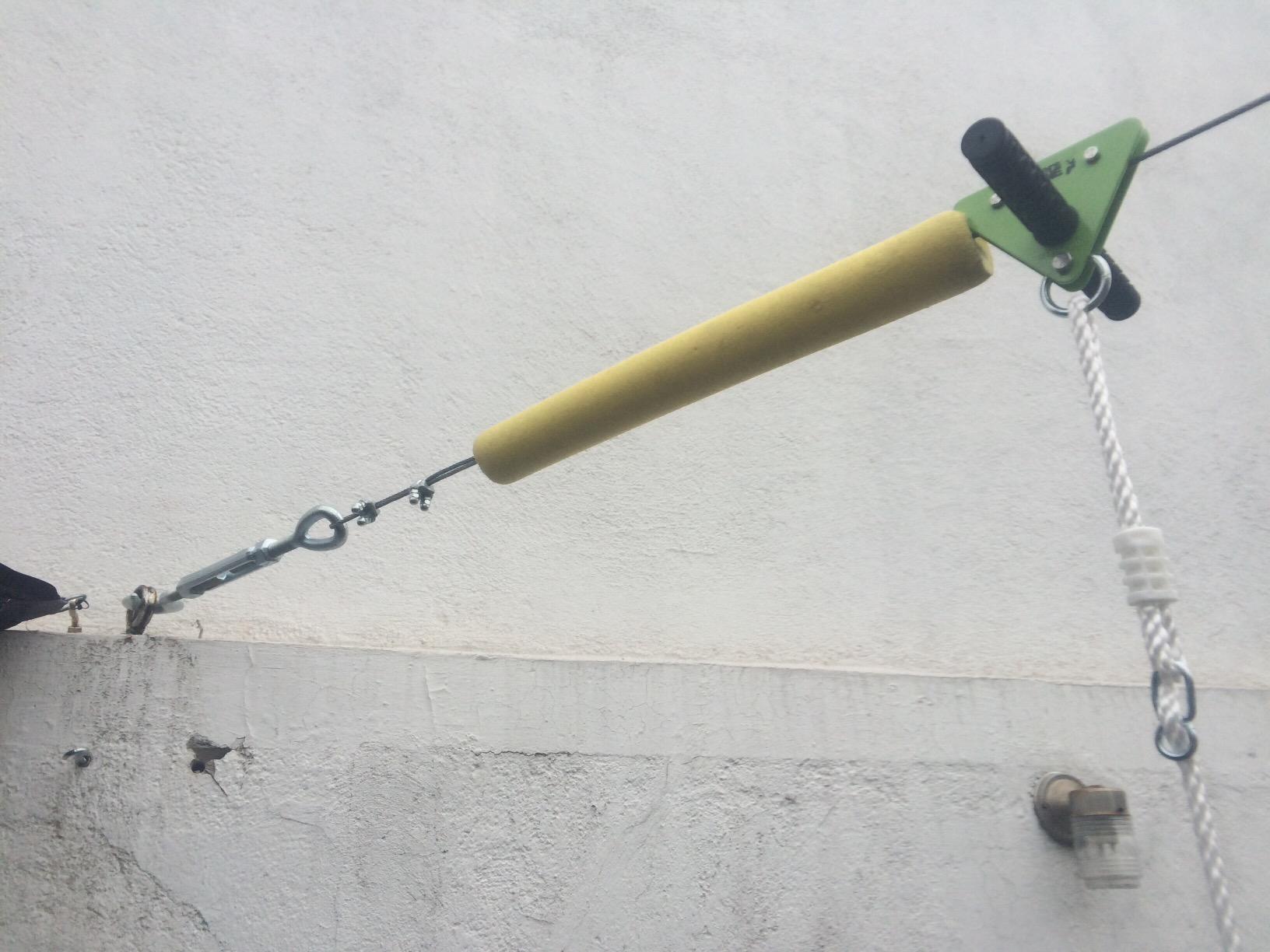
The 40 ft length is the main complaint and it is a fair one. Once you account for the loops at each anchor, the usable run is shorter than the number suggests, and plenty of buyers wish they had gone to 50 or 60 ft. Measure the distance between the trunk surfaces, not between the branch tips, before committing.
Tree protectors are not included, and several owners flagged that as a miss. Lines strung between live trees also walk down the trunk over a season, so expect a periodic re-tightening. The instructions, though, are among the clearest in this roundup.
Who this kit suits best
Small yards with two modest trees, and anyone who wants a working line this weekend without a hardware store trip. This is an approachable first build for a nervous parent.
It also works well for younger riders because a 40 ft run at a sensible slope produces a gentle arrival speed with no spring to slam into.
Where it falls short
It will not grow with your family. There is no realistic way to get a teenager or an adult an exciting ride out of 40 ft, so many families end up buying a second line a few years later.
Buy tree savers separately regardless. Strapping a steel cable straight onto a living tree trunk is the one shortcut nobody should take.
6. iZipline 95 FT Kit: Best Mid-Length Run With a Proven Brake
iZipline 95 feet Zip line Kit with Stainless Steel Spring Brake and Seat
95 ft main cable plus 5 ft sling
5.3 ft stainless steel spring brake
Fixed speedy trolley with handle
Pros
- Long 95 ft main cable gives a fast backyard run
- 5.3 ft stainless spring brake slows riders without burning out
- Firm fixed trolley keeps riders seated and secure
Cons
- SUS304 sling rings are fiddly to fit into the clevis
- Only rated to 250 lb which excludes most adult riders
- Small review base means less long-term owner feedback
The iZipline occupies the useful middle of the market: long enough for a genuinely fast ride, short enough to tension without professional gear. The 95 ft main cable plus a 5 ft sling cable, paired with a 5.3 ft stainless steel spring brake, gives a run that feels substantial in a normal suburban yard.
The fixed trolley is the quiet strength here. It does not detach, so it stays on the cable and keeps riders seated and secure, which removes the derailment risk some removable trolleys carry.
Who this kit suits best
Families whose span falls between the short runs and the 100 ft plus kits. If you measure 90 ft between trunks, this fits where a 65 ft kit leaves you short and a 150 ft kit is unusable.
It is a good pick if both riders are children or light teens, since the recommended rider weight tops out at 250 lb.
Where it falls short
The sling rings are the fiddliest part of the install. Reviewers describe the SUS304 stainless rings as difficult to fit into the clevis, so allow extra time and a second pair of hands for that step.
The 250 lb rating rules out most adult riders, and 250 lb is a lower ceiling than several kits here offer. With only 61 ratings, there is also less long-term feedback to draw on than with the higher-count kits.
7. Perantlb 100 FT Zipline Kit: Best for Ages Roughly 4 to 14
Perantlb Zipline for Backyard Kids and Adults,Zipline Kits for Backyard with 100ft Cable,6ft Zipline Spring Brake and Belt,Zip line Trolley with Handle,seat and Bag
100 ft main cable rated to 220 lb
6 ft galvanized spring brake
Safety rope, adjustable belt, seat and travel bag
Pros
- One of the few kits with color-photo illustrated instructions owners praise
- Solid heavy metal components that feel well made
- Includes safety rope
- safety belt
- seat and a travel bag
Cons
- Cable sag can stop adults from riding properly
- Instructions can still be unclear and slow the setup
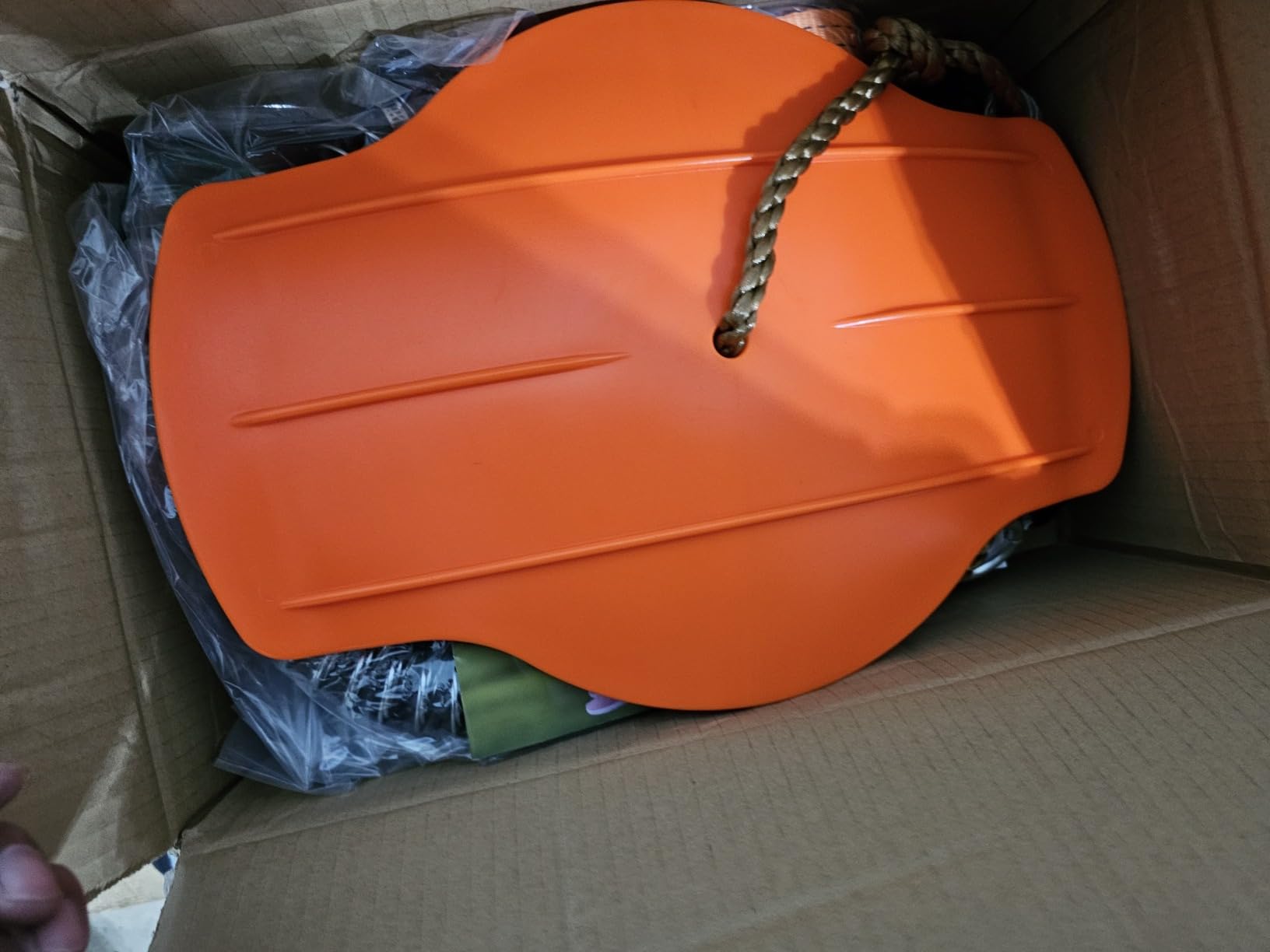
This is the kit we would point parents toward when the question is specifically about children between roughly four and fourteen. The 100 ft main cable is CPC tested to 220 lb, which lines up with the weight range of that age band rather than with adults, and the box includes a safety rope, an adjustable safety belt, a seat and a travel bag for winter storage.
The open-bottom trolley is also easy to work with, because it clips onto the cable at any point rather than needing to be threaded on an end.
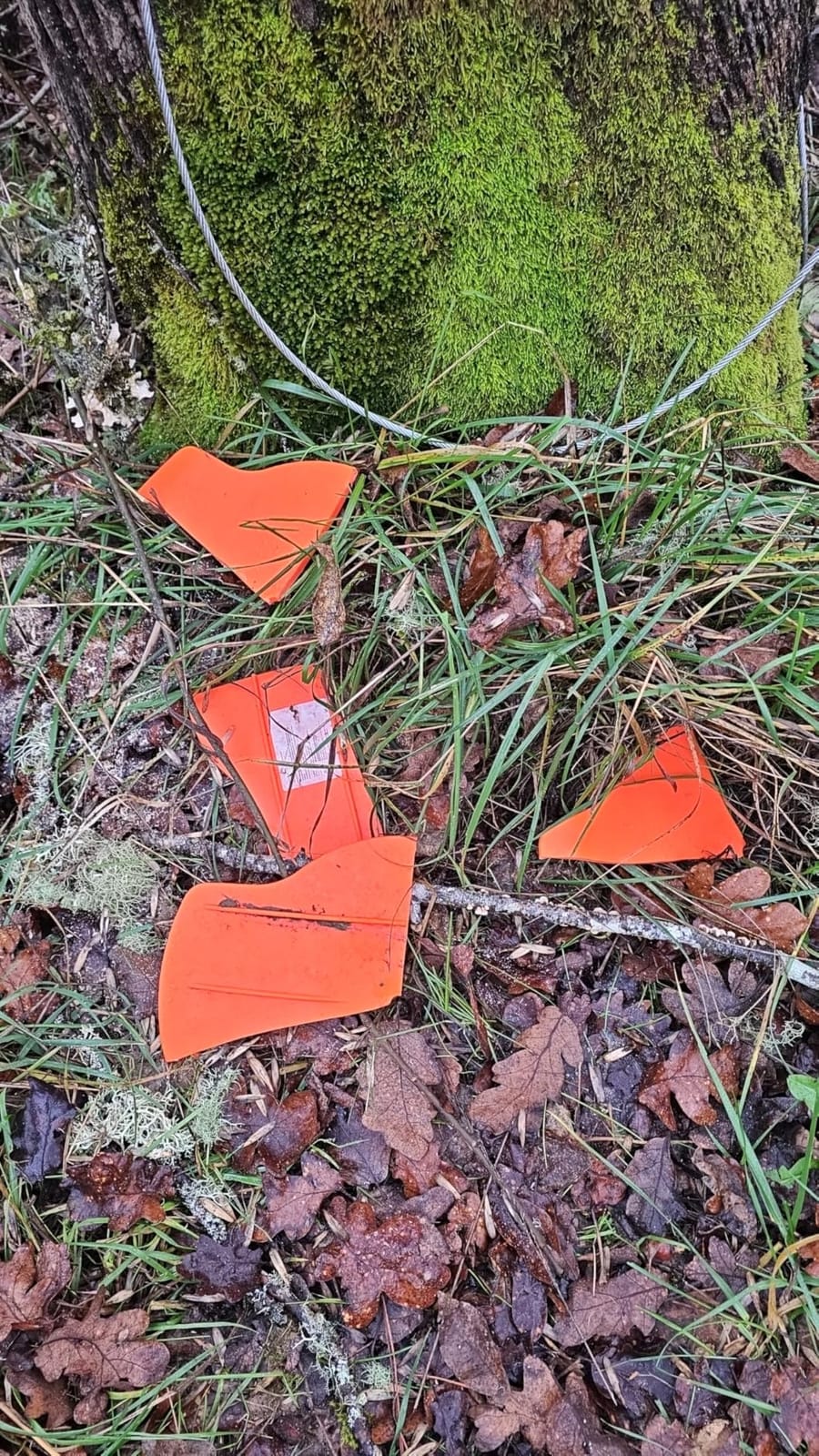
The 220 lb rating is the real constraint. Reviewers confirm that cable sag stops adults from riding properly, so this is a kids line rather than a shared family line. If your teenagers want to use it, look at one of the higher-capacity kits instead.
Fit is the second thing to plan around. The adjustable belt included in the box sits large on a small child, so for the youngest riders a separately purchased child harness is the safer option rather than relying on the included belt.
Who this kit suits best
Families with primary school age children who want a long, fast ride and whose parents will supervise the landing end. The color-photo manual is a genuine advantage when two adults are installing together.
The travel bag is a small thing that matters if you intend to take the line down before winter and put it back in spring.
Where it falls short
It is the wrong kit for a family that wants one line for adults and children together. The sag issue is reported repeatedly and it is not something a longer install will fix.
Because the included belt is oversized, budget for a child harness as an add-on. Skipping that step for a small rider defeats the point of choosing this kit.
8. VEVOR 60 FT Zipline Kit: Best for Teens on a Mid-Size Run
VEVOR Zipline Kit, 60 ft Zip Line Kits Up to 500 lb, Backyard Outdoor Quick Setup Zipline, Playground Entertainment with Stainless Steel Zipline, Spring Brake (Note: for Teens Only. Not for Adults)
60 ft stainless steel cable
0.25 inch thickened wire rope
6.4 ft extended stainless steel spring brake
Pros
- Quick setup and take-down with a wrench included
- Adjustable speed by changing the starting height
- Owners report it still performing after a full year outdoors
Cons
- Instructions are not straightforward to follow
- Title capacity claim conflicts with the written spec
The VEVOR earns its place through adjustability. Because speed on a zipline is set by the height difference between the anchors, you can make a 60 ft line gentle for a beginner and then raise the start point later to make it fast for a teenager. That is a range of use no fixed-length short kit gives you.
The cable is a 0.25 inch thickened wire rope rather than a light gauge line, and the extended 6.4 ft spring brake gives a long, progressive deceleration. Owners report it still holding up after a full year outdoors.
Who this kit suits best
Households with teenagers who have outgrown a gentle first ride, and anyone who wants to tune speed as kids grow. The wrench included for quick setup and removal makes seasonal changes straightforward.
It also suits yards where a mid-size run is all the space allows, since 60 ft is much easier to tension than 100 ft.
Where it falls short
The listing is internally inconsistent about capacity, with a headline figure that does not match the written specification. Trust the lower written number and check the actual cable before allowing a heavy rider.
The listing is also explicit that it is for teens only, not adults. Plan on this being a teen line, not a family line.
9. FAHKNS 200 FT Zipline Kit: Best for Maximum Span
FAHKNS Zipline for Backyard Kids and Adults: 200FT Zipline Kit Outdoor
200 ft main cable
0.25 inch 304 stainless cable, 7x19 braid
Stated 400 lb capacity with adjustable seat
Pros
- 200 ft is the longest run in this roundup
- Stated 400 lb capacity suits kids and adults
- 0.25 inch 304 stainless cable with 6400 lb breaking strength
Cons
- Thinnest owner review base among the ten kits at 44 ratings
- Very heavy and awkward cable to position and tension
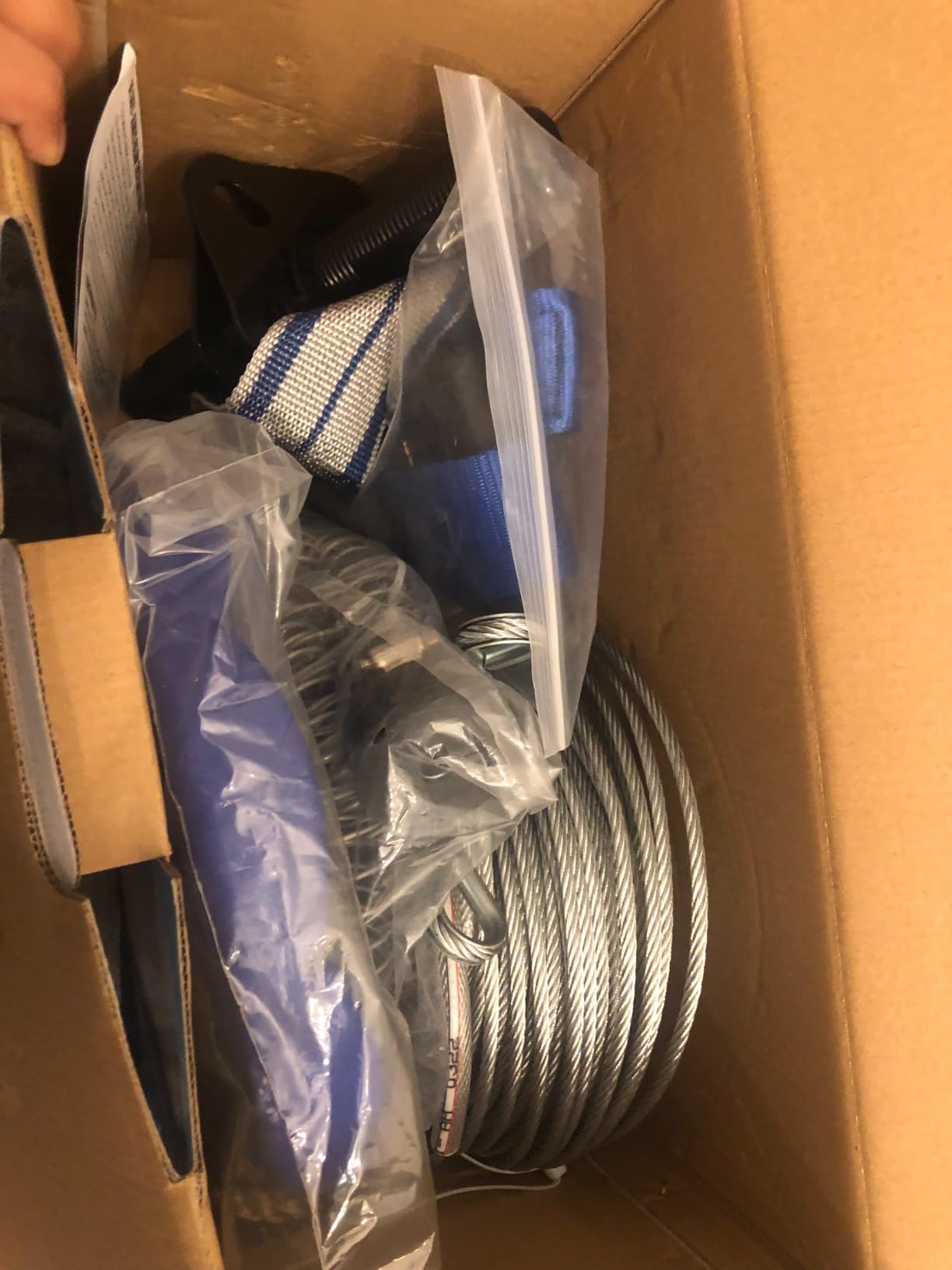
The FAHKNS is the strongest spec sheet here. Its 0.25 inch 304 stainless steel cable with a 7×19 braid and a stated 6400 lb breaking strength and the 400 lb capacity is one of the higher ratings here. For a family that genuinely needs distance, nothing else on the list reaches 200 ft. Its cable is also the only one in this roundup where the manufacturer publishes a breaking strength figure.
The adjustable seat height lets you set the start point for different riders, and the padded finish and alloy steel frame keep the hardware comfortable where hands and harness contact it.
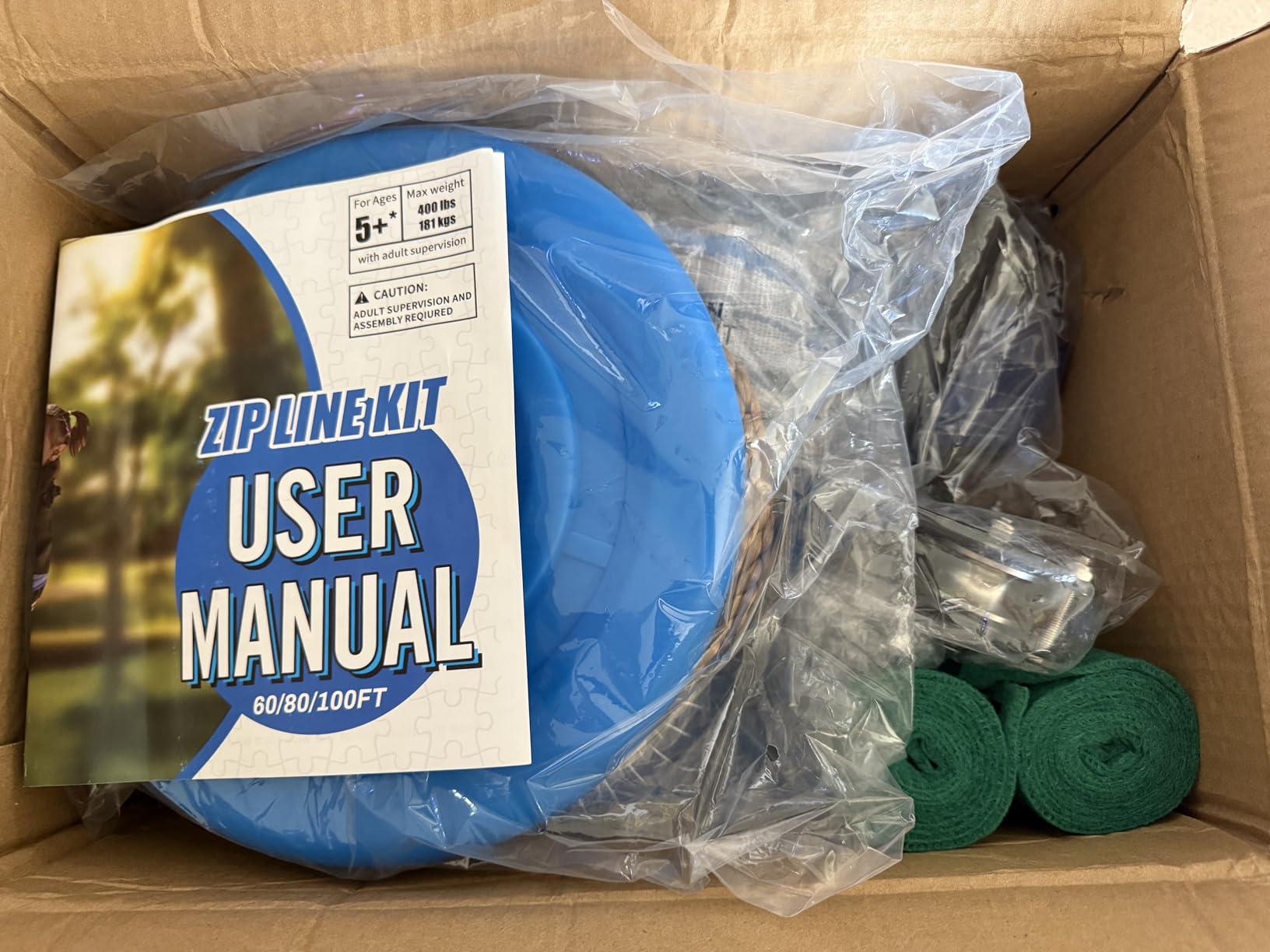
Be realistic about the install. A 200 ft stainless cable is genuinely heavy and awkward to lift into position and tension, and this is not a weekend-afternoon job for one person. Budget for a second adult and a proper ratchet come-along.
It also carries a small review base at 44 ratings, the thinnest owner history among the ten kits here. The specifications are strong on paper, but there is less evidence of multi-year real-world performance than for the higher-count kits.
Who this kit suits best
Large rural or semi-rural properties, and families who want one line that a teenager and an adult can both ride. At 200 ft with the stated capacity, this is a kit that suits teenagers and adults together as well as children.
It suits experienced installers. If this is your first cable project, a shorter kit with a clearer manual is a better place to learn.
Where it falls short
A 200 ft line needs a long, clear run-out and careful site planning, because arrival speed at that length is significant. It demands more thought about placement than the shorter kits here.
It is also the least forgiving about installation errors. With a thin owner history, a bad anchor or an uneven tension will not be caught by someone else’s experience for you.
10. HOKINETY 150 FT Zipline Kit: Best for the Highest Stated Capacity
HOKINETY Zip Line Kit for Kids Adults : Up to 450Lbs 150FT Zipline for Backyard Outdoor with 100% Rust Proof Removable Trolley Swing Seat Safety Harness Spring Brake
150 ft cable with stated 450 lb capacity
6.5 ft SUS304 stainless spring brake
Ratchet quick-tighten system
Pros
- Highest stated load capacity in this roundup at 450 lb
- SUS304 stainless spring brake resists rust with a protective iron tube
- Ratchet tightening is faster than turnbuckles
- Removable double-steel trolley with sealed ball bearings
Cons
- Listing directs buyers to the seller for install steps instead of including them
- Sibling listing had reports of a broken strap part
This kit carries the highest stated capacity among the ten kits we reviewed at 450 lb, and the SUS304 stainless spring brake is built for corrosion resistance. Between those two facts, it is a strong choice on paper for a family that wants adults and children on the same line across a 150 ft span.
The ratchet quick-tighten system and the removable double-steel trolley with sealed ball bearings match the better-reviewed sibling kit in this brand family, and the 6.5 ft spring brake sits inside a protective iron tube that stops the cable wearing through the plug over time.
The documentation is the weak point. Rather than including full installation steps, the listing pushes buyers to contact the seller, which turns a purchase into an extra task before you can even start. Reviews of a sibling listing in the same brand family also mention a broken strap part.
Its review base is also small at 47 ratings, the second thinnest in the group. Treat the 450 lb figure as a manufacturer claim you verify against your own rig and your own riders rather than something to load the line to.
Who this kit suits best
Families who want a high stated capacity and a brake that tolerates damp conditions, particularly in wet climates. The removable trolley and ratchet setup make seasonal removal realistic.
It also suits anyone who wants a long span without stepping up to the very heavy 200 ft cable.
Where it falls short
It is a poor choice for anyone who wants a self-contained unboxing experience. You will need to contact the seller for install guidance, and that is friction at exactly the wrong moment.
With 47 ratings, treat the 450 lb figure as a manufacturer claim you verify against your own rig and your own riders rather than something to load the line to.
Are Backyard Ziplines Safe?
Backyard ziplines are safe when the line has a real braking system, the anchors are sound, the run-out is clear and an adult is watching. They are not safe when a rider can arrive at the anchor tree at full speed with nothing to absorb the energy. That single variable, not the cable gauge or the brand name, decides whether a backyard zip line is a good idea.
Braking is the first thing to check. A spring brake is the most common system in this roundup, mounting near the end of the line and compressing as the trolley pushes into it. A bungee brake stretches progressively and suits longer runs. A gradual friction stop spreads deceleration across several feet of cable. The Slackers kit uses that last approach. Whatever the mechanism, test it with a weighted rider before anyone small uses it.
Cable material matters less than people assume. Most kits here use stainless steel, and the best cable spec we saw was a 0.25 inch 304 stainless braid with a 6400 lb breaking strength. What actually wears a line out is friction at the brake plug and corrosion at the fittings, which is why a brake with a protective sleeve and an annual rust check matter more than the alloy name.
Weight limits are about dynamic load, not just weight. A 90 lb child moving fast creates a far larger force on the cable than the same child standing still. Treat the stated capacity as a ceiling rather than a target, and never let a full grown adult ride a line marketed for children.
Run-out space is non-negotiable. Measure at least 20 feet of clear ground beyond the end anchor, free of fences, play equipment, roads, pools and hard surfaces. The braking system is what stops the rider; the run-out is what catches a mistake.
Anchor trees must be healthy and large. The engineering minimum most guides settle on is a trunk at least 12 inches in diameter, sound, straight and free of decay or disease. Use tree saver straps on every anchor so the cable never bites into bark.
Supervision is part of the equipment. An adult should be positioned at the landing end every time a child rides, particularly on the faster kits in this list, until that child has shown they can control their speed and stop reliably.
What Is a Good Length for a Backyard Zip Line?
A good length for a backyard zipline matches the rider to the run. Thirty to fifty feet suits toddlers and preschoolers, fifty to seventy five feet works for school age children, seventy five to one hundred feet covers school age kids and light teens, and one hundred to one hundred fifty feet is where teenagers and adults get a ride worth queuing for. Longer than that and you are into pole-to-pole and professional installation territory.
Length alone is not enough. Speed comes from the height difference between the two anchors, not from the distance. The forum builders we researched talked about a deliberate four percent decline, which is a useful target: enough to keep the trolley rolling smoothly without building up a speed a child cannot handle.
Sag matters as much as span. A line needs roughly three to eight percent sag, which sounds contradictory until you think about what it does. Too tight and the cable behaves like a rigid beam that can snap under load. Too loose and riders drag their feet on the ground. Aim for a curve you could walk under at the lowest point but that still keeps a hanging rider’s feet clear.
Then pick the anchor type. Tree-to-tree is the simplest option if you have two suitable trunks. Pole-to-pole suits open yards, but the poles need to be set deep enough to resist the pull of the line. One serious DIY build we found used Class 2 telephone poles sunk six and a half feet, which gives you a sense of how much commitment a pole build involves.
Before anything else, measure the real span: the distance between the surfaces of the two trunks where the anchors will sit, not the gap between branch tips. Then subtract the loop lengths at each end. That measurement is the first blocker buyers hit, and getting it right before ordering saves a return.
How to Set Up a Zip Line in Your Backyard
Setting up a backyard zipline takes most of a day, and the order of operations matters more than any single tool. Work through it in sequence and the tensioning step stops being frustrating.
Measure the span between trunk surfaces and subtract the anchor loop lengths at each end. Compare that figure against the cable length in your kit before you open the box.
Check the site for hazards. Walk the entire run-out and clear anything rigid. Confirm there are no overhead power lines anywhere near the path and check your property line and any easements before drilling into a shared boundary.
Inspect both anchor trees for a trunk diameter of at least 12 inches, sound wood, no decay and no disease. If either tree fails that check, change the anchor rather than the kit.
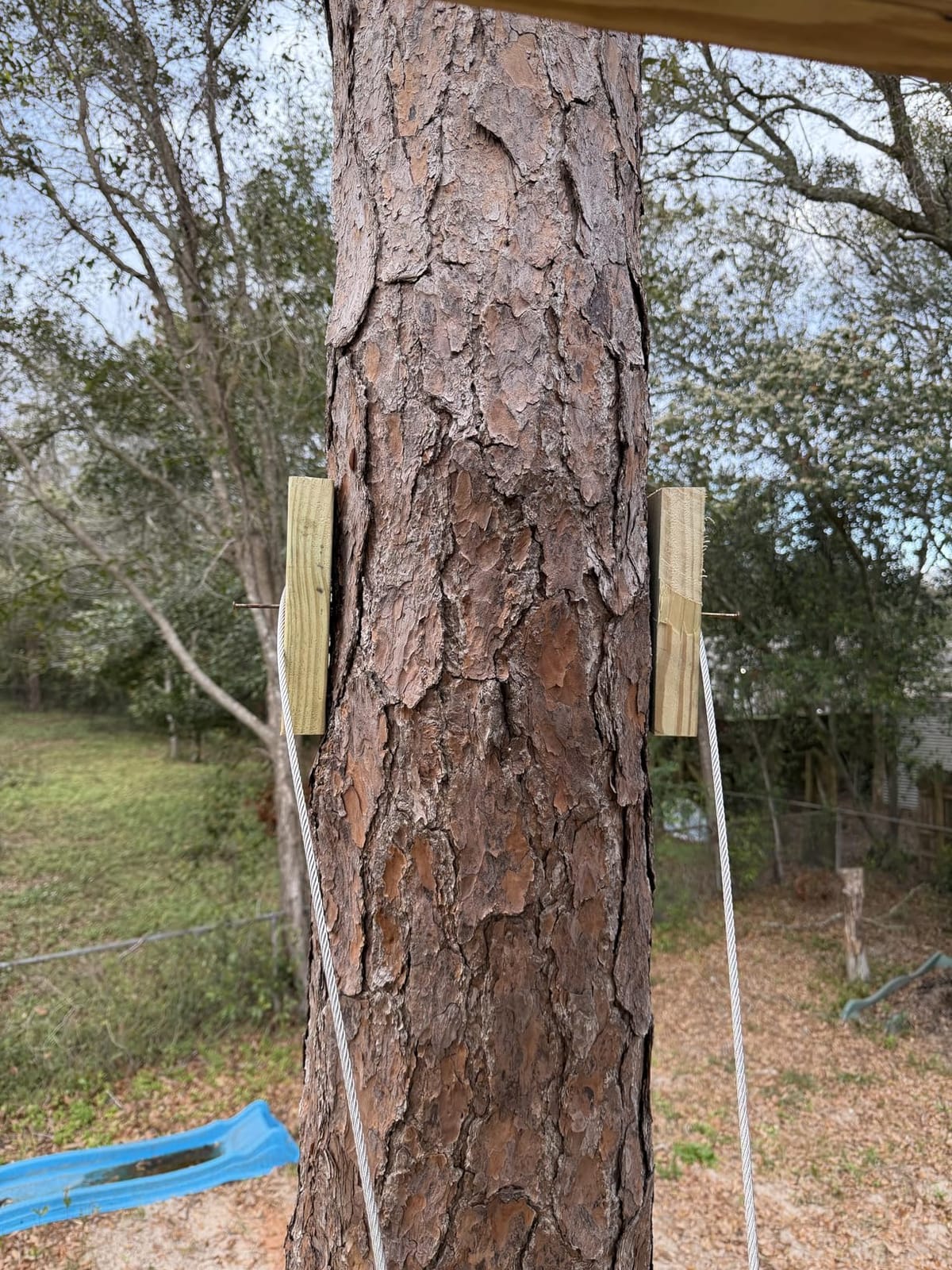
Fit tree saver straps at both anchors, wide enough to spread the load across the bark. Never wrap cable directly around a living trunk.
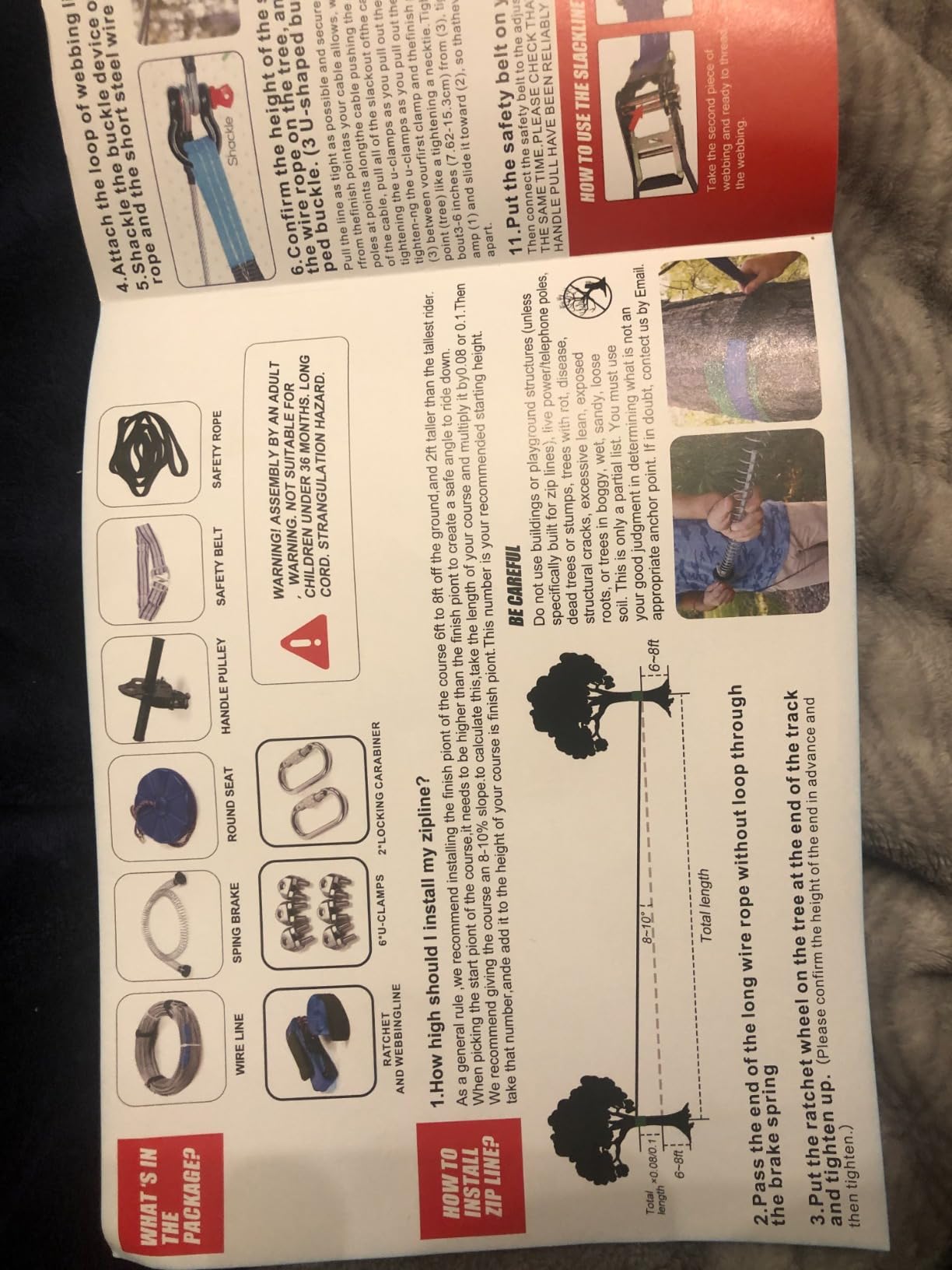
Mount the high anchor at the start point and the low anchor at the landing end. Set the height difference for roughly a four percent decline before you thread anything.
Thread the cable and tension it with a ratchet come-along or the kit’s tensioning system, aiming for three to eight percent sag. Tension in stages and re-measure sag at each stage rather than pulling to maximum in one go.
Install the brake at the low anchor and check that it engages fully without the trolley running past the plug.
Load test with a weighted rider at the end of the run, then with a real adult, then with a child. Stop and re-tension if the trolley derails or a rider’s feet touch the ground.
Yards with no mature trees are solvable. Pole-to-pole is the standard answer, and an A-frame using two braced uprights works where you want the line to come down in winter. Either way the hardware requirements are the same: poles set deep enough to resist the constant sideways pull, concrete footings, and rated eye bolts rather than simple screws. Several of the kits in this roundup use a ratchet webbing system that makes pole anchoring far easier than turnbuckles.
Can You Zipline With a 4 Year Old?
Yes, a four year old can ride a backyard zipline, but only on a short line with a full body harness, a real brake, close supervision and a run-out you have checked yourself. Kit age ratings vary widely, so the printed minimum matters less than the length, the restraint and the rider’s ability to follow the rules before starting.
Which of our picks suit a four year old:
Slackers 40 FT Falcon Kit is the strongest match. Forty feet is the shortest run here, the gradual friction stop is gentle, and the trolley is closed so there is nothing for small fingers to catch.
X XBEN 65 FT Kit works well, with a seat adjustable from 3.6 ft to 7.5 ft. Shorten the harness strap for a small rider.
VEVOR 60 FT Kit suits a four year old because the starting height sets the speed, so you can begin slow and raise it later.
Hyponix 100 FT Kit is usable but not ideal for a first ride. The adjustable seat and harness accommodate small children, though the run is fast.
Perantlb 100 FT Kit suits roughly ages four to fourteen, but the included belt runs large. Buy a separate child harness.
CTSC, iZipline, FAHKNS and both HOKINETY kits are listed for older children and teens. Their lengths make them poor first rides for a preschooler.
For any four year old, add a full body harness rather than relying on a belt on a seat. It takes a few extra minutes to clip in and it is the difference between a child who is secured and a child who is holding on. Supervise from the landing end every time, and keep the first ten rides slow by lowering the starting height.
Maintenance: How Long Does a Backyard Zip Line Last?
A well built backyard zip line lasts many years, but the cable is a consumable item and several manufacturers say so directly. Expect the hardware, brake and trolley to outlast the cable, and budget for a cable replacement every few seasons in a damp climate or on a line that sees heavy daily use.
Run this monthly and after any storm or high wind:
Look at the cable end to end for rust, kinks, flattened sections and what is sometimes called mushrooming, where strands flare at a termination point.
Check the brake for compression set, a bent plug or a sleeve that has worn through, and confirm it still catches fully.
Re-tension and re-measure sag. Lines drift slack as trees grow and as fittings settle, and this is the most common cause of a ride that feels slower than it used to.
Inspect tree savers and anchors for bite into bark, and check the trees themselves for new decay or limb movement.
Test the trolley for sticking rollers and check that the trolley is still fully closed around the cable.
Clear the run-out of anything new that has appeared since last month.
Keep a short log of these checks. When something goes wrong, the timeline of when it was last inspected is the first question anyone will ask, and a notebook entry is faster than a memory.
Frequently Asked Questions
Are backyard ziplines safe?
Yes, when the line has a real braking system, sound anchors, a clear run-out of at least 20 feet and adult supervision. The brake is the deciding factor: a rider who reaches the anchor at full speed with nothing to absorb the energy is the actual hazard, not the cable gauge or the brand.
What is a good length for a backyard zipline?
Match length to the rider. Thirty to fifty feet suits toddlers and preschoolers, fifty to seventy five feet works for school age children, seventy five to one hundred feet covers school age kids and light teens, and one hundred to one hundred fifty feet is where teenagers and adults get a ride worth queuing for.
How much does it cost to put a zip line in your backyard?
The kit is only part of the spend. A budget kit may leave out tree savers, a child harness, a proper tensioning tool and any brake upgrade, so the total cost of a safe finished line is meaningfully higher than the sticker figure on the box.
Can you zipline with a 4 year old?
Yes, on a short line of roughly 40 to 65 feet with a full body harness, a working brake, a checked run-out and an adult standing at the landing end. Use a full body harness rather than a seat belt, keep the first rides slow, and supervise every time.
How long do ziplines last?
The hardware, brake and trolley can last many years, but the cable is a consumable item that several manufacturers state explicitly. Expect to inspect the cable regularly for rust and wear, and plan on a replacement every few seasons in damp climates or with heavy daily use.
How to setup a zipline in the backyard?
Measure the span between trunk surfaces, check the site and run-out for hazards, confirm both anchor trees are sound and at least 12 inches in diameter, fit tree saver straps, mount the high and low anchors for roughly a four percent decline, tension the cable to three to eight percent sag, install the brake, then load test with a weighted rider before anyone uses it.
Which Backyard Zip Line Should You Buy?
For most families looking at the best backyard zip lines for kids in 2026, the CTSC 105 FT kit is the one to buy. It is the only kit in this roundup where the box contains the whole system, including the spring brake, harness, seat, tensioning kit and tree protectors, and it carries the deepest review base of the ten with 2775 ratings at 4.6 stars. Nothing else has been worn for longer by more families.
If your yard is small, the Slackers 40 FT Falcon is the faster and calmer first build. If your span is around 100 ft and you want adults on the line too, the Hyponix 100 FT with its 10 year warranty is the better value. Whatever you choose, measure the span first, buy tree savers, and load test with a weighted rider before anyone small uses it.
That last habit is what separates a fun afternoon from a trip to the emergency department. Ten kits, one rule: nothing rides until the brake has been tested at speed.