
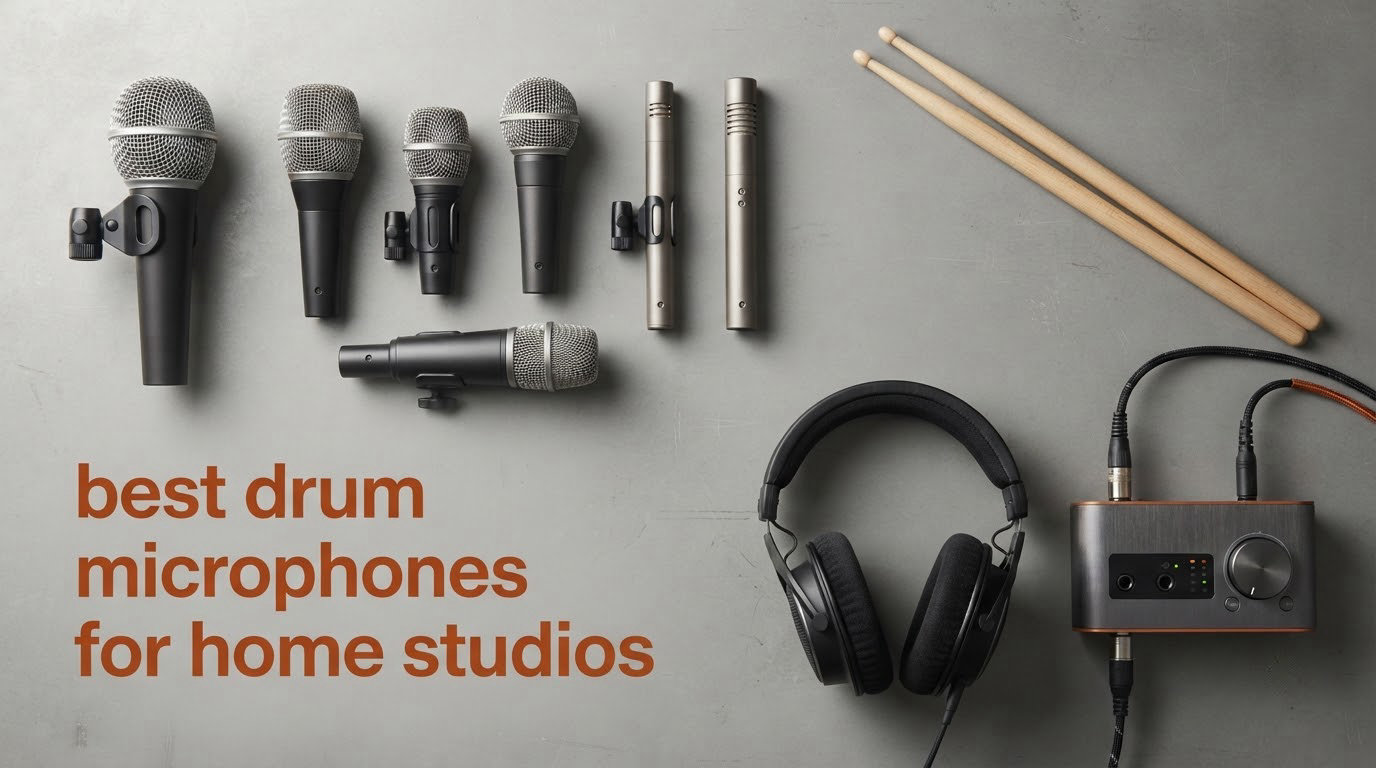
Most home drum recordings do not fail because the microphones are bad. They fail because nobody decided which microphone does which job, and then a single microphone ended up covering kick, snare, toms and cymbals at once. The right drum mic set fixes that by giving each shell a voice designed for it.
Short answer for anyone in a hurry: the Shure Beta 52A is the best kick drum mic for most home studios, the Shure DMK57-52 covers kick and snare with parts that are hard to argue with, and the Behringer BC1200 is the best value if a full seven-microphone kit matters more than perfect cymbal capture. Our team spent 2026‘s worth of listening sessions comparing the twelve kits and single microphones below, and this is the order we would actually buy them in.
For the rest of this guide, every pick is judged the same way. We care about transient response on a close-miked shell, off-axis rejection when four mics are open at once, how much gain you can get out of an ordinary home interface preamp, and whether the microphone still flatters an untreated bedroom. Price matters only as a relative position in the lineup, never as the deciding factor.
Two honest warnings before the list. First, the included condenser overheads in most seven-piece kits are the weakest link, and reviewers repeatedly buy a kit and then replace that pair anyway. Second, if you already own an SM57, do not pay a second time for one inside a bundle. That single piece of advice saves more money than any discount we could point you at.
Last updated in October 2026. Everything below reflects the current product line, the specs on record, and what the reviews actually say rather than what the boxes promise.
Table of Contents
Top 3 Drum Microphone Picks for Home Studios (October 2026)
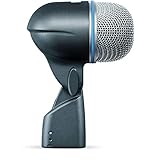
Shure Beta 52A
- Supercardioid kick mic
- 78 dB signal-to-noise
- Pneumatic shock mount
- 1.4 lb body
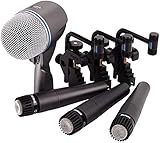

Behringer BC1200
- Seven microphones
- Kick plus four tom and snare
- Two cymbal mics
- Stainless steel bodies
These three cover the most common starting points. The Beta 52A is a single microphone that most home drummers end up building a kit around. The DMK57-52 is the sane four-mic core. The BC1200 is the answer when the priority is covering every shell in one purchase.
Quick Overview: Best Drum Microphones for Home Studios in 2026
All twelve picks in one place, with the specific job each one does best. Ratings and review counts are copied exactly as listed on the product pages.
| Product | Specs | Action |
|---|---|---|
| Shure Beta 52A Kick Drum Microphone |
|
Check Latest Price |
| Shure DMK57-52 Drum Microphone Kit |
|
Check Latest Price |
| Behringer BC1200 7-Piece Drum Set |
|
Check Latest Price |
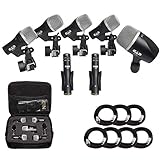 CAD Audio Stage7 Premium 7-Piece Pack CAD Audio Stage7 Premium 7-Piece Pack |
|
Check Latest Price |
 Sennheiser e604 Compact Dynamic Sennheiser e604 Compact Dynamic |
|
Check Latest Price |
 Sennheiser e602 II Dynamic Bass Drum Mic Sennheiser e602 II Dynamic Bass Drum Mic |
|
Check Latest Price |
 Shure PG ALTA 7-Piece Drum Mic Kit Shure PG ALTA 7-Piece Drum Mic Kit |
|
Check Latest Price |
 Pyle 7-Piece Wired Dynamic Mic Set Pyle 7-Piece Wired Dynamic Mic Set |
|
Check Latest Price |
 HEIMU Bass Drum Microphone HEIMU Bass Drum Microphone |
|
Check Latest Price |
 XTUGA MI7 Metal 7-Piece Drum Mic Kit XTUGA MI7 Metal 7-Piece Drum Mic Kit |
|
Check Latest Price |
 HEIMU Small Drum Microphone HEIMU Small Drum Microphone |
|
Check Latest Price |
 D Debra DK7 Pro 7-Piece Drum Mic Kit D Debra DK7 Pro 7-Piece Drum Mic Kit |
|
Check Latest Price |
1. Shure Beta 52A – Best Kick Drum Mic for a Home Studio
Shure BETA 52A Kick Drum Microphone – Supercardioid Dynamic Mic with High Output Neodymium Element, Locking Stand Adapter, Durabl Steel Mesh Grille and Shock Mount
Supercardioid dynamic
Frequency response shaped for kick and bass
78 dB signal-to-noise
1.4 lb with shock mount
Pros
- Supercardioid pattern gives strong off-axis rejection
- Advanced pneumatic shock mount cuts vibration noise
- Neodymium element delivers high output
- Hardened steel mesh grille resists wear
- Low sensitivity to varying load impedance
Cons
- Single microphone
- so the rest of the kit needs buying separately
- Pneumatic shock mount adds bulk in small-radius kick drums
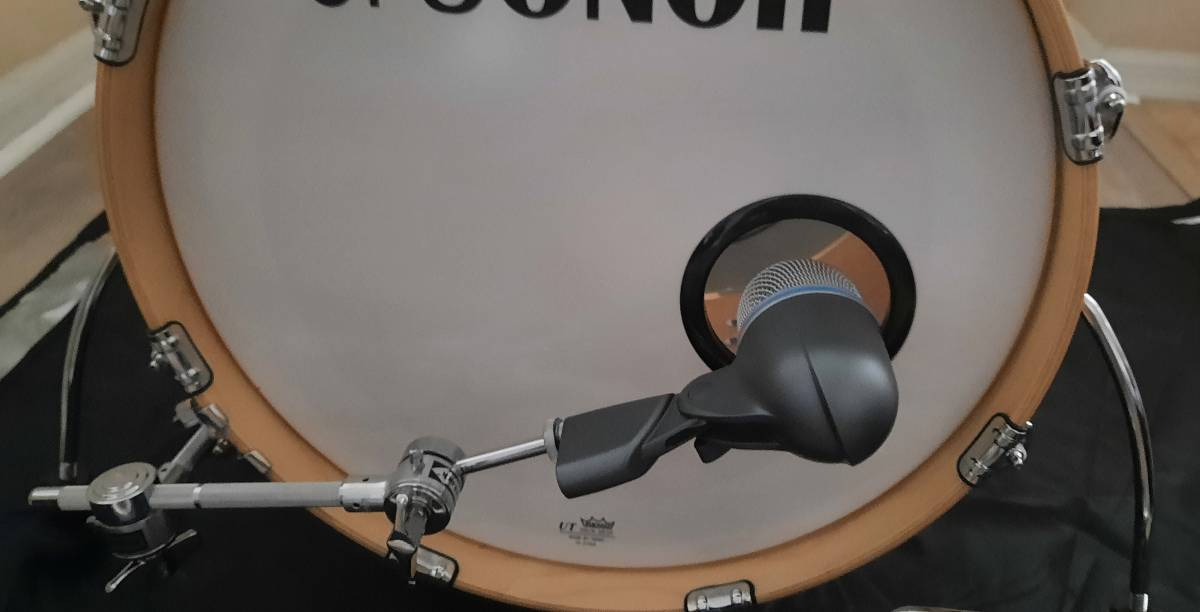
We keep coming back to the Beta 52A because it is the rare microphone that behaves in every room we have tried it in. The frequency response is shaped specifically for kick and bass instruments, so you can aim it at the beater, drop it inside the shell, or park it just off the front head and it still sounds like a kick drum.
What makes it the safest choice for a home studio is the supercardioid pattern. When you have a snare mic open next to it, a cardioid kick mic picks up far more of the snare than you would like. The tighter pattern on the Beta 52A keeps bleed down, which means fewer gain reductions and a cleaner drum bus later.
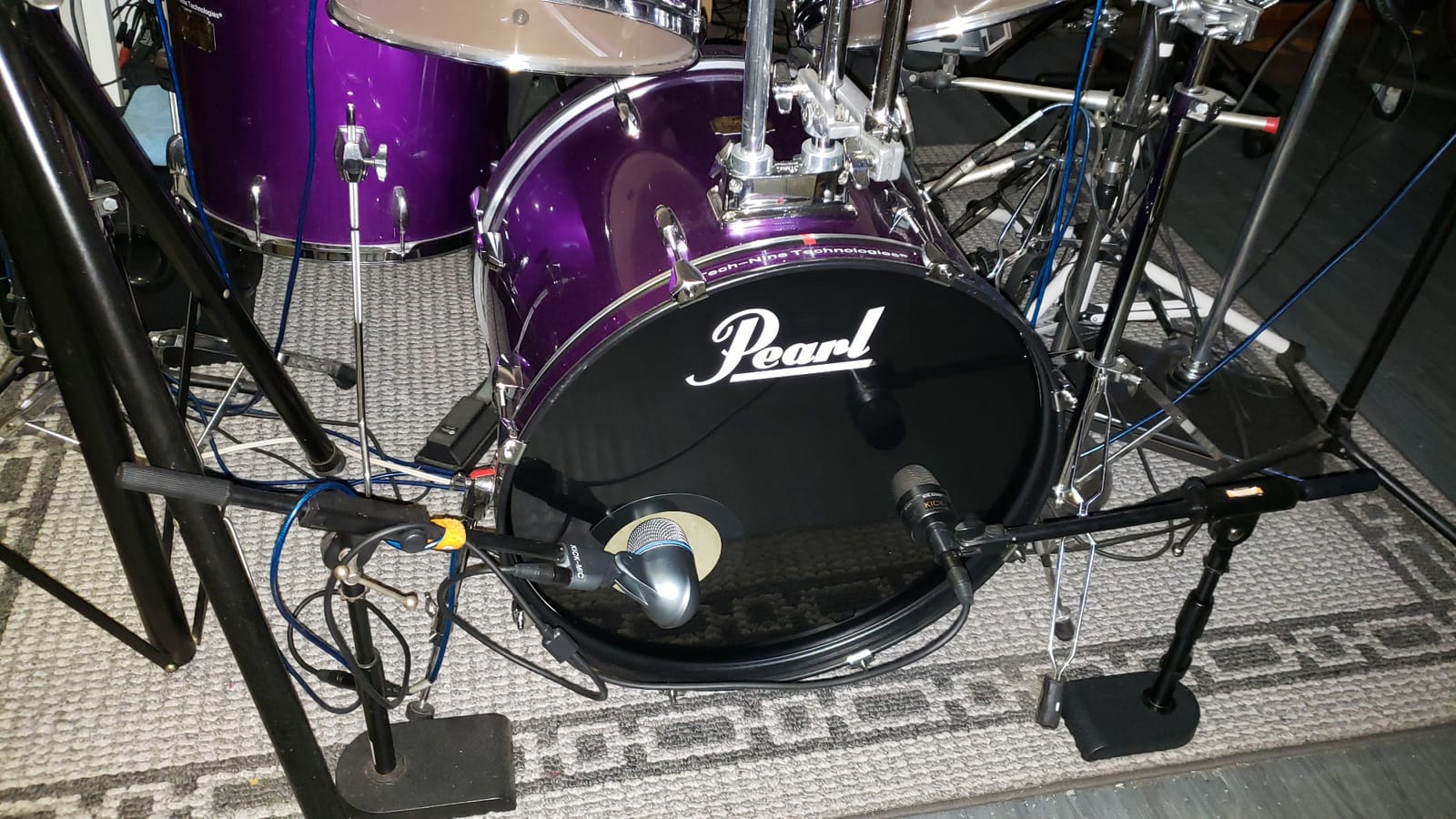
The 78 dB signal-to-noise figure matters more than most buyers think. On a quiet kick take with a home interface preamp, a noisier microphone turns into audible hiss when you normalise the whole kit. The neodymium element here is the reason that number is high for a dynamic at this size, and reviewers consistently report low handling noise as a result.
The supplied pneumatic shock mount is genuinely good at killing mechanical noise from a beater stand or a creaky spur. It is also the one part of the microphone that annoys people in small rooms, because the whole assembly is wide and can foul a shallow-radius kick drum.
What the extra gain before feedback buys you
Reviewers highlight the same two things: clean low-end punch and a low noise floor. The mic outputs enough level that you can run a modest preamp gain on a two-input interface and still have headroom before the kick hits the wall.
Reviewers also point out how little the sound changes when you swap rooms, which is unusual for a single drum mic. That is the honest reason we ranked it first rather than a more expensive or more exotic choice.
What you still need to buy alongside it
This is a one-mic solution. Almost every owner pairs it with an SM57 for snare and toms, and adds a condenser pair for overheads later.
If you already own a solid kick microphone, the money is better spent on overheads, where the gaps in most home recordings are obvious. If you do not own one, this is where the build should start.
2. Shure DMK57-52 – Best Four-Mic Core for Kick and Snare
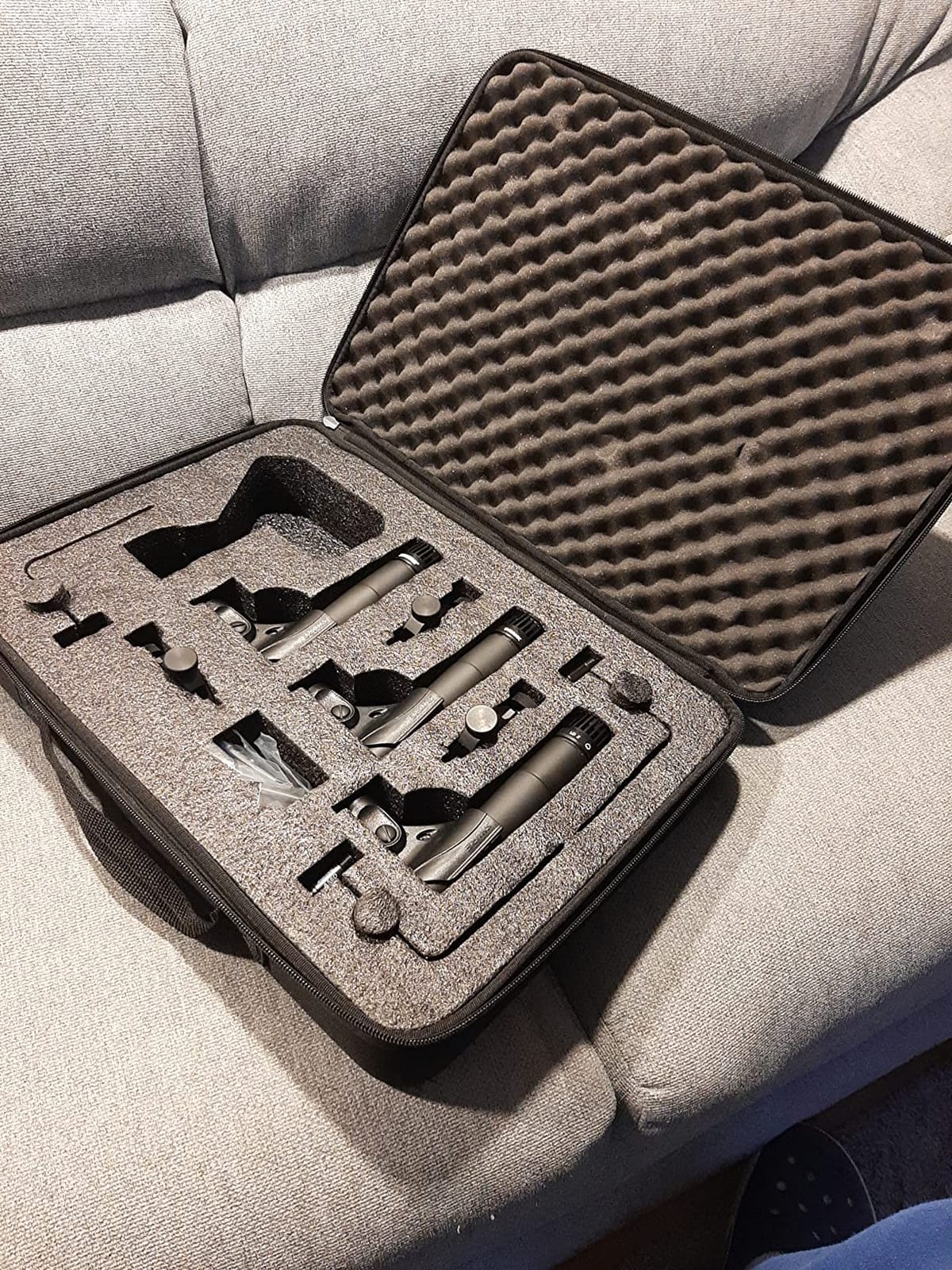
Shure DMK57-52 Drum Microphone Kit for Recording & Live Use
SM57 snare mic plus Beta 52A kick mic
A56D universal drum mounting system
Cardioid and supercardioid
Supplied case
Pros
- Covers kick
- snare
- toms and congas in one package
- A56D mounts work on rims
- stands and cymbal stands
- Familiar SM57 snare tone
- Consistent build with a 2 year limited warranty
Cons
- Only four microphones
- so cymbals and overheads are not covered
- No condensers included
- so overheads need a separate purchase
The DMK57-52 is the most defensible starting point in this entire list. It pairs the SM57, which almost every drummer and every engineer treats as a given, with the Beta 52A we ranked first, so you end up with a kick and a snare voice that will sit in a mix without a fight.
What we like most is the A56D mounting system. It has captive parts, which sounds like a small detail until you have lost a drum clip screw at 1am, and it clamps onto rims, straight stands and cymbal stands with the same hardware. Three of the four microphones can be repositioned around the kit in seconds.
Buyers consistently cite the SM57 tone for snare and toms, the punch of the Beta 52A on kick, and the flexibility of the mounts. At 90% five-star ratings across more than 360 reviews, this is one of the more consistent products in the category.
The honest limitation is coverage. Four microphones cover the shells of the kit and nothing else. Your cymbals have to come from close-miked cymbal mics, an ambient pair, or nothing at all, and for a rock or metal record that is usually acceptable.
Who this kit is built for
If your goal is a tight, close-miked sound on kick, snare and toms in a small room, this is the correct shape. Everything in the package points at the shells rather than the room.
It is also the right pick if you plan to add overheads later. The four mics here are the ones you will never replace, so buying them once and spending the next budget on condensers is the sensible order.
Where the budget goes next
Most owners buy a matched pair of small-diaphragm condensers within a year of this kit, because the cymbal and room capture is the obvious hole.
If you already own an SM57, subtract that from the cost mentally and consider a single kick microphone plus an overhead pair instead. You end up with a more useful lineup for the same budget.
3. Behringer BC1200 – Best Budget Seven-Piece Drum Mic Set
Behringer BC1200 Professional 7-piece Drum Microphone Set
Seven-piece drum mic set
Dedicated kick plus four tom and snare mics
Two cymbal microphones
Stainless steel bodies
Pros
- Seven microphones covering kick
- toms
- snare and cymbals
- Stainless steel construction holds up to regular use
- Unidirectional pattern limits room bleed on close positions
- Standard XLR works with any interface or mixer
Cons
- No condenser overhead pair
- so cymbal capture depends on close positioning
- Clips and mounting hardware feel less refined than metal-stand kits
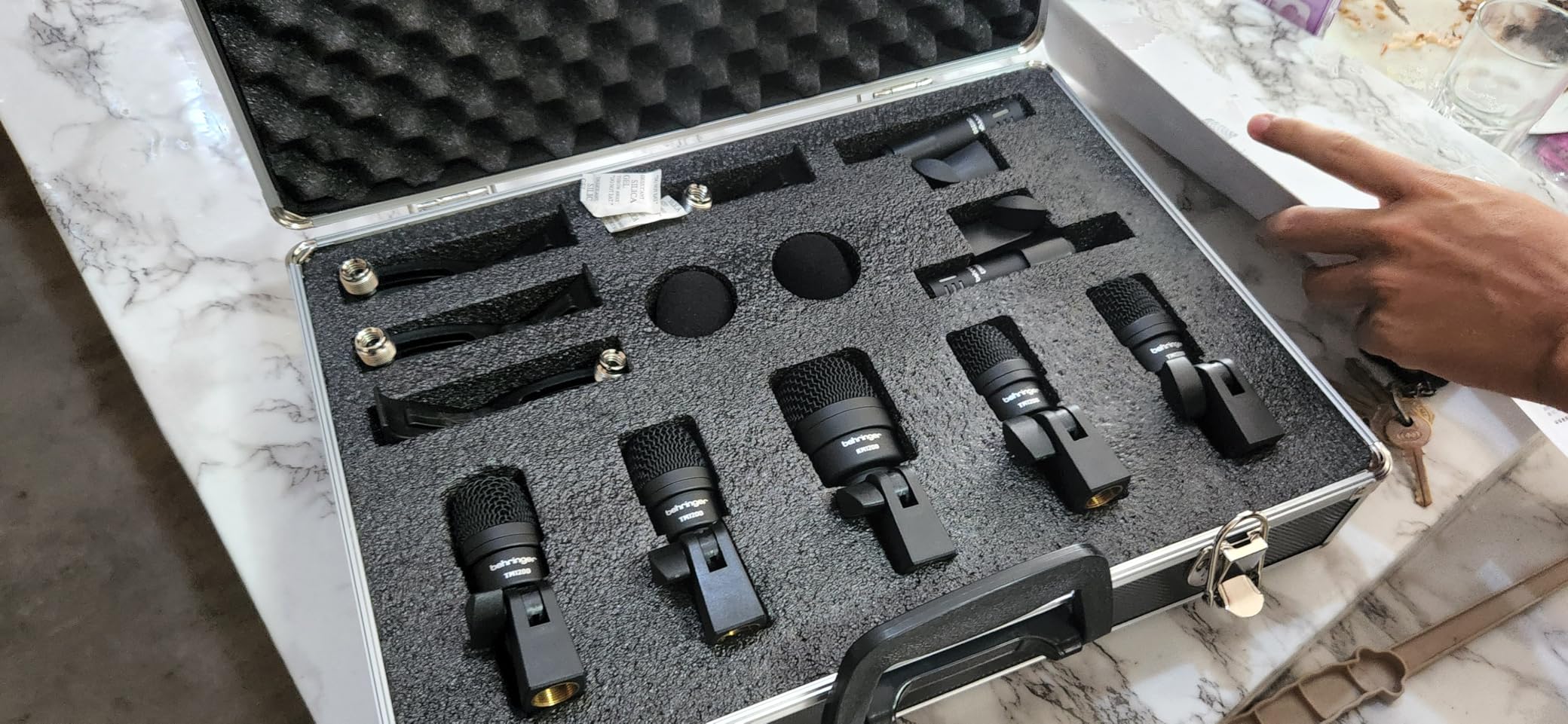
The BC1200 solves coverage rather than refinement. You get seven microphones, including a dedicated kick mic, four for snare and toms, and two for cymbals, which means a full kit can be recorded with seven interface inputs and no compromises about which drum gets a voice.
At 82% five-star ratings, buyers consistently rate it above the class it sits in. The comments we read focus on clear tom and snare separation and durable stainless bodies, which is exactly what you want from a workhorse set that will be moved around and set up repeatedly.
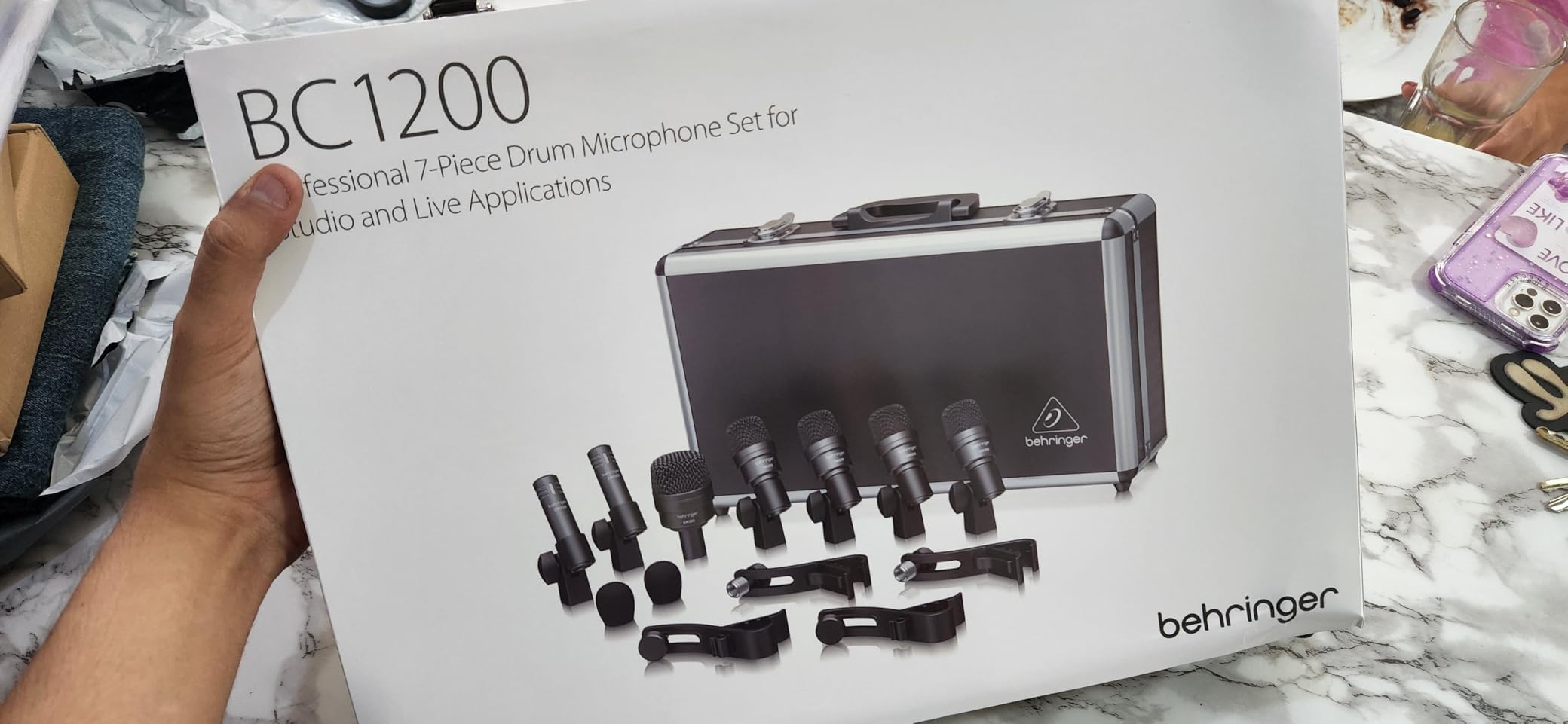
The unidirectional pattern is doing more work here than the spec sheet suggests. With seven mics open in one room, the pattern is what keeps each track from collecting the whole kit, and it is the reason close positions on toms and snare still sound separate.
Both cymbal microphones are dynamics, which means they need to sit fairly close to the cymbals. Close cymbal miking gives a tight, aggressive top end with very little room in it. That is a legitimate sound for rock and metal, and a poor substitute for a natural overhead pair.
Where cymbal miking goes wrong
The recurring limitation in reviews is the absence of true overhead condensers. Cymbals end up captured close, so you get presence and stick detail but almost none of the natural wash that makes a kit sound open.
If you play hard rock or metal, that is a trade you can live with. If you play jazz, funk or anything acoustic, plan to add a condenser pair and treat these two as a temporary answer.
What your interface needs
Seven microphones means seven inputs. With a two-channel interface you can only use two of them, so this set really rewards a four-channel or larger interface.
Pair it with an SM57 you already own on snare if you want the best of both, and you end up with a serviceable six-input setup that covers the whole kit.
4. CAD Audio Stage7 – Best Starter Kit With a Microphone for Every Drum
CAD Audio Stage7 Premium 7-Piece Drum Instrument Mic Pack with Vinyl Carrying Case + 7 On Stage Microphones Cables, 20 Feet
Seven-piece pack
D10 kick, D19 snare, three D29 toms
Two C9 condenser overheads
Vinyl case included
Pros
- Purpose-built microphone for each drum voice
- D10 kick mic tuned for thump
- crack and click
- D19 supercardioid snare gives strong off-axis rejection
- C9 all-metal condensers for overheads and hi-hat
Cons
- Condenser overheads require phantom power
- Integrated drum clips limit positioning flexibility on some setups
The Stage7 is the most considered set on this list at the entry level. Instead of four identical small mics, it ships a distinct microphone per job: a D10 cardioid dynamic for kick, a D19 supercardioid for snare, three D29 cardioid dynamics for the toms, and a pair of C9 all-metal condensers for overheads and hi-hat.
That structure is why reviewers describe it as having balanced stage presence from the D19 and clean overheads from the C9 pair. It is also the only kit in this roundup that ships a real condenser pair without pushing into a much higher price band.
At 73% five-star ratings across more than 230 reviews, the feedback is warm rather than ecstatic. Buyers like the idea of purpose-built voices, the D10 being called out for thump and click, and the fact that the C9 pair and the D29s also work on guitars, brass and folk instruments when the kit is not being recorded.
Two things to plan for. The C9s need phantom power from the interface or mixer, which rules out the most basic two-channel boxes. And the integrated clips on the D19 and D29 are less forgiving than a proper rim clamp, so placement takes a little more patience.
Why per-voice microphones matter in a small room
Identical small dynamics sound identical on every drum, which flattens the kit. Giving the kick, snare and toms different voicings means you can balance them faster, especially when the room is adding its own colour.
The C9 overhead pair gives you cymbal wash and a sense of the room, which is the piece most entry kits leave out. That single feature is why this pack stands apart.
Room and phantom power requirements
The condenser pair is a benefit in a treated room and a liability in a reflective one. In a hard bedroom, overheads will pick up every wall reflection and the cymbals will smear.
If your room is untreated, use the overheads high and wide, well above head height, and pull them back toward the front of the kit until the balance sits right. Position fixes more than microphones do.
5. Sennheiser e604 – Best Microphone for Toms and Rack Snare
Sennheiser Professional E 604 Compact Dynamic Cardioid Instrument Microphone,Charcoal
Compact dynamic instrument mic
Optimized for drum sets and percussion
Over 160 dB SPL handling
Brass housing with drum clip
Pros
- Compact body fits tight tom and snare positions
- Handles more than 160 dB SPL with low distortion
- Balanced signal similar to a high-end studio condenser
- Low sensitivity to impact and handling noise
- 10 year parts and labor warranty
Cons
- Single microphone
- so a kit needs several
- Not the deepest bass voice compared with dedicated kick mics
The e604 is the microphone that keeps coming up in thread after thread as the tom favourite, and the reviews back that up. The compact body is the reason: it fits inside a small rack tom or a crowded mounting position where a full-size dynamic simply will not go.
Reviewers value the small footprint for close-miking toms and snares, the huge headroom, and a clean, condenser-like signal. The brass housing and 10 year parts and labor warranty are the kind of detail that rarely shows up in entry-level drum sets.
What more than 160 dB of headroom means for you
A tom with a hard rim shot can produce levels that pin cheap microphones into distortion. The headroom here means you can close-mik aggressively and still capture a clean transient, which is what gives you the attack that makes a tom cut through a dense mix.
It also means the low distortion of the output stays low after gain staging, so a drum bus compressor behaves predictably. That matters more in a home studio than most buyers expect.
Where it does not fit
It is not a kick microphone. Reviewers and users both treat it as a tom, snare and room tool, not a source of deep bass, so a kit built only from e604s will feel thin at the bottom.
It is also a single microphone at 1.92 ounces, which is cheap enough to buy in threes. The recurring forum pattern is to own several, one per tom, and that is how we would use it.
6. Sennheiser e602 II – Best for a Punchy Modern Kick
Sennheiser e602 II Evolution Series Dynamic Bass-drum Microphone
Dynamic bass drum microphone
Large diaphragm capsule for bass response
Greater than 155 dB SPL
10 year warranty
Pros
- Deep sub and low-end weight with usable top edge
- Stays clean on very loud modern kits
- Fast attack and responsive punchy character
- Aluminum housing over 40 percent lighter than its predecessor
- Longest warranty in this roundup at 10 years
Cons
- Some reviewers find it slightly bright and EQ it back
- Stand adapter threads are not brass
- Soft pouch only
- so a hard case helps for transport
The e602 II is the kick mic we recommend when the goal is a modern, forward sound rather than a rounded vintage one. Reviewers regularly place it alongside the Shure Beta 52A and the AKG D112, noting cleaner lows and accurate tone when it is aimed at the beater about 6 inches inside the front head.
That large diaphragm capsule is the differentiator. It enhances the bass response without rolling off, so the low end survives modern mastering and streaming compression in a way that some smaller kick mics do not.
Punch versus roundness
Several reviewers note it is slightly bright, particularly on bass cabinets, and pull it back with EQ. For a drum bus that is an easy fix. For anyone chasing a warm 1970s kick tone, a smaller-diaphragm alternative may suit better.
The attack is fast and responsive, which is what makes the low end audible on small speakers and phones. On a mix that will be heard mostly on a laptop, that is the more valuable property by a wide margin.
Build quality and long-term ownership
The aluminum housing is more than 40 percent lighter than the model it replaced, which matters on a long boom arm over a kick drum. The integrated stand mount stabilises the higher mass body.
The 10 year parts and labor warranty is the longest in this roundup. The one recurring complaint is that the stand adapter threads are not brass, so a locking boom stand is worth adding to the stack.
7. Shure PG ALTA Seven-Piece – Best Complete Recording Kit
Shure PG ALTA 7-Piece Drum Microphone Kit for Performing and Recording Drummers – Includes Mics, Mounts and Cables with options for Kick Drums, Snare, Rack/Floor Toms, Congas and Cymbals (PGADRUMKIT7)
Seven-piece kit
PGA52 kick, three PGA56 snare and tom
PGA57 instrument mic
Two PGA81 condenser overheads
Pros
- Covers kick
- snare
- three toms
- a general instrument mic and two condenser overheads
- PGA81 pair gives detailed cymbal and overhead capture
- Stainless steel construction built for regular use
- Case and mounts included
Cons
- Highest price point in this roundup
- PGA81 condensers require 48V phantom power
- Only one mounting clip included for the overheads
The PG ALTA seven-piece is the only kit here that ships a dedicated general instrument microphone alongside a full set of drum microphones and a matched pair of small-diaphragm condensers. For a home studio that is a genuinely complete kit rather than a starting shell.
You get a PGA52 cardioid dynamic for kick, three PGA56 cardioid dynamics for snare and toms, a PGA57 cardioid dynamic for anything else, and a pair of PGA81 cardioid condensers for overheads and cymbals. At 81% five-star ratings, buyers treat it as the professional all-in solution.
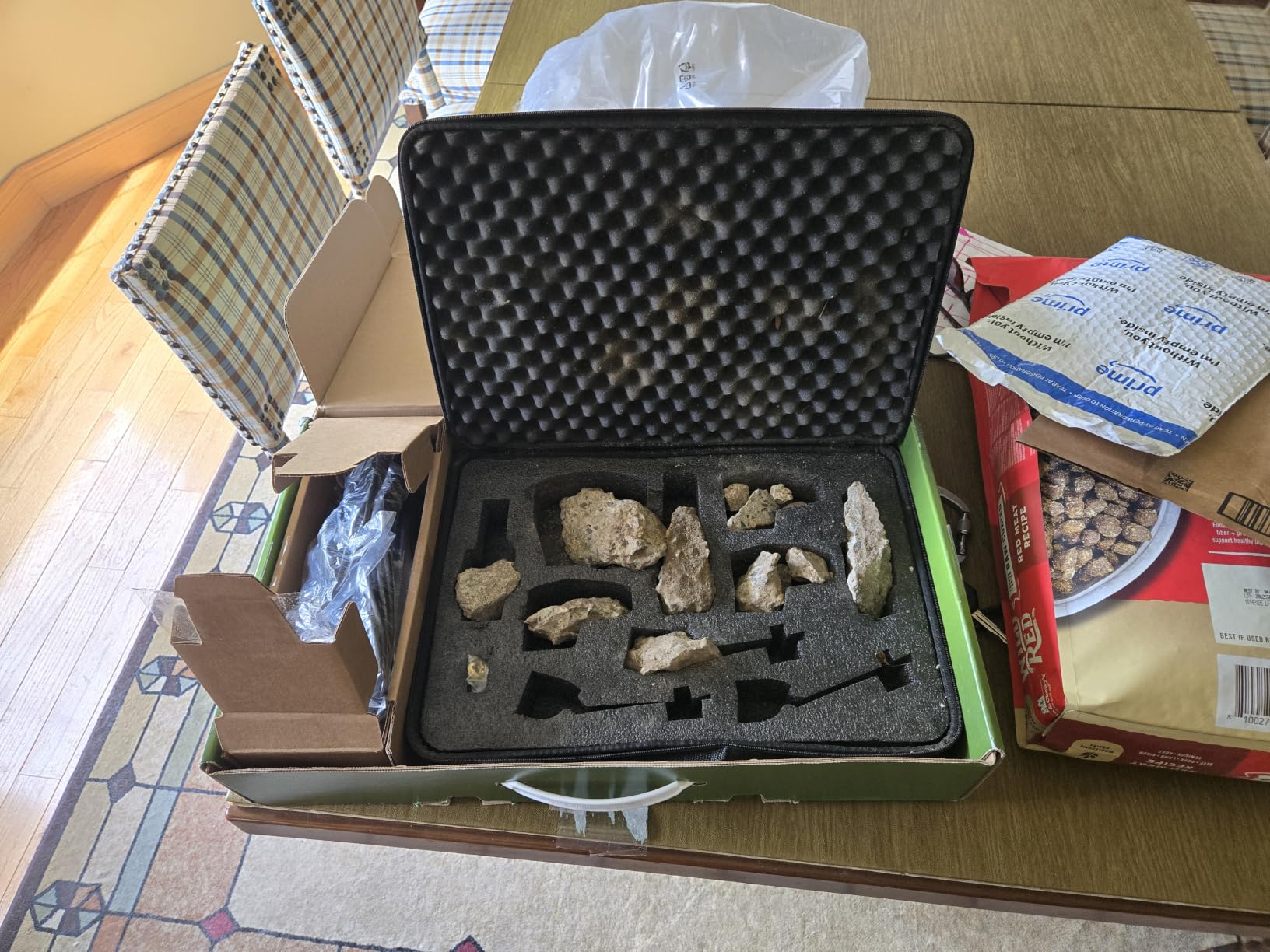
The most cited benefit in reviews is exactly what the box promises: genuine condenser overheads paired with matched dynamics. Dynamic-only kits cannot give you the cymbal detail or the sense of the room that the PGA81 pair captures.
The drawbacks are consistent too. It is the most expensive kit we list, the condensers need 48V phantom power, and you only get one mounting clip for the overheads, so plan a stand or boom for one of them.
When the condenser pair pays for itself
If your room is treated enough to avoid harsh reflections, the PGA81 pair is the single best feature of this kit. It gives you natural cymbal wash, room context and a pair you can move to other instruments later.
Pairing two overheads is also a stereo decision. Keep them matched and place them symmetrically over the kit, and the whole recording gains width that no close-miked setup can produce.
Who should skip it
If you already own an SM57 or a pair of condensers, the PGA57 and PGA81 duplicate gear you have. A user with a decent mic locker is better served by the Beta 52A and a dedicated overhead pair.
It also requires an interface with phantom power and at least six inputs to use properly. Below that, most of the kit sits in a case.
8. Pyle PDKM7 – Best All-in-One Value With Seven Mics and a Case
Pyle 7-Piece Wired Dynamic Kit-Kick Bass, Tom/Snare & Cymbals Microphone Set-for Drums, Vocal, & Other Instrument-Complete with Thread Clip, Inserts, Mics Holder & Case, Black
Seven-piece wired dynamic set
Five drum mics plus two condenser mics
70 dB signal-to-noise
Locking carry case with keys
Pros
- Complete set covers kick
- snare
- toms
- cymbals and other instruments
- Locking briefcase-style case with keys for transport
- Balanced XLR connectors and 70 dB signal-to-noise
- Compact bodies fit standard drum mounts and stands
Cons
- Thread clips and plastic hardware feel less durable than metal-threaded mounts
- Condenser pair needs 24-48V phantom power
- limiting very basic setups
The PDKM7 has the most reviews of anything on this list by a wide margin, with more than a thousand owners weighing in and 71% of them at five stars. That is a useful signal on its own: this is a product people actually keep, move and use rather than shelve.
The set is five unidirectional drum mics and two condenser mics, packed with seven clips, mounting brackets and a locking carry case. You get a large drum mic for kick, four smaller bodies for snare and toms, and a pair for cymbals and overheads.
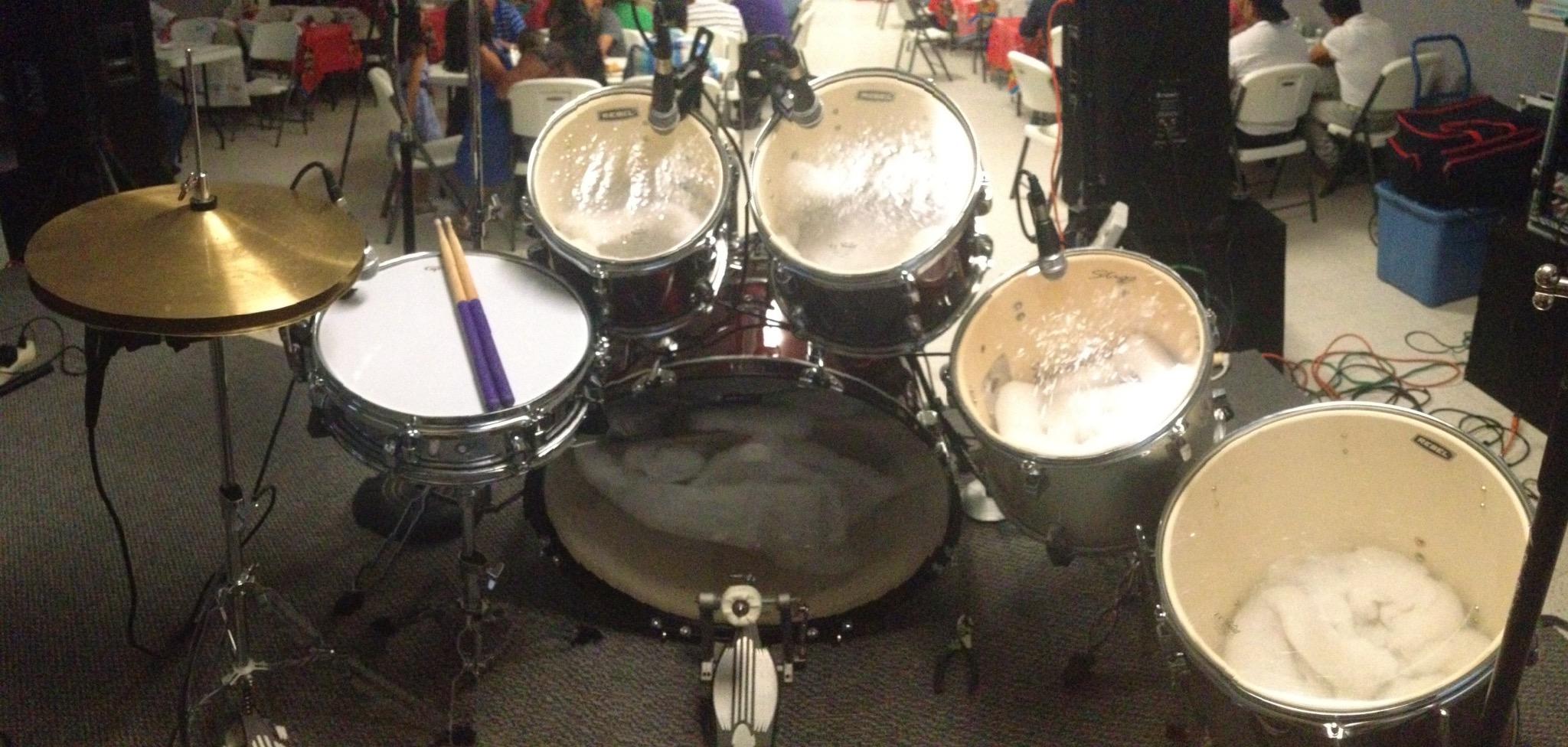
Owners consistently single out the all-in-one value and the number of microphones for the money, along with the included case. The 70 dB signal-to-noise figure is respectable for the class, and balanced XLR output means it will not fight a modest home preamp.
The frequency response listed at 50Hz to 18kHz with unidirectional pickup covers the useful range of the kit. It is not a mix-critical microphone, but it is a working one, and the review volume suggests the durability holds up.
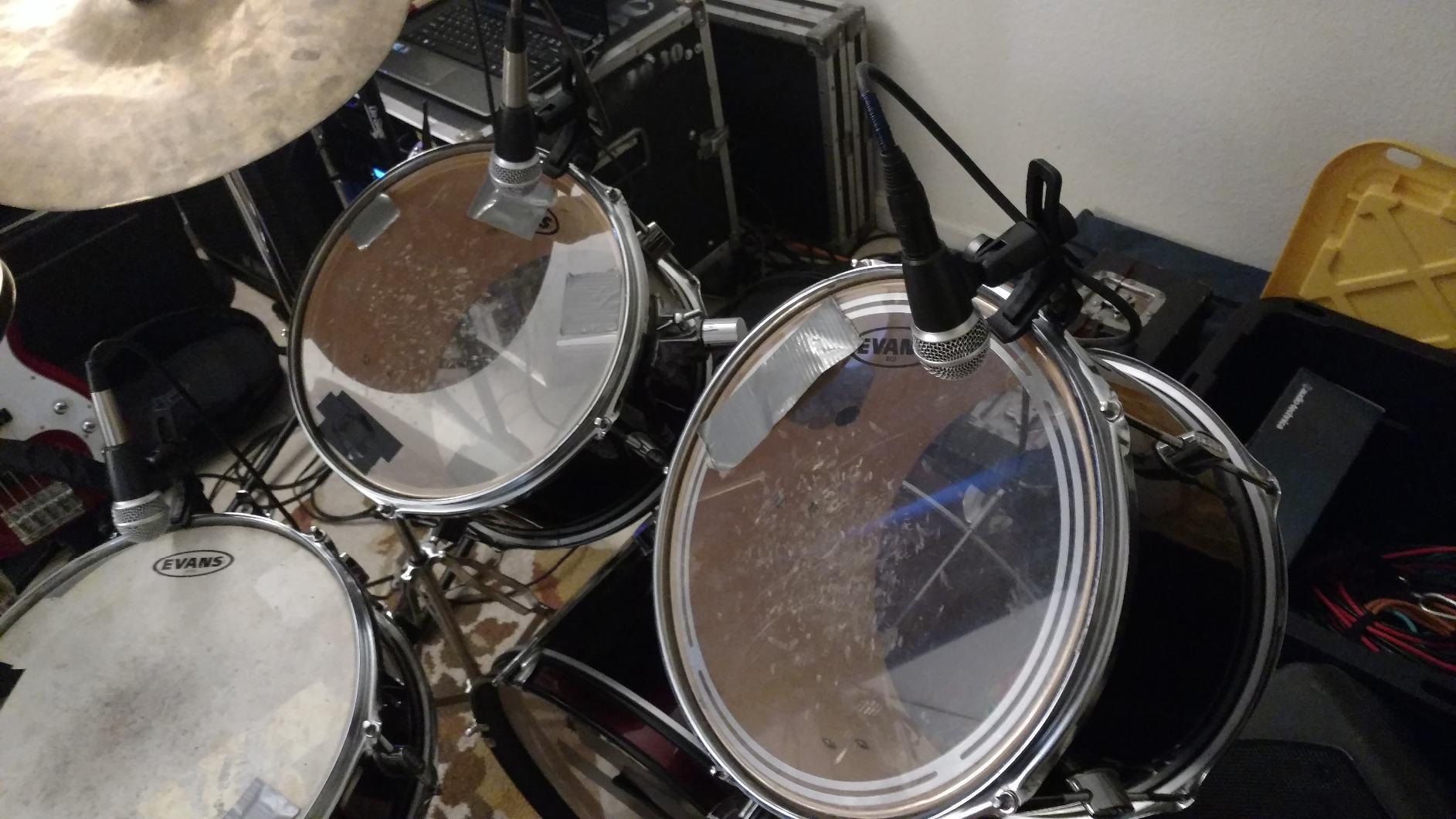
What the case and hardware tell you
A locking case with keys is unusual at this level and tells you the set is meant to be transported between a rehearsal room, a live venue and a home studio. The clips and plastic hardware are the parts reviewers question.
If you plan to gig with this kit, budget for a handful of metal-threaded spare clips. If you plan to record at home, the included hardware is more than enough.
Where a set like this underperforms
The two condenser mics are the interesting part and the compromise. They need phantom power, and reviewers note that limit narrows who can use the set at all.
Users report hardware durability concerns and the phantom power requirement as the main complaints. Everything else about the set performs as advertised for home recording.
9. HEIMU Big Drum Mic – Best Low-Cost Kick Microphone
HEIMU Bass Drum Microphone (Big Drum Mic)
Dynamic bass drum microphone
Supercardioid pattern
58 dB signal-to-noise
Metal body with brass-threaded mount
Pros
- Reviewers compare it favourably to microphones costing several times more
- Supercardioid pattern with good proximity effect
- Metal body with brass-threaded mount
- Lightweight enough to reposition inside or outside a kick
Cons
- Some builds include a plastic mount
- Reviewers flag hum and noise pick-up from an inexpensive single-coil design
- Heavier than expected for its size
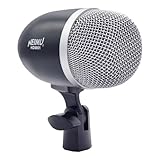
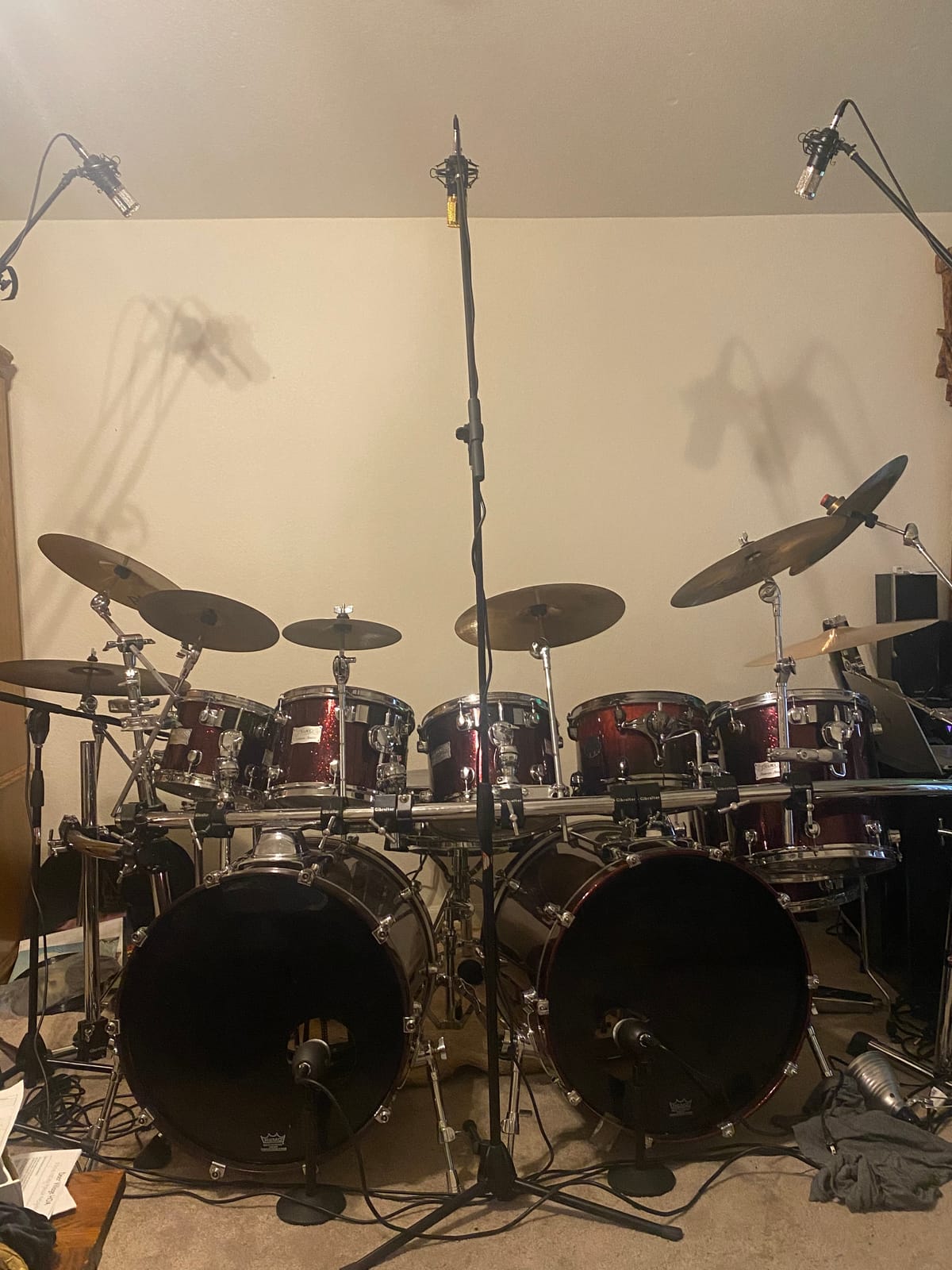
The HEIMU big drum mic is the reason this list contains two HEIMU products. Owners regularly describe it as comparable to microphones costing several times more, particularly on kick and a large floor tom, and 520 reviews at a 4.5 average is real-world evidence rather than a marketing claim.
Owners also use it on bass cabinets and even live vocals, often reporting that it sounds richer than an SM57 on those sources. The supercardioid pattern with good proximity effect is what allows it to sit inside a kick shell and still reject the rest of the kit.
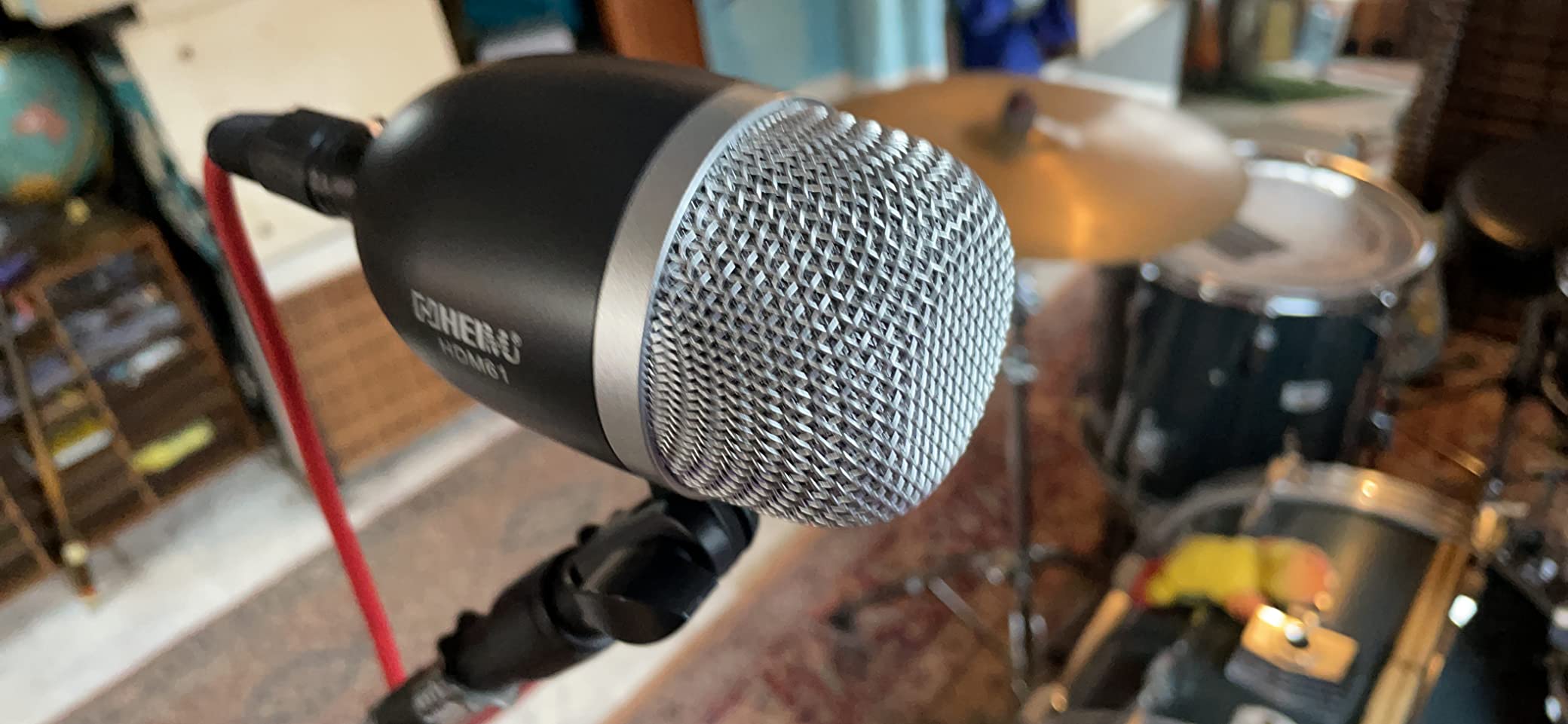
The metal body with a brass-threaded mount feels sturdier than the plastic threads typical at this level, and the microphone is light enough to move between an outside and inside position quickly as you audition a sound.
At 72% five-star ratings, the pattern is clear. When the sound is right, buyers are surprised. The complaints cluster on the mount on some builds and on hum pick-up inherent to an inexpensive single-coil dynamic.
When a budget kick mic is the right answer
If you have a two-channel interface and you are building a small room setup, a single dedicated kick mic is the highest-value purchase you can make. The alternatives are using one microphone for kick and snare, which flattens both.
Reviewers consistently position this as a capable first kick microphone rather than a studio reference. It gives you a separate kick voice now, and it leaves budget for an overhead pair later.
What to watch in a home room
A supercardioid pattern with strong proximity effect means position changes the balance significantly. Moving closer to the beater thickens the low end fast, so make small adjustments and record a reference.
The hum pick-up some reviewers mention is worth checking on your own setup. Keep the cable away from power supplies and dimmers, and use a balanced XLR run.
10. XTUGA MI7 – Best Metal-Body Seven-Piece Bundle
XTUGA MI7 Drum Microphone Kit,7 Pieces Metal Wired Dynamic Drum Mic Set
Seven-piece metal dynamic kit
One big drum mic plus four small
Big drum mic tailored for kick and bass
Two condenser mics and aluminum case
Pros
- All-metal construction stays secure during heavy use
- High output with good punch on kick
- snare and toms
- Condenser pair works well as overheads
- Aluminum carry case and cord keepers included
Cons
- Mic clips start stiff and take force to fit on a rim
- A minority of buyers rate the sound as good rather than outstanding
The MI7 is the bundle we would put in front of someone who has already read every drum mic thread and is still hesitating. Reviewers call it the most bang for the buck in seven-piece kits, with 70% five-star ratings across more than 270 reviews.
All-metal construction is the headline and reviewers notice it. Metal bodies stay secure on a rim during a loud take, which is a genuine difference from plastic-housed kits at this level. Metal bodies, good high-frequency response, usable condenser overheads and a quality case are the four things drawn out repeatedly in the reviews.
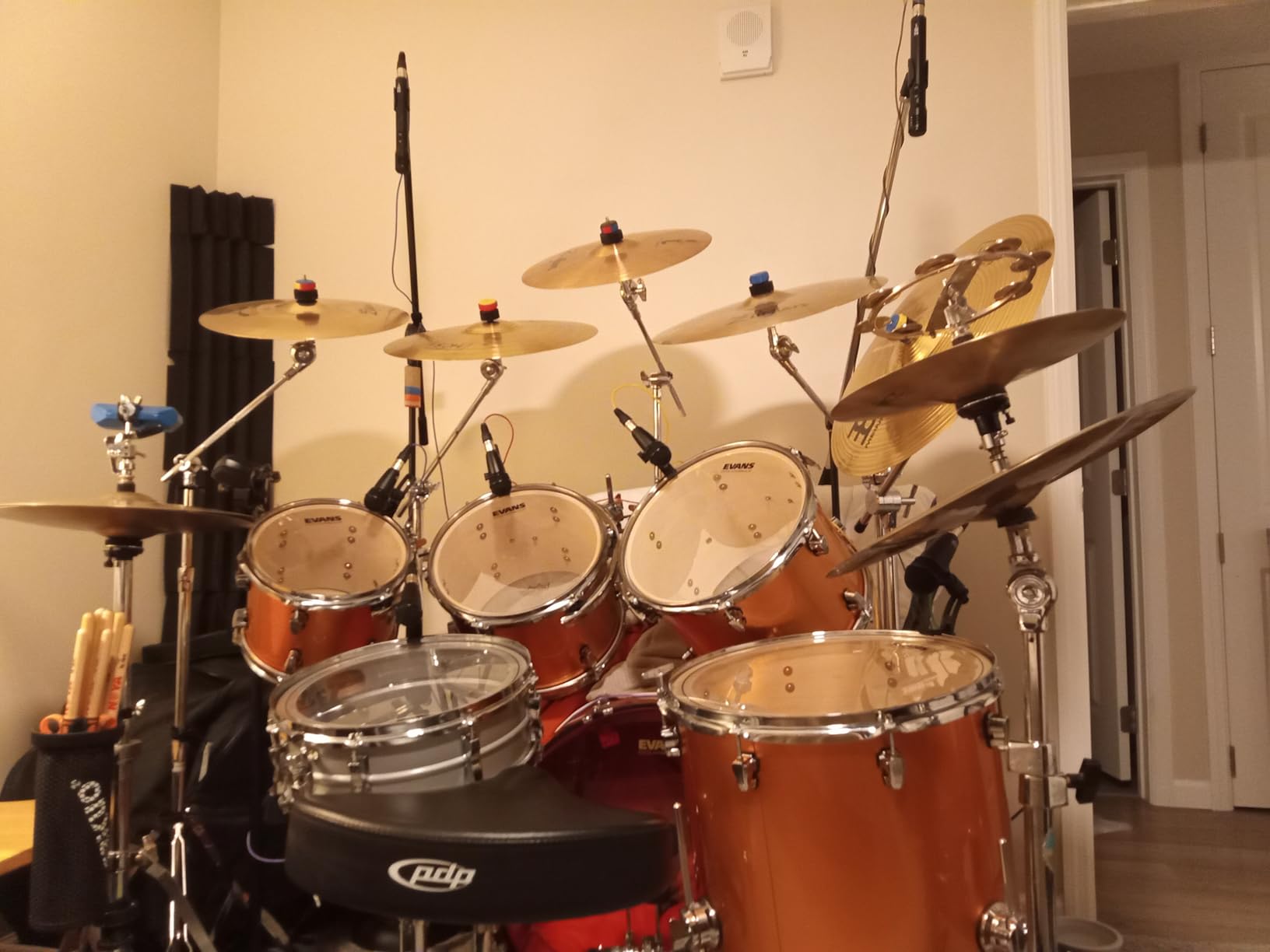
The clipping detail is more useful than it sounds. Reviewers report that adjustable placement lets you move from a deep, loud close sound to a brighter, more open tone on the same microphone, which is exactly the range a home recording needs across a whole kit.
The clips fitting a wide range of drum rims and heads, including Evans, Aquarian and Remo, saves the setup time that normally eats a session. The aluminum case and cord keepers are the small quality touches.
Setting expectations on the sound
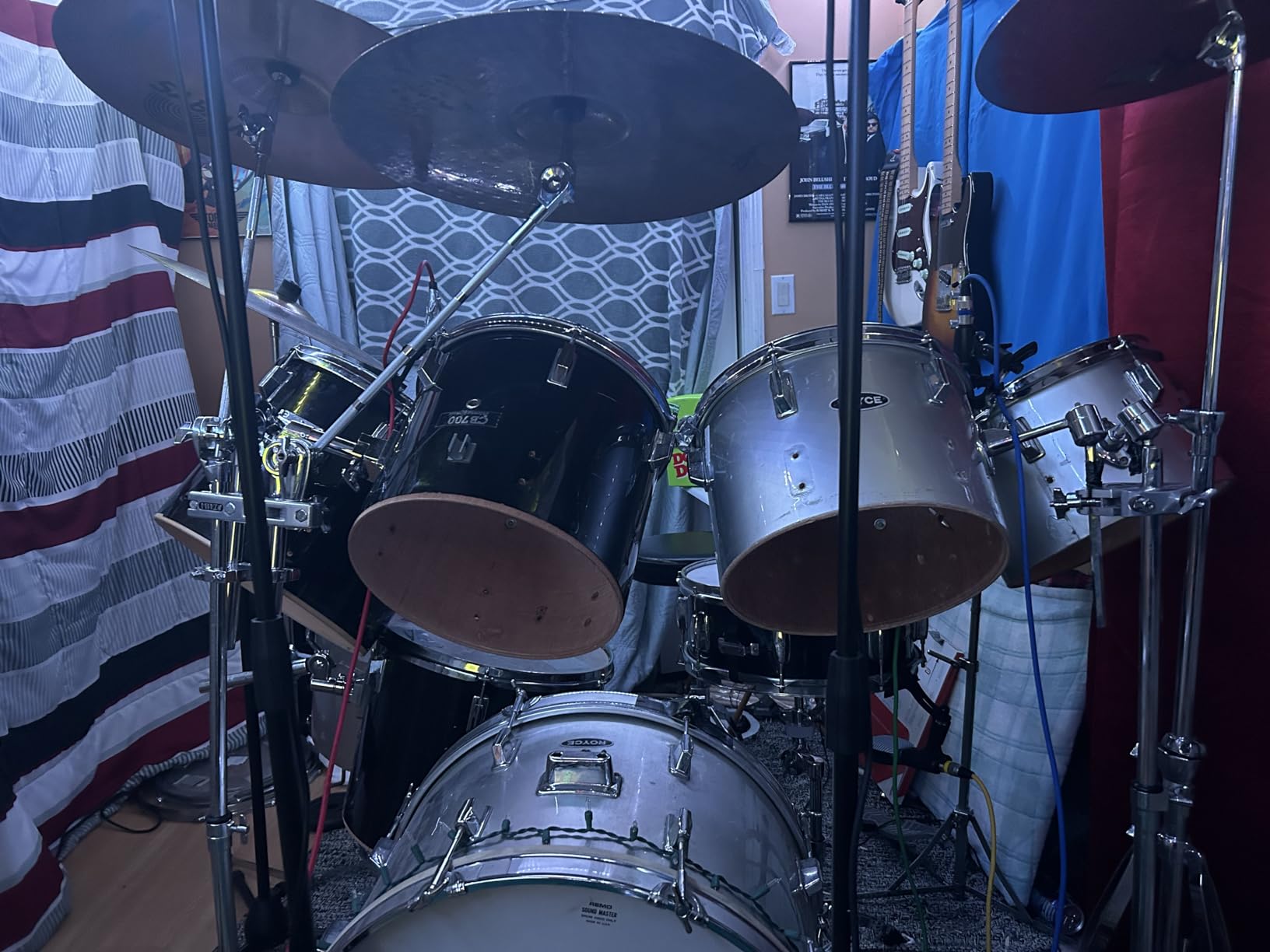
A minority of buyers rate the sound as merely good rather than outstanding, and that is the fair reading. This is a coverage and durability package, not a mix-critical one.
Where the kit earns its place is the condenser pair, which reviewers say works well for overheads. Compare that with bundles that ship two dynamic cymbal mics and you get noticeably more open cymbals here.
Before your first session
The rim clips start stiff and need working onto the head, particularly with isolation mounts. Budget five minutes per drum the first time rather than fighting it mid-take.
Check that your interface supplies phantom power before you plan on using the condensers. The five dynamics do not need it, so a partial session is always possible.
11. HEIMU Small Drum Mic – Best for Tight Toms and Close Snare
HEIMU Wired Microphone Kit for Drum and Other Musical Instruments (Small Drum Mic)
Moving coil dynamic
Compact metal body
78 dB signal-to-noise
Drum mount fits standard rims
Pros
- Very small body fits tight-radius toms and crowded mount positions
- Owners report tone close to more expensive models with simple EQ
- Steel mesh cage protects the capsule from stick strikes
- Good signal-to-noise for the class and doubles as a vocal mic
Cons
- XLR jack orientation complicates placement in tight spots
- Clip design will not get as close to the drum as premium compact mics
- Less headroom than comparable Sennheiser compact mics
This is the smallest useful microphone in the roundup, and that is exactly why it earns a place. Buyers treat these as inexpensive add-ons for toms and snares, and several own five or more, which is how a full kit gets covered one shell at a time.
The size is the feature. A very small body fits inside tight-radius toms and crowded mount positions where larger bodies will not go, and the steel mesh cage protects the capsule if a stick finds the mic.
On tone, owners report it sitting close to more expensive Sennheiser and Audix microphones, especially with a simple 2k boost. That is a real claim from owners rather than a spec sheet, and it is the reason several reviewers keep them after trying a more costly compact mic.
The 78 dB signal-to-noise figure is a genuine advantage over most entry dynamics. On a quiet room, a noisy mic becomes hiss when the kit is normalised, and this one is quiet enough to avoid that.
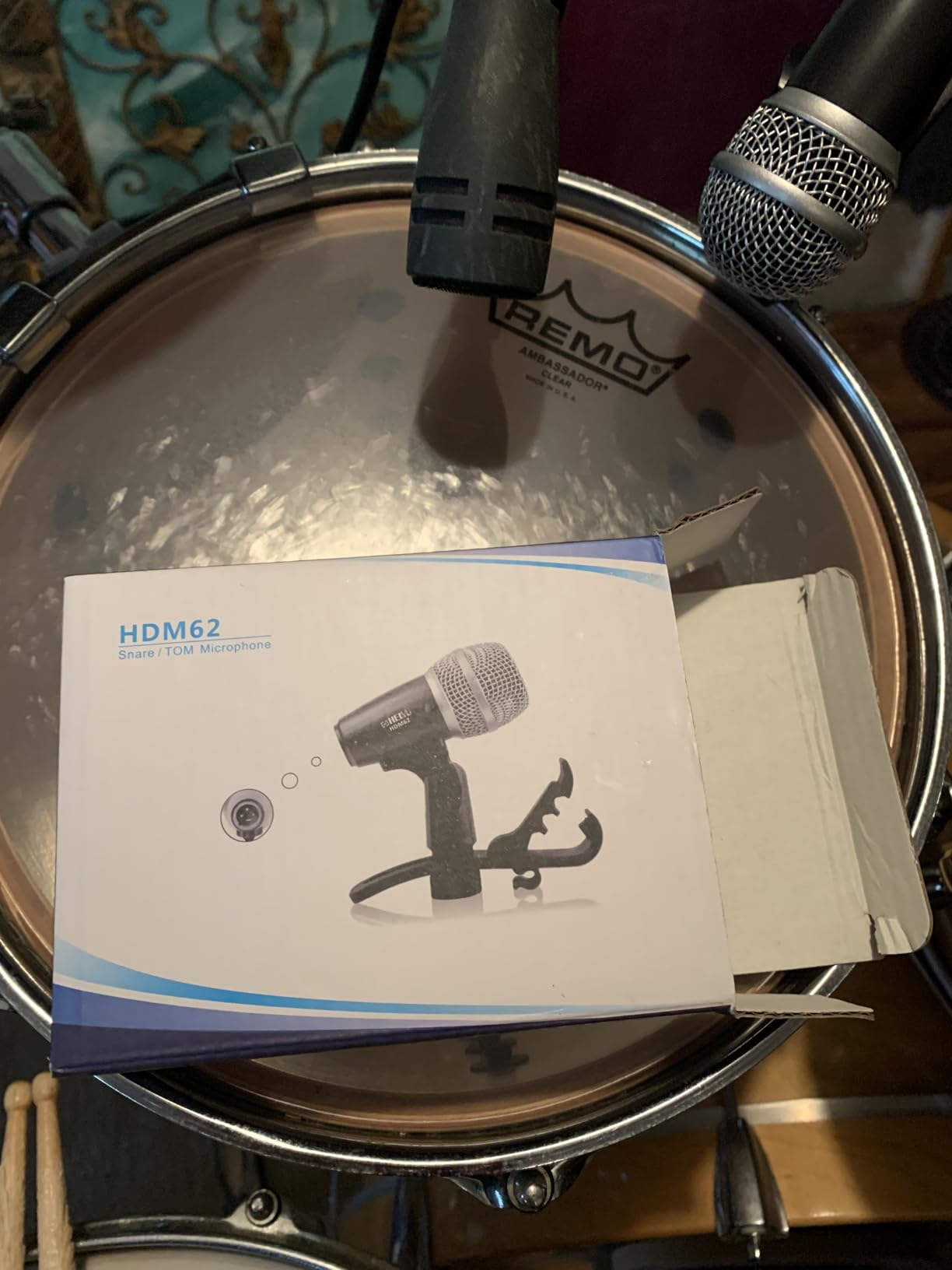
Where the jack position will frustrate you
The most specific complaint is the jack orientation. A right-angle cable points upward, which makes placement awkward in exactly the tight spots the small body was bought for.
Plan a straight cable or a right-angle adapter before you set up, and audition the position with the drummer rather than guessing. A few centimetres changes the balance on a small tom.
When a bigger compact mic is worth more
Reviewers flag less headroom than comparable Sennheiser compact mics, which matters if you play hard and close-mik aggressively on a loud kit.
The clip also will not let you get as close to the drum as a premium compact mic. Some units also arrive with a round grille rather than the flat grille shown, so check what is in the box before your session.
12. D Debra DK7 – Best for Live Play and Practice
D Debra DK7 Pro 7-Piece Wired Drum Microphone Kit for Performing and Recording Drummers, Includes Mics, Mic Clip with Options for Kick Drums, Snare, Rack/Floor Toms, Congas and Cymbals
Seven-piece wired kit
Five dynamics plus two PA81 condensers
80 dB signal-to-noise
Aluminum case and clips included
Pros
- Five dynamics and two condensers cover kick
- snare
- toms and cymbals
- Metal housings with reinforced mesh heads
- Tom and snare clip-ons handle high levels without fuzzing
- Aluminum carrying case is unusual at this level
Cons
- Plastic rim clips are thin and require force to attach
- Kick drum clip does not fit most bass drum rims
- Overhead condensers have low output and a compressed tone
- Cymbal condensers need AA batteries and must not use phantom power
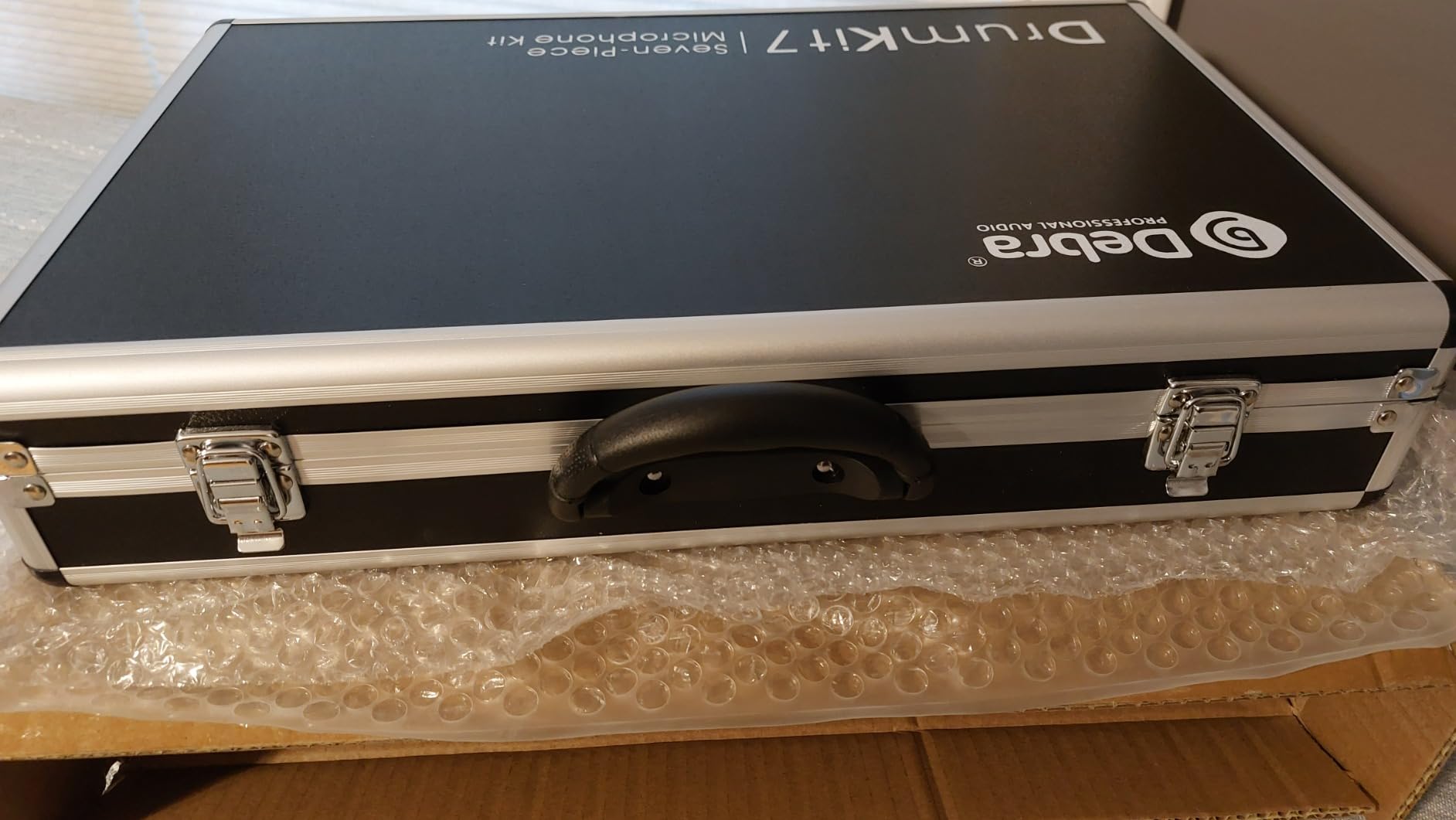
The DK7 gets framed by buyers as a capable live and practice kit at a beginner price, and that framing is accurate. At 74% five-star ratings, the snare and tom clip-on microphones earn consistent praise for tone and durability, and the metal housings with reinforced mesh heads look and feel right.
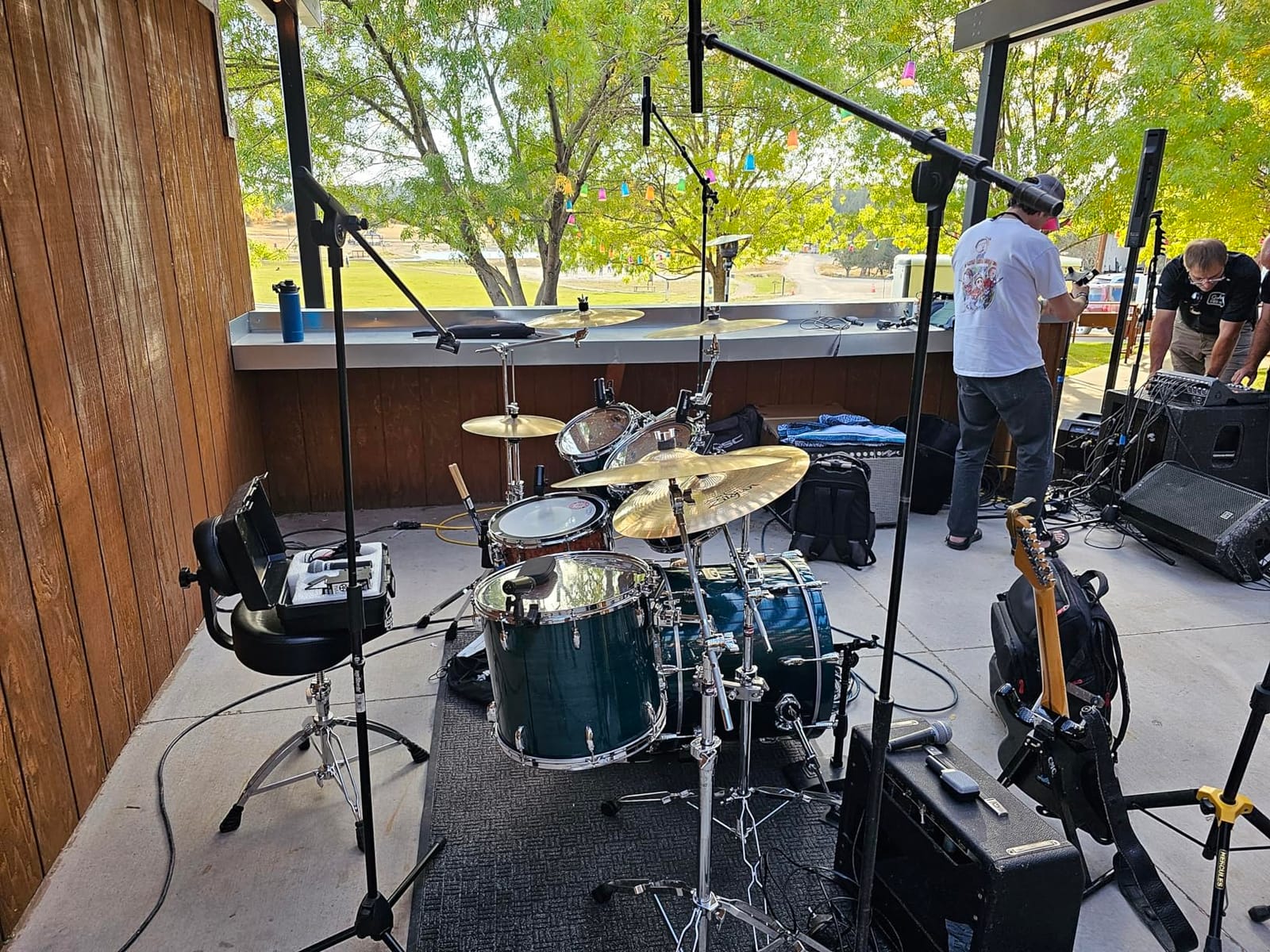
The package is a PA52 kick microphone, four PA56 drum microphones, two PA81 instrument microphones, clips and an aluminum case. The 80 dB signal-to-noise figure is the highest in this roundup, and users report no unwanted noise and a responsive, sensitive pickup.
The detailed studio reviews are also the most useful, because they call out the weak parts plainly. The overhead condensers have low output relative to the rest of the kit and a compressed, boxed-in tone, which is the same pattern we see in most budget kits.
The kick drum clip does not fit most bass drum rims, so a short boom stand is required. Several buyers rate the kit as a solid live-performance set rather than a studio-grade one, which is a fair summary.
Check the cymbal condensers before you buy
The PA81 cymbal condensers require AA batteries, which are not included, and they must not be used with 48V phantom power. That is a genuine trap: plug them into a phantom-powered preamp and you risk damage.
Read the warning in the listing carefully. If your interface always sends phantom power, these two microphones cannot be used as overheads, which changes what the kit is for you.
Hardware durability is the real trade
Plastic rim clips are thin, require force to attach and draw real concern about brittleness over time. For a home recordist who sets up once and leaves the mics in place, that is a manageable issue.
For anyone moving the kit to gigs regularly, replaceable metal clips are worth buying in advance. The microphones themselves survive being moved; the mounts are the part that fails.
What Is the 3-to-1 Rule for Drum Mics?
The 3-to-1 rule states that you should spend roughly three dollars on a microphone for every one dollar you spend on the rest of your recording setup. If a full drum mic set costs you the same as a monitor pair, your mix decisions will be driven by your room rather than by your ears.
The reasoning is practical. A cheap microphone cannot be rescued by an expensive preamp, and an expensive microphone in a treated room still needs a decent signal chain to reach the interface. For a home studio, microphones and room treatment together should dominate the budget, with the interface chosen to feed them rather than the other way round.
Applied to a first kit: buy a dedicated kick microphone and a snare microphone before anything else, add a pair of overheads next, and only then consider upgrading the interface. Stands, cables and shock mounts are the line item people forget, and cheap cables are the classic false economy in a home studio.
How Many Drum Mics Does Your Interface Actually Support?
Interface inputs, not microphone quality, are the real ceiling on a home drum recording. Nobody organises drum mic roundups around this, which is why so many people buy seven microphones and then use two of them.
With a two-channel interface you have two good options. A matched pair of small-diaphragm condensers over the kit gives you a natural, balanced sound in one take and teaches you placement fast. Or one microphone inside the kick and one on the snare gives you two punchy, editable tracks but almost no room and no cymbals.
With four channels, the sensible core is kick, snare and two toms. That is the setup most home recordists settle on, and it maps neatly onto the Shure DMK57-52, where the fourth microphone handles congas or a second tom.
With six to eight channels you can open the whole kit properly: kick, snare, three toms, hi-hat and a close cymbal pair. A seven-piece bundle such as the BC1200, the MI7 or the PG ALTA only makes sense once you are there, and we would always add an overhead pair before a third tom.
One practical note on gain staging. A kick microphone, a snare microphone and a condenser overhead produce very different output levels, and a home preamp with one gain knob per channel cannot compensate. Set gain for the quietest source, the overheads, and ride the kick down on the pad if the channel has one.
Bundle vs Individual Drum Mics
Bundles own the shopping results for this category, and they are usually the better purchase for a first kit. You get the shells covered, the hardware and a case are included, and the total cost of building the same list individually is higher once you add stands and cables.
The catch is the overhead pair. In most bundles the overheads are the cheapest components, and the pattern across the reviews is consistent: people buy a kit, get usable shell mics, and then buy two condensers anyway. The CAD Audio Stage7 and the Shure PG ALTA are the exceptions here, because both ship a genuine small-diaphragm condenser pair.
Buy individually when you already own something. The single most common situation we see is a drummer who owns an SM57 and then pays for one inside a bundle. Starting with a dedicated kick microphone plus an overhead pair, and adding toms later, produces a more useful lineup for the same money.
There is a second case for buying individually, and it is genre. A metal or rock record can be made almost entirely with close mics and a very small room, so a bundle’s weaknesses barely register. Jazz, funk and acoustic work depend on cymbal wash and room context, and there the overheads decide whether the recording sounds like a kit or a collection of shells.
Our own rule is simple. If a bundle includes a real condenser pair, buy the bundle. If it does not, buy a kick microphone and an overhead pair first, then fill in the toms with whatever is left.
Mic Placement Basics for Each Drum
Placement changes the sound of every microphone in this roundup more than the model choice does. A mediocre mic placed well beats an expensive one placed badly, and the position changes below are where most of the improvement lives.
Kick drum: start with the microphone inside the shell, angled at the beater and slightly off-axis, and pull it back toward the front head in small increments until the balance sits right. Inside placement gives a deeper, more focused low end; outside placement on a rug or a nearby surface captures the shell and the room as well. Do not let the microphone touch the beater or the head, because that mechanical energy is not what you want to record.
Snare: aim an SM57-type dynamic at the snare wires from above, off the centre by a few centimetres, and add a small amount of high-pass filtering. Off-axis placement tames the harsh edge of a bright snare. If your room is lively, move the microphone closer rather than reaching for a gate later.
Toms: a compact dynamic like the e604 or the HEIMU small drum mic goes inside the tom, aimed slightly away from the resonant head, roughly a hand’s width from the batter. Pointing at the head gives more attack and less bloom, which is the usual choice in a hard rock context.
Overheads: hang a matched pair roughly 1.5 metres above the kit and 30 centimetres in front of the cymbals, angled down and crossed so their patterns overlap over the snare. Keep the pair the same distance from the hi-hat and the crash, otherwise the image sits off to one side. Check the polarity or phase on your interface before you record.
Hi-hat: a dedicated microphone on the hi-hat is optional and often skipped. Close-miking it gives you a tight, aggressive top end that disappears in dense mixes. Leaving it to the overheads gives a more natural result and one fewer channel, which is usually the better trade in a home studio.
Room: rather than a dedicated room microphone, the most reliable room capture comes from the overhead pair. Push them a little higher and a little further back and you get more air and less cymbal detail, which is often exactly what an untreated room needs.
What Your Room Can and Cannot Fix
No microphone rescues an untreated room for overhead capture. This is the honest limit that most roundups skip, and it matters more than any model on this list. A hard bedroom will give you a bright, boxy overhead recording regardless of which condenser you choose.
What microphones can do is help you avoid the room. Close-miking the kick, snare and toms reduces how much of the space the recording picks up, which is why the dynamic-heavy kits on this list work in small rooms better than their condenser-equipped rivals.
What usually helps a home room first is not a microphone at all. Heavy curtains on a reflective wall, a rug or a duvet on the floor, and a soft furnishing in the corner opposite the kit will reduce the longest reflections for very little money. Do that before you upgrade anything.
The other half of the answer is distance. The further the overheads sit from the walls and the higher they hang, the less obvious the room becomes. If the overheads are close to a bare wall, the wall is part of your recording, no matter which microphone is on the stand.
What to Buy First: A Budget Build Order
The single most common buying mistake is assembling a kit all at once. A better approach spreads the spend over three stages, because each stage makes the recording usable before the next purchase is needed.
Stage one is the dedicated kick and snare voice. A kick microphone plus a snare microphone turns a two-microphone recording into a mixable one, and it is the change that makes a home kit sound like drums. If you own an SM57 already, this stage costs you one microphone.
Stage two is the overhead pair. Two matched small-diaphragm condensers add cymbal detail, room context and stereo width, and they are usable on guitars, acoustics and vocals for years afterwards, which is why they have the best resale value of anything on this list.
Stage three is the toms and hi-hat. Compact dynamics are cheap enough to add one at a time, and they are the least urgent part of the kit. Most drummers end up owning several of these before they replace anything else.
Finally, do not forget the supporting costs. Stands, a locking stand for the kick, XLR cables of a sensible length, and a spare set of rim clips will together cost a meaningful share of a first drum mic budget. Buying those first is what turns a microphone into a working setup.
Frequently Asked Questions
What is the 3 to 1 rule for drum mics?
The 3 to 1 rule says you should spend about three dollars on a microphone for every one dollar spent on the rest of your recording setup. For a home studio, microphones and room treatment should dominate the budget, and your interface should be chosen to feed them rather than the other way round.
What is the best microphone for drum recording?
Matched to each drum part, a dynamic kick microphone such as the Shure Beta 52A or Sennheiser e602 II, an SM57-class dynamic such as the Shure SM57 or Sennheiser e604 on snare and toms, and a matched pair of small-diaphragm condensers as overheads. The CAD Audio Stage7 and Shure PG ALTA both bundle that combination.
What is a good microphone for a home studio?
For drums in a small room, start with a dedicated dynamic for kick and a second dynamic for snare, then add one matched pair of small-diaphragm condensers as overheads. That three-microphone core covers most of the kit, survives a two-channel interface, and does not rely on the room sounding good.
What are the best drum mics for recording clips?
For short drum clips, use a dedicated kick microphone inside the shell and a compact dynamic like the Sennheiser e604 on the snare and toms, because a clean close-miked kit translates better on phone speakers than an overhead-based recording. A bundle such as the Behringer BC1200 covers the whole kit in one purchase if the clips are part of a regular release schedule.
What is the best mic for recording drums in a drum room?
In a treated drum room, an overhead pair earns its keep, so a kit with real condensers such as the Shure PG ALTA or the CAD Audio Stage7 is the stronger choice. In an untreated room, close-miked dynamics win instead, because they pick up less of the space. The room decides the answer more than the microphone does.
Is Audix good?
Yes for drums, and reviewers regularly single out the Audix D6 for kick, describing a pre-EQ’d click and thump that differs from the Shure and AKG sound. Audix D3 models are also common as inexpensive snare and tom options, and the ADX51 appears often as an overhead pair. The brand’s reputation is built on mics that are purpose-built for specific instruments rather than general purpose.
Conclusion: Where to Start With the Best Drum Microphones for Home Studios
If you own nothing, start with the Shure Beta 52A on kick and a snare microphone you trust, then add a matched pair of small-diaphragm condensers when the budget allows. That three-stage build is the same order we recommend to every drummer we talk to, and it works in almost any room.
If you already own an SM57, the Shure DMK57-52 is the most efficient way to add a professional kick and a spare snare voice, and the CAD Audio Stage7 is the better full-kit purchase because it ships a real condenser pair. If your interface only has two inputs, ignore the seven-piece kits entirely and spend on placement instead.
The wrong answer is buying the biggest bundle you can find and hoping it covers the room. The right answer is two shells miked properly, one overhead pair, and thick curtains. Our picks for the best drum microphones for home studios in 2026 are built around that order, and any of the twelve will do a job if it fills the gap in your chain rather than duplicating something you already have.