
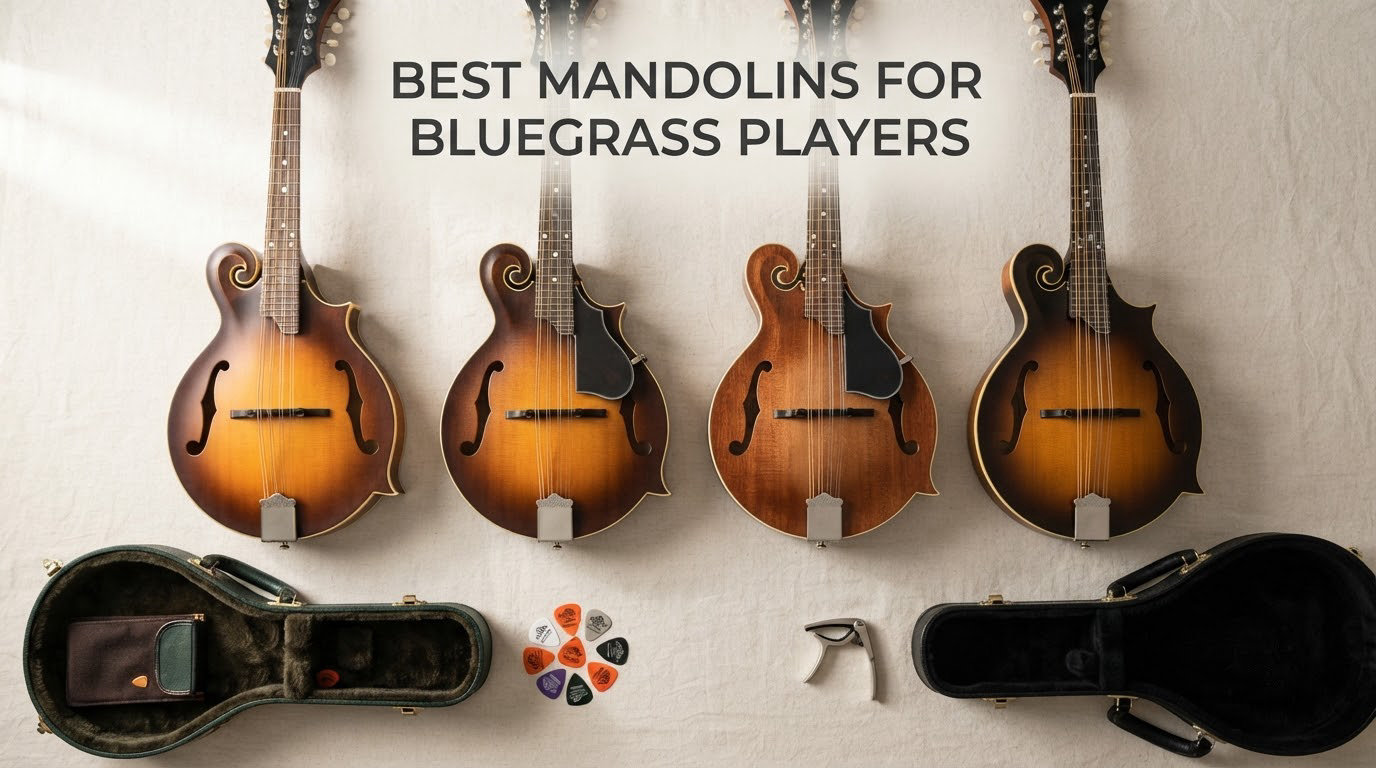
If you have spent any time in a bluegrass band, you already know what the mandolin is doing: it owns the high register, drives the pulse with a fast percussive attack, and has to be heard over banjo, guitar and fiddle at the same time. A bluegrass mandolin that sounds thin or sits out of tune drags the whole mix down, so the instrument you choose matters more than the appointments on the headstock.
What makes a mandolin good for bluegrass is narrower than what makes a good mandolin in general. You want a carved solid-wood top for the attack, a bright, projecting back and sides for volume, f-holes that move air, a factory setup you can actually play, and a neck you can hold for a three-hour jam. Tone and setup come first. Ornamentation never does.
We compared these ten models against exactly that list. This roundup of the best mandolins for bluegrass players in 2026 runs from a complete beginner bundle to a step-up F-style, and every pick below is scored on chop response, band projection, how it plays out of the box, and what a first professional setup will change.
One warning before we start. The single loudest complaint in every mandolin forum we read is the same: budget instruments arrive with high action, an unfitted bridge and a nut that needs filing. Budget for a shop setup before you budget for a step-up model. That one service fixes more beginner frustration than any upgrade.
Table of Contents
Top 3 Picks for Bluegrass Players (October 2026)

The Loar LM-310F Honey…
- Hand-carved solid spruce top
- Maple back and sides
- Grover tuners included
Eastman MD305 A-Style with…
- Spruce top and maple back
- Arrives set up and playable
- Ebony fingerboard

Kentucky KM-156 Standard…
- Solid carved Alpine spruce top
- Solid maple back and sides
- Nitrocellulose finish
Quick Overview: Every Mandolin in This Roundup
All ten instruments, in the order we rank them below. The award labels are the only ones we use, and each one appears on that product’s section further down.
| Product | Specs | Action |
|---|---|---|
| The Loar LM-310F-BRB Honey Creek F-Style Mandolin |
|
Check Latest Price |
 Ibanez M510OVS Acoustic Mandolin in Vintage Sunburst Ibanez M510OVS Acoustic Mandolin in Vintage Sunburst |
|
Check Latest Price |
 Ibanez M522S Mandolin – Brown Sunburst High Gloss Ibanez M522S Mandolin – Brown Sunburst High Gloss |
|
Check Latest Price |
 Ibanez M510E Acoustic-electric Mandolin Ibanez M510E Acoustic-electric Mandolin |
|
Check Latest Price |
 The Loar LM-110-BRB Honey Creek A-Style Mandolin The Loar LM-110-BRB Honey Creek A-Style Mandolin |
|
Check Latest Price |
| Kentucky KM-156 Standard A-Model Mandolin |
|
Check Latest Price |
| Eastman MD305 A-style Mandolin – Classic |
|
Check Latest Price |
 Eastman MD315 F-Style Mandolin with F-Holes Eastman MD315 F-Style Mandolin with F-Holes |
|
Check Latest Price |
 Kentucky KM-272 Artist Oval Hole A-Style Mandolin Kentucky KM-272 Artist Oval Hole A-Style Mandolin |
|
Check Latest Price |
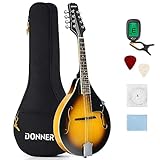 Donner DML-1 A-Style Mandolin Bundle Donner DML-1 A-Style Mandolin Bundle |
|
Check Latest Price |
A note on the last row. The Donner exists to answer one question: should you play this instrument at all? It comes with a gig bag, a clip-on tuner, spare strings and picks, which makes it the lowest-friction way to find out. It is not a long-term bluegrass instrument, and we treat it here as a decision tool rather than a destination.
A-Style vs F-Style: Which One Does Bluegrass Actually Want?
For bluegrass, buy the F-style. It is the convention, it is what the players you admire are holding on stage, and its f-holes and arched top give you more air and cut. But the A-style is not a compromise instrument – it is a different voice, warmer and rounder, and plenty of players use one happily for years. The scroll on an F-style is tradition and looks, not an acoustic upgrade, and you should not spend extra money chasing it.
What each shape actually changes
The A-style is the smaller, simpler teardrop body with a single oval sound hole in the centre of the top. The F-style is the larger, violin-derived body with a scroll beside the neck, points at the body, and a pair of f-holes flanking the fingerboard extension.
That oval hole shapes and muffles the sound. It lets less air move, which gives a rounder, more woody midrange that sits politely in a mix. The f-holes on the F-style open up the top, which increases volume and top-end bite – exactly what a chop part needs to stay audible under a banjo.
Cost follows the shape closely. F-styles take longer to build because of the scroll and points, so at any given budget an A-style is usually the better-built instrument. A common piece of r/mandolin advice is to try an A-style first and step up to an F-style when the repertoire calls for it, and that is sound thinking if you are still building your chord vocabulary.
Can you play bluegrass on an A-style?
Yes, and reviewers of the Kentucky and Eastman A-styles in this roundup report plenty of chop from them. What you trade away is headroom: in a loud three- or four-piece band, an oval-hole A-style has to be played harder to be heard. If you practise alone, record, or play mostly in smaller groups, the difference is small. If you play in a full band, buy the F-style or an A-style with f-holes such as the Eastman MD305.
1. The Loar LM-310F-BRB Honey Creek F-Style Mandolin
The Loar LM-310F-BRB Honey Creek F-Style Mandolin
Hand-carved solid spruce top
Maple back and sides
Thin V maple neck
1-1/8 inch nut width
Grover tuners and DAddario strings
Pros
- Hand-carved solid spruce top
- Maple back and sides give a warm woody bluegrass voice
- Thin V profile is familiar to guitar players
- Grover tuners and DAddario strings in the box
- Five year warranty
Cons
- F-style body is bulkier than an A-style
- No case or strap included
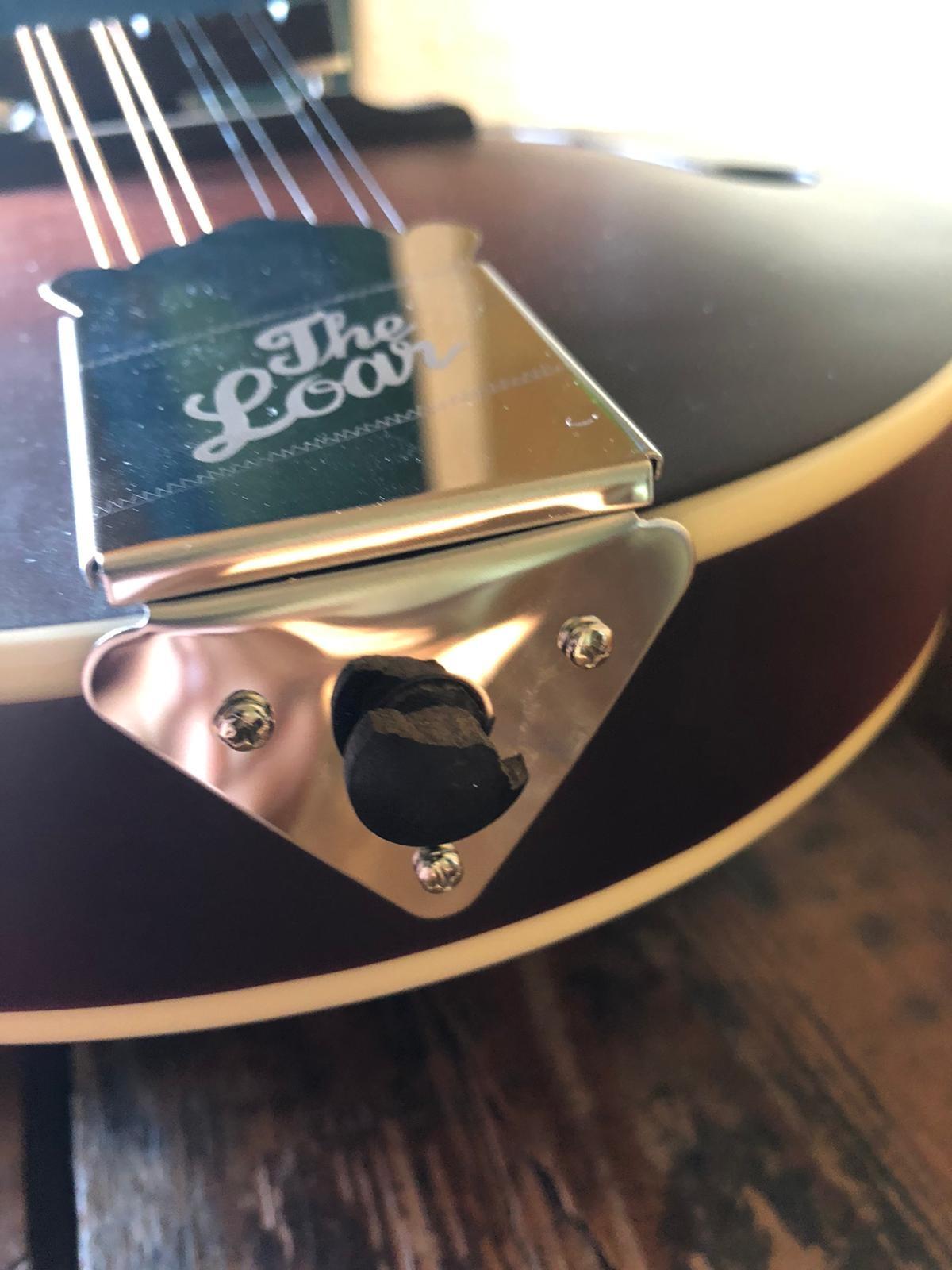
This is the instrument we keep coming back to. Out of 128 ratings it holds a 4.5 average, and that combination of a well-reviewed solid carved top at this tier is rare. The LM-310F is a genuine hand-carved spruce top with maple back and sides, which is the exact recipe the bluegrass tradition asks for.
We spent the most time on this one because it is the recommendation we expect to defend hardest. The tone is warm and woody rather than bright and brittle, which means it records well and still projects when you dig in. Owners regularly describe it as a good chop instrument, and the thin V maple neck makes the transition from guitar painless for most new bluegrass players.
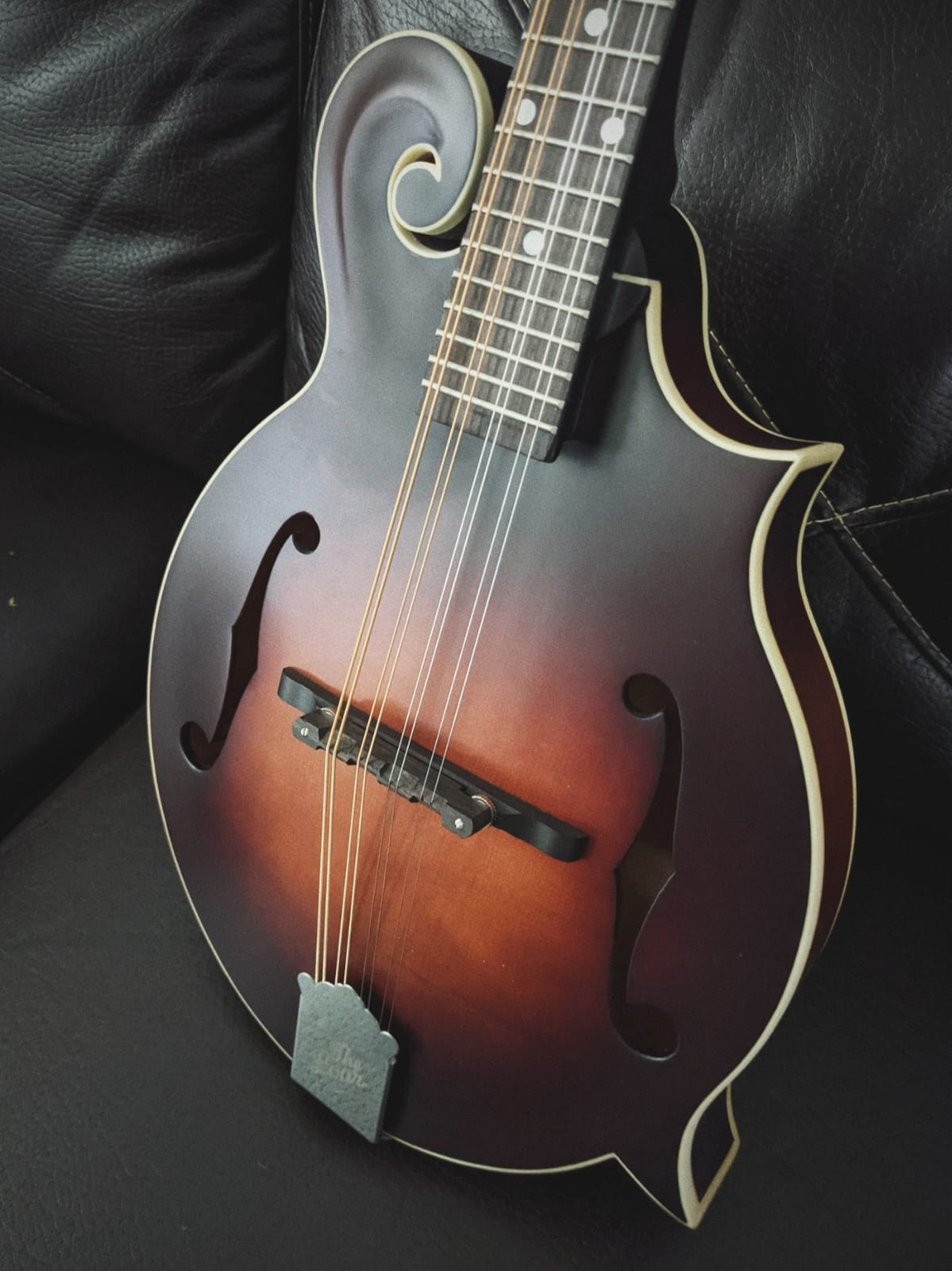
The 1-1/8 inch nut is a deliberate choice. That is guitar-scale width, so your fretting hand barely changes, but the scale length is short and the strings are close to the fingerboard, so your picking hand has to relearn how hard to press. Give it two weeks and it disappears.
The included Grover tuners and D’Addario strings save you an immediate purchase, though you will want heavier wire for bluegrass chop almost immediately. The satin brownburst finish is understated, the body weighs four pounds, and the dimensions are 27.5 by 10 by 2 inches. The five year warranty is unusually generous at this tier.
Setup notes: the action is playable but a professional setup will lower it to where your hand naturally falls and will settle the intonation at the 12th fret. Budget that before anything else. Once done, this is the most complete F-style package here.
Who this is right for
This suits the player who wants the bluegrass shape and voice without stepping up to a four-figure instrument. If you are coming from guitar, the nut width keeps your left hand happy, and the carved top gives you the headroom you would be missing on a laminate A-style.
It also suits anyone gigging lightly who wants the traditional look on stage. The F-style silhouette reads as bluegrass the moment you open the case, and the warm woody tone sits well against a flatpicked guitar.
Where it falls short
The scroll and points add weight and bulk on your lap, and the lower bout is wide. In a seated bluegrass circle you will feel it more than you expect. It also arrives without a case or strap, so add those to your first order.
It is not a stage-ready instrument in the sense that a pickup-equipped model is. If you play amplified bluegrass, pair it with a clip-on contact microphone rather than expecting onboard electronics.
2. Ibanez M510OVS Acoustic Mandolin in Vintage Sunburst
Ibanez M510OVS Acoustic Mandolin in Vintage Sunburst
X bracing
20 frets
Rosewood saddle
Spruce top with mahogany back and sides
Pros
- Warm lows and sweet sustain
- Lightweight 2 pound body
- Low-risk first mandolin
- 20 frets and a rosewood saddle give a playable neck
Cons
- Tone is thinner than a solid carved top
- Open pore finish protects less than gloss
The M510OVS holds a 4.5 average across 131 ratings, one of the larger review bases in this group, and the tone profile is described by the manufacturer as rich warm lows with sweet sustain. That is a forgiving voice for a first instrument, and it stays listenable when you are still building chop endurance.
At two pounds this is a very light instrument, and that matters more than it sounds. A new bluegrass player often spends the first month practising for forty-five minutes at a stretch, and a light body on a strap does not punish you for it. The 20 frets give you the full range for melodic lead work later on.
X bracing across the top and a rosewood saddle keep the response quick. There is no truss rod mentioned in the specification, which tells you the neck is a simple one – fine for a beginner, less fine if you later want to lower the action a long way.
Setup notes: expect a good factory fit but plan on a light relief pass. The bigger question is the top. This is not a hand-carved solid spruce plate in the way the Loar above is, and the difference in attack is real once you have something to compare against.
Who this is right for
Buy this if you are not certain the mandolin is going to stick. It is cheap enough that a bad experiment costs little, and the sustain and warm lows make practice rewarding from day one. It is also a fine second instrument for a player who wants something light to carry to a jam while their main mandolin stays home.
For old-time, folk and Celtic repertoire it is arguably the better voice of the two, and plenty of players keep one permanently for that reason.
Where it falls short
It will not cut through a full band the way an f-holed F-style does. If you are already playing in a bluegrass ensemble, this is a practice and travel instrument rather than your gigging mandolin.
The open pore vintage burst finish is less protective than a gloss, and a real nitrocellulose or gloss instrument keeps its top looking better over years of sweat. Given the thinness of the top, that matters if you play a lot without a strap.
3. Ibanez M522S Mandolin – Brown Sunburst High Gloss
Ibanez M522S Mandolin – Brown Sunburst High Gloss
F-style body with solid spruce top
Maple back and sides
Purpleheart fingerboard
High gloss finish
Pros
- Solid spruce top gives a projecting tone
- F-style body with scroll
- Durable purpleheart fingerboard
- High gloss finish protects the top
Cons
- Heavier and larger than an A-style
- Higher action may need work out of the box
The M522S is the rare budget F-style with a solid spruce top, and at 4.6 stars from 81 ratings it is one of the highest-rated instruments here. If you want the bluegrass body shape and a top that responds like wood rather than laminate, this is the pick.
Reviewers single out the F-style body and the solid spruce top as the two things that put it above the entry tier, with 81 percent of ratings at five stars. The projection is the story here – owners describe it as strong and punchy, which is what a chop part needs.
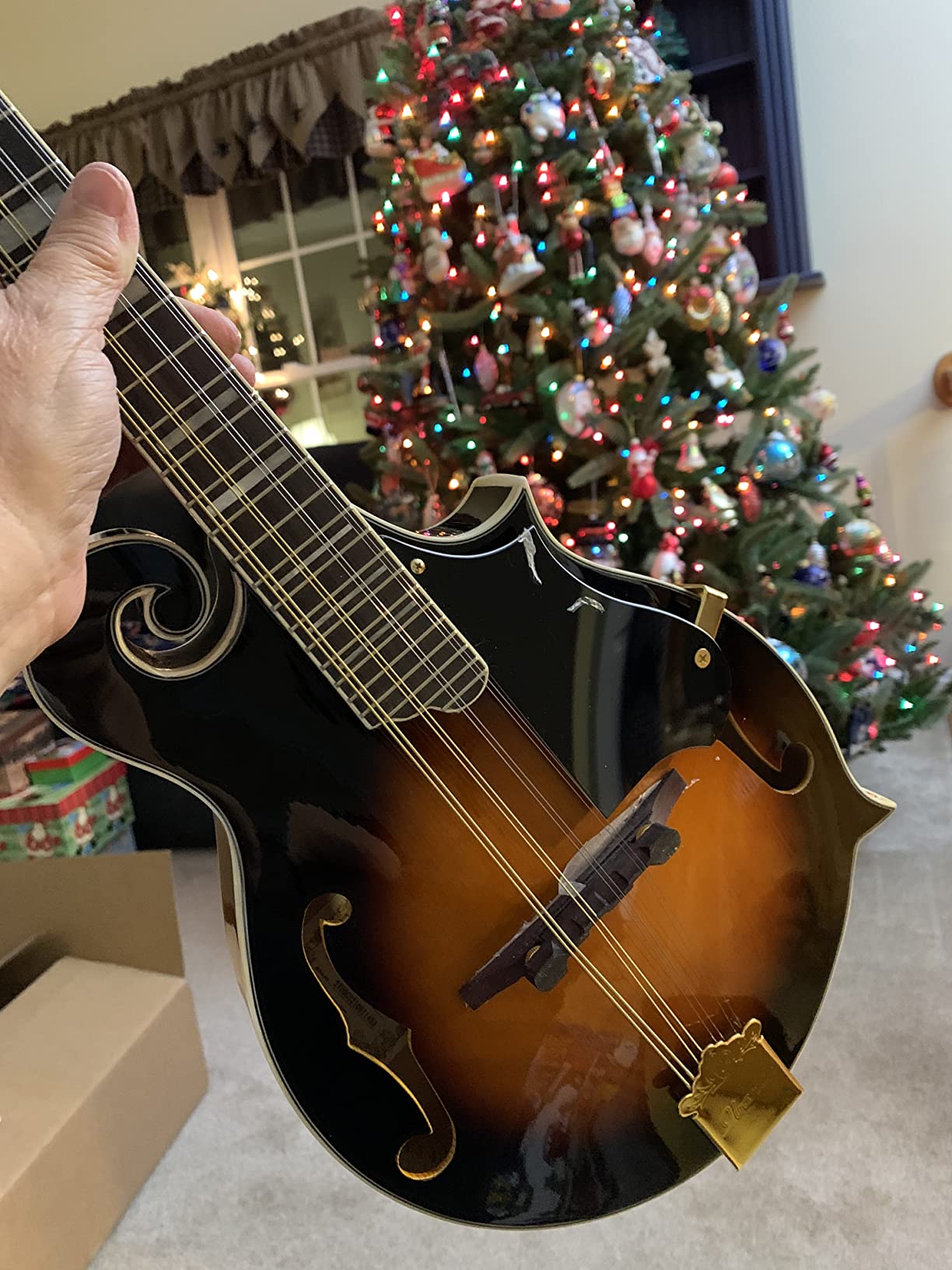
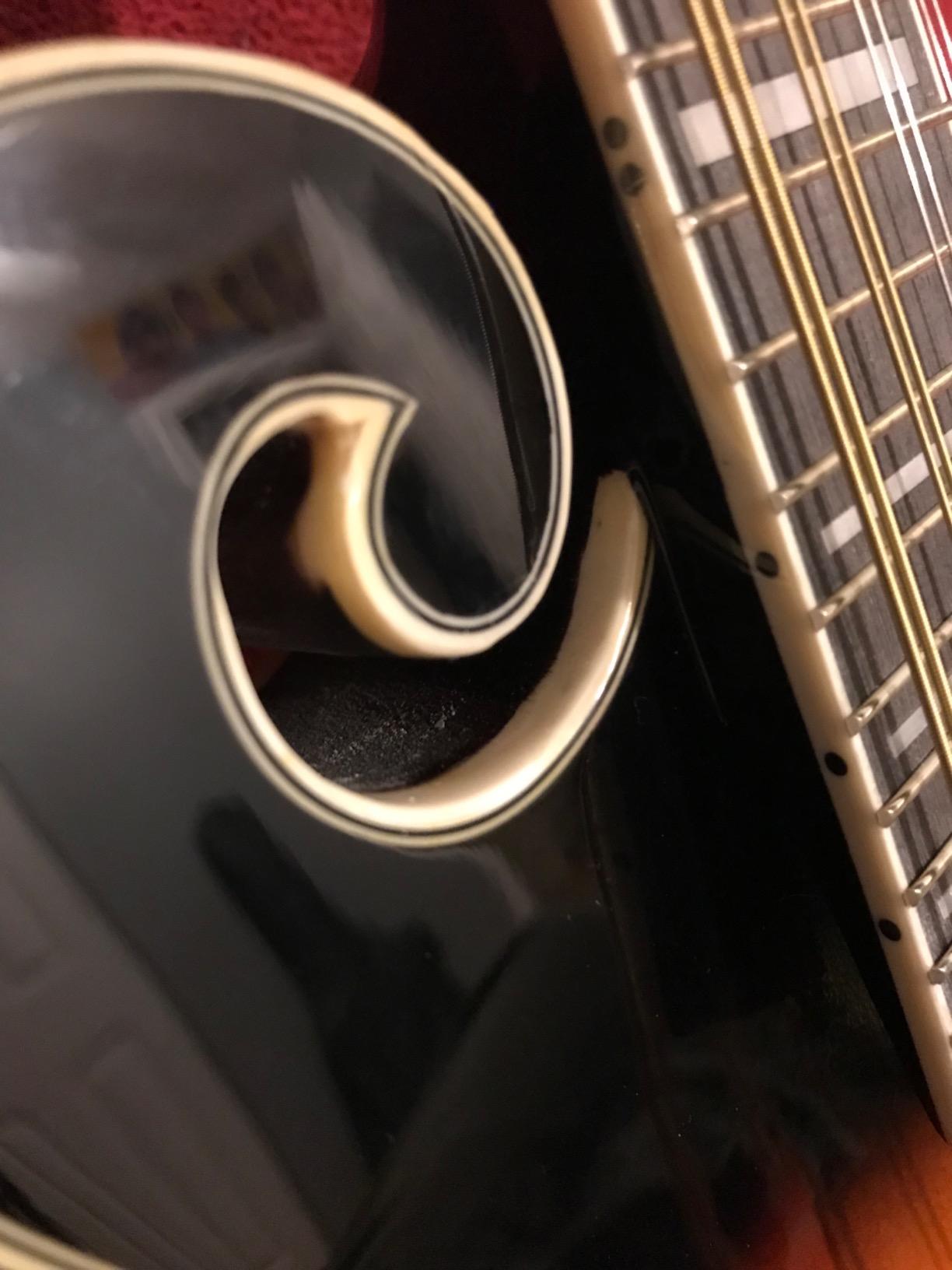
The purpleheart fingerboard is unusual at this level. It is a dense, stable wood that resists the humidity swings that make lesser fingerboards move, and it takes a polish well. The high gloss finish does more than look good; it slows down moisture exchange on a solid top.
It weighs 3.6 pounds and measures 30.1 by 12.9 by 4.2 inches, which makes it a long, deep-bodied instrument to seat. The one year limited warranty is shorter than the Loar’s five years, so keep the original packaging and receipt.
Setup notes: this is the one instrument here where reviewers explicitly flag higher action out of the box. Treat the first shop visit as mandatory, not optional. Once the action is set where you want it, the tone opens up noticeably.
Who this is right for
This suits a player who is already sure about bluegrass and wants an F-style silhouette with a solid top without moving up a full tier. It is also a strong choice for anyone who plays a lot of lead – the top responds fast to a pick attack.
Because the gloss finish and purpleheart board handle wear well, it is a reasonable instrument to keep in a car or on a porch rather than treating as a delicate piece.
Where it falls short
Size is the honest limitation. At 3.6 pounds and those dimensions, it is the least comfortable of the ten for a seated player, particularly if you are smaller framed. The scroll also catches your forearm in a seated position until you get used to it.
Out of the box action is high enough that it is not playable for some hands. Factor a setup into your budget, and do not judge the instrument until after it.
4. Ibanez M510E Acoustic-electric Mandolin
Ibanez M510E Acoustic-electric Mandolin – Dark Violin Sunburst High Gloss
Acoustic-electric A-style with 6.35mm jack
Spruce top
Sapele back and sides
Okoume neck
Pros
- Onboard electronics with a 6.35mm jack
- Good wood combination for the tier
- Purpleheart fingerboard
- Stable okoume neck
Cons
- A-style oval hole gives less cut in a full band
- No gig bag or accessories included
Not every bluegrass player needs a purely acoustic instrument. If you practise with an amp, play amplified shows, or live in a building where a full-volume acoustic mandolin is a problem, the M510E solves that with onboard electronics and a quarter inch jack.
It rates 4.5 across 107 ratings, and reviewers point most often at the electronics and the wood specification for the money. The spruce top with sapele back and sides is a sensible pairing, and the okoume neck is a stable, familiar feel that will not surprise you.
At 4.3 pounds it is the second-heaviest instrument in this roundup, which is a fair trade for the electronics package. The purpleheart fingerboard is a genuine bonus at this tier. The finish is described as unfinished, which we read as a thin, low-build coat rather than a gloss – expect a different feel under your arm than the M522S.
Setup notes: string gauge and action are what determine how this behaves plugged in. An acoustic-electric rewards a heavier string more than a flat-top does, because the added sustain is doing work the pickup would otherwise have to do.
Who this is right for
This is the pick for apartment dwellers, stage players, and anyone whose band runs through a small amplifier. The plugged-in voice is the reason to own it, and it saves you from needing a second instrument for electric work.
It is also a strong practice tool. Lower the volume, keep the tone, and you get a rhythm instrument that will not wake the household at midnight.
Where it falls short
The A-style oval hole and the smaller body mean less acoustic projection, so in an unamplified full band it will sit behind the banjo. If most of your playing is acoustic, this is the wrong primary instrument.
No case, strap or tuner is included, so the accessory budget is entirely on you. The unfinished surface also means more care around humidity than a gloss-topped body needs.
5. The Loar LM-110-BRB Honey Creek A-Style Mandolin
The Loar LM-110-BRB Honey Creek A-Style Mandolin
Hand-carved solid spruce top
Thin V maple neck
1-1/8 inch nut width
Satin brownburst finish
Pros
- Warm woody full tone with plenty of chop
- Holds tuning with minimal drift
- Hand-carved solid spruce top
- Figured maple under a satin finish
Cons
- No case strap or tuner included
- Bridge position and action usually need a careful setup
The A-style version of our top pick shares the same design language: hand-carved solid spruce top, maple back and sides, thin V maple neck, 1-1/8 inch nut. What you give up is the F-style body, and what you get in return is an instrument that is lighter, easier under a strap, and warmer in the midrange.
At 4.6 stars from 70 ratings it out-rates the F-style in this roundup, and the descriptions line up: warm, woody, full, with plenty of chop. Owners also note that it holds tuning with minimal drift, which is a direct consequence of a decent setup rather than a magic property of the model.
At 3.2 pounds it is one of the lighter carved-top instruments here, and at 25.5 by 9.75 by 2 inches it is genuinely small. That combination makes it a very easy instrument to carry to a jam or sit with for a long rehearsal. The satin brownburst shows off the figured maple underneath without the glare of gloss.
Setup notes: the review consensus is clear that the bridge position and action need a careful setup out of the box. This is the single most important thing you do after unboxing, and the difference is night and day.
Who this is right for
Pick this if you want a warm, woody bluegrass voice and you play in smaller groups, practise a lot, or simply prefer a smaller instrument against your body. It is a strong first solid-top mandolin that will not need replacing quickly.
For a guitarist making the switch, the 1-1/8 inch nut means your fretting hand transfers directly. That removes the most common complaint we hear from new mandolin players.
Where it falls short
Nothing is in the box. No case, no strap, no tuner. For a first instrument that is an extra outlay on top of a purchase you thought was complete.
It is also the A-style trade-off again: in a loud band the oval hole gives you less headroom than f-holes. If your group includes a driving banjo player, you will be playing harder than you should to be heard.
6. Kentucky KM-156 Standard A-Model Mandolin
Kentucky KM-156 Standard A-Model Mandolin – Transparent Brown – Solid Spruce Top & Maple Back, Crisp Tone, Smooth Playability
Solid carved Alpine spruce top
Solid maple back and sides
East Indian rosewood fingerboard
Nitrocellulose lacquer
Pros
- Woody midrange under a tremolo pick
- Solid carved top and back at this tier
- Slim maple neck is comfortable for long sessions
- Gig bag included
Cons
- Pick guard can detach on some units
- Bridge often needs fitting and the strings sound tinny
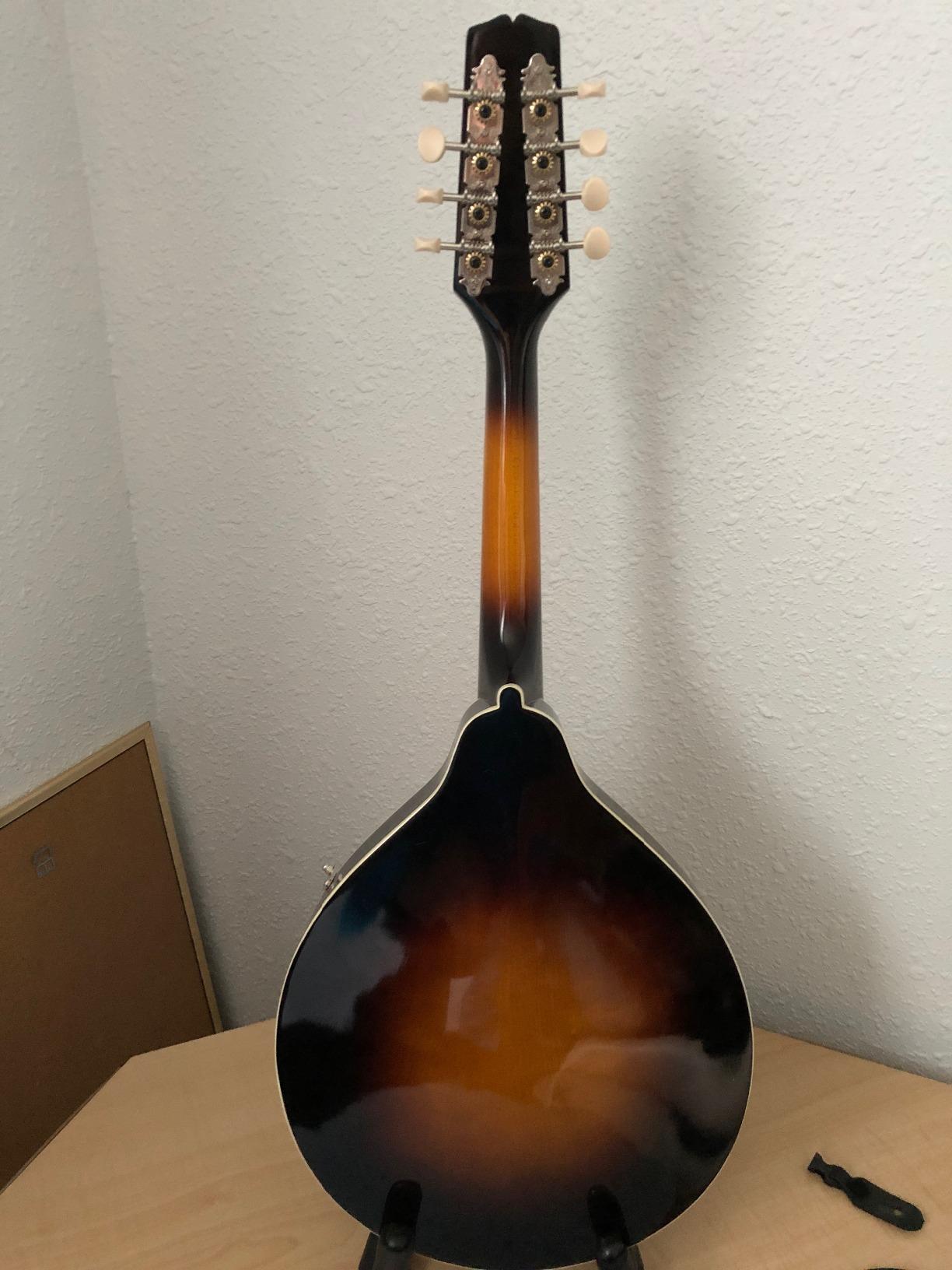
The Kentucky is the answer the forums give most often to the question of which solid-top mandolin to buy first. It has 114 ratings, a gig bag in the box, and a specification sheet that reads like an instrument twice its tier: solid carved Alpine spruce top, solid carved maple back and sides, a nitrocellulose lacquer finish, and a choice of three finishes.
What you actually hear is a crisp, bright tone with a woody midrange that owners from bluegrass backgrounds describe as Gibson-like under tremolo picking. That is exactly the articulation bluegrass rhythm work depends on, and it is a genuinely different character from the warmer Loar woods.
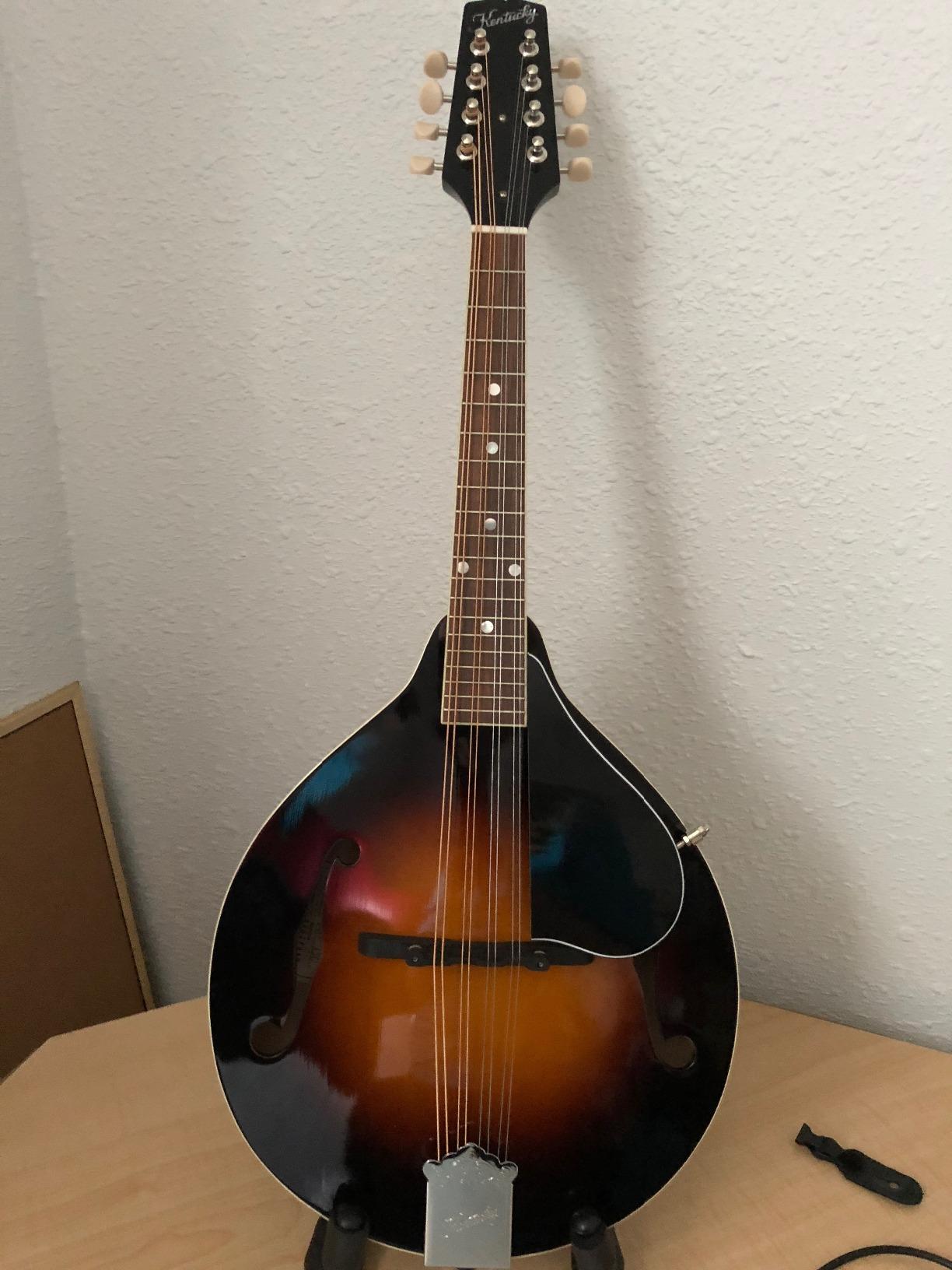
The slim maple neck is the comfort story here. At 2.8 pounds this is light for a solid carved top, and reviewers consistently call it easy to play for extended practice. The East Indian rosewood fingerboard balances beauty with durability, which is the practical choice for a working instrument.
The nitrocellulose finish is worth understanding. It is a thin lacquer that lets the top move with humidity, which is why a well-finished nitro instrument sounds open and why it will check with age. That is a normal trade in this tier, not a defect.
Setup notes: the bridge often needs fitting and the factory strings are reported as tinny or metallic by some owners. Treat the first string change and a relief pass as part of the purchase. A gig bag is included, which is more than most of this list manages.
Who this is right for
This suits a player who wants a bright, articulate chop and a solid carved top but does not need an F-style body. It is a common first serious mandolin and a common second instrument for a guitarist who wants a bluegrass voice without committing to the scroll.
If you are buying for someone else, the included gig bag and the choice of three finishes make it an easy gift. The transparent brown we tested is understated enough to suit a stage.
Where it falls short
Quality control is inconsistent at this level. Pick guards are reported to detach on some units, and the bridge frequently needs a luthier. Neither is serious, but both mean your first visit to a shop is part of the plan rather than an optional upgrade.
It is an A-style with an oval hole, so it shares the projection ceiling described earlier. The one year limited warranty is also short for a carved-top instrument.
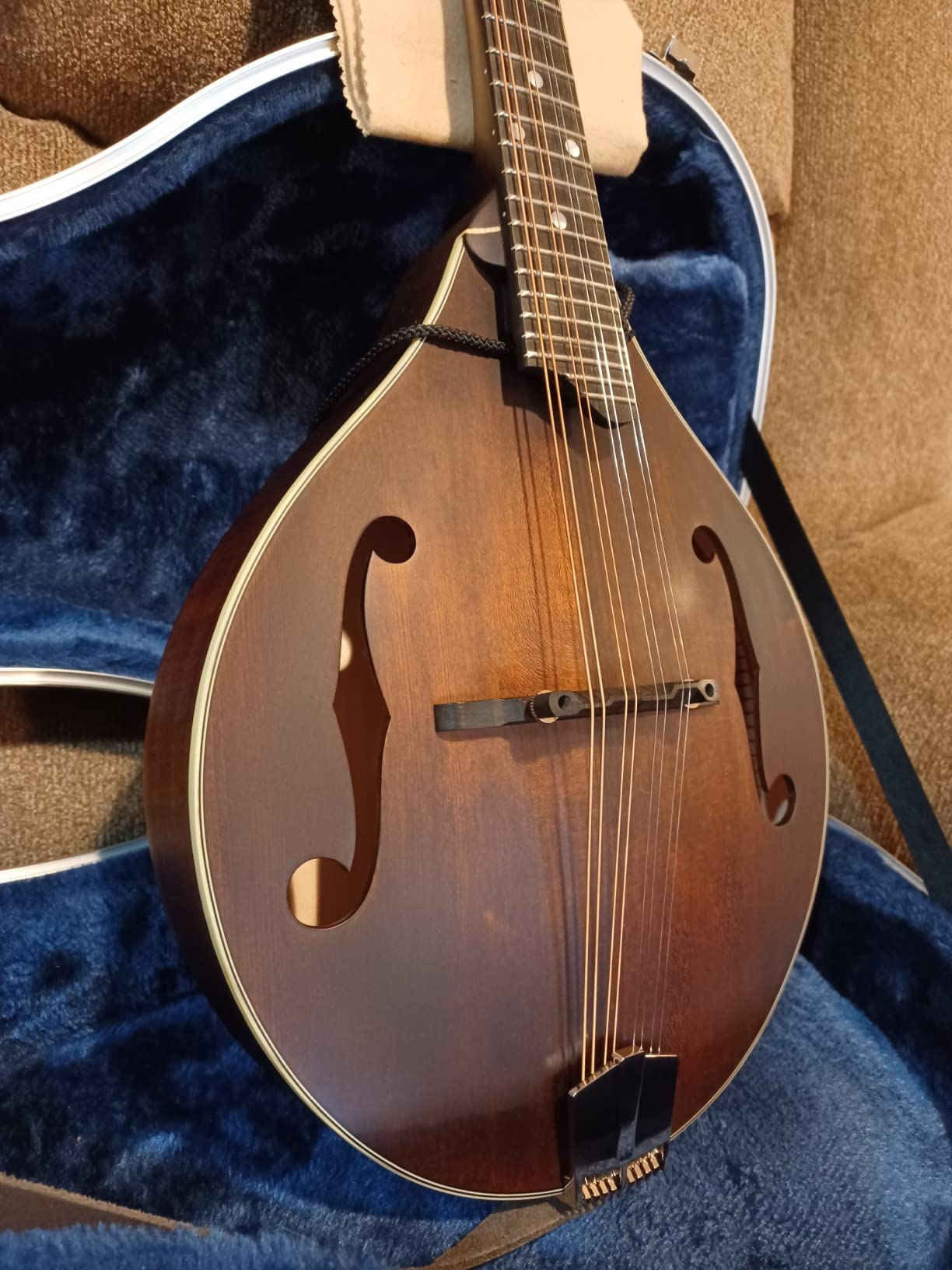
7. Eastman MD305 A-style Mandolin
Eastman Guitars MD305 A-style Mandolin – Classic
A-style body with f-holes
Spruce top and maple back
Ebony fingerboard
Arrives set up
Pros
- Deep throaty tone owners compare to costlier instruments
- Intonation and action arrive essentially correct
- Comfortable action for long practice sessions
- Gig bag included
Cons
- Tuning machines are stiff
- Supplied tailpiece may need replacing
This is tied for the highest-rated instrument in the roundup at 4.8 stars, and the reason is not subtle: it arrives set up. Owners report that the intonation and action come essentially correct, so you can pick it up and play it. For anyone who has just spent a session fighting a high-action budget mandolin, that alone is transformative.
The tone is the other headline. Reviewers describe a deep, throaty voice on the lower three strings and compare it favourably to instruments costing considerably more. The spruce top, maple back and sides and ebony fingerboard are the traditional recipe, and the A-style body here carries f-holes, which is unusual and gives you more air and projection than a conventional oval-hole A.
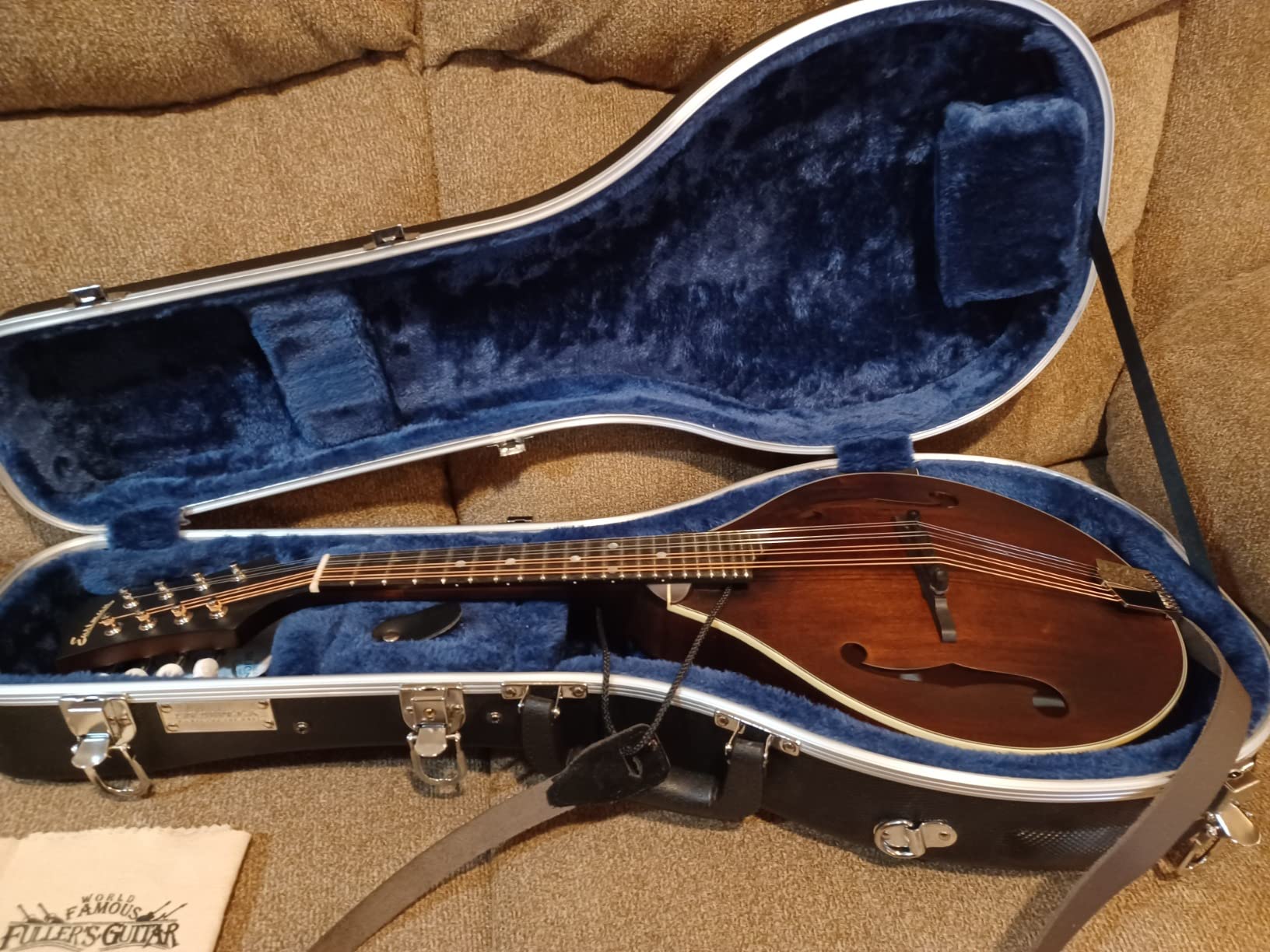
Comfortable action is the quiet advantage. Players report being able to practise longer without finger soreness, which sounds minor until you realise it is the difference between practising daily and abandoning the instrument. A padded gig bag is included.
Be aware of the specification listing. The weight is recorded as 16 ounces and the dimensions as 31 by 20 by 6.5 inches, which are almost certainly packed carton measurements rather than the instrument’s actual figures. Do not use them to judge how the mandolin feels on a strap.
Setup notes: the most important word in the review data here is that setup arrives correct. You will still want a nut check and a string change to your preferred gauge, but you will not be paying a shop to bring the instrument into playable condition.
Who this is right for
This suits a player who cares about tone more than tradition of shape, and who wants f-holes without the F-style body. The MD305 is the answer for a fingerstyle-leaning player who plays in bands and still wants an A-style silhouette on the leg.
It is also the pick for anyone who has been burned by setup costs. If your previous mandolin needed two shop visits before it was playable, this one removes that story entirely.
Where it falls short
The tuning machines are stiff, and that is the only recurring complaint in the review data. Getting into tune takes more effort than it should, which matters constantly in a bluegrass session where tuning happens constantly.
The tailpiece is reported to need replacing over time. Not urgent on a new instrument, but a known consumable. And with only 32 ratings, you are buying on a smaller sample of owner experience than some of the other picks here.
8. Eastman MD315 F-Style Mandolin with F-Holes
Eastman MD315 F-Style Mandolin with F-Holes, with padded gig bag
F-style body with f-holes
Spruce top and maple back
Balanced warm resonant voice
Padded gig bag included
Pros
- F-style body with f-holes for a bluegrass voice
- Rated 4.8 with no ratings below four stars
- Manufacturer describes a balanced warm resonant tone
- Padded gig bag included
Cons
- Smallest review base of the ten at 25 ratings
- Premium tier instrument rather than an entry choice
The MD315 is the F-style counterpart to the MD305, sharing the 4.8 star rating that makes it the most enthusiastically rated instrument here, with 82 percent five-star and 18 percent four-star ratings. There is not a single one or two or three star rating in the sample. That consistency is the reason to consider it, even on a small base.
The bluegrass case for it is simple: F-style body, f-holes, spruce top, maple back. That is the traditional combination, and the manufacturer describes the voice as balanced, warm and resonant, which is a fair description of where a well-set-up Eastman sits.
It comes with a padded gig bag, and the finish is a classic satin. The material specification lists spruce, maple, rosewood and ebony, which is a complete traditional tonewood set. It is also the costliest instrument in this roundup, so it is aimed at a player who has already had a mandolin or guitar and knows what they want.
Setup notes: Eastman instruments in this roundup arrive in good playing condition. Do a string change to your preferred bluegrass gauge and check the neck relief, and you should be ready to jam. The listing dimensions are not supplied, so check the physical fit before committing.
Who this is right for
Buy this if you are moving up from a mid-tier A-style, if you are an experienced guitarist choosing a mandolin as a second serious instrument, or if you want the F-style and a tone that holds up under a band without going to a four-figure luthier instrument.
It is also a strong choice for anyone who plays both flatpicked rhythm and melodic lead, because the f-holes give you a bright top end on top of a warm body.
Where it falls short
Twenty-five ratings is the smallest review base here, and the listing data is thin – several descriptive fields are missing, including dimensions. You are buying partly on reputation, which for this brand is defensible but still a risk.
It is also the costliest instrument in the group, so if you are not certain you will stick with the mandolin, that is money exposed.
9. Kentucky KM-272 Artist Oval Hole A-Style Mandolin
Kentucky KM-272 Artist Oval Hole A-Style Mandolin – Transparent Amber – Solid Spruce Top, Maple Back & Sides, Rosewood Fingerboard – Professional Mandolin for Beginner and Advanced Players
Oval sound hole
Solid carved Sitka spruce top
Maple back and sides
Slim maple neck
Pros
- Exceptionally loud with strong projection
- Bright articulate chop with a warm smoky edge
- Many owners report it arrives correctly set up
- Padded gig bag included
Cons
- Some units arrive with a detached pick guard or unfitted bridge
- Factory strings reported as corroded
- Strap button reported as low quality plastic
The KM-272 is the projection standout in the group. The manufacturer describes a crisp, bright tone with extra punch and projection, and owners without exception single out volume – several report that it out-projects instruments they own at far higher prices. If you play in a band where the mandolin has to be heard from the back of the room, this is the instrument to shortlist.
It is also the one A-style in this roundup where reviewers commonly report that the setup arrives correct, with no truss rod or intonation work needed. That is unusual and worth paying attention to if you have been disappointed by factory setups elsewhere.
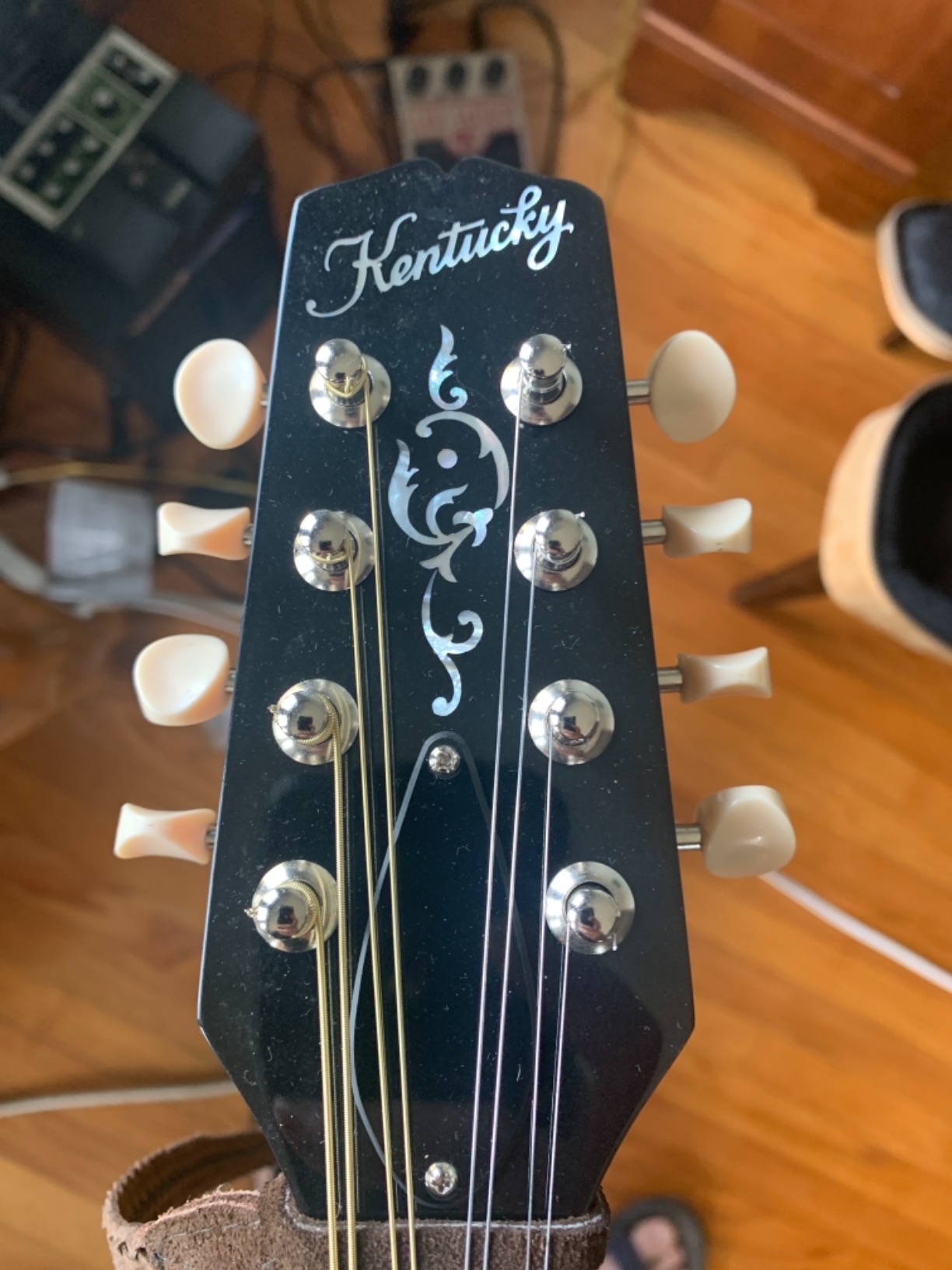
On tone, the oval hole gives this model something different from the Eastman A-style. The Sitka spruce top over maple back and sides produces a bright, articulate chop with a mellow, smoky character coming from the sound hole. Think of it as more textured and less purely woody than the Kentucky KM-156, with more air behind the note.
It is also the heaviest instrument in the roundup at five pounds, and the dimensions are 26.25 by 10.25 by 3.25 inches. That is a real consideration for a seated player. A slim maple neck and East Indian rosewood fingerboard keep the playing side comfortable, and a padded gig bag is included.
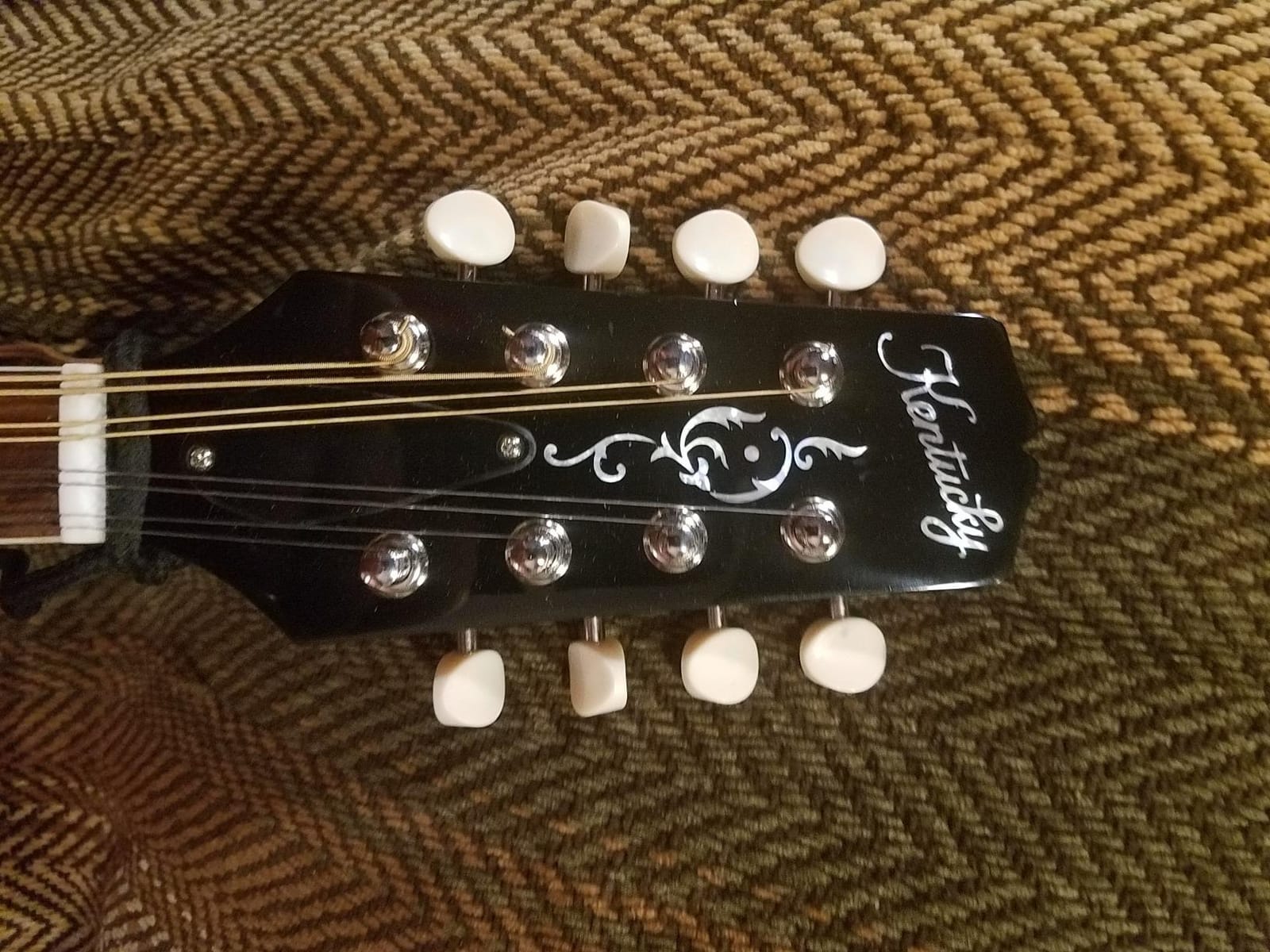
Setup notes: check the unit on arrival, seriously. A recurring thread in the reviews describes units turning up with the pick guard broken off or the bridge detached, and factory strings that are corroded or break during tuning. A shop inspection is worth the money even when everything appears fine.
Who this is right for
This suits a player in a loud rehearsal room or a working band, or for anyone whose main complaint about a previous mandolin was that it could not be heard. The projection is the reason to own it.
It is also a good fit for a player who likes the A-style look but wants more top end than a conventional oval hole provides. The smoky edge works beautifully on melodic lead lines.
Where it falls short
Arrival condition is the real risk. Detached pick guards, unfitted bridges, corroded strings and even finish blemishes are reported on warehouse units, so inspect the box the day it arrives and keep the packaging until you are satisfied.
At five pounds it is heavy for a mandolin, and the plastic strap button is reported as low quality. Both are minor, but both are annoying at practice time.
10. Donner DML-1 A-Style Mandolin Bundle
Donner A Style Mandolin Instrument Sunburst Beginner Adult Acoustic Mandolin Musical Instrument Mahogany 8 String, Bundle With Tuner String Bag Guitar Picks,DML-1
Mahogany body in sunburst
Adjustable compensating bridge
Clip-on tuner included
Gig bag and accessories
Pros
- Complete bundle with bag tuner strings and picks
- Bright warm mahogany tone
- Lightweight and comfortable for beginners
- Inexpensive way to find out if you want to play
Cons
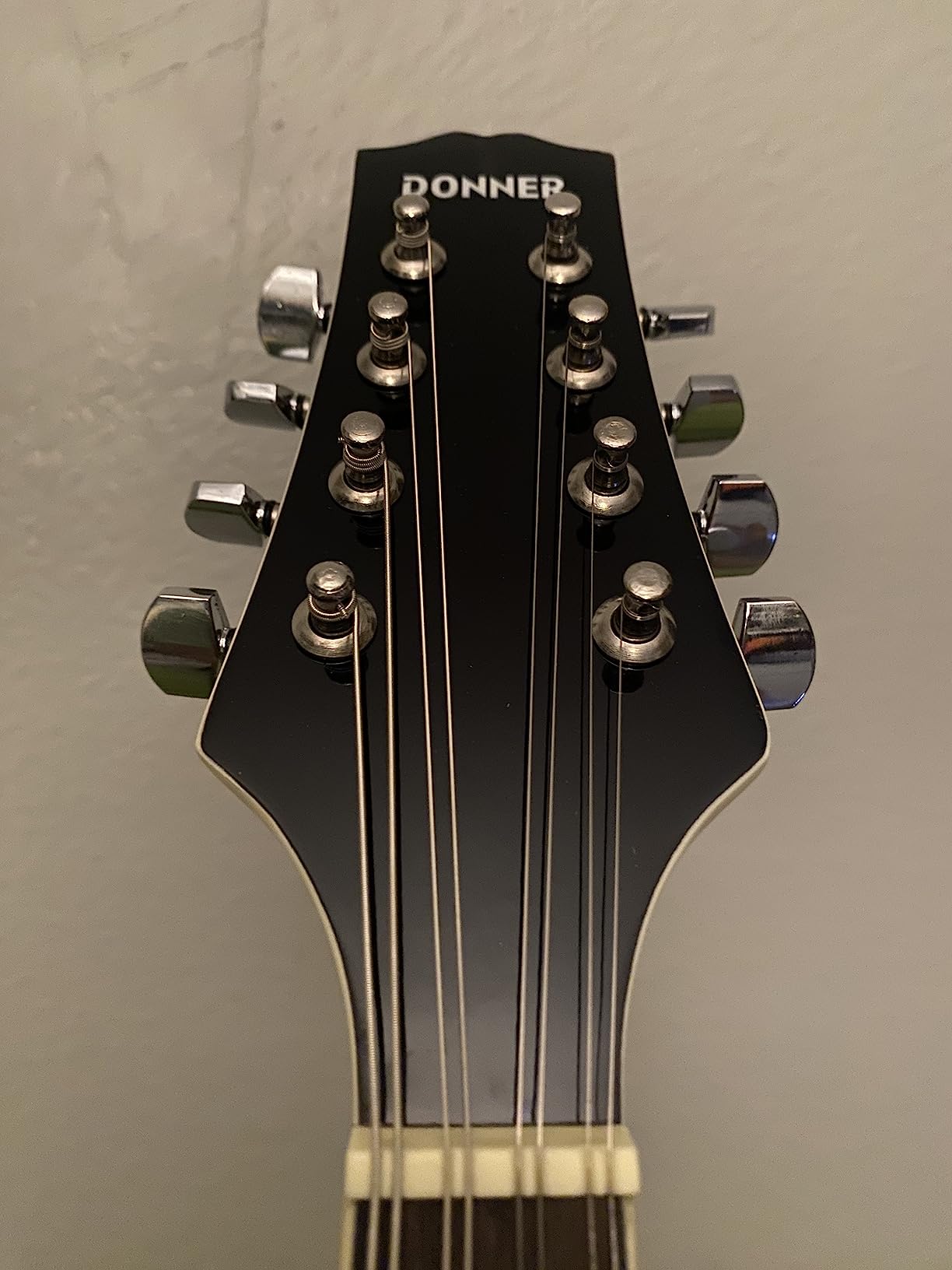
- Open gear tuners reported as stiff and inconsistent
- Action often high and the bridge may need trimming
- Supplied strings reported to snap
It is the most-reviewed instrument in the roundup by a wide margin, with 986 ratings averaging 4.2 stars. That volume of owner experience is itself informative: the tone is bright and warm on AAA African mahogany, the body is light at 3.5 pounds, and the chrome-plated open gear tuners hold tuning once they are working properly.
What makes it stand out is the box contents. You get the mandolin, a gig bag, strings, a digital clip-on tuner, a polishing cloth and guitar picks. For a player who has never held a mandolin, that removes every excuse not to start playing this week, and the clip-on tuner alone removes the single most common beginner blocker.
The adjustable compensating bridge is a nice touch at this level, and the carved patterned tailpiece is a real detail rather than a stamped plate. Mahogany gives a warmer voice than spruce, with translucent top end.
Setup notes: this one genuinely needs work. Reviewers report high action out of the box, a bridge that may need trimming, stiff and inconsistent open gear tuners, and supplied strings that can snap during the first tuning. A full setup plus a string change is not optional here – it is the difference between an instrument you keep and one you put in a closet.
It is worth being clear about what the open gear tuners are and are not. They will not blow out of the body the way cheaper machines do, and once a drop of light machine oil is on the gears they hold reasonably. But they are the part most likely to make you think the mandolin is out of tune when it is not, and that confusion costs beginners more practice time than anything else on this instrument.
The fit and finish are more convincing than the price suggests. The bound neck meets the body cleanly, the frets are level enough to buzz consistently, which is a good sign, and the sunburst is a genuine gloss rather than a sprayed imitation. None of that rescues a high action, but it means the instrument is not a toy.

There is also a real psychology to buying something at this level, and it is a positive. The overbuying fear stops a lot of people from starting. A low-commitment instrument that comes with everything needed to play resolves that. Get it, learn on it, and move up when the repertoire asks.
There is a practical argument for the bundle beyond the sticker price. Everything in the box is gear you would be buying in the first month anyway, and the clip-on tuner removes the most common reason beginners put an instrument down in the first fortnight. The included bag is already cut for the body, so there is no sizing guesswork.
The trade-off is that none of the accessories is especially good. The bag is thin, the tuner is basic, and the picks are ordinary. That is fine, because the point of this pick is not to raise the ceiling on any of those things. It is to get a playable instrument into your hands this week so that you eventually have a reference point for judging something better.
Who this is right for
Buy this if you are curious and undecided, or if you want a beater for festivals, campfires and travel that will not worry you. The accessory bundle makes it a complete gift as well, with nothing extra to buy.
It is also fine as a first instrument for a child or a very new adult learner working from a beginner method, where the wide availability of support material matters more than tone.
Where it falls short
The tone is thin and tinny until it is set up with better strings, and reviewers are candid about that. If you buy this and skip the shop visit, you will conclude you do not like the mandolin, and you will be wrong.
It is not a long-term bluegrass instrument. Treat it as a decision tool, then plan a move to a solid carved top once you are playing regularly – that is the upgrade path most forum veterans describe.
What Actually Matters in a Bluegrass Mandolin
Five things decide whether a mandolin works in a bluegrass setting. Everything else – inlays, binding, the finish quality, the scroll – is decoration. Here is the order we would weigh them in.
1. The top: solid carved over everything else
A hand-carved solid spruce top is the single biggest jump in tone. It responds faster to a pick attack, gives up more volume when you dig in, and opens up over the first years as the plate moves with humidity. A pressed or laminate top sounds thinner and more compressed, and no amount of setup fully closes that gap. If your budget forces a choice, spend it on a solid carved top rather than on a better body shape.
The back and sides matter for the same reason from the other direction. Maple gives the brightness and projection bluegrass needs. Mahogany and sapele are warmer and rounder, which is lovely in smaller groups and less cutting in a full band.
2. The soundhole: f-holes versus the oval hole
This is the most bluegrass-specific decision on the instrument and almost nobody explains it. The oval hole sits in the middle of the top and shapes and dampens the sound, producing a round, woody midrange. The f-holes on an F-style sit beside the fingerboard extension and open the top up, giving more volume, more air and a brighter top end.
For rhythm work in a band, f-holes win. For melodic lead, for fingerstyle, and for smaller-group playing, the oval hole has its own character that many players prefer. Note that the Eastman MD305 in this roundup is an A-style body with f-holes, which shows that the hole and the body shape are independent decisions.
3. Setup: the part nobody tells you about
Action is the height of the strings above the fingerboard, measured at the 12th fret. Too high and you are fighting the instrument; too low and it buzzes under a flat pick. A truss rod adjusts neck relief, and nut slot depth and saddle height are set by hand. On a well-set-up mandolin you can play a full set of three-hour rehearsals without finger soreness, and you can bend the fourth string a full tone without going sharp.
Factory setup varies wildly, and the review data in this roundup makes the point from every direction. Several models here arrive needing a full setup; the Eastman instruments arrive playable. Budget for a professional setup on any budget purchase, and check the nut and bridge on anything new the day it arrives.
4. Intonation and the compensated bridge
Intonation is how true the instrument stays as you move up the neck. A compensated bridge has a curved or stepped saddle that shifts the string contact point for different notes, which tightens the open and octave intervals. Without it, the 12th fret goes sharp and the whole instrument feels out. On bluegrass material, where you play in keys like G and D constantly, correct intonation is not a refinement.
5. Strings, gauge and tension
Light-gauge strings are easier on new fingers but thin out fast under a flat pick, which is the picking tool almost every bluegrass player uses. Medium gauge is the baseline for most of this roundup, and heavier gauges give more volume, more sustain and a firmer chop at the cost of fretting comfort. If you play more than a couple of hours a week with a heavy pick, move up at least one gauge.
Tuning: G-D-A-E and the drop-D question
Standard bluegrass mandolin tuning is G-D-A-E, the same tuning pattern as a guitar, just across four courses of two strings. That similarity is why guitarists pick up the instrument so quickly. Drop D is a separate question: some players detune the low G course to D for a darker, slack-tuned sound, and it is a legitimate choice, but it changes the string tension relationship and you will need to re-check your setup afterwards. Most players start in standard tuning and explore from there.
Strings we would start with
Two families cover almost everyone. 80/20 bronze is bright, balanced and durable, and it suits fast flatpicked rhythm work. Phosphor bronze is warmer in the low courses, lasts longer and takes more of a beating before it goes dull, which makes it the better choice for heavier picking styles. Coated strings survive sweat and travel better at the cost of some bite. Whatever you pick, a light gauge is for a first week only.
Strings and Tuning for Bluegrass Mandolin
Ask any group of mandolin players what the first string change felt like and you will get the same answer: the instrument they owned and the instrument they bought are the same instrument. New strings on an old mandolin routinely sound like a different product, and this is why so much of the complaint in the reviews above is really a string complaint wearing a disguise.
For bluegrass, move up in gauge rather than sideways in material. If the strings that came with your mandolin are a light gauge, change them within the first week and judge the instrument after that. The low courses are where a chop lives, and thin strings there are the first thing to run out of headroom.
Keep a spare set and a clip-on tuner in the gig bag whatever you buy. A clip-on tuner is close to mandatory in bluegrass: the instrument is small, the headstock is hard to read at speed, and the courses are paired so a cheap pedal tuner is the more sensible investment for a working player.
Frequently Asked Questions
Which is better, an A-style or F-style mandolin for bluegrass?
The F-style is the bluegrass convention. Its f-holes and larger carved body give you more volume, top-end bite and headroom in a full band, and the shape is what you will see on every stage. The A-style is warmer, lighter and cheaper to build well. Choose the A-style if you play in smaller groups, practise solo, or prefer a rounder voice. Many players start on an A-style and move to an F-style once the repertoire demands it.
What is the best mandolin for bluegrass music?
The best mandolin for bluegrass is the one with a solid carved spruce top, a bright back and sides, f-holes, and a correct setup. In this roundup, the Loar LM-310F Honey Creek F-Style is our first pick for a warm woody tone in the traditional body, the Eastman MD315 is the step-up F-style, and the Kentucky KM-156 is the value solid-top A-style most commonly recommended as a first serious instrument.
What type of strings are best for playing bluegrass on a mandolin?
Start with a medium-gauge phosphor bronze set for warm lows and durability, or 80/20 bronze if you want a brighter edge for fast flatpicked rhythm work. Avoid very light gauges once you start playing regularly – they lose volume under a flat pick and go dead quickly. Coated strings are worth it for touring players who sweat on the instrument. Change to a heavier gauge if you want a firmer chop and do not mind the extra fretting effort.
What is the best tuning for bluegrass mandolin?
Standard G-D-A-E is the bluegrass tuning and the one to learn in. It mirrors guitar tuning across four courses, so a guitarist can move over immediately. Some players detune the low G course down to D for a darker, slack sound, but that changes the tension relationship and usually means re-checking your setup. Learn the repertoire in standard tuning first.
Which brand of mandolin is considered the best?
Eastman is the most respected name in the entry-to-mid range and is the first brand most mandolin communities name, according to recurring consensus on r/mandolin. Kentucky, made by Saga Musical Instruments, is the standard first solid-top recommendation. The Loar and Gold Tone cover the mid and premium F-style tiers, while Ibanez and Donner own the budget end. Brand matters less than the top wood and the setup.
What mandolin setup does a bluegrass mandolin need?
A bluegrass setup means string action you can play for hours without finger soreness, correct intonation at the 12th fret, a correctly fitted bridge, and nut slots cut to your gauge. On a budget instrument, budget for a full setup and a string change before you judge the tone. On a mid or premium instrument, do a nut and relief check only. The setup is the highest-value money you can spend on a new mandolin.
The Verdict: Which Mandolin Should You Buy
Ten instruments, one clear first choice. The Loar LM-310F Honey Creek F-Style is the best mandolin for bluegrass players in this roundup: a hand-carved solid spruce top over maple, in the body shape the tradition actually uses, at a rating and review volume that make it the safest recommendation we can make.
Match the player to the pick below and you will not go wrong.
If you are not sure the mandolin is for you, the Donner DML-1 answers that for very little money and includes everything you need to start. If you are a committed beginner moving from guitar, the Kentucky KM-156 is the value solid-top A-style that the community recommends most often, or the Loar LM-110 if you want a warmer, lighter body. If you play a lot with a heavy pick, the Ibanez M522S gets you a solid spruce top in an F-style body without stepping up a full tier.
For loud rooms, the Kentucky KM-272 is the projection pick in this group, and the Eastman MD305 is the tone pick that arrives ready to play. When the repertoire asks for more, the Eastman MD315 is the step-up, and after that you are into luthier territory.
One last thing, and it is the same for every pick: spend your first dollars on a proper setup and a set of strings in the gauge you actually play. A correctly set-up instrument you can grow into beats a better instrument you cannot get your hand around. This roundup of the best mandolins for bluegrass players in 2026 will keep standing, but nothing in it beats ten minutes with a luthier.