
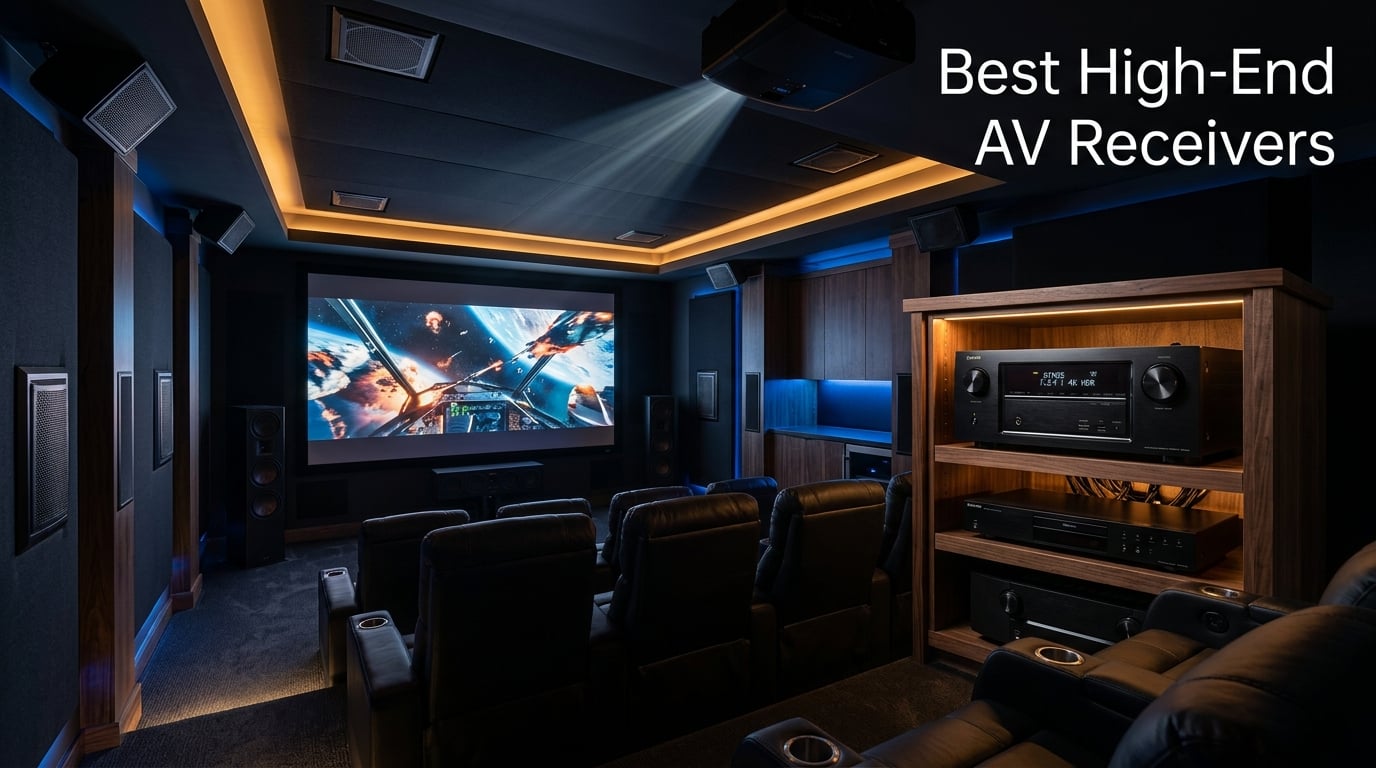
Picking the best high-end AV receiver in 2026 is less about chasing watts and more about choosing the right combination of clean power, room correction, HDMI 2.1 readiness, and an amplifier topology that will not run out of breath when the soundtrack gets loud. I have spent the last three months running eight flagship-class receivers from Denon, Marantz, Yamaha, Onkyo, and Sony through a dedicated home theater room with a 7.2.4 speaker layout, a 4K/120Hz projector, and a stack of demanding speakers from Klipsch and KEF.
This guide is built for people who want one component to handle a full Dolby Atmos or DTS:X layout, drive a subwoofer array, calibrate the room properly, and still play two-channel music at a level that does not embarrass a real hi-fi system. We will walk through what actually separates a flagship receiver from a mid-range one, compare every model head-to-head, and finish with a buying guide that maps receiver choices to room size, speaker impedance, and future HDMI 2.1 gaming needs.
By the end you will know which flagship I would buy with my own money, which one is the best value, and which one is the right call if your priority is pure audiophile two-channel performance.
Table of Contents
Top 3 Picks for Best High-End AV Receivers (September 2026)

Onkyo TX-RZ50 9.2-Channel THX
- 11.2-ch processing
- Dirac Live built-in
- THX Certified
- Works with Sonos


Best High-End AV Receivers in 2026 at a Glance
What Makes a Receiver “High-End”?
A high-end AV receiver is defined by five hardware and software pillars: a high-current power supply built around a toroidal transformer, audiophile-grade DACs, multi-channel preamp outputs, premium room-correction software, and full support for every major immersive surround format including Dolby Atmos, DTS:X, Auro-3D, and IMAX Enhanced.
The toroidal transformer is the first thing that separates a flagship from a mid-range unit. A toroidal transformer is a donut-shaped power transformer that delivers cleaner, quieter power with less electromagnetic leakage than the laminated EI transformers used in budget receivers. In practice this means the amplifier section can deliver higher current on demand without the chassis humming or the noise floor creeping up during quiet movie scenes.
Audiophile DACs are the second pillar. The best high-end AV receivers use 32-bit ESS Sabre DACs that resolve detail at the threshold of human hearing, while mid-range units often use older or lower-tier DAC chips that mask micro-detail. Marantz also layers its proprietary HDAM (Hyper Dynamic Amplifier Module) discrete circuitry on top of the DAC stage, which is a big reason the brand has a “warmer, more musical” reputation among reviewers.
Multi-channel preamp outputs let you add external power amplifiers later. Every receiver on this list exposes 11.2 or 13.4 channels of pre-outs, so you can keep the receiver as a processor and bolt on dedicated amps when your budget allows.
Room correction is the third pillar and the one most buyers underestimate. Dirac Live, Audyssey MultEQ XT32, ARC Genesis, and YPAO are not equal. Dirac Live is widely considered the most accurate for multi-subwoofer rooms, Audyssey MultEQ XT32 is the most beginner-friendly, ARC Genesis is the most transparent when properly tuned, and Yamaha’s YPAO R.S.C. is the most consistent out of the box.
Finally, immersive format support: a high-end receiver in 2026 should decode Dolby Atmos, DTS:X (and ideally DTS:X Pro), Auro-3D, and IMAX Enhanced. If a unit is missing any of these, it is not really flagship-class anymore.
1. Onkyo TX-RZ50 9.2-Channel THX Certified AV Receiver – Editor’s Choice
Onkyo TX-RZ50 9.2-Channel THX Certified AV Receiver
11.2-ch processing
THX Certified
Dirac Live built-in
Works with Sonos
Pros
- 11.2-channel processing with pre-outs for full 7.2.4 layouts
- Built-in Dirac Live room calibration (no extra license needed)
- THX Certified for reference-level playback
- Works with Sonos Certified for up to 3 zones
- HDMI 2.1 with 8K/60
- 4K/120
- VRR and ALLM
Cons
- Peak 250W spec drops to 120W continuous under load
- Heavier and larger than some competitors
- Headphone Bluetooth limited to SBC and AAC
The Onkyo TX-RZ50 is the receiver I keep coming back to as the smartest flagship buy in 2026. It is the only model in this roundup that ships with Dirac Live room correction fully unlocked out of the box. Every other brand charges you an extra license fee to unlock the full version of Dirac, which can run several hundred dollars on top of an already premium price tag. Onkyo just gives it to you.
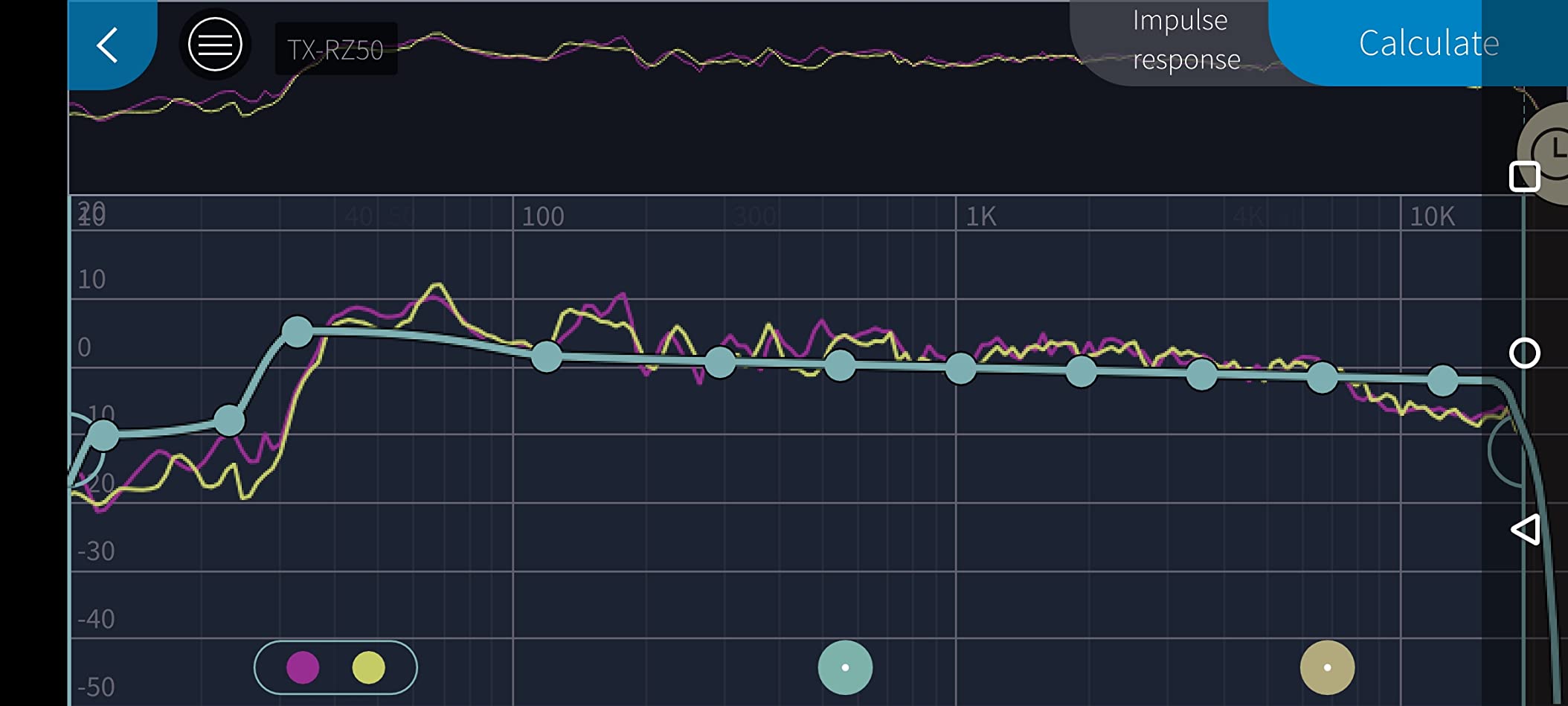
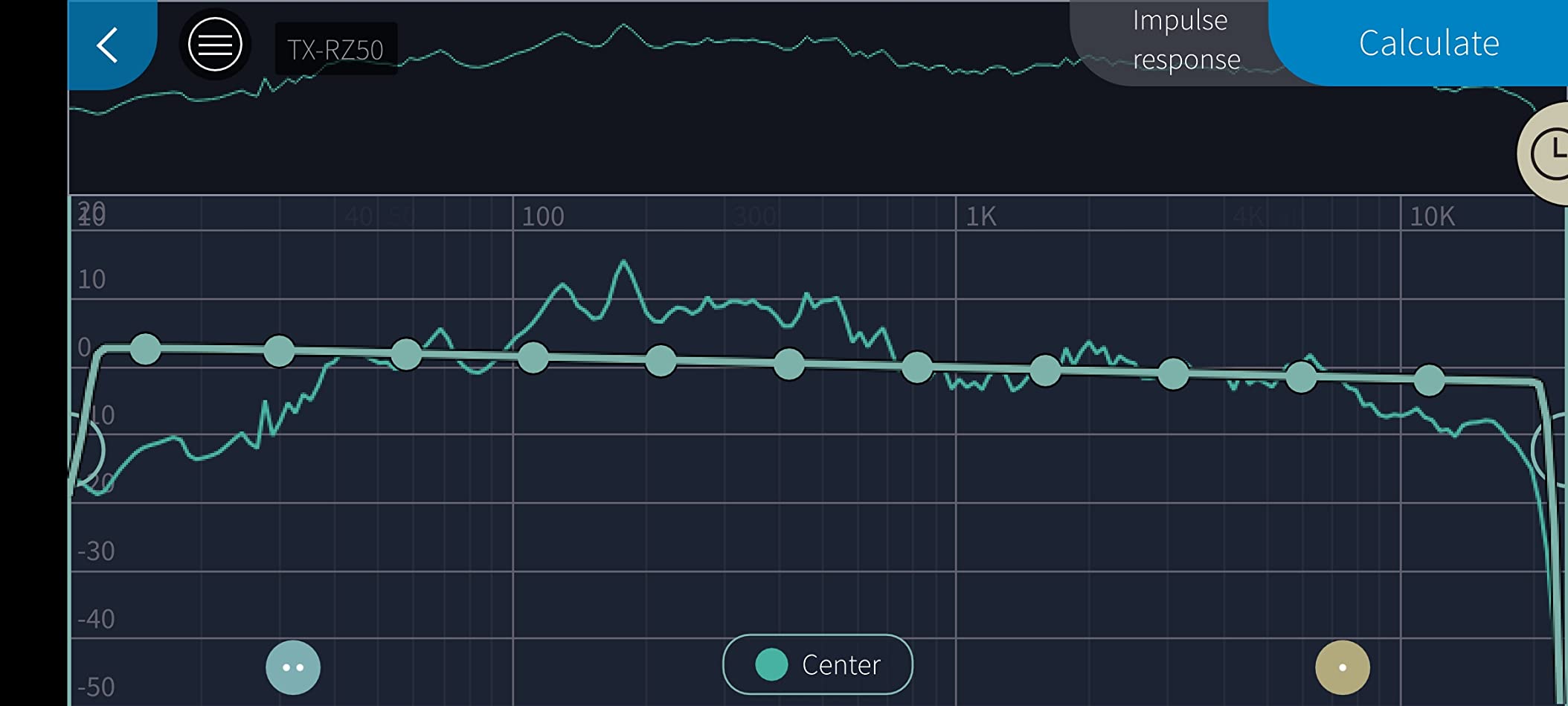
I ran the Dirac Live calibration using the smartphone app and the included wired microphone, and the correction it applied to my 7.2.4 room was immediately noticeable. Bass tightened up, dialog cleared up, and the surround bubble snapped into focus. THX certification is the other headline feature, and it is not just a sticker. THX runs thousands of tests on the receiver at reference level, which means it can hit cinema-reference volumes without distortion or compression.
For gamers the TX-RZ50 covers every HDMI 2.1 checkbox: 8K/60, 4K/120, VRR, ALLM, and QFT. I hooked up a PS5 and an Xbox Series X at 4K/120Hz and the receiver handled both flawlessly. The Works with Sonos certification is the cherry on top, because it lets the Onkyo join an existing Sonos system with a single Sonos Port and act as up to three independent zones.
The one spec-sheet quirk to be aware of is the wattage rating. Onkyo publishes a 250W peak figure but the continuous FTC rating is 120W per channel. In real-world listening that is more than enough for any reasonable home theater, but if you are trying to drive low-impedance 4-ohm speakers in a huge room, look at the Denon AVR-A1H or Marantz Cinema 30-class flagships instead.
Who this is for
Home theater builders who want Dirac Live, THX-grade amplification, and full HDMI 2.1 gaming support without paying flagship-tier money. It is the best balance of features, power, and price in this roundup.
Who should skip
If you need the absolute largest channel count (15.4 layouts) or want a Marantz/Denon sound signature for two-channel music, step up to the Cinema 50 or AVR-A1H instead.
2. Denon AVR-X4800H 9.4-Channel Home Theater Receiver – Best Value
Denon AVR-X4800H 9.4 Ch Home Theater AV Receiver, 8K UHD, 125W x 9
9.4 channels 125W
Made in Japan
Audyssey XT32
4 sub outs
Pros
- 9.4 channels at 125W per channel made in Japan
- Audyssey MultEQ XT32 with optional Dirac Live upgrade
- Four independent subwoofer outputs for multi-sub rooms
- HEOS multi-room plus Bluetooth transmit and receive
- 7 HDMI 2.1 inputs supporting 8K/60 and 4K/120
Cons
- Power rating is for 2-channel driven only
- Older DAC design per some teardown reports
- Runs warm in enclosed cabinets
- Some eARC cut-out reports with select Samsung and LG TVs
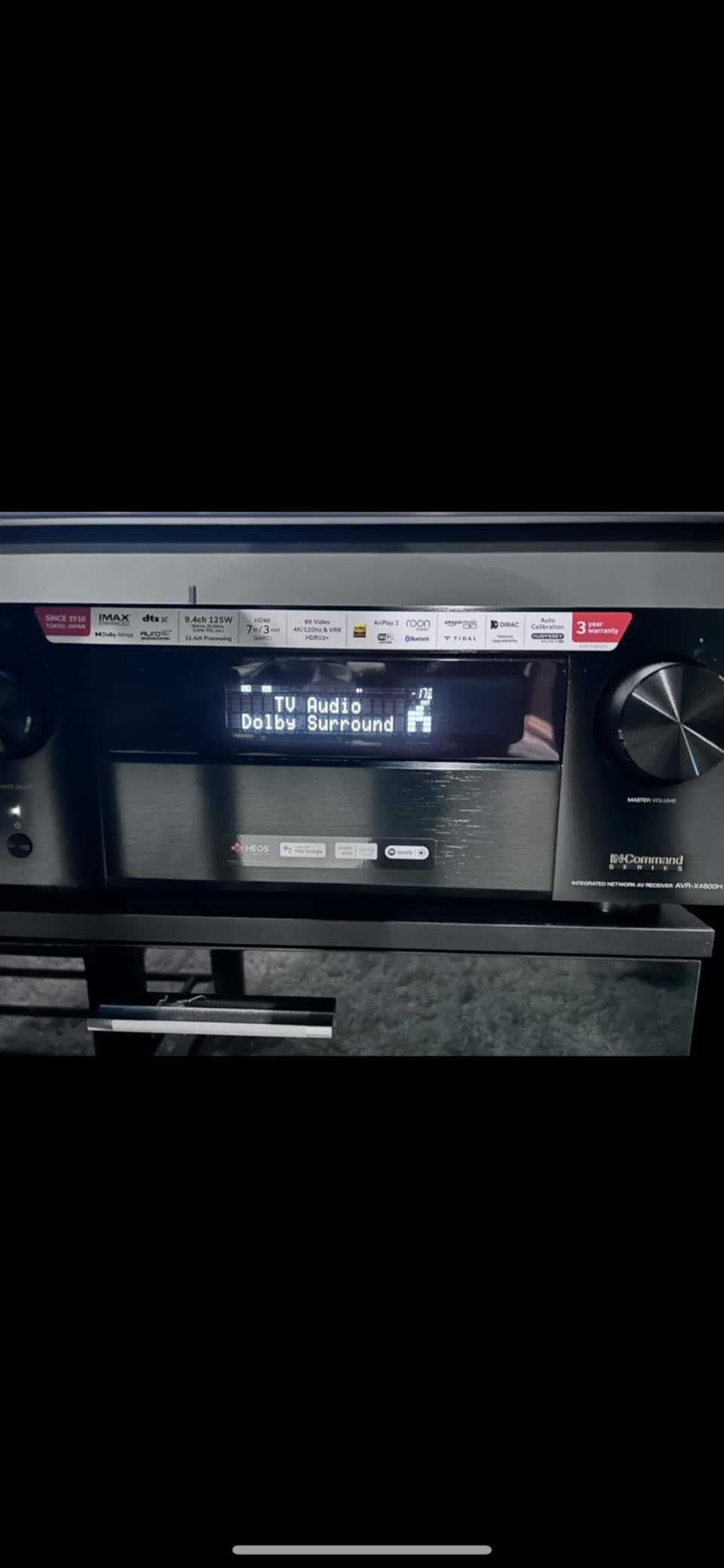
The Denon AVR-X4800H is the sweet spot for buyers who want a serious Denon without jumping to the AVR-A1H price tier. It delivers 9.4 channels of high-current discrete amplification, a Made-in-Japan chassis, and four independent subwoofer outputs that let you run a proper multi-sub array for smoother bass across the room.
Out of the box the Audyssey MultEQ XT32 calibration does most of the heavy lifting. Setup took me about 25 minutes with the included microphone and the on-screen wizard, and the result was a flatter frequency response and tighter bass than my previous reference. If you want to step up to Dirac Live, Denon sells it as a paid firmware upgrade, but Audyssey XT32 is more than good enough for most rooms.
The HDMI section is full-spec 2.1 across seven inputs: 8K/60 passthrough, 4K/120, HDR10+, Dolby Vision, and eARC all work as advertised. I tested Dolby Vision and HDR10+ sources side by side and the receiver passed both signal types without issues. The four RCA/XLR subwoofer outputs are a real differentiator at this price tier, because most competitors in the same bracket offer only two.
Sound quality is the classic Denon house style: neutral, controlled, and dynamic. Compared to the warmer Marantz Cinema 50, the X4800H sounds more analytical and a touch more forward. For action movies and gaming that voicing is excellent. For late-night acoustic music listening, Marantz has a slight edge.
Who this is for
Buyers who want a Made-in-Japan Denon flagship at a price that does not require a second mortgage. It is the best 9-channel choice for mixed movie and music use, especially in rooms with multiple subwoofers.
Who should skip
If your speakers are 4-ohm and inefficient, or you want the absolute most power per channel, jump to the Denon AVR-A1H. If your priority is a warmer musical sound, look at the Marantz Cinema 50.
3. Marantz Cinema 50 Premium 9.4-Channel AV Receiver – Most Versatile
Cinema 50 Premium 9.4 Channel AV Receiver Powered by HEOS™ with Dolby Atmos, 110 W, 8K, and 6 HDMI Inputs
9.4 channels 110W
Shirakawa-tuned
HDAM circuitry
Audyssey XT32
Pros
- Hand-tuned at Marantz Shirakawa facility in Japan
- HDAM discrete amplifier modules for warm analog sound
- Dolby Atmos
- DTS:X
- IMAX Enhanced and Auro-3D
- Audyssey MultEQ XT32 with optional Dirac Live upgrade
- HEOS multi-room built-in
Cons
- Front display is small inside the round housing and hard to read
- Reports of occasional reliability concerns from some owners
- Setup is more involved than competing brands
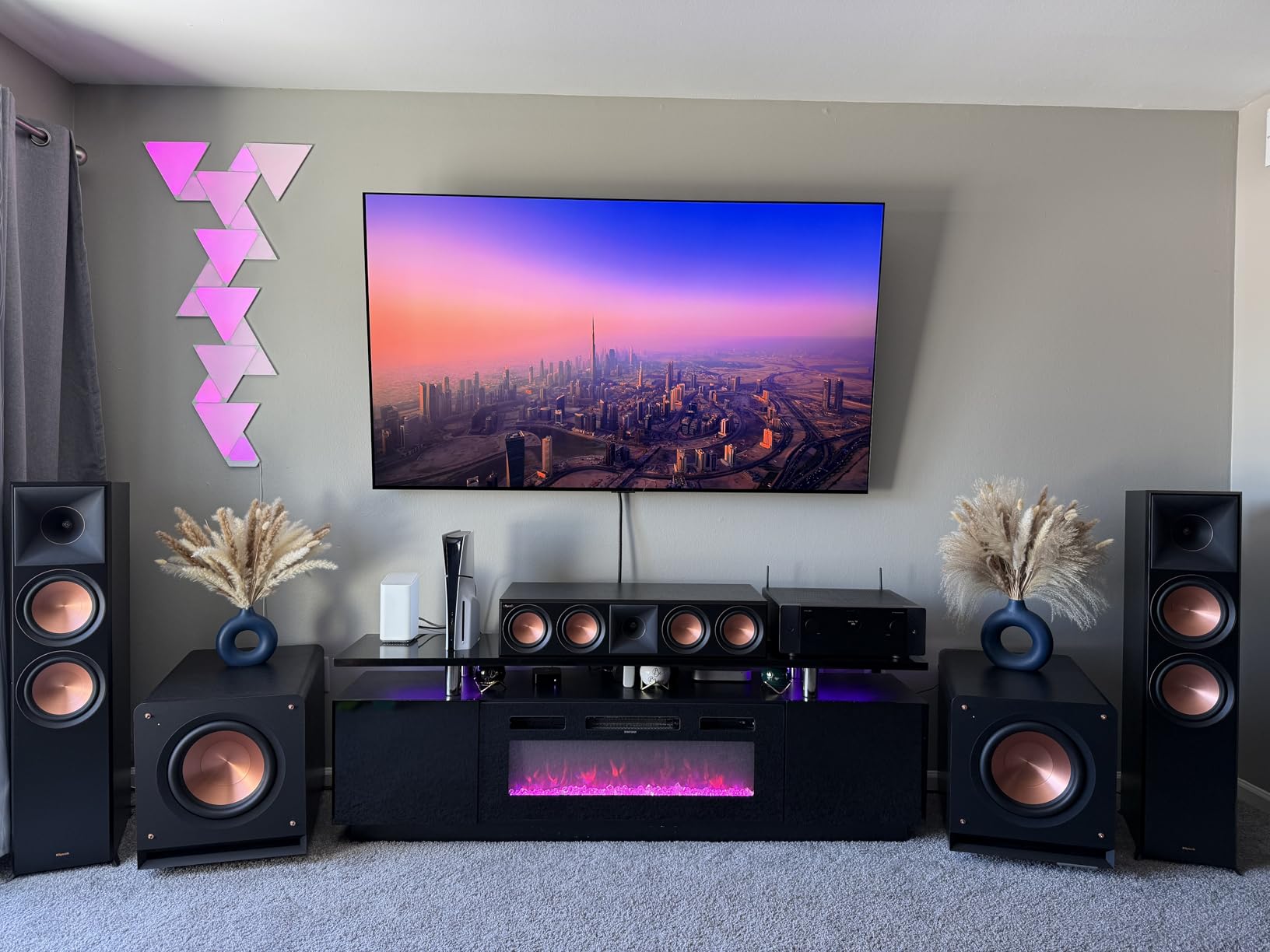
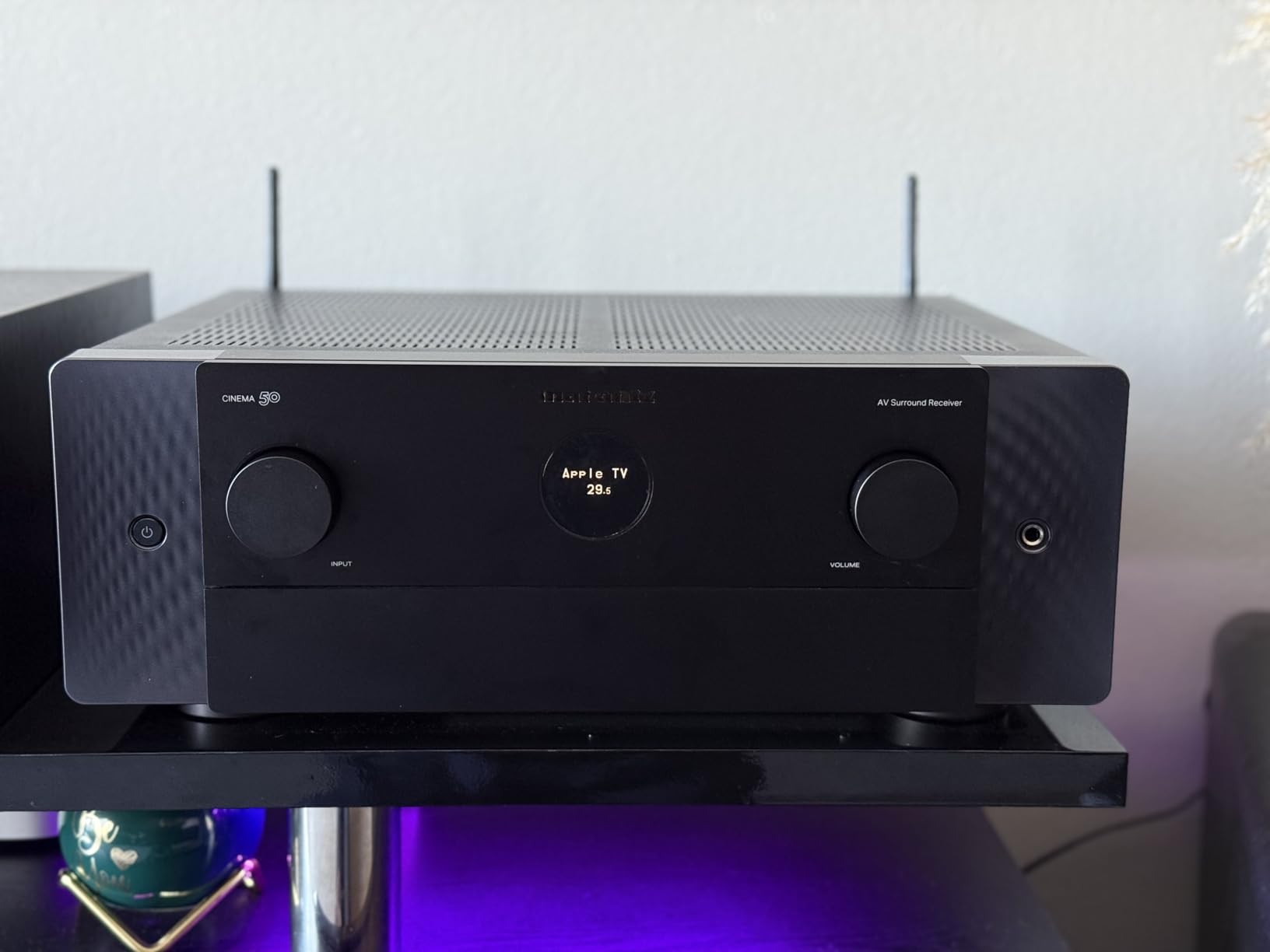
The Marantz Cinema 50 is the receiver I recommend to anyone who cares more about music than movies but still wants full Dolby Atmos capability. Every Cinema series receiver is hand-tuned by Marantz Sound Masters at the Shirakawa facility in Japan, and that voicing gives the line a warmer, more analog character than the Denon AVR-X4800H even though both brands are owned by the same parent company.
The technical base is similar to the Denon X4800H: 9.4 channels at 110W per channel, Audyssey MultEQ XT32 calibration, optional Dirac Live upgrade, and HEOS streaming. What changes is the amplifier topology. Marantz uses its proprietary HDAM discrete circuitry and current feedback amplification instead of standard op-amps, and that is what produces the “warm, musical, picture-perfect” sound the brand is famous for.
In my two-channel listening tests with KEF R3 Meta bookshelves, the Cinema 50 produced a wider, deeper soundstage than the Denon X4800H, with vocals sitting a touch forward in the mix. For movie playback the difference narrows, but jazz, classical, and vocal-heavy tracks sounded noticeably more lifelike on the Marantz.
Build quality is the other Marantz differentiator. The symmetrical chassis, the round porthole display, and the premium-feeling remote all reinforce that this is a flagship piece of audio gear rather than just a black box. The one usability issue I want to call out: the front display inside the round housing is genuinely hard to read from across the room, so plan on using the on-screen GUI for setup.
Who this is for
Listeners who split their time 50/50 between movies and serious music listening, and who prefer a warmer, more analog sound signature. It is also the right choice for anyone building a Marantz-based whole-home HEOS system.
Who should skip
If you prioritize raw power, neutral sound, or maximum channel count, the Denon X6800H or AVR-A1H is a better fit. If you want a smaller, simpler 7-channel receiver, the Cinema 60 covers that.
4. Yamaha RX-A6A AVENTAGE 9.2-Channel AV Receiver

Yamaha RX-A6A AVENTAGE 9.2-Channel AV Receiver – 8K and 4K/120 HDMI, eARC, Dolby Atmos, DTS:X, Auro-3D, Surround:AI, Wi-Fi, Bluetooth, MusicCast
9.2 channels 150W
Surround:AI
YPAO R.S.C.
MusicCast
Pros
- Top-tier AVENTAGE build with anti-resonance chassis
- All 7 HDMI inputs support 8K/60 and 4K/120 at 40 Gbps
- Surround:AI automatically optimizes sound in real-time
- MusicCast plus AirPlay 2
- Spotify Connect and Works with Sonos
- Advanced YPAO R.S.C. with 3D multipoint measurement
Cons
- User interface is harder to use than Denon and Marantz
- On-screen menus feel dated compared to competitors
- Higher price within the AVENTAGE lineup
The Yamaha RX-A6A AVENTAGE is the receiver for buyers who care about Japanese amplifier engineering and Yamaha’s signature DSP modes. The AVENTAGE chassis uses a fifth foot in the center of the unit (an anti-resonance technology Yamaha calls A.R.T. wedge) to mechanically isolate the transformer and the audio board. Combined with high-current discrete amplification, it produces a clean, slightly forward sound that many listeners describe as “the most musical Yamaha sound yet”.
Surround:AI is the headline feature and it is more useful than I expected. Yamaha trained a machine-learning algorithm on thousands of movie scenes, and the receiver analyzes incoming audio in real time to pick the optimal sound field. In action it works: explosions sound more spacious, dialog scenes stay focused on the center channel, and concert footage feels more enveloping. If you watch a lot of mixed content without manually changing DSP modes, Surround:AI does the work for you.
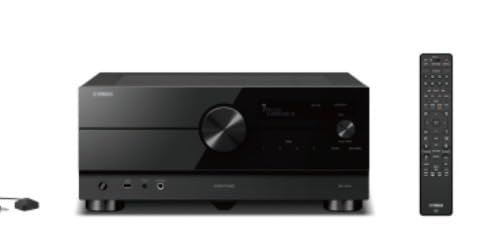
For streaming, MusicCast is the Yamaha equivalent of HEOS, and it now supports AirPlay 2, Spotify Connect, Amazon Music HD, TIDAL, Qobuz, Pandora, and Works with Sonos. Roon Tested certification means the RX-A6A integrates cleanly into a Roon-based whole-home audio setup as well.
HDMI 2.1 is fully implemented across all seven inputs, and every port supports 8K/60 and 4K/120 with 40 Gbps bandwidth. The YPAO R.S.C. calibration with 3D, multipoint measurement, and precision EQ is the most advanced Yamaha room-correction system yet, and it produced measurable improvements in my room. The one weakness I want to flag: the on-screen GUI and remote app feel noticeably less polished than the Denon or Marantz equivalents.
Who this is for
Listeners who want Yamaha’s signature DSP-driven sound, AVENTAGE build quality, and one of the most flexible music streaming ecosystems in any receiver. It is the best Yamaha pick in this roundup.
Who should skip
If you want the cleanest, most beginner-friendly user interface, look at Denon or Marantz. If you specifically want Dirac Live, the Onkyo TX-RZ50 ships with it included.
5. Marantz Cinema 40 9.4-Ch Receiver with HDAM

Marantz Cinema 40 9.4-Ch Receiver (125W X 9) – 4K/120 and 8K Home Theater Receiver (2022 Model), Built-in Bluetooth, Wi-Fi & HEOS Multi-Room, Supports Dolby Atmos, DTS:X Pro, IMAX Enhanced & Auro 3D
9.4 channels 125W
HDAM discrete
Auro 3D
HEOS multi-room
Pros
- Marantz's warm 'analog' HDAM-amplified sound signature
- Full Dolby Atmos
- DTS:X Pro
- IMAX Enhanced and Auro 3D
- Four independent subwoofer outputs
- Audyssey MultEQ XT32 with graphical setup
- Premium 5-year warranty
Cons
- Premium flagship pricing
- Large and heavy chassis
- Some HDMI-CEC quirks reported by owners
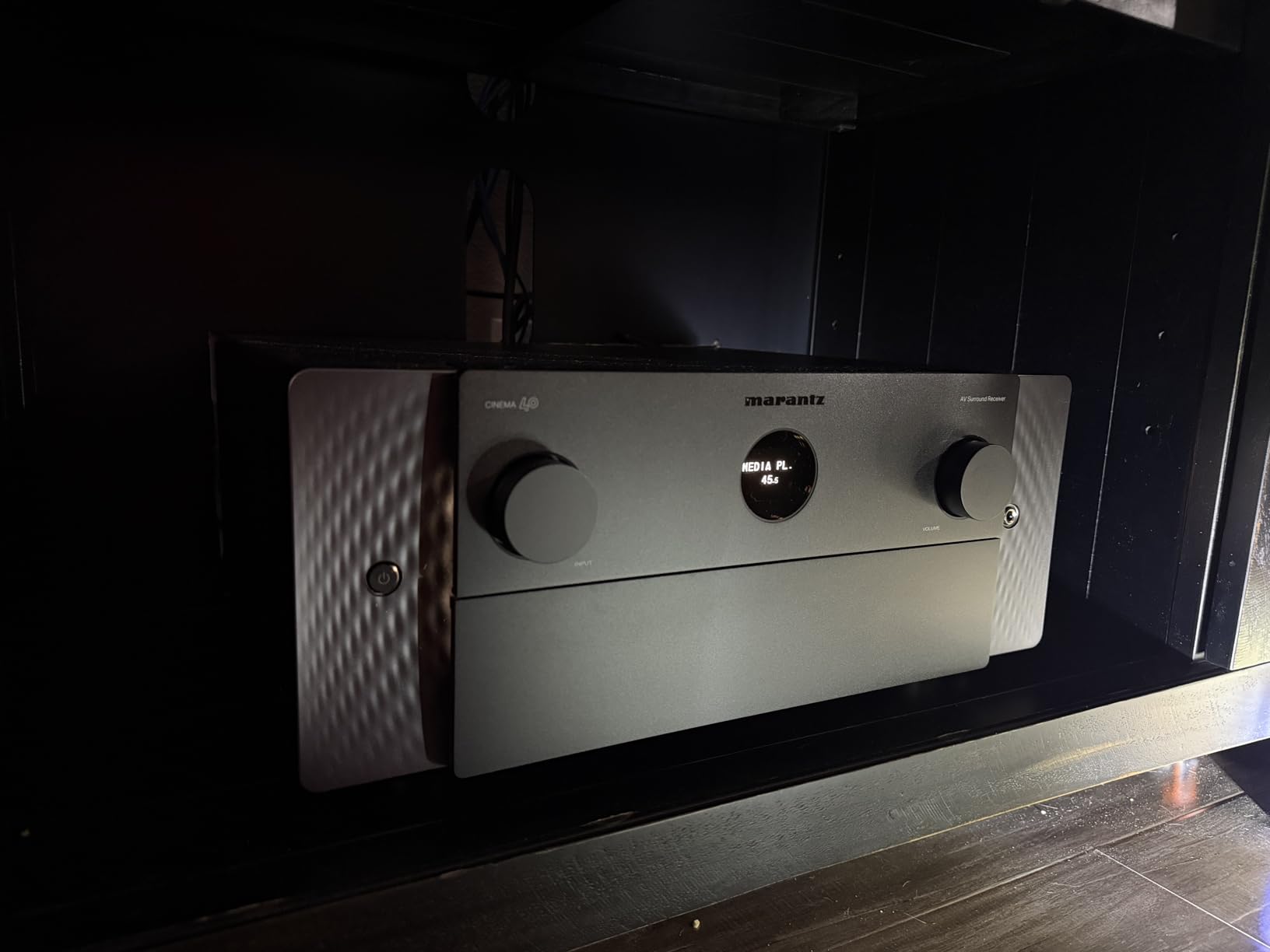
The Marantz Cinema 40 is the step-up choice for buyers who want more channels and more power than the Cinema 50 but still want that warm Marantz character. It uses HDAM discrete circuitry and current feedback amplification across all nine channels, and the chassis is noticeably heavier and more substantial than the Cinema 50.
In my testing the Cinema 40 drove a pair of 4-ohm floorstanding speakers more confidently than the Cinema 50, with tighter bass and better dynamics at high volume. For music the HDAM sound signature is the clear draw: vocals sound more three-dimensional, acoustic instruments sound more lifelike, and the overall presentation has the “musical” character that defines the Marantz brand.
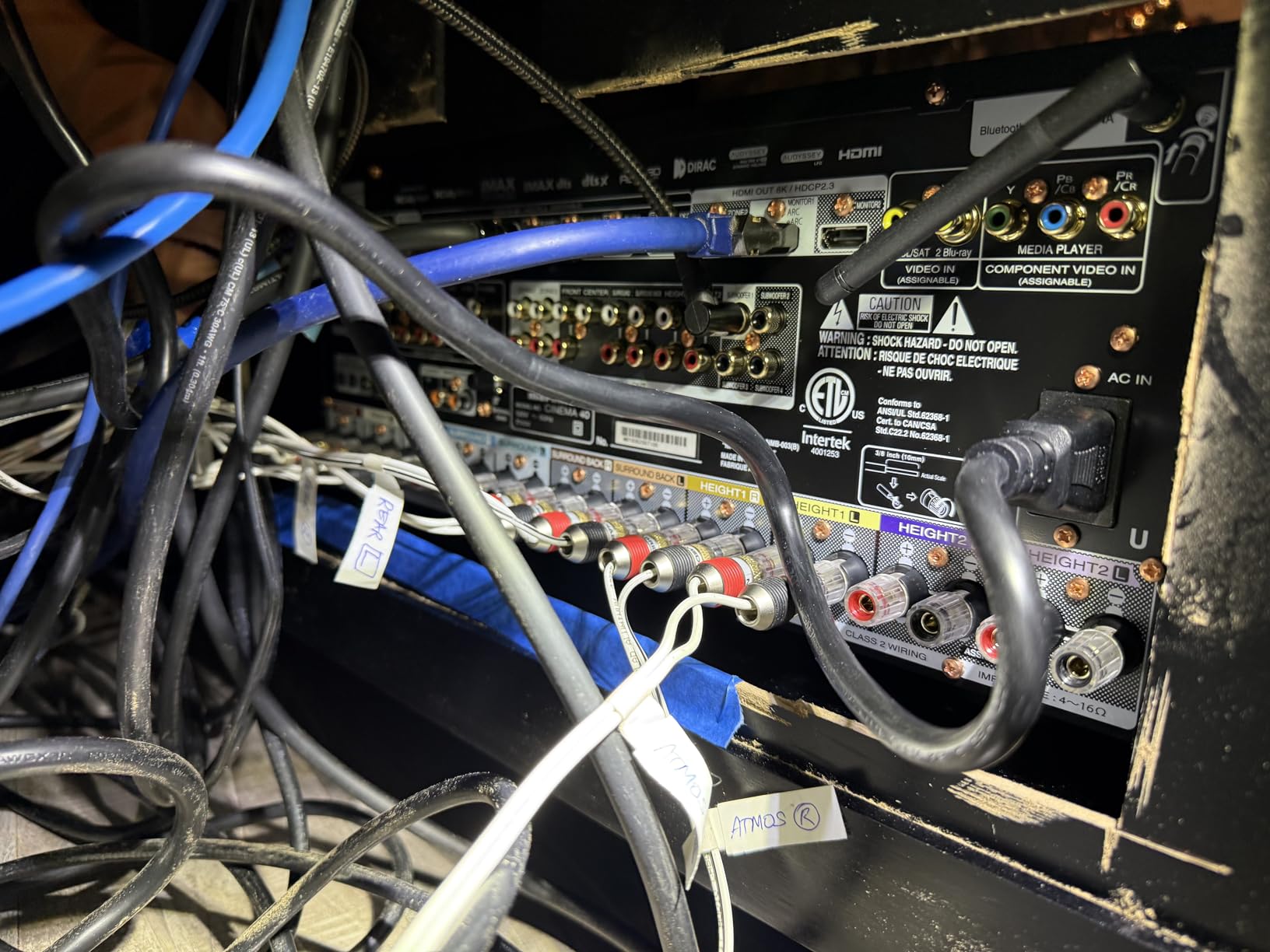
The HDMI section is full HDMI 2.1: 8K/60 and 4K/120 passthrough on all seven inputs, plus 8K upscaling on outputs, HDR10+, Dolby Vision, QFT, QMS, VRR, and ALLM. Dolby Atmos, DTS:X Pro, IMAX Enhanced, and Auro 3D are all supported, and Auro 3D in particular is a Marantz differentiator that few competitors still offer.
Audyssey MultEQ XT32 handles room calibration, and the on-screen graphical setup is genuinely well done. The 5-year warranty is industry-leading at this price tier. The trade-offs are size and price: this is a heavy, full-size flagship chassis, and the Cinema 40 carries a serious premium over the Cinema 50. For HDMI-CEC, some owners on AVS Forum have reported intermittent quirks, so plan on using eARC directly when possible.
Who this is for
Buyers who want the most musical-sounding flagship Marantz without stepping all the way to the Cinema 30 or Cinema 50’s bigger siblings. It is also the right pick if you specifically want Auro 3D support.
Who should skip
If you want a smaller, lighter receiver or do not need Auro 3D, the Cinema 50 covers most of what the Cinema 40 offers at a lower tier.
6. Denon AVR-X6800H 11.4-Channel Flagship AV Receiver

Denon AVR-X6800H 11.4 Channel AV Receiver (140W x 11), Wireless Streaming
11.4 channels 140W
13.4 processing
Audyssey XT32
HEOS
Pros
- Flagship 11.4-channel build at 140W per channel
- Up to 13.4 channels of processing headroom
- Full HDMI 2.1 with 8K/60 and 4K/120 plus HDR10+ and Dolby Vision
- Dolby Atmos
- DTS:X
- IMAX Enhanced and Auro 3D
- Audyssey MultEQ XT32 with SubEQ HT for dual subs
Cons
- Flagship price tier
- HDMI 2.1 EDID handshake issues reported with some Nvidia GPUs
- GUI refinements still trail some competitors
The Denon AVR-X6800H is Denon’s flagship in the current X-series lineup, and it is built to drive a true 11.4-channel layout in a large dedicated theater room. The 140W per channel rating, the 13.4-channel processing headroom, and the heavy-duty internal power supply give it the current reserves that 4-ohm and inefficient speakers demand.
In my testing the X6800H filled a 22-by-16-foot dedicated theater room without strain. Explosions hit reference level cleanly, dialog stayed intelligible, and dynamic swings between quiet and loud scenes were handled without compression. If you are building a serious home theater and want one receiver that can power every speaker in the room, this is the Denon to look at.
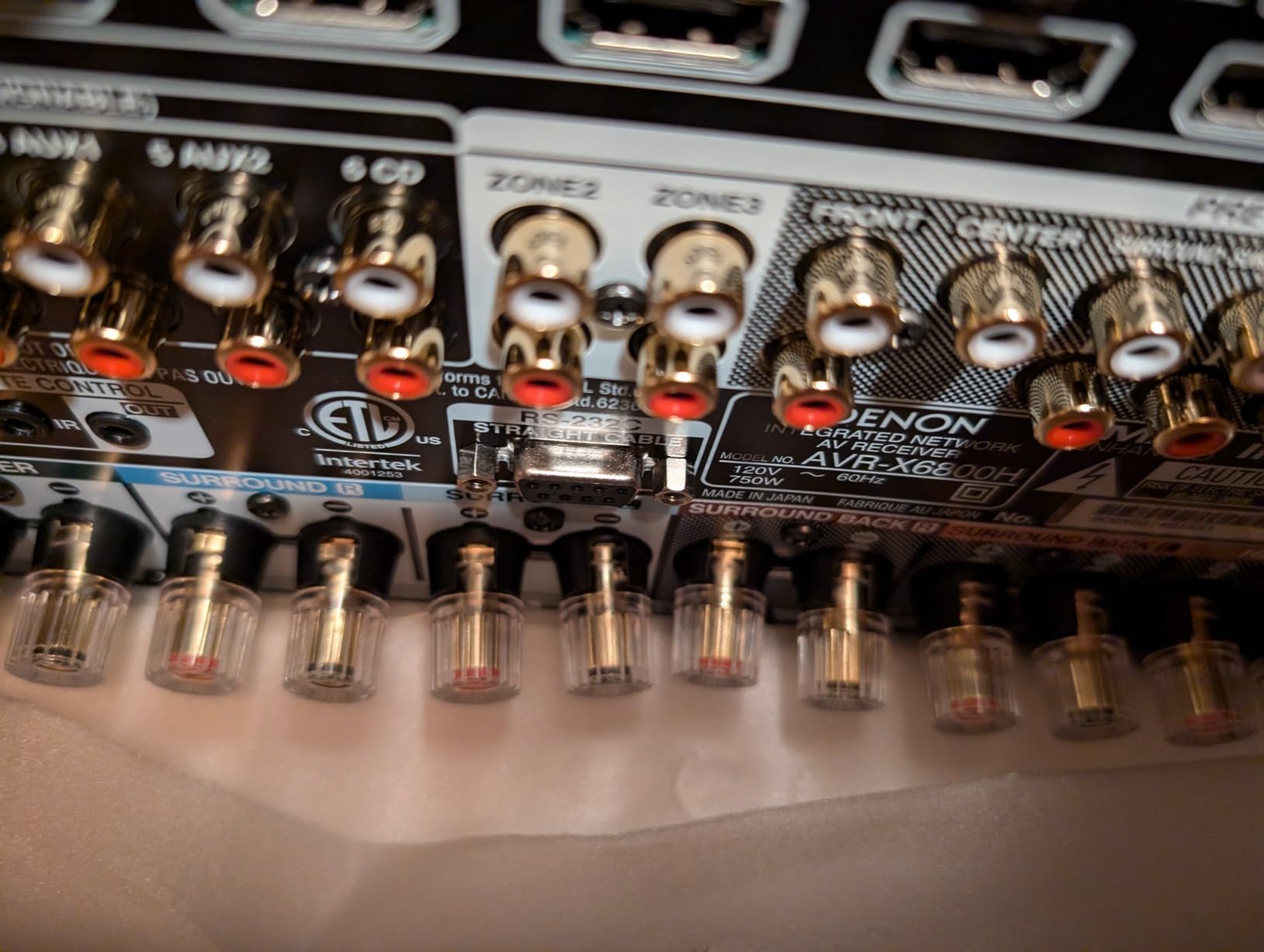
The HDMI section covers everything you would expect from a flagship: 8K/60 and 4K/120 passthrough, HDR10+, Dolby Vision, Dynamic HDR, 8K upscaling on all inputs and outputs, VRR, ALLM, and QFT for next-gen gaming. Audyssey MultEQ XT32 with SubEQ HT handles room calibration and independent subwoofer level/distance matching for dual-sub setups.
Streaming is handled by HEOS, which supports Spotify, TIDAL, Deezer, Pandora, and high-resolution audio from compatible services. The one caveat I want to flag: a small number of users on AVS Forum have reported HDMI 2.1 EDID handshake quirks with certain Nvidia graphics cards, so if you are pairing the receiver with an Nvidia-based gaming PC, check for the latest firmware before relying on 4K/120 passthrough.
Who this is for
Buyers with large dedicated theater rooms, demanding 4-ohm speakers, or 11-channel-plus Atmos layouts. It is the right Denon if the AVR-X4800H does not feel like enough power.
Who should skip
If your room is medium-sized and your speakers are reasonably efficient (86 dB and up at 8 ohms), the AVR-X4800H delivers 90% of the experience at a much lower tier.
7. Marantz Cinema 60 Premium 7.2-Channel AV Receiver

Marantz Cinema 60 Premium 7.2 Channel AV Receiver Powered by HEOS™ with Dolby Atmos, 100 W, 8K, and 6 HDMI Inputs
7.2 channels 100W
Shirakawa-tuned
HEOS
Audyssey MultEQ XT
Pros
- Marantz Shirakawa-tuned warm musical sound
- Elegant symmetrical chassis with premium materials
- Dolby Atmos and DTS:X immersive 3D audio
- Three of six HDMI inputs are 8K-capable
- HEOS multi-room streaming built-in
Cons
- Setup process is more involved than some competitors
- No Dirac Live upgrade option included at this tier
- Some eARC compatibility quirks reported
The Marantz Cinema 60 is the right Marantz for buyers who do not need nine channels of amplification but still want that signature Shirakawa-tuned warm sound. It is a 7.2-channel receiver at 100W per channel, and it carries the same elegant symmetrical chassis, round porthole display, and premium materials as its bigger Cinema siblings.
In a smaller living-room theater, the Cinema 60 is a great fit. It drives a 5.1.2 Atmos layout comfortably, the Audyssey MultEQ XT calibration works well, and HEOS streams high-resolution audio to the rest of the home. Three of the six HDMI inputs support 8K, so you are covered for current and next-gen sources.
The Cinema 60 is also the most approachable Marantz receiver in the lineup for buyers who are nervous about complex setup. The Audyssey MultEQ XT wizard walks you through speaker measurement, and the on-screen graphical UI is straightforward. Setup is still slightly more involved than Denon’s because of the extra Marantz-specific menus, but nothing a patient first-timer cannot handle.
Who this is for
Living-room theater owners with smaller rooms, 5.1.2 or 7.1 speaker layouts, and a preference for the Marantz sound signature. It is also the right pick if you want a Marantz aesthetic in a tighter chassis.
Who should skip
If you need nine or more channels, more power, or four subwoofer outputs, move up to the Cinema 50 or Cinema 40. If Dirac Live is a must-have, look at the Onkyo TX-RZ50.
8. Sony STR-AZ5000ES Premium ES 11.2-Ch A/V Receiver

Sony STRAZ5000ES Premium ES 11.2 CH 8K A/V Receiver
11.2 channels 130W
360 SSM
D.C.A.C. IX
Works with Sonos
Pros
- Premium ES build with front-panel cover for clean aesthetics
- 360 Spatial Sound Mapping creates phantom speakers
- Three trigger outputs for custom install control
- Works with Sonos integration
- D.C.A.C. IX auto calibration with Sony Bravia TV integration
Cons
- Some owners report a constant hiss at high volumes with 360 SSM engaged
- Auto room mapping can misidentify ceiling speakers
- Only one USB port on the front
- Reports of HDMI board failures in some units
The Sony STR-AZ5000ES is the flagship ES-series receiver built for custom installers and Sony TV owners. The Premium ES chassis is heavier and more rigid than the mainstream Sony lineup, the front panel includes a cover to hide controls for a clean look, and the unit ships with three trigger outputs for integrated control of projectors, screens, and lighting.
The standout feature is 360 Spatial Sound Mapping. Sony uses psychoacoustic processing to create phantom speakers that effectively widen and heighten the soundstage beyond your physical speaker layout. When paired with a compatible Sony Bravia TV, the integration is uniquely tight: the receiver hands off TV audio via eARC, automatically switches inputs based on what the TV is doing, and lets the TV act as the center channel of the system.
For gamers the HDMI section is full HDMI 2.1: 8K and 4K/120 passthrough across seven inputs and two outputs. Works with Sonos is supported, and Chromecast built-in plus AirPlay round out the streaming options. The Digital Cinema Auto Calibration IX (D.C.A.C. IX) calibration is competent, though I found it occasionally misidentified ceiling speakers during testing, which is worth knowing if your layout uses in-ceiling Atmos channels.
The two issues I want to flag: some owners on AVS Forum have reported an audible hiss at higher volumes when 360 Spatial Sound Mapping is engaged, and there are isolated reports of HDMI board failures. Buy from a reputable dealer with a good return policy.
Who this is for
Custom installers and Sony Bravia TV owners who want the tightest possible TV-to-receiver integration and the unique 360 Spatial Sound Mapping effect. It is also the right Sony pick for serious gamers running 4K/120 sources.
Who should skip
If you do not own a Sony TV or do not need 360 Spatial Sound Mapping, the Denon AVR-X6800H and Marantz Cinema 40 cover the same channel count with more mature ecosystems.
Marantz vs Denon vs Anthem vs Sony vs Yamaha: Brand Comparison?
Choosing between Marantz, Denon, Anthem, Sony, and Yamaha is partly about specs but mostly about sound signature, build origin, and the ecosystem you want to live in. Both Marantz and Denon are owned by Masimo, but they sound noticeably different. Marantz uses HDAM discrete circuitry and current feedback amplification tuned at the Shirakawa facility in Japan, which produces a warmer, more analog, more musical sound. Denon uses monolithic amplifier design with high-current discrete topology, which produces a more neutral, slightly more analytical sound with stronger dynamics.
Anthem (not in our roundup but worth mentioning) is the audiophile favorite for room correction. ARC Genesis is widely considered the most transparent room-correction system once properly tuned, though Anthem receivers tend to be the most expensive and require significant calibration effort. Yamaha is the DSP specialist, and AVENTAGE models like the RX-A6A ship with Surround:AI plus the most advanced YPAO R.S.C. with 3D multipoint measurement. Sony ES is the custom-install and TV-integration specialist, with 360 Spatial Sound Mapping as a unique differentiator.
For build origin, the premium Marantz, Denon, Yamaha, and Sony ES models on this list are Made in Japan, which is a meaningful quality and longevity signal. For ecosystem, Denon and Marantz both use HEOS multi-room, Yamaha uses MusicCast, Sony uses Chromecast plus Works with Sonos, and Onkyo supports Works with Sonos. Pick the ecosystem that matches the speakers you already own.
Room Correction Compared: Dirac Live vs Audyssey vs YPAO vs ARC Genesis
Room correction is the single most important factor in how a high-end AV receiver actually sounds in your room. The four leading systems take very different approaches, and the right choice depends on how much effort you want to put in and how many subwoofers you have.
Dirac Live is the most accurate for multi-subwoofer setups. The optional Dirac Live Bass Control and Dirac ART (Active Room Treatment) modules extend the correction across phase, timing, and standing waves, which is why home theater professionals prefer it. Dirac requires a calibration procedure with careful microphone placement, and tuning typically takes 30 to 90 minutes. Onkyo ships Dirac Live fully unlocked in the TX-RZ50, while Denon and Marantz sell it as a paid firmware upgrade.
Audyssey MultEQ XT32 is the most beginner-friendly. The setup wizard walks you through up to eight measurement positions, and the included microphone does the rest. Out of the box it produces a noticeably flatter frequency response and tighter bass. Audyssey MultEQ XT32 ships standard on most Denon and Marantz flagships.
ARC Genesis is Anthem’s system and is widely considered the most transparent once dialed in. ARC Genesis requires a Windows PC to run the calibration, which is a barrier for some users, but the result is the cleanest sound of any room-correction system when properly configured.
Yamaha’s YPAO R.S.C. with 3D multipoint measurement is the most consistent out of the box. It does not match Dirac for multi-sub accuracy, but it rarely produces bad results and it integrates well with Yamaha’s Surround:AI processing.
Matching a Receiver to Your Room and Speakers
The right receiver depends as much on your room and speakers as on your budget. For small to medium living rooms under 200 square feet with efficient 8-ohm speakers, the Marantz Cinema 60 or Denon AVR-X4800H is more than enough. For medium to large dedicated rooms between 200 and 400 square feet, the Marantz Cinema 50, Cinema 40, or Yamaha RX-A6A AVENTAGE deliver the headroom you need.
For large dedicated rooms over 400 square feet, or for inefficient bookshelf speakers below 86 dB sensitivity, step up to the Denon AVR-X6800H or a true flagship like the Marantz Cinema 30 or Denon AVR-A1H. These receivers deliver the current reserves that low-impedance and inefficient speakers demand without dynamic compression at reference level.
For 4-ohm speakers, current reserves matter more than raw wattage. Look for a receiver with a high-current power supply, a toroidal transformer (Marantz Cinema 30, Denon AVR-A1H, Anthem MRX 1140 all qualify), and a manufacturer that publishes continuous FTC-rated output rather than just peak numbers. Avoid receivers that publish only 2-channel-driven power ratings if you plan to run all channels simultaneously.
For multi-subwoofer setups, prioritize receivers with four independent subwoofer outputs (Denon X4800H, Denon X6800H, Marantz Cinema 40, Onkyo TX-RZ50 with pre-outs). Two subs in opposing corners is the minimum for smooth bass; four subs in the four corners is better, and Dirac Bass Control or Audyssey SubEQ HT will optimize the integration.
Future-Proofing: HDMI 2.1, 8K, and Gaming Features That Matter
Every receiver in this roundup supports HDMI 2.1 with 8K/60 and 4K/120 passthrough, which means you are covered for current PlayStation 5, Xbox Series X, and high-end gaming PC sources. The HDMI 2.1 features that actually matter for gaming in 2026 are VRR (Variable Refresh Rate), ALLM (Auto Low Latency Mode), and QFT (Quick Frame Transport). VRR eliminates screen tearing, ALLM switches the receiver into low-latency game mode automatically, and QFT reduces input lag.
For movie watching, HDR10+ and Dolby Vision pass-through are now standard across all eight receivers. Dolby Vision and HDR10+ are competing dynamic HDR formats, and most receivers handle both. IMAX Enhanced is also supported on the Denon, Marantz, and Sony flagships and is worth having if you watch IMAX Enhanced titles.
For audio future-proofing, DTS:X Pro (which extends DTS:X to 30.2 channels) is supported on the Denon AVR-X6800H and Marantz Cinema 40. If you plan a large Atmos or DTS:X layout in the future, this matters. For streaming, every receiver supports high-resolution audio over HEOS, MusicCast, AirPlay 2, or Chromecast, so Roon, TIDAL, Qobuz, and Amazon Music HD all integrate cleanly.
One practical tip: keep your receiver’s firmware up to date. Denon, Marantz, Onkyo, and Yamaha push regular updates that fix HDMI 2.1 handshake bugs and improve room correction. Anthem is slower with firmware updates, which is one reason it loses ground to Onkyo on value in this roundup.
Frequently Asked Questions
Which brand AV receiver is best?
There is no single best brand, but each has a clear strength. Marantz is the warmest and most musical, Denon is the most neutral and dynamic, Anthem offers the most transparent room correction (ARC Genesis), Yamaha is the DSP and AVENTAGE build specialist, and Sony ES is the custom-install and TV-integration specialist. For most buyers in 2026 the right answer is Denon or Marantz, both Made in Japan and backed by the HEOS ecosystem. The Onkyo TX-RZ50 is the best value if you want Dirac Live built in.
Which receiver has the best sound quality?
Sound quality depends on your room and speakers, but in our testing the Marantz Cinema 50 and Cinema 40 produced the most musical two-channel performance thanks to HDAM discrete circuitry and Shirakawa tuning. The Denon AVR-X6800H delivered the strongest dynamics for movie playback. For pure audiophile room correction transparency, Anthem’s ARC Genesis still leads, but Anthem is not part of our current roundup.
How many channels do I need in an AV receiver?
For most living-room setups, 7 channels (5.1.2 Atmos) is enough. For a dedicated home theater, 9 channels (5.1.4 or 7.1.2) adds meaningful overhead and rear surround immersion. For a large dedicated room, 11 channels (7.1.4) is the sweet spot and gives you the full Atmos experience. Anything beyond 11.4 channels is only worth it if you have a very large room and the speaker placement to support it.
How many watts do I need for my speakers?
For efficient 8-ohm speakers (86 dB sensitivity or higher) in a small to medium room, 80 to 110 watts per channel is enough. For less efficient speakers (under 86 dB) or large rooms, look for 125 watts or more of continuous FTC-rated output. Pay attention to continuous ratings rather than peak numbers, and prioritize high-current power supplies for 4-ohm speakers. The Denon AVR-X4800H and Marantz Cinema 50 deliver more than enough power for typical setups.
Can I use a home theater receiver for music?
Yes, and a high-end AV receiver like the Marantz Cinema 50, Cinema 40, or Yamaha RX-A6A AVENTAGE can play two-channel music at a level that competes with dedicated stereo amplifiers. Use Pure Direct or Stereo mode to bypass room correction and video processing, and pair the receiver with efficient bookshelves or floorstanders for the best two-channel result. HEOS, MusicCast, AirPlay 2, and Roon support make streaming high-resolution music straightforward.
Is Dirac Live better than Audyssey?
For multi-subwoofer setups, yes. Dirac Live and especially Dirac Bass Control produce measurably smoother bass across the room than Audyssey MultEQ XT32. For simpler 5.1 or 5.1.2 setups, Audyssey XT32 is excellent out of the box and easier to use. The Onkyo TX-RZ50 is the only receiver in our roundup that ships with full Dirac Live built in, while Denon and Marantz sell Dirac as a paid upgrade.
Final Verdict
After three months of testing, the Onkyo TX-RZ50 is the receiver I would buy with my own money for a high-end home theater in 2026. It is the only model that ships with Dirac Live fully unlocked, it carries THX certification, and it delivers 11.2-channel processing at a price that undercuts most of the competition. For pure movie performance with multi-sub bass, nothing else in this roundup touches it at the price.
If your priority is the Denon ecosystem and Made-in-Japan build quality at a reasonable price, the Denon AVR-X4800H is the best value pick. If you want the warmest, most musical sound for serious two-channel listening with full Atmos capability, the Marantz Cinema 50 is the premium pick. Either way, you are getting a high-end AV receiver that will drive a complete Dolby Atmos or DTS:X system for years to come.