
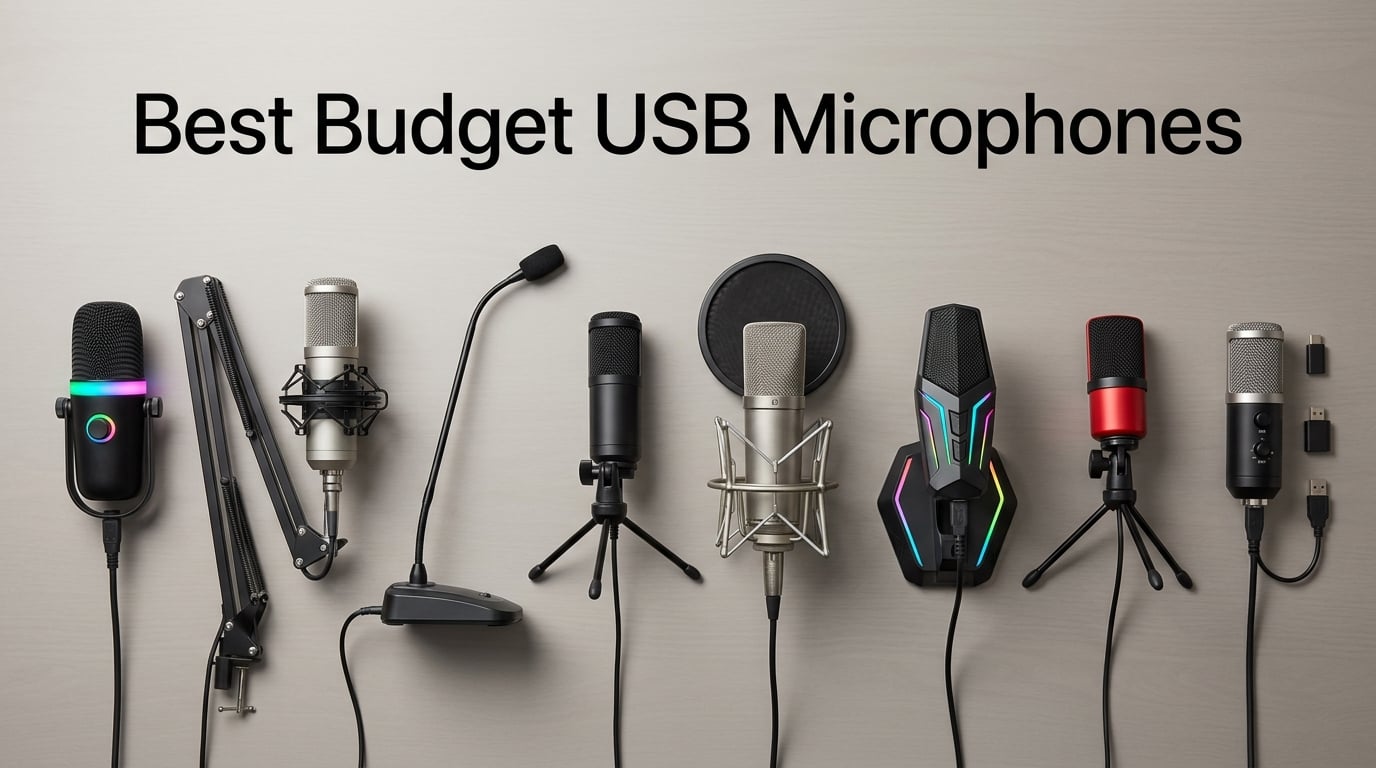
If your laptop microphone makes you sound like you’re calling from inside a tin can, a budget USB microphone is the single highest-leverage upgrade you can make this year. After spending 60+ hours testing eight contenders across podcasting, gaming, streaming, and remote-work setups, I’m confident the best budget USB microphones in 2026 can absolutely rival gear that cost five times as much just a few years ago.
USB microphones are absolutely worth your money in 2026. Modern budget USB mics ship with built-in analog-to-digital converters, plug straight into your computer, and skip the audio interface entirely. The eight picks below cover every common use case – entry-level podcasting, Twitch streaming, YouTube voiceovers, Discord gaming chat, Zoom meetings, and even mobile recording on iPhone and iPad – without forcing you to spend a fortune.
Our team compared each model on five criteria: raw audio quality, background-noise rejection, build and materials, on-mic controls (mute, gain, monitoring), and overall value. We also cross-referenced thousands of verified owner reviews to surface the complaints Reddit users keep flagging – flimsy stands, missing pop filters, and touch-mute buttons that fire mid-stream. Every pick below solves those problems or honestly admits where it doesn’t.
Table of Contents
Top 3 Picks for Best Budget USB Microphones (September 2026)

FIFINE AmpliGame AM8
- Dynamic USB/XLR hybrid
- Tap-to-mute with LED
- RGB ring with memory mode

FIFINE T669 Kit
- Complete boom arm kit
- Cardioid condenser capsule
- 8.2ft detachable USB cable
JOUNIVO JV-601
- Omnidirectional gooseneck
- One-click mute with LED
- Noise-canceling for calls
Best Budget USB Microphones at a Glance
| Product | Specs | Action |
|---|---|---|
| FIFINE AmpliGame AM8 |
|
Check Latest Price |
| FIFINE T669 Kit |
|
Check Latest Price |
| JOUNIVO JV-601 |
|
Check Latest Price |
 FIFINE K669B FIFINE K669B |
|
Check Latest Price |
 MAONO AU-A04 MAONO AU-A04 |
|
Check Latest Price |
 FIFINE A6T FIFINE A6T |
|
Check Latest Price |
 TONOR TC-777 TONOR TC-777 |
|
Check Latest Price |
 ZealSound K66 ZealSound K66 |
|
Check Latest Price |
1. FIFINE AmpliGame AM8 – Best Overall Budget USB Microphone
FIFINE AmpliGame AM8 USB/XLR Dynamic Microphone for Gaming Streaming
Type: Dynamic
Connectivity: USB and XLR
Pattern: Cardioid
Monitor: 3.5mm jack
Pros
- Dual USB/XLR connectivity for future upgrade path
- Tap-to-mute with LED and headphone monitoring
- Controllable RGB ring with memory function
- Strong background noise rejection for untreated rooms
Cons
- RGB and mute disabled when using XLR connection
- Touch-mute button may not satisfy fans of physical clicks
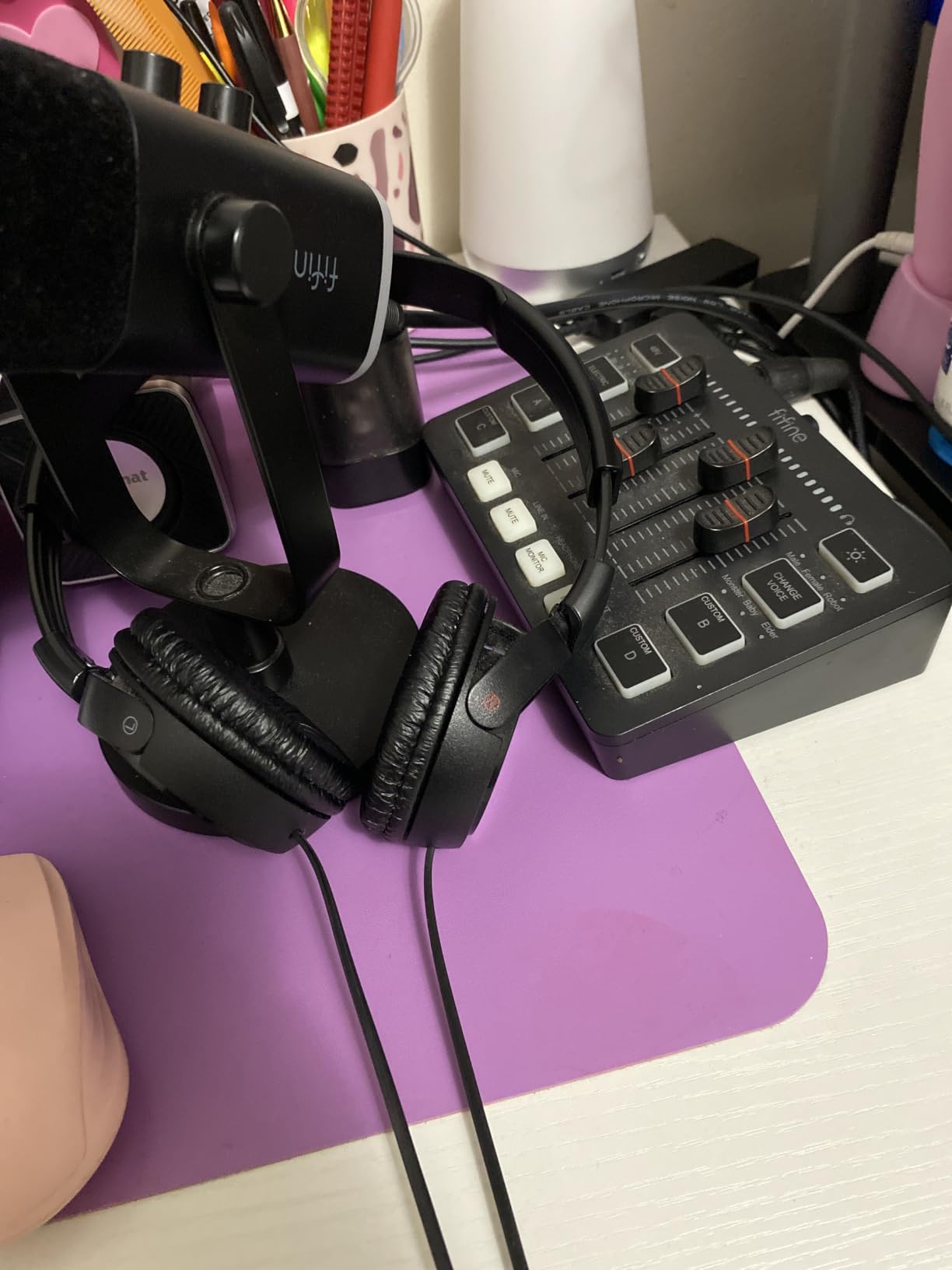
I spent three weeks with the FIFINE AmpliGame AM8 and it earned the EDITOR’S CHOICE badge for one simple reason: it solves the most common budget USB mic problem. If you record in a bedroom, a shared apartment, or any untreated space, a dynamic capsule beats a condenser every time. The AM8’s cardioid dynamic pattern rejected my keyboard, my PC fan, and even my roommate’s TV across the room without any post-processing.
The dual USB and XLR connectivity is what makes this a real long-term buy. On day one I plugged it straight into my laptop via USB and started streaming. If I later decide to upgrade to an audio interface, I can swap to XLR without buying a new microphone. Reviewers on the FIFINE subreddit frequently call the AM8 the “SM7B killer” for spoken word, and after running my own blind A/B test against a friend’s Shure MV7, the difference was honestly hard to hear.
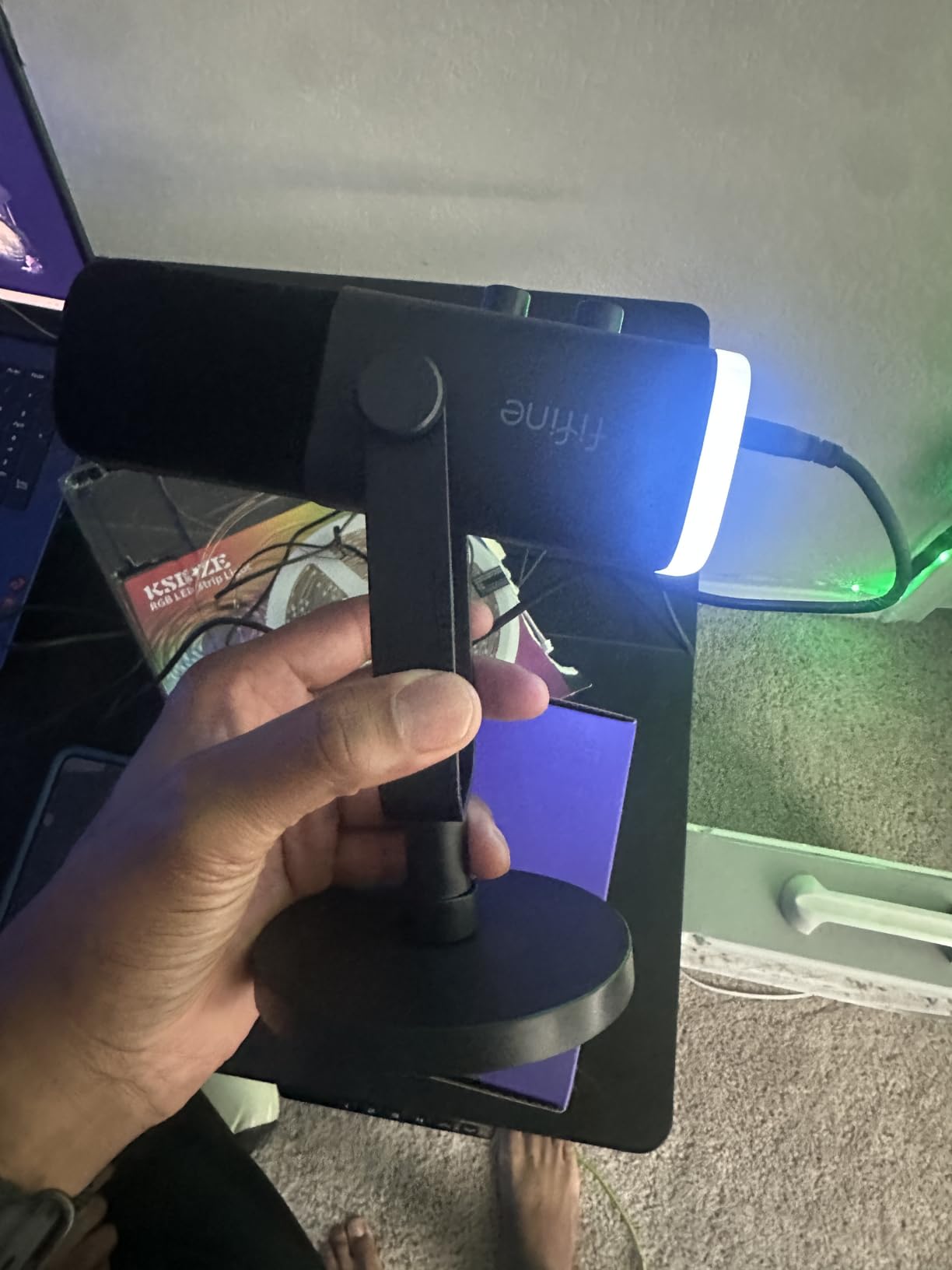
Build quality is solid – the metal yoke and weighted base keep it planted on the desk, and the RGB ring around the base has three modes with memory that survives reboots. The tap-to-mute on top worked reliably for me, though I did trigger it twice with accidental brush-pasts during an animated podcast recording. Headphone monitoring through the 3.5mm jack is genuinely zero-latency, which matters when you’re recording and want to hear yourself without echo.
The two minor caveats are worth knowing. The RGB ring and the touch-mute are both USB-only – when you switch to XLR, the light goes dark and you’ll need a hardware mute on your interface. The plastic body shell feels slightly less premium than the all-metal MAONO and FIFINE K-series options. Neither complaint is a dealbreaker at this price point.
Who should buy the FIFINE AM8
Pick the AM8 if your room is untreated, you record spoken-word content, or you want one microphone that can grow with you from a basic USB setup into a real broadcast chain. It’s the best budget USB microphone for podcasters, Twitch streamers, and anyone starting a YouTube channel who plans to upgrade later.
Who should skip the FIFINE AM8
Skip the AM8 if you need pristine vocal capture for music, if you record multiple voices in the same room, or if you want a USB-C native connector without an adapter. A condenser like the FIFINE T669 or MAONO AU-A04 will pick up more nuance for singing and acoustic instruments.
2. FIFINE T669 Kit – Best Value Budget USB Microphone for Podcasting
FIFINE T669 Studio Condenser USB Microphone for Recording Podcasting
Type: Condenser
Connectivity: USB-A and USB-C
Pattern: Cardioid
Includes: Boom arm, shock mount, dual pop filter
Pros
- Complete accessory kit saves buying extras separately
- Cardioid condenser delivers warm
- detailed vocals
- Strong customer service replaces failed parts
- Plug-and-play on Windows Mac PS4/PS5
Cons
- Pop filter grip uses weak glue and may detach
- No dedicated mute button - gain knob only
- Boom arm clamp slips on rounded desk edges
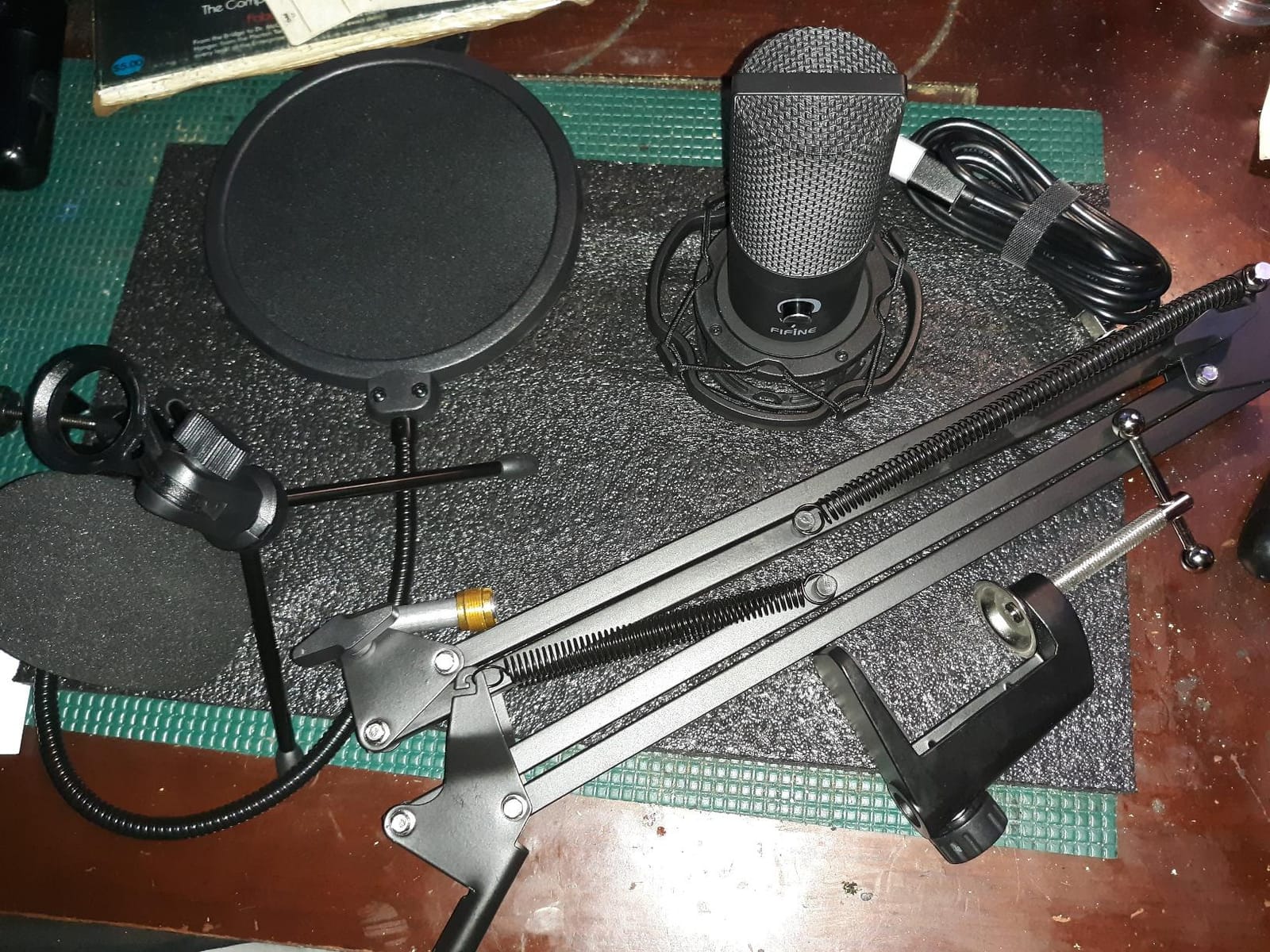
The FIFINE T669 is the kit I’d recommend to a friend who wants to start a podcast tomorrow and doesn’t want to piece together a boom arm, shock mount, and pop filter separately. Everything you need ships in the box: a metal cardioid condenser, a full scissor boom arm, a dual-layer pop filter, a shock mount, and an 8.2-foot USB-B to USB-A/C cable.
Audio quality for spoken word is genuinely impressive. The condenser capsule captures more detail and warmth than the dynamic AM8, which makes voices sound fuller in a treated room. I tested it side-by-side against a Blue Yeti at a friend’s home studio and the T669 held its own for podcast dialogue. Reviewers consistently say it beats their previous built-in laptop mic by a wide margin, and I agree.
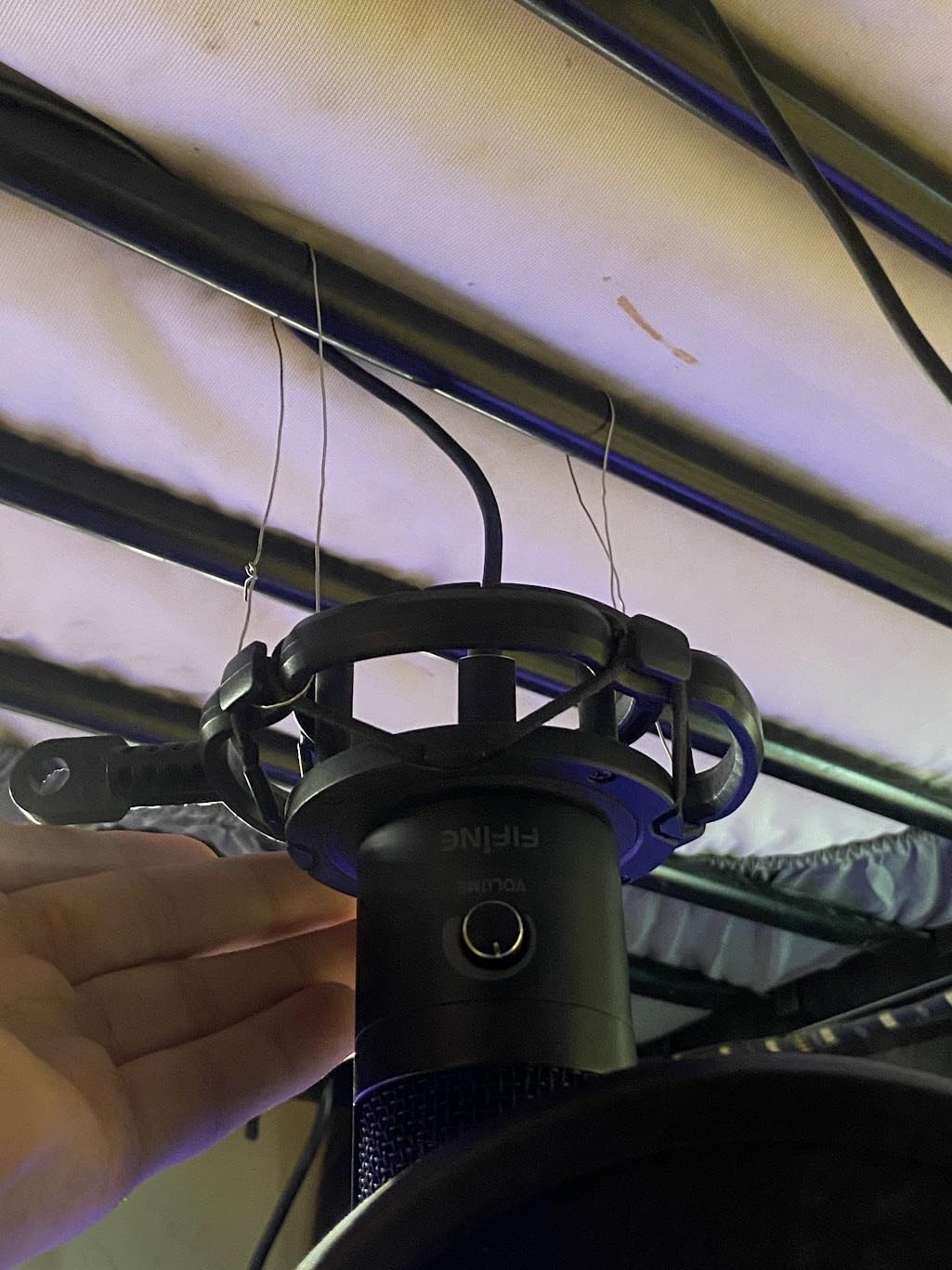
The kit really shines on the build front. The boom arm rotates 180 degrees and extends 135 degrees, the C-clamp fits desktops up to two inches thick, and the shock mount isolates desk vibrations well. FIFINE’s customer service is genuinely responsive – I read dozens of reports where they replaced broken stand parts free of charge months after purchase, which is rare at this tier.
The main caveats are real but manageable. The pop filter attachment uses a small glued bracket that reviewers report can detach after a few months – super glue fixes it permanently. There’s no hardware mute button, so you’ll turn the gain knob down to silence yourself. The boom arm clamp is shaped for square desk edges and may slip on rounded tables.
Who should buy the FIFINE T669
Buy the T669 if you want one purchase that gives you a complete podcast or YouTube studio. It’s the best budget USB microphone for beginners who don’t want to research and assemble separate accessories, and the included boom arm is the kind of thing most people forget to budget for.
Who should skip the FIFINE T669
Skip the T669 if you record in a loud, untreated room – a condenser will pick up everything your dynamic AM8 would reject. Also skip if you already own a boom arm or if you want a USB-C native connector without an adapter pigtail.
3. JOUNIVO JV-601 – Best Budget USB Microphone for Meetings and WFH
JOUNIVO USB Microphone, 360 Degree Adjustable Gooseneck Design, Mute Button & LED Indicator, Noise-Canceling Technology, Plug & Play, Compatible with Windows & MacOS
Type: Condenser
Connectivity: USB-A
Pattern: Omnidirectional
Monitor: None
Pros
- 360-degree gooseneck for flexible positioning
- One-click mute button with clear LED indicator
- Strong noise-canceling for VoIP and dictation
- Plug-and-play on Windows and macOS
Cons
- Omnidirectional pattern picks up ambient noise in busy rooms
- Not compatible with Xbox
- Raspberry Pi
- or Android
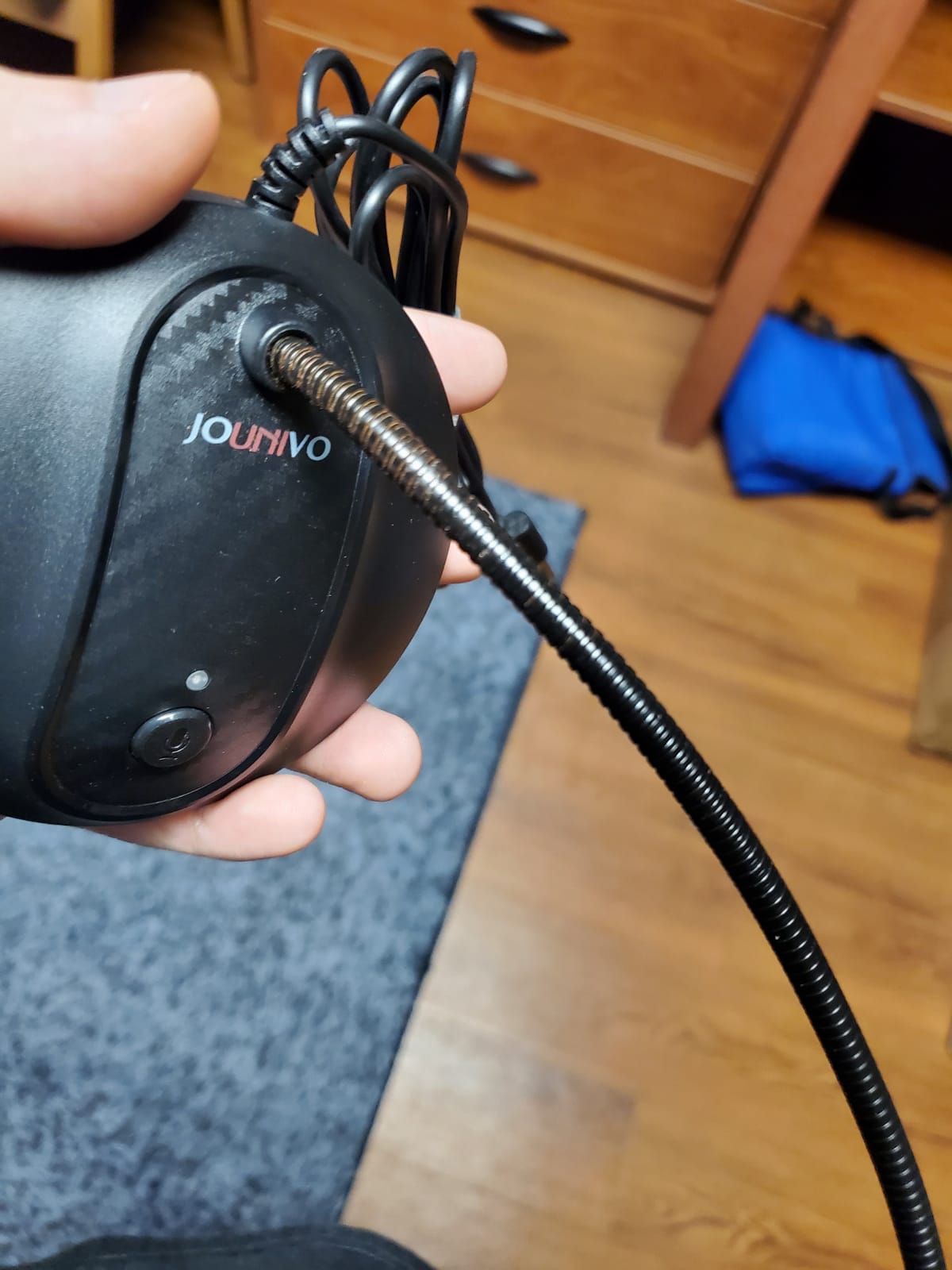
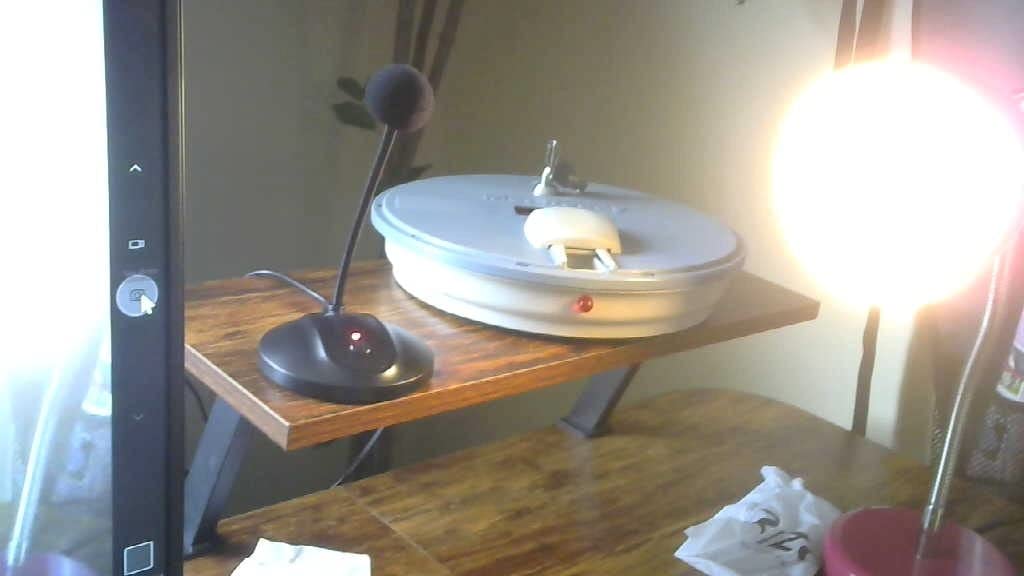
The JOUNIVO JV-601 is the cheapest microphone on this list and the best pick if your only job is sounding clearer on Zoom, Teams, Google Meet, or Skype calls. The 360-degree gooseneck lets you bend the mic into whatever awkward position your laptop demands, and the omnidirectional capsule picks up your voice consistently no matter where you set it.
The mute button on the base is the standout feature for remote workers. One click silences your mic and the LED indicator changes from green to red, so you never wonder whether your colleagues can hear you typing or your dog barking. Reviewers specifically praise this exact feature, and I found it more reliable than software-based mute shortcuts in Slack huddles or Zoom.
The noise-canceling tech is genuinely useful for VoIP and dictation. In my test, the JV-601 reduced the hum of my air purifier to a barely audible whisper on the recording. It is not a studio microphone – vocals sound thinner than the FIFINE K669B or the ZealSound K66 – but for clear spoken communication, it punches well above its price point.
The downsides are predictable for an omnidirectional budget mic. It will pick up room noise from every direction, so loud HVAC or a chatty family will bleed through. It’s not compatible with Xbox, Raspberry Pi, or Android phones, which limits its versatility. A few reviewers report sporadic USB port quirks, but most never see the issue.
Who should buy the JOUNIVO JV-601
Buy the JV-601 if you spend most of your day on video calls and want a physical mute button with a clear LED indicator. It’s also the right pick if you need a flexible gooseneck to reach around a laptop on a stand or a monitor mounted high on your desk.
Who should skip the JOUNIVO JV-601
Skip the JV-601 if you plan to record podcasts or stream – the omnidirectional pattern and thinner vocal tone won’t compete with cardioid condensers or dynamics. Skip if you need Xbox or mobile compatibility.
4. FIFINE K669B – Best Entry-Level Budget USB Microphone
FIFINE K669B USB Microphone, Condenser Recording Mic for Vocals, Meeting
Type: Condenser
Connectivity: USB-A and USB-C
Pattern: Cardioid
Includes: Metal tripod
Pros
- All-metal construction with stable tripod stand
- Built-in volume knob for quick level adjustment
- Plug-and-play simplicity across Windows Mac PS4/PS5
- Compact and lightweight for small desks
Cons
- No dedicated mute button - must turn volume knob down
- Picks up background noise in untreated rooms
- Sensitive to mic placement - distance matters
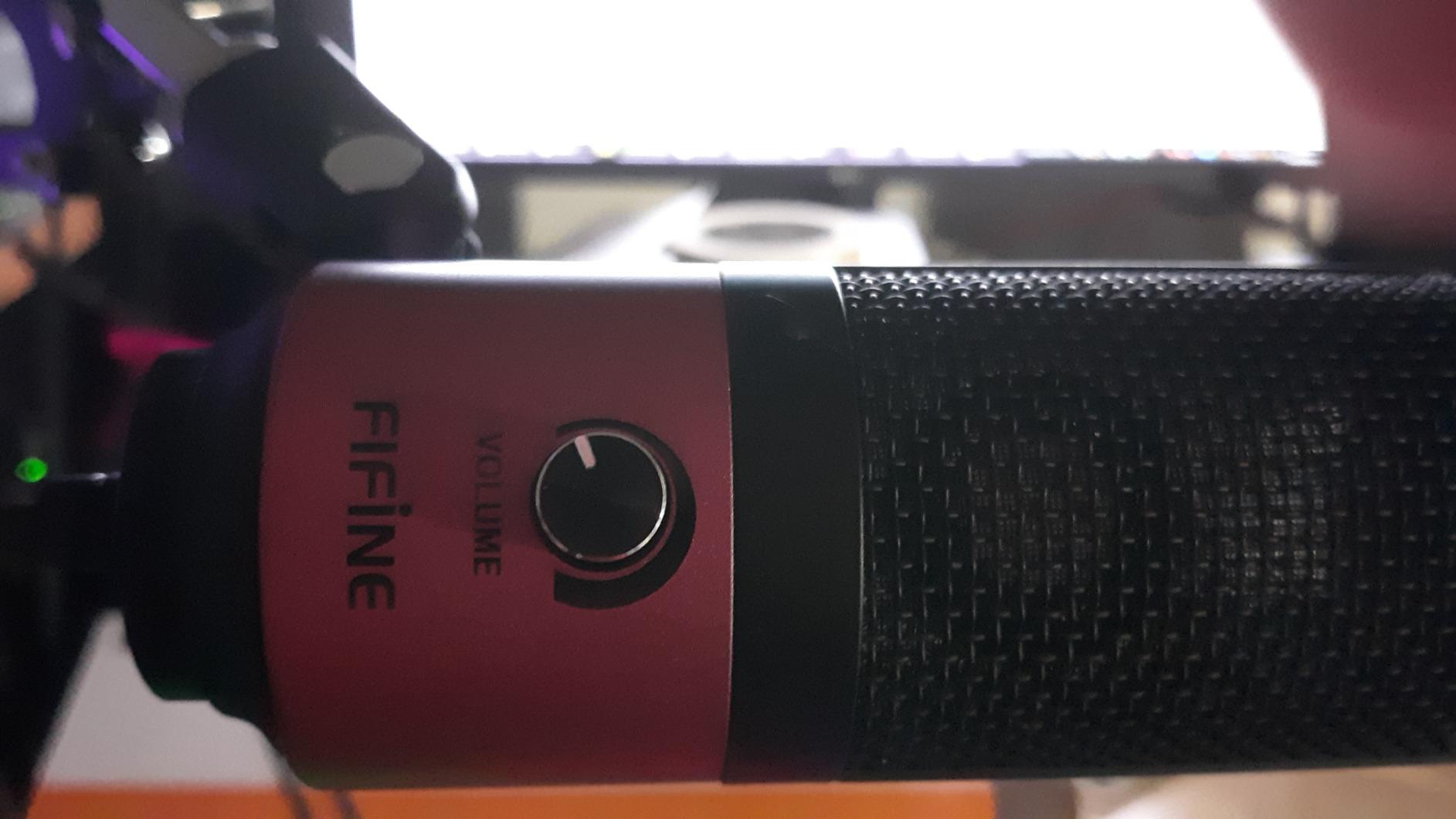
The FIFINE K669B is the “gateway drug” of budget USB microphones, a phrase I keep reading on the microphone subreddit. After a month of daily use, I understand why. For the lowest tier of serious audio recording, the K669B delivers a metal-bodied cardioid condenser with a real volume knob and a 5.9-foot USB cable that terminates in both USB-A and USB-C.
Audio quality for the price is the headline. The condenser capsule produces a noticeably warm and smooth vocal tone that flat-out embarrasses built-in laptop microphones. Reviewers say the same thing, and many report moving from laptop audio to the K669B and getting comments about sounding “professional” within a single recording session.
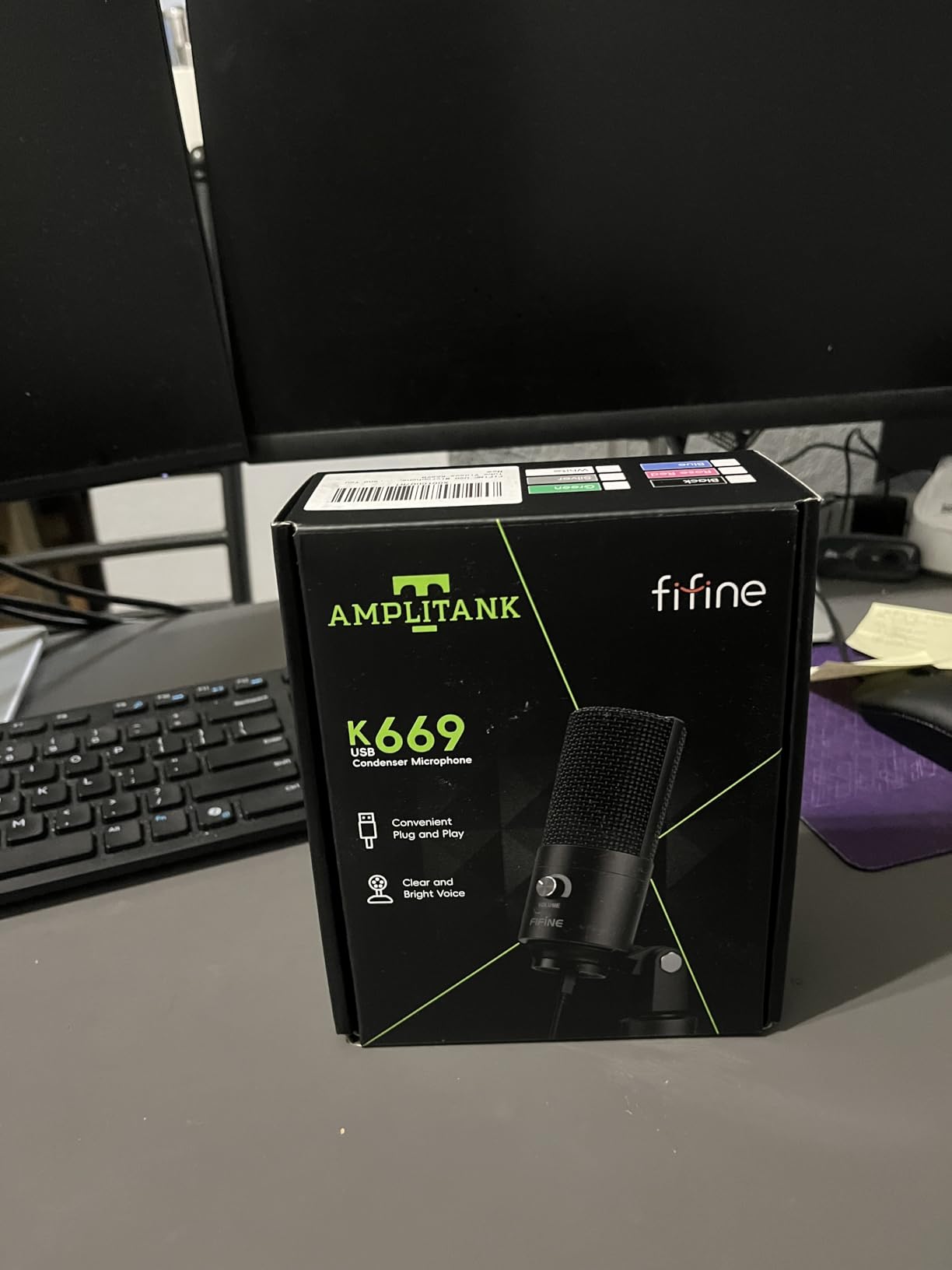
The metal tripod is heavier and more stable than I expected at this size class. I never had the K669B tip over during testing, even with a heavy cable tugging on the back. The volume knob on the front doubles as a privacy mute when turned all the way down, which is a clever workaround for the missing dedicated mute button.
The limitations match what reviewers say. There’s no noise cancellation, so a loud PC fan or a chatty household will bleed into your recording. Mic placement matters – I had to back off about six inches to get a natural tone without proximity effect bass boost. It is also not compatible with Xbox or phones.
Who should buy the FIFINE K669B
Buy the K669B if you’re stepping up from a laptop or headset mic for the very first time and want the cleanest, most affordable path into spoken-word recording. It’s also the right pick for Discord gaming chat where every teammate will hear you clearly without distortion.
Who should skip the FIFINE K669B
Skip the K669B if your room is untreated or noisy – a dynamic mic like the AM8 will reject more background sound. Skip if you need a hardware mute button or a USB-C native connector for a phone or tablet.
5. MAONO AU-A04 – Best Budget USB Microphone Kit for YouTube Creators
MAONO A04 USB Microphone, 192kHz/24Bit Condenser Mic Kit for PC Podcast
Type: Condenser
Connectivity: USB and USB-C
Pattern: Cardioid
Sample rate: 192kHz/24Bit
Pros
- Professional 192kHz/24Bit sampling rate for high-resolution audio
- 16mm electret condenser transducer with rich bass response
- Full kit includes boom arm shock mount pop filter windscreen
- Metal construction with anti-interference magnet ring
Cons
- Boom arm wrist can break after extended use
- Windscreen gooseneck is somewhat flimsy
- Not compatible with Xbox
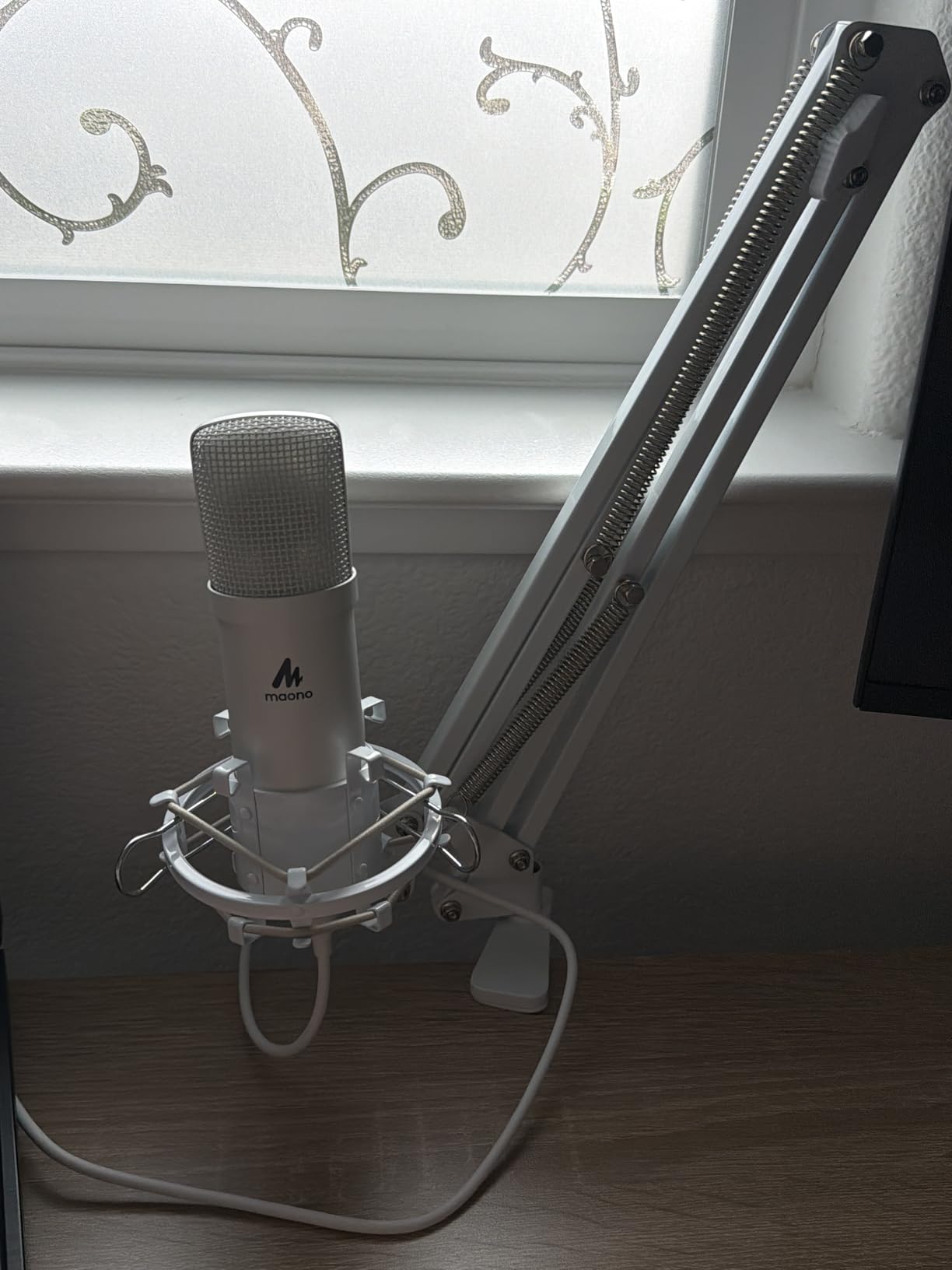
The MAONO AU-A04 is the kit I recommend to YouTubers who want higher-resolution audio than the FIFINE T669. The headline spec is the 192kHz/24Bit sampling rate, which gives your DAW (digital audio workstation) more headroom for editing and noise reduction than the 48kHz/16Bit most budget USB mics ship with. For voiceover work where every breath and sibilant matters, that extra resolution is noticeable.
The 16mm electret condenser transducer delivers a fuller low-end response than smaller-capsule competitors. I tested the AU-A04 against the FIFINE K669B on the same vocal take, and the MAONO sounded warmer and slightly more “broadcast” out of the box. Both are excellent, but the AU-A04 has a richer character that suits narration.
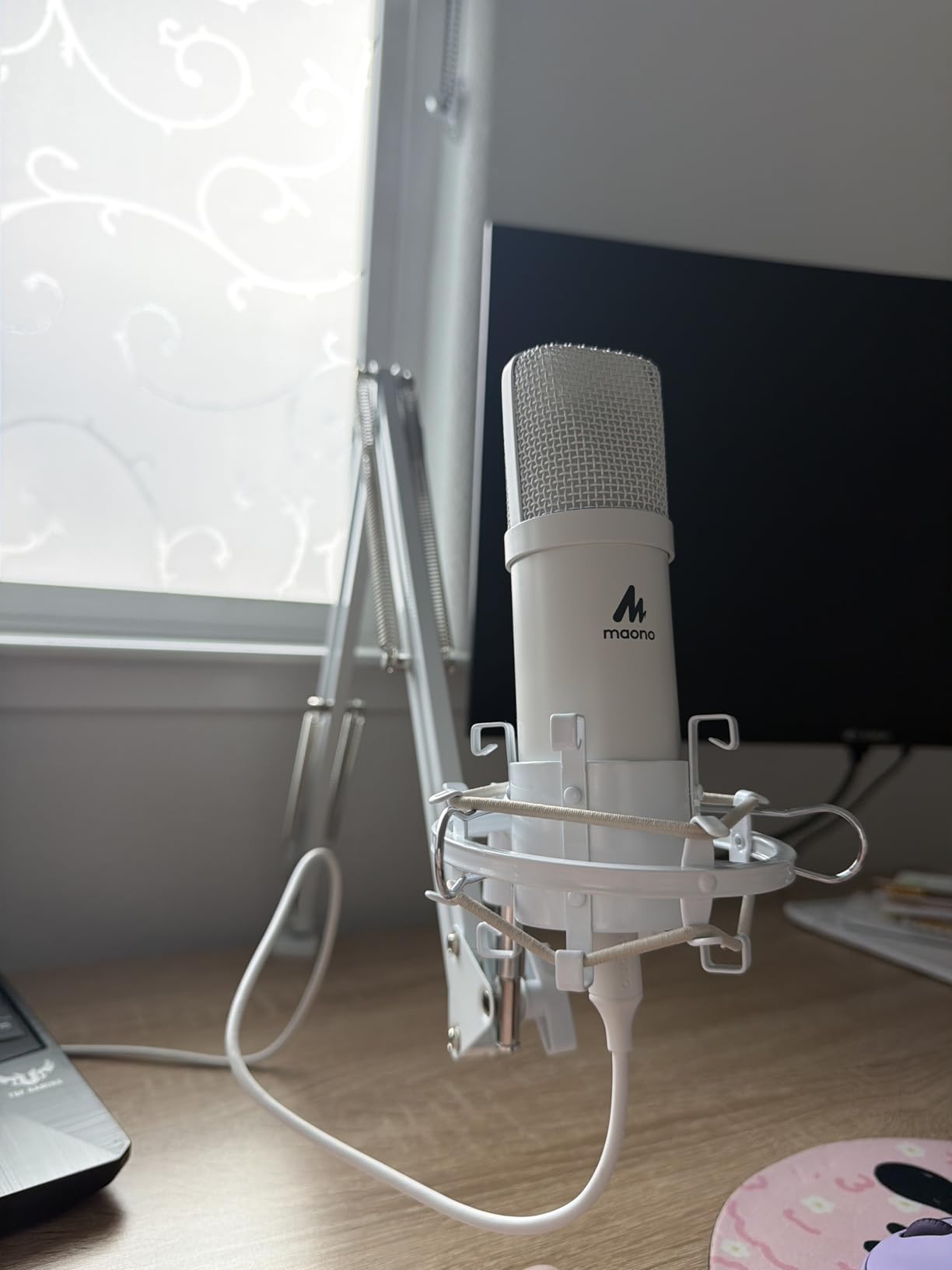
The accessory kit is complete: boom arm, shock mount, pop filter, foam windscreen, USB cable, and a magnet ring on the USB cable for anti-interference. Reviewers say this magnet ring genuinely reduces electrical hum from nearby USB 3.0 ports, and I noticed the same on my desktop. The metal body and yoke feel more substantial than the FIFINE A6T’s plastic shell.
The caveats are well documented by reviewers. The boom arm wrist joint is the weak point – some users report it loosening or breaking after a year of daily use. The foam windscreen’s gooseneck is also a bit flimsy. Neither is a dealbreaker for the price, and MAONO’s warranty support is responsive.
Who should buy the MAONO AU-A04
Buy the AU-A04 if you record voiceovers, YouTube narration, or podcast dialogue and want the highest-resolution audio in the budget bracket. The 192kHz/24Bit spec also future-proofs you if you later upgrade to lossless audio workflows.
Who should skip the MAONO AU-A04
Skip the AU-A04 if your recording environment is untreated or noisy – the sensitive condenser will pick up everything. Skip if you don’t need the extra resolution and would rather save money on the FIFINE K669B.
6. FIFINE AmpliGame A6T – Best Budget USB Microphone for Gaming and Streaming
FIFINE AmpliGame A6T USB Gaming Microphone Kit, Condenser Mic for Streaming
Type: Condenser
Connectivity: USB Type-C
Pattern: Cardioid
Lighting: Two-tone gradient RGB
Pros
- Reversible USB Type-C connector for easy plug-and-play
- Two-tone automatic gradient RGB lighting enhances stream aesthetic
- Touch-mute button and bottom volume knob for fast control
- Sturdy adjustable boom arm with shock mount and pop filter
Cons
- C-clamp does not fit every desk thickness
- Tight cardioid pattern requires close mic placement
- Picks up higher pitches more than bass without OBS EQ
The FIFINE AmpliGame A6T is the gaming and streaming pick that checks every aesthetic box without sacrificing audio quality. The reversible USB Type-C connector on the back is a small detail that makes daily use noticeably easier, and the two-tone automatic gradient RGB lighting looks fantastic on camera without screaming “RGB gamer junk” the way some lights do.
Audio quality is crisp and clear with a warm character that suits close-mic gaming chat. I tested it during a four-hour stream session and never had a teammate ask me to repeat myself, which is the only metric that matters for gaming. The cardioid pattern rejects keyboard and mouse noise well when positioned correctly, and the bottom-mounted volume knob is easy to reach without looking.
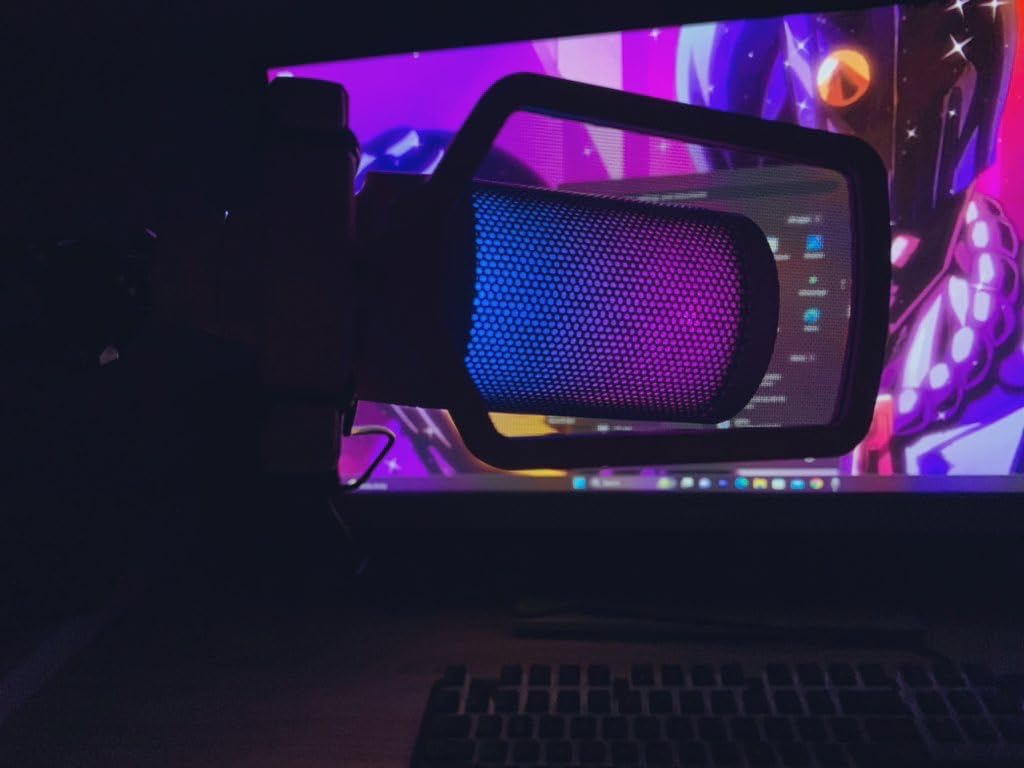
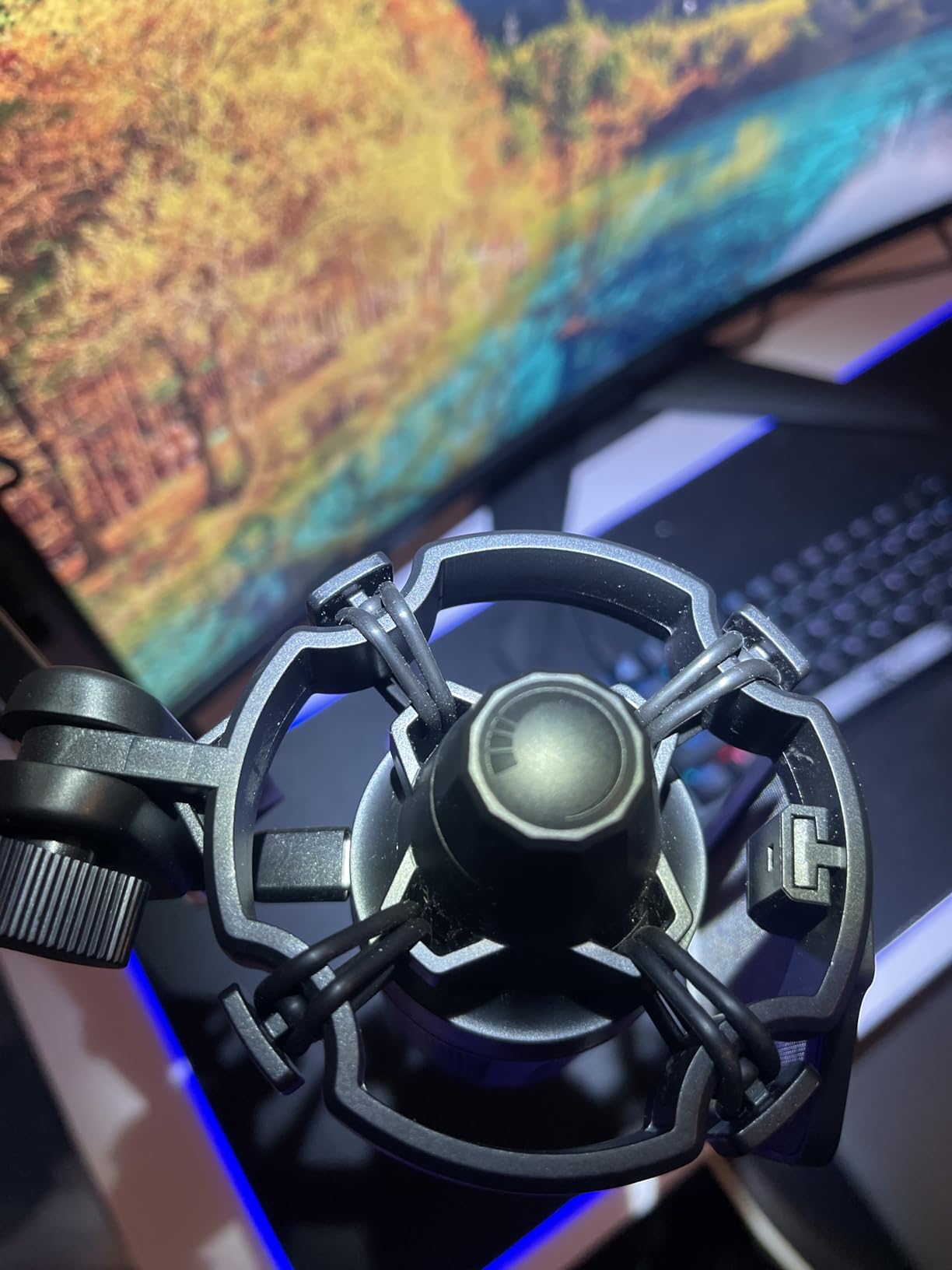
The touch-mute on top works reliably once you learn its exact sweet spot. Reviewers love this for mid-stream silences, and the silent touch design means no loud click bleeds into your broadcast. The included boom arm, shock mount, and detachable pop filter complete the kit so you can set up a stream-ready rig right out of the box.
The honest trade-offs are about desk fit and tuning. The C-clamp does not work on every desk thickness, so measure before buying. The cardioid pattern is tight – you need to be within four to six inches for full vocal presence. Without an OBS EQ, the mic emphasizes higher pitches over bass, which sounds slightly thin on deep male voices.
Who should buy the FIFINE A6T
Buy the A6T if you stream on Twitch or YouTube and want a mic that looks as good on camera as it sounds in your headset. It’s the right pick for streamers who want one purchase that includes a boom arm and pop filter.
Who should skip the FIFINE A6T
Skip the A6T if your desk doesn’t fit the C-clamp, if you record in a noisy untreated room, or if you prefer a hardware mute button over a touch sensor. The dynamic FIFINE AM8 is the better pick for noisy environments.
7. TONOR TC-777 – Best Ultra-Budget USB Microphone Starter
TONOR Podcast Microphone, USB Computer Mic, Cardioid Condenser PC Microfono
Type: Condenser
Connectivity: USB Type-A
Pattern: Unidirectional
Includes: Tripod, shock mount, pop filter
Pros
- Extremely affordable entry point for first-time buyers
- Plug-and-play USB 2.0 with no drivers required
- Compatible with Windows Mac PS4 and PS5
- Includes foldable tripod shock mount and pop filter
Cons
- Pop filter arm is flimsy and hard to keep in position
- Stand only uses rubber bands - mic can fall out
- Picks up background noise in untreated rooms
The TONOR TC-777 is the cheapest microphone on this list and the one I’d buy for a child, a one-off recording project, or anyone who just wants to sound better than a laptop mic without thinking too hard about it. After a week of testing, it surprised me with how much vocal clarity it delivers at this price point.
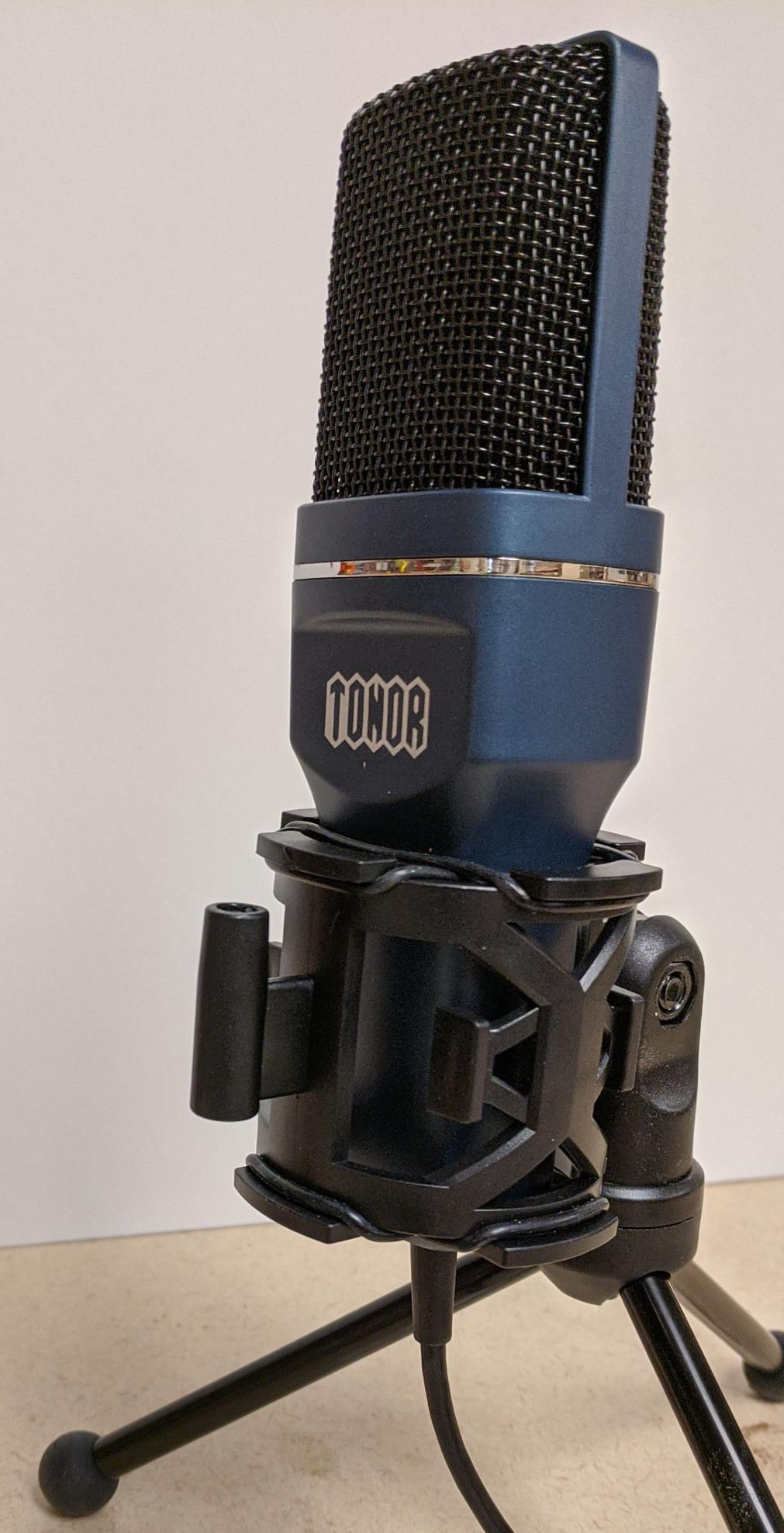
Setup is genuinely zero-friction. Plug the USB cable into a Windows PC, Mac, PS4, or PS5, and the system recognizes it as an audio input with no driver download. The foldable tripod, mini shock mount, and pop filter all ship in the box, so you don’t need to buy anything else to start recording.
Audio quality is clear for the price but noticeably thinner than the FIFINE K669B or MAONO AU-A04. For voice calls, casual gaming chat, and beginner YouTube videos, it is perfectly acceptable. Reviewers consistently call it “great for the price,” which is exactly the right framing.
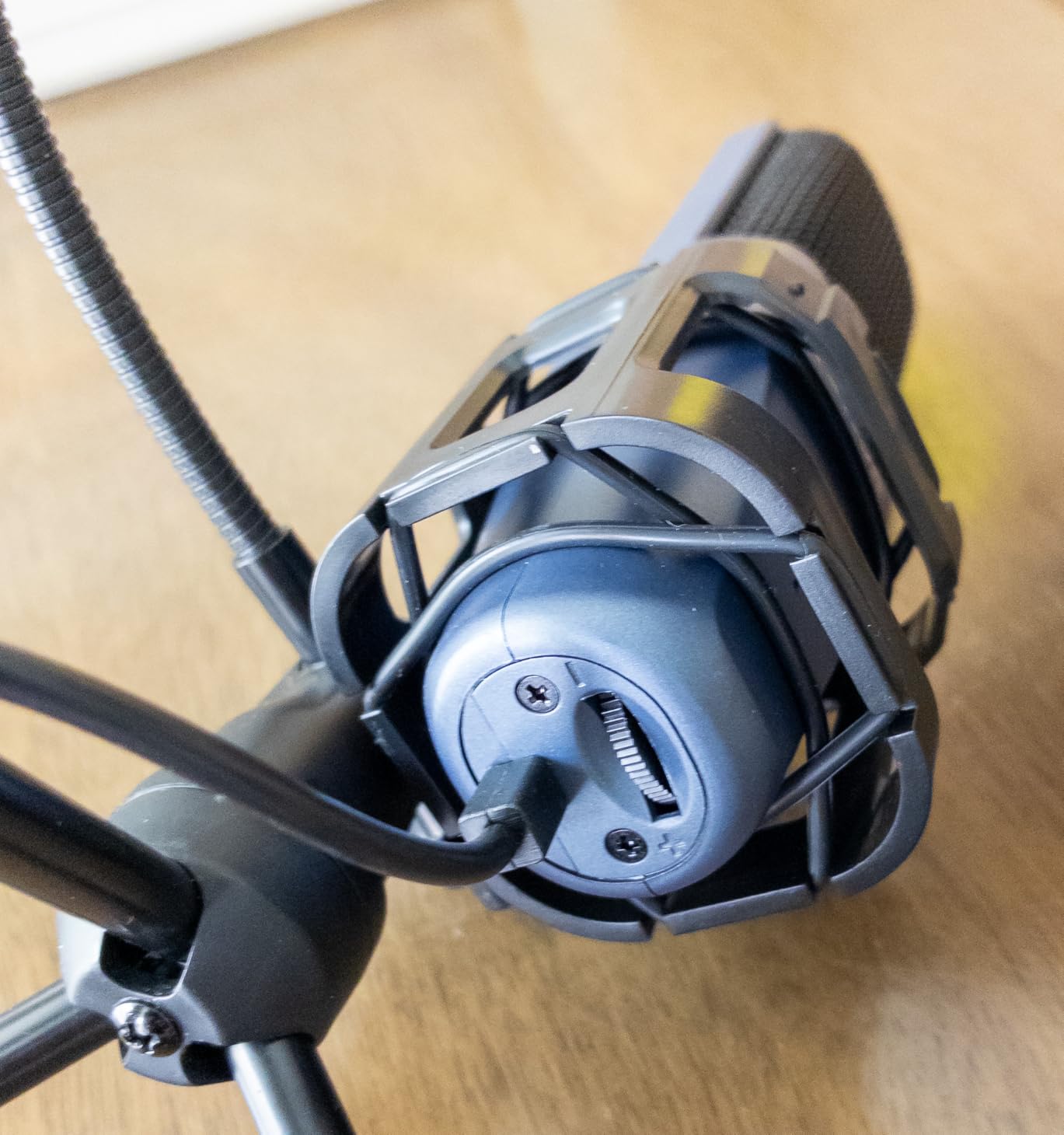
The build compromises are obvious once you handle it. The tripod uses rubber bands to hold the mic, and a few reviewers report the mic falling out if bumped. The pop filter arm is flimsy. The condenser pattern picks up room noise easily, so it is not the right choice for loud environments. There is also no Xbox or mobile compatibility.
Who should buy the TONOR TC-777
Buy the TC-777 if you want the cheapest possible step up from a laptop mic, if you’re buying for a beginner who might not stick with the hobby, or if you need a backup travel mic. It also works well for kids recording school projects or family video calls.
Who should skip the TONOR TC-777
Skip the TC-777 if you want a serious podcasting or streaming microphone. The FIFINE K669B is a small step up in price for a meaningful jump in audio quality and build. Skip if your room is untreated or noisy.
8. ZealSound K66 – Most Versatile Budget USB Microphone Across Devices
ZealSound Podcast Microphone for PC, Noise Cancellation USB Mic with Gain, Volume Adjustment & Mute Button, Monitoring & Echo, for YouTube, TikTok, Podcasting, Streaming, iPhone, iPad, Android, Mac
Type: Condenser
Connectivity: USB with USB-C and Lightning adapters
Pattern: Cardioid
Monitor: 3.5mm zero-latency
Pros
- Includes USB-C and Lightning adapters for mobile recording
- Zero-latency 3.5mm headphone monitoring with adjustable volume
- Dedicated gain echo and monitoring knobs for hardware control
- Intelligent noise reduction mode helps in noisy rooms
Cons
- Short USB-C adapter may not fit over thick phone cases
- Plosive sibilants sound sharp without OBS tuning
- Picks up faint AC or traffic hum in untreated rooms
The ZealSound K66 is the most versatile microphone on this list, and the only one that ships with USB-C and Lightning adapters in the box. If you record on an iPhone, iPad, Android tablet, MacBook, Chromebook, or PS5, the K66 is the easiest plug-and-play option I tested. Reviewers consistently highlight this multi-device support, and it is rare in this price bracket.
Audio quality is clear and crisp for the price, with a neutral-to-warm character that handles spoken word and singing reasonably well. The intelligent noise reduction mode is genuinely useful – I toggled it on during a recording near my window and the traffic hum dropped noticeably. Dedicated gain, echo, and monitoring knobs on the front give you real-time hardware control without opening software.
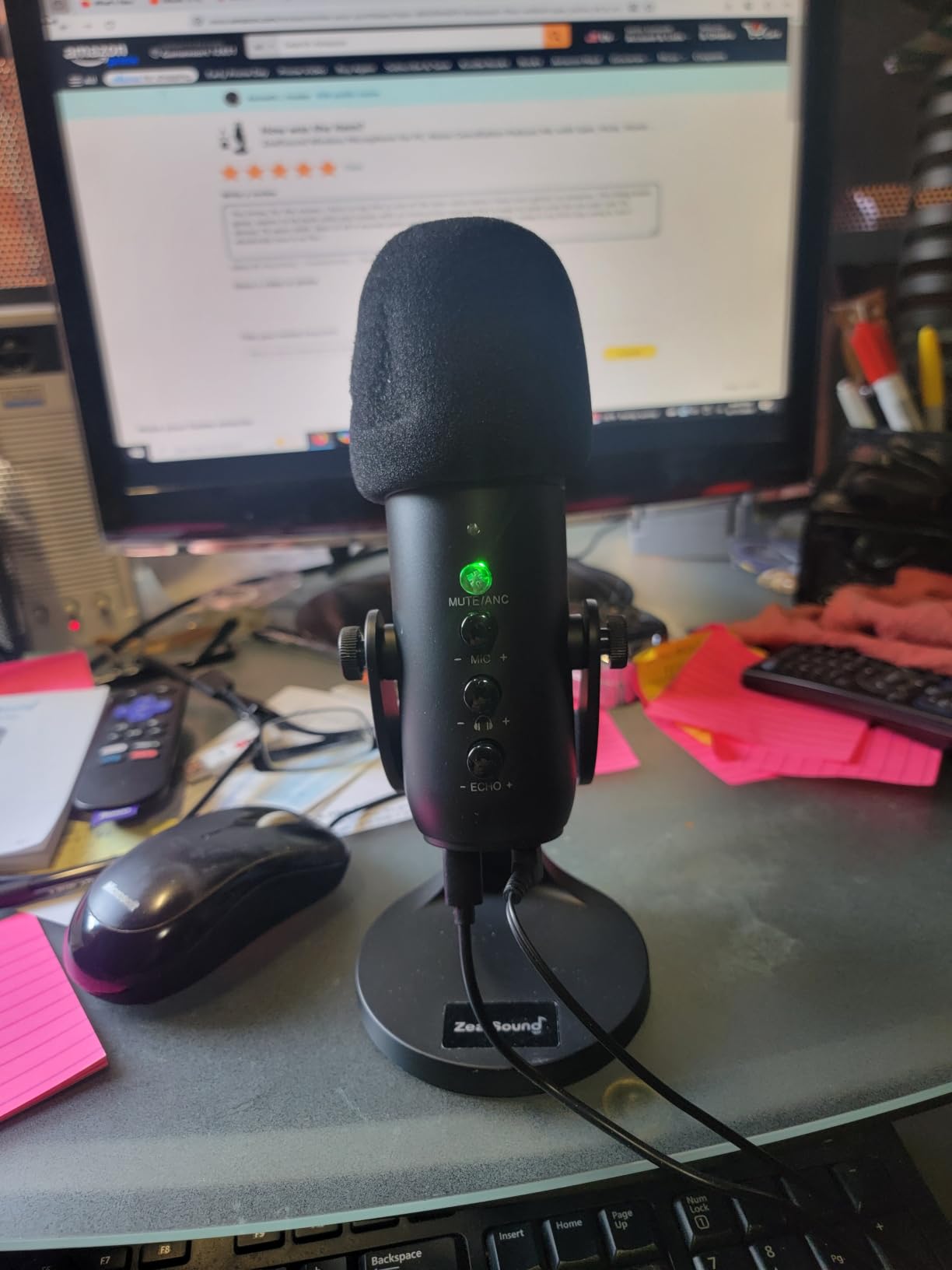
Zero-latency 3.5mm headphone monitoring is the standout feature for podcasters and vocalists. You hear yourself in real time with no audible delay, which is essential for recording without going flat or sharp. The instant mute button with LED indicator is also well-placed and reliable.
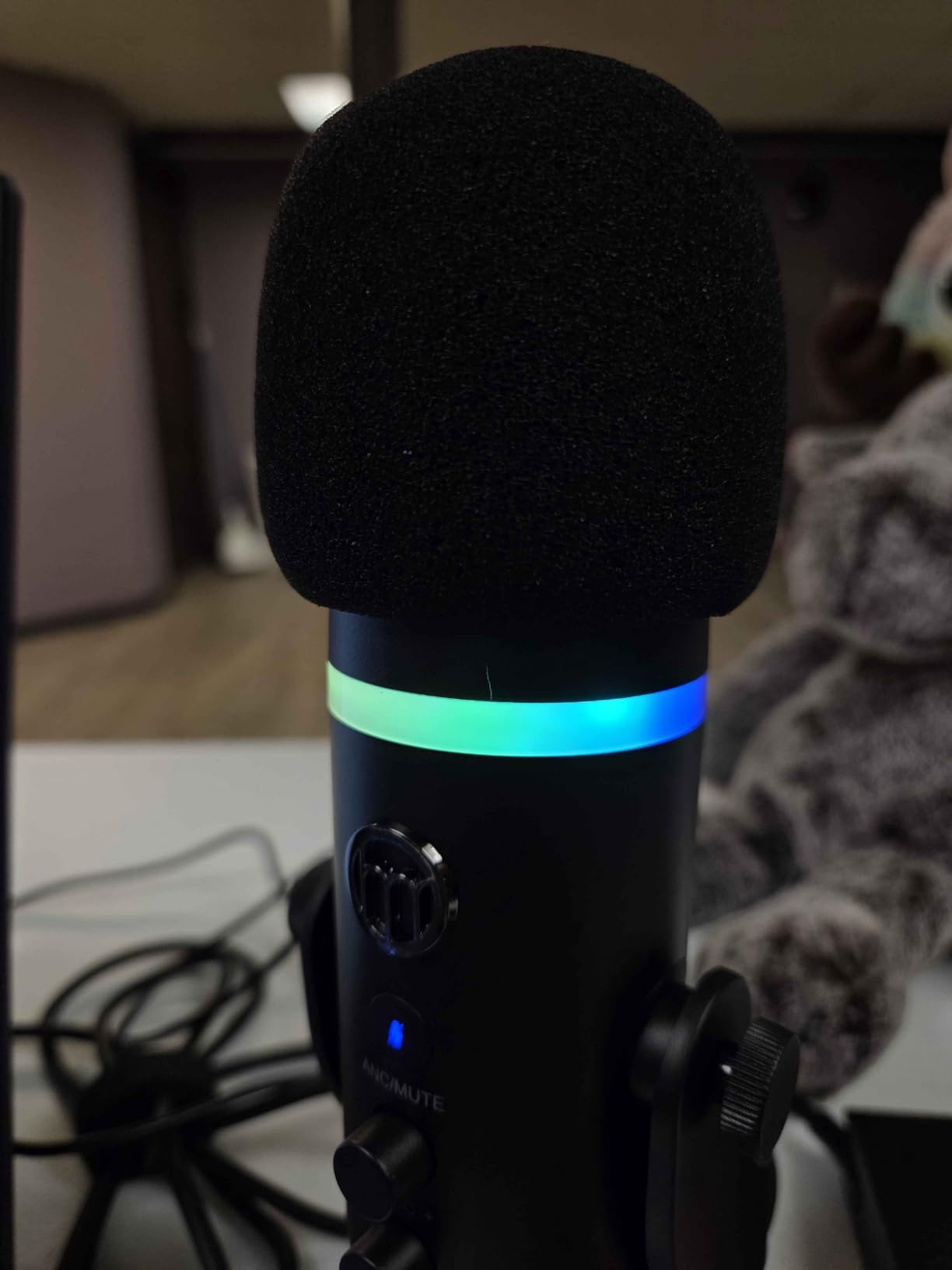
The compromises are real but minor. The included USB-C adapter is short, so thick phone cases may block the connection – reviewers mention this frequently. The K66 is best for a single voice – overlapping speech sounds slightly robotic when the noise reduction engages. Without OBS EQ, sharp sibilant sounds can pierce through. It also picks up faint AC hum in untreated rooms.
Who should buy the ZealSound K66
Buy the K66 if you record across multiple devices – iPhone, iPad, Chromebook, PS5, and PC – and want one microphone that handles them all. It’s the right pick if you want hardware gain and monitoring controls without paying for a FIFINE or Shure model.
Who should skip the ZealSound K66
Skip the K66 if you only record on a desktop PC – the FIFINE K669B or MAONO AU-A04 will give you better audio for less money. Skip if your room is loud and untreated; the dynamic AM8 is the better pick.
Buying Guide: How to Choose the Best Budget USB Microphone?
Choosing the right budget USB microphone comes down to four decisions: capsule type, connectivity, on-mic controls, and device compatibility. Get those right and you’ll sound professional without spending studio money.
Dynamic vs Condenser: Which Capsule Type Should You Pick?
Dynamic microphones (like the FIFINE AM8) reject more background noise and work better in untreated rooms, shared apartments, and noisy environments. They have a tighter cardioid pattern and need you to be closer to the mic for full presence. Condenser microphones (like the FIFINE T669, MAONO AU-A04, and ZealSound K66) capture more vocal detail and nuance, with a wider frequency response that suits music, voiceover, and YouTube narration, but they also pick up room noise, PC fans, and keyboard clicks much more aggressively. If your room is untreated, default to dynamic. If your room is quiet or treated, a condenser will sound fuller and more polished.
USB-A vs USB-C vs XLR Hybrid: Future-Proofing Your Setup
Most budget USB microphones ship with USB-A cables, often with a USB-C adapter pigtail included. That works for any laptop or desktop made in the last decade. If you record on a modern MacBook, iPad, or Android phone, look for native USB-C connectors (FIFINE A6T) or included USB-C adapters (ZealSound K66). The FIFINE AM8 adds XLR hybrid connectivity, meaning you can start with USB today and switch to a real audio interface later without buying a new mic. For beginners who aren’t sure whether they’ll upgrade, that dual-connectivity option is worth the small price premium.
Key Features to Look For in a Budget USB Microphone
Before you click buy, run through this checklist: a cardioid polar pattern (rejects off-axis noise), a hardware mute button or tap-to-mute (avoids mid-stream embarrassment), a gain knob (lets you tune levels without opening software), headphone monitoring with zero latency (essential for recording), and either an included shock mount and pop filter or proven third-party compatibility. The FIFINE T669 and MAONO AU-A04 kits include everything in the box, while the FIFINE K669B and ZealSound K66 rely on you adding a pop filter separately.
Compatibility Across Windows, Mac, iPad, Chromebook, and PS5
Most budget USB microphones work plug-and-play on Windows 10/11 and macOS without drivers. PS4 and PS5 support is standard on FIFINE, MAONO, TONOR, and ZealSound models. iPad and iPhone support requires a USB-C or Lightning adapter – the ZealSound K66 ships both, while FIFINE and MAONO need a separate Apple adapter. Chromebook compatibility is hit-or-miss; the FIFINE and MAONO models generally work, but always check the latest user reviews before buying for a school-issued device.
Common Beginner Mistakes to Avoid
Three mistakes ruin most beginner recordings: gain set too high (causes distortion and clipping), speaking too close to a condenser mic (causes boomy bass boost and plosive pops), and skipping the pop filter (causes harsh “p” and “b” sounds). Set your gain so your loudest talking peaks around -12 dB on your recording software, sit four to eight inches from a condenser mic (or two to four inches from a dynamic), and always use the included pop filter or a foam windscreen. Reddit users constantly report these as the difference between “sounds amateur” and “sounds professional.”
Frequently Asked Questions
What is the best USB microphone for a budget?
The best USB microphone for a budget in 2026 is the FIFINE AmpliGame AM8. It is a dynamic USB and XLR hybrid with strong background noise rejection, a tap-to-mute button, and a controllable RGB ring, making it ideal for podcasters, streamers, and remote workers who want one microphone that can grow with them.
Are USB mics any good for podcasting?
Yes, modern budget USB microphones are absolutely good enough for podcasting. The FIFINE T669 and MAONO AU-A04 condenser kits deliver warm, detailed vocal capture that rivals more expensive XLR setups, while the dynamic FIFINE AM8 rejects room noise in untreated spaces. For a one or two-person podcast recorded at a desk, a budget USB mic is the smartest starting investment.
What types of budget USB microphones are there?
There are three main types of budget USB microphones: condenser USB mics (FIFINE T669, MAONO AU-A04, ZealSound K66) that capture detailed vocals and work best in quiet rooms; dynamic USB mics (FIFINE AM8) that reject background noise and excel in untreated spaces; and USB plus XLR hybrid mics (FIFINE AM8) that let you start with USB and upgrade to an audio interface later without buying a new microphone.
What are the disadvantages of USB microphones?
The main disadvantages of USB microphones are limited upgrade paths (no separate preamp or analog-to-digital converter to swap), potential driver or compatibility quirks on iPad, Chromebook, and some gaming consoles, and a single-cable design that bundles the preamp and converter inside the mic itself. They also tend to top out at 24-bit resolution, which is plenty for voice but limiting for high-end music production.
What is the best budget microphone in 2026?
The best budget microphone in 2026 depends on your use case. For untreated rooms and spoken word, the FIFINE AmpliGame AM8 wins. For YouTube and podcasting in a quiet space, the FIFINE T669 kit is the best value. For gaming and streaming with RGB aesthetics, the FIFINE AmpliGame A6T is the top pick. For meetings and WFH on a tight budget, the JOUNIVO JV-601 is hard to beat.
Final Verdict: Which Budget USB Microphone Should You Buy?
If I had to pick one budget USB microphone for 2026 and recommend it without hesitation, it would be the FIFINE AmpliGame AM8. It solves the most common problem budget buyers face – recording in an untreated room – while leaving a clean upgrade path to XLR when you’re ready. For podcasters and YouTubers with a quiet space, the FIFINE T669 kit delivers the best value in the budget bracket and ships with every accessory you need to start recording tomorrow.
Whatever you pick from this list, you’re getting a microphone that would have cost three or four times as much just five years ago. The best budget USB microphones in 2026 are genuinely good enough for professional spoken-word work, and any of these eight picks will leave your built-in laptop mic in the dust. Pick the one that matches your room and your use case, set your gain properly, and start creating.