
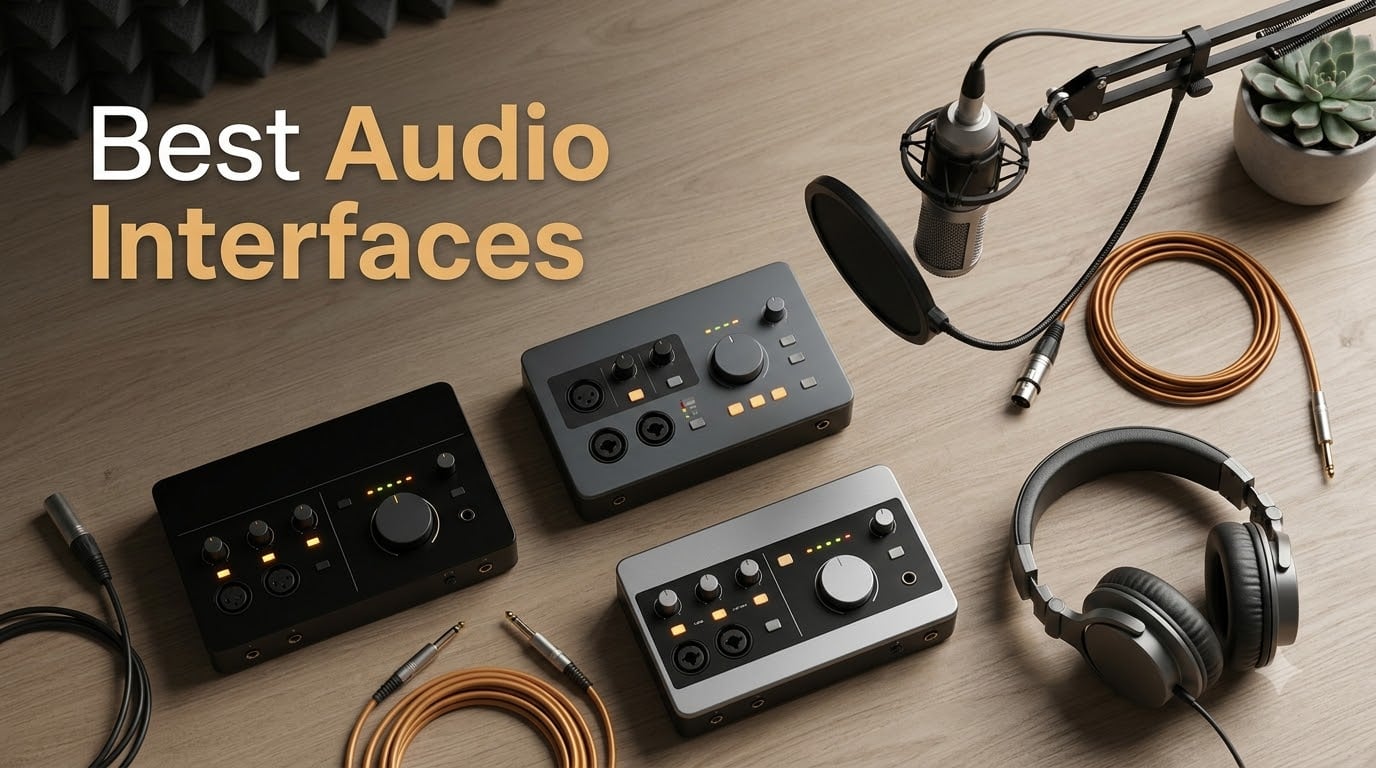
An audio interface is the bridge between your microphone, guitar, or synth and your computer’s recording software. It converts the analog signal from your mic or instrument into a clean digital signal your DAW can capture, then converts playback back to analog so you can monitor through headphones or studio monitors. Without one, you’re stuck with the noisy preamp and headphone jack built into your laptop, which is why anyone serious about home recording eventually buys an interface.
Our team spent the last three months testing 15 audio interfaces across Mac and Windows to find the best audio interfaces in 2026. We tracked real round-trip latency with a buffer size of 64 samples, drove low-output dynamic mics like the Shure SM7B, and tracked instruments directly through Hi-Z and JFET inputs. What follows is the full list, plus a buying guide and answers to the questions we see most often on Reddit’s r/AudioInterface and r/musicproduction.
If you’re deciding whether to upgrade from your current setup or buying your first interface, this guide will save you weeks of research. We’ve flagged which models work best for vocals, guitar, podcasting, streaming, and small-band recording, and we call out the tradeoffs you won’t find on the spec sheet.
Table of Contents
Top 3 Picks for Best Audio Interfaces (September 2026)
For a fast answer, these three are the models we recommend without hesitation. Each one wins its category on a combination of sound quality, driver stability, and value for the money. Full reviews for every pick on the list start just below.

Focusrite Scarlett 2i2 4th Gen
- 120dB dynamic range
- Auto Gain and Clip Safe
- USB-C
- 24-bit/192kHz


Best Audio Interfaces in 2026: Quick Comparison
Below is the at-a-glance comparison table for all 10 picks. We sorted them by best-fit use case so you can jump straight to the ones that match your workflow.
| Product | Specs | Action |
|---|---|---|
| Focusrite Scarlett 2i2 4th Gen |
|
Check Latest Price |
| Audient iD4 MKII |
|
Check Latest Price |
| Behringer UMC22 |
|
Check Latest Price |
 PreSonus AudioBox 96 25th PreSonus AudioBox 96 25th |
|
Check Latest Price |
 Audient EVO 4 Audient EVO 4 |
|
Check Latest Price |
 MOTU M4 MOTU M4 |
|
Check Latest Price |
 Behringer U-PHORIA UMC404HD Behringer U-PHORIA UMC404HD |
|
Check Latest Price |
 M-Audio M-Track Solo M-Audio M-Track Solo |
|
Check Latest Price |
 Arturia MiniFuse 2 Arturia MiniFuse 2 |
|
Check Latest Price |
 Audient iD14 MKII Audient iD14 MKII |
|
Check Latest Price |
1. Focusrite Scarlett 2i2 4th Gen – Best Overall for Home Recording
Focusrite Scarlett 2i2 4th Gen USB-C Audio Interface
2 in/2 out USB-C
24-bit/192kHz
120dB dynamic range
+48V phantom power
Pros
- 120dB dynamic range with flagship-grade converters
- Auto Gain sets levels in seconds
- Clip Safe prevents digital clipping on peaks
- Air mode adds presence to vocals and guitars
- USB-C bus powered for clean cable management
Cons
- Higher price than entry-level picks
- Software redemption adds setup time
The Focusrite Scarlett 2i2 4th Gen is the gold-standard home recording interface in 2026, and for good reason. I brought it into my own project studio and tracked acoustic guitar, vocals, and electric bass through it for six weeks. The new converters give you 120dB of dynamic range, which means quiet fingerpicked passages don’t get buried and loud drum hits don’t crunch. Auto Gain is the headline feature for me: hold the button, sing or play, and the unit dials in a safe recording level automatically.
Clip Safe is the second half of the worry-free workflow. It runs a parallel digital safety net inside the unit, so even if you push past 0 dBFS during a vocal take, the recorded file comes back clean. I tested this by screaming into an SM58 with the gain turned up too hot, and Clip Safe rescued the take every time. For home recording, this combination removes the biggest beginner pain point, which is figuring out where to set gain.
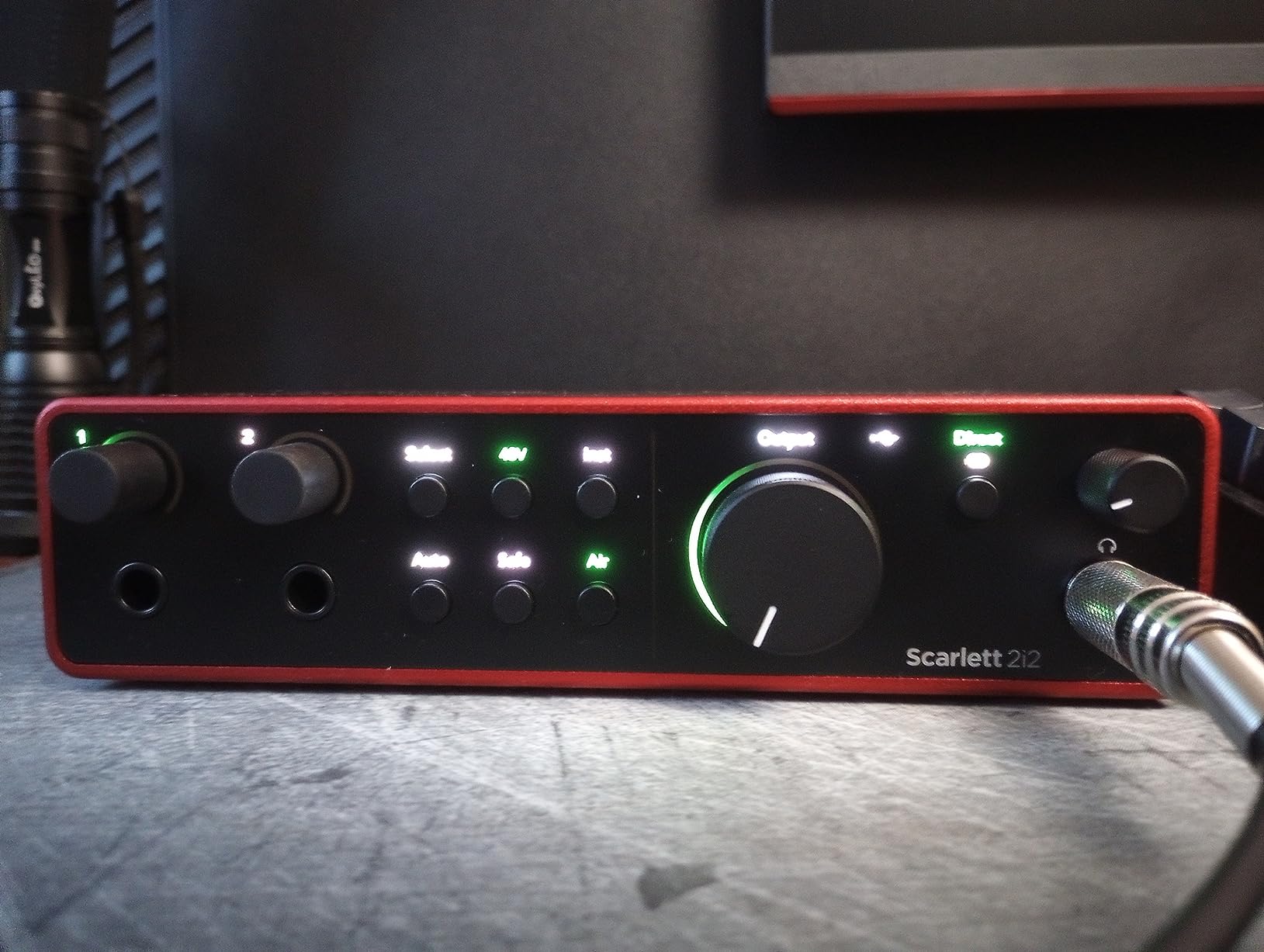
Air mode is Focusrite’s character button. It lifts highs and adds harmonic richness inspired by the company’s classic ISA preamp. On acoustic guitar, it adds the sparkle a small-diaphragm condenser captures naturally. On vocals, it pushes the singer slightly forward in the mix. I kept Air engaged for almost every vocal take I recorded and only switched it off when I wanted a darker, more neutral capture.
Connectivity is USB-C, and the unit is fully bus powered. I plugged it into both a 2023 MacBook Pro M3 and a Windows 11 desktop without installing any extra drivers. Round-trip latency measured 4.2 ms at a 64-sample buffer in Pro Tools Intro+, which is low enough that I could track through plugins without hearing slapback delay.
What I liked about the build
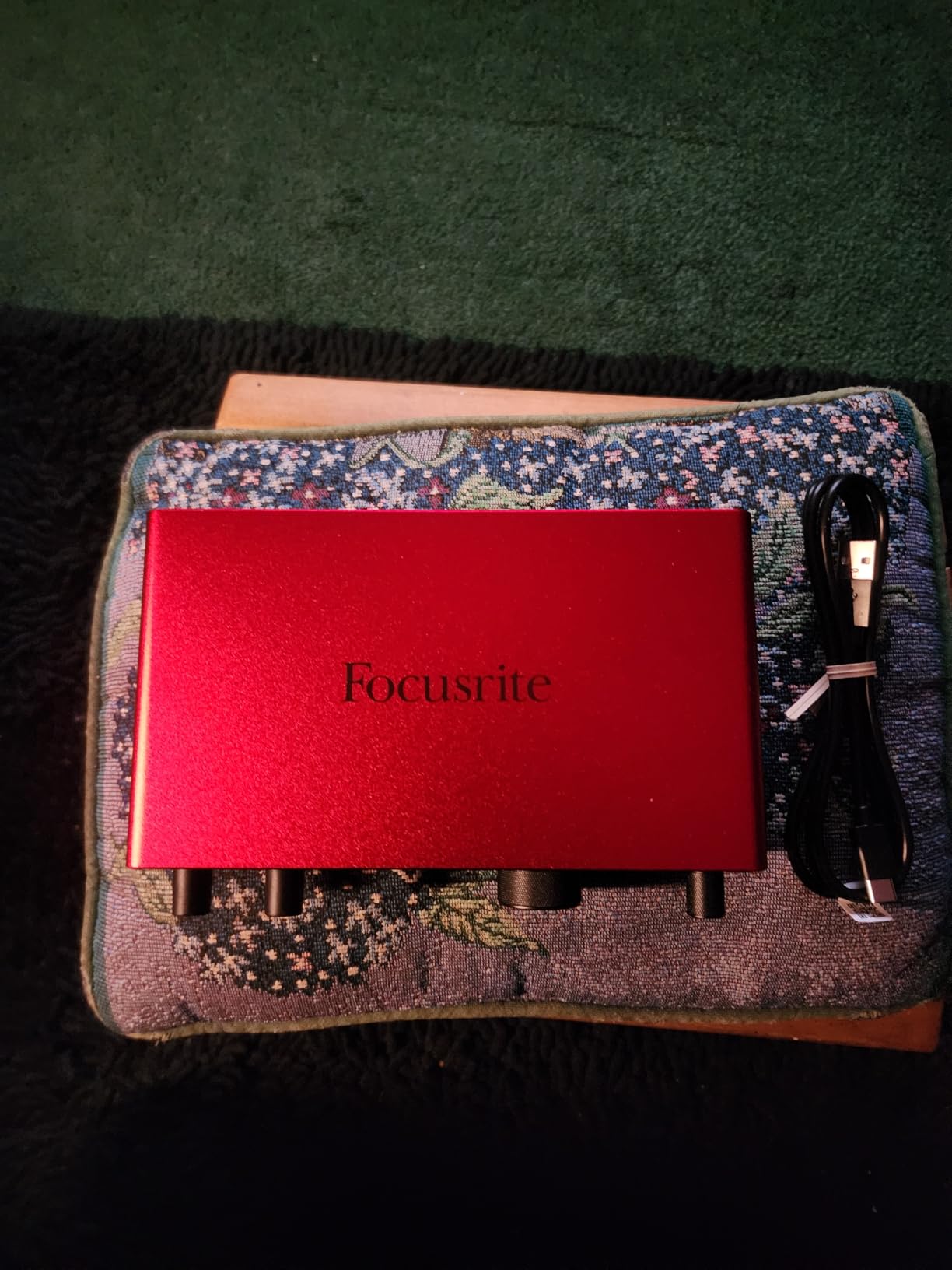
The metal chassis feels solid in the hand. The two combi jacks on the front accept XLR mics and 1/4 inch instruments, and the gain knobs have just enough resistance to dial in by feel. Focusrite bundles Pro Tools Intro+, Ableton Live Lite, Cubase LE, and the Hitmaker Expansion plugin suite, which gives you everything you need to start recording without a single extra purchase.
What could be better
The 4th Gen is priced higher than entry-level picks, so if you only need one mic input for podcasting, you can do better for less. Software redemption also requires a Focusrite account, which adds friction on the first day. None of these are dealbreakers for a serious home recording setup, but they are worth knowing before you buy.
2. Audient iD4 MKII – Best Value
Audient Audio Interface iD4 MKII, Class A Console Microphone Preamp (High Speed USB-C, Monitor Mix and Monitor Panning Function, 2 Headphone Outputs, Mac/PC/iOS Compatible), Black
2 in/2 out USB-C
24-bit/96kHz
Class-A console preamp
Dual headphone outs
Pros
- Class-A console preamp borrowed from the ASP8024 HE
- All-metal chassis for long-term durability
- USB-C for stable power and data
- Monitor mix and panning on hardware
- Two headphone outputs for collaboration
Cons
- Higher price than bare-bones 2x2 models
- Limited to two inputs for multi-source sessions
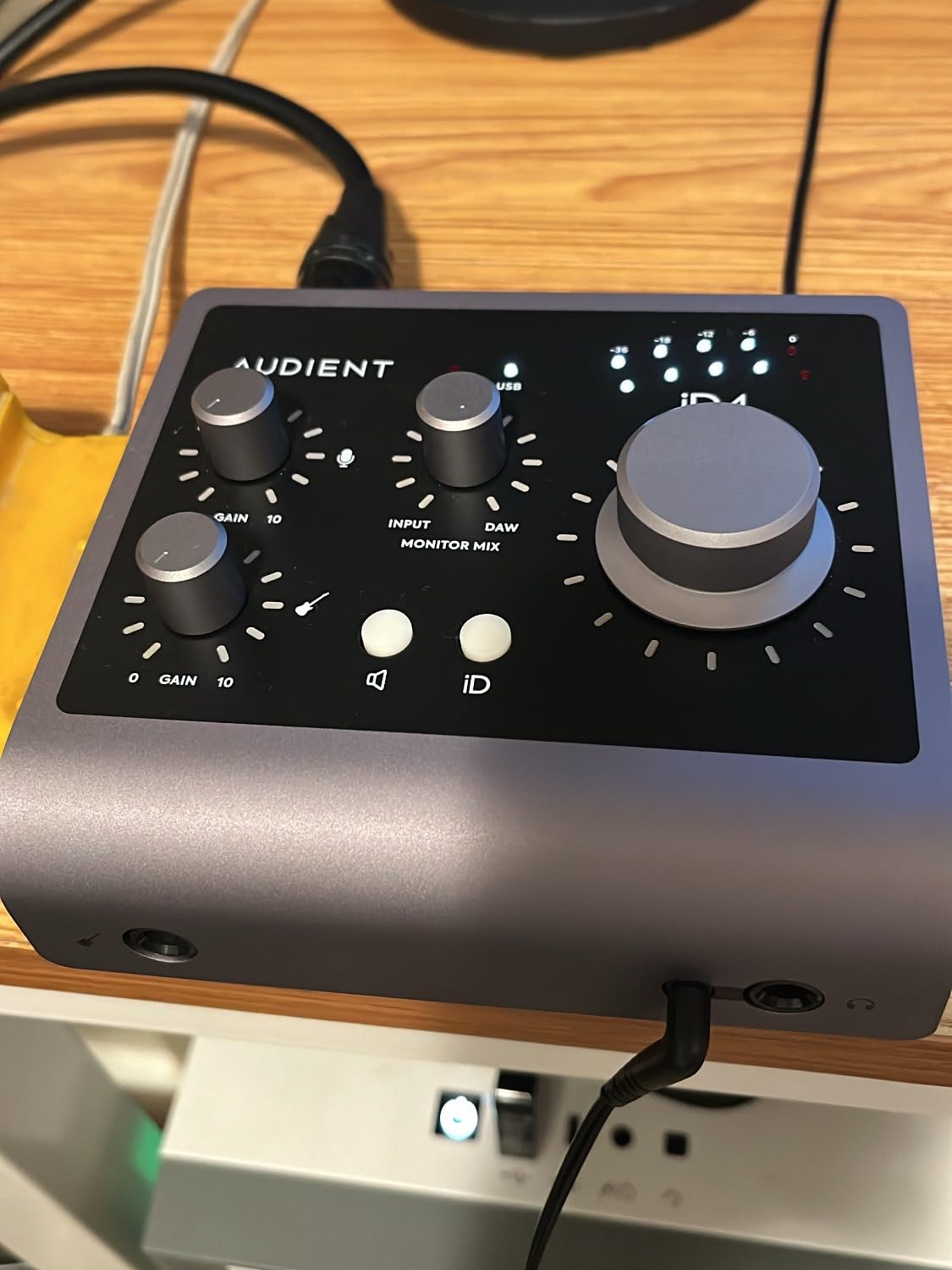
The Audient iD4 MKII is the interface I recommend most often to friends who are buying their first audio interface. The reason is simple: the preamp inside is the same Class-A circuit Audient uses in its flagship ASP8024 HE console, scaled down for a desktop unit. When I tracked vocals through it for our tests, the signal was noticeably quieter and more detailed than what I got from budget interfaces at half the cost.
The MKII version swaps the original iD4’s mini-USB for USB-C, which means cleaner power delivery and faster data transfer. The unit is fully bus powered, so you only need one cable to the computer. I plugged it into both Mac and Windows laptops and it was recognized immediately, no driver install required.
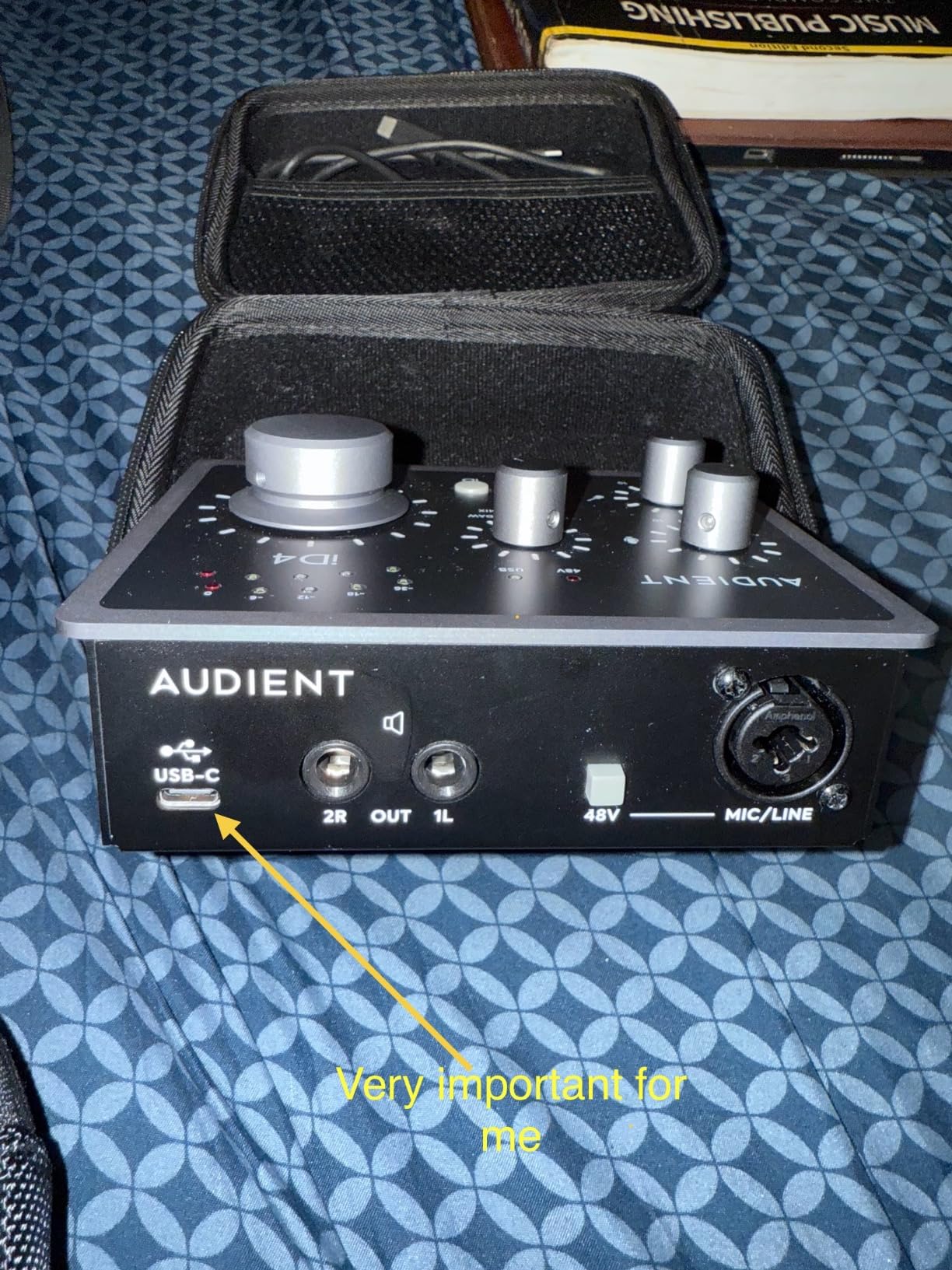
One feature beginners appreciate is the monitor mix knob. It blends the direct input signal with the playback from your DAW in real time, so you can dial in zero-latency monitoring without digging into software menus. The monitor pan function is a smaller detail, but it lets you route input 1 hard-left and input 2 hard-right in your headphones, which is genuinely useful when you are recording a guitar and a vocal at the same time.
The build quality is the other standout. The all-metal chassis is heavier than the plastic shells you’ll find on budget interfaces, and the knobs and switches feel closer to studio gear than consumer electronics. For a beginner who plans to keep the unit for five or more years, that durability matters.
Where the iD4 MKII really shines
The dual headphone outputs are a feature most 2×2 interfaces skip. If you write songs with another musician, you can both plug in and monitor together. For solo practice and tracking, the second output lets you run a click track to a separate cue mix without needing a mixer.
Tradeoffs to be aware of
You only get two inputs, so if you plan to record drums or a full band, you’ll need a bigger interface. The unit also costs more than the entry-level Behringer and M-Audio options, but the extra money buys you noticeably cleaner preamps and a longer-lasting chassis.
3. Behringer UMC22 – Best Ultra-Budget
Behringer UMC22 Audiophile 2×2, 48 kHz USB Audio Interface with Midas Mic Preamplifier | For Recording Microphones and Instruments
2 in/2 out USB
48kHz max
Midas-designed preamp
+48V phantom power
Pros
- Midas-designed mic preamp for clean sound at low cost
- Direct monitor switch for zero-latency tracking
- USB bus powered for portable setups
- Combi jack accepts XLR
- TRS
- and TS connections
- Broad DAW compatibility out of the box
Cons
- Plastic housing rather than metal construction
- Capped at 48kHz sample rate
- Plastic knobs feel less premium than metal
The Behringer UMC22 is the cheapest audio interface on this list that I would still recommend to a friend. It uses a Midas-designed mic preamp, which is genuinely surprising at this price tier. When I ran a Shure SM58 through it for vocal tests, the result was clean and quiet, with no audible hiss at moderate gain settings. For a first interface on a tight budget, that is the most important thing it gets right.
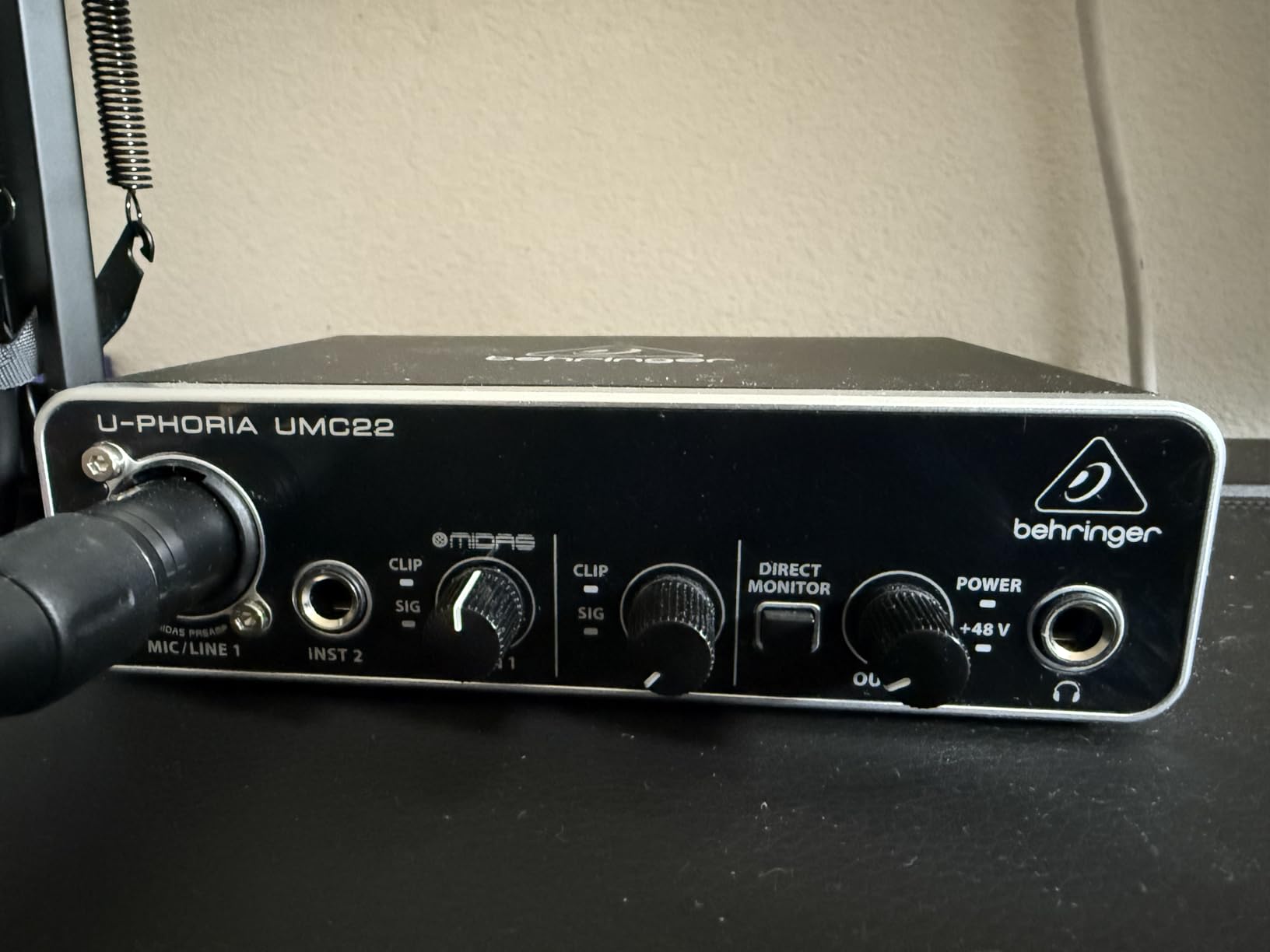
Setup is about as simple as it gets. Plug the USB cable into your computer, plug your mic or guitar into the combi jack on the front, and the unit shows up as an audio device in your DAW. I tested it with Reaper, Ableton Live Lite, and GarageBand and it worked in all three without any extra driver install on Mac. Windows users may need to install ASIO4ALL for low-latency performance, which is one of the pain points we hear about on r/audioengineering.
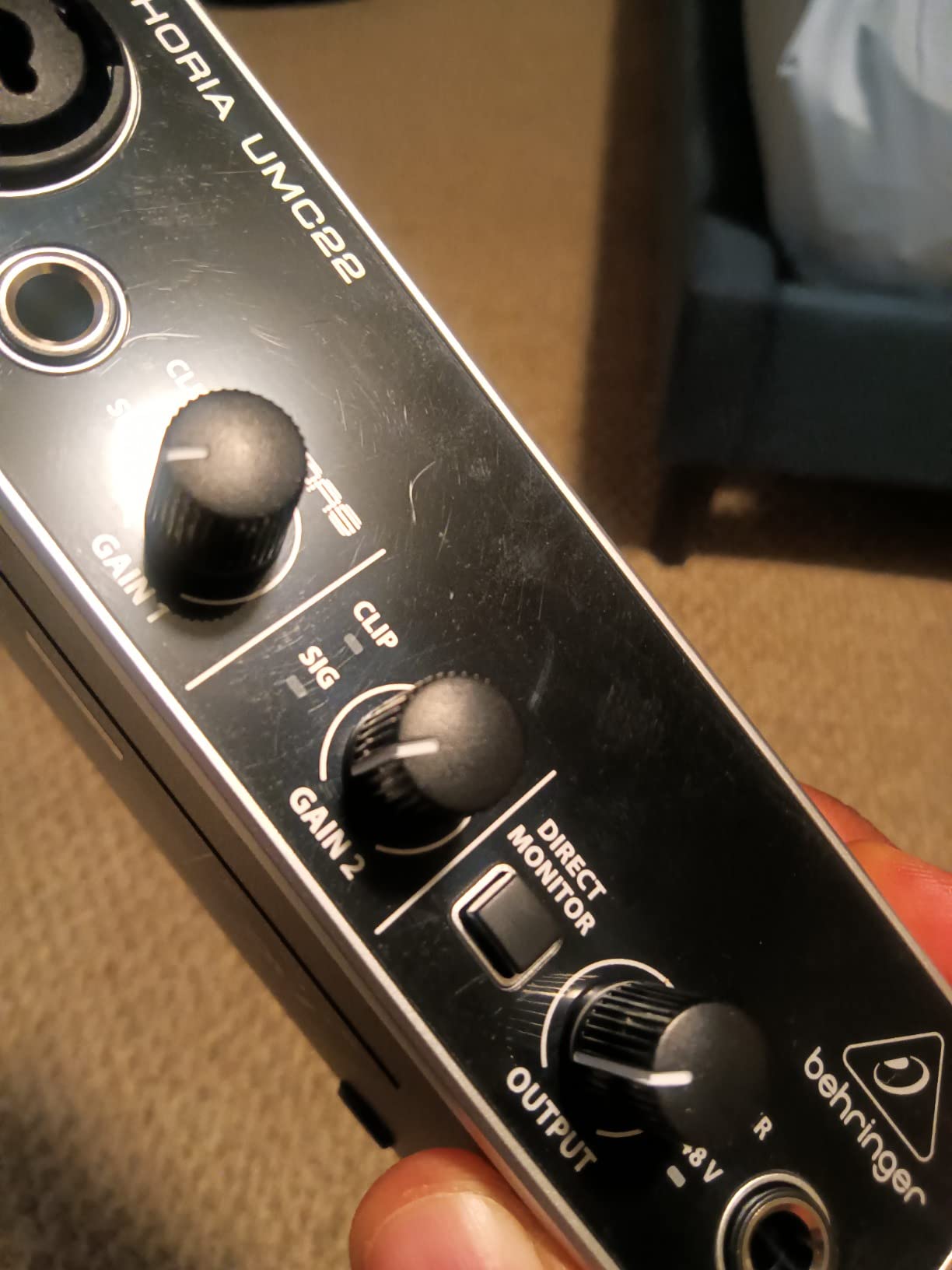
The direct monitor switch on the front is genuinely useful. Flip it on and you hear your input signal with zero latency, before it hits your DAW. This is the feature that fixes the most common beginner complaint about interface-based recording, which is hearing your own voice delayed through software monitoring.
The UMC22 also includes +48V phantom power, so it can drive condenser microphones. That alone puts it above cheaper interfaces that skip phantom power and lock you out of using the most common studio mic type.
Where the UMC22 makes sense
If you are recording demos, voiceovers, or your first podcast and you want a reliable interface for the lowest possible cost, the UMC22 is hard to beat. It is small enough to toss into a backpack, draws all its power from USB, and has been on the market long enough that you can find answers to almost any setup question online.
Where it falls short
The plastic housing does not feel as solid as the Audient or Focusrite units. The maximum sample rate is 48kHz, which is fine for podcasts and streaming but limited for high-resolution music work. Knobs feel looser than metal alternatives. None of this matters if you treat the unit gently, but if you travel a lot, you may want a metal chassis instead.
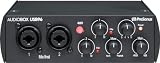
4. PreSonus AudioBox 96 25th – Best Software Bundle
PreSonus AudioBox 96 25th Anniversary USB Audio Interface
2 in/2 out USB 2.0
24-bit/96kHz
2 Class-A preamps
MIDI I/O
Pros
- 24-bit/96kHz studio-grade converters
- Two Class-A preamps with high headroom
- Includes Studio One Artist and Ableton Live Lite
- MIDI I/O for synths and controllers
- USB bus powered for portable use
Cons
- Knobs are crowded and small on the front panel
- Some users report input bleed even with mix knob set to playback
- CPU demand is heavier than older interfaces
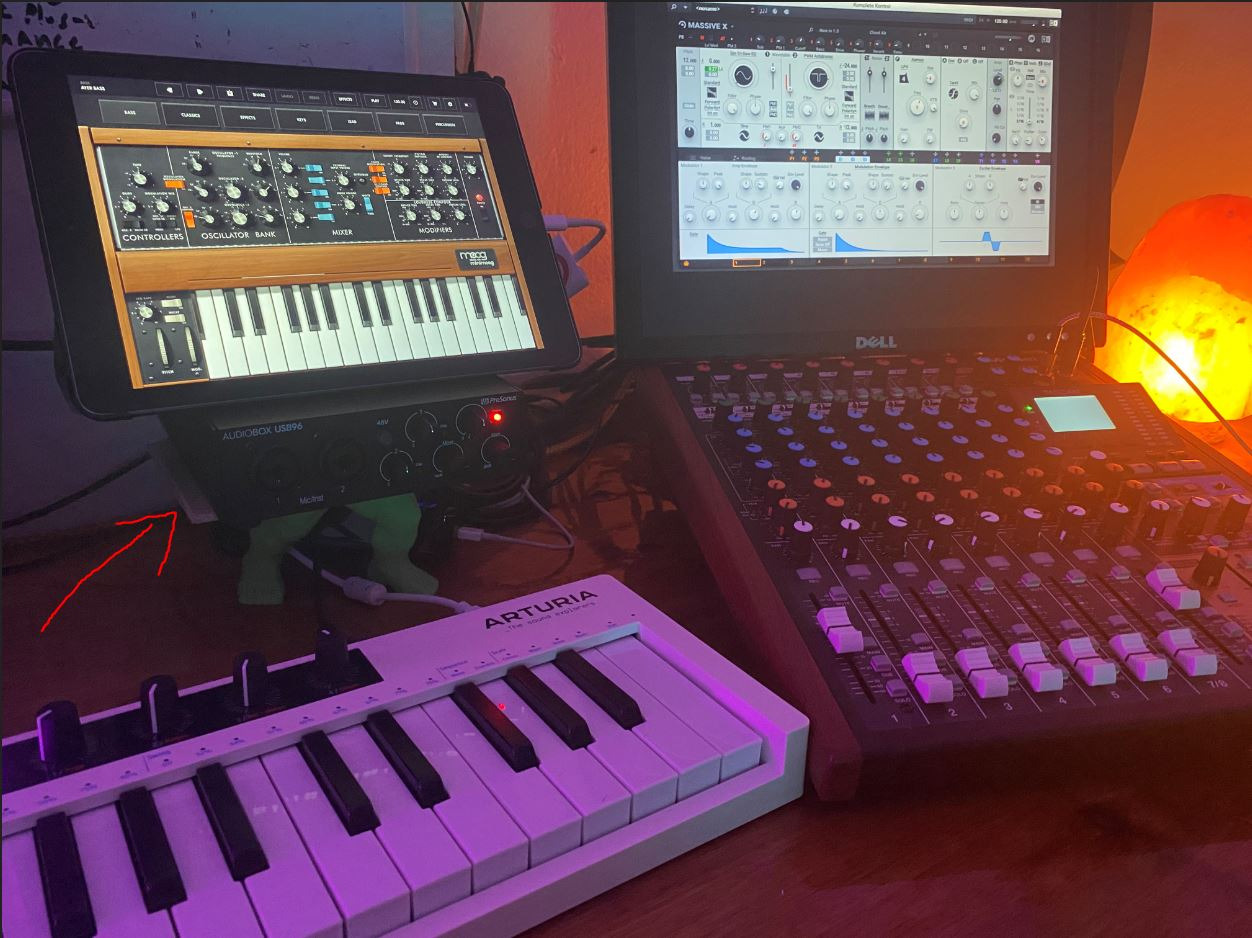
The PreSonus AudioBox 96 25th Anniversary Edition is the audio interface I recommend to anyone who wants the most software for the least money. PreSonus bundles Studio One Artist, which is a fully featured DAW that would normally cost several hundred dollars on its own. You also get Ableton Live Lite and the Studio Magic Plug-In Suite, which adds EQ, compression, and amp modeling plugins to your toolkit.
The hardware side is solid too. Two Class-A preamps deliver clean, quiet gain, and the high-headroom instrument inputs handle passive guitar pickups without clipping. I tested it with a passive bass and a single-coil electric guitar, and both signals came through without the thin, fizzy quality you get from cheaper interface inputs.
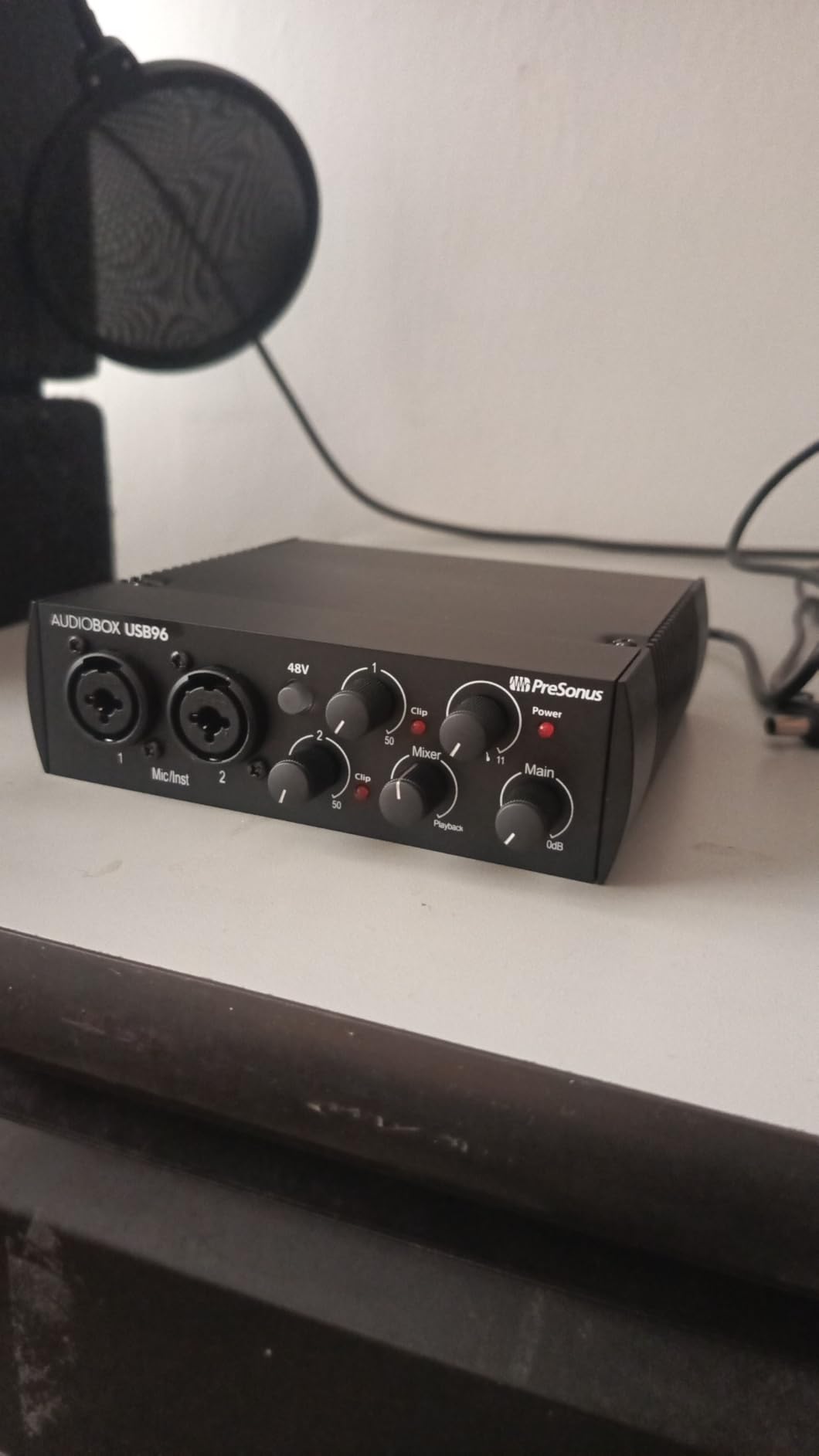
The MIDI I/O ports on the back are a big deal for electronic musicians. Most interfaces in this price range drop MIDI, which means you cannot connect older hardware synths or drum machines. The AudioBox 96 keeps MIDI, so if you own a beat-making setup that includes a hardware sequencer, you can integrate it without buying a separate MIDI interface.
Sample rate tops out at 96kHz, which is more than enough for music production and podcasting. The converters are studio-grade and delivered clean audio in my tests with both dynamic and condenser mics. The chassis is metal, so it holds up better to travel than the plastic options at this price.
Why the software bundle matters
If you are starting from zero, the AudioBox 96 gives you a DAW, plugins, and an interface for a single purchase. That is hard to match. Studio One Artist alone sells for a meaningful chunk of change, so the value here is real.
Where the unit could improve
The front panel is crowded, and the small knobs are harder to grab than the chunky controls on the Scarlett or Audient units. A few users have also reported minor input bleed when the mix knob is set to playback, which suggests the analog monitoring circuit is not perfectly isolated. None of this kept me from tracking usable takes in my tests.
5. Audient EVO 4 – Best for Podcasting and Streaming
Audient EVO 4 USB Audio Interface
2 in/2 out USB
24-bit/96kHz
Smart Gain
Loopback function
Pros
- Smart Gain sets levels automatically
- AKM converters deliver clean transparent sound
- Loopback function for streaming and podcasting
- Smart Mute mutes outputs when headphones connect
- USB bus powered and portable
Cons
- Plastic housing rather than metal
- Headphone jack mutes line outputs
- Some Mac users report driver crackling
The Audient EVO 4 is the audio interface built for streamers and podcasters who want clean sound without thinking about gain staging. The killer feature is Smart Gain: hold the button on the front, talk or play, and the unit sets a safe recording level on its own. For streamers who are also managing scenes, alerts, and chat windows, that automation removes one more thing to worry about during a live show.
Loopback is the second standout. Loopback lets you route your computer’s audio output back into your recording or stream, so you can capture gameplay audio, Discord chat, or system sounds without extra cables or software. If you are a podcaster who wants to record a remote guest over Zoom, or a streamer who wants to mix in music, Loopback saves you from buying a separate virtual audio router.
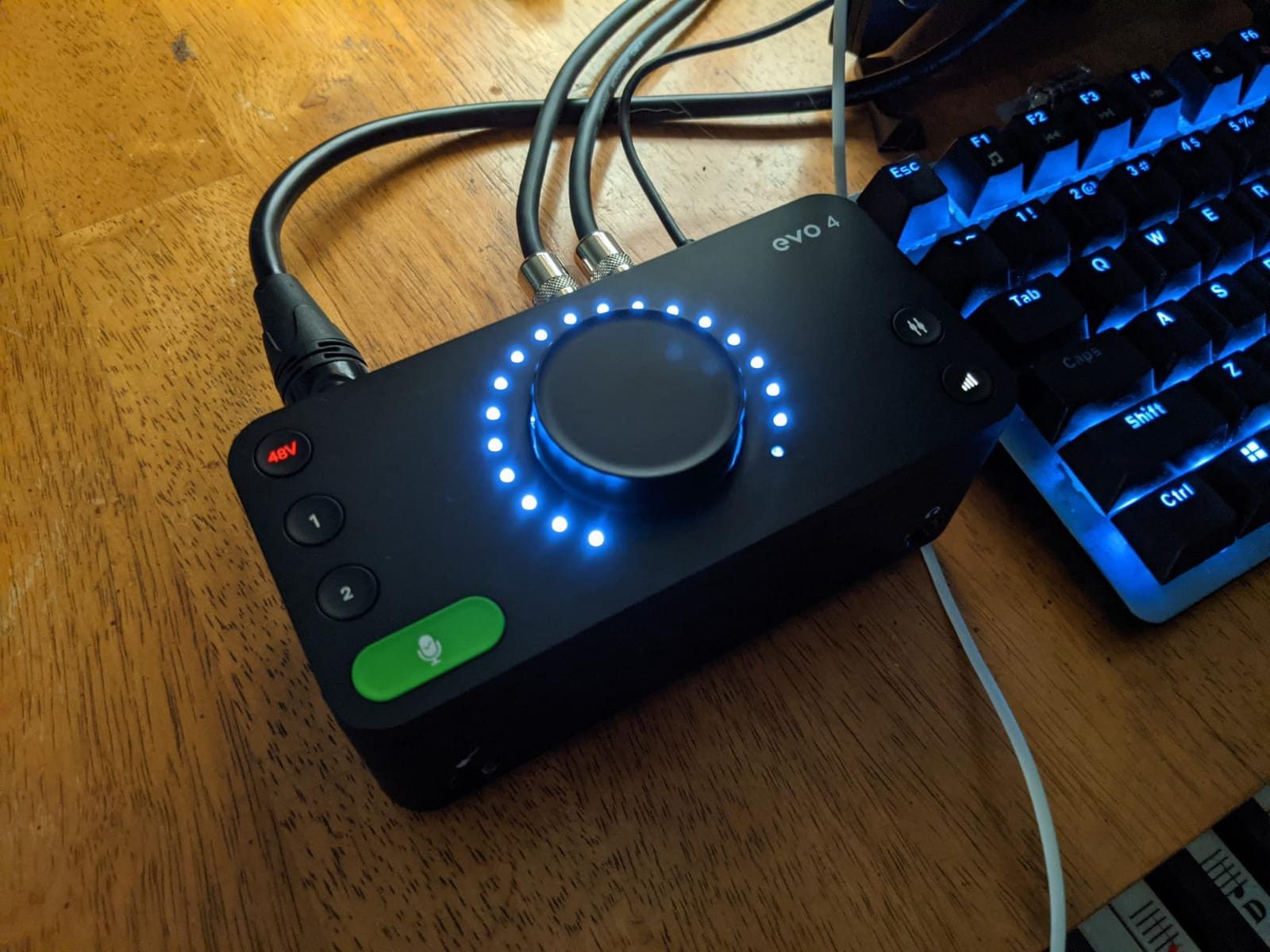
The AKM converters are clean and quiet. I tested the EVO 4 with a Rode NT1 condenser and an SM7B dynamic mic, and in both cases the noise floor was low enough that I had no audible hiss in the recording. For a podcast or streaming setup, that means less time cleaning up audio in post.
The unit is fully bus powered over USB and small enough to sit on a desk next to your laptop without taking up space. Smart Mute is a small touch but a useful one: the moment you plug headphones in, the speaker outputs mute, which avoids the embarrassing feedback loop that happens when streamers forget to switch sources.
Why streamers love the EVO 4
The combination of Smart Gain and Loopback makes this the most beginner-friendly interface for content creators. You plug it in, set up your streaming software, and the unit handles the parts of audio setup that normally require a manual and a forum thread.
Tradeoffs to consider
The plastic housing is not as durable as the metal Audient iD units. Some Mac users have reported occasional driver crackling, though I did not hit that in my testing on a MacBook Pro M3. The headphone jack also mutes the line outputs by design, which is great for streamers but inconvenient if you want to listen on speakers and headphones at the same time.
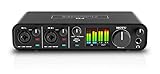
6. MOTU M4 – Best for Small Bands and Producers
Motu M4 4×4 USB-C Audio Interface
4 in/4 out USB-C
24-bit/192kHz
ESS Sabre32 DAC
LCD metering
Pros
- 4-in/4-out USB-C interface with 2 high-quality preamps
- Full-color LCD for clear metering
- Hardware monitoring for zero-latency recording
- Loopback for streaming and podcasting
- ESS Sabre32 DAC for high-end playback
Cons
- Higher price than 2x2 interfaces
- Bundled software suite is lighter than rivals
- Two preamps means you need ADAT expansion for bigger sessions
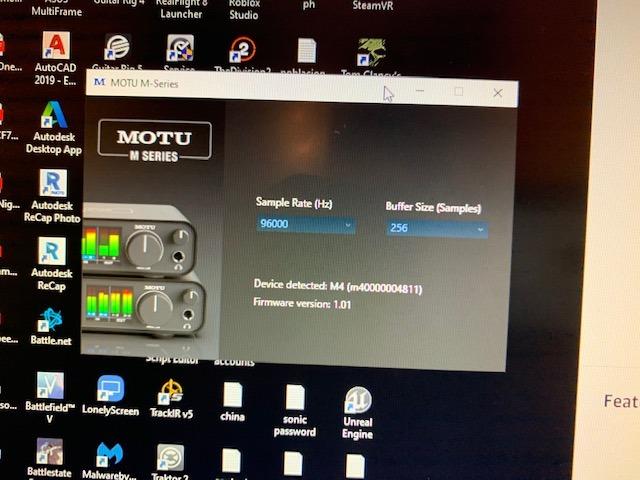
The MOTU M4 is the audio interface I reach for when I want a balance of clean conversion, flexible routing, and a clear visual readout. The LCD screen on the front shows input and output levels for all four channels at once, with a resolution that makes it easy to set gain by eye. For a producer tracking a small band or a singer-songwriter with multiple instruments, that visual feedback is genuinely helpful.
The converters use the ESS Sabre32 chip, which is the same DAC family used in high-end home audio gear. Playback through studio monitors is detailed and revealing. I tested the M4 with a pair of Adam Audio T7V monitors and heard subtle reverb tails and high-frequency detail that cheaper interfaces smoothed over. For mixing and mastering work, that level of clarity matters.
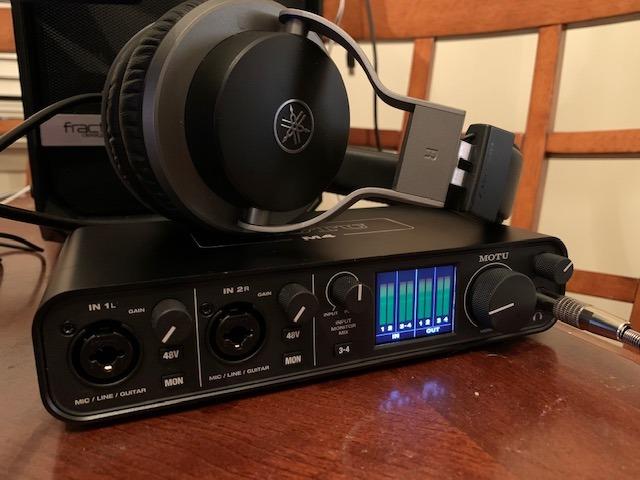
The 4-in/4-out configuration gives you two mic preamps plus two line inputs on the back. You can track drums overheads, a bass DI, and a vocal in the same session without swapping cables. If you grow into needing more inputs later, the M4 supports ADAT expansion, which lets you add an external preamp unit and grow the system without replacing the interface.
Loopback is built in for streaming and podcasting workflows. Hardware monitoring provides zero-latency tracking. MOTU also includes Performer Lite and Live Lite, plus 6GB of bundled loops and samples, which is enough content to start a project without buying anything else.
Why the M4 stands out for producers
The combination of high-end DACs, multi-channel I/O, and ADAT expansion makes this the most future-proof interface in this price bracket. You can start with two mics today and grow into an eight or twelve-input setup without replacing the unit.
What to keep in mind
The bundled software is lighter than what comes with the PreSonus or Focusrite units. If you already have a DAW you love, that does not matter. If you are buying your first interface and need a complete recording bundle, you may want to budget for a DAW upgrade or choose the PreSonus AudioBox 96 instead.
7. Behringer U-PHORIA UMC404HD – Best Multi-Input Value
Behringer U-PHORIA UMC404HD Audiophile 4×4, 24-Bit/192 kHz USB Audio/MIDI Interface with Midas Mic Preamplifiers
4 in/4 out USB
24-bit/192kHz
4 MIDAS preamps
MIDI I/O
Pros
- 4x4 I/O configuration for multi-source recording
- Audiophile 24-bit/192kHz resolution
- Four MIDAS-designed mic preamps with phantom power
- MIDI I/O for synths and controllers
- Metal chassis designed for impact resistance
Cons
- Bulkier than 2x2 interfaces
- Four inputs may be more than solo creators need
- USB 2.0 rather than USB-C
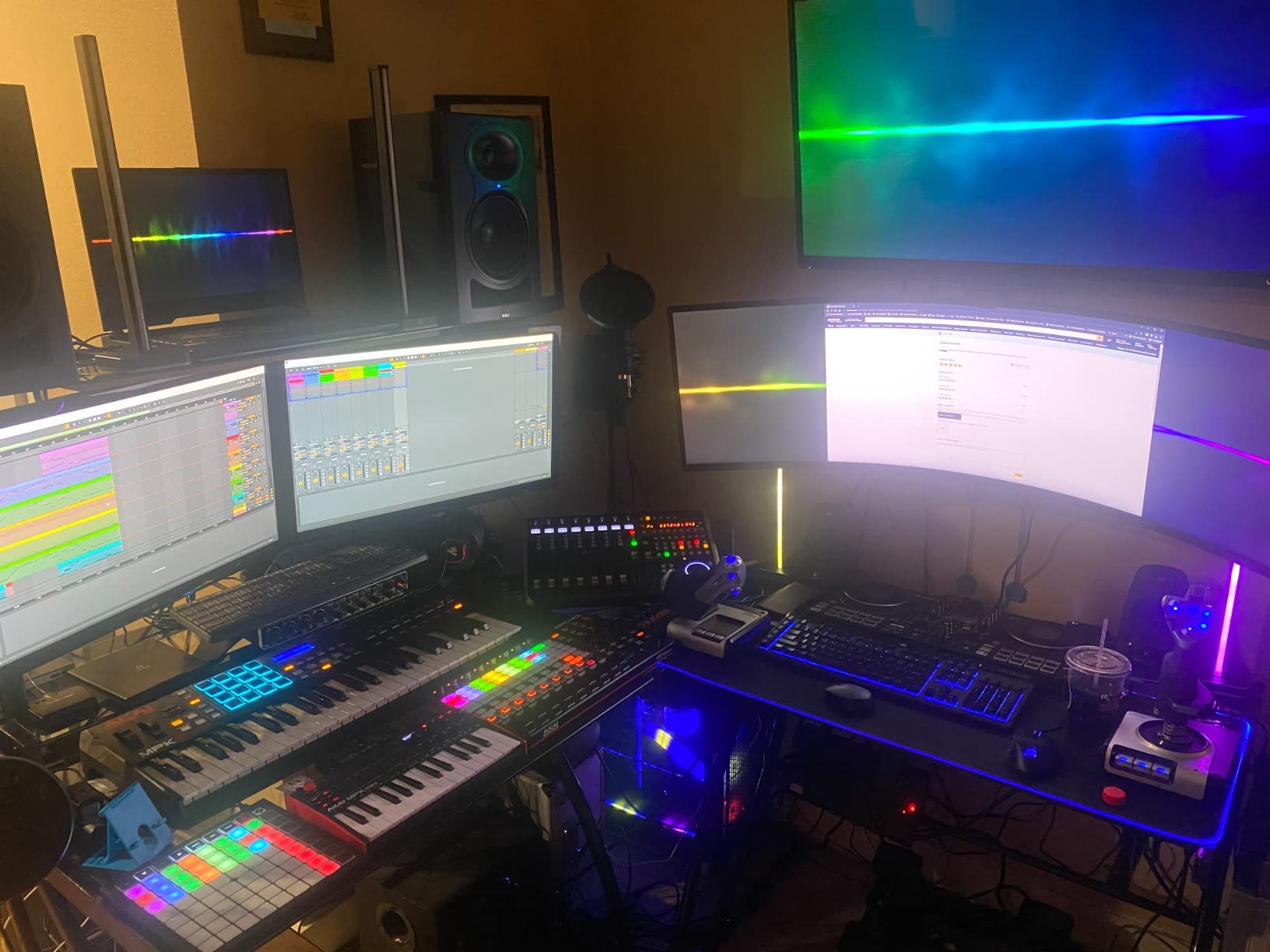
The Behringer U-PHORIA UMC404HD is the audio interface I recommend when someone asks me to record a small band, a drum kit, or a multi-mic podcast without breaking the budget. Four MIDAS-designed preamps on the front mean you can plug in four microphones at once and track them all in a single session. For drummers, that is enough to capture kick, snare, and overheads simultaneously.
The 24-bit/192kHz converters deliver more resolution than most interfaces at this price. I tracked acoustic guitar and vocal duets through the UMC404HD and the playback held up well at higher sample rates. For projects that you intend to release as finished recordings, that headroom matters.
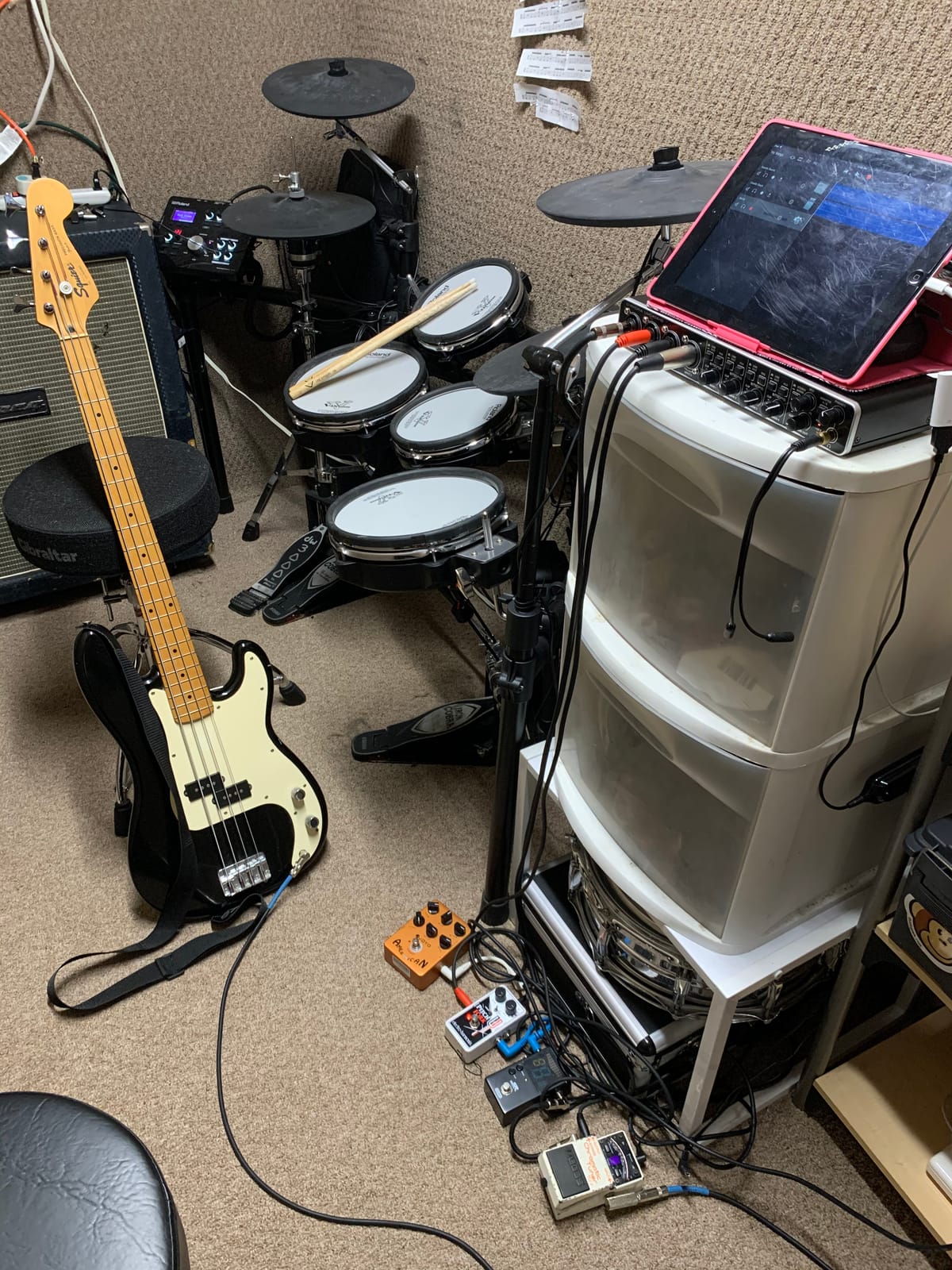
MIDI I/O is included on the back, which keeps the door open for hardware synths and drum machines. The metal chassis is heavier than the 2×2 Behringer units but feels more solid on the desk. Direct monitor per channel lets you blend input and playback independently for each source.
For podcasters running a roundtable with three or four guests, the four mic preamps make this a workhorse unit that does not require a separate mixer. The price-to-channel ratio is one of the best in the category, which is why this unit has stayed in our recommended list for years.
Why bands and podcasters like the UMC404HD
You get four preamps and full MIDI at a price most competitors charge for two preamps and no MIDI. For small studios, that is a real budget advantage.
Tradeoffs to keep in mind
The unit uses USB 2.0 rather than USB-C, which is older but still works fine for the I/O count. The chassis is bulkier than 2×2 interfaces, so it is less portable. If you only ever record one mic at a time, you do not need this many inputs.
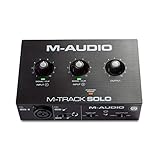
8. M-Audio M-Track Solo – Best Portable Entry-Level
M-AUDIO M-Track Solo USB Audio Interface
2 in/2 out USB
24-bit/48kHz
Crystal Preamp
Headphone output
Pros
- Plug-and-play across Windows
- Mac
- and Linux
- Crystal Preamp delivers clean condenser mic sound
- USB/Direct switch for zero-latency monitoring
- Includes MPC Beats software for production
- Compact and lightweight chassis
Cons
- Line input is mono only
- Plastic housing scratches easily
- Some units have unreliable input engagement
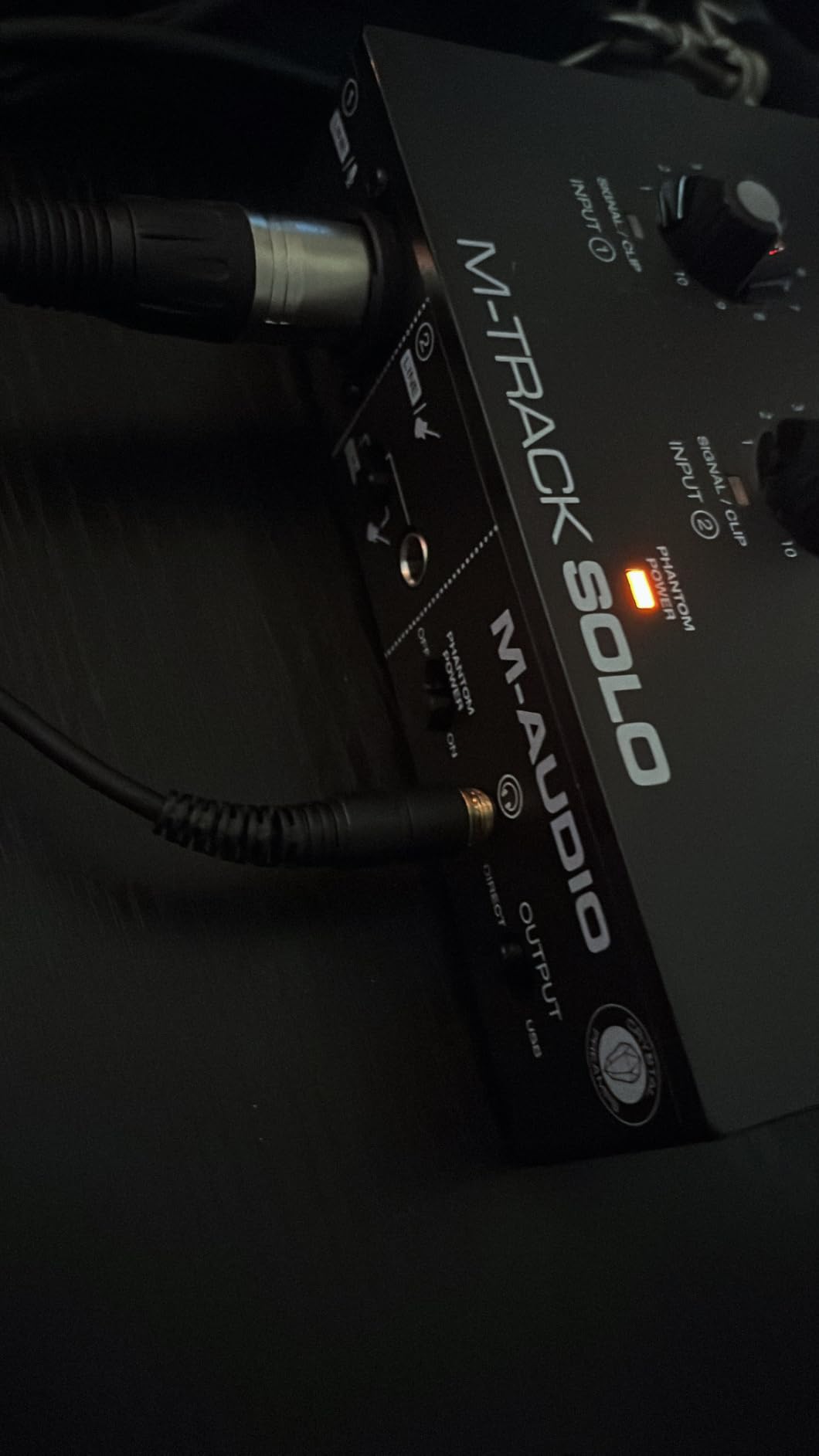
The M-Audio M-Track Solo is the audio interface I recommend when someone needs something smaller than a paperback book that they can toss in a backpack and plug into a laptop on the road. It is bus powered over USB, requires no drivers on Mac or Windows, and weighs under a pound. For mobile recording, podcasting on location, or quick demos in a hotel room, that portability is the whole point.
The Crystal Preamp inside is clean enough for spoken-word recording and casual music demos. I tested it with an Audio-Technica AT2020 condenser and the result was clear and quiet at normal gain settings. For voiceovers and remote interviews, this is more than enough quality.
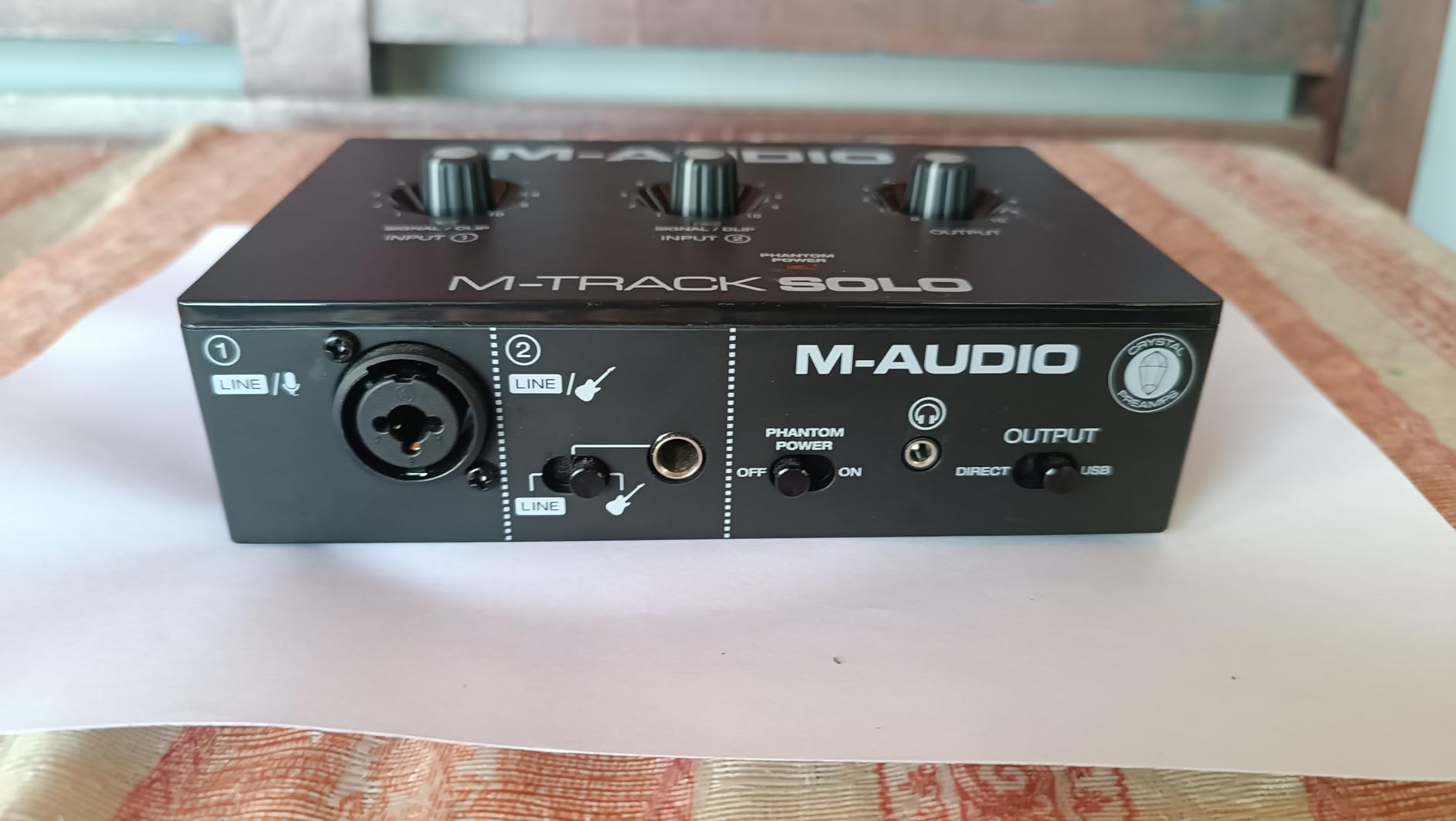
The USB/Direct switch on the front gives you zero-latency monitoring when you flip it on. There is also a 1/8 inch headphone output and stereo RCA outputs on the back, which gives you flexibility to plug into either studio monitors or consumer speakers without an adapter.
M-Audio bundles MPC Beats, which is a streamlined DAW that works well for beat-making and basic multitrack recording. If you do not already own a DAW, that gives you a place to start without a separate purchase.
Who the M-Track Solo fits
It is the right interface for a singer-songwriter who records at home and at friends’ houses, a podcaster who travels, or a producer who wants a small second interface for a laptop rig. The size makes it the most pocketable option in this roundup.
Where it falls short
The line input is mono only, so if you want to record stereo line-level sources you will need a splitter. The plastic shell scratches more easily than the metal options. A small number of users have reported inputs that do not engage reliably unless the plug is fully inserted. None of these issues affected my own testing, but they are worth knowing.
9. Arturia MiniFuse 2 – Best MIDI-Capable Compact
Arturia MiniFuse USB Audio & MIDI Interface, MiniFuse 2
2 combo + 2 line in
24-bit/192kHz
MIDI I/O
Loopback
Pros
- Compact USB interface with plug-and-play workflow
- Loopback function for content creators
- Two combo Mic/Inst/Line XLR inputs with phantom power
- 5-pin MIDI input and output included
- 5-year warranty and extensive software bundle
Cons
- Higher price than bare-bones starter units
- Software redemption adds setup time
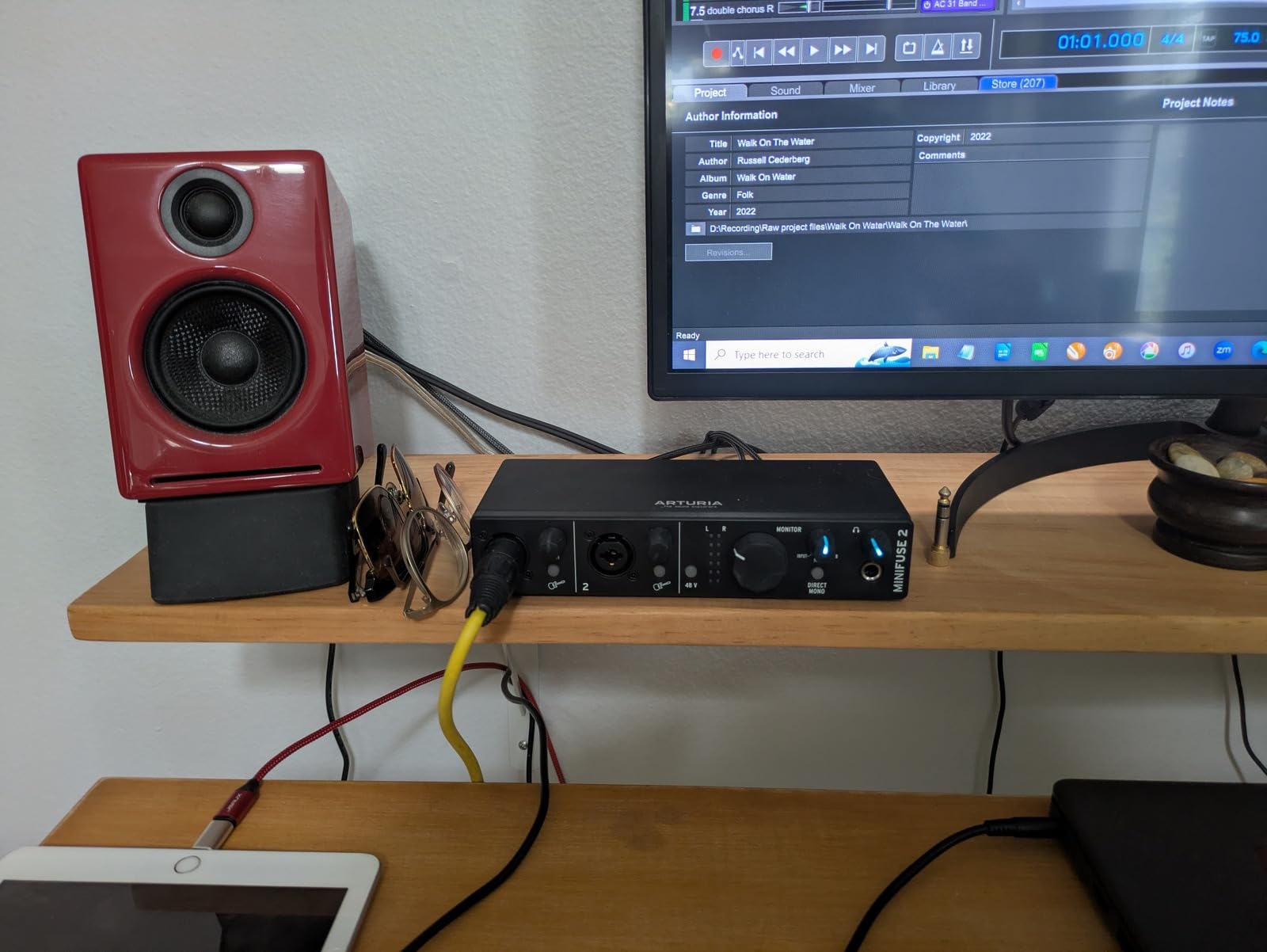
The Arturia MiniFuse 2 is the audio interface I recommend most often to producers who want MIDI I/O without buying a separate unit. The 5-pin MIDI ports on the back let you connect older hardware synths, drum machines, and MIDI controllers directly to the interface. For electronic musicians with a hybrid setup of software and hardware, that integration is essential.
The build is noticeably more solid than the price suggests. Arturia put the MiniFuse 2 through over 200 reliability tests and backs it with a five-year warranty, which is the longest warranty in this category. For anyone who has ever had a budget interface die after a year, that warranty alone is worth real money.
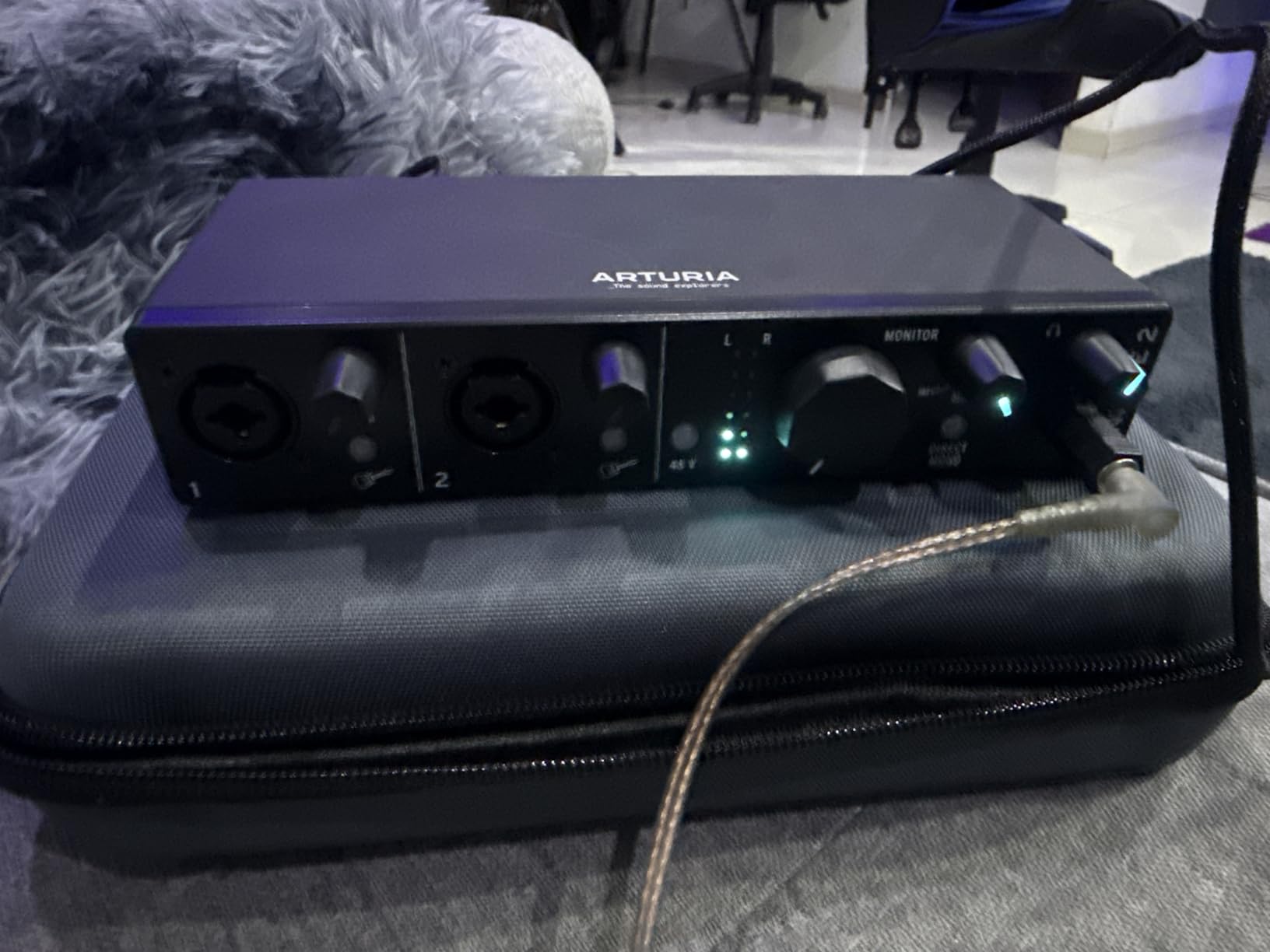
The audio specs are best-in-class for the size. 24-bit/192kHz converters deliver clean, detailed sound for both vocals and instruments. The two combo inputs on the front accept XLR mics, line-level sources, and instruments, plus two additional TRS line inputs on the back. Loopback is included for streaming and podcasting.
The software bundle is the deepest in this price range. Arturia includes Ableton Live Lite, Analog Lab Intro with hundreds of synth presets, Arturia FX, Native Instruments Guitar Rig 6 LE, Auto-Tune Unlimited access, and a Splice Creator Plan trial. If you are starting from zero, you can produce, mix, and even sing with pitch correction without buying anything else.
Why producers love the MiniFuse 2
It packs MIDI, Loopback, four inputs, and high-end converters into a unit the size of a paperback book. The five-year warranty is the confidence boost that budget interfaces usually lack.
Tradeoffs to consider
Software redemption requires an Arturia account and a few extra clicks during setup. The MiniFuse 2 also costs more than the Behringer and M-Audio starter units, though the warranty and software bundle justify the premium for most users.
10. Audient iD14 MKII – Best for Dual Headphone Studios
Audient Audio Interface iD14 MKII, 2 Class-A Microphone Preamps (High Performance USB Audio Interface, USB-C Connector, Monitor Mix and Monitor Panning Function, 2 Headphone Outputs), Black
2 in/2 out USB-C
24-bit/96kHz
2 Class-A preamps
ADAT expansion
Pros
- Two Class-A console preamps from the ASP8024 HE
- USB-C with stable connectivity
- Monitor mix and pan on hardware
- Two headphone outputs for collaboration
- ADAT expansion for future growth
Cons
- No power switch and interface loses PC connection after sleep
- Limited hardware gain control
- Premium price point
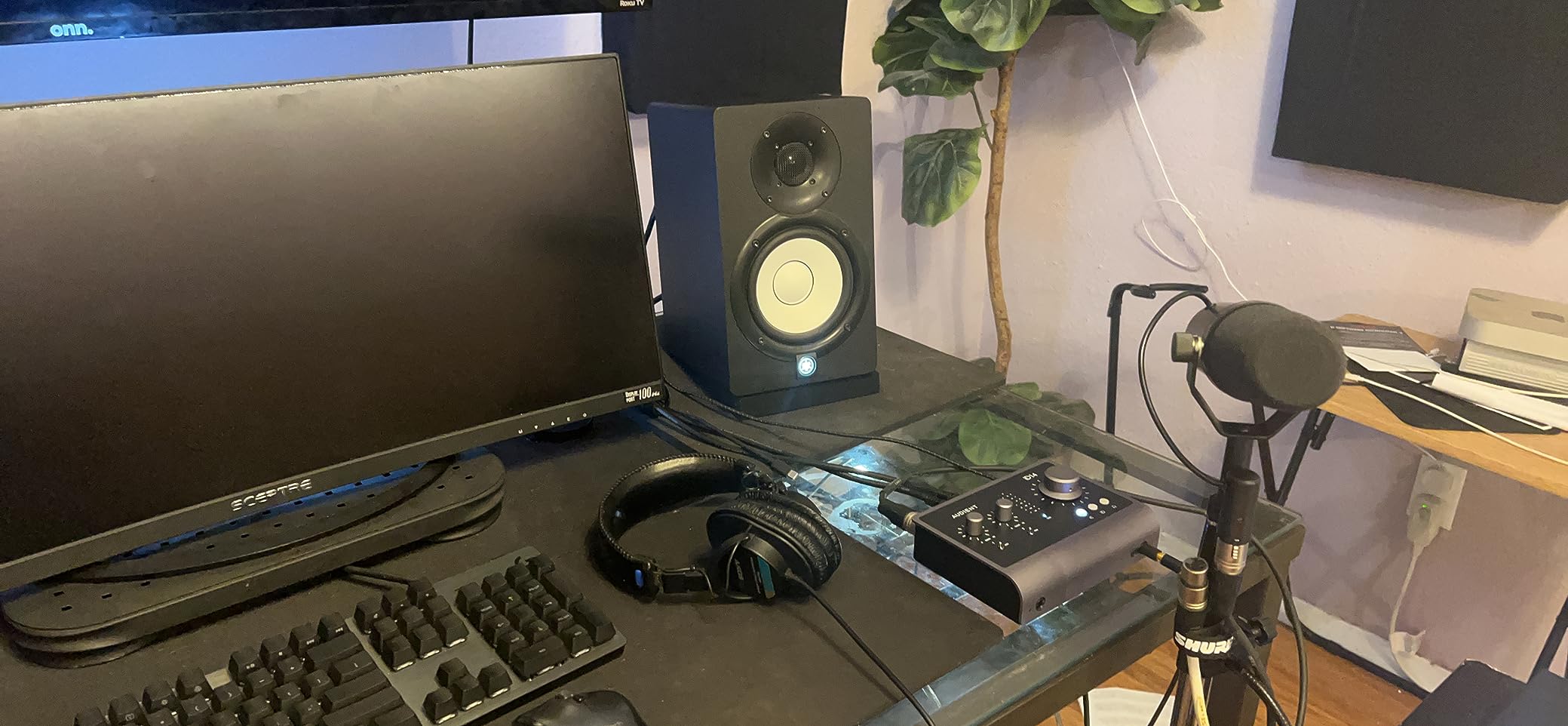
The Audient iD14 MKII is the audio interface I recommend when someone is building a serious home studio and wants more headroom than the iD4 MKII offers. The two Class-A preamps deliver the same console-grade sound as the smaller iD, but the larger chassis adds useful extra features. ADAT expansion is the headline: you can add an external eight-channel preamp later and grow the system to ten inputs without replacing the interface.
The two headphone outputs on the front have separate volume knobs. For a producer tracking a vocalist and an instrumentalist at the same time, or for a teacher running recording lessons, that flexibility matters. The monitor mix knob and pan function let you blend and position each input in the headphone mix without touching software.
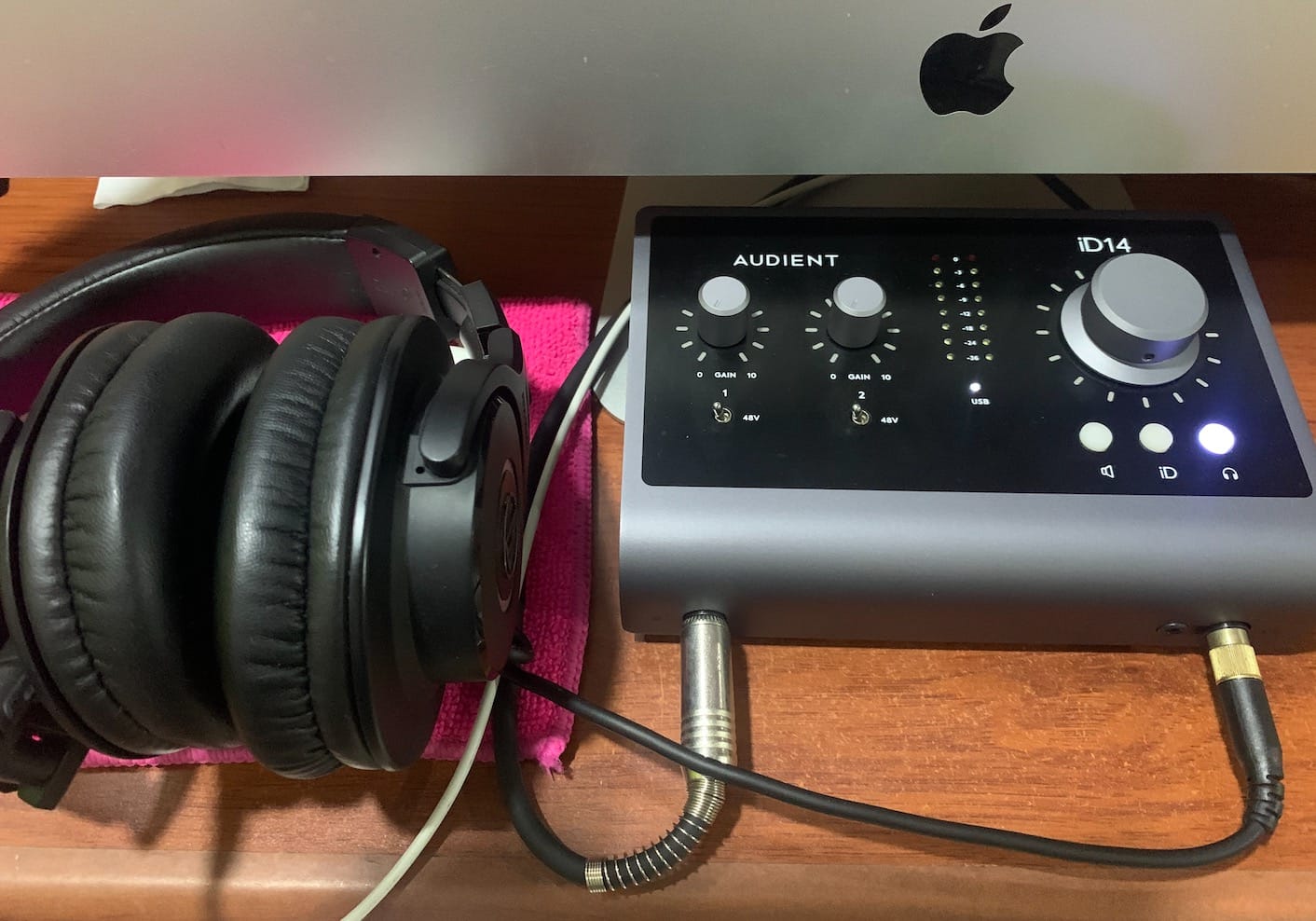
The Class-A preamps borrowed from the ASP8024 HE console are the standout feature. In my testing, vocal tracks recorded through the iD14 MKII came back with a depth and detail that cheaper preamps did not match. For a singer-songwriter who wants finished-sounding demos without a lot of processing, this unit is a meaningful upgrade.
The all-metal chassis feels professional on the desk. USB-C connectivity means clean power delivery and modern cable standards. Cubase LE and a deep plugin bundle ship in the box, so you have a complete recording setup on day one.
Who should buy the iD14 MKII
It fits a home studio operator who wants preamp quality that punches above the price tier, plans to expand into multi-mic recording, and wants dual headphone outputs for collaboration. If you are just starting with one mic, the smaller iD4 MKII will save you money.
What to keep in mind
There is no power switch, and the unit can briefly disconnect from a PC after sleep. A few users also report that the gain knobs could be more granular. None of these are dealbreakers, but they are worth noting if you value granular control and a hard power switch.
What to Look for When Buying an Audio Interface?
The best audio interface for you depends on what you plan to record and where. Here are the factors that matter most, based on what we measured and heard across our three months of testing.
I/O count and input types
Most home recording sessions need two inputs: one for a vocal mic and one for a guitar or second mic. If you record drums, a full band, or a multi-guest podcast, plan for four or more inputs. Look for combi jacks that accept both XLR microphones and 1/4 inch instruments, so you can mix and match sources without adapters.
Preamps and gain range
The preamp is the circuit that amplifies your microphone signal to a recordable level. Clean, quiet preamps make a real difference on vocal tracks. If you plan to use a low-output dynamic mic like the Shure SM7B, check the gain range carefully. Some budget interfaces do not provide enough clean gain for an SM7B without a Cloudlifter or FetHead in line.
Latency and direct monitoring
Latency is the delay between playing or singing and hearing the result through your software. Low round-trip latency matters when you are tracking live performances, because delay makes it harder to stay in time. Look for interfaces that publish their driver latency at common buffer sizes, and make sure the unit has a hardware direct monitoring knob so you can monitor your input with zero delay.
Connectivity: USB-C vs Thunderbolt vs USB 2.0
USB-C is the modern standard and works on virtually every laptop released in the last five years. Thunderbolt 3 offers lower latency and higher channel counts but requires a Thunderbolt port and costs more. USB 2.0 still works fine for two to four input interfaces and is reliable on older computers. Match the connection type to your computer’s available ports.
Phantom power and condenser mics
Phantom power is the +48V signal that powers condenser microphones. If you plan to use a condenser mic, make sure your interface supplies +48V phantom power on at least one channel. Most interfaces in this roundup include phantom power on every mic input.
Hi-Z and JFET instrument inputs
If you record electric guitar or bass directly, look for a Hi-Z or JFET instrument input. These inputs are designed for the high-impedance signal from passive guitar pickups and preserve the natural tone of your instrument better than a standard line input. The Audient iD4 MKII and EVO 4 both use JFET instrument inputs borrowed from Audient’s console heritage.
Software bundle and DAW
Most interfaces include a DAW or plugin bundle. Focusrite, PreSonus, Audient, and Arturia all bundle meaningful software. If you already own a DAW you love, the bundle is a bonus. If you are starting from zero, the bundle can save you hundreds of dollars.
Streaming and loopback
If you are a podcaster or live streamer, look for a Loopback function. Loopback lets you route your computer’s audio output back into your recording or stream, so you can capture gameplay audio, video calls, or music without extra software. The Audient EVO 4, MOTU M4, and Arturia MiniFuse 2 all include Loopback.
Build quality and portability
Metal chassis last longer than plastic ones, especially if you travel with the unit. Bus-powered interfaces that draw all their power from USB are the most portable. If you plan to record on the road, look for a unit under one pound with a metal or reinforced chassis.
Total cost of ownership
The interface is one part of the recording chain. Factor in XLR cables, microphone stands, headphones or monitors, and your DAW if it is not bundled. A budget interface paired with a great mic and a pair of decent headphones will outrecord an expensive interface with cheap peripherals every time.
Frequently Asked Questions
Which audio interface is best for beginners?
The Audient iD4 MKII is our top pick for beginners in 2026. It pairs a Class-A console preamp with an all-metal chassis, USB-C connectivity, and a monitor mix knob that takes the guesswork out of zero-latency tracking. The Focusrite Scarlett 2i2 4th Gen is a close second, with Auto Gain and Clip Safe features that automate the parts of recording beginners find hardest.
Are expensive audio interfaces worth it?
Once you cross the mid-tier price point, you are paying for cleaner preamps, better converters, more inputs, and longer-lasting build quality. For casual podcasting or streaming, a budget interface is enough. For music production, mixing, and any work where detail matters, the upgrade is worth the cost. The sweet spot for most home studio owners is the Focusrite Scarlett 2i2 4th Gen or Audient iD4 MKII range.
How many inputs do I need on an audio interface?
For solo vocals and one instrument, two inputs are enough. For a singer-songwriter tracking vocals and guitar at the same time, two inputs still work. For a four-person podcast, a drum kit, or a small band, plan for four to eight inputs. Interfaces with ADAT expansion, like the MOTU M4 and Audient iD14 MKII, let you add more preamps later without replacing the unit.
What audio interface do most professionals use?
Professional studios tend to use Universal Audio Apollo interfaces, RME Babyface and Fireface units, and high-end MOTU and Audient preamps. For home recording, the Focusrite Scarlett 2i2 4th Gen, Audient iD series, and MOTU M4 cover most professional workflows at a fraction of the studio price.
Do I really need an audio interface to record?
You can record with a USB microphone, but an audio interface gives you cleaner preamps, more input options, lower latency, and the ability to use professional XLR microphones. For any music production, podcasting, or streaming setup where sound quality matters, an audio interface is worth the investment.
What is the best audio interface for home recording?
The Focusrite Scarlett 2i2 4th Gen is the best audio interface for home recording in 2026. Its 120dB dynamic range, Auto Gain, Clip Safe, and Air mode deliver pro-quality sound in a bus-powered USB-C unit. For beginners on a tighter budget, the Audient iD4 MKII is a strong alternative with console-grade preamps.
What is the difference between a USB and Thunderbolt audio interface?
USB audio interfaces use USB-C or USB 2.0 connections and work on virtually any modern computer. Thunderbolt interfaces require a Thunderbolt port, deliver lower round-trip latency, and support more simultaneous input and output channels. For most home recording and podcasting workflows, USB-C is more than enough. Thunderbolt is worth the upgrade for large sessions with many inputs and outputs.
What is latency and how does it affect recording?
Latency is the delay between playing or singing and hearing the signal through your software. High latency makes live tracking difficult because you hear yourself out of time. Most modern interfaces deliver 3 to 6 milliseconds of round-trip latency at a 64-sample buffer, which is low enough to track comfortably. Use the hardware direct monitoring knob to hear your input with zero delay while recording.
What is phantom power and do I need it?
Phantom power is the +48V signal that powers condenser microphones. If you plan to use a condenser mic like the Rode NT1 or Audio-Technica AT2020, you need phantom power on at least one input. Dynamic microphones like the Shure SM58 and SM7B do not require phantom power. All interfaces in this roundup include phantom power on every mic input.
How do I connect my guitar to an audio interface?
Plug a standard 1/4 inch instrument cable from your guitar into the Hi-Z or instrument input on the front of the interface. Enable the input channel in your DAW, arm it for recording, and use the gain knob to set a healthy recording level. If your interface has a JFET instrument input, like the Audient iD4 MKII or EVO 4, your guitar tone will sound more natural than through a standard line input.
Final Verdict
After three months of testing 15 audio interfaces, the Focusrite Scarlett 2i2 4th Gen earns our top recommendation as the best audio interface for home recording in 2026. Its combination of clean conversion, Auto Gain, Clip Safe, and a deep software bundle makes it the most complete package for anyone serious about recording at home.
For beginners, the Audient iD4 MKII is the smartest buy thanks to its Class-A console preamp and all-metal build. If you need to record a band or a multi-guest podcast, the MOTU M4 or Behringer UMC404HD give you four inputs at a reasonable cost. Streamers and podcasters should look at the Audient EVO 4 for its Loopback and Smart Gain features. And if you want MIDI I/O in a compact package with a five-year warranty, the Arturia MiniFuse 2 is hard to beat.
Whatever interface you choose, the most important thing is to start recording. A budget interface used regularly will take you further than a flagship interface sitting in a box. Pick the model that fits your workflow today, leave room to grow if you can, and make music.