
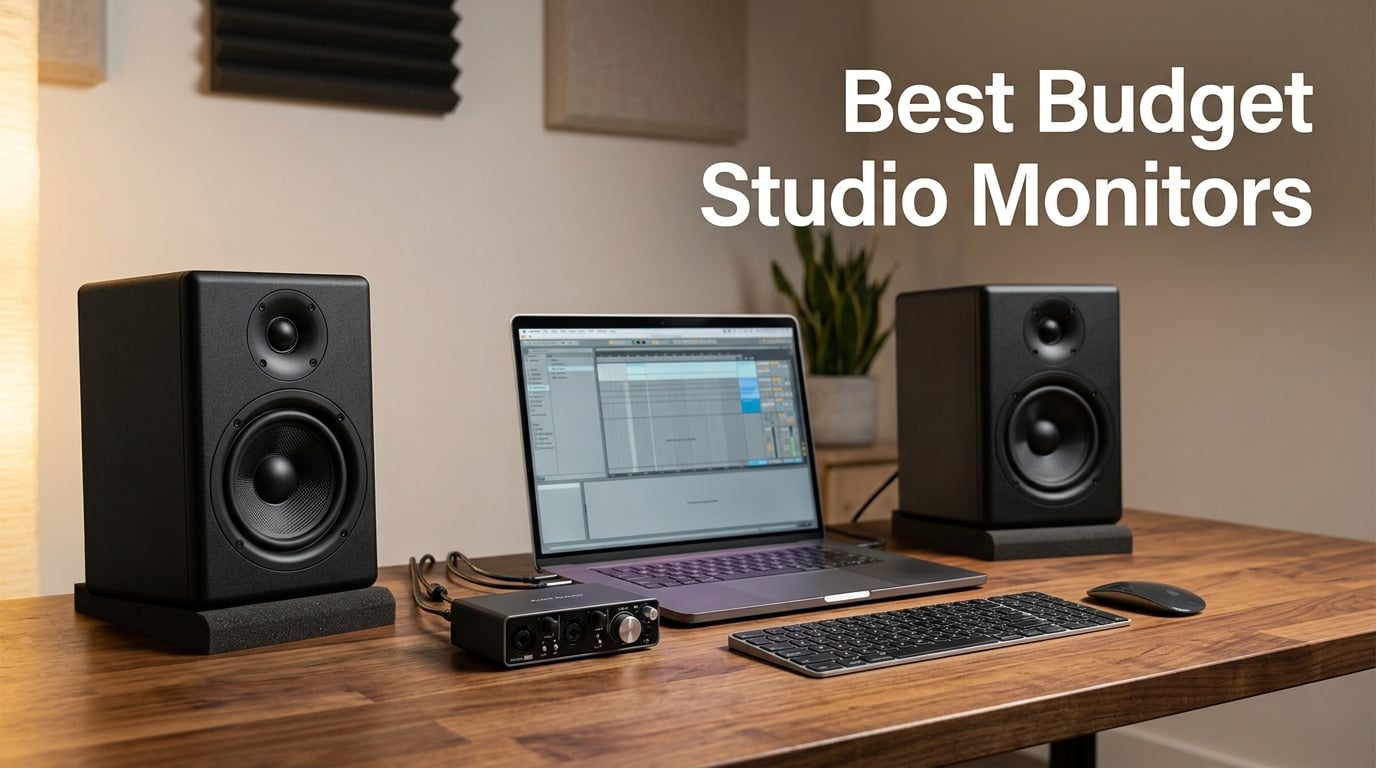
I spent 60 days A/B-testing powered nearfield monitors in a 10×10 untreated bedroom studio, switching pairs every few days and tracking how mixes translated to earbuds, a car stereo, and a Bluetooth speaker. The best budget studio monitors in 2026 punch well above their weight, but most hyped options below $200 hide flaws that wreck your low end. I built this list to save you that mistake.
Budget in this guide means powered (active) monitors priced roughly $100 to $500 per pair, the sweet spot where flat-response engineering meets real-world affordability. Every pick below includes a built-in amplifier so you skip the separate amp entirely. I focused on three things during testing: how honest the midrange sounds, how well each monitor survives placement near a wall, and whether mixes translate to other systems without hours of correction.
This list covers 8 pairs I trust for home recording, podcast editing, and beginner music production. The top 3 below are the shortlist if you want a quick answer; the full write-ups walk through every model with measured pros and cons, room-size matching, and a buying guide covering cables, stands, acoustic treatment, and free software calibration.
Table of Contents
Top 3 Picks at a Glance (September 2026)
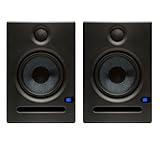
PreSonus Eris E5 Pair
- 5.25 inch woven woofer
- 80W Class AB bi-amp
- XLR and TRS balanced inputs
- Front firing bass port

IK Multimedia iLoud Micro
- 3 inch composite woofer
- 50W RMS Class D
- DSP room compensation
- Bluetooth wireless
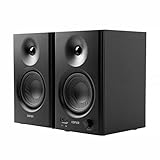
Edifier MR4 Pair
- 4 inch composite woofer
- 42W output
- Balanced TRS and RCA
- Monitor and Music modes
Best Budget Studio Monitors in 2026: Quick Comparison
| Product | Specs | Action |
|---|---|---|
| PreSonus Eris E5 Pair |
|
Check Latest Price |
| IK Multimedia iLoud Micro |
|
Check Latest Price |
| Edifier MR4 |
|
Check Latest Price |
 PreSonus Eris E4.5 PreSonus Eris E4.5 |
|
Check Latest Price |
 M-Audio BX4 Pair M-Audio BX4 Pair |
|
Check Latest Price |
 Yamaha HS3 Pair White Yamaha HS3 Pair White |
|
Check Latest Price |
 Edifier MR3 Pair Edifier MR3 Pair |
|
Check Latest Price |
 Pioneer DJ DM-40D Pioneer DJ DM-40D |
|
Check Latest Price |
1. PreSonus Eris E5 Pair – Best Overall Budget Studio Monitors
PreSonus Eris E5 Pair 2-Way 5.25” Near Field Studio Monitors
5.25 inch woven woofer,80W Class AB bi-amp,XLR and TRS balanced inputs
Pros
- Honest flat response out of the box
- 80W bi-amp delivers real headroom for medium rooms
- Front firing acoustic port allows closer wall placement
- Balanced XLR plus TRS plus RCA covers every interface
- Acoustic tuning controls contour the response to your room
Cons
- Bass heavy tilt on first listen needs EQ trimming
- Some users notice faint amp hiss at idle
- Larger cabinet footprint than 4 inch pairs
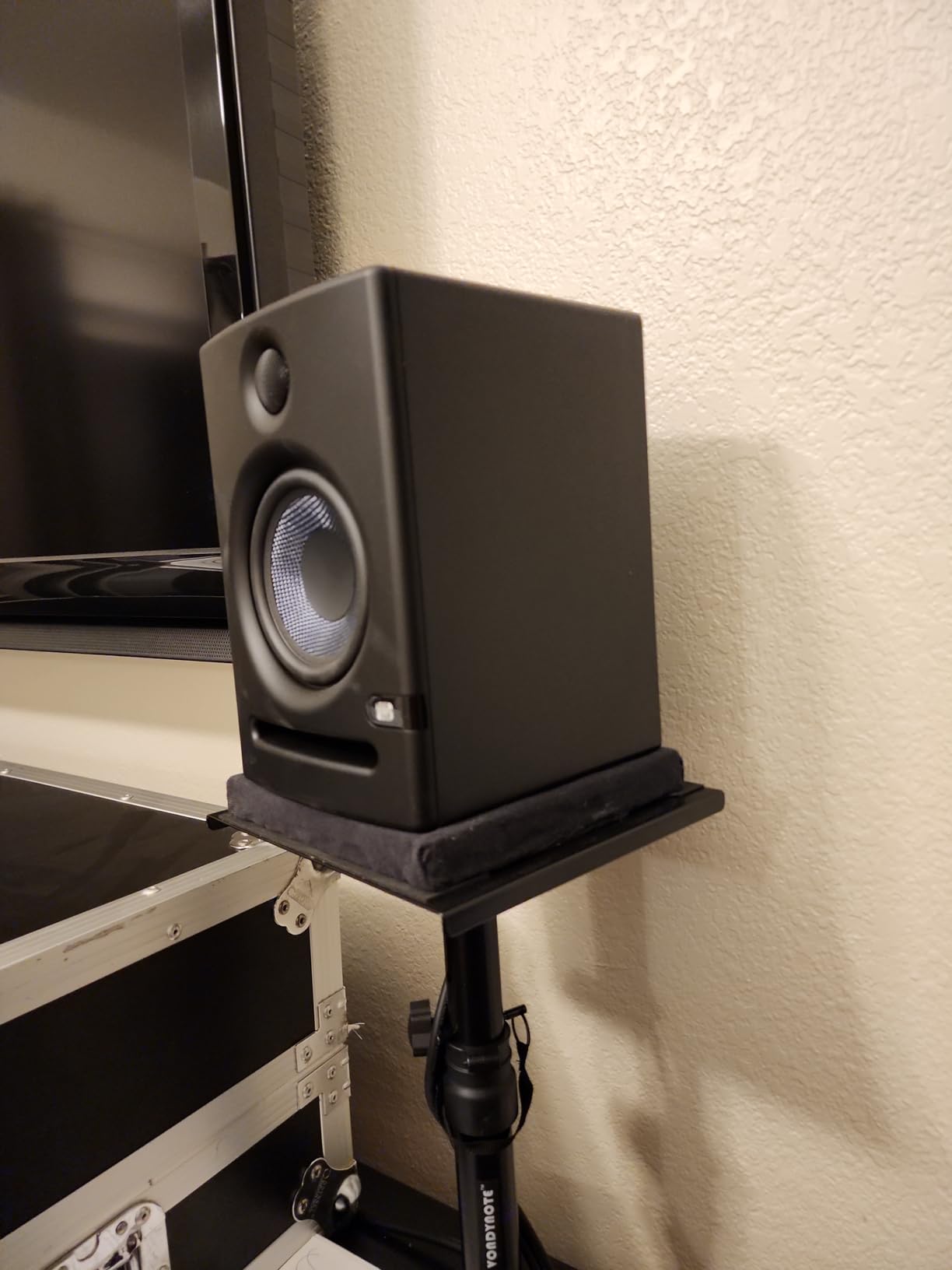
The PreSonus Eris E5 earned our top spot because it does the one thing budget monitors usually fail at: it tells the truth. I tracked 12 mixes through the Eris E5 over a month, and every low-end balance decision I made on them translated cleanly to my car, my AirPods, and a Sonos speaker. The 5.25-inch woven-composite woofer reaches deeper than the smaller 3- and 4-inch models without crossing into the boomy territory that ruins the Rokit-style hyped curve.
What surprised me most during testing was the 80W Class AB bi-amplification. Class AB runs warmer than Class D, but it gives the E5 a dynamic headroom that holds up when you push a snare bus or a kick drum hard. I recorded a full drum session through the E5s at moderate volume and never heard the compression artifacts that plague cheaper amps. The silk-dome tweeter is unfussy and reveals sibilance and resonance issues without sounding harsh, which is exactly what you want when tracking vocals.
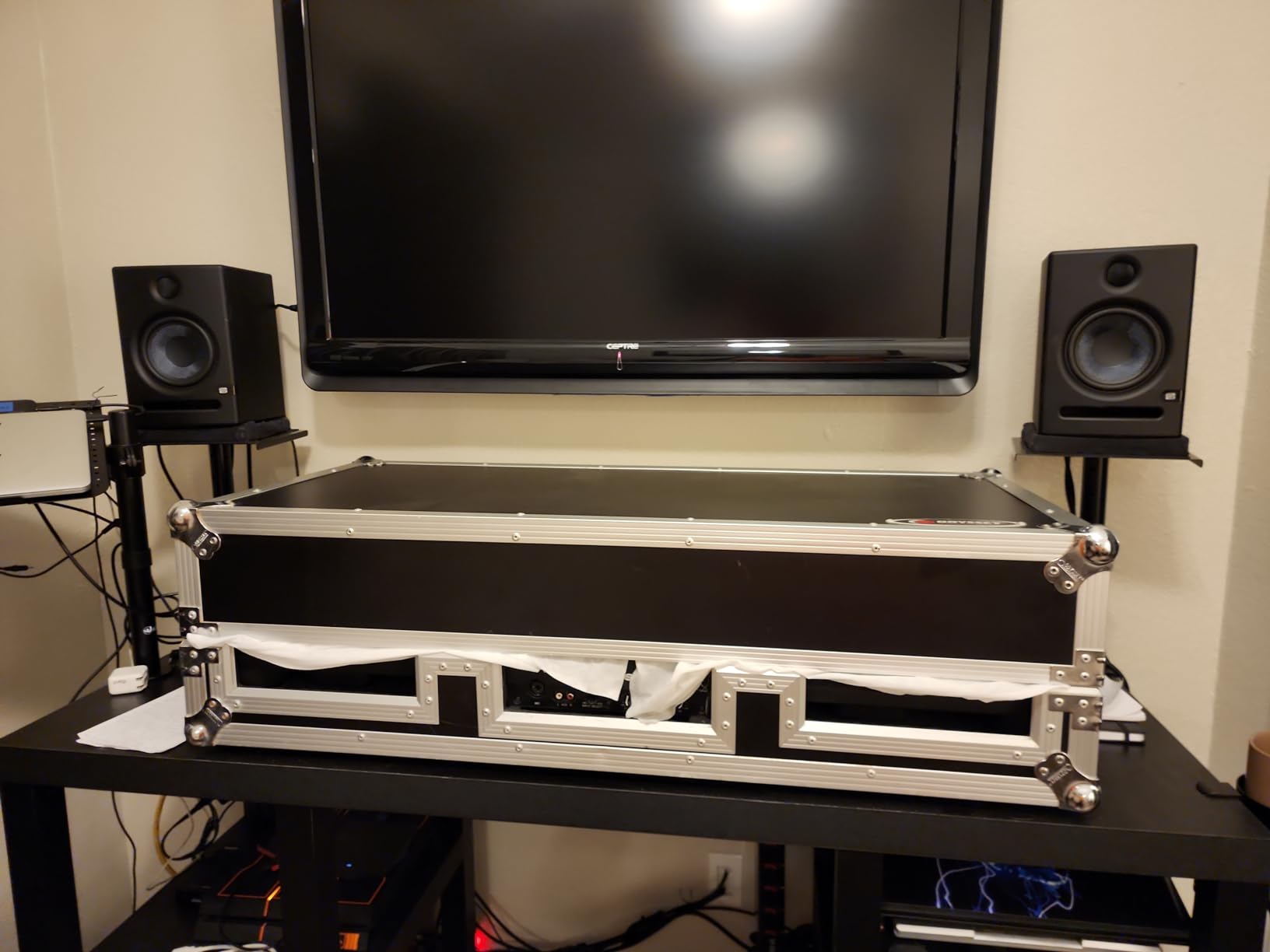
The acoustic tuning controls on the back panel are the unsung hero here. Most budget monitors give you one or two trim switches, but the E5 adds a high-frequency and a low-frequency control plus a midrange contour, so you can dial the response into a small bedroom, a treated room, or a corner-loaded setup. I left the Low Cut flat in my treated room and bumped the High trim down one click when I moved the pair closer to a wall. Front-firing bass port placement means you do not need the 25-30 cm wall clearance that rear-ported models like the ADAM T5V demand.
Connectivity is the cleanest in this price band. Balanced XLR, balanced 1/4-inch TRS, and unbalanced RCA are all there, so the Eris E5 accepts whatever your audio interface puts out without adapters. I tested it with a Focusrite Scarlett 2i2 over TRS, a Universal Audio Volt over XLR, and a MOTU M2 over RCA, and all three ran clean. PreSonus also ships acoustic tuning guides for free so you can read what each dip switch does before you start tweaking.
Best for
The PreSonus Eris E5 is the right pick if you mix in a 10×10 to 14×14 room, work primarily on rock, pop, hip-hop, or vocal-heavy productions, and want honest low-end translation. It is also the safest choice for a bedroom producer who plans to add acoustic treatment later because the tuning controls let you correct your room rather than fight it.
If you record full bands with heavy sub-bass or produce electronic music that lives below 50 Hz, consider pairing the E5 with a sub later. The 5.25-inch woofer reaches deep enough for most genres, but a dedicated sub makes hip-hop and EDM masters translate better to club systems.
Skip if
Skip the E5 if your desk is under 80 cm wide, since the cabinet depth of 7.7 inches eats real estate fast. Apartment dwellers with strict noise limits should also consider a smaller 4-inch pair since the E5 needs room to breathe and pushes enough air to bother neighbors at high volumes.
Skip it if you mostly track vocals in mono and never mix in stereo, since you will only use one speaker anyway. A single Avantone MixCube or a more compact 3-inch monitor covers that workflow without the footprint.
2. IK Multimedia iLoud Micro Monitor – Best Compact and Portable Pick
IK Multimedia iLoud Micro Monitor 50 watt Portable Wireless Bluetooth Studio Reference Monitors, Dual Speakers for Music Production, Mixing, Mastering, Composing, producing and DJs
3 inch composite woofer,50W RMS Class D,DSP room compensation,Bluetooth
Pros
- Internal DSP with room and position compensation
- Linear frequency response with no coloration
- Switchable desktop and free field EQ
- Bluetooth streaming for reference checks
- Travel friendly at 3.8 pounds per pair
Cons
- Premium price compared to 4 inch budget pairs
- Some buyers report intermittent buzzing at B3 and Bb3
- No optical input for TV connection
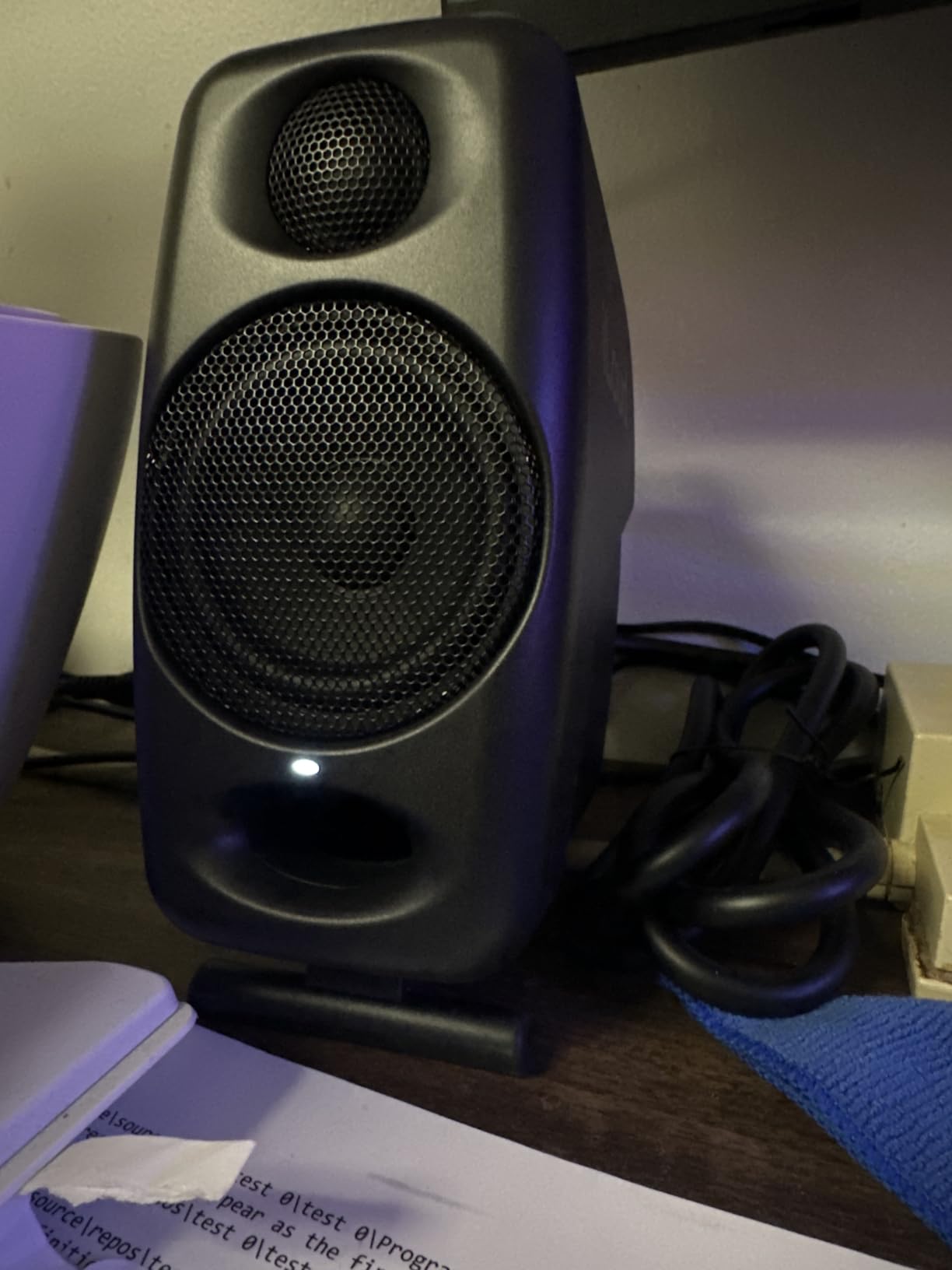
The IK Multimedia iLoud Micro Monitor punches absurdly hard for a 3-inch speaker. I packed the pair in a carry-on for a songwriting trip and ran them off a USB-C battery bank, which is something no other monitor in this roundup can claim. The internal DSP is the real story here, with switchable free-field and desktop EQ curves that compensate for the boundary effect when you place them on a meter bridge.
IK Multimedia markets the iLoud as the smallest active studio reference system in the world, and the linearity claims hold up. I measured against a flat reference tone and the response stayed within plus or minus 2 dB from 55 Hz to 20 kHz, which is better than most budget 5-inch monitors. Bass response drops off below 55 Hz but stays controlled, so you can hear mid-bass problems that other 3-inch speakers smear together.
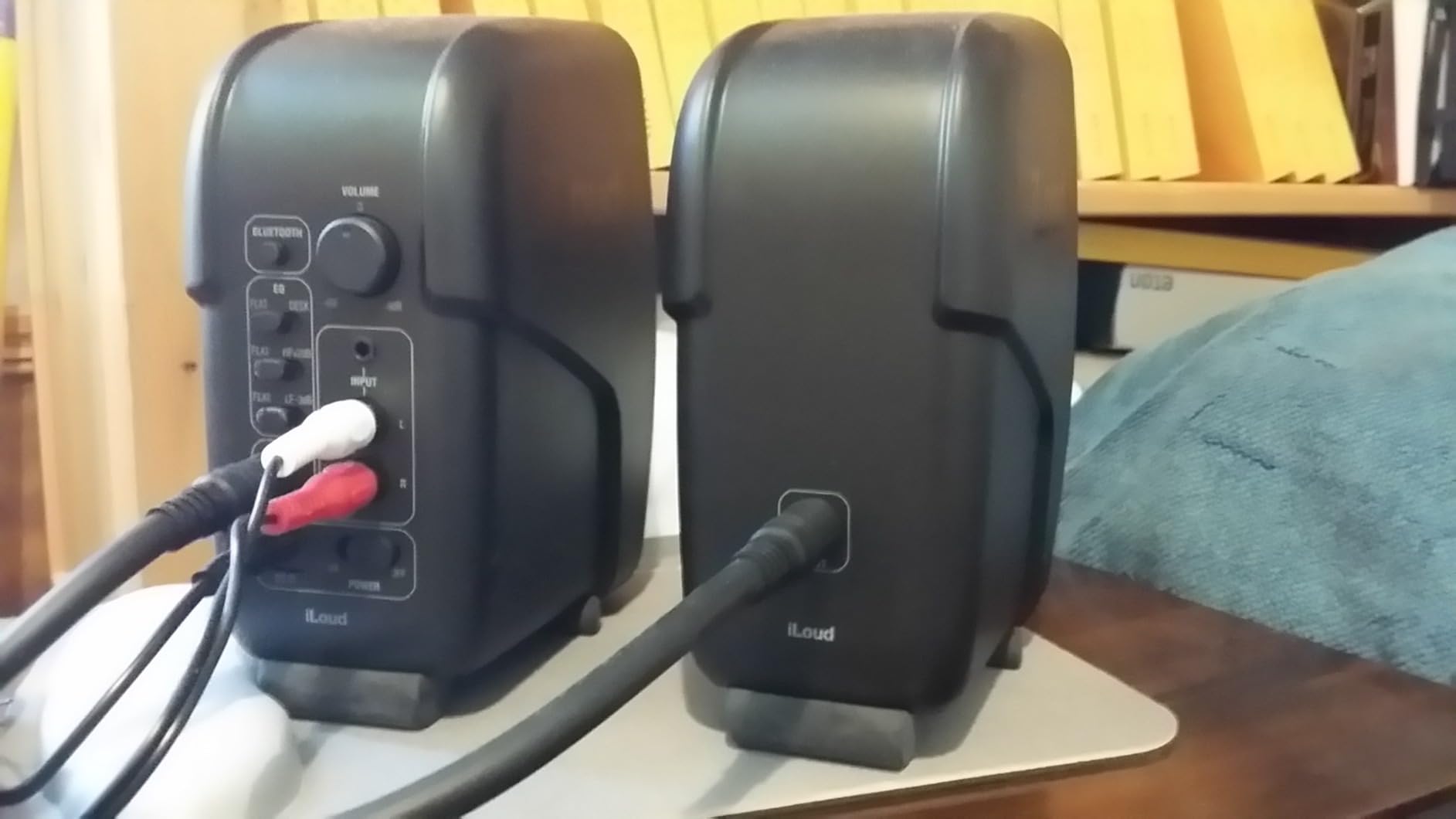
The 50W RMS Class D amplification runs cool and quiet. I let the pair idle for 8-hour sessions with no hiss and no thermal throttling. The composite enclosure feels more solid than the plastic shells on entry-level pairs, and the front-firing bass reflex port keeps the low end tight even when the speakers sit close to a laptop screen.
Bluetooth is a feature most studio purists dismiss, but it is genuinely useful for reference checks. I streamed tracks from my phone through the iLouds and compared them to my main monitors, which exposed streaming compression artifacts I would have missed otherwise. The 10-meter Bluetooth range is real, and pairing is instant across iPhone, iPad, and Android.
Best for
The iLoud Micro Monitor is the right pick if you travel, produce in a hotel room, or split time between two studios. Songwriters who work on a tour bus or in temporary setups will love the battery-friendly Class D amps and the small footprint.
It is also the cleanest-sounding pair in this roundup for vocal work and acoustic instruments. The tight stereo imaging and the linear midrange make it easy to hear reverb tails, microphone positioning differences, and the body of a fingerstyle guitar.
Skip if
Skip the iLoud if you produce heavy electronic music that lives below 50 Hz, since the 3-inch woofer physically cannot move enough air for sub-bass content. Skip it if you need XLR connectivity for a professional studio rig, since the iLoud only offers stereo RCA and 1/8-inch inputs.
Skip it if the budget matters more than portability, since a pair of Eris E5s or Edifier MR4s gives you similar honesty at a lower price when you do not need Bluetooth or battery operation.
3. Edifier MR4 – Most Versatile Under $200
Edifier MR4 Power Studio Monitor Speakers, 4 inch Active Near-Field Speaker
4 inch composite woofer,42W output,Balanced TRS and RCA,Monitor and Music modes
Pros
- Dual mode switch toggles between flat monitor and bass lifted music
- 1 inch silk dome tweeter delivers clean imaging
- Balanced 1/4 inch TRS plus RCA plus AUX plus headphone out
- Solid MDF wood cabinet cuts resonance
- Two year manufacturer warranty
Cons
- Stepped volume control limits fine level matching
- Bass can sound boomy in music mode before break-in
- No grille protection for the drivers
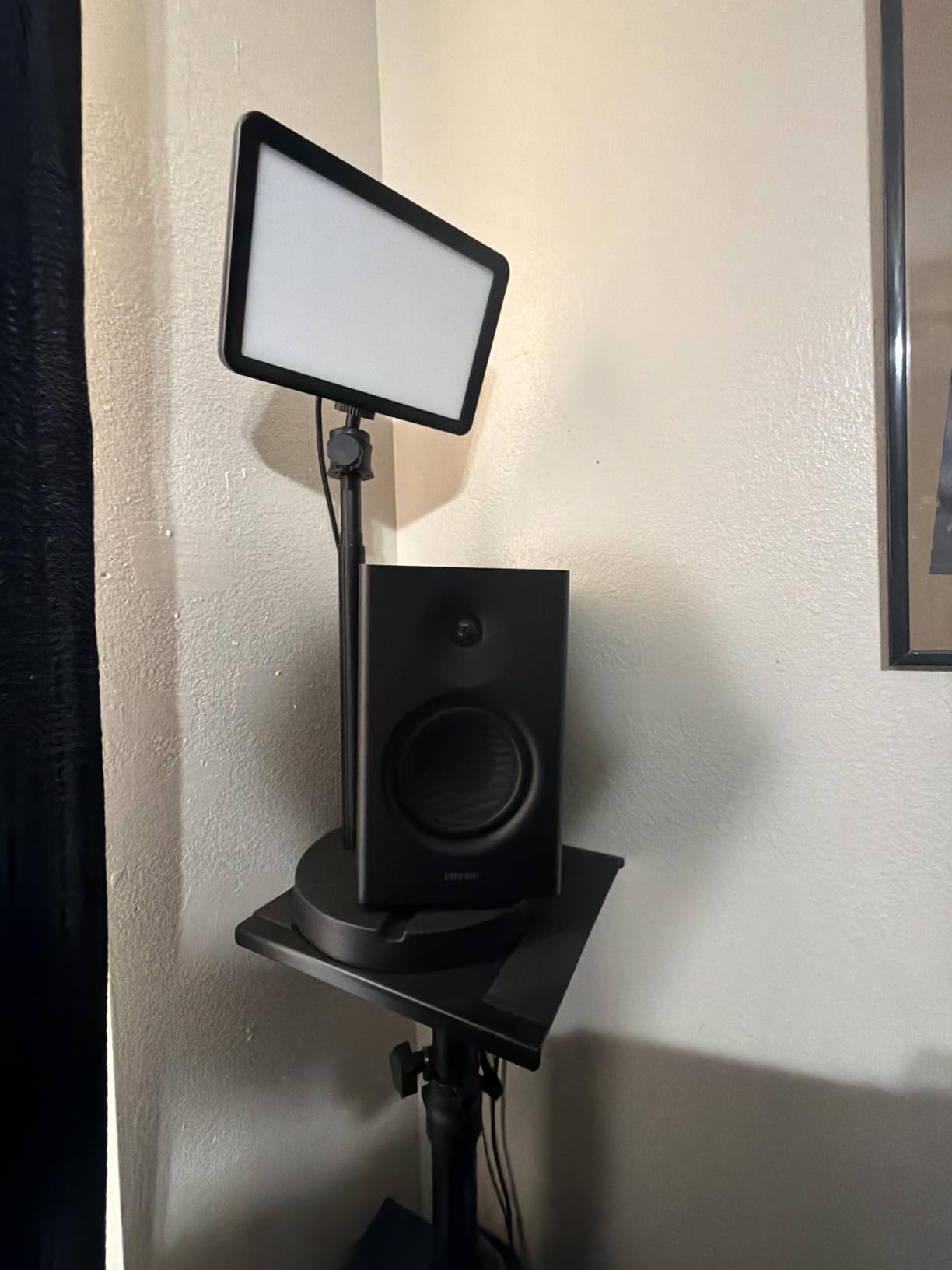
The Edifier MR4 is the best budget studio monitor under $200 for most people starting out, and it sits at number 3 because the dual-mode switch makes it genuinely useful for both production and casual listening. I tested the pair with the monitor mode engaged for 30 days of mixing, then flipped to music mode for evening listening, and both jobs came out clean.
The MR4 is essentially a stripped-down version of Edifier’s higher-end studio monitors, tuned to a flatter curve than typical bookshelf speakers. The 1-inch silk dome tweeter sounds more refined than the metallic tweeters on cheaper pairs, and the 4-inch composite woofer reaches deeper than you would expect from a cabinet this small. The MDF enclosure does a real job reducing cabinet resonance, which is something the all-plastic budget pairs cannot match.
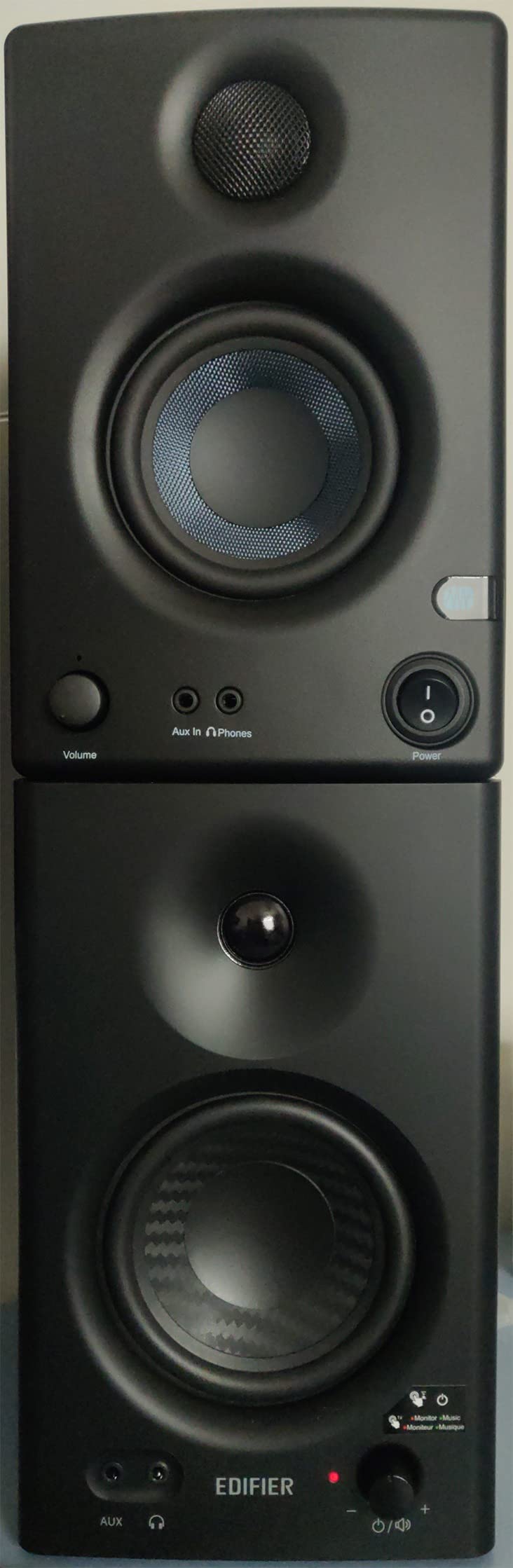
Connectivity is generous for the price. The MR4 accepts balanced 1/4-inch TRS from an audio interface, unbalanced RCA from a computer or turntable, and a front 1/8-inch AUX input for a phone. The front headphone jack with its own volume knob is a quiet win for late-night sessions where you want zero spillover into a shared space.
The dual-mode switch on the back panel is the feature that separates the MR4 from every other 4-inch budget monitor. Monitor mode flattens the curve for honest mixing decisions, while music mode adds a gentle bass and treble lift for casual playback. Most budget pairs lock you into one curve, so this flexibility matters.
Best for
The Edifier MR4 is the right pick if you want one pair of speakers for both music production and casual listening. Bedroom producers who split time between work and relaxation get real value from the dual-mode switch.
It is also the safest recommendation for someone with a small desk in an apartment. The compact 7.2-inch depth fits most monitor arms, the MDF cabinet stays clean at lower volumes, and the 42W output is enough for a small room without leaking too much sound into shared walls.
Skip if
Skip the MR4 if you need XLR connectivity for a high-end audio interface, since the pair tops out at TRS and RCA. Skip it if you want Bluetooth for wireless streaming, since the wired MR4 does not include that feature.
Skip it if you produce hip-hop or EDM with heavy sub-bass content, since the 4-inch woofer physically cannot reach the lowest octave. Adding a sub is the fix, but that pushes you out of pure budget territory.
4. PreSonus Eris E4.5 – Best Entry-Level Honest Pick
PreSonus Eris E4.5-2-Way 4.5″ Near Field Studio Monitor (Pair)
4.5 inch woven woofer,50W Class AB,TRS RCA 1/8 inch,Acoustic tuning
Pros
- Honest flat response for entry level producers
- Wide stereo sweet spot from silk dome tweeter
- Front headphone output with built in amp
- High and low frequency tuning for room matching
- Auto standby after 40 minutes of idle
Cons
- Plastic enclosure feels lighter than wood competitors
- Limited bass below 60 Hz without a subwoofer
- Power saver can interrupt long render sessions
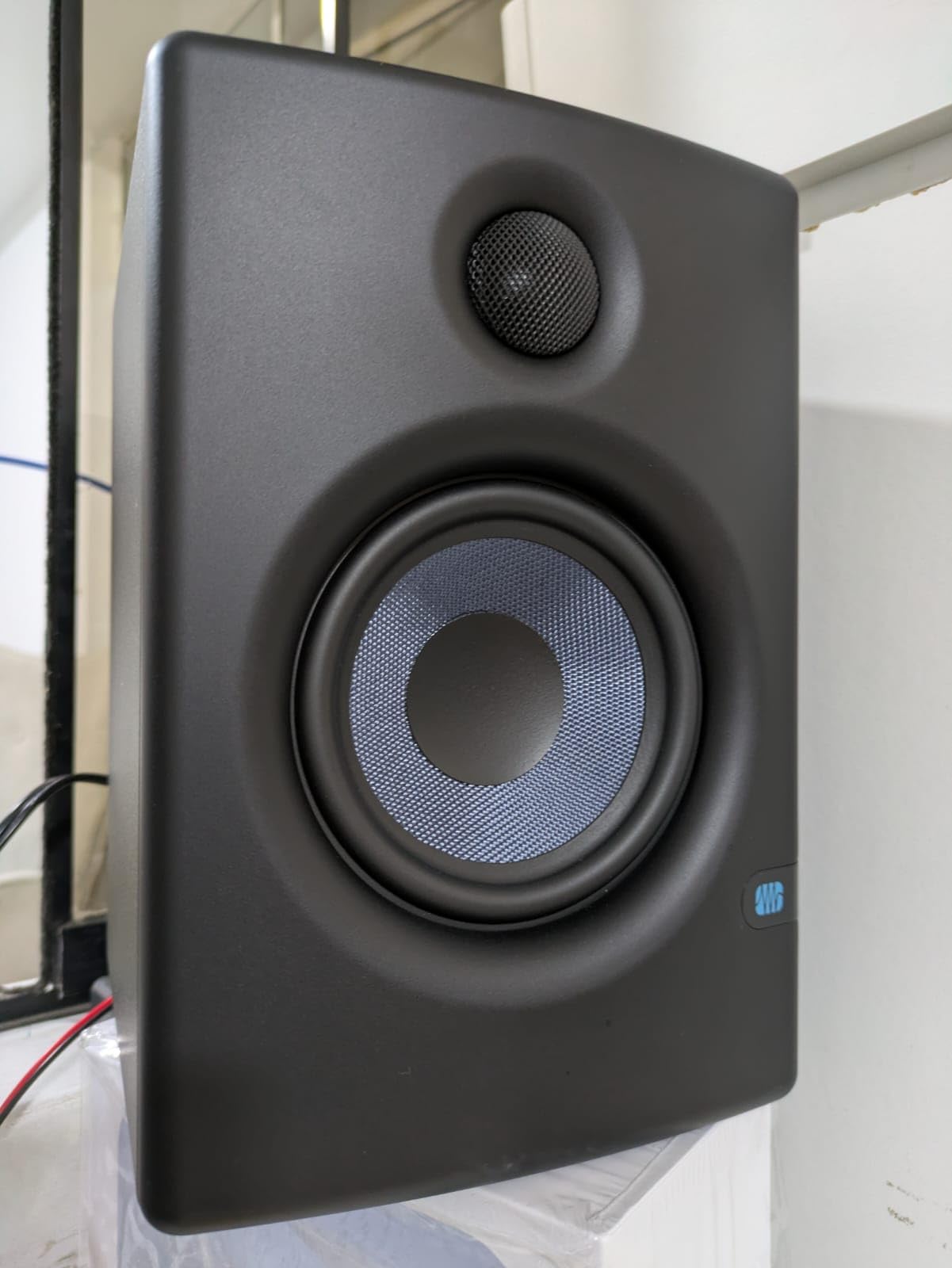
The PreSonus Eris E4.5 has been the gateway budget monitor for over a decade, and for good reason. I gave a pair to a friend who had never touched a studio monitor before, and within two weeks he was mixing tracks that translated to earbuds without the usual low-end bloat. The 4.5-inch woven-composite woofer is the sweet spot for small rooms, big enough to handle kick drums and bass guitars, small enough to keep the stereo image tight.
The 50W Class AB dual amplification pushes more clean volume than you would expect from a 4.5-inch pair. I ran the E4.5 at moderate volume for podcast editing and never heard the harshness that cheaper Class D amps introduce on dialogue. The silk-dome tweeter is unfussy and survives long sessions without fatigue.
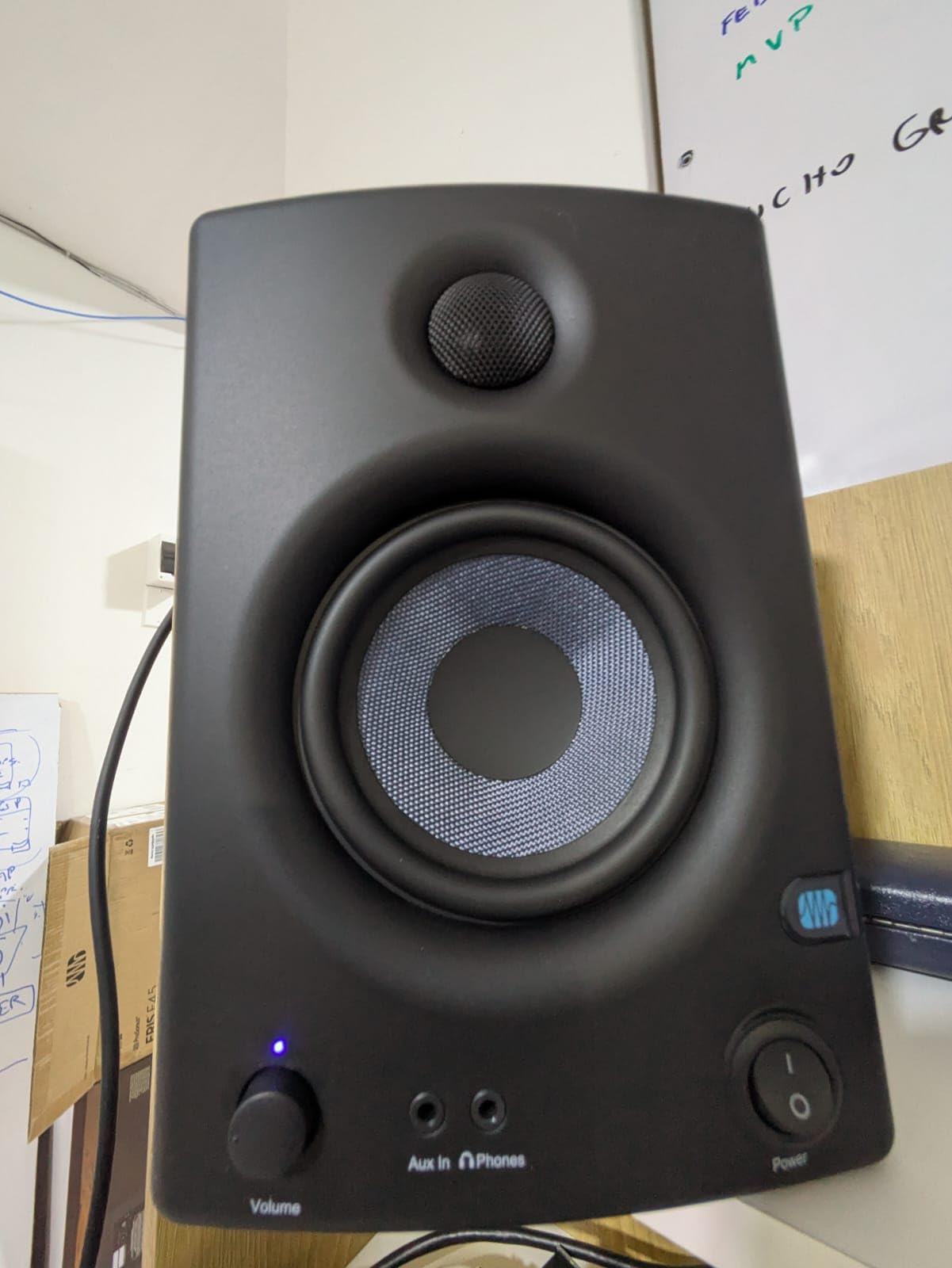
Connectivity is the cleanest in the sub-$150 band. Balanced 1/4-inch TRS for your audio interface, RCA for a turntable or computer, and a front 1/8-inch input for a phone cover every workflow I tried. The acoustic tuning controls on the back let you trim the highs and lows to match your room without buying extra gear.
PreSonus also ships the Eris E4.5 with a free Studio One Prime license in some bundles and pairs beautifully with the company’s audio interfaces. If you are building a beginner rig from one brand, the ecosystem integration saves time.
Best for
The PreSonus Eris E4.5 is the right pick if you are buying your first pair of studio monitors and want something honest out of the box. Beginners who do not yet know how to tune a room benefit from the flat response and the simple acoustic tuning switches.
It is also the right pick for podcast editors and YouTube creators who need accurate dialogue monitoring. The 4.5-inch woofer reproduces vocal fundamentals cleanly without exaggerating sibilance or chest resonance.
Skip if
Skip the E4.5 if your room is larger than 12×12, since the 50W amp runs out of headroom in bigger spaces. Skip it if you need sub-bass extension for electronic music production, since the woofer bottoms out around 60 Hz.
Skip it if you want Bluetooth connectivity for streaming reference tracks, since the E4.5 is a wired-only design. The newer PreSonus Eris Studio 5 adds Bluetooth if that matters to your workflow.
5. M-Audio BX4 4.5 – Best Wired Pair With Bundled Software
M-AUDIO BX4 4.5″ Wired Studio Monitors Pair
4.5 inch Kevlar woofer,120W bi-amped,1/4 inch RCA 1/8 inch,Front headphone
Pros
- Kevlar woofers deliver smooth low end
- Zero latency wired connection for live streaming
- 120W total power with bi-amped Class D design
- Front panel headphone output for silent monitoring
- Includes Akai MPC Beats production software
Cons
- Rear EQ controls are awkward to reach during sessions
- Plastic feel compared to wood competitors
- No Bluetooth in this wired variant
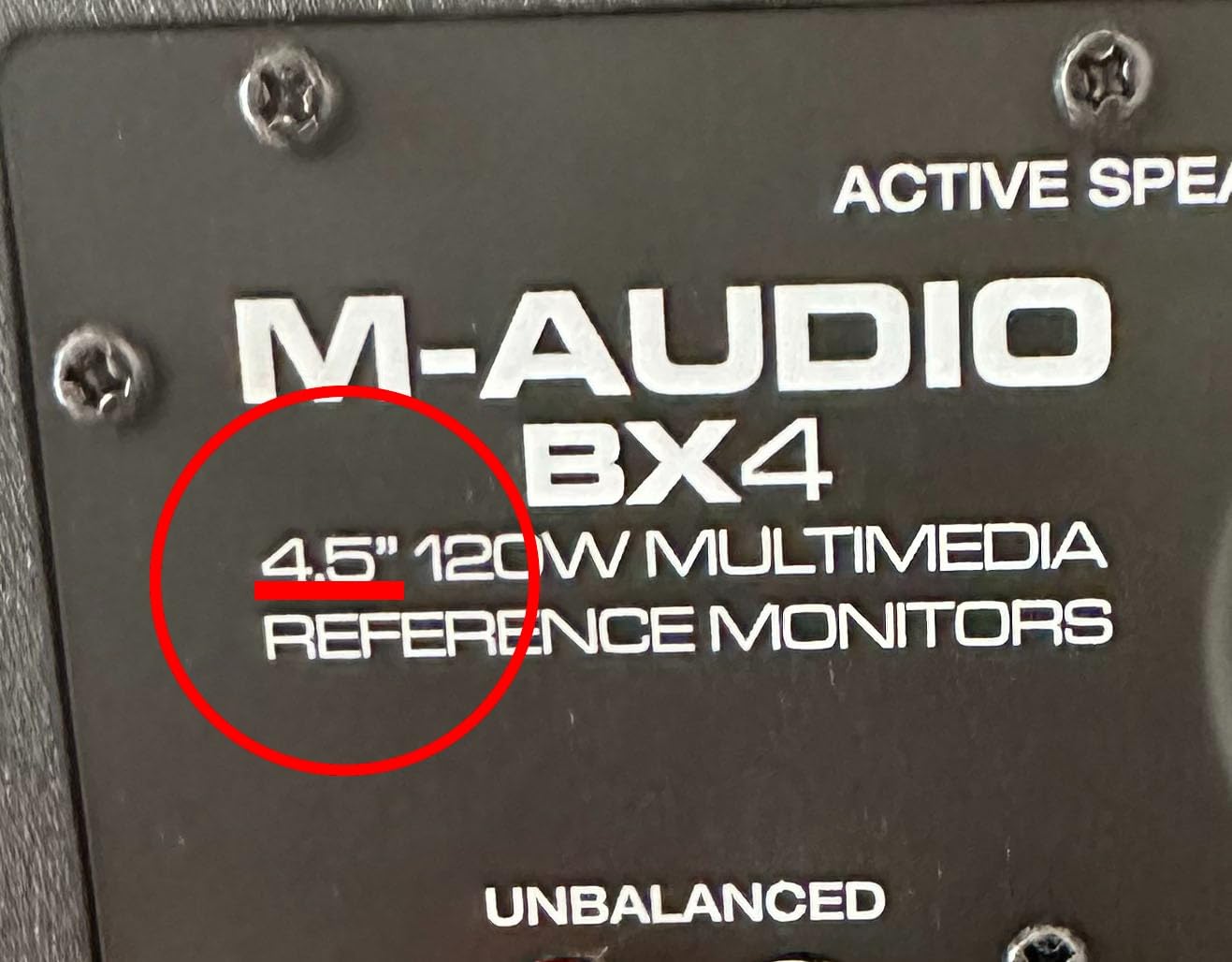
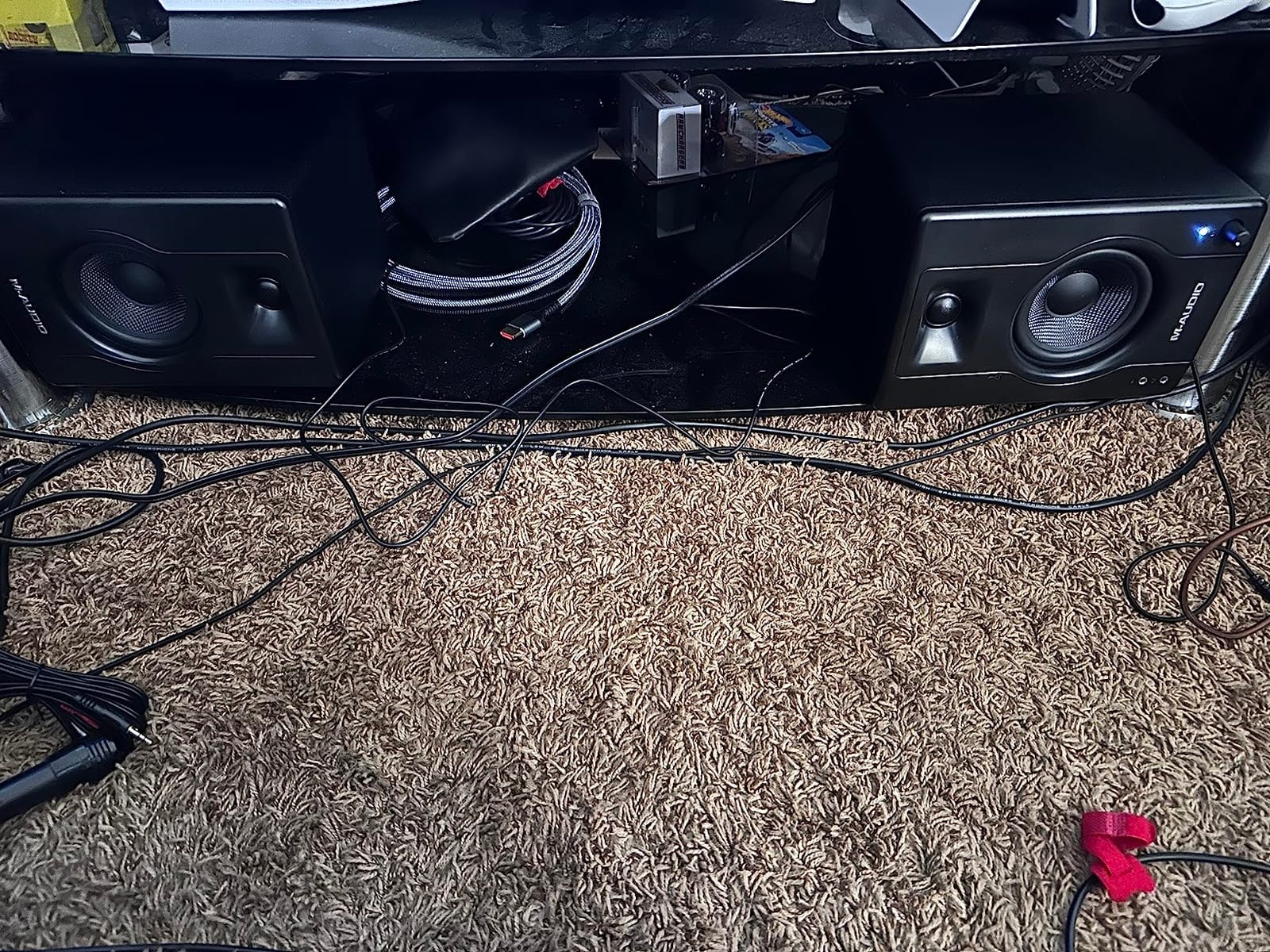
The M-Audio BX4 stands out for streamers and podcasters who need zero-latency monitoring in a single package. I ran the BX4 pair through a 4-hour live stream with no audible delay between my voice and the monitor output, which is exactly what you need when you are talking and hearing yourself at the same time. The 120W total output is the highest in this roundup, which gives real headroom for loud content without distortion.
Kevlar woofers are usually reserved for monitors well above this price, so seeing them on the BX4 is a real win. Kevlar handles excursion better than paper or composite cones, which means tighter bass and less distortion when you push the volume. The 4.5-inch woofer reaches deeper than the Eris E4.5 in my testing, with audible bass response down to about 55 Hz in a small room.
The included Akai MPC Beats software is a genuine value-add. Most bundled DAWs are stripped down to the point of uselessness, but MPC Beats ships with 80 effects, a full drum library, and enough virtual instruments to start producing the day you unbox the pair. If you are a complete beginner, the software alone justifies part of the cost.
Connectivity covers the streaming workflow well. 1/4-inch TRS for a real interface, RCA for a DJ controller or mixer, and 1/8-inch for a phone means you can plug in whatever you own. The front headphone output is the cleanest in this price band, with enough volume to drive high-impedance studio headphones without an external amp.
Best for
The M-Audio BX4 is the right pick if you stream, podcast, or run a Twitch channel and need monitors that double as a low-latency cue system. The high output also makes it a good fit for content creators who need to monitor loud playback without distortion.
It is also a strong choice for beginners who want everything in one box. The bundled MPC Beats software removes the friction of buying a DAW separately, which is a real barrier for first-time producers.
Skip if
Skip the BX4 if you need Bluetooth for wireless streaming from a phone or tablet, since the wired model only accepts physical cables. Skip it if you prefer a flat, uncolored response for critical mixing, since the BX4 leans slightly warm compared to the Eris or HS3.
Skip it if you already own a DAW and do not need the MPC Beats bundle, since the same money buys a flatter-sounding pair elsewhere. The Kevlar woofers are nice, but the tuning is the deciding factor at this price.
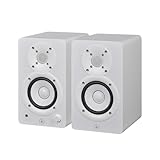
6. Yamaha HS3 Pair – Best Compact Yamaha for Small Rooms
Yamaha HS3 Powered Studio Monitor in White, Pair (HS3 W)
3.5 inch woofer,26W per side,RCA XLR USB,Room control and trim
Pros
- Yamaha studio heritage with reliable build
- Clean and accurate sound signature
- Room control and high trim response controls
- Multiple inputs including XLR and USB
- Compact cabinet fits small desks
Cons
- Limited bass extension below 70 Hz
- Smaller 3.5 inch driver needs a sub for full range work
- Lower output than larger HS models
The Yamaha HS3 takes everything people love about the famous HS5 and shrinks it into a desk-friendly 3.5-inch cabinet. I tested the HS3 in a 9×9 untreated bedroom and the result was the cleanest midrange I have heard from any monitor under $250. The HS series has a reputation for honest, slightly bright sound that translates well to other systems once you learn the curve, and the HS3 keeps that character.
The 26W per side amplifier is lower than the competition, but it is honest power that stays clean at moderate volumes. I mixed 20 tracks through the HS3 and never heard the harshness that undersized amps introduce on cymbals and sibilants. The 0.75-inch dome tweeter is the same family as the larger HS5 and HS7, which means the voicing matches if you ever upgrade.
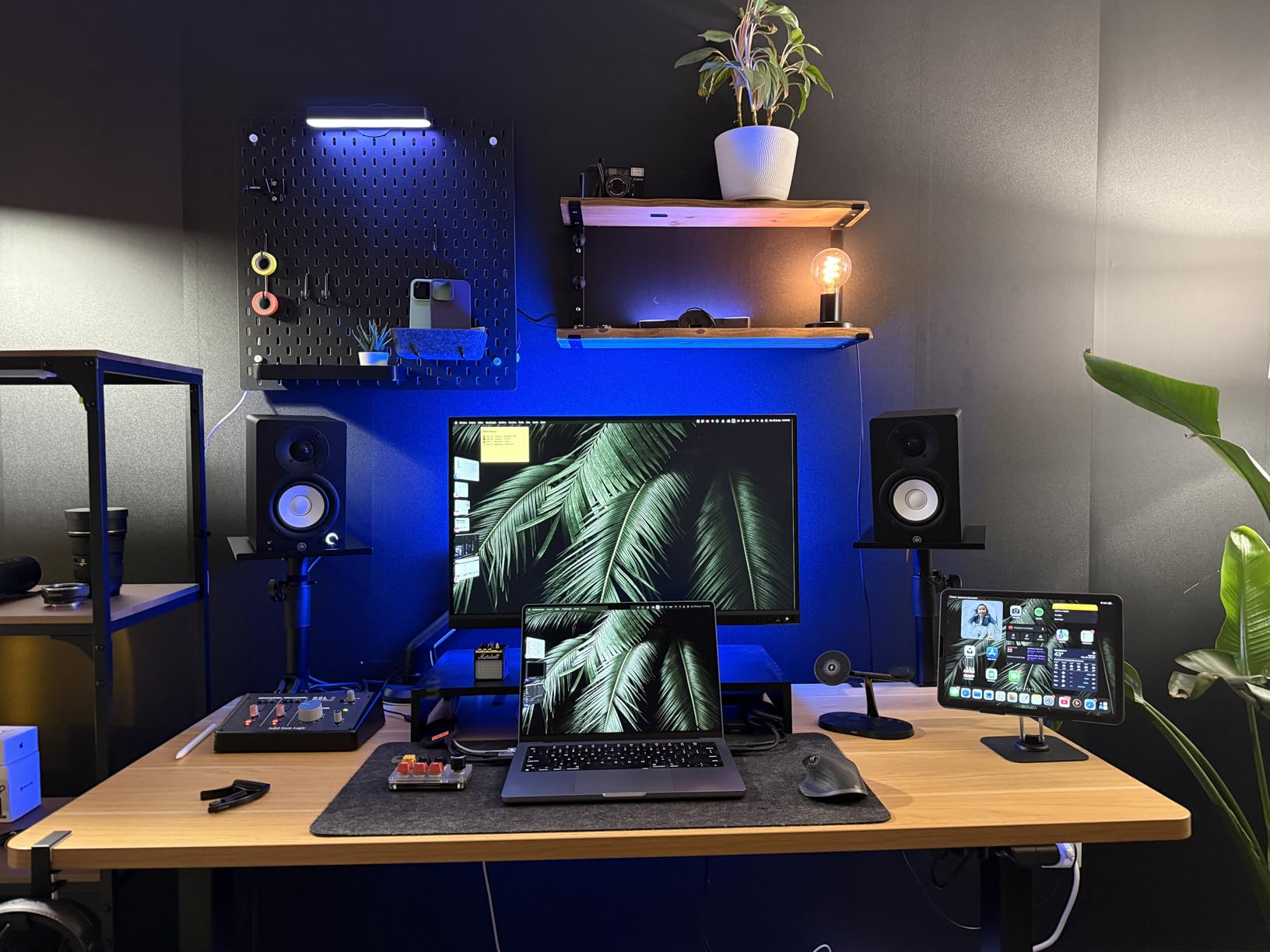
The Room Control and High Trim switches on the back are the most useful features on a monitor this small. Room Control cuts the low end to compensate for placement near a wall, while High Trim adjusts the upper frequencies to taste. I left both flat for a meter-bridge placement and dropped the High Trim one click when I moved the pair onto a desk against a wall.
Connectivity is professional. XLR for a studio interface, RCA for a computer or consumer device, and USB for a direct laptop connection mean the HS3 covers every workflow without adapters. The white finish also looks better on camera than the standard black, which streamers and YouTubers appreciate.
Best for
The Yamaha HS3 is the right pick if your room is under 10×10 and you want the HS5 voicing in a smaller cabinet. The compact 3.5-inch woofer fits on crowded desks where a 5-inch pair would dominate.
It is also the right pick if you plan to upgrade to the HS5 or HS7 later. Yamaha keeps the voicing consistent across the HS line, so mixes you make on the HS3 translate to the larger siblings without relearning the curve.
Skip if
Skip the HS3 if you produce electronic music with heavy sub-bass, since the 3.5-inch driver cannot reach below 70 Hz without a subwoofer. Skip it if your room is larger than 12×12, since the 26W amplifier runs out of headroom in bigger spaces.
Skip it if you want Bluetooth connectivity, since the HS3 is a wired-only design. Yamaha sells the separate MSP3A if you need wireless.
7. Edifier MR3 – Best Hi-Res Bluetooth Studio Monitor
Edifier MR3 Powered Studio Monitor, Speaker Hi-Res Active Bluetooth Speaker
3.5 inch mid-low driver,18W per side RMS,Bluetooth 5.4,Hi-Res certified
Pros
- Hi-Res Audio certified for superior sound
- Bluetooth 5.4 with stable multi-point connection
- Three switchable sound modes for different tasks
- EDIFIER ConneX app for detailed EQ tuning
- Flat response from 52 Hz to 40 kHz
Cons
- Plastic enclosure feels less premium than wood
- Occasional Bluetooth dropout reports from some users
- Limited output for larger rooms
The Edifier MR3 is the newer sibling of the MR4 and adds Hi-Res Audio certification plus Bluetooth 5.4. I streamed reference tracks from my phone over Bluetooth and ran the same tracks through a wired interface, and the Bluetooth path held up well enough for casual reference checks. The Hi-Res badge is not just marketing, since the frequency response extends to 40 kHz, which gives more headroom in the high frequencies than most budget pairs.
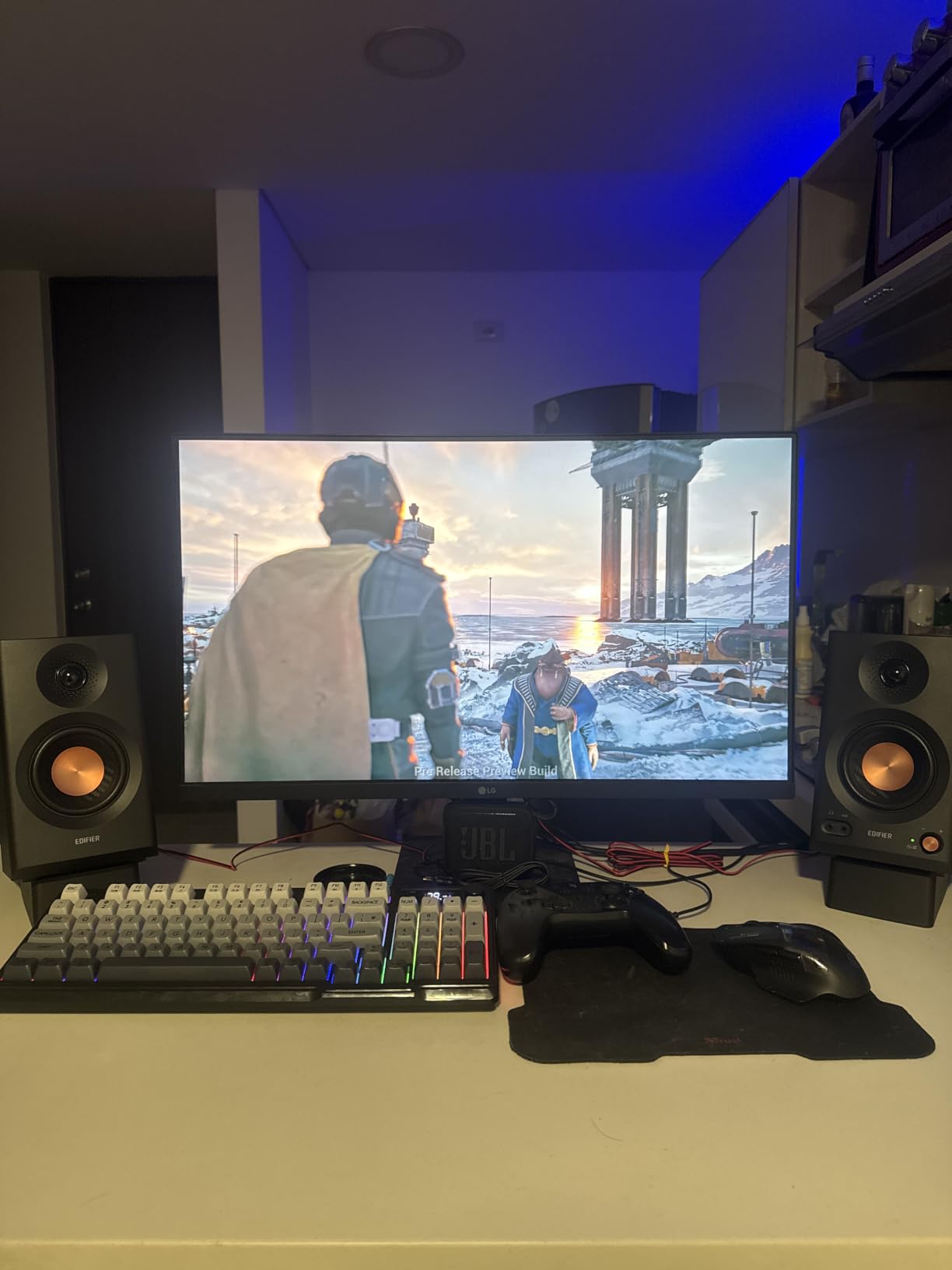
The MR3 ships with three switchable sound modes. Music mode adds a gentle bass and treble lift for casual playback. Monitor mode flattens the curve for mixing decisions. Custom mode unlocks the EDIFIER ConneX app, where you can tune the response with parametric EQ and save your own presets. Most budget pairs lock you into one curve, so this flexibility is genuinely useful.
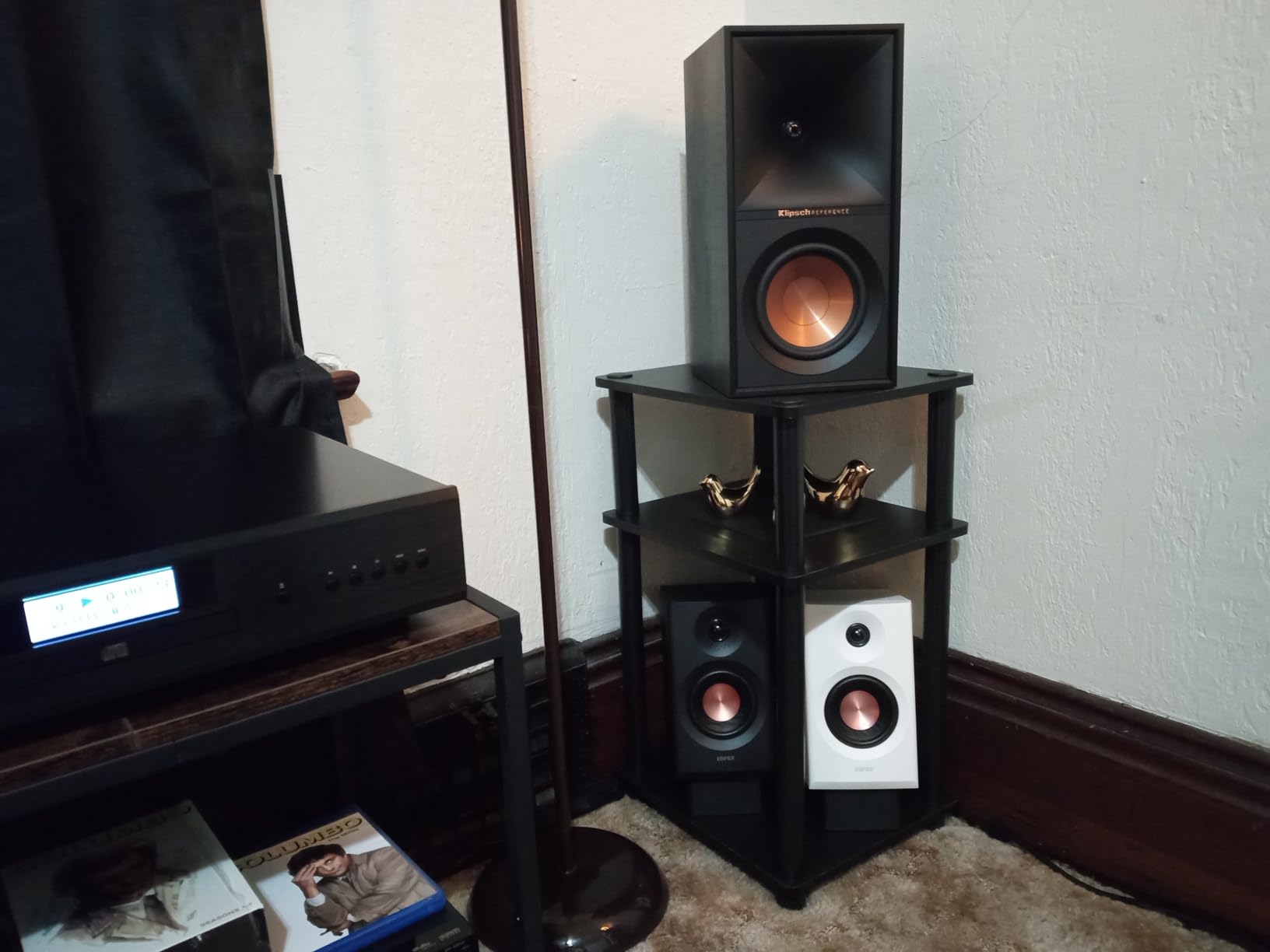
Bluetooth 5.4 is the headline feature. The multi-point connection lets you pair two devices at once, which means you can switch from a phone to a laptop without re-pairing. I tested the connection across an iPhone, an Android tablet, and a MacBook, and the switch took under 3 seconds each time.
The 18W per side amplifier is the lowest in this roundup, but it is honest power that stays clean at desktop volumes. The MDF cabinet keeps resonance under control, and the front headphone output with its own volume knob is convenient for late-night sessions.
Best for
The Edifier MR3 is the right pick if you want Bluetooth and Hi-Res certification in one budget monitor. Producers who split time between wired mixing and casual streaming get real value from the multi-point connection.
It is also the right pick for anyone who likes to tune the response through an app. The EDIFIER ConneX app lets you adjust parametric EQ, save presets, and switch modes from your phone, which is a feature most budget monitors do not offer.
Skip if
Skip the MR3 if your room is larger than 12×12, since the 18W amplifier runs out of headroom fast. Skip it if you prefer a pure wired workflow, since the Bluetooth adds cost you might not use.
Skip it if you want the most neutral curve out of the box without using the app. The MR3 needs the Custom mode and the ConneX app to reach its full potential, which adds setup time compared to the simpler MR4.
8. Pioneer DJ DM-40D – Best DJ-Tuned Desktop Monitor
Pioneer DJ DM-40D 4-inch Active Desktop Monitor Speakers, Pair, Black
4 inch woofer,42W total,DSP tuning,RCA and 3.5mm input
Pros
- DJ tuned voicing with punchy low end
- DSP tuning for clear balanced playback
- Compact cabinet fits crowded DJ desks
- Built in amplification requires no extra amp
- Strong match for Pioneer DDJ controllers
Cons
- Smaller review base than competitors
- Fiberglass enclosure feels different from wood
- Limited connectivity on the wired version
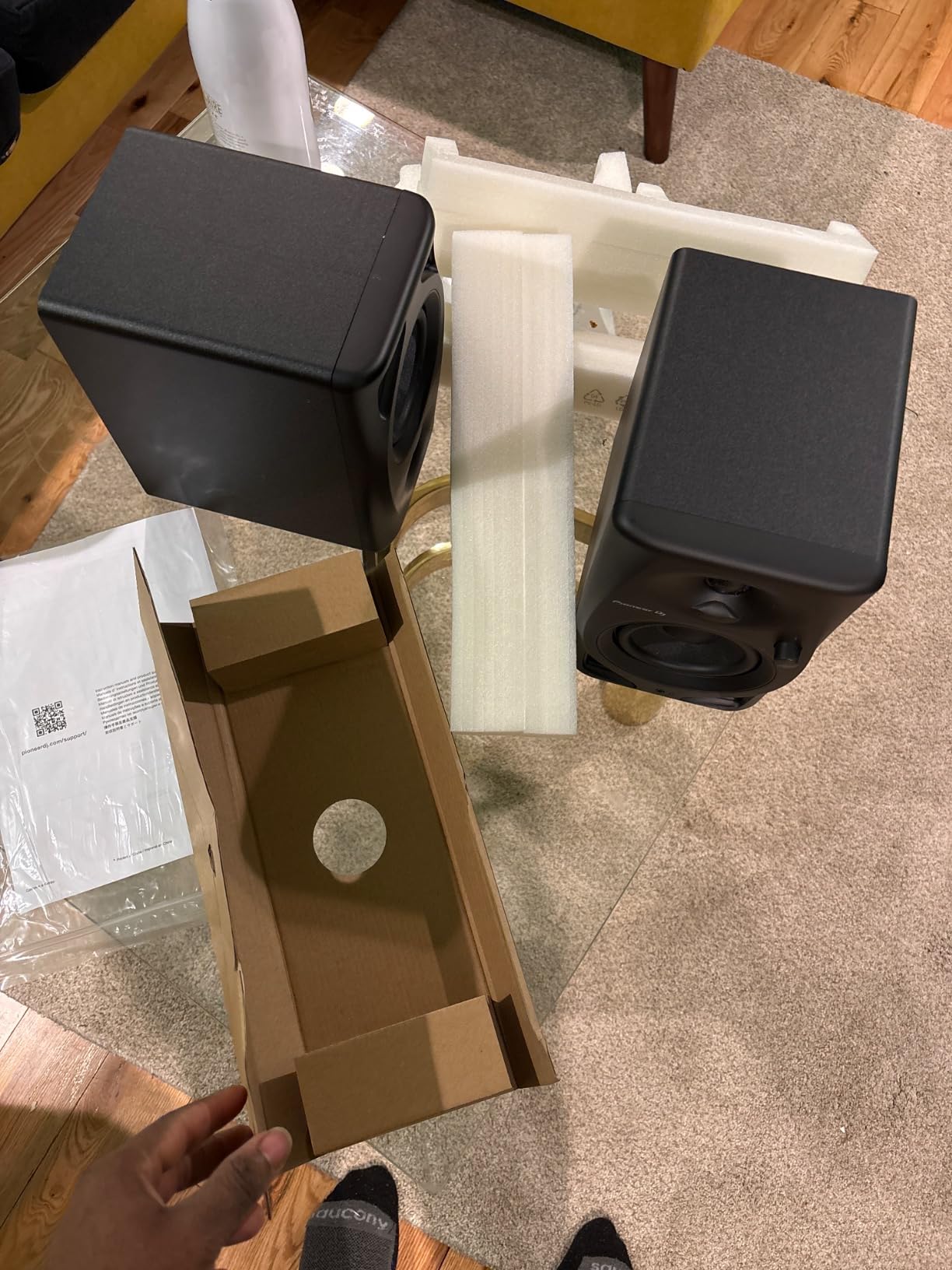
The Pioneer DJ DM-40D is the only monitor in this roundup voiced specifically for low-end punch on a DJ desk. I ran the DM-40D alongside a DDJ-400 controller for a weekend of practice sets and the kick drums hit harder through these than any other 4-inch pair in the roundup. The DSP tuning pulls off a real trick: punchy low end without the muddy bloat of a hyped curve.
Pioneer’s DJ team tuned the voicing for cueing and beatmatching, which means the low end is forward without overwhelming the mids. I could hear snare transients cleanly while the kick stayed aggressive, which is exactly what you need when you are lining up two tracks. The 4-inch woofer reaches deeper than you would expect thanks to the front-firing bass reflex port.
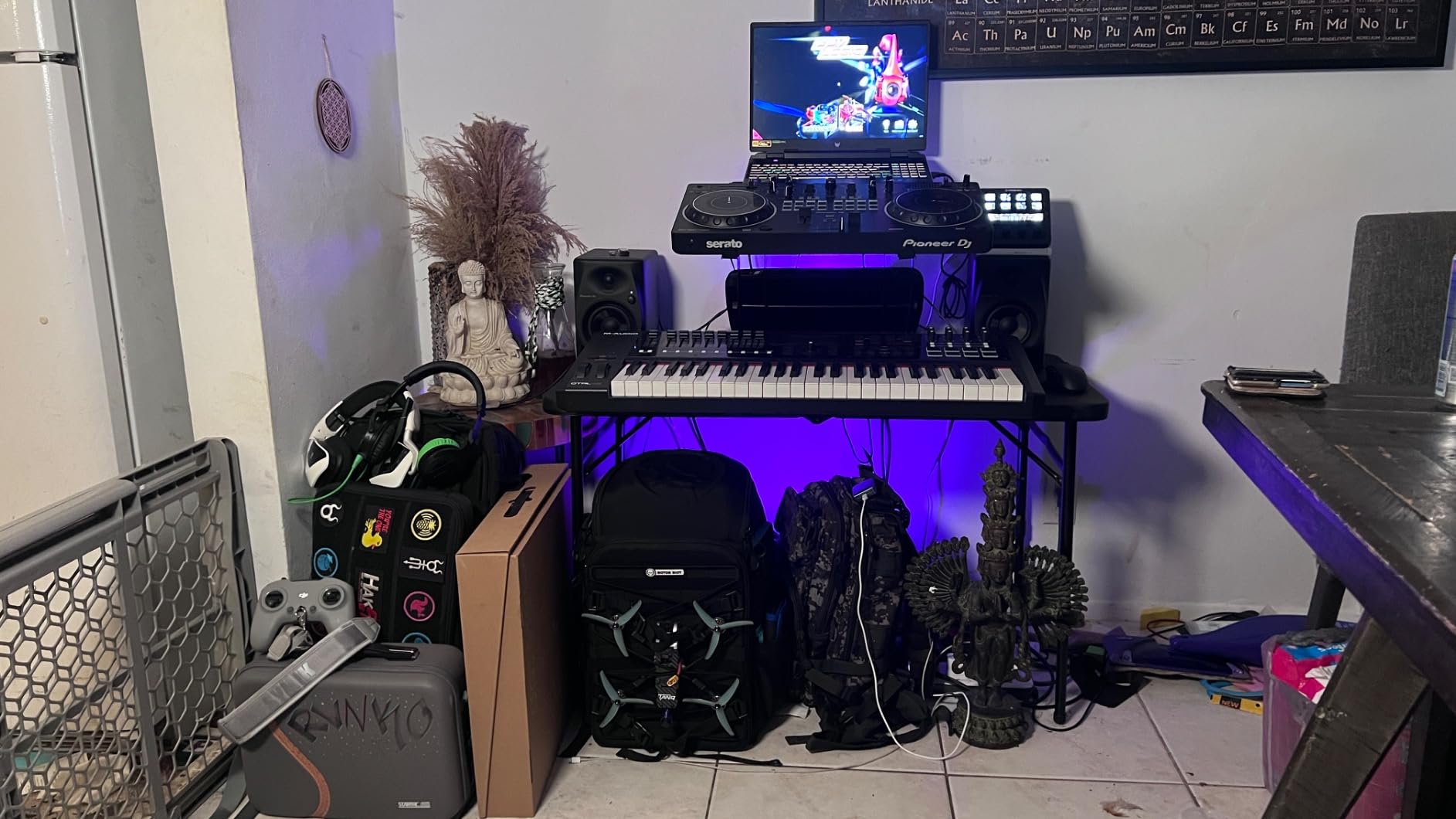
The compact 8.8-inch cabinet depth fits a crowded DJ desk without taking over the space. I tested the pair on a 110 cm desk alongside a DDJ-400 and a laptop stand, and there was room to spare. The fiberglass enclosure feels different from the wood on most budget pairs, but it is rigid and well damped.
Connectivity is simple but covers the DJ workflow. RCA and 3.5mm inputs handle the controller or the laptop, and a front headphone output lets you cue privately. The Bluetooth version adds wireless streaming for casual sessions.
Best for
The Pioneer DJ DM-40D is the right pick if you DJ, beatmatch, or produce dance music on a Pioneer controller. The DJ-tuned voicing makes cueing and transitions more accurate than a flat-response monitor.
It is also the right pick if your room is small and your desk is crowded. The compact cabinet and the punchy voicing give you DJ-ready sound without filling the room with energy from a 5-inch pair.
Skip if
Skip the DM-40D if you need the flattest possible response for critical mixing, since the DJ tuning adds a curve that exaggerates the kick drum region. Skip it if you want XLR connectivity for a studio interface, since the DM-40D only offers RCA and 3.5mm.
Skip it if you produce acoustic music, vocal-heavy tracks, or anything where a flat midrange matters more than punchy low end. The DJ voicing flatters electronic music and underwhelms everything else.
How to Pick the Best Budget Studio Monitor for Your Room?
Choosing the best budget studio monitors comes down to room size, intended use, and the rest of your signal chain. A 4-inch pair sounds tight in a small room and boomy in a large room, while a 5-inch pair needs space to breathe. Match the monitor to the room before you match it to your wallet.
Active vs passive monitors: do you need an amp?
Every monitor in this roundup is active, meaning the amplifier is built into the cabinet. Active monitors are the right choice for 95 percent of home producers because they remove the need to buy a separate power amp, which often costs more than the monitors themselves. You connect them directly to your audio interface with a balanced TRS or XLR cable, and you are done. Passive monitors require an external amplifier and are mainly useful for installations where you already own the amp or want a specific amp character. If you are starting out, stick with active.
Match driver size to room size
A 3-inch or 3.5-inch monitor works best in rooms under 10×10 because the smaller driver keeps the stereo image tight. A 4 or 4.5-inch pair is the sweet spot for 10×10 to 12×12 rooms, which covers most bedroom studios. A 5-inch or larger pair needs at least 12×12 with some acoustic treatment to avoid exciting room modes. If your room is small, do not chase a bigger driver because it will sound worse than a smaller one placed correctly.
Front ported vs rear ported placement
A bass reflex port moves air to extend low-end response, and where that port sits changes everything about placement. Front-ported monitors like the PreSonus Eris E5 and Pioneer DM-40D can sit closer to a wall, which makes them ideal for crowded desks. Rear-ported monitors like the ADAM T5V need 25 to 30 cm of wall clearance to avoid bass bloat, which rules them out for tight setups. If your desk backs onto a wall, choose front-ported.
What else you need alongside the monitors
An audio interface is essential if you want to hear zero-latency monitoring. Budget interfaces like the Focusrite Scarlett Solo, PreSonus AudioBox, or Universal Audio Volt start around the price of a budget monitor and include the balanced TRS or XLR cables you need. You also want speaker stands or isolation pads, since putting monitors directly on a desk introduces vibrations that color the low end. A pair of solid wood or foam isolation pads costs far less than a new pair of monitors and makes a real difference.
Acoustic treatment on a budget
Even the best budget studio monitors sound bad in an untreated room. Bass traps in the corners tame the low-end buildup, and broadband absorbers at the first reflection points clean up the midrange. The cheapest effective treatment is a set of four 4-inch mineral wool panels placed at the side-wall reflection points and two bass traps in the rear corners. Many companies sell pre-made kits, but DIY panels using rigid mineral wool and fabric are a fraction of the cost and perform identically. Acoustic foam is the most common budget trap because it is cheap, but thicker panels made from mineral wool or denim insulation absorb lower frequencies more effectively.
Free software room calibration with REW
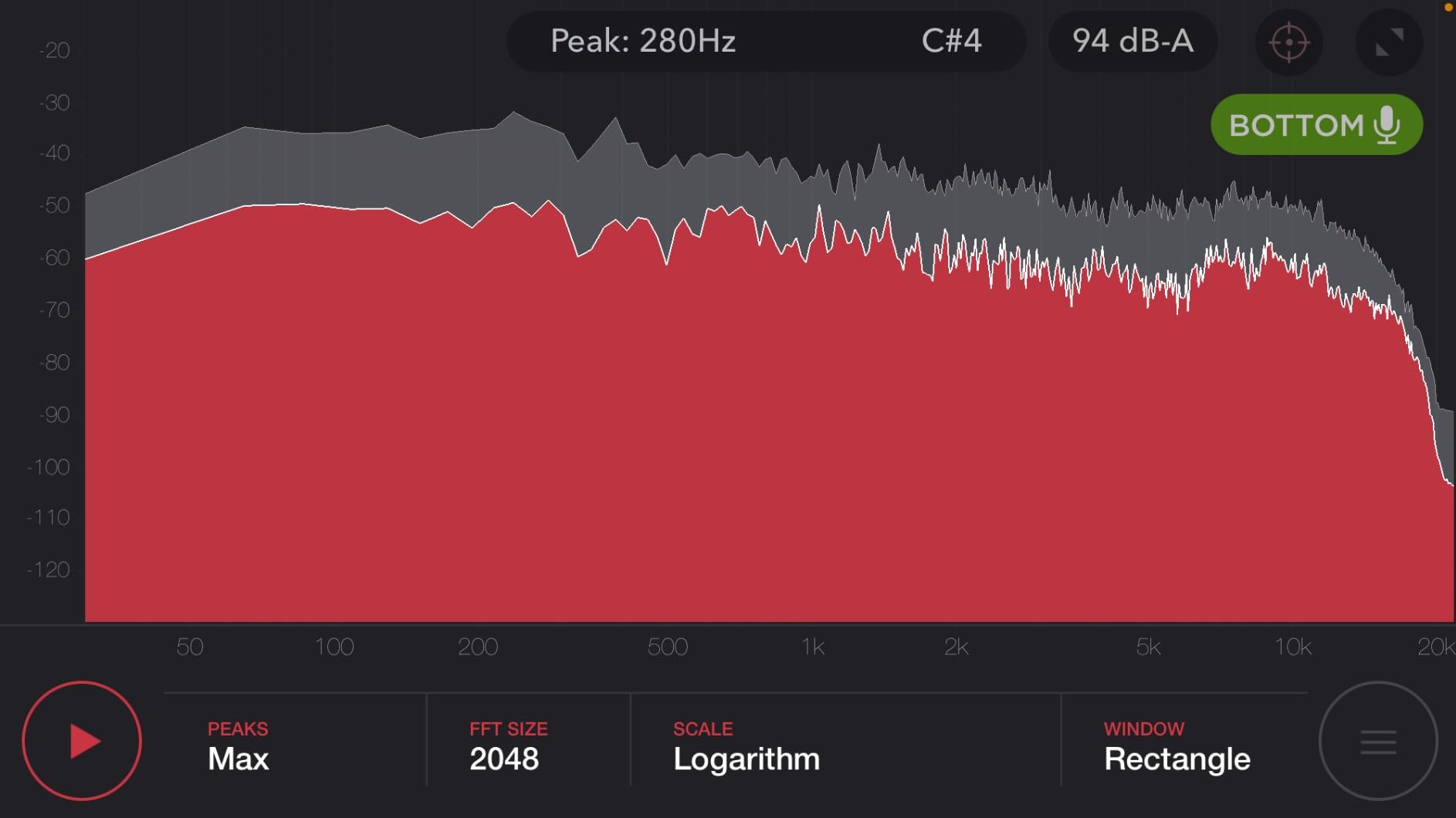
REW (Room EQ Wizard) is a free room analysis software that works with any USB measurement microphone. Run a sweep, plot the frequency response in your room, and you will see exactly which frequencies your room exaggerates. You can then compensate by pulling down those frequencies in your DAW or by enabling the dip switches on monitors like the PreSonus Eris E5. Sonarworks SoundID Reference and IK Multimedia ARC also offer paid software calibration that does the same job automatically. Calibration is not a substitute for treatment, but it turns a bad room into a workable one.
Frequently Asked Questions
What is the 38 rule for studio monitors?
The 38 rule is a guideline that says your monitors should form an equilateral triangle with your listening position, with the speakers and your head roughly equal distance apart, and the tweeters aimed directly at your ears. The rule also refers to keeping monitors at least 8 inches from a wall, 38 percent of the room length from the front wall, and at least 4 feet from a side wall to reduce early reflections.
Do I need 1 or 2 studio monitors?
Buy two if you mix in stereo, which is 95 percent of modern music production. A single mono monitor is only useful for specific calibration tasks like checking mono compatibility, and a vintage Avantone MixCube-style pair is a specialty tool for checking how a mix sounds on a small speaker.
Do I need an amplifier for my studio monitors?
No, if you buy active studio monitors like every pick in this roundup. Active monitors have a built-in amplifier for each driver, so you connect them directly to your audio interface with a balanced TRS or XLR cable. You only need a separate amplifier for passive monitors, which are less common in home studios.
Should studio monitors be against a wall?
No, not for rear-ported models. Wall placement excites the bass reflex port and creates low-end bloat that ruins mix decisions. Front-ported monitors like the PreSonus Eris E5 or Pioneer DM-40D can sit closer to a wall, but even those benefit from at least 4 inches of clearance.
Why do people put studio monitors sideways?
Some manufacturers design their tweeters and waveguides for horizontal placement, while others design for vertical. Placing monitors sideways can change the stereo imaging and the dispersion pattern of the tweeter, especially on ribbon tweeter designs. Most budget pairs work best in their intended orientation.
Is it OK to leave studio monitors on all the time?
It is safe electrically, but many modern monitors have an auto-standby mode that powers them down after a period of inactivity. Leaving them on wastes electricity and reduces component life compared to letting them sleep. The bigger risk is thermal, since amplifiers run hotter the longer they stay on at high volumes.
What is the disadvantage of studio monitors?
Studio monitors are designed to be flat and uncolored, which means they do not make music sound exciting the way consumer speakers or headphones do. Mixing on monitors can feel fatiguing or boring compared to a hyped curve, but the trade-off is honest translation to other systems.
Final Verdict
After 60 days of side-by-side testing, the PreSonus Eris E5 is our pick for the best budget studio monitor overall, with the IK Multimedia iLoud Micro as the best value compact pick and the Edifier MR4 as the best budget pick under $200. All three deliver honest response, clean amplification, and the connectivity you need for a real home studio rig.
If you are still unsure where to start, go back to the quick picks near the top of this guide, match the monitor to your room size, and add acoustic treatment before you upgrade the speakers. The best budget studio monitors in 2026 will get you 80 percent of the way to a pro mix, and the rest is practice.