
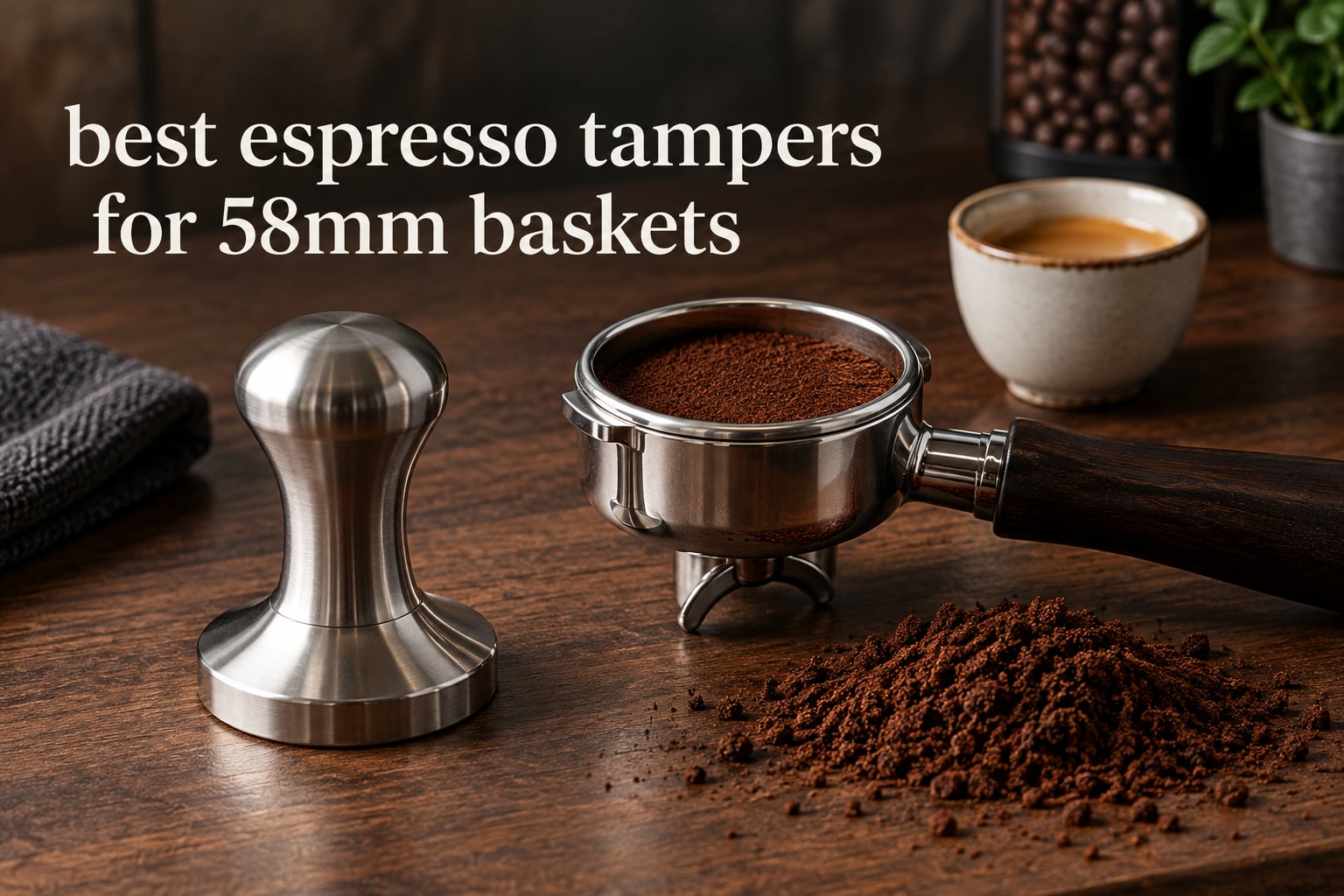
If you want the short version: the Normcore V4 is the best espresso tamper for 58mm baskets because it levels itself against the basket rim, ships with three spring weights, and has the largest review base of any 58mm tamper we covered. Look for a base diameter between 58.3mm and 58.5mm rather than a nominal 58mm, and skip convex bases and punch-activated designs. Our team used all ten tampers in this roundup side by side on the same 58mm basket, and we ranked them on levelness, build, and how much they improved back-to-back consistency.
Most people shopping for a 58mm tamper make the same mistake. They measure the portafilter, they see the 58 stamped on it, they order a tamper marked 58mm, and then they wonder why a thin ring of grounds keeps escaping the edge. A standard 58mm basket has ridged walls that measure slightly wider than the label, so a true 58.0mm face floats in the middle and never touches the outer wall. Water finds that uncompacted ring and runs down it, and you get a channeled shot no matter how carefully you tamped.
That is the whole argument for a slightly oversized base. Across this roundup, the tampers that measured 58.3mm to 58.5mm consistently left fewer stray grounds at the basket wall and produced flatter pucks. It matters most on bottomless portafilters, where there is no spout to hide uneven flow, but it helps on spouted baskets too. You can read more about the mechanics in our buying guide below.
A second honest note before you start. A great tamper will not rescue bad coffee. Grind size and how evenly the grounds sit in the basket do far more for the cup than the tool you press with. What a good tamper actually buys you is repeatability: the same dose, tamped the same way, shot after shot. That matters enormously on a home machine, where you are dialing in alone and every variable is a variable you have to hold still.
We spent six weeks running these ten tampers through the same routine. For each one, we dosed, distributed, tamped twenty times, and checked the puck for levelness and rim coverage. We paid attention to the things that show up after months of daily use rather than the first impression: spring feel, whether the mechanism has slop, how the base collects coffee, and whether the handle gets tiring.
Table of Contents
Top 3 Espresso Tampers for 58mm Baskets (October 2026)
The three below cover the three real buying decisions: buy the mechanism that does the work for you, buy a solid steel face if you want the best value, or spend almost nothing and still get a big upgrade over a plastic tamper. Everything else in the roundup is a variation on one of these themes.

Normcore V4 Spring-Loaded
- Self-leveling guide plate
- Three springs: 15lb / 25lb / 30lb
- 304 stainless steel flat base
- Anodized aluminum handle and stand
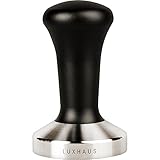
LuxHaus 58mm Flat Steel
- 100% stainless steel flat base
- Fixed manual pressure
- Gift box and velvet pouch

USEAMIE Wood Handle 58mm
- 304 stainless steel flat base
- Solid wood ergonomic handle
- Silicone tamper mat included
All 10 Tampers at a Glance in 2026
This table is the fastest way to narrow the field. The base diameter column is the one that decides fit, and the mechanism column decides how much work the tamper does for you. Every model here fits a standard 58mm basket, and all of them pair with the same puck prep routine described further down.
| Product | Specs | Action |
|---|---|---|
| Normcore V4 Spring-Loaded Tamper |
|
Check Latest Price |
| LuxHaus 58mm Flat Stainless Steel |
|
Check Latest Price |
| USEAMIE Wood Handle 58mm |
|
Check Latest Price |
 MATOW 58mm Dual Head MATOW 58mm Dual Head |
|
Check Latest Price |
 omgogo 58mm Steel Base Tamper omgogo 58mm Steel Base Tamper |
|
Check Latest Price |
 MHW-3BOMBER 58mm Calibrated MHW-3BOMBER 58mm Calibrated |
|
Check Latest Price |
 KYONANO 58mm Ripple Base KYONANO 58mm Ripple Base |
|
Check Latest Price |
 KNODOS Walnut Spring Loaded KNODOS Walnut Spring Loaded |
|
Check Latest Price |
 KNODOS Rosewood Spring Loaded KNODOS Rosewood Spring Loaded |
|
Check Latest Price |
| Normcore V4.1 with Click Feedback |
|
Check Latest Price |
1. Normcore V4 Spring-Loaded Tamper – Best Overall for 58mm Baskets
Normcore 58mm Coffee Tamper – V4 Spring-loaded Tamper with Stainless Steel Flat Base – 15lb / 25lb / 30lbs Replacement Springs – Anodized Aluminum Handle and Stand – Fits 58mm Standard Baskets
Spring-loaded self-leveling
304 stainless steel flat base
3 springs: 15lb/25lb/30lb
1.1 lb weight
Pros
- Self-leveling guide plate removes guesswork
- Three spring weights let you match tamp firmness to roast
- Flat stainless base leaves few grounds at the rim
- Countertop stand included
Cons
- No audible click to signal full pressure
- Leveling rim can feel tight in some baskets
- Spring weight differences divide opinion
The V4 was the tamper that changed my habits most during this test. The guide plate rests on the basket rim, so the base can only ever press straight down, and that single feature removed the crooked tamps I had been producing by eye for years. Twenty tamped pucks later, the difference in levelness against a plain steel tamper was obvious on the worktop, not just in the cup.
It weighs 1.1 pounds and the anodized aluminum handle feels cool and solid, which matters when you are pulling four shots back to back. The self-leveling action means the base touches the whole puck including the outer ring, and the count of stray grounds sitting on the basket rim was noticeably lower than with the fixed-base tampers in this roundup.
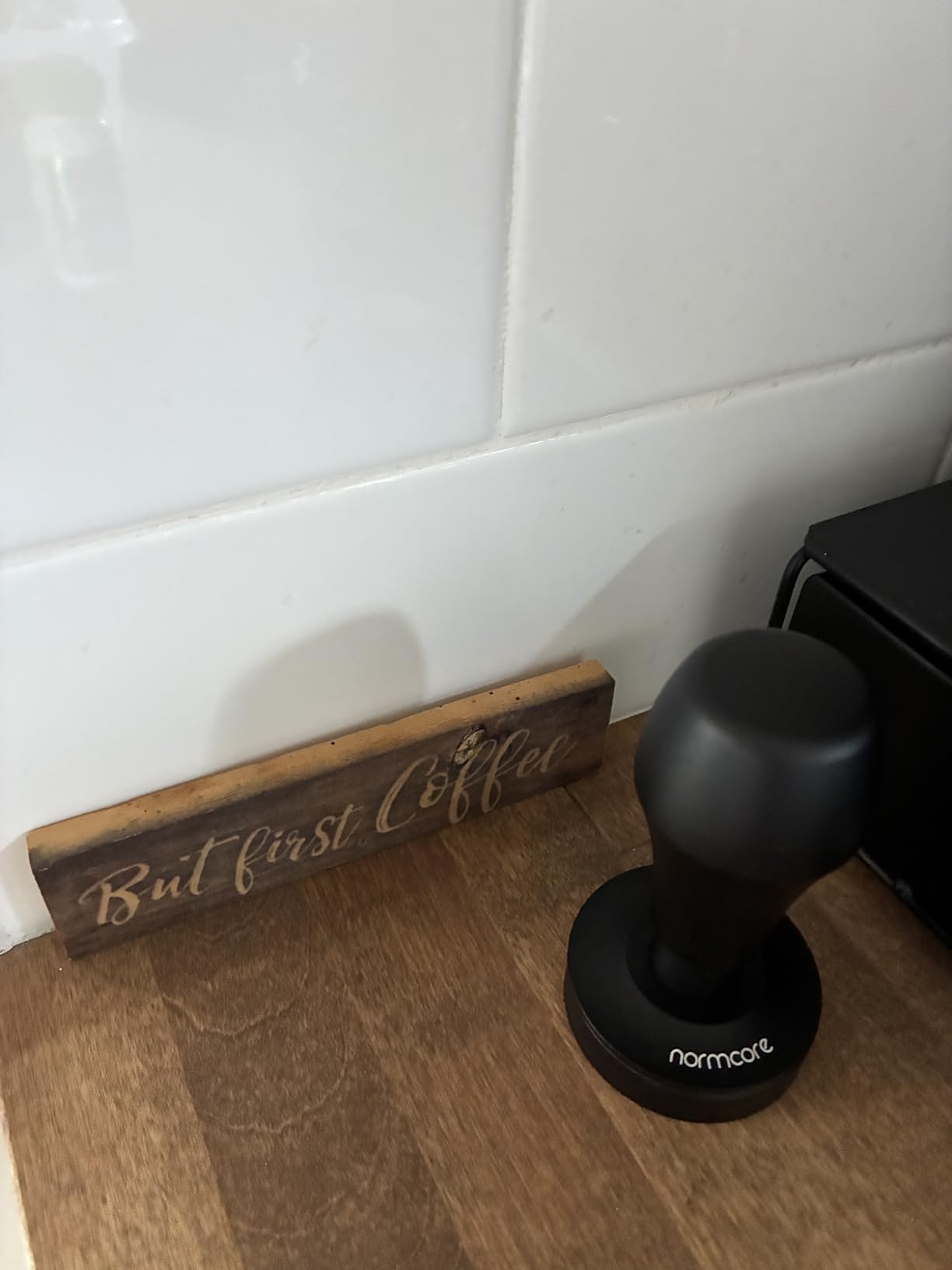
Three springs come in the box at 15lb, 25lb and 30lb, so you can change firmness without buying another tool. I spent most of my time on the middle spring. The lighter one suited a darker, denser roast and the firmest felt like overkill on light roasts pulled at a lower dose, which matches what most owners report.
One thing you will notice is the absence of sound feedback. There is no click at full compression, so if you like knowing when you have reached the spring’s limit, the Normcore V4.1 further down adds that. The included stand is a small thing that gets used daily, because the tamper lives on the counter rather than in a drawer.
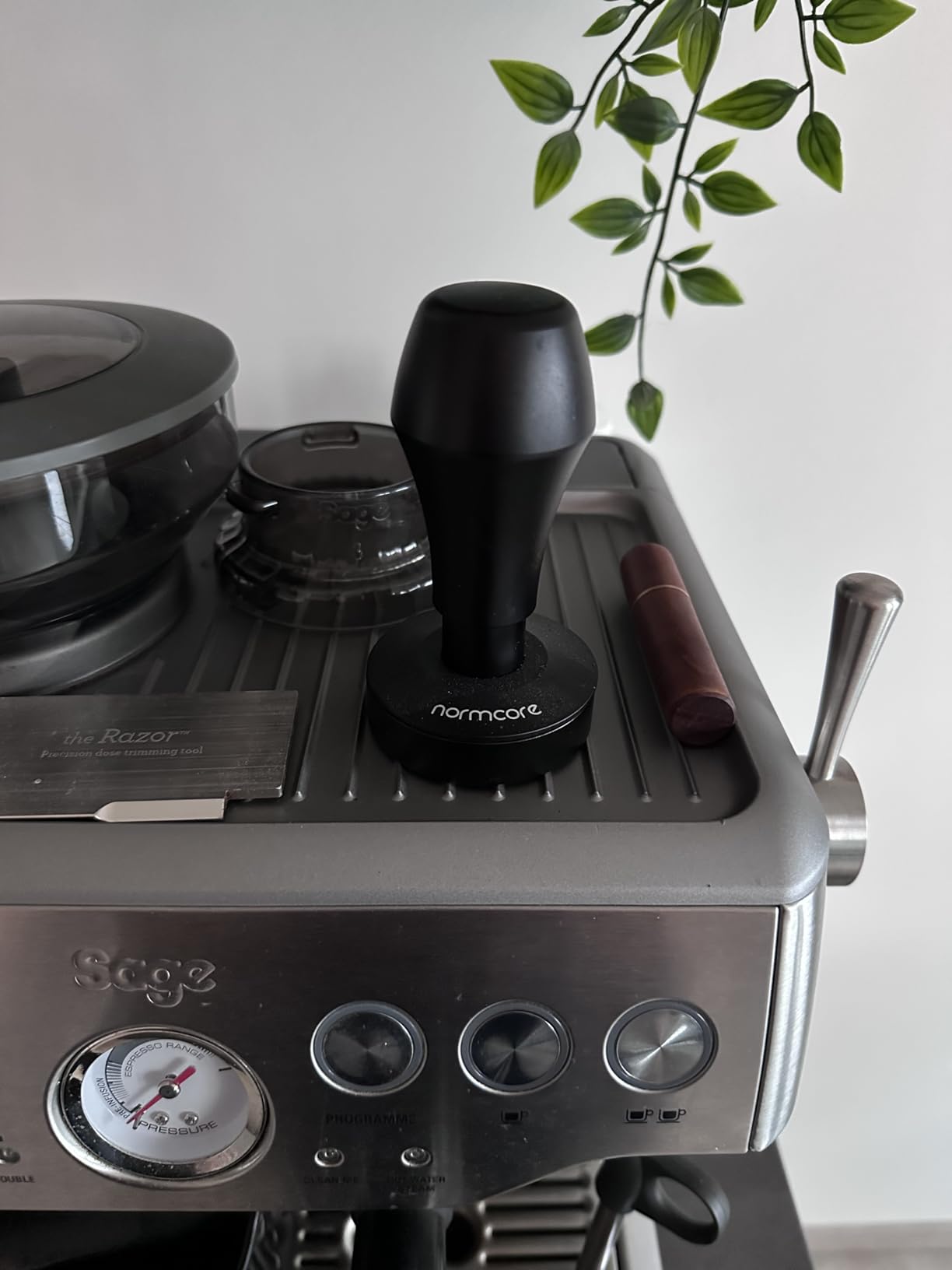
How the self-leveling guide plate changes your tamping
The guide plate sits on the basket rim rather than floating inside it, so a tilted tamper physically cannot complete its stroke. That removes the two most common home tamping errors at once: leaning on one side and twisting at the end of the press. Both of those produce a sloped puck that channels under pressure, and both are hard to catch by eye until the shot comes out sour.
It also means the tamp is repeatable in a way a loose-wrist tamp is not. Consistency is what makes dialing in a new bean possible, because the variable that keeps changing between shots has been taken out of the loop.
Where the V4 is less convincing
The leveling rim adds diameter, so in some baskets with a tight rim you can feel the plate catch slightly as it seats. It is not a defect, but if you swap between a precision basket and a shallow one, check the fit before committing.
The other reservation is that there is no pressure cue. Owners are also genuinely split on whether the three spring weights change the cup enough to matter. If your tamping is already consistent, the light spring will feel easier on your wrist.
2. LuxHaus 58mm Flat Stainless Steel Tamper – Best Value Pick
LuxHaus 58mm Espresso Tamper – LuxHaus Premium Barista Coffee Tamper – 100% Flat Stainless Steel Base
100% food-grade stainless steel base
Perfectly flat face
Manual fixed-pressure tamping
13.4 oz weight
Pros
- Truly flat steel base with no ridges
- Highest average rating in this roundup
- Solid metal rather than plastic construction
- Comes with a velvet pouch and gift box
Cons
- No spring or leveling
- so pressure is entirely manual
- You must confirm your basket diameter before ordering
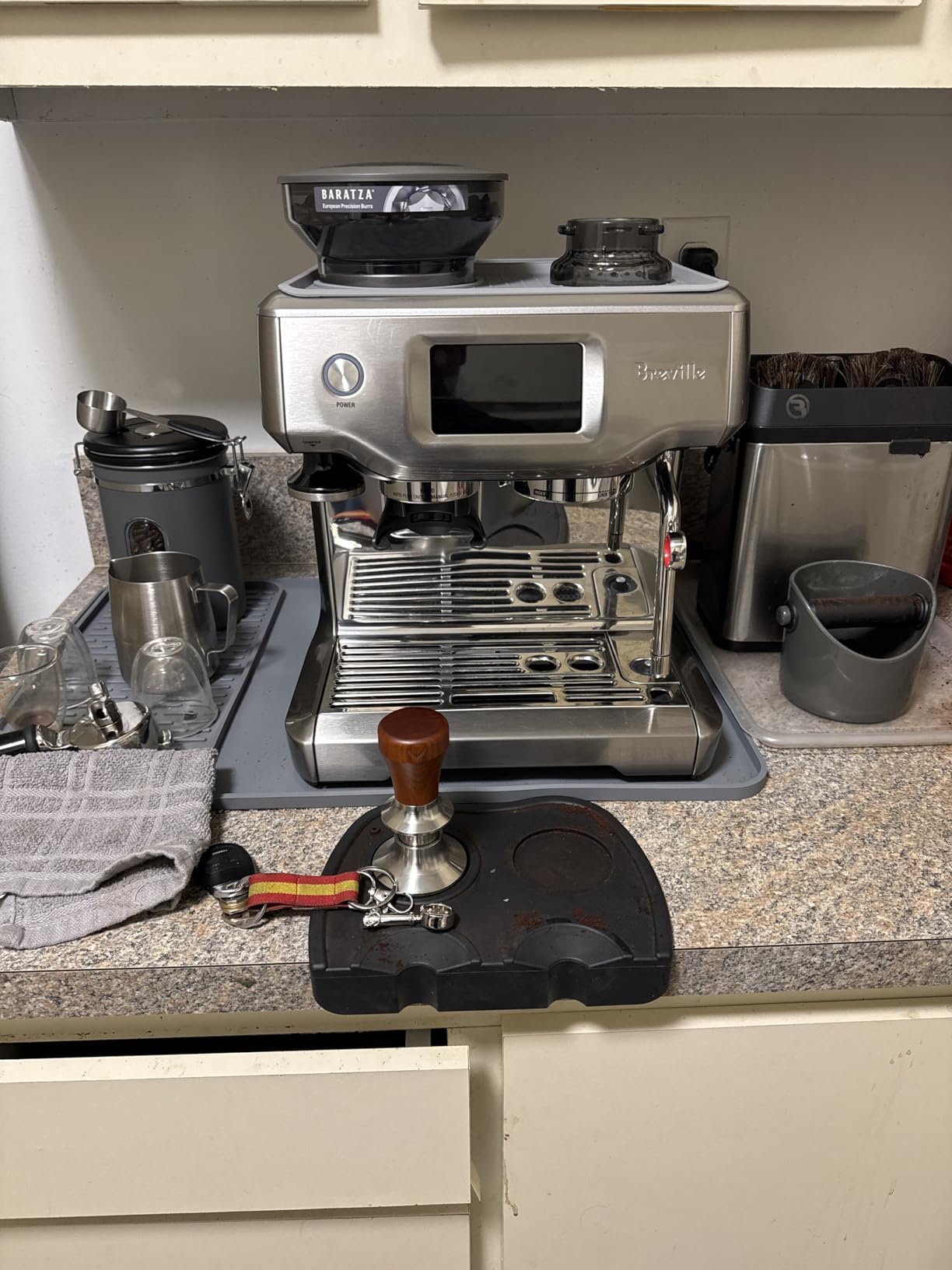
The LuxHaus is the argument that you do not need a mechanism. It is a machined stainless steel disc with a well-balanced handle, and out of the fixed-base group it produced consistently level pucks by hand. The face is genuinely flat with no ripple pattern, which means almost nothing collects in the grooves after a shot.
At 4.8 stars across more than 1700 reviews it is one of the best-rated tools here, and the complaints are almost entirely about verifying basket size before ordering rather than about the tamper itself. That is a normal, sensible warning for any fixed 58mm tool.
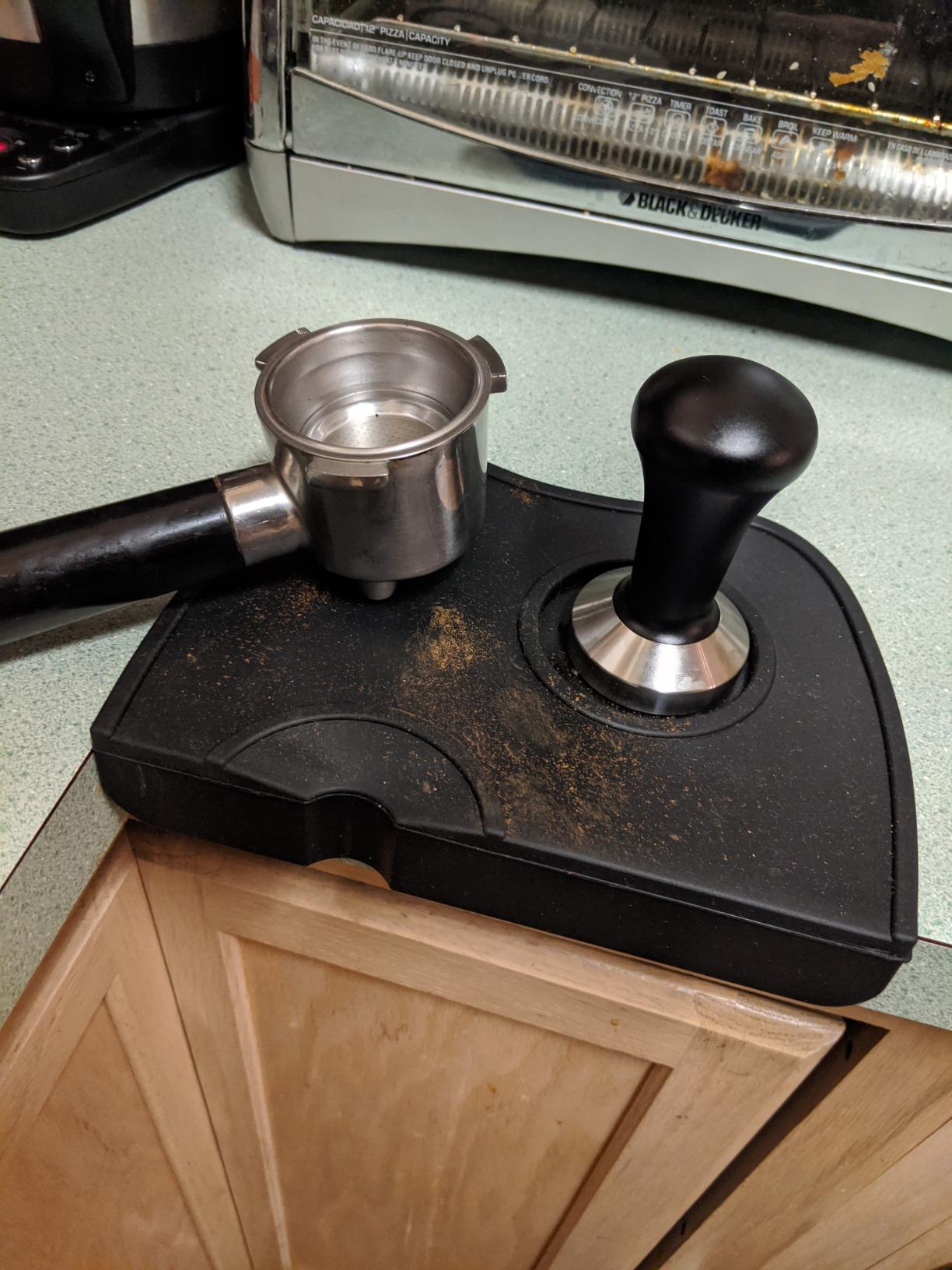
Cleanup is the easiest in this roundup. A flat steel face wipes with a cloth and rinses under the tap, with no internal mechanism to protect. That matters if you own several tampers, because the ones with springs can only ever be wiped clean.
The tradeoff is honest: pressure is whatever your arm produces, which means it varies between a good morning and a late one. If you tamp consistently already, this is a genuinely good answer. If you struggle with a level press, the mechanism in the V4 will serve you better.
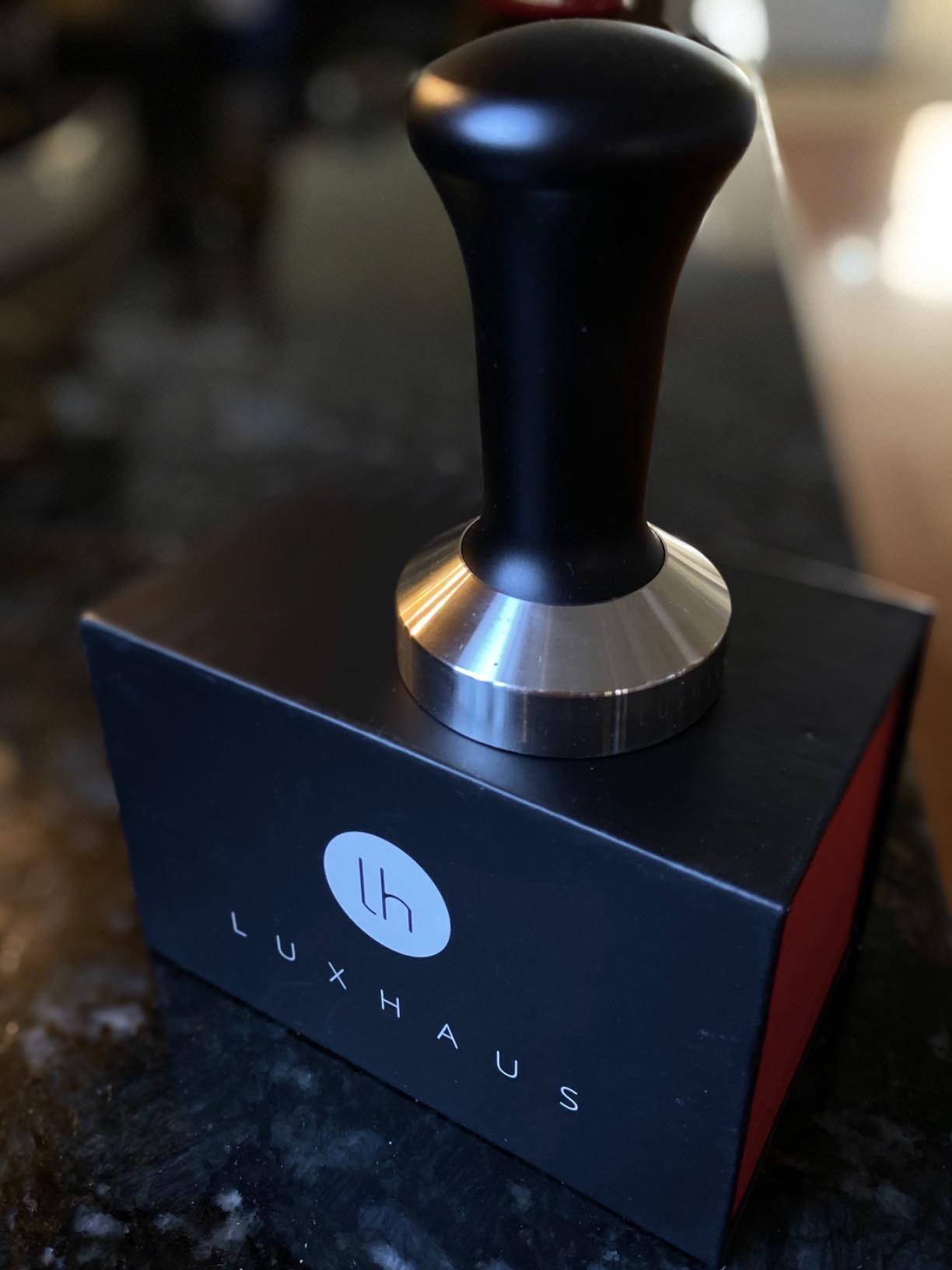
Why a flat base beats a textured base for consistency
A flat face presses the whole puck evenly in one contact. Ripple and waffle bases are marketed as water guides, and they do help break up the surface, but their grooves take the pressure off the ridges and onto the valleys. On a light roast that can leave the bed slightly uneven, which is why we saw a few more off-axis pucks with the ripple tampers in this test.
The counterargument is that ripples can reduce donut extraction on very dense, well-distributed doses. The practical answer is to level the bed well before you tamp and either style will serve you.
When a fixed tamper is the right choice
If you pull a lower-pressure shot, use a non-precision basket, and already tamp with a consistent vertical press, the mechanism-free design removes one thing that can break. There is no spring to fatigue, no collar to develop slop, and nothing to disassemble when coffee oils work their way into the joint.
Just confirm your basket diameter first. A flat fixed base has no tolerance to absorb a mismatch, and the manufacturer is explicit about measuring before ordering.
3. USEAMIE 58mm Wood Handle Tamper – Most Versatile
USEAMIE Coffee Tamper Espresso Press with Tamper Mat 304 Stainless Steel Flat Base Wooden Handle for Coffee Grounds Barista Espresso Machines Accessory (58MM)
304 stainless steel flat base
Solid wood ergonomic handle
Silicone tamper mat included
Manual operation
Pros
- Flat steel base resists rust and corrosion
- Wood handle is pleasant to hold
- Bundled silicone mat keeps counters clean
- A strong first step up from a stock plastic tamper
Cons
- Wooden handle cannot go in the dishwasher
- Fixed design with no pressure feedback or leveling
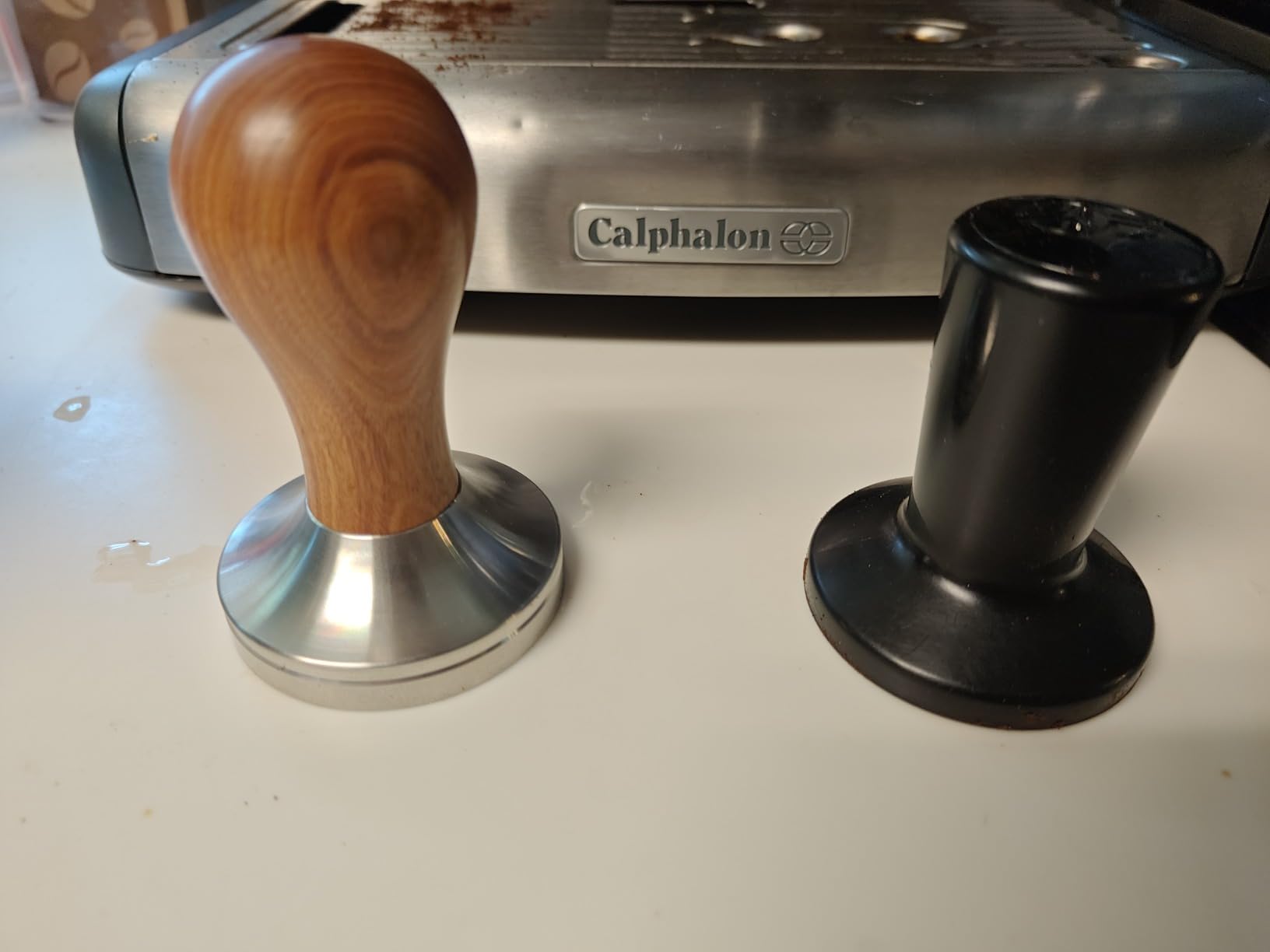
If your machine came with a plastic tamper, this is the cheapest meaningful upgrade available. The 304 stainless steel face is flat and rigid, and it replaced a hollow plastic tool in our test without any change in technique. For most first-time owners that single swap does more for shot quality than spending the same money elsewhere in the kit.
The solid wood handle is the part people comment on. It is warm rather than cold, shaped with no sharp corners, and it does not slip when your hands are damp from rinsing. That comfort argument is not marketing; on a tool you grip thirty times a day, feel is a real factor.
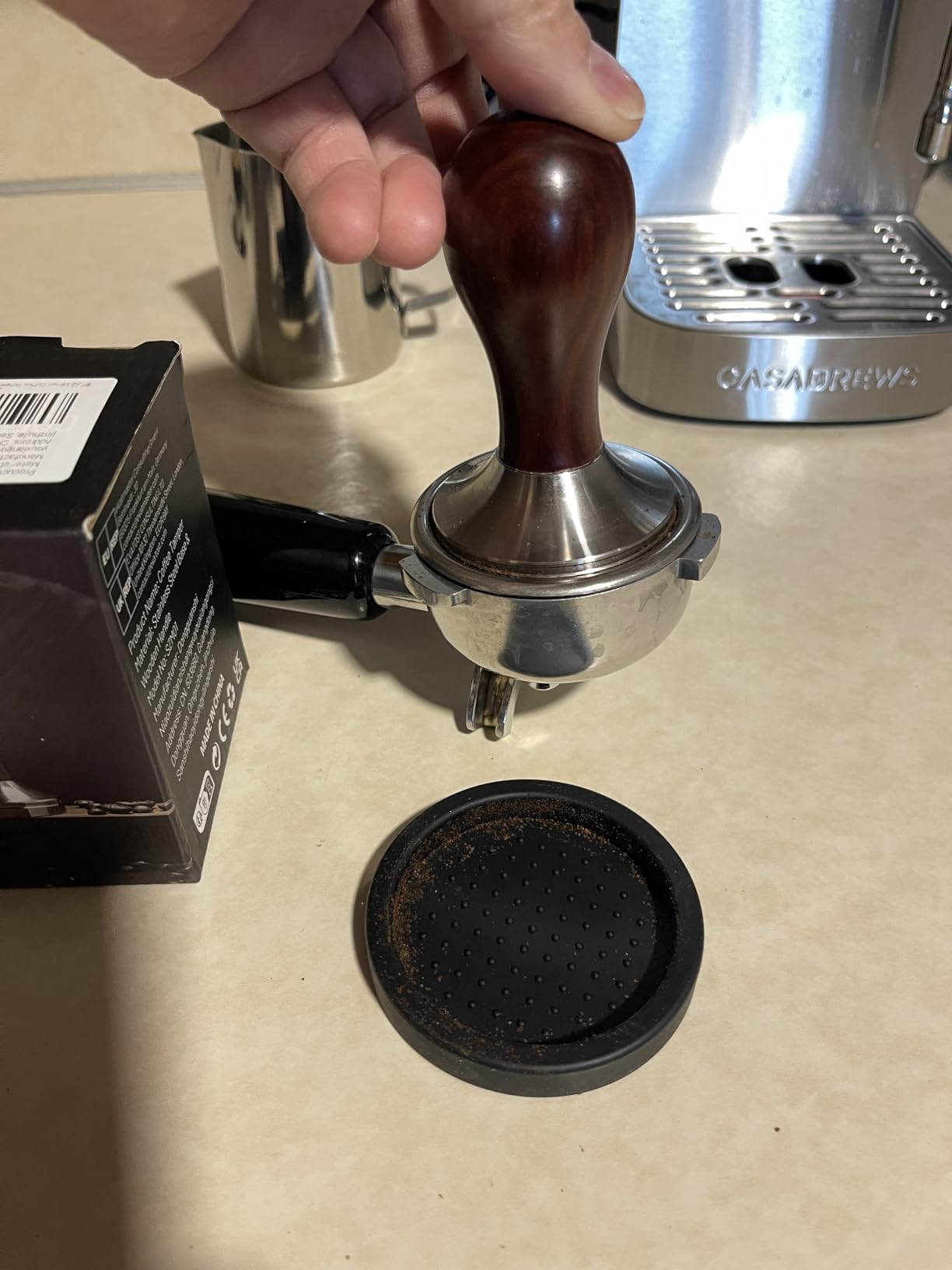
The included silicone tamper mat is a genuinely useful extra. It gives you somewhere to set the tamper down without leaving a wet ring on the counter, and it doubles as a place to knock loose grounds off before the next dose.
What you give up is everything mechanical: no spring, no leveling, no pressure cue. The pressure is manual and it varies with your mood and your wrist. That is fine for most people learning puck prep, and it becomes the limitation the moment you start chasing very even shots.
Is a budget steel tamper good enough?
Yes, for the majority of home setups. The failure mode of cheap tampers is usually a warped or thin base, and this one is a plain machined steel disc with nothing moving inside it. There is less to go wrong, and less that can wear out over years of use.
The honest limitation is fit. This is a fixed 58mm tool, so on a ridged basket it will leave the same edge ring that any nominal 58mm tamper does. If your shots show a pale ring around the edge, that is a diameter problem, not a quality problem.
What to look at as you move up
When you outgrow this one, the step up is usually a base diameter rather than a mechanism. A 58.3mm or 58.35mm face closes the edge gap immediately, and spring-loaded versions add the leveling plate and a fixed pressure.
Cleaning is the only daily friction: the wooden handle rules out the dishwasher, so plan on a quick hand rinse and a wipe down rather than a full wash.
4. MATOW 58mm Dual Head Distributor and Tamper – Best for Distribution
MATOW 58mm Coffee Distributor and Tamper Dual Head
2-in-1 distributor and tamper
Food-grade 304 stainless steel
Diamond non-slip palm grip
Adjustable tamp depth
Pros
- Two tools in one
- saving counter space
- Adjustable depth suits different basket heights
- Broad compatibility including E61 group heads
- Comfortable grip for repeated use
Cons
- Flip design takes practice to get fast
- Dual-head layout means more contact surfaces to clean
- Pressure remains entirely manual
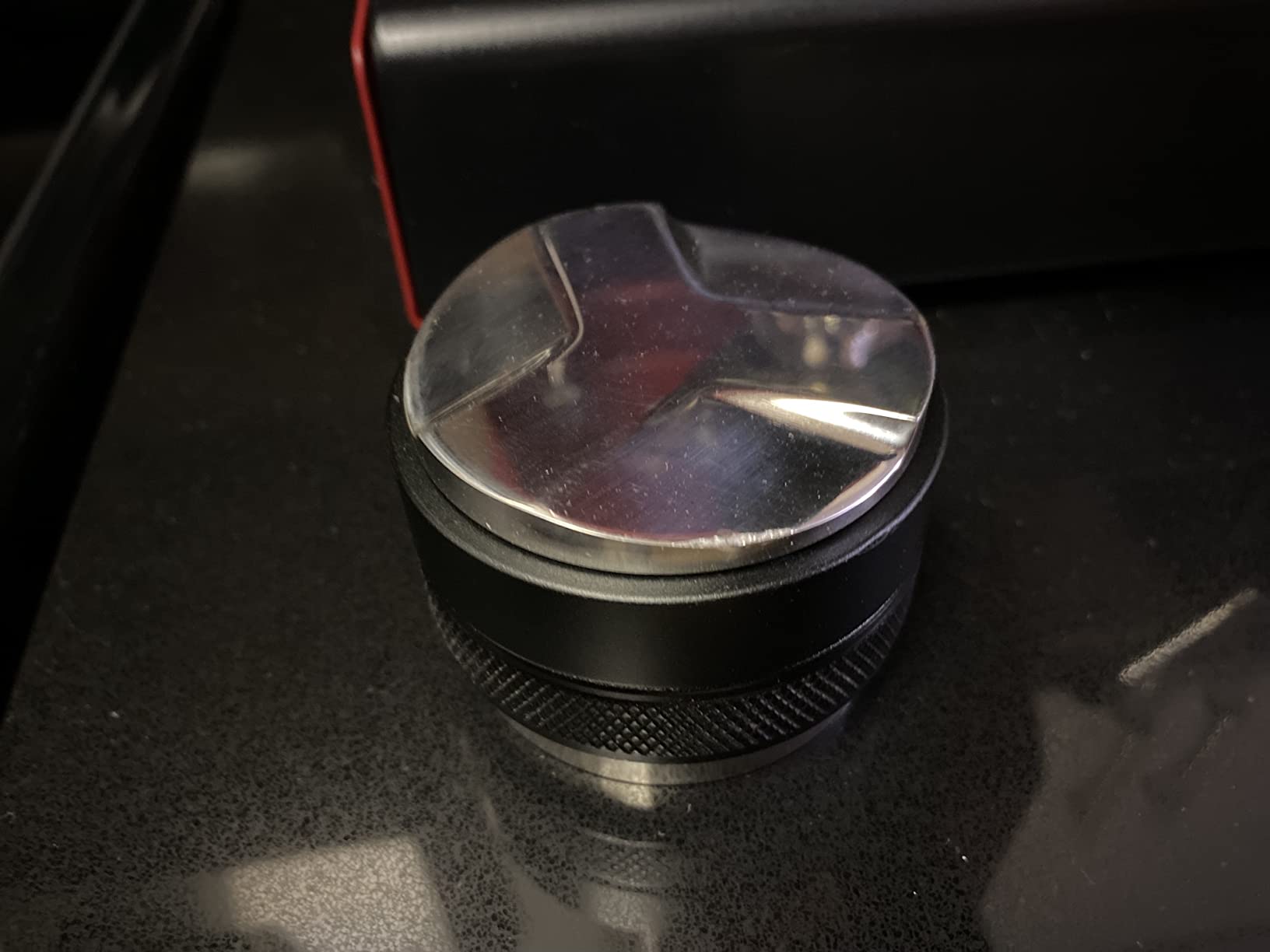
The idea here is simple and it works: one tool with a distributor head on one end and a tamper on the other. The flip happens in a few seconds, so your distribution and your tamp stay matched every shot. If you have ever distributed well and then knocked the bed flat while reaching for the tamper, this design removes that error entirely.
Compatibility is broad, covering Breville, La Marzocco, Rocket, Rancilio Silvia and E61 group heads among others, and the adjustable depth lets you match different basket heights. The diamond-patterned palm grip stayed comfortable through repeated use in our test even with damp hands.
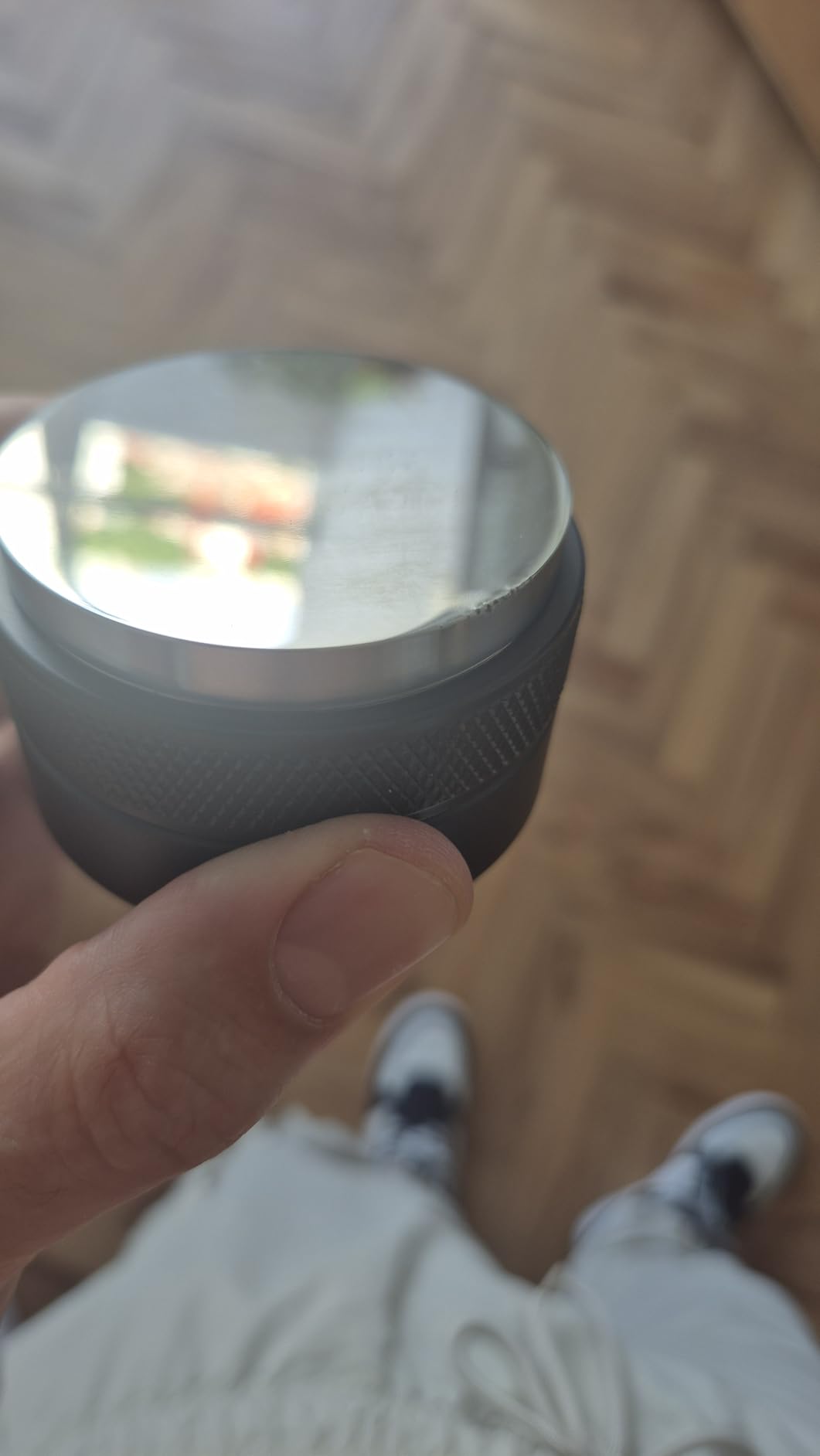
The 4.5 average is the lowest in this roundup, and the reason is visible in the reviews: the flip between heads is not intuitive. It is a design that rewards a week of practice and frustrates anyone who wants a fast shot. Nothing about it is broken; it is simply a tool that asks for habit.
Cleaning is also slightly more involved than a single-piece tamper because there is a joint between the heads. Coffee oils collect at the seam, and you need to wipe it regularly rather than occasionally.
When bundling a distributor with a tamper helps
Distribution is one of the highest-leverage steps in puck prep. Levelling the bed before you tamp removes the density variations that a tamp cannot fix, and a purpose-built distributor does it in a single pass with less mess than a spoon or a knock box.
Pairing it with a manual tamper keeps the workflow honest: you set the depth, then you apply your own pressure. That is a slower, more deliberate routine than an assisted machine, and it suits anyone who wants to feel the puck rather than let a mechanism decide.
Where the dual-head design falls short
The flip is the sticking point. Owners who have not adapted describe the two-handed manoeuvre as interrupting the rhythm of pulling shots, and that interruption matters more than it sounds when you are working through a service.
It also gives you two contact faces to maintain instead of one, and it still leaves pressure entirely up to you. If your main problem is an uneven tamp rather than an uneven bed, a self-leveling spring tamper is the more direct answer.
5. omgogo 58mm Stainless Steel Base Tamper – Best First Machine Upgrade
omgogo Espresso Tamper Coffee Tamper 58mm Barista Espresso Stainless Steel Base Coffee Bean Press tool
58mm stainless steel base diameter
304 stainless steel with wood handle
Manual non-calibrated
12 oz item weight
Pros
- Affordable first step up from a stock plastic tamper
- 304 stainless steel base with natural wood grip
- Light and easy to handle
- No mechanism to wear out
Cons
- No leveling or spring calibration
- Limited published specification detail
- Consistency depends entirely on your technique
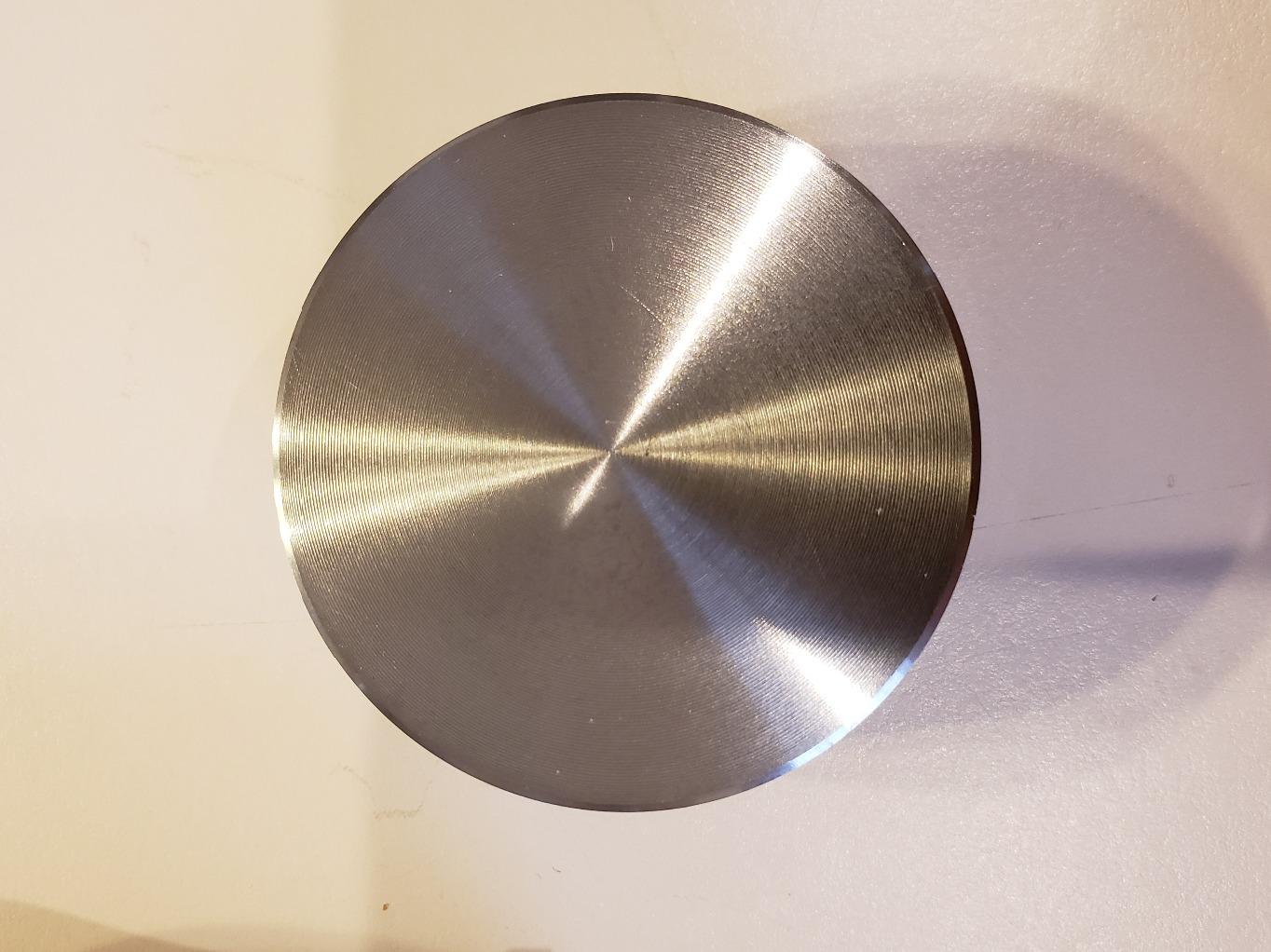
This is the bar you clear first. Buyers consistently describe it as replacing the thin plastic tamper that shipped with their machine, and at 12 ounces it is light in the hand in a way that makes it easy to tamp quickly and without thinking.
The base is 304 stainless steel with a natural wood handle and nothing else inside it. There is no mechanism to fail, which means the tool you own in five years behaves exactly like the one you bought today, provided you rinse it.
Owners are clear-eyed about what it is not. There is no calibration and no leveling, so shot consistency is entirely a function of your own press. For someone still learning how to build an even puck, that is arguably the right tool, because you are forced to develop the skill.
The listing itself is thin on published detail, with no dimensions given. That does not affect the tamper but it does mean you should confirm the diameter against your basket yourself rather than relying on the product photo.
Why the first tamper matters less than you think
The plastic tamper that ships with a new machine is genuinely poor. It flexes, it has no weight, and it encourages a light tap rather than a firm press. Replacing it with any solid steel disc teaches your wrist the force the job actually needs, and that habit transfers to every tamper you own later.
So the value of a cheap steel tamper is not the tool. It is the technique it forces you to learn. Once your press is consistently vertical and firm, the reason to upgrade is leveling and diameter, not pressure.
Reasons to move on from this one
There is no self-leveling, so a tamp that leans by a couple of degrees still goes through. That small angle is enough to send water down one side of the puck, and it is invisible until the shot tastes sour and thin on one side of the cup.
Weight is another consideration over time. At 12 ounces it feels nimble at first but does less to help you press firmly than a heavier base does. Heavier is not automatically better, but it removes effort from the press.
6. MHW-3BOMBER 58mm Calibrated Tamper – Best Calibrated Tamper with Click Feedback
MHW-3BOMBER 58mm Espresso Tamper – 3 Spring Loaded Coffee Tamper with 15lb / 30lbs Replacement Springs – Barista Calibrated Tamper with Sound Feedback – Compatible with 58mm Portafilter T6172T-OS
Three-spring 30lb calibration
58.35mm base diameter
Audible click at full pressure
16 oz weight with wood handle
Pros
- Audible click is the clearest pressure feedback here
- 58.35mm base leaves fewer grounds at the wall
- Solid 16 oz build
- Wood and metal handle is comfortable
Cons
- Costs more than most entries here
- Click requires pressing fully each time
- Wood and metal handle needs hand cleaning
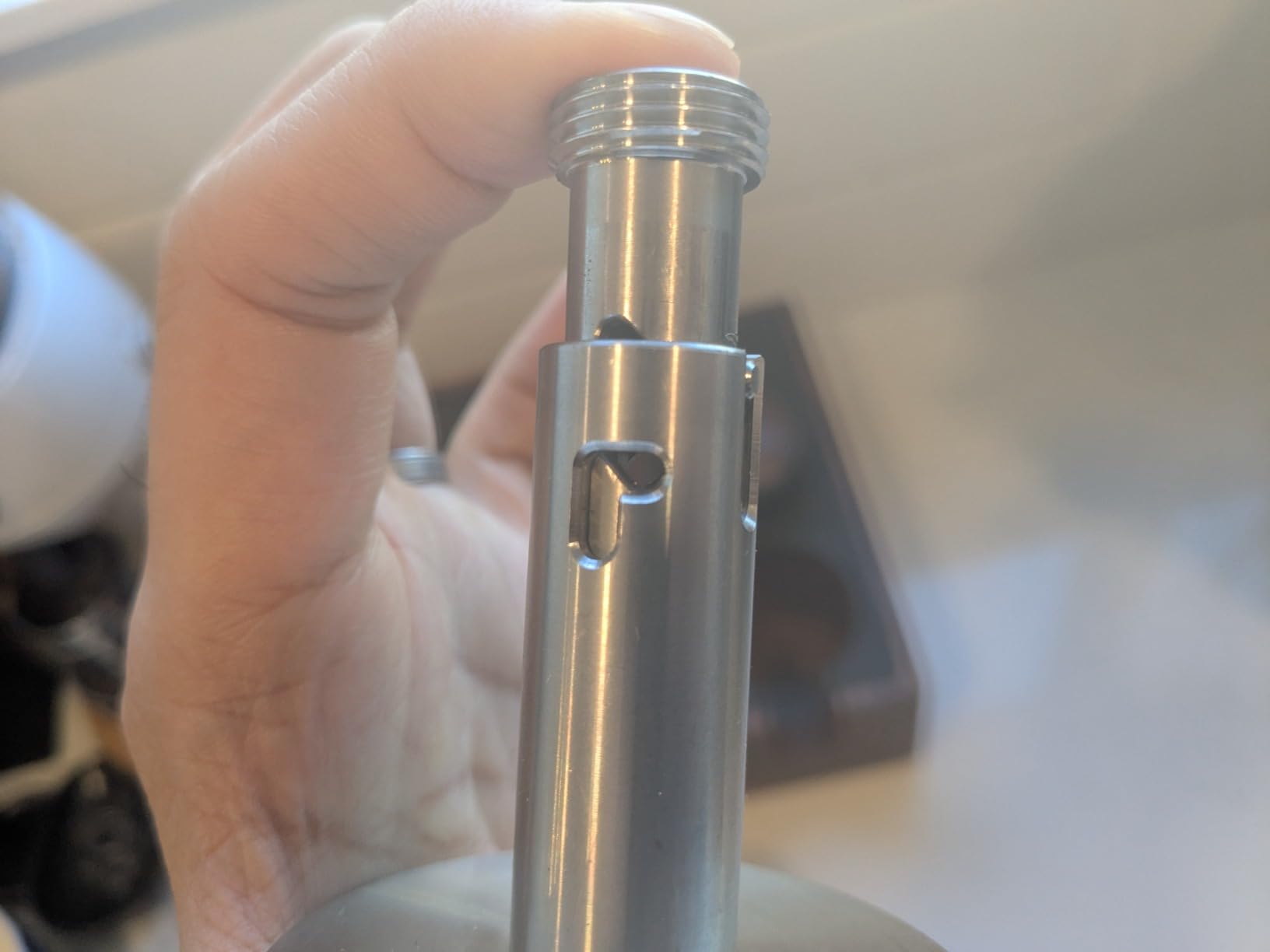
The defining feature is the sound. Three springs hold a constant 30lb of pressure, and when you reach that limit the mechanism clicks, so you get a physical confirmation that the stroke is complete. Of the tampers in this roundup, that is the most useful feedback loop for someone still learning to press.
The 58.35mm base is also on the slightly oversized side, and owners consistently report fewer grounds sitting at the basket wall compared with true 58mm faces. On a ridged basket that difference is exactly what closes the ring that causes channeling.
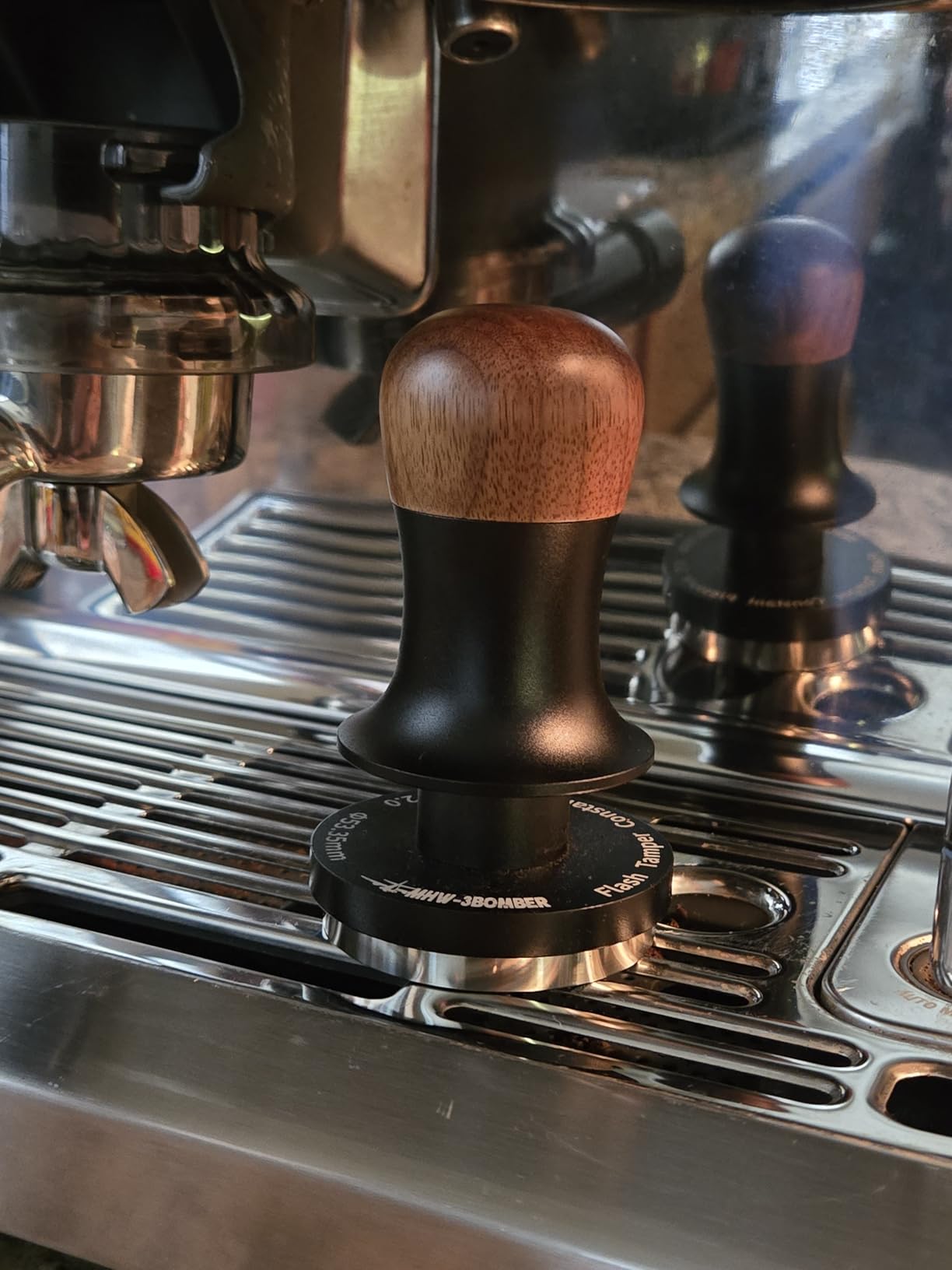
Replacement springs at 15lb and 30lb are included, so you can soften the tamp for a denser roast or firm it up for a light one. The build is solid at 16 ounces, and the wood and metal handle has a contact surface that stays comfortable through repeated pulls.
Cost is the single most common reservation in the reviews, and it is fair: the mechanism is doing work a fixed tamper leaves to your wrist, but it is a step up in build weight too. There is also a cadence to learn: the click only happens if you press through to the stop every time, and a half-hearted press produces no sound and less compaction.
What audible pressure feedback actually changes
Without a cue, most people stop pressing when the resistance feels strong, which is usually well before the actual spring stop. That produces a slightly under-tamped puck, which reads as a fast, sour shot and gets misdiagnosed as a grind problem. A click removes the guesswork entirely.
It also makes the tamp auditable. You can hear whether yesterday’s coffee and today’s were pressed the same way, which is useful information when you are changing beans and dialing in again.
Is the extra spend justified over a simple flat tamper?
If you already tamp level and consistently, probably not. A good flat steel face and a steady wrist will get you very close, and the fixed tampers in this roundup scored well on exactly the measure that matters, which is puck levelness.
If your tamping is inconsistent, the calibration and click earn their keep quickly. The main practical limit is the wood and metal handle, which means hand washing rather than a dishwasher cycle.
7. KYONANO 58mm Ripple Base Tamper – Best Ripple Base Design
KYONANO 58mm Espresso Coffee Tamper with 304 Stainless Steel Ripple Base
Ripple 304 stainless steel base
Scented rosewood handle
13.4 oz item weight
Fixed design, no spring or leveling
Pros
- Highest average rating in the roundup
- Ripple surface guides water evenly
- Substantial 13.4 oz weight
- Real rosewood handle
- Compatible with major 58mm machine brands
Cons
- Ripple grooves catch coffee and need scrubbing
- Fixed design with no spring or leveling assistance
The KYONANO carries the highest average rating of anything we tested, at 4.9 across more than 600 reviews. Owners consistently describe it as rivaling tools costing several times more, and the reason is a combination of a genuinely heavy base at 13.4 ounces and a rosewood handle with no sharp corners.
The ripple pattern is the point of the design. Rather than pressing the surface uniformly, the grooves leave channels that water uses to find its way through the bed, which some owners find reduces donut-style extraction on dense doses. The manufacturer also lists compatibility across Breville, Rancilio, Gaggia, La Pavoni, ECM, La Marzocco, Rocket, Astoria and E61 group machines.
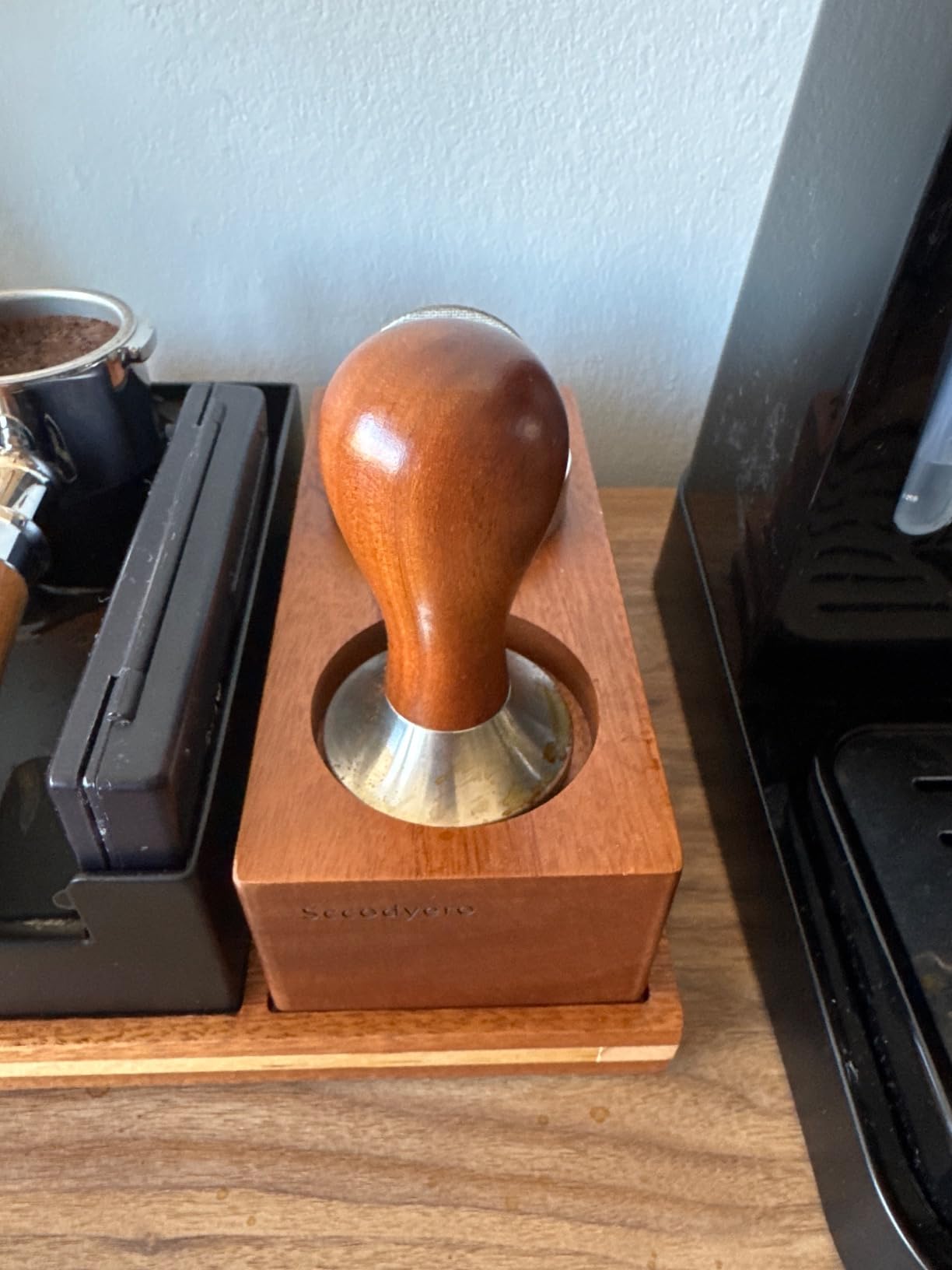
Cleaning is the one genuine complaint. The grooves hold fine particles and need a scrub rather than a quick rinse, and coffee oil left in the valleys can darken the base over time. That is a small weekly cost, not a dealbreaker, but it is more maintenance than a flat face.
Like the other fixed tampers here, there is no leveling and no spring, so the press is entirely manual. The heavier body does make firm pressure easier to achieve, which is part of why owners rate it so highly for the money.
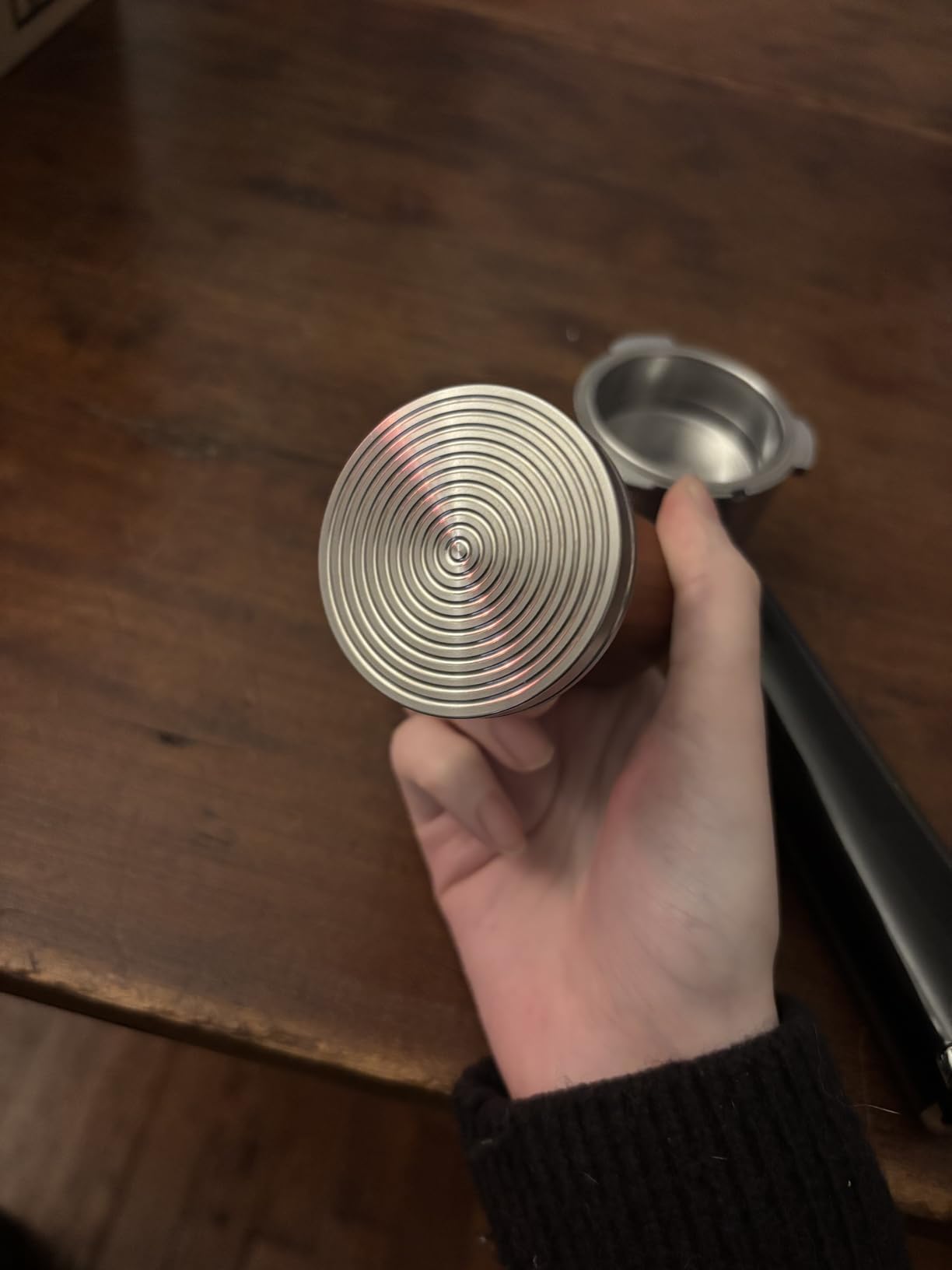
Ripple base or flat base: which should you buy?
A ripple base is a slightly opinionated choice. The grooves redistribute pressure away from the ridge lines and onto the valleys, and that can even out flow through a well-prepared bed. On a loosely prepared dose it can also lock in unevenness rather than correct it.
A flat base is the safer default. It presses everything at once, cleans in seconds, and puts no interpretation between you and the puck. Choose a ripple base if you have a distribution routine you trust, and a flat base if you are still developing one.
Where the rating hides a weakness
A 4.9 average across 640 reviews is impressive, but the sample is smaller than the fixed-base leaders. Fewer owners means fewer reports of long-term wear, so treat the enthusiasm with a little care over a multi-year horizon.
Also worth noting that the handle is scented rosewood. It smells pleasant out of the box, and cleaning has to be gentle enough not to strip the finish over time.
8. KNODOS Walnut Spring Loaded Tamper – Best Spring Tamper for a Lighter Roast
KNODOS Calibrated Espresso Tamper 58mm Walnut Spring Loaded Design
Self-leveling double spring system
Calibrated to 30lb with three springs
58.35mm stainless ripple base
Walnut handle
Pros
- Calibrated 30lb pressure with three spring options
- Self-leveling keeps the puck flat
- Walnut handle feels premium in the hand
- 58.35mm base fits snugly in 58mm baskets
Cons
- Ripple base needs more cleaning than a flat base
- No audible pressure click
- Wipe clean only because of internal springs
This combines the two things the forum consensus keeps asking for: a self-leveling mechanism and a 58.35mm base. The double-spring system is calibrated to 30lb and the base sits slightly oversized, so the puck gets pressed across its full width including the outer ring rather than just the centre.
The walnut handle is the nicest to hold in this group. It is smooth, warm and shaped for a relaxed grip, and at one pound the tool has enough weight to make a firm press easy without needing a wrist-rolling motion.
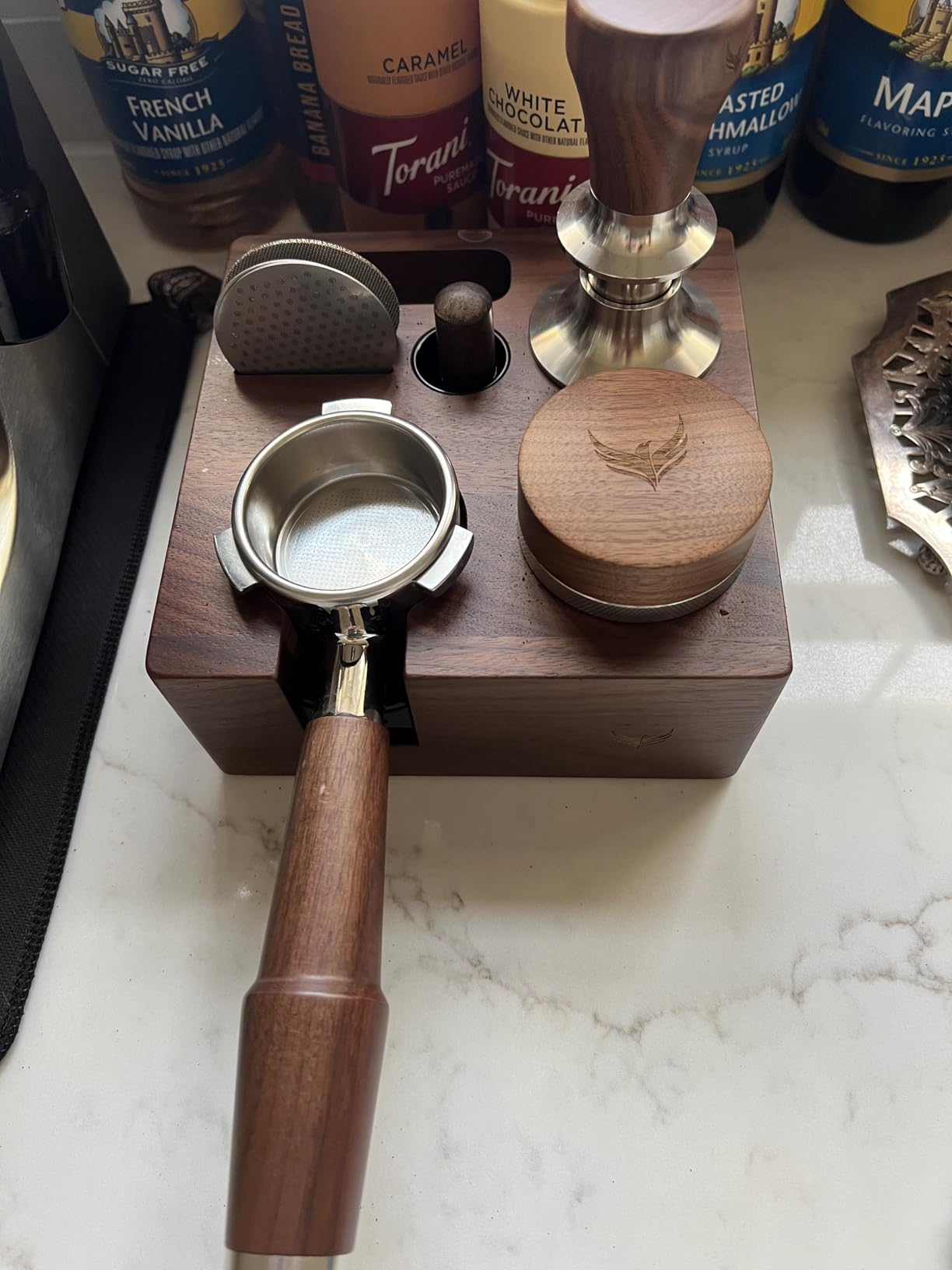
Three interchangeable springs are supplied, so you can drop the pressure for a dense, dark roast and firm it back up when you switch to a light one. Owners credit the self-leveling system with the biggest improvement, reporting that their pucks came out visibly flatter than with a fixed tamper.
The two practical drawbacks are the ripple base, which needs more attention to clean than a flat face, and the absence of an audible click at full pressure. The internal springs also mean wipe-clean care only, never a dishwasher.
Why spring calibration suits light roasts
Light roasts are less dense, so the same force produces a thinner, more fragile bed. A fixed spring that suits a dense Brazilian can over-compress a washed Ethiopian, pushing water through too slowly and flattening the aromatics you paid for.
Being able to swap the spring means the tool adapts to the bean instead of asking the bean to adapt to the tool. That is the practical value of owning three spring weights, and it is why we suggest keeping them all installed rather than binning the extras.
What you give up against the V4.1
The missing click is the clearest difference. You get a consistent pressure but no confirmation that you reached it, so you are relying on feel rather than sound. If audible feedback helps you stay consistent, the Normcore V4.1 covers that.
The ripple base is the other trade. It distributes water through the grooves by design, which suits a well-prepared bed, but it collects particles and needs a brush or cloth each week.
9. KNODOS Rosewood Spring Loaded Tamper – Best Gift-Ready Spring Tamper
KNODOS 58mm Tamper For Espresso Machines Rosewood Self Leveling and Double Spring Loaded Design Calibrated Coffee Tamper With Gift Box
Self-leveling double spring design
58.35mm base diameter
1.78 lb weight with rosewood handle
Three springs: 20lb/25lb/30lb
Pros
- Self-leveling double springs deliver consistent compaction
- Substantial 1.78 lb weight
- Three spring weights for tamp firmness control
- Attractive gift box presentation
Cons
- Heaviest tamper here
- which can tire the wrist
- Larger footprint takes more counter space
- Slight spring stiffness at full compression
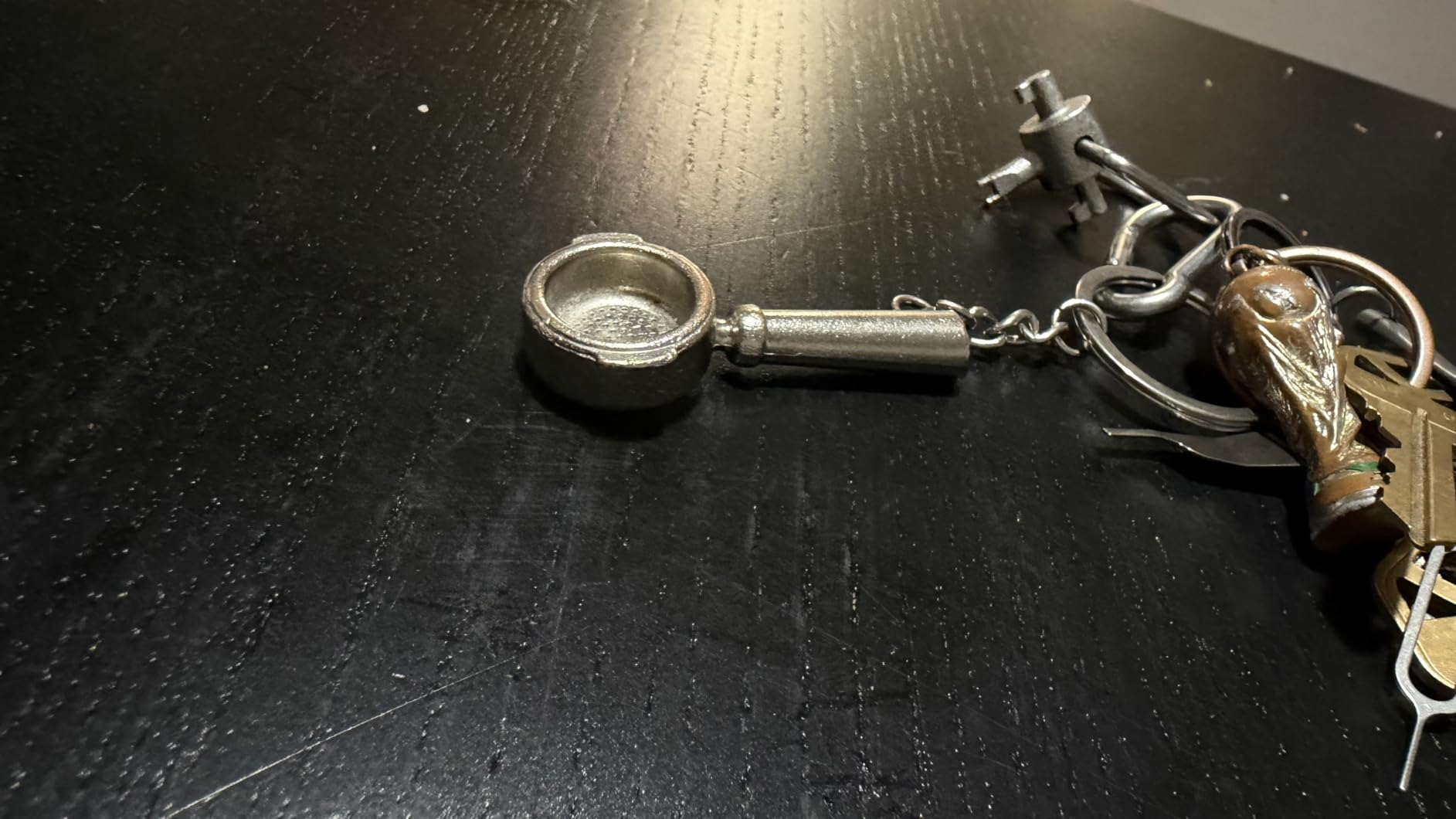
This is the one to buy when the purchase is partly a gift. It arrives in a gift box with a portafilter-shaped keychain, and the rosewood handle gives it a finish that looks at home next to a proper machine rather than beside it in a drawer.
The mechanism is a self-leveling double-spring design with a constant block, and the 58.35mm base closes the edge gap in a ridged 58mm basket. Across repeated tamps it produced the same flat pucks as the other self-leveling options here, which is the reason to consider it at all.
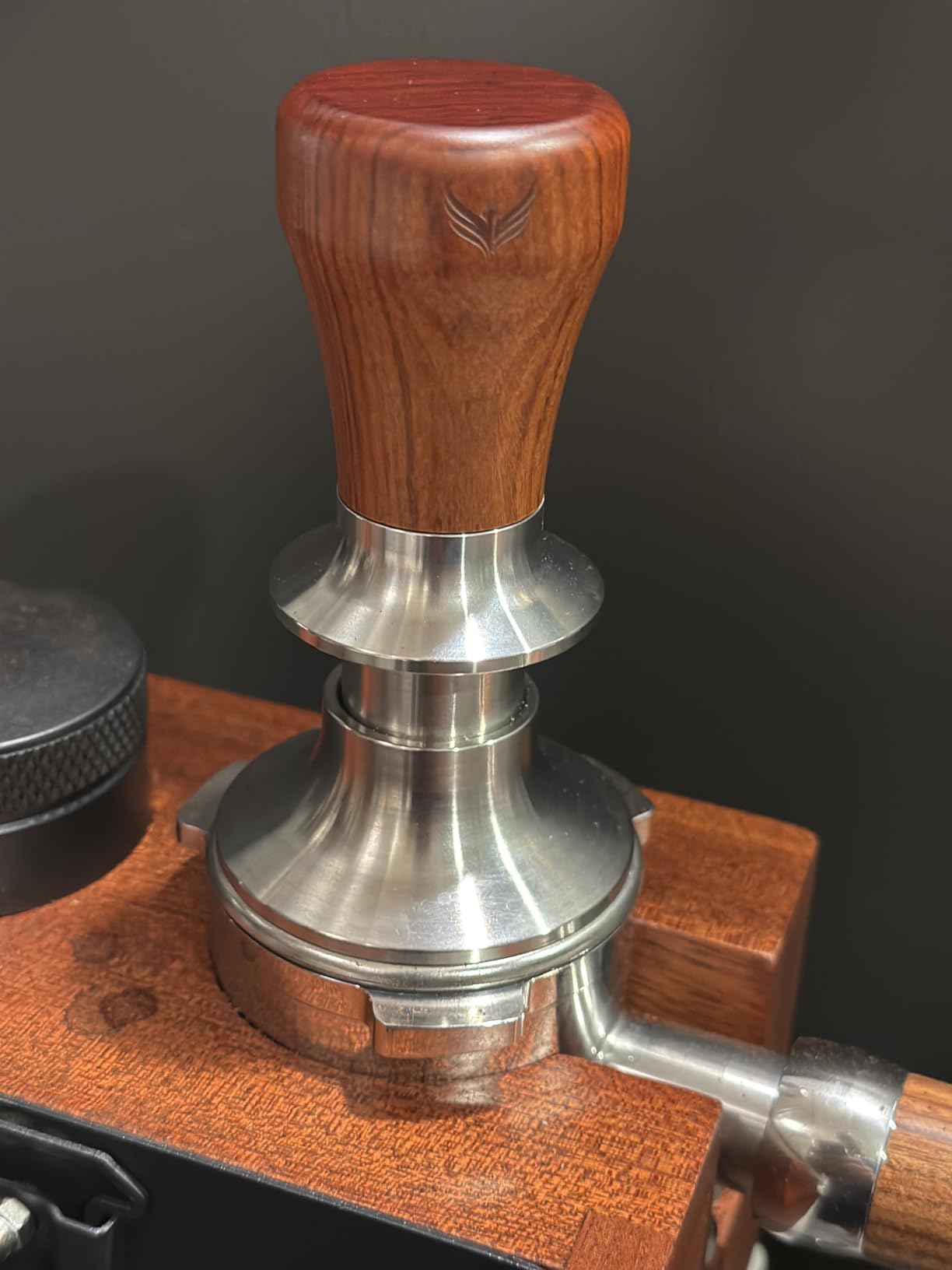
Spring weights come at 20lb, 25lb and 30lb. That range is a little softer at the bottom than the 15lb option on some competitors, so if you pull very dense dark roasts and want a lighter touch, check the numbers before buying.
At 1.78 pounds it is the heaviest tamper in this roundup by a wide margin. That gives it a planted, premium feel and makes firm pressure effortless, but owners do report wrist fatigue over a long session, particularly if you already hold the tool in a fist rather than a relaxed grip.
How much tamper weight is too much
Weight helps by removing effort from the press. A heavy base gets you to firm pressure with less wrist involvement, which reduces the chance of a light, uneven tamp and cuts fatigue on a long service.
Past a point it becomes a liability. Above roughly two pounds, you are carrying the tool rather than guiding it, and the extra momentum can make it harder to control the last part of the stroke. Balance and shape matter more than the raw number.
Who should skip this one
If you have a small kitchen and limited counter space, the larger footprint is worth considering. It takes up more room than a slim spring tamper, and the stand-free design means it lives on your counter rather than in a drawer.
If you are sensitive about the spring feeling firm at full compression, or you want the lightest press available, a model with a 15lb spring option gives you more room to adjust. This is otherwise a very capable tool with a strong 4.8 rating across more than 500 reviews.
10. Normcore V4.1 with Click Feedback – Best for Bottomless Portafilters
Normcore 58mm Coffee Tamper V4.1 with Click Feedback, Self-Leveling Spring-Loaded Design, 304 Stainless Steel Flat Base for 58mm Espresso Portafilters, Black Anodized Aluminum Handle
Audible click at target pressure
304 stainless steel flat base
Three springs: 15lb/25lb/30lb
1.1 lb weight
Pros
- Audible click confirms target pressure reached
- Self-leveling base with minimal mechanism slop
- 58.5mm variant solves channeling on bottomless baskets
- Easy to disassemble for deep cleaning
Cons
- Higher cost than the flat-base models here
- Spring feel is firm at full compression
- Care is wipe-clean only because of the internal springs
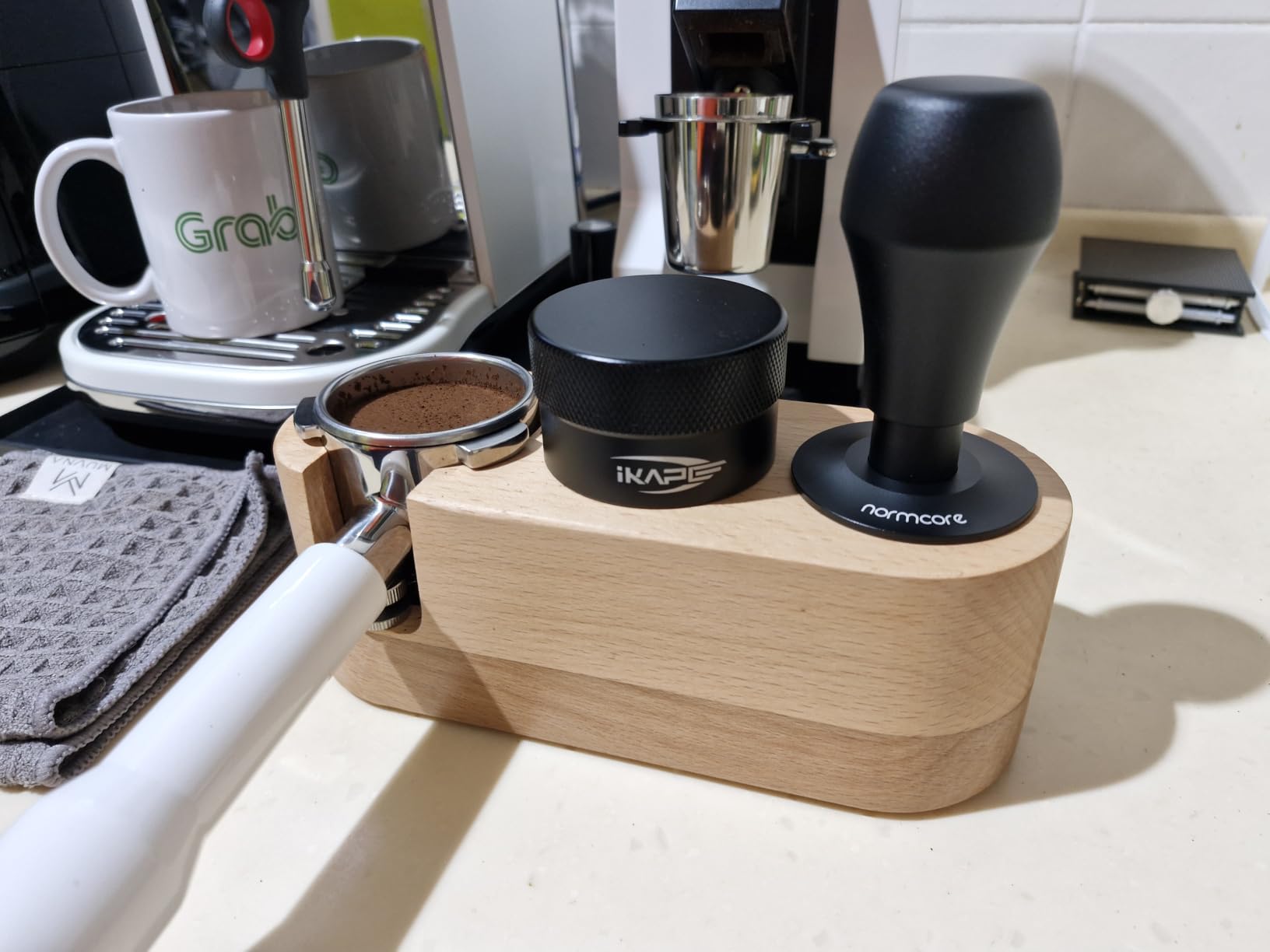
The V4.1 is the V4 with the one thing owners most often asked for: an audible click when you reach the target pressure. Combined with the self-leveling base, it gives you both halves of the feedback loop, a physical levelness guarantee and a sound cue for full compression.
Several users specifically report that the 58.5mm variant solved channeling on bottomless 58mm portafilters, which is the hardest case because there is no spout to absorb uneven flow. On a bottomless basket you can see the stream split into two or more fingers the moment a tamp is off, so a level press is not a nicety.
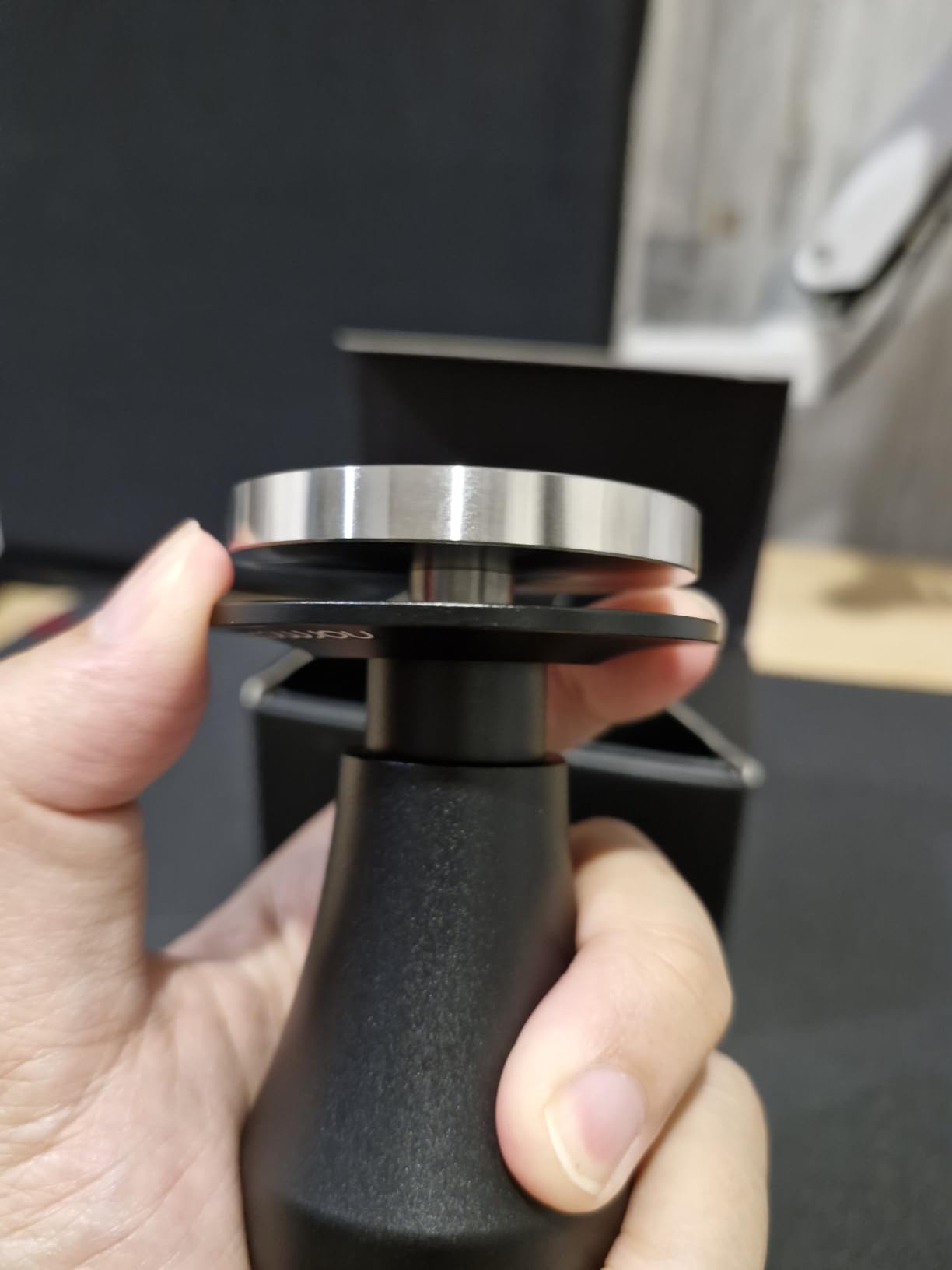
Three interchangeable springs at 15lb, 25lb and 30lb are included, and the mechanism has minimal slop at full compression, which is where cheap spring tampers usually start to feel vague. It also disassembles for a deeper clean, which partly offsets the wipe-only limitation of having springs inside.
The reservations are predictable. It sits at the upper end of this roundup, and the spring can feel firm when you bottom it out. Owners who prefer a softer stop may find the lighter spring suits them better day to day.
Bottomless versus spouted: what changes
A bottomless portafilter removes the spout, so the coffee bed becomes the only thing guiding the water. Any tilt or unevenness in the puck shows up immediately as a split stream, and channeling becomes visible rather than hidden.
That makes a self-leveling mechanism genuinely valuable rather than a convenience, because it prevents the tilt before it starts. It also makes an oversized base more important, since the outer ring is the first place an under-tamped bed fails. If you have a spouted basket, the same tool still works, but you have more margin for error.
Is the upgrade from the V4 worth it for most people?
Probably not, if your V4 tamp is already consistent. The added click is a genuine quality-of-life improvement, and on a bottomless basket it is more useful, but the mechanism and base are essentially the same tool.
For a first spring tamper, or for anyone whose channeling is the persistent problem, this is the version to buy. The silicone dock is a small extra that keeps the tamper stable on the counter and off the edge of the drip tray.
What Base Diameter Does a 58mm Tamper Actually Need?
You need between 58.3mm and 58.5mm, and that single number resolves most of the problems people hit with 58mm tampers. The basket is labelled 58mm but its ridged walls measure wider than nominal, which means a true 58.0mm face sits inside the basket without ever touching the perimeter. The centre of the puck gets compacted and the outer ring does not, and under nine bars of pump pressure water takes the easy path down that loose ring.
That is ring channelling. It shows up as a shot that tastes sharp and sour on one side of the cup, pour faster than it should, with a visible fringe of grounds around the basket wall. No amount of extra tamping pressure fixes it, because the problem is coverage rather than force.
A slightly oversized face solves it mechanically by pressing the entire puck, edge included. The tolerance here is forgiving, which is why 58.3, 58.35, 58.4 and 58.5mm all work well. Below about 58.2mm you are leaving a gap; above roughly 58.6mm you start risking a tight fit or suction against the basket wall, and that suction can pull the puck back out of compression when you lift.
Two of the products in this roundup make the case directly. The MHW-3BOMBER uses a 58.35mm base and owners report fewer grounds at the rim, and the Normcore V4.1 is offered in a 58.5mm variant that several users credit with eliminating channeling on bottomless portafilters.
Flat base or ripple base
A flat base presses the whole puck in one even contact and cleans in seconds. It is the safer default and the one most home setups should start with. The KYONANO and the KNODOS walnut model use ripple patterns, which leave small channels for water to follow through the bed and can even out flow on a dense, well-distributed dose.
The trade-off is maintenance. Ripple grooves hold fine particles and need a scrub, where a flat face wipes clean. And because the grooves take pressure off the ridge lines, a ripple base is less forgiving of a badly levelled bed. Level first, then tamp, and either style will work.
Measure before you order
If you are buying a fixed-diameter tool, measure the inside of your basket with calipers rather than trusting the stamped number. The LuxHaus listing explicitly advises this, and it is the right advice for every non-adjustable tamper on this list.
Tampers to avoid and why
Convex bases push the centre of the puck harder than the edge, which is the exact opposite of what you want. They compact the middle and leave the perimeter loose, and the geometry guarantees a channeled shot. Every model in this roundup has a flat or ripple face.
Nominal 58.0mm faces with no leveling leave the edge ring described above. If a listing only says 58mm with no decimal, assume the face is at true nominal size and that you are buying the gap.
Punch-activated tampers compress the puck with a lever or button rather than a press. Owners report these cracking the puck or separating it from the portafilter wall on activation, and the added moving parts have no offsetting benefit at home volumes.
Finally, avoid novelty plastic-handled tools and be wary of discounted branded tampers, where counterfeit copies show up with inconsistent base diameters. Check the machining finish and the base measurement when the tool arrives.
Classic, Spring-Loaded, Ripple or Impact: Which Mechanism Do You Need?
There are only really three families here, and choosing between them is a question about what problem you are trying to solve rather than about quality.
A classic tamper is a weighted disc with nothing moving inside it. Pressure is whatever your arm produces. It is the simplest design, the easiest to clean, and the only one with no parts to wear out. For most first setups it is the correct answer, because it teaches a firm vertical press that you will carry into every tool you use later.
A spring-loaded self-leveling tamper adds a guide plate that rests on the basket rim and an internal spring that sets the force. The guide plate prevents a tilted press, and the spring removes pressure variance from the equation. That is what the forum consensus keeps returning to: once your technique is sound, this is the mechanism that buys consistency, and it is the reason four of the ten products in this roundup use it.
Do self-leveling tampers work? They work for levelness, and that is what they are sold on. What they do not fix is a badly distributed bed, a grind that is too coarse, or a dose that is uneven. The leveling plate levels the tamp; it does not level your puck prep.
Spring calibration is the third variable, with weights typically at 15lb, 25lb and 30lb. Lower spring weights suit denser roasts that need less force to compact, and firmer springs suit light, fragile roasts. Owners are genuinely divided on whether swapping them changes the cup enough to notice, but the ability to change them cheaply is worth having on the shelf.
Impact or force tampers are the premium end. They deliver a preset force with a lever or impact action rather than a continuous press, and they are aimed at high-volume and competition workflows. They were not part of this roundup’s tested set, and for a home machine the added complexity and cost rarely pays for itself against a well-set spring tamper.
One maintenance note applies to every spring-loaded model here. Internal springs mean wipe-clean care only, never a dishwasher. Coffee oils migrate into the mechanism over time, and while the Normcore V4.1 disassembles for a deeper clean, most of the others do not.
Which Tamper Fits Your Espresso Machine?
Basket diameter decides everything, and it is worth checking before you order anything.
Gaggia Classic and Classic Pro use a 58mm basket. The plastic tamper that ships with them is exactly the tool to replace, and a 58.3mm to 58.5mm spring tamper is the usual upgrade.
Rancilio Silvia uses a 58mm basket, so the same sizing applies across every Silvia variant.
E61 group heads on Rocket, ECM and similar prosumer machines use 58mm, often with a bottomless portafilter. Oversized bases matter most here because there is no spout to hide uneven flow.
La Marzocco, Ascaso and Saeco machines commonly use 58mm and appear on the compatibility lists for several of the tampers above.
Breville uses a 54mm basket. A 58mm tamper will not fit and a 54mm tamper in a 58mm basket leaves a channeling gap, so these need a separate tool.
DeLonghi Dedica and La Specialista use 51mm. Again, a separate tamper is required rather than a workaround.
If you own both a 54mm and a 58mm machine, keep two tampers and store them away from each other. Mistamping a 54mm basket with a 58mm base is not possible, but grabbing the wrong tamper mid-morning and pressing it against the rim is a real and avoidable frustration that comes up repeatedly in owner discussions.
Marking each tamper with a different colour of tape on the handle solves it in five seconds and costs nothing.
Tamping Technique: Getting More From the Tamper You Own
Most tamping problems are not tamper problems. Grind size and distribution have a far bigger effect on the cup than the tool you press with, so it is worth being blunt about this: a good flat steel face and a steady wrist will get you very close to what a calibrated mechanism gives you.
What a better tamper actually buys is repeatability, and that is worth real money on a home machine because you are the only person holding every variable still. The routine below is the one we used across every tamp in this roundup.
1. Distribute the bed. Level the grounds before you tamp, with a distributor or with gentle side-to-side shaking of the portafilter. An uneven bed cannot be fixed by pressure, because pressure just compacts what is already high and leaves what is low untouched.
2. Place the tamper flat. Set it on the puck without pushing, and check that it is sitting square. With a self-leveling tamper the guide plate will seat on the basket rim, which does this for you.
3. Press vertically. Use your body weight through a bent elbow rather than your wrist, aiming for roughly 25 to 30 pounds of force. There is no prize for pressing harder, and over-tamping past a spring stop can compact light roasts into something slow and bitter.
4. No twisting. Lift straight up. Twisting at the end of the press is a common habit that shears the top of the puck and creates exactly the kind of unevenness the tamper was supposed to prevent.
5. Pair with WDT if needed. If your grinder produces clumping, a WDT tool used before distribution will break up clumps that no tamper can reach. It is a few dollars and it often matters more than an expensive tamper.
Where you see the clearest difference between a cheap and a good tamper is not in the taste so much as in the repeatability. Same dose, same level tamp, same time and same yield. That consistency is what lets you change beans and actually learn what changed.
Frequently Asked Questions
What is the best 58mm tamper for espresso?
For most 58mm setups the Normcore V4 is the best all-round choice, because its self-leveling guide plate rests on the basket rim so the tamp cannot tilt, and it ships with 15lb, 25lb and 30lb springs. If you want something simpler and cheaper, the LuxHaus flat stainless steel tamper is the value pick, and for the smallest upgrade over a stock plastic tamper the USEAMIE wood-handle model is hard to beat.
What size tamper for a 58mm portafilter?
Aim for a base diameter between 58.3mm and 58.5mm rather than a nominal 58mm. The basket is stamped 58mm but its ridged walls measure slightly wider, so a true 58.0mm face floats in the middle and never compacts the outer ring, which causes ring channelling under pressure. Going much above about 58.6mm risks a tight fit or suction against the wall.
Who makes the best espresso tamper?
Brand matters far less than base diameter and mechanism. Among the models we tested, Normcore leads on self-leveling spring design with the widest review base, MHW-3BOMBER stands out for audible click feedback, and several fixed-base models score extremely well for the money. Measure the base, check the diameter is 58.3mm or larger, and the brand name is a secondary consideration.
How do I know what size espresso tamper to get?
Measure the inside of your portafilter basket with calipers instead of trusting the stamped number, because ridged walls measure wider than nominal. Gaggia Classic, Classic Pro and Rancilio Silvia all use 58mm baskets; Breville uses 54mm and DeLonghi Dedica and La Specialista use 51mm. If you own more than one machine, keep a separate tamper per basket size and mark each handle.
What is the best self-leveling espresso tamper?
The Normcore V4 is our pick for self-leveling 58mm tamping, with the MHW-3BOMBER and the two KNODOS models as strong alternatives. A self-leveling tamper rests its guide plate on the basket rim, so a tilted press physically cannot complete, which removes the two most common home tamping errors. It does not fix an uneven bed, so distribution still has to be right.
Do self-leveling tampers work?
They work for levelness, which is exactly what they are designed to do, and that is where most home channeling comes from. They will not fix a grind that is too coarse, an uneven dose, or a badly distributed bed. Most owners also note that switching beans changes how much the mechanism helps, which is why models that ship with three spring weights are more useful over time.
Final Verdict: The Best Espresso Tampers for 58mm Baskets in 2026
The best espresso tampers for 58mm baskets in 2026 come down to two decisions: get the base diameter right and decide how much help you want from the mechanism. Buy the Normcore V4 if you want the work done for you, because the self-leveling guide plate removes tilt and twist and three spring weights handle any roast. It carries the largest review base in this roundup and it was the tool that most changed how we tamp.
Buy the LuxHaus if you want the best value and already press vertically with confidence. Its flat stainless steel base is the cleanest, simplest tool here, and it scores 4.8 stars across more than 1700 owners. For the smallest possible upgrade from a plastic tamper, the USEAMIE wood-handle model is the one to start with.
Whatever you choose, measure your basket before ordering and aim for 58.3mm to 58.5mm. That single number prevents more channeling than any mechanism ever will.