
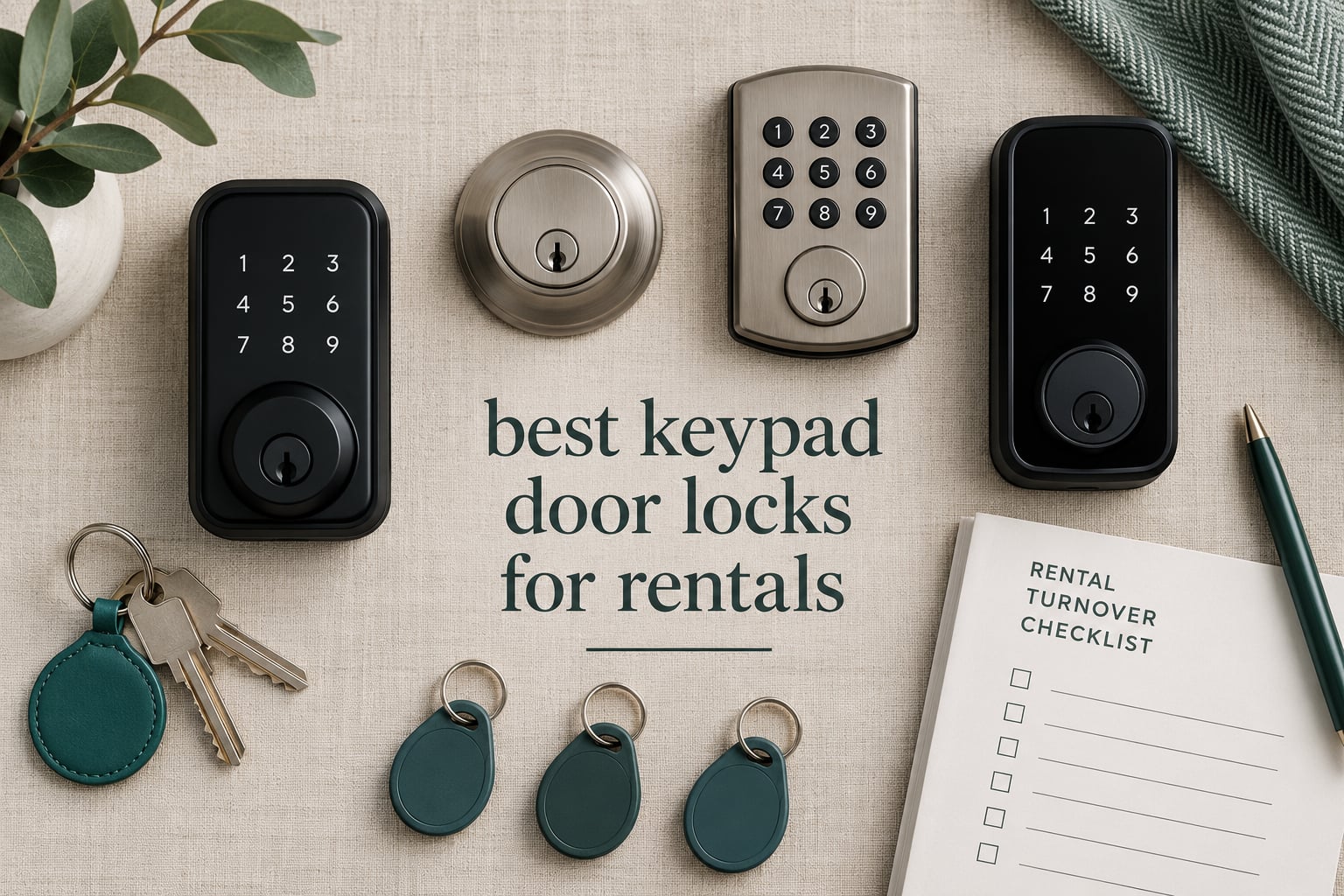
The best keypad door lock for a rental property is the TEEHO TE001 if you want the strongest all-round option for a standard 12-month tenancy: 20 codes, self-deleting guest PINs and a 4.5 rating across more than 10k reviews. If you manage several doors, pick a Kwikset with SmartKey rekeying so one key opens everything. If you run short-term rentals from another state, choose a Wi-Fi model with remote code control.
Every landlord asks the same question first: what does this cost me per turnover. A keypad deadbolt changes who gets in by editing a number instead of paying a locksmith to re-pin a cylinder, and it deletes access the moment a tenant moves out rather than leaving a trail of copied keys nobody is tracking.
We compared 12 keypad and electronic deadbolts for rental doors, weighing code capacity, physical key backup, security grade, battery type, door fit and what happens when the batteries die. No prices are listed here. Use the check buttons to see current listings.
The short version from landlord forums: most 12-month tenancies do not need a smart lock at all. Long-term landlords on r/Landlord report fitting keypad deadbolts themselves in about half an hour when the door is already drilled for the right holes, and they rate the no-app locks as dependable. Connected locks earn their place when you are turning a door over weekly, managing a property from another state, or handing out cleaner and contractor access on a schedule.
Table of Contents
Top 3 Keypad Door Locks for Rentals (October 2026)
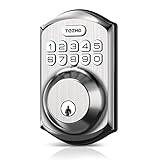
TEEHO TE001 Keypad Deadbolt
- 20 codes with self-deleting guest PIN
- 4 AA batteries up to 365 days
- ANSI Grade 3 with IP54
- Screwdriver-only install

Schlage BE365 Keypad Deadbolt
- 19 user codes
- Grade 2/AAA metal build
- 9V battery
- Installs over existing deadbolt

Veise RZ-A Keypad Deadbolt
- 20 codes plus one-time codes
- BHMA ANSI Grade 3 cylinder
- 4 AA batteries up to 12 months
All 12 Keypad Door Locks Compared Side by Side in 2026
The columns that decide this purchase are not screen size or app polish. They are how many codes the lock holds, whether you can change them remotely, whether a physical key still opens it, and what the security grade actually is.
| Product | Specs | Action |
|---|---|---|
| TEEHO TE001 Keyless Entry Deadbolt |
|
Check Latest Price |
| Schlage BE365 Electronic Keypad Deadbolt |
|
Check Latest Price |
| Veise RZ-A Electronic Keypad Deadbolt |
|
Check Latest Price |
 Kwikset Powerbolt 250 Keypad Deadbolt Kwikset Powerbolt 250 Keypad Deadbolt |
|
Check Latest Price |
 Kwikset SmartCode 260 Keypad Deadbolt Kwikset SmartCode 260 Keypad Deadbolt |
|
Check Latest Price |
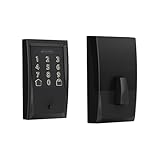 Schlage Encode Smart WiFi Deadbolt Schlage Encode Smart WiFi Deadbolt |
|
Check Latest Price |
 eufy Security Smart Lock C220 eufy Security Smart Lock C220 |
|
Check Latest Price |
 Sifely Fingerprint Lock with Handle and Keypad Sifely Fingerprint Lock with Handle and Keypad |
|
Check Latest Price |
 TEEHO TE002 Fingerprint Keypad Deadbolt TEEHO TE002 Fingerprint Keypad Deadbolt |
|
Check Latest Price |
 Veise KS02A Fingerprint Keypad Deadbolt Veise KS02A Fingerprint Keypad Deadbolt |
|
Check Latest Price |
 Veise KS01B Keypad Lock with Lever Handles Veise KS01B Keypad Lock with Lever Handles |
|
Check Latest Price |
 Amazon Basics Electronic Keypad Deadbolt Amazon Basics Electronic Keypad Deadbolt |
|
Check Latest Price |
1. TEEHO TE001 Keypad Deadbolt – Best Keypad Door Lock for Rentals Overall
TEEHO TE001 Keyless Entry Deadbolt with Keypad for Front Door, Satin Nickel
20 access codes
4 AA batteries up to 365 days
ANSI Grade 3, IP54
Fits 2-1/8 inch bore
Pros
- 4.5 star rating with 78 percent five-star reviews across more than 10k reviews
- Twenty codes plus one-time PINs that delete themselves after a single use
- Number one best seller ranking in Deadbolts which signals steady landlord demand
- Screwdriver-only install with door handing detected after a reset
Cons
- Only fits 2-1/8 inch door holes and will not work with 38mm holes
- Must be reset before first use to detect which way the door swings
- Some users find the code-change sequence takes a few attempts
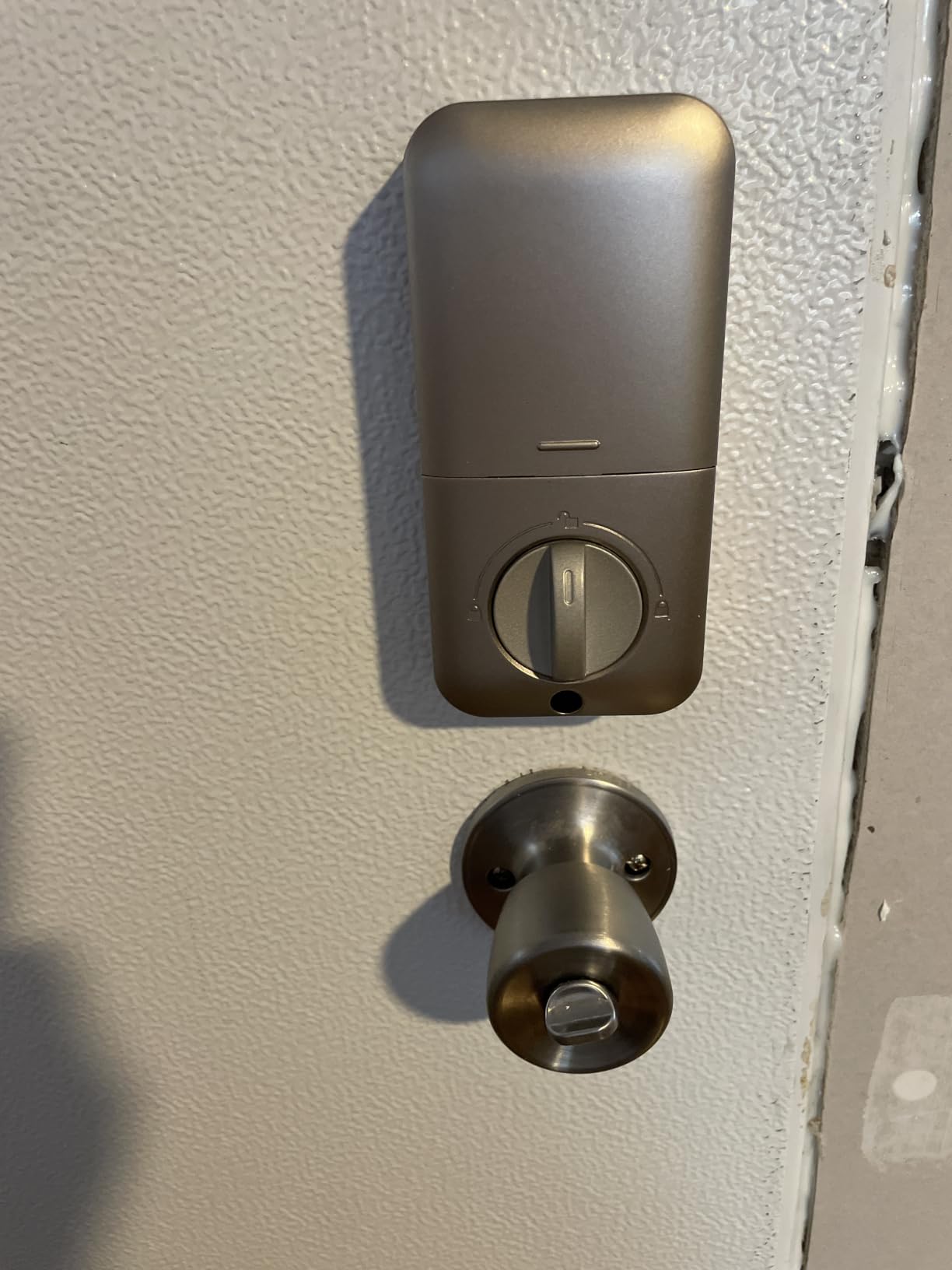
This is the lock I would put on a standard 12-month tenancy in a small apartment or single-family rental. It holds 20 access codes, which is far more than a single household needs and comfortably covers a tenant, a partner, a sitter and a maintenance worker at the same time.
The one-time guest PIN is the detail that matters most for rentals. A cleaner or contractor code can be issued for a single visit and removes itself afterwards, so you are not doing memory work at move-out to remember which four-digit number belonged to whom.
Fit takes minutes with a screwdriver, and the lock auto-detects which way the door swings after a reset rather than making you flip a manual lever. Reviewers describe install as straightforward enough for a first-time keypad owner.
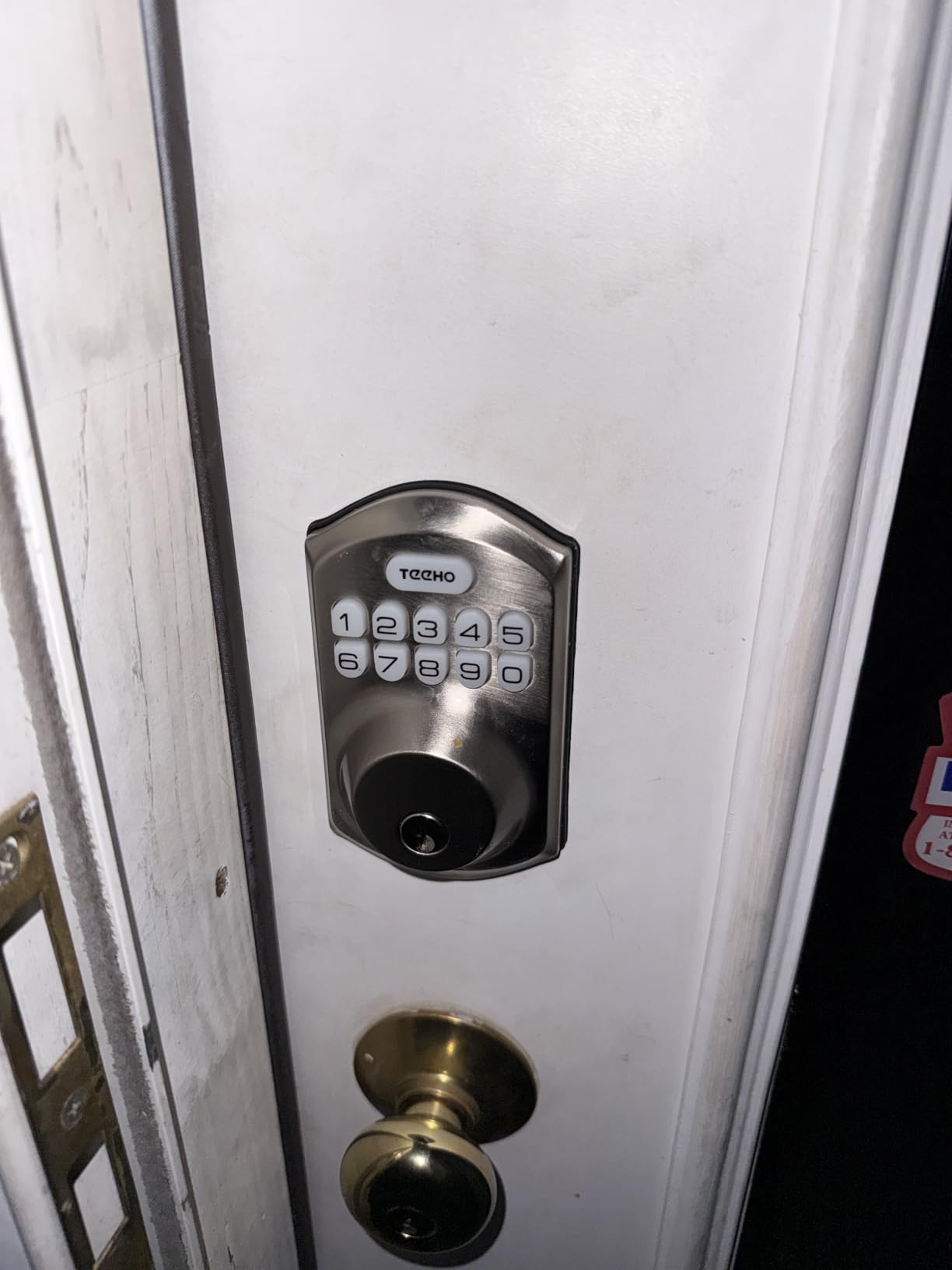
It runs on four AA batteries rated at up to 365 days with a red low-battery indicator, and AA cells are the easiest battery in the world to hand to a tenant at Christmas. That single detail removes the most common complaint about keypad locks in landlord threads, which is tenants being locked out by a flat battery nobody was watching.
The construction is aluminum alloy with IP54 water resistance and an ANSI Grade 3 rating, which is residential and light-commercial duty. That is the right grade for the front door of a rented house, though it is not a Grade 1 lock.
One thing to check before you buy: it fits 2-1/8 inch (54mm) holes only, so a door drilled to 38mm is a return trip. Measure the bore before ordering.
Why a landlord would pick it
The code capacity plus self-expiring PINs means you can run a proper turnover routine: change the tenant code, issue a one-time code for the carpet cleaner, and delete nothing at the end because it already deleted itself. Battery life and AA cells remove the most common emergency call.
Its 4.5 star rating sits alongside 78 percent of reviews at five stars, and the more than 10k reviews behind it make the long-run failure record unusually well documented. The complaints that do surface are small and cosmetic rather than mechanical.
Where it falls short
The 54mm bore restriction rules out some older or non-standard doors, and the reset-before-handling step catches people out on day one. Codes are managed at the keypad only, so there is no access log to check when a tenant disputes whether a cleaner came through.
For a landlord managing five doors from another state, that missing remote control is the whole reason to buy something else.
2. Schlage BE365 Keypad Deadbolt – Best Standalone Keypad for Landlords
Schlage Electronic Keypad Deadbolt Lock, Camelot Trim, Satin Nickel
19 user codes
Grade 2/AAA metal body
9V battery, up to 2 years
Replaces existing deadbolt
Pros
- Grade 2 and AAA rated metal construction for residential and light commercial doors
- Illuminated silicone-coated keypad is easy to use in the dark
- Installs over an existing deadbolt with only a screwdriver
- Limited lifetime mechanical warranty with a long-lived manufacturer
Cons
- Codes must be programmed at the keypad with no remote management or access logs
- Uses a single 9V battery rather than the AA cells common on competing locks
The Schlage BE365 is the version of this purchase for a landlord who wants the hardware brand and not the app. It carries a Grade 2 and AAA rating in Grade 2 metal construction, which is a step above the Grade 3 bodies most budget keypads ship with.
Nineteen user codes, two of them pre-programmed out of the box, cover a tenant plus family plus a maintenance worker without any setup work before the first showing.
The install description is worth repeating because it is genuinely unusual: it replaces an existing deadbolt with a screwdriver and no hardwiring. If the door is already drilled for a standard deadbolt, this is a ten-minute swap on the first door and faster on every door after that.
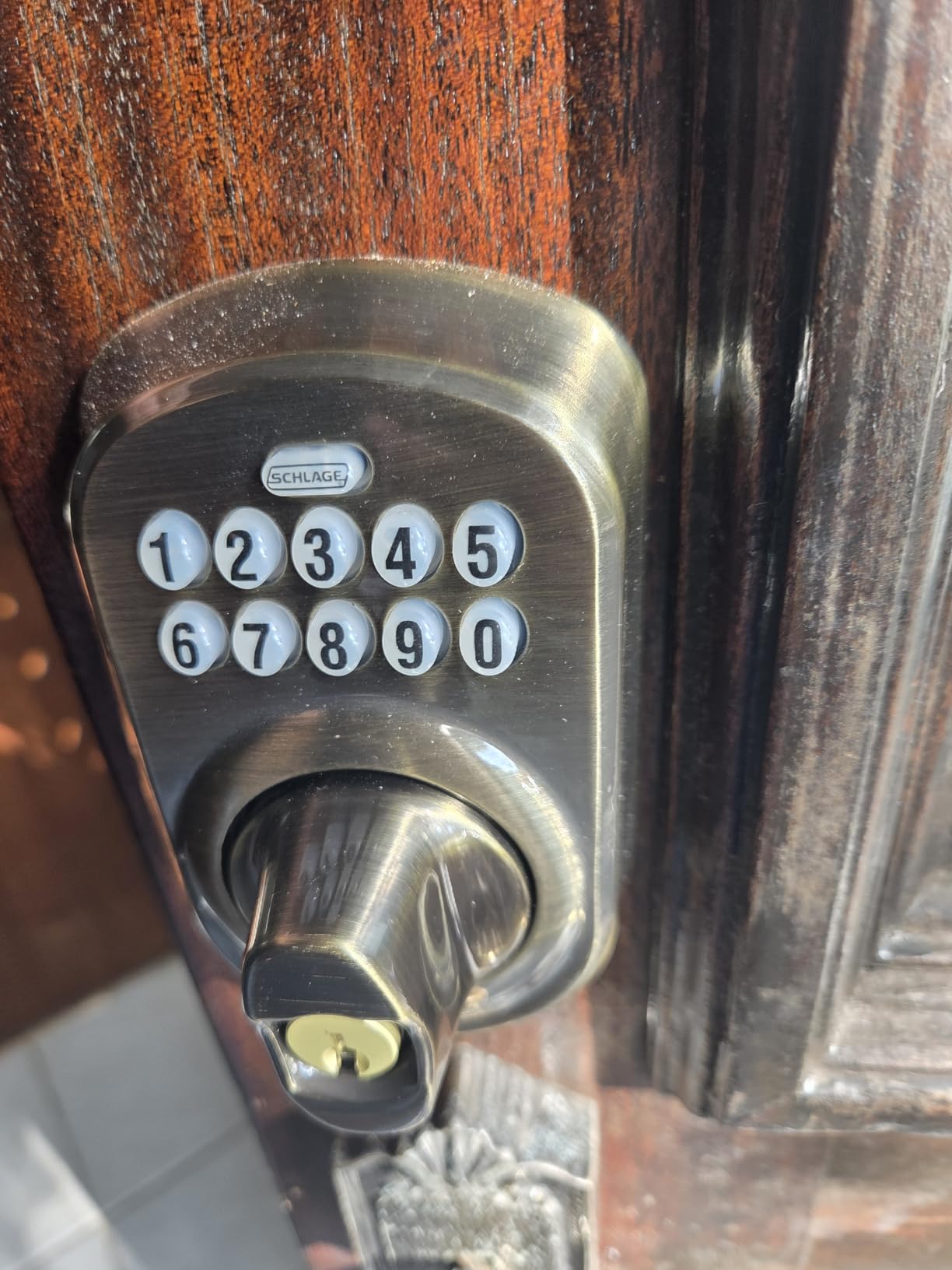
Working temperature on the outside escutcheon runs from -35C to 66C, so it handles a north-facing exterior door that gets no sun in January. The illuminated silicone-coated numbers are the kind of small thing that stops a tenant from complaining about fumbling for a key in the dark.
Battery life is rated at up to two years on the included 9V battery, with a dedicated low-battery indicator on the inside escutcheon. Long landlords on r/Landlord describe this class of lock as dependable over years of use.
Warranty is a limited lifetime mechanical and finish warranty, which matters if you plan to standardize one lock across a portfolio and replace one unit in year six.
Why a landlord would pick it
Grade 2 metal construction beats every Grade 3 lock in this roundup on paper, and the two-year battery figure is the best here. The mechanical warranty means a lock you standardize on will still be replaceable by the manufacturer years later.
It is also the safest choice if your tenant is the type to treat a keypad like a toy, because there is nothing to configure and no app to break.
Where it falls short
The single 9V battery is a genuine annoyance next to AA cells. Tenants rarely own a 9V, so you will be handing one over with every move-in.
No app means no remote code change and no access history. If a tenant claims someone else entered the property, there is no record to review, and you cannot delete a code from the road.
3. Veise RZ-A Keypad Deadbolt – Best Budget Keypad for Rental Homes
Veise RZ-A Electronic Keypad Deadbolt Door Lock, Satin Nickel
20 codes plus one-time codes
Grade 3 cylinder
4 AA batteries up to 12 months
Fits 1-3/8 to 2 inch doors
Pros
- One of the highest rated locks here at 4.5 stars with only 4 percent one-star reviews
- Lowest cost in the roundup while still offering 20 codes and one-time guest codes
- Install reported at around 10 minutes with about 5 minutes of programming
- Two backup keys included for battery or failure situations
Cons
- Interior housing is plastic against a zinc alloy exterior
- Bore can need slight enlargement on some existing doors
- Changing the master password is unintuitive without the instructions
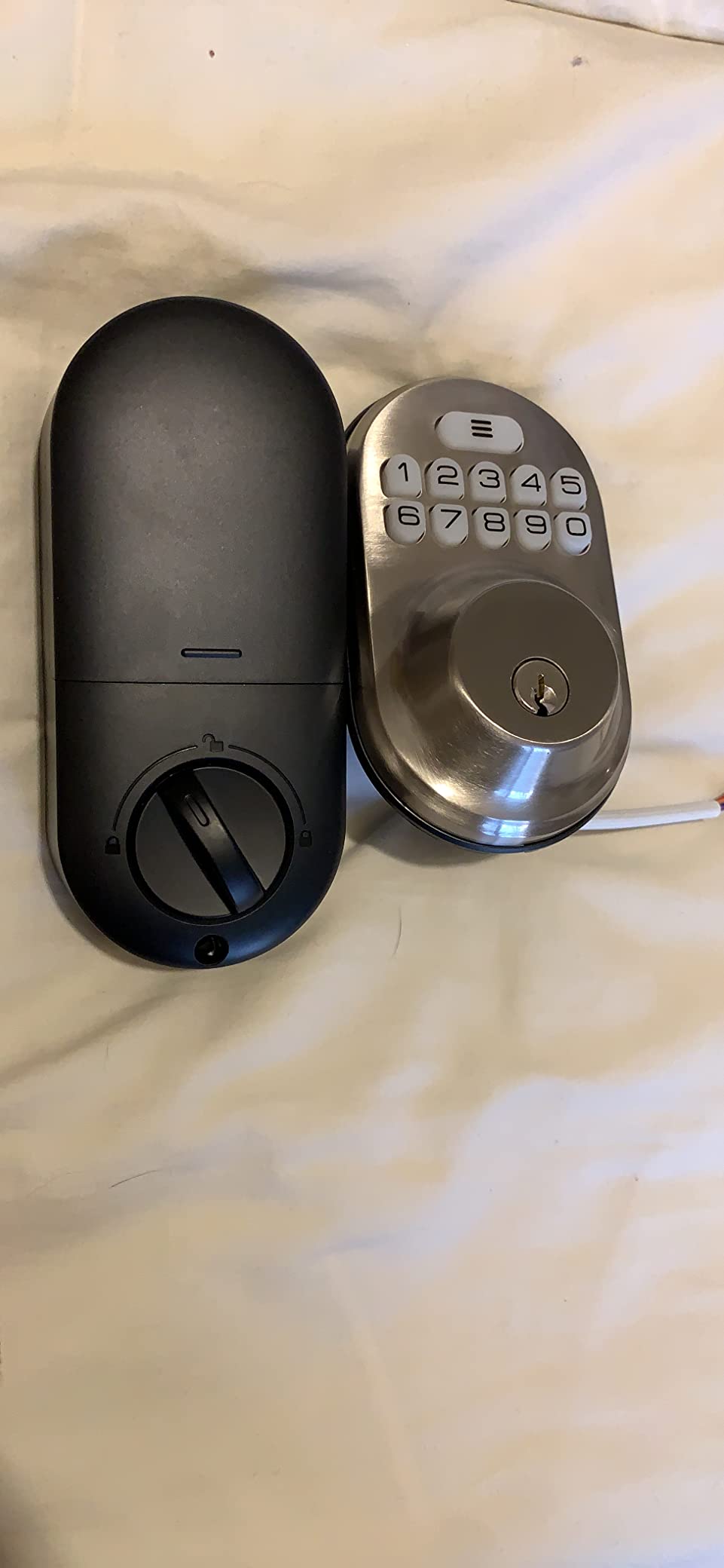
The Veise RZ-A is the one I would fit to a side door, laundry door or garage-side entry of a rental when the budget is tight. It gives you the same 20-code capacity as picks costing far more and includes two physical backup keys.
Its 4.5 star rating carries the lowest one-star share in this group at 4 percent, which matters more than the average for a landlord. You are buying reliability across many doors, not one door you can fix yourself on a Sunday.
Install is reported at roughly ten minutes with about five of those spent programming codes, and it fits doors from 1-3/8 inch to 2 inch thick on either door swing direction.
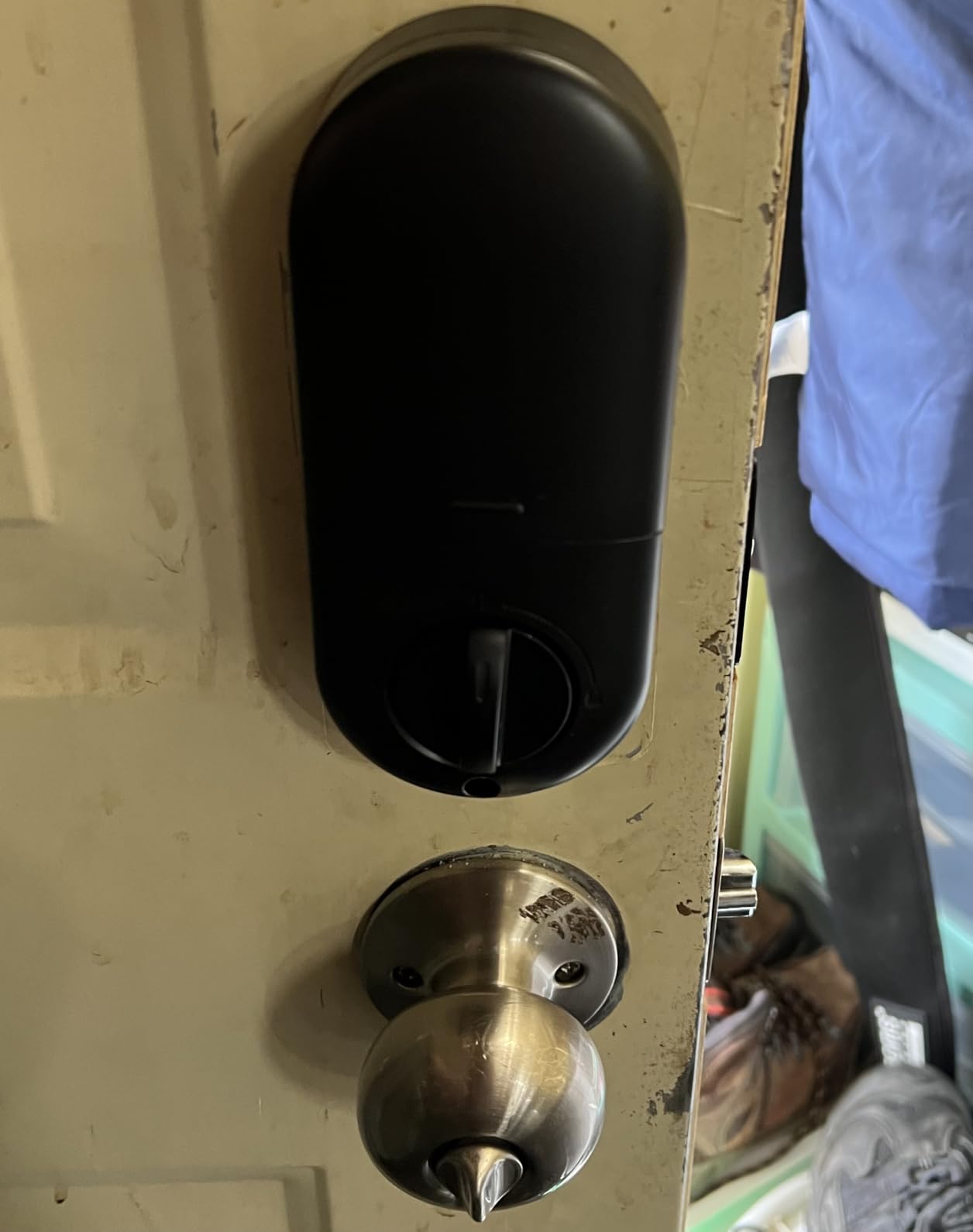
Wrong entry handling is sensible for shared-access doors: after ten failed attempts the lock shuts down for three minutes, which blunts a guess-and-check attack without permanently bricking the door for your own tenant.
Vacation mode keeps the master code working while disabling every other code, which is exactly what you want for a vacant property between tenants. Silent mode mutes the keypad beeps for a bedroom or interior door.
The blue backlit keypad carries clear red and green lock status indication, so a tenant can tell at a glance whether the bolt actually threw before they walk away from the door.
Why a landlord would pick it
It is the cheapest path to removing the locksmith from your turnover routine, and the feature set covers every rental-specific need: tenant code, one-time PIN, wrong-code lockout, vacation mode and backup keys.
IP54 weather resistance and an operating range from -35F to 160F make it fine for an exterior door in most climates.
Where it falls short
The plastic interior housing looks out of place next to the zinc alloy exterior, and the cylinder is Grade 3, so it gives up real security ground to the Schlage BE365 and the Kwikset SmartCode 260.
Advanced password changes are reported as unintuitive, and there is no app at all, so all administration happens with the door open and the manual in your hand.
4. Kwikset Powerbolt 250 – Best Keypad Lock for One Key Across Many Doors
Kwikset Powerbolt 250 Transitional Keyless Entry Keypad Door Lock
25 user codes
SmartKey KW1 rekeying
4 AA batteries 12+ months
Intrusion alert on 3 wrong entries
Pros
- SmartKey rekeying matches existing Kwikset keys so one key opens every door
- Highest code capacity among standalone keypads here at 25 codes plus 5 one-time codes
- One-time codes work well for contractors while the owner is away
- BILT app gives voice text and animated install guidance
Cons
- Highest one-star share of any lock here at 16 percent with reports of units failing within a year
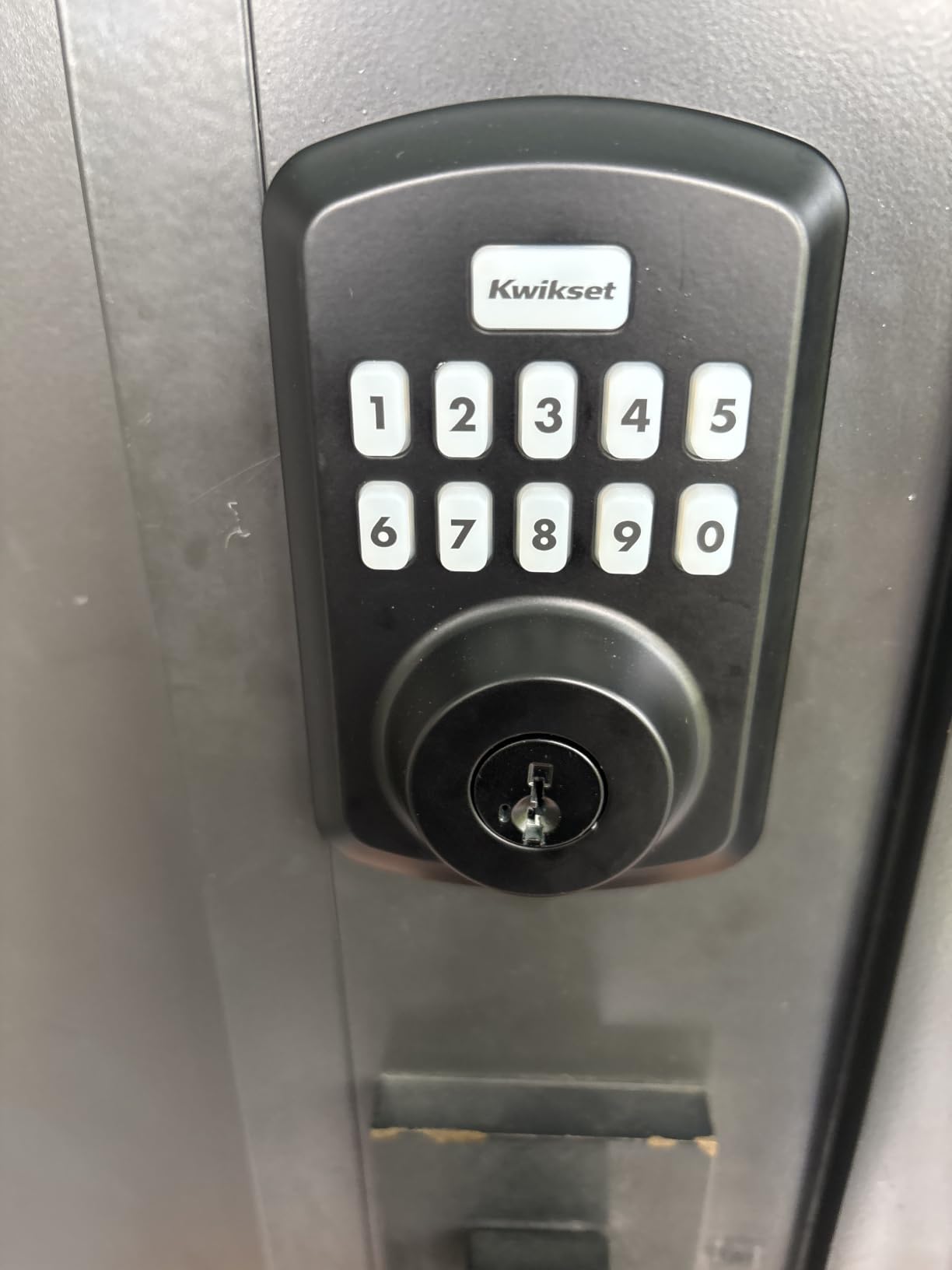
- Flat rectangular strike plate leaves a visible gap compared with the rounded Kwikset style
- May need minor adjustment to the door jamb for the bolt to engage fully
The reason to look at Kwikset is not the keypad. It is the SmartKey cylinder, which you can rekey yourself in seconds to match any KW1 key already in your property.
For a landlord with a front door, a garage-side door and a laundry door across three properties, that turns key control from a locksmith problem into a five-second one. It is the only genuine rekeying feature in this roundup.
Code capacity is the highest of the standalone keypads at up to 25 user codes plus five one-time codes and a separate programming code, so a cleaning company or a small property-management team can each hold their own.
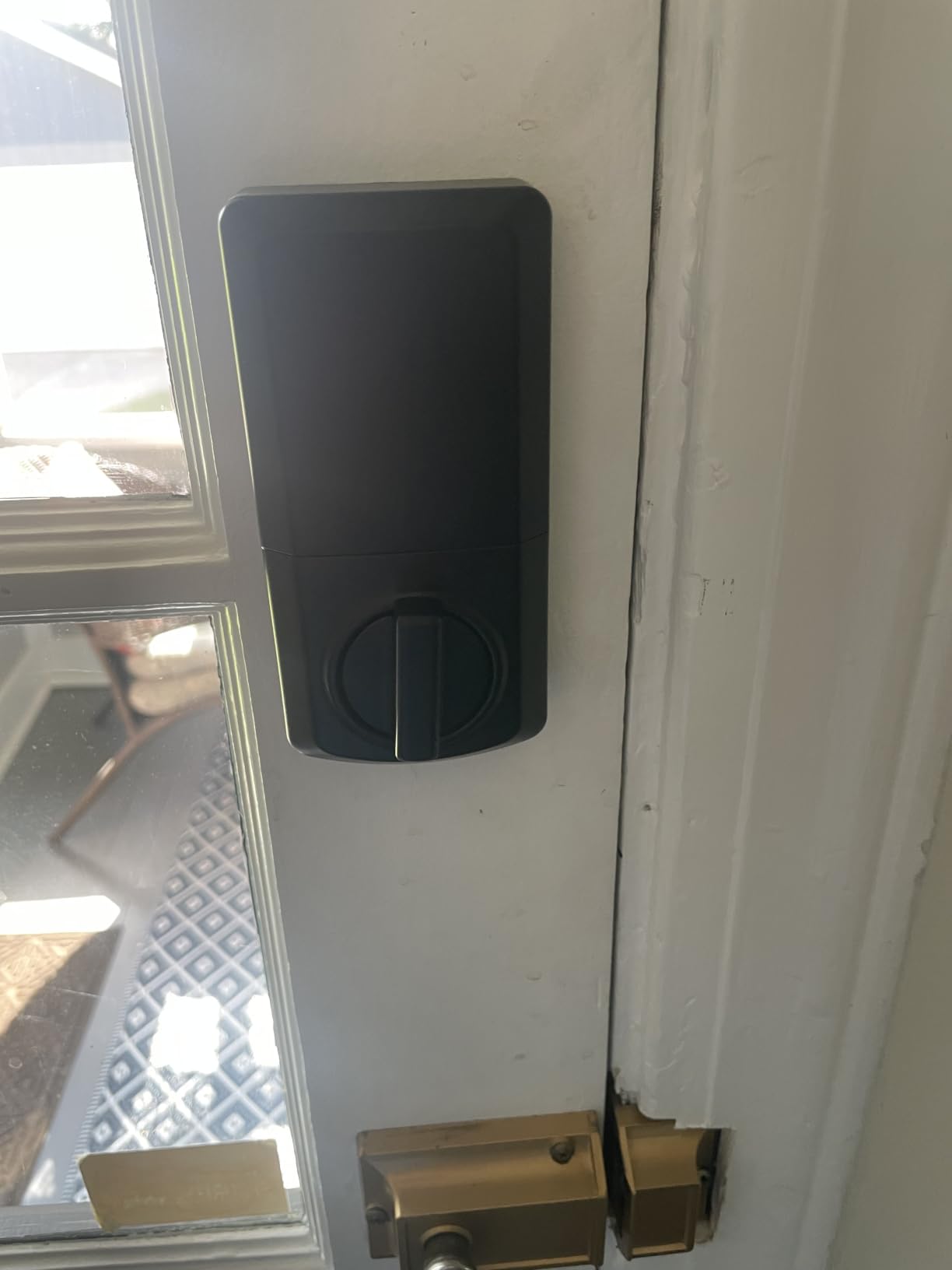
Auto-lock intervals are selectable at 30 seconds, 1, 3, 5 or 10 minutes, and the intrusion alert sounds an alarm and disables the keypad for a minute after three wrong entries. Four AA alkaline batteries are rated at least 12 months.
Vacation mode temporarily disables keypad operation entirely, which is a genuinely useful vacant-unit setting because it means a guessed code cannot reach the electronics while the property is empty.
The flat strike plate is the small cosmetic thing you will notice on a finished door. Against the rounded Kwikset style it leaves a visible gap in the trim, and the interior plate can sit slightly shorter than the lock it replaced.
Why a landlord would pick it
Rekeying to one key across a portfolio is the single most valuable feature in this list if you own more than one door. It also means a lost key is a five-second fix rather than a locksmith visit.
It suits properties already standardized on Kwikset hardware, which is common in units built in the last two decades.
Where it falls short
The 16 percent one-star share is the highest in this roundup, with several reviews reporting units that stopped locking or unlocking within a year. Buying in pairs for the doors you cannot afford to have down is a sensible hedge.
You may need to adjust the jamb hole for the deadbolt to engage fully, and some owners needed jam-clearing steps that are not in the printed manual.
5. Kwikset SmartCode 260 – Best Keypad Lock for Graded Security
Kwikset SmartCode 260 Keyless Entry Electronic Keypad Deadbolt Door Lock
BHMA Grade 2 certified
50 user codes plus 10 one-time
SmartKey rekeying
4 AA batteries 12 months
Pros
- BHMA Grade 2 certified for security durability and finish
- stated as up to 2.5 times stronger than Grade 3
- Largest code capacity in this roundup at 50 user codes and 10 one-time codes
- SmartKey rekeying so a single key opens every Kwikset lock
- Microban treated keypad surface
Cons
- Printed instructions are hard to read and re-handing a lock is not documented
- Several reviews report the deadbolt binding every few weeks requiring the lock to be opened up
- One electronics failure reported at about a year and nine months
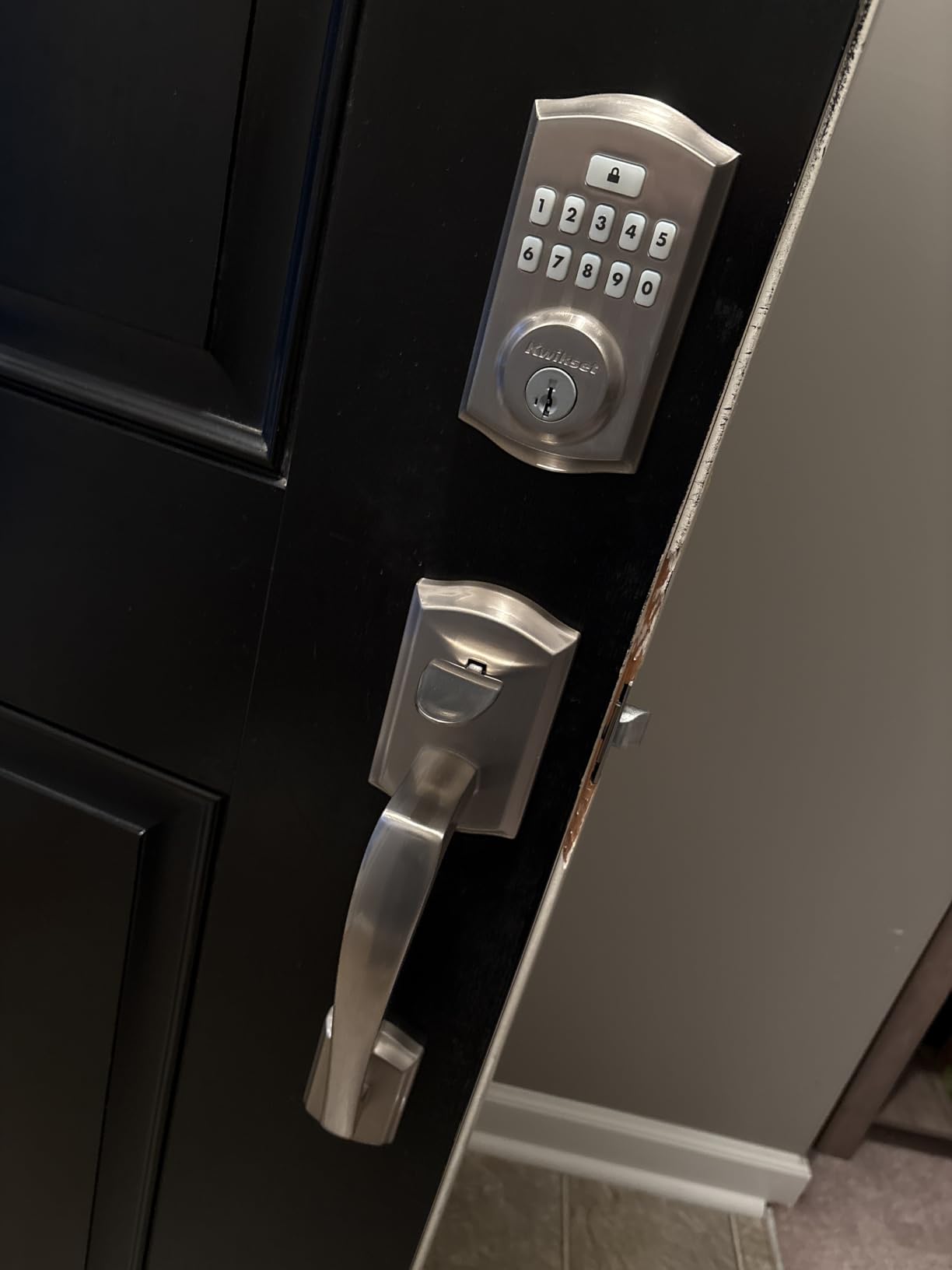
If a buyer asks which of these is the most secure keypad door lock, this is the one with the paperwork. It is BHMA Grade 2 certified for security, durability and finish, which Kwikset states is up to 2.5 times stronger than Grade 3.
Only two locks in this roundup claim Grade 2 or better. The Schlage BE365 carries a Grade 2 and AAA rating, and the rest sit at Grade 3. If the door is a rear or side entry with no street visibility, the grade gap is worth paying for.
Fifty user codes and ten one-time codes is far more capacity than any normal rental needs, but it covers a small portfolio handled from one keypad, or a student housing unit with several co-tenants and staff.
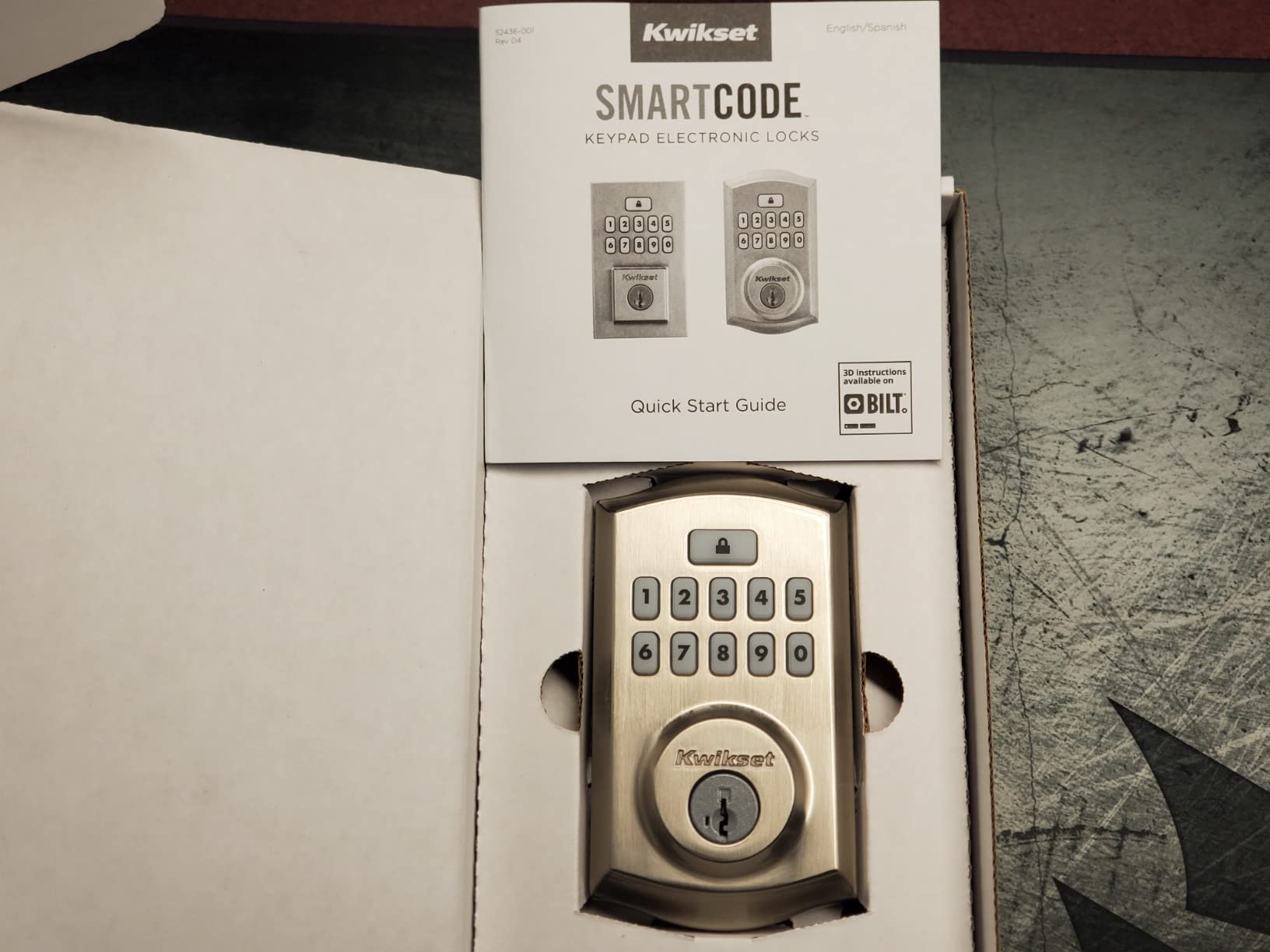
It keeps the SmartKey advantage of the Powerbolt 250 and ships with a learn tool, so rekeying takes seconds and one key can open the whole property.
Microban treatment on the keypad surface is a small touch that makes sense on a door where children, dog walkers and delivery drivers all press the same buttons.
Battery life is rated at least 12 months on four AA cells, and the intrusion alert disables the keypad for one minute after three wrong entries.
Why a landlord would pick it
It is the pick when the question is security rather than convenience, and when a specific building insurer or a buyer’s lender wants a documented grade on the spec sheet.
Owners also report it blending into older homes better than the bulkier fingerprint models, which matters for a rental where you do not want the exterior to look modified.
Where it falls short
The written documentation is the weak point. Reviews repeatedly complain the printed instructions are hard to read and do not cover re-handing the lock, and the BILT app assumes you have a phone at the door.
A recurring complaint is the deadbolt binding every few weeks and needing the lock opened up to free it, which on an occupied rental means a maintenance visit.
6. Schlage Encode Smart WiFi Deadbolt – Best Keypad Lock for Remote Code Changes
Schlage Encode Smart WiFi Deadbolt Lock with Century Trim, Matte Black
Built-in WiFi no hub
100 access codes and lock history
4 AA batteries six months
BHMA certified
Pros
- Built-in WiFi connects directly with no separate hub or bridge to buy
- Up to 100 access codes plus lock history and customisable notifications
- Works with Alexa and Google Home for hands-free control
- Snap and Stay design holds the lock on the door during installation
Cons
- App and WiFi setup adds real complexity against a standalone keypad
- Battery life rated at only six months on four AA batteries
- Twelve percent of reviews are one-star
- mostly around connectivity
This is the pick for a landlord who is not at the property. Built-in WiFi means you create a tenant code, watch the lock history and revoke access from your phone at an airport, without a separate hub or bridge sitting in the property.
Hosts running short-term rentals name Schlage Encode and Yale Assure models as the most common connected locks in service, largely because they integrate with a wide range of smart home platforms.
Up to 100 access codes and a lock history cover a building where each guest, each cleaner and each owner gets a named code with a trail behind it. That audit trail is the thing a landlord cannot get from any keypad-only lock.
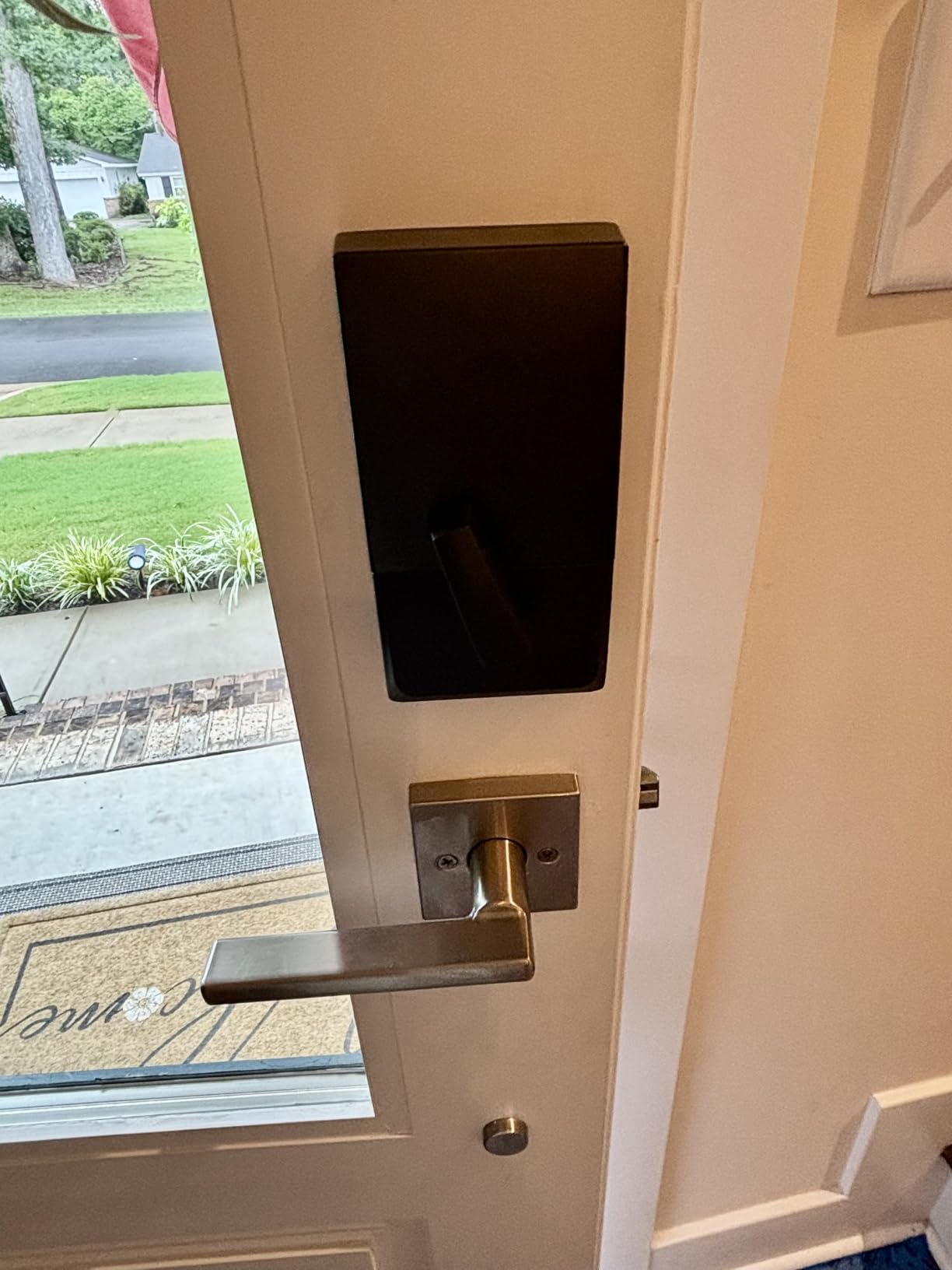
The touchscreen is fingerprint-resistant and carries a built-in door-movement and forced-entry alarm you can configure, which is meaningful on a vacant unit between tenants.
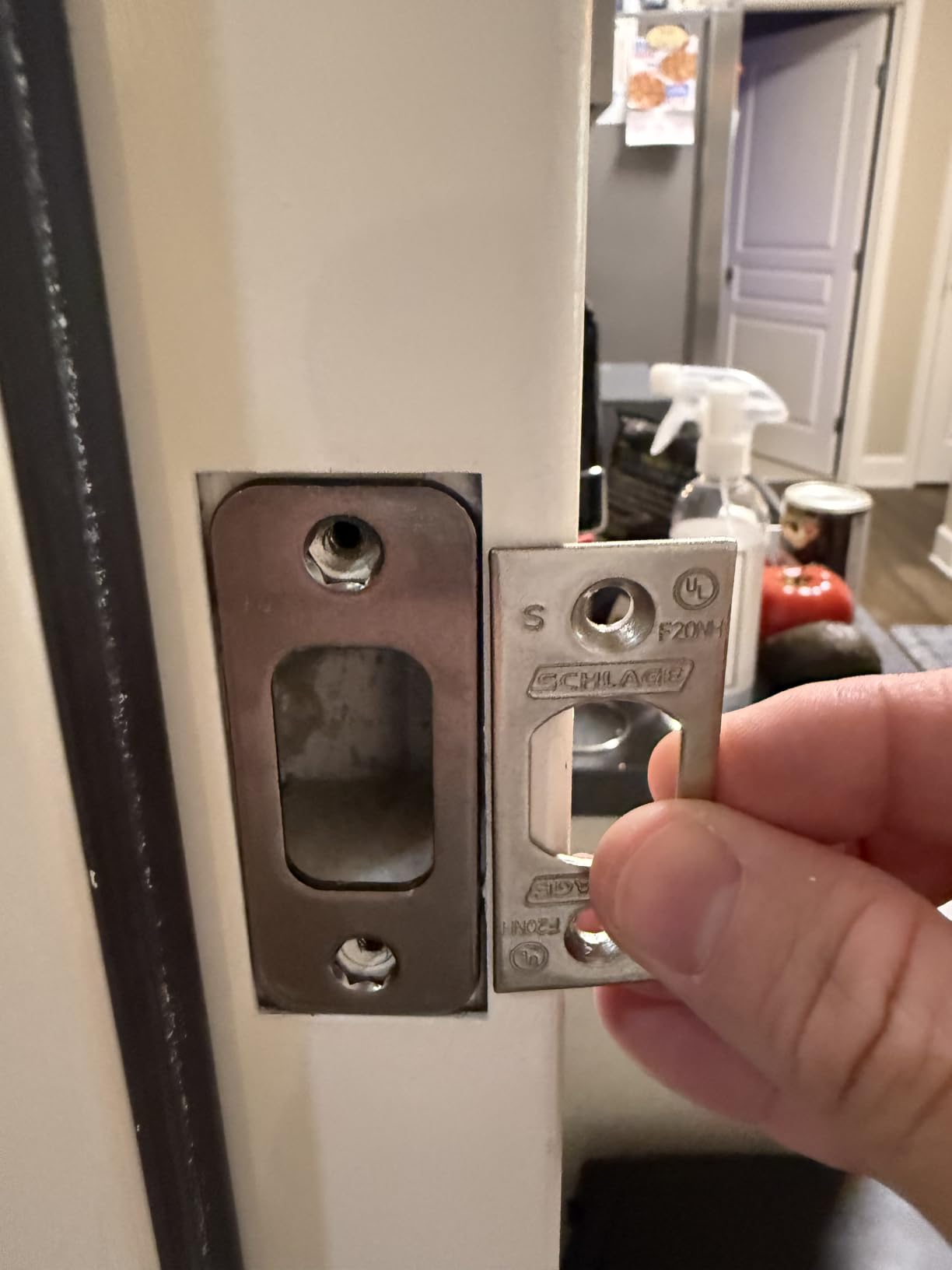
It fits doors 1-3/8 inch to 1-3/4 inch thick with a 2-3/8 inch or 2-3/4 inch backset, and one physical backup key is included. Four AA batteries are rated for up to six months, which is the shortest figure in this roundup.
Warranty is a limited lifetime mechanical and finish warranty with a limited three-year electronics warranty, so the parts most likely to fail are the covered-for-a-decade ones.
Why a landlord would pick it
Remote code management and an access log are the whole point. For a multi-unit owner, a property manager or a short-term rental host, the ability to see who opened the door and when outweighs the extra setup.
No hub is a genuine cost and complexity saving against models that need a separate gateway.
Where it falls short
It sits at the top of the cost range, and for a 12-month tenancy the app earns you nothing you cannot do at the keypad. Most complaints are about app connectivity rather than the lock mechanism.
Six months of battery life means two swaps a year, and a landlord managing twenty doors is now maintaining twenty devices and twenty accounts.
7. eufy Smart Lock C220 – Best Keypad Lock for Fingerprint and App Control
eufy Security Smart Lock C220, Fingerprint Keyless Entry Door Lock
Built-in WiFi no bridge
Fingerprint app key and Apple Watch
8 AA batteries about 8 months
BHMA Grade 3 IP53
Pros
- Built-in WiFi for remote control with no separate bridge to purchase
- Six unlock methods including fingerprint app keypad key Apple Watch and voice
- Self-learning fingerprint recognition gets more accurate with repeated use
- BHMA Grade 3 certified after more than 100000 lock and unlock cycles
Cons
- One-star reviews sit at 10 percent
- often around setup and connectivity pairing
- App and account are required before the smart features work
- Battery life varies with how often the lock is used
The eufy C220 sits between a keypad deadbolt and a smart lock, and the six unlock methods are the point. Fingerprint, app, keypad, physical key, Apple Watch and voice assistant give you redundancy, so a dead battery or a forgotten code is not the end of the story.
That redundancy matters for a landlord with a shared-access unit. The lock opens on the fingerprint of whoever is on the tenant agreement, so you can remove a code and still have a way in during an emergency.
Built-in Wi-Fi removes the hub purchase, and roughly eight months of life on eight AA batteries is among the better connected-lock figures here.
It is BHMA Grade 3 certified after more than 100k lock and unlock cycles, rated IP53 waterproof, and specified from -22F to 158F. Install is around fifteen minutes without drilling, and it fits bores under 54mm once you remove the supplied spacer.
Owners who already run eufy video doorbells like that it drops into the same ecosystem and routines. Two physical keys ship in the box, so the fallback plan is built in from day one rather than something you think about after the first lockout.
Why a landlord would pick it
Apple Watch support and fingerprint entry make it the least frustrating option for a household with several people, where key and code sharing usually falls apart within a week.
The built-in Wi-Fi means no hub to install in a vacant unit that has no router, which is common between tenancies.
Where it falls short
Ten percent one-star reviews, the second highest here, with complaints clustering around app pairing and connectivity rather than the lock.
Eight AA batteries is a lot of cells, and you cannot use the smart features at all without the app and an account. If the manufacturer ever stops supporting it, the lock becomes a very expensive keypad.
8. Sifely Fingerprint Lock with Handle – Best Keypad Lock for Short-Term Rentals
Fingerprint Smart Door Lock with Handle & Keypad – No More Lost Keys, Keyless Entry & Remote Access for Home, Kids, Airbnb & Rental Property, DIY Install, Alexa & Google Compatible
Fingerprint keypad app key card and key
Instant guest codes
Optional WiFi Gateway
Bluetooth and Wi-Fi
Pros
- Five entry methods give redundant ways in when one method fails
- Guest codes generate instantly through the app which suits short-term rentals
- Reversible handle fits either door swing with no extra drilling on most standard doors
- One owner reports a first lock lasting four years
Cons
- Remote unlock and access history need the separately sold Sifely WiFi Gateway
- Touchscreen keypad is sometimes slow to wake and unresponsive
- Not rekeyable so more physical keys must be carried
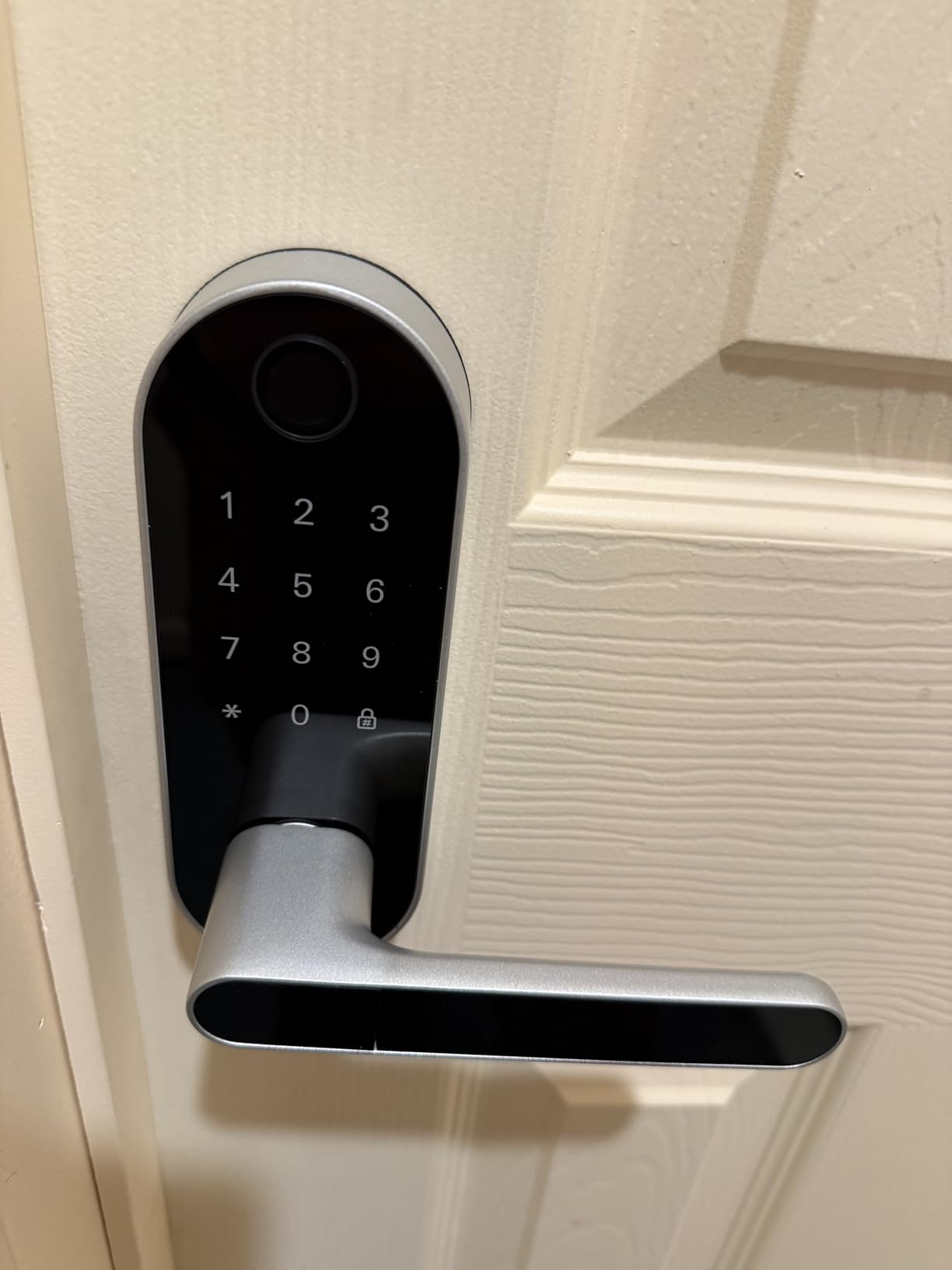
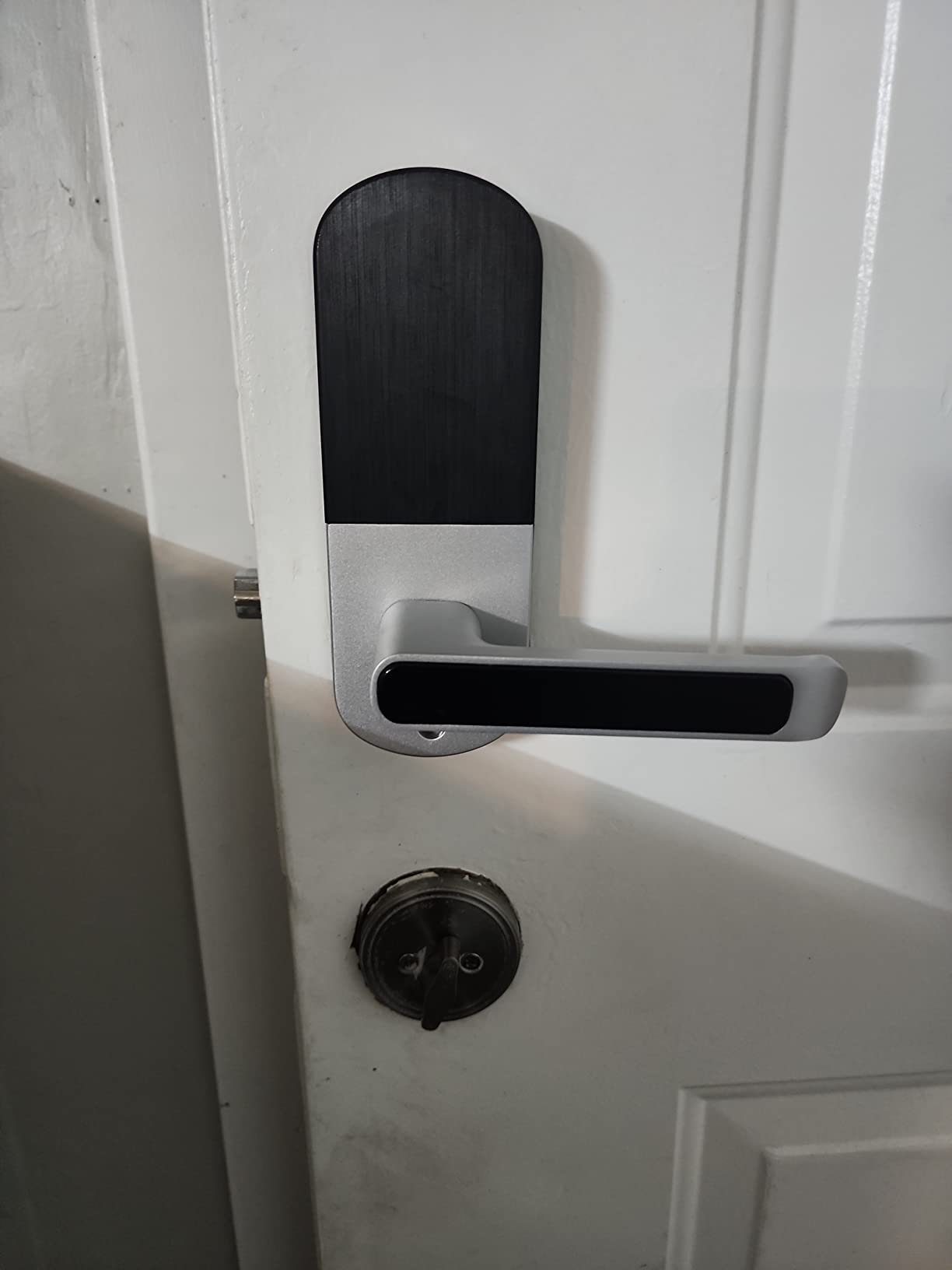
This one comes with lever handles in the box, which matters if you are replacing a handle-and-latch setup rather than a deadbolt. Guests see a complete, normal-looking lock instead of a bolt with a gap beside the frame.
For Airbnb and short-term rental work, the instant guest code is the feature that pays for itself. A host generates a code at check-in time and a different one at checkout, with no key to swap and nothing to collect.
Entry works by fingerprint, keypad, app, key card or physical key. That last option matters because one owner reports a first lock lasting four years, and a lock you can still open with a key in year five is a lock you will not have to replace.
Remote unlock and access history require the optional Sifely WiFi Gateway, which is an extra purchase. Without it the Bluetooth range still covers nearby app control.
Weather resistance is limited. One owner lost a lock to rain on a fully exposed location, so keep it on a door under cover.
The lock is not rekeyable, which is the trade for the handle set: you carry more physical keys because you cannot match it to an existing cylinder.
Why a landlord would pick it
It is the cleanest install for a short-term rental because the handles are included and the levers are reversible, so the same lock fits either door swing direction.
Instant guest codes plus a key card for cleaners mean nobody is copying a physical key for every booking.
Where it falls short
Remote access depends on a separately sold gateway, which is exactly the hub cost the connected picks here try to avoid.
The touchscreen is sometimes slow to wake and unresponsive according to several reviews, and on some uPVC or non-standard doors you may have to enlarge the hole. Warranty is one year, the shortest in this roundup.
9. TEEHO TE002 Fingerprint Deadbolt – Best Budget Lock with a Fingerprint Reader
TEEHO TE002 Fingerprint Deadbolt with Keypad for Front Door, Satin Nickel
20 fingerprints and 20 codes
0.3 second recognition
4 AA batteries up to 365 days
BHMA Grade 3, IP54
Pros
- Fingerprint reader registers on the first try in most reviews
- 20 fingerprints and 20 passcodes plus two physical backup keys
- Quick install with no drilling needed
- Anti-peep passcodes and wrong-attempt lockout suit shared-access doors
Cons
- Some reviewers report lighter build quality than commercial locks
- Auto-lock timer reportedly resets to a short delay after being adjusted
- Programming code sequences described as convoluted versus simpler locks
The TE002 is the fingerprint option if you want prints and codes without paying connected-lock money. It stores 20 fingerprints and 20 passcodes, plus two physical keys, on a lock with no app at all.
Recognition is advertised at 0.3 seconds with an unlocking time of about one second, and reviews report the sensor registering a fingerprint on the first attempt in most cases. That reliability is the difference between a fingerprint lock that gets used and one the tenant stops trusting.
It is also among the highest-volume locks here by review count, so the long-run failure record is well documented rather than unknown.
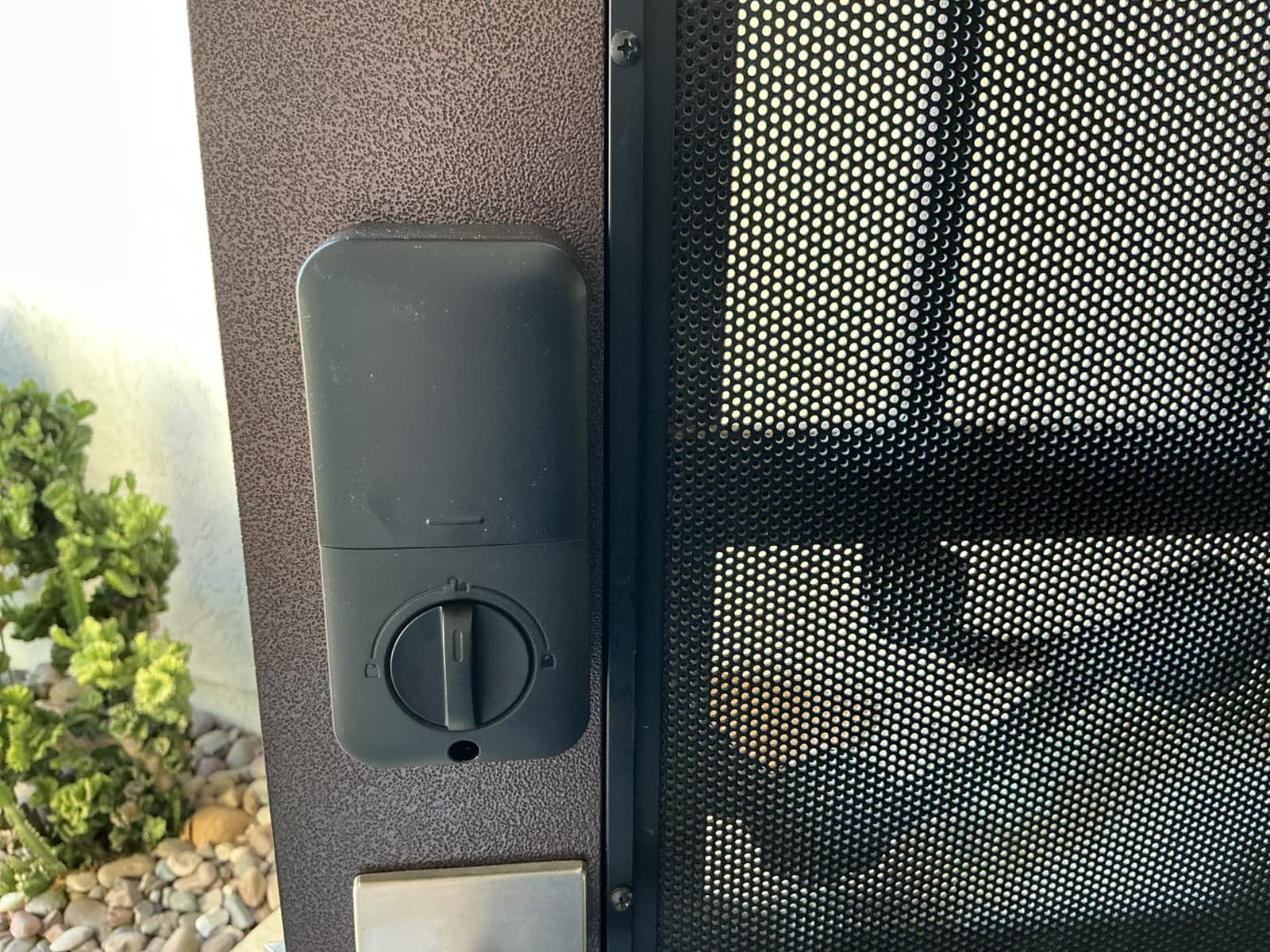
Four AA batteries are rated at up to 365 days with a red low-battery indicator below 15 percent, and it carries a two-year warranty plus a 30-day customer commitment.
Anti-peep passcodes let you add a dummy digit in front of your real code so someone watching your shoulder sees the wrong number, and the wrong-password lockout shuts the keypad after repeated failures.
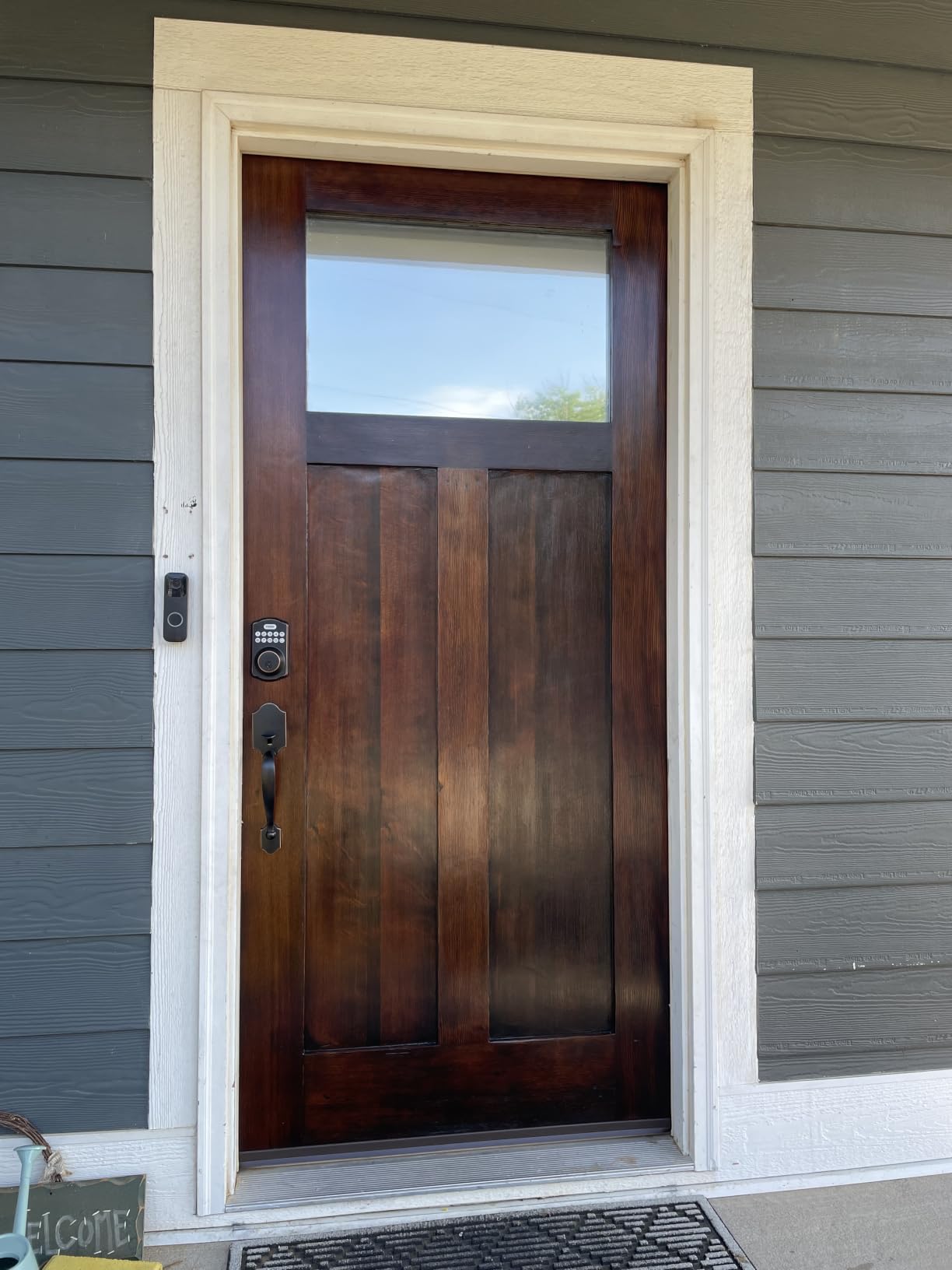
It fits 2-1/8 inch holes and doors from 1-3/8 inch to 2 inch thick with a screwdriver-only install, and IP54 water resistance covers an exterior side door.
Why a landlord would pick it
Fingerprint entry removes the most common rental dispute, which is who forgot to lock the door. Nobody has to remember a code, and a tenant can hand access to a partner without sharing a code.
Silent mode and away mode cover the two situations landlords ask about most, a tenant sleeping through the night and a vacant unit between tenants.
Where it falls short
Several reviewers report lighter build quality than heavy commercial locks, which is a fair worry on a door that is kicked regularly.
The auto-lock timer has been reported to reset to a short delay after being adjusted, and the programming code sequence is described as more convoluted than simpler locks. A minority of owners also report units failing and being replaced by the seller.
10. Veise KS02A Fingerprint Keypad Deadbolt – Best Metal-Body Fingerprint Keypad
Veise KS02A Fingerprint Door Lock, Keypad Deadbolt, Matte Black
20 fingerprints 0.2 second match
20 passwords plus one-time codes
4 AA up to 365 days
All-zinc alloy body
Pros
- All-metal zinc alloy lock body rather than the plastic housings common at this tier
- On-device AI chip matches fingerprints in 0.2 seconds at 99.99 percent accuracy
- 20 fingerprints 20 passwords and self-deleting one-time guest codes
- Works from minus 31F to 158F
Cons
- Front and back panels must be held perfectly vertical during installation
- Some users report occasional fingerprint misreads and fall back to the code
- No app or WiFi so codes are managed only at the keypad
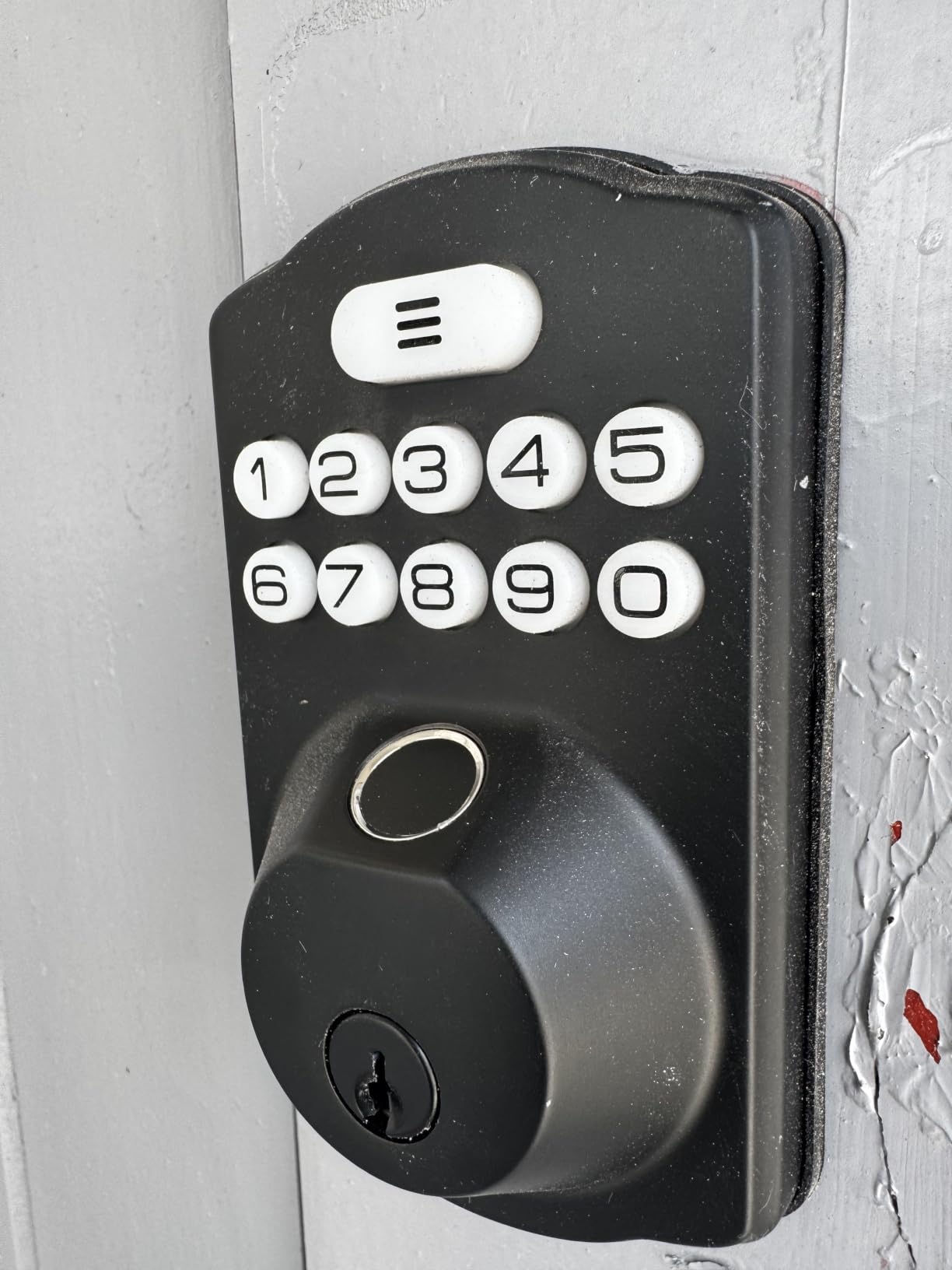
The KS02A answers the build-quality complaint that follows every budget fingerprint lock. The lock body is all-zinc alloy, which is why it feels heavier in the hand than the plastic-bodied models at a similar price.
Its on-device chip is advertised at 0.2 second fingerprint recognition at 99.99 percent accuracy, and it stores 20 fingerprints alongside 20 passwords, two mechanical keys and one-time codes.
Those one-time codes are the rental-specific feature. A maintenance worker or a sitter gets a code that expires after a single use, so you are not maintaining a rolling list of active PINs.
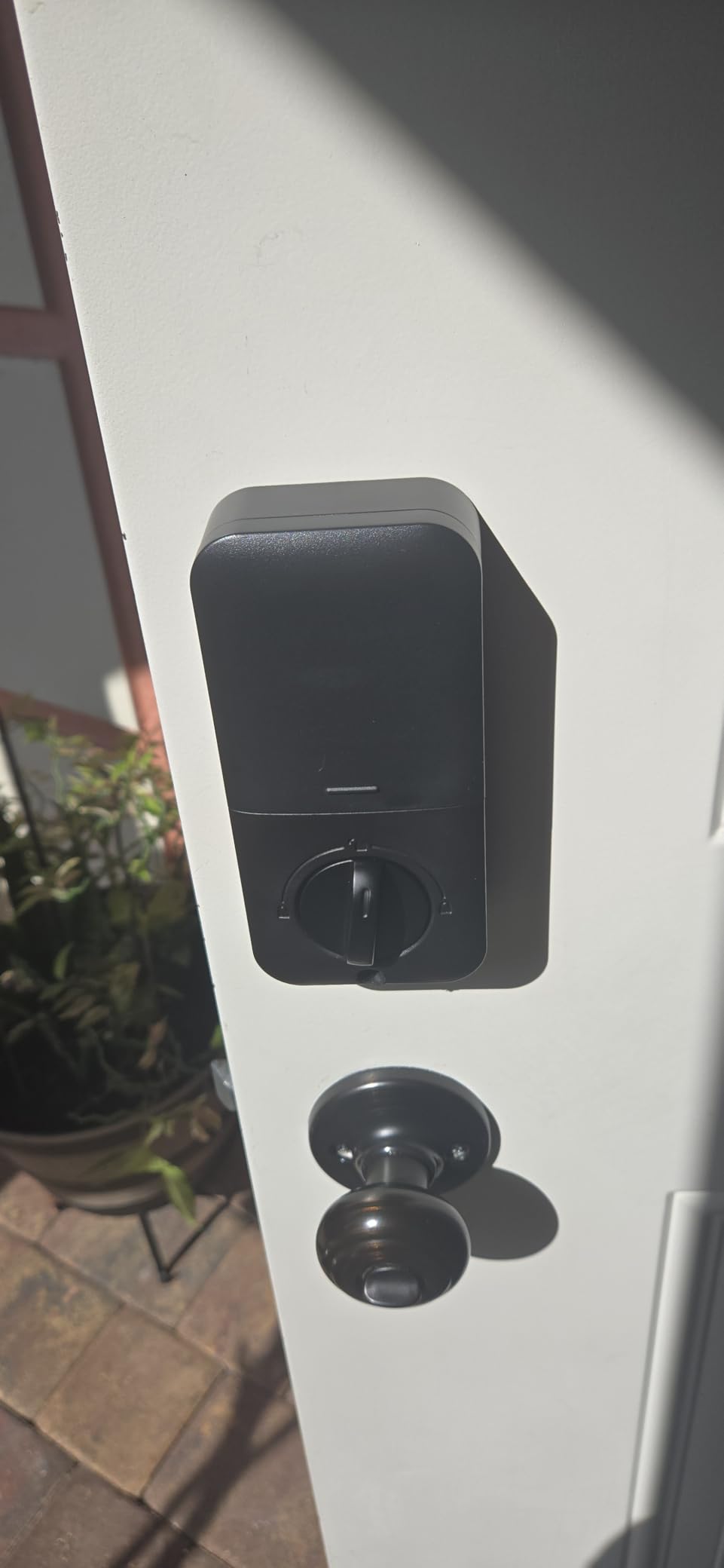
It runs on four AA alkaline batteries rated at up to 365 days with a red low-power LED, and covers a wider temperature range than most here at minus 31F to 158F.
Auto-lock is adjustable from 10 to 99 seconds, one-touch locking works by holding any key for two seconds, and a passage mode option suits a door that needs to stay open during a showing.
It fits 2-1/8 inch holes and doors from 1-3/8 inch to 2 inch thick, with an install time of about fifteen minutes.
Why a landlord would pick it
A metal lock body matters on an exterior door exposed to weather and to kick attempts. It is the pick when the budget does not stretch to a Grade 2 unit but you do not want a plastic interior housing.
Silent mode and vacation mode are both present, so the same lock covers a tenant bedroom door and a vacant unit.
Where it falls short
The front and back panels must be vertical during installation. Get it slightly off and the bolt will not throw properly, which is the most common install complaint here.
There is no app or WiFi, so all code management happens at the keypad. It is supplied without a door handle, so a separate handle is needed on a lever-handle door.
11. Veise KS01B Keypad Lock with Lever Handles – Best Keypad Lock Set for Rental Doors
Veise KS01B Keypad Door Lock with 2 Lever Handles Set, Matte Black
Two lever handles included
20 codes plus one-time passwords
4 AA over a year
ANSI Grade 3, IP54
Pros
- Highest average rating in this roundup at 4.6 stars with 79 percent five-star reviews
- Complete set with two lever handles so no separate handle purchase is needed
- Reversible levers fit either door swing direction
- Interior thumb-turn unlock triggers an audible alarm
Cons
- Programming instructions can be confusing on a first read
- Inside lever can slip off the spindle on some units
- May need slight widening of the door hole for the top portion to fit
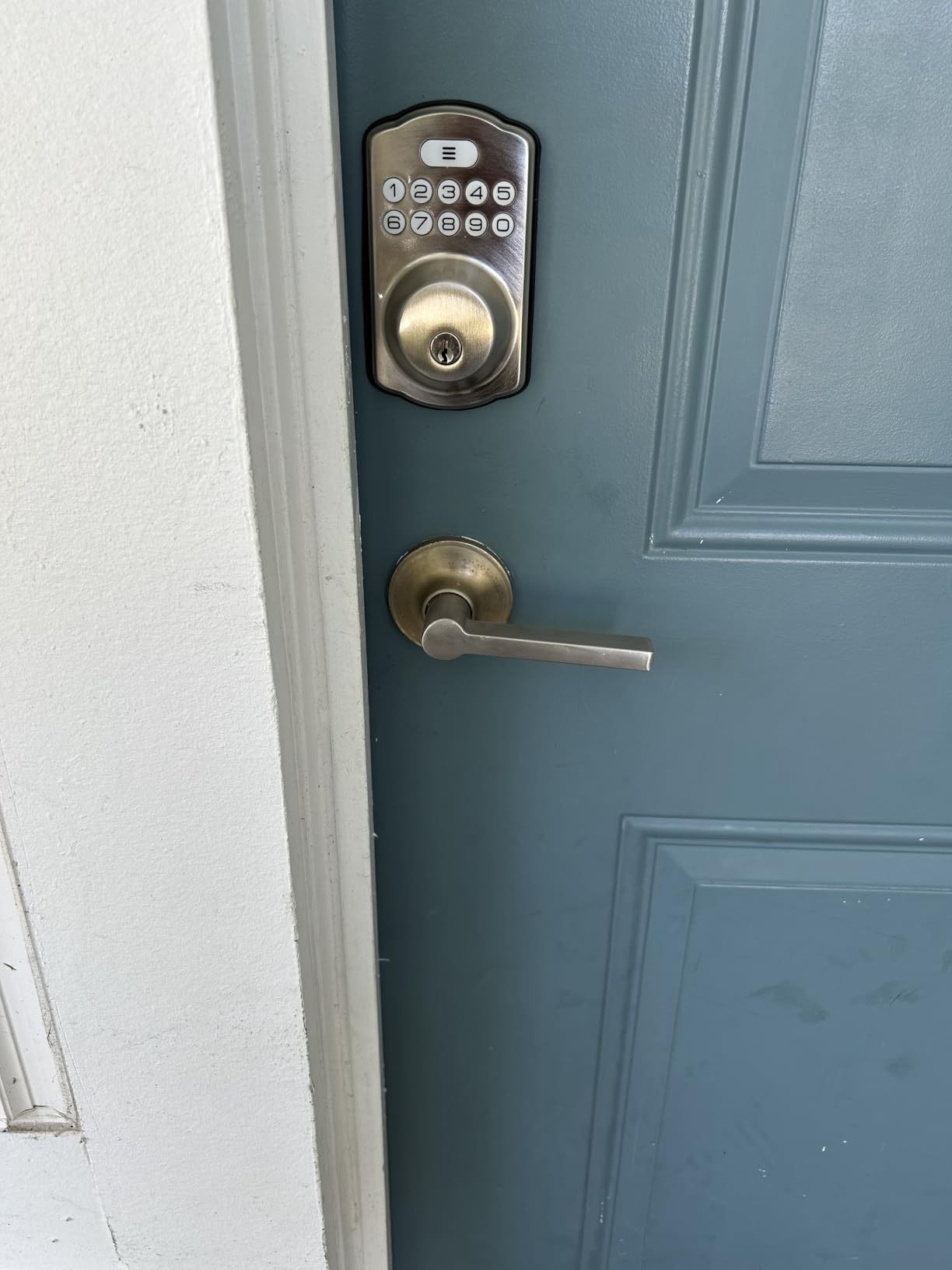
This is the highest-rated lock in the roundup at 4.6 stars, with 79 percent of reviews at five stars. It is also the easiest all-in-one install because the two lever handles are in the box.
That combination makes it a good pick for an apartment interior door, a laundry room or a rear door where the existing hardware is a lever set rather than a deadbolt. You are not buying a lock and a handle separately.
Twenty permanent codes, two physical keys and self-expiring one-time guest passwords give you the same rental code discipline as the deadbolts here, with a lever a tenant can operate one-handed while carrying groceries.
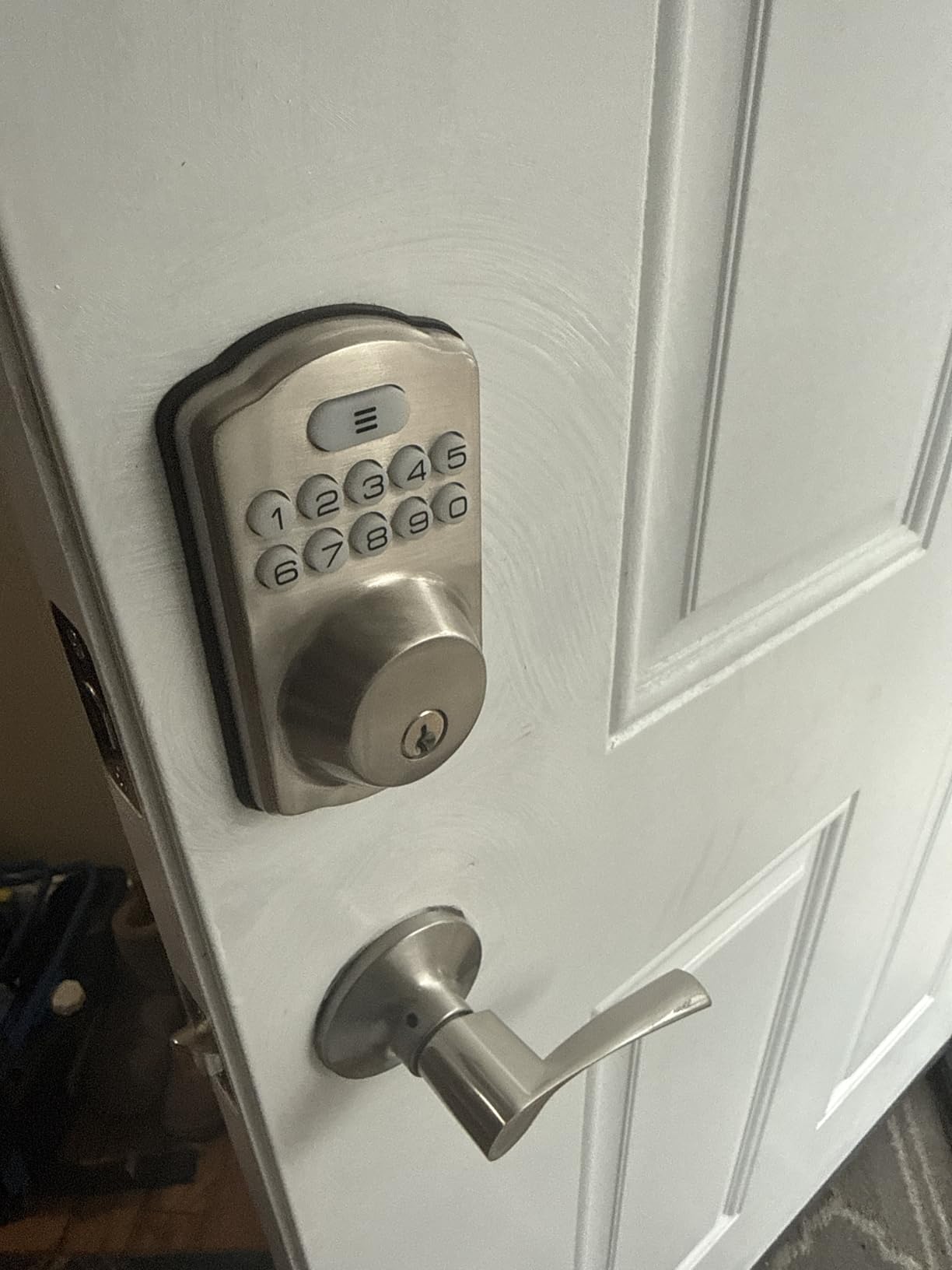
ANSI Grade 3 and BHMA tested with a zinc alloy cylinder rated to more than 200000 cycles, plus IP54 water and dust resistance. Four AA or LR6 cells are rated for over a year with a backlit low-battery alert.
The interior thumb-turn unlock triggers an audible alarm, which is a genuinely useful detail for interior doors in shared units. Vacation mode keeps only the master code working, and silent mode mutes keypad beeps at night.
Wrong entry handling locks the keypad for three minutes after ten failed attempts. Reversible levers fit standard doors from 1-3/8 inch to 2 inch thick.
Why a landlord would pick it
It covers the interior-door case that almost every rental roundup ignores. A landlord wanting a keypad on a bedroom or laundry door inside an apartment needs a lever set, not a deadbolt.
The 4.6 rating and the 79 percent five-star share give you the most consistent satisfaction signal of any lock here.
Where it falls short
First-time programming is confusing without reading the instructions twice, and some units need the door hole slightly widened for the top portion to fit.
The inside lever can slip off the spindle on some units, which is a quality-control issue worth watching on a door a tenant uses daily. No app means no remote management.
12. Amazon Basics Electronic Keypad Deadbolt – Best Keypad Lock for Existing Kwikset Doors
Amazon Basics Electronic Keypad Deadbolt Door Lock with Auto Lock, Customizable User Codes, One-time Codes, Touch-Control Keyless Entry, Traditional, Satin Nickel, 1-Pack
KW1 rekeyable keyway
6 user codes plus one-time codes
Fits 1-3/8 to 1-3/4 inch doors
4 AA batteries
Pros
- KW1 keyway means it can be rekeyed to match existing Kwikset cylinders
- Drops into an existing Kwikset opening with screw holes already aligned
- Quiet operation compared with a traditional keyed deadbolt
- One reviewer reports 7 years of service with no issues
Cons
- Programming codes must be entered quickly on the keypad and timing out forces a restart
- Printed instructions are widely criticized as unclear or incomplete
- Interior housing is bulky to hold four AA batteries and the motor
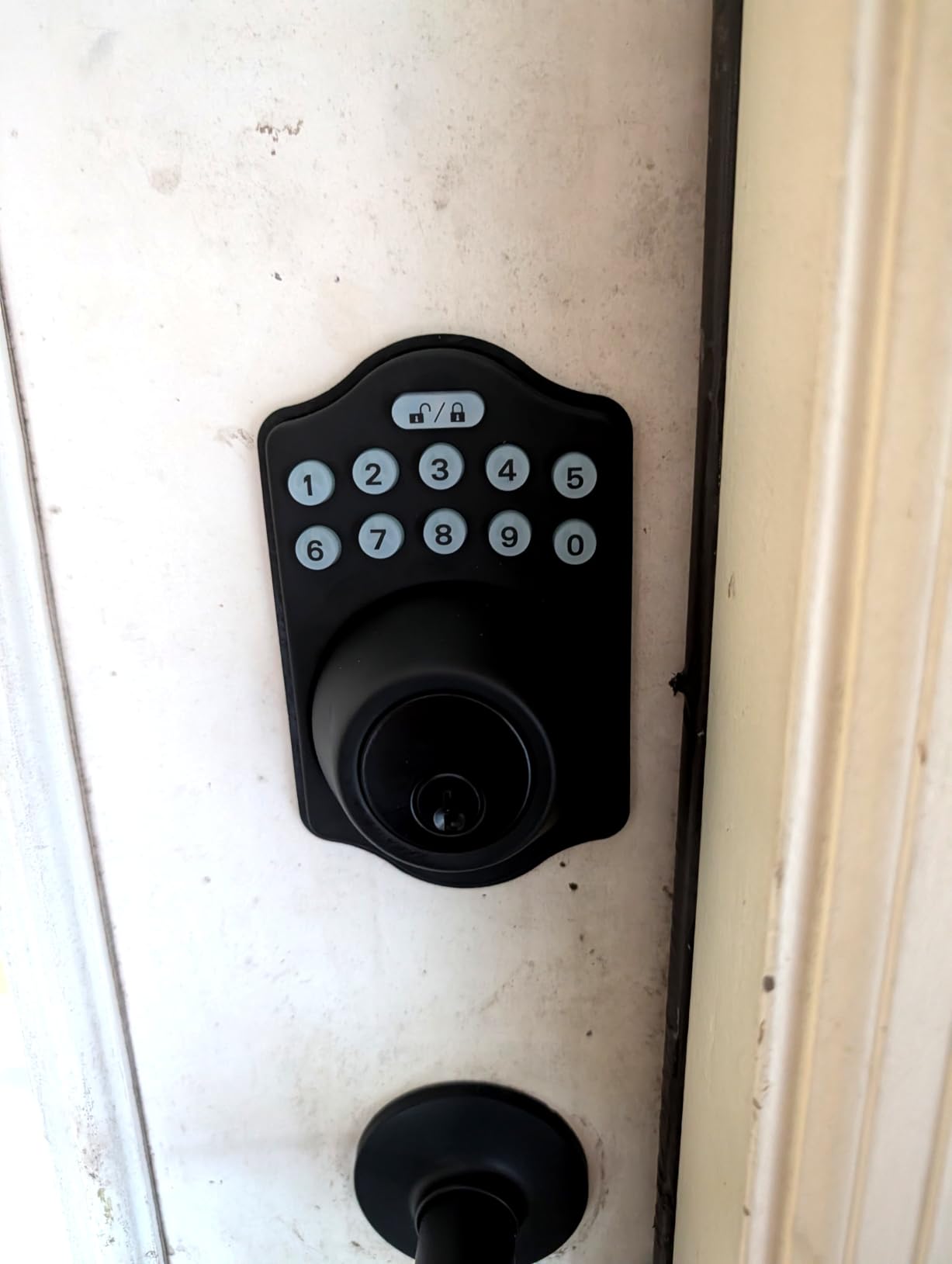
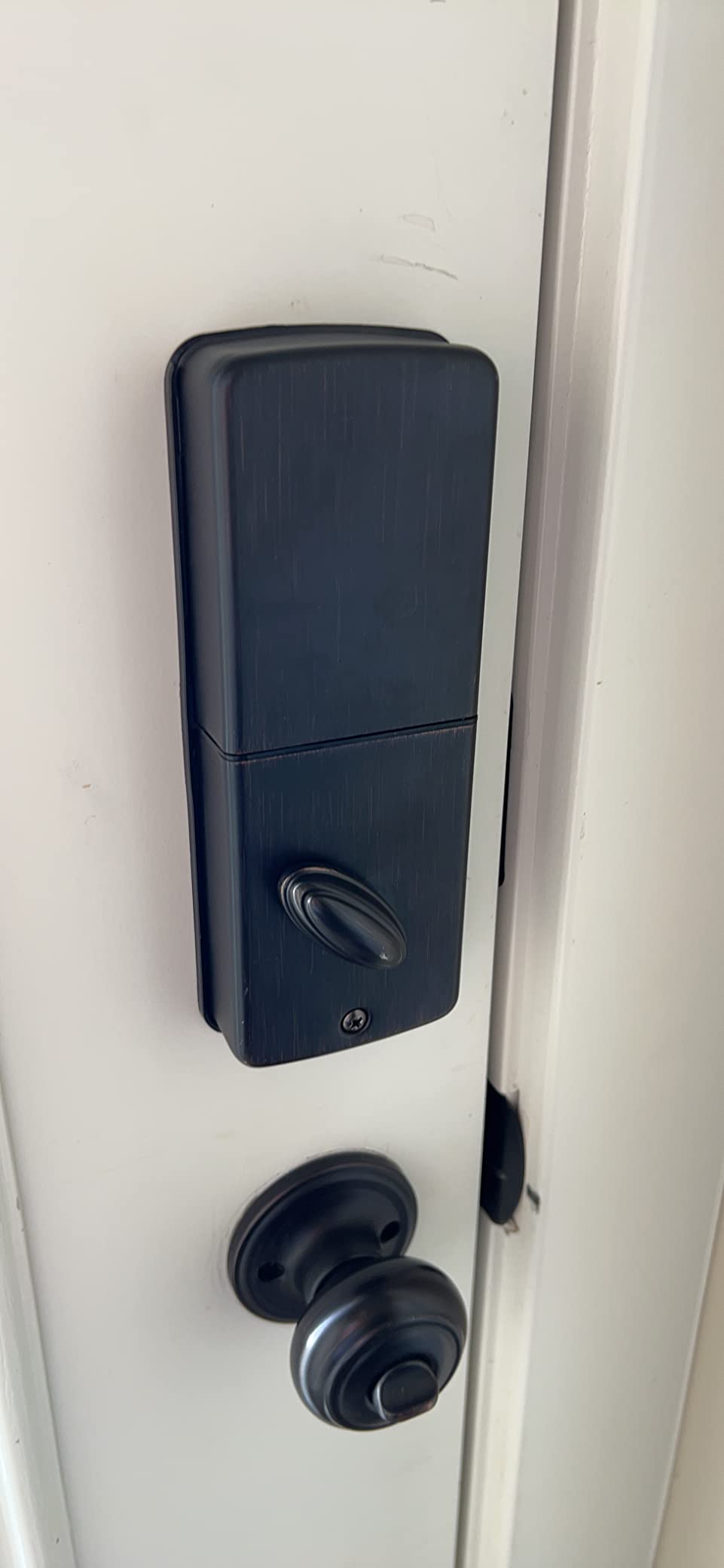
This is the pragmatic choice for a landlord whose properties are already full of Kwikset hardware. The KW1 keyway means you can rekey the cylinder to an existing key, so one key keeps working across the property.
Install is a drop-in when the door already has a Kwikset deadbolt with aligned screw holes, reported at about fifteen minutes. On a portfolio where every door has that hole pattern, that speed is the whole value proposition.
Six user codes plus temporary single-use guest codes cover a tenant, a cleaner and a landlord, which is a realistic count for a single rental home.
Operation is dual: keypad or traditional key outside, thumb turn inside. The factory reset button sits in the battery compartment, which is a sensible design because you should not need a key to recover the lock.
Auto-lock is adjustable from 10 to 99 seconds after entry, though it is disabled by default. Fits door thicknesses of 1-3/8 inch to 1-3/4 inch.
It operates more quietly than a traditional keyed deadbolt, which tenants notice and appreciate in a shared wall situation.
Why a landlord would pick it
Six codes is genuinely enough for most single-family rentals, and the rekeyable KW1 keyway means your existing key ring keeps working during the swap.
One owner reports seven years of service with no issues, which is the kind of long-run data you rarely see on a connected lock.
Where it falls short
The 4.1 rating reflects the most common complaint: programming without connectivity is fiddly and time-sensitive, and if you pause mid-sequence you have to start again.
The documentation is widely criticised for not explaining the difference between the programming code and the user codes. The interior housing is bulky, and a tight strike can mean the door has to be closed without pulling the handle.
How to Choose a Keypad Door Lock for a Rental Property
Start by picking a tier, not a brand. The three decisions that matter are whether you need to change codes remotely, how many doors you manage, and how often the door turns over.
A standalone keypad with no app is the correct answer for most 12-month tenancies. You walk to the door, add or delete a code, and nothing depends on a hub, an account or a phone. Connected locks add capability you will not use if the door turns over once a year.
A retrofit keypad, which mounts over an existing deadbolt rather than replacing it, is the option when the door hardware cannot be changed. Check the lease or the property manager first. Note that retrofits inherit the security grade of the deadbolt underneath, so a Grade 1 retrofit lock is still only as good as the original bolt.
How many codes do you actually need
Budget for four per door in a standard tenancy: tenant, co-tenant, one-time cleaner code and a landlord master code. One-time codes delete themselves, so they cost you nothing to maintain.
If you are running student housing or a building where several people share an entry, look at capacity: the Kwikset SmartCode 260 holds 50 user codes and 10 one-time codes, the Powerbolt 250 holds 25 plus 5, and most others hold 20.
What ANSI/BHMA grade actually means
ANSI/BHMA grades describe the lock, not the door. Grade 1 is the highest grade for residential and light commercial deadbolts, Grade 2 is a step below, and Grade 3 is the entry-level residential rating used by most keypads here.
Two locks in this roundup reach Grade 2: the Schlage BE365 with Grade 2 and AAA construction, and the Kwikset SmartCode 260, which Kwikset states is up to 2.5 times stronger than Grade 3. The rest are Grade 3.
The reality check that matters more: a Grade 2 lock in a soft pine jamb with three-inch screws is not a Grade 2 door. Long screws into the jamb and a strike plate screwed into the stud do more for your security than the grade badge on the lock body.
Rekeying versus changing a code
These are different operations and most confusion in landlord threads comes from treating them as the same. Rekeying means changing the pins inside the cylinder, which is what Kwikset SmartKey lets you do yourself with a learn tool.
Changing a code is a keypad function. It does not affect the physical keyway at all, so the key a tenant lost still opens the lock until you rekey or replace the cylinder.
Battery life and the lockout plan
Battery figures here run from about six months on four AA batteries for the Schlage Encode to two years on a 9V for the Schlage BE365. Most AA-powered locks quote 12 months or 365 days.
Whatever the figure, write a battery policy into your lease. Tell tenants the lock runs on AA batteries, they replace them twice a year, and the landlord replaces them after a reported failure. A dead battery on an occupied property is an emergency visit, and the fix costs you nothing but a policy line.
Brand longevity for installed hardware
Landlord forums have a fresh and specific fear here: a connected lock whose app or cloud service gets discontinued leaves you with expensive hardware that no longer manages codes. The Nest lock experience made this a real concern among people who had already installed hardware.
The mitigation is simple. Every lock here keeps a physical keyway, so a dead app degrades the lock to a keypad instead of a door permanently open to anyone. Prefer a manufacturer that sells mechanical hardware as well as electronics, and check how long the brand has published firmware updates.
Turnover Costs, Code Hygiene and Contractor Codes
The reason landlords buy these locks is arithmetic, and it is worth doing once. Divide the cost of the lock by the number of turnovers it serves and compare that with the locksmith call-out you would otherwise pay at each one.
A locksmith visit per turnover on a two-door property, repeated every year for a decade, dwarfs a one-time keypad purchase. The keypad also removes the second cost, which is uncontrolled key copying. After three tenancies nobody can say how many working keys exist, and nobody has a list.
A code leaves an audit trail. When a tenant leaves, you delete one number and the key under the doormat, the one in the neighbour’s drawer and the one handed to a friend all stop working at the same instant.
A turnover code routine
First, change the tenant code before the next tenant walks in, not on the day they arrive. Change it the day possession changes hands.
Second, delete rather than overwrite. Adding a new code without deleting the old one is how locks accumulate codes nobody remembers.
Third, record codes in a written list with who holds each one. This is the gap every forum complains about: no one has a written turn-over procedure, so the procedure lives in one person’s head.
Fourth, reset contractor codes the moment the job is done. A plumber’s one-time code that stays active for six months is a live key you forgot about.
Handling the master code
Every keypad has a programming or master code that bypasses everything else. Treat it like the key to the building: do not use it daily, do not hand it to a contractor, and change it if a tenant ever sees you type it.
For a property you manage from a distance, keep the master code in a password manager rather than in your phone’s notes app. In a connected lock, change the master code in the app and confirm the old one stopped working.
Short-term rentals and Airbnb rotation
Short-term rentals are a different problem from long-term tenancies. You turn the door over weekly, often remotely, and you hand access to cleaners and co-hosts.
The Schlage Encode is the pick here for built-in Wi-Fi with no hub, and the Sifely lock suits hosts who want guest codes plus included lever handles.
Watch for one thing on short-term rentals: reset every code between bookings, including the previous guest’s, and confirm the smart lock is auto-locking before you leave the property.
Installation, Door Fit and Lockout Planning
Measure before you order. Most keypad deadbolts fit a 2-1/8 inch bore with a 2-3/8 inch or 2-3/4 inch backset, and most fit doors between 1-3/8 inch and 1-3/4 inch thick. A few products here specify the range explicitly.
Check the bore size on anything other than a modern standard door. The TEEHO TE001 fits 2-1/8 inch holes only and will not work with 38mm holes, and the Veise RZ-A may need slight enlargement on some existing doors.
Plan the strike plate properly. Use the long screws that come with the lock or 3-inch screws into the jamb stud, and remove the wooden strike shim behind the plate so the jamb closes flush. A deadbolt on a misaligned door that does not throw fully is the most common cause of the complaints in these reviews.
How long installation takes
On a door already drilled for a deadbolt, installers on r/Landlord report about half an hour including programming. Reviews here put the Schlage BE365 at a screwdriver swap over an existing deadbolt, the Veise RZ-A at around ten minutes, and the Veise KS02A at about fifteen minutes.
Plan longer for a new bore, a lever-handle conversion or a door that needs the hole widened. First door on a property always takes longer than the second.
What to do when the battery dies
Work down this list in order. First, use a physical key. Every lock in this roundup ships with keys or supports a key cylinder, so this should work.
Second, use the emergency power contact. Most models have a 9V battery contact on the inside escutcheon for exactly this situation; the Schlage BE365 ships with a 9V battery for the same reason.
Third, remove the batteries and hold the 9V against the contact until the lock completes a cycle. Do not remove the batteries if the bolt is thrown, because the motor may already be mid-rotation.
Fourth, as a last resort, the cylinder can usually be accessed with a pick or by removing the escutcheon, but at that point you are calling a locksmith anyway.
Who pays for a lockout
Settle this in the lease rather than at eleven at night on a Sunday. Most leases put the cost of a lockout caused by a lost key or a dead battery on the tenant, and that language is only useful if it is written down before they move in.
The standard clause says the tenant covers lockout calls caused by their own key or code, and that the tenant maintains the batteries. Landlords on landlord forums describe this as the single change that removed the most friction from their tenancies.
If You Rent Rather Than Own the Unit
If you are the tenant rather than the landlord, the answer changes completely: in most leases you cannot change the lock at all. Check your lease before you buy anything, because an unauthorised lock swap is a lease violation in many jurisdictions.
Ask for permission in writing and make the ask specific. Name the lock, explain that it keeps the existing key so the landlord retains access, and offer to switch back at move-out. A landlord objection usually concerns losing access, not the hardware itself.
If the answer is no, or if you are not comfortable waiting, a keypad that mounts over your existing deadbolt without changing the exterior hardware is the renter-friendly path. Keep the landlord’s key working, because that is the entire basis of the request.
Interior door keypads for renters
The best renter-friendly inside door lock is a lever-set keypad like the Veise KS01B, which comes with two handles and reversible levers so it fits either door swing direction.
An interior door change is far less likely to need written permission, particularly on a bedroom or bathroom door in a unit you are already renting. Still, tell your landlord in an email before you drill anything, because a fire-rated entry door may be governed by building rules.
What to send your landlord
Keep it short: which door, which lock, that the existing key still works, that you will remove it at move-out, and that you will leave the bore covered and painted. That is five lines, and it answers the two objections landlords actually raise.
Do not attempt to change an exterior lock on a rental after your landlord has refused. That is a lease breach regardless of who owns the door hardware, and it leaves you liable for any loss.
Frequently Asked Questions
What is the best keypad door lock for a rental property?
The TEEHO TE001 is the best overall pick for a standard 12-month tenancy, with 20 access codes, self-deleting one-time guest PINs, AA batteries rated up to 365 days and a 4.5 rating. Choose a Kwikset with SmartKey rekeying if you need one key across several doors, and a Wi-Fi model such as the Schlage Encode if you manage access remotely.
What is the best renter-friendly inside door lock?
A keypad lever set such as the Veise KS01B is the best option for an interior door, because the two reversible handles are included and no separate handle purchase is needed. It holds 20 permanent codes plus one-time guest passwords. Interior changes are usually less contentious than exterior hardware, but tell your landlord in writing before you drill.
Which keypad door lock is the most secure?
The Kwikset SmartCode 260 is the strongest on documented security, with BHMA Grade 2 certification for security, durability and finish, stated by Kwikset as up to 2.5 times stronger than Grade 3. The Schlage BE365 also carries Grade 2 and AAA construction. Everything else in this roundup is Grade 3, and a soft jamb can undo any of them.
What are the disadvantages of keypad door locks?
The main drawbacks are that codes must be typed on a keypad that can wear out, a flat battery can lock everyone out if there is no key or 9V backup, there is no access log on non-connected models, and a smart lock depends on an app and account that may one day be discontinued. Physical key backup, a written battery policy and a key stored offsite handle the first two.
Can electronic deadbolts be rekeyed?
Only some. The Kwikset Powerbolt 250 and Kwikset SmartCode 260 use a SmartKey KW1 cylinder that you can rekey to any KW1 key with the included learn tool, and the Amazon Basics lock has a KW1 keyway that matches existing Kwikset cylinders. Changing a keypad code is not rekeying and does not affect the physical key at all.
Am I allowed to change the locks on my rental property?
If you own the property, you are generally required to give the previous tenant a working key or code for the period you control, and several states set a specific deadline. Texas Property Code 92.156, for example, requires a landlord to change the locks or supply a new key within seven days of a new tenant taking possession. Rules vary by state, so check yours rather than copying another state requirement.
Bottom Line on the Best Keypad Door Locks for Rentals
For a standard 12-month tenancy, the TEEHO TE001 is the keypad door lock for a rental property we would fit first. Twenty codes, one-time PINs that delete themselves, AA batteries that last up to a year and the highest review volume in this roundup make it the least risky choice.
For multiple doors, pick a Kwikset. The SmartCode 260 gives you the only Grade 2 security rating here plus 50 codes, and the Powerbolt 250 gives you one key that opens the whole property, though its 16 percent one-star share means buying in pairs.
For remote management and short-term rentals, the Schlage Encode with built-in Wi-Fi handles 100 codes and a lock history with no hub to install. The eufy C220 is the alternative if you want fingerprint and Apple Watch access alongside the keypad.
For interior doors, the Veise KS01B lever set covers the case most rental roundups ignore. And for a renter rather than an owner, ask in writing first, and choose hardware that keeps the landlord’s existing key working.
Whichever one you pick, the return comes from the same place every time: delete a code instead of paying a locksmith, and make sure the battery policy is in the lease before a tenant is locked out on a Sunday night.