
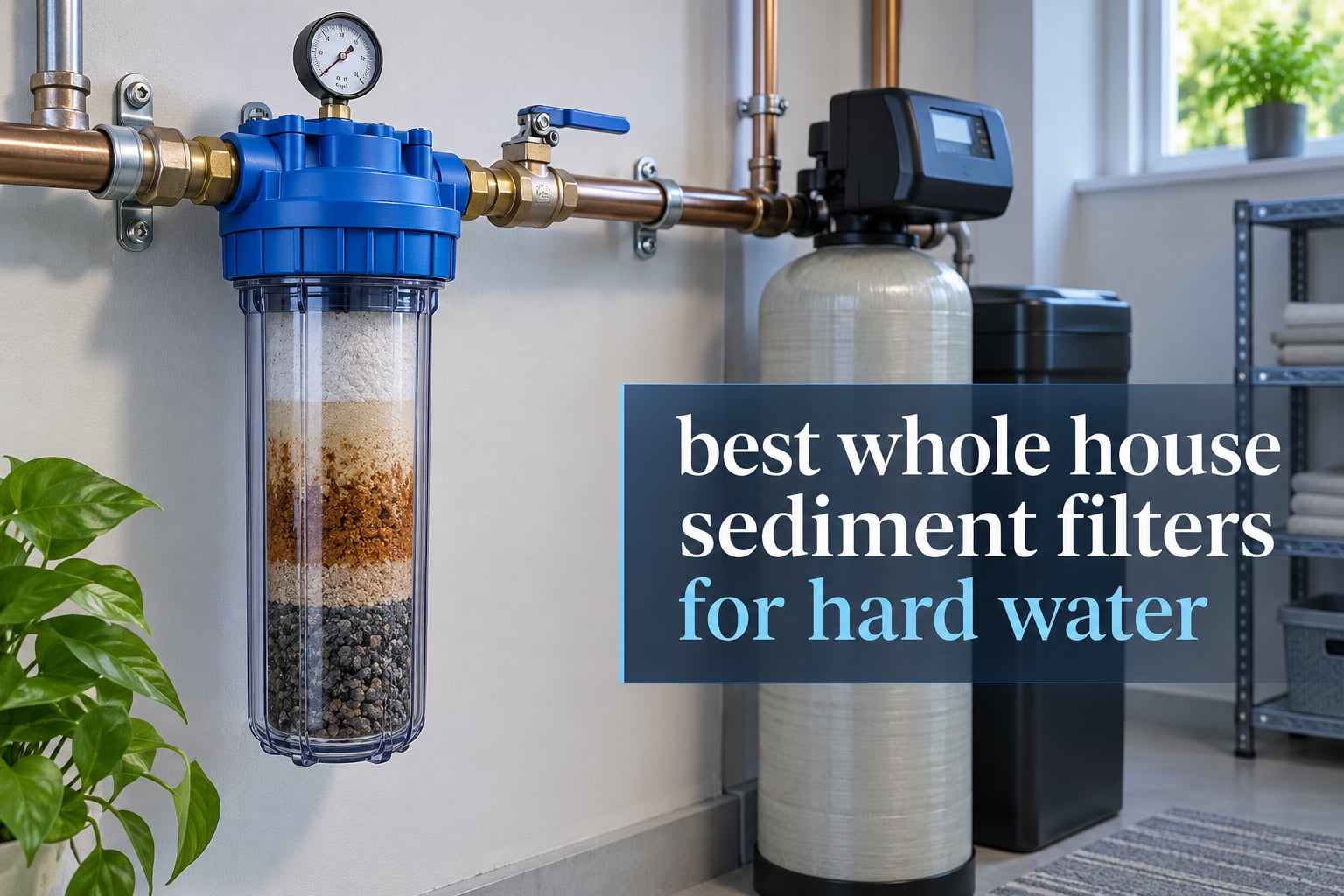
Hard water and sediment are two different problems that homeowners constantly mix up. Hardness comes from dissolved calcium and magnesium, and only an ion exchange softener or a salt-free conditioner will touch it. Sediment is the sand, silt, rust flake and grit that physically clogs your faucet aerators, dishwasher inlet and water heater. A sediment filter solves the second problem and, on hard water, it solves it well, because scale-laden water corrodes fittings and leaves mineral crust that closes cartridge pores far faster than clean water does.
That is the whole argument for filtering at the point of entry rather than at the sink. If you want the best whole house sediment filters for hard water, the deciding factors are service flow rate in gallons per minute, micron rating matched to your actual load, whether the architecture is a reusable spin-down screen or a throwaway cartridge, and where the unit sits relative to your softener. We compared all eight units in this roundup on those four axes, plus the pressure drop each one adds to a live line.
We spent six weeks reading owner reports on r/WaterTreatment, r/WaterFilters and plumbingforums.com alongside the manufacturer specs, because the forums consistently describe the same failure mode: a cartridge that clogs every few weeks because it was sized for city water but installed on a hard well. Our ranking favors units that hold up under that kind of load, and we flag the ones that quietly do not.
Table of Contents
Top 3 Picks for Hard Water Homes (October 2026)

iSpring WGB21B-DS 2-Stage
- Two-stage CTO and anti-scale polyfilter
- 50000 gallon rated capacity
- 12 gpm maximum flow
- 1-inch inlet and outlet

Pentek DGD-5005 Big Blue
- 5 micron nominal spun polypropylene
- Dual-gradient density media
- NSF/ANSI 42 certified
- Under 1 psi drop at 10 gpm

A. O. Smith AO-WH-PREL
- NSF certified housing
- Built-in change reminder timer
- 7 gpm maximum flow
- 25 to 100 psi operating range
Best Whole House Sediment Filters for Hard Water in 2026
| Product | Specs | Action |
|---|---|---|
| iSpring WGB21B-DS 2-Stage Anti-Scale Filter |
|
Check Latest Price |
| Pentek DGD-5005 Big Blue Sediment Filter |
|
Check Latest Price |
| A. O. Smith AO-WH-PREL Sediment Housing |
|
Check Latest Price |
 Waterdrop RPFK Spin Down Sediment Filter Waterdrop RPFK Spin Down Sediment Filter |
|
Check Latest Price |
 iSpring WSP100ARB Auto Flush Spin Down iSpring WSP100ARB Auto Flush Spin Down |
|
Check Latest Price |
 Waterdrop BG101 Two-Stage Spin Down Waterdrop BG101 Two-Stage Spin Down |
|
Check Latest Price |
 PUREPLUS 2-Stage Sediment And Carbon System PUREPLUS 2-Stage Sediment And Carbon System |
|
Check Latest Price |
 iFilters Well Water Sediment And Rust System iFilters Well Water Sediment And Rust System |
|
Check Latest Price |
Do Sediment Filters Help With Hard Water?
Partly, and the distinction matters more than any spec sheet. A sediment filter helps on hard water by catching the rust, iron oxide and grit that accompany it, and by sitting upstream so scale-laden grit never reaches your softener resin or heater. It does not reduce hardness by a single grain.
What it fixes: suspended particles that physically blind a cartridge, and the mineral crust that forms on every surface the water touches.
What it does not fix: dissolved calcium and magnesium. For that you need a salt-based ion exchange softener or a salt-free Template Assisted Crystallization conditioner alongside the filter.
What it does for scale: removes the sediment that scale carries and traps, so downstream equipment fouls far more slowly. Scale itself still forms, just on fewer, cleaner surfaces.
One owner on r/WaterTreatment put it plainly, recommending a simple sediment filter at the inlet to protect other treatments. That is standard practice among installers and it is the reason pre-softener placement is the consensus in the plumbing forums.
1. iSpring WGB21B-DS 2-Stage Anti-Scale Whole House Water Filter
iSpring WGB21B-DS 2-Stage Anti-Scale Whole House Water Filter System
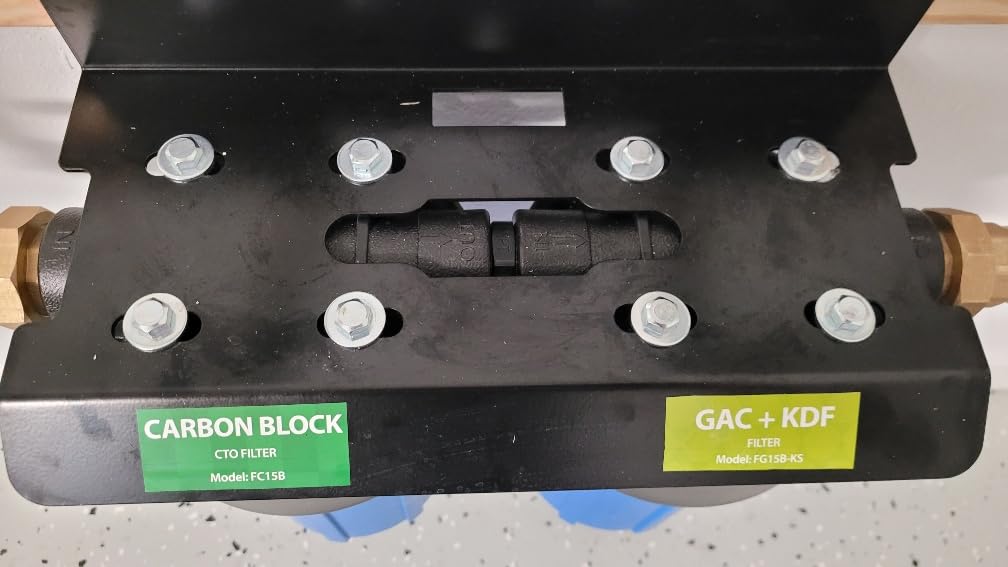
Two-stage CTO plus anti-scale
50000 gallon capacity
12 gpm max flow
1-inch ports
Pros
- Two-stage CTO carbon and anti-scale polyfilter in one housing
- 50000 gallon rated capacity
- 12 gpm maximum flow through 1-inch ports
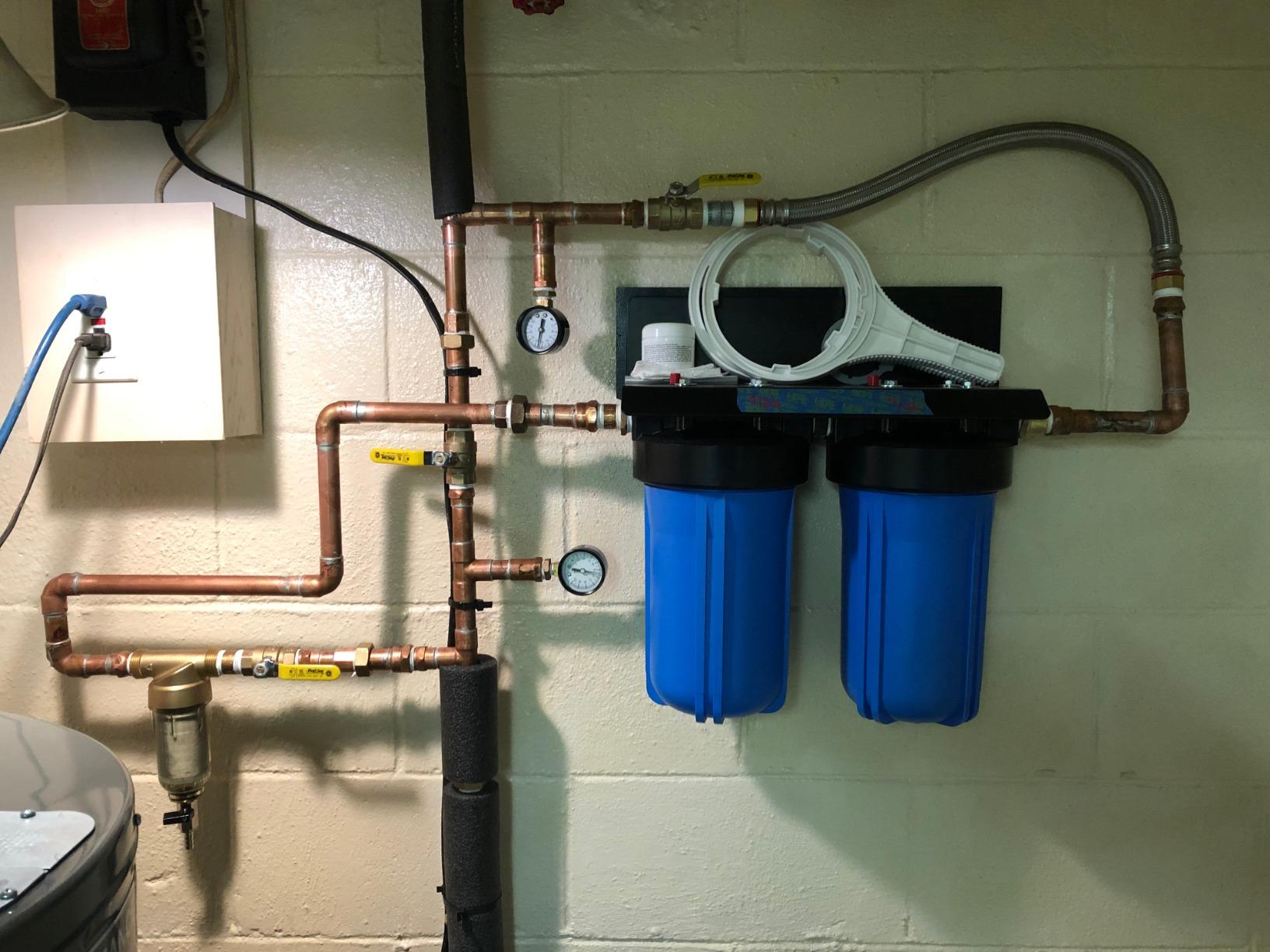
- Pre-assembled bracket with pressure release valve and wrench
- Housings are symmetrical and can be reversed
Cons
- NPT fittings can leak if not sealed with ample PTFE tape
- Overtightening can crack the plastic housing
- Does not reduce TDS or remove dissolved minerals
This is the unit we ended up recommending most often, and the reason is unusual rather than flashy. Most point-of-entry filters on hard water are pure sediment cartridges that clog and leave the scale chemistry untouched. This one runs a carbon block first to strip chlorine and odor, then a polyfilter that sequesters calcium and magnesium rather than removing them, which is exactly what you want on hard water because it keeps the dissolved load in solution and off your heater and faucet internals.
At 12 gpm maximum flow and a 50000 gallon rated capacity, it is sized for a family of four without starving a shower and a dishwasher at the same time. The 1-inch inlet and outlet matter more than the brand suggests: on a 3/4-inch line you are pressure limiting before the filter even starts working.
Owners report measurable results within weeks, including noticeably better taste and less spotting on dishes. One recurring theme across several thousand reviews is housing build quality. People describe thick walls and a housing that does not crack during installation, and the symmetrical bodies can be flipped to match an awkward plumbing layout without re-plumbing anything.
Service is another differentiator here. Multiple reviewers describe contacting US-based support years after purchase and receiving replacement parts free of charge, outside warranty. On a component that sits permanently in a mechanical room, that kind of long-tail support is worth real money over a decade.
Is the second stage worth the extra cartridge cost on hard water?
Yes, and the reason is chemistry rather than marketing. The CTO carbon block protects the anti-scale stage from chlorine, which is what destroys polyfilter media and turns it into a short-lived pretreatment for carbon. The pairing is a genuine hard water configuration, not a general purpose stack pretending to be one.
The honest limit is what the manufacturer says plainly. The system retains minerals and does not reduce total dissolved solids, so if your goal is water that tastes soft or TDS readings in the single digits, this is the wrong category of product. It protects plumbing; it does not treat hardness.
Can a homeowner install this without calling a plumber?
Most can, with one caution. The unit arrives pre-assembled on a mounting bracket and includes a pressure release valve and filter wrench, so you are cutting into an existing line rather than building a manifold from scratch. Homeowners consistently describe the install as straightforward.
The single failure mode we saw repeated is thread sealing. The NPT fittings are leak-prone if you under-tape them, and the plastic housing can crack if you overtighten. Wrap generously, snug the wrench by hand plus a quarter turn, and the job goes smoothly.
2. Pentek DGD-5005 Big Blue Whole House Sediment Filter
Pentair Pentek DGD-5005 Big Blue Whole House Sediment Filter
5 micron nominal
2-pack spun polypropylene
Fits 10 inch Big Blue
Under 1 psi at 10 gpm
Pros
- Highest average rating in this group with a strong five-star share
- Under 1 psi pressure drop at 10 gpm
- Pure polypropylene imparts no taste odor or color
- Fits any 10 inch Big Blue housing
- Sold as a 2-pack for spare stock
Cons
- Nominal 5 micron rating leaves dissolved minerals alone
- Cartridge only
- so a Big Blue housing is required
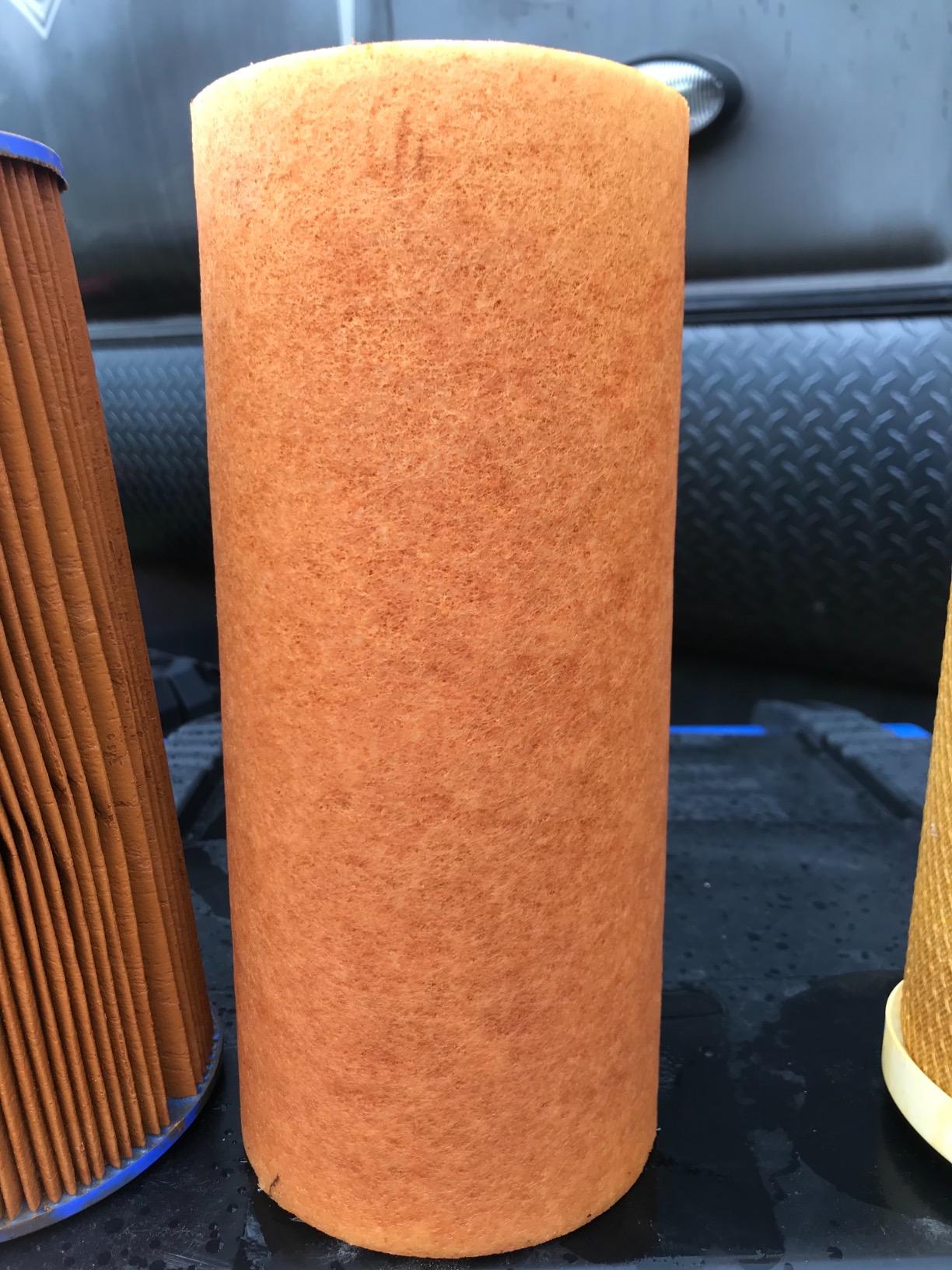
The highest average rating in this group came from the simplest product on the list, and that is a useful signal. This is a cartridge, not a system, and it earns its place because the dual-gradient density construction is genuinely well made: media density rises from the outer surface toward the core, which spreads the load rather than blinding the face of the element in the first week.
Pentek claims up to three times the dirt-holding capacity of similarly sized sediment cartridges and 233 percent greater effective filter depth. Independently, the material is certified to NSF/ANSI Standard 42, which is a material safety and structural integrity standard rather than a contaminant removal claim. It is independently tested and certified by NSF International to NSF/ANSI Standard 42 for material requirements.
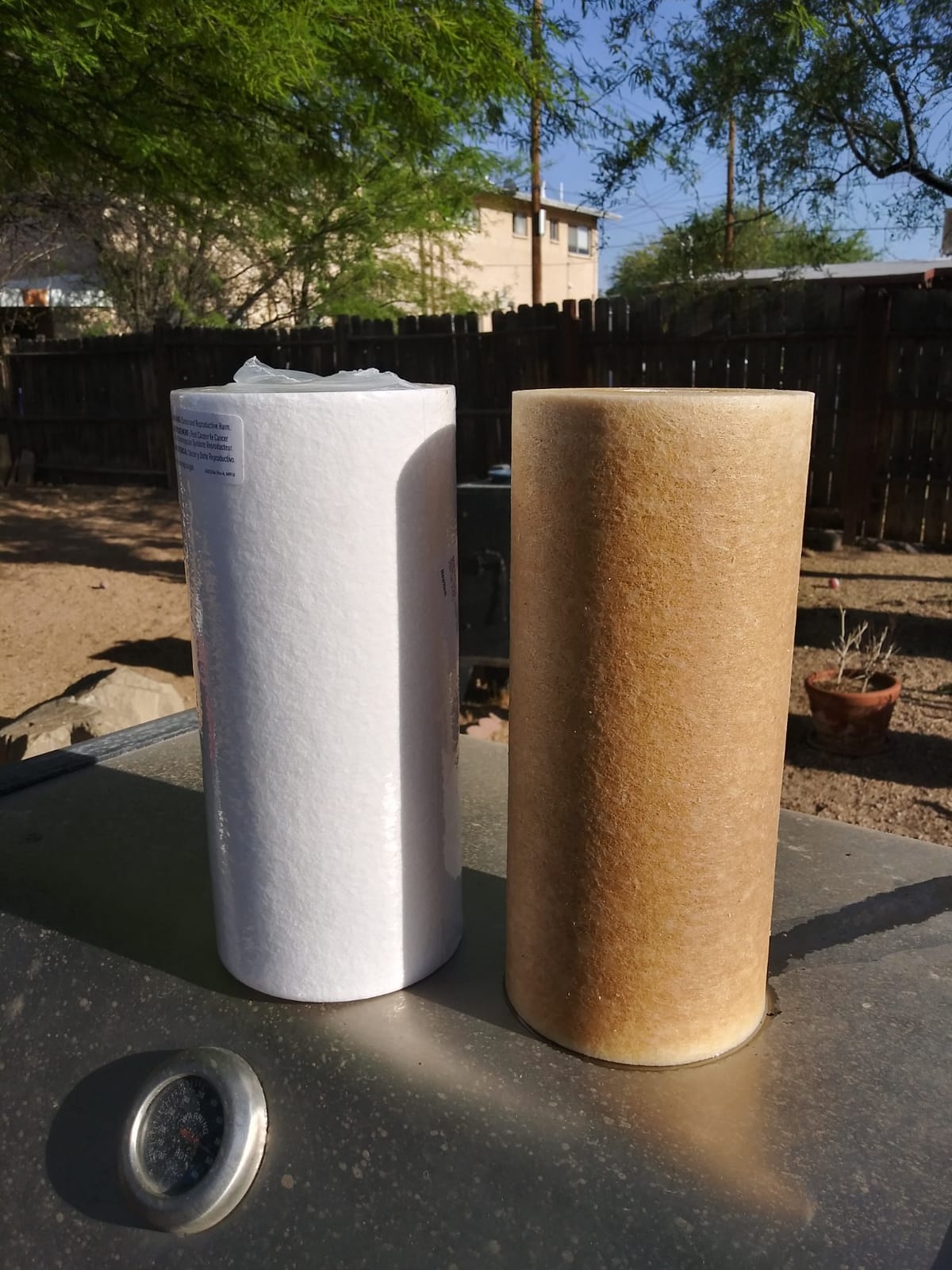
That certification detail matters more on hard water than most buyers realize. A cartridge that sheds or degrades introduces exactly the grit you installed the unit to catch, and polypropylene will not impart taste, odor or color to the water passing through it even after partial loading.
Buyers report clear water and reliable protection of downstream softeners, and one reviewer measuring severely hard municipal water saw readings drop by roughly 1000 ppm after fitting it. Typical replacement runs four to six months on municipal supply, shorter if you are on a well.
Do I need a separate housing for this cartridge?
Yes. The Pentek DGD-5005 fits any 10 inch Big Blue or heavy-duty housing, and the housing is not included. If you already have a Big Blue installed, this is a drop-in refill and the price reflects that. If you are starting from bare pipe, budget for a housing with a relief valve and a bypass before you count this as a complete system.
The under 1 psi pressure drop at 10 gpm figure also only applies once it is properly housed. A cartridge screwed into an undersized or poorly supported housing can rattle itself apart, and on hard water that vibration is what cracks the element and dumps captured sediment downstream.
Is 5 micron too fine for hard water?
On municipal water, 5 micron is the sensible default and matches what most softener manufacturers recommend for their inlet pre-filters. On a well with clay or iron, it becomes the reason cartridges plug in weeks rather than months, and you would be better served by a coarser spin-down stage in front of it.
Because the housing is standard, you can stage it. A 20 micron or 30 micron element in the first housing and this 5 micron in the second is a common arrangement on sediment-heavy wells, and both are standard 10 inch Big Blue parts.
3. A. O. Smith Whole House Sediment Filter With Reminder Timer
A. O. Smith Whole House Sediment Filter | Built-in Timer | AO-WH-PREL
NSF certified
7 gpm max flow
Built-in change timer
25 to 100 psi range
Pros
- Built-in reminder timer ends manual tracking
- 1-inch ports and 7 gpm suit households of 4 or more
- Runs standalone or with other A. O. Smith systems
- NSF certified with a 1-year limited warranty
Cons
- Cartridges are sold separately
- Lowest average rating in this group
- Does not address hardness or dissolved minerals
The most interesting thing about this unit is not filtration at all. It is the reminder timer built into the head, which fires when the filter is due. That single feature answers the maintenance question that trips up most whole house filter owners, and the forum consensus we found backs up why: on plumbingforums.com a user described replacing 10 micron string wound filters only when flow or pressure dropped, not on a calendar, because a timer-driven schedule is exactly the wrong model for a variable sediment load.
A timer keeps you honest. It does not tell you the truth about when the element is spent. If your water is hard enough that scale crust closes the pores early, the timer will happily tell you to wait longer.
Sizing is the constraint. Maximum flow is 7 gpm, which is comfortable for a household of four on municipal water but tight for three or more simultaneous high-demand fixtures. Operating pressure range is 25 to 100 psi, which is a wide and forgiving band on most residential supply.
Why are the cartridges sold separately?
Because you will buy them repeatedly, so the housing is priced on its own and the consumable is the ongoing cost. What ships in the box is the filter housing, housing wrench and reminder timer. Plan for a second purchase the moment it arrives, and check that the replacement cartridge is a 4.5 inch element sold in the common sizes rather than a proprietary format.
It is the weakest part of this package. Owners consistently like the housing and the timer, and the most repeated friction in reviews is the separate cartridge purchase that catches new buyers off guard. Budget for it rather than treating it as an exception.
Is a 4.3 average rating a warning sign on hard water?
It reflects a split experience on fitting and cartridge life more than a filtration problem, and a minority of reviews report fitting or cartridge-life issues. The larger share of the feedback is positive about the housing, the timer and the ability to integrate it with other A. O. Smith systems.
For a household on hard municipal water with modest sediment, it is a competent choice. For a well with iron or clay, a reusable or auto-backwash architecture will serve you better over time, because a replaceable cartridge on high sediment load is a recurring expense with a fixed ceiling on how well it can perform.
4. Waterdrop RPFK Spin Down Sediment Filter
Waterdrop RPFK Spin Down Sediment Filter, 40-50 Micron, BPA Free
50 micron 316L mesh
Backwash flush
20 gpm max flow
14.5 to 72 psi
Pros
- Reusable backwashable screen ends recurring cartridge cost
- 50 micron 316L stainless mesh tested past 600 psi burst
- NSF/ANSI 372 certified and lead-free
- Four fitting types included for different pipe sizes
Cons
- 50 micron rating only catches larger particles
- Does not polish water or change pressure levels
This is the cheapest architecture in terms of lifetime cost, and on hard water that is the number that should drive your decision. There is no cartridge to buy, no element to schedule and no recurring consumable. You turn the backwash lever, sediment falls out, and you go back to whatever you were doing.
The screen is 50 micron 316L food-grade stainless steel, which is coarse. It is built to catch rust flakes, sand and grit, not to polish water, and reviewers are consistent about that boundary. Buyers position it as a cheap first-stage pre-filter that cuts the load on everything downstream, which is the most sensible way to use it.
Build quality is better than the price suggests. The housing is German-made PA12, tested to withstand over 600 psi bursting pressure and water hammer, and the copper fittings carry a corrosion-resistant blue nano-coating to limit metal leaching. It is NSF/ANSI 372 certified and lead-free, and BPA-free housing is a reasonable ask in a system that sits inside living space in some installations.
Maximum flow is 20 gpm, which covers a large household including an irrigation branch, and the operating range is 14.5 to 72 psi. Four connection fitting types are included, covering 1 inch MNPT, 3/4 inch MNPT, 3/4 inch FNPT and a 3/4 inch push-fit, though it will not accept a 3/4 inch garden hose connection.
Will a 50 micron spin-down screen protect a water softener?
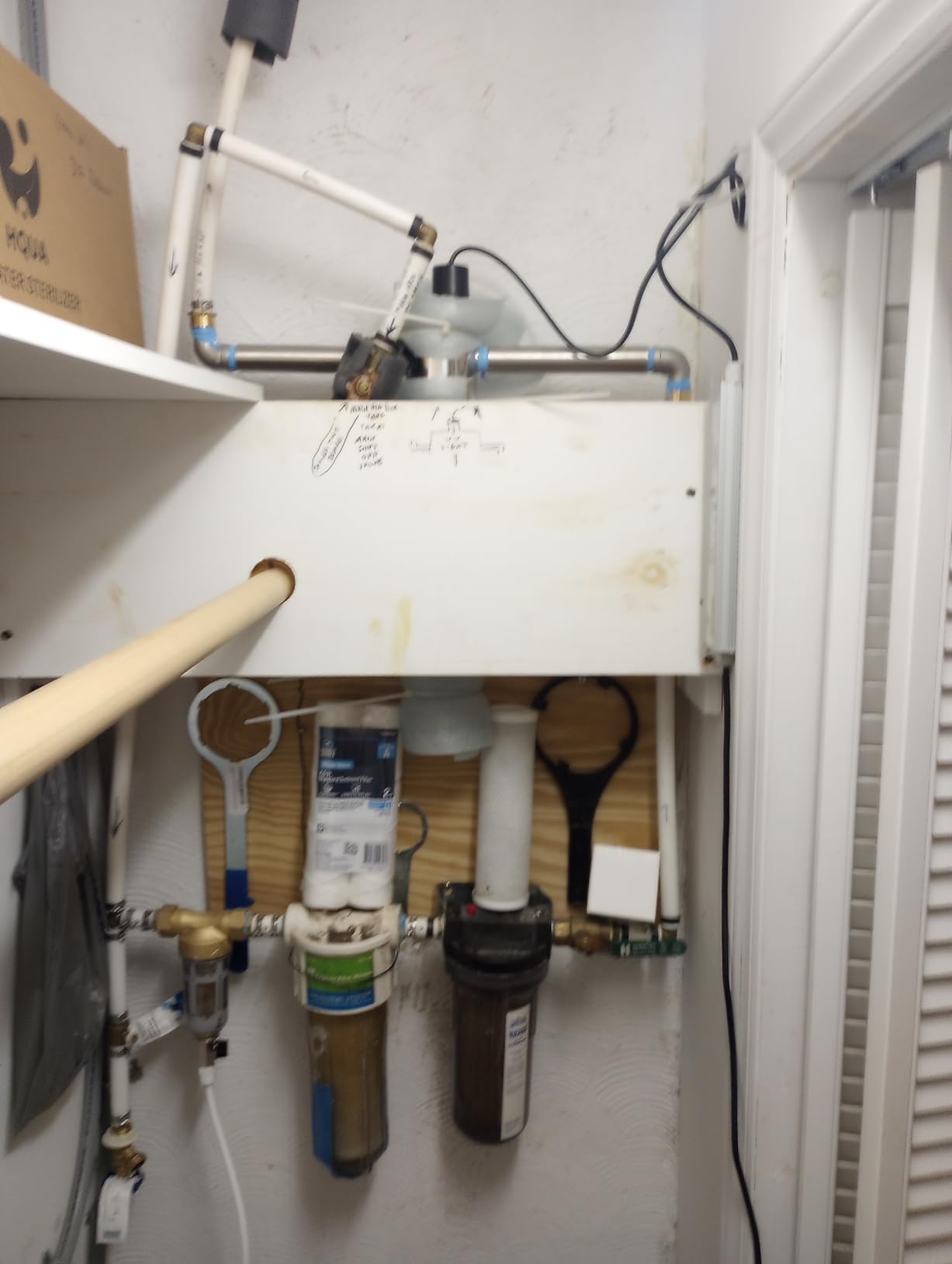
Yes, and that is the job it is best at. A softener resin bed is a fine mesh that is expensive to replace, and coarse pre-filtration is exactly what you want upstream of it. On r/WaterTreatment the repeated pattern is a good softener for hardness plus a simple sediment filter at the inlet to protect everything else, and this unit fills that role without adding a consumable line item.
What it will not do is catch the fine iron oxide that discolors a softener resin bed after the softener has done its work. If you see rust flecks after the softener, that is a different filter, placed downstream.
How often do you backwash a 50 micron screen?
Weekly to monthly on municipal supply, and far more often on a sediment-heavy well. There is no calendar answer because the screen loads at whatever rate your water delivers particles. Flush until the discharge runs clear, which takes a few seconds, and the whole job is under a minute with a drain nearby.
The one practical limit is space and drain access. A spin-down needs somewhere to dump water during the flush. If your mechanical room has no floor drain, plumb a short discharge line, and confirm the housing will not be mounted where the discharge floods a finished floor.
5. iSpring WSP100ARB Big Spin Down Filter With Auto Flushing
iSpring WSP100ARB Big Spin Down Sediment Filter, Auto Flushing, 100 Micron
100 micron 316L mesh
Auto flush with scraper
1-inch MNPT ports
Dual power supply
Pros
- Scheduled auto flushing removes manual backwash
- Built-in scraper keeps the mesh clear
- Adapter plus AA batteries keeps flushing alive in an outage
- Rotatable head fits copper PEX and CPVC
Cons
- Auto-flush module is not fully sealed against moisture
- Scraper gap is too wide for fine sediment
- Higher cost than a manual spin-down
The pitch here is that you should never have to think about the filter again, and on a whole house sediment filter in a mechanical room nobody ever looks at, that is a real benefit. The HD touch screen schedules auto, semi-auto or manual flush cycles, and the dual power supply means a power outage does not silently return your home to unfiltered water.
Its real value shows up downstream. The strongest theme in reviews is downstream filter life. One well owner went from monthly cartridge changes to roughly three-month intervals after adding this unit upstream, and several reviewers report a similar tripling. On hard water, where every downstream element is already fighting scale crust, taking the coarse grit load off first is a large win.
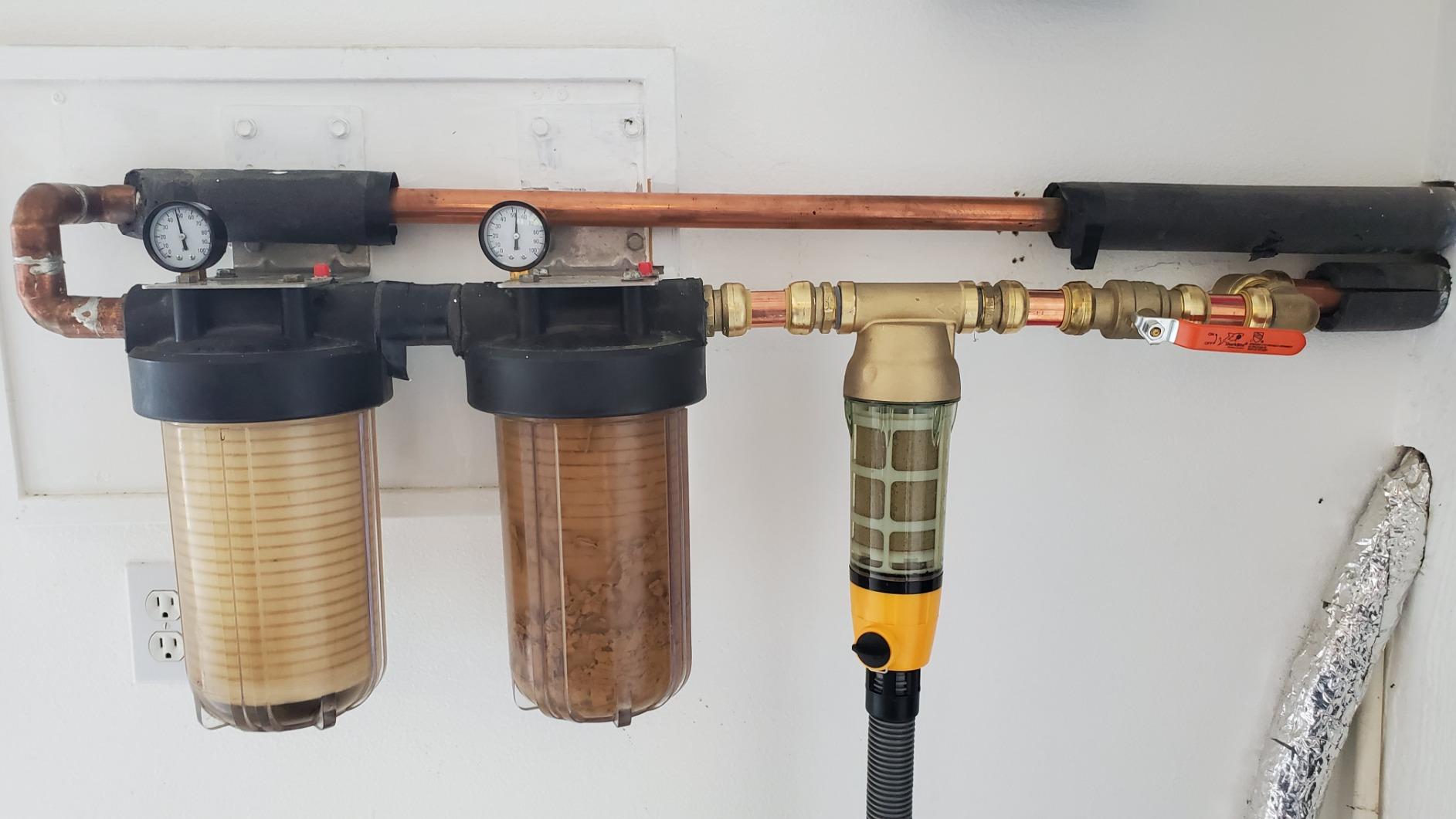
Construction is solid: a lead-free brass machine head, an explosion-proof transparent housing and a 100 micron food-grade stainless steel mesh screen. The 360 degree rotatable head connection means it installs in any orientation, and it mates with copper, PEX and CPVC without welding or glue, which keeps the install to a plumber with a tube cutter.
Flow is the headline spec, and note that the listing carries two figures. The feature set states a 25 gpm maximum while the specifications list 35 gpm, with 1-inch MNPT and 3/4-inch FNPT threads on both ends. Either number is far above household demand, so the discrepancy does not affect a real install.
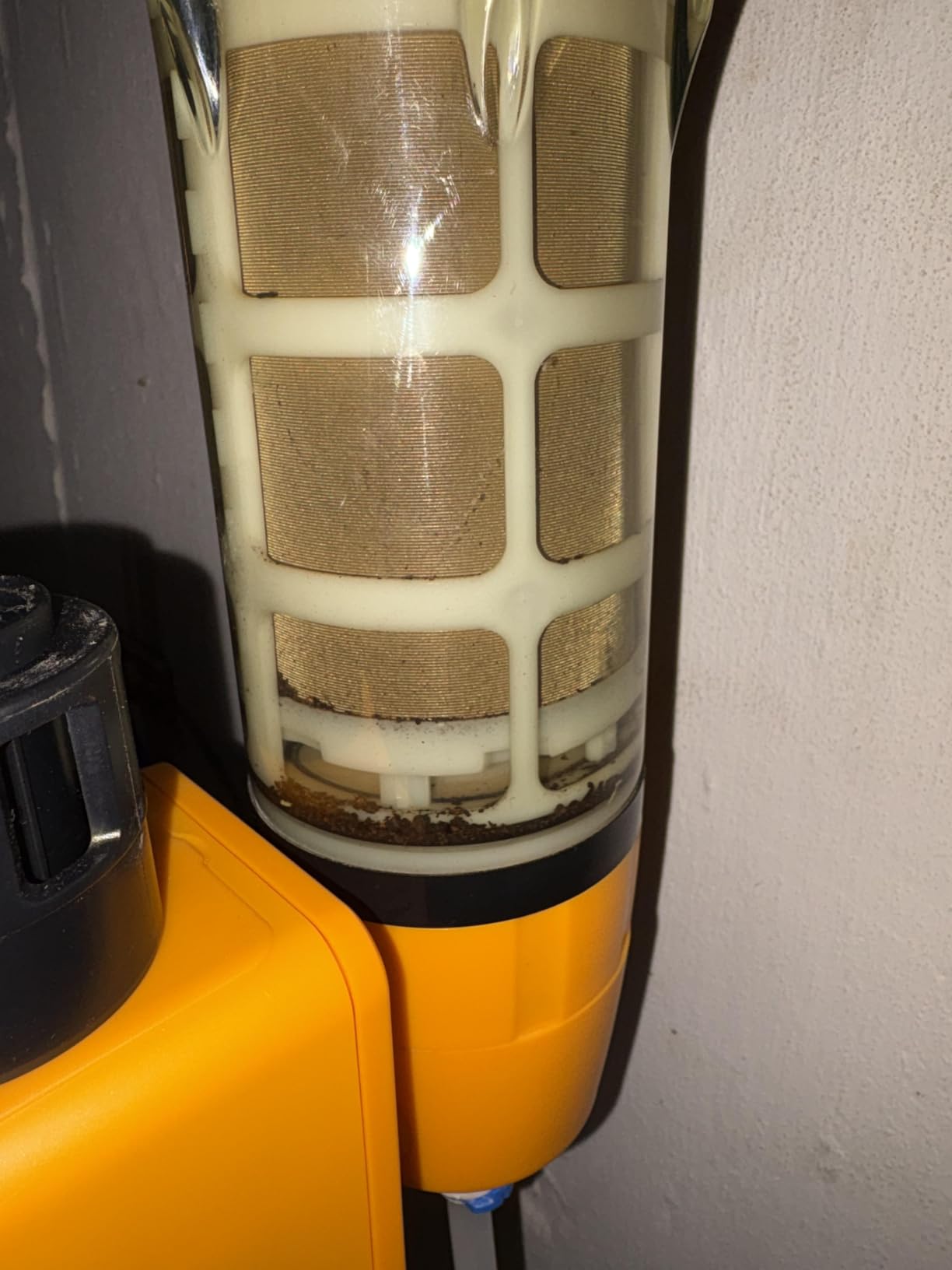
What happens to the auto-flush module in a humid mechanical room?
Water ingress is the recurring durability complaint, and owners in humid or unfinished basement installations report the module failing after several months. In every case described, iSpring replaced the module quickly and at no cost. Plan on a possible module replacement in year two or three and budget nothing for it, but pick a dry location if you can.
The mechanical design is sound otherwise. Pressure-resistant materials and a lead-free brass head are rated for a 20 bar operating pressure, and the transparent housing lets you see loading between cycles instead of guessing.
Is 100 micron too coarse to be worth installing?
As a standalone filter, 100 micron will not stop fine sediment, and the built-in scraper has a gap to the screen that is too large to be effective on fine particles. As a first stage in front of a 5 or 10 micron element or a softener, it is very effective, because that is exactly the job it is doing.
Owners on sediment-heavy wells are advised to step up to a coarser mesh, or to run this unit in front of a finer stage. If you want one device that both pre-filters and finishes the job, the two-stage design in position six is the better single-unit answer.
6. Waterdrop BG101 Spin Down Filter With 5 Micron Pleated Cartridge
Waterdrop BG101 Spin Down Sediment Filter, 100+5 Micron PP Pleated Filter
100 micron mesh plus 5 micron pleated
Four-mode bypass
20 gpm max flow
Filter life chart
Pros
- Removable pleated stage adapts to changing water
- One-touch bypass switches between four modes
- Transparent housing shows loading at a glance
- Large chamber resists rapid clogging
Cons
- Pleated polyester can clog well before its stated 1-3 month life
- Two stages mean two things to keep clean
Two filtration stages share one housing here, and the reason is hard-water practicality. A 100 micron stainless steel mesh sits upstream of a 5 micron pleated polyester cartridge, so the mesh catches the coarse load that would otherwise blind the pleats within days. The spec sheet claims a fourfold increase in stainless surface area, a 20-fold increase in chamber capacity and an eightfold larger pleated element than the earlier model.
The adaptability is the part we like most. The pleated cartridge can be removed at any time, leaving the steel mesh for well water where clog resistance is the priority. Owners on wells routinely pull the pleated stage out, and those on cleaner municipal water keep it in for finer filtration. That is a decision you can make once and revisit as your water changes.
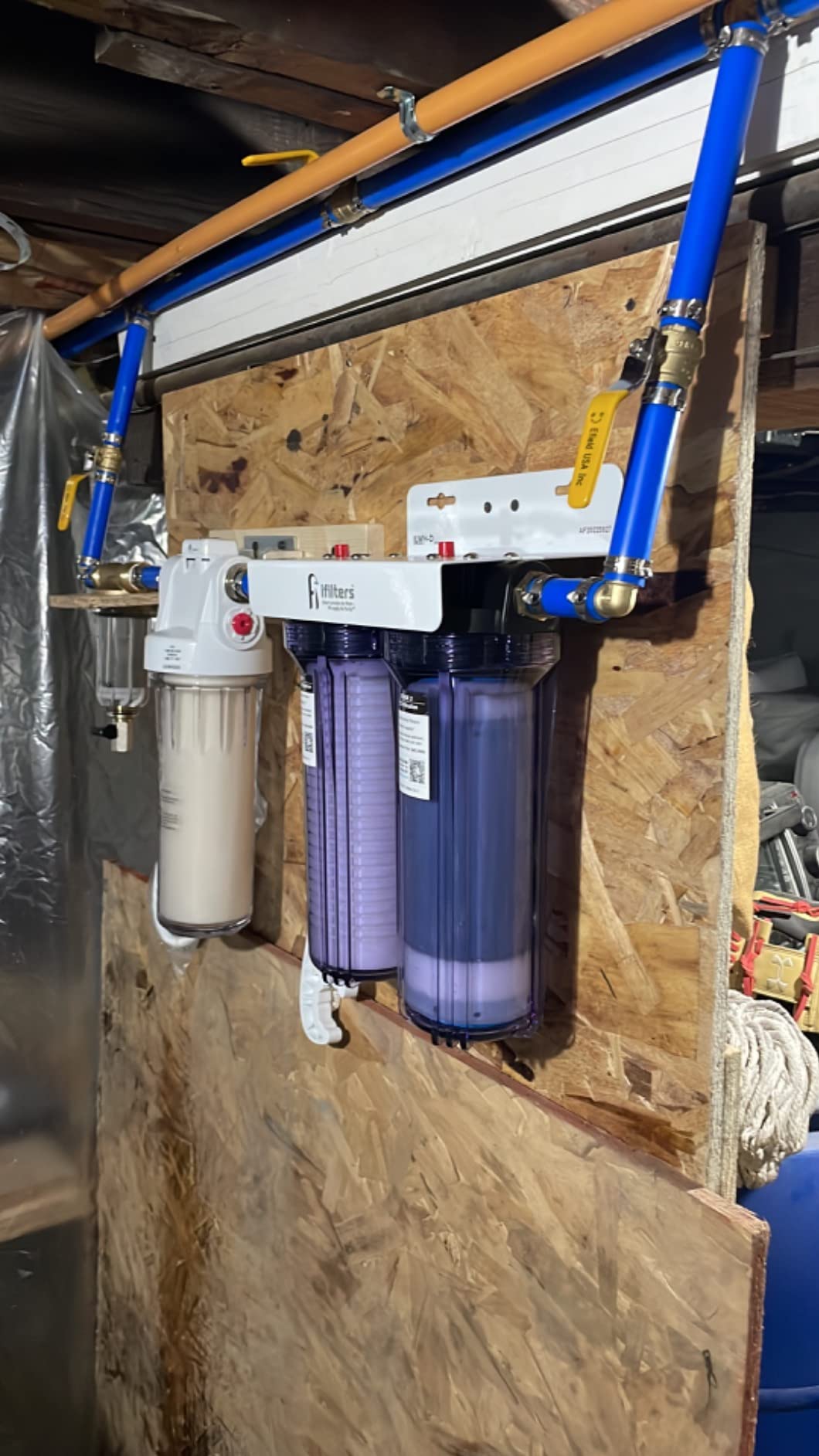
The one-touch bypass valve has four modes, filtration, backwash, off and raw water, which is more control than most inline filters at this level give you. Raw water mode is genuinely useful, because it lets you isolate the unit without shutting off the house to diagnose a downstream problem.
Materials and tolerances are strong for a compact unit. The mesh is 316 stainless steel, the housing is BPA-free, and the assembly is rated for 200,000 water hammer impacts, pressure surges to 6.0 MPa and temperatures down to -30 degrees Celsius. A copper head carries a patented blue crystal nano-layer, and the transparent housing includes a filter life reference chart.
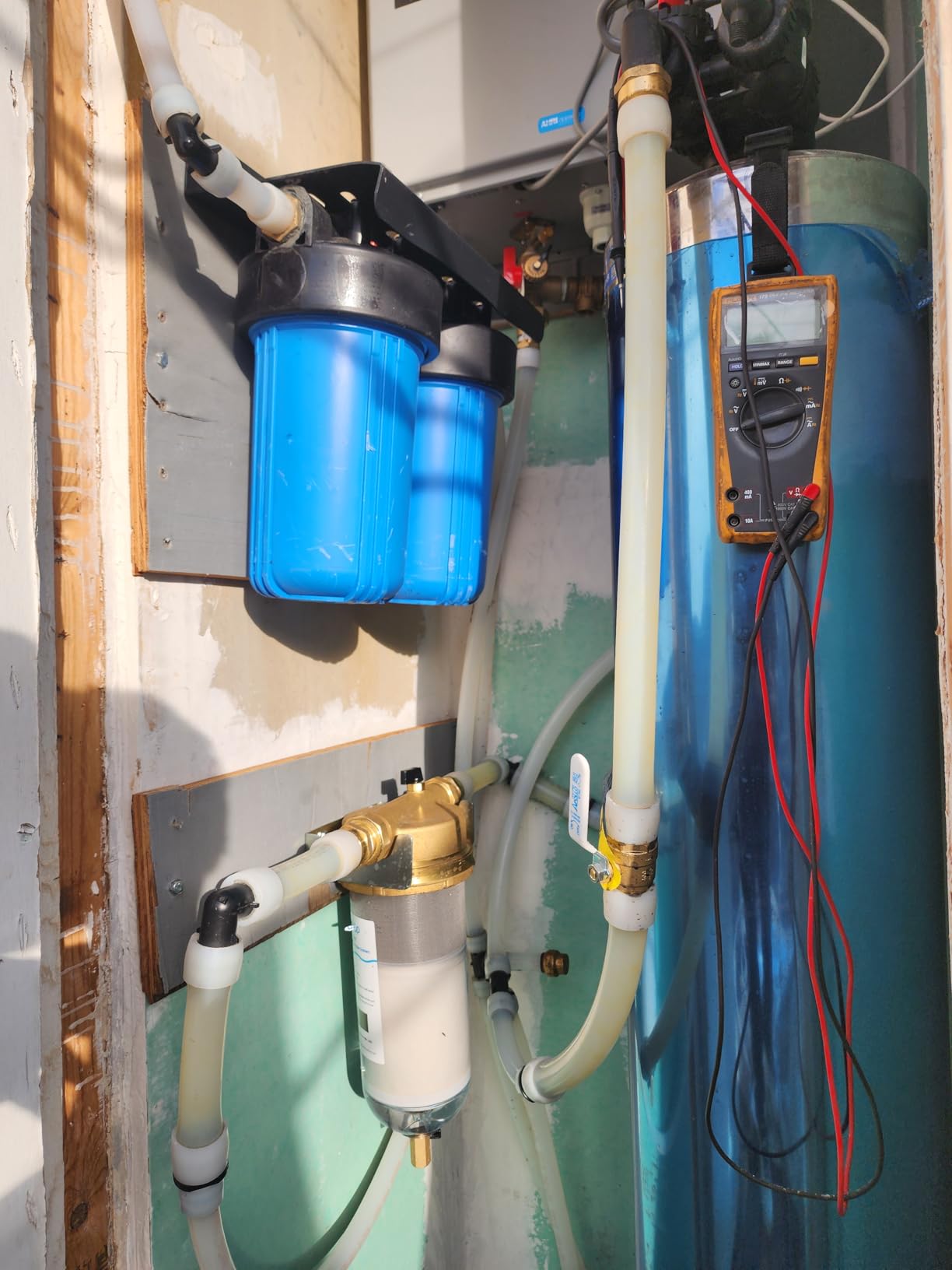
Should you keep the pleated cartridge in on well water?
Usually not, and the manufacturer says so. The pleated polyester element is rated for one to three months depending on water quality, up to six months on good water, and on a sediment-heavy well that estimate is optimistic. The steel mesh alone handles the load, and the housing will keep flowing.
That flexibility is exactly what makes this a strong hard-water pick. Municipal supply with light sediment gets you 5 micron filtration in one housing. A well with clay and iron gets you a durable coarse pre-filter in the same footprint, by removing one part.
Is a 2-in-1 housing harder to service than a single filter?
Marginally, because there is one more interface to seat, but the payoff is that you service one housing instead of two in series. One well owner noted a pleated 30 micron cartridge clogging fairly quickly in their setup while a spin-down handled the same water, and that is the exact failure mode the internal mesh stage here is designed to prevent.
One planning note: the operating range is 14.5 to 72 psi and the manual specifies installation above 4 degrees Celsius and away from outdoor placement. In an unheated garage in a cold climate, that is a real constraint rather than a formality.
7. PUREPLUS 2-Stage Whole House Water Filter With Pressure Gauges
PUREPLUS 2-Stage Whole House Water Filter, NSF/ANSI 42, Sediment & Carbon
5 micron sediment plus carbon
External gauges
30000 gallon capacity
1-inch ports
Pros
- Complete two-stage system with nothing else to buy
- External pressure gauges included on each stage
- Standard 10 x 4.5 inch cartridges are easy to source
- NSF/ANSI 42 certified on both stages
Cons
- Replacement dual-cartridge refill is a separate purchase
- Carbon block works on taste and odor
- not hardness
The external pressure gauges are the reason to notice this unit. Most systems at this level omit them, and they are the single most useful tool for answering the question every whole house filter owner eventually asks, which is whether the filter is actually spent. The gauges sit on each stage so you can read differential pressure directly instead of inferring it from a shower that feels a little weaker than it used to.
It ships as a complete point-of-entry system, with the filtration system, cartridges, wrench and pressure gauges, so a first-time installer is not sourcing a housing, a head and a relief valve across three orders. The standard 10 x 4.5 inch footprint with 1-inch inlet and outlet ports means replacement cartridges are widely available rather than proprietary.
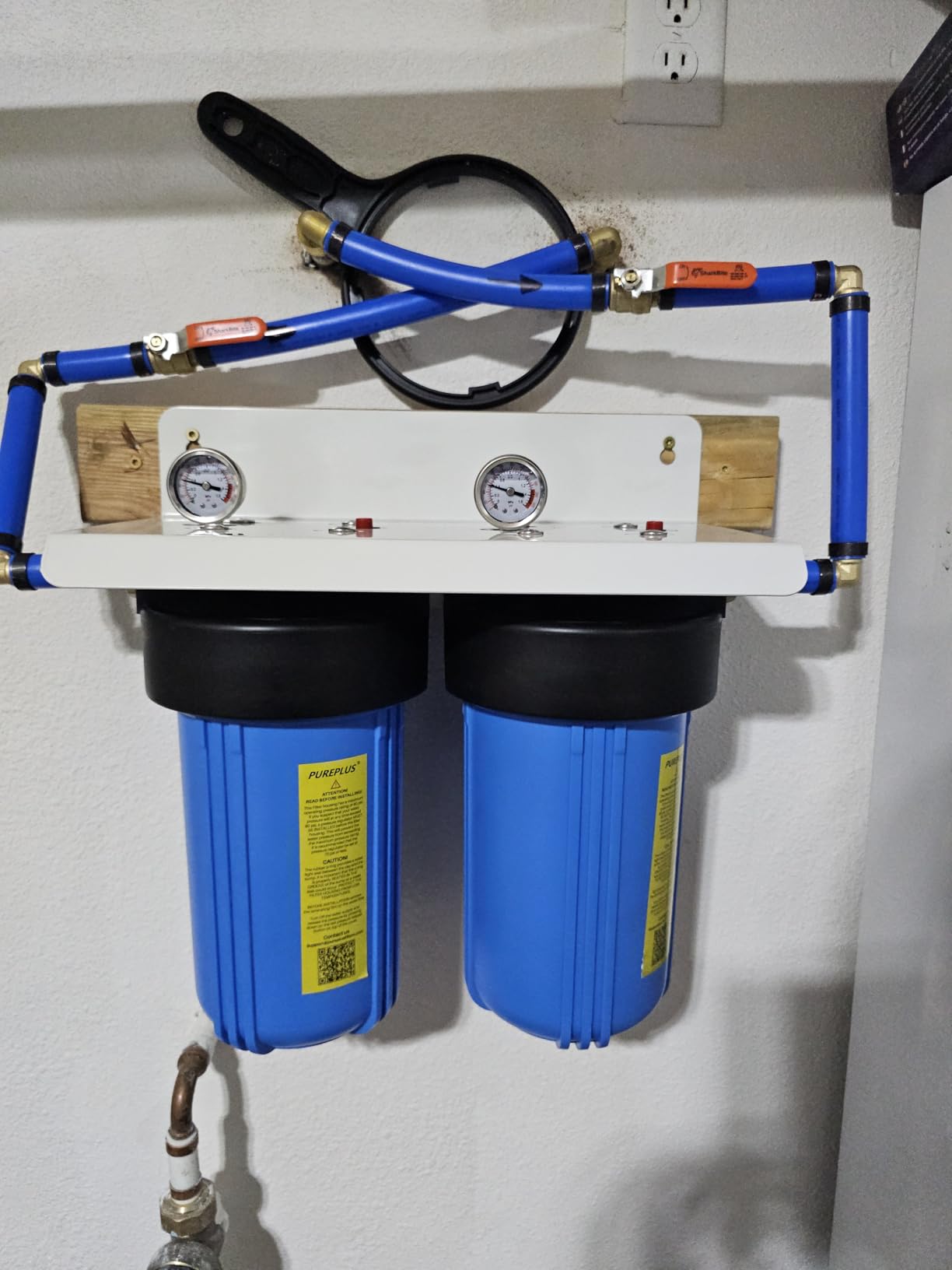
Filtration is two 5 micron stages: a polypropylene sediment cartridge that traps rust, sand and debris, followed by a natural coconut activated carbon block for chlorine, foul taste, odors and discoloration. Both meet NSF/ANSI 42 standards. Rated capacity is 30000 gallons, and maximum supported TDS is 500 ppm.
The feedback volume is smaller than most units here at 179 reviews, so treat the consensus as thinner. What buyers consistently like is getting a complete system with gauges included rather than assembling parts, and the ease of sourcing replacements. The repeated limitation is the carbon stage itself, which targets taste and odor rather than hardness or scale.
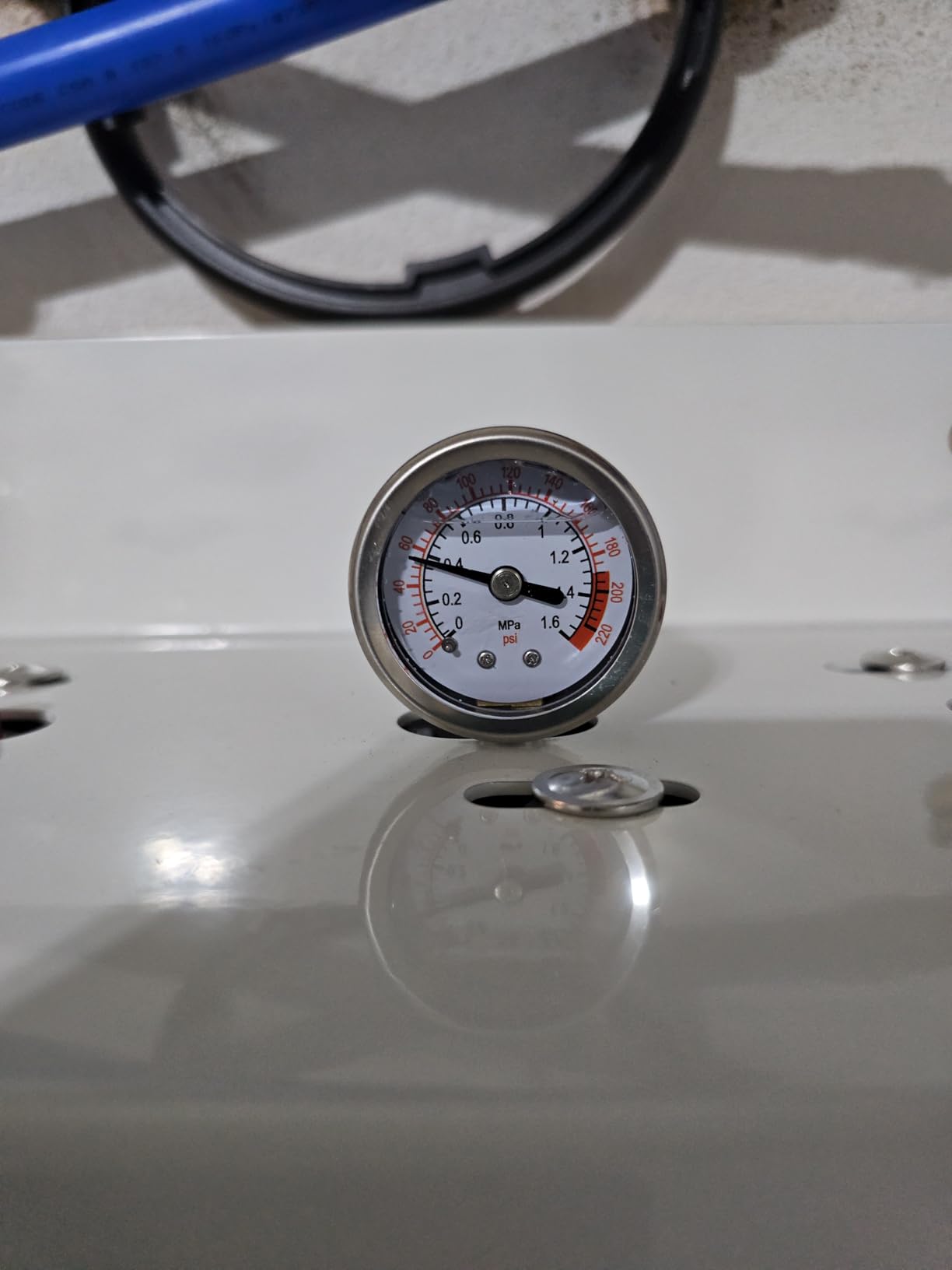
How do you use the pressure gauges to know when to replace?
Record the reading with a new element and write it on the housing. When the gauge on a stage shows a differential noticeably above that baseline, the element is loaded and you change it. That single habit is more reliable than any schedule, and it is why the gauges are the feature to pay for if you are buying this unit.
On hard water, expect the sediment stage to give up before the manufacturer rated interval if you are on a well. A 5 micron element in the first position of a two-stage system is doing the hard job, and a coarser first stage is the fix if you find yourself changing it monthly.
Is a 30000 gallon capacity enough for a family of four?
It is a four-person figure at moderate use, so a household of four should be fine and a household of five on a well should size up. Capacity ratings assume a change interval, and the 30000 gallon number matters less than the gauge readings once the unit is live. Change when the gauge says to, and the rated capacity becomes a schedule rather than a constraint.
Note that the replacement dual-cartridge refill set is a separate purchase. Budget for it as a recurring line item, which is the normal pattern for cartridge-based systems and the main structural difference from the reusable spin-down options.
8. iFilters Whole House Well Water Sediment And Rust System
Well Water Whole House Sediment & Rust Complete Filtration System with Pleated Washable filter, Clear Housing 1″ Ports
Washable 30 micron pleated
Targets rust and silt
Clear housing
1-inch ports
Pros
- Washable element ends recurring cartridge purchases
- Clears heavily rusting well water within weeks
- Kit includes wrench bracket and pressure relief button
- Owners report three-plus years of trouble-free use
Cons
- Large O-ring is hard to seal in cold conditions
- Cleaning means catching water in a bucket
- Does not remove odor
This is the unit to look at if your problem is orange water and rust staining rather than generic hardness. The included element is a reusable, washable 30 micron pleated filter, and the target list is specific: sediment, dirt, sand, silt, rust and scale particles. On aging well infrastructure that produce iron bacteria, that is the right target list.
Owners report visible clearing of potable water within weeks of installation, and the 30 micron element visibly loads so you can see when it needs attention rather than guessing from water quality. In heavy conditions, cleaning roughly every two weeks is the reported cadence, which is frequent but predictable, and each cleaning costs a faucet-swab and a hose rather than a new element.
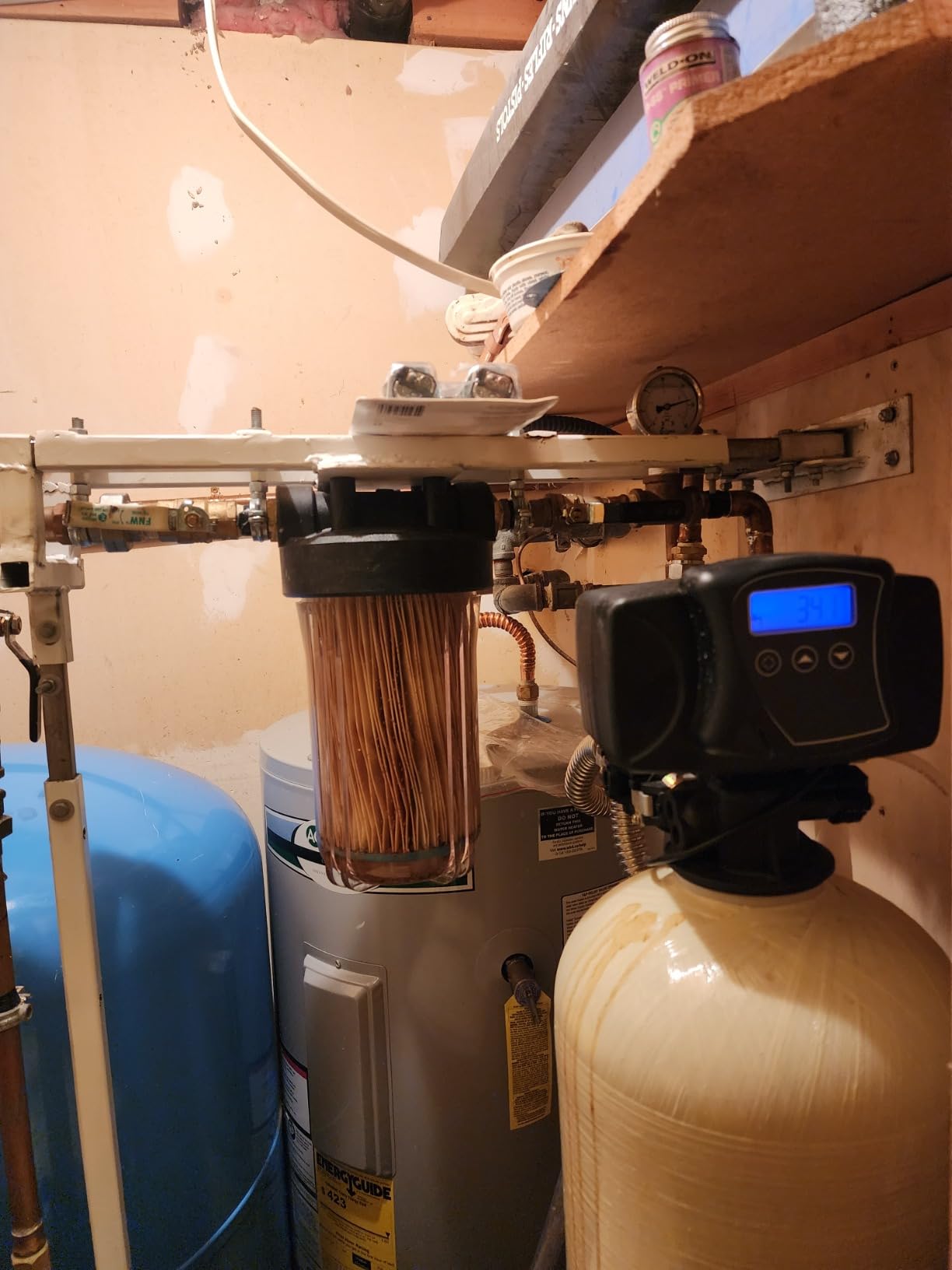
Long-term owners report three-plus years with no problems, and multiple buyers bought a second unit for a second property, which is a reasonable endorsement of a design with few moving parts. The kit is genuinely complete: housing, wrench, filter, heavy-duty mounting bracket and a built-in pressure relief button, with high flow 1-inch inlet and outlet ports.
It is also a design you can expand. The system can be paired in series, for example 30 micron plus 5 micron, with a bypass loop for cleaning, which is how you convert a coarse rust filter into a two-stage setup without replacing the housing.
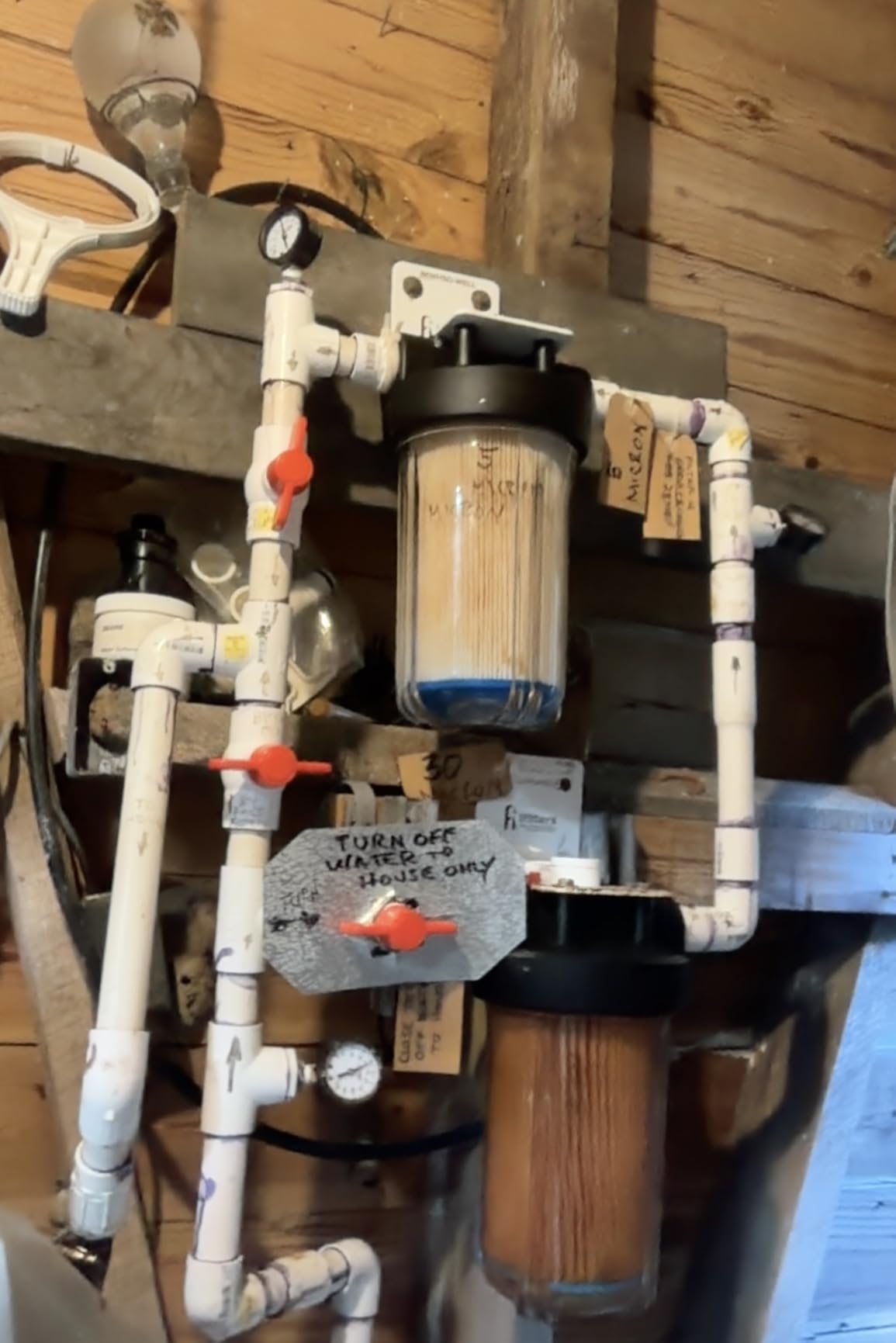
How often does a washable 30 micron element need cleaning?
Every two weeks in heavy iron conditions, monthly or better on moderate well water, and the clear housing is what makes that answer usable. Pull the canister, hose the element off, and put it back. The recurring tip from owners is to lubricate the large O-ring with food-grade silicone grease before hand-tightening, which prevents both leaks on install and difficulty removing the canister later.
The tradeoff is water. Cleaning the element inside the home means catching a good amount of water in a bucket, and doing that every two weeks in a finished mechanical room is a real chore. Plumb a drain or set up a utility sink nearby before committing to this cadence.
Why does 30 micron work better than 5 micron on rusting well water?
Because rust arrives in two forms and 5 micron only catches one of them. Fine iron oxide passes through a 30 micron pleat slowly and eventually plugs it, but the coarse flakes and slime that cause staining and discoloration are large enough to be trapped well before they reach downstream equipment.
The practical limit is that residual rust can still bleed through after breakthrough, and this unit does nothing about odor. If your water smells, or if iron bacteria are producing a slime you can see in a glass, you are past sediment filtration and into a chemical treatment category, which is a different purchase and a different budget.
How To Choose A Whole House Sediment Filter For Hard Water
Spin-down vs cartridge vs auto-backwash: which architecture fits
Four architectures cover almost everything, and the right one follows your sediment load and your willingness to do maintenance. Spin-down housings use a reusable mesh screen you flush by hand, on a timer, or automatically. Cartridge systems use a replaceable pleated, spun or string-wound element you swap on a schedule. Auto-backwash media systems reverse flow through a resin or gravel bed on a timer, and hybrid designs combine a coarse screen with a fine cartridge in one body.
Coarse mesh spin-downs handle sand and rust flakes cheaply and never need a consumable. Fine cartridges polish the water and catch silt, but they clog in proportion to load. Backwash media handles very high sediment volumes with no consumable, at the cost of plumbing, drain capacity and a much larger footprint. Hybrids are the compromise, and the two-stage design in position six is the clearest example.
On hard water specifically, add one variable most guides ignore. Calcium carbonate scale forms on the media surface and closes pores that would otherwise pass water, so a cartridge rated for six months on soft municipal water can lose capacity in weeks on a hard supply. Users on plumbingforums.com describe exactly this pattern, changing 10 micron string wound filters when they notice a drop in flow or pressure rather than on a schedule. If your load is high, bias toward the reusable and auto-flush end of the spectrum.
Where the sediment filter goes relative to your water softener
Put the sediment filter first, before the softener. This is the highest-value technical decision on the page and the one most competitor guides skip entirely. The reasoning is mechanical: resin beads are a fine mesh and expensive to replace, and letting grit and iron oxide reach them fouls the bed permanently rather than temporarily. A r/WaterTreatment commenter recommends a simple sediment filter at the inlet to protect other treatments, which is the standard installer position.
The order runs main shutoff, then sediment filter with its own bypass and pressure relief, then softener, then anything downstream. If you find iron flecks after the softener, that is not a failure of the pre-filter, it is iron that only precipitates once the softener has removed hardness minerals, and it needs a filter placed after the softener instead.
A tractorbynet.com owner with rather hard water and traces of clay runs a Hellenbrand sediment filter with Tubidex media as a whole well filter, which reflects the same instinct at a larger scale. Filter the coarse load first, always, and the equipment downstream of it lives considerably longer.
Size it by service flow rate, not tank size
Service flow rate is the number that matters, and it is the one most people guess wrong. Size for your household’s peak demand, not its average. A single 2 gpm shower and a dishwasher running together will exceed a low-flow unit, and the result is a pressure drop that shows up as low water pressure at exactly the wrong moment.
Rough sizing: one to three people need roughly 4 to 6 gpm service flow, four to six need 8 to 10 gpm, and seven or more should target 12 gpm or more. Anything above 15 gpm in a residence usually signals a dedicated irrigation or pool feed line, and you size that branch separately rather than forcing the whole house through one filter. The systems in this roundup span 7 gpm to 20 gpm for that reason.
Measure your incoming static pressure while you are shopping. A home on 45 psi has a very different budget than one on 75 psi, because the filter’s rated flow assumes a specific working pressure. Hard water adds a subtle second cost, since scale narrows supply lines and fittings over years and quietly reduces the pressure available to drive flow through a new filter.
Watch differential pressure instead of the calendar
Every rated service life on these products assumes a particular water quality. Yours will not match it, so the calendar is a rough guide at best. The real trigger is the pressure differential across the filter, and gauges or a well-defined feel for your shower flow will tell you when the element is spent.
The rule of thumb most installers use is that a 5 or 10 micron element can push roughly 10 to 15 psi of differential pressure before it should be replaced. Spin-down housings are judged by visible loading and by how slow the flush runs, not by a number. If your unit has external gauges, write the new-element baseline on the housing with a paint pen and compare against it monthly.
This matters more on hard water than anywhere else, because scale crust on the media creates a pressure penalty that is not caused by sediment. If your differential climbs and the element looks clean after a change, the problem is upstream, usually a softener or a partially closed valve.
Municipal water and well water need different micron ratings
Municipal supply is typically low sediment, so 5 micron is a sensible finishing stage and a 20 or 30 micron pre-stage is usually unnecessary. Well water is the opposite. Sand, clay and iron arrive in unpredictable slugs, and a 5 micron first stage on a well is the single most common reason cartridges plug every few weeks.
The fix on well water is to put a coarse screen upstream of anything fine. A 100 micron spin-down in front of a 5 micron cartridge, or a 30 micron washable element in front of a 10 micron stage, will do more than any cartridge upgrade. If your well produces visible grit, start at 100 micron and add stages as needed rather than buying one finer element and hoping.
Hardness is a separate axis from all of this. Roughly 20 grains per gallon is moderately hard, 40 and above is very hard, and above that you want a softener in the plan regardless of which filter you choose. One grain per gallon equals 17.1 ppm, so a municipal report reading 400 ppm is about 23 grains, which is firmly in the range where scale shortens cartridge life.
What a sediment filter does not do
Say this out loud before you buy. A sediment filter does not reduce hardness, does not lower total dissolved solids, does not soften water, and does not remove dissolved minerals, iron in solution, chlorine or odor unless it has an activated carbon stage. Every one of the eight units here is a particulate device first.
Scale and hardness need a salt-based ion exchange softener or a salt-free Template Assisted Crystallization conditioner. NSF/ANSI 42 certification covers material safety and structural integrity, not contaminant removal, so treat it as a quality marker rather than a performance promise. For contaminant limits, the EPA National Primary Drinking Water Regulations are the reference document.
If your goal is plastic-free drinking water that tastes soft, you are shopping for reverse osmosis, not a sediment filter. If your goal is protecting plumbing, appliances and a softener from grit, you are shopping for exactly what this roundup covers.
Frequently Asked Questions
Do sediment filters help with hard water?
Partly. A sediment filter removes the grit, rust and iron oxide that accompany hard water and sits upstream of your softener and heater, which slows how fast those components foul. It does not reduce hardness at all, because hardness is dissolved calcium and magnesium. Removing hardness requires a salt-based ion exchange softener or a salt-free Template Assisted Crystallization conditioner installed alongside the filter.
What is the best whole house water filter for hard water?
For most hard water homes, a two-stage point-of-entry system that pairs a carbon block with an anti-scale polyfilter gives the best protection for plumbing, because the carbon protects the anti-scale media and the anti-scale media sequesters calcium and magnesium so it stays in solution. For high sediment loads, a reusable spin-down or auto-backwash pre-filter in front of any fine cartridge extends downstream life dramatically.
Should a sediment filter go before or after a water softener?
Before, always. The order is main shutoff, then sediment filter with its own bypass and pressure relief valve, then softener, then anything downstream. Resin beads are a fine mesh and grit or iron oxide reaching them fouls the bed for good. Iron that only appears after the softener is a different problem and needs a filter placed downstream of the softener instead.
How often should I replace a whole house sediment filter cartridge?
Use differential pressure, not the calendar. A 5 or 10 micron element can typically push roughly 10 to 15 psi of additional pressure before it needs changing, and a unit with external gauges makes this a thirty-second check. Rated intervals of four to six months assume a particular water quality, and on hard water scale crust on the media shortens that considerably.
Are spin-down sediment filters worth it on hard water?
On hard water with significant sediment, yes, because there is no cartridge to keep buying and the flush is under a minute. The tradeoff is micron rating. A 50 or 100 micron spin-down is a coarse pre-filter that protects downstream equipment but will not polish water on its own. For fine silt on municipal supply, a pleated or string-wound cartridge is still the finishing stage.
Final Verdict
For hard water homes, the iSpring WGB21B-DS is our pick because it pairs carbon with an anti-scale stage at 12 gpm and 50000 gallon capacity. The Pentek DGD-5005 is the strongest refill if you already own a Big Blue housing, and the Waterdrop BG101 is the most adaptable single unit when sediment load is uncertain.
Whatever you choose, put it before the softener, size it to peak household flow, and judge replacement by differential pressure rather than a date. And remember what none of these filters do: they catch particles, not hardness. Pair one with a softener and you have a complete treatment plan.