
High magnification numbers printed on a telescope box tell you almost nothing. Magnification is just the telescope’s focal length divided by the focal length of whatever eyepiece is in it, so any manufacturer can print an impressive number by swapping glass. The number that actually decides what you see in the eyepiece is aperture, and that is how we ranked every scope in our best telescopes for deep sky viewing roundup.
We spent weeks comparing eight telescopes that a real beginner could actually buy, checking the specification sheets against what owners report after months of use. Every pick below is described with the same eight fields: optical type, aperture in millimetres and inches, focal length, focal ratio, mount, weight, what it is best at, and where it disappoints.
Two things decide your experience more than the sticker on the box. The first is how dark your sky is, because a bright suburban background erases faint galaxies no matter how good the optics are. The second is the mount, since a wobbly mount turns a faint smudge into an annoying one. Budget for eyepieces too, because the ones that ship in the box are rarely what you end up using.
Table of Contents
Top 3 Picks for Deep Sky Viewing (October 2026)
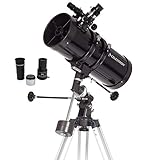
Celestron PowerSeeker 127EQ
- 127mm aperture
- 1000mm focal length
- Manual German equatorial mount
- Includes 3x Barlow

Celestron AstroMaster 130EQ
- 130mm aperture
- 650mm focal length
- Red dot finder
- RA and Dec slow motion

MEEZAA 90mm Refractor
- 90mm aperture
- 800mm focal length
- Altazimuth mount
- Phone adapter and carry bag
All 8 Telescopes Compared for Deep Sky in 2026
| Product | Specs | Action |
|---|---|---|
| Celestron PowerSeeker 127EQ |
|
Check Latest Price |
| Celestron AstroMaster 130EQ |
|
Check Latest Price |
| MEEZAA 90mm Refractor |
|
Check Latest Price |
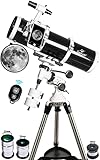 Gskyer 130EQ Reflector Gskyer 130EQ Reflector |
|
Check Latest Price |
 MEEZAA 150EQ Newtonian MEEZAA 150EQ Newtonian |
|
Check Latest Price |
 SVBONY SV503 80ED SVBONY SV503 80ED |
|
Check Latest Price |
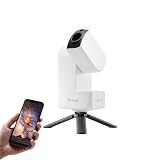 ZWO Seestar S30 Pro ZWO Seestar S30 Pro |
|
Check Latest Price |
 Celestron NexStar 8SE Celestron NexStar 8SE |
|
Check Latest Price |
1. Celestron PowerSeeker 127EQ – The First Deep Sky Telescope Most Buyers Should Buy
Celestron PowerSeeker 127EQ Reflector Telescope for Home Astronomy
Newtonian reflector
127mm aperture
1000mm f/7.9
Manual German equatorial
13 lb
Pros
- Strong light gathering in a portable package
- Manual equatorial mount with slow-motion rod for tracking
- Light enough to carry to a dark site
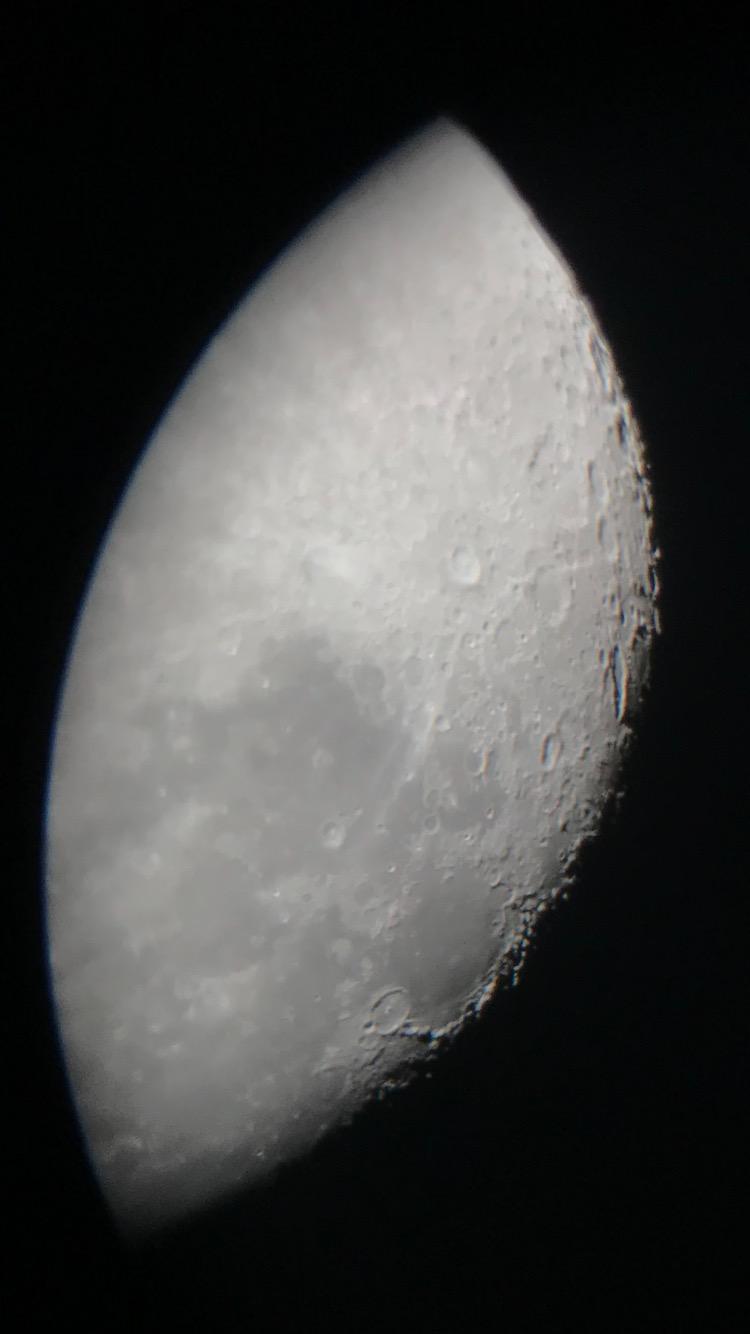
- Shows Orion and the Moon in detail once collimated
Cons
- Needs collimation out of the box
- Lightweight mount hardware with noticeable backlash
- Stock 4mm eyepiece is dim and awkward
With 9,255 owner reviews behind it, the PowerSeeker 127EQ is the telescope more first-time buyers end up owning than any other in this group, and for deep sky that is not a bad outcome. A 127mm primary mirror across a 1000mm focal length gives you f/7.9, a long tube that forgives eyepiece mistakes and keeps images steady.
The manual German equatorial mount with its slow-motion altitude rod is the part I like most. Once the tripod is roughly polar aligned, that rod lets you nudge an object back to centre without disturbing the tube, which is exactly what you need when a galaxy is drifting out of a narrow field. Owners consistently report that the step up from a flimsy altaz tripod is obvious on faint targets.
At 13 pounds the whole package is a two-person lift at worst, and the tube separates from the tripod for car-boot observing. That matters more than most spec sheets admit, because a telescope you cannot move to a dark site only ever sees the city glow.
Reviewers are split on the stock accessories. The included 20mm eyepiece is usable, but the 4mm is reported as dim and hard to look through, so plan on buying a single mid-range eyepiece in the 25mm to 32mm range.
What 5 inches of aperture actually shows
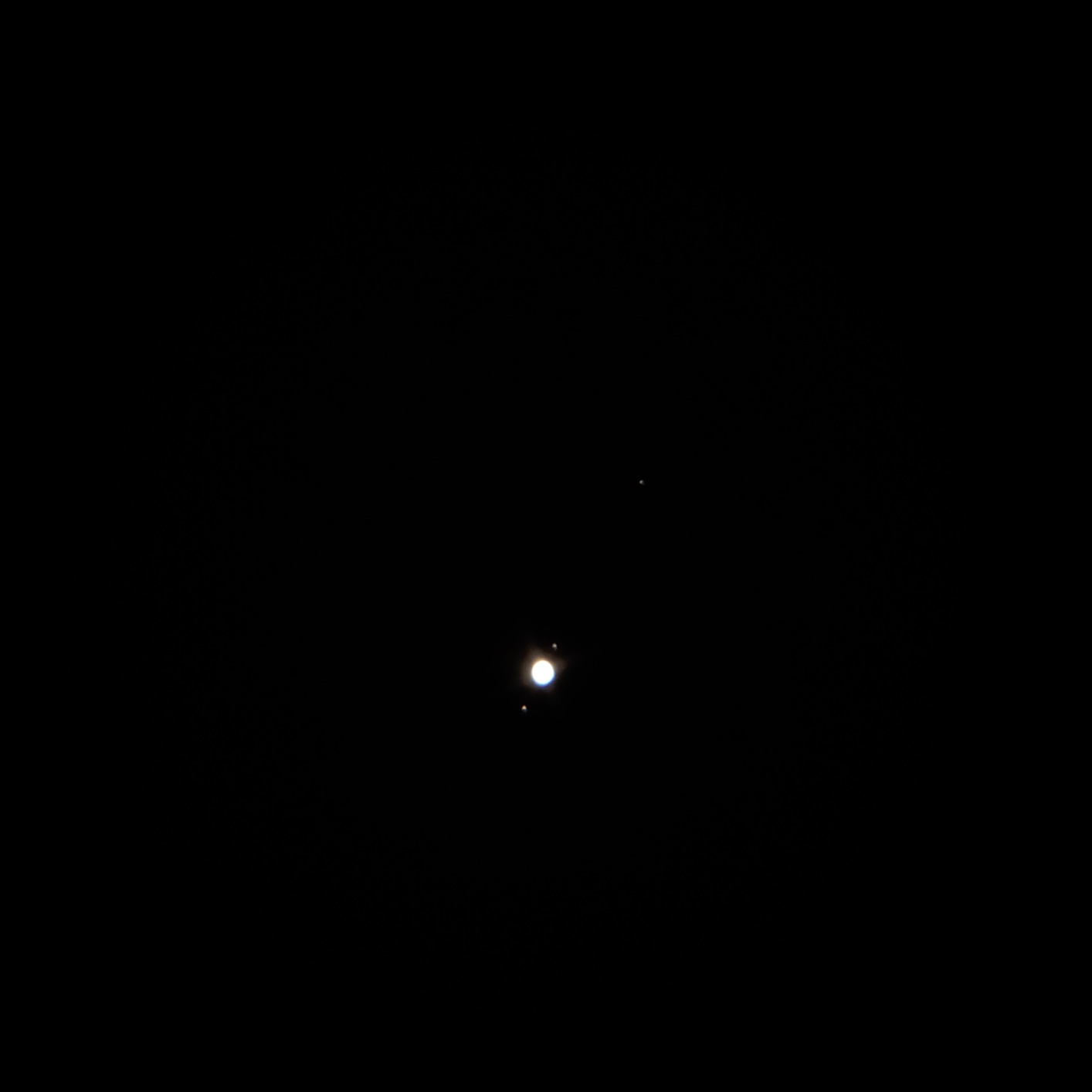
At 127mm you are at the bottom of the useful range for galaxies, and the limit is the surface brightness of the object rather than its size. The Orion Nebula shows structure, the Andromeda Galaxy is a bright oval with a brighter core, and open clusters fill a low-power field with hundreds of stars. It will not resolve spiral arms in a face-on spiral like M51, and that is an aperture problem rather than a power problem.
Where the PowerSeeker falls short
Collimation is the first hurdle. A Newtonian needs its mirrors aligned before it performs, some units arrive out of alignment, and a cheap laser collimator is the first accessory I would buy. Owners also single out the plastic tripod hardware and the flimsy dust cap as weak points, so budget for a collimator, one good eyepiece, and a plan for where the tube lives between sessions.
2. Celestron AstroMaster 130EQ – Best All-Round Step Up
Celestron AstroMaster 130EQ Telescope for Deep-Sky Beginners
Newtonian reflector
130mm aperture
650mm f/5
German equatorial mount
17 lb
Pros
- Brighter and sharper than smaller budget Newtonians
- RA and Dec slow-motion knobs make tracking practical
- Permanent red dot finder beats a legacy finderscope
- Fast tool-free assembly
Cons
- Collimation still required
- Light-duty tripod legs that shake
- Declination axis feels rough
The AstroMaster 130EQ shortens the focal length to 650mm for a fast f/5 image, and that single number changes what the scope is good at. A fast Newtonian gives brighter, wider views of large emission nebulae like the Orion and the North America nebulae, because the same aperture is spread across a larger, more even field.
Owners regularly report seeing the Orion Nebula, Andromeda and members of the Virgo galaxy cluster, and the 0.67 degree field of view is wide enough that galaxy hunting feels natural. The permanently mounted StarPointer red dot finder is a genuine upgrade on a traditional finderscope, since you look through a lit reticle rather than trying to centre a tiny crosshair on a dark sky.
At 17 pounds this is still a carryable package, and assembly takes minutes with no tools.
The recurring complaints are consistent: you will need to collimate it, the tripod legs are light duty and can shake in a gust, and the declination adjustment feels rougher than the right ascension axis. Astrophotography through this mount is not practical without modification, so treat it as a visual instrument.
Why the German equatorial mount matters for galaxies
Two slow-motion knobs, one per axis, is the whole story. A faint galaxy in an altaz mount wanders out of the field every couple of minutes because the sky rotates diagonally relative to your axes. An equatorial mount aligns that rotation to a single axis, so one knob keeps the object in place.
It also means you can put the eyepiece in a comfortable position instead of bending over the tube, which quietly determines how long you will keep observing.
Weak points before you buy
Treat the tripod as the part to reinforce, because vibration at high power is the complaint that appears most often alongside collimation. The red dot finder also drifts out of calibration and needs a realignment each session.
For deep sky work, add a lower magnification eyepiece than the ones supplied. At 650mm focal length, a 25mm eyepiece gives a wide, bright field that suits extended nebulae better than the 10mm that ships.
3. MEEZAA 90mm Refractor – Budget Pick for Casual Deep Sky
MEEZAA Telescope for Adults High Powered, 90mm Aperture 800mm Refractor
Refractor
90mm aperture
800mm f/8.9
Altazimuth tripod
Fully multi-coated
Pros
- Light enough for one person to move between rooms
- Assembles in about ten to twenty minutes
- Clean lunar and bright planetary views
- Carry bag and phone adapter included
Cons
- Straight-through finder is inverted and poorly aligned
- Deep sky results are adequate rather than impressive
- Stock eyepieces benefit from an upgrade
A refractor needs no collimation, holds its focus in temperature swings and shows stars as clean points, which is why a 90mm lens still earns a place in a deep sky list. The 800mm focal length gives f/8.9, a long, forgiving tube that suits the Kellner eyepieces included.
What you are giving up is light. At 3.5 inches, the aperture is roughly a third of the area of a 6-inch reflector, so the same galaxy that shows spiral hints in a bigger scope is a soft grey oval here. Buyers describe the deep sky performance as acceptable rather than impressive, and that is the honest description.
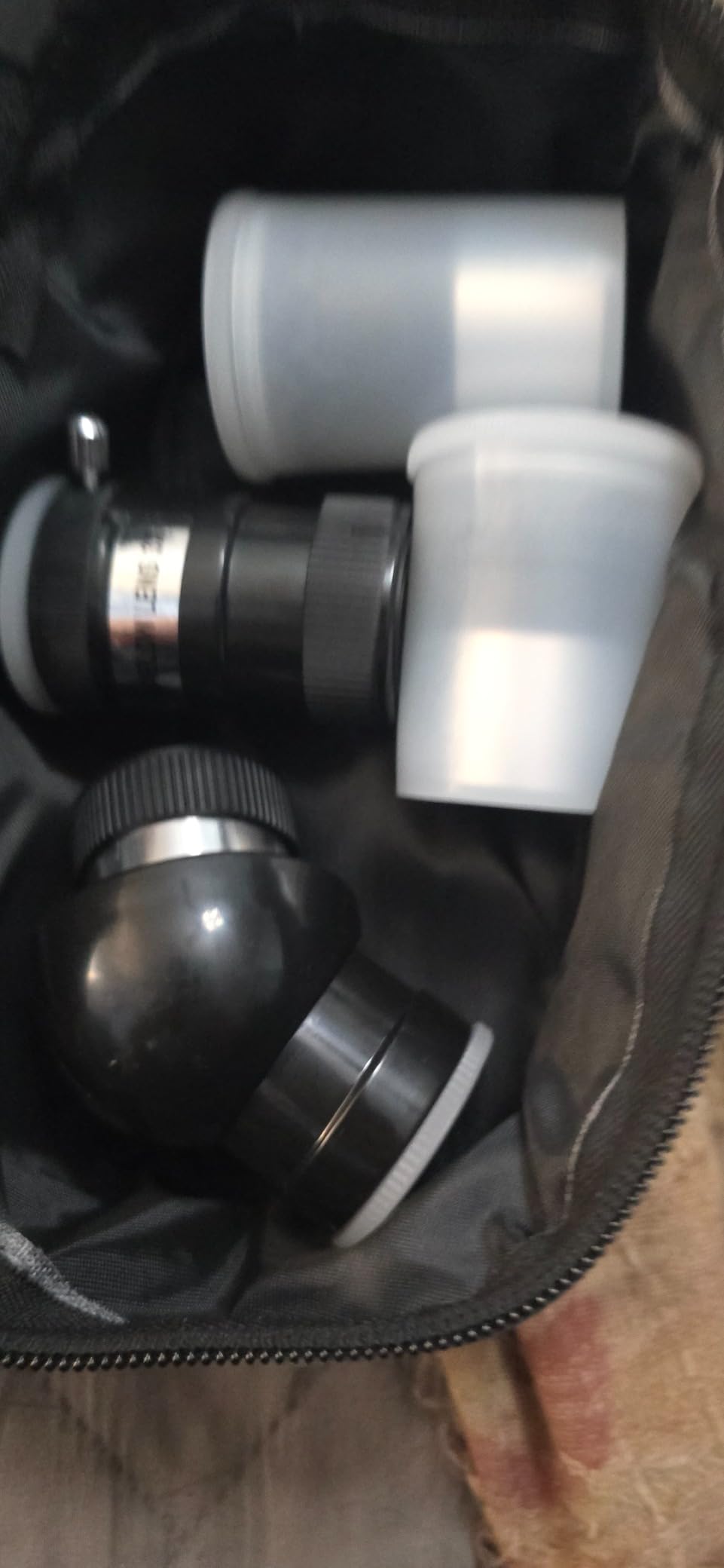
The build feels solid for the price and most owners report assembling it in a quarter of an hour. The adjustable stainless steel tripod is sturdier than the plastic hardware on most bundled reflectors, and the accessory tray is a small thing you will appreciate in the dark.
The straight-through finder scope is the most complained-about part. It shows an inverted image and is not well aligned with the main tube, so finding anything faint takes practice. The phone adapter adds weight that knocks the finder out of alignment and forces a refocus.
Where a 3.5 inch refractor holds up
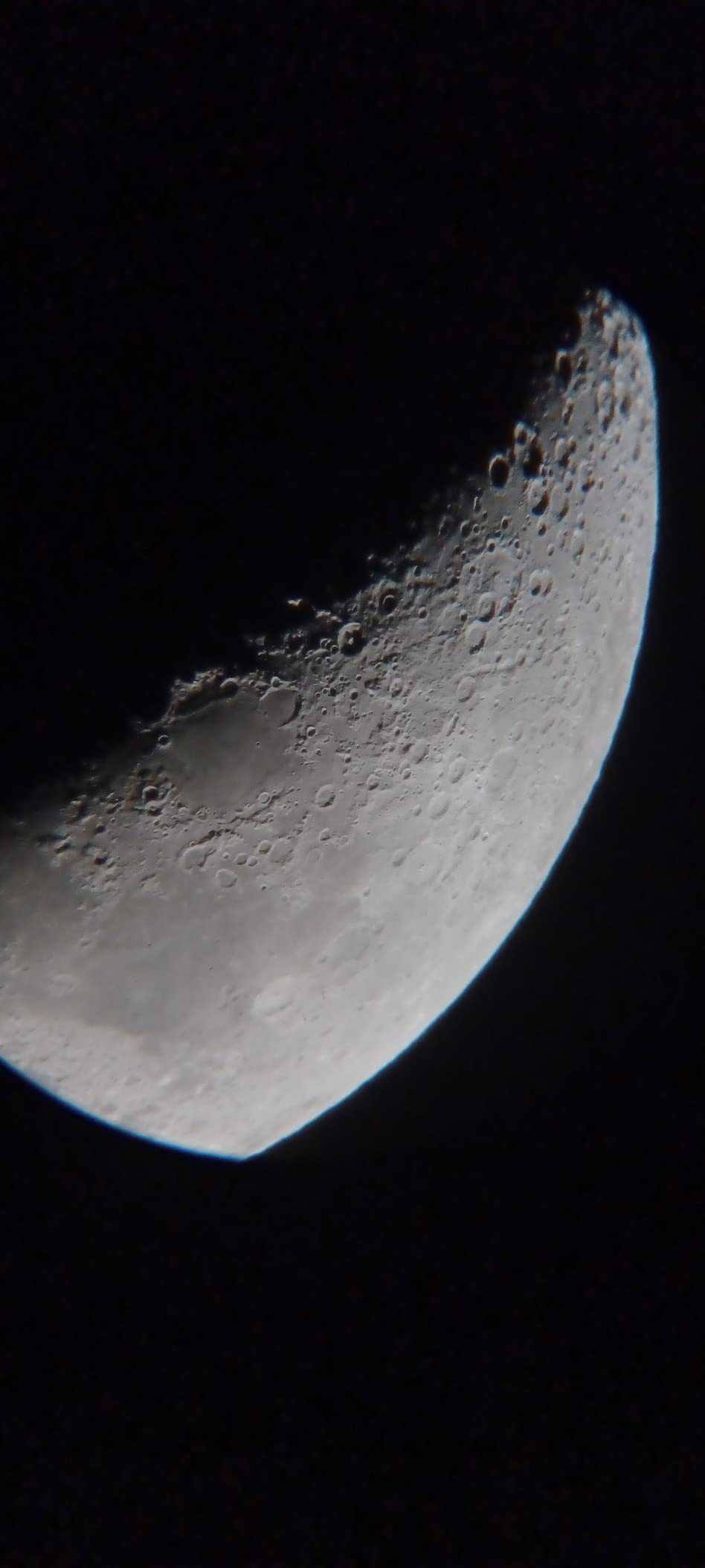
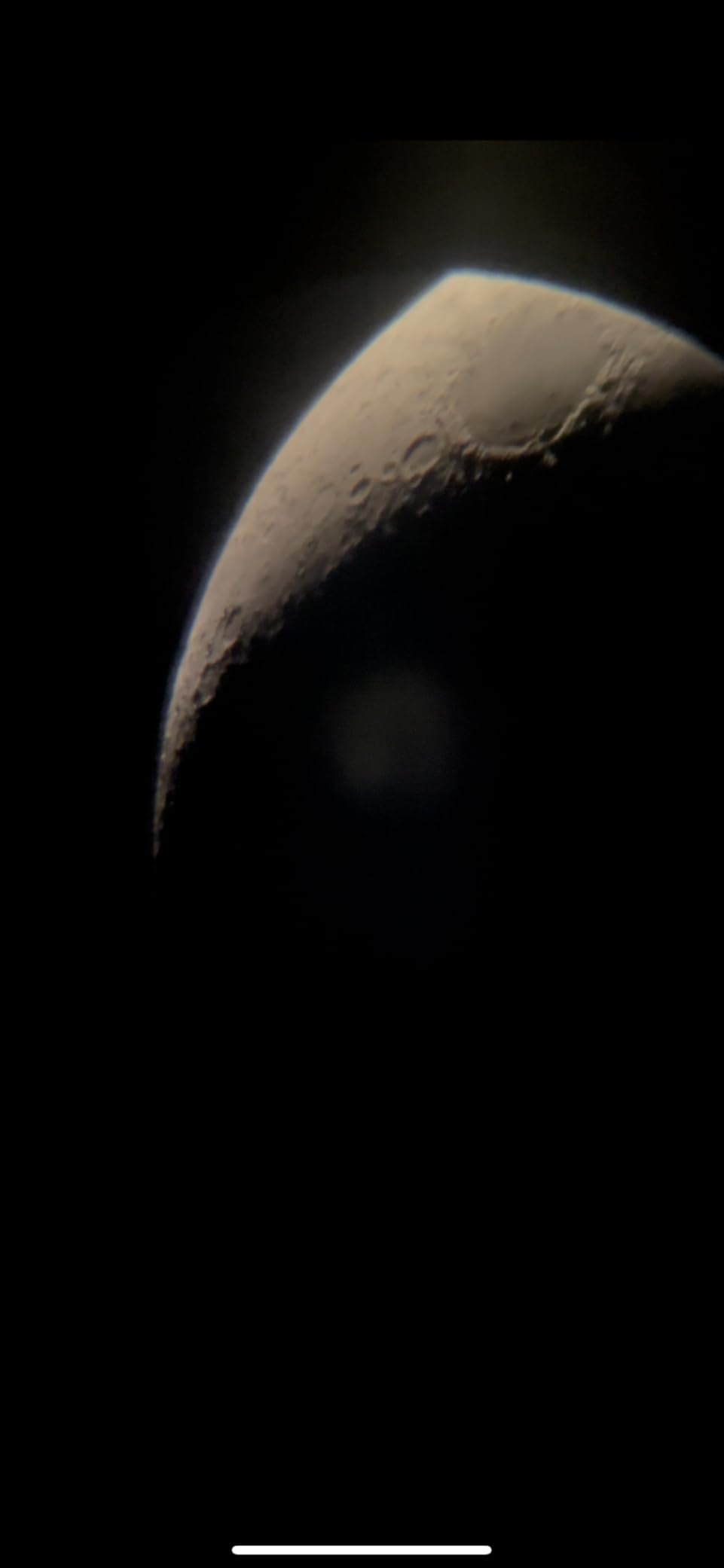
The Moon is the strength. Owners report a crisp terminator and visible craters at moderate power, and the same clean star points make open clusters and the Pleiades look tidy at low magnification. It is also the easiest telescope here to carry, which matters if your only dark site is a drive away.
Because it needs no collimation and no batteries, it is the one scope in this list you can unpack and use in five minutes after a long day.
Limits you should expect at this aperture
Faint galaxies, the fainter planetary nebulae and anything that depends on surface brightness are out of reach, and marketing images of heavily detailed lunar craters overstate what the supplied eyepieces deliver. If your list of targets is mostly nebulae and galaxies, keep saving. If it is the Moon, planets and bright clusters, this is a reasonable place to start.
4. Gskyer 130EQ – Fast f/5 Wide-Field Newtonian
Gskyer 130EQ Professional Astronomical Reflector Telescope
Newtonian reflector
130mm aperture
650mm f/5
German equatorial mount
30.1 lb
Pros
- Fast f/5 design gives bright wide-field galaxy views
- Equatorial mount tracks smoothly after polar alignment
- Toothless focusing base is quick to operate
- Three eyepieces plus a Barlow included
Cons
- Weighs 30.1 pounds
- which is a two-person carry
- Collimation and setup take patience
- Listed field of view figure looks inconsistent
The Gskyer 130EQ pairs the same 130mm aperture and 650mm focal length as the AstroMaster with a shorter 24 inch optical tube and a toothless focusing base. Reviewers like that focuser, describing it as quick and smooth to operate with no teeth to strip.
All-glass multi-coated optics produce sharp star images, and the fast f/5 ratio is what makes this scope interesting for deep sky. A short focal length spreads the same light over a wider field, so large objects sit in one view instead of needing a star hop. The German equatorial mount handles tracking cleanly once polar aligned.
The accessory bundle is unusually complete: three eyepieces, a 3x Barlow, a finderscope and a Bluetooth wireless remote that pairs with a phone without an app.
Weight is the problem. At 30.1 pounds this is the heaviest package we could confirm in the roundup, and it is described in reviews as a two-person carry that is awkward to reposition.
Why f/5 changes the view of a large nebula
Focal ratio is focal length divided by aperture, and it tells you how wide the image is for a given eyepiece. At f/5, a 25mm eyepiece gives you a genuinely wide field, so an extended nebula fills the view rather than sitting in a small circle of blackness.
It also makes images brighter, because the same light is concentrated less tightly. Bright stars sit in a calmer field with less internal scatter, which is why fast reflectors feel cleaner on faint targets.
The weight problem and other drawbacks
Thirty-one pounds is a commitment. It dictates where you store the scope, whether you can carry it to a dark site alone, and setup and collimation ask more of a first-time owner than the lighter packages here.
5. MEEZAA 150EQ – The Biggest Mirror in the Value Tier
MEEZAA Telescope, 150EQ Newtonian Reflector Telescope for Adults Astronomy Beginners, Professional Astronomical Telescopes with Equatorial Mount, Tripod, Phone Adapter, Moon Filter and Large Carry Bag
Newtonian reflector
150mm aperture
650mm focal length
German equatorial mount
Moon filter
Pros
- Largest aperture in this roundup
- Equatorial slow-motion knobs make tracking easy
- Very complete accessory package with carry bag
- Reach fainter galaxies even under light pollution
Cons
- Some owners measure the primary nearer 130mm than advertised
- All-plastic focuser
- Entry-level Kellner eyepieces
Six inches of primary mirror is where most deep sky beginners should aim, and this is the only 150mm reflector we found that ships with a real equatorial mount rather than a bare tripod. At 650mm focal length with a German equatorial head, it is a complete visual deep sky rig in one box.
Owners rate it highly for brightness, describing crisp lunar and planetary views and the ability to reach fainter galaxies and nebulae even under light pollution. The precision dials and slow-motion knobs are widely praised as intuitive after polar alignment, and the pre-lubed mount reduces setup friction.
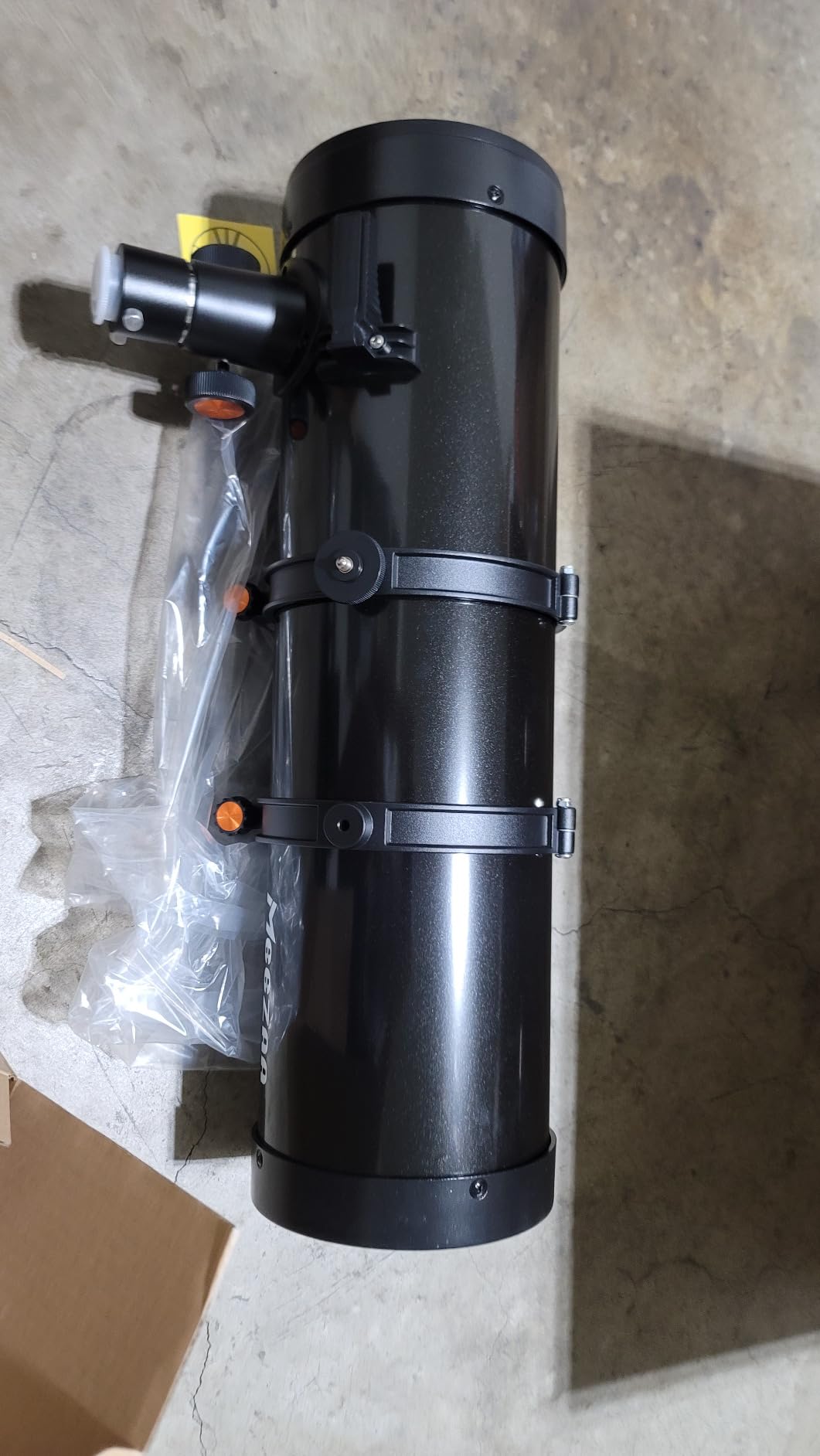
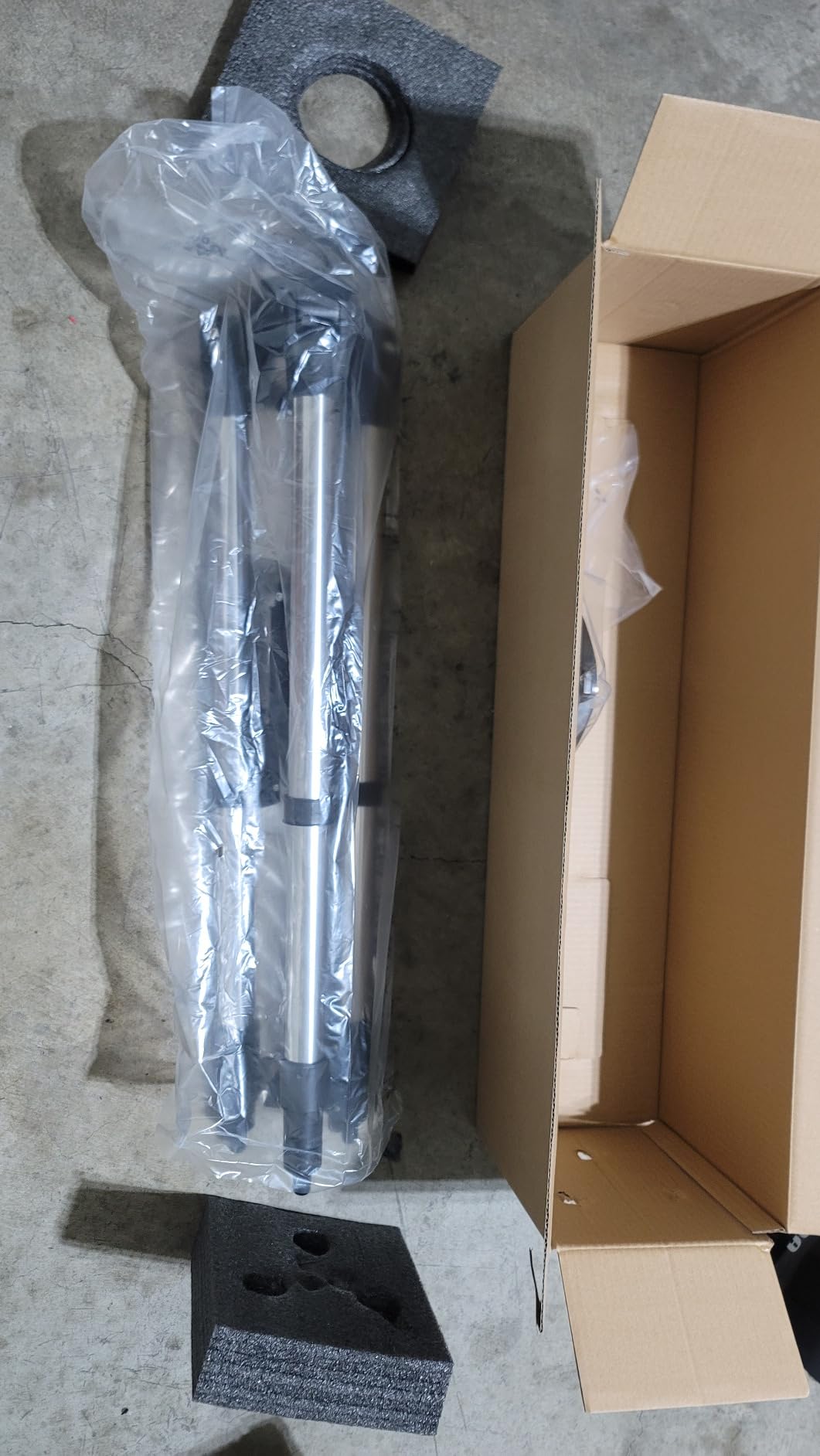
The accessory list is the most complete in this roundup: 25mm and 10mm eyepieces, a 2x Barlow, a red dot finder, a moon filter, a phone adapter, and a carry bag that holds the tube and everything else. The red dot finder makes centre-system targets quick to find, and the moon filter makes long lunar sessions more comfortable.
There is one serious caveat in the reviews. A detailed negative report measures the primary mirror as closer to 130mm than the advertised 150mm, and other owners echo doubts, so this is exactly the specification to verify on arrival.
What the extra aperture buys you
Light gathering scales with the square of aperture, so 150mm gathers roughly 39 percent more light than a 130mm scope. More importantly, the bigger mirror resolves fainter objects: globular clusters start to show granulation at the edges, and the larger planetary nebulae separate from their background instead of hovering at the threshold.
Where owners report problems
The focuser is entirely plastic and is a weak point if you ever want to attach a camera, and the included Kellner eyepieces are entry-level, with owners who upgraded to Plossl reporting a noticeable improvement.
6. SVBONY SV503 80ED – Sharpest Stars, Optical Tube Only
SVBONY SV503 Upgraded ED Refractor Telescope, 80mm F7 with Field Flattener
ED refractor
80mm aperture
560mm f/7
Optical tube assembly
2.5 kg
Pros
- Highest rated at 4.6 stars across 186 reviews
- S-FPL51 glass gives low chromatic aberration
- 0.8x flattener keeps stars sharp edge to edge
- Light at 2.5 kg for a refractor this size
Cons
- Optical tube only
- no mount or diagonal
- No finderscope included
- Narrower field than a Newtonian of the same price
This is the odd one out in the roundup: an optical tube assembly, not a telescope. The SV503 80ED is an 80mm extra-low dispersion refractor using S-FPL51 glass at 560mm focal length, and at 4.6 stars from 186 reviews it holds the highest average rating of the eight.
ED glass is the reason. It reduces chromatic aberration, the coloured fringing around bright stars that plagues cheap achromatic refractors, and the result is high-contrast, colour-true stars. Owners pair that with the included 0.8x field flattener, which sharpens stars from the centre of the frame to the edge and widens the field for large deep sky objects.
At 2.5 kilograms the tube is unusually light for an 80mm refractor, which means it will sit happily on a modest mount or a light tripod. The 2 inch dual-speed focuser with 1:10 micro-adjustment is a fine piece of hardware, especially for imaging focus.
For visual work the trade-off is field of view. At 560mm, this scope frames smaller regions of sky than an f/5 Newtonian of the same aperture, so sweeping for extended emission nebulae takes more panning than you would like.
What ED glass and a flattener do to the view
Chromatic aberration is what makes a cheap refractor look soft, with violet on one side of a star and green on the other. S-FPL51 extra-low dispersion glass brings the three wavelengths much closer together, so stars look tighter and the background between them looks cleaner.
The flattener corrects field curvature, which is the reason stars in a fast refractor go soft toward the edge of the image. Corrected, the whole frame stays usable, which is what makes this tube popular for wide-field imaging of large nebulae and galaxy groups.
The optical tube only maths
Buying an OTA means budgeting separately for a mount, a star diagonal and eyepieces, plus a finder. That total frequently exceeds the cost of a complete reflector package, and it is the single biggest reason people who fall for this tube end up stalling.
Buy this one if you already own a solid mount or if your aim is imaging. For a first visual deep sky telescope, a complete Newtonian package is the simpler path.
7. ZWO Seestar S30 Pro – Smart Telescope That Skips the Eyepiece
ZWO Seestar S30 Pro Smart Telescope, App-Controlled Astrophotography
Smart telescope
30mm aperture
160mm focal length
Fully multi-coated
3.6 lb
Pros
- Automatic GoTo and tracking remove alignment entirely
- Dual-camera stacking produces finished 4K images in one tap
- Built-in light pollution filter suits urban skies
- Weighs only 3.6 pounds and runs on battery
Cons
- 30mm aperture gathers far less light than any reflector here
- Not aimed at planetary viewing
- Must stay stationary during imaging
- Needs a phone and app setup
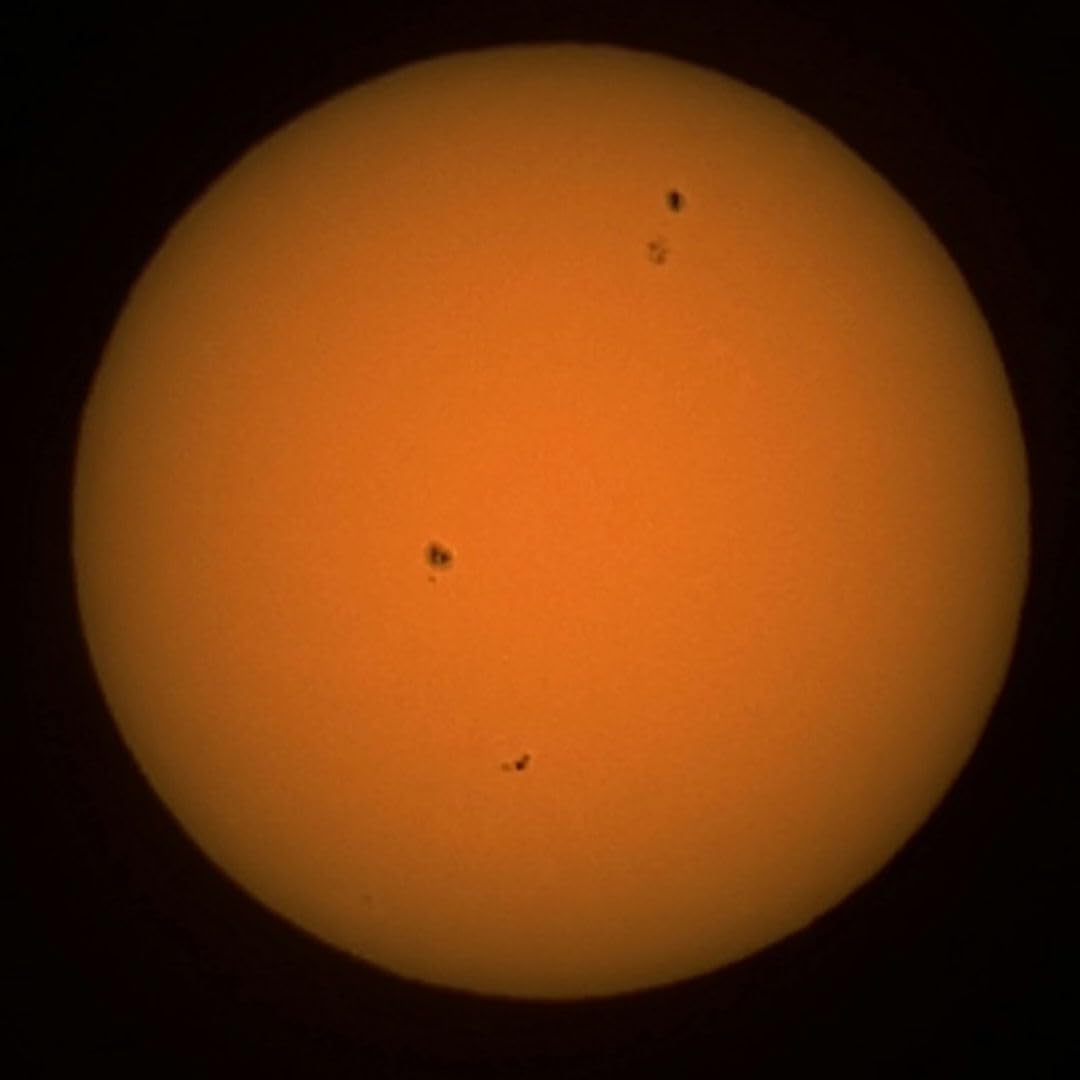
The Seestar S30 Pro is a different category of instrument rather than a conventional telescope. There is no eyepiece. You power it on, connect the app, and it finds the target, tracks it and stacks the images itself, producing a finished picture of the Milky Way, a nebula or a galaxy with a single tap.
Reviewers respond well to that workflow, particularly the one-tap modes with automatic mosaic stitching and the AI noise reduction. The built-in light pollution filter and apochromatic optics are aimed squarely at urban and suburban observers, which is a real advantage if your sky is a Bortle 6 rather than a Bortle 2.
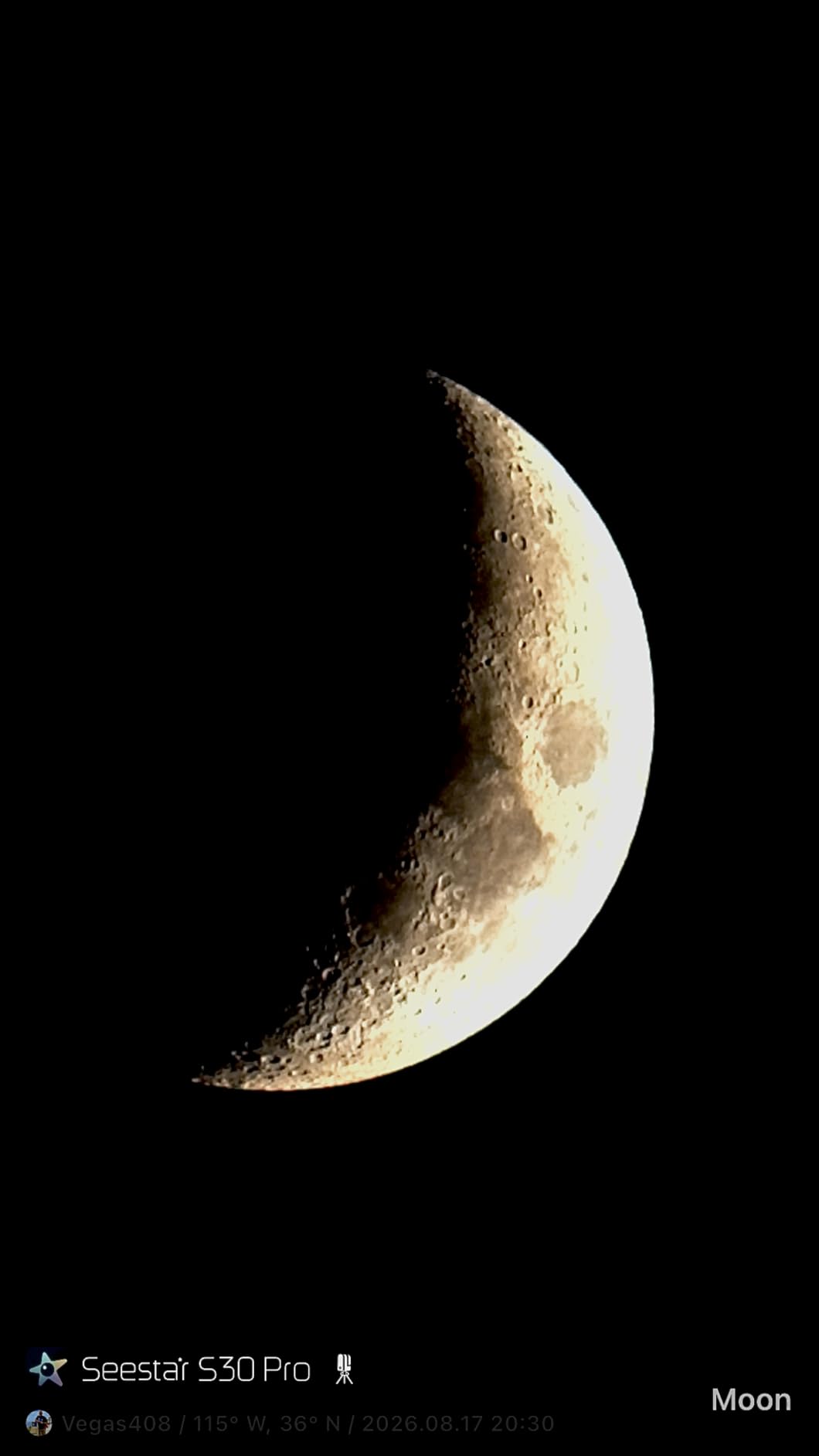
At 3.6 pounds with battery power and anti-dew protection, it is by far the most portable option here and the easiest to take camping. Owners also use it for landscape and birdwatching, and the alt-azimuth mount supports an equatorial mode.
The category’s limitation is honest and worth stating plainly. A 30mm aperture collects a small fraction of the light a 6 or 8 inch telescope does, so a faint galaxy that resolves into spiral arms in a big reflector is a small grey smudge here. The manufacturer also notes the scope is intended for deep sky and wide-field imaging, not planets.
Who this category is genuinely for
It suits people who want pictures more than they want to observe, and who would not otherwise set up a Newtonian, collimate it and wait for an image to develop. It is also the best option here for a small apartment, a balcony or a heavily light-polluted city, because the light pollution filter and the stacking do work that aperture would otherwise have to do.
Where a 30mm aperture stops you
Visual resolution, if you ignore that there is no eyepiece, is the limit. Dim galaxies, small planetary nebulae and anything requiring magnification simply are not the use case, so this is a camera with a telescope attached rather than an instrument for looking through. The device must also stay put during deep sky imaging for tracking accuracy, and you need a phone or tablet plus the app before anything happens.
8. Celestron NexStar 8SE – Computerized GoTo for Planet and Galaxy
Celestron NexStar 8SE Computerized Telescope – Schmidt-Cassegrain
Schmidt-Cassegrain
203mm aperture
2032mm f/10
Computerized GoTo fork mount
10.88 kg
Pros
- 8 inch aperture in a compact 43 cm tube
- 40000 plus object database with automatic slew and tracking
- SkyAlign needs only three bright reference targets
- Stable fork mount holds objects for long sessions
Cons
- Most expensive scope in this roundup
- Fork arm is bulky to carry alone
- Alignment needs an open horizon
Nothing else here matches the NexStar 8SE for raw aperture in a short tube. An 8 inch, 203mm Schmidt-Cassegrain at 2032mm focal length gives f/10, and the whole optical tube is only 43.2cm long, which is why catadioptrics have been the compact favourite for decades.
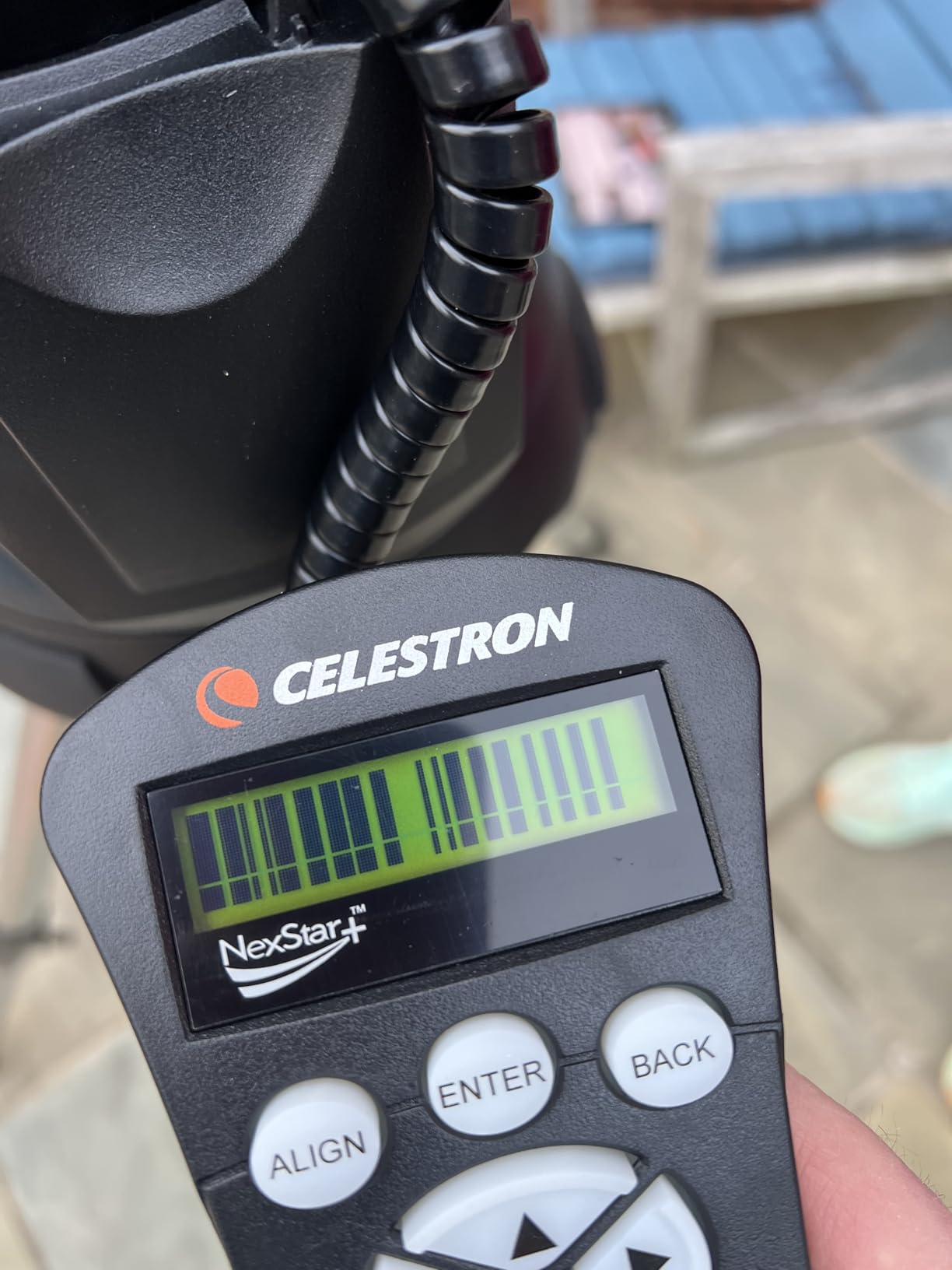
Across 1,579 reviews it holds a steady 4.3 stars, and the reason buyers keep it is the pairing of that aperture with a fully automated GoTo mount. The 40,000 plus object database means you pick a target and the mount slews to it and tracks it, with no star hopping at all. SkyAlign works from three bright stars or planets, which matters enormously if you cannot yet name the constellations.

At f/10 this is a planetary and small-target instrument, and owners note it reaches the Ring Nebula and globular clusters that smaller scopes miss. The 0.57 arc second Dawes limit resolves detail that most Newtonians here cannot match, and a 25mm eyepiece and star diagonal are included.
The trade-offs are consistent across reviews: it is the most expensive telescope in this roundup by a wide margin, the fork arm mount is bulky and awkward for one person to transport, and alignment still needs a clear horizon with three bright reference objects in view.
What GoTo and 8 inches of aperture deliver
Two things happen at once here. The aperture means the sky is bright enough to show detail on targets that are merely a smudge in a 5 inch scope, and the GoTo mount means you are actually looking at them instead of hunting. For a beginner, that combination removes the two biggest reasons people give up in the first year.
Cost, bulk and alignment realities
The f/10 focal ratio is the deep sky caveat. A 0.75 degree field means extended nebulae are viewed in pieces, so sweeping large objects is less pleasant than with a fast Newtonian, and planetary and lunar viewing is where this design is strongest.
Beyond the cost, measure your storage and your car before buying. A 10.88 kilogram tube on a fork mount is a two-person object in most homes, and the buying discussions we read are full of owners who stopped using large tubes because of where they had to put them.
How to Choose a Telescope for Deep Sky Viewing in 2026
Aperture tiers: what 4, 5, 8 and 10 inches really show
Aperture is the diameter of the main lens or mirror, and light gathering scales with its area. A 4 inch scope shows the Orion Nebula and open clusters. A 5 inch scope adds Andromeda, brighter galaxies and the fainter emission nebulae. An 8 inch scope is where spiral structure, the Ring Nebula and resolved globulars become real, and a 10 inch scope starts to show the wisps inside the Veil.
The gain is not linear between steps, which is the point that settles most arguments about size. Going from 4 to 5 inches gives a modest improvement. Going from 5 to 8 inches is a large jump in both brightness and resolution, and 8 to 10 inches is real but far less dramatic. That is why the most common community answer is an 8 inch as the sensible stopping point.
Refractor, reflector or catadioptric
Reflectors put the most aperture in the least money, and they need periodic collimation. Refractors need no maintenance, show the cleanest stars and are the best grab-and-go option, but you pay for glass quality and they collect less light per unit of cost. Catadioptrics pack a long focal length into a short tube and handle planets superbly, at a higher price and with a narrower field.
For visual deep sky, a reflector wins on brightness and cost. For a scope you will carry to a star party, a small refractor is often the one that gets used.
Focal length, focal ratio and field of view
Focal ratio is focal length divided by aperture. Fast ratios below f/6 give wide, bright fields that suit large nebulae and galaxy groups. Slow ratios around f/10 give a narrower, more magnified view that suits planets and small targets.
Field of view is roughly the apparent field of your eyepiece divided by the magnification, and magnification is focal length divided by eyepiece focal length. Useful magnification caps out at roughly twice the aperture in millimetres, and pushing past that just makes an empty, dim image. High magnification figures on retail boxes are marketing, not performance.
The mount is the part that fails first
Bundled mounts are the most common disappointment in every owner review we read. A German equatorial mount with slow-motion knobs, even a light one, is a meaningful upgrade for deep sky because it lets you track an object on one axis.
Then consider the physical facts: weight, whether you can lift it alone, and where it goes between sessions. Storage, not aperture, is what turns a first telescope into an unused one, and buyers who regret larger tubes usually regret them for that reason rather than the view.
Eyepieces, collimation and total cost of ownership
Budget for three eyepieces rather than the single one that gets used. A wide low-power eyepiece around 25mm, a mid-range around 12mm to 16mm, and a high-power for detail covers most observing. For an f/6 to f/8 reflector, a 2x Barlow fills in the gaps between them.
Newtonian owners also need a laser collimator and should expect to recheck alignment every few sessions, or after the tube is bumped in the car. Add a dew shield for late-season sessions and you have a realistic picture of the real cost of owning one of these telescopes for deep sky viewing: the tube is only the starting point.
Frequently Asked Questions
What is the best telescope for viewing deep sky objects?
The Celestron PowerSeeker 127EQ is our best overall pick for a first deep sky telescope, because a 127mm mirror on a manual German equatorial mount gives the most usable light gathering and tracking control per unit of outlay. The answer changes with conditions: in a bright suburban sky, a GoTo scope such as the Celestron NexStar 8SE wastes less of your time on finding objects, and for imaging a wide-field refractor is a better tool. Whatever you pick, buy one or two eyepieces with it.
What is the best telescope for sky watching?
For all-round sky watching the Celestron NexStar 8SE leads this group, because an 8 inch, 203mm aperture reaches globular clusters and planetary nebulae that smaller scopes miss, and the computerized GoTo mount with a 40,000 plus object database finds targets for you. If planets and the Moon come first, that long 2032mm focal length is ideal. If deep sky comes first, a fast reflector is the better value.
What size telescope to see Saturn’s rings?
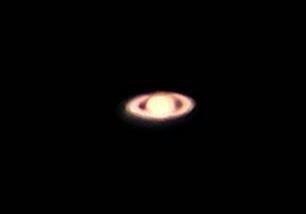
Saturn’s rings need far less aperture than galaxies. A 3 inch, 90mm refractor shows the rings as a shape, and a 4 inch scope resolves the Cassini Division under steady seeing. That contrast is the whole argument for the rest of this guide: a 5 inch or larger telescope makes Saturn look better and simultaneously transforms faint galaxies, while extra magnification on a small tube only produces a dim, empty image.
What is the best telescope for both land and sky viewing?
A short-tube refractor is usually the right answer here, because many achromatic refractors include an erect image corrector that flips the view the right way up for daytime use. The MEEZAA 90mm in this roundup is one example, and a Maksutov-Cassegrain is another category to consider for the same reason. Be aware that most scopes optimised for deep sky put the effort into light gathering, not into terrestrial viewing.
What aperture do I need for deep sky viewing?
Five inches is a workable minimum for beginners, showing the Orion Nebula, Andromeda and open clusters with real structure. Six inches is a comfortable step up, and eight inches is where spiral galaxy detail, planetary nebulae and resolved globulars become reliable. The improvement is not linear, so the step from five to eight inches is far more noticeable than eight to ten. Dark skies help more than any other factor, so a Bortle 4 site beats extra aperture in a city.
Which Telescope Wins for Deep Sky in 2026
The Celestron PowerSeeker 127EQ is our pick for the best telescopes for deep sky viewing in 2026, because a 127mm Newtonian on a German equatorial mount with slow-motion controls is a rare combination that is portable, upgradeable and genuinely capable on galaxies and nebulae. Add a laser collimator and one better eyepiece, and the rest of your budget can wait.
If you want more light and can lift the equipment, step up to a 6 inch reflector on an equatorial head. If you want no hunting at all, the NexStar 8SE is the answer, and if you want finished photographs from a balcony, the Seestar S30 Pro does that without an eyepiece.
Measure your storage space, check your sky with a light pollution app before you spend, and then buy the biggest aperture you can actually carry to the darkest site you can actually reach.