
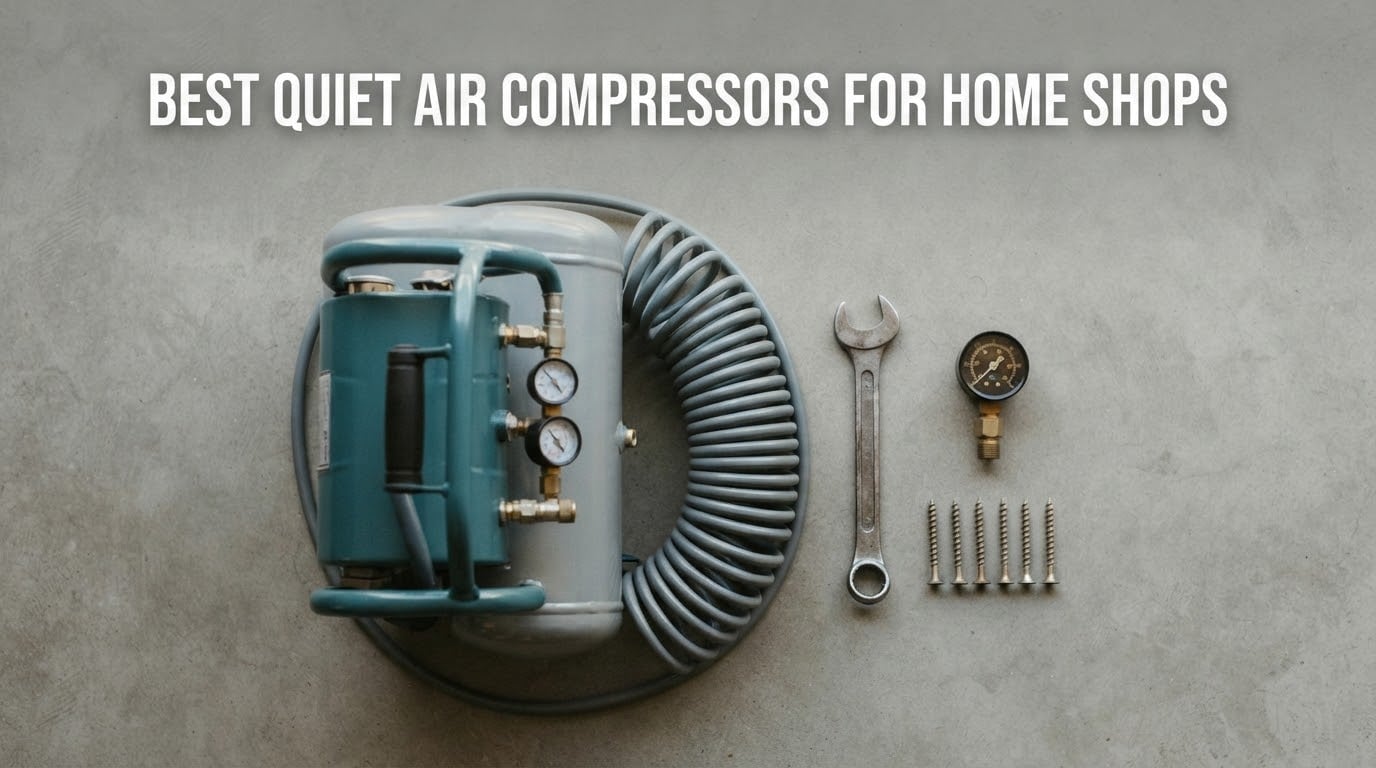
The compressor decides how long your shop is usable. A loud unit forces ear protection, kills conversation, and pushes you to work weekends instead of weekday evenings. That is why the best quiet air compressors for home shops are not a luxury category, they are a schedule category. We went through the specifications, owner feedback and measured noise complaints on ten popular units to find the ones that hold a normal working rhythm in a one-car garage.
Every compressor in this roundup is electric, oil-free and rated between 56 and 70 dBA, which covers the range most home shops actually need. We focused on the specifications that decide whether a unit survives contact with a real shop: CFM at 90 PSI, tank size, recovery speed, weight, electrical draw and the gap between published noise figures and what owners report at arm’s length. We also leaned on long-term owner reports, since several units look identical on a spec sheet and behave very differently after three years.
One thing worth saying up front. Published dB numbers are measured under conditions you will never replicate, usually with the unit against an acoustically treated wall. The number still tells you relative ordering, but pitch matters as much as volume, and a soft 65 dB purr is easier to live with than a 68 dB rattle. We flag the products where reviewers measured a meaningful gap from the listing, and that ends up changing a few of the recommendations in this guide to the best quiet air compressors for home shops.
Table of Contents
Top 3 Quiet Air Compressors for Home Shops (October 2026)

California Air Tools 8010A
- 60 dBA noise level
- 8 gallon aluminum tank
- 1.0 HP oil-free pump
- 2.2 CFM at 90 PSI
- 37.3 lb with wheel kit

California Air Tools 1P1060S
- 56 dBA noise level
- 1 gallon steel tank
- 0.6 HP oil-free pump
- 1.2 CFM at 90 PSI
- only 29 lb

Makita MAC320Q
- 60 dB Quiet Series
- 3 gallon oil-free tank
- dual hose outlets
- 135 PSI max
- roll-cage build
These three cover the realistic home shop range. The 8010A is the general answer for most garages, the 1P1060S is the carry-it-anywhere unit, and the Makita MAC320Q is what you want when your air tool does not tolerate pressure dips. If you want the full field, the table below puts all ten side by side.
Quick Overview: All 10 Quiet Compressors Compared in 2026
| Product | Specs | Action |
|---|---|---|
| California Air Tools 8010A 8 Gallon |
|
Check Latest Price |
| California Air Tools 1P1060S 1 Gallon |
|
Check Latest Price |
| Makita MAC320Q 3 Gallon |
|
Check Latest Price |
 Stealth 20 Gallon Ultra Quiet Stealth 20 Gallon Ultra Quiet |
|
Check Latest Price |
 California Air Tools 10020C 10 Gallon California Air Tools 10020C 10 Gallon |
|
Check Latest Price |
 Limodot 8 Gallon Oil-Free Limodot 8 Gallon Oil-Free |
|
Check Latest Price |
 Campbell Hausfeld 8 Gallon Quiet Campbell Hausfeld 8 Gallon Quiet |
|
Check Latest Price |
 VEVOR 13 Gallon 2 HP VEVOR 13 Gallon 2 HP |
|
Check Latest Price |
 Makita MAC100Q 1 Gallon Makita MAC100Q 1 Gallon |
|
Check Latest Price |
 VEVOR 4.8 Gallon 1.2 HP VEVOR 4.8 Gallon 1.2 HP |
|
Check Latest Price |
What Quiet Actually Means: Reading Decibel Numbers Without the Marketing Spin
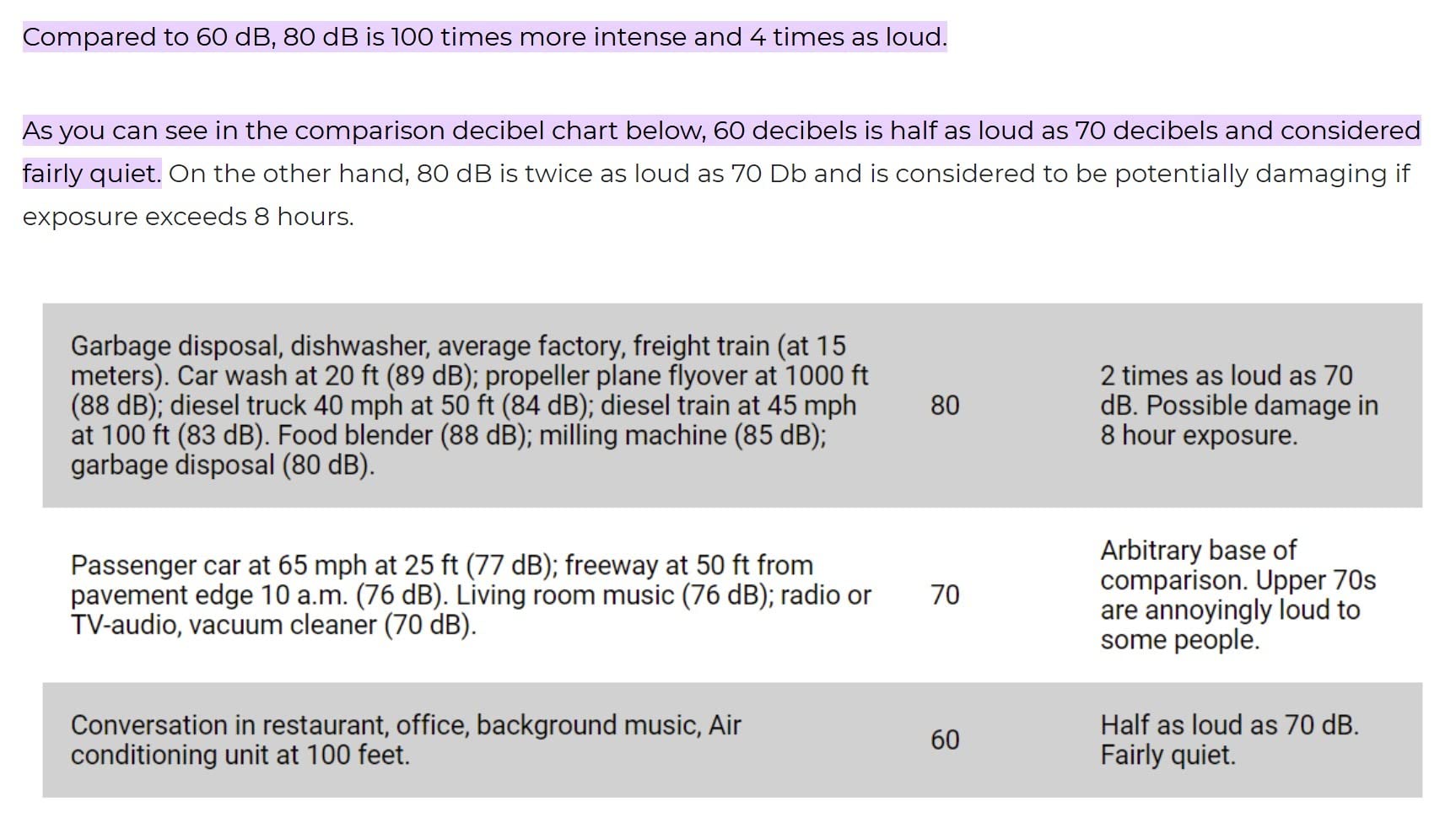
Decibels are logarithmic, so the gap between two numbers matters far less than the numbers suggest. Going from 70 dBA to 60 dBA halves the sound energy, but to most ears it reads as meaningfully calmer rather than dramatically different. The practical benchmark is simpler: a normal conversation at arm’s length sits around 60 dBA. A compressor you can talk over while it runs is doing its job.
Here is the reference scale that matters in a home shop, measured at roughly three feet:
56 to 58 dBA is quieter than a quiet room. Two units in this roundup reach it, and both are small carry compressors.
60 to 65 dBA matches normal conversation. You can stand next to the machine and work without raising your voice.
66 to 70 dBA is noticeable but workable. It is louder than conversation, quieter than a shop vac, and acceptable in a detached garage.
70 dBA and above starts to intrude on everything. Continuous exposure at that level is where hearing protection becomes a real consideration.
Beyond volume, pitch changes how a compressor feels. Owners repeatedly describe a low, soft purr as easy to work around, while a thin metallic whine is exhausting even at a lower number. Several people in woodworking forums made the same point independently: a Makita unit rated a few decibels higher but producing a deep rumble was preferable to a rattlier unit with a lower figure. When the data allows, we use it below.
Finally, treat the listed number as a floor rather than a promise. Owners of the Stealth 20-gallon, for example, typically record around 78 dB standing directly beside the pump and roughly 65 dB from eight to ten feet away. Both readings are real. The distance is the part that decides whether you can live with it, and it is why placement advice later in this guide is worth more than chasing the lowest number on a listing.
Oil-Free vs Oil-Lubricated Pumps: Which One Runs Quieter
Oil-free pumps win on noise and cleanliness, and for a home shop that is usually the right trade. There is no piston lubrication chatter, no oil misting onto finished surfaces, and no oil changes to schedule. Every unit in this roundup uses an oil-free design, and the reason is simple: you are not running a production line eight hours a day.
The tradeoff is duty cycle. Oil-free pumps are built for intermittent use and are not designed to run continuously. Running one flat out for an extended period overheats the pump, and long-term owners who switched from oil-lubricated units report that this is the single habit that shortens their lives. Give it breaks between big jobs, and a home shop compressor should last many years.
Oil-lubricated pumps still make sense in one situation: sustained production work where the machine runs for hours at a stretch. They also tend to run cooler and handle higher pressures more comfortably. If your shop is a hobby garage rather than a production space, the noise and maintenance savings of oil-free win outright, and finish sprayers get a second benefit in that no oil can carry over onto a workpiece.
The 10 Best Quiet Air Compressors for Home Shops in 2026, Reviewed
Each review below covers the published specifications, what owners report after real use, and the specific situations where the unit earns or loses its place in a garage. I have noted honestly where the two disagree, because that is where most buying mistakes happen.
1. California Air Tools 8010A: The Best All-Rounder for a Garage
California Air Tools 8010A 1.0 HP Ultra Quiet and Oil-Free Air Compressor, 8 Gallon Aluminum Tank, Lightweight with Wheels, 60 dBA Noise Level
8 gallon aluminum tank
1.0 HP motor
60 dBA
2.2 CFM at 90 PSI
120 PSI max
110V
37.3 lb
Pros
- 60 dBA sits among the quietest ratings available
- Only 37.3 lb with wheel kit moves anywhere in the shop
- Aluminum tank will not rust
- Recovers 90 to 120 PSI in 60 seconds
- Highest average rating in this roundup
Cons
- 120 PSI ceiling is lower than most rivals
- 2.2 CFM at 90 PSI suits light tools only
- Oil-free pump should not run continuously
The 8010A is the unit I recommend to someone building a first proper shop. It combines a 60 dBA rating with an eight-gallon aluminum tank, and at 37.3 pounds you can move it without planning a dolly or a second person. Owners across r/Tools and the Festool Owners Group describe it as quiet enough to run inside a house when finishing, which is a much higher bar than merely being quiet in a detached garage.
Recovery is the part that surprised me. The spec sheet claims 60 seconds from 90 to 120 PSI with a full tank fill in 165 seconds, and owners working through trim, airbrushing and shop cleanup report that the unit keeps up with a steady sequence of short tool bursts without sounding strained. A 120 PSI ceiling is a real limitation for anything that wants high working pressure, so I would not pair it with a large framing nailer.
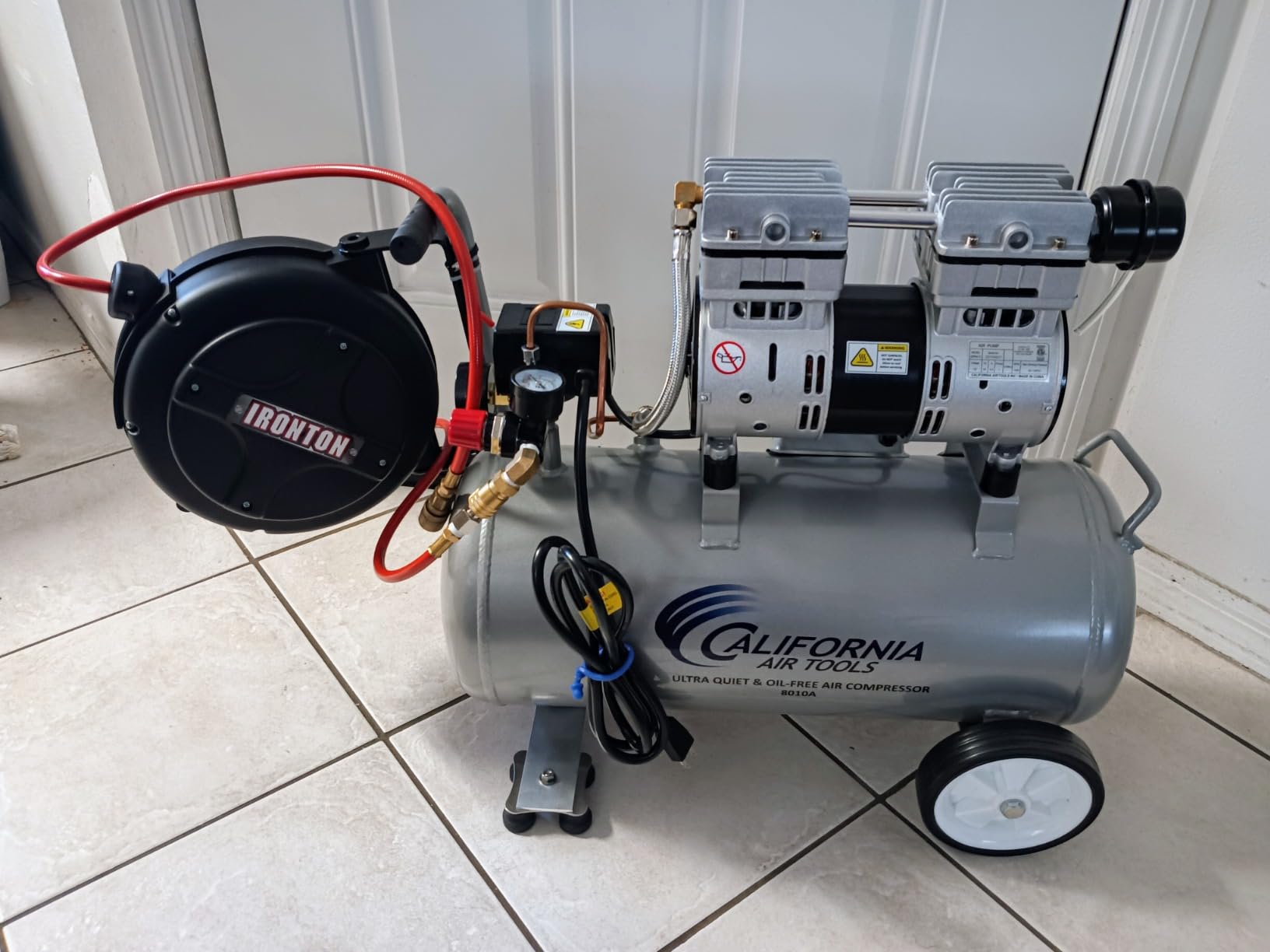
It runs on a standard 110V circuit at 8.5 amps, which removes the single biggest installation obstacle for a first compressor. The oil-free dual piston pump is rated past 3000 hours of service life, and the 1680 RPM motor is deliberately slow, which is a large part of where the quiet comes from. The aluminum tank resists the rust problems that eventually show up on cheap steel tanks in damp garages.
Across more than a thousand ratings, the complaints cluster in one place: airflow. At 2.2 CFM at 90 PSI this is a light-to-medium duty machine. It handles staplers, brad and finish nailers, airbrushes, inflating and blow-down work well. Ask it to sustain a large nail gun or a sander for a full board and you will be waiting on it.
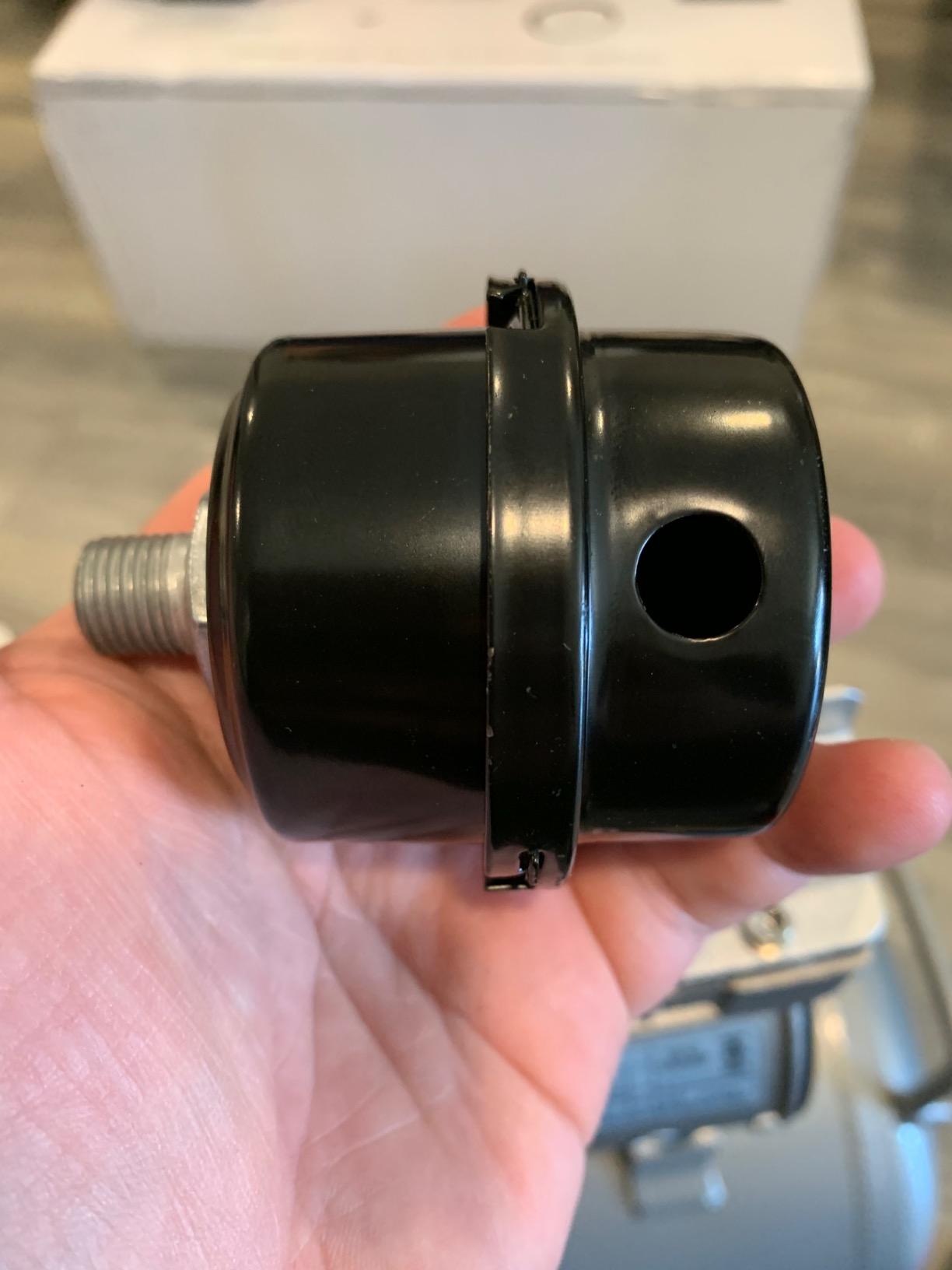
How it handles a one-car garage with shared walls
This is one of the most popular configurations on woodworking forums, and the 8010A is a frequent recommendation for it. A 60 dBA compressor at 60 to 70 PSI does not intrude on a normal conversation, and its 165-second fill means it is back to pressure before a neighbor notices anything at all. For trim carpentry, cabinet work and finish nailing, the output is more than sufficient.
The one thing you lose in a small garage is air reserve. If two tools run at once, or someone fires a nailer while a sander is going, the tank empties faster than the pump refills it. Owners who hit that wall usually either accept the break in airflow or add a second unit for the noisy tool rather than replacing this one.
Where buyers report disappointment
Buyers who expected shop-grade output feel the 2.2 CFM figure quickly, and it is the most common reason for returns in this category. The 120 PSI maximum also means the unit has less headroom than most competitors for spray work or pneumatic tools that want to run at higher line pressure.
Oil-free is not a continuous duty design, and treating it like a shop compressor that can run all afternoon is the other recurring complaint. Run it in bursts and it is an excellent machine. Leave it on while you go to lunch and you are working against its design limits. The result is a compressor that makes almost no noise and asks for nothing but patience between tasks.
2. California Air Tools 1P1060S: The Quietest Unit and the Easiest to Move
California Air Tools CAT-1P1060S Light & Quiet Portable Air Compressor, Lightweight, Ultra Quiet, Oil-Free, 1 Gallon Steel Tank, .6 HP, 56 dBA Noise Level, Silver
1 gallon steel tank
0.6 HP oil-free
56 dBA
1.2 CFM at 90 PSI
120 PSI max
4.5 A draw
29 lb
Pros
- 56 dBA is the quietest spec in this roundup
- Only 29 lb so it moves between rooms easily
- 4.5 A draw runs off ordinary household circuits
- Largest review base here with more than 2600 ratings
Cons
- One gallon tank refills very frequently
- 1.2 CFM suits finish tools rather than framing
- 120 PSI ceiling is low
At 56 dBA, the 1P1060S is the quietest compressor we tested in this roundup by specification, and the gap to a normal conversation is small enough that most owners describe it as usable indoors. The single piston pump runs at 1680 RPM, and at 29 pounds with a 4.5 amp draw it is the one unit in this guide that needs no thought at all about where to put it or which outlet to use.
This is a companion machine, and treating it as anything else is the mistake. Its job is finish nailing, stapling, airbrushing, blow guns and inflating. Owners on the Festool Owners Group and r/woodworking consistently describe pairing it with a larger tank when sustained air is needed, which is the correct way to think about it. The steel tank also avoids the corrosion complaints that eventually show up on aluminum tanks in humid storage.
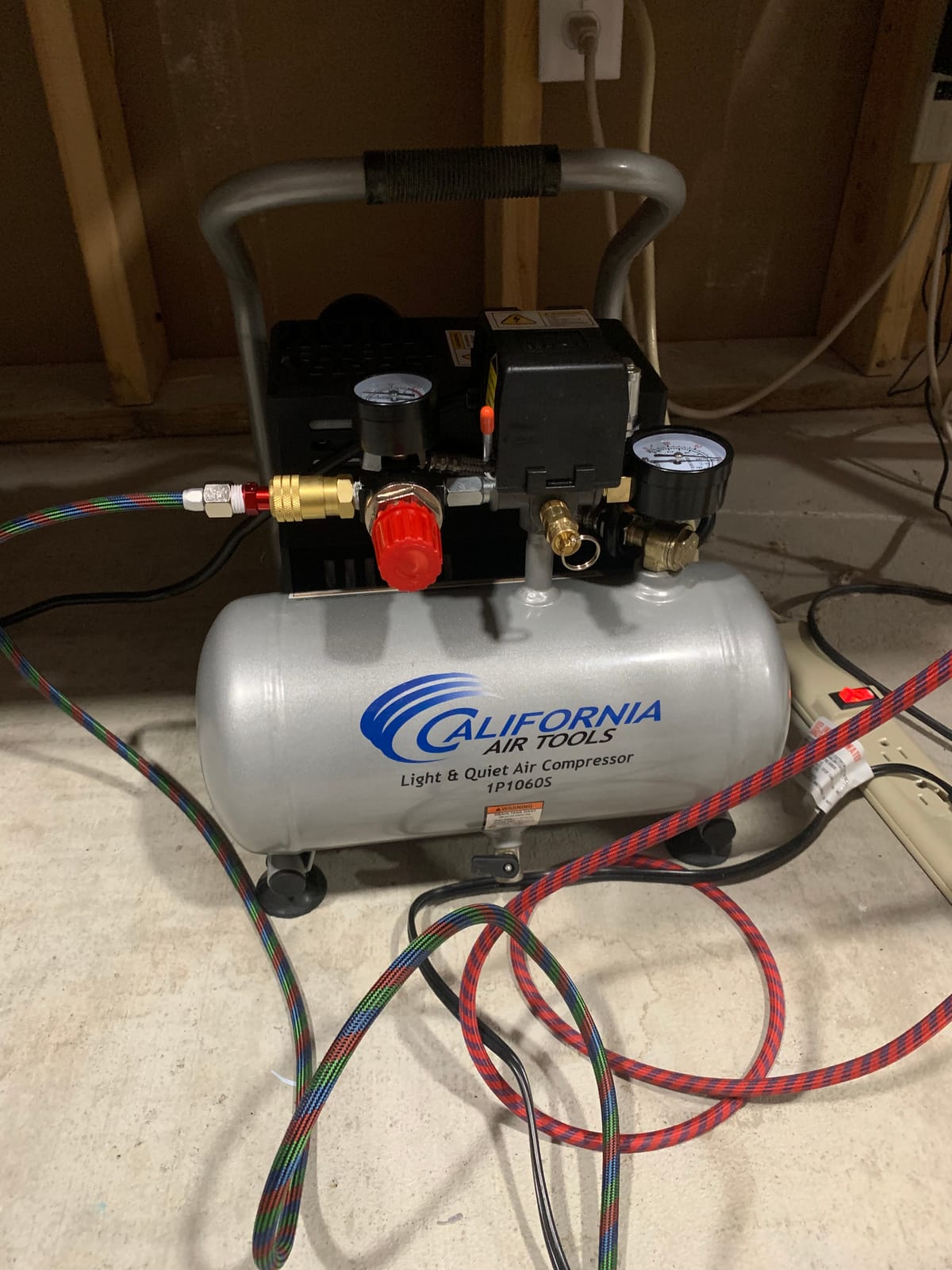
What makes it remarkable is the review base. More than 2600 ratings gives a much clearer picture of long-term behavior than most listings in this category, and the pattern is consistent: owners are very happy with what the machine does and clear-eyed about what it does not. It is not a substitute for a larger compressor, and the buyers who get the most out of it are the ones who bought it for a specific job.
At 120 PSI and 1.2 CFM at 90 PSI, this is a finishing tool. Spray guns, trim nailers, upholstery work, model work and inflating are all comfortable. A framing nailer or a belt sander will drain the tank faster than a 0.6 HP motor can refill it, and the short-cycling that follows is what wears small pancake pumps out early.
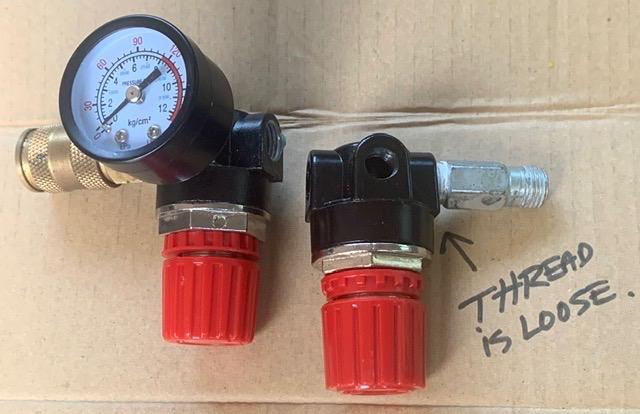
Best pairing strategy for a two-compressor shop
The most common setup we saw described is this compressor on a bench for finish work, plus a larger tank for the loud tools. Because the 1P1060S is so light, it moves to wherever the quiet work happens rather than living in one corner. At 29 pounds, moving it to a different bench is a two-hand job rather than a project.
It also pairs well with tools that are sensitive to airflow rather than pressure. Airbrushes, caulking guns, small pneumatic staplers and inflating accessories all benefit from a stable 120 PSI line that does not sag while a bigger tool elsewhere in the shop is drawing heavily. Several owners use it specifically for final touch-up work after the dust-producing jobs are finished.
Where it is the wrong purchase
If you frame walls, run a flooring nailer or sand floors regularly, this unit will frustrate you within the first afternoon. The one gallon tank means you spend a meaningful share of the day watching it refill, and the 0.6 HP motor cannot keep pace with a sustained high-airflow tool. That is a design limit, not a defect.
The 120 PSI ceiling is the other complaint. It is enough for most finish work but leaves no margin for tools that want to run at higher pressure, and it means the pump cycles more often than a higher-ceiling machine would. Buyers who want the carry-anywhere quietness but also need more headroom should step up to the Makita MAC100Q reviewed later, which pairs the same quiet class with 135 PSI.
3. Makita MAC320Q: Best for Continuous Tool Use and Finishing
Makita MAC320Q Quiet Series 1-1/2 HP, 3 Gallon, Oil-Free, Electric Air Compressor
3 gallon oil-free tank
1.5 HP motor
60 dB
about 2.6 CFM
135 PSI max
dual hose outlets
Pros
- Recovers fast enough to sustain continuous air use
- Dual hose outlets run two tools at once
- Separate tank and tool gauges with adjustable output
- Roll-cage frame protects the motor in transit
Cons
- Heavier and bulkier than similar-airflow rivals
- Quick-connect fittings can leak or stick
- 135 PSI cut-in means the motor cycles more often
The MAC320Q is the compressor I recommend when your air tool cannot tolerate a pressure dip. At 60 dB it holds a conversation, but the reason to pick it over quieter small units is recovery: it refills fast enough to run tools continuously, which is exactly what spray work, powder coating and repeated brad nailing demand. Owners report that it upgrades their workflow dramatically over a pancake compressor.
The dual hose connections are more useful than they sound. Running two tools at once without a splitter is a genuine convenience on a cramped bench, and the separate tank and tool pressure gauges with adjustable output let you dial down the line pressure for pressure-sensitive finish nailers. That control is something most oil-free compressors in this price band simply do not offer.
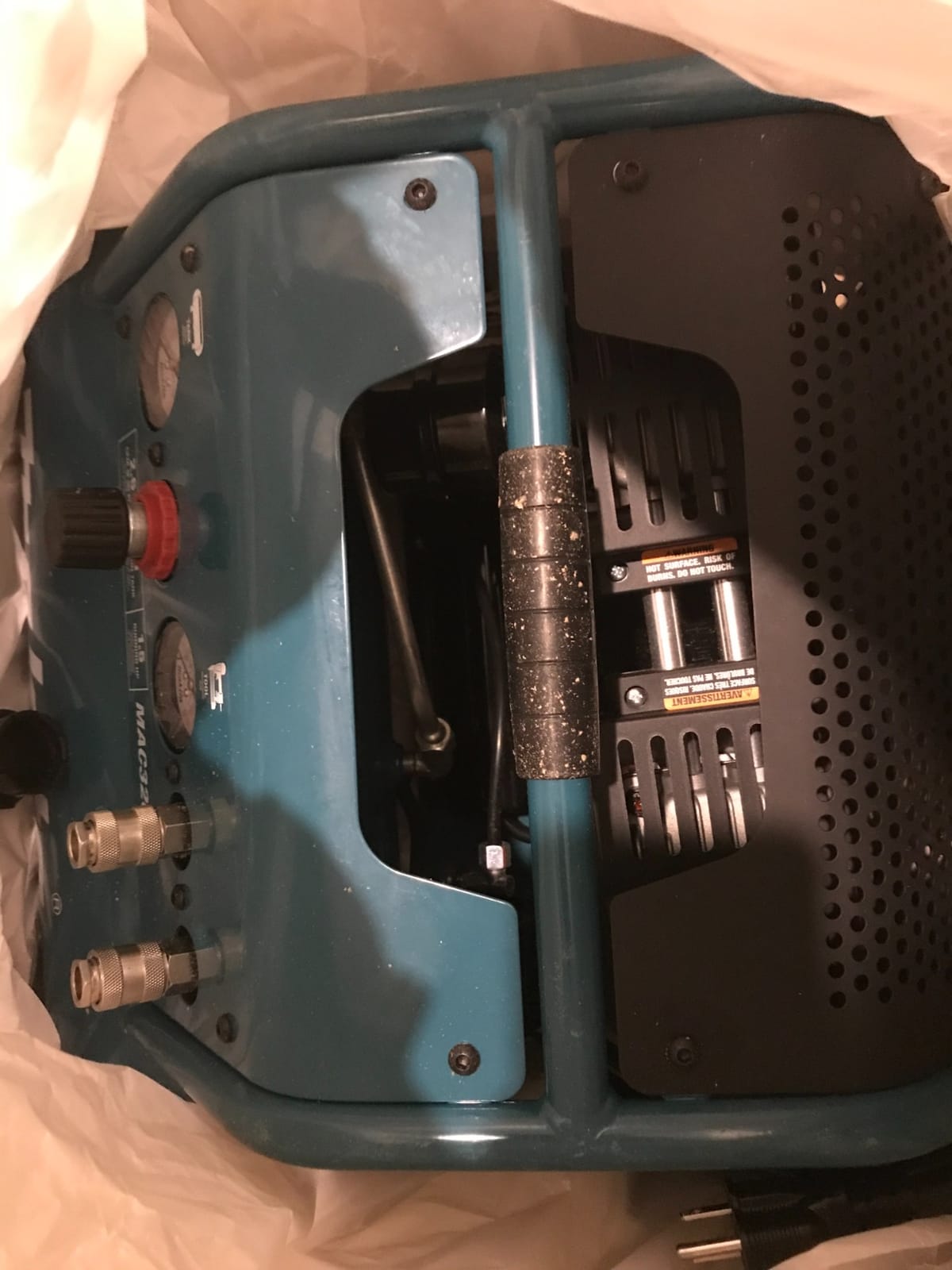
The roll-cage construction is worth more than it sounds for a machine that lives in a garage. It protects the motor during transport and storage, which is where most portable compressors actually get damaged. The oil-free dual piston pump means there is nothing to service, and the lower 1750 RPM motor is a deliberate choice that extends both motor and pump life.
One specification note, because listings disagree on it. The published airflow figure is unusually low, and reviewers who own the machine consistently cite a number closer to 2.6 CFM in real use. Treat the tank size and the recovery behavior as the meaningful data points rather than the listed CFM. The 135 PSI maximum is genuinely higher than most competitors here, and that headroom is what lets it hold pressure on tools that pull hard.
Why finish and spray work benefits most
Spray guns and airbrushes punish a compressor that sags under load. When tank pressure drops mid-pass, you get uneven atomization, and on lacquer or clear coat that shows up as a defect rather than a cosmetic issue. The MAC320Q holds pressure well enough that owners doing finish spraying report consistent results, and the adjustable output lets you set a lower working pressure for delicate work.
For cabinet and furniture builders, the combination of quiet operation and continuous supply is the draw. You can run it for an extended session without the noise, and without the breaks you would be taking on a 1-gallon unit. It is also comfortable to work beside for hours, which matters when the compressor sits on the bench rather than across the garage.
Tradeoffs you should know before buying
Size and weight are the real complaints. It is bulkier and heavier than other compressors in this roundup with comparable airflow, so a small workbench needs to be planned around it. The 3 gallon tank is also small enough that it looks like a portable unit, which sets the wrong expectation if you are planning heavy pneumatic work.
The quick-connect fittings on the outputs draw consistent criticism. Owners report slight leaking on first connection and occasional sticking when uncoupling, and a number of long-term owners have swapped the plastic fittings for brass. At 135 PSI cut-in, the motor also cycles more than a 150 PSI machine would. Some owners find it slightly louder than the stated 60 dB in practice.
4. Stealth 20 Gallon Ultra Quiet: The Most Air for Framing and Tire Work
Stealth 20 Gallon Ultra Quiet Air Compressor,1.8 HP Oil-Free Peak 150 PSI 68 Decibel, 5.5 CFM @ 40 PSI 5 CFM @ 90 PSI Silent Long Life Electric Air Compressor W/Wheel for Garage
20 gallon steel tank
1.8 HP oil-free
68 dB
5 CFM at 90 PSI
150 PSI peak
121.4 lb
Pros
- Largest tank and highest airflow in this roundup
- 150 PSI peak means fewer motor starts
- Owners call the sound a soft purr rather than clatter
- Two quick couplers plus a limited lifetime warranty
Cons
- Heaviest unit here at 121.4 lb
- Measured noise is higher than listed at close range
- Some owners report early motor or breaker failures
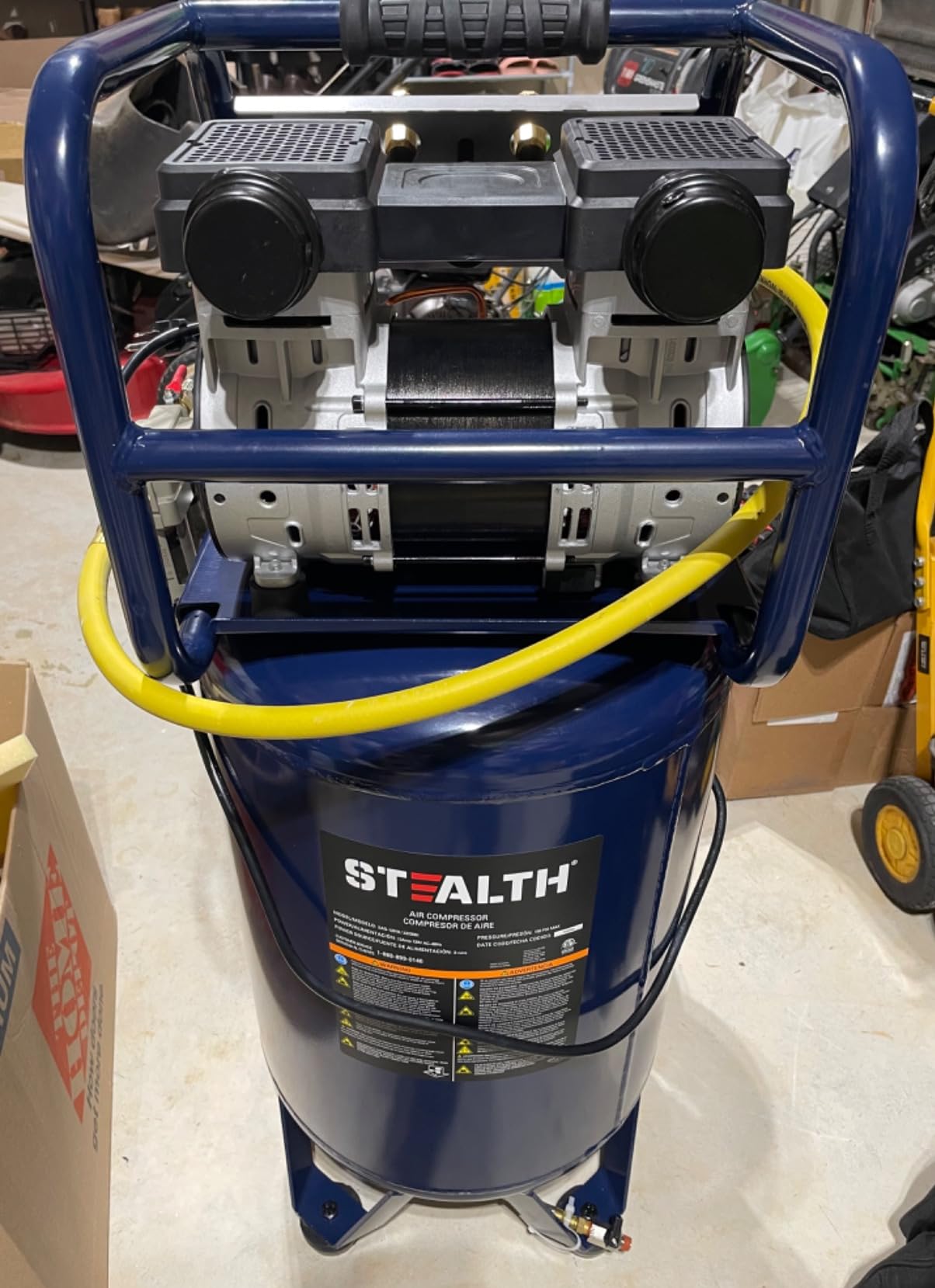
The Stealth SAQ-12018 is the only unit here that can genuinely keep a framing nailer or a large pneumatic tool fed, and it does so at 5 CFM at 90 PSI from a 20 gallon tank with a 150 PSI peak. Owners who upgraded from a conventional shop compressor describe it as a transformative change, and forum users cite this specific model by name as their choice for lacquer spraying at 68 dBA.
The sound character deserves attention because it works in this compressor’s favor. Owners describe a soft purr rather than rattling clatter, and that holds up even in a concrete basement where smaller tanks tend to boom. There is a caveat on the published figure: at point-blank range owners typically measure closer to 78 dB, settling near 65 dB at eight to ten feet. Plan the placement before you buy.
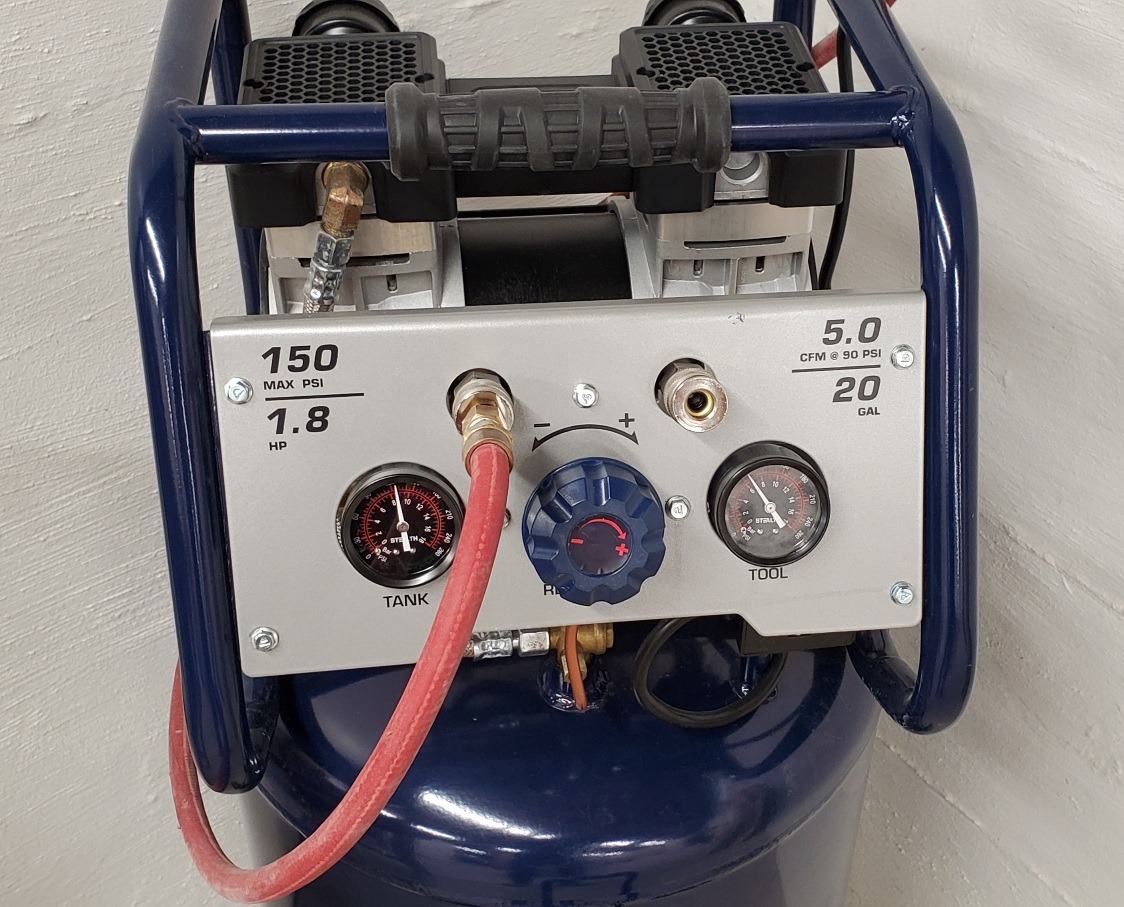
The 150 PSI peak matters more than it looks. A higher ceiling means the motor starts less often, and fewer starts mean less noise per unit of work plus less wear on the motor and pressure switch. For tire work, that translates to a genuinely usable experience rather than a compressor that spends most of its time refilling. Two quick couplers let you switch between tools without unplugging.
This is also the heaviest unit in the roundup at 121.4 pounds, and that is not an abstraction in a one-car garage. Owners warn that getting it into a truck bed is a chore and that a dolly is not optional. It also demands robust branch-circuit wiring, and some owners report it will not start reliably with air still in the tank. Check your circuit before ordering.
Where the tank size pays off
Framing, flooring installation and tire inflation are the three cases where 20 gallons and 5 CFM earn their keep. A framing nailer is a genuinely high-flow tool, and running it from anything smaller means waiting through a recovery cycle for every few shots. The Stealth does not make that problem disappear, but it compresses the wait dramatically.
For spraying, the 20 gallon tank gives a much steadier pressure reserve than small units, which is what makes the 68 dBA lacquer-spraying reports credible. If you are coating furniture or cabinets rather than spot-touching, the larger tank is the difference between a workable session and a frustrating one. The vertical configuration also keeps the footprint to 20 by 18 inches.
Reasons to look elsewhere
The 121.4 pound weight is a hard constraint in small spaces, and it is the single most common regret reported by owners. The measured-versus-published noise gap is the second. If your shop is an attached garage where you need to run the compressor at odd hours, the quietest units in this roundup are safer choices, and this is not one of them at close range.
A small number of buyers report early motor or breaker failures and difficulty reaching customer service, which is a real factor if you are outside the brand’s strong regions. The 4.2 rating here is the lowest in the roundup, and it reflects durability concerns rather than noise or output. If maximum airflow is your priority and you have room to move it, this is still the strongest performer. If quietness and portability are the priorities, the choices above fit better.
5. California Air Tools 10020C: Best for Steady Garage Nailing
California Air Tools 10020C 2.0 HP Ultra Quiet and Oil-Free Air Compressor, 10 Gallon Steel Tank with Wheels, 70 dBA Noise Level
10 gallon steel tank
2.0 HP motor
70 dBA
5.3 CFM at 90 PSI
125 PSI max
82.5 lb
Pros
- 5.3 CFM at 90 PSI handles medium duty nailing well
- Slow 1680 RPM motor cuts noise and wear
- Vertical footprint saves garage floor space
- Wheels and handle manage the 82.5 lb weight
Cons
- Oil-free pump is not built for continuous duty
- Some units cut out around 120 PSI rather than 125
- A small fraction report leaks or early motor failure
The 10020C is the middle of this roundup in every dimension and that is exactly why it works so often. A 10 gallon steel tank, a 2.0 HP motor and 5.3 CFM at 90 PSI give it enough output for nailing, stapling, cut-off tools and impact drivers, while the vertical layout keeps it to a corner of the garage. Owners across r/Tools repeatedly confirm it is far quieter than conventional shop units.
Noise reduction here comes from the motor speed rather than an enclosure. Running at only 1680 RPM creates less sound and less wear than a faster-spinning motor of the same output, and the dual piston pump is rated past 3000 hours of service life. At 70 dBA it sits at the upper edge of the quiet range, which is fine in a detached garage but noticeable in an attached one.
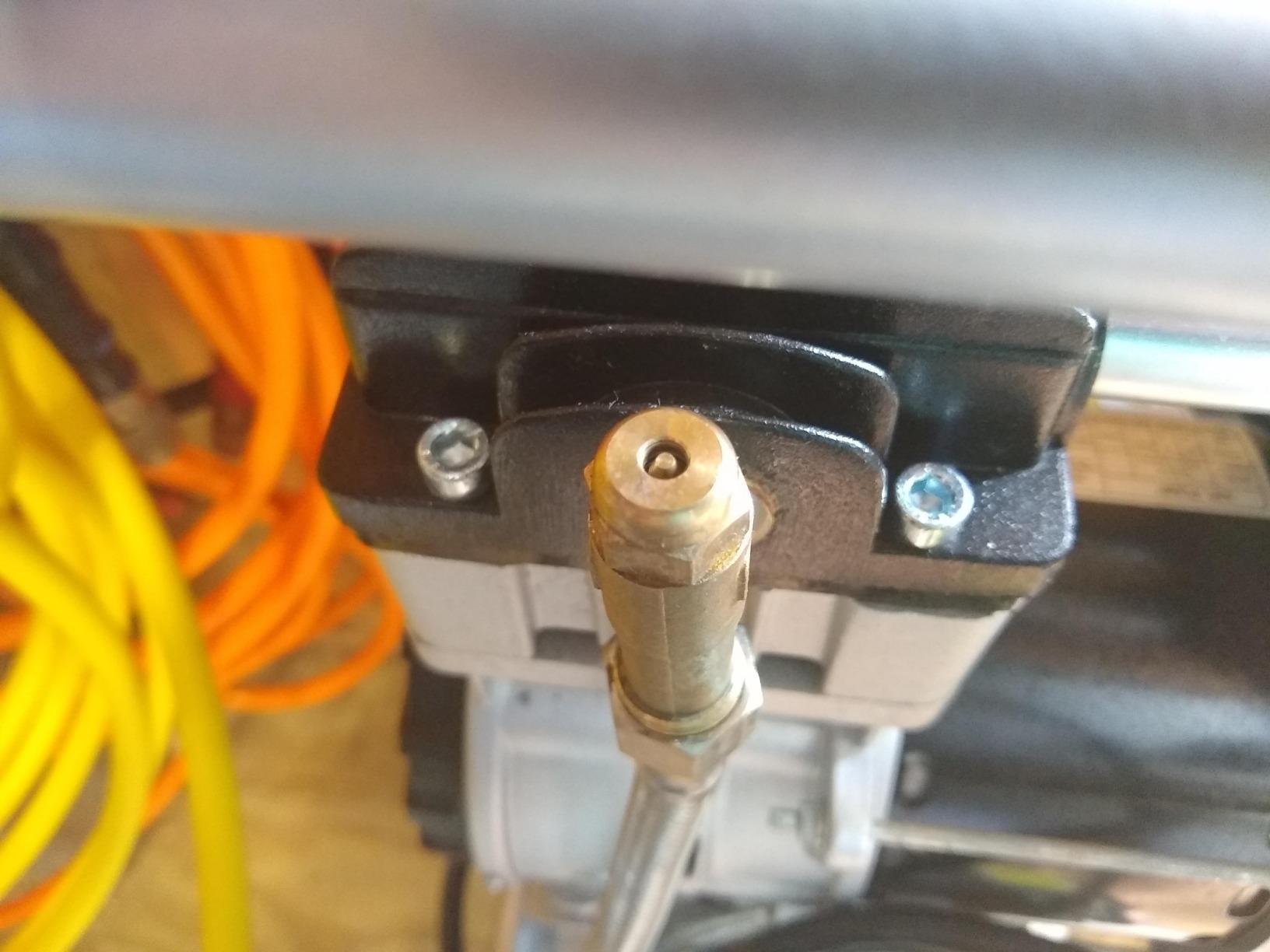
At 82.5 pounds it is heavy enough to stay put and light enough to roll, and the wheels and handle are genuinely useful rather than decorative. It runs on a standard 110V outlet at up to 14 amps, so check that your circuit can handle it alongside other shop loads. Maximum pressure is 125 PSI, which is a reasonable middle ground between small finish units and the high-ceiling compressors.
Owners report the tank fills fast and the build feels solid, which is the practical summary across more than 1500 ratings. The recurring criticism is about duty cycle rather than capability. Oil-free pumps are not designed to be run for long stretches, and this one will overheat if you leave it on continuously. Use it in bursts and it holds up well.
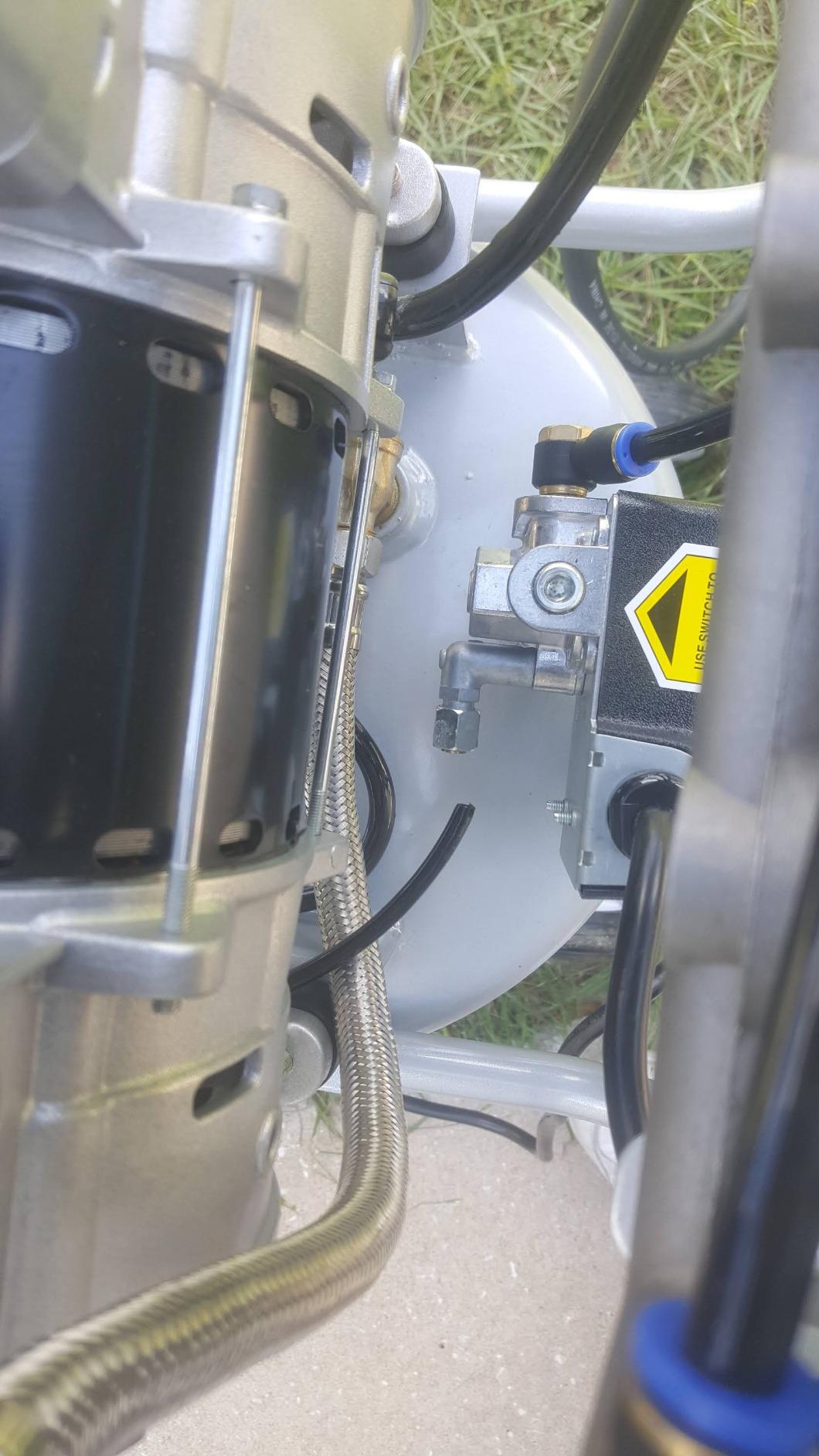
How it fits a one-car garage
At 16 by 15 inches and 36 inches tall, the vertical footprint is the main practical advantage here. Horizontal tanks of similar capacity eat considerably more floor space, and in a single-car garage that difference decides whether you can still park the car. Rolling it out when you need the floor and back it against the wall when you are done is a workable routine.
For medium duty garage work, this is the sweet spot in the lineup. Brad and finish nailers, staplers, a small sander, impact drivers and cut-off tools all run well from this tank. If you are framing full walls regularly you will want more airflow, and if you are doing delicate finish work only, the 70 dBA figure is more than you need.
What to watch out for
Two real issues come up repeatedly. Some units cut out around 120 PSI rather than the advertised 125, which only matters if you are running a tool that wants maximum working pressure. More seriously, a small fraction of buyers report early motor or fan failure, a small air leak or a failing pressure switch after a few years of service.
The 70 dBA rating also deserves context. It is quiet enough that you will not need hearing protection for short sessions, but it is not quiet enough to run while holding a conversation, and it will carry into an attached workspace. If your shop needs to stay usable during normal working hours, the two California Air Tools units ahead of this one are the quieter choices.
6. Limodot 8 Gallon: The Most Complete Starter Package
Quiet Oil-Free Air Compressor, 68 dB, 2.8 CFM @ 90 PSI, 8 Gallon Air Tank
8 gallon alloy steel tank
1.2 HP oil-free
68 dB claimed
2.8 CFM at 90 PSI
120 PSI max
hose and kit
Pros
- Comes with a 25 ft hose and an 11-piece accessory set
- Refills from empty in about 120 seconds with 30 second recovery
- Oil-free design starts reliably in cold weather
- Induction motor at 3400 RPM runs smoothly
Cons
- Spec sheet lists 70 dB even though the headline claims 68 dB
- 120 PSI ceiling is modest
- 2.8 CFM is light on sustained high-flow work
The Limodot LJ8120K is the unit I point first-time buyers toward, and the reason is not the compressor. It ships with a 25 foot PVC hose, a quarter-inch quick-connect fitting and an 11-piece air tool accessory set, which means you can start work the day it arrives instead of making a separate accessory run. Reviewers mention the kit often enough that it clearly changes the experience.
Output is a 1.2 HP motor delivering 4 CFM at 40 PSI and 2.8 CFM at 90 PSI from an eight gallon tank, with a refill from empty in about 120 seconds and roughly 30-second recovery. That is enough for nailing rails and boards, airbrushing and cleaning without the long waits a smaller pancake tank imposes.
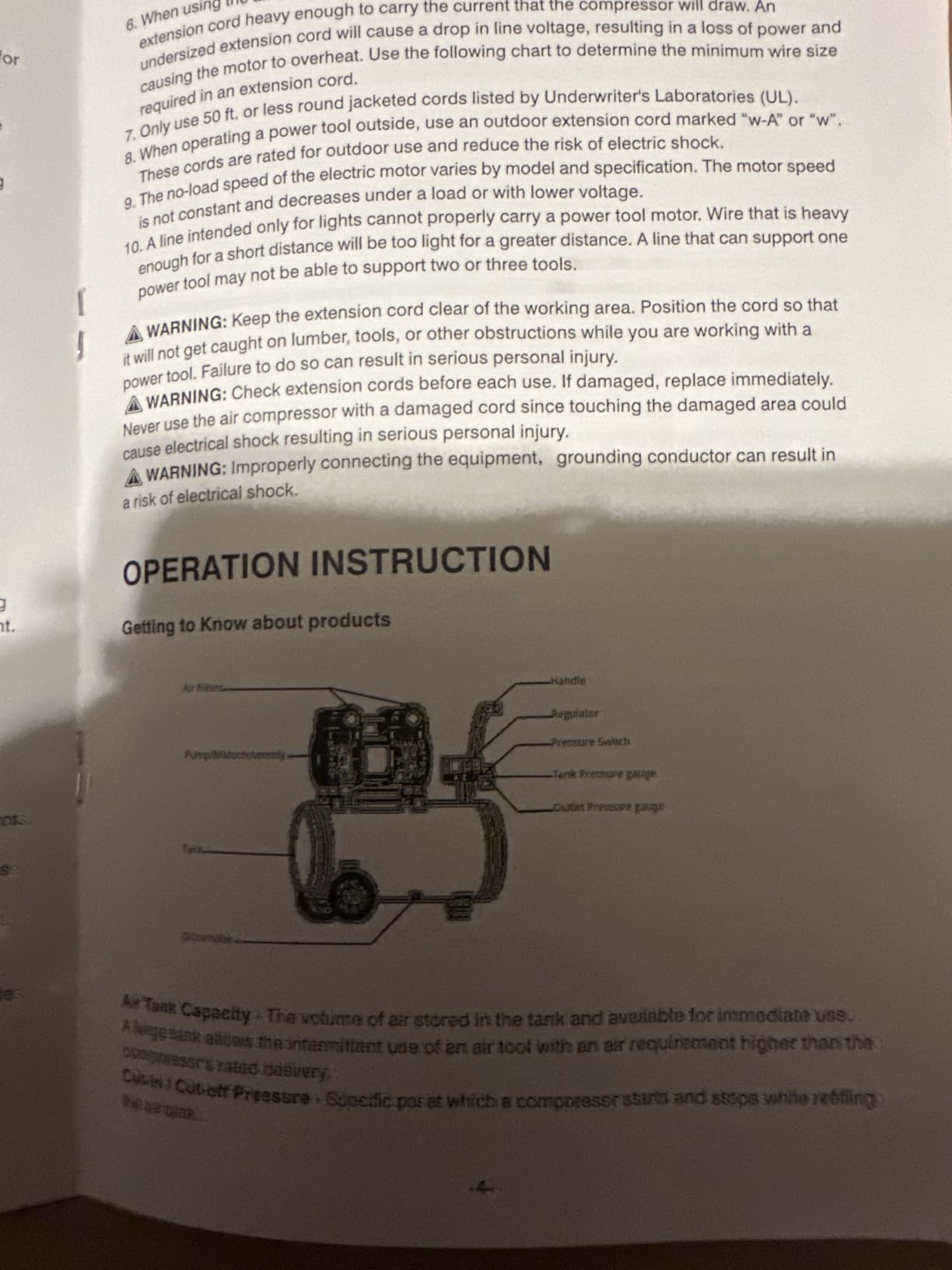
The induction motor runs at 3400 RPM for smooth operation, and reviewers rate it as genuinely quiet enough for residential use and even indoor work. One honest note on the noise claim: the steady-state specification lists 70 dB even though the headline says 68 dB. That is a two-decibel difference and not worth worrying about, but it is a reminder to read the spec table rather than the title.
Oil-free operation means no oil purchases, no filter changes and reliable cold-weather startup, which matters more than most buyers expect if your garage is unheated. The wheels kit and light weight make it portable around job sites, and the eight-gallon tank is a size that works in a one-car garage without dominating the floor.
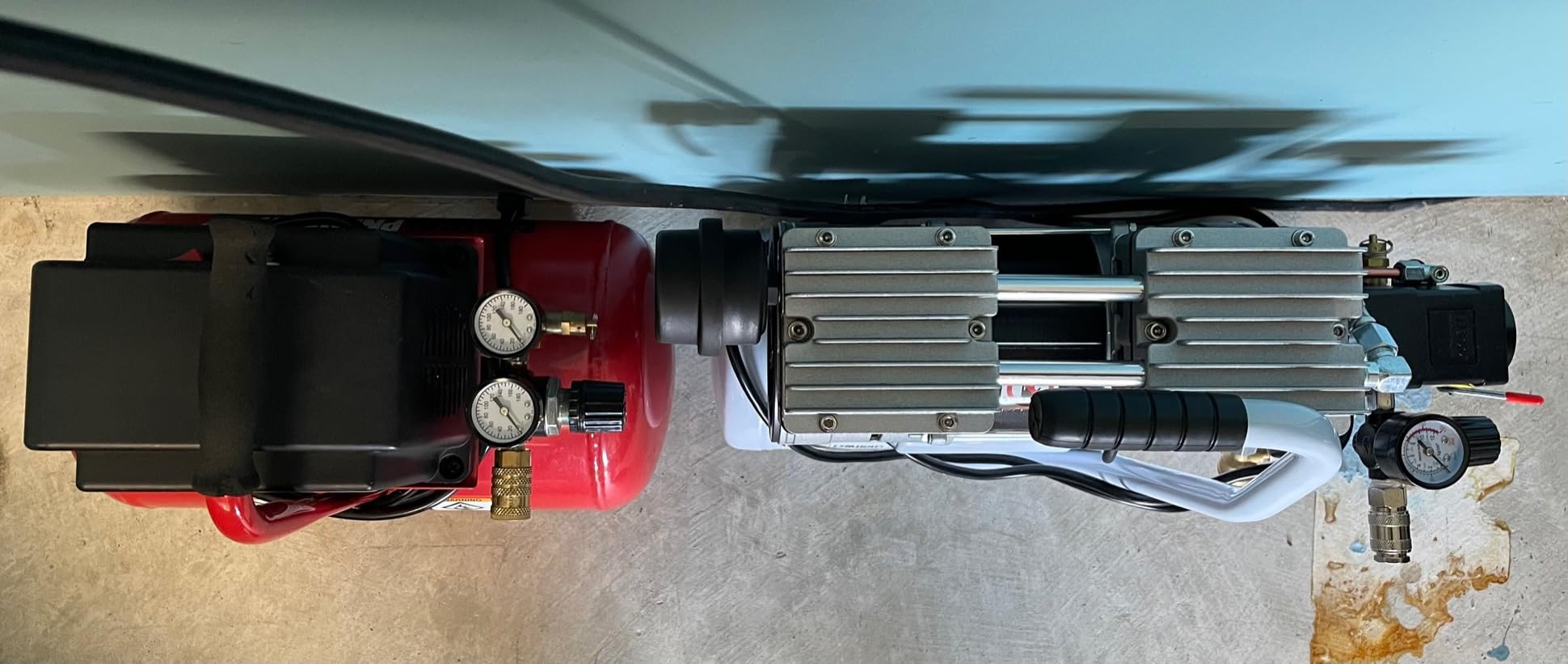
Why the accessory kit matters more than it should
A first compressor purchase always ends with a trip for fittings, a hose and couplers you did not know you needed. That trip is where beginners pick the wrong diameter fitting and end up with a leak they blame on the compressor. Including the hose and a proper quick-connect removes the single most common early frustration in this category.
It also means the unit is immediately useful in places where you would not otherwise take a compressor. Job sites, basements and rooms away from your main shop are all straightforward with a self-contained package. The 30-second recovery is what makes that practical, since a compressor that takes two minutes to refill changes how you plan a task.
Where it will not keep up
A 120 PSI maximum pressure is modest for larger pneumatic tools, and 2.8 CFM at 90 PSI is fine for nail guns and airbrushes but light on sustained high-airflow work. If you plan to run a framing nailer, a large sander or a spray gun for extended sessions, the recovery time will shape your workflow more than you would like.
Reviewers consistently describe it as better suited to intermittent tasks than continuous shop duty, which is the same oil-free limitation that applies across this roundup. There is also a small honesty note worth repeating here: the noise figure in the specification sheet is 70 dB, slightly above the 68 dB in the product name. If strict quietness is your top priority rather than value, the two California Air Tools units at the top of this list are quieter by specification.
7. Campbell Hausfeld 8 Gallon: The One Buyers Report Keeping for Years
Campbell Hausfeld 8-Gallon Quiet Air Compressor, 125 PSI, DC080500
8 gallon alloy steel tank
oil-free pump
65 dB
2.4 CFM at 90 PSI
125 PSI max
standard 120V
Pros
- Owners report 5 to 8 years of service after break-in
- Plugs into a standard 120V outlet with no special wiring
- Oil-free pump removes routine oil changes
- Large wheels and a rubber-grip handle move the 67 lb unit
Cons
- 2.4 CFM at 90 PSI limits sustained larger tool use
- Included pressure gauge is reported as inaccurate
- Drain cock is awkward to reach and vents loudly
The Campbell Hausfeld DC080500 is the durability story in this roundup. Multiple owners report 5 to 8 years of reliable service after completing the recommended break-in procedure, which is a longer track record than almost anything else here. At 65 dBA it is also quieter than most standard shop compressors, and owners mention keeping hearing aids in and still holding a conversation beside it.
It covers the middle of the practical range. An eight gallon tank at 2.4 CFM at 90 PSI and 125 PSI maximum is right for molding, tire inflation, shop blow-downs and light pneumatic work, and it needs a moment to rebuild pressure between bursts. That is the trade you make for a machine that keeps running for years without drama.
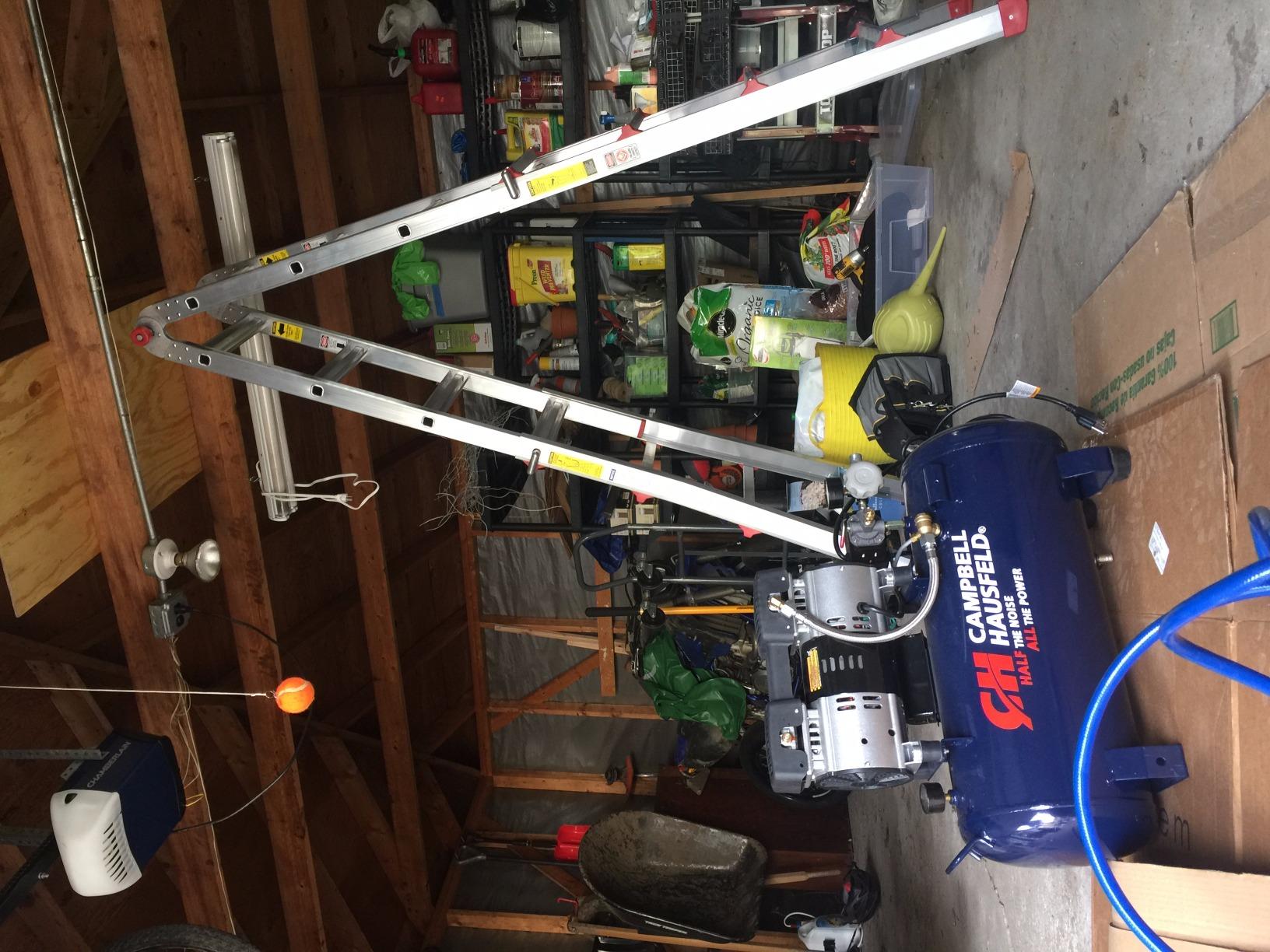
Installation is the least complicated of any compressor in this guide. It plugs into a standard 120V outlet with no special high-voltage wiring, which removes the most common reason people delay a compressor purchase. The oil-free pump means no routine oil changes and clean air straight to the tool, and at 67 pounds the large wheels and rubber-grip steel handle make repositioning manageable.
It is worth emphasizing the break-in procedure, because owners who ran it report those multi-year results and the ones who complained about early failure did not. A new compressor needs its initial run done as directed, and skipping that step is the most common cause of the first-year motor or pressure switch problems described in reviews of this category.
What long ownership actually looks like
Owners describe it as the machine that keeps working while the shop changes around it. The 8-gallon tank is a sensible size for most garage tasks, and the 65 dBA rating means it does not push you out of the shop early. For someone who wants one compressor to last a decade rather than upgrading every few years, that consistency is the selling point.
It is also a good choice for a second shop location or a mobile setup, since it is a self-contained 120V machine with no installation work. The eight gallon capacity is enough to run a vacuum, an inflator or a small pneumatic tool at a customer site, and the wheels handle typical job site surfaces without complaint.
The complaints worth planning around
Two hardware issues come up often enough to know about in advance. The included pressure gauge is reported as inaccurate, so owners cross-check readings with a tire gauge. The drain cock is awkward to reach under the tank and vents loudly at full pressure, which is a real annoyance in a quiet shop and the single most fixable complaint here.
On output, 2.4 CFM at 90 PSI is modest for larger pneumatic tools, and the tank needs a moment to recover between bursts. A minority of owners also report the motor or pressure switch failing within a couple of years, usually tied to skipping break-in. If gauge accuracy matters to your work or you need more airflow, the California Air Tools 10020C covers that step up.
8. VEVOR 13 Gallon 2 HP: The Best Vertical Value at 13 Gallons
VEVOR 13-Gallon Air Compressor, 2HP, 4.6 SCFM@90PSI, Oil-Free Tank, 66dB Quiet Operation, Ideal for Tire Inflation, Woodworking, Auto Repairs, and Spray Painting (Maximum Pressure 125 PSI)
13 gallon vertical tank
2 HP oil-free
66 dB
4.6 SCFM at 90 PSI
125 PSI max
71 lb
Pros
- Builds air in under three minutes on a 13 gallon tank
- 66 dB runs quietly enough to skip hearing protection
- Reinforced leak-proof valve system for longer tasks
- Two reinforced rubber wheels roll indoors and out
Cons
- Heavy at 71 lb and needs two hands to lift
- Some units fail to repressurize and then overheat
- Advertised SCFM output is disputed by buyers
The VEVOR 13 gallon is the value pick for anyone who wants a real tank without paying for a premium brand. A 13 gallon vertical tank with a 2 HP motor builds air in under three minutes, and at 66 dB owners praise it as quiet enough to work beside without hearing protection. Several describe it as replacing a much noisier pancake compressor in their weekend workshop.
It also ships complete. You get the compressor, two air filters, two wheels, foot pads, mounting screws, dual pressure gauges and a manual, so there is no assembly beyond positioning it where you want it. The reinforced leak-proof valve system is designed for stable output over longer tasks, and dual outlets let two tools run at once.
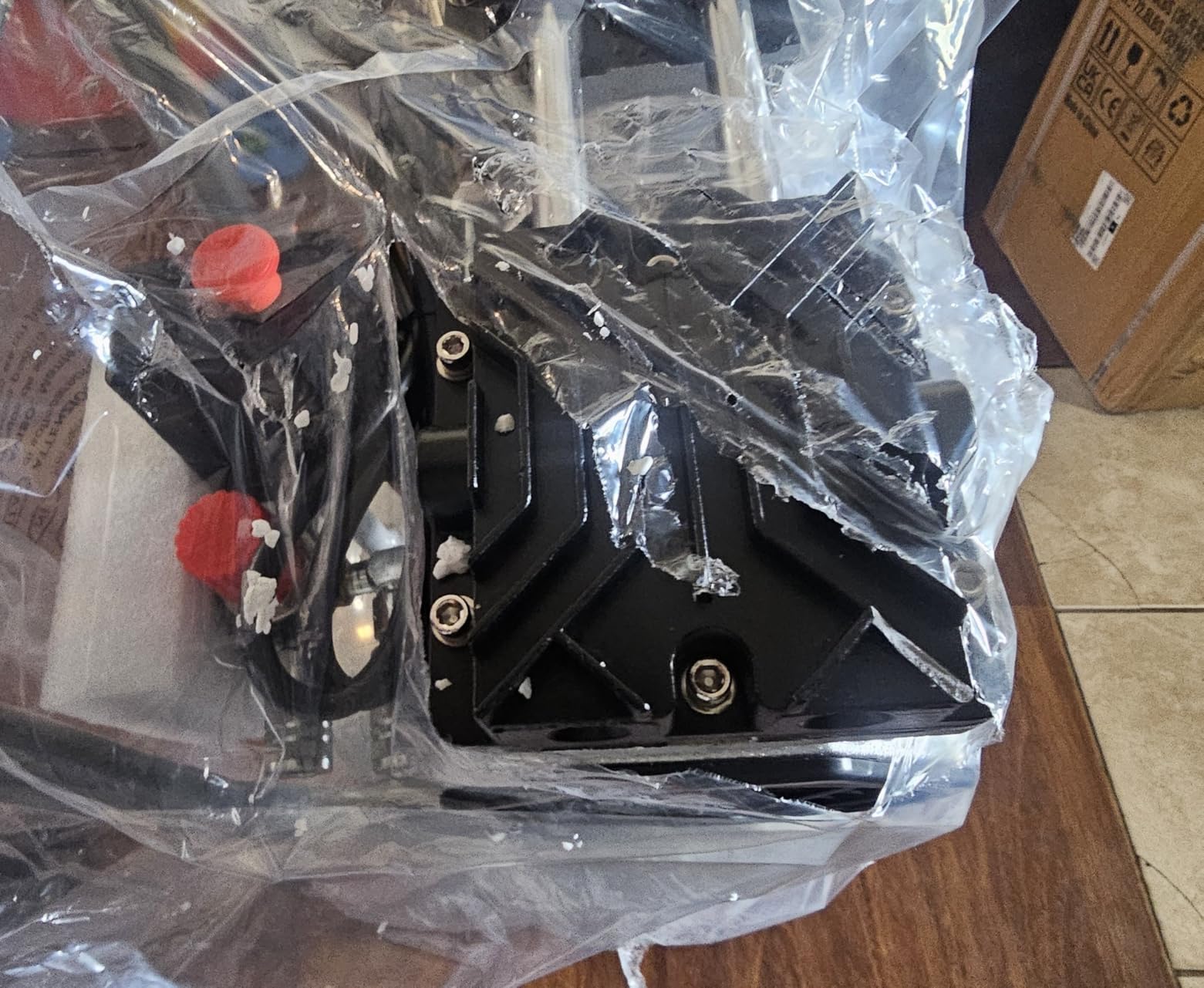
The vertical tank at 17.5 by 16.5 by 33.3 inches makes it a reasonable footprint for the capacity, and the 7-inch reinforced rubber wheels handle most shop surfaces. It is a good fit for auto work, painting, tire service and general woodworking, which is the range most home shops operate in. The 66 dB figure puts it in the acceptable band for a detached garage.
There is a significant caveat here that reviewers raise directly. The advertised 4.6 SCFM at 90 PSI is disputed by buyers and acknowledged as lower continuous output in the manufacturer’s own support response. Additionally, some owners report the unit failing to repressurize after a few weeks, overheating and then requiring a long cooldown before it will restart. That is the most serious complaint in this roundup and it deserves to shape your decision.
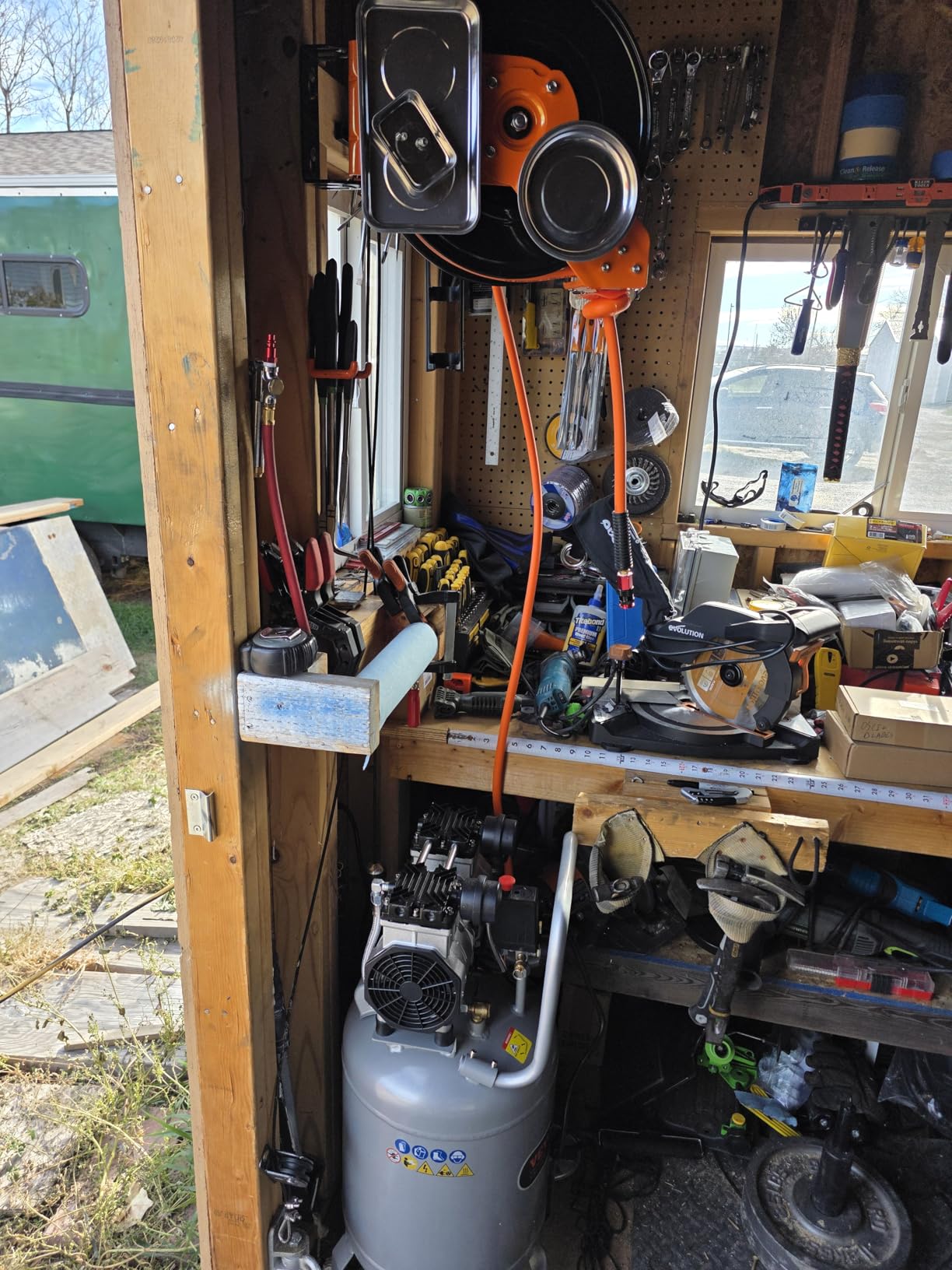
Why 13 gallons is a useful middle size
Thirteen gallons sits between the 8 gallon and 20 gallon units in this list, and it is a size that few competitors hit well. It gives you enough reserve for inflating, spraying and short bursts of tool work without the footprint or weight of a 20 gallon machine. For auto repair and weekend woodworking, that middle ground is often exactly right.
The 2 HP motor and fast buildup mean recovery between bursts is short, which is what makes the tank size translate into productivity rather than waiting. The dual outlets are useful when you are running a small pneumatic tool alongside an inflator or a vacuum. For sustained work with a large nailer or sander, step up to a higher-output unit rather than stretching this one.
Where owners report real problems
The reliability complaints are specific and repeated, and they are not noise complaints. Documented failures to repressurize, motor overheating that demands a long cooldown, and gaps between advertised and actual airflow appear in the review text often enough that you should plan for them. There are also reports of start capacitors, unloader valves and plastic intake filters failing early, which points at electrical and valve components rather than the tank.
At 71 pounds it still needs two hands to lift despite the wheels, and some units arrive with bent feet or transit damage from being shipped vertically. The 125 PSI ceiling means the motor cycles fairly often, which adds wear. If you can accept the possibility of service issues and want the tank size, this is a capable machine. If reliability matters more than capacity, the Campbell Hausfeld with its multi-year ownership reports is the safer bet.
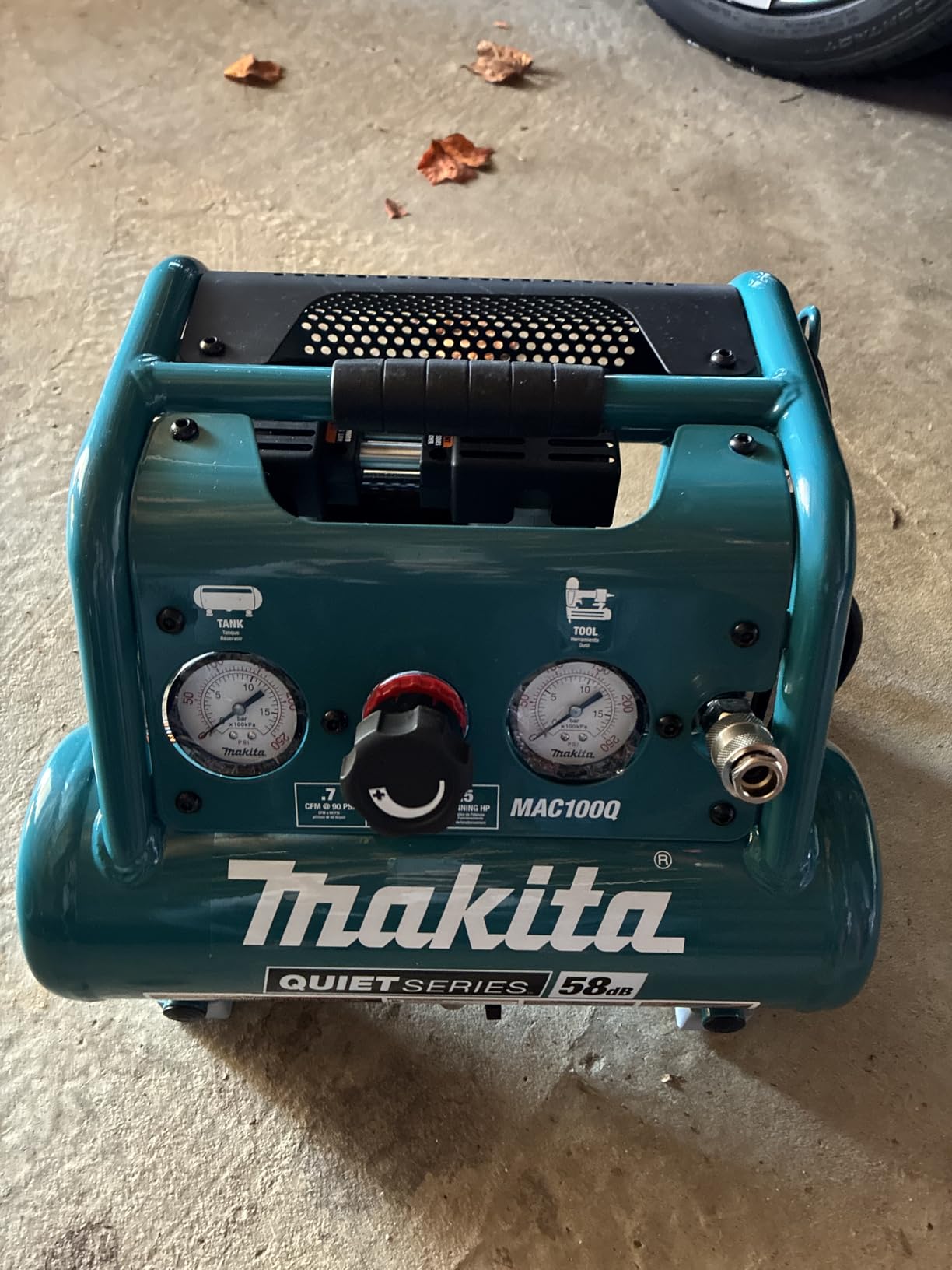
9. Makita MAC100Q: The Compact 135 PSI Unit for Trim Work
Makita MAC100Q Quiet Series, 1/2 HP, 1 Gallon Compact, Oil-Free, Electric Air Compressor
1 gallon tank
0.5 HP induction motor
58 dB
0.7 CFM at 90 PSI
135 PSI max
27.6 lb
Pros
- 58 dB makes it usable in a quiet indoor room
- Runs at 1750 RPM for longer motor and pump life
- Roll-cage construction protects it in transit and storage
- 135 PSI maximum gives unusual headroom for a 1 gallon tank
Cons
- Only 0.7 CFM at 90 PSI
- One gallon tank refills very frequently
- Cannot sustain two tools at once
The Makita MAC100Q is the answer to a specific problem: doing finish work somewhere that is not a garage. At 58 dB and 27.6 pounds it is one of the two quietest units in this roundup, and owners describe it as the ideal companion for trim carpentry, brad and finish nailing, cleaning and inflating in a quiet room. The Quiet Series design is what makes indoor use plausible.
What separates it from the other 1-gallon option here is pressure headroom. At 135 PSI maximum you get considerably more working pressure than most portable units in this class, which matters for tools that benefit from a firm line. The 1750 RPM induction motor is deliberately slow, and the combination is credited with longer motor and pump life than faster-turning designs.
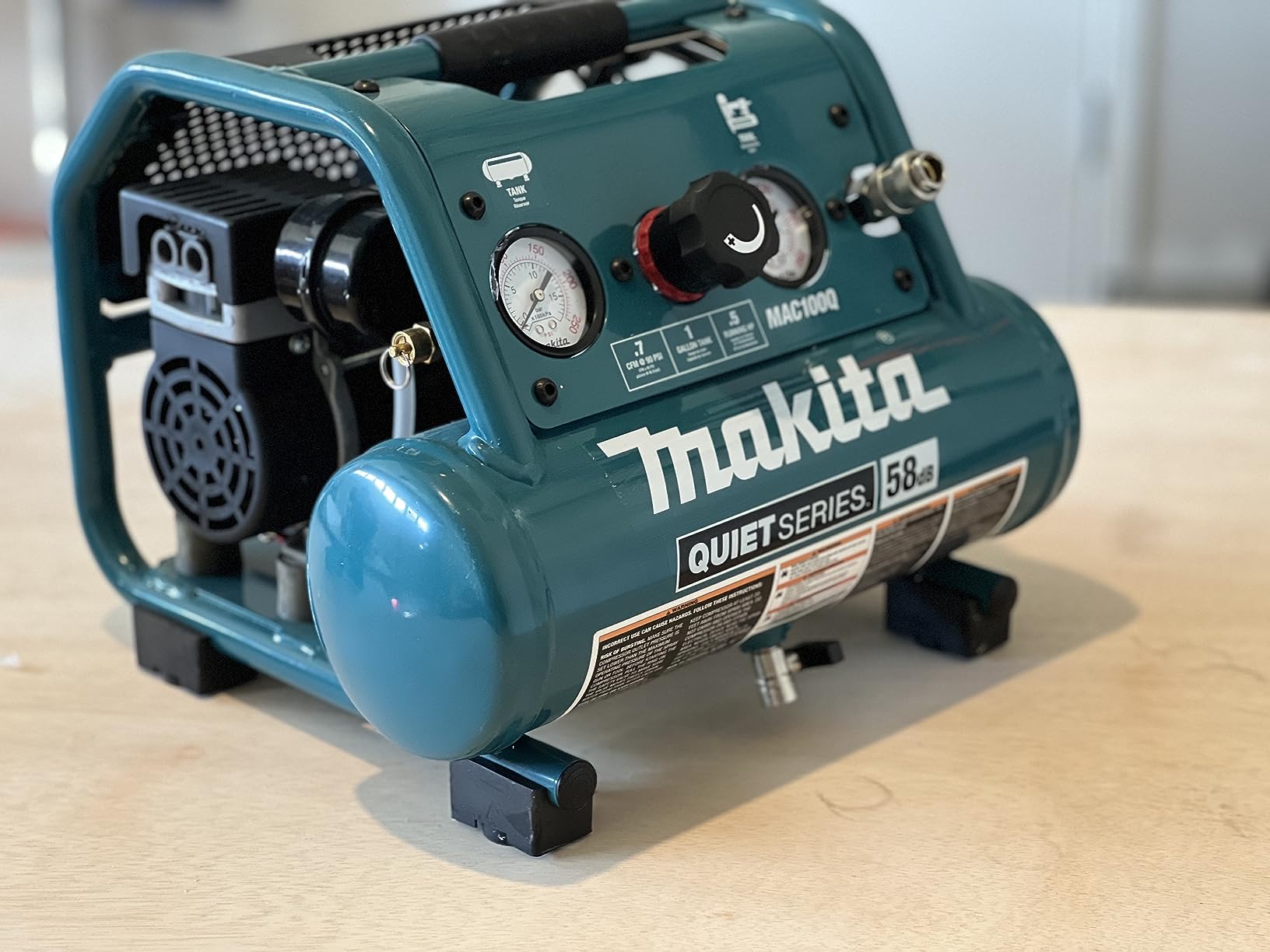
Build quality is the other argument. The roll-cage construction protects the motor in transit, storage and on job sites, which is where most small compressors get their damage. The oil-free dual piston pump needs no maintenance, and across more than 1500 ratings the feedback is remarkably consistent about what the machine does well and where it stops.
The limitation is output, and it is severe enough to state plainly. At 0.7 CFM at 90 PSI this is a trim and finish machine, not a shop compressor. Many owners pair it with a larger unit specifically because of this, using the Makita for delicate work and the bigger tank for anything that draws real airflow. That is a sensible division of labor rather than a workaround.
When indoor use is the deciding factor
If your shop is a converted room, a basement or a space where noise travels, a 58 dB compressor changes what work you can get done. You can run it while you trim, sand lightly or fit cabinets without disrupting the rest of the household, and at 27.6 pounds it is easy to carry to whichever room you are working in.
It also works well on job sites. Owners use it for finish nailing and clean-up where a larger machine would be excessive, and the roll cage means transit damage is less of a concern than it would be with a lighter, more exposed design. The 135 PSI ceiling means it holds pressure better than most units of this size, which makes it more useful with pressure-sensitive nailers.
What 0.7 CFM means in practice
Numbers make this easier than adjectives. At 0.7 CFM at 90 PSI, the unit is built for brad and finish nailers, staplers, airbrushes and blow guns. It is not built for framing, sanding floors or running a pneumatic sander, and the one gallon tank refills so frequently that those tasks become stop-and-wait work.
It also cannot sustain two tools at once, which is the clearest single indicator of its class. If your work involves overlapping tool use, or any sustained high-airflow demand, this is the wrong machine and the Makita MAC320Q three-gallon unit reviewed earlier is the direct upgrade. Used within its range, the MAC100Q is quiet, durable and genuinely useful.
10. VEVOR 4.8 Gallon: The Budget Entry for Light Quiet Work
VEVOR 4.8 Gallon Air Compressor, 1.2HP 2.2 CFM@90PSI Oil Free Air Compressor Tank & Max. 116PSI Pressure, 70 dB Ultra Quiet Compressor for Auto Repair, Tire Inflation, Spray Painting, Woodwork Nailing
4.8 gallon alloy steel tank
1.2 HP oil-free
70 dB
2.2 CFM at 90 PSI
116 PSI max
34 lb
Pros
- Two silencers with filter cotton reach a 70 dB level
- Lowest cost entry in this roundup
- Silicone intake pipe rated to 392 F resists corrosion
- Three-layer steel with seamless welds resists leaks
Cons
- Smallest tank here at 4.8 gallons so it refills often
- 2.2 CFM at 90 PSI limits sustained tool use
- 116 PSI is the lowest maximum pressure in this list
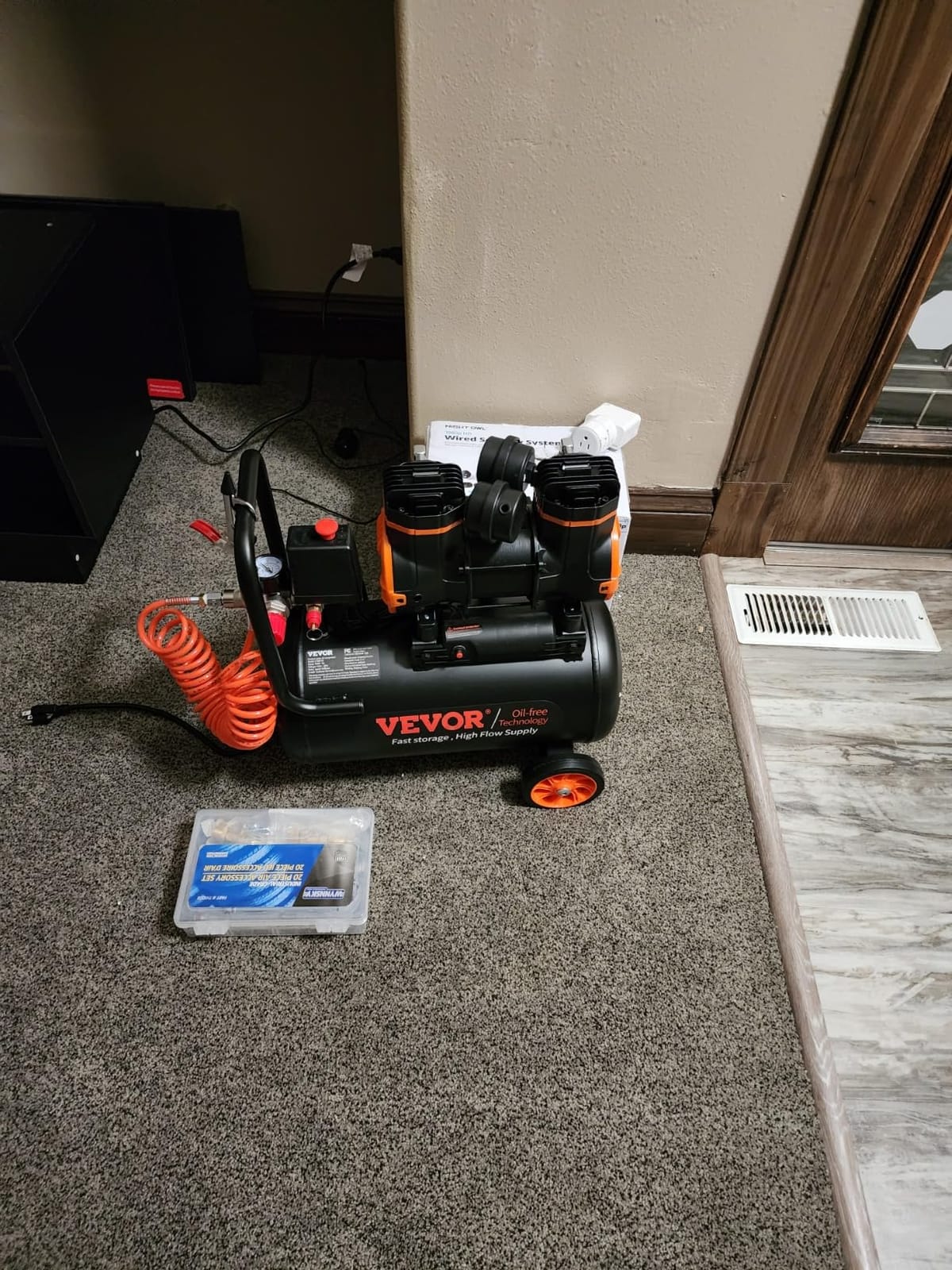
The VEVOR 4.8 gallon is the accessible way into quiet compression. Owners treat it as a budget-friendly unit for tire inflation, spray painting, auto repair and light nailing, and they regularly single out the muffling design as the feature that makes it feel more expensive than it is. Two silencers built from thickened covers, rubber pipes and filter cotton do the work here.
At 34 pounds with casters and foot pads it is easy to reposition, and the three-layer rust-resistant coating over structural steel with seamless welds is a sensible design for a machine that will sit in a damp garage. Two cooling fans plus automatic overheat, overcurrent and pressure relief protection guard the pump, which matters on a small oil-free unit.
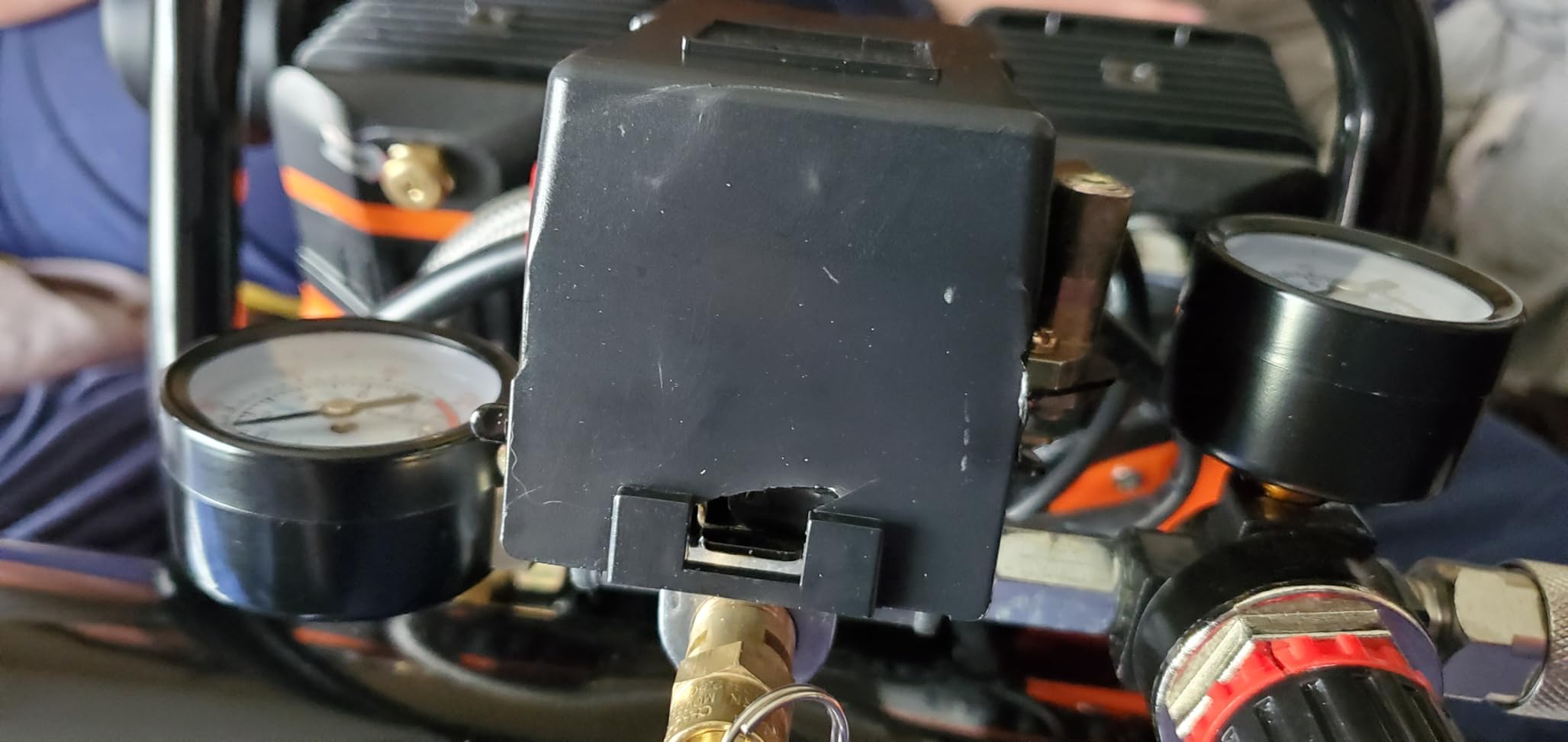
The intake design is worth noting. A double tube and double cylinder intake speeds inflation, and the silicone intake pipe rated to 392 F with a stainless steel braided mesh resists corrosion and damage. For a compressor this small, that is more engineering attention than most competitors put into the entry tier, and owners notice.
What you are trading is capacity. At 4.8 gallons and 2.2 CFM at 90 PSI, this unit needs breaks between bigger tasks, and reviewers describe it that way plainly. It is a machine for short bursts: inflate a tire, blow out a bench, run an airbrush, fit a few trim nails. It is not a machine for a full afternoon of framing.
What a 70 dB budget machine can realistically do
Seventy decibels is acceptable in a detached garage with the door open, and it is where most owners report using it. The sound is a steady hum rather than a rattle, and at typical working distance it stays out of the way for short sessions. For a first compressor used a couple of hours a week, that is a reasonable compromise on quietness for the lower entry point.
Task-wise, tire inflation, blow cleaning, airbrushing and light nailing sit comfortably inside its envelope. The double-cylinder intake helps, and the fast inflation owners describe is the practical benefit of the design. The 116 PSI maximum is the lowest ceiling in this roundup, which is the main reason it does not suit spray work needing more working pressure.
Where the compromises show up
The 4.8 gallon tank refills often, and with 2.2 CFM at 90 PSI that means frequent pauses during anything sustained. Reviewers are clear that it needs breaks between bigger tasks, and that is a workflow change rather than a defect. If you already know your work involves continuous tool use, save up for one of the 8 gallon units earlier in this list.
At 70 dBA it is also the quietest-limit of the group. It suits a shop where you control the hours and the walls, not a converted room or an attached garage where the compressor runs while other people are trying to work or sleep. The 116 PSI ceiling and the small tank are the two limits to plan around, and everything else about it delivers on the quiet promise.
How to Cut Compressor Noise in a Garage
Placement changes more than most buyers expect. Owners across woodworking and tools forums make the same point repeatedly: anti-vibration pads, corner placement and wall insulation make a bigger difference to how loud a compressor feels than the two-decibel gap between two models. A tank bolted to a hardwood floor transmits vibration far more effectively than it transmits sound, and that structure-borne noise is what people actually complain about.
Start with the pads. Isolation pads under each foot cut the low-frequency thump that a compressor sends through a slab, and they are the cheapest improvement available. Next, move the unit into a far corner away from your bench, since distance is the one noise control that is free and works reliably. Keep it clear of the shared wall with a neighbour if you can.
Third, address the walls themselves. Insulating a shared garage wall with dense material does more than any compressor upgrade when noise is travelling outward. Fourth, add a silencer or line filter on the outlet if the harshest part of the sound is the air leaving the tank, which is a common complaint and an easy fix. Finally, run the compressor while you are not standing beside it, because perceived noise drops sharply a few feet away.
One more item that costs nothing: check that the unit is level and that its feet are seated on the floor rather than bridging a joint or a threshold. An uneven unit rocks, and rocking turns a steady hum into an intermittent rattle that reads as much louder than the sound pressure suggests.
Buying Guide: Tank Size, CFM at 90 PSI, Voltage and Layout
Here is how I would size a compressor for a home shop. Match the CFM at 90 PSI to the single most demanding tool you intend to run, and treat that number as the floor. A brad or finish nailer needs roughly 0.3 to 0.7 CFM, a framing nailer or pneumatic sander runs in the 3 to 5 CFM range, and a spray gun wants both airflow and stable pressure. Buying for your average task means buying the wrong machine.
Then size the tank so recovery stays under a minute. A larger tank does not make a compressor quieter, which is a common misconception, but it does mean fewer motor starts per unit of work, and fewer starts mean less noise and less wear over the life of the machine. It also absorbs the short bursts that cause small tanks to short-cycle. If a compressor short-cycles, the pump is wearing itself out faster than the clock suggests.
Oil-free means continuous duty is off the table. Every unit in this roundup uses an oil-free pump, which is the right call for a home shop because of the noise and cleanliness, but it also means giving the machine breaks. If you genuinely need to run air for hours at a stretch, an oil-lubricated pump handles that better. In a home garage, the air-free approach wins on maintenance and mess.
Voltage is the decision most first-time buyers get wrong. Anything drawing more than about 12 amps generally deserves a dedicated 15 or 20 amp circuit rather than a shared wall outlet, and compressors of 2 HP and up frequently will not start reliably on a general-purpose circuit. The Stealth 20 gallon and the California Air Tools 10020C are the two units here that push hardest on this. If you are unsure about running a new circuit, an electrician is cheaper than a tripped breaker in the middle of a framing job.
Layout is a garage-size question. Vertical tanks give you capacity in a footprint that leaves floor space for the car and the bench, which in a one-car garage is usually the deciding factor. Horizontal tanks are easier to load and service in some layouts, but they claim considerably more floor. Wheels matter more than the specification sheet suggests, because you will move the unit several times in its life.
Finally, weigh service and parts. Long-term ownership reports are more informative than star ratings, and the patterns in this category are clear. Oil-free pumps with slow-turning induction motors tend to last when treated as intermittent machines, and brands with widely available replacement switches, pressure switches and fittings save you the most trouble when something eventually fails. The Campbell Hausfeld in this roundup has the strongest multi-year ownership reports for exactly that reason.
Frequently Asked Questions
How many decibels is considered a quiet air compressor?
For a home shop, 60 dBA or lower is the practical target. That is roughly the volume of a normal conversation at arm’s length, so you can work beside the machine without raising your voice. Between 60 and 68 dBA is acceptable in a detached garage, while anything above 70 dBA becomes intrusive during long sessions. Published figures are measured in favourable conditions, so treat them as a ranking rather than a promise.
What is the quietest air compressor for a home shop?
The California Air Tools 1P1060S is the quietest by specification in this roundup at 56 dBA, and at 29 pounds it is also one of the easiest to move between rooms. For a compressor with a usable tank, the California Air Tools 8010A at 60 dBA in an 8 gallon tank is the quieter and more capable choice, while the Makita MAC100Q pairs 58 dB with a 135 PSI ceiling for trim work.
What size air compressor is best for a home garage?
For most one-car garages, an 8 gallon tank delivering around 2.4 to 2.8 CFM at 90 PSI covers finish nailing, stapling, airbrushing, cleaning and inflating. Move to 10 to 13 gallons if you want a little more reserve for tire work and spraying, and to 20 gallons with 5 CFM if you regularly run a framing nailer or pneumatic sander. Match CFM to your most demanding tool, not your average task.
Is 78 dB loud for an air compressor?
Yes. 78 dB is at the loud end of this category and is measured by owners of some quiet-rated units standing directly beside the pump. The same machine typically settles near 65 dB at eight to ten feet away, which is the reading that reflects daily use. If your shop is a converted room or an attached garage, 78 dB at arm’s length is too loud and you should choose a unit rated at 60 dB or below.
Is a bigger tank better for an air compressor?
A bigger tank does not make the compressor quieter, but it reduces the number of motor starts per unit of work and absorbs short tool bursts without short-cycling. Fewer starts means less noise per task and less wear on the motor and pressure switch. The limit is airflow: a large tank paired with a small motor still refills slowly, so match tank size and CFM at 90 PSI together rather than buying capacity on its own.
Are oil-free compressors quieter than oil-lubricated ones?
Yes. Oil-free pumps eliminate the lubrication chatter and the oil misting noise of lubricated designs, and they need no oil changes, which is why every unit in this roundup is oil-free. The tradeoff is duty cycle: oil-free pumps are built for intermittent use and will overheat if run continuously. For sustained production work lasting hours, an oil-lubricated pump is the better choice despite the extra maintenance.
Final Verdict for Home Shop Buyers in 2026
The California Air Tools 8010A is our pick across the best quiet air compressors for home shops because it balances everything a garage actually needs: a 60 dBA rating, an eight gallon tank that refills in under three minutes, a 37 pound weight you can move yourself and a standard 110V connection. For finish work done in a room rather than a detached garage, the 1P1060S at 56 dBA and 29 pounds is quieter and easier to live with, and the Makita MAC320Q is the pick when your air tool cannot tolerate a pressure dip.
Push the tank larger only when your tools demand it, and remember that placement, isolation pads and distance do more for daily comfort than a two-decibel specification gap. Check the CFM at 90 PSI against your most demanding tool, not your average one, and give any oil-free pump breaks between big jobs. Get the matching tool details on our site, then pick the compressor that fits your garage and your schedule.