

A converted garage is a hard room to heat. You are dealing with a concrete slab that pulls heat straight out of the air, ceiling joists that leak, a roller door with a gap along the bottom, and often 8 to 10 foot ceilings that let every warm molecule rise and collect above your head. Add a microphone, a mic stand, and a mixing desk, and the choice stops being purely about heat output.
That is why the best space heaters for garage studios are not simply the most powerful ones. A 240V fan-forced ceiling unit will heat a two-car space faster than anything else you can bolt to a joist, but its blower is audible on a nearby condenser or shotgun mic. A quiet oil-filled radiator will never wake up your takes, but it will not raise the temperature in a drafty 400 square foot workshop either.
We compared 12 heaters across radiant propane, fan-forced electric, carbon infrared and oil-filled convection, weighing BTU output against decibel rating, electrical requirements and coverage area. The picks below cover the whole range of garage studio projects, from a one-car writing room to a 1000 square foot workshop, plus the freeze-protection setups people run between sessions.
Table of Contents
Top 3 Picks for Garage Studios (September 2026)
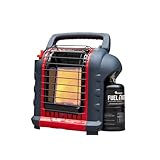
Mr. Heater Buddy 9,000 BTU
- Dual 4000/9000 BTU radiant output
- Indoor and outdoor rated
- About 5.4 hours on low per 1 lb cylinder

Mr. Heater Big Buddy PRO
- Radiant plus convection fan
- 4000/9000/18000 BTU settings
- Covers up to 450 sq ft
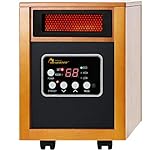
Dr Infrared DR-968 1500W
- Quartz tube plus PTC hybrid
- Rated 39 dB blower
- Electronic thermostat 50 to 85 F
Best Space Heaters for Garage Studios at a Glance in 2026
Every heater below is rated by its manufacturer, and the coverage figures are the ones the brands publish rather than our own estimates. Where reviewers report a smaller real-world number, we say so in the individual entry.
| Product | Specs | Action |
|---|---|---|
| Mr. Heater Buddy 9,000 BTU Radiant Propane Heater |
|
Check Latest Price |
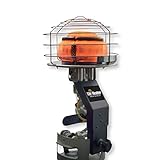 Mr. Heater 45,000 BTU Tank Top Radiant Propane Heater Mr. Heater 45,000 BTU Tank Top Radiant Propane Heater |
|
Check Latest Price |
| Mr. Heater 18,000 BTU Big Buddy PRO Series Heater |
|
Check Latest Price |
| Dr Infrared DR-968 1500W Portable Space Heater |
|
Check Latest Price |
 GASLAND Flame Jet 125,000 BTU Propane Force Air Heater GASLAND Flame Jet 125,000 BTU Propane Force Air Heater |
|
Check Latest Price |
 Comfort Zone 5000W 240V Ceiling Mount Garage Heater Comfort Zone 5000W 240V Ceiling Mount Garage Heater |
|
Check Latest Price |
 Comfort Zone 7500W 240V Ceiling Mount CZ230ERBK Comfort Zone 7500W 240V Ceiling Mount CZ230ERBK |
|
Check Latest Price |
 Dura Heat Reddy 30,000 BTU Double Tank Top Heater Dura Heat Reddy 30,000 BTU Double Tank Top Heater |
|
Check Latest Price |
 Dr Infrared DR-238 Carbon Infrared Wall and Ceiling Heater Dr Infrared DR-238 Carbon Infrared Wall and Ceiling Heater |
|
Check Latest Price |
 Shinic 1500W Metal Milkhouse Heater with Thermostat Shinic 1500W Metal Milkhouse Heater with Thermostat |
|
Check Latest Price |
 DeLonghi EW7707CM Oil Filled Radiator Heater DeLonghi EW7707CM Oil Filled Radiator Heater |
|
Check Latest Price |
 DREO 30 Inch PTC Tower Heater with Remote DREO 30 Inch PTC Tower Heater with Remote |
|
Check Latest Price |
1. Mr. Heater 9,000 BTU Portable Buddy Radiant Propane Heater – Best Overall for Garage Studios
Mr. Heater 9,000 BTU Portable Buddy Radiant Propane Heater
Radiant propane
4000 or 9000 BTU
Covers about 225 sq ft
Indoor and outdoor rated
7.1 pounds
Pros
- Dual 4000 and 9000 BTU radiant output
- Indoor and outdoor approved
- Low oxygen safety system and self extinguishing build
- Runs about 5.4 hours on low per 1 lb cylinder
- Light and easy to reposition
Cons
- Rated for only about 225 sq ft
- Propane cylinder not included
- Does not move air around the room
The Buddy is the heater I recommend first for most converted garage studios, and the reason is that it needs no wiring at all. If your garage has no spare circuit and no headroom on the panel, this unit runs on a screw-on propane cylinder and puts 9,000 BTU of radiant heat directly at the work position within seconds of ignition.
That instant radiant response is exactly what a studio room needs. Turn it on, point it at your chair, and you feel warmth immediately rather than waiting 20 minutes for a convection unit to move energy through cold air.
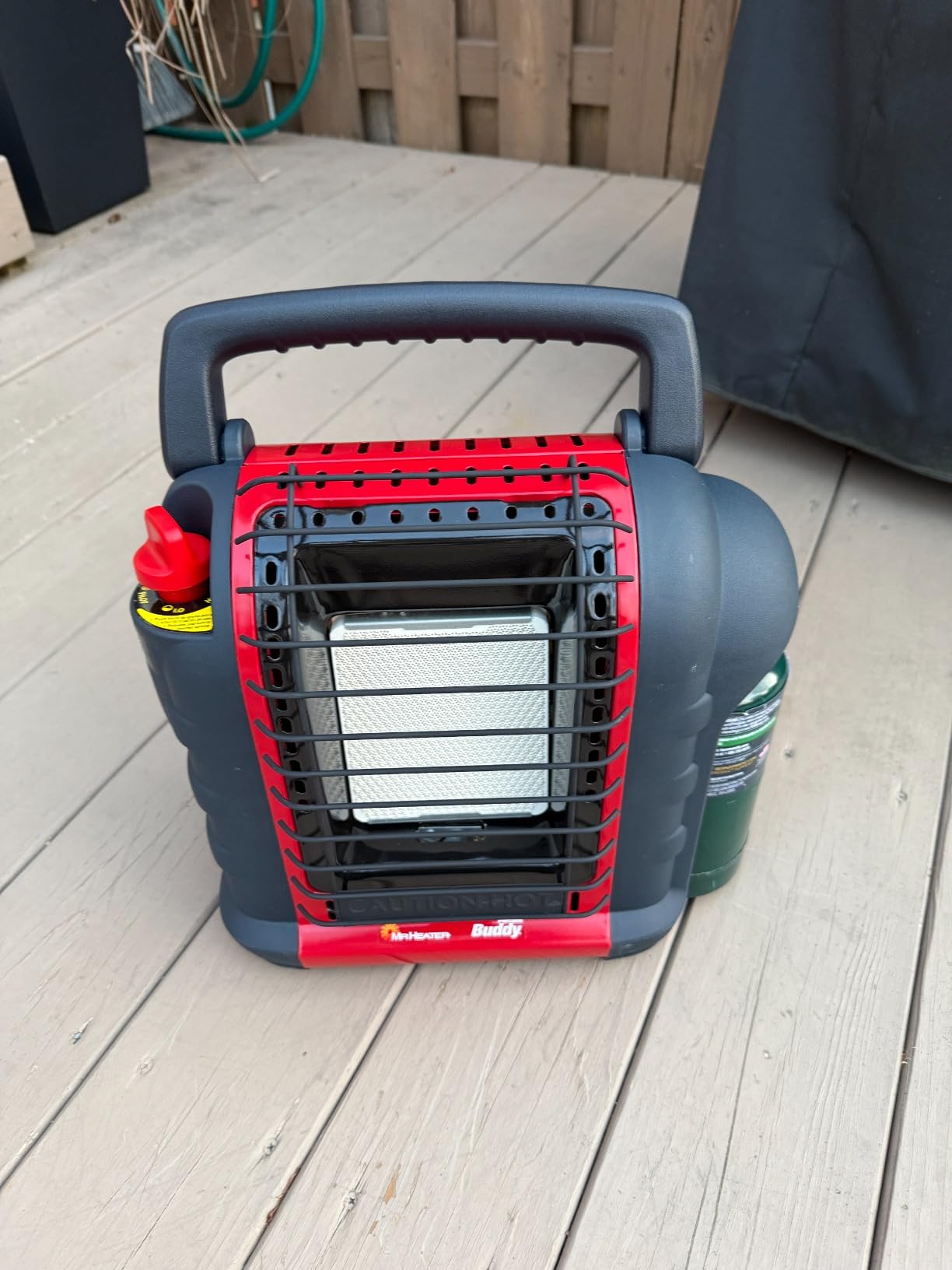
The 225 square foot coverage figure is the honest limit here, and reviewers mention it more than anything else. This is a personal-zone heater, not a room heater. One owner on a forum building a pottery shed described running a larger main heater for the space and keeping a small convection unit purely for freeze protection, which is a pattern that works with a Buddy as the session heater.
The low oxygen safety system and self extinguishing construction matter in a space where a heater can sit unattended for hours between takes. It is approved for both indoor and outdoor use, so the same unit works in a half-open garage bay in July and a closed mixing room in January.
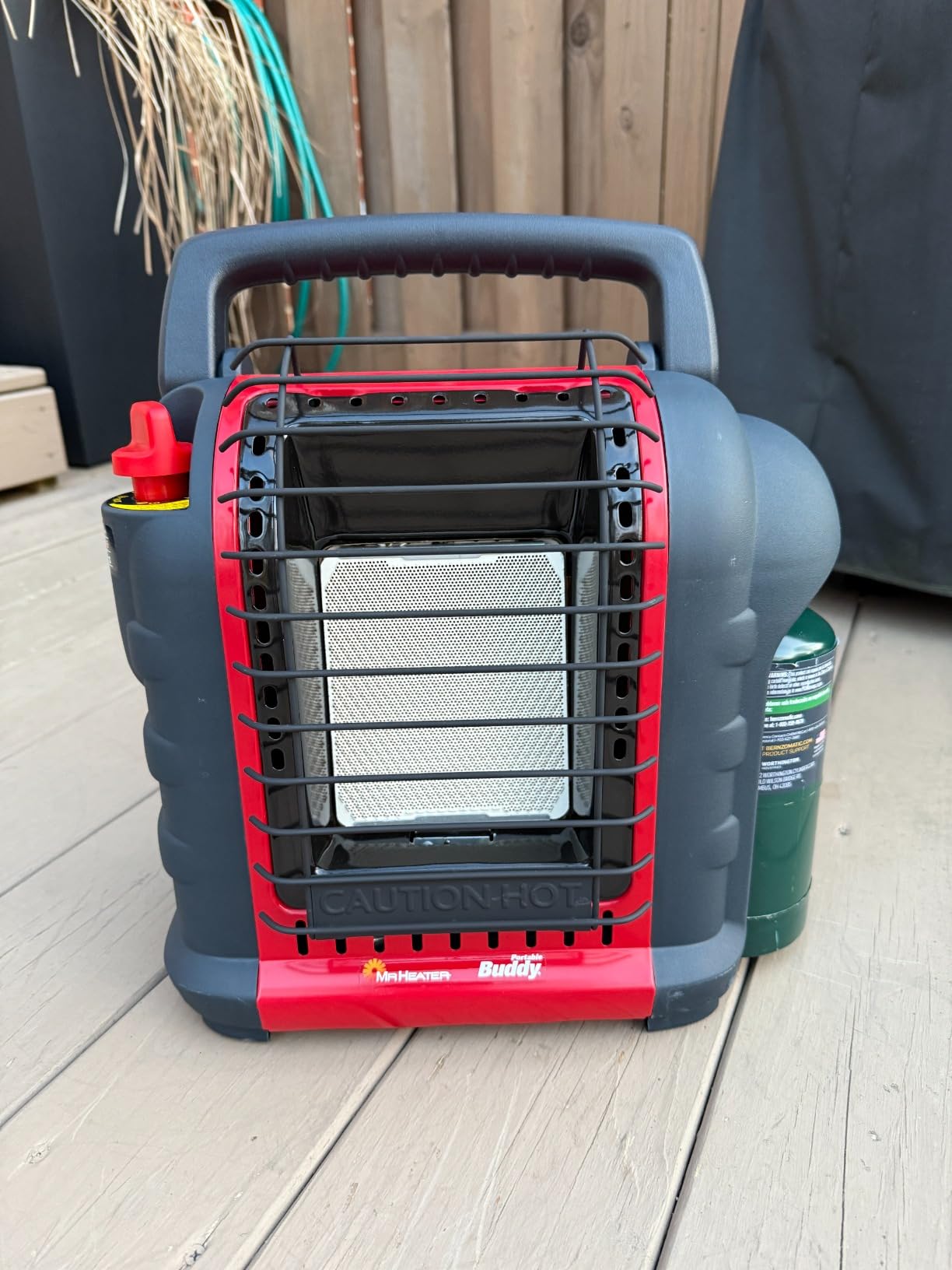
Is the Buddy quiet enough to record next to?
There is no motor, so there is no fan hum and no coil whine. The only noise is the small click of the piezo igniter and a faint combustion roar that sits far below the level of conversation. For vocal tracking at close range it is one of the safer choices in this roundup.
The flip side is that it heats you, not the room. If the air and gear temperature still matters, you need something else doing the background work.
When the Buddy is the wrong choice
A finished, enclosed studio with sealed walls is a poor match. Propane needs ventilation, and a combustion heater in a tightly sealed room creates a carbon monoxide question that no heater on this list can answer for you.
It also will not heat a two-car bay. A 400 square foot space with 10 foot ceilings needs roughly 5,000W of hard-wired output or a much larger propane unit, and buyers who expect 225 square feet to scale up will be disappointed.
2. Mr. Heater 45,000 BTU Tank Top Radiant Propane Heater – Best for Large Open Garage Spaces
Mr. Heater Original 540-Degree 45,000 BTU Tank Top Radiant Propane Heater
Radiant propane
30000 to 45000 BTU
Up to 1125 sq ft
Outdoor use only
5.6 pounds
Pros
- Very high 45000 BTU radiant output
- Three position regulator at 30000 to 45000 BTU
- Mounts directly to a 20 lb tank
- About 9.5 hours of run time on high
- Tip over shutoff with a 540 degree swivel head
Cons
- Outdoor use only so not for a closed studio
- 20 lb propane tank sold separately
- Warms the person in front of it rather than the air
This is the heater for a garage that is big, drafty and uninsulated, where you want warmth in the first five minutes and you are not going to run an electrician. At 45,000 BTU it is the second highest output in this roundup, and reviewers regularly describe it lifting a large workshop or garage bay from near-freezing to workable in a short session.
The 540 degree swivel head is what makes it usable as a working heater rather than a campfire. You aim the cone at a bench, a work stool, or a spot on the concrete where someone stands, and the radiant energy lands where it is needed instead of drifting up to the joists.
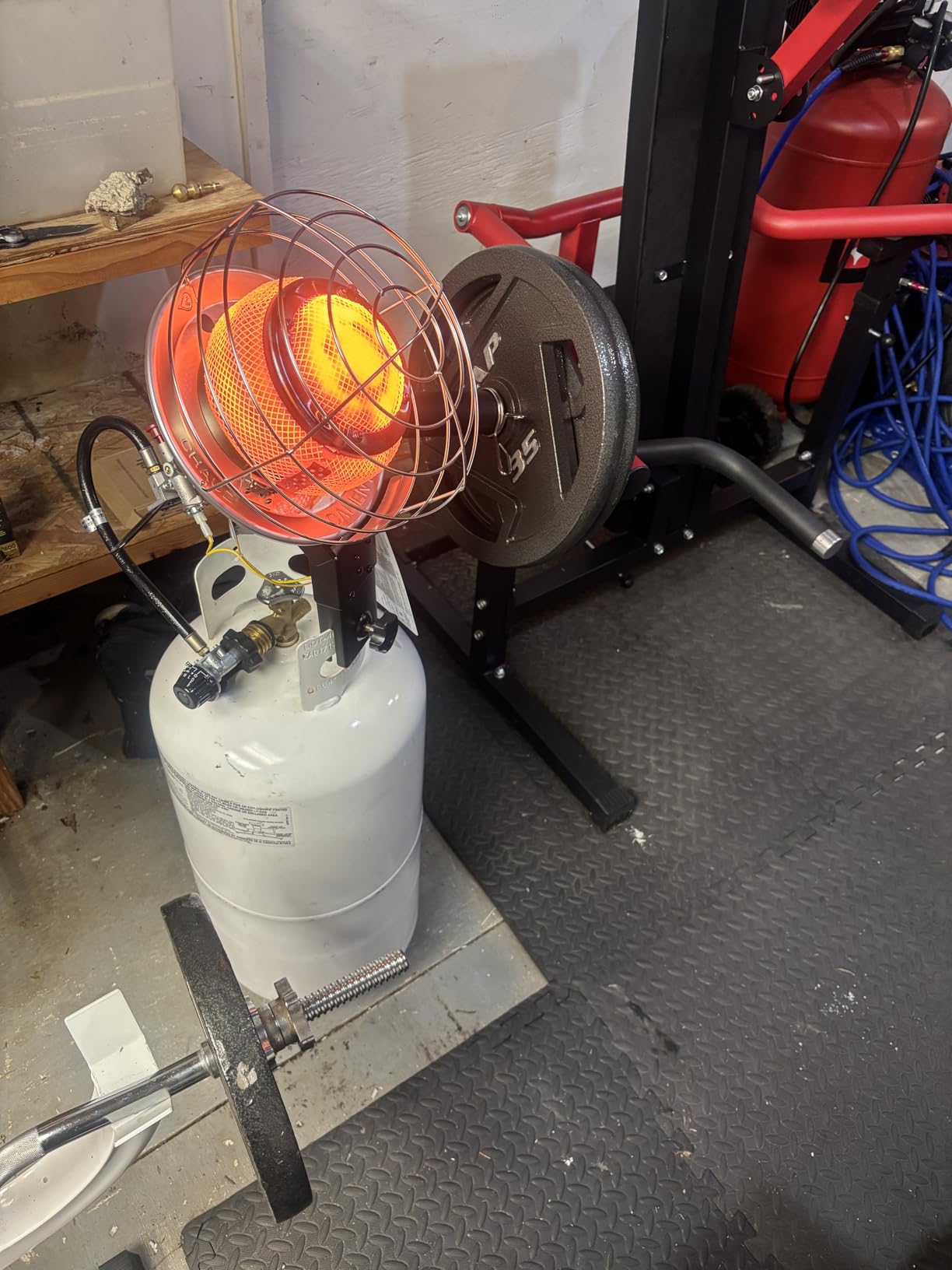
Because it clamps straight onto a 20 lb tank collar, moving it between the garage and a side yard takes one hand and no tools. Reviewers mention the roughly 9.5 hour run time on high as the practical surprise, since most garage users expect propane heaters to be through a tank far faster than that.
The design is listed as outdoor only, and that rating is the one thing to respect. Run it in a closed room and you have created a ventilation problem that no amount of good intentions solves.
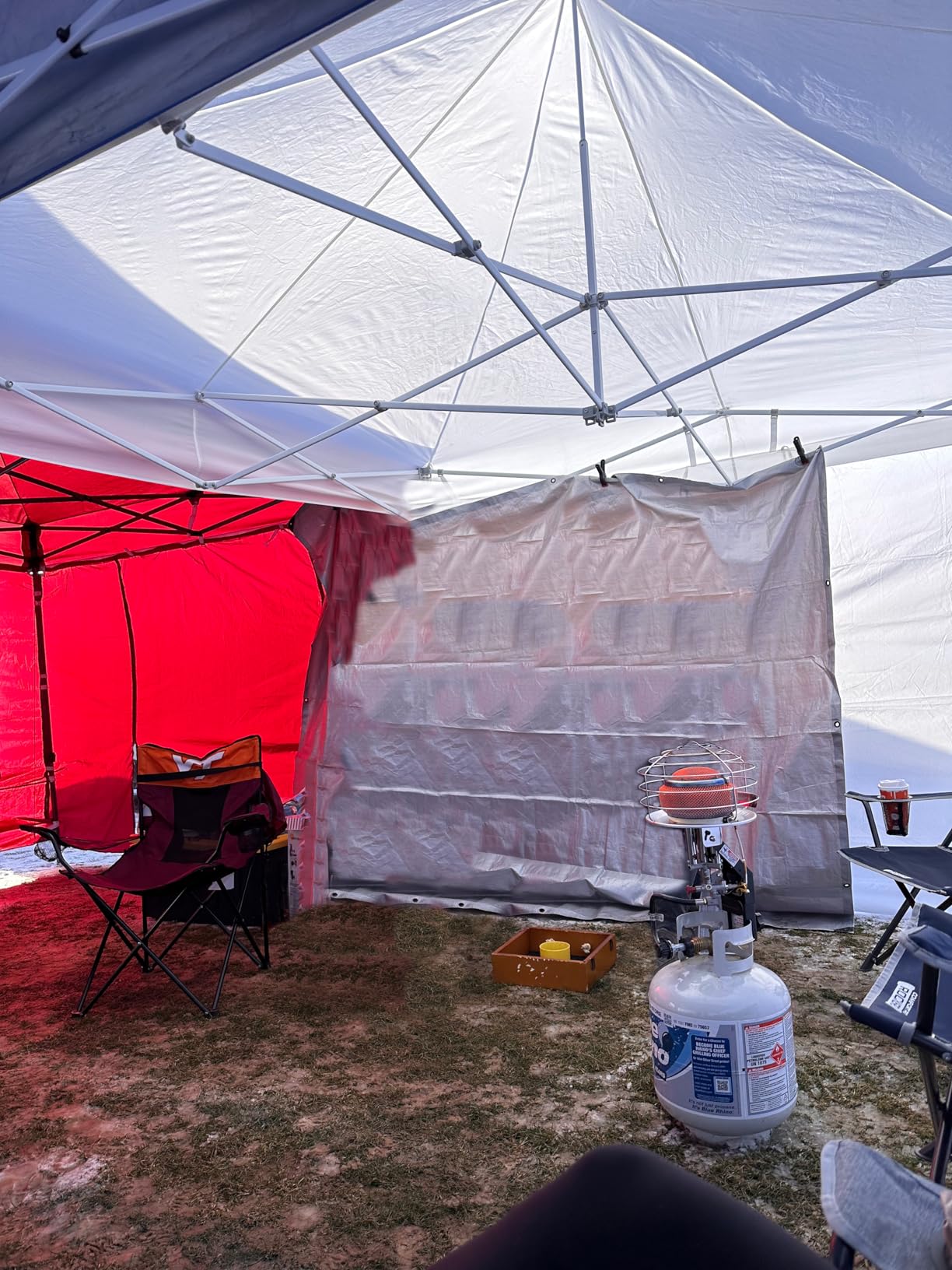
How much area does 45,000 BTU really cover?
The manufacturer rates it for up to 1,125 square feet. Treat that as a well-insulated figure. In an uninsulated bay with a leaky door, the honest expectation is the zone directly in front of the head, not the full footprint.
Radiant output does not scale linearly with distance. Coverage numbers for radiant propane units assume a person sitting still within a few feet of the cone.
Why the outdoor-only rating matters in a studio
Any propane heater in a finished room needs a combustion appliance that is rated for that enclosure, or permanent ventilation. A unit sold as outdoor equipment fails that test on paper even if it runs fine for a season.
For enclosed studio work, treat this as a garage bay heater and use an electric unit indoors.
3. Mr. Heater 18,000 BTU Big Buddy PRO Series – Best for Full-Room Propane Heat
Mr. Heater 18,000 BTU Big Buddy PRO Series Heater
Radiant plus convection fan
4000 9000 or 18000 BTU
Heats up to 450 sq ft
Indoor and outdoor
3 year warranty
Pros
- Only portable propane unit here with a built in convection fan
- Three heat levels from 4000 to 18000 BTU
- Heats up to 450 sq ft
- Up to 216 hours on two 20 lb tanks on low
- Low oxygen shutoff and tip over protection
Cons
- Heaviest portable propane unit in this group at 14.1 pounds
- Needs clearance and ventilation at full output
- Propane and optional hose sold separately
The Big Buddy PRO solves the problem that stops most people choosing propane: radiant heat alone warms a person but leaves the rest of the room cold. This one pairs the radiant element with a built-in convection fan, so it both throws heat at you and moves air through the space.
At 450 square feet of rated coverage it has the widest indoor-rated coverage of the portable propane heaters in this roundup, and the 18,000 BTU high setting is what a two-car bay or a well-insulated one-car conversion needs to reach a comfortable working temperature.
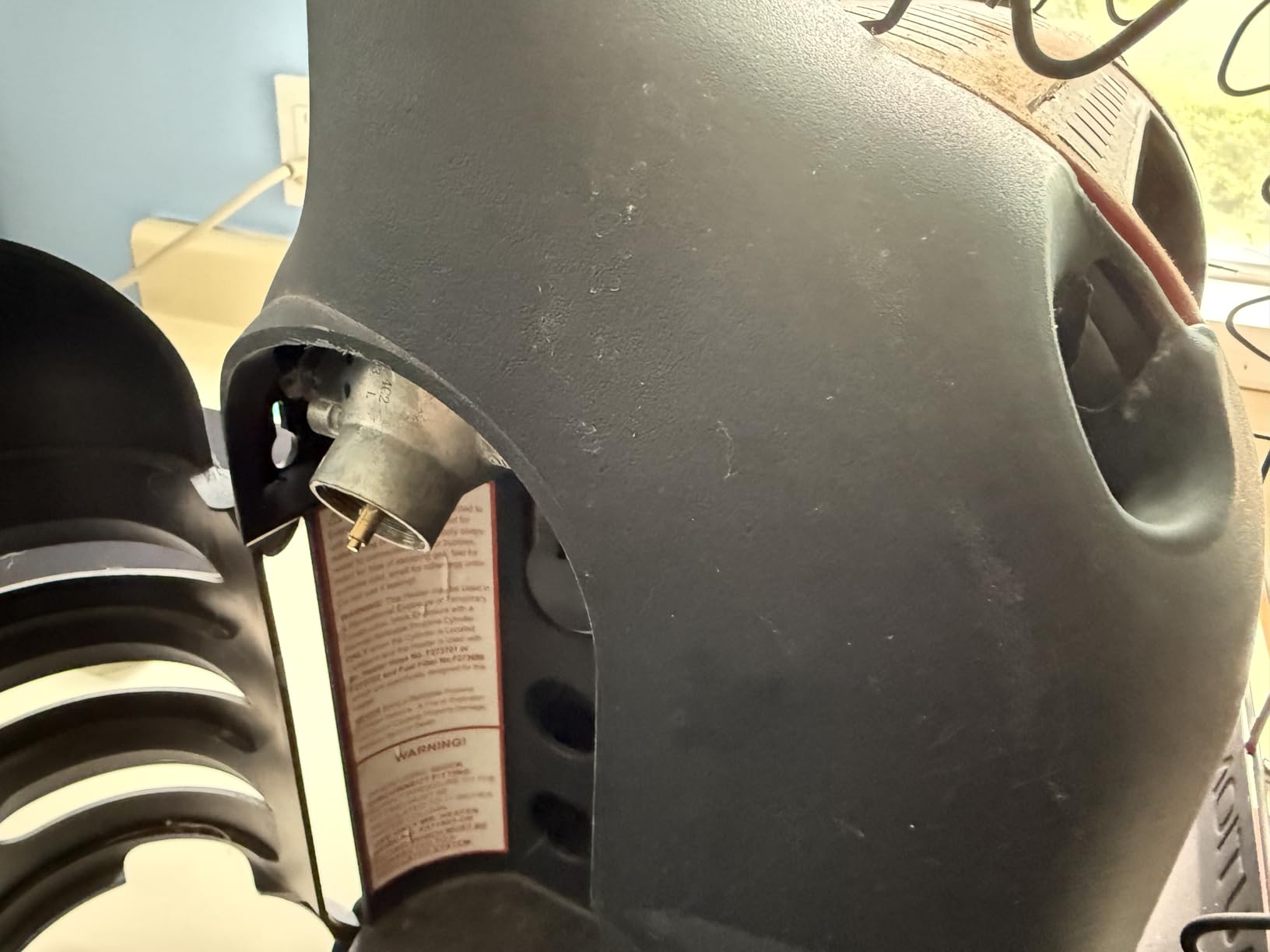
Reviewers highlight the three heat levels as the practical control. Run 4,000 BTU during a rehearsal when people are moving, and 18,000 BTU when you need the space warm before a session starts. The low setting is also where the runtime figures get generous, with up to 216 hours claimed on two 20 lb tanks.
At 14.1 pounds this is the heaviest portable propane unit here, and you will feel that every time you move it. The three year warranty is among the longest offered in this roundup.
Is the convection fan a problem for recording?
It is a real trade-off. The fan is a small motor running continuously, so it produces a low hum that most people stop noticing after a few minutes but that can show up on a close mic during a quiet take.
If you record vocals in the same room, park it in the corner and run it on low. If you mix on monitors in the same room, the hum is usually masked by the audio.
Does a 18,000 BTU propane heater need clearance?
Yes. A unit this size needs a burn zone of clear air and a ventilated space, which is why reviewers describe it working best in a larger open area rather than a small closed room.
A carbon monoxide alarm in any room where a combustion heater runs is worth the cost. That is a general safety practice rather than a model-specific rule.
4. Dr Infrared DR-968 1500W – Best Value Electric Heater for a Garage Studio
Dr Infrared Heater DR-968 Portable Space Heater, 1500-Watt, Cherry
1500W at 120V and 12.5 amps
Quartz tube plus PTC
5200 BTU rated
39 dB blower
Casters and remote
Pros
- Hybrid quartz and PTC system rated around 60 percent more output than standard ceramic
- Very quiet 39 dB blower
- Electronic thermostat from 50 to 85 F with a 12 hour timer
- Caster wheels and a 72 inch cord
- Overheat and tip over protection
Cons
- Marketed coverage is optimistic and owners report closer to 250 to 600 sq ft
- Internal thermometer can read high
- Draws 12.5 amps so it needs a dedicated circuit
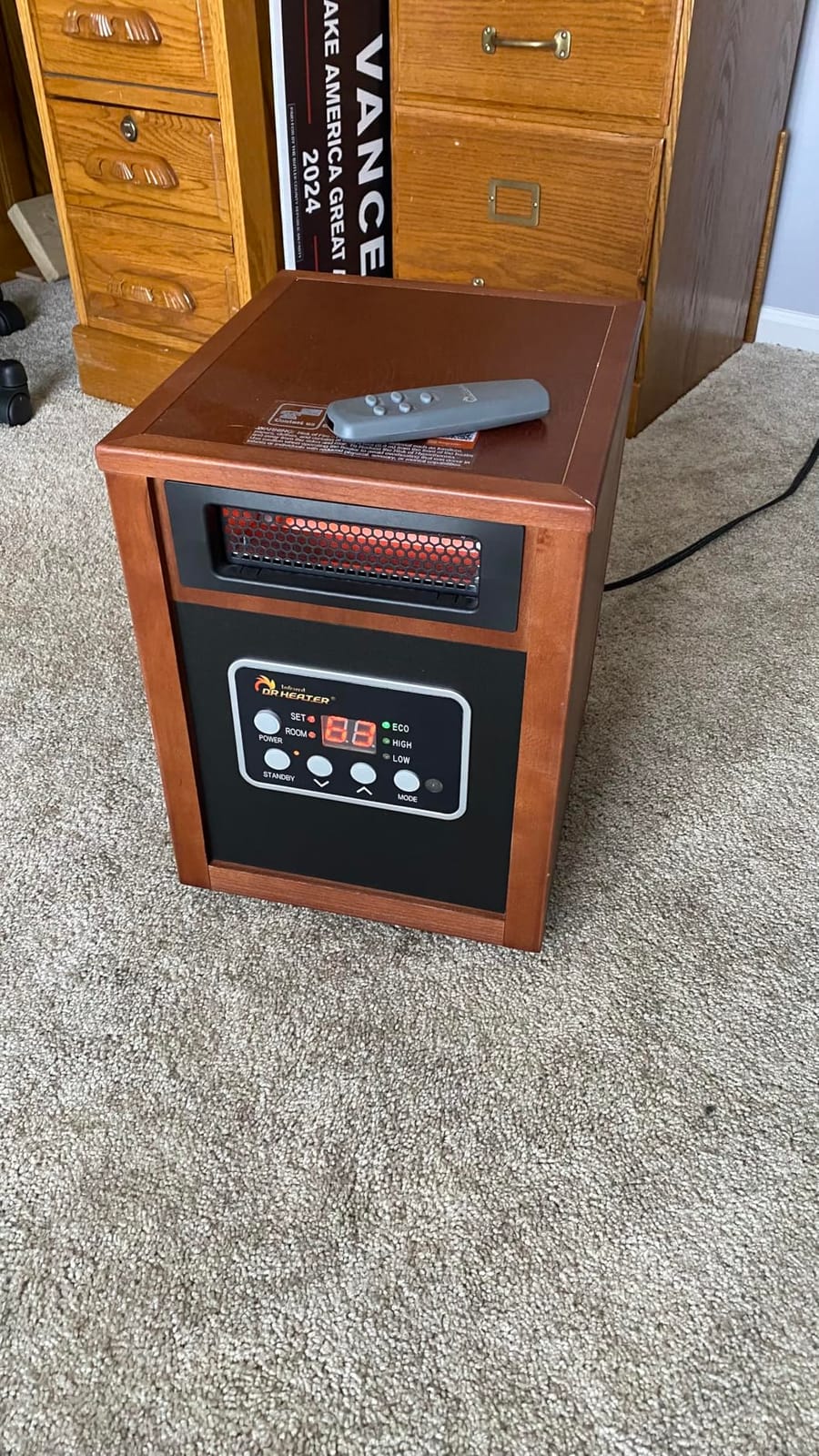
With close to 28,000 reviews at 4.5 stars, the DR-968 is the most proven 1500W heater in this roundup, and it is the pick for a one-car garage converted into a writing, rehearsal or small tracking room. The hybrid infrared quartz tube and PTC element is what separates it from the plastic-bodied cabinet heaters in the same price band.
At 39 dB it is quiet enough to record beside. The blower is not silent, but it sits at a level where most engineers do not think about it once the take has started.
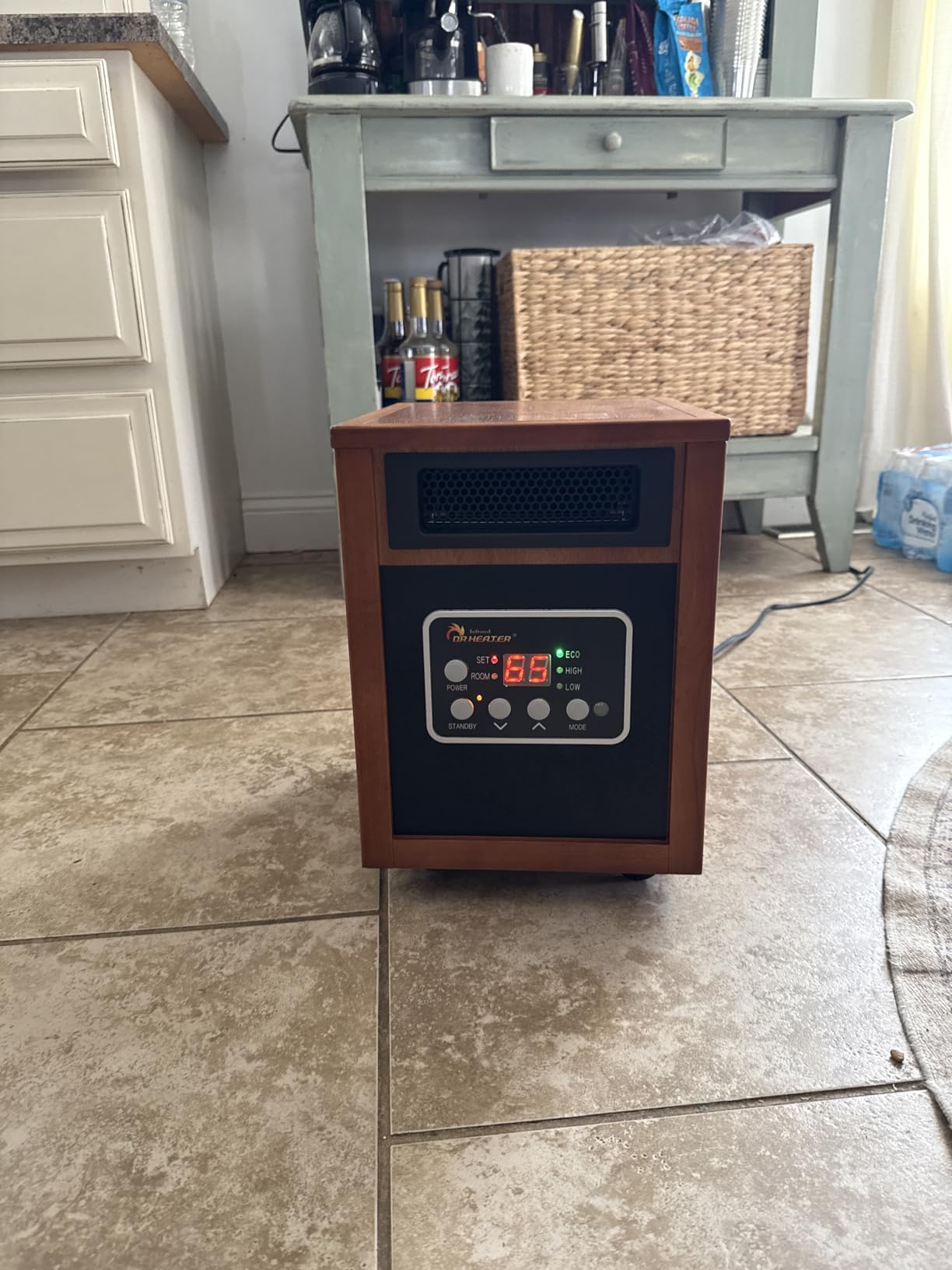
The electronic thermostat covers 50 to 85 degrees with a 12 hour auto shut-off timer, which is more control than most garage heaters offer. Caster wheels and a 72 inch cord mean you can roll it out of the way when the space is being used for storage or a mix.
Be honest about the coverage. Owners repeatedly report a real-world figure closer to 250 to 600 square feet rather than the 1,000 square feet in the marketing copy, and a number of them note the internal thermometer reads a little high compared with a separate room thermometer.
Will a 1500W heater warm a drafty garage?
Not by itself. At 1500 watts and 12.5 amps it draws close to a full 15 amp circuit, and the output is designed for a closed room. In an uninsulated bay you will be running it continuously with little change in room temperature.
One user on a heating advice forum described a well-insulated 2.5-car garage in Vermont where an electric heater rated for the square footage was genuinely sufficient. Insulation is the variable that decides this, not the wattage on the box.
What is the 39 dB blower like in a room?
It is closer to a soft hum than to shop noise. At a normal speaking distance it disappears under conversation, which is why it works in podcast and voice-over rooms where a fan-forced shop heater does not.
The 5200 BTU rating comes from the quartz tube element, not the PTC portion. A drafty space with heavy air leakage will still pull heat out through the slab and the door.
5. GASLAND Flame Jet 125,000 BTU Propane Force Air Heater – Best for Workshops That Need Fast Whole-Space Heat
GASLAND 125,000 BTU Propane Force Air Heater for Garage, Heat Up 3100 Sq.Ft
Forced air propane
75000 to 125000 BTU
Covers up to 3100 sq ft
CSA certified
Includes hose and regulator
Pros
- Highest output in the roundup at 125000 BTU
- Forced air design spreads heat across the room
- Variable output from 75000 to 125000 BTU
- 10 ft hose and regulator included
- CSA certified with overheat detection
Cons
- Requires a well ventilated space and is not for enclosed rooms
- Runs about 5 hours on low from a 20 lb tank
- Combustion burner is louder than electric units
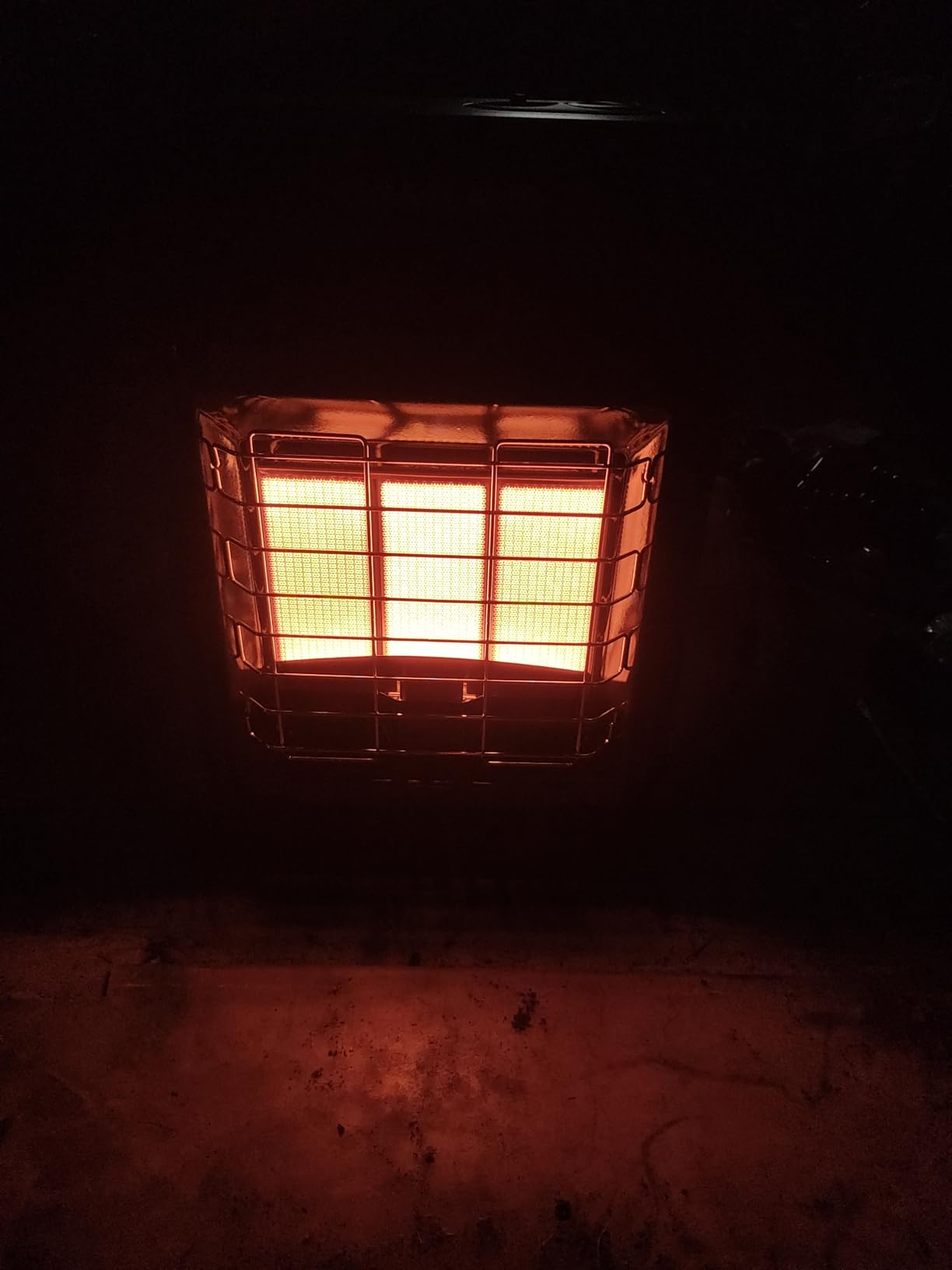
The Flame Jet is the brute force option. At 125,000 BTU it is by a wide margin the highest output in this roundup, which is what makes it the practical answer for a large workshop bay, a barn conversion, or a space that is being used for several hours at a time without a break.
Forced air is the difference from a radiant unit. Instead of warming one zone, it throws a wide stream of hot air across the whole floor, which is what you want in a two-car garage used as a rehearsal room or a shop.
Two things make it easier to live with than the raw number suggests. Output is variable from 75,000 to 125,000 BTU, so you can drop it back once the space is warm, and the 10 foot hose and regulator are included, so it connects to a standard 20 lb tank without a separate purchase.
The costs are ventilation and noise. A burner this size is loud enough that it is not a recording room companion, and the roughly 5 hour low-setting runtime from a 20 lb tank means fuel planning matters for a full day of work.
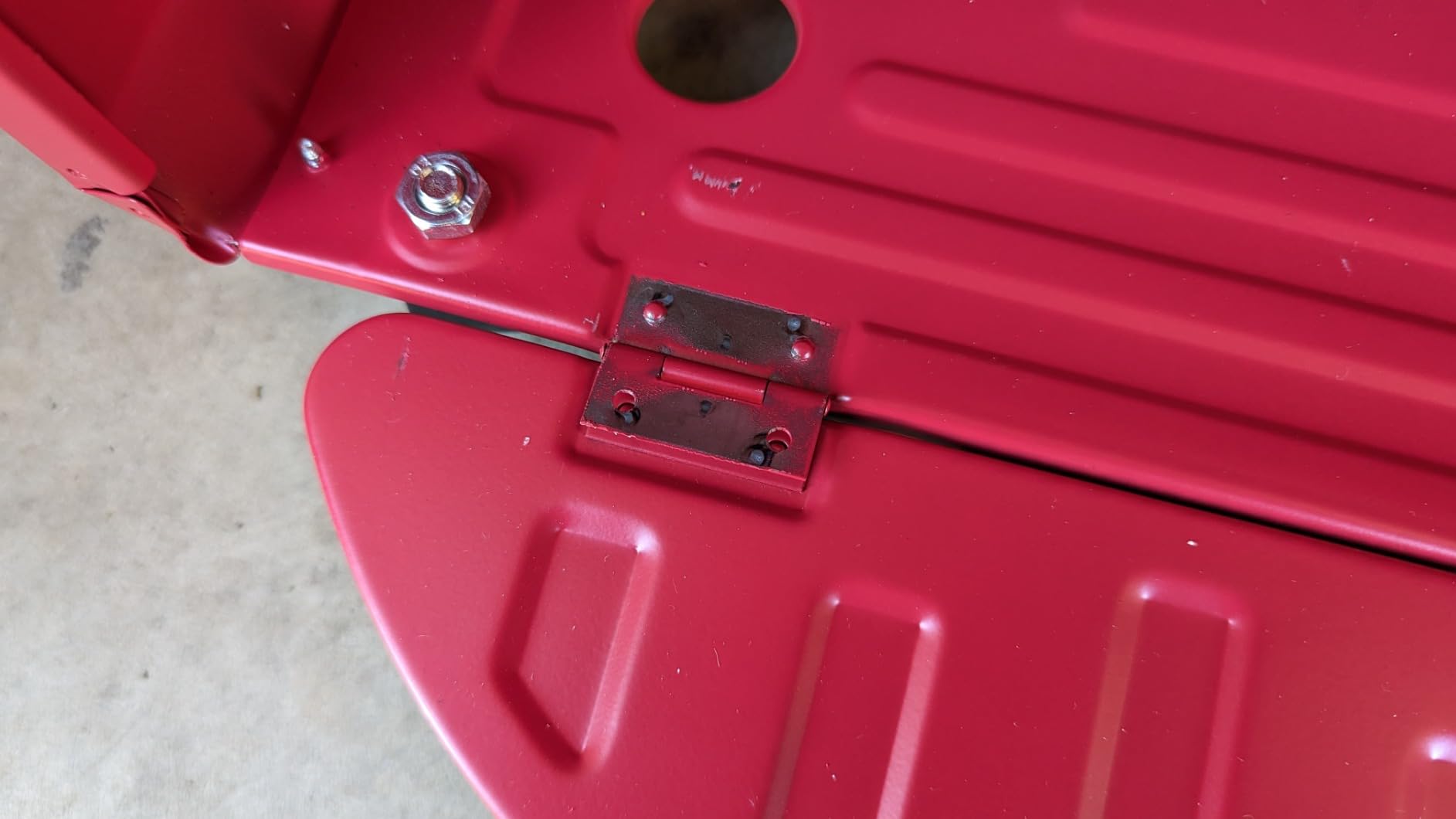
Can a 125,000 BTU heater run in an enclosed room?
No. Reviewers are consistent on this point. Combustion at this output needs a well-ventilated space, and the unit is not rated for enclosed rooms or for a finished interior studio.
Use it in a garage bay with the door open, and keep a combustion alarm in any space where it operates.
How loud is a forced air propane burner?
Noticeably louder than any electric heater in this list, and that is a physical consequence of moving air with a large fan driven by a burner. It works well in a shop where a compressor is already running.
For a mixed-use room where someone records during the day, run it only while nobody is capturing audio.
6. Comfort Zone 5000W 240V Ceiling Mount Garage Heater – Best for Big Garages on a Standard Panel
Comfort Zone 5000W Ceiling Mounted Garage Heater – 240V Electric Shop Heater with 3 Heat Settings, Overheat Protection, Indoor Use, ETL Listed, Grey
5000W hard-wired at 240V
About 1000 sq ft coverage
20.83 amps
Ceiling mounted
Overheat protection
Pros
- Ceiling mount clears all floor and bench space
- 5000W covers about 1000 sq ft
- Heavy gauge steel body
- Louvers and adjustable mounting angle
- Dual knob thermostat with overheat sensor
Cons
- Requires a hard-wired 240V circuit
- Cold 5 foot lead usually needs a conduit run
- Manual thermostat is less precise than digital
At 5,000W on a 240V circuit, this is the unit that solves a real converted garage rather than a corner of one. A rated 1,000 square feet of coverage lines up almost exactly with the 24×24 garage that shows up in nearly every sizing question about this topic.
The ceiling mount is the reason it suits a studio layout. In a room with amps, mic stands, a rug and a desk, floor space is the scarcest resource, and a fan-forced unit overhead keeps all of it usable.
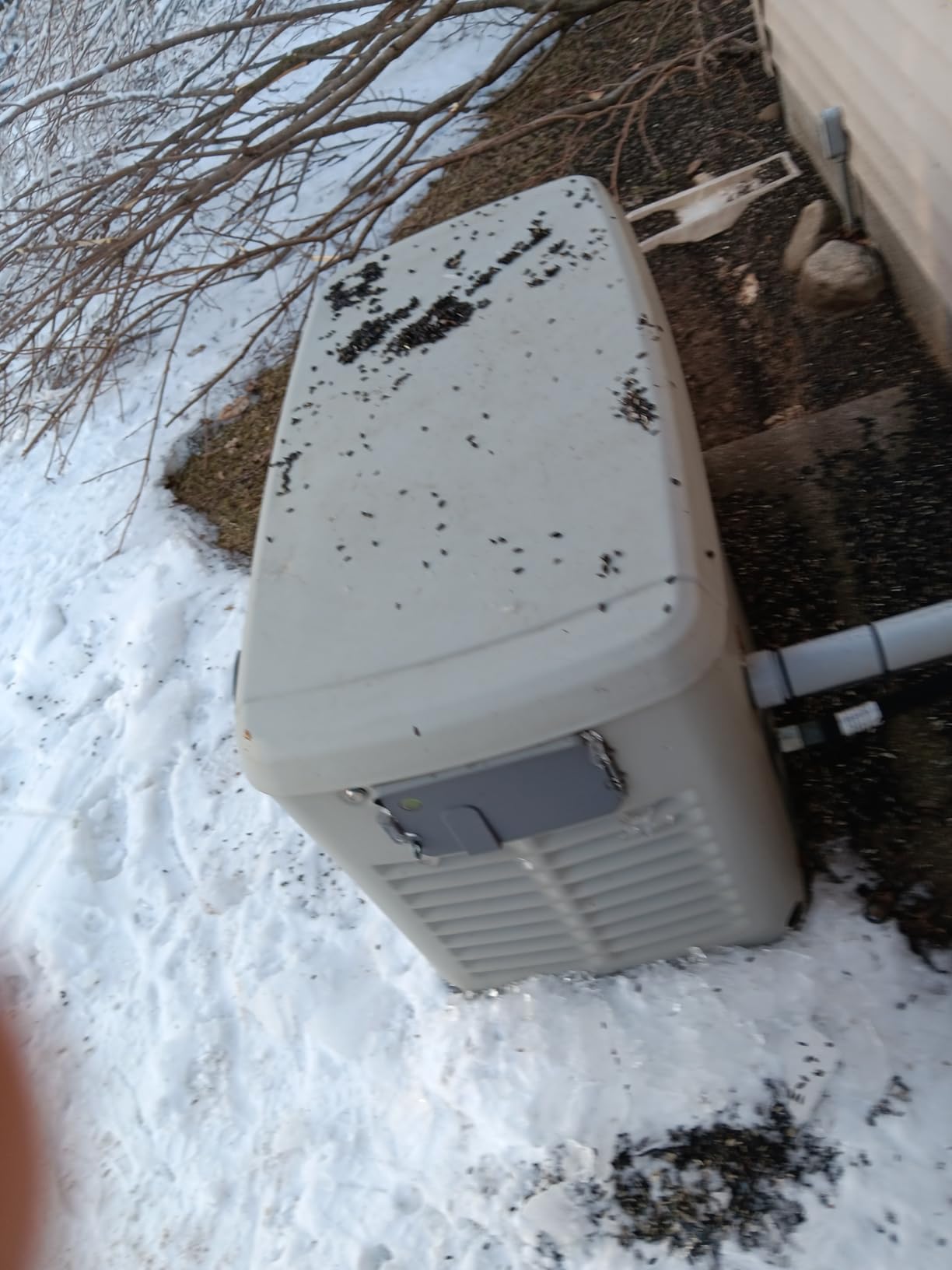
The heavy gauge steel housing is built for the temperature swings of a poorly insulated space, which is exactly the environment most garage studios live in. Louvers plus an adjustable mounting angle let you aim the airflow down into the occupied zone rather than along the joists.
At 20.83 amps it needs a dedicated 240V branch circuit, and a qualified electrician is the sensible call. The included 5 foot lead is short, so a conduit run is normal rather than optional.
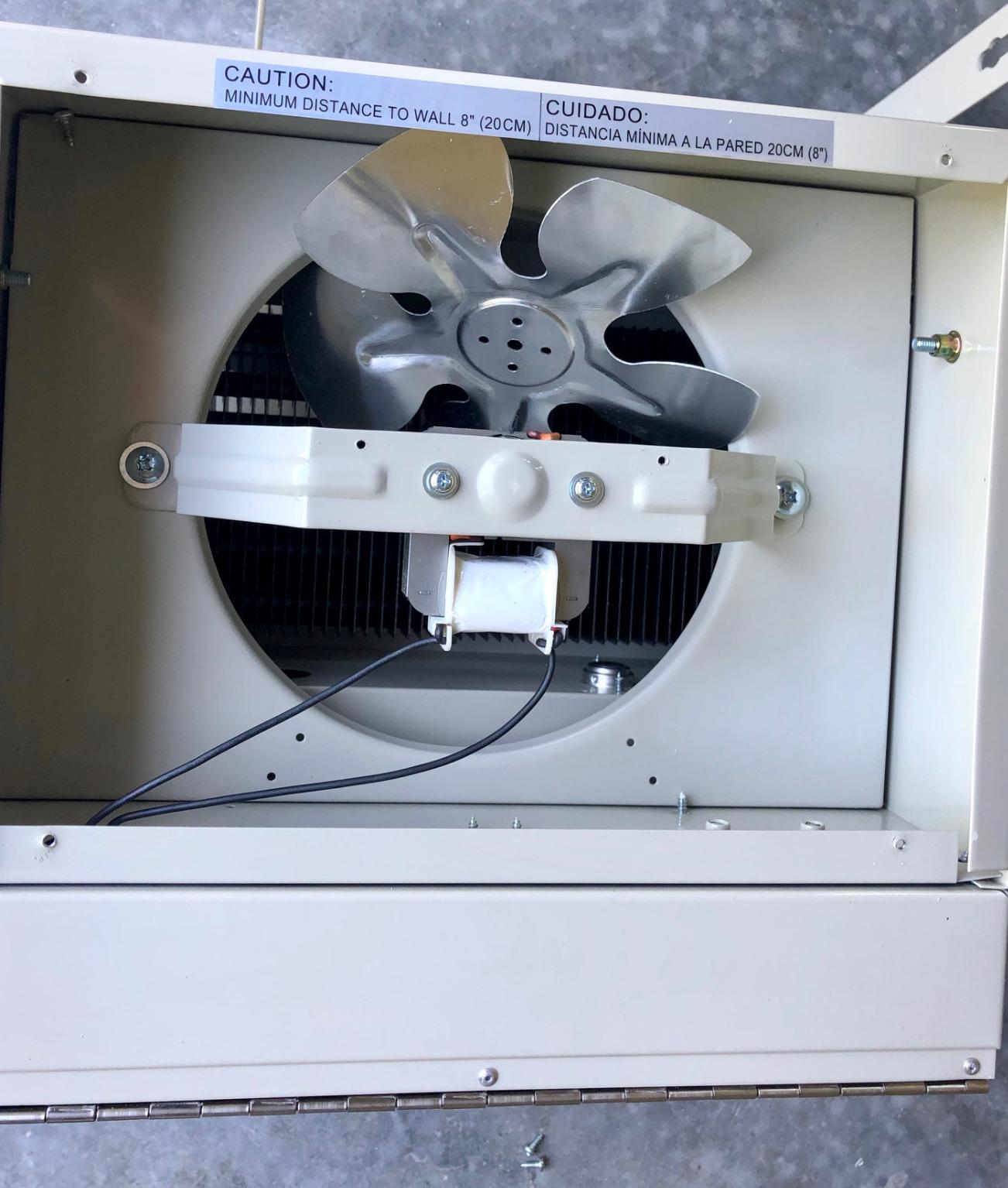
Will my 100 amp panel handle a 5000W heater?
Usually, yes, and this is the class of heater that most 100 amp sub-panels were designed around. A 5,000W 240V load pulls about 21 amps, which is well inside the capacity of a typical 30 or 50 amp garage sub-panel circuit.
The bigger question is whether the main panel has the headroom to feed the sub-panel at all. If your panel is already full, a 5,000W circuit may require a load calculation or a main breaker upgrade, which is electrician territory.
Is a fan-forced shop heater too loud for a studio?
In a 24×24 space with a concrete floor, the blower is audible at close range but much less so across a room, and it produces a steady low hum rather than a fluctuating noise that masks into a recording.
It is workable for a workshop or rehearsal space. For close vocal work in the same room, pair it with a quiet unit and run the shop heater only when nobody is recording.
7. Comfort Zone 7500W 240V Ceiling Mount CZ230ERBK – Best for Scheduled Sessions and Large Two-Car Spaces
Comfort Zone Hard-Wired Ceiling Mount Garage Space Heater with Remote, 7,500 Watt, 240 Volt, Fan-Forced, Overheat Protection, Digital Thermostat, 12-Hour Timer, Ideal for Garage & Workshop, CZ230ERBK
7500W hard-wired at 240V
31.3 amps
Up to 1250 sq ft
Digital thermostat
Remote and 12 hour timer
Pros
- 7500W heats up to 1250 sq ft
- Digital thermostat with a 12 hour timer
- Remote control operation
- Ceiling mount keeps the floor clear
- Heavy gauge steel with overheat sensor
Cons
- Requires a 40 amp 240V hard-wired circuit
- Fan noise is noticeable in an enclosed space
- Some owners report E1 fault codes needing service
- Support outside the US is limited
This is the step up from the 5,000W model, and it exists for two-car garages and rooms with high ceilings where 5,000W leaves the far corners cold. At 7,500W it is rated for up to 1,250 square feet, which covers a standard two-car bay and then some.
For a studio that runs on a schedule, the digital thermostat and 12 hour timer are the features that matter most. You can bring the room up an hour before a session, hold a set temperature overnight at a lower level, and shut it down without walking over.
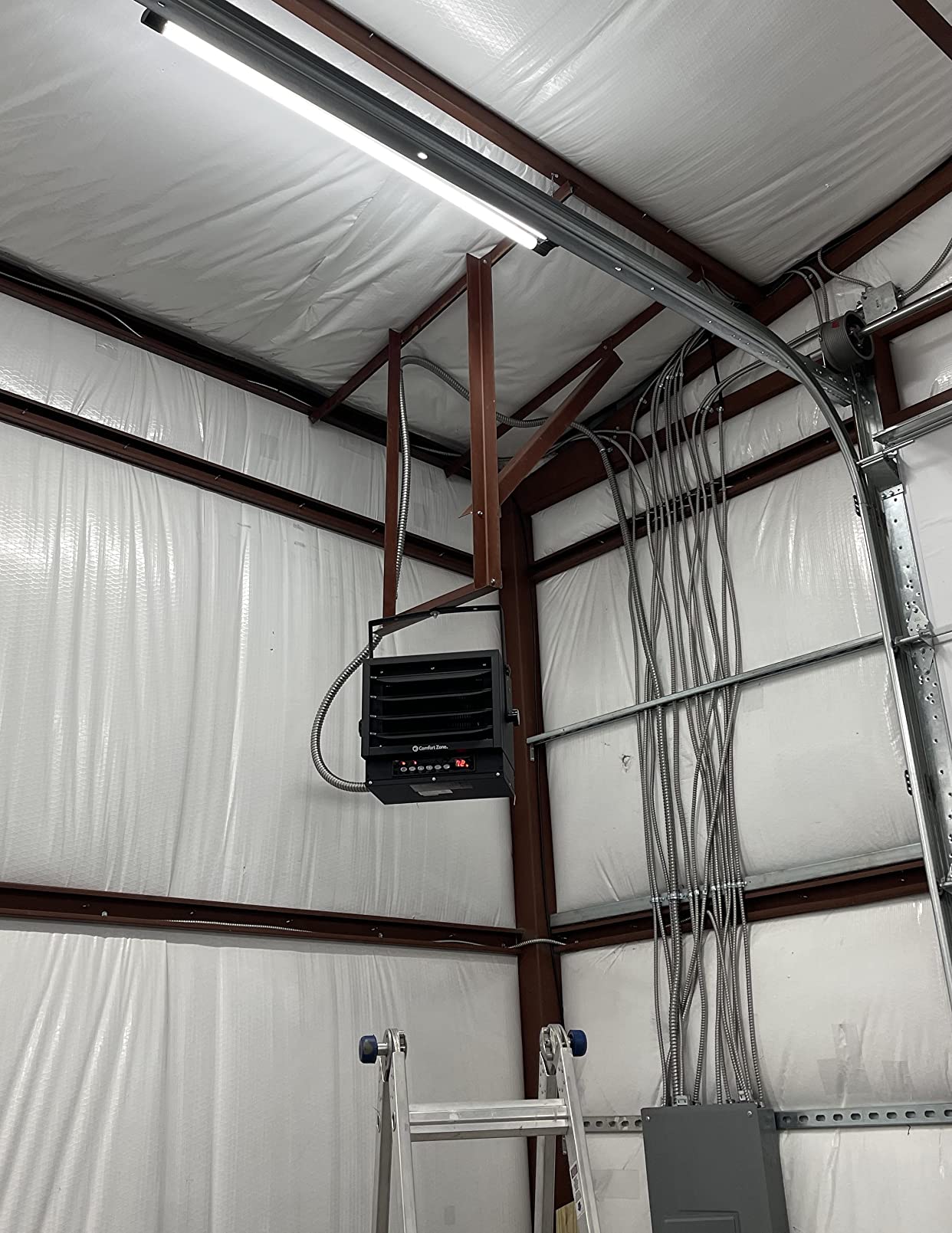
The remote is genuinely useful in this application. Aiming heat or changing the set point from the workbench rather than climbing a ladder under a 10 foot ceiling is a small thing that you notice every single session.
Two cautions. At 31.3 amps this needs a 40 amp 240V circuit, which is real electrical work. And a small number of owners report units throwing an E1 fault code that required cleaning the unit or swapping a sensor connector, so factor in some after-sales friction.
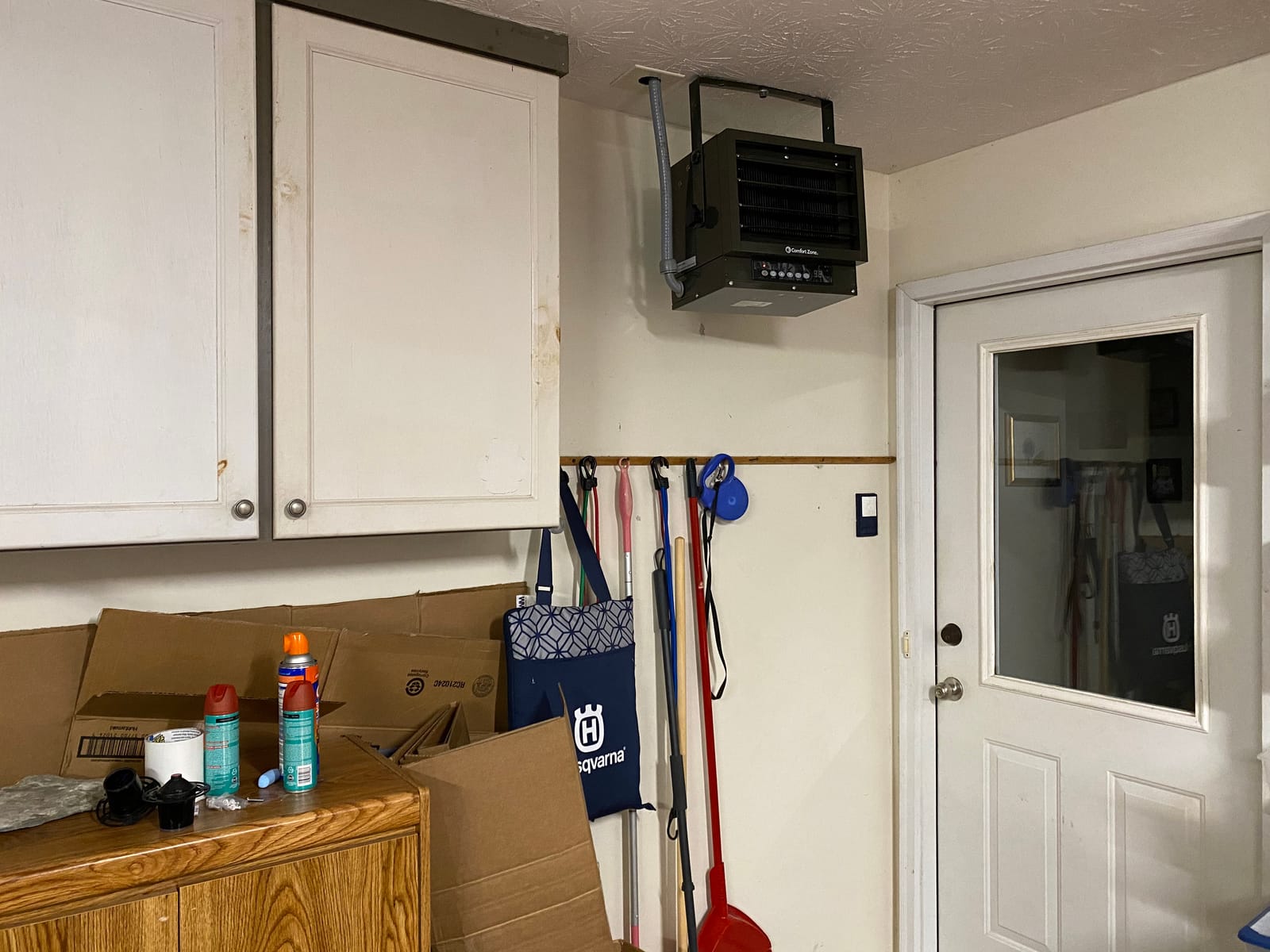
Do I need an electrician for a 7500W ceiling heater?
Yes. A 40 amp 240V hard-wired circuit is beyond a plug-in job, and the 7500W load will also push a 100 amp panel closer to its practical limit than a 5,000W unit does.
Get a load calculation before you buy. Users on home improvement forums consistently describe sub-panel installs and panel upgrades as the surprise cost of garage heating, not the heater itself.
Is the fan noise worse than the 5000W model?
Slightly, and reviewers call it out as noticeable in an enclosed space. It is a shop heater blower running steadily, and in a treated room it will sit under most playback levels.
Place the unit away from the vocal position and use the timer so it is off during the quietest part of a take.
8. Dura Heat Reddy 30,000 BTU Double Tank Top Heater – Best for Garages With No Electrical Supply
Reddy Heater Double Tank Top Propane Heater, 30000 BTUs, Outdoor – TT-30CSA
Radiant propane
18000 to 30000 BTU
Up to 1000 sq ft
Outdoor use only
Tank top mount
Pros
- Dual burner 30000 BTU rated up to 1000 sq ft
- Two independently aimable swivel heads
- CSA certified tip over shutoff and wind screen
- No electricity required at all
- Clamps to a standard 20 lb tank collar
Cons
- Outdoor use only so not for a closed studio
- Match light ignition instead of electronic ignition
- Propane cylinder not included
- Output splits between the two heads
The practical case for this heater is a garage with no power at all. A detached workshop, a pole barn, or the back half of a lot with no outlet still gets full 30,000 BTU of heat, and reviewers consistently single out the zero electrical requirement as the reason they bought it.
Two independent swivel heads are a genuine convenience. You can aim one at a bench and one at a work stool, which spreads useful heat without cranking the output.
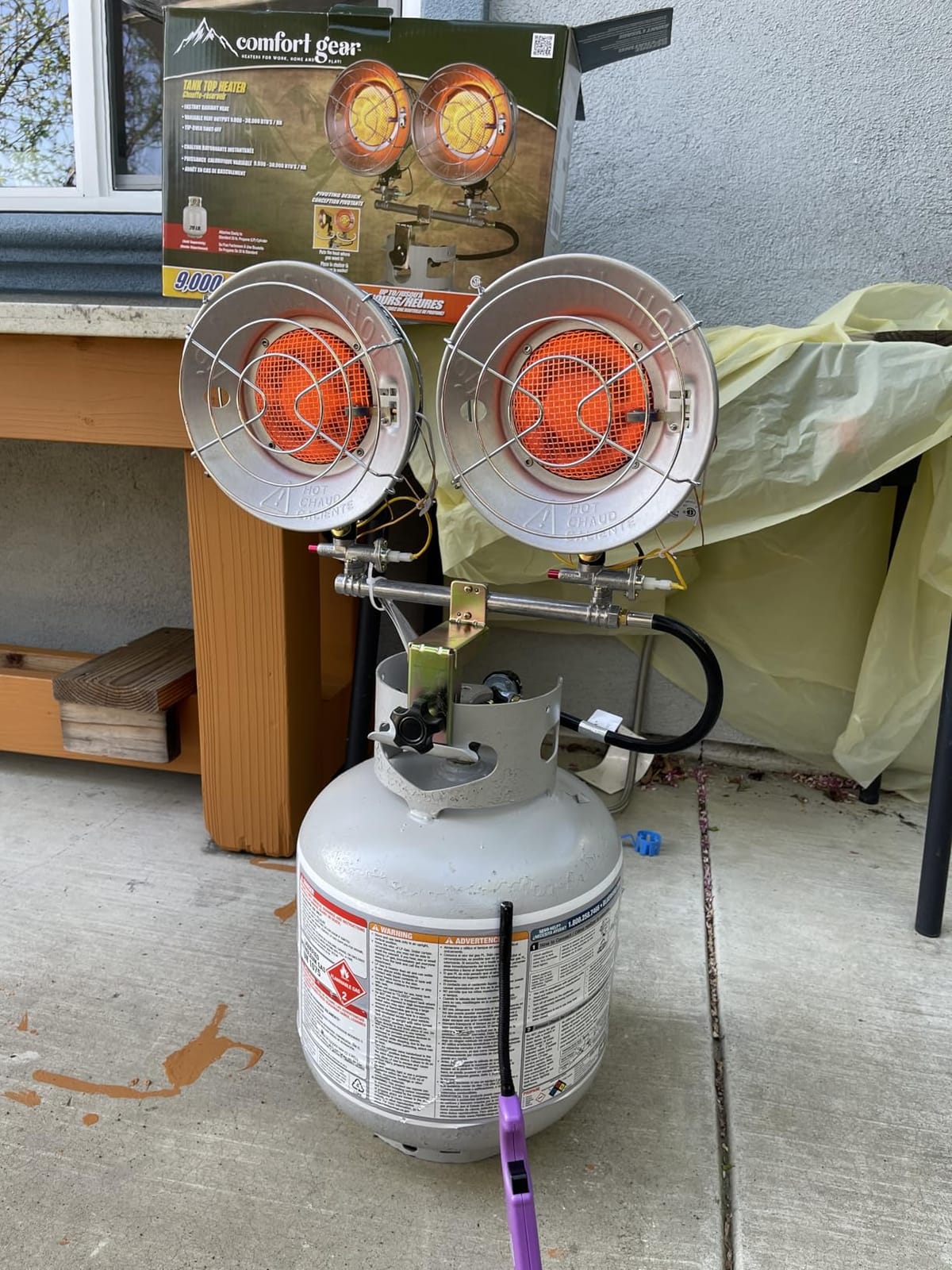
Variable output of 18,000, 26,000 and 30,000 BTU gives you a low setting for mild days. The wind screen and safety guard are sensible additions for a space that is not fully enclosed, and the CSA certification with tip over shutoff is the right standard to look for.
Match light ignition is the older, less convenient method. In cold weather, or in gloves, it takes a few attempts where a piezo igniter or electronic ignition would not.
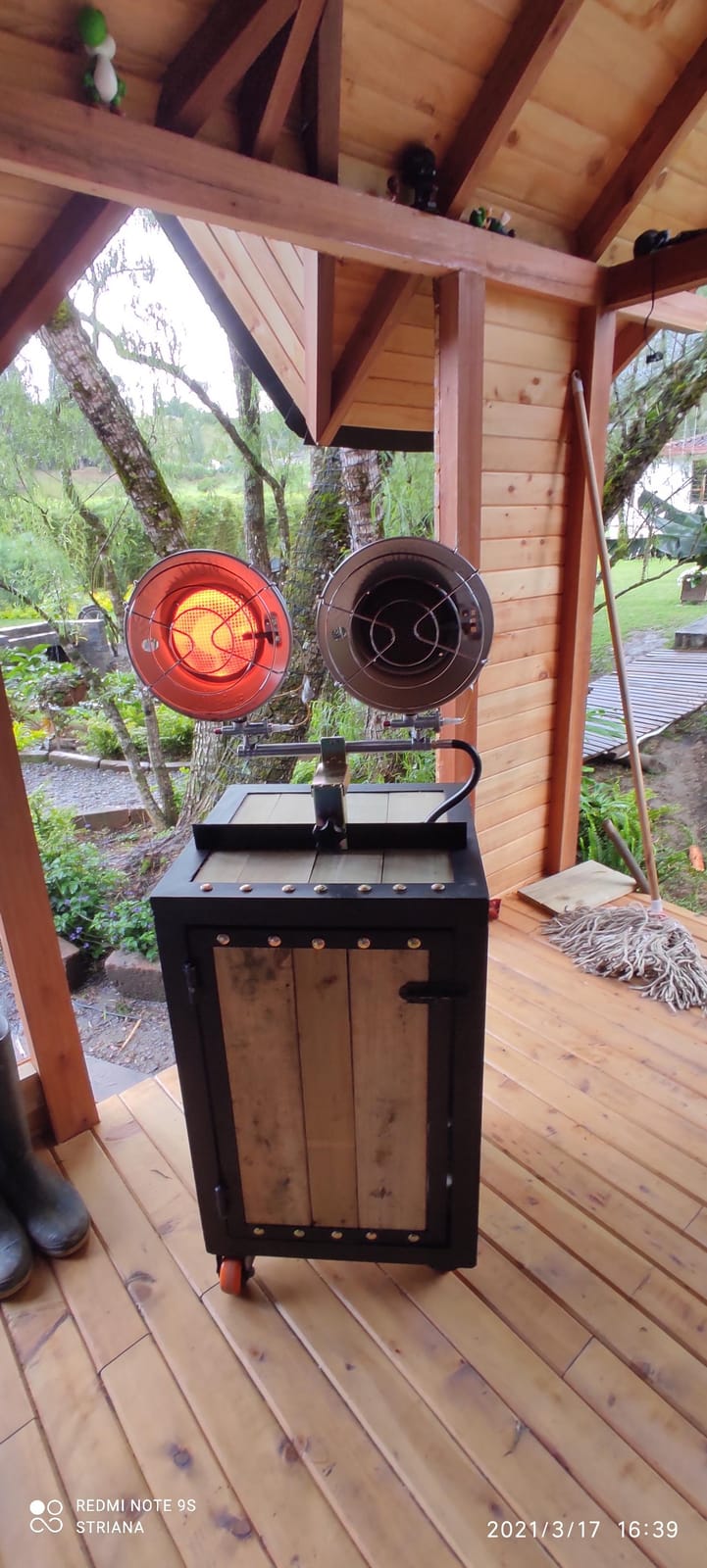
Can the Reddy double tank top heater be used indoors?
It is listed as outdoor use only, so it is not appropriate for a finished, enclosed studio. The same ventilation caution applies here as with every propane unit in this roundup.
For a detached building with an open door and no wiring, it is one of the few high-output options that works without an install.
Is dual burner output weaker than a single big burner?
Per head, yes. The 30,000 BTU rating is split across two burners, so if you are seated in front of one head you receive roughly half the total output in your cone.
That is a feature when you are warming two separate areas and a drawback when you want to concentrate everything at one spot. For a full-room approach, aim both heads across the space rather than at yourself.
9. Dr Infrared DR-238 Carbon Infrared Heater – Best Wall Mounted Option for a Garage Studio
DR. INFRARED HEATER Portable Infrared Indoor and Outdoor Space Heater for Patio, Garage, Commercial & Residential With Remote Control, Without Thermostat, Black
Carbon infrared element
900W to 1500W
IP55 approved
Wall and ceiling mount
8 pounds
Pros
- Wall and ceiling brackets included
- IP55 approved for indoor and outdoor use
- Three power settings with instant odorless heat
- Remote control and timer
- Aluminium body with a 90 percent reflective mirror
Cons
- Highly directional and felt only within a few feet
- No built in thermostat
- Does not restore its last setting after a power cut
- Front grates and glass run very hot
This is the heater for a small studio where floor space is the problem. It mounts on a wall or a ceiling with the included brackets, sits close to the mounting surface, and directs up to 1,500W of carbon infrared energy at wherever you put it.
Carbon infrared is silent. There is no fan, no motor, no hum, which is the single biggest reason people choose it for a room where someone records.
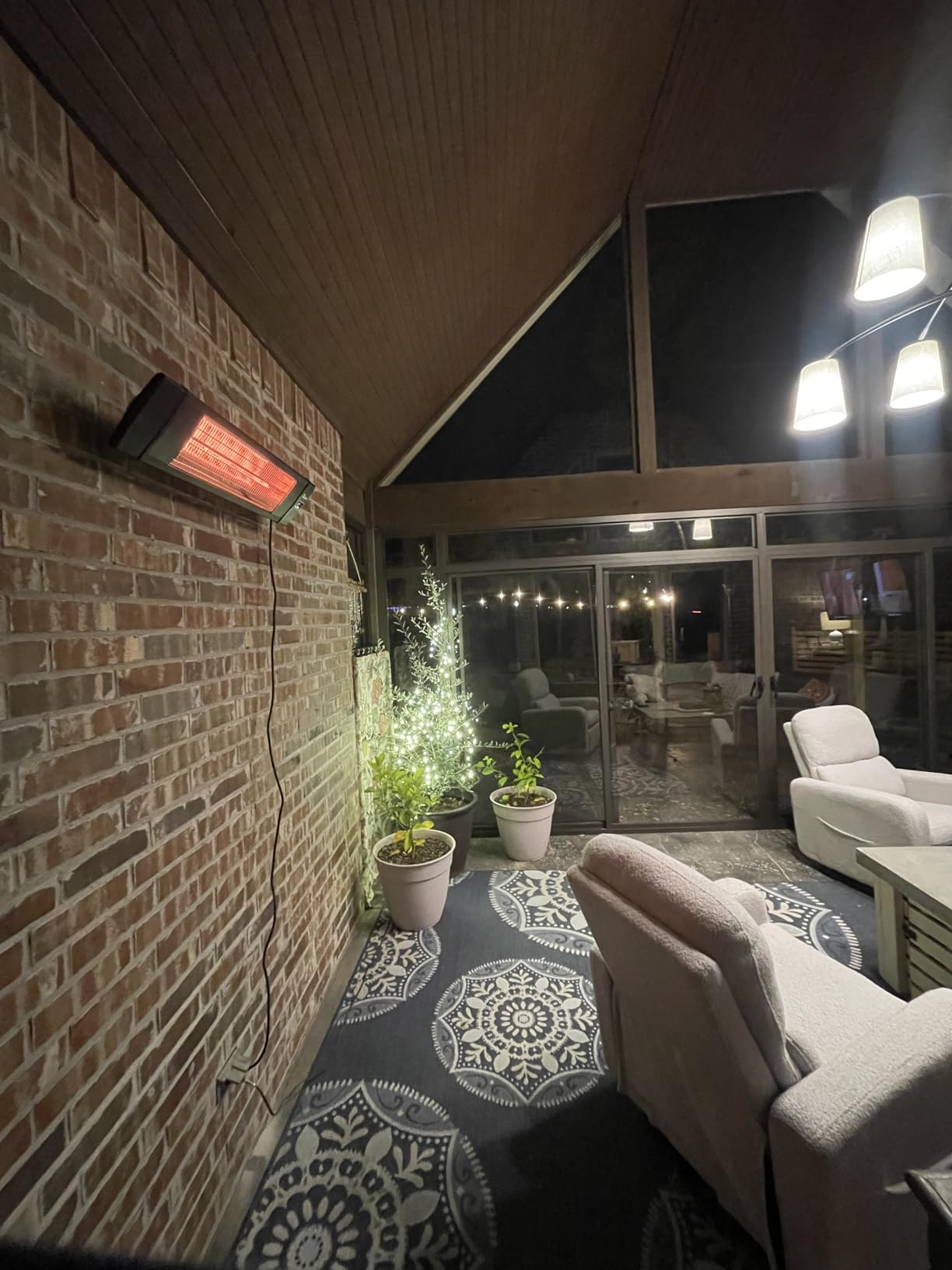
Because it is IP55 approved, the same unit works in a garage bay and a covered patio, which is useful if the room doubles as a break space. Three power settings at 900W, 1,200W and 1,500W give you a low mode for shoulder seasons.
Understand the physics before you buy. It heats people and objects inside the beam, not the air, so you feel it only within a few feet and it does almost nothing in a draft. It is also ineffective in wind or in a fully open space, and dark surfaces warm faster than light ones.
Will a directional infrared heater warm a whole garage studio?
No, and any review that says otherwise is describing a person warming up. The beam is narrow and its useful range is measured in feet, so the practical coverage is a chair or a work position rather than a room.
For a mixed-use studio, a common pattern is a quiet infrared unit aimed at the desk plus a hard-wired fan-forced unit handling the ambient load. The infrared part handles comfort at the seat; the other part handles the room.
Is the lack of a thermostat a real problem?
It is the most common complaint among owners, along with the fact that the unit does not resume its last setting after a power interruption and has to be switched on again with the remote.
The timer covers most of that gap if you set it before a session. The front grates and glass also run very hot during operation, so it needs clear space above and around it.
10. Shinic 1500W Metal Milkhouse Heater – Best Budget Pick for a Garage Corner or Greenhouse
Shinic Space Heater,1500W Milkhouse Heater with Thermostat, Stay Cool Durable Metal Housing, Overheat protection, 3-Prong Plug, Tip-Over Auto Shut Off, Utility Heater for Garage, Bedroom, Greenhouse
1500W high and 1300W low
About 200 sq ft
120V
Cool touch metal housing
3 prong plug
Pros
- All metal housing that stays cool to the touch
- Genuine 3 prong grounded plug
- Tip over auto shutoff and overheat protection
- Rotary thermostat with two power levels
- Light with a carry handle
Cons
- About 200 sq ft of coverage is small
- No oscillation so heat throws one way
- 6 foot cord is shorter than most buyers want
- Some versions ship with a 2 prong plug
Not every garage studio needs a room heater. If you have a one-car bay and you only want a warm corner for a writing desk, a guitar bench, or a plant shelf, this metal milkhouse unit does that job without any installation work at all.
The metal housing is the reason to pick it over a plastic cabinet heater. Owners mention the cool to the touch surface repeatedly, and in a workshop where the heater sits close to bench height that is a real difference.
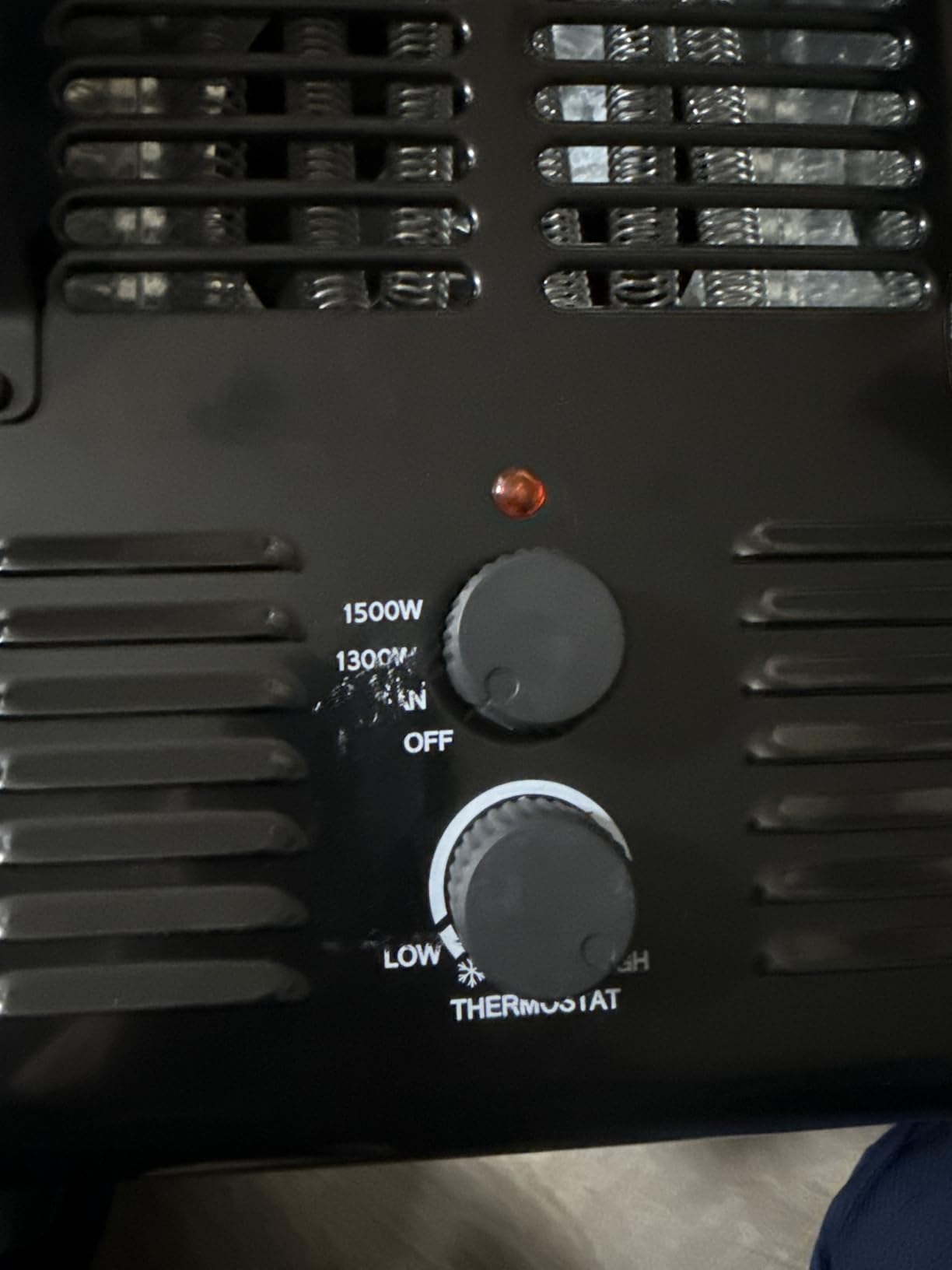
The genuine 3 prong grounded plug is a genuine upgrade over most heaters in this class, several of which ship with a 2 prong plug. Tip over auto shutoff and overheat protection are both present, and the rotary thermostat is simple to set.
Coverage of roughly 200 square feet is the hard limit. There is no oscillation, so it throws heat in one direction, and the 6 foot cord is short.
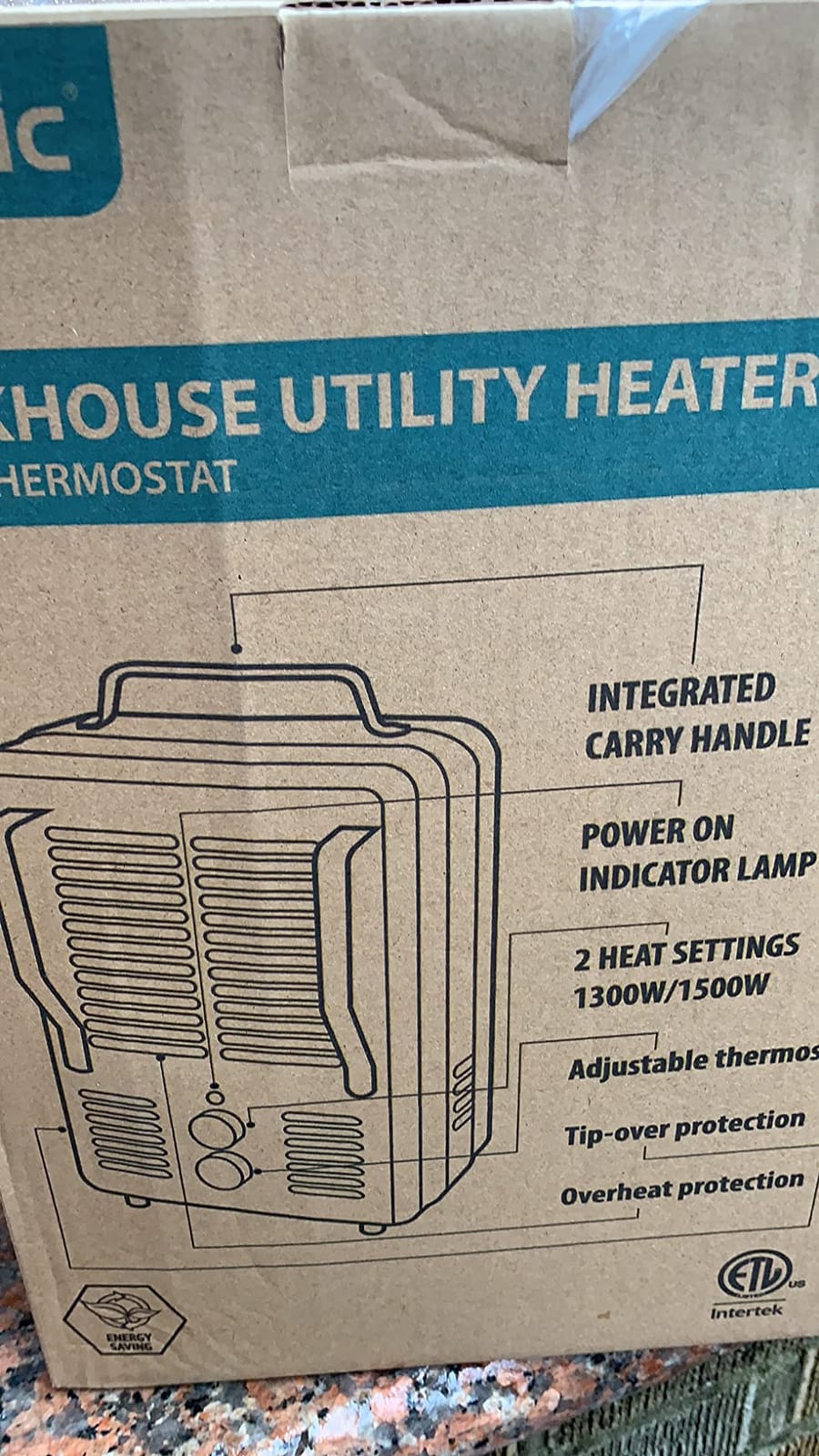
Is a 1500W milkhouse heater safe to leave running in a garage?
It has the right safety hardware: overheat protection, tip over auto shutoff, a cool touch metal body and a grounded three prong plug. Those are the features to verify on any utility heater you bring into a garage.
Check that the specific unit you receive has the 3 prong plug. Some variants of this model are offered with a 2 prong plug, and the difference matters for a concrete floor with a metal heater on it.
Where should this heater actually go?
A garage corner, a greenhouse, a small storage room or the desk end of a one-car conversion. Anywhere you want a small, directed warm spot within a few feet of the element.
It is also the easiest unit to run several of, so one per zone works if the building is divided into separate rooms.
11. DeLonghi EW7707CM Oil Filled Radiator – Best for Complete Silence in a Sound Treated Room
De’Longhi Oil filled Radiator Heater, 1500W Electric Space Heater for indoor use, portable room heater, Energy Saving, full room like office and bedroom with safety features, EW7707CM
Oil filled convection
1500W with 700W low setting
No fan
Indoor rated only
3 year warranty
Pros
- No fan and no motor noise at all
- Does not dry air or stir up dust
- Low setting draws roughly 700W
- Anti freeze mode and thermal cut off
- 3 year warranty
Cons
- Slow to warm a room at two to three hours
- Indoor rated so not a garage duty unit
- Short 4 foot cord with no extension recommended
- Initial coating odor on first use
An oil filled radiator produces no motor noise at all. It heats a sealed oil reservoir, the oil circulates by convection, and there is no fan to move dust or to put a hum on a microphone.
For a vocal booth, a mixing corner inside a treated room, or a control room where any background noise matters, that silence is the whole point. Close to 13,000 reviews at 4.4 stars reflect a very settled product.
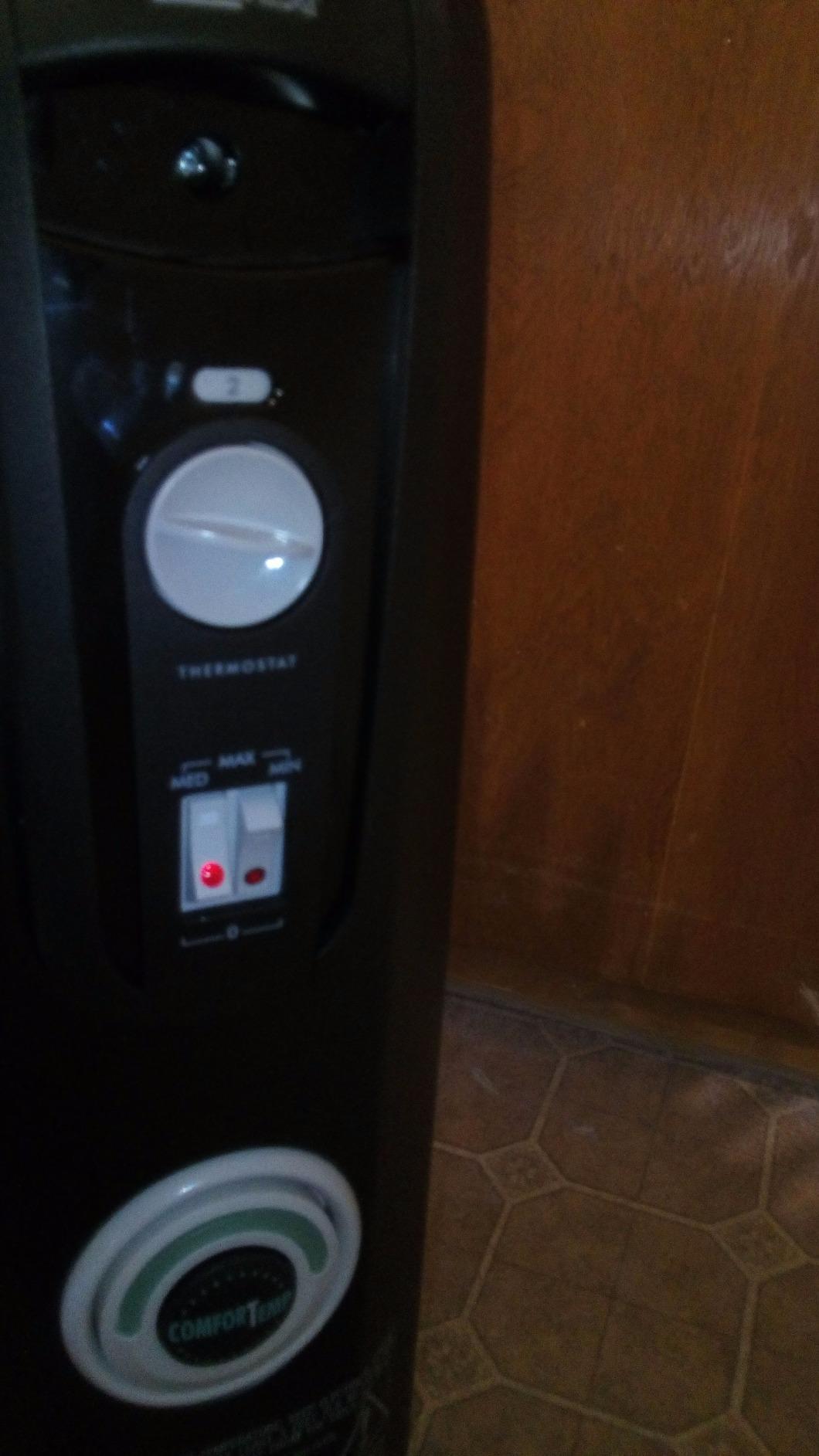
Two secondary benefits matter in a studio. It does not dry the air, which helps with a room that is already dry from winter heating, and it does not stir dust and dander, which matters in a converted garage that also functions as a shop.
The ComfortTemp system cycles the heater automatically to hold your set point, and the low setting draws roughly 700W so you can leave it running at a fraction of full output between sessions.
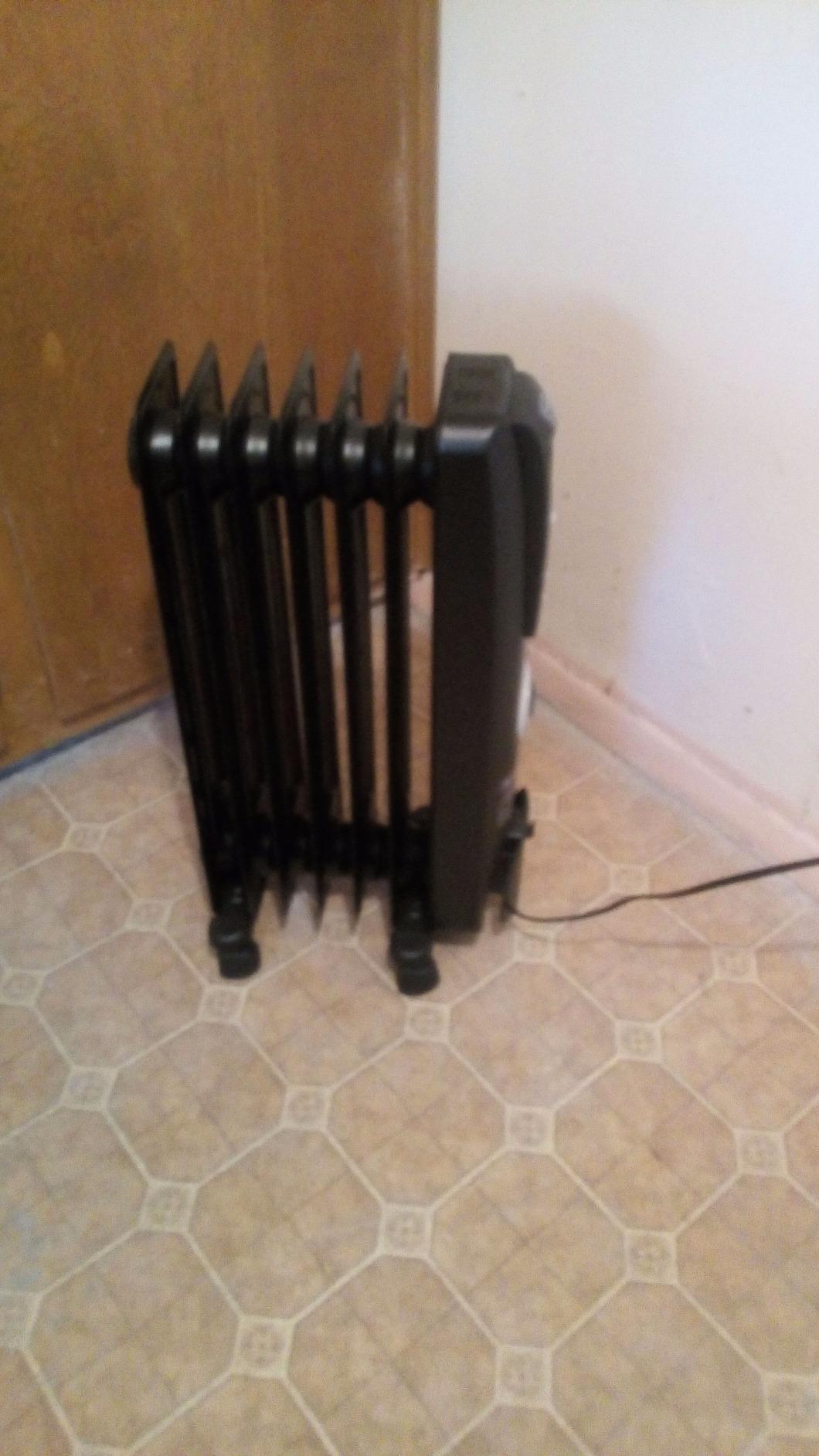
Is an oil filled radiator strong enough for a garage?
It is rated for small to medium indoor spaces, and it is not a garage duty unit. What it will do is bring a properly insulated, sealed room up to a comfortable temperature without any noise at all.
Expect it to take two or three hours to reach the target temperature. That is a feature when you start a session an hour ahead, and a problem when you walk in at the start of one.
What should I know before the first run?
There is typically a coating odor on first use as the manufacturing residues burn off, so run it with ventilation for the first session. The 4 foot cord is short and extension cords are not recommended, so plan the outlet position first.
The anti-freeze mode, thermal cut-off and enclosed elements give it a strong safety profile for a room left unattended between sessions.
12. DREO 30 Inch PTC Tower Heater – Best for Precise Control in a Small Studio Room
DREO Space Heater Large Room, 120° Oscillation, 30″ Heaters with Remote
1500W PTC ceramic
25 dB operation
120 degree oscillation
Up to 300 sq ft
ETL certified
Pros
- 25 dB operation among the quietest forced air heaters
- 120 degree oscillation with four width settings
- Large 308mm PTC element for a 300 sq ft space
- 9 comfort levels with a 1 to 12 hour timer
- ETL certified with 8 safety protections
Cons
- 300 sq ft coverage is modest
- Forced air dries air somewhat compared with an oil filled radiator
- Performance depends on stable household voltage
The DREO tower fills a gap the rest of this list leaves. At 25 dB it is the quietest forced air heater here, quieter than the 39 dB cabinet unit, and the 120 degree oscillation spreads heat across a room instead of a single cone.
That combination makes it a good fit for a small, finished room inside a garage, or a detached studio apartment, where a single cabinet heater would leave cold corners and a shop unit would be too loud.
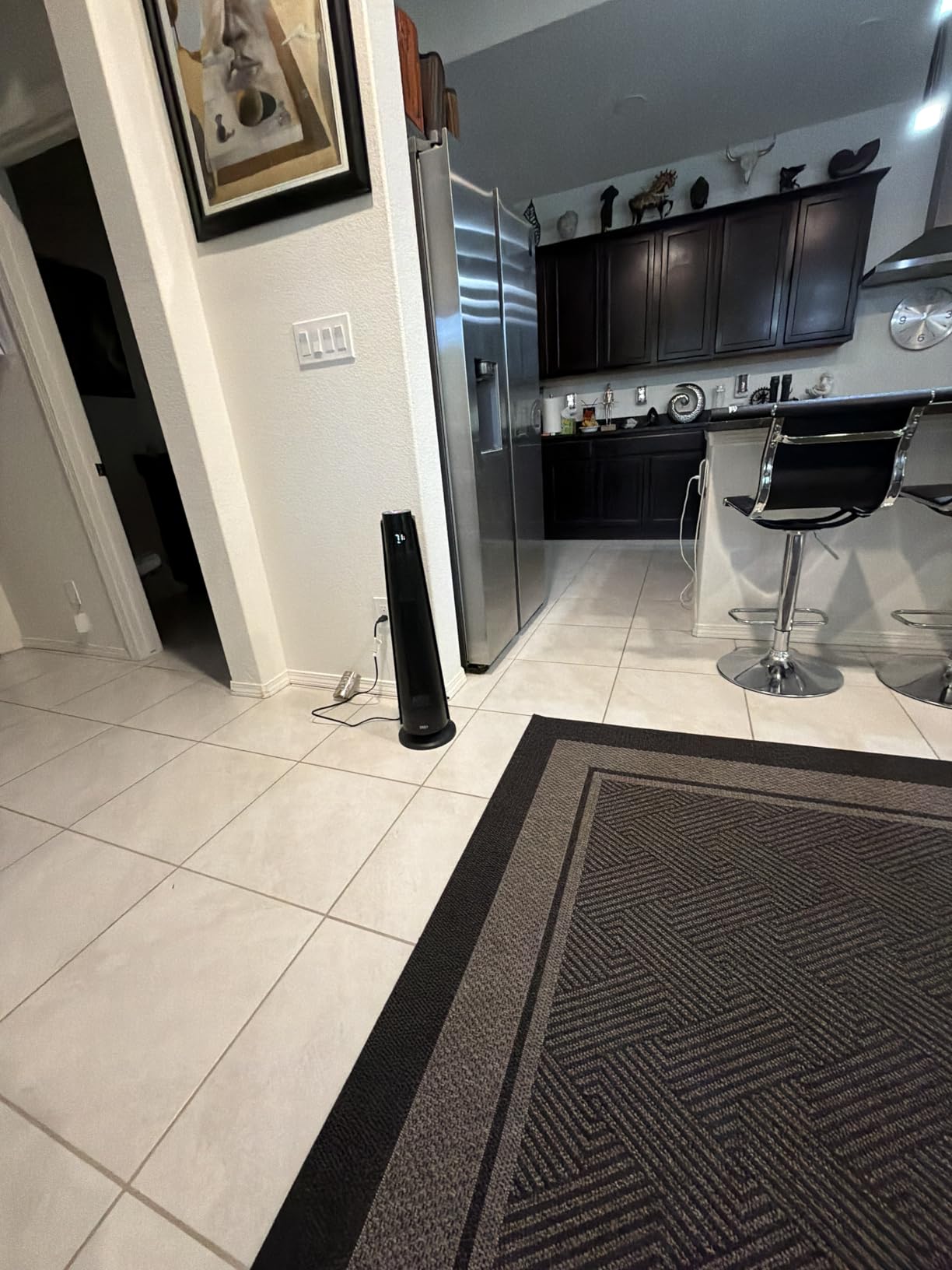
Control is where it stands out. Five heat settings plus ECO mode, three fan levels and a 1 to 12 hour timer give you fine adjustment, and at 8 pounds with a 7.9 inch footprint it tucks against a wall without taking bench space.
Coverage is the limit: 300 square feet, so it is a room heater and not a whole garage unit. Owners also note that the forced air design dries air somewhat compared with an oil filled radiator, and the manufacturer calls out a dependence on stable household voltage.
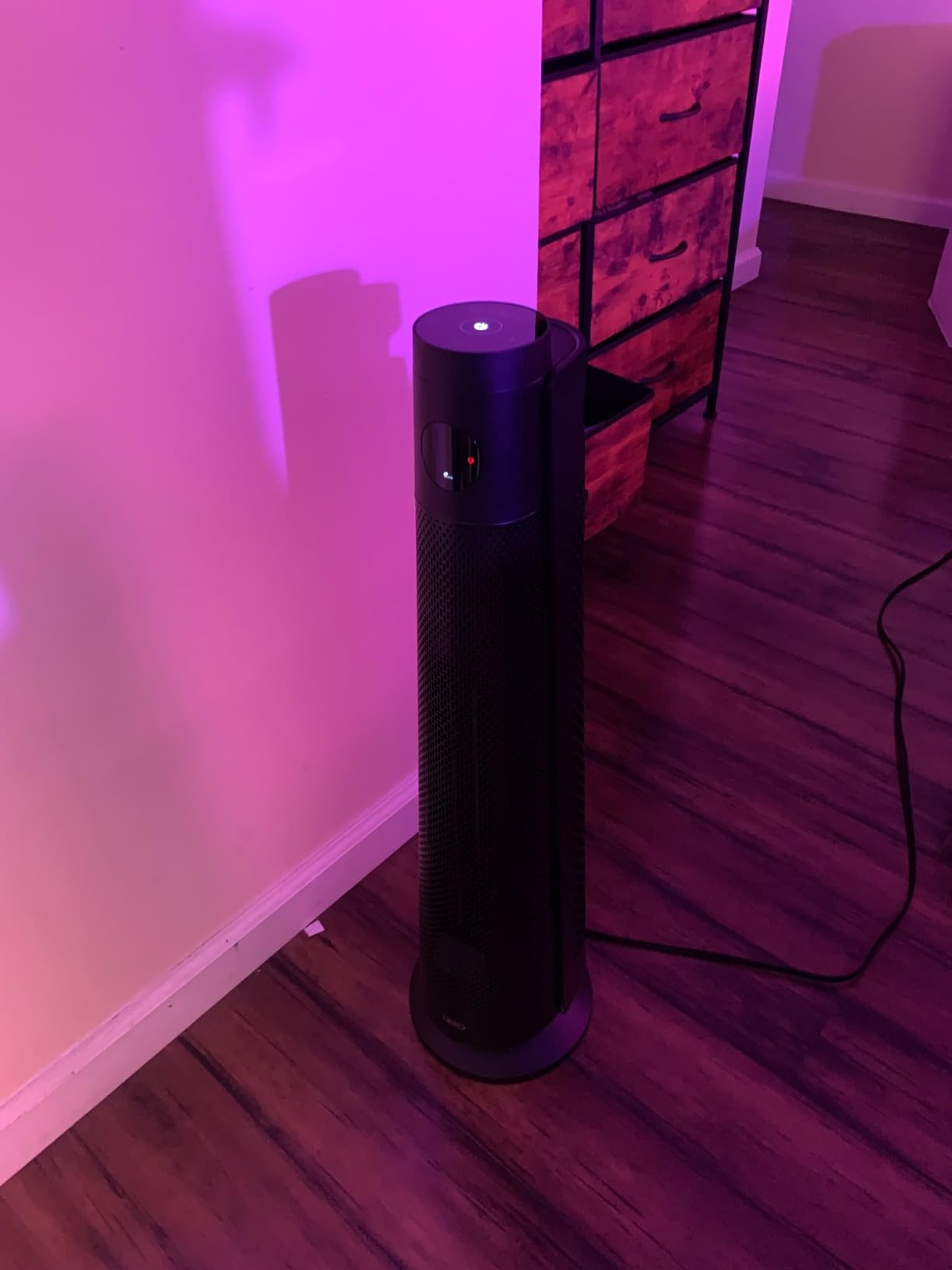
Is 25 dB low enough to record next to?
At a normal working distance, yes. It is quiet enough for a podcast, voice-over or streaming setup, and the low fan level setting reduces it further when you only need a background temperature.
It is still a fan-forced design, so a close-mic vocal in a very quiet room is a different situation from a mixing desk setup with speakers running.
What do the safety protections cover?
Eight protections including V0 flame retardant material, a cool touch housing, a child lock, 45 degree tip-over cut-off and overheat protection, and the unit is ETL certified. That is one of the more complete safety packages in this roundup.
Oscillation is also worth the mention, since most tower heaters in this class move through a much narrower arc and leave cold spots at the edges of the room.
How to Size and Choose a Heater for Your Garage Studio
Start with the simplest rule in this category: about 10 watts of output per square foot of heated space. A 200 square foot studio corner needs roughly 2,000W, a 400 square foot one-car conversion needs around 4,000W, and a 576 square foot two-car bay needs 5,000W or more. Those figures are a starting point, not a promise, because a room with uninsulated walls needs far more than a well-insulated one.
That 10 watt per square foot rule assumes 8 foot ceilings. A 10 foot ceiling gives warm air more room to rise, so if your garage has exposed joists and a tall roof, plan on the higher end of the range. The 1,500W units in this roundup cover a corner or a small closed room. The 5,000W and 7,500W ceiling units are the ones that answer the 24×24 and 1,000 square foot questions directly.
Choose by layout, not by square footage alone. A one-car garage used as a writing or rehearsal room is a different problem from a two-car workshop where you are standing at a bench for four hours. And a mixed-use space is best solved with two units, not one: forum users repeatedly describe a larger main heater for the room plus a small quiet convection unit for freeze protection between sessions, and that pattern came up more than once when we looked at how owners actually run these spaces.
Radiant, fan-forced, convection or carbon infrared?
Radiant infrared fires energy at people, objects and floors, so you feel it in seconds. That is why it works in drafty spaces where warm air would simply rise to the ceiling and leave the working zone cold.
Fan-forced electric warms the air and moves it through the room. It is the only category here that heats a whole space evenly, which makes it the right choice for an open garage bay.
Convection, like the oil filled radiator, is gentle, silent and slow, and best for sealed small rooms. Carbon infrared is the quietest of all and the most directional, warming a person or a spot rather than a room.
On noise, the honest ranking from the data here is: fanless oil filled and carbon infrared are silent, the DREO tower runs at a stated 25 dB, the Dr Infrared DR-968 blower is stated at 39 dB, and propane forced air burners are the loudest of the group. Silence is the one advantage a quiet heater gives you that no amount of BTU can buy back.
What electrical capacity do you actually need?
Anything at 1,500W or below runs on a normal 15 amp 120V outlet, though the 12.5 amp draw of the DR-968 means it should be on a dedicated circuit rather than sharing one with tools or a welder.
Hard-wired 240V ceiling units are a different proposition. The 5,000W model pulls about 21 amps and wants a 30 amp circuit. The 7,500W model pulls about 31 amps and wants a 40 amp circuit. Before either, get a load calculation on your panel. A 100 amp panel with a loaded sub-panel may not have the headroom, and users on home improvement forums describe panel upgrades, not heaters, as the expensive part of garage heating.
Insulate before you upgrade
Insulation level is the first variable, ahead of the heater itself. Users on heating advice forums consistently describe a well-insulated garage needing far less heat than an identical open-frame space, and one owner on a studio acoustics board reported heating an entire mixing room with a small radiant heater and no audible sound once the room was treated.
Before you buy a bigger unit, seal the roller door, add weather stripping around the entry door, insulate the garage door panel, and cover the exposed rim joist. Insulation and air sealing reduce the wattage you need, and unlike a heater upgrade they also reduce how much dust and cold air moves through the room while you are recording.
Air quality and dust in a working studio
A converted garage is often still a workshop. Sawdust, drywall compound, latex overspray and solvent fumes are all present, and a fan-forced heater will keep those particulates moving through the room while you work.
Two habits help. Run any filtration you already own at the same time as a fan-forced unit, and prefer a radiant infrared heater over a fan-forced one in a room where you mix rather than work. For long-term, whole-year heating, a ducted or mini-split heat pump is the answer several users in heating forums point to, and it also moves air without burning anything inside the room.
Frequently Asked Questions
Is it okay to use a space heater in a garage?
Yes, provided the heater is rated for the space. The US Consumer Product Safety Commission advises using a heater that carries a UL or ETL listing, with tip-over and overheat shutoff, and keeping it at least three feet from anything flammable. Never use an unlisted unit, and never leave one running unattended in a space with combustible materials. Gas-powered heaters need ventilation and a carbon monoxide alarm.
What is the safest heater to use in a garage?
The safest garage heaters are listed units with both tip-over protection and overheat auto shutoff, a cool-touch housing and a grounded three-prong plug. For propane models, look for CSA certification plus a low-oxygen safety shutoff. Keep any unit at least three feet from sawdust, cardboard, paint and fuel, and use a carbon monoxide alarm with any combustion heater.
How many Btus do you need to heat a 24×24 garage?
A 24×24 garage is about 576 square feet, which calls for roughly 5,000 to 5,760 watts of electric output, or a 5,000W hard-wired 240V ceiling heater. Expect to need more in an uninsulated space with 10 foot ceilings. Radiant propane units are rated on a different basis, so compare them on the area the manufacturer claims rather than on wattage.
What is the most efficient space heater for a garage?
In terms of heat delivered per unit of input, a ducted or mini-split heat pump wins for a well-insulated space that needs year-round heat. Among portable units, a thermostat-controlled electric heater that cycles rather than runs continuously is the most efficient choice, because 1,500 watts of output is only useful if it is switched off once the room reaches temperature.
What is the quietest heater for a recording studio?
The quietest options are fanless. An oil-filled radiator produces no motor noise at all, and a carbon infrared wall or ceiling heater has no fan either. Among forced-air units, a 25 dB PTC tower is quieter than a 39 dB cabinet heater, and a shop-style fan-forced ceiling unit is the loudest of the electric group. Propane burners are louder still.
Which Garage Studio Heater Should You Buy in 2026?
The Mr. Heater 9,000 BTU Portable Buddy takes our top spot because it needs no wiring, warms you in seconds and works both indoors and out. For a quiet electric room, the Dr Infrared DR-968 at 39 dB covers a small one-car studio. For a real 24×24 space, the Comfort Zone 5,000W 240V ceiling unit is the honest answer.
Before any of them, seal the door and insulate the shell. A garage studio that holds its heat needs a much smaller heater than one that leaks, and the best space heaters for garage studios are the ones sized to the room you actually built, not the room you started with.