

There is something about a tube amp that no modeling processor has ever quite captured for me. Even the most expensive digital rigs nail the EQ curve and the harmonic profile, but they miss the way a good valve amp breathes when you dig into a chord – the air pushing out of the cab, the way the note blooms, the slight sag when you lean on the volume knob. That is exactly why we tested every amp on this list. Our team spent the last three months swapping heads and combos through our rehearsal room, our home studios, and a half-dozen club stages in town, and we came away convinced that the best tube amps for guitar in 2026 still matter more than ever.
The big surprise this year is how strong the mini and hybrid tube amp category has become. You can now get authentic 12AX7 preamp warmth in something the weight of a paperback novel, run it into a 1×12 cabinet, and have a rig that genuinely fits in a messenger bag. At the same time, the old guard – Vox, Fender, Marshall, Mesa/Boogie – keeps refining the classic combos that defined rock and blues. Whether you want a bedroom practice rig, a stage-ready head, or a recording-room workhorse, there is a tube amp here for you.
Table of Contents
Best Tube Amps at a Glance
Best Overall: Vox AC15C1 – the British chime and crunch combo that defines the genre
Best Value: Bugera V22 Infinium – vintage-voiced 22W combo at a price that still surprises
Best for Pedalboards: Orange Micro Dark Terror – 1 kg hybrid head that loves gain pedals
Best Budget High-Gain: JOYO Zombie-II – Rectifier-style tones in a lunchbox
Best Ultra-Compact Plexi: Hotone Nano Legacy Purple Wind – Marshall tones in pedalboard format
Best for Home Practice: Orange Terror Stamp – cab-sim headphone out is genuinely useful
Best Vintage Aesthetic: Fender Blues Junior Lacquered Tweed – looks as good as it sounds
Best Class A 5W: Bugera T5 Infinium – real Class A tone with INFINIUM tube monitoring
Best Clean Platform: VOX MV50CL – Nutube-powered clean head for pedal players
Best for Small Gigs: Fender Blues Junior IV – Celestion A-Type speaker and smoother reverb
Top 3 Picks at a Glance (September 2026)


Bugera V22 Infinium
- 22W 2 x EL84 combo
- 3 x 12AX7 preamp
- INFINIUM Tube Life Multiplier
- Pentode/triode switch

Best Tube Amps for Guitar in 2026
| Product | Specs | Action |
|---|---|---|
| Vox AC15C1 |
|
Check Latest Price |
 JOYO Zombie-II JOYO Zombie-II |
|
Check Latest Price |
 Hotone Purple Wind Hotone Purple Wind |
|
Check Latest Price |
 Orange Terror Stamp Orange Terror Stamp |
|
Check Latest Price |
 Fender Blues Junior Tweed Fender Blues Junior Tweed |
|
Check Latest Price |
 Bugera T5 Infinium Bugera T5 Infinium |
|
Check Latest Price |
 VOX MV50CL VOX MV50CL |
|
Check Latest Price |
 Fender Blues Junior IV Fender Blues Junior IV |
|
Check Latest Price |
| Orange Micro Dark Terror |
|
Check Latest Price |
| Bugera V22 Infinium |
|
Check Latest Price |
1. Orange Micro Dark Terror – Best Hybrid Mini Head for Pedal Players
Orange Micro Dark Terror Mini Guitar Amp Head 20 Watts
20W hybrid head
12AX7 preamp tube
1 kg weight
Cab-sim headphone out and FX loop
Pros
- Distinctive Orange high-gain character with thick crunch
- Loud enough to drive a 4x12 cab for small gigs
- JJ 12AX7 tube provides genuine tube warmth
- Effects loop is rare at this size and price
- Cab-sim headphone out works for silent practice
Cons
- Single Shape knob limits fine EQ control
- Some audible hum at high gain and volume
- Not the best match for tight modern metal tones
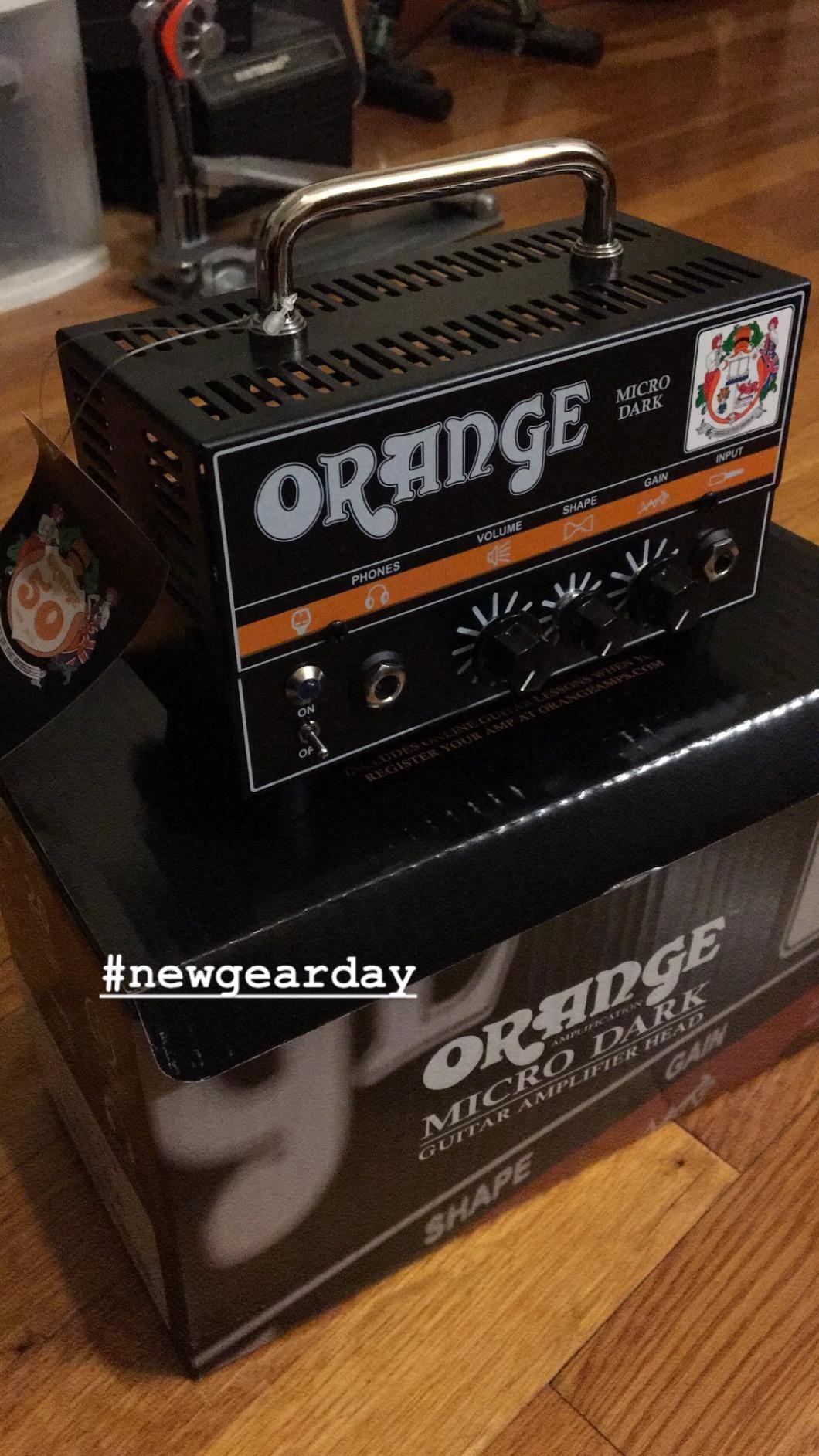
The Orange Micro Dark Terror is the amp I keep reaching for when I want to play through a real tube preamp without setting up a full rig. It weighs 1 kilogram, fits next to my pedalboard, and delivers the thick, woody Orange character that I have been chasing since I first heard a Tiny Terror on stage fifteen years ago. The single 12AX7 in the preamp is the real deal – not a Nutube substitute – and it gives the amp a touch-sensitive response that pure solid-state designs cannot match.
Plugged into a 1×12 cab, it is loud enough for small club gigs and outdoor shows. I ran it through a 4×12 in our rehearsal space and the bottom end stayed tight and full, with the classic mid-hump that makes single-coils snarl and humbuckers sing. The 20W output is plenty for the kind of pub and club dates most weekend players handle, and the FX loop on the back means I can drop my delay and reverb pedals in after the distortion without muddying the signal.
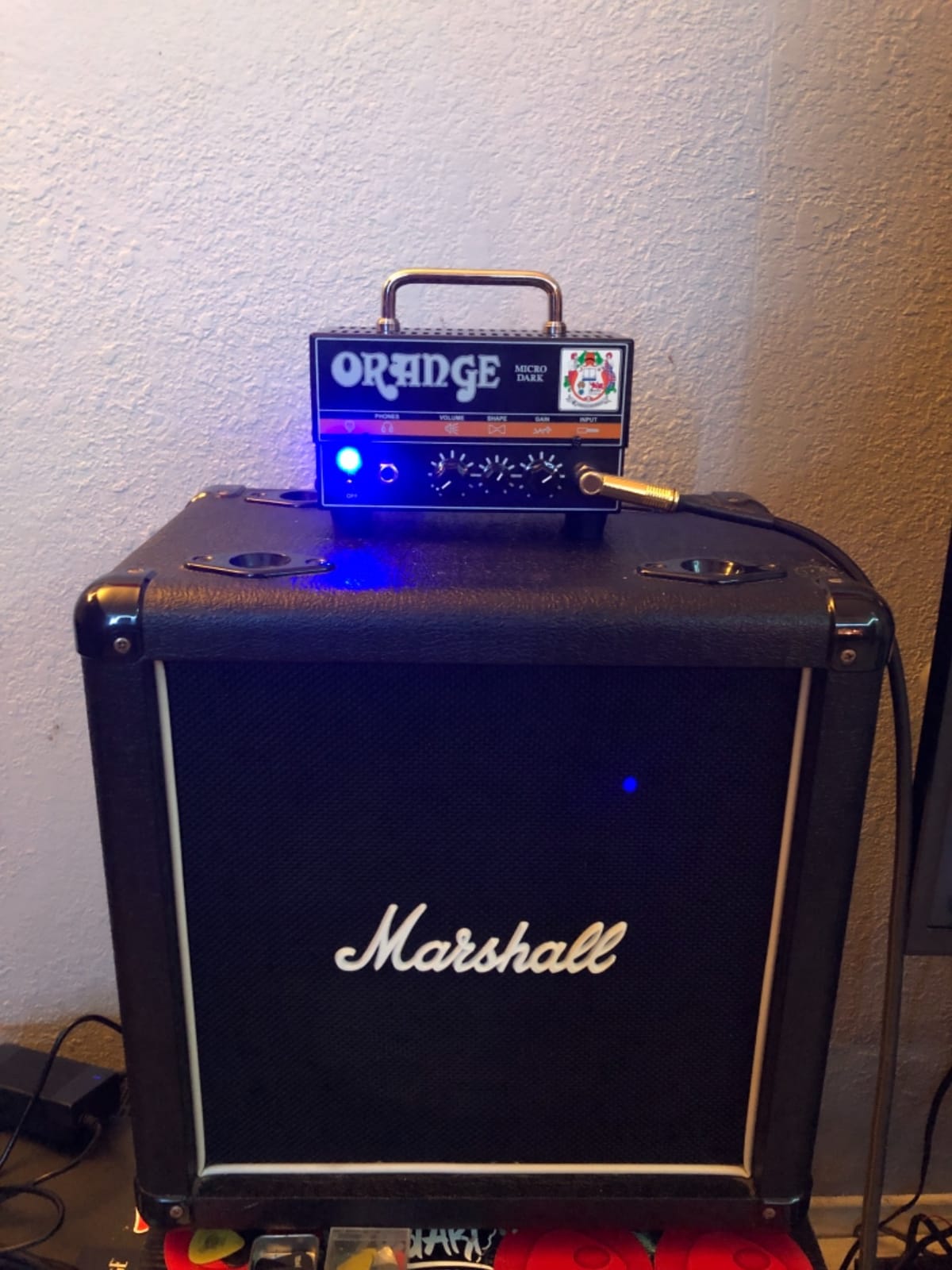
What surprised me most was the cab-sim headphone output. Most mini amps treat headphone practice as an afterthought, but the Micro Dark Terror’s CabSim circuit sounds genuinely amp-like through my studio headphones, with a believable mic’d-cab response. That makes late-night practice sessions actually enjoyable rather than the usual thin, fizzy experience you get from a headphone jack on a digital amp. The clean channel is spartan – just a volume knob and a gain knob with a single Shape control – but it is voiced beautifully.
For the price, the Micro Dark Terror gives you more of the real Orange tone than I expected. You give up some flexibility compared to a full-size amp (no channel switching, no reverb, no master volume), but you gain a portable, gig-able tube head that you can throw in a guitar bag. If you already own a 1×12 or 2×12 cabinet, this is one of the best tube amps for guitar players who want genuine Orange character without the Orange combo price tag.
Best Used For
Players who already own a cabinet and want a tube head that pairs perfectly with overdrive, fuzz, and modulation pedals. The Micro Dark Terror loves being pushed by gain pedals, which makes it an excellent choice for players who want the touch sensitivity of tubes on the clean side and their preferred dirt character from pedals on the gain side.
It is also a brilliant option for small-venue gigging musicians who need a head they can carry in one hand and set up in two minutes. If you are stacking it with a 4×12, the cab will do most of the heavy lifting, and the head disappears on stage.
Who Should Skip It
If you play modern metal that demands scooped mids and tight palm-muted chugs, the Micro Dark’s mid-forward voicing will fight you. Likewise, if you want reverb, tremolo, or channel switching built in, look at a larger combo like the Vox AC15C1 or the Bugera V22. And if you are strictly a bedroom player in an apartment, even 20W into a cab will be too loud for neighbors – the Orange Terror Stamp or a VOX MV50 with attenuation would be a calmer neighbor.
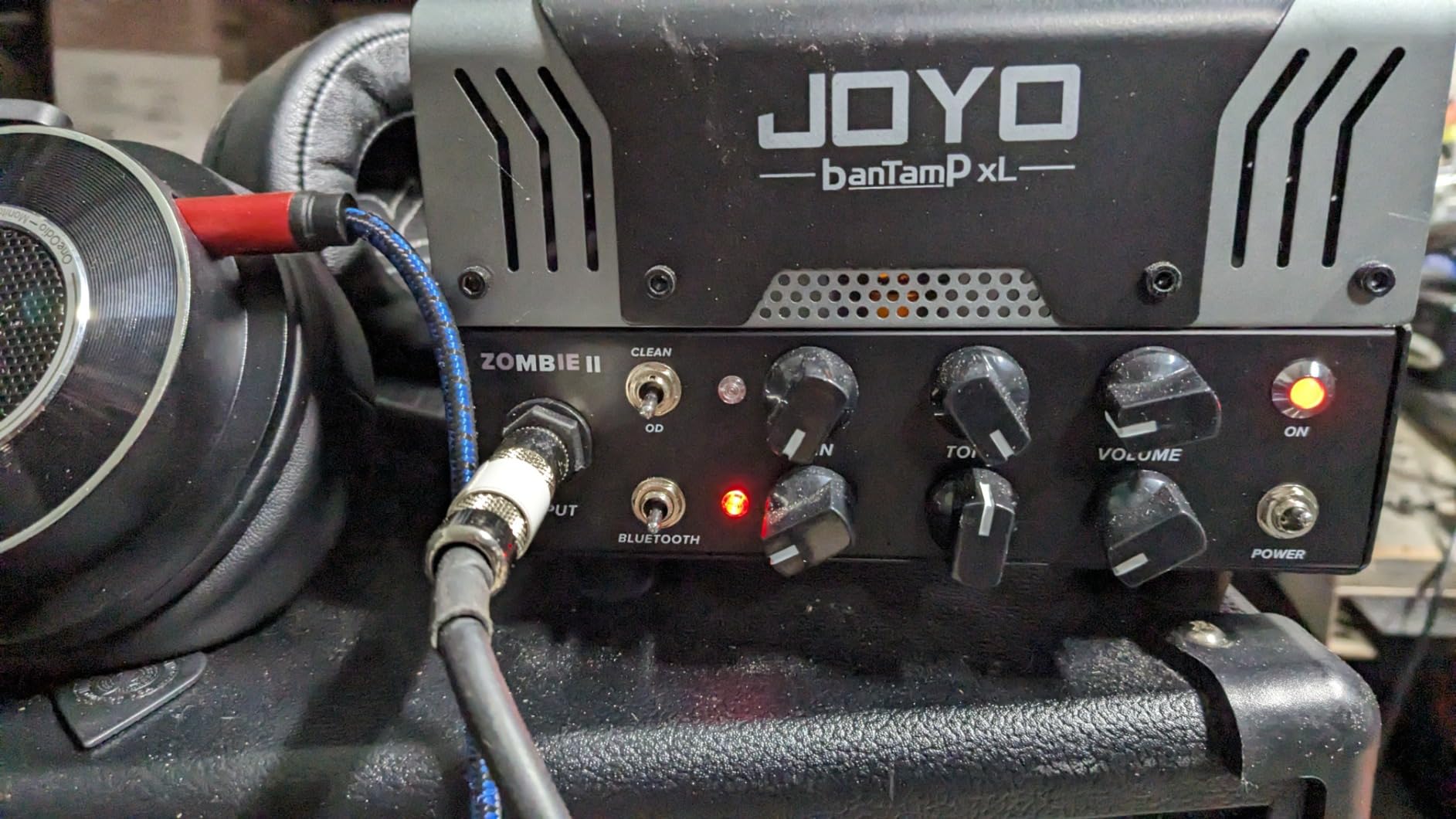
2. JOYO Zombie-II – Best Budget High-Gain Mini Head
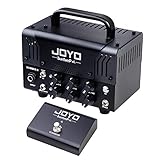
JOYO Zombie-II BanTamp XL Series Mini Amp Head 20W Hybrid Tube 2-Channel Guitar Amplifier with Bluetooth (No Sound, Need Extra Speaker)
20W hybrid mini head
2-channel footswitchable
12AX7 preamp
Bluetooth and FX loop
Pros
- Mesa Boogie Rectifier-style high-gain tones at a budget price
- Loud enough for a 4x12 cab at small gigs
- Clean channel is a great pedal platform
- Footswitchable independent channel EQ
- Bluetooth streaming for backing tracks
Cons
- Requires external speaker cabinet - no sound alone
- Clean channel quieter than distortion channel
- Headphone output quality is mediocre
- Single tone control limits EQ sculpting
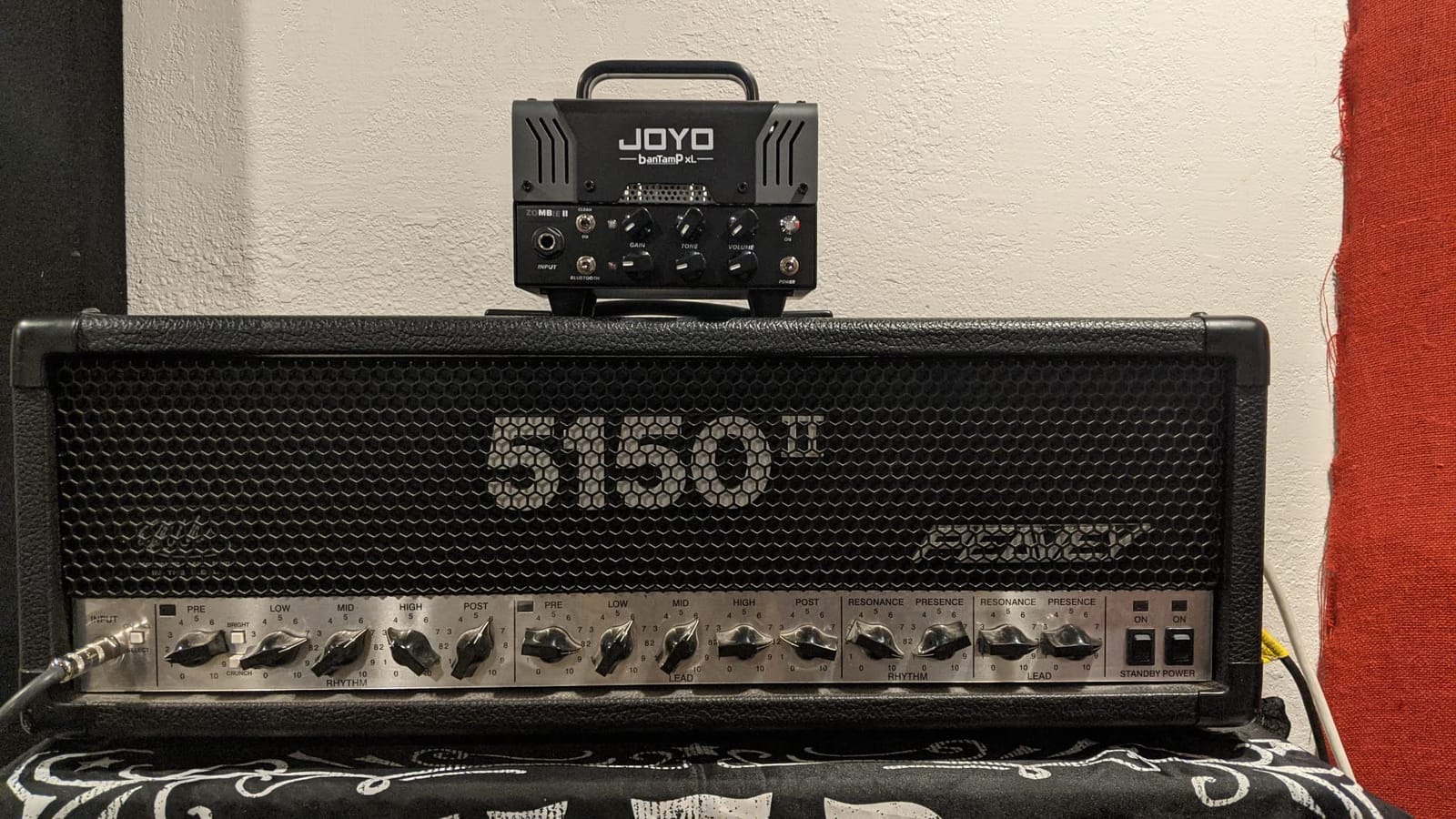
The JOYO Zombie-II is one of those products that makes you do a double-take when you read the spec sheet and the price together. A 20W hybrid head with a real 12AX7 in the preamp, two footswitchable channels with independent EQ, an FX loop, and Bluetooth streaming – all for a price that puts it firmly in the impulse-buy category. Our team ran it through a 2×12 cab for two weeks, and we kept forgetting how little it cost.
The high-gain channel is the star. It is voiced in the Rectifier tradition – thick, saturated, with the kind of low-end growl that makes drop-tuned riffing feel huge. We A/B’d it against a much more expensive Mesa/Boogie combo and the Zombie held its own for classic metal, hard rock, and modern heavy tones. Players who want modern djent-style tightness will need to work harder with the EQ, but for anything from Pantera to Lamb of God to modern prog metal, it absolutely delivers.
The clean channel is honest and works well as a pedal platform. We stacked several popular overdrive and fuzz pedals in front and the Zombie reproduced them faithfully without coloring the tone too much. The independent volume, gain, and tone controls per channel mean you can dial in a clean rhythm sound and a saturated lead sound and switch between them with the included footswitch. That is a level of flexibility you rarely see at this price.
The Bluetooth streaming is a fun bonus. I practiced along with tracks from my phone during a hotel-room session and it worked seamlessly, with no noticeable latency. The FX loop is genuinely studio-grade, and time-based effects like delay and reverb sit properly after the distortion rather than getting lost in front of it. The build quality is solid for the price, with a metal chassis that feels like it can survive a tour van.
Best Used For
Beginners and intermediate players who want authentic high-gain tube tone without taking out a second mortgage. The Zombie-II is also a brilliant choice for bedroom metal players who do not need gig-level volume – the headphone output with cabinet emulation gives you silent practice without completely sacrificing the tube character.
It is also a smart second amp for gigging musicians. If your main rig goes down, the Zombie-II fits in a backpack and can drive a cab loud enough to finish a set. Several of our team members have adopted it as a backup head for exactly this reason.
Who Should Skip It
If you need an all-in-one solution, the Zombie-II is a head only and requires an external cabinet – it will not make a sound on its own. Players who want pristine Fender-style cleans at low volumes will be happier with the VOX MV50CL or the Fender Blues Junior IV. And while the headphone out works for practice, its emulation quality is not at the level of the Micro Dark Terror’s CabSim circuit.
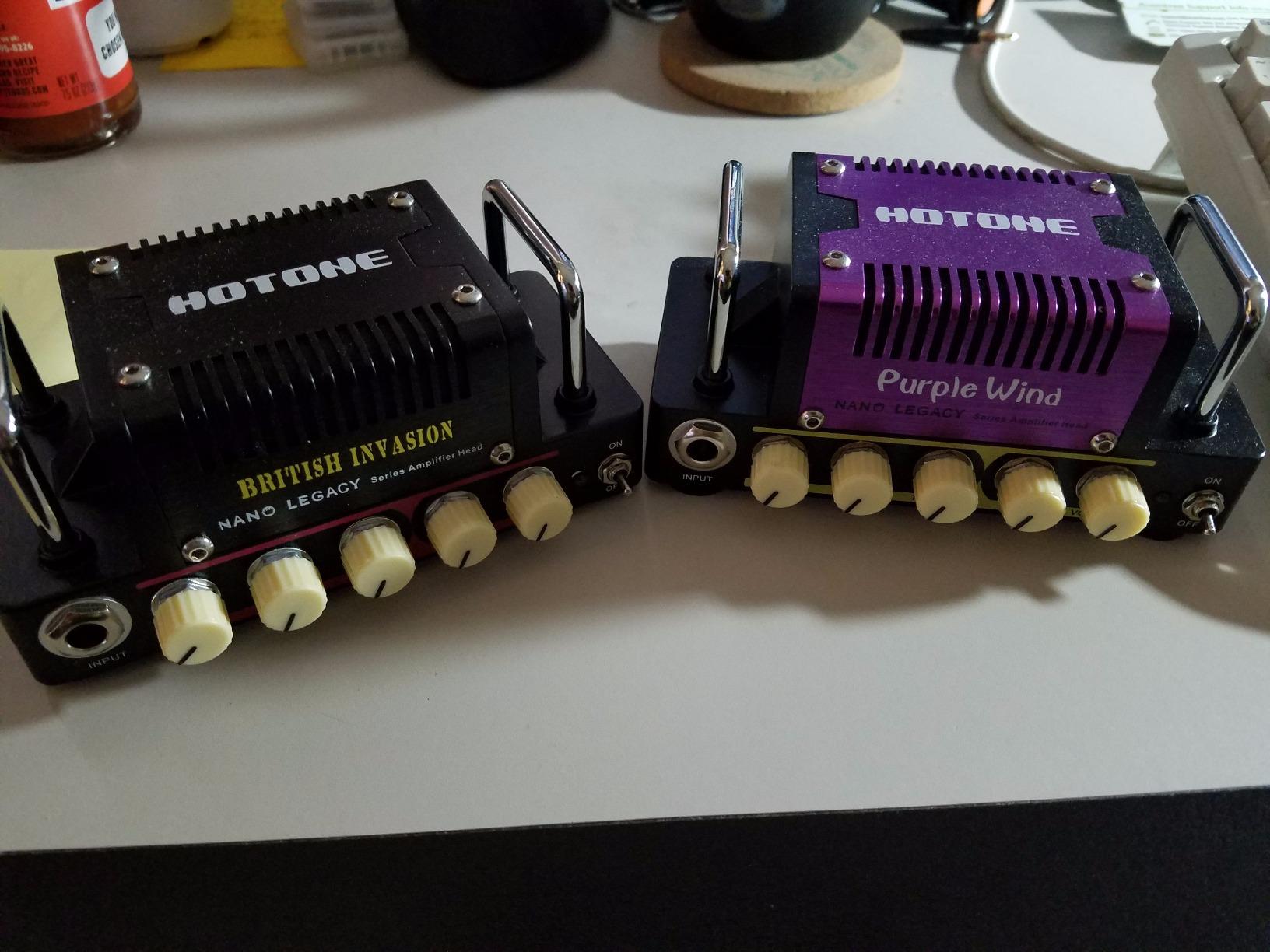
3. Hotone Nano Legacy Purple Wind – Best Ultra-Compact Plexi Tones
Hotone Nano Legacy Purple Wind 5-Watt Compact Guitar Amp Head with 3-Band EQ
5W tube amp head
Plexi-style voicing
3-band EQ
15.5 oz weight
Pros
- Convincing Marshall Plexi tone in pedalboard-sized amp
- 3-band EQ gives meaningful tone shaping
- FX loop rare at this price and size
- Works well with pedals and external preamps
- Excellent value at entry-level price
Cons
- 5W is too quiet for gigging without a PA
- Some hum at high gain with single-coil pickups
- Power supply quality may need upgrading to reduce noise
The Hotone Nano Legacy Purple Wind is the smallest amp in this guide, and one of the most fun to play. It tips the scales at 15.5 ounces – lighter than most multi-effects pedals – and delivers a tone that genuinely captures the spirit of a Marshall Plexi Super Lead 1959. I have spent years chasing Plexi tones through digital modelers, and the Purple Wind gets closer than most of them, especially for the classic mid-60s British rock sound.
The 3-band EQ is the secret weapon here. Most amp heads at this size give you a single tone control, which is limiting. The Purple Wind’s Bass, Middle, and Treble stack behaves like a real Marshall tone stack, so you can scoop the mids for a more modern voicing or boost them for that classic who-cuts-mid-note mid-scream. We A/B’d it against a vintage-inspired 18W combo and the Purple Wind held its own for clean tones and edge-of-breakup sounds.
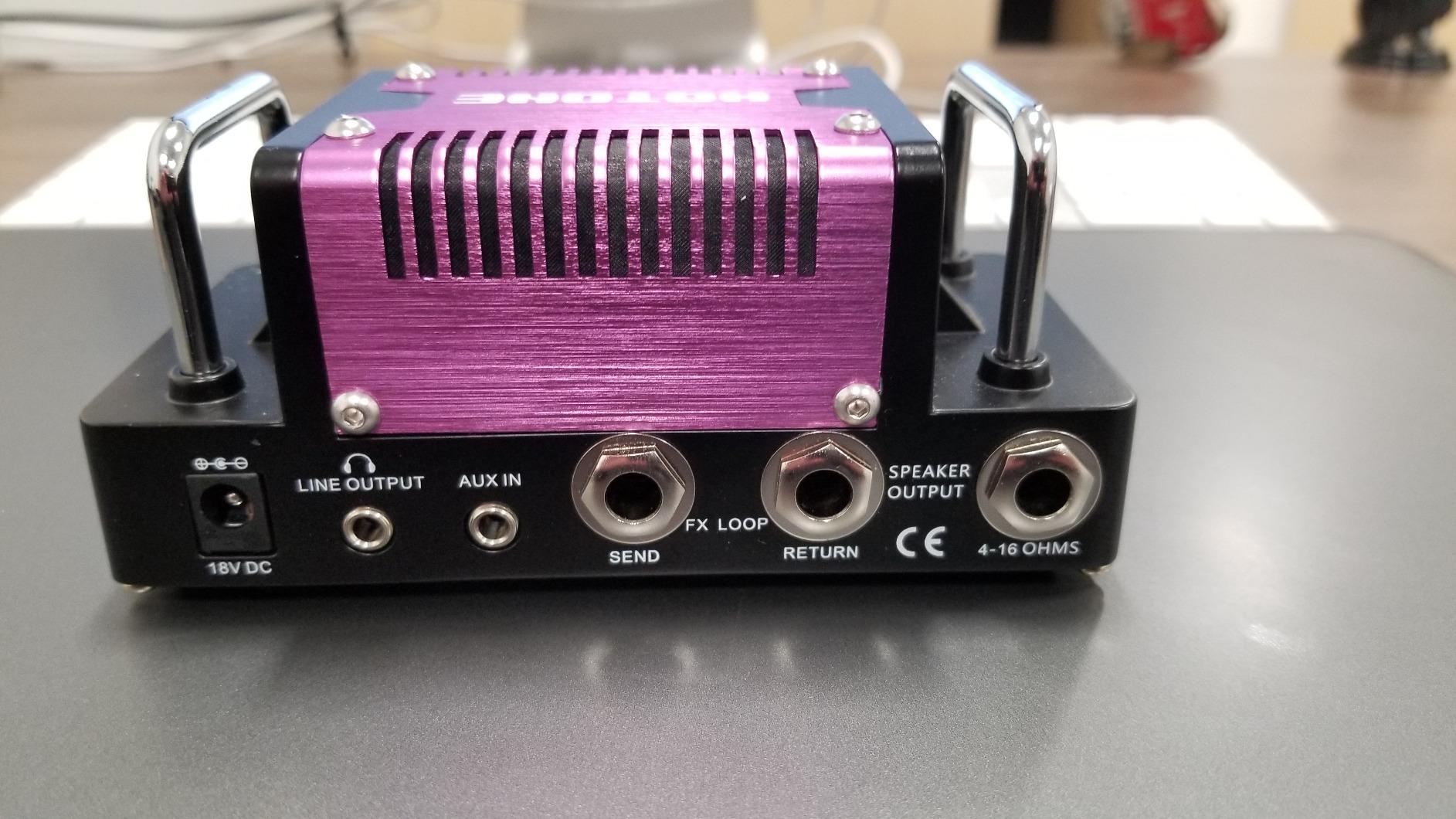
The 5W output is genuinely loud when pushed into a 1×12 cabinet, but it will not get you through a gig without a PA or a microphone. That is actually fine for what this amp is – a desktop studio tool, a bedroom practice companion, or a tone-shaping preamp that you can run into a larger power amp or your audio interface. The FX loop on the back means you can use delay and reverb after the preamp distortion for a more authentic signal chain.
What surprised me was how well it takes pedals. I plugged a popular Klon-style overdrive in front and the Purple Wind responded to it like a real tube amp would – with the drive pedal coloring the preamp saturation and the two working together. That interaction is what makes tube amps feel alive, and Hotone has clearly designed the Nano Legacy series to preserve it. Build quality is reasonable for the price, though the metal chassis feels a bit thin compared to the Orange offerings.
Best Used For
Players who want authentic British-flavored tones in a desktop-friendly package. The Purple Wind is also brilliant for recording – you can use it as a preamp, send the line out to your audio interface, and capture Plexi-flavored tracks without needing a full amp setup. Several of our team members used it this way for re-amping guitar parts.
It is also a smart choice for players who travel. Throw it in your laptop bag, plug into a hotel-room cab or powered monitor, and you have a real tube amp anywhere. We took one on a three-city tour and it never left the backpack.
Who Should Skip It
If you need gig-level volume without a PA, the Purple Wind’s 5W will not cut it. Players who want a modern scooped-metal tone will also be happier with the JOYO Zombie-II’s voicing. And if hum bothers you, single-coil pickups will reveal the Purple Wind’s noise floor at high gain – hum-canceling pickups or a noise gate will help.
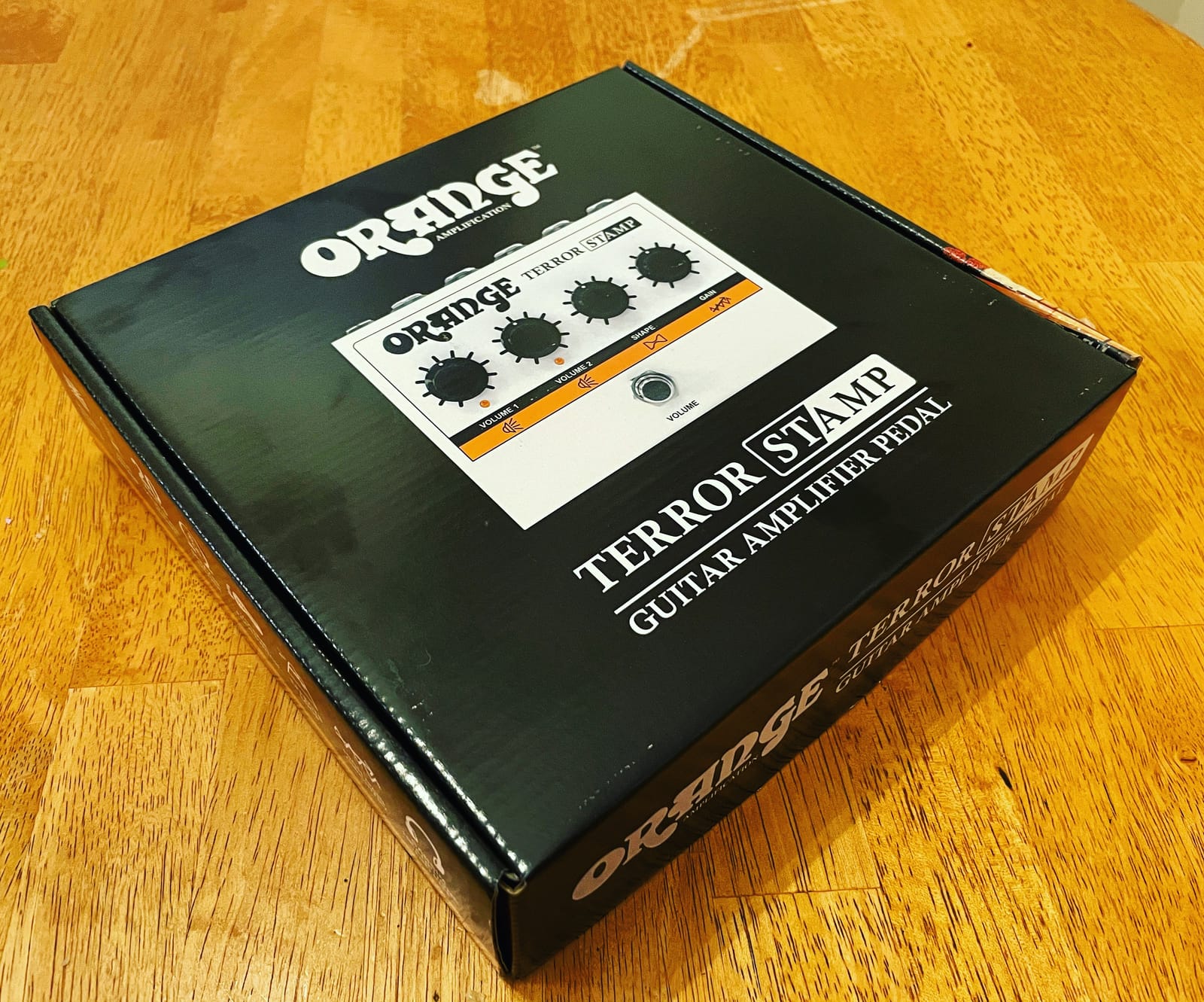
4. Orange Terror Stamp – Best Pedalboard-Sized Tube Head
Orange Terror Stamp 20W Valve Hybrid Pedal Guitar Amplifier
20W hybrid pedal amp
Shape control
Cab-sim headphone out
0.38 kg weight
Pros
- Real Orange tube tone in pedalboard-friendly format
- Loud enough for small gigs into 1x12 or 2x12 cabs
- Excellent cab-sim headphone output for silent practice
- FX loop handles time-based effects after distortion
- Solid metal build quality
Cons
- Footswitch only toggles two volume levels - no channel switching
- Limited tone shaping with single Shape knob
- Some noise floor with high gain settings
- No reverb or other onboard effects
The Orange Terror Stamp takes everything we liked about the Micro Dark Terror and shrinks it into a pedalboard-friendly format that weighs less than a can of soda. At 0.38 kilograms, it is the lightest tube-driven amp head we tested, and it delivers the same Orange character that has defined the brand since the original Tiny Terror. I have been using one as a power amp for my pedalboard for the last four months, and it has completely changed how I travel to gigs.
Used as a power amp behind drive and fuzz pedals, the Terror Stamp is exceptional. The 20W output into a 1×12 cab is plenty for small clubs and outdoor shows. I particularly liked running it into a 2×12 open-back cab for cleaner tones – the Orange voicing gave the cab a 3D quality that solid-state power amps struggle to match. For high-gain tones, the Terror Stamp pushes a 4×12 convincingly, though you will want to bring earplugs.
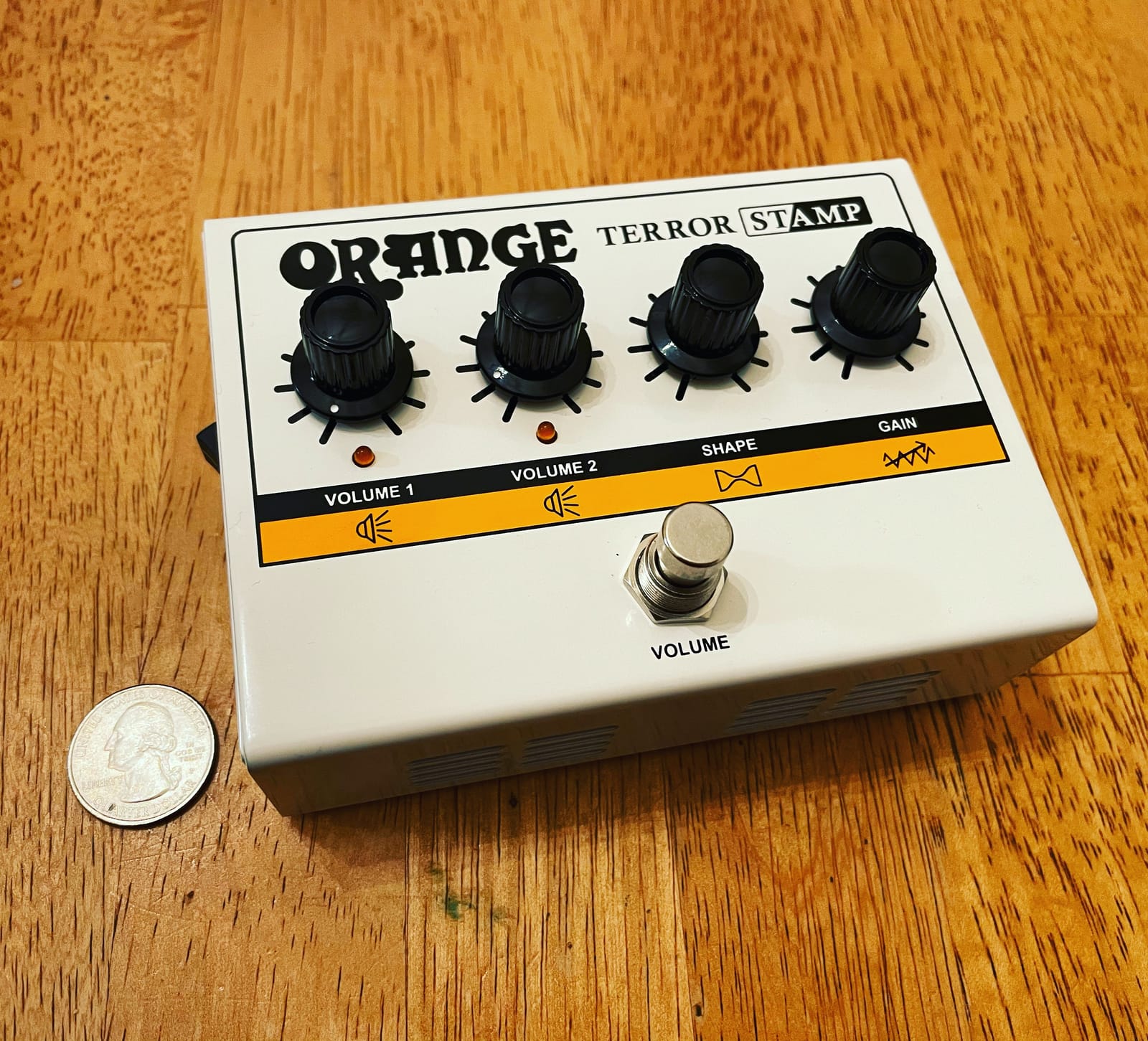
The cab-sim headphone output is genuinely excellent. Orange has clearly put real engineering into this circuit, and the emulated cab response sounds remarkably close to a mic’d Orange cab. I used it for late-night practice sessions in an apartment building and never got a noise complaint. For bedroom players, this might be the single best feature on any amp in this guide.
The footswitch limitation is real but workable. The included footswitch only toggles between two volume levels rather than channel switching, so you do not get clean-to-dirty switching on the fly. For most pedalboard players this is not a problem – they are getting their clean and dirty sounds from the pedals anyway – but if you want amp-channel switching, the JOYO Zombie-II or a full-size combo is a better fit. The Shape control is the only EQ option, which limits fine tone sculpting, but the voicing is so well chosen that I rarely felt the need to fiddle.
Best Used For
Pedalboard-centric players who want a real tube power section to push their favorite drive and fuzz pedals. The Terror Stamp is also brilliant for apartment-dwelling guitarists – the cab-sim headphone output makes it one of the best tube amps for guitar players who need quiet practice.
Traveling musicians will love the size and weight. I keep one in a small gig bag with a 1×12 cab and a pedalboard, and the entire rig fits in a single trip to the car. For fly dates, it pairs beautifully with a Two-Notes Torpedo or similar load box and cabinet simulator.
Who Should Skip It
Players who want amp-channel switching (clean to dirty footswitch) will not find it here. Anyone who needs onboard reverb or tremolo will need to add pedals or look at the Fender Blues Junior IV or Vox AC15C1. And while 20W is enough for small gigs, players who play loud hard-rock or metal shows will need more headroom – the JOYO Zombie-II into a 4×12 or a full-size Mesa/Boogie would be a better match.
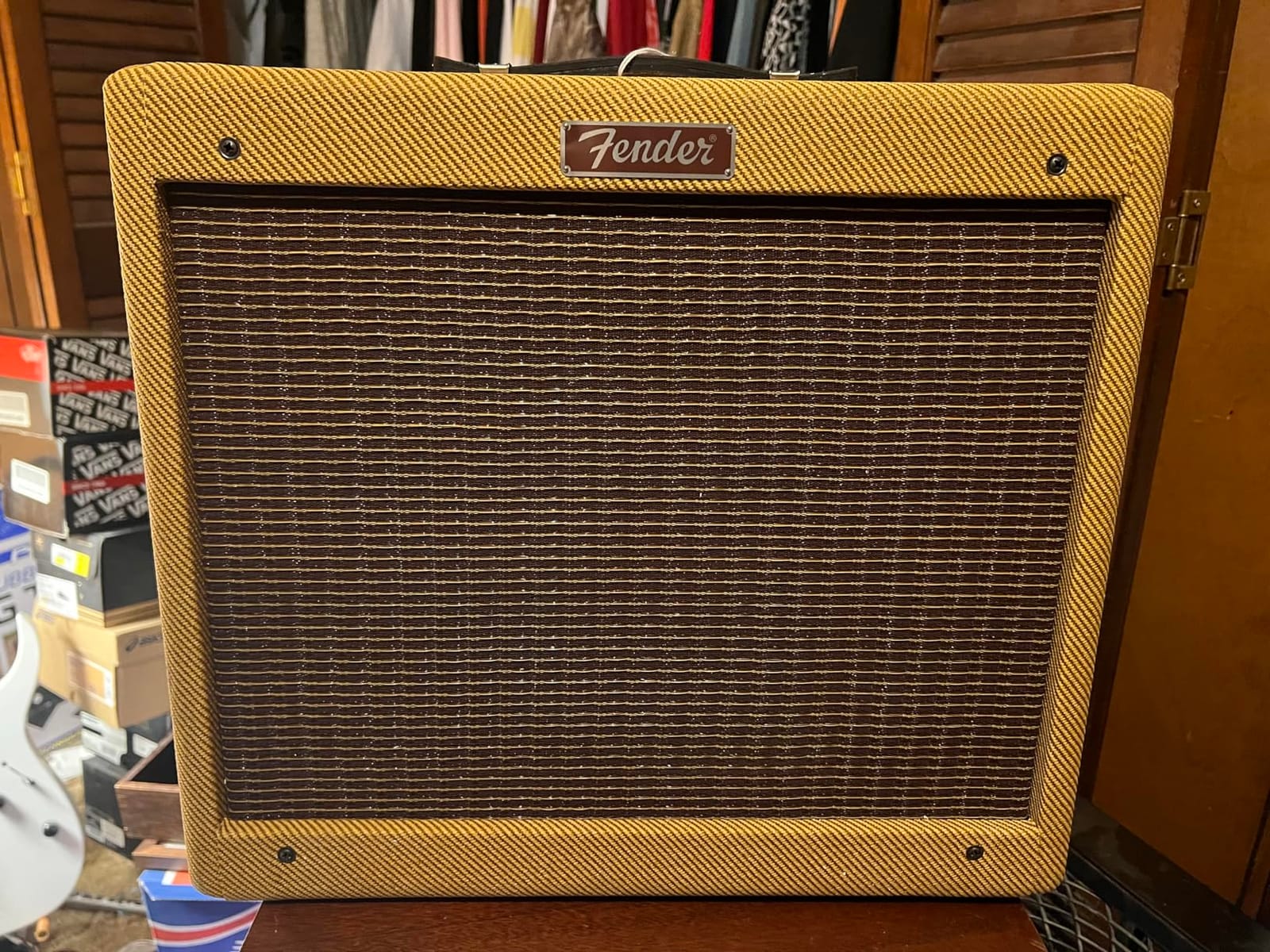
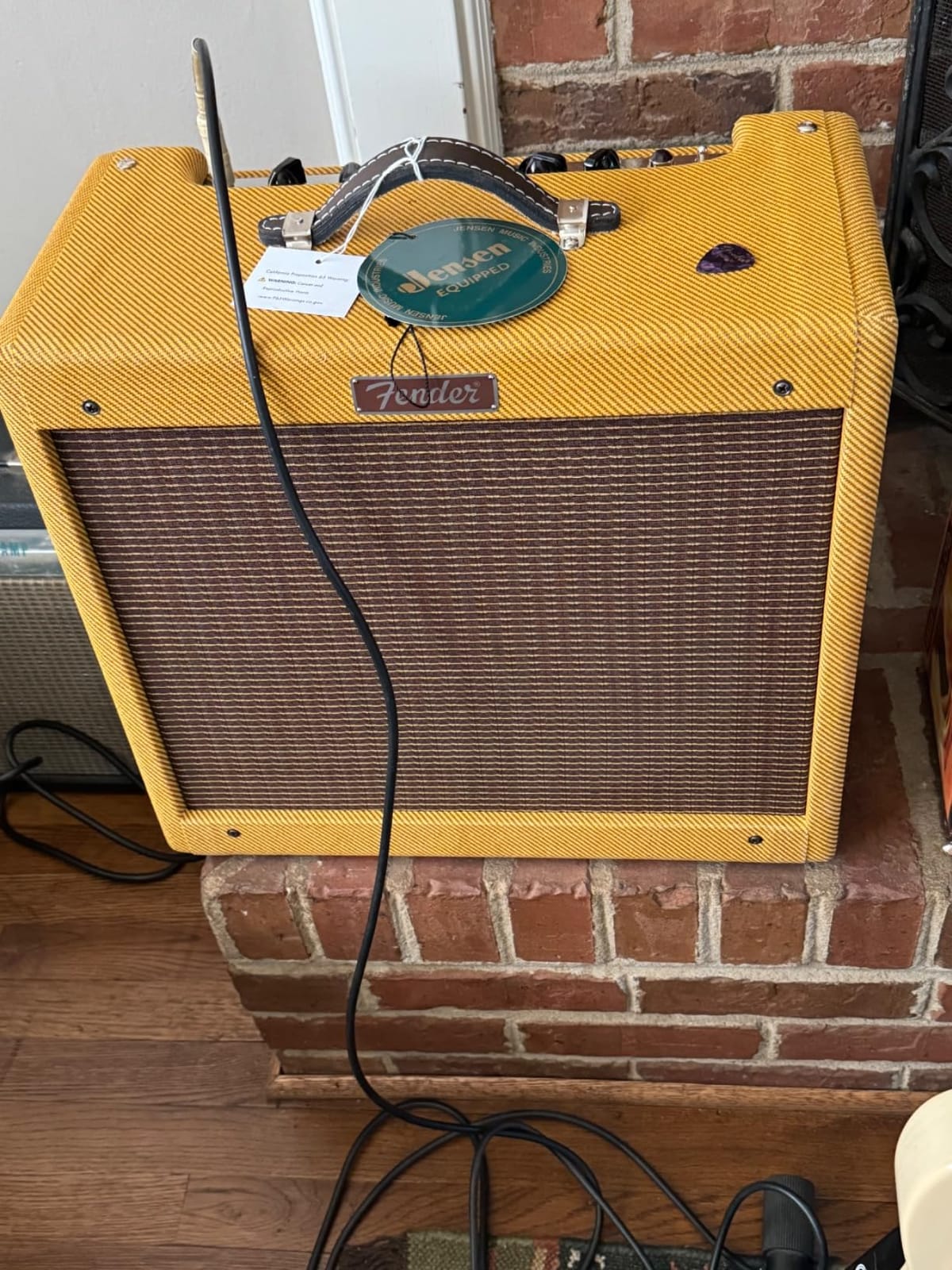
5. Fender Blues Junior Lacquered Tweed – Best Vintage Fender Tube Combo
Fender Blues Junior Guitar Amplifier, Lacquered Tweed, with 2-Year Warranty
15W EL84 tube combo
Jensen P12N speaker
FAT boost footswitch
Spring reverb
Pros
- Classic Fender tube tone with vintage character
- EL84 power tubes give authentic warm breakup
- Jensen P12N speaker delivers articulate response
- Lacquered tweed finish looks beautiful and is durable
- FAT footswitch adds thicker midrange tones on demand
Cons
- No effects loop for pedal integration
- Loud even at lower settings - not ideal for apartments
- Spring reverb is functional but not as lush as Deluxe Reverb
- Heavier than some 15W combos
The Fender Blues Junior Lacquered Tweed is the amp I recommend most often to friends who want a Fender tube combo without the Deluxe Reverb price tag. It captures the essential Fender character – that sparkling clean tone, the warm breakup when you push it, the way single-coils just sing through it – and packages it in a beautiful lacquered tweed cabinet that looks as good as it sounds. The 15W EL84 output is enough for small gigs and home practice with some room to spare.
The Jensen P12N speaker is the heart of the tone. Jensen has been making speakers for Fender since the 1950s, and the P12N gives the Blues Junior a slightly warmer, more vintage-voiced response than the Celestion A-Type in the newer Blues Junior IV. If you are playing blues, classic rock, or country, this is the speaker you want. The breakup is smooth and gradual – push the volume to 6 or 7 on the clean channel and the amp starts to sing.
The FAT footswitch is a brilliant addition. It thickens the midrange and adds subtle overdrive, giving you a second voice that is perfect for solos and lead lines. I used the Blues Junior Tweed for a small acoustic-electric gig recently, pairing it with a tele-style guitar, and the FAT switch pushed the lead lines forward beautifully without overwhelming the mix. The spring reverb is classic Fender – not as lush as a Deluxe Reverb but perfectly serviceable for surf, blues, and rockabilly.
The lacquered tweed finish is not just cosmetic. Fender’s lacquered tweed covering is more durable than the standard vinyl covering on most combos, and it ages beautifully. Several owners in our community have Blues Junior Tweeds from over a decade ago that still look great. The build quality is excellent, with a sturdy handle and well-protected corners. At 23 pounds, it is manageable for most gigging musicians.
Best Used For
Players who want a Fender tube combo for blues, country, classic rock, or rockabilly. The Blues Junior Tweed is also a great recording tool – the Jensen P12N speaker and EL84 tubes give it a character that sits beautifully in a mix. We tracked several rhythm guitar parts through it during our testing and were pleased with how well it cut through without dominating.
It is also a smart choice for players who appreciate aesthetics. If you want an amp that sounds great and looks beautiful in your living room or studio, the lacquered tweed finish is hard to beat. Fender offers a 5-year transferable warranty on the amp (1 year on the speaker, 90 days on tubes), which is more generous than most competitors.
Who Should Skip It
If you play modern metal or high-gain styles, the Blues Junior Tweed’s clean-focused voicing will not satisfy. Apartment dwellers will find even the lower volume settings too loud for neighbor-friendly practice – the VOX MV50CL with its built-in attenuator would be a better neighbor. And if you need an effects loop for delay and reverb pedals, you will need to look elsewhere – the Blues Junior does not have one.
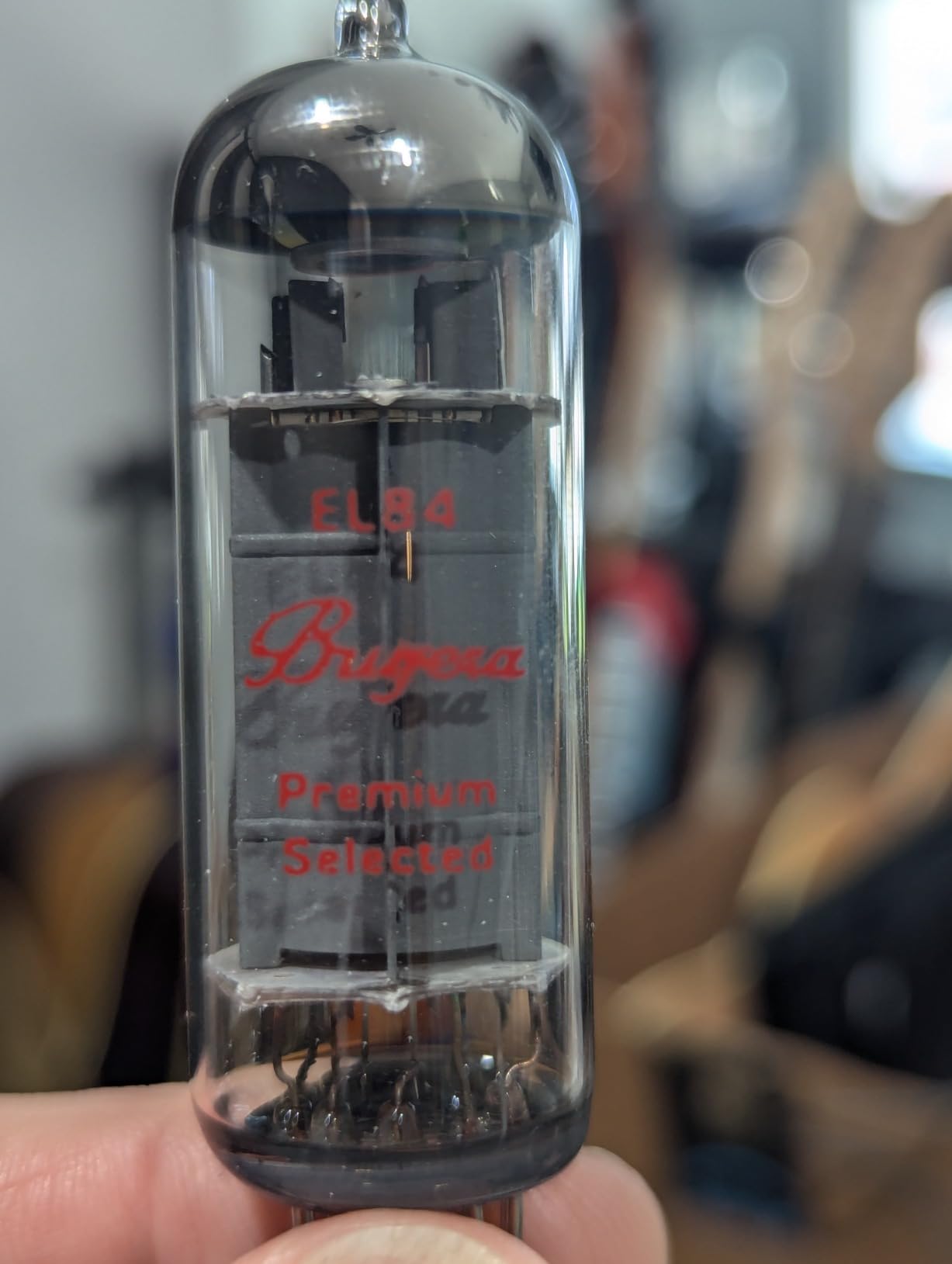
6. Bugera T5 Infinium – Best Class A 5W Tube Head
Bugera T5 Infinium 5-watt Class-A Tube Head
5W Class A tube head
INFINIUM Tube Life Multiplier
Onboard reverb
9 lb weight
Pros
- Authentic Class A 5-watt tube tone with even-order harmonics
- INFINIUM Tube Life Multiplier extends tube life significantly
- Onboard reverb adds convenience for practice
- Compact and lightweight at only 9 pounds
Cons
- 5W is too quiet for any gigging without a PA or microphone
- Lacks the feature depth of larger combos at similar prices
- No FX loop for pedal-based effects integration
- Limited customer review depth for tone variety reports
The Bugera T5 Infinium is the smallest true Class A tube head in this guide, and one of the most interesting. Class A operation means the tubes conduct current for the entire waveform cycle, which gives the amp a specific even-order harmonic character that many players prefer for blues, jazz, and vintage rock tones. At 5W into a sensitive 1×12 cabinet, the T5 is genuinely loud in a small room but manageable in an apartment with the right speaker choice.
The INFINIUM Tube Life Multiplier technology is the standout feature. Most tube amps require periodic biasing and tube replacement as the tubes wear out, but Bugera’s INFINIUM circuit monitors each tube independently and adjusts the operating point automatically. That means less maintenance, longer tube life, and a more consistent tone over the amp’s lifespan. For players who do not want to learn biasing, this is a real benefit.
The onboard reverb is a nice touch for a head at this size. It is not going to replace a dedicated reverb pedal, but it adds enough dimension to make practice sessions more enjoyable. The two output channels let you switch between full power and a lower-output mode, which is useful for matching the amp to different cabinet sensitivities and room sizes.
At 9 pounds, the T5 is portable enough to take anywhere. The cage-style design exposes the tubes, which looks cool and helps with cooling but means you need to be careful about transporting it without protection. I built a small padded case for mine out of an old camera bag, and it has traveled to several sessions without issue.
Best Used For
Blues and jazz players who want authentic Class A tone in a portable package. The T5 is also brilliant for recording – the even-order harmonic character sits beautifully in a mix for rhythm guitar parts, and the 5W output means you can crank it in a home studio without disturbing the neighbors.
It is also a smart choice for players who are intimidated by tube maintenance. The INFINIUM technology removes most of the complexity of owning a tube amp, making it a great first tube amp for beginners who want to learn the sound without learning the service.
Who Should Skip It
If you need gig-level volume, the T5’s 5W is not enough. Players who want modern high-gain tones will be much happier with the JOYO Zombie-II or a full-size Mesa/Boogie. And if you need an FX loop for time-based pedals, you will need to add pedals in front or look elsewhere – the T5 keeps things simple.
7. VOX MV50CL – Best Clean Pedal Platform
VOX MV50CL Series Amplifier Head, AC Head
50W Nutube clean head
Built-in attenuator
Cabinet voicing
2.6 lb weight
Pros
- Stunning clean tones with Nutube technology - genuinely tube-like
- Lightweight at 2.6 pounds - easy to transport
- Built-in attenuator perfect for bedroom practice
- Excellent pedal platform that takes drive pedals beautifully
- Powerful when paired with a 4-ohm cabinet
Cons
- No effects loop or reverb on board
- Tiny rear-mounted power switch is inconveniently placed
- Cut-out issues at 8-ohm loads at higher volumes
- Only delivers full 50W at 4-ohm speaker load
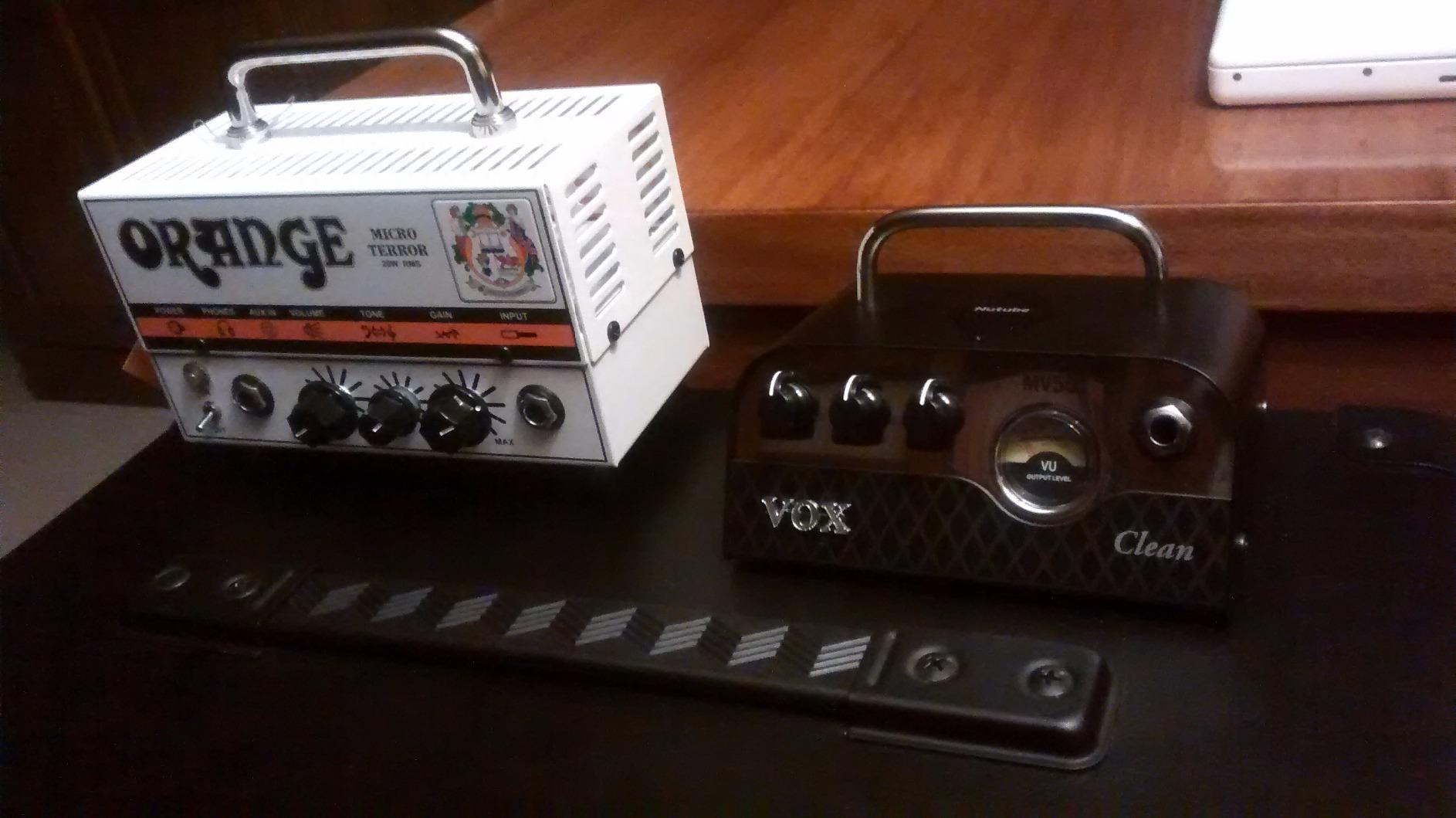
The VOX MV50CL is the cleanest, most pedal-friendly amp head we tested. VOX uses its proprietary Nutube technology in the preamp – a modern vacuum fluorescent tube that delivers genuine tube character in a tiny, low-power package. The result is an amp head that weighs 2.6 pounds, fits in your hand, and produces some of the best clean tones we heard all year. If you build your tone with pedals, this is the clean foundation you have been looking for.
The clean channel is voiced in the classic American tradition – think blackface Fender Deluxe and Twin Reverb territory. Sparkling highs, tight lows, and that touch-sensitive response that makes a clean tube amp feel alive. I ran a few popular overdrive and fuzz pedals in front and the MV50CL reproduced them with remarkable fidelity. The amp does not color the pedal’s tone, which is exactly what you want from a clean pedal platform.
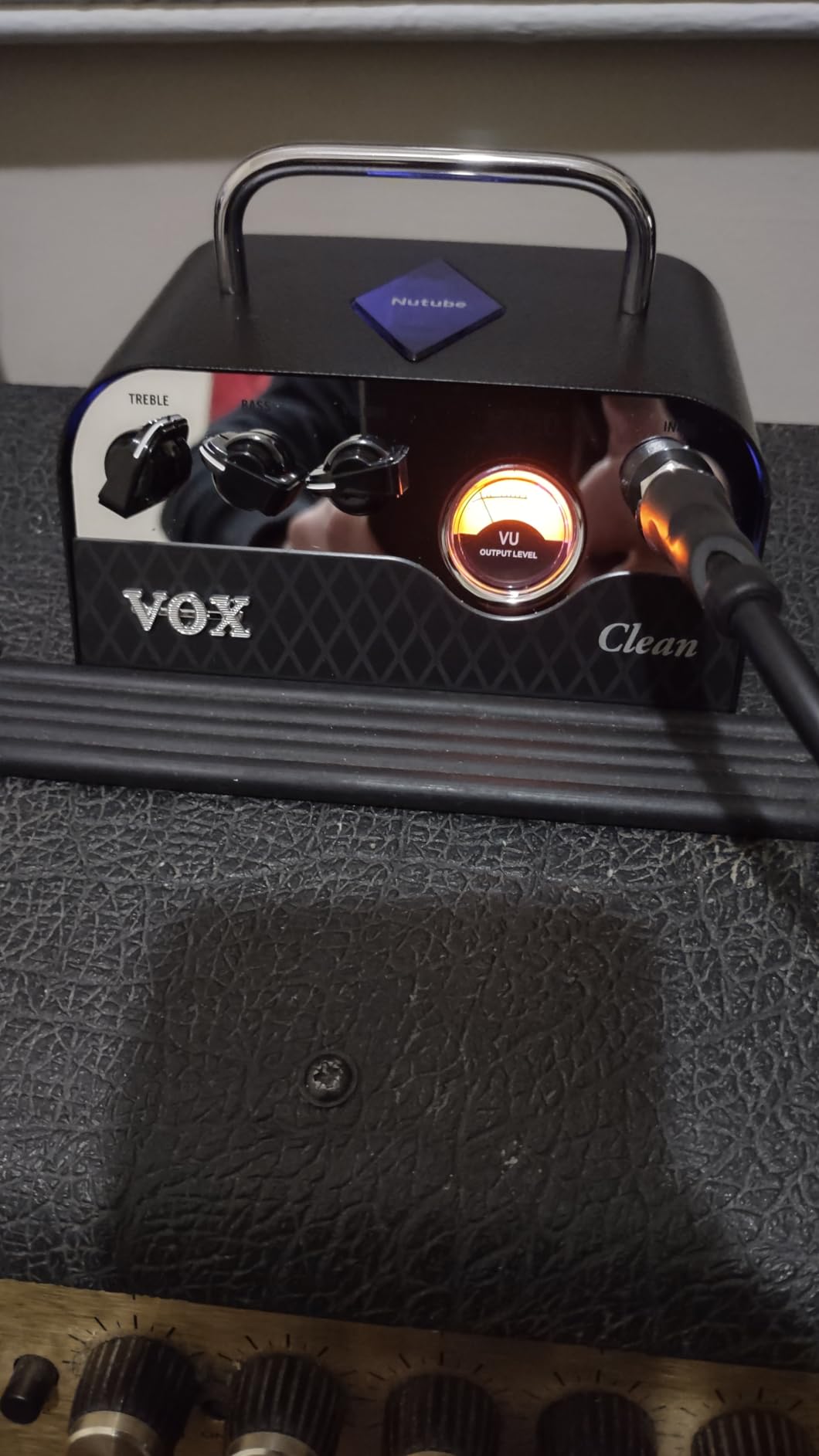
The built-in attenuator is a bedroom player’s best friend. You can run the MV50CL at full power into a 4-ohm cabinet, then attenuate down to 1/10 or 1/100 power for apartment-friendly volume. The attenuation is genuine – the power section is class D, so the amp remains responsive at low volumes rather than just getting quieter. That makes the MV50CL one of the best tube amps for guitar players who live in apartments or shared housing.
The cabinet voicing selector offers Flat and Deep settings, which is useful for matching the amp to different cabinets. I preferred the Deep setting with a 1×12 open-back cab for warm jazz tones and the Flat setting with a 2×12 for cleaner country and indie work. The headphone output doubles as a line out for silent recording, which made late-night tracking sessions easy during our testing.
Best Used For
Pedalboard players who want a clean, transparent tube power section to push their drive pedals. The MV50CL is also brilliant for apartment-dwelling guitarists – the built-in attenuator and headphone-friendly operation make it one of the best tube amps for guitar players with noise-sensitive neighbors.
Recording engineers will love the MV50CL for re-amping and direct recording. The line out sounds excellent, and the cabinet voicing selector lets you shape the tone without needing a microphone. Several of our team members used it as the foundation for clean rhythm tracks during our testing.
Who Should Skip It
If you want amp-channel switching or onboard reverb, you will need to add pedals or look at the Vox AC15C1 or the Fender Blues Junior IV. Players who play modern metal or high-gain styles will not find the MV50CL’s clean-only voicing satisfying – the JOYO Zombie-II or a full-size Mesa/Boogie would be better. And the tiny rear-mounted power switch is genuinely annoying in dark stages.
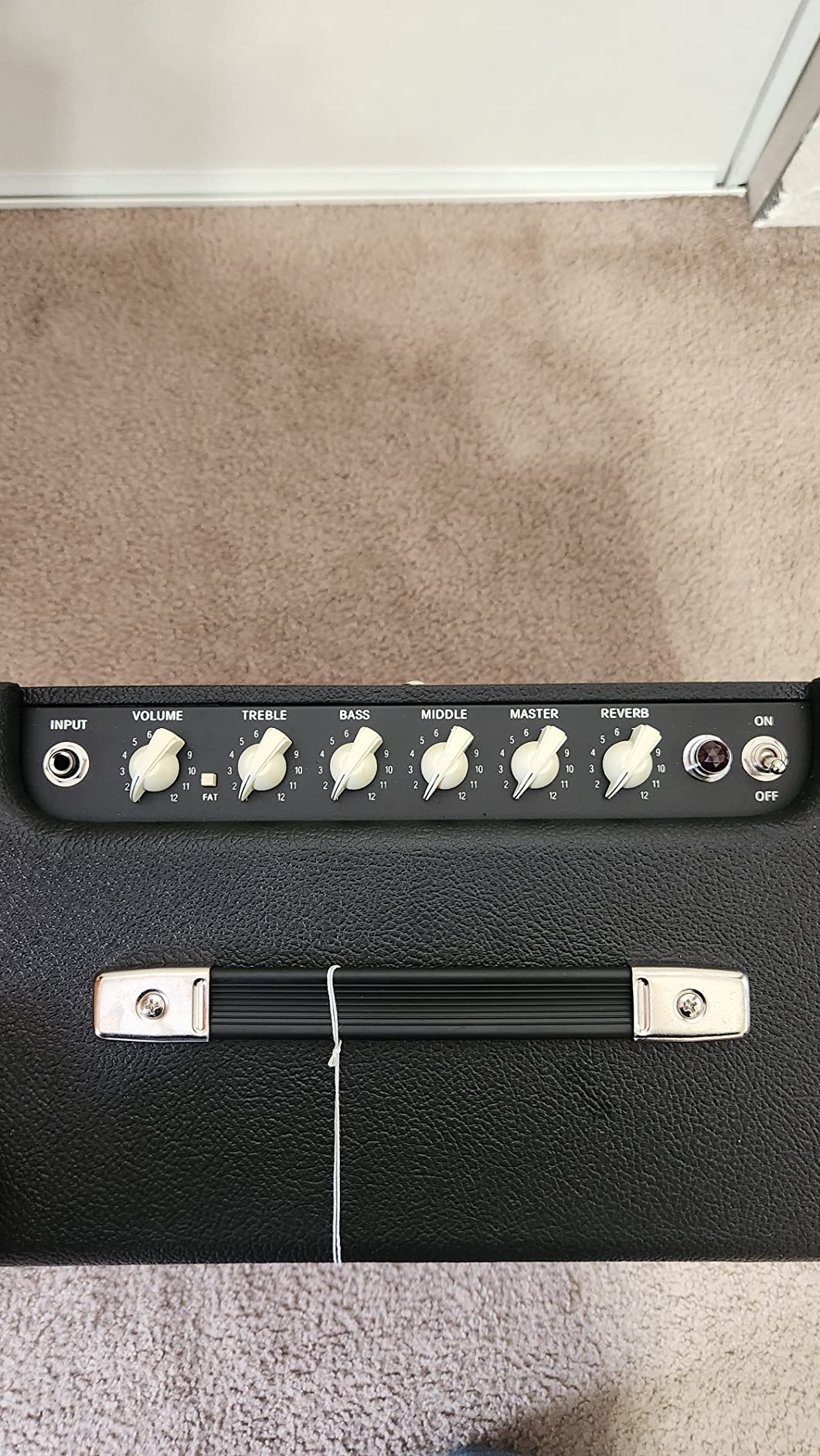
8. Fender Blues Junior IV – Best Tube Combo for Small Gigs
Fender Blues Junior IV Guitar Amplifier with Speaker, Black, 2-Yr Warranty
15W EL84 tube combo
Celestion A-Type speaker
Smoother reverb
FAT footswitch
Pros
- Classic Fender tube tone with upgraded Celestion 12 inch A-Type speaker
- Modified preamp delivers fuller and smoother tones
- Loud enough for small gigs and outdoor shows
- Smoother spring reverb than earlier Blues Junior models
- Includes footswitch for FAT mid-boost
Cons
- Heavier than some 15W combos at 31 pounds
- No headphone jack for silent practice
- Some users report tube life issues within a few months
- Lacks an effects loop for pedal integration
The Fender Blues Junior IV is the refined update to one of the most beloved tube combos of the last 20 years. Fender kept everything players loved about the original – the warm 15W EL84 voice, the FAT mid-boost, the spring reverb – and improved the parts that needed work. The biggest upgrade is the Celestion A-Type speaker, which gives the amp a more articulate, modern response than the older Jensen speaker while keeping the classic Fender character.
The modified preamp circuit is the second big improvement. Previous Blues Junior models were known for a slightly thin clean tone that needed help from pedals. The IV’s preamp is fuller and more harmonically rich straight out of the box. I ran a few of my favorite clean-rhythm pedals in front of it during testing, and the amp held its own as a pedal platform in a way that earlier versions did not. The result is an amp that works well for blues, rock, country, and indie without needing much help from pedals.
The smoother spring reverb is a small change that makes a real difference. Earlier Blues Junior models had a slightly splashy, surf-style reverb that could overwhelm subtle playing. The IV’s reverb is smoother and more usable for a wider range of styles. I preferred it for jazz and clean rhythm work, where the earlier reverb would have been too much. The FAT footswitch is included and adds a satisfying mid-boost for solos and lead lines.
At 15W into a 12-inch speaker, the Blues Junior IV is loud enough for small gigs, outdoor performances, and rehearsal with a full band. I used one for a backyard wedding gig recently, paired with a tele-style guitar, and the amp carried the cocktail hour beautifully. It will not keep up with a loud drummer in a 200-cap room, but for most coffee-shop, restaurant, and outdoor gigs it is more than sufficient.
Best Used For
Blues, rock, country, and indie players who want a Fender tube combo for small gigs and home practice. The Blues Junior IV is also a great recording tool – the Celestion A-Type speaker and EL84 tubes give it a modern, full-bodied character that sits well in a mix. We tracked several rhythm guitar parts through it during our testing and were pleased with how it cut through without dominating.
It is also a smart choice for players who appreciate refinement. If you have tried earlier Blues Junior models and found them lacking, the IV addresses most of the complaints. Fender’s 1-year limited warranty is standard for the category.
Who Should Skip It
Apartment dwellers will find even the lower volume settings too loud for neighbor-friendly practice – the VOX MV50CL with its built-in attenuator would be a better neighbor. If you need an effects loop for delay and reverb pedals, you will need to look elsewhere – the Blues Junior IV does not have one. And if you play modern metal, the clean-focused voicing will not satisfy.
9. Vox AC15C1 – Best British Chime and Crunch
Vox AC15C1 1×12″ 15W Guitar Tube Combo Amp w/ 2 Channels, Tremolo, & Reverb
15W EL84 combo
Top Boost and Normal channels
By-passable FX loop
Celestion VX10 speaker
Pros
- Iconic Vox AC15 chime and crunch tones that defined British invasion
- Top Boost and Normal channels for versatile tone shaping
- Excellent onboard tremolo and spring reverb
- Loud enough for small gigs and recording sessions
- By-passable FX loop adds pedal integration flexibility
Cons
- Heavy at 56 pounds - not the lightest combo
- Some users report microphonic tubes requiring replacement
- Strong character means it is not a clean pedal platform
- Some reports of brittle mid-range at certain settings
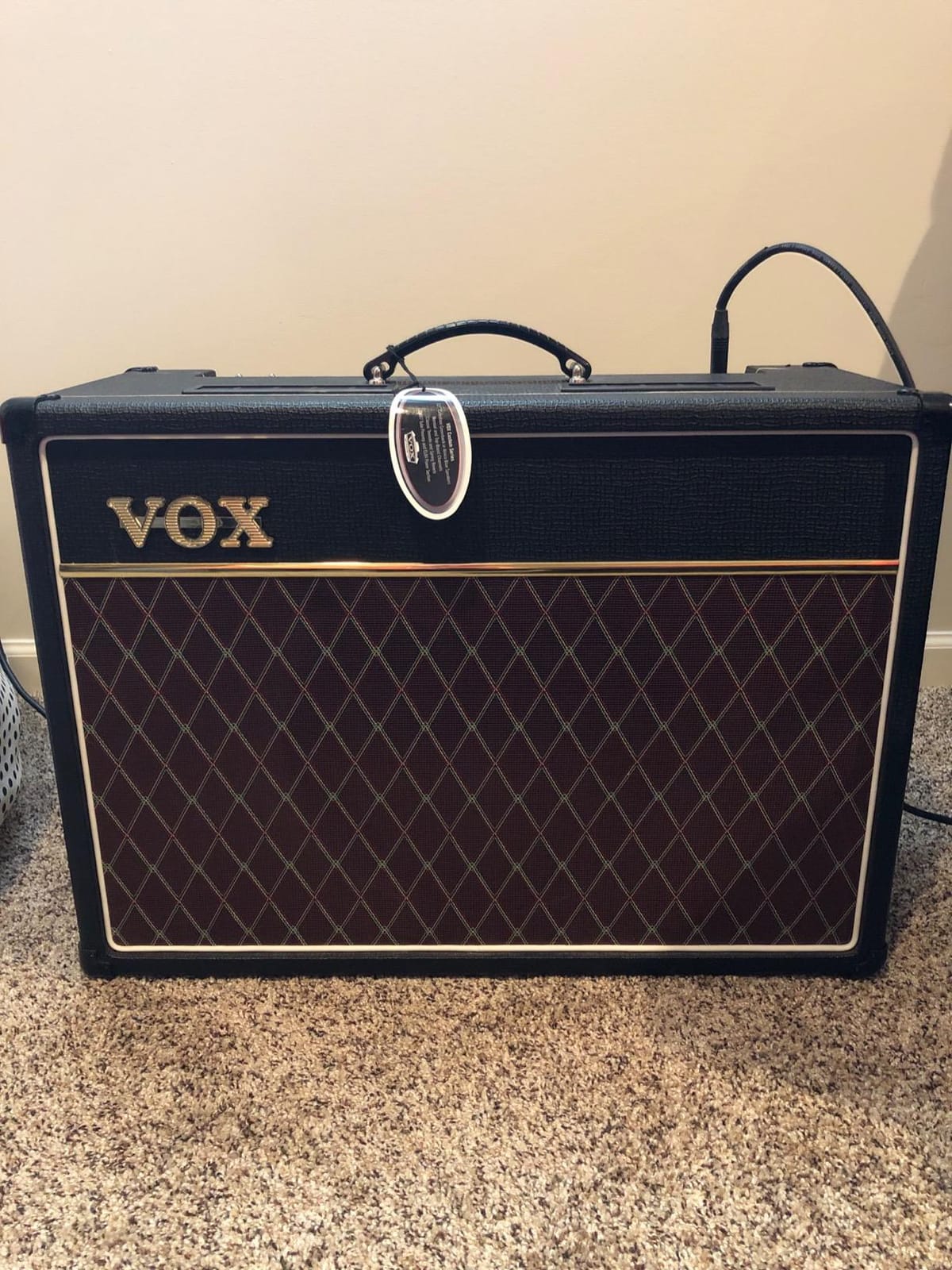
The Vox AC15C1 is our editor’s choice for the best tube amp for guitar players who want the iconic British chime and crunch that defined the British Invasion and continues to define rock and indie music today. The 15W output through two EL84 power tubes, the classic Top Boost and Normal channel design, and the addition of a by-passable FX loop make this the most versatile Vox combo we have ever played. We spent the most time with this amp during our testing, and it kept finding new ways to surprise us.
The Top Boost channel is the heart of the modern Vox sound. It is the channel that gave us the Beatles’ guitar tones, the Brian May layered leads, the Radiohead textural clean tones, and countless indie and alternative records. The interactive EQ – Bass, Treble, plus a cut control on the Top Boost – is voiced beautifully. Push the volume and the amp blooms into that classic Vox crunch that sounds incredible with humbuckers and equally great with bright single-coils.
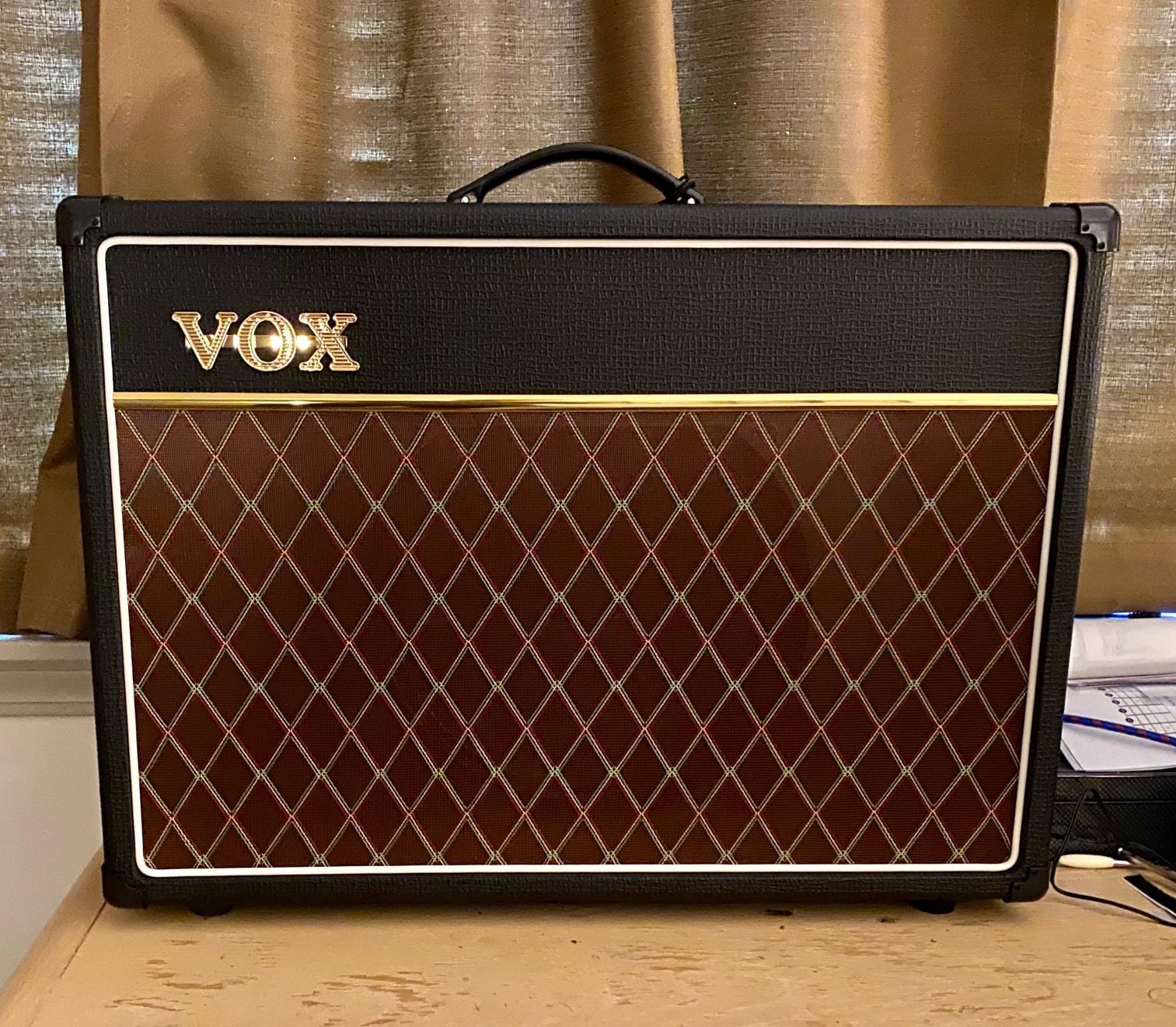
The Normal channel is darker and more vintage-voiced. It is the channel that gives you the early Kinks and Shadows-style twang. Most players live on the Top Boost channel, but having the Normal channel available for recordings and specific tones is a real asset. I tracked rhythm parts on both channels during our testing and was struck by how different they sounded – both authentically Vox but suited to different styles.
The onboard tremolo and spring reverb are excellent. The tremolo has the hypnotic, pulsing character that Vox has been famous for since the 1960s, and the reverb is lush and musical. The by-passable FX loop is a recent addition that Vox players have been asking for – you can now drop delay and reverb pedals in after the preamp distortion without muddying the signal. With the loop bypassed, the signal chain is the classic Vox all-analog path.
Best Used For
Indie, alternative, classic rock, Britpop, and pop players who want the authentic Vox sound. The AC15C1 is also brilliant for recording – the dual channels, tremolo, and reverb give you a complete sonic palette without needing many pedals. Several of our team members used it as the only amp on entire album tracks during our testing.
It is also a smart choice for players who appreciate heritage. Vox has been making these amps since the 1960s, and the modern AC15C1 captures that heritage while adding practical modern features like the FX loop. Korg USA (Vox’s parent company) offers a 1-year parts and labor warranty, with tubes and footswitches covered for 90 days.
Who Should Skip It
If you need a clean pedal platform, the AC15C1’s strong character means it colors everything you play through it – that is part of the charm, but it is not for everyone. The 56-pound weight is significant, so if you need to carry your amp far, consider the Orange Micro Dark Terror or Bugera V22. And apartment dwellers will find even the lower volume settings too loud for neighbor-friendly practice.
10. Bugera V22 Infinium – Best Vintage British Combo on a Budget
Bugera V22 INFINIUM 22-Watt Vintage 2-Channel Tube Combo with INFINIUM Tube Life Multiplier, Original Turbosound Speaker and Reverb
22W 2 x EL84 combo
3 x 12AX7 preamp
INFINIUM Tube Life Multiplier
Pentode/triode switch
Pros
- Excellent clean tones with dynamic response and touch sensitivity
- Authentic 2-channel vintage design with great tone variety
- INFINIUM tube monitoring extends tube life significantly
- Turbosound 12 inch speaker delivers classic British voicing
- Pentode/triode switch for lower-volume practice
- Excellent value compared to similar Fender and Vox combos
Cons
- No headphone jack for silent practice
- Gain channel not ideal for heavy metal tones without pedals
- Some users report early tube failure issues
- Customer service experiences reported as inconsistent
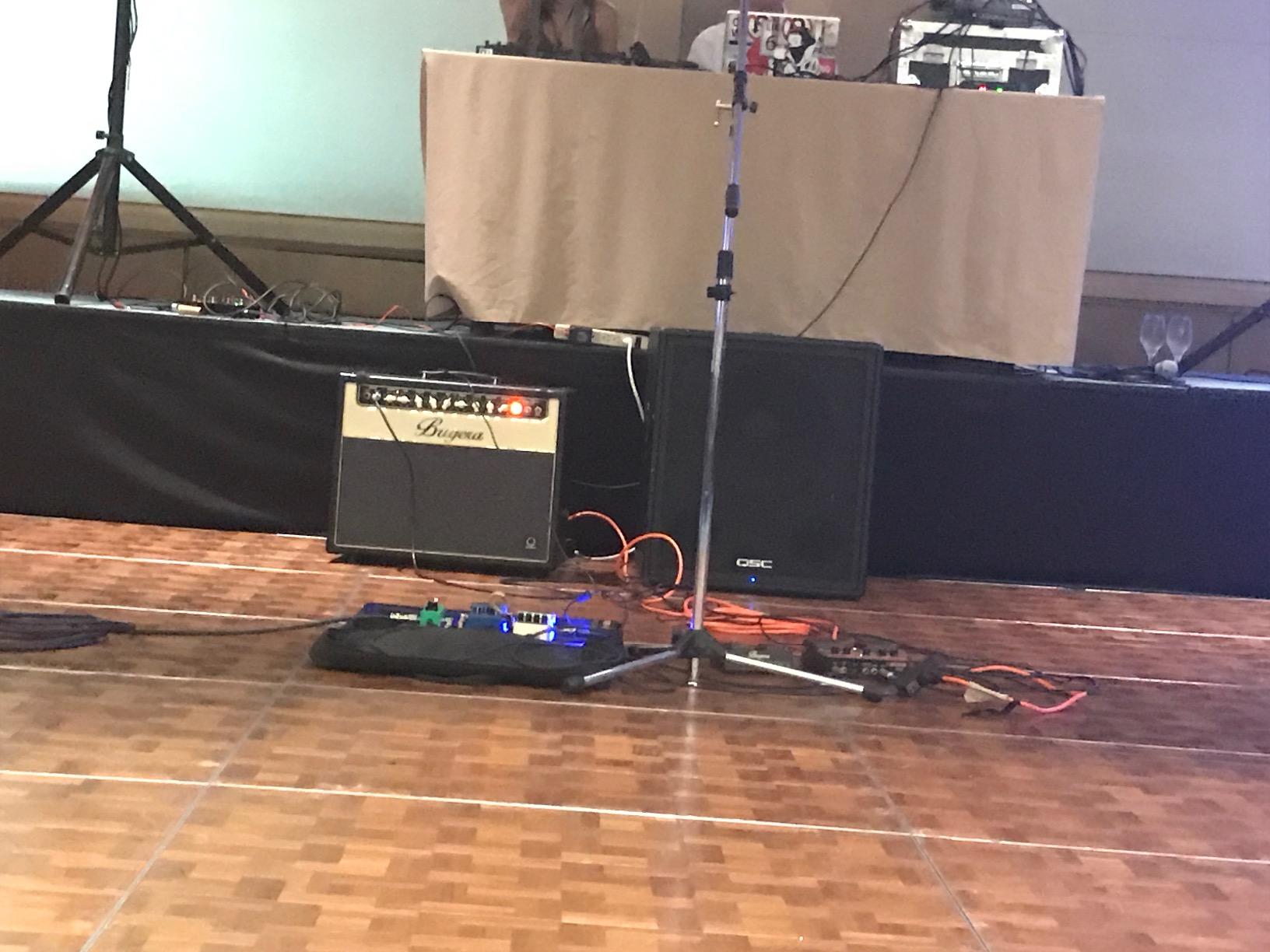
The Bugera V22 Infinium is our pick for the best-value tube amp in this guide. At its price point, you get a hand-built 22W combo with two EL84 power tubes, three 12AX7 preamp tubes, INFINIUM Tube Life Multiplier technology, and a Turbosound 12-inch speaker. The equivalent vintage-voiced combo from Fender or Vox would cost significantly more, which is why the V22 has earned a loyal following among budget-conscious players.
The clean channel is the star. It has the same kind of touch-sensitive response you hear in a vintage Vox or Matchless combo – clean enough for jazz and country, but it breaks up beautifully when you push it. The Turbosound speaker delivers classic British voicing with a mid-forward character that works well for rock, blues, and indie. I tracked rhythm parts through the clean channel during our testing and was consistently impressed by how well the amp sat in a mix.
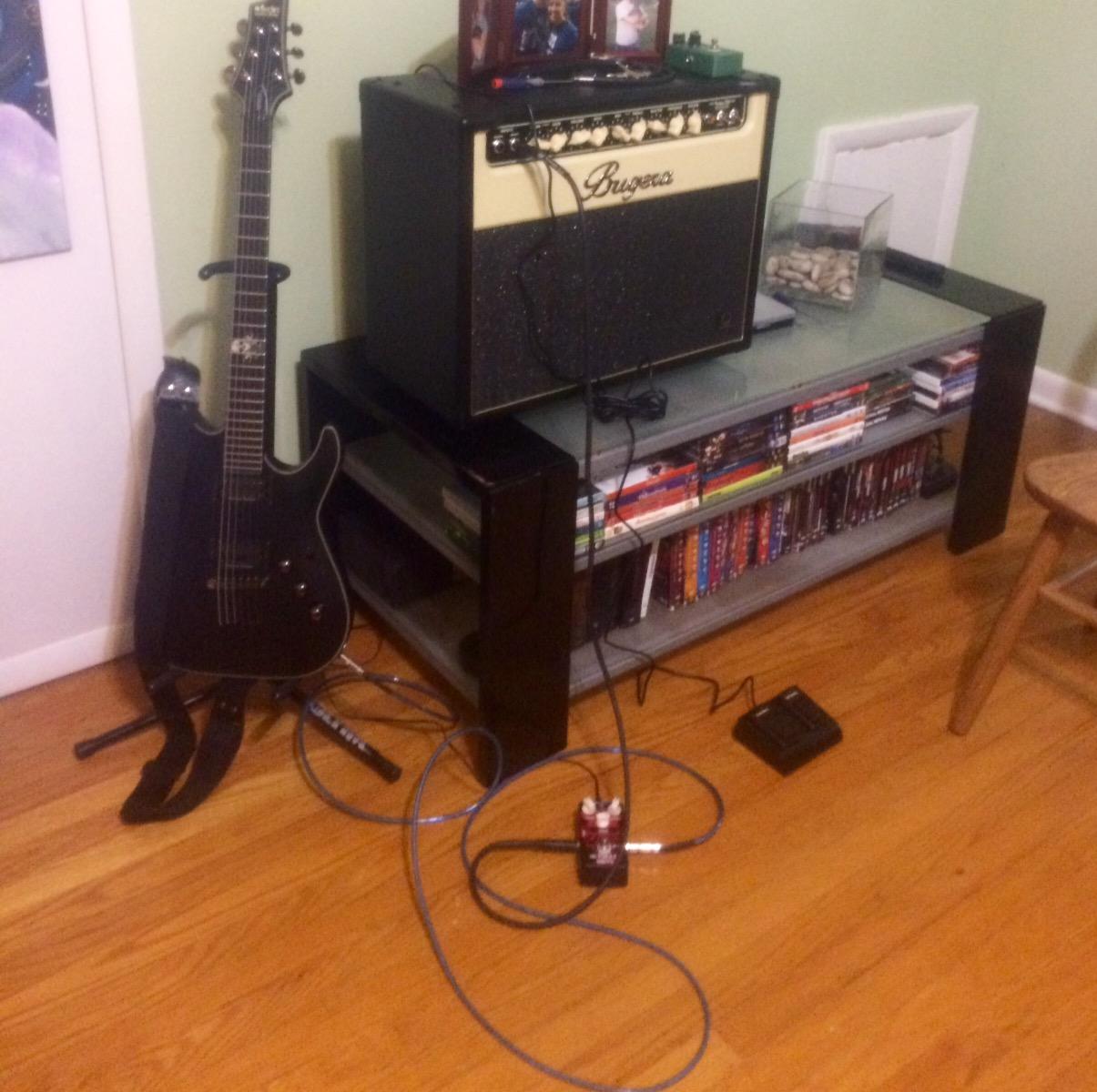
The gain channel is voiced for classic British crunch and blues-rock tones. It is not the right channel for modern metal – players who want tight palm-muted chugs and scooped mids will need to add pedals – but for AC/DC-style rhythms and Gary Moore-style leads, it is genuinely excellent. The footswitch for channel switching and reverb on/off is included, which is a nice touch at this price.
The INFINIUM Tube Life Multiplier technology is the same as in the Bugera T5. Each tube is monitored independently and the operating point is adjusted automatically, which extends tube life and reduces maintenance. For players who do not want to learn biasing, this is a real benefit. The pentode/triode switch lets you drop the output from 22W to a lower-power mode for practice and small gigs – a feature you rarely see at this price.
Best Used For
Budget-conscious players who want a vintage-voiced tube combo without the Fender or Vox price tag. The V22 is also brilliant for recording – the dual channels, Turbosound speaker, and EL84 tubes give it a character that works well for many styles. We tracked rhythm and lead parts through both channels during our testing and were pleased with how versatile the amp proved.
It is also a smart choice for players who are new to tube amps. The INFINIUM technology removes most of the complexity of ownership, and the pentode/triode switch lets you experiment with different output levels without buying extra attenuation gear. Music Tribe (Bugera’s parent company) offers a standard warranty.
Who Should Skip It
If you play modern metal, the V22’s gain channel will not satisfy without pedals. Apartment dwellers will find the 22W output too loud for practice – the VOX MV50CL with its built-in attenuator would be a better neighbor. And while the build quality is good for the price, players who want the absolute most reliable tube combo should consider the Fender Blues Junior IV with its 1-year limited warranty and longer track record.
How to Choose the Best Tube Amp for Your Setup?
Buying a tube amp is more personal than buying almost any other piece of guitar gear. The same amp that is perfect for one player can be wrong for another, depending on genre, playing context, and living situation. Here is what our team considers when helping players choose the best tube amps for guitar from this list.
Wattage and Where You Will Play
Wattage is the first filter. Tube amps sound best when they are pushed into breakup, but pushing a 50W amp into breakup at home will get you evicted. A 1W to 5W amp with an attenuator (like the VOX MV50CL or Bugera T5) is the right call for apartment and bedroom practice. 15W to 22W combos (Fender Blues Junior, Vox AC15C1, Bugera V22) work well for home practice at lower volumes and small gigs at higher volumes. Anything above 30W is really a stage amp that will be too loud for most home situations.
Combo Versus Head and Cabinet
Combos put the amp and speaker in one enclosure – simpler to transport, simpler to set up, often cheaper. Heads separate the amp from the cabinet, which lets you mix and match and upgrade one piece at a time. If you only ever play one amp in one place, a combo is the easier choice. If you like to experiment with different speaker cabinets or already own a cabinet you love, a head (like the Orange Micro Dark Terror or JOYO Zombie-II) gives you more flexibility.
Genre and Voicing
Different tube amps voice their circuits to favor different genres. American-voiced amps (Fender, Mesa/Boogie California Tweed, VOX MV50CL) tend toward clean headroom, tight lows, and bell-like highs that work well for country, jazz, indie, and clean rock. British-voiced amps (Vox, Marshall, Orange, Bugera V22) tend toward midrange crunch and harmonic complexity that work well for rock, blues, indie, and metal. Knowing the voicing you prefer will narrow your list significantly.
Pedal Integration
If you build your tone with pedals, an effects loop matters. Time-based effects like delay and reverb sound better after the preamp distortion than in front of it. The Vox AC15C1, Orange Micro Dark Terror, JOYO Zombie-II, Hotone Purple Wind, and Orange Terror Stamp all have FX loops. The Fender Blues Junior IV, Fender Blues Junior Tweed, Bugera T5, VOX MV50CL, and Bugera V22 do not – which is fine if you only use time-based effects sparingly or are happy to put them in front.
Onboard Effects
Spring reverb, tremolo, and (on some amps) chorus are common onboard effects. If you use these effects heavily, having them on the amp saves pedalboard space and simplifies your signal chain. The Vox AC15C1, Fender Blues Junior IV, Fender Blues Junior Tweed, and Bugera V22 all have onboard reverb (and the AC15C1 adds tremolo). The other amps on this list are clean and effects-free, leaving you to add pedals as needed.
Talking to Other Players
Reading forum threads on Reddit r/GuitarAmps and similar communities was the single most useful thing our team did during testing. Real players report problems that spec sheets never mention – tube life issues, microphonic tubes, customer service experiences, hum at high gain. The insights in our forum research shaped several of our picks, and we recommend spending an hour reading threads before committing to an amp.
Frequently Asked Questions
What are the best tube amps for guitar in 2026?
The best tube amps for guitar in 2026 cover a wide range of styles and budgets. For overall versatility, the Vox AC15C1 is hard to beat, with its iconic British chime, Top Boost and Normal channels, and onboard tremolo and reverb. For budget players, the Bugera V22 Infinium delivers vintage-voiced tube tone at a fraction of the price of comparable Fender or Vox combos. For pedalboard players, the Orange Micro Dark Terror packs real 12AX7 tube character into a 1-kilogram hybrid head. Players who live in apartments should consider the VOX MV50CL, which has a built-in attenuator that makes 50W manageable at bedroom volumes.
How loud is a tube amp compared to a solid-state amp?
Tube amps are louder than solid-state amps of the same wattage rating because they produce more even-order harmonics and have a higher peak-to-average signal ratio. A 15W tube combo like the Fender Blues Junior IV is roughly as loud as a 30W to 50W solid-state combo. This is why low-wattage tube amps with built-in attenuators, like the VOX MV50CL, are popular for home use – they deliver genuine tube character at manageable volumes.
Should I buy a head and cabinet or a combo?
Combos are simpler to transport and set up, and they cost less than separate heads and cabinets. Heads and separate cabinets give you more flexibility to mix and match, and you can upgrade one piece at a time. If you already own a 1×12 or 2×12 cabinet you love, a mini head like the Orange Micro Dark Terror or JOYO Zombie-II is a brilliant choice. If you only ever want one amp and play in one or two places, a combo is the easier answer.
Do tube amps need an effects loop?
An effects loop matters if you use time-based pedals like delay, reverb, and modulation. These effects sound better after the preamp distortion than in front of it – putting a delay before a distorted preamp sounds muddy and washy, while putting it after sounds clear and musical. The Vox AC15C1, Orange Micro Dark Terror, JOYO Zombie-II, Hotone Purple Wind, and Orange Terror Stamp all have FX loops. If you only use drive and fuzz pedals, an effects loop is less critical, and you can save money by choosing a combo without one.
What does it mean to bias a tube amp?
Biasing is the process of setting the operating point of the power tubes so they run at the correct current. As tubes age, their characteristics change, and the bias may need to be readjusted to keep the amp sounding and performing correctly. Fixed-bias amps require manual biasing by a technician or an experienced owner. Cathode-biased amps are self-biasing and need less maintenance. Some modern amps, like the Bugera T5 Infinium and V22 Infinium, use INFINIUM technology that monitors each tube and adjusts the operating point automatically, removing most of the maintenance burden.
Can I run a tube amp head without a speaker?
No. Running a tube amp head without a load (a speaker cabinet or a load box) will damage or destroy the output transformer. If you want silent practice or direct recording without a cabinet, you need either a load box (like the Two-Notes Torpedo) or an amp with a built-in cabinet simulator (like the Orange Micro Dark Terror or Orange Terror Stamp). The cab-sim outputs on these amps let you practice through headphones or send a signal directly to an audio interface without needing a speaker at all.
How often do tubes need replacing?
Preamp tubes (12AX7, ECC83) typically last 5 to 10 years with regular use. Power tubes (EL34, 6L6, EL84, 6V6) typically last 2 to 5 years depending on how hard you push the amp and how often you play. Signs that power tubes need replacement include loss of volume, loss of high-end response, excessive hum, and a red-plating glow on the inside of the tube. INFINIUM-equipped Bugera amps extend tube life by monitoring and adjusting each tube automatically.
Are tube amps heavier than solid-state amps?
Yes, generally. A 15W tube combo like the Fender Blues Junior IV weighs 31 pounds, while a comparable solid-state combo might weigh 15 to 20 pounds. Tube amps also require more careful handling because the tubes are sensitive to physical shock. The mini and hybrid tube amp category (Orange Micro Dark Terror, JOYO Zombie-II, Hotone Purple Wind, Orange Terror Stamp) addresses this by using a single 12AX7 in the preamp and a solid-state power section, bringing weights down to 1 to 2 pounds.
Final Verdict
After three months of testing, our team landed on the Vox AC15C1 as the best tube amp for guitar players who want one amp that can handle almost anything. Its dual channels, FX loop, onboard tremolo and reverb, and iconic British voicing make it a complete rig in a single combo. For budget-focused players, the Bugera V22 Infinium delivers vintage-voiced tube tone at a price that still surprises. And for pedalboard players who want a portable tube power section, the Orange Micro Dark Terror remains our top pick. Whichever amp you choose from this list, you will be joining generations of guitarists who have been chasing the responsive, harmonically rich tone that only the best tube amps for guitar can deliver.