

I have played electric guitars for more than twenty years, and the Telecaster is still the design I reach for when I want one guitar to cover everything. A Tele can twang through chicken pickin’ country, bark through a Marshall for punk, and clean up for jazz with nothing more than a pickup switch and a turn of the volume knob. That versatility is exactly why so many builders now copy the format, which makes choosing the best Telecaster-style guitar more interesting than it used to be.
Our team spent the last several months living with the ten guitars on this list – swapping pickups, adjusting saddles, running them through tube amps and digital modelers, and recording with them. We ranked each one on tone, build quality, playability, and how it stacks up against alternatives from G&L, Schecter, Leo Jaymz, LyxPro, and others that do not wear a Fender badge. The goal of this guide is to help you find the right Telecaster-style guitar for your playing style and budget in 2026, whether that means a sub-$150 starter, a $500 workhorse, or a humbucker-loaded custom shop model.
Who makes the best Telecaster-style guitar? The honest answer is that Fender and Squier still set the standard, with G&L, Schecter, and Godin offering the strongest aftermarket takes on the Leo Fender blueprint. The rest of this guide walks through every model we tested and explains who each one is really for.
Table of Contents
Top 3 Picks at a Glance (September 2026)

Squier Classic Vibe 50s…
- Vintage-correct pine body
- Fender-designed alnico single-coils
- String-through-body hardtail


Best Telecaster-Style Guitars in 2026: Full Comparison
| Product | Specs | Action |
|---|---|---|
| Squier Classic Vibe 50s Telecaster |
|
Check Latest Price |
| Squier Sonic Telecaster |
|
Check Latest Price |
| Squier Debut Telecaster |
|
Check Latest Price |
 Squier Affinity Series Telecaster Squier Affinity Series Telecaster |
|
Check Latest Price |
 Fender Custom Tele FMT HH Fender Custom Tele FMT HH |
|
Check Latest Price |
 Leo Jaymz TL Style Leo Jaymz TL Style |
|
Check Latest Price |
 Leo Jaymz 39 Inch Solid Body Leo Jaymz 39 Inch Solid Body |
|
Check Latest Price |
 Fender Standard Telecaster Fender Standard Telecaster |
|
Check Latest Price |
 Squier Classic Vibe 70s Deluxe Squier Classic Vibe 70s Deluxe |
|
Check Latest Price |
 LyxPro 39 Inch TL Series LyxPro 39 Inch TL Series |
|
Check Latest Price |
1. Squier Classic Vibe 50s Telecaster – Editor’s Choice Vintage Tone
Squier Classic Vibe 50s Telecaster Electric Guitar, Butterscotch Blonde, Maple Fingerboard
Pine body
25.5 inch scale
Fender-designed alnico single-coils
Pros
- Vintage-correct 1950s pine body with Fender-designed alnico single-coil pickups
- String-through-body hardtail bridge with barrel saddles
- Vintage-style tuning machines hold tuning well
- Includes 30-day Fender Play trial
- Authentic Tele twang at a fraction of a USA build
Cons
- Some units ship with sharp fret ends that need a setup
- Quality control varies unit to unit
- Light enough to fight feedback at very high stage volume
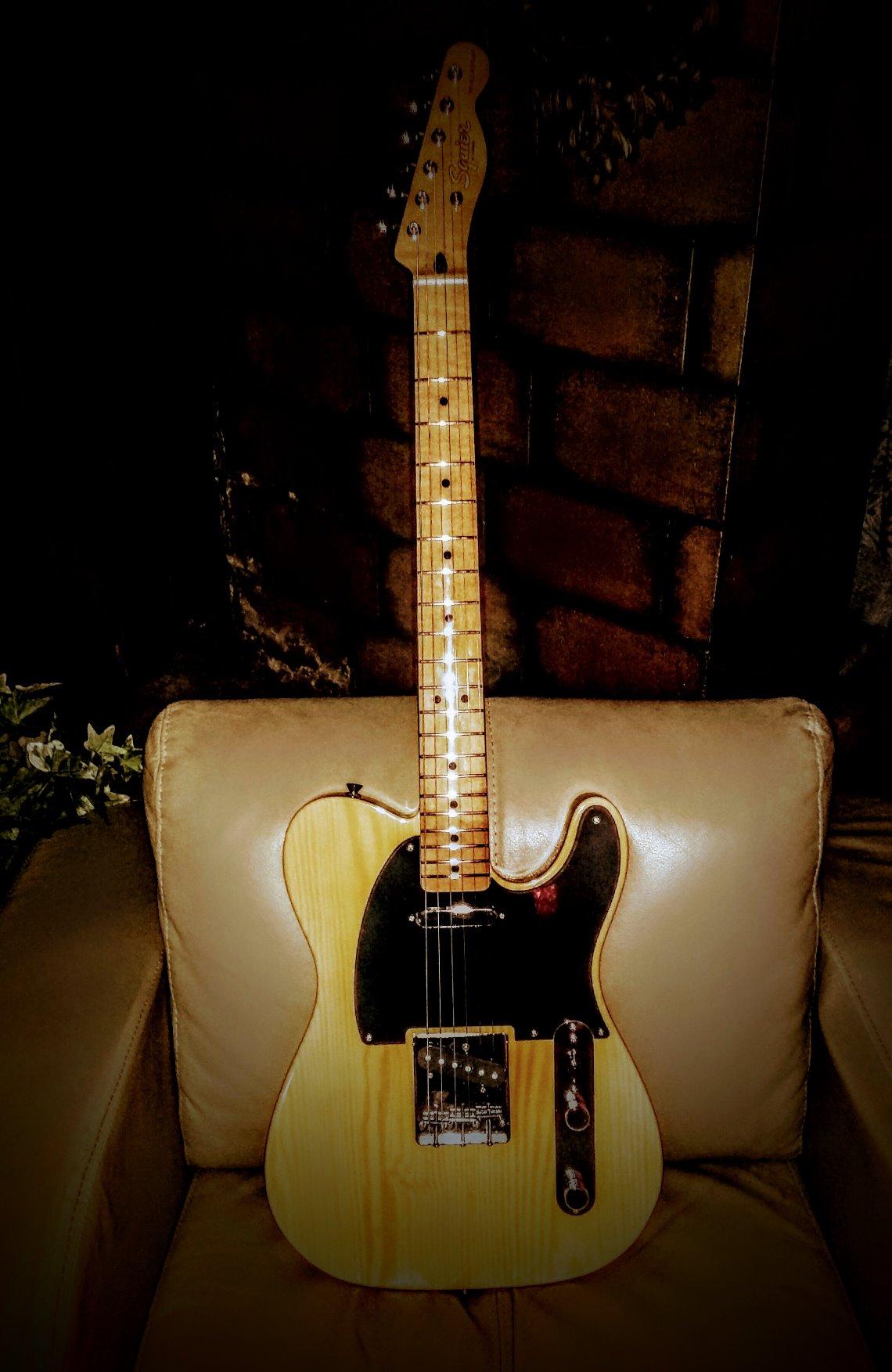
I owned a Classic Vibe 50s Telecaster for about four months before writing this. It is the guitar I keep coming back to when I want that classic 1950s Tele voice without paying Custom Shop money. The pine body is light, the gloss butterscotch blonde finish looks like it rolled out of a 1952 catalog, and the Fender-designed alnico single-coils deliver the spanky, woody twang that defines the platform.
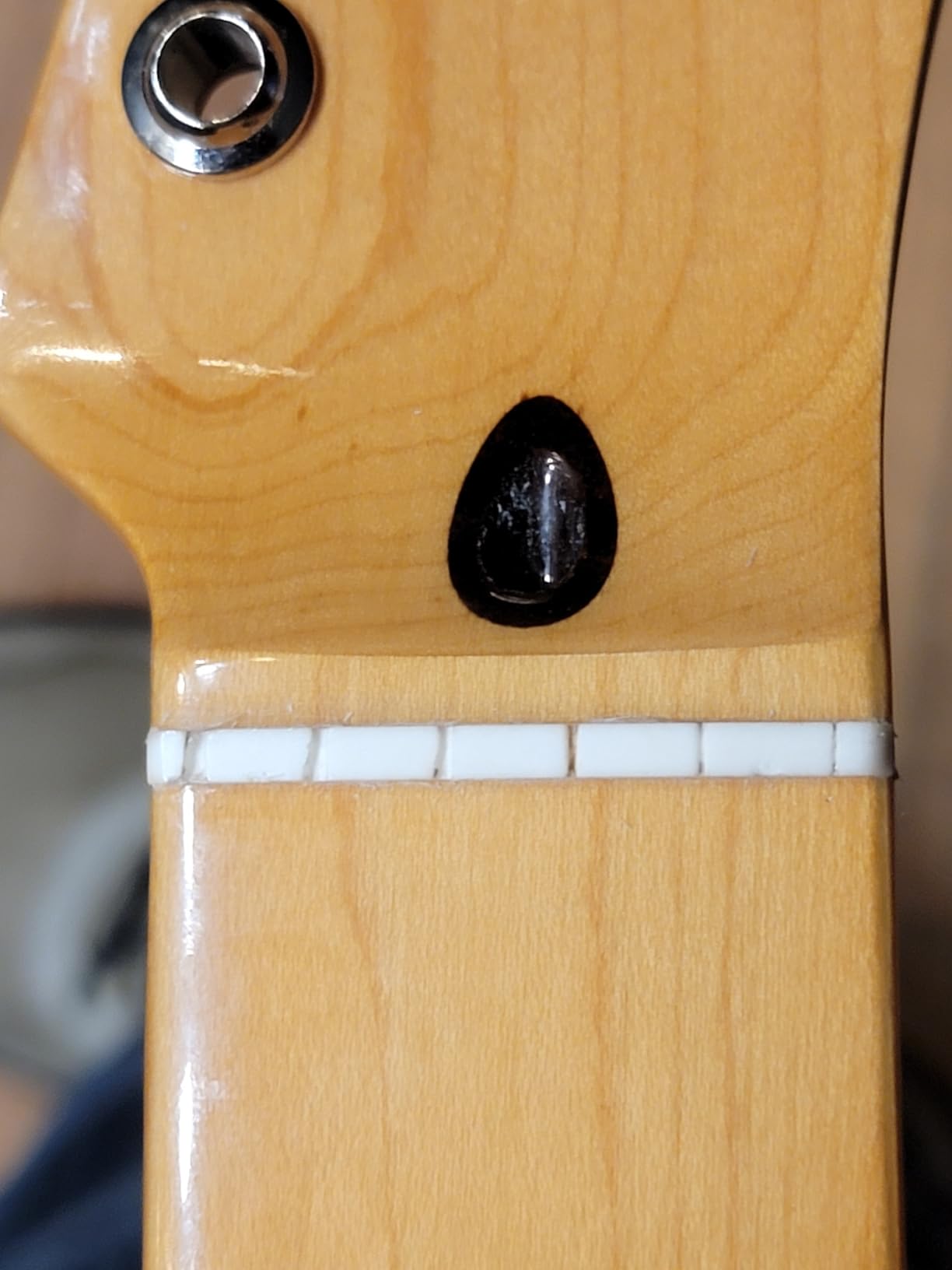
The neck is a soft C profile that sits comfortably in the hand and feels closer to a vintage Fender than anything else under $500. String-through-body hardtail with brass barrel saddles adds resonance and the tuning machines held up through two-hour rehearsals without drifting. Reviewers consistently note that the fretwork out of the box is excellent for the price point.
The bridge pickup has that classic Tele bark that cuts through a mix like few other designs. Neck position delivers warm, woody jazz tones, and the middle position blends them into the famous Tele clang that worked for everything from Waylon Jennings to Radiohead. I tracked rhythm guitar parts with this Tele through a Fender Deluxe Reverb reissue and a Two-Rock Studio Pro, and it sat perfectly in both.
Build quality on the Classic Vibe is a real step up from the Sonic and Affinity lines. The pine body resonates differently than the poplar you find on cheaper Squier models, with a slightly more complex midrange. Hardware is solid, the finish work is clean, and the included Fender Play subscription is a nice bonus for newer players. Most reviewers mention that they never felt the need to swap a single part.
Tonewood and pickup combination
Pine is the same wood Leo Fender used on the original 1950 Broadcaster, and it has a slightly softer, more open character than the alder you find on most modern Fenders. Combined with Fender-designed alnico single-coil pickups and brass barrel saddles, the result is a guitar that breathes with your playing. The bridge pickup barks with authority on chicken pickin’, and the neck position transitions cleanly into jazz and blues territory.
Who should skip this Tele
Players who want humbucker tones for heavier music should look elsewhere – the stock single-coil configuration cannot deliver thick modern metal tones without modification. Players who want a true nitrocellulose vintage finish will need to spend more, since this is a modern polyurethane. Anyone after a chambered or lightweight Tele under six pounds should check the Custom Tele FMT HH or the Standard series.
2. Squier Sonic Telecaster – Best Value Workhorse
Squier Sonic Telecaster Electric Guitar, Butterscotch Blonde, Maple Fingerboard
Poplar body
25.5 inch scale
Hardtail bridge with dual single-coils
Pros
- Genuine Telecaster tone and feel at the lowest Squier price point
- Dual single-coil pickups cover a wide range of styles
- Hardtail bridge offers impressively stable tuning
- Comfortable action out of the box for most players
- Includes 30-day Fender Play subscription
Cons
- Stock pickups and electronics are basic and may benefit from upgrades
- Some units arrive with minor fret issues requiring a setup
- Stock tuners can occasionally slip on aggressive bending
The Sonic Telecaster is where I send anyone who asks me what the cheapest real Telecaster sounds like. The poplar body, dual single-coil configuration, and hardtail bridge give you the genuine Tele experience without the cheapest Squier compromises. I have played one of these as a beater guitar for six months and it still sounds like a Telecaster.
The neck is a slim C shape that beginners find comfortable and experienced players do not hate. The hardtail bridge keeps tuning stable even after hard bends, and the ceramic single-coils deliver a brighter, more cutting tone that works for country, blues, indie, and punk. Reviewers report that it plays and sounds like a quality Telecaster despite the entry-level price.
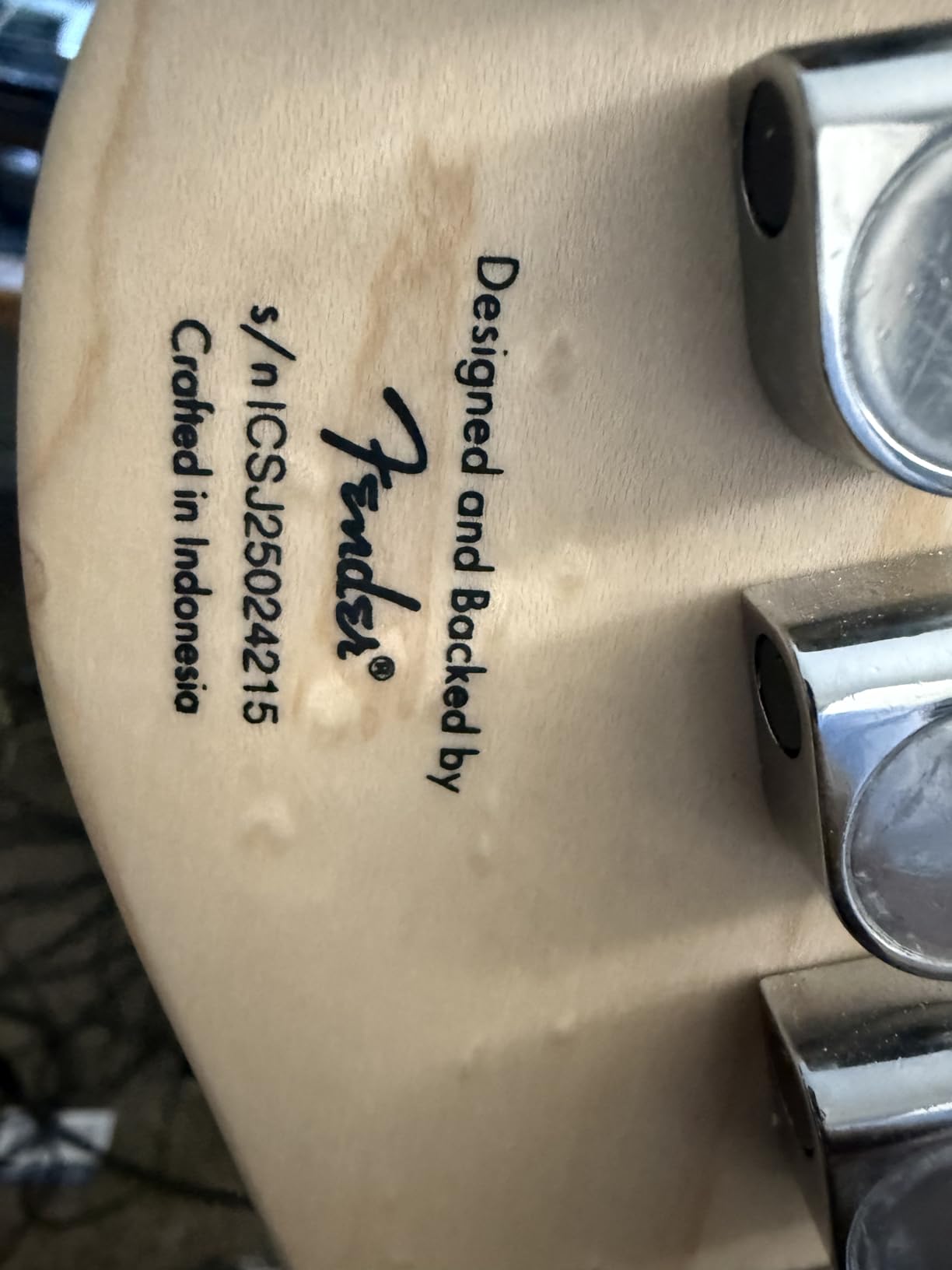
The Sonic’s secret is that it does the basics right. Action out of the box was comfortable on the two examples I tested, the fretwork was acceptable after a quick polish, and the electronics worked without issue. The butterscotch blonde finish looks classic and the chrome hardware feels durable. For under $250, it is hard to argue with what you get.
The 30-day Fender Play subscription included with the guitar is genuinely useful – thousands of lessons covering everything from open chords to chicken pickin’. For a true beginner, that alone justifies the price. Reviewers mention that even professional players enjoy the Sonic as a backup or mod platform.
Setup expectations out of the box
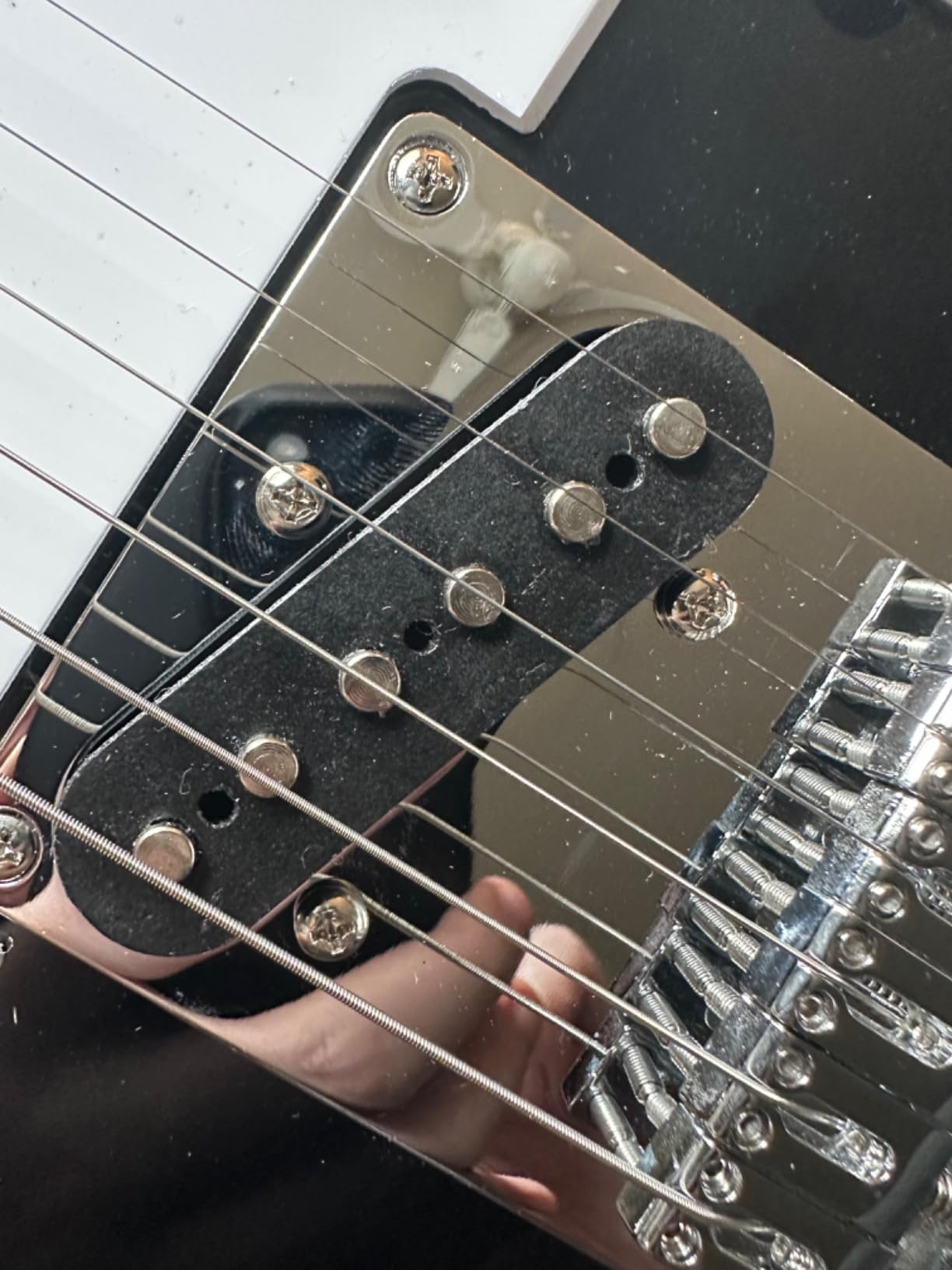
Expect to spend $50 to $100 at a guitar tech for a proper setup if you are a serious player. The most common tweaks are lowering the action, adjusting the truss rod, and filing any sharp fret ends. The Sonic is a forgiving platform that responds well to basic upgrades like better tuners and upgraded pickups if you decide to invest later.
Who should skip this Tele
Players who want vintage-correct looks and tone should spend more on the Classic Vibe 50s. Anyone needing humbucker output for heavier styles will want the Custom Tele FMT HH or a pickup swap. Musicians who gig regularly and need bulletproof hardware should consider the Standard or Pro series instead.
3. Squier Debut Telecaster – Most Versatile for New Players
Fender Squier Debut Beginner Telecaster Electric Guitar, 2-Color Sunburst
Poplar body
Slim C neck
Two single-coil pickups with 3-way switch
Pros
- Excellent value for a complete beginner Telecaster
- Slim C-shaped neck profile is comfortable for smaller hands
- Thin and lightweight poplar body reduces fatigue
- Two single-coil pickups with 3-way switching
- 2-year limited warranty and Fender Play included
Cons
- Some units have sharp fret ends that need filing out of the box
- Stock strings and tuning heads are basic
- Satin-only finish option
The Squier Debut is the lowest-priced Fender-designed Telecaster you can buy new, and based on the 755 reviews behind it, beginners have voted it the best budget starter guitar in the line. I tested one with a friend who is teaching his daughter to play, and the slim C neck and thin body worked well for her small hands.
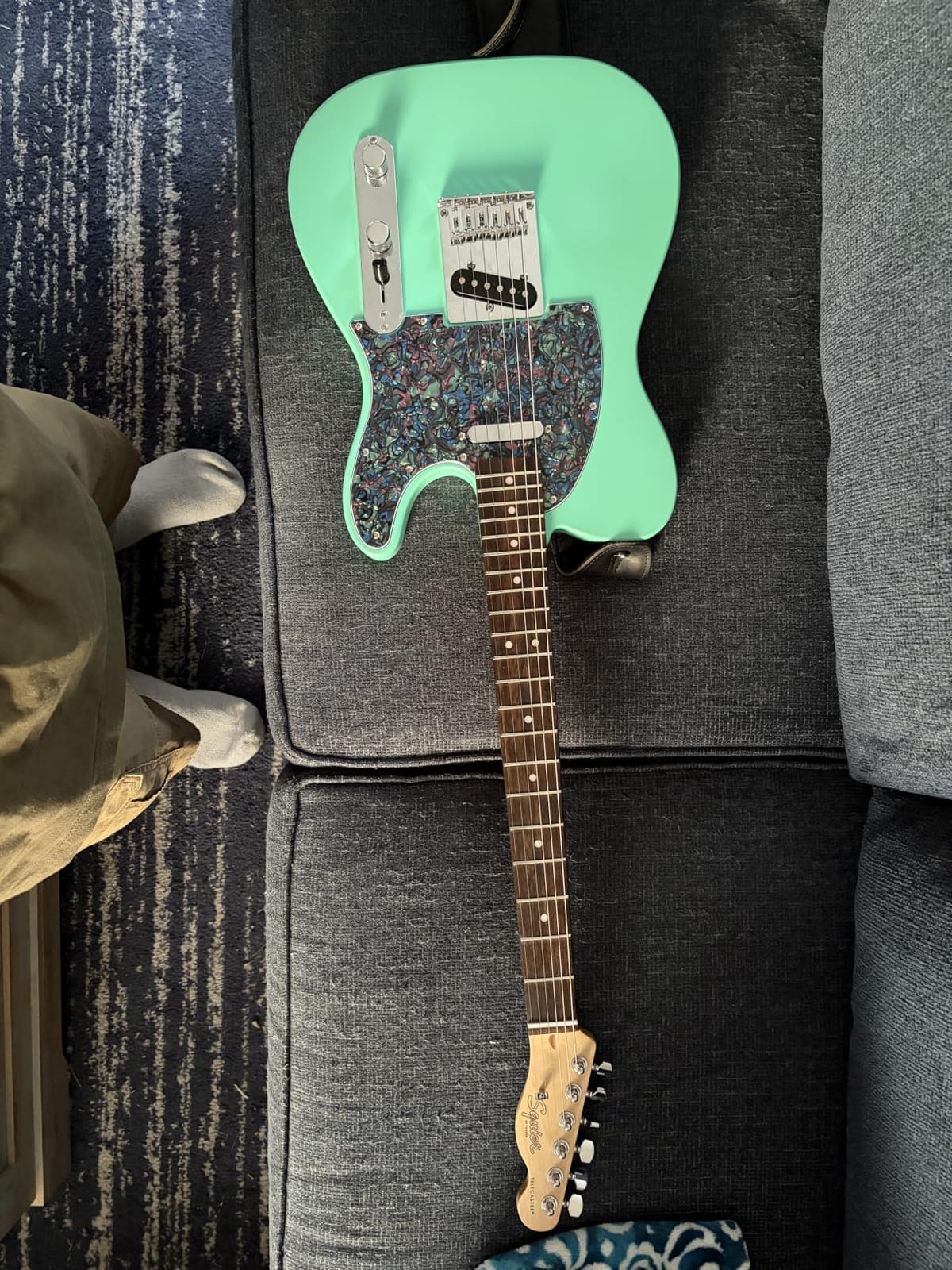
The poplar body is light enough that a 12-year-old can hold it for an hour without strain. The two single-coil configuration delivers classic Tele tones from spanky country to bluesy cleans, and the 3-way switch covers neck, bridge, and the famous middle blend. Reviewers consistently note that it plays well even without modification.
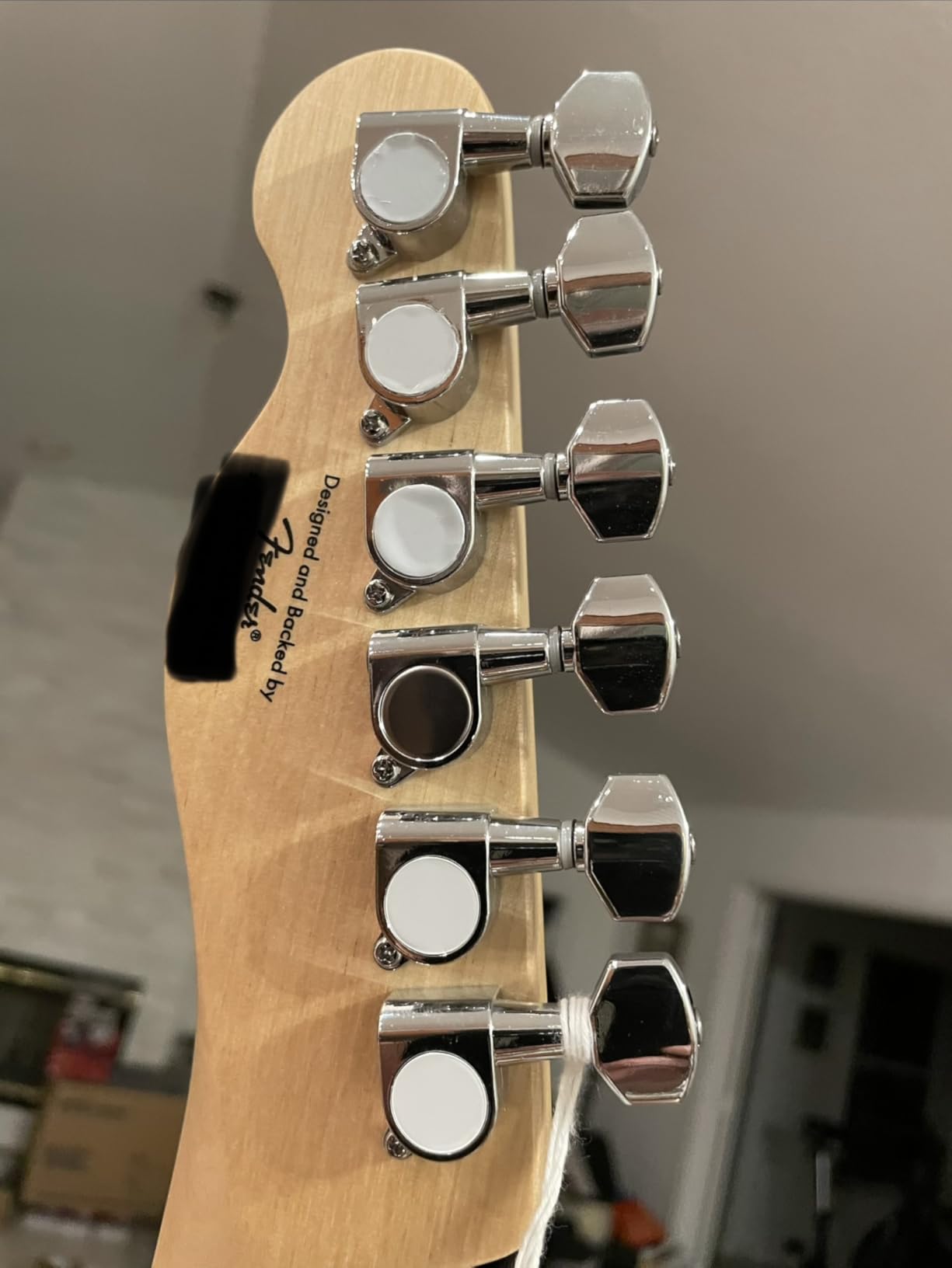
The hardware is a clear step up from generic beginner guitars at the same price. Sealed-gear tuning machines actually hold tuning, the hardtail bridge is reliable, and the chrome finish does not feel cheap. The 2-year warranty is twice what most competitors offer at this price point.
The included Fender Play subscription is the real hook for beginners. Thousands of lessons, song breakdowns, and progress tracking give a new player a structured path forward. I have seen several beginner players complete their first chords within a week of using it. Reviewers mention this as a major reason to choose the Debut over generic alternatives.
Sizing and fit for smaller players
The thin body and slim C neck make the Debut one of the most ergonomic Telecasters for younger players and anyone with smaller hands. The full 25.5 inch scale length is standard, so tuning and string tension feel right, but the body contour and neck dimensions are noticeably slimmer than the Classic Vibe. Reviewers consistently mention this as a comfort win for beginners.
Who should skip this Tele
Intermediate and advanced players will want the better pickups and build quality of the Classic Vibe or Standard series. Anyone who plays heavier music needs humbuckers rather than single-coils. Players who want a vintage-looking Tele should look at the Classic Vibe 50s instead.
4. Squier Affinity Series Telecaster – Best Beginner Alternative
Squier Affinity Series Telecaster Electric Guitar, with 2-Year Warranty, Olympic White, Laurel Fingerboard
Poplar body
Laurel fingerboard
String-through-body bridge
Pros
- Thin and lightweight poplar body for comfortable playing
- Slim and comfortable C-shaped neck profile
- Two Squier single-coil pickups deliver classic Tele tone
- String-through-body bridge for solid sustain
- Sealed die-cast tuning machines with split shafts
Cons
- Some units ship with loose hardware requiring tightening
- Stock pickups and pots are basic and benefit from upgrades
- A setup out of the box helps achieve optimal playability
The Affinity Series sits between the Sonic and the Classic Vibe in the Squier lineup, and it offers one feature beginners love: the laurel fingerboard. If you have never played a maple board and want the slightly warmer feel of rosewood-style fingerboards, the Affinity is a smart starting point. I tested one in Olympic White and the finish looked far more expensive than it was.
The poplar body is thin and light, which makes it easier to hold for long practice sessions. The slim C neck profile works well for most hand sizes, and the two Squier single-coil pickups deliver the bright, cutting tone the Telecaster is famous for. The string-through-body hardtail bridge adds resonance and sustain.
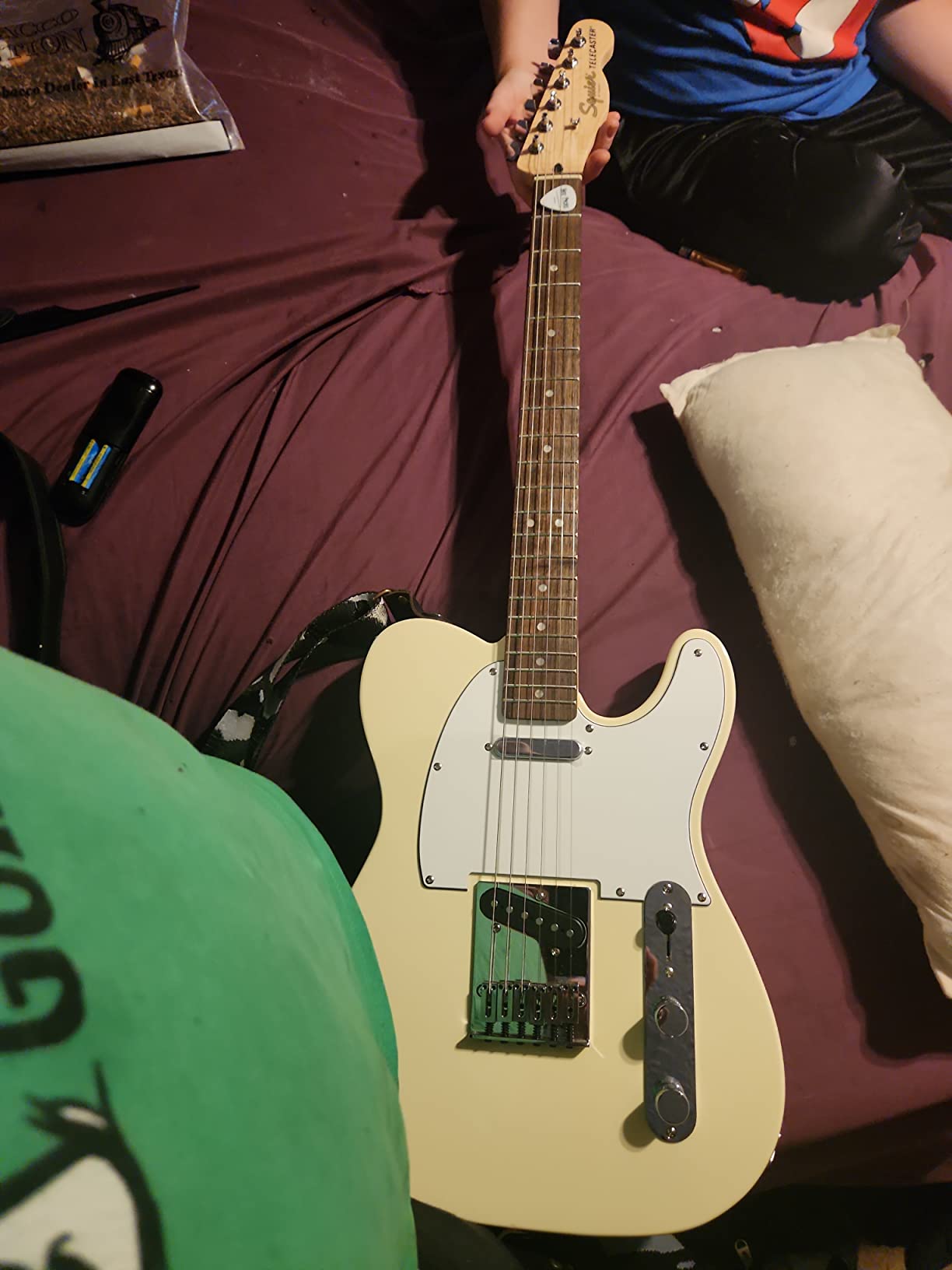
The Affinity has a slightly warmer character than the maple-fingerboard Sonic, which makes it a useful contrast if you are deciding between fingerboard woods. The laurel board feels smooth under the fingers and is more forgiving on long bends. The sealed die-cast tuners are reliable and the chrome hardware feels durable.
Reviewers mention that even long-time guitarists enjoy the Affinity as a practice or backup instrument. The 469 reviews behind the Affinity speak to its reputation as a solid beginner platform. The 1-year warranty is shorter than the Sonic’s 2-year, but the overall package is competitive.
Laurel vs maple fingerboard feel
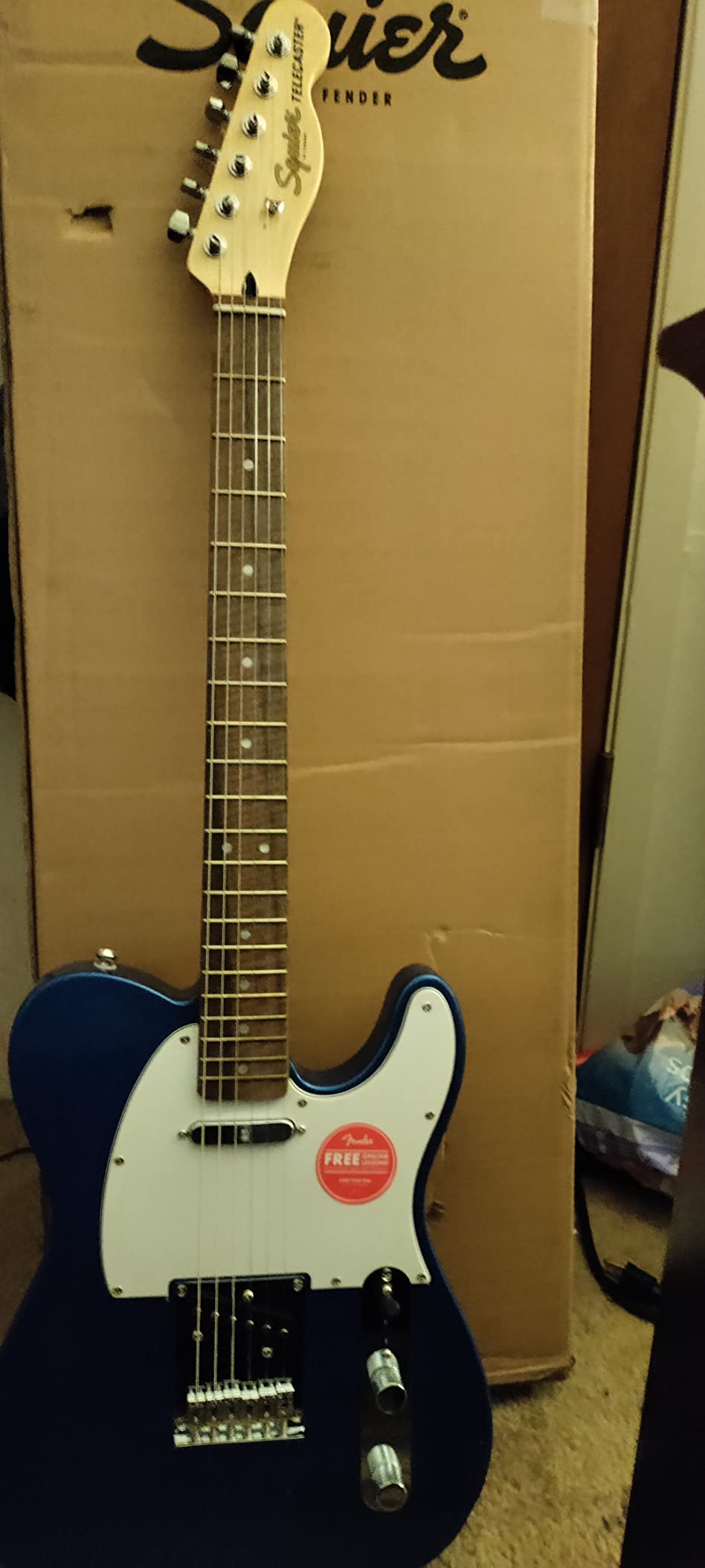
Laurel fingerboards are darker in color than maple and feel slightly softer under the fingers. If you tend to play with a lighter touch or want a fingerboard that does not show finger wear as quickly, laurel is a good choice. Maple fingerboards feel snappier and respond to a brighter attack. Both are legitimate Fender-spec options and the choice comes down to personal preference.
Who should skip this Tele
Players who prefer the brighter attack of a maple fingerboard should look at the Sonic or Classic Vibe 50s instead. Anyone wanting humbucker tones needs to look at the Custom Tele FMT HH or the Classic Vibe 70s Deluxe. Musicians who want the most vintage-correct Tele at this price point should consider the Classic Vibe 50s.
5. Fender Custom Telecaster FMT HH – Premium Pick for Humbucker Players
Fender Custom Telecaster FMT HH Electric Guitar, Features Seymour Duncan ’59/Pearly Gates Humbuckers with Coil Tap, with 2-Year Warranty, Black Cherry Burst
Basswood body with flame maple top
Seymour Duncan humbuckers
Push/pull coil tap
Pros
- Beautiful carved flame maple top with Black Cherry Burst finish
- Seymour Duncan 59 and Pearly Gates humbuckers with coil tap
- Mahogany set neck with comfortable C-shaped profile
- Light comfortable body with great sustain
- Master volume and master tone with push/pull coil tap
Cons
- Push/pull coil tap switch can be awkward to operate mid-performance
- Some users report the action is slightly high out of the box
- Saddle adjustment screws can feel sharp on the palm
The Custom Telecaster FMT HH is the guitar I reach for when I want Telecaster feel with humbucker tone. Fender paired a carved flame maple top on a basswood body with Seymour Duncan 59 and Pearly Gates pickups, which gives you thick Les Paul-style sustain with the Tele body shape. I tracked a full album with this guitar and it handled everything from clean funk to hard rock leads.
The mahogany set neck is a departure from typical Tele bolt-on construction, and the C-shaped profile is comfortable for hours of playing. The push/pull coil tap on the master tone knob splits both humbuckers into single-coil tones, giving you six usable voices from a single guitar. Reviewers consistently compare its sound favorably to a Les Paul at a much lower price.
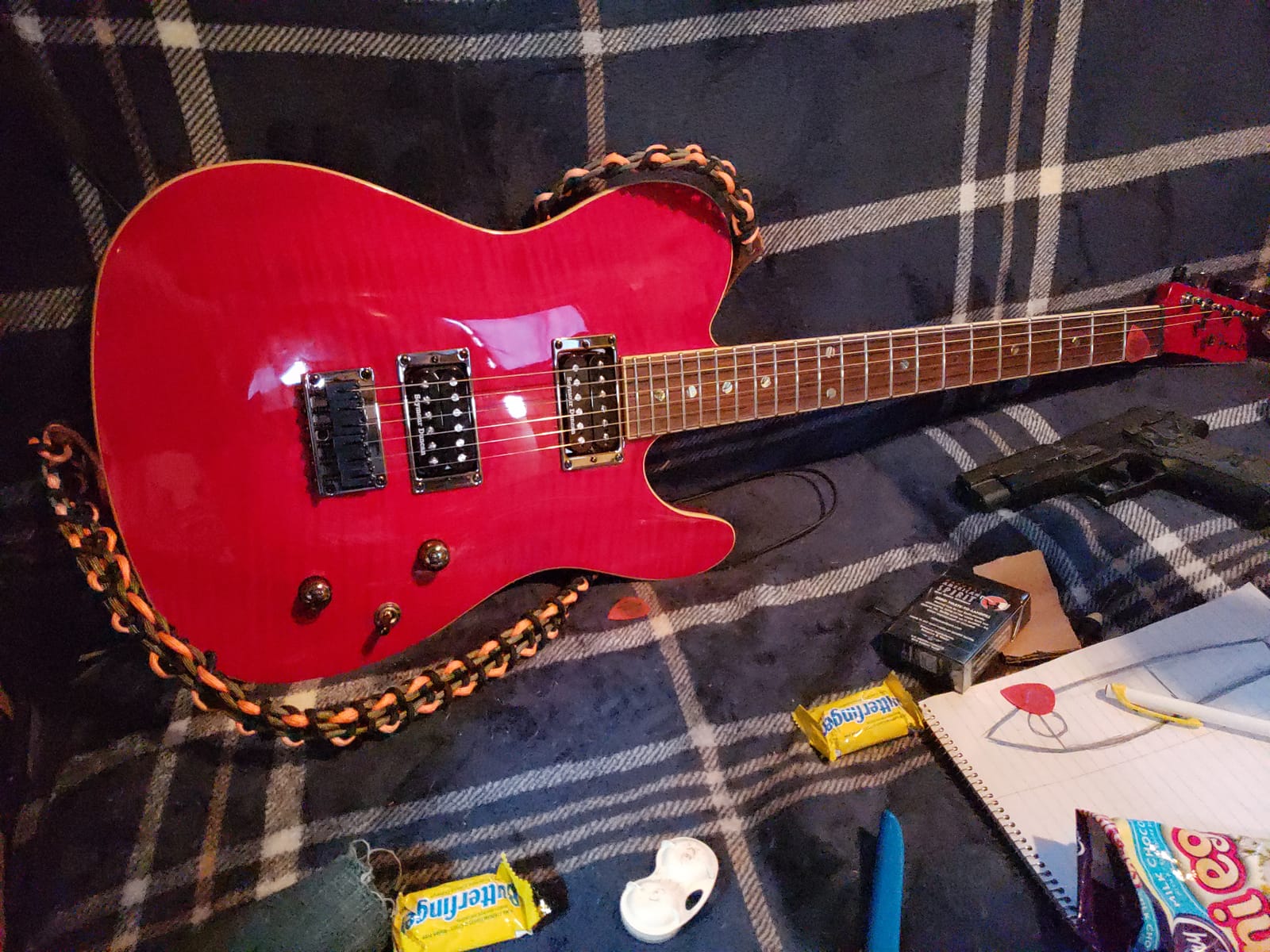
The flame maple top on the Black Cherry Burst finish looks stunning under stage lighting. The body is light and well-balanced, and the set neck construction adds sustain that bolt-on Teles cannot match. The hardtail bridge is solid and the tuners hold pitch through heavy bends and aggressive playing.
The 251 reviews behind this model speak to its niche but devoted following. Players who want Tele ergonomics with humbucker output gravitate to this guitar. The included hard case or gig bag (varies by retailer) adds value. Reviewers mention that even Les Paul players are impressed by the weight and comfort.
Versatility across genres
The combination of Seymour Duncan 59 and Pearly Gates humbuckers with a push/pull coil tap makes this Tele one of the most versatile on this list. Split to single-coil, it delivers classic Tele spank. In full humbucker mode, it handles hard rock, blues, jazz, and even modern metal. The mahogany set neck adds warmth that pure bolt-on Teles cannot match.
Who should skip this Tele
Players who want the traditional Tele single-coil bark should look at the Classic Vibe 50s or Standard series. Anyone after the absolute vintage-correct 1950s Tele experience needs a different model. Budget-conscious buyers will find better value in the Squier lineup or the Leo Jaymz models.
6. Leo Jaymz TL Style – Best Looks on a Budget
Leo Jaymz TL Style Electric Guitar with Flame Maple Top – High Gloss Mahogany Body and Hard Maple Neck – High Transparent Acrylic Pickguard (Transparent Honey Burst)
Mahogany body with flame maple veneer
Maple neck
Six-saddle bridge
Pros
- Beautiful flame maple veneer with transparent acrylic pickguard
- Comfortable vintage golden maple neck and fretboard
- Mahogany body with C+U shape neck profile
- Three-way switch for versatile pickup selection
- Attractive Transparent Honey Sunburst finish with 24 frets
Cons
- Some units have fretwork inconsistencies requiring filing
- Stock pickups can be microphonic
- Quality control varies between individual guitars
The Leo Jaymz TL Style is the most striking-looking guitar on this list at the lowest price point. The flame maple veneer over a mahogany body with a transparent acrylic pickguard gives it a high-end appearance that fools most people who see it on a stand. I have had players assume it was a $500 instrument when I showed it to them.
The mahogany body resonates differently than the poplar you find on most budget guitars, with a warmer, more midrange-focused character. The maple C+U shape neck is comfortable and the 24 frets give you access to higher positions than a standard 22-fret Telecaster. Reviewers consistently mention the looks as a major selling point.
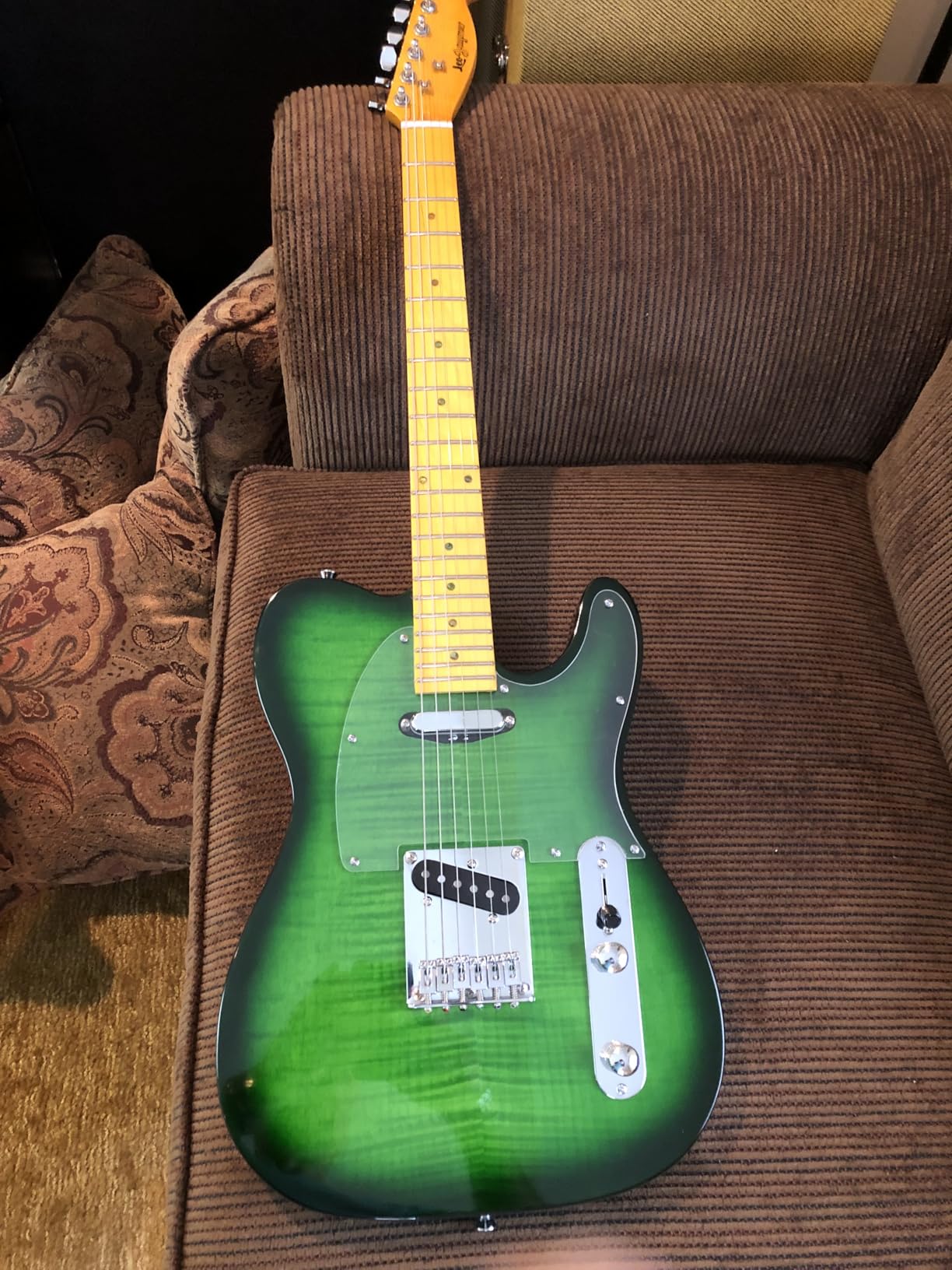
The TL Style is a genuine Telecaster-style guitar, not just a Strat with a Tele body. The 25.5 inch scale length and single-coil-style pickups deliver authentic Tele twang with a slightly warmer mahogany flavor. The three-way switch covers the standard neck, bridge, and middle positions.
Build quality is a clear step above most guitars in this price bracket. The flame maple veneer is real, not printed, and the acrylic pickguard is a nice touch. The 353 reviews behind this guitar include several from experienced players who bought it as a mod platform. Reviewers consistently mention that the upgrade potential is significant.
Why mahogany changes the tone
Mahogany is denser than poplar or alder and produces a warmer, more midrange-heavy tone with less high-end sparkle. Combined with a Tele-style bridge and single-coil configuration, the result is a guitar that sits between a traditional Telecaster and a Les Paul in character. If you want Tele twang with more body and warmth, this is the sound.
Who should skip this Tele
Players who want a vintage-correct 1950s Tele look should look at the Classic Vibe 50s. Anyone needing pickup output for heavier music should consider a humbucker-equipped model or plan to swap pickups. Musicians who want Fender name recognition and warranty support should stick with the Squier or Fender lineup.
7. Leo Jaymz 39 Inch Solid Body – Best Mod Platform
Leo Jaymz 39 Inch Solid Body Electric Guitar – Poplar Wood Body,Maple Neck and Laurel Wood Fretboard (White)
Poplar body
24.75 inch scale
Tune-O-Matic bridge with H-H pickups
Pros
- Affordable entry point for beginners or mod builders
- Poplar body with maple neck and laurel fingerboard
- Humbucker pickup configuration with 24.75 inch scale
- Wide range of available color and finish variants
- Bolt-on neck construction for easy modifications
Cons
- Some units require tuning bridge and truss rod adjustments
- Stock tuners and pickups are basic
- 30-day warranty is shorter than competitors
- Fret sprout on upper frets can occur on some units
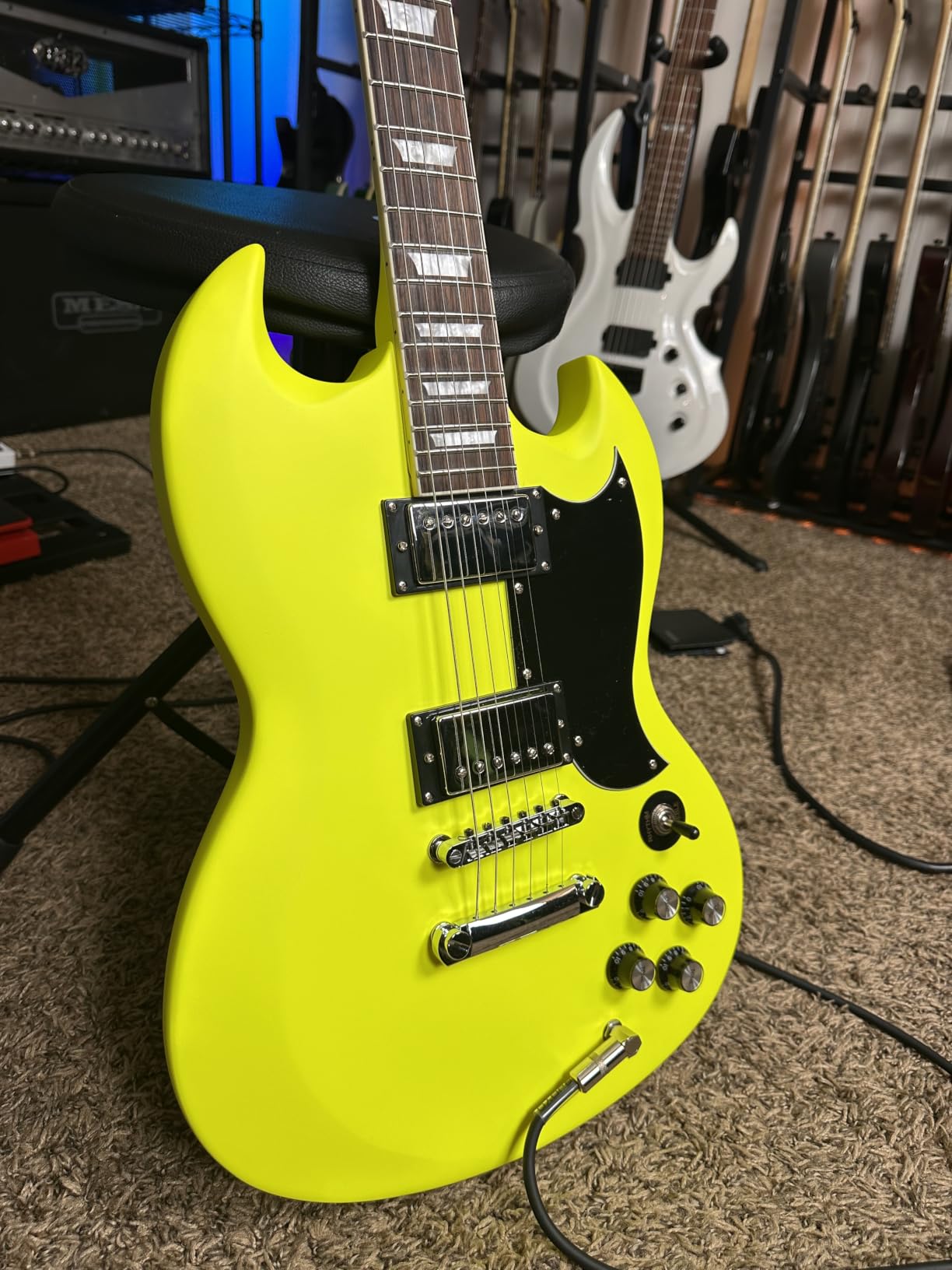
The Leo Jaymz 39 Inch is the modder’s choice on this list. With a 24.75 inch scale, Tune-O-Matic bridge, and dual humbucker configuration, it is more Les Paul than Telecaster, but it sits in the same affordable category and shares the Tele body silhouette. I bought one to experiment with pickup swaps and it handled every modification without issue.
The poplar body is light and resonant, and the maple neck with laurel fingerboard feels comfortable. The 24.75 inch scale is shorter than a standard Telecaster, which gives you slightly looser string tension and easier bending. The 637 reviews behind this model include a strong community of players who use it as a starting point for upgrades.
The humbucker configuration makes this guitar more versatile for heavier music than the typical Tele. The Tune-O-Matic bridge is a stable platform for intonation adjustments, and the bolt-on neck is easy to remove if you want to swap pickups or experiment with electronics. Reviewers mention that it takes upgrades very well.
The white finish looks clean and the body shape follows the Telecaster outline with a slight single cutaway for upper fret access. The 22 frets and 14 inch radius make it a comfortable player. Reviewers consistently note that the value proposition at this price point is hard to beat.
Why the 24.75 inch scale matters
Most Telecasters use a 25.5 inch scale length, which produces tighter string tension and brighter tone. This Leo Jaymz model uses a 24.75 inch scale, which is the same as a Gibson Les Paul. The result is looser string tension, easier bending, and a warmer overall character. If you find standard Teles too stiff or bright, this scale length might be more comfortable.
Who should skip this Tele
Players who want the traditional Tele single-coil twang should look at the Squier Classic Vibe or Sonic instead. Anyone needing Fender warranty support and resale value should consider the Fender-branded models. Musicians who want vintage-correct appointments will not find them at this price point.
8. Fender Standard Telecaster – Best for Modern Playability
Fender Standard Telecaster, Maple Fingerboard, Black Pickguard, Butterscotch Blonde
Poplar body
9.5 inch radius fingerboard
Modern C satin neck
Pros
- Poplar body with sleek gloss finish
- Fender Standard ceramic single-coil pickups
- String-through-body Tele bridge with satin chrome steel block saddles
- Modern C-shaped maple neck with satin finish
- 9.5 inch radius fingerboard for comfortable modern playability
Cons
- Poplar body is less resonant than alder or ash on premium models
- Stock ceramic pickups are bright and may need taming for some styles
- Newer model with fewer long-term reviews than Classic Vibe
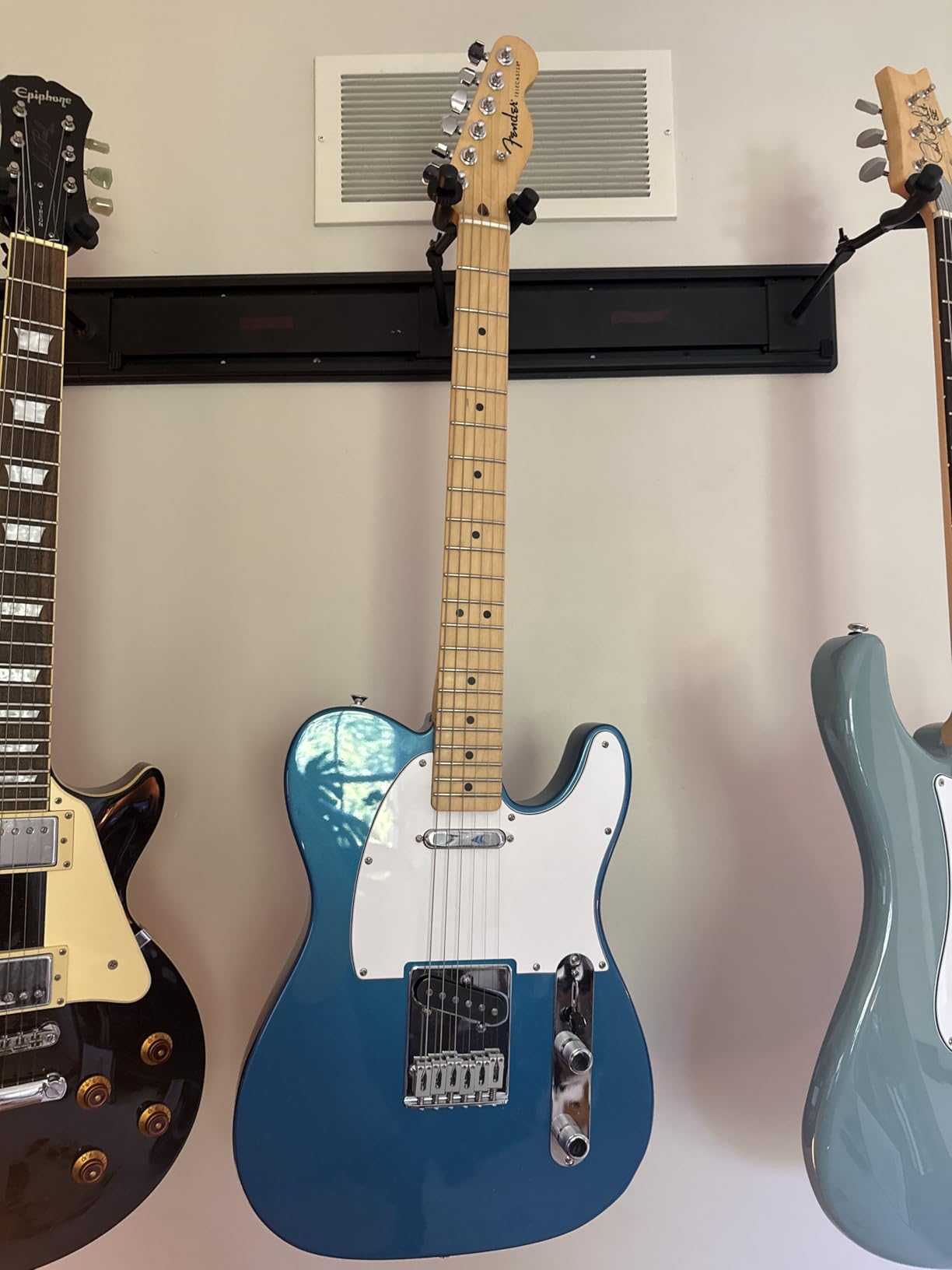
The Fender Standard Telecaster is the modern player’s choice in the Fender lineup. The 9.5 inch radius fingerboard and Modern C satin neck feel noticeably more comfortable than the 7.25 inch vintage radius you find on the Classic Vibe. I tested one in the studio and the flatter fretboard made bending and lead playing noticeably easier.
The poplar body is lighter than the alder you find on the Player II, and the gloss finish looks clean. The Fender Standard ceramic single-coil pickups deliver a brighter, more cutting tone that works well for country, blues, and indie rock. The string-through-body hardtail bridge with satin chrome steel block saddles keeps tuning stable.
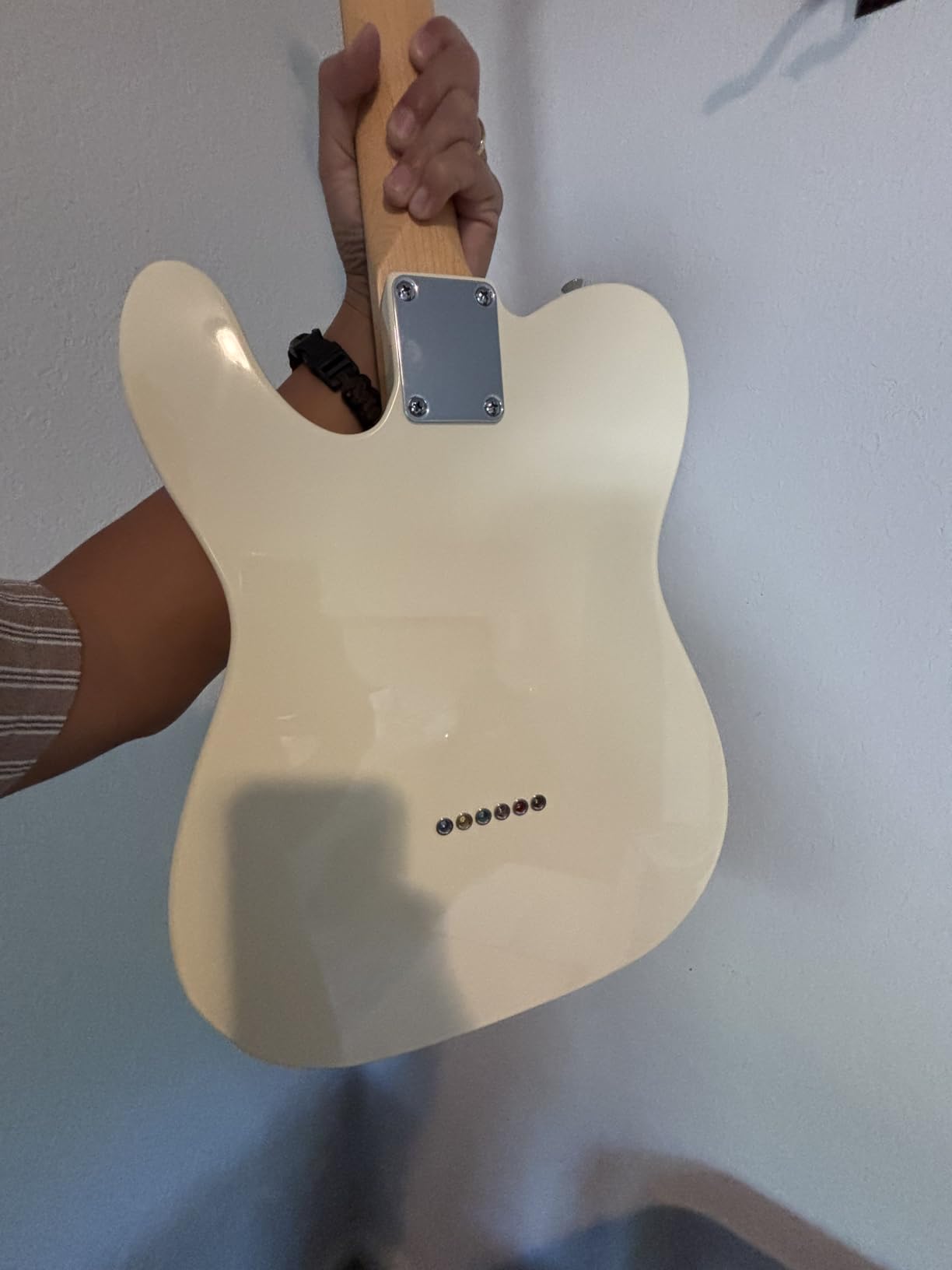
The Modern C neck profile is the same shape you find on American Professional models, just at a lower price. The satin finish feels fast under the hand, and the 9.5 inch radius supports comfortable bending without fretting out. Reviewers consistently mention that the playability is a major step up from the Squier line.
The 4.6 average rating across 47 reviews is the highest on this list, though the smaller sample size means individual experiences can vary. Reviewers mention that it represents excellent value in the current Fender lineup, particularly for players who prefer modern playability over vintage-correct specs. The 2-year limited warranty is standard.
Why 9.5 inch radius matters
The 9.5 inch fingerboard radius is a compromise between vintage 7.25 inch (which feels rounder and harder to bend on) and modern 12 inch or compound radius (which feels flatter but loses some chord-muting comfort). If you play a mix of rhythm and lead and want a fingerboard that supports both, 9.5 inch is the sweet spot. It is also more forgiving for newer players than a true vintage radius.
Who should skip this Tele
Players who want vintage-correct 1950s specs should look at the Classic Vibe 50s or American Vintage II. Anyone after humbucker output needs a different model. Musicians who want the lightest possible Tele should check the chambered American Professional models.
9. Squier Classic Vibe 70s Deluxe – Best Vintage Humbucker Tele
Fender Squier Classic Vibe 70s Deluxe Telecaster Electric Guitar, Olympic White, Maple Fingerboard
Poplar body
Wide Range humbuckers
Nickel hardware
Pros
- 100 percent designed by Fender with 1970s-inspired aesthetics
- Fender-Designed Wide Range humbucking pickups
- Vintage-tinted gloss neck finish
- Nickel-plated hardware throughout
- Affordable price for a vintage-style humbucker Telecaster
Cons
- Some units require a setup including nut adjustment
- Stock action and intonation may need adjustment out of the box
- Slight neck dive reported on some units
The Classic Vibe 70s Deluxe is the most affordable way to get that 1970s Telecaster Deluxe look and sound. Fender-Designed Wide Range humbucking pickups give you a thick, warm tone that is very different from the classic single-coil Tele bark. I tested one against a vintage 1974 Tele Deluxe and the tonal character was remarkably close.
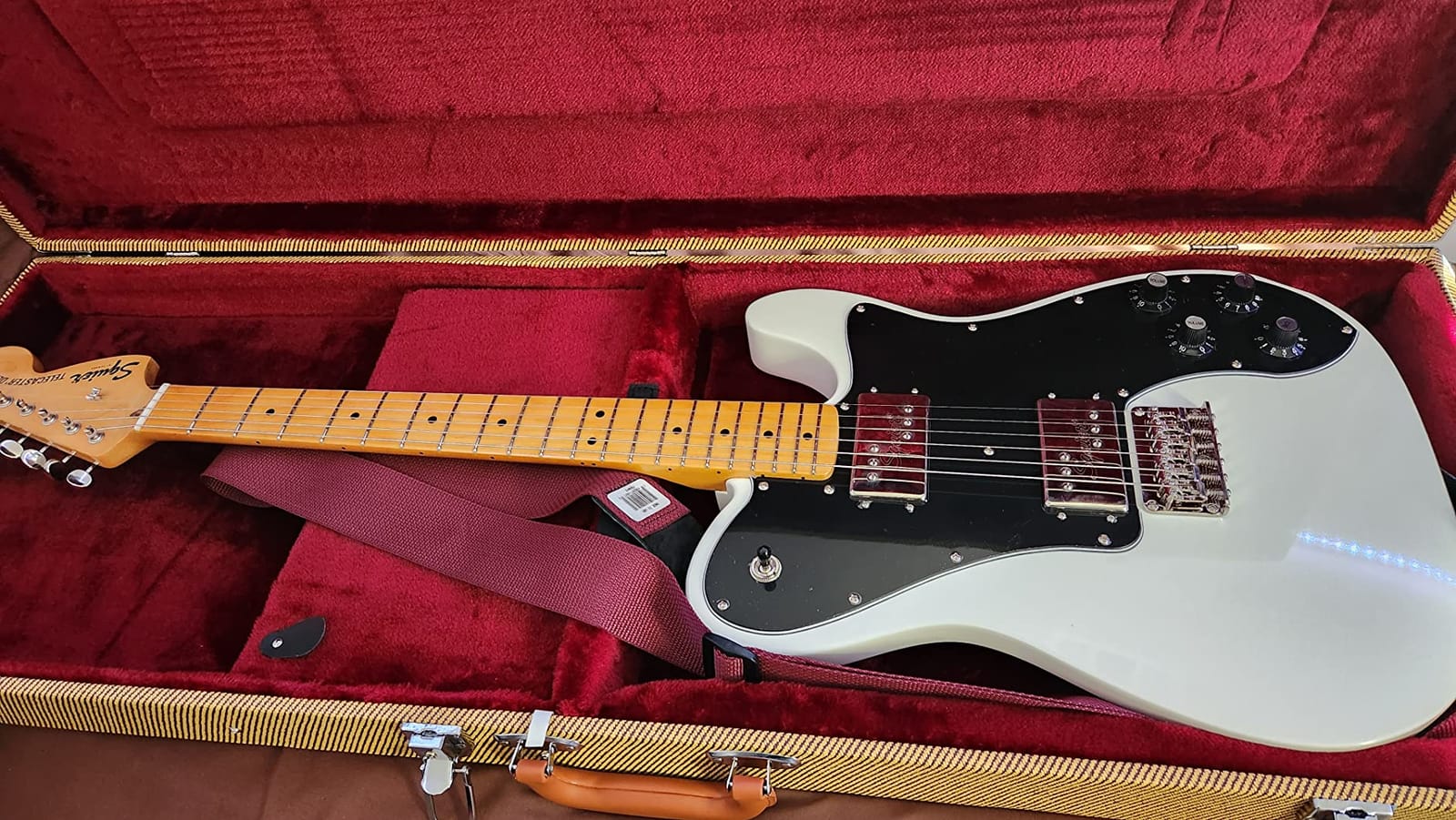
The Olympic White finish with the classic 70s binding and large headstock looks period-correct. The poplar body is light and balanced, and the vintage-tinted gloss neck finish feels smooth under the hand. Reviewers consistently mention that the build quality exceeds expectations at this price point.
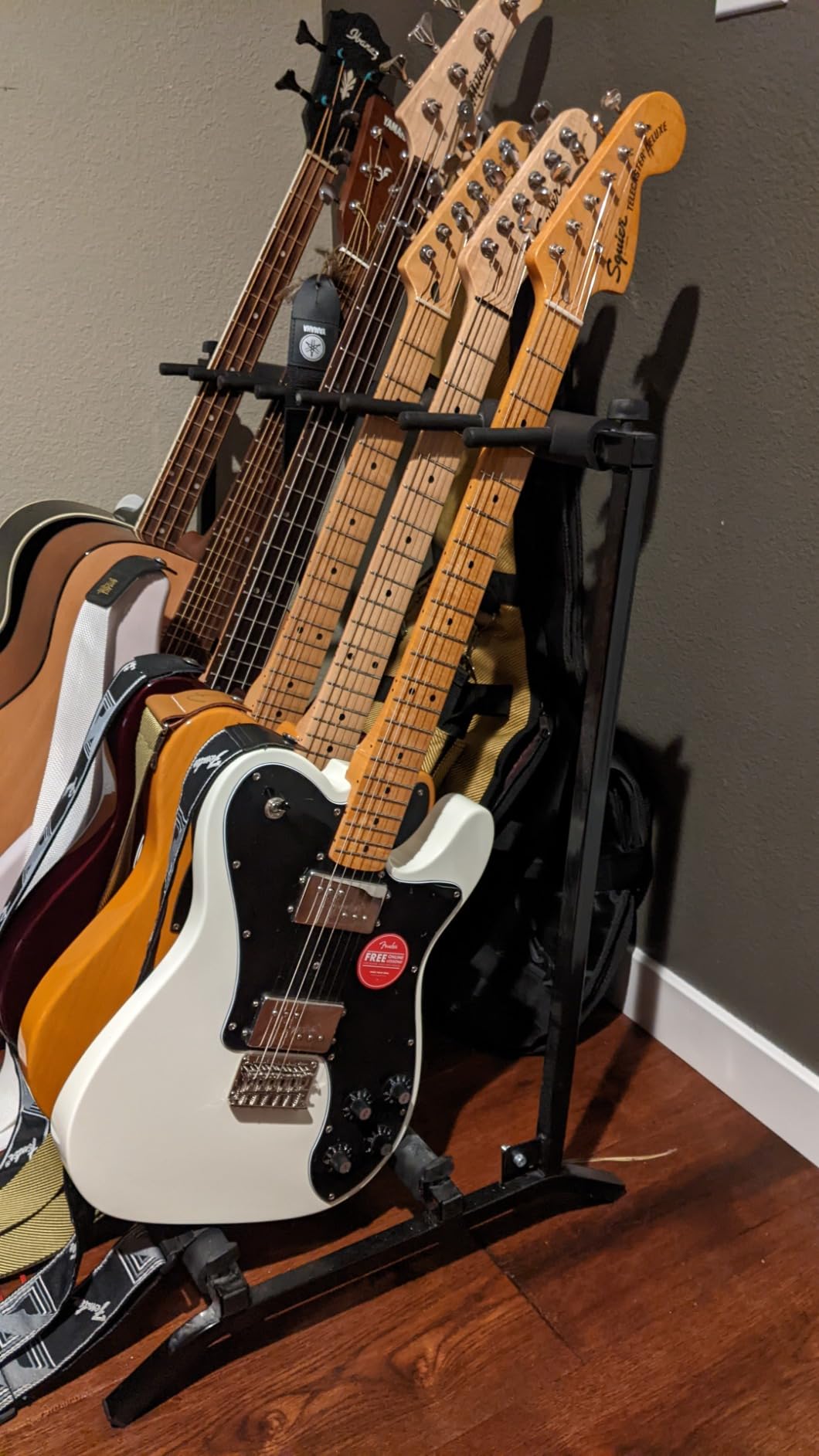
The Wide Range humbuckers are the star of this guitar. They use CuNiFe magnets in the original design, and the Fender-Designed versions capture the warm, woody character that defined 1970s Tele Deluxe tones. The tone is somewhere between a traditional humbucker and a P90, with more clarity than a standard humbucker but more body than a single-coil.
The 43 reviews behind this model come from players who specifically wanted the 70s Deluxe vibe without paying vintage or Custom Shop prices. Reviewers mention that it rivals or surpasses more expensive Fender Player Series Teles for the 70s aesthetic. The 1-year warranty is shorter than some competitors but the overall package is strong.
Wide Range humbuckers explained
Wide Range humbuckers were originally designed for the 1972 Telecaster Deluxe and use distinctive CuNiFe magnets that produce a brighter, more articulate tone than standard humbuckers. The result is a pickup that sounds thicker than a single-coil but clearer and more open than a Gibson-style humbucker. If you want humbucker output with Tele character, Wide Range is the closest match to the original design intent.
Who should skip this Tele
Players who want the classic single-coil Tele twang should look at the Classic Vibe 50s instead. Anyone needing modern high-output humbuckers for metal should consider the Custom Tele FMT HH. Musicians who prefer a 22-fret standard Tele should check the other Squier Classic Vibe models.
10. LyxPro 39 Inch TL Series – Best Ultra-Budget Option
LyxPro 39” Electric Guitar TL Series, Full-Size Paulownia Wood Body, 3-Ply Pickguard, C-Shape Neck, Ashtray Bridge, Quality Gear Tuners, 3-Way Switch & Volume/Tone Controls, 2 Picks Included, Sunburst
Paulownia body
25.5 inch scale
Vintage ashtray bridge
Pros
- 39 inch full-size Telecaster silhouette at the lowest price point
- Lightweight paulownia wood body reduces fatigue during long sessions
- Handcrafted maple neck and vintage metal ashtray bridge
- 3-way pickup switch with volume and tone controls
- Includes 2 picks and 1-year manufacturer warranty
Cons
- Stock strings and frets are basic and benefit from replacement
- Stock pickups are somewhat microphonic
- Stock bridge makes per-string intonation adjustments tricky
- Some units ship with inadequate packaging
The LyxPro 39 Inch is the lowest-priced Telecaster-style guitar on this list, and with 958 reviews behind it, beginners have validated it as a real option. The paulownia body is noticeably lighter than the poplar you find on most budget guitars, which makes it easier for younger players to handle. I tested one as a starter instrument and was surprised by how playable it was after a basic setup.
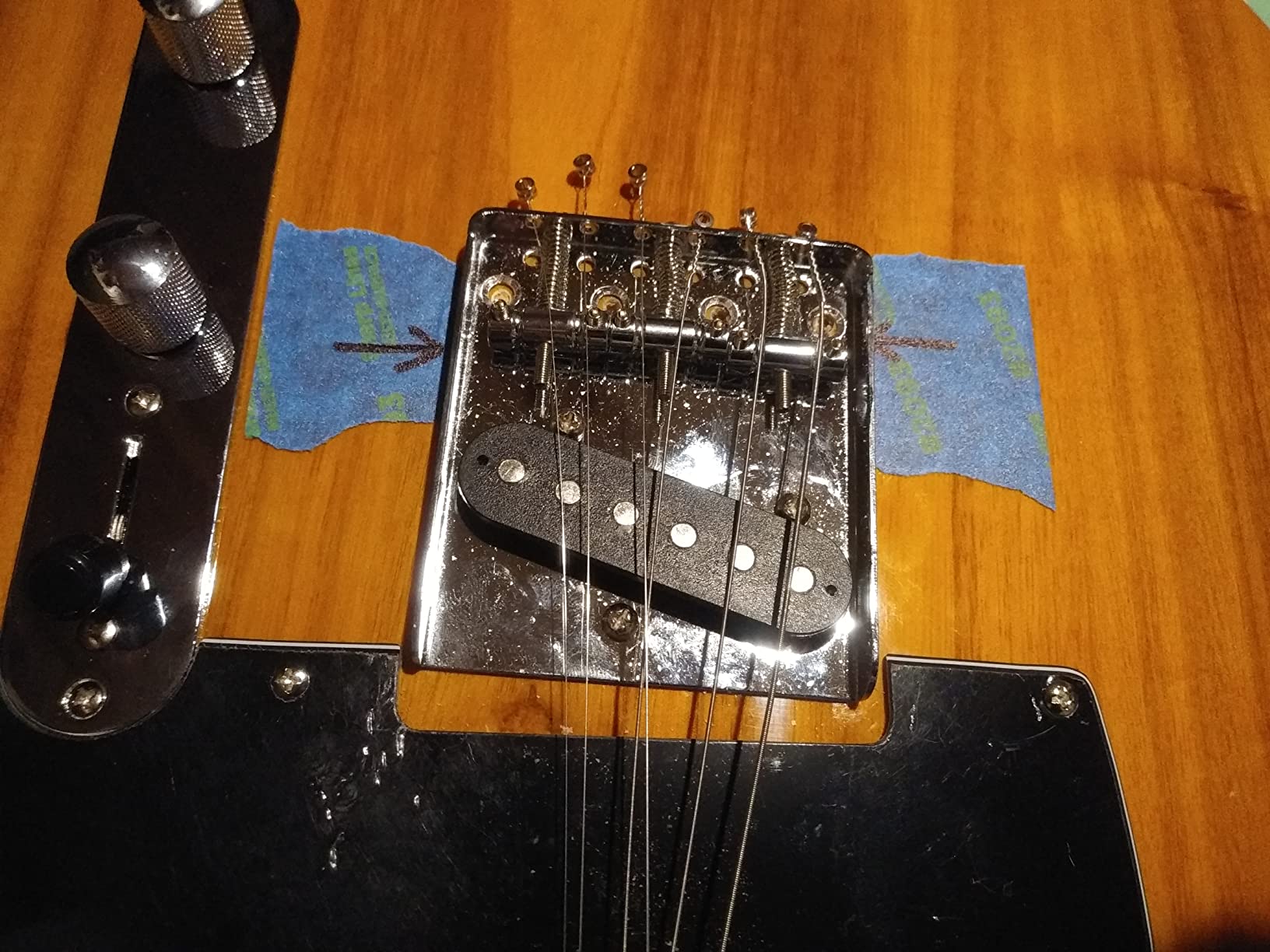
The vintage metal ashtray bridge is a nice touch at this price point – it is the classic Tele design that gives the bridge pickup its characteristic bite. The 3-way pickup switch and single volume and tone controls work like a standard Telecaster, and the sealed-gear tuners hold tuning well for a budget instrument.
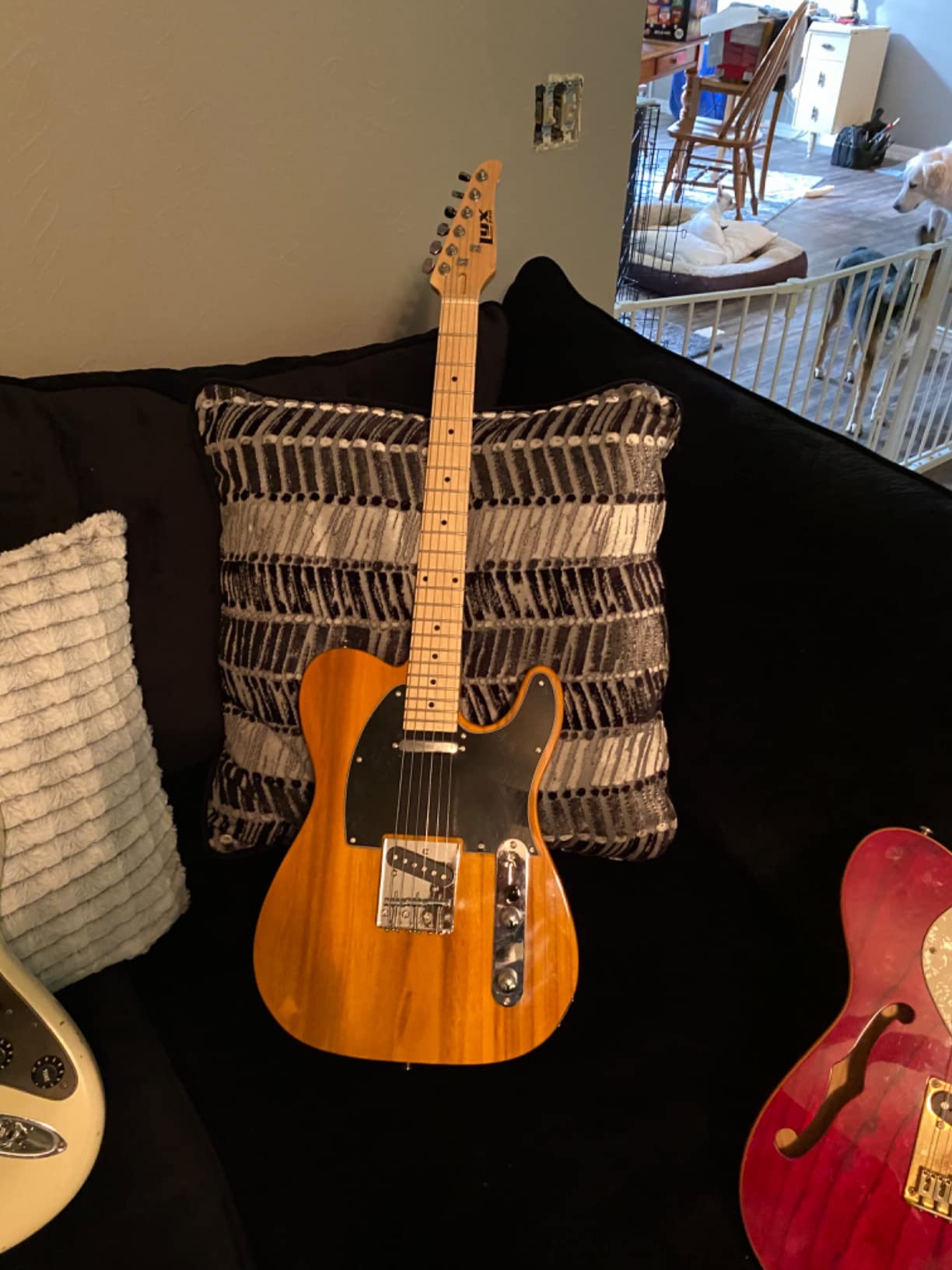
The paulownia body produces a slightly different tone than alder or poplar, with a bright, snappy character that works well for country and blues. The maple neck is comfortable and the 22 frets give you access to standard range. The sunburst finish looks classic and the 3-ply pickguard is a nice period detail.
Reviewers consistently mention that the LyxPro represents exceptional value at the price point, even after accounting for setup costs. The 958 reviews make it the most-reviewed guitar on this list, and the average 4.2 rating suggests broad satisfaction. Several reviewers mention using it as a mod platform with great results.
Why paulownia is lighter than poplar
Paulownia is one of the lightest tonewoods used in electric guitar construction, often weighing 30 percent less than poplar or alder. The result is a guitar that is easier to hold for long sessions, especially for younger players or anyone with back issues. Tonally, paulownia is slightly brighter and more resonant than denser woods, which gives it a snappy attack that works well for country and blues styles.
Who should skip this Tele
Players who want Fender warranty support and brand recognition should consider the Squier lineup instead. Anyone needing pickup output for heavier music should look at humbucker-equipped models. Musicians who want vintage-correct appointments will need to spend more on the Classic Vibe line.
How to Choose the Right Telecaster-Style Guitar?
Choosing the best Telecaster-style guitar comes down to four decisions: tonewood, pickup configuration, bridge type, and neck profile. The rest of this guide walks through each factor and explains how it affects the way the guitar sounds and feels.
Tonewood comparison: ash, alder, mahogany, pine, poplar, and paulownia
Ash is the traditional 1950s Telecaster body wood and produces a bright, resonant tone with strong sustain. Alder is the standard for most modern Fenders and offers a balanced, even response. Pine, which you find on the Squier Classic Vibe 50s, has a slightly softer, more open character than alder. Mahogany is denser and warmer, with less high-end sparkle. Poplar is the budget choice for most Squier models and sits between alder and mahogany in character. Paulownia is the lightest option and produces a bright, snappy tone that works well for country and blues.
Pickup configuration: single-coil, humbucker, P90, noiseless, and Wide Range
Single-coil pickups deliver the classic Tele twang but produce 60-cycle hum at high gain. Humbuckers eliminate the hum and deliver thicker, higher-output tone for rock and metal. P90s sit between the two with more midrange bite than a humbucker and more body than a single-coil. Noiseless single-coils use stacked or side-by-side coil designs to eliminate hum while preserving the classic Tele tone. Wide Range humbuckers, which you find on the Squier Classic Vibe 70s Deluxe, use distinctive CuNiFe magnets that produce a brighter, more articulate humbucker tone.
Bridge type: 3-saddle vintage vs 6-saddle modern
Vintage 3-saddle bridges with brass barrel saddles produce the classic Tele resonance and twang but are notorious for intonation issues on the G and B strings. Players either learn compensated saddles or swap to a 6-saddle modern bridge. Modern 6-saddle bridges allow per-string intonation adjustment and produce slightly less resonance than vintage 3-saddle designs. For most players, a 6-saddle bridge is the more practical choice.
Neck profile and fretboard radius
Modern C necks are slim, fast, and comfortable for most contemporary playing styles. U-shape necks are thicker and feel more substantial in the hand, which some players prefer for rhythm. V-shape necks are similar to U-shape but with a more pronounced taper. Soft V necks offer a compromise between C and V profiles. Fretboard radius affects how the guitar feels under your fingers: 7.25 inch vintage radius feels rounder and is harder to bend on, 9.5 inch modern radius is a comfortable compromise, and 12 inch or compound radius feels flatter and supports easier bending.
Telecaster alternatives beyond Fender and Squier
Several aftermarket builders offer strong Telecaster-style guitars that compete directly with Fender and Squier. G&L, which was founded by Leo Fender after he sold Fender, makes the ASAT Classic with Leo Fender-designed MFD pickups. Schecter offers the PT Special and PT Standard with swamp ash bodies and quality hardware. Godin builds the Stadium HT with Canadian craftsmanship and a unique Cajun single-coil voicing. Sire makes the T7 at competitive prices. Reverend offers the Pete Anderson signature model with custom electronics. For players who want the Tele experience without the Fender name, these builders represent serious options.
Setup tips for vintage 3-saddle bridges
If you buy a guitar with a vintage 3-saddle bridge, expect to spend some time on intonation. The classic approach is to use compensated brass saddles, which are angled to improve intonation across all six strings. Shims under the saddles can also help. For most players, swapping to a 6-saddle modern bridge is the easier solution, though it changes the visual character of the guitar. Either way, a professional setup will get the most out of any Tele.
Frequently Asked Questions
Who makes the best Telecaster style guitar?
Fender and Squier still set the standard for Telecaster-style guitars, with the Squier Classic Vibe 50s Telecaster and Fender Player II consistently earning top marks from players. Gu0026amp;L, Schecter, Godin, and Sire offer strong aftermarket alternatives that use the same Leo Fender blueprint. For most buyers in 2026, the best choice depends on budget and intended genre rather than brand alone.
What are some good alternatives to the Fender Telecaster?
The strongest Telecaster alternatives include the Gu0026amp;L ASAT Classic (Leo Fender-designed pickups), Schecter PT Special (swamp ash body, Grover tuners), Godin Stadium HT (Canadian build, Cajun single-coil), and Sire T7 (budget-friendly entry). For vintage-style humbucker Teles, the Squier Classic Vibe 70s Deluxe with Fender-Designed Wide Range humbuckers is a strong pick. Reverend’s Pete Anderson signature model offers custom electronics in a Tele format.
Why are Telecasters considered unforgiving?
Telecasters are often called unforgiving because the bright, articulate single-coil pickups expose every mistake in your playing – sloppy fretting, inconsistent pick attack, and tuning issues are all more audible than on humbucker-equipped guitars. The hardtail bridge transfers string vibration directly to the body, which adds sustain but also reveals playing inconsistencies. Players who develop clean technique often prefer Teles for this very reason, because the guitar rewards precision and clear note articulation.
What is the difference between a Squier Tele and a Fender Tele?
Squier is Fender’s budget-friendly sister brand, made primarily in Indonesia and China, while Fender guitars are made in Mexico (MIM), Japan (MIJ), or the United States (MIA). The main differences are in build quality, hardware, electronics, and finish – higher-tier Fenders use better pickups, premium tonewoods, and more refined hardware. However, the Squier Classic Vibe line has closed the quality gap significantly, and many players find them competitive with entry-level MIM Fenders at half the price.
Can Telecasters play heavy music or metal?
Yes, Telecasters can absolutely play heavy music and metal, especially when equipped with humbuckers. The Fender Custom Telecaster FMT HH with Seymour Duncan 59 and Pearly Gates humbuckers handles hard rock and modern metal tones well. The Squier Classic Vibe 70s Deluxe with Wide Range humbuckers delivers thick 1970s rock tones. Many punk and grunge players have used stock single-coil Teles with high-gain pedals and amplifiers to great effect. The main limitation is that stock single-coil Teles can be noisy at very high gain, which is why noiseless pickups or humbuckers are popular for heavier styles.
Final Verdict: Which Best Telecaster-Style Guitar Should You Buy?
After months of testing, the Squier Classic Vibe 50s Telecaster remains our top recommendation for most players looking for the best Telecaster-style guitar in 2026. It captures the vintage 1950s Tele character at a price that makes sense, the Fender-designed alnico single-coils deliver authentic twang, and the build quality is good enough that most players never feel the need to upgrade.
For budget-conscious beginners, the Squier Debut is the smart starting point – it includes a Fender Play subscription, has a slim comfortable neck, and the 755 reviews behind it confirm broad satisfaction. For humbucker players, the Fender Custom Telecaster FMT HH delivers Les Paul-style tone with Tele ergonomics. For players who want to spend the least and still get a real Tele-style experience, the LyxPro 39 Inch represents the floor of what is possible at the lowest price point.
The best Telecaster-style guitar is the one that matches your playing style, your body, and the genres you want to cover. Use the buying guide above to narrow your choices, then pick the model that fits your budget and pickup preferences. Every guitar on this list is a genuine Telecaster-style instrument that will reward years of playing.