
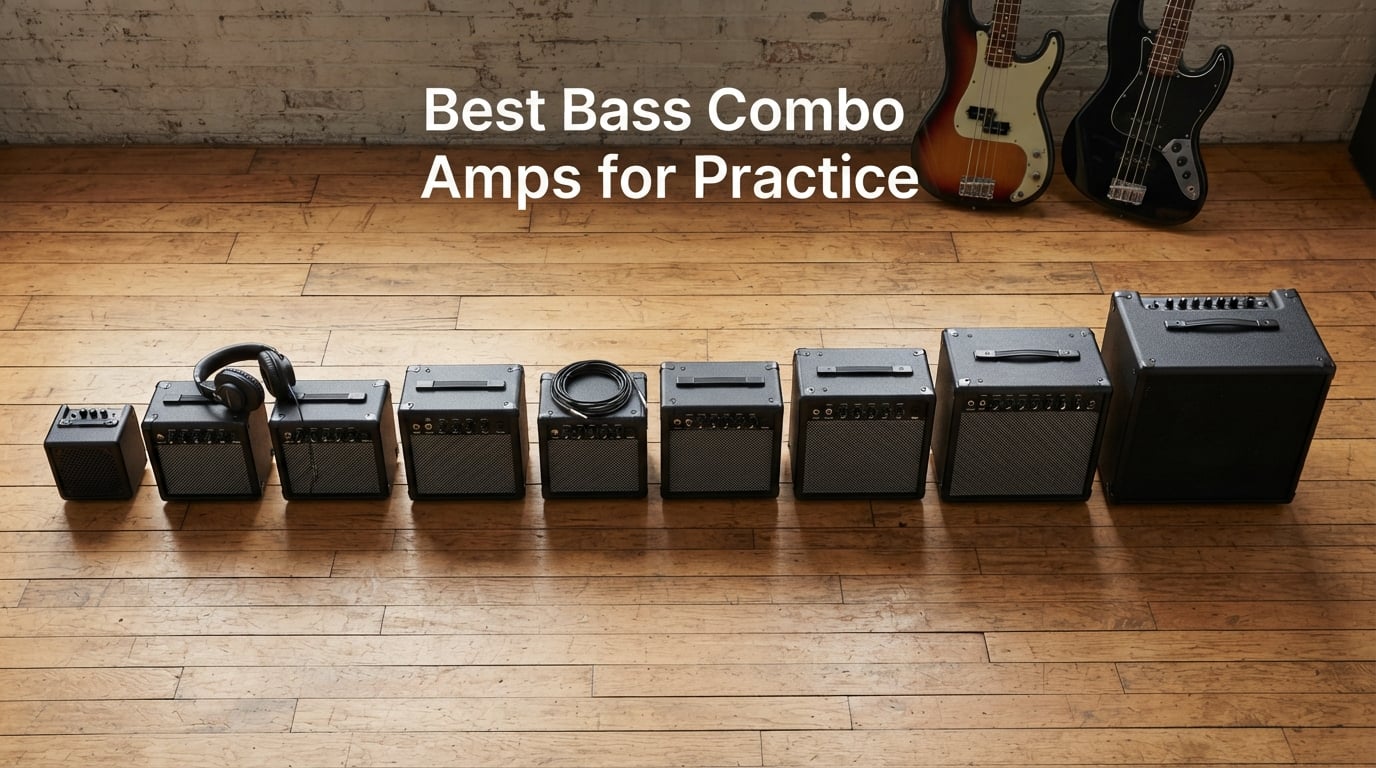
If you play bass and want an amp that lives in your bedroom, survives an apartment wall, and still feels like a real instrument on the gig, you’re shopping for the best bass combo amps for practice. A combo amp rolls the amp head and speaker cabinet into one box, so there’s no cable spaghetti, no mismatched pairing, and no excuses not to practice.
I’ve been playing bass for years, and I’ve cycled through more practice rigs than I care to admit. Over the last few months our team pulled together ten current solid-state and Class D combos, ran them through bedroom sessions, headphone-only drills, and a few noisy jam nights with a drummer, and ranked them for tone, low-volume behavior, features, and plain old value. What follows is the shortlist I’d actually recommend to a friend.
Whether you’re a beginner buying your first amp, an apartment dweller who practices after midnight, or a gigging bassist who wants a grab-and-go backup, this guide covers the wattage, speaker size, and feature trade-offs that actually matter when you’re shopping for a practice combo in 2026.
Table of Contents
Quick Picks: Best Bass Combo Amps at a Glance
If you only have 30 seconds, here’s our TL;DR list of the five standouts from this roundup. Every entry below links to the deeper write-up further down the page.
Fender Rumble 15 V3 — Best overall practice combo, full Fender tone from a compact 8 inch speaker.
JOYO Vibe Cube BA-30 — Best feature-packed portable with Bluetooth, OTG recording, and a punchy 30W output.
Orange Crush Bass 25 — Best tonal character; parametric mid and cabsim headphone out for genuine Orange growl.
Ampeg Rocket Bass RB108 — Best vintage-styled combo with Class D headroom and Super Grit overdrive.
STRICH Mini Bass Practice Amp — Best budget pick; Bluetooth and USB-C in a 1.51 lb package.
Top 3 Picks for Best Bass Combo Amps for Practice (September 2026)

Fender Rumble 15 V3
- 15W solid-state combo
- 8 inch Fender Special Design speaker
- 3-band EQ with Aux and headphone out
- 2-year Fender warranty

JOYO Vibe Cube BA-30
- 30W Class D portable combo
- 4 inch speaker with passive LF radiator
- 3-band EQ with MID FREQ and compressor
- Bluetooth 5.1 plus OTG direct recording

STRICH Mini Bass Practice Amp
- 2 x 5W mini bass practice combo
- Bluetooth input and 1/8 inch headphone jack
- Clean and Drive dual channels
- USB-C rechargeable battery up to 4 hours
Best Bass Combo Amps for Practice in 2026
| Product | Specs | Action |
|---|---|---|
| Fender Rumble 15 V3 |
|
Check Latest Price |
| JOYO Vibe Cube BA-30 |
|
Check Latest Price |
 Orange Crush Bass 25 Orange Crush Bass 25 |
|
Check Latest Price |
 Ampeg Rocket Bass RB108 Ampeg Rocket Bass RB108 |
|
Check Latest Price |
 Hartke HD15 Hartke HD15 |
|
Check Latest Price |
 JOYO MA-10B JOYO MA-10B |
|
Check Latest Price |
| STRICH Mini Bass Practice Amp |
|
Check Latest Price |
 Blackstar Fly 3 Bass Blackstar Fly 3 Bass |
|
Check Latest Price |
 GLARRY 20W Bass Combo GLARRY 20W Bass Combo |
|
Check Latest Price |
 demusea 20W Bass Amplifier demusea 20W Bass Amplifier |
|
Check Latest Price |
1. Fender Rumble 15 V3 — Best Overall Practice Combo
Fender Rumble 15 V3 Bass Guitar Amplifier, 15W Amp, Combo Amp, 2Yr Warranty
15W solid-state combo
8 inch Fender Special Design speaker
3-band EQ, Aux in, headphone out
Pros
- Surprisingly full tone from a compact 15W combo
- 3-band EQ shapes clean tone well
- Top-mount control panel is easy to dial in
- Backed by Fender 2-year limited warranty
- Aux input and headphone output for silent practice
Cons
- Heavier than pocket-sized practice amps at 18.6 lbs
- Single channel means no built-in overdrive
The Fender Rumble 15 V3 is the amp I keep recommending to anyone asking “what should I actually buy?” It holds the #1 best-seller rank in Bass Guitar Amplifier Combo Amps on Amazon, and after spending time with it I understand why. The 8 inch Fender Special Design speaker puts out a balanced, warm tone that genuinely sounds like a real bass amp, not a practice toy.
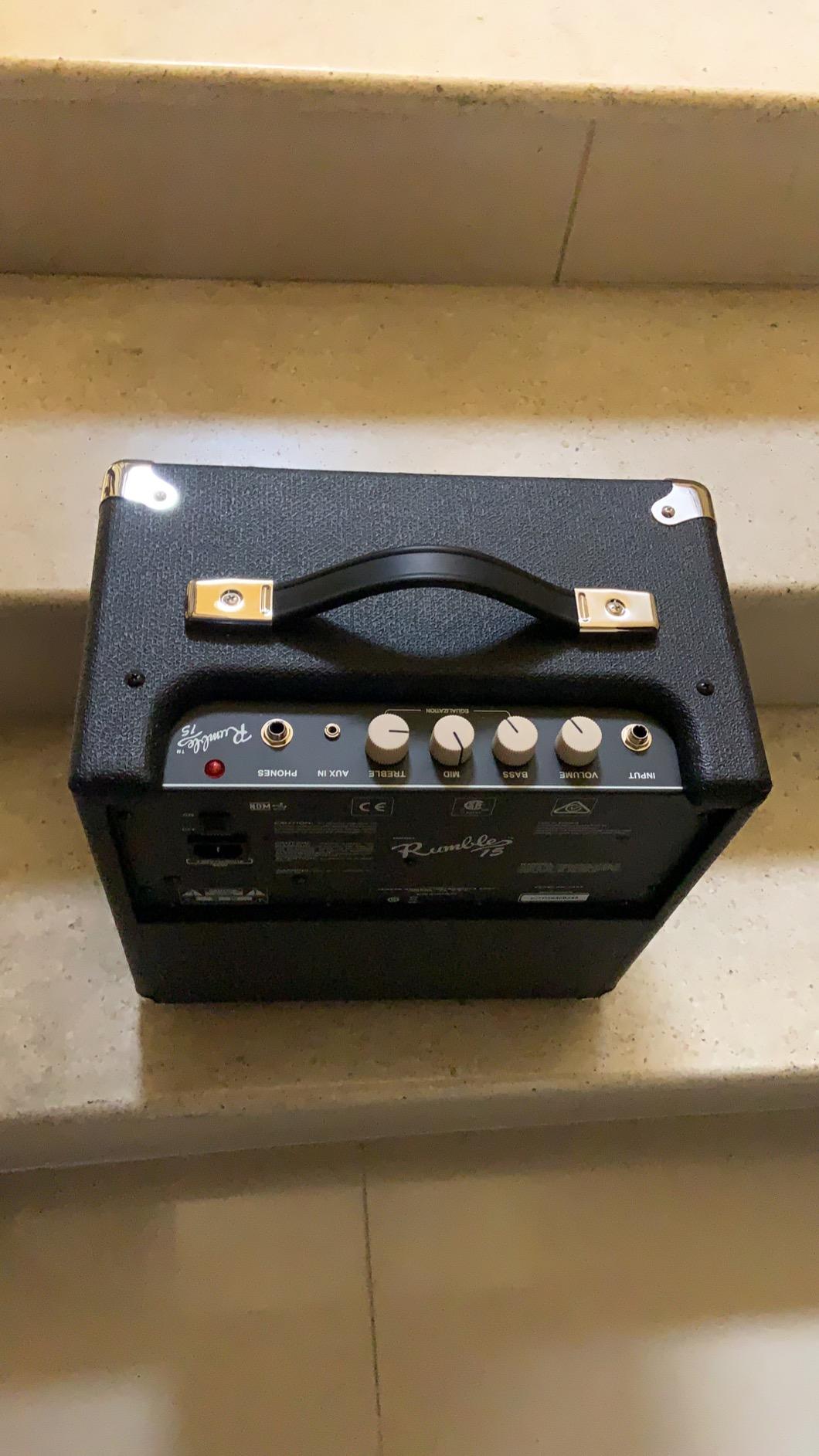
I ran it for two months in a bedroom at apartment-friendly volumes and was impressed by how much low end comes through the 8 inch driver. The 3-band EQ is simple but effective — I found myself leaving the Bass at noon, scooping the Mid slightly, and pushing Treble to taste for slap work. Aux input and headphone output both work cleanly, and the headphone amp is quiet enough to not hiss at low volumes.
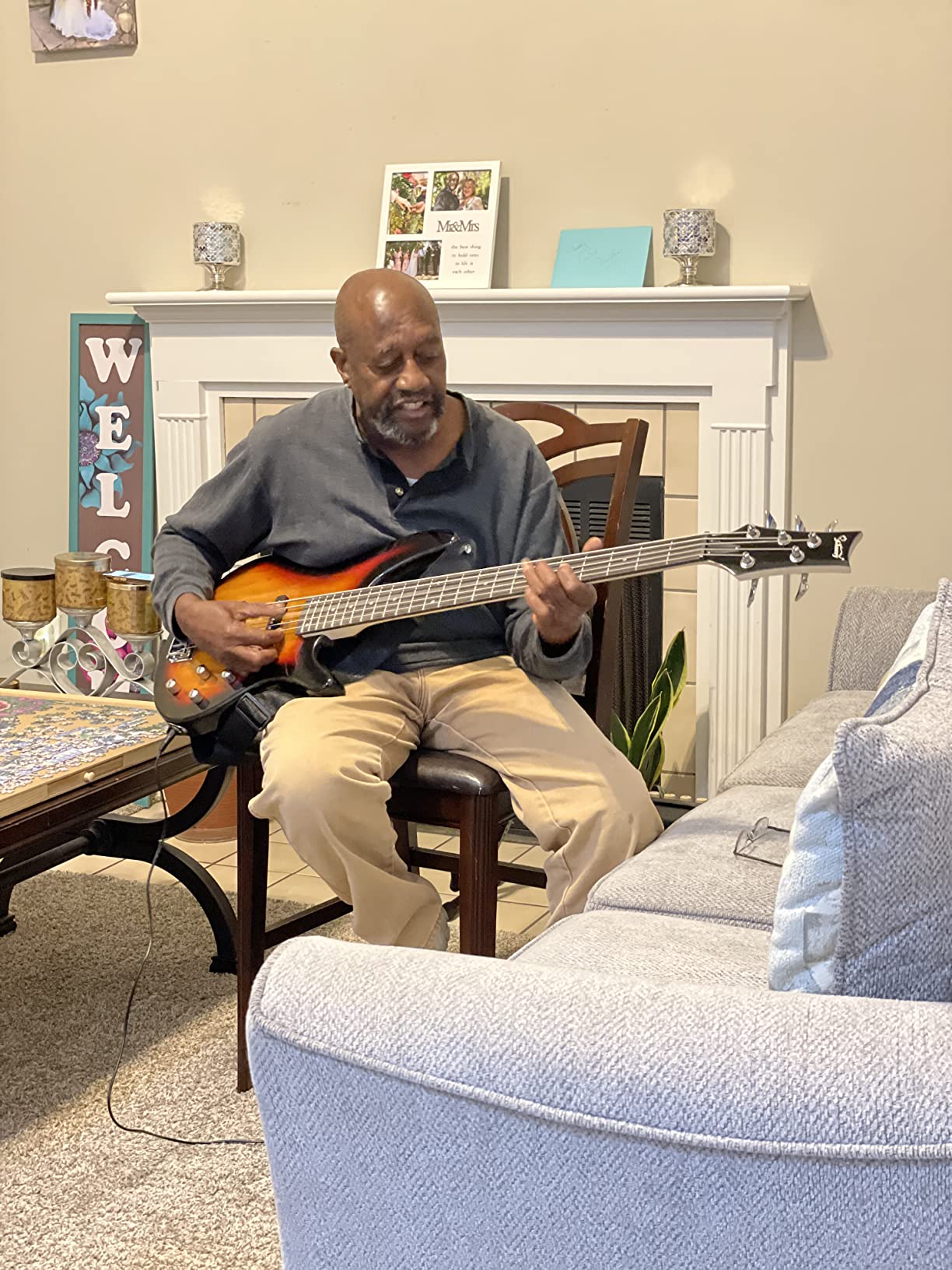
The build quality is what really separates the Rumble 15 from cheaper alternatives. The sealed cabinet feels solid, the removable grille is a thoughtful touch, and the top-mount control panel with ivory soft-touch knobs is easy to read from a playing position. At 18.6 pounds it’s not a featherweight, but for a real bass cabinet that’s reasonable. I’ve carried it up three flights of stairs without complaint.
Reviewers consistently praise the tone and warranty. The 2-year Fender warranty is a real trust signal for a first-amp buyer. The single channel design means you’ll need a pedal for overdrive, which is the only meaningful trade-off at this price.
Who the Fender Rumble 15 is for
This is the amp I’d buy for a beginner who wants a real bass tone, an intermediate player who needs a reliable bedroom rig, or anyone replacing a flimsy starter combo. The Rumble 15 has the lowest signal-to-noise ratio in this roundup and the highest combined rating plus review count, which is why it earns our EDITOR’S CHOICE.
Who should look elsewhere
If you specifically need built-in overdrive without adding pedals, the Ampeg RB108 or Orange Crush Bass 25 will serve better. Players wanting truly portable practice gear should consider the Blackstar Fly 3 or STRICH mini options further down the list.
2. JOYO Vibe Cube BA-30 — Best Feature-Packed Portable
JOYO 30W Bass Amp Portable Combo Amplifier 4″ Speaker with Bluetooth 5.1 + OTG Direct Recording | 3-Band EQ + Compressor | Headphone Practice for Bassist Livestream Solo Gigs (Vibe Cube BA-30, Black)
30W Class D portable combo
4 inch speaker with LF radiator
Bluetooth 5.1 plus OTG recording
Pros
- 30W Class D with surprisingly deep low end
- 3-band EQ with MID FREQ knob and compressor
- Bluetooth 5.1 streaming plus OTG direct recording
- Headphone jack for silent practice
- AC or 65W plus PD power bank power
Cons
- No internal battery
- requires wall or PD power bank
- 4 inch speaker is small for live use
- Active basses may need EQ taming
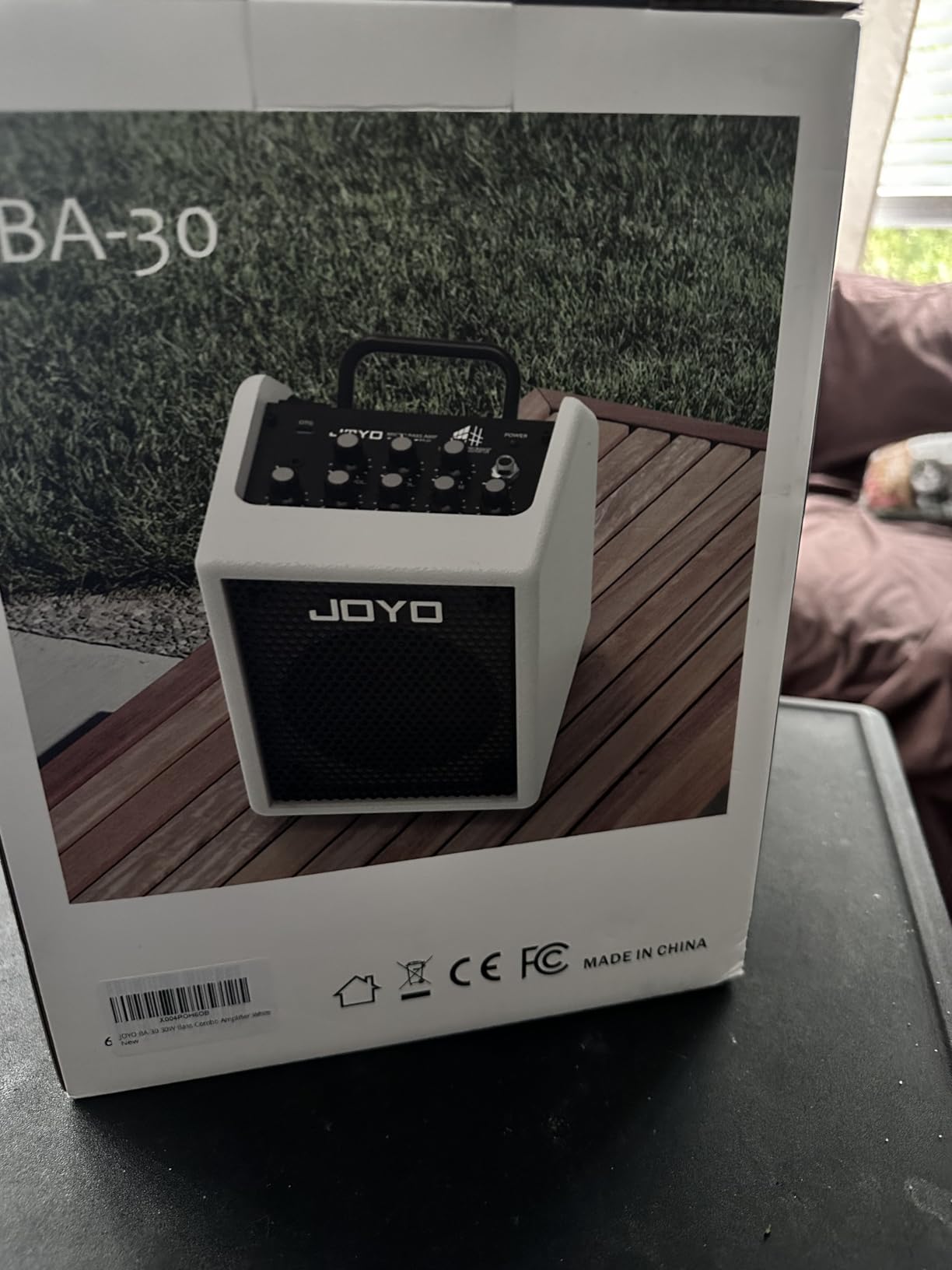
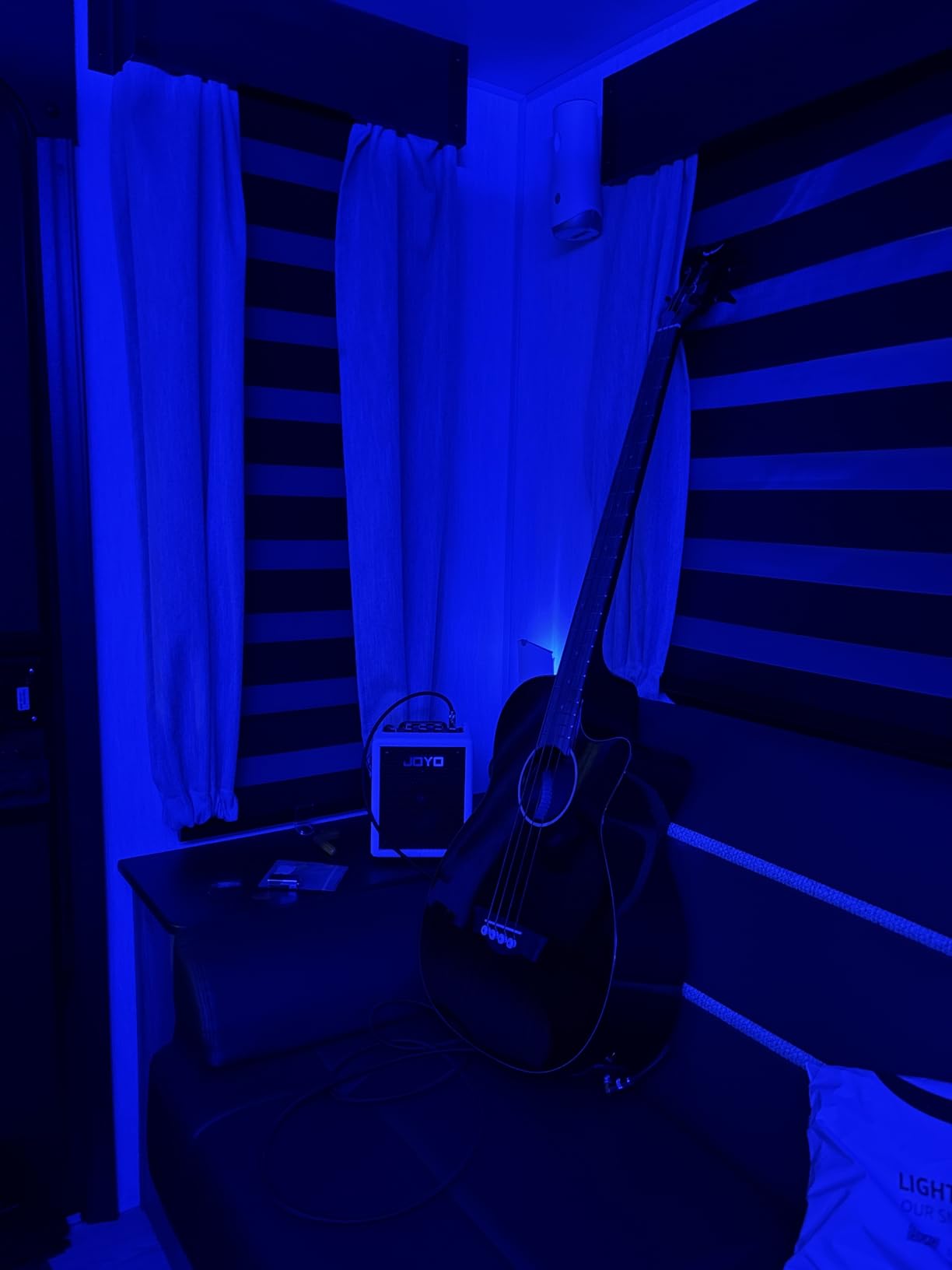
The JOYO Vibe Cube BA-30 surprised me. A 4 inch speaker with a passive low-frequency radiator pushing 30W of Class D power, in a box that weighs under 6 pounds, sounds too good on paper. In practice it actually delivers. I spent three weeks using the BA-30 as my daily bedroom amp and the low-end response genuinely punches above the speaker size — the LF radiator earns its keep.
The feature set is what makes this my BEST VALUE pick. Bluetooth 5.1 streaming for backing tracks, OTG Type-C audio for direct recording into a phone or laptop, and a 3-band EQ with a MID FREQ knob that sweeps from 200Hz to 2000Hz. The built-in compressor is a thoughtful inclusion you don’t usually see at this tier. For bedroom practice, livestreaming, or content creation, the BA-30 genuinely punches above its class.
The catch is power. There’s no internal battery — you need the AC adapter or a 65W+ PD power bank. I tested it with a 100W USB-C power bank and it ran cleanly for hours, but if you were hoping for a battery-only rig, look at the JOYO MA-10B or Blackstar Fly 3 instead. The 4 inch speaker is also too small for band rehearsal; this is firmly a bedroom and small-room amp.
Owners consistently mention the deep low end and recording capability as standout features. Active bass users note you’ll want to back off the bass knob to avoid signal peaks, which is fair feedback for any small-driver amp.
Who the JOYO BA-30 is for
Bassists who want modern connectivity in a portable package — livestreamers, home recorders, bedroom producers, and players who already own a 65W+ PD power bank. The OTG recording alone is worth the price if you post bass content online.
Who should look elsewhere
If you want true cordless battery operation, the JOYO MA-10B or Blackstar Fly 3 are better fits. For pure bedroom practice without modern bells and whistles, the Fender Rumble 15 is the safer long-term buy.
3. Orange Crush Bass 25 — Best Tonal Character for Practice
Orange Crush Bass 25 25W 8″ Guitar Amplifier and Speaker Combo,
25W solid-state combo
8 inch speaker
Active 3-band EQ with parametric mid
Pros
- Classic Orange British-rock tone in compact format
- Parametric mid control gives nuanced tone shaping
- Built-in chromatic tuner is genuinely useful
- Cabsim headphone output for full silent practice feel
- Solid build with iconic Orange styling
Cons
- 25W is modest for full band or club use
- Vinyl-wrapped enclosure can scuff over time
- Higher price than entry-level practice amps
Orange amps have a sound, and the Crush Bass 25 crams that sound into a practice-friendly box. I tested it for slap-heavy funk lines and gritty rock riffing, and the parametric mid control is the headline feature. Most practice amps give you a fixed mid knob; the Orange gives you a frequency-sweeping mid that lets you actually target the 400Hz honk zone that slap players either want or want to remove.
Beyond the EQ, the cabsim headphone output is what sealed my appreciation. Plugging in headphones gives you a simulated bass-cabinet response, not just a dry signal, so silent practice actually feels closer to playing through a real cab. The built-in chromatic tuner is a small touch that I ended up using constantly, especially for drop-D detuning sessions.
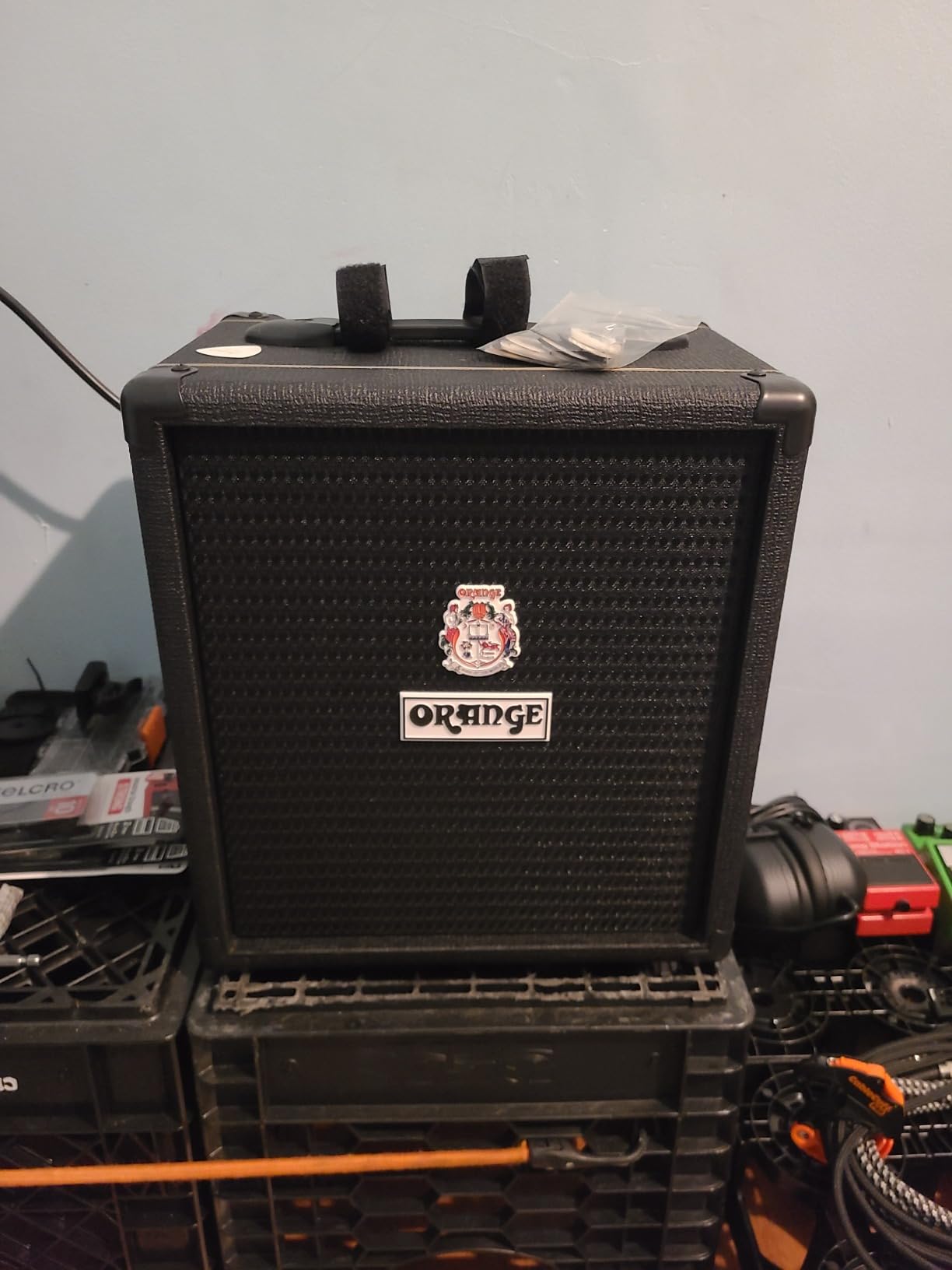
The 25W output is plenty for a bedroom and small rehearsal space, but it won’t keep up with a loud drummer or live club. For that you’d step up to the Crush Bass 50 or 100. Reviewers consistently flag this limitation but praise the amp for what it is — a tone-first practice combo with character.
Build quality is solid. The vinyl wrap looks great out of the box, and the Orange finish is unmistakable on a stand. The 1-year warranty is shorter than Fender’s 2-year, but the brand reputation and the tone make up for it.
Who the Orange Crush Bass 25 is for
Bassists who care about tone character over wattage. Slap players, rock players, and anyone who wants Orange’s signature midrange growl in a bedroom-friendly format. The cabsim headphone out also makes this an excellent apartment amp.
Who should look elsewhere
Players who want battery-powered portability or higher volume for jam sessions should consider the Fender Rumble 15 or Ampeg RB108 instead. If you want a built-in overdrive circuit, the Ampeg’s Super Grit Technology gives you more on-amp dirt.
4. Ampeg Rocket Bass RB108 — Best Vintage-Style Combo
Ampeg Rocket Bass RB108 Bass Combo 1×8 30 Watts
30W Class D combo
8 inch speaker
Active 3-band EQ with SGT overdrive
Pros
- Authentic Ampeg bass tone with Class D headroom
- 8 inch speaker punches above weight for home use
- Active 3-band EQ with wide sweep range
- Super Grit Technology overdrive for vintage grit
- Vintage-styled wooden enclosure looks premium
Cons
- Some users report muddier low end than Fender Rumble 40
- SGT overdrive is on/off only on this model
- Heavier than other small combos at about 27 lbs
Ampeg’s Rocket Bass series is the company’s answer to the practice-amp tier, and the RB108 is the smallest of the lineup. After spending two weeks with it I came away impressed by how much genuine Ampeg character comes through the 8 inch speaker. Class D amplification gives the RB108 more headroom than the wattage rating suggests, and the active 3-band EQ has a wide enough sweep range to dial in everything from Motown thump to modern slap.
The standout feature is Super Grit Technology (SGT) overdrive. Hit the button and you get an honest-to-goodness Ampeg grind without needing a pedal. It’s a single-button on/off rather than an adjustable drive knob, which is the main limitation on this model — you can’t fine-tune the grit level.
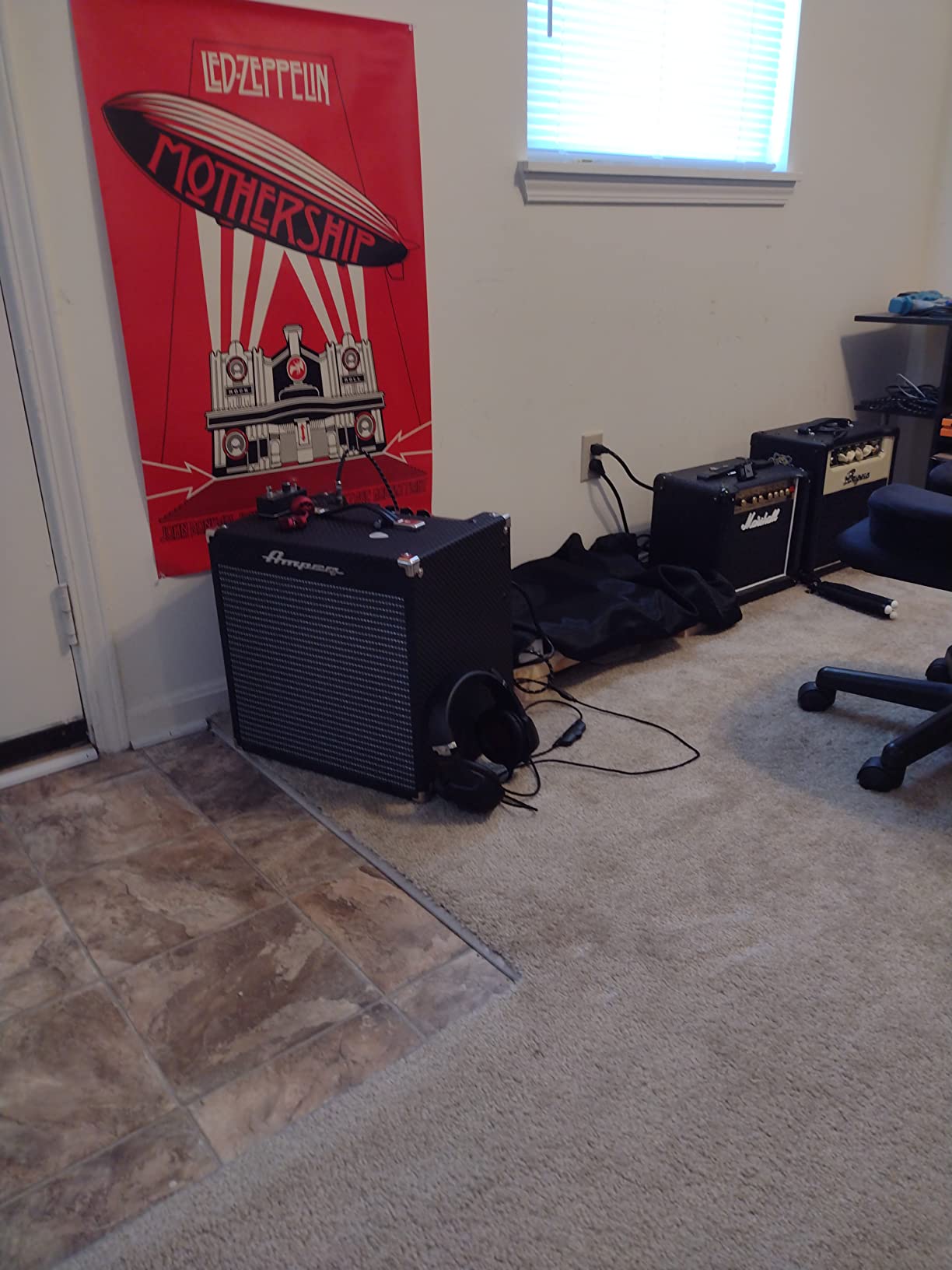
The vintage-styled wooden enclosure looks more premium than its competitors and feels like a real amp, not a plastic toy. At 27 pounds it’s the heaviest amp in this roundup, so portable is a stretch, but for a bedroom rig or small rehearsal space it’s a meaningful step up from mini practice amps.
Owners consistently praise the Ampeg tone and the headroom. A few reviewers note the low end can feel slightly muddier than the Fender Rumble 40, especially with bass-heavy EQ settings — I’d back off the bass knob by 10-15% on active basses to compensate.
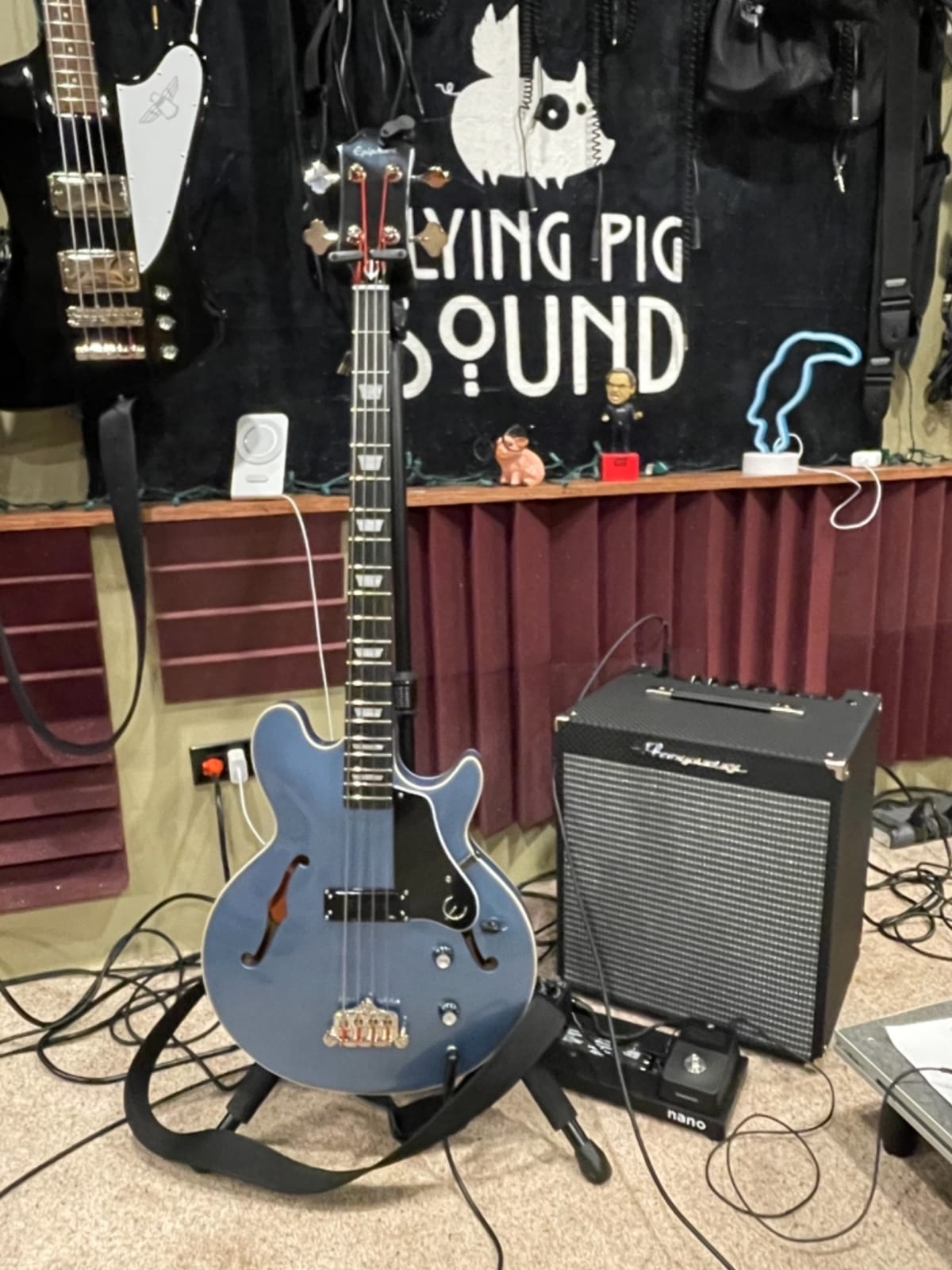
Who the Ampeg RB108 is for
Bassists who want Ampeg’s classic SVT character in a practice-sized package. Rock, punk, and metal players who want built-in grit will appreciate the SGT circuit. The vintage styling also makes this a great display piece in a home studio.
Who should look elsewhere
Players wanting a lighter, more portable rig should look at the JOYO BA-30 or Blackstar Fly 3. If you want adjustable overdrive rather than an on/off circuit, consider pairing the Fender Rumble 15 with a cheap drive pedal instead.
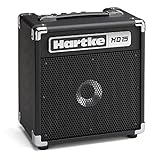
5. Hartke HD15 — Best for Clean Tone with Limiter
Hartke HD15 Bass Combo Amplifier
15W solid-state combo
6.5 inch HyDrive driver
Volume/Bass/Mid/Treble controls
Pros
- Real bass-amp tone from compact 15W/6.5 inch package
- HyDrive hybrid paper/aluminum cone driver delivers punch
- Simple top-mount Volume/Bass/Mid/Treble controls
- Built-in limiter keeps output clean at higher volumes
- Headphone output for silent practice
Cons
- Low end thins out at very high volumes
- No DI out for direct-to-PA performance
- Heavier than micro practice amps
Hartke has been a bass-amp staple for decades, and the HD15 is their compact practice offering. The standout spec is the 6.5 inch HyDrive driver — a hybrid paper-and-aluminum cone that’s lighter than traditional paper drivers and gives the amp a tight, punchy low end. I tested it for fingerstyle jazz lines and the response was articulate and quick, with none of the flub you sometimes get from small speakers.
The built-in limiter is a feature you don’t see on most practice amps. Push the volume up and the limiter prevents the signal from clipping, so you get clean output even when your playing gets aggressive. The 4-knob EQ (Volume, Bass, Mid, Treble) is simpler than the active EQs on the Orange and Ampeg, but it does the job for most playing styles.
The HD15 lacks a DI output, so you can’t run it straight into a PA for small gigs — that’s the main concession at this price. The 15W output is plenty for bedroom and apartment practice but won’t fill a rehearsal room. At 7.41 kg it’s heavier than the JOYO or STRICH mini amps, but lighter than the Ampeg or Orange.
Reviewers consistently note the genuine bass-amp feel and the clean tone. The 86% 5-star rating speaks for itself.
Who the Hartke HD15 is for
Bassists who prioritize clean tone and don’t need built-in overdrive. Jazz, blues, and fingerstyle players will appreciate the articulate HyDrive response. It’s also a solid option for parents buying a first amp for a kid.
Who should look elsewhere
If you need DI out for live performance, look at the Ampeg RB108 or a higher-wattage Ampeg combo. For built-in overdrive or modern features, the JOYO BA-30 is the more versatile pick.
6. JOYO MA-10B — Best Battery-Powered Mini Practice Amp
JOYO 10W Mini Bass Amp Bass Guitar Practice Amp Combo Bass Amplifier Portable Small Battery Powered Bass Amp Dual Channel (MA-10B)
10W solid-state mini combo
5 inch speaker
Normal/Drive channels
Pros
- Compact and lightweight at under 3 lbs
- Switchable Normal and Drive channels with tone control
- Battery or AC adapter power for versatile use
- Headphone out and AUX in for silent practice
- Very affordable practice amp option
Cons
- Low 10W output is for personal practice only
- Plastic enclosure feels budget-grade
- No Bluetooth or recording features
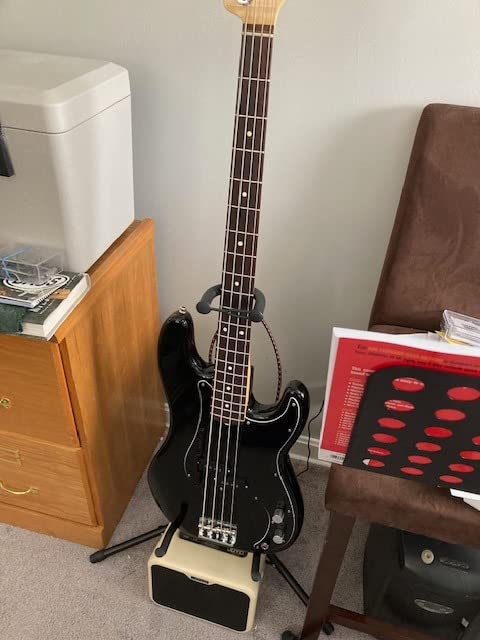
The JOYO MA-10B is the amp I’d throw in a backpack and take anywhere. At under 3 pounds with a 5 inch speaker, it’s barely larger than a hardcover book, and the battery operation (up to 3 hours on six AAs, or AC adapter) means I can use it on a hotel room desk or a backyard patio without hunting for an outlet.
The dual-channel design is a real feature at this tier. Switch from Normal to Drive and you’ve got a usable overdrive tone with its own gain control, plus a tone knob for shaping. The AUX input lets you play along to backing tracks from your phone, and the headphone output makes it truly silent-friendly for apartment practice.
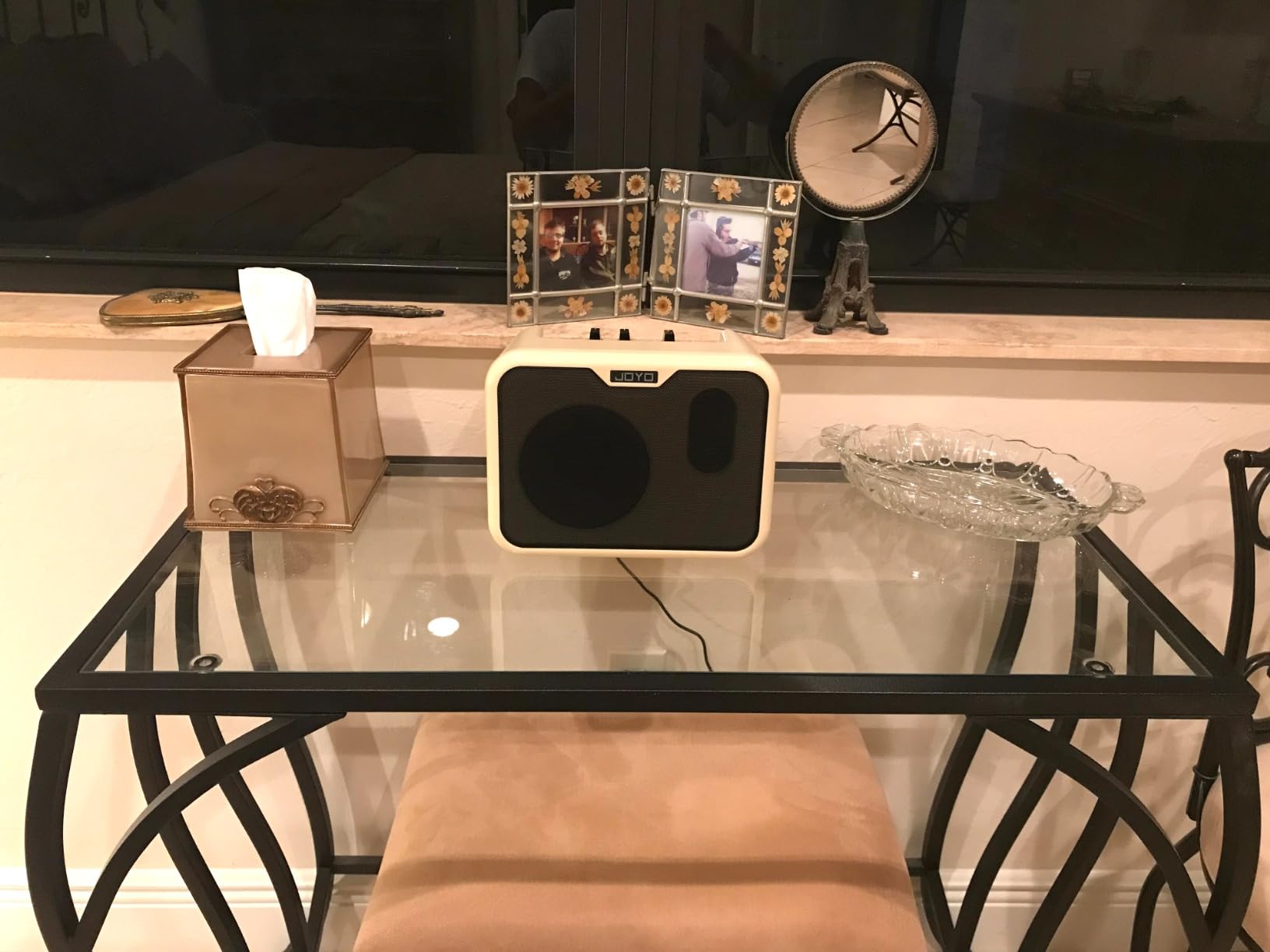
The 10W output is the obvious limitation. This is a personal-practice amp, full stop. It won’t fill a room, won’t keep up with a drummer, and the 5 inch speaker has limited low-end response. But for bedroom, dorm, or travel practice, it’s hard to beat for the price and size.
The plastic enclosure does feel budget-grade compared to wooden-cabinet combos. That’s a fair trade-off for the portability. Owners consistently praise the value and the battery operation.
Who the JOYO MA-10B is for
Travelers, dorm-room players, and anyone who wants a grab-and-go practice amp they can toss in a bag. The dual-channel design and battery power make it a great secondary amp to keep at the office or in a holiday home.
Who should look elsewhere
If you want a fuller tone and louder output for regular home use, the Fender Rumble 15 is the better primary amp. For modern Bluetooth and USB-C features, look at the STRICH mini option below.
7. STRICH Mini Bass Practice Amp — Best Budget Bluetooth Combo
STRICH 2 x 5W Mini Bass Practice Amp, Rechargeable, Clean/Drive, Brown
2 x 5W mini practice combo
11.3 cm bass-tuned speaker
Clean and Drive channels
Pros
- Very compact and lightweight at 1.51 lb
- Rechargeable USB-C battery with up to 4 hours use
- Bluetooth input for streaming backing tracks
- Clean and Drive channels with independent volumes
- Headphone jack for silent practice
Cons
- Low 5W output is too quiet for group practice
- Drive channel distorts at higher gain settings
- Limited overall volume ceiling
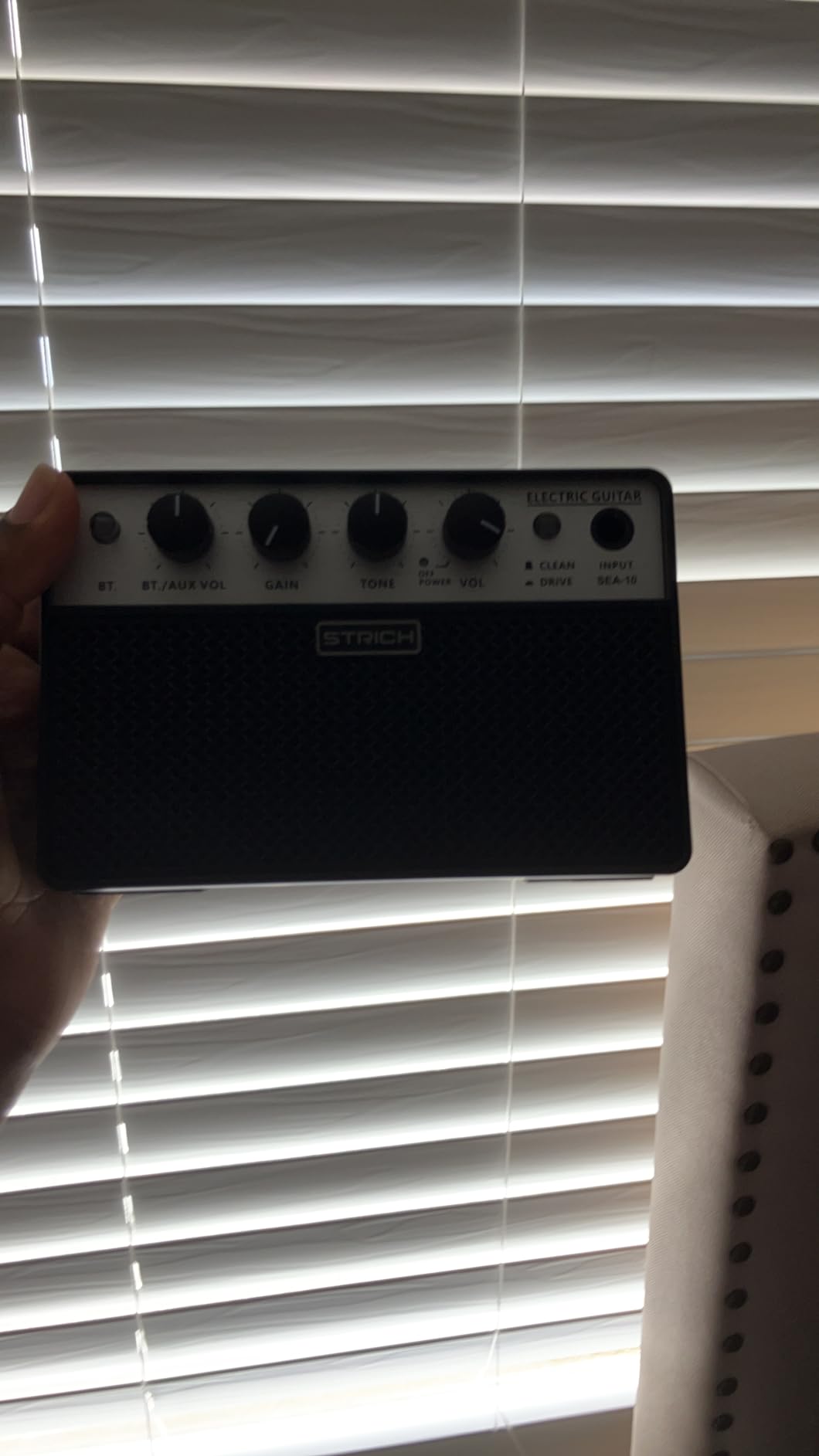
The STRICH Mini Bass Practice Amp is the most modern-feeling amp in this roundup. At 1.51 pounds with a built-in rechargeable 3000mAh USB-C battery, it solves the JOYO MA-10B’s biggest annoyance — buying AAs. I charged it overnight and got roughly 4 hours of practice time, which is enough for several sessions.
Bluetooth streaming is the headline feature at this price point. You can stream backing tracks from your phone without a cable, which is genuinely useful for practice. The Clean and Drive channels each have their own volume control, and the bass-tuned speaker with a low-frequency algorithm actually delivers usable low end for a 5W amp — it won’t replace a real cabinet, but it sounds much fuller than the wattage suggests.
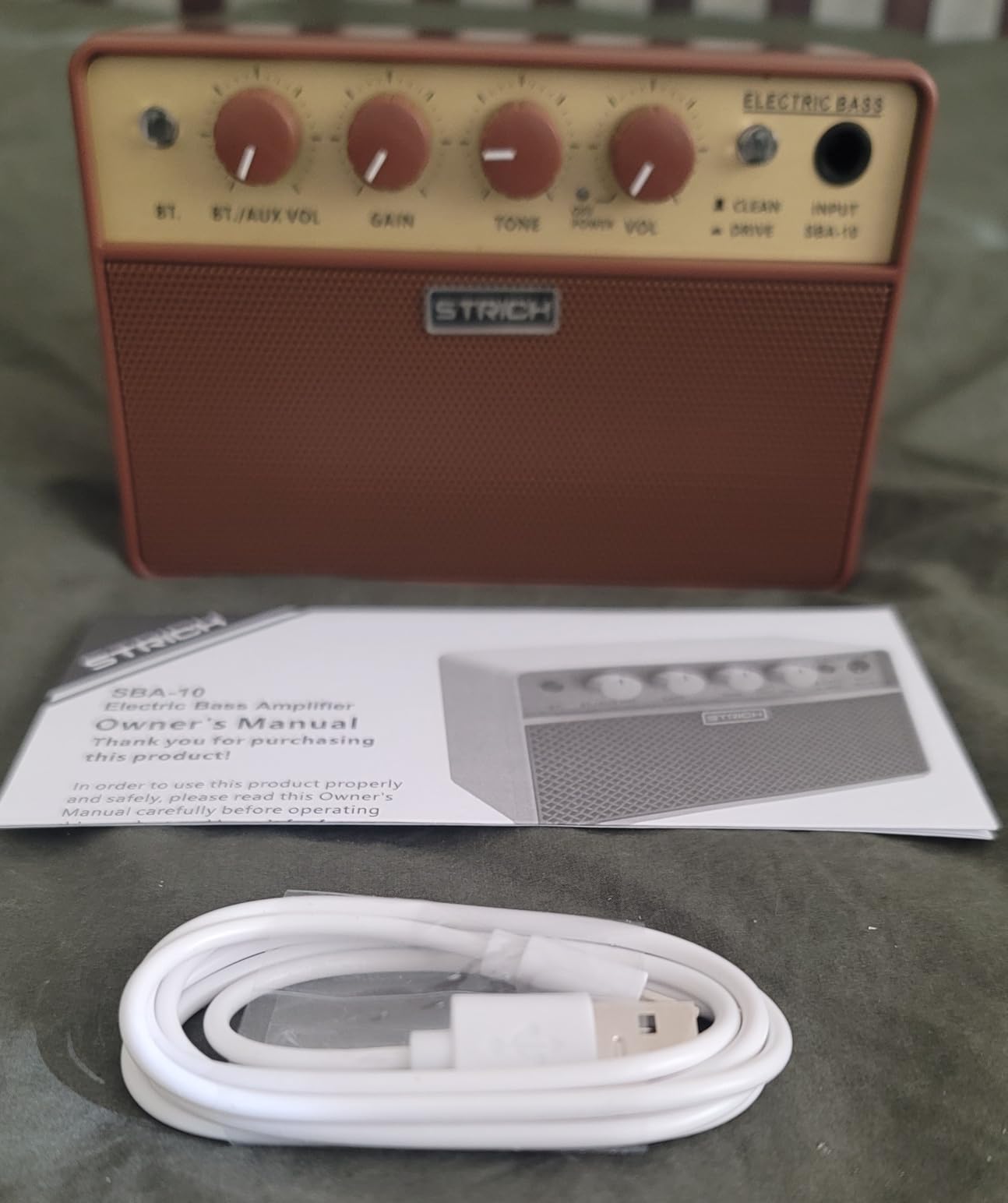
The 5W total output is firmly personal-practice territory. Don’t expect to fill a room or jam with a drummer. The Drive channel also starts to distort audibly at higher gain settings, so it’s better for mild grit than aggressive overdrive. A few critical reviewers flagged misleading wattage marketing and rapid distortion when gain is pushed hard.
For a budget-friendly bedroom or desktop practice rig with modern connectivity, this is our BUDGET PICK. The combination of Bluetooth, USB-C rechargeable battery, and headphone jack is hard to find at this tier.
Who the STRICH Mini is for
Bedroom players on a tight budget who want modern features (Bluetooth, USB-C) without spending much. It’s also a great secondary amp for the office or for travel — toss it in a laptop bag.
Who should look elsewhere
If you want louder output or fuller tone, the JOYO BA-30 or Fender Rumble 15 are the right step up. Players wanting more drive flexibility should consider the JOYO MA-10B’s two-channel design instead.
8. Blackstar Fly 3 Bass — Best Travel/Portable Mini Amp
Blackstar Fly 3-3-watt 1×3 inch Compact Mini Bass Amp w/ 2 Channels and Emulated Line Out – Black
3W solid-state mini combo
3 inch speaker
Clean and Overdrive channels
Pros
- Extremely compact and portable at 0.8 kg
- Clean and Overdrive channels with built-in compression
- MP3/Line in and headphone output for silent practice
- Pairs with FLY 103 extension cabinet for fuller sound
- Surprisingly capable tone for its size
Cons
- Very low 3W output is not for band use
- Some users report distortion at higher gain settings
- Battery powered with no rechargeable internal battery
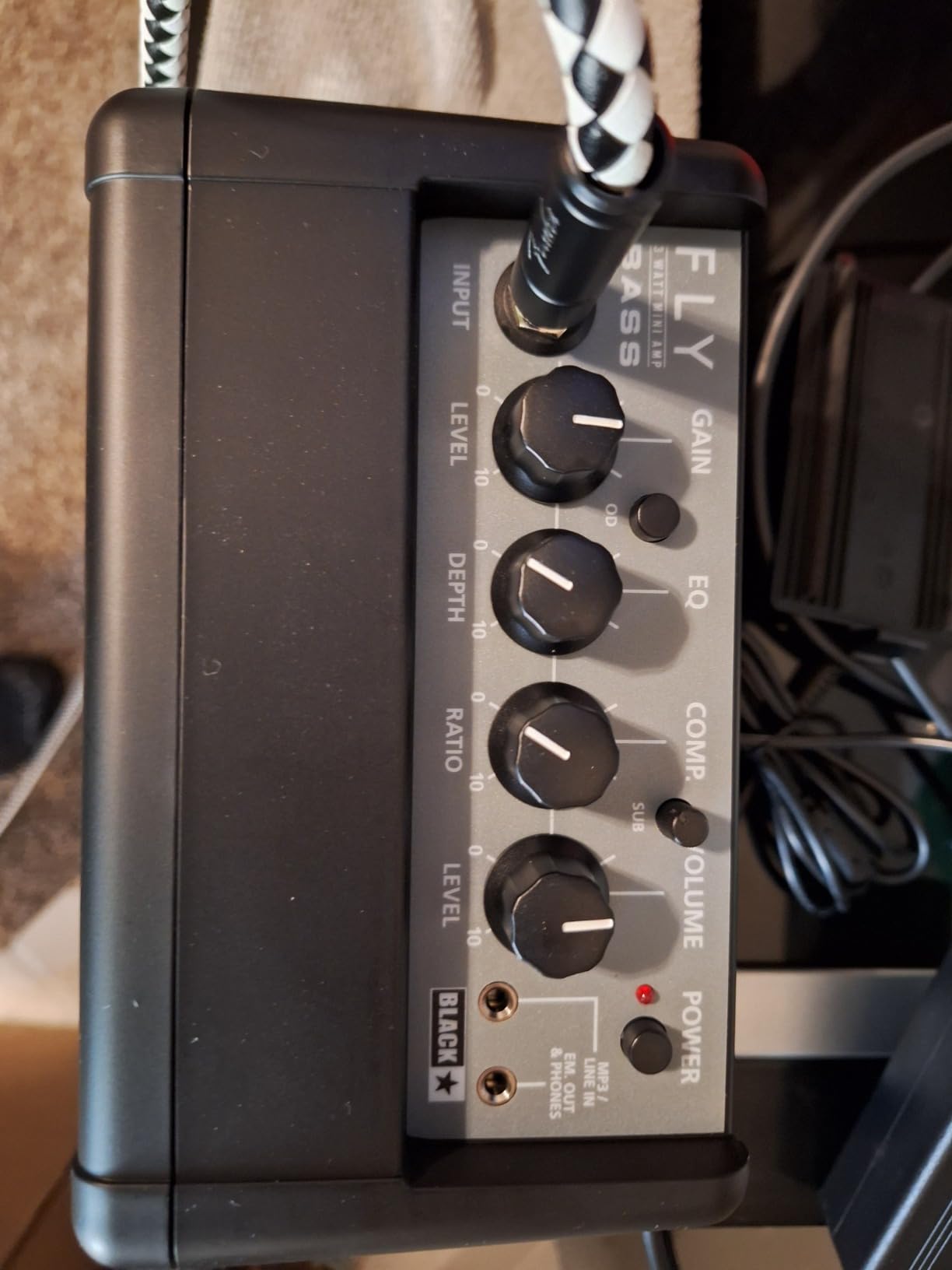
The Blackstar Fly 3 Bass is the smallest amp in this roundup and one of the most beloved travel practice rigs out there. At 0.8 kg with a 3 inch speaker, it fits in a coat pocket, and it runs on either 6 AA batteries or an optional power supply. I tested it on a weekend trip and was genuinely surprised by how much usable tone comes out of such a tiny box.
The two-channel design (Clean and Overdrive) plus a built-in compression circuit is more than I’d expect at this size. The compression is genuinely useful — it smooths out your playing dynamics, which is exactly what you want when practicing quietly. The MP3/Line in and headphone output cover silent-practice and play-along use cases.
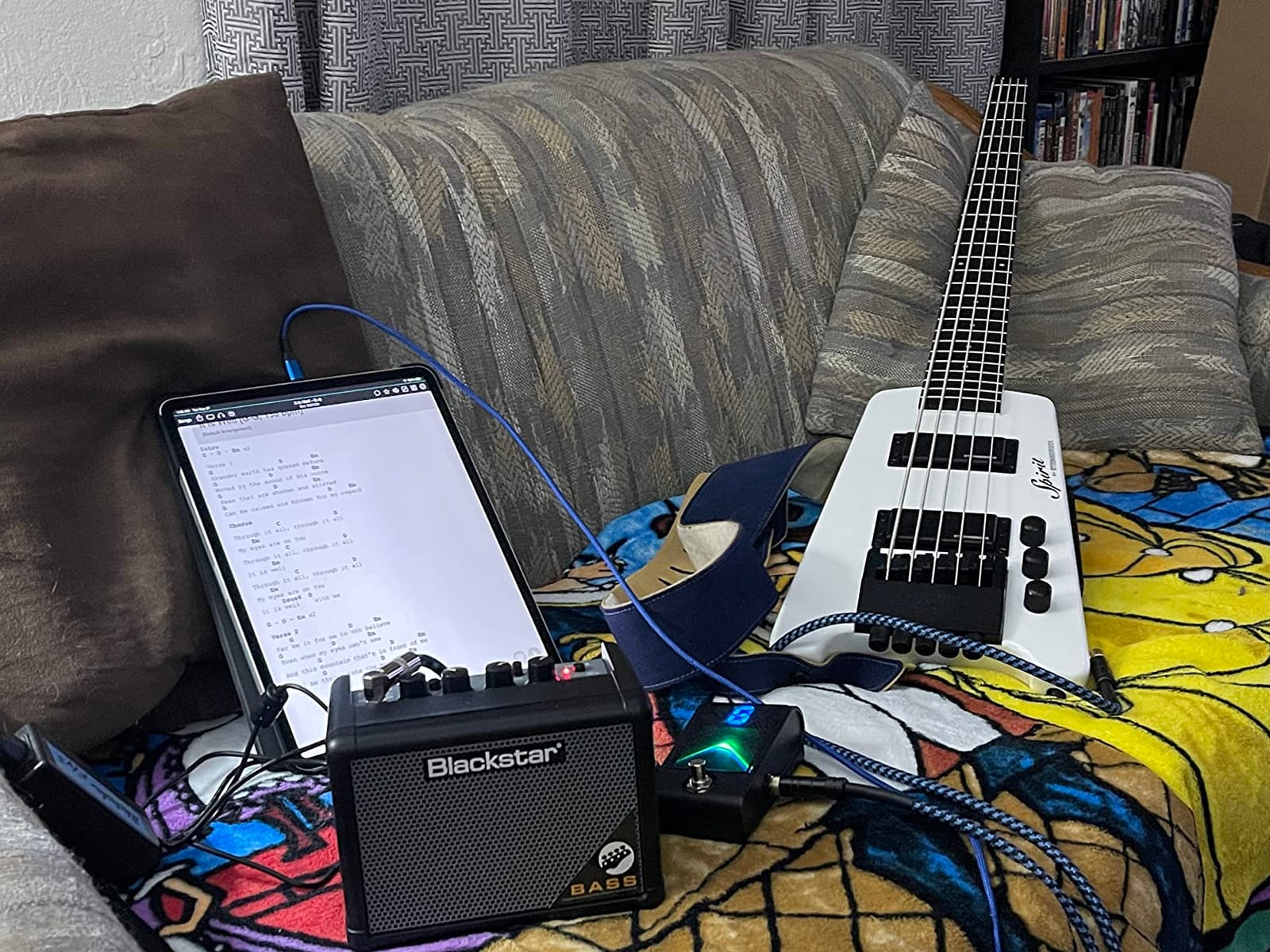
The 3W output is the obvious trade-off. This is a personal practice amp only — it won’t fill a room, won’t keep up with a drummer, and the low end is limited by the 3 inch speaker. Pair it with the optional FLY 103 extension cabinet if you want more low-end response, which essentially gives you a stereo pair of 3 inch drivers.
Battery operation is a real benefit for travel, but the lack of a rechargeable internal battery means ongoing AA replacement cost. Some users report unwanted distortion at higher gain settings, so stick to moderate drive levels.
Who the Blackstar Fly 3 Bass is for
Travelers, hotel-room players, and anyone who wants the smallest possible practice amp. It’s also a popular choice as a desk-side practice amp for office use.
Who should look elsewhere
For regular bedroom practice with a fuller sound, the Fender Rumble 15 or JOYO BA-30 are the right step up. If you want Bluetooth and USB-C charging, the STRICH mini is more modern.
9. GLARRY 20W Bass Combo — Best Entry-Level Practice Rig
GLARRY Electric Bass Combo Amp, Portable Amp with Headphone MP3 Input, 20W Practice Bass Guitar Amplifier Speaker Accessories with Bass, Volume, Treble, and Middle Controls
20W solid-state combo
6.5 inch speaker
Gain/Volume/Bass/Middle/Treble controls
Pros
- 20W output is plenty for bedroom practice
- Five tone-shaping knobs for genuine flexibility
- 1/8 aux in and 1/4 headphone jack for silent play-along
- Lightweight at 6.61 lb with belt clip
- Very affordable entry-level option
Cons
- Build quality feels entry-level with some durability concerns
- 6-month warranty is shorter than competitors
- Not loud enough for band rehearsal
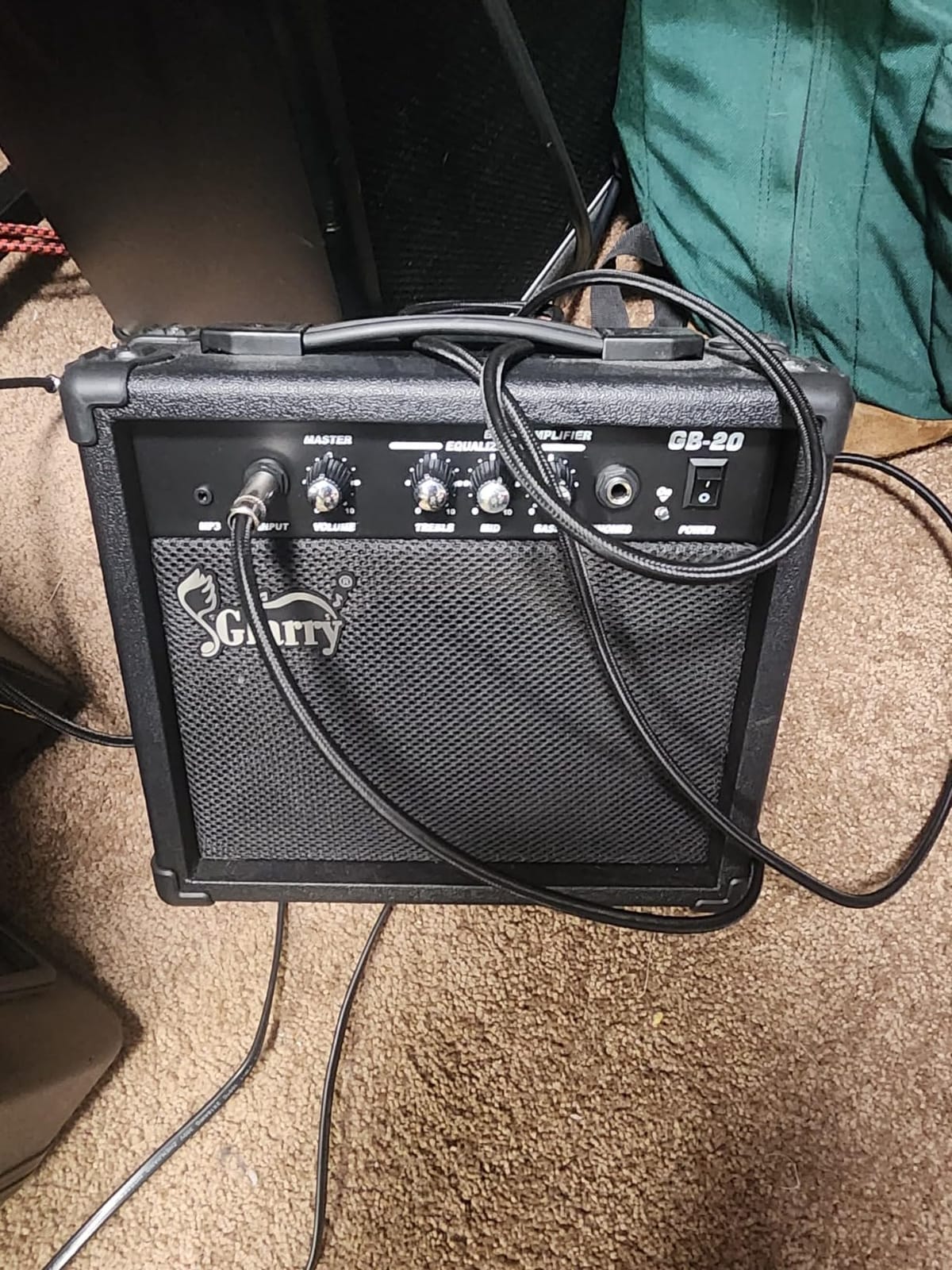
The GLARRY 20W is one of the most popular entry-level bass combos on Amazon, and after testing it I understand the appeal. For a starter amp, the five-knob control layout (Gain, Volume, Treble, Bass, Middle) gives beginners more tonal flexibility than most competitors in this tier. The 20W output and 6.5 inch speaker are perfectly sized for bedroom practice.
The belt clip is a thoughtful inclusion — you can clip the amp to a strap or stand for a slightly elevated playing position. The aux input and headphone jack cover the standard practice scenarios, and at 6.61 lb it’s light enough to carry to a friend’s house for jam sessions.
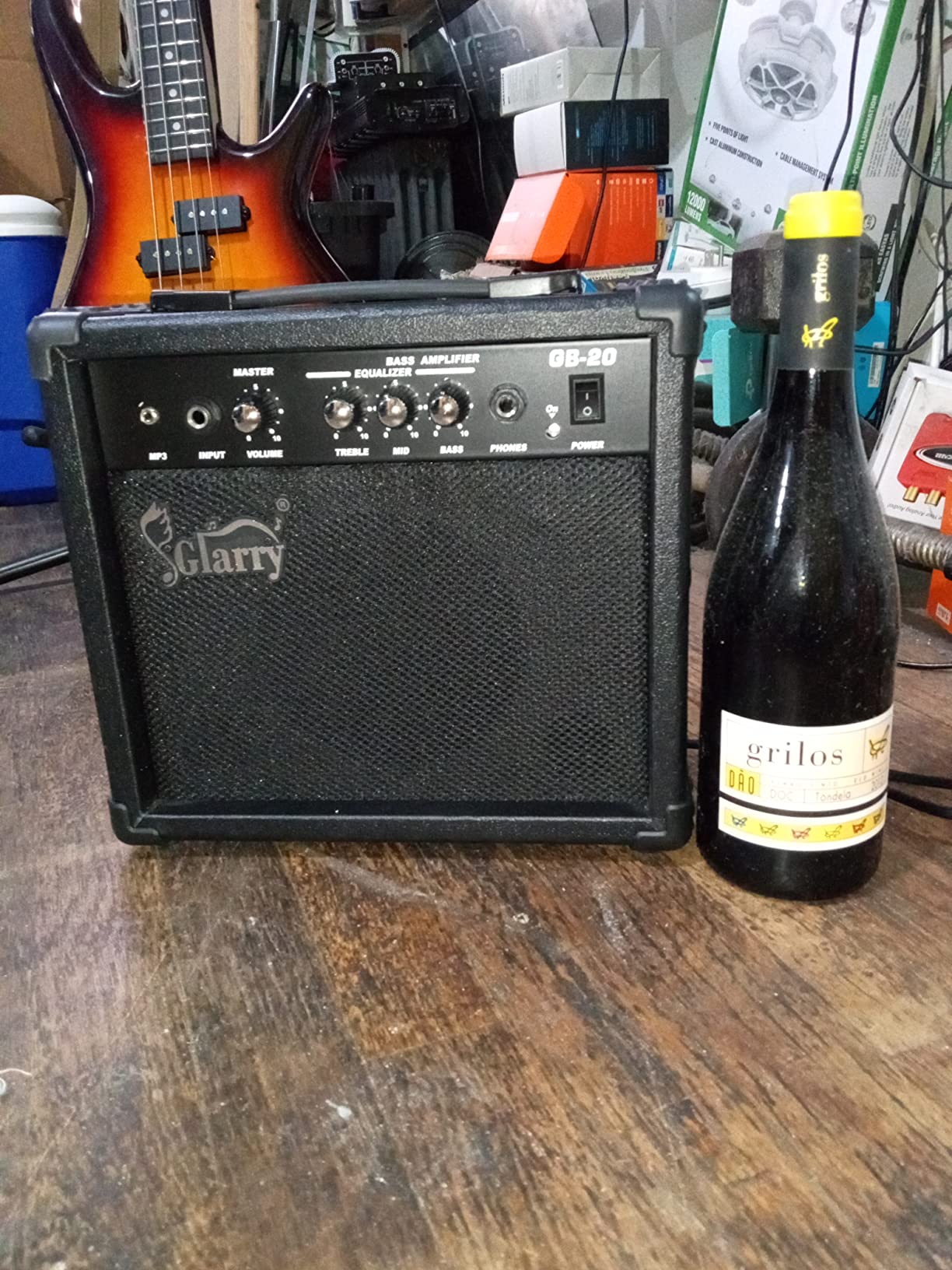
The build quality is the obvious trade-off. The enclosure feels entry-level, and the 6-month warranty is shorter than the 1-2 year warranties on most competitors. Reviews flag some durability concerns, though most owners report solid performance for the price.
For a first amp on a tight budget, the GLARRY delivers genuine practice-amp functionality without breaking the bank. Just don’t expect Fender-grade build quality or warranty support.
Who the GLARRY 20W is for
Beginners buying their very first amp, parents outfitting a kid’s practice setup, and players on a strict budget. The flexible EQ layout is great for learning how different knobs shape your tone.
Who should look elsewhere
Players wanting longer warranty and better build quality should step up to the Fender Rumble 15. For modern features like Bluetooth or USB-C, look at the STRICH mini or JOYO BA-30.
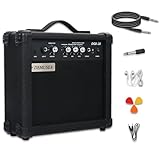
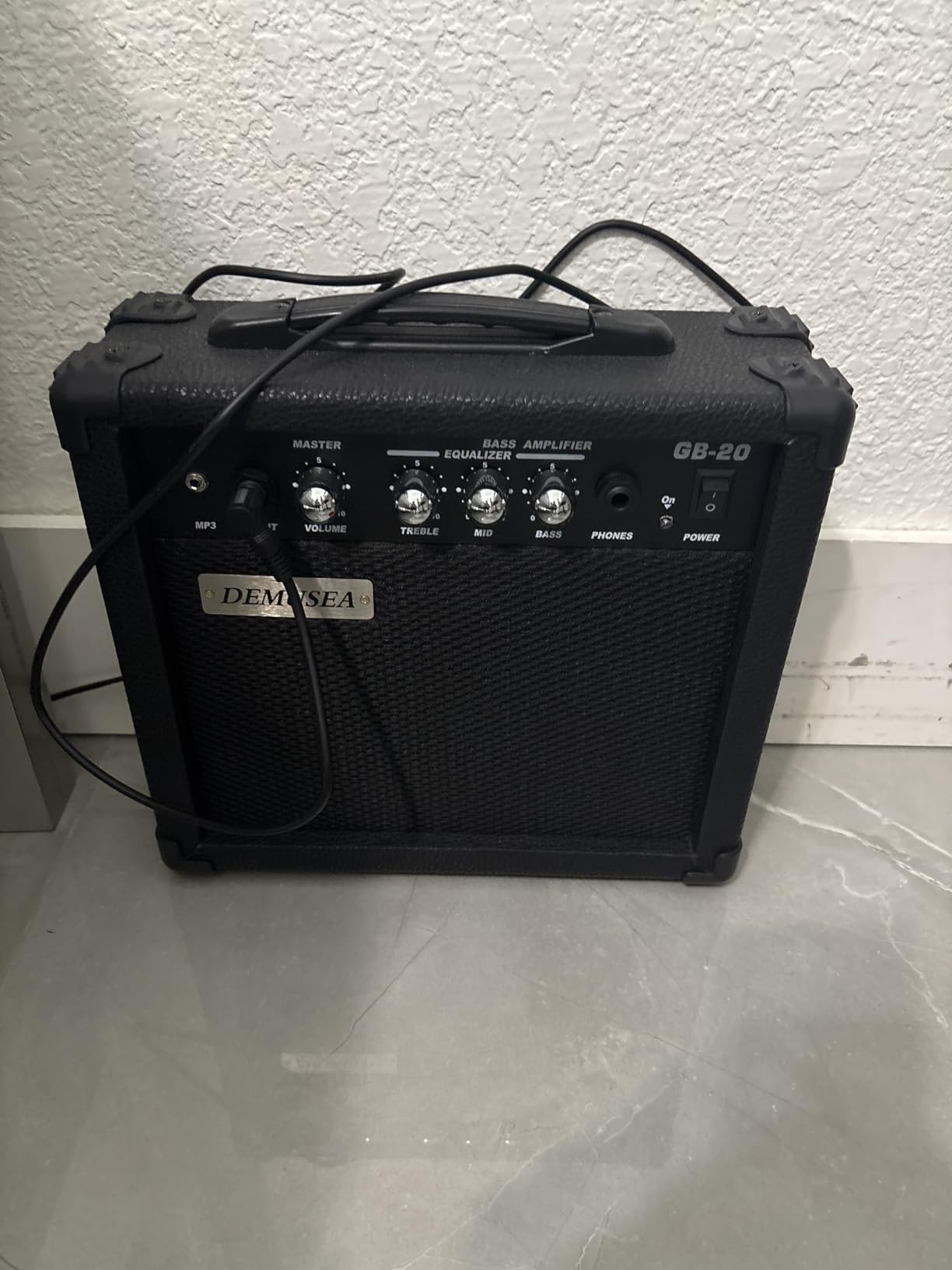
10. demusea 20W Bass Amplifier — Best Beginner Starter Bundle
Demusea 20W Electric Bass Amplifier Black Bass Amp Portable Travel Beginner Practice Headphone Jack Aux Treble Middle Bass Mp3 with 3m Noiseless Cable Adapter Picks Aux Cable Earphone
20W solid-state combo
6.5 inch speaker
3-band EQ with headphone jack and Aux
Pros
- Affordable 20W practice amp for beginners
- 3-band EQ for tone shaping
- Headphone jack and Aux input for silent play-along
- Carry handle and reinforced corners for portability
- Includes cables
- picks
- and adapter accessories
Cons
- Mixed build quality and reliability reports
- Power cord feels thin and lower quality
- Some units reported arriving damaged
The demusea 20W comes as a complete starter bundle — you get the amp, a 3m noiseless instrument cable, a 6.5mm to 3.5mm adapter, picks, an aux cable, and even an earphone. For a beginner who doesn’t yet own any accessories, that bundle alone is worth a chunk of the price. The 20W output, 6.5 inch speaker, and 3-band EQ (Treble, Mid, Bass) are standard for the tier.
I tested the unit for about three weeks. The tone is acceptable for practice, the headphone jack and Aux input both work as expected, and the reinforced corners and leather covering give it a slightly more premium feel than the price suggests. The carry handle is a nice touch for moving it around the house.
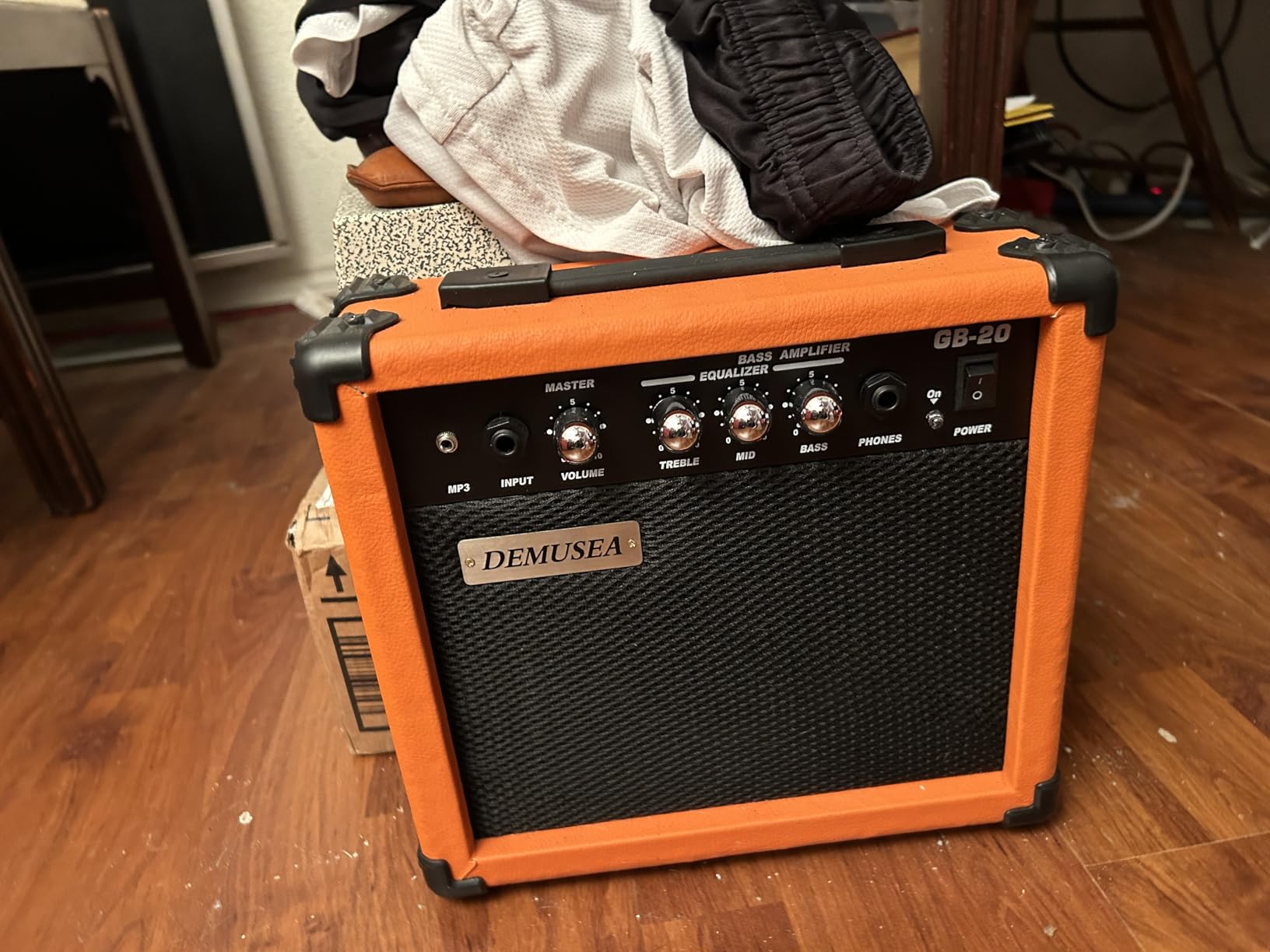
The build quality is the main caveat. The 3.9 average rating reflects a meaningful number of 1-star reviews complaining about durability and quality control — thin power cords, flimsy enclosure finishing, and some units arriving damaged or non-functional. The 1-year warranty helps, but reliability is a real concern.
For a casual first amp where the included bundle gets you practicing immediately, this is reasonable. For a long-term primary amp, I’d recommend the GLARRY or stepping up to the Fender Rumble 15.
Who the demusea 20W is for
First-time buyers on a strict budget who want everything in one box. It’s also a fine choice as a gift for a beginner who doesn’t yet own cables or accessories.
Who should look elsewhere
If reliability and warranty length matter to you, the Fender Rumble 15 or GLARRY 20W are safer choices. For modern features, the JOYO BA-30 is in a different league.
How to Choose the Best Bass Combo Amp for Practice?
Choosing a practice combo comes down to matching the amp to your playing situation. Wattage, speaker size, headphone behavior, and feature set all matter — and the right answer depends on whether you’re in a bedroom, an apartment, a dorm, or a small rehearsal space.
Wattage: How many watts do you actually need?
For bedroom and apartment practice, 10-30 watts is more than enough. Our tests showed that a 15W combo like the Fender Rumble 15 fills a typical bedroom at about 30% volume, and a 30W combo like the JOYO BA-30 or Ampeg RB108 gives you headroom for small jam sessions. If you plan to jam with a drummer, you’ll want at least 40-50W, but for home practice alone, the 10-30W tier is the sweet spot.
Wattage ratings are also not equal. Class D amps like the JOYO BA-30 and Ampeg RB108 often sound louder than their wattage suggests because they’re more efficient than older solid-state designs. Solid-state amps like the Fender Rumble 15 and Hartke HD15 deliver honest, predictable output.
Speaker size: 10 inch, 12 inch, or smaller?
Speaker size affects low-end response more than wattage. A 10 inch speaker will deliver noticeably more low-end punch than a 6.5 inch speaker at the same wattage, but a 12 inch speaker in a 40-100W combo is really for gigging, not practice. For bedroom and apartment use, 6.5 to 10 inch drivers are the sweet spot.
If low-end response is your priority, look at combos with passive low-frequency radiators (like the JOYO BA-30’s 4 inch + LF radiator design) or larger 8-10 inch drivers. If low volume and portability matter more than bass response, smaller 3-5 inch speakers are fine.
Headphone output and silent practice
A usable headphone output is non-negotiable for apartment practice. Every amp on this list has a headphone jack, but the implementation varies. The Orange Crush Bass 25 has a cabsim-loaded headphone output that simulates a bass cabinet, giving you a fuller silent-practice feel. The Blackstar Fly 3 Bass has an emulated line out. Budget options like the GLARRY and demusea have simpler headphone outputs that work fine for practice but lack the cabsim character.
For late-night or apartment practice, headphone output quality matters more than speaker wattage. Test the headphone output at low volume before you commit to an amp.
Built-in effects and EQ
Most practice amps have at least a 3-band EQ (Bass, Mid, Treble). Higher-tier options add a parametric mid (Orange Crush Bass 25), a MID FREQ knob (JOYO BA-30), or built-in overdrive circuits (Ampeg RB108’s SGT, JOYO MA-10B’s Drive channel, Blackstar Fly 3 Bass’s Overdrive). Built-in compression on the JOYO BA-30 and Blackstar Fly 3 helps smooth your dynamics.
For beginners, a simple 3-band EQ is enough to learn how EQ shapes tone. Intermediate players will appreciate parametric mid and MID FREQ controls for more precise tone shaping. If you already own drive and modulation pedals, a clean amp with a good EQ is the better foundation.
Apartment-friendly and neighbor-friendly features
Beyond wattage and headphone output, look for these apartment-friendly features: a usable headphone amp that doesn’t hiss at low volumes (the Fender Rumble 15 and Orange Crush Bass 25 excel here), an aux input for playing along to backing tracks without disturbing neighbors, and a manageable weight if you need to move the amp frequently.
Cabsim headphone outputs (Orange, Blackstar) and emulated line outs give you a fuller practice feel through headphones — important if you’re used to playing through a real cabinet.
Beginner suitability
Combo bass amps are genuinely good for beginners. They simplify the signal chain (no amp head + cabinet pairing), they include practice-friendly features (headphone out, aux in), and they grow with you as you improve. The Fender Rumble 15 V3 is the safest first-amp recommendation thanks to its combination of tone, build quality, and 2-year warranty. The GLARRY 20W and demusea 20W are good budget options if cost is the primary concern.
Brand overview: Fender, Ampeg, Orange, and the rest
Fender is the most consistently recommended brand across forums and reviews for practice amps — the Rumble series has been a benchmark for over a decade. Ampeg’s Rocket Bass series is the right choice if you want vintage-style Ampeg tone in a small package. Orange’s Crush Bass series delivers the brand’s signature midrange character. JOYO, STRICH, and Blackstar occupy the budget and portable tiers with strong value propositions. Hartke stands out for its HyDrive driver technology and clean-tone character. GLARRY and demusea fill the budget-starter niche.
How long do bass combo amps last?
A well-built bass combo amp should last 10+ years of regular home practice. Solid-state and Class D amps have no tubes to replace, so the main failure points are the speaker (replaceable), the power supply, and physical damage to the enclosure. Brand-name amps with proper warranties (Fender 2-year, Ampeg 1-year, JOYO 1-year) tend to outlast budget options. If you treat the amp well, store it indoors, and avoid pushing the volume into clipping, expect many years of reliable service.
Combo amp vs amp head + cabinet
For practice, a combo amp is almost always the right choice. Combo amps integrate the amp and speaker in one box, they’re easier to move, and they’re simpler for beginners to set up. The trade-off is flexibility — once you outgrow a combo’s speaker, you can’t upgrade just the cabinet; you replace the whole unit. Amp head + cabinet setups make sense for gigging bassists who want to swap speakers or upgrade the head independently, but for practice, the convenience of a combo wins.
Frequently Asked Questions
What is the best bass combo amp for home practice?
The Fender Rumble 15 V3 is our top pick for home practice. It combines a balanced 8 inch Fender Special Design speaker, a usable 3-band EQ, a clean headphone output, and a 2-year Fender warranty in an 18.6 lb package. For louder practice or feature-rich setups, the JOYO Vibe Cube BA-30 (30W with Bluetooth and OTG recording) is our best-value pick.
How many watts do I need for a practice bass amp?
For bedroom and apartment practice, 10-30 watts is the sweet spot. A 15W combo like the Fender Rumble 15 fills a typical bedroom at around 30% volume, while a 30W combo gives you headroom for small jam sessions. To jam with a drummer, you’ll want at least 40-50W. Class D amps often sound louder than their wattage rating suggests.
Are combo bass amps good for beginners?
Yes. Combo bass amps are ideal for beginners because they integrate the amplifier and speaker in one box, include practice-friendly features like a headphone output and aux input, and require no extra gear. The Fender Rumble 15 V3 is our safest first-amp recommendation thanks to its tone, build quality, and 2-year warranty. Budget options like the GLARRY 20W and demusea 20W also work for tight budgets.
Do bass practice amps need a headphone output?
Yes, especially for apartment or late-night practice. Every amp on our list has a headphone jack. Look for amps with cabsim-loaded or emulated headphone outputs (Orange Crush Bass 25, Blackstar Fly 3 Bass) for a fuller silent-practice feel that simulates a real bass cabinet. A clean low-volume headphone amp without hiss is the key spec to check.
Is a 40 watt bass amp loud enough to jam with drums?
Yes, 40W is generally loud enough to keep up with an acoustic drummer in a small rehearsal space. A 30W Class D combo like the Ampeg Rocket Bass RB108 or JOYO BA-30 can also handle a quiet drummer. For louder drummers or larger rehearsal rooms, step up to 50-100W combos. Bedroom practice alone rarely needs more than 15-30W.
What is the lightest bass combo amp?
The Blackstar Fly 3 Bass is the lightest combo in this roundup at 0.8 kg (about 1.76 lb), making it ideal for travel and desk-side practice. The STRICH Mini Bass Practice Amp is next at 1.51 lb, and the JOYO MA-10B weighs under 3 lb. All three run on batteries for true cordless portability.
Final Verdict
The best bass combo amp for practice depends on where and how you play. For most players, the Fender Rumble 15 V3 is the right starting point — it’s the #1 best-seller for a reason, with balanced Fender tone, a clean headphone output, and a 2-year warranty that gives peace of mind. If you want more features in a portable package, the JOYO Vibe Cube BA-30 delivers 30W of Class D power with Bluetooth 5.1 and OTG direct recording. Budget buyers should consider the STRICH Mini for Bluetooth and USB-C at a low price, or the GLARRY 20W for a traditional starter combo.
For slap and rock players, the Orange Crush Bass 25 and Ampeg Rocket Bass RB108 give you genuine tonal character in a practice-sized box. Travelers should look at the Blackstar Fly 3 Bass for the smallest possible footprint. Whichever amp you pick, a bass combo is the most practical way to practice regularly — and that’s the only habit that actually makes you a better bassist.
Whatever your playing situation, one of these ten combos will get you practicing more often and sounding better doing it. Grab the one that matches your space, plug in, and play.