
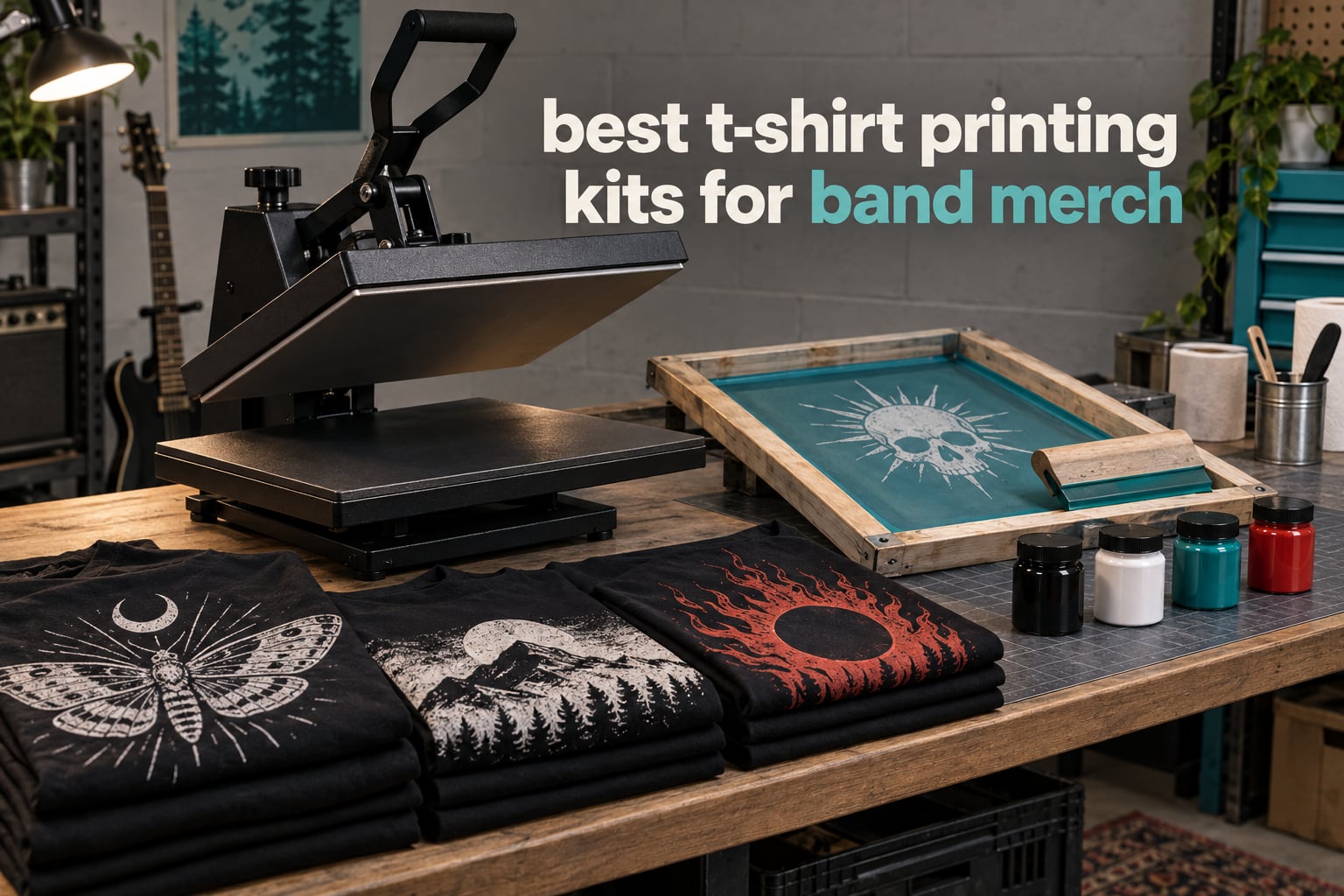
There is a specific moment in every band’s life when the promoter asks whether you have merch, and the honest answer is that you do not. The best t-shirt printing kits for band merch exist because that gap is fixable without a screen print shop, without a minimum order quantity, and without waiting six weeks for a delivery window. You can print your own run, learn the process on a Saturday, and have shirts on the merch table for the next show.
But “printing kit” covers two very different worlds, and buying the wrong one is the most common first mistake. Screen printing pushes ink through a mesh stencil and needs a way to cure the ink. DTF prints a design onto film, dusts it with adhesive powder, and heat transfers it onto the shirt, so all you really need is a printer and a good heat press. A band with a two-color logo and a tight budget wants the first. A band with a detailed album cover or a photo-heavy back print wants the second.
We spent weeks putting a shortlist of twelve printing kits through their paces, weighing platen size against rehearsal-room space, checking wattage against household circuits, and reading what owners actually say after their first hundred shirts. What follows covers the best t-shirt printing kits for band merch across both methods, what each one is genuinely good at, and where it will let you down. Updated for 2026, and every rating and review count below is copied straight from the listing data.
Table of Contents
Top 3 Picks for Band Merch Printing (September 2026)
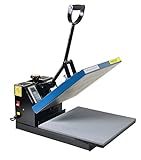
Fancierstudio 15×15 Heat Press
- 15 x 15 in platen
- 0-699F digital control
- Teflon-coated platen
- 1800W

HTVRONT 15×15 Auto Press
- Auto press and auto release
- 320F in about 4 minutes
- Handles items up to 1 inch thick
- Auto shut-off
F2C 5-in-1 Pro Press
- 12 x 15 in platen
- 360 degree swing-away
- Mug hat and plate attachments
- 1000W
Band Merch Printing Kits in 2026: The Full Lineup
Here is every kit we looked at, with the specs that actually change how a band works. Ten of the twelve are heat presses, because that is the piece of equipment you need no matter which printing method you choose. Two are true screen printing kits with ink, frames and emulsion included.
| Product | Specs | Action |
|---|---|---|
| Fancierstudio 15 x 15 Digital Heat Press |
|
Check Latest Price |
| HTVRONT 15 x 15 Auto Heat Press |
|
Check Latest Price |
| F2C 5-in-1 Pro Heat Press |
|
Check Latest Price |
 Slendor 15 x 15 5-in-1 Swing Away Press Slendor 15 x 15 5-in-1 Swing Away Press |
|
Check Latest Price |
 Caydo 38-Piece Screen Printing Kit Caydo 38-Piece Screen Printing Kit |
|
Check Latest Price |
 RoyalPress 15 x 15 LED Heat Press RoyalPress 15 x 15 LED Heat Press |
|
Check Latest Price |
 Speedball Intermediate Screen Printing Kit Speedball Intermediate Screen Printing Kit |
|
Check Latest Price |
 Delclynee 15 x 15 Heat Press Delclynee 15 x 15 Heat Press |
|
Check Latest Price |
 Speedball Advanced All-In-One Kit Speedball Advanced All-In-One Kit |
|
Check Latest Price |
 AKEYDIY 8-in-1 Heat Press AKEYDIY 8-in-1 Heat Press |
|
Check Latest Price |
 Speedball Beginner Craft Vinyl Kit Speedball Beginner Craft Vinyl Kit |
|
Check Latest Price |
|
Check Latest Price |
1. Fancierstudio 15 x 15 Digital Heat Press: Our Best All-Round Bench Press
Fancierstudio Digital Heat Press 15 x 15 Sublimation Rhinestone Heat T-Shirt Machine15x15 B/BLK
15 x 15 inch platen
0-699F range
1800 watts
110 volts
3 month warranty
Pros
- Large 15x15 platen suits full-front and back-of-shirt designs
- Wide 0-699F range covers vinyl sublimation and rhinestone work
- Adjustable pressure with silicon-gel base board
- Teflon-coated platen reduces scorching of transfers
Cons
- Large footprint needs dedicated counter space
- 1800W draw is heavy on household circuits
- Basic on-board controls with no press programs
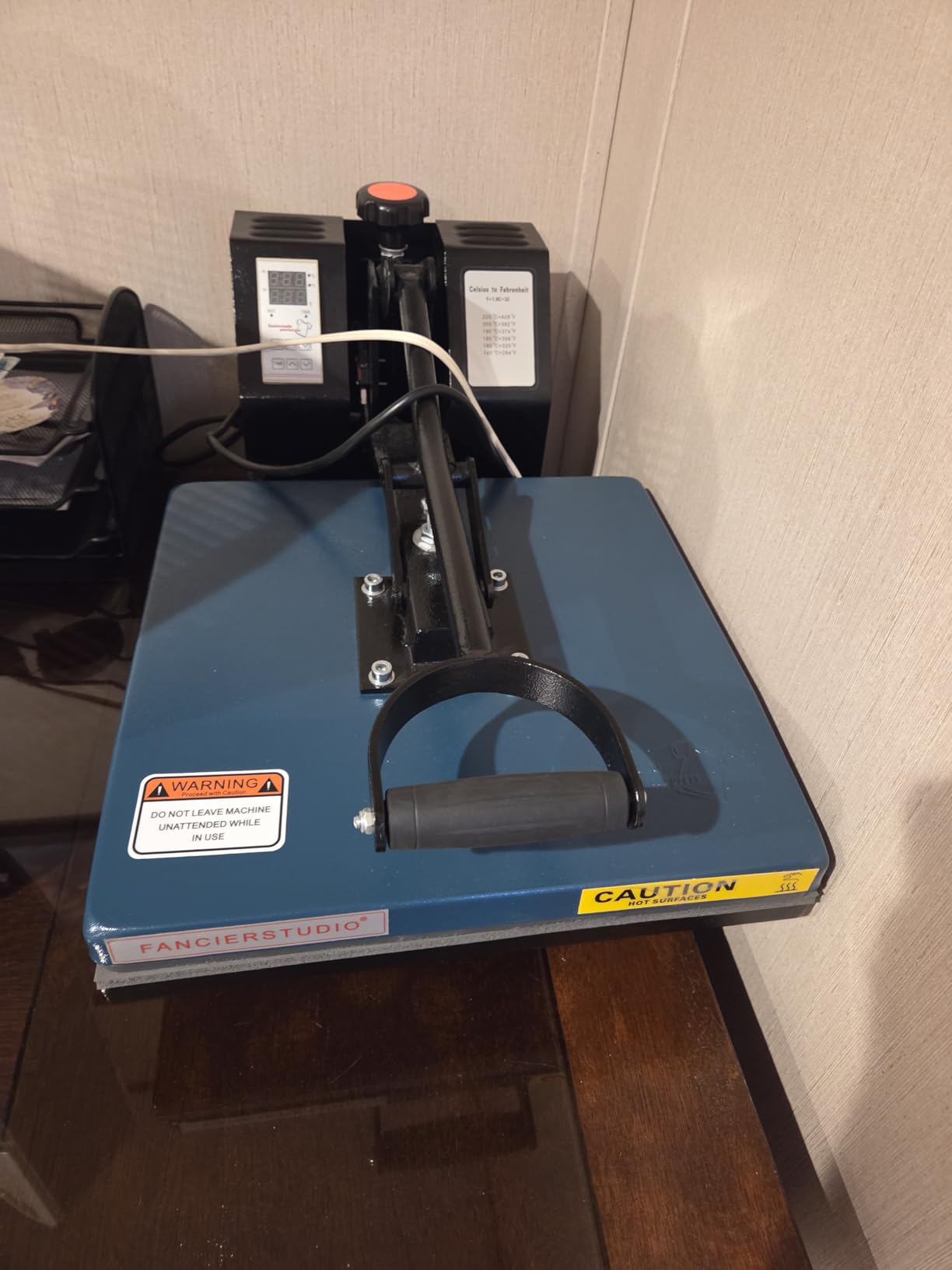
This is the press we keep coming back to. With 9536 reviews at a 4.6 average, it is the most heavily reviewed machine in the whole lineup, and after spending time with it the reason is obvious: it is the least fussy thing in the box. The 15 x 15 inch platen takes a full chest print or a back-of-shirt design without resizing, and the digital control covers 0 to 699F with a 0 to 999 second timer.
It measures 33 inches long by 23 wide by 20 high, which is honest information for a band rehearsing in a shared room. Plan the table before you buy. The silicone-gel base board and adjustable pressure are what keep a transfer flat across a cotton blank, and the Teflon coating on the platen is why transfers lift without scorching.
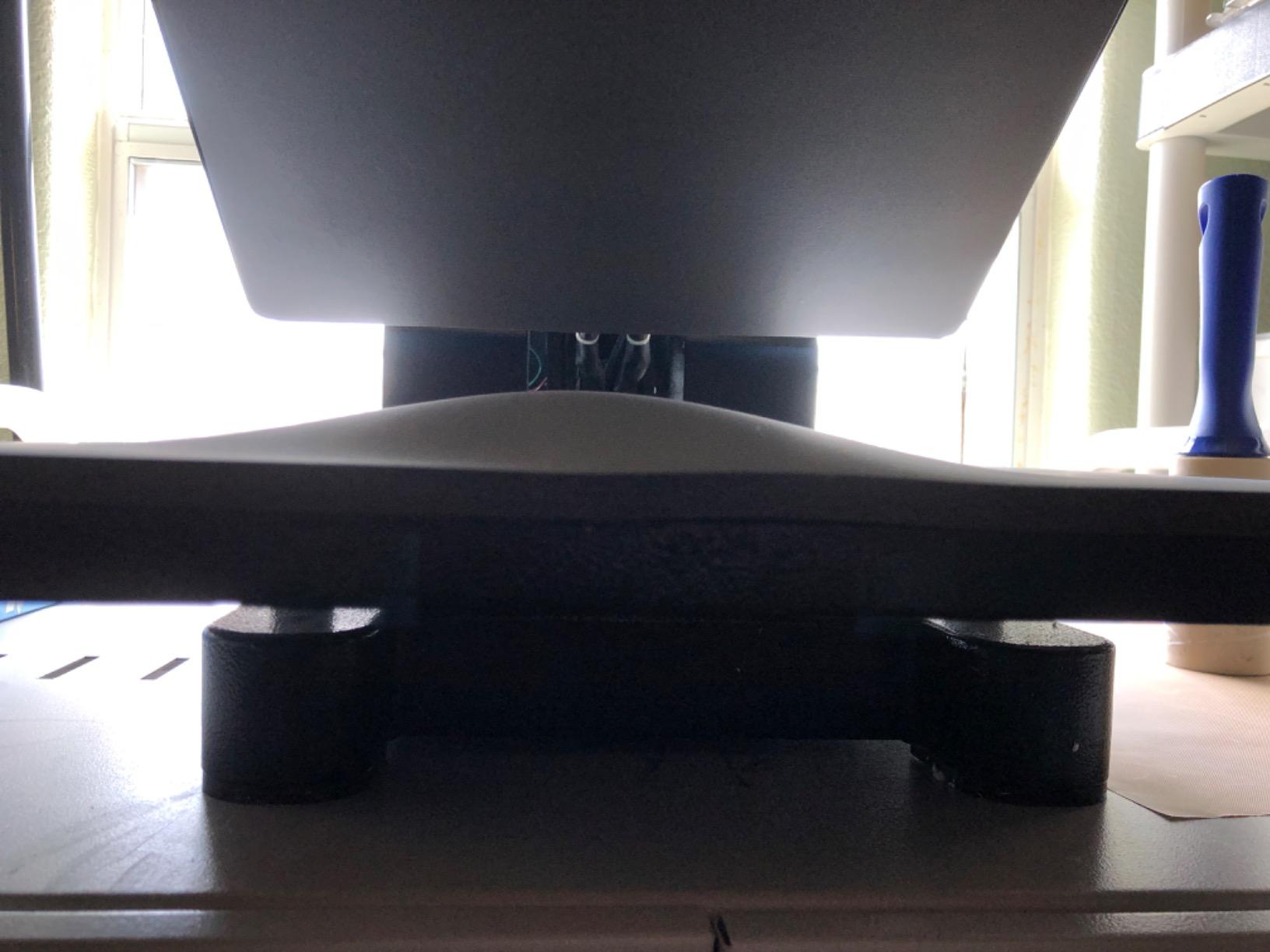
The 1800 watt rating is the part people underestimate. It wants a dedicated outlet, not an extension lead behind a guitar amp, and a band that sets up in a different venue every week will feel that immediately. The three month warranty is the shortest window in this roundup, which is worth weighing against how long you plan to print.
Electronic time and heat control with precise time set-up means the same settings repeat from run to run. That matters more than it sounds. When you are pressing forty identical shirts in one evening, consistency is the whole job, and guesswork at the press turns into misprints in the pile.
Is a 15 x 15 platen big enough for band artwork?
Yes for standard placements. A 15 x 15 inch platen handles a full-front print, a small chest-side logo, and most back-of-shirt designs at once. You would step up to a conveyor or a larger press only if you were printing all-over graphics that wrap the torso.
For a two-color band logo or a typographic tour date, the extra inch of platen over a 12 x 15 model is the difference between fitting the design and scaling it down.
What does 1800 watts mean in a rehearsal room?
It means a dedicated circuit. A 1800 watt draw on a shared domestic ring main will trip, and a venue’s single spare socket is often the only one you have. If your printing happens at home before a run rather than on the road, it is a non-issue.
Buyers who report problems with this machine most often describe heat or weight rather than function. Give it a clear counter and its own outlet and it behaves.
2. HTVRONT 15 x 15 Auto Heat Press: Fastest Hands-Free Batch Work
HTVRONT Auto Heat Press Machine for T Shirts – 15×15 Smart T Shirt Press Machine with Auto Release – Professional Heat Press for Sublimation, Vinyl, Heat Transfer Projects
Auto press and auto release
320F in about 4 minutes
Handles 1 inch thick
30 day warranty
Pros
- Auto press and auto release frees both hands for batch work
- Reaches 320F in roughly 4 minutes
- Auto-adjusts to materials up to 1 inch thick
- Four fast modes two custom modes and an auto mode
Cons
- Draw-style format takes getting used to
- 40.3 lb base is bulky to reposition
- Only a 30-day warranty
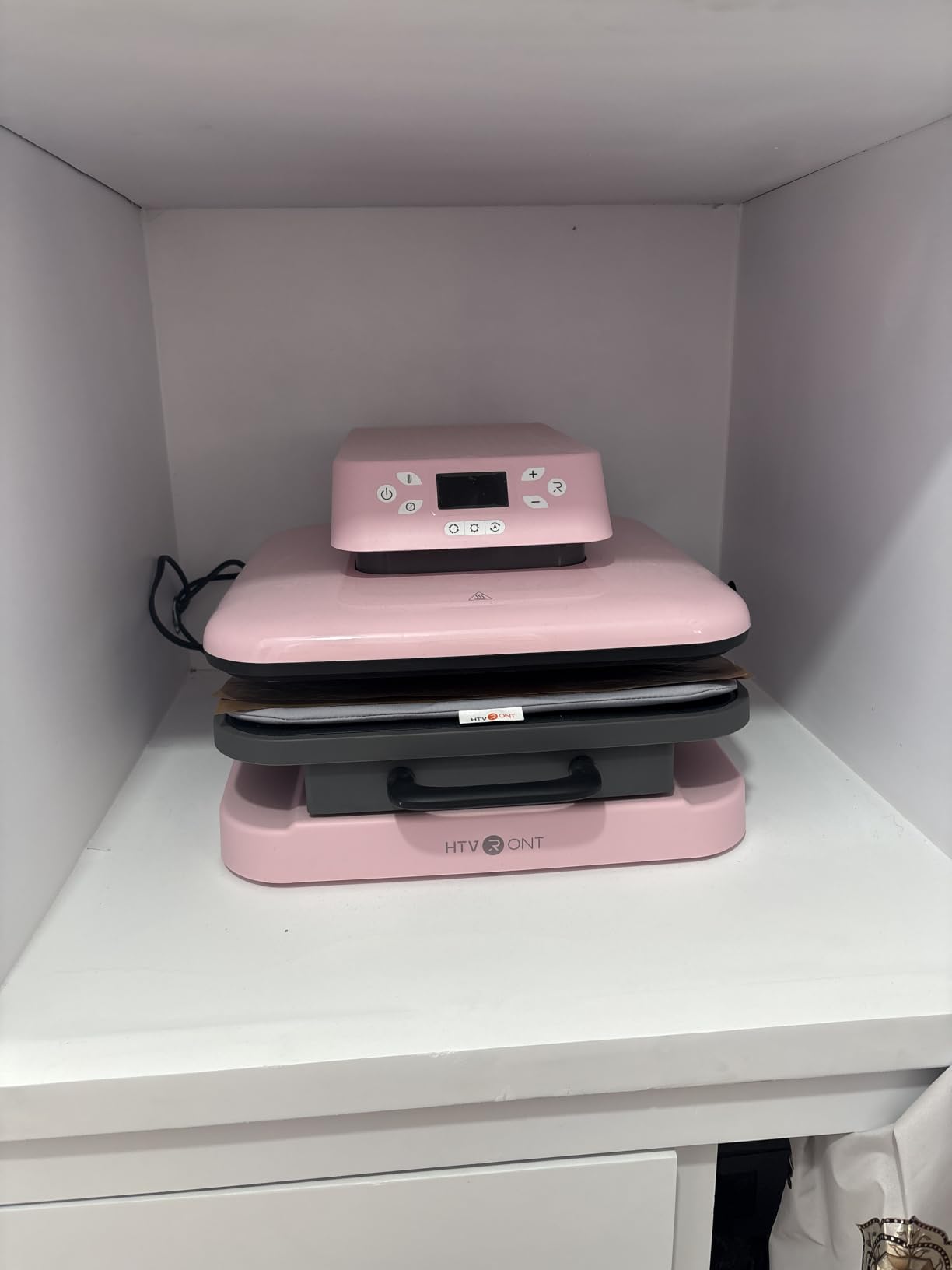
This is the one to buy if your main pain is throughput. You push the board in, press the button, and the press closes, adjusts to garment thickness, and releases when the timer ends. Nobody is standing there holding a handle down, which means you can line up the next shirt while the last one finishes.
The heat-up time is the standout number. It reaches 320F in about 4 minutes using NTC thermistor sensing and a dual-tube heating engine, so a band can pull the machine out of a cupboard, wait out a coffee, and start pressing. The drawer slide design also keeps your hands away from the hot plate, which matters when you are doing eighty shirts in a row.
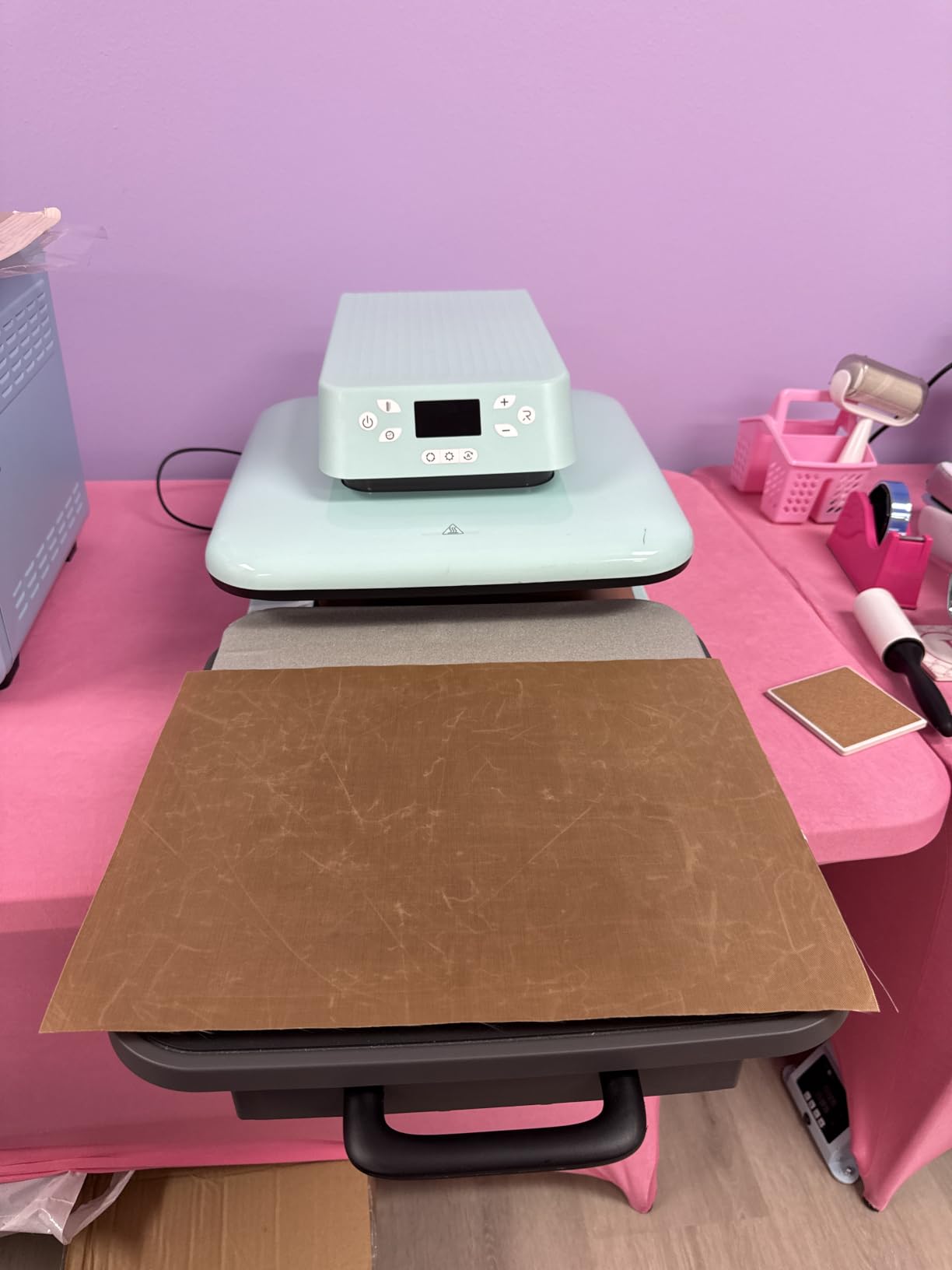
It works on shirts, totes, wood signs and ceramic coasters up to 1 inch thick, and the auto shut-off after 15 minutes idle means you do not have to think about it at the end of a long night. Operating temperature runs between 160C and 210C, which covers DTF transfers and standard heat transfer vinyl work.
The compromise is workflow. This is a draw-style press, not a swing-away, and the loading motion is genuinely different from what most people picture when they think about pressing. It is also 40.3 pounds, so it lives in one spot. If you have a permanent printing corner, that is a fair trade for the throughput.
Is the auto release worth changing your workflow for?
For volume, yes. Owners consistently describe the auto-open and auto-close cycle as a productivity upgrade over manual clamps, and 82 percent of its reviews are five star. For a single shirt or a test print, a manual press is simpler and does not need the learning curve.
The four fast modes and two custom modes mean you can save a setting per garment type rather than re-entering time and temperature each time.
Where will the drawer slide catch you out?
Bulky items. The drawer can be fiddly to load with anything that is not a flat shirt, so a first-time user should practice the motion before a merch deadline. The 30 day warranty is also the shortest here, which is our main reservation.
It runs on 120 volts and is FCC certified, and the dimensions are 20 by 12 by 16 inches, tighter than the clamshell models.
3. F2C 5-in-1 Pro Heat Press: One Machine for Tees, Caps and Mugs
F2C 5 in 1 Pro Heat Press Machine 12×15 Digital Heat Transfer Sublimation Swing-Away for Hat Mug Plate Cap T-Shirt 360-degree Rotation Multifunction Combo Kit Black 110V
12 x 15 in platen
360 degree swing-away
Five attachments included
1000 watts
Pros
- Five-in-one covers tees mugs caps and plates with one machine
- 360 degree swing-away arm keeps the platen out of the way
- Pressure knob handles different material thicknesses
- Non-stick surface reduces scorching
Cons
- Heaviest machine here at nearly 56 pounds
- Only one mug attachment is included in the box
- Platen can sit unlevel if the bench is not flat
A lot of bands sell more than shirts. Split runs, patches, hats, and the occasional bottle of water on the merch table add up, and the F2C handles all of it from one machine. The 12 x 15 inch heating press comes with a detachable aluminium alloy cradle for mugs, plates, hats and pads, and the full 360 degree swing-away arm rotates right out of the way while you load a garment.
It is the second-lowest draw in this roundup at 1000 watts, which makes it the friendliest option if you are printing in a bedroom or a shared rehearsal space. The upper temperature rating is 430F, lower than several machines here, and that is enough for DTF transfers and heat transfer vinyl on apparel.
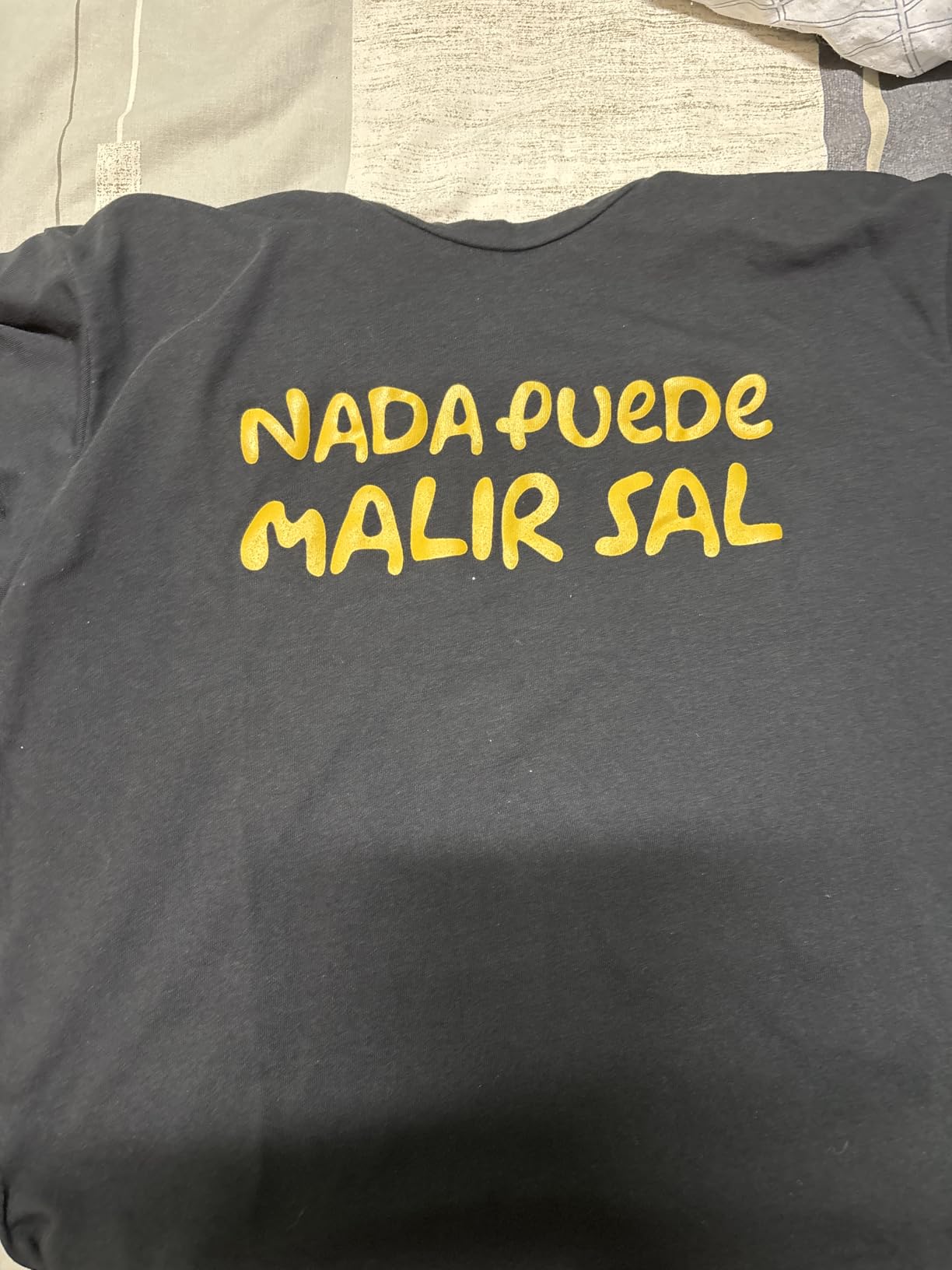
The non-stick surface means you do not need a separate silicone or teflon cover sheet, which saves a consumable and a step. Digital control with a built-in fuse gives repeatable time and temperature, and a full-range pressure knob adapts to material thickness.
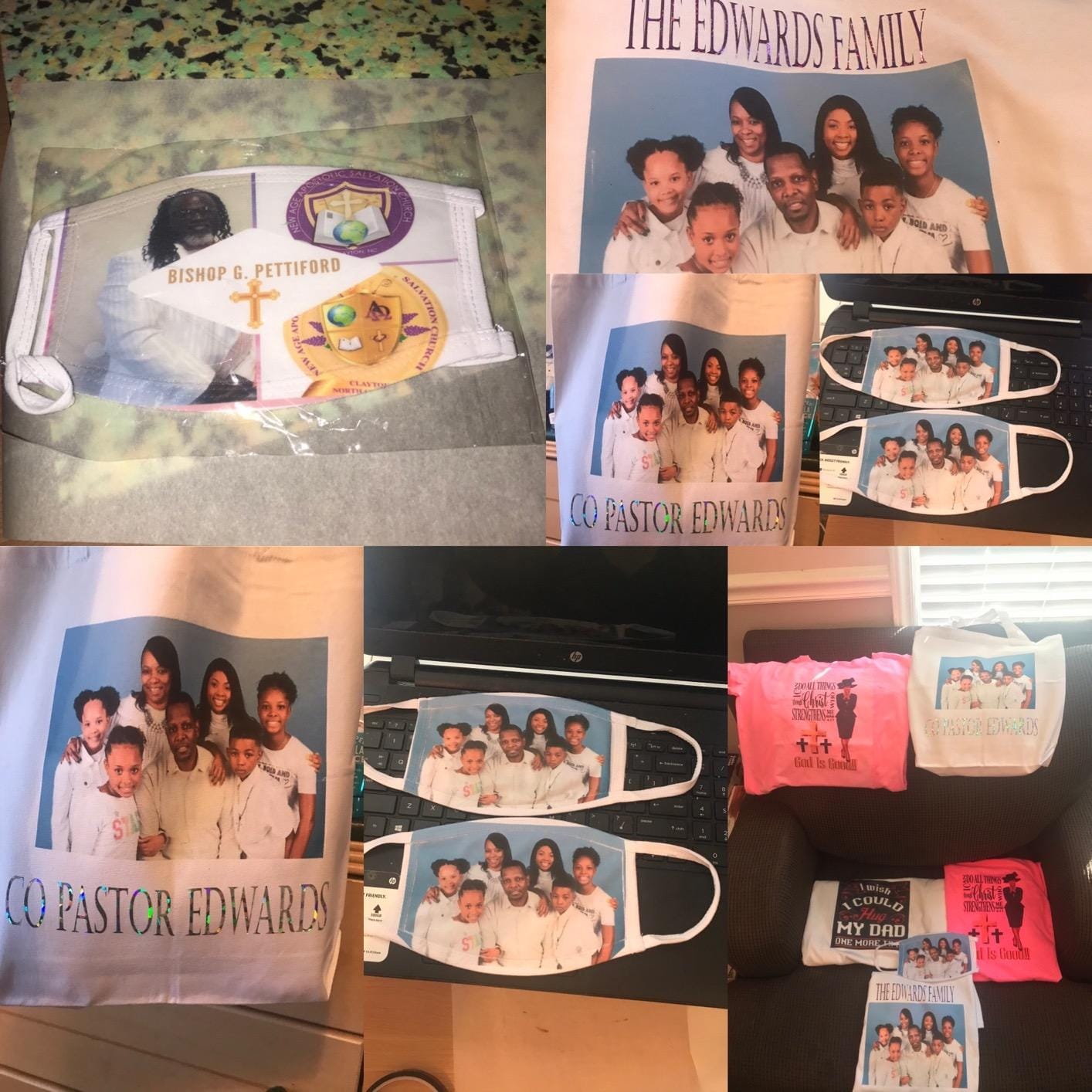
Owners running small merch businesses report this as a capable all-rounder. The recurring theme in the reviews is that the shirt platen performs well while the mug attachment is the weakest link on some sets, and the 55.8 pound platform means you will place it once and leave it there.
Is the 12 x 15 platen too small for full-front prints?
It fits a standard front print with room to spare, and the swing-away arm means nothing blocks the loading area. It is a half-inch narrower per side than the 15 x 15 machines, so oversized all-over graphics are the one thing to plan around.
Buyers who run the same design repeatedly report the digital control holds settings well across a long run.
Which attachment should you trust and which one will disappoint you?
Trust the shirt platen, treat the mug attachment as a bonus. Several reviewers describe the mug attachment as the weakest element, and only one mug attachment is included in the box, which surprises people who assumed the five-in-one meant five of everything.
It works on 110 volts with a 15 by 15 by 17 inch footprint, and the 360 degree rotation is the feature that keeps it in daily use rather than gathering dust behind a desk.
4. Slendor 15 x 15 5-in-1 Swing Away Press: The Longest Warranty in the Lineup
Slendor 15×15 inch 5 in 1 Swing Away Heat Press Machine for T Shirts
15 x 15 in platen
0-482F LCD control
2-year warranty
AC adapter power
Pros
- Complete five-in-one bundle in one box
- Heats quickly and presses evenly
- Attachments swap quickly on the detachable platform
- 2-year warranty for long-term confidence
Cons
- Needs a dedicated circuit for its power draw
- Some versions lose temperature on mug and tumbler attachments
- Ticking from the swivel on certain models
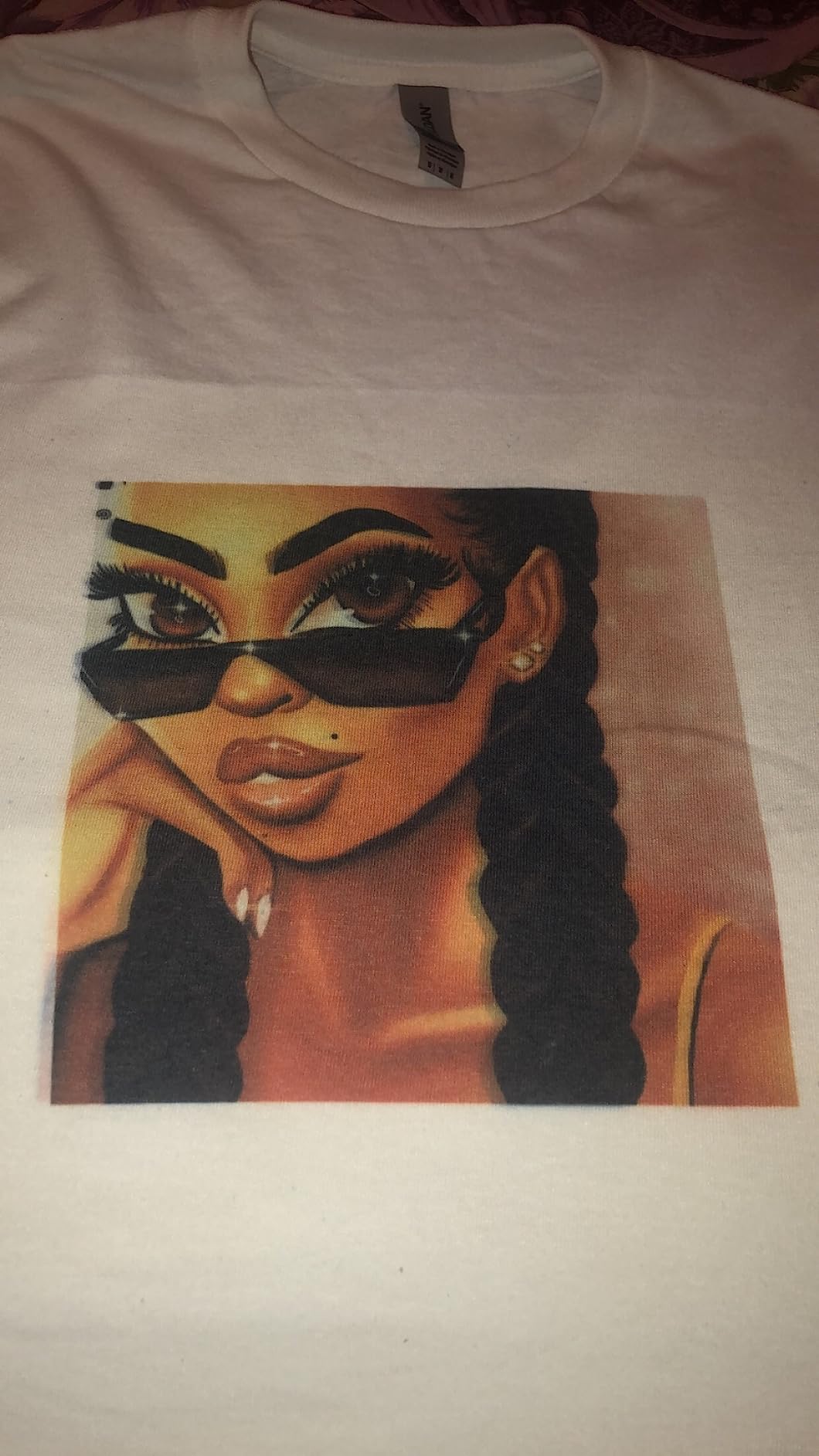
Warranty length is a weird thing to fall in love with, but if you are buying equipment with money left over after the run of blanks, a two-year warranty is worth paying attention to. The Slendor is the only machine in this lineup with two years of cover behind it, and the box arrives complete: a 15 x 15 platen press, a 30oz tumbler press, a hat press and 5 inch and 6 inch plate presses.
The LCD control box runs from 0 to 482F with F and C switching, a timer up to 999 seconds, auto heating stop and an alarm. The 360 degree swing-away arm has adjustable pressure and a detachable lower platform, so swapping between a shirt and a tumbler takes seconds rather than tools.
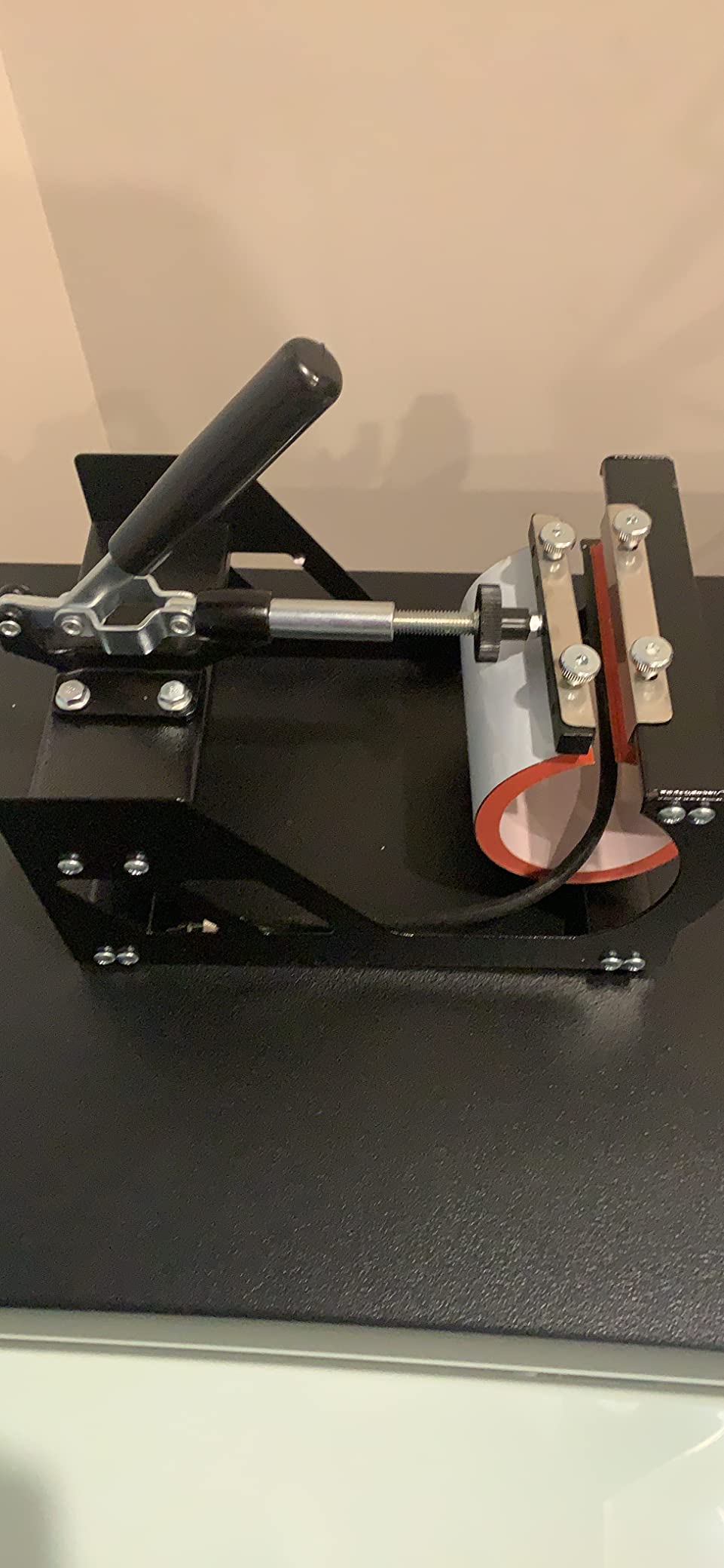
Owners happily run this one for years. It works with both HTV vinyl and sublimation paper, so the same press covers a DTF workflow and a vinyl workflow, which is unusual at this level. The 15 by 15 by 20 inch footprint is manageable if the bench is deep enough.
The rating sits at 4.4, below the pure shirt presses here, and the reason is consistent: the negatives concentrate on the attachments rather than the platen. Reports of losing temperature on mug and tumbler work, some ticking from the swivel, and a small number of machines that would not heat at all appear in the lower reviews.
Is a two-year warranty a good reason to buy a multi-function press?
Only if you will actually use the attachments. The tumbler, hat and plate presses turn this into a merch-plus-gifts machine, and for a band that sells patches and drinkware at the table that is real value. For a pure shirt run, the warranty is nice but the platen area is the deciding factor.
It runs on AC adapter power at 110 volts, and several owners specifically call out needing a dedicated circuit for the draw.
What do the lower-rated reviews actually complain about?
The attachments. Roughly 72 percent of reviews are five star, and the one-star share is concentrated in mug and tumbler work losing heat, mechanical ticking from the swivel, and a few machines that failed to heat, several of which were replaced by customer service.
If you stay on shirts, that negative share has little bearing on your experience. Set a reminder to re-check temperature between garments on a long run.
5. Caydo 38-Piece Screen Printing Kit: Best Entry Point for DIY Silk Screening
Caydo 38 Pieces Screen Printing Kit Include Fabric Screen Printing Ink, 4 Size Screen Printing Frame, Screen Printing Squeegees, Inkjet Transparency Film, Ink Knife, and Mask Tape
4 frame sizes
6 x 100ml fabric inks
A4 transparency film
5.02 pounds
Pros
- Excellent value against buying the same parts separately
- Four frame sizes cover chest prints through back placements
- Six ink colors cover most first-year band merch needs
- Transparency film and masking tape included for stencil work
Cons
- Emulsion is not included for the photo-emulsion method
- Uncoated wood frames can warp with repeated water cleaning
- Inkjet transparency film only fits A4 sized artwork
Screen printing is a low-cost way to get a band logo onto a lot of shirts, and this kit is the least intimidating door into it. Thirty-eight pieces cover the core process: four screen printing frames in 10 x 14, 8.2 x 12.2, 6.7 x 10.6 and 5.1 x 9 inch sizes, four squeegees, six 100ml fabric inks, inkjet transparency film, an ink knife, masking tape and gloves.
The six ink colors are black, white, yellow, red, blue and a blackish green, which is enough to block out a two or three color design without a second purchase. The inks apply to cotton, polyester, blends, linen, rayon and synthetics, plus paper and cardboard if you want to test a print on a sheet first.
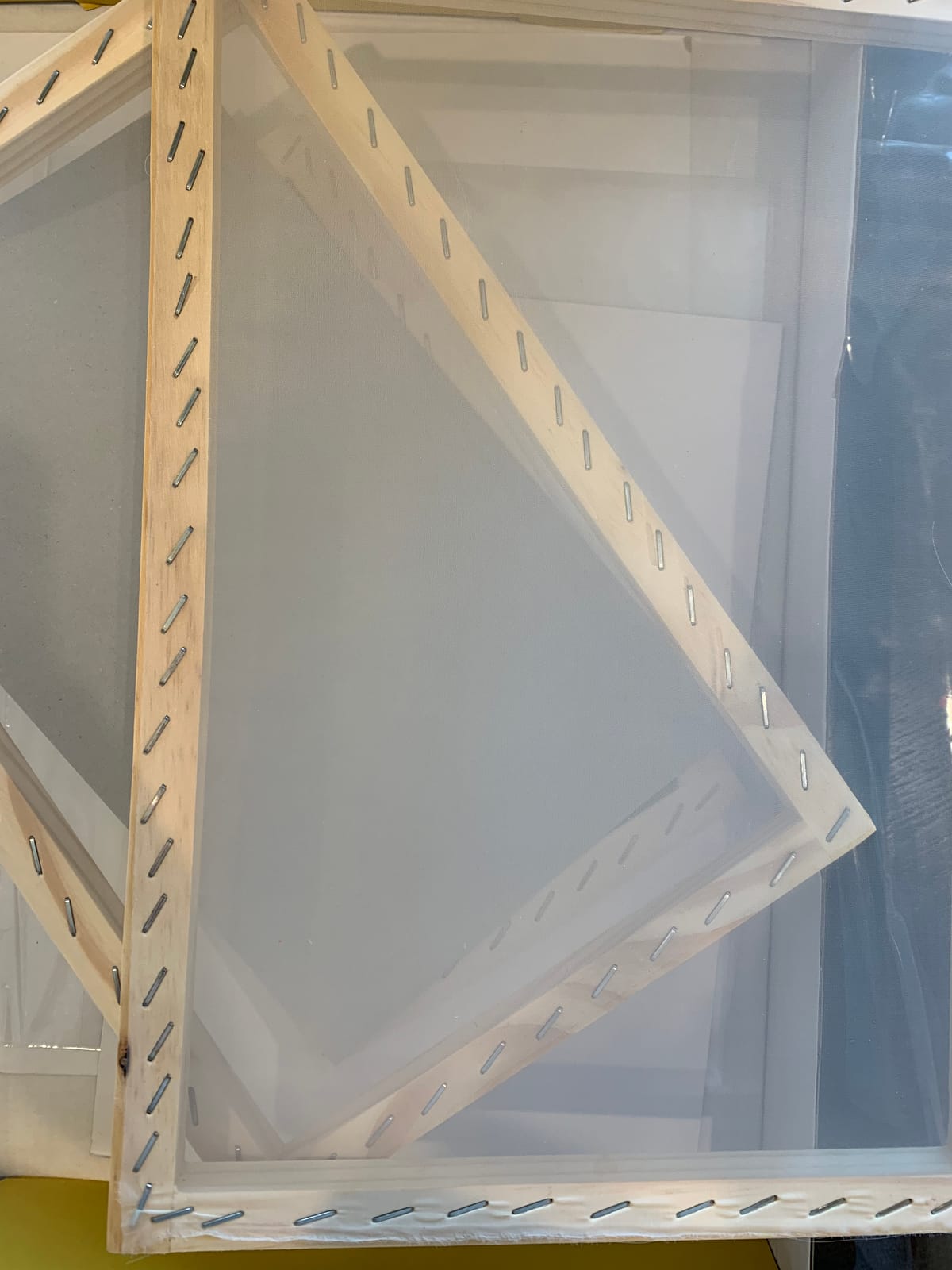
Owners report successful runs across a dozen or more garments using all three of the larger screen sizes, and the transparency film plus masking tape mean nothing else is needed for stencil work. The masking tape peels away cleanly, which sounds trivial until you have tried to mask a chest print at two in the morning.
Two caveats come up consistently. Emulsion is not included, so this box covers the drawing-fluid and transfer-film route rather than the photo-emulsion method. And the uncoated wood frames can swell or warp with repeated water cleaning, so store them dry between runs.
Can a real band logo come out of this kit on day one?
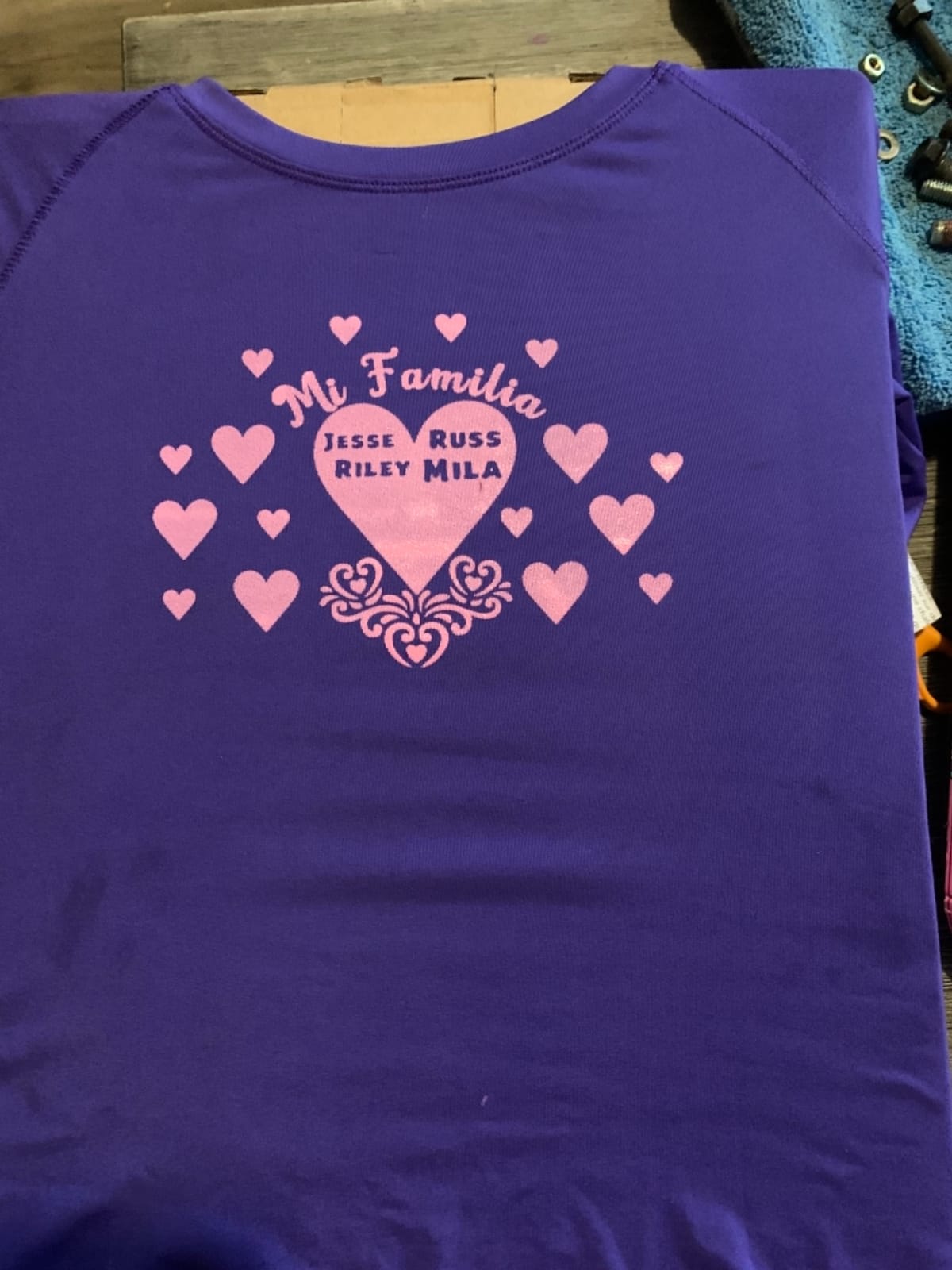
Yes, if your design is text-based and you use the included inkjet transparency film to burn a stencil. This is the route where a typographic tour-date or a simple two-color crest performs well. Photographic or heavily detailed artwork needs the photo-emulsion method and an exposure unit, which this box does not include.
The largest included screen tops out around 10 x 14 inches, which is short of a full 12 to 14 inch back print, so plan chest logos and mid-size back graphics.
How do you cure these inks without buying a dryer?
You need heat. A heat press from the list above, or a heat gun and a pressing surface, will set the ink so it survives the wash. Water-based screen printing ink that is not properly cured will crack and flake after the first trip through a washing machine, which is the single most common beginner failure we see discussed in printing forums.
Bought piece by piece, the frames, inks, squeegees, film and tape add up fast. As one box it is hard to argue with.
6. RoyalPress 15 x 15 LED Press: Memory and Counter for Repeat Runs
RoyalPress 15″ x 15″ Color LED Industrial-Quality Digital Sublimation Heat Transfer Machine T-Shirt Heat Press Machine, 15″ x 15″, Black
15 x 15 in printing area
0-480F
1400 watts
Memory controller with piece counter
Pros
- Press-cast aluminum platen needs no extra cover sheet
- LED controller remembers settings and counts pieces
- Thickened plate holds temperature evenly across the surface
- Single-function design with no attachments to fiddle with
Cons
- Clamshell rather than swing-away so the platen drops straight down
- Fixed 15 x 15 size with no mug or cap attachments
- Counter is the only production aid offered
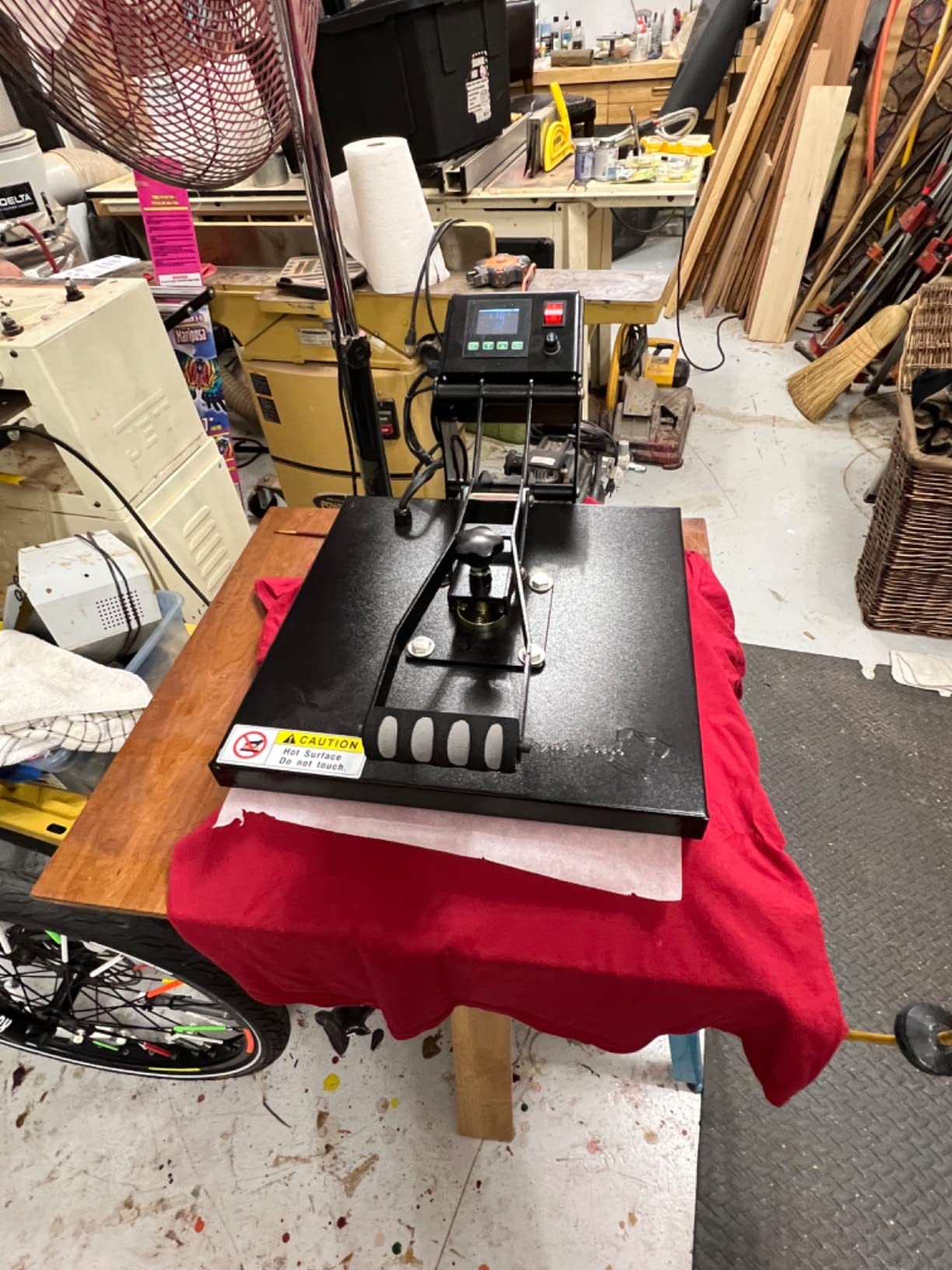
This is the press for a band that already knows what it is making. The colour LED intelligent memory controller stores your settings and counts finished pieces, up to 999, so the second run of the same design takes no setup time at all. For a 150-shirt run split across two colours, that counter is genuinely useful.
The press-cast aluminium heating plate has a teflon coating, so no separate coated sheet is needed, and the thickened aluminium is there to hold temperature evenly across the 15 x 15 inch printing area. Temperature runs 0 to 480F with a 0 to 999 second timer on 110 volts and 1400 watts.
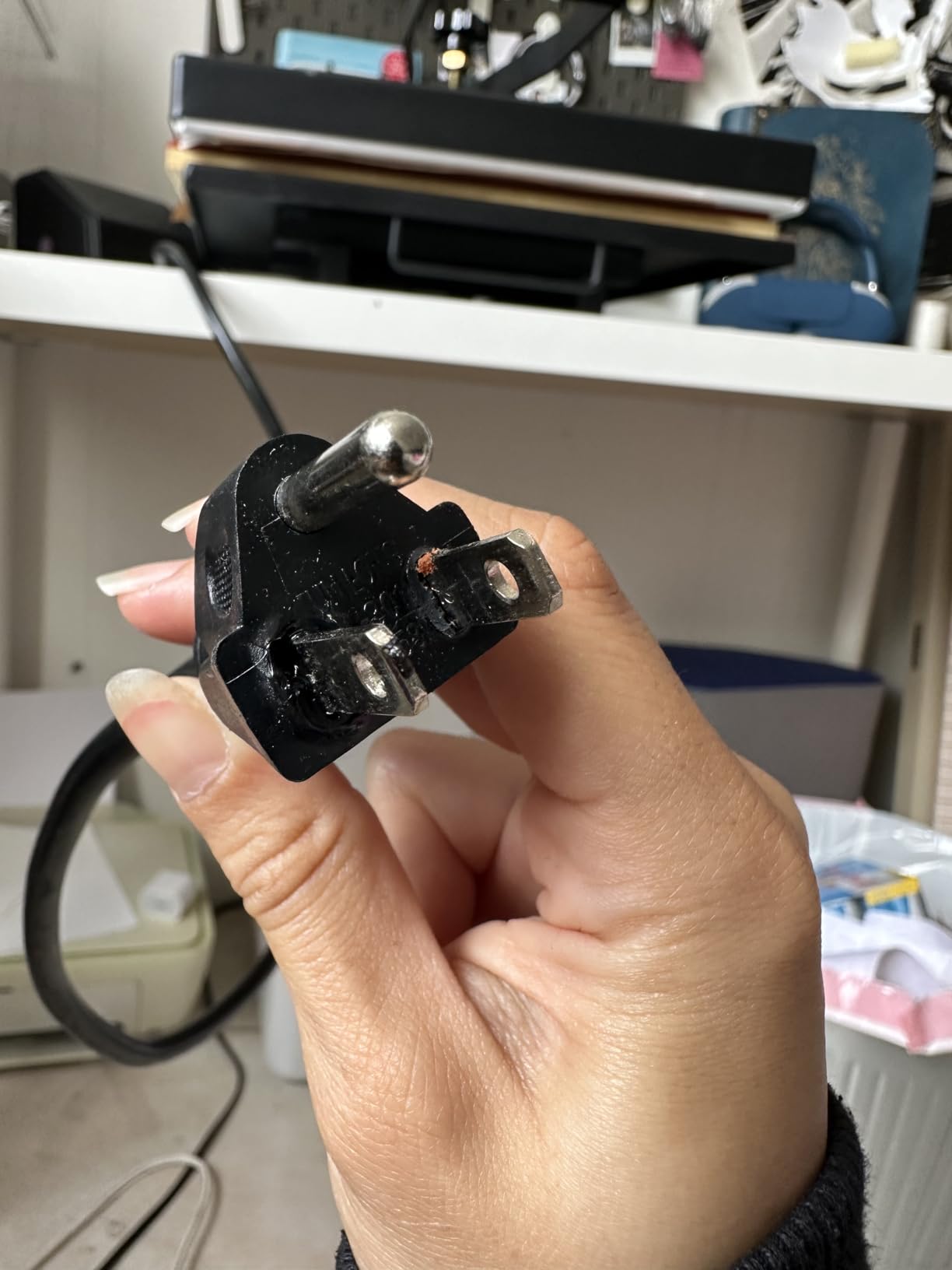
Buyers treat it as a dependable dedicated shirt press with 78 percent five star ratings, and the memory and counter functions come up repeatedly as the reason. It is a US grounded plug, 110 volt operation, and the whole unit is 15 by 15 by 12 inches, one of the more compact footprints here.
The design is deliberately single-function. There is no swing-away arm and no mug or cap attachments, which some people read as a limitation and others read as fewer things to go wrong. The clamshell action means the top platen drops straight down over the garment.
Is a memory controller worth it for a one-time merch run?
It pays off from the second identical shirt. If you are printing forty tour shirts on the same design, re-entering temperature and time each time invites small errors that show up as inconsistent adhesion across the run. If you are printing twelve completely different designs, the feature matters less and the even platen temperature matters more.
Zero to 999 seconds and a piece counter cover a full run without resetting.
Should you buy a clamshell or a swing-away press?
A swing-away rotates the hot platen away so you can lay the garment flat without reaching under heat. A clamshell drops straight down, which is simpler to use but means your hands work closer to the platen. If you are new to heat pressing, the clamshell is the more forgiving format.
The trade is capacity for flexibility. This one prints shirts only, and for a band that is exactly the point.
7. Speedball Intermediate Screen Printing Kit: The Best Drawing-Fluid Classroom
Speedball Intermediate Screen Printing Kit – Make Your Own Custom T-Shirt Prints – 2 Fabric Inks, Silk Screen Frame, Drawing Fluid, Squeegee, Instructions – Made in USA
Drawing-fluid method
2 x 4oz fabric inks
10 x 14 in screen
Made in USA
Pros
- Genuinely complete for the drawing-fluid method
- Ten by 14 screen handles standard tee and tote placements
- Tri-lingual booklet with troubleshooting and stencil templates
- US-made by an established screen printing brand
Cons
- Only two ink colors included
- Traditional water-based inks need proper curing to hold
- Single screen means extra frames for multi-colour runs
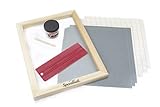
Speedball has been making screen printing supplies for decades, and this intermediate kit is the one to buy if you want the traditional drawing-fluid process with everything in a single box. You get two 4oz fabric inks in black and red, 4oz of screen filler, 4oz of drawing fluid, 3.30oz of diazo photo emulsion with sensitizer, emulsion remover and Speed-Clean.
The hardware is a Red Baron squeegee, a 10 x 14 inch printing screen, a round brush and craft sticks. The instruction booklet is tri-lingual in English, Spanish and French, with step-by-step directions, a troubleshooting section and stencils you can trace. That manual alone is worth more to a first-timer than any piece of equipment.
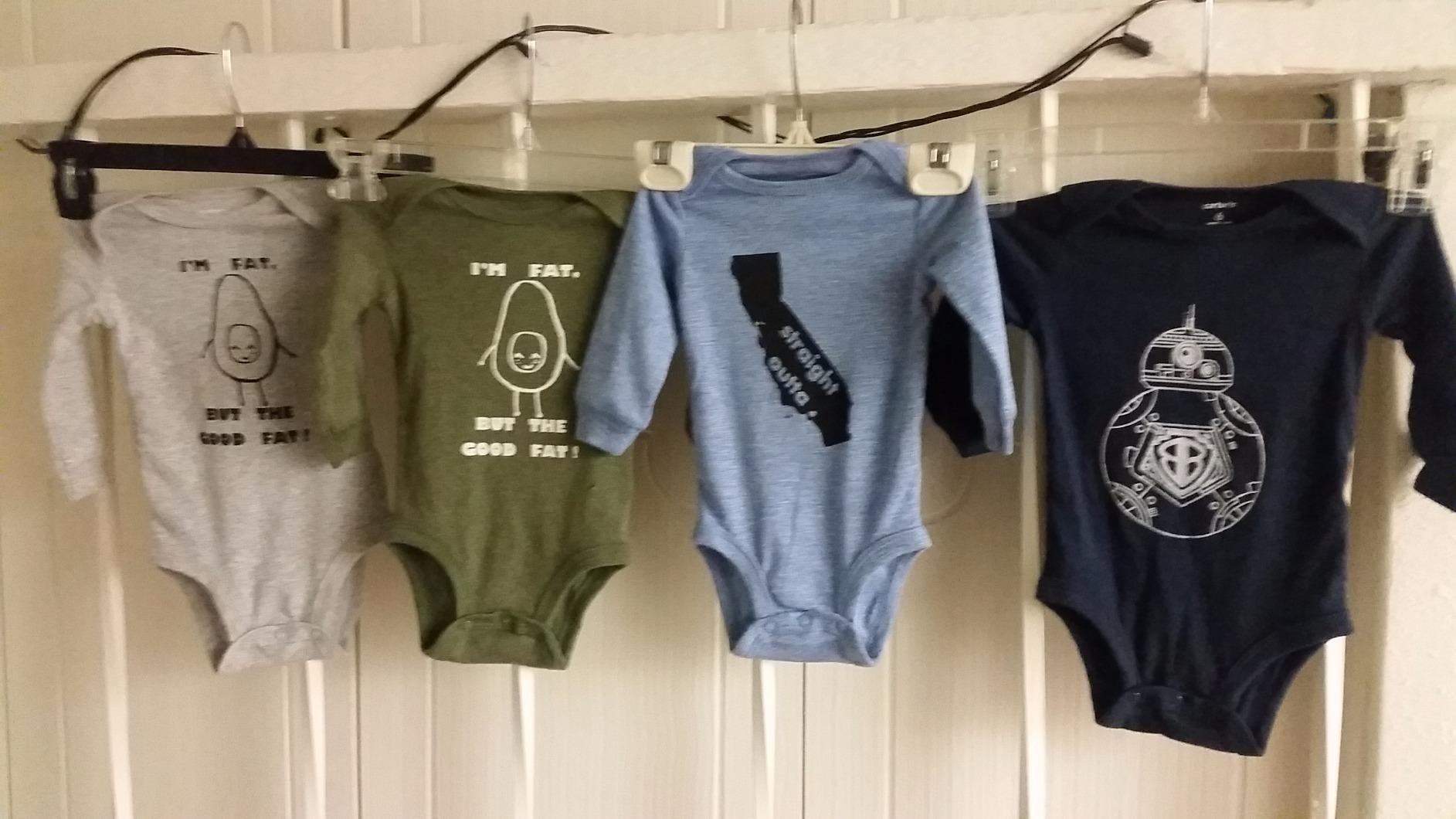
The screen handles standard tee and tote placements, and because the drawing-fluid method needs no separate emulsion purchase, this is genuinely complete out of the box. At 3.96 pounds it is also the lightest kit here to carry into a rehearsal room.
The honest limit is colour. Two inks means a two-colour design at most without buying more, and roughly 10 percent of reviews land at three stars because the learning curve is real. Traditional water-based ink also needs proper heat curing to hold on fabric, so pair it with one of the presses above.
Is the drawing-fluid method too basic for real band merch?
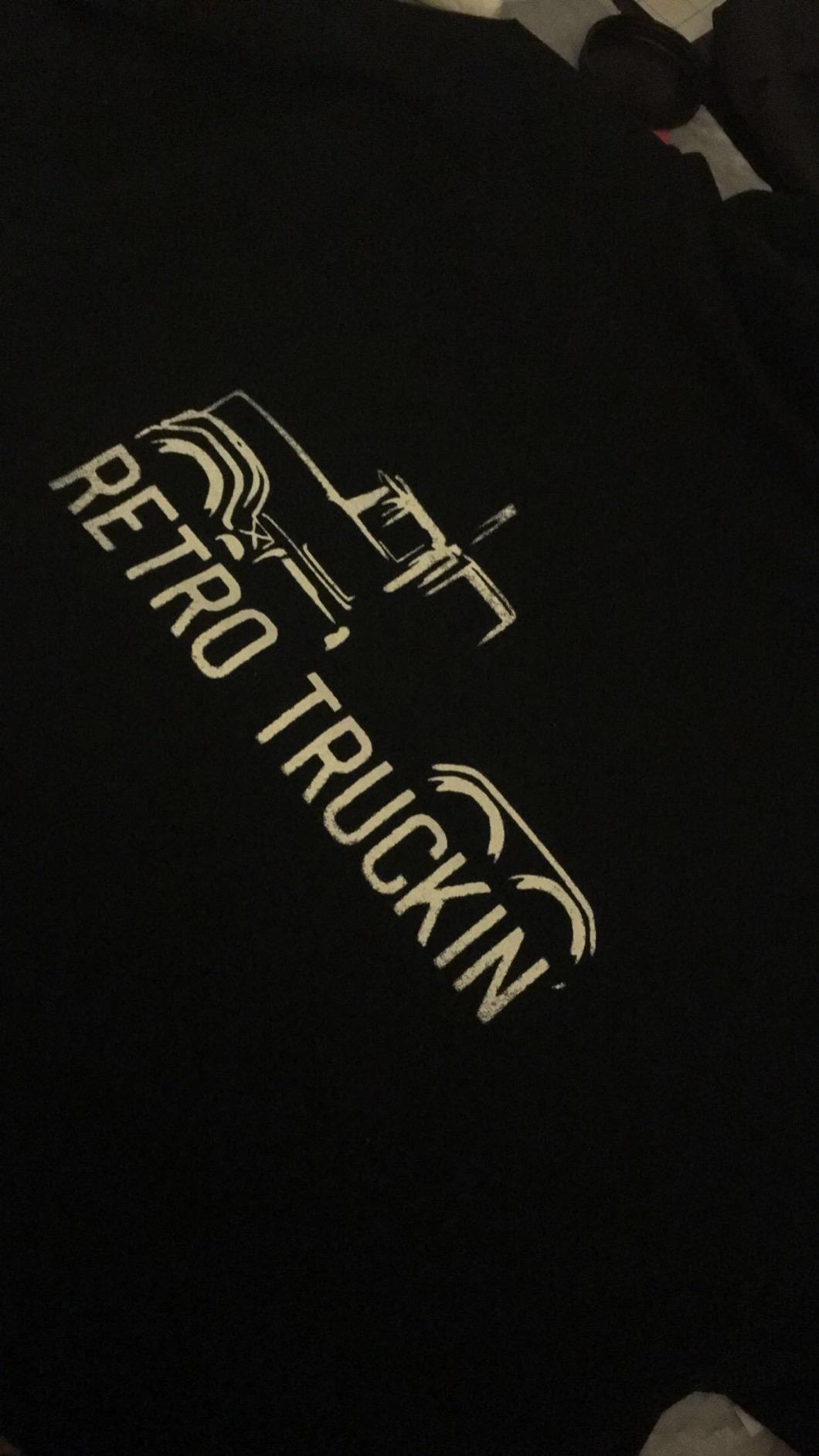
For text and simple spot-colour logos, no. Bands whose artwork is a name, a date, a symbol or a hand-drawn crest can produce a run a fan would be happy to wear with this kit. It is bands with photographic or gradient artwork who need to look elsewhere.
If you already own a cutting machine, the Speedball Beginner Craft Vinyl Kit covered later in this list may suit you better.
What happens when you want a third colour?
You buy another frame, another squeegee and another ink, and you learn registration, which is where most beginners stall. Multi-colour work is much easier on a press with a positioning pallet, and that is the one thing this kit does not include.
Start with one colour. Get twenty clean shirts first, then decide whether the second colour is worth the setup time.
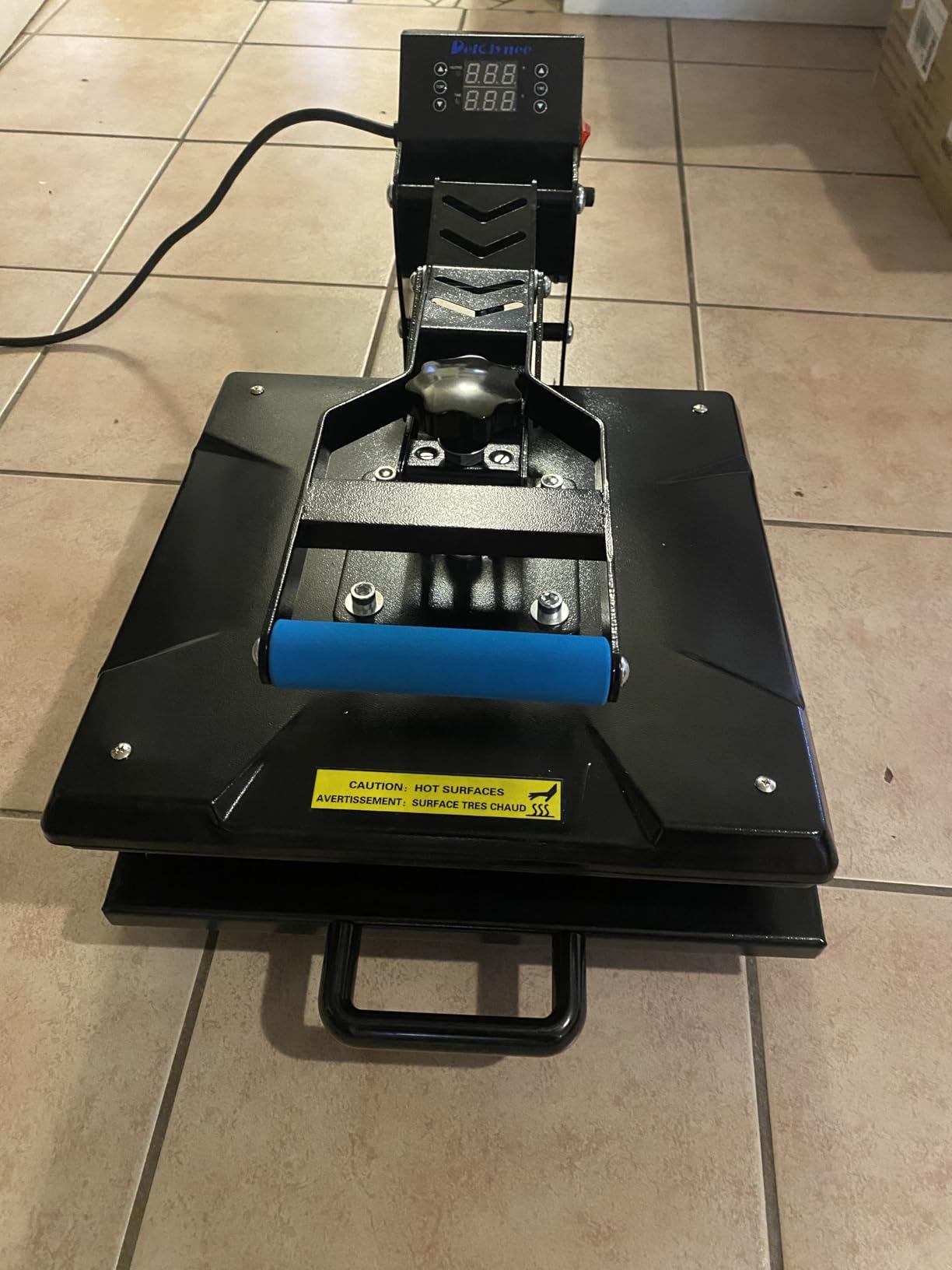
8. Delclynee 15 x 15 Heat Press: The Most Even Pressure Design Here
Delclynee 15″ x 15″ High Pressure Heat Press Machine for T Shirts, Industrial-Quality Digital Sublimation Printer for Heat Transfer Vinyl
15 x 15 in surface
32-455F range
Threadable lower platen
Automatic flotation
Pros
- Automatic flotation keeps pressure even across varying garment thickness
- Threadable lower platen speeds up loading and reduces misprints
- Audible five-beep alert removes guesswork from timing
- Fixed heavy base gives a stable foundation for transfers
Cons
- Stationary lower board makes loading more manual
- Clamshell action drops the platen down over the garment
- Shirt press only with no mug hat or plate attachments
The word that keeps appearing about this press is even. The automatic flotation mechanism balances the top platen so pressure stays consistent on uneven or thicker items, which is the most common cause of failed heat transfers on a batch of shirts. If your run mixes thin and heavy blanks, that feature alone justifies the machine.
The threadable lower platen lets you slide a shirt onto the board like threading a needle, rather than draping it over a fixed surface, and it makes loading noticeably faster with fewer misprints. The audible five-beep alert tells you when the target temperature or the timer is done, so you are not watching a clock through a hundred press cycles.
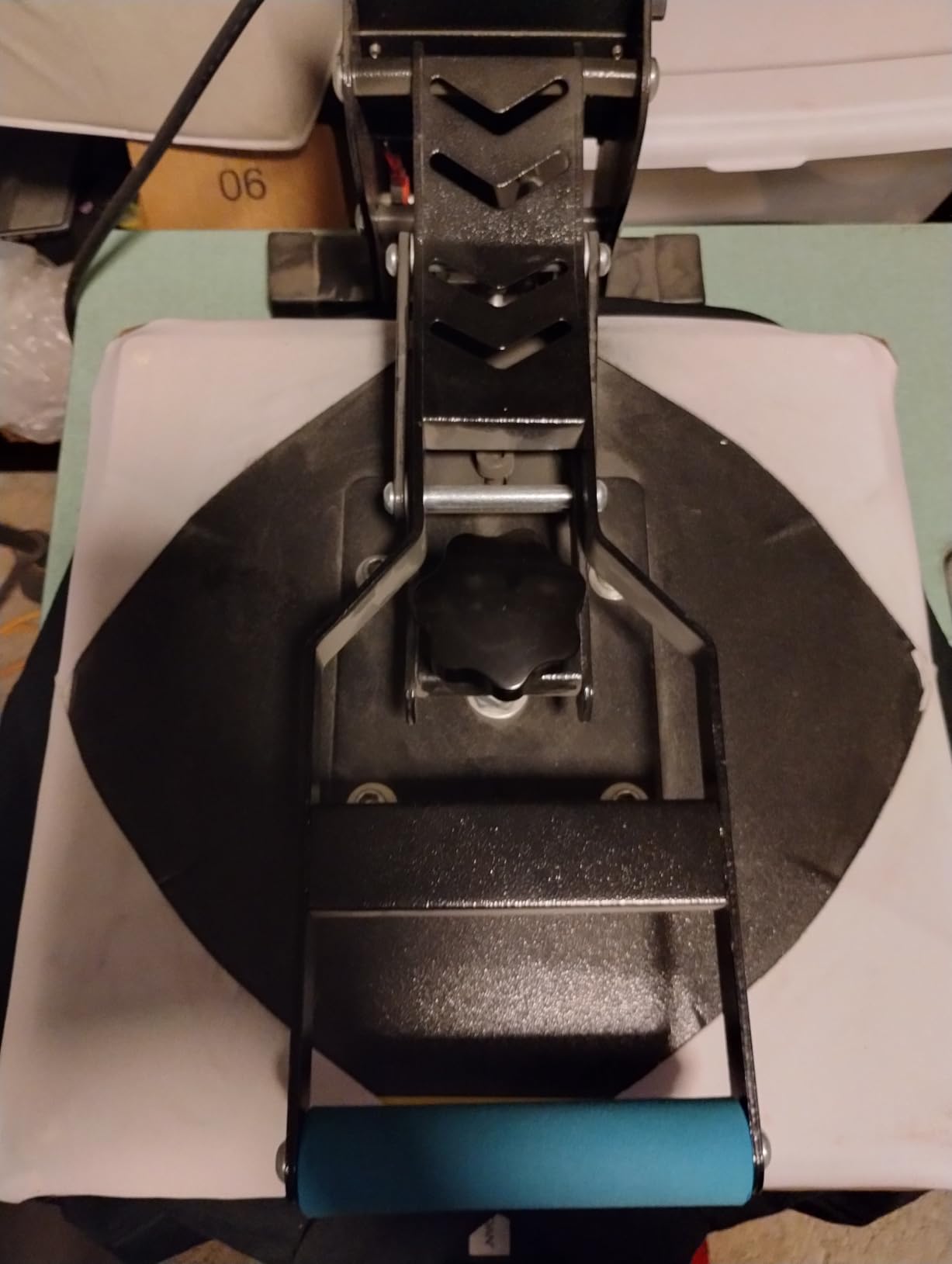
At 4.6 stars across 1259 reviews, this dedicated shirt press has 80 percent of its reviews at five stars. Owners point to the flotation and threading design for consistent pressure across a garment run, and to the beep timer for repeatability.
It runs 32 to 455F on 110 volts, and the adjustable pressure knob handles different material thicknesses. The fixed non-sliding base gives a stable platform for high-pressure transfers, and a secondary stabilising handle plus a fitted lower pad cover round out the safety features.
What is off-contact flotation and why does it matter?
Off-contact refers to the gap between the screen and the platen in screen printing, and the equivalent here is the top platen settling evenly rather than pivoting on one edge. Even pressure means the transfer bonds across the whole print instead of the centre sticking and the corners lifting.
That failure is invisible on shirt number one and obvious on shirt number forty, which is why a run like this punishes cheap presses.
Is the fixed base a real drawback?
It is a deliberate trade. A fixed, non-sliding lower board is stable, but it does not slide out, so loading is more manual than on a slide-away model. The clamshell action also means the top platen swings down over the garment rather than away from it.
If you only print shirts, you give up nothing. The trade-off is a 21 inch long footprint and no mug, hat or plate attachments in the box.
9. Speedball Advanced All-In-One Kit: Photo Emulsion With the Lamp Included
Speedball Advanced All-In-One Screen Printing Kit, Includes LED UV Exposure Lamp
Includes LED exposure lamp
10 x 14 in wooden frame
4 x 4oz fabric inks
Diazo emulsion
Pros
- Only complete photo-emulsion kit here with the exposure lamp in the box
- Supports detailed multi-colour artwork rather than flat stencils
- Screens can be reclaimed and re-exposed so mistakes are recoverable
- US-made with inks emulsion sensitizer and remover together
Cons
- Photoflood and exposure bulb has a short service life
- Ink leakage in transit is a recurring packaging complaint
- No plexiglass sheet included despite the instructions referencing one
This kit is what opens up detailed artwork. It is a photo-emulsion screen printing kit that includes the light source you need to expose the screen, so there is no separate darkroom, no separate exposure unit purchase, and no guessing about UV lamps. The diazo photo emulsion and lamp kit mean you do not need a light-safe environment to work.
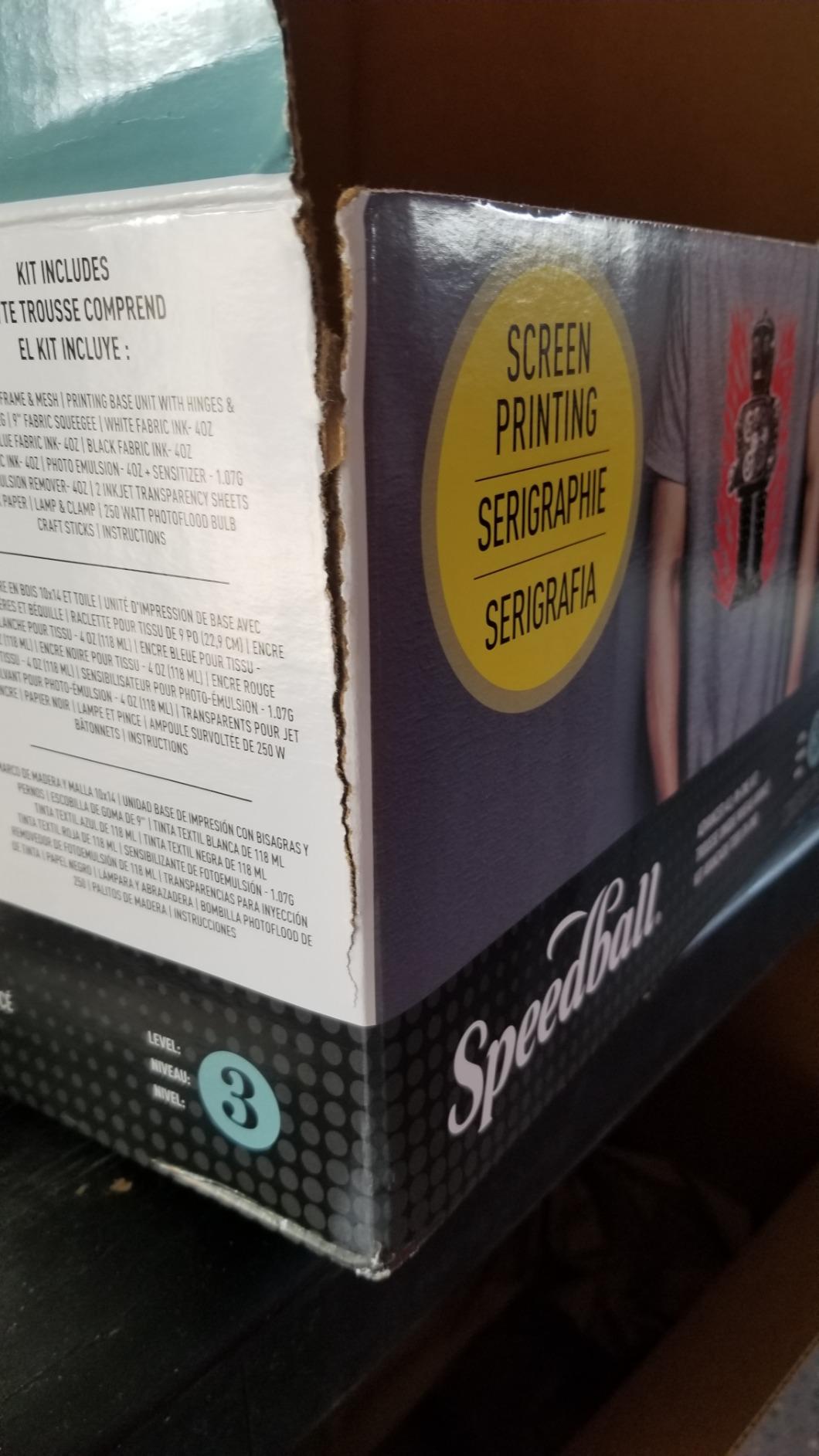
The box holds a 10 x 14 inch wooden screen frame and base, a textile craft squeegee, four 4oz fabric inks in black, red, white and blue, 3.3oz of diazo photo emulsion with sensitizer, 4oz of emulsion remover, two transparencies, an LED exposure lamp with a photoflood bulb and lamp clamp, craft sticks, black paper and an instruction guide. It is sixteen pieces in total at 2.8 kg.
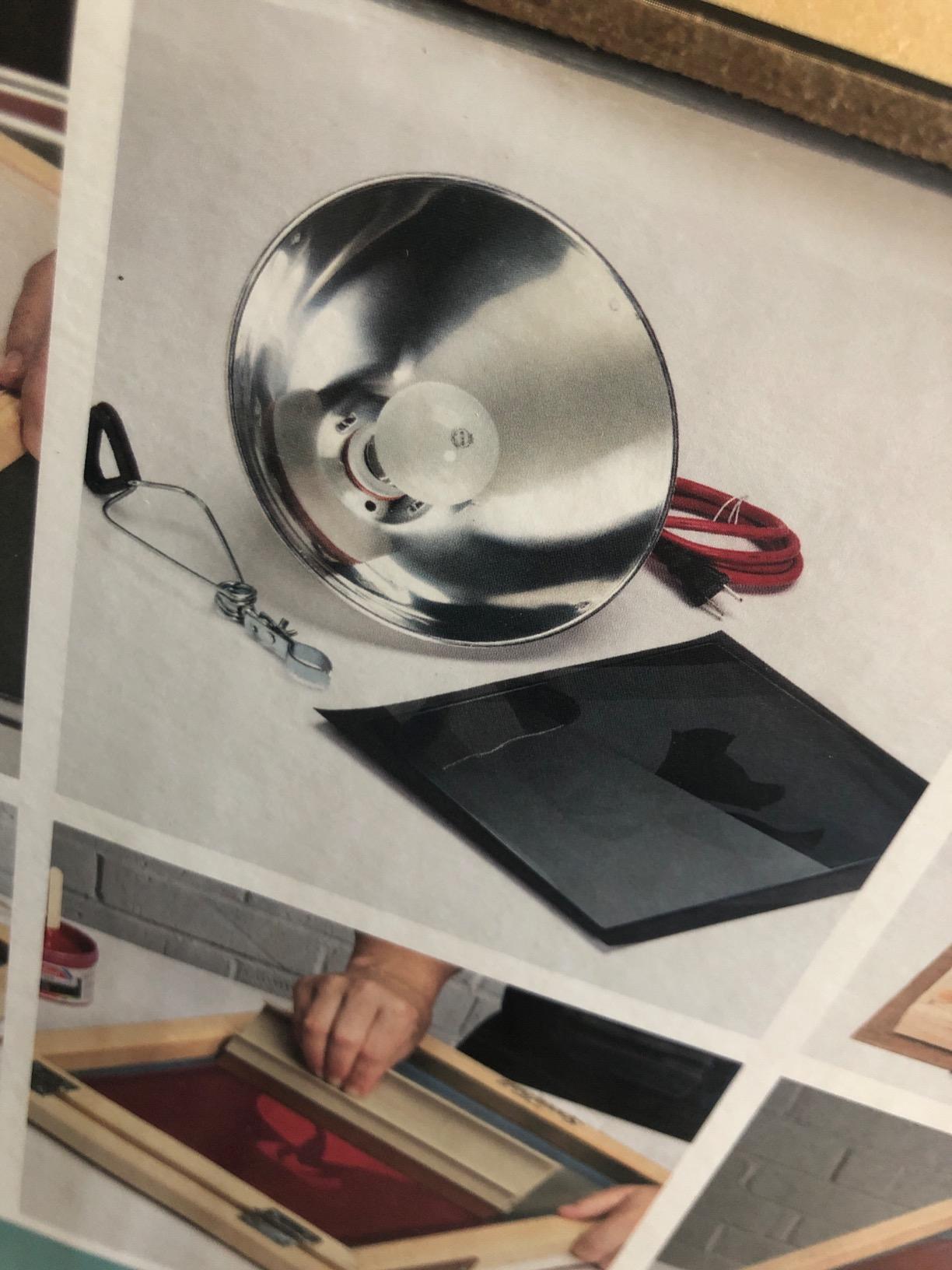
That four-ink selection including white matters for band merch, because white is what you flash or lay down as an underbase on dark shirts before laying colour on top. Detailed images from acetate drawings or digital high-contrast transparencies are what this kit is built for, so album artwork and complex logos stop being out of reach.
Buyers who follow the process report lasting results, and several have scaled up to larger presses after mastering it. Screens can be reclaimed and re-exposed, which means a misfire costs you a transparency rather than the whole run.
What does the white ink in this kit actually do?
It is your underbase. On a dark or coloured shirt, ink printed straight onto the fabric looks muddy and disappears into the garment. A white underbase first, flashed or cured, gives the colour ink a light surface to sit on, which is what makes a logo look crisp on a black tee instead of a grey smudge.
Water-based white ink needs heat setting to avoid cracking after the first wash, so budget a press or a heat gun alongside this kit.
What are the real complaints about it?
Packaging, mostly. Ink jars leaking in transit can ruin the transparencies, and the photoflood or exposure bulb has a short service life, with some bulbs burning out quickly or arriving bent. The manual also references a plexiglass sheet that is not in the box, so budget for one.
Those are recoverable problems, which is why this still earns a place for anyone serious about screen printing detail.
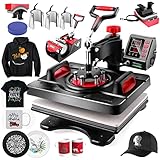
10. AKEYDIY 8-in-1 Heat Press: Best for Merch Plus Gifts
AKEYDIY Professional 8 in 1 Heat Press Machine Sublimation Machine 12″ X 15″ Shirt Press Machine 360° Swing Away – Industrial-Quality Digital Sublimation Heat Press Machine for T Shirt Mug Hat Plate
12 x 15 in platen
Eight attachments
800 watts
UL and FCC certified
Pros
- Eight attachments cover shirts caps mugs plates coasters mouse pads and puzzles
- Double-tube heating holds temperature within about 5F edge to centre
- 360 degree swing-away design is safe and convenient to load
- UL and FCC certified with active support service
Cons
- 12 x 15 platen is smaller than the 15 x 15 models
- Temperature and timer charts in the documentation are thin
- Hat pressing is the weakest attachment
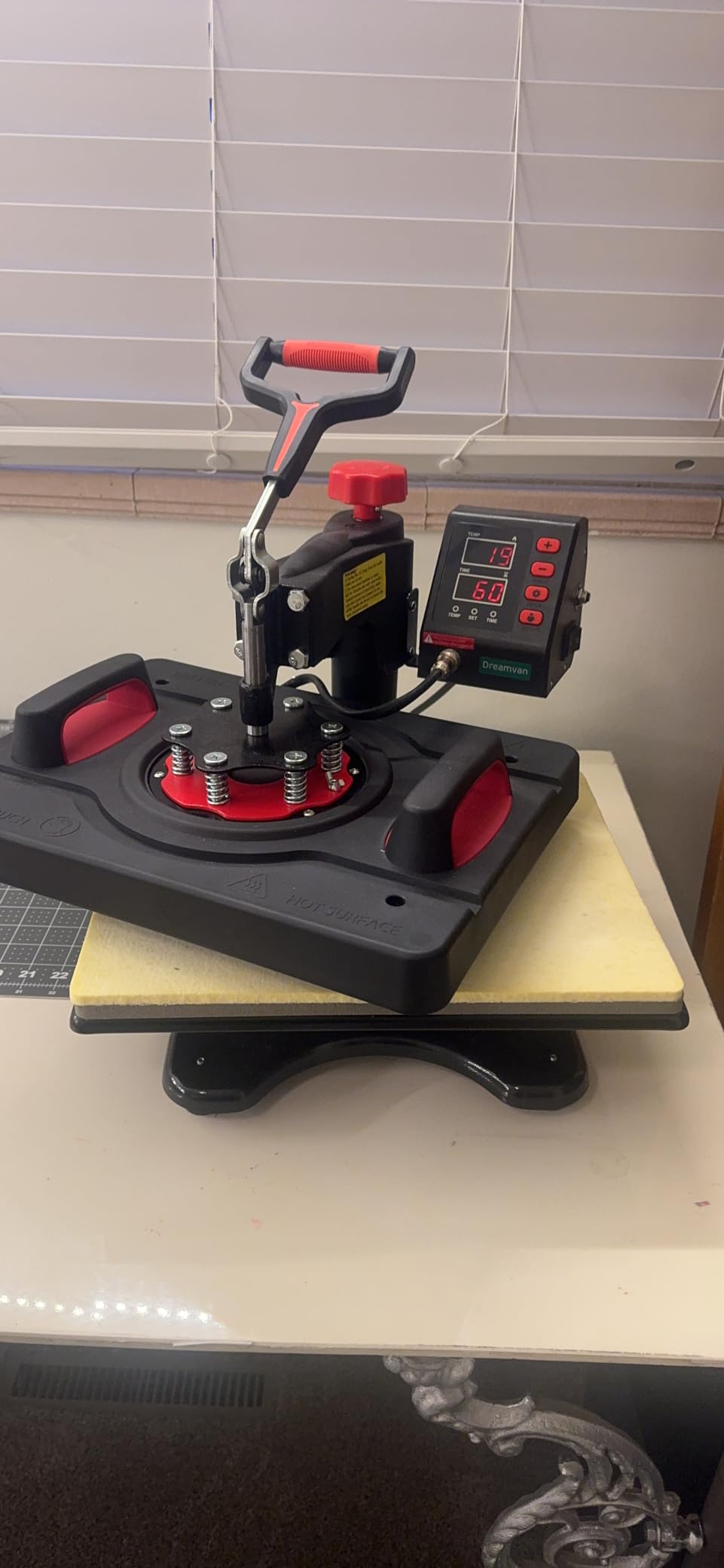
Some bands treat printing as a merch table, not just a shirt run, and this machine is built for that. Eight attachments cover shirts, caps, mugs, plates, coasters, mouse pads and puzzles, so one press handles a split run where the front of the shirt is a DTF transfer and the back of a cap is a small logo.
The press-cast aluminium plate carries a teflon coating and the double tube heating design keeps the temperature difference between the centre and the edges to about 5F. That is the number that decides whether a large full-front print bonds evenly or flakes at the corners, and 800 watts makes it the lowest draw in this roundup.
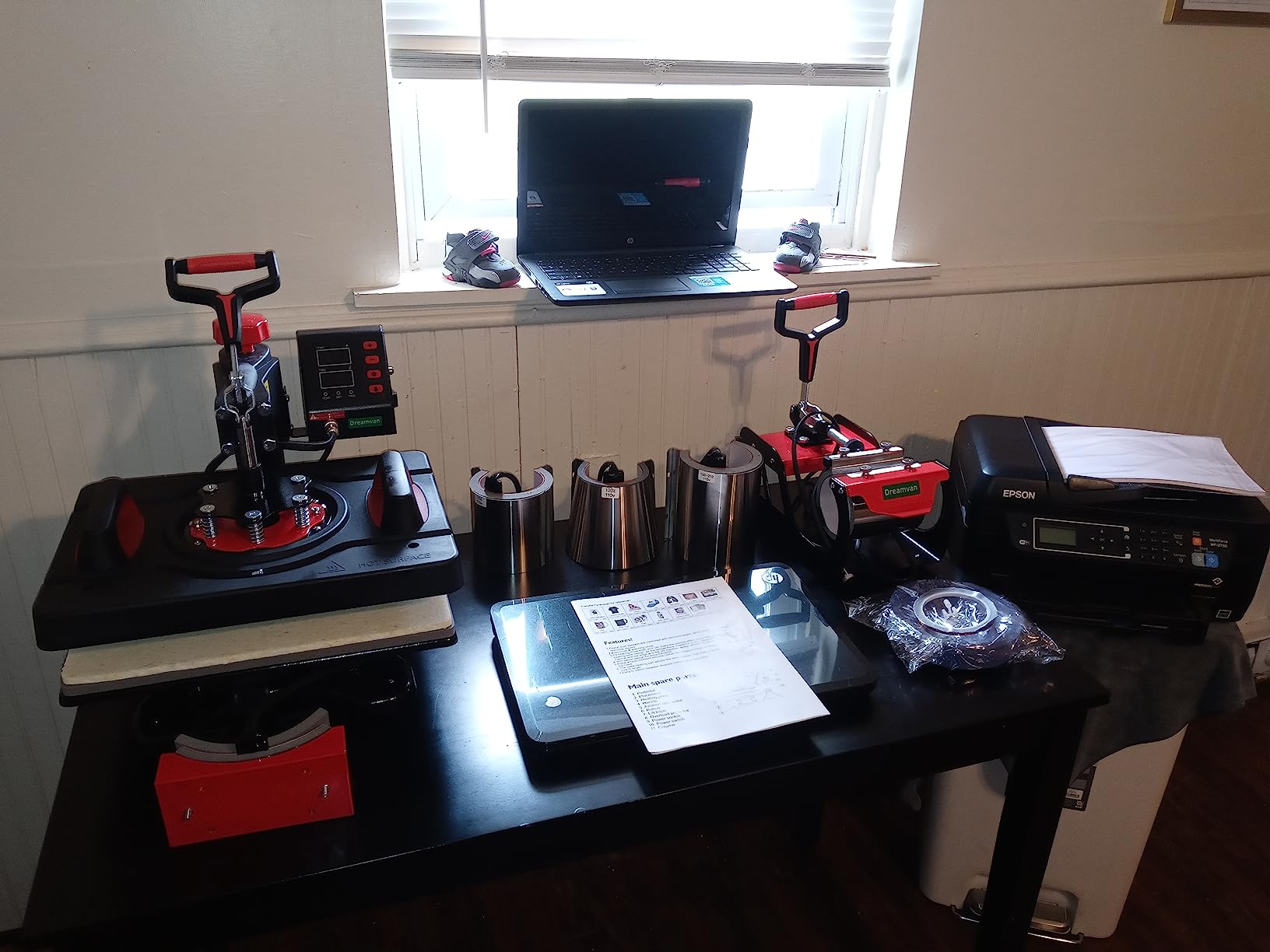
Owners running a small business report thousands of presses and 400 plus mugs from the same unit with consistent results, and the 360 degree swing-away design with adjustable height and a multi-spring pressure knob is safe and convenient to load. It is UL and FCC certified, which some venues and landlords will ask about.
The repeated caveat is documentation. Several buyers explicitly wish the included instructions had a temperature and timer chart, which pushes first-time users toward trial and error. The warranty listing shows 365 days even though marketing copy elsewhere cites three years, so check what arrives with your specific machine.
Is 12 x 15 platen coverage enough for a full-front print?
For a standard full-front band graphic, yes. It is 1.5 inches narrower per side than the 15 x 15 machines, so oversized all-over wraps are the one design to check before you commit. For hats, mugs and small split-run items the platen size is not the limiting factor at all.
It measures 15.8 by 15.5 by 14 inches and weighs 21 kg, so it is sturdy without being immovable.
How do you handle the thin documentation?
Write your own chart on the first run. Press one shirt, note the time and temperature, press a second, then keep going until the transfer peels cleanly. Record the winning combination for cotton, for a cotton blend and for a tri-blend, and that personal table will be more useful than any generic manual.
Customer service actively troubleshoots transfer problems with buyers, which matters when you are learning the attachment formats from scratch.
11. Speedball Beginner Craft Vinyl Kit: Easiest First Print of the Twelve
Speedball Beginner Screen Printing Craft Vinyl Kit, Use with Cutting Machine to Easily Print Custom T-Shirts and Home Decor
Vinyl stencil method
10 x 14 in frame and mesh
4oz black fabric ink
No chemicals required
Pros
- No emulsion filler or darkroom needed
- Vinyl stencils peel off and the screen is reusable
- Screen washes out with plain water
- Highest average rating in the roundup at 4.7
Cons
- Requires a separate vinyl cutting machine that is not included
- Only one ink color is in the box
- Included craft vinyl is thin and many buyers substitute their own
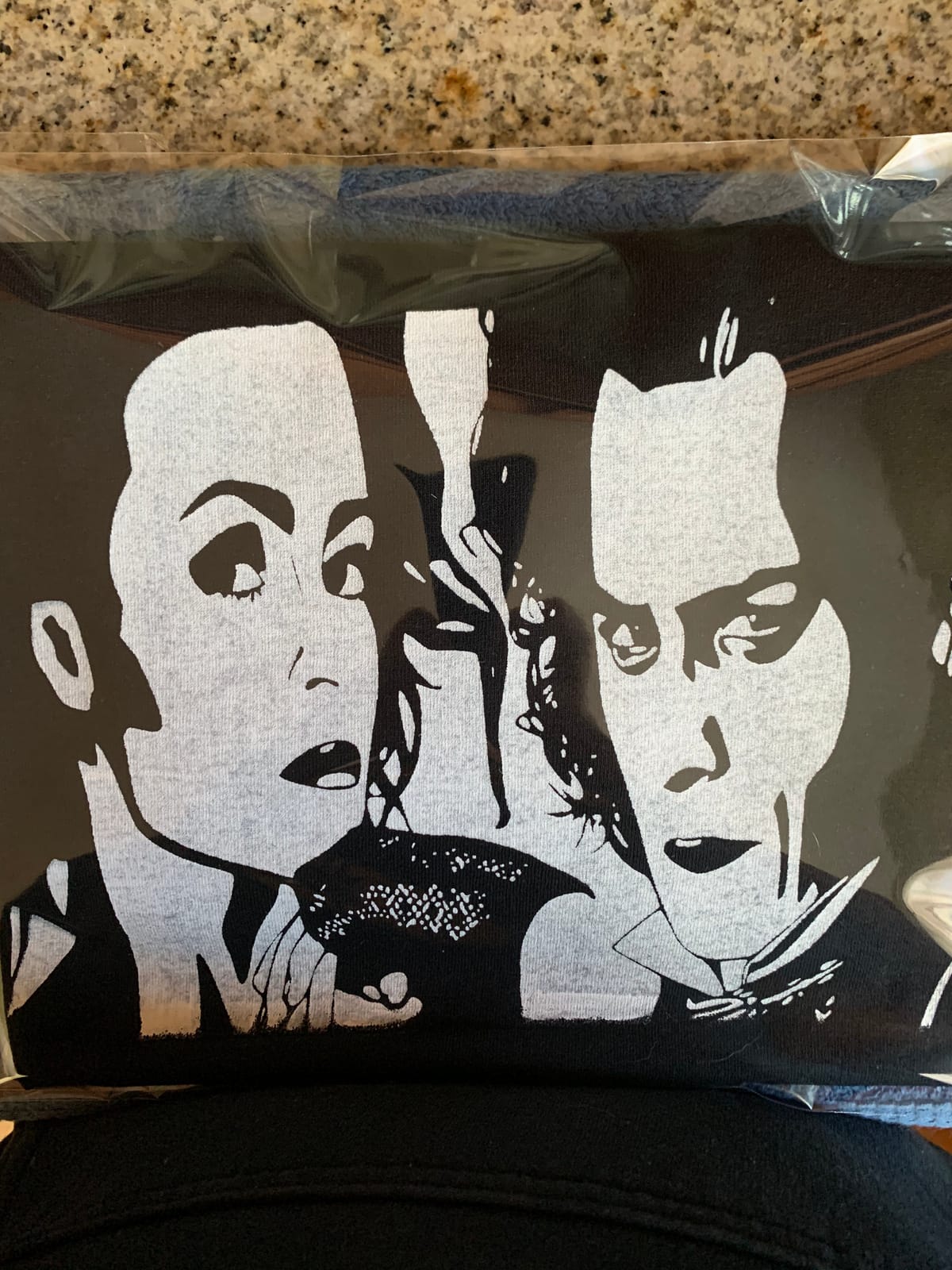
This is the kit that gets a band from zero to a printed shirt fastest. It combines vinyl crafting with screen printing, and because the stencil is cut vinyl rather than emulsion, there are no chemicals at all, no screen filler, and no darkroom. Buyers consistently report completing a first print within 30 minutes of unboxing.
The box includes a 10 x 14 inch wood frame and mesh, 4oz of black fabric screen printing ink, the Speedball Red Baron squeegee, three sheets of craft vinyl, three sheets of transfer tape, Bienfang parchment paper, a craft stick and instructions. The vinyl stencil peels off the screen after printing, so the frame is reused for the next design instead of being thrown away.
At 4.7 stars it carries the highest average rating in the roundup, and the reason is simplicity. The screen washes out with plain water, the vinyl cuts and weeds cleanly, and there is no chemistry to store or dispose of. It works well alongside an existing home cutting machine, which most DIY musicians who design their own artwork already have.
The limits are plain. Only black ink is included, so multi-colour work means buying more ink, and the included transfer tape is close to single-use. Parchment paper goes under thinner items to stop ink bleeding into blurred lines.
Do you need a cutting machine to use this kit?
You need some way to cut the vinyl stencil. A home vinyl cutting machine is not included, and if you do not own one this kit sits on a shelf. If you already cut vinyl for posters, decals or patches, this is the most affordable way to turn that skill into wearable merch.
One sheet of black ink on a shirt beats a design you never printed.
Is one colour enough for a first run?
For a first run, yes. A single-colour crest or a wordmark in one ink is a completely legitimate piece of band merch, and a clean one-colour print looks better than a rushed three-colour attempt. Bands we looked at added colours only after they were confident with registration and cure times.
The frame is 17.5 by 13 by 2.75 inches and the kit weighs 4.8 ounces, so it is genuinely portable for a rehearsal room or a van.
12. VEVOR 4-Color 1-Station Screen Press: Manual Multi-Color on a Budget
VEVOR Screen Printing Machine, 4 Color 1 Station 360° Rotable Silk Screen Printing Press, 21.2×17.7in / 54x45cm Screen Printer Press, Double-Layer Positioning Pallet for T-Shirt DIY Printing
4 color 1 station
21.2 x 17.7 in print area
Double-layer positioning pallet
40 pounds
Pros
- The only manual multi-colour press here and far below a commercial carousel
- 54 by 45 cm print area handles adult tees and totes in one shot
- Single-colour registration is repeatable once it is set up
- Cold-rolled steel frame and steel springs feel substantial
Cons
- Multi-colour registration is difficult with no micro-adjustments on the arms
- Factory spring tension is too high out of the box
- Assembly takes an hour or more and needs real wrenches
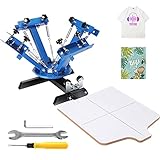
If your logo has more than one colour and you want to print it without buying four separate screens, this is the machine. It is a 4 color, 1 station press with a 21.2 x 17.7 inch (54 x 45 cm) printing area, so an adult tee or a tote fits in one shot without re-loading. You attach a screen, rotate the 360 degree carousel on its independent metal bearings, and print the next colour.
The double-layer positioning pallet has a position stop under each arm to reduce registration deviation, and the cold-rolled steel frame with electrostatic surface treatment, carbon steel springs and a 304 stainless steel rod feels more substantial than the price suggests. It is 40 pounds and the fuselage must be screwed to a workbench for stability.
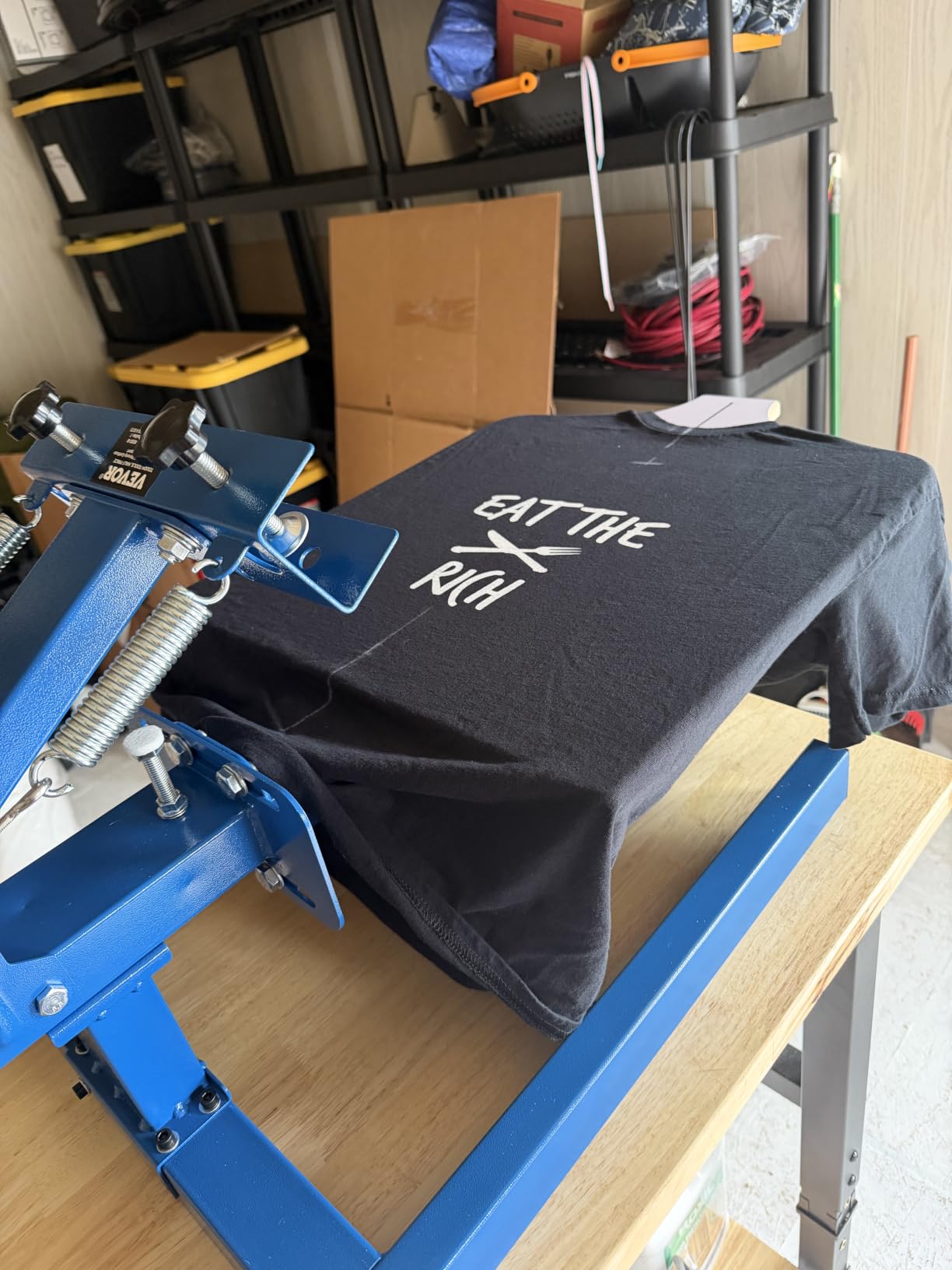
It accepts clothing, pillowcases, fabrics, metals, paper, plastics, wood, glass, ceramics and leather, so it is not limited to apparel. Mechanically inclined owners rate it as a genuinely capable budget entry into multi-colour printing.
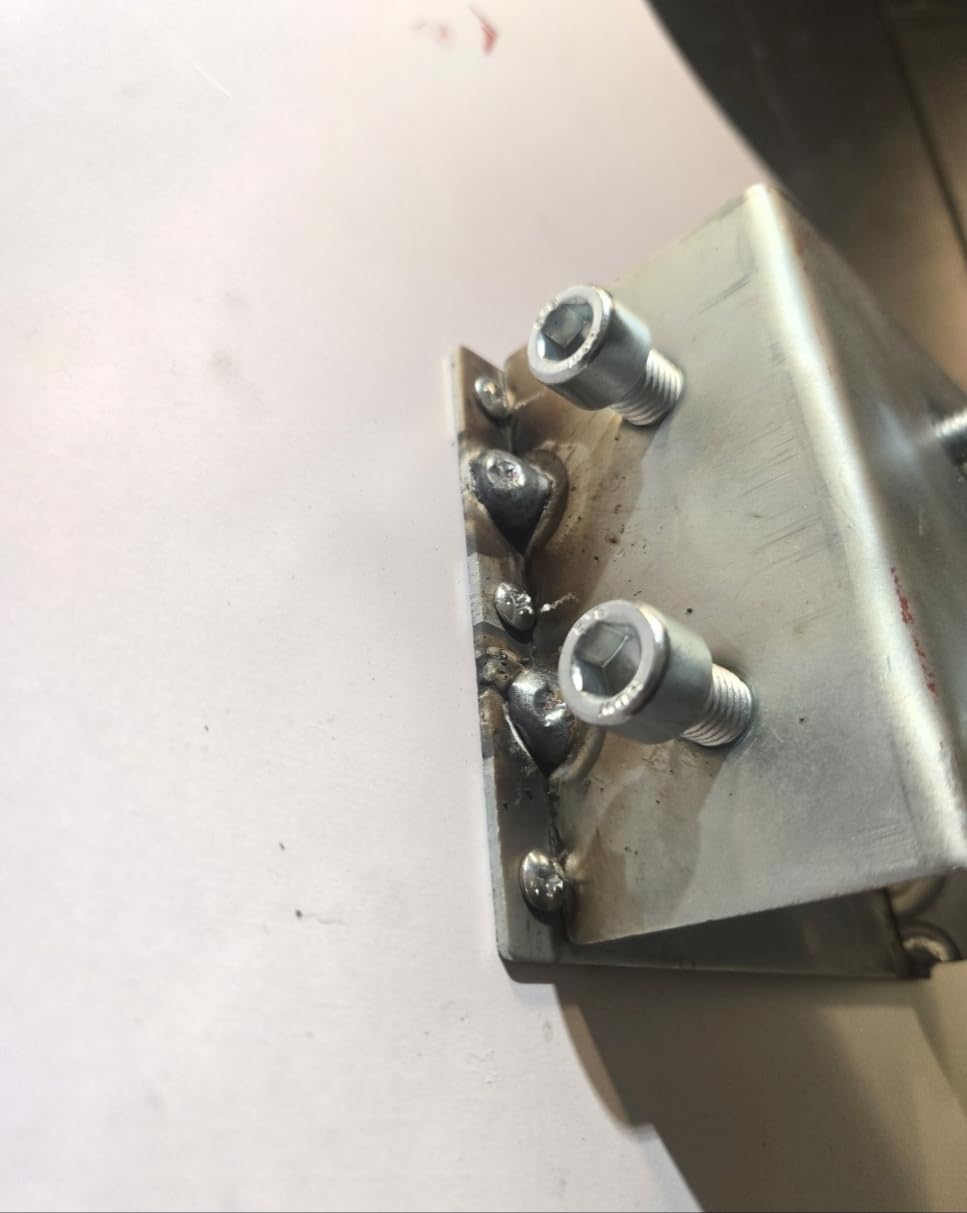
The 4.2 rating reflects setup frustration more than build quality. Multi-colour registration is difficult because there are no micro-adjustments on the arms, the factory spring tension is too high out of the box and can throw the arm back, and the off-contact between screen and platen may need shimming to reach a workable height. Assembly takes an hour or more with real wrenches rather than the supplied stamped tools.
Can a beginner actually get multi-colour registration right?
With patience, yes, but not on the first attempt. Without micro-adjustments, you correct registration by physically moving a screen and re-printing a test shirt, which is exactly how screen printing schools teach it. Budget a stack of test garments and expect the first ten prints to be practice.
Single-colour registration, by contrast, is repeatable print after print once the setup is dialled in, so many bands use this press for a chest logo and a back design rather than one complex multi-colour graphic.
What should you tighten before the first print?
The springs. Owners who had a frustrating first experience and then got the press working consistently report the same fix, so either adjust the spring tension down or swap in softer springs. Shim the off-contact to a workable height, clamp the fuselage to a real bench, and follow a video walkthrough because the written instructions are weak.
It runs on 230 volts, so check that your circuit suits it before you commit.
Screen Printing vs DTF: Which Method for Band Merch?
Screen printing wins on volume and on simple spot-colour artwork. Each screen costs you money to make and time to burn, but after that every shirt from the same screen is close to the same cost, so the unit price drops hard as the run grows. Bands printing 100 shirts of the same two-colour logo get a better per-shirt number on screen.
DTF wins on detail and on flexibility. A design with a photograph, a gradient or a dozen colours prints once and comes off the film without a screen being made, which is why it dominates small runs and one-off prototypes. There is no registration to learn, because the whole design prints in a single pass.
Both need the white underbase story understood from day one. On a dark garment, light ink printed straight onto fabric looks dull and muddy. A white layer goes down first so the colour ink has a bright surface, and getting that layer right is the difference between merch fans wear and merch fans leave on the table.
One practical pattern shows up repeatedly in printing forums: a hybrid workflow where the front chest logo is screen printed because it is simple and low-cost at volume, and the back graphic is a DTF transfer because it is detailed. It is more equipment to keep organised, but it removes the compromise of picking one method for every design.
On the curing question that bands argue about most, the general rule is simple. Plastisol is cured with high, concentrated heat, which is what a flash dryer is built for, while water-based ink is set with sustained lower heat and time, which a heat press and a pressing surface handle. Beginners using water-based ink and a heat press is a combination that works and that many first-time printers land on without regret.
What to Look for in a Band Merch Printing Kit
Platen size versus room. A 15 x 15 inch platen covers full-front and back-of-shirt placements, but the machines with the largest platens are also the deepest. Measure the bench before you choose, and remember the press needs a flat, stable surface and a dedicated outlet nearby.
Wattage and circuits. Draw ranges from 800 watts on the AKEYDIY to 1800 watts on the Fancierstudio. Higher draw means faster recovery and more consistent temperature through a long run, and it also means a circuit that will trip if you share it with a rehearsal amp. If you print at home before a run rather than on the road, this matters much less.
Screen method. The drawing-fluid kits need no emulsion purchase. The photo-emulsion kits support detailed artwork but need a light source, and only some include an exposure lamp. Kits with emulsion but no lamp are an expensive way to discover a gap. The vinyl stencil kits need no chemicals at all but do need a cutting machine.
Attachments versus shirts. A five-in-one or eight-in-one press covers hats, mugs and plates, which is real value if you sell split runs. If you print tees and nothing else, a dedicated single-function press is simpler, lighter and has fewer failure points. The recurring reviews show attachment quality trails shirt-platen quality across this whole category.
Warranty and control electronics. Warranty terms here run from 30 days to two years, and a longer term is reasonable insurance on a machine that runs hot. Memory settings and a piece counter are worth more than they look on a repeat run, because they remove the setup guesswork between batches.
Consumables and hidden costs. Emulsion, sensitizer, transparency film, masking tape, screen filler, ink remover and parchment paper all sit outside the box. Water-based ink needs curing equipment, and underbase white ink is not optional on dark shirts. Budget for supplies before the run, not during it.
Blank shirts. Ring-spun cotton takes ink cleanly and feels soft enough that fans keep wearing the shirt. A cotton blend is more forgiving on registration and lower cost per piece. Polyester and tri-blends need a different ink and a different cure, and they show ink bleed-through on the back of the print more than cotton does. Whatever you choose, buy the same blank for the whole run so the colour matches from shirt to shirt.
Print quality reality. A sharp design on a slightly thin blank will always look better than a sharp design on a heavy one, and an underbase flashed too short is a common reason a dark shirt print cracks after two washes. Test the full cure on a real garment before you commit to a run.
Frequently Asked Questions
What’s better, DTF or screen print for band merch?
DTF is better for small runs, detailed artwork, gradients and one-off designs because the whole image prints in one pass with no screen to make. Screen printing is better for simple spot-colour logos at volume, because after the screen is burned each additional shirt costs far less. Many bands combine both, screen printing the chest logo and transferring a detailed back graphic.
What is the best screen printing kit for a band on a budget?
The Caydo 38-Piece kit gives you four screen frames, six fabric inks, squeegees, inkjet transparency film and masking tape in one box, which covers the drawing-fluid route with nothing else needed. The Speedball Beginner Craft Vinyl Kit is the lowest-cost true entry because it needs no emulsion and no darkroom, though it requires a separate vinyl cutting machine. Either way, plan on adding a heat source for curing.
Do I need a flash dryer, or can I use a heat press?
A heat press will cure water-based ink and set plastisol at higher temperatures for longer dwell, and for a first run or a small batch it is the lower-cost route. A flash dryer concentrates heat on the print area so you can flash and continue immediately, which is what makes large runs efficient. A heat gun and a heat press combination also works for water-based ink if you already have both.
How many shirts should a band print before buying a press?
Screen printing becomes the more affordable method per shirt as the run grows, and the crossover for most two-colour band work sits somewhere in the region of 50 to 100 shirts for the same design. Below that, DTF usually wins because there is no screen cost. Above it, the setup time and material cost of screen printing pay back, especially on simple logos.
Can I print my own DTF transfers at home?
Yes, with a DTF printer, PET transfer film, CMYK plus white ink, a RIP software package to lay out and colour-separate the design, and an automatic powder shaker or a careful manual shake. You then heat press the finished transfer onto a pre-treated shirt. Many bands start by ordering transfers from a specialist and heat pressing locally before investing in the printer itself.
Conclusion
Pick the Fancierstudio 15 x 15 digital heat press if you want one dependable station that handles full-front and back-of-shirt designs, holds repeatable settings, and has the most owner feedback of anything else in this roundup. Add the Speedball Advanced All-In-One kit if your artwork has detail in it, or the Caydo 38-Piece kit if you want a simple text-and-spot-colour logo without a darkroom.
Those three cover most bands we looked at. The rest of the best t-shirt printing kits for band merch on this list earn their place for a specific reason: auto release for throughput, attachments for split runs, memory and a counter for repeat designs, multi-colour registration for complex logos, or a long warranty for peace of mind. Print ten test shirts before the run, keep your cure times written down, and the merch table will take care of itself.