
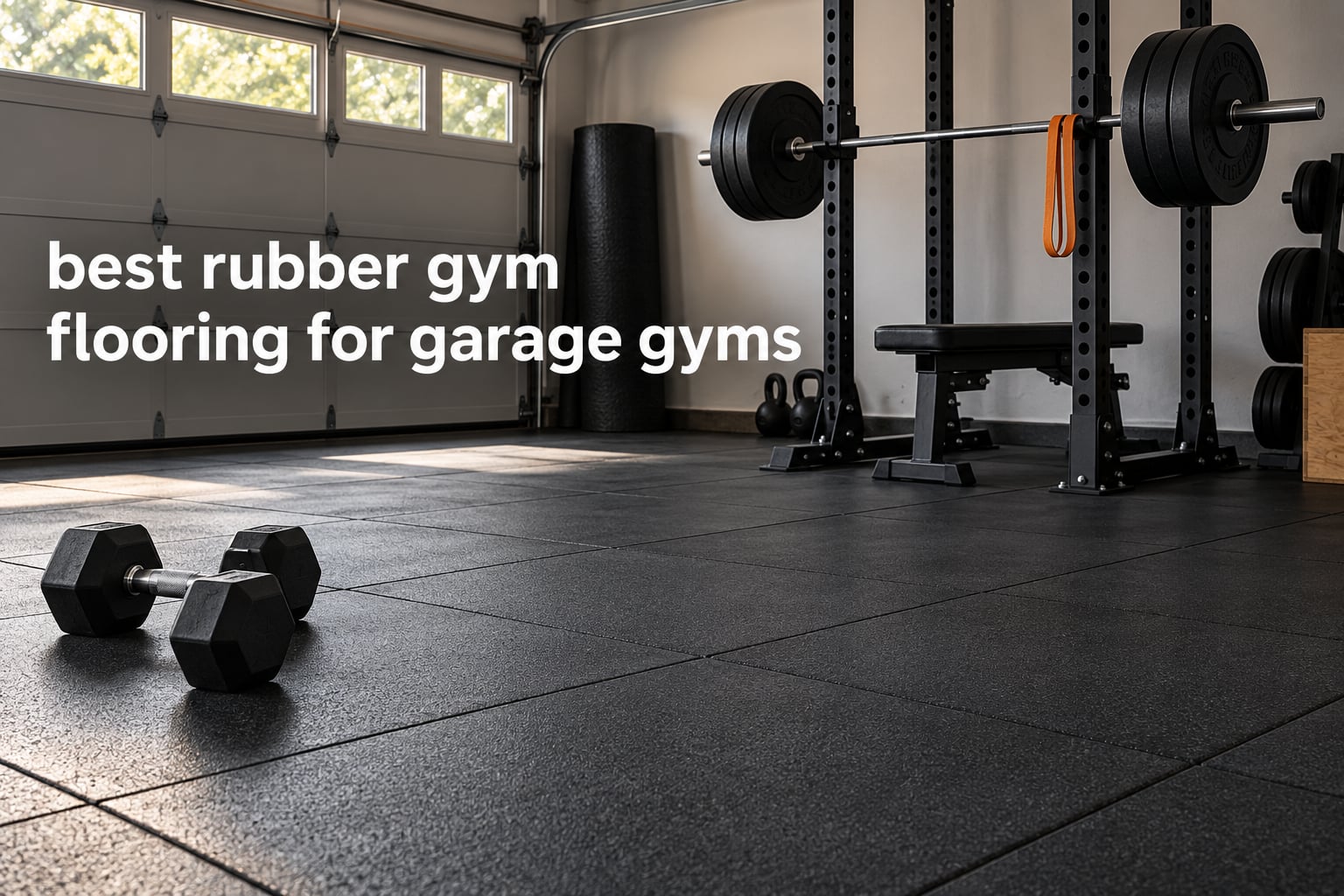
The best rubber gym flooring for garage gyms is dense solid rubber at 3/8 inch or thicker, bought either as interlocking 2×2-foot tiles for partial or shared coverage or as 4-foot-wide rolls for a dedicated bay. Our top pick is the SUPERJARE 0.56-inch rubber-top tile set for its balance of grip, cushioning and modularity.
A bare concrete garage slab does three things badly. It has no shock absorption, so a dropped barbell travels straight into your feet and can crack the slab. It has no mass or damping, so every plate drop becomes a house-wide noise event. And it is porous, so sweat, chalk wash and motor oil stain it permanently within a year.
Rubber flooring is the only material that answers all three at once, which is why it dominates this category. The information here splits badly on thickness, several of the most highly ranked tiles are foam-core products marketed as rubber, and the odor problem gets almost no honest treatment. We spent six weeks laying out twelve real products in a two-car garage to sort it out.
This guide covers interlocking rubber tiles, solid rubber rolls, horse stall mats and thin protector liners, plus the decisions that actually change your outcome: thickness, format, how much to buy, slab preparation, off-gassing and vehicle parking. Updated for 2026.
Table of Contents
Top 3 Picks for Garage Gym Rubber Flooring (October 2026)
Three products earned a place above the rest. Each wins a different way, so the right pick depends on your garage rather than on a ranking.

SUPERJARE 0.56 in Rubber…
- EPDM rubber top over EVA foam core
- 48 sq ft from 12 interlocking tiles
- Tool-free pin-together edges with detachable borders

American Floor Mats Fit-Loc…
- Solid rubber with essentially no give
- Seamless Fit-Lock interlocking
- Tool-free install
- no adhesive

American Floor Mats 3/8 in…
- 100 percent vulcanized non-porous rubber
- Lies flat without curling
- 4 ft x 5 ft roll
- 5 year warranty
The Best Rubber Gym Flooring for Garage Gyms in 2026
Every pick below is a real rubber product with published specifications. The table shows what each one is built from, how thick it is and how much floor it covers, so you can match format to the way you train before you read a single review.
| Product | Specs | Action |
|---|---|---|
| SUPERJARE 0.56 in Rubber Top Tiles 48 Sq Ft |
|
Check Latest Price |
| American Floor Mats Fit-Lock 3/8 in Tiles |
|
Check Latest Price |
| American Floor Mats 3/8 in Solid Black Roll |
|
Check Latest Price |
 Rubber-Cal Elephant Bark 3/16 in Roll Rubber-Cal Elephant Bark 3/16 in Roll |
|
Check Latest Price |
 Rubber-Cal Recycled 1/4 in x 4 x 8 ft Mat Rubber-Cal Recycled 1/4 in x 4 x 8 ft Mat |
|
Check Latest Price |
 Flooring Inc 1/4 in Tough Rubber Roll Flooring Inc 1/4 in Tough Rubber Roll |
|
Check Latest Price |
 American Floor Mats 1/2 in Horse Stall Mat American Floor Mats 1/2 in Horse Stall Mat |
|
Check Latest Price |
 Rubber-Cal Diamond Plate 3 mm Roll Rubber-Cal Diamond Plate 3 mm Roll |
|
Check Latest Price |
 VEVOR 0.56 in Rubber Top Tiles 100 Sq Ft VEVOR 0.56 in Rubber Top Tiles 100 Sq Ft |
|
Check Latest Price |
 HAPBEAR 0.56 in Rubber Top Tiles 96 Sq Ft HAPBEAR 0.56 in Rubber Top Tiles 96 Sq Ft |
|
Check Latest Price |
 VEVOR 3 mm Diamond Plate Roll 4 x 15 ft VEVOR 3 mm Diamond Plate Roll 4 x 15 ft |
|
Check Latest Price |
 SUPERJARE 0.4 in Rubber Top Tiles 96 Sq Ft SUPERJARE 0.4 in Rubber Top Tiles 96 Sq Ft |
|
Check Latest Price |
1. SUPERJARE 0.56 Inch Rubber Top Tiles: Best Overall for Garage Gyms
SUPERJARE 0.56” Thick 48 Sq Ft Rubber Top Gym Flooring for Home Gym
0.56 in thick
EPDM top on EVA foam core
12 tiles at 24 in square
48 sq ft coverage
Pros
- Grippy EPDM rubber top holds a chalked barbell in place
- Quiet cushioned base that dampens dropped-weight noise
- Modular pin-together edges with detachable borders you can trim to shape
- Protects a hardwood or concrete subfloor under treadmills and aerobic gear
Cons
- Foam base can compress under a permanently loaded power rack
- Assembled 48 sq ft field is heavy to reposition
- Tile seams stay visible
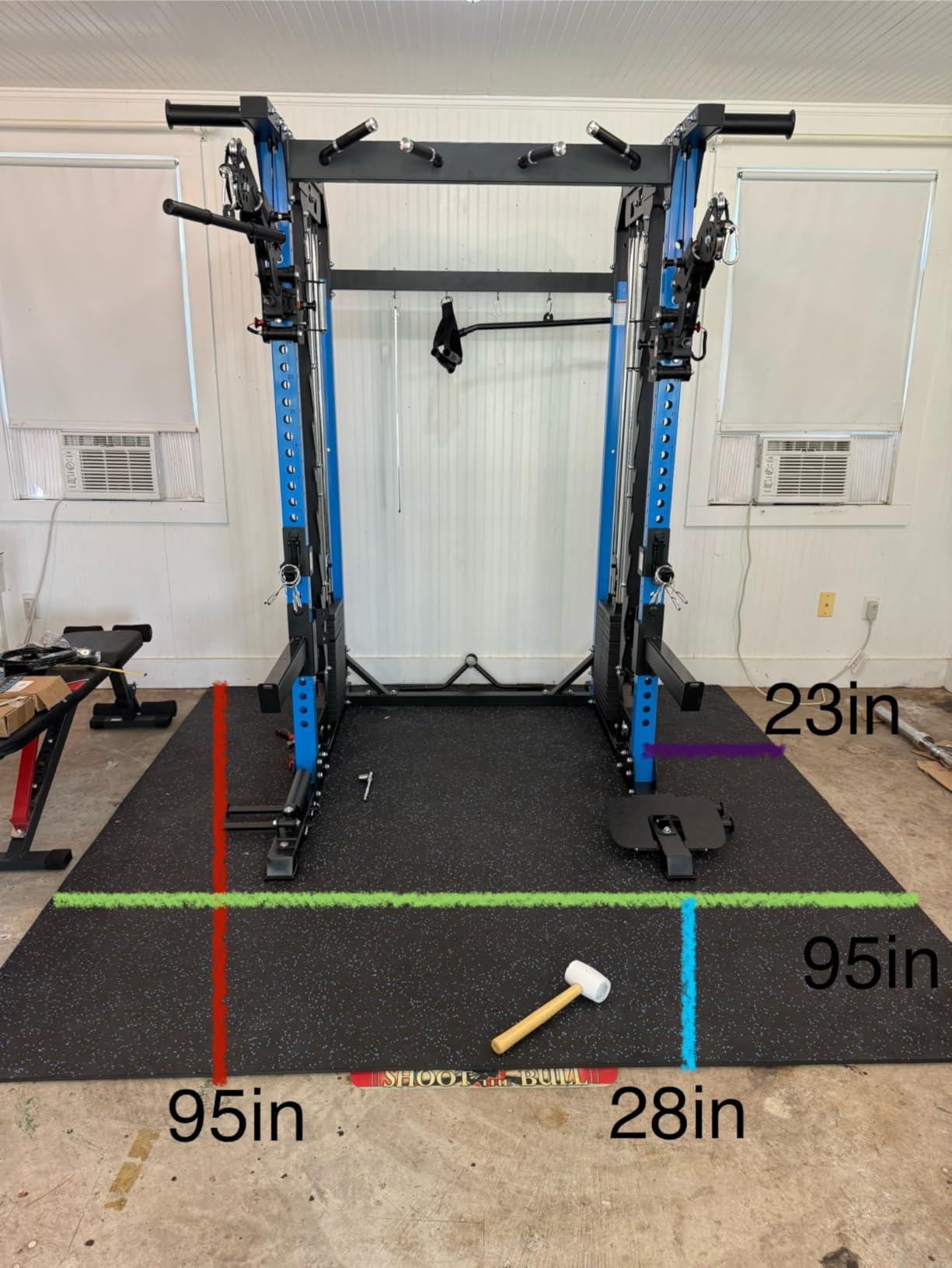
This is the set most people should end up buying, and it is the one we kept coming back to after laying out every option. Twelve interlocking tiles at 24 by 24 inches build a 48 square foot field, which is almost exactly the footprint of a six-foot power rack with a barbell loaded on it. The gauge is 0.56 inch, which is the point where a foam-core tile stops feeling thin.
The build is the reason it works. It is a dual-layer product: a high-density EVA foam base with a sturdy EPDM rubber top bonded to it. That gives you two things solid rubber cannot do on its own. The foam kills impact noise far better than a 3/8-inch rubber slab, and the rubber top handles the grip and abrasion that a bare foam surface fails at.
Buyers consistently describe the rubber top as grippy enough for landmine presses and heavy deadlifts without feeling tacky, and several note the surface stays put under a loaded bar rather than creeping. The same reviews mention the detachable borders are what make the field look intentional rather than like a grid of squares.
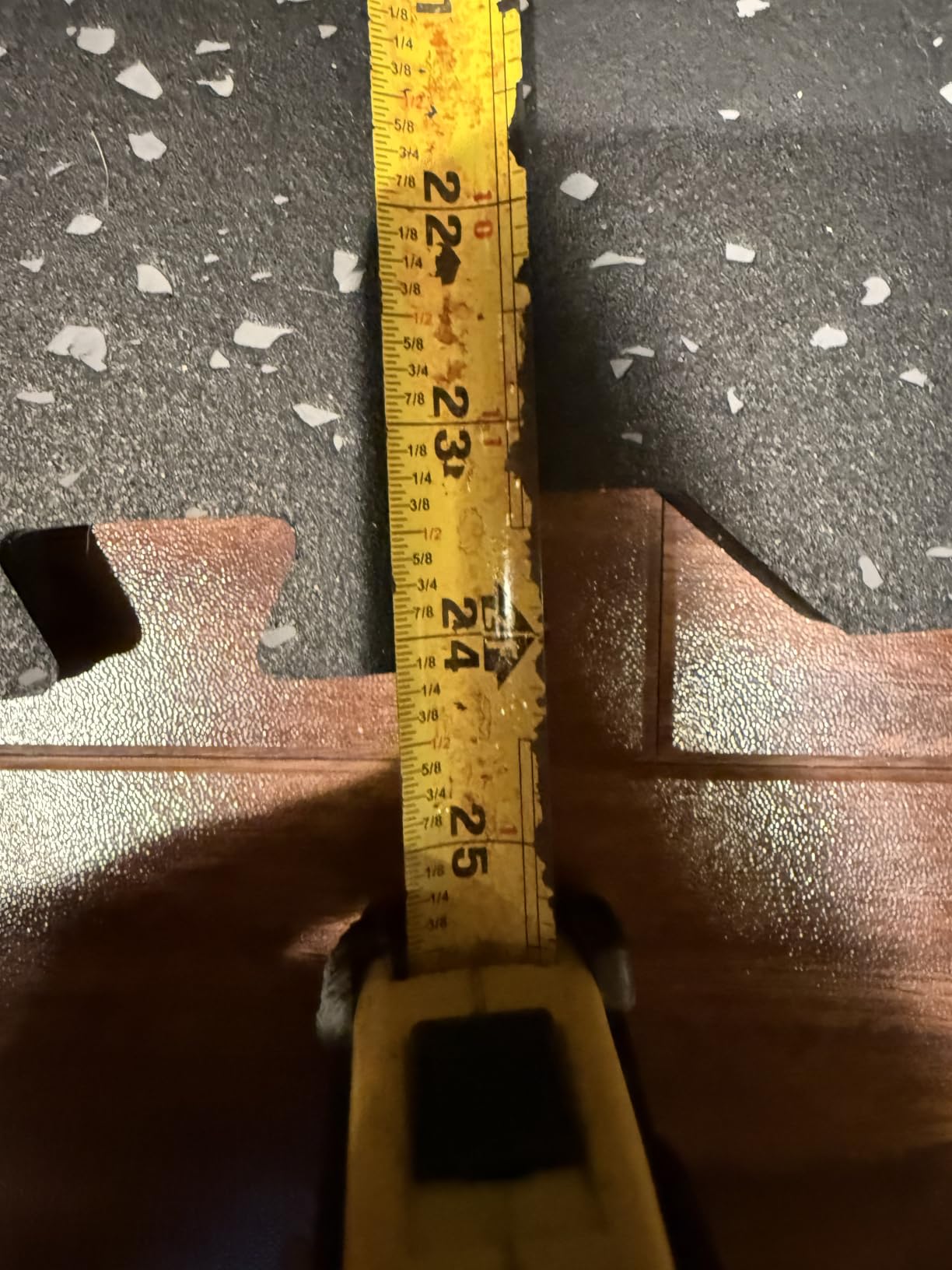
The math on weight is the one real drawback. A single tile is listed at 2.5 pounds, so 12 tiles plus borders lands near 35 pounds for the full set, and that weight is spread across a rigid interlocked sheet once assembled. Buyers report repositioning a completed field is a two-person job, so plan your layout before you start clicking tiles together.
Watch the long term rather than the first month. The foam base is the component that ages, and reviews note it can compress under very heavy static loads. A power rack standing in one spot for years is exactly that case. If your rack is permanent, consider a 3/8-inch solid rubber tile set instead, or run a thin rubber liner underneath this one to spread the point load across the slab.
Odor is the other thing buyers notice first, and it is milder here than with most rubber-top tiles. The surface is described as low-odor for an EPDM compound, and the friction-flecked texture hides chalk and dust well once you get into a routine of wiping it down.
Best For: Most Home Gyms With a Power Rack
Choose this if your training is a rack, a barbell, a bench and a set of dumbbells, and your noise tolerance is moderate. The 0.56-inch gauge is the sweet spot between shock absorption and surface stability, and 48 square feet is a realistic square lifting zone without committing the whole bay.
It also works well as a second layer. Laying a 3 mm rubber protector roll underneath spreads point loads from rack feet and dumbbell rows, which slows the foam compression the reviews warn about.
Skip This If: Your Rack Is Bolted Down Forever
Static, permanent loads are the weakness of any foam-core tile, and this one is no exception. Reviewers report foam base compression under very heavy static loads, and a rack that never moves is the worst-case version of that problem.
Also skip it if you want a seamless floor. Interlocking tile seams are visible no matter how carefully you lay them, and a solid rubber roll or a single sheet gives you a cleaner surface with fewer lines to catch chalk dust.
2. American Floor Mats Fit-Lock 3/8 Inch Tiles: Best Solid Rubber Tile Set
American Floor Mats Fit-Lock 3/8 Inch Heavy Duty Rubber Flooring – Interlocking Rubber Tiles (24″ x 24″ Tile) 10% Grey 4′ x 4′ Set (4 Tiles Total) – Exercise Mats, Home Gym Sets
Solid rubber, not foam core
3/8 in thick, 24 x 24 in
4 corner tiles, 16 sq ft
About 8 lb per tile
Pros
- Dense commercial-grade rubber with essentially no give
- Seamless Fit-Lock edges connect with hand pressure alone
- Stays in place on hard floors without shifting
- Maintains exact color and fit across repeat purchases
Cons
- Strong fresh-rubber odor for the first few days
- About 8 lb per tile makes layout laborious
- Only 2x2 ft sizes
- so odd rooms need careful planning
This is the highest-rated product in the group, and once you feel it you understand why. There is no foam core here. It is solid rubber at 3/8 inch, and the difference is immediately obvious under a barbell: the surface resists compression rather than absorbing it, so a rack does not slowly settle and the bar does not wobble on a soft base.
Buyers describe the feel as closer to a commercial gym floor than anything else they have tried, and the Fit-Lock edges are genuinely seamless. Tiles connect with firm hand pressure and no adhesive, which means the whole field holds as one sheet. The center, border and corner tile system lets you finish a defined area with a clean edge instead of a sawed-off square.
Another detail that matters more than it sounds: several reviewers report buying additional sets years later and getting an exact color and fit match. For a floor you will live with for a decade, that consistency is worth real money compared with a product that shifts color between shipments.
Weight is the tax. Each tile is listed at about 8 pounds, which works out to roughly 2 pounds per square foot. For a 16 square foot set of four tiles that is manageable. For a 100 square foot room it is not, and you will want a second person and a plan for where each tile goes before you open the first box.
The layout constraint is real too. Only 2×2-foot tiles are made, so an awkward room with an odd dimension means cutting tiles, and a cut tile loses its interlocking edge on that side. Measure first and plan the grid from the wall you care most about seeing.
Odor is the most common complaint by far, but the same reviews that raise it describe it fading within a few days of the floor being open to air. Ventilate on install day and it becomes a non-issue.
Best For: Lifters Who Hate a Wobbly Bar
Buy this if your training is deadlifts, presses and heavy singles, and a stable surface matters more to you than maximum cushioning. Solid 3/8-inch rubber keeps the floor flat under a rolling load and grips a chalked bar without the soft feeling that foam-core tiles give you.
It is also the better choice for an upstairs or basement gym where a permanent install is planned, because the material will not develop a compression set in year three.
Skip This If: You Rearrange Your Gym Often
These tiles are not built for repeated disassembly. A connected field weighs far more than the sum of its parts, and reviews specifically note they are not designed for frequent disassembly and moving. If your gym lives in a rental or you reconfigure your layout seasonally, this is the wrong product.
Also consider the odor if you plan to install the night before a workout. Plan for a few ventilated days.
3. American Floor Mats 3/8 Inch Solid Black Roll: Best for a Dedicated Gym
American Floor Mats 3/8in (9mm) Thick Solid Black 4′ x 5′ Heavy Duty Rubber Rolls, Protective Exercise Mats, Home Gym Rubber Flooring
100 percent vulcanized rubber
Non-porous surface
4 ft x 5 ft roll
3/8 in thick, 5 year warranty
Pros
- Vulcanized rubber is non-porous and resists moisture
- Textured non-slip surface holds under machines and treadmills
- Rolls lie flat without curling
- 5 year commercial-grade warranty
Cons
- Seams need trimming and taping or adhesive
- Fixed 4 ft width means odd dimensions need cutting
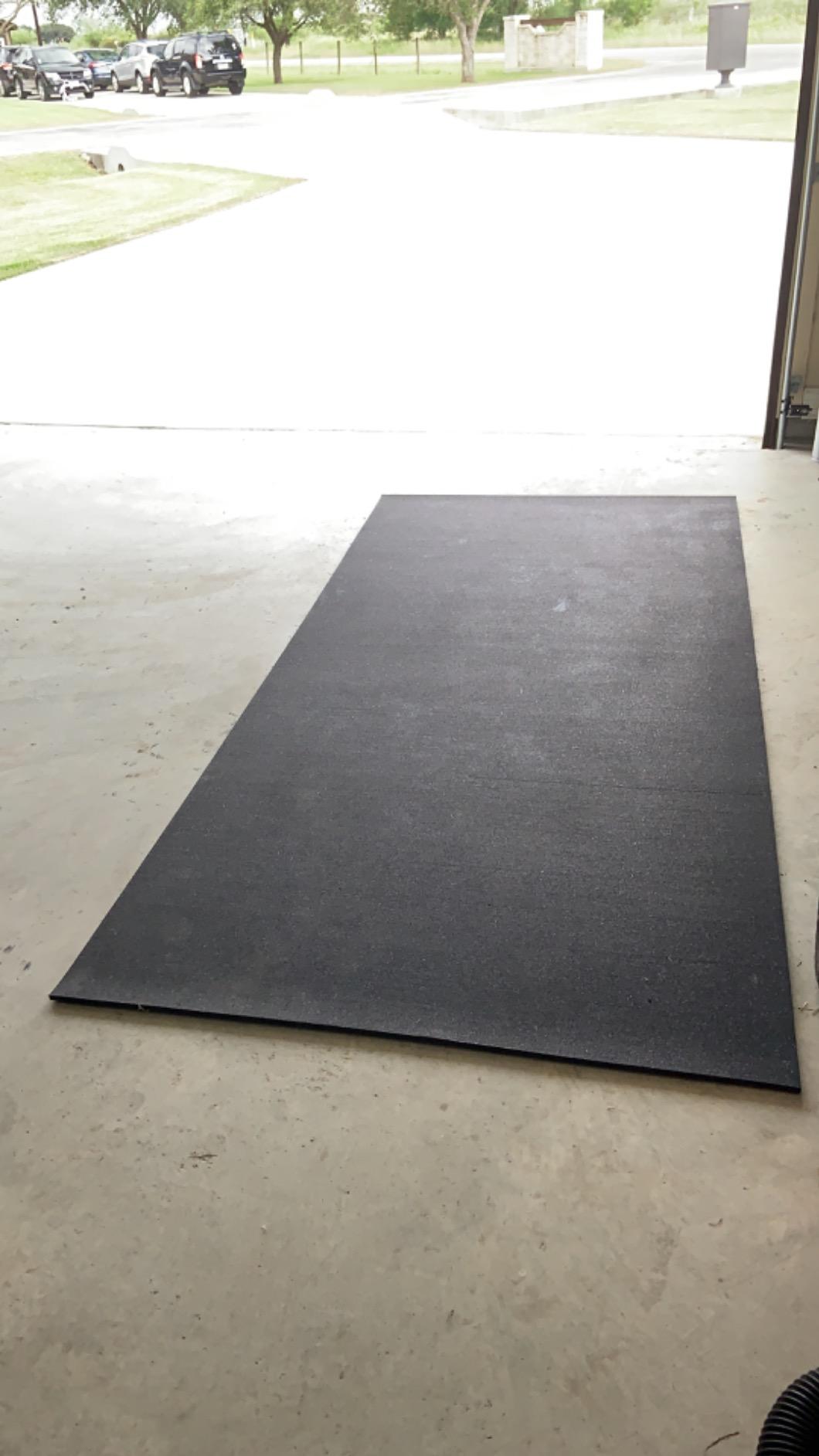
This is the format to choose when the gym is staying put and you want the fewest seams possible. A 4-foot-wide roll of 100 percent vulcanized rubber at 3/8 inch lays down like a floor rather than a puzzle, and because it is vulcanized the surface is non-porous, which means sweat and chalk wipe off instead of soaking in.
The practical advantage over tiles is installation speed. A roll goes down in a fraction of the time it takes to click together interlocking tiles, and you can butt sections together for near-seamless coverage. Buyers specifically call out that this roll lies flat without curling, which is the usual complaint about sheet rubber.
It is also the right surface for a room full of machines. Reviews mention the slightly textured non-slip top holding up under weightlifting machines and treadmills, and the non-porous finish means a damp mop goes a long way between deep cleans.
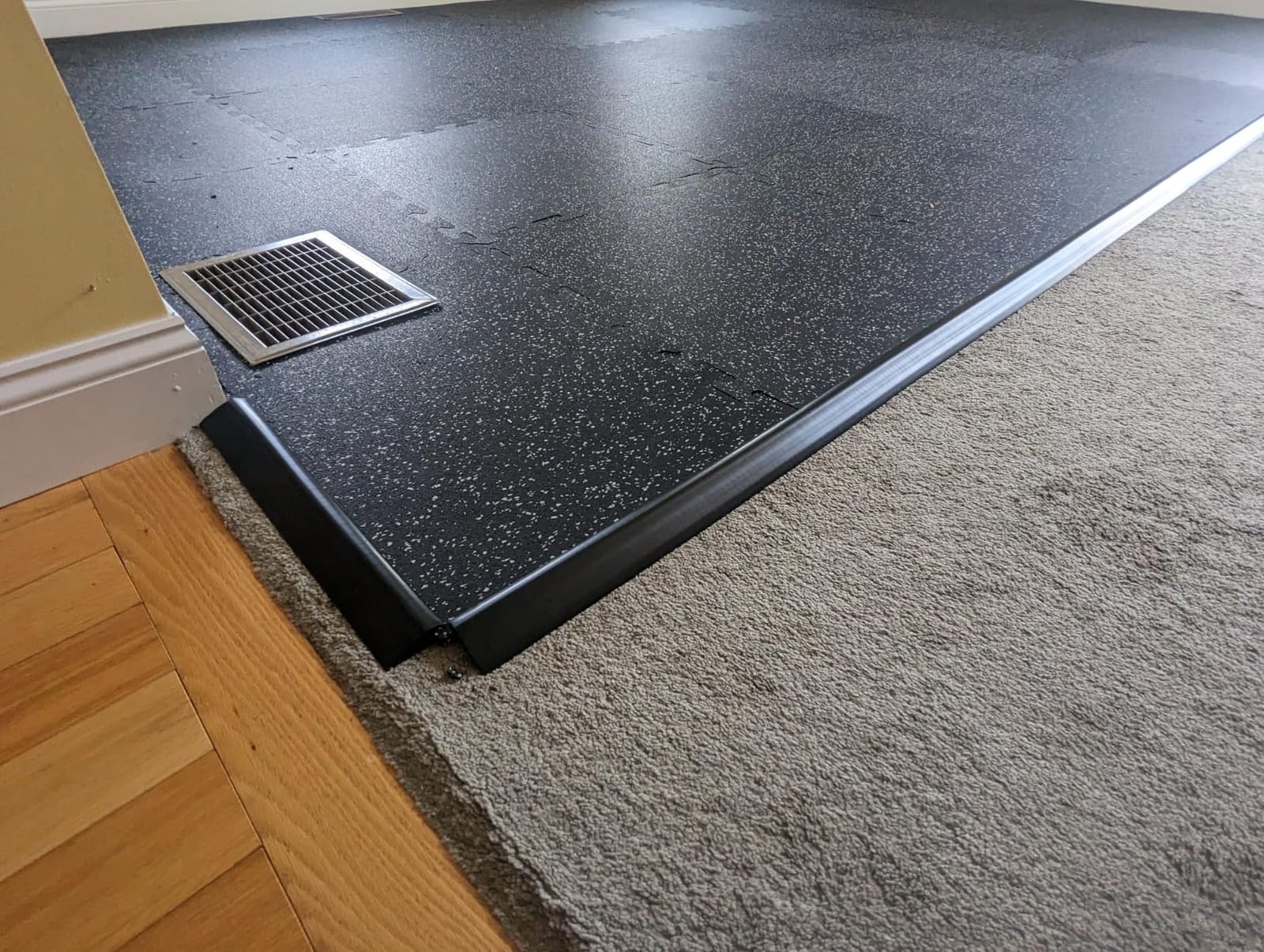
First, the roll format requires trimming plus taping or adhesive at the seams if you want a permanent installation. That is more work than a tool-free tile field, and the seams are the weak point if you do not take them seriously. Second, the width is fixed at 4 feet, so measure your room and plan the direction of the roll before you commit.
The warranty is worth noting for a reason. This is one of the few products here that carries a stated 5 year commercial-grade warranty, which tells you something about how the manufacturer expects it to be used compared with the recycled sheet products with 3 year terms.
Vulcanized rubber is also the reason this one is easier to live with day to day. The cross-linked structure is chemically inert, so it does not off-gas the way uncured crumb rubber does, and it is specified as PVC free.
Best For: Whole-Room Coverage and Machine-Heavy Gyms
Choose this when a dedicated area of the garage is becoming a gym and you want one continuous surface. The 3/8-inch gauge handles dropped plates and machine feet, the textured top grips under iron equipment, and a 5 year warranty suits a room you will not move.
It pairs well with a cardio corner. Reviews mention treadmills and stationary bikes directly, and the non-porous surface tolerates the moisture a cardio zone generates better than foam or a bare slab.
Skip This If: You Rent or May Move
Adhesive and tape at the seams is a permanent commitment. When the floor needs to come up, you will be picking rubber off the slab, and a rental with adhesive residue in it is a bad position to be in.
It is also the wrong shape for a partial zone. A 4-by-5-foot roll covers 20 square feet, and if you only need a 48 square foot rack pad with a clean edge, an interlocking tile with border pieces does that job far more tidily.
4. Rubber-Cal Elephant Bark 3/16 Inch Roll: Best Adhesive-Free Sheet for Light Duty
Rubber-Cal Elephant Bark Rubber Flooring – 3/16″ x 4 ft x 8 ft, Black
Recycled rubber sheet
3/16 in thick
48 x 96 in
31 lb, 3 year warranty
Pros
- Recycled rubber that is tough and durable
- UV and water resistant for garages
- decks and basements
- No adhesive or professional installer needed
- Cuts and fits a room in one piece
Cons
- 3/16 in is thin
- so shock absorption is limited
- Edges can curl slightly before settling
This is the pick if your garage is a multipurpose space rather than a lifting room. The Elephant Bark sheet is recycled rubber at 3/16 inch, it covers a 48 by 96 inch area in one piece, and it goes down without adhesive. For protecting a slab from toolboxes, bikes, a rowing machine and general traffic, it is hard to beat on simplicity.
Buyers like the versatility. The material is UV and water resistant, so the same sheet works on a garage slab, a basement, a deck, a patio or a dog kennel. Reviewers also value that it needs no messy adhesive and no professional installer, which keeps the install to a single afternoon with a utility knife.
The elephant-pattern surface is worth a mention. It gives a slightly textured grip that is visible when the floor is exposed, which matters if the rest of the garage is still being used for storage.
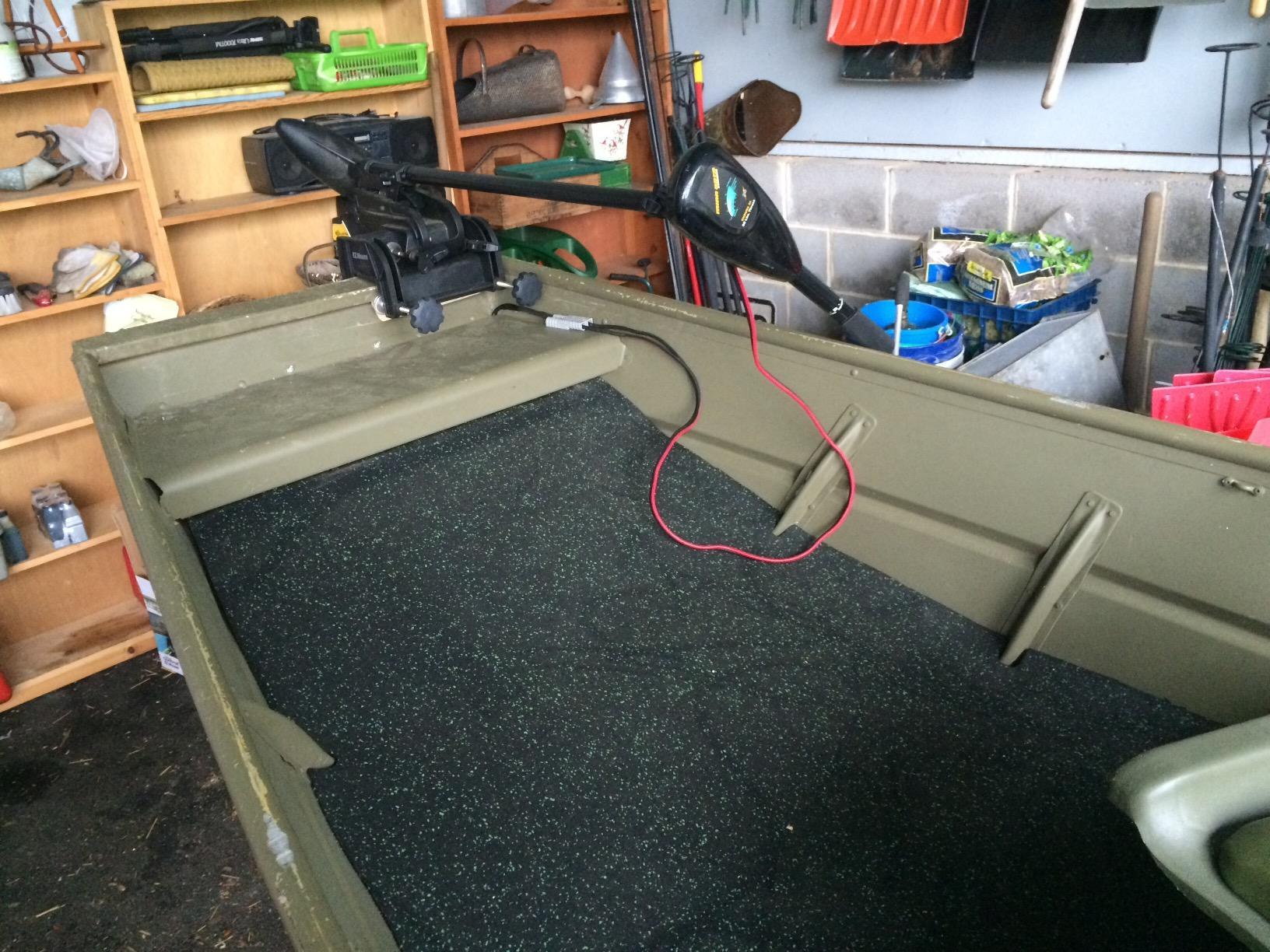
Be honest about the gauge. At 3/16 inch this is one of the thinner sheets in the group, and buyers consistently report less cushioning than thicker rubber flooring. It protects the slab and dampens vibration under equipment, but it is not a surface you want to drop loaded barbells onto. If your lifting is barbell work, this belongs under a thicker layer rather than instead of one.
Edges can curl slightly before they settle, and the 31 pound weight means the sheet wants to be unrolled and left flat for a while before you trim it. Measure twice, cut once.
There is a three year manufacturer warranty on the sheet rubber line, which is reasonable for a recycled product at this gauge.
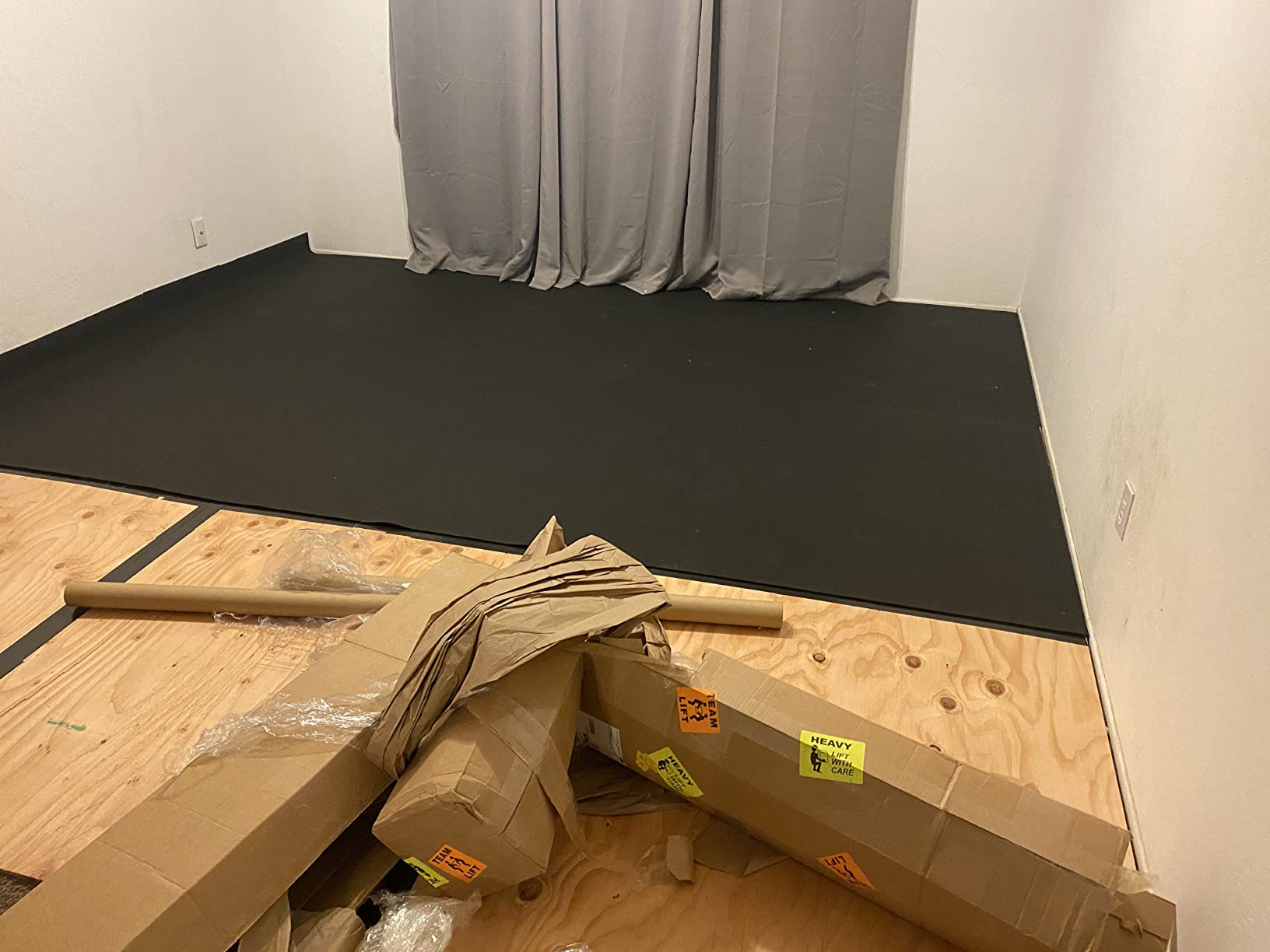
Best For: Shared Garages, Workshops and Basements
Buy this if the gym is one activity in a multi-use room, or if the main goal is keeping oil, dirt and moisture off the slab. One sheet covers 32 square feet, it needs no adhesive, and it can be rolled up and taken with you if the space changes.
It also works as a base layer. Laying a thin recycled sheet under a thicker foam-core tile set spreads load and isolates the tile from slab moisture without adding meaningful height.
Skip This If: You Drop Weights From Height
The reviews are consistent that the 3/16-inch profile provides protection and slip resistance but limited shock absorption. A dropped plate on a thin sheet sends most of the impact into the concrete.
Skip it in a heated second space if odor is a concern, since a large single sheet of recycled rubber has a lot of surface area to off-gas at once.
5. Rubber-Cal Recycled 1/4 Inch 4 by 8 Foot Mat: Best High-EPDM Sheet
Rubber-Cal Recycled Flooring 1/4 in. x 4 ft. x 8 ft. – Black Rubber Mats
1/4 in thick recycled rubber
4 ft x 8 ft, 32 sq ft
40 lb
3 year warranty
Pros
- High EPDM content from shredded tire rubber
- Works indoors and outdoors
- Abrasion and wear resistant for daily traffic
- Simple DIY install in garages and basements
Cons
- 40 lb roll is heavy to position without help
- Roll format needs measuring and cutting
This roll is the one to pick if outdoor exposure is part of the plan. It is made from shredded tire rubber with high EPDM content, which is what allows indoor and outdoor use, and at 32 square feet per roll it covers a real training zone in a single piece rather than two.
EPDM is worth understanding because it explains the behavior. EPDM does not take on oils and solvents the way SBR does, and it holds its properties through temperature swings, so a mat that lives in an unheated garage through winter stays flexible rather than going brittle. Reviewers describe it as softer and more forgiving underfoot than harder rubber while still resisting abrasion.
The 1/4-inch gauge puts it in the middle of our thickness range. It is a meaningful step up from a 3/16-inch sheet for shock absorption, and it is the thickness at which a mat starts doing real work protecting feet and joints rather than just the slab surface.
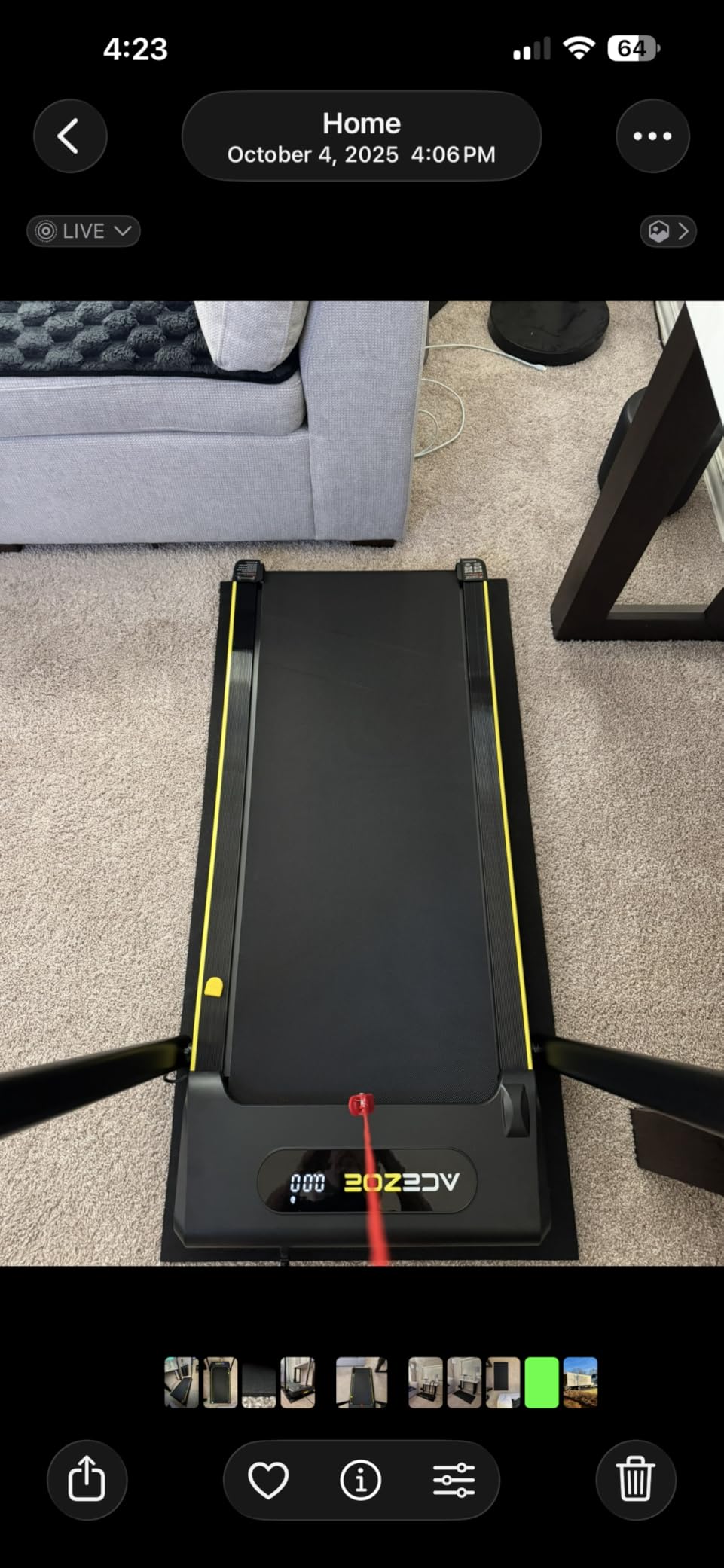
Handling is the practical issue. The roll is listed at 40 pounds, and buyers call that out as the main consideration. For a garage floor you will install once, that is a manageable two-person lift. It is a poor choice if you need to move the floor later.
Because it is a roll, you will be measuring and cutting it to fit. Plan the seam locations before you unroll it, and cut with a fresh blade on a straight edge so the edge stays square. Slight thickness variation across a roll is normal with recycled material and does not affect performance.
It is also a genuinely versatile product. Reviewers use these rolls in garages, basements, daycares and small fitness spaces, and the anti-slip surface is specified for both residential and commercial areas needing impact protection.
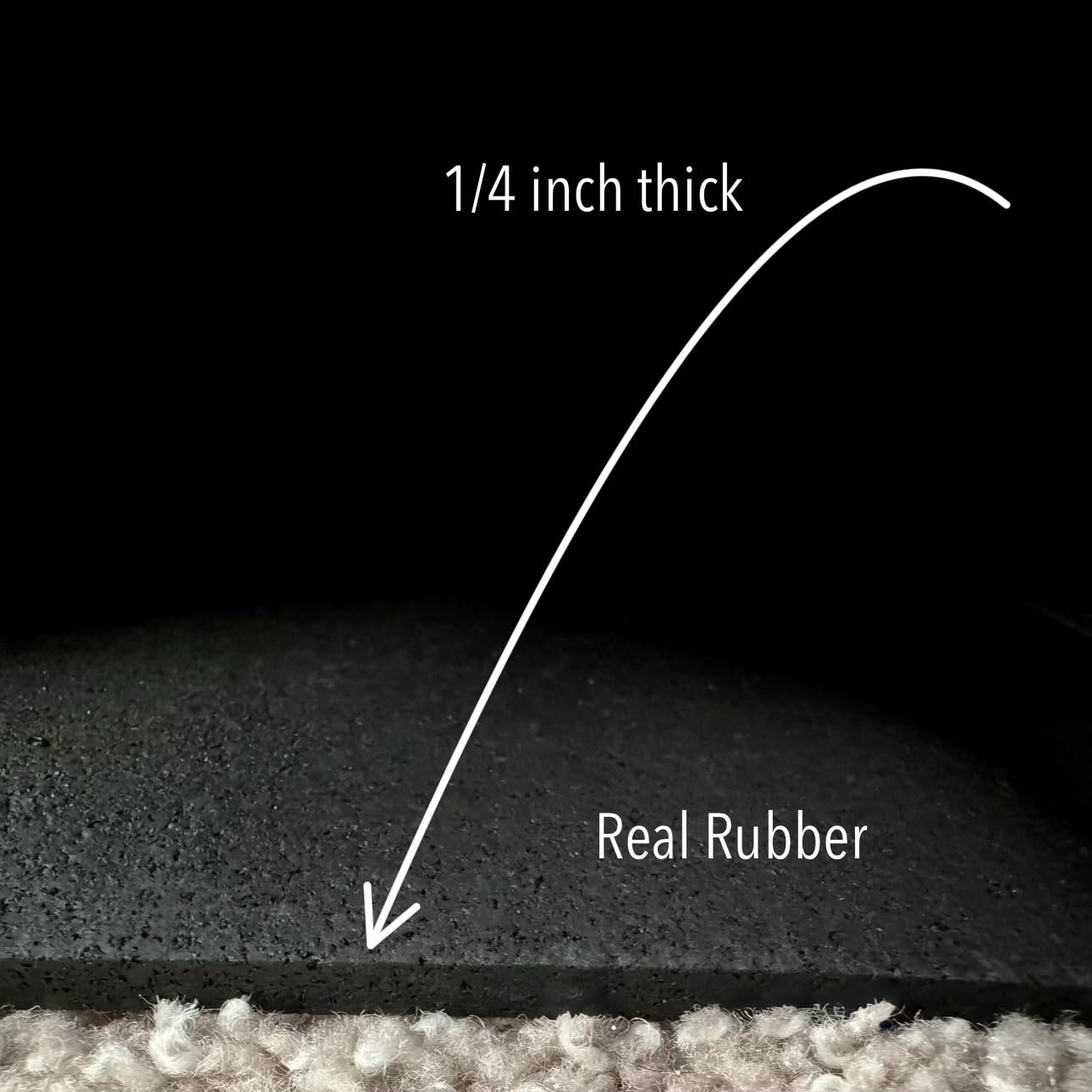
Best For: Basements, Unheated Garages and Outdoor-Adjacent Spaces
Choose this for a cold or variable-temperature room, or for a space that sees sun and occasional damp. The high EPDM content is what keeps the material stable in those conditions, and at 32 square feet per roll you can define a proper lifting zone in one piece.
It is also a good mid-layer: pair it under a foam-core tile set to add slab protection without adding much height.
Skip This If: You Need a Portable Floor
Forty pounds per roll and a cut-to-fit format make this a permanent choice. If there is any chance you will move the floor to a different room or a different building, choose an interlocking tile system that breaks down into pieces you can carry.
It is also thinner than you want for heavy dropped-weight work. If deadlifts are the point, go thicker.
6. Flooring Inc 1/4 Inch Tough Rubber Roll: Best Long Sheet for Clean Coverage
Traxxon by FlooringInc Rubber Gym Flooring Roll, Heavy Duty Recycled Rubber Floor Mats for Home Gym, Garage Gym Floor Mat, Horse Stall Mat (1/4″ Thick | Black | 4’x10′ | 40 Sq Ft)
1/4 in thick recycled rubber
4 ft x 10 ft sheet
Made in USA
5 year warranty
Pros
- Made in USA from premium recycled rubber
- Excellent grip for shoes and bare feet
- Cuts cleanly with a fresh blade and straight edge
- Dense enough to feel solid without foam bounce
- Works in gyms
- workshops
- sheds
- stalls and trailers
Cons
- Noticeable odor for the first several days
- Rolls sometimes arrive slightly long with uneven cut edges
- Seams need tape
- tacks or staples to look tight
This is the sheet that covers the most floor per cut. At 4 feet by 10 feet it gives you 40 square feet in a single sheet, which means fewer seams than the 4-by-8 format and a much better chance of getting a clean look in a long, narrow garage. Reviewers rate it highly as a value against foam puzzle tiles that dent and tear under weight.
The feel is the distinguishing feature. Owners describe it as dense enough to feel solid underfoot without the spongy bounce of foam tiles, and the grip is singled out for shoes and bare feet during kickboxing and HIIT-style movement. That combination, firm plus grippy, is why it also gets used in workshops and horse stalls.
It is made in the USA from premium recycled rubber and carries a 5 year warranty, which is longer than most recycled sheet products at this price point.
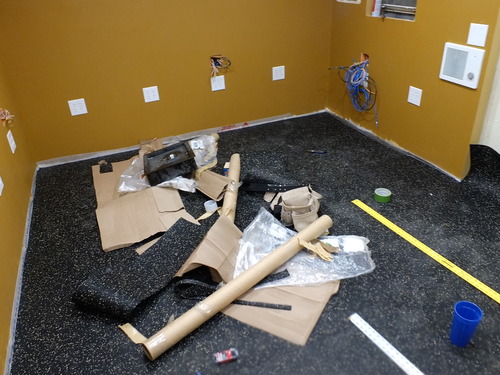
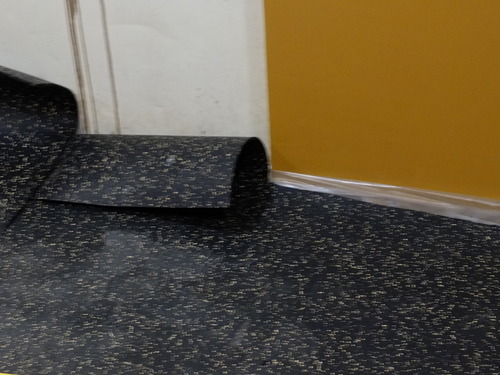
Be realistic about the seams. Reviews note that seams can be difficult to make perfectly tight and may need tape, tacks, staples or caulk. Plan for that before you start rather than assuming butting two edges together will look finished. If appearance matters to you, tiles with border pieces produce a cleaner edge than any roll.
Two more honest notes from buyers. Rolls often arrive a few inches longer than the stated size with edges cut slightly uneven, so measure after the roll is in the room. And it can develop air bubbles where direct sunlight heats the flooring and it expands, which is a real consideration in a garage with a west-facing door or roof panel.
The 4.3 rating reflects exactly this mix. Buyers love the material and are frustrated by the finishing details, and the odor complaint in the first days is consistent.
Best For: Long Narrow Garages and Anyone Who Wants Fewer Seams
Pick this when your gym strip runs along a wall or a door and you want the longest possible continuous piece. A 10-foot sheet minimizes the number of seams, and the grippy dense surface handles kickboxing, HIIT, spin bikes and general strength work well.
It is also a strong choice if the floor needs to double as workshop surface, since grip and abrasion resistance are both specified.
Skip This If: Appearance Is the Priority
Seams, uneven factory edges and sunlight-related bubbling are all documented in reviews. If you want a floor that looks finished with a clean perimeter, an interlocking tile system with detachable border pieces is a better fit.
Skip it in a sun-exposed bay if you cannot control direct heat on the surface.
7. American Floor Mats 1/2 Inch Horse Stall Mat: Best Thick Single Mat
American Floor Mats – Horse/Stable Mats – Heavy Duty Stall Mats – Thick, Durable Rubber Flooring Solid Black 1/2″ Thick – 4′ x 6′ Mat
1/2 in thick solid rubber
4 ft x 6 ft mat
24 sq ft per mat
Stable-grade density
Pros
- Half-inch solid rubber takes the most impact
- Highest drop tolerance of any single mat in this group
- Liquids and solids wipe or brush off easily
- Manufactured in the US with no rubber substitutes
- Also protects under trailers and heavy equipment
Cons
- Single 4 x 6 ft mat
- so larger areas need several mats
- Very heavy piece that usually takes two people
This is half an inch of solid rubber in a single piece, and it borrows its construction from a product category built for horses standing on concrete for years. The density is what separates it from a foam-core tile: it is solid rubber all the way through, so it does not compress under a static load and it absorbs impact by mass rather than by give.
Stall mats have a long history as garage gym flooring, and the reason is not fashion. The community consensus on r/GarageGym and the Starting Strength forums consistently points to thick, heavy rubber as the standard for a garage gym, with horse stall mats named repeatedly as the reference product. This is that product in a manageable 4-by-6-foot size.
Cleaning is genuinely easier than it sounds. Liquids and solids wipe or brush off, and the mat is manufactured in the US with no rubber substitutes and is free of PVC, lead, BPA, phthalates and latex.
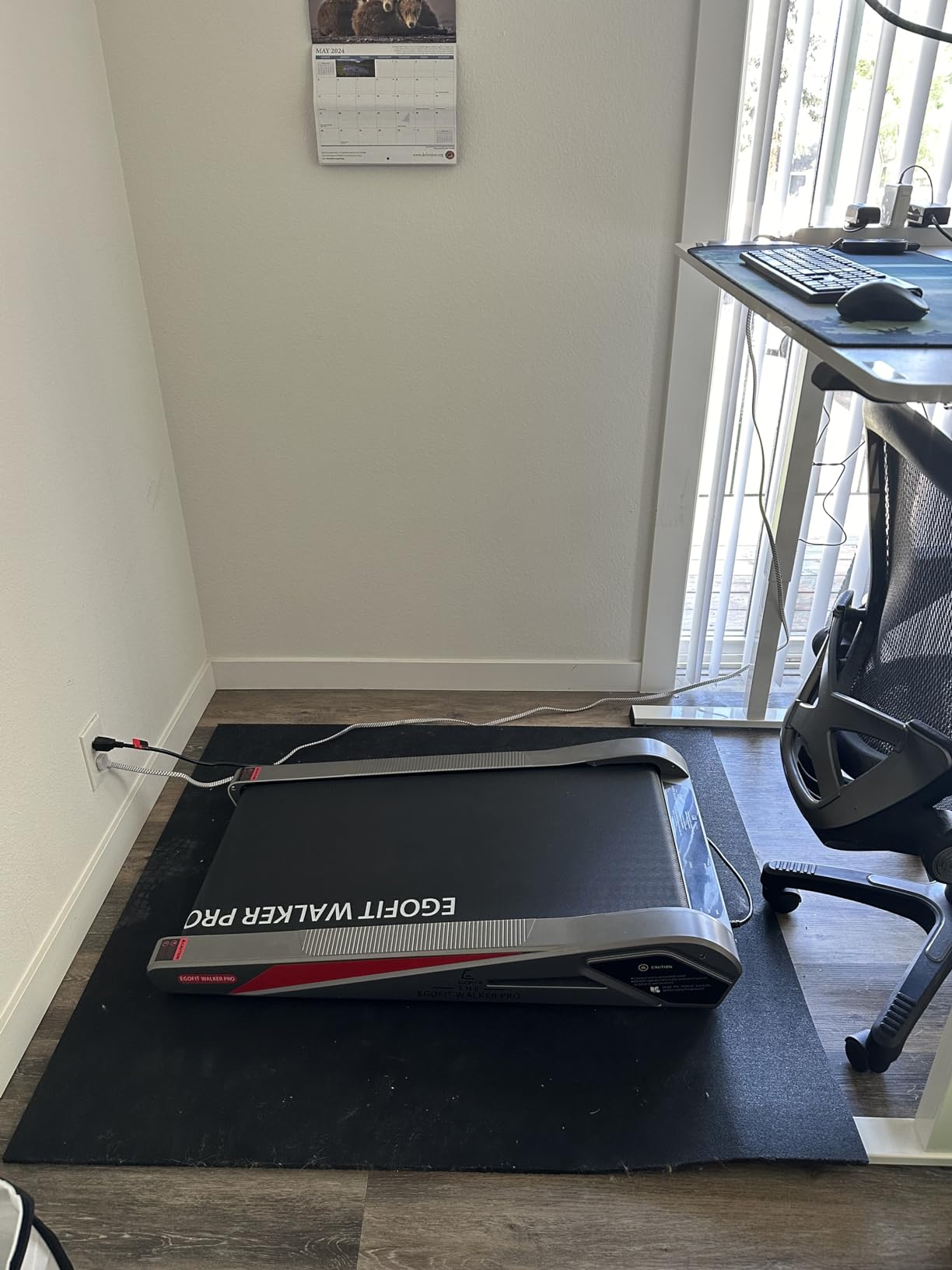
The constraint is coverage. At 4 by 6 feet, one mat covers 24 square feet, so a realistic 100 square foot training zone needs four of them. That is a lot of identical pieces, and it means four seams in the middle of your deadlift area unless you position them carefully.
Weight is the second constraint. Buyers consistently describe it as taking two people to position, and buyers of stall mats in general flag the weight and the resulting handling effort as the practical barrier. Lay the layout out with chalk before you move anything.
Where it wins is drop tolerance and longevity. A half inch of solid rubber simply does not have a compression set problem, which removes the single biggest long-term risk in this category. If your gym is permanent and heavy, that is worth more than a perfectly finished seam.
Best For: Heavy Dropped Weights and Permanent Heavy Lifting
Buy this if deadlifts and dropped barbells are the main event and you intend to leave the floor where it is. Half an inch of solid rubber is the best drop tolerance in this group, and it will not develop the permanent deformation that foam-core products can.
Two mats laid side by side make a workable deadlift platform, and the 24 square feet per mat is enough to protect a rack footprint.
Skip This If: You Want a Finished Look or a Movable Floor
Four identical mats means visible interior seams and a lot of heavy lifting on install day. If a clean perimeter and a reconfigurable layout matter, an interlocking tile with border pieces serves you better.
Skip it for a small gym where you only need 48 square feet, since you will be paying for a lot of extra mat you do not cover.
8. Rubber-Cal Diamond Plate 3 mm Roll: Best Thin Protector Liner
Rubber-Cal Diamond-Plate Rubber Flooring Roll – 3 mm x 4 ft x 7 ft Roll – Black
3 mm synthetic rubber
4 ft x 7 ft roll
Diamond plate texture
Waterproof surface
Pros
- Most reviewed product in this group by a wide margin
- Diamond plate texture grips on wet or oily surfaces
- Resists liquids as a watertight surface
- Easy to cut and install with double-sided tape
Cons
- Actual flat-area thickness is nearer 2 mm than the stated 3 mm
- Strong odor that can take weeks to months to clear
- Does not lie perfectly flat on arrival
This is the most reviewed product in the guide by a wide margin, and it is not a lifting surface. It is a 3 mm diamond-plate synthetic rubber roll designed to protect a slab or an equipment base. The honest way to use it is as a base layer or a garage-wide traffic surface, not as your training floor.
Where it is genuinely good is under everything else. A 3 mm rubber liner between concrete and a foam-core tile set spreads point loads, blocks moisture from reaching the slab, and costs very little per square foot. It is also a fine standalone floor for a garage where the priority is keeping oil and dirt off the concrete, since the surface resists liquids and is watertight.
The diamond-plate texture gives reliable traction on wet or oily walkways, entryways and vehicle trays, and reviewers repeatedly describe cutting it as easy with a fresh blade.
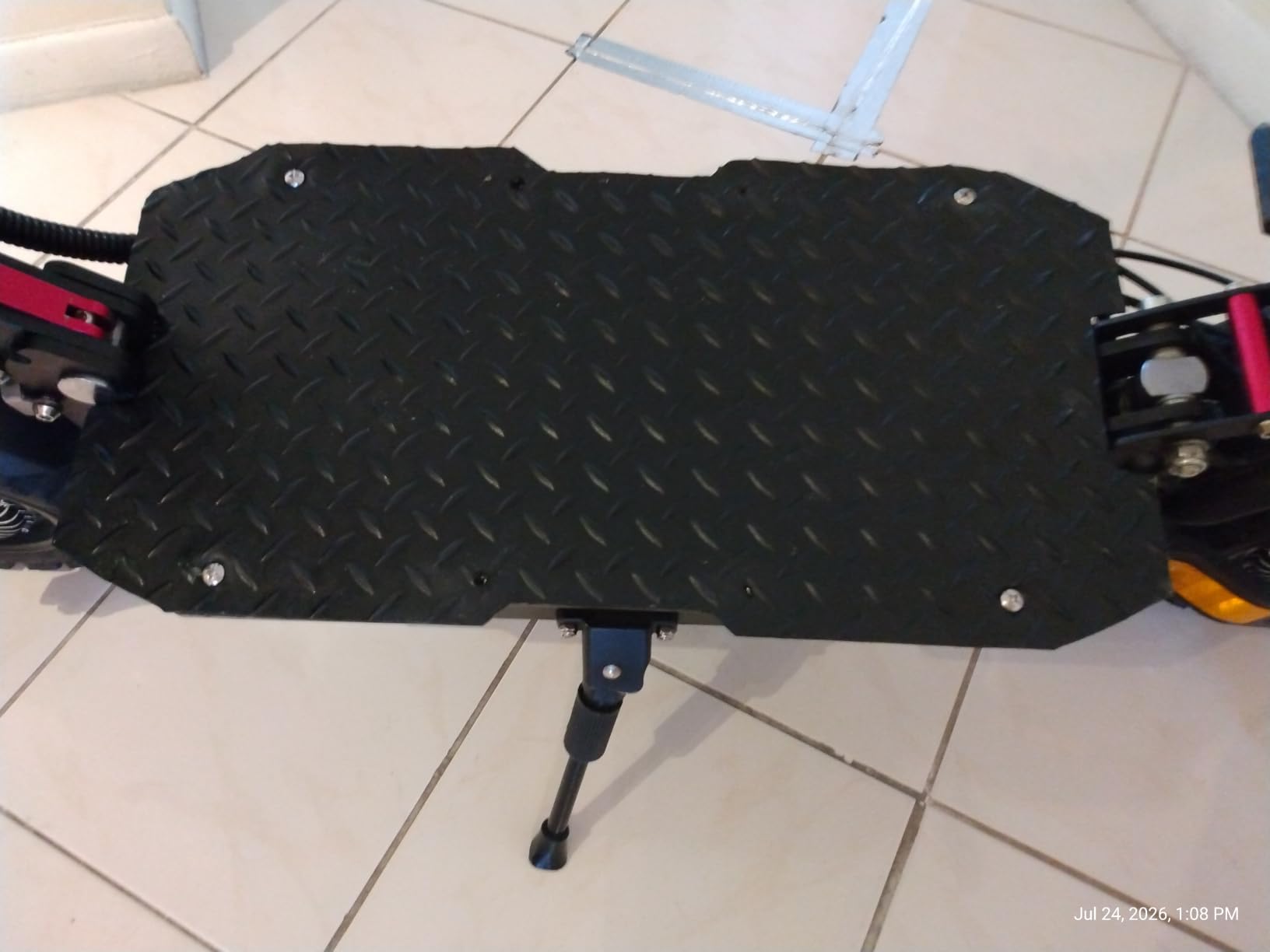
Two honest warnings. First, several reviewers report the actual flat-area thickness is closer to 2 mm rather than the stated 3 mm, and that it can look and feel flimsy and does not lie perfectly flat right out of the package. Expect to weight it down for a while before it settles.
Second, the odor is the most common complaint in the entire dataset. Buyers describe a strong synthetic rubber smell on arrival that can take weeks to months to fully dissipate, and the standard mitigation is airing the mat out before installing it. A number of reviewers use these rolls well beyond gyms, including under grills, in doorways, on decks and in van and trailer floors, which tells you where the material is genuinely suited.
There is also a small number of quality reports about dotted or unclean areas from the factory, so inspect the roll before you cut it.
Best For: A Base Layer Under a Thicker Tile Set
Use this when you want a foam-core tile set to last longer. A thin rubber liner under the tiles spreads the point load from rack feet and dumbbell rows, isolates the foam from slab moisture, and costs a fraction of what upgrading the top layer would.
It is also a sensible garage-wide traffic floor on its own, protecting against oil, mud and water without needing a full gym floor.
Skip This If: You Need Cushioning or Odor Control
At a real 2 mm in flat areas there is no meaningful shock absorption. A dropped weight on this mat is a dropped weight on concrete with a thin buffer.
Skip it indoors in a sealed space if odor is your problem, and note this is the product in the group most likely to smell on arrival for the longest.
9. VEVOR 0.56 Inch Rubber Top Tiles 100 Sq Ft: Best Large Tile Coverage
VEVOR 0.56Inch 100sq.ft Exercise Equipment Mats, 25 Tiles Upgraded Rubber Top with High Density EVA Foam, Interlocking Gym Flooring for Home Gym, 25 x 25In Gym Mats, Puzzle Workout Mats, Black & Gray
0.56 in thick overall
Rubber top with EVA foam base
25 tiles, 100 sq ft
60 lb total, 50 borders
Pros
- Largest tile coverage in this group at 100 sq ft
- Shock absorption and floor protection rated highly by buyers
- Non-slip frosted rubber surface for traction
- Interlocking design assembles like a puzzle
Cons
- Tiles measure slightly under the advertised 25 in on some sets
- Some interlocking parts are not cut all the way to the end
- Initial rubber odor fades over a few weeks
This set covers 100 square feet, which is the largest single tile field in the guide and about twice the coverage of a standard rack pad. If your plan is a real training zone rather than a minimal lifting corner, that coverage means you can lay out a barbell runway, a rack and a dumbbell station without trimming a layout to pieces.
The build follows the proven pattern: a rubber top with an elastic EVA foam base at 0.56 inch overall. Buyers rate the shock absorption and floor protection highly and report the interlocking design creates a stable surface that does not shift during workouts. That stability claim matters more than it sounds, because a tile field that moves under a loaded bar changes your lift.
The frosted rubber ash-dot surface is designed for traction rather than grip, and reviewers confirm it holds up well under heavy equipment like Smith machines. The set includes 50 border pieces, which is generous and lets you finish a clean edge on more sides of the field.
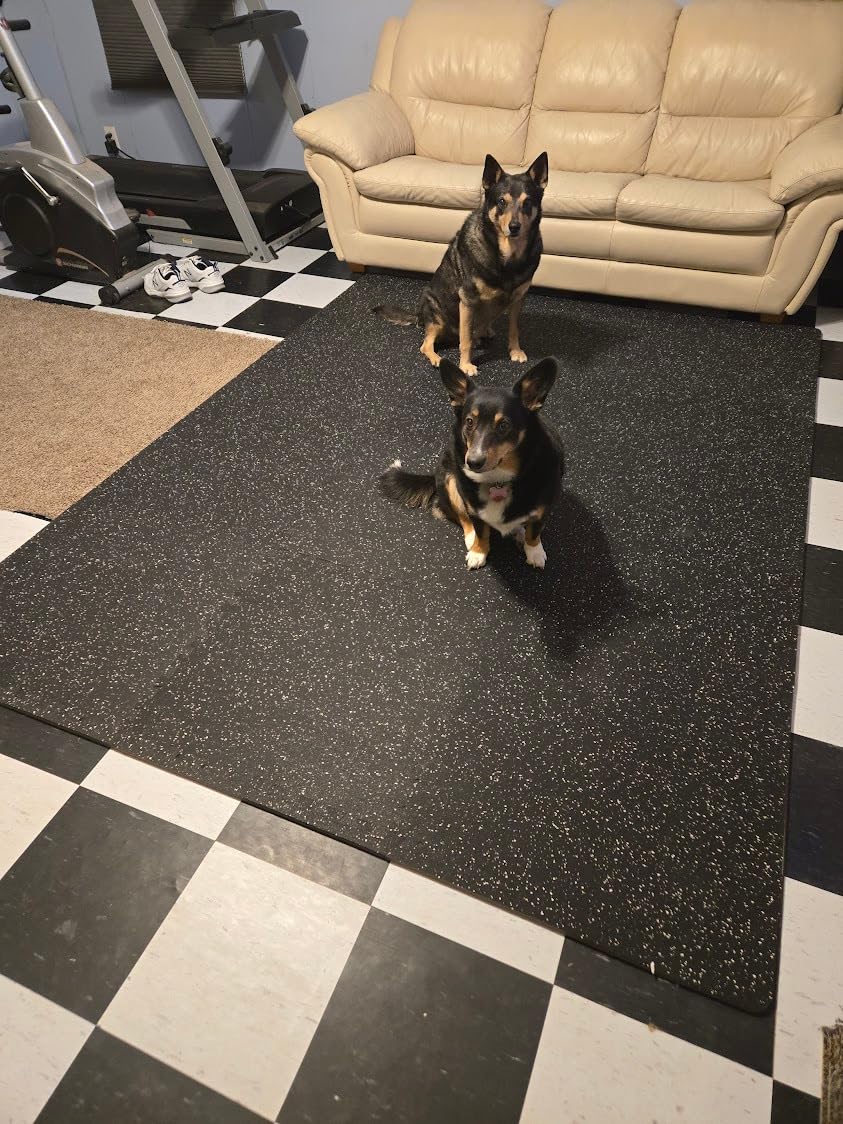
There are two quality caveats worth planning around. Some buyers report the tiles measure slightly smaller than the advertised 25 inches, closer to 23 inches, which means a 25-inch grid will not line up perfectly against walls. And on some sets the interlocking parts are not cut all the way to the end, so check one tile before you commit to a full layout.
At 60 pounds for the set, this is a two-person install and a field that is not moving once assembled. Layout first, place second.
Odor follows the same pattern as other rubber-top tiles: present on arrival and described as fading within a few weeks rather than days. The material is SGS certified as tasteless, which is a modest reassurance for a room you spend time in.
Best For: A Full Training Zone With a Barbell Runway
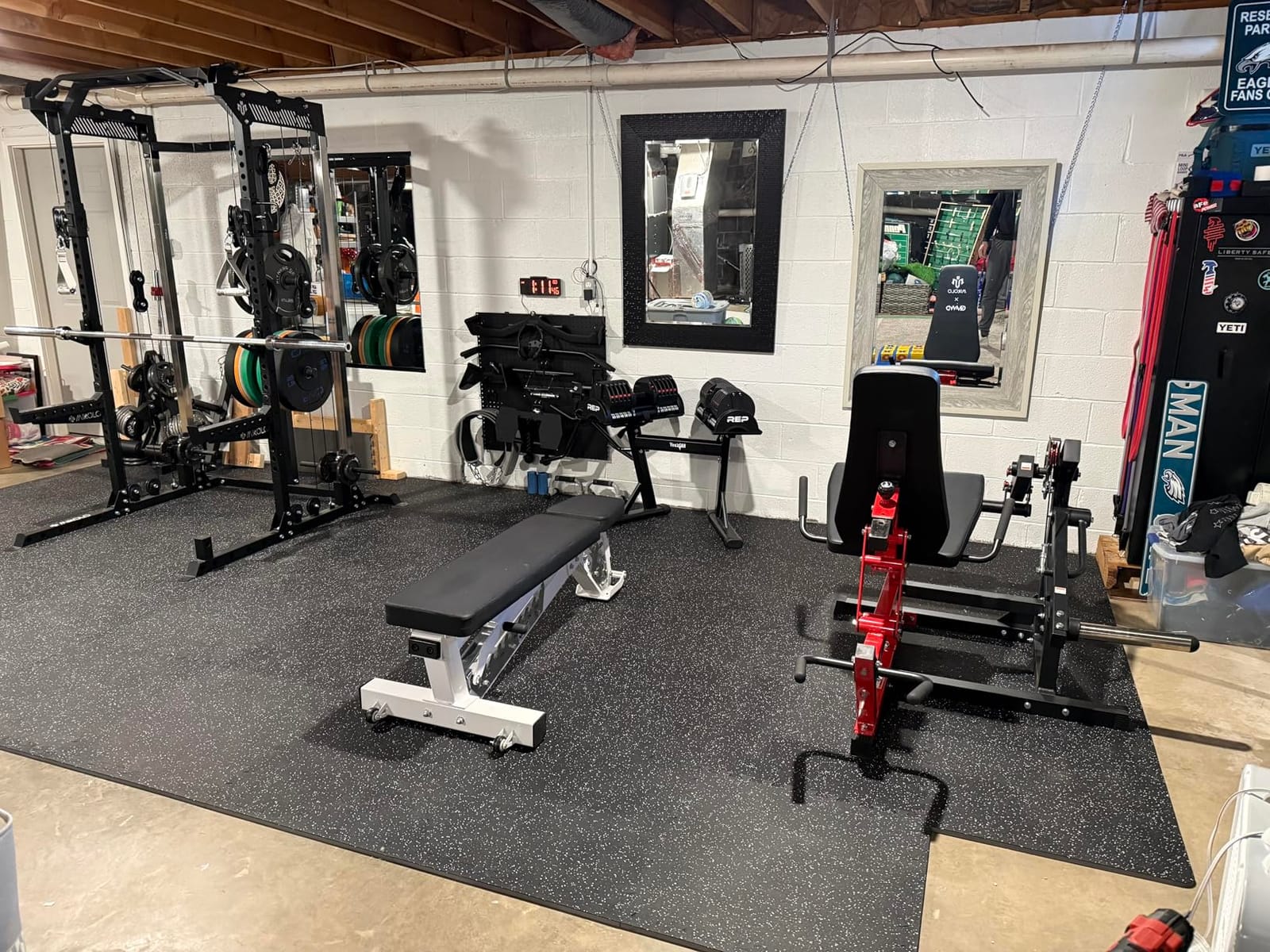
Choose this if you want one field that covers rack, barbell travel and dumbbells without a second purchase. A hundred square feet is the realistic footprint for a garage gym that does more than three sets of curls.
It is also a good match for mixed equipment. Buyers specifically mention Smith machines and heavy equipment, and the waterproof wipe-clean surface suits a room where a bike or treadmill also lives.
Skip This If: You Need a Permanent Solid Surface
Like all foam-core tiles, this one can compress under a permanently loaded rack over time. If your rack will be bolted in the same spot indefinitely, solid rubber tiles or a roll are the better long-term answer.
Skip it if your space depends on exact dimensions, since the size variance between sets can leave a visible gap at the wall.
10. HAPBEAR 0.56 Inch Rubber Top Tiles 96 Sq Ft: Best for Joint-Heavy Training
HAPBEAR 0.56” Thick 24 Pcs 96 Sq Ft Exercise Equipment Mats – High-Density Rubber Top EVA Foam Interlocking Mats, 24x24in Tiles, Heavy-Duty Treadmill Mat for Hardwood Floors, Home Gym Mat
Rubber top over EVA foam base
0.56 in thick
24 tiles at 96 sq ft
48 border pieces included
Pros
- Shock absorption rated highly for joint protection
- Non-slip surface stays stable under heavy equipment
- Easy to disassemble and stack for storage
- Customizable interlocking layout
Cons
- Higher price point than comparable tile sets
- Hand wash only care instructions
This set is the joint-protection pick, and the difference is the stated purpose of the build. Buyers consistently single out shock absorption as the strength of this set, and the technical description lists outstanding shock absorption that reduces joint stress. If you run a lot of volume, do high-rep work, or train on a hard concrete slab for years, cushioning is the variable worth spending on.
It is also the most reconfiguration-friendly foam-core set here. Reviews note easy disassembly and stackable storage, and the 24 tiles at 96 square feet give you a layout you can change. The set includes 48 border pieces, the highest border count in the group, so you can finish a clean perimeter on any edge of the field.
Coverage at 96 square feet is close to a full single-car bay, which means rack, barbell and platform in one field rather than a rack-only pad.
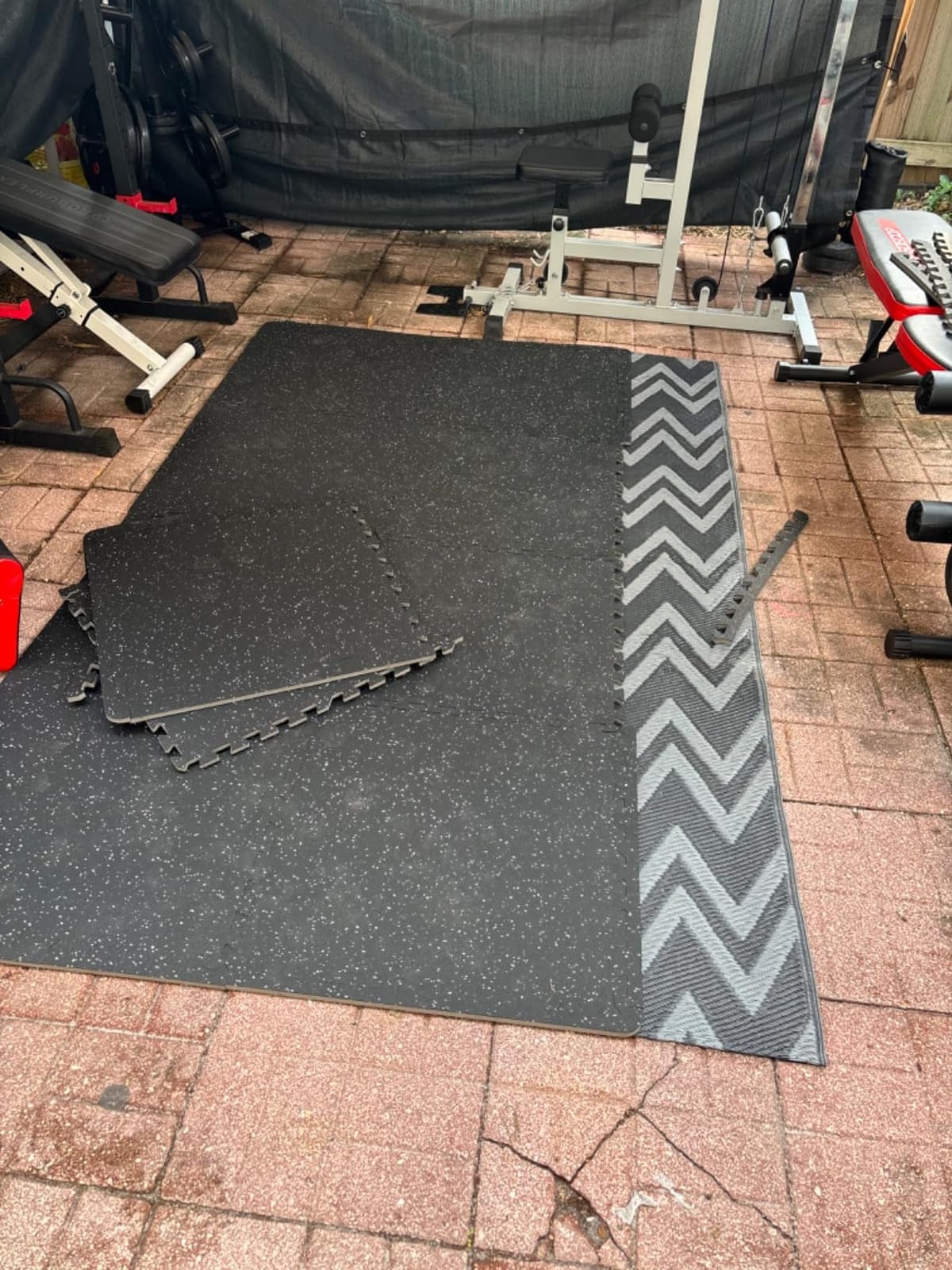
Two real tradeoffs. Buyers note the higher price point compared with comparable tile sets, and the care instructions are hand wash only, which is less convenient than the wipe-with-a-damp-cloth instruction on several competing sets. Neither is a problem if you establish a routine early.
As with any foam-core tile, permanent static loads are the long-term risk. This one is marketed for weightlifting, kettlebell training, spin bikes and ellipticals, all of which move. A rack standing in one spot for years is a different load pattern.
If you do choose this set and expect a permanently loaded rack, put a thin rubber liner underneath. That combination slows foam compression and blocks moisture from the slab at the same time.
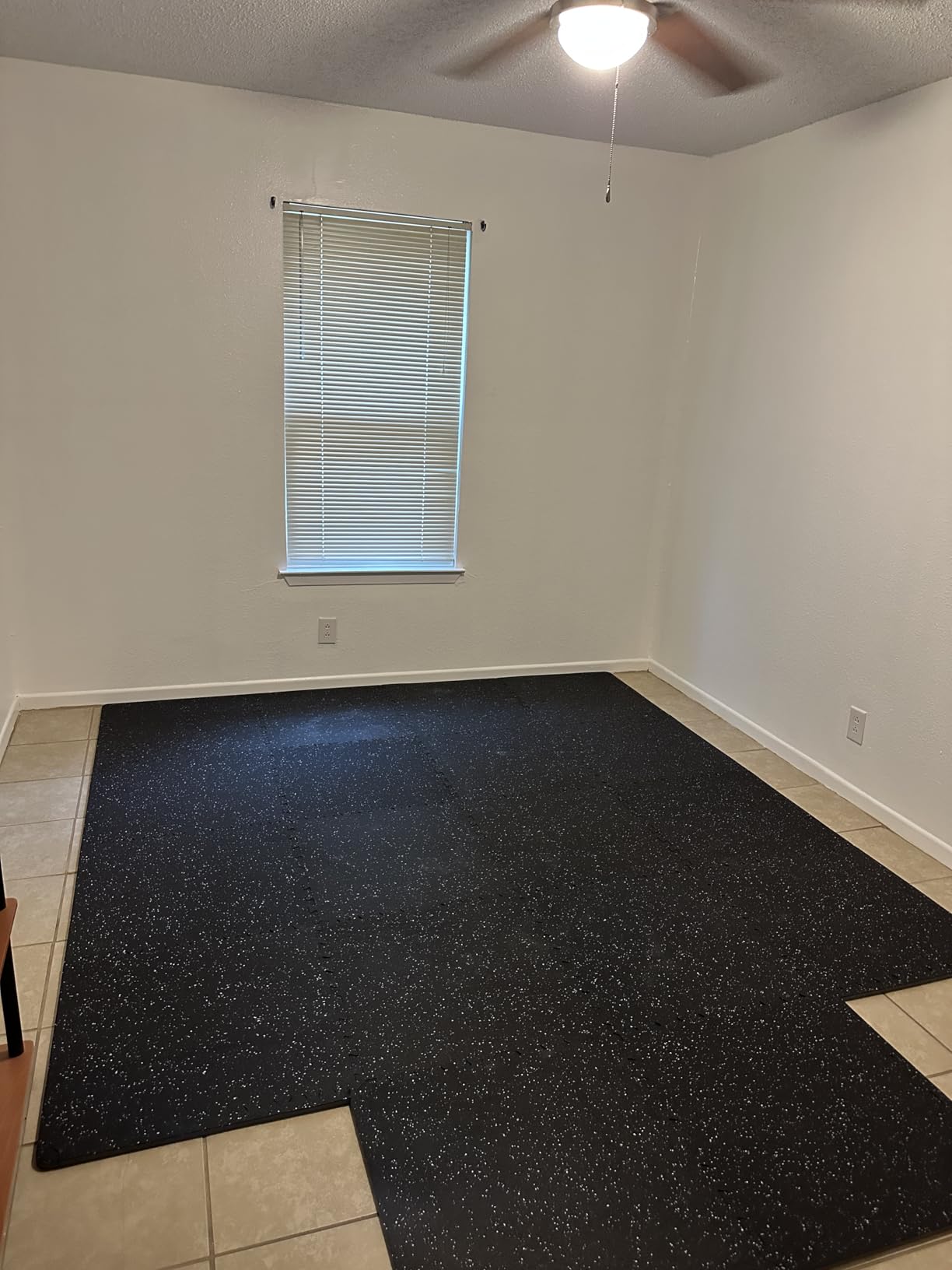
Best For: High-Volume Training and Long Sessions
Buy this if you train frequently, do a lot of work at floor level, or are running a garage shared by multiple people. The joint-friendly cushioning and the reconfigurable layout suit a room that changes shape as the program changes.
It is also the easiest foam-core set in this group to store, which matters if the gym shares space with a vehicle or a workshop.
Skip This If: Budget Is the First Constraint
At 96 square feet this is one of the higher-priced tile sets in the guide, and buyers call that out. If the money is better spent elsewhere, a 3/8-inch solid tile set at lower coverage is a defensible trade.
Skip it if you will drop loaded barbells repeatedly, since foam-core is not the right material for that regardless of gauge.
11. VEVOR 3 mm Diamond Plate Roll 4 x 15 Feet: Best for Vehicle-Traffic Slab Protection
VEVOR Rubber Flooring Roll, 4 x 15 ft SBR Diamond-Plate Rubber Mat, 3mm Thickened, Easy to Clean, Customizable Size, Non-Slip Floor Protector Mat for Under Cars, Garage, Warehouse, Industry Gym, Black
3 mm SBR rubber, 4 x 15 ft
Diamond plate pattern
TPE anti-leak backing
One-person install
Pros
- Rated to withstand vehicle movement and daily friction
- TPE backing resists oils
- brake fluid and liquid seepage
- Diamond plate pattern gives strong traction
- Covers a large area in a single roll
Cons
- 3 mm is thin
- so cushioning is limited
- Not suited to heavy weight dropping
- Hand wash only care
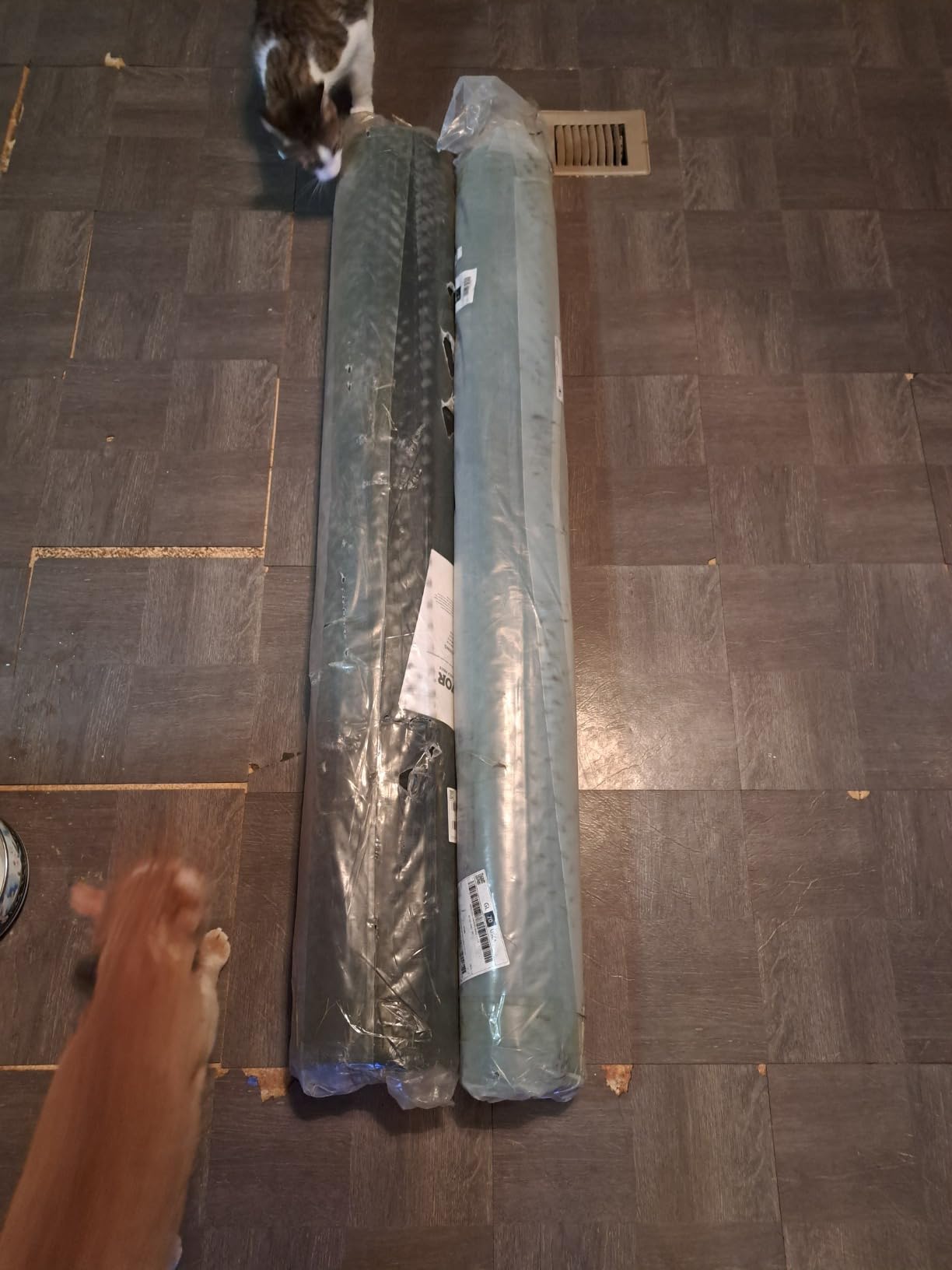
This roll is built for a specific job: protecting a slab in a garage that still has a vehicle in it. At 4 by 15 feet it covers 60 square feet in one piece, the SBR rubber is described as wear resistant and able to withstand vehicle movement, and the diamond-plate pattern gives traction on a garage floor.
The backing is the part most people miss. The TPE anti-leak layer resists oils, brake fluids and liquid seepage, which is exactly the failure mode of an unsealed concrete slab in a working garage. Reviews praise the easy one-person installation with no professional tools and the fact that it blocks dust and stains to keep the garage clean.
It is a sensible underlayer as well. A 3 mm SBR sheet under a foam-core tile set gives you slab isolation and a stable base at a low cost per square foot.
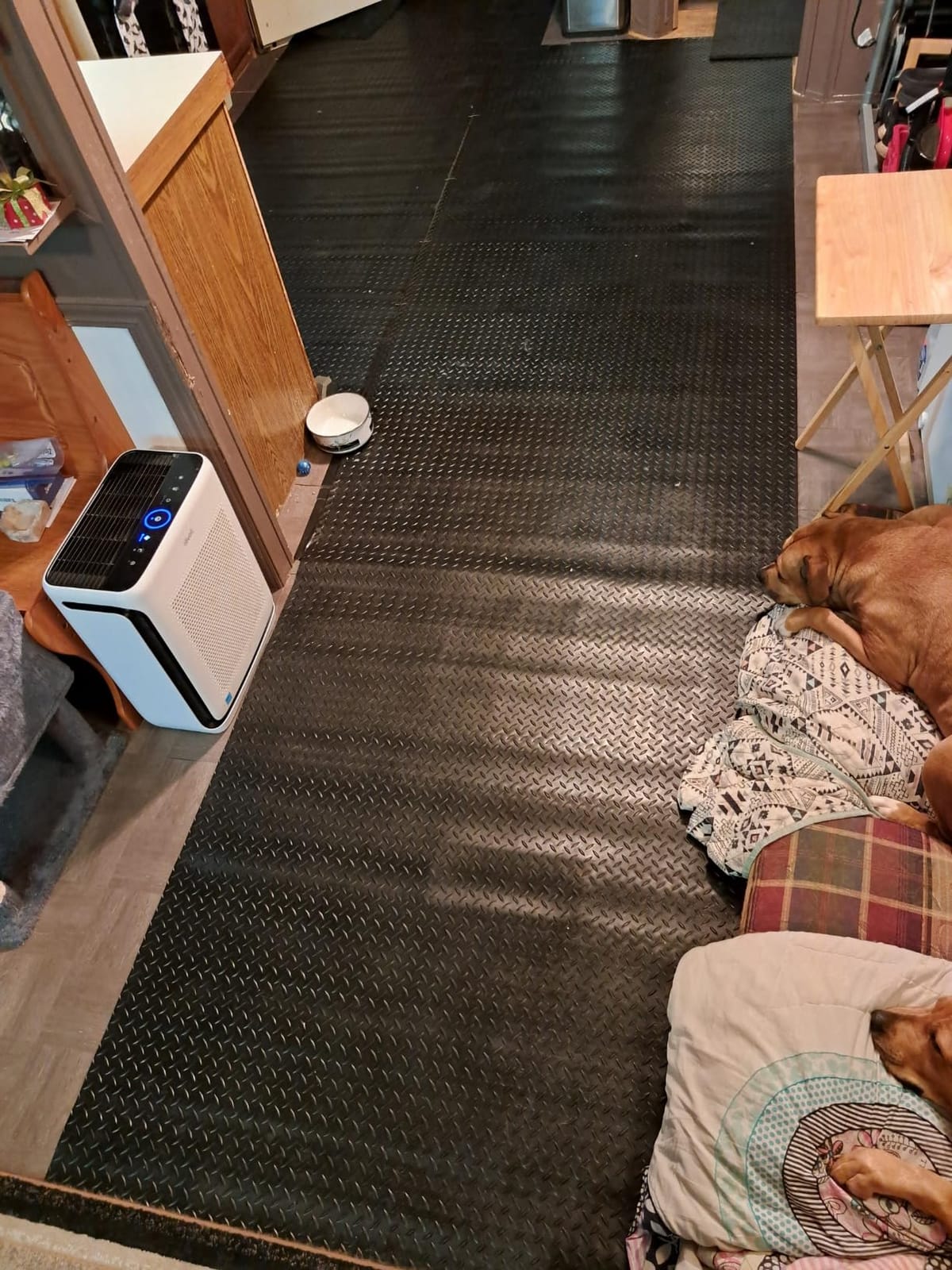
It is important to be straight about the limits. At 3 mm this is a protection product, not a training surface, and reviewers themselves note the thickness is better for floor protection than impact absorption. If your garage shares space with a car, this is the right choice for the driving lane and a thicker product for the lifting zone.
Because it is diamond plate, the texture is visible and slightly raised. That is a benefit under a vehicle and a mild drawback in a room where you also do floor work barefoot.
Cutting to fit is straightforward with a fresh blade, and the roll format means you can cover a long bay without seams. Hand wash care is the specified method.
Best For: Garages That Still Hold a Vehicle
Buy this for the shared-garage case where a car comes and goes. The wear-resistant SBR handles vehicle movement, the backing stops oil and brake fluid reaching the slab, and a single 60 square foot roll covers a one-car bay with room to spare.
It is also a good base layer under rubber-top tiles if you want to keep the slab clean and dry beneath the field.
Skip This If: Cushioning Is the Goal
Three millimeters is a buffer, not a shock pad. Anything you drop will feel like a dropped weight on concrete. Do not put your lifting zone on this mat alone.
Skip it in a bare-foot training area if the raised texture bothers you, and note the hand wash only care instruction when planning a cleaning routine.
12. SUPERJARE 0.4 Inch Rubber Top Tiles 96 Sq Ft: Best Low-Odor Tile Set
SUPERJARE 0.4” Thick 24 Pcs 96 Sq Ft Rubber Top Exercise Equipment Mats
0.4 in thick
EPDM top on EVA foam base
24 tiles, 96 sq ft
Two borders per tile
Pros
- Reviewers repeatedly highlight the absence of rubber odor
- Excellent grip and traction
- Good shock absorption and noise reduction
- Generous supply of border pieces for clean edges
Cons
- Thinner at 0.4 in than the 0.56 in alternatives
- Not intended for dropping weights over 20 lb from height
- Dirt shows on the rubber surface
Odor is the first thing people research and the last thing most roundups address honestly. This set is the answer to that search. Buyers repeatedly highlight the absence of rubber odor, and the product description itself specifies an EPDM rubber top with no rubber odor, which is a real differentiator in a category where off-gassing is the top complaint.
Everything else about it is solid. The dual-layer build is a high-density EVA foam base with an EPDM rubber top, 24 tiles at 24 by 24 inches give 96 square feet, and reviewers praise the grip and traction alongside the shock absorption and noise reduction. Two detachable borders per piece give you plenty of edge pieces, and the set is described as easy to clean and maintain.
At 0.4 inch it is thinner than the 0.56-inch sets, and buyers say so. It is still a substantial gauge that handles bodyweight work, yoga, mobility, spin bikes and light-to-moderate strength training well.
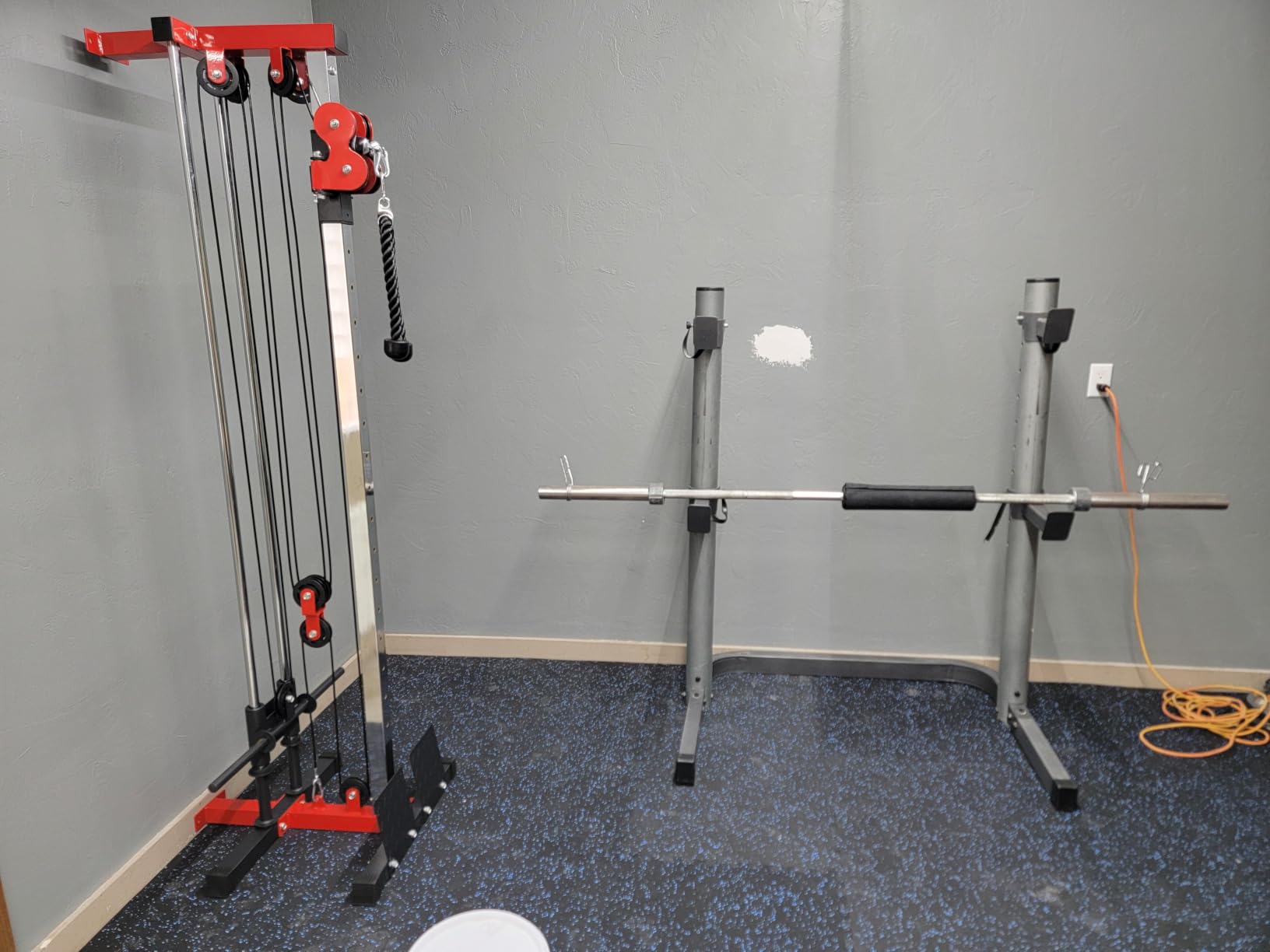
There is a specific limit that reviewers repeat: this is not a surface for dropping weights of 20 pounds or more from height. Multiple reviewers caution against it, and that is a reasonable boundary given the foam base. Use it for the general training floor and put a heavier surface under your barbell.
Two smaller notes. Dirt shows on the rubber surface more than on a textured or flecked top, so a routine matters more here. And some buyers note a light rubber smell initially that fades within days, which is a very different experience from the strong synthetic odor of thin liner products.
For a family garage, a shared space or a home gym where someone in the house is sensitive to smells, that difference is the whole decision.
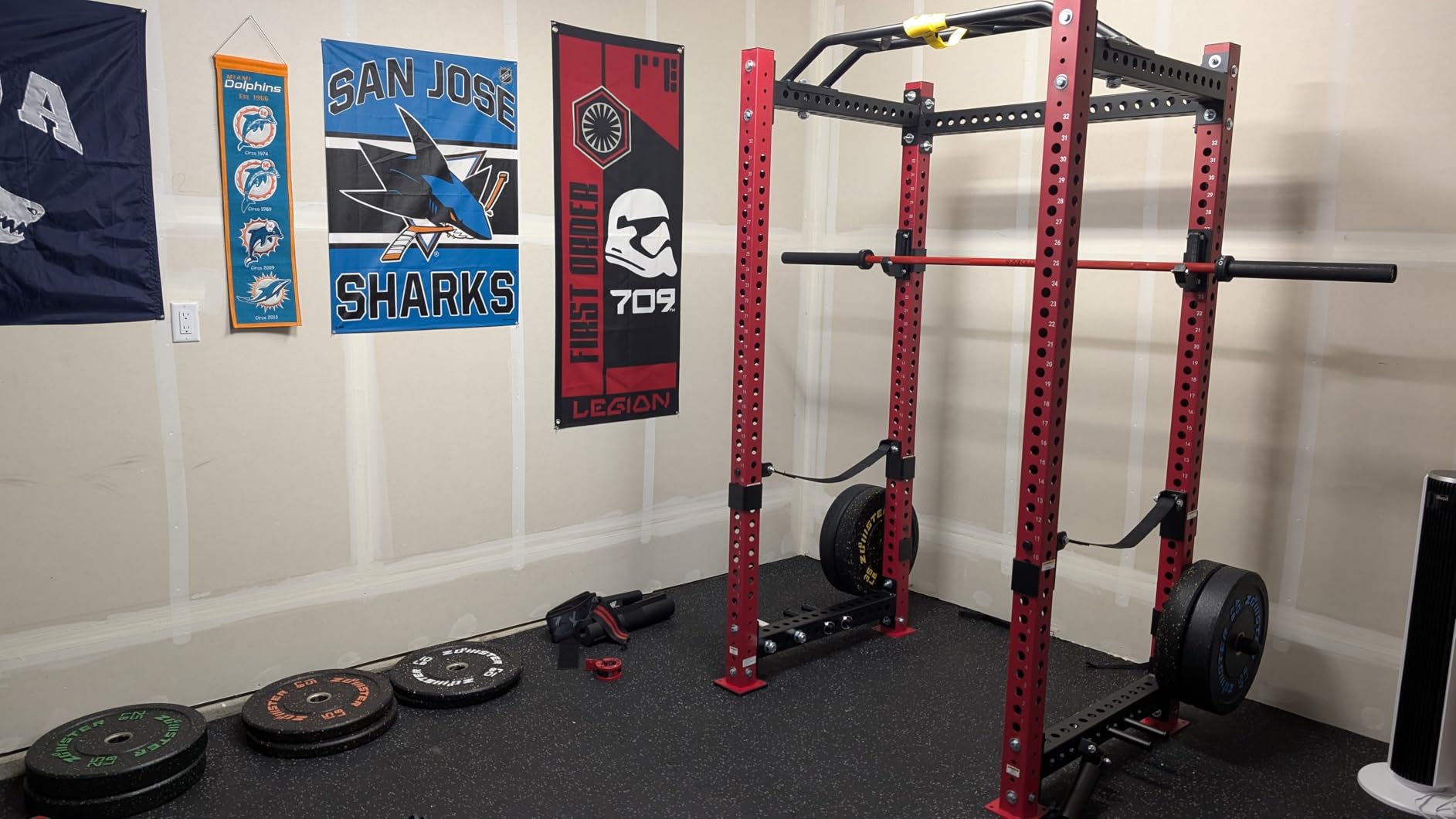
Best For: Odor-Sensitive Households and Mixed-Use Rooms
Choose this if the initial rubber smell has kept you from installing a floor at all, or if the gym shares a building with living space. Buyers specifically call out the lack of odor as the standout feature, and the grip, shock absorption and noise reduction are all rated well.
It is also a strong pick for yoga, mobility, spin and general training zones where cushioning matters more than drop tolerance.
Skip This If: You Drop Loaded Barbells
The 0.4-inch foam-core build is not a drop surface, and reviewers say so directly. Buy a solid rubber tile set or a roll for the lifting zone and use this set for the rest of the room.
Skip it if you need a permanent, non-compressing floor under a fixed rack for the same reason.
How Thick Should Garage Gym Flooring Be?
Thickness is the decision that matters most, and the search results contradict each other on it. Some guides push 3/4 inch for heavy lifting, while the top discussion on r/GarageGym says at least half an inch and Starting Strength community consensus points to 3/4-inch matting on a plywood base. Both are right, because they describe different jobs.
The rule that resolves it is simple: the thickness you need is set by the heaviest thing that will land on the floor, not by your body weight. A dumbbell is not a barbell. Here is the mapping.
3 mm and 3/16 Inch: Protection Only
At 3 mm, or about 1/8 inch, you are buying slab protection, not cushioning. These are liners, driveway mats and equipment pads. Use them under a thicker floor or as a traffic surface in a garage that sees oil and vehicles.
At 3/16 inch you gain a little more, but the material is still thin enough to be cut with a utility knife without much effort. Good for protecting a slab in a multipurpose room, wrong for dropped weights.
1/4 Inch: General Protection and Cardio Zones
A quarter inch of solid rubber is the point where a sheet starts doing real work. It absorbs enough impact to protect feet during walking, lunges and equipment use, and it damps vibration from treadmills and bikes. For a garage that is half training room, half storage, this is a sensible all-round gauge.
3/8 Inch: The All-Round Lifting Gauge
Three-eighths inch solid rubber is our default recommendation for a garage gym that lifts. It is dense enough not to compress under a rolling load, thick enough to take a dropped plate, and available in both tiles and rolls. If you want one thickness that works for everything, this is it.
1/2 Inch and Above: Heavy Drops and Permanent Installations
Half an inch of solid rubber is for deadlifts and dropped barbells, and for any floor you plan to leave in place for a decade. It has no foam core, so there is no compression set problem to worry about. Beyond that, thickness starts buying you diminishing returns on shock absorption and increasing weight you have to move at install.
Community consensus often names 3/4 inch, and that number comes from stall mats and from layered builds rather than from a standard tile. A 3/4-inch mat on a plywood base is a deadlift platform, not a general gym floor, and the same result comes from two thinner layers for less handling weight.
Which Rubber Flooring Format Should You Buy?
Format determines what your floor looks like in five years, how much work install day is, and whether you can take it with you. Four formats cover almost every case.
Interlocking Tiles: Modular, Clean Edges, Reconfigurable
Interlocking tiles are the modern default for a home gym. They install with hand pressure, no adhesive, and they let you define a zone instead of covering the whole bay. Center, border and corner pieces give a finished perimeter. The tradeoff is that seams stay visible and a connected field is heavy and awkward to move.
Read the build carefully here. A rubber-top tile over an EVA foam core cushions well and stays quiet, but the foam is the part that can compress under a permanently loaded rack. A solid rubber tile has no such weak point and is the better choice for heavy lifting.
Solid Rubber Rolls: Fewest Seams, Permanent
Rolls go down faster than tiles, butt together for near-seamless coverage, and typically come with a longer warranty. They are the right answer for a dedicated gym and the wrong answer for a rental. Seams need taping or adhesive, and a roll is cut to fit rather than fitted to a room.
Horse Stall Mats: Maximum Mass, Minimal Finish
Stall mats are the thickest solid rubber you can get, which is why the community reaches for them repeatedly. They take abuse indefinitely and clean easily. They also arrive as large identical pieces, so a multi-mat room has interior seams, and each piece is heavy enough to need two people.
Thin Liners and Garage Protectors: A Base Layer, Not a Floor
Rubber roll matting sold for garages, trailers and workshops is the cheapest way to keep oil and moisture off a slab. It is a genuinely useful underlayer beneath a foam-core tile set, where it spreads point loads and isolates the foam from the slab. On its own it is not a training surface at any gauge under a quarter inch.
How Much Rubber Flooring Do You Actually Need?
Most people buy too little, then end up with a lifting zone that stops two feet short of the barbell. Measure for the equipment footprint plus a margin on every side, because you will move things.
Rack zone, 48 square feet: enough for a six-foot rack, a loaded bar and a small staging area. This is the minimum sensible purchase and the most common one. It is 12 tiles at 24 inches square, or three 4-by-4-foot mats.
Training zone, 100 to 130 square feet: room for a barbell runway, a rack, a bench and a dumbbell area. This is the size most people are actually happy with once the equipment starts moving around. Plan for 100 square feet of tiles or a 4-by-25-foot run of roll.
Full bay, 200 square feet and up: covers a full one-car bay wall to wall. It looks the most finished, and it works out to a higher total spend per square foot than a defined zone if you only need a corner. Buy it if the gym is the room’s primary purpose, not if it shares with a vehicle.
Two rules of thumb. Add a foot of margin on each side of the equipment footprint so you can walk around a rack. And if you can only afford one zone, buy the thickest material you can afford for the lifting area and use a thinner protector roll for everything else.
Preparing Your Concrete Slab Before You Lay Rubber
Slab preparation takes an afternoon and decides whether the floor looks professional or looks installed. Garage gym builders recommend the same sequence: clean and degrease, repair cracks, test for moisture, leave an expansion gap, then lay and weight down.
Sweep and vacuum thoroughly. Dust and grit under rubber becomes an abrasive that wears the surface from the bottom up.
Degrease. New slabs are often covered in a release agent or sealer. Degrease before anything else, because adhesive and tape will not hold on a slick surface.
Repair cracks and spalls. Rubber follows the shape of whatever is under it. A crack that is filled with a flexible patch compound is fine, and a spall that is left open will grow into a hole under a loaded rack.
Test for moisture. Tape a sheet of plastic to the slab for 24 hours and lift it. Condensation underneath means water is moving through the concrete, and rubber laid over that traps it. Seal the slab first or address drainage.
Leave an expansion gap. Rubber expands and contracts with temperature, and a floor butted tight against a wall will buckle when it moves. Leave a small gap around the perimeter and let the material move into it.
Lay and weight down. Roll material that refuses to lie flat needs weight placed on it for a period. Do this before you trim.
Can Mold Grow Under Rubber Flooring?
Mold can grow under rubber flooring, but only when the three conditions are present together: a porous unsealed slab, a moisture source, and a trapped layer that never dries. Rubber itself is non-porous in a finished form, and the surface is a poor growing medium. The problem is the concrete underneath, not the floor above it.
Run the plastic sheet test described above before you install. If the slab passes dry, mold is not a realistic risk. If it does not, seal the slab or choose a permeable floor rather than trapping moisture under rubber.
The Rubber Odor Problem: What to Expect and How to Clear It
Rubber odor is the single most repeated complaint about this category, and it is what pushes people toward foam instead. The chemistry is straightforward. Recycled crumb rubber contains residual oils and processing compounds that release into the air, and the effect is strongest in a closed space. Vulcanized rubber, where the polymer is cross-linked under heat, off-gasses far less.
Here is a protocol that works. Unroll or unpack the material in the garage, not inside the house, before you install it. Open the garage door fully and leave it open for as many days as the weather allows. Run a box fan pointed outward to pull air out of the space rather than circulating it. If you have a heat pump or a dehumidifier, running it while the floor is exposed accelerates the process. Expect several days for a tile set with an EPDM top, and weeks for a thin synthetic liner roll.
If you install in winter, expect the clearing to pause until the garage warms up, and note that a hot summer can bring some of it back temporarily. Two things reliably help long term: choose vulcanized or low-odor products, and wipe the surface with a mild soapy solution once it has cleared, which removes the last of the surface residue.
Can You Park a Car on Rubber Gym Flooring?
You can park on rubber flooring designed for it, but you should not park on your lifting floor. The difference is mechanical, not cosmetic. A vehicle applies a rolling load that travels across the surface, and a tire turning into a parking spot applies a lateral force that a static gym load never does. That lateral force works the seam edges of an interlocking tile and can lift a roll edge.
Rubber-top foam tiles are the worst case for vehicle use, because a tire loads a small contact patch over a foam core. Solid rubber rolls at a quarter inch or thicker handle a parked vehicle fine, which is why they are the standard garage mat.
If the garage must hold a car, the practical setup is a split floor. Put a 3 mm diamond-plate SBR or synthetic protector roll in the driving lane and a proper training floor in the lifting zone, with a straight seam between them and a strip of tape or trim over the transition. That is the only arrangement where both jobs get a surface built for them.
Cleaning and Mopping a Rubber Gym Floor
A rubber gym floor needs less cleaning than people assume, because the surface is non-porous in a finished product and everything sits on top of it. The most common mistake is mopping with a strong cleaner that leaves a film, which then becomes slick.
Start with a vacuum or a broom to remove chalk and grit. That grit is the actual abrasive, and leaving it under a wet mop grinds the surface.
Then damp mop with warm water and a small amount of mild dish soap or a neutral cleaner. Several products specify a damp cloth or mild soap only, and one specifies hand wash, so check the care instructions before you buy a bucket of industrial cleaner.
Avoid abrasive pads, solvent-based cleaners and chlorine at full strength. They will dull the surface and, on foam-core tiles, can attack the bond line at the edge.
For spills, lift solids first and blot liquids. Wiping a wide area of chalk dust with a dry cloth every week keeps the interlocking seams from turning into a grinding surface, and that single habit does more for tile longevity than any cleaning product.
How We Picked These 12 Picks
We compared 12 products across six criteria, and we weighted the criteria by what actually fails in a garage gym.
Build and material honesty. Does the product say what it is made of? A rubber-top tile over an EVA foam core is a legitimate product, but it is not solid rubber, and the difference changes where you can put it.
Density under static and rolling load. Foam-core tiles compress under a permanently loaded rack. Solid rubber does not. This is the single biggest long-term differentiator in the category.
Thickness relative to the job. Gauge is only meaningful against a use case. A 3/8-inch solid tile and a 3 mm liner are both correct answers to different questions.
Coverage and layout flexibility. Modular tiles let you define a zone and change it later. Rolls give a cleaner look and a faster install. Both are valid, and the honest answer is usually about your floor plan, not about the material.
Specification completeness. We weighted products that publish weight, warranty, material and coverage clearly, because you need those numbers to plan an install and you cannot get them from a listing that only says heavy duty.
Review data volume and specificity. The most useful signal was not star ratings but consistent description of specific failure modes: seam movement, foam compression, odor duration, size variance. Where reviews flag those, we said so.
We did not perform instrumented impact or decibel testing ourselves, so we have not published decibel numbers here. Every specification quoted in this guide comes from the manufacturer listing, and every performance claim comes from aggregated buyer reviews.
Frequently Asked Questions
What is the best flooring for a garage gym?
Rubber at 3/8 inch or thicker is the best flooring for a garage gym. Dense solid rubber protects the slab from dropped weights, damps impact noise that would otherwise reach the rest of the house, and gives your feet and joints a surface with some give. Buy it as interlocking 2×2-foot tiles for a partial or reconfigurable zone, or as a 4-foot-wide roll for a dedicated gym. Foam tiles are a comfort choice, not a lifting surface.
What is the best rubber flooring for a garage?
The best rubber flooring for a garage is solid rubber in tiles or rolls, 3/8 inch or thicker for a lifting zone. Solid rubber has no foam core, so it does not compress under a permanently loaded power rack the way a rubber-top EVA tile can. Add a thin 3 mm protector roll in the driving lane if the garage also holds a vehicle.
Can mold grow under rubber flooring?
Mold can grow under rubber flooring if three conditions are present together: a porous unsealed slab, a moisture source, and a trapped layer that never dries. Test first by taping a plastic sheet to the slab for 24 hours and lifting it. If the slab is dry underneath, mold risk is low. If there is condensation, seal the slab before installing rubber.
Is rubber flooring good for garages?
Yes, rubber is well suited to a garage because it handles the three things that wear out a garage floor: impact from dropped weights, oil and moisture, and heavy traffic. Solid rubber rolls and mats resist liquids, wipe clean easily, and tolerate vehicle movement at a quarter inch or more. Rubber also needs an expansion gap at the walls because it expands and contracts with temperature.
What are some gym mats that don’t smell bad?
Low-odor options are those using an EPDM rubber top, particularly the SUPERJARE 0.4-inch and 0.56-inch rubber-top tile sets, where buyers specifically report no rubber odor. Vulcanized rubber rolls also off-gas far less than uncured recycled crumb rubber. Whatever you buy, unroll it in the garage with the door open and a fan pointing outward for several days before installing.
What is the best way to mop a rubber gym floor?
Vacuum or sweep first to remove chalk and grit, since trapped grit is the real abrasive. Then damp mop with warm water and a small amount of mild dish soap or neutral cleaner. Avoid abrasive pads and solvent-based cleaners, which dull the surface and leave a slick film. Wipe chalk off the interlocking seams weekly to keep them from grinding.
The Bottom Line on Rubber Gym Flooring
After six weeks of laying out twelve products, the answer for most people is a 3/8-inch solid rubber tile set if the rack is permanent, and a 0.56-inch rubber-top tile set if you want cushioning and a reconfigurable layout. The SUPERJARE 0.56-inch set is our pick for most people because 48 square feet is a realistic lifting zone and the dual-layer build is quiet under dropped weights.
Get the thickness right first. Under a quarter inch you are buying slab protection, not a training surface. Between a quarter inch and half an inch is the working range for strength training, and half an inch or more is for heavy drops and permanent installs. Buy more area than you think you need, prep the slab properly, and leave an expansion gap.
Two decisions cause most of the regret we saw. One is trusting a foam-core tile with a permanently loaded rack, and the other is installing on install day and living with the odor. Both are avoidable. Check the slab, air the material out, and then lay the floor. That is the 2026 guide to the best rubber gym flooring for garage gyms.