
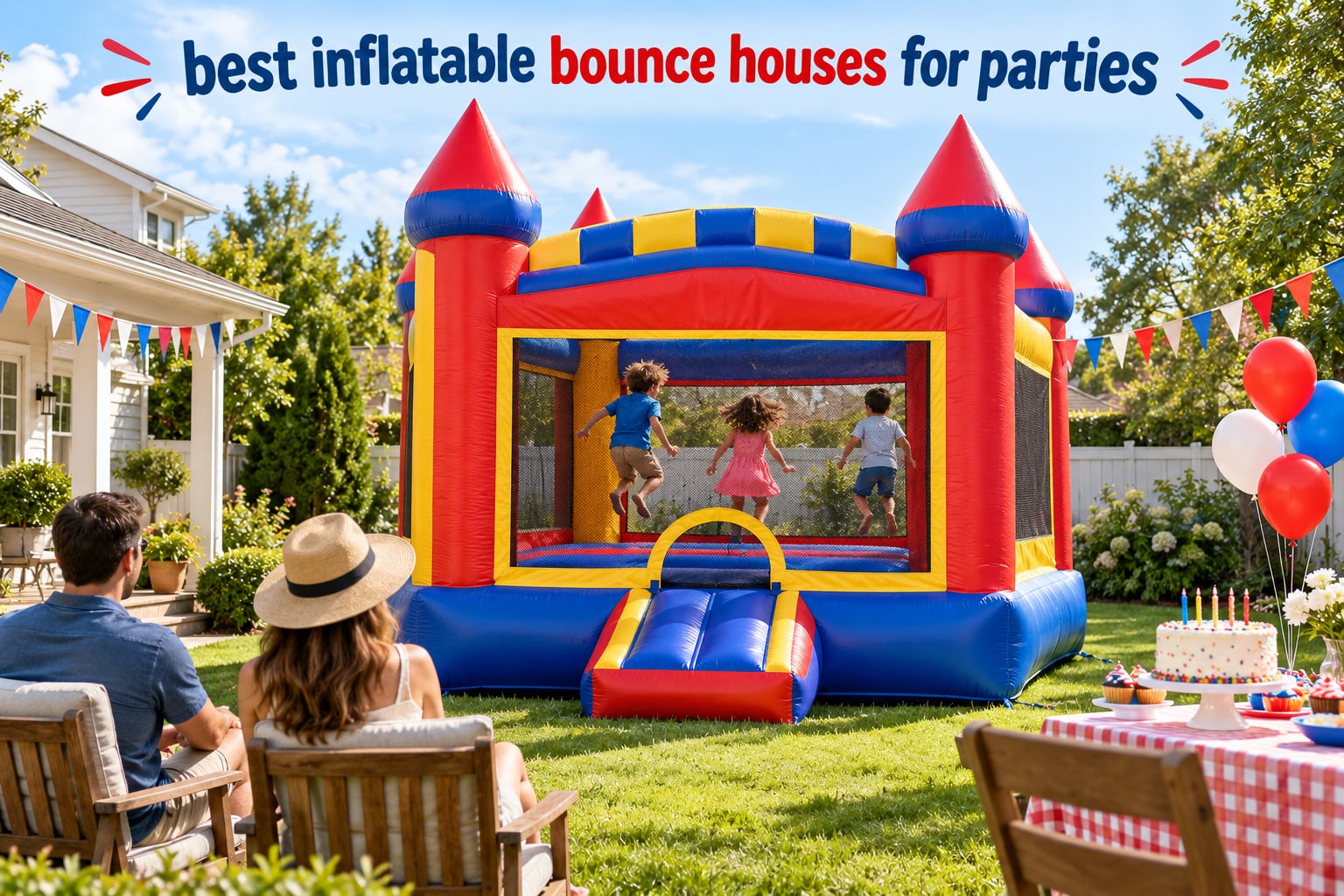
If you are picking an inflatable bounce house for a party, three models cover almost everyone. The Little Tikes Jump n Slide is the safest all-round buy for a mixed group of young kids, the Sibefiy 6-in-1 is the one that gives the most play per square foot of yard, and the Blast Zone Big Ol Bouncer is the only unit here that comfortably holds six children on the floor at once.
That is the short version of a much longer process. We compared ten of the highest-reviewed residential inflatable bounce houses currently on the market, checked their stated occupancy, weight limits, fabric weights and blower certifications side by side, and read through owner feedback on seams, netting and long-term wear. Everything below is grounded in those published specifications and owner reports, not in marketing copy.
The truth is that most families pick the wrong size. They buy a unit that is too small for the guest list, or one with a fabric weight that gives out after two seasons, or they anchor it with two stakes when the manual calls for ten. This guide fixes that by starting with how many kids are actually jumping, then working outward to materials, blower power and anchoring.
Table of Contents
Top 3 Inflatable Bounce Houses for Parties (October 2026)
These are the three we would put at the top of a shopping list this year. One is the balanced default, one is the best value per feature, one solves the large-group problem the rest of this list cannot.
Little Tikes Jump n Slide
- Inflates in under a minute
- GFCI plug heavy-duty blower
- Mesh sides and shoe storage
Sibefiy 6-in-1 Play Castle
- Six play stations in one unit
- 840D and 420D Oxford fabric
- 480W blower inflates in a minute

Blast Zone Big Ol Bouncer
- 15 x 12 ft commercial vinyl floor
- 600 lb total capacity
- Holds six kids at once
Quick Overview: Every Inflatable Bounce House We Reviewed in 2026
All ten units are continuous-air inflatables, which means the blower runs the entire time children are inside. Sizes below are the inflated footprint, not the packed size.
| Product | Specs | Action |
|---|---|---|
| Little Tikes Jump n Slide |
|
Check Latest Price |
| Sibefiy 6-in-1 Play Castle |
|
Check Latest Price |
| Blast Zone Big Ol Bouncer |
|
Check Latest Price |
 Bounceland 16 x 13 Party Castle Bounceland 16 x 13 Party Castle |
|
Check Latest Price |
 Sibefiy 8-in-1 Gameplay Castle Sibefiy 8-in-1 Gameplay Castle |
|
Check Latest Price |
 PicassoTiles KC102 PicassoTiles KC102 |
|
Check Latest Price |
 Action Air Bounce House With Slide Action Air Bounce House With Slide |
|
Check Latest Price |
 Bounceland 12 x 9 Rainbow Castle Bounceland 12 x 9 Rainbow Castle |
|
Check Latest Price |
 Hongcoral Obstacle Course Castle Hongcoral Obstacle Course Castle |
|
Check Latest Price |
 Step4Fun Water Jumper Castle Step4Fun Water Jumper Castle |
|
Check Latest Price |
1. Little Tikes Jump n Slide: Best Overall Inflatable Bounce House
Little Tikes Jump ‘n Slide Inflatable Bouncer Includes Heavy Duty Blower With GFCI, Stakes, Repair Patches, And Storage Bag, for Kids Ages 3-8 Years
144 x 108 x 72 in inflated
84 x 84 x 47.5 in jump area
3-5 players, 250 lb max
Ages 3-8
Pros
- Inflates and deflates in under a minute with the included blower
- Heavy-duty blower with a GFCI plug for ground-fault protection
- Mesh closure sides plus a shoe storage pocket
- Double-stitched polyester construction
- Carry bag and stakes and repair patches included
Cons
- Vinyl is thinner than commercial rental-grade inflatables
- Blower is less powerful so older kids find a softer bounce
- No canopy or shade over the jumping area
We put this one first because nothing else in the list combines a 4.7-star average with more than 13,000 owner reviews. That volume matters. When a product has been bought and used by that many families, the small problems show up in the feedback long before the warranty runs out, and here the recurring comments are about fast inflation, a GFCI plug on the blower, and polyester that has held together over years of use.
The jump area is 84 by 84 inches, which sounds modest until you picture it. That is a genuine five-child unit by the manufacturer’s 3-to-5 player rating, and the 250-pound total weight limit comfortably absorbs a mix of toddlers and bigger kids. Adults can get in, but they should not be jumping with the children, because the soft feel at that point is not a safety feature.
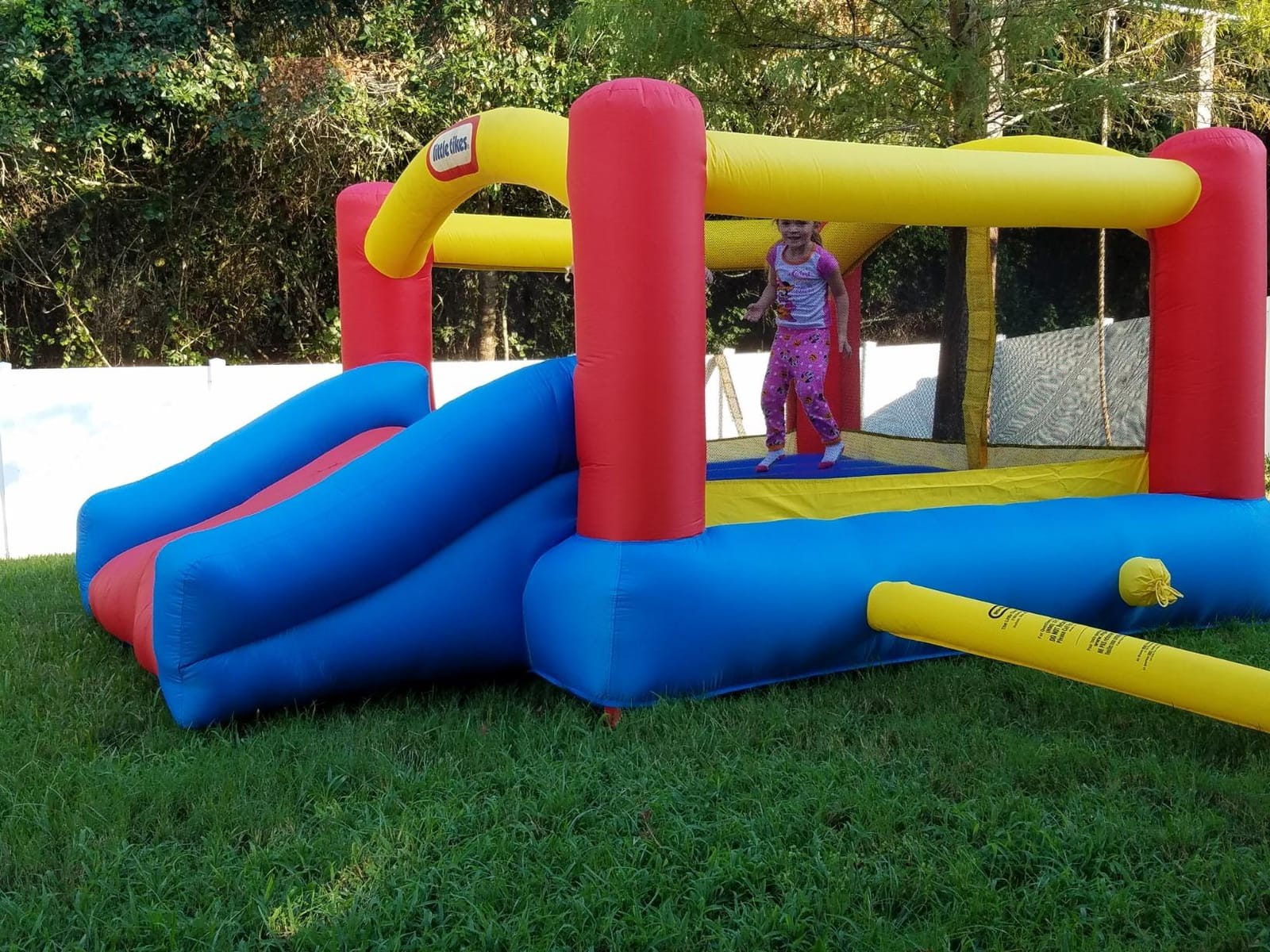
Setup is genuinely fast. Owners consistently report inflation in roughly a minute and folding in a few minutes after, which is the single biggest quality-of-life difference between a bounce house you will actually use and one that stays in the garage. The included blower has a GFCI plug, meaning it detects ground faults and cuts power. The staked bouncer, staked blower, repair patches and carry bag all ship in the box.
What impressed us most is the containment design. Mesh closure sides keep shoes and small objects from joining the jump, and a shoe storage pocket outside the walls means sneakers do not end up lost in the grass. Daycare operators use it for the same reason parents do, and 85 percent of its reviews are five stars.
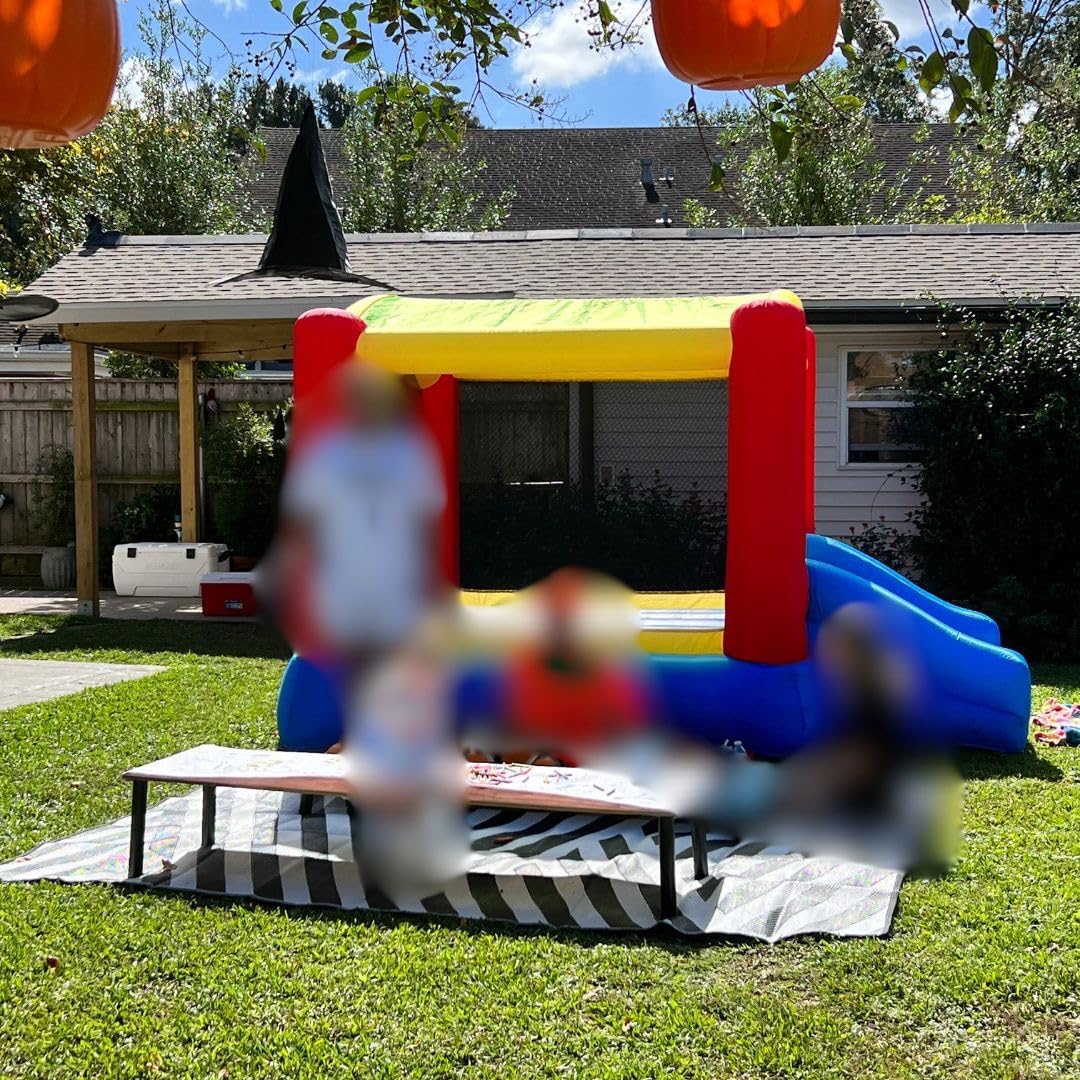
What 3-to-5 Players Actually Looks Like in a Backyard
The honest version is that this unit is comfortable for three to four children and technically rated for five. That works for a first, second or third birthday, and for a sibling playdate. For a group of six or more moving at once, the floor gets crowded quickly and collisions become the real hazard rather than the equipment.
The 72-inch wall height is low, which is a good thing. It is difficult for a child to fall out of, and the enclosed mesh sides mean a distracted parent does not have to watch the perimeter as closely as with an open-sided bouncer.
Where It Falls Short for Bigger Parties
The vinyl is thinner than what a commercial rental company will send to a birthday, so it is less puncture resistant against sharp gravel, patio edges or a dropped screwdriver. Lay a ground tarp or a thick sheet of plywood under the floor if the lawn is rough.
There is also no sunshade. On a July afternoon the vinyl surface gets hot enough that parents start rotating kids on and off the floor, which shortens the party. If your party is regularly held in direct sun, a unit with a canopy is a better fit.
2. Sibefiy 6-in-1 Play Castle: Best Value Inflatable Bounce House
Sibefiy Bounce House, 6-in-1 Play Mode Inflatable Bounce House for Kids
144 x 108 x 81 in inflated
Ages 3-10
88 lb combined weight
480W blower, 10 anchor points
Pros
- Six play stations in one footprint
- 480W blower fully inflates castle and slide in about a minute
- 840D and 420D Oxford fabric with double stitching
- Ten reinforced anchor points with stress patches
- Three mesh netting sides and slide handrails
Cons
- 88 lb combined weight limit is low for big groups
- Staking down is required for stable play
- Balls and accessories must be gathered before packing
Most activity castles give you a slide and call it a day. This one packs a bounce house, a wide slide, two basketball hoops, a throwing net, target practice and a boxing trainer into a 144 by 108 inch footprint. For a birthday where you want kids to keep moving rather than queue, that is a genuine step up from a plain bouncer at a similar footprint.
The fabric specification is where this unit pulls ahead of most of its price tier. High-quality 840D Oxford on the jump surface with 420D Oxford on the sides, finished with high-density double stitching, is a heavier weave than the polyester used by several cheaper castles. It is also ASTM and CPSIA compliant, which the manufacturer states directly.
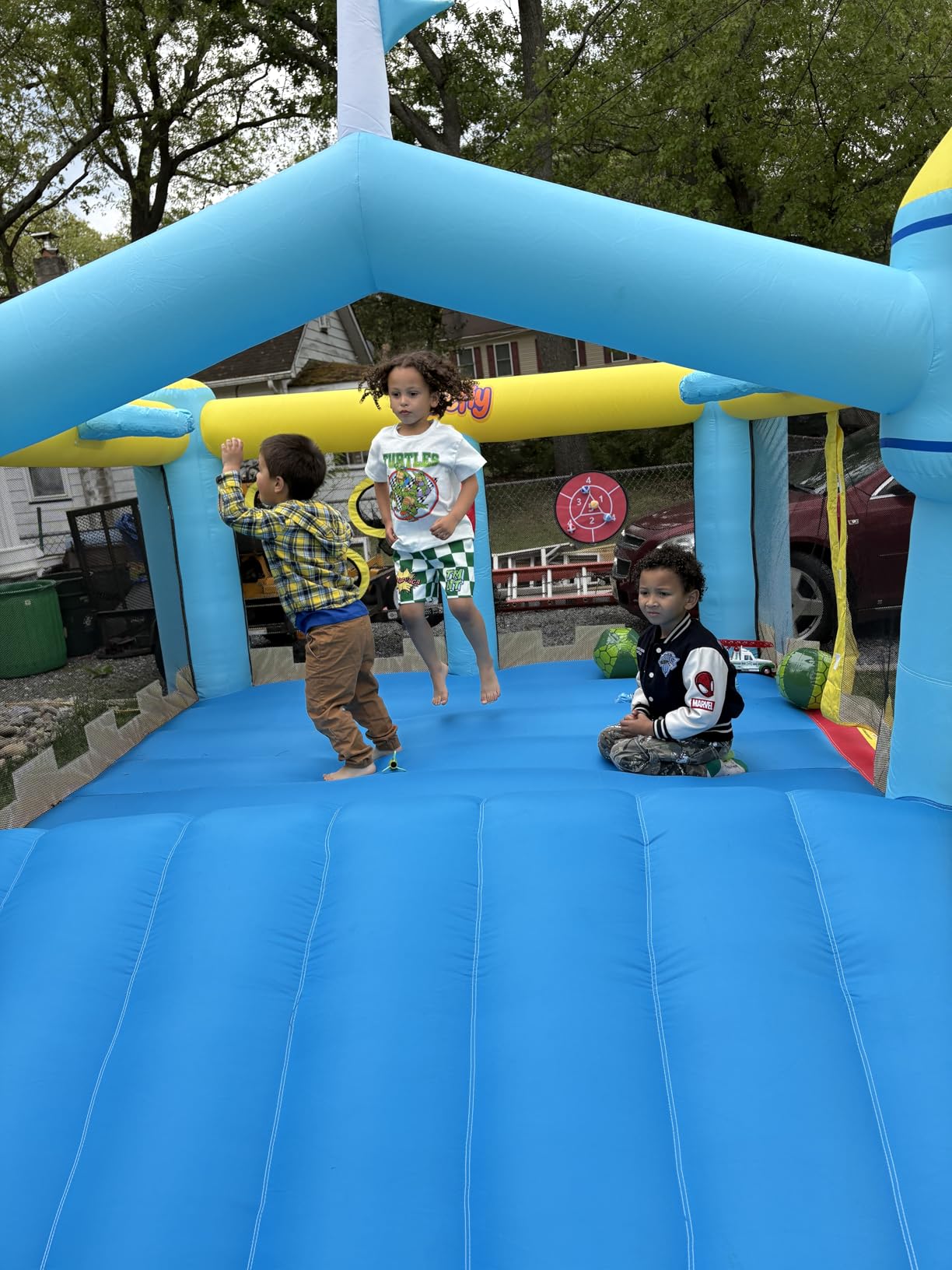
The 480-watt high-speed blower is among the most powerful units in this list, and owners report the whole structure, slide included, is firm in about a minute. Ten reinforced anchor points with strengthened stress patches at the corners are a real feature, not decoration, because anchor point count is the single biggest predictor of whether a unit stays put when a group of children lands on one side at once.
Two basketballs, eight throwing balls and ten fixed nails come in the box, along with the blower. The surface wipes clean and the whole thing compresses into a carry bag, which matters more than it sounds if your garage shelf is already full.
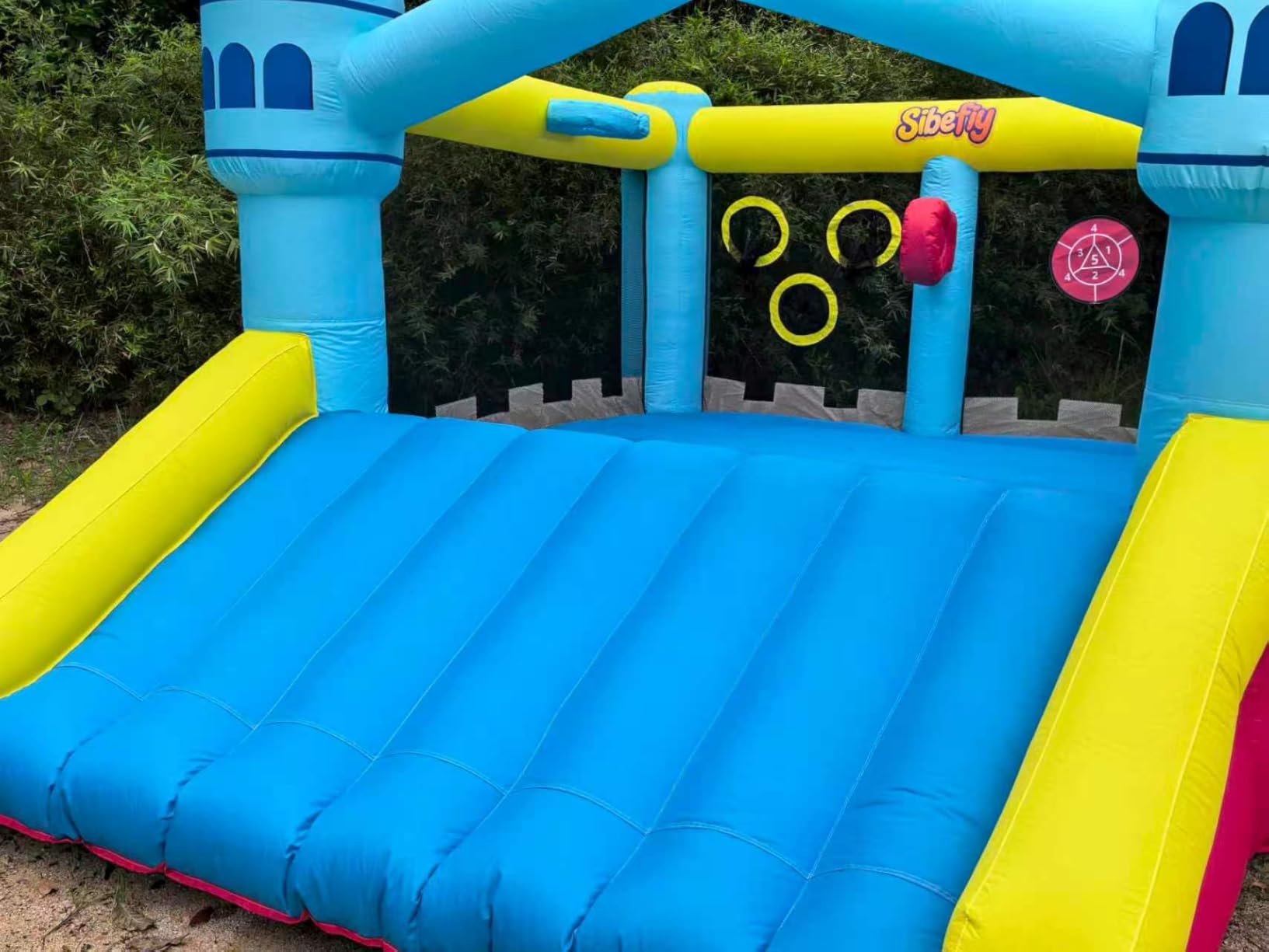
Where the 88-Pound Limit Bites
This is the one number to read twice. An 88-pound combined weight recommendation is fine for three small children and genuinely restrictive for five or six. If your guest list includes kids over about 35 pounds, you will be pulling children off the floor continuously to stay inside the limit.
That constraint is the single reason this is our value pick rather than our overall pick. For a party of three or four under roughly seven years old, it is the most play per dollar here. For a bigger group, move up to the Blast Zone or the Bounceland 16 x 13.
What Kids and Parents Both Like
Children rate the slide highest, parents rate the anti-tipping anchor layout highest. Both are cited constantly across 4,300-plus reviews holding a 4.7 average, with 82 percent of ratings at five stars. Rounded corners, a safe entryway and slide handrails address the injuries that actually happen in practice: falls at the slide mouth and collisions near the entrance.
Nothing is sacrificed to hit the feature count. The mesh netting is described as skin-friendly, which sounds minor until you have watched netting rub against a child every time they bounce.
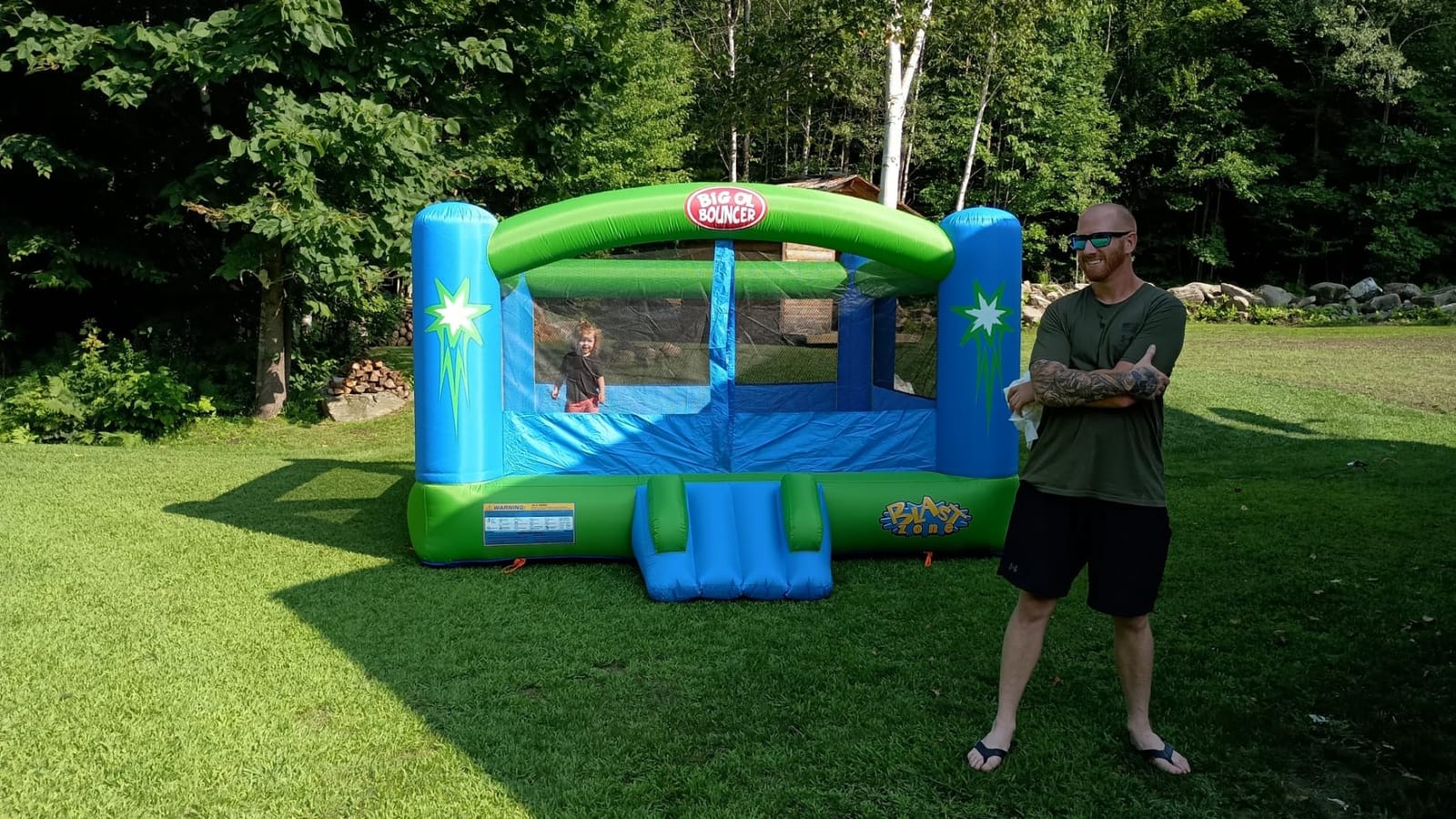
3. Blast Zone Big Ol Bouncer: Best Inflatable Bounce House for Six Kids
Blast Zone Big Ol Bouncer Inflatable Bounce House w/Blower – Huge – Premium Quality – 6 Players
15 x 12 x 7 ft inflated
6 players
600 lb total capacity
Commercial vinyl bounce floor
Pros
- Genuinely holds six children on the floor simultaneously
- Commercial-grade vinyl bounce floor rated for heavy use
- 600-pound total capacity is the highest here
- Backed by a 2-year promise
- Sets up fast and stores flat with included straps
Cons
- Bulkiest unit in the list so it needs the most yard space
- Open bounce floor with no slide or activity features
- Blower and storage straps are the only included items
Every other unit on this list is a compromise on space, and this one is not. The Big Ol Bouncer inflates to nearly 12 by 15 by 7 feet, holds six players, and carries a 600-pound total weight recommendation. For a neighborhood block party, a school event or a tenth birthday where six-plus children are the point, that capacity is the entire reason to buy it.
The floor is commercial vinyl rather than thin fabric, and an adult can stand on it. That single construction choice is why it outlasts fabric-floor units when the jump floor is the only surface in the unit with no padding above it. A 15 by 12 foot open floor gives kids room to run and land without a slide or climbing structure steering them into each other.
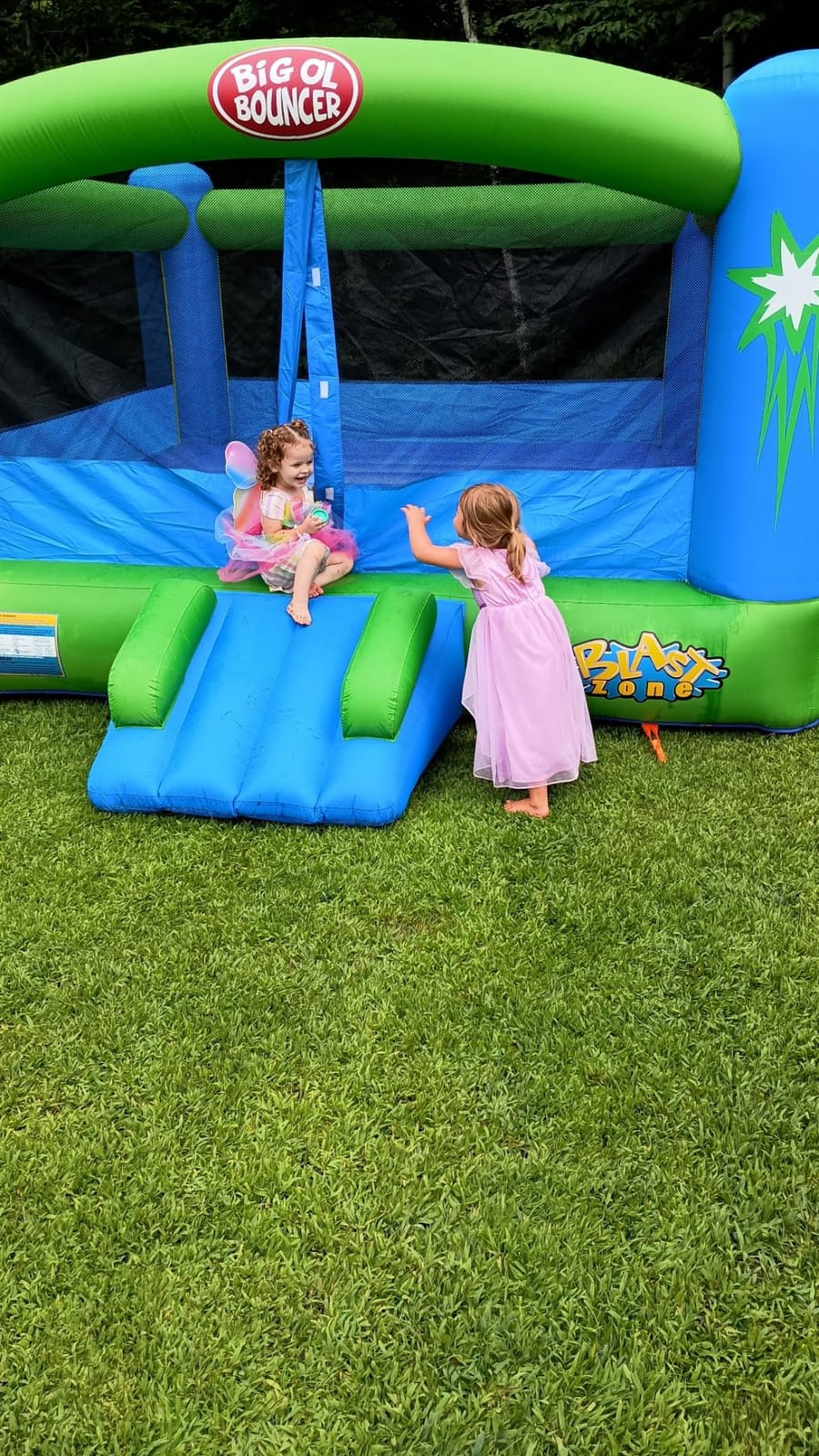
It is also the simplest unit here. No slide, no climbing wall, no ball pit, no theme beyond an astronaut motif. Children will be bored of the castle theme in about ten minutes anyway, and a 4.7 average across more than 1,700 reviews with 84 percent five stars suggests owners are satisfied with the trade.
Storage is flat with the included straps, and the manufacturer backs it with a 2-year promise, the longest warranty in this roundup. Owners describe it as an alternative to paying for repeated rentals, which is a fair framing for a house that costs less than four rentals in most markets.
Sizing the Yard Before You Commit
This is the biggest open floor in the list, so it needs the biggest clear space. Plan for the inflated 15 by 12 foot footprint plus at least 3 feet of clearance on every side for the anchor lines, plus clearance from fences, branches and overhead wires. On a typical suburban lot that means the middle of the lawn, not the side strip.
The clearance rule people forget is vertical. Nothing overhead at all, ever, including a branch that looks harmless until a gust lifts the corner. This is the hazard that surfaces again and again in rental operator discussions online, and it applies just as much to a unit you own.
What You Give Up Compared With the Castles
There is no slide, so there is no slide-entrance collision to manage, but there is also no queue that keeps a group of children organised. A plain open floor relies entirely on an adult running turns and capping the headcount, and for a group of six energetic kids that takes real attention.
It is also the bulkiest item in the roundup to move. A single adult can reposition it, but it is a two-person job in practice, and getting it through a side gate requires the full width of the inflated floor.
4. Bounceland 16 x 13 Party Castle: Best for Large Gatherings
Bounceland Inflatable Party Castle Bounce House Bouncer, 16 ft L x 13 ft W x 10.3 ft H, Basketball Hoop, Removable Sun Roof, UL Strong Blower included, Fun Slide and Bounce Area, Castle Theme for Kids
16 x 13 x 10.3 ft inflated
10 x 10 ft bounce surface
5 kids up to 500 lb total
Removable sun roof
Pros
- Largest footprint in the roundup with a 10 x 10 ft bounce surface
- Sturdy vinyl floor an adult can stand on
- Removable sun roof is a real advantage in summer
- Holds 5 kids around 100 lb each
- Owners report 4-plus years of heavy use
Cons
- Most expensive unit in the roundup
- Blower is loud indoors
- Deflating takes longer than the stated time
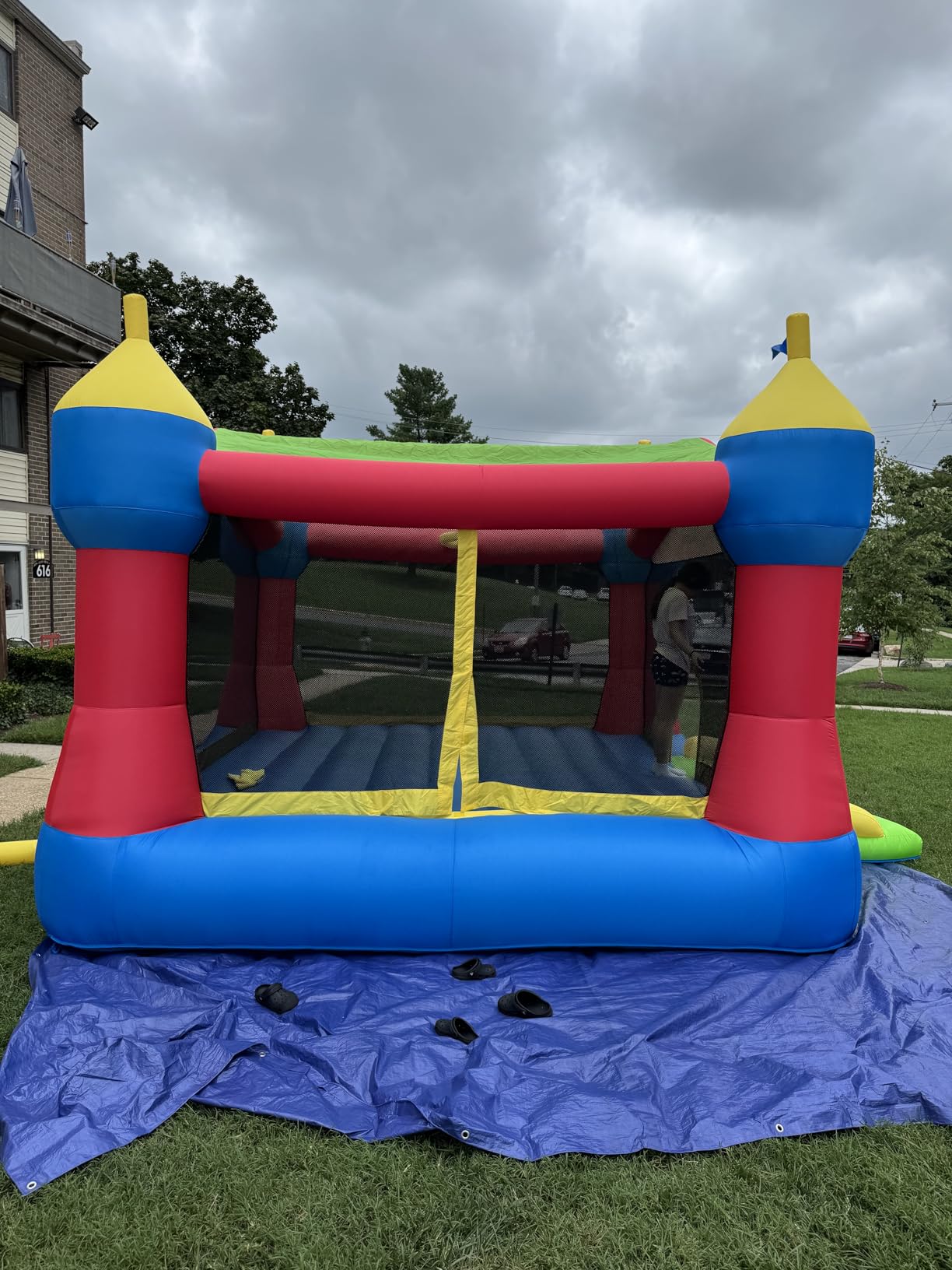
This is the one to buy when the party is the event rather than an add-on. It inflates to 16 by 13 by 10.3 feet, carries a 10 by 10 foot bounce surface, holds up to five children at 100 pounds each for a 500-pound total, and comes with a removable sun roof, a basketball hoop and a slide.
The sun roof deserves more credit than it usually gets. A removable roof lets you run the same unit in two modes: covered for a three-hour summer party when the vinyl would otherwise be hot, and open when the weather is cooler. Owners consistently single it out as the reason their unit outlasts friends’ purchases.
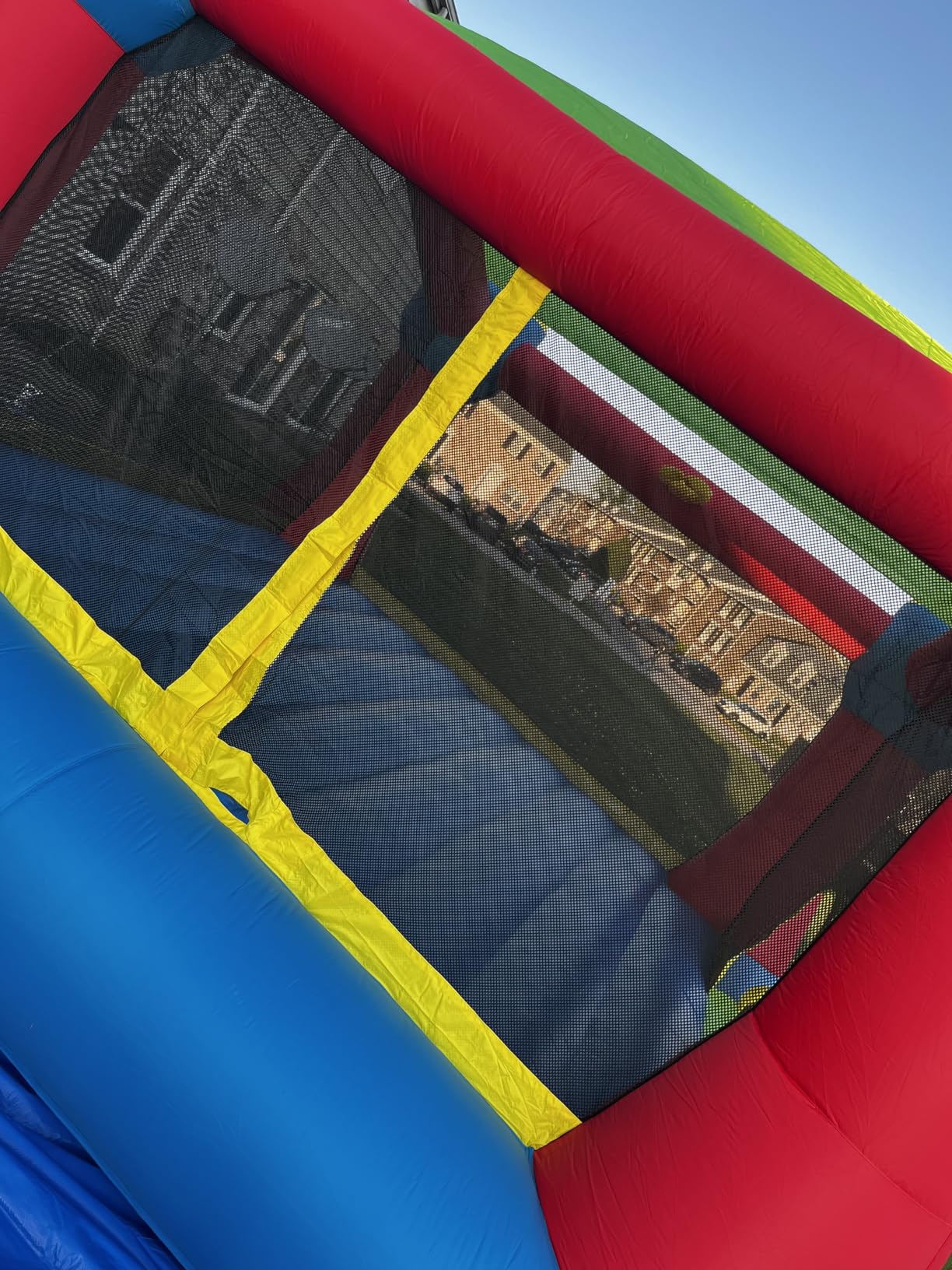
Construction is PVC-coated laminated Oxford with double to quadruple stitching and a commercial-grade bouncing surface, plus a half-way hook and loop fastener opening for safe entry. The blower is UL certified with a 25-foot cord and a GFCI plug, and nine-inch ground stakes plus a 6-foot air intake tube are included. Long-term owners report four or more years of heavy use with no deterioration.
At a 4.7 average with 88 percent of reviews at five stars, this is the highest five-star share of any product here. The rating distribution tells you the disagreements are mostly about logistics rather than quality.
When the Sun Roof and Vinyl Floor Earn Their Cost
They earn it in summer, and only in summer. The vinyl floor is the difference between a floor that resists a dropped pin and one that splits, and a 10 by 10 foot surface plus a roof is the configuration most likely to keep a group of eight to ten children occupied for a couple of hours without constant adult intervention.
Multiple owners note they have rolled it back into the included carry bag despite its size, which is surprising for a 16-foot unit and worth knowing before you plan your storage.
What the Price Tag Buys, and What It Does Not
What it does not buy is indoor convenience. The blower is loud indoors, deflating takes noticeably longer than the stated figure, and the 10.3-foot wall height needs serious ceiling clearance. It also ships without a ground tarp, so buy one before you lay it on grass or a patio.
This unit is also the most expensive on the list, and that fact alone puts it out of reach for a single birthday. The math only works if you are running several parties a year or hosting large groups repeatedly.
5. Sibefiy 8-in-1 Gameplay Bounce House: Best All-Activity Layout
Sibefiy Bounce House, 8-in-1 Gameplay Mode Inflatable Bounce House for Kids
158 x 99 x 87 in inflated
Ages 3-8
88 lb combined weight
60-second inflation
Pros
- Eight play modes across jumping and sliding and climbing and ball play
- 60-second inflation on the high-power blower
- Ten reinforced anchor points and stress patches
- 840D Oxford jumping surface with 420D sides
- ASTM and CPSC certified
Cons
- 88 lb combined weight limit
- Full 8-in-1 layout needs more floor space than a plain bouncer
- Must be anchored to stay stable in active play
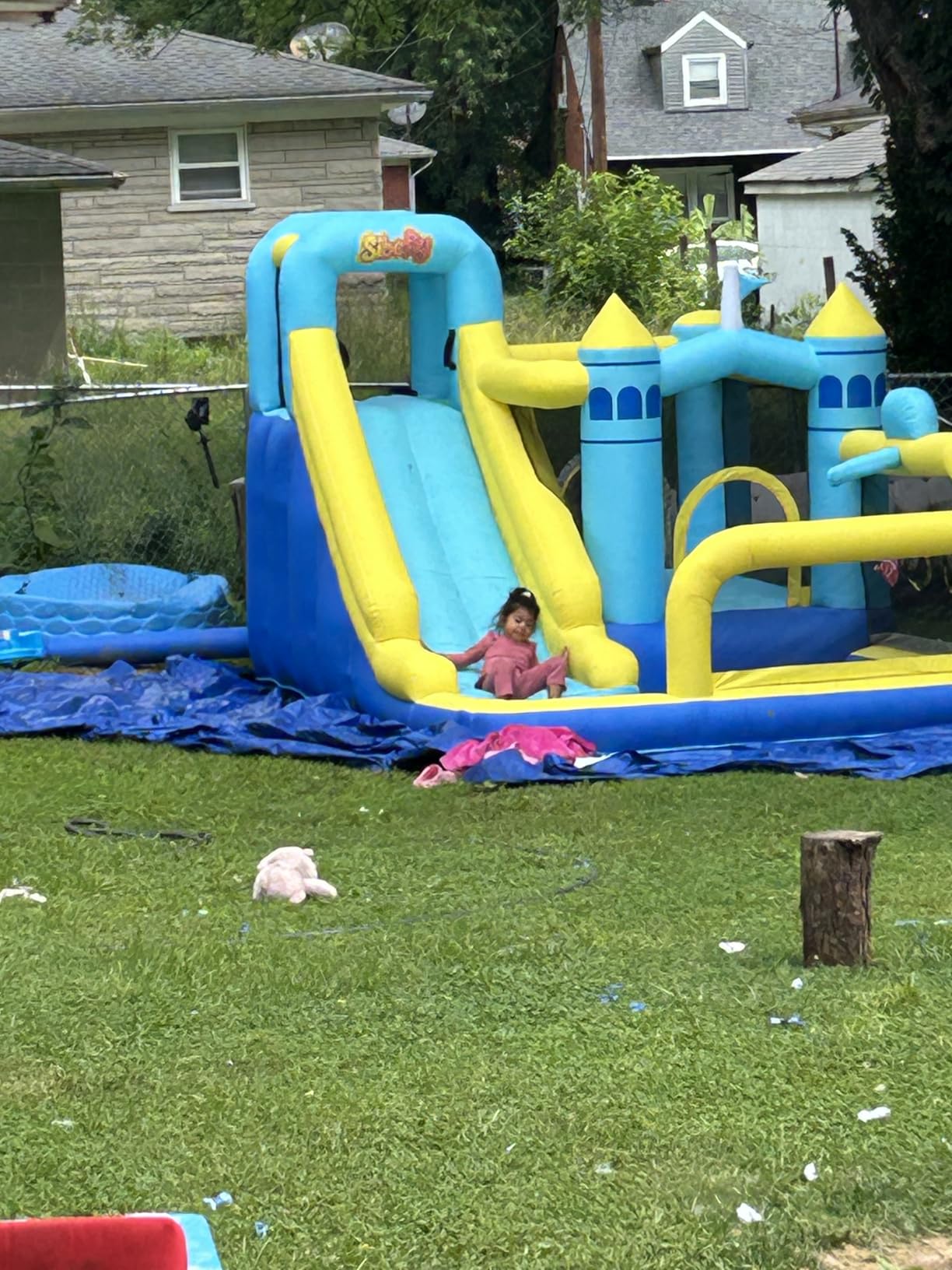
This is the bigger sibling of the 6-in-1, and it changes the game for longer sessions. Eight play modes cover the bounce house, a high slide, a climbing wall, a ball pit or pool, a basketball hoop, a throwing net and target practice, all inside 158 by 99 inches. That is the layout that keeps a group of children moving for two or three hours rather than forty minutes.
The climbing wall and ball pit are the draw. Parents reviewing this unit consistently report those two zones as the favourites, and the 4.7 average sits alongside a top-15 category sales rank, which means it is moving quickly enough that the feedback is recent rather than accumulated over a decade.
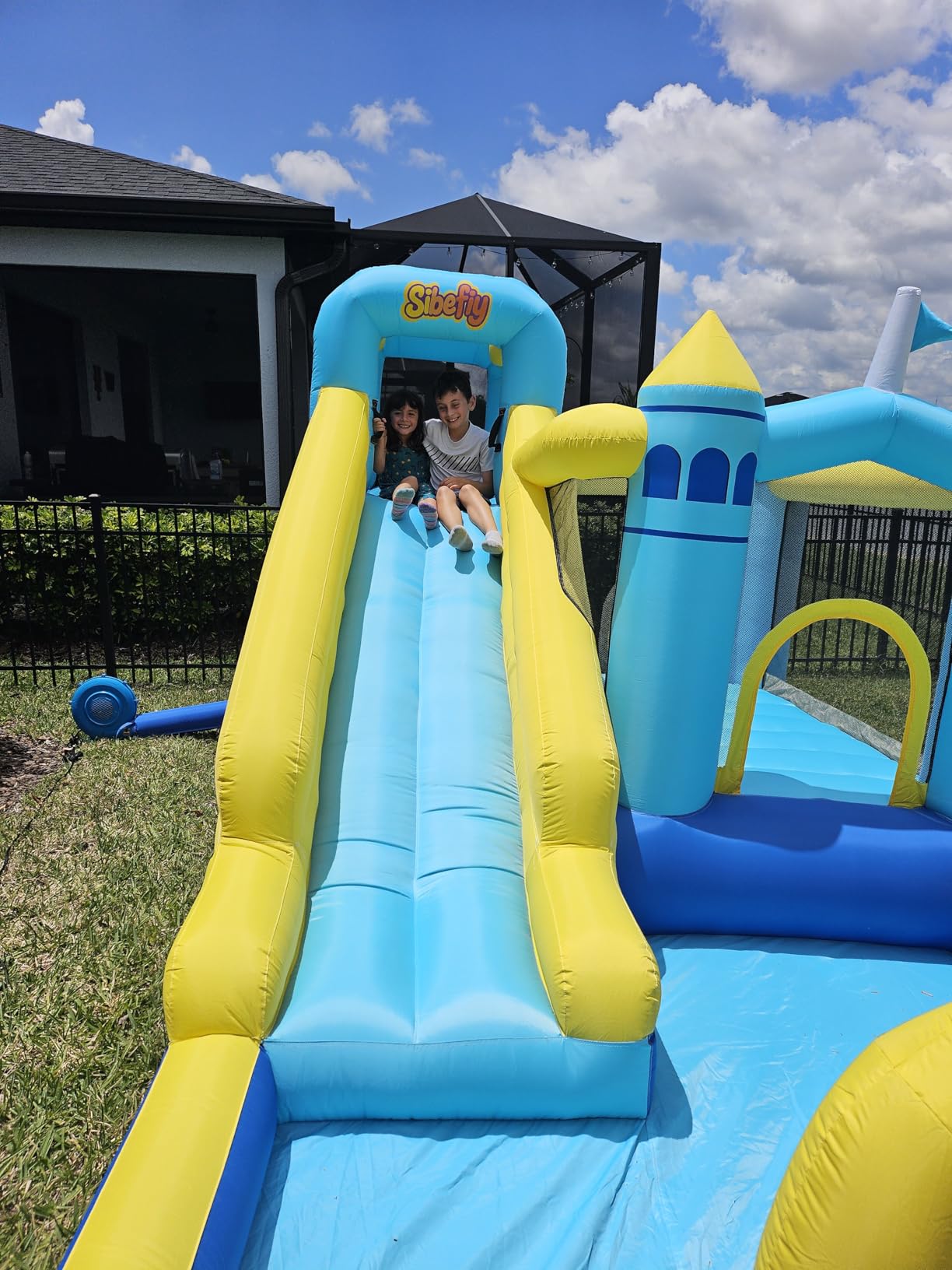
Materials match the 6-in-1: an 840D Oxford jumping surface with 420D Oxford sides, breathable mesh and double-stitched seams, on an aerodynamic structure with ten reinforced anchor points and strengthened patches at the stress areas. Rounded edges, cushioning and safety netting cover the jump and slide areas, and the unit is ASTM and CPSC certified.
Inflation takes about 60 seconds on the high-power blower, and it deflates to a lightweight bundle with a carry bag. Because the blower is separate, that bundle will not fit in most car boots alongside the blower, so plan the transport before the party day.
Choosing This Over the 6-in-1 Version
Choose this one if your group is ages 3 to 8 and you want the ball pit and climbing wall. The extra footprint is roughly a foot of extra length for substantially more play value, and 2,329 reviews at a 4.7 average with 82 percent five stars suggests the added complexity does not create more problems.
The climbing wall is the feature that changes adult supervision. Kids who can get up high need an adult positioned at the base, not just at the door, and that is a workflow change worth planning for before guests arrive.
The 88-Pound Caveat Comes Back Here
The combined weight recommendation is 88 pounds, the same as the smaller 6-in-1. That is the trade-off for the extra features: the floor area is not scaled to the play stations, so more equipment does not mean more weight capacity. Keep the headcount to three or four small children, and rotate.
The full layout also needs more clear floor space than a plain bouncer, so measure the yard before ordering rather than after. On a small city lot, the 158-inch length can be the deciding factor between this and the 12 by 9 Bounceland.
6. PicassoTiles KC102: Best Inflatable Bounce House With a Retractable Canopy
[Upgrade Version] PicassoTiles KC102 12×10 Foot Inflatable Bouncer Jumping Bouncing House, Jump Slide, Dunk Playhouse w/Basketball Rim, 4 Sports Balls, Full-Size Entry, 580W ETL Certified Blower
143.6 x 126 x 63.4 in inflated
12 x 10 ft play area
3 players, 250 lb max
ETL certified 580W blower
Pros
- Retractable shade cover for open-top or shaded play
- Inflates in under two minutes
- ETL certified 580-watt blower is the strongest in the roundup
- Basketball rim plus four sports balls
- Mesh netting walls and a full-size entry
Cons
- Manufacturer lists a maximum age of 999 months which is a placeholder
- Only the instruction manual is confirmed in the box contents
- Listed material type of plastic is not a meaningful description
The 580-watt ETL certified blower is the most powerful one we reviewed, and you feel it immediately in how firm the floor is. Owners report inflation in under two minutes, and at 12 by 10 feet the interior is wide enough that a group of children is not constantly crossing the same patch of vinyl.
The retractable shade cover is the reason to choose this over a similarly sized competitor. Pulled back, the top is open for mild days. Pulled forward, it shades the jump floor, which directly extends usable party time on a hot afternoon. It is the most practical answer to the hot-vinyl problem on this list.
![[Upgrade Version] PicassoTiles KC102 12x10 Foot Inflatable Bouncer Jumping Bouncing House, Jump Slide, Dunk Playhouse w/Basketball Rim, 4 Sports Balls, Full-Size Entry, 580W ETL Certified Blower customer photo 1](https://www.gaia-epicus.com/wp-content/uploads/2026/10/B071W2H64Z_customer_1.jpg)
The sports theme is a nice touch for older children. A built-in basketball rim plus a basketball, baseball, football and soccer ball turn a bounce session into a small game, and the 4.6 average across more than 2,400 reviews is supported by a top-10 category sales rank.
High-quality non-toxic materials, mesh netting walls and a full-size entry round out a sensible safety package. The unit is heavy at 48 pounds, which is a lot for one person to lift into a car.
![[Upgrade Version] PicassoTiles KC102 12x10 Foot Inflatable Bouncer Jumping Bouncing House, Jump Slide, Dunk Playhouse w/Basketball Rim, 4 Sports Balls, Full-Size Entry, 580W ETL Certified Blower customer photo 2](https://www.gaia-epicus.com/wp-content/uploads/2026/10/B071W2H64Z_customer_2.jpg)
When the Retractable Canopy Is Worth Extra
Worth it if the party runs between noon and late afternoon, or if the yard gets no shade from trees or the house. The vinyl surface on an open-top unit is genuinely hot, and parents rotate children off the floor to cope, which cuts the fun short. A canopy removes the need to think about it.
It is also worth it for a mixed-age group, because a wide open floor with a sports game gives older children something to do while toddlers bounce. The canopy makes that arrangement workable outdoors in summer.
Check the Box Contents Before the Party
The manufacturer’s listed components for this model name only the instruction manual, and the listed material type is a generic plastic entry rather than a fabric weight. Neither of those affects performance, but both mean you should confirm the rim, the balls and the blower are physically in the carton before the day, not after.
The stated maximum age of 999 months is a placeholder value, not a real figure. Treat the practical guidance as ages 3 and up with adult supervision for younger children, and use the 250-pound total limit as the binding constraint.
7. Action Air Bounce House With Slide: Best for Garage and Basement Setups
ACTION AIR [Updated Version] Bounce House, Inflatable Bouncer with Air Blower, Jumping Castle with Slide, Family Backyard Bouncy Castle, Durable Sewn with Extra Thick Material, Idea for Kids (C-9745)
144 x 108 x 73 in inflated
12 x 9 x 6.1 ft
3 players, 250 lb total
Ages 3-10
Pros
- Thick reinforced jumping and sliding surface that tolerates adult weight
- Inflates in about 30 seconds and folds in under three minutes
- Three sides of mesh safety netting
- Heavy-duty blower with GFCI plug and 25 ft cord
- Fits a two-car garage for indoor use
Cons
- Seams vent air by design producing a constant faint hiss
- Occasional reports of pinhole leaks appearing without an obvious cause
- Blower noise matches other continuous-air inflatables
This is the unit to buy if your climate turns half your parties indoors. At 144 by 108 by 73 inches with a 250-pound total limit, it fits a two-car garage with the door closed and the blower running, and owners use it that way through cold and rainy months. A 6.1-foot wall height also means you do not need a nine-foot ceiling.
Owners rate the material thickness highly and frequently compare it favorably to commercial rental inflatables, which is a meaningful signal from people who have stood next to both. The jumping and sliding surface is described as extra thick and able to handle adult weight in a pinch, and the three-sided mesh netting keeps children inside without a full enclosure.
![ACTION AIR [Updated Version] Bounce House, Inflatable Bouncer with Air Blower, Jumping Castle with Slide, Family Backyard Bouncy Castle, Durable Sewn with Extra Thick Material, Idea for Kids (C-9745) customer photo 1](https://www.gaia-epicus.com/wp-content/uploads/2026/10/B07G3S6VL1_customer_1.jpg)
Setup speed is the standout. Inflation takes roughly 30 seconds and the whole unit folds down in under three minutes, so an indoor session can start and end within an hour without planning the evening around it. The box includes the bouncer, a heavy-duty blower with a water cover button, a 25-foot power cord and GFCI plug, lawn stakes, repair patches and a carry bag.
At a 4.6 average across more than 3,300 reviews with 83 percent at five stars, this is one of the most established picks here. It is also the third-most-reviewed product in the roundup, which means its problems are well documented rather than unknown.
![ACTION AIR [Updated Version] Bounce House, Inflatable Bouncer with Air Blower, Jumping Castle with Slide, Family Backyard Bouncy Castle, Durable Sewn with Extra Thick Material, Idea for Kids (C-9745) customer photo 2](https://www.gaia-epicus.com/wp-content/uploads/2026/10/B07G3S6VL1_customer_2.jpg)
Why the Faint Hiss Is Not a Defect
The constant low hiss is seam venting, and it is required. Without a controlled leak path the structure would over-inflate as warm air expanded inside on a hot day, which puts stress on seams and can lift a corner. If the hiss stops, that is the problem, not the cure.
It does mean the unit cannot be left sealed and forgotten. The blower runs continuously during use, and you deflate by cutting power and letting the structure collapse through those same seams.
Pinhole Leaks and the Indoor Caveat
Owners do report occasional pinhole leaks or small rips with no obvious cause, and indoor use makes them more likely because grit from the garage floor gets ground into the seams. Vacuum or sweep the floor first, and keep the supplied repair patches accessible.
Inside, a blower that runs continuously next to a conversation is genuinely loud, and this is not the quietest setup on the list alongside the large Bounceland. If the party is at a mealtime rather than a play session, budget for that noise.
8. Bounceland 12 x 9 Rainbow Castle: Best Inflatable Bounce House for Small Yards
Bounceland Bounce House Castle with Basketball Hoop Inflatable Bouncer, Fun Slide, Safe Entrance Opening, UL Certified Strong Blower Included, 12 ft x 9 ft x 7 ft H
108 x 84 x 144 in inflated
12 x 9 x 7 ft
3 kids max, 250 lb total
84 lb individual limit
Pros
- PVC-coated laminated Oxford with double to quadruple stitching
- Inflates in under a minute and folds quickly
- Gentle slide angle for small children
- A single adult can set up and move it
- Compact enough for a basement or den
Cons
- Bounce feel is softer than large commercial units
- Needs staking outdoors and can lift if jumped on one side
- Side door entrance can need a zip tie or patch after heavy use
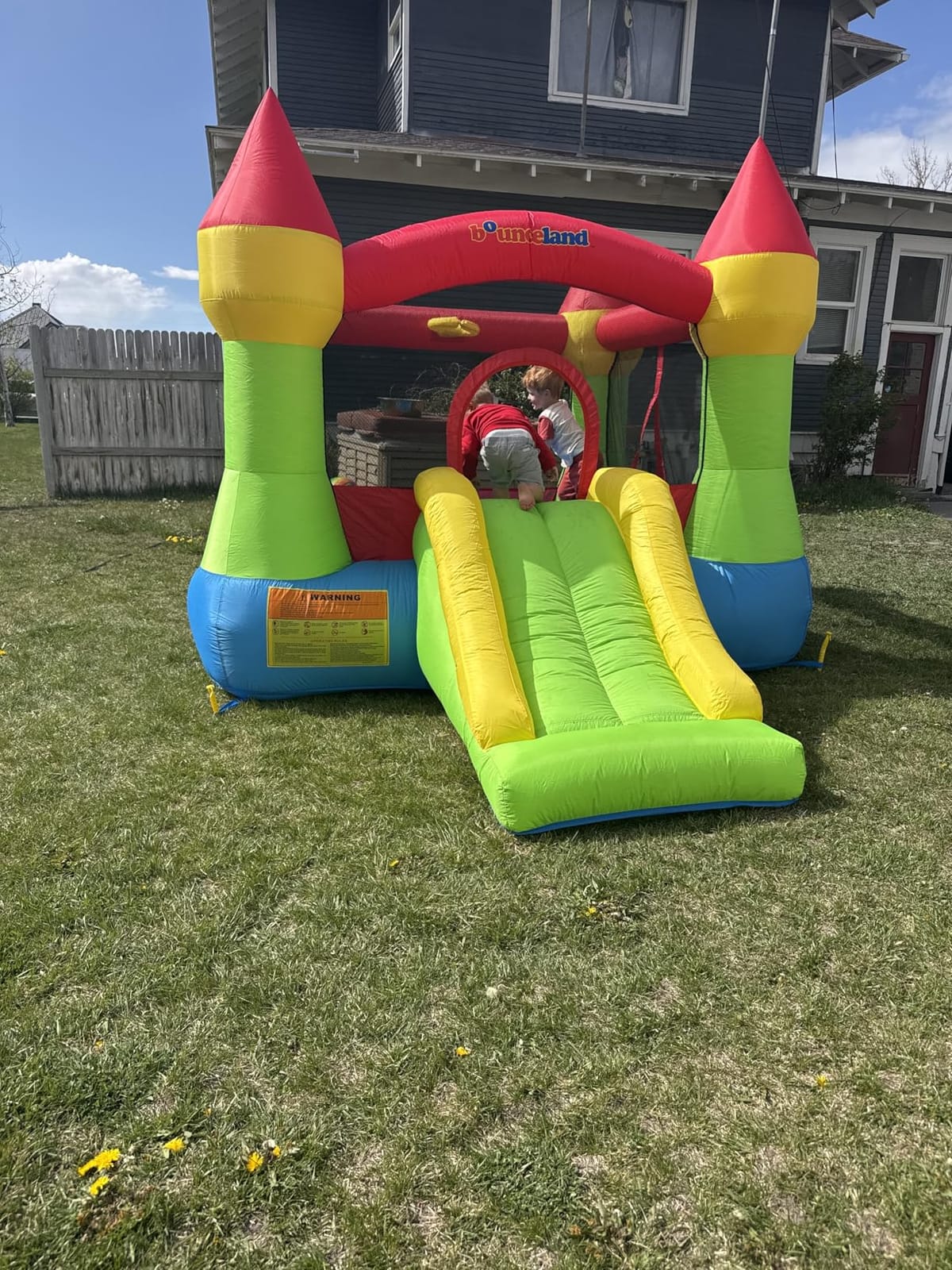
Small yards rule out most of this list. This 12 by 9 by 7 foot castle is the pick that still fits, and it is also the one most owners describe as easy work. A single adult can set it up and move it, which matters if the alternative is waiting for help on party day.
The specification detail is unusually thorough for this size. PVC-coated laminated Oxford with double to quadruple stitching, a hook and loop fastener entrance, a basketball hoop, nine-inch ground stakes, a 6-foot air intake tube, a carry bag, a repair kit and instructions. The blower is UL certified with a 25-foot cord and a GFCI plug, and the unit is certified to ASTM and 16CFR1500.3/16CFR1505.
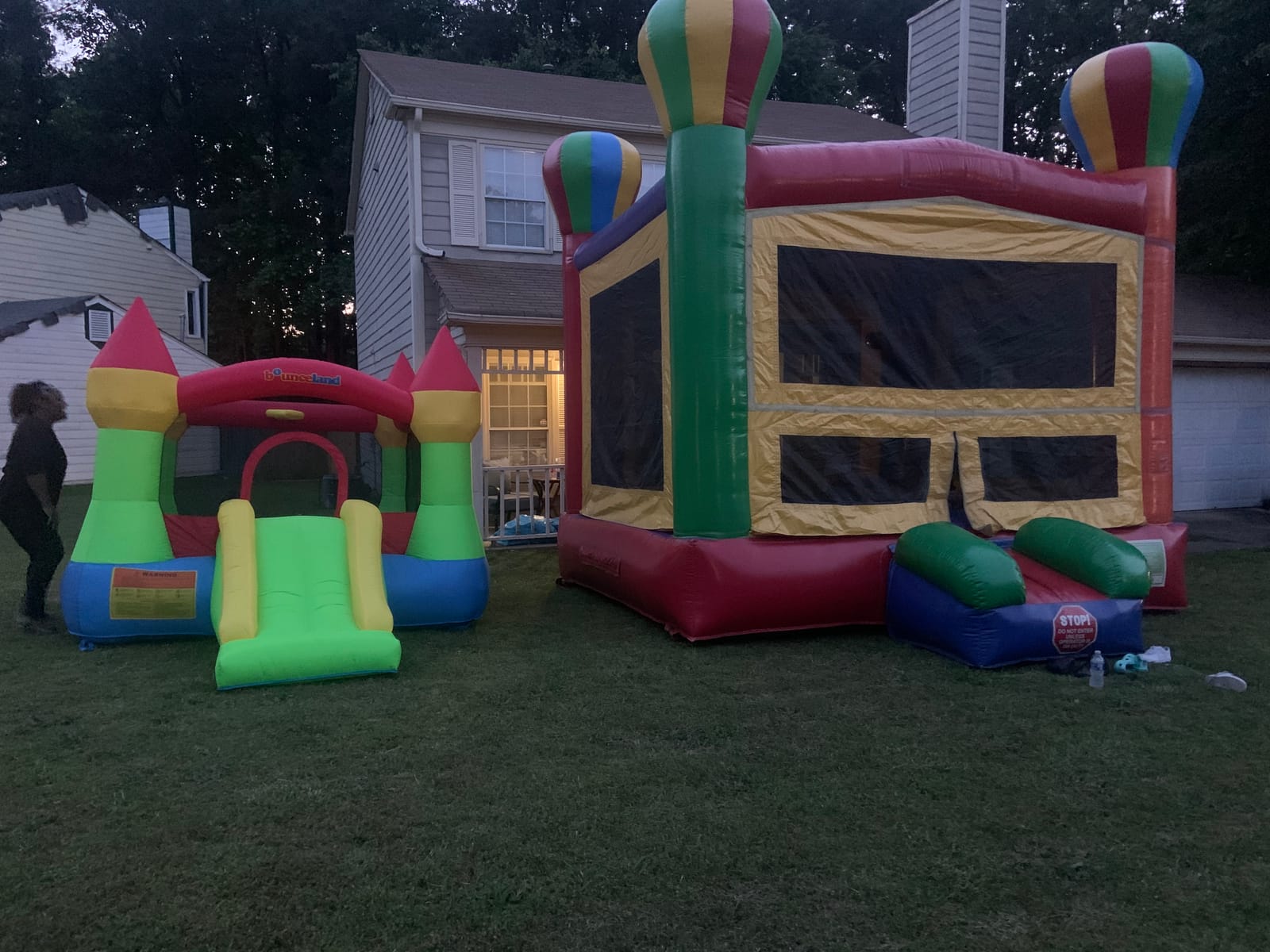
Owners frequently describe it as better value than renting, and the 4.6 average across 1,165 reviews has 82 percent at five stars. The warranty structure is also better than most here: 90 days against manufacturer defects with one year on the blower, which is a sensible split because blowers fail more often than fabric.
The slide angle is worth noting for a first birthday. It is gentle enough for small children to come down without a hard landing, and several owners specifically call this out after comparing it with steeper slides elsewhere.
Reading the Three Weight Numbers Correctly
This listing states all three limits clearly, and they mean different things. Maximum 3 kids is the headcount cap, 250 pounds is the total across everyone inside, and 84 pounds is the ceiling for any single child. A group of three 80-pound children fits the individual limit and the headcount but breaks the total.
Most parents only ever see one of these numbers on a retail page and assume it applies to everyone. Taking two minutes to check all three before the party prevents the most common bounce house mistake there is.
Why It Can Lift and How to Stop It
Owners note it can lift if jumped on from one side, which is a function of having fewer anchor points than the feature-dense units on this list. Use every supplied nine-inch stake, and on soft ground add sandbags at the corners. Never rely on the unit’s own weight to hold it in place.
The bounce itself is softer than the large commercial format, so older children and teens often lose interest quickly. For a party of three or four children under about eight, that trade is worth making for the footprint and the one-person setup.
9. Hongcoral Obstacle Course Castle: Best Inflatable Obstacle Course Set
Hongcoral Bounce House, Inflatable Bounce Castle with Blower for Kids, Blow Up Jumping Bouncer with Slide, Climbing Wall, Obstacles, Trampoline, Ball Pit Pool for Indoor Outdoor
152.8 x 99.2 x 85.8 in inflated
6 players up to 400 lb total
Ages 3-10
Obstacle poles and trampoline
Pros
- Richest feature set here with obstacle poles a trampoline and a climbing wall
- Inflates and deflates in under two minutes
- 840D PVC jump surface resists punctures and holds elasticity
- Three-sided mesh net with slide handrails and cushioned exit
- Owners report three years of good use
Cons
- Bulky to roll up and store
- Basketball hoop can arrive sewn shut and need cutting
- Water pool needs thorough drying to avoid mildew
If your idea of a bounce house party involves a course rather than a castle, this is the one. Obstacle poles, a long slide, an inflatable trampoline, a ball pit or water pool, a basket, three shooting nets and a climbing wall sit inside a 152.8 by 99.2 by 85.8 inch footprint. That is more play stations than anything else in this roundup.
The 400-pound total weight limit across six players is a real distinction. Both Sibefiy activity units stop at 88 pounds, so this is the unit to look at if your group includes children over about eight. The 840D PVC jump surface is also specified as puncture-resistant with long-lasting elasticity.
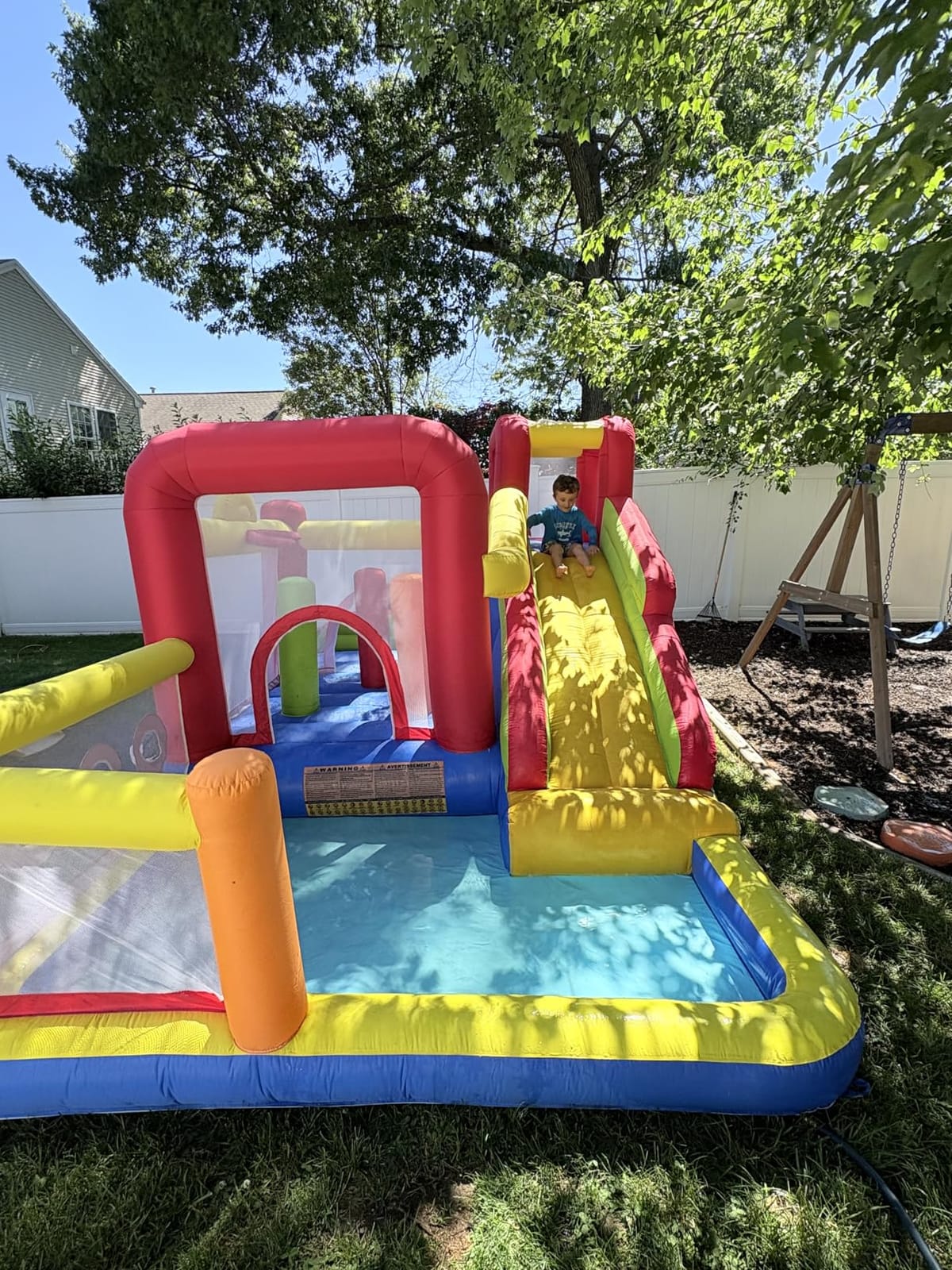
Owners consistently name the trampoline and the obstacle sections as the favourites, and several report three-plus years of solid use. The blower uses a metal impeller motor, which is the more durable construction in this list, and inflates and deflates the whole structure in under two minutes. Several owners describe it as quiet for a continuous-air unit.
Three sides of mesh safety net, raised slide handrails, cushioning at the bottom of the slide and ten ground stakes cover the safety basics, and the build is to ASTM F963. The box includes the blower, a repair kit, an extra-large carry bag and ten ground stakes.
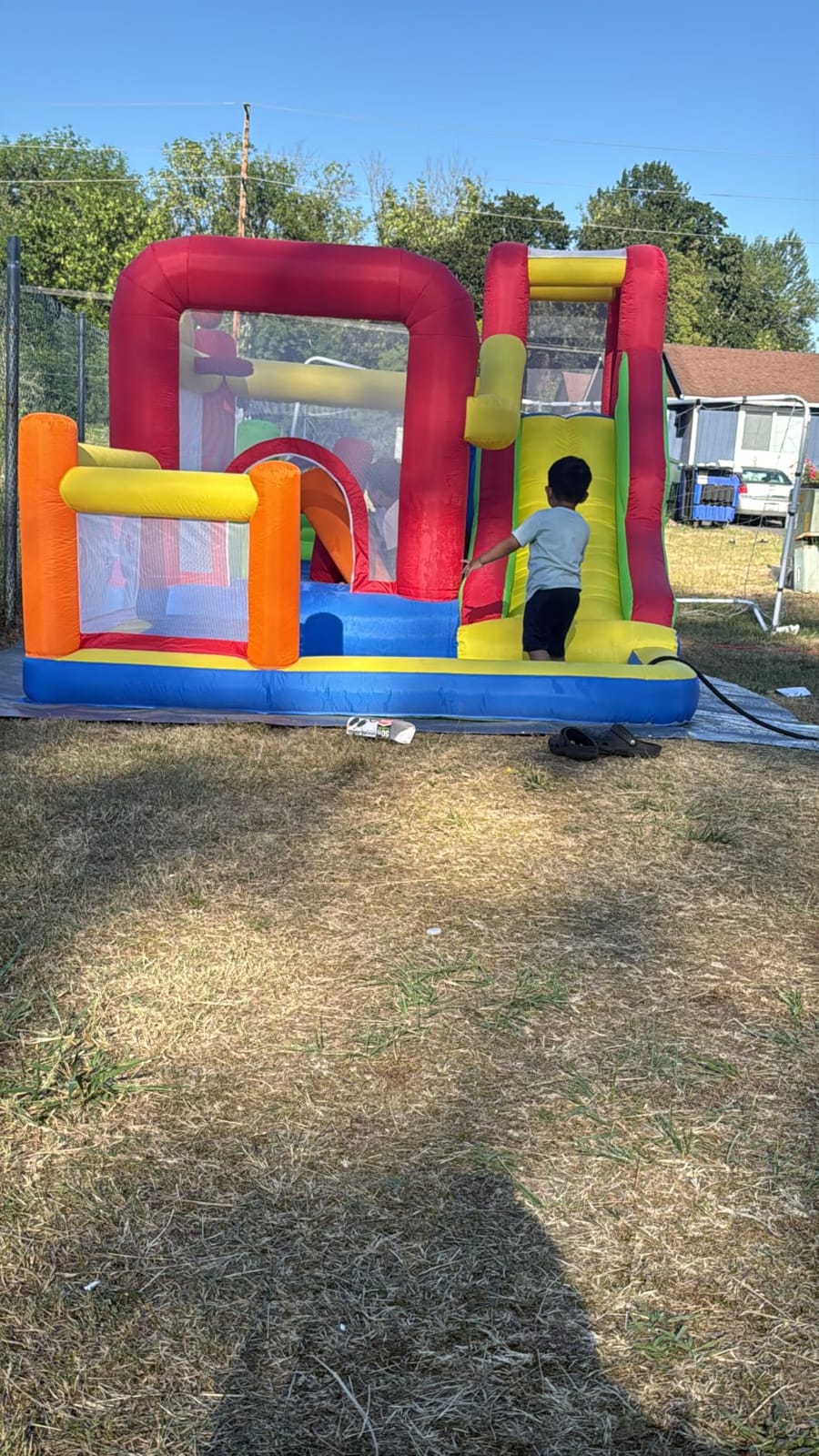
The Trampoline Section Changes the Age Range
An inflatable trampoline zone raises the effective minimum age and the injury profile at the same time. Children bounce lower and lose balance more often, which is where ankle and knee injuries come from. Position an adult directly at that section, and keep it to one jumper at a time.
The water pool or ball pit also works dry or filled, which makes this a strong choice for a summer party where the kids will be wet anyway. Fill it with a hose, drain it fully before packing, and never fill it while children are inside.
Three Practical Problems to Solve in Advance
The hoop can arrive partially sewn shut and has to be cut open, so bring scissors and do it before the guests arrive. The unit is bulky to roll back up, so clear a storage route before the first inflation. And the blower may not fit inside the supplied carry bag, which is a small annoyance that trips up most first-time owners.
There is also no padded landing area beneath the slide for indoor use, so for a garage or basement session put a mat down first. Outdoors on grass the slide exit cushioning is sufficient.
10. Step4Fun Water Jumper Castle: Best Inflatable Bounce House for Pool-Side Parties
Step4Fun Inflatable Bounce House, Kids Castle Slide Bouncer for Children Jumping Outdoor and Indoor Party, Baby Backyard Water Jumper Toy with Blower, Ball Pit Pool, Ideal Gifts(112 x 98 x 65”)
112 x 98 x 65 in inflated
3 players, 300 lb total
Ages 3-8
Water-fillable ball pit pool
Pros
- Ball pit pool is safe to fill with water for summer parties
- Five-in-one layout with dart game a hoop a slide and two chimneys
- Sets up in one minute and one person can pack it
- ETL certified 370W blower with ASTM F963 and CPSIA compliance
- Surface wipes clean with a damp cloth
Cons
- Blower output of 370W is lower than the 480W and 580W competitors
- Smaller footprint than the larger castle units
- Fewer reviews than the category leaders so less long-term wear data
The defining feature is the ball pit pool, which the manufacturer states is safe to fill with water. For a pool-side or backyard summer party that is the difference between a bounce house and an actual water play setup, and it is why this unit sits on the list at all.
The rest of the layout covers good ground for a 112 by 98 by 65 inch footprint: a dart game, a basketball hoop, a bounce and slide area, two inflatable chimneys and a ball pit pool with 40 balls included. A 300-pound total limit across three players is a sensible middle ground, higher than the Sibefiy units and lower than the large-format castles.
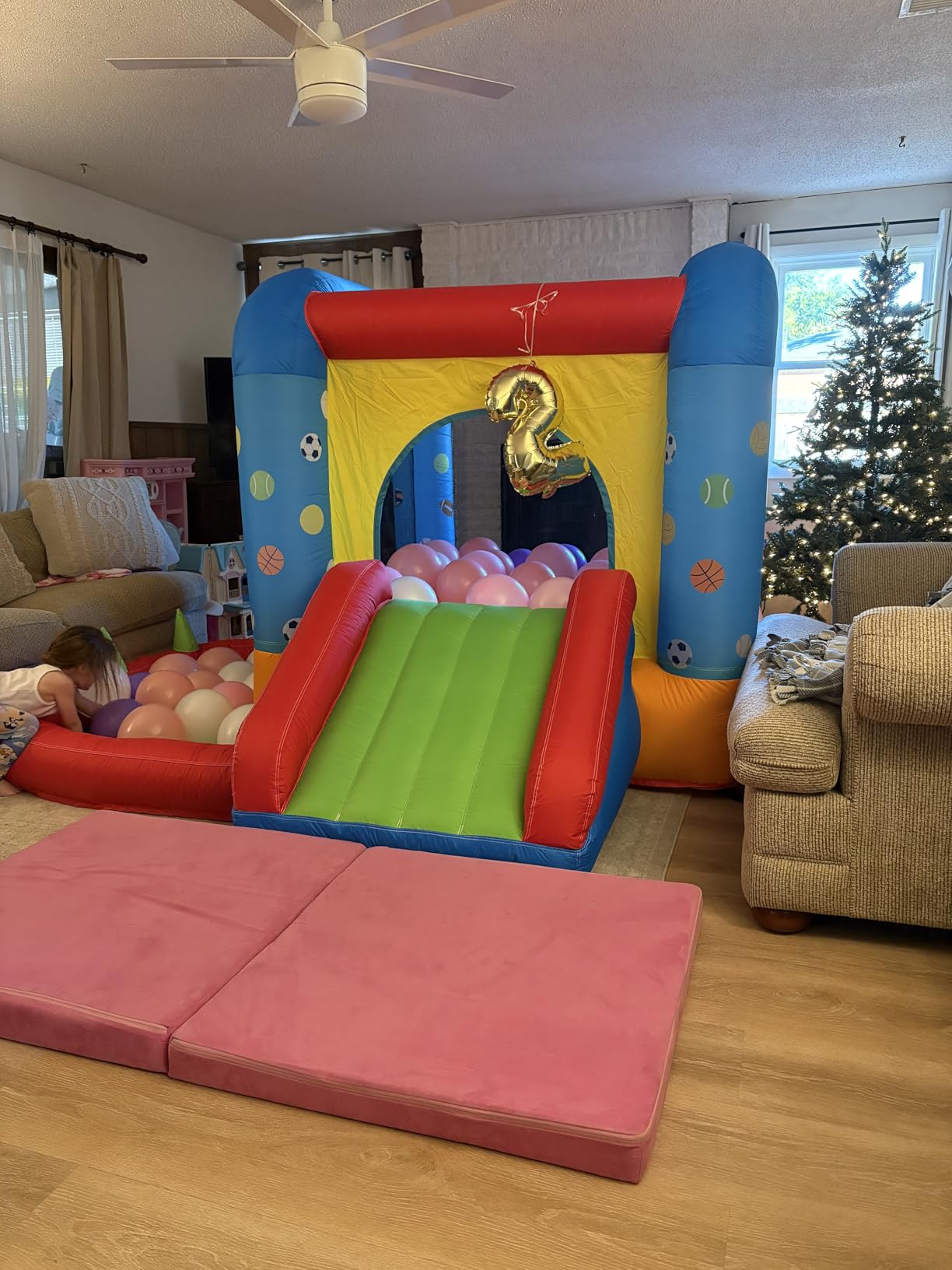
Safety certification here is specific and checkable: ASTM F963-16/17 and CPSIA compliance with an ETL certified 370W/120V blower from Intertek, odorless materials, additional stitching, a waterproof ball pit and no zippers or metal parts. The absence of metal parts and zippers removes two things parents worry about, snag points and exposed hardware.
Setup takes about a minute and one person can fold and pack it. The surface wipes clean with a damp cloth, which matters more than usual for a unit that gets wet. Included: blower, six stakes, manual, 40 balls, carry bag and repair patches.
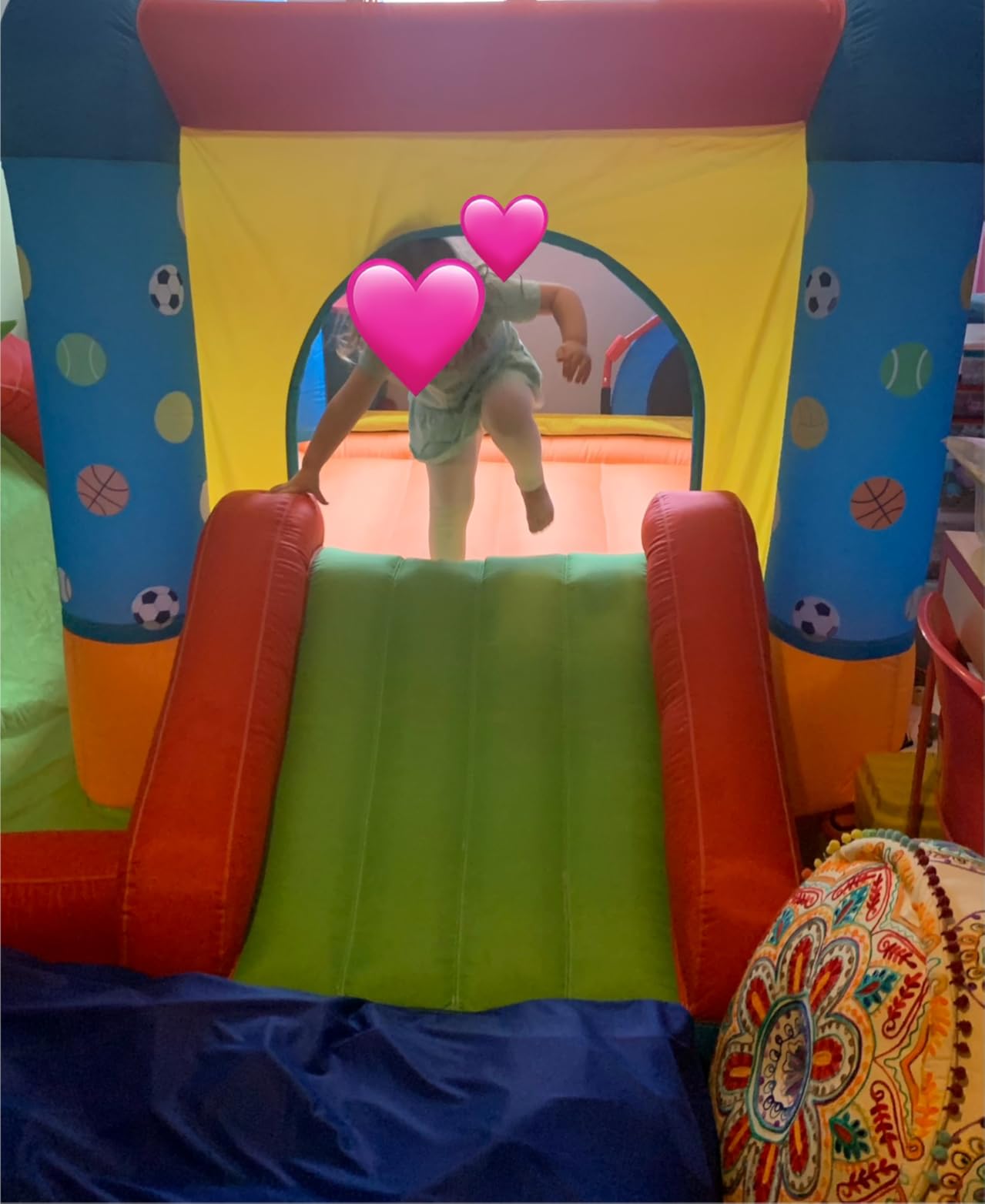
Running a Water-Filled Party Safely
Fill the pool with a hose, not a bucket carried by an adult near children, and keep a controlled depth rather than filling to the rim. Drain it fully before deflation, then let the whole unit air out indoors before packing, because trapped moisture in a ball pit is the main cause of mildew in stored inflatables.
On a pool-side setup, position the unit on grass or a tarp rather than on wet paving, and run the blower from a GFCI-protected outlet away from the pool. A continuous-air blower and standing water are a combination worth separating deliberately.
Where the 370W Blower Shows
The 370-watt blower is the least powerful here, roughly three quarters the output of the 580-watt PicassoTiles. The floor is noticeably softer with a group on it, and inflation and deflation both take longer than the one-minute claim in practice. For three children it is perfectly adequate, which is exactly the headcount this unit is rated for.
With 626 reviews at a 4.7 average and 87 percent five stars, the sentiment is strongly positive, but the sample is smaller than the category leaders. There is less long-term wear data here, so budget for the possibility of replacing it sooner.
How Big an Inflatable Bounce House Do You Need for Your Party?
Sizing by guest count rather than by wishful thinking is the decision that matters most. A unit rated for three children that hosts six is the single most common cause of bounce house injuries, and it is entirely preventable before anything is unboxed.
Work from two numbers: the number of children who will actually be jumping, and the total of their weights. Headcount alone is misleading because a group of four eight-year-olds can be twice the weight of a group of four three-year-olds, and the total weight limit is what the floor is engineered around.
Below roughly four children, the 12 by 9 foot class is plenty. Between four and six, look at the 12 by 10 to 15 by 12 foot class. Above six children at once, only a large-format open floor such as the Blast Zone or the Bounceland 16 x 13 will work without constant rotation.
A useful rule of thumb is roughly 25 square feet of jump area per child under eight, and double that for older children who run rather than bounce in place. Below that, the floor is crowded and collisions replace bouncing as the dominant activity.
Always leave one side of the floor for waiting children. A bouncer where every child is on the jump at once is less fun and more dangerous than a slightly oversized one where a small queue keeps the flow moving.
How We Picked These Inflatable Bounce Houses
Every inflatable bounce house on this list is a continuous-air unit, so the differences that matter are footprint, weight limits, fabric specification, anchor count, blower certification and the durability record visible in owner feedback.
We weighted safety certification and published weight limits most heavily, because those are the two numbers that determine whether a unit suits your guest list. ASTM F963 and CPSIA compliance, or an ETL or UL certified blower with a GFCI plug, separated the picks from the ones we passed over.
Review volume was our tiebreaker. A product with thousands of reviews tells you about its failure modes; a product with a few hundred tells you only that early owners were happy. Where ratings were close, we favoured the better-documented unit.
We also read the complaints rather than skipping them. Seam weeping, stretching netting, hot vinyl surfaces and weak support after the sale are the recurring themes across owner feedback, and every pick below carries at least one honest drawback.
Buying Guide: What Actually Matters in an Inflatable Bounce House
Read the Three Weight Numbers, Not One
Listings routinely publish three different limits and buyers only ever see one. Total weight limit is the sum of everyone inside. Individual weight limit is the ceiling for a single person, which matters when a ten-year-old steps onto a floor rated for toddlers. Occupancy limit is a headcount, usually the lowest of the three numbers.
A unit can pass on two and fail on the third. The Bounceland 12 x 9 accepts 3 kids and 250 pounds total but caps any single child at 84 pounds, so three children at 80 pounds each is technically over the total. Check all three before you buy, not on the day.
Fabric Weight and Stitching Predict Lifespan
Denier is the thickness measure that matters most. You will see 420D and 840D Oxford fabric across this roundup, and 840D is roughly twice the yarn thickness. Where a manufacturer specifies 840D on the jump surface and 420D on the sides, the jump surface is where durability counts, because that is the part taking the abrasion.
Stitching is the second indicator. Single stitching splits. Double stitching holds. Quadruple stitching is what you see on the two Bounceland units, which is a fair signal of expected service life. PVC-coated laminated Oxford, as used by both Bounceland models, also resists moisture better than uncoated polyester.
Blower Wattage, Continuous Airflow and the Blower You Were Not Warned About
Every unit here uses continuous airflow. The blower runs for the entire time children are inside, which is why you never inflate one with a standard air pump and why the running noise is unavoidable. Blower output across this roundup ranges from 370W to 580W, and higher wattage means a firmer floor and faster inflation.
Check for a third-party certification on the blower, either UL or ETL, and for a GFCI plug. A GFCI plug detects a ground fault and cuts power, and it is the difference between a nuisance trip and a serious shock risk when a wet blower sits on damp grass.
For electrical setup, use an outdoor-rated extension cord rated for the blower load, keep all connections above ground and away from any water source, and plug into a GFCI-protected outlet. Never run a long cord across a walkway where it can be tripped or pinched.
Anchoring Is Not Optional
Anchor point count varies from a handful to ten reinforced points with stress patches. Ten points is meaningfully more stable because the load is distributed, and because a group of children landing on one side cannot tip the unit the way it can with four corners.
On grass, drive every supplied stake and add sandbags at the corners on soft or recently watered soil. On concrete or a patio, stakes will not hold, so use sandbags or weights on every anchor point and add more than the manual suggests. Do not inflate near power lines, tree branches or any overhead obstruction.
Space, Clearance and Ceiling Height
Budget the inflated footprint plus 3 feet of clear space on every side for the anchor lines, and keep it entirely clear above. For indoor use, measure ceiling height against the unit’s wall height and allow generous margin. The 6.1-foot Action Air unit fits a standard garage; the 10.3-foot Bounceland castle does not.
On grass, lay a tarp or sheet of plywood under the floor. It keeps mud off the vinyl, protects against puncture from stones and roots, and makes deflation cleaner. No unit on this list ships with a tarp, so buy one.
Age Bands and Where Each Unit Fits
For toddlers aged 2 to 4, prioritise soft fabric, gentle slide angles and a low wall height. The Bounceland 12 x 9 and the Step4Fun water jumper both suit that band well.
For big kids aged 5 to 9, the feature-dense activity units come into their own, and the 300-pound and 400-pound total limits start to matter. For mixed or tween groups, an open floor such as the Blast Zone with a 600-pound limit handles weight better than any castle on this list.
Buy vs. Rent: When Buying Your Own Actually Wins
The local rental pack sits above the organic results for this query, which tells you how many people are weighing exactly this. The honest answer is that renting wins for a single event and buying wins from roughly the fourth event onward, mostly because delivery, setup, teardown and the booking window are the expensive parts, not the unit.
Count the hidden rental costs before deciding. There is the rental itself, a delivery and collection fee, a deposit you are accountable for, and a narrow booking window that means a rained-out date is often simply lost. Parents weighing a one-off son’s birthday open with this exact question on long-running personal finance forums.
Buying also wins on control. You choose the date, you inflate an hour before guests arrive, you decide the headcount, and you are not explaining a no-show to twenty children. Rental operators themselves are judged on cleanliness and punctuality, which tells you the two attributes that actually vary between providers.
Renting wins for very large or themed units you will use once, and for anyone who cannot store a deflated 100-pound bundle. It also wins if you lack a flat yard, a dedicated GFCI outlet or someone willing to supervise continuously, because a rental crew handles anchoring and teardown as part of the job.
If you buy, expect three to four years of service from a well-maintained unit, and plan the off-season storage properly. Owners on several of these models report four years or more of heavy use, which is the number that makes buying defensible against a fourth rental.
Party-Day Setup and Safety Checklist
Work through this list the first time you set the unit up, not the day of the party. Every step takes a minute the first time and saves a problem later.
Check the forecast and set your own wind rule. Most manufacturers in this category specify a limit between 15 and 20 mph, and you should deflate below your figure, not above it.
Lay a tarp or plywood under the footprint, and clear the entire area including 3 feet of margin and all overhead clearance.
Confirm you are far from power lines, tree branches, fences and anything sharp.
Drive every supplied ground stake, then add sandbags at each corner. On concrete or paving, use sandbags on every anchor point instead of stakes.
Run the blower on an outdoor-rated extension cord into a GFCI-protected outlet, with all connections above ground and away from water.
Leave the blower running for the entire time children are inside. These are continuous-air units and they deflate within minutes of losing power.
Post one adult supervisor whose only job is headcount and rotation. Do not multitask.
Keep an eye on the vinyl temperature in direct sun. Rotate children off a hot floor and shade the unit if you can.
Stop for rain. Water on the jump surface and an electrical blower are a bad combination even with a GFCI plug.
Vacuum or wipe the surface, let it dry fully, then deflate and fold it into the bag. Storing damp vinyl is how mildew starts.
The occupancy discipline matters more than anything else on that list. Multiple children inside at once is the most frequently cited recurring cause of bounce house injuries, and it is a decision an adult makes continuously rather than a spec printed on a box.
On wind, 15 to 20 mph is the number manufacturers give, and parents consistently struggle to feel what that is. A useful anchor is a light flag on a pole: stiff and snapping rather than lifting and waving. If guests are at the beach or on a hill, assume you are already above the limit.
On power lines, the concern that ordinary parents raise unprompted is the correct one. Never inflate anywhere near overhead lines. Move the entire setup rather than shortening the cord, and if the only outlet is indoors through a window, use a proper outdoor-rated run rather than a domestic lead.
Cleaning, Storage and Off-Season Care
Vacuum the interior first. Loose grit is the leading cause of pinhole punctures, and it wears the stitching faster than anything else over a season.
Wipe the floor with a damp cloth and a mild all-purpose cleaner, avoiding anything solvent-based that can degrade the vinyl or the hook and loop fastener entrance. Let it dry completely in the shade before deflating, and pay particular attention to the ball pit or water pool if you used one.
Deflate with the blower off, open the vents, and let the structure collapse on its own rather than forcing it. Fold loosely along the seams instead of creasing them sharply, and use the storage straps on larger units so the bundle holds its shape in a garage.
Store the bag indoors, dry and off the floor, away from direct sun and from any rodent-accessible space. A damp bag in a warm garage is the one scenario that reliably ends a four-year ownership cycle in the first year.
Frequently Asked Questions
Who makes the best bounce house?
The best inflatable bounce houses for home parties come from Little Tikes, Bounceland and Blast Zone. Little Tikes leads on setup speed and blower safety, Bounceland builds the most complete castles with double to quadruple stitching, and Blast Zone makes the largest open vinyl floor for big groups. For the best value per feature, the 6-in-1 activity castles from Sibefiy pack the most play into a normal backyard footprint.
How much wind is unsafe for a bounce house?
Most residential inflatable bounce houses are rated to a wind limit between 15 and 20 mph, and you should deflate before you reach that figure rather than at it. A practical test is a small flag on a pole: if it is stiff and snapping rather than lifting and waving, you are near the limit. Gusts matter more than steady wind, and a unit that starts to lift will catch the full force of the open side.
What are some safety tips for using a bounce house?
Anchor every supplied stake and add sandbags at the corners, use all anchor points on concrete rather than stakes, keep the unit clear of power lines and branches, and never exceed the occupancy or total weight limit. Leave the blower running continuously during use, plug into a GFCI-protected outlet with an outdoor-rated extension cord, and have one adult whose only job is supervising and counting children. Deflate in wind above 20 mph, in rain, and whenever the vinyl surface gets hot enough to be uncomfortable.
Do you leave the blower on for a bounce house?
Yes. Every unit in this roundup uses continuous airflow, so the blower runs for the entire time children are inside. These are not sealed inflatables that you pump up and walk away from, which is why they deflate within minutes of the power being cut. Turn the blower off, deflate, and dry the unit fully before folding it for storage, since trapped moisture against the vinyl is the main cause of mildew.
Which is safer, a bounce house or a trampoline?
A bounce house is generally safer for young children than a trampoline, because the walls contain movement, the surface is enclosed and the jump height is fixed by air pressure rather than by the spring bed and frame. The main risks in a bounce house are overcrowding, anchoring and wind, all of which are controlled by adult behaviour. A trampoline carries a higher injury profile for the same age group because falls off the edge and collisions with the frame are both possible.
Can a bounce house be set up on concrete?
Yes, but never with ground stakes, which cannot bite into concrete and may crack it. Use sandbags or weights on every anchor point instead, and use more of them than the manual suggests, because concrete gives the unit no friction. Keep the blower on dry ground, run the power cord above the surface, and avoid placing a water-filled ball pit on concrete, where standing water around a continuous-air blower is a real hazard.
What size bounce house do I need for a party?
Count the children who will actually be jumping and add up their weights before you choose a size. Three or four young children suit a 12 by 9 foot unit, four to six suit the 12 by 10 to 15 by 12 foot class, and more than six at once needs a large open floor such as a 15 by 12 foot vinyl bouncer. Aim for roughly 25 square feet of jump area per child under eight, and double that for older children.
How long does a residential bounce house last?
A well-maintained residential inflatable bounce house typically gives three to four years of regular use, and owners of several models here report four or more years of heavy use without deterioration. Lifespan is driven by fabric weight, stitching, sun exposure and ground conditions more than by the brand name. Storing the unit dry and folded indoors, avoiding sharp ground surfaces, and patching punctures early are what separate a four-year unit from a one-year one.
Final Verdict: The Best Inflatable Bounce Houses for Parties
For most families, the Little Tikes Jump n Slide is the right first inflatable bounce house. It inflates in under a minute, ships with a GFCI plug on the blower, holds three to five children comfortably and has more than 13,000 reviews telling you exactly how it behaves over years of use.
If you want more to do inside the same footprint, the Sibefiy 6-in-1 adds a wide slide, two basketball hoops and target play, and the 8-in-1 version trades a little floor area for a climbing wall and a ball pit. Just respect the 88-pound combined limit on both.
For a group of six or more, go bigger. The Blast Zone Big Ol Bouncer holds six on a commercial vinyl floor with a 600-pound total capacity, and the Bounceland 16 x 13 adds a slide, a basketball hoop and a removable sun roof for summer parties.
Measure your guest list, your yard and your ceiling before you order, anchor every point, and keep one adult in charge of the headcount. That preparation matters more than the model you pick.