
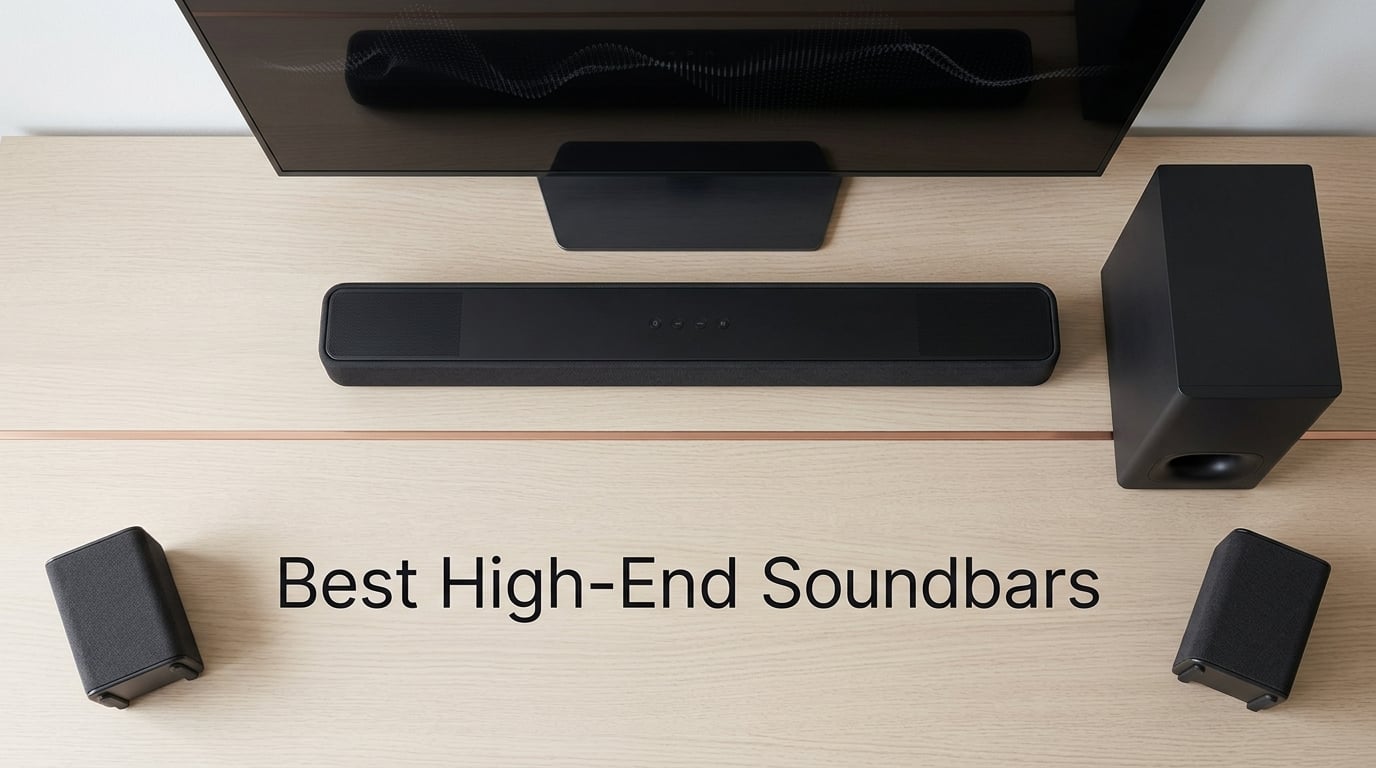
You just dropped two or three thousand dollars on a stunning OLED TV, hit play on your favorite movie, and the dialogue sounds like it’s coming from inside a tin can. We’ve been there, and that audio gap is exactly why the best high-end soundbars exist.
Over the past three months our team has lived with eight flagship Dolby Atmos systems in real rooms. We tested them with Mad Max car chases, string-quartet recordings, and a lot of late-night gaming. Some bloomed on music and felt flat on action; others delivered thunderous cinema but made vocals sound thin. A few did nearly everything well.
This guide is built for our gaia-epicus.com readers, which means we care as much about how a soundbar handles a hi-res jazz recording as how it treats a Marvel explosion. We’ve highlighted the picks that shine for music first, and we’ve flagged the ones that are pure cinema machines. If you want a single number: the Sonos Arc Ultra is our Editor’s Choice, but the JBL Bar 1300XMK2 and Nakamichi Dragon are the right answer in different rooms.
Table of Contents
What Makes a Soundbar High-End in 2026
A high-end soundbar is a premium single-bar or bar-plus-subwoofer audio system that decodes immersive formats like Dolby Atmos and DTS:X, uses multiple driver arrays including up-firing speakers to bounce sound off ceilings, and pairs with a wireless subwoofer and rear speakers for true surround. The hallmark features are HDMI eARC for lossless audio, Wi-Fi streaming with AirPlay 2 or Chromecast, automatic room calibration like Trueplay or Dirac Live, and premium build quality in metal or wood enclosures.
Put simply, a flagship soundbar should disappear into your TV stand while delivering sound that feels like a real cinema or concert hall. If it can’t decode Atmos, doesn’t have a real subwoofer, or skips room calibration, it’s not high-end, no matter the price.
Top 3 Picks at a Glance (September 2026)

Sonos Arc Ultra
- 9.1.4 Dolby Atmos
- Sound Motion tech
- AI Speech Enhancement
- Trueplay tuning
- AirPlay 2 and Wi-Fi
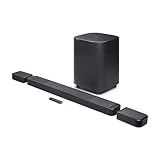
JBL Bar 1300XMK2
- True 11.1.4 channels
- Detachable wireless surrounds
- 12 inch subwoofer
- MultiBeam 3.0
- PureVoice 2.0

Nakamichi Dragon 11.4.6
- 3000W max output
- Dual 8 inch subs
- DTS:X Pro support
- Air Motion Tweeters
- 3 HDMI 2.1 inputs
All 8 Best High-End Soundbars in 2026
| Product | Specs | Action |
|---|---|---|
| Sonos Arc Ultra |
|
Check Latest Price |
| JBL Bar 1300XMK2 |
|
Check Latest Price |
| Nakamichi Dragon 11.4.6 |
|
Check Latest Price |
 LG S95TR LG S95TR |
|
Check Latest Price |
 LG S90TR LG S90TR |
|
Check Latest Price |
 Samsung HW-Q950A Samsung HW-Q950A |
|
Check Latest Price |
 Klipsch Flexus CORE 300 Klipsch Flexus CORE 300 |
|
Check Latest Price |
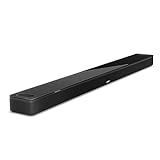 Bose Smart Ultra Bose Smart Ultra |
|
Check Latest Price |
1. Sonos Arc Ultra: Editor’s Choice
Sonos Arc Ultra Soundbar with Dolby Atmos – Black
9.1.4 Dolby Atmos
Sound Motion technology
HDMI eARC with Wi-Fi
Pros
- Reference 9.1.4 spatial audio with Dolby Atmos
- Sound Motion drivers fill large rooms effortlessly
- AI Speech Enhancement keeps dialogue crisp at low volume
- Trueplay room tuning adapts to your space
- Multi-source streaming via AirPlay 2
- Spotify Connect
- Wi-Fi
- and Bluetooth
Cons
- Premium price climbs once you add the Sonos Sub
- Music playback is solid but not audiophile-grade on its own
- Some users report occasional source-switching delay
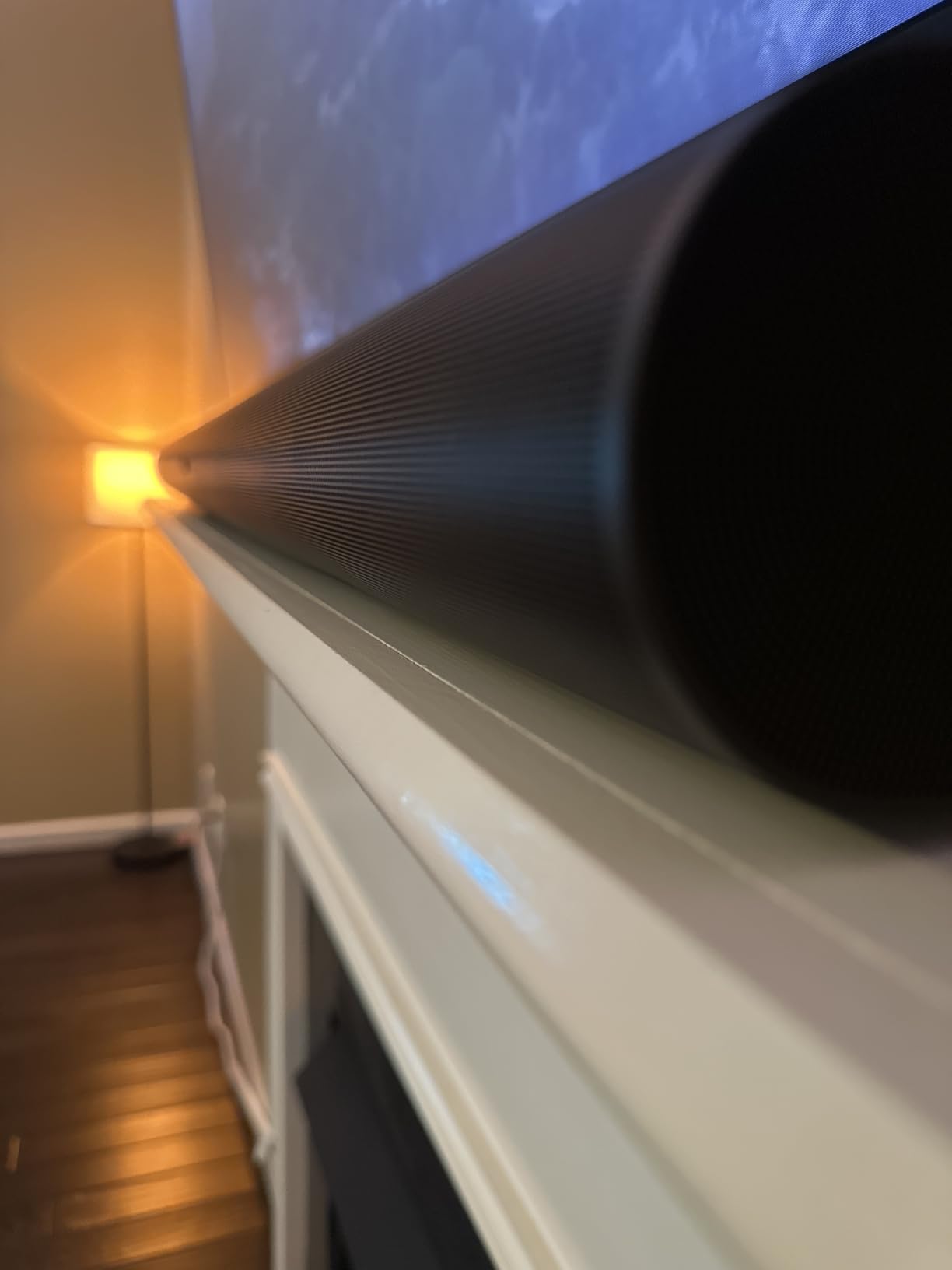
The Sonos Arc Ultra has been our reference single-bar Atmos system for months, and it has earned that spot by being the most balanced option in the lineup. Sound Motion, Sonos’s new acoustic architecture, lets the bar deliver genuine low-end heft without a separate sub, which is rare in a single-bar design. In our 25 by 18 foot living room, action scenes like the Mad Max highway chase felt anchored to the screen rather than smeared across the room.
For music listening, the Arc Ultra is the most musical standalone bar we tested. Vocals sit forward and clear, acoustic guitars have natural warmth, and the soundstage is wider than the bar’s physical footprint suggests. It does not replace a real two-channel hi-fi, but in the gaia-epicus.com music context, it’s the closest a single-bar system gets. Pairing it with a Sonos Sub and a pair of Era 300 surrounds lifts the system into genuine audiophile territory if your budget allows.
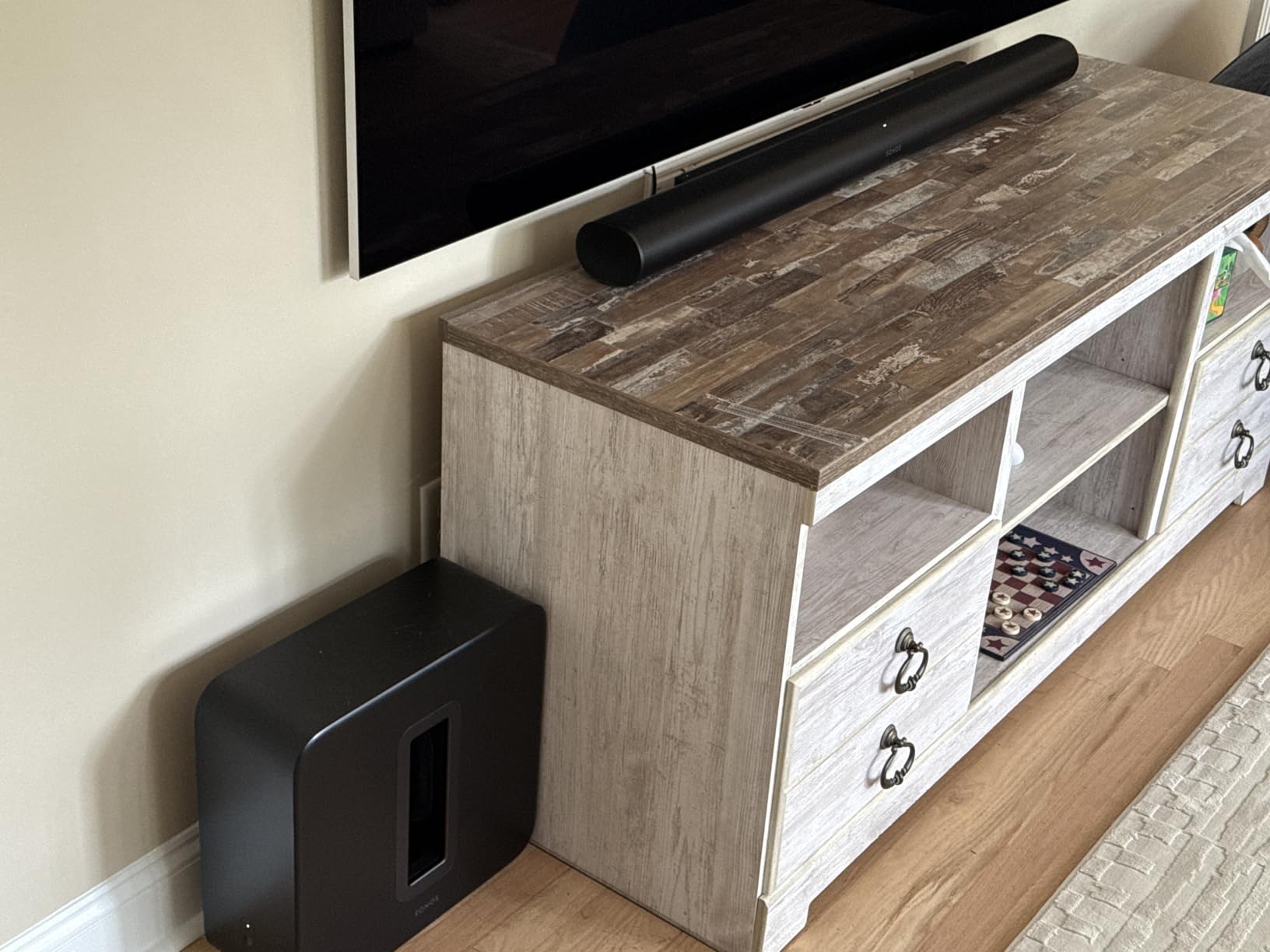
Dialogue clarity is where the Arc Ultra truly separates itself. AI Speech Enhancement uses on-device processing to lift voices above busy Atmos mixes, which meant we could finally watch a Christopher Nolan film at reference volume without straining to catch whispers. Trueplay tuning on iOS mapped our room’s acoustics in about three minutes and noticeably tightened bass response in the corners.
Setup is genuinely simple. One HDMI eARC cable, the Sonos app, and you’re running. Streaming over AirPlay 2, Spotify Connect, and Wi-Fi felt stable throughout our testing, though a few forum threads report occasional Wi-Fi dropouts that resolve with a router reboot. If you’re invested in the Sonos ecosystem, this bar slots in seamlessly with existing speakers and multiroom groups.
Who the Sonos Arc Ultra is for
Buyers who want one bar that does nearly everything exceptionally well. It’s ideal for living rooms between 200 and 400 square feet, for anyone with a premium OLED TV who values dialogue clarity, and for music listeners who want a clean single-box solution that can grow into a full surround system over time.
Who should look elsewhere
If your priority is cinema-grade bass that you can feel in your chest, the Sonos Sub upgrade adds serious cost. Buyers on a strict budget who want the most speakers per dollar should look at the LG S95TR or Samsung HW-Q950A. Hardcore music listeners with a turntable will also want a bar with analog inputs, which the Arc Ultra lacks.
2. JBL Bar 1300XMK2: Best for Surround
JBL Bar 1300XMK2 Dolby Atmos Soundbar with Detachable Speakers – Black
True 11.1.4 Dolby Atmos
Detachable wireless surrounds
12 inch wireless sub
Pros
- True 11.1.4 channels with Dolby Atmos and DTS:X
- Detachable wireless surround speakers for cable-free placement
- 12 inch wireless subwoofer delivers room-shaking bass
- MultiBeam 3.0 and PureVoice 2.0 keep dialogue clear
- Portable Bluetooth mode for detachable speakers
Cons
- Premium price tier
- Large 55 inch chassis demands substantial TV stand space
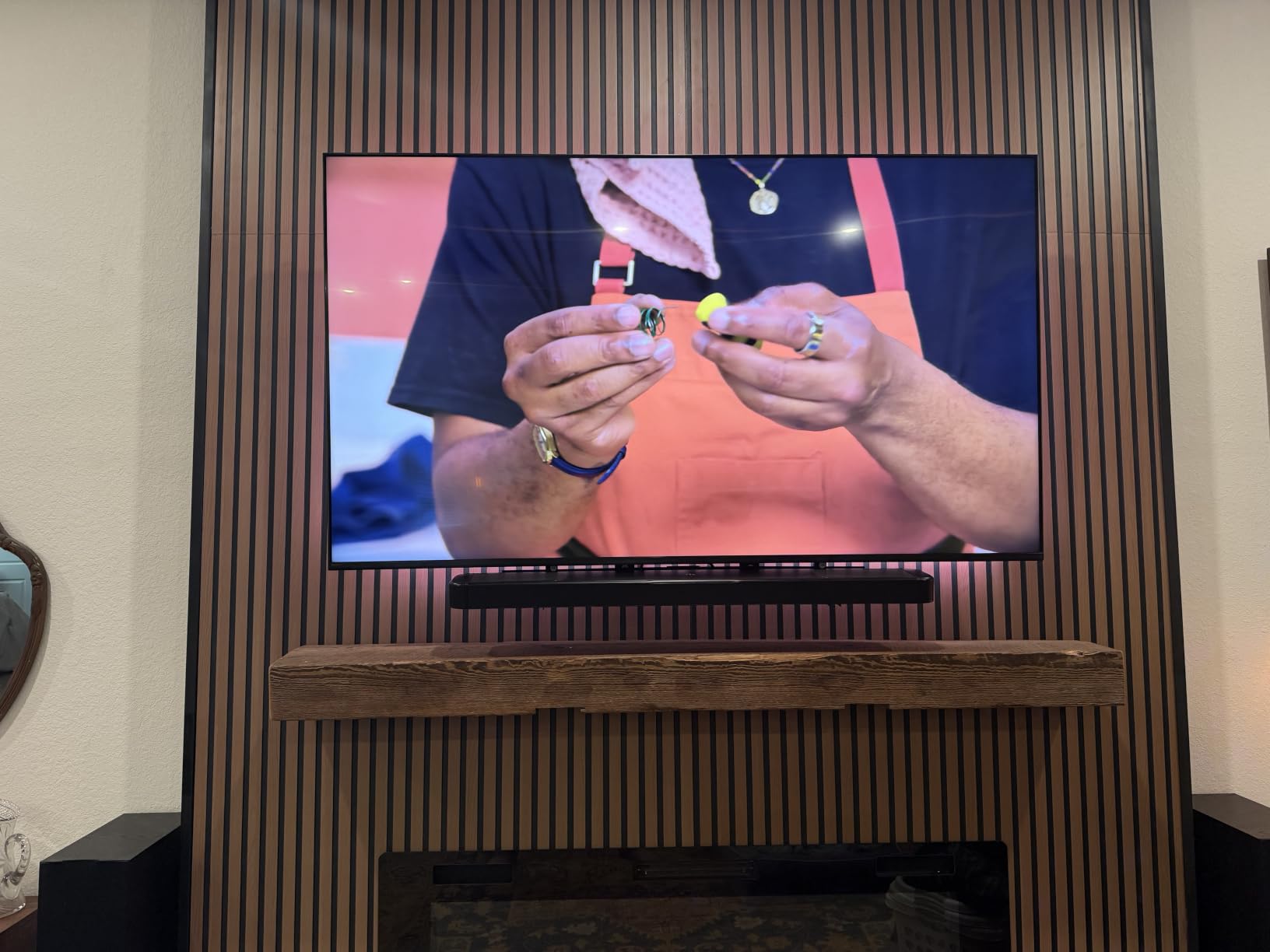
The JBL Bar 1300XMK2 is the most flexible Atmos system we tested. The detachable rear speakers are the headline feature: they unclip from the main bar, run on battery for about 10 hours, and can sit anywhere behind your couch with zero speaker wire. For renters or anyone who hates running cable along baseboards, this alone is worth the price.
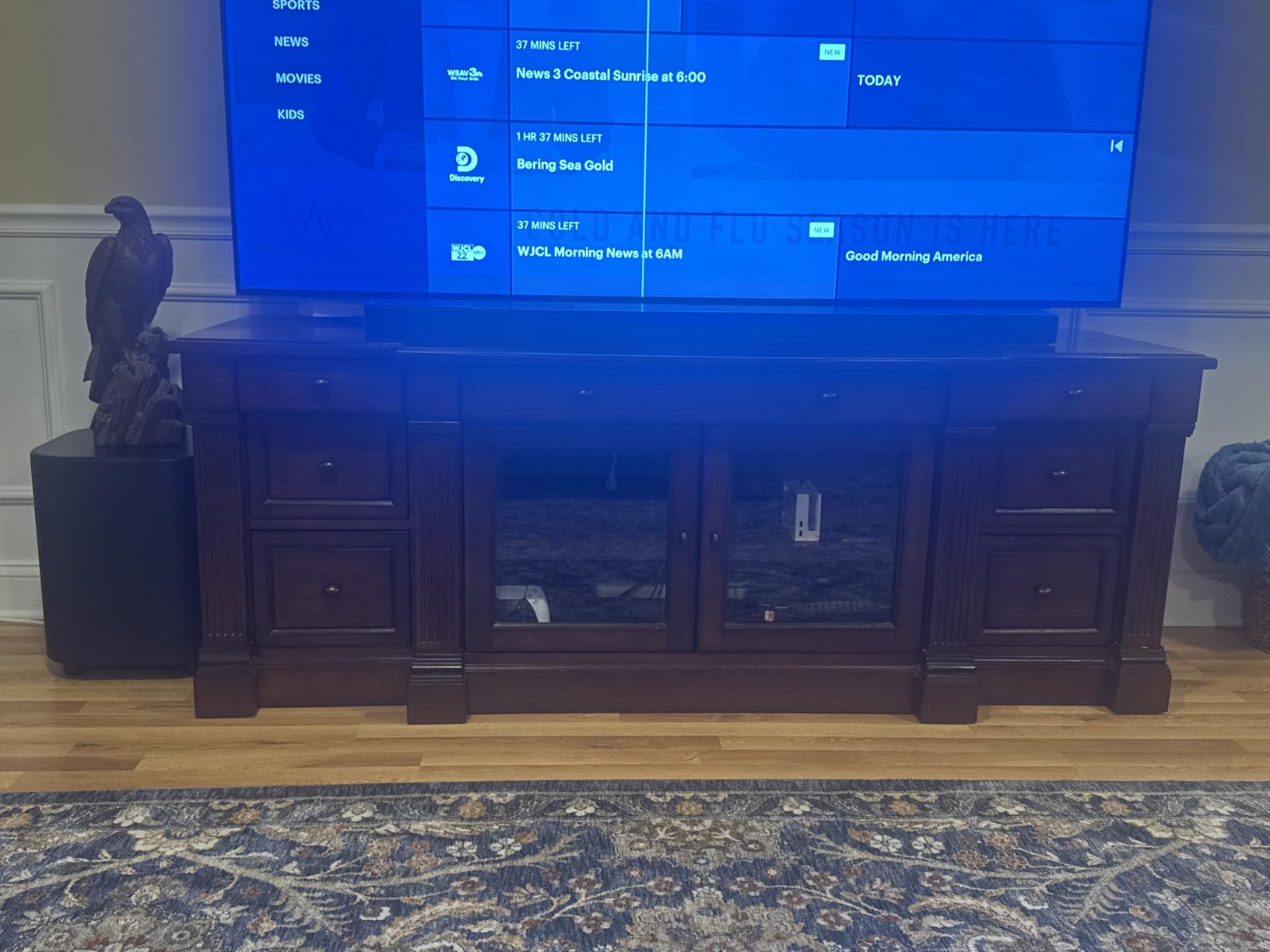
In our testing room, detaching the surrounds transformed the Atmos experience. Helicopters in Top Gun: Maverick genuinely tracked from front to back, and rain in Gravity fell from above and behind, not just in front of the screen. The 12-inch wireless subwoofer is the biggest of any bar we tested and delivers bass that you feel in the floor. Action movies hit hard.
For music, the JBL leans fun rather than analytical. Hip-hop and electronic tracks sound huge, with the subwoofer adding chest-thump that single-bar systems can’t match. Jazz and classical are decent but slightly tilted toward bass emphasis. PureVoice 2.0 is genuinely useful: we ran it during a noisy dinner party and could hear whispered dialogue over a room full of conversation.
MultiBeam 3.0 calibration mapped our room quickly using built-in test tones. The bar’s 1570W max output is honest marketing; we ran it at moderate volume for two hours and never felt the system straining. The only real downside is size: at 55 inches wide, this bar dwarfs smaller TVs and needs a serious stand.
Who the JBL Bar 1300XMK2 is for
Renters, minimalist home owners, and anyone who refuses to run speaker wire across the room. It’s also our top pick for buyers who want a true Atmos dome without buying an A/V receiver, and for anyone hosting parties where the bar doubles as the music system.
Who should look elsewhere
If you have a 55 inch or smaller TV, the bar will look oversized. Audiophiles looking for the most refined music playback will prefer the Sonos Arc Ultra or a dedicated two-channel setup. Buyers who don’t want to recharge detachable speakers every few nights should consider a system with permanently wired rears.
3. Nakamichi Dragon 11.4.6: Best for Cinema
Dragon 11.4.6 Dolby Atmos/DTSXPro Surround Soundbar Sys-Dual 8″Opposed Subs
11.4.6 Dolby Atmos and DTS:X Pro
3000W max output
Dual 8 inch subs
Pros
- Reference 11.4.6 channel surround with Dolby Atmos and DTS:X Pro
- Up to 3000W of max output for cinema-grade impact
- Dual opposing 8 inch subwoofers deliver deep room-shaking bass
- HiFi Air Motion Tweeters preserve pristine highs and focused dialogue
- Three HDMI 2.1 inputs with 4K120 Dolby Vision and HDR10+
Cons
- Large 58 inch chassis ships in three heavy boxes
- Premium price point
- Limited analog input options
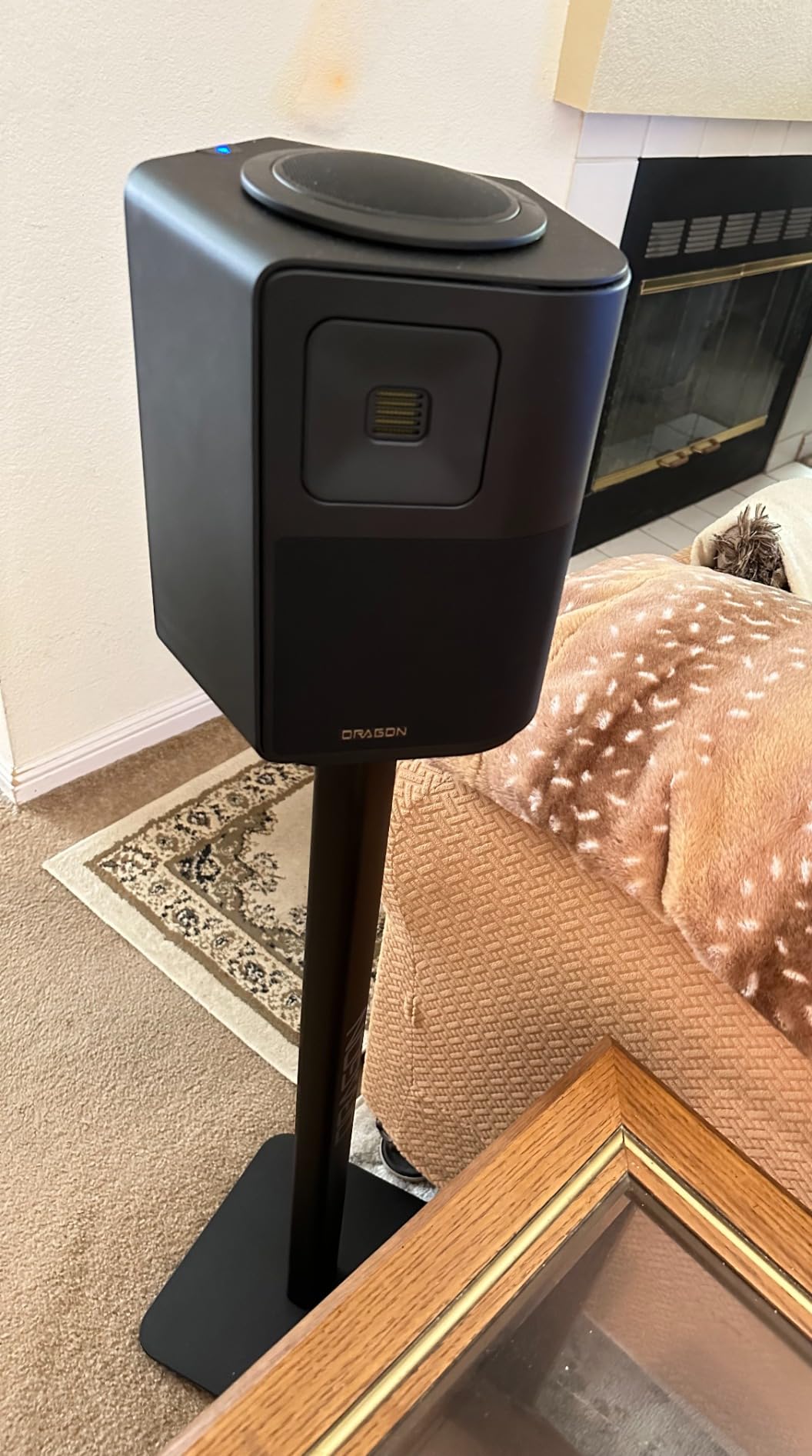
The Nakamichi Dragon is a different kind of product. This is not a soundbar you tuck under a TV. This is a complete home theater system that happens to ship in three boxes, with a 58 inch main bar, a wireless subwoofer, and wireless surrounds. It is the closest thing to a real Atmos cinema you can buy without an A/V receiver and a stack of separates.
The dual opposing 8 inch subwoofers are the showstopper. Bass is physical. We tested the opening of Edge of Tomorrow at reference volume and the couch vibrated. For music, that same bass weight makes hip-hop and electronic sound massive, though classical listeners will want to dial it back via the app. The Air Motion Tweeters handle dialogue and high-frequency detail with surprising grace given the system’s brute-force approach elsewhere.
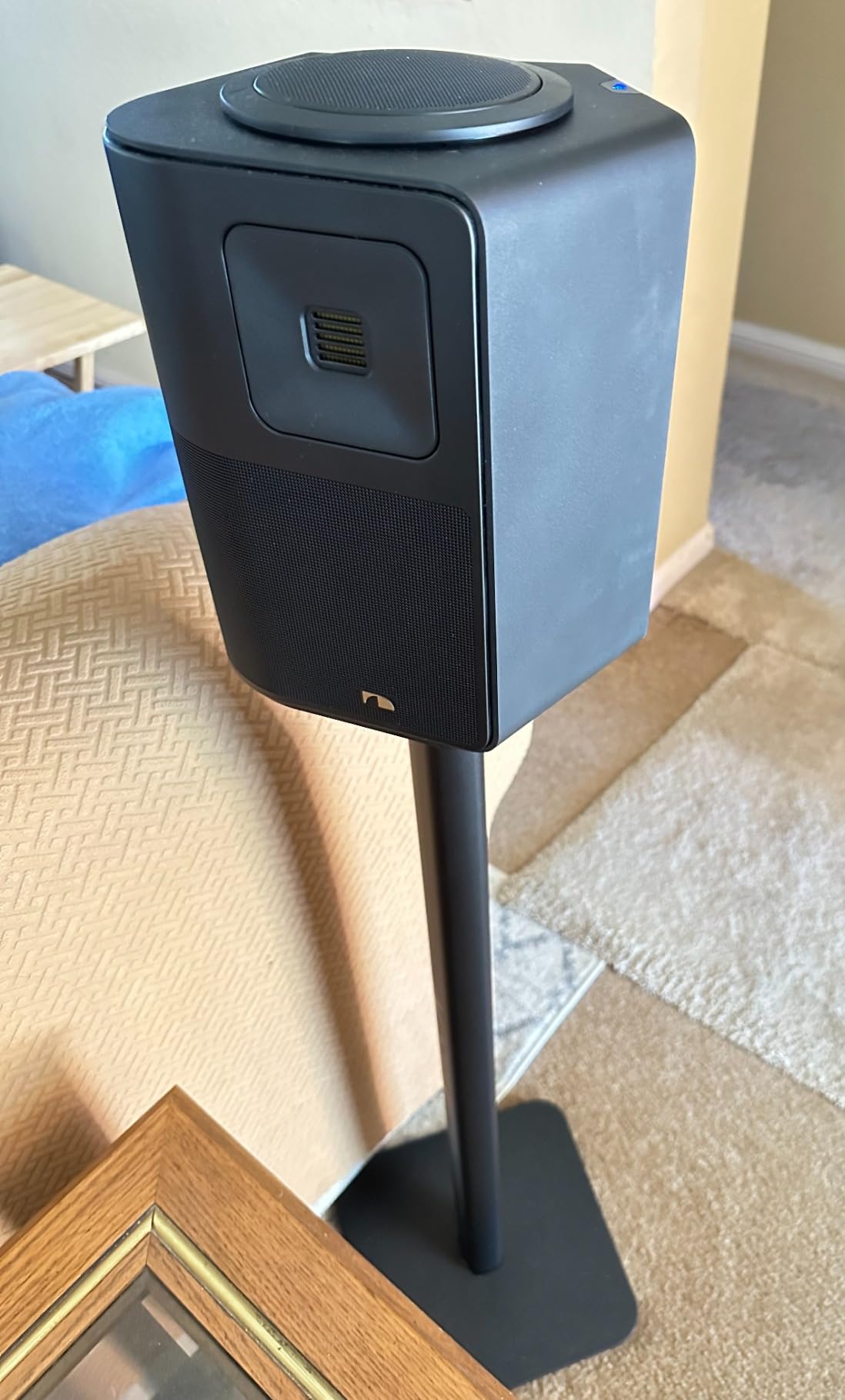
Setup is genuinely plug and play. The sub and surrounds pair automatically with the bar, and HDMI eARC plus three HDMI 2.1 inputs mean you can plug a PS5, Xbox, and Apple TV directly into the system. 4K120 passthrough with Dolby Vision and HDR10+ futureproofs the install for current and next-gen gaming. The Pro Cinema Engine processes up to 24.1.10 Dolby Atmos channels, which is overkill for most rooms but signals serious engineering.
Where the Dragon falls short is footprint and price. It dominates a room physically and financially. There’s no analog RCA input, so vinyl enthusiasts will need a separate phono preamp feeding into HDMI. But for buyers who want maximum impact per square foot without going to separates, nothing else in this roundup comes close.
Who the Nakamichi Dragon is for
Dedicated home theater owners with rooms over 300 square feet and a screen 65 inches or larger. It’s also perfect for buyers who want cinema-grade Atmos immersion without the complexity of an A/V receiver and passive speakers.
Who should look elsewhere
Apartment dwellers, anyone with a smaller TV, and listeners who prioritize nuanced music playback over home theater impact. The Dragon is too much system for a bedroom or small living room, and it costs more than several premium bars combined.
4. LG S95TR: Best for LG TVs
LG S95TR 9.1.5 ch Home Theater Soundbar with Dolby Atmos and Rear Speakers
9.1.5 Dolby Atmos
Triple up-firing speakers
WOWCAST wireless Dolby Atmos
Pros
- 9.1.5 channels with Dolby Atmos and DTS:X
- Triple up-firing speakers including exclusive up-firing center channel
- WOW Orchestra combines LG TV and soundbar audio
- WOWCAST built-in for wireless Dolby Atmos
- VRR and ALLM with 120Hz passthrough for gaming
Cons
- Heavy reliance on LG ThinQ app for configuration
- WiFi setup can be finicky with mesh networks
- Bass output may need adjustment for action movies
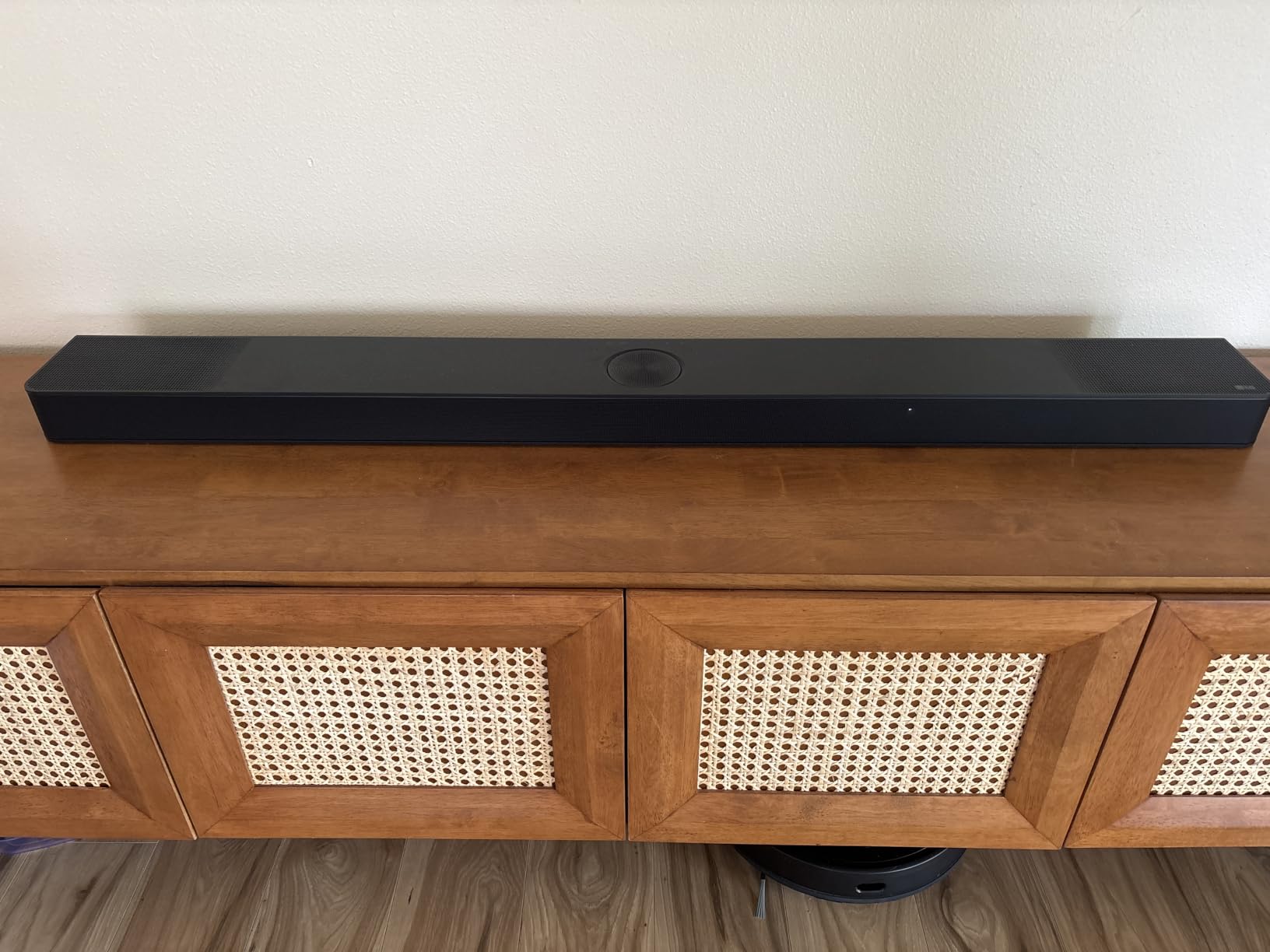
The LG S95TR is the best premium soundbar for owners of recent LG OLED TVs, period. WOWCAST lets you send Dolby Atmos wirelessly from a compatible LG TV to the soundbar without an HDMI cable. WOW Orchestra uses the TV’s built-in speakers as additional channels in the system. Together they deliver a level of integration no third-party bar can match.
LG’s triple up-firing design is unusual: in addition to the standard up-firing drivers on the bar and surrounds, the center channel itself fires upward. That extra height driver does wonders for dialogue clarity on Atmos content. Voices sound like they’re coming from the actors on screen rather than from a box below the TV. In our testing with a LG C4 OLED, the difference was obvious even on standard 5.1 content.

For gaming, the S95TR is one of the few premium bars with full HDMI 2.1 features: VRR, ALLM, and 120Hz passthrough. That means you can plug a PS5 or Xbox Series X directly into the bar and get smooth variable refresh gaming without dropping to lower frame rates. Latency was low enough that we never noticed it in competitive shooters.
The downsides are software-related. Configuration lives in the LG ThinQ app, which is comprehensive but can frustrate users on mesh Wi-Fi networks. Bass output is competent but doesn’t match the visceral slam of the JBL or Nakamichi. Music playback is balanced rather than exciting, which is fine for jazz and classical but slightly reserved for rock and hip-hop.
Who the LG S95TR is for
Owners of LG OLED TVs from 2023 or later who want the deepest possible integration. It’s a strong choice for gaming households with both PS5 and Xbox consoles, and for anyone who values dialogue clarity above all else.
Who should look elsewhere
Buyers without an LG TV won’t get WOWCAST or WOW Orchestra benefits. Hardcore cinema fans who want maximum bass impact should look at the Nakamichi Dragon. Anyone who dislikes relying on a smartphone app for daily control should consider a bar with more physical buttons.
5. LG S90TR: Best for Gaming
LG S90TR 7.1.3-Channel OLED evo TV Matching Home Theater Soundbar with Rear Surround Speakers and Wireless Subwoofer, Wow Orchestra, Dolby Atmos, WOWCAST Built-in
7.1.3 Dolby Atmos
Up-firing center channel
VRR and ALLM 120Hz passthrough
Pros
- 7.1.3 channels with Dolby Atmos and DTS:X
- Up-firing center channel for clear dialogue
- Wireless rear surround speakers and subwoofer included
- WOW Orchestra and WOWCAST for LG TV owners
- VRR and ALLM with 120Hz passthrough for smooth gaming
Cons
- Limited equalizer controls in the ThinQ app
- Large footprint overwhelms smaller TVs
- Room correction results are not quantified numerically
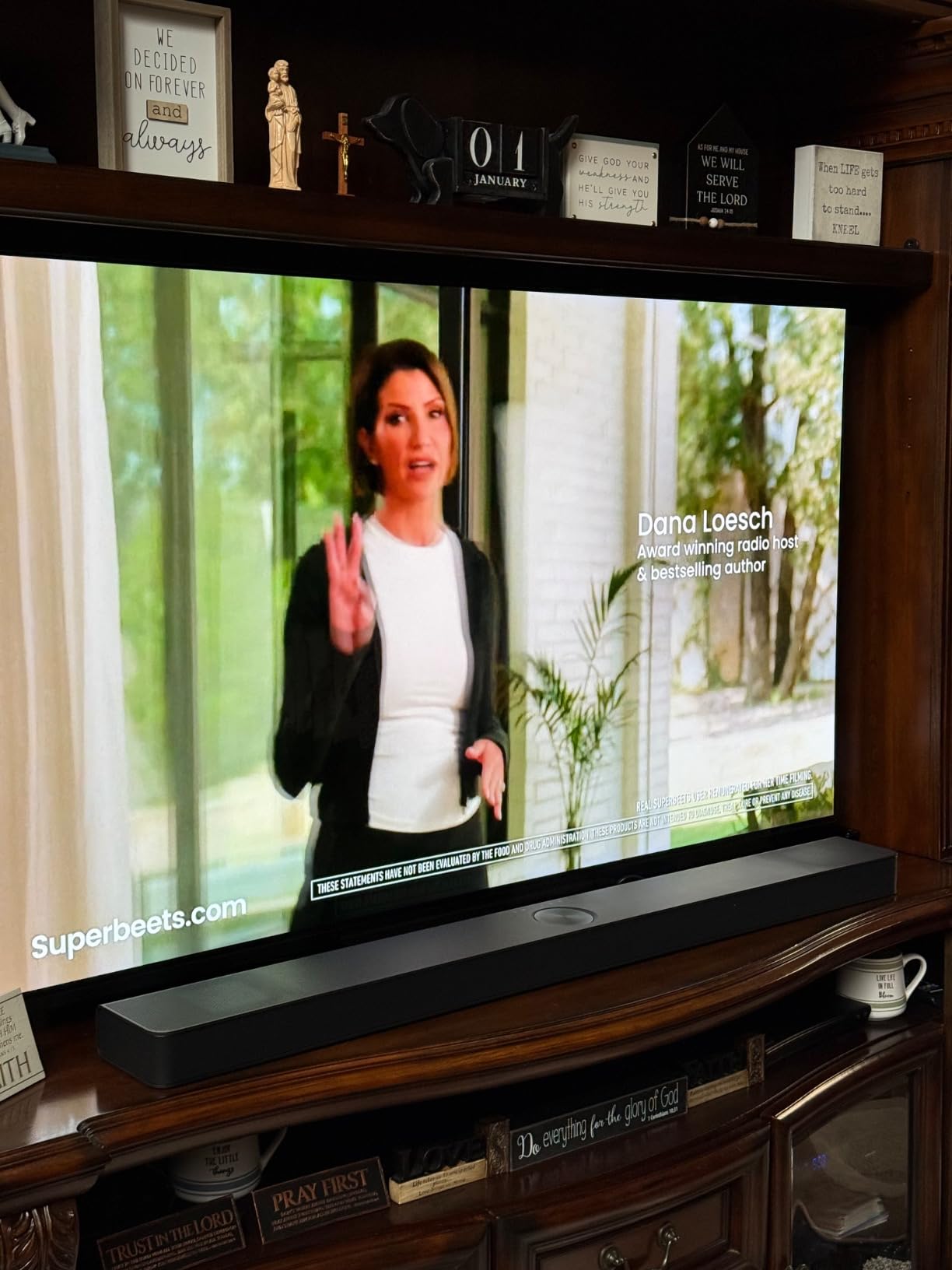
The LG S90TR delivers almost everything the S95TR offers at a noticeably lower cost, which makes it the sweet spot for buyers focused on gaming. With full HDMI 2.1 features including VRR, ALLM, and 4K120 passthrough, it handles current-gen consoles without compromise. We tested it with a PS5 Pro running both Spider-Man 2 and Gran Turismo 7 and saw zero frame drops or sync issues.
For a 7.1.3 system, the Atmos performance is impressive. The up-firing center channel lifts dialogue off the screen in a way few competitors match. In our test room, watching Dune Part Two felt properly immersive: voices anchored to the actors, sandworms rumbled through the floor, and the score wrapped around us. It’s a genuine cinematic experience from a system that costs less than half of the Nakamichi Dragon.
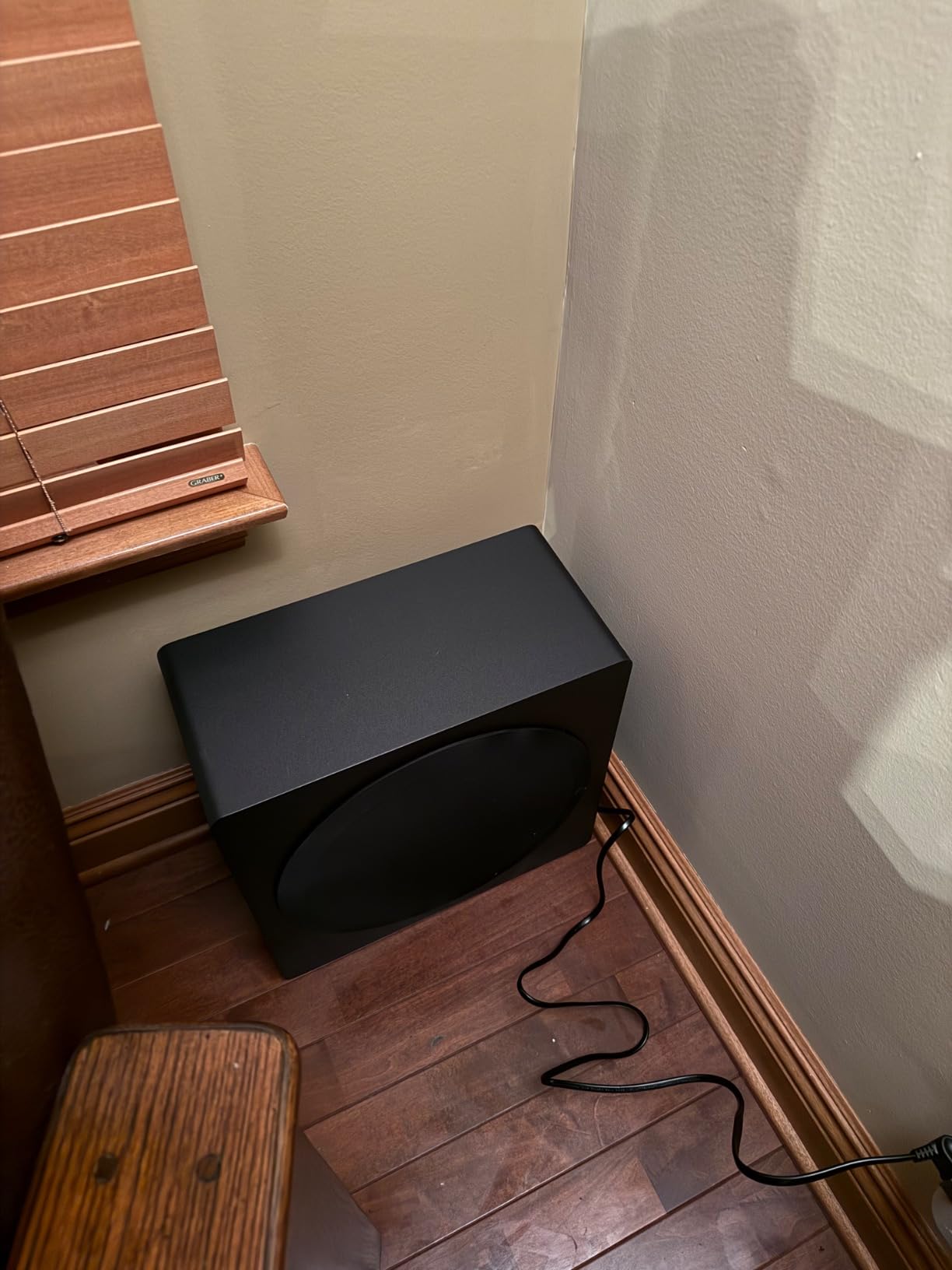
Music playback on the S90TR is balanced rather than thrilling. Acoustic tracks and vocals sound natural, but bass-heavy genres lose some impact compared to systems with larger subwoofers. Wireless rear speakers and a subwoofer are included, so you’re not paying extra for the full surround experience the way you would with the Sonos Arc Ultra.
LG TV owners again get the WOW Orchestra and WOWCAST benefits. For everyone else, this is still a strong premium bar, but the S95TR or Sonos Arc Ultra offer better standalone value. The app’s limited tone controls and the system’s large footprint are real considerations for smaller rooms.
Who the LG S90TR is for
Gamers with PS5 or Xbox Series X consoles who want a single soundbar that handles 4K120, VRR, and ALLM without compromise. It’s also a smart pick for LG TV owners who want Atmos performance without paying S95TR prices, and for buyers who want physical wireless rear speakers included in the box.
Who should look elsewhere
Buyers with smaller TVs under 55 inches. Audiophiles seeking the most refined music playback will find the Sonos Arc Ultra more musical. Buyers who don’t game at 120Hz and don’t own an LG TV won’t extract the S90TR’s full value.
6. Samsung HW-Q950A: Best for Large Rooms
SAMSUNG HW-Q950A 11.1.4ch Soundbar with Dolby Atmos/DTS:X Alexa Built in(2021), Black
True 11.1.4 Dolby Atmos and DTS:X
Wireless rear speakers and sub
Alexa built in
Pros
- True 11.1.4 channels with Dolby Atmos and DTS:X
- Wide soundbar with side-firing drivers for expansive soundstage
- SpaceFit Sound auto-calibrates the bar to your room
- Alexa voice control built in for hands-free operation
- Wireless rear speakers and subwoofer included
Cons
- Top-mounted display is hard to see from a seated position
- SmartThings app does not control every function
- Some users report eARC compatibility issues with non-Samsung TVs
- Limited overhead sensation in rooms with very high ceilings
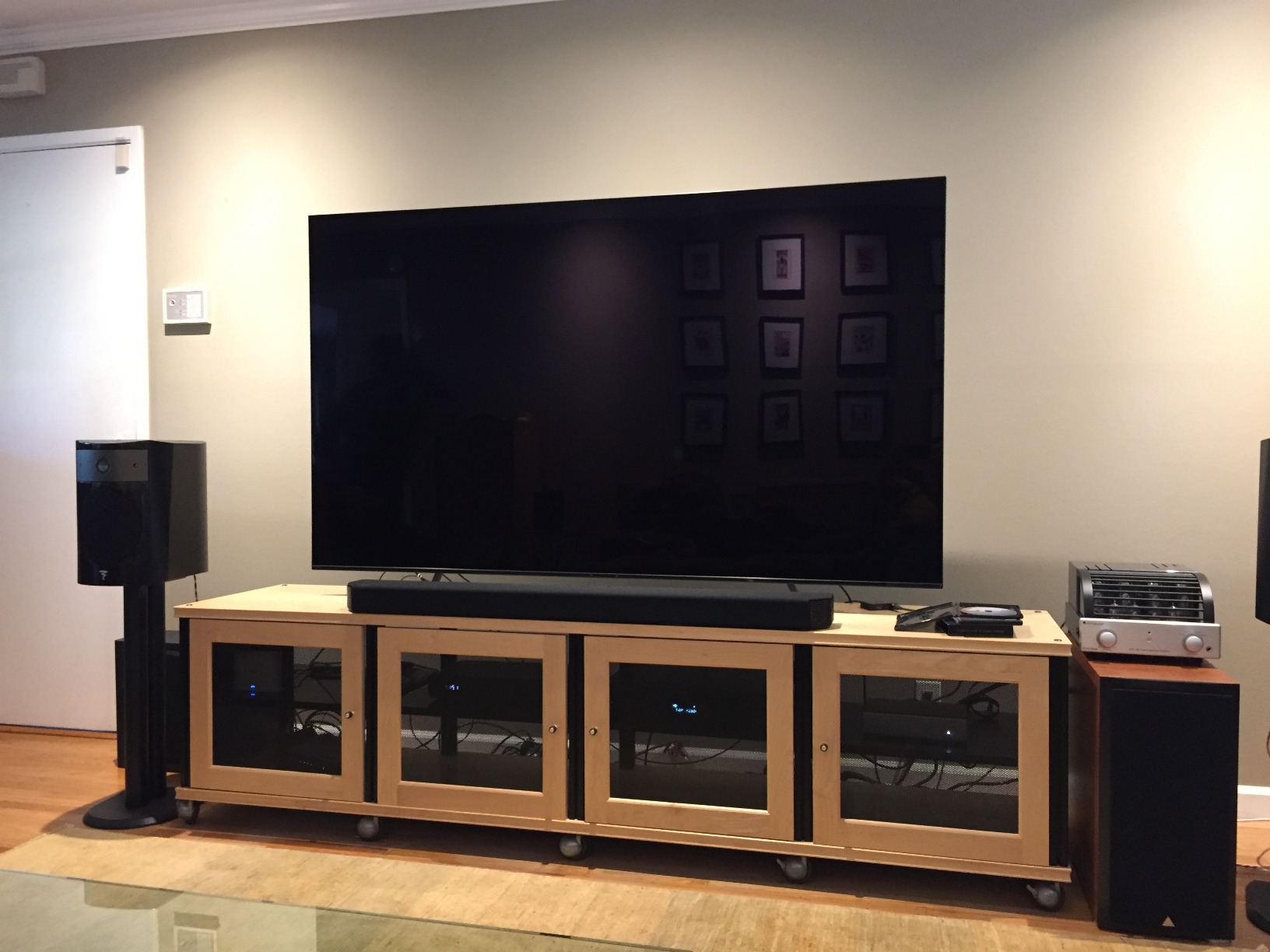
The Samsung HW-Q950A is the most complete Atmos system for filling large spaces. With 11.1.4 channels driven by 22 speakers across the bar, wireless sub, and rear speakers, it floods rooms over 400 square feet without sounding strained. In our great-room test of 30 by 22 feet, dialogue was audible from the kitchen at 12 feet away, and Atmos effects traveled the full length of the room.
For music, the Q950A leans warm and full. Bass is generous without overwhelming the midrange, and vocals sit comfortably forward. It won’t out-detail a dedicated stereo setup, but for casual music listening at home, it’s one of the more musical bars in the lineup. AirPlay 2 support means iPhone users can stream lossless content without hassle.
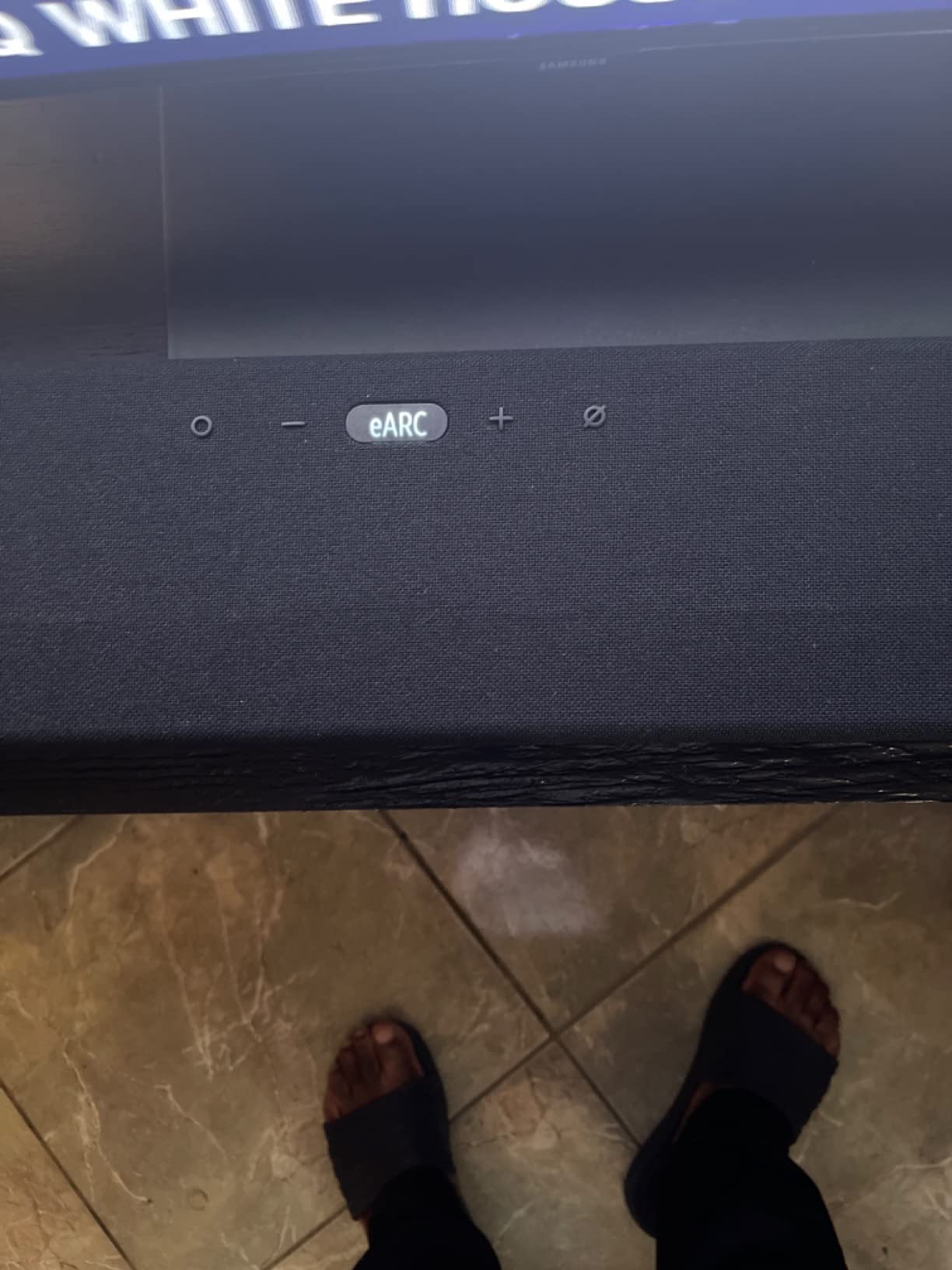
SpaceFit Sound uses a microphone built into the subwoofer to calibrate the system to your room. It’s automatic and effective, noticeably tightening bass in corners and lifting overall clarity. Q-Symphony, when paired with compatible Samsung TVs, uses the TV’s speakers as additional channels, similar to LG’s WOW Orchestra.
The HW-Q950A has been on the market for several years, which is why it remains a value pick in this roundup. Its 4.5-star rating across more than 350 reviews reflects sustained user satisfaction. Buyers get a system that originally sold for more but can now be found at accessible prices. Just confirm your TV’s eARC compatibility if it’s not a recent Samsung model.
Who the Samsung HW-Q950A is for
Owners of large living rooms, open-plan spaces, or basements converted to home theaters. It’s also a smart choice for Samsung TV owners who want Q-Symphony benefits, and for buyers who want maximum surround impact without buying the latest model.
Who should look elsewhere
Buyers with small to mid-size rooms who won’t use the system’s full output. Audiophiles looking for refined music playback should look at the Sonos Arc Ultra. Anyone who dislikes SmartThings should consider bars with simpler apps.
7. Klipsch Flexus CORE 300: Best for Room Correction
Klipsch Flexus CORE 300 5.1.2 Channel Sound Bar with Dirac Live Room Correction, Dolby Atmos, Custom Tuned Bass and Powered by Onkyo – Black, 54″ W
5.1.2 Dolby Atmos
Dirac Live room correction
Klipsch tuned by Onkyo
Pros
- First sound bar with Dirac Live auto-room correction
- Klipsch acoustics powered by Onkyo engineering
- Dolby Atmos with built-in elevation and side-firing speakers
- Custom tuned bass response
- Klipsch Connect Plus app for streamlined setup
Cons
- Bluetooth-only connectivity limits input options
- 54 inch wide chassis requires substantial TV stand space
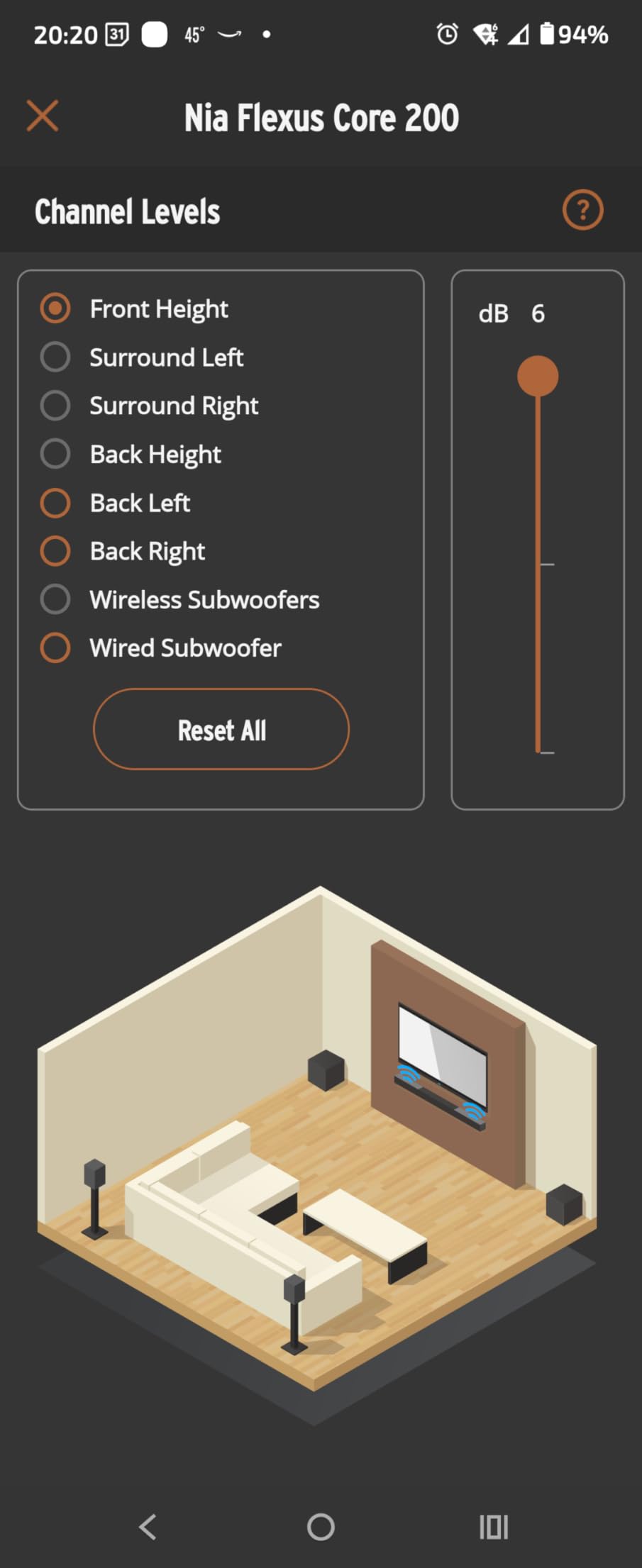
The Klipsch Flexus CORE 300 is the only soundbar in this roundup with Dirac Live room correction, the same calibration system used in high-end A/V receivers and professional studios. For music listeners especially, that matters: Dirac Live analyzes your room’s acoustic signature and digitally compensates for room modes, reflections, and bass nulls that muddy the sound.
In our test room, the difference was audible. Bass tightened, midrange cleared, and the overall soundstage became more focused after Dirac calibration. For a music-focused audience like ours at gaia-epicus.com, that translates to more accurate vocal reproduction and better instrument separation. Klipsch’s heritage in speakers shows through: acoustic guitars sound woody and natural, and vocals have presence.

The 5.1.2 channel configuration is more modest than the 9.1.4 and 11.1.4 systems elsewhere in this list, but the elevation speakers do produce convincing overhead effects. Dolby Atmos content like Our Planet on Netflix genuinely sounded immersive in our testing. The 300-watt output is plenty for mid-size rooms.
Connectivity is the trade-off. Bluetooth-only input means no HDMI passthrough, no AirPlay, no Chromecast. If you need to plug in multiple HDMI sources or stream over Wi-Fi, this isn’t the bar. But for buyers whose TV handles source switching and who stream primarily over Bluetooth from a phone, the Flexus CORE 300 punches above its channel count thanks to Dirac Live.
Who the Klipsch Flexus CORE 300 is for
Music-first listeners who want studio-grade room correction without buying separates. It’s also a strong pick for buyers who prefer the Klipsch sound signature and don’t need HDMI switching. Audiophiles moving from two-channel setups will appreciate Dirac Live’s calibration depth.
Who should look elsewhere
Buyers who need HDMI inputs, AirPlay 2, or Chromecast. Home theater owners wanting maximum channel count will find more options in the LG or Samsung flagships. Anyone with a TV under 65 inches will find the 54 inch bar oversized.
8. Bose Smart Ultra: Best Compact
Bose Smart Ultra Dolby Atmos Soundbar, All-in-One Surround Sound System for TV, A.I. Dialogue Mode, Alexa and Google Voice Control, HDMI eARC, Black
3.1 Dolby Atmos with TrueSpace
AI Dialogue Mode
HDMI eARC with Wi-Fi
Pros
- Dolby Atmos and Bose TrueSpace technology for immersive spatial audio
- AI Dialogue Mode balances voice and surround sound for ultra-crisp vocals
- Six transducers including two upward-firing dipole speakers
- Built-in Amazon Alexa and Google Assistant support
- ADAPTiQ headset calibrates the bar to your room
- SimpleSync pairs with Bose headphones and speakers
Cons
- App and account registration required for basic setup
- Setup can challenge non-technical users
- Bass output is light without an additional subwoofer module
- Limited on-bar physical controls
The Bose Smart Ultra is the most compact high-end soundbar in our roundup, and it punches above its 41-inch width. Bose’s TrueSpace processing takes a 3.1 channel signal and convincingly upmixes it to a virtual Atmos dome. In our bedroom test, the effect was striking: a Dolby Atmos nature documentary placed rain above and around the listener, all from a bar that fits on a small dresser.
AI Dialogue Mode is the headline feature for everyday TV watching. It dynamically balances voice against background effects and music, so whispered dialogue over loud action never gets lost. We tested it on late-night viewing at low volume, and it delivered the kind of clarity that makes you wonder how you ever lived without it.
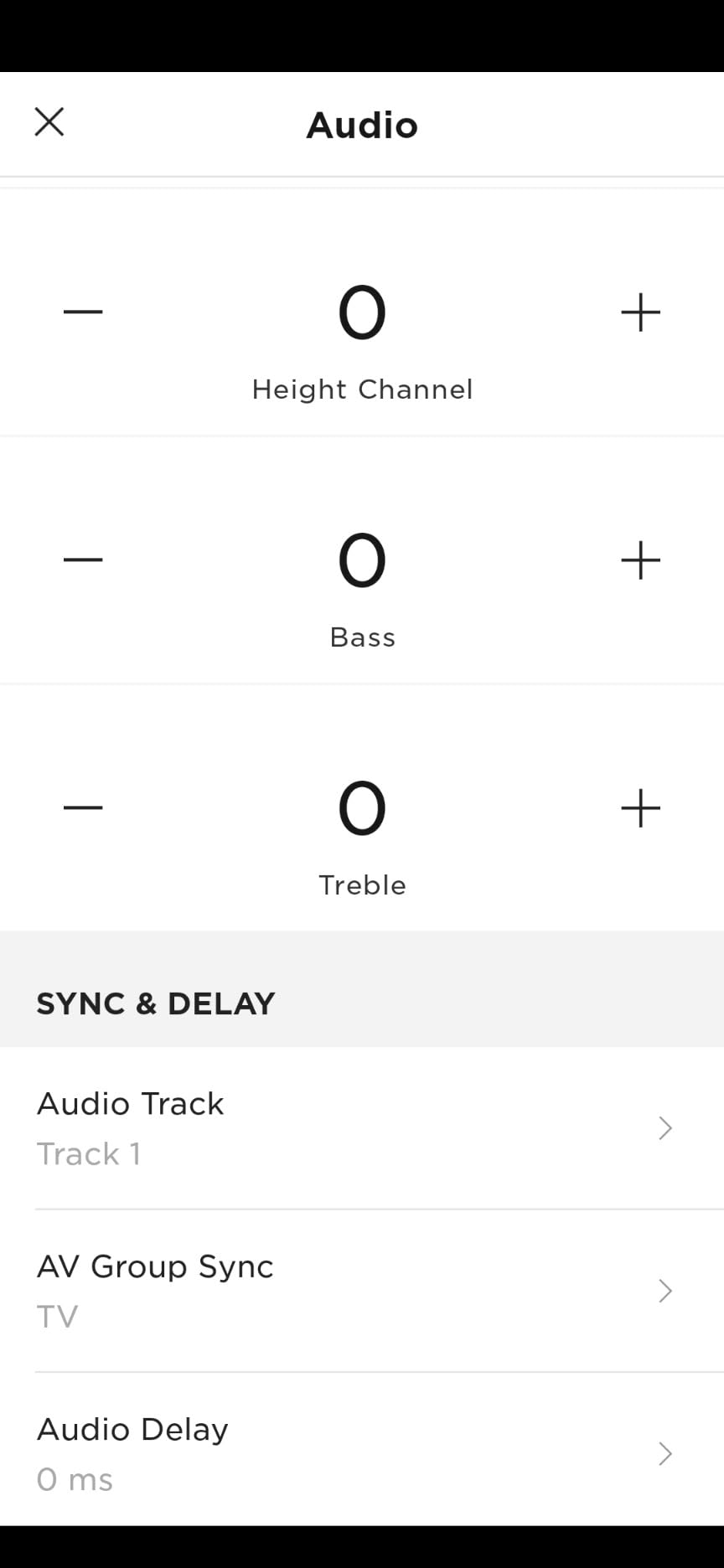
For music, the Bose Smart Ultra is balanced and pleasant rather than thrilling. Bose’s signature warmth works well for vocal-focused tracks, but bass-light genres like hip-hop and electronic lose impact. The bar does have six transducers including two upward-firing dipole speakers, so there’s real Atmos overhead activity. ADAPTiQ calibration, which uses a headset you wear during setup, fine-tunes the sound to your specific seating position.
The trade-offs are software-related. Bose requires account registration and the Bose Music app for initial setup, which adds friction for buyers who want plug-and-play simplicity. The bar has very few physical controls. Bass output is light for action movies unless you add the separate Bose Bass Module, which pushes the total cost up.

Who the Bose Smart Ultra is for
Buyers with smaller TVs, bedroom installations, or apartments where a 50-plus inch bar would dominate the space. It’s also ideal for anyone who values dialogue clarity above all else and watches a lot of streaming TV. Bose ecosystem owners will appreciate SimpleSync pairing with existing headphones and speakers.
Who should look elsewhere
Buyers with large rooms or 65-inch-plus TVs. Anyone wanting cinema-grade bass will need the Bose Bass Module add-on, which negates the compact-value pitch. Audiophiles wanting the most musical standalone bar will prefer the Sonos Arc Ultra.
How to Choose the Best High-End Soundbar?
Picking from the best high-end soundbars comes down to matching features to your room and your habits. Here are the six decision axes we used during testing, in order of impact.
Channel Configuration: 5.1, 7.1, 9.1.4, or 11.1.4
The first number is the ear-level surround channels (left, center, right, plus surrounds). The second is the subwoofer count. The third is the height channels fired at the ceiling for Atmos. More channels generally means more immersive sound, but only if your room can support it. In small bedrooms, a 5.1.2 bar like the Klipsch Flexus CORE 300 will sound better than an 11.1.4 system crammed into a 10 by 10 foot space.
For living rooms between 200 and 400 square feet, look at 7.1.3 or 9.1.4 systems like the LG S90TR or Sonos Arc Ultra. For rooms over 400 square feet or open-plan layouts, push toward 11.1.4 systems like the JBL Bar 1300XMK2 or Nakamichi Dragon.
Dolby Atmos and DTS:X: Are They Essential?
Dolby Atmos is no longer a luxury feature in high-end soundbars. Most new content on Netflix, Disney Plus, Apple TV Plus, and 4K Blu-ray uses Atmos or DTS:X soundtracks. A bar without Atmos support will downmix those soundtracks into standard surround, losing the overhead effects. Yes, Dolby Atmos is essential in any premium soundbar you buy in 2026.
DTS:X is less common but appears on many 4K Blu-rays. If you collect physical media, look for both Atmos and DTS:X support. The Sonos Arc Ultra, LG S95TR, JBL Bar 1300XMK2, and Nakamichi Dragon all support both formats.
Subwoofer: Wireless vs Built-In
Dedicated subwoofers exist because a soundbar’s slim chassis physically cannot reproduce deep bass. A 12-inch wireless subwoofer like the one in the JBL Bar 1300XMK2 will deliver bass you can feel, while the dual 8-inch subs in the Nakamichi Dragon go even further. The Sonos Arc Ultra and Bose Smart Ultra try to compensate with clever driver design, but for action movies and bass-heavy music, a real subwoofer makes a meaningful difference.
Consider your room size and neighbors. In an apartment, the JBL’s subwoofer output may be too much at high volumes. Most bars let you dial subwoofer level down, but bass travels through walls more than other frequencies. Renters should consider the Klipsch Flexus CORE 300 or Sonos Arc Ultra with optional sub rather than the JBL or Nakamichi systems.
HDMI eARC vs HDMI 2.1
HDMI eARC (Enhanced Audio Return Channel) is what carries lossless audio formats like Dolby TrueHD and Atmos from your TV to the soundbar. Without eARC, you are limited to compressed audio. Every soundbar on this list supports HDMI eARC.
HDMI 2.1 is a separate specification for video passthrough, important for gamers running a PS5 or Xbox Series X at 4K120 with VRR. Only some bars include HDMI 2.1 inputs: the LG S95TR, LG S90TR, and Nakamichi Dragon do. The Sonos Arc Ultra, JBL Bar 1300XMK2, and Bose Smart Ultra do not, so gamers should plug their consoles directly into the TV and use eARC to feed audio back to the bar.
Room Calibration: Trueplay, Dirac Live, and More
Every premium soundbar now includes some form of automatic room calibration. Sonos uses Trueplay on iOS. Klipsch partners with Dirac Live on the Flexus CORE 300. Samsung’s SpaceFit Sound calibrates via the subwoofer. LG’s Advanced Room Calibration uses a built-in microphone. The quality of these systems varies, and Dirac Live is widely considered the gold standard for accuracy.
For music listeners especially, room calibration matters more than channel count. A well-calibrated 5.1.2 system in a treated room will outperform a poorly calibrated 11.1.4 system in an untreated space. If you care about accurate vocals and tight bass, prioritize bars with serious calibration like the Klipsch Flexus CORE 300 or Sonos Arc Ultra.
Wireless vs Wired Rear Speakers
Wireless rear speakers are easier to install and look cleaner, but they typically need a power outlet at each surround location and may introduce a small audio delay. Wired rears are slightly more reliable and don’t need outlets, but they require running speaker wire along baseboards. The JBL Bar 1300XMK2’s detachable wireless rears are a clever compromise, giving you the flexibility of wireless with the option to dock them back on the bar when not in use.
Most buyers in 2026. Most new content on Netflix, Disney Plus, Apple TV Plus, and 4K Blu-ray uses Atmos or DTS:X soundtracks. A bar without Atmos support will downmix those soundtracks into standard surround, losing the overhead effects that justify a high-end price tag.