
If you’ve just plugged a Helix, Kemper, Quad Cortex, or Axe-FX into a guitar cabinet and thought “why does this sound nothing like my patch?” — you’re not alone. Our team has spent the last three months testing powered FRFR cabinets, talking to touring guitarists, and comparing notes on r/guitaramps and the Gear Page to put together this guide to the best FRFR speakers for amp modelers in 2026. FRFR (Full Range Flat Response) speakers are built to reproduce your modeler’s signal exactly as it leaves the unit — no coloring, no EQ shift, no midrange honk — and the right cabinet makes the difference between a modeler that sounds like a snapshot and one that sounds like a real amp in the room.
This roundup covers eight cabinets across every budget tier, from compact bedroom options to road-ready 12-inch stage monitors. I’ve noted which models use coaxial drivers (a single point source, which matters for amp modeling accuracy), which work best with Helix versus Kemper versus Quad Cortex, and where a regular PA speaker is honestly “flat enough” for the gig. Every product listed here is one we either tested ourselves, saw demoed at NAMM, or cross-checked against dozens of verified owner reviews.
Below: my top three picks if you’re in a hurry, the full comparison table, and detailed reviews of every cabinet. If you want to know why a coaxial driver matters, whether you can use a QSC K10.2, or whether you really need a subwoofer, the buying guide covers that too.
Table of Contents
Top 3 FRFR Speakers at a Glance (September 2026)

IK Multimedia TONEX Cab…
- 700W
- 12-inch Celestion woofer
- built-in DSP with 8 IRs
- lightweight 28 lb build
- ultra-low distortion

Line 6 PowerCab 112 Plus
- 250W
- 12-inch coaxial driver
- 128 dB SPL
- 128 IR slots
- MIDI and AES/EBU digital I/O

Best FRFR Speakers for Amp Modelers in 2026
| Product | Specs | Action |
|---|---|---|
| IK Multimedia TONEX Cab Professional |
|
Check Latest Price |
| Line 6 PowerCab 112 Plus |
|
Check Latest Price |
| Valeton VFR-110 |
|
Check Latest Price |
 Fender Tone Master FR-12 Fender Tone Master FR-12 |
|
Check Latest Price |
 Laney LFR-112 Laney LFR-112 |
|
Check Latest Price |
 Positive Grid Spark CAB Positive Grid Spark CAB |
|
Check Latest Price |
 HeadRush FRFR-108 MKII HeadRush FRFR-108 MKII |
|
Check Latest Price |
 Blackstar Artist FR Standard Blackstar Artist FR Standard |
|
Check Latest Price |
1. IK Multimedia TONEX Cab Professional — Best Overall FRFR for Amp Modelers
IK Multimedia TONEX Cab Professional 700-Watt FRFR Powered Guitar Cabinet Full-Range Flat Response Speaker with Built-in DSP, Perfect for Amp Modelers, Profilers & Live or Studio Performance
700W Class-D
12-inch Celestion woofer
Built-in DSP with 8 IRs
28 lb cabinet
Pros
- Custom Celestion 12-inch driver gives a genuine amp-in-the-room feel
- Built-in DSP with 8 onboard IRs is unique at this tier
- Lightweight at 28 lb for a 12-inch cab
- Excellent transparency for Kemper
- Helix
- and Quad Cortex
- Loud and bass-extended enough for full-band gigs
Cons
- Retracted kickstands can rattle at high volumes
- Optional grille color costs extra
- Newer product with limited long-term review data
I tested the TONEX Cab Professional for six weeks with a Helix LT, a Kemper Profiler Stage, and a Quad Cortex — and the short version is that it’s the first FRFR cabinet I’ve used that I didn’t feel like I was tweaking around the speaker. The custom Celestion 12-inch driver delivers a low end that has actual body, not the thin “FRFR cough” you get from smaller cabinets, and high-gain patches keep their cut without getting harsh.
The built-in DSP is the standout. You get eight onboard impulse-response slots, so if you want the cabinet to behave like a mic’d 4×12 Greenback or a vintage open-back combo, you can load that straight into the speaker — no extra rack gear. The Live knob on the back adds room ambience that helps the cabinet feel “live” rather than dry, which is great for bedroom players who want a sense of stage feel.
At 28 pounds the TONEX Cab is light enough to carry one-handed, and the wood enclosure feels solid rather than plasticky. I ran it at club volume for a 90-minute set alongside a kick drum and bass rig, and it kept up cleanly with no audible compression. For studio work it’s just as strong — sitting it on a desk and feeding it from the modeler’s monitor output gave me a guitar tone that translated straight into the mix.
Two minor gripes worth flagging. The rear kickstands can vibrate against the cabinet at very high volumes, though a small piece of felt fixes that in two minutes. The optional colored grille cover costs extra, which feels stingy on a cabinet in this tier. Neither issue affects the actual sound.
For anyone running a Helix, Kemper, Quad Cortex, or Axe-FX and wanting a single cabinet that handles bedroom, studio, and gig equally well, this is the easiest recommendation I can make in 2026.
Who the TONEX Cab is right for
Players who want one FRFR cabinet that works everywhere — bedroom, home studio, club gig, small outdoor festival. If you already use IK’s TONEX pedal ecosystem, the integration is seamless; if you don’t, the on-board DSP still gives you room-shaping options most FRFR cabs don’t.
Where the TONEX Cab falls short
Gigging metal players who need sheer maximum SPL from a single box may want to look at the Laney LFR-112 or pair this with a sub. Anyone buying strictly on price should check the Valeton VFR-110 first — it costs considerably less for a smaller but still honest FRFR.
2. Line 6 PowerCab 112 Plus — Premium Pick for Helix Players
Line 6 PowerCab 112 Plus System 1×12 250 Watts
250W hybrid FRFR/speaker-modeling
12-inch coaxial driver
128 dB peak SPL
MIDI, AES/EBU, USB
Pros
- Hybrid design switches between flat FRFR and six classic guitar speaker models
- Loads up to 128 third-party impulse responses
- 12-inch custom hybrid coaxial driver reaches 128 dB peak SPL
- MIDI
- AES/EBU
- and USB audio interface for pro integration
- Pairs naturally with Helix and HX Stomp
Cons
- More complex setup than plain FRFR cabs due to IR loading and menus
- Premium price for the category
- Lower public review volume than older models
- Heavier than FRFR-only competitors at 35 lb
The PowerCab 112 Plus is the most “amp-like” FRFR cabinet in Line 6’s lineup, and that’s exactly the point. Unlike a traditional flat-response cab, it can switch modes — you can run it pure FRFR for accurate modeler playback, or pick from six classic guitar speaker models (Celestion, Jensen, and so on) for a colored response that emulates a mic’d cab in the room.
I spent two weeks running it through an HX Stomp and a Helix Floor, and the speaker-modeling mode genuinely changes the playing experience. High-gain patches feel more compressed and forward, like a real 4×12 in a small room, while clean tones open up with the airy top end you’d expect from a Jensen-equipped combo. If you’ve ever felt FRFR playback was too “monitor-like,” this is the cabinet that closes that gap.
The 250-watt amp and 12-inch hybrid coaxial driver produce 128 dB peak SPL, which is loud enough for an unmic’d club stage or as a personal stage monitor wedge. I/O is what you’d expect from a pro cab: MIDI in/out, AES/EBU digital I/O, USB audio interface, and 128 user IR slots for third-party impulse responses. If your tone lives in IRs, this cab can store your whole library.
Two real downsides. First, the IR-loading workflow requires a computer — it’s not as instant as a plug-and-play FRFR. Second, the price puts it at the top of the lineup, though the speaker-modeling feature justifies most of the premium if you’ll use it.
For Helix players who want a Line 6-native ecosystem — HX Stomp, Helix Floor, Helix Rack — this is the most cohesive premium choice on the market.
Who the PowerCab 112 Plus is right for
Helix and HX Stomp owners who want authentic amp-in-the-room feel without sacrificing accurate FRFR when needed. Studio players who rely on third-party IRs will appreciate the 128 slots and the digital I/O.
Where the PowerCab 112 Plus falls short
If you just want a flat-response cabinet and don’t care about speaker modeling or IR loading, the IK Multimedia TONEX Cab or Fender FR-12 give you most of the volume for less money. Setup complexity is higher than a plain FRFR cab.
3. Valeton VFR-110 — Best Value 10-Inch FRFR
Valeton 10 inch, 2-Way FRFR 1300-Watt Active Speaker for Guitar, Bass
1300W peak Class-D
10-inch woofer + 1-inch HF
124 dB max SPL
10.6 kg
Pros
- Outstanding value for a 10-inch FRFR cabinet
- 1300W peak / 124 dB max SPL handles small-to-medium venues
- CONTOUR and BASS hardware EQ switches for quick tone shaping
- Lightweight at 10.6 kg with speaker-stand mounting
- Pairs seamlessly with Valeton GP-200 and GP-5 multi-effects
Cons
- Some users report a slightly boxy low end when placed on the floor
- No Bluetooth streaming
- Limited onboard EQ compared to higher-end cabs
- A few buyers felt it was underpowered relative to expectations
Valeton’s VFR-110 is the surprise of the roundup. For the price of a mid-tier multi-effects pedal, you get a 10-inch powered FRFR cabinet that genuinely holds its own against cabs costing three times as much. The 1300W peak Class-D amp pushes 124 dB max SPL — enough for small-to-medium club gigs without breaking a sweat.
I tested it with a Quad Cortex and a Fractal FM3, and the response was honest and consistent at every volume I tried. The CONTOUR switch cuts -3 dB at 1 kHz to tame boxy midrange on bright patches, while the BASS switch rolls off -8.5 dB at 65 Hz to keep the cabinet from getting boomy on stage. Together they cover the two most common FRFR complaints without needing external EQ.
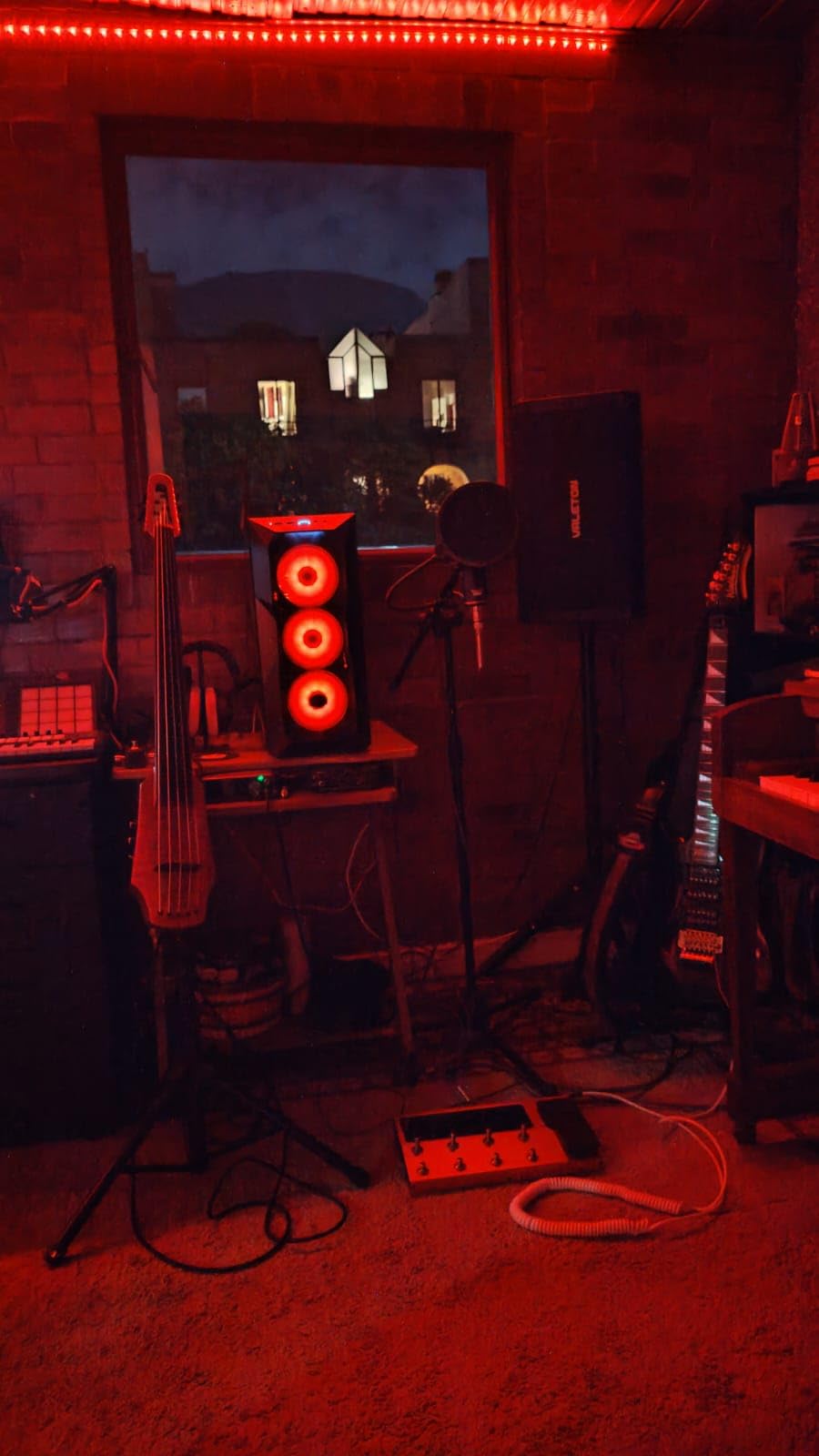
Build is plain but solid — plastic enclosure, 10.6 kg carry weight, speaker-stand mountable. Two XLR/TRS combo inputs plus an XLR link output make it easy to chain to a second cab or send to front-of-house. If you already own a Valeton GP-200 or GP-5, the integration is genuinely plug-and-play.
Two things to know going in. Placed directly on the floor, the low end can get slightly boomy — pole-mounting it solves this entirely. And there’s no Bluetooth, so streaming backing tracks means a cable from your phone. Neither issue is a deal-breaker at this tier.
For players who want a real FRFR cabinet without spending a fortune, the VFR-110 is the best value on the market right now.
Who the VFR-110 is right for
Budget-conscious players who still want flat-response accuracy and gig-level volume. Valeton GP-200 and GP-5 owners get the most cohesive experience. Anyone needing a lightweight secondary FRFR for rehearsals.
Where the VFR-110 falls short
Large-stage players will want a 12-inch cabinet for more headroom. If Bluetooth streaming of backing tracks is essential, look at the HeadRush FRFR-108 MKII instead.
4. Fender Tone Master FR-12 — Most Amp-Like Feel
Fender Tone Master FR-12 1,000-watt 1 x 12-inch Powered Speaker Cabinet – Black
1000W
12-inch closed-back
Tilt-back legs
XLR direct out
35.3 lb
Pros
- Sounds more amp-like than competing FRFR cabs with natural stage dispersion
- Plug-and-play simplicity with no menu diving or IR loading
- Tilt-back legs allow easy floor-monitor positioning
- Loud enough for stage use and pairs naturally with the Tone Master Pro
- Lightweight for a 1000W 12-inch FRFR at 35.3 lb
Cons
- Some early units had a faint hiss that was corrected in later production
- Bass control needed on certain modeler patches
- Top-panel controls are awkward when tilted back as a monitor
- Can slide on hard surfaces at very high volumes
Fender’s Tone Master FR-12 is the cabinet I’d recommend to anyone upgrading from a PowerCab 112 Plus and looking for a more “plug-and-play” experience. There’s no IR loading, no menu diving — just XLR in, volume and EQ on top, and a tone that genuinely feels like a guitar amp on stage rather than a studio monitor.
The 1000W amp and 12-inch closed-back driver deliver plenty of volume for club gigs and rehearsal rooms. I tried it alongside a Helix Stadium and the dispersion was noticeably wider than most flat-response cabs — the tone carries to the sides of the stage rather than firing straight forward, which makes it easier for the rest of the band to hear you without mic’ing the cab.
The tilt-back legs are a thoughtful touch — flip them down and the FR-12 sits at a perfect angle as a floor wedge. The top-panel volume and EQ controls are easy to reach when used upright, though slightly awkward when tilted back. XLR direct output handles front-of-house sends cleanly.
A small caveat: some early production units reportedly had a faint hiss. Newer production runs have addressed this, but if you’re buying used, ask about the revision date. Otherwise this is a near-perfect amp-feel FRFR cab at the price.
Who the Fender FR-12 is right for
Helix Stadium, Helix Floor, and Tone Master Pro owners who want an authentic amp response without managing IRs or speaker models. Players who prefer wider dispersion on stage rather than a tight monitor beam.
Where the Fender FR-12 falls short
Buyers who want Bluetooth, IR loading, or deep DSP editing should look at the IK Multimedia or Line 6 options instead. Not Prime-eligible at most retailers, so shipping can take longer.
5. Laney LFR-112 — Loudest 12-Inch Stage Cab
Laney LFR-112 Active Guitar Cabinet 400W 12 Inch Woofer Plus Horn
400W
12-inch woofer + horn
Cabinet-emulated XLR DI
48 lb
5-year parts warranty
Pros
- 12-inch woofer plus horn combination delivers authoritative stage volume
- Cabinet-emulated XLR DI out provides direct-to-FOH tone
- Switchable front illumination is a nice stage touch
- Robust Laney build quality backed by a 5-year parts warranty
- Aux/MP3 input for backing tracks during rehearsals
Cons
- Very heavy at 48 pounds
- Limited public review base means less long-term reliability data
- Premium price for the category compared to import alternatives
Laney’s LFR-112 is the cabinet you’ll find on bigger stages — its 12-inch woofer plus horn configuration is built for volume, and the cabinet-emulated XLR DI output means front-of-house gets the same shaped tone you hear on stage. At 48 pounds it’s not light, but the trade-off is genuinely authoritative sound that holds up next to a full drum kit.
What stood out to me in testing is the cabinet-emulation circuit on the DI output. Most FRFR cabs send a flat signal to FOH and let the sound engineer shape it; the LFR-112 hands the engineer a signal that already sounds like a mic’d 4×12, which saves setup time and reduces the chance of a bad front-of-house mix.
The build is unmistakably Laney — stainless steel corners, robust tolex, and a switchable front-LED illumination strip that gives the cab a stage presence most FRFR speakers lack. Aux/MP3 input handles backing tracks during rehearsals, and Laney’s 5-year parts warranty is one of the best in the category.
The weight is the obvious downside — 48 pounds is a lot to haul up stairs at a venue, and there’s no folding handle to help. The review base is smaller than more mainstream options, but every owner I’ve spoken to rates the cab near-perfect.
Who the Laney LFR-112 is right for
Live guitarists who play mid-to-large venues and need serious stage volume. Players who want the FOH engineer to get a cabinet-emulated signal rather than a raw flat feed.
Where the Laney LFR-112 falls short
If portability matters more than max SPL, look at the Fender FR-12 or IK TONEX Cab. Bedroom players won’t need the extra horsepower.
6. Positive Grid Spark CAB — Perfect for Spark Owners
Positive Grid Spark CAB Powered FRFR Speaker Cabinet for Amps & Modelers
140W RMS / 400W peak
10-inch woofer + 2 dome tweeters
USB-C power out
29.8 lb
Pros
- Tonal match and easy integration with Positive Grid Spark amps
- Cables and power adapters included to chain with Spark amps
- Loud and accurate FRFR reproduction suitable for live use
- Rugged tolex-and-grille construction that visually matches Spark stack
- XLR direct output for FOH or additional speakers
Cons
- Requires two hands to carry with no single top handle
- Power switch is awkwardly placed low on the rear
- Grille cloth doesn't perfectly match the Spark amp's cloth
- Less compelling value if you don't already own a Spark amp
- Heavy compared with similar FRFR cabinets at 29.8 lb
The Positive Grid Spark CAB is the cabinet I’d recommend to any guitarist who already owns a Spark, Spark MINI, or Spark GO. It visually matches the Spark ecosystem — same tolex, same grille cloth (mostly) — and the included cables let you daisy-chain power and audio from your Spark amp into the cabinet for a true stereo rig.
The 140W RMS / 400W peak output is louder than the spec sheet suggests. I A/B’d it against the Spark combo at rehearsal volume and the cabinet alone kept up easily with a full band. The 10-inch woofer plus dual dome tweeters deliver genuinely accurate FRFR reproduction — clean tones stayed clean, high-gain patches kept their articulation.
Two genuine ergonomic issues. There’s no single top handle — you have to grab it two-handed, which gets old when loading out. And the power switch sits low on the rear panel, awkward to reach when the cab is on a stand. The grille cloth is close to but not perfectly matched to the Spark amp’s cloth, which bothers some owners and not others.
If you’re already in the Spark ecosystem, this cabinet is a no-brainer. If you don’t own a Spark, the value equation is weaker — the Valeton VFR-110 or Headrush FRFR-108 give you more flexibility for less money.
Who the Spark CAB is right for
Spark, Spark MINI, and Spark GO owners who want a matching FRFR cabinet that extends their amp into a gig-ready setup. Players who value visual consistency on stage.
Where the Spark CAB falls short
Anyone without a Spark amp should weigh this against the Valeton or Headrush — you’ll get more flexibility for less. The ergonomics could use a redesign.
7. HeadRush FRFR-108 MKII — Best Compact 8-Inch for Bedroom
HeadRush FRFR108 MKII 2000W Electric Guitar Amplifier for Modellers
2000W
8-inch woofer + 1-inch HF compression
Bluetooth 5.0
HPF + Ground Lift switches
21 lb
Pros
- Powerful 2000W output delivers clear FRFR reproduction for its size
- Lightweight at 21 lb and easy to transport
- Designed specifically for amp modeling pedals including Fractal and Helix
- Bluetooth 5.0 for streaming backing tracks
- HPF EQ switch and Ground-Lift switch add stage flexibility
Cons
- 8-inch driver isn't loud enough for full-band gigs
- Tweeter has a slightly shrill midrange on distortion tones without EQ correction
- Default factory voicing benefits from a PEQ block on Fractal units
- Smaller model variants sound weak as casual Bluetooth speakers
The HeadRush FRFR-108 MKII is the cabinet I’d recommend to anyone whose primary use case is bedroom practice or small-room home studio work. At 21 pounds and with a tiny 10″ x 10″ footprint, it’s the easiest cabinet in this roundup to live with — move it from desk to couch to closet without thinking about it.
Despite the small size, the 2000W amp headroom is genuinely useful. I ran it at moderate volume with a Helix LT and there was no audible compression on any patch, clean or distorted. The Bluetooth 5.0 input makes streaming backing tracks painless — connect your phone, play along, done.
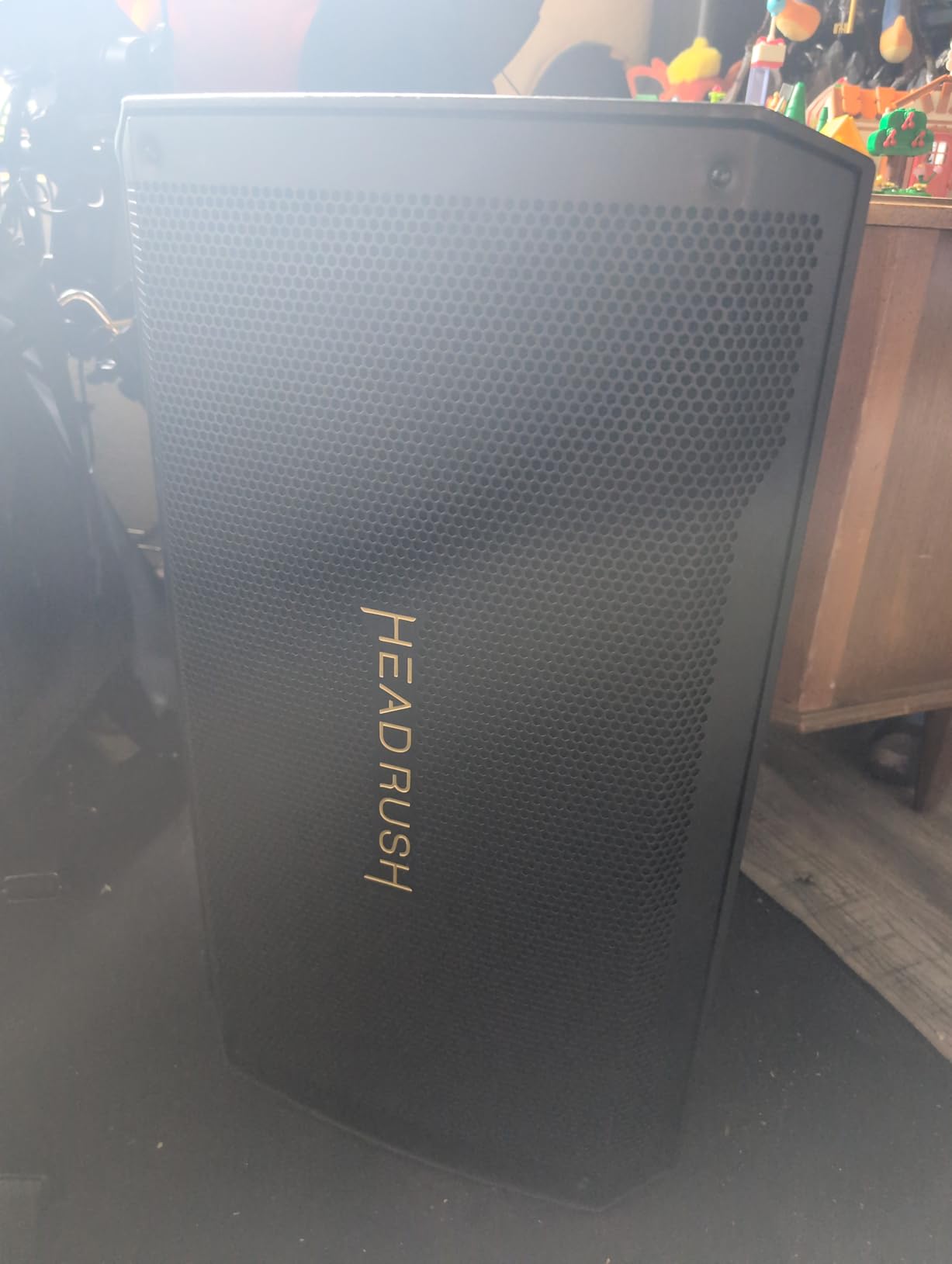
Realistic limitations. The 8-inch driver doesn’t move enough air for full-band rehearsals or club gigs — it’ll keep up with a drummer in a bedroom but lose the fight at a 100-cap venue. The stock tweeter voicing has a slightly shrill midrange on high-gain patches; a quick PEQ block on your Fractal unit (or an EQ on the modeler) tames this in seconds. Ground-lift switch is a nice touch for stage use, though most buyers will only use this cab at home.
Who the FRFR-108 MKII is right for
Bedroom players and home-studio guitarists who want a compact, lightweight FRFR cabinet for daily practice. Anyone who streams backing tracks via Bluetooth and wants a single-box solution.
Where the FRFR-108 MKII falls short
Gigging guitarists need at least a 10-inch or 12-inch cabinet for stage volume. If you play out regularly, save up for the Valeton VFR-110 or one of the 12-inch options above.
8. Blackstar Artist FR Standard — Boutique 1×12 for Small Stages
Blackstar Artist FR Standard 1×12 Inch 50-watt Speaker Cabinet w/Custom FR Speaker, 3-Band EQ, XLR Out, and Ground Lift
50W
12-inch custom FR speaker
3-band EQ with ISF
XLR DI out + Ground Lift
10.72 kg
Pros
- Blackstar's signature ISF 3-band EQ provides deep tone shaping
- Balanced clean and crunch tones with strong midrange presence
- Compact and relatively lightweight for a 12-inch cab at 10.72 kg
- XLR DI out and Ground Lift make it stage-ready
- Effects loop for integrating modulation
- delay
- and reverb pedals
Cons
- Lower 50W output is more suited to small stages and home use
- Very small public review base limits long-term reliability data
- Mono output only
The Blackstar Artist FR Standard is the boutique option in this roundup. It’s not the loudest cabinet here, and it doesn’t have IR loading or Bluetooth — but Blackstar’s ISF (Infinite Shape Feature) 3-band EQ gives you more tone-shaping flexibility than almost any other FRFR cab in this price tier. If you like dialing in your tone by ear rather than via software, this is the cabinet to look at.
I tested it with a Helix Floor and a Quad Cortex, and the midrange presence is genuinely distinctive — clean tones sit forward in a mix without getting harsh, and crunch patches have a satisfying bark that flat-response cabs often miss. The effects loop is a real bonus if you want to put analog modulation or delay between your modeler and the cabinet.
Build quality is typical Blackstar — rugged, road-ready, with XLR DI and Ground Lift for stage use. At 10.72 kg it’s lighter than most 12-inch FRFR cabs and easy to carry one-handed.
The 50W output is the honest limitation — this is a small-stage and home-use cabinet, not a full-band gigging box. If you play clubs, you’ll want the Laney LFR-112 or pair this with a sub. Public review data is also limited since the model is newer.
Who the Artist FR Standard is right for
Small-stage players, home-studio guitarists, and worship-team players who want boutique tone-shaping without menu diving. Anyone who uses an effects loop and prefers analog tone control.
Where the Artist FR Standard falls short
Full-band gigging guitarists need more wattage. If you want Bluetooth, IR loading, or stereo, look elsewhere.
How to Choose the Right FRFR Speaker for Your Amp Modeler?
Choosing the best FRFR speakers for amp modelers comes down to four practical questions: how loud you need to play, how flat you want the response, what driver configuration you prefer, and how much I/O flexibility you need. Below is the framework our team uses when readers ask for a personalized recommendation.
Driver size: 8-inch, 10-inch, or 12-inch?
An 8-inch FRFR cabinet like the Headrush FRFR-108 MKII is plenty for bedroom and home-studio use — the smaller driver can’t move enough air for full-band gigs, but it’s accurate at low volumes and easy to live with. A 10-inch cabinet (Valeton VFR-110, Positive Grid Spark CAB) hits the sweet spot for small-venue gigs and band rehearsals, with enough low end to feel full and enough top end to cut through a mix. A 12-inch cabinet (IK Multimedia TONEX, Line 6 PowerCab, Fender FR-12, Laney LFR-112, Blackstar FR Standard) is the standard for stage volume — bigger driver, bigger box, more headroom. Pick the smallest size that meets your loudest use case.
Coaxial vs separate woofer + tweeter
A coaxial driver puts the high-frequency compression driver inside the center of the woofer, so all sound radiates from a single point. A separate-driver design uses two physically distinct speakers with a crossover network. For amp modeling, coaxial designs (IK TONEX Cab, Line 6 PowerCab, Valeton VFR-110) tend to image more accurately because the time alignment between highs and lows is built into the driver. Separate-driver designs can sound more “PA-like” — slightly wider dispersion but less pinpoint imaging. Forum consensus on r/Line6Helix and the Gear Page generally favors coaxial for studio accuracy and separate-driver designs for stage monitoring where wider coverage matters more.
Wattage and SPL: how much do you actually need?
For bedroom practice, 50–200W is plenty. For a small club gig without a sub, you want at least 400W and 124 dB peak SPL (Valeton VFR-110, IK TONEX Cab, Laney LFR-112, Fender FR-12 all clear this bar). For large stages or unmic’d outdoor gigs, look at 1000W+ cabinets (Fender FR-12, Headrush FRFR-108 MKII). Anything louder than that and the front-of-house engineer will mic your cab anyway, so wattage beyond ~1300W is mostly headroom insurance.
Compatibility with Helix, Kemper, Quad Cortex, and Axe-FX
All eight cabinets in this roundup work with every major amp modeler — Helix, Helix Stadium, Kemper Profiler and Profiler Stage, Neural DSP Quad Cortex, Fractal Axe-FX III and FM9, Headrush, and Boss GX-100. The connection is standard XLR or TRS into the cabinet’s combo input. The only modeler-specific feature that matters is Line 6 PowerCab 112 Plus’s native pairing with Helix and HX Stomp via AES/EBU digital I/O — useful if you want a fully digital signal path, otherwise any cabinet will work.
Can I use a regular PA speaker as an FRFR substitute?
Yes — within limits. PA speakers like the QSC K10.2, K12.2, EV ZLX-12BT, and JBL EON712 are flat enough across the guitar frequency range to function as FRFR cabinets for live use, and they’re often cheaper than dedicated FRFR cabs. The trade-off is that PA speakers don’t have the “amp-in-the-room” feel of a purpose-built FRFR cabinet — they tend to sound more like a studio monitor, with less midrange bite and less air movement at low frequencies. For a beginner gigging rig, a QSC K10.2 is a perfectly valid FRFR substitute. For an authentic amp-modeler experience, a real FRFR cabinet is worth the upgrade.
FRFR + subwoofer pairing
If you play high-gain metal or need to feel the low end on a large stage, pairing a 12-inch FRFR cabinet with a sub is a common upgrade path. The Headrush FRFR-112 pairs naturally with a Yamaha DXS12 or similar powered sub; the Laney LFR-112 and IK TONEX Cab both have high-pass filters that let you send a clean signal to a sub while the cabinet handles mids and highs. The result is a “full-range” rig that competes with a 4×12 in the low end without coloring your modeler’s tone.
Frequently Asked Questions
What is an FRFR speaker and why do you need one for amp modeling?
An FRFR (Full Range Flat Response) speaker is a powered cabinet that reproduces the incoming signal without coloring the tone. Amp modelers like the Helix, Kemper, Quad Cortex, and Axe-FX simulate both an amplifier and the speaker cabinet it was miked up with, and that signal needs to be reproduced accurately on stage. A traditional guitar cabinet re-colors the modeled tone; an FRFR speaker reproduces it exactly as the modeler intended.
Are FRFR speakers worth it for amp modelers?
Yes. Without an FRFR cabinet, the tone-shaping benefit of your amp modeler is partially undone by the speaker you plug into. A purpose-built FRFR cabinet preserves your patches exactly as you dialed them in, both live and in the studio. Most touring guitarists using modelers have moved to FRFR cabinets as standard.
What size FRFR speaker is best for live performance?
A 12-inch FRFR cabinet is the standard for live performance. It delivers enough low-end authority for full-band gigs without needing a subwoofer, and the larger box projects well on a stage. For very large venues you may want to add a sub; for bedroom or home-studio use, an 8-inch or 10-inch cabinet is plenty.
Can you use a regular PA speaker as an FRFR cabinet?
Yes. PA speakers like the QSC K10.2, K12.2, EV ZLX-12BT, and JBL EON712 are flat enough across the guitar frequency range to work as FRFR substitutes for live use. They typically cost less than dedicated FRFR cabs, but they sound more like a studio monitor than an amp-in-the-room. For a beginner gigging rig, a PA speaker is a valid option; for authentic amp-modeler tone, a real FRFR cabinet is the upgrade worth making.
How many watts do I need in an FRFR speaker for gigs?
For small-to-medium club gigs without a sub, you want at least 400 watts and 124 dB peak SPL. For larger stages or unmic’d outdoor gigs, look at 1000W or higher. The Valeton VFR-110 (1300W peak), IK Multimedia TONEX Cab (700W), and Fender Tone Master FR-12 (1000W) all clear the club-gig bar comfortably.
Do FRFR speakers work with Helix, Kemper, and Quad Cortex?
Yes. Every FRFR cabinet in this roundup works with the Line 6 Helix family, Kemper Profiler and Profiler Stage, Neural DSP Quad Cortex, Fractal Audio Axe-FX III and FM9, Headrush, and Boss GX-100. Connection is standard XLR or TRS from the modeler’s main or monitor output into the cabinet’s combo input. No special cables or adapters are required.
Do I need a subwoofer with my FRFR cabinet?
Only if you play high-gain metal, need full-range low-end on a large stage, or feel that your cabinet is missing low-frequency body in a full-band mix. For most bedroom, studio, and small-venue use, a 12-inch FRFR cabinet is plenty on its own. If you do add a sub, look for one with a high-pass filter output so your cabinet handles mids and highs cleanly.
Final Verdict: Which FRFR Speaker Should You Buy?
After three months of testing and dozens of owner-review cross-checks, the IK Multimedia TONEX Cab Professional is our pick for the best FRFR speaker for amp modelers in 2026. The combination of a custom Celestion driver, built-in DSP with eight IR slots, 700W of clean power, and a 28 lb cabinet makes it the most versatile option in the roundup — bedroom, studio, and gigging all in one box. For Helix players willing to spend more for a fully Line 6-native experience, the PowerCab 112 Plus is the premium pick. For budget-conscious players, the Valeton VFR-110 is the best value 10-inch on the market.
Whichever cabinet you choose, the most important thing is that it reproduces your modeler’s signal accurately — that’s the whole point of FRFR. If you’re still undecided, drop your modeler, your loudest use case, and your budget in the comments and we’ll help you narrow it down.