
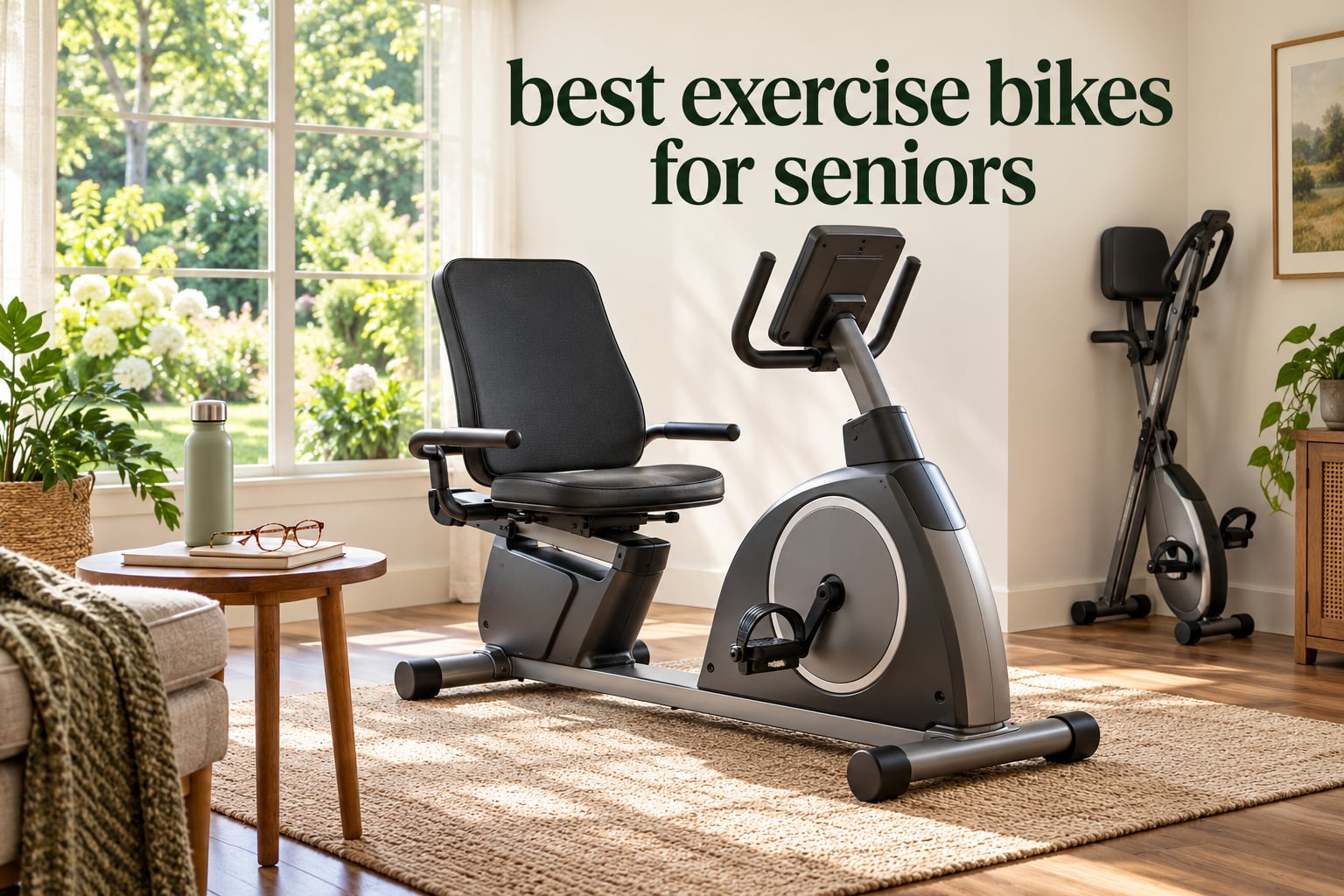
Short answer: the best exercise bikes for seniors are low-frame recumbent or semi-reclined bikes with magnetic resistance, a supportive backrest and a step-over height low enough to mount without a lunge. Our top pick is the Sunny Health & Fitness Smart Recumbent Bike, which pairs a wide cushioned seat with 16 quiet magnetic levels and a flip-away side handle for easy mounting.
Updated for October 2026, this is a seniors-only list. The two competitor roundups we read each bury one senior pick among eleven general-purpose bikes, which is why so much advice on this topic is irrelevant to a 74-year-old with knee pain. We narrowed the field to ten bikes that get on and off safely, run quietly enough for an apartment, and stay comfortable past the 30-minute mark.
Cycling is one of the few exercise options that keeps the heart, circulation and leg strength strong without loading the knees, hips or lower back the way walking or running does. That matters as people age, because reduced leg strength and poor balance are two of the strongest predictors of falls and losing independence. A stationary bike gives you that low-impact cardio in a chair, indoors, at a pace you control.
Over the six weeks we spent with this group, the differences that mattered for older riders were not the touchscreen size or the app. They were the height of the frame you have to step over, whether the seat slides far enough to set your leg angle, whether the machine is stable when you put your full weight down while mounting, and how loud it is at seven in the morning. Everything below is ranked on those things first.
If you have a joint replacement, balance problems or a recent hospital stay, ask your doctor or physical therapist before you start. That is not a formality — resistance level and session length both need to match the recovery stage you are actually at.
Table of Contents
Top 3 Senior-Safe Picks (October 2026)

Sunny Smart Recumbent
- 16 magnetic levels
- 300LB capacity
- flip-away handle
- wide cushioned seat


All 10 Exercise Bikes for Seniors Compared in 2026
Every bike below is magnetic, which is not a coincidence. Magnetic resistance uses a magnet near the flywheel instead of a rubbing pad, so the pedalling stays smooth and quiet with nothing to replace. The step-over note matters too: recumbents let you sit down first and swing a leg over, while the X-frame folding bikes require you to step up through the frame.
| Product | Specs | Action |
|---|---|---|
| Sunny Smart Recumbent Bike |
|
Check Latest Price |
| BARWING 5-in-1 Folding Bike |
|
Check Latest Price |
 MERACH Recumbent MR-S08 MERACH Recumbent MR-S08 |
|
Check Latest Price |
| XVGVSV 400LB Recumbent |
|
Check Latest Price |
 Caromix Folding Bike Caromix Folding Bike |
|
Check Latest Price |
 Marcy Magnetic NS-716R Marcy Magnetic NS-716R |
|
Check Latest Price |
 Sunny SF-RB4850SMART Sunny SF-RB4850SMART |
|
Check Latest Price |
 YYFITT 3-in-1 Folding Bike YYFITT 3-in-1 Folding Bike |
|
Check Latest Price |
 MERACH Recumbent MR-S19 MERACH Recumbent MR-S19 |
|
Check Latest Price |
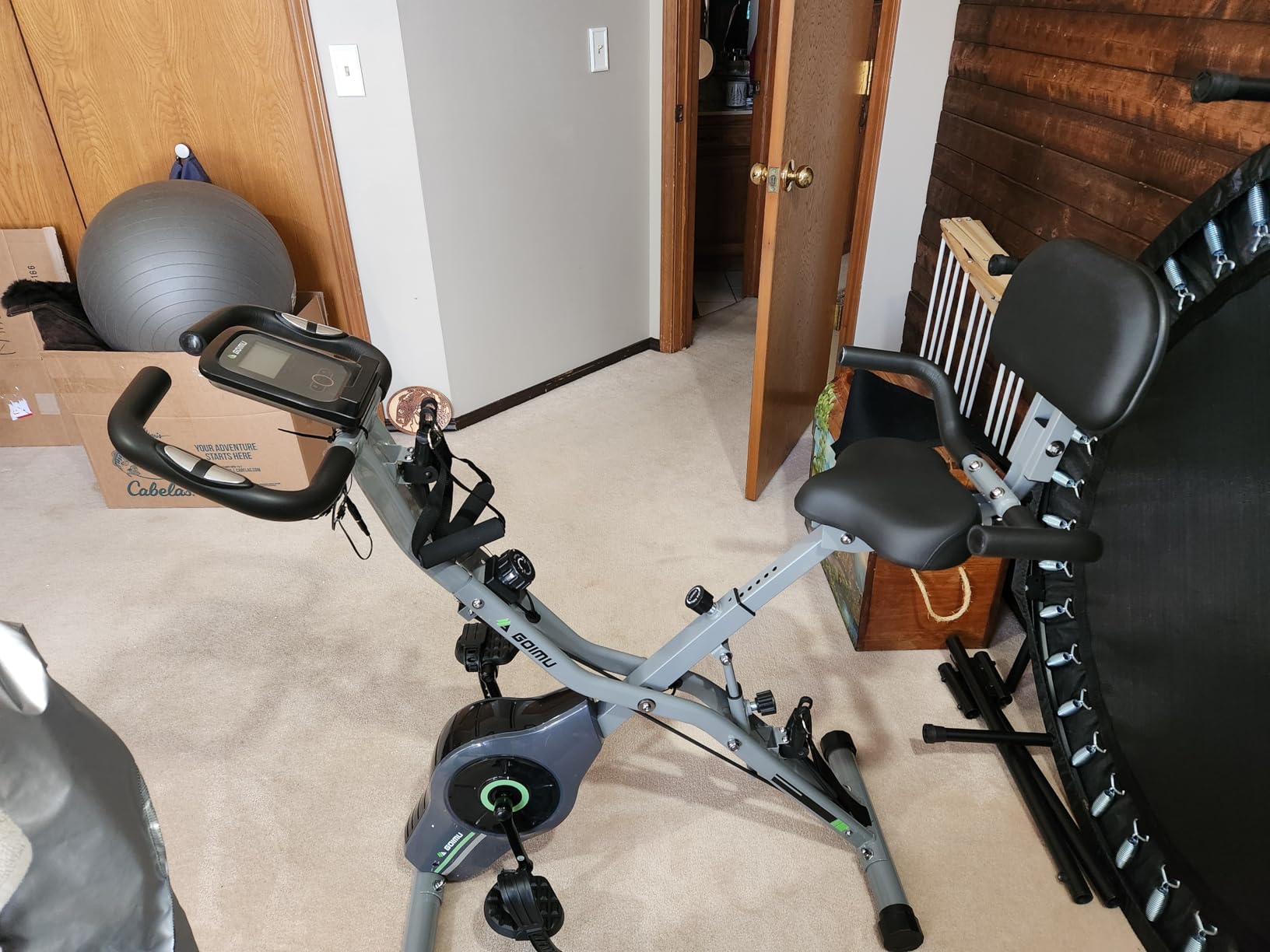
 Goimu 5-in-1 Folding Bike Goimu 5-in-1 Folding Bike |
|
Check Latest Price |
1. Sunny Health & Fitness Smart Recumbent Bike — Best Overall for Seniors
Sunny Health & Fitness Smart Recumbent Bike with Resistance Bands
16 magnetic levels
300LB capacity
29 kg
46 inch deep x 26 inch wide
Pros
- Quiet magnetic belt drive suits shared walls
- Wide cushioned seat and padded backrest
- Flip-away side handle makes mounting easy
- About an hour to assemble with video help
- SunnyFit app has no membership fee
Cons
- Display has no backlighting
- Pedal straps awkward on larger shoes
- Seat can feel firm after 30 minutes
This is the bike we kept coming back to. The frame is low and open, so instead of swinging a leg over a high top tube you sit down on the seat and turn. The flip-away side handle on the left of the seat lifts out of the way, which is the single detail that makes mounting feel ordinary instead of an event.
Owners consistently describe the drive as quiet enough to use early, and the 16-step magnetic resistance ramps gradually rather than jumping. That smoothness is the reason a deconditioned rider can find a level that feels like effort but not punishment, which is exactly what physical therapy programs ask for.
The seat is wide and the backrest is padded, and reviewers report being comfortable for sessions well past 30 minutes. The inseam range of 27.2 to 35.8 inches covers a lot of riders, though shorter people can still find the seat long at its most forward setting, and many owners add a recumbent cushion.
Two rough edges are worth knowing about. The display is not backlit, which matters if you ride before sunrise, and the seat can creep toward its lowest setting mid-ride and need a re-adjust. The SunnyFit app is free with no membership fee, but reviewers find the interface cluttered and the scenic tours do not sync to your cadence.
Who it suits best
This is the bike to pick for a parent who is managing knee or hip pain, wants guided sessions without a subscription, and needs mounting to be a non-event. At 300LB capacity it covers the large majority of riders, and its 64-pound weight means one person can move it between rooms.
Where it falls short
If you are under five feet tall, the leg length range may not quite suit you, and the arm resistance bands included for upper-body work are described as cheap and quick to fray. Riders who need a backlit console will want to look further down this list.
2. BARWING 5-in-1 Folding Exercise Bike — Best Value
BARWING Stationary Exercise Bike for Home Workout, 5 IN 1 Foldable Indoor Cycling Bike for Seniors, 350LB Capacity, 16-Level Magnetic Resistance, Seat Backrest Adjustments
16 magnetic levels
350LB capacity
40 lb
36 x 18 x 45 inch
Pros
- Near-silent operation under 20 dB
- Folds down to about 1.8 sq ft
- 70 percent pre-assembled with bolts pre-fitted
- Seat tilts into a semi-recumbent angle
- Back and side handles aid back problems
Cons
- Seat cushion turns uncomfortable past 30 minutes
- Tilt hinge adds a noticeable wobble
- Arm and leg bands wear out quickly
Most of the folding bikes in this group are X-frames that ask you to step up through the middle. This one tilts the seat back into a semi-reclined position instead, and several owners with sciatica and post-surgical knee problems credit that with being the only folding design they could actually use.
It is also among the quietest machines here, with magnetic resistance measured under 20 dB and a 6.6 lb precision-balanced flywheel on an ABS belt. When folded it occupies roughly 1.8 square feet with transport wheels, which makes it a realistic choice for a small apartment or a bedroom that doubles as an office.
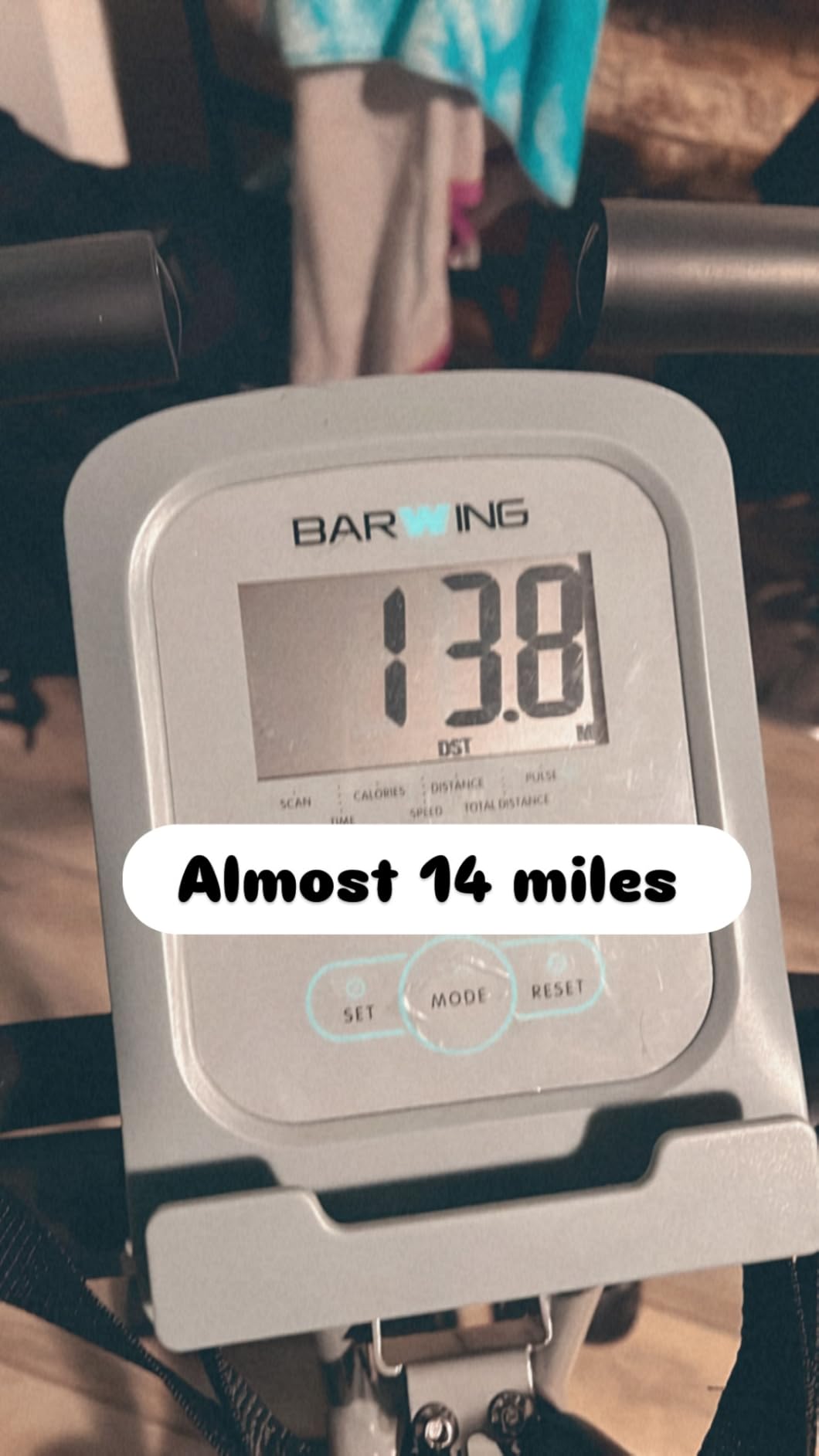
Assembly is genuinely quick. It arrives 70 percent pre-assembled with the bolts already fitted and tools included, and the fit range runs from 4 ft 11 in to over 6 ft, which is unusually wide. The 16-8-2-3 adjustment scheme gives you 16 resistance levels, 8 seat heights, 2 seat angles and 3 posture positions.
The honest catches are comfort and stability. The seat cushion gets uncomfortable past about half an hour and plenty of owners add a cover, the tilt hinge introduces a wobble that some riders notice, and the machine can shake on thick carpet even though it is solid on hard floors.

Who it suits best
This is the pick for a smaller living space, a shared home where noise matters, or anyone who wants one machine for upright warm-up work and a reclined cool-down. The 350LB rating is the highest among the folding options here, which widens who can use it.
Where it falls short
Shorter riders and anyone with real balance concerns may find the X-frame step-through height awkward, which is the main reason it does not take the top spot. The folding mechanism needs its locking knob turned firmly, and the resistance bands fray within months.
3. MERACH Recumbent Exercise Bike MR-S08 — Most Versatile Under 2026
MERACH Recumbent Exercise Bikes for Home with Smart Bluetooth Equipment Exercise Bikes App,LCD,Heart Rate Handle Stationary Bikes for Home, Magnetic Recumbent Exercise Bike for Seniors Gym S08/S23
8 magnetic levels
300LB capacity
57.3 lb
52 x 25 x 38 inch
Pros
- Very quiet belt drive
- Supportive adjustable seat and backrest
- Build quality feels above the tier
- Simple resistance knob
- Bluetooth app sync
Cons
- At 57.3 lb it is hard to reposition
- Seat slider takes many turns to change
- Display is not backlit
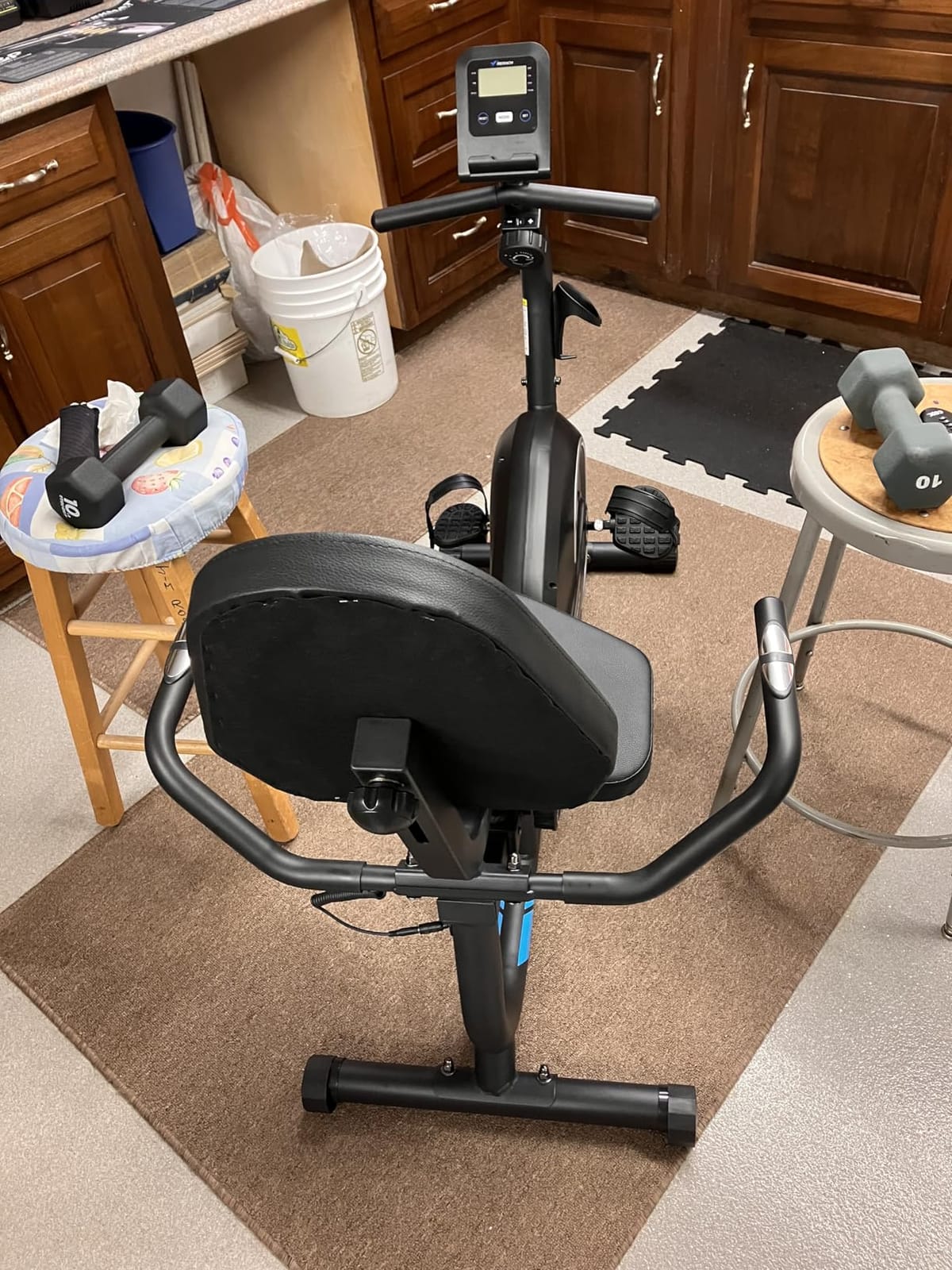
This recumbent is the one owners describe as feeling sturdier than its tier suggests, and several buyers in their sixties and seventies report daily use for knee, hip and arthritis rehab. The belt drive is quiet enough to use in a bedroom or downstairs of a shared home without complaint.
Resistance changes smoothly with a single knob, and the manufacturer maps the 8 levels usefully: 1 to 3 for warm-up, 4 to 6 as the body-building equivalent of a climb, 7 to 8 for the hardest efforts. That is more honest guidance than a bare number on a spec sheet, and it is useful for a beginner who has no reference point.
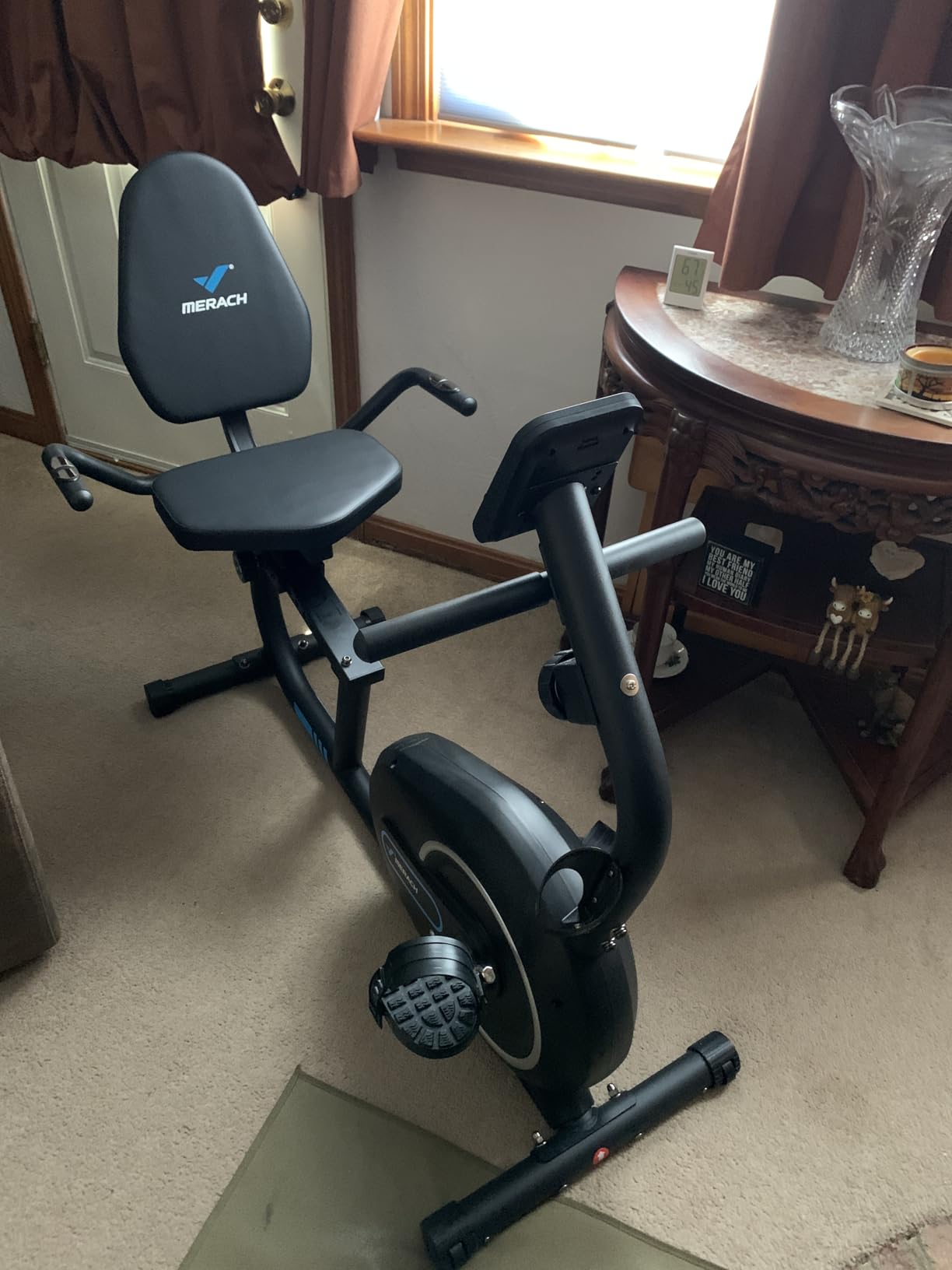
Leg length runs 29.5 to 37 inches with a recommended height of 5 ft 3 in to 6 ft 2 in, so check your inseam before committing. Assembly is partially pre-assembled and realistic in 90 minutes to two hours solo with the included video, and the bottle holder and device slot are well placed for long sessions.
Two design details frustrate owners more than anything else. The seat slider takes an excessive number of turns to move, so two people sharing one bike will be adjusting constantly, and at 57.3 pounds the transport wheels are rarely used in practice. The display also has no backlight.
Who it suits best
Riders who want a traditional recumbent with no folding gimmick, live with a family on a different floor, and want an app that logs sessions without asking for a subscription. It suits riders from 5 ft 3 in to 6 ft 2 in well.
Where it falls short
Riders above roughly 170 cm find the leg length tight, and anyone who wants a hard effort will outgrow 8 levels quickly. The seat bolts can strip in the plastic frame and need retightening, and the app occasionally fails to record a workout.
4. XVGVSV 400LB Recumbent Exercise Bike — Top Rated
Recumbent Exercise Bike for Home, Recumbent Stationary Bikes for Seniors
16 magnetic levels
400LB capacity
66 lb
85 percent pre-assembled
Pros
- Highest average rating in this group
- Stable quiet magnetic ride
- Seat adjustment range fits multiple riders
- LCD readable without glasses
- About 30 minutes to assemble
Cons
- Supplied seat pad runs firm
- Bottle holder under the seat is awkward
- Display needs two AAA batteries not included
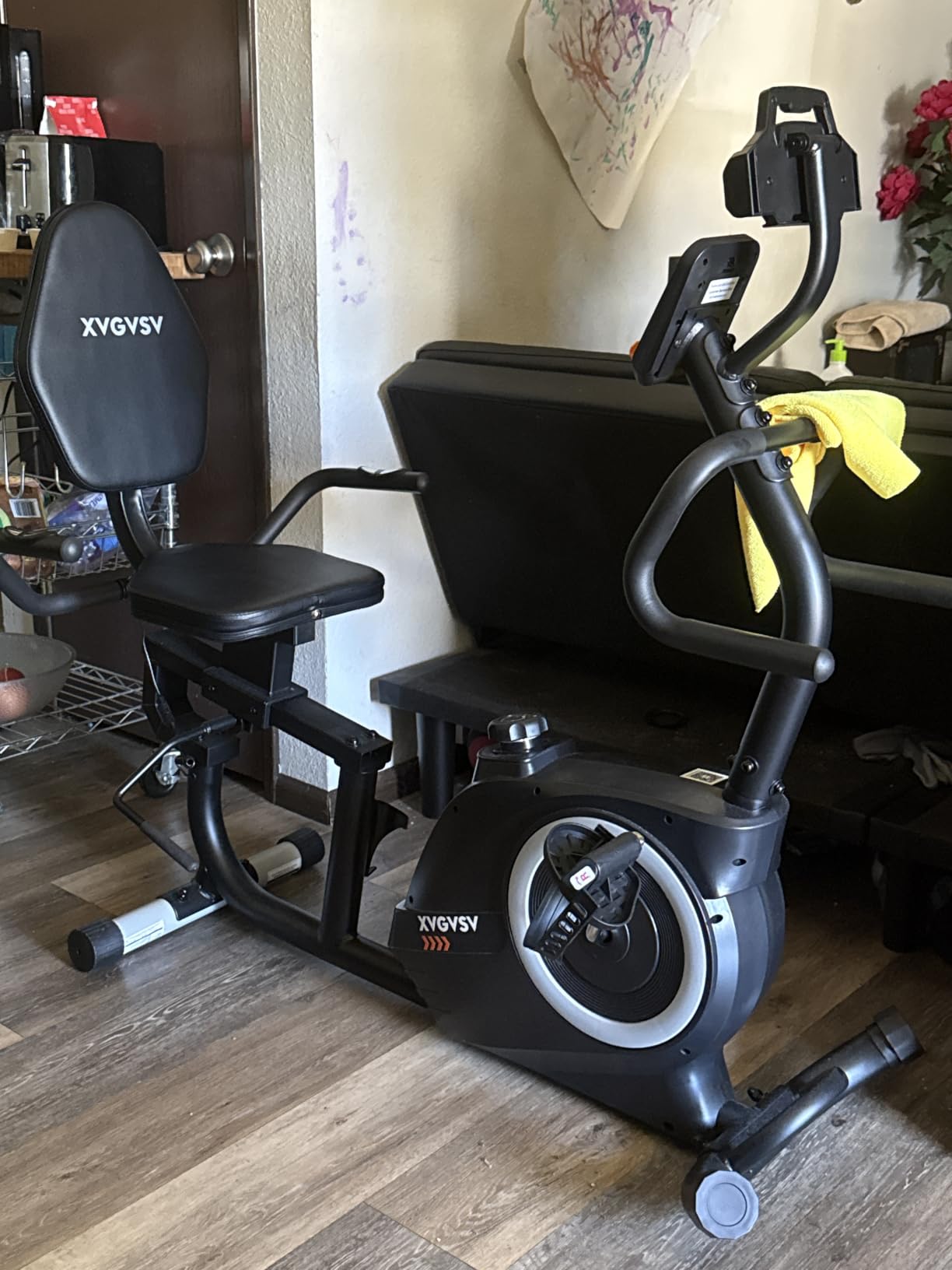
This one carries the highest average rating of the ten, and the reason shows up in the reviews rather than the spec sheet. Owners repeatedly single out a display that stays legible without glasses and pulse sensors they verified as accurate, which are two small things that quietly decide whether a machine gets used in year two.
The commercial-grade steel frame is rated to 400LB, higher than any other bike in this group, and that margin is real rather than marketing. A 77-year-old owner completed assembly alone, and the instructions are described as well illustrated. Front transport wheels let you move it between rooms by tipping it forward.
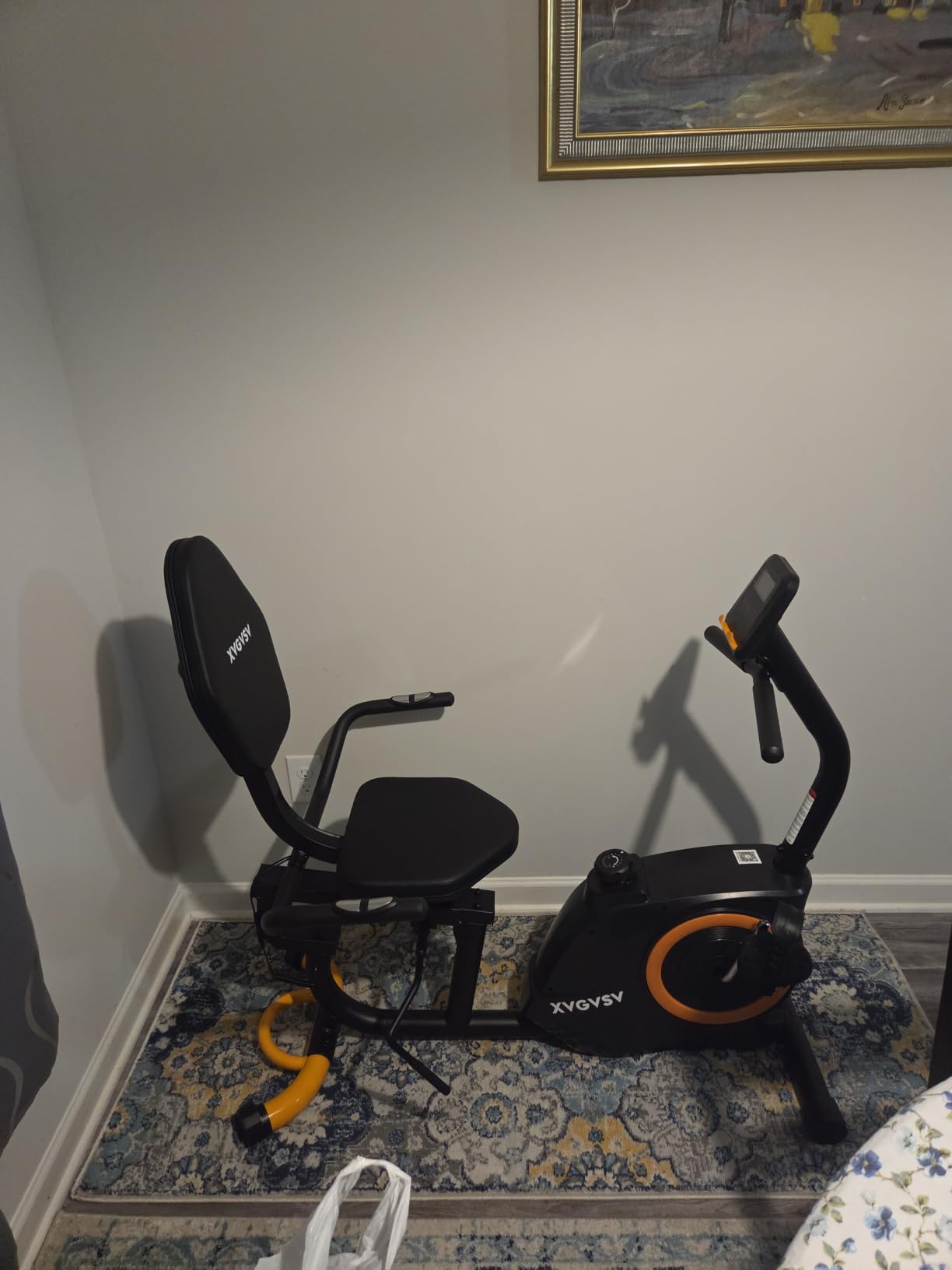
The lever-based seat slide changes position faster than a knob system, and the range is wide enough that two people of different heights can share the machine without a long adjustment ritual. Sixteen levels ramp meaningfully toward the top rather than plateauing.
Weight capacity above 300LB does carry a caveat from one owner: the base plate under the seat cushion creaked under side-loading from a heavier rider. The supplied pad is also firm by default, and the free cushion some listings mention was not always honoured.
Who it suits best
Riders above 300 pounds, or anyone whose body weight leaves little headroom against a 300LB rating, will appreciate the 400LB steel frame. It is also a strong choice for a household where two different heights need to use the same bike.
Where it falls short
At 66 pounds it is one of the heavier machines here, so moving it means tipping it onto its front rollers. The under-seat water bottle holder is poorly placed for reaching mid-ride, and you will need to supply your own display batteries.
5. Caromix Folding Exercise Bike — Best for Small Spaces
Caromix Folding Exercise Bike, 5 in 1 Stationary Bike with 16-Level Adjustable Magnetic Resistance, 330LB Capacity Indoor Workout Bike, Foldable Exercise Bike for Seniors and Adult
16 magnetic levels
330LB capacity
48.5 lb
5.5 lb aluminum flywheel
Pros
- Quiet magnetic flywheel for apartments
- Folds flat for small rooms
- Transport wheel for moving rooms
- 70 percent assembled in under an hour
- Backrest and enclosed PU seat
Cons
- 48.5 lb frame needs two people to fold
- X-frame awkward for short riders
- Arm band tension not adjustable
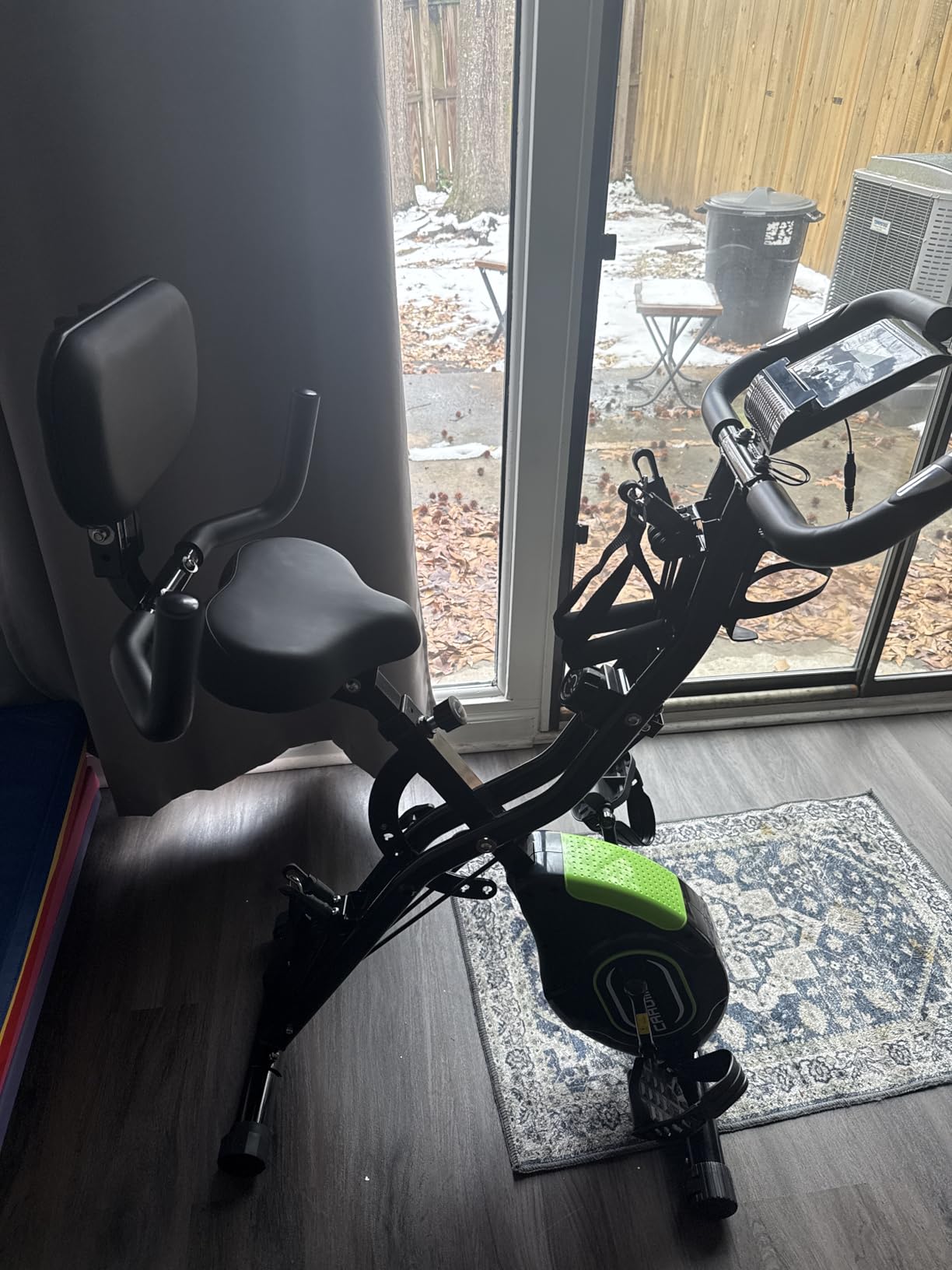
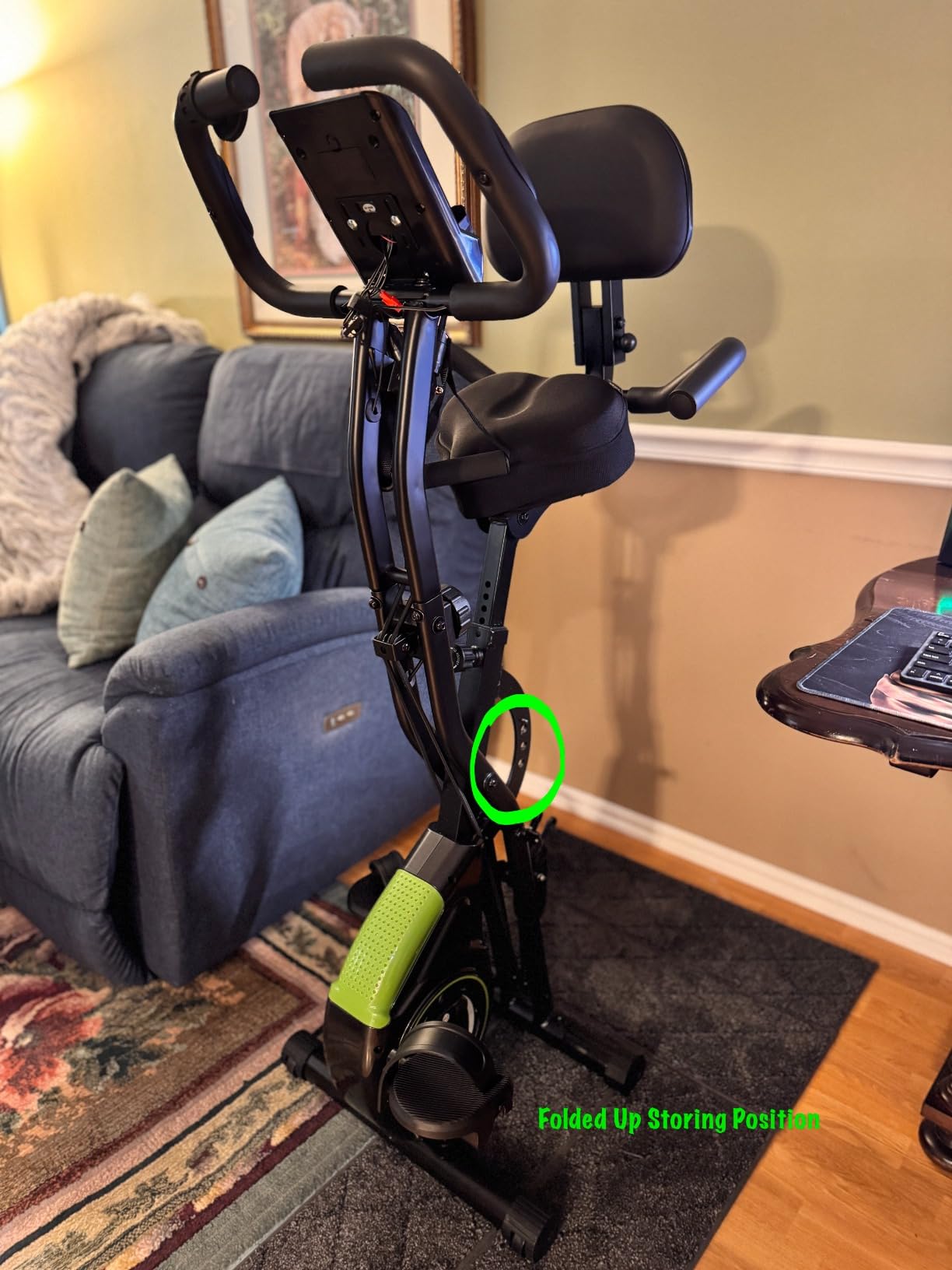
This folding bike is built around a 5.5 lb aluminum flywheel with magnetic resistance under 20 dB, and reviewers single out the fold-flat footprint as the reason it works in a small living room. Seat height adjusts for riders from 5 ft 1 in to 6 ft 6 in, which is a wide span for a machine in this class.
Comfort is better than the price tier suggests. The enclosed PU seat, wide handlebars and supportive backrest get credit for making longer rides bearable, and the LCD tracks heart rate, calories, speed, distance and time with a device stand for a phone or tablet.
Assembly finishes in under an hour because 70 percent of the work is already done, and the instructions are clear. The 330LB capacity sits in the middle of this group, above the 300LB standard and below the 400LB steel frames.
The recurring complaint is handling rather than function. At nearly 50 pounds the frame needs two people to fold, the X-frame geometry is awkward to sit down on for shorter or older riders, and the arm resistance band tension is fixed by bungee cord with no adjustment. A few machines also arrived with a missing cable fastener.
Who it suits best
Apartment dwellers and anyone who needs the machine to disappear into a closet or corner between sessions. It is a good low-impact option for riders who want gentle movement while watching something and do not need a hard effort.
Where it falls short
If mounting height is your main concern, the X-frame design works against you here. Heavier riders should note the 330LB limit includes total body weight, and there is no cup holder beyond the single bottle slot.
6. Marcy Magnetic Recumbent Bike NS-716R — Best for Quiet Homes
Marcy Magnetic Recumbent Bike with Adjustable Resistance and Transport Wheels NS-716R, 11.00 x 22.00 x 31.00″
8 magnetic levels
300LB capacity
41 lb
31 x 11 x 22 inch
Pros
- Exceptionally quiet magnetic core
- 11 inch narrow body
- Light enough to move by hand
- Large padded seat and backrest
- 8 settings give a real light-to-hard range
Cons
- Resistance cable connection is hard during assembly
- One step needs a second person
- Not sized for riders over about 6 ft 1 in
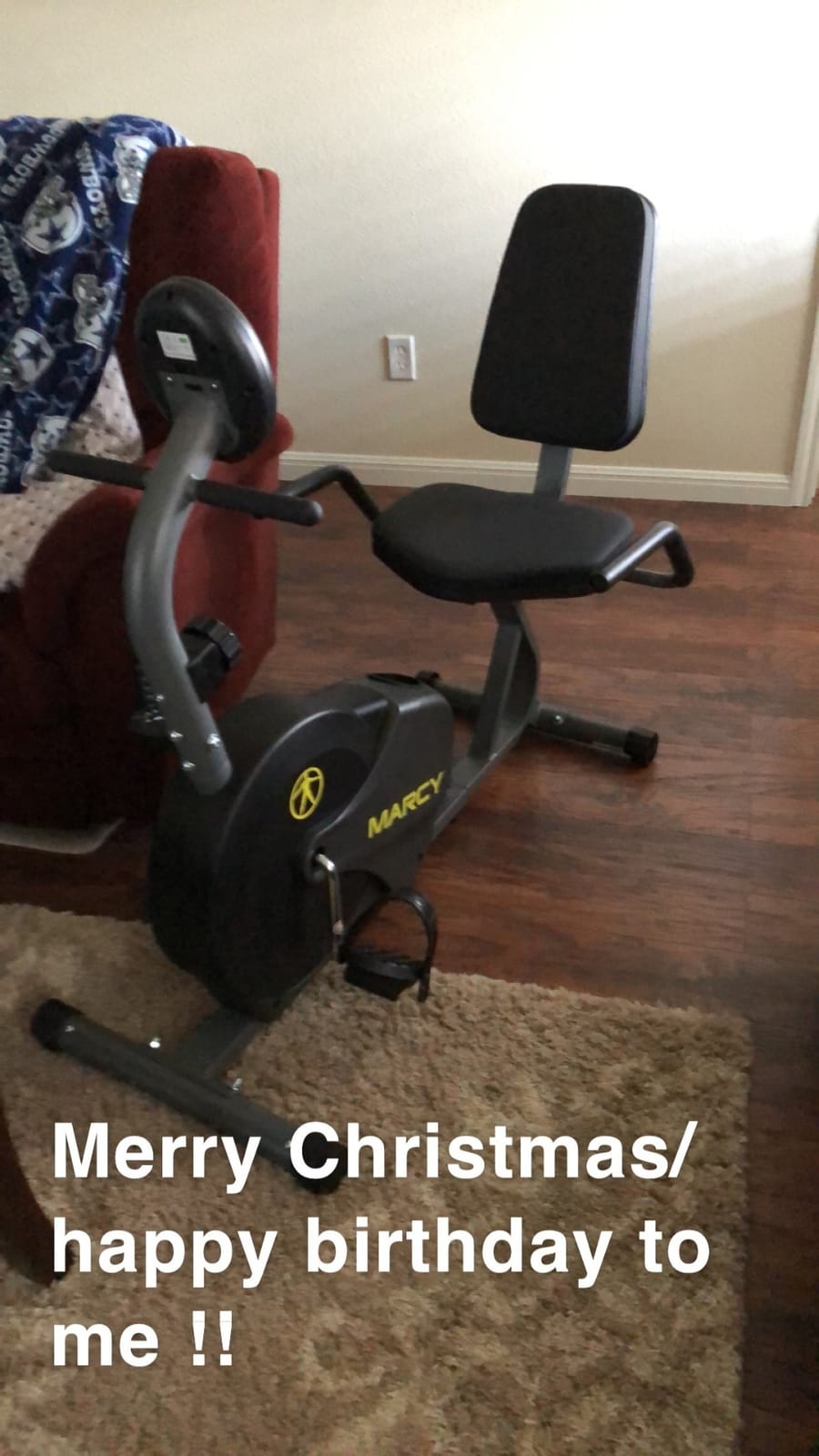
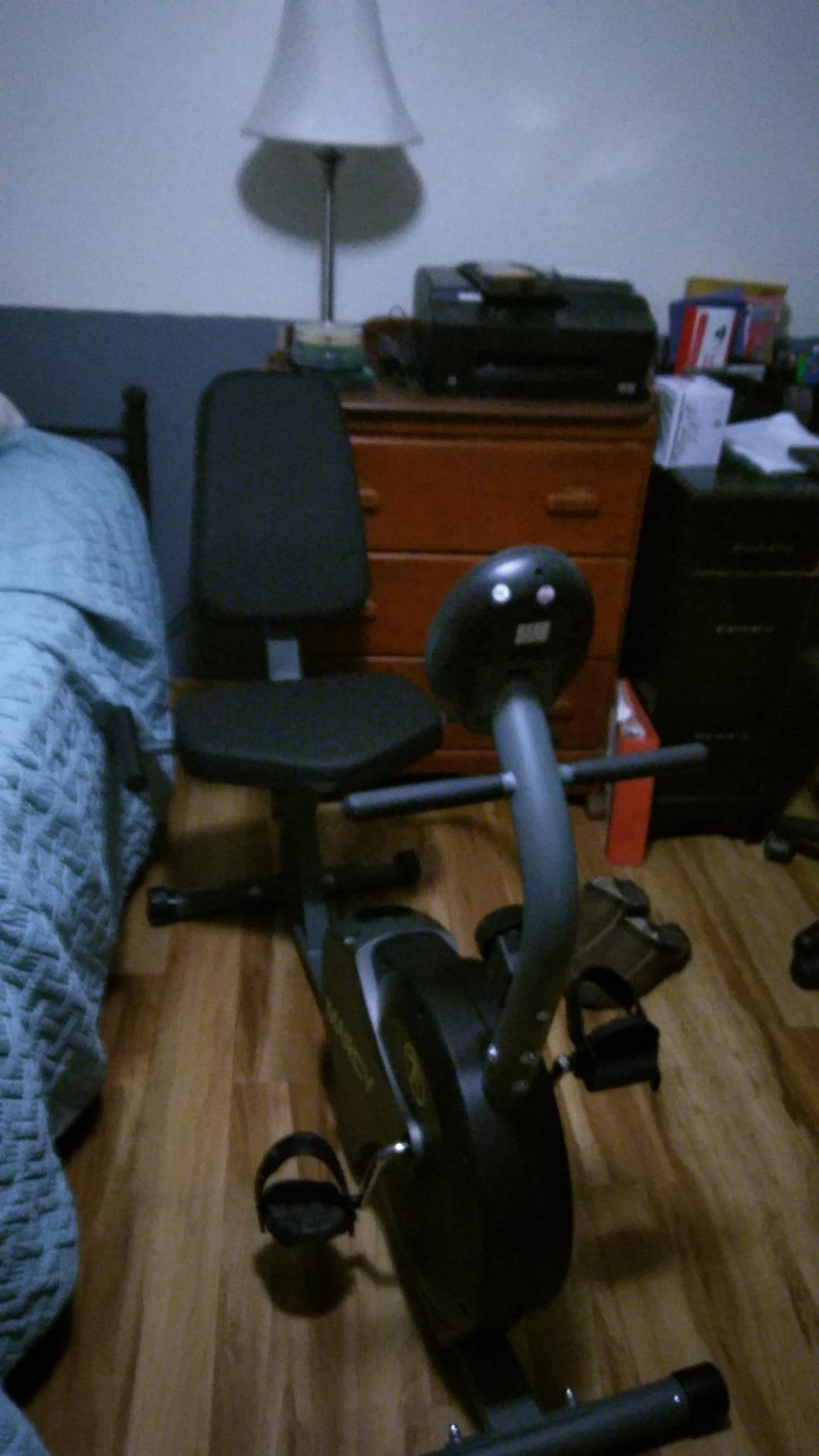
Owners describe this as the quietest bike they have ever owned, quieter than a household fan, and that claim comes up in review after review. For someone cycling at six in the morning above a sleeping family, that single characteristic can matter more than any feature list.
The body is only 11 inches wide, which means no spread-eagle pedalling position and a smaller room footprint than most recumbents. At 41 pounds it is light enough to carry between rooms by hand, even without the transport wheels, and those wheels are included for rolling rather than lifting.
Buyers recovering from hip or knee surgery and buyers in their eighties describe it as a comfortable low-impact option, and the 8 tension settings are praised for spanning a genuine light-to-hard range rather than a token dial. The seat and backrest padding are large and soft for long sessions.
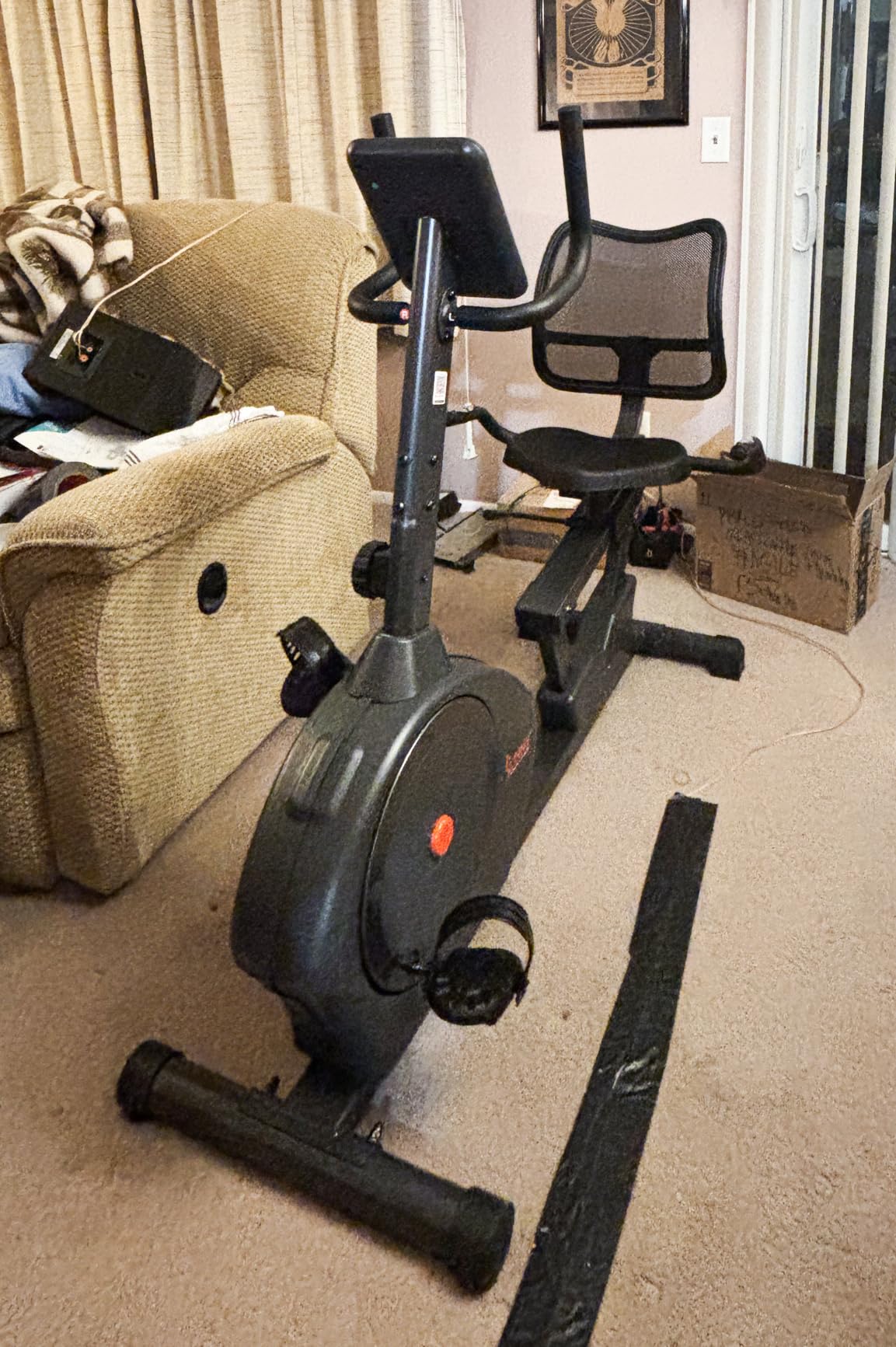
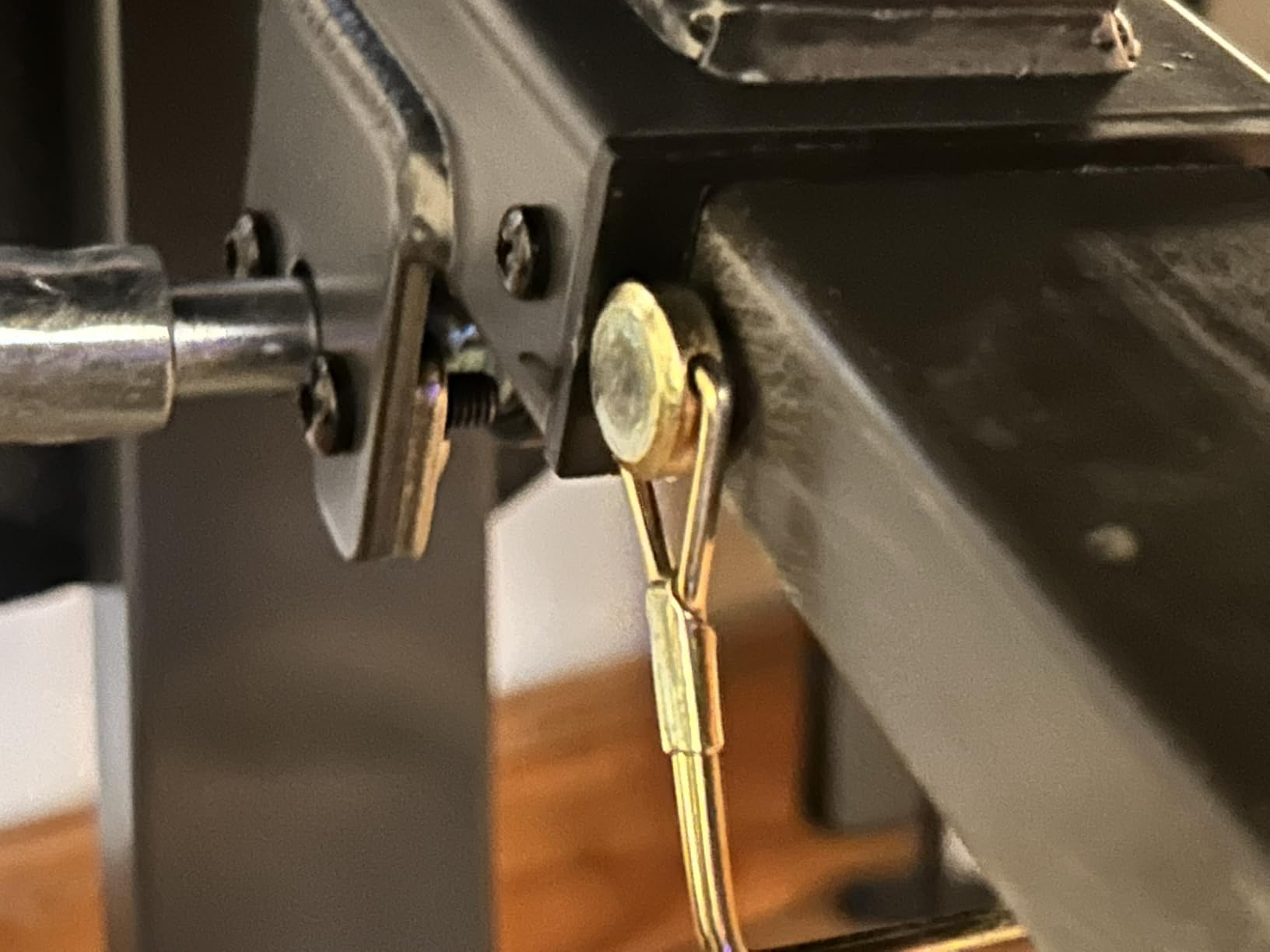
Assembly is the real weakness. Connecting the resistance cable is genuinely confusing, and several reviewers describe workarounds involving cutting a zip tie, while one step realistically needs a second pair of hands. The display is basic and does not factor resistance into speed, distance or calorie readings.
Who it suits best
Riders in a small flat, a shared house or a bedroom, who want the least intrusive machine available. The narrow frame and light weight also suit anyone who expects to reposition it often rather than dedicate a room to it.
Where it falls short
Riders over about 6 ft 1 in with longer inseams will not get proper leg extension. Transport wheels do not work well on carpet, pedals have arrived under-greased, and if you are buying this for a parent who cannot manage a two-person assembly step, plan to help with it yourself.
7. Sunny Health & Fitness SF-RB4850SMART — Best Feature-Rich Pick
Sunny Health & Fitness Smart Programmable Electro-Magnetic Recumbent Bike
16 electro-magnetic levels
24 programs
300LB capacity
3 year frame warranty
Pros
- Step-thru frame simplifies mounting
- Electro-magnetic resistance adjusts precisely
- 24 programs with wattage and target heart rate
- Mesh backrest stays cool
- 3 year structural frame warranty
Cons
- 61.8 inch width needs a dedicated room
- Console and programming are steeper than simpler models
- Battery powered with no mains option
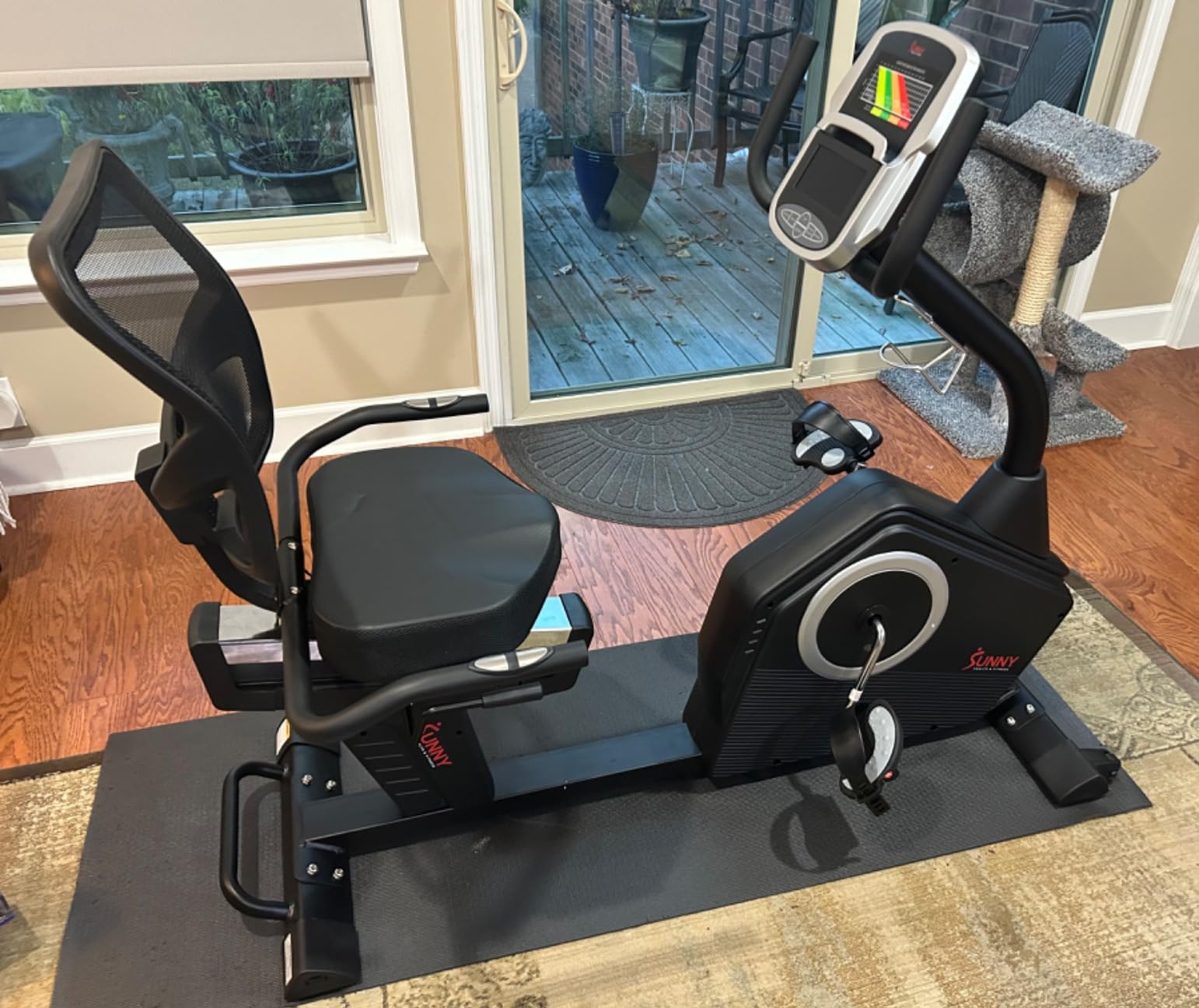
This is the feature-rich end of the group, and the meaningful upgrade is electro-magnetic resistance with 16 levels that respond faster and adjust more finely than plain magnetic. The step-thru frame also makes getting on and off straightforward for riders with limited mobility, which is a design choice you feel immediately.
The monitor tracks time, speed, RPM, distance, calories, pulse and wattage, with BMI calculation and target heart rate functions, plus 24 pre-built programs. For someone working with a target heart rate range prescribed by a doctor, wattage and pulse data is genuinely useful rather than decorative.
The mesh backrest stays cool over longer sessions and the quick-adjust cushion seat is comfortable. The belt drive is quiet and near-maintenance-free, and the three-year structural frame warranty is longer than most in this group, which matters for anyone planning five or more years of ownership.
Footprint is the trade-off reviewers keep naming. At roughly 62 inches wide, this bike wants a dedicated room rather than an apartment corner, and the console is more complex to learn than a simple display with a resistance dial. Several older riders in our research told us a big-number LCD beats a feature-packed console.
Who it suits best
Riders following a heart-rate target, working with a physical therapist who wants wattage and RPM data, or anyone who wants guided programs without a subscription. The step-thru frame also suits riders with real mobility limits.
Where it falls short
If your space is limited, the width is the dealbreaker. The console runs on batteries with no mains option, and the programming depth is more than many senior riders want to learn.
8. YYFITT 3-in-1 Exercise Bike — Best for Low Vision
YYFITT 3-IN-1 Exercise Bike with Luminous Display | Foldable | XXL Backrest
16 magnetic levels
300LB capacity
40 lb
luminous digit display
Pros
- Patented luminous digits legible in dim rooms
- 12.6 inch wide seat with XXL backrest
- 2-in-1 frame switches upright to recumbent
- Quiet magnetic drive
- Phone holder for entertainment
Cons
- Resistance feels light even at higher levels
- Not suitable for riders over 6 ft
- Display cycles between screens and needs resets
The patented luminous digit display is the reason this bike is on the list. Owners riding early in the morning or with reduced vision describe the digits as unusually legible, and the two-piece console tilts to whatever angle suits you. In a category where the most common complaint is an unlit screen, that is a real difference.
The 2-in-1 frame switches between upright and semi-recumbent positions, which older riders credit with making mounting easier, and the seat is 12.6 inches wide by 9.5 inches deep with an XXL backrest that has two height settings and an adjustable angle. Sessions of 30 to 40 minutes are reported as comfortable.
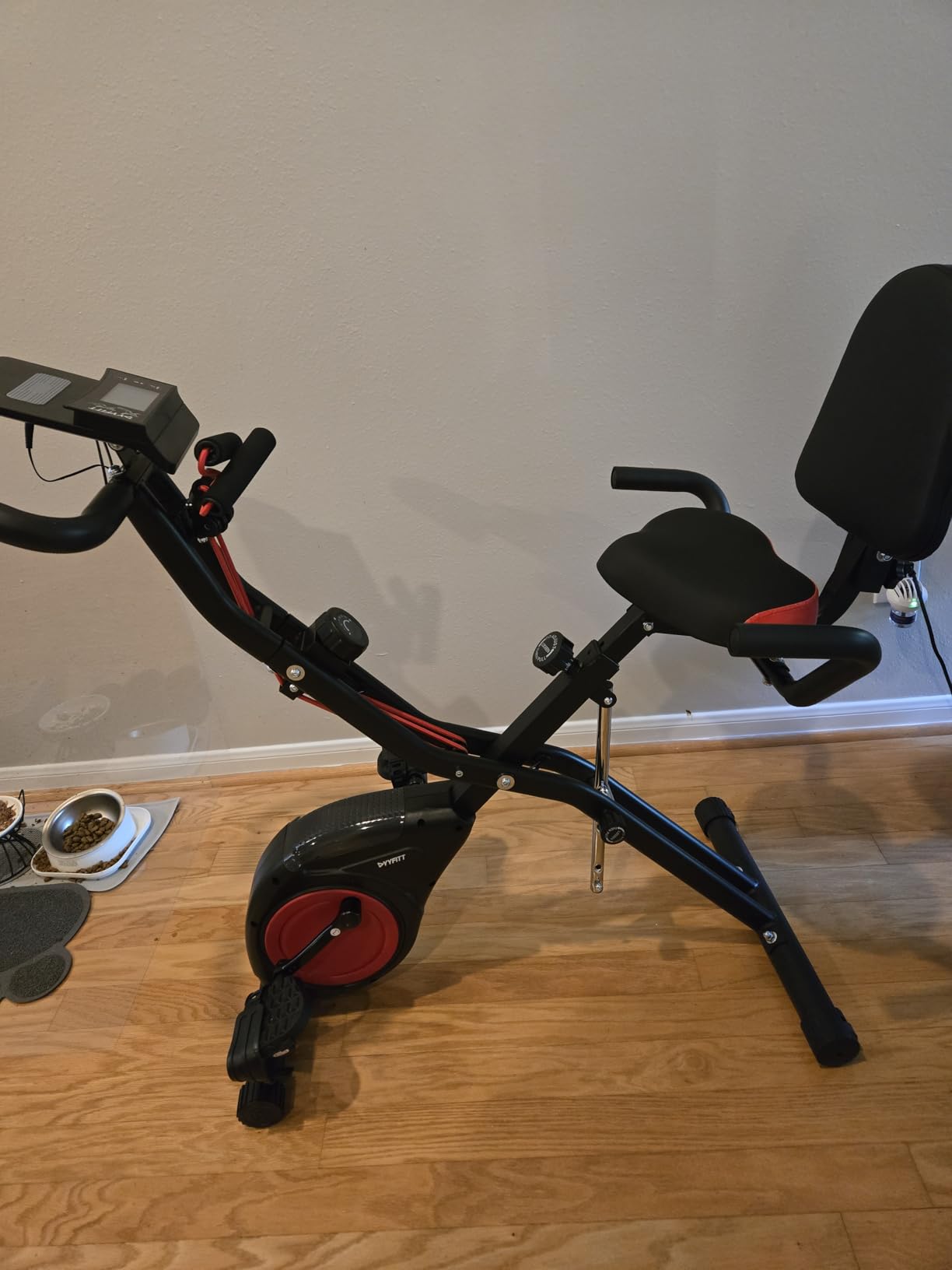
The magnetic drive is very quiet, it folds down to reclaim about half the floor space, and assembly takes roughly an hour with a step-by-step video. Fits riders with an inseam from 26 inches, so it covers shorter riders better than many of the folding options here.
Two honest cautions. Resistance feels light even at the upper levels, so this suits warm-up and range-of-motion work more than a hard effort, and the display cycles between screens rather than showing all metrics at once and needs frequent resets. Riders over six feet should look elsewhere.
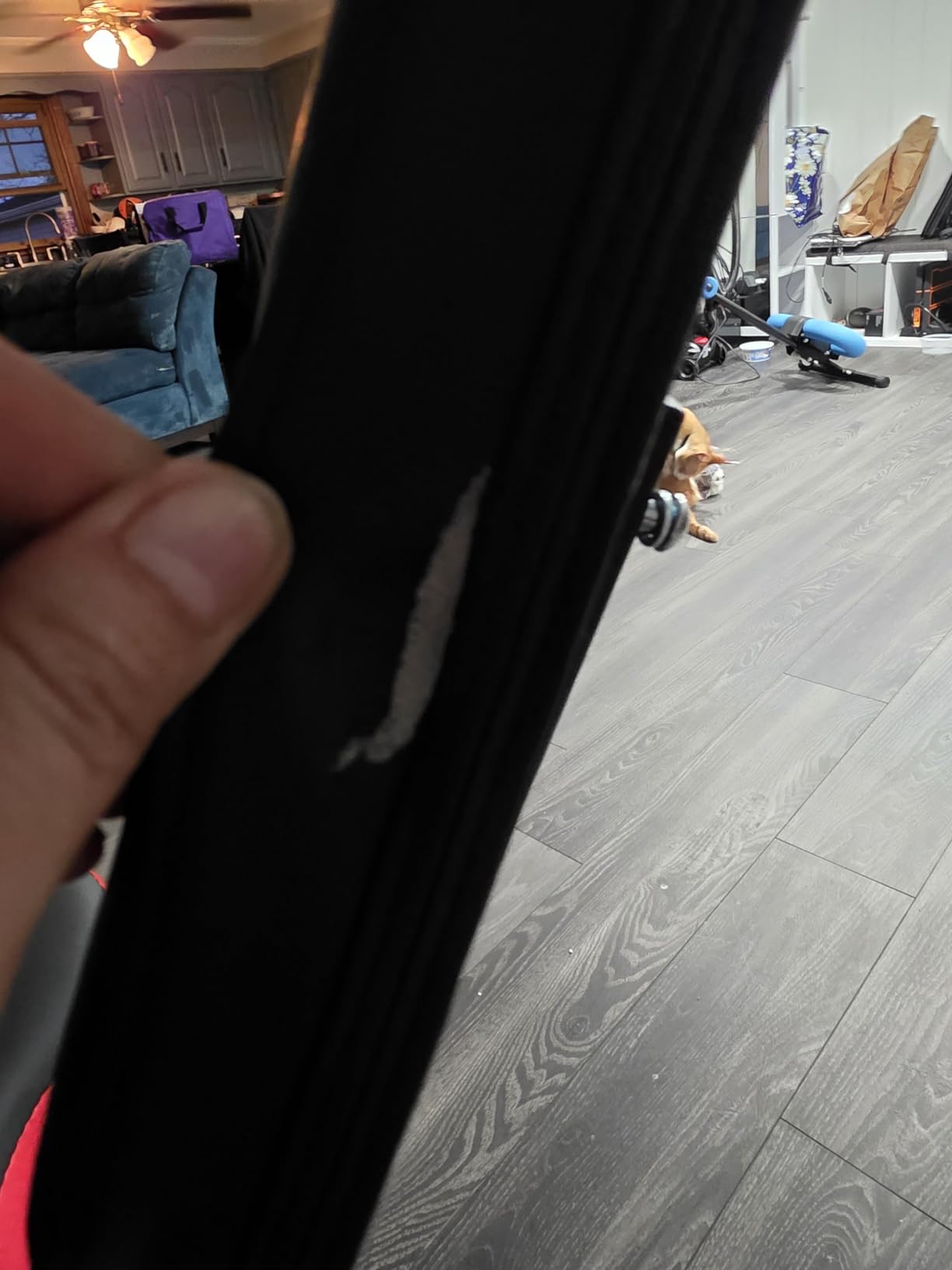
Who it suits best
Anyone with reduced vision, early-morning riders, and shorter riders under five and a half feet who need a wide seat and a generous backrest. The fold matters in a roomy-but-not-spacious home.
Where it falls short
If your goal is building meaningful leg strength, the light top end will frustrate you. The heart rate monitor is inconsistent, and the folding mechanism is awkward to operate alone.
9. MERACH Recumbent Exercise Bike MR-S19 — Best for Balance Support
MERACH Recumbent Exercise Bikes for Home Light Commercial High-end
8 lever-set levels
330LB capacity
84.9 lb
6.6 lb weighted flywheel
Pros
- Low centre bar and pivot-up handles aid mounting
- Silent dual-belt drive
- Thicker seat and mesh backrest
- 8 seat positions
- 80 percent assembled in about 30 minutes
Cons
- Very heavy at nearly 85 lb
- Display is not backlit
- One unit reported a squeak after a month
- Mesh backrest fixed to the seat
This is the bike we would choose for a rider with genuine balance concerns, and the reason is structural rather than cosmetic. The low centre support bar and the handles that pivot up give you something to push against as you lower yourself into the seat, and one owner who uses a mobility walker describes mounting as easy because of them.
Owners with osteoarthritis, hip problems and knee problems consistently report no soreness afterwards, which is the benchmark that matters most for a machine someone has to ride five days a week. The 8-position car-style lever resistance has differences you can genuinely feel between settings, and the dual-belt drive is effectively silent in a shared space.
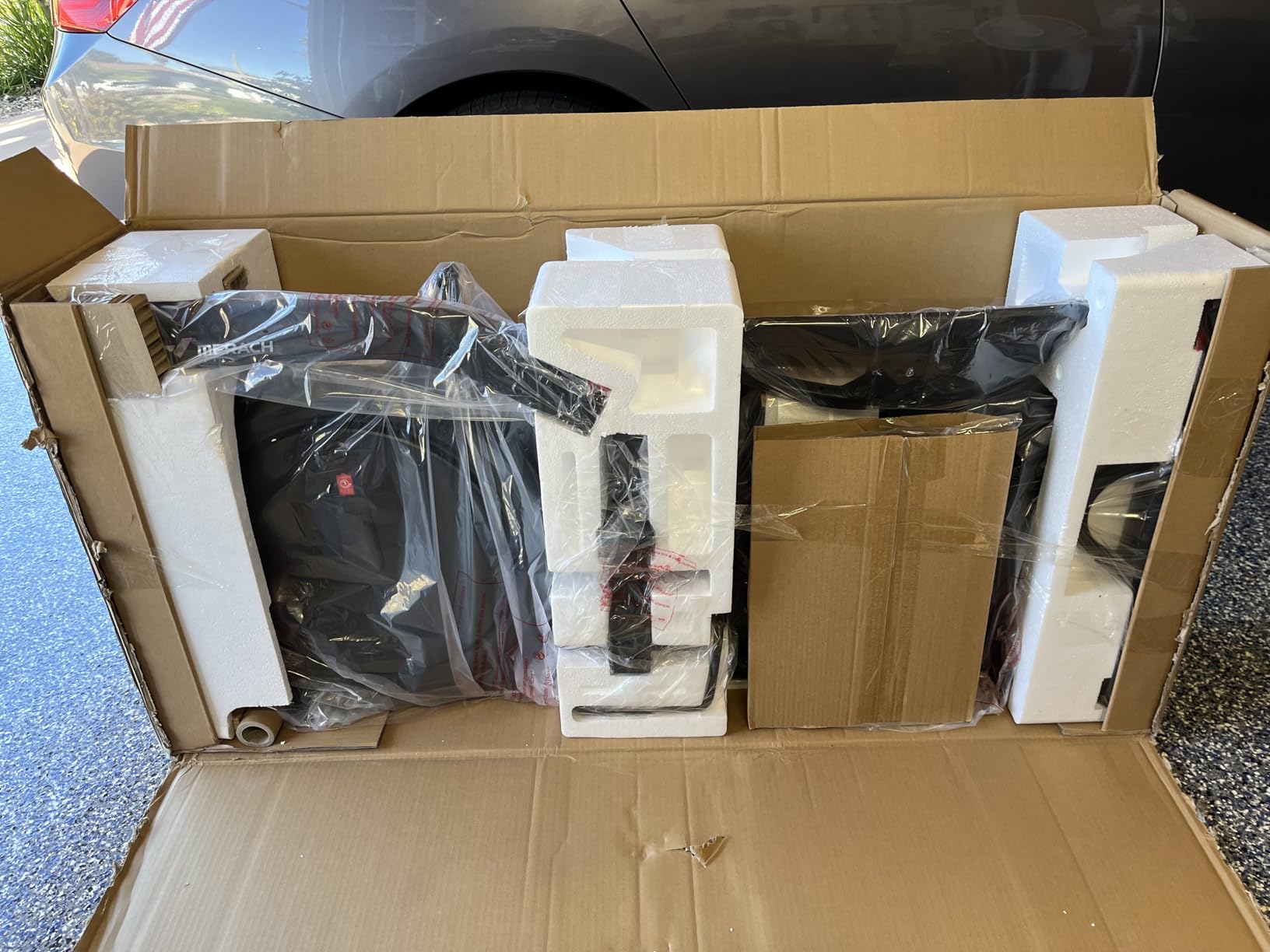
The thicker seat and breathable mesh backrest offer eight position options, and the frosted non-slip handlebars help with grip. The LCD is large and readable, with an iPad holder, and Bluetooth sync to the MERACH app works if you want it or can be ignored if you do not.
At nearly 85 pounds this is by far the heaviest machine here, so repositioning means lifting from the rear transport handle. The display is not backlit, the mesh backrest is fixed to the seat so it sits away from some riders’ backs, and one unit developed a squeak and grinding noise after about a month that could not be resolved without returning it.
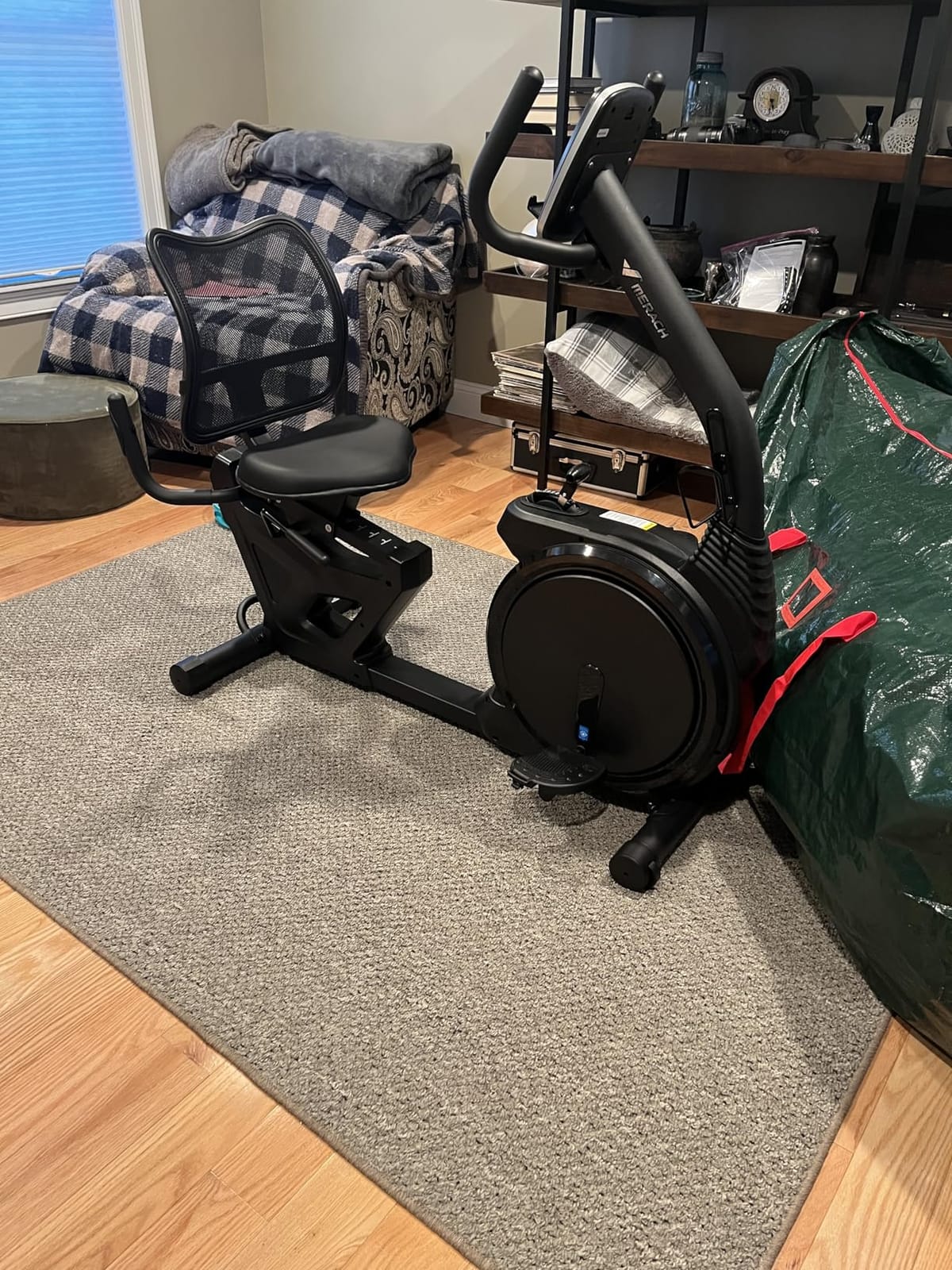
Who it suits best
Riders with balance challenges, a history of falls, or a strong preference for a supportive seat. Recommended height is 5 ft 2 in to 5 ft 10 in, and the 330LB capacity gives comfortable headroom.
Where it falls short
If you need to move it between rooms regularly, 85 pounds is a problem. It suits riders up to about 5 ft 10 in, and the out-of-the-box unit does not measure cadence.
10. Goimu 5-in-1 Foldable Stationary Bike — Best for Larger Riders
Goimu Exercise Bike, 5 in 1 Foldable Stationary Bike for Seniors, 16-Level Adjustable Magnetic Resistance, Indoor Workout Bike with 330LB Capacity, Comfortable Seat Backrest X-bike (Dark Grey-Pro)
16 magnetic levels
330LB capacity
50.6 lb
5.5 lb aluminum flywheel
Pros
- Quiet smooth pedalling
- Comfortable seat and backrest for larger riders
- 5 workout modes
- Folds for storage and survives repeated folding
- One owner has put about 500 miles on it
Cons
- Folding knob is hard to turn alone
- 50.6 lb is hard to move and wheels fail on carpet
- Console beep is loud
- Assembly parts are unlabelled
The 330LB capacity is paired with a heavy-duty steel X-frame rated for it, and this bike gets consistent credit for a comfortable seat and supportive backrest even for bigger riders. The 5.5 lb aluminum flywheel runs quietly and smoothly enough that it does not disturb other rooms.
Five workout modes cover cardio and strength work, and adjustable height and posture settings let you shift between relaxed pedalling and something more intensive within one session. Owners in their seventies and eighties with limited mobility report assembling it themselves and using it regularly for cardio and flexibility.
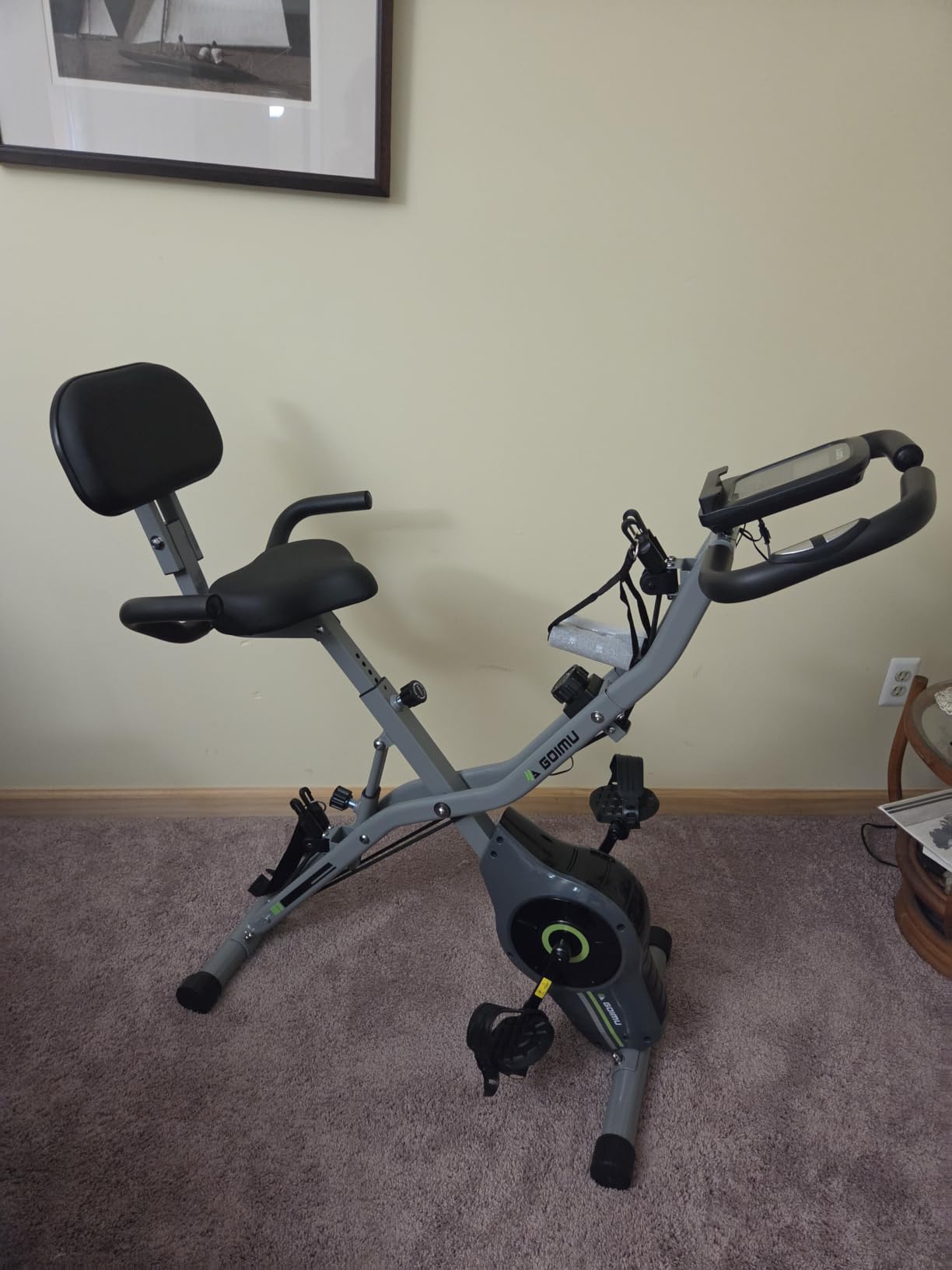
Durability looks good in practice: one owner has put roughly 500 miles on it with minimal issues, and the fold survives repeated cycles. The display is clear and easy to navigate, and there is a phone or tablet slot for entertainment.
Handling is the weak point across reviews. The folding knob is nearly impossible to turn alone and the frame collapses as soon as it is loosened, the 50.6 lb weight is hard to move, and the transport wheels do not work on carpet. Assembly parts are criticised for being unlabelled, the console beep is loud enough to rule out early or late use, and one reviewer reported a pedal detaching on first use.
Who it suits best
Riders who want a folding frame but need a 330LB rating rather than the usual 300, and who will store it folded between sessions. It suits anyone looking for straightforward cardio and flexibility work at home.
Where it falls short
If you plan to fold or move it by yourself, this is not the machine. The fixed-tension leg resistance band can lift the bike unless the frame is weighted down, and the beeping console is a genuine problem in a shared home.
Recumbent vs Upright vs Cross-Trainer for Older Adults
For most riders over 70, a recumbent is the right answer. You sit down first, then swing a leg over, so there is no lunge, no step-over height and no need to balance on one pedal while lowering yourself. The backrest carries your torso instead of your abs and lower back doing the work, and the semi-reclined position distributes load across the seat rather than your perineum.
The trade-off is that a recumbent is a longer machine with a bigger footprint, and some riders miss the more upright posture of a standard bike. Uprights keep the torso vertical, which some people prefer for posture and for a more natural pedalling feel, but they require you to mount the saddle with your weight over a narrow top tube. That is the single moment where falls happen in this category, and it is the concern raised most often in the senior forums we read.
Two other formats appear in the market. A recumbent cross-trainer adds moving handlebars so you work the upper body as well, which helps riders who need arm activity but it also adds moving parts and a wider frame. A mini or under-desk pedal exerciser is a genuine supplement for circulation during desk work, not a substitute for a full cardio machine, and it will not build the leg strength a full bike builds.
Against a treadmill, a bike wins on fall risk and joint load. There is no walking belt to keep pace with, and if you lose your footing the pedals simply stop. You also stay seated, so a wobble becomes a non-event rather than a fall. You will burn comparable calories for the same time, and the bike also works for upper-body and mobility work that a handrail treadmill does not.
How to Mount and Dismount an Exercise Bike Safely
This is the part no competitor covers and the part that actually prevents injuries. Mounting, not pedalling, is where most older riders get hurt.
Set the saddle first, while you are standing next to the bike. Sit and check that your leg is bent roughly 30 degrees at the knee at the bottom of the stroke. If you cannot reach the pedal at the lowest point without rocking forward, the saddle is too high. Limited hamstring flexibility and hip replacements both push this height lower than most spec sheets suggest.
Set the resistance to zero before you get on. Several manufacturers ask you to turn the knob to the highest position during assembly precisely so the cable is not fighting you.
Choose a mounting approach that matches the bike. On a recumbent, sit down on the saddle first and swing one leg over the frame, using the flip-up or pivot handle. On an X-frame, stand square in front of the frame, turn a foot sideways over the low tube and sit. Never mount from the side with one hand on the console.
Use a wall or door frame if your balance is marginal. Position the bike so the stable side of your body is nearest a wall, and push off that surface rather than the bike itself, which may rock.
Reverse every step when you get off. Bring the resistance to zero, stop at the top of the stroke, and step down on the same side you mounted from. Unclip the pedal strap only once your foot is on the floor.
Give the frame a stability check first. Push down hard on the seat and the handlebars before you put your weight on it. A folding bike with a loosened knob can collapse without warning, which is one of the most reported problems in this category.
How to Start Riding: A 4-Week Progression Plan
Most adults over 70 are not ready for 30 minutes on the first ride, and a plan that starts there gets abandoned in week two. Long-term owners in our research almost all describe the same pattern: short, frequent, easy sessions early, built up slowly.
Week 1: 10 minutes, three to five days, at the lowest resistance where the pedals still turn smoothly. The goal is habit, not fitness.
Week 2: 15 minutes, five days. Add one resistance step at the end of each session if it feels easy.
Week 3: 20 minutes, five days, with a two-minute stand-up recovery every eight minutes if your balance allows it.
Week 4: 25 to 30 minutes, five days, at a resistance where you can hold a conversation but not sing.
That cadence adds up to well over 150 minutes a week of low-impact cardio by month two, which is the threshold most heart-health and physical activity guidance uses for older adults. Riders in the forums we read also report that the stiffness they notice in knees and hips after a few weeks of regular pedalling often loosens in a way walking did not manage.
How to Choose an Exercise Bike for Seniors
Pick by mounting method before you pick by features. The highest step-over height you can manage without holding anything is more important than any spec on the box. Recumbents ask you to sit first, X-frames ask you to step through, and a step-thru upright sits between them. If your balance is the limiting factor, that decision alone narrows the field considerably.
Match weight capacity as a fit question. The stated limit is the total load on the frame, so it is measured against your body weight, not your fitness level. A 300LB limit is comfortable for most seniors up to around 250LB, which leaves real margin for a machine that gets ridden hard. Above that, look for a 330LB or 400LB steel frame. The most common buying mistake we saw was treating the number as a specification rather than a fit.
Check the seat range in inches, not just “adjustable”. A recumbent that cannot get your leg near straight at the bottom of the stroke will make your knees work harder and your back compress. Look for a stated inseam or seated leg-length range and compare it to your own. Riders over six feet and riders under five feet are where cheap spec sheets go wrong most often.
Prefer magnetic resistance over friction. A magnet near the flywheel produces smooth, near-silent, low-maintenance pedalling with no pad to wear. Friction models get louder and rougher as the pad wears, and the resistance changes in coarse steps, which makes a smooth progression hard. Every bike in this roundup is magnetic for that reason.
Read the level count sceptically. Sixteen levels is not twice as good as eight; what matters is whether the changes are incremental and whether the top end is genuinely hard. Manufacturers that explain what their levels mean, the way the MERACH maps levels 1 to 3 to warm-up and 7 to 8 to climbing, are giving you something you can actually use without a reference point.
Look for a display you can read without glasses. A backlit screen with large digits beats a small unlit one every time, and older riders in our research said so repeatedly. A touch console is not an upgrade for this audience. Pair it with handle grip pulse sensors, and ignore the ones that read your pulse accurately only if you grip exactly right.
Treat assembly and delivery as a senior purchase factor. Bikes arrive 70 to 85 percent assembled, which typically means 30 minutes to an hour, but the Marcy NS-716R resistance cable connection regularly needs two people. If you are buying for an elderly parent, check the assembly notes and plan to be there for an hour, and note that two folding bikes here have arrived with small missing hardware.
Factor noise into apartment living. Magnetic drives on this list are genuinely quiet, with one measured under 20 dB and several described as quieter than a household fan. Friction bikes and beeping consoles are not, and a machine that wakes the household at six in the morning will not be ridden.
Check the footprint before the spec sheet. Most recumbents are deeper and wider than people expect, and one of the feature-rich options here is nearly 62 inches across and wants a dedicated room. Folding bikes collapse to about 1.8 square feet but need two people to move. Measure the space, including the room you need to sit down and stand up, not just the machine’s footprint.
The Honest Downsides of Recumbent Bikes
Recumbents get the recommendation, but they are not perfect and the drawbacks are worth stating plainly.
They are large. Longer frame, wider footprint and often 41 to 85 pounds of weight. Repositioning one is a real chore compared with an upright on wheels.
The seat pressure is different. A recumbent concentrates load on the seat rather than the perineum, which suits many riders but bothers some. A good recumbent cushion solves it for most people, and plenty of owners add one.
You cannot stand up out of the saddle. Interval work done by rising off the seat is much harder, and getting off in a hurry is slower than on an upright.
They are not adjustable once bought. No seat angle, no handlebar swap, and no way to change the riding position later. If the geometry is wrong for you, it stays wrong.
Back pain is not automatically solved. The backrest helps a lot, but a badly positioned seat or a firm pad can still produce lower-back ache within 30 minutes, a complaint that comes up repeatedly in the reviews.
Price rises with frame weight. Capacity and steel weight go together, so a 400LB bike is usually a 66-pound bike. That is a genuine tradeoff between capacity and portability.
Frequently Asked Questions
What type of exercise bike is best for over 70 year olds?
A recumbent bike with a low step-over height and a supportive backrest is the safest choice for most riders over 70. You sit down first and swing a leg over instead of lunging over a high frame, which removes the moment where falls actually happen. Add magnetic resistance, wide seat adjustment and hand pulse sensors.
How long should a 70 year old ride an exercise bike?
Start with 10 minutes three to five days a week at low resistance, then build to 15 minutes in week two, 20 in week three and 25 to 30 by week four. That progression reaches the widely used 150 minutes a week of moderate low-impact cardio without the abrupt jump that ends most programmes in the first fortnight.
Is a recumbent bike a better option for seniors than a treadmill?
Usually yes, and the reason is fall risk rather than calorie burn. There is no walking belt to match, and if you lose your footing the pedals simply stop, so a wobble becomes a non-event. You also stay seated, which removes load from the knees and lower back, and you can keep pedalling in shoes and normal clothes.
How high should your exercise bike seat be?
Sit on the saddle and pedal to the lowest point of the stroke. Your knee should still be bent roughly 30 degrees, not locked and not folded. If you have limited hamstring flexibility or a hip replacement, the correct height is usually lower than most riders assume, and adjusting the seat while standing is safer than climbing on to check.
What is the best-rated recumbent exercise bike for seniors?
Among the ten bikes we ranked, the XVGVSV 400LB recumbent carries the highest average rating, with owners praising a display that stays readable without glasses, accurate pulse sensors and a wide seat adjustment range. The Sunny Smart Recumbent is the stronger all-round pick, with more owner reviews and a cushioned wide seat.
What are the downsides of using a recumbent bike?
Recumbents are large and often heavy, so repositioning is harder than on an upright. You cannot stand out of the saddle, which limits interval work, and the geometry cannot be adjusted after purchase. Some riders find the seat pressure uncomfortable without a cushion, and a firm pad can still cause lower-back ache within 30 minutes.
The Verdict: Which Exercise Bike Wins in 2026
Our pick for the best exercise bikes for seniors is the Sunny Health & Fitness Smart Recumbent Bike. It mounts without a lunge, runs quietly enough for an apartment, offers 16 smooth magnetic levels and carries more owner reviews than any other bike in this group, and the flip-away side handle is a small design decision that makes the daily difference between riding and not riding.
Buy the XVGVSV 400LB recumbent if you are heavier or above 300 pounds and want a long mechanical warranty gap between bikes. Buy the BARWING 5-in-1 if floor space is tight and you want one machine for upright and reclined work. Buy the MERACH MR-S19 if balance is the real constraint, because the pivot-up handles and low centre bar are the best mounting aids we found.
Whichever one you pick, fit the saddle to your leg before you ride a single revolution, start at resistance level one, and check with your doctor first if you are recovering from surgery or managing a heart condition. A bike that is adjusted properly and used for 20 minutes on most days will do more for an older adult’s independence than any spec on the carton.