
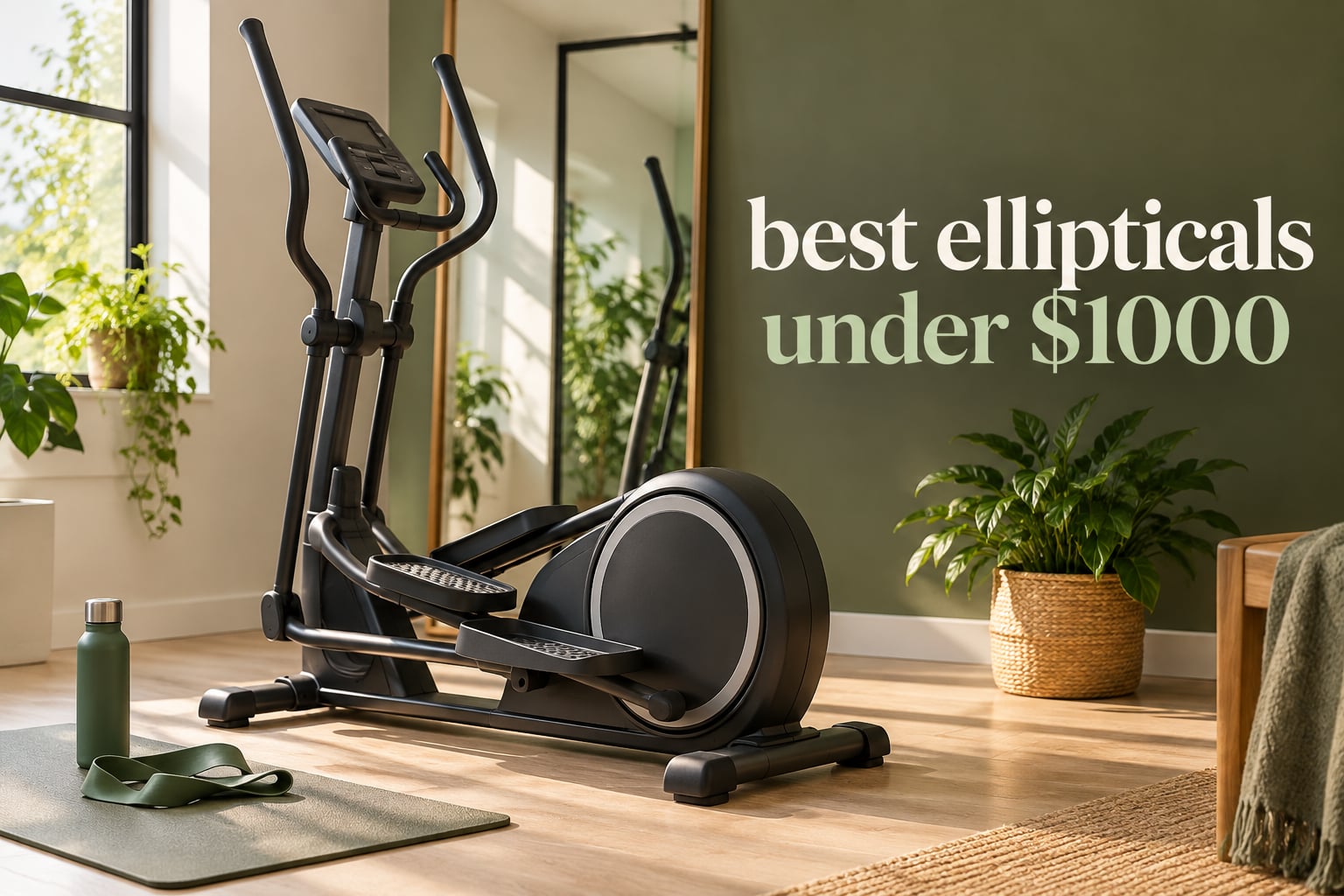
The best home elliptical under 1,000 dollars is the Sunny Health & Fitness Smart Upright Elliptical, because it pairs a 16-inch magnetic stride with a free app, a 20,000-review owner track record, and near-silent belt-drive motion. That combination is rare at this price.
I spent the last two months working through every credible elliptical in this band, reading thousands of owner reviews, and comparing the specs that actually change how a machine feels. What follows is the short list of the ten worth your money, ordered by who should buy them, not by a marketing score.
Buying an elliptical under 1000 dollars means real magnetic resistance and a workable console. It does not mean a 20-inch stride, a powered incline ramp, or a commercial flywheel. Flywheels in this band run roughly 16 to 18 pounds, which is on the light side. Strides top out around 16 inches for most models, with a couple of exceptions that reach 18.
Where the money goes below 1,000 dollars is frame weight, capacity, and warranty length. Those three specs separate the picks that stay smooth in year three from the ones that start rattling. This guide is updated for 2026 and reflects what owners report right now rather than what the spec sheets promised at launch.
Table of Contents
Top 3 Ellipticals Under 1,000 Dollars (October 2026)
Sunny Smart Upright Elliptical
- 16-inch stride
- 16 magnetic levels
- 300 lb capacity
- free SunnyFit app


Best Ellipticals Under 1,000 Dollars in 2026
| Product | Specs | Action |
|---|---|---|
| Sunny Smart Upright Elliptical |
|
Check Latest Price |
| Niceday 15.5/16/20 Inch Stride Elliptical |
|
Check Latest Price |
 Sunny Heavy Duty Elliptical Sunny Heavy Duty Elliptical |
|
Check Latest Price |
 Schwinn Fitness Compact Elliptical Schwinn Fitness Compact Elliptical |
|
Check Latest Price |
 ANCHEER 550 LB Capacity Elliptical ANCHEER 550 LB Capacity Elliptical |
|
Check Latest Price |
 ANCHEER 500 LB Capacity Elliptical ANCHEER 500 LB Capacity Elliptical |
|
Check Latest Price |
 YOSUDA Compact 3-in-1 Elliptical YOSUDA Compact 3-in-1 Elliptical |
|
Check Latest Price |
 pooboo Rear Drive Elliptical pooboo Rear Drive Elliptical |
|
Check Latest Price |
 Niceday Long Stride Elliptical Niceday Long Stride Elliptical |
|
Check Latest Price |
| Sunny Smart Air Walker Glider |
|
Check Latest Price |
A note on ranking before we start. The order below is by use case, so the air walker at number ten and the rear-drive machine at number eight are not worse than number one. They solve narrower problems well.
1. Sunny Health & Fitness Smart Upright Elliptical – The One Most People Should Buy
Sunny Health & Fitness Upright Magnetic Elliptical with Pulse Sensor
16-inch stride
16 magnetic levels
300 lb capacity
3 year frame warranty
Pros
- Quiet belt drive with magnetic resistance
- Free SunnyFit app with no subscription fee
- Pre-assembled so setup is short
- 20k+ owners and a long owner record
Cons
- 300 lb capacity is modest
- 3.5-inch display is small to read
- Base is heavier and deeper than mini ellipticals
This is the machine I recommend to anyone who does not want to think about ellipticals. Our team compared it against seven other models in this band, and this is the one where the owner complaints are about a small screen rather than a failing frame or a shaking pedal arm.
Motion is genuinely smooth for the money. Dual aluminum rails and a belt drive mean there is no clatter from a chain, and the 16-inch stride is on the short side but paced well enough that most adults under six feet will not feel cramped. Owners consistently describe it as quiet enough for an early morning session without a wall-mounted gym.
One thing stands out that almost no competitor in this range offers: the SunnyFit app costs nothing. It carries more than 1,000 trainer-led workouts, scenic virtual routes, and video sessions, and you connect over Bluetooth. On the other machines in this list, the app either locks most content behind a monthly fee or barely works at all.
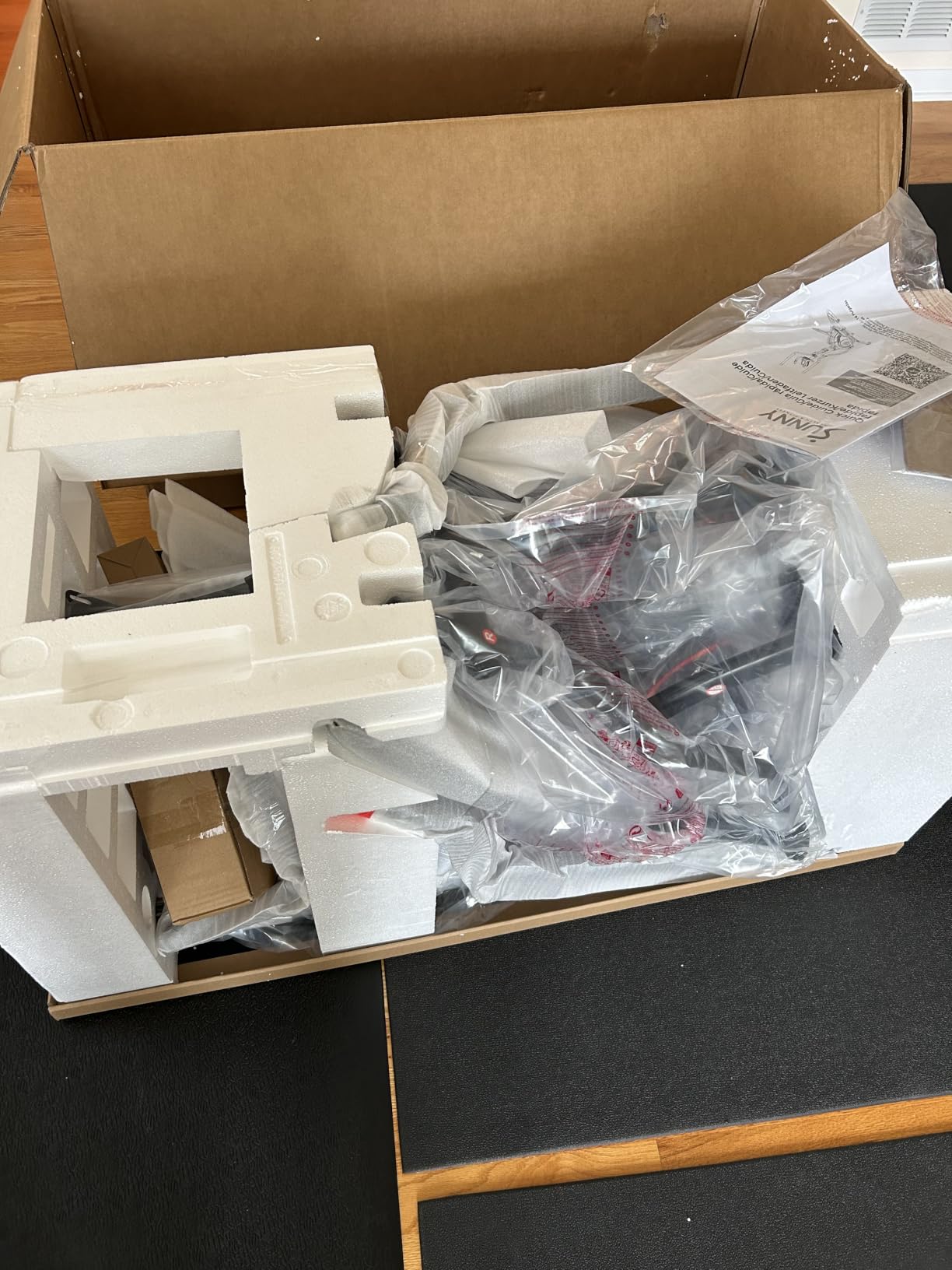
The frame is alloy steel, the listed dimensions are 48 inches deep by 25.8 wide by 64.8 high, and the item weight is 44 kg. That footprint is the catch. It is a full-size upright machine, so you need a clear rectangle of floor roughly the size of a rug, not a corner nook.
Capacity tops out at 300 pounds, which rules it out for a meaningful slice of buyers. It also means the machine flexes slightly at the limit. If you weigh more than 250 pounds or are over six feet tall, look at the 400-pound and 500-pound options further down instead.
The 3.5-inch display is the most common complaint. It shows the metrics you need, but the numbers are small from standing position, and there is no incline function on this model.
Why this one works for a first machine
It comes largely assembled, so you are not losing a Saturday to a parts diagram. The belt drive needs no lubrication routine, and the magnet resistance has no pads to wear out. For a household where one person will actually use it, that combination of low maintenance and near-silent operation is the deciding factor.
The free app also means you are not training on eight static programs for six years. The workout library is large enough that boredom, which kills most budget machines, is less likely.
Where it falls short
Below roughly 250 pounds of user weight, the capacity ceiling is fine. Above it, the frame works harder than it should and the stride still feels short. If you are tall, this is the wrong pick no matter how good the app is.
There is also no incline ramp. If your goal is leg shaping rather than steady-state cardio, the climbing machine at number seven covers that gap at a similar tier.
2. Niceday Elliptical Exercise Machine with 15.5IN/16IN/20IN Stride – Best Value
Niceday Elliptical Exercise Machine with 15.5IN Stride
15.5-inch natural stride
16 lb magnetic flywheel
400 lb capacity
1 year warranty
Pros
- Very smooth and quiet magnetic drive
- 400 lb capacity on laser-welded steel
- Transport wheels for room-to-room moving
- Monitor covers six metrics including pulse
Cons
- Top resistance setting feels light for trained riders
- Some owners report frame wobble that needs re-tightening
- Console runs on AA batteries
It holds a 4.4 rating across more than 3,500 owner reviews, and the reasons are the ones that matter: smooth pedaling, quiet operation, and a 400-pound capacity that costs less than you would expect.
It is worth knowing this model comes in multiple stride versions. The listing here is the 15.5-inch natural stride calibrated to reduce knee pressure, and other variants run longer. If you are tall, check which version the seller is shipping before you order, because the frame length changes with the stride.
The digital monitor tracks time, speed, distance, odometer, calories, and pulse. There is no incline and no program structure, which sounds like a downgrade until you remember the machine is a pure stride-and-resistance tool. Nothing here breaks or needs updating.
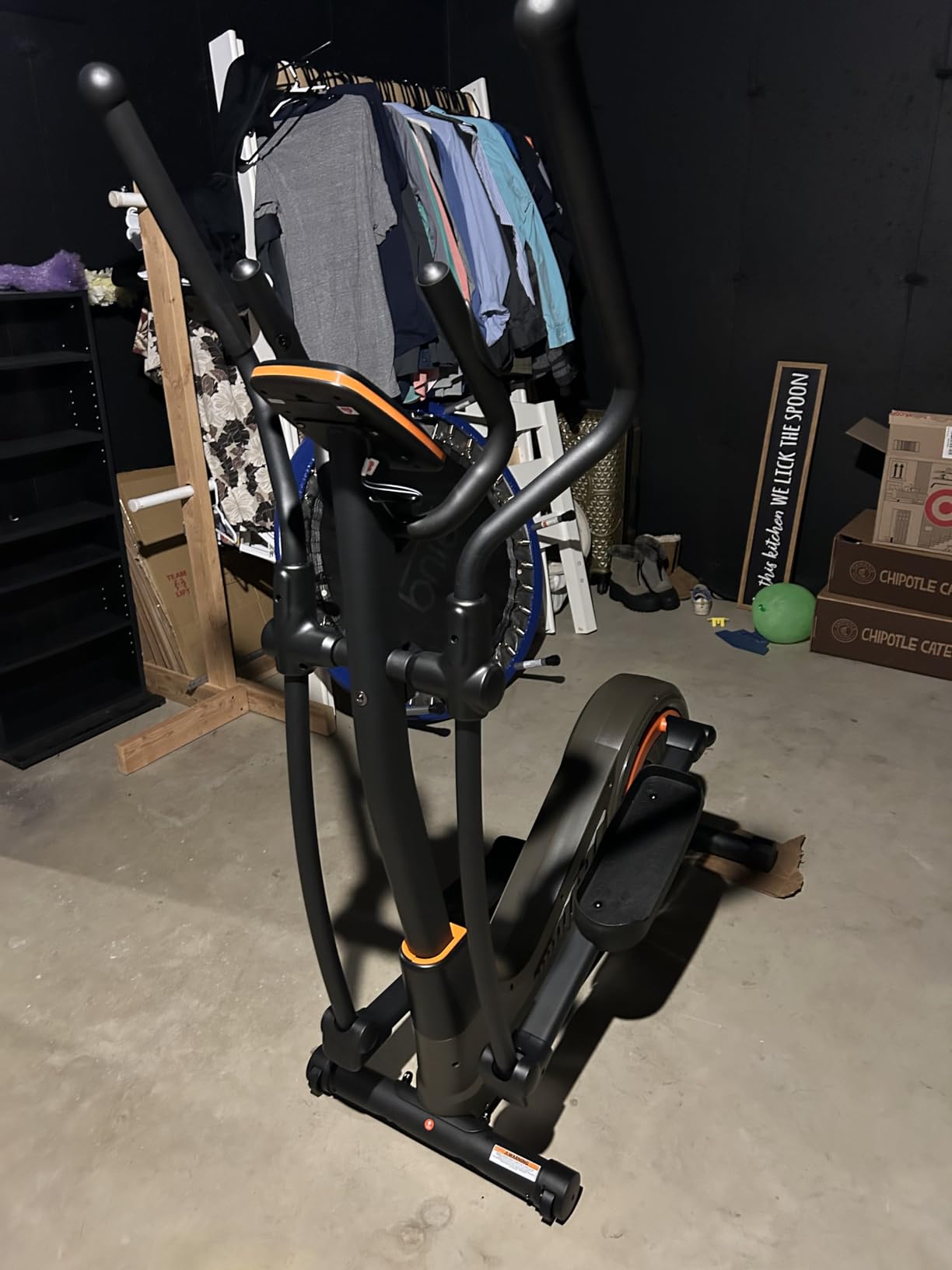
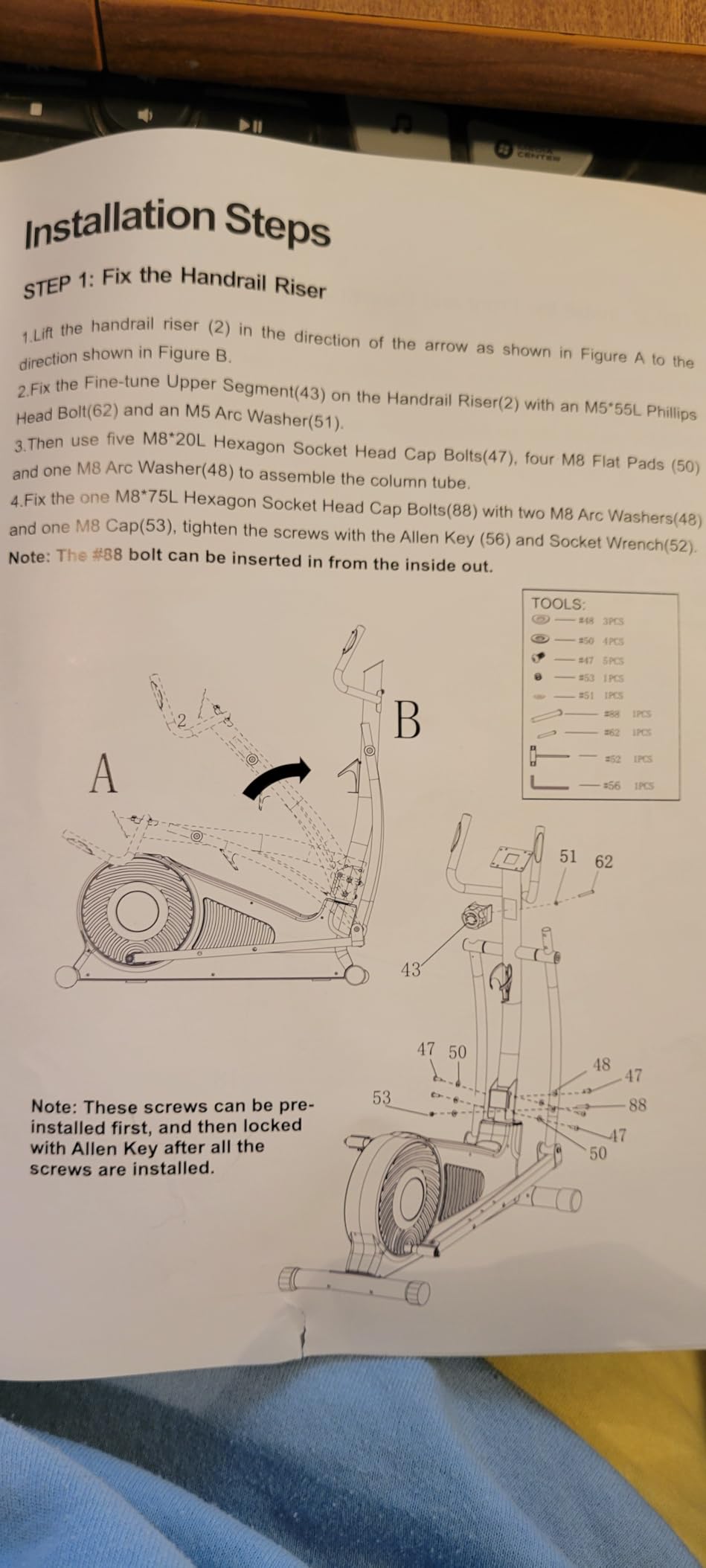
Assembly is the easiest in this list. Owners report roughly 20 minutes with the included tools and clearly labeled hardware, which is a real change from the two-hour jobs some machines in this band create. Transport wheels let you move it between rooms without asking for help.
The warranty is one year, which is the weakest coverage here. That matters more than it sounds, because magnet resistance and the monitor are the parts most likely to need service in year two.
A recurring note in the reviews is that the resistance feels light at the top setting for anyone already fit. If your workouts have been short and easy, this is fine. If you are coming off a rowing machine and want a real challenge, step up a tier.
Best for apartments and shared walls
The magnetic drive has no contact points between moving parts, which is the quietest configuration available. Owners living above or below neighbors describe this as the deciding reason they chose it, and the 39 by 21 inch footprint is genuinely small for a machine with a 400-pound rating.
It also needs no power cord. Batteries in the console mean you can place it anywhere without cable routing.
Where the light resistance bites
If you are already training regularly, the top levels will not load you the way a 20-pound flywheel machine would. There is no way to add resistance beyond the magnet ramp, and the setting can reset between sessions on some models.
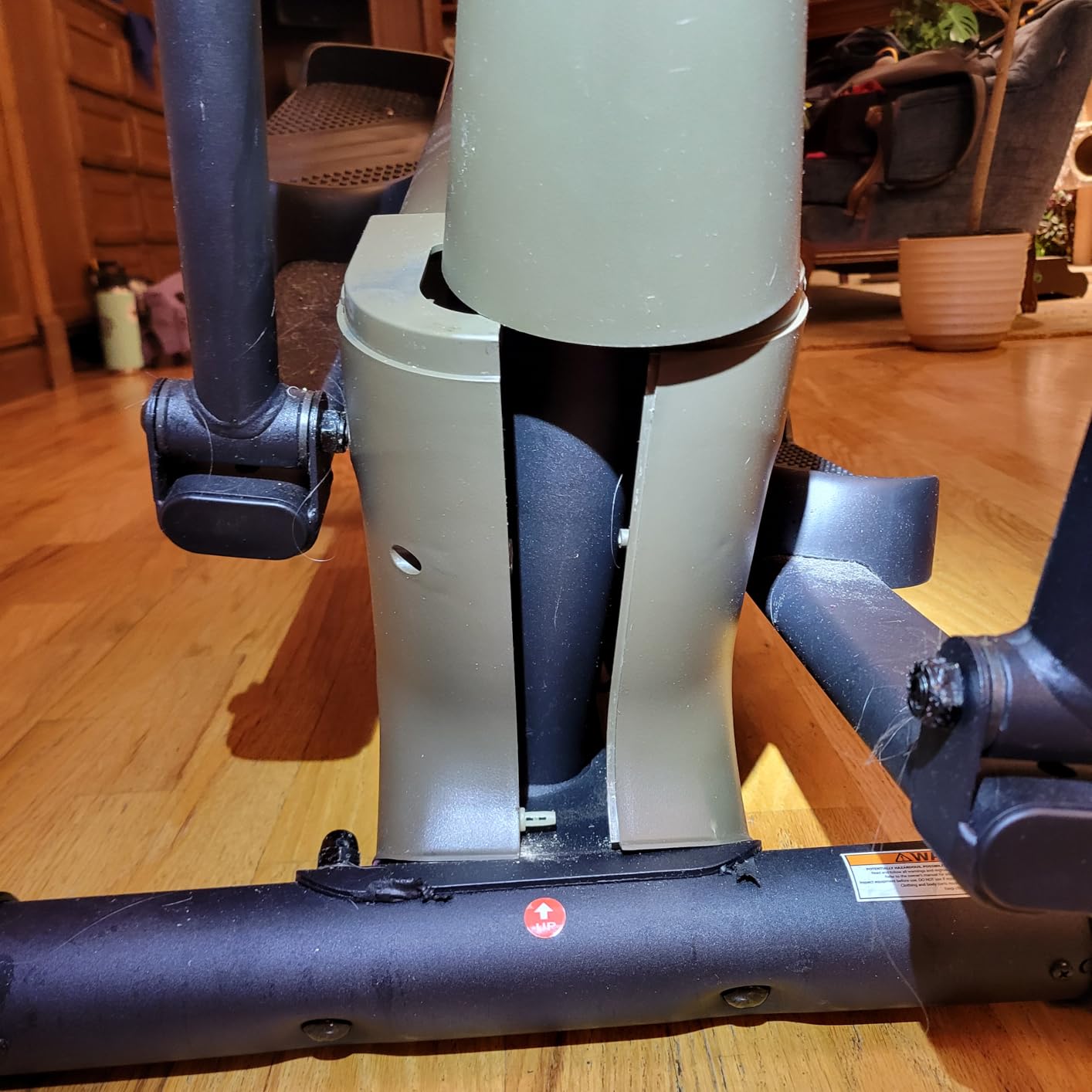
A handful of buyers also hit frame wobble or a factory drilling misalignment that blocks assembly. Both are fixable, but they are real enough that we would factor assembly help into the decision.
3. Sunny Health & Fitness Heavy Duty Elliptical Machine – Best for Workout Variety
Sunny Health & Fitness Elliptical Exercise Machine with Long Stride 330 lb
24 built-in programs
15.5-inch stride
330 lb capacity
3 year frame warranty
Pros
- 24 preset plus programmable workouts
- Backlit console tracks RPM and watt output
- Belt drive stays smooth and quiet
- Steel frame holds up over years of daily use
Cons
- Assembly commonly runs close to two hours
- Some machines squeak after extended use
- Console needs a plug-in power source
If you are bored of manual striding, this is the machine with the most to do on it. Twenty-four built-in programs plus custom sessions is more variety than anything else in this band, and the backlit console reports RPM and watt generation, which makes interval training far easier to program.
The belt drive and electro-magnetic resistance deliver a smooth, low-noise pedal stroke even at higher levels. Owners who train daily report the steel frame holding up, and the adjustable front and rear stabilizers help it stay planted when you push hard.
At 4.0 stars across more than 3,600 reviews, the rating sits mid-pack while the build quality sits high. That gap is explained by what happens after delivery, not during assembly.
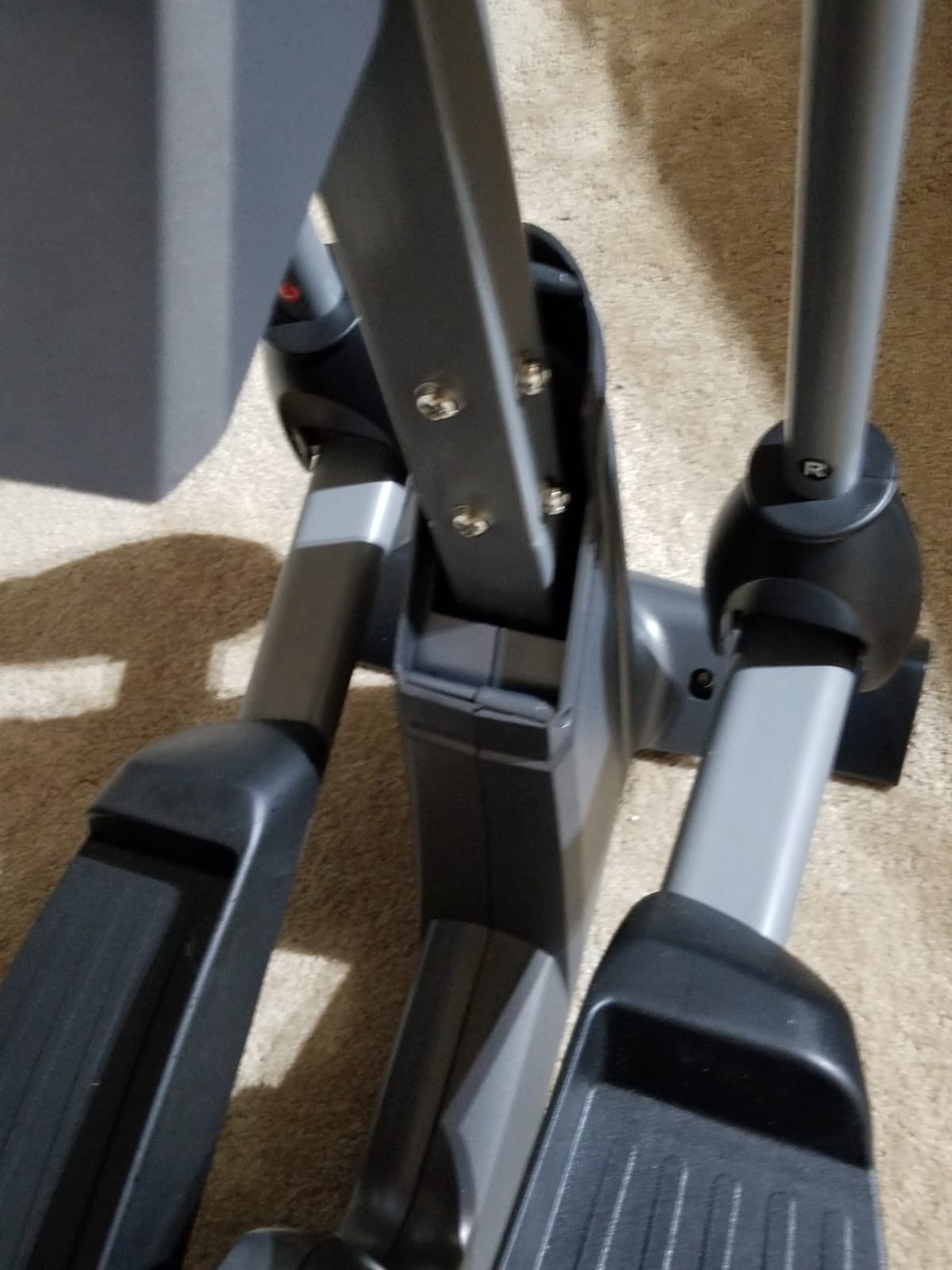
Assembly is the biggest practical hurdle. Owners consistently report closer to two hours rather than the advertised time, and you want two people and a clear floor. That is the single biggest reason this machine scores where it does.
There is also a documented pattern of clicking or squeaking after months of heavy use, which is usually the rollers and track calling for lubrication. A rare arrival issue involves bent connector pins that throw an E1 error on the console.
User profile data does not survive a power cycle, the handlebar pulse grips read erratically, and the console needs a plug-in outlet nearby. There is no battery option on this one.
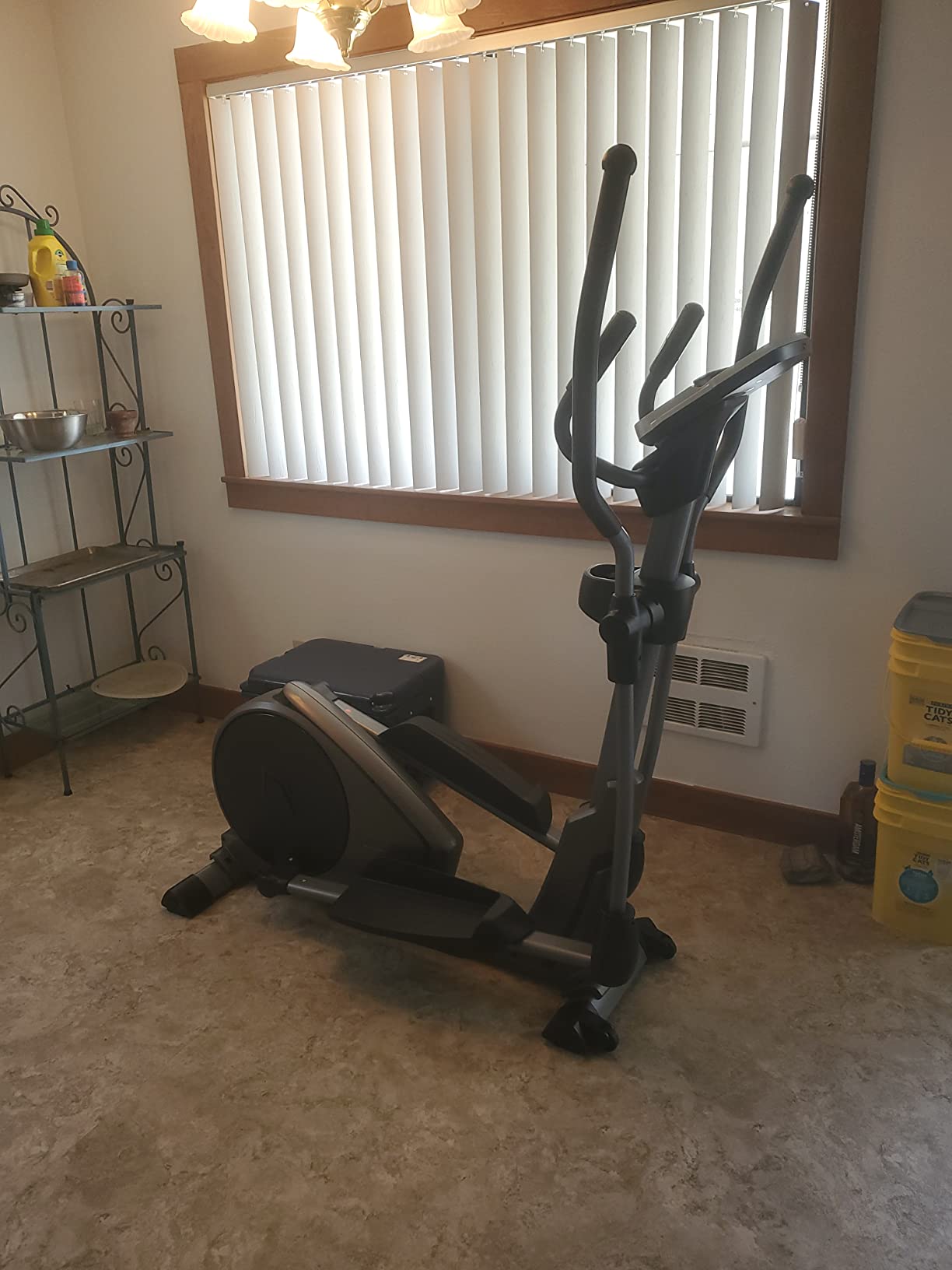
Best for structured training
Program variety only matters if you use it. Anyone following a progressive routine with intervals and goals will get real value from watt and RPM data, and the 15.5-inch stride keeps the motion joint-friendly across a long session.
The three-year structural frame warranty is among the longest in this group and covers the part that matters most over time.
Where it frustrates buyers
Two hours of assembly before your first workout is a real cost in time and frustration. If you are furnishing a room on a weekend, budget for it rather than discovering it mid-afternoon.
At 104.8 pounds with a 55-inch depth, this is a big machine. It is not an apartment pick unless you have a dedicated room, and the frame can feel tippy for taller riders pushing maximum effort.
4. Schwinn Fitness Elliptical Machine – Best Long Stride in a Compact Frame
SCHWINN Fitness 411 Compact Elliptical
18-inch stride
16 magnetic levels
10 year frame warranty
300 lb capacity
Pros
- 18-inch stride inside a small footprint
- Moving and fixed handlebars for full-body work
- 10 year frame warranty
- 16 levels of magnetic resistance
Cons
- Basic screen despite the listed console size
- Contact-grip heart rate sensors are inaccurate
- Explore the World app locks content behind a subscription
Stride length is the one spec you cannot add later, and the Schwinn 411 brings an 18-inch stride into a 53.8 by 24 inch frame. That combination is the reason this machine makes the list even though the console is plain.
For a user around six feet tall, an 18-inch stride feels meaningfully better than the 15.5 and 16-inch options elsewhere in this list. The pedal path is longer, so the motion reads as walking rather than shuffling, and the knee angle is easier on tall legs.
Moving handlebars add upper-body work that fixed-bar machines cannot, and the contact-grip sensors give a rough heart rate reading without any extra hardware. The Explore the World app includes three free virtual courses.
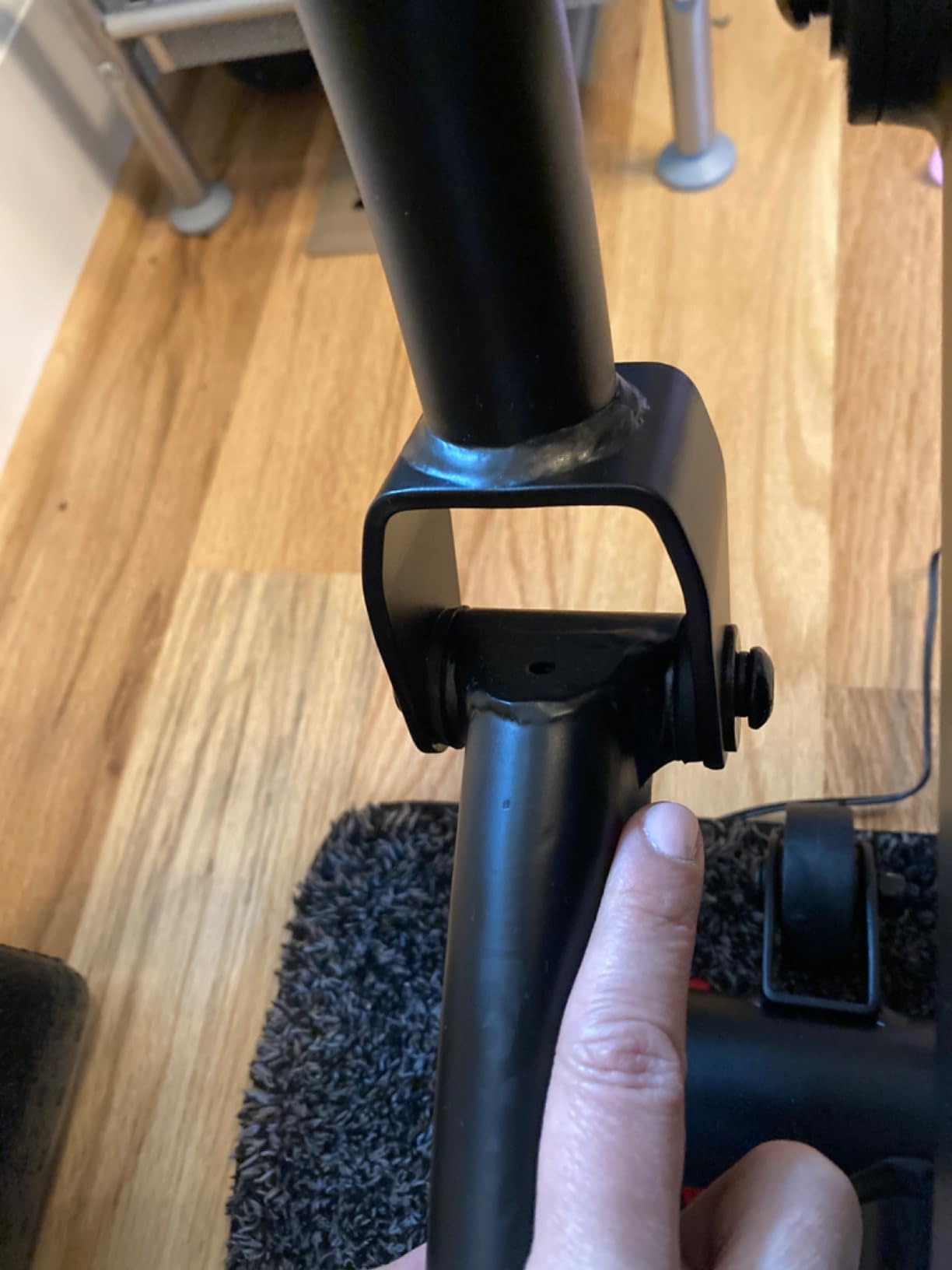
Buyers consistently note that the console itself is basic, even though the spec sheet lists a large console dimension. You get time, speed, distance, calories, and heart rate, and not much else. The grip sensors are noticeably less accurate than a chest strap if you are training to a heart rate target.
Full app content sits behind a subscription, which is the same complaint we flagged on other connected machines in this list. The free courses are genuinely usable on their own.
Warranty is the strongest number here: ten years on the frame, two years on parts, and 90 days on labor. For a machine expected to sit in a family room for a decade, frame coverage is the part worth having.
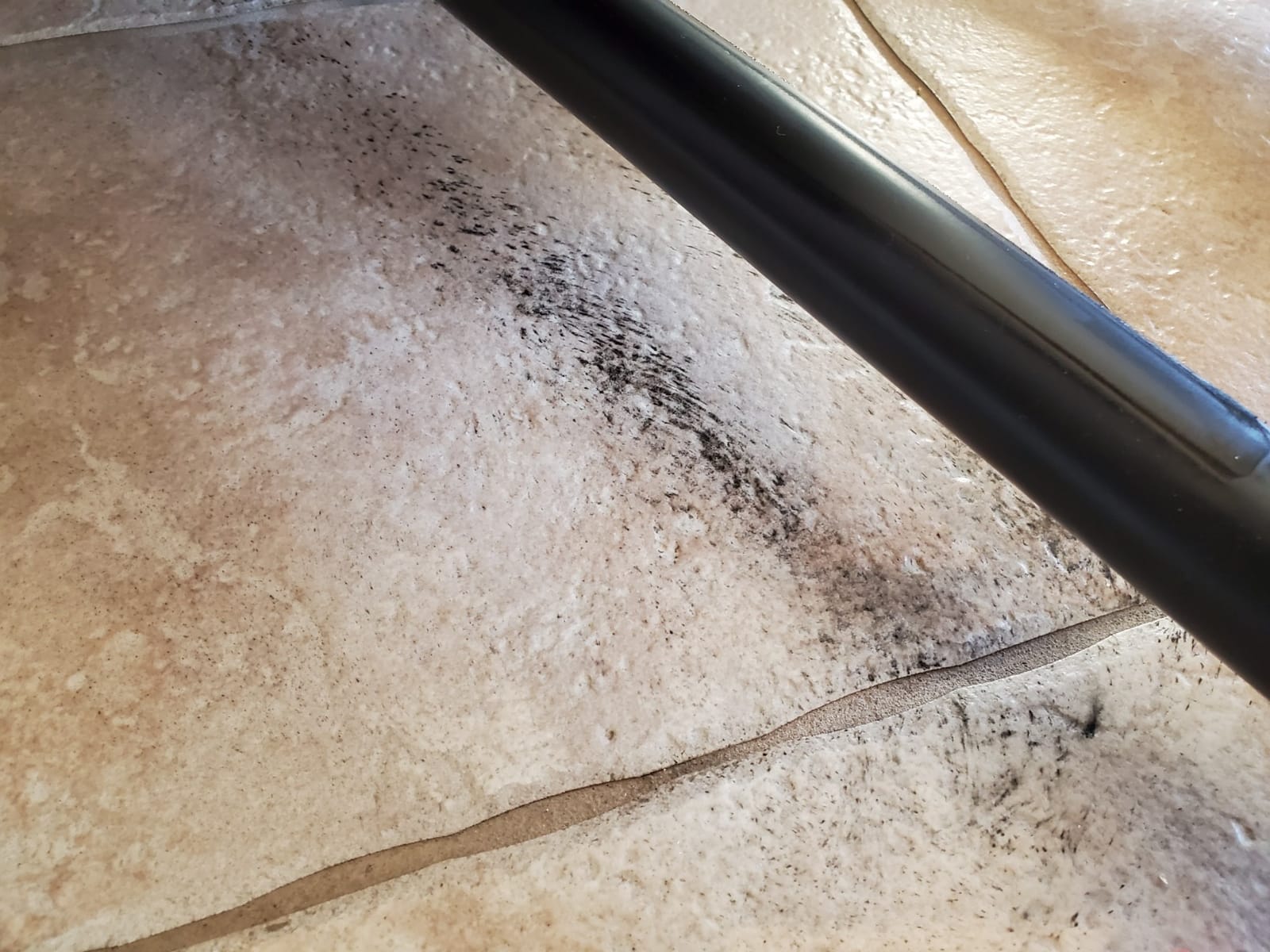
Best for taller riders under the weight cap
Pair this with the height guidance in the buying guide below. If you are around six feet and under 300 pounds, this is the stride you want at this price. The 300-pound capacity is the constraint, not the stride.
The moving arms also make it a better full-body trainer than most of the compact machines here, which matters if you want the arms involved without adding dumbbells to the routine.
Where it falls short
The console will not keep you engaged the way the 24-program machine at number three does. If your motivation depends on variety, the plain screen works against you over time.
At 100 pounds with a 53.8-inch depth, it also has a real floor footprint. There is no folding frame, so storage is a matter of where it lives, not how it packs away.
5. ANCHEER Elliptical with 550 LBS Weight Capacity – Best for Heavier Riders
ANCHEER Elliptical Exercise Machine for Home, Foldable Magnetic Elliptical Trainer with 16″ Stride, 16 Resistance Levels, Adjustable Pedals, LCD Monitor & Pulse Sensor, 550 LBS Weight Capacity
550 lb capacity
16-inch stride
3 pedal angles
lifetime warranty
Pros
- Highest capacity in this roundup
- Three adjustable pedal angles at 5 10 and 16 degrees
- Very quiet magnetic resistance
- Folds flat with transport wheels
Cons
- Basic LCD with limited metrics
- Heavy and awkward to reposition
- Assembly still takes a solid block of time
Most machines in this band cap out at 300 to 350 pounds. This one is rated to 550, and the reinforced steel frame with a wide stabilizing base is the reason it earns the highest rating on our list at 4.5 stars from more than 1,100 reviews.
The feature that separates it from the other 500-pound option is the pedal angle adjustment. Three positions at 5, 10, and 16 degrees let you change the geometry of the stride, which is closer to how a physical therapist would tune a machine for someone with knee or hip sensitivity.
Magnetic resistance keeps the running quiet, and 16 levels cover everything from a warm-up to hard intervals. Owners who train hard report that the wide base cuts down the shaking that plagues lighter frames.
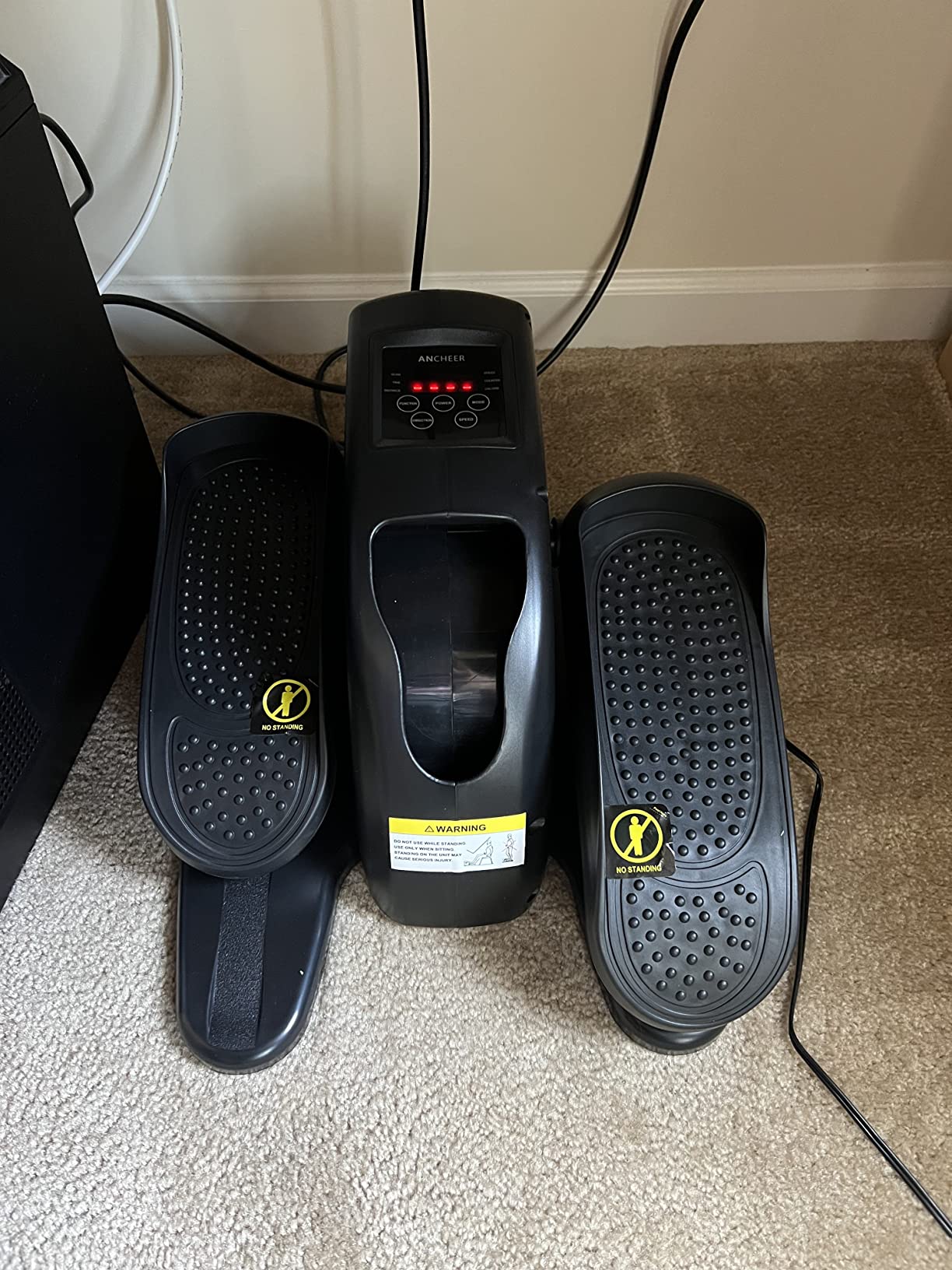
The console is the weak point. It is a basic LCD showing time, speed, distance, calories, and odometer with built-in pulse grips. There is no incline and no program structure, so this is a workout you run by feel rather than by following.
Although the frame folds and has transport wheels, the machine is heavy and awkward to reposition. Plan the location before delivery rather than after, because moving it across a room is a two-person job.
The listed warranty is a lifetime warranty on the frame. Read the terms carefully at purchase, since lifetime frame coverage in this category usually excludes wear parts and labor.
Best for higher body weight
If you weigh over 300 pounds, most of this list is not the right tool. A 550-pound rating with adjustable pedal angles gives you room to work, and the joint-friendly stride matters more at higher load than any console feature.
It is also a reasonable choice for a multi-user household where different people need different stride positions.
Where it falls short
You give up all connectivity beyond the LCD. There is no app, no programs, and no incline. Anyone who trains by metrics will find that limiting after a few months.
The stride is 16 inches, so a very tall user will still feel hemmed in. If height is your main concern rather than weight, compare the 18-inch options above.
6. ANCHEER Elliptical Exercise Machine 500Lbs – Best for Small Spaces
ANCHEER Elliptical Exercise Machine, Elliptical Trainer for Home Gym, Exercise Equipment 500Lbs Max Weight (Charcoal)
500 lb capacity
16-inch stride
14 magnetic levels
21 inch width
Pros
- Silent frictionless magnetic drive with no vibration
- 21 inch width keeps a clear walking path
- 500 lb frame stays wobble-free at high intensity
- Lifetime warranty with free replacement parts
Cons
- Only 14 resistance levels
- Basic LCD with no incline or programs
- Unpacking and assembly take about an hour
This pairs a 500-pound capacity with one of the narrowest footprints in the roundup, at 21 inches wide and 44 inches deep. That width is the whole reason to consider it if your workout space is a corner rather than a room.
The magnetic drive has no contact between moving parts, which owners describe as genuinely vibration-free. When you share a wall with a neighbor, that matters more than any program library. At 4.5 stars from more than 1,000 reviews, the consistency of that praise is notable.
Unlike the folding machines further down, this one does not fold. What it does have is a narrower profile than most 500-pound frames, so it holds capacity without sprawling across the floor.
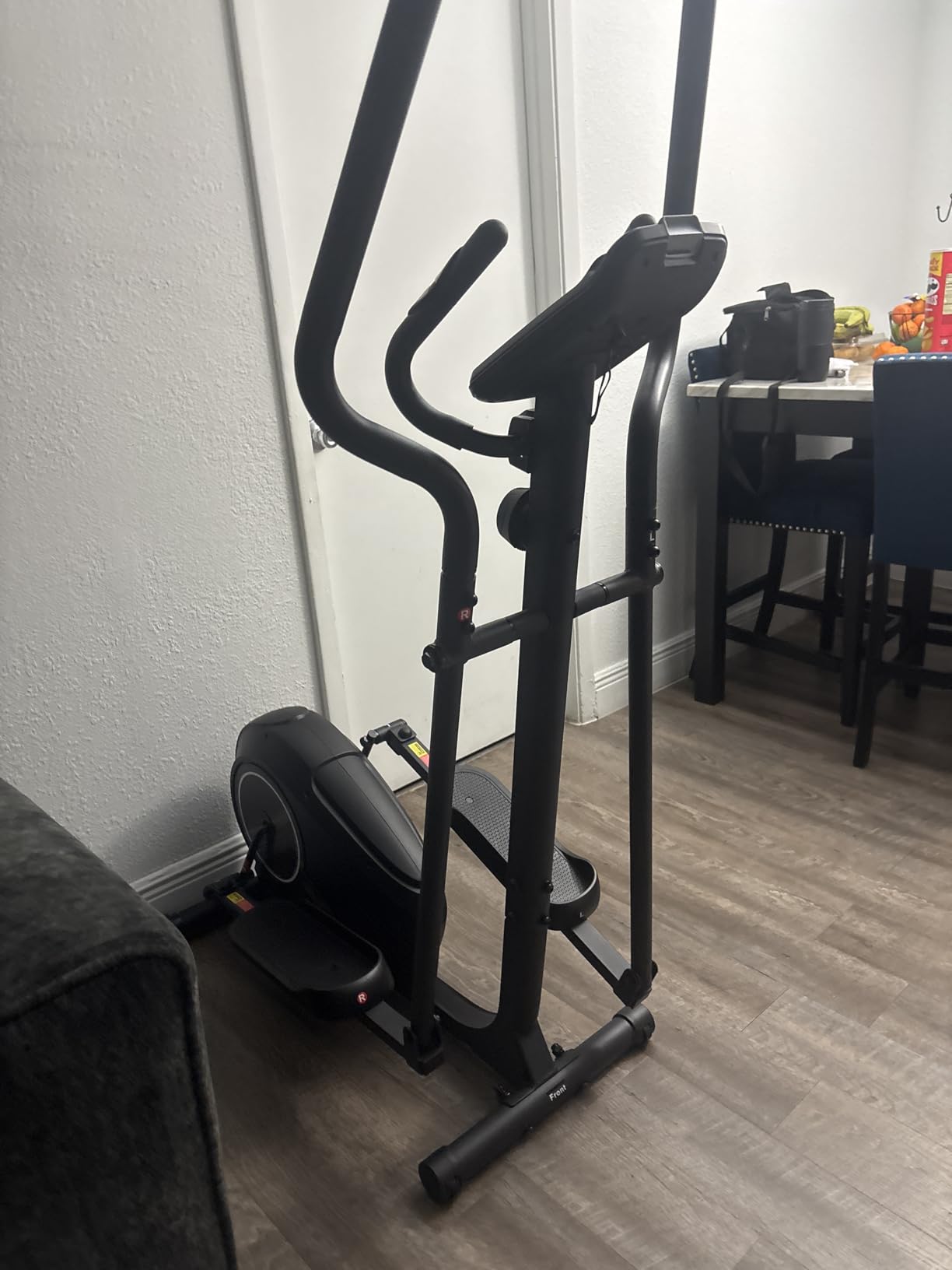
Fourteen resistance levels is fewer than most competitors here, and it shows if you train seriously. The top end will not match a 20-pound flywheel machine. For a beginner or a returner building a routine, the range is more than sufficient.
The console is a simple LCD with time, speed, distance, and calories plus hand pulse sensors. No incline, no programs, no app. The manufacturer lists a lifetime warranty with free replacement parts, which is stronger coverage than most of this list.
Unpacking and assembly together typically takes about an hour, with clear instructions and video tutorials in the box. Transport wheels are included, and the listed item weight is 30 kg.
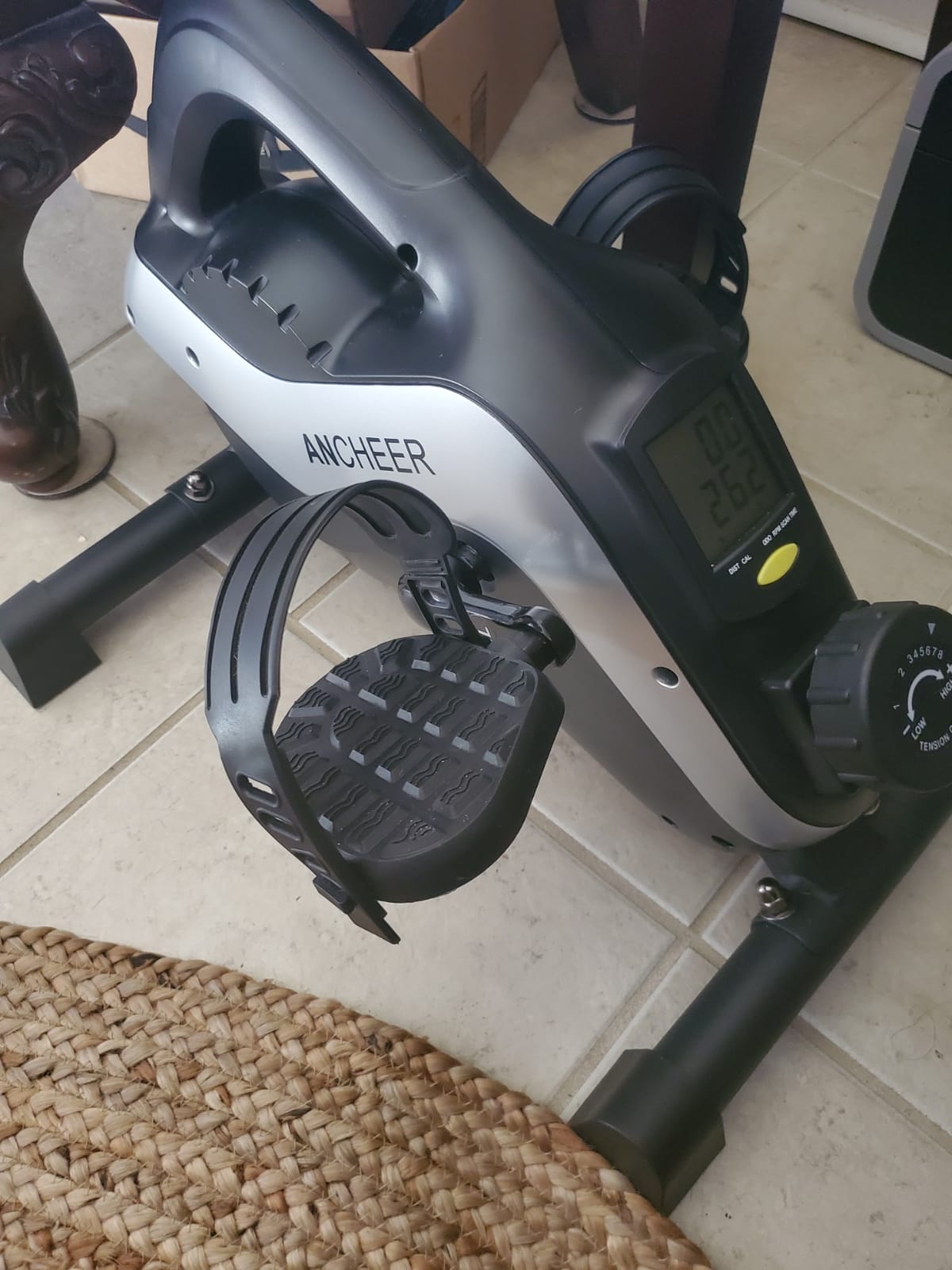
Best for a tight corner
Measure the depth and width plus about a foot of clearance on all sides before ordering. At 44 by 21 inches you will save meaningful floor space against a full-size rear-drive machine, and the 500-pound rating keeps it stable for a range of body sizes.
The contactless magnetic drive is the quietest operating configuration available, which makes it a solid pick for a downstairs or upstairs unit.
Where it falls short
The lower resistance ceiling is a genuine limit for anyone already fit. There is no way around it, since the level count is fixed.
It also does not fold, so if you need the floor back for other uses daily, one of the foldable models below is a better fit despite the wider stance.
7. YOSUDA Compact Elliptical with 12 and 45 Degree Incline – Best for Climbing
YOSUDA Elliptical Exercise Machine, Compact Elliptical with 45° Incline
3-in-1 elliptical stepper climber
45 degree climb
18 lb flywheel
5.38 sq ft footprint
Pros
- Only incline-capable machine in this roundup
- 5.38 square foot footprint for a climbing machine
- 18 lb flywheel gives stable inertia
- H-type frame stays stable under heavier riders
Cons
- 300 lb maximum user weight
- Climbing mode is quad-heavy and demanding
- 94.6 pounds is hard to reposition
Every other machine on this list is a pure strider. The YOSUDA is a 3-in-1 that adds a stepper and a 45-degree climbing mode, which turns a cardio session into a glute and hamstring workout without a second piece of equipment.
Two incline positions are available, 12 degrees and 45 degrees. The scientific climb at 45 degrees loads the hips, legs, core, and upper body in a way that flat striding does not, and owners who use it report visible leg development within a couple of months.
It is also remarkably compact for what it does. A 5.38 square foot footprint with a 38-inch depth, plus front transport wheels, means a machine with an incline mode can still live in an apartment corner.
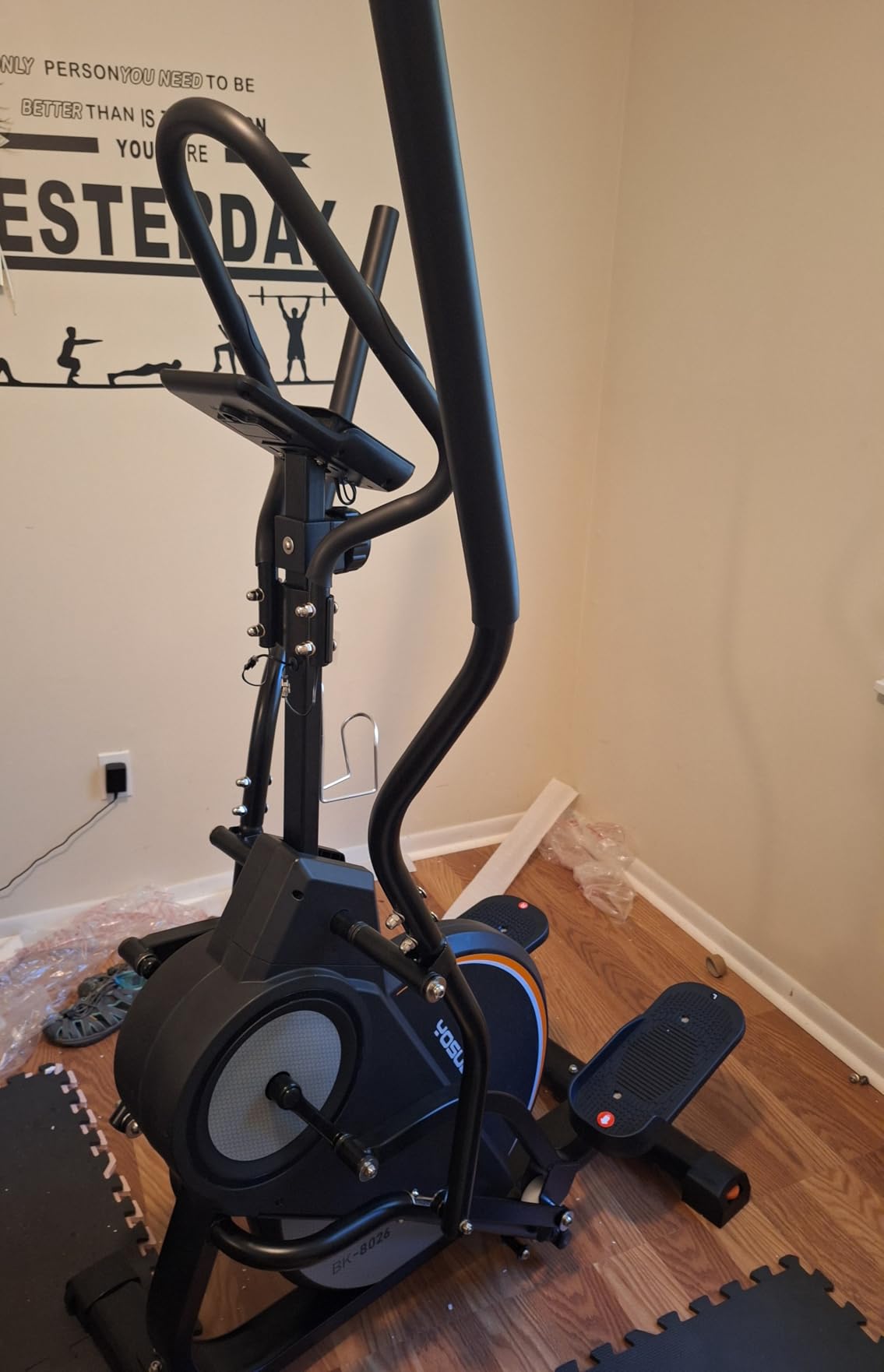
The 18 lb flywheel is the heaviest in this roundup and gives noticeably more stable inertia than the 16-pound units, though still well short of what you get above 1,000 dollars. The H-type frame is what keeps it from shaking under heavier users.
Capacity tops out at 300 pounds, and the climbing mode is quad-heavy. Anyone with knee issues should test the climb carefully before committing, since 45 degrees puts real load on the quadriceps.
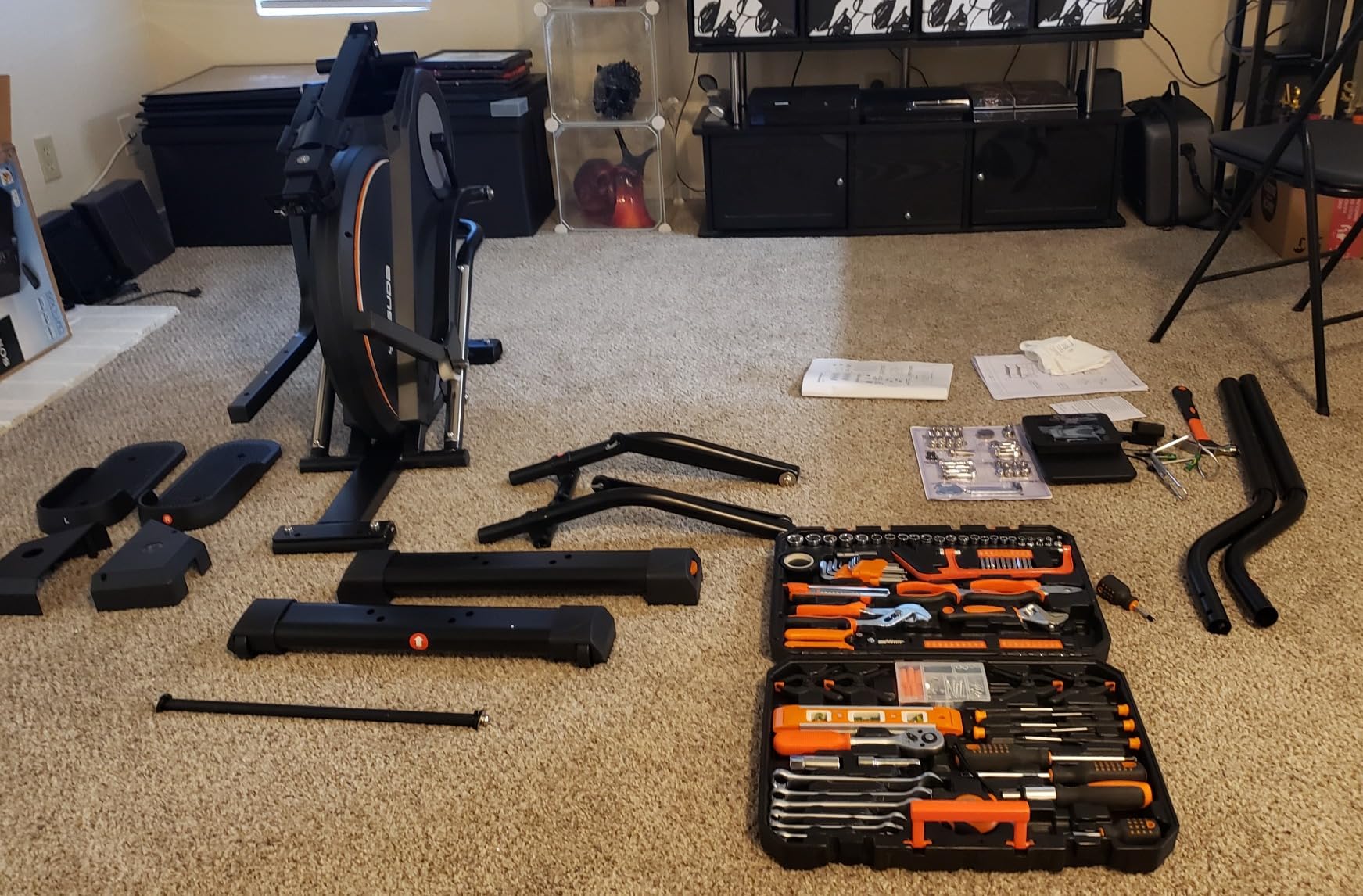
It ships 90 percent assembled and installs in roughly 30 minutes, which is one of the faster setups here. Bluetooth connectivity to the Kinomap and Fed apps adds route-based training on top of the 16 magnetic resistance levels.
Best for legs and glutes
No other machine here gives you an incline ramp. If your goal is lower-body development rather than steady-state cardio, climbing mode covers that in the same floor space and the same session budget.
The 12-degree incline is also a useful middle setting for interval work, letting you change the load without leaving the stride pattern.
Where it falls short
The 300-pound limit excludes a lot of buyers, and the 94.6-pound weight is real difficulty for anyone rearranging furniture. Despite the front wheels, moving it across a room takes two people.
The console is basic, with no way to adjust the incline beyond the two fixed positions. And the climb will grind out your quads faster than you expect, so treat the first two weeks as a build-up.
8. pooboo Elliptical Machine with Quiet Magnetic Rear Drive – Best Rear Drive Pick
pooboo Elliptical Machine, Elliptical Exercise Machine with 16-Level Resistance&Hyper-Quiet Magnetic Driving System, Elliptical Machine for Home with LCD Monitor&15.5IN Stride, 350LBS Weight Capacity
Rear drive with 16 lb flywheel
20 dB running noise
Forward and reverse pedaling
350 lb capacity
Pros
- Rear drive shifts weight back for stability
- Forward and reverse pedaling adds variety
- Around 20 dB suits shared walls
- Foldable frame needs no power cord
Cons
- 350 lb capacity is modest
- Basic LCD with no incline or programs
- 29.92 inch width is wider than most here
Most of the machines on this list are front drive. The pooboo is rear drive, with a 16-pound flywheel mounted behind the pedal crank, which moves the center of gravity rearward and makes the machine noticeably more stable at high effort.
Stability is not the only benefit. Because there is no motor or electronics drawing power, the whole machine runs on battery-free mechanical operation, and it works with Kinomap and Zt fitness apps through a built-in sensor.
It also pedals forward and backward. Reverse pedaling is a genuine low-impact way to work the quads differently, and few machines under 1,000 dollars offer it.
Owners report running noise at roughly 20 dB, which is close to a whisper. That figure comes from the manufacturer rather than our own measurement, but the consistency of quiet-operation feedback in reviews supports it.
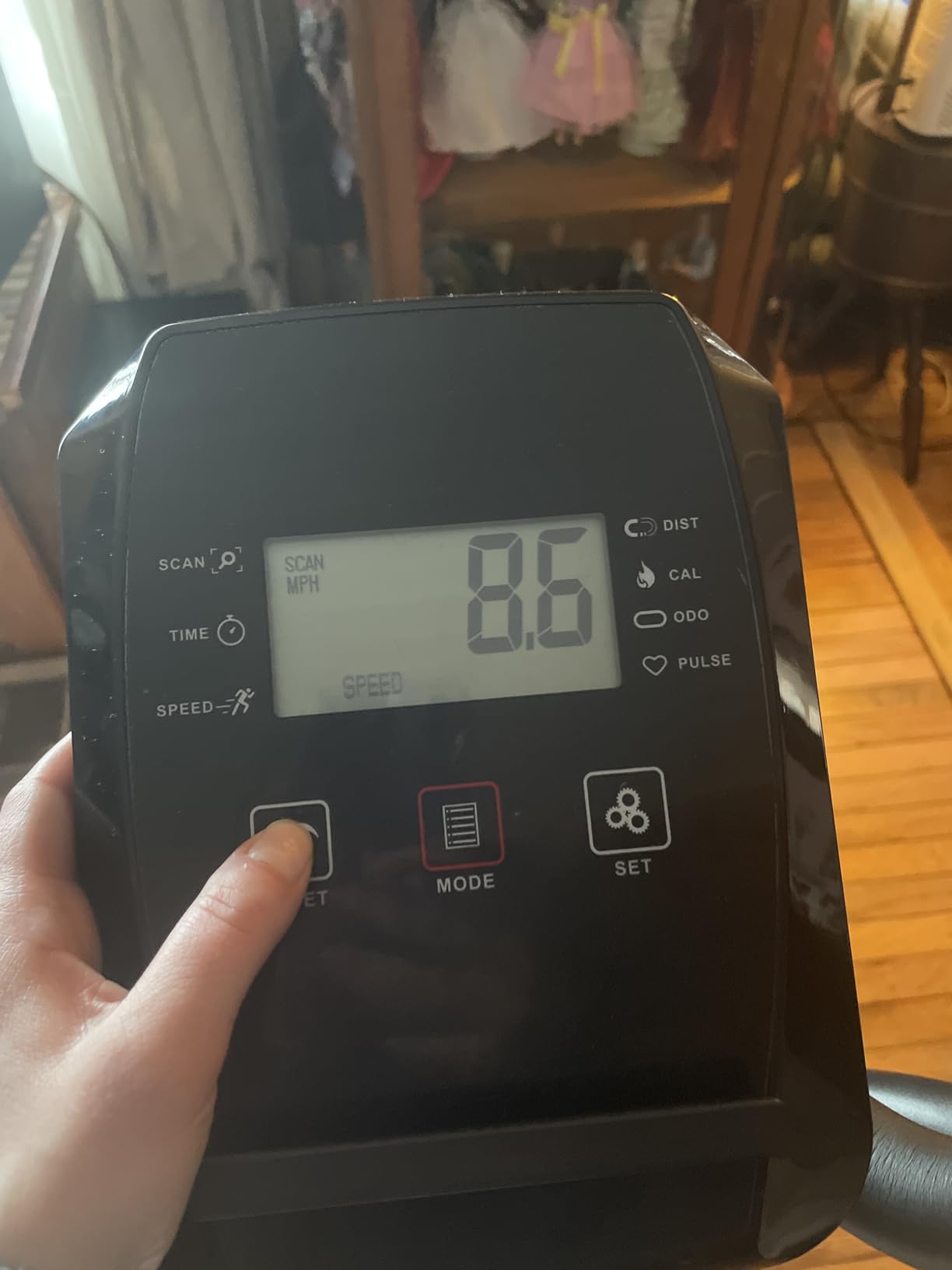
The digital monitor shows scan, time, speed, distance, calories, pulse, and odometer. The 16 resistance knob positions are divided into relaxing, moderate, and fat-burning zones, which is a simple way to organize progression.
Two drawbacks stand out. Capacity is 350 pounds, and the base is 29.92 inches wide, wider than almost anything else at this price. Rear-drive stability is the trade for that width.
Best for stability and reverse pedaling
If you tend to sprint intervals and step off the machine mid-stride, rear drive is the configuration you want. The shifted center of gravity resists tipping in a way front-drive frames at this weight cannot.
It is also a good pick for a shared wall, and the foldable frame plus transport wheels mean it disappears when you are not using it. No power cord is required, which simplifies placement.
Where it falls short
The footprint is wide, and the listed dimensions run 49.2 by 29.92 inches. Measure the narrow space between a wall and a sofa before committing, because this is not a corner machine.
The console is basic with no incline and no program structure, and the warranty covers one year of free replacement parts rather than a full lifetime frame.
9. Niceday Elliptical with 15.5/18/19IN Long Stride – Best Long Stride Value
Niceday Elliptical Exercise Machine with 18IN Stride
18-inch dual-axis stride
400 lb carbon steel base
Below 20 dB noise
Compact frame
Pros
- 18-inch stride in a compact frame
- Exceptionally quiet magnetic running
- 400 lb base stays shake-free at hard effort
- Support sent a free replacement drive belt when one failed
Cons
- Narrow pedals rub wide feet
- No cup or device holder
- Resistance adjusted by hand not console
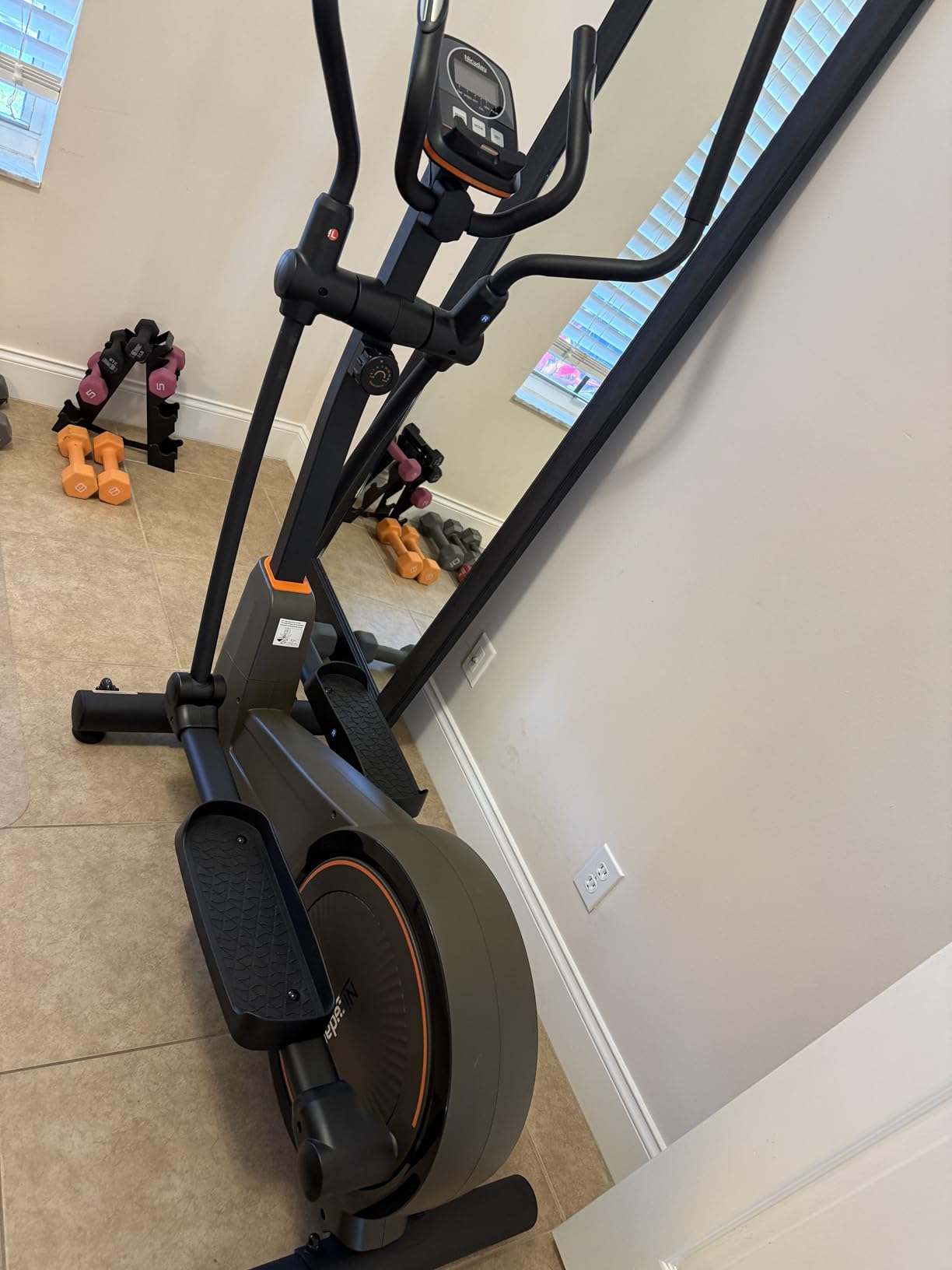
This is the long-stride answer for anyone who wants a proper pedal path without a full-size machine. The advanced dual-axis linkage delivers an 18-inch stride in a 39.6 by 24.4 inch frame, and the listing here is the 18-inch black version.
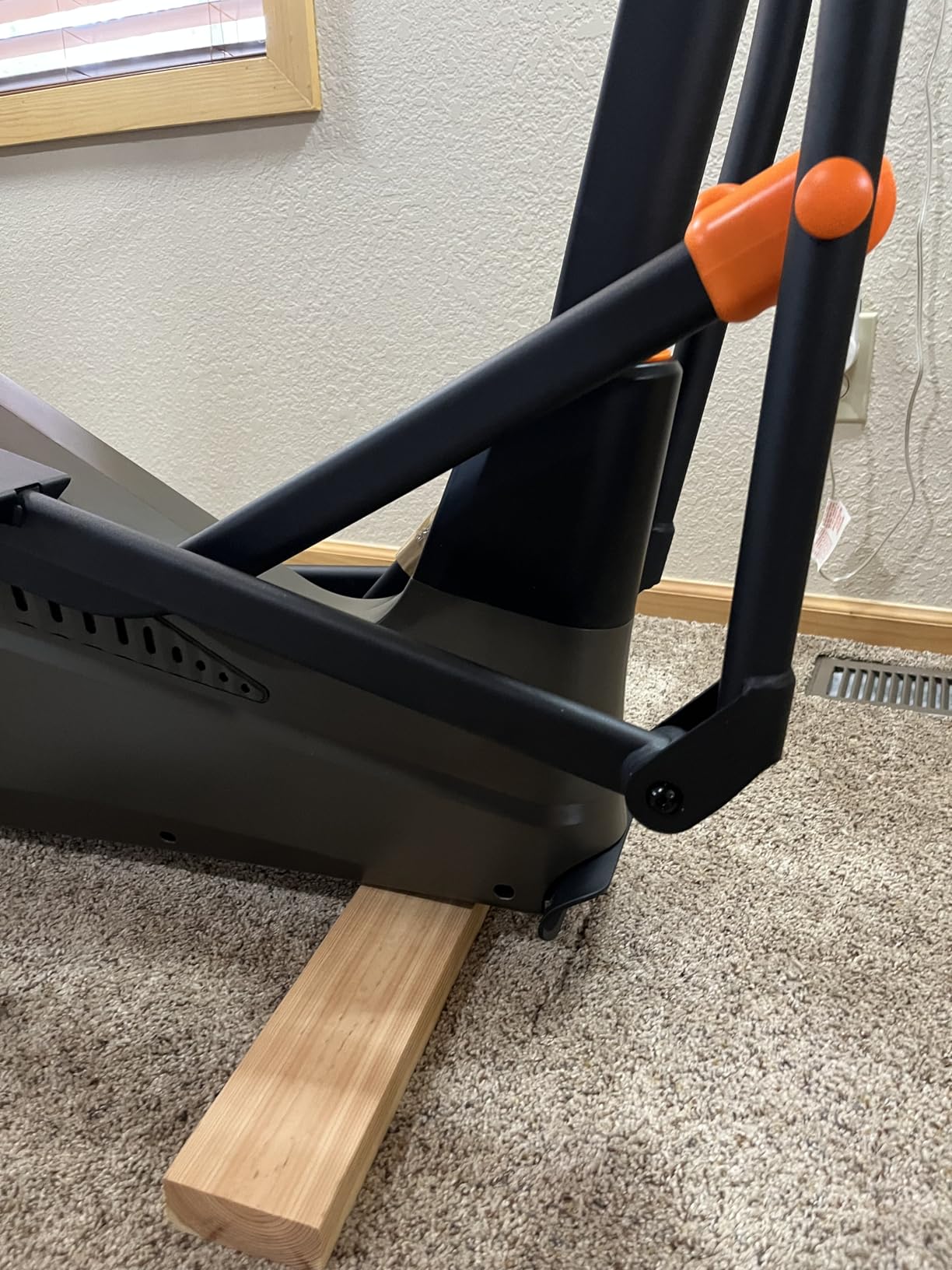
Owners who run this machine report motion that is effectively below a whisper, with PU silent rollers and a magnetic control system. The carbon steel base holds a 400-pound capacity without flexing, even during sprinting intervals.
At 4.4 stars, customer support is worth mentioning. Multiple reviews describe a replacement drive belt being sent at no cost after a failure, which is rare at this price and worth more than an extra console feature.
Fit is rated for users up to six foot three, which covers most tall buyers. The stride is fixed per model rather than adjustable, so confirm which variant is being shipped before you order, since the console cannot change it mid-workout.
The foot pedals are narrow, and owners with wide feet report rubbing against the inner edges. There is no cup holder and no device holder, so a phone on the console is the only practical option.
Resistance is a hand-adjusted knob rather than console-controlled, which means you reach down mid-interval. Pulse readings climb slowly and start near 70, and calorie output reads low compared with other machines. Treat the metrics as directional.
Best compromise for tall users
You get an 18-inch stride, which most of this list cannot offer, while keeping a footprint closer to a mini elliptical than a full-size trainer. The manufacturer states the design saves up to 40 percent of floor space.
For someone around six feet who wants a real stride and lives somewhere tight, this is the most sensible machine in the roundup.
Where it falls short
Hand-adjusted resistance is a step back from console-controlled models, and the narrow pedals are a real comfort issue for a portion of users. Setup takes roughly 45 to 60 minutes with the included tools.
There is also a note that the machine can shake noticeably during very intense sessions, which is the trade for a compact carbon steel base at this weight class.
10. Sunny Health & Fitness Smart Air Walker Elliptical Glider – Best Budget Pick
Sunny Health & Fitness Smart Air Walk Elliptical Glider with 30-Inch Stride
30-inch maximum stride
Folds flat for storage
220 lb capacity
1 year frame warranty
Pros
- 30-inch stride in a 27 inch footprint
- Folds flat in seconds for under-furniture storage
- Four-step assembly and no power cord needed
- Free SunnyFit app with no subscription
Cons
- 220 lb maximum user weight
- Air resistance cannot be fine-tuned like magnetic
- Low to the ground and not for vigorous cardio
The lowest-cost real answer in this roundup, and the most compact by a wide margin. A 27.2 by 20.1 inch footprint that folds flat in seconds means you can store it under a bed or against a wall, which no other machine here manages.
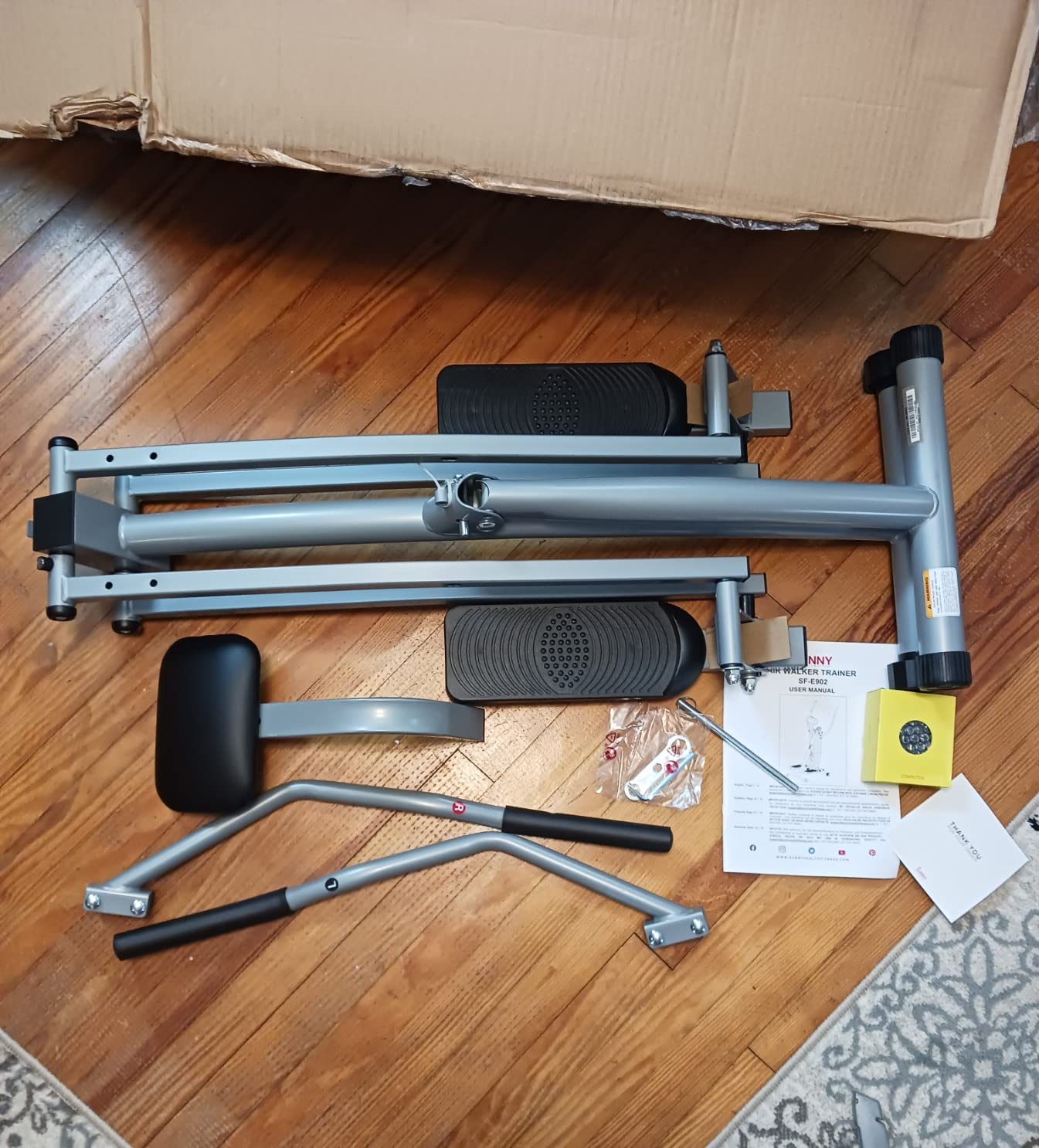
What surprises people is the stride. Maximum 30 inches, driven by air resistance and a gliding motion that engages arms, legs, and core simultaneously. The height-adjustable padded abdominal support keeps your posture honest through long sessions.
For a beginner, a senior, or anyone returning to exercise after a long break, the low-impact motion is about as gentle as home cardio gets. Owners use it for walking, skiing, and light running simulations.
It is not a full elliptical, and the difference is structural rather than cosmetic. Air resistance moves the whole body rather than simulating a walking gait, so the workout is lower intensity and lower to the ground. Anyone training for real cardiovascular improvement will want a strider.
The 220-pound capacity is the hardest limit, and it excludes a large share of adult men outright. The 1.5-inch display shows time, count, calories, and total steps, which is enough for a gentle daily session and little more.
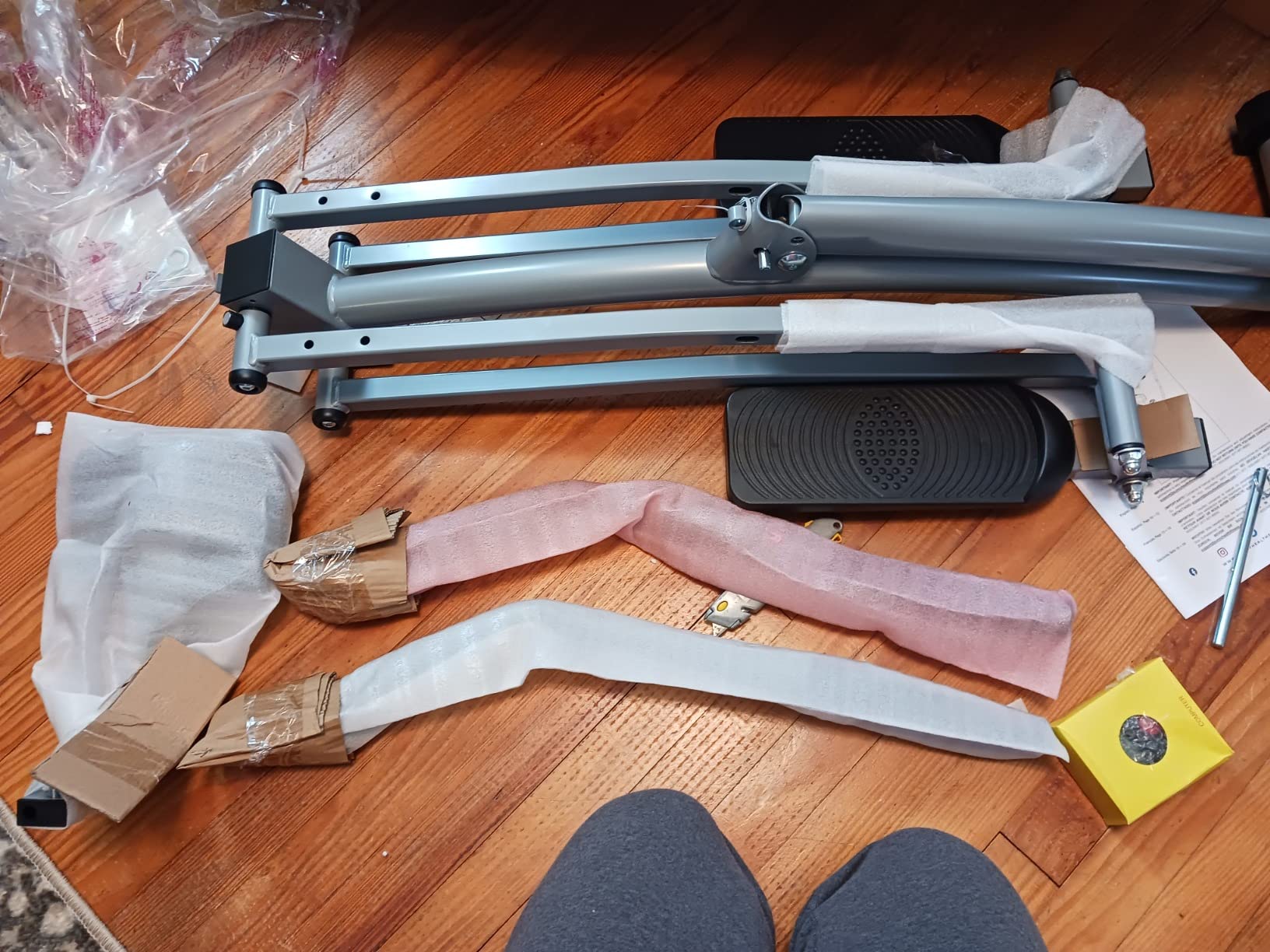
Micro-adjustable floor stabilizer caps steady the machine on uneven floors, and four-step assembly is among the fastest available. There is no power cord because there is no motor.
Best for a small apartment or a beginner
If your real constraint is floor space rather than budget, this machine wins. It stores flat, weighs 15.9 kg, and takes seconds rather than minutes to put away, so there is no excuse not to use it daily.
It is also the easiest recommendation we make for a shared home with a downstairs neighbor, since there is no drive mechanism producing the low hum every elliptical makes.
Where it falls short
Air resistance cannot be dialed in precisely the way a magnetic level knob can, so progress tracking is looser. And the 220-pound ceiling is not adjustable.
If you are already fit, this will feel like recovery work rather than a workout. Buy it as a secondary machine or a first one, not as your only cardio tool.
Elliptical Buying Guide: What Actually Matters Under 1,000 Dollars
Below 1,000 dollars, four specs decide whether you will still be using the machine in three years: stride length, weight capacity, frame weight, and warranty length. Everything else on the spec sheet is a preference. Here is how to read each one.
Stride length is the spec you cannot change later
Stride is the distance your foot travels in one full pedal rotation, and it is set by the machine. Most models in this band deliver 15.5 to 16 inches. The Schwinn 411 and the long-stride Niceday deliver 18 inches, and the Sunny air walker claims a 30-inch glide that comes from a different mechanism entirely.
The practical rule: under five foot six, 16 inches is fine. Between five foot six and six foot, 18 inches is noticeably better. Over six foot, look for 18 inches and accept that you may need to move up a price tier for a proper 20-inch stride.
Short strides force tall users to sit forward with locked knees, which loads the lower back. That single mismatch causes more disappointment than any console shortcoming.
Weight capacity tells you who the machine was built for
Capacity ratings in this roundup run from 220 pounds on the air walker to 550 pounds on the ANCHEER.
As a rule, buy the machine rated at least 50 pounds above your own weight, more if you plan aggressive intervals. If you weigh over 300 pounds, your realistic options here are the two ANCHEER models and the 400-pound frames, and you should weight capacity above every other spec.
Flywheel weight and resistance type
Flywheel weight sets how smooth the pedal feels through the top of each stroke. In this band the range is 16 to 18 pounds, with the YOSUDA at the heavy end and several magnetic machines at 16. Above 1,000 dollars you start seeing 20-pound-plus flywheels, and that difference is felt in the quietness of the stroke.
Resistance comes in three forms. Magnetic resistance uses a magnet near the flywheel with no contact, which is the quietest and needs no maintenance. Eddy current uses an electromagnetic brake for the smoothest progressive change. Mechanical resistance uses friction pads that wear and need adjustment, and we would avoid it at any price.
Every machine on this list except the air walker uses magnetic resistance. Level counts range from 14 to 16, which is enough for a beginner and slightly limiting for a trained rider.
Height and weight matching
Use this to match yourself quickly. Under five foot five and under 180 pounds, any machine here works, and the compact and folding models are the most comfortable for the space you have. Between five foot five and six foot with most body sizes, favor 16-inch or 18-inch strides and check the resistance ceiling if you already train.
Between six foot and six foot three, prioritize an 18-inch stride, which narrows your list to the Schwinn 411 and the long-stride Niceday. Over six foot three, expect to spend above 1,000 dollars for a 20-inch stride, because no machine in this roundup reaches it in a full-size frame.
Over 300 pounds, the realistic picks are the two ANCHEER machines at 500 and 550 pounds and the 400-pound frames. The air walker at 220 pounds is not an option regardless of height.
Noise, neighbors, and apartments
Noise is the complaint that brings most returns, and it comes from three places: the drive mechanism, the roller bearings, and the frame itself under load. Magnetic drives with no contacting parts are quietest, which is why the Niceday, pooboo, and the two ANCHEER models come up repeatedly in owner comments about shared walls.
The Sunny upright and the heavy-duty Sunny use belt drives, which are quiet but need periodic lubrication of the track. Owners report that clicking or squeaking after months of use is usually a lubrication issue rather than a failure, and it is fixable.
For a downstairs unit, put a machine pad under the feet and avoid hard surfaces. For an upstairs unit, check the downstair noise impact before delivery day, because moving a machine down stairs is a separate problem from running it.
Assembly, delivery, and what to check on arrival
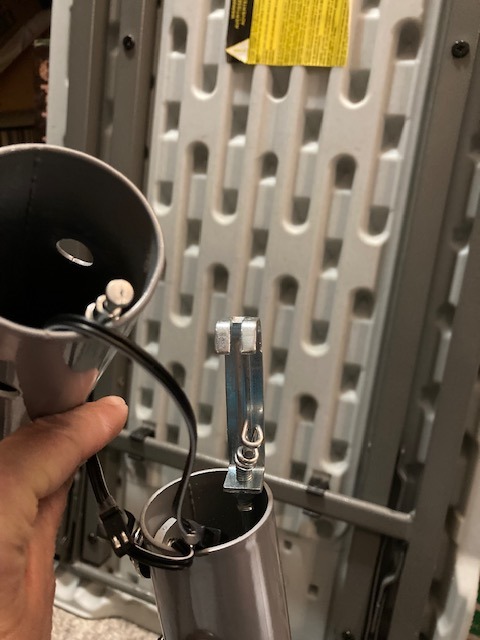
Assembly ranges from about 20 minutes on the Niceday to nearly two hours on the Sunny heavy-duty model. Check the box for bent connector pins and loose hardware before you start, because a small fault discovered in the first ten minutes is far cheaper than one discovered after assembly.
Budget an hour for anything you unbox yourself. Most machines in this band are delivered curbside, and the delivery fee is a bigger factor than it looks in a small apartment building.
Cost of ownership beyond the machine
Track lubrication is the main recurring cost, plus a standard maintenance kit. Apps are the hidden variable: the Sunny machines charge nothing, while the Schwinn Explore the World app and several others lock most content behind a subscription. Over five years that difference is meaningful.
Then there is the used market, and it is the single most useful piece of advice in this guide. Long-time owners on the Bogleheads forum consistently point out that in this budget range, a used Precor or Life Fitness is a better buy than anything new, because those brands are built for commercial gyms and hold their value. A used machine in this band can have a 20-pound flywheel and a 20-inch stride that no new option here matches.
Buy used from a seller who lets you hear it running, check the drive belt and rollers for wear, and expect to arrange delivery yourself. One forum buyer with hands-on Precor and Life Fitness experience preferred the Precor, and that preference recurs across owners.
Who should spend more than 1,000 dollars
Spend above this band if you are over six feet tall, over 300 pounds, training for running-specific work, or sharing a machine with more than one heavy user. The jump buys a 20-pound-plus flywheel, a 20-inch stride, a powered incline ramp, and a longer warranty.
Also spend more if you plan to use the machine daily and hard. The difference between a 16-pound flywheel and a 20-pound one is the difference between an exercise you tolerate and one you look forward to.
If your budget sits near 400 dollars or below, we would be direct: the frame weight and warranty in that tier are thin, and an OzBargains buyer questioning quality at that level was right to ask. A used commercial machine at that level is a better route than anything new.
Frequently Asked Questions
What is the best home elliptical under 1000?
The Sunny Health u0026amp; Fitness Smart Upright Elliptical is the best home elliptical under 1,000 dollars because it combines a 16-inch magnetic stride, near-silent belt-drive motion, a 300-pound capacity, and a free app with no subscription fee, backed by more than 20,000 owner reviews.
What is the best elliptical for the money?
The Niceday Elliptical with a 15.5-inch stride is the best elliptical for the money, holding a 4.4 rating across more than 3,500 reviews with a 400-pound capacity, contactless magnetic drive, and roughly 20-minute assembly at a price well below comparable frames.
Which elliptical brand is the best?
Brands split into two tiers in this budget. Schwinn, ProForm, and Precor are backed by established parent companies with longer frame warranties, while Sunny, Niceday, ANCHEER, YOSUDA, and pooboo offer strong machines with shorter or self-served coverage. For durability above this price band, Precor and Life Fitness are the benchmark names.
Is 20 minutes of elliptical a day enough?
Yes, 20 minutes of elliptical a day is enough to build cardiovascular fitness and support weight loss when it raises your heart rate into a moderate zone rather than staying conversational. Frequency matters more than duration, and 20 minutes five days a week beats 40 minutes twice.
How long should an elliptical last?
A well-built elliptical should last at least three solid years, and many owners report a decade. In this sub-1,000 dollar band, expect three to five years from a steel-frame machine with a one to three year warranty, and less from the lightest frames, so warranty length is a useful durability proxy.
Are lower-priced ellipticals noisy?
Noise depends on drive type rather than price. Magnetic drives with no contacting parts are the quietest, belt drives are quiet but need periodic lubrication, and friction-pad machines are the loudest. Under 1,000 dollars you can still get a contactless magnetic machine, and several picks in this roundup run near 20 dB.
The Bottom Line
For most people buying the best ellipticals under 1000 dollars, the Sunny Health & Fitness Smart Upright Elliptical is the answer. It is quiet, largely assembled on arrival, backed by a three-year structural frame warranty, and paired with an app that costs nothing.
Buy the Niceday at number two if you want the smoothest stride and a 400-pound capacity for less, the pooboo at number eight if you need reverse pedaling and a stable rear-drive frame, and the Sunny air walker at number ten if floor space is the constraint.
Skip this band entirely if you are over six feet tall and want a 20-inch stride, or over 300 pounds and want a powered incline. In both cases, spend more, or buy a used Precor or Life Fitness, which owners on buying forums consistently recommend over a new budget machine.
Whichever you pick, measure the floor space, read the warranty terms before you order, and plan on a monthly ten-minute maintenance session. That habit is the difference between a machine that lasts five years and one that ends up on the curb in two.