
Most first-time backpackers buy the wrong pack in one of three predictable ways. They buy something enormous to fit gear they will never carry, they buy something ultralight and uncomfortable before their gear list is dialed in, or they buy a pack with a fixed torso length that simply does not fit their back.
This guide fixes that by starting with the one number that matters, then matching ten framed packs to real beginner trip types. Every pick below carries a load, transfers weight to a padded hip belt and has a real frame behind it, which is the difference between a hiking backpack and a backpacking backpack.
Last Updated: October 2026. We earn a commission on qualifying purchases at no additional cost to you.
Table of Contents
What Size Backpack Should a Beginner Buy?
Buy 50 to 65 litres for your first backpacking pack, and match capacity to trip length rather than to how much gear you own. A night or two on a maintained trail sits comfortably in a 50 to 55 litre pack. A three to five day trip needs 60 to 65 litres, mostly because a beginner’s kit is bulky before it is compressed.
Here is the shortcut most beginners need. Measure the volume of your sleeping bag, tent and food, add clothes, then pick the pack that holds that pile with a hand’s width to spare. If your gear fits in 40 litres, do not buy a 70 litre pack just in case.
A bigger pack does not make you better prepared. It makes your load heavier, harder to balance and easier to overpack, and reviewers on the r/hiking thread about first backpacking packs describe the same pattern again and again: people arrive with a hiking-oriented pack, discover the gap on a multi-day trip, and start over.
Top 3 Picks for the Best Backpacking Backpacks for Beginners (October 2026)
These three are the safest first buys for a new backpacker who wants a framed pack with real load transfer and no guesswork. Each has enough owner reviews to have earned its reputation over years of use rather than months.

Teton 65L Explorer
- 65L internal frame
- Multi-position torso adjustment
- 600D polyester ripstop
- Rain cover included

Amazon Basics 75L
- 70L plus 5L collar
- 10 pockets
- Zip-access bottom cavity
- Integrated rainfly
The Best Backpacking Backpacks for Beginners in 2026 at a Glance
Every pack in this table is an internal frame pack with a padded hip belt. The differences that matter to a beginner are capacity, how much the torso adjusts and how the weight is carried.
| Product | Specs | Action |
|---|---|---|
| Teton 65L Explorer |
|
Check Latest Price |
 Teton 55L Scout Teton 55L Scout |
|
Check Latest Price |
| Amazon Basics 75L |
|
Check Latest Price |
 N NEVO RHINO 50L N NEVO RHINO 50L |
|
Check Latest Price |
 MOUNTAINTOP 70L MOUNTAINTOP 70L |
|
Check Latest Price |
 Ubon 60L Ubon 60L |
|
Check Latest Price |
 Mardingtop 50L Mardingtop 50L |
|
Check Latest Price |
 Osprey Atmos AG 65L Osprey Atmos AG 65L |
|
Check Latest Price |
 Osprey Rook 65L Osprey Rook 65L |
|
Check Latest Price |
 Kelty Coyote 65L Kelty Coyote 65L |
|
Check Latest Price |
1. Teton 65L Explorer – Best Overall for Beginners
Teton 65L Explorer Internal Frame Backpack for Hiking, Camping, Backpacking, Rain Cover Included, Olive
65L internal frame
5 lb packed weight
600D polyester ripstop
Rain cover included
Pros
- Multi-position torso adjustment fits a wide range of body sizes
- Six pockets and compartments with a large sleeping bag compartment
- Open-cell foam lumbar pad and molded airflow channels
- Multi-directional compression straps and a hydration pocket
- Reinforced stitching at the stress points
Cons
- Included rain cover is basic and not fully waterproof
- Sleeping bag compartment is tighter than expected for larger bags
- Some pockets and straps need re-tightening under heavy loads
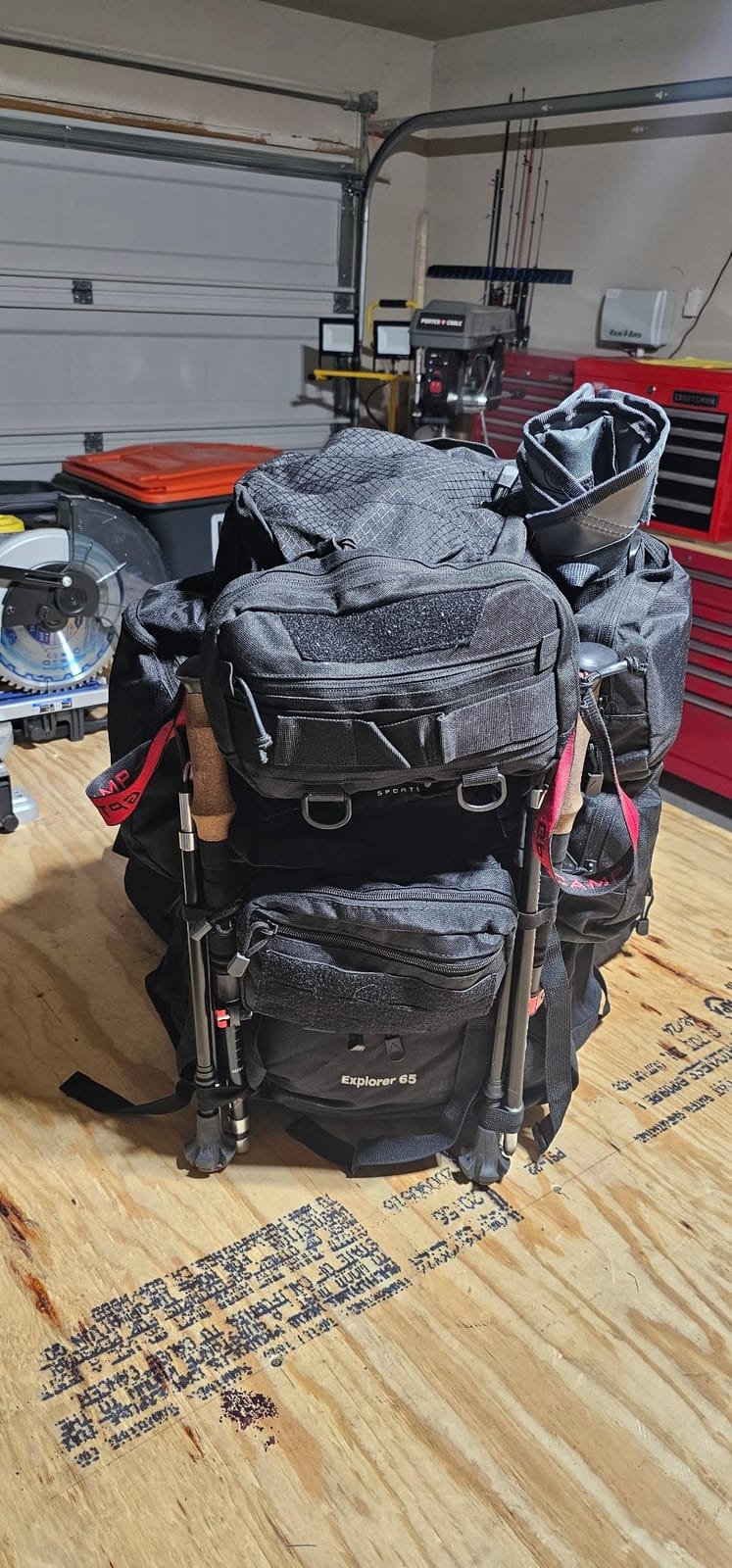
My pick for anyone buying exactly one first backpacking pack. The Explorer 65 does the unglamorous work well: an internal frame, a padded hip belt and a torso adjustment that moves through several positions, which is the combination that decides whether a long day feels fine or painful.
With 8161 reviews averaging 4.6 stars, this is the most widely owned pack in my list by a wide margin, and the feedback is consistent about the same things. Buyers like the number of pockets for the money, the balanced load distribution across men and women, and the fact that the pack adjusts enough to fit different body sizes in the same group.
Capacity is where it gets interesting for a beginner. This listing is the 65 litre version, and the same pack is also built at 75 and 85 litres, so the shape of the bag carries over even if your volume does not. The 600D polyester diamond ripstop with a polyurethane lining is a sensible durability tier for a first pack that will meet rock, sticks and rain.
The trade-offs are honest ones. The sleeping bag compartment is smaller than its dimensions suggest, and reviewers report that a loose bag in a bag is a tight squeeze. The included rainfly attaches and is water resistant rather than waterproof, so I would still carry a pack liner. At five pounds empty it is not the lightest option here, but it is comfortably within a range where a 30 to 35 pound beginner load still sits on the hips rather than the shoulders.
What a beginner should know before buying the Explorer 65
Expect this pack to swallow a lot of gear on your first outing. The six compartments and six pockets are generous for a first trip, and that generosity is exactly what leads beginners to overpack. Set your gear out on the floor first, then pack only what fits without compressing the bag in bag.
The limited lifetime warranty also matters more than it looks. Backpacking hardware takes a beating, and a pack that can be repaired or replaced changes how willing you are to carry it on rough approaches.
Who should look elsewhere
If your torso is unusually short, the Scout 55 in the next section has a short-torso fit and a lighter empty weight. If you are buying for someone who will be under five feet tall, test the hip belt wrap carefully, because a padded belt that sits below the pelvic bone transfers very little weight.
If you are certain your gear list will stay small, 65 litres will feel oversized. In that case the N NEVO RHINO 50L is a better volume match, and it weighs 2.4 pounds.
2. Teton 55L Scout – Best Value With Short-Torso Fit
Teton 55L Scout Internal Frame Backpack for Hiking, Camping, Backpacking, Travel, Rain Cover Included, Black
55L internal frame
4.1 lb packed weight
600D polyester ripstop
Short torso fit
Pros
- Removable aluminum stays that can be shaped to your back
- Multi-position torso adjustment with adjustable chest strap height
- 11 compartments and 5 exterior pockets
- Top-loading design with a gusseted closure
- Works as a carry-on in addition to hiking gear
Cons
- Sleeping bag compartment is tight for larger bags
- Rain cover attaches with velcro and is not fully waterproof
- Side mesh bottle pockets are a tight fit for standard bottles
The Scout 55 is the pack I point people toward when the number one question is fit rather than value, because it is built around a short torso. At 7372 reviews and 4.7 stars it also carries the highest average rating in this group, which is unusual for a pack at this tier.
What separates it is the frame. The aluminum stays are removable and can be bent to follow your back contour, so a packer who has been dumped by a fixed-stay pack gets a second chance. Combined with multi-position torso adjustment and an adjustable chest strap height, it fits a surprisingly wide spread of body sizes for a bag with one listed fit type.
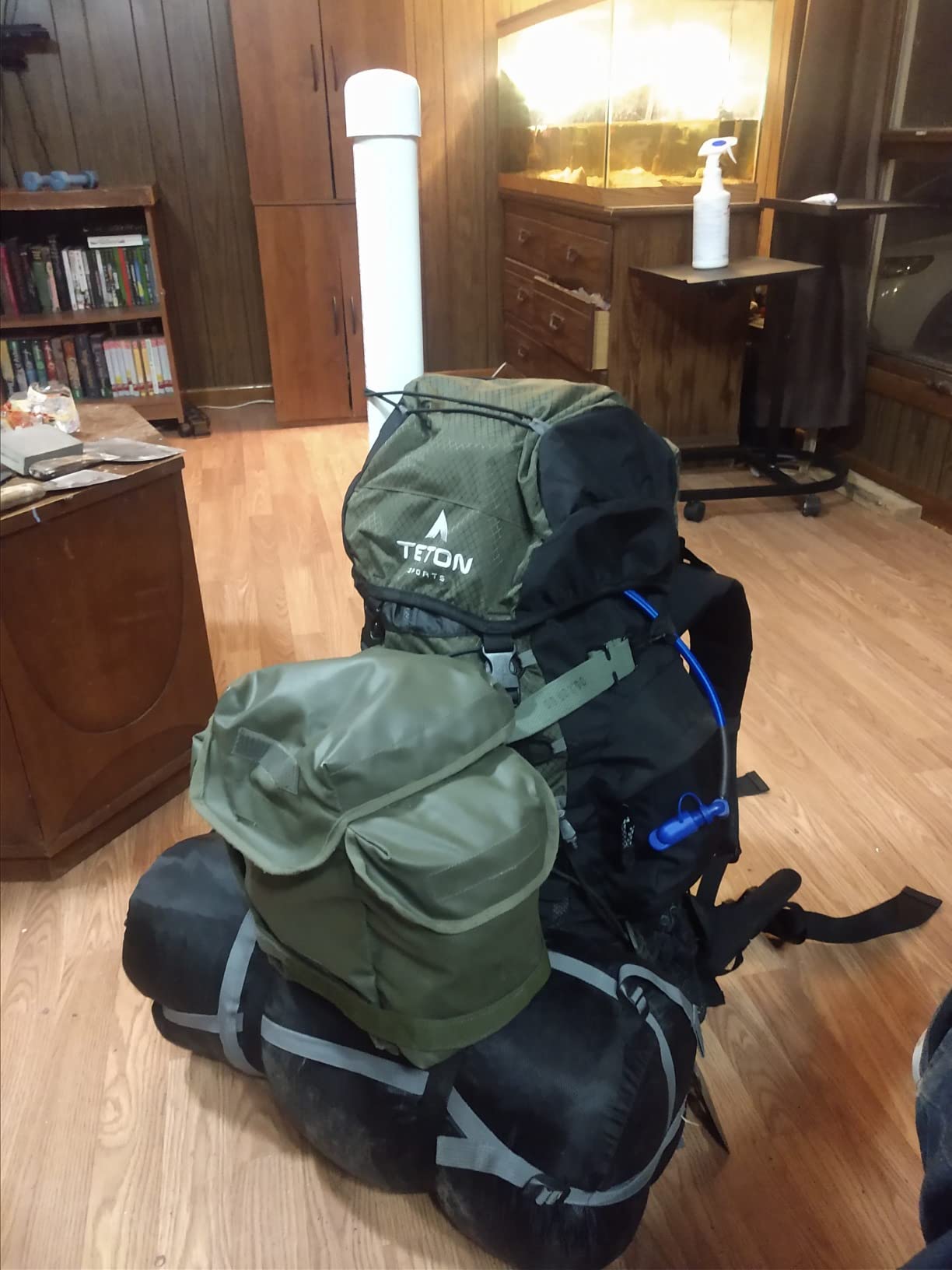
Organization is where the Scout stands apart from cheaper packs. Eleven compartments and five exterior pockets is close to the top of this list, and the top-loading design with an extra-gusseted closure keeps a wet tent from sitting against your back. The same pack is offered at 45 and 65 litres, so the layout transfers if you later decide you need more room.
Reviewers repeatedly note that the fabric and hardware hold up to rough use, and that owners use it for travel as well as hiking. Against that, the sleeping bag compartment is tight for a bag that has not been compressed, and the side mesh pockets are a squeeze for a standard wide-mouth bottle. Both are minor if you plan your packing in advance.
Why the Scout 55 fits more beginners than the price suggests
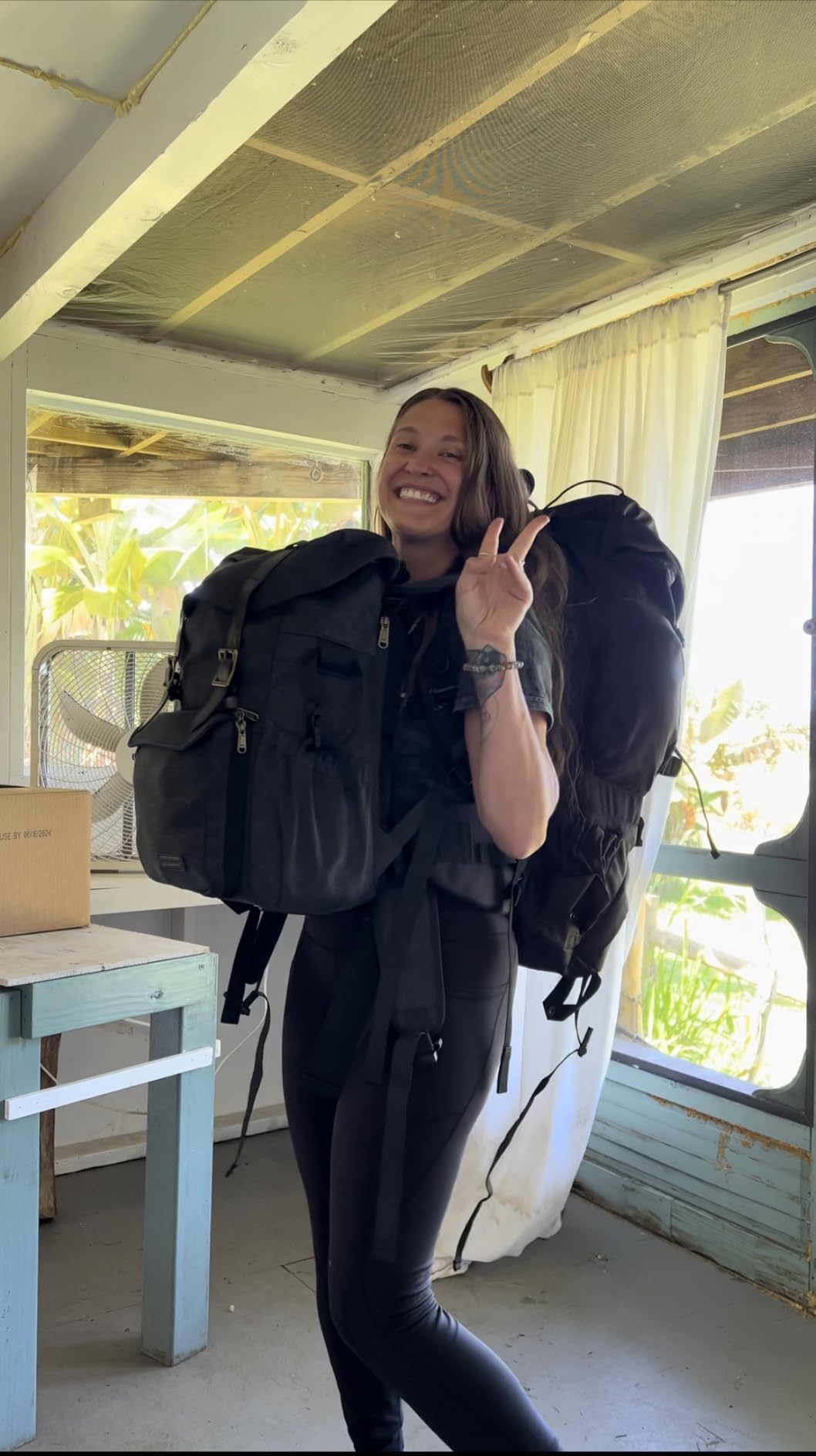
The four pound one empty weight is close to a pound lighter than the Explorer 65, and on a first two-night trip where your base weight is still climbing out of the bulky end, that difference is real. It is also light enough that the pack disappears on the scale when you are comparing it to a typical beginner load.
The removable stays also give you a repair path. If a stay bends or creases, you can pull it, reshape it and put it back rather than writing the pack off.
Where it falls short for a first trip
If your gear list is a 20 degree sleeping bag and a two-person tent with two doors, this volume is tight. Beginners often underestimate how much tent fabric takes up, and a 55 litre pack with a tight sleeping bag compartment leaves little slack for a bulky kit.
The included rain cover is attached with velcro and is not fully waterproof, so plan on a pack liner and treat the cover as a shower pass rather than a storm solution.
3. Amazon Basics 75L – Best Budget Volume for a First Long Trip
Amazon Basics Internal Frame Hiking Backpack for Camping and Backpacking, Adjustable Straps, Rainfly Included, 75 Liters, Black
70L plus 5L extension collar
5.1 lb packed weight
10 pockets across 5 compartments
Hydration sleeve
Pros
- Huge volume for the money with a 5L extension collar
- Zip-access bottom compartment opens into one large cavity
- Adjustable torso length with a padded hip belt
- Integrated rainfly stored in its own bottom pocket
- Light for a 75L capacity and usable as carry-on luggage
Cons
- No pockets on the hip belt
- Front and side pockets are shallower than they look
- Shoulder straps run long and some owners report slippage
This is the pack to buy if your first trip is five nights or longer and your gear is still a home-store kit. Seventy litres plus a five litre extension collar gives you room for a two-person shelter, a cold-rated bag and a full kitchen without a separate base bag hanging off the outside.
The design detail I like most is the zip-access bottom compartment. Unzipped, it creates one large cavity, which means you are not stacking a sleeping bag on top of a tent and then fighting the layout every morning. The dedicated internal hydration sleeve with hose routing over the right shoulder is a real convenience once you are walking long days in heat.
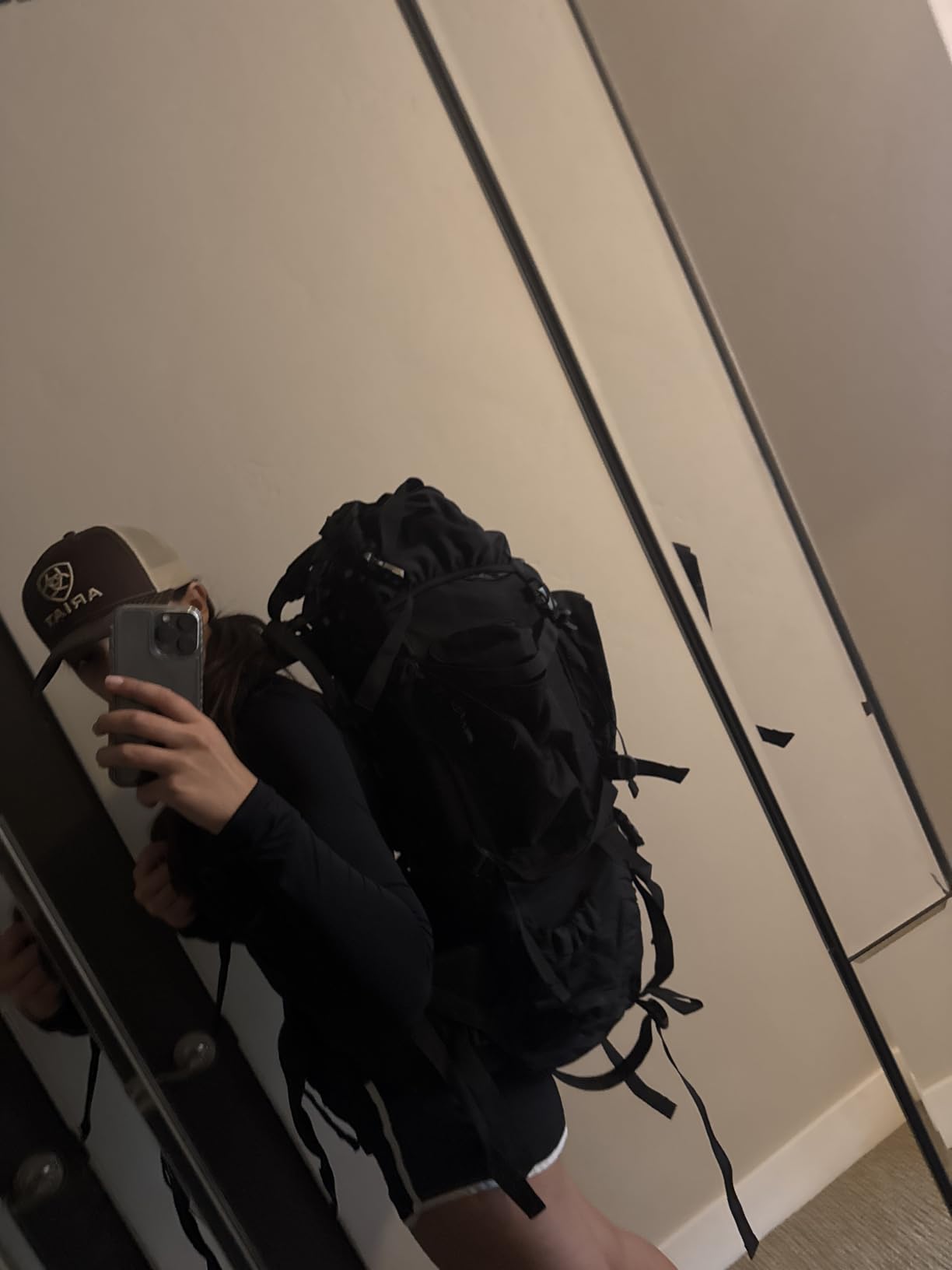
Reviews at 2641 and 4.4 stars describe years of reliable use, and several owners mention that it has outlasted a move and a series of trips. The open-cell foam lumbar pad with molded channels keeps air moving behind the pack, and the water-repellent coating plus the integrated rainfly means you are not searching a side pocket in a downpour.
The compromises are real though. There are no pockets on the hip belt, which is the single most-used feature on any pack for anyone walking with a phone and a snack. Several owners also point out that the front and side pockets look generous in photos and are not, and that the black-on-black layout makes them hard to find by feel. Straps may need trimming, and a few owners report slippage once fully loaded.
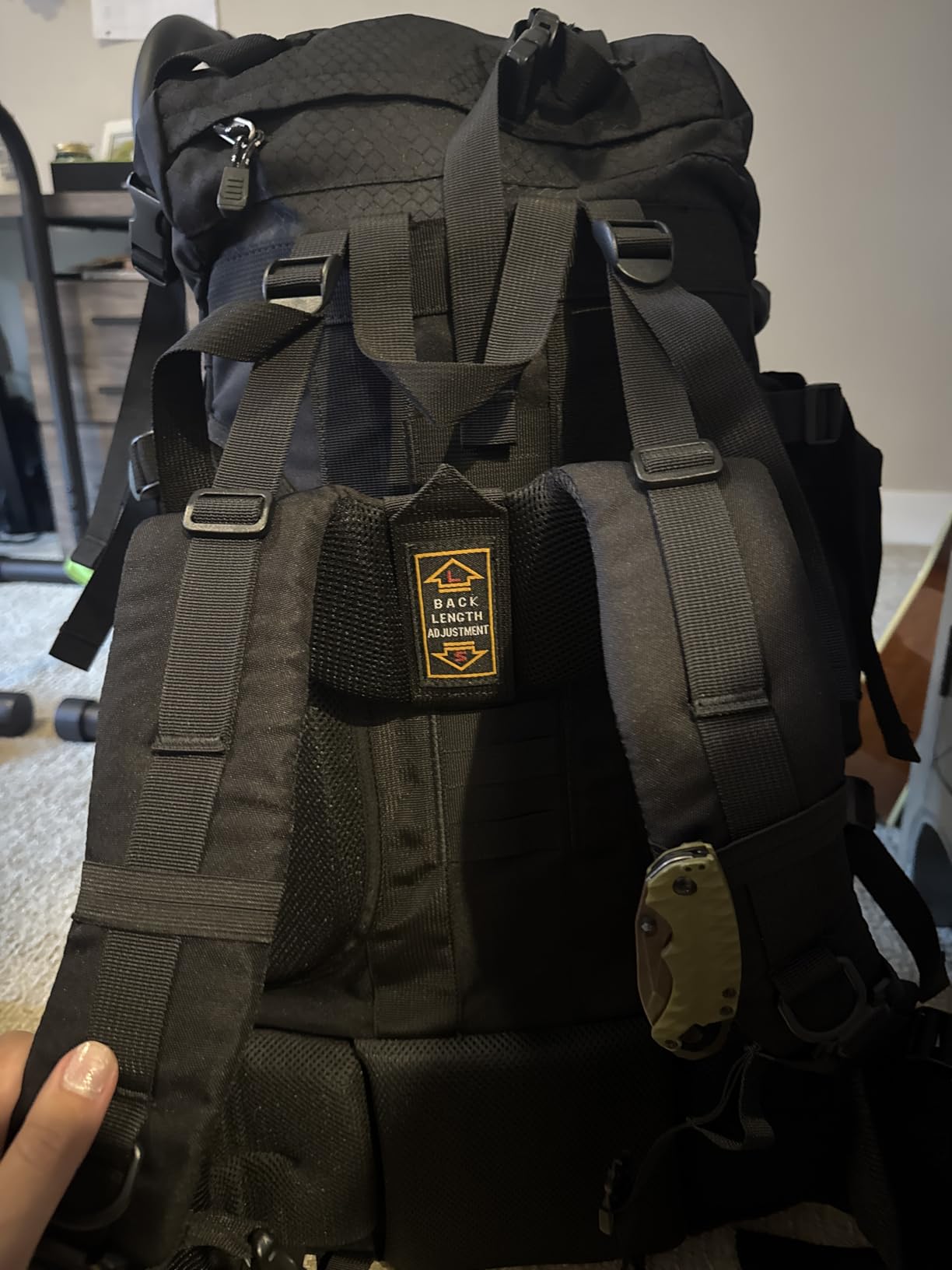
Why the volume is an advantage and a trap
Seventy-five litres is more room than a first-time packer needs, which means the pack will not force you to cut anything. For a longer first trip where you are not yet confident trimming your kit, that is a genuine benefit. Owners commonly report using it for a first multi-day walk with a full complement of gear.
It is also the easiest pack in this list to overpack. Because the extra volume is free, the instinct is to fill it, and a fuller bag is a heavier and worse-balanced bag. If you choose this one, cap your load deliberately rather than filling the collar.
Who this pack is wrong for
If your idea of a first trip is a single night close to a car, this is far more pack than you need and the straps will feel needlessly long. Pair it with the padded hip belt tightened properly and the lumbar pad doing its job, and it is comfortable, but you are carrying capacity you will not use.
If you plan to use a hip belt pouch for navigation, this pack has nowhere to put one. That is a fair trade for the volume, but worth knowing before you buy.
4. N NEVO RHINO 50L – Lightest Framed Pack That Still Carries Weight
N NEVO RHINO Internal Frame Hiking Backpack 50/60/65/70/80L with Rain Cover
50L internal frame
2.4 lb packed weight
100% nylon
12 pockets
Pros
- Weighs 2.4 pounds empty for a 50L framed pack
- Holds up under heavy loads with no strap or seam failures
- Padded dual wishbone hip belt moves weight off the shoulders
- Twelve pockets including a sleeping bag compartment and rain cover pocket
- Waterproof rain cover included
Cons
- Frame corners are unpadded and can dig into the lower back
- Non-adjustable frame suits medium to large builds best
- Waistband pockets only hold very small items
At 2.4 pounds empty, this is the lightest framed pack in my list, and it is the counter-example to the idea that a budget pack has to be a heavy one. Fifty litres is a sensible size for a two or three night trip, which makes it a good match for a beginner whose gear list is still one compressed layer away from being sorted.
The load-carrying story is genuinely good for the class. Reviewers report owners carrying very heavy loads without strap or seam failures, and the padded dual wishbone hip belt with a high-load waist buckle is the part that does the work. Independent top and bottom hip adjustments let you fine-tune where the belt sits, which is the difference between a belt on the pelvic bone and a belt on the waist.
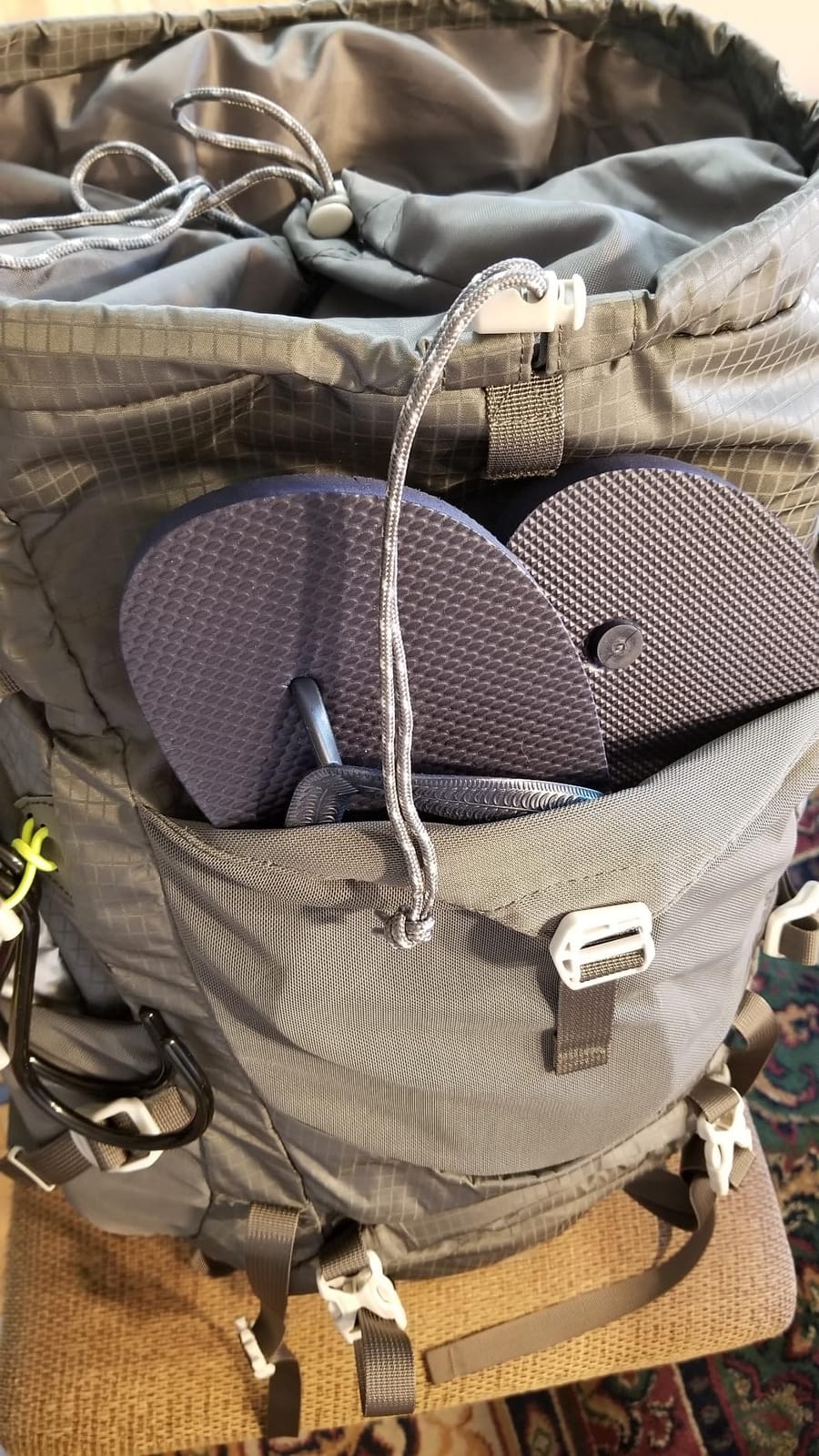
Twelve pockets is the highest count in this roundup, and the layout includes a separate sleeping bag compartment, a hydration sleeve and a rain cover pocket so you are not improvising storage. The stitching is reinforced at the shoulder straps, carry handle and base, which are the three points that actually fail first.
The limitation is fit. The frame itself is not adjustable, so the pack suits medium to large builds best, and several reviewers mention poor fit for small frames or short torsos. The semi-circle hollow back panel helps with head comfort when loaded, but the frame corners are unpadded and can rub the lower back if the fit is wrong. The waistband pockets are also very small, so treat them for a phone and nothing else.
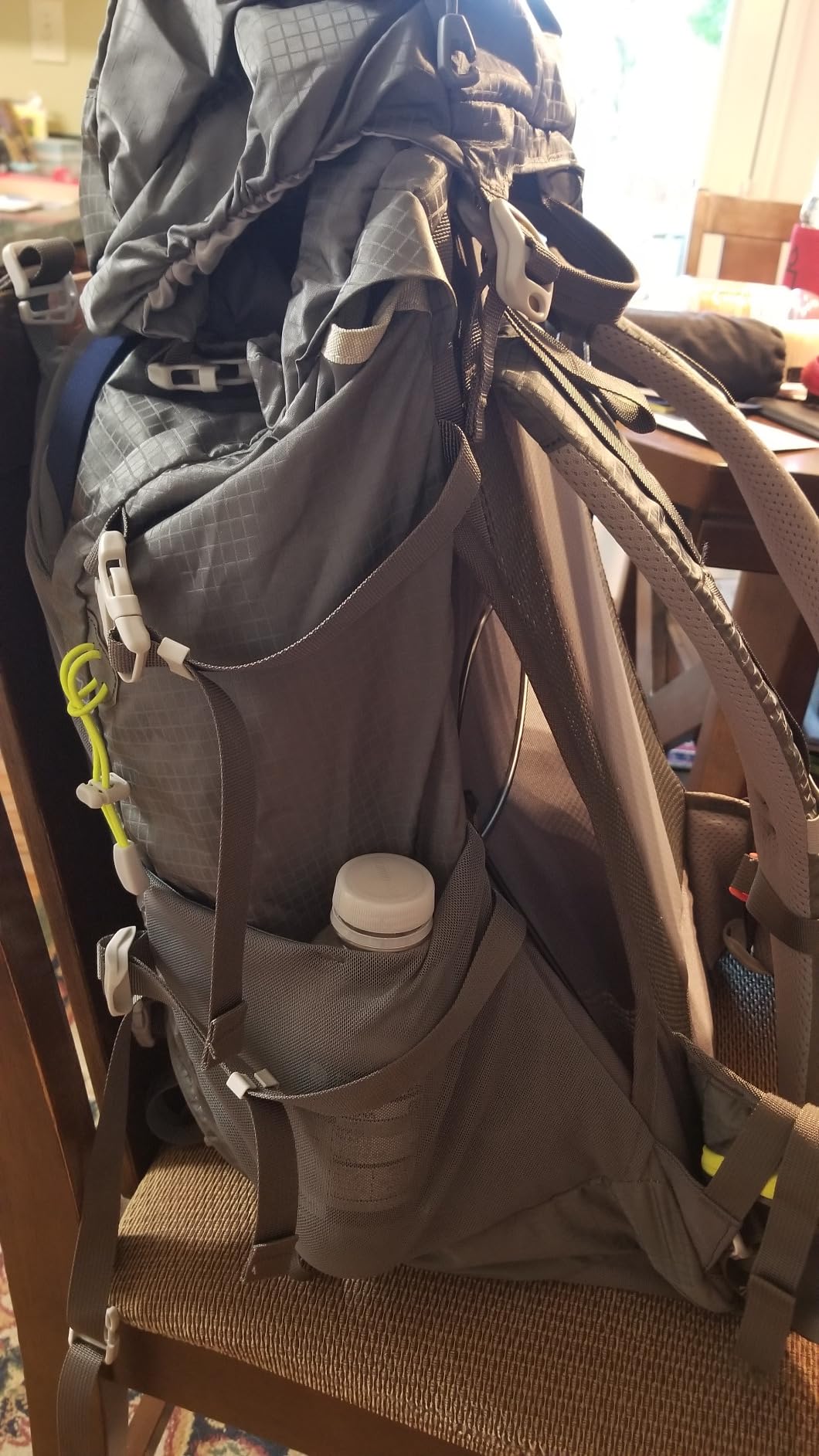
What 2.4 pounds actually buys a beginner
On a first two-night trip the pack is only part of the total weight, but it is the part you control from day one. Saving well over two pounds compared with a full-size framed pack is roughly the weight of a litre of water, and it is weight you do not have to shed elsewhere before you enjoy the trip.
That said, the light empty weight here comes partly from a fixed frame and thinner fabric, so it is not a free upgrade over a heavier pack. The N NEVO RHINO is lighter because it is simpler, not because it is built to carry a bigger load in the same way.
Who should skip it
If you have a short torso or a small frame, skip this one. The most useful fit features in this roundup are the multi-position torso systems on the Scout 55 and the seven-stage height adjusters on the Ubon 60L, and this pack has neither.
If you plan to carry a heavy load for several days, the limit is again the frame. It will hold a heavy load, but it will not shape itself to distribute one across a long trip the way an adjustable suspension will.
5. MOUNTAINTOP 70L – Best for Muddy Boots and Long Weekends
MOUNTAINTOP 70L Internal Frame Backpack, Large Capacity Backpacking Pack
70L internal frame
4.4 lb packed weight
Aluminum alloy frame plate
Side zip entry
Pros
- Side zippered entry reaches the main compartment fast
- Aluminum alloy frame plate handles heavy loads
- YKK zippers throughout
- Multi-position torso adjustment fits a wide range of heights
- Dedicated shoe and sleeping bag compartment at the base
Cons
- Nylon fabric is thin over years of heavy abuse
- Bladder compartment doubles as frame access
- Too many straps make the pack awkward once filled
The feature that separates this pack from every other entry in the list is the side zippered entry to the main compartment. On a wet morning you do not have to unpack the top of the bag to find a mid layer, which is the single biggest time saving a pack like this can offer.
It is also the one in this roundup with a dedicated shoe compartment at the base, separate from the sleeping bag storage. For a beginner on a long weekend with a pair of trail runners, that keeps wet boots away from your sleeping bag and your food, and it means you are not improvising a boot bag every morning.
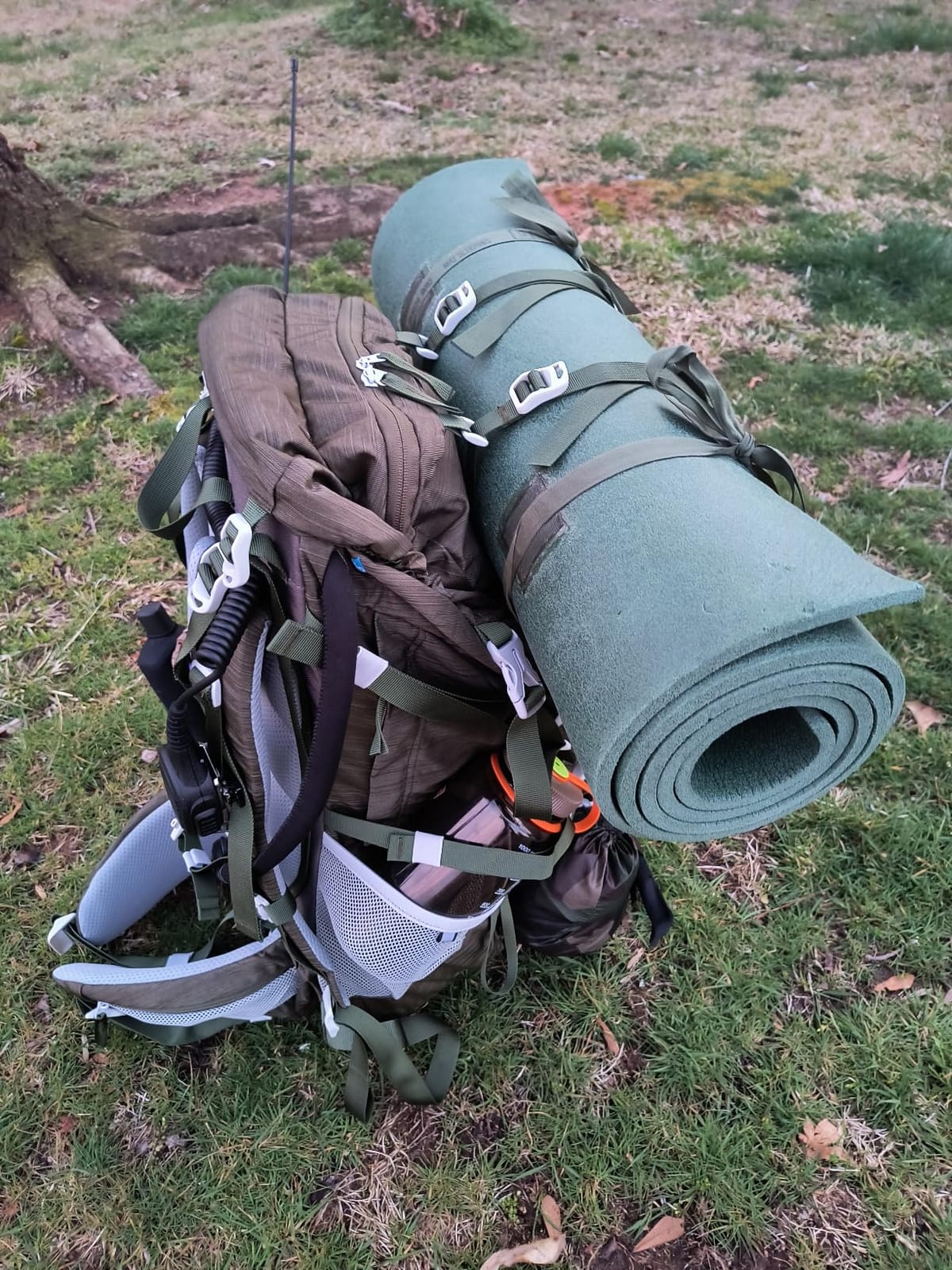
Multi-position torso adjustment fits a wide range of heights, and reviewers repeatedly call out the well-padded hip belt along with the thick back and shoulder padding. The YKK zippers are a genuine upgrade over the generic hardware on cheaper packs, and one long-term owner reports the fabric held up well over five years of use.
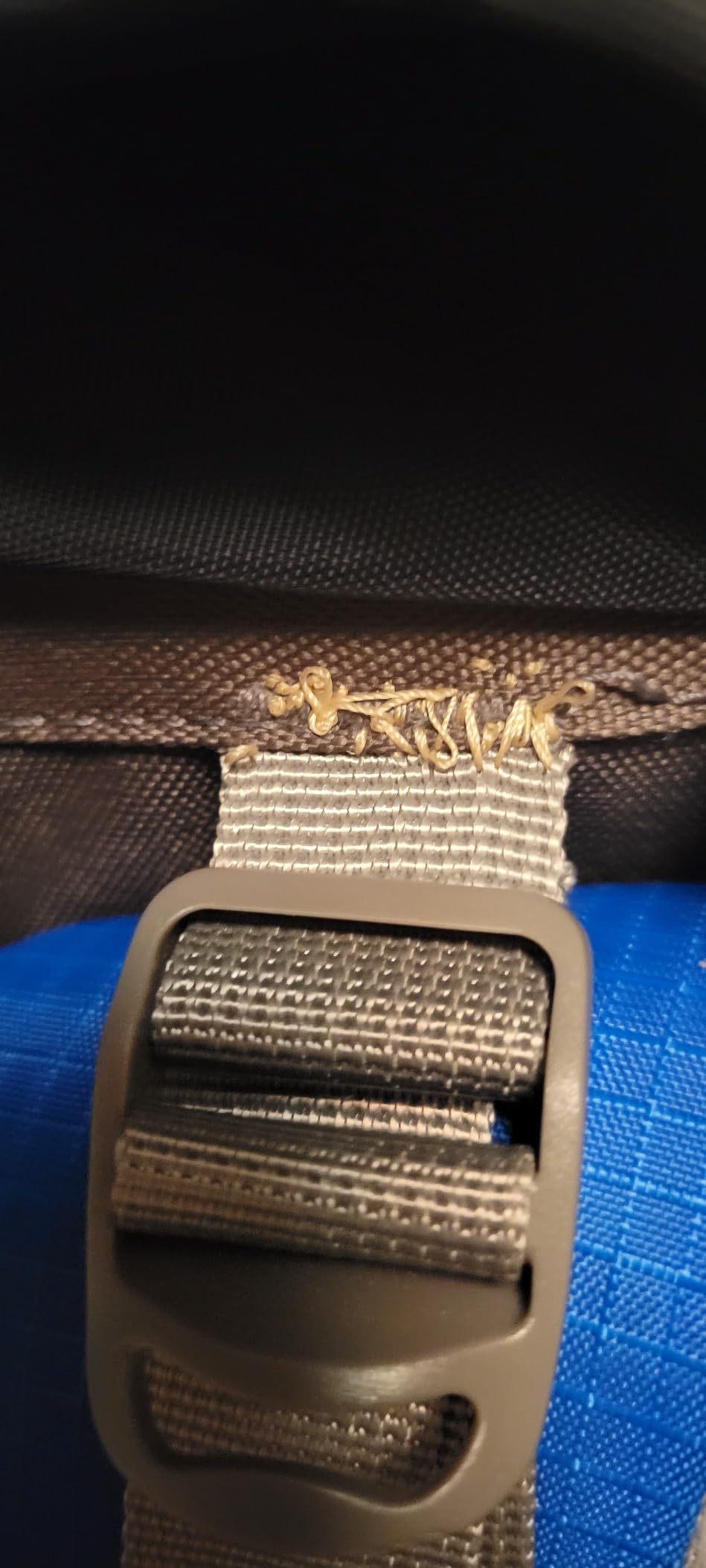
The drawbacks are about bulk. At 4.4 pounds with a tall profile, it can feel uncomfortable on long multi-day hikes when fully loaded, and the number of straps becomes awkward to manage once the bag is full. The nylon is thin enough that it may not survive years of heavy abuse in brush or rock, and the internal water bladder compartment doubles as access to the frame, so a bladder sits against the frame rather than against your back.
Is 70 litres too much for a first pack?
It is generous rather than excessive, provided your trip is a weekend or longer. With the base compartment taking shoes and the main cavity left for shelter and sleep system, the usable internal space is larger than the number suggests. For a single night, it is more pack than you need.
The side zip entry only helps if you actually use it. It is worth rehearsing at home, because the fastest access in the world is no help if you cannot find the zipper in the dark.
What to watch on a long trip
Reviewers are consistent that the pack is comfortable and adjustable, but also that it feels bulky when fully loaded on long days. If your load will run past 40 pounds, the 70 litre shape is working against you and a tighter pack that carries closer to the back would sit better.
Thin nylon also means checking for abrasion at the base and the shoulder strap anchor points after your first season. Repair early rather than waiting for a seam to open on a ridge.
6. Ubon 60L – Best for Fine-Tuning Torso Fit
Ubon 60L Lightweight Camping Backpack Internal Frame Backpacks Blue
60L internal frame
2.65 lb packed weight
600D nylon
7-stage height adjusters
Pros
- Seven-stage height adjustment gives a close custom fit
- Light at 2.65 pounds for a 60L framed pack
- Suspended air-mesh back panel spreads load and moves air
- Zippered waist pockets for a phone and snacks
- Integrated rain fly in a zippered bottom pocket
Cons
- Fewer listed pockets than higher-priced rivals
- Manufacturer does not publish dimensions for this listing
Fit adjustment is the whole story here. The seven-stage height adjusters on the back panel, held in place with a reinforced hook-and-loop area, give finer granularity than the multi-position systems on the other packs in this roundup, and that is exactly what a beginner who is between two torso lengths needs.
At 2.65 pounds for a 60 litre framed pack, it is the second-lightest option here and it does not sacrifice the parts that matter. The internal frame keeps the pack off your back and transfers load to the waist, and the suspended air-mesh back panel spreads the weight and moves air at the same time. Padded shoulder straps and dual hip belts help on rough terrain.
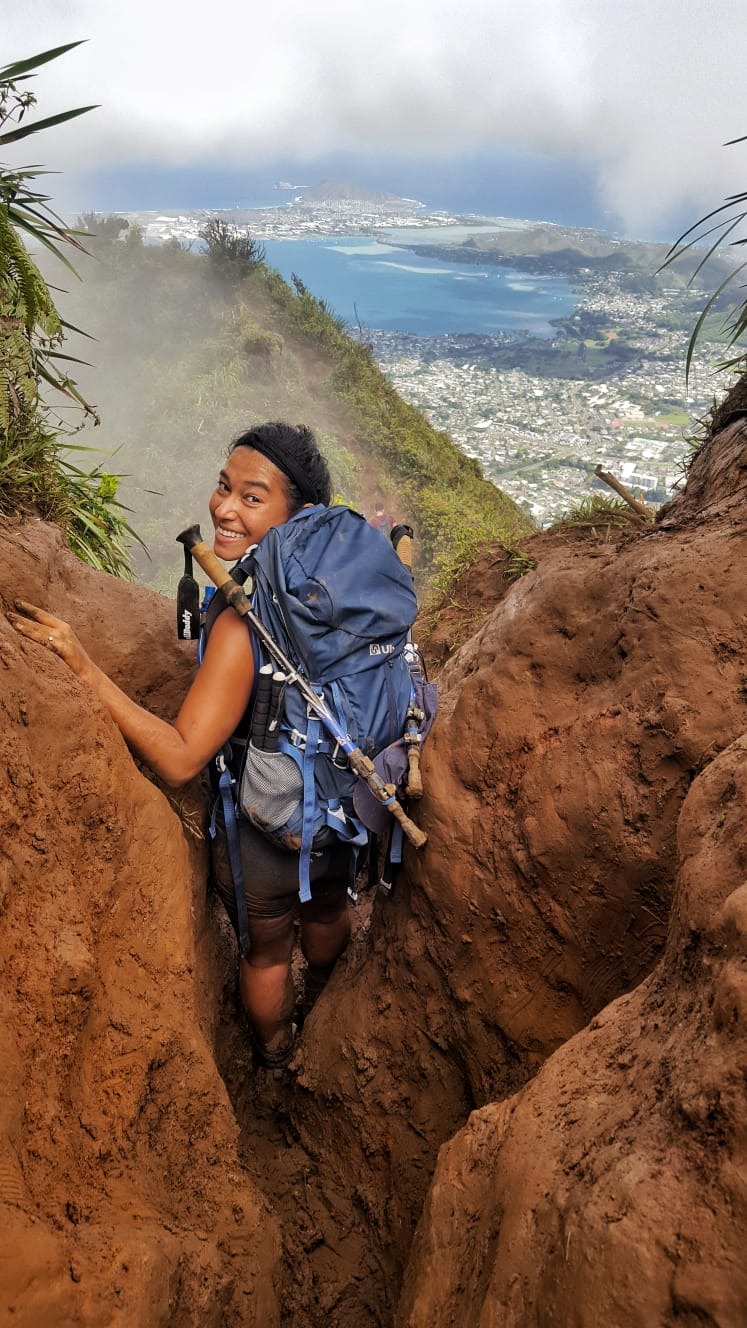
Two details separate it from the generic budget packs. The zippered waist pockets hold a phone and snacks where your hands can reach them without removing the pack, and the side zipper entry to the main compartment means you are not digging from the top. Trekking pole loops on both sides and a whistle on one shoulder strap are small things you notice on a long day.
The main limitation is organization. Only four pockets are listed, which is less than nearly everything else in this roundup, so you will spend more time repacking to find small items. The manufacturer also does not publish dimensions or a full spec sheet for this listing, so measure the packed size yourself if airline carry-on rules matter to you.
Why seven stages of adjustment matter for a first purchase
A beginner rarely knows their exact torso length and even less often measures it before buying. An adjustment system with more positions gives you room to correct a wrong starting point, which means one purchase can absorb a measurement you got slightly wrong rather than forcing a return.
The hook-and-loop hold is worth checking twice before you set off. It is reinforced, but it is still a hook-and-loop closure carrying a full load, and a loose panel changes the pack’s shape on your back.
Where the light build cuts back
Fewer pockets means more discipline, not less gear. If you like opening the main compartment ten times a day to find a phone charger, this pack will frustrate you, and the Ubon would be the wrong choice for that style of trip.
It is also a 600D nylon pack with water resistance rather than a waterproof fabric, so a pack liner is still worth the weight on your first trip.
7. Mardingtop 50L – Best for Organised, Modular Loads
Mardingtop 50L Hiking Backpack,Backpacking Backpack with Rain Cover
50L internal frame
3.9 lb packed weight
600D polyester
MOLLE webbing
Pros
- Suitcase-style front zipper opens the whole main compartment
- MOLLE webbing accepts pouches and small items
- 600D polyester with YKK buckles and zippers
- Padded adjustable sternum strap and hip belt under 4 pounds
- Rain cover included
Cons
- Only four pockets in a class where most have eight or more
- 50L is small for adult multi-day gear
- Hydration bladder is not included for the dedicated compartment
If your frustration with other packs is that you cannot see what is inside them, this is the pack to look at. The large front zipper opens the main compartment like a suitcase, so the whole cavity is visible at once and you can find a single glove without unpacking the top three layers.
The second feature that makes it different is MOLLE webbing. Most packs in this roundup have external attachment loops; this one has a full webbing grid that accepts tactical pouches and small items, so a beginner can add storage as their kit changes instead of buying a bigger pack later.
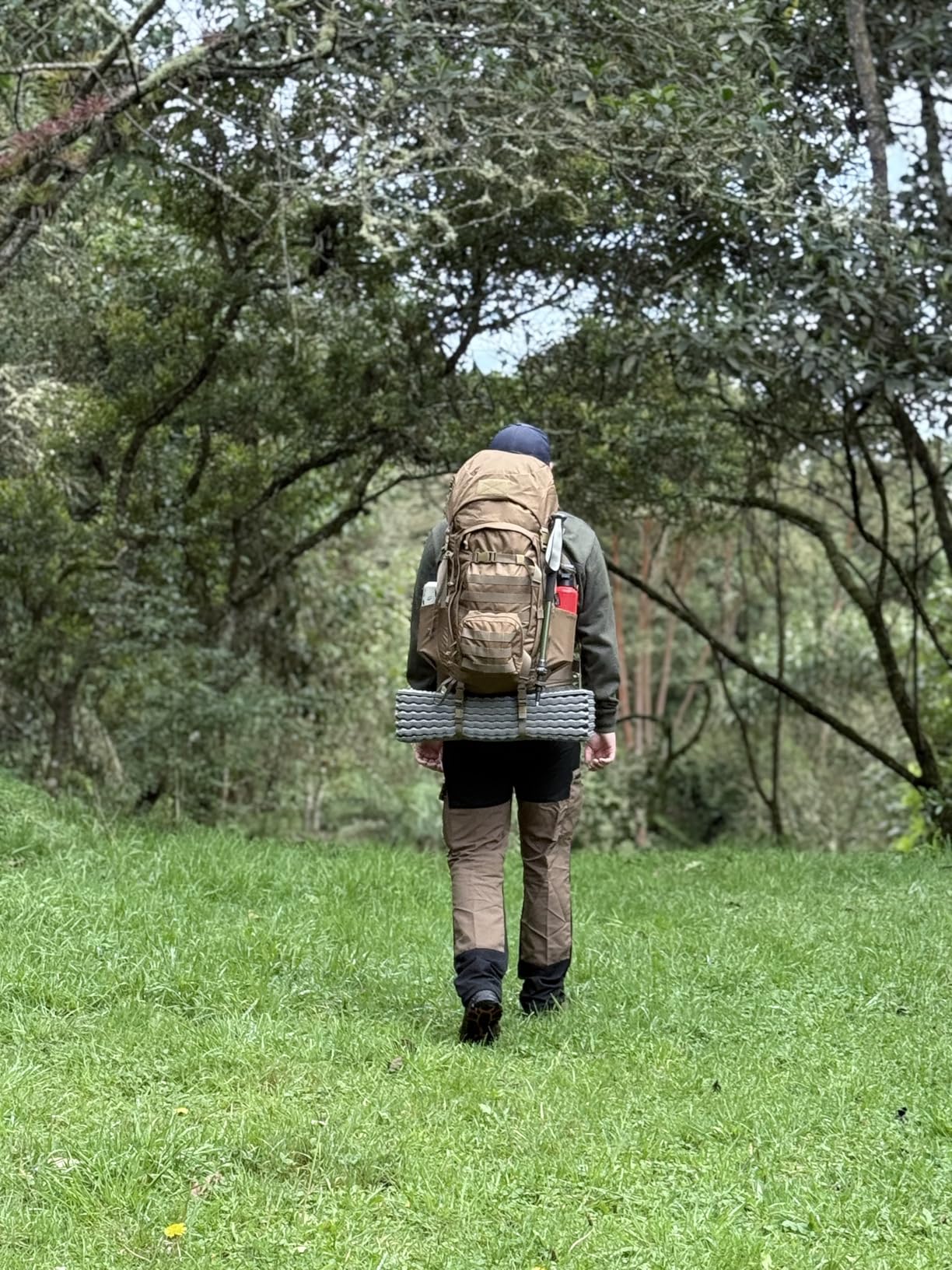
At 602 reviews and 4.6 stars with 75 percent five-star ratings, the feedback is focused on the same three things: the opening, the YKK hardware and the modularity. The breathable mesh bearing system on the back panel sits the pack away from your spine, and the padded sternum strap and hip belt adjust enough to dial in a load.
Two limits are worth planning around. Fifty litres is on the small side for adult multi-day gear, especially with a beginner’s bulky uncompressed kit, and there are only four pockets, fewer than most internal frame packs in this class. The hydration compartment is sized for a five litre bladder or a 15.6 inch laptop, but the bladder is not included, which catches people out on the first trip.
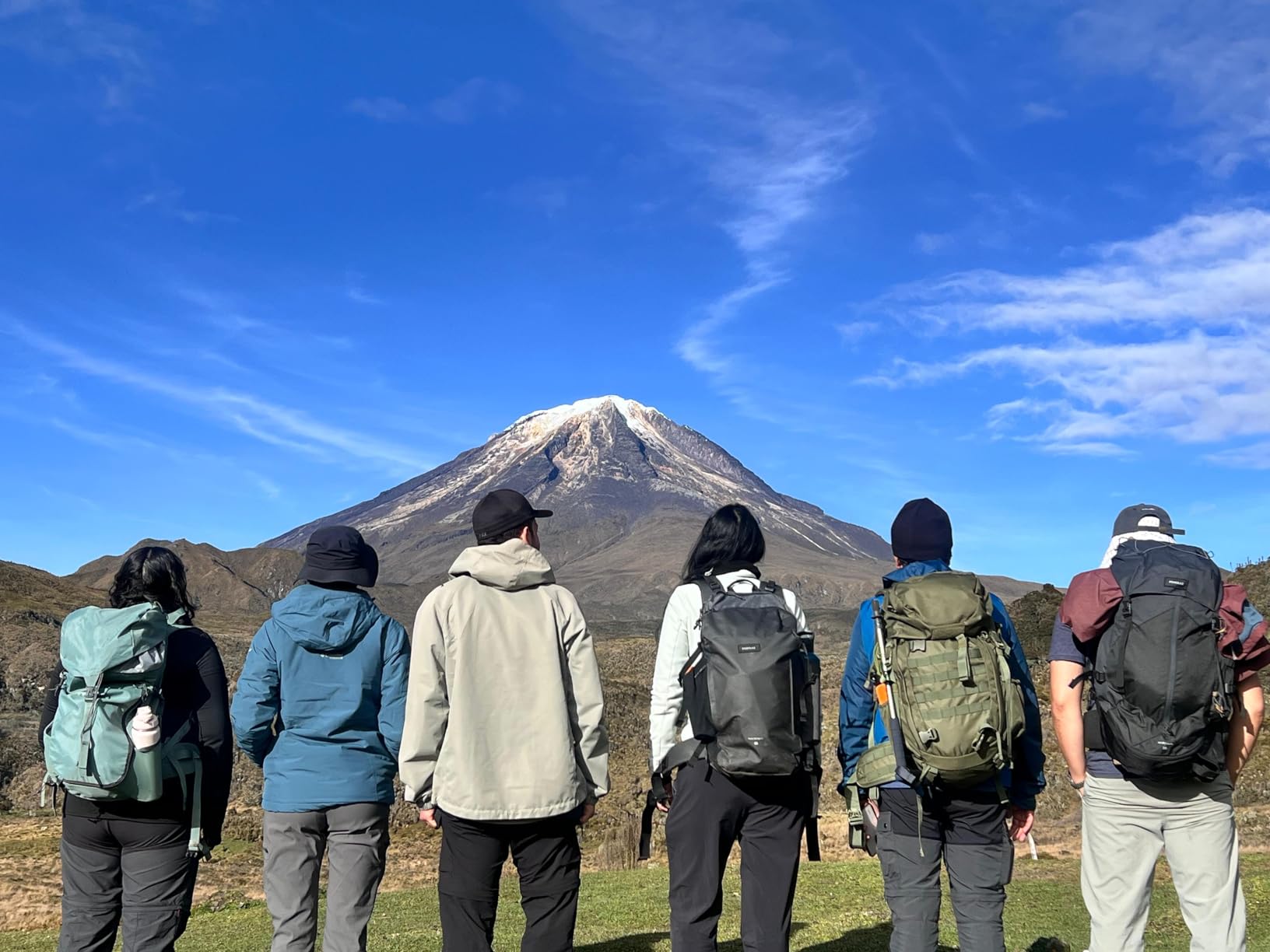
When a suitcase opening genuinely helps
It matters most on cold or wet mornings, when digging to the bottom of a top-loaded pack means removing layers you will want to put on. With this pack you unzip the front, see everything, and close it again. That is a real saving over a weekend, not a small convenience.
The MOLLE grid also makes this a good first pack for someone who will keep adding small items over their first year. A first aid pouch, a phone pouch and a trash bag clip all attach without sewing or buying a second bag.
Where 50 litres will frustrate you
If your first trip is three nights with a two-person shelter, this is tight. The volume is honest, the shape is efficient and the openings are good, but there is simply less room than a 60 or 70 litre pack once a beginner’s tent and bag are inside.
Plan for compression. Because access is easy, you can leave things uncompressed at the top of the bag and compress the bottom, which is the reverse of what you do in a top-loaded pack.
8. Osprey Atmos AG 65L – Best for Heavy Starter Gear
Osprey Atmos AG 65L Men’s Backpacking Backpack, Black L-XL
65L capacity
4 lb packed weight
Anti-Gravity suspension
All Mighty Guarantee
Pros
- Anti-Gravity suspension with a molded hipbelt and lumbar cradle
- Best-in-class adjustability and load transfer
- Build quality backed by the All Mighty Guarantee
- Side zip access plus a floating top lid with lash points
- Sleep system compartment with removable divider and pad straps
Cons
- Bulkier and heavier than ultralight packs of the same capacity
- Sizing is specific to torso size and must be checked
- Premium price is out of reach for some beginners
This is the pack I would buy if I knew my gear list was going to stay heavy for the first few years, or if I was carrying equipment for two people. The Anti-Gravity suspension with a molded hipbelt and lumbar cradle is the most refined load transfer in this roundup, and it is the reason a heavy beginner load sits still.
At 422 reviews and 4.7 stars with 86 percent five-star ratings, it has the strongest satisfaction ratio of any pack here. Owners consistently cite the suspension, the precise torso adjustability and the durability as the reasons to pay more, and the warranty is the strongest on offer.
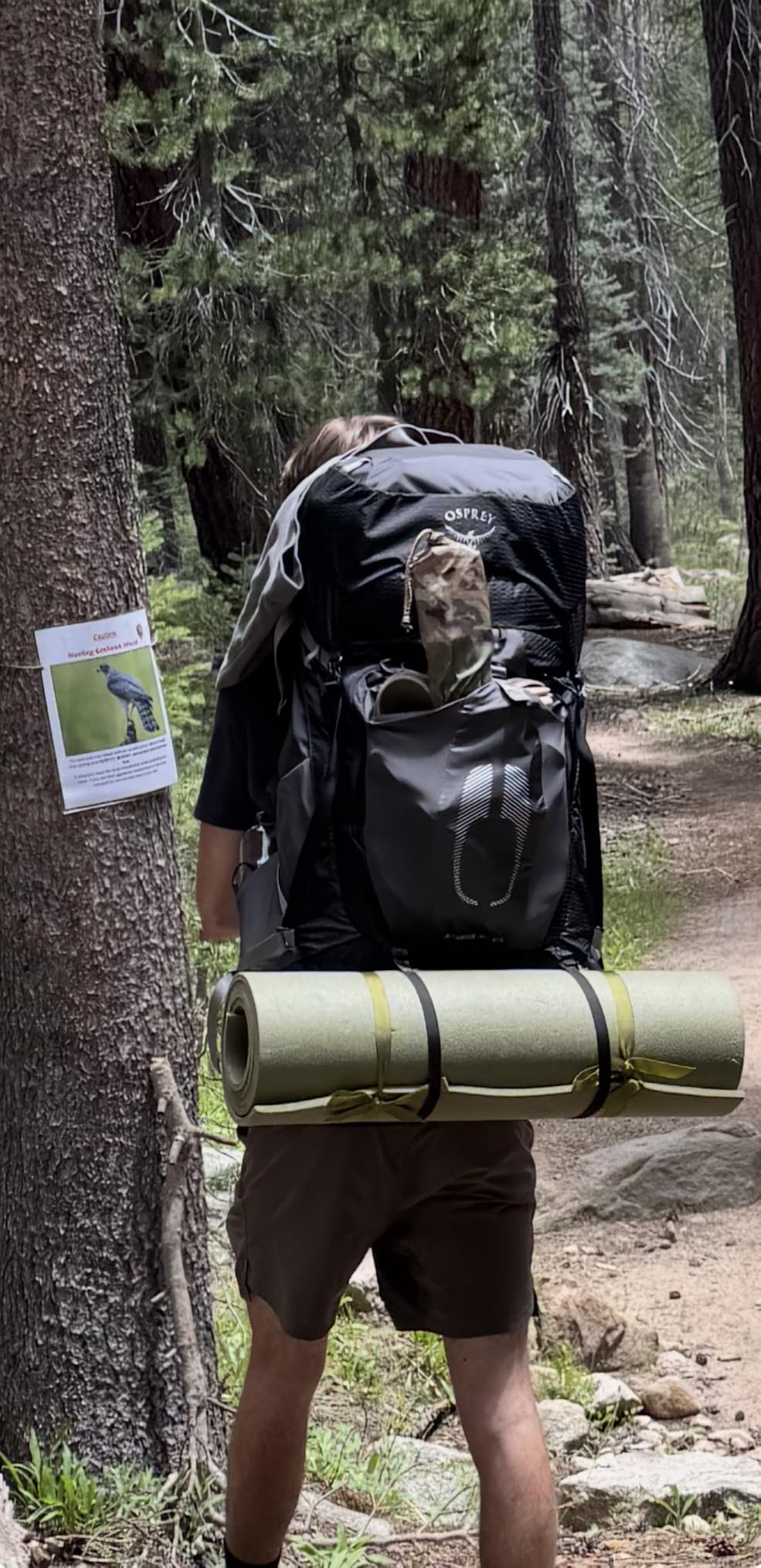
The storage design is the sort you notice on a five-day trip. A floating top lid with lash points, a curved zip access on one side of the panel, and a zippered sleeping bag compartment with a removable divider and removable sleeping pad straps, so the pack can carry a tent, a bag and a pad without stacking them awkwardly. The included raincover uses PFAS-free DWR and bluesign approved materials, which is unusual at any price.
Be honest about the trade-offs. At four pounds it is bulkier and heavier than lighter packs of the same capacity, and the fit is specific to torso size, so the Small-Medium and Large-X-Large options need checking against your measurement before you commit. For a beginner on a tight budget the cost is out of reach, and comfort is something cheaper packs in this list can still deliver.
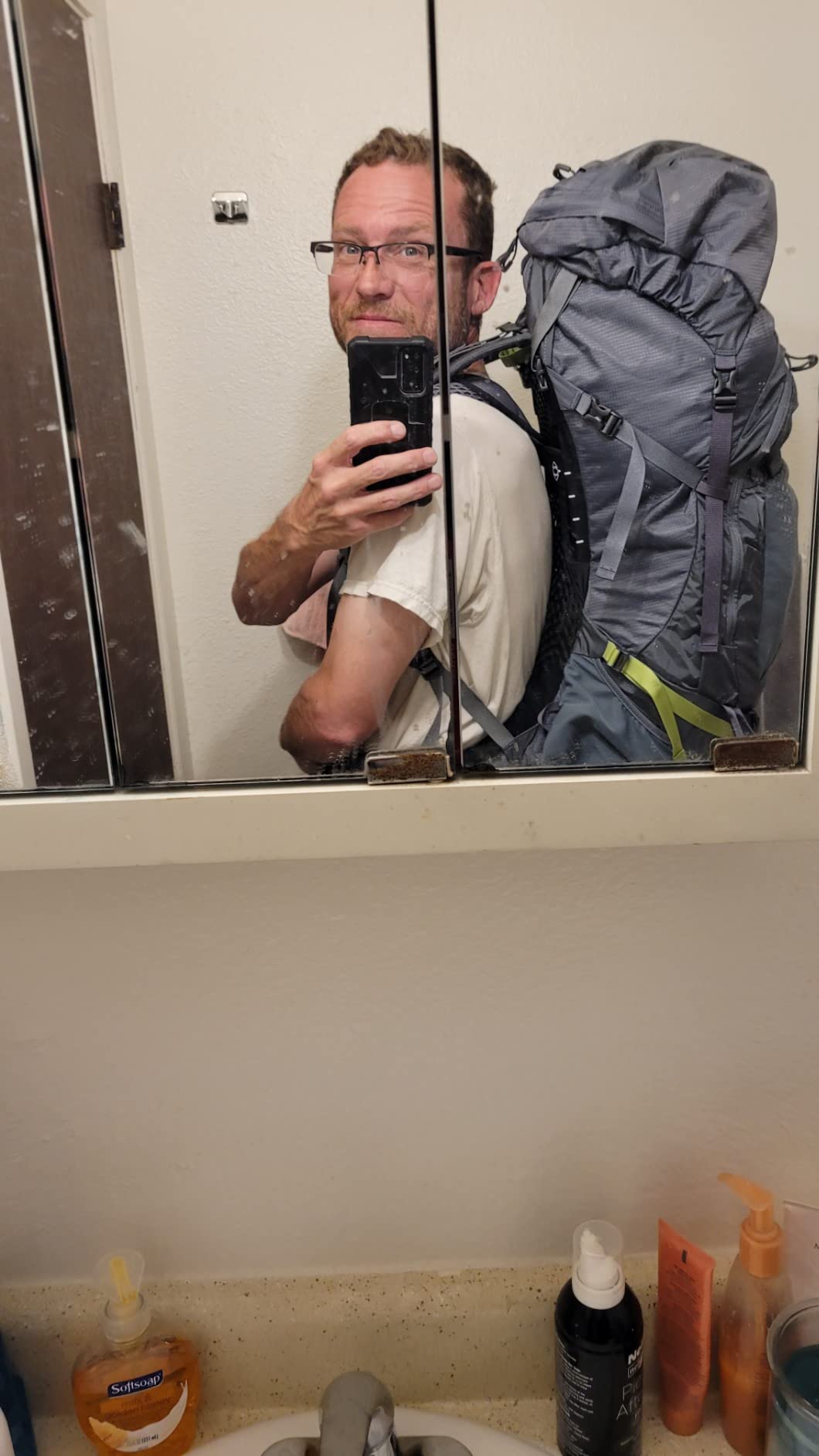
When heavy gear makes this the right first pack
Group gear is the case where it earns its place. Canvas tents, a bear canister, a stove, two litres of water and a full food carry for several people adds up quickly, and a suspension this refined is what keeps a load like that from turning into shoulder pain on the second day.
The sleeping pad straps are also worth noting. They hold a pad against the outside of the sleeping bag compartment so you are not putting a rounded object into the middle of your load, which is a small design decision that noticeably improves how a heavy pack sits.
When it is the wrong first purchase
If your first trip is one night with a lightweight kit, this pack is more suspension than you need and you pay for the comfort in bulk and weight. The same money buys a pack you will carry faster with a smaller load.
Fit is the other caution. Because the pack is built around two torso sizes, getting it wrong is not something you can adjust away later, so measure first.
9. Osprey Rook 65L – Best for Hot Weather and Heavy Sweat
Osprey Rook 65L Men’s Backpacking Backpack, Gray OS
65L internal frame
3.7 lb packed weight
Adjustable AirSpeed backpanel
Integrated raincover
Pros
- Light at 3.7 pounds for a 65L pack while supporting heavy loads
- Adjustable AirSpeed backpanel moves load to the hipbelt and ventilates
- Integrated raincover means nothing extra to carry
- Daylite compatible for use as a daypack
- Zippered sleeping bag compartment with floating divider
Cons
- Less padded than the heavier suspension options here
- Basic pocket layout with no lid stash
- One size listed
- so fit depends on the adjustment range
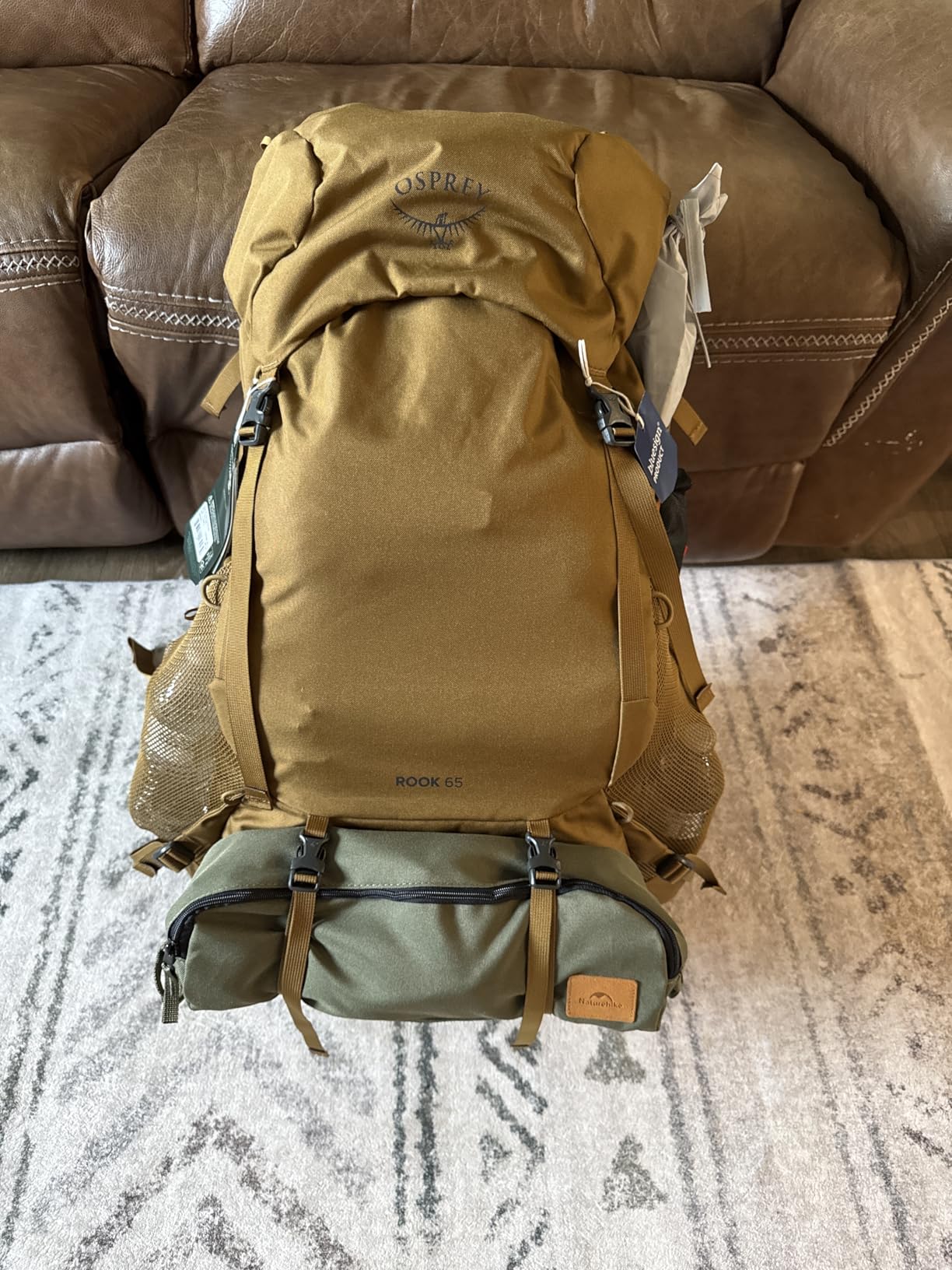
The Rook 65 is the pick if your trips happen in summer heat. The adjustable AirSpeed backpanel is a ventilated foam panel that moves the pack off your spine, and owners consistently single out the reduced sweating as the reason the pack works in warm conditions.
At 336 reviews and 4.6 stars with 82 percent five-star ratings, this is a simpler sibling of the Atmos AG that keeps most of the load transfer benefit at a lower weight and a lower cost. Three point seven pounds for a 65 litre pack is the lightest framed volume in this roundup, and the LightWire frame still moves the load onto the hipbelt rather than the shoulders.
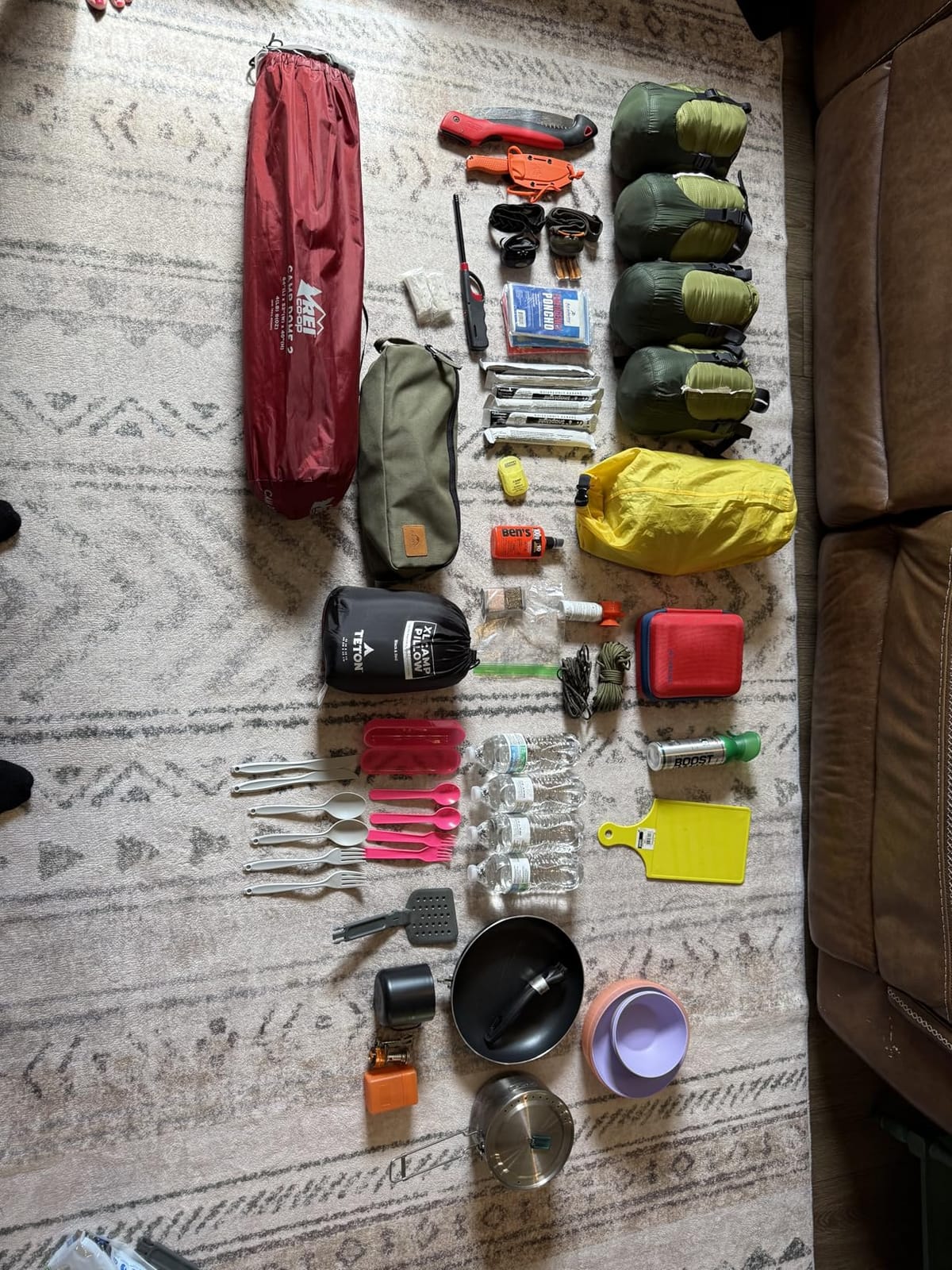
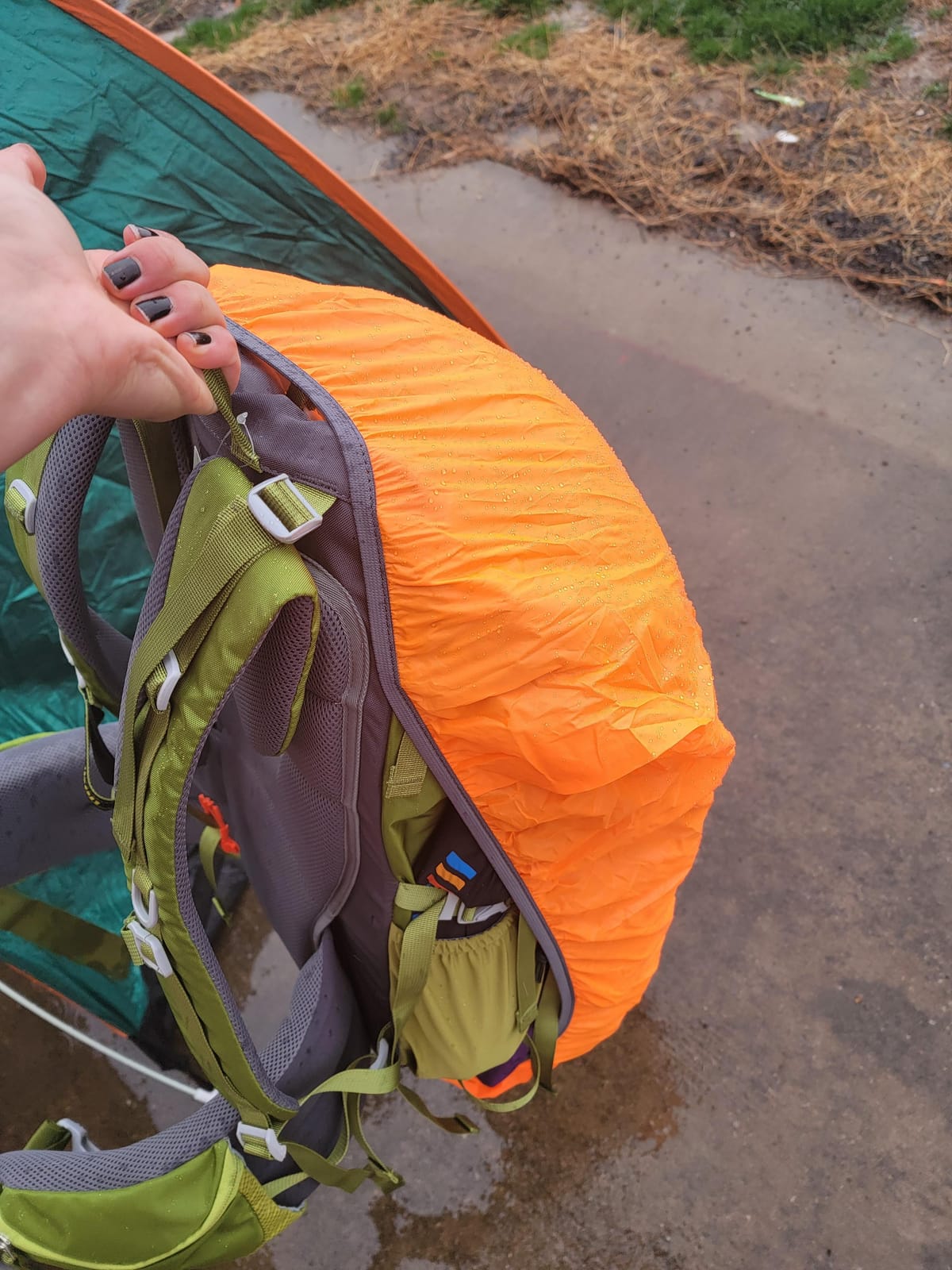
The integrated raincover that stows in its own pocket is a genuine convenience. There is no separate cover to buy, no pocket to check for it in and nothing extra to remember before a storm, which is one of those details that only matters until the first time you forget the cover at home.
What you give up is padding and organisation compared with the heavier packs here. The layout is uncluttered by design, with six pockets, and the sleeping bag compartment uses a floating divider rather than the fuller sleep system arrangement on the Atmos AG. The listing also shows a single size, so the fit depends on how far the backpanel adjustment travels for your torso.
Is ventilation the feature beginners underrate?
Yes, particularly if you have carried a daypack on a summer walk and ended up with a sweat-soaked shirt. A ventilated backpanel costs a small amount of weight and a small amount of contact, and in exchange the air gap between the pack and your back is the difference between a comfortable afternoon and a shirt you peel off at camp.
Ventilation also matters more on a first trip, because beginners walk slower and stop more often than experienced backpackers. A slow pace in a heavy pack generates more heat than a fast pace in a light one.
Where you might want more from it
If you carry a genuinely heavy load for many days, the lighter padding here will feel less supportive over a long day than the Anti-Gravity suspension in the Atmos AG. The LightWire frame transfers the load, but it does not shape it the same way.
For storage, six pockets is fewer than most of this roundup, and there is no front stash panel. Plan on a small organiser pouch if you like quick access to snacks and a phone.
10. Kelty Coyote 65L – Best for Long Weekends With a Heavy Load
Kelty Coyote 60-105 Liter Internal Frame Backpack – Hiking, Backpacking, Travel, Hydration Compatible, Fully Adjustable (65L / Dark Olive)
65L capacity
4 lb 10 oz packed weight
Amp Flow ventilated panel
Carry range 30 to 55 pounds
Pros
- Owners report 45 to 60 lb loads feeling manageable
- Fit Pro torso adjustment is quick to change on the trail
- Amp Flow ventilated back panel
- Ten pockets plus top and bottom zip access
- Advanced perimeter frame with an aluminum stay
Cons
- Side zip pockets sit in front of the bottle netting and widen the pack
- No rain cover included
- Heavier than lighter packs of the same capacity
The Coyote 65 is built around a stated carry range of 30 to 55 pounds, which is a heavier working load than most beginner packs advertise. Long-term owners report that loads of 45 to 60 pounds feel manageable, and that is the reason this pack sits at the end of my list rather than near the top.
Fit Pro technology allows quick on-the-fly torso fit adjustment, so you can change the fit when you add wet clothing or a water-heavy load without unpacking anything. The advanced perimeter frame with an aluminum stay keeps the load stable in a way that lighter single-stay frames do not, and the Amp Flow back panel adds ventilation on top of that.
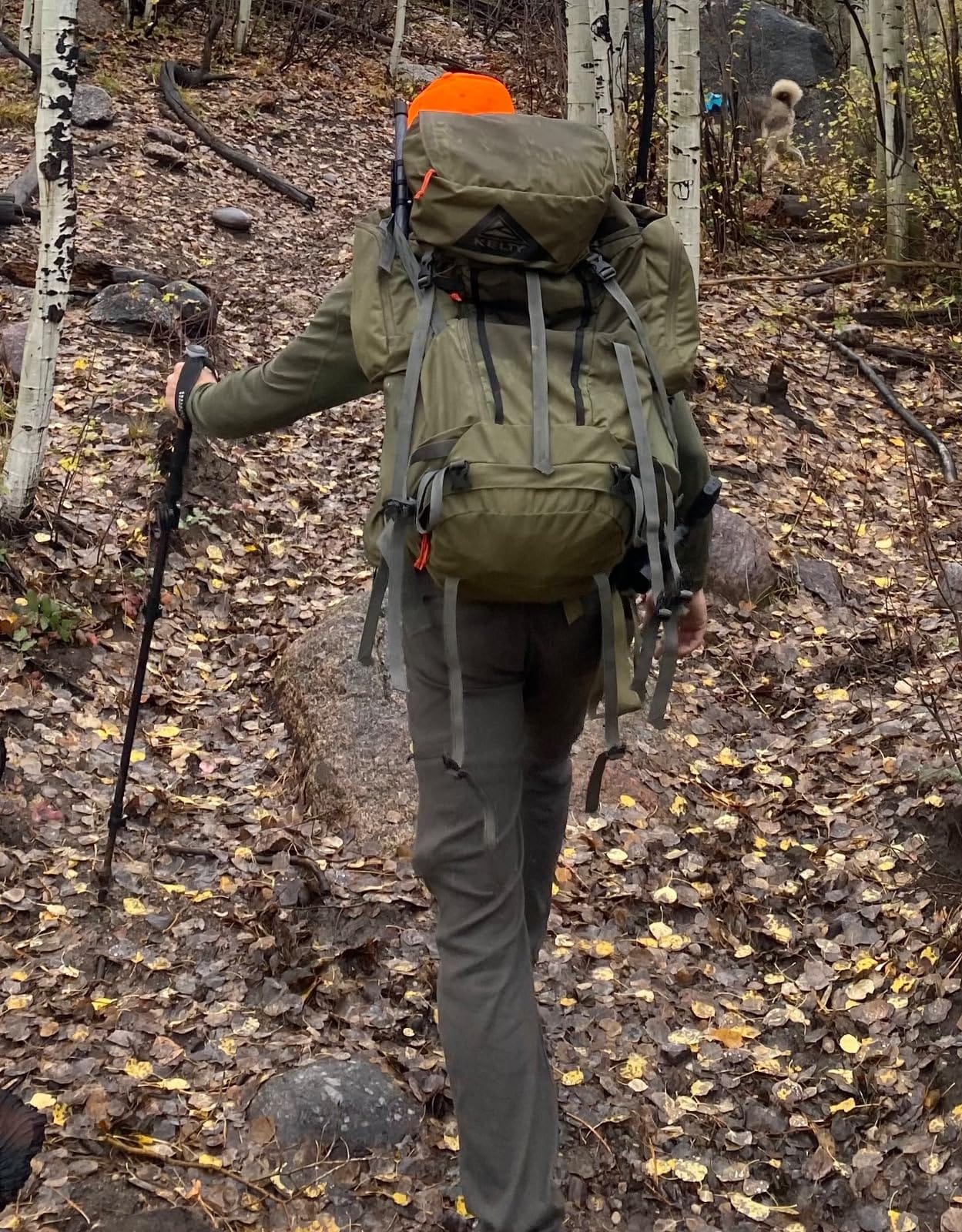
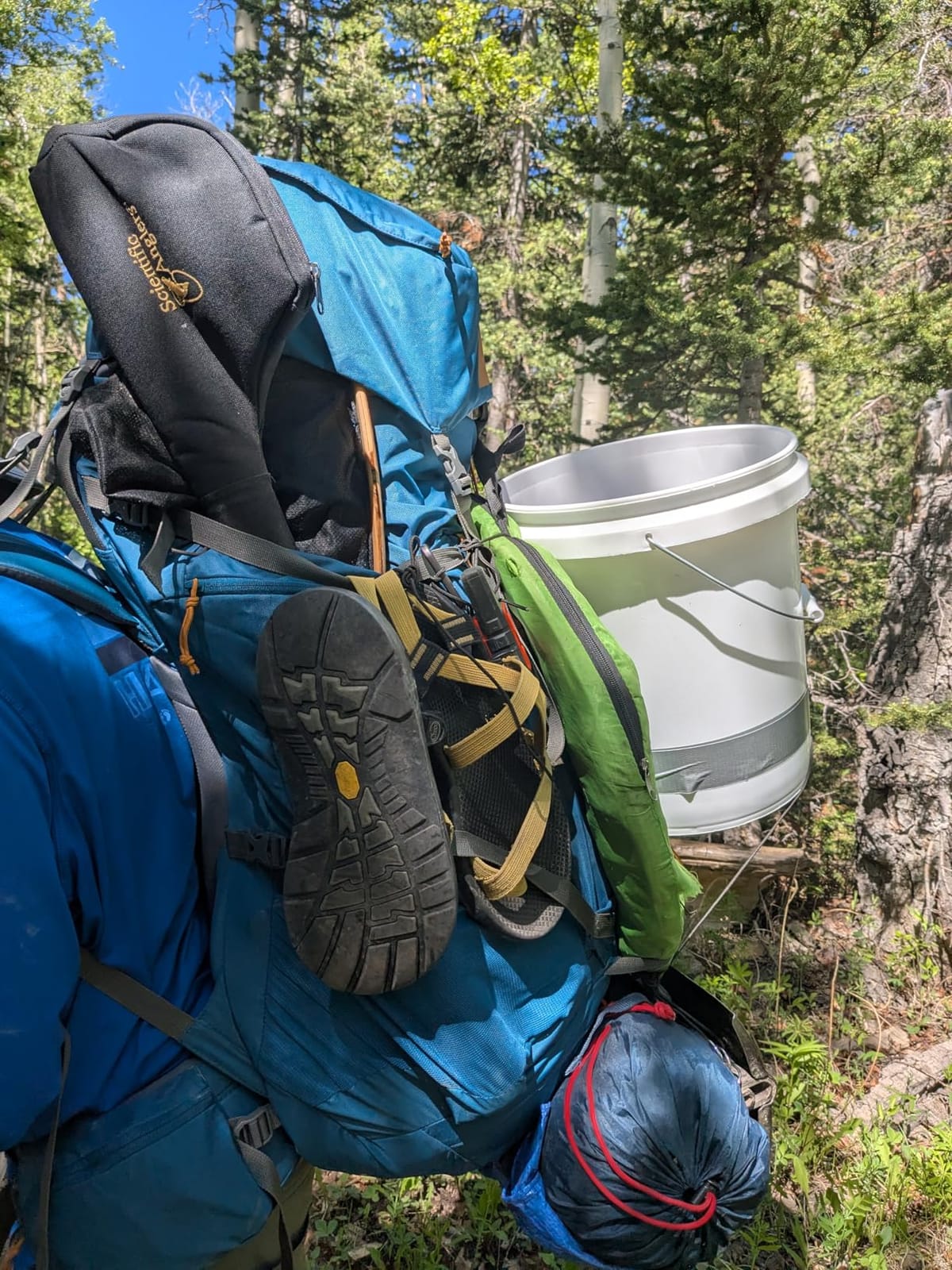
Storage is the best in this roundup for a working pack. Ten compartments and ten pockets, Kelty signature wing pockets, two front zippered pockets, daisy chains, a J-zip top loading design and wide zippered bottom access mean gear is reachable without repacking the entire bag. Reviewers describe it as durable through snow, rain and heavy brush with no failures.
The most common complaint is the side zippered pocket placement, which sits in front of the water bottle netting and makes the pack wider than the listed dimensions suggest. It also does not include a rain cover, which you will need to add separately, and at 4 lb 10 oz it is the second-heaviest pack here. It is also the least water resistant of the group, so a pack liner matters more here than anywhere else.
When a 55 pound carry range is the deciding feature
If your load will be in that range, the frame and hip belt are built for it and a lighter pack will feel worse by the third day. That covers group gear, canvas tent weight, a bear canister, or a beginner who has not yet trimmed anything from their kit and does not plan to.
Ten pockets also means a pack you can actually organise. On a five-day trip with a kitchen, clothing layers for changing weather and a sleeping system, the difference between a pack you can find things in and one you cannot is the difference between a good week and a frustrating one.
What you give up
You give up weight, rain protection and a clean profile. The side zip pocket placement widening the pack is an annoyance rather than a fault, but it means this is not the pack to take on a trip where narrow width matters.
With no rain cover included and the fabric not rated water resistant, this is the one in this roundup I would pair with a pack liner from day one, whatever the forecast says.
How to Choose Your First Backpacking Backpack
Choose by capacity and fit first, and treat every other feature as secondary. The two mistakes that ruin a beginner’s first trip are buying too much volume and buying a pack whose torso length does not match yours, and both are decided before you look at pockets or fabric.
Pack volume is the one number you must get right
Pick 50 to 55 litres for one or two nights, 60 to 65 litres for three to five nights, and 75 litres or more only if you are carrying group gear or winter kit. Below 40 litres you are into day-hiking territory rather than backpacking.
The reason beginners overshoot is that they measure their gear, not their gear compressed. A new tent, a new sleeping bag and a stove you have not used yet occupy far more space than their published specs suggest, which is why 50 to 65 litres is a wide but honest range for a first pack.
Torso length decides whether a pack fits at all
Torso length is the vertical distance from the top of your pelvic bone to the base of your neck, and it is the number that decides whether the pack sits on your hips. Measure it with a flexible tape against a wall, keep the tape horizontal at the top of your hip bones, and note where it meets the base of your neck.
Then compare that number against the size range of the pack. If a pack has a single listed fit, you have far less room for error than one with multi-position or staged height adjustment, which is exactly why packs like the Scout 55 and the Ubon 60L suit more beginners.
If you buy online, load the pack with around 30 pounds of books, tighten the hip belt until it sits on your pelvic bone, and walk for fifteen minutes. If your shoulders ache before your hips do, the pack is too tall for you.
The hip belt carries most of the weight
Most of your load should go through the hip belt onto your pelvis, not through the shoulder straps onto your neck. A padded, well-shaped belt that wraps your body is worth more than any amount of extra fabric, and buyers who skip this check are the ones who blame the pack for a sore back.
Look for a belt with pockets you can reach while walking, and adjust it while loaded rather than while empty. On the Amazon Basics 75L there are no hip belt pockets at all, which is a specific thing to know before you buy it.
Ventilation matters more in warm climates
A suspended or ventilated back panel holds the pack off your spine and moves air, at the cost of a small amount of weight and contact. In summer heat this is the difference between a comfortable pack and a soaked shirt, and it matters more for beginners because slower walking produces more heat.
On moderate weather, a simpler foam panel is fine. Treat ventilation as a comfort feature rather than a performance one, and decide it after capacity and fit are settled.
Fabric and denier tell you how long it lasts
Higher denier means thicker, more abrasion-resistant fabric. Most of the packs in this roundup use 600D polyester or nylon with reinforced stitching, which is a sensible place for a first pack that will meet rock, sticks and rain. Lighter fabrics and ultralight packs trade abrasion resistance for weight, and beginners usually have less reason to make that trade.
Also check the warranty. A limited lifetime warranty, which the Teton packs carry, changes how willing you are to be rough with the bag.
Organization saves you from repacking at every stop
Count pockets, but count them where your hands can reach them. Top access suits a kit you rarely need mid-day, side zip access suits a jacket, and a suitcase-style opening suits anything where you need to see the whole cavity at once. Look for a top stash pocket for the things you want without stopping.
Be suspicious of pockets that only look large in photos. Owners of the Amazon Basics 75L point out that the front and side pockets are shallower than they appear, and pocket count alone does not tell you whether they are usable.
Waterproofing, rain covers and pack liners
Most packs in this roundup are water resistant, not waterproof, and a rain cover protects the outside without protecting the contents from a wet tent. Use a pack liner. It costs almost nothing, adds very little weight and is the single cheapest insurance a beginner can buy.
Rain covers vary a lot. The Osprey Rook 65 and the Amazon Basics 75L include an integrated one that stows in its own pocket, the Kelty Coyote includes none, and reviewers describe the covers on the Teton packs as basic rather than fully waterproof.
Day hiking pack vs backpacking pack
A backpacking pack is an internal frame pack with a load-bearing hip belt built to move 30 to 40 pounds off your shoulders, while a day hiking pack is a smaller, lighter, often frameless bag for water, a layer and lunch. The frame, the hip belt and the load limit are the three differences that matter.
That is why the top-ranking r/hiking thread about a first multi-day trip finds people asking whether a hiking pack they already own is adequate. A day hiking pack is a genuinely different product, and the r/onebag community’s answer, that a bag built to do both is a more awkward and heavier version of each, is the honest one. If you can only afford one pack, buy the framed one and use a small stuffable bag for day hikes.
Women’s and plus-size fit
Fit is about torso length and hip width, not colour. Measure both before you buy: a pack whose belt does not wrap past the widest part of your hips will sit too high, and no amount of torso adjustment fixes that. A belt that reaches far enough to wrap fully and a torso range that matches your measurement are what you need.
Many packs here use multi-position adjustment, which widens the effective fit range without a separate women’s pattern. A pad under the belt can help a narrow frame, and a lumbar pad can fill a gap on a long torso.
In-store fitting vs buying online
Getting fitted in a gear shop is worth the trip if you can, because a loaded fitting tells you more in ten minutes than a spec sheet ever will. Buy online if the shop is far away, but do the books test at home before you keep the pack, and use the return window.
Renting is also an option many beginners overlook. Borrowing or renting a pack for one weekend tells you more about how a pack carries weight than any amount of reading, and it costs a fraction of a new one.
Your first pack vs your fifth pack
Your first pack should be comfortable and durable enough for the load you are actually carrying now, which is a bulky, heavy, uncompressed beginner load. Most beginners are better served by a comfortable framed pack now and a lighter one in a few years than by starting ultralight and struggling.
Size for growth cautiously. Buying 65 litres for 40 litres of gear leaves slack, and slack leads to overpacking. If you expect to switch to a lighter, smaller kit within two years, a 50 to 55 litre pack with a good suspension will be a pack you keep, and many of them resell well when you move on.
Packs We Considered and Passed On
Day hiking packs such as the Patagonia Terravia 22L and the REI Co-op Trail 25 were not on this list because they have no frame, no load-bearing hip belt and no meaningful load limit, which makes them a different product rather than a cheaper one. Cheap frameless packs were passed on for the same reason: without a hip belt and a frame, the weight lands on your shoulders within an hour.
We also passed on ultralight packs for this particular article. They are excellent, and several weigh less than a kilogram, but a beginner carrying an uncompressed starter load in a stripped-down ultralight pack is the single most common way a first trip ends in sore shoulders. That is a good second or third purchase, not a first one.
Frequently Asked Questions
What is the best backpack for a beginner hiking?
For a beginner buying their first backpacking pack, the Teton 65L Explorer is the strongest all-round choice: an internal frame, a padded hip belt and multi-position torso adjustment at a low cost. The Teton 55L Scout is the better pick for a short torso, and the Amazon Basics 75L gives you the most volume for a first trip of several nights.
What is the difference between a hiking backpack and a backpacking backpack?
A hiking backpack is a small, light, often frameless bag for water, a layer and lunch, usually 20 to 30 litres with no real load limit. A backpacking pack is an internal frame pack of 50 to 70 litres with a load-bearing hip belt, a stated load limit, and a suspension built to move 30 to 40 pounds onto your hips. The frame, hip belt and load limit are the three differences that matter.
What is the big 3 in backpacking?
The big 3 are a tent, a sleeping bag and a sleeping pad. They are the items that let you sleep safely away from a car, and they dominate the weight and bulk of a beginner’s first gear list. The backpack is the fourth most important purchase because it determines whether that gear is comfortable to carry.
What size backpacking pack do I need as a beginner?
Buy 50 to 65 litres for a first backpacking pack. One or two nights suits 50 to 55 litres, and three to five nights needs 60 to 65 litres. Buy 75 litres or more only if you are carrying group gear or winter kit, because extra volume makes overpacking more likely rather than less.
How do I measure my torso length for a backpacking pack?
Stand against a wall and find the top of your hip bone. Run a flexible tape horizontally from that point to the base of your neck and read the distance. Compare it with the size range of the pack, and if you are between sizes choose the pack with more adjustment positions rather than the one with the longer listed torso.
How heavy should a beginner’s fully loaded pack be?
A comfortable first target is 20 to 25 percent of your body weight, which for most adults is roughly 30 to 40 pounds with a full beginner kit. A new backpacker often starts higher, so a pack with a stated carry range of 30 to 55 pounds gives you room to grow into a lighter kit rather than forcing you to carry awkwardly.
Should a beginner buy an ultralight pack?
Usually not for a first pack. Ultralight packs trade padding and frame support for weight, and a beginner carrying bulky, uncompressed gear needs the suspension more than the saving. Buy a comfortable framed pack first, trim your gear over a season, and move to a lighter pack when your load drops.
Do I need to buy a backpacking pack in-store, and can I test one I ordered online?
A fitted session in a gear shop is worth the trip if one is nearby, because a loaded fitting shows fit problems in minutes. If you buy online, fill the pack with around 30 pounds of books, tighten the hip belt until it sits on your pelvic bone, and walk for fifteen minutes. Return it if your shoulders ache before your hips do.
Do I need a pack liner as well as a rain cover?
Yes, and the liner matters more than the cover. A rain cover keeps water off the outside of the bag but does nothing about a wet tent or a spilled bottle, while a liner protects the contents directly. Most packs in this roundup are water resistant rather than waterproof, and a liner weighs almost nothing.
Is an expensive Osprey or Gregory worth it for a beginner?
It can be, but only for the parts you will feel. The Osprey Atmos AG 65L earns its price through the Anti-Gravity suspension and a lifetime warranty, which matter if you are carrying heavy or group gear. For a light two-night trip, a lighter framed pack in this roundup does the same job and leaves money for a better sleeping bag.
Final Verdict
For most first-time backpackers, the Teton 65L Explorer is the best backpacking pack for beginners in 2026 because it does the important things properly and cheaply: an internal frame, a padded hip belt, torso adjustment through multiple positions, and a rain cover in the box.
If your torso is short, take the Teton 55L Scout. If your first trip is several nights long and your kit is still bulky, take the Amazon Basics 75L. If you are carrying genuinely heavy or group gear, the Osprey Atmos AG 65L is the one that will keep carrying it comfortably for a decade.
Whatever you choose, measure your torso, load the pack with books, and buy for the gear you will actually carry. That single habit prevents more disappointing first trips than the model of pack you pick.