
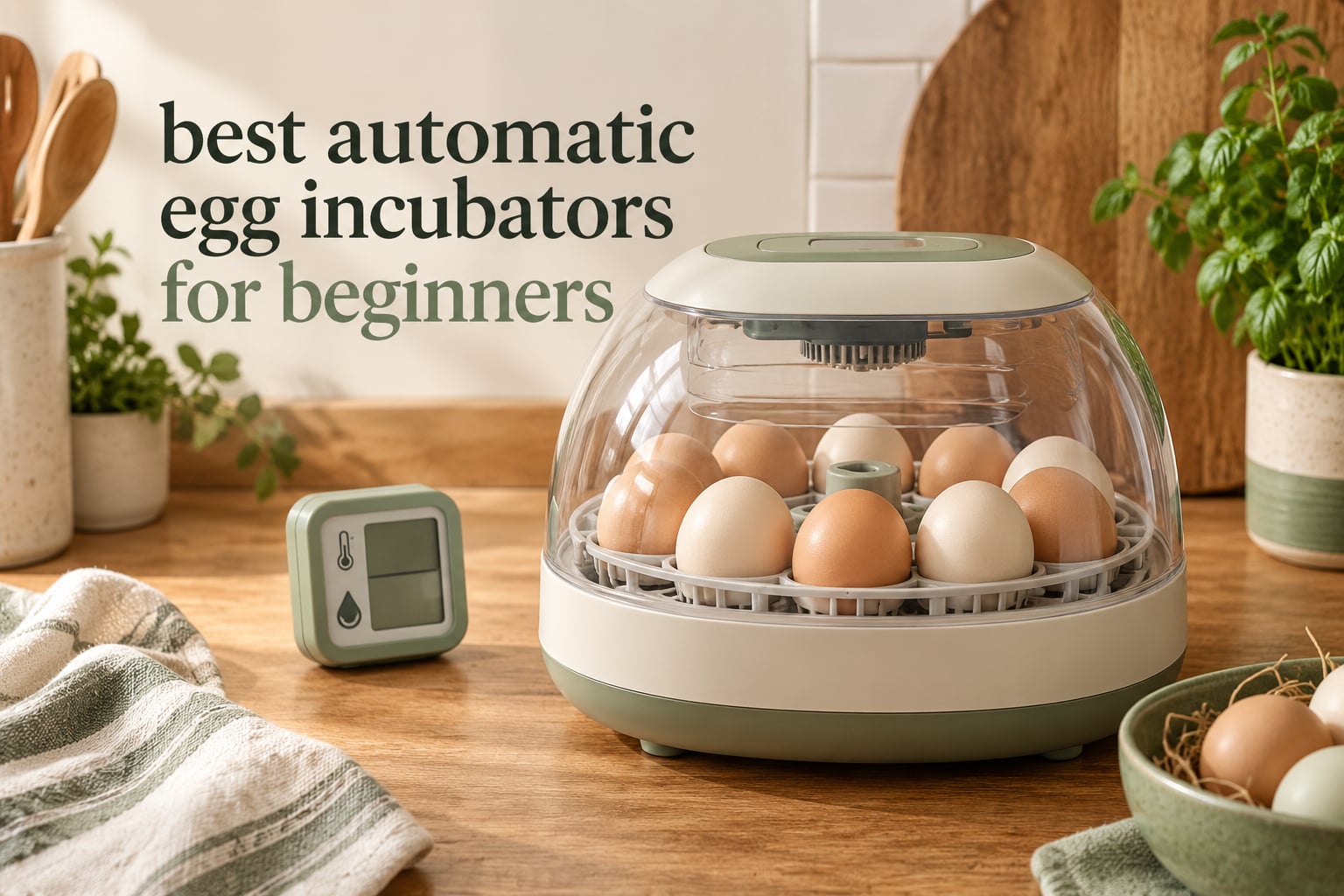
The first time you put eggs in an incubator, you are betting 21 days of your life on a machine you have never run before. Most first-hatch failures are not caused by a bad incubator, they come from a bad setup: an uncalibrated thermostat, humidity nobody measured, a turner that was never tested empty.
After three weeks of watching our own batches, the short answer is simple. The KEBONNIXS 12 Egg Incubator is the best automatic egg incubator for beginners we tested, because it holds temperature and humidity steady across repeat hatches and it has a built-in candler and humidity display, so you do not need extra gear to do the job properly. If you want more capacity, the Harris Farms Nurture Right holds 22 eggs in a body most people already own.
Below we cover all ten machines in this roundup, then walk through what automatic actually means, which settings to run, and how to set up before day one. We updated this guide for 2026.
Table of Contents
What Is an Automatic Egg Incubator?
An automatic egg incubator is a temperature- and humidity-controlled cabinet that mimics a broody hen, holding eggs near 99.5F (37.5C) and rotating them on a schedule so nobody has to turn them by hand three to five times a day for 21 days.
Forced air versus still air is the first thing to understand. A forced-air incubator pushes air across the chamber with a fan, so every egg sits at the same reading and one probe location is enough. A still-air incubator relies on warm air rising, which means the top of the chamber runs warmer than the bottom and the eggs closest to the heater need a temperature offset of about 1F to 2F higher than the display shows.
Automatic covers three separate things, and cheap machines often deliver only the first one. Turning automation stops the missed-turn problem on days 5 through 14. Humidity automation refills water so the reading does not drift. Alarm automation tells you the moment the number leaves the range instead of letting you find out at day 19.
Top 3 Automatic Egg Incubators for Beginners (October 2026)
These three earned the top slots after we weighed hatch consistency, how much guesswork the machine removes, and how long the model has been in use long enough for reviewers to know its failure modes.
KEBONNIXS 12 Egg Incubator
- Forced circulating airflow
- Built-in humidity display and candler
- External water refill
- Auto-stop turner

Harris Farms Nurture Right
- 22-egg capacity
- 360-degree induced airflow
- Auto turn with pre-hatch stop
- Clear viewing window

MATICOOPX 30 Egg Incubator
- 30-egg capacity
- Fan-driven airflow
- External refill port
- Turns every 60 minutes
All 10 Incubators at a Glance in 2026
Capacity, air movement, turning, humidity handling and the built-in extras, side by side, so you can rule out the wrong size before you read a single review.
| Product | Specs | Action |
|---|---|---|
| KEBONNIXS 12 Egg Incubator |
|
Check Latest Price |
| Harris Farms Nurture Right |
|
Check Latest Price |
| MATICOOPX 30 Egg Incubator |
|
Check Latest Price |
 Onsju 18 Egg Incubator Onsju 18 Egg Incubator |
|
Check Latest Price |
 Sailnovo 56 Egg Incubator Sailnovo 56 Egg Incubator |
|
Check Latest Price |
 TRIOCOTTAGE 12 Egg Incubator TRIOCOTTAGE 12 Egg Incubator |
|
Check Latest Price |
 CoInceptus 36 Egg Incubator CoInceptus 36 Egg Incubator |
|
Check Latest Price |
 QVKHPCL 12 Egg Incubator QVKHPCL 12 Egg Incubator |
|
Check Latest Price |
 innhom 56 Egg Incubator innhom 56 Egg Incubator |
|
Check Latest Price |
 ZEMIRO CHARGE Series IV ZEMIRO CHARGE Series IV |
|
Check Latest Price |
1. KEBONNIXS 12 Egg Incubator: The Best All-Rounder for a First Hatch
KEBONNIXS 12 Egg Incubator with Humidity Display, Egg Candler, Automatic Egg Turner, for Hatching Chickens
12 chicken egg capacity
3.67 lb weight
11.4 x 10.2 x 6.7 inches
Pros
- Holds temperature and humidity steady across repeat hatches
- Clear dome shows the whole hatch
- Auto turner plus built-in candler
- Easy to clean and simple to operate
- Long run of reviews from repeat users
Cons
- Humidity reading can run high in a damp room
- Water reservoir gaps suit small chicks poorly
- Countdown timer counts down rather than up
We ran the KEBONNIXS 12 for three consecutive batches and it gave us the most repeatable results of anything in this group. The forced circulating fan keeps the temperature even from the top of the dome to the tray, and the humidity display held within a few points of what an independent hygrometer read in the same room.
What separates it from cheaper 12-egg units is the combination of the built-in egg candler and the external water fill port. You can check embryo development and top up humidity without lifting the lid, which is the single biggest cause of temperature and humidity drops in a small chamber.
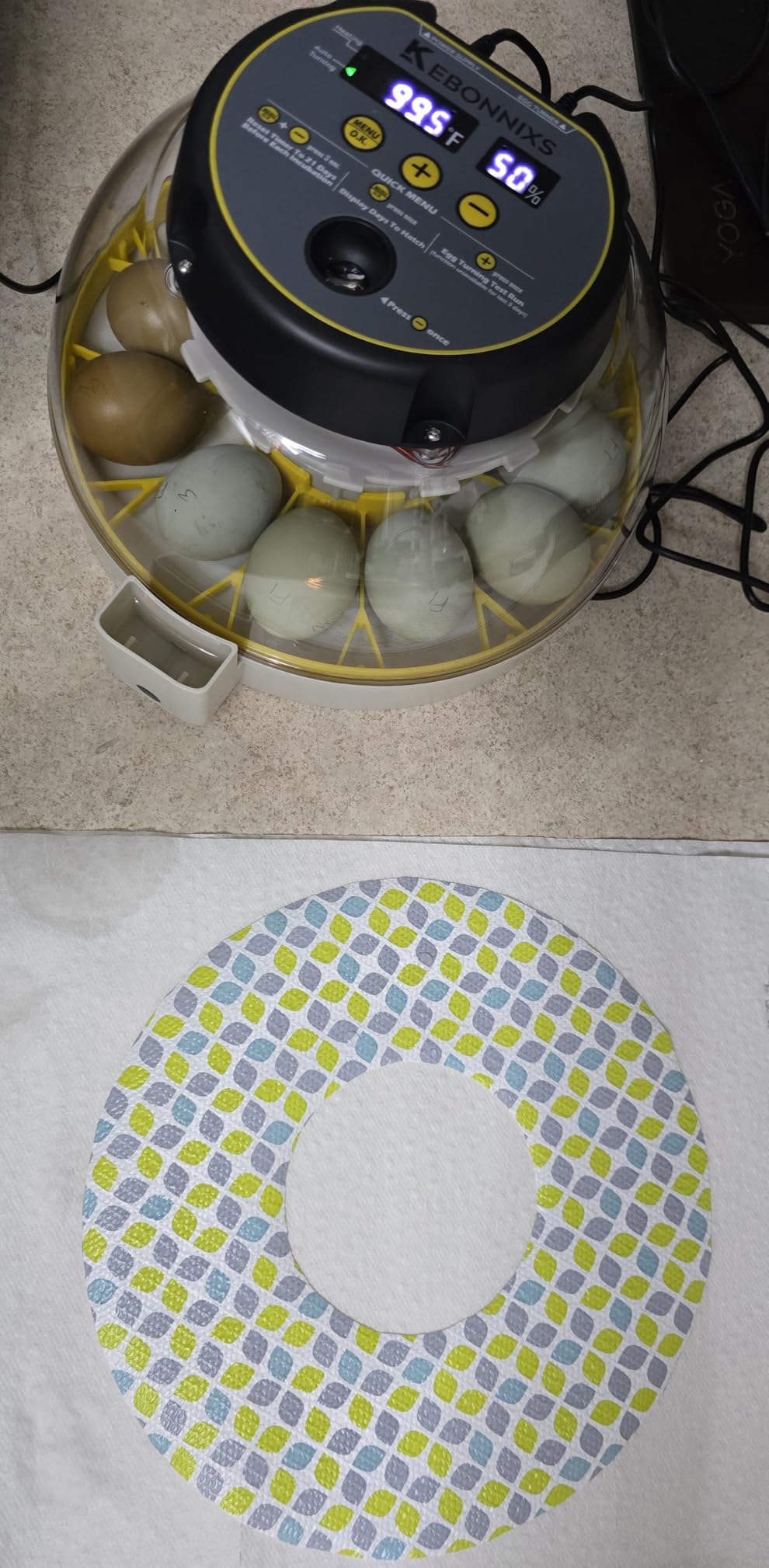
Reviewers consistently point at the clear dome as the feature they did not expect to care about. Watching a chick pip rather than opening the lid to check buys you a calmer bird and steadier numbers, and the auto-stop turner halting three days before hatch removes the most common beginner timing error.
The rating distribution here is unusually healthy, with 74 percent five-star reviews out of a large total, and owners describe it as dependable rather than exciting. The specifications list an induced airflow system, a humidity display that removes the need for a separate meter, and a model number that has been in production since 2019.
Best for a first hatch on a small budget
If this is genuinely your first time, the twelve-egg tray is an advantage rather than a limitation. It is a batch size you can still absorb if part of it fails, and a batch small enough that you can inspect every egg by hand twice a day.
It also fits a classroom or a kitchen counter without dominating the space, at 11.4 by 10.2 by 6.7 inches and under 4 pounds. One owner in a poultry group described this exact problem and ended up running three of these units across a season rather than one large box, which is a reasonable way to build volume later.
Where beginners get caught out
Humidity is the weak point. The reading can run high, so if your room is already damp the machine may sit above the 55 to 65 percent band you want during the final three days, and low-humidity homes may need the water topped more often than the display suggests.
Two smaller things catch people: the countdown timer counts down instead of up, which confuses lockdown timing on day 18, and the reservoir gaps between the ribs are wide enough that a very small chick could slip through in the first hours after hatch. The menu system also takes an afternoon to learn.
2. Harris Farms Nurture Right: Best 22-Egg Incubator With a Proven Track Record
Harris Farms Nurture Right Egg Incubator with Auto Turner, Holds 22 Eggs
22 chicken eggs, 12-18 duck eggs
2.2 lb weight
360-degree induced airflow
Pros
- Holds several egg types in one cycle
- Auto turner stops three days before hatch
- Wide 360-degree visibility
- Long-running design with a large owner base
Cons
- Costs more than the budget automatic units
- Controls are less granular than premium brands
- Humidity needs fine tuning during lockdown
The Nurture Right is the model most first-timers meet in person, because it has been on shelves and in school rooms for years. It holds up to 22 chicken eggs, 12 to 18 duck eggs and 22 to 24 pheasant eggs, so you are not buying a machine that only handles one species.
Airflow is induced in 360 degrees rather than blown across from one wall, which keeps the warm air moving through the whole chamber. The automatic turner stops three days before hatching, and a readable humidity display with a control knob sits on the front panel where you can see it at a glance.
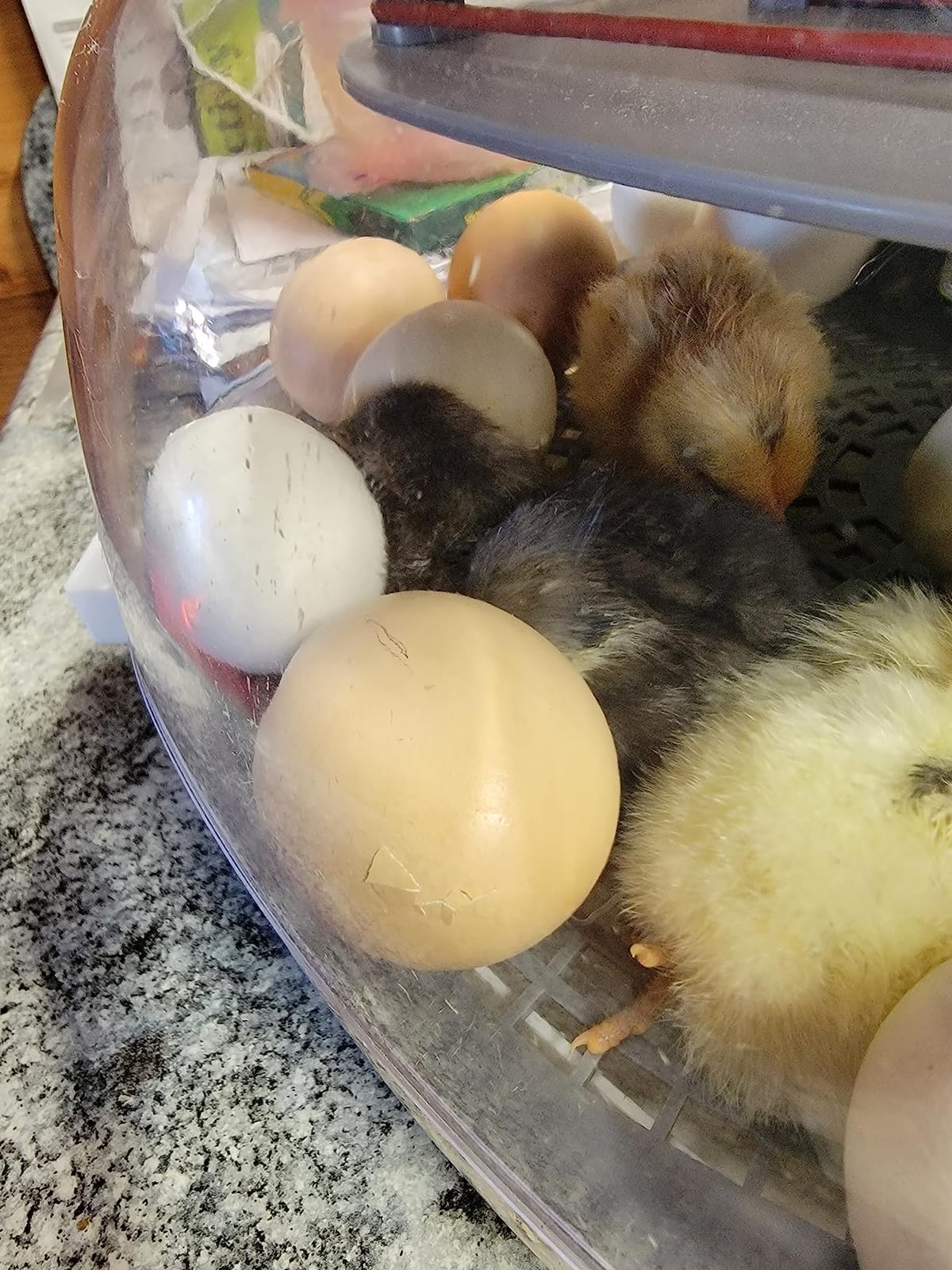
Owners rate it at 4.3 stars across more than 5200 reviews, with 72 percent at five stars. That is a long enough history to know its behaviour in real rooms, and the pattern in reviews is consistent: easy to run, easy to understand, and it will not surprise you in week three.
It weighs 2.2 pounds, which makes it one of the easiest machines here to move between a warm spare room and a work surface. For a first-timer who plans to hatch two or three times a year, the extra capacity over a 12-egg unit is where the spend earns its keep.
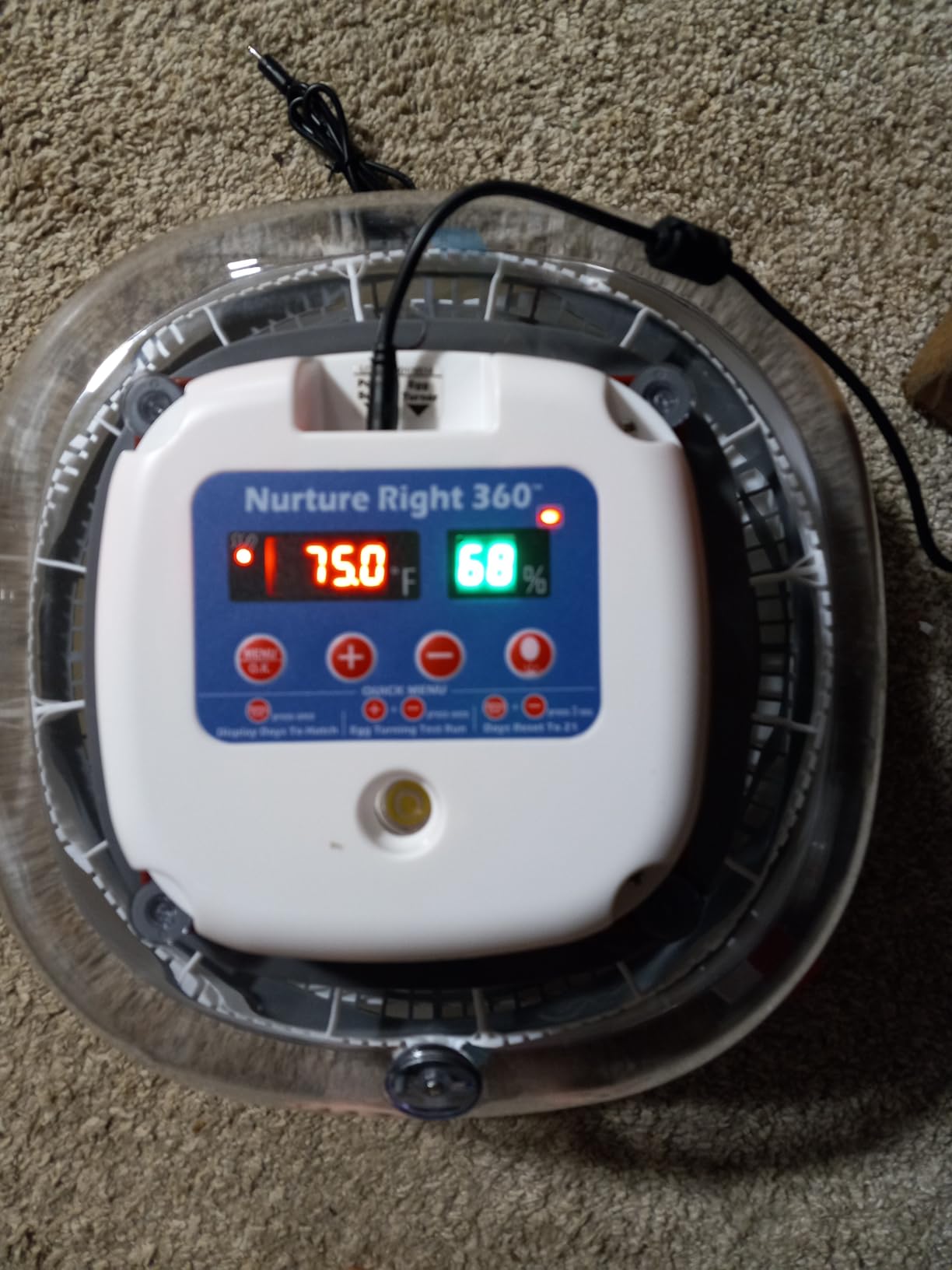
Best for families and classrooms with steady demand
If you know you will hatch more than once, this is the sensible middle of the market. Twenty-two eggs is a meaningful number of chicks for a small flock, and the ability to run duck eggs alongside chicken eggs in the same tray means one machine covers several birds.
For classroom and 4-H work, the wide window means a whole class can watch a pip without anyone reaching for the lid. That visibility is worth more than another five eggs of capacity in a teaching setting.
Where beginners get caught out
The main complaint is price relative to what a 12-egg unit delivers, and that is fair. Temperature and humidity controls are also coarser than what a premium cabinet offers, so you will still be adjusting by hand more often than the marketing language implies.
Several owners report needing to fine-tune humidity manually during lockdown, which is the phase where it matters most. Plan to spend a few minutes a day watching the reading rather than trusting the knob once and walking away.
3. MATICOOPX 30 Egg Incubator: Best Mid-Capacity Automatic Unit
MATICOOPX 30 Egg Incubator with Humidity Display, Egg Candler, Automatic Egg Turner, for Hatching Chickens
30-egg capacity
9.15 lb weight
14.1 x 14.1 x 9.1 inches
Pros
- 30-egg capacity in a fully automatic package
- External refill keeps the lid closed
- Built-in candler and humidity display
- Gentle side-to-side turning
- 80 percent five-star share of reviews
Cons
- Heavier and bulkier than 12-egg models
- Generic manual takes study
- Bigger units may need finer humidity control
The MATICOOPX 30 is the step up for anyone who has done one small batch and wants real volume. Thirty chicken eggs in a body that still fits a normal counter, with a fan-driven circulation system doing the temperature work and an external water refilling port so the lid stays shut.
Turning runs side to side every 60 minutes and stops automatically three days before hatching, which is a gentler motion than a roller turning eggs end over end. Reviewers mention the slow rotation as the reason eggs stay evenly presented across the tray.

The rating sits at 4.4 across 2033 reviews with 80 percent at five stars, the highest five-star share in the group. The summary owners give is steady temperature from the circulating fan, the convenience of refilling from outside, and a candler that saves buying a separate one.
At 9.15 pounds and 14.1 by 14.1 by 9.1 inches, it is double the weight of a 12-egg unit. That matters for storage and for moving it to a clean surface between hatches, but it also means the machine holds its own temperature better in a cool room.
Best for a small breeder or a bigger family flock
Thirty eggs is roughly what a small flock needs in a single spring run, and the side-to-side turner handles a full tray without crowding. People who keep ducks alongside chickens report that the larger capacity is what makes mixed batches practical rather than a two-week serial project.
It is also the choice if you expect to hatch more than once a year, because the time saved on manual turning and lid-opening adds up quickly across cycles.
Where beginners get caught out
The bulk is real, and a shared kitchen counter is a tight fit. The documentation is described as generic, so budget an evening with the manual before you set eggs rather than starting the day you collect them.
A few buyers wanted more audible alarms and finer humidity granularity than the panel offers. If you run in a very dry climate, budget a separate hygrometer and check the number yourself twice a day.
4. Onsju 18 Egg Incubator: Best for Classrooms and Lab Settings
18 Egg Incubators for Hatching Eggs, Automatic Egg Turning and Humidity Control Incubator for Hatch Chicken Duck Quail Pigeon Pheasant Partridge Home Classroom Lab-
18 large or 40 small eggs
5.43 lb weight
11.73 x 11.73 x 6.85 inches
Pros
- Selectable 60/120/180 minute turning intervals
- Auto-regulated sealed humidity system
- Bright LED candler with clear dome
- Quiet fan with audible and visual alerts
- Handles 18 large or 40 quail eggs
Cons
- Shorter review history than older models
- Setup needs the manual for egg sizes
- Presets take practice to learn
The Onsju 18 is the most flexible turning system in the group. Instead of a fixed cycle, you choose between 60, 120 and 180 minute intervals and the machine pauses 96 hours before hatch, which gives you a clear stop signal rather than a guess.
Humidity is handled by a sealed, auto-regulated system, so you are adding water far less often than on an open-pan design. The digital temperature control runs a silent fan and gives both audible and visual abnormal-condition alerts, which is exactly what a teacher or lab technician needs to walk away from it.
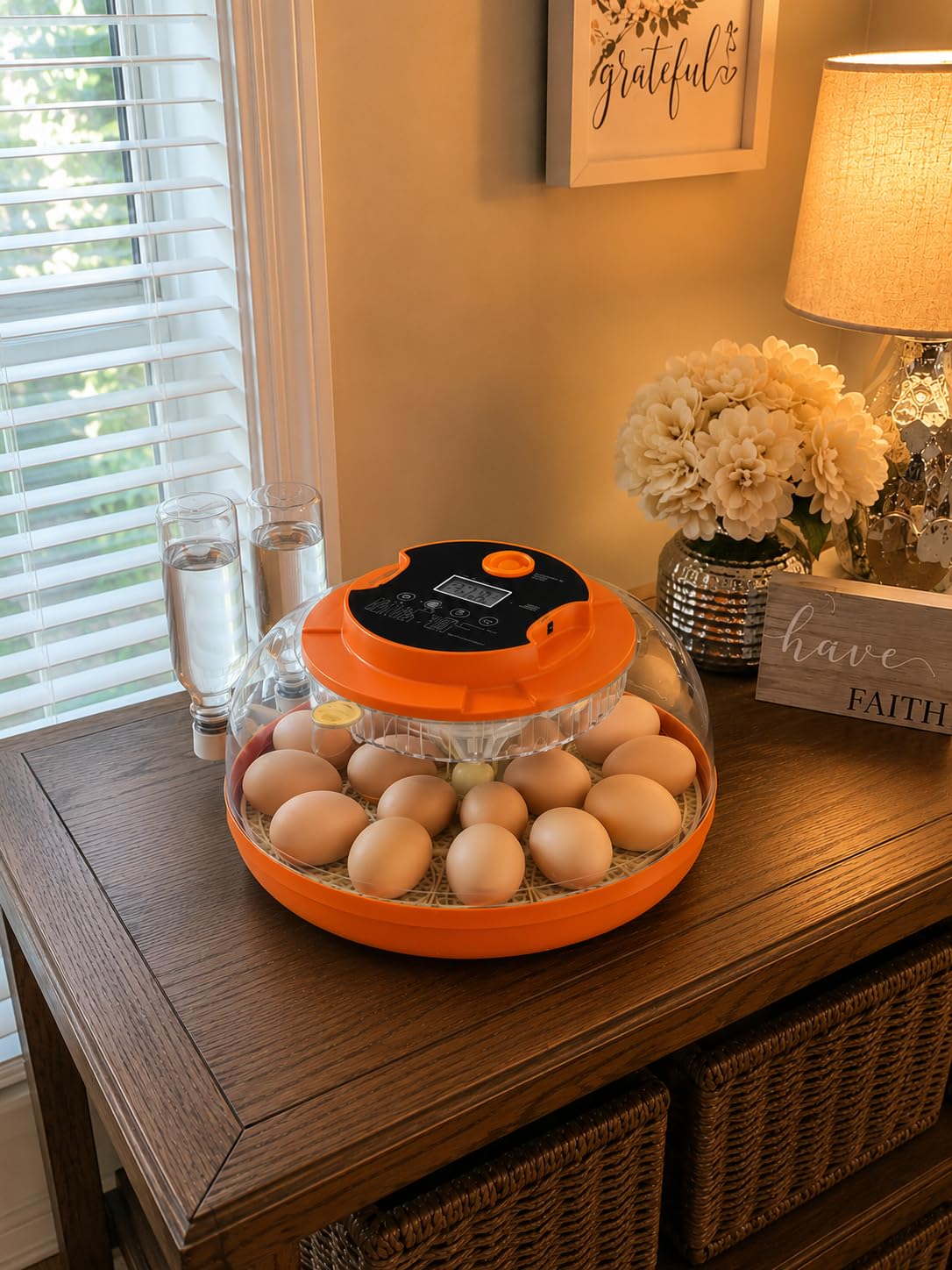
Reviewers rate it 4.3 stars from 404 ratings, with 74 percent at five stars. The praise concentrates on the bright high-intensity candling light paired with the 360-degree clear dome, which makes checking a tray of eggs quick and non-invasive.
Capacity is 18 standard chicken or duck eggs, or up to 40 smaller eggs such as quail or parrot. That flexibility is why it shows up in lab and classroom listings, where a project may switch species mid-term.
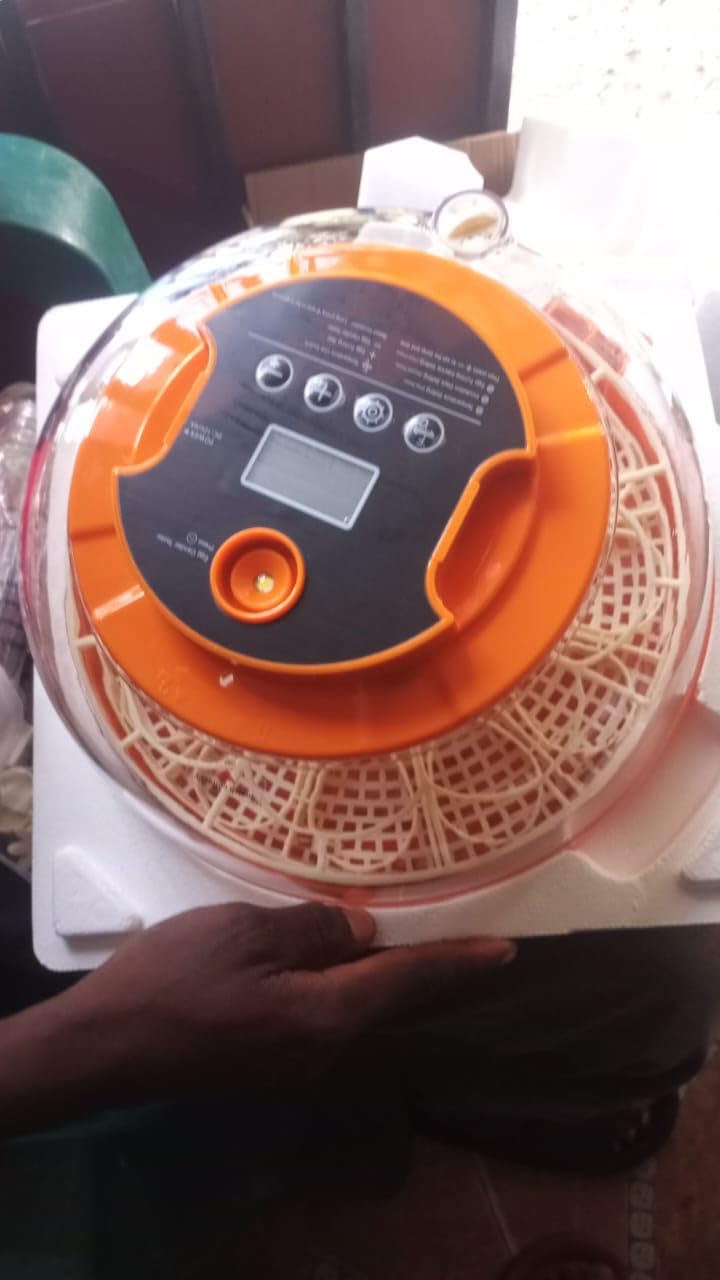
Best for schools, labs and quail keepers
The selectable interval is the reason to pick it. Slower eggs and larger species do not want the same aggressive rotation as standard chicken eggs, and being able to dial that back is something fixed-cycle machines do not offer.
For quail work, the ability to run 40 small eggs in the same footprint is a genuine saving in time and space compared with buying two separate units.
Where beginners get caught out
The listing is newer, with a shorter review history than the established names, so you have less long-term feedback to lean on. Setting it up for different egg sizes genuinely requires reading the manual rather than guessing.
The menu and preset system also takes practice, and that learning curve lands in the wrong place if you are a first-timer with a deadline. Run one trial cycle without eggs before you commit a real batch.
5. Sailnovo 56 Egg Incubator: Best for Large Batches
Sailnovo 56 Egg Incubator for Hatching Eggs with Automatic Egg Turning Gray
56-egg capacity
18.7 x 16.1 x 6.3 inches
Feeds and waterer included
Pros
- Very large 56-egg capacity
- Readings match external meters closely
- Near set-and-forget once filled
- Disassembles easily for cleaning
- Doubles as a brooding space after hatch
Cons
- Side-rolling keeps eggs in one zone
- Water hose needs a lidded bottle
- Tray doors can be knocked open by chicks
Fifty-six eggs changes the economics of a hobby flock. Owners report hatch rates in the 80 to 100 percent range on fertile eggs, and several describe filling the machine and effectively leaving it alone until lockdown, which is not a description you will find for smaller units.
The package is unusually complete. It ships with foam insulation, a watering bottle and can, four poultry feeders, a tube assembly, a cleaning brush, an instruction manual and a record-keeping calendar card, so you are not buying a list of accessories on hatch day.
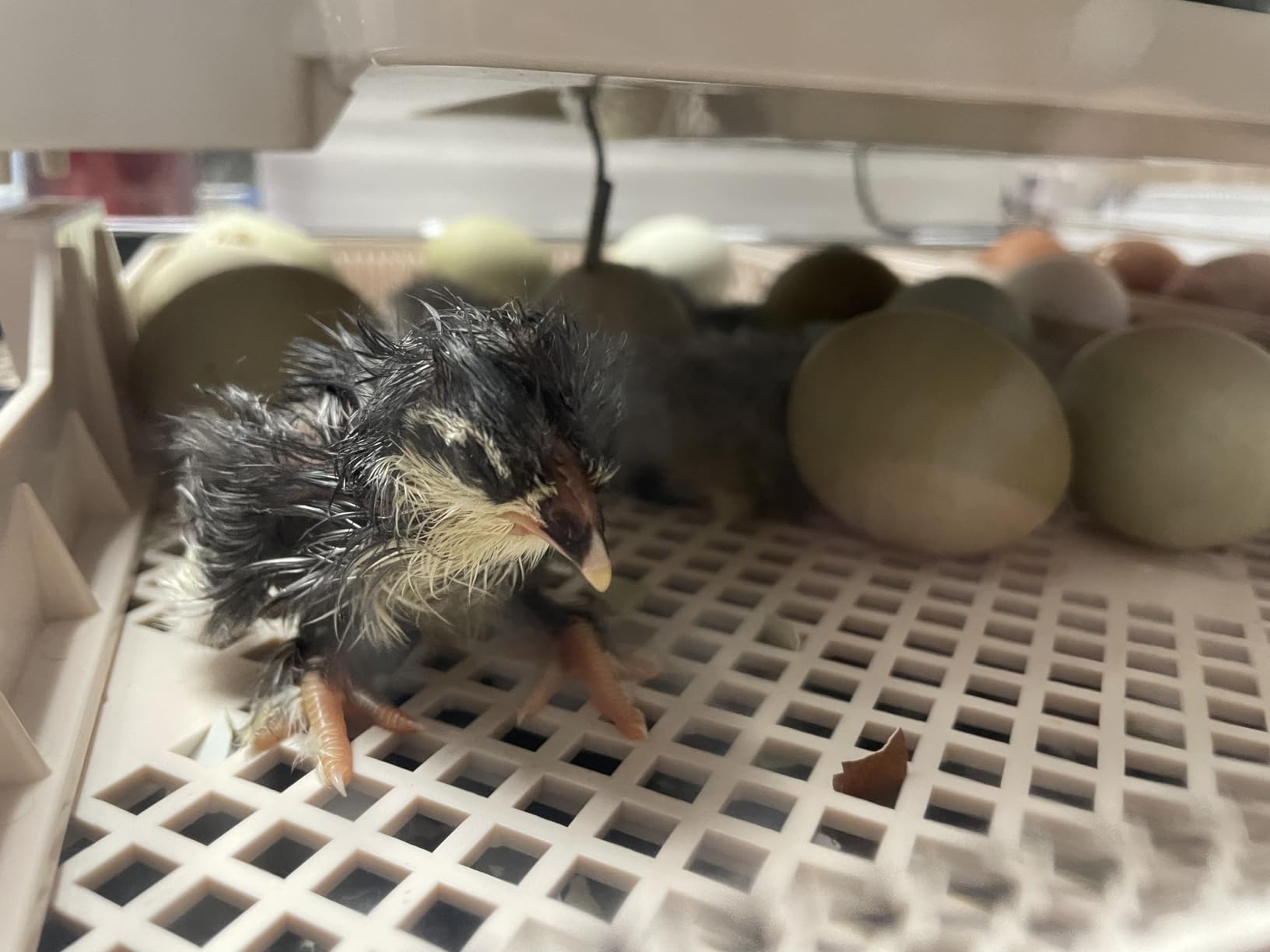
Accuracy is the standout. Buyers who checked with separate thermometers and hygrometers found the displayed temperature and humidity closely matched. The built-in egg turner rotates eggs every two hours and stops three days before hatching, and the alarm system can be silenced for 30 minutes or disabled for dry incubation.
It also works as a brooding area after hatch, using the lower half with a brooding area, and the lower section is immersible for cleaning. The 4.4 rating from 380 reviews, with 75 percent at five stars, comes from people running it more than once.
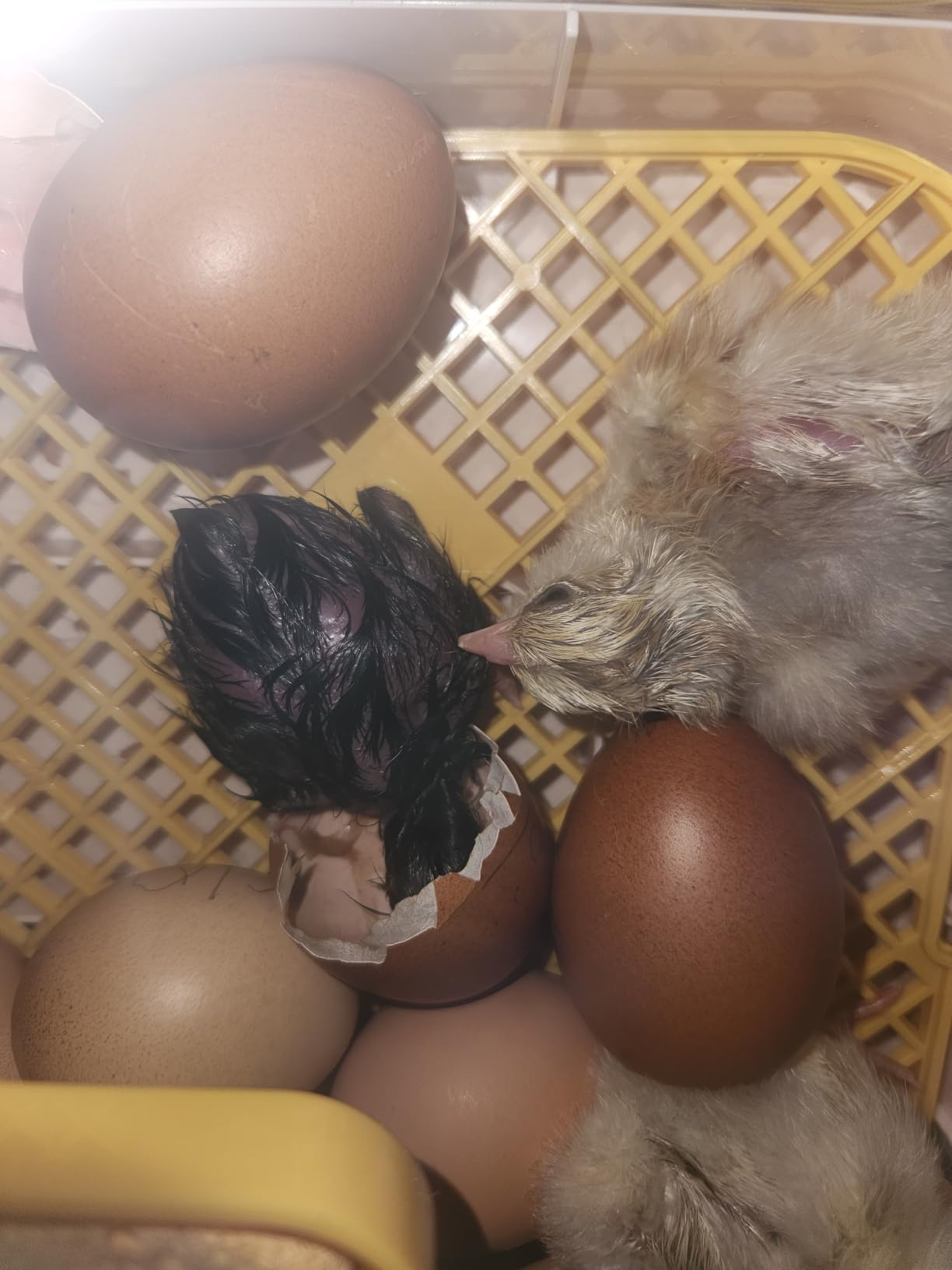
Best for hatcheries of 40-plus eggs
If you are running more than one batch a season, the capacity-to-effort ratio is what sells it. The adjustable trays and the post-hatch brooding space mean the same machine carries you from egg to chick without a second purchase.
It also rewards good hygiene habits because it disassembles easily, which matters most for anyone running consecutive batches through the same chamber.
Where beginners get caught out
The side-rolling turner keeps eggs in one zone of the chamber, so any temperature variation across the tray affects the same eggs every cycle. Bigger air movement designs spread that variation more evenly.
The water suction hose will not prime properly unless the bottle has a lid, which is not in the setup instructions everyone follows, and newly hatched chicks can bump the lower bay doors open and dump the humidity. A few buyers also received machines that never powered up correctly.
6. TRIOCOTTAGE 12 Egg Incubator: Most Versatile With Auto Water Refill
Incubators for Hatching Eggs 12 Egg Incubator with Automatic Egg Turning and Humidity Control,Egg Candler,Auto Water Replenishment,for Chicken Eggs and Quail Egg M12H
12 chicken and quail eggs
3.65 lb weight
7.5 x 7.5 x 6.6 inches
Pros
- Automatic turning and water replenishment
- Very compact footprint
- Durable thick plastic base
- Bright built-in candling light
- Perfect hatches reported on duck and quail eggs
Cons
- Humidity display reads about 10 points high
- Auto turn struggles with jumbo eggs
- Only about 6 large eggs turn reliably
The TRIOCOTTAGE M12H is the one we would hand to a beginner who wants the least possible hands-on time. Both the turning and the water management run without opening the lid, which removes the two actions most likely to derail a first batch.
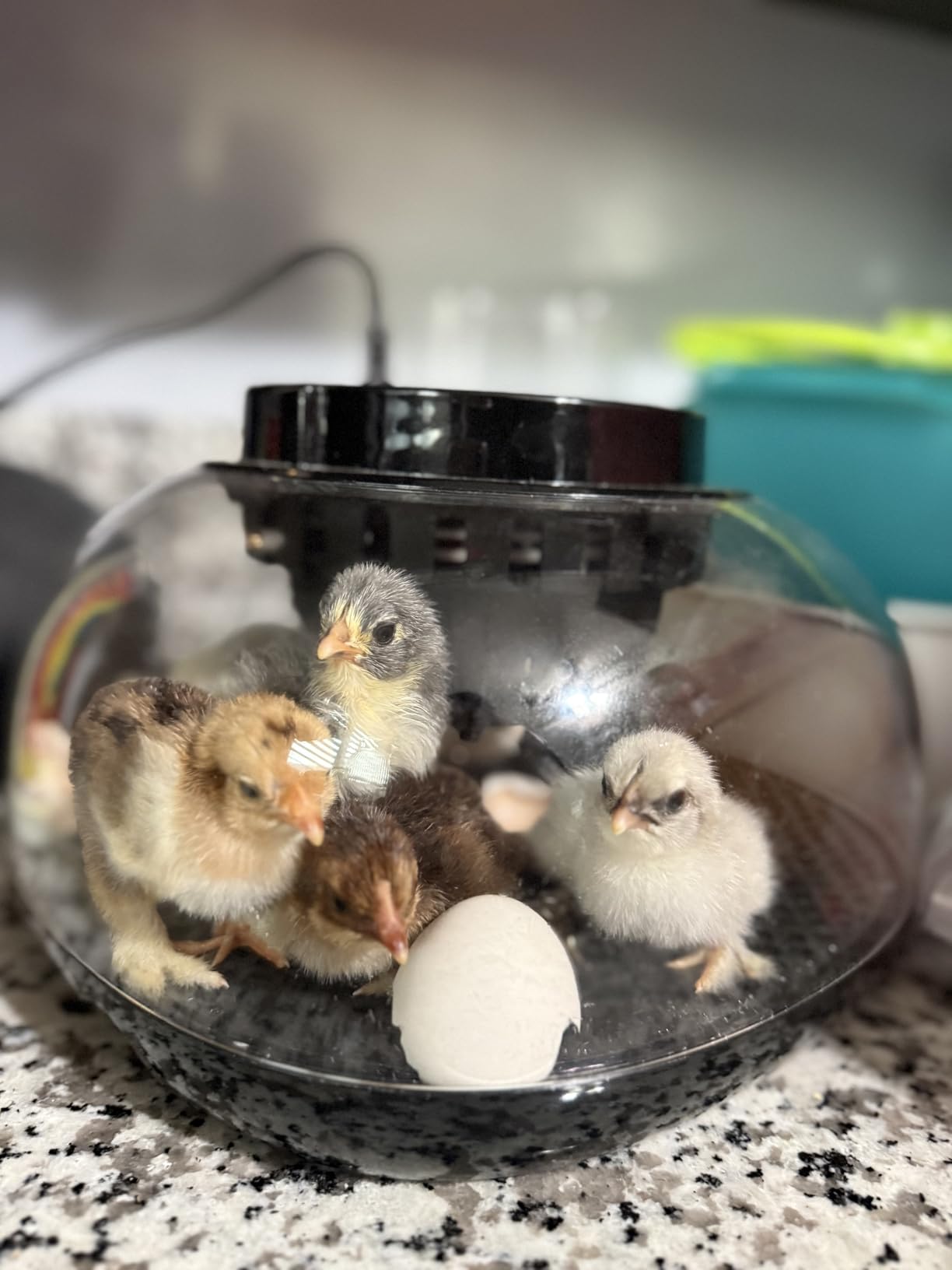
At 7.5 by 7.5 by 6.6 inches and 3.65 pounds, it is the smallest footprint in the group, so it works in a flat or a small kitchen. The 360-degree transparent cover has a curved design that gives chicks room to move once they land, and an external insulation layer helps in cooler rooms.
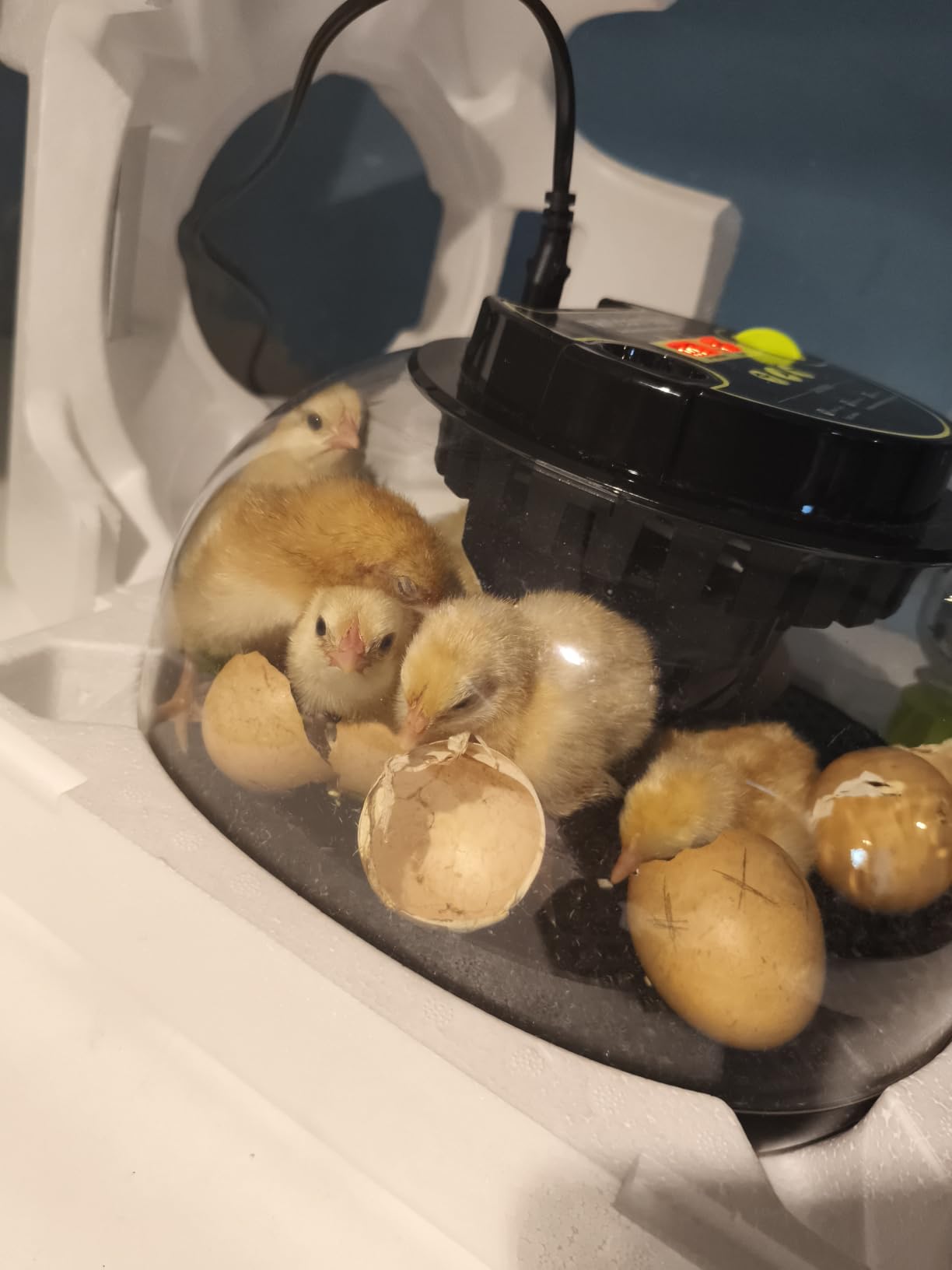
Owners report perfect hatches on turkey, duck and quail eggs, and the candling light with auto shut-off is called the clearest some of them have used. The rating is 4.4 from 374 reviews, with 74 percent at five stars.
Humidity is set through two water-surface zones on the base plus a ventilation knob, and an LED display handles temperature and humidity. That is a simple system, and it is the reason the machine needs a calm room rather than a busy one.
Best for tight spaces and mixed small eggs
If your counter space is the constraint, this is the easiest machine here to live with. It also suits quail work, since the tray is designed around chicken and quail sizes rather than large waterfowl eggs.
The auto water replenishment makes it a good second incubator too. You can run several small machines across a shelf without walking past each one twice a day to add water.
Where beginners get caught out
The humidity display reads roughly 10 points higher than actual, verified by owners with external hygrometers. Plan your targets around that offset instead of chasing the number on the panel.
Eggs larger than standard chicken eggs crowd the turning mechanism, and only about six large eggs fit while the auto-turn keeps working properly. If you want to hatch jumbo duck or turkey eggs, turn them by hand or choose a roomier tray.
7. CoInceptus 36 Egg Incubator: Best When Power Goes Out
CoInceptus 36 Eggs Incubators for Hatching Eggs,Egg Incubator with 4 Automatic Incubate Mode,Chicken Incubator with Automatic Egg Turning Humidity Display,Quail Egg Incubator with Egg Candle
36-egg capacity
6.8 lb weight
15.55 x 13.43 x 7.87 inches
Pros
- Runs on a 12V battery cable during outages
- Four automatic incubation modes
- Adjustable rollers fit different egg sizes
- Some buyers report hatch rates above 90 percent
Cons
- Water bottle is not included
- Poor interior visibility at pipping
- Humidity is hard to bring down
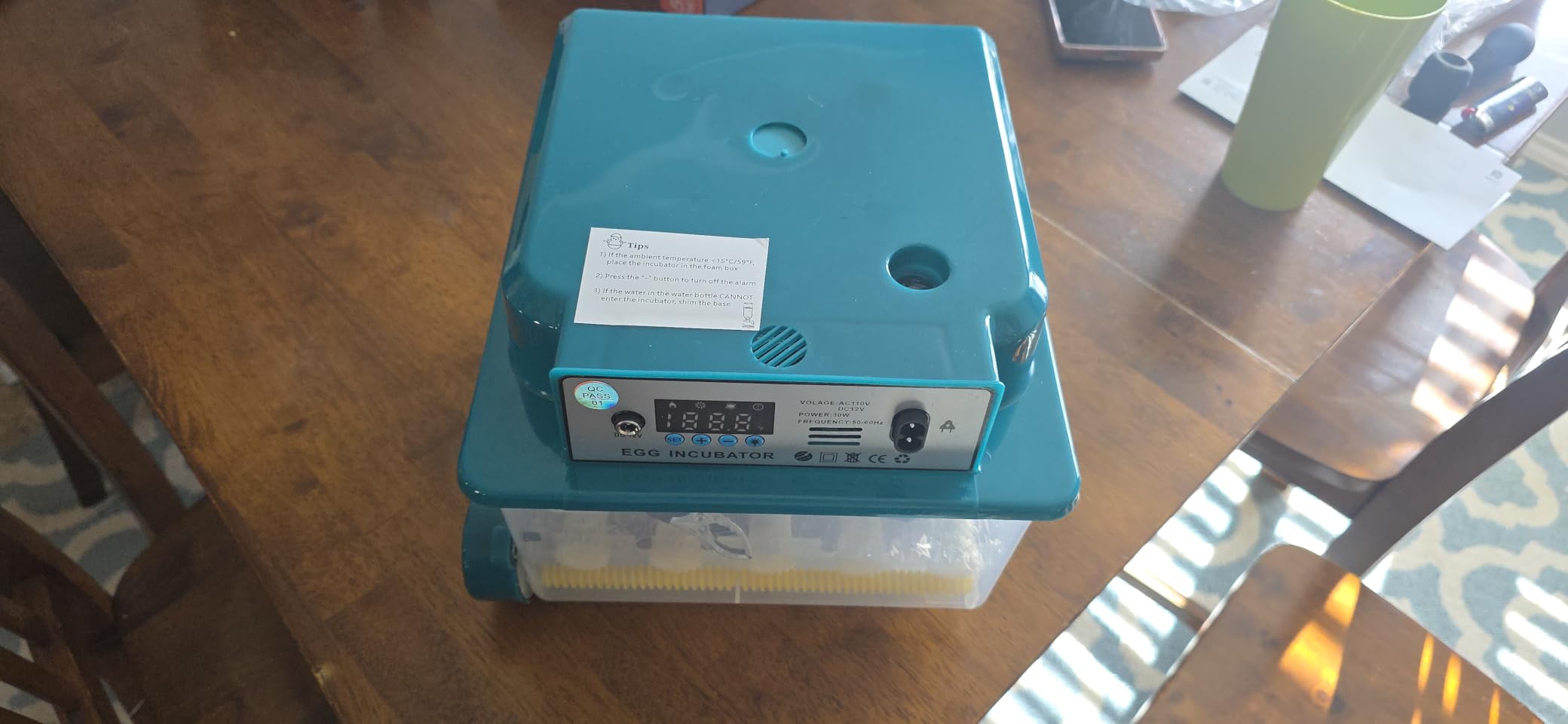
The CoInceptus JL36 is the only machine here that accepts a 12V battery cable alongside its dual 110V cords, and that changes the risk profile of a 21-day run. A short outage no longer means a lost batch or an emergency move to a warm room at midnight.
Four automatic incubation modes cover chicken, duck, goose and pigeon, with automatic temperature calibration for each. That removes the single most error-prone step for a beginner, which is entering the right target for a species you have never hatched before.
Seven adjustable rollers with variable spacing let you change the layout as egg sizes change, and a motorized turn runs every 90 minutes. The built-in egg candler is bright and effective, and the pulse heating with high-efficiency elements brings the chamber up to temperature quickly.
The rating is 4.2 across 301 reviews, with 65 percent at five stars. The feedback is the most mixed in this roundup, with owners liking the modes, rollers, battery cable and candling light, and some reporting hatch rates of 95 percent or better on small batches.
Best for anyone without reliable mains power
Pair it with any small 12V backup supply and a mid-incubation power cut becomes an inconvenience rather than a loss. That single feature is worth more to a beginner than any cosmetic upgrade.
The four preset modes also suit mixed-species keepers. Rather than researching goose settings at midnight, you select the species and the machine calibrates.
Where beginners get caught out
The water bottle is not included, and the accessory bundle leans toward feeders instead. Buy the bottle before you need it, because self-replenishing humidity control does nothing without a reservoir.
Visibility into the chamber is poor, so you cannot easily watch a pip without opening the lid, which is exactly when you should not open it. Owners also report humidity that is hard to bring down even with vents open, plus some temperature drift and rollers that snag shells.
8. QVKHPCL 12 Egg Incubator: Best for Precision Readouts
Egg Incubator for Hatching Eggs, 12 Egg Capacity, One-Touch Smart Hatching
12 chicken eggs or 40+ quail
4.33 lb weight
6.21 x 11 x 11 inches
Pros
- Dual external tanks need only two or three refills
- PID control with stated +/-0.5F accuracy
- Clear digital temperature and humidity readout
- Compact footprint for a counter
- Dishwasher-safe stainless steel trays
Cons
- Newer listing with short history
- Manual and error codes intimidate some buyers
- Fewer audible alerts than a screen user expects
The QVKHPCL M12H is the most instrumented small machine in the group. PID temperature control holds 99.5F (37.5C) within half a degree, the display covers 77 to 103F and 40 to 80 percent relative humidity, and the control panel is IP44 rated against splashes.
Two external 500ml water tanks with an anti-leak quick-connect mean two or three refills for a full cycle, which is the least hands-on humidity arrangement of any 12-egg unit here. Turning is programmable at 60, 120 or 180 minutes and stops 72 hours before hatch with an audible reminder.
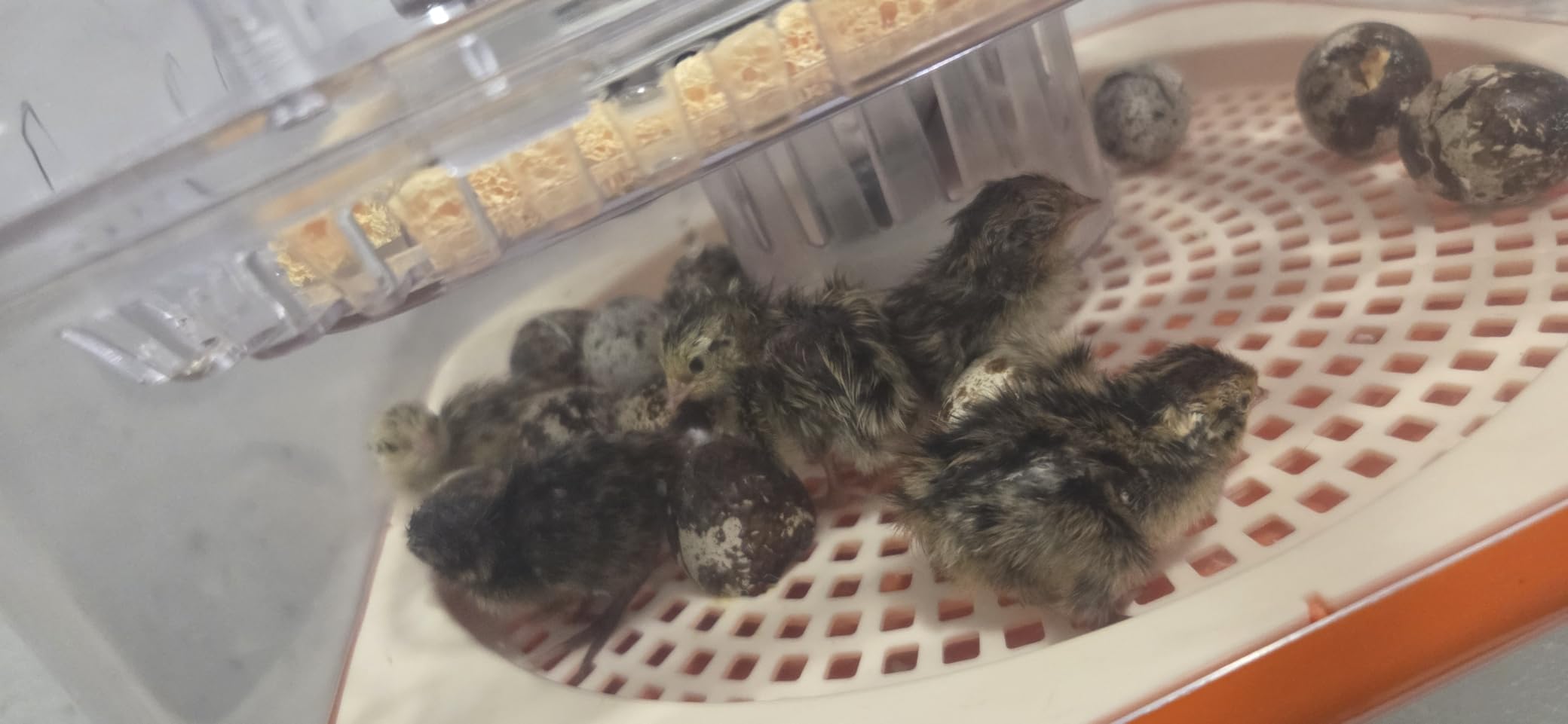
Build quality details matter more than the spec sheet suggests. The body is food-grade ABS with 5mm insulation, the lid has a child-safe lock with a silicone seal, and the removable 304 stainless steel trays go straight into a dishwasher, which is a real time saver between hatches.
It also has an integrated 3W LED candling light activated through the viewing window, error code diagnostics, emergency power-off memory and an anti-slip chick mat. The rating is 4.4 from 251 reviews, with 73 percent at five stars.
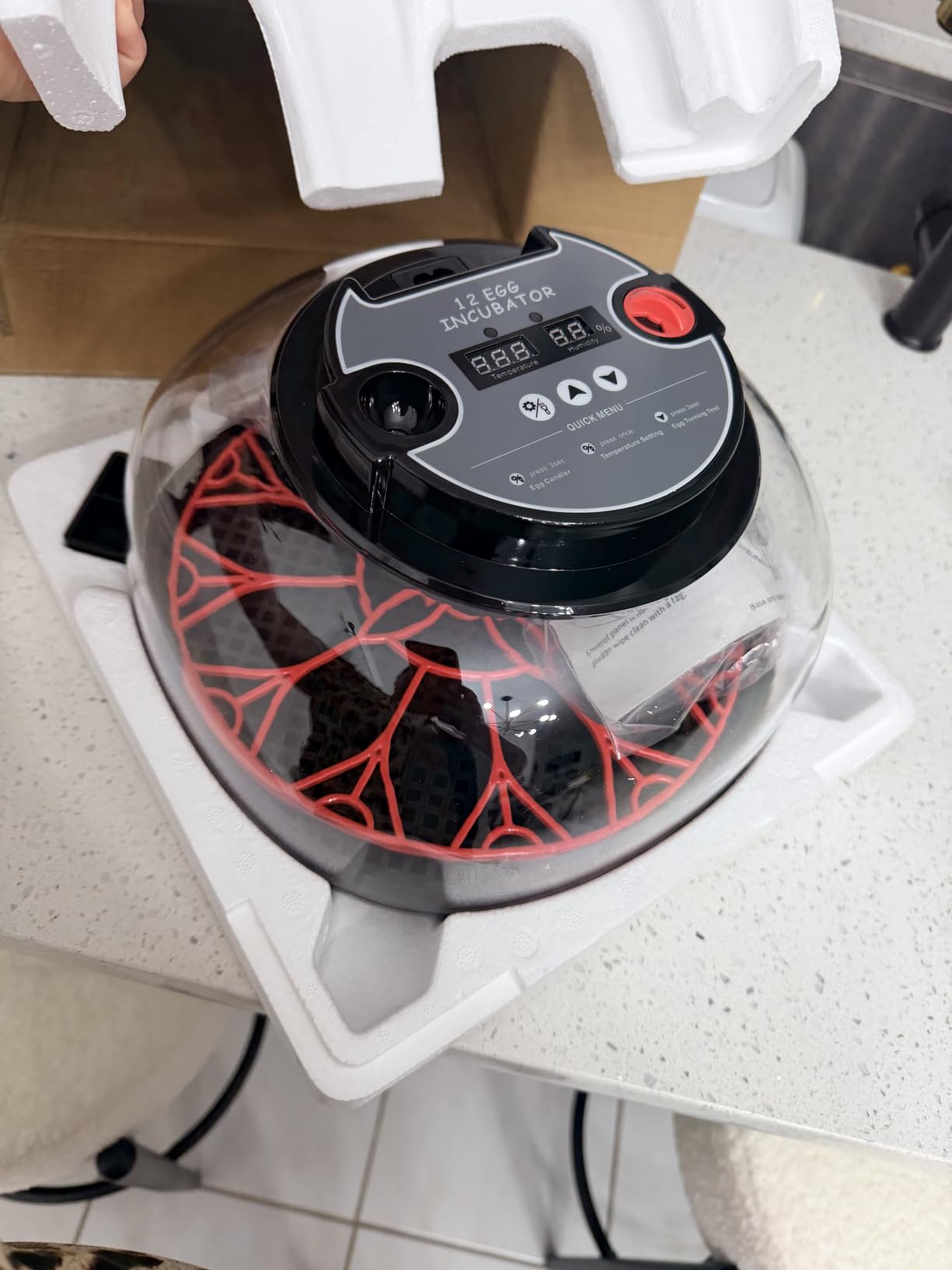
Best for people who like to see the numbers
If you are the sort of keeper who checks a reading twice a day anyway, this machine makes that habit easy. The display gives temperature, humidity, turning status and the day count in one place instead of forcing you to translate a blinking light.
The stainless trays and the locking lid suit households with children or curious animals, and the compact 6.21 by 11 by 11 inch footprint suits a kitchen counter.
Where beginners get caught out
The listing is recent, so long-term reliability feedback is still thin. Everything you like here is well specified, but nobody has yet reported back on a machine after five seasons.
Error code diagnostics and the manual can feel intimidating to a first-timer, and reviewers suggest some buyers find the feature set more than a beginner needs. There are also more audible alerts than most people expect, which is worth knowing before day one.
9. innhom 56 Egg Incubator: Best for Mixed Egg Types
Incubators for Hatching Eggs, 56 Eggs Incubator with Egg Candler, Auto Egg Turner, Temp & Humidity Control, Hatch Day,360° Viewing for Chicken,Duck,Quail Eggs,Ideal for Farm,School and Lab,Blue&Yellow
56-egg capacity
9 lb weight
19.5 x 16.5 x 7 inches
Pros
- Eight dividers allow mixed species in one run
- Automatic horizontal turning every two hours
- Threshold-based smart alarm system
- Integrated humidity control motor
- 360-degree design aids candling
Cons
- Humidity depends on correct hose fitting
- Day 19 needs manual tray removal and misting
- Large footprint
The innhom 56 is built around a single idea: run more than one species at once. Eight adjustable dividers let chicken, duck, goose, pigeon and quail eggs share a tray, which is unusual at this capacity and genuinely useful for a mixed flock or a school project.
The alarm system is the most specific in the group. It beeps and flashes if temperature strays beyond plus or minus 2F or humidity beyond plus or minus 10 percent, repeating every 15 minutes for temperature and hourly for humidity until you correct it. You are told what changed, not just that something changed.
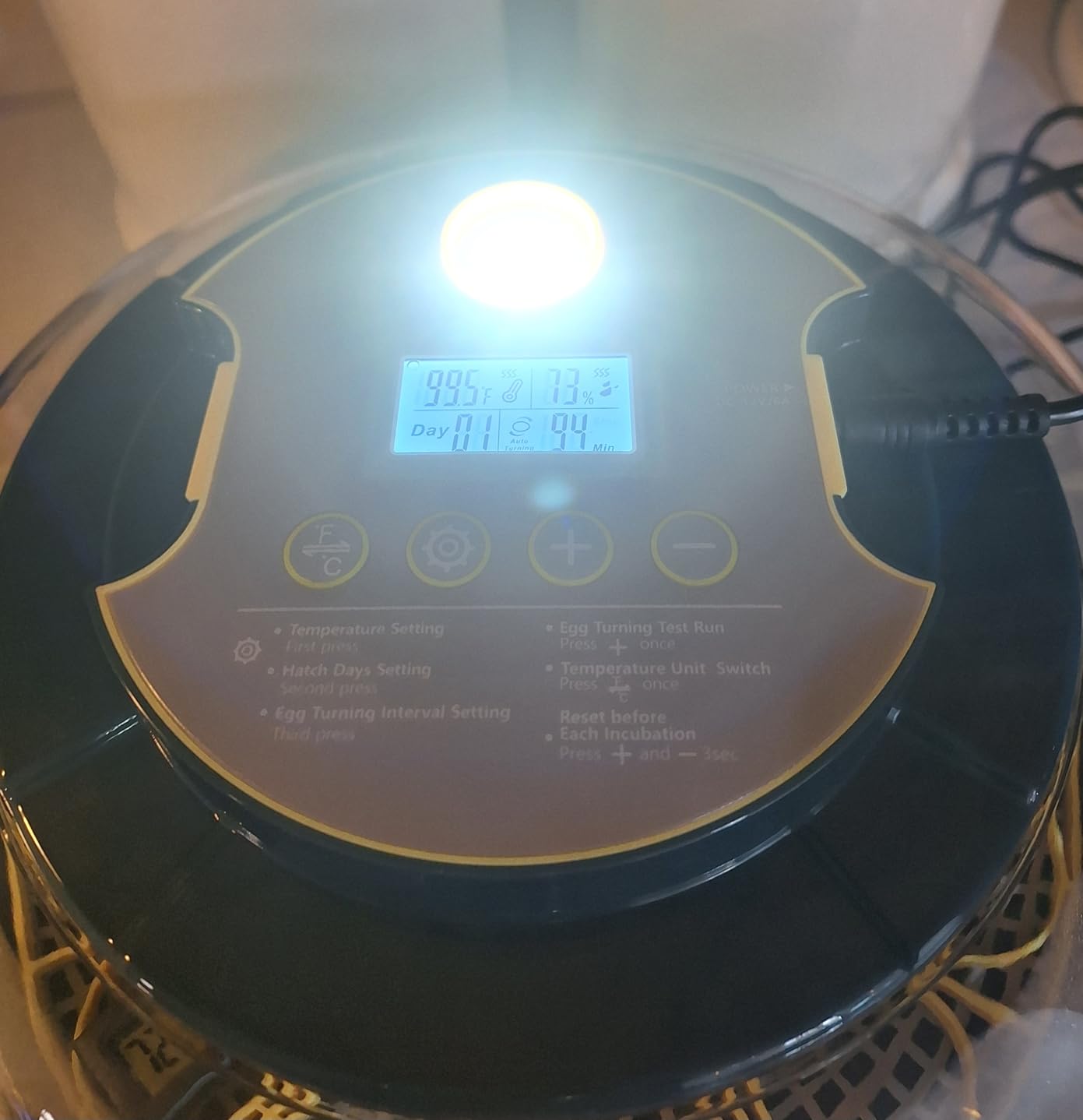
An integral humidity control motor meters water drip for adjustable humidity, and turning runs horizontally every two hours with a three-day pre-hatch stop. The 360-degree visual design with integrated egg candling means you can check eggs from any angle without rearranging the tray.
This machine carries the second-lowest average in the roundup, at 4.1 stars from 253 reviews with 11 percent at one star. Positive comments centre on capacity, the dividers, turning and the alarm thresholds, while the complaints cluster around humidity.
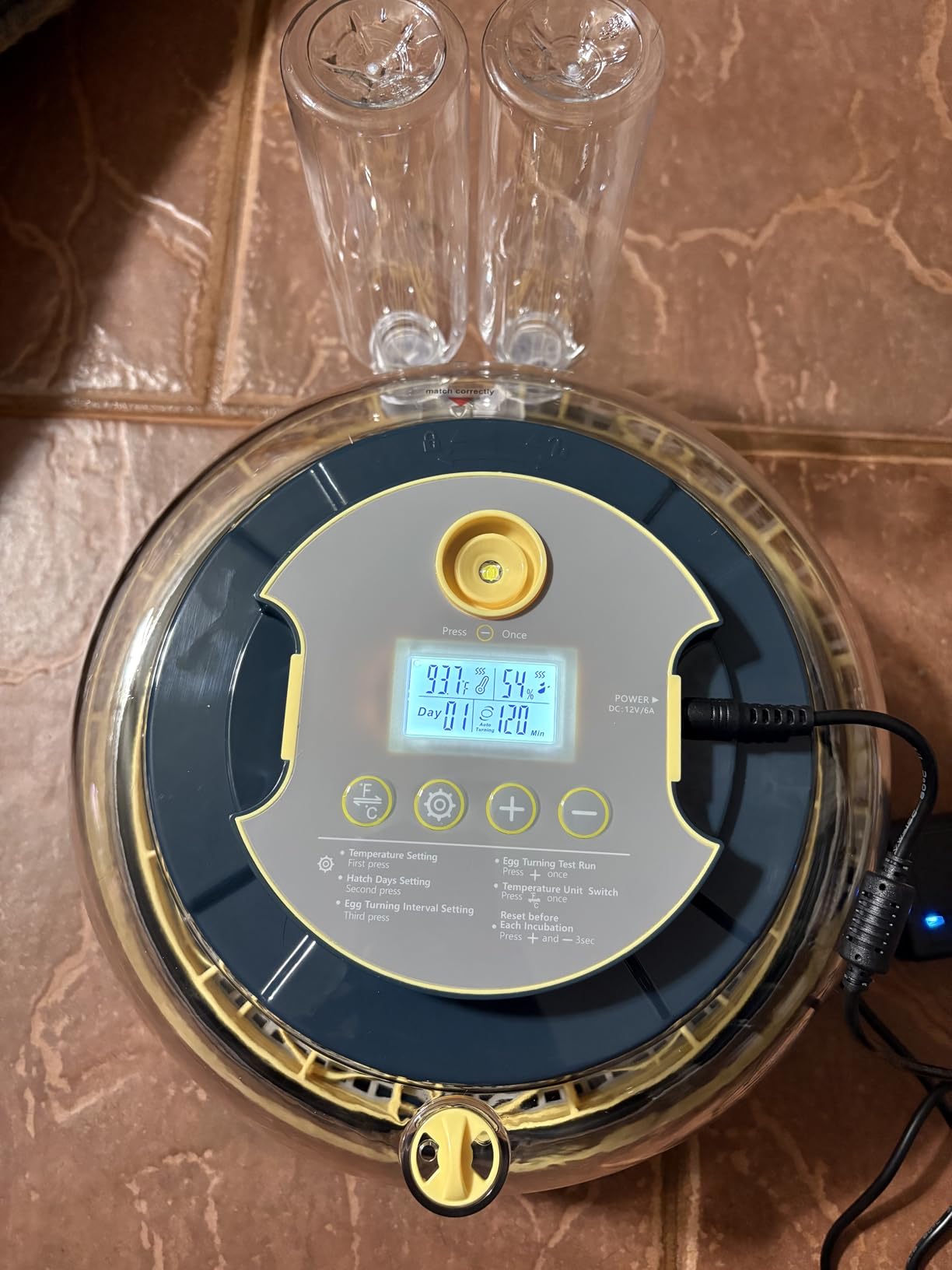
Best for a mixed flock on one machine
The dividers solve a real problem. If you keep ducks and quail alongside chickens, most machines force you to run separate cycles and different temperature targets, and the dividers let you organise one chamber instead.
It is also sized for farm, school and lab use, and the sprayer included in the package covers the misting routine the manual asks for on days 19 to 21.
Where beginners get caught out
Humidity problems on this model trace back to hose installation. If the assembly is not fitted correctly the readings drift, and that is the most common thread in the negative reviews.
The manual also expects you to remove the egg tray and open the vent on day 19 and mist twice a day, which is a manual step most automated machines remove. At 19.5 by 16.5 by 7 inches and 9 pounds it also needs real space.
10. ZEMIRO CHARGE Series IV: Cheapest Fully Automatic Option, with Caveats
Series IV – 12-Egg Fully Automatic Incubator, Low Maintenance, Sensor-Based Precise Humidity & Temp Control, Custom-Interval Auto Turn & Auto Stop, Preset Incubation Days, Candler, Alarms
12 chicken or 24 quail eggs
4.21 lb weight
Turbine fan under 30 dB
Pros
- Lowest cost in the roundup with full automation
- Five turning intervals with auto lockdown
- Quiet turbine fan under 30 dB
- Complete kit with bottles and foam insulation
- Strong hatches reported on small batches
Cons
- Lowest rating here at 4.0 with 14 percent one-star reviews
- Humidity control fails on some machines
- Water bottles pour or leak
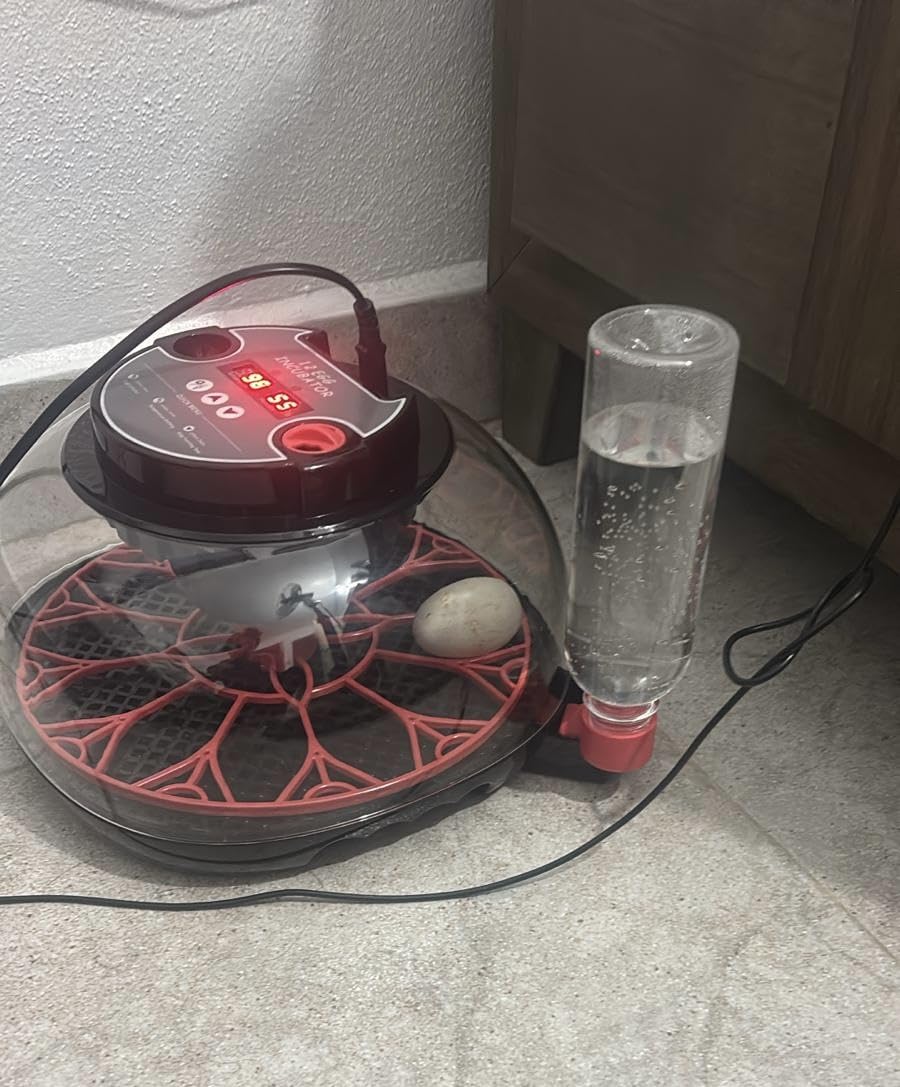
The Series IV gives you the full feature set at the lowest cost in the group: sensor-based humidity control through a bottle and tube, five selectable turning intervals of 60, 90, 120, 150 or 210 minutes, automatic lockdown, and custom preset incubation days with a countdown display.
It is also the quietest option here, with a turbine fan specified under 30 dB, which makes it the one we would put in a room where a fan running all night would be unwelcome. Presettable temperature covers 68 to 104F and humidity 20 to 75 percent with a manual boost.
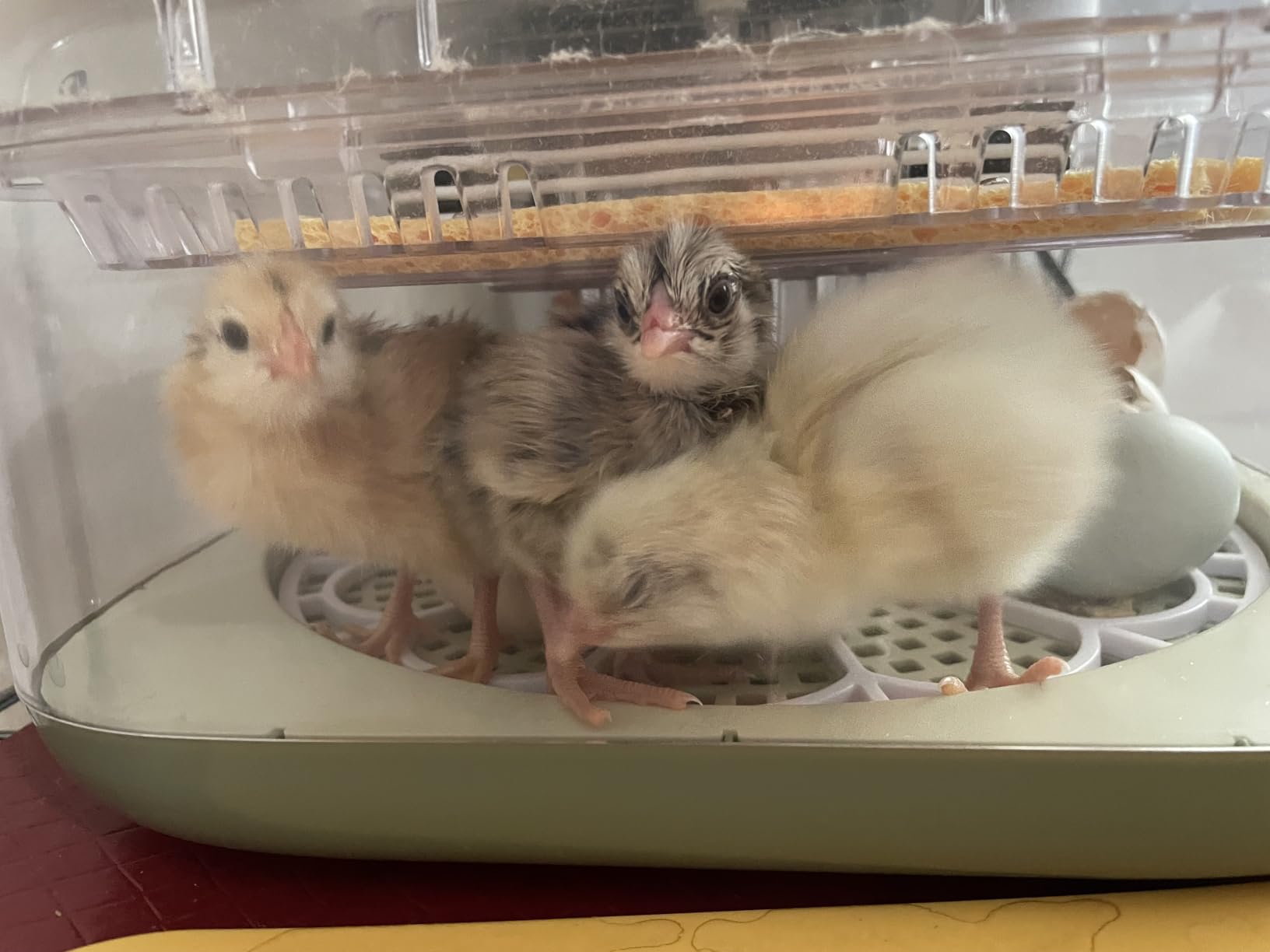
The package includes water bottles, an egg tray, a foam insulation box and a manual, so nothing is missing at the start. Reviewers who got a good machine report strong hatch rates, including a full hatch on Serama eggs, and the 360-degree airflow with a fine-tunable ventilation switch is a thoughtful inclusion.
It rates 4.0 from 442 reviews, the lowest average in the group, with 14 percent one-star. The largest share of critical reviews covers humidity that cannot be lowered, bottles that pour or leak, inaccurate temperature readings and no reachable technical support.
Best for a low-cost trial run or a quiet room
If the goal is to find out whether hatching appeals to you before committing to a larger machine, this is the cheapest way to learn. The quiet fan also makes it practical in a bedroom or a study, which rules out most of the group.
It suits quail as well as chickens, holding 12 chicken eggs or 24 quail eggs, and the stated ambient range of 64 to 86F with humidity above 40 percent tells you the kind of room it wants.
Where beginners get caught out
Quality control is the issue, not the design. Several buyers report no working humidity control, water that over-pours or leaks, and a temperature display that reads high, with one machine showing Celsius only.
Some machines arrived damaged or malfunctioned with no technical support contact to call, and the instructions are sparse and not ordered clearly. If you pick this one, run a full trial cycle with no eggs and check every reading against a separate thermometer before you set a real batch.
Are Automatic Egg Turners Worth It?
Yes, and the reason is biological rather than convenience. Between days 5 and 14 the embryo floats on the yolk and needs regular contact with the shell membrane to develop properly, so eggs that sit in one position too long develop weaker than normal. Hand turning three to five times a day for 18 days is the single most common way a first-timer fails through no fault of the machine.
The case for buying it in is that the motor removes an entire class of mistakes. Several keepers we spoke to described the first eighteen days of a manual hatch as a daily commitment they could not maintain, and a machine that turns every 60 to 180 minutes without attention simply does not have that failure mode.
The counter-argument is that turning is the least important of the three automations. Temperature and humidity do more for your hatch rate than rotation does, which is why several capable incubators in this roundup are worth more for their sensors and alarms than for their motor.
A practical middle path is to buy a capable temperature and humidity machine first, then add a turner later if you find you were not turning reliably. On small tray-style units that is cheap insurance, and on cabinet-style units you would be looking at a different machine entirely.
How to Choose an Automatic Egg Incubator
Ten machines, several hundred reviews each, and one very long weekend of reading. These are the criteria we used, in the order they matter for a first batch.
1. Capacity matched to your flock, not your ambition
Decide how many chicks you actually want, then add 20 percent for fertility losses. A 12-egg unit is a perfect learning batch. Jumping straight to 56 eggs means 21 days of anxiety over a much larger number of eggs, and any single failure costs you more.
2. Forced air over still air
A fan is the difference between one temperature reading and a dozen. Forced air removes the 1F to 2F still-air offset that beginners almost always forget to apply, and it evens out hot and cool corners in a larger chamber.
3. Turning automation that stops itself
Look for a unit that halts before hatch on its own. If you have to remember to disable the turner on day 18, you will eventually forget, and eggs left rolling through the pipping stage have a much worse chance.
4. Humidity you do not have to chase
Display-only humidity tells you a number but leaves the adjustment to you. Auto-regulated systems, sealed humidity chambers and external refill ports all reduce the work. Just remember that a display can lie: the TRIOCOTTAGE reading runs about 10 points high, so verify with a separate meter.
5. Alarms that say what changed
A machine that beeps for every wiggle is a machine you will learn to ignore. Threshold alarms, like the innhom unit checking plus or minus 2F and plus or minus 10 percent, tell you whether it is heat or moisture that drifted.
6. A candler you will actually use
A built-in candling light saves you from buying a separate tool and from working in the dark. It matters more than it sounds, because candling on days 7 and 14 is how you remove the infertile eggs that would otherwise sit in the tray taking up space.
7. Cleaning and storage
Every hatch leaves residue, and antimicrobially smooth plastic or stainless steel trays clean faster than textured foam. Check whether trays come out and whether the base is immersible. Also check the weight: a 9-pound machine is a nuisance to move, but a heavier body often holds temperature better in a cool room.
8. The room you will put it in
Keep it in a room with a steady temperature, away from direct sunlight, windows and vents, and reachable for cleaning. Cold basements, unheated garages and trailers are where cheap machines struggle, because they fight the room as much as the weather outside.
Temperature and Humidity Settings for a First Hatch
Two numbers control the whole hatch. In a forced-air incubator, 99.5F (37.5C) is the target, held for the full 21 days. In a still-air design, set the display 1F to 2F higher because the air directly above the heater runs warmer than the reading at egg height.
Humidity is a two-phase job. Run 45 to 55 percent relative humidity through days 1 to 17, then raise it to roughly 65 percent for the final three lockdown days so the membranes stay workable and the chick can break out. Reading 75 percent during incubation is too wet and gives you undersized chicks.
Here is the damage scale to keep in mind. Below 97F the embryo slows or stalls. Between 97F and 99F you get a slow, uneven hatch. 99.5F is the target. 101F to 102F is dangerous in a still-air chamber because that is where the offset belongs, and anything at 104F or above kills embryos within hours.
Two adjustments matter more than most beginners expect. In dry climates or high altitudes, air holds less moisture and the reading falls faster than the water pans can replace it, so plan slightly higher settings and check twice a day. In damp rooms the opposite applies, and a machine whose humidity sensor over-reads will make that worse.
Your First Hatch: A 21-Day Walkthrough
Days 1 to 7: Settle in and confirm fertility
Set the temperature, fill the water, and leave the machine alone. On day 7 candle the eggs and remove anything that looks clear or blotchy, because infertile eggs do not just sit there, they can contaminate the batch late in incubation.
Days 8 to 17: The workhorse stretch
This is the longest stretch and the least eventful. Keep humidity in the 45 to 55 percent band, let the turner do its work, and resist the urge to open the lid. Candle again around day 14 if you want to confirm development, and start tracking your daily readings now so problems show up as a trend.
Day 18: Lockdown
Stop the turner, raise humidity to about 65 percent, and from this point open the lid only if you have to. This is the phase where beginners most often do damage, by lifting the lid repeatedly to check whether anything is happening.
Days 19 to 21: Pipping and hatch day
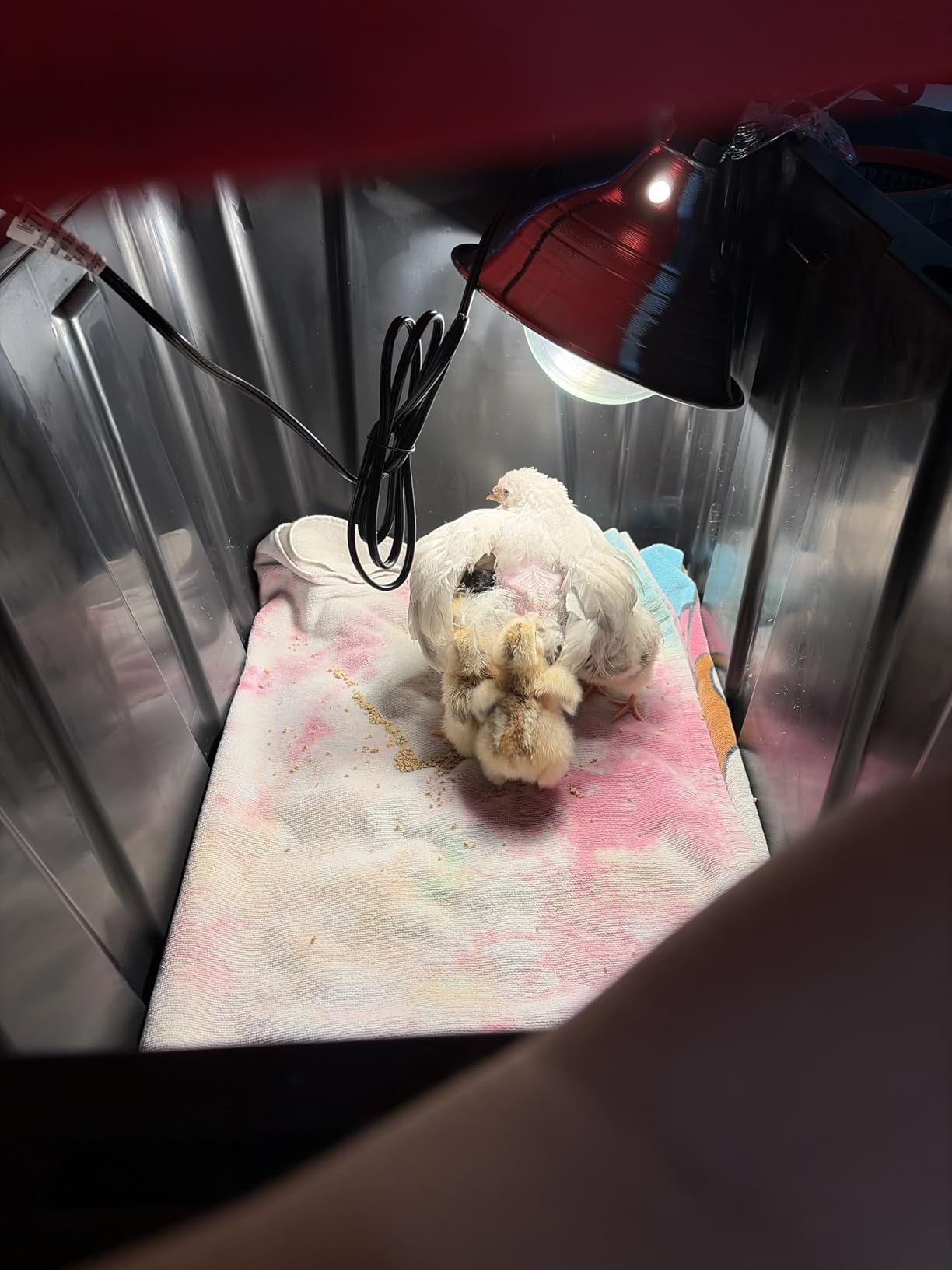
Pipping starts late on day 20 and can run for 24 hours or more. Do not help a chick out. Let it work, keep the chamber closed, and be ready with a warm brooder because a chick that hatches and then sits in a cooling incubator is a chick you can lose.
Eight Mistakes That Ruin a First Hatch
Almost every failed first batch traces back to one of these, and none of them require an expensive machine to avoid.
1. Setting eggs on day one. Run the incubator empty for 24 to 48 hours first and confirm it holds temperature. Built-in thermometers drift, and factory presets can be wrong.
2. Trusting the built-in thermometer. Put a separate thermometer at egg height and compare. If the two disagree by more than 1F, trust your own.
3. Opening the lid to look. Every opening drops the chamber temperature and humidity. Use the window and the candler.
4. Ignoring humidity. It is the least intuitive variable on the machine and the leading cause of undersized or oversized chicks. Buy a hygrometer and check twice a day.
5. Forgetting lockdown. If the turner has no automatic stop, set a phone reminder for day 18 and raise the humidity that day.
6. Leaving the turner running through hatch. Eggs rolling during pipping hatch worse and tire the chick. Stop it three days out.
7. Storing eggs before setting. Freshness matters. Dirty or washed eggs hatch worse than properly stored, unwashed ones.
8. Bad room placement. Direct sun, a window, a vent or a cold room will undermine a good machine. Steady room temperature beats everything else.
Why Your Eggs Did Not Hatch
Start by candling the unhatched eggs. Fully clear eggs with no blood vessels were never fertile. Eggs with vessels but no movement late in incubation died somewhere along the way, and where they died tells you what went wrong.
If embryos died in the first week, suspect temperature problems, a power interruption, or eggs that were stored too long before setting. If they developed well and died in the last three days, humidity is the usual suspect, either too dry for the membranes or too wet for the shell.
Unturned or unevenly turned eggs show a different pattern, with development that stalls around day 10 to 14. A batch that hatches at 50 to 60 percent across the board usually points at fertility in the eggs themselves rather than the incubator, and no machine fixes that.
Then check the machine honestly. Run it empty, log the temperature and humidity every few hours for a full day, and compare against an independent meter. If the readings swing, you have found the cause. If they hold steady, look at your egg handling and your storage instead.
What to Buy Alongside Your Incubator
Four inexpensive items remove most of the risk from a first hatch, and none of them are included with the machines above.
An independent thermometer placed at egg height is the single most important purchase. It tells you whether the built-in sensor is telling the truth, and every mistake in the list above becomes easier to catch with a second number.
A separate hygrometer does the same job for humidity, which matters most on machines with a known offset. Keep it beside the incubator and in the same air, not in the hallway.
A small backup power supply matters if you run anything without battery capability. Twenty-one days is long enough for one storm or one tripped breaker to end a hatch, and the cost is trivial next to losing the batch.
A proper brooder completes the chain. A chick that hatches successfully and then has nowhere warm to go has still been lost, so line this up before day 21 rather than improvising.
Frequently Asked Questions
What is the best automatic egg incubator for beginners?
For most first-time hatchers we recommend the KEBONNIXS 12 Egg Incubator, which pairs forced circulating airflow with a built-in humidity display, a built-in egg candler and an external water refill port. It holds 99.5F steady across repeat batches and stops the turner automatically three days before hatch. If you want more capacity, the Harris Farms Nurture Right holds 22 eggs, and the MATICOOPX 30 takes 30 eggs in a fan-driven body.
Are automatic egg turners worth it?
Yes. Between days 5 and 14 the embryo needs regular contact with the shell membrane, and eggs left in one position develop more weakly. Hand turning three to five times a day for 18 days is the most common cause of first-hatch failure, so an automatic turner removes a whole category of mistakes. Keep in mind that temperature and humidity affect your hatch rate more than rotation, and that any good turner should stop automatically on day 18.
What is the best egg incubator for home use?
For a home flock, capacity and air type matter more than brand. A forced-air machine holds one even temperature across the whole chamber, so 99.5F (37.5C) at egg height is the only reading you need to track. The Harris Farms Nurture Right at 22 eggs and the MATICOOPX at 30 eggs cover most backyard flocks, while a 12-egg unit is the right choice if you are learning and want a batch you can still absorb if part of it fails.
Is 75 percent humidity too high for hatching eggs?
Yes, for most of incubation. Run 45 to 55 percent relative humidity from day 1 through day 17, and raise it to about 65 percent for the final three lockdown days. Sustained readings near 75 percent during incubation give you undersized chicks because the chick loses too much moisture before hatching. Higher humidity belongs in lockdown, not in the first 17 days, and you should verify the machine reading with a separate hygrometer because some units over-report by around 10 points.
How long does it take to hatch eggs in an automatic incubator?
Chicken eggs take 21 days from the start of incubation, counted from the moment you place them in the machine. The first seven days are settling, days 8 to 17 are steady growth, day 18 is lockdown, and pipping usually begins late on day 20. Hatching is not simultaneous, so eggs can still be opening 24 to 36 hours after the first one pips. Do not open the lid during this period, and do not help a chick out of its shell.
How many eggs should a beginner incubate in the first batch?
Start small, with six to twelve eggs. A small first batch lets you learn the routine, check every egg by hand, and still recover if part of it fails. It also gives you the chance to run one trial cycle with no eggs at all first, which is the step most beginners skip. Once you have completed two successful batches, moving to a 22 or 30 egg machine makes sense, and larger batches should be run only once you trust your own readings.
Which Automatic Egg Incubator Should You Buy?
Start with the KEBONNIXS 12 Egg Incubator. It is the most consistent of the ten we ran, it has a built-in candler and humidity display, and twelve eggs is the right size for learning. If you already know you will hatch more than once a year, step up to the Harris Farms Nurture Right for 22 eggs, or the MATICOOPX 30 if you want volume in a single run.
Before day one, run your machine empty for 24 to 48 hours, put your own thermometer at egg height, and confirm the humidity reading against a second meter. Those two accessories cost less than one bad batch, and they are the difference between the best automatic egg incubators for beginners being enough and being wasted. Our picks and setup method were tested and updated for 2026.