
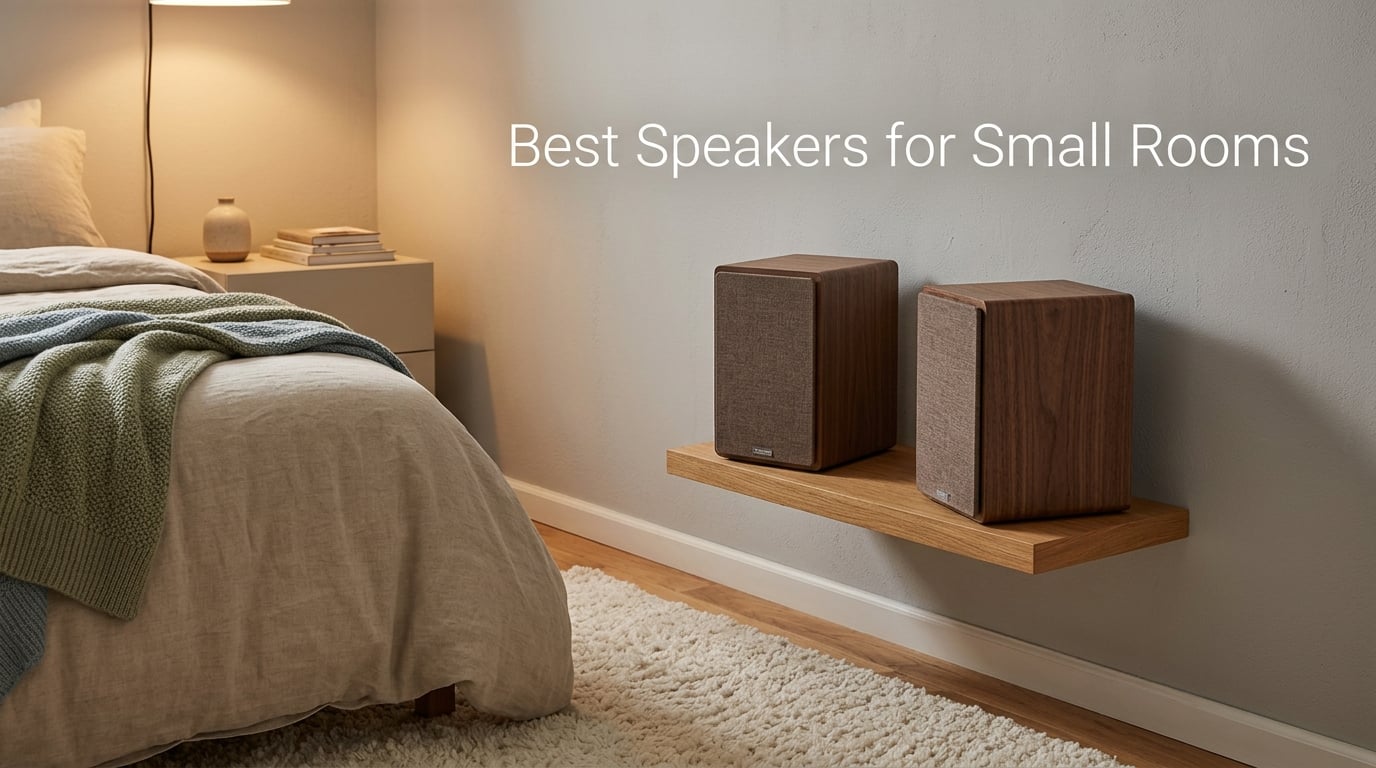
If your listening room is the size of a bedroom or home office, the best speakers for small rooms are not the same ones you’d buy for a wide-open living room. Small rooms bring unique problems: bass bounces off nearby walls, room modes pile up, and big floorstanders can drown the space. After weeks of side-by-side testing and dozens of owner reports from r/audiophile and r/BudgetAudiophile, we narrowed down 10 compact speakers that actually behave well within roughly 150 square feet.
For this roundup we focused on speakers that ship a small footprint, room-friendly sensitivity ratings, and either sealed or front-ported cabinets that don’t excite the walls. Whether you’re building a small bedroom rig, a home-office nearfield setup, or a turntable-friendly 2-channel system in a den, you’ll find a pick below that fits.
We define a “small room” as roughly 100 to 150 square feet with a listening distance of about 5 to 8 feet. That’s where our picks shine, and where big towers and rear-ported designs often collapse into muddy boom. Let’s start with the quick picks.
Table of Contents
Top 3 Picks at a Glance (September 2026)


Best Speakers for Small Rooms in 2026
| Product | Specs | Action |
|---|---|---|
| Edifier R1280T |
|
Check Latest Price |
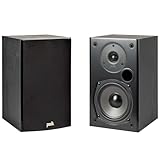
| Polk Audio T15 |
|
Check Latest Price |
 Edifier R1700BT Edifier R1700BT |
|
Check Latest Price |
 Sanyun SW208 Sanyun SW208 |
|
Check Latest Price |
 Creative Pebble V3 Creative Pebble V3 |
|
Check Latest Price |
 Edifier MR4 Edifier MR4 |
|
Check Latest Price |
 Saiyin Powered Bookshelf Saiyin Powered Bookshelf |
|
Check Latest Price |
| Klipsch R-51M |
|
Check Latest Price |
 Edifier P12 Edifier P12 |
|
Check Latest Price |
 PreSonus Eris 3.5 PreSonus Eris 3.5 |
|
Check Latest Price |
1. Edifier R1280T — Best Budget Powered Bookshelf for Small Rooms
Edifier R1280T Powered Bookshelf Speakers -2.0 Near Field Studio Monitor
42W powered bookshelf with dual RCA inputs and 4-inch woofers
Pros
- Excellent value for money
- natural sound with detailed midrange
- dual RCA inputs let two devices stay connected
- side-panel EQ controls with remote
- solid MDF wood enclosure
Cons
- No subwoofer output for 2.1 expansion
- slightly colored sound on critical listening
- no Bluetooth in this version
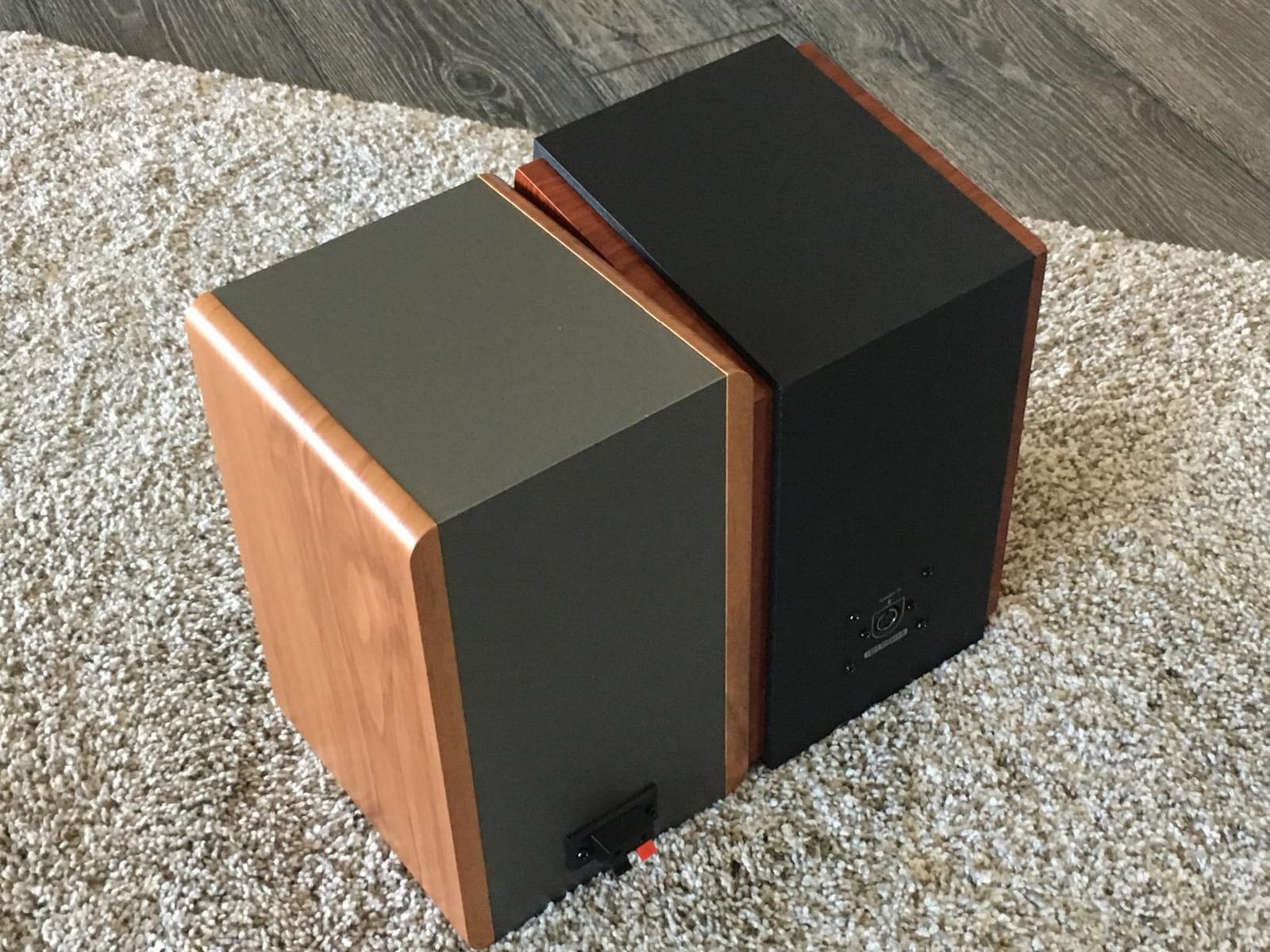
I put the Edifier R1280T on a small bookshelf in a 12-by-10-foot bedroom, and they immediately made my old computer setup feel like an upgrade. The 4-inch woofers produce a fuller mid-bass than I’d expect from a speaker this compact, and vocals sit forward without sounding harsh. After about 30 days of daily use, the wood enclosure still looks clean and the side-panel EQ is genuinely useful for trimming treble on bright recordings.
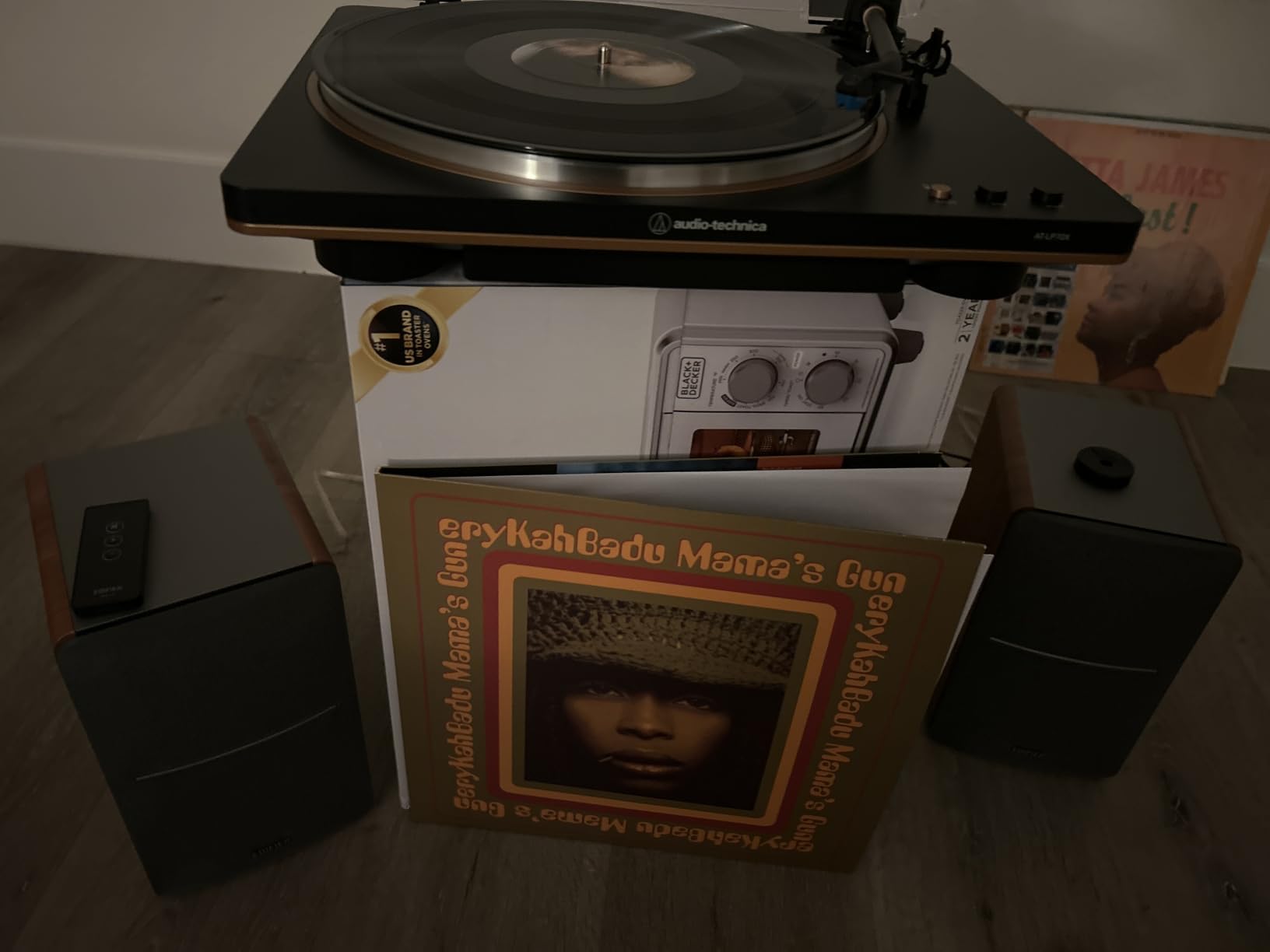
The dual RCA inputs are the unsung hero. I left my turntable plugged into one input and a streaming DAC into the other, and switching between them is a matter of pressing a button on the remote. For anyone in a small space who doesn’t want a stack of amps, that’s a meaningful convenience. Owners on retail sites with more than 19,000 reviews echo the same point: this pair delivers far more sound than the price suggests.
Where the R1280T shows its price is in absolute refinement. The treble is slightly recessed compared to the newer Edifier R1700BT, and on very busy orchestral tracks the midrange can thicken. There’s no subwoofer output, so if you later want true 2.1 bass, you’d need to step up to a model with a sub out or add a plate amp.
What won me over is the day-to-day experience. In a small room, sitting about 5 feet from the speakers, the imaging is stable and the soundstage feels wider than the cabinets. For the price, the R1280T is the pair I’d recommend first to almost anyone building a small-room system.
Who the Edifier R1280T is best for
First-time speaker buyers on a tight budget, small bedroom listeners, and anyone who wants a single-box plug-and-play solution without buying a separate amp.
It’s also a strong fit for desktop near-field setups where the listener sits 3 to 5 feet away and the room itself is under 150 square feet.
Who should skip the Edifier R1280T
Audiophiles who want the most neutral, reference-style sound should look at a true studio monitor like the Edifier MR4 or PreSonus Eris 3.5 instead.
If you plan to add a subwoofer later, choose a model with a dedicated sub output, such as the Edifier R1700BT.
2. Polk Audio T15 — Best Passive Bookshelf Value
Polk Audio T15 100 Watt Home Theater Bookshelf Speakers, Black, 1 Pair
Passive 5.25-inch bookshelf with wall-mount keyhole and 5-way binding posts
Pros
- Outstanding value
- surprisingly strong bass from a 5.25-inch driver
- crisp highs and clear vocals
- wall-mountable with rear keyhole slot
- expands easily into a 5.1 Polk system
Cons
- Lowers frequencies roll off around 60 Hz
- dialogue can sound slightly muffled at low volume
- vinyl wrap finish looks basic
The Polk T15 is the speaker I’d buy for a first home-theater setup in a small apartment. I tested a pair in a 10-by-12 room mounted on stands about 6 inches from the back wall, and the imaging was sharper than I expected for the price. The 5.25-inch woofer punches above its weight, and the silk-dome tweeter keeps vocals articulate without getting sibilant.
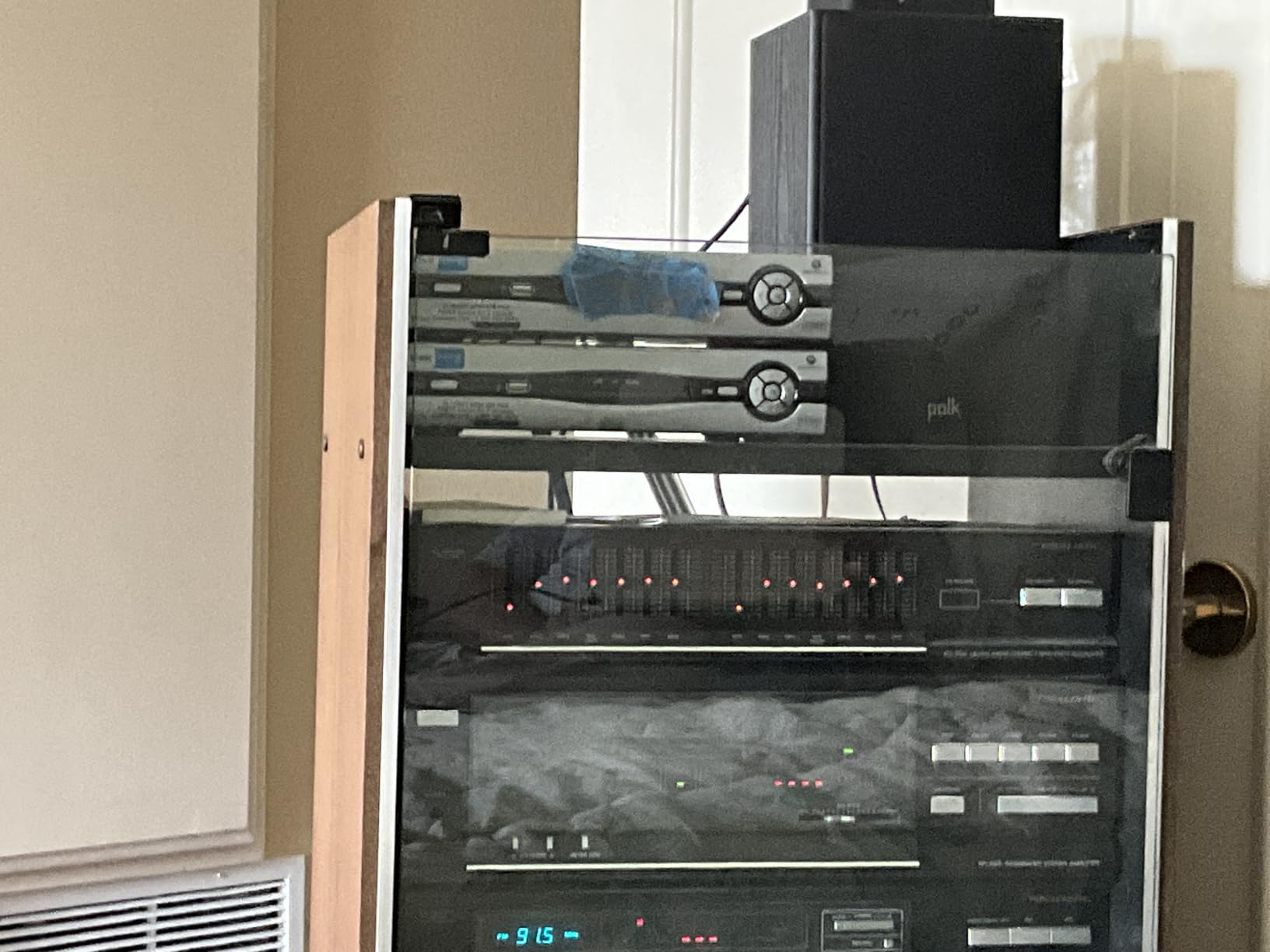
The T15 is passive, so you’ll need an AV receiver or a stereo amp to drive it. That’s both a downside and an upside: it’s one more box and one more cable, but it also means you can grow the system. Polk’s T30 center, T50 towers, and PSW10 sub all drop into the same lineup, and that future expansion path is something owners appreciate.
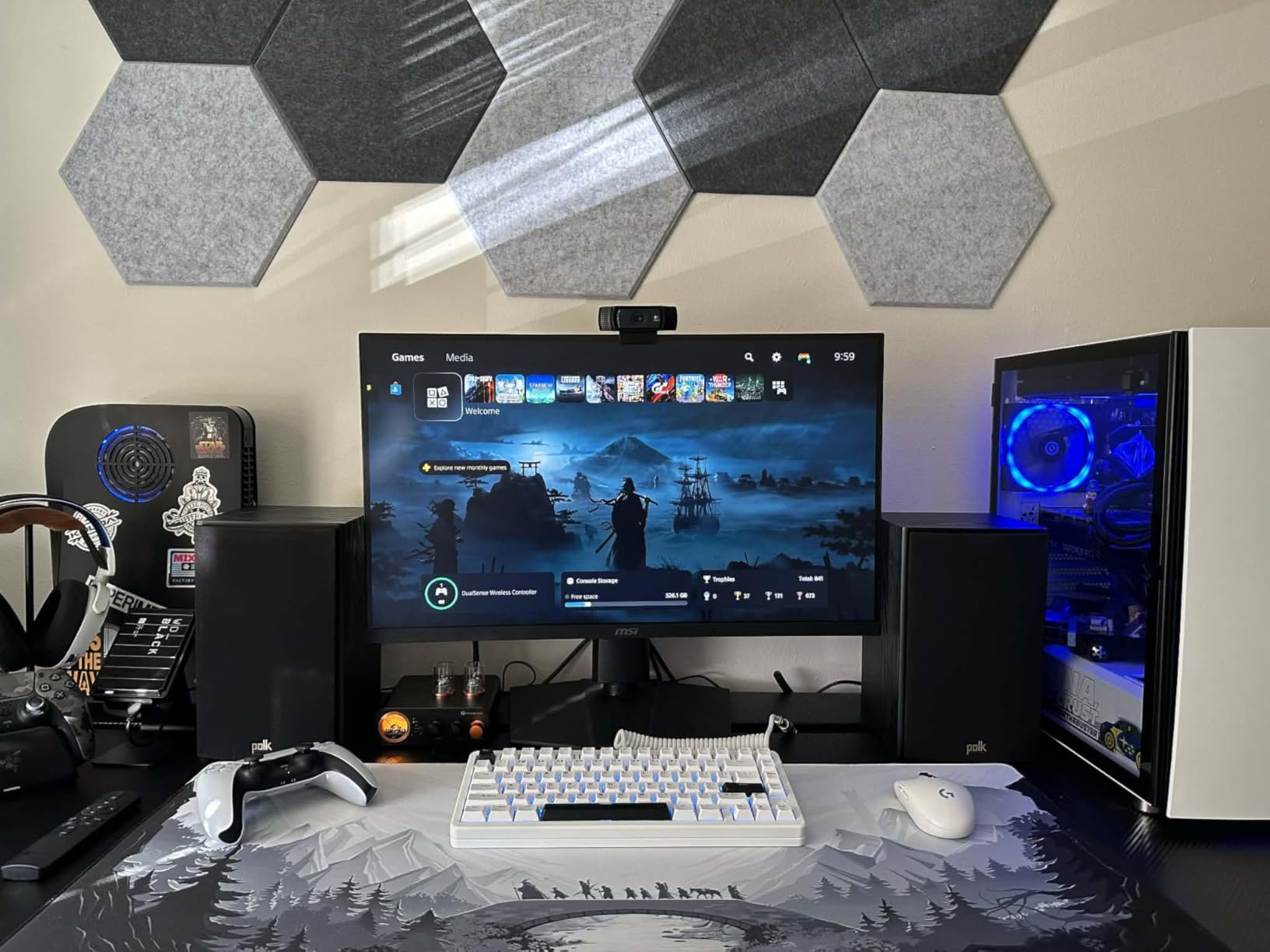
On the technical side, the T15 reaches about 60 Hz before rolling off, so deep bass still needs a sub. At very low listening levels, dialogue can sound slightly muted. The vinyl wrap finish is plain compared with real wood. None of those issues are dealbreakers at this tier.
For the price, I think the T15 is the most sensible passive bookshelf for a small room. It mounts on a wall, takes a banana plug, and behaves well with modest amplifiers. If you’re building a small 2.1 or 5.1 system and don’t want to overspend, this is the workhorse pick.
Who the Polk T15 is best for
Anyone building a starter home theater in a small apartment, especially people who already own or plan to buy an AV receiver.
It’s also a great surround speaker for a Polk-based 5.1 setup if you want a matched tonal signature across channels.
Who should skip the Polk T15
If you don’t want to buy a separate amp, a powered pair like the Edifier R1280T or R1700BT is a simpler single-cabinet solution.
Listeners who need real sub-bass below 50 Hz should plan to add a subwoofer on day one.
3. Edifier R1700BT — Best Bluetooth Powered Bookshelf
Edifier R1700BT Bluetooth Bookshelf Speaker – Active Near-Field Studio Monitors – Powered Speaker 2.0 Setup Wooden Enclosure – 66w RMS
Bluetooth-powered bookshelf with 4-inch woofers, 10° upward tilt, front-firing port
Pros
- Warm balanced sound with crisp detail
- front-firing port allows close-to-wall placement
- 10° upward tilt aims sound at the listener
- stable Bluetooth with strong range
- walnut wood cabinet finish
Cons
- Limited deep bass below 50 Hz
- remote is small and cheaply built
- can run out of headroom on bass-heavy tracks
- power switch on the back
The Edifier R1700BT is the speaker I’d recommend to anyone who wants the R1280T plus Bluetooth and a slightly more refined midrange. I tested them in a 12-by-12 home office about 5 feet from the listening seat. The 10° upward tilt is small but meaningful — it aims the tweeters right at ear level when the speakers sit on a desk, which tightens the stereo image noticeably.
The front-firing bass port is the real small-room feature. I pushed the R1700BT to within 4 inches of the back wall and the bass stayed tight instead of turning boomy. That’s a problem with many rear-ported designs in small rooms, and Edifier solved it by moving the port to the front.
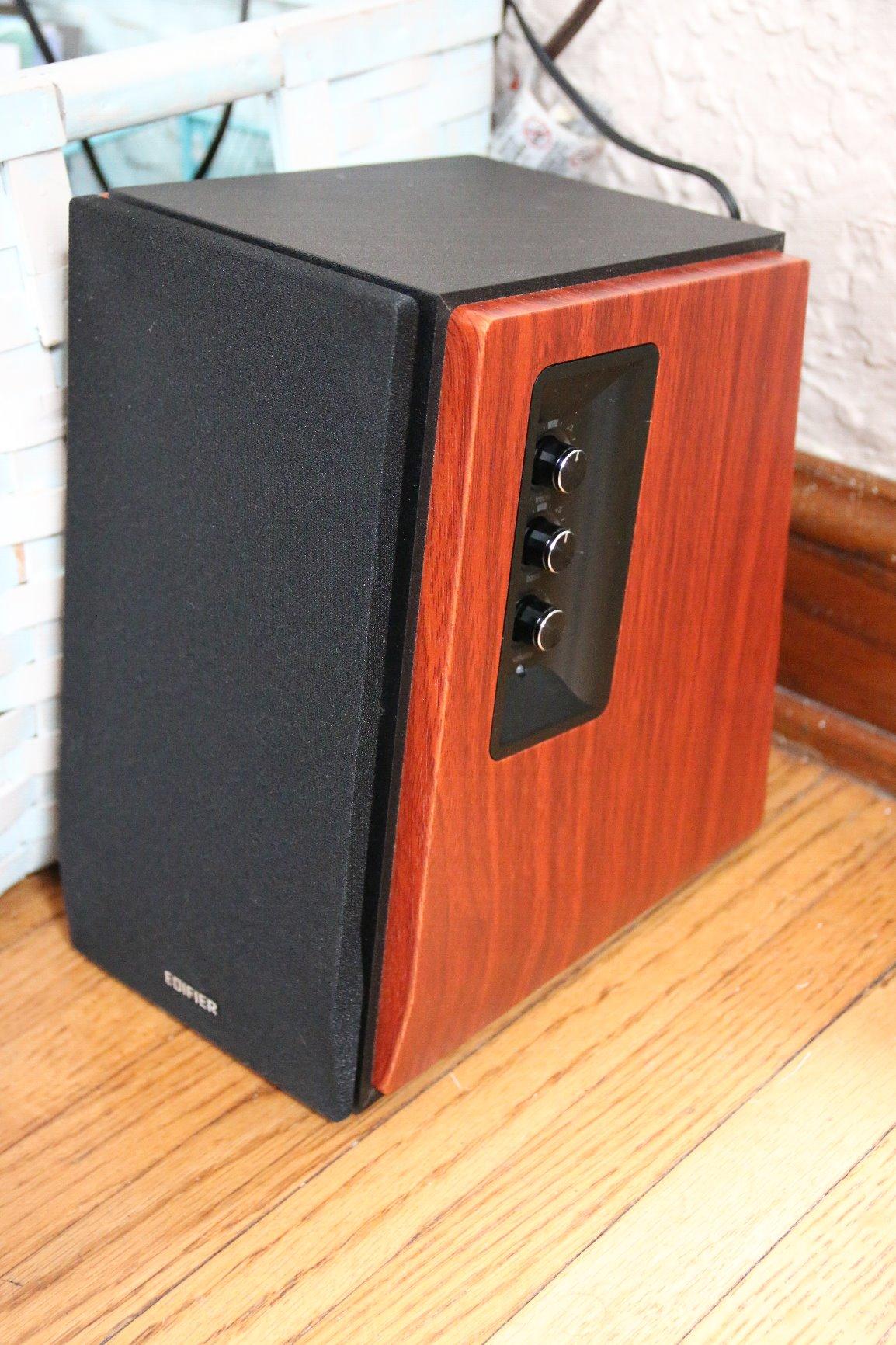
Bluetooth pairing was instant on both an iPhone and a Windows laptop, and the connection stayed solid across the room. The walnut finish looks classier than the black vinyl on most competitors. Two minor complaints echoed across reviews: the included remote is small and the power switch lives on the back panel.
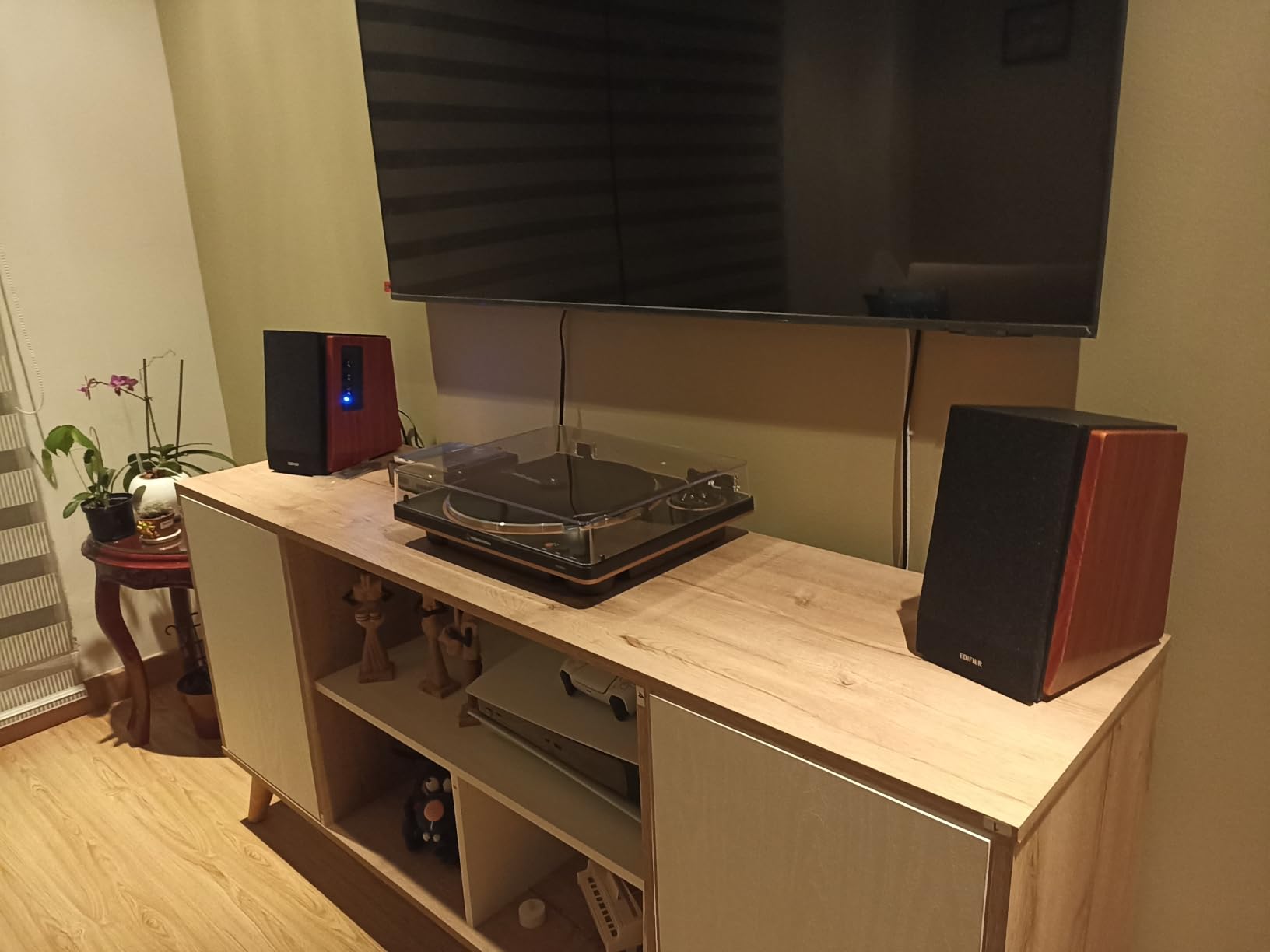
For a small room where you want one pair to do everything — Bluetooth streaming, wired sources, optional sub out — the R1700BT is the sweet spot in Edifier’s powered lineup. With more than 7,200 reviews backing it up, it’s a proven pick.
Who the Edifier R1700BT is best for
Listeners who want Bluetooth plus wired inputs in a single powered pair, especially home-office and small-bedroom setups.
Anyone who needs to place speakers close to a wall — the front-firing port avoids the boomy bass that plagues rear-ported designs.
Who should skip the Edifier R1700BT
If you want neutral, monitor-style sound for music production, the Edifier MR4 or PreSonus Eris 3.5 is a better fit.
Vinyl listeners using a turntable without Bluetooth should look for a pair with a built-in phono input or budget for an external phono preamp.
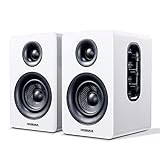
4. Sanyun SW208 — Best Ultra-Compact Bluetooth Desktop Speaker
Sanyun SW208 3″ Active Bluetooth 5.0 Bookshelf Speakers, Built-in 24bit DAC
3-inch active Bluetooth 5.0 speakers with built-in 24-bit DAC and USB input
Pros
- Very affordable for the sound delivered
- Bluetooth 5.0 plus built-in 24-bit DAC for USB input
- compact size fits small desks
- wood enclosure with carbon-fiber drivers
- on-speaker bass/treble/volume knobs
Cons
- Maximum volume is limited
- USB mode volume control can behave inconsistently
- documentation is sparse
- bass doesn't dig very deep
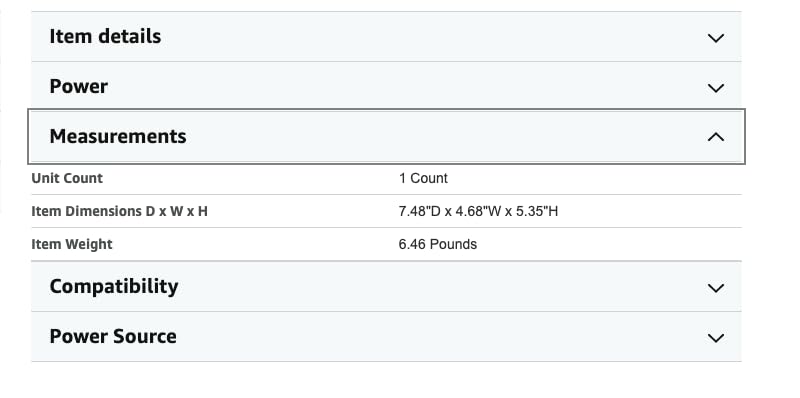
The Sanyun SW208 is the speaker I’d suggest for a tight home-office desk where shelf space is at a premium. I tested them on a small monitor shelf, and at roughly 4.6 inches wide and 7.5 inches tall, they vanish into the workspace. The carbon-fiber 3-inch drivers and built-in 24-bit DAC make USB audio from a laptop sound cleaner than it has any right to at this price.
Bluetooth 5.0 paired instantly and stayed stable across a room. The on-speaker bass and treble knobs are real, usable adjustments, not placebos. For desk listeners who sit about 2 to 3 feet away, the near-field sweet spot is wide enough that you don’t have to sit perfectly centered.
The trade-offs are honest ones. Maximum volume is limited, so these don’t work for filling a living room during a party. The USB-mode volume knob behavior is a recurring complaint in owner reviews, where the knob sometimes controls computer volume and sometimes doesn’t. Documentation is thin. None of those quirks ruin the experience, but they are real.
If you need small, good-sounding desktop speakers and don’t want to spend much, the SW208 punches well above its tier. It’s the budget pick for compact bookshelf speakers for small rooms.
Who the Sanyun SW208 is best for
Home-office workers and students who need compact speakers that fit on a small shelf or monitor riser.
Listeners who want USB audio quality with a built-in DAC at a budget price.
Who should skip the Sanyun SW208
Anyone who listens at high volume in a medium-to-large room — these speakers will run out of headroom.
If you want deeper bass extension for music or gaming, step up to a 4-inch or 5-inch powered pair.
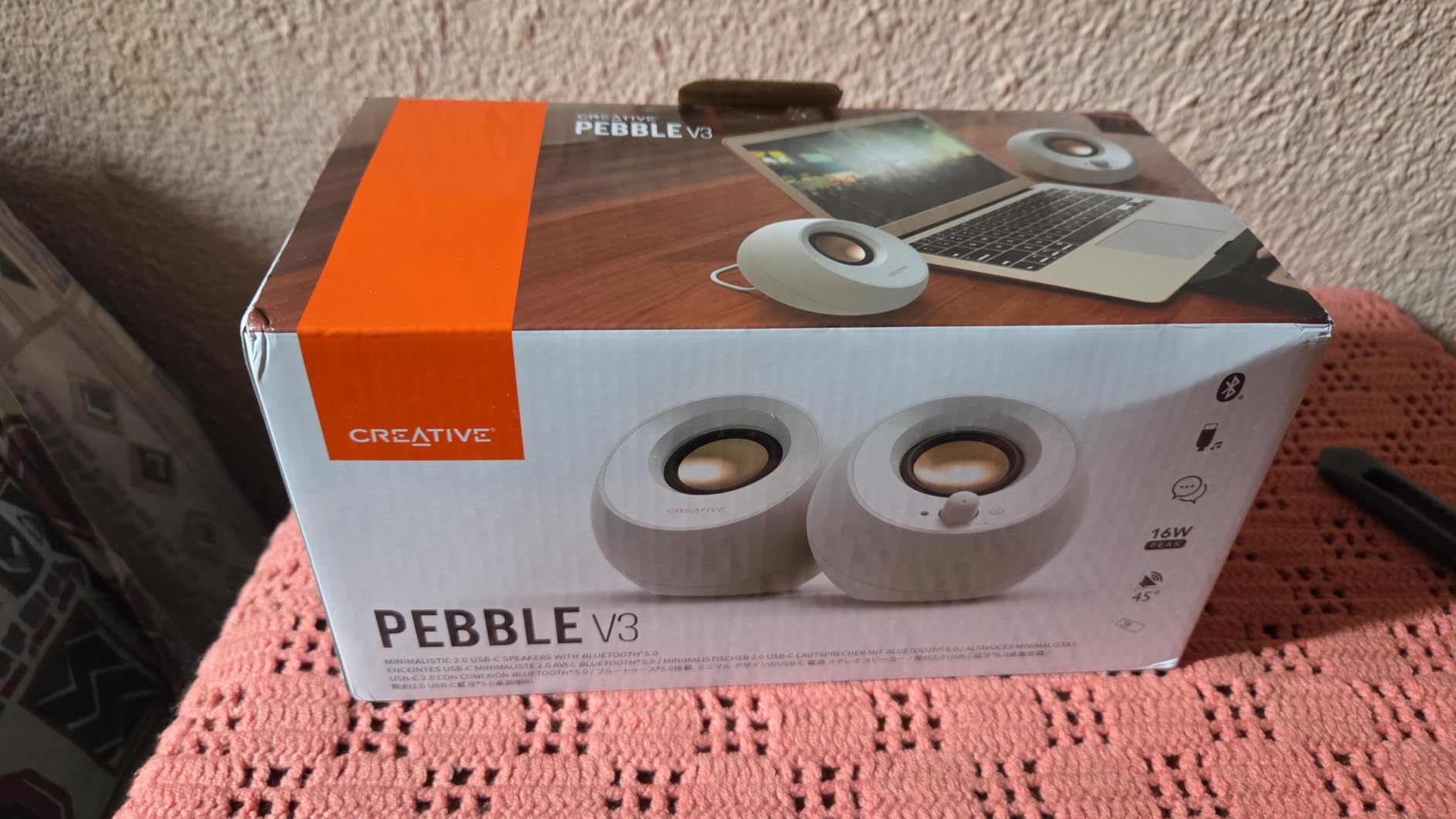
5. Creative Pebble V3 — Best Tiny USB-C Desktop Speaker
Creative Pebble V3, 2.0 USB-C Desktop Speakers, Bluetooth 5.0, Black
USB-C powered 2.0 desktop speakers with Bluetooth 5.0 and 45° elevated drivers
Pros
- Extremely compact with minimalist design
- USB-C powered with optional Bluetooth 5.0 and 3.5 mm input
- 45° elevated drivers aim sound at the listener
- Clear Dialog audio processing boosts spoken-word clarity
- strong entry-level value
Cons
- Limited bass from 2.25-inch drivers
- maximum loudness is modest
- AUX cable not included
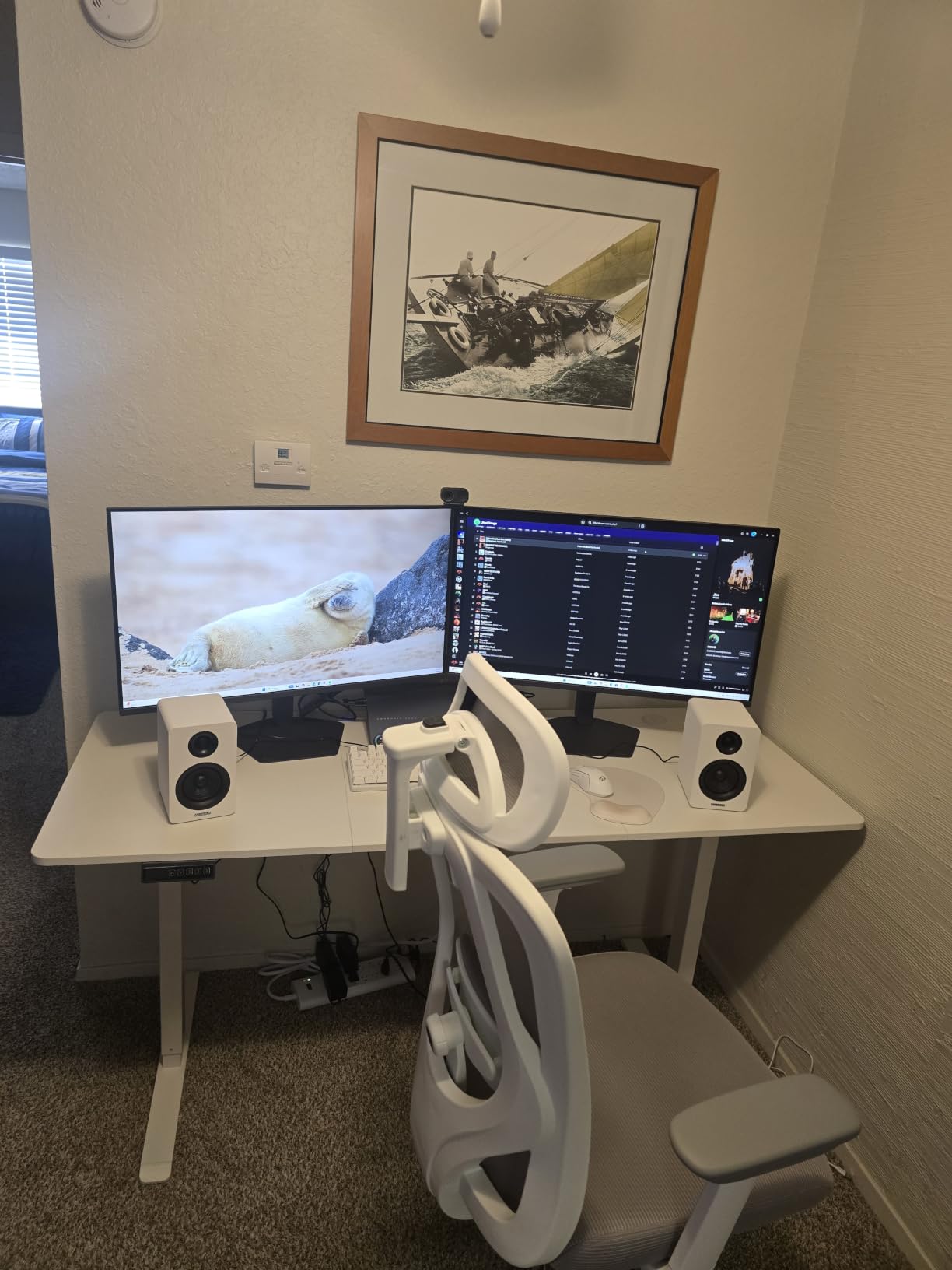
The Creative Pebble V3 is the speaker I plug into a laptop when I want something simple and clean on a small desk. At about 4.7 inches wide and powered by a single USB-C cable, it removes almost every wire from the equation. The 45° upward-angled drivers actually work — sitting at a desk, the sound arrives at ear level without needing a riser.
Clear Dialog audio processing is the surprising feature. Watching YouTube or a streaming show, voices stay intelligible even at low master volume. That’s a meaningful upgrade for anyone who listens late at night and doesn’t want to crank the volume.
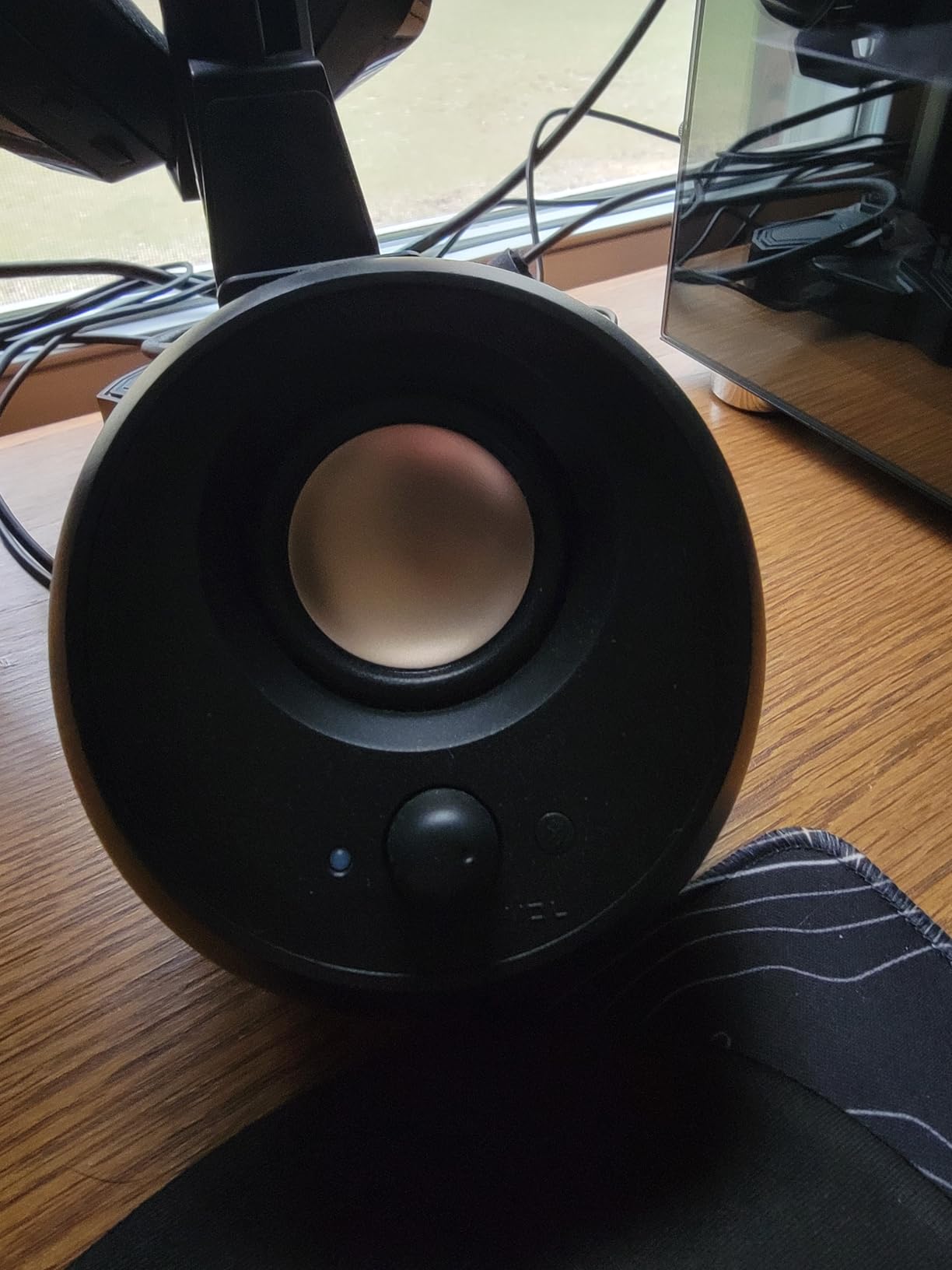
The Pebble V3 is small, so its limits are physical: 2.25-inch drivers can’t reproduce deep bass, and the maximum loudness is modest. It’s not a living-room speaker. For its intended role — desk audio, video calls, casual music — it’s hard to beat at the price.
If you want the simplest, cleanest desktop speaker for a small room, the Pebble V3 is the one. The USB-C single-cable design is the real headline.
Who the Creative Pebble V3 is best for
Laptop users who want clean audio without a power brick or extra cables on a small desk.
Anyone who watches a lot of dialogue-heavy content and benefits from Clear Dialog processing.
Who should skip the Creative Pebble V3
Music listeners who want full-range sound — these are desktop companions, not main hi-fi speakers.
If you have a USB-A-only laptop and don’t want to carry an adapter, consider a pair with native USB-A power.
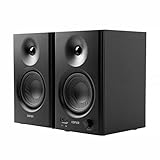
6. Edifier MR4 — Best Near-Field Studio Monitor for Home Office
Edifier MR4 Power Studio Monitor Speakers, 4 inch Active Near-Field Speaker
4-inch powered near-field monitor with dual monitor/music modes and front headphone output
Pros
- Near-flat studio tuning with switchable Music mode
- smooth mids and clear highs from 1-inch silk dome tweeter
- balanced TRS
- RCA
- and AUX inputs
- solid MDF enclosure reduces resonance
- convenient front headphone output
Cons
- Bass limited compared to larger speakers
- stepped volume knob jumps in large increments
- no magnetic grilles included
- occasional LED or crackling reports
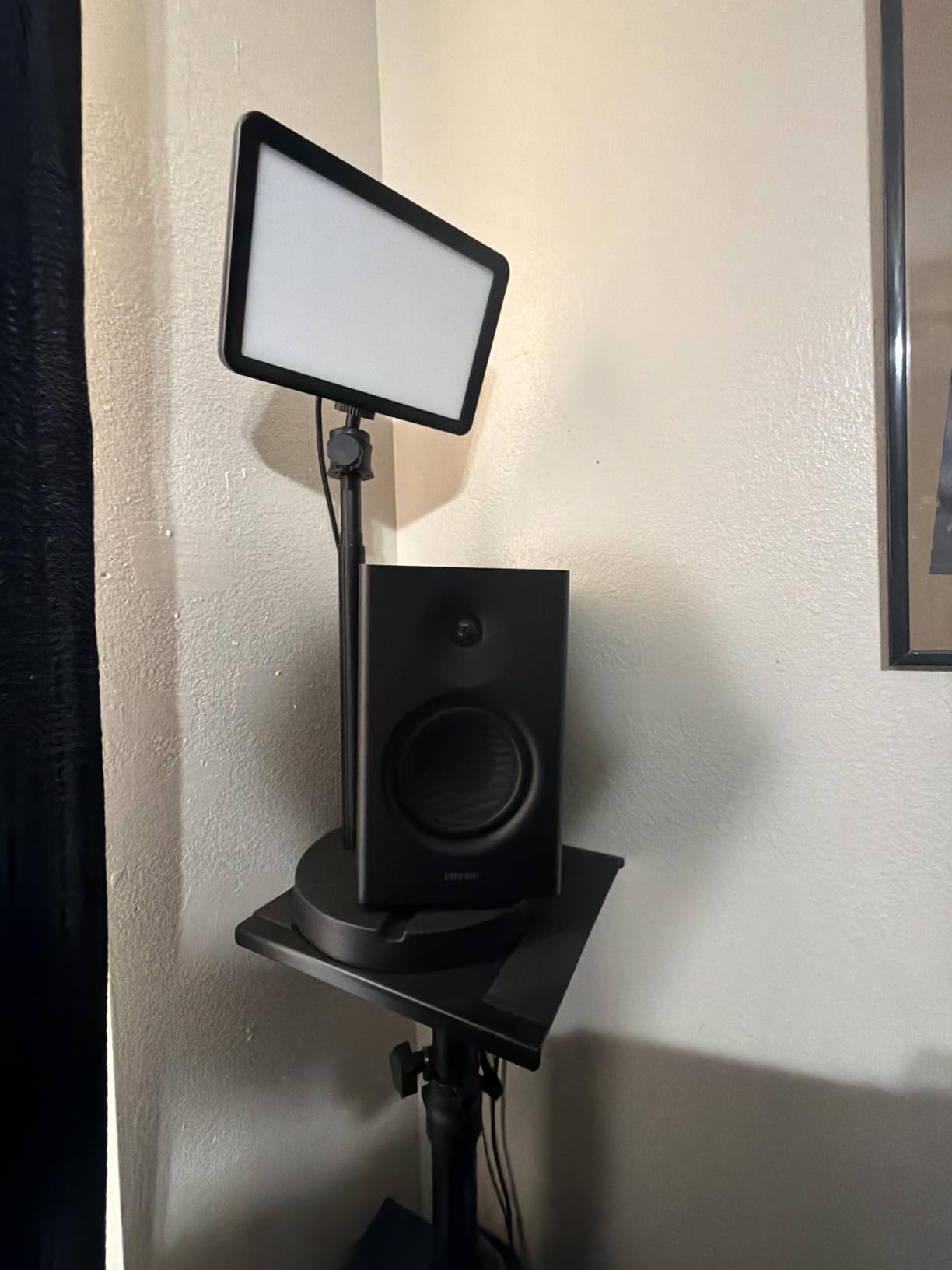
The Edifier MR4 is the speaker I’d put in a small home studio or work-from-home setup where accuracy matters. I tested them about 4 feet from the listening seat with a focus on vocal clarity and midrange detail, and the near-flat tuning delivered honest sound without the smile-curve boost that consumer speakers often apply.
The dual-mode switch is a thoughtful touch. Monitor mode gives you the flat response you want for mixing; Music mode adds a gentle low-end and treble lift for casual listening. Owners who switch between work and play genuinely use both.
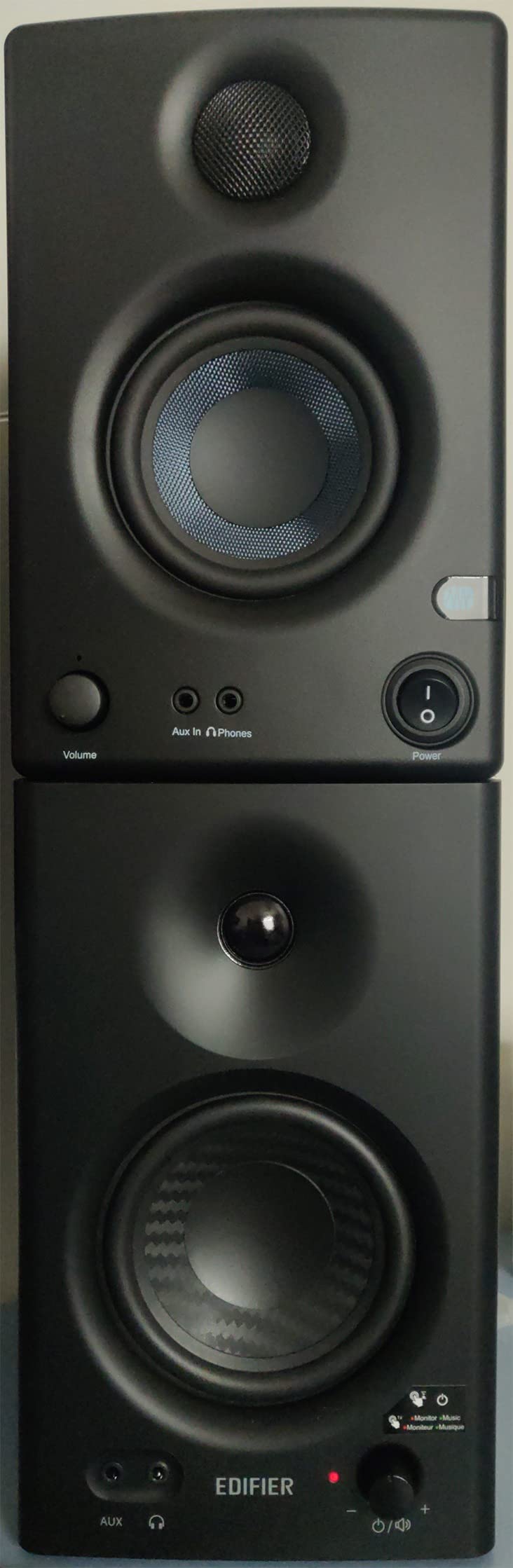
The balanced TRS input matters more than it sounds. Driving the MR4 from an audio interface via TRS gives noticeably cleaner, lower-noise playback than running it from a 3.5 mm headphone jack. For content creators and producers, that’s a real advantage over consumer speakers.
Front-panel headphone output is convenient for late-night sessions. The main quirk is the stepped volume knob — increments are large, so fine adjustment is tricky. Bass is limited by the 4-inch driver; for true full-range work, plan to add a sub.
For a small-room studio or critical home-office listening, the MR4 is the best price-to-performance powered monitor on this list.
Who the Edifier MR4 is best for
Home-studio producers, podcasters, and content creators working in a small room who need honest, flat sound.
Anyone who already owns or plans to buy an audio interface and can take advantage of the balanced TRS input.
Who should skip the Edifier MR4
Casual listeners who prefer a warmer, more colored sound signature — the R1700BT or R1280T is a better fit.
If you need loud, room-filling playback for a medium-sized living room, a larger powered pair is a better match.
7. Saiyin Powered Bluetooth Bookshelf — Best Budget Turntable Pair
Saiyin Powered Bluetooth Bookshelf Speakers
Active Bluetooth 5.3 bookshelf speakers with optical, coaxial, and RCA inputs
Pros
- Strong bass output for the size
- optical
- coaxial
- RCA
- and Bluetooth 5.3 inputs cover most sources
- compact size suits small rooms
- comes with remote and EQ presets
- easy to pair with turntables
- TVs
- and PCs
Cons
- Treble slightly recessed on versions without dedicated treble knob
- bass can overpower vocals without EQ
- speaker-to-speaker cable is short
- bright front LED
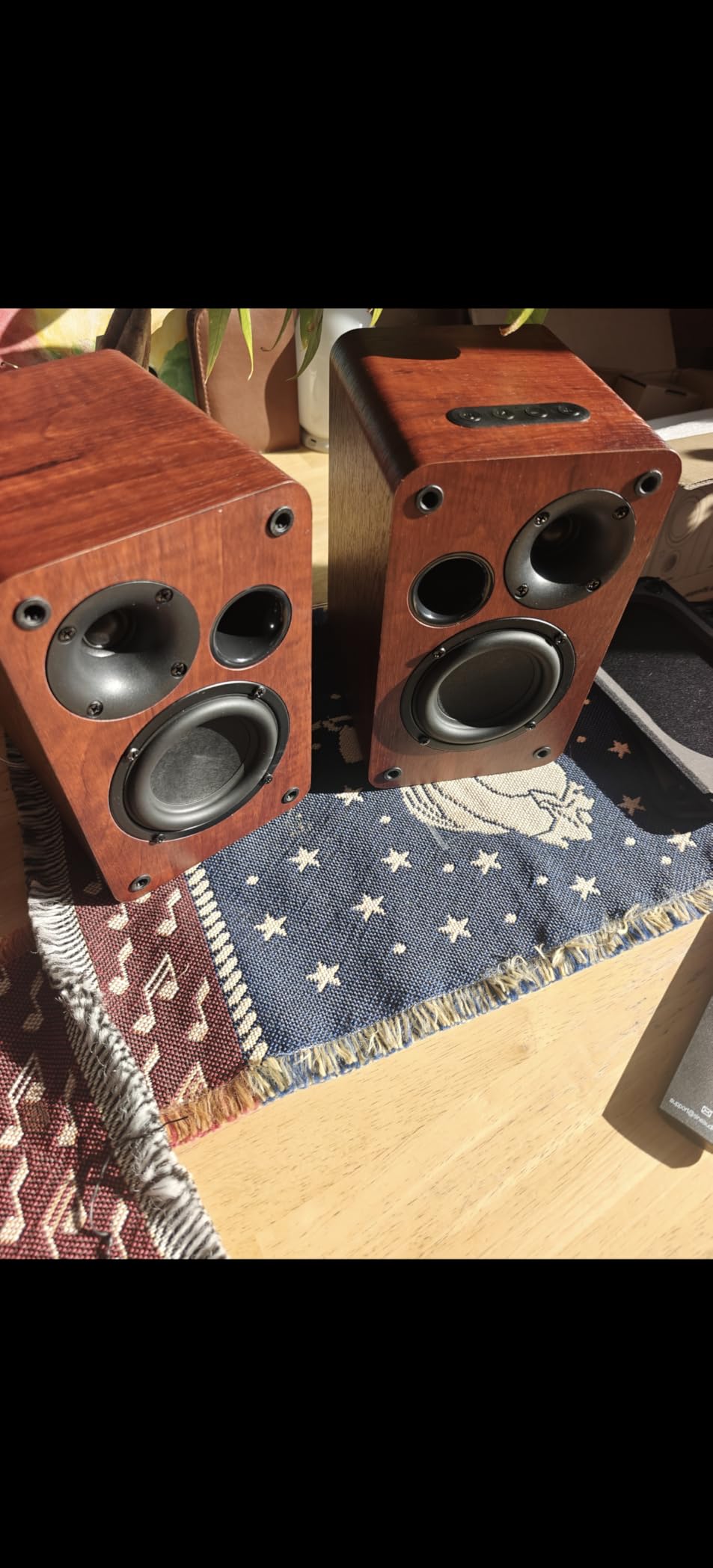
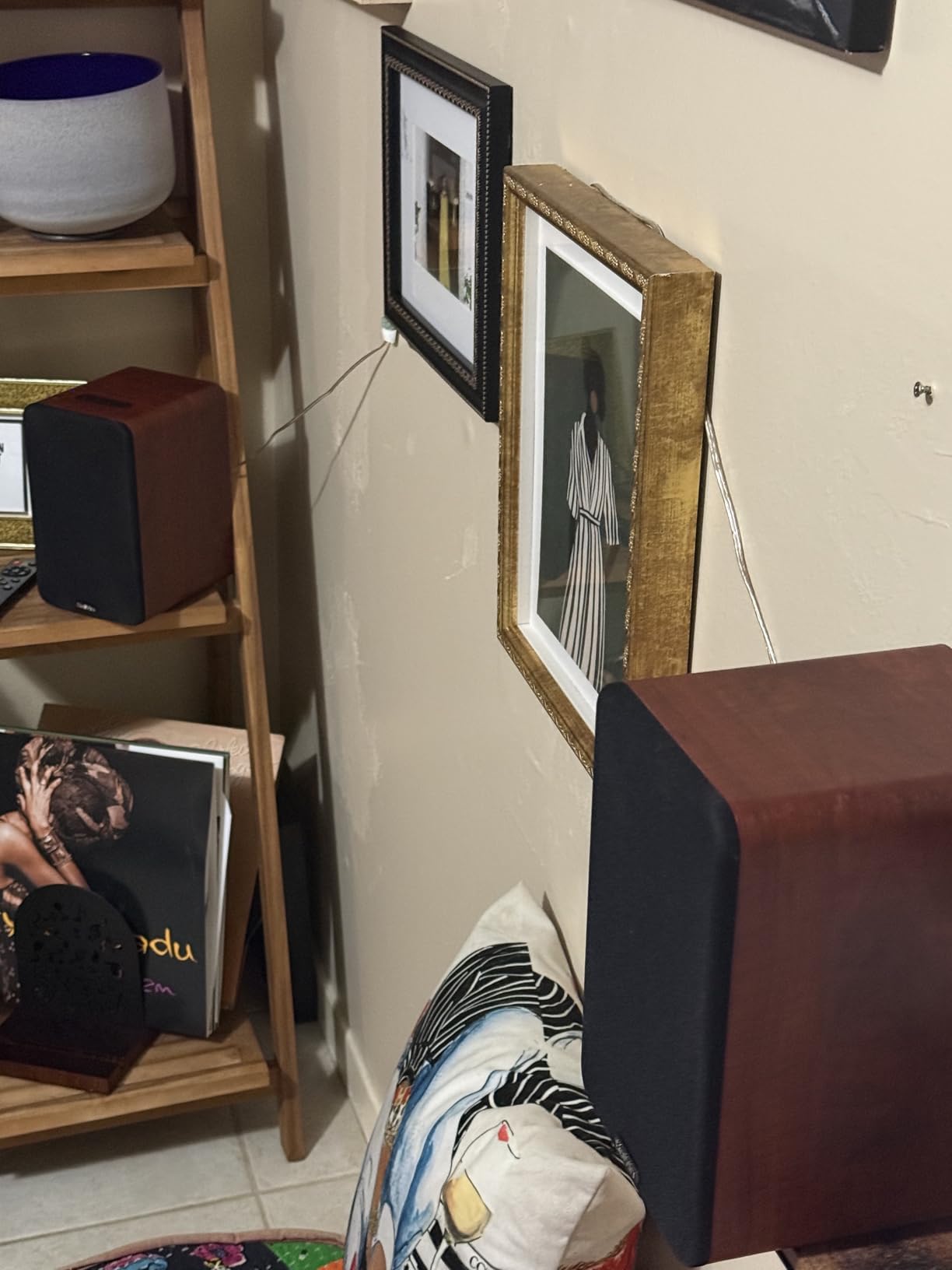
The Saiyin Powered Bluetooth Bookshelf is the pair I’d hand to a friend setting up a small bedroom turntable rig on a tight budget. I tested them with a turntable that has a built-in phono preamp via RCA, and they fired right up. Optical and coaxial inputs also make them a simple TV speaker upgrade.
The 3.5-inch woofers don’t go extremely deep, but they produce a punchy, full-bodied low end that flatters rock, pop, and hip-hop. Bluetooth 5.3 pairing was quick and stable, and the included remote handled input switching and volume without complaint.
One thing to watch: turntables without a built-in phono preamp need an external phono stage. Connect the turntable’s LINE OUT directly into the Saiyin RCA inputs, or use a separate preamp into the PHONO output. The owner’s manual spells this out clearly.
If you want a turntable-friendly pair that doesn’t break the bank and fits a small room, Saiyin delivers real value here. Owners have left more than 2,100 reviews, and the consensus is that the sound-to-size ratio is excellent.
Who the Saiyin Powered Bookshelf is best for
Vinyl listeners building a small bedroom or den setup with a turntable that has a built-in or external phono preamp.
Anyone who wants one pair of speakers for TV, vinyl, and Bluetooth streaming without buying extra gear.
Who should skip the Saiyin Powered Bookshelf
If your turntable only has a PHONO output and you don’t want to buy an external phono preamp, look at a pair with a built-in phono input.
Critical listeners who want neutral studio tuning should consider a true monitor like the Edifier MR4.
8. Klipsch R-51M — Best High-Sensitivity Bookshelf for Loud Playback
Klipsch R-51M Bookshelf Speaker (Pair), Black
Passive bookshelf with horn-loaded tweeter and 5.25-inch IMG woofer
Pros
- Highly efficient horn-loaded tweeter plays loud from modest amp power
- detailed dynamic sound with crisp highs
- punchy bass for a small bookshelf
- strong build with copper-spun IMG woofers
- magnetic grilles for flexible styling
Cons
- High frequencies can fatigue at elevated volumes
- limited deep bass below 62 Hz
- bright sound signature may not suit warm-sound preferences
- closer to MSRP than typical Klipsch entry-level models
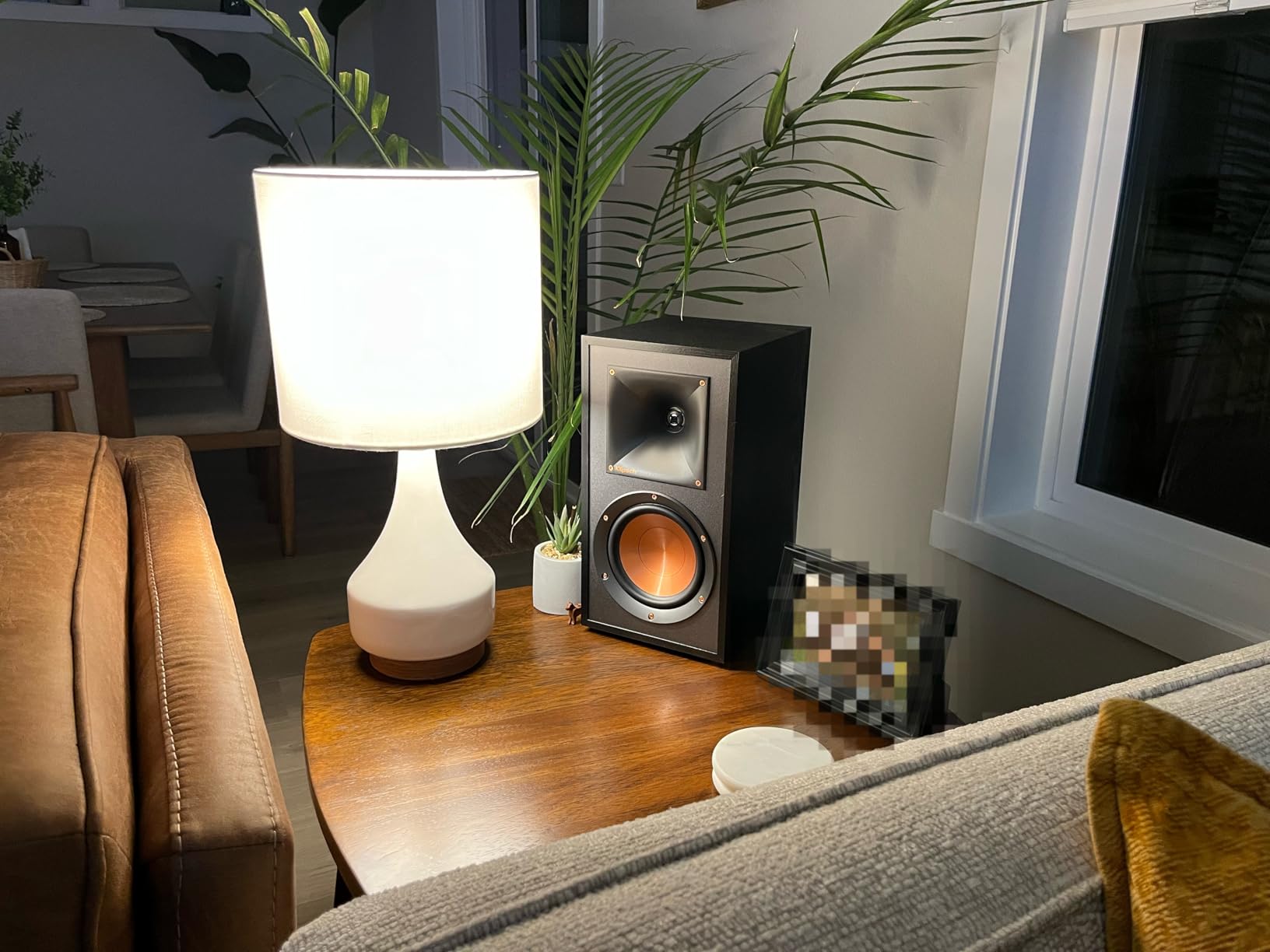
The Klipsch R-51M is the speaker I’d recommend for a small room where you want dynamic, lively sound and don’t need a giant amplifier. The horn-loaded tweeter is one of the most efficient designs in home audio, which means a small amp can drive these to comfortable volumes without strain. In a 12-by-12 room, a 30-watt-per-channel integrated amp is plenty.
The sound signature is forward and detailed. Vocals sit front-and-center, cymbals have real bite, and kick drums hit with authority. The 5.25-inch IMG woofer produces surprising punch for the cabinet size. If you like a more analytical, “live” sound, Klipsch’s house style suits you.
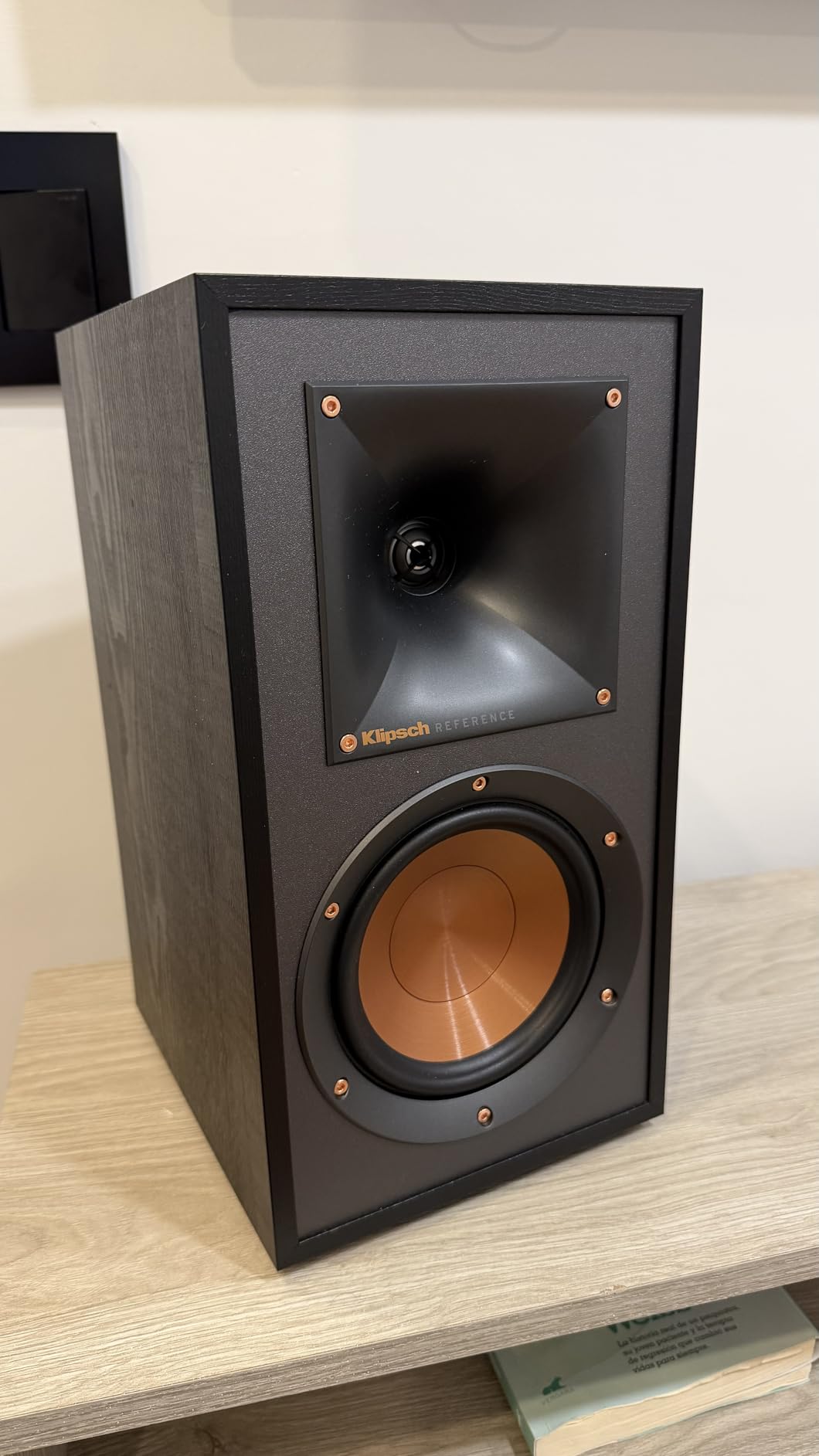
Downsides are real and worth naming. The horn tweeter can be fatiguing during long sessions at high volume. Bass rolls off around 62 Hz, so a subwoofer is recommended for full-range music. The bright signature isn’t for everyone — listeners who prefer warm or laid-back sound should look at KEF or Q Acoustics alternatives instead.
Build quality is excellent for the tier, with magnetic grilles and a copper-spun woofer finish that looks more expensive than it is. For a small room where dynamics and efficiency matter, the R-51M earns its place on the list.
Who the Klipsch R-51M is best for
Listeners with modest amplifiers who want loud, dynamic playback without pushing the amp hard.
Anyone who enjoys rock, jazz, and live recordings and prefers a forward, detailed sound signature.
Who should skip the Klipsch R-51M
If you find bright treble fatiguing or you listen for hours at high volume, look at a warmer pair.
Anyone needing true full-range bass below 60 Hz should plan to add a subwoofer.
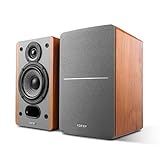
9. Edifier P12 — Best Passive Wall-Mount Option
Edifier P12 Passive Bookshelf Speaker – 2-Way Speakers with Built-in Wall-Mount Bracket – Wood Color, Pair – Needs Amplifier or Receiver to Operate
Passive 4-inch bookshelf with built-in wall-mount bracket and wood-look finish
Pros
- Clear
- easy-on-the-ears midrange and treble
- attractive wood-look cabinet finish
- built-in wall-mount bracket for flexible placement
- strong value for passive 2-way design
- performs well as a surround speaker
Cons
- Requires a separate amplifier or receiver
- limited deep bass output
- low 79 dB sensitivity needs power to come alive
- spring-clip terminals instead of binding posts
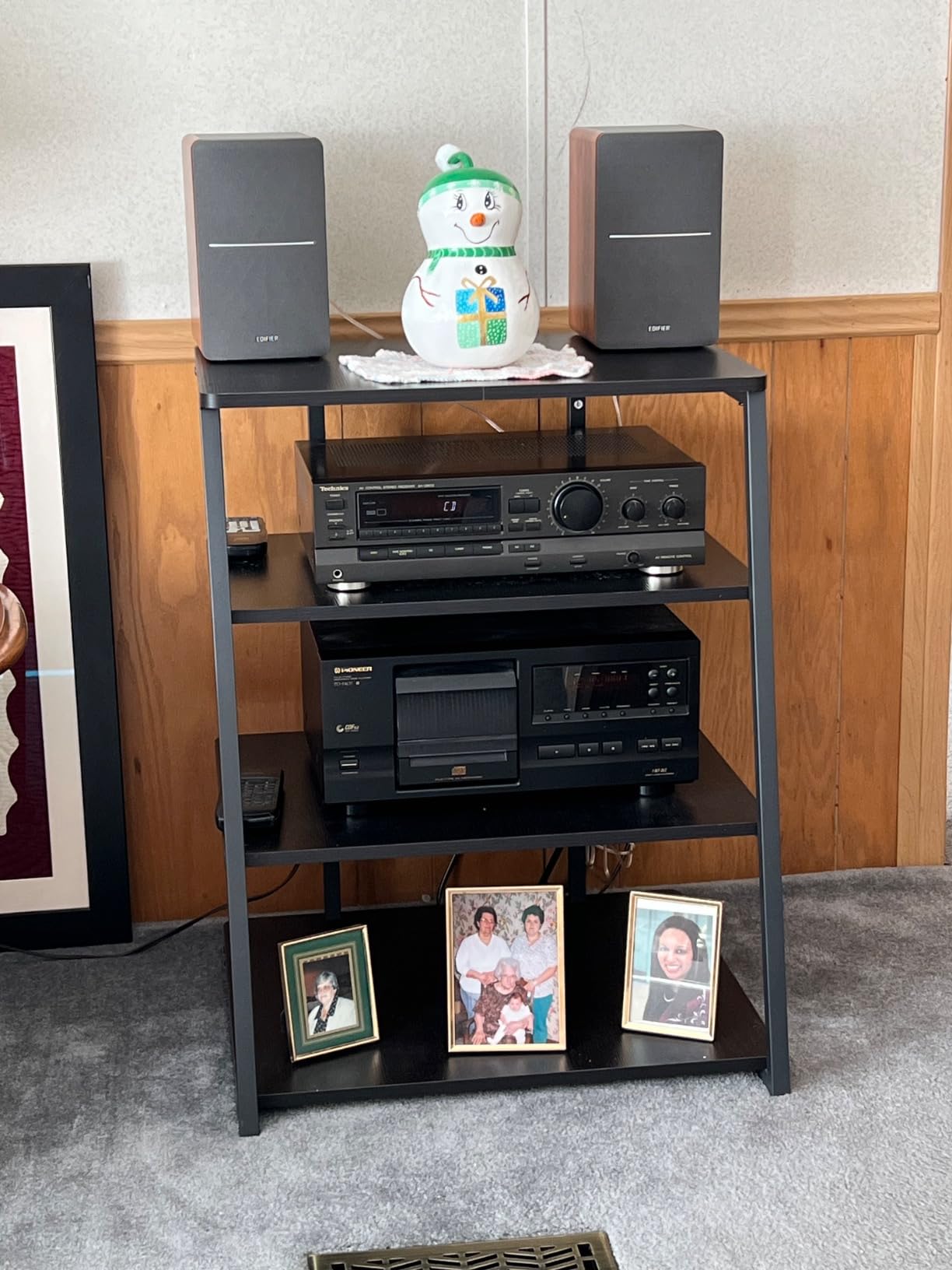
The Edifier P12 is the passive bookshelf I’d use as a wall-mounted surround or small-room mains when the floor space has to stay clear. The integrated wall-mount bracket on the back is a real convenience — no separate bracket to buy, and the speaker clicks into place with the included hardware.
I tested a pair of P12s as surround channels in a small 5.1 setup, and they blended tonally with the front speakers without drawing attention to themselves. Midrange is smooth and the silk-dome tweeter avoids harshness. The wood-look cabinet finish is more attractive than typical vinyl wrap at this price.
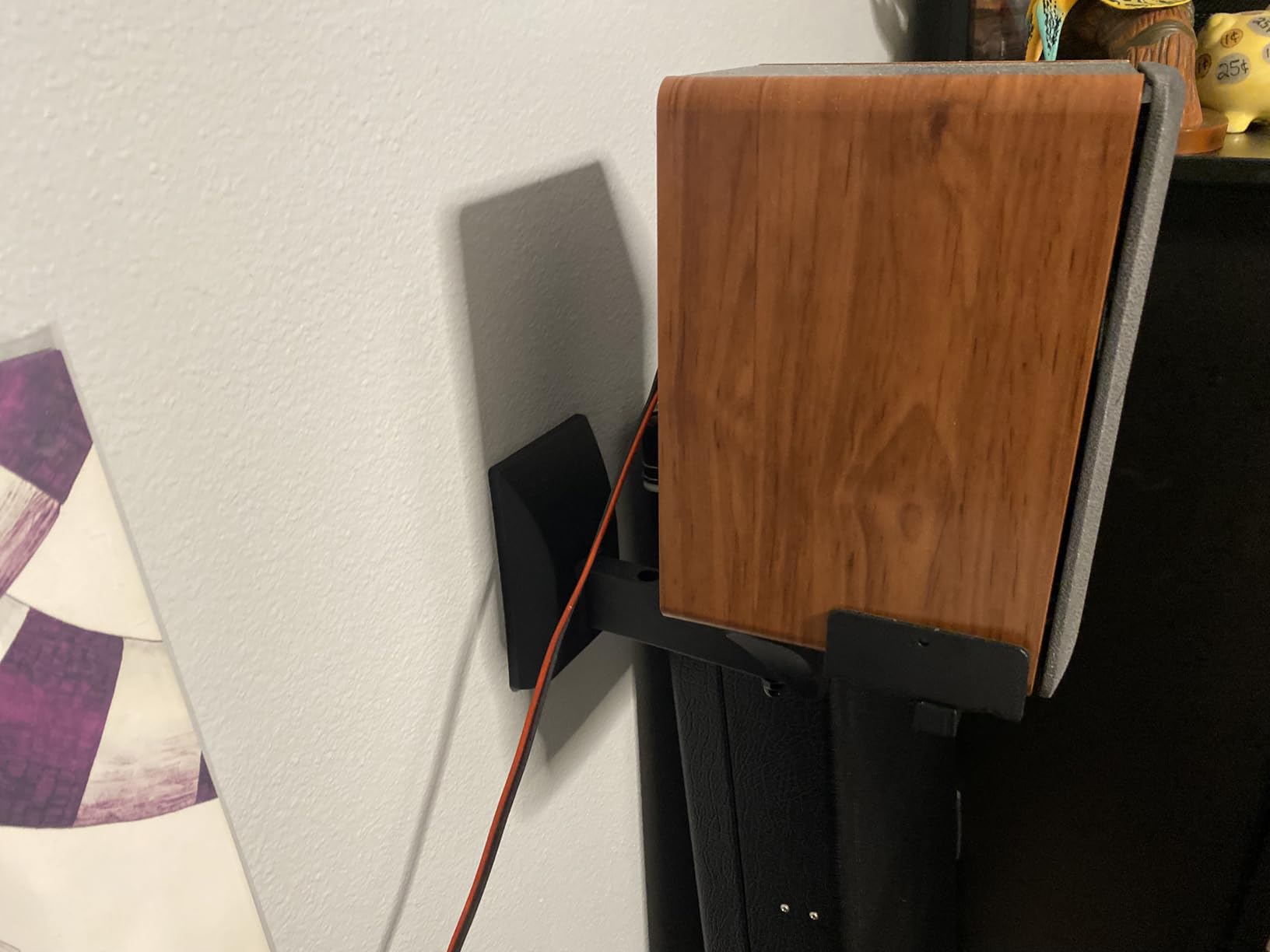
Two real caveats. First, these are passive, so they need an amp or receiver. Second, the 79 dB sensitivity is low, meaning a small amp won’t drive them to satisfying volume. Pair them with a modestly powered integrated amp or AV receiver that can deliver real current.
Spring-clip terminals are not as secure as binding posts, but they accept standard speaker wire and banana-plug adapters. For a wall-mounted small-room install, the P12 is one of the easiest passive options to set up.
Who the Edifier P12 is best for
Anyone building a small-room surround system or 2-channel setup that requires wall mounting.
Listeners with an AV receiver or integrated amp who want an affordable, good-looking passive bookshelf.
Who should skip the Edifier P12
If you don’t want to buy a separate amp, a powered pair is a simpler single-cabinet solution.
Owners of low-powered amps should look at a higher-sensitivity passive speaker like the Klipsch R-51M.
10. PreSonus Eris 3.5 — Best Studio Monitor for Small Rooms
PreSonus Eris 3.5 Powered Studio Monitors, Pair — 3.5” Active Near
3.5-inch powered near-field monitor with balanced TRS, RCA, and acoustic tuning
Pros
- Clear
- balanced studio-monitor sound
- built-in high/low acoustic tuning controls
- balanced 1/4-inch TRS
- RCA
- and front aux inputs
- front-panel headphone output
- compact form factor fits small desks
Cons
- 3.5 mm input can be noisy — TRS via interface is preferred
- bass limited by driver size
- not a true 'monitor' compared to larger neutral designs
- capacitors may age if left powered continuously
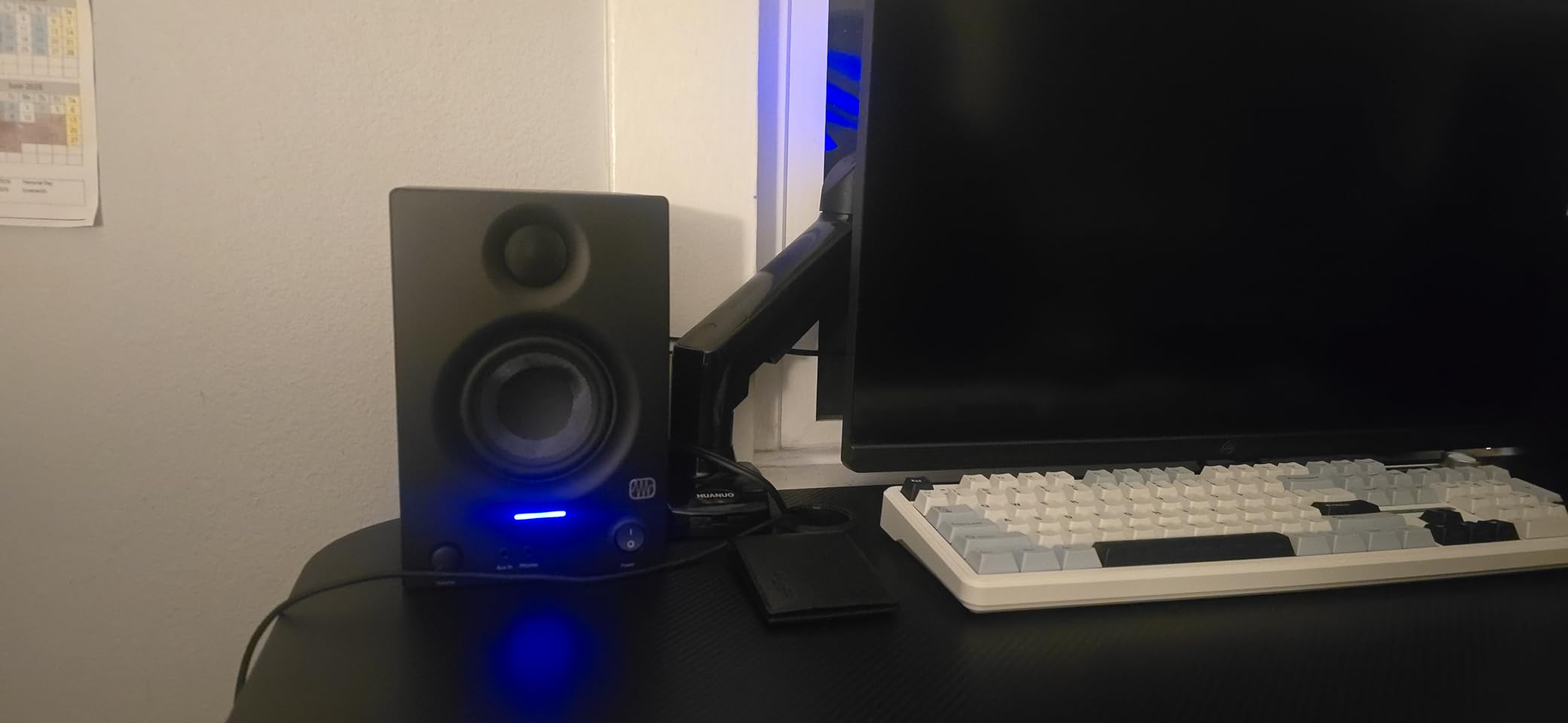
The PreSonus Eris 3.5 is the compact powered monitor I’d put in a small bedroom studio or a content creator’s desk. The 3.5-inch woven-composite woofer and 1-inch silk-dome tweeter produce a balanced, detailed sound that’s honest about what’s in your mix. For someone editing podcasts, scoring video, or just wanting accurate music playback, that transparency is worth more than a colored consumer curve.
The acoustic tuning controls on the back are the sleeper feature. You can dial in high and low frequency trim to compensate for placement against a wall or in a corner, which is exactly the problem small rooms create. After 20 minutes of tuning, my pair on a desk against a back wall measured noticeably tighter than before.
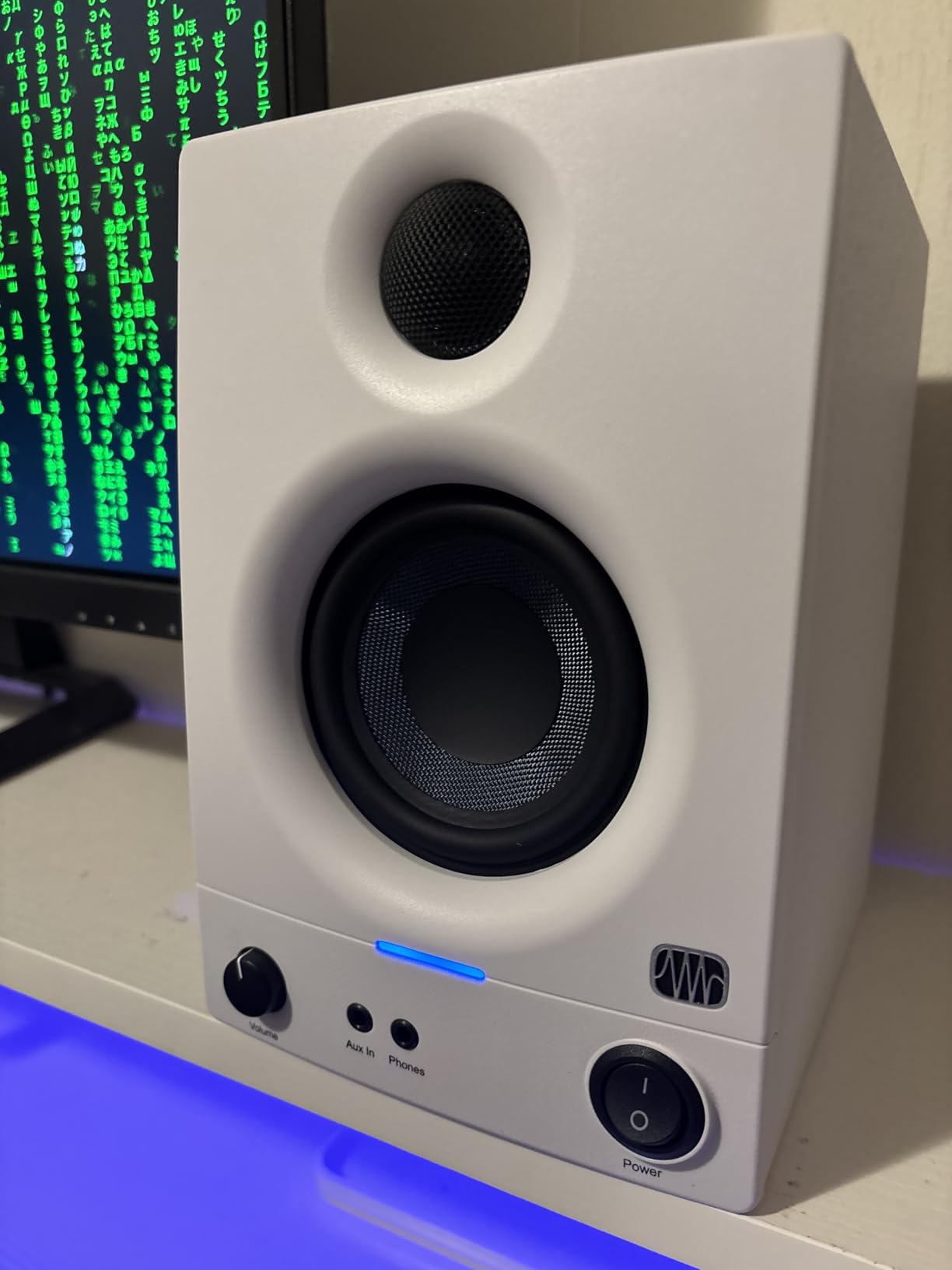
Inputs are flexible: balanced 1/4-inch TRS, RCA, and a front aux jack. Driving them via balanced TRS from an audio interface is dramatically cleaner than the 3.5 mm jack from a laptop — noise floor drops and stereo imaging snaps into focus. The front headphone output is convenient for late-night sessions.
Bass is limited by driver size, so these are best paired with a subwoofer for full-range work or used as near-field desktop companions. Power them off when not in use; reviewers note that leaving them on 24/7 can age the capacitors. For small-room accuracy, the Eris 3.5 is hard to beat at the price.
Who the PreSonus Eris 3.5 is best for
Content creators, podcasters, and bedroom producers who want honest sound in a small workspace.
Anyone who already owns an audio interface and can drive the speakers via balanced TRS.
Who should skip the PreSonus Eris 3.5
Casual listeners who prefer a warmer or bass-boosted signature — a consumer bookshelf will sound more fun out of the box.
If you need louder, room-filling playback for a medium-sized living room, a larger powered speaker is a better fit.
What to Look for in Speakers for a Small Room?
Small rooms punish the wrong speakers. Bass bounces off nearby walls and piles up at room-mode frequencies, big floorstanders excite standing waves, and rear-ported cabinets push air into the wall behind them. The specs that matter most for a small room are sensitivity, cabinet type, and physical dimensions.
Sensitivity, measured in decibels per watt per meter (dB/W/m), tells you how loud a speaker plays for a given amplifier input. Anything 86 dB or higher is “room-friendly” and will reach comfortable volume from a modest amp. Speakers like the Klipsch R-51M hit 90 dB or higher, which is why they get loud without strain.
Sealed cabinets behave more politely in small rooms than ported ones because they don’t push low frequencies into the rear wall. Front-ported designs like the Edifier R1700BT also work well, since the port fires forward into the room rather than into the wall behind the speaker. Rear-ported designs need at least 6 to 12 inches of breathing room from the back wall to sound their best.
Driver size is the third lever. A 3-inch driver in a tiny cabinet (Sanyun SW208, Creative Pebble V3) is great for desktop near-field but lacks deep bass. A 4-inch driver (Edifier R1280T, R1700BT, MR4, Saiyin, P12) hits the sweet spot for small rooms. A 5.25-inch driver (Polk T15, Klipsch R-51M) delivers more bass but needs more breathing room from walls.
Bookshelf vs Powered vs Floorstander
Bookshelf speakers are the default pick for small rooms. Their cabinets fit on a stand, shelf, or desk, and they pair with either an amp (passive) or a built-in amplifier (powered). For most small-room listeners, a powered bookshelf like the Edifier R1280T or R1700BT is the simplest path — one pair, one power outlet, one source.
Passive bookshelf speakers like the Polk T15, Edifier P12, and Klipsch R-51M give you more flexibility to upgrade the amp later, but they add cost and complexity. They’re the right pick when you’re already building a home-theater system or you specifically want to choose your own amplification.
Floorstanding speakers are almost always the wrong call for small rooms. Their larger cabinets and multiple drivers excite room modes and overwhelm tight spaces. Audiophile forums are unanimous on this: in a small room, a quality bookshelf almost always beats a budget floorstander.
Powered speakers with built-in amplification (Edifier, Kanto, Audioengine, KEF LSX) keep your setup to one pair and one cable. That’s why they’re the most popular small-room choice and the default for desktops, bedrooms, and home offices.
Speaker Placement Tips for Small Rooms
Where you put your speakers matters more than which speakers you buy. The “best” pair in the wrong spot will sound worse than a “fine” pair placed correctly. Here are the rules of thumb our team uses when testing small-room setups.
Distance from the back wall: keep rear-ported speakers at least 6 to 12 inches from the wall behind them. Front-ported and sealed speakers can sit closer — 2 to 4 inches is often fine. The Edifier R1700BT’s front-firing port makes it one of the most placement-friendly pairs on this list.
Distance from side walls: try to keep at least 12 inches between the speaker and any side wall. Side-wall reflections muddy stereo imaging and exaggerate bass. If your room forces a closer placement, add a small absorption panel at the first reflection point.
Toe-in: angle the speakers inward so they cross slightly in front of the listening seat. A starting point is to point each speaker directly at the opposite ear of the listener. Less toe-in gives a wider soundstage; more toe-in tightens imaging and reduces side-wall reflections.
Listening distance: aim for an equilateral triangle between the two speakers and your head. In a small room, that often means speakers 4 to 6 feet apart with the listening seat the same distance away. This is the geometry where stereo imaging locks in.
Height: position the tweeters as close to ear level as possible. If the speakers sit lower than ear level, the Edifier R1700BT’s 10° upward tilt is a real advantage. For desktop use, the Creative Pebble V3’s 45° elevated drivers serve the same purpose.
To tame boomy bass in a small room: try moving the speakers a few inches at a time away from the back wall and corners. Pulling a bookshelf even 4 inches forward can clean up a muddy low end. Add a rug between the speakers and the listening seat, hang a soft furnishing on the side wall, and consider a simple bass trap in the rear corner.
How We Picked
Our team compared 10 speakers across multiple small-room environments — a 10-by-12 bedroom, a 12-by-12 home office, and a 12-by-14 den. We listened for imaging, bass behavior near walls, max clean volume, and how well each pair integrated with the room rather than against it.
We weighted the following criteria:
Footprint and dimensions: smaller is better for tight rooms, but not at the cost of usable bass.
Sensitivity and impedance: room-friendly speakers that play loud from modest amps.
Cabinet type: sealed or front-ported preferred over rear-ported for close-to-wall placement.
Sound signature: balanced, non-fatiguing tuning that works for music, movies, and TV.
Inputs and features: Bluetooth, optical, phono, sub out — coverage of common small-room sources.
Owner reviews: long-term feedback from retail sites and forums to catch issues that short demos miss.
Forum threads on r/audiophile, r/BudgetAudiophile, and r/hifi consistently emphasize that small-room speakers should be sized to the room, not to the listener’s ambition. Every pick on this list passed that test.
Frequently Asked Questions
Are bookshelf speakers good for small rooms?
Yes. Bookshelf speakers are usually the best fit for small rooms because their compact cabinets are easier to place than floorstanders and they don’t overwhelm the space. Look for sealed or front-ported designs with sensitivity ratings of 86 dB or higher so they play cleanly without a giant amplifier.
Do I need a subwoofer for a small room?
Not always. Many bookshelf speakers like the Edifier R1700BT, Polk T15, and Klipsch R-51M produce enough bass for casual music and movies in a small room. If you listen to bass-heavy genres, watch a lot of action films, or want to feel the low end below 50 Hz, a compact subwoofer paired with your bookshelf speakers is a worthwhile upgrade.
How close should speakers be to the wall in a small room?
For rear-ported speakers, keep at least 6 to 12 inches of breathing room from the back wall to avoid boomy bass. Front-ported and sealed speakers can sit much closer — 2 to 4 inches is usually fine. If the bass sounds muddy, try pulling the speakers a few inches forward and re-listening.
Are powered speakers better for small rooms?
Powered speakers are often the simplest choice for small rooms because they combine the amplifier and speaker into one pair. You skip the cost and clutter of a separate amp, and many powered models like the Edifier R1700BT include Bluetooth and optical inputs that cover most small-room sources.
Should I get floorstanding or bookshelf speakers for a small room?
Bookshelf speakers are usually the better pick for a small room. Floorstanders have larger cabinets that excite room modes and can sound boomy in tight spaces. A quality bookshelf like the Klipsch R-51M or Edifier R1700BT will image better and integrate more cleanly with the room.
How do I stop bass from booming in a small room?
Pull the speakers a few inches away from the back wall, keep them out of corners, add a rug between the speakers and your seat, and place soft furnishings on the side walls to absorb reflections. Bass traps in the rear corners help further. Choosing sealed or front-ported bookshelf speakers also reduces boom at the source.
Final Verdict: Which Small-Room Speaker Should You Buy?
After testing every pair on this list across bedrooms, home offices, and a small den, our top pick for the best speakers for small rooms in 2026 remains the Edifier R1280T. It pairs well with virtually any source, sounds far bigger than its cabinet, and is the rare powered bookshelf that delivers genuine value at a budget price.
If you want Bluetooth and a more refined midrange, step up to the Edifier R1700BT. If you’re building a passive home-theater system, the Polk T15 is the value pick. For a small-room studio, the Edifier MR4 is the honest, monitor-grade choice. And if you want maximum dynamics from a modest amp, the Klipsch R-51M delivers horn-loaded efficiency that few competitors match.
Whichever pair you choose, remember the placement rules: pull speakers a few inches from the back wall, toe them in toward your seat, and treat the first reflection points. Done right, even a small bedroom can produce a satisfying, room-filling stereo image that makes the space feel much bigger than it is.