
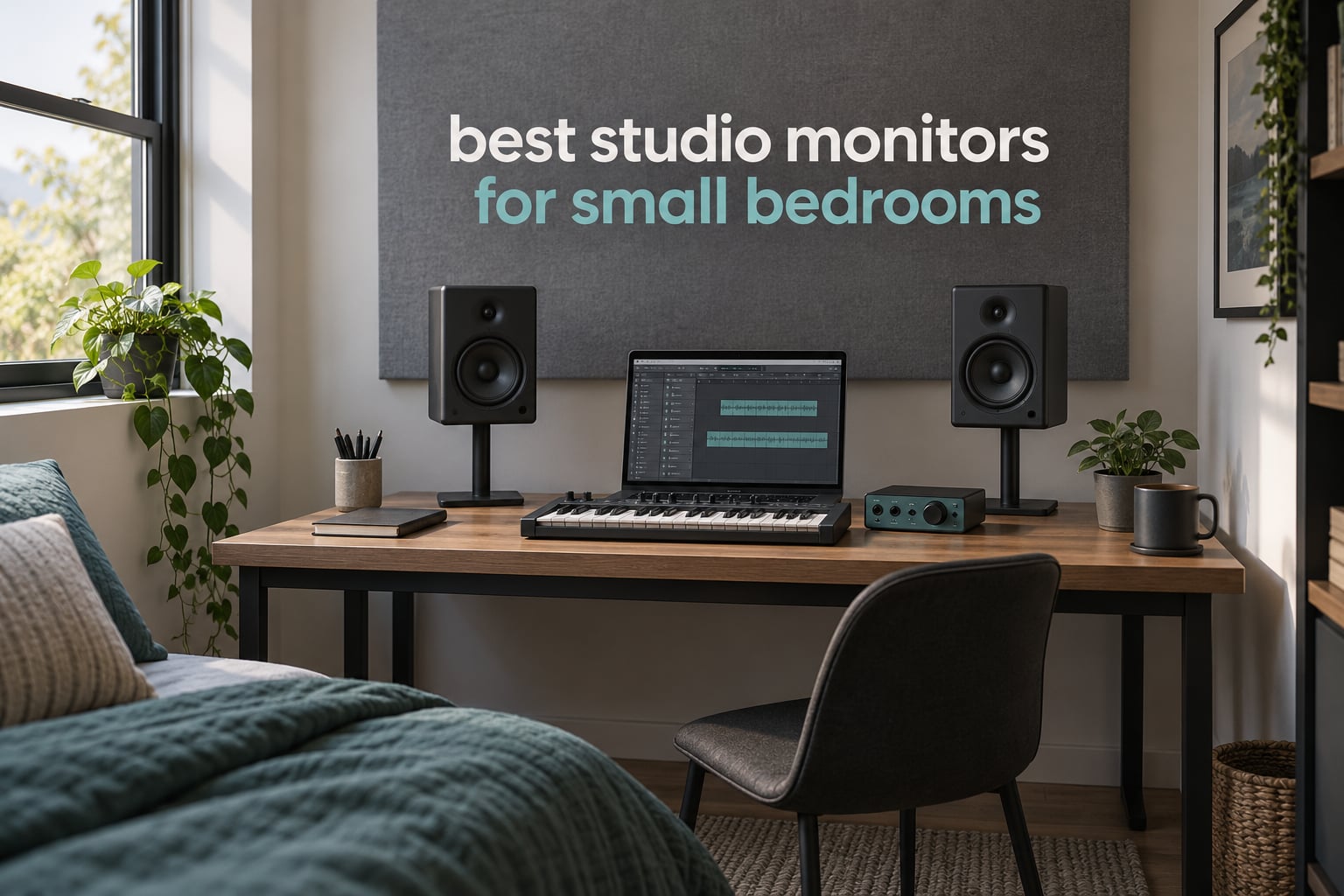
A bedroom studio has one advantage every treated control room would trade a control room for: nobody complains when you mix at two in the morning. It also has three problems that quietly shape every decision you make, and picking the wrong pair of speakers makes all three worse.
The first problem is space. A typical bedroom desk is around 100 by 50 centimetres, and the speakers have to share that surface with a MIDI keyboard, an interface and probably a mouse. The second problem is boundary bass. In a room this small your monitors end up close to a wall, often in a corner, and both surfaces add low-end energy that no amount of talent removes from your mix. The third problem is that nobody has treated the room, and bedroom wardrobes and soft furnishings only go so far.
That is why the best studio monitors for small bedrooms are rarely the biggest speakers you can find. Compact 3 to 4.5 inch nearfield monitors with room control switches, front ports and sensible depth beat larger drivers in almost every small setup. I spent weeks moving pairs between a spare bedroom and a treated room, then came back to the bedroom to check whether what I heard survived the move. What follows is what survived, plus the reasoning behind each pick.
Table of Contents
Top 3 Picks for Small Bedrooms (October 2026)

All 12 Monitors at a Glance in 2026
Every speaker below was picked for a specific bedroom constraint: depth, wall proximity, input flexibility, or low-end honesty at low listening levels. The table is the fast version, and the reviews after it explain the trade-offs.
| Product | Specs | Action |
|---|---|---|
| Yamaha HS3 |
|
Check Latest Price |
| Edifier R980T |
|
Check Latest Price |
| Edifier MR4 |
|
Check Latest Price |
 PreSonus Eris E4.5 PreSonus Eris E4.5 |
|
Check Latest Price |
 M-Audio BX3 M-Audio BX3 |
|
Check Latest Price |
 Ortizan C7 Ortizan C7 |
|
Check Latest Price |
 Mackie CR3.5 Mackie CR3.5 |
|
Check Latest Price |
 Edifier MR3 Edifier MR3 |
|
Check Latest Price |
 M-Audio BX4 M-Audio BX4 |
|
Check Latest Price |
 JBL 104-BT JBL 104-BT |
|
Check Latest Price |
 Mackie CR4-X Mackie CR4-X |
|
Check Latest Price |
 Pioneer DJ DM-40D Pioneer DJ DM-40D |
|
Check Latest Price |
1. Yamaha HS3 – the most accurate pick for a small untreated room
Yamaha HS3 Powered Studio Monitor in Black, Pair (HS3 B)
3.5 inch woofer, 0.75 inch dome tweeter
70Hz to 22kHz at -10dB
XLR/TRS combo, RCA and stereo mini
Pros
- Reveals mix problems instead of flattering them
- Room control and high trim switches tune the response to a bedroom
- XLR/TRS combo plus RCA and stereo mini covers every source
- Sold as a matched pair with anti-slip pads
Cons
- Limited low-end extension at low listening levels
- Clarity degrades and gets muddy at high volume
- Hefty weight per speaker makes repositioning awkward
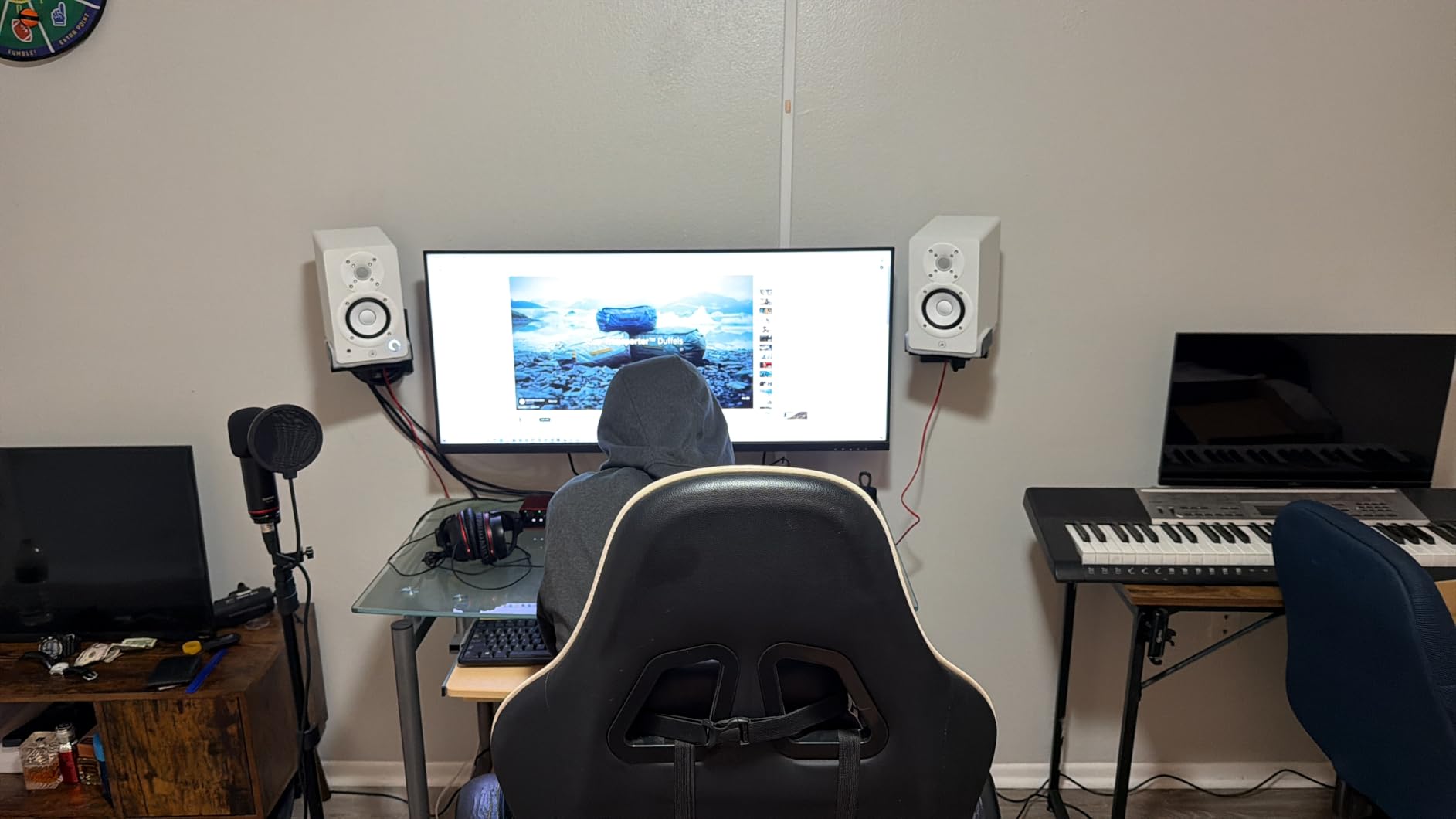
The HS3 is the pair I ended up recommending to almost everyone who asked, and it is the pair that convinced me driver size matters less than room control. Owners describe the sound as transparent, meaning it shows you the problem in the mix instead of hiding it. That is the single most useful trait in a room you cannot treat.
The cabinet measures 7 inches deep, which leaves usable space on a 100 centimetre desk, and it comes with anti-slip pads so you can place them at the tweeter ear height without buying stands first. Inputs cover XLR or TRS combo, RCA and stereo mini, so an interface, a mixer or a phone all connect without adapters.
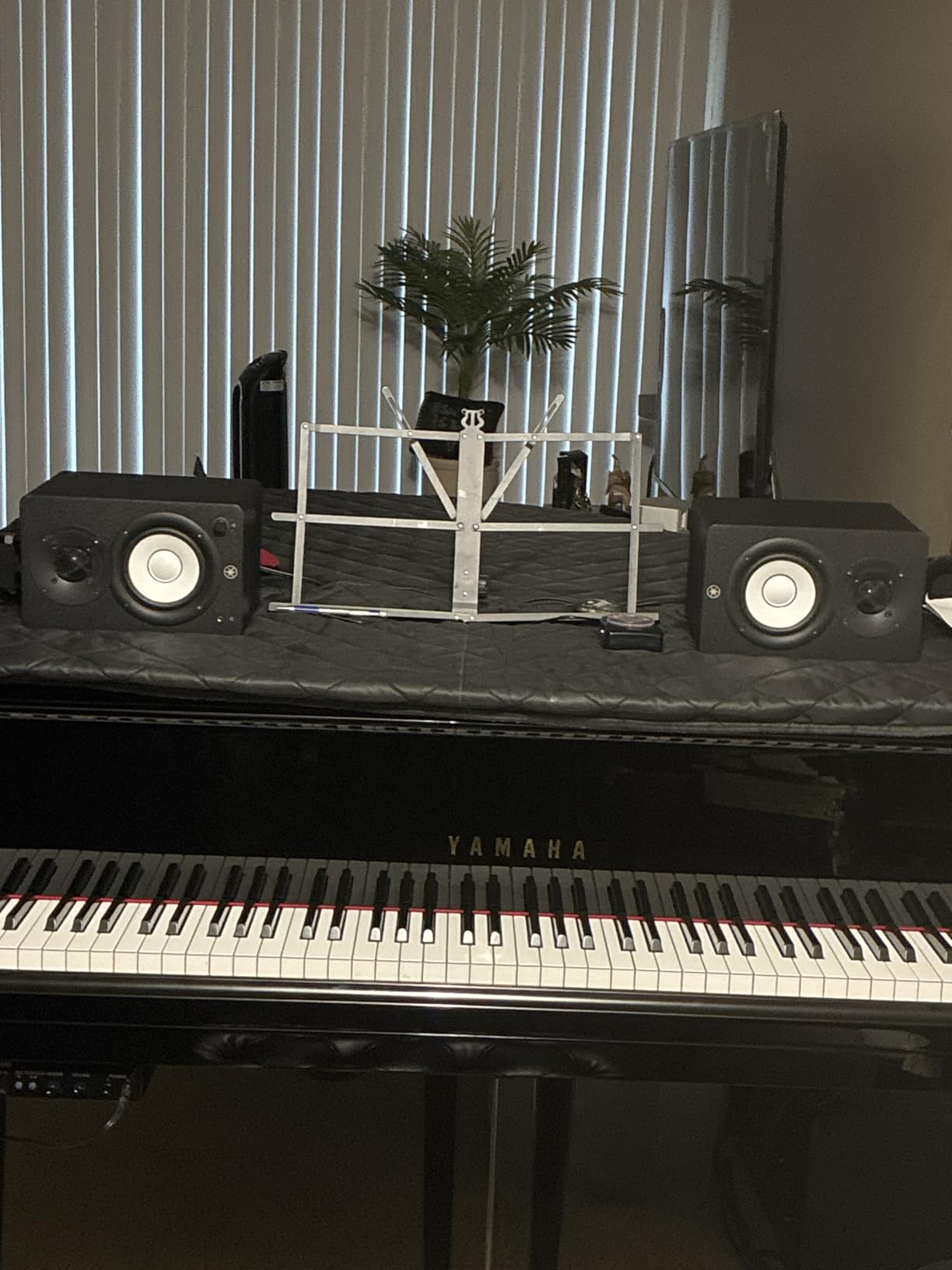
Two rear switches do the work that treatment cannot. The room control setting trims the low end when the speakers sit near a wall, and the high trim handles a reflective surface like a window or wardrobe. In my bedroom test, the room control switch made more audible difference than swapping to a pricier pair without one.
The honest limit is low frequency extension. A 3.5 inch woofer does not produce genuine sub-bass, and users consistently report that clarity falls apart above medium-high volume when you push for bass the drivers cannot deliver. If your material depends on deep low end, cross-check on headphones or add a sub later.
Who the HS3 suits
It suits pop, acoustic, folk and podcast producers who mix at moderate levels and want a straight read on vocal and acoustic instrument balance. It also suits anyone starting from computer speakers who needs a jump in accuracy without a steep learning curve.
Because it ships as a matched pair with pads and cables, the setup takes minutes. If your desk is small, the 5.2 inch width and 7 inch depth mean you can still fit a compact MIDI keyboard between the speakers.
Where the HS3 falls short
At 5.9 kg for the pair, moving these around a small desk is awkward, and the weight reads as solid rather than portable. For a bedroom where you constantly rearrange the desk to reclaim space, that matters more than it would in a fixed studio.
Electronic and hip-hop producers working on sub-bass will find the low end stopping earlier than they want. The room control switch helps with excess bass, but it cannot add extension that is not there.
2. Edifier R980T – the easiest first upgrade from computer speakers
Edifier R980T 4″ Active Bookshelf Speakers – 2.0 Computer Speaker – Powered Studio Monitor (Pair)
4 inch bookshelf driver
24W RMS total power
Front-flared bass reflex port
Two AUX inputs plus RCA
Pros
- Front-firing flared port makes placement on a cramped desk easy
- Dual AUX inputs let a laptop and phone share the speakers
- Wood-style enclosures reduce resonance versus plastic boxes
- Included RCA
- 3.5mm and speaker cables
Cons
- Tall bookshelf proportions are awkward on a very small desk
- 24W of amplification has limited headroom
- Tuned for pleasant listening more than flat reference
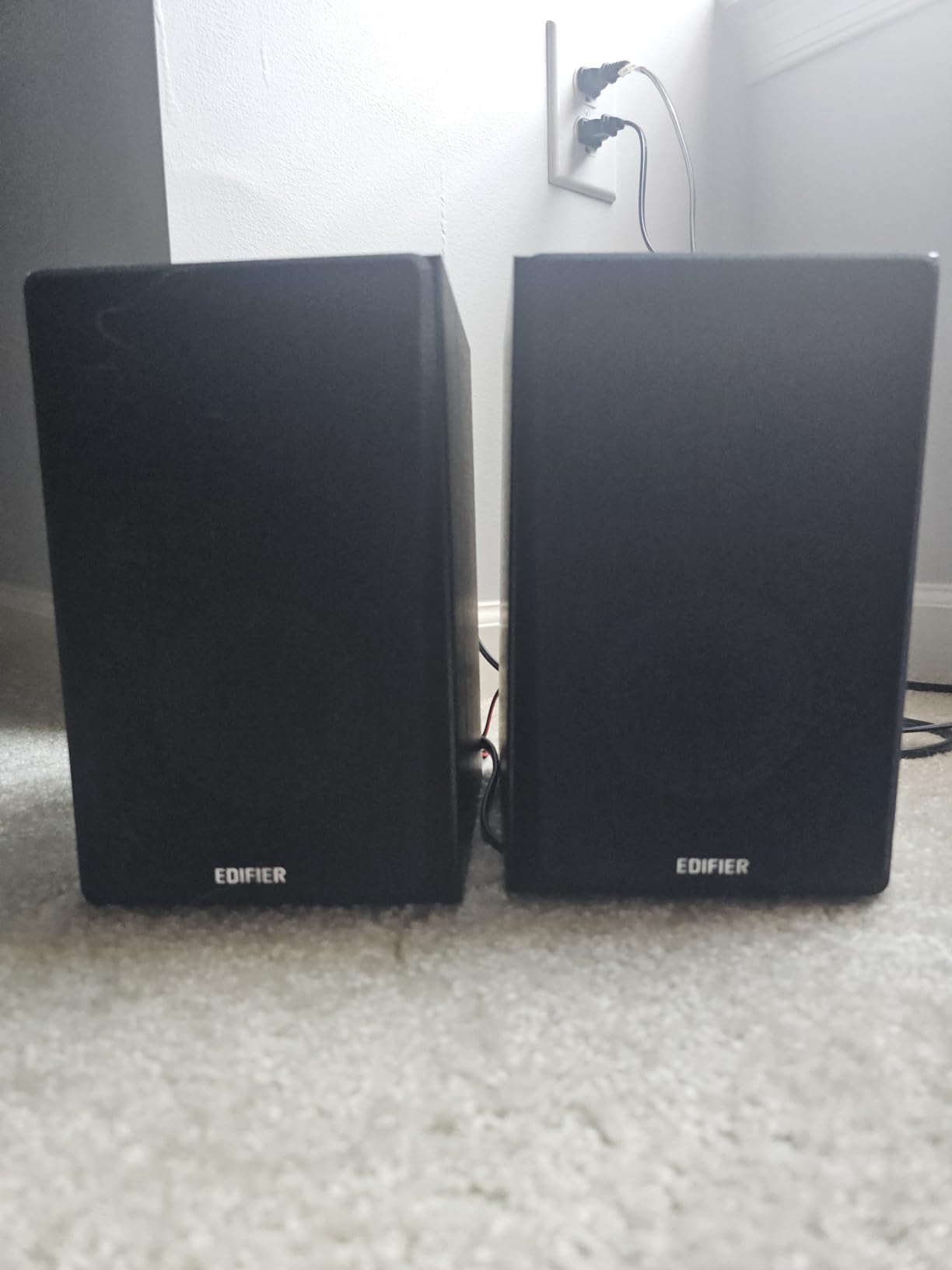
This is the most-reviewed speaker on the list at more than 4,400 ratings, and the pattern in those reviews is consistent: people buy it as their first serious upgrade from basic computer speakers and stay with it. The wood-style enclosure and flared front port are the details that matter in a bedroom.
The front port means you can push the speakers close to a wall or into a corner without the port choking, which rear-ported monitors simply cannot do. Two AUX inputs let a laptop and a phone play at the same time with no switching, which is a small thing that removes friction every session.
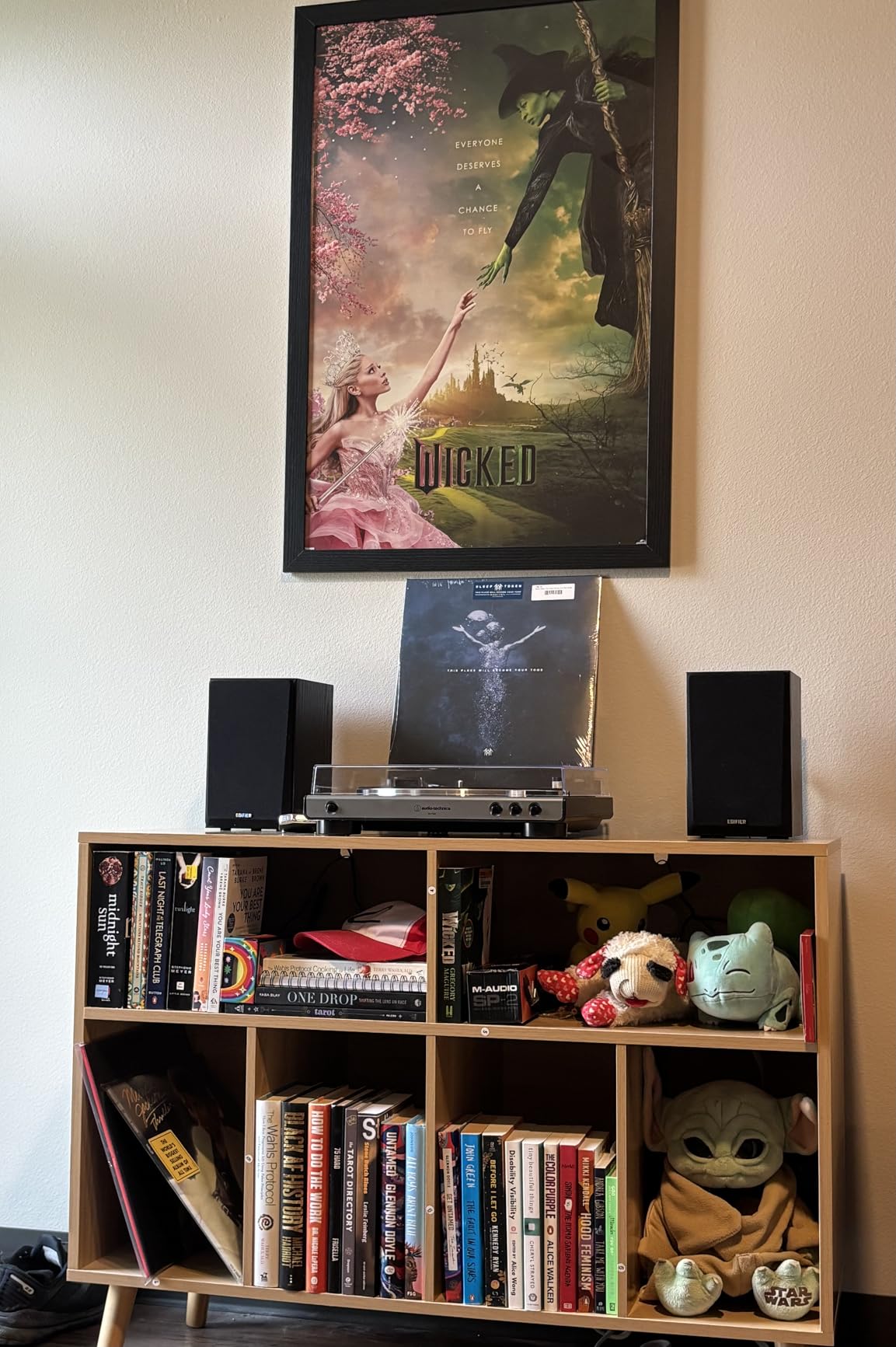
What you get for the money is 24 watts RMS of clean amplification, a 4 inch driver and cables for RCA, 3.5mm and the interconnect already in the box. Users describe the sound as clean and warm, which for casual monitoring and for catching mix problems while learning is genuinely enough.
Be honest about the compromise: this is a bookshelf speaker voiced for enjoyable listening rather than a flat mixing reference. It will not tell you that your low end is wrong, and the tuning leans warm in a way that flatters.
Who the R980T suits
It suits bedroom producers on a tight budget who want a big step up from laptop speakers without researching interfaces, cables or monitor placement. Buyers treat it as a dependable first system, and it pairs fine with a laptop, a phone or a small interface.
The front port and dual inputs also make it a good second pair for a bedroom where a hard wall is the only available placement. Nothing else in this list gives you that combination at this level.
Where the R980T falls short
The 17 inch height is the dealbreaker in a small room. On a 100 by 50 centimetre desk, two of these alongside a MIDI keyboard leaves almost no working surface, so most owners end up on stands or a wider desk.
24W of amplification also runs out of headroom before a treated room would. Reviewers note you get less clean output at high volume than larger studio monitors deliver, and the warm voicing means critical mixing still needs a second reference.
3. Edifier MR4 – the warmest tuning at a mid-tier level
Edifier MR4 Power Studio Monitor Speakers, 4 inch Active Near-Field Speaker
4 inch composite woofer with 1 inch silk dome
42W output
TRS, RCA and AUX
Monitor and music modes
Pros
- Warm
- fatigue-free tuning over long sessions
- Monitor and music mode switch plus rear trim for room matching
- Front headphone output and front ports suit a crowded desk
- No audible hiss at maximum volume
Cons
- Stepped volume knob changes level in large jumps
- Bass is boomy out of the box and needs rear trim or EQ
- LED has been reported failing within weeks for some owners
The MR4 is the one I reach for when someone wants to work for six hours in an untreated bedroom and not get tired. Listeners consistently favour the warm, smooth tuning over sharper flat monitors, and the near-flat response is tuned for production rather than pure entertainment.
At 7.2 inches deep with front ports and a front headphone output, cable management on a small desk is straightforward. Balanced TRS, unbalanced RCA and AUX sit on the rear, and separate high and low frequency knobs plus a front volume and mode knob handle room matching without menus.
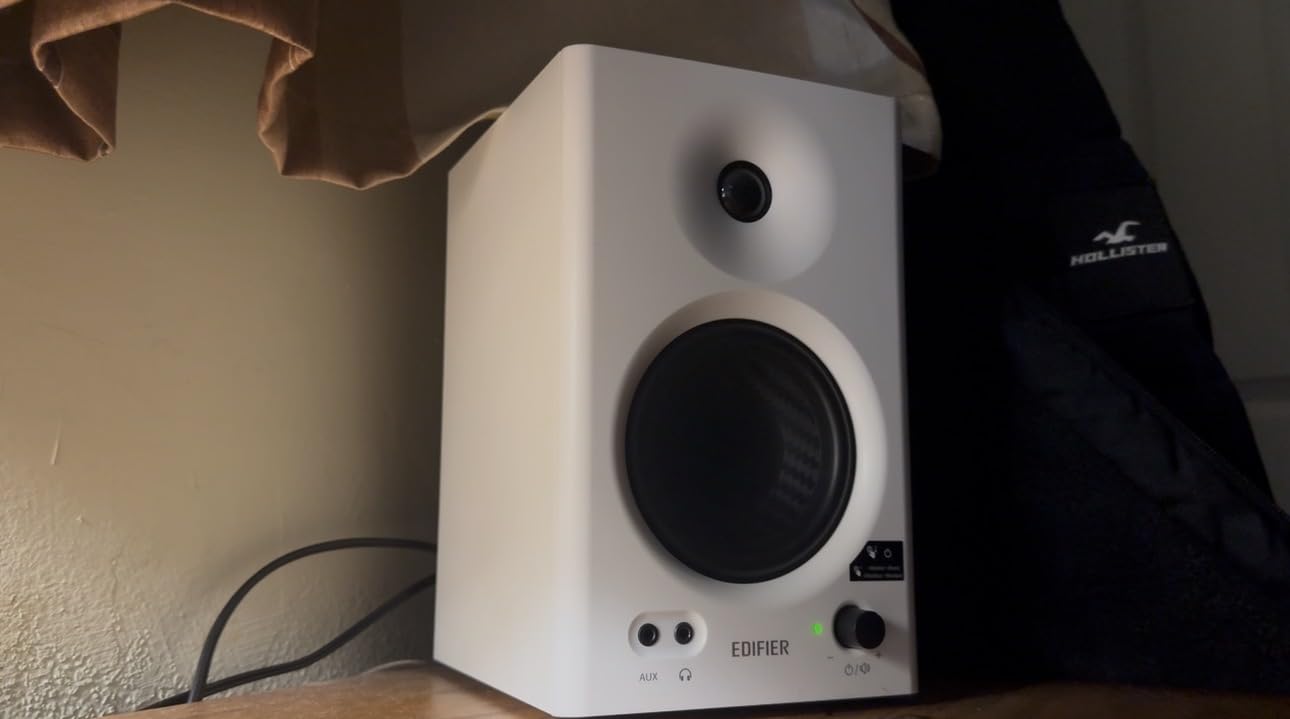
The dual mode switch is the feature that quietly matters. Music mode tilts the voicing for enjoyment, monitor mode gets you closer to flat for critical work. Turning that switch during a session tells you immediately whether a mix decision was about the mix or about your preference.
Owners report no audible hiss at maximum volume, which is not true of several cheaper competitors, and a soundstage that feels wide for a 4 inch nearfield monitor. The MDF-backed cabinet structure is also more rigid than the all-plastic alternatives.
Who the MR4 suits
It suits bedroom producers making pop, hip-hop beats, acoustic records and podcasts who want a comfortable long-session reference with real studio features. Users upgrading from the Edifier R980T usually see the biggest improvement in clarity and control.
The front headphone output also makes it the practical pick for late-night work where you need to check detail without waking the house, which in a shared or apartment bedroom is the normal situation.
Where the MR4 falls short
The stepped volume knob is the most mentioned complaint, and it is a real one: levels jump in coarse steps, which makes it hard to match loudness between a mix reference and a familiar track at a precise level.
The bass is boomy straight out of the box in a small room, so expect to pull the rear low trim down a few decibels before you judge a mix. The hi-fi mode is not flat, so serious critical work belongs in monitor mode.
4. PreSonus Eris E4.5 – the connectivity pick for a one-box setup
PreSonus Eris E4.5-2-Way 4.5″ Near Field Studio Monitor (Pair)
4.5 inch composite woofer with 1 inch silk dome
25W per side Class AB
Front headphone amplifier
Pros
- Long track record as a category bestseller
- 25W per side gives real volume headroom
- Wide stereo imaging frees you from one seated position
- Front headphone amp
- TRS
- RCA and aux cover every source
Cons
- Upper midrange can be sharp or sibilant at higher volumes
- Bass is less full-bodied than the Edifier MR4
- Power-saver standby can interrupt a session
- Reliability decline reported on some earlier revisions
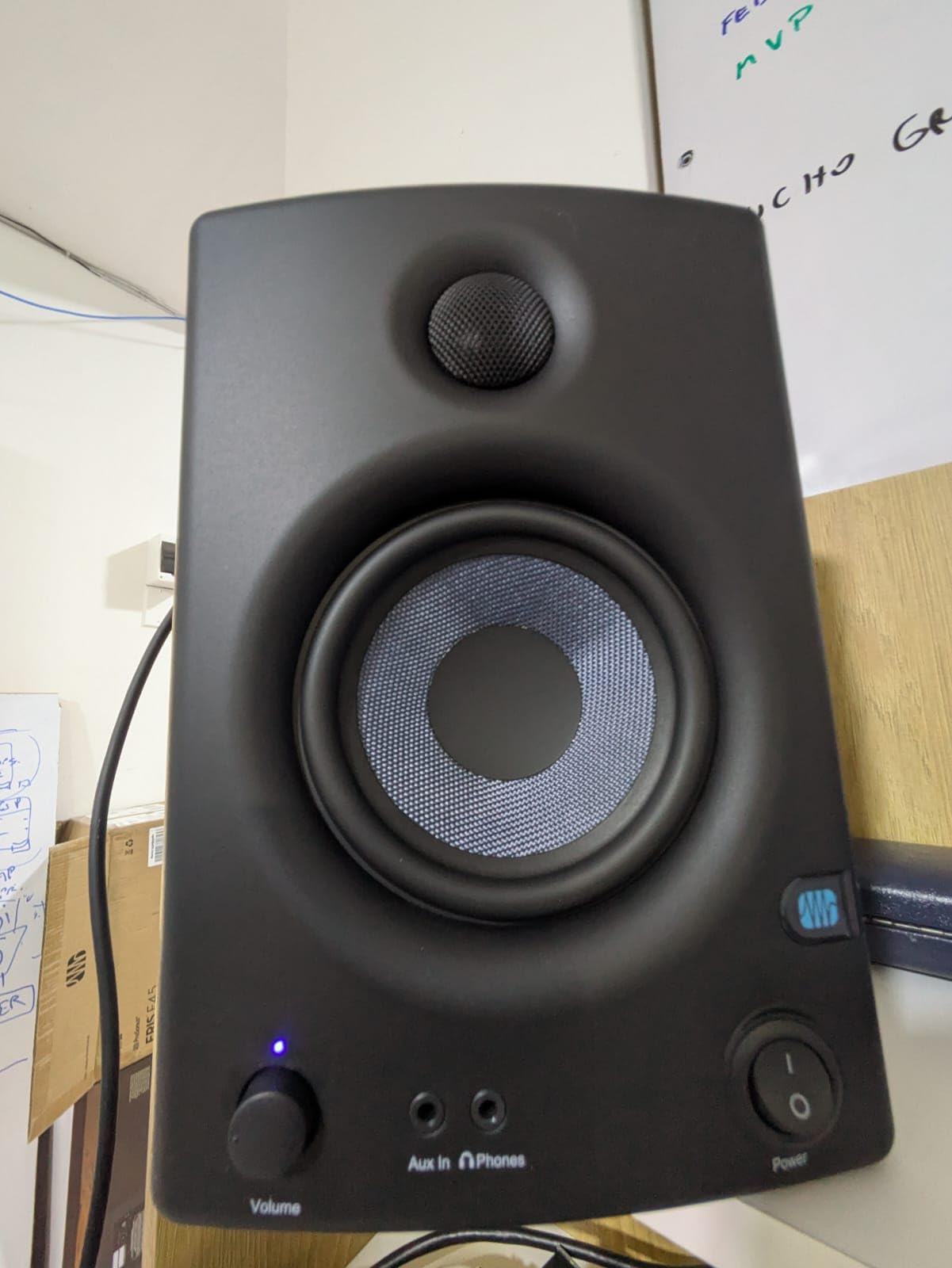
The Eris E4.5 has been the default recommendation in bedroom guides for years, and it stays here because the combination is still hard to beat: 4.5 inch woven-composite drivers, 25 watts per side, and a front headphone amplifier on a 7.1 inch deep cabinet.
That front headphone amp matters more than it sounds. It has its own amplification, so your headphones do not drop in level or change character when you switch from speakers, which is exactly what happens with a bare headphone jack splashed off the main amplifier.
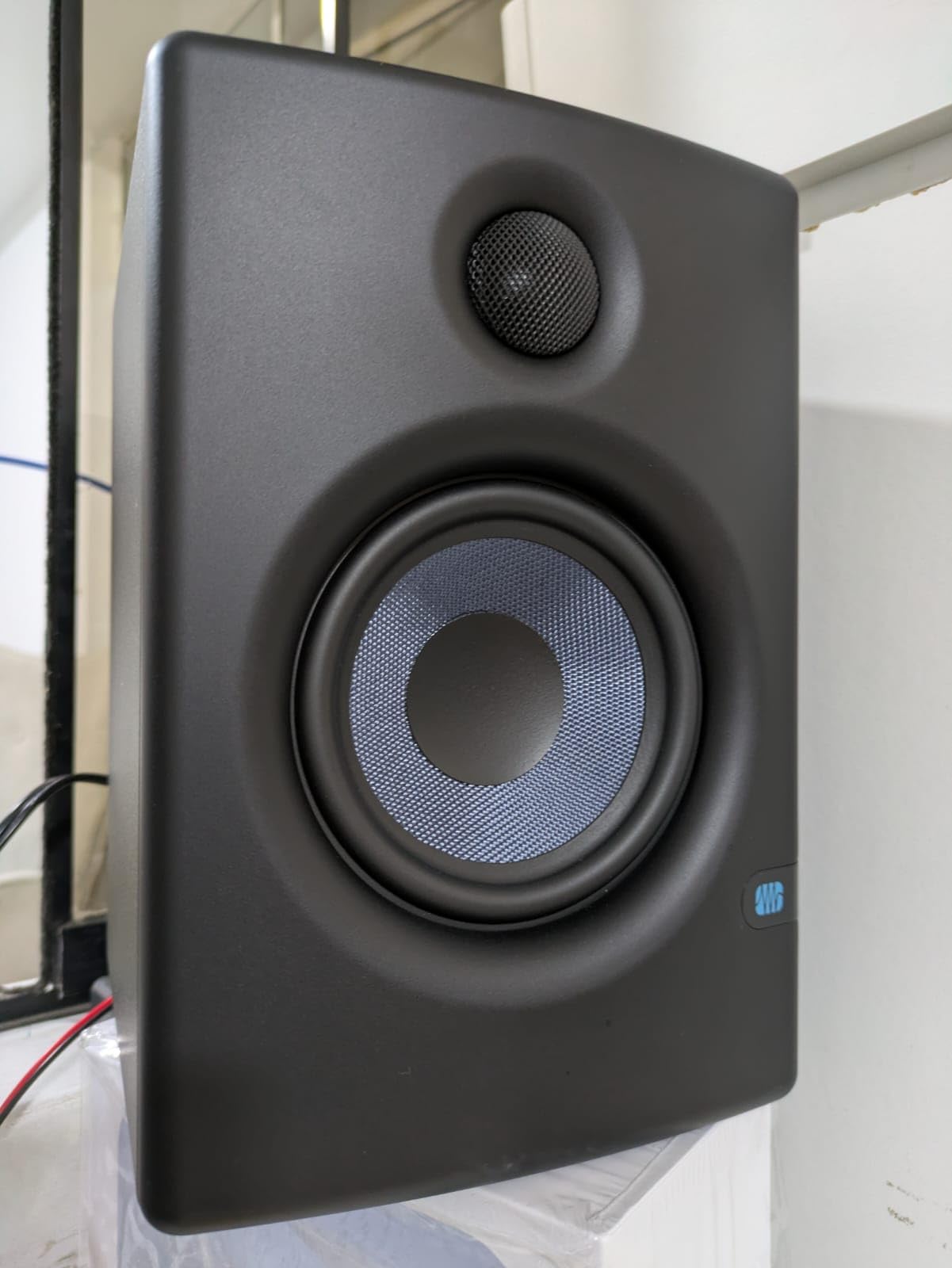
Imaging is the strength owners mention most. The 1 inch low-mass silk-dome tweeters produce a wide sweet spot, so you can lean back, shift sideways and still hear the same stereo image. In a square room where the classic equilateral triangle is impossible, that flexibility is genuinely useful.
Rebel-tier connectivity means TRS balanced, RCA unbalanced and a front 1/8 inch aux, plus rear high and low frequency tuning controls for matching the room. A power-saving mode engages after 40 minutes of idle time, which is helpful for a bedroom and occasionally annoying mid-session.
Who the Eris E4.5 suits
It suits producers who want a single box to handle an interface, a mixer, instruments and headphones, then expand later without replacing the monitors. Rock, metal and band mixers benefit from the volume headroom and the imaging.
The rear tuning controls let you match a small room without software. If you move the speakers between the desk and a wall, one switch is often faster than an EQ sweep.
Where the Eris E4.5 falls short
A recurring thread in reviews is that the upper midrange and treble can be fatiguing or sibilant at higher volumes unless you tame them with EQ. That is a voicing issue, not a fault, but it needs handling in a room you cannot treat.
The low end is present but less generous than the Edifier MR4, and the standby behaviour has interrupted playback for owners mid-session. Some owners also report reliability decline on earlier revisions, so keep the receipt.
5. M-Audio BX3 – the shortest cabinet for the tightest desk
M-AUDIO BX3 3.5″ Wired Studio Monitors Pair
3.5 inch Kevlar woofer with 1 inch silk dome
120W bi-amplified MDF
5.51 inch depth
Pros
- Very compact footprint suits small bedroom desks
- Kevlar-woofed MDF cabinets deliver clean low end without obvious resonance
- Latency-free wired signal suits video editing
- Includes cables
- foam feet and software
Cons
- 3.5 inch drivers limit how much low bass you get
- Rear-panel EQ is coarse compared with calibration software
- Rear bass reflex port limits how close you can push them to a wall
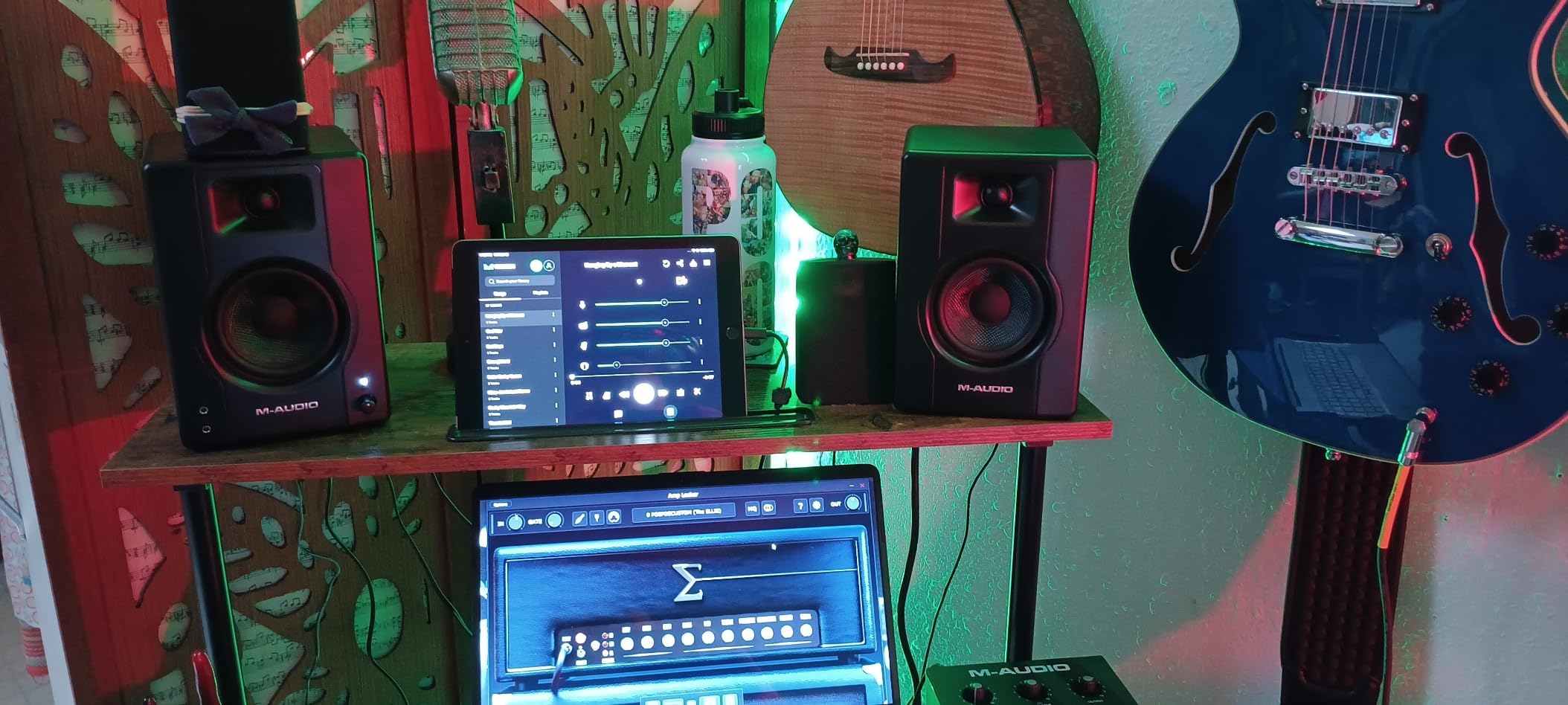
Desk depth is the number people get wrong when buying monitors, and the BX3 is the shortest cabinet in this group at 5.51 inches deep. On a 100 by 50 centimetre desk that difference is the whole decision, because it is what makes room for a MIDI keyboard between the speakers.
The 3.5 inch Kevlar-woofed drivers sit in an acoustically inert MDF cabinet with a bass reflex port. Reviewers highlight clean low end without obvious resonance for the size, and the MDF construction is a real step up from plastic multimedia boxes.
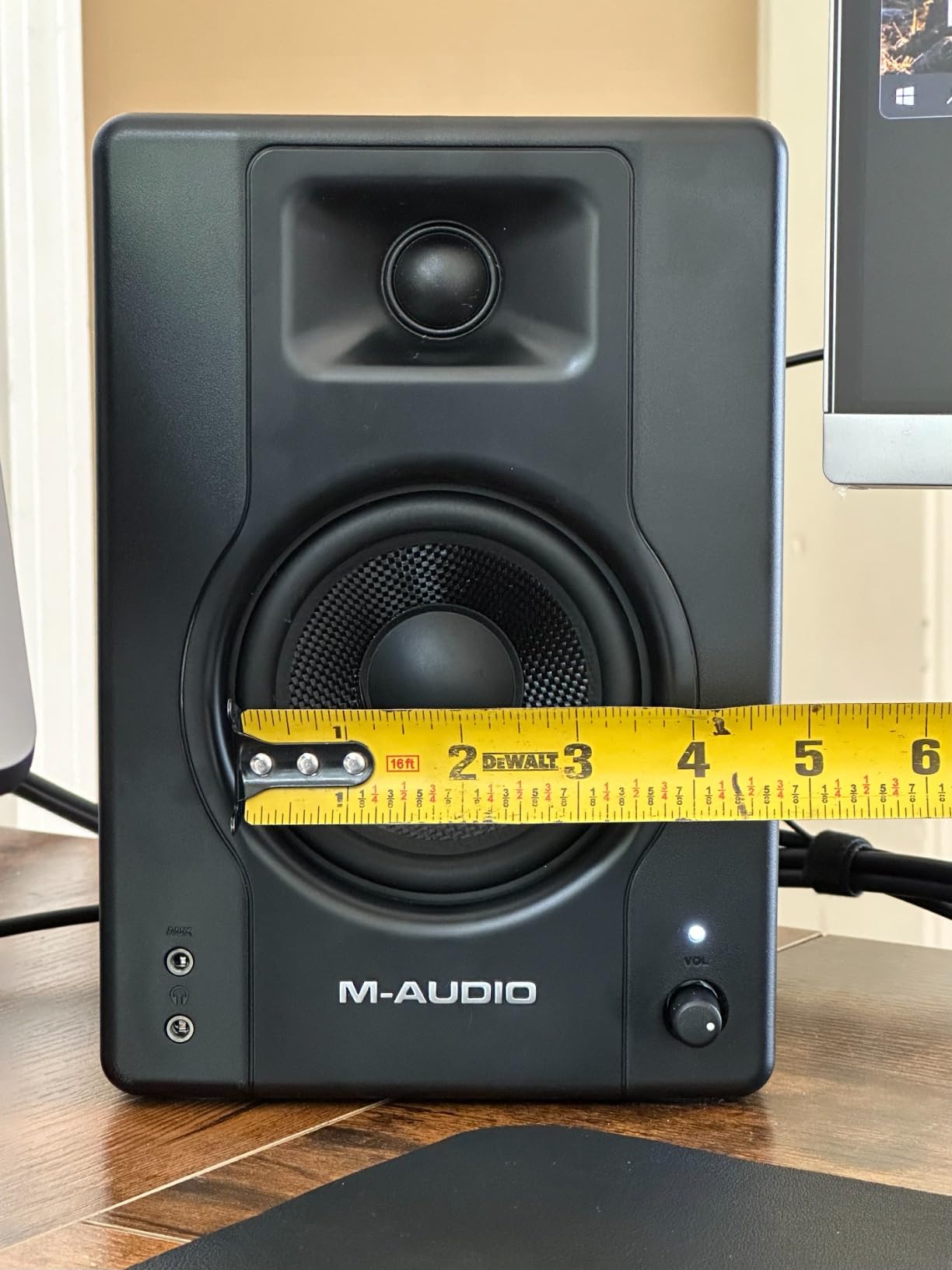
The wired signal is latency free, which makes this the safer choice for anyone editing video, streaming or podcasting from the same desk. Rear inputs cover 1/4 inch, 1/8 inch and RCA, and the front 1/8 inch headphone output handles silent mixing without reaching around the cabinet.
There is an active-speaker position switch on the rear panel, so you can decide at the back of the cabinet which side handles which channel after moving things around. Cables, foam feet and software all ship in the box, which removes a shopping trip.
Who the BX3 suits
It suits producers working in a small bedroom on a small desk who need MIDI keyboard space more than they need deep bass. Electronic and hip-hop producers who work on kick and sub placement get the most use out of the clean, punchy character.
The single-box approach also suits anyone building a bedroom rig step by step. You get a usable reference now and can add a subwoofer or an interface upgrade later without replacing the speakers.
Where the BX3 falls short
The rear bass reflex port is the awkward part in a bedroom. Because it vents backwards, the speakers need breathing room from the wall, and in a room where the wall is right there, that limits placement to something close to the 38 rule rather than tucked into a corner.
The rear high and low EQ dials are coarse compared with proper measurement-based room correction, and 3.5 inch drivers still limit low bass extension without a subwoofer.
6. Ortizan C7 – the connectivity pick with a USB DAC
Ortizan C7 Powered Studio Monitors Pair with Bluetooth 5.3, Black
3.5 inch carbon fiber driver
24-bit DAC with USB input
Bluetooth 5.3 and TRS
5.11 inch deep
Pros
- Most input options in this bracket: TRS
- RCA
- AUX
- USB and Bluetooth
- Built-in 24-bit DAC for direct digital playback
- Lab-tuned flat response with a two-way crossover
- Compact footprint works in a tight room
- Front headphone output for late-night monitoring
Cons
- 3.5 inch drivers cannot deliver deep low-frequency extension
- Bluetooth is convenient but not reference-grade monitoring
- Long-term owner feedback is thinner than for established models
The C7 does something none of the other monitors here do at this level: it takes a digital signal over USB and converts it internally. That removes one box from the signal chain, and if your laptop or a controller is your source, the path from file to cone stays digital.
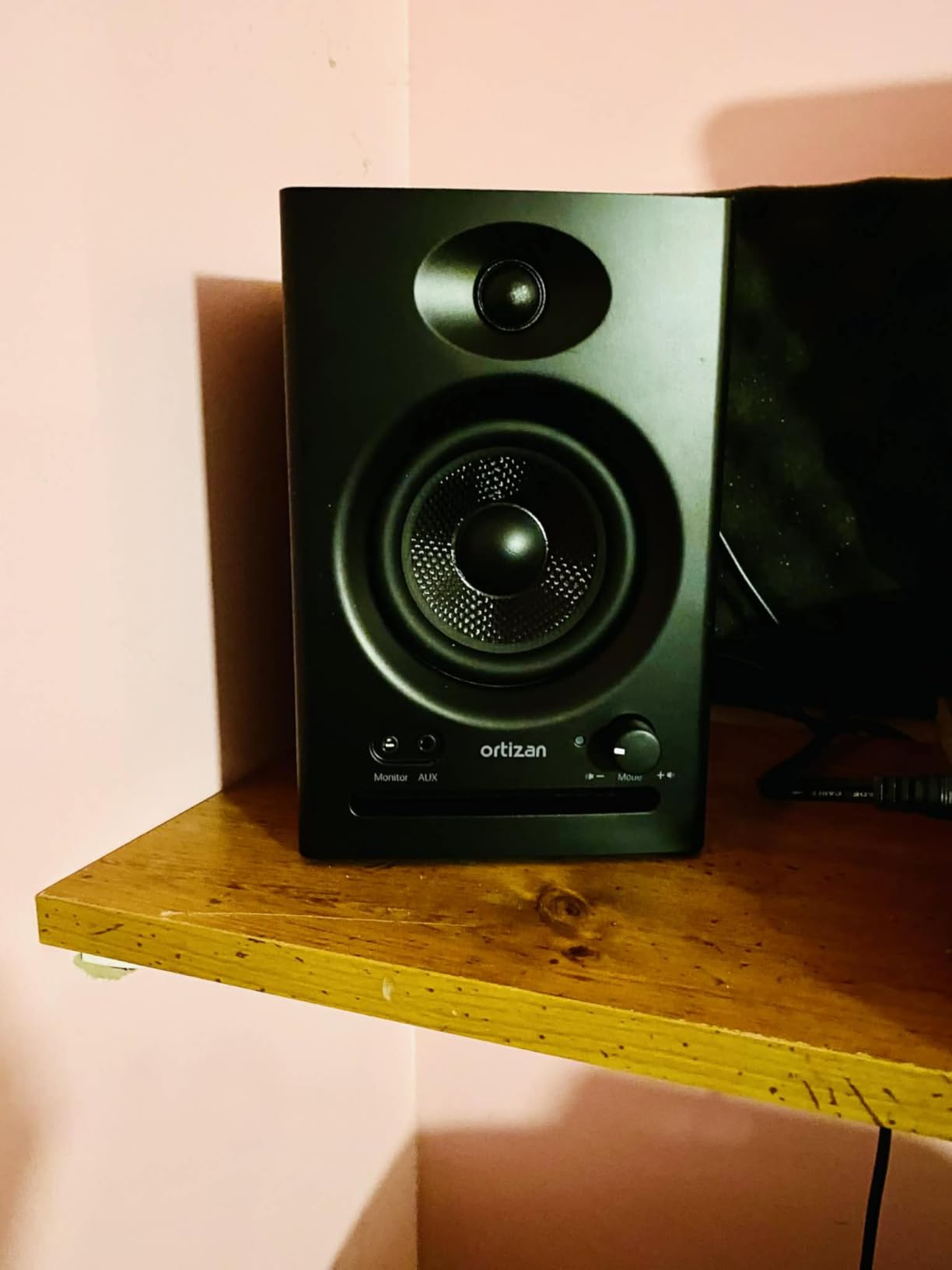
Connectivity is the headline. You get RCA, 3.5mm AUX, a 6.35mm balanced TRS input for mixers and instruments, USB digital input and Bluetooth 5.3 with an 18 metre range. A front headphone output covers late-night work.
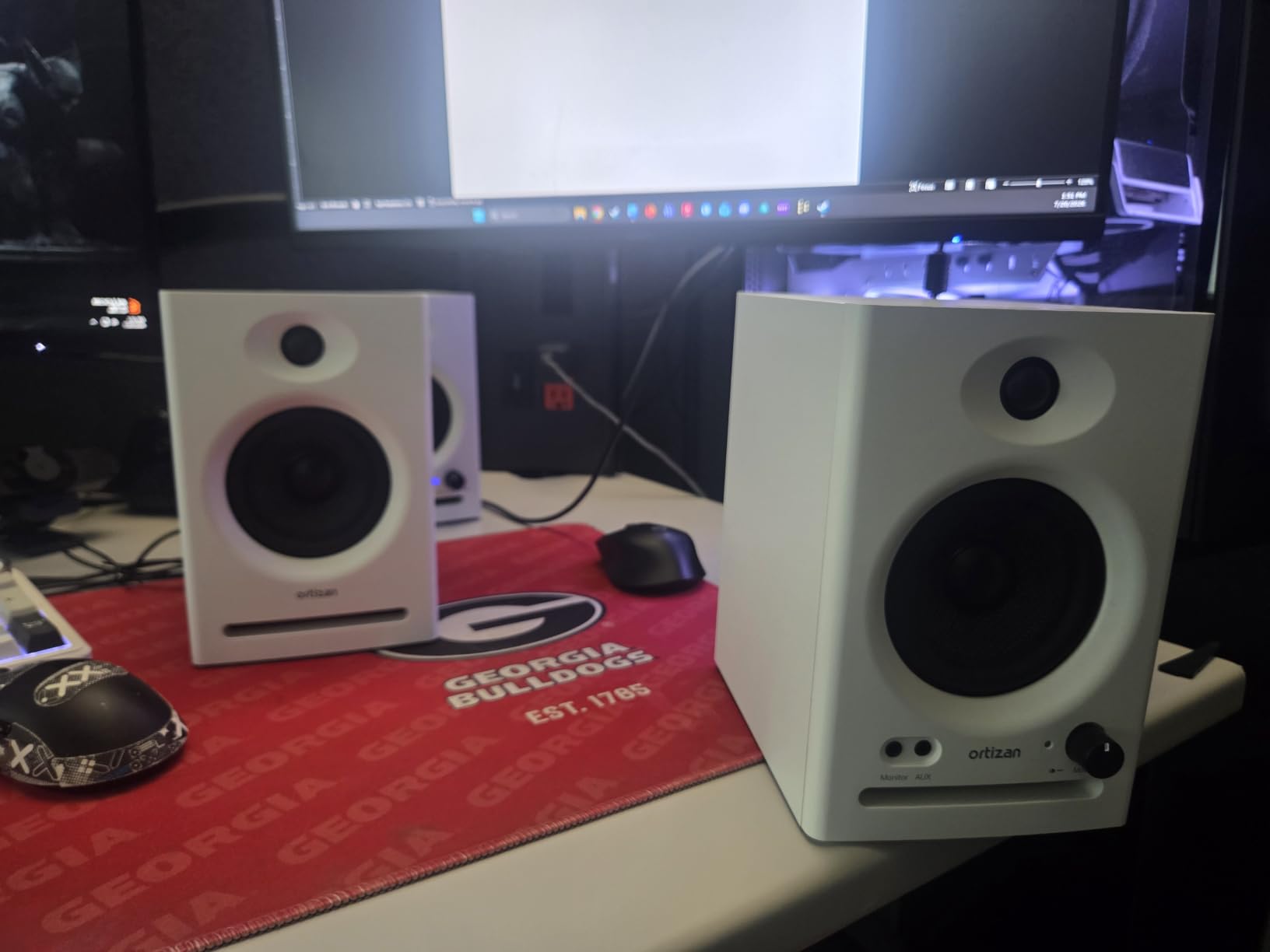
Underneath, it is a 3.5 inch carbon fiber mid-bass driver with a 0.75 inch silk dome tweeter, an electronic two-way crossover and a laboratory-tuned flat response. Owners highlight the clean, flat, balanced tuning as the reason it holds up for actual mixing rather than only playing back.
The cabinet is 5.11 inches deep and 5.9 inches wide, so it takes even less desk space than most 3.5 inch monitors. Amplification is listed at 80 watts, which is more headroom than the driver size would suggest you need.
Who the Ortizan C7 suits
It suits producers who want one pair of speakers to serve editing, gaming, streaming and mixing without a separate interface on day one. The USB input and Bluetooth make it the flexible choice for a desk that does more than production.
It also suits anyone whose listening partner is a mixer or an instrument rather than a computer, since the balanced TRS input is unusual at this level and takes professional line signals cleanly.
Where the Ortizan C7 falls short
Bluetooth is the reason to be careful. Wireless playback adds latency and processing that makes it fine for casual listening but wrong for judging timing or checking a mix, so keep the wired path as your reference.
Long-term owner feedback is thinner than for the established models here, and 3.5 inch drivers cannot deliver deep low-frequency extension no matter what the input accepts.
7. Mackie CR3.5 – the best switch for wall placement
Mackie CR3.5 Studio Monitors (Pair), 3.5″ Woofers, Tone Knob, Black
3.5 inch woofer, 1 inch tweeter
50W per pair
Front tone knob
Wall placement location switch
Pros
- Clear
- detailed sound that sounds bigger than 3.5 inch drivers
- Instrument separation with headroom for mixing
- Tone knob and location switch adapt the pair to a small room or wall
- Isolation pads and cables included in the box
- Used as daily drivers for years by owners
Cons
- Sound is somewhat coloured compared with flatter monitors
- Colouration is audible in the mids and highs
- Occasional reports of pairs failing to power on out of the box
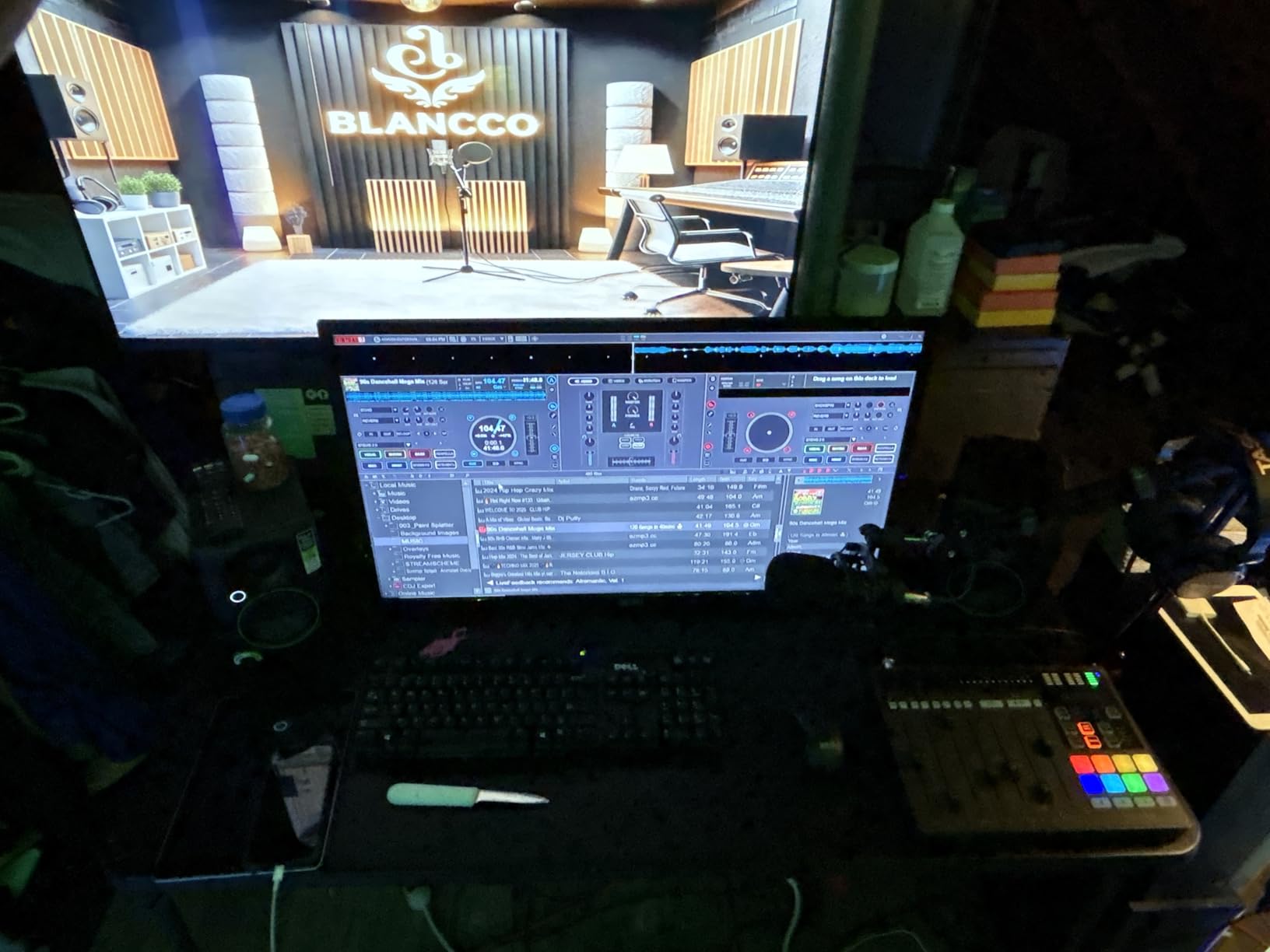
Most monitors offer a rear trim dial and hope you guess the right amount of correction. The CR3.5 takes the guesswork out with a location switch that corrects bass response for wall placement versus free-standing, which is precisely the decision you face when the desk sits against a bedroom wall.
The front tone knob is the other bedroom-specific touch. You can change voicing from your seated position without reaching behind the cabinet or opening software, so A and B comparisons take seconds instead of a minute.
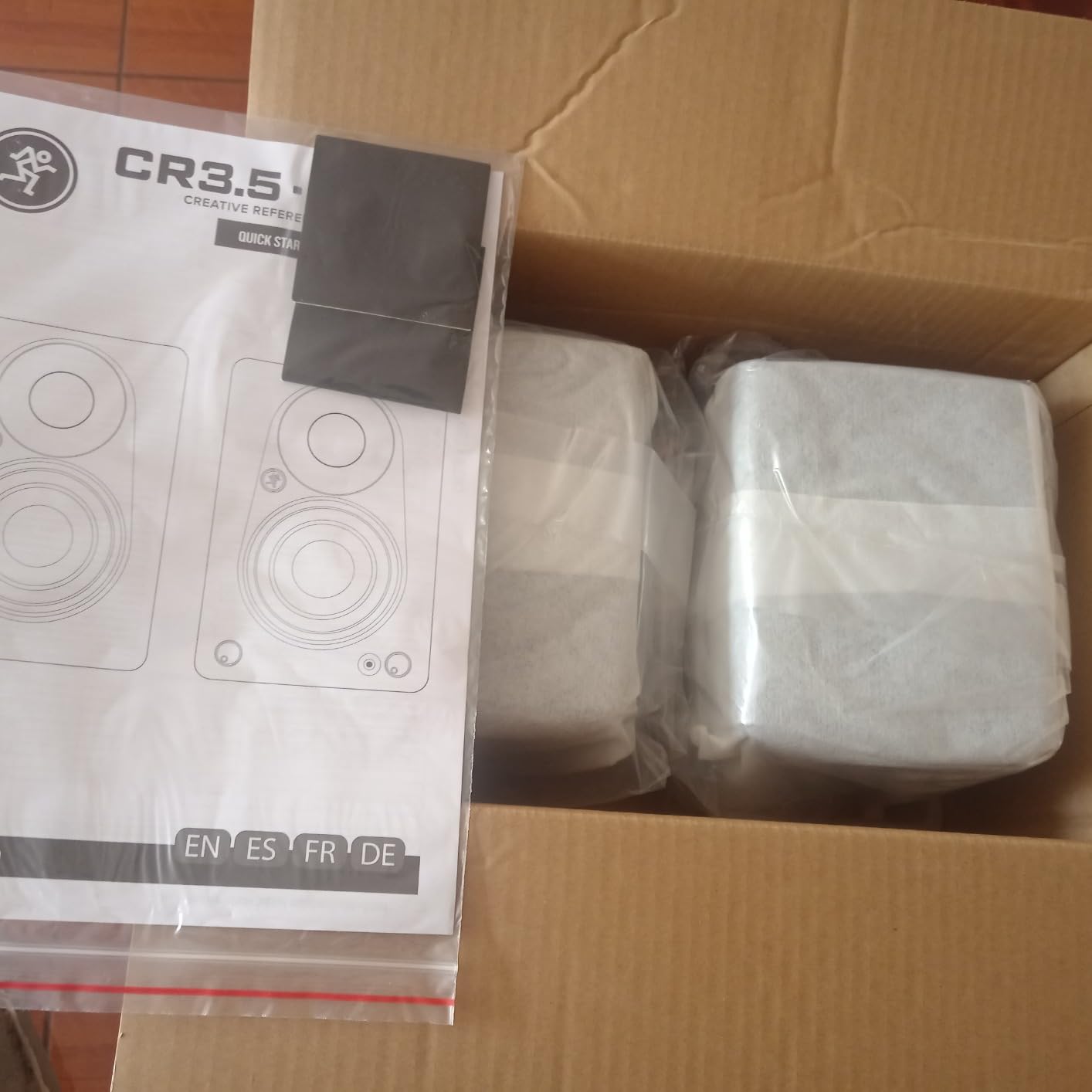
Buyers describe it as unusually solid and full for its size, particularly at close desktop distance, and reviewers single out the instrument separation. With 50 watts of amplification per pair and a 7.1 inch depth, it is a well-behaved box on a crowded desk.
Foam isolation pads and all the cables come in the box. That matters in a bedroom where every extra shelf costs floor space, and it means the speaker-stand-plus-pad-plus-cable shopping trip disappears.
Who the Mackie CR3.5 suits
It suits producers whose only viable placement is close to a wall or partway into a corner, and who want a hardware switch instead of software to fix it. Band mixers and producers working on dense arrangements benefit from the reported instrument separation.
The included pads and cables make it a strong first purchase. Nothing else in this list hands you the accessories and the wall-placement correction together.
Where the Mackie CR3.5 falls short
The sound is coloured. Reviewers consistently note audible colouration in the mids and highs compared with flatter monitors, which means serious critical mixing still wants a second reference such as headphones or a later monitor pair.
There are also occasional reports of units failing to power on out of the box, so check both speakers immediately rather than assuming the problem is your wall socket.
8. Edifier MR3 – the Hi-Res pick for a desk that is also a listening setup
Edifier MR3 Powered Studio Monitor, Speaker Hi-Res Active Bluetooth Speaker
Hi-Res 52Hz to 40kHz response
18W x 2 RMS, 92.5dB peak SPL
App EQ, multi-point Bluetooth
Pros
- Hi-Res certification with a 52Hz to 40kHz flat response
- Bluetooth multi-point switches between laptop and phone
- App-based EQ with music
- monitor and custom presets
- MDF cabinet reduces distortion versus typical plastic monitors
Cons
- Balanced TRS and analog controls are basic next to the feature list
- 3.5 inch drivers still limit low-frequency extension
- App tuning is needed to get the most from monitor mode
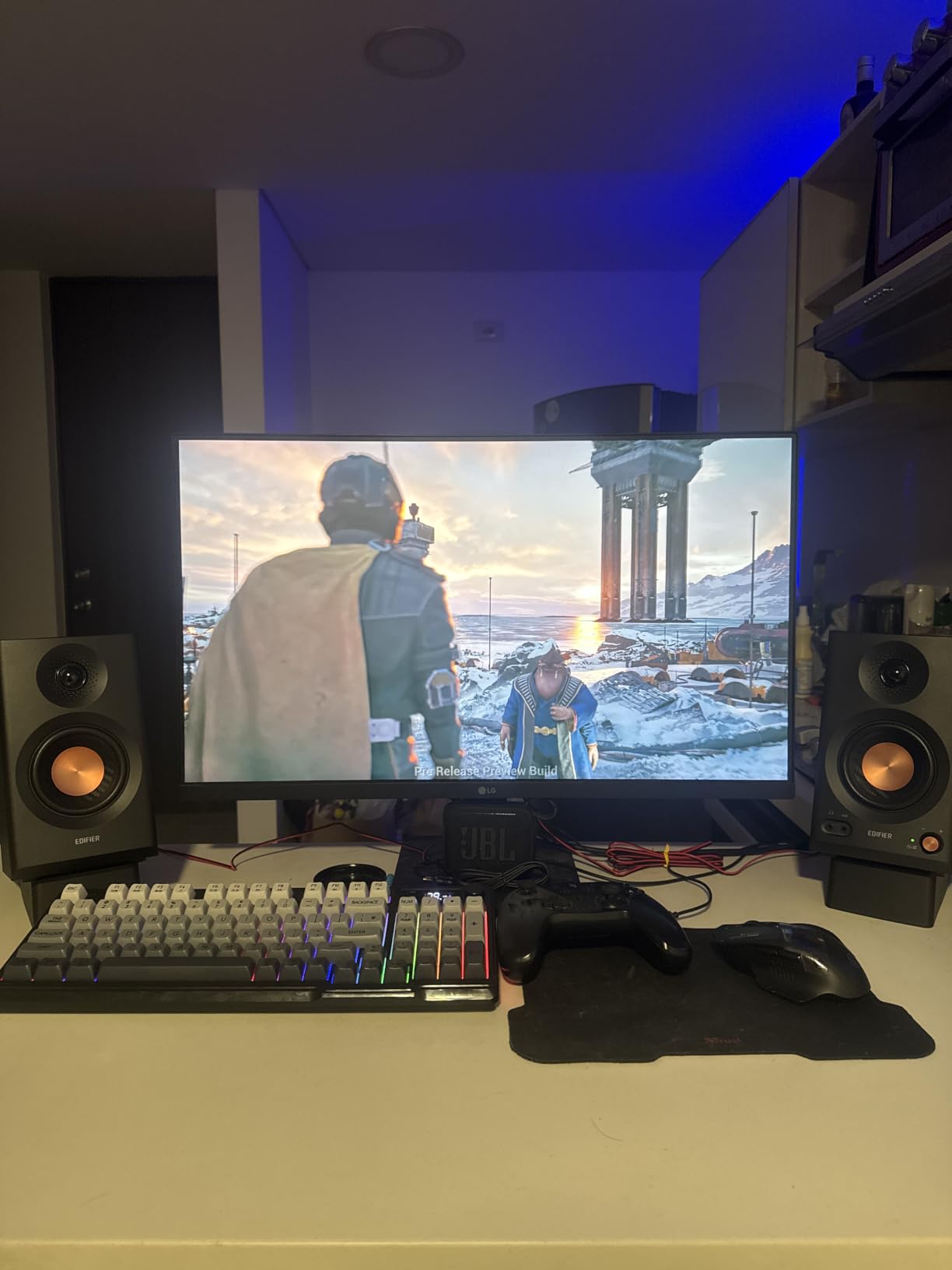
The MR3 is the pick when the desk has more than one job. It carries Hi-Res Audio certification with a listed flat response from 52Hz to 40kHz, and Bluetooth multi-point lets you move between a laptop and a phone without unpairing anything.
Its companion is the EDIFIER ConneX app, which exposes music, monitor and custom modes with app EQ. For a bedroom rig that also functions as a listening setup for streaming or playing references, having three voicings in software is more useful than three rear switches.
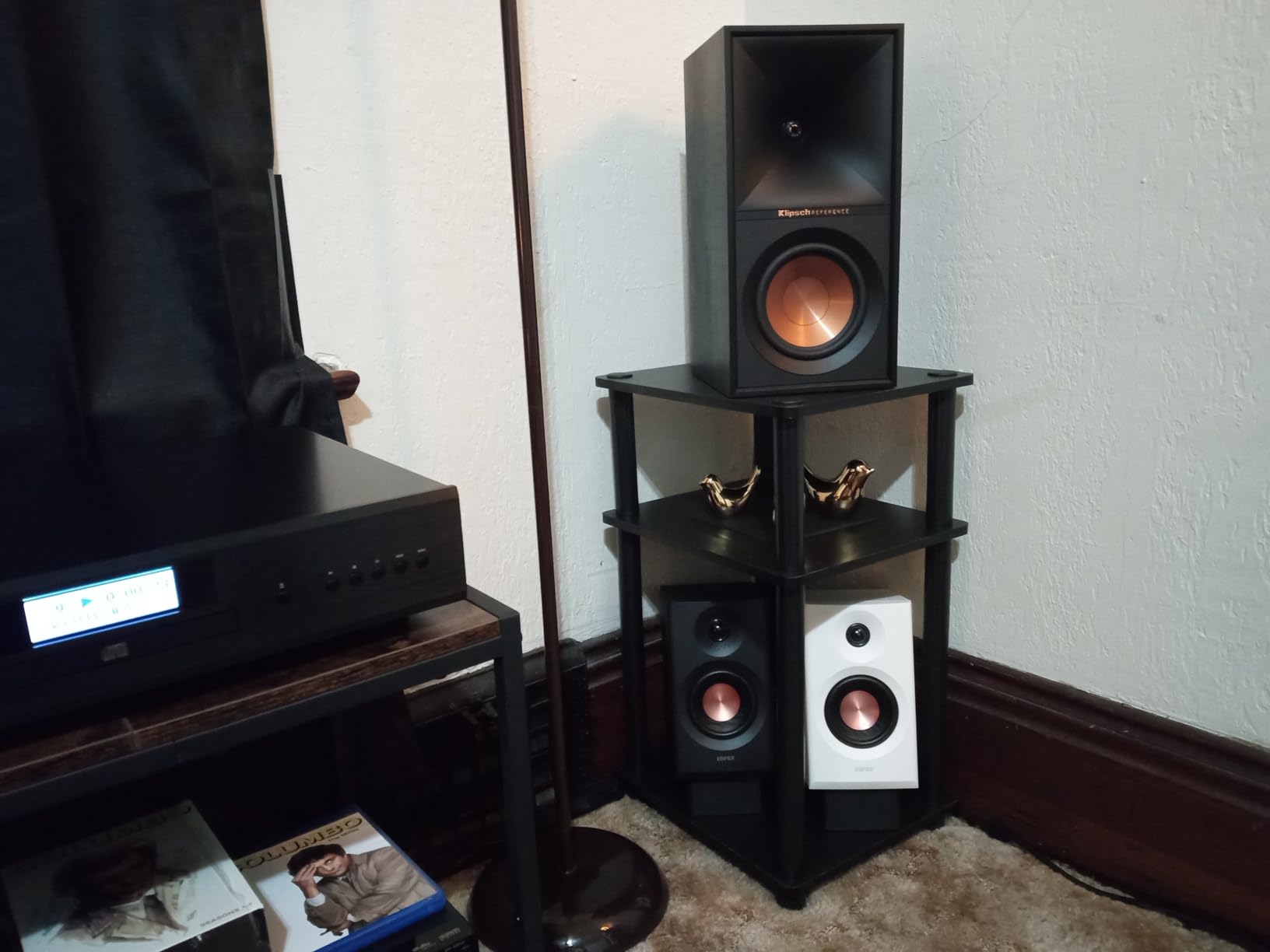
Output is 18W x 2 RMS with a listed peak SPL of 92.5dB, driving 3.5 inch mid-low drivers and 1 inch tweeters. That is enough for accurate checking at bedroom levels, and the MDF cabinet is specified to reduce distortion compared with plastic monitors.
Balanced TRS, RCA, AUX and a headphone output cover the wired paths. In practice reviewers like the combination of extended top end and wireless convenience, with driver size being the accepted bass trade-off.
Who the Edifier MR3 suits
It suits producers who mix in the bedroom and also use the same setup for casual listening, streaming and playing references. The app EQ is the deciding factor if you are comfortable tuning by software rather than by rear dials.
The multi-point Bluetooth also suits anyone who tracks on a phone and mixes on a laptop. It removes the reconnect dance that adds minutes to every session.
Where the Edifier MR3 falls short
The analog controls are basic next to that feature list, and app tuning is genuinely needed to get the best out of monitor mode. Out of the box the monitor mode is not the flat, corrected version you are buying the Hi-Res badge for.
At 3.5 inches the drivers limit low-frequency extension regardless of the top-end detail, so sub-bass decisions still need another reference.
9. M-Audio BX4 – the most low end from a desktop speaker
M-AUDIO BX4 4.5″ Wired Studio Monitors Pair
4.5 inch Kevlar woofer with 1 inch silk dome
120W bi-amplified MDF cabinet
6.12 inch depth
Pros
- 4.5 inch Kevlar drivers give noticeably more low end than smaller models
- Silent wired monitoring with no Bluetooth latency for video
- MDF construction keeps resonance low
- Complete accessory bundle with cables
- foam feet and software
Cons
- Rear bass reflex port limits how close they sit to a wall
- Tweeters can sound forward at default settings
- Rear EQ dials are basic versus software room correction
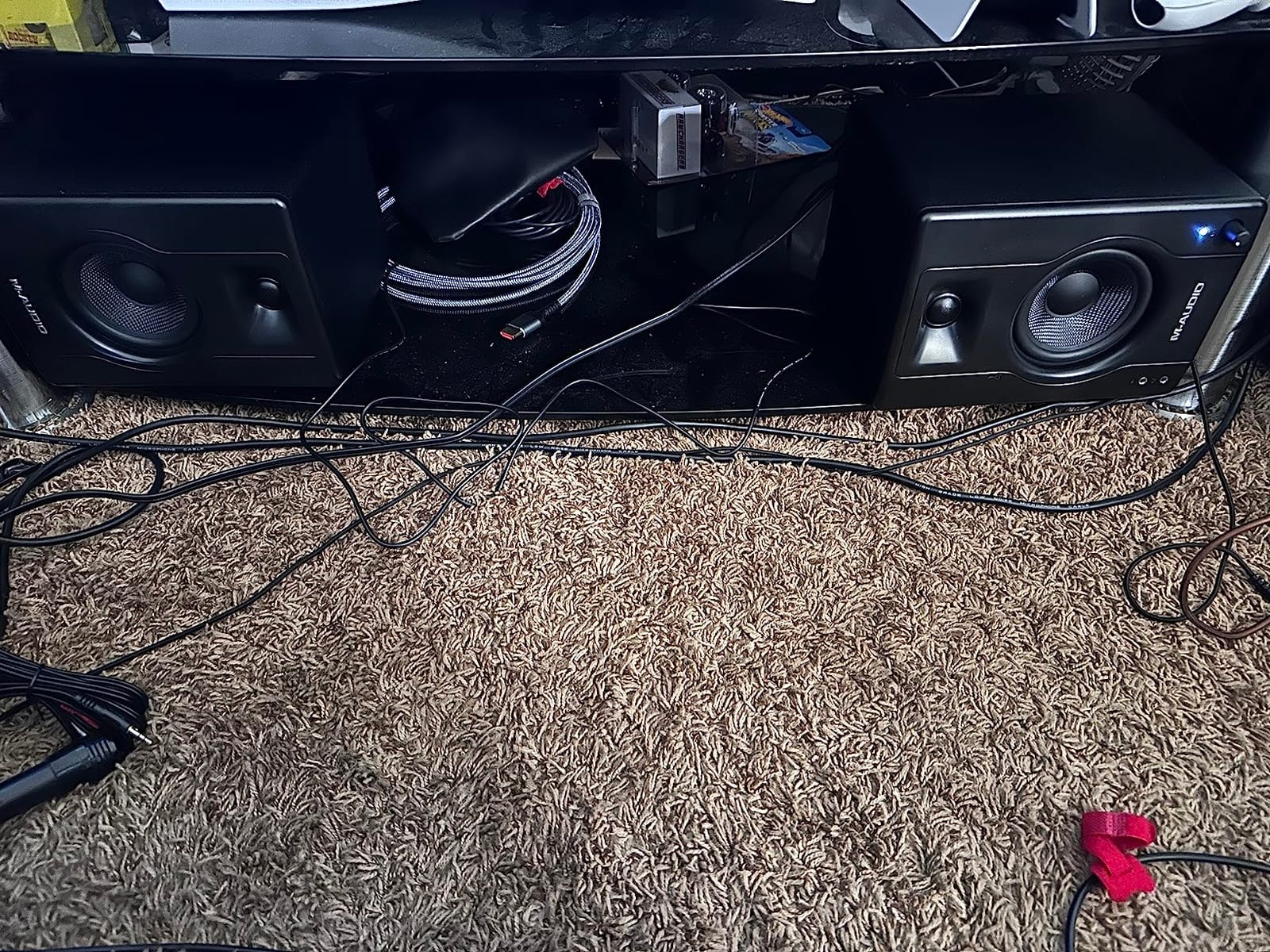
The BX4 is where you go when the bedroom is too small to argue with bass. The 4.5 inch Kevlar woofers deliver noticeably more low end than the 3.5 inch models in this list, and at 6.12 inches deep the cabinet still fits a desk with a compact keyboard beside it.
Amplification is listed at 120W bi-amplified, which is the highest figure in this group and gives real headroom before the cabinets start complaining. Owners cite strong value and punchy bass for the size as the two things that keep coming up.
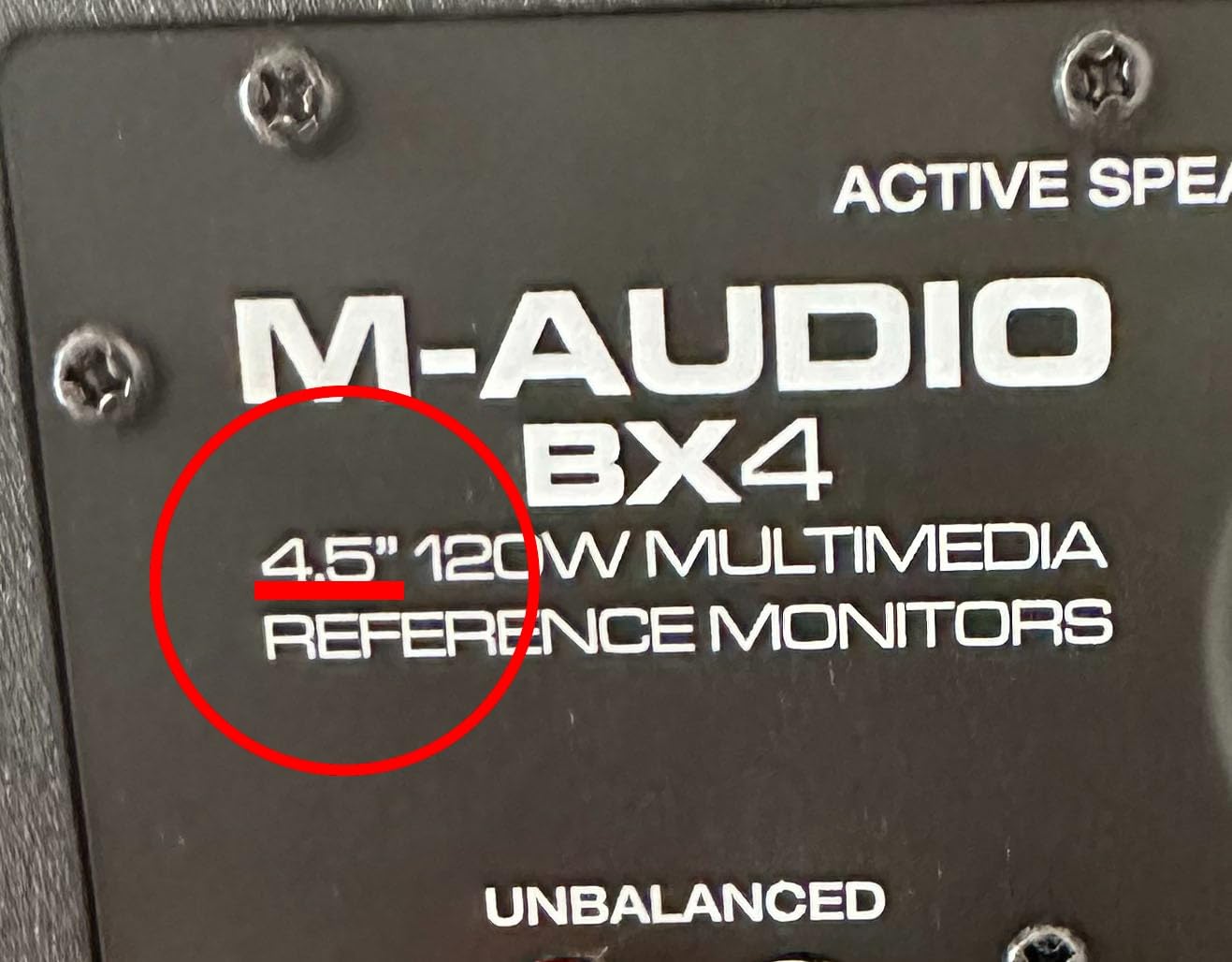
Monitoring is fully wired, so there is no Bluetooth latency to worry about when you are editing picture. Rear 1/4 inch, 1/8 inch and RCA inputs take an interface or mixer, and the front 1/8 inch headphone access handles silent mixing late at night.
MDF construction keeps resonance low compared with plastic multimedia speakers, and the box includes foam feet, an interconnect cable, aux and RCA cables plus software. A rear high and low EQ pair and an active-speaker position switch handle the basics of room matching.
Who the M-Audio BX4 suits
It suits producers who mix hip-hop, electronic and bass-heavy material in a room where a 3.5 inch driver leaves them guessing about the low end. It also suits anyone who needs volume without the muddiness that comes from over-driving small speakers.
Video editors and streamers get a clean wired path with no wireless complications, and the accessory bundle means a first bedroom rig comes together in one delivery.
Where the M-Audio BX4 falls short
The rear bass reflex port is the real constraint. It means you cannot tuck the speakers right up against a wall, so in a tight bedroom you have to work with placement rather than a switch, which is exactly the situation the Mackie CR3.5 solves better.
The tweeters can also sound slightly forward at default settings, and the rear EQ dials are basic compared with software-based room correction. Expect to spend a few minutes in your DAW pulling the top end back.
10. JBL Professional 104-BT – the best stereo image in a white cabinet
JBL Professional 1 Series 104-BT Compact Desktop Reference Monitors with Bluetooth, White, Sold as Pair, 4.5-inch Speaker
4.5 inch coaxial driver design
60W Class D amplification
Bluetooth 5.0 plus TRS and RCA
Pros
- Excellent stereo separation with a locked phantom centre
- Voices and instruments placed precisely in the mix
- Crisp clear sound with defined rather than boosted bass
- Solid enclosures that resist rattling
- Compact desktop footprint with plenty of volume
Cons
- Bluetooth adds noticeable latency for video
- Connection has dropped after several minutes idle
- No remote control and no way to mute without reaching the speakers
- Automatic standby is intrusive
- Speaker-wire retaining clip has been reported breaking
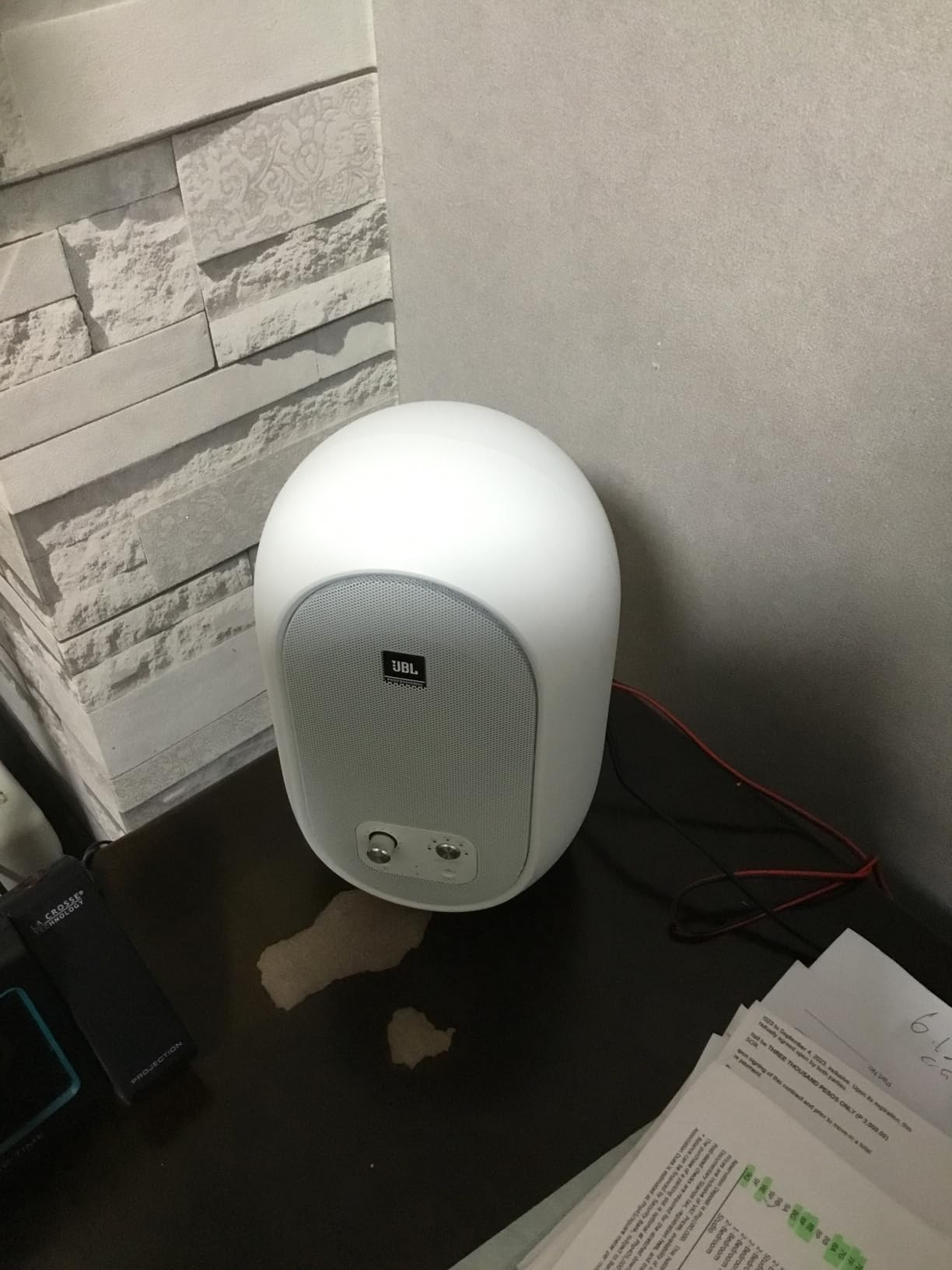
The coaxial driver design is the reason to look at this pair. A coaxial puts the tweeter at the centre of the woofer cone, which makes the acoustic centre behave as a single point source and produces a locked phantom centre with precise instrument placement.
Owners rate the sound quality highly and describe defined, accurate bass rather than boosted boom, which is refreshing in a bedroom category full of warm monitors. The enclosures feel solid and resist rattling, and 60W of Class D amplification gives plenty of volume for a small room.
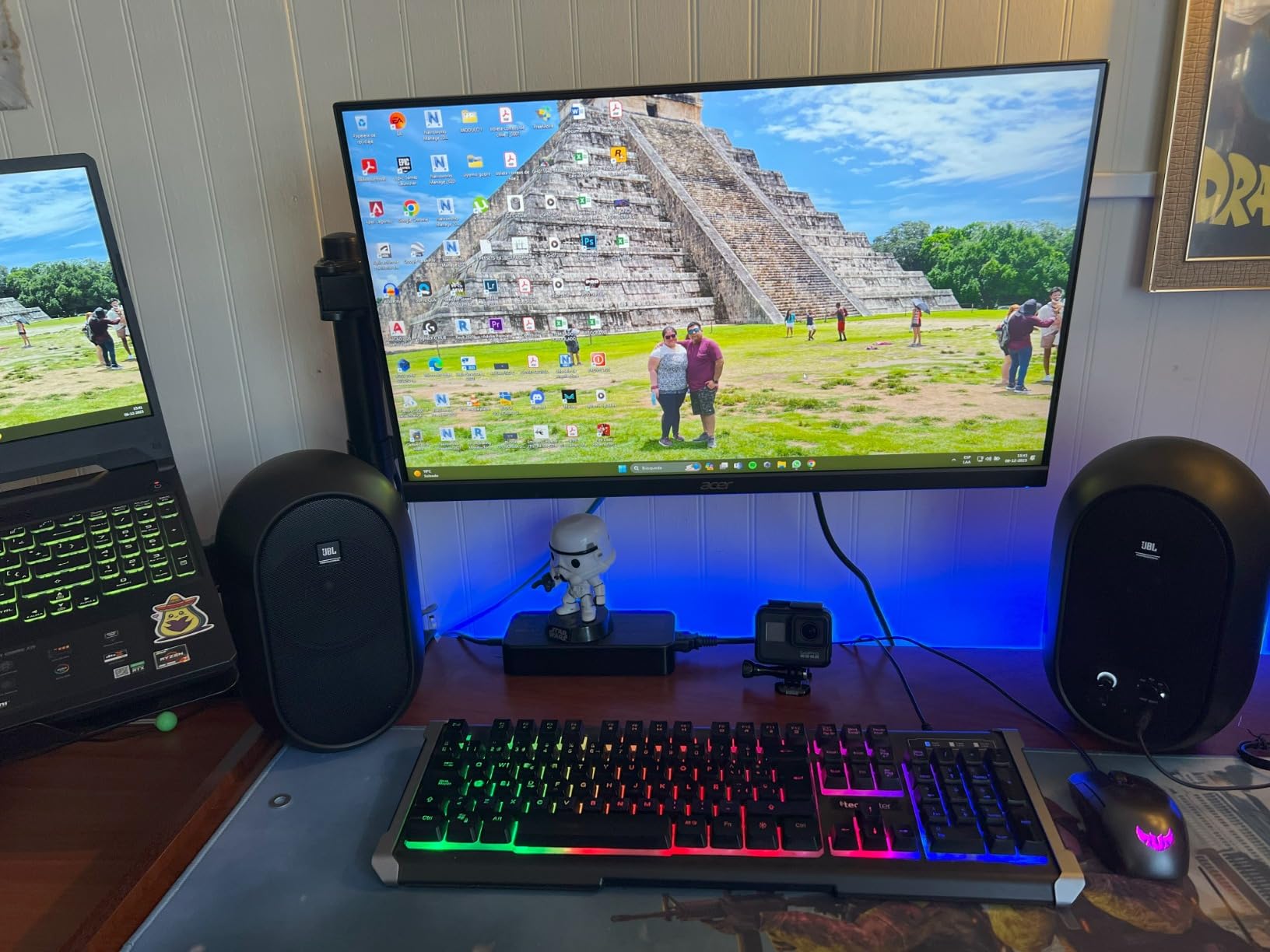
Connections are front and rear: a 3.5mm input and a muting headphone jack sit on the front panel for convenience, while 1/4 inch TRS and RCA sit behind. Bluetooth 5.0 with a 10 metre range is there for casual listening from a phone.
The white finish also matters more than it sounds. In a bedroom studio, a pair of white speakers disappears into a bright room, while black boxes read as studio equipment that has been moved in from somewhere else.
Who the JBL 104-BT suits
It suits producers mixing dense arrangements where imaging decides everything: orchestral, jazz, film scoring, or vocal stacks. If you need to hear exactly where an instrument sits, the coaxial layout is a genuine technical advantage over a conventional two-way.
It also suits anyone whose desk doubles as a hi-fi setup, since the Bluetooth and front inputs make casual listening painless without adding another pair of speakers to the room.
Where the JBL 104-BT falls short
The Bluetooth experience is the weak point. Owners report noticeable audio and video latency, connections dropping after several minutes of idling, and no remote control, so keep this wired for any work that depends on timing.
The automatic standby mode is also intrusive and needs a manual procedure to disable, and there are reports of the speaker-wire retaining clip on the powered cabinet breaking. At 4.4 it also carries the joint-highest one-star share in this group.
11. Mackie CR4-X – the simple pick for a media and production desk
Mackie CR-X Series, 4.5-Inch Multimedia Monitors with Professional Studio-Quality Sound – Pair (CR4-X)
4 inch driver, 50W amplification
Front headphone jack with auto-defeat
Cables included
Pros
- Articulate
- clean stereo sound with enough output for a small room
- Front headphone jack instantly defeats the speaker output
- Wide input selection covering 1/4 inch
- 1/8 inch and RCA
- Hookup cables are included in the box
Cons
- Lowest average rating in this group with a high one-star share
- Character is tuned for multimedia rather than strict flat reference
- Heaviest weight here at 11.5 pounds for the pair
The CR4-X is the straightforward option for a desk that does production, streaming and video editing in the same session. Fifty watts of clean, articulate stereo sound is enough for a small room, and the input selection covers instruments, mixers and computers without adapters.
The front headphone jack auto-defeats the speaker output when you plug in, which removes the click and the volume jump of a manual switch. That small convenience is why people keep this pair on a permanently mixed desk.
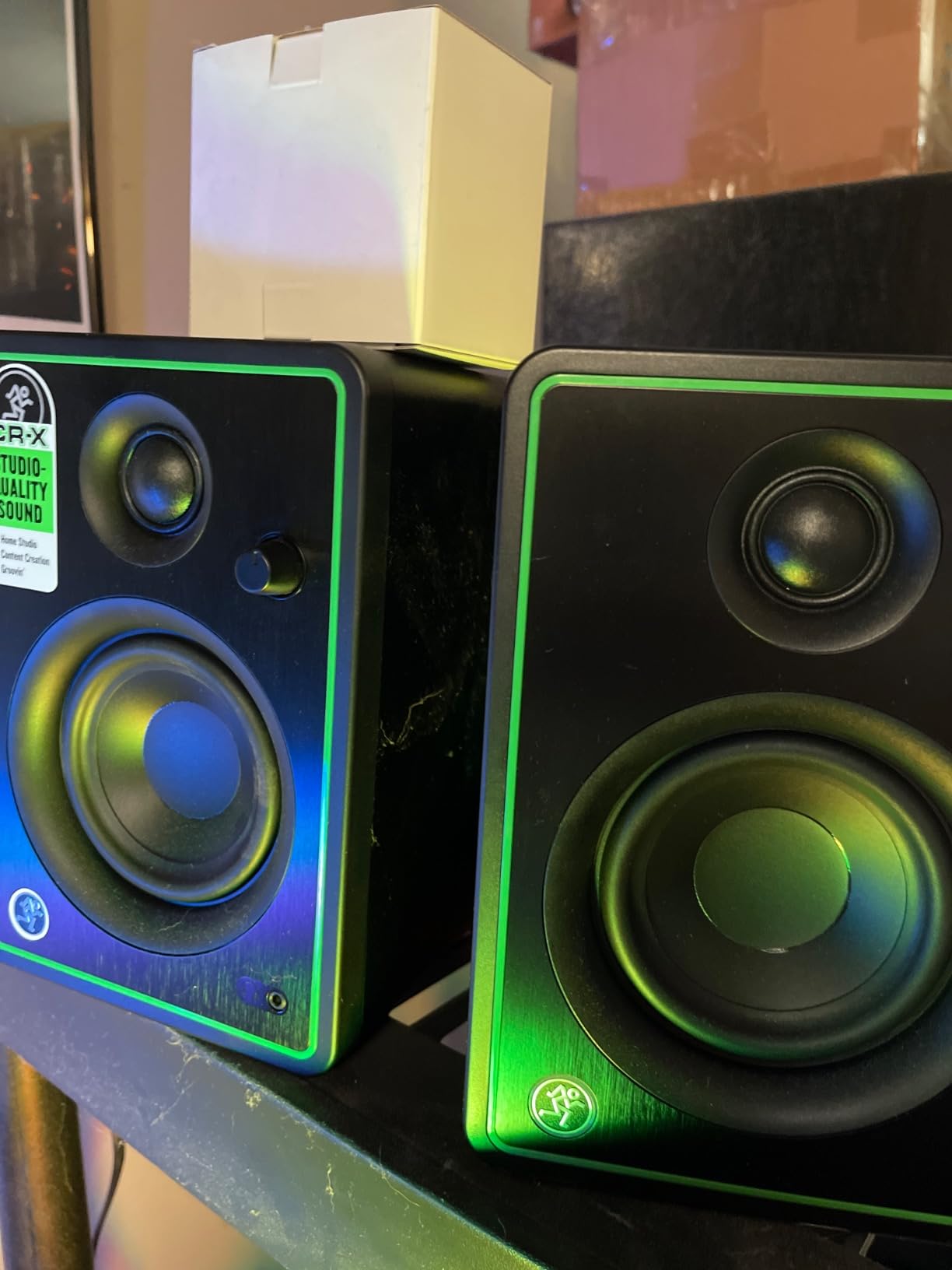
At 6.1 inches deep the cabinet is among the shallowest here, and hookup cables are included, so it is a fast first setup for a bedroom studio. No amplifier is needed because the monitors are active.
The honest read is that this is the least well-reviewed pair in the group. Buyers like the connectivity and the front jack, while a meaningful minority are unimpressed by the sound for the money compared with flatter reference monitors.
Who the Mackie CR4-X suits
It suits producers who prioritise a working signal chain over reference neutrality: podcasters, streamers, video editors and anyone who moves between instruments and computer sources all day.
If you already own headphones, the auto-defeat jack and broad input selection cover most of what an audio interface would, which is a reasonable way to defer that purchase.
Where the Mackie CR4-X falls short
It carries the lowest average rating of this group at 4.3, with a noticeably high one-star share, and the character is tuned for multimedia use rather than strict flat reference. If your main job is critical mixing, spend that effort on a flatter monitor instead.
It is also the heaviest pair here at 11.5 pounds, which is awkward in a bedroom where you may be moving the speakers to reclaim desk space for other gear.
12. Pioneer DJ DM-40D – the pick for a DJ and production hybrid desk
Pioneer DJ DM-40D 4-inch Active Desktop Monitor Speakers, Pair, Black
4 inch woofer with 19mm tweeter
42W active amplification
DSP with DJ and production modes
Pros
- Purpose-built compact footprint that leaves desk room
- DSP voicing switch between DJ and music production
- Clear
- balanced and punchy low end at desktop size
- Active design needs no separate amplifier
Cons
- Fewer input options than most rivals
- with RCA focus rather than TRS and AUX
- Smallest review base of this group so long-term feedback is thin
- 4 inch driver limits true sub-bass extension
The DM-40D was voiced by Pioneer’s DJ audio team, and that shows in the priority order. The low end is punchy and defined for a desktop-sized 4 inch driver, which is exactly what matters when you are cueing a track and feeling the beat rather than judging a mix from three metres away.
The two-way sound mode switch is the feature that sets it apart from every other monitor on this list. One setting is optimised for DJing, where you need to hear a cue and hold a beat accurately, and the other is for music production.
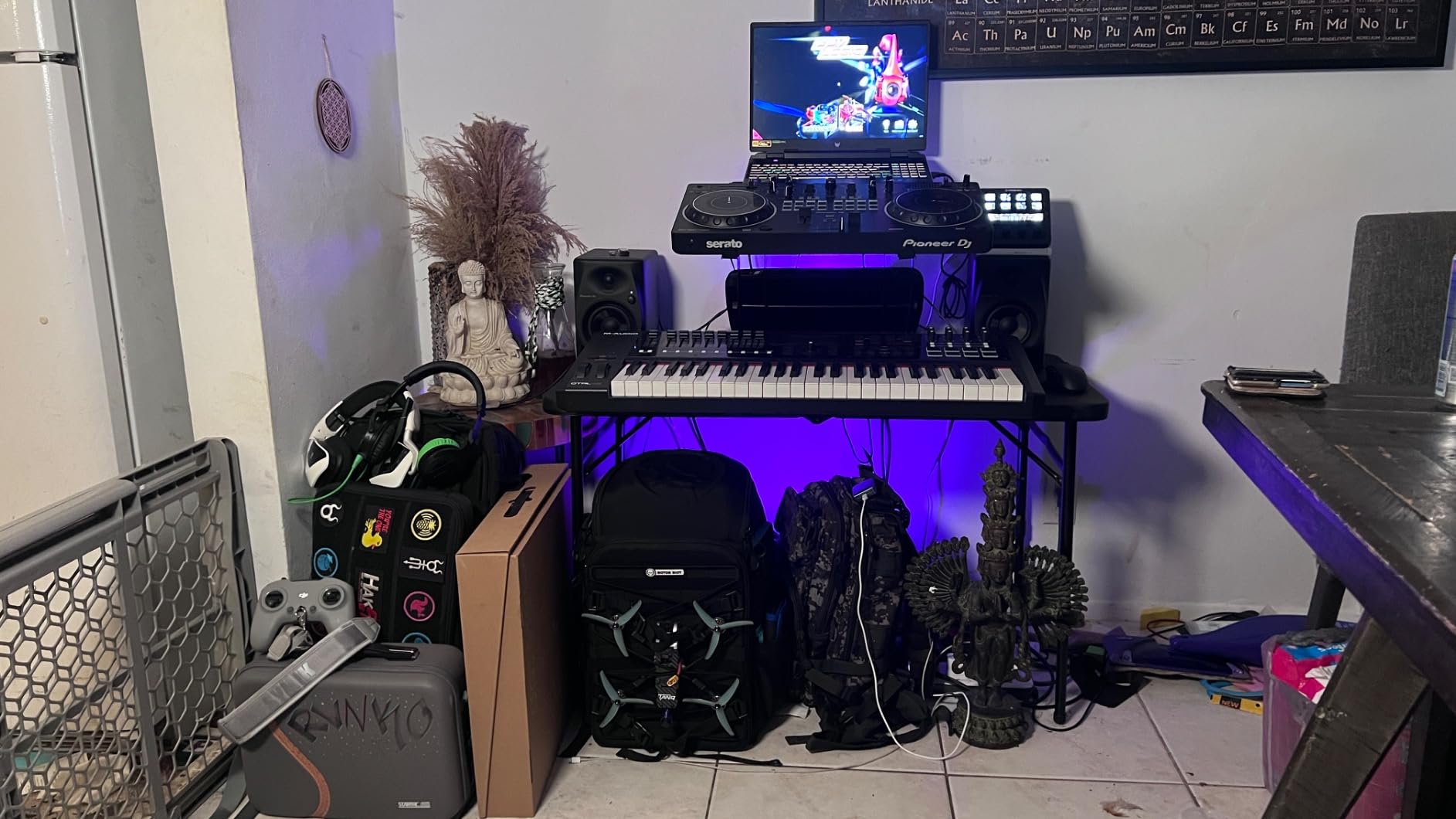
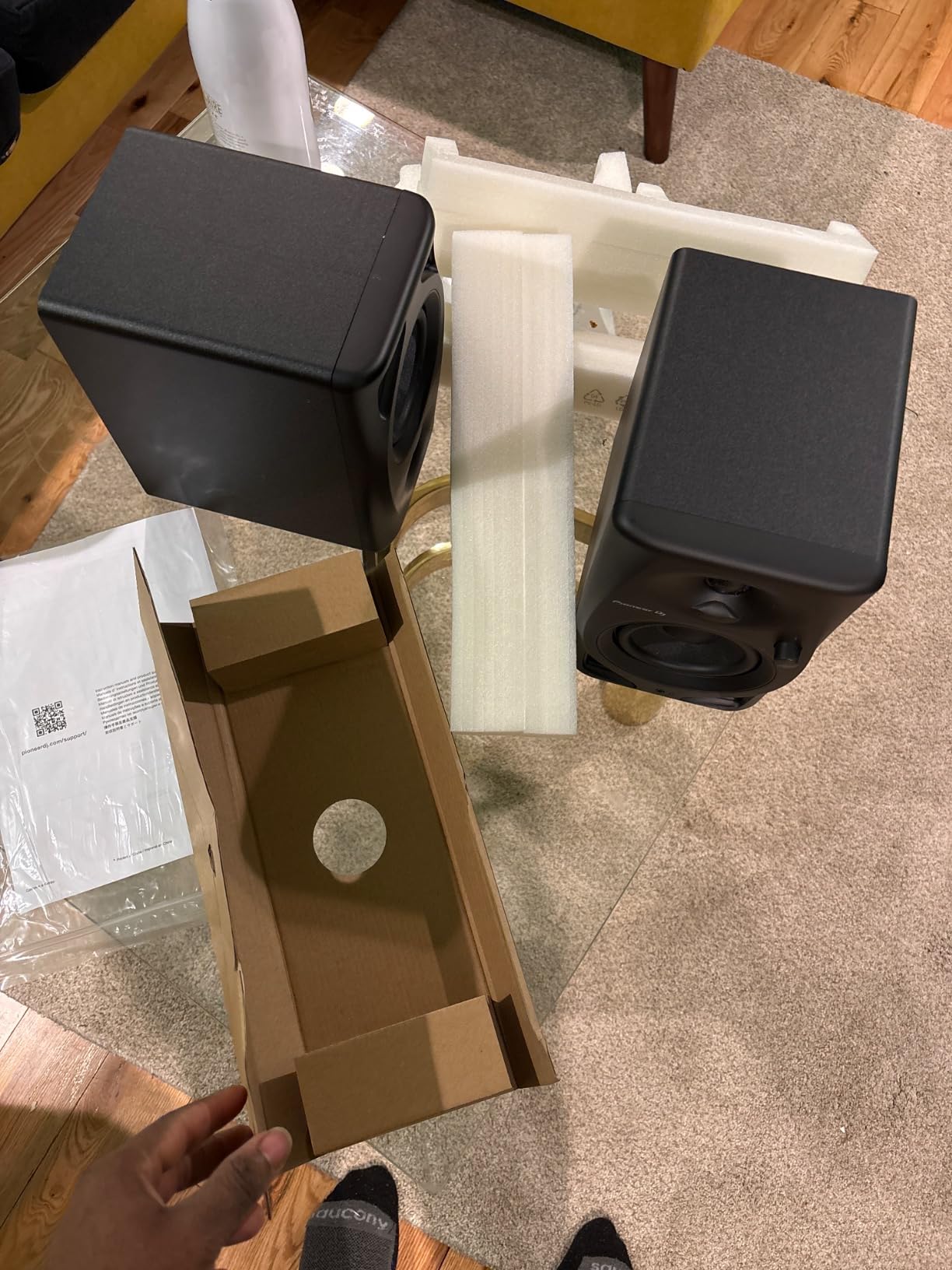
At 42 watts of active amplification and a fiberglass cabinet, it needs no separate amplifier and keeps the signal chain short. That simplicity is genuinely useful in a bedroom where every extra box takes space you do not have.
Depth is 8.8 inches, which needs a little desk space, so it suits a bedroom rig with a wider desk or a dedicated shelf rather than the tightest setups. Placement is still manageable because the fibre cabinet stays rigid at volume.
Who the Pioneer DJ DM-40D suits
It suits bedroom producers who also DJ or stream, and anyone who wants a fast voicing change between performance monitoring and mixing without opening a plugin. Beatmakers working on low-end-heavy material will like the low-end priority.
It also makes sense as a second role in a compact rig: production and DJ practice from one pair, with the switch doing the work of a second monitor.
Where the Pioneer DJ DM-40D falls short
Input selection is narrower than most rivals here, with an RCA focus rather than TRS and AUX heavy connectivity. If you run an interface with balanced TRS outputs, check what you have before committing.
It also has the smallest review base of the group at 199 ratings, so long-term owner feedback is thin, and a 4 inch driver still limits true sub-bass extension.
How to Choose Studio Monitors for Small Bedrooms
The right answer to what is the best studio monitor for a small room is not one model, it is a set of constraints. Work through these in order and the model choice takes care of itself.
Match driver size to the room, not the spec sheet
For rooms under roughly 100 square feet, stick with 3 to 4.5 inch drivers. Larger woofers need more air around them than a bedroom gives, so you end up with bass build-up, low-mid smearing and a speaker you have to keep turned down because the room cannot support it.
Smaller drivers also integrate better at desk distance. Listening an arm length away, a 3.5 inch woofer arrives with its response intact in a way a larger driver never does at that distance, which is the whole point of nearfield monitoring.
Depth matters more than most buyers expect
Measure the desk before you choose. A 100 by 50 centimetre desk minus two monitors leaves a narrow strip for a 25-key MIDI keyboard, a mouse and an interface. Cabinets deeper than about 7 inches start squeezing the working area, which is why the BX3 at 5.51 inches and the Ortizan C7 at 5.11 inches exist in this category.
Forum discussion on small bedroom desks keeps coming back to this arithmetic. The recurring answer is to choose by depth first, then by sound, because a perfect monitor you cannot position correctly on your desk is worse than a good one you can.
Boundary EQ and wall placement
A wall behind or beside your speakers adds low-end energy, and a corner adds more. Boundary EQ is the hardware compensation for that predictable problem, and in an untreated bedroom it matters more than any other single feature.
Look for a room control switch or location switch that changes the low-end response for wall versus free-standing placement. The Yamaha HS3 and Mackie CR3.5 both have one, and using it correctly on day one prevents the bass-heavy, smeared mixes that bed small rooms.
The 38 rule and why a bedroom breaks it
The 38 rule says the distance from your speakers to the nearest wall should be roughly 38 percent of the longest room dimension. In a 10 foot wide bedroom that is about 3.8 feet from the wall, which is often more desk depth than you have.
That is the real constraint of a bedroom, and it is why monitors with rear bass reflex ports like the BX3 and BX4 struggle against a wall while front-ported designs like the Edifier R980T do not. When the room will not let you follow the 38 rule, compensate with the room control switch rather than guessing at volume.
Inputs for a bedroom signal chain
Balanced TRS is the right default because it rejects hum from a room full of unshielded cables. RCA is fine for short runs and cheaper. Balanced XLR matters when the monitors sit behind a desk and away from your interface.
USB audio is worth it if your source is a computer and you do not want an interface yet. Bluetooth is a listening convenience, not a monitoring tool, because the latency and processing make timing judgements unreliable.
Room correction DSP matters most in untreated rooms
Forum consensus is consistent on this point: measurement-based room correction and DSP-corrected monitors matter more in a small untreated bedroom than in a treated studio, because the room is doing more damage than the speakers.
None of the twelve monitors here include a bundled measurement microphone and automatic analysis, so treat the DSP as the first line of correction rather than the answer. App-based EQ on the Edifier MR3 and hardware switches on the others give you most of the benefit at this level.
Match the monitor to your genre
Electronic and hip-hop producers need more usable low end than acoustic and pop producers working in the same bedroom. If your material lives below 60Hz, weight your shortlist toward 4.5 inch drivers or plan to add a subwoofer later and cross-check the very low end on headphones.
Acoustic, folk and vocal work lives in the midrange, where every monitor on this list performs well. Choose those on imaging and fatigue instead: wide stereo separation and smooth top end matter more than bass extension.
Cap your listening level
Working level in a bedroom is usually around 70 to 75 dB SPL at your seat, and staying there protects both your ears and your judgement. Push compact monitors past what the room supports and they compress, and you will make level decisions based on distortion rather than on the mix.
Five mistakes bedroom producers make
First, buying monitors sized for a large control room. Second, ignoring cabinet depth and losing the desk to the speakers. Third, skipping the room control switch because it seemed like marketing. Fourth, treating Bluetooth as a monitoring path. Fifth, running without a second reference for low end, which compact monitors simply cannot provide.
Acoustic treatment helps too, and forum users note that large baffles in a small untreated room can make the space feel even more cramped. Two movable broadband panels behind the speaker positions, angled to the rear corners, cost little and give the boundary options back.
Frequently Asked Questions
What is the best studio monitor for a small room?
For rooms under about 100 square feet, choose an active nearfield monitor with a 3 to 4.5 inch driver and a boundary or room control switch. In this group the Yamaha HS3 leads because its room control and high trim switches address wall bass directly, while the M-Audio BX3 wins on cabinet depth when desk space is the constraint.
What is the 38 rule for studio monitors?
The 38 rule states that the distance from your monitors to the nearest wall should be about 38 percent of the longest room dimension. In a 10 foot wide bedroom that is roughly 3.8 feet, which often exceeds available desk depth, so you compensate with a room control switch instead of placement.
What are the best compact studio monitors?
The most compact credible options here are the M-Audio BX3 at 5.51 inches deep and the Ortizan C7 at 5.11 inches deep. The BX3 offers 120W bi-amplification and a front headphone output, while the Ortizan C7 adds a built-in 24-bit DAC with USB input and Bluetooth 5.3.
Are small studio monitors good enough to mix on?
Yes, for everything above their low-frequency limit. Compact 3 to 4.5 inch monitors are accurate across the midrange and upper frequencies, which is where most mix decisions live. What they cannot do is show you genuine sub-bass, so cross-check the low end on headphones or add a subwoofer.
Do small studio monitors need a subwoofer?
Only if your material depends on sub-bass. Producers making electronic and hip-hop tracks benefit from one because they can trust the low end without turning the monitors up. For acoustic, vocal and pop work, headphones cross-checking are enough and a sub is optional.
Is it okay to use studio monitors in an untreated room?
It is fine, but calibrate for it. Bedrooms add predictable boundary bass from walls and corners, so use the room control or location switch, set a consistent listening level around 70 to 75 dB SPL, and keep a second reference such as headphones for low-end checks.
What is the best computer monitor for small spaces?
Computer monitors and studio monitors solve different problems. A computer monitor is built for viewing, not for a flat audio reference. If you want accurate nearfield monitoring in a small bedroom, look for an active studio monitor with a flat frequency response rather than a display with better resolution.
Are Bluetooth studio monitors okay for production?
For casual listening, yes. For production work, keep the wired path as your reference. Bluetooth adds latency and processing, which makes cueing and timing judgements unreliable, and some owners report connections dropping after several minutes of idling.
Conclusion: The Best Studio Monitors for Small Bedrooms in 2026
After moving all twelve pairs between rooms, the Yamaha HS3 remains my pick for the best studio monitors for small bedrooms because the room control switch does more for an untreated space than a larger driver would. Its 3.5 inch woofer keeps it honest about what it cannot reproduce, and the XLR, TRS, RCA and stereo mini inputs mean it will fit whatever you already own.
When desk depth is the binding constraint, the M-Audio BX3 at 5.51 inches and the Ortizan C7 at 5.11 inches win outright, and the C7 adds a USB DAC if you have no interface yet. For low-end-heavy electronic and hip-hop work, the M-Audio BX4 and the Pioneer DJ DM-40D give you the most to work with, while the Edifier MR4 remains the most comfortable long-session tuning.
Measure your desk, use the room control switch on day one, hold a steady listening level, and keep headphones for sub-bass checks. Get those four things right and any of these twelve will serve a bedroom studio far better than a larger pair you cannot place properly.