
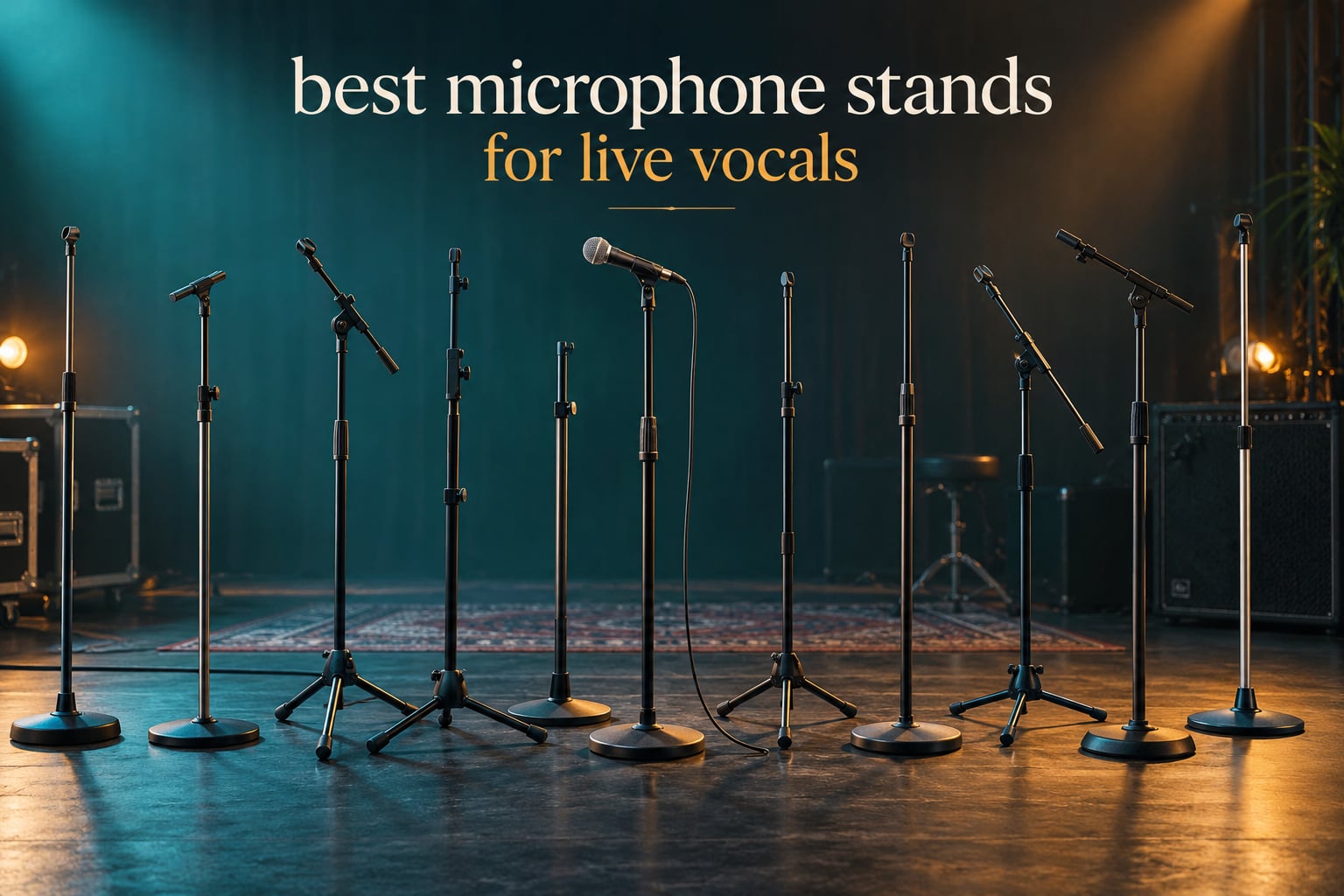
A mic stand is the one piece of gear a live singer touches before every single song, and it is usually the last piece they think about buying. Yet the complaints on live sound forums repeat the same way: play in the clutch, a boom that creeps downward mid-number, tripod legs nobody can see on a dark stage. Getting the best microphone stands for live vocals means matching the base to the room and the metal to the mic.
We spent weeks comparing ten stands that cover the whole live-vocal field, from folding tripods for a rehearsal room to a German-built telescoping boom for touring. We weighed the specs that decide whether a stand stays planted, checked height ranges against real performer heights, and read owner reviews for failures that only appear after a few months of load-ins. Our picks are tagged by persona rather than price tier, because that is how the decision actually made.
Updated for 2026, this guide covers straight stands, round bases, tripod booms and the hardware that holds a handheld vocal mic at the right height. If you are still choosing, the short answer is: a weighted round base is the safest and calmest option for a singer standing still, and a tripod boom only earns its keep when you also play an instrument or move around the stage.
Table of Contents
Top 3 Picks for Live Vocals (October 2026)

Amazon Basics Boom Arm Stand
- 85.75 inch max height
- Folds flat to a straight stand
- Clip sold separately

Pyle PMKS5 Round-Base Stand
- 9.8 inch die-cast base
- 33.5 to 60.24 inch range
- 5/8 inch threading

Quick Overview: All 10 Stands Side by Side in 2026
| Product | Specs | Action |
|---|---|---|
| Amazon Basics Boom Arm Stand |
|
Check Latest Price |
| Pyle PMKS5 Round-Base Stand |
|
Check Latest Price |
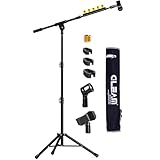 GLEAM Tripod Boom Stand GLEAM Tripod Boom Stand |
|
Check Latest Price |
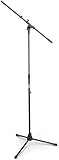 On-Stage MS7701B Euro Boom On-Stage MS7701B Euro Boom |
|
Check Latest Price |
 CAHAYA Tripod Boom Stand CAHAYA Tripod Boom Stand |
|
Check Latest Price |
 InnoGear TS186 Boom Arm Stand InnoGear TS186 Boom Arm Stand |
|
Check Latest Price |
 Pyle PMKS56 Telescoping Boom Pyle PMKS56 Telescoping Boom |
|
Check Latest Price |
| On-Stage MS7201B Round Base |
|
Check Latest Price |
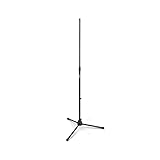 On-Stage MS7700B Tripod Stand On-Stage MS7700B Tripod Stand |
|
Check Latest Price |
 K&M 21090 Telescoping Boom K&M 21090 Telescoping Boom |
|
Check Latest Price |
How We Picked
Every stand here was judged on the same four things: how much mass sits on the floor, whether the clutch holds its setting after a knock, whether the height range covers the singers you actually play with, and what owner reviews say breaks after a year.
Where two stands looked similar on paper, we leaned on reported failure modes from live sound forums. Play, creep and stripped thumb screws mattered more to us than any listed feature, and that is why several heavier stands outrank lighter ones scoring the same.
10 Microphone Stand Reviews, Ranked by Use Case
1. Amazon Basics Boom Arm Stand – Best All-Round Stand for Practice and Rehearsal
Amazon Basics Sturdy Portable Microphone Boom Arm Stand, Height Adjustable with Cable Management, Foldable Tripod Base, Up to 85.75″, Black
Max height: 85.75 inch
Pedestal base, 21 inch spread
Weight: 3.3 lb
Thread: 3/8 and 5/8 inch
Pros
- Height range covers nearly every singer
- Folds flat into a straight stand
- Light enough for a one-hand carry
- Clip-on cable holder
- Pivot holds position once set
Cons
- Microphone clip sold separately
- Top-heavy with the boom extended
- 2 lb mic weight limit
- Not as rigid as heavy pro stands
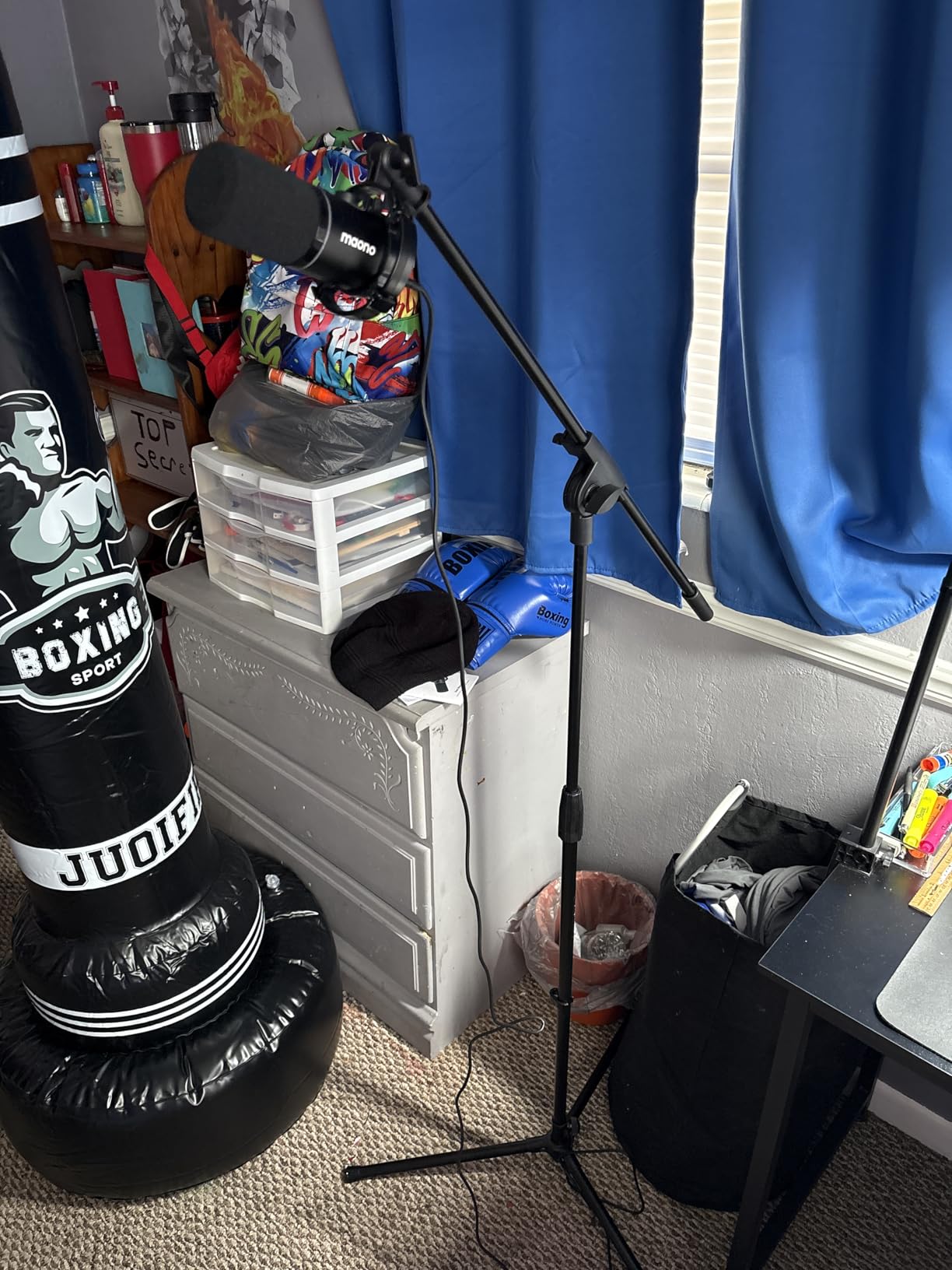
This is the stand we keep reaching for when a singer rehearses at home, runs a small studio, or plays guitar and sings from the same spot. At 85.75 inches it covers nearly every singer, and the boom folds flat to convert it into a straight stand in seconds.
Owners report that the pivot joint holds its position once tightened, which is the failure we watch for most. Several mention it carrying an AT2020 with a pop filter and a wound XLR lead, with the cable holder keeping the run tidy along the pole.
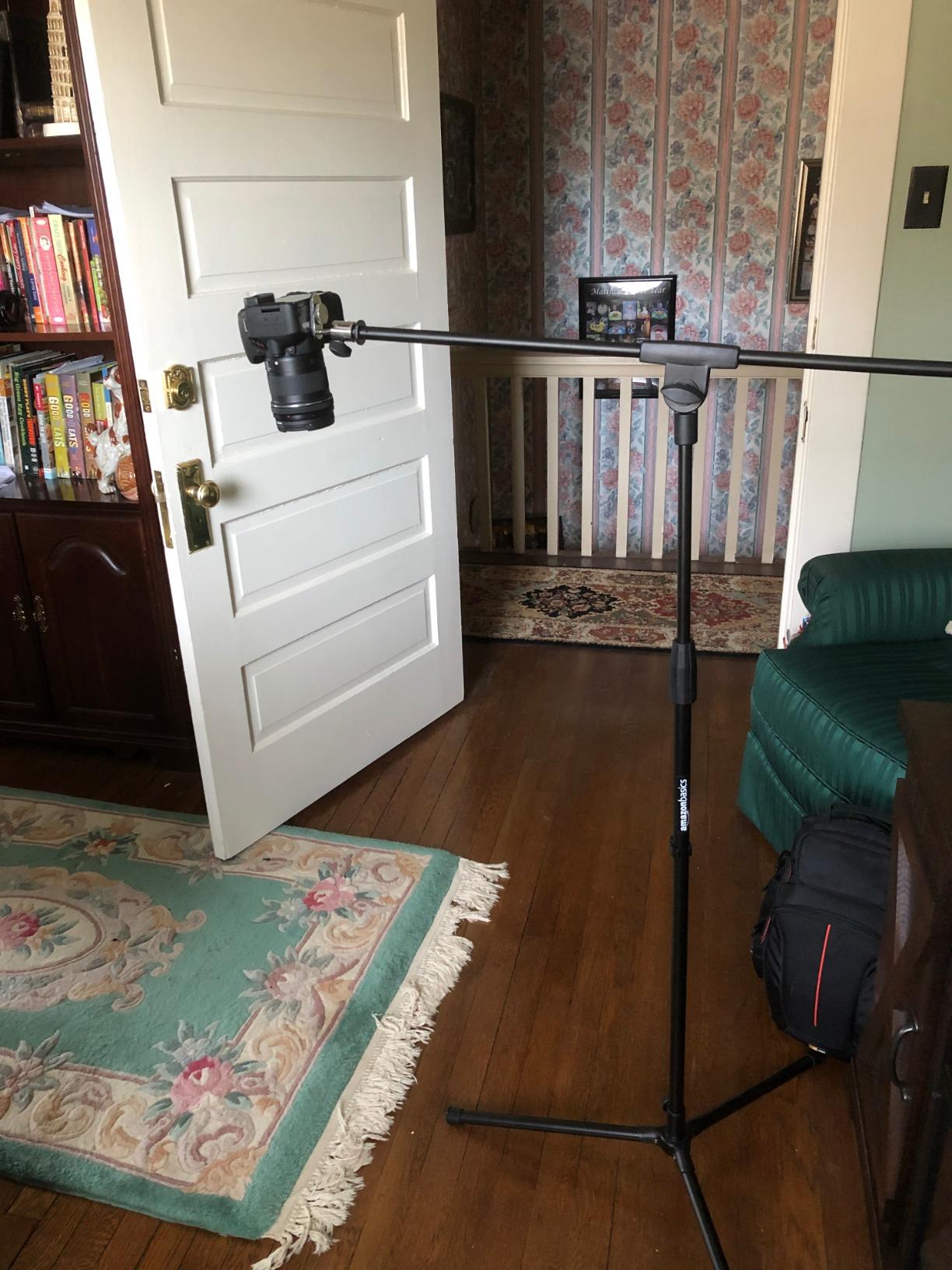
The weakness is at the base, not the top. There is no weighted bottom, so push the boom far out and the stand feels top-heavy, and the listed mic limit is 2 lb. An SM58 never approaches that, but a large-diaphragm condenser on a long extension is a different story.
Reviewers also note the microphone clip is not included, so budget for one. It is a light-duty build rather than a road warrior, but for a rehearsal room or church hall it does a lot of work.
Who this stand suits
It suits the singer who moves between rehearsing at home and playing a small local gig, and anyone who also plays an instrument and needs the mic out of the way. At 3.3 lb it carries in one hand and folds flat enough to sit in a normal gig bag.
Where it falls short
It falls short on a dark, crowded stage, because the narrower pedestal base has no mass to hold it down when a monitor cable gets stepped on, and on touring rigs, where a 2 lb weight ceiling is the wrong profile. If your mic is a heavy condenser and you play out regularly, spend the extra on a cast-base or heavy tripod.
2. Pyle PMKS5 Round-Base Stand – Best Value Stand for Small and Dark Stages
Pyle microphone stand – universal mic stand with compact heavy base, floor standing design, height adjustable, pivot angle clip for singing & recording (2.8′ – 5′ ft., 9.8″ diameter)
Base: 9.8 inch die-cast, 9.92 lb
Height: 33.5 to 60.24 inch
Thread: 5/8 inch
Max mic weight: 4.5 kg
Pros
- Small footprint avoids trips
- Heavy cast base with real counterweight
- Alloy steel body packs light
- Works for lights or a mixer too
- Includes a mic holder
Cons
- Included mic clip is low quality
- No boom arm
- Some reports of a hollow-feeling base
- Overkill weight rating for vocal mics
A round base solves what tripods cannot: the singer who cannot see the legs. The PMKS5 puts its mass into a die-cast base of roughly 9.8 inch diameter with a 9.92 lb counterweight, so nothing on the floor catches a heel.
Height runs from 33.5 to 60.24 inches, covering most standing singers and every seated player, and the alloy steel body is light in the hand once the base is off. Owners also repurpose it for stage lights or a mixer.
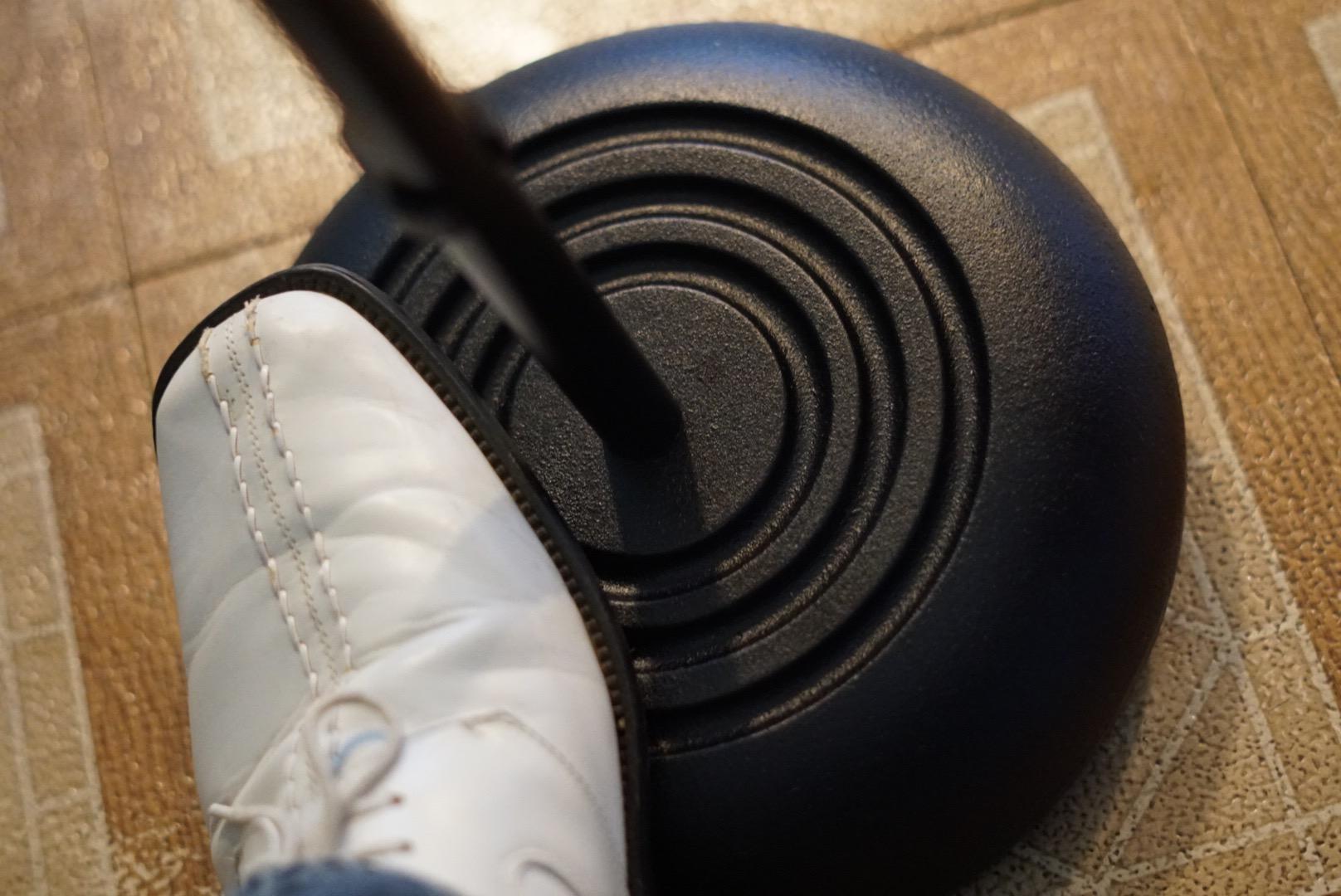
The clip is the weak link. Reviewers describe the springs detaching and the rubber grip letting an SM58 slide, and a fair number replaced it with a separate clip. Budget for a better clip if the mic matters to you.
Because there is no boom arm, reach is limited to placing the mic vertically in front of you. If you play guitar at the same time, this is a floor stand for the vocal mic only.

Who this stand suits
It suits solo singers, church and karaoke setups, and anyone working a small venue where a tripod is a liability. It also suits anyone who wants one heavy base set once per show rather than a stand re-adjusted between songs.
Where it falls short
It falls short for singer-players who need horizontal reach, because there is no boom arm, and there is no height below 33.5 inches for seated acoustic work. A small number of owners report a hollow-feeling base that wobbles under a light touch, so test it on arrival.
3. GLEAM Tripod Boom Stand – Best for Light Microphones and Weddings
GLEAM Microphone Stand for Light Microphone less than 1 LB – Tripod Boom Arm Mic Stand with Carrying Bag, 2 Mic Clips and Screw Adapter Portable for Singing Performance Wedding Stage and Mic Mount
Height: 21 to 69 inch
Boom: 16 to 28.5 inch, detachable
Weight: 3 lb
Thread: 3/8 and 5/8 inch
Pros
- Boom detaches into a straight stand
- 3 lb tripod is heavy for its class
- Includes bag and two clips
- Two-year warranty
- Rotates 360 degrees
Cons
- Rated only for mics under 16 ounces
- Tripod spread is wide for 3 lb
- Bag matters mainly with the boom removed
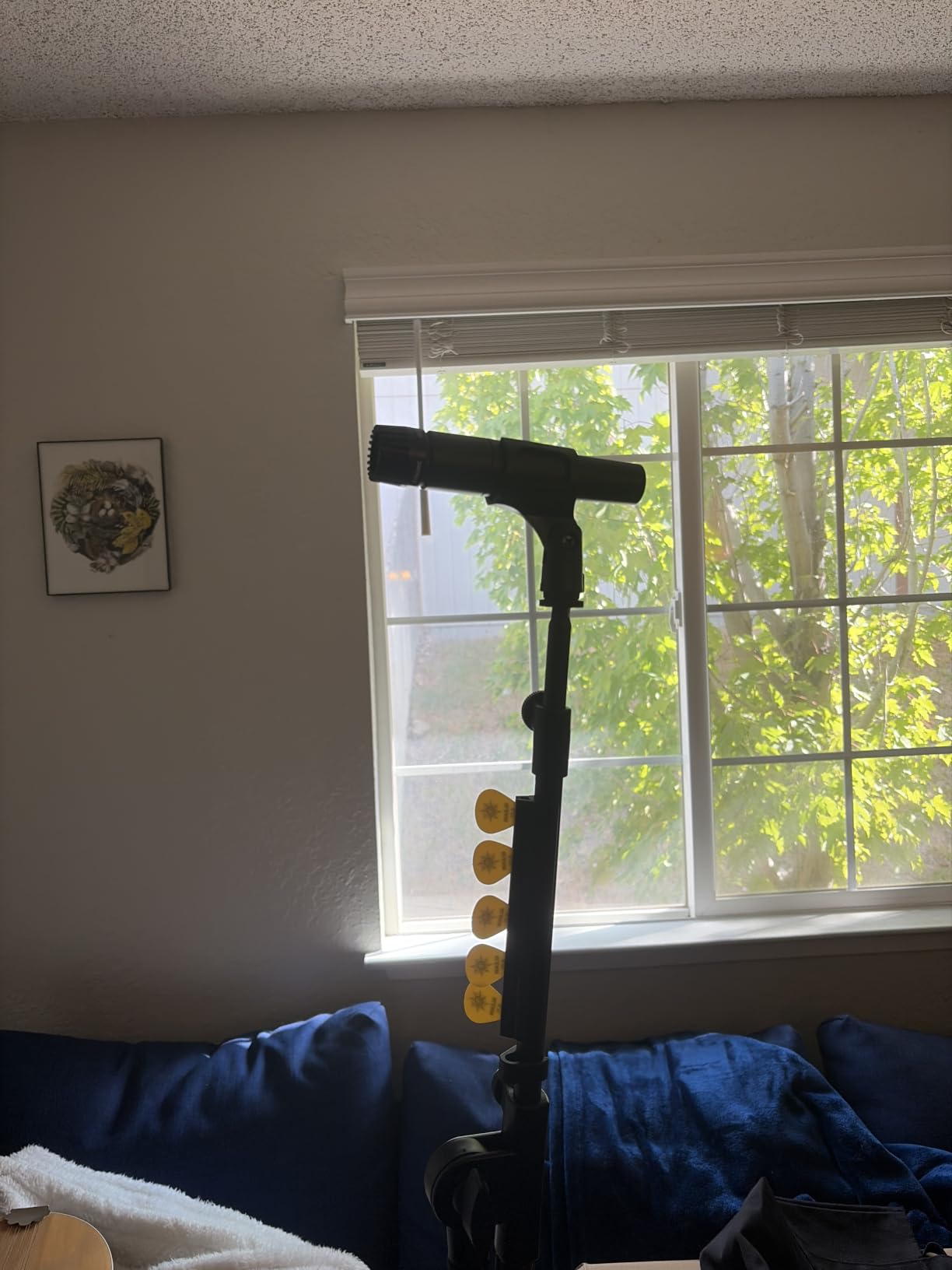
The boom arm unscrews in seconds, which makes this one of the more flexible cheap stands here. With the boom fitted you get 16 to 28.5 inches of reach rotating 360 degrees; take it off and the same stand runs from 21 to 69 inches.
What sets it apart is the base. At 3 lb of thickened steel it is heavier than most stands in its class, and buyers report it resisting tip-overs. Everything packs into a carrying bag with two clips and a thread adapter.
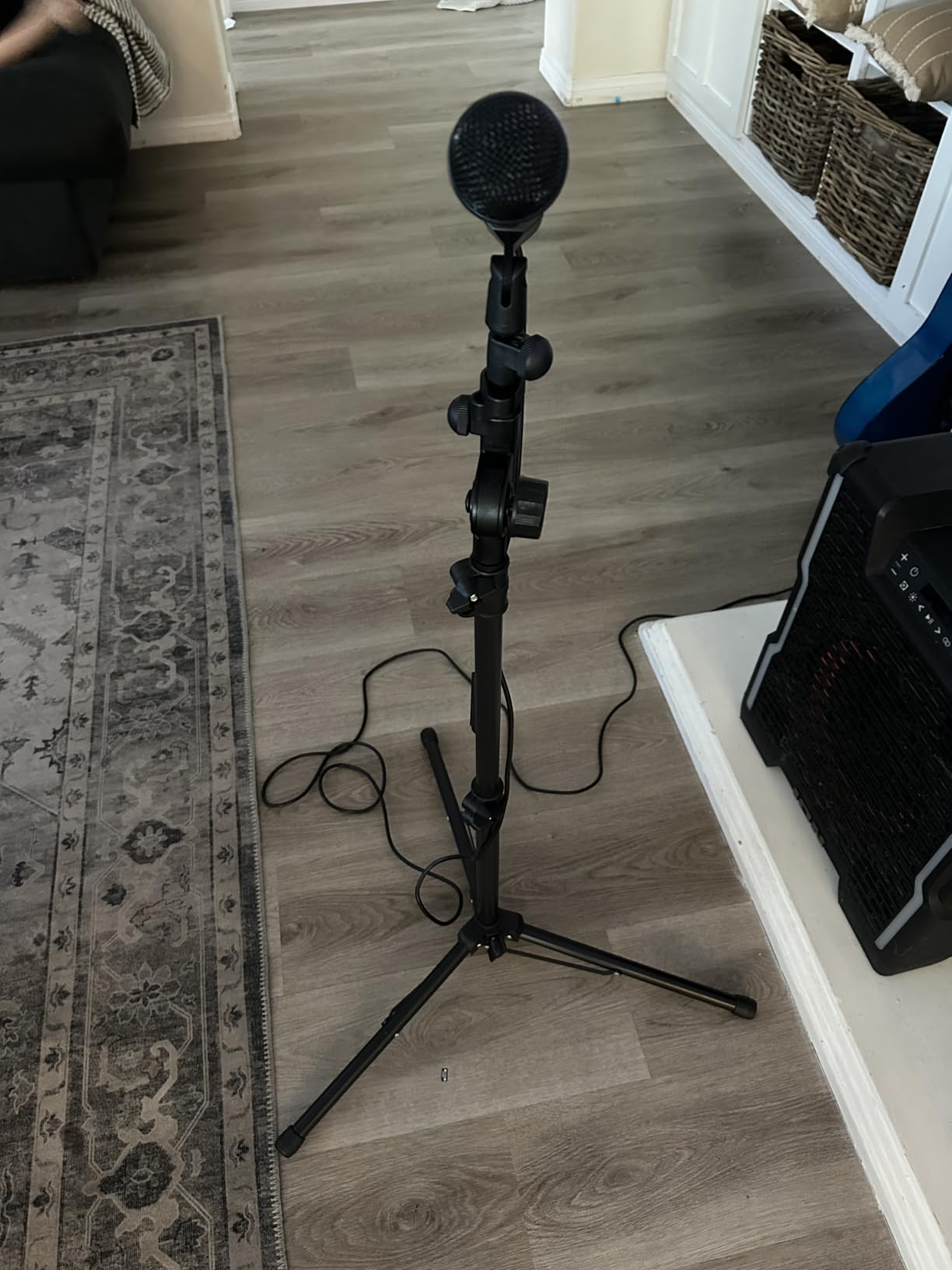
The limit is printed in the product name: microphones under 16 ounces. That covers handhelds and most USB mics, but a large-diaphragm condenser or something like an SM7B is outside spec, and pushing past that ceiling is where feedback appears.
Buyers cluster around one question: how far the boom can reach before adding a counterweight. On a 3 lb tripod, keep the extension modest and the legs stay planted.
Who this stand suits
It suits wedding singers, teachers, karaoke hosts and streamers who need one stand that changes shape between jobs, and the carrying bag and two-year warranty make it a sensible first stand for someone starting out.
Where it falls short
It falls short the moment the mic gets heavy, because the 16-ounce ceiling is a real limit rather than a guideline, and the tripod spread is wide for the weight holding it, so a kicked cable can shift it. Stage work in a smoky, crowded room is where owners tend to outgrow it.
4. On-Stage MS7701B Euro Boom Stand – Best for Band Rehearsal Rooms
On-Stage MS7701B Euro Boom Mic Stand (For Vocal and Instrument Microphones
Base: folding steel tripod, 5.3 lb
Height: 32 to 61.5 inch
Boom: 30 inch reach, removable
Thread: 5/8 inch
Pros
- 5.3 lb steel build resists creep
- Removable 30 inch boom
- Folds flat for transport
- Non-slip rubber feet
- Long-running OnStage model
Cons
- 61.5 inch ceiling is short for tall singers
- Tripod needs more floor space
- No carrying case included
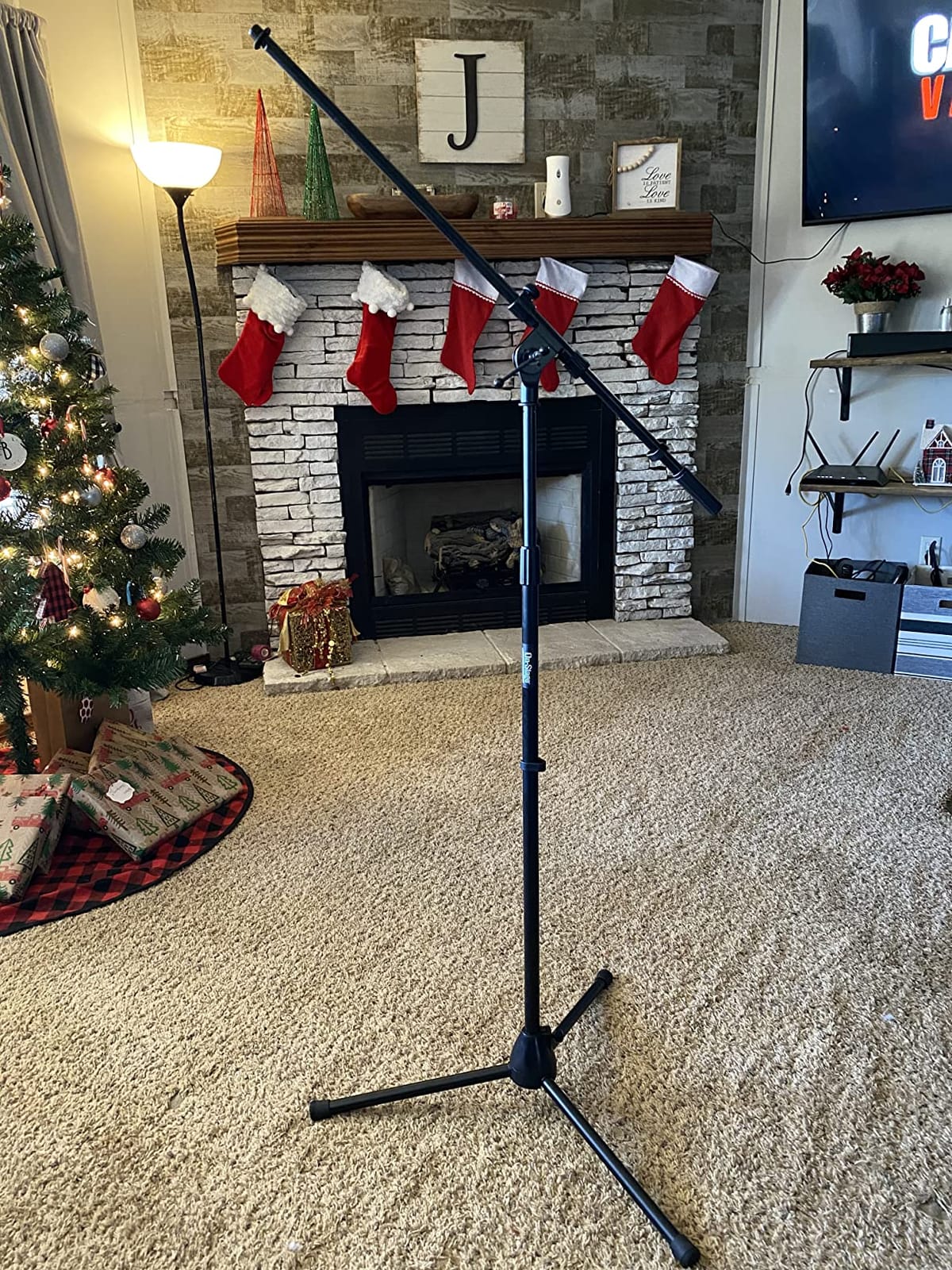
OnStage is a name that comes up again and again on live sound forums, and the MS7701B shows it in the one place that matters: the steel. At 5.3 lb it is heavier than most tripods in its class, and owners note it does not creep once a clutch is tightened.
The boom gives roughly 30 inches of reach and removes entirely, so one stand covers a rehearsal vocal position and a mic over a guitar amp. Folding it flat for transport takes seconds.
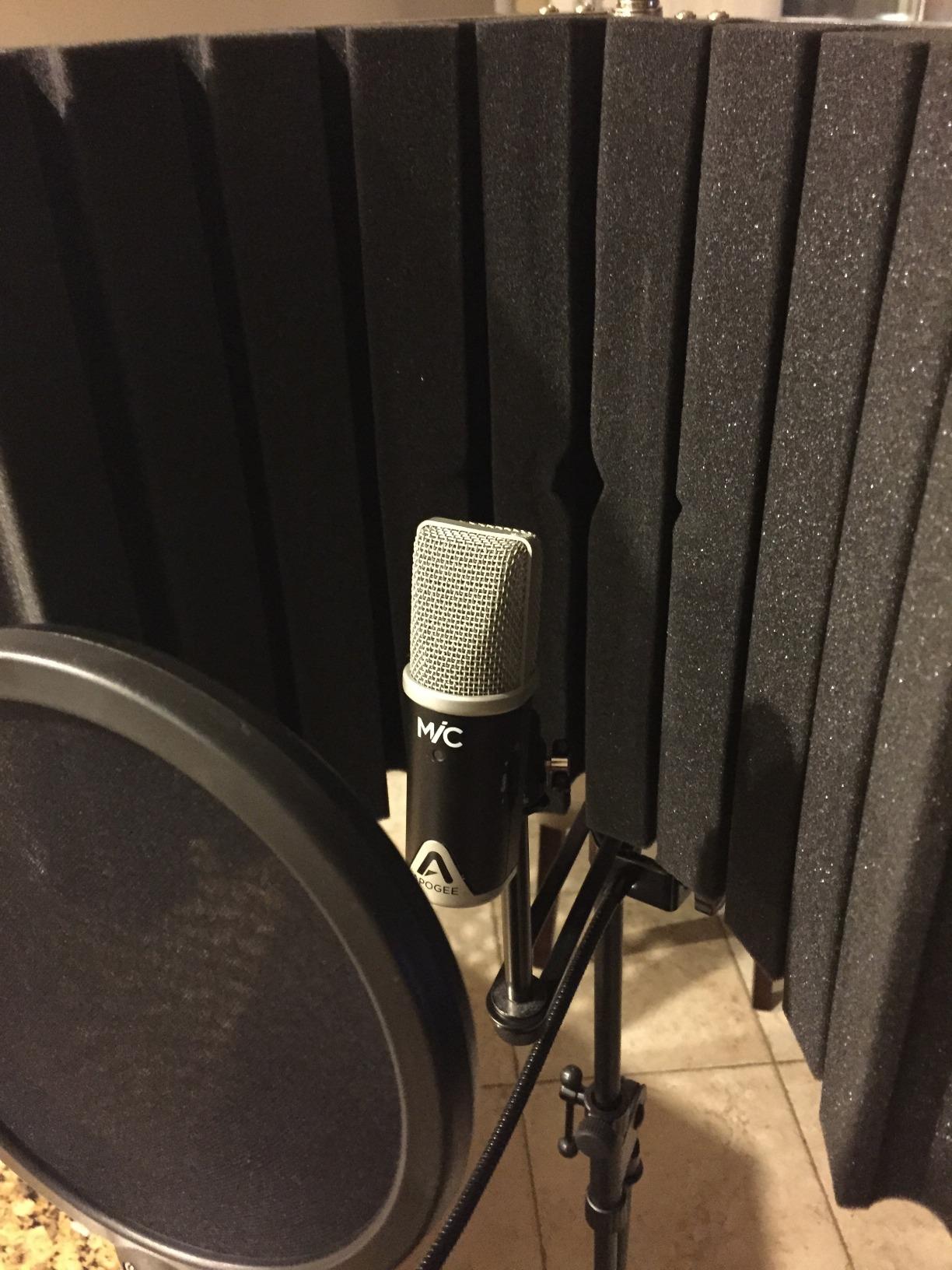
Standard 5/8 inch threading means the clips and accessories you already own fit without an adapter. The non-slip rubber feet grip a rehearsal floor, a carpeted church stage and a smooth club floor without sliding when a cable is pulled.
What limits it is height. The 61.5 inch ceiling suits seated players, lecterns and most vocalists, but a tall standing singer ends up reaching up rather than singing into the mic.
Who this stand suits
It suits band members rehearsing in a room and playing the same small stages, and anyone who swaps between singing and pointing a mic at an amp. For a fixed setup, a 5.3 lb stand that holds its position beats a lighter one needing a re-tighten every set.
Where it falls short
It falls short for tall performers, who need the extra inches a telescoping stand provides, and no carrying case is included for van or flight-case transport. On a dark stage the tripod legs are still there to be tripped over.
5. CAHAYA Tripod Boom Stand – Best for Outdoor and Uneven Ground
CAHAYA Mic Stand Floor Adjustable – Tripod Boom Arm Microphone Stand with Carrying Bag 2 Mic Clips 3/8″ to 5/8″ Adapter for Singing Podcast Compatible with Blue Yeti Shure SM58 SM48 Fifine K669B
Base: wide-leg tripod, 3.5 lb
Height: 25.2 to 62.2 inch
Boom: 16.9 to 30.1 inch, 360 degree
Pros
- Legs spread wider than most rivals
- Hollow leg supports resist bending
- Non-slip pads grip outdoor ground
- Two clip styles in the box
- Assembles in about two minutes
Cons
- 3.5 lb is modest for the leg spread
- 62.2 inch ceiling suits shorter singers
- Boom must be removed for a straight stand
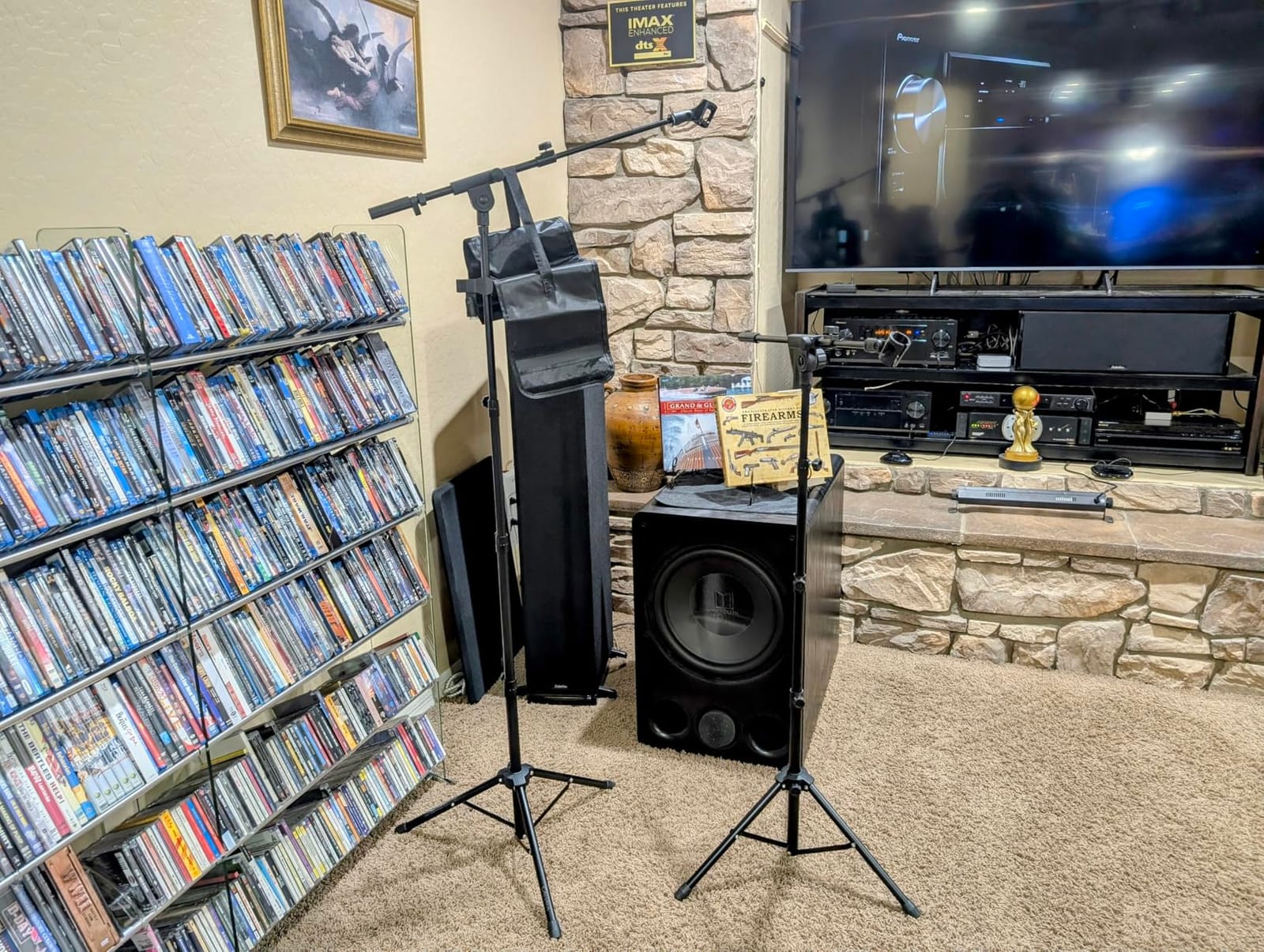
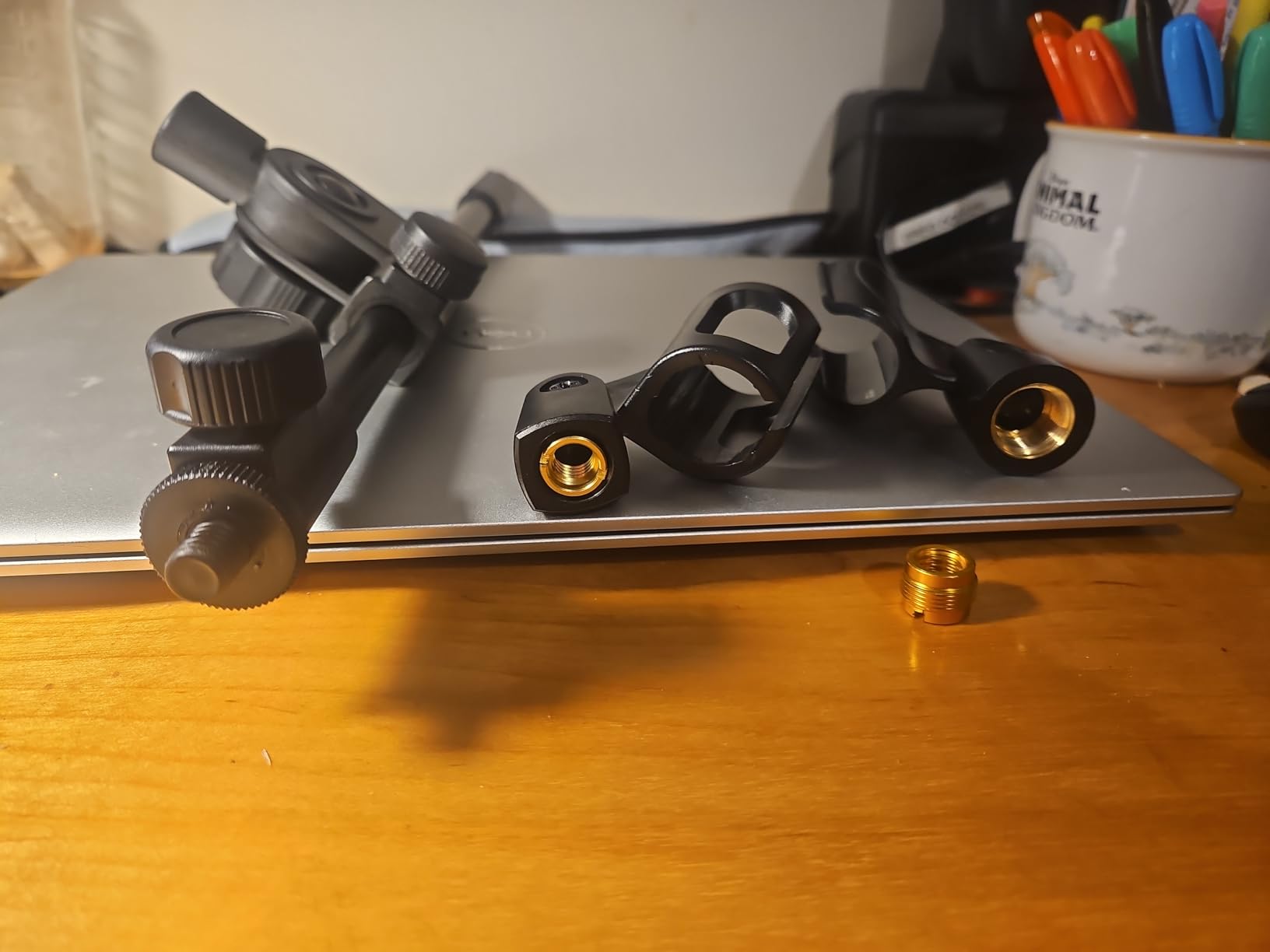
The wider leg spread is the story here. Owners report it holding position on uneven floors, carpet and outdoor grass better than slimmer tripods, and hollow reinforcement tubes in the lower legs stop the sideways bending that makes cheap stands collapse.
The box holds a carrying bag plus a barrel-style and a clothespin-style clip, and the boom runs 16.9 to 30.1 inches with 360-degree rotation. Assembly takes about two minutes, which matters at a wedding setup.
Height runs from 25.2 to 62.2 inches, covering a seated player through to a mid-height standing singer. Non-slip foot pads keep it from creeping as a cable is moved.
The compromise is weight. At 3.5 lb against a wide leg spread, extending the boom far out benefits from a small counterweight, and reviewers are candid about that.
Who this stand suits
It suits church and community event singers who work outdoors, on grass or on uneven flooring more than a tidy stage, and the bag plus two clip styles make it a strong one-box solution for a singer who owns no stand yet.
Where it falls short
It falls short for tall standing singers, because 62.2 inches is the ceiling with no telescoping section above it, and for heavier mics, where 3.5 lb of frame on a wide spread feels light. For a dark, smoky club stage, a round base is the calmer option.
6. InnoGear TS186 Boom Arm Stand – Best for Tall Singers
InnoGear Mic Stand Tripod Boom Arm Floor Microphone Stand Height Adjustable
Height: 28.1 to 89.8 inch
Boom: 16 to 30 inch, detachable
Weight: 4.2 lb
Thread: 3/8 and 5/8 inch
Pros
- Tallest range in the roundup
- Heavier 4 lb tripod than most rivals
- Boom detaches to a straight stand
- Includes adapter clips and bag
- Rotates 360 and 180 degrees
Cons
- Plastic-housed fasteners can strip
- Lock knobs need re-tightening
- Legs flex under heavy loads
- Sandbag often recommended
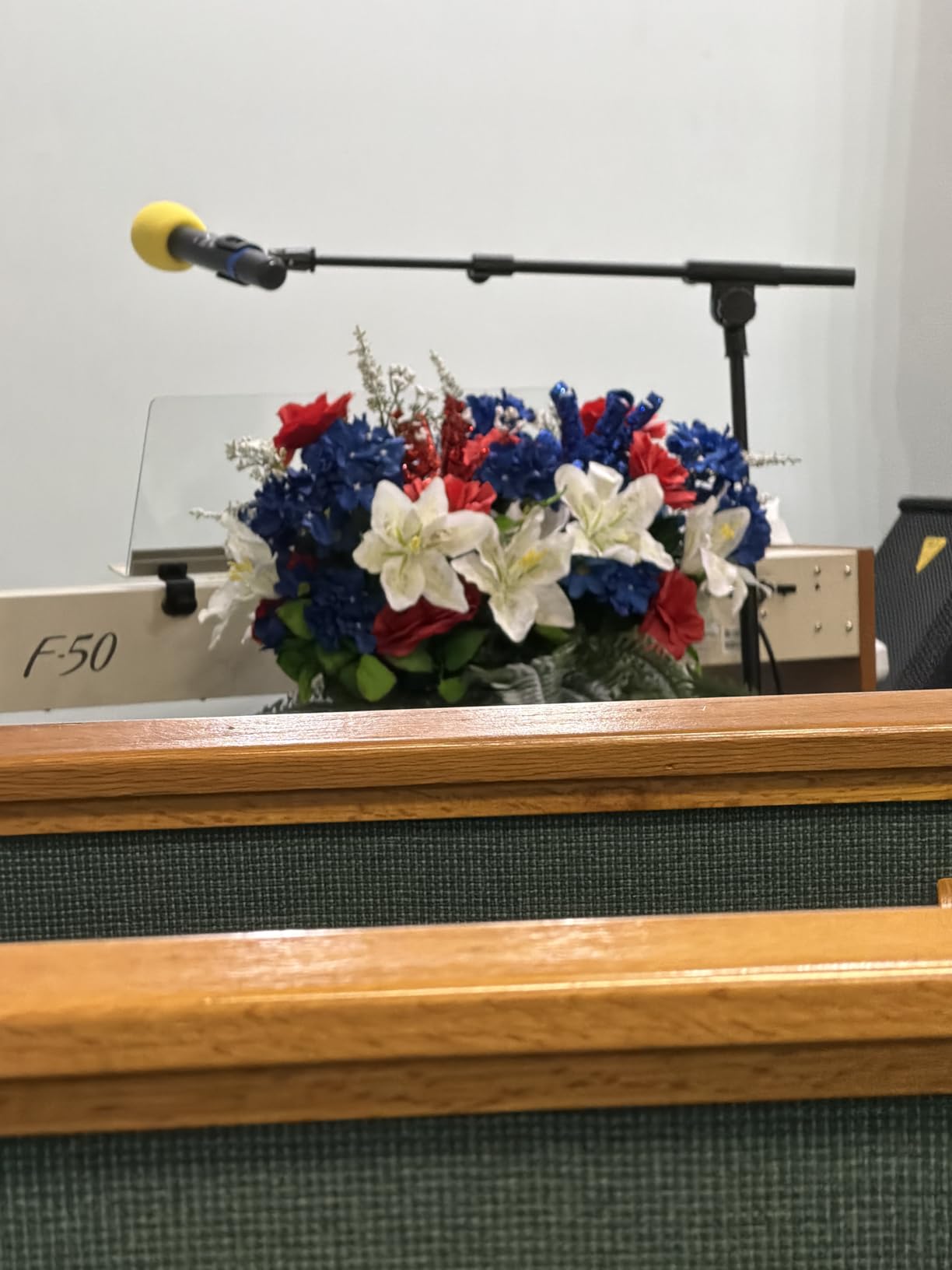
The InnoGear is the height answer in this group. It runs from 28.1 to 89.8 inches, so a tall singer and a seated acoustic player can share a stand, and the boom arm comes off if you want a straight stand.
At 4 lb of thickened alloy steel it is heavier than most budget tripods, and the kit includes a metal 3/8 to 5/8 inch adapter, two clip styles, cable clips and a carrying bag.
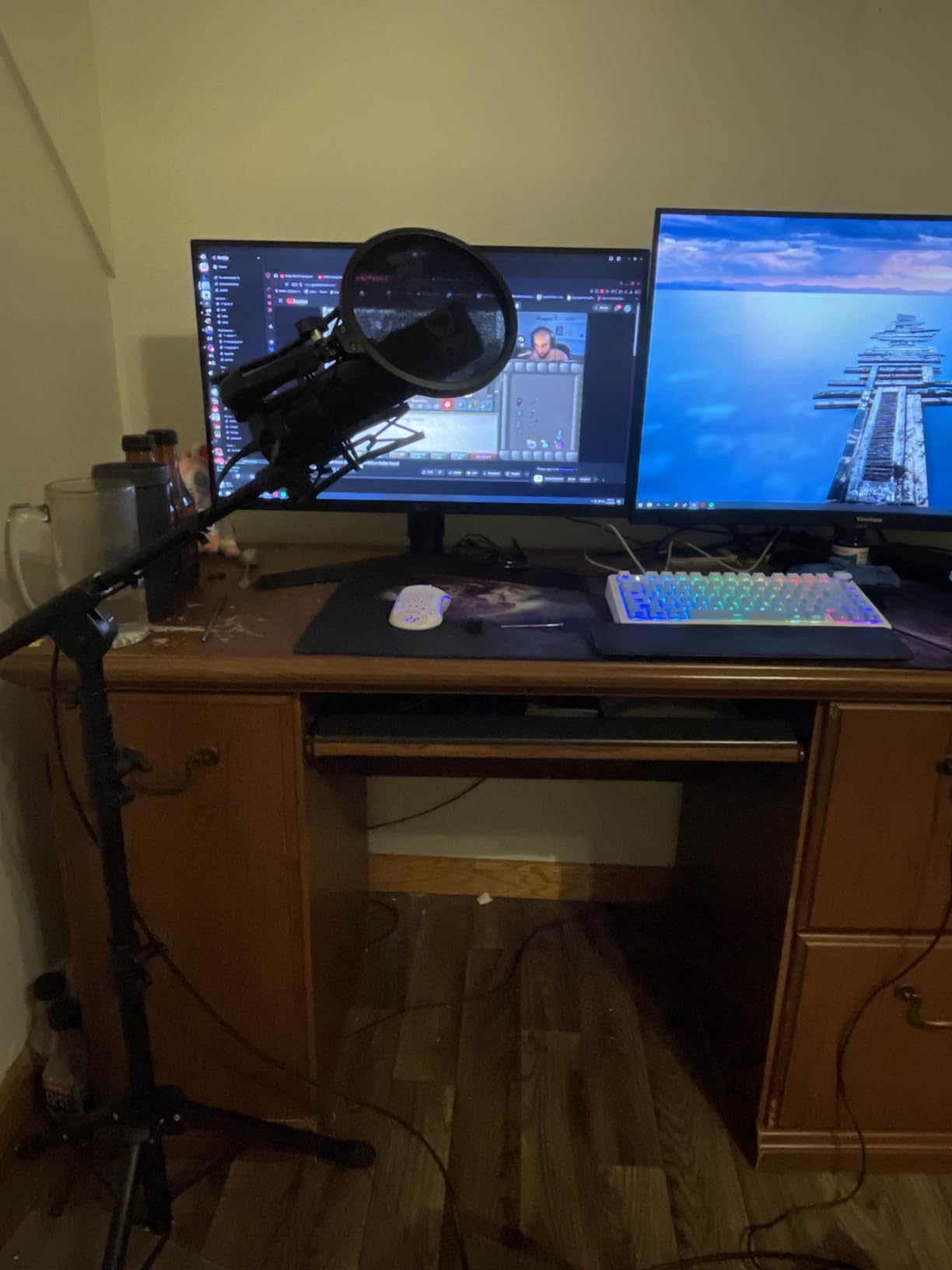
Now the honest part. Critical reviews point at the same weakness: a top-heavy tripod with lock knobs that loosen in transit, plus fasteners in plastic housings that can strip. The legs also lack an end stop, so an over-extended section can slide fully out.
Treat it as a stand you set up once and leave in place. A sandbag on the base handles the top-heavy complaint directly.
Who this stand suits
It suits tall performers, seated players who need to bring a mic down low, and podcasters recording in a room where one stand must cover several jobs. The detachable boom puts a floor stand and a boom in a single bag.
Where it falls short
It falls short for heavy loads and busy stages, where plastic-housed fasteners and flexible legs are the wrong profile, and for anyone who moves the stand between songs. If you gig regularly, this is a step up from a cheap stand rather than a destination.
7. Pyle PMKS56 Telescoping Boom Stand – Best for Long Boom Reach
Pyle Heavy Duty Microphone Stand-Height Adjustable from 51.2” to 78.75” Inch High w/Extendable Telescoping Boom Arm 29.5” and Stable Tripod Base-Clutch in T-Bar Adjustment Point PMKS56
Height: 51.2 to 78.75 inch
Boom: 29.5 inch telescoping
Base: tripod
Microphone thread: 5/8 inch
Pros
- Tall 78.75 inch ceiling
- 29.5 inch telescoping boom
- Enlarged tubing resists flex
- Works with or without the boom
- Packs down compactly
Cons
- Listed weight of 16 oz feels light
- 51.2 inch floor suits no seated use
- T-bar clutch needs periodic re-tightening
- No carrying case
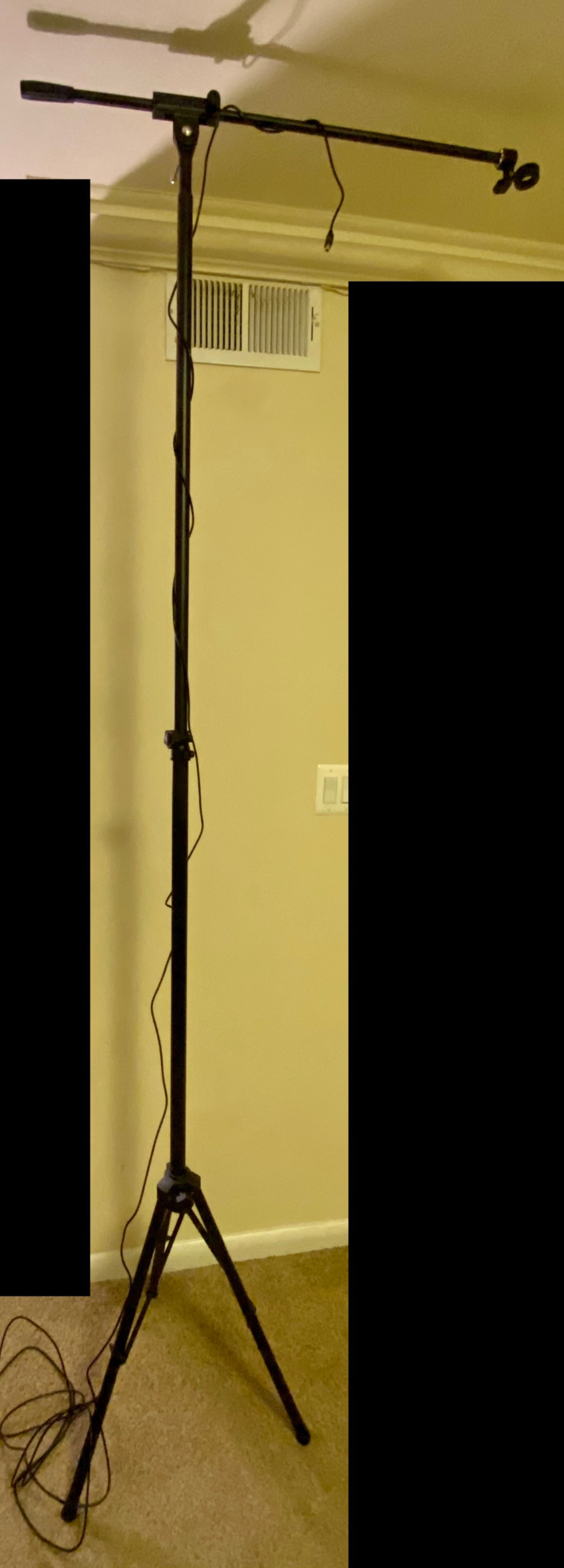
This is a stand built around one feature: reach. The boom telescopes to 29.5 inches, and the T-bar clutch at the adjustment point keeps the microphone elevated rather than slowly sinking mid-song.
Height runs from 51.2 to 78.75 inches, so a standing singer is comfortably served, and the enlarged tubing is more rigid than the standard-gauge pipe on a budget tripod. Owners report it working with or without the boom.
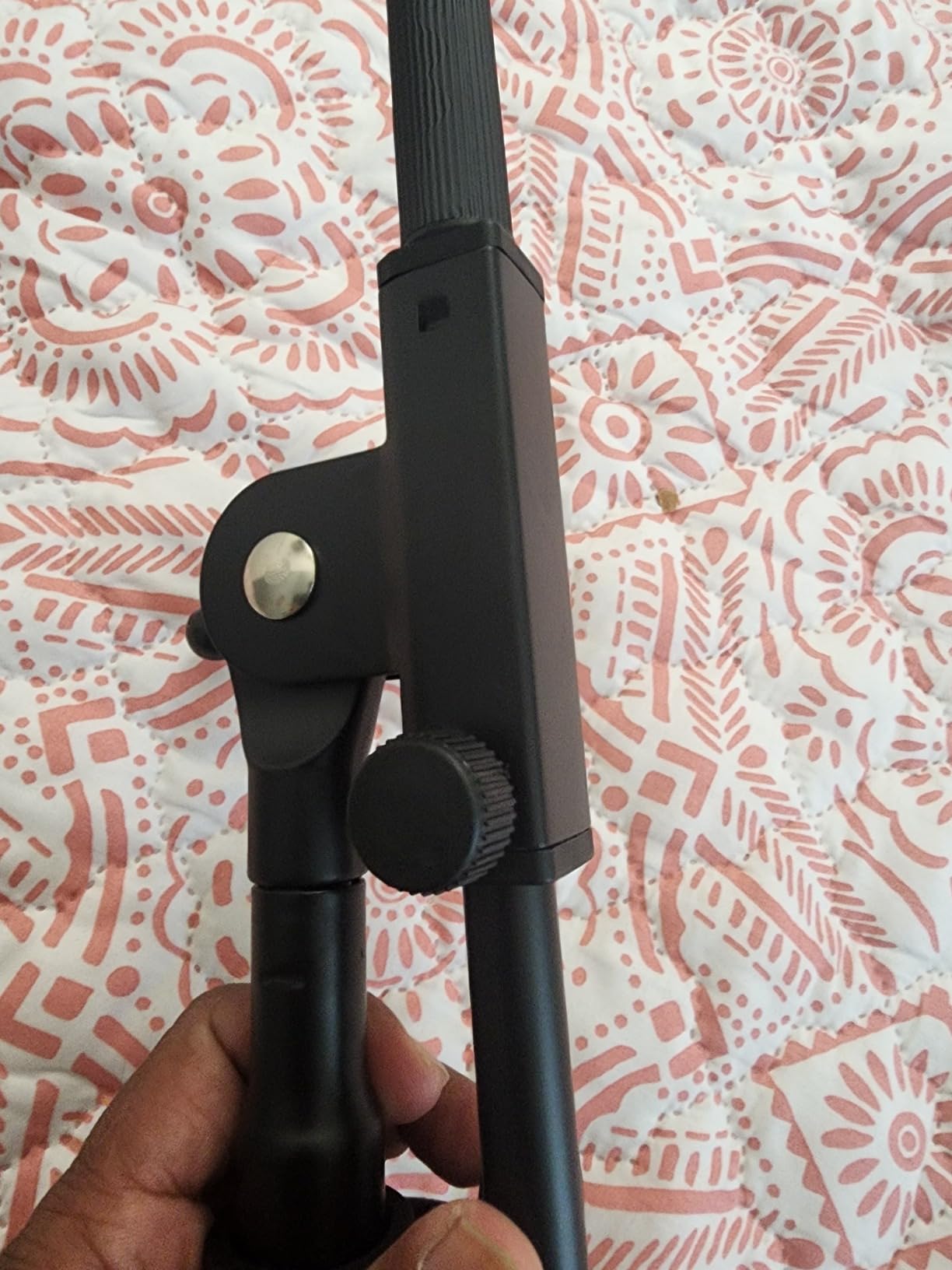
The catch is the gap between the name and the base. Despite the heavy-duty labelling, the listed item weight is 16 ounces, so the frame is light for what you want under a long extension. Use a counterweight if you push the boom out far.
The 51.2 inch minimum is the other thing to plan around. This is not a stand you lower for a seated vocalist, so it works best as a dedicated standing vocal position.
Who this stand suits
It suits standing singers who want the mic high and close, players who need long horizontal reach, and bands that set up and strike once, where a tall fixed vocal position beats crouching to reach a lower stand.
Where it falls short
It falls short for anyone needing a low position, because the height floor is 51.2 inches, and the light base means the telescoping boom needs a counterweight for full extension. The T-bar clutch also wants a re-tighten during long sets.
8. On-Stage MS7201B Round-Base Stand – Best for Dark Stages and Singing Drummers
On-Stage MS7201B Round-Base Mic Stand (Supports Dynamic and Condenser Microphones, Height Adjustable 33″–60″, Standard 5/8″-27 Threading, 7 lb, 10″ Metal Base, Rubber Feet, Cable-Management Clip)
Base: 10 inch sand-cast, 7 lb
Height: 33 to 60 inch
Thread: 5/8 inch-27 with lock nut
Max mic weight: 7 lb
Pros
- Highest average rating of the ten
- 7 lb base stays planted
- No legs to step on or trip
- Zinc clutch adjusts smoothly
- Cable clip included
Cons
- No microphone clip included
- No telescoping below 33 inches
- Heavy to carry across a venue
- Barcode stickers need solvent
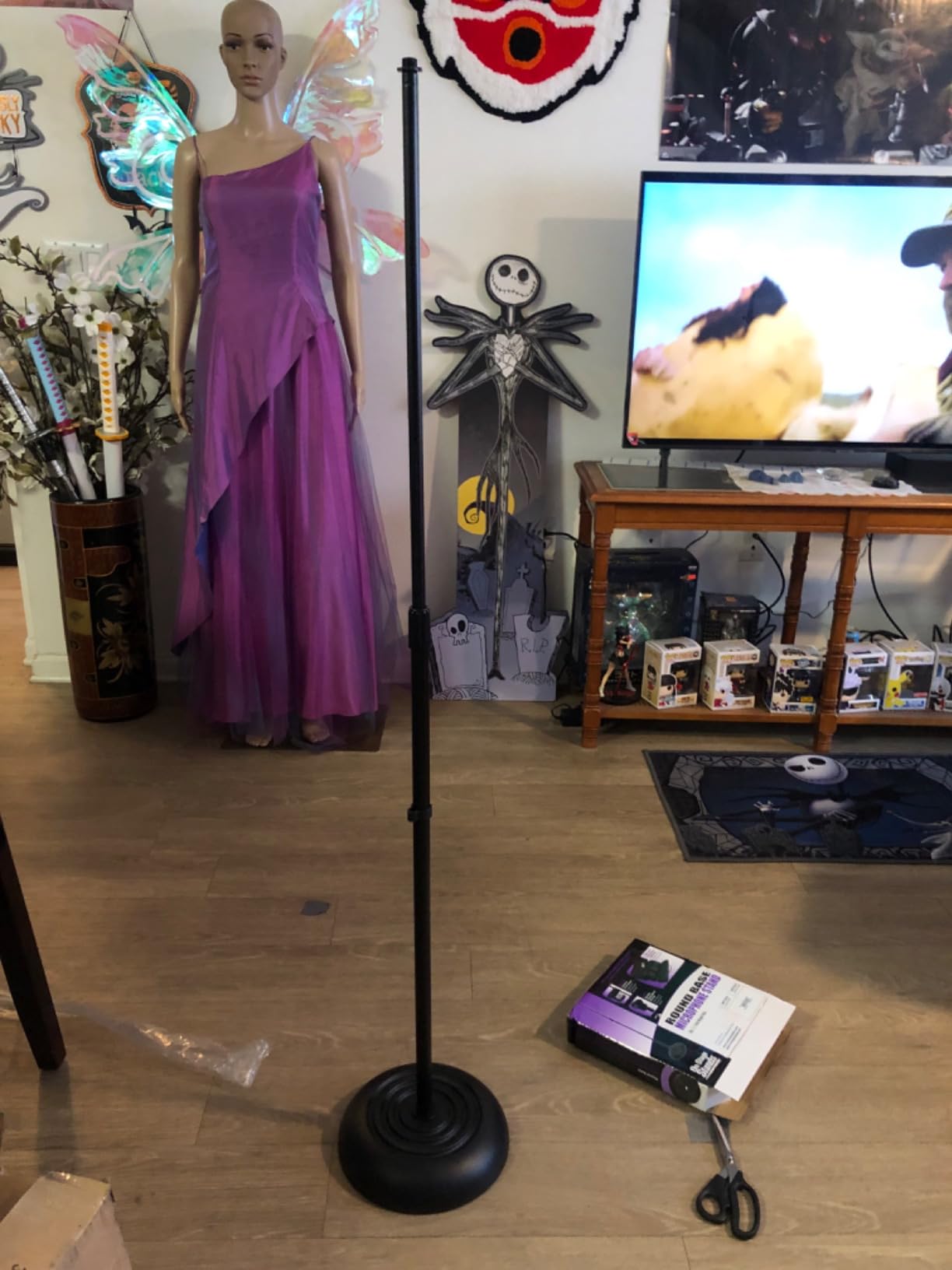
If you sing and play drums, or you cannot see the floor on a dark stage, this is the stand to buy. Everything sits in a 10 inch sand-cast base weighing 7 lb, so there is no tripod leg sticking out into the dark waiting for a kick pedal.
It carries the highest average rating of the ten, and owners in church, band and fixed-installation settings name the same reason: it stays planted and transmits very little vibration. The zinc clutch adjusts smoothly from 33 to 60 inches.
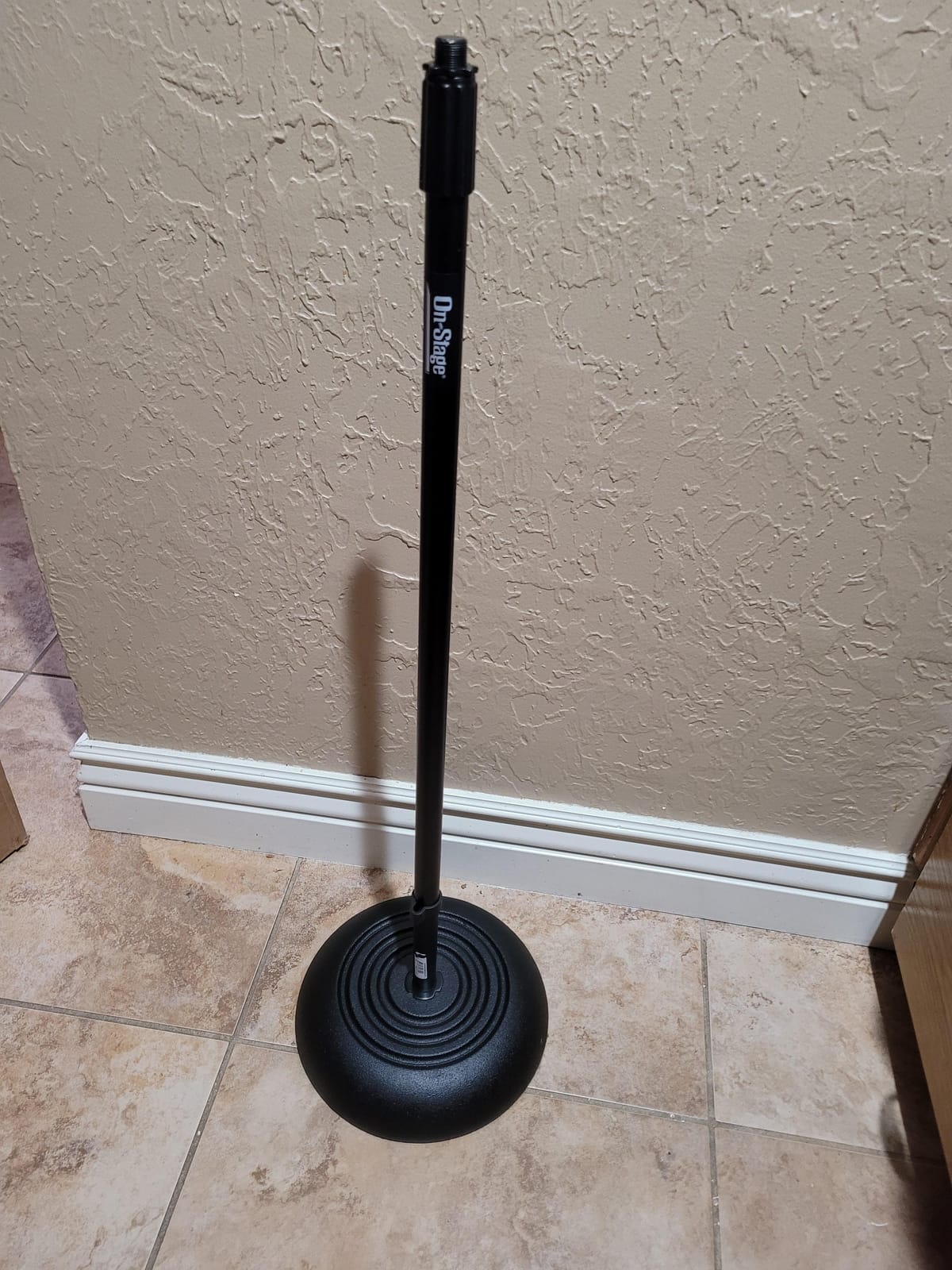
For a singing drummer, the low-profile base means you can lean or step on it without it sliding, which is exactly what players describe wanting. The 5/8 inch-27 threaded stem accepts a boom later if you decide you need reach.
Rubber feet grip without scratching a wooden floor, and the cable-management clip keeps the XLR run tight to the pole. It is also offered in a lighter colour for rooms with low light on stage.
Who this stand suits
It suits singing drummers, worship vocalists, and any singer working a stage they cannot see clearly, plus a static rehearsal-room setup where the stand is planted once. People burned by a wobbly stand call the switch to a sand-cast base the fix.
Where it falls short
It falls short for portability, because 7 lb is a two-hand carry, and it does not telescope below 33 inches with no clip included. A straight stand only places the mic in front of you, so budget for a separate boom.
9. On-Stage MS7700B Tripod Stand – Best for Travel and Fast Load-Ins
On-Stage MS7700B Tripod-Base Mic Stand (Setup for Vocal and Instrument Microphones, Adjustable Height, 5/8″-27 Threading, Portable, Folding, Nonslip Rubber Feet, Cable Clip, Steel, Black)
Base: folding tripod, 1 lb
Height: 32 to 61.5 inch
Thread: 5/8 inch-27
Rubber feet, cable clip
Pros
- Lightest stand in the roundup
- Folds flat and packs small
- Steel build with rubber feet
- 32 to 61.5 inch clutch range
- Black finish resists scuffs
Cons
- Unweighted base tips when bumped
- Leg thumb screws can strip
- Wobbles slightly
- Unsuitable for a smoky loaded room
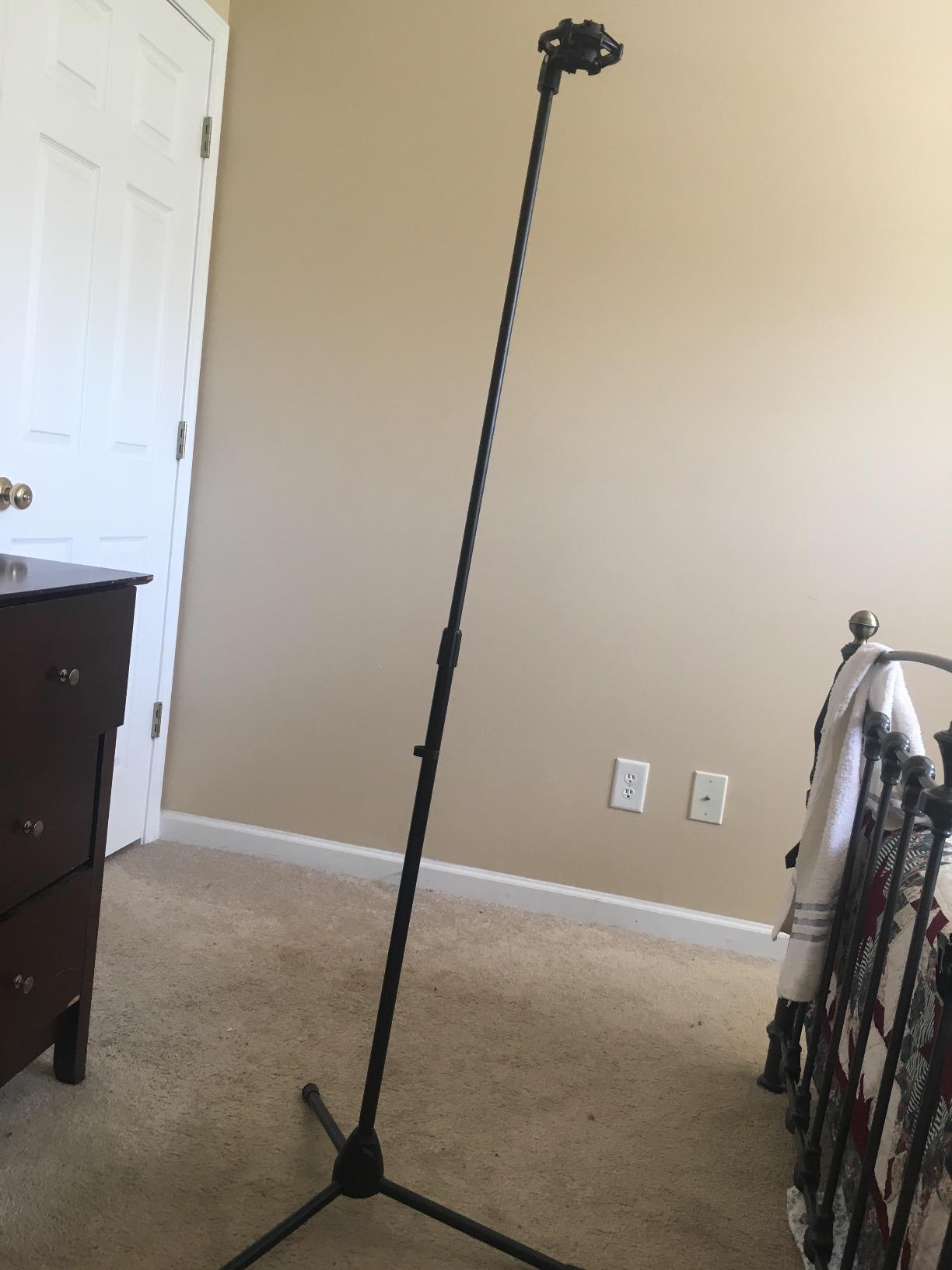
At 1 lb this is the stand that disappears into a gig bag, and the packing trick owners like is that the shaft passes through the base once the legs collapse. It suits anyone doing a fast load-in with one hand free.
The clutch adjusts from 32 to 61.5 inches, and the 5/8 inch-27 threaded end takes standard clips and booms. Steel construction with rubber feet keeps it from skidding even at that weight.
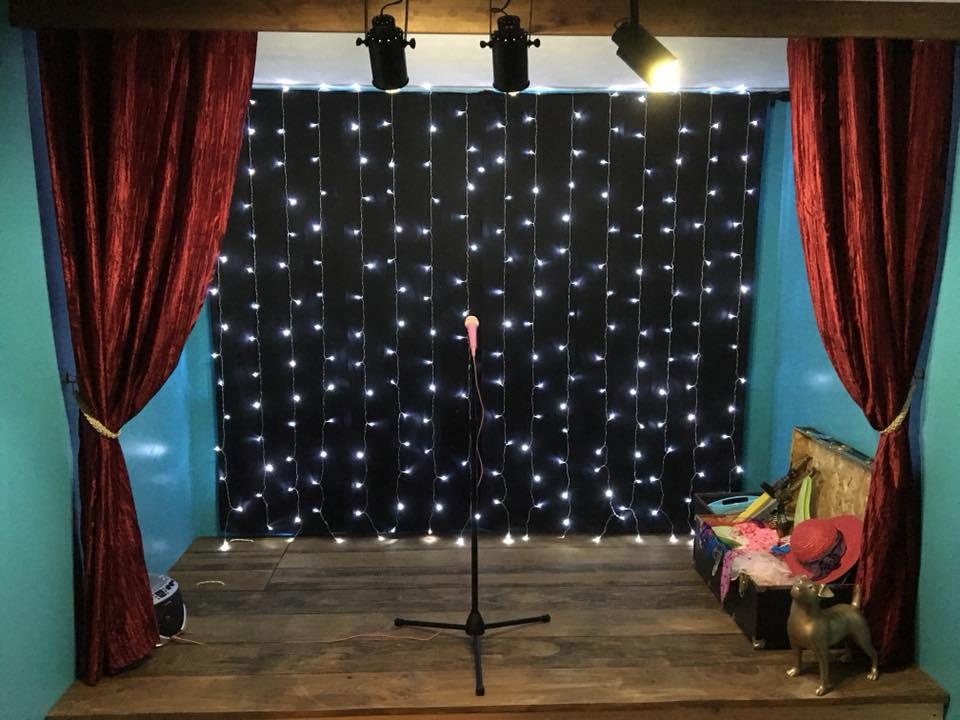
The trade-off is stability, and it is not subtle. With an unweighted 1 lb base, a bump in passing will shift it, and a condenser on a boom extended past the base diameter is genuinely at risk of toppling.
The most repeated complaint is the leg thumb screws stripping after a couple of years. One owner has replaced the stand three times for that reason, and the workaround is a set screw or tape on the leg spreader.
Who this stand suits
It suits a mobile singer, a duo sharing transport, and anyone playing many short sets in different rooms, and it works as a spare that lives permanently in a rehearsal space or a church cupboard.
Where it falls short
It falls short in a small, dark, smoky venue, and for anyone running a heavy condenser on an extended boom, since a bump in passing will shift a 1 lb base. The 61.5 inch ceiling also rules it out for tall singers.
10. K&M 21090 Telescoping Boom Stand – Best for Touring and Expensive Mics
K&M König & Meyer 21090.500.55 Tripod Microphone Stand – Adjustable Telescoping 2-Piece Boom Arm – Professional Grade – Heavy Duty with Folding Leg Base – German Made Black
Height: 35 to 63 inch
Boom: 2-piece telescoping
Weight: 7.2 lb
Materials: stainless steel and zinc
Pros
- Heaviest build we tested at 7.2 lb
- Boom stays put once tightened
- Covers tall singers and low amps
- Folding leg base
- 5 year warranty with 10 year parts
Cons
- Most expensive stand in the roundup
- Two-hand carry at 7.2 lb
- Some shipments missing lock washers
- 63 inch ceiling is modest
This is the upgrade path for anyone who has fought with cheap stands for years. At 7.2 lb of stainless steel and zinc it sits down and stays down, and owners describe the telescoping boom as essentially immovable once tightened.
The two-piece boom covers both a tall vocalist and a floor-level guitar amp from one position. It is made in Germany with a 5-year repair or replacement warranty and 10 years of parts availability, which matters when something eventually wears.
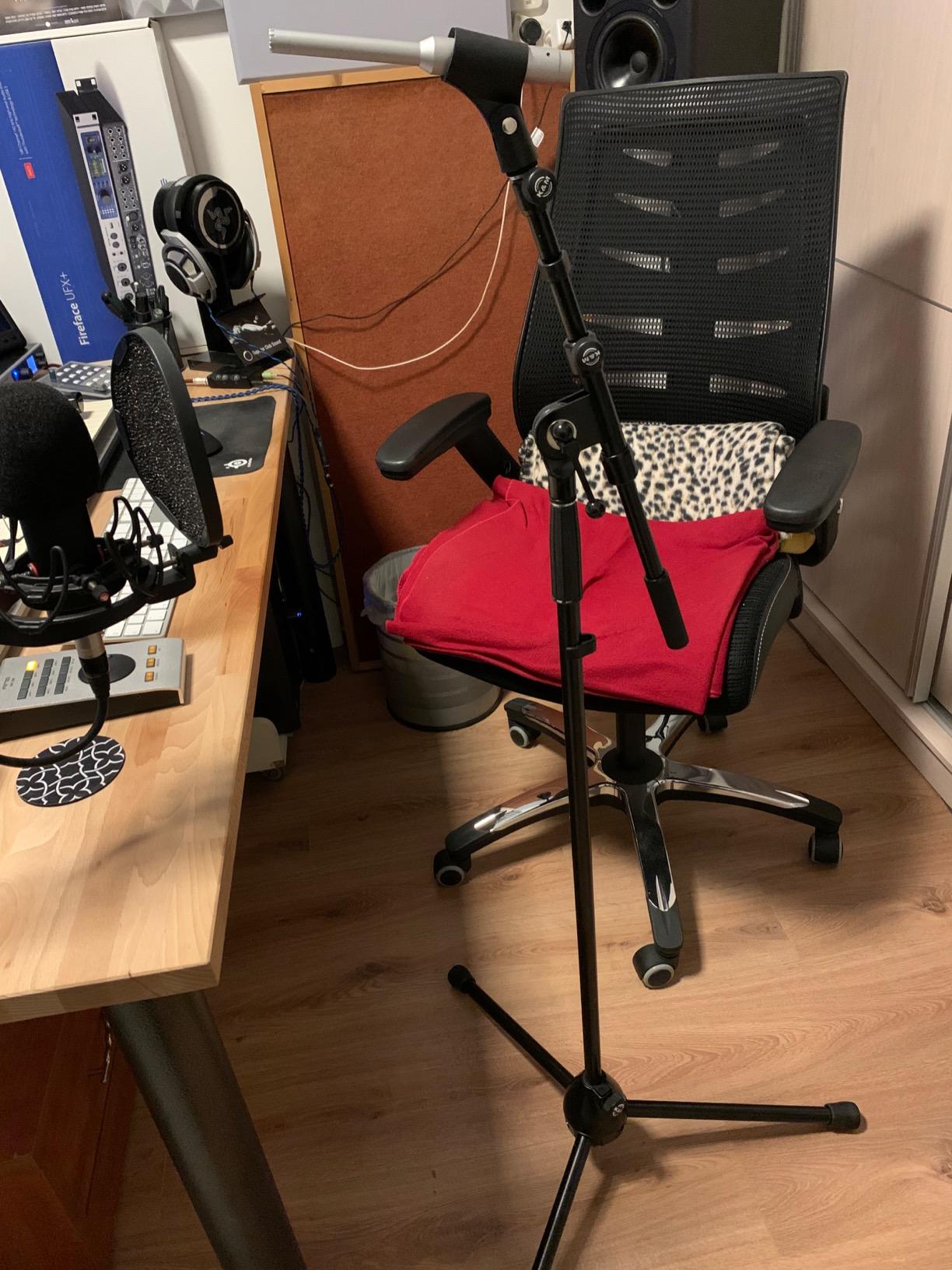
Several owners report buying repeat units and retiring cheaper stands, which is the clearest endorsement a stand can get. The folding leg base handles transport, and the model is also offered in chrome.
One operational note: some orders have arrived with missing lock washers, the parts that stop the mic slipping out of adjustment. The manufacturer’s US distributor supplies them, so check the box on arrival.
Who this stand suits
It suits touring musicians, function band players, and anyone unwilling to trust an expensive microphone to a plastic joint, plus a permanent installation where the stand is set once and adjusted rarely.
Where it falls short
It falls short on portability, because 7.2 lb is a two-hand carry, and on value if your needs are a rehearsal room and a small pub. It is a specialist purchase rather than a first stand, and most players get more out of a mid-weight boom.
Round Base vs Tripod Boom: Which Should a Live Vocalist Buy?
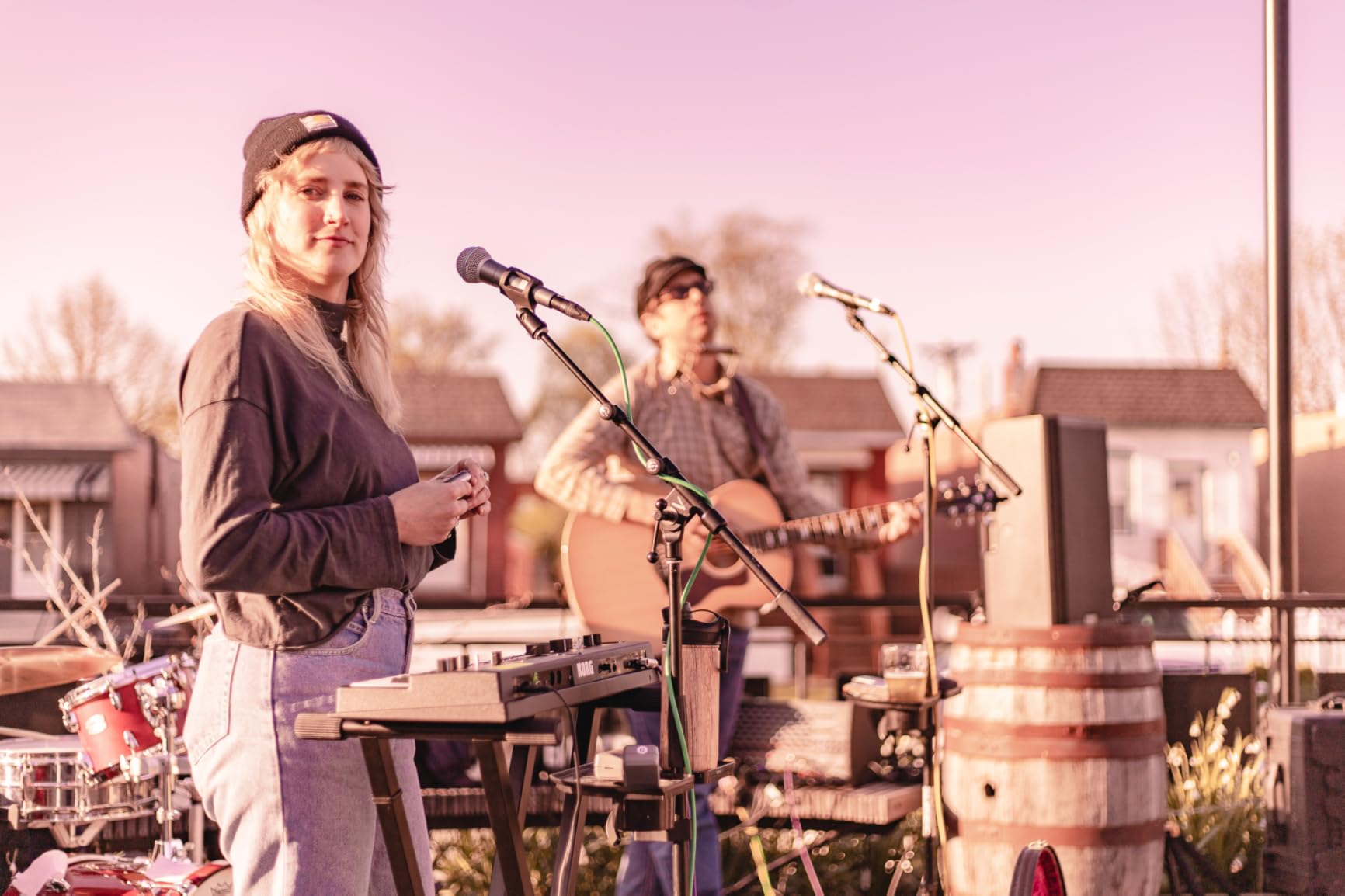
For live vocals, a straight stand with a round base is usually the better first purchase, because it puts all the mass on the floor with no legs to catch, and a singer standing still does not need horizontal reach. Choose a tripod boom when you also play an instrument, when the mic needs to sit away from where you stand, or when the stage is crowded and reach buys you floor space.
A third category is worth knowing: a telescoping single-pole stand with a very tall height range, which is the answer for tall singers and for anyone who needs the mic high rather than far away.
Stability is the other axis. A cast base is heavy and quiet but fixed in one spot, while a boom gives placement options and pushes the centre of gravity out sideways, so a heavier stand or a counterweight is needed the further you extend. On live sound forums, singers repeatedly say they prefer a round base because it takes up less room and lets them lean or step on it without damage.
Our round base picks are the Pyle PMKS5 and the On-Stage MS7201B. Our boom picks are the On-Stage MS7701B, the K&M 21090 and the Pyle PMKS56.
How to Choose a Mic Stand for Live Vocals
Height range and where your mic actually needs to sit
Measure from the floor to the singer’s mouth and aim for the mic at mouth height with a slight downward angle. Most standing singers land between 50 and 65 inches, seated players between 32 and 48 inches, and anyone over six feet needs a stand that reaches past 60 inches.
Check both ends of the range. A stand topping out at 61.5 inches is fine for most singers and useless for a tall one, while a 51.2 inch floor cannot be lowered for seated or close-miked work.
Weight, base diameter and centre of gravity
Base weight is the best proxy for whether a stand gets knocked over, and mass on the floor beats height in the air. Round-base stands here run from a 7 lb sand-cast base down to a 1 lb folding tripod, and that difference is visible the moment someone brushes past the mic.
With a boom, physics get worse the further you reach. Base diameter and total weight have to cover the moment created by the extended arm, which is why heavy tripods outrank light ones for stage work and why a counterweight or sandbag is the cheap fix for a light stand that will not stay put.
Clutch type and why cheap plastic knobs fail
The clutch is the part of a mic stand that actually breaks. On a budget stand it is often a plastic knob on a threaded steel post, and under repeated height changes the plastic collar wears round, the thread strips, and the stand collapses mid-song.
A trigger or pistol grip needs one hand and releases instantly, which suits a stand you adjust mid-number, while a twist clutch holds more load and suits one set once. Look for a metal or zinc collar rather than a plastic one, and check that the knob is a field-replaceable part.
Clip vs shockmount and thread adapters
A handheld vocal mic uses a clip and a threaded stem, while a large-diaphragm condenser usually hangs in a shockmount with a pivot. The two thread sizes you will meet are 3/8 inch and 5/8 inch: many handhelds and USB mics are 3/8, and most professional stands terminate in 5/8.
If the adapter is not in the box, buy a 3/8 to 5/8 screw adapter before your first gig rather than at the venue. Six of the ten stands here include one or the other, so check the listed contents carefully.
Cable management and stage footprint
An XLR run left loose is a trip hazard and a noise source, and it moves the stand. Clip-on cable holders on the pole, a cable running down the leg, and a tidy slack loop at the base solve both problems at once.
Footprint matters as much as weight. A round base occupies one small circle a singer can safely stand on, while a tripod reaches roughly 20 inches across, which is why round bases suit dark stages and crowded clubs.
Frequently Asked Questions
What is the best microphone stand for live performances?
For most live vocalists a weighted straight stand with a round cast base is the best microphone stand for live performances, because it stays planted and has no legs to trip over. Pick a tripod boom instead if you also play an instrument and need the mic to reach away from where you stand.
What are the best microphone stands for singers?
The best microphone stands for singers divide into a few clear groups. Straight cast-base stands suit dark stages and stationary singers, tripod boom stands suit singer-players, telescoping stands suit tall performers, and heavy professional stands suit touring and expensive microphones.
What kind of microphone stand is best for singing?
A straight or boom stand with a height range that reaches your mouth and a base heavy enough to survive a kick is best for singing. Most standing singers need roughly 50 to 65 inches of height, and heavy handhelds like an SM58 or SM7B need a clutch and thread rated for the load.
How do I stop my mic stand from wobbling?
Wobble comes from a light base, an extended boom and a loose clutch. Tighten the clutch until the section stops rotating, keep the boom extension short, and add a counterweight or a sandbag on the base. Replacing a plastic clutch knob with a metal one also removes the play at the joint.
Why does my mic stand keep drooping?
A boom droops when the counterweight is too light for the microphone, when the clutch is plastic and worn, or when the clutch was never fully tightened after adjustment. Move the mic closer to the stand, tighten the boom clutch with the microphone attached, and add counterweight on the short side of the arm.
Will a mic stand hold an SM7B?
Yes, but check the weight rating. An SM7B is heavier than a typical handheld, so use a stand rated for it and keep the boom short, or a round-base straight stand where the mass sits directly under the mic. Avoid budget stands with a low weight limit, and use a 5/8 inch to 3/8 inch adapter if your clip is 5/8 inch.
Conclusion
Start with how you perform, not with the spec sheet. A singer standing still on a stage they cannot see clearly needs a weighted round base, and the On-Stage MS7201B or the Pyle PMKS5 will not let you down. A singer who plays an instrument at the same time needs boom reach, and the On-Stage MS7701B or the K&M 21090 hold position where a light tripod will not.
For the widest all-round answer, the Amazon Basics boom arm stand is our top pick in 2026: it folds flat, reaches higher than anything else we tested, and has the largest pool of owner feedback of any stand here. Whatever you choose, tighten the clutch with the mic attached, keep the extension short, and check the box for a clip and a thread adapter before your first soundcheck.