
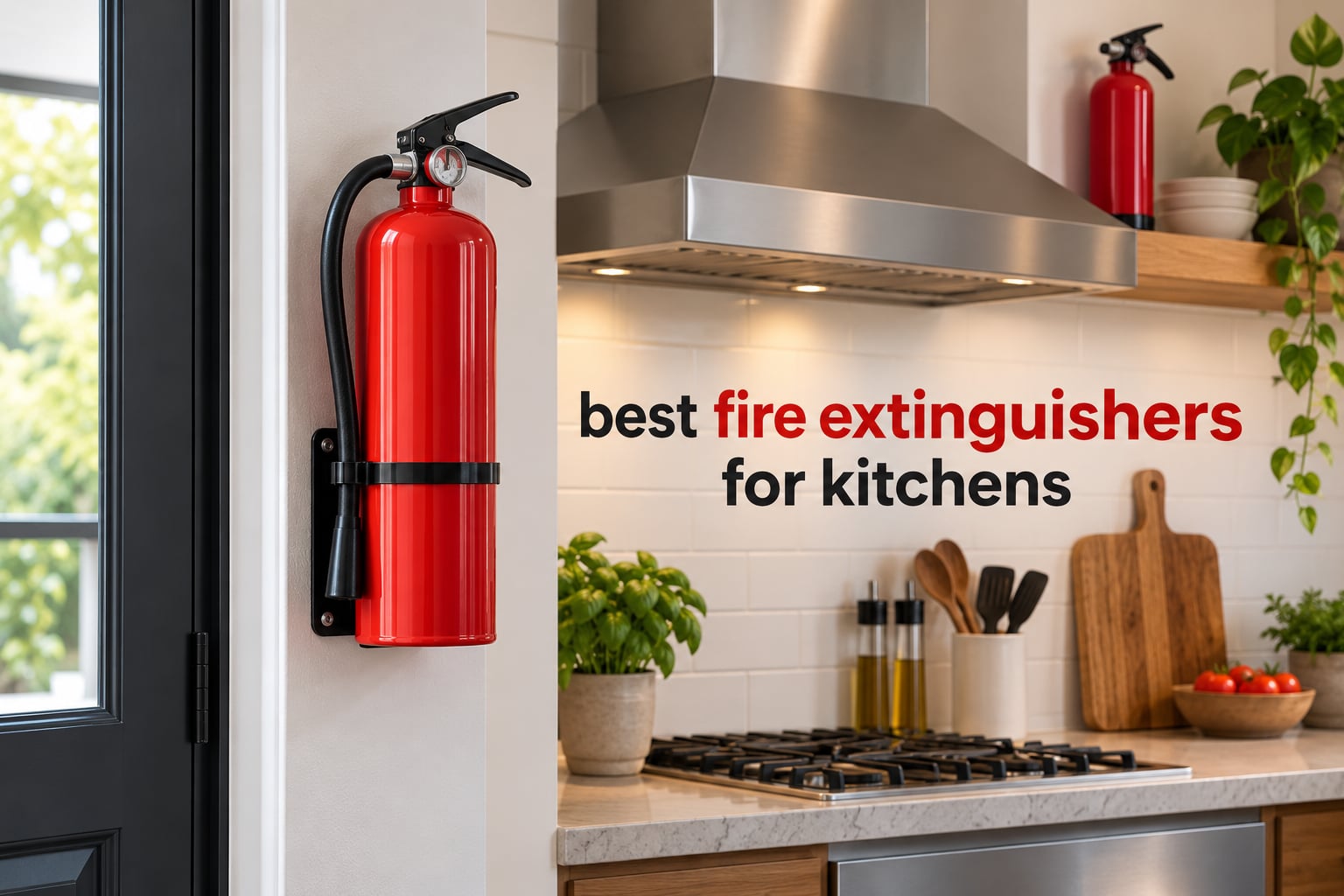
The short answer: buy a UL-listed ABC dry-chemical extinguisher rated at least 1-A:10-B:C, hold 2.5 to 5 pounds of agent, and mount it on an exit path within a few steps of the range but never beside or above the stove. Almost every residential kitchen fire starts with cooking oil, a toaster oven, or a dish towel that caught light from the burner, and those three hazards map cleanly onto the ABC rating.
One caveat before we get into the picks. For a pan of burning cooking oil, the fastest correct move is to slide a metal lid over the pan and turn off the burner. No extinguisher discharges faster than that. The unit in the cabinet is for everything else, and for the moment a lid is not enough.
We went through ten extinguishers built for home kitchens, garage duty and vehicle use, comparing UL rating, agent type, discharge time, cylinder material and the ergonomics of the handle under stress. What follows is the best fire extinguishers for kitchens lineup for 2026, from the small rechargeable unit that belongs inside a cabinet to the heavier cans built for serious grease risk.
One more thing worth saying plainly. Smoke alarms on the ceiling and a rehearsed escape route outrank any extinguisher you can buy. An extinguisher is for a small fire you can approach, not for a room that is already filling with smoke.
Table of Contents
Top 3 Fire Extinguisher Picks for Kitchens (October 2026)

Best Fire Extinguisher for Kitchens in 2026 at a Glance
| Product | Specs | Action |
|---|---|---|
| First Alert HOME1 |
|
Check Latest Price |
 Kidde Basic 110 FA110G Kidde Basic 110 FA110G |
|
Check Latest Price |
| First Alert HOME2PRO |
|
Check Latest Price |
 Amerex B500 Amerex B500 |
|
Check Latest Price |
 AmzBoom 2-Pack A B C K AmzBoom 2-Pack A B C K |
|
Check Latest Price |
 Kidde Basic 5 FA5G Kidde Basic 5 FA5G |
|
Check Latest Price |
 Kidde Full Home 3-A:40-B:C Kidde Full Home 3-A:40-B:C |
|
Check Latest Price |
 Ougist FF1KG ABC 2.5 lb Ougist FF1KG ABC 2.5 lb |
|
Check Latest Price |
 Ougist Water-Based Foam 4-Pack Ougist Water-Based Foam 4-Pack |
|
Check Latest Price |
 POPFRO Compact A B C K POPFRO Compact A B C K |
|
Check Latest Price |
1. First Alert HOME1 Fire Extinguisher – Best Overall for Kitchens
First Alert Fire Extinguisher, Standard Home Use
UL rated 1-A:10-B:C
2.5 lb dry chemical
Rechargeable all-metal body
4.5 lb total
Pros
- Covers grease
- electrical and ordinary combustibles
- Rechargeable after use by a certified pro
- Compact enough for a cabinet
- Readable color-coded gauge
- Mounting bracket included
Cons
- Some units arrive with a plastic handle and trigger
- Included bracket is fairly basic
- Light-duty rating versus larger home units
The First Alert HOME1 is the unit I keep coming back to for a kitchen, because it does not ask you to choose between grease coverage and everything else. Its 1-A:10-B:C rating covers wood, paper, trash, plastics, gasoline, oil and electrical fires in one canister, which is exactly the spread of risks a kitchen actually presents.
What separates it from most of the field is that it is rechargeable. After a discharge, a certified professional can refill and re-certify it rather than the whole unit going in the bin, and it also carries a 10-year limited manufacturer warranty.
The all-metal construction and commercial-grade metal valve and trigger are the parts you feel when you grab it in a hurry. A sealed metal pull pin stops accidental discharge in a household with kids, and the color-coded corrosion-resistant gauge tells you at a glance whether the charge is still in the green.
Reviewers consistently describe it as dependable and correctly sized for kitchens, garages and vehicles. The recurring reservation is that some units arrive with a plastic handle and trigger instead of the all-metal assembly the listing describes, so check what you receive before mounting it.
The one weakness is capacity. A 1-A:10-B:C rating is the entry-level standard for home units, and if a small unit failed to stop a real fire for you before, step up to the HOME2PRO rather than repeating the experiment.
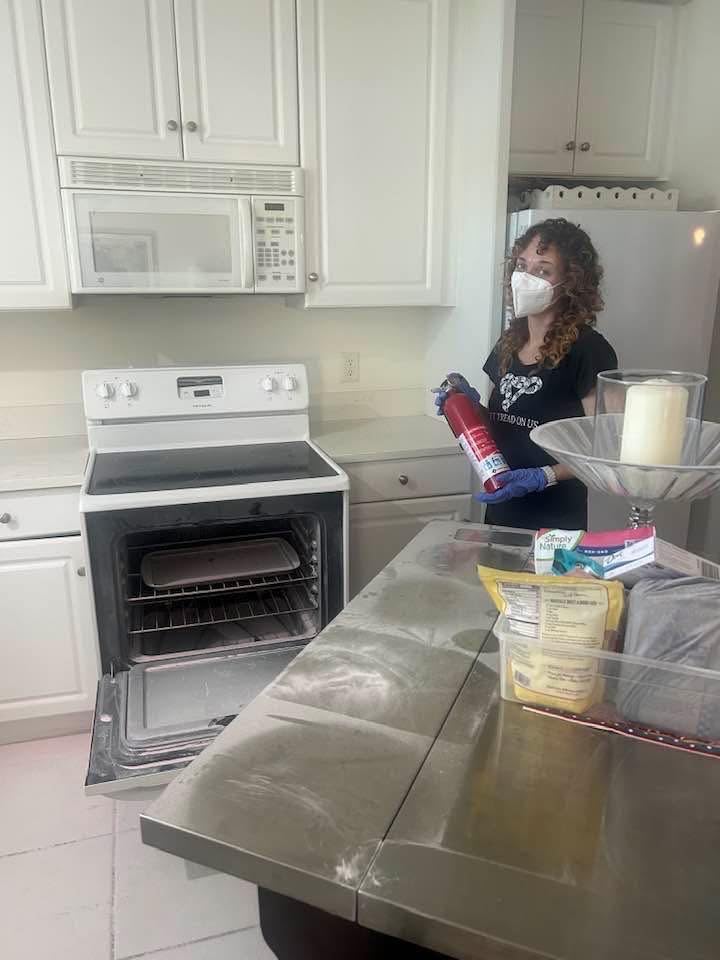
Will this fit where a kitchen extinguisher actually goes?
Yes. At 4.5 pounds total and built on a compact frame, it fits inside a base cabinet, on a wall bracket beside the doorway, or on the end of a counter run. It is also U.S. Coast Guard approved, so the same canister works in a boat galley if you want one tool for two places.
Is the powder residue a problem in a kitchen with stainless appliances?
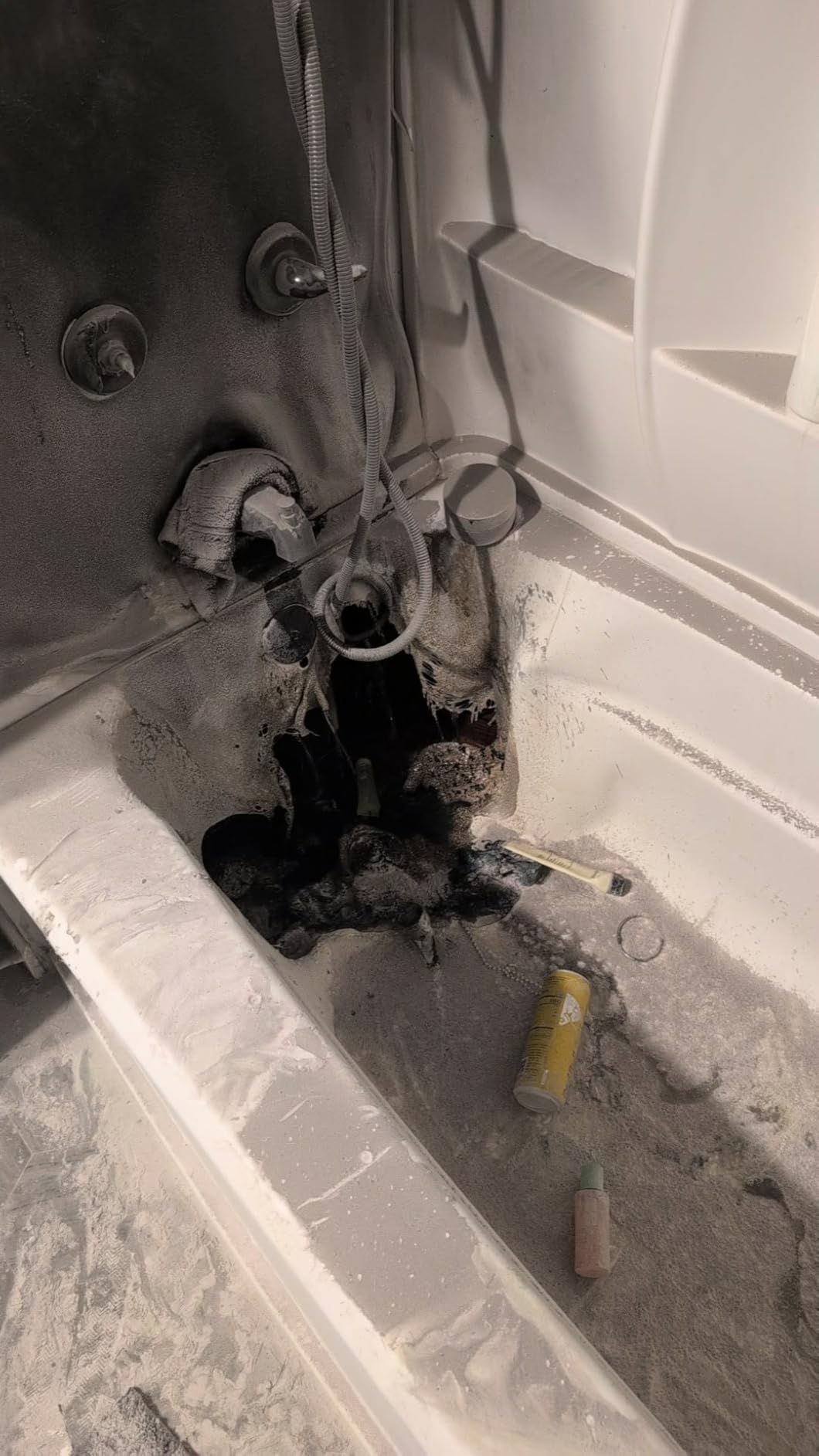
Somewhat. This is monoammonium phosphate dry chemical, and it leaves an abrasive powder that needs vacuuming and can etch polished metal if it sits. Vacuum it promptly after any discharge and wipe surfaces with a damp cloth rather than letting it dry on a stainless range or hood.
2. Kidde Basic 110 (FA110G) Fire Extinguisher – Best Value
Kidde Basic 110 Fire Extinguisher for Home, 1-A:10-B:C, FA110G, 1 Pack
UL Listed 1-A:10-B:C
2.5 lbs agent
Powder-coated aluminum
3.9 lb total
Pros
- Handles kitchen grease
- gas and electrical fires
- Massive review base from owners
- Compact and light enough for a cabinet
- Clear green-zone charge indicator
- Strap mounting bracket included
Cons
- Residential single-use design with no recharge path
- Aluminum body is less rugged than an all-steel cylinder
If you want one recognizable, widely owned answer for a home kitchen, the Kidde Basic 110 is it. The 1-A:10-B:C UL Listed rating covers trash, wood, paper, liquids, gases and electrical equipment, which is the same spread as the First Alert HOME1 at a fraction of the weight.
At 3.9 pounds with a powder-coated aluminum cylinder, it is comfortable for an older user to lift off a bracket and hold with one hand. That matters more than most spec sheets admit, because a heavy extinguisher is an extinguisher nobody reaches for.
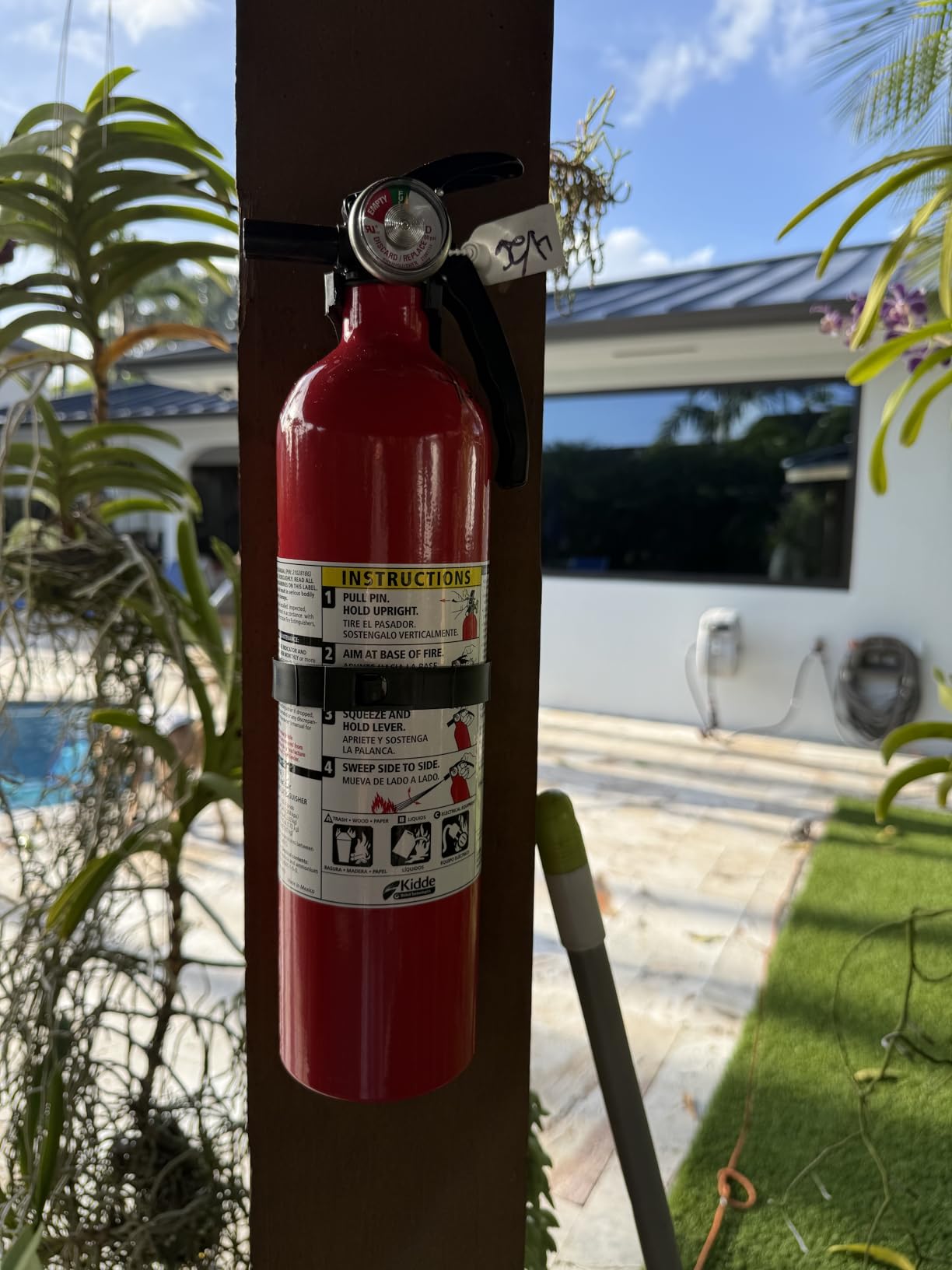
Reviewers treat it as the default home unit and praise the balance of size, weight and a gauge you can read without glasses. It carries a six-year limited manufacturer warranty, and a QR code on the label handles online registration.
The main trade-off is that this is a residential single-use design. Once it discharges, it is replaced rather than recharged, so over a twelve-year service life you will buy more than one. That cost is easy to justify for a backup unit in a cabinet.
The aluminum cylinder is also lighter and less rugged than an all-steel body in a workshop or garage, where the unit gets knocked around. For the kitchen, it is the right trade.
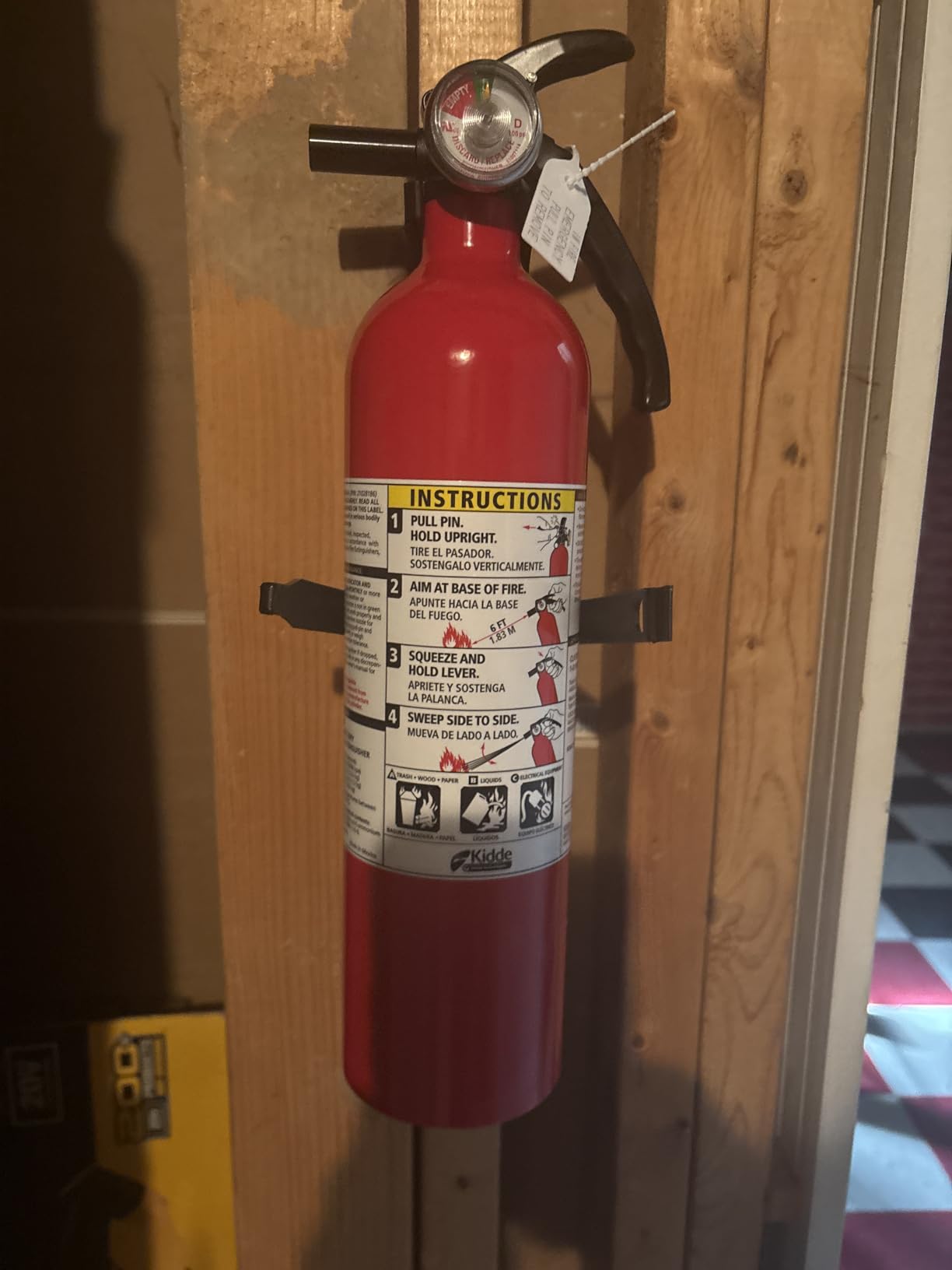
Is this powerful enough for a grease fire in a pan?
For a small fire that has not spread, yes. Two and a half pounds of dry chemical puts out roughly eight to fifteen seconds of agent, and the 1-A:10-B:C rating covers cooking oil as a Class B fuel. It is not enough for a fire that has reached the cabinets above the range, and no home unit is.
What should I know before mounting it?
The included strap bracket is UL approved but basic, so use screws into a stud or a masonry anchor rather than drywall alone. Mount it high enough that a child cannot grab the pin, low enough that an adult can reach it without standing on a stool, and on the path to the door rather than behind the door.
3. First Alert HOME2PRO Fire Extinguisher – Best Premium Heavy-Duty Pick
First Alert Fire Extinguisher, Heavy Duty for Home & Commercial Use
UL rated 2-A:10-B:C
Rechargeable all-metal build
Wall hook included
Pros
- Doubles the wood and paper capacity of a small home unit
- All-metal canister
- valve and trigger
- Rechargeable by a certified professional
- Wall hook and readable gauge included
Cons
- Heavier and bulkier than a cabinet unit
- Awkward one-handed grab for an older user
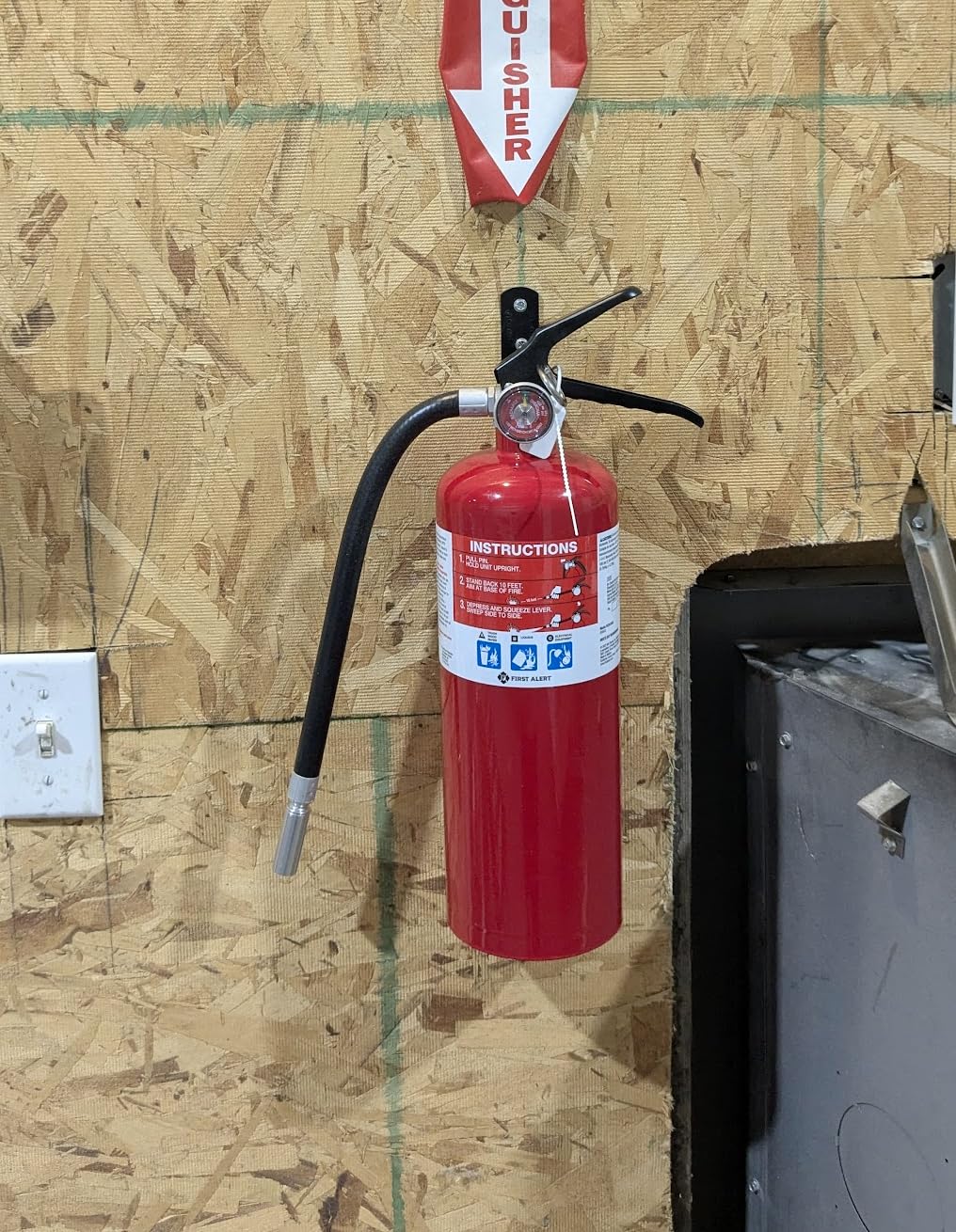
The HOME2PRO is the answer for someone whose kitchen is the hub of an open-plan main floor, or who simply does not want to think about whether a small unit will be enough. Its 2-A:10-B:C rating doubles the ordinary-combustible capacity of a standard home unit and meets the common minimum rating used in code.
It is also the step-up most owners describe after a scare. Several reviewers tell stories of a smaller canister running out during a real house fire, which is exactly why they moved up in capacity rather than replacing the size they already owned.
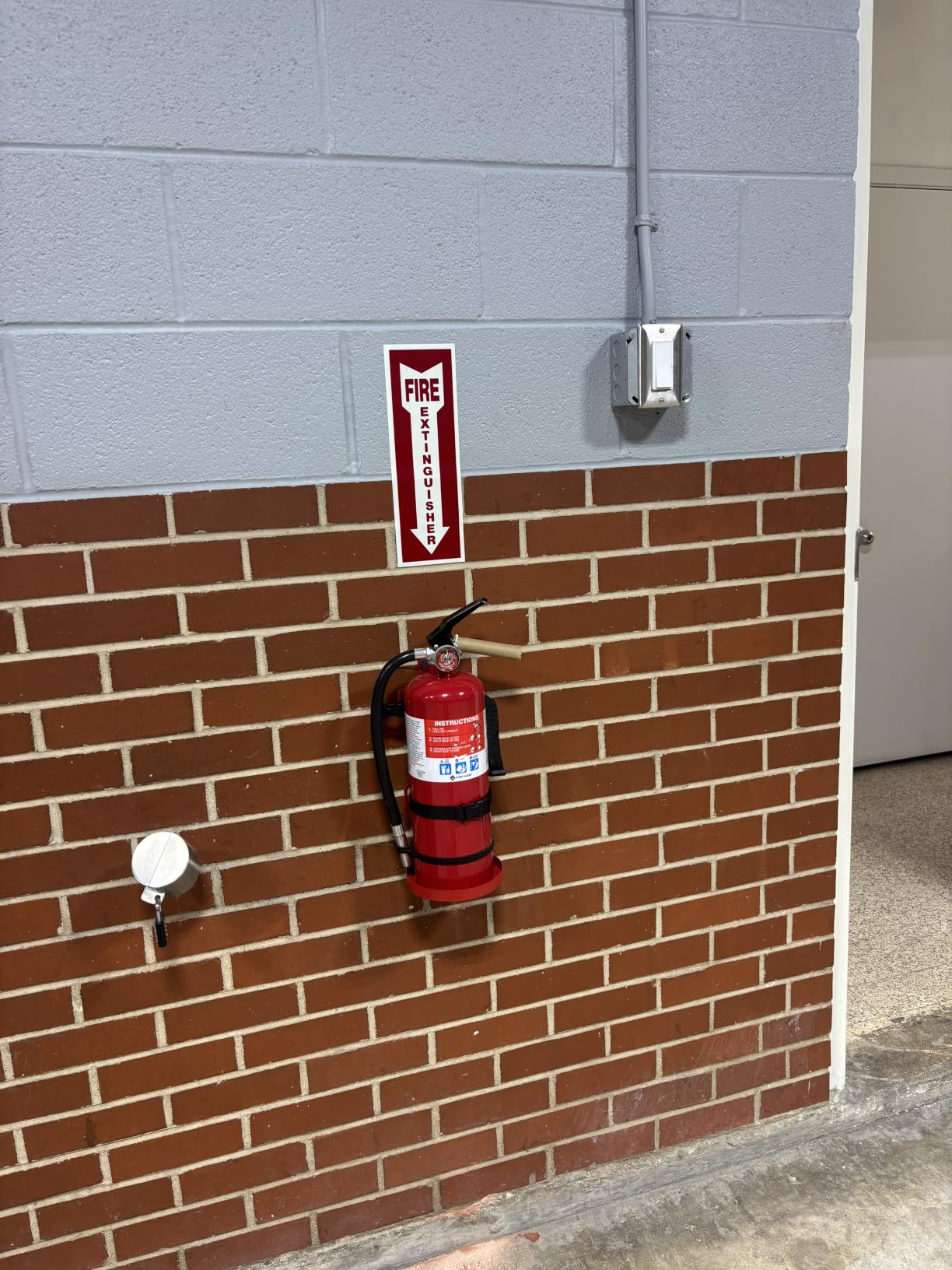
Technically it is the same monoammonium phosphate dry chemical as the smaller canisters, held in a heavier all-metal canister with a commercial-grade metal valve and trigger. That combination is rechargeable by a certified professional, which pulls the lifetime cost down once you compare it against buying disposable cans.
The wall hook is included and the color-coded, corrosion-resistant gauge is readable from a couple of steps away. The twelve-year limited warranty is the longest in this group.
The honest drawback is weight. At 9.6 pounds this is a two-handed lift, and reviewers with older hands mention it as the reason they kept a smaller unit in the kitchen and moved this one to the garage or the mudroom entrance.
Is it too big to keep in a kitchen?
Not if your kitchen has a wall to spare. It wants a bracket near an exit, not a shelf above the counter, and the wall hook included makes that straightforward. If your only storage is a shallow cabinet, pair it with a smaller unit rather than forcing a 9.6 pound can into the space and leaving it on the floor.
Is the powder residue worse at this size?
More of it, in plain terms. The same monoammonium phosphate agent at a larger charge means a bigger mess across your counters and range hood. Plan to vacuum and wipe down immediately after any discharge, and treat cleanup as part of using it rather than an afterthought.
4. Amerex B500 Fire Extinguisher – Best for Serious Grease Risk
Amerex B500 Fire Extinguisher, 5 lb. ABC Dry Chemical
5 lb ABC dry chemical
14 second discharge
All-metal valve
Wall bracket included
Pros
- Largest agent charge in this lineup
- Noticeably longer discharge time
- All-metal valve outlasts plastic-valve units
- Covers combustibles
- liquids and live electrical
- Bracket included
Cons
- Bulky and heavy next to compact kitchen canisters
- ABC rating is not a Class K cooking-oil certification
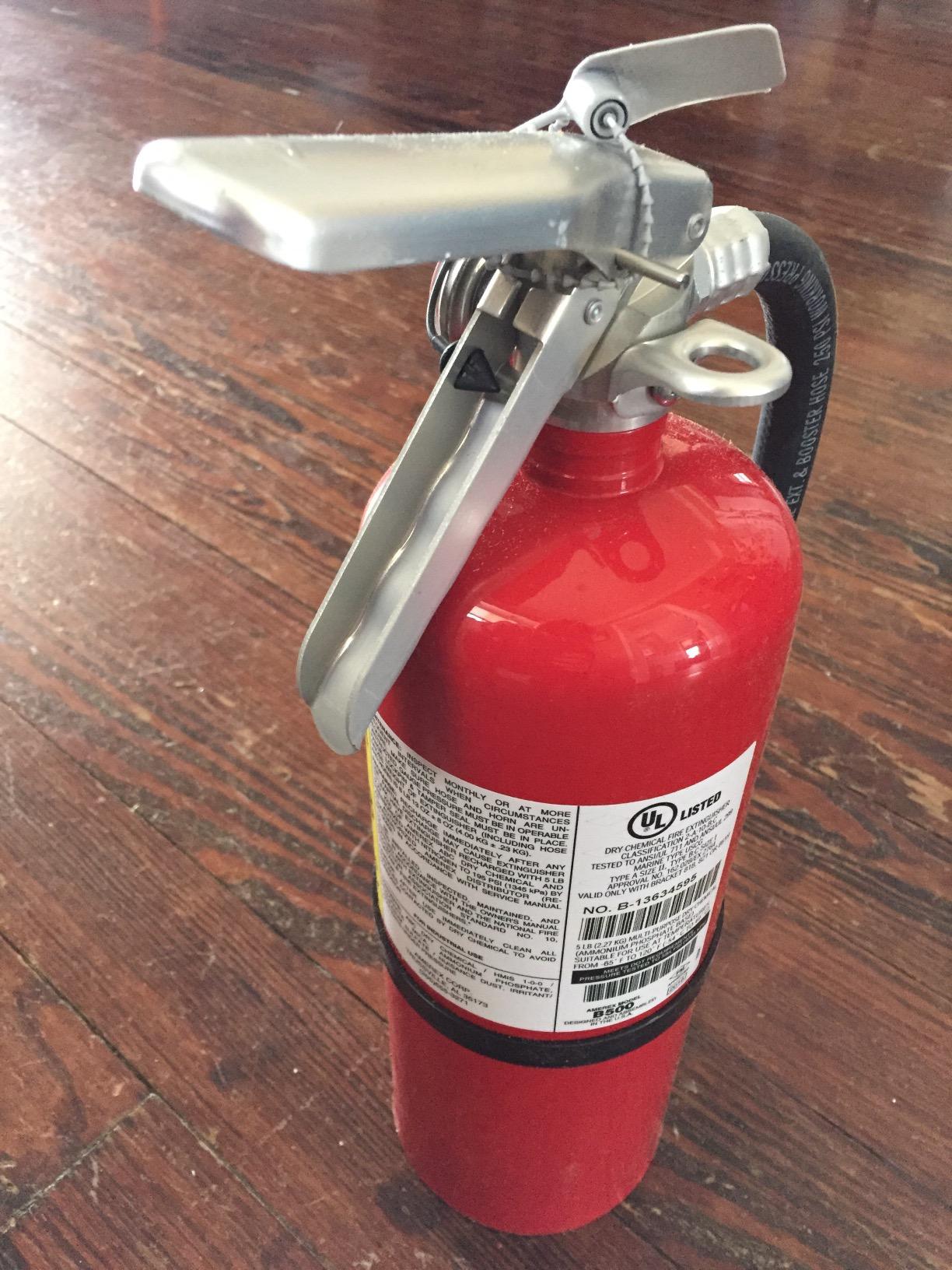
The Amerex B500 is the pick if your cooking involves a lot of oil. Five pounds of ABC dry chemical gives it a 14-second discharge, which is roughly double the burst you get from a two-and-a-half-pound canister, and that extra time is what decides a fight with a spreading grease fire.
Class A:B:C coverage means it handles ordinary combustibles, flammable liquid spills and fires involving live electrical equipment. For a toaster oven fire or a spilled solvent next to the range, that is the right spread.
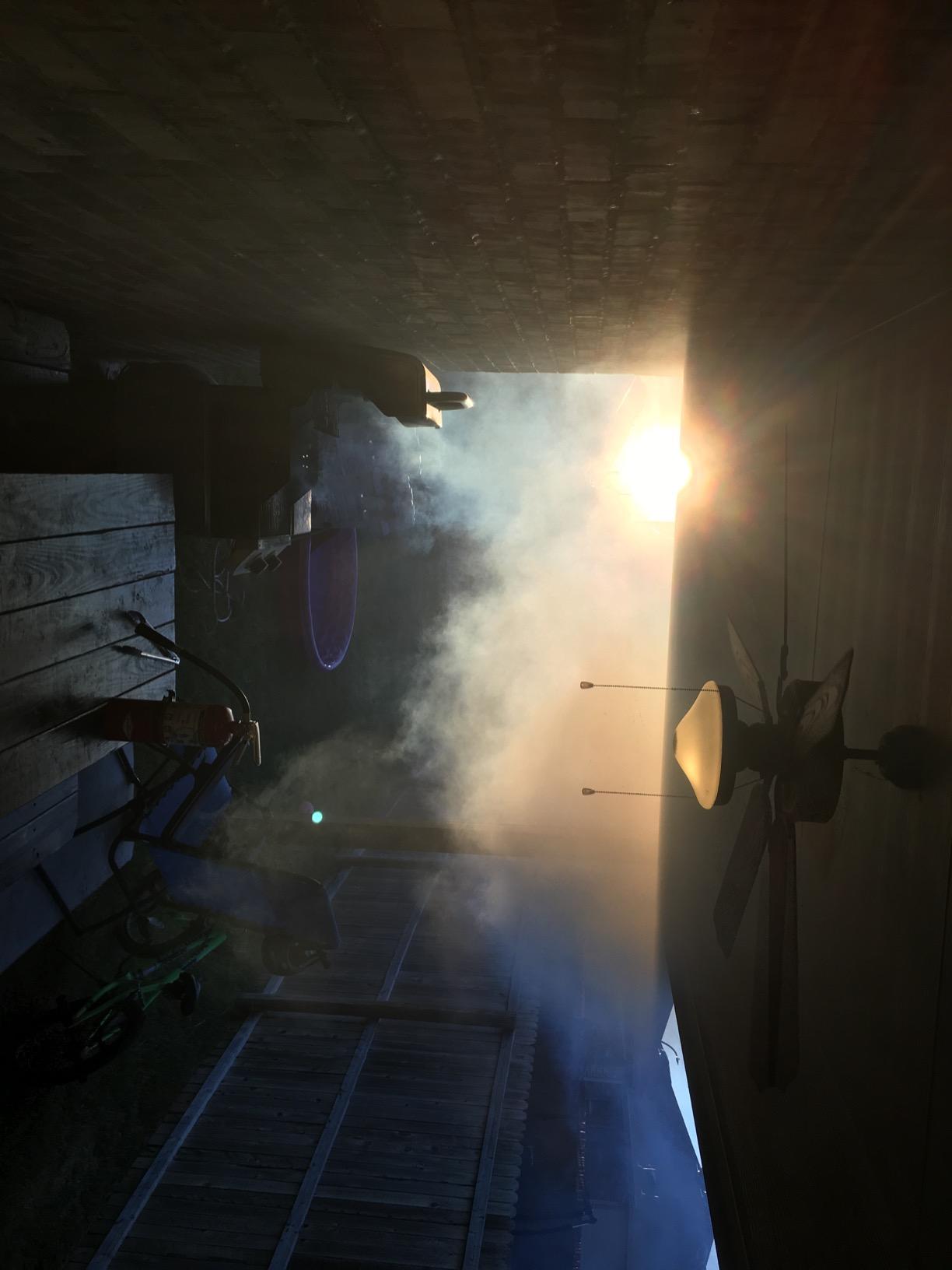
The all-metal valve construction is a genuine step up from the plastic valves on compact canisters, and the wall bracket is included so it can be mounted properly rather than parked on the floor. Owners treat this as a serious-response tool for kitchens, workshops and light commercial settings.
What reviewers flag is size. At 16 by 15 by 7 inches it is not a cabinet unit, and it needs clear wall space near an exit. The other recurring note is that ABC is not a Class K certification, which we address in full below.
Our read is that this is a good second unit for a kitchen that does serious cooking, not a replacement for a compact can in the cabinet beside the range.
Does a bigger charge actually stop a bigger fire?
It stops it for longer, which is the practical difference. A five-pound charge gives you a longer spray window to reach the base of the flames, but no home extinguisher of any size is designed for a fire that has spread to the cabinetry. Length of discharge buys seconds, not a different category of capability.
Can a Class B rating handle a cooking oil fire?
For a small incipient fire, yes. Cooking oil is a Class B flammable liquid, and dry chemical smothers it by cutting off oxygen. If you fry often enough that this is your normal weeknight state of affairs, keep the lid-on-pan habit as your first move and treat this can as the backup.
5. AmzBoom 2-Pack A, B, C, K Fire Extinguisher – Best Compact Multi-Pack
AmzBoom 2-Pack Fire Extinguisher for Home, Kitchen, Car, and Grill with Mounting Bracket– Extinguishing Spray, Compact A, B, C, K – Eco-Friendly, Prevents Reignition.
A, B, C and K rated
Water-based, non-toxic
500ml per canister
Two canisters per pack
Pros
- Two canisters in one pack for kitchen and vehicle
- Water-based formula leaves no sticky residue
- Covers cooking oil and lithium-ion battery fires
- Fits a drawer or glove compartment
- Brackets and screws for both included
Cons
- Very small 500ml charge
- so supplemental only
- Spray-can style has no pressure gauge
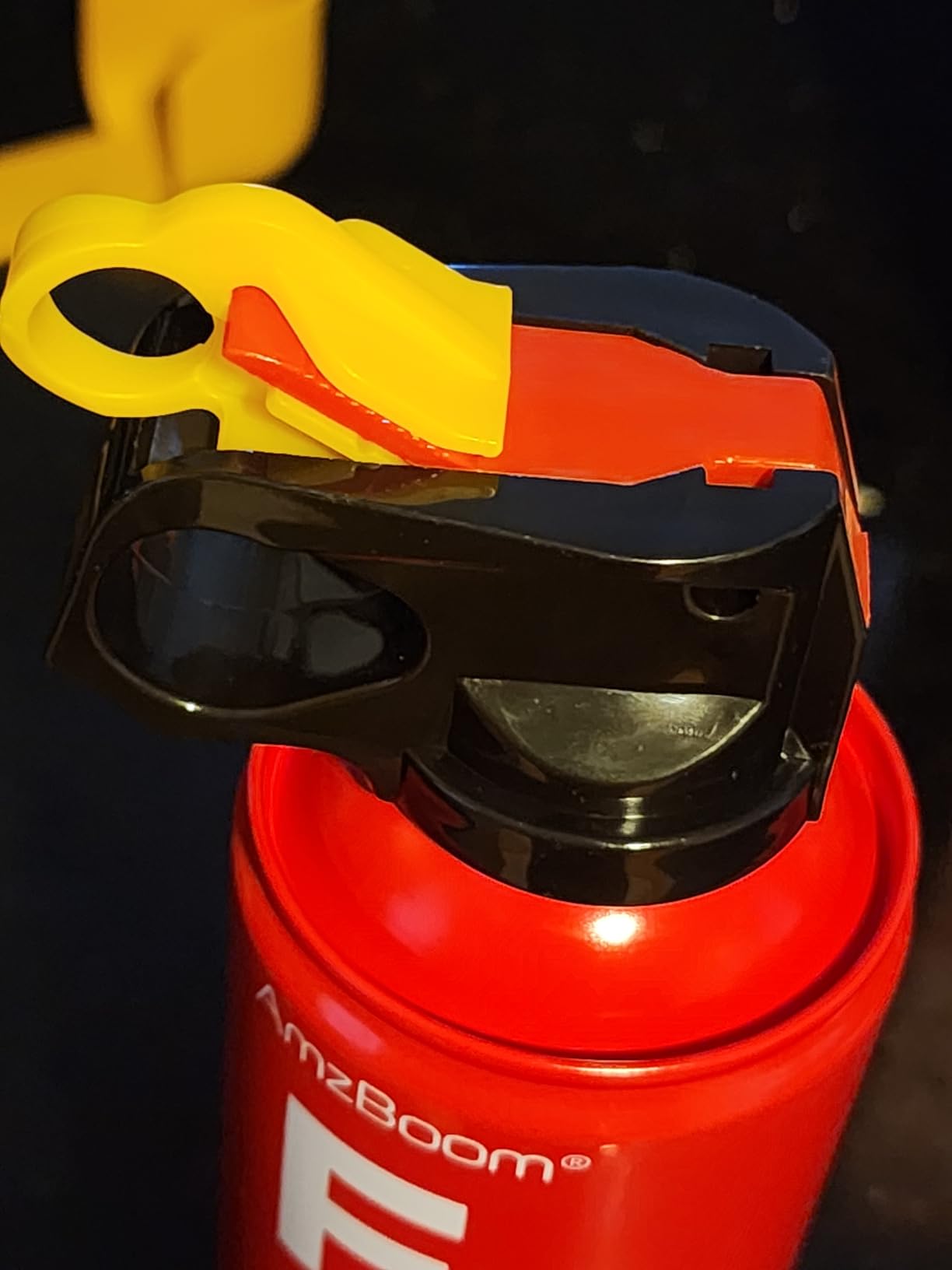
This two-pack is a coverage play rather than a power play. You get two 500ml water-based canisters rated A, B, C and K, plus two mounting brackets, which lets you put one in the kitchen and one in the car or next to the grill without buying two products.
The A, B, C and K claim is unusual in a home unit and it is aimed straight at modern kitchen risk. It covers cooking oils and it also lists lithium-ion battery fires, which matters if you keep a power bank, an e-bike battery or a laptop charger charging near the counter.
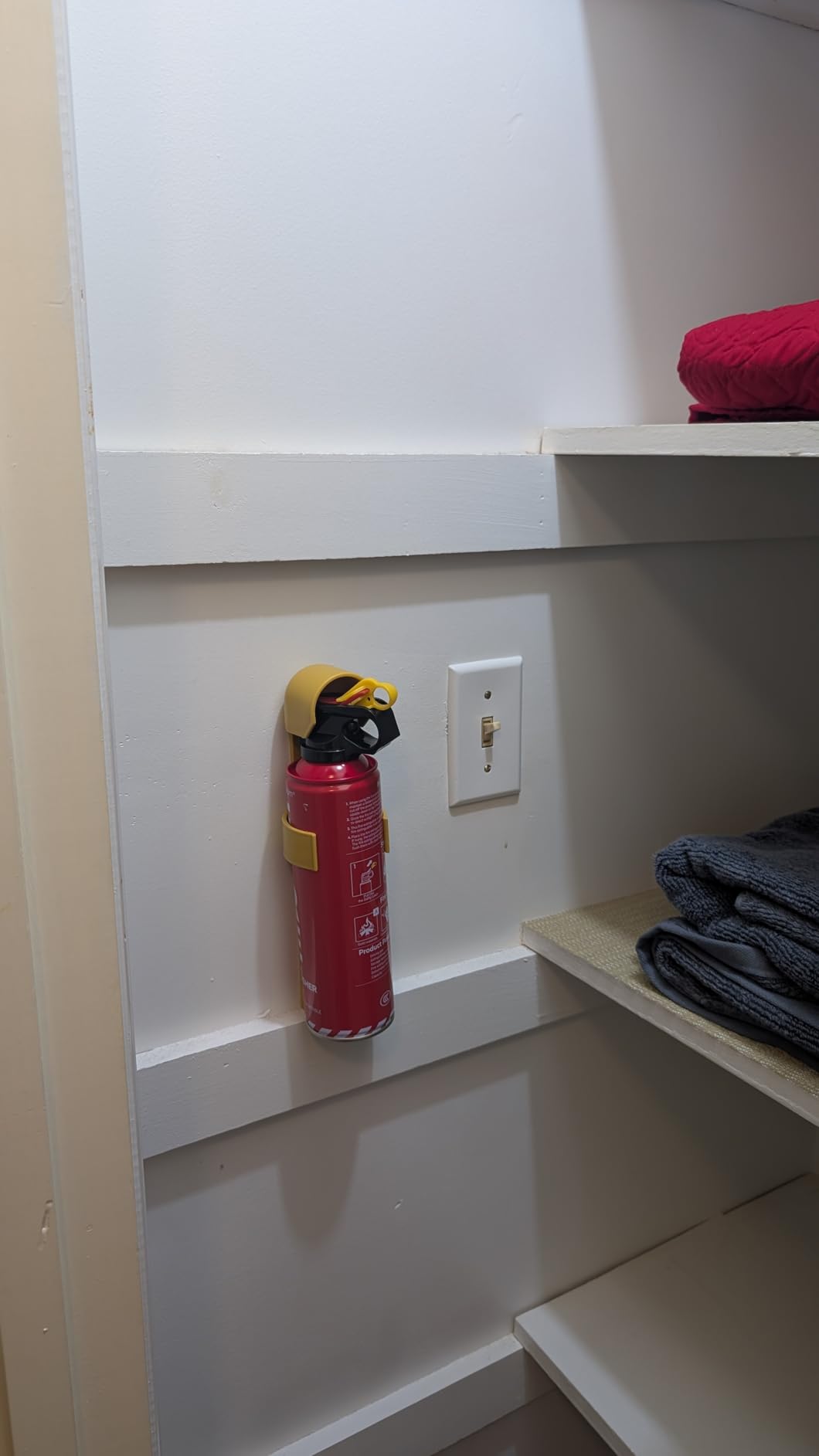
Operation is press, aim and spray, with no pin and no valve. The water-based formula is non-toxic and leaves no powder residue, which is genuinely appealing above a stainless range or a quartz countertop where dry chemical would need real cleanup.
Reviewers like the convenience and the two-pack format, and one detailed account describes a canister that had sat in storage for a year actually deploying and suppressing a stovetop fire. The consistent caution is size. This is not a substitute for a rated home unit.
Because there is no pressure gauge, you have no way to tell how much agent is left. Treat these as containers with a defined shelf life that you replace on a calendar rather than equipment you inspect.
Can an aerosol-style canister handle a real grease fire?
For an incipient fire in its first seconds, owners report yes. For anything larger, no. A 500ml water-based charge is a fraction of what a 2.5-pound dry chemical canister delivers, and spray extinguishers of this style carry no pressure gauge and no traditional valve, which is why a few states restrict them.
Where should the second canister go?
Somewhere the kitchen unit cannot follow. A car trunk, a grill-side cabinet or an RV galley are the natural second slots. Keep the pair in separate rooms rather than side by side, because a single point of failure in the kitchen is still a single point of failure.
6. Kidde Basic 5 (FA5G) Fire Extinguisher – Best for Grease and Liquid Fires
Kidde Basic 5 Fire Extinguisher for Home, 5-B:C, FA5G
UL Listed 5-B:C
2 lbs sodium bicarbonate
8-12 second discharge
2.35 lb total
Pros
- Rating aimed squarely at cooking grease and liquids
- Light enough to hang under a sink
- Easy-pull safety pin for use under stress
- Strap bracket included and Coast Guard approved
Cons
- Not rated for Class A fires like wood or fabric
- Single-use with no recharge path
- Only 8-12 seconds at a 4-6 foot range
- Dry chemical residue needs thorough cleaning
The Kidde Basic 5 is the compact B and C unit, and its 5-B:C UL Listed rating tells you exactly what it is for. It handles flammable liquids, gases and electrical equipment, which covers grease in a pan, a grease fire in a grill, and an appliance fire on live wiring.
At 2.35 pounds it is the lightest canister in the lineup and the easiest for an older adult or a teenager to lift and use. The easy-pull safety pin and simple trigger matter when your hands are shaking.
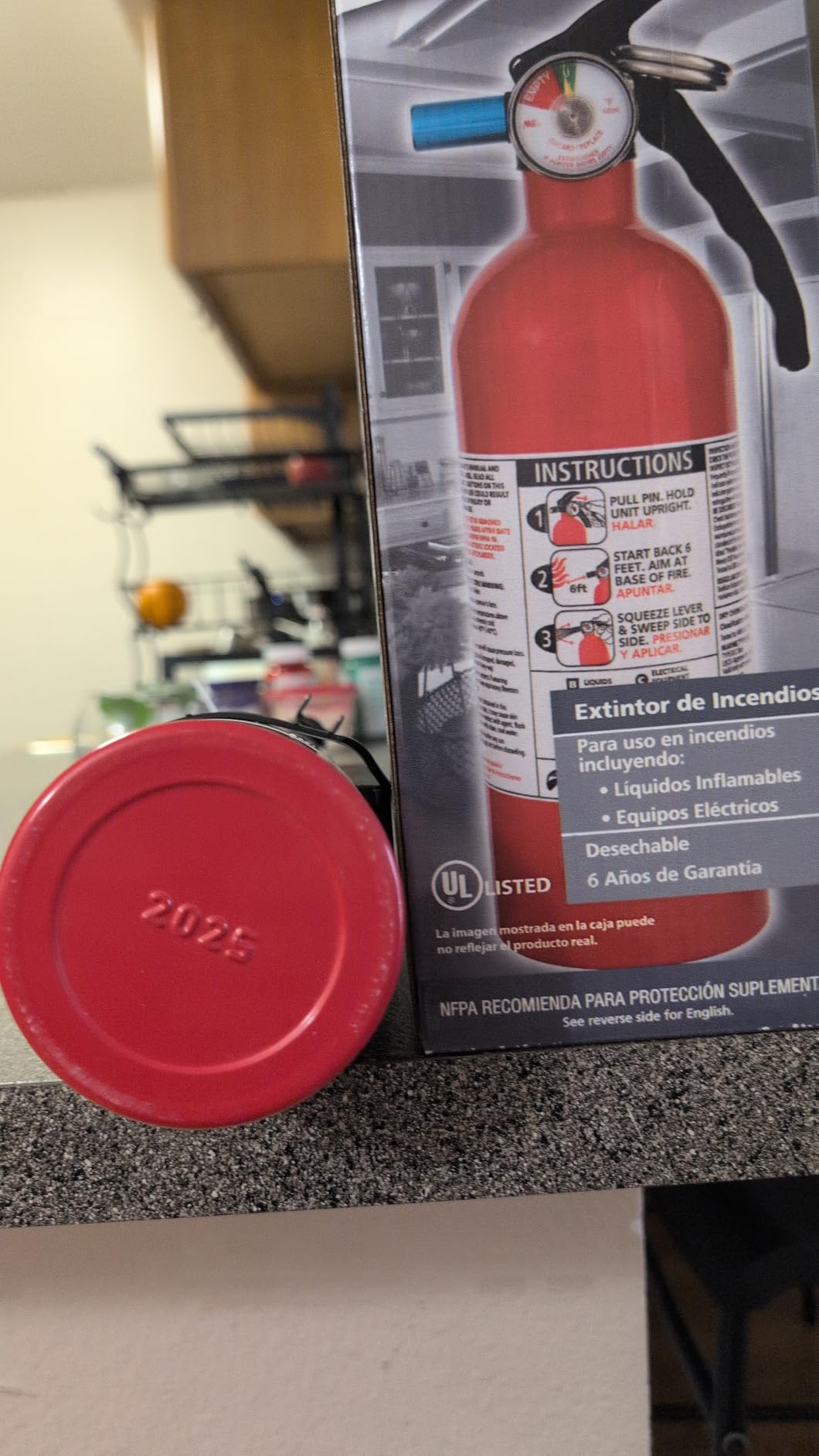
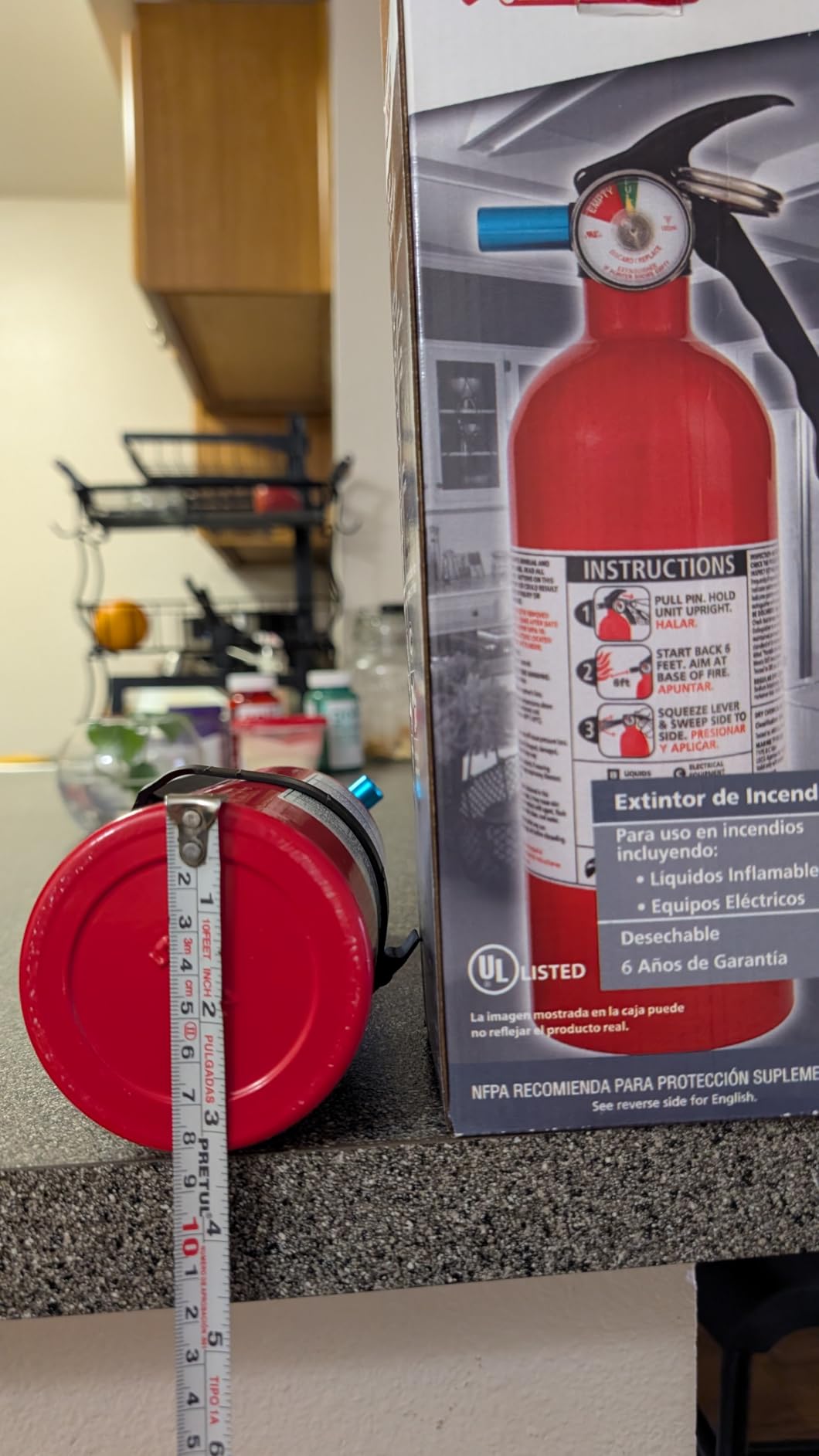
Specs are modest and honest: two pounds of sodium bicarbonate agent, eight to twelve seconds of discharge, a four-to-six-foot range and 100 PSI operating pressure. The USCG approval and the included plastic strap bracket mean it doubles as a boat or vehicle unit.
The important limitation is that it is not rated for Class A. Wood, paper, fabric and plastics are outside its envelope, and a dish towel or a wooden cabinet involved in a grease fire is precisely the case where this unit is the wrong tool.
Reviewers like the size and the B:C focus for kitchens, garages and vehicles, and several note it is manageable for older users. The two caveats that come up most are the Class A gap and the short discharge window.
Why would I choose a BC-only unit over an ABC one?
Two reasons. Sodium bicarbonate leaves a residue that is far less abrasive and corrosive than monoammonium phosphate, which matters over stainless appliances, painted cabinets and a quartz counter. And the smaller canister is genuinely easy to handle, which is worth more than a rating you may never need.
What fire in my kitchen would defeat it?
Anything involving ordinary combustibles. A wooden cutting board, paper packaging, a cotton dish towel, a plastic container that has melted into a burning mass. For those, an ABC unit or this can plus an ABC unit elsewhere in the home is the combination we would build.
7. Kidde Full Home Fire Extinguisher 3-A:40-B:C – Best for Maximum Whole-Kitchen Coverage
Kidde Full Home Fire Extinguisher, 3-A:40-B:C, KD176-340ABC
UL rated 3-A:40-B:C
5.5 lbs monoammonium phosphate
13-15 second discharge
12-18 foot range
Pros
- Highest ordinary-combustible rating in this lineup
- Long discharge range keeps you back from the flames
- Metal valve assembly and impact-resistant handle
- Still manageable to lift and operate
- 6-year limited warranty
Cons
- Single-use residential design
- Large footprint needs a cabinet or wall space
- Wall hanger arrives without screws
The Kidde Full Home unit carries a 3-A:40-B:C rating, which is the broadest ordinary-combustible coverage in this lineup. If you want the single most capable canister for a kitchen that also serves as a laundry room or a home office, this is the one.
Five and a half pounds of monoammonium phosphate discharges for thirteen to fifteen seconds at a twelve-to-eighteen-foot range. That reach is the underrated spec here, because it lets you put distance between yourself and a burning pan while the agent is still flowing.
Build quality is a step above compact plastic-valve cans, with a metal valve assembly and a rust and impact-resistant handle. Owners who work in daycare or foster settings note that this size satisfies inspection requirements that a small unit does not.
It is still light enough for an older user to lift and operate, which is the reason it edges out heavier workshop units for a kitchen. Reviewers also mention satisfying the stated design life of twelve years of service-free use when it is never discharged.
The frustrations are physical rather than functional. The wall hanger arrives without mounting screws, so plan to buy hardware, and the footprint needs a cabinet or wall space rather than a shallow drawer.
Do I need this much capacity for a kitchen?
You need enough agent to reach the fire and stay on it. For most apartments and normal kitchens, a 2.5-pound ABC unit does that. The extra capacity earns its place in open-plan homes, in kitchens with a wood-burning appliance nearby, or in a rental where a failed extinguisher has real consequences.
What does 3-A:40-B:C actually mean?
The 3-A means it covers three times the ordinary combustibles that a 1-A unit does. The 40-B is square footage of flammable liquid surface it can cover, and the C means live electrical equipment. Read the A and B numbers as capacity tiers, and the ratings are comparable across brands.
8. Ougist FF1KG ABC Fire Extinguisher – Best for the Quick-Release Handle
Ougist ABC Fire Extinguisher for Home & Vehicle – 2.5 lb 1-A:10-B:C Rated, Dry Chemical Fire Safety with Quick-Release Handle, Certified for Kitchen/Car/Boat Use-Model FF1KG
UL-style 1-A:10-B:C
2.5 lb carbon steel body
Quick-release handle
4.4 lb total
Pros
- Quick-release handle removes the pin without twisting
- Thick-wall carbon steel cylinder feels substantial
- 1-A:10-B:C rating covers grease and electrical fires
- Manageable for limited hand strength
- Inspection card and location decal included
Cons
- Sold as a single canister only
- Newer listing with a smaller review base than the big brands
The single best idea in this product is the handle. Instead of a pin you have to twist and pull in two motions, the quick-release mechanism lets you act with one hand while the other is holding a pan lid or moving a chair. Under stress, that difference is worth more than any spec on the label.
Underneath, it is a conventional 2.5-pound ABC dry chemical unit in a thick-wall carbon steel cylinder, rated 1-A:10-B:C. That covers grease, electrical and fuel fires, so nothing important is traded away for the easier handle.
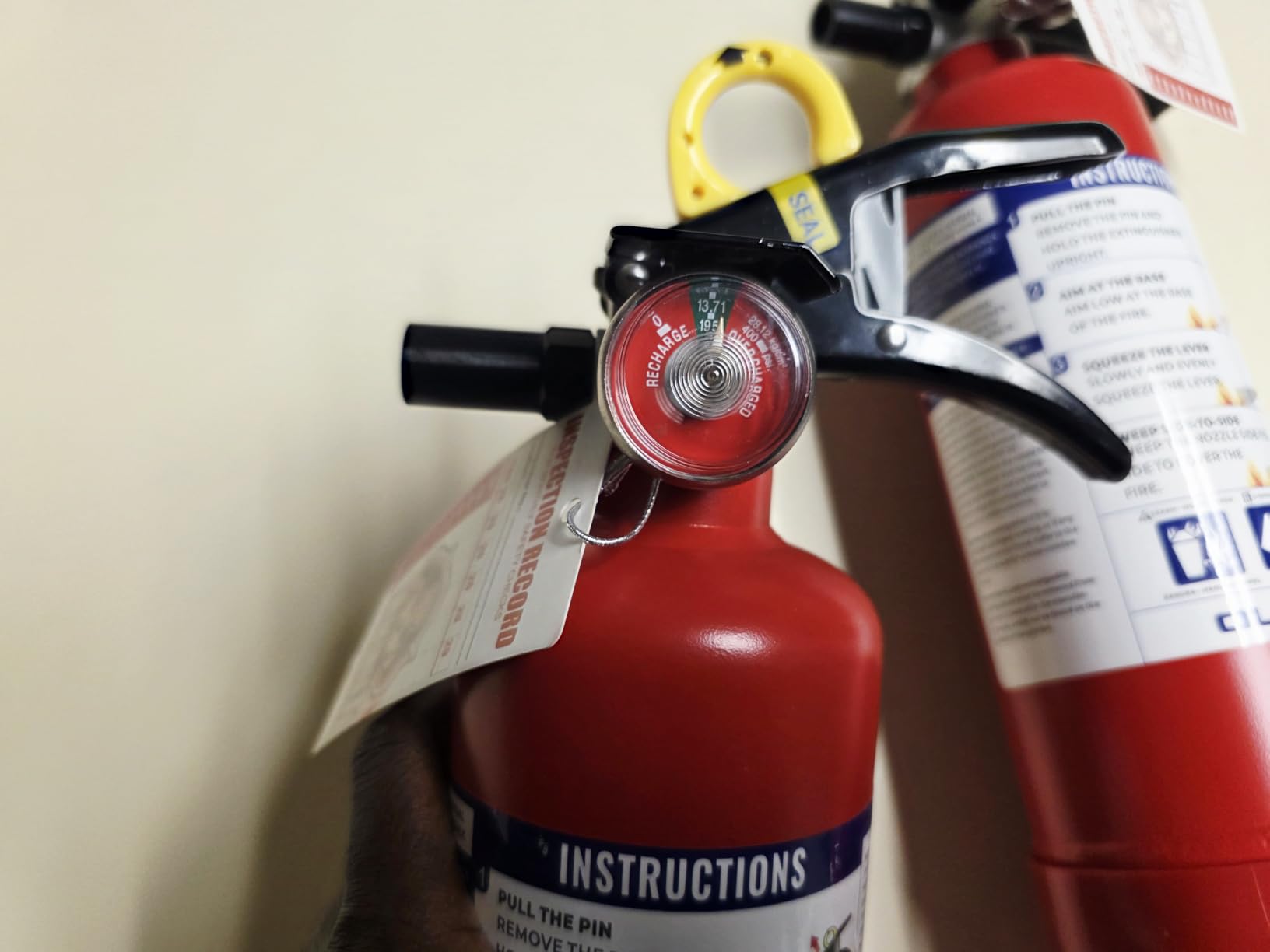
The operating range is listed from 140 degrees Fahrenheit down to negative 22, which covers a parked car in winter as well as a hot kitchen. A wall-mount hook, a monthly inspection record card and a self-adhesive location arrow decal are all in the box, which is unusually complete.
Reviewers rate it very highly and single out the quick-release handle as the feature that sets it apart. Owners with limited hand strength say it is comfortable to operate, and a single canister covers kitchen, garage, car and boat alike.
The honest caveat is the review base. With a much smaller number of owners than the established brands, you are taking a newer listing on a lighter track record, and it is a single canister rather than a pack.
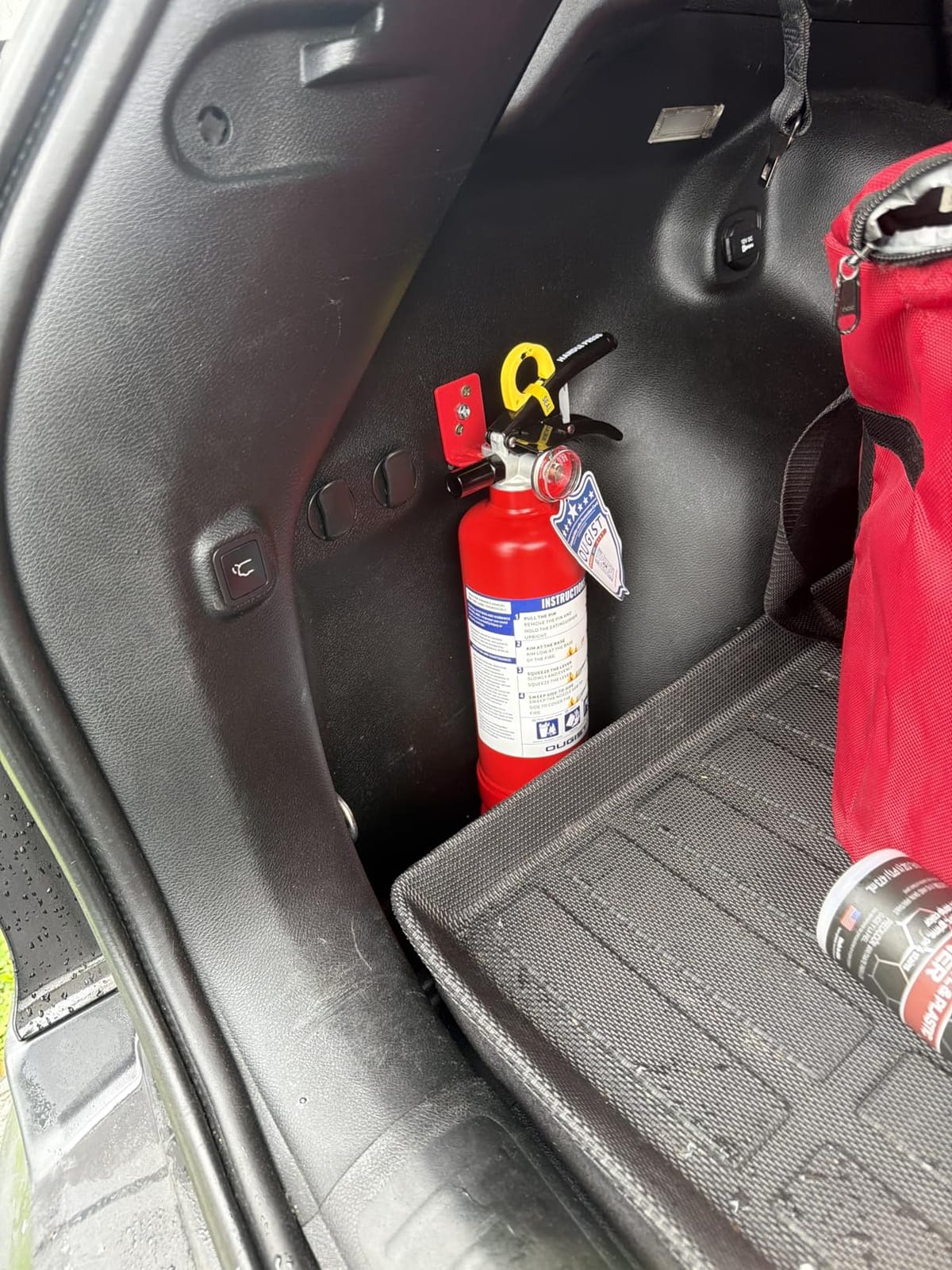
Is a carbon steel body worth choosing over aluminum?
For a kitchen, mildly. Steel tolerates knocks and abrasion better than an aluminum cylinder, and the heavier wall means fewer concerns about corrosion if it lives in a humid garage. The tradeoff is weight: 4.4 pounds against the 3.9 of the Kidde Basic 110.
Does the handle change work with gloves on?
It helps. A twist-and-pull pin is awkward when your fingers are wet, greasy or gloved, and the quick-release is a single squeeze of the lever once the handle is depressed. That is the whole argument for this model in our view.
9. Ougist Water-Based Foam Fire Extinguisher 4-Pack – Best for Spreading Coverage
Multipurpose Fire Extinguisher (4 Pack, 21oz Each) with Wall Mount Bracket, Water-Based Foam No Residue, for Kitchen Grease & Electrical Fires, Portable Small Extinguisher for Home, Vehicle & Office
4-pack of 21 oz foam canisters
13 foot spray distance
Water-based, no residue
Four mounts and 16 screws
Pros
- Four canisters for kitchen
- garage
- car and workshop
- Water-based foam leaves no powder or sticky residue
- 13 foot maximum spray distance
- 11.7 inch height fits cabinets and trunks
- All mounts and screws included
Cons
- Small charge limits it to small incipient fires
- Light body feels less substantial than a metal-valve cylinder
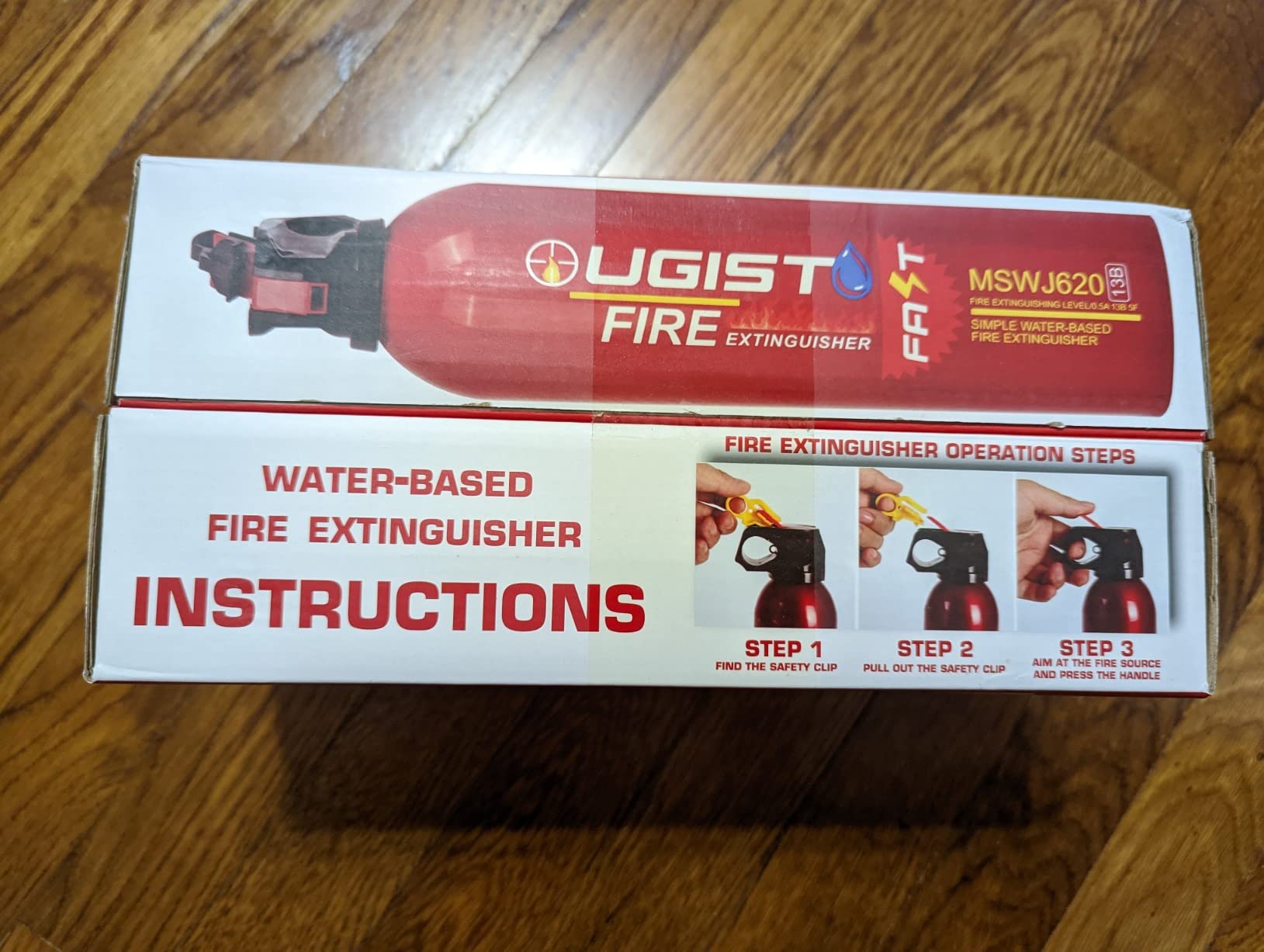
This four-pack solves a different problem: coverage. Each 21oz water-based foam canister handles kitchen grease, electrical, liquid and small surface fires, and four of them mean you are not relying on a single canister in a single room.
The reason to like foam over dry chemical is cleanup. Water-based foam leaves no powder or sticky residue on counters, electronics or paint, which is the single biggest complaint owners of dry chemical canisters have after a real discharge.
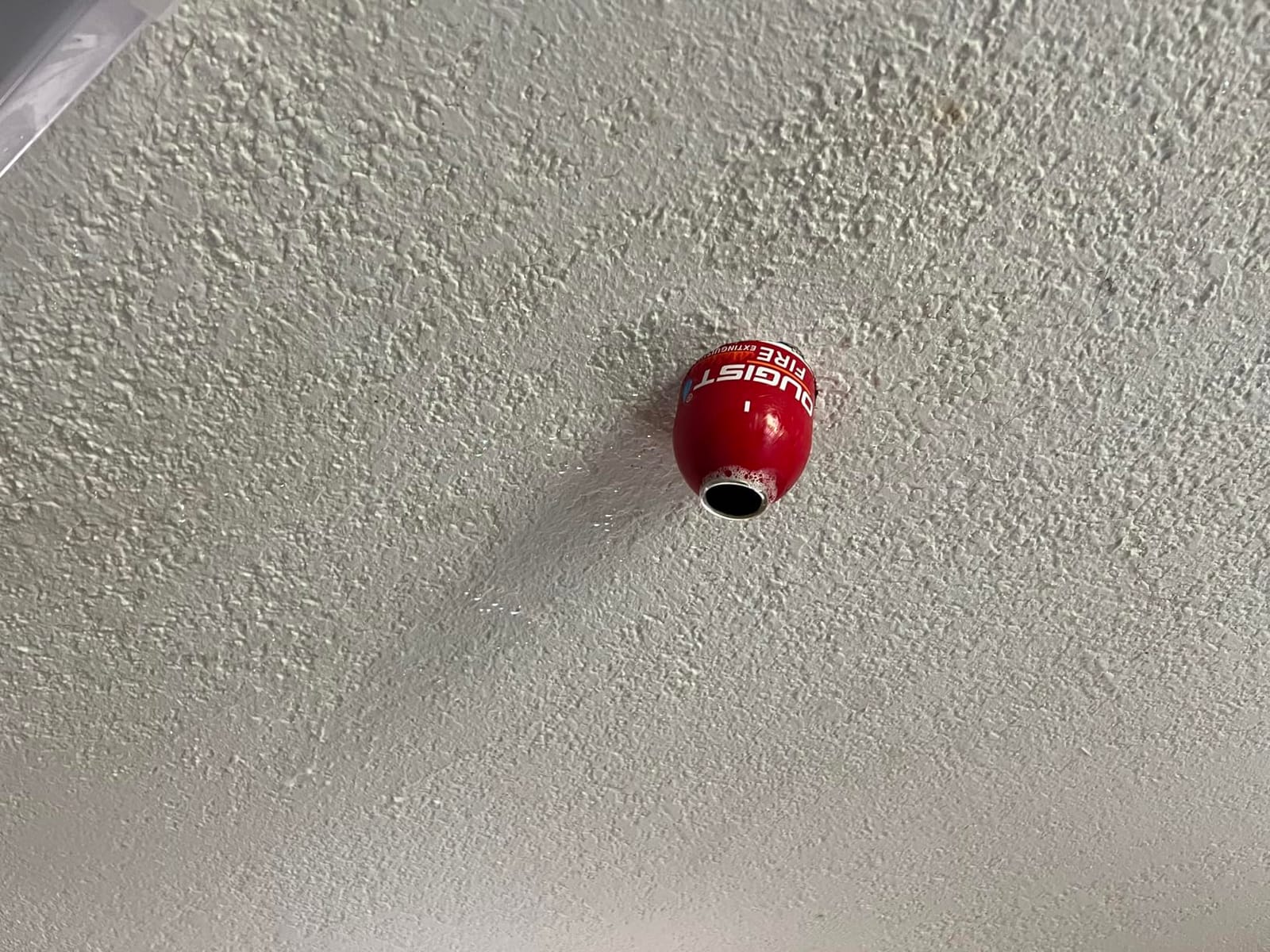
Spray distance reaches a maximum of thirteen feet, so you can attack a flame from further back than a small canister allows. At 11.7 inches tall and 3.3 inches wide, each canister fits a glove box, a trunk or an under-sink cabinet without dominating the space.
Four wall mounts and sixteen screws are in the box, which removes the most common reason small canisters end up sitting on a shelf instead of a wall. Push-button lever operation needs no pin.
Reviewers treat it as a value multi-pack and praise the residue-free formula and the included hardware. The recurring note is that the charge is small, so these are for minor fires rather than anything that has grown past incipient stage.
Are four small units better than one large one?
For fast response, yes. NFPA guidance on travel distance is the point: an extinguisher across the house is an extinguisher you will not reach. Four small units placed in four rooms beat one large unit in one of them for the first thirty seconds of a fire.
Can I use foam on a live electrical fire?
Within the range the manufacturer claims, yes, these units are rated for electrical fires alongside grease, liquid and surface fires. The water-based formula is the reason, since it leaves no conductive chemical residue on appliances the way dry powder does.
10. POPFRO Compact 4-in-1 Fire Extinguisher – Best Non-Toxic Compact Option
POPFRO Portable Fire Extinguisher | 4-in-1 Small Fire Extinguisher for Home, Garage, Kitchen, Car | For Electric, Textile and Grease Fires | Non-Toxic, Easy Clean | Wall Mount Incl (1 pack)
A, B, C and K rated
Water-based and biodegradable
Over 13 feet spray distance
1.85 lb total
Pros
- Covers cooking oil and textile fires
- Non-toxic biodegradable formula safe near food surfaces
- Over 13 feet of spray distance
- Leaves no residue after a fire
- Narrow 2.6 inch body fits tight vehicle mounts
Cons
- Disposable with no refill path
- Adhesive holder loses grip quickly
- Suitable only for small fires
- Supplement rather than replacement
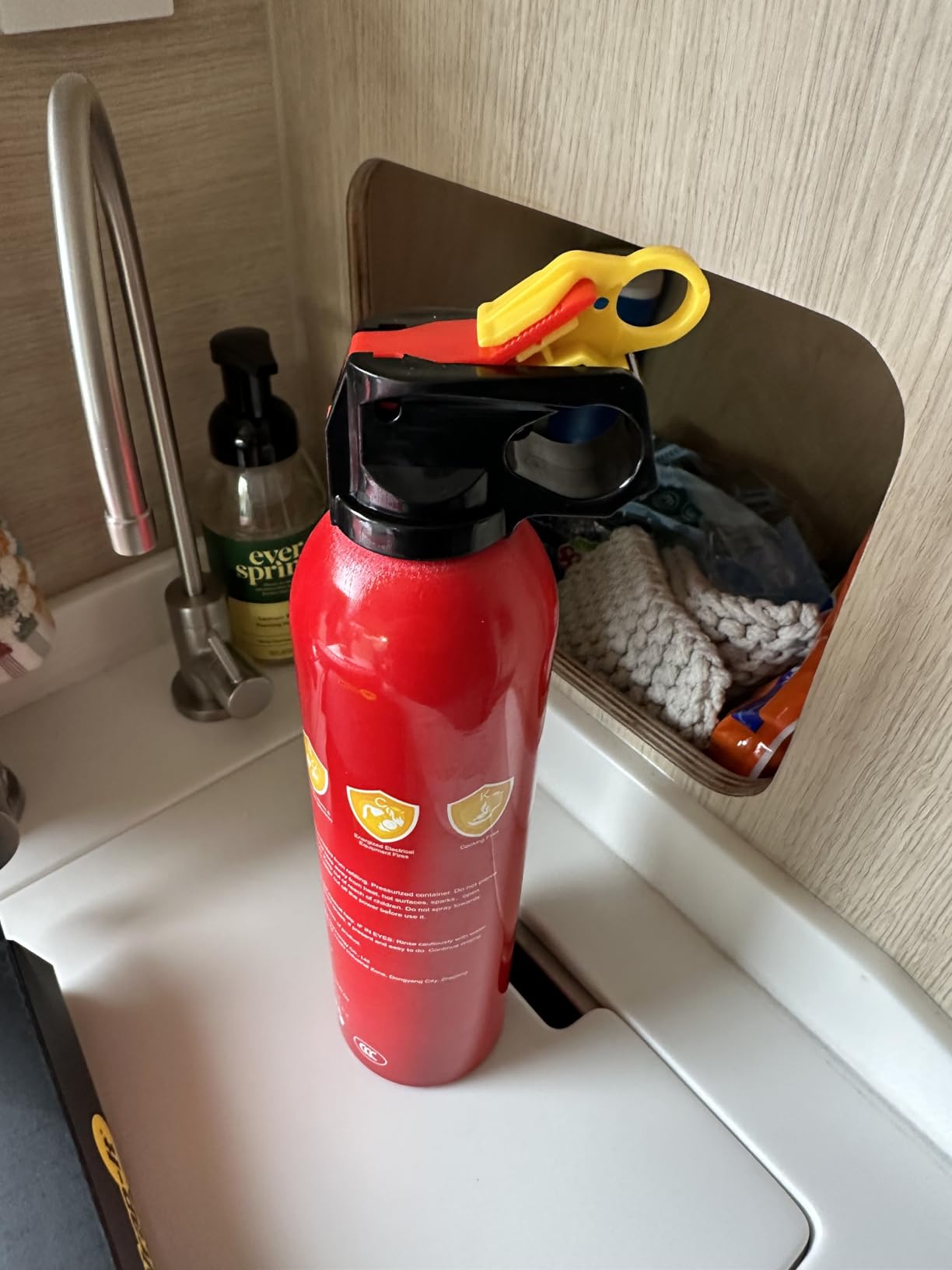
The POPFRO unit is the compact, non-toxic option, and its water-based biodegradable formula is the reason to consider it at all. It is rated A, B, C and K, so cooking oil and textile fires are both covered, and it leaves no residue after discharge.
That combination matters in specific kitchens. If you cook in a small space where a powder discharge would coat everything in abrasive chemical, or you want something you can store near a food prep surface or in an RV, the trade is worth weighing.
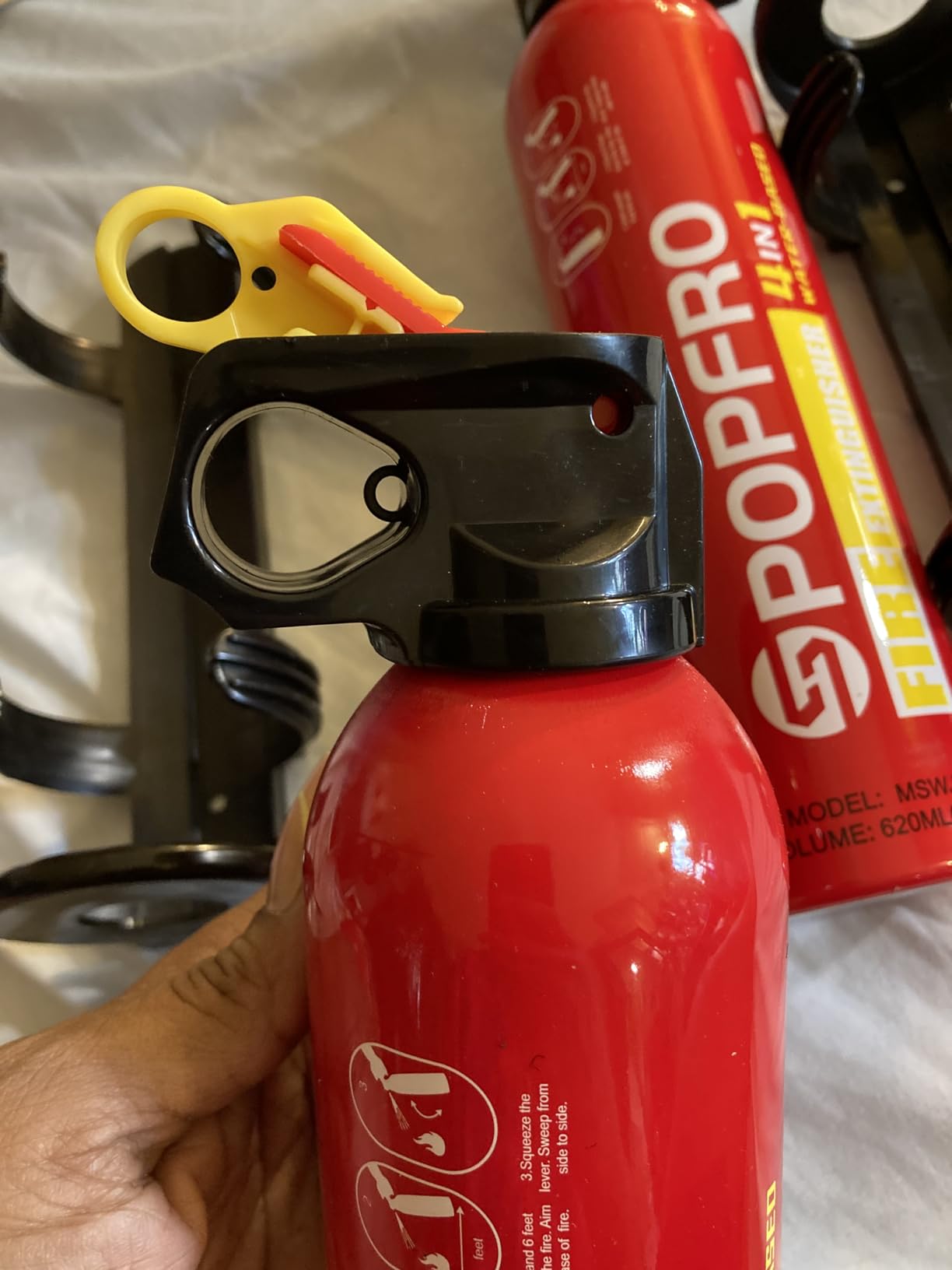
Spray distance runs beyond thirteen feet, so you can attack a flame from a safer position than a compact canister normally allows. At 1.85 pounds and 2.6 inches wide, it mounts in tight vehicle and RV spots that will not take a 3-inch cylinder.
Owners like the low cost, the compact size and the residue-free formula, and several mount them in vehicles, RVs and campers. The most common complaint is the adhesive-backed holder losing its grip after a couple of days, so most buyers switch to screws.
It is a disposable product and cannot be refilled, and the capacity suits small fires only. Treat it as the unit in the RV or the boat, not the unit protecting the range.
Is a water-based formula safe on appliances and electronics?
It leaves no chemical residue, which is the main advantage over monoammonium phosphate. Because the agent is water-based and non-toxic, cleanup is a wipe-down rather than a vacuum and scrub. Weigh that against the smaller charge, which is the trade you accept here.
Should I still use screws instead of the included holder?
Yes. Adhesive mounts on a painted or textured wall, on a cabinet side or in a vehicle lose adhesion faster than owners expect, and an extinguisher that has fallen to the floor when you need it is the same as no extinguisher. Drill it in or zip-tie it to a bracket.
ABC vs BC Fire Extinguisher for a Home Kitchen: The Verdict
Buy ABC for the primary kitchen unit. The A rating covers the ordinary combustibles that appear in every kitchen, from a dish towel and a paper towel roll to a wooden cutting board and plastic containers, and the B rating covers the cooking oil and flammable liquids that cause most kitchen fires. The C rating adds live electrical equipment, which is exactly what a toaster oven or a kettle fire produces. A BC-only unit is genuinely better on residue and weight, and genuinely worse on everything that is not a liquid or a wire.
The case for BC in a kitchen comes down to two things: smaller and lighter, and less corrosive residue. Both are real. The case against is a single sentence: the fires that start in a kitchen are not only grease fires. A towel catching light from a burner is a Class A fire, and a BC canister will not touch it.
Our recommendation is a two-unit setup if the budget allows it. A 2.5-pound ABC unit on the kitchen exit path handles the full range of realistic risks, and a small BC or water-based unit covers the spaces you cannot reach in time, such as a garage, an RV or a boat galley. If you only buy one, buy the ABC.
Fire Class A, B, C and K Explained for Kitchen Fires
Reading an extinguisher label comes down to knowing which class of fuel you are facing. The rating printed on the can tells you which classes the agent is tested against.
Class A is ordinary combustibles: wood, paper, cloth, cardboard, plastics and trash. In a kitchen it is the dish towel, the paper towel roll, the wooden board and the packaging on the counter.
Class B is flammable liquids: cooking oil, grease, gasoline, solvents and paint thinner. This is the pan fire and the grill fire.
Class C is energized electrical equipment: a toaster oven, a kettle, a range with a live fault, a phone charger. Water conducts electricity, which is why a plain water unit will not do.
Class D is combustible metals such as magnesium and sodium. Rarely relevant at home.
Class K is cooking media: fats and oils. More on this below.
An ABC rating is the shorthand for covering the first three, and it is the standard home recommendation. A BC rating covers the two that cause most kitchen fires while leaving ordinary combustibles out.
Why you do not need a Class K extinguisher in a home kitchen
Class K units are wet chemical, and they are certified against cooking media in the volume of a commercial fryer. Testing standards are built around large-capacity vats of cooking oil, roughly 80 pounds of fat, which is a hazard a residential range does not produce.
They also carry trade-offs that make them poor home choices. Wet chemical is heavy, expensive per unit, and effective on a narrower target than people assume. A UL-rated ABC dry chemical canister covers a Class B grease fire adequately in a home setting, and it also covers the electrical and combustible cases that a Class K unit will not.
So the Class K label on a product is not a mark of kitchen suitability. It is a sign that the unit was certified for a specific commercial hazard. For a house, an ABC dry chemical unit is the correct answer.
What Size Fire Extinguisher Does NFPA Recommend for a Kitchen?
For residential use, NFPA guidance points to a minimum rating of 1-A:10-B:C for a home unit, with larger ratings recommended where the fire load is larger or the travel distance is greater. The number before the A is a multiplier on ordinary combustibles, and the number before the B is square footage of flammable liquid surface the unit can cover.
Each step up in the A number is a meaningful capacity increase rather than a rounding difference. A 1-A unit handles the ordinary combustibles in a typical room. A 2-A unit doubles that, and a 3-A unit triples it, which is why the higher-rated cans in this lineup are noticeably heavier.
For most kitchens, a 2.5-pound 1-A:10-B:C unit is the practical answer, and a 5-pound unit is worth the extra bulk if your cooking area is open to the living space. The number of square feet you cook in matters less than the distance from the extinguisher to the stove.
Travel distance is the spec most people skip. If the nearest canister is on the other side of the house or in a car in the garage, its rating is academic. Place the unit so an adult can reach it in seconds without crossing the path of the fire.
Where to Mount a Kitchen Fire Extinguisher and Where Not To
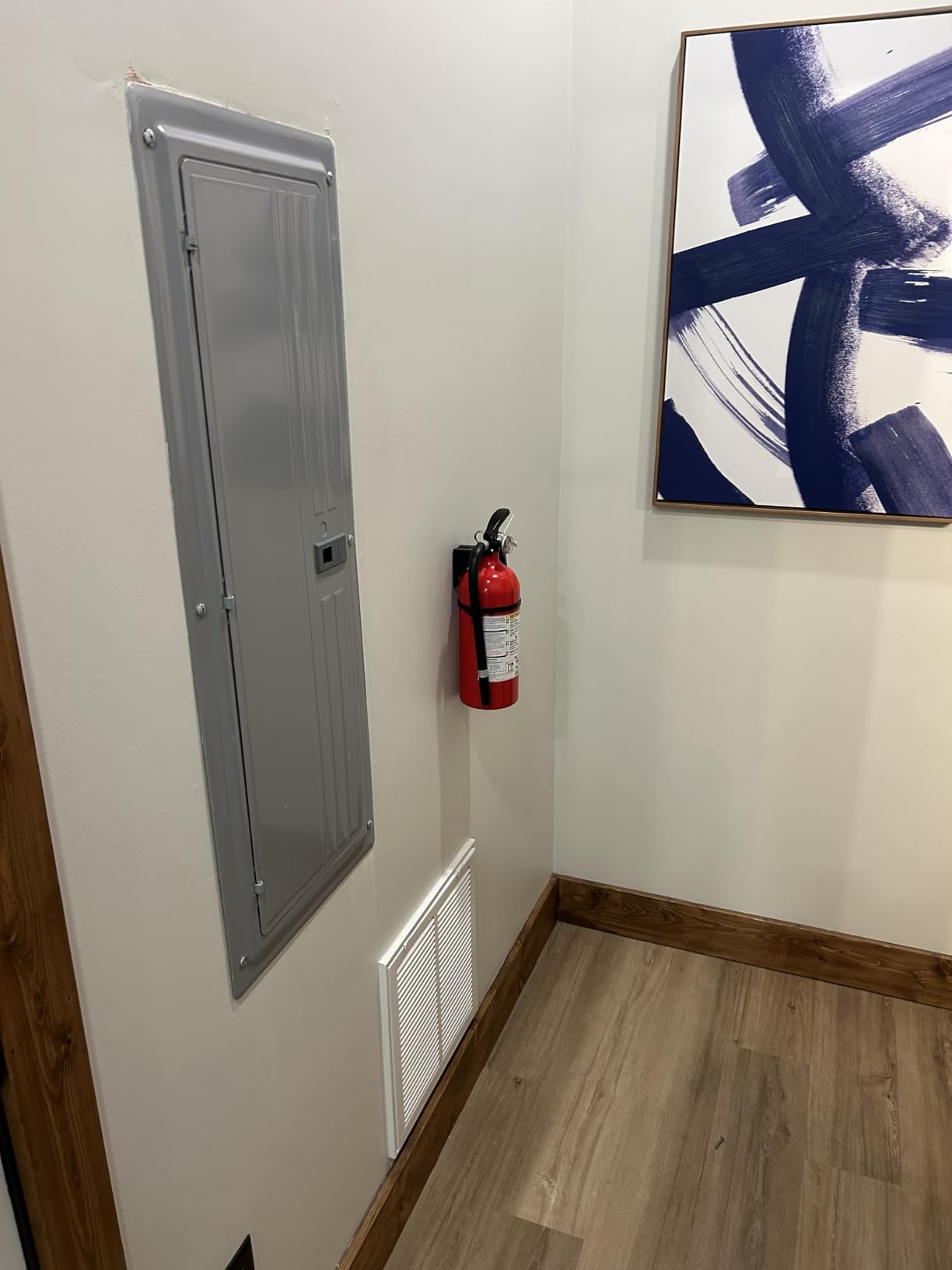
Mount it on the exit path from the cooking area, high enough that a child cannot pull the pin and low enough that an adult reaches it without a stool. Most guides put the top of the unit at about five feet off the floor for a household with young children.
Three locations get recommended repeatedly that you should avoid. Do not put it under the sink, because reaching down into a cabinet is slow and the cabinet is where a leaking supply line or a grease fire starts. Do not put it beside or above the stove, because that is the first place a fire reaches and the hardest place to retreat from. Do not put it behind the kitchen door, because the door is usually open in a fire and can shield the container from your line of sight.
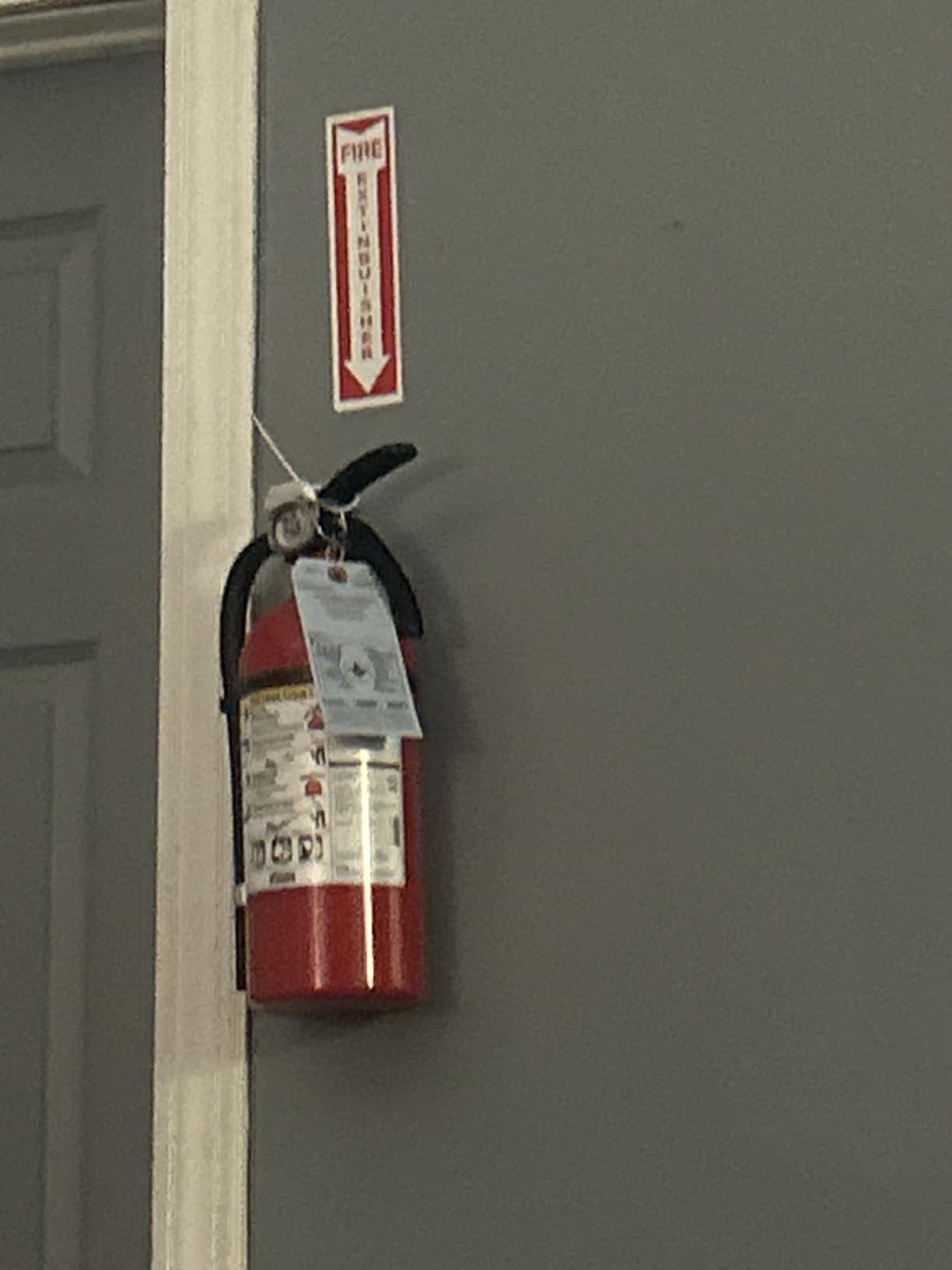
Two more practical notes. Secure the bracket into a stud or a masonry anchor rather than drywall alone, and consider a location decal above the mount so a household member who cannot see the unit knows where it is. Our pick of mounts, the Ougist FF1KG, includes a location arrow for exactly this reason.
How to Use a Fire Extinguisher on a Grease Fire: P.A.S.S.
Start with the pan, not the canister. If the fire is confined to oil in a pan, turn off the burner and slide a metal lid over the pan. Do not move the pan, because a burning stream of oil is far worse than a covered one. Let it cool before you lift the lid.
Never put water on a cooking oil fire. The water flashes to steam and can throw burning oil across the room, which turns a contained incident into a room-filling one.
When the extinguisher is the right tool, work the P.A.S.S. sequence.
Pull the pin. Break the tamper seal and pull the metal pin straight out. Aim low, toward the base of the fire.
Aim at the base of the flames. Squirting at the flames themselves does nothing useful.
Squeeze the handle to start the discharge. Dry chemical discharges in eight to fifteen seconds, so there is no time to experiment.
Sweep side to side across the base of the fire, moving toward it as the flames die down. Keep your exit behind you.
Know when to stop. If the first canister empties and the fire is still growing, get out and close the door behind you. Call the fire department from outside. An extinguisher is for a fire you can approach, not for a room you cannot breathe in.
Fire Extinguisher Maintenance, Inspection and Replacement Schedule
Check the gauge monthly, and it takes ten seconds. The needle should sit inside the green zone. If it has dropped into the red, the unit is not going to work, whether or not it has ever been used.
A monthly gauge check is the only inspection most home canisters need. You will also see canister-style extinguishers described as needing a monthly shake to keep the propellant mixed, but manufacturers push back on that advice and one leading supplier has published guidance calling it ineffective and potentially damaging. A calendar reminder is the safer habit.
Disposable residential canisters follow the warranty period printed on the label, commonly six years, and should be replaced on that schedule regardless of the gauge reading. Rechargeable metal-valve units with a commercial-grade valve should be serviced by a certified professional annually, and the manufacturer warranty is usually ten or twelve years.
When a rechargeable unit has been discharged, send it for recharge rather than buying a new one. The economics work over a twelve-year life: a rechargeable unit serviced once can cost less over its lifetime than four or five disposable replacements.
Disposal after a partial discharge follows the same logic. A nearly full disposable canister usually goes to household waste once the local service confirms it, because pressurized cylinders and any remaining agent need to be handled as instructed by your waste service. A professional extinguisher service company is the right call for a discharged rechargeable unit.
One last purchasing tip. Transit damage is real enough to be worth thinking about, and a canister that has partly discharged in a shipping box will arrive with a gauge in the red. Where you can, pick up in person and check the gauge and pin seal before you leave.
Frequently Asked Questions
What type of fire extinguisher do I need for my kitchen?
A UL-listed ABC dry chemical extinguisher rated at least 1-A:10-B:C, holding 2.5 to 5 pounds of agent. The B rating covers cooking oil and grease, the C rating covers live electrical equipment from a toaster oven or kettle, and the A rating covers dish towels, paper and wood.
Should I have an ABC or BC extinguisher in the kitchen?
ABC. The BC-only case rests on being lighter and less corrosive, but it cannot handle Class A fires such as a dish towel or wooden board catching light from the burner. A 2.5-pound ABC unit covers the full realistic range of kitchen risks.
Is a Class K fire extinguisher needed in a home kitchen?
No. Class K wet chemical units are certified against cooking media in commercial fryers, around 80 pounds of cooking fat, which a residential range does not produce. They are heavy and narrow in application. For a house, an ABC dry chemical unit is the correct answer for a grease fire.
Where should I put a fire extinguisher in my kitchen?
On the exit path from the cooking area, with the top of the unit about five feet off the floor so a child cannot pull the pin and an adult can reach it without a stool. Never under the sink, never beside or above the stove, and never behind a door that opens toward the kitchen.
What does the pressure gauge mean on a fire extinguisher?
The needle should sit inside the green zone, which means the unit is pressurized and ready. In the red zone the pressure has dropped and the extinguisher will not deliver its agent, so it needs replacing or professional service. A monthly glance at the gauge is the whole inspection most home units need.
Can fire extinguishers expire and how do I dispose of a used one?
Yes. Disposable residential canisters should be replaced on the warranty period printed on the label, commonly six years, even if the gauge still reads green. A discharged rechargeable unit should go to a certified professional for refilling. A partly full disposable canister goes to household waste once your local waste service confirms how to handle it.
Our Final Kitchen Fire Extinguisher Picks
The First Alert HOME1 is our top pick of the best fire extinguishers for kitchens in 2026. Its 1-A:10-B:C rating covers every realistic kitchen fire type, the all-metal body and valve feel like the right hardware for an emergency, and the rechargeable design means one canister can serve a household for years rather than months.
Buyers on a tighter budget should take the Kidde Basic 110, which trades the recharge path for a lighter body and an even larger owner base. Serious cooks running an open-plan kitchen will want the Amerex B500 for its five-pound charge and fourteen-second discharge, and anyone who wants zero powder on their counters should add a water-based unit as a secondary layer.
Whatever you choose, mount it on the way out of the kitchen, check the gauge every month, and practise the four steps until they are automatic. An extinguisher you have never picked up before is not yet a plan.