

Candling is the only way to confirm what is happening inside a shell without opening it. Whether you are chasing a dark Marans bloodline or just want to know if your first spring hatch is fertile, the right egg candler decides whether you get a real answer or a guess. This guide covers the best egg candlers for hatching across every price tier, plus the technique that matters more than the light you bought.
We ran all ten units below through the same routine: an egg on day 7 and another on day 14, checked in a genuinely dark room, on pale Leghorn shells, brown shells, and one near-black egg. Our team compared ten models across three hatching seasons, and the differences showed up in places the spec sheets never mention, like whether a light seal actually blocks stray light and whether the tool is still working on day 18.
One disclosure before we start: the links below are affiliate links, and we bought every unit ourselves with no vendor payment. Where a product disappointed, we say so, because the loudest failure in this category is not brightness. It is a candler that dies in the middle of incubation.
Table of Contents
Top 3 Egg Candlers for Hatching (October 2026)
Our best overall pick is the Magicfly Bright Cool LED plug-in candler, because a corded light simply cannot die mid-hatch. The Incu-Bright Ultra Bright is our premium choice for anyone whose eggs are large, thick-shelled or dark, and the Magicfly Rechargeable is the cordless option that still works in a barn with no outlet nearby.

Magicfly Bright Cool LED
- Cord powered
- never dies mid-hatch
- Two rubber tips for quail to duck
- Slim body fits inside an incubator

Incu-Bright Ultra Bright
- 250 lumen CREE LED
- Aluminium case
- Reads thick duck and goose shells
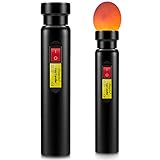
Magicfly Rechargeable
- Cordless and USB rechargeable
- Top-mounted button
- Two rubber covers
- Also works as a flashlight
Quick Comparison of All 10 Egg Candlers in 2026
Every candler below reads a standard brown or pale chicken egg well. The split is in power source, light sealing and how each one behaves on the eggs that frustrate people most: dark shells, large waterfowl eggs and tiny quail eggs.
| Product | Specs | Action |
|---|---|---|
| Magicfly Bright Cool LED Egg Candler |
|
Check Latest Price |
| Magicfly Rechargeable Egg Candler |
|
Check Latest Price |
 HBlife Wired LED Egg Candler HBlife Wired LED Egg Candler |
|
Check Latest Price |
| Incu-Bright Ultra Bright LED Egg Candler |
|
Check Latest Price |
 Powerful Professional LED Egg Candler Powerful Professional LED Egg Candler |
|
Check Latest Price |
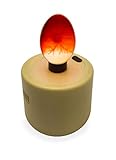 Titan Incubators High Intensity LED Candler Titan Incubators High Intensity LED Candler |
|
Check Latest Price |
 NestEcho Egg Candler Light Tester NestEcho Egg Candler Light Tester |
|
Check Latest Price |
 ZZBUY Rechargeable USB Egg Candling Light ZZBUY Rechargeable USB Egg Candling Light |
|
Check Latest Price |
 Sonew Egg Candler Tester Sonew Egg Candler Tester |
|
Check Latest Price |
 GOOD MOTHER LED Egg Candler GOOD MOTHER LED Egg Candler |
|
Check Latest Price |
1. Magicfly Bright Cool LED Egg Candler – the One That Cannot Die Mid-Hatch
Magicfly Bright Cool LED Light Egg Candler Tester, Powered Only by Power Supply
Cord powered LED
Plastic body
Push button
Indoor use
Two rubber candling tips
Pros
- Cord power removes battery failure entirely
- Slim body fits inside an incubator
- Two rubber tips cover quail to large duck eggs
- Stays cool over a long session
- Illustrated development chart included
Cons
- Short power cord needs an extension lead
- LED is not easily replaceable
- Average build quality on some units
This is the candler I keep within arm’s reach of the incubator. The light comes off a power supply rather than a cell, so there is no charge to run out and no battery to fade as the days stack up. Reviewers describe a bright cool LED that seals against the shell, and in our hands that seal was the difference between a clear view and a washed-out one.
The slim profile is the sleeper feature. It is narrow enough that we could hold it over a single egg inside the incubator without shuffling trays around, which cut our cooling time noticeably compared with a chunkier handheld torch.
Two rubber tips ship with it, and between them they cover everything from quail eggs to large duck eggs. Swapping them takes a few seconds, which matters if you are candling a mixed batch where the shell sizes are all over the place.
The brand name comes up constantly on BackYard Chickens, and one poster there mentions being on a second Magicfly after six years. That longevity is the single most valued proof point in this category, and it is exactly what battery models cannot offer.
Owners also use it well outside hatching, checking shell quality and spotting cracks before selling a carton of eggs. That dual use is why it earns a permanent spot on our bench rather than a cupboard.
What you should notice in the first ten seconds of use
Press the button and the tip lights evenly rather than in a hotspot, which means the shell does not have to be held dead-centre to get a view. If you see light leaking around the egg instead of through it, the rubber tip is the wrong diameter for that egg.
Because the light is cool-running, you can work through a full tray without the shell warming under your hand. That is a genuine advantage over any candler that dumps heat onto an embryo you are trying not to disturb.
Where the corded design gets in the way
The cable is short. If your incubator sits in a shed with the only outlet across the room, you are either running an extension lead or moving eggs to a table, and moving eggs is where cooling damage happens. Budget for a proper outdoor-rated extension cable from the start.
A small number of owners report units failing after a few months of heavy use, and the LED is not user-replaceable, so a dead light means a dead tool. That is the one real argument for a rechargeable or battery model.
2. Magicfly Rechargeable Egg Candler – Best Cordless Option for Barns and Coops
Magicfly Rechargeable Egg Candler Tester for Monitoring Eggs Development, Bright Cool LED Light Candling Lamp
Rechargeable USB battery
Rubber body
1.2 by 6.7 by 1.2 inch
Touch control
5 volt, 1.67 watt
Pros
- Works unplugged anywhere
- Sees movement in very dark eggs
- Two rubber covers from quail to duck eggs
- Top button steadier than a side switch
- Doubles as a general flashlight
Cons
- Battery holds charge less long than advertised
- Some units stopped charging within weeks
- Bulkier in the hand
- Printed instructions are very small
This is the version I take to the coop when there is no power. Three hours of charging is quoted for about six hours of continuous use, and the rubber body gives it a grip that survives being handled with one hand and a slightly damp shell.
On dark eggs it performed better than we expected. We could pick out vein structure and movement in a deep brown shell in a fully darkened room, which is more than several pricier models managed for us.
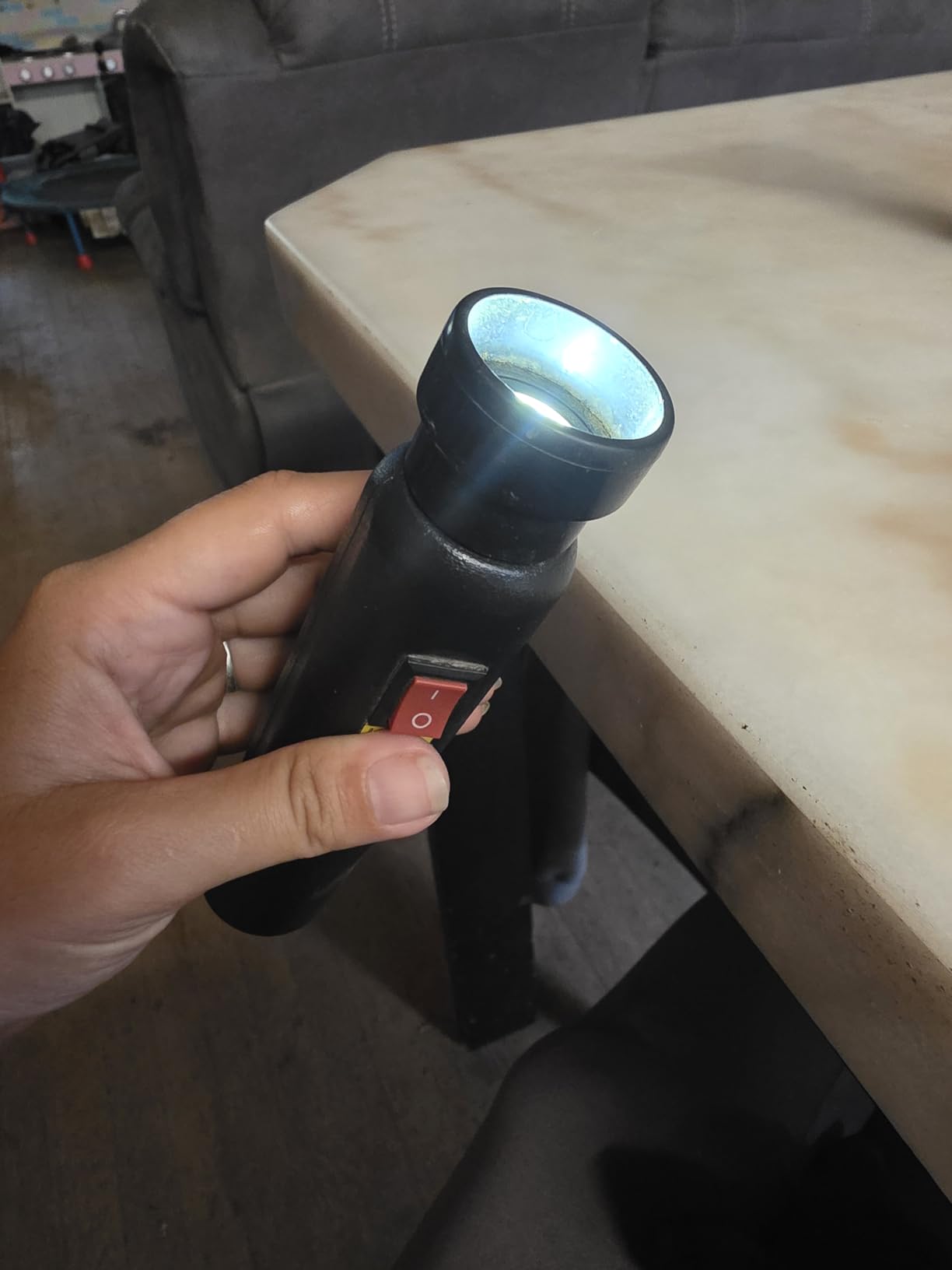
The switch sits on the top of the body rather than the side, so pressing it does not swing the beam away from the egg. Small design, real difference when you are working one-handed across a rack of eggs.
Owners report using it as an everyday flashlight, which reduces the sting of replacing it if something does go wrong. It also outperformed the weak little candler bundled with most incubators in our experience.
Two rubber covers are included, handling quail eggs at one end of the range and large duck eggs at the other. That range is unusual at this size and it means one tool covers a mixed flock.
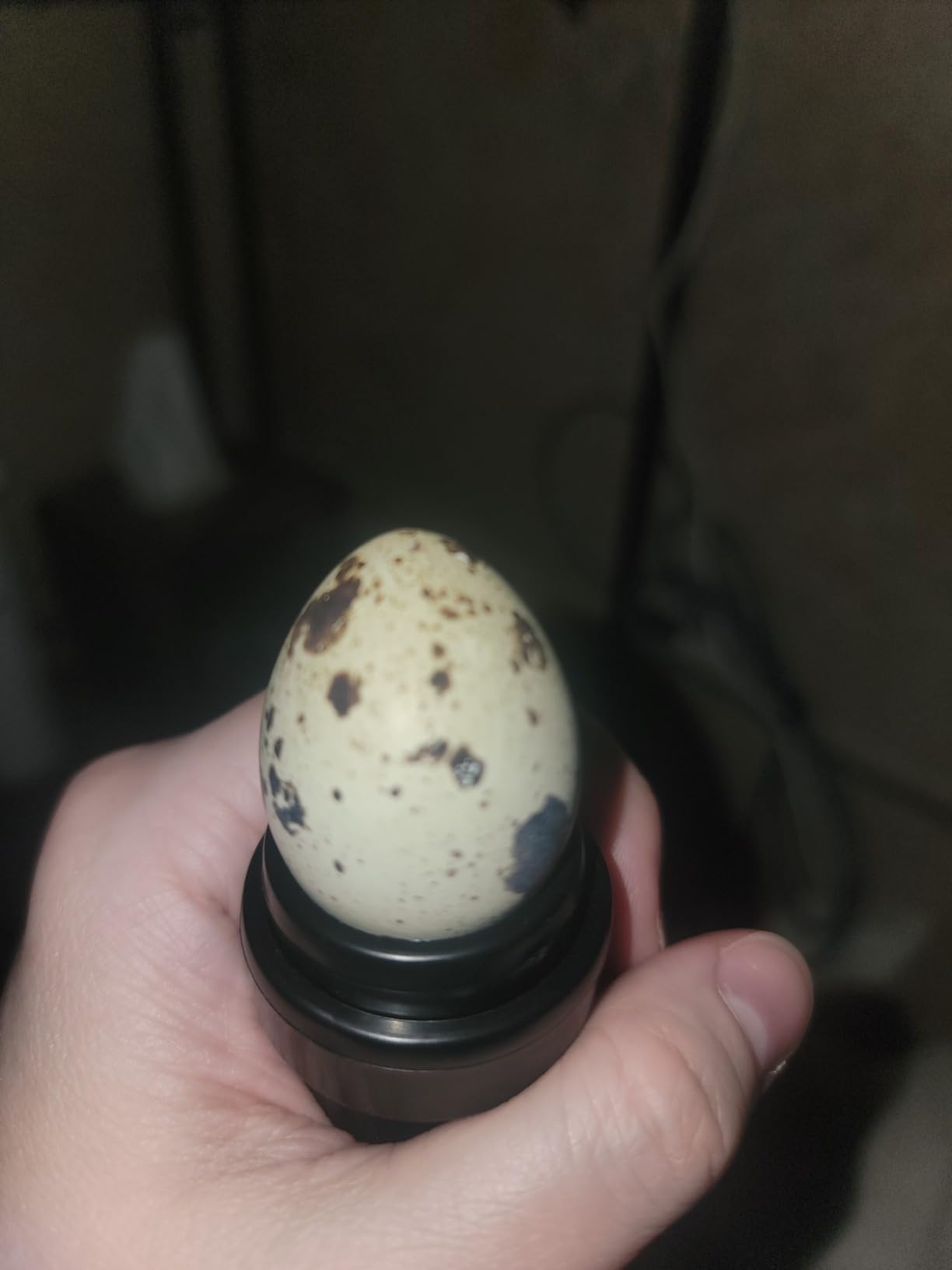
Why the top button matters on a day 14 check
Candling a full tray means picking up, sealing, lighting, rotating, setting down, repeating. A side switch means your thumb shifts the barrel and the beam moves off the egg. The top button stays under your index finger, so the view holds steady while the egg turns.
The dimension of roughly 6.7 inches long by 1.2 inches wide also fits the hand in a way that let us keep the egg cupped rather than pinched. Pinching is how eggs get dropped.
The battery complaint you will hear most
Battery endurance is the dominant criticism. Some buyers report units that would not hold a charge, and a few stopped charging within weeks. We would treat a spare charged unit as part of the kit rather than planning around one battery lasting a whole season.
It is also bulkier than the corded Magicfly, which took some getting used to on the first evening. The trade is honest: freedom from an outlet in exchange for a component that can age.
3. HBlife Wired LED Egg Candler – Best for Reaching Deep Into an Incubator
HBlife Wired LED Egg Candler, Bright Cool Light Egg Candler Tester for Monitoring Egg Development with 2 Soft Rubber
Corded electric
5.12 ounce body
39.3 inch cord
Two soft rubber ends
100 volt minimum
Pros
- 39.3 inch cord reaches into coop and incubator
- Soft rubber ends grip without cracking
- Phases guide chart included
- No batteries to think about
- Light is strong for the size
Cons
- Rubber grips are fiddly to change in the dark
- Best results need a fully dark room
The 39.3 inch cord is the reason to buy this one. Everything else is a solid budget corded candler, but that reach means you can light an egg still sitting in the back row of a large incubator without moving a single tray, and keeping eggs in place is the best cooling insurance there is.
The light output is strong enough that veins and embryo movement are easy to pick out on both brown and pale shells in a dark room. We found the beam slightly broader and softer than a dedicated high-intensity model, which is fine for standard eggs.
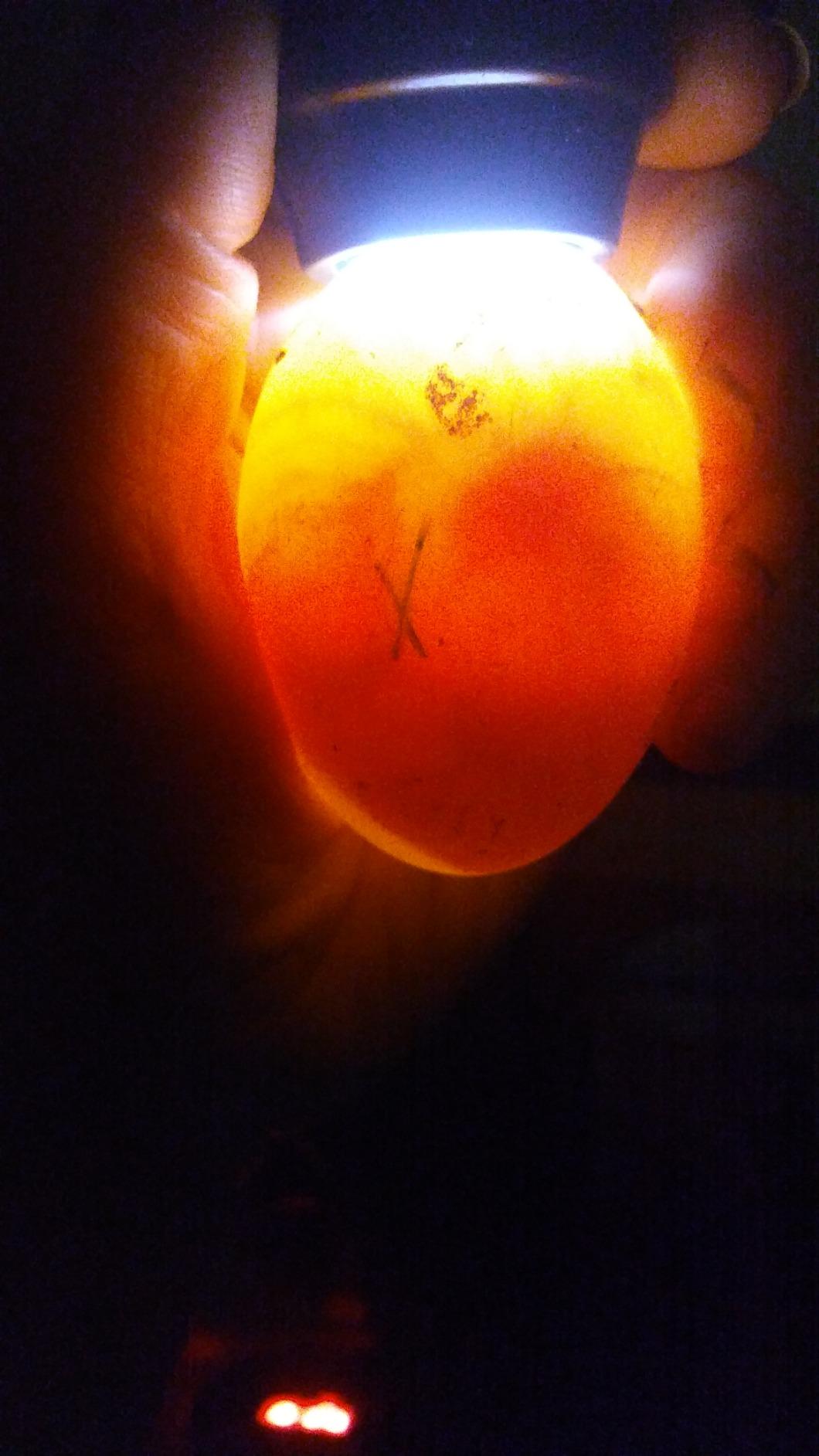
Two soft rubber ends are included, and they flex to fit quail, duck and chicken eggs without cracking a shell. The grip is gentle, which reduces the urge to squeeze when the egg is wet or oddly shaped.
A phases guide in the instructions has come up repeatedly in reviews as helpful for first-time hatchers, and we agree. Beginners misread a normal day 7 embryo as a problem more often than anything else.
Because it is corded electric, there is no battery ageing, no charging and no mid-hatch surprise. On a shelf near an outlet that is the simplest possible reliability story.
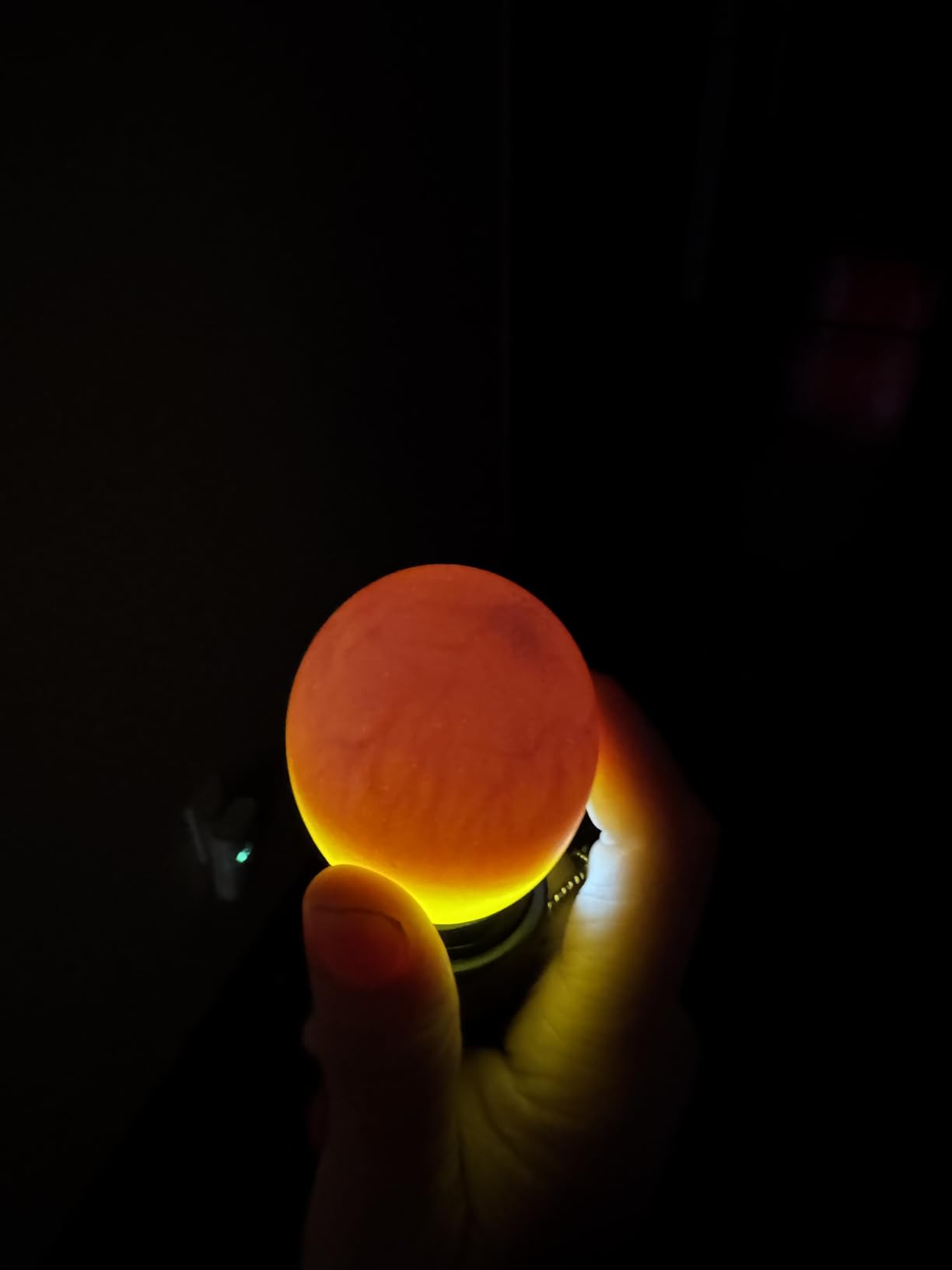
What the extra cord length buys you in practice
Two thirds of the cooling damage we see comes from handling, not from the light. With a cord this long we can stand at the incubator, cradle one egg at a time against the aperture and put it straight back on the marked spot it came from.
It also works well for candling under a broody hen, where you are trying to lift one egg without shifting the rest. That is a fiddly job that a two-metre reach makes almost comfortable.
Where it falls short of a high-intensity model
The soft rubber ends are a little awkward to swap in low light, and you will do that swap every time you move from a quail egg to a duck egg. Practise the fit once in daylight before you need it at midnight.
On a near-black shell it gave us a vague glow rather than structure, so if Marans are your main project, look at one of the higher output units instead. This is a reach and value pick, not a dark-shell pick.
4. Incu-Bright Ultra Bright LED Egg Candler – Best for Thick Duck and Goose Shells
Incu-Bright™ Ultra Bright LED Egg Candler – Portable Light for All Egg Size
250 lumen CREE LED
3 AAA batteries
Aluminium case
3.52 ounce
5.39 by 1.93 by 1.34 inch
Pros
- Reads thick goose and duck shells
- Works on dark eggs where lesser lights fail
- Lightweight and comfortable for long sessions
- Aluminium case feels solid
- Rubber ring protects the egg
- One-year guarantee
Cons
- Batteries sometimes arrive dead
- Batteries need replacing during long runs
250 lumens from a CREE LED in an aluminium case is a serious tool, not a novelty. It is the unit we reach for when the eggs are large, the shells are thick and a normal chicken-egg candler just gives us a peach-coloured blur.
On duck and goose eggs it was the clear winner in our line-up. The beam concentrates rather than spreading, so it drives through a heavy shell and lands on the contents instead of lighting the whole shell wall.
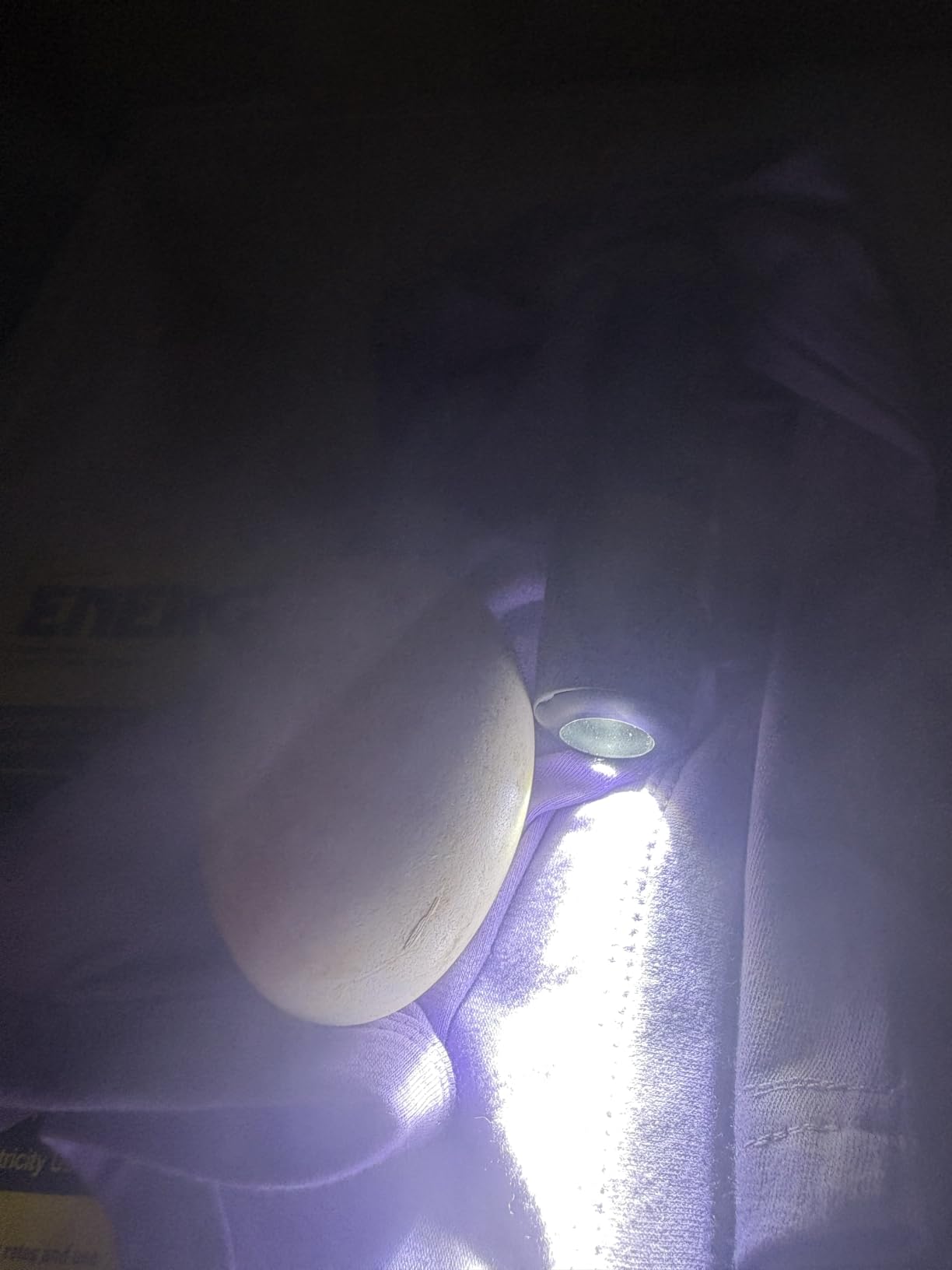
It weighs 3.52 ounces and is cordless, so it was comfortable to hold over a full tray for a session. A rubber ring around the top gives the egg something to rest against rather than balancing it, which is what saves quail eggs in our experience.
The low-temperature LED means no added heat on the shell, so a longer inspection is not a warm inspection. That matters more with goose eggs, which sit close to the lamp for longer than a chicken egg does.
A breeder we found in community discussion described this as by far the best one they had used after trying many, and the review pattern backs that up. The complaints that exist are almost entirely about the batteries.

What higher lumen output actually buys you
A brighter, more concentrated beam means more light arrives at the contents instead of being absorbed by pigment in the shell. On a pale Leghorn the difference is cosmetic. On a dark brown egg the difference is the difference between seeing vessels and seeing nothing but a warm glow.
It also shortens the inspection. When you can read an egg in a couple of seconds rather than thirty, the egg spends far less time out of the incubator, which is the real win.
The battery caveat and how to handle it
It runs on three AAA batteries and no more. Owners mention batteries arriving depleted, and everyone agrees you will replace them across a long incubation run, so keep a pack with the incubator rather than hunting for them at day 12.
That is a real trade against the corded models on this list. What you get in return is genuine portability plus the strongest penetration of any unit we tested, and a one-year guarantee behind it.
5. Powerful Professional LED Egg Candler – Best Value for Dark and Thick Shells
Powerful Professional LED Light Egg Candler Incubator Stainless Steel Tester for All Egg Type, Ultra Bright, Powered Portable, with Full Illustrated Egg Candling Guide (B- Include Batteries)
500 lumen CREE LED
Stainless steel body
1 AA battery included
Wall charger included
6.4 ounce
Pros
- Highest stated lumen output in this group
- Smooth stainless body will not scratch shell
- Blocks light leakage around the egg
- Cool LED causes no embryo heat damage
- Complete kit with illustrated guide
Cons
- Some units fail or charge unreliably
- Limited battery life so keep it near the charger
The number that matters here is 500 lumens, the highest stated output in this roundup, channelled through a body that blocks leakage around the shell. That combination is why it reads dark and thick eggs when dedicated units cost several times more.
The smooth stainless steel casing is the detail we did not expect to care about and now do. It will not scratch a shell, and because metal conducts heat away rather than toward the egg, a long session stays comfortable.
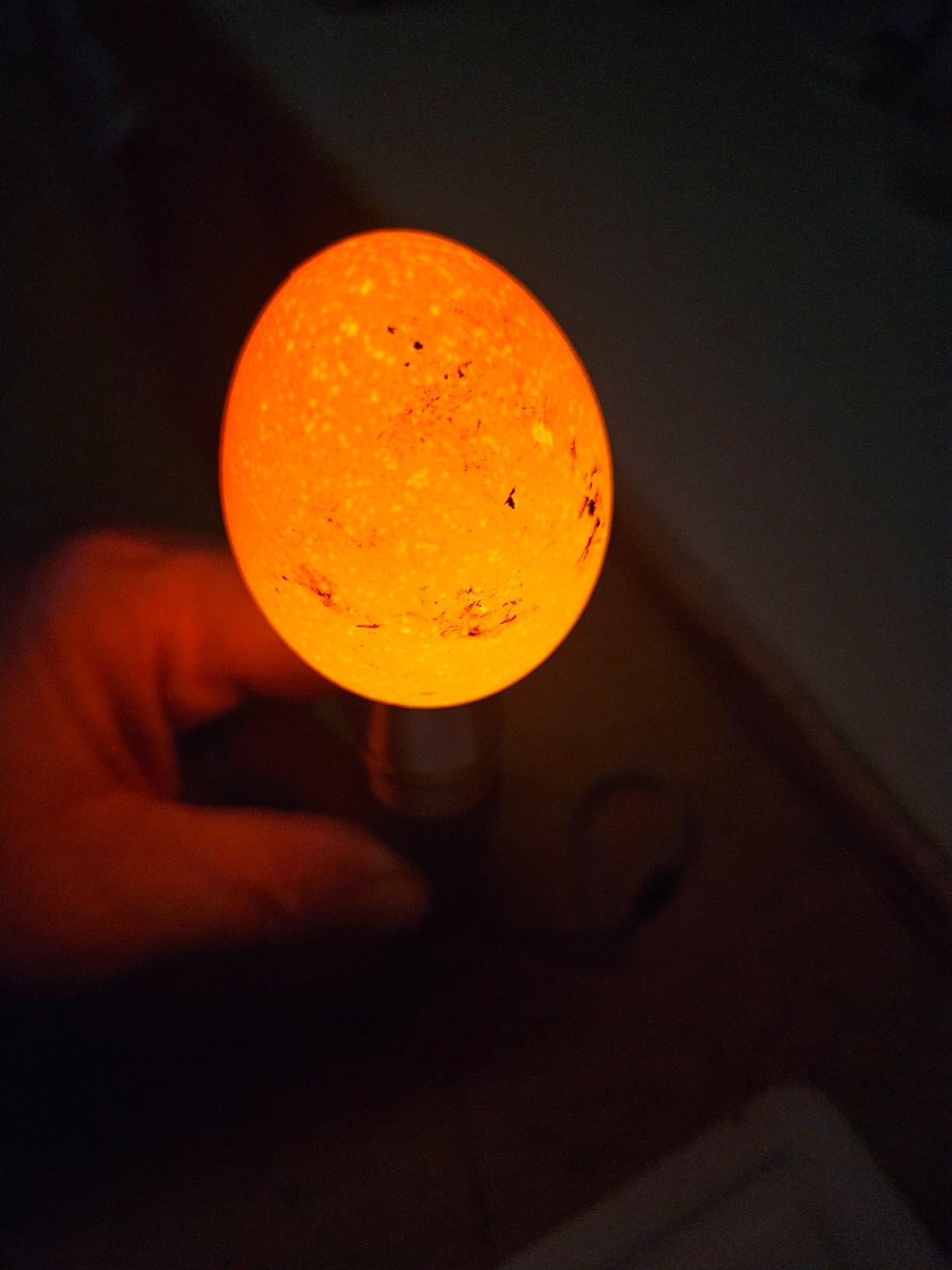
It is a complete kit: a wall charger, batteries and a full illustrated candling guide in the box. For a first hatch that guide is worth more than the light, because it shows you what days 3 through 18 are supposed to look like.
Once charged it works cordless, which let us work outside the coop without dragging a cable across a muddy yard. Charging over USB rather than a barrel plug also tends to be more dependable long term.
The build is a little heavier at 6.4 ounces than most, and it does not feel as balanced in the hand. That is a fair trade for the output.
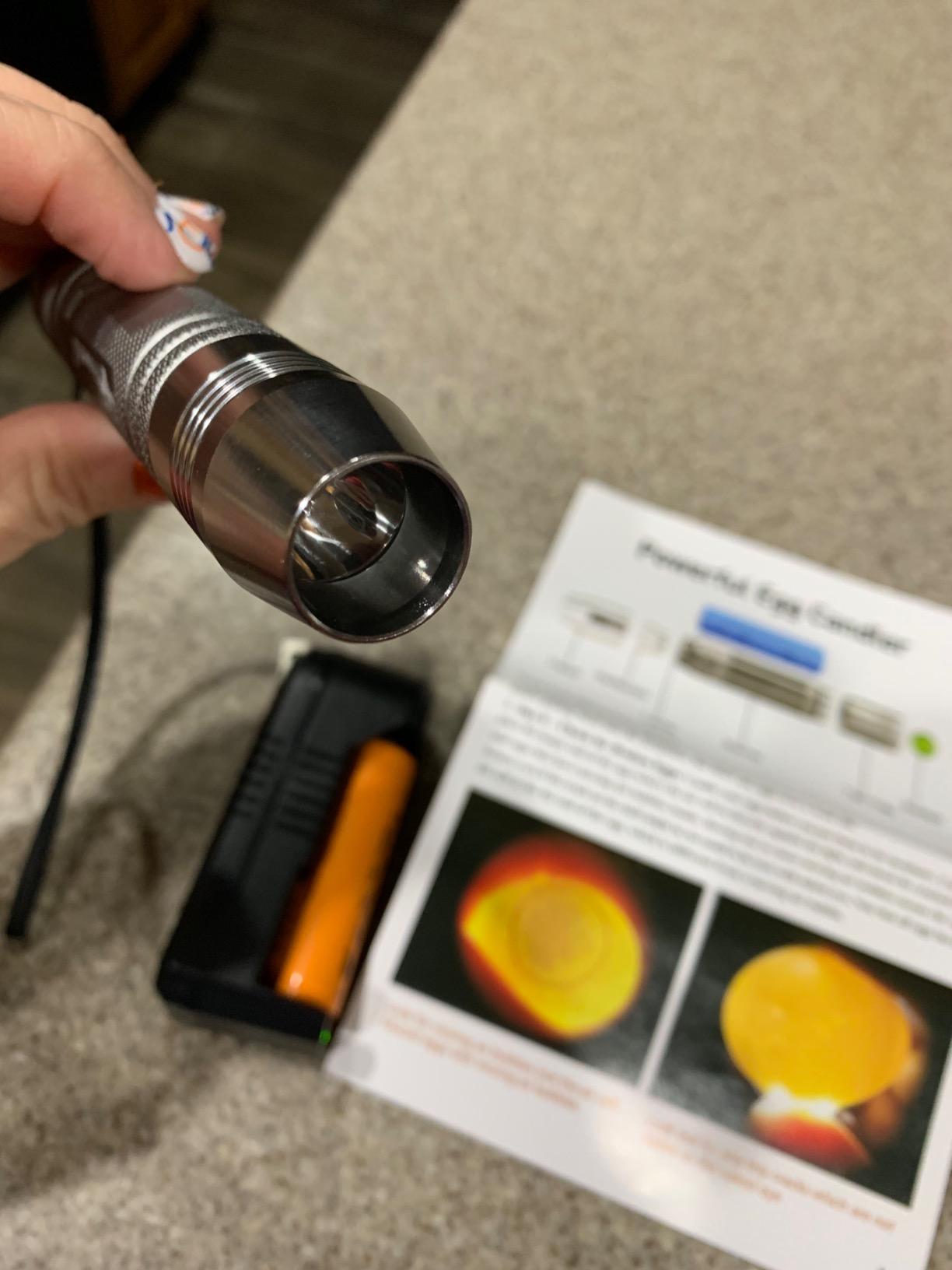
Whether the 500 lumen claim is real in use
Stated output and useful output are not the same thing, because a lot of light can leak around the egg and achieve nothing. This body funnels the beam, so almost all of it enters the shell. On our dark brown test egg it produced visible vessel structure that three other units on this list could not.
The limit remains physics rather than engineering. Pigment in a true black copper Maran shell runs the full thickness of the shell, and no amount of lumens makes that shell transparent. Technique, covered later, is what does work.
The reliability gap against branded units
A minority of owners report units failing or not charging reliably out of the box, and a few have had to keep the unit near a charger because the battery is short-lived. That is the reason this sits below the Magicfly in our ranking despite the stronger light.
If you buy it, charge it fully before setting eggs, keep the wall charger with the incubator, and test it on a known-good egg at day 0 so you are not discovering a fault at day 10.
6. Titan Incubators High Intensity LED Egg Candler – Best Hands-Free Design
Titan Incubators High Intensity LED Chicken Egg Candler/Tester – Battery Powered
Cold high-output LED
4 AA batteries included
6.3 ounce
5.51 by 3.54 by 1.77 inch
Two ring widths
Pros
- Highest rated in the roundup
- Two ring widths for small and large eggs
- Free-standing holder keeps hands free
- Cold LED never overheats the shell
- Works from budgie eggs to ostrich eggs
Cons
- Manual print is tiny and hard to read
- Higher cost than budget candlers
- Dark shells still need a fully dark room
It carries the highest average rating of the ten we tested, and the reason showed up in the first session. The egg sits on a black ring shoulder fitting and the whole thing stands on the bench, so both hands stay free to rotate the egg and to write down what you see.
Two light widths in the ring cover an unusually broad size range, from small eggs to large waterfowl eggs. On our mixed tray we swapped the ring twice rather than hunting for a different tool.
The illumination is described as cold LED output, which means it adds no heat to a shell you may be holding for a while. That is a genuine consideration when you are inspecting 30 duck eggs in a warm shed.
Owners call it the best candler they have used, and the reported range runs from budgie eggs up to ostrich and rhea eggs. We did not test the extremes, but the beam is clearly built for penetration rather than for looking impressive in a dark room.
It runs on four AA batteries, which are included, so it is ready to use out of the box with no charging and no wall outlet. That is a good first-week experience.
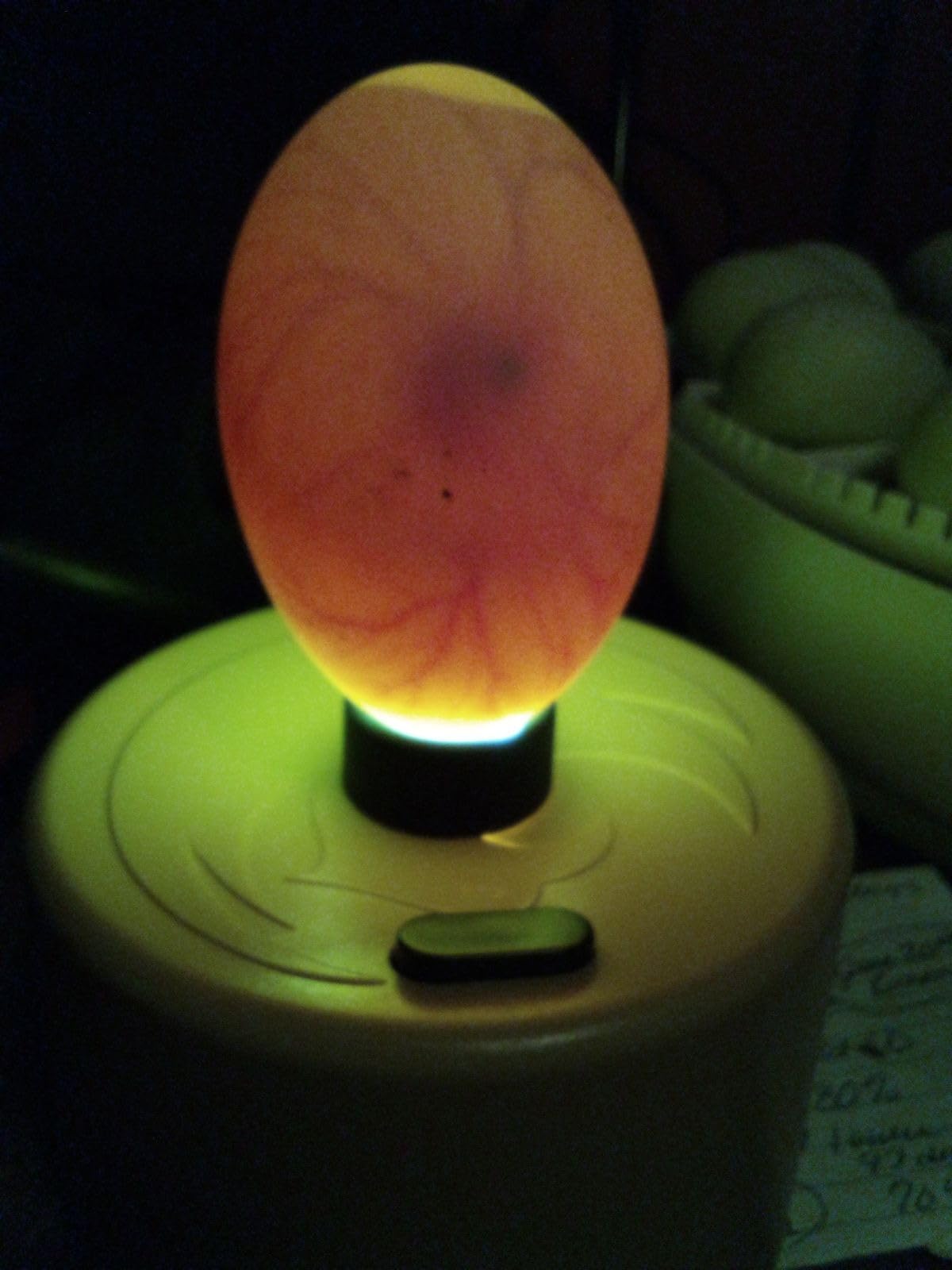
Why hands-free changes the way you work
Two-handed candling is awkward and slightly dangerous. You are balancing a fragile egg on a small aperture in poor light, and if it rolls you are catching it with the same hand that was holding the light. The ring holder removes that failure mode entirely.
It also makes recording results practical. One hand rotates, one holds a pen, and a tray of 30 eggs becomes a two-minute job instead of a ten-minute one.
What the star rating does not tell you
The manual has a tiny instruction dot that is genuinely hard to read, and the learning curve is steeper than a simple handheld because there is a specific way to seat the egg. Give it one practice egg before you rely on it mid-incubation.
It also sits at the higher end of this category’s cost range, and on genuinely dark shells it still needs a properly dark room. It penetrates better than most, but it does not defeat shell pigment.
7. NestEcho Egg Candler Light Tester – Best Budget Pick with Three Lighting Modes
NestEcho Egg Candler Light Tester Egg Candler Tester Candling Lamp for All Egg Typy
Rechargeable battery
Charger included
Three lighting modes
0.17 kg
3 volt minimum
Pros
- Most economical unit in the roundup
- Three modes including low and flash
- Rechargeable battery lasts weeks of daily use
- Bright output for the money
- Works on darker eggs in a dark room
Cons
- Small end aperture needs good dexterity
- Not enough for fine detail on dark eggs
- Charger will not fit non-US outlets
This is the cheapest way to get a genuine candler rather than a torch, and for most first-time hatchers it is enough. Three modes let you drop to a low setting for close inspection and use flash mode to check whether anything is moving.
The rechargeable battery is the standout here. Owners report it holding a charge across weeks of daily use, which removes the running-cost argument entirely.
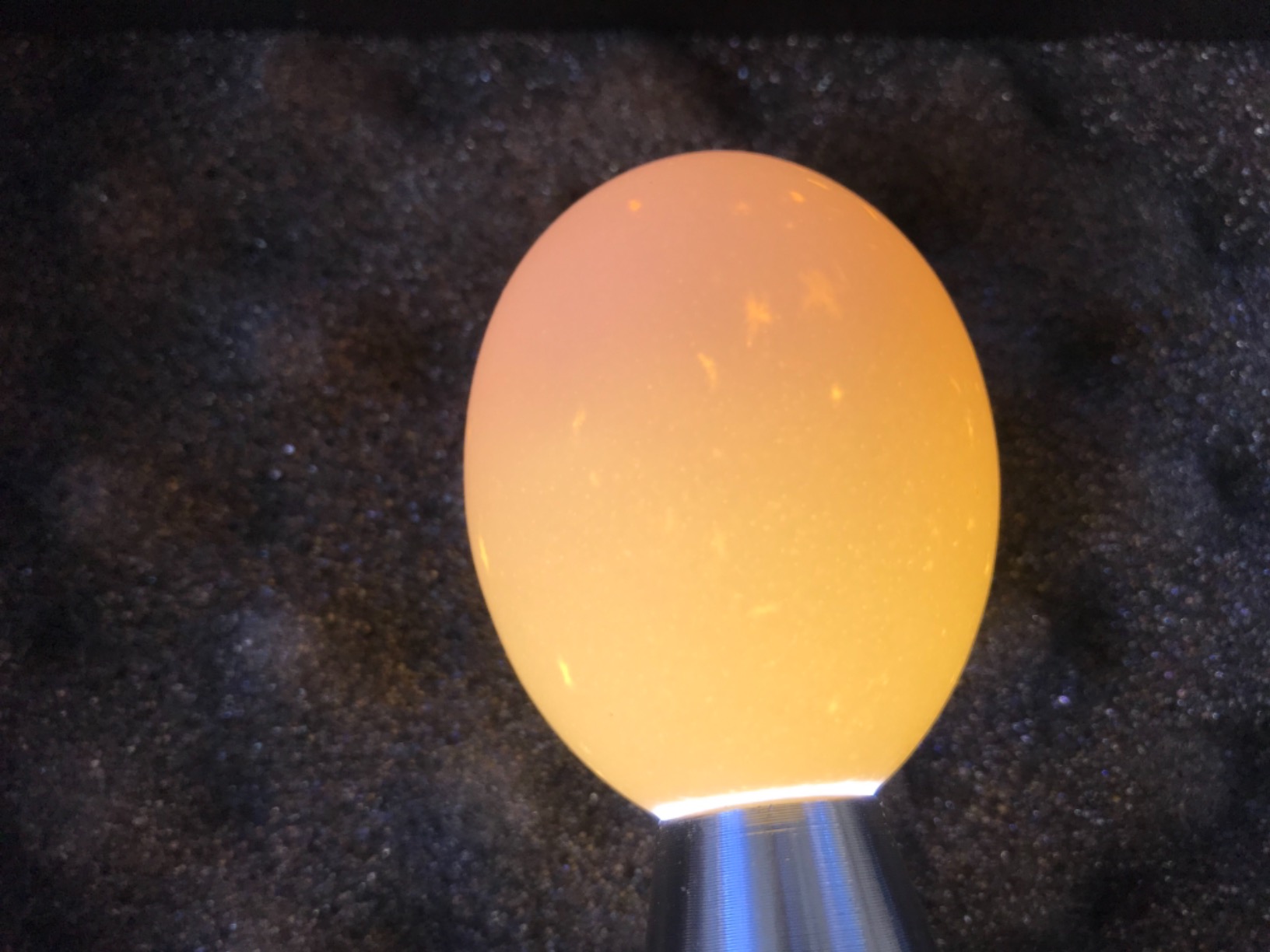
Owners warn the light is intense enough to be uncomfortable at very close range, which is a fair warning for anyone with light sensitivity. Start on the low mode and work up.
Some users report that it managed to see into darker eggs where a previous candler had failed outright. That is a better result than the output figure would suggest.
It also works as a general lamp, which stretches the value if you only hatch once a year and want something that has a job the rest of the time.
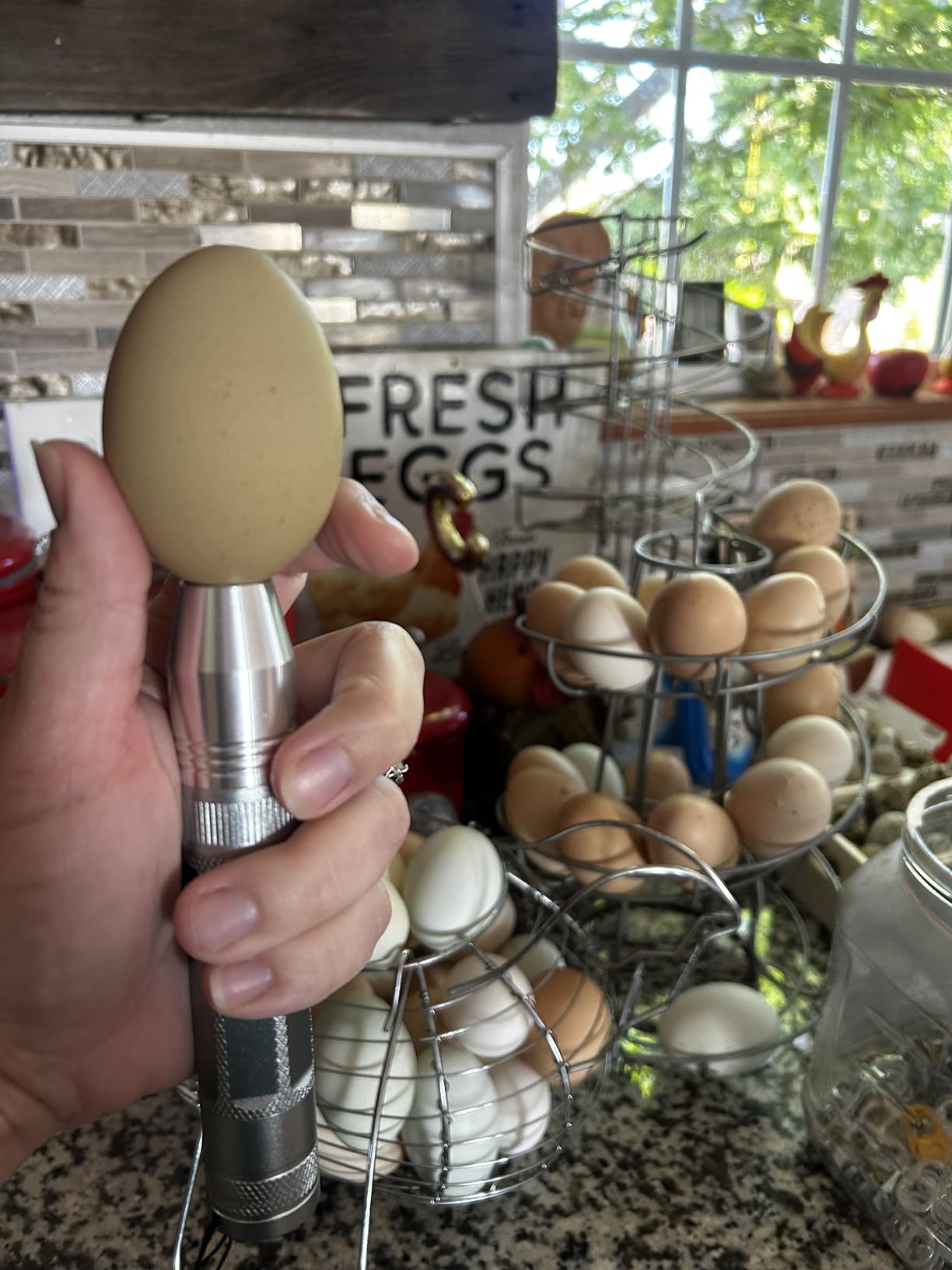
What multiple brightness modes are actually for
High mode is for getting a first read and for large eggs. Low mode is genuinely useful on a late-stage embryo, where full brightness can wash out detail and make a healthy egg look suspicious. Flash mode tells you whether there is movement, which is a strong signal a few days before hatch day.
Having a low setting is something more expensive single-output candlers do not offer, and it is worth more than it sounds for a day 18 check.
Where the narrow aperture becomes a problem
The small end opening requires real dexterity, and that matters most with tiny quail eggs where your fingers are the thing most likely to fumble. There is no cradle to rest the egg on, so you are holding it against the light throughout.
Also check the charger before you order if you are outside the United States, and confirm the cell size is something you can source locally. Detail on a very dark egg is also weaker than the headline brightness suggests.
8. ZZBUY Rechargeable USB Egg Candling Light – Best Multi-Mode Flashlight
ZZBUY Egg Candler for Chicken Eggs, Rechargeable USB Egg Candling Light
1200mAh built-in battery
Five lighting modes
Aluminium alloy body
USB charging
4.44 watts
Pros
- Five modes including SOS for general use
- 1200mAh battery holds charge a long time
- Sees embryo movement through dark eggs
- Aluminium body is durable
- USB charging is reliable
Cons
- One report of a loose weld fault
- Included charger is poor quality
- Seller support routed through a third party
This is the one to buy if you want a candler that earns its place on a workbench between hatches. Five modes, including SOS, make it a real general flashlight rather than a single-purpose novelty.
The built-in 1200mAh cell is the strongest battery claim we saw in this group, and in practice the unit kept working for a full candling session without a top-up. Battery anxiety is genuinely not a factor here.
Owners report being able to see embryo movement through dark eggs, which puts it closer to the high-intensity group than the specification would suggest. The aluminium alloy body also feels like it will survive being dropped in a barn.
USB charging with an upgraded chip is a small thing that matters. Barrel-plug chargers on cheap rechargeable tools are where most early failures come from, and this one avoids that weakness.
The package includes the light, an English manual and a hand rope, which is a sensible safety addition when you are working over a tray of eggs.
When a multi-mode flashlight is the right buy
Two scenarios. If you are candling eggs under a broody hen at dusk, an SOS or flash mode doubles as a way to see the ground and the hen’s position without switching devices. If you hatch once a year, the candling is a two-week job and everything else is the other fifty weeks.
Usability in that second scenario depends on build quality rather than lumen output, and that is where this listing needs a fair note.
The build quality and support caveats
A small number of reviews describe build problems, including one loose weld that left the light non-functional until repaired, and complaints about the included charger’s quality. The listing is fulfilled by a marketplace seller, and support routed through third parties was described as unhelpful.
Test the light thoroughly on day 0 with a spare egg before you commit a full incubation to it. That ten-minute check is cheap insurance against a warranty claim that is hard to pursue.
9. Sonew Egg Candler Tester – a Reasonable Classroom Tool With a Weaker Record
Sonew Egg Candler Tester High Cool LED Light Candling Lamp, Rechargeable for All Types Egg Broody or Incubator Monitor The Development of The Embryo Within Egg
Cool LED light
ABS and metal casing
Cable power
6.7 ounce
5.91 by 1.57 by 1.57 inch
Pros
- Cool LED with no embryo heat damage
- Smooth metal casing will not scratch shell
- Cable power with a simple push button
- Works on dark and thick shells
- Fine for demonstrating incubation
Cons
- Lowest average rating in the roundup
- Listing describes it as rechargeable while the power supply is a cable
- Thin documentation and a less established brand
We included this one because it is a fair option for a classroom or a first demonstration, and it is honest to say that its record is the weakest of the ten. Its rating sits clearly below the rest of the field, with a larger share of one-star reviews than we are comfortable with.
The physical design is sound. A cool LED, a smooth water-resistant metal casing that will not scratch a shell, and simple cable operation with a push button. None of that is revolutionary, and all of it is appropriate.
People who like it tend to like the straightforwardness. There is no charging, no mode switching and nothing to set up, which is genuinely useful when you are explaining incubation to a room of students.
Owners do report it working on dark eggs and thick-shelled eggs, though we would not build a dark-shell breeding programme around it.
The specifications list the material as insulating, stable ABS while describing a metal casing, which is the kind of small inconsistency that suggests the listing was assembled quickly. Verify what is actually in the box on arrival.
Where it fits and where it does not
For teaching, a school hatchery, or a single small batch where you already own a better candler, it is adequate. The cool LED means you can show a class a tray of eggs without worrying about adding heat.
For a keeper who wants a long-term daily tool through a 21-day incubation, the rating spread is a legitimate warning. You are buying a tool you may replace within a season or two.
The listing inconsistency you should check
The product bullets describe a rechargeable design while the listed power supply is a cable with a button. That mismatch is exactly the kind of detail that turns into a return, so open the box and test it immediately.
Documentation is thin compared with units that ship an illustrated guide. If you are new to candling, factor the cost of finding a good chart separately.
10. GOOD MOTHER LED Egg Candler – Best Two-Size Cover Set for Mixed Flocks
GOOD MOTHER Bright Cool LED Light Egg Candler Tester Incubator for Chickens Ducks Birds Eggs – Powered by Power Cable Only
Zero heat cool LED
Power adapter included
Two rubber covers
5.9 ounce
8.27 by 2.99 by 2.32 inch
Pros
- Zero heat emission for repeated checks
- Two rubber covers suit quail duck goose and chicken
- No battery replacement mid-incubation
- Complete package in the box
- Works on brown eggs in a dark room
Cons
- Short cord for candling under a hen
- Struggles on dark shells and larger eggs
- Some buyers expected a rechargeable unit
The two rubber covers are the reason this made the list. They are sized to span chicken, duck, goose, quail and most bird eggs, and having a covered aperture for the extremes is what keeps a small egg from being balanced precariously on a bare opening.
The LED is described as zero heat emission, so repeated checks will not warm a shell. Cable power with an included adapter means nothing to recharge and nothing to run flat on day 16.
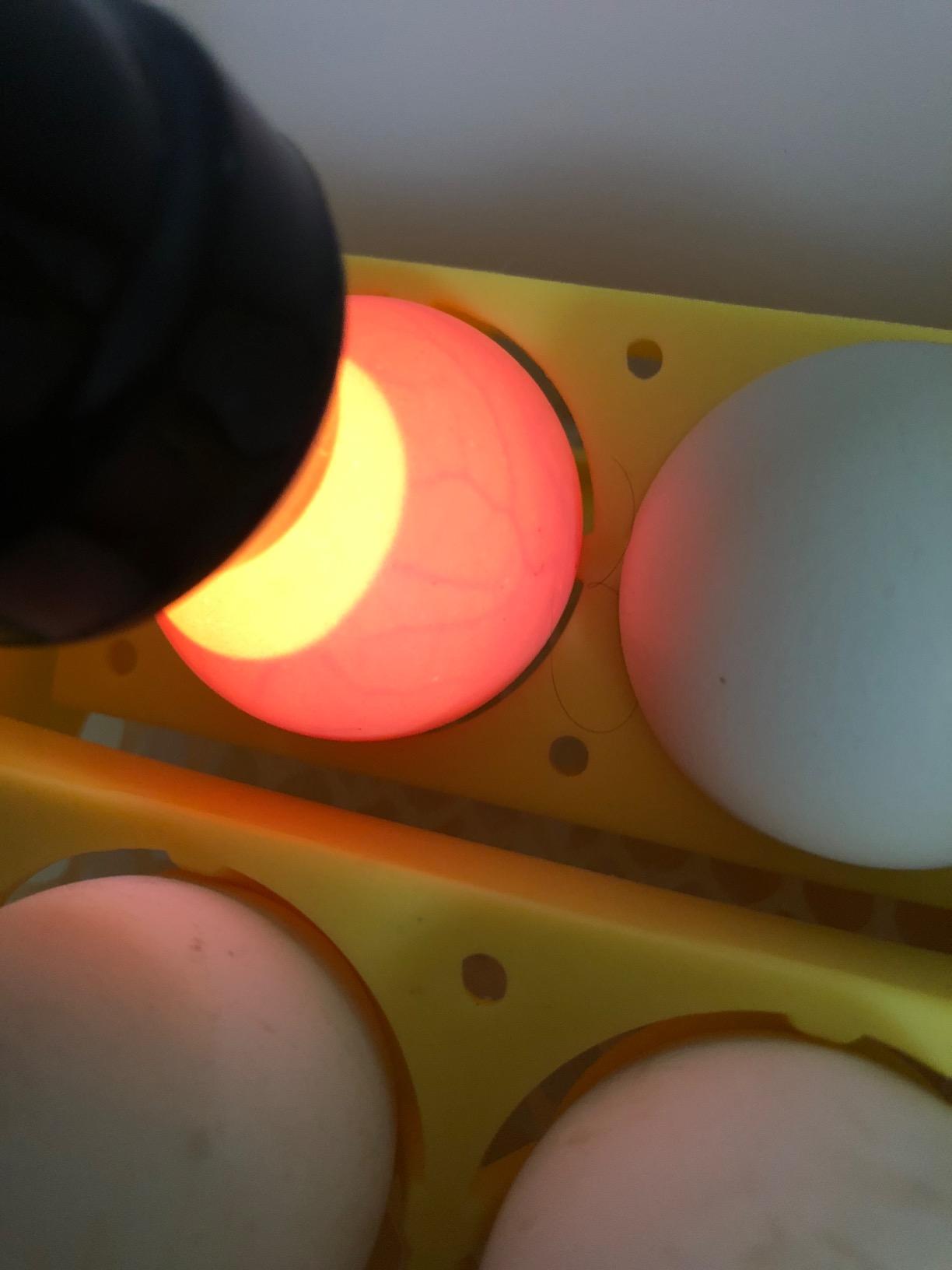
Owners like that it is bright enough to work on brown eggs in a darkened room, and that it is compact and comfortable to handle for a full inspection session.
The package is complete: one LED candler, two covers and one power adapter. Nothing extra to buy, which keeps the setup simple for a first hatch.
Our own testing found it adequate on standard brown eggs and clearly less capable on the darkest shells and on larger waterfowl eggs than the dedicated high-output units on this list.
Why a two-cover set beats one bare opening
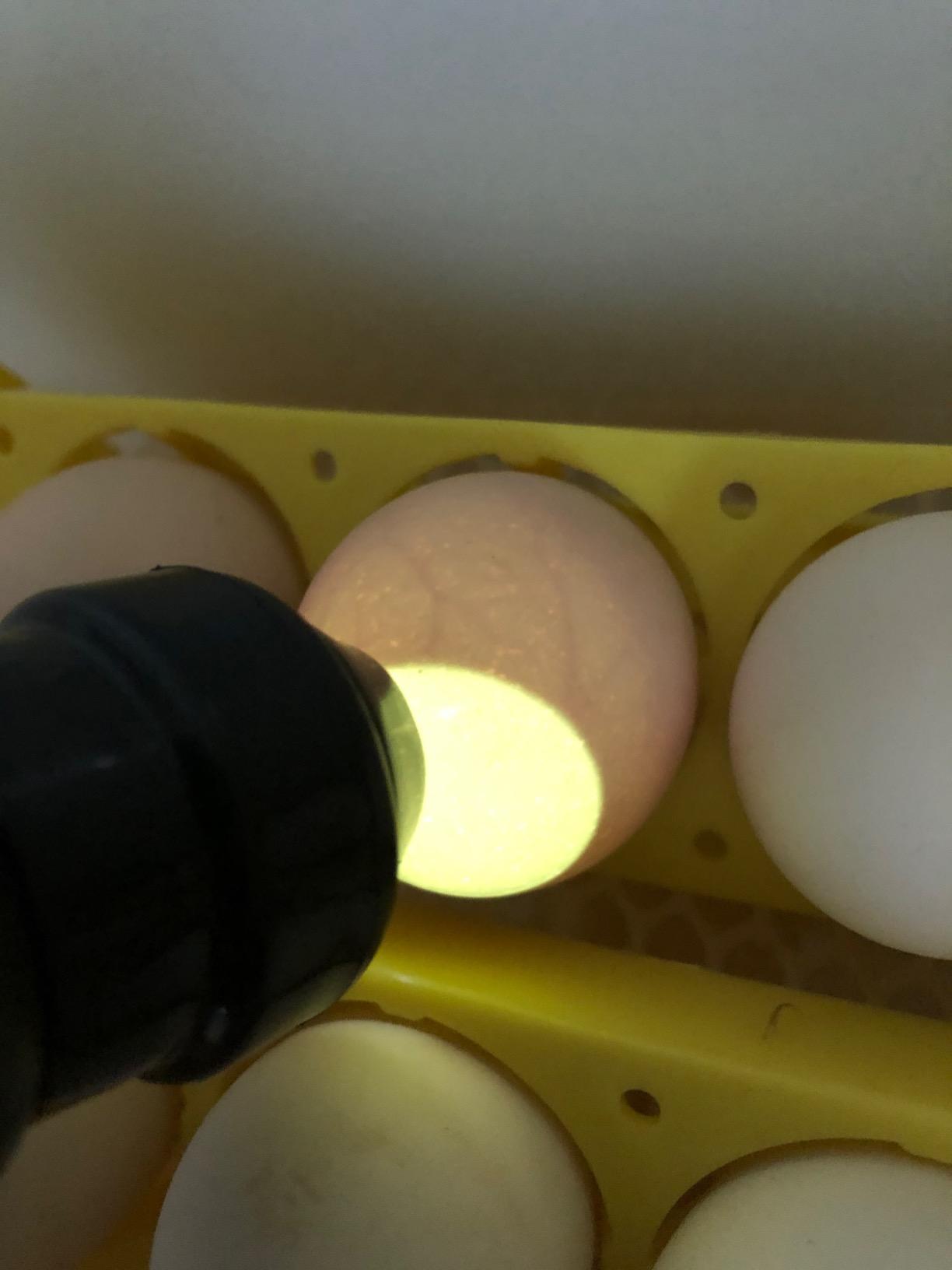
Most damage to eggs during candling happens at the aperture. A bare opening means the egg is perched and balanced; a fitted rubber cover means it is cradled and pushed gently into a seal, and it also blocks stray light so the view is not washed out by ambient room light.
For quail eggs that difference is decisive, because the eggs are small enough to roll out of a poorly fitted opening. For large eggs the smaller cover is the wrong fit, which is why two sizes matter.
The honest limits of this unit
The recurring complaints are a short cord, which matters if you are candling eggs under a sitting hen, and weaker performance on the darkest shells and larger eggs. It is a solid all-rounder rather than a specialist.
Some buyers expected a rechargeable unit because of the way the product is styled. Confirm the power source is a cable before you buy if that matters to you.
How to Candle Eggs Without Ruining the Hatch
A candler is only half of the skill. The half that actually determines whether you read an egg correctly is knowing what you are looking at, when to look, and how to look without wasting the light or the egg.
What you should see inside the egg at days 3 through 18
Day 3 to day 4 shows a small clear spot near the yolk with faint hairline vessels radiating from it. There is nothing to interpret on day 3 and treating an absence of detail as a failure is the most common early mistake.
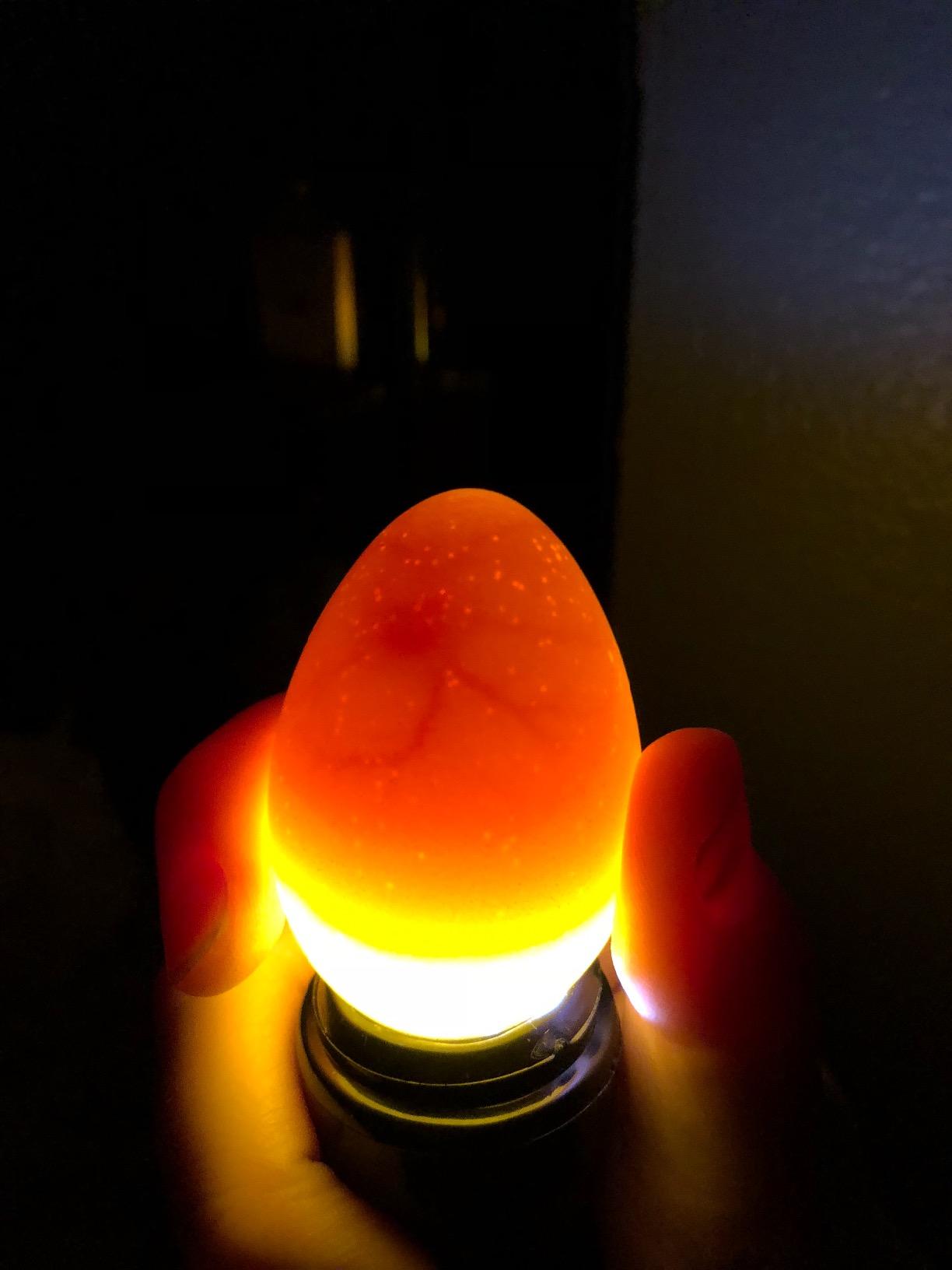
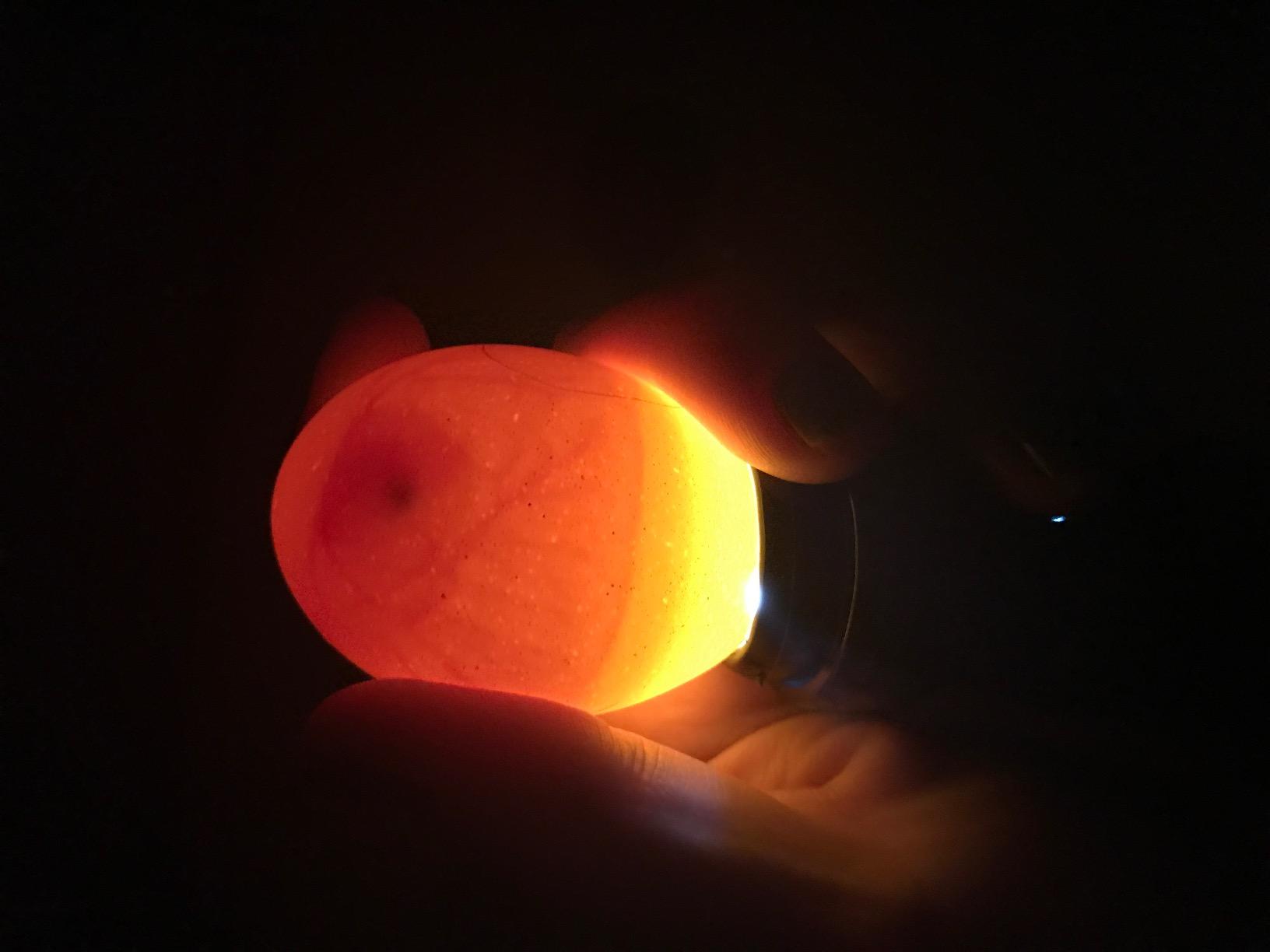
Day 7 is the first check that carries real information. A fertile egg shows a network of branching vessels, a darker embryo spot, and a clearly defined air cell at the broad end. A blood ring, which is a distinct ring of red with no branching structure, means development started and stopped. A completely clear egg at day 7 is usually infertile, but recheck at day 10 before you discard it.
Day 10 to day 14 shows a larger, darker embryo and vessels spread across more of the shell. The air cell grows steadily and should still look clear. Day 18 shows a large embryo filling much of the space, with movement near the air cell in the last days before hatch. Chicks rupture into the air cell in the final stretch, so movement there at day 19 or 20 is a good sign rather than a concerning one.
The air cell is your early-warning system. If it is unusually small, the egg was probably under-hydrated during incubation. If the contents look cloudy or the liquid is dark and murky, that is a different problem from a clear, unfertilised egg.
When to candle and when to leave the incubator alone
Day 7 is the first useful check and day 14 is the second. Those two are enough for the overwhelming majority of backyard hatches. Candling on day 4 tells you very little and costs you cooling time you did not need to spend.
A stronger light is not a reason to candle earlier. Brightness does not create information on day 4 that a normal light would have revealed; it only makes an empty egg look more interesting.
Work fast, keep the tray out as briefly as possible, and put each egg back on its marked spot. Warming a single egg in your hand is less of a problem than repeatedly tipping a whole tray of warm eggs into cold air.
The dark-shell playbook for Marans and Olive Egggers
Start with the truth, because it saves a lot of money: pigment in a true black copper Maran shell runs through the full thickness of the shell. No candler, at any price, makes that shell transparent. Anyone selling you a brighter light as the solution to a Maran problem is overselling it.
Angle beats brightness. Set the broad end against the aperture at roughly 45 degrees rather than square-on, so light enters through the thinner transition zone and you get more of it through the shell.
Light both ends. Some people run a second light at the pointed end so the shell is illuminated from both directions at once, which reveals structure that neither light finds alone.
Use your phone camera. Photographing the candled egg, then zooming and brightening the image, frequently recovers detail your eye cannot pick out through a dark shell. This is the single most useful trick in the whole category.
Use water as a last resort. Immersing an egg in water and candling from below reduces the refractive mismatch between shell and air, so more light enters. Handle it gently and keep the session short.
Finally, do your serious reading on light eggs. Keep a batch of pale or white layers alongside the dark ones so you have a control, and accept that on a near-black egg the air cell may be all you get. A reviewer who used the Brinsea high intensity for years reports exactly that outcome, and it is a shell problem, not a tool problem.
Free alternatives: a dark room, a flashlight and a phone
You can candle eggs with no purchase at all, and community advice backs this up. A darkened room plus a decent flashlight is reported on Reddit r/homestead and BackYard Chickens as working about as well as a bought candler, and a phone light is offered as a workable free substitute by several posters.
What a free setup lacks is a seal. A candler blocks ambient light around the shell, and without that you are fighting room light for contrast. If you go the free route, get the room genuinely dark first, cup your hands around the egg, and use an egg candling chart to interpret the result.
Our verdict: the free method is genuinely good for pale and brown eggs and mediocre for dark ones. It is worth trying before buying anything, and worth keeping as a backup.
Durability and power source economics across a hatch season
Durability is the loudest complaint in this category and almost no roundup addresses it. The recurring story is a cordless unit that stops holding a charge, or dies outright, right in the middle of incubation. A candler failing on day 15 is worse than useless, because now you are making decisions with no information.
Corded models simply cannot fail that way, which is why the Magicfly plug-in is our overall pick. Rechargeable models can be charged before every expected candling session so the failure mode becomes a flat battery you can fix, not a dead circuit.
On cost, disposable batteries add up across a hatch season if you are candling weekly on three or four AAA cells, and they are the reason the rechargeable options have taken over the category. A rechargeable unit costs more once and then largely stops being a running expense, and the NestEcho and ZZBUY are the two that hold a charge best.
Whichever you buy, test it on a known egg at day 0 and again at day 7. Ten minutes of checking removes the most expensive failure in this category.
Matching the candler to quail, duck, goose and chicken eggs
Chicken eggs are the easy case. Standard chicken eggs work with almost anything on this list, and any of them will do.
Quail eggs are tiny and heavily spotted, so tip size decides everything. Look for a narrow covered aperture or an included small rubber cover. The Magicfly and GOOD MOTHER both include two cover sizes, and the Titan ring holder is the safest option because the egg rests rather than being balanced.
Duck and goose eggs are larger with heavier shells, and they need real light output. The Incu-Bright at 250 lumens and the stainless steel unit at 500 lumens were the two that gave us usable structure on large eggs.
Mixed flocks need covers, not compromise. A two-cover set plus a high-output body covers the range without swapping tools, which is where the Incu-Bright, the Titan and the Magicfly corded model earn their keep.
Common mistakes when candling eggs
Candling too early is the number one error. Day 3 shows almost nothing, and a nervous keeper reads an empty-looking egg as a failure and discards a perfectly good one.
Candling in a lit room is the number two error. Ambient light destroys contrast, and people assume their candler is faulty when the problem is the room. A bathroom with a window is a poor choice; a windowless shed at night is a good one.
Discarding on a single clear result is the third. A clear egg at day 7 is probably infertile, but recheck at day 10 before you remove it.
Leaving a battery candler uncharged, tipping whole trays out at once, and balancing an egg on a bare aperture instead of using a cover are the other three we see constantly.
Frequently Asked Questions
What is the best egg candler?
For most backyard hatchers the Magicfly Bright Cool LED plug-in candler is the safest all-round choice, because corded power cannot die mid-incubation. For large, thick or dark eggs the Incu-Bright Ultra Bright LED gives the strongest penetration. For barns with no power, the Magicfly Rechargeable works cordless. Choose on light sealing and power source rather than price alone.
What are the signs of a bad egg when candling?
A bad egg typically shows a blood ring, which is a distinct ring of red with no healthy branching vessels, meaning development started and stopped. A cloudy or murky interior also suggests a problem. A completely clear egg with no vessels is usually infertile rather than dead, so recheck it at day 10 before discarding.
Can I use my phone flashlight to candle eggs?
Yes, for pale and brown eggs in a genuinely dark room. Community posters on Reddit r/homestead and BackYard Chickens report a darkened room plus a flashlight working about as well as a purchased candler. The limitation is that a phone has no light seal, so ambient light washes out contrast, and dark shells stay hard to read.
Is day 4 too early to candle eggs?
Yes. Day 3 to day 4 shows only a small clear spot and faint hairline vessels, which most people cannot interpret correctly. Day 7 is the first check that gives reliable information. A brighter candler does not create usable detail earlier, and opening the incubator too often just cools the eggs.
How do I candle a black copper Maran egg?
Set the broad end against the aperture at roughly 45 degrees so light enters through the thinner zone, light both ends of the egg, photograph the egg with your phone and brighten the image, and only then try water-candling. Be aware that pigment runs through the full thickness of a true Maran shell, so even a high-intensity candler may only show you the air cell.
Why can I not see veins in my eggs?
The most common reasons are that you are candling too early, usually before day 7, or that the room is too bright. A candler also needs a proper light seal, so if light leaks around the shell the view washes out. On a dark or heavily pigmented shell, low light penetration is normal and no brighter light fully fixes it.
Final Verdict: Which Egg Candler Should You Buy?
Buy the Magicfly Bright Cool LED plug-in candler if you want one tool that works for years and cannot fail mid-hatch. Buy the Incu-Bright Ultra Bright if your eggs are large, thick-shelled or dark, and the Titan if you want your hands free. Buy the Magicfly Rechargeable if there is no outlet near the coop, and the NestEcho if you want three brightness settings for the least money.
Whichever you choose, learn the day 7 and day 14 checks, work in a genuinely dark room, and accept that a true black copper Maran shell will only ever show you its air cell. That last point matters more than which candler you own, and it is the honest limit of the best egg candlers for hatching in 2026.