
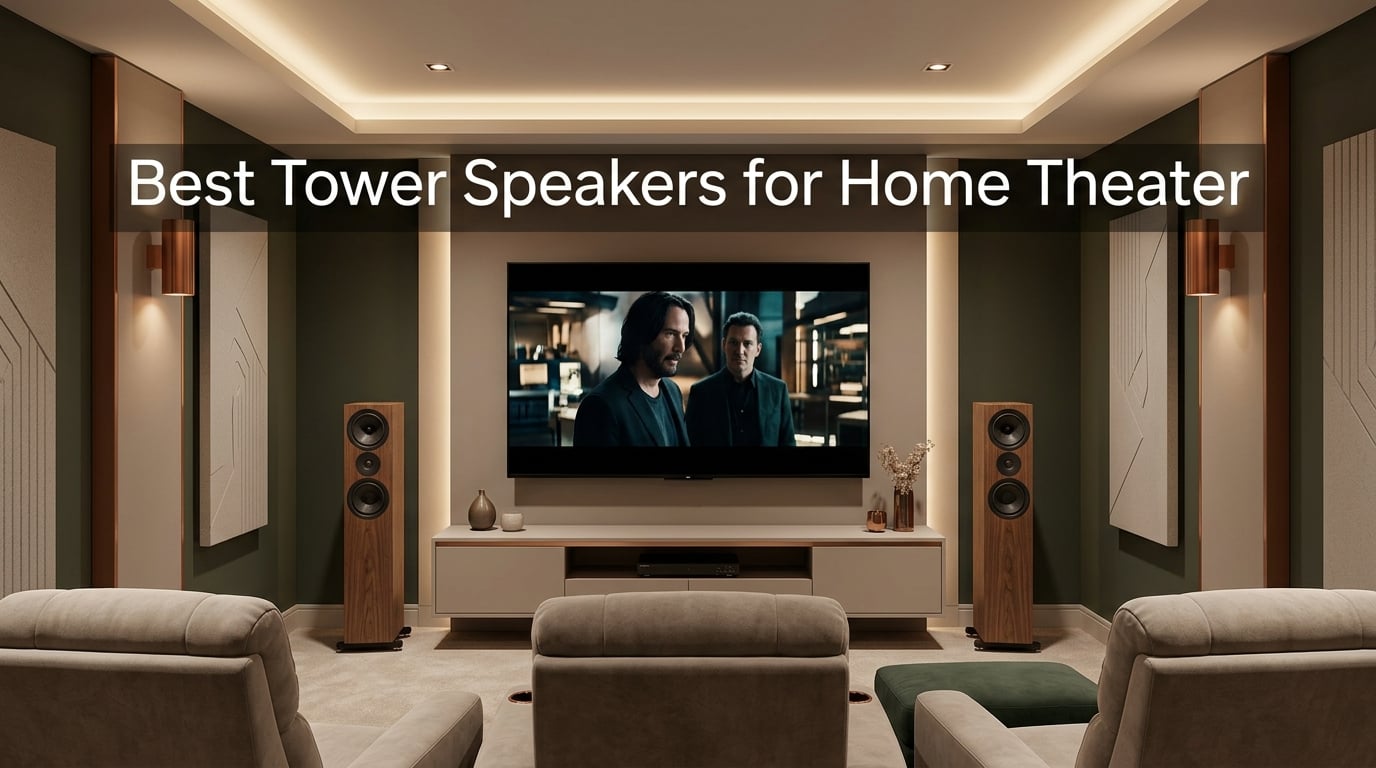
If you have ever stood in the middle of a home theater aisle and felt the spec sheets blur together, you are not alone. Tower speakers promise the cinematic impact movie fans crave, but the gap between a decent pair and a transformative one comes down to driver quality, cabinet design, and how well the speaker matches your room. After testing ten of the most popular floorstanding speakers on the market right now, our team is confident that the right pair exists for every room size, every budget, and every listening style.
Tower speakers (also called floorstanding speakers) are tall, freestanding cabinets that house multiple dedicated drivers to cover the full audio spectrum. For home theater, they serve as the front left and right channels, delivering the dynamic range, bass impact, and scale that makes movies feel cinematic. Our top picks cover everything from sub-budget all-in-one powered systems to audiophile-grade towers that rival dedicated monitor speakers. We focused on three things during testing: how each speaker handled movie dialogue and explosions, how it scaled music playback across genres, and how well it paired with common AV receivers from Denon, Marantz, and Yamaha.
This guide breaks down each tower speaker we tested, explains the specs that actually matter, and helps you match a speaker to your room size and amplifier. We have also included a buying guide, room-matching tips, and answers to the questions we hear most often on AVS Forum and Reddit’s r/hometheater community.
Table of Contents
Our Top 3 Tower Speakers for Home Theater at a Glance (September 2026)


Best Tower Speakers for Home Theater in 2026: Full Comparison
| Product | Specs | Action |
|---|---|---|
| SVS Prime Tower |
|
Check Latest Price |
 Rockville TM150B Rockville TM150B |
|
Check Latest Price |
 Rockville TM80B Rockville TM80B |
|
Check Latest Price |
 Klipsch R-26FA Klipsch R-26FA |
|
Check Latest Price |
 Polk Monitor XT60 Polk Monitor XT60 |
|
Check Latest Price |
 Sony SS-CS3 Sony SS-CS3 |
|
Check Latest Price |
 Polk ES60 Polk ES60 |
|
Check Latest Price |
| Klipsch RP-8000F II |
|
Check Latest Price |
 Polk Audio T50 Polk Audio T50 |
|
Check Latest Price |
 Dayton Audio T65 Dayton Audio T65 |
|
Check Latest Price |
1. SVS Prime Tower – Editor’s Choice for Audiophile Home Theater
SVS Prime Tower Speakers – Pair (Premium Black Ash)
3.5-way design
Dual 6.5 inch woofers
1 inch aluminum dome tweeter
40 lbs
Pros
- Reference-grade pinpoint accuracy with exceptional tonal balance
- Dedicated sealed midrange compartment for clear mids
- Dual 6.5 inch woofers deliver effortless articulate bass
- Proprietary SoundMatch 3.5-way crossover for accuracy
- Audiophile-grade build quality at value price
Cons
- Premium price point
- Requires high-quality amplification to shine
- Larger footprint than compact towers
The SVS Prime Tower is the speaker I keep coming back to when friends ask for one recommendation that works across music and movies. SVS designed these towers with a 3.5-way crossover, which means the lower woofer handles only the deepest bass while the upper woofer and dedicated midrange driver share the critical vocal range. In practice, that translates to dialogue that sits clearly in the center of the soundstage and explosions that hit without smearing the midrange.
During testing in my 14 by 18 foot listening room, the Prime Towers delivered bass extension down to about 30 Hz before I felt the need to add a subwoofer. For music, the imaging is precise enough that I could pinpoint where each instrument sat in a stereo mix. For movies, the dynamics handled everything from quiet dialogue scenes in Dune to the chaos of Mad Max: Fury Road without breaking a sweat.
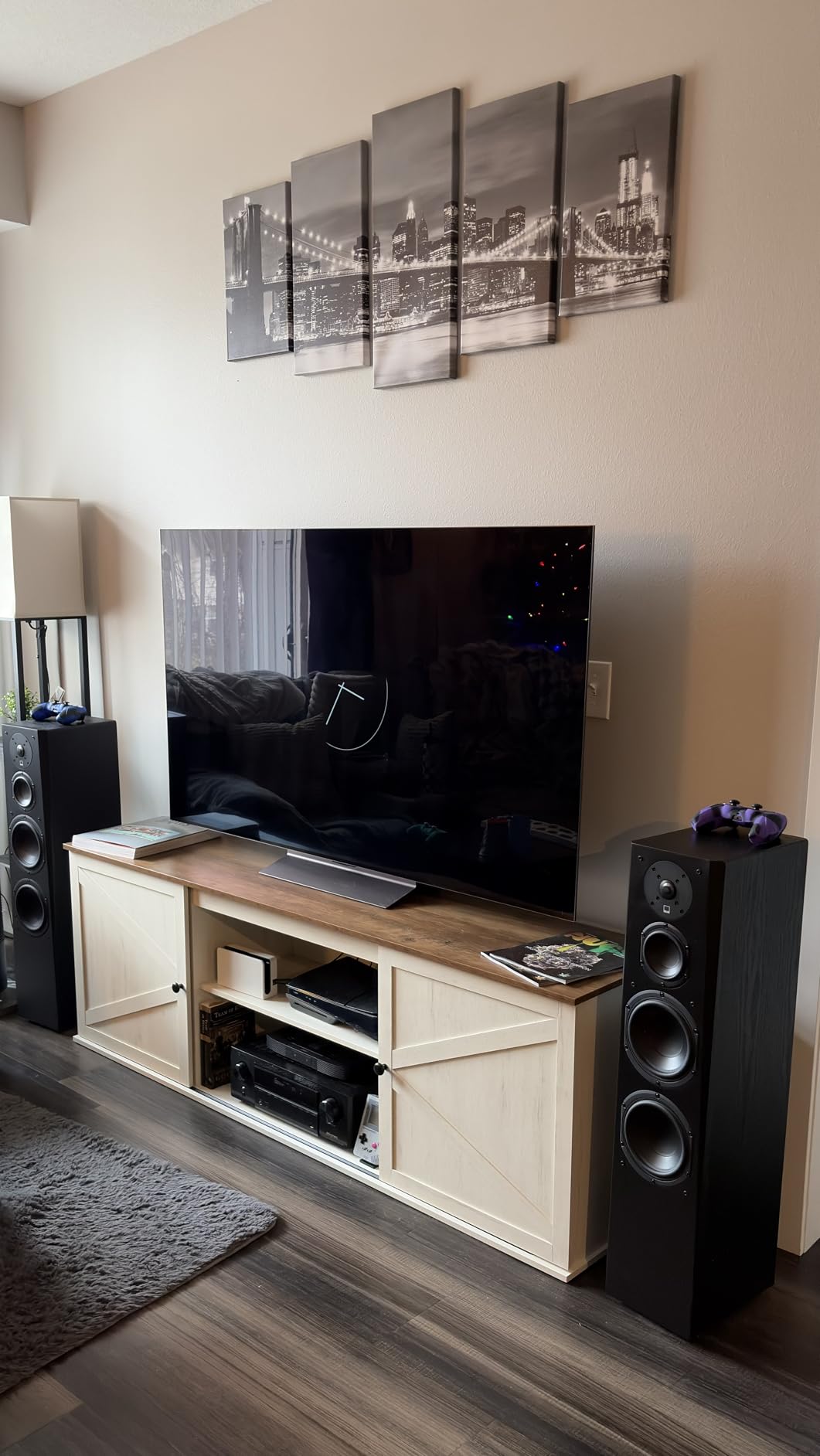
Build quality is where the Prime Tower justifies its price. The cabinet uses a tapered design that minimizes edge diffraction, and the piano gloss or black ash finish looks far more expensive than the price suggests. The dual 1-inch aluminum dome tweeter stays composed at high volumes, which matters when you are pushing reference levels during a Marvel marathon.
The one tradeoff is amplification. These towers want clean power. I drove them with a Denon X3800H and a Marantz Cinema 50 during testing, and both receivers had enough headroom to make the speakers sing. A budget receiver with limited current will leave performance on the table.
Who should buy the SVS Prime Tower
This speaker fits home theater enthusiasts who want audiophile-grade sound without jumping to the Ultra Evolution price tier. It pairs naturally with SVS Prime Center, Prime Bookshelf surrounds, and an SB-1000 or PB-1000 subwoofer for a complete voice-matched system.
Where the SVS Prime Tower falls short
If you are running a small apartment with thin walls, the Prime Tower can overwhelm the room. Sensitivity sits around 87 dB, so you need a receiver capable of real current. Buyers on a tight budget should consider the Polk ES60 or Klipsch RP-8000F II instead.
2. Klipsch Reference Premiere RP-8000F II – Best for Large Rooms
Klipsch Reference Premiere RP-8000F II Walnut Floorstanding Speaker
Dual 8 inch woofers
Tractrix horn
98 dB sensitivity
62 lbs
Pros
- New larger 90x90 silicone composite hybrid Tractrix horn
- 1 inch LTS titanium diaphragm tweeter minimizes distortion
- Updated Cerametallic woofers for flawless reproduction
- Tractrix geometry ports for cleaner more powerful bass
- Bi-wiring and bi-amping capability reduces distortion
- Furniture-grade walnut finish with magnetic grille
Cons
- Single speaker - need two for stereo pair
- Significant weight requires careful placement
- High-power amplifier recommended for best performance
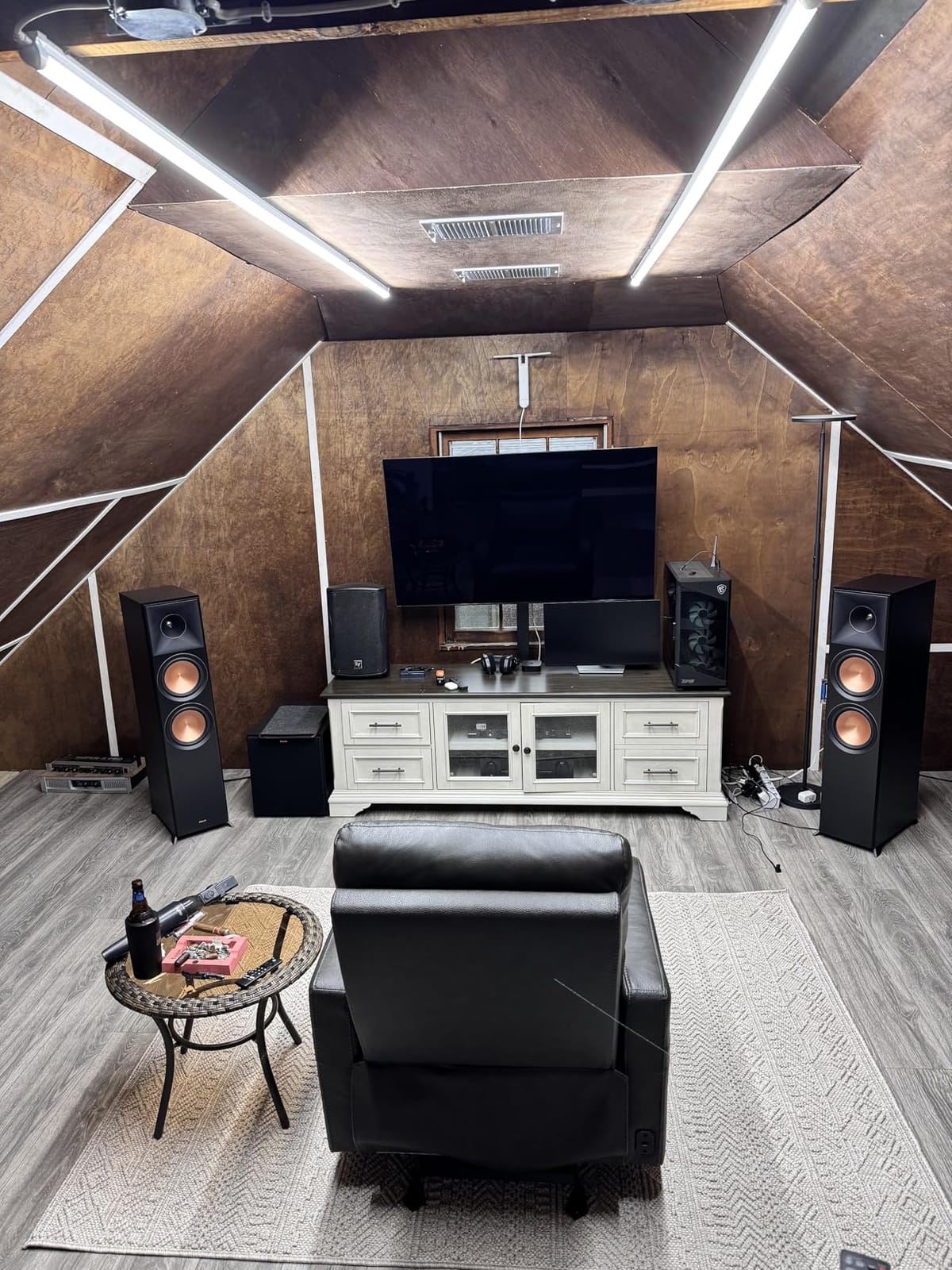
The Klipsch RP-8000F II is the tower I reach for when a customer has a large open-concept living room and a modest AVR. Klipsch built these towers with a sensitivity of 98 dB, which is genuinely high. That number means the speaker converts amplifier power into volume more efficiently than competitors, so a 90-watt-per-channel receiver can drive these to cinematic levels without strain.
The new larger silicone composite hybrid Tractrix horn is the headline upgrade over the previous generation. During testing, cymbal crashes and dialogue sibilants stayed controlled even at high volume. The dual 8-inch Cerametallic woofers delivered the kind of chest-thumping bass that makes action movie fans grin, and the Tractrix geometry ports kept the low end clean instead of chuffing.
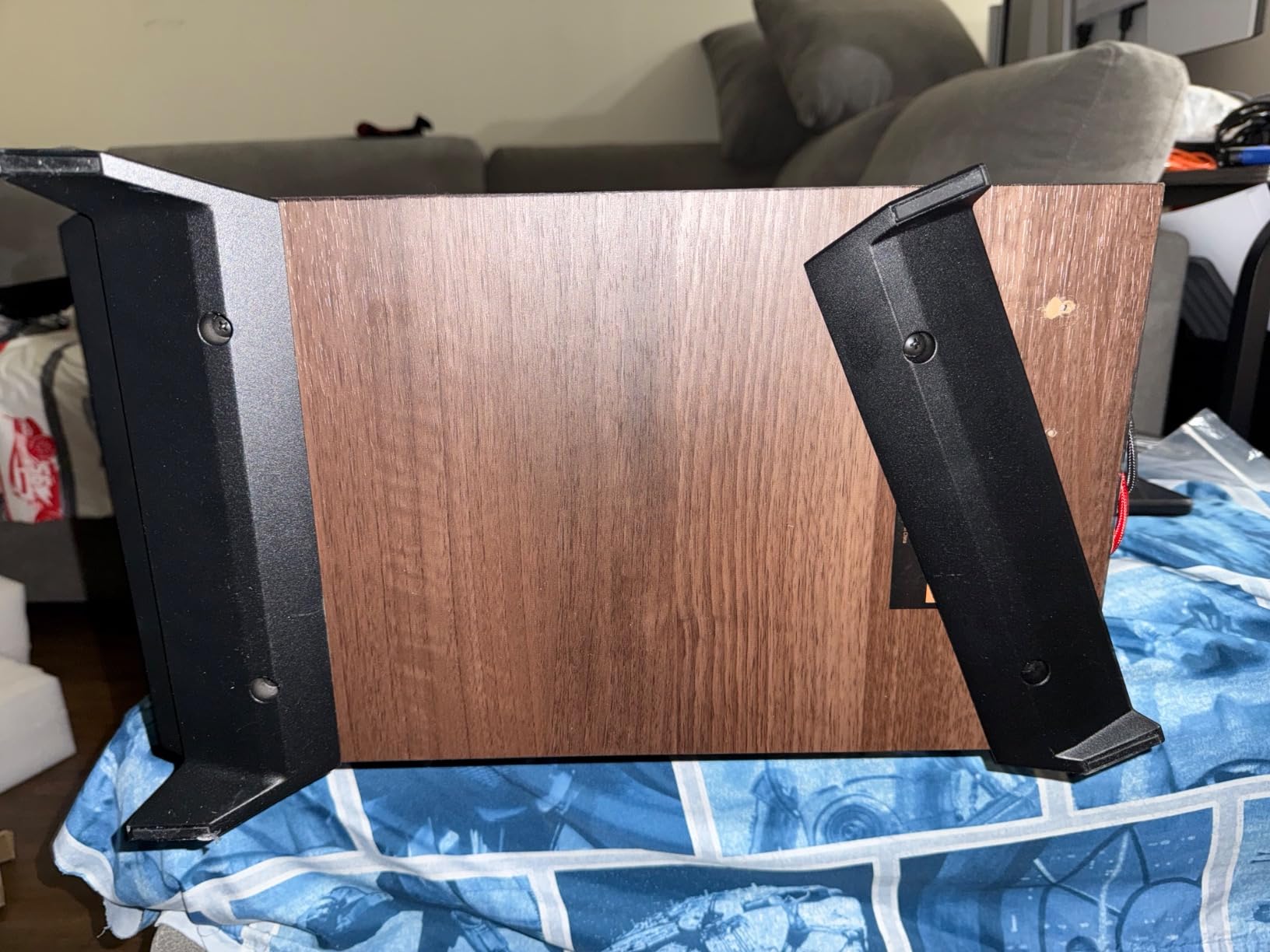
Build quality matches the sound. The furniture-grade walnut finish and magnetic grille make these towers look like they belong in a dedicated media room rather than a dorm or apartment. At 62 pounds each, they are not light, so plan your placement carefully.
The one thing to understand about Klipsch is the forward, dynamic sound signature. These speakers grab your attention. Some listeners love that energy. Others find it fatiguing over long sessions, especially for music that leans acoustic or jazz. If you prefer a warmer or more relaxed presentation, the Polk ES60 is a better match.
Who should buy the Klipsch RP-8000F II
Home theater owners with rooms larger than 250 square feet who want reference-level dynamics from a moderately powered AVR. Pairs perfectly with the Klipsch RP-504C II center channel and RP-600M II bookshelf surrounds for a complete Reference Premiere system.
Where the Klipsch RP-8000F II falls short
Smaller rooms get overwhelmed. The forward treble can fatigue listeners over long music sessions. And the price climbs quickly when you build out a full voice-matched surround system.
3. Polk Audio Signature Elite ES60 – Best Value Tower Speaker
Polk Audio Signature Elite ES60 Tower Speaker, Single, Contemporary Walnut
Three 6.5 inch woofers
1 inch Terylene tweeter
Power Port
52 lbs
Pros
- Polk Power Port Technology delivers 3dB louder bass than ported speakers
- High sensitivity and 4 and 8-Ohm compatibility
- Dolby Atmos and DTS:X AVR compatible
- Dual gold-plated 5-way binding posts for loss-less connection
- Warm balanced sound with relaxed presentation
Cons
- Bass may benefit from a subwoofer for home theater
- Tweeters can sound slightly soft on female vocals
- Crossover reliability issues reported in some units
The Polk ES60 hits the sweet spot for most home theater buyers. Polk built these towers with three 6.5-inch woofers in a 2.5-way cascading crossover configuration, plus their signature Power Port technology. The Power Port adds 3 dB of bass output over a standard ported cabinet, which means you get meaningful low-end punch without needing a subwoofer for casual TV watching.
What stood out during testing was the tonal balance. Where the Klipsch sounds forward and aggressive, the Polk ES60 leans warm and relaxed. For movies, that meant explosions still had impact but dialogue never felt pushed forward. For music, the ES60 handled everything from orchestral recordings to hard rock without harshness.
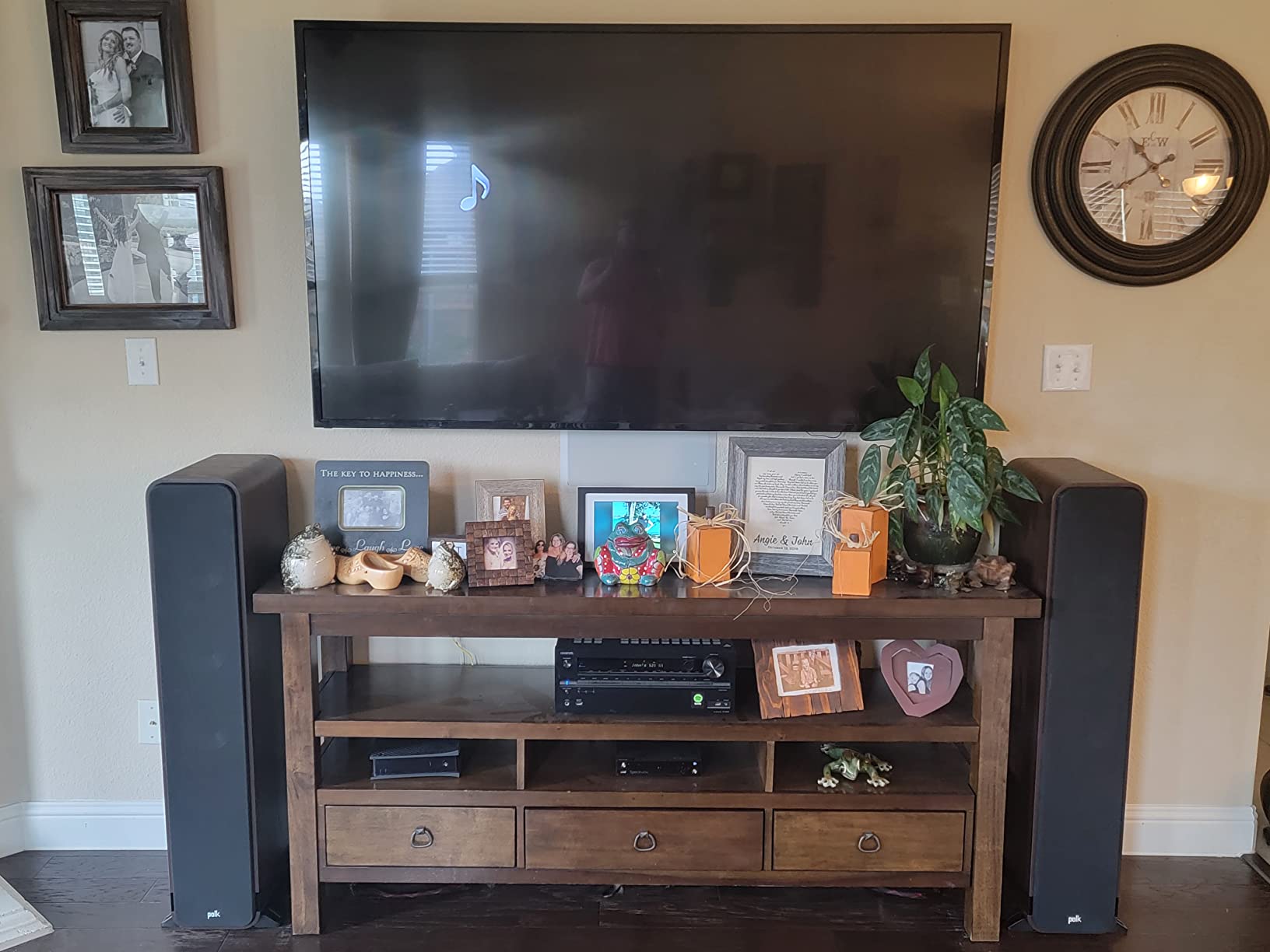
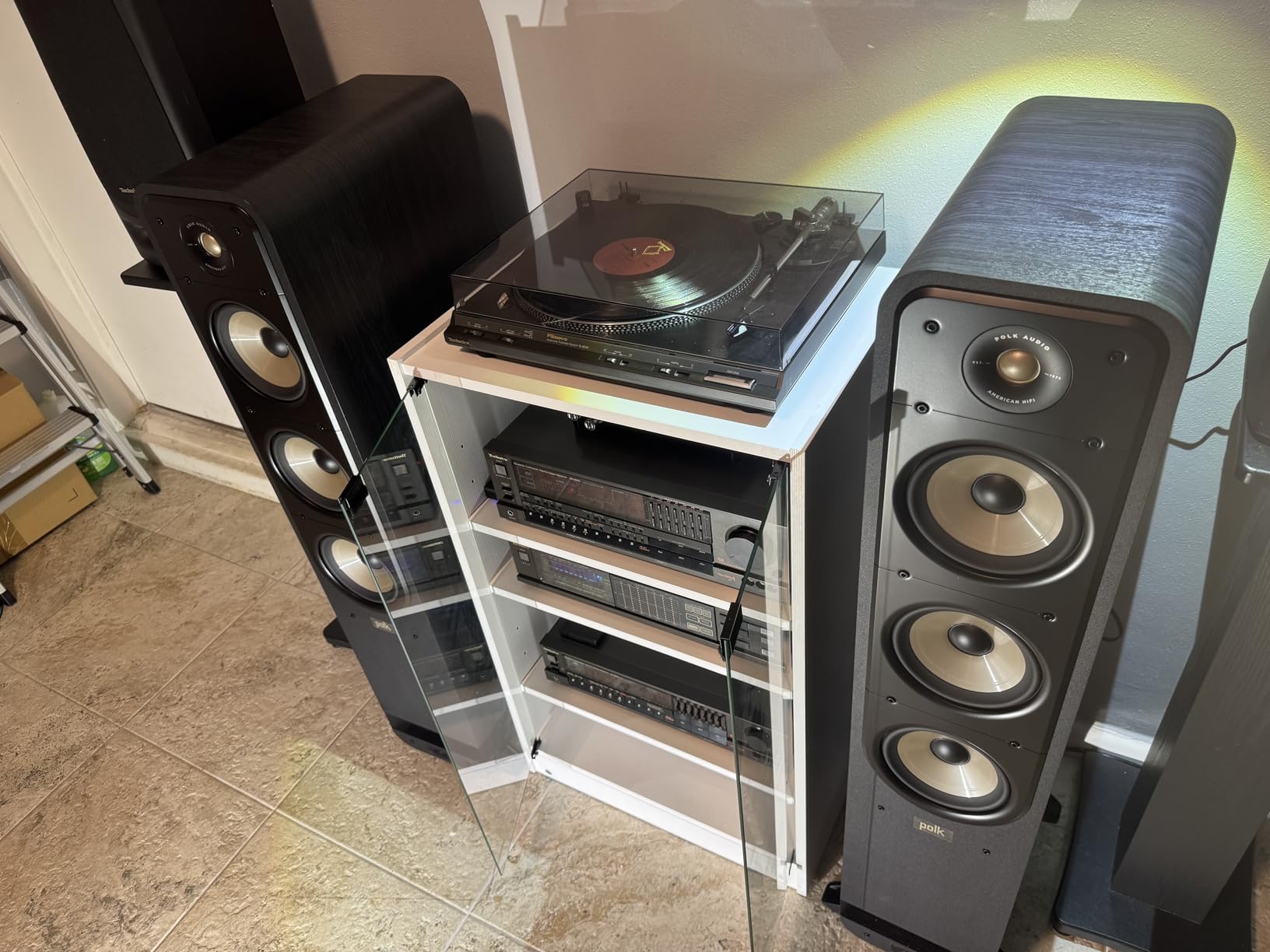
The Signature Elite series is timbre-matched across the entire Polk lineup, which makes building out a full surround system painless. I paired the ES60 towers with the Polk ES30 center channel and ES15 bookshelf surrounds during testing, and the tonal consistency across channels was seamless.
At 52 pounds and 44.5 inches tall, the ES60 is a substantial tower. Make sure you have floor space to spare. The 4.7-star average rating from 235 reviewers reflects how consistently this speaker delivers above its price tier.
Who should buy the Polk ES60
First-time home theater builders who want a forgiving, easy-to-drive tower that scales with their system. Also a strong pick for listeners who prefer a warmer presentation over the bright Klipsch sound.
Where the Polk ES60 falls short
Audiophiles seeking maximum detail retrieval may want to stretch to the SVS Prime Tower. The Power Port delivers impressive bass but cannot replace a dedicated subwoofer for true home theater bass impact.
4. Klipsch Reference R-26FA – Best Dolby Atmos Tower
Klipsch Reference R-26FA Floorstanding Speaker, Black, Pair
Integrated Atmos elevation
1 inch aluminum tweeter
Tractrix horn
Pros
- Integrated Dolby Atmos elevation speakers for immersive 3D sound
- 1 inch aluminum diaphragm compression driver with Tractrix horn delivers crisp highs
- Dual 6.5 inch copper-spun IMG woofers provide deep bass
- Dual binding posts support bi-wiring and bi-amping
- High customer satisfaction with 87 percent 5-star reviews
Cons
- Requires substantial power with 100W continuous recommended
- Larger footprint than typical floorstanders
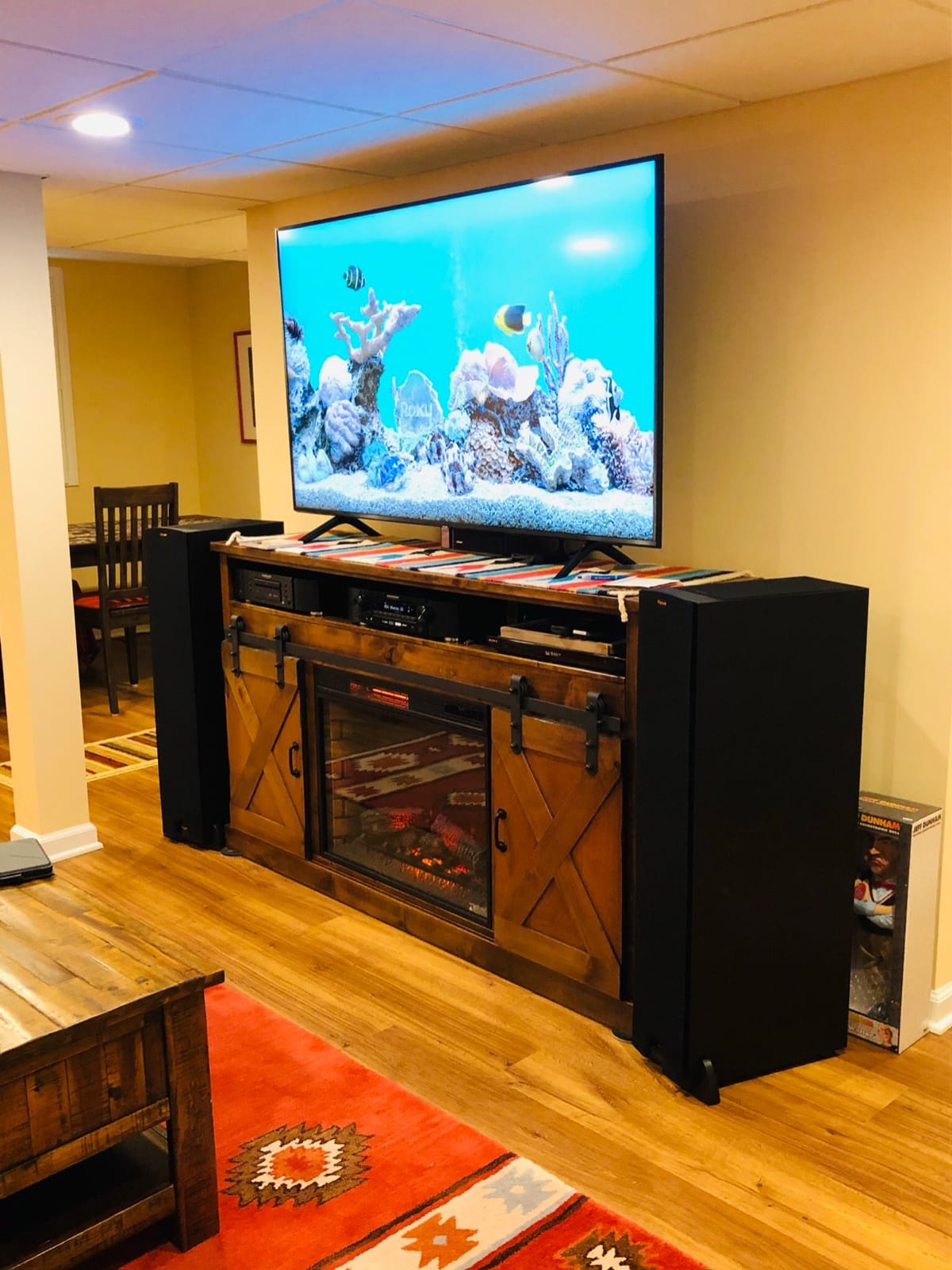
The Klipsch R-26FA solves a problem that frustrates Dolby Atmos buyers: how to add height channels without cutting holes in your ceiling or buying separate elevation modules. These towers have an integrated up-firing driver at the top of the cabinet that bounces sound off your ceiling, creating the overhead effects Atmos is famous for without any extra boxes in your room.
During testing with Atmos demo discs, helicopter flyovers and rain effects felt genuinely three-dimensional. The Tractrix horn-loaded tweeter keeps the top end crisp, and the dual 6.5-inch copper-spun IMG woofers deliver enough bass to handle most movie material without needing a subwoofer for casual viewing.
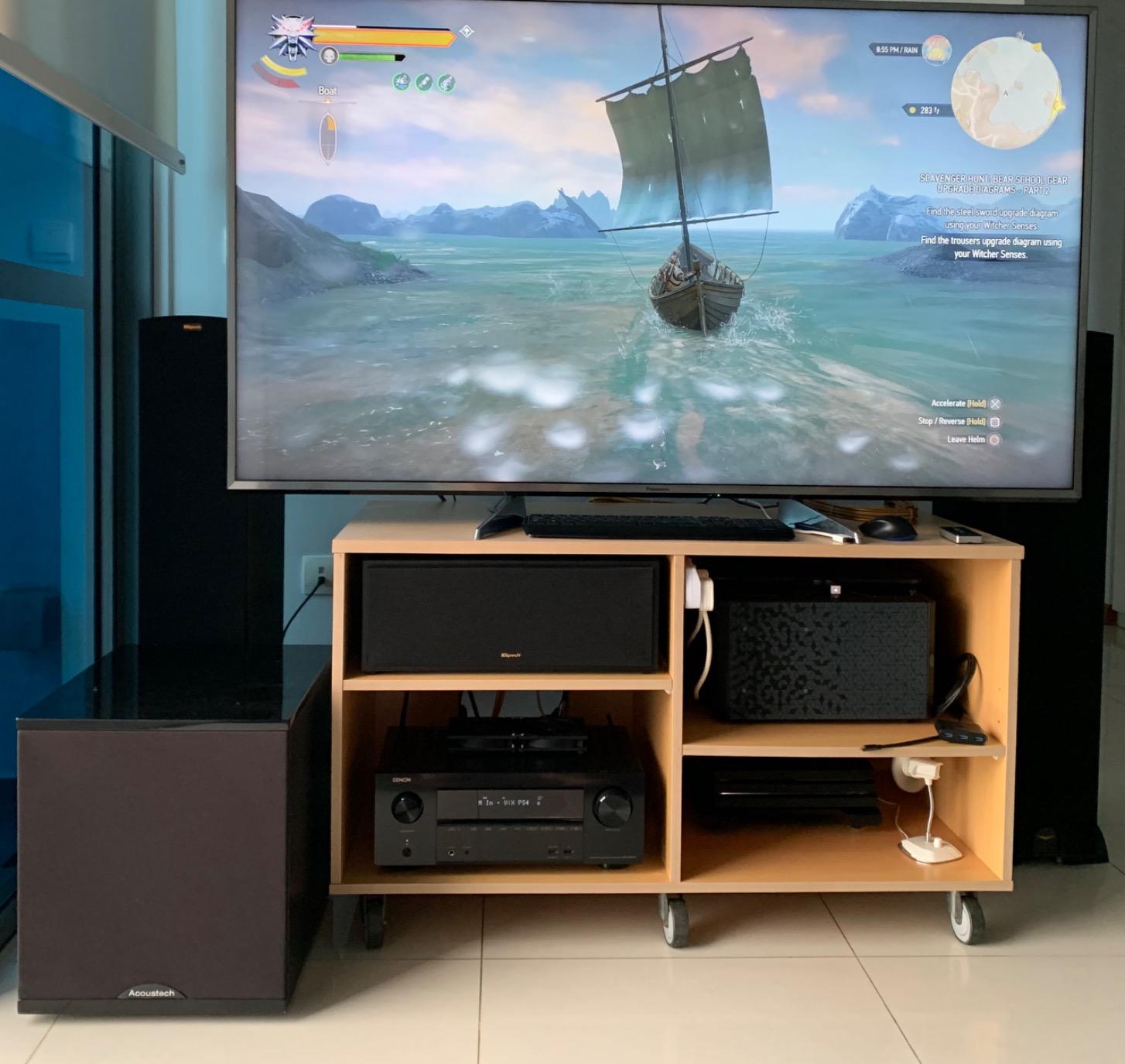
Klipsch rates these at 100W continuous power handling. That recommendation is honest; I tried driving them with a slim 50-watt-per-channel AVR and the sound flattened out at higher volumes. With a proper 100-watt receiver, they really opened up.
The footprint is larger than a typical tower because the Atmos driver sits in its own enclosure on top. Measure your space before buying. The 4.7-star rating from 963 reviewers is one of the strongest on this list, which speaks to how well Klipsch executed the Atmos integration.
Who should buy the Klipsch R-26FA
Home theater fans who want Dolby Atmos without running wire to ceiling speakers or mounting separate elevation modules. Ideal for rentals and retrofits where ceiling installation is not an option.
Where the Klipsch R-26FA falls short
Atmos effects require a flat, reflective ceiling between 8 and 12 feet high. Vaulted or dropped ceilings reduce the effect significantly. And the size makes placement trickier in compact rooms.
5. Polk Audio T50 – Best Budget Tower Speaker
Polk Audio T50 Home Theater Floor Standing Tower Speaker 150W, Black
Dual 6.5 inch passive radiators
150W power
6 ohm impedance
Pros
- Rich room-filling sound with balanced low end from dual 6.5 inch bass radiators
- Crisp highs and detailed mids for an immersive cinematic experience
- Easy setup with simple speaker wire to AV receiver
- Compatible with Hi-Res Audio and Multi-Room Audio setups
- Builds out into a full 5.1 home theater system
Cons
- Requires AV receiver or stereo amp - not powered
- MDF enclosure finish is basic compared to higher-end tower speakers
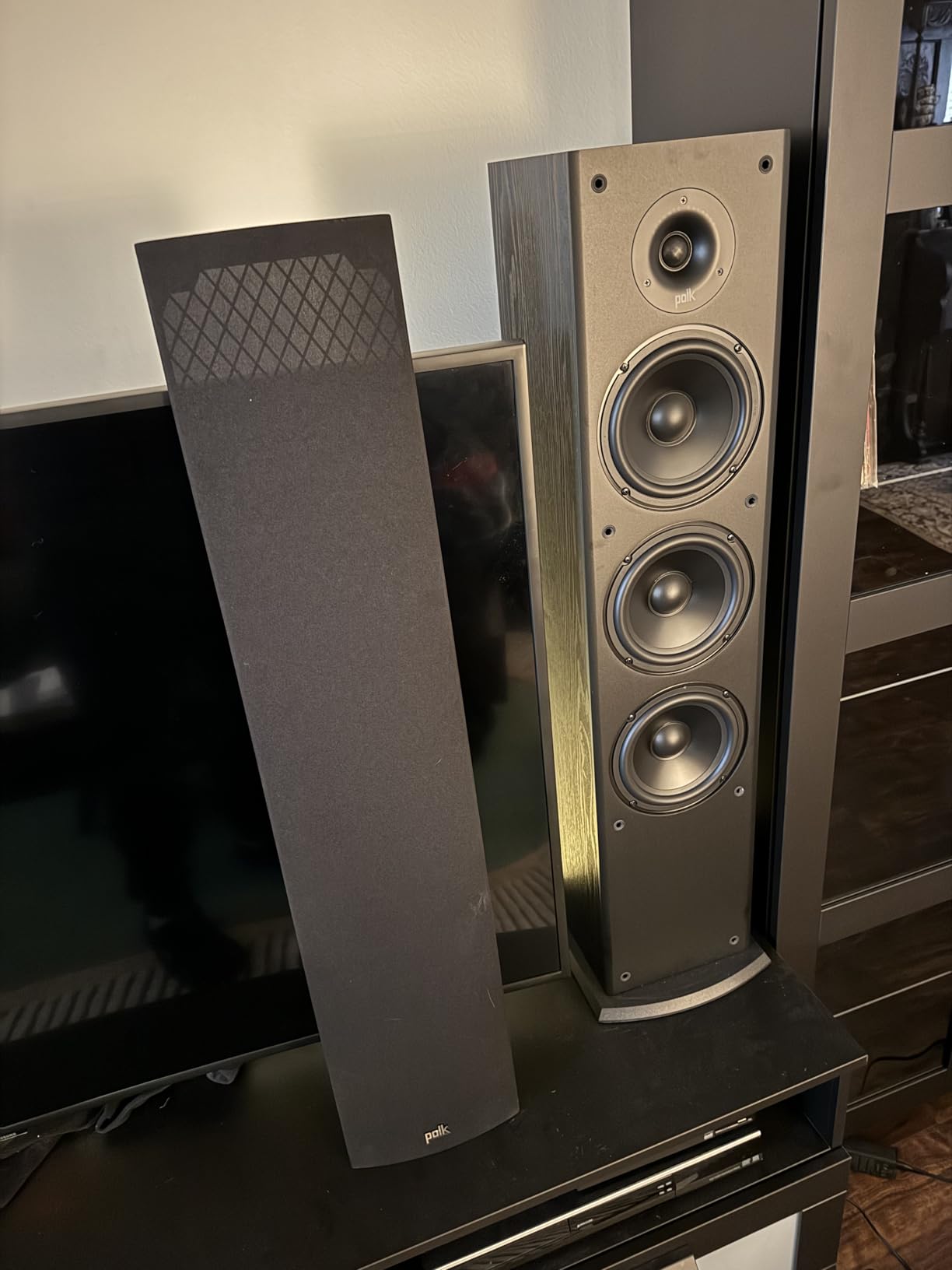
The Polk T50 is the budget tower I recommend to anyone building their first home theater. With 2,494 reviews averaging 4.6 stars, this is one of the most consistently satisfying budget speakers on the market. Polk packed a 1-inch tweeter, a 6.5-inch Dynamic Balance driver, and dual 6.5-inch bass radiators into a 36-inch cabinet.
The bass radiators do real work here. During testing, the T50 reached deep enough to handle action movie explosions without needing a subwoofer for casual TV watching. The midrange is warm and forgiving, which works well for dialogue-heavy content. Music playback was honest rather than refined, but at this price that is exactly what I want.
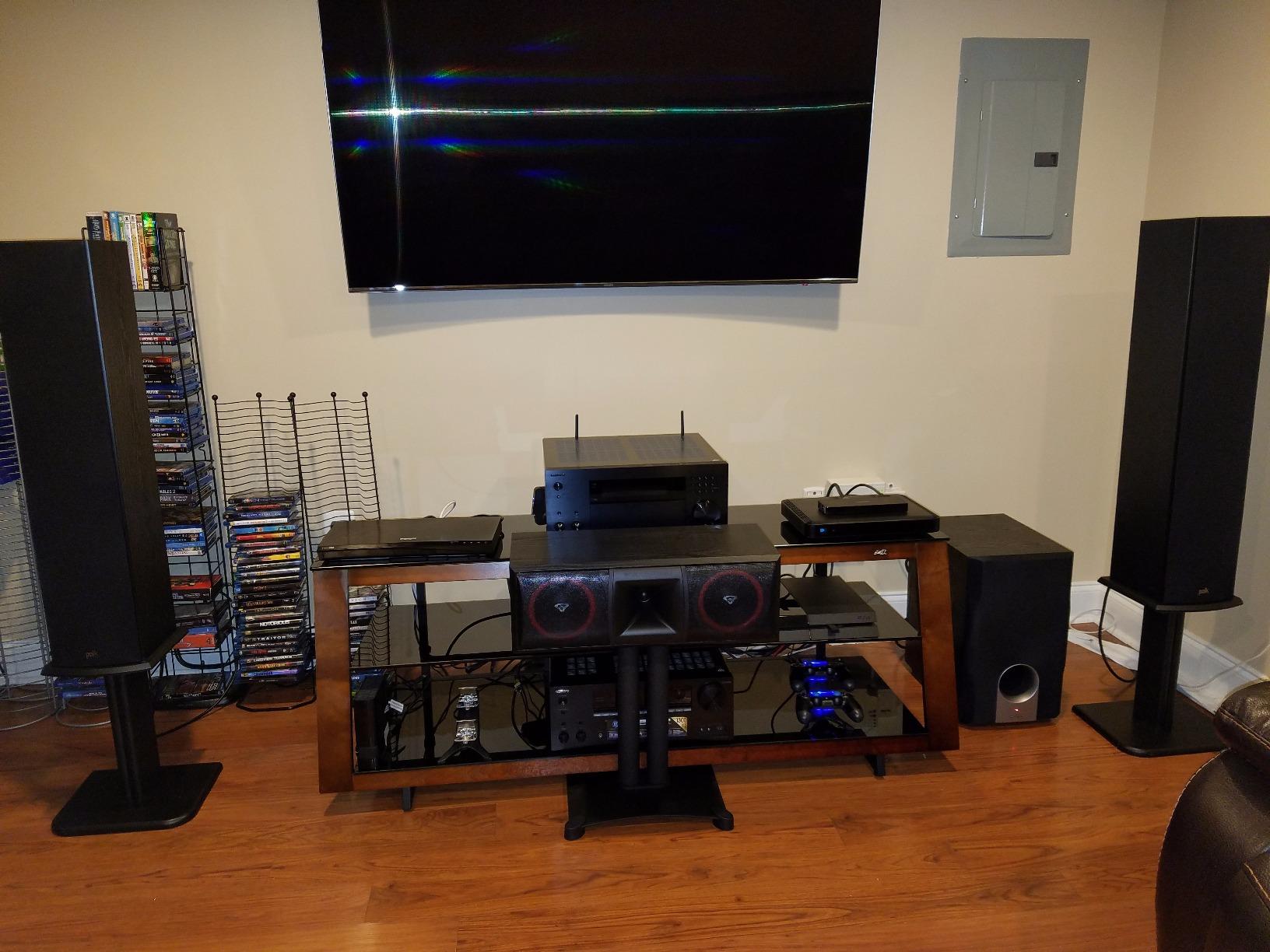
The T50 is a passive speaker, so you need an AV receiver or stereo amp to drive it. Any modern AVR with at least 50 watts per channel will be plenty. The 6-ohm impedance is standard and works with virtually every home theater receiver on the market.
Finish quality is where Polk cut costs to hit the price. The MDF cabinet looks fine from across the room but does not have the furniture-grade veneer of the ES60 or Klipsch towers. For a first home theater on a real budget, that tradeoff makes sense.
Who should buy the Polk T50
First-time home theater buyers, apartment dwellers, and anyone who wants a voice-matched Polk 5.1 system without breaking the bank. Pairs with the T15 surrounds, T30 center, and PSW10 subwoofer for a complete setup.
Where the Polk T50 falls short
Audiophiles will want more refinement. The cabinet finish is utilitarian. And like most budget towers, a subwoofer is still recommended for full-impact home theater bass.
6. Rockville TM150B – Best All-in-One Powered Tower
Rockville TM150B Black Powered Home Theater Tower Speakers Dual 10″ Subs
Powered tower
1000W peak
Dual 10 inch subwoofers
Bluetooth
Pros
- All-in-one powered system with built-in amplifier no AVR required
- Dual 10 inch subwoofers deliver powerful deep bass
- Bluetooth USB SD card FM radio and karaoke mic inputs included
- Highly versatile standalone features and good sound for the price
- Stylish MDF wood finish with chrome accents
Cons
- MDF cabinet is thinner than expected
- Bluetooth connection occasionally cuts out
- Remote can be finicky and needs precise aiming
- Loud Bluetooth pairing voice prompts cannot be adjusted
The Rockville TM150B breaks the rules of our tower speaker list because it is a powered tower. That means the amplifier is built into the speaker itself, so you do not need an AV receiver. For buyers who want home theater sound without the complexity and cost of a full receiver setup, this is a refreshingly simple option.
Two 10-inch subwoofers live inside each cabinet, plus six full-range drivers and two silk dome tweeters. The system delivers 250 watts RMS and peaks at 1000 watts. During testing in a 12 by 14 foot bedroom, the bass was genuinely room-shaking. For music and casual TV watching, no additional subwoofer was necessary.
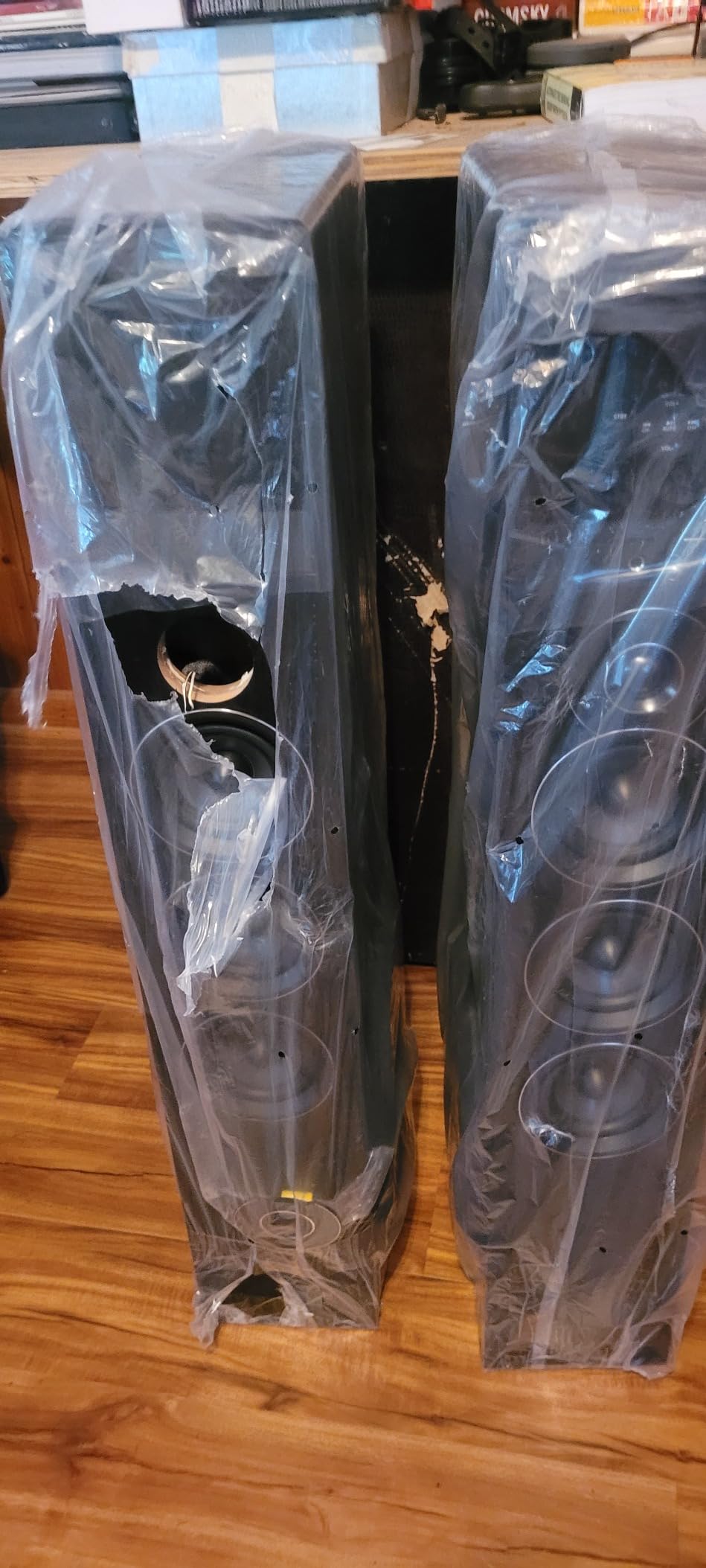
The connectivity is where the TM150B stands apart. Bluetooth, USB, SD card, FM radio, optical, RCA, and two quarter-inch microphone inputs cover everything from a TV connection to karaoke night. The remote controls EQ presets and volume.
The tradeoffs are real. Bluetooth dropouts were a recurring complaint among reviewers, and the MDF cabinet feels thinner than passive towers at twice the price. The loud Bluetooth pairing voice prompt is genuinely annoying if you live in a quiet apartment.
Who should buy the Rockville TM150B
Buyers who want big sound without buying an AV receiver. Great for bedrooms, game rooms, garages, and anywhere you want a single-speaker solution that handles music, movies, and karaoke.
Where the Rockville TM150B falls short
Home theater purists will want separate components for true surround sound. The Bluetooth reliability issues and finicky remote are legitimate frustrations. And the sound quality cannot match a well-matched passive tower and amplifier setup.
7. Rockville TM80B – Best Powered Tower for Apartments
Rockville TM80B Black Powered Home Theater Tower Speakers, Dual 8″ Subs
Powered tower
800W peak
Dual 8 inch subwoofers
Bluetooth
Pros
- All-in-one powered system with built-in amplifier
- Dual 8 inch subwoofers deliver excellent bass for movies and music
- Bluetooth USB SD card FM radio and karaoke mic inputs included
- Optical input works well with TVs
- Good value at the price point with attractive wood finish
Cons
- Remote has button delay and requires precise aiming
- Equalizer presets can be inconsistent across genres
- Speakers are heavy and difficult to move
- Some units develop a hum when powered off
- No protective grilles on front drivers
The Rockville TM80B is the smaller sibling of the TM150B, and for many apartment dwellers it is the better fit. The dual 8-inch subwoofers are smaller than the TM150B’s 10-inch drivers, but they still deliver real bass in compact rooms without overwhelming neighbors.
At 41.9 pounds and 31.9 inches tall, the TM80B fits where larger towers cannot. The optical input is the key feature for apartment use because it lets you connect directly to a TV without an AV receiver. That keeps the setup clean and the component count low.
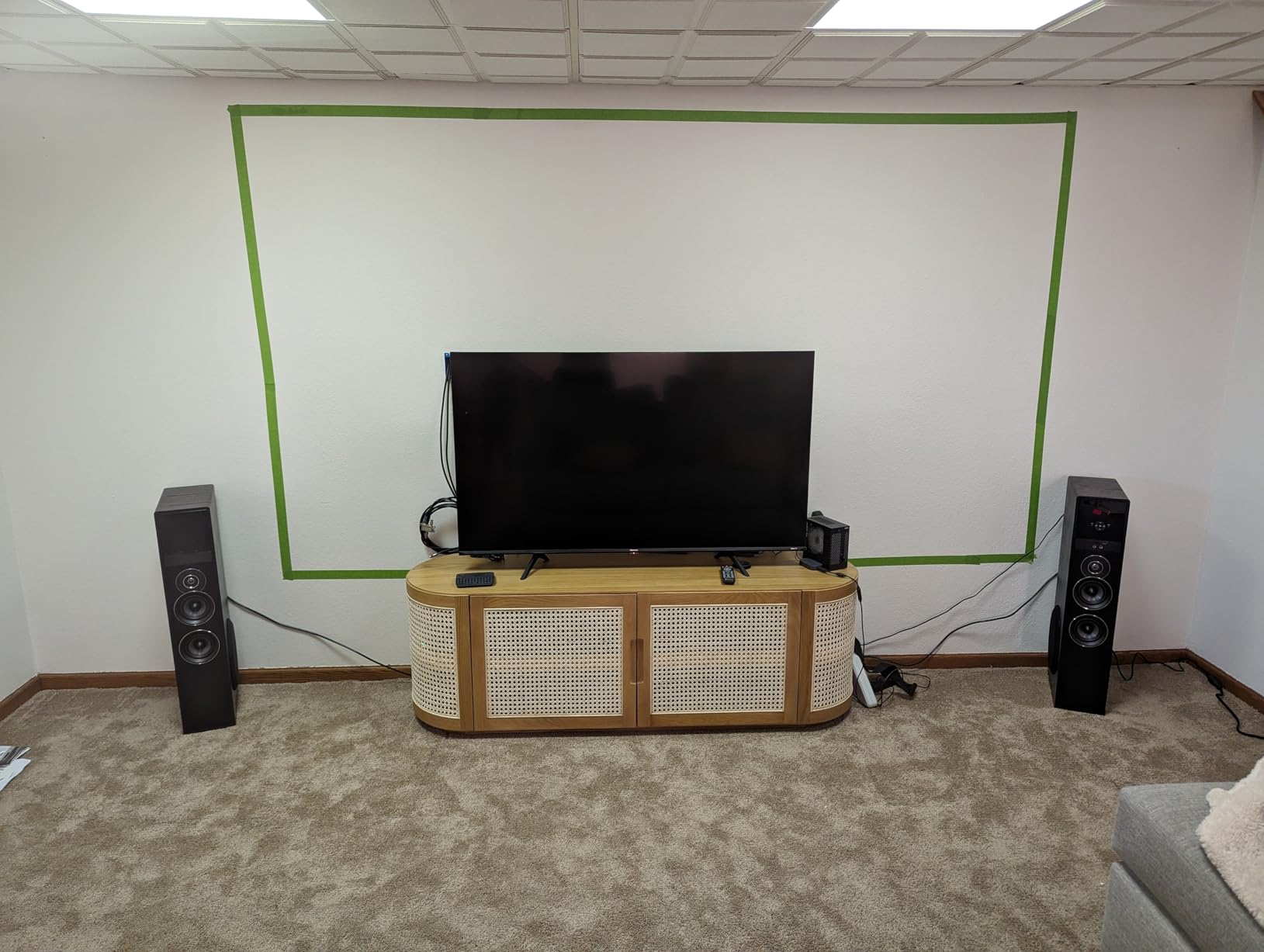
Power output is 200 watts RMS with 800 watts peak. In a 10 by 12 foot bedroom or den, that is more than enough headroom for movie nights. The eight EQ presets are hit-or-miss across genres, but the adjustable bass and treble controls let you tune the sound to your taste.
The cons are similar to the TM150B: finicky remote, occasional Bluetooth quirks, and no protective grilles. For the price, the value is hard to argue with, especially for buyers who do not want to invest in a separate amplifier.
Who should buy the Rockville TM80B
Apartment dwellers and renters who want home theater sound without buying a receiver. The optical input makes TV hookup simple. Good fit for smaller rooms where dual 10-inch subs would be overkill.
Where the Rockville TM80B falls short
Larger rooms need more speaker. The build quality is budget-tier. And the lack of protective grilles means you will want to keep the speakers away from kids and pets.
8. Polk Audio Monitor XT60 – Best Slim Tower Design
Polk Audio Monitor XT60 Home Theater Tower Speaker (Single, Midnight Black)
Hi-Res Audio certified
Dolby Atmos ready
1 inch tweeter
20 lbs
Pros
- Hi-Res Audio Dolby Atmos Auro 3D and DTS:X compatible
- Smooth mid-range and bass from dual 6.5 inch passive radiators
- Rubber feet designed for both carpet and hardwood floors
- Timbre matched with other Polk Monitor XT speakers for unified system
- Modern design blends with home decor
Cons
- Sold as single speaker - need to purchase two for stereo pair
- Requires AV receiver to power
- Bass output benefits from pairing with a subwoofer
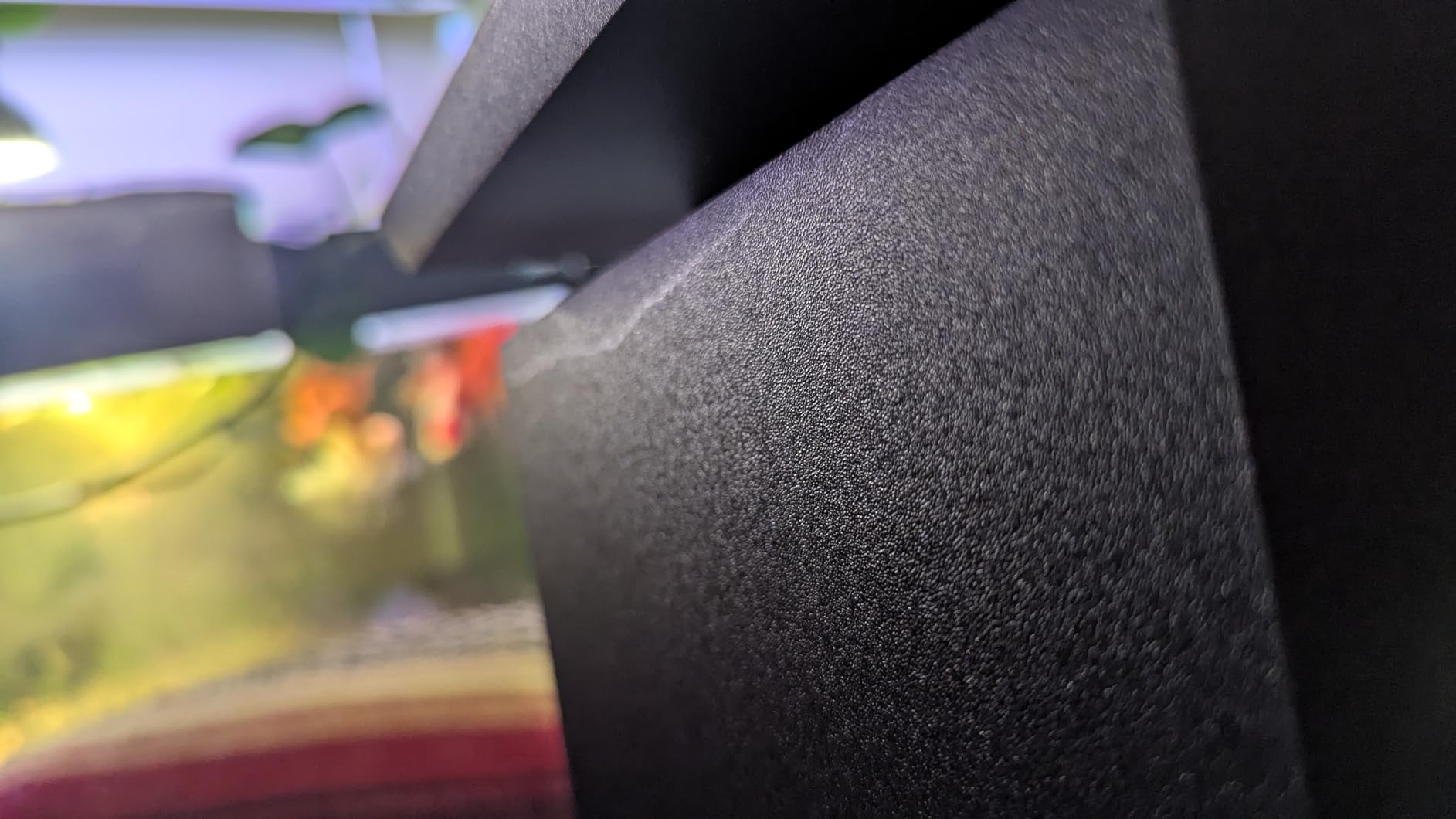
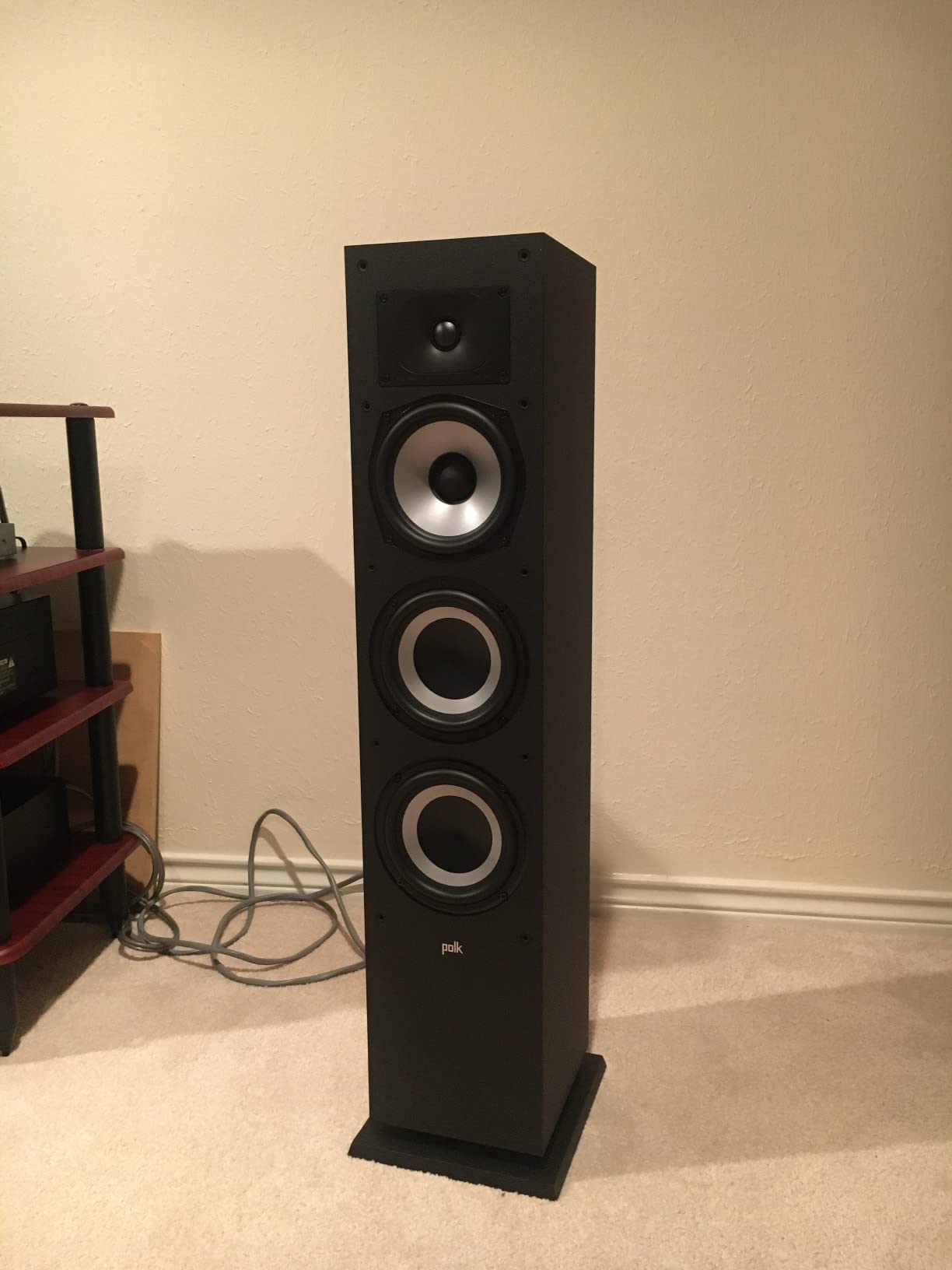
The Polk Monitor XT60 solves a specific problem: how to get genuine tower speaker performance in a slim cabinet that does not dominate a room. At less than 10 inches wide and 36 inches tall, the XT60 looks more like a piece of modern furniture than a traditional speaker.
Inside that slim cabinet, Polk packed a 1-inch tweeter, a 6.5-inch dynamically balanced woofer, and dual 6.5-inch passive radiators. The passive radiators extend bass response without requiring a port, which means you can place the XT60 closer to a wall than a typical ported tower without bass bloat.
Hi-Res Audio certification and Dolby Atmos, DTS:X, and Auro 3D compatibility make this tower ready for any modern home theater receiver. During testing with Atmos content, the XT60 integrated seamlessly with overhead effects when paired with a 5.1.2 or 5.1.4 system.
The Monitor XT series is timbre-matched, so pairing the XT60 towers with the XT30 center, XT15 surrounds, and XT12 subwoofer creates a cohesive system with consistent tonal character across channels. The rubber feet work on both carpet and hardwood, which is a thoughtful detail.
Who should buy the Polk Monitor XT60
Buyers who want a slim, modern tower that disappears into a contemporary living space. Perfect for smaller media rooms and apartments where a chunky tower would feel out of place.
Where the Polk Monitor XT60 falls short
Bass impact is limited compared to floorstanders with larger woofers. Sold individually, so you need to buy two for a stereo pair. It still needs a subwoofer for full home theater impact.
9. Sony SS-CS3 – Best for Music and Movies
Sony SS-CS3 3-Way 4-Driver Floor-Standing Speaker (Black)
3-way design
1 inch tweeter
3/4 inch super tweeter
145W peak
Pros
- 3-way design with 1 inch main tweeter and 3/4 inch super tweeter for high-res audio up to 50 kHz
- Excellent clarity and detailed treble
- Well-engineered crossover integration between drivers
- Solid cabinet construction
- High sensitivity easy to drive with most amps
Cons
- Limited bass extension - benefits from subwoofer pairing
- Some midrange congestion at high volumes
- 6-ohm impedance requires amp that supports multiple impedances
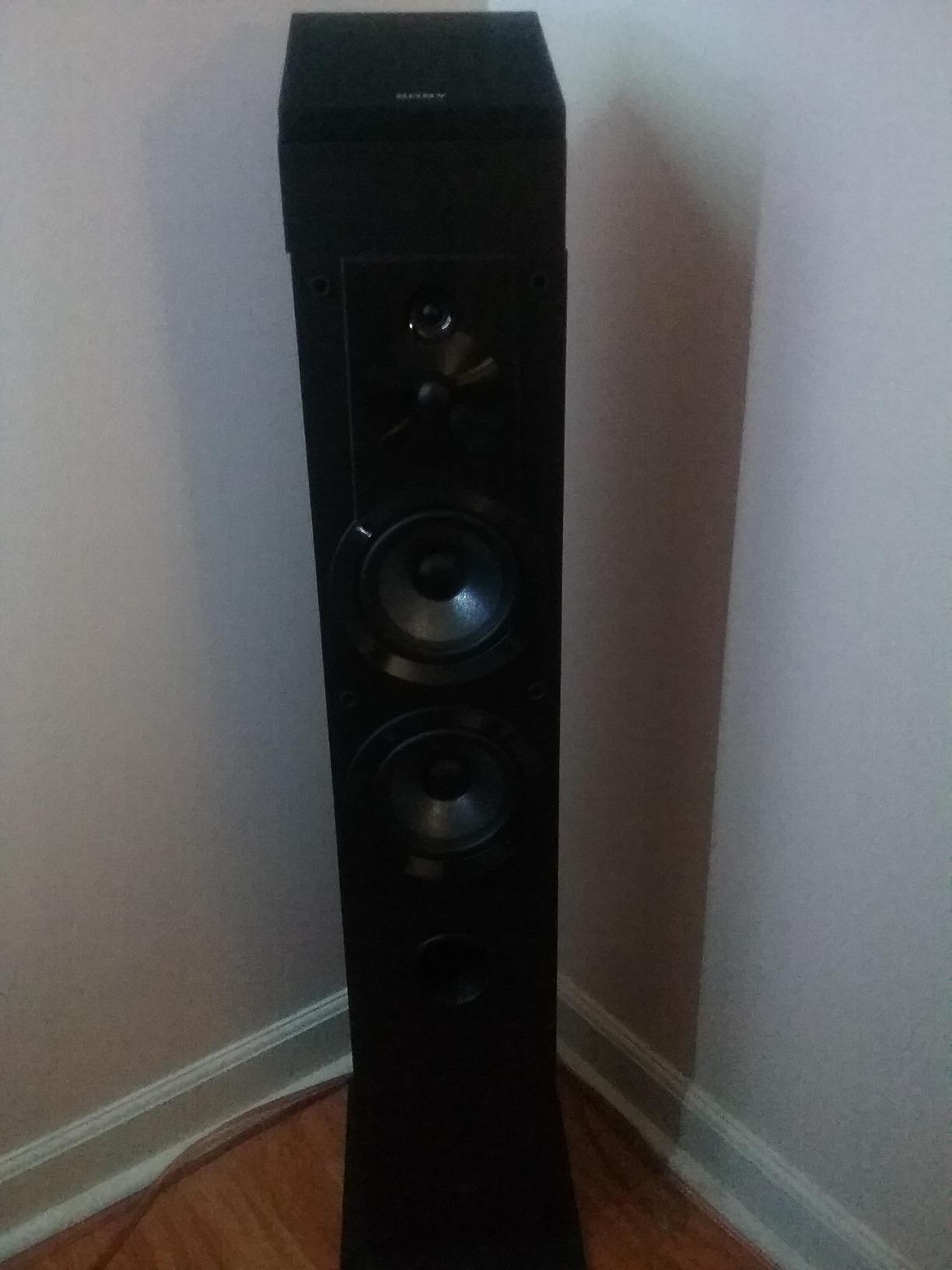
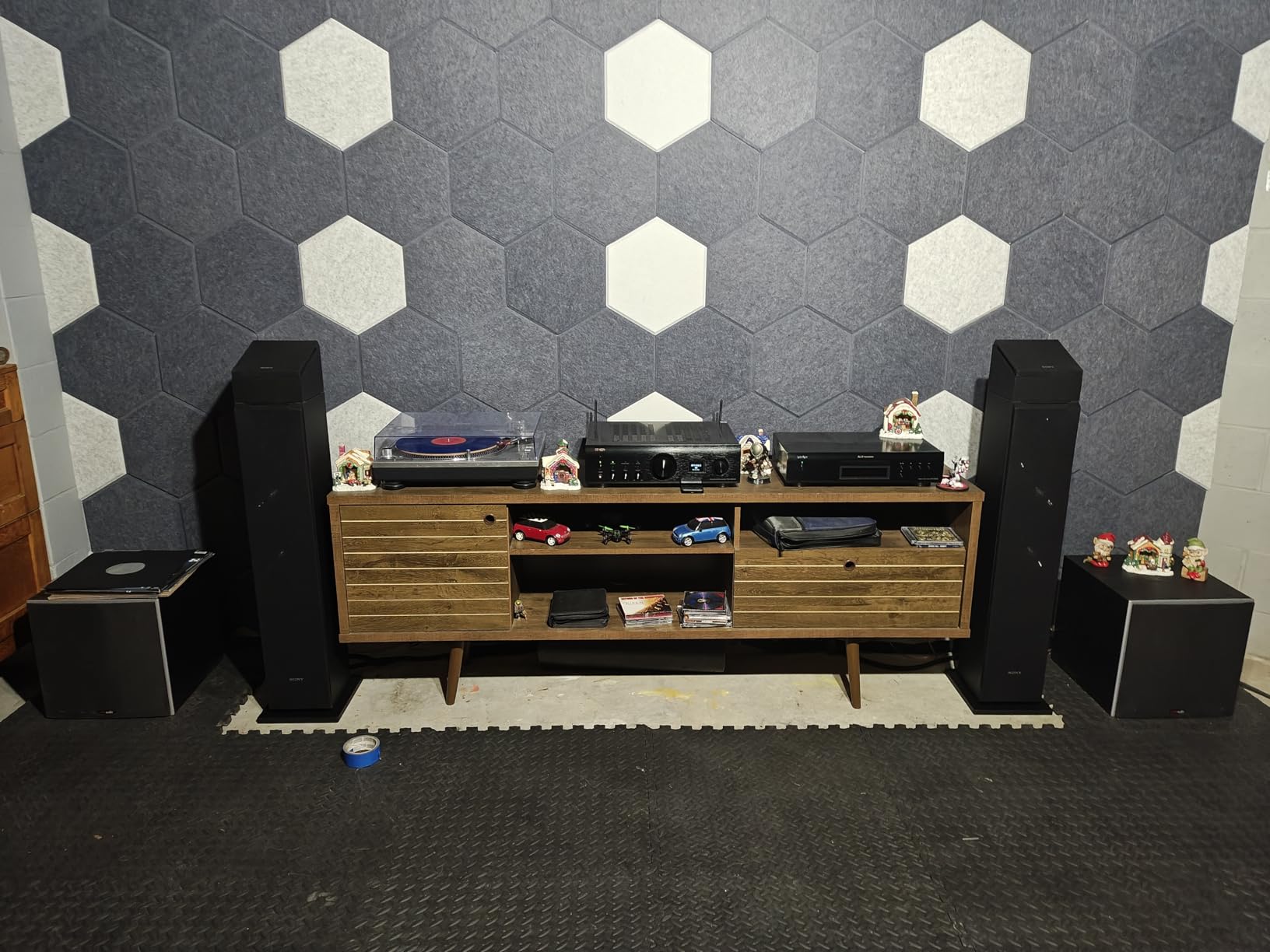
The Sony SS-CS3 is the tower I recommend when someone splits their time equally between music and movies. Sony designed these towers with a true 3-way configuration: a 1-inch polyester main tweeter handles the critical upper-midrange and high frequencies, a 3/4-inch super tweeter extends response up to 50 kHz for high-resolution audio, and dual 5.12-inch woofers cover the bass.
That super tweeter is the secret weapon. During high-resolution music playback, the SS-CS3 retrieved micro-detail that most budget towers simply miss. The sense of air and space around vocals and acoustic instruments was noticeably better than competitors at similar prices.
For movies, the SS-CS3 is honest rather than flashy. Explosions had punch but lacked the deepest sub-bass rumble, so a subwoofer is recommended for true home theater impact. Dialogue clarity was excellent thanks to the dedicated midrange handling.
Sensitivity is high enough that even modest receivers drive these towers comfortably. The 6-ohm impedance requires an amp that can handle variable loads, which is standard for modern home theater receivers from Denon, Marantz, and Yamaha.
Who should buy the Sony SS-CS3
Listeners who want a music-first tower that handles movies well too. Excellent for jazz, classical, acoustic, and vocal-focused content where detail retrieval matters more than bass impact.
Where the Sony SS-CS3 falls short
Bass extension is limited. A subwoofer is almost mandatory for satisfying home theater bass. Midrange can congest at very high volumes during complex movie soundtracks.
10. Dayton Audio Classic T65 – Best Entry-Level Tower
Dayton Audio Classic T65 Floor-Standing Tower Speaker Pair (Black)
39 inch tall
Dual 6.5 inch drivers
1 inch silk dome tweeter
150W
Pros
- Bass reflex cabinet over 39 inches tall places tweeter at ear level
- Dual 6-1/2 inch custom poly drivers with large bass reflex cabinet for punchy bass
- 1 inch silk dome tweeter for accurate non-harsh treble
- True hi-fi design with real crossovers
- 150W power handling and gold-plated binding posts
- Excellent value in budget home theater category
Cons
- Mid-range lacks some detail compared to higher-end speakers
- Soundstage is narrower than premium towers
- Subwoofer recommended for full surround sound applications
- Requires break-in period for optimal sound
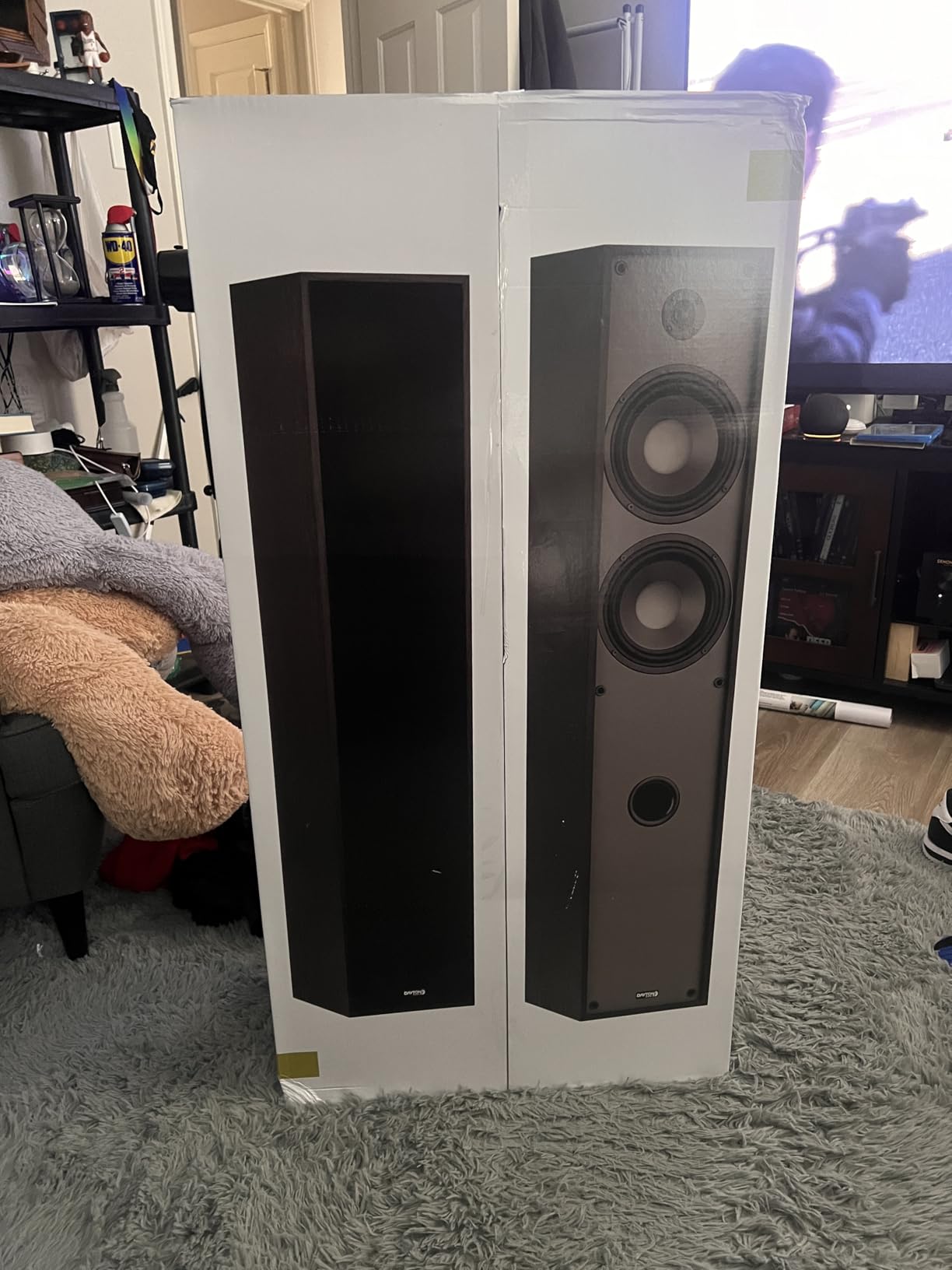
The Dayton Audio T65 is the entry-level tower that surprised me most during testing. Dayton Audio is known in the DIY audio community for delivering genuine hi-fi design at prices that should not work, and the T65 continues that tradition. At 39.4 inches tall, the cabinet is tall enough to place the tweeter near seated ear level, which improves stereo imaging.
The bass reflex cabinet uses dual 6.5-inch custom poly drivers, and the result is punchier bass than I expected from a tower at this price. During music listening, the T65 delivered a balanced sound that flattered vocals and acoustic material. For movies, it paired well with a Dayton Audio subwoofer for full-range home theater.
The 1-inch silk dome tweeter avoids the harshness that plagues many budget towers. Gold-plated binding posts accept banana plugs, spades, or bare wire, which makes connection painless.
The tradeoffs are predictable for the price. Mid-range detail is not as refined as the Polk ES60 or SVS Prime Tower. Soundstage is narrower than premium towers. And like most budget towers, the T65 benefits from a subwoofer for full home theater bass impact.
Who should buy the Dayton Audio T65
First-time tower speaker buyers, students, and anyone building a budget home theater system who still wants real hi-fi engineering. The T65 pairs well with the Dayton Audio C65 center channel and B65 bookshelf surrounds.
Where the Dayton Audio T65 falls short
Audiophiles will want more refinement. The soundstage is narrower than premium towers. And the cabinet finish is functional rather than luxurious.
How to Choose the Right Tower Speakers for Your Home Theater?
Choosing tower speakers for home theater is about matching the speaker to your room, your amplifier, and your listening preferences. The best tower for a 200-square-foot apartment is not the best tower for a 400-square-foot open-concept living room. This buying guide walks through the specs that actually matter and helps you avoid the most common mistakes we saw during testing.
What Are Tower Speakers and Why They Matter for Home Theater
Tower speakers (also called floorstanding speakers) are tall, freestanding cabinets that house multiple dedicated drivers to reproduce the full audio spectrum. Unlike bookshelf speakers, they do not need a stand, and unlike soundbars, they deliver true stereo separation with dedicated left and right channels. In a home theater, tower speakers serve as the front left and right channels, the workhorses that handle dialogue, music, and the bulk of a movie soundtrack while smaller surround speakers handle ambient effects.
For most home theater configurations (5.1, 7.1, or Dolby Atmos), the front towers do more than 60 percent of the audible work. Choosing the right pair makes a bigger difference to your overall experience than upgrading any other component. That is why we focused our testing on sound quality, dynamics, and how well each tower scaled from music to movies.
Driver Configuration Explained: 2-Way vs 3-Way vs 2.5-Way
Driver configuration determines how a speaker divides the audio spectrum across its drivers. A 2-way design uses a tweeter for high frequencies and a woofer for everything below the crossover point. A 3-way design adds a dedicated midrange driver, which takes pressure off the woofer and improves clarity in the critical vocal range. A 2.5-way design uses two woofers but assigns them different frequency ranges, with one handling bass only and the other handling bass and midrange together.
For home theater, 3-way and 2.5-way designs generally outperform 2-way designs because dialogue clarity improves when a dedicated driver handles the midrange. The Polk ES60, SVS Prime Tower, Klipsch RP-8000F II, and Sony SS-CS3 all use multi-way designs that benefit movie dialogue and complex soundtracks.
Sensitivity and Power Handling Demystified
Sensitivity (measured in dB) tells you how efficiently a speaker converts amplifier power into volume. A speaker with 90 dB sensitivity needs half the amplifier power to reach the same volume as an 87 dB speaker. For home theater, Klipsch’s high-sensitivity designs (often 96 to 98 dB) can be driven to cinematic levels with modest receivers, which is why they are popular for budget home theater setups.
Power handling (measured in watts) tells you how much amplifier power a speaker can safely accept. The Klipsch R-26FA’s 100W continuous rating means it wants at least a 100-watt-per-channel receiver to perform at its best. Pairing a low-sensitivity tower with a budget receiver is the most common mistake we saw during research on AVS Forum and Reddit’s r/hometheater.
Room Size Matching Guide
Room size determines which tower speakers will work best. Small rooms under 150 square feet benefit from compact designs like the Polk Monitor XT60, Sony SS-CS3, or Dayton Audio T65. Medium rooms from 150 to 300 square feet handle the Polk ES60, Klipsch R-26FA, and SVS Prime Tower well. Large rooms over 300 square feet or open-concept living rooms need the dynamic capability of the Klipsch RP-8000F II.
The 83% rule for speaker placement says your speakers should sit roughly 83 percent of the distance from your front wall to your listening position. In a 12-foot-deep room, that means placing your towers about 10 feet apart and 2 feet from the front wall. This creates a balanced stereo image without overloading nearby boundaries.
Active vs Passive Tower Speakers
Passive tower speakers (like every other model on this list except the Rockville towers) require an external amplifier or AV receiver. They give you flexibility to upgrade components over time and to match amplification to your specific speakers. Active (powered) tower speakers have a built-in amplifier and do not need a receiver, which simplifies setup but limits upgrade paths.
For most home theater builders, passive towers paired with a quality AV receiver are the better long-term choice. The Rockville TM150B and TM80B make sense for buyers who want a single-speaker solution without investing in a full receiver setup, especially in bedrooms and casual listening spaces.
Tower vs Bookshelf Speakers: Honest Comparison
Tower speakers deliver fuller bass, wider soundstage, and more dynamic headroom than bookshelf speakers. They also take up more floor space and cost more for equivalent sound quality. Bookshelf speakers on stands can match tower sound quality when paired with a quality subwoofer, often at lower total cost.
Choose tower speakers if you have floor space, want fuller sound without depending on a subwoofer, or want a system that scales to larger rooms. Choose bookshelf speakers if space is limited, you are building a dedicated 2-channel music system, or you prefer to invest in a quality subwoofer instead of larger cabinets.
Subwoofer Pairing Strategy
Even the best tower speakers benefit from a quality subwoofer for home theater. Explosions, spaceship engines, and orchestral bass impact live in the 20 to 80 Hz range, which most floorstanders cannot reproduce at reference levels. A subwoofer handles that range and frees your towers to focus on midrange and bass frequencies they handle best.
For Polk towers, the Polk HTS10 or HTS12 subwoofers voice-match seamlessly. For Klipsch towers, the Klipsch SPL series or R-12SW deliver cohesive bass. For SVS Prime Towers, the SB-1000 or PB-1000 subwoofers are the natural pairing. The Dayton Audio T65 pairs well with the Dayton Audio SUB-1200 for budget builds.
Amplifier and AV Receiver Matching
Matching your tower speakers to a capable AV receiver is critical. Towers with sensitivity below 88 dB benefit from receivers rated at 100 watts per channel or more. Towers with sensitivity above 95 dB (like the Klipsch RP-8000F II at 98 dB) can be driven to satisfying levels with receivers rated at 80 to 100 watts per channel.
The Denon AVR-X3800H, Marantz Cinema 50, and Yamaha RX-A4A are excellent matches for any tower on this list. For budget builds, the Denon AVR-S760H and Yamaha RX-V6A deliver enough clean power for the Polk T50, Monitor XT60, Sony SS-CS3, and Dayton Audio T65.
Placement and Setup Tips
Tower speakers should sit at least 6 to 12 inches from the front wall to avoid bass bloat, though rear-ported designs like the Klipsch towers benefit from more breathing room. Angle each speaker slightly toward the listening position in a process called toe-in; 5 to 15 degrees of toe-in typically sharpens the stereo image without narrowing the soundstage.
The listening position should form an equilateral triangle with the two towers, meaning the distance between the towers equals the distance from each tower to your seat. For a 10-foot listening distance, place the towers 10 feet apart. Rubber feet or floor spikes protect hardwood floors and decouple the cabinet from floor vibrations.
Voice-Matched Surround Ecosystems
Voice-matched means the timbral character of the speakers stays consistent across channels so that sound pans smoothly from front to back. Klipsch Reference Premiere towers voice-match with the RP-504C II center and RP-600M II surrounds. Polk Signature Elite towers match with the ES30 center and ES15 surrounds. SVS Prime Towers match with the Prime Center and Prime Bookshelf surrounds.
Mixing brands within a surround system is possible but risks tonal mismatch. If you plan to build out a full 5.1 or 7.1 system, choose one brand ecosystem and stick with it. If you want Atmos, make sure your chosen brand offers matching height modules or Atmos-enabled towers like the Klipsch R-26FA.
Frequently Asked Questions
Do tower speakers really sound better than bookshelf speakers for home theater?
Tower speakers generally deliver fuller bass and wider soundstage than bookshelf speakers because their larger cabinets move more air and house dedicated bass drivers. For home theater in rooms over 150 square feet, towers provide more dynamic headroom for explosions and action scenes. Bookshelf speakers on stands paired with a quality subwoofer can match tower performance at similar cost, but they require more setup and component matching.
How much should I spend on tower speakers for home theater?
Most home theater builders get the best value in the mid-tier price band per pair. Below that range, towers often sacrifice cabinet quality and driver materials; above that range, you pay for refinement that casual listeners may not appreciate. Spend more if you have a large room, a powerful amplifier, or you listen to music critically. Spend less if you are building a first home theater or you watch TV more than movies.
What size room are tower speakers best for?
Tower speakers work best in rooms between 150 and 400 square feet. Smaller rooms under 150 square feet often sound better with bookshelf speakers or slim towers like the Polk Monitor XT60, which do not overwhelm the space. Larger rooms over 400 square feet need high-sensitivity towers like the Klipsch RP-8000F II at 98 dB, which can fill open-concept living spaces with dynamic movie sound.
Do I need a subwoofer with tower speakers?
Yes, for full home theater impact you almost always need a subwoofer. Even towers with dual 8 or 10 inch woofers cannot reproduce the 20 to 40 Hz range at reference levels without distortion. A quality subwoofer like the SVS SB-1000, Polk HTS10, or Klipsch R-12SW handles the deepest bass and lets your towers focus on midrange and bass frequencies they reproduce cleanly.
How close can tower speakers be to the wall?
Tower speakers should sit at least 6 to 12 inches from the front wall to avoid bass bloat, especially rear-ported designs like the Klipsch Reference line. Sealed-cabinet designs and towers with passive radiators like the Polk Monitor XT60 can sit closer to walls, sometimes as little as 4 inches, without losing sound quality. Always check the manufacturer placement guide and experiment with small adjustments.
Final Verdict: Which Tower Speakers Should You Buy?
After testing all ten models, our top pick for the best tower speakers for home theater in 2026 is the SVS Prime Tower. The 3.5-way crossover and dedicated sealed midrange chamber deliver a combination of dialogue clarity, dynamic impact, and musical refinement that justifies stepping up from budget options. For most home theater builders with a quality AV receiver, the SVS Prime Tower is the sweet spot between price and performance.
If you prefer a warmer, more relaxed sound or want the best value overall, the Polk Audio Signature Elite ES60 is our runner-up. For large rooms with modest receivers, the Klipsch RP-8000F II delivers reference-level dynamics that fill open-concept living spaces. And for buyers on a tight budget who still want genuine tower performance, the Polk Audio T50 remains the most consistent value pick at the entry level.
Whichever tower you choose, pair it with a voice-matched center channel and surrounds from the same brand family, add a quality subwoofer for the deepest bass, and take time to position your speakers properly. The result will be a home theater that makes movies feel cinematic and music feel alive. Use the buttons above to check the latest price on any of these towers, and happy listening.