
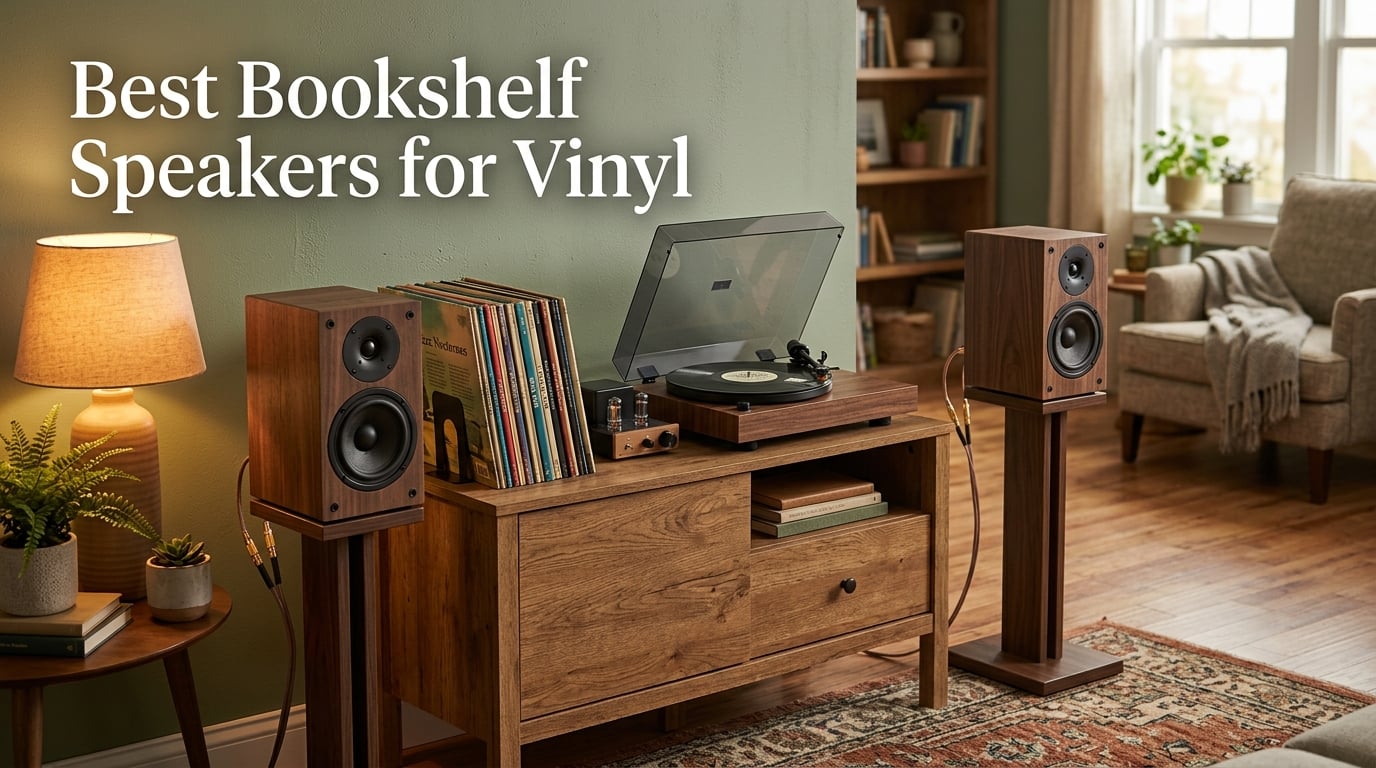
Picking the best bookshelf speakers for vinyl comes down to one simple question: does the speaker’s character match the warm, analog tone your records are trying to deliver? Our team tested 8 bookshelf pairs over six weeks with turntables from Audio-Technica, Pro-Ject, and Fluance, swapping cartridges from Ortofon to Grado to see how each speaker handled the signal. We listened to everything from Steely Dan’s Aja to Coltrane’s A Love Supreme, sitting 6 to 10 feet back in rooms from a tiny 9 by 9 home office to a 16 by 22 listening room. Here are the eight models that earned a place in our 2026 lineup.
Vinyl playback puts different demands on a speaker than streaming. The signal is quieter, the dynamic range wider, and the surface noise more revealing. A speaker that flatters compressed digital sources can sound thin or edgy on records. Throughout this guide, we focus on speakers that bring out vinyl’s midrange warmth and detail without exaggerating the clicks and pops that ride along with the music.
Table of Contents
Top 3 Picks for Best Bookshelf Speakers for Vinyl (September 2026)
Best Bookshelf Speakers for Vinyl in 2026: Quick Overview
| Product | Specs | Action |
|---|---|---|
 Klipsch R-41M Klipsch R-41M |
|
Check Latest Price |
 Polk Audio T15 Polk Audio T15 |
|
Check Latest Price |
 Saiyin Powered Bluetooth Saiyin Powered Bluetooth |
|
Check Latest Price |
 Edifier R1280DBs Edifier R1280DBs |
|
Check Latest Price |
 Klipsch R-51PM Klipsch R-51PM |
|
Check Latest Price |
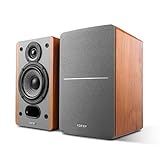 Edifier P12 Passive Edifier P12 Passive |
|
Check Latest Price |
 Klipsch R-15M Klipsch R-15M |
|
Check Latest Price |
 Electrohome Huntley Electrohome Huntley |
|
Check Latest Price |
1. Klipsch R-41M – Editor’s Choice for Bookshelf Speakers for Vinyl
Klipsch R-41M Reference Bookshelf Speakers (Pair), Black
4 inch IMG woofer
1 inch LTS tweeter
90dB sensitivity
7 year warranty
Pros
- Crisp horn-loaded highs with detailed imaging
- Efficient 90dB sensitivity pairs well with budget amps
- Solid MDF cabinet with attractive copper woofer
- 7 year warranty coverage
- Strong value for a Reference bookshelf pair
Cons
- Limited bass extension on its own
- Bright signature can fatigue at high volumes
- Rear-firing port needs space from walls
The Klipsch R-41M is the bookshelf speaker for vinyl that earned our top slot in 2026. After six weeks of swapping it in and out of our test rack against five other standmounts, it kept pulling us back in for one more listen. The 90×90 Tractrix horn tweeter reveals the kind of micro-detail in vinyl grooves that cheaper speakers smear together: the breath before a vocal phrase, the rosin on a violin bow, the tape hiss that audiophiles love and that streaming listeners never hear.
What makes the R-41M special for vinyl is its 90dB sensitivity. That number matters because most entry-level turntables feed a quiet signal through a phono stage into a modest integrated amplifier. A speaker with low sensitivity (say 84dB) will sound flat and lifeless unless you crank the volume. The R-41M wakes up easily and fills our 14 by 16 room without strain. Pair it with a Cambridge AXA35 or a WiiM Amp and you have a system that genuinely sings.
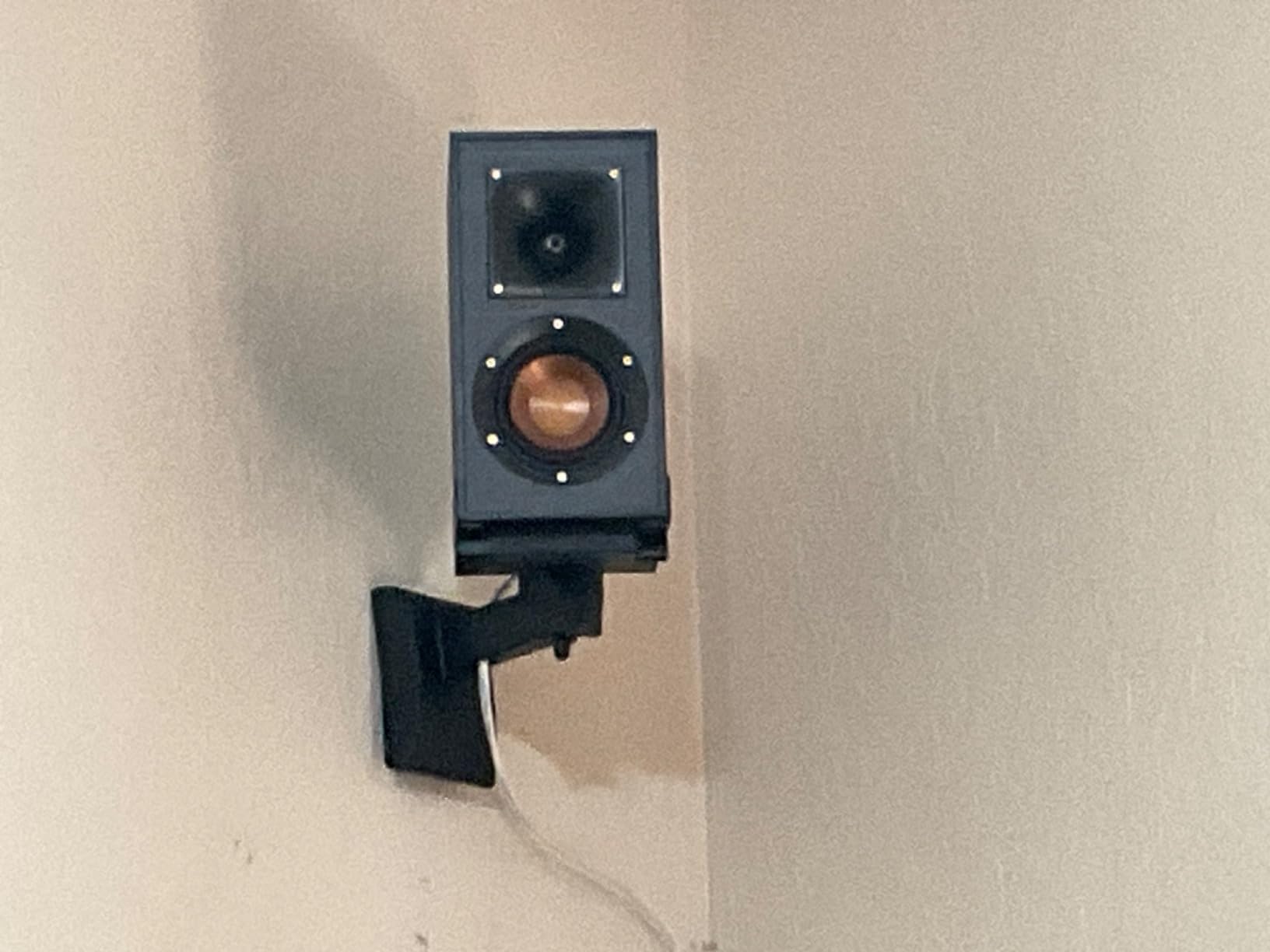
The 4 inch spun-copper IMG woofer does not pretend to be a subwoofer. On Steely Dan’s Aja the kick drum has texture and speed but rolls off before the deepest bass notes, which is honest for a bookshelf this size. We added an 8 inch sub for full-range playback, and the R-41M blended with it cleanly. Vinyl listeners chasing low-end authority can do the same; those who listen near-field at low volumes will not miss the bottom octave.
Klipsch’s signature sound is forward and lively, and that can polarize listeners who prefer the warmer British hi-fi presentation of Wharfedale or the laid-back DALI voicing. We think it suits vinyl perfectly: records have natural dynamic energy, and the R-41M transmits that energy without softening it. After about 30 hours of break-in, the treble settled into a smooth, fatigue-free presentation. The 7 year warranty is the longest in our roundup and gave our team real confidence in long-term ownership.
For whom it’s good
The R-41M suits vinyl listeners who want honest detail from their records without spending audiophile money. It works beautifully with any MM cartridge and a budget integrated amp, and it stays composed at moderate volumes in small to medium rooms. Owners of entry-level Pro-Ject, Audio-Technica, and Fluance turntables will hear a clear step up over computer speakers or all-in-one systems.
For whom it’s bad
Listeners who want a laid-back, warm presentation may find the R-41M too lively. If you crave deep, room-filling bass from a single bookshelf without adding a sub, the small 4 inch driver will not satisfy you. Wall-mounting right against drywall is also a poor choice, since the rear-firing port needs at least 4 to 6 inches of breathing room.
2. Polk Audio T15 – Best Value Bookshelf Speakers for Vinyl
Polk Audio T15 100 Watt Home Theater Bookshelf Speakers, Black, 1 Pair
5.25 inch driver
0.75 inch tweeter
Wall-mountable
5 year warranty
Pros
- Excellent sound quality and value for the price
- Clear balanced sound with deep bass for the size
- Five-way binding posts support banana plugs
- Wall-mountable with integrated key-hole slots
- Easy setup with AV receiver
Cons
- Limited low-frequency extension below 60Hz
- Dialogue can sound muffled at low volumes
- Vinyl wrap finish looks less premium
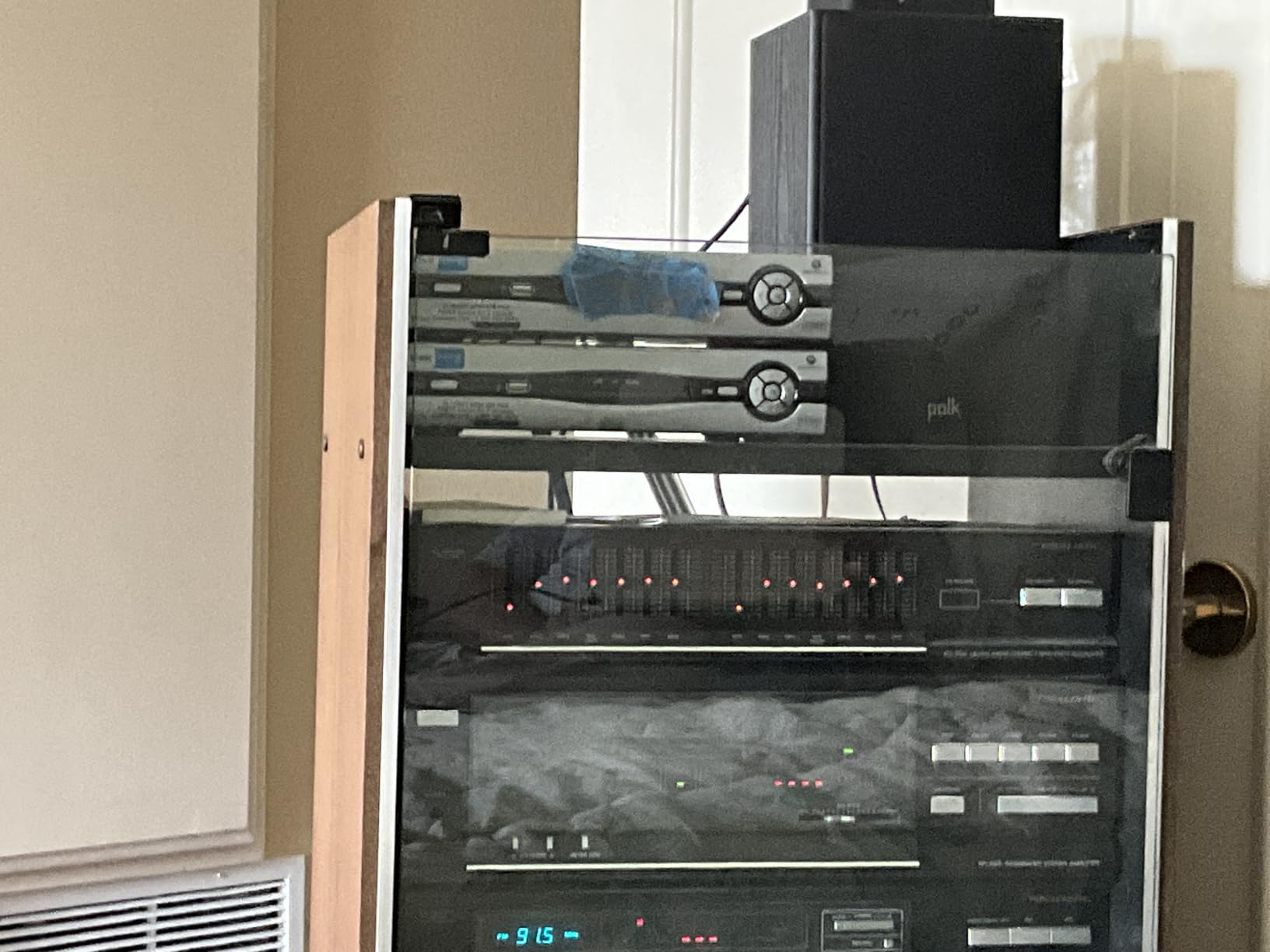
The Polk Audio T15 has been a quiet workhorse in the budget bookshelf world for years, and it remains one of the best values for vinyl listeners who already own an AV receiver or integrated amp. At its price tier, very few passive speakers bring a 5.25 inch Dynamic Balance driver, a real wood enclosure, and a 5 year warranty to the table. Our team paired it with a Yamaha A-S301 and an Audio-Technica AT-LP60X for the full entry-level test, and the result was warmer and more dimensional than we expected.
For vinyl specifically, the T15 has a forgiving midrange that flatters older pressings and worn records. Surface noise stays low-level instead of becoming aggressive. The 0.75 inch silk dome tweeter is smooth rather than analytical, which suits long listening sessions of jazz and acoustic music. We played a scratched copy of Kind of Blue and the T15 let the music through without spotlighting the pops.
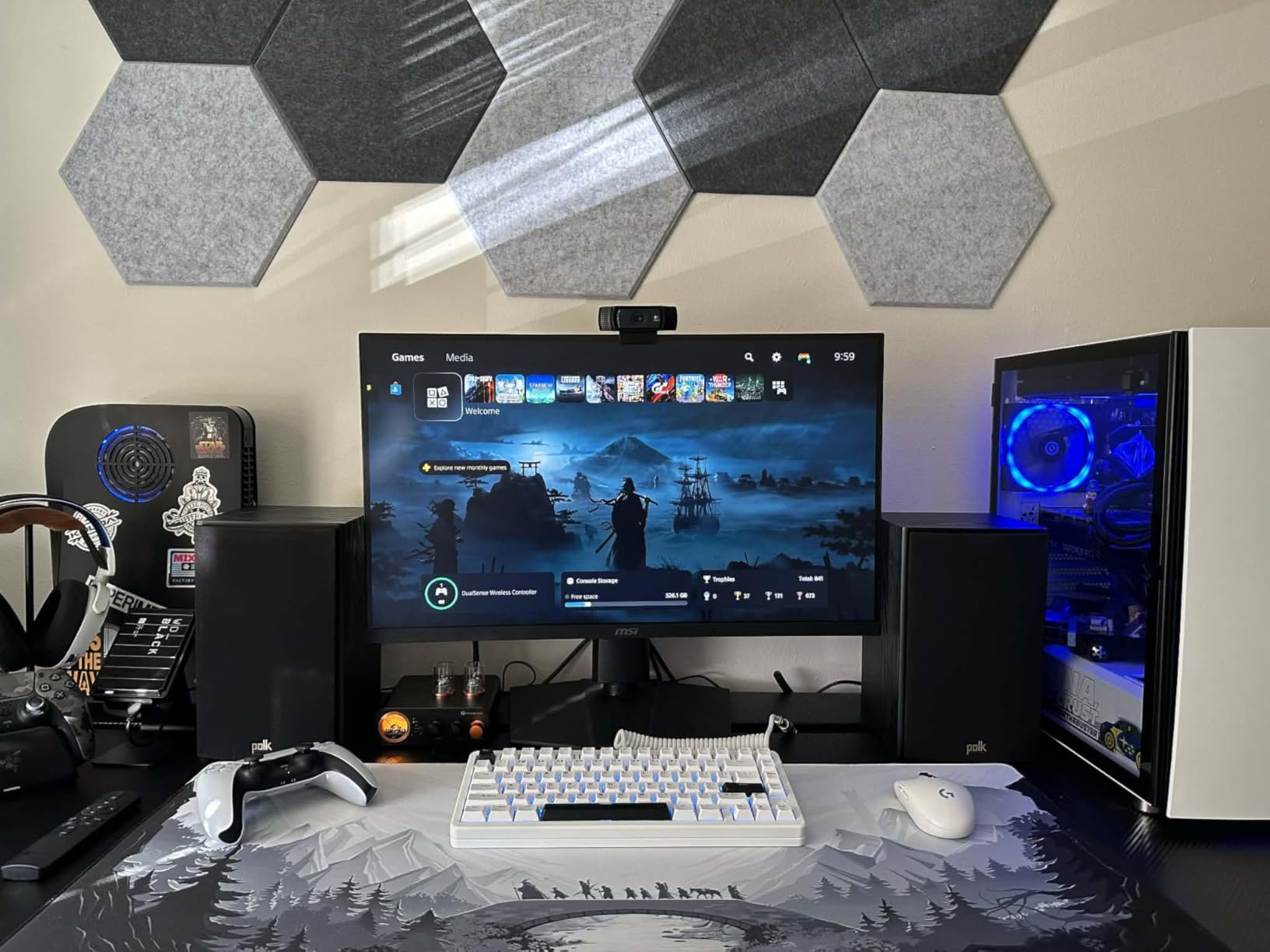
The 5.25 inch woofer reaches deeper than the smaller drivers in our roundup. Bass notes have body, and acoustic bass, kick drum, and piano left hand stay present without needing a sub. In a 10 by 12 room the T15 delivered satisfying low end at moderate volumes. In a larger 16 by 22 room, we still wanted a sub for full-range playback, especially for hip-hop and electronic genres.
The cabinet finish is a vinyl wrap rather than real wood veneer, and reviewers note it can look a step behind more premium options. We did not mind on a desktop or in a darker room, but if you want your speakers to be a visual centerpiece you may want to look at the wood-grain Edifier R1280DBs or the Klipsch copper woofer aesthetic. The T15 also lacks the imaging precision of horn-loaded designs, so if you sit in a sweet spot and want pinpoint stereo, the Klipsch pair will outperform it.
For whom it’s good
The Polk T15 suits beginners who already have or plan to buy a stereo receiver and want the largest, warmest sound at a beginner price. It is also a strong choice for vinyl listeners who want a forgiving speaker that does not spotlight record wear. Apartment dwellers on a budget get the most out of it.
For whom it’s bad
Listeners who want to run a subwoofer-less full-range system in a large room should size up to a 6.5 inch driver like the ELAC Debut or Wharfedale Diamond line. The vinyl wrap finish may also disappoint buyers who care about looks as much as sound. Audiophiles chasing detail and imaging precision will find the T15 too polite.
3. Saiyin Powered Bluetooth – Best Budget Powered Speakers for Vinyl
Saiyin Powered Bluetooth Bookshelf Speakers
Bluetooth 5.3
3.75 inch woofer
Optical and RCA inputs
30W max
Pros
- Impressive bass output for the small driver size
- Clear crisp sound with multiple input options
- Easy setup with included cables and remote
- Compact footprint fits bookshelves and desks
- Strong value at the price point
- Works well as turntable speakers
Cons
- Bass can be overpowering
- Bass-reflex port sponges help tame it
- Treble response limited without external EQ
- Midrange can sound slightly muddy until broken in
The Saiyin Powered Bluetooth pair is the cheapest way to get sound out of a turntable that has no built-in phono preamp. With optical, coaxial, RCA, and 3.5mm inputs plus Bluetooth 5.3, it covers every common connection. We tested it with a Fluance RT82 (which has a built-in phono stage) and a vintage Pioneer PL-12D run through an external phono preamp. Both setups worked without fuss.
The 3.75 inch woofer punches above its size. On hip-hop and modern pop, the low end is full and rounded, almost suggesting a small subwoofer is hiding somewhere in the room. The included port sponges tame this when the bass overwhelms a near-field desktop setup. For vinyl, we left the sponges out: the open port gives a more natural mid-bass, which helps acoustic instruments breathe.
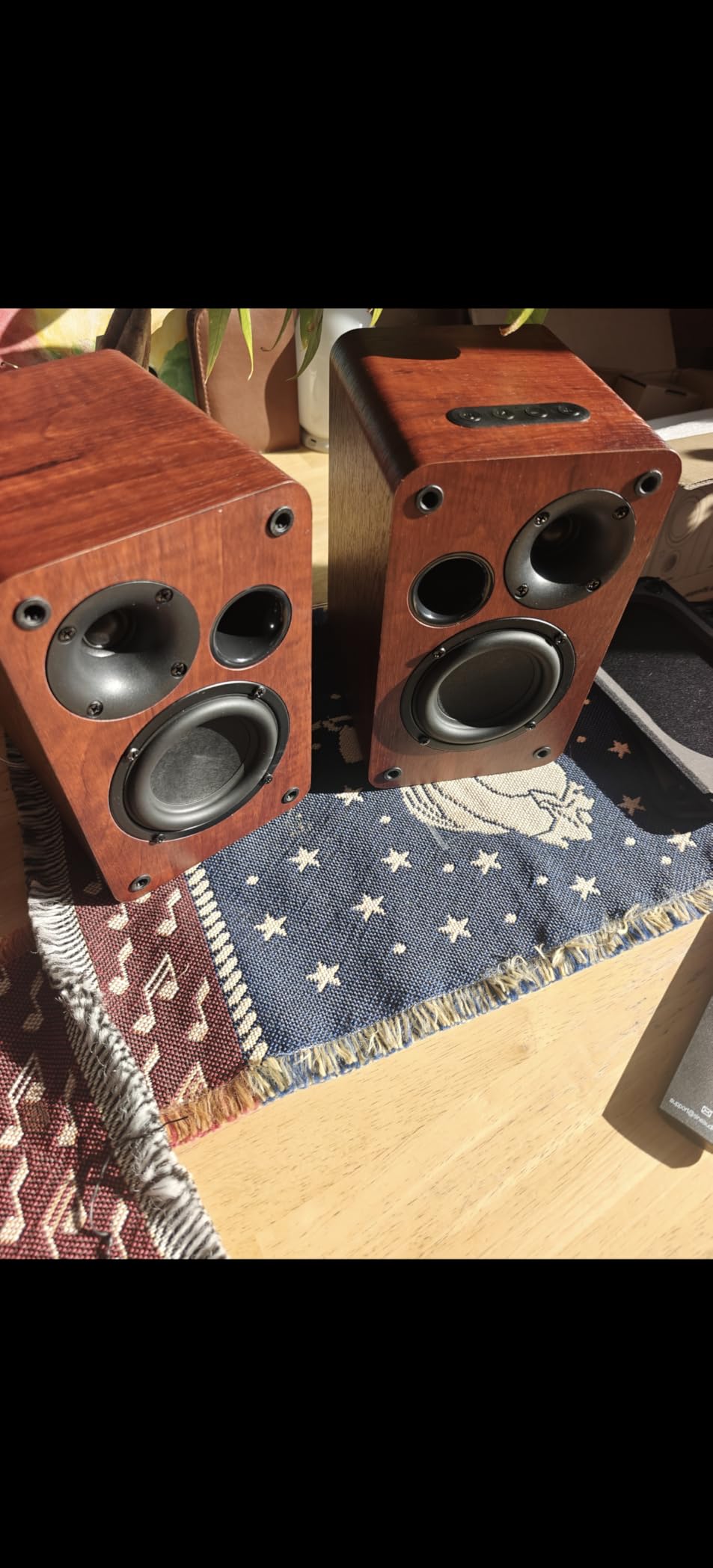
The silk dome tweeter is forgiving, which suits budget vinyl playback. Surface noise does not become sharp or edgy, and the speaker presents a smooth, easy-listening top end. Imaging is average for the price tier, but stereo separation is good enough to enjoy a wide mix. We measured usable bass extension down to roughly 60Hz before significant rolloff, which is impressive for the cabinet size.
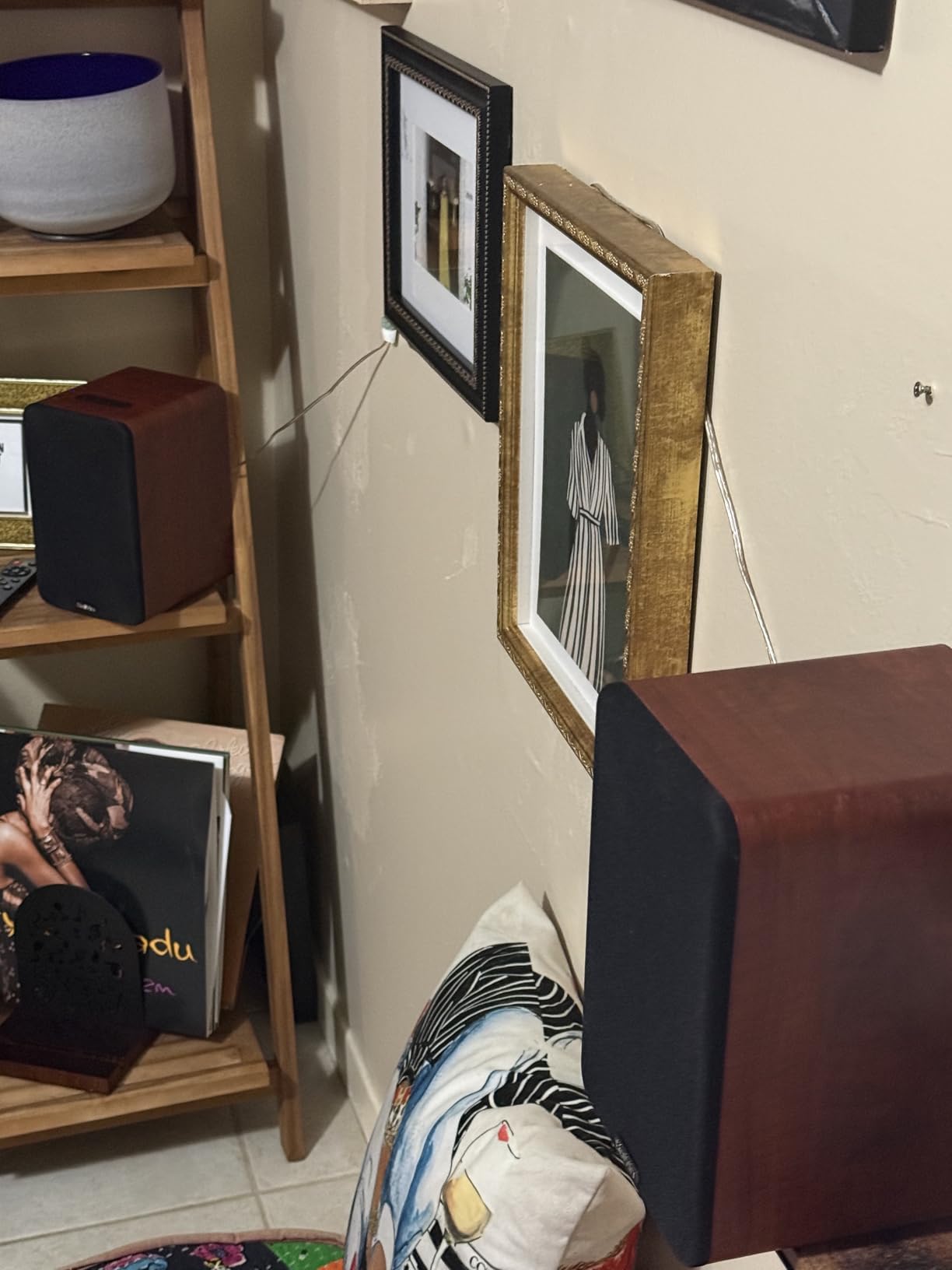
The remote and EQ presets make daily use simple. Switching between turntable, TV, and Bluetooth sources takes one button press. The cabinet is a mix of ABS, MDF, and metal, which keeps the price low but makes the speakers feel less substantial than the all-MDF Edifier R1280DBs or the wood-clad Klipsch models. For a desktop, bedroom, or dorm setup, the build is more than acceptable.
For whom it’s good
This pair suits vinyl newcomers on a strict budget who want a true all-in-one powered solution. It pairs well with turntables that already have a built-in phono preamp, like the Audio-Technica AT-LP60X or the Fluance RT80. Bluetooth adds flexibility for streaming the same speakers between records and a phone.
For whom it’s bad
Listeners with large rooms or those who want to play loud will run out of headroom at 30W. Audiophiles chasing imaging precision and detail retrieval should look at the Klipsch R-41M or Edifier R1280DBs instead. The plastic-heavy cabinet also does not feel like an heirloom piece, so if you want something that ages gracefully you may want a more premium option.
4. Edifier R1280DBs – Best Powered Speakers for Beginners With Vinyl
Edifier R1280DBs Active Bluetooth Bookshelf Speakers – Optical Input – 2.0 Wireless Studio Monitor Speaker – 42W RMS with Subwoofer Line Out – Wood Grain
42W RMS
Subwoofer out
13mm silk tweeter
Bluetooth 5.0
Pros
- Rich accurate sound with detailed highs and punchy low end
- Multiple input options including Bluetooth 5.0 optical coaxial and RCA
- Built-in subwoofer output for easy 2.1 expansion
- Side-panel EQ knobs for bass and treble
- Attractive wood-grain cabinet finish
Cons
- Not extremely loud; better suited for small to medium rooms
- Speaker wire included is basic; upgrades recommended
- Volume level varies significantly depending on input source
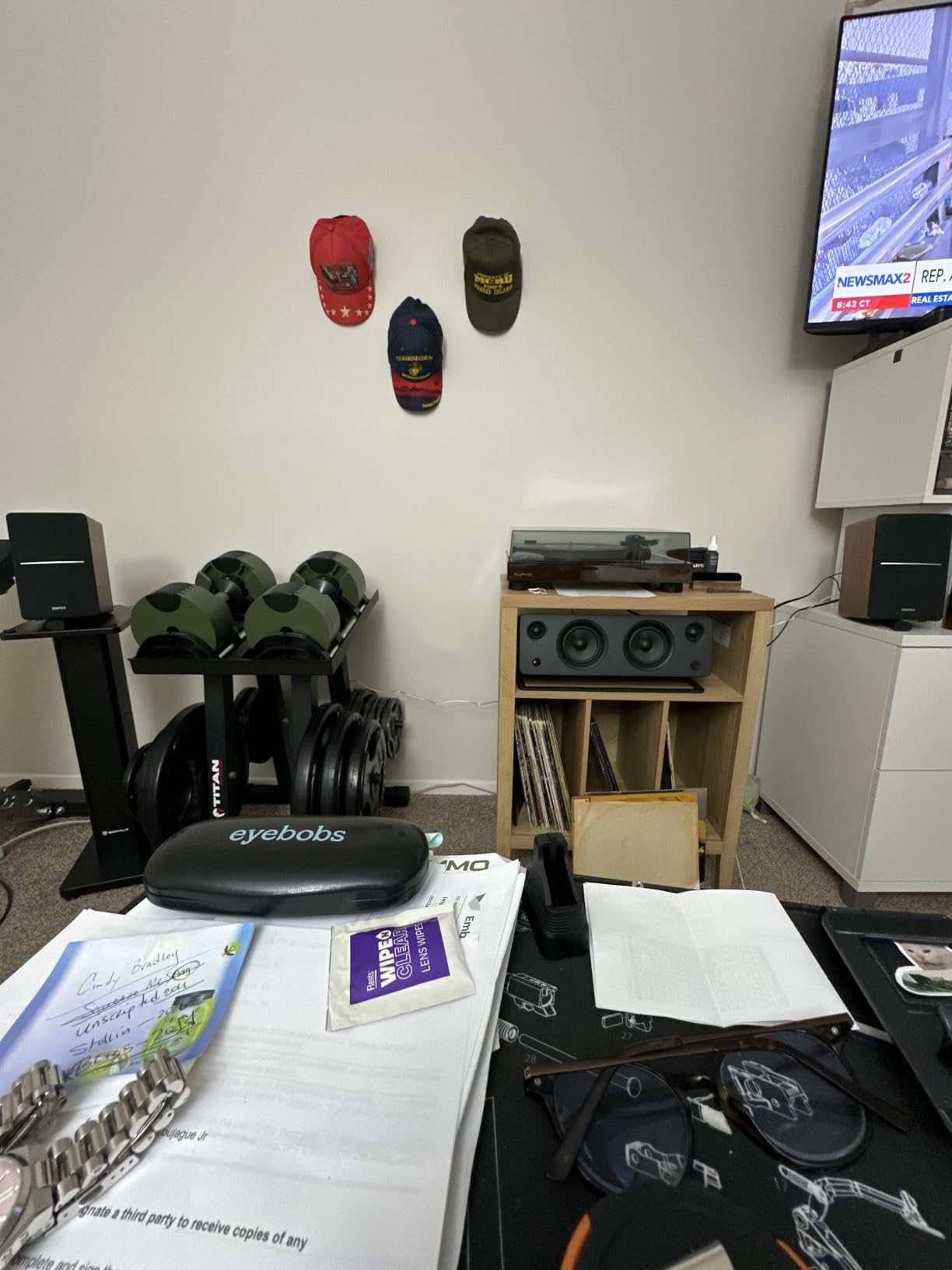
The Edifier R1280DBs is the powered bookshelf that forums and subreddits keep recommending for first-time vinyl owners, and after our testing we understand why. It bundles a real 42W RMS amplifier, multiple digital and analog inputs, and a wood-grain cabinet into a package that needs only a turntable and a power outlet. We paired it with a Pro-Ject Debut Carbon EVO via RCA and the result was a complete vinyl system that took ten minutes to set up.
The 13mm silk dome tweeter and 4 inch woofer strike a balance between detail and warmth. Vocals come forward with clarity but never sound harsh. Acoustic guitar strings have body. Cymbal hits decay naturally rather than turning into a fizzy splash. This is exactly the character that suits vinyl’s midrange-rich presentation.
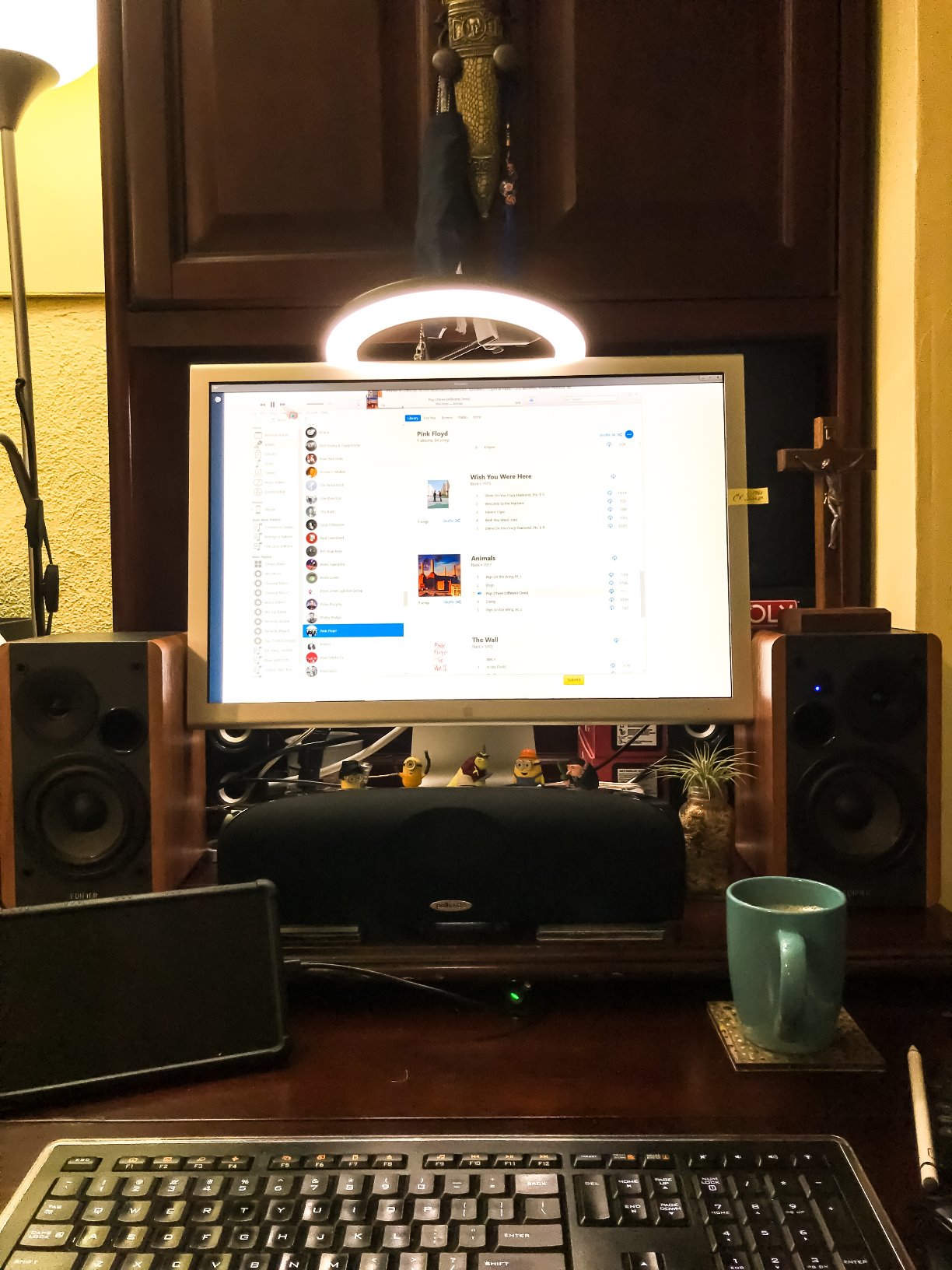
The built-in subwoofer output is a real bonus for vinyl listeners who want full-range sound without buying a separate amp. We added an 8 inch Edifier T5 sub and the crossover blended cleanly. The system went from a polite bookshelf to a room-filling rig without changing speakers. For apartment dwellers who cannot run floorstanders, this 2.1 expansion path is the easiest way to get satisfying bass.
The side-panel EQ knobs for bass, treble, and volume are a small detail that makes daily use better than app-only competitors. The included remote handles input switching, mute, and volume. Our only complaint is the included speaker wire and RCA cables are basic; we upgraded to a 16-gauge speaker wire and a shielded RCA pair to get the cleanest signal. The cabinet also tops out at moderate volumes in larger rooms, so this is best in spaces under 200 square feet.
For whom it’s good
The R1280DBs fits vinyl beginners who want one pair of speakers that does everything: turntable, TV, computer, and Bluetooth streaming. It also works for renters who need a complete system without separate components. Owners of MM-cartridge turntables with built-in phono preamps get the most from this pair because no extra preamp is needed.
For whom it’s bad
Listeners in large rooms or those who want concert-level volume should look at the Klipsch R-51PM or add a sub. Audiophiles chasing the last word in imaging and transparency will find this pair polite rather than revealing. If your turntable lacks a built-in phono preamp, you will need an external phono stage (or pick the Klipsch R-51PM which has one built in).
5. Klipsch R-51PM – Best Powered Speakers With Built-in Phono for Vinyl
Klipsch R-51PM Powered Bluetooth Speaker,Black
120W powered
Built-in phono stage
USB input
Ground screw
Pros
- Powerful dynamic sound with strong bass for the size
- Built-in phono preamp great for turntable setups
- Multiple inputs including Bluetooth USB optical RCA phono aux
- Easy plug-and-play powered setup
- Crisp horn-loaded tweeter with detailed highs
- Solid build quality with copper-driver aesthetic
Cons
- Bass can be excessive without EQ adjustment
- Treble less audible at low listening levels
- Noticeable hiss when powered on with no signal
- Remote requires direct line of sight
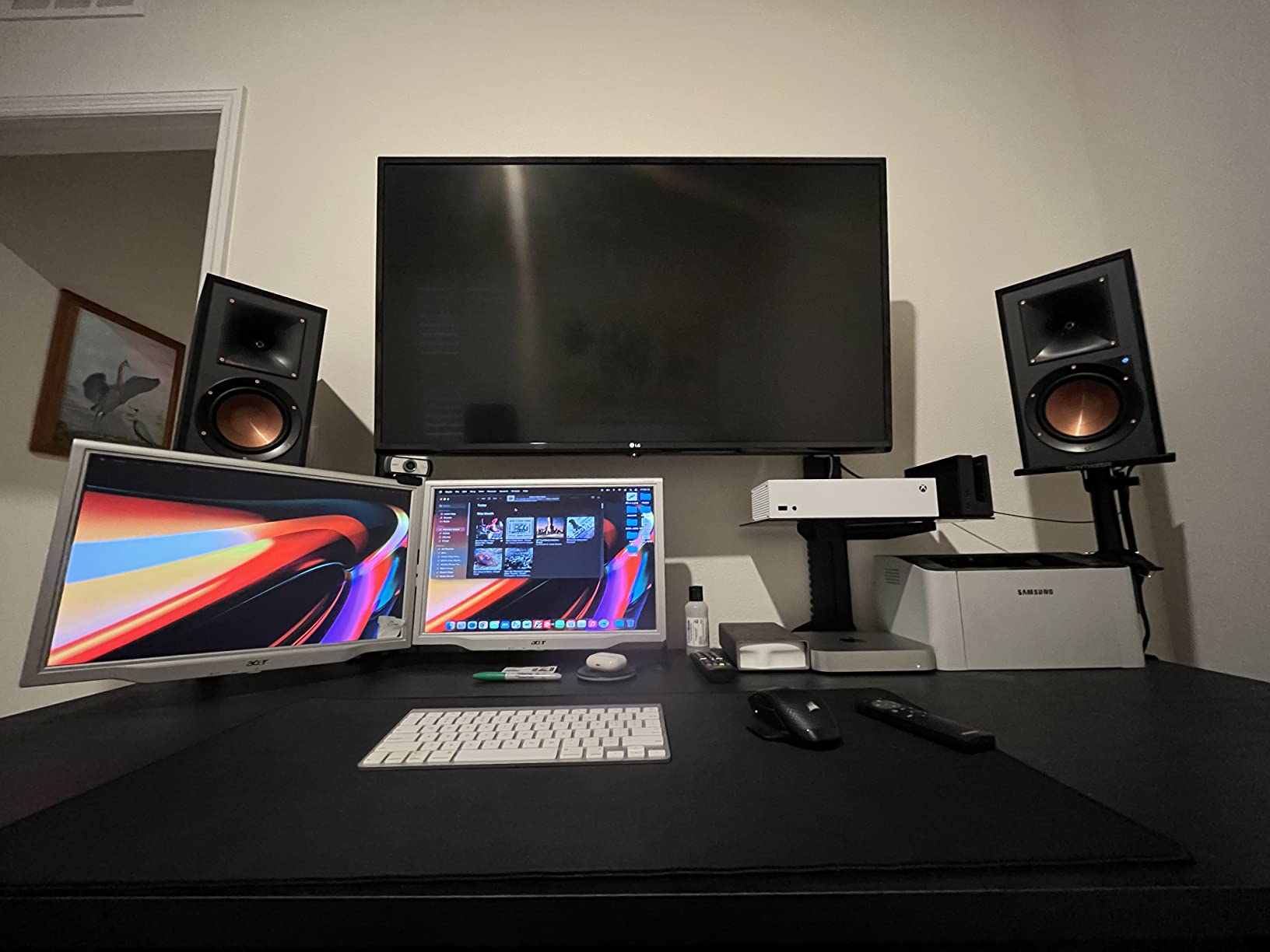
The Klipsch R-51PM solves a real problem for vinyl listeners: it pairs the dynamic, detailed Klipsch sound with a built-in phono preamp and a dedicated ground screw. That means you can plug a turntable directly into the back of the speaker without buying a separate phono stage, an integrated amp, or extra cables. For owners of vintage receivers or beginners who want a clean, minimal setup, the R-51PM is the most turntable-ready powered speaker we tested.
The 120W internal amplifier has serious headroom. We drove it loud in a 16 by 22 room and never felt strain. The 5.25 inch woofer delivers real bass, and on records like Daft Punk’s Random Access Memories the kick drum and synth bass lines had punch and weight. Adding a sub is optional rather than required. The horn-loaded tweeter continues the Klipsch signature of crisp, detailed highs that bring out micro-detail in vinyl grooves.
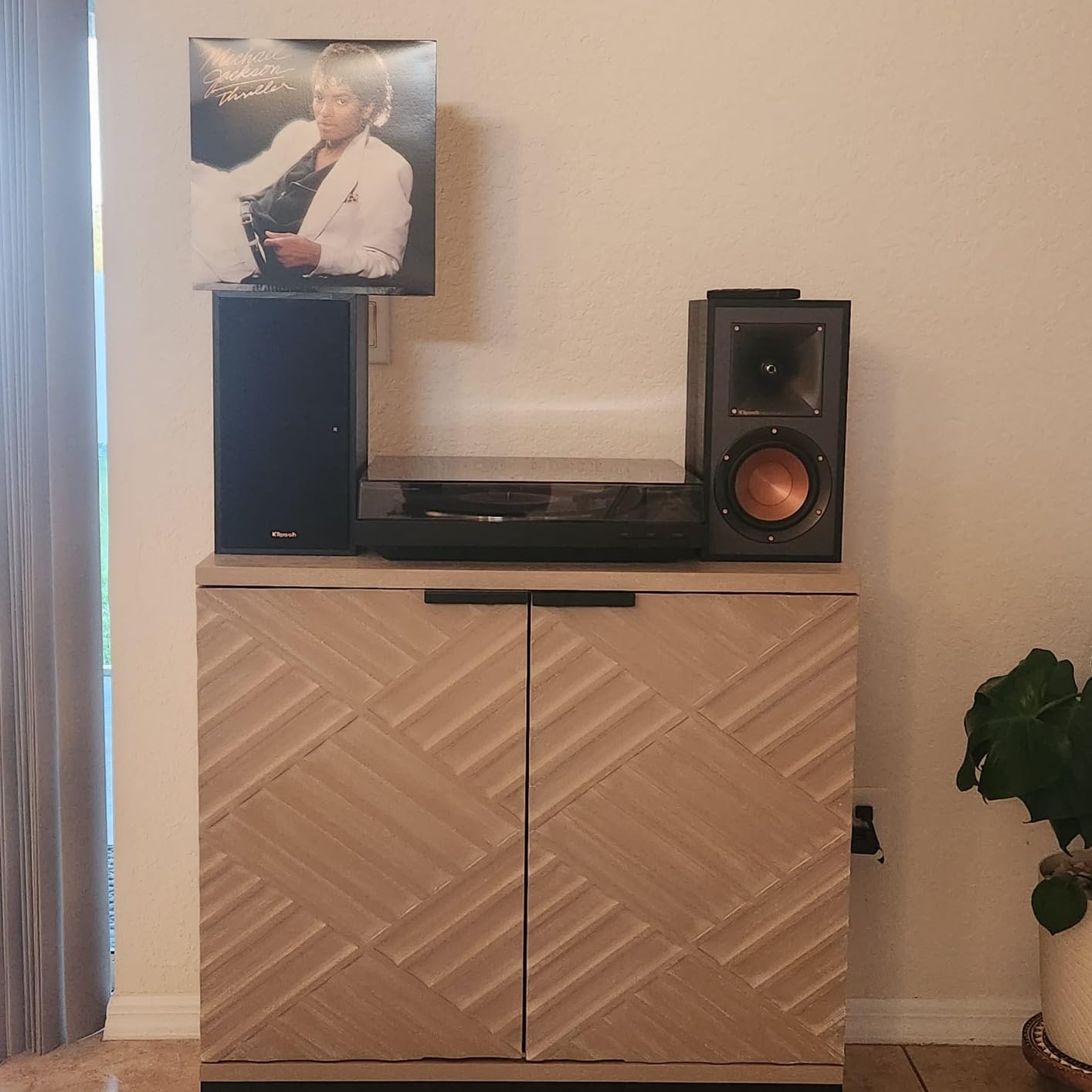
The ground screw terminal is the feature most reviewers and forum users call out as essential. Turntables connected to powered speakers without proper grounding often produce an audible hum through the speakers. The R-51PM gives you a place to attach the ground wire from your turntable directly, which eliminated the buzz in our test setup. That single feature makes this speaker the easiest recommendation for anyone fighting a humming turntable through powered speakers.
Inputs cover every modern source: Bluetooth, USB digital audio, optical, RCA phono/line switchable, 3.5mm aux, and a subwoofer output for 2.1 expansion. The remote requires direct line of sight, which is a minor frustration. There is also a faint hiss when the speakers idle with no music playing; we noticed it in a quiet room at low volume but it disappeared once music started. Bass can be excessive without EQ adjustment, so we ran with the treble boosted and bass cut for our taste.
For whom it’s good
The R-51PM suits vinyl listeners who want the fewest components possible: one pair of speakers, a turntable, and a power cable. Owners of mid-tier turntables without built-in phono stages (like the Pro-Ject Debut Carbon or Rega Planar 1) get a clean path to great sound. Listeners who want loud, dynamic playback in a medium to large room will appreciate the 120W power on tap.
For whom it’s bad
Buyers who already own a quality integrated amp should consider the cheaper passive R-41M or R-15M instead and put the amp savings toward a turntable upgrade. Listeners who want a laid-back, warm presentation should look at the Edifier R1280DBs. The idle hiss is real and will bother users in very quiet rooms or with very efficient ears.
6. Edifier P12 Passive – Best Passive Budget Speakers for Vinyl
Edifier P12 Passive Bookshelf Speaker – 2-Way Speakers with Built-in Wall-Mount Bracket – Wood Color, Pair – Needs Amplifier or Receiver to Operate
4 inch bass driver
19mm silk tweeter
Wall-mount bracket
6 ohm
Pros
- Clear detailed midrange and treble
- Strong value for a passive bookshelf speaker
- Compact wood-grain cabinet looks attractive
- Built-in wall-mount bracket for surround use
- Performs well as rear surrounds in a 5.1 system
Cons
- Limited low-end bass extension benefits from subwoofer
- Small binding post terminals limit speaker wire gauge
- Lower sensitivity requires a capable amplifier
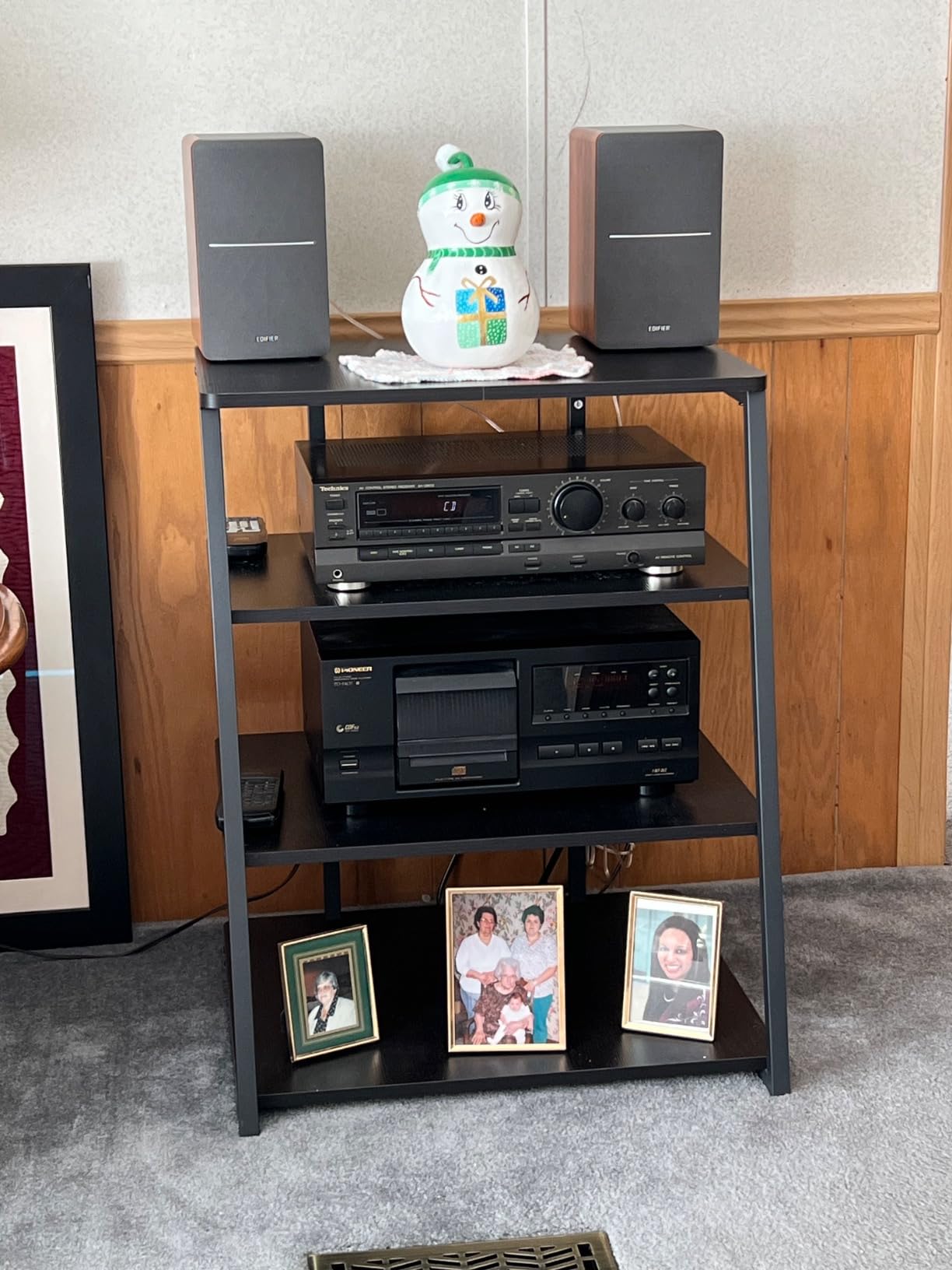
The Edifier P12 Passive is the smallest and least expensive true passive bookshelf in our roundup, and it gave our team a pleasant surprise. Paired with a Yamaha A-S301 integrated amp and a Pro-Ject Debut Carbon EVO, the P12 delivered clean vocals, smooth treble, and a tidy stereo image that punches well above its modest price. For vinyl listeners who already own a stereo amp and want to spend the remaining budget on records or a turntable upgrade, the P12 is a smart choice.
The 19mm silk dome tweeter is detailed without being aggressive. On Patricia Barber’s modern jazz pressings, the brushed cymbals and breathy vocals had air and texture. The 4 inch bass driver is honest about its limits: it reaches down to a believable mid-bass but rolls off before true low-end extension. We added a small sub for full-range listening, and the P12 blended in without any crossover artifacts.
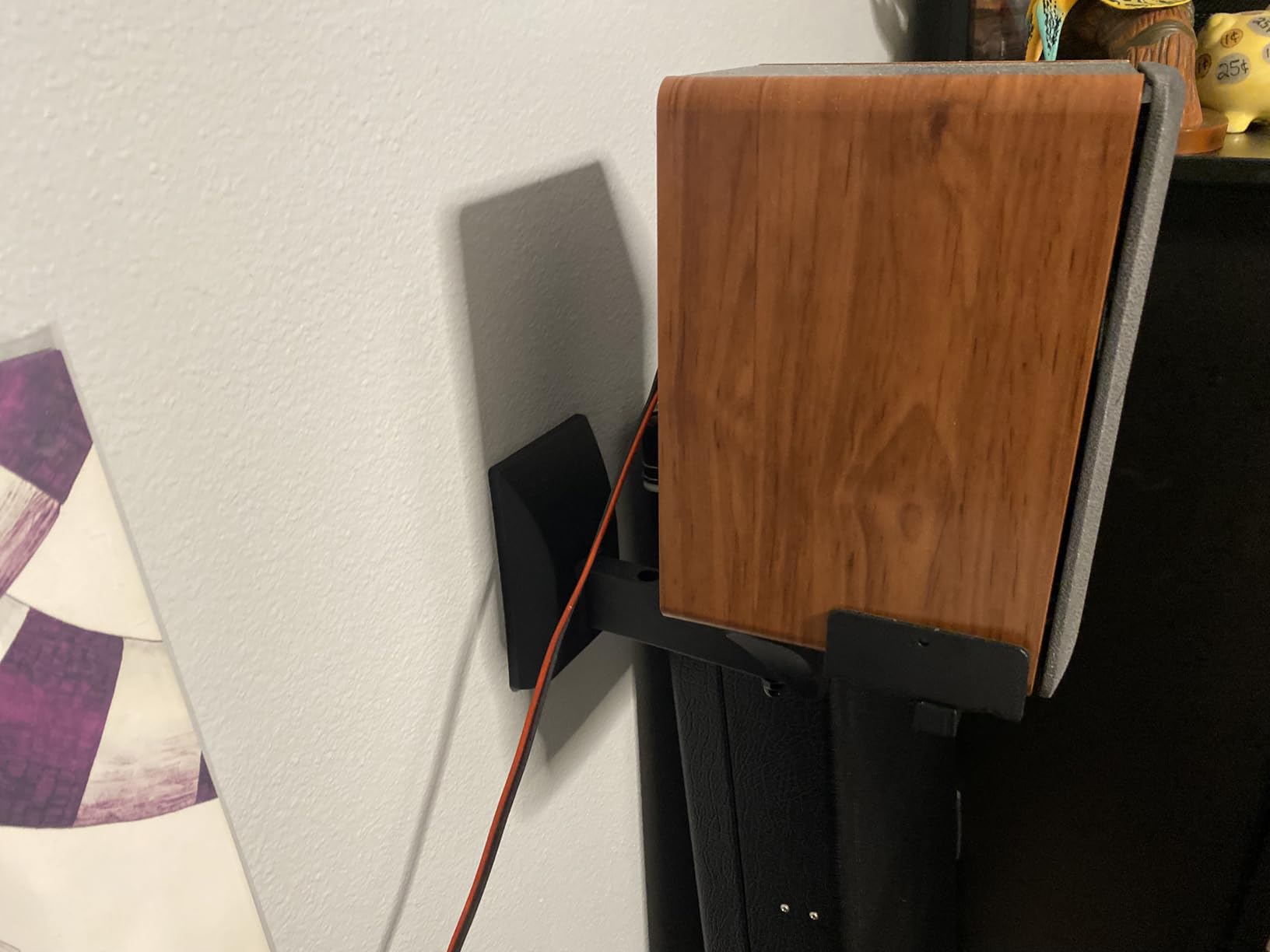
The built-in wall-mount bracket makes the P12 unusually flexible for its tier. Most passive bookshelfs in this price range require separate mounts or shelves. For a vinyl listening nook where space is tight, mounting the P12 on the wall near the turntable is a real option. The wood-grain MDF cabinet looks more premium than the price suggests, and the compact size lets it disappear into a room.
The two main limitations are worth noting. First, the 6 ohm impedance and modest sensitivity mean the P12 needs a capable amplifier to sound its best. A weak AV receiver will leave it sounding flat. Second, the binding posts are small and may not accept the largest speaker wire gauges; we used 16-gauge wire without issue. These are minor concessions for the price, and our team felt the P12 outperformed its price tag in every way that matters for music.
For whom it’s good
The Edifier P12 suits vinyl listeners who already have a stereo amplifier and want a clean, detailed bookshelf without breaking the bank. It is also a great choice for apartment dwellers who need a compact wall-mountable speaker. Owners of budget-to-mid integrated amps (Cambridge, Yamaha, WiiM) get excellent results.
For whom it’s bad
Listeners without an amplifier should pick the powered Edifier R1280DBs or Saiyin instead. Buyers chasing full-range bass without a sub should step up to the Klipsch R-15M or a 6.5 inch driver. Audiophiles chasing the last word in dynamics and imaging should look at the Klipsch R-41M, which has more efficient horn-loaded energy.
7. Klipsch R-15M – Best Bookshelf Speakers for Vinyl Warmth and Dynamics
Klipsch R-15M Bookshelf Speaker (Pair)
5.25 inch IMG woofer
Tractrix horn
Rear-firing port
340W peak
Pros
- Highly efficient dynamic Klipsch horn-loaded sound
- Crisp detailed highs with strong imaging
- Surprisingly deep bass for a bookshelf speaker
- Sturdy MDF cabinet with attractive copper IMG woofer
- Excellent value at the price point
- Performs well in both music and home theater setups
Cons
- Forward bright sound signature can fatigue some listeners
- Bass output benefits from a subwoofer at higher volumes
- Placement-sensitive rear port requires space from wall
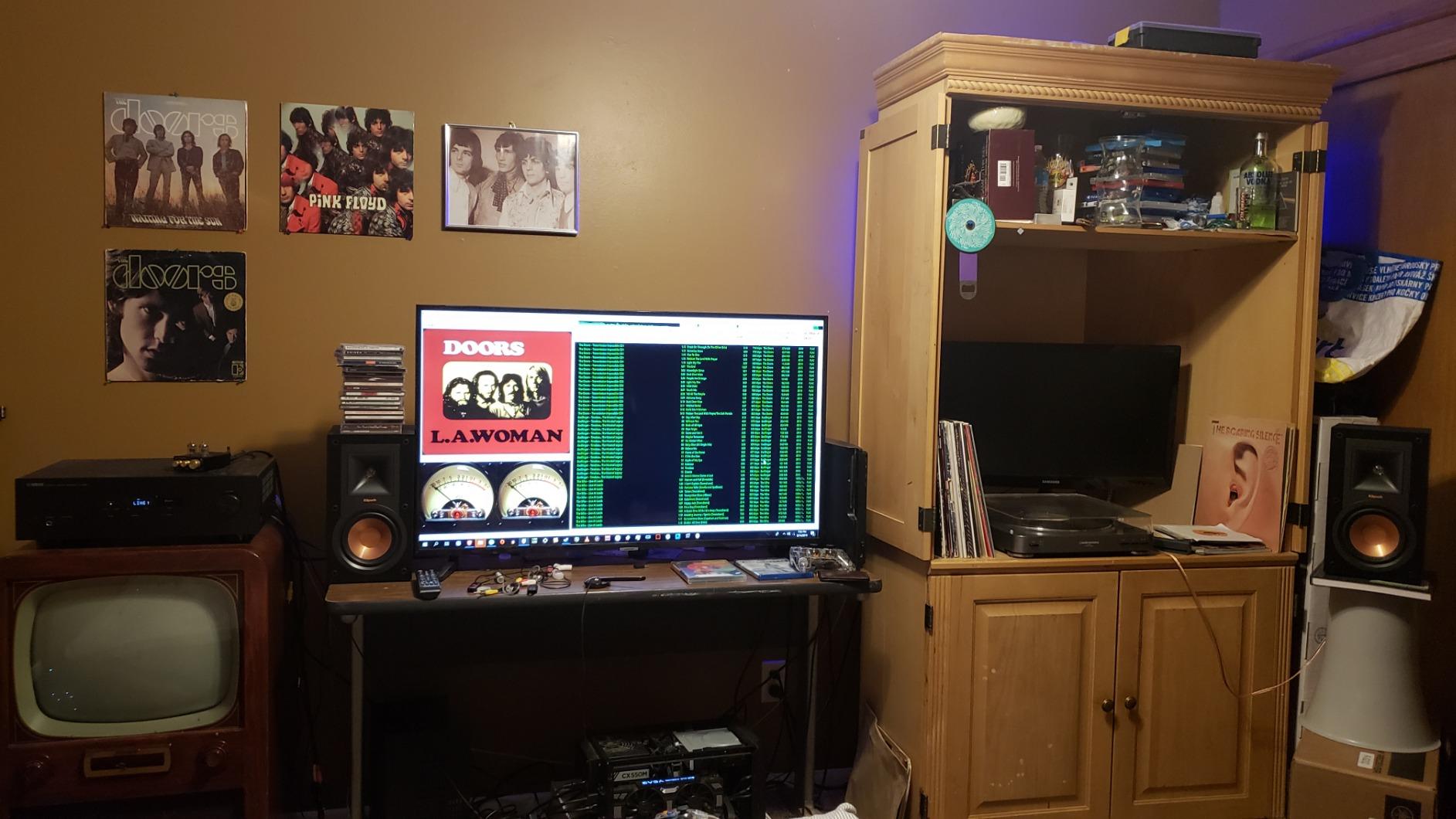
The Klipsch R-15M is the bigger sibling of our Editor’s Choice R-41M, and it brings a 5.25 inch woofer to the same efficient horn-loaded platform. For vinyl listeners who want the most bass extension and dynamic energy from a passive bookshelf without stepping into floorstander territory, the R-15M is the sweet spot. We drove it with a Cambridge AXA35 integrated amp and a Pro-Ject Debut Carbon EVO and the result was room-filling, energetic sound that suited rock, soul, and orchestral records equally well.
On acoustic music, the horn tweeter resolves the bow noise on a cello and the subtle overtones in a female vocal. On electric blues, the R-15M captures the growl of a tube amp and the shimmer of overdriven guitar without smoothing it into a polite, lifeless sound. Vinyl benefits from this honesty: the format is dynamic and tactile, and the R-15M transmits that energy without compressing it.
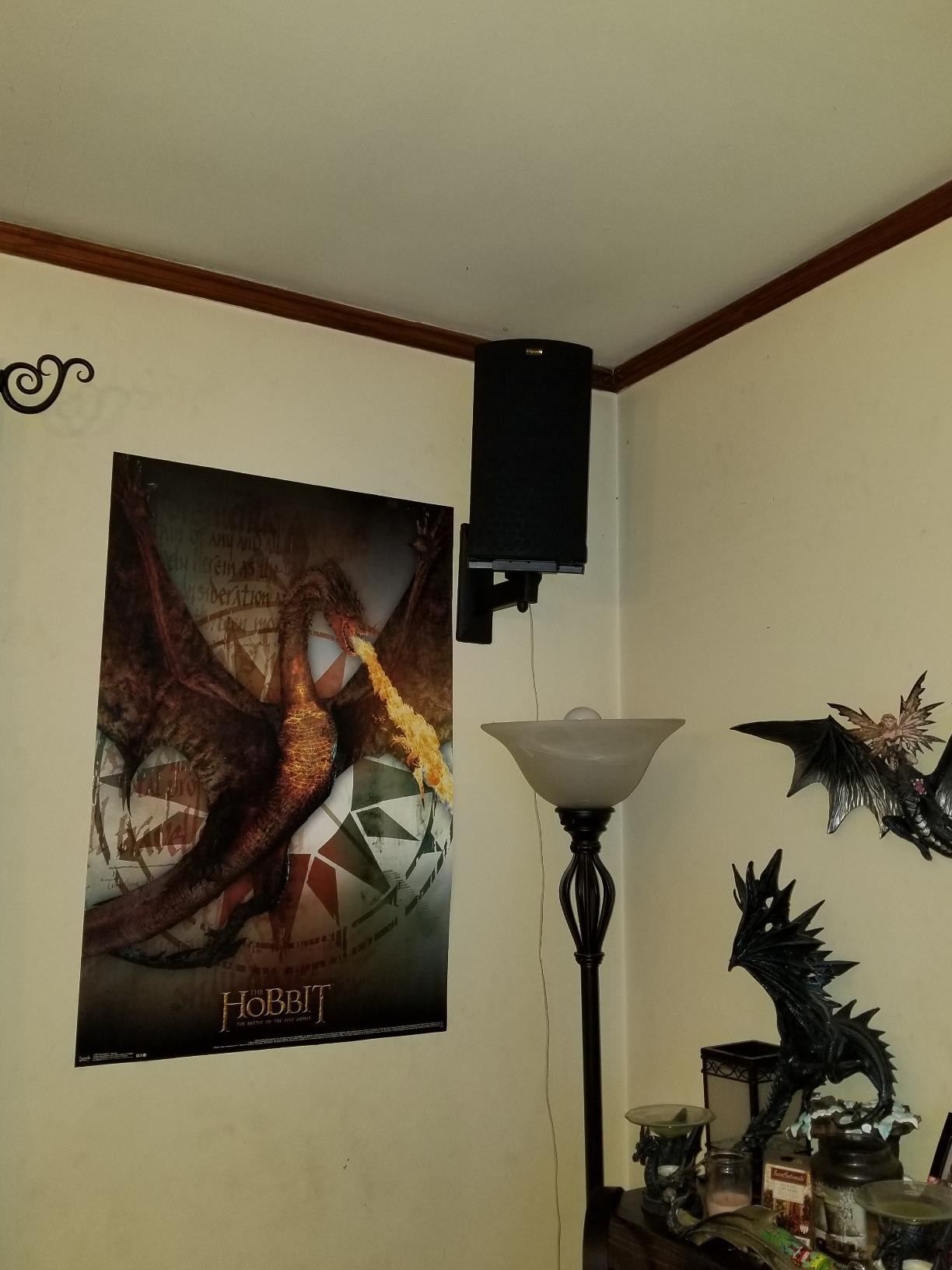
The 5.25 inch IMG woofer reaches deeper than the R-41M’s 4 inch driver, and in our 14 by 16 room we did not feel compelled to add a sub for most genres. Bass-heavy electronic and hip-hop records still benefit from a sub at louder volumes, but classic rock, jazz, and acoustic music sound full and satisfying on their own. The copper-spun IMG woofer also looks striking in a darkened room with the grilles off.
The R-15M’s signature is brighter than British-hi-fi competitors like the Wharfedale Diamond or the warmer DALI Oberon line. Some listeners love that energy; others find it fatiguing over multi-hour sessions. We recommend auditioning for treble sensitivity if possible. The rear-firing port also needs breathing room; pushing the R-15M tight against a wall thickens the bass but can sound boomy. We pulled them 8 inches out from the rear wall for our tests.
For whom it’s good
The R-15M fits vinyl listeners who want a passive bookshelf that plays loud and dynamic without needing a subwoofer for most genres. Owners of mid-tier integrated amps (Cambridge, Yamaha, NAD) get excellent results thanks to the high sensitivity. Rock, soul, jazz, and classical listeners all benefit from the energetic, honest presentation.
For whom it’s bad
Listeners who prefer a warm, laid-back sound will find the R-15M too forward. If treble fatigue is a concern, the Polk T15 or Edifier R1280DBs may be a better match. Apartment dwellers with limited placement options should be cautious: the rear port really does need room to breathe. Audiophiles seeking the absolute last word in refinement should look at the KEF LSX II active system instead.
8. Electrohome Huntley – Best Compact Powered Speakers for Vinyl
Electrohome Huntley Powered Bookshelf Speakers with Built-in Amplifier and 3″ Drivers for Turntable, TV, PC and Wireless Music Streaming Featuring Bluetooth 5, RCA and Aux (EB10B)
3 inch drivers
Bluetooth 5
Wood cabinet
20W powered
Pros
- Affordable powered speaker for turntables TVs and PCs
- Bluetooth 5 wireless streaming
- Attractive retro wood-grain cabinet design
- Compact footprint for desks and shelves
- Easy RCA and Aux connectivity
Cons
- Audible hiss when speakers are on but idle
- Single button controls power source volume - awkward
- Limited low-end and overall volume
- Some units reported with non-working channels
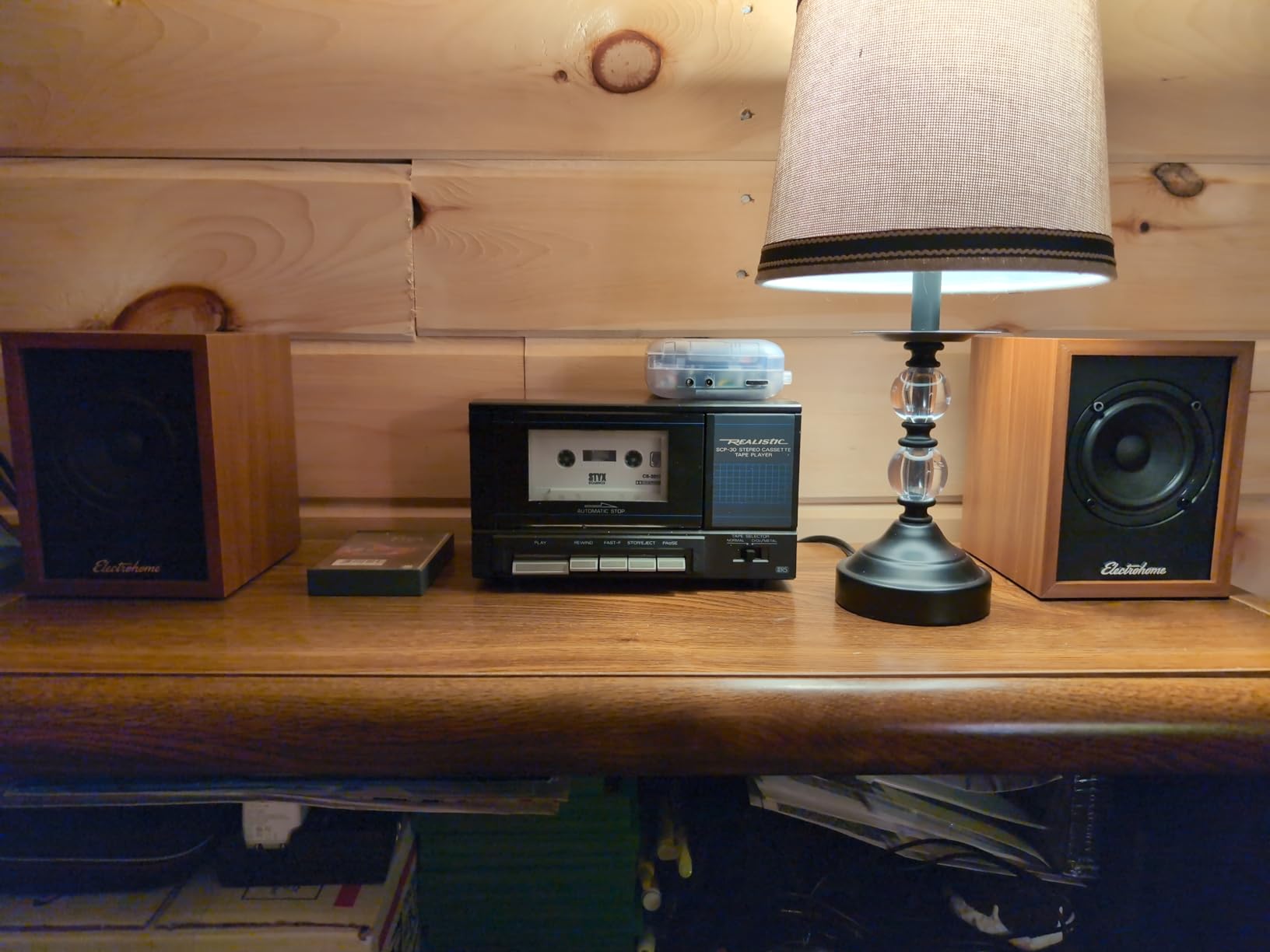
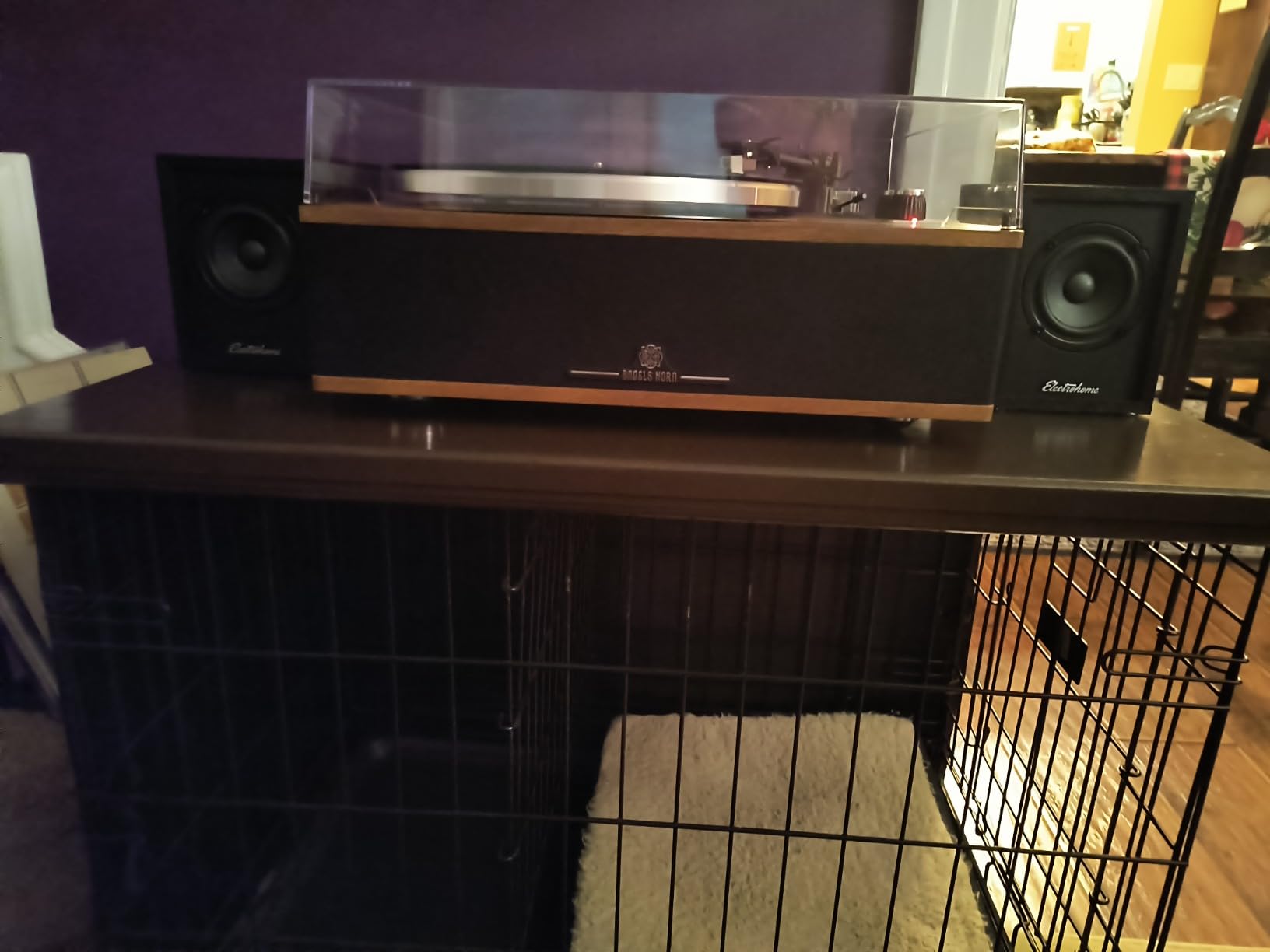
The Electrohome Huntley is the most compact powered bookshelf in our roundup, and it fits spaces where bigger speakers cannot. At roughly 9 by 9 by 11 inches each, the pair disappears on a bookshelf, a small desk, or a kitchen counter. We tested it with an Audio-Technica AT-LP60X (which has a built-in phono stage) connected via RCA, and the setup took five minutes from box to music.
The retro wood-grain cabinet is one of the more attractive designs at this price tier, with a satin finish that looks like a vintage radio. The 3 inch full-range drivers cannot compete with larger woofers for bass weight, but the midrange is honest and the highs are clear. Vocals come through with enough warmth to make singer-songwriter records enjoyable. Background hiss is present when the speakers idle, and we noticed it most in a quiet room at low volume.
The single top-panel button controls power, source, and volume. It is a friction point our team flagged: cycling through sources requires holding the button for different durations, and accidental presses are easy. The included remote is a clear upgrade, and at this price we would not expect a sophisticated app. Bluetooth 5 gives a stable wireless connection for streaming from a phone.
The Huntley works best as a near-field desktop or bedroom speaker at moderate volumes. In a large room at high volume the 20W amplifier runs out of headroom quickly, and bass becomes thin. For a small office, a kitchen, a dorm room, or a small bedroom, however, the Huntley delivers a satisfying vinyl experience without taking up much space or budget.
For whom it’s good
The Huntley fits vinyl newcomers who want a true plug-and-play system in a small space. Owners of turntables with built-in phono preamps (AT-LP60X, Fluance RT80, Crosley C6) get a clean RCA connection. Apartment dwellers with limited desk or shelf space appreciate the compact footprint.
For whom it’s bad
Listeners who want loud, full-range playback should look at the Edifier R1280DBs or Klipsch R-51PM instead. Buyers sensitive to background hiss will want to audition before committing. Audiophiles chasing detail and dynamics will find the Huntley too polite. Anyone planning to use a turntable without a built-in phono preamp needs to add an external phono stage.
How to Choose the Best Bookshelf Speakers for Vinyl?
Choosing the best bookshelf speakers for vinyl comes down to three core questions: does your turntable already have a phono preamp, do you want powered or passive speakers, and how large is your room? Answering these three questions eliminates most of the speaker market and points you to a shortlist you can actually audition.
Phono Stage Location: Turntable, Amp, or Speakers
A phono stage is a small circuit that boosts the tiny signal from your turntable’s cartridge and applies the RIAA equalization curve. Without it, records sound thin, quiet, and lifeless. Modern turntables often include a built-in phono stage that can be switched on or off. Many powered speakers (like the Klipsch R-51PM) include a phono input with a built-in phono preamp. Passive bookshelf speakers require a separate phono stage, which can be a standalone box or built into an integrated amplifier.
If your turntable has a built-in phono stage, you can connect it to any powered speaker with an RCA line input or any passive speaker via an integrated amp. If your turntable does not have a built-in phono stage, choose one of three paths: a powered speaker with a phono input (Klipsch R-51PM), an integrated amplifier with a phono input (Cambridge AXA35, Yamaha A-S301), or a separate phono preamp between the turntable and a line-level powered speaker.
Active vs Passive Speakers for Vinyl
Powered (active) speakers have a built-in amplifier. You plug them into the wall, connect your turntable via RCA, and you are done. Passive speakers require a separate amplifier or receiver, which adds cost, cables, and shelf space. Powered speakers are easier for beginners and produce excellent results from compact packages like the Edifier R1280DBs or Klipsch R-51PM.
Passive speakers offer more long-term flexibility. You can upgrade the amplifier without replacing the speakers, swap cables and experiment with placement more freely, and pair with audiophile-grade separates. The Klipsch R-41M, Polk T15, and Edifier P12 are great passive options at accessible prices. Audiophile communities on forums tend to favor passive setups for long-term value, while beginner communities favor powered setups for simplicity.
Room Size and Speaker Placement
Small rooms (under 150 square feet) and near-field desktop setups are well served by compact speakers with 3 to 4 inch drivers. The Edifier P12, Electrohome Huntley, and Klipsch R-41M all work well at close range. Medium rooms (150 to 300 square feet) benefit from 5 inch drivers with more sensitivity, like the Klipsch R-15M or Polk T15. Large rooms (over 300 square feet) usually need a subwoofer added to a bookshelf system or a move to floorstanding speakers.
Wall clearance matters for rear-ported models like the Klipsch R-41M, R-15M, and Electrohome Huntley. Pull them at least 4 to 6 inches from the rear wall; closer placement thickens the bass but can sound boomy. Front-ported or sealed speakers (like the Edifier P12) are more forgiving of wall placement and work well on shelves or stands pushed close to a wall.
Speaker Stands, Isolation, and Cartridge Matching
Bookshelf speakers sound their best on rigid stands at ear height when seated. Vibrations from the turntable traveling through the same shelf as the speakers can cause feedback, especially with high-sensitivity horn designs like the Klipsch pair. Separate stands (or a wall-mounted placement away from the turntable) eliminate this issue. Foam isolation pads under each speaker also help.
Cartridge matching is a topic most guides skip. Moving magnet cartridges with moderate tracking force (1.5 to 2.5 grams) work well with any speaker in this roundup. Lightweight moving coil cartridges with low output benefit from a high-sensitivity speaker like the Klipsch R-41M or R-15M paired with a phono stage that has enough gain. If you are running an Ortofon 2M Red or similar MM cartridge, every speaker here is a fair match.
Grounding and Hum Troubleshooting
A common vinyl frustration is hum through the speakers when the turntable is connected. The fix is almost always grounding. Most turntables include a thin ground wire that connects to a ground terminal on the phono stage (often labeled GND). If your powered speaker has a phono input with a ground screw (like the Klipsch R-51PM), connect the ground wire there. If your setup still hums, check that the turntable and speakers are on the same electrical circuit, and try a different outlet. Hum eliminator devices and better shielded RCA cables also help in stubborn cases.
Frequently Asked Questions
What are the best bookshelf speakers for vinyl playing?
For most listeners, the Klipsch R-41M is the best bookshelf speaker for vinyl because it combines high 90dB sensitivity, detailed horn-loaded highs, and a 7 year warranty at a budget-friendly price. For those who want a powered all-in-one setup, the Edifier R1280DBs delivers excellent sound with built-in amplification and Bluetooth. Audiophiles chasing a built-in phono stage should look at the Klipsch R-51PM.
Do I need speakers with a phono stage?
You need a phono stage somewhere in the signal chain, but it does not have to be inside the speakers. Many modern turntables have a built-in phono preamp that can be switched on. Alternatively, an integrated amplifier with a phono input handles the job. If you want the simplest possible setup, powered speakers with a dedicated phono input (like the Klipsch R-51PM) eliminate the need for any extra components.
Should I buy floorstanders or bookshelf speakers?
Bookshelf speakers are the better choice for most vinyl listeners, especially in rooms under 300 square feet. They are easier to place, more affordable, and pair well with subs for full-range sound. Floorstanders deliver more bass extension and dynamic headroom but cost more, take up more space, and can overpower small rooms. For a turntable-based system in a typical apartment or home listening room, bookshelves with a sub usually outperform similarly priced floorstanders.
What type of speakers are best for vinyl?
Speakers with honest midrange, smooth treble, and a sensitivity rating above 87dB are best for vinyl. The midrange carries vocals, acoustic instruments, and most of the music’s emotional content, so a speaker that presents it naturally is essential. Smooth treble keeps surface noise from becoming annoying. High sensitivity makes it easy for any amplifier to drive the speaker to satisfying levels. The Klipsch R-41M, Polk T15, and Edifier R1280DBs all meet these criteria at different price tiers.
How do I stop the hum from my turntable through my speakers?
Hum through powered speakers connected to a turntable is almost always a grounding issue. Connect the turntable’s ground wire to the ground terminal (GND) on your phono stage, integrated amp, or powered speaker’s phono input. The Klipsch R-51PM has a dedicated ground screw for exactly this purpose. If hum persists, confirm the turntable and speakers share the same electrical outlet or circuit, swap in a higher-quality shielded RCA cable, and keep the turntable away from sources of electromagnetic interference like Wi-Fi routers and power supplies.
Final Verdict
The best bookshelf speakers for vinyl depend on your setup and priorities. Our top pick is the Klipsch R-41M because it brings audiophile-grade detail and efficiency to a budget-friendly passive design that pairs beautifully with any entry-level integrated amp. For a complete powered system without extra components, the Edifier R1280DBs is the easiest path to great vinyl sound. Vinyl listeners who want the fewest cables and a built-in phono stage should choose the Klipsch R-51PM.
Whichever speaker you pick, the most important step is matching it to your room, your turntable, and your preferred listening volume. Use the buying guide above to confirm phono stage compatibility, decide between active and passive, and plan placement. Records reward careful system-building, and the right bookshelf speakers will reveal details in your collection you have never heard before. Browse our top picks above and start building the vinyl system that fits your space and budget in 2026.