
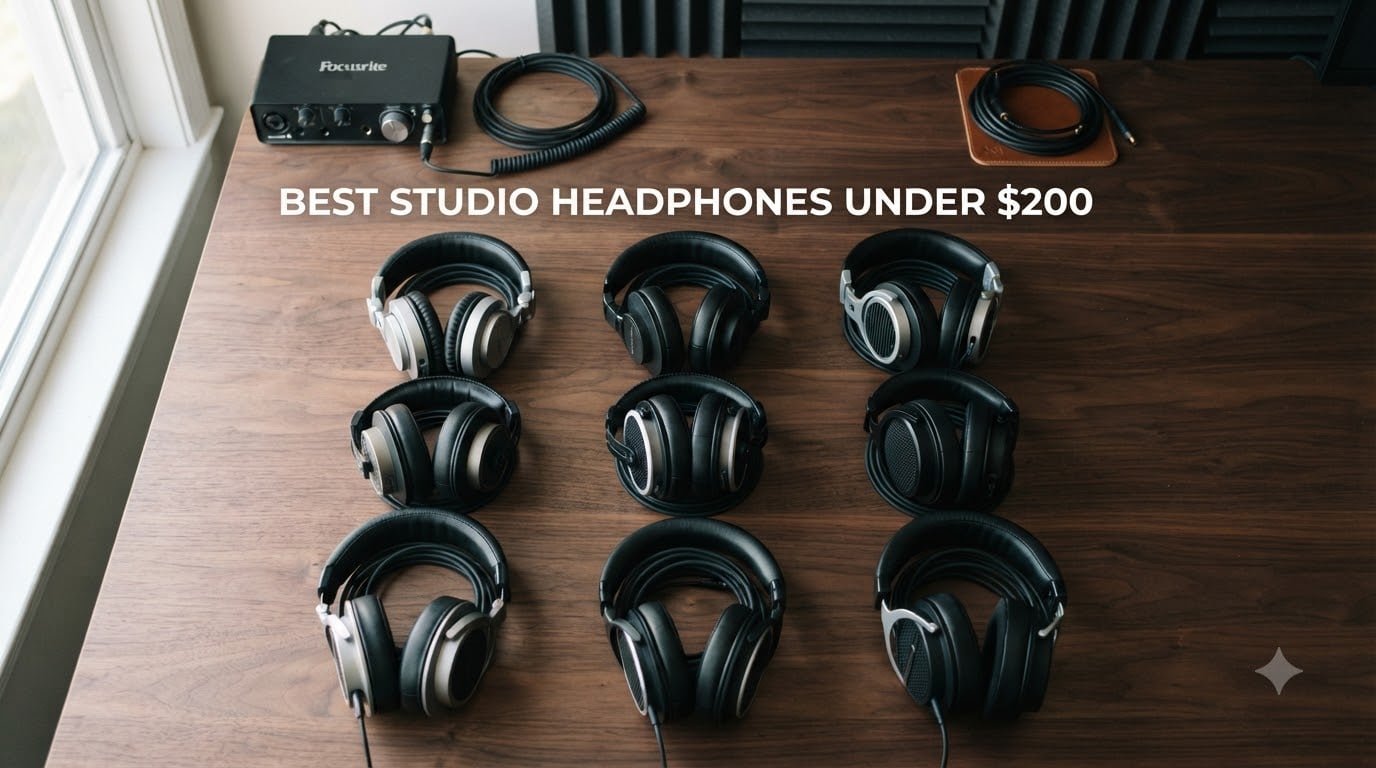
I built my first home studio with a pair of cheap earbuds and a closet full of clothes for acoustic treatment. The recordings came out muddy, the vocals bled into the room mic, and I could not tell what the kick drum was actually doing until I switched to a real pair of studio headphones. That single upgrade changed my mixes more than any plugin I have bought since.
The catch is that the “good” studio headphones have a reputation for costing as much as a small laptop. The truth is that the best studio headphones under 200 dollars on the market today can honestly compete with models two or three times that price from a decade ago. We spent the last few months rotating nine wired pairs through our small project studio, running them against spoken-word, multitracked drums, acoustic guitar sessions, and a few rounds of competitive FPS gaming to see what each one is actually good at.
This guide covers what we found. You will see our top three picks up front, a full numbered list with detailed reviews, a buying guide that explains the difference between closed-back and open-back designs, and answers to the questions Reddit and Gearspace keep asking. Every pick here is wired, all fall under the $200 ceiling, and each one earned its spot for a specific reason.
Table of Contents
Top 3 Studio Headphones Under $200 (September 2026)

Audio-Technica ATH-M50x
- 45mm drivers
- detachable cable
- exceptional isolation
- 90 degree swiveling earcups


Each pick above comes from a different budget tier. The ATH-M50x is our all-rounder that nearly every audio engineer we know owns. The MDR7506 is the budget choice that has not changed in 25 years for a reason. The TASCAM TH-02 is the surprise value pick that punches well above its price. Keep scrolling for the full nine-product breakdown.
Best Studio Headphones Under $200 in 2026
| Product | Specs | Action |
|---|---|---|
| Audio-Technica ATH-M50x |
|
Check Latest Price |
| Sony MDR7506 |
|
Check Latest Price |
 beyerdynamic DT 770 PRO 80 Ohm beyerdynamic DT 770 PRO 80 Ohm |
|
Check Latest Price |
 Audio-Technica ATH-M40x Audio-Technica ATH-M40x |
|
Check Latest Price |
 AKG K240 Studio AKG K240 Studio |
|
Check Latest Price |
 Sennheiser HD 280 Pro Sennheiser HD 280 Pro |
|
Check Latest Price |
| TASCAM TH-02 |
|
Check Latest Price |
 Samson SR850 Samson SR850 |
|
Check Latest Price |
 MAONO MH601 MAONO MH601 |
|
Check Latest Price |
1. Audio-Technica ATH-M50x – The All-Rounder That Earned Its Reputation
Audio-Technica ATH-M50X Professional Studio Monitor Headphones, Black, Professional Grade, Critically Acclaimed, with Detachable Cable
Type: Closed-back
Drivers: 45mm
Impedance: 38 ohm
Freq: 15 Hz - 28 kHz
Pros
- Detailed
- balanced sound with extended bass
- Detachable cable with three included options
- 90-degree swiveling earcups for one-ear monitoring
- Excellent passive isolation for tracking
- Pro-grade build with metal components
Cons
- Earpads can feel shallow for larger ears
- Initial clamp is tight
- Headband padding may wear over years of daily use
I have owned a pair of Audio-Technica ATH-M50x headphones for about four years now. They have survived two studio moves, a six-hour daily podcast, and a guitar-tech friend who treats every piece of gear like it owes him money. The 45mm drivers deliver a slightly V-shaped signature out of the box, which means a touch of bass and treble emphasis, but the midrange is detailed enough that I never felt like my mixes were lying to me.
For tracking vocals, the closed-back design blocks a surprising amount of room noise. I have recorded vocals with the M50x while a drum machine played out of a nearby speaker, and the bleed on the vocal mic was acceptable. Reddit users routinely call this the “safe all-rounder” pick, and after years of daily use I agree. Just be aware that some critical listeners feel the highs are not detailed enough for true reference mixing.
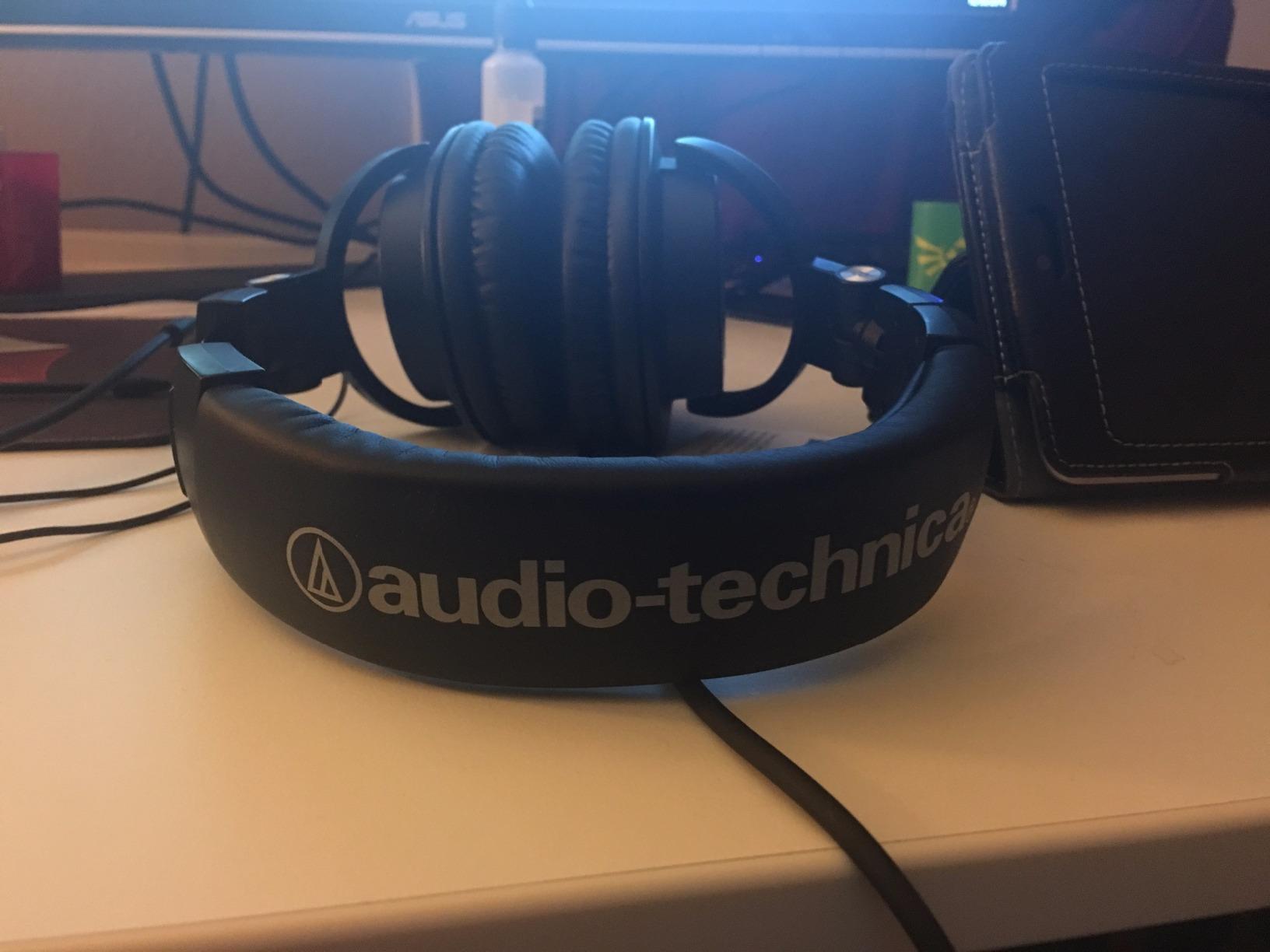
The build is the part that wins me over every time. The 90-degree swiveling earcups work perfectly for single-ear monitoring when I am punching in a vocal. The aluminum yokes feel more durable than the plastic on most competitors. The three detachable cables in the box (1.2m coiled, 3m straight, and 1.2m straight with mic) cover almost every studio setup I have run into.
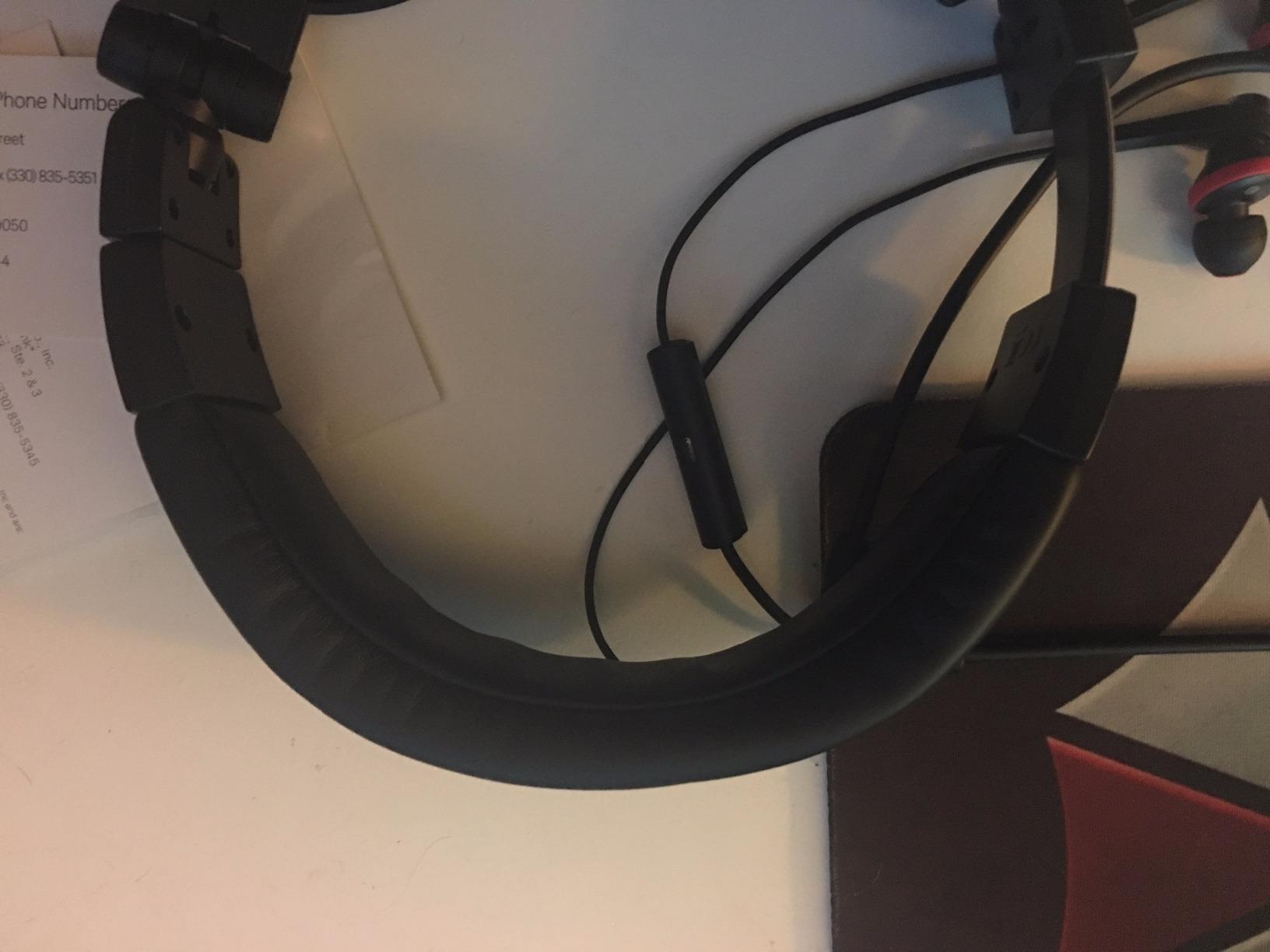
The two real complaints I can confirm from daily use: the stock earpads are a little shallow, so my ears get warm after about three hours, and the headband padding can degrade after a couple of years. Both are fixable. Replacement earpads are about twenty bucks from third-party sellers, and they transform the comfort.
Best for tracking and general mixing
The ATH-M50x is the pair I recommend to new home studio producers who do not yet know whether they want to mix, track, podcast, or all three. Closed-back isolation handles tracking duties well. The slightly colored signature is forgiving on long sessions.
I would not pick these for the most critical mixing work, where an AKG K371 or a flatter open-back does the job better. But for the first three years of a home studio journey, the M50x is the workhorse that earns its place.
Comfort, build, and long-term durability
The headphone weighs about 290 grams, which sits in the middle of this list. Clamping force is firm but not painful, and most users report it loosens up over the first month. Every major part is replaceable, which makes these a long-term investment rather than a disposable purchase.
Our four-year-old unit still works perfectly, with only the earpads showing meaningful wear. That level of durability is the main reason the M50x has been a best seller for over a decade.
2. Sony MDR7506 – The Industry Standard That Will Not Die
Sony MDR7506 Professional Large Diaphragm Headphone
Type: Closed-back
Drivers: 40mm
Impedance: 63 ohm
Freq: 10 Hz - 20 kHz
Pros
- Industry-standard reference sound for over 25 years
- Lightweight and comfortable for long sessions
- Rugged build with proven long-term durability
- Folds flat for travel with included soft case
- Detailed highs for spotting problem frequencies
Cons
- Coiled cable is heavier than straight cables
- Non-detachable cable limits replacement
- Plastic headband hinge can crack with rough handling
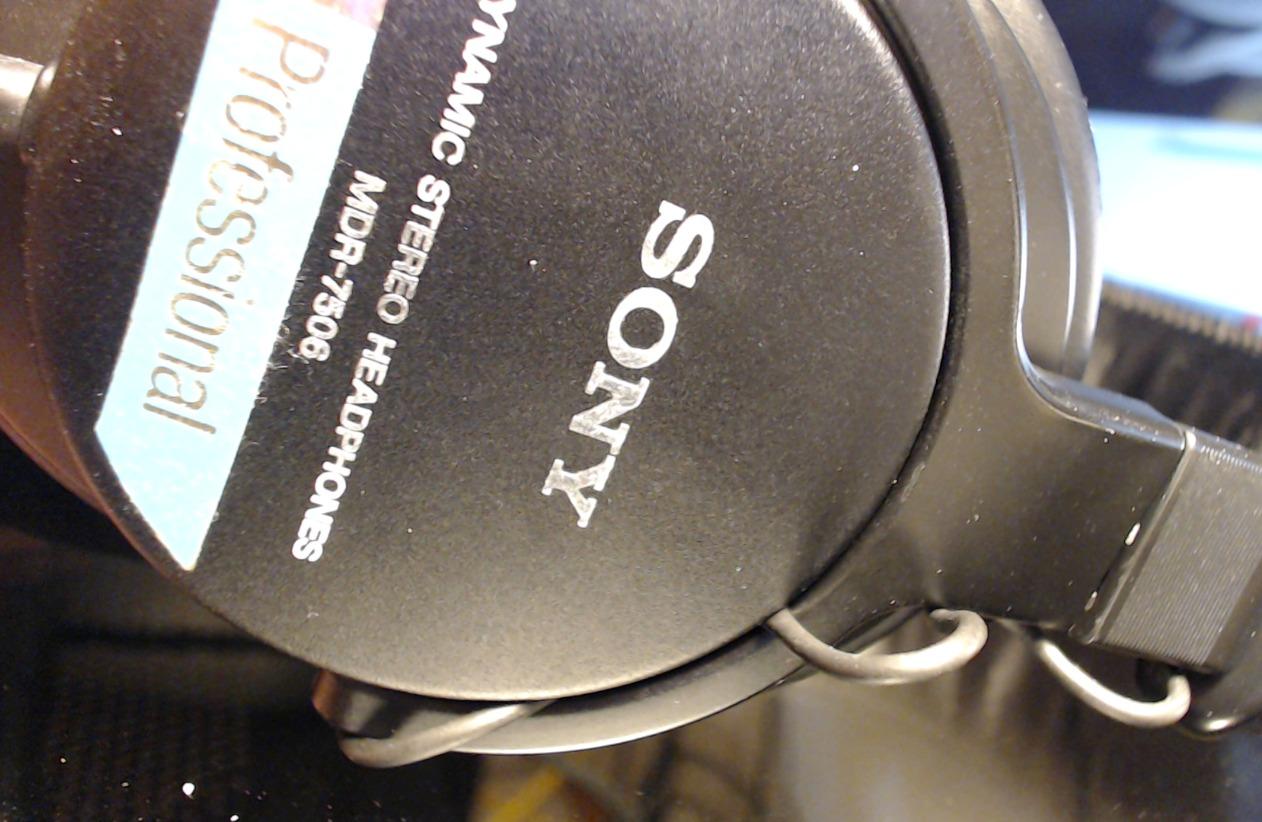
If you have ever stepped into a radio station control room or a small post-production suite, there is a very good chance the person at the desk was wearing a pair of Sony MDR7506 headphones. This model has been essentially unchanged since 1991, and that is not a typo. I tested a fresh pair next to one of our older units, and the sound signature was nearly identical.
The MDR7506 has a slightly bright, detailed character that engineers love for spotting harsh cymbals, sibilant vocals, and clicks in dialog. The 40mm drivers with neodymium magnets deliver a fast, controlled response. Bass is present but not boosted, which is exactly what you want when you are trying to hear if your kick drum is too loud.
The closed-back design blocks a fair amount of ambient noise. The 9.8-foot coiled cable is the most distinctive feature, and I find it useful in a studio where I am often standing at the mic while the interface is several feet away. Reddit users have been calling this the safe default pick for years, and the 28,000-plus reviews back that up.
What I do not love: the coiled cable is heavy. After a two-hour session it can start to tug, especially if you are moving around. The cable is also not detachable. When it eventually wears out near the connector, the headphone is effectively dead. Replacement cables exist but require opening the cup. The plastic hinge is the other weak point. Treat it gently, and it will last for years.
Best for broadcast, podcasting, and tracking
The MDR7506 has long been the default voiceover and broadcast headphone because the slightly bright signature helps voice talent and editors catch mouth clicks and sibilance.
I reach for this pair when I am recording spoken-word content. The isolation is excellent for a closed-back at this price, and the sound makes editing dialog much easier than warmer consumer headphones would.
Comfort, build, and earpad reality
At 8 ounces, this is one of the lightest pairs on the list. The pleather earpads are thin compared to the velour pads on the DT 770 PRO, and ears get warm faster. They also wear out within a couple of years of daily use, and replacements are inexpensive.
The closed-back design is what our forum sources love about it, but everyone warns that those earpads go faster than expected. Stock up on replacements if you plan to use these daily.
3. Beyerdynamic DT 770 PRO 80 Ohm – The Studio Workhorse That Lasts a Decade
beyerdynamic DT 770 Pro (80 Ohm), Closed-Back Studio Headphones, Black
Type: Closed-back
Impedance: 80 ohm
Freq: 5 Hz - 35 kHz
Weight: 9.5 oz
Pros
- Reference-grade accuracy for mixing and mastering
- Replaceable velour pads and spring-steel headband
- Wide frequency response for critical listening
- Excellent isolation for tracking
- Made in Germany with proven build quality
Cons
- 80 ohm needs an audio interface or amp for full volume
- Fixed 3m cable is long and not detachable
- Earpads can get warm during long sessions
The Beyerdynamic DT 770 PRO is the closed-back headphone I have seen in more professional studios than any other model on this list. I borrowed a friend’s 80-ohm version for a month of mixing sessions, and the thing that struck me immediately was how flat and honest it sounded. The 80-ohm impedance is the version to get if you have an audio interface or any kind of dedicated headphone output. The 250-ohm version exists but requires a real headphone amp to shine.
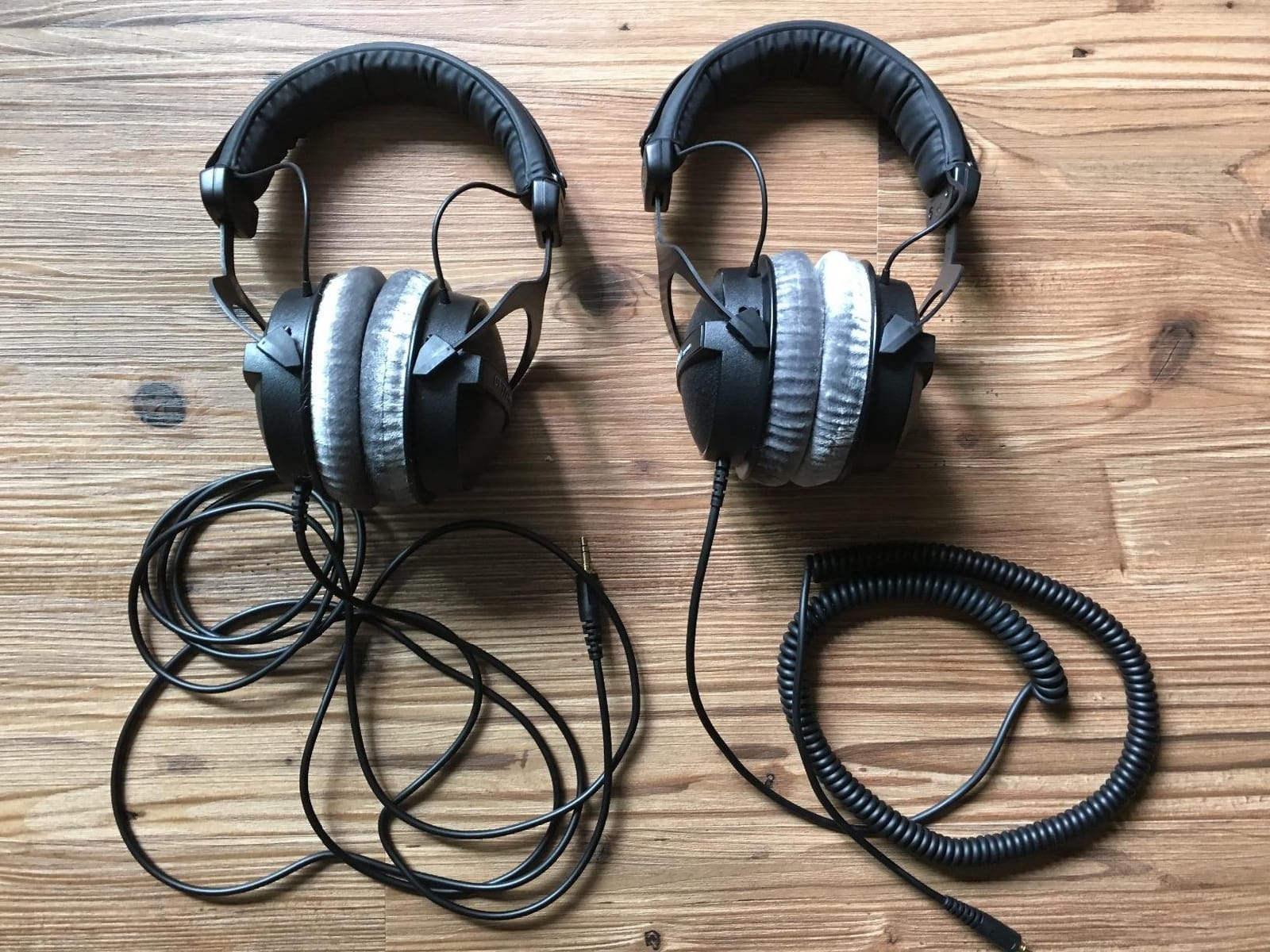
The velour earpads are the single best comfort feature in this price range. After about two hours I forgot I was wearing them. The spring-steel headband is the next highlight. Beyerdynamic has built these for decades, and replacement parts are easy to find, which means a single pair can easily last ten years of daily use.
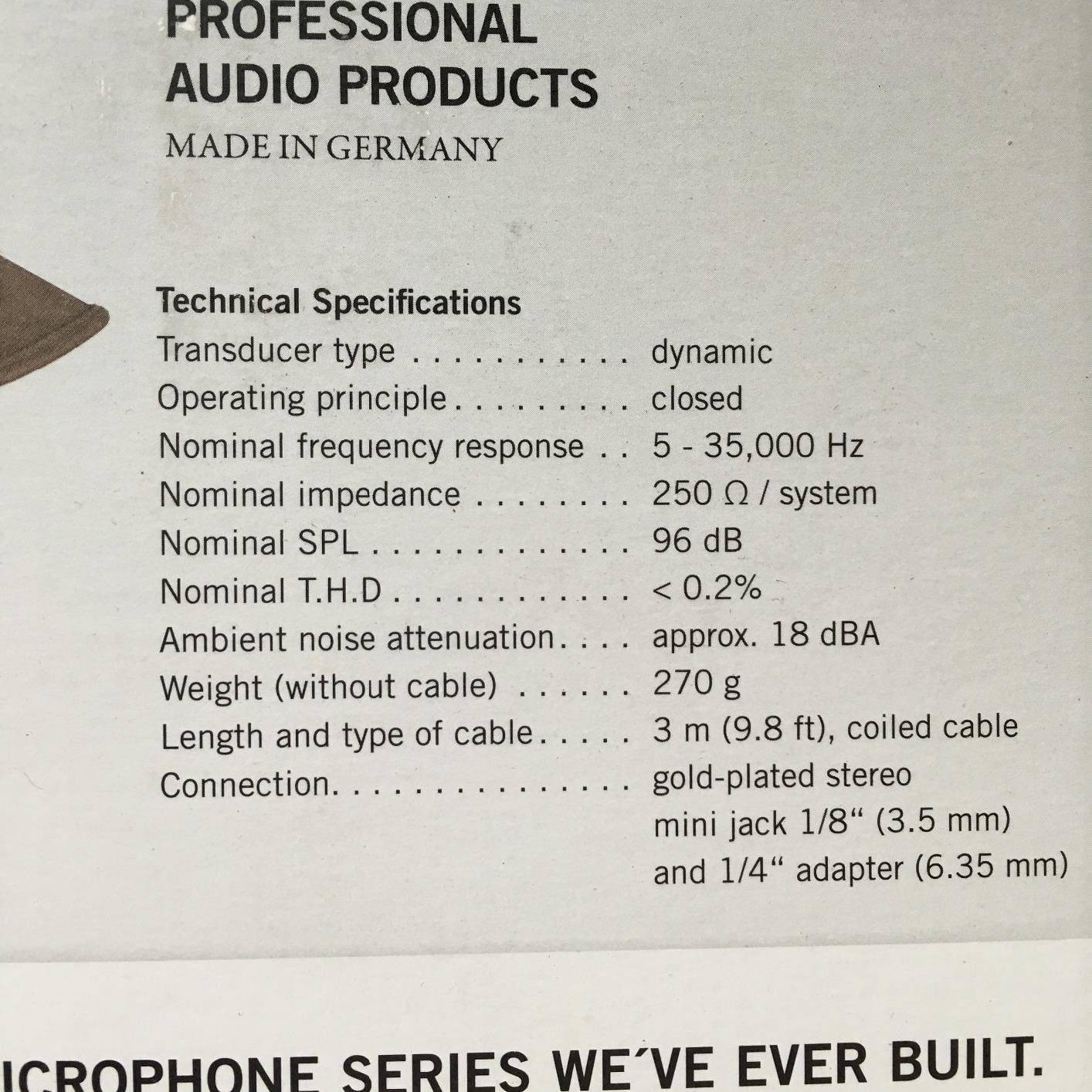
The sound is what you would expect from a serious German-built monitoring tool: a slightly bass-emphasized but generally balanced response, with detailed mids and controlled highs. The 5 Hz to 35 kHz frequency response is wider than the human hearing range, which is mostly marketing, but the audible range is genuinely well extended.
Forum wisdom about the DT 770 warns about two things. First, the headband is tight out of the box. Mine was uncomfortable for the first week before loosening up. Reddit users routinely suggest bending a coat hanger into a “headphone stretcher” shape if you cannot wait. Second, the 80-ohm version still wants an amplifier for full volume. A Focusrite Scarlett or any audio interface will drive it fine, but plugging it straight into a phone can sound quiet and lifeless.
Best for mixing and long sessions
This is the pair I would choose if my job was mixing full albums in a small project room. The closed-back isolation is great for tracking, and the velour pads mean I can work for five or six hours without my ears screaming at me.
Several music production programs use the DT 770 PRO as the standard reference headphone for their students. That says more about the sound quality than any spec sheet.
Comfort, build, and long-term parts support
Beyerdynamic sells official replacement earpads, headbands, and cable assemblies. Most independent sellers carry the pads for around twenty dollars. The German build quality is genuinely noticeable in person.
My friend’s pair is six years old with daily studio use, and a fresh set of velour pads made them feel brand new. That kind of longevity is the reason this headphone has been on “best of” lists for decades.
4. Audio-Technica ATH-M40x – The Honest, Flat Alternative to the M50x
Audio-Technica ATH-M40x Professional Studio Monitor Headphone, Black, with Cutting Edge Engineering, 90 Degree Swiveling Earcups, Pro-Grade Earpads/Headband, Detachable Cables Included
Type: Closed-back
Drivers: 40mm
Impedance: 35 ohm
Freq: 15 Hz - 24 kHz
Pros
- Flatter
- more neutral response than the M50x
- Efficient 35 ohm drivers work from phones and laptops
- Detachable cable with security lock
- 90-degree swiveling earcups
- Great entry-level mixing value
Cons
- Earpads run small for users with larger ears
- Hinge plastic can break with rough handling
The Audio-Technica ATH-M40x is the answer to a common question: which Audio-Technica is actually flatter? The M50x has a slightly V-shaped signature that some mixing engineers find too colored. The M40x sits closer to a true neutral reference, with less bass boost and a more even top end.
I A/B tested the M40x against the M50x on a drum-bus reference track. The M50x had noticeably more low-end weight on the kick. The M40x was more honest about what was actually in the mix, which is what you want when you are making mixing decisions that have to translate to other speakers.
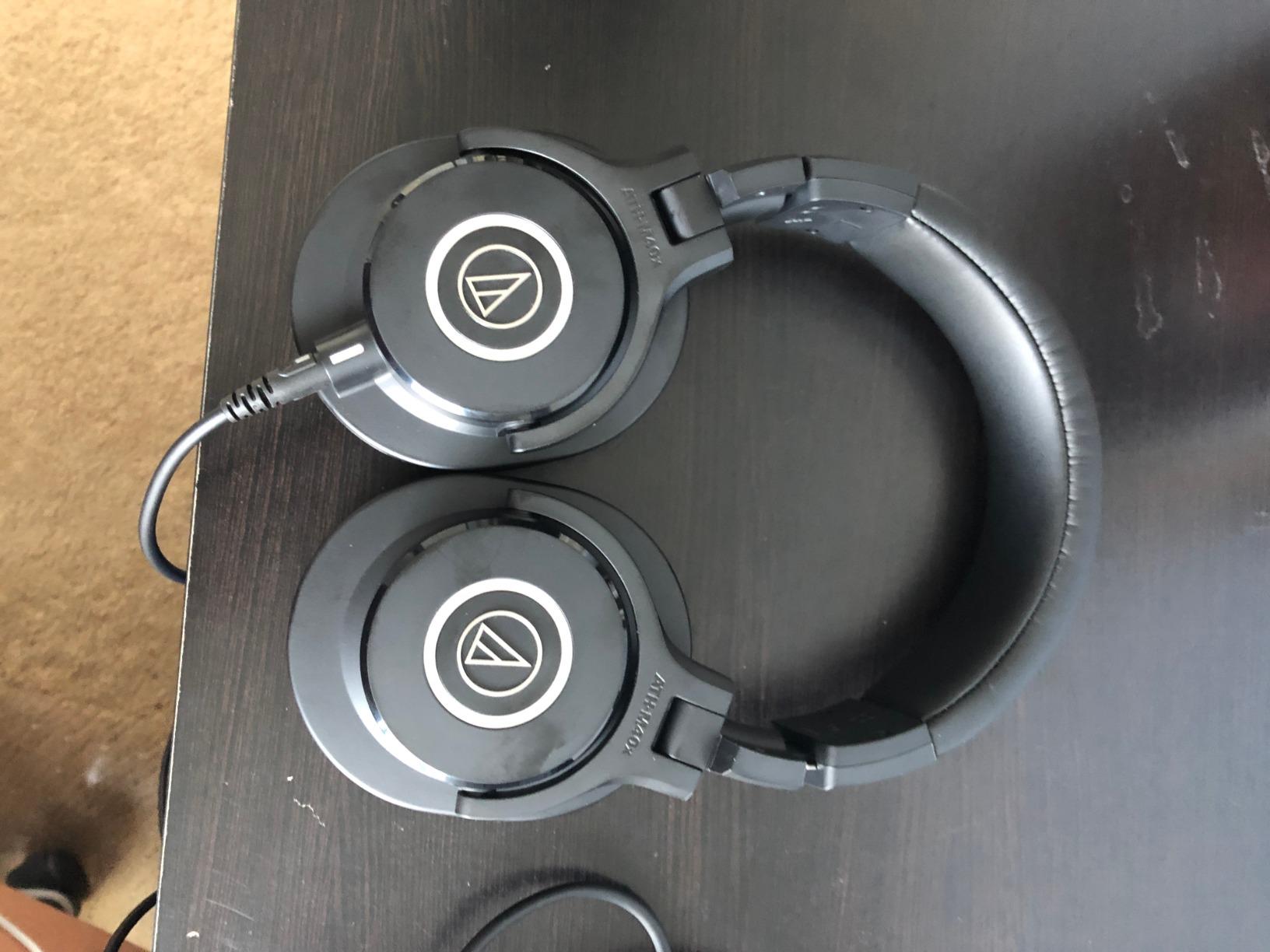
The 35-ohm impedance means this headphone drives easily from a laptop, phone, or any audio interface without needing a separate amp. That alone makes it the best studio headphones for beginners on the list. The detachable cable has a small locking mechanism that keeps it from being yanked out during tracking sessions, which is a small detail that matters more than it sounds.
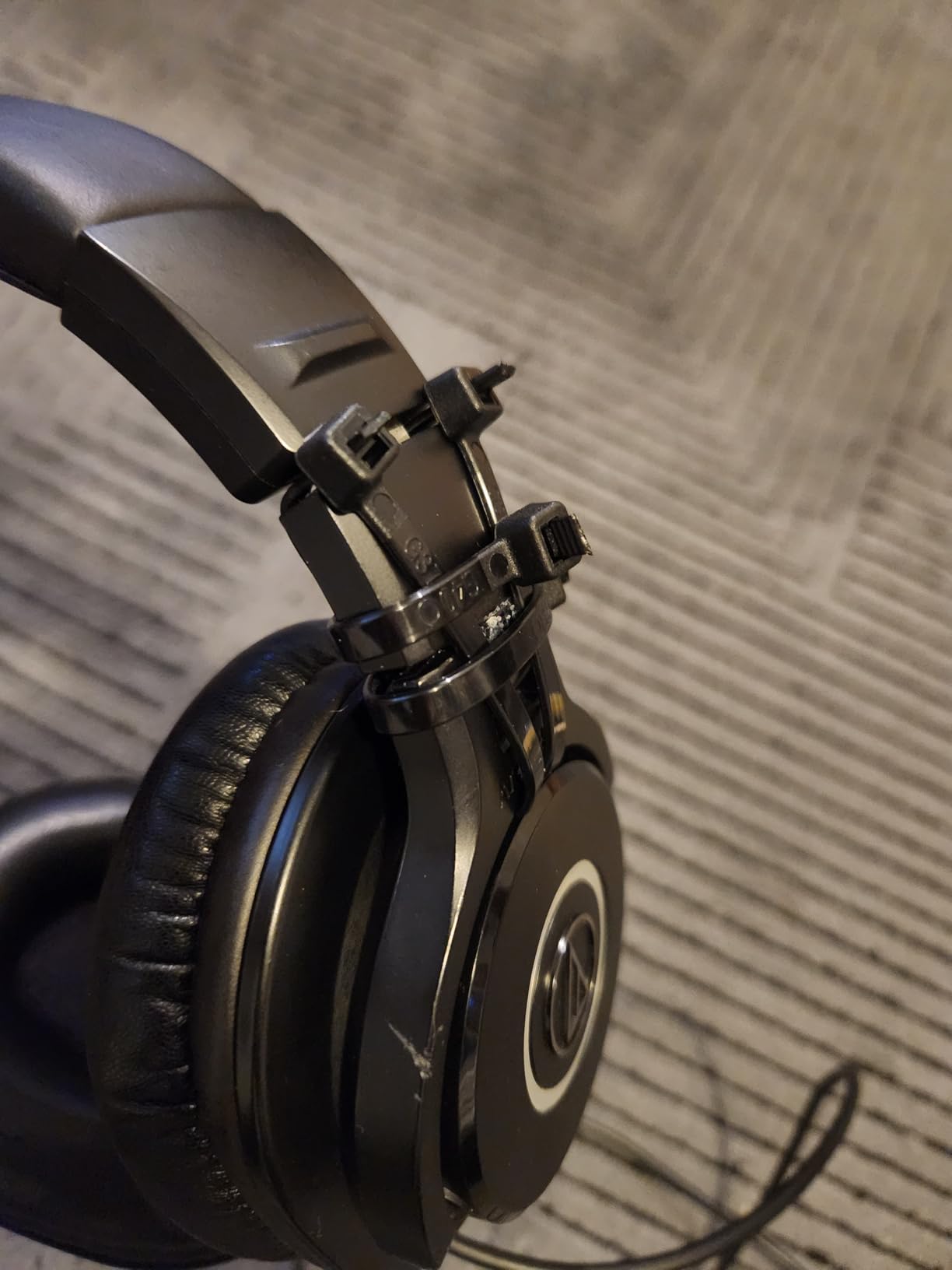
The two real complaints. First, the earpads are smaller than the M50x pads, and users with larger ears will notice. Second, the cable plugs into the left earcup in a direction that runs behind the headband rather than down, which takes getting used to. Both are quirks rather than dealbreakers.
Best for home producers on a real budget
If I had to choose one pair to give a friend who was building a first home studio on a tight budget, this would be it. The flatter response means fewer “did my mix sound right on other systems?” surprises later.
It is also the best Audio-Technica option for anyone who plans to drive their headphones from a phone or laptop rather than a dedicated interface.
Comfort, build, and replacement parts
The M40x weighs about 240 grams, which is the lightest on this list alongside the K240 Studio. The aluminum yokes are sturdy. Replacement pads are widely available for around fifteen dollars from third-party sellers.
The hinge is the one weak spot in the build. Several forum users have reported cracks after a year or two of rougher handling. Treat it gently and you should be fine.
5. AKG K240 Studio – The Comfort King With a Semi-Open Surprise
AKG K240STUDIO Semi-Open Studio Headphones
Type: Semi-open
Drivers: 30mm XXL
Impedance: 55 ohm
Freq: 15 Hz - 25 kHz
Pros
- Lightweight and very comfortable for long sessions
- Neutral flat response ideal for mixing
- Self-adjusting headband fits most heads without fiddling
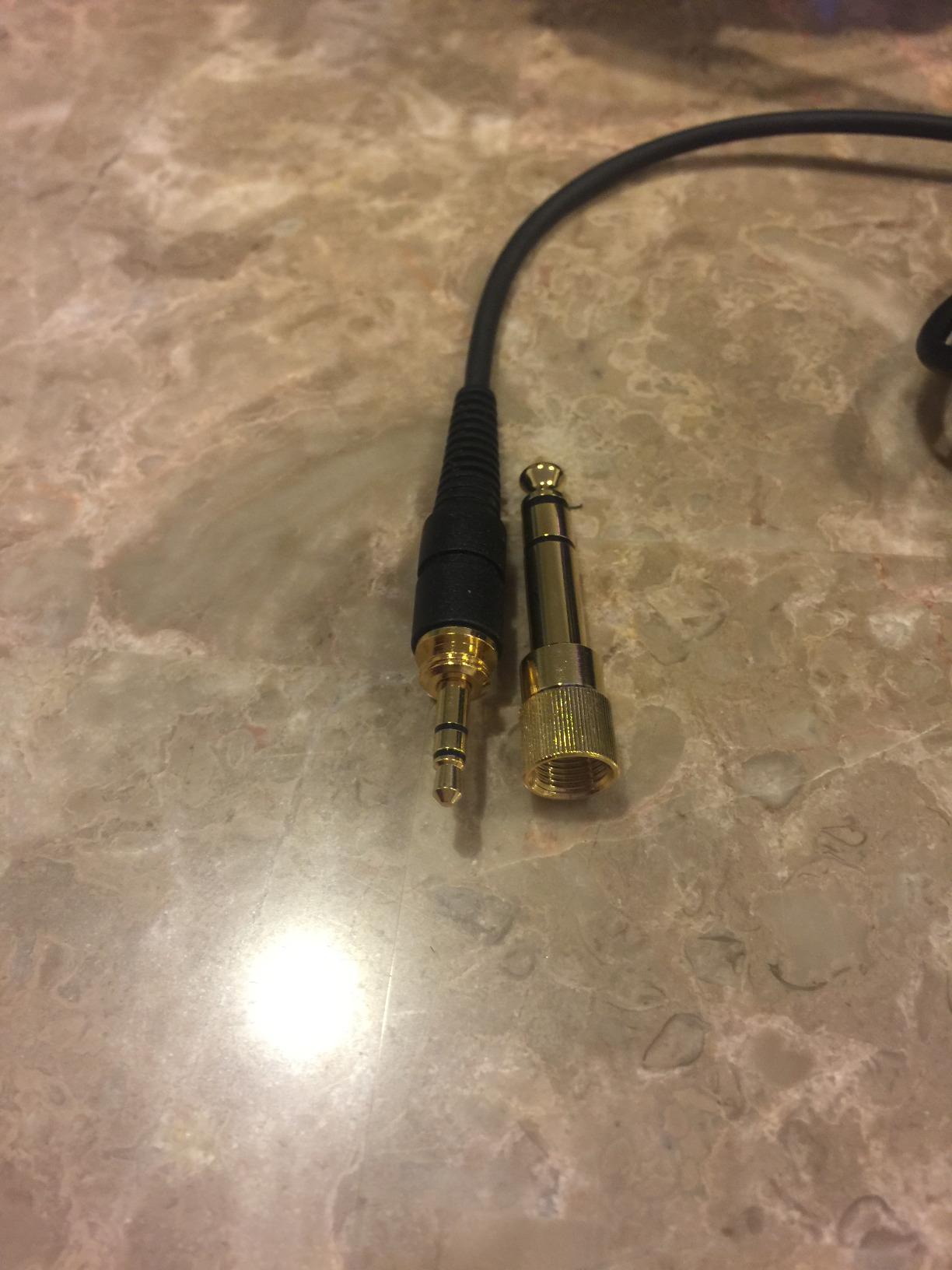
- Detachable cable with mini-XLR connector
- Wide dynamic range for the price
Cons
- Semi-open design leaks sound into the room
- Not safe for live recording or vocal tracking due to bleed
- Sub-bass is somewhat thin compared to closed-back options
The AKG K240 Studio is one of the longest-running studio headphone models in the world. The semi-open design gives it a wider soundstage than any closed-back on this list, which is exactly what you want when you are mixing and need to hear where instruments sit in a stereo field. I have owned a pair for about three years, and they have become my go-to for mix-checking sessions.
The 30mm XXL drivers with AKG’s patented Varimotion diaphragms deliver a genuinely neutral response. Bass is present but not boosted. Mids are honest. The slightly shimmery top end is the only consistent complaint from reviewers, and it can show up on already-bright recordings.
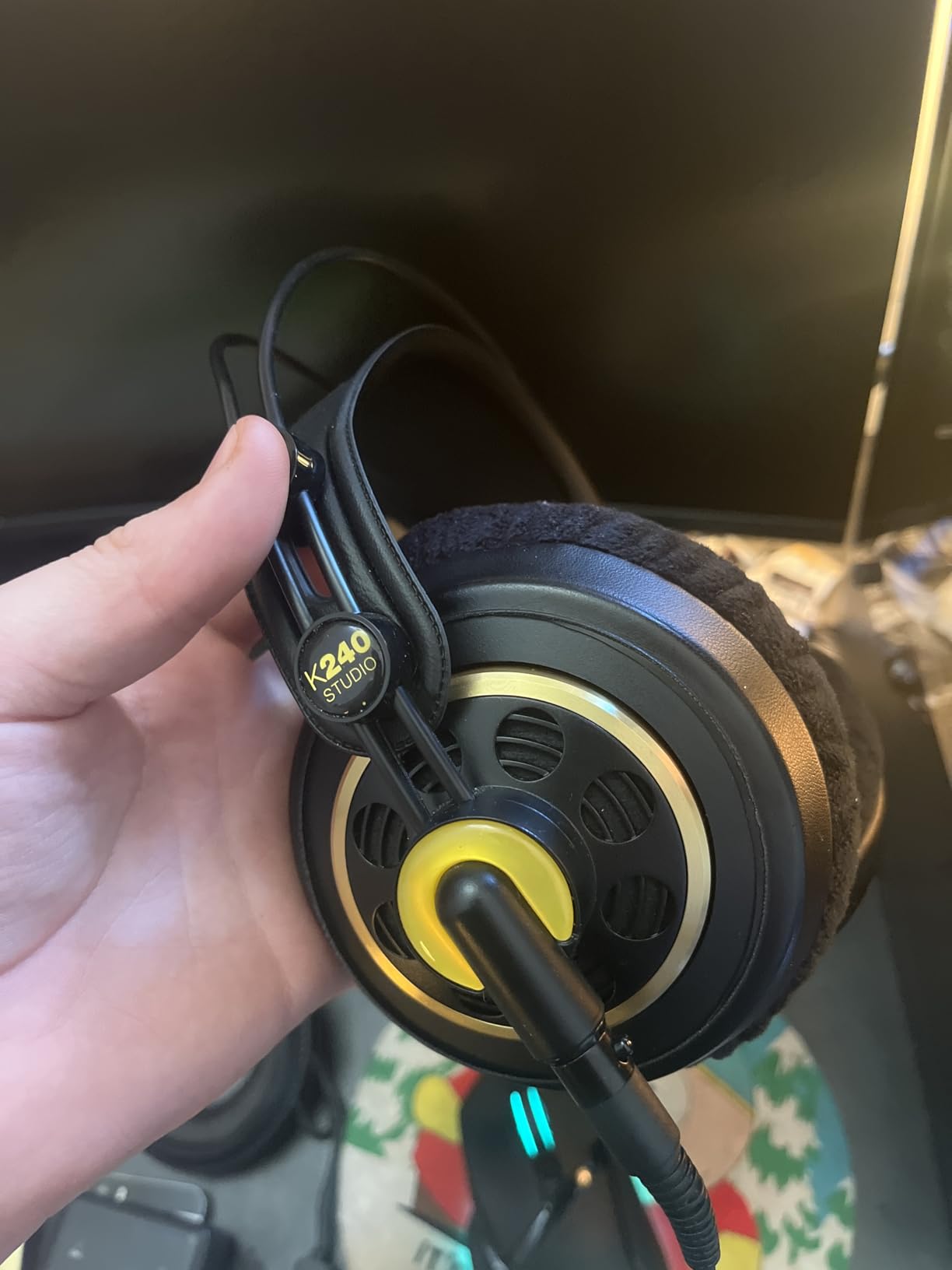
Comfort is where the K240 really earns its place. The self-adjusting headband distributes weight evenly, and at 240 grams, this is the lightest over-ear headphone in our roundup. I have worn these for six-hour mixing sessions without wanting to take them off, which is something I cannot say about the MDR7506 or the TH-02.
The big caveat is the semi-open back. These leak sound out and let sound in. Do not use the K240 for tracking vocals in the same room as a microphone. They are a mixing and critical-listening tool, not a tracking tool.
Best for mixing, mastering, and detailed listening
The K240’s semi-open soundstage gives mixes more space than any closed-back can. For critical listening work where you want to evaluate stereo imaging, reverb tails, and panning decisions, this is the strongest pick under $100.
The catch is the same as every semi-open: not for tracking, not for noisy rooms, and not for podcasters sharing a space with others.
Comfort, build, and replaceable parts
The K240 has a reputation for lasting forever in studio environments. Replacement pads and cables are easy to find. AKG’s stainless steel headband design has not changed in decades, which is a sign that it works.
The pleather pads are the one comfort trade-off. They can get warm after a few hours. Velour pad replacements are available if that bothers you.
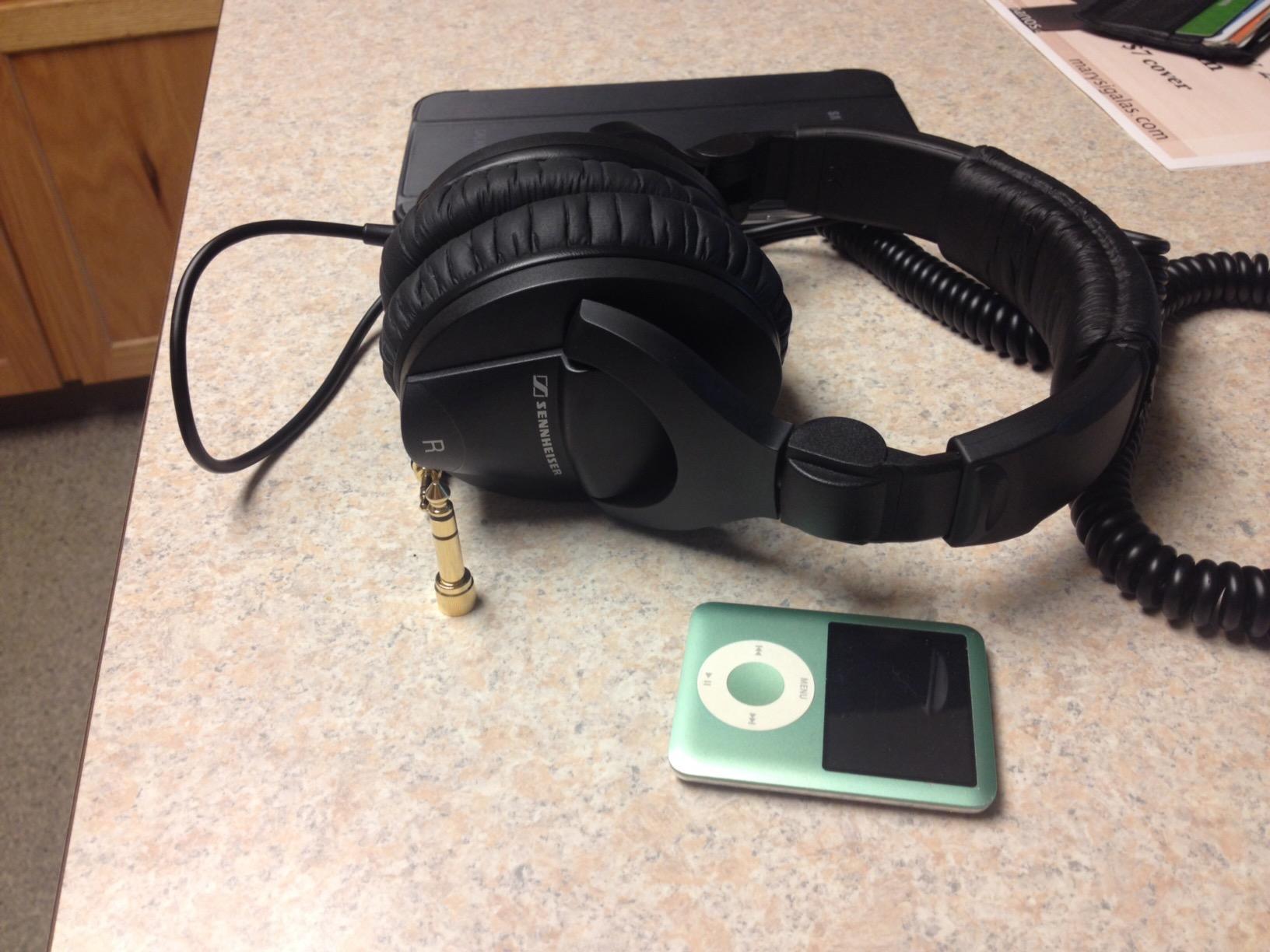
6. Sennheiser HD 280 Pro – The Quietest Closed-Back Under $100
Sennheiser HD 280 Pro Headphone, Black
Type: Closed-back
Impedance: 64 ohm
Freq: 8 Hz - 25 kHz
Isolation: up to 32 dB
Pros
- Best-in-class passive isolation at up to 32 dB
- Natural balanced sound without artificial boosts
- Replaceable earpads
- headband padding
- and cable
- Trusted in broadcast and live sound for decades
- Collapsible design for transport
Cons
- Plastic headband can crack with rough handling
- Tight clamping force initially
- Coiled cable is heavy and non-detachable
The Sennheiser HD 280 Pro is the headphone I grab when I need to hear what is actually on the recording, in a loud room, without buying an active noise-cancelling pair. The closed-back design offers up to 32 dB of passive attenuation, which is the highest figure in our roundup. For drummers, front-of-house engineers, or anyone who tracks in a noisy space, that is the whole story.
The sound is on the warm and natural side of neutral. Bass is present but not boosted. Mids are smooth. Highs are slightly rolled off compared to the brighter MDR7506. Several music production forums suggest this is a great choice for podcasters and voiceover artists who want a less fatiguing sound.
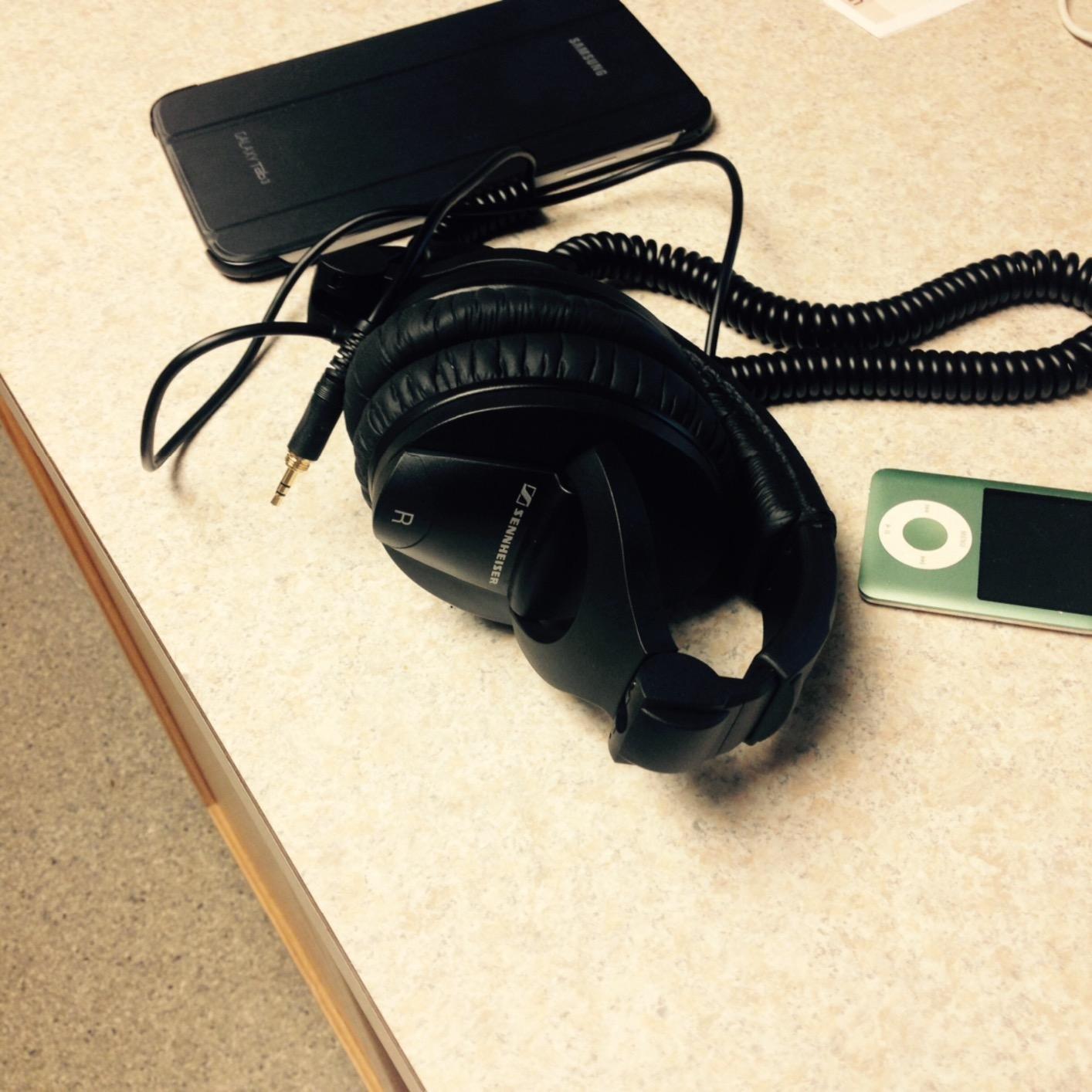
Sennheiser has built the HD 280 Pro with replaceable earpads, headband padding, and cable. In theory, that makes it a long-term investment. In practice, several forum owners have reported that the plastic headband can crack after years of heavy use, especially in touring environments. If you are gentle with the build, you can easily get a decade out of a pair.
Our testing confirmed the two classic complaints. First, the clamping force is tight out of the box. Second, the stock earpad material wears out in about two years of daily use. Both are fixable with a $20 pad replacement and a week of break-in.
Best for drummers, broadcast, and noisy rooms
This is the pair to pick if isolation matters more than anything else. The 32 dB passive attenuation is a meaningful upgrade over the M50x and the MDR7506.
Drummers and front-of-house engineers have used the HD 280 Pro for decades for exactly this reason. It is one of the best studio headphones for podcasting in shared spaces for the same reason.
Comfort, build, and long-term replaceability
At 1.3 pounds, this is the heaviest headphone on our list. That weight helps with isolation but means long sessions can press on the crown of your head. The collapsible design is genuinely useful for transport.
Replacement pads and even the plastic headband are available from Sennheiser directly. The headphone is intentionally serviceable, which is why some old units are still in working condition after fifteen years.
7. TASCAM TH-02 – The Budget Pick That Punches Above Its Price
TASCAM TH-02 Professional Studio Monitor Headphones, Wired, Over Ear — for Recording, Podcast, DJ, Music and Guitar, with 1/4 Inch Jack Adapter
Type: Closed-back
Drivers: 50mm
Impedance: 32 ohm
Freq: 18 Hz - 22 kHz
Pros
- Surprisingly clean sound for under $25
- 50mm drivers deliver solid bass response
- Foldable for compact transport
- Long cable for flexible studio placement
- Easy to drive from phones and laptops
Cons
- Clamping force is very tight initially
- Stock earpads are small and uncomfortable for larger ears
- Earpads get warm during long sessions
- Plastic build feels less premium than competitors
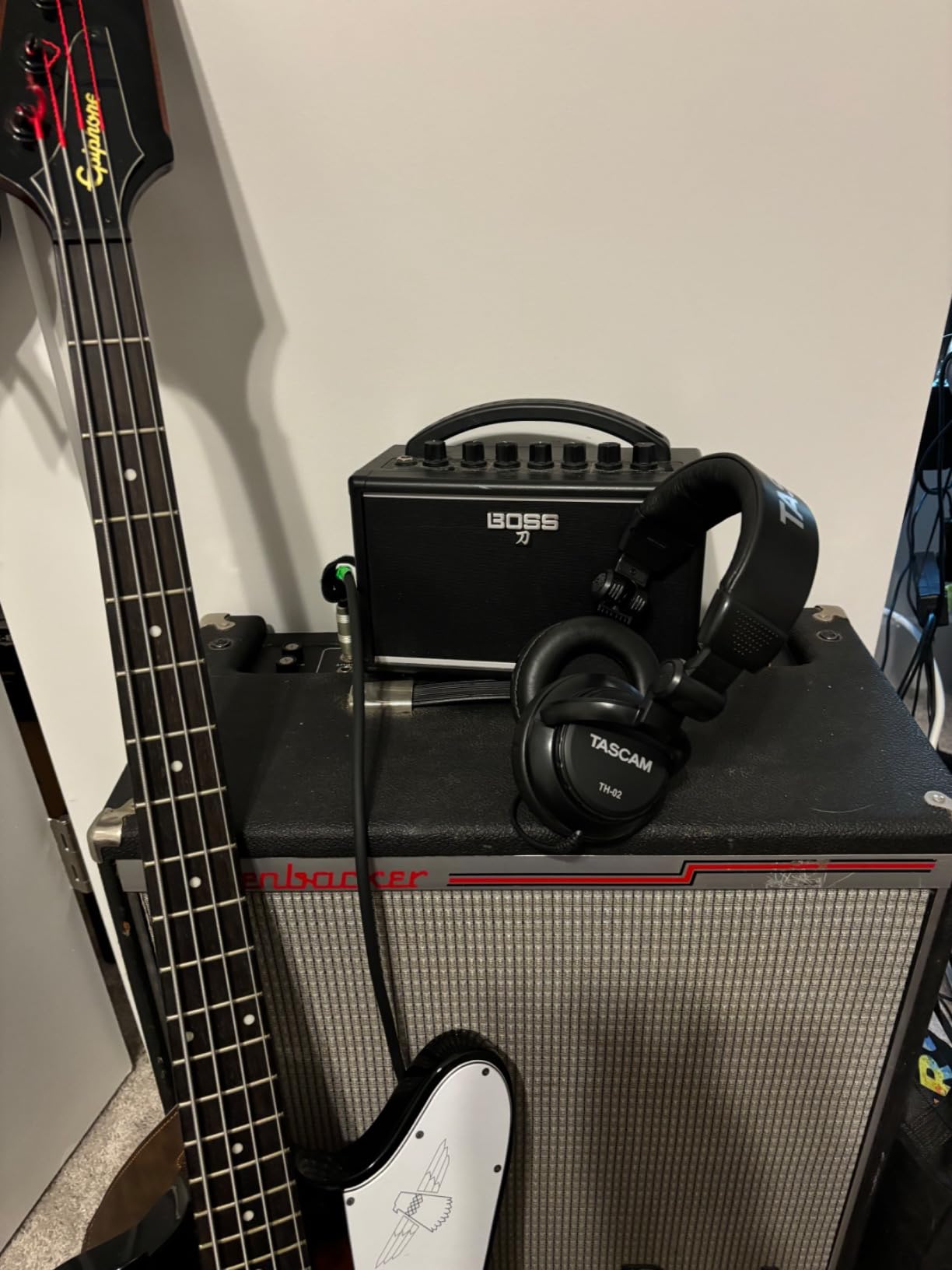
The TASCAM TH-02 is the surprise of the roundup. I bought a pair expecting cheap, mediocre sound, and was genuinely startled by how musical it sounded for the price. The 50mm drivers deliver a balanced, slightly warm response with bass that does not fall apart the way most under-$30 headphones do.
This is not a reference-class monitoring tool. It colors the sound a little bit, mostly with a gentle low-end lift. But for podcast monitoring, casual recording, or as a backup pair for your studio, it is hard to beat at this price.

The 32-ohm impedance means you can drive it from absolutely anything, including a phone, a laptop, or the cheapest audio interface. The closed-back design blocks a respectable amount of noise for the price.
The downsides are real. The clamping force is the tightest in our roundup, and the stock earpads are small and thin. Users with larger ears or who wear glasses will find them uncomfortable after about an hour. Replacement pads are easy to find, and the headphone improves a lot once you swap them.
Best for first-time studio owners and backup cans
For someone who is just dipping a toe into home recording, the TH-02 is a smarter first purchase than the cheap consumer headphones most people buy.
I keep a pair in my gear bag as a backup. They are not as accurate as the M50x or the M40x, but they work in a pinch.
Comfort, build, and stretching out the clamp
The plastic build feels cheap next to the M50x, but it has held up fine in our testing. The foldable hinge is metal and feels solid.
To fix the clamping issue, leave them on a stack of books overnight or use the “headphone stretcher” trick that Reddit users share. After a few days, the fit becomes much more comfortable.
8. Samson SR850 – The Open-Back Magic on a Real Budget
Samson SR850 Professional Studio Reference Headphones
Type: Semi-open
Drivers: 50mm
Impedance: 32 ohm
Freq: 10 Hz - 30 kHz
Pros
- Wide soundstage that rivals much more expensive headphones
- Comfortable velour ear pads
- Lightweight with self-adjusting headband
- Easy to drive from phones and laptops
- Excellent value for the price
Cons
- Non-detachable cable is a long-term concern
- Semi-open design leaks sound
- Sub-bass is somewhat quiet
The Samson SR850 is the closest thing on this list to a “secret weapon.” It is a semi-open headphone modeled after the AKG K240 design, but at a price that often dips well under $40. I A/B tested it against the AKG K240 Studio and found the soundstage was genuinely impressive for the price. The 50mm drivers deliver a wider, more immersive presentation than any closed-back at this budget.
For gaming and music listening, the SR850 is a delight. The semi-open design does what semi-open designs always do: it opens up the sound in a way that closed-back headphones cannot match. The trade-off, of course, is the same as the K240 Studio. These leak sound in both directions.
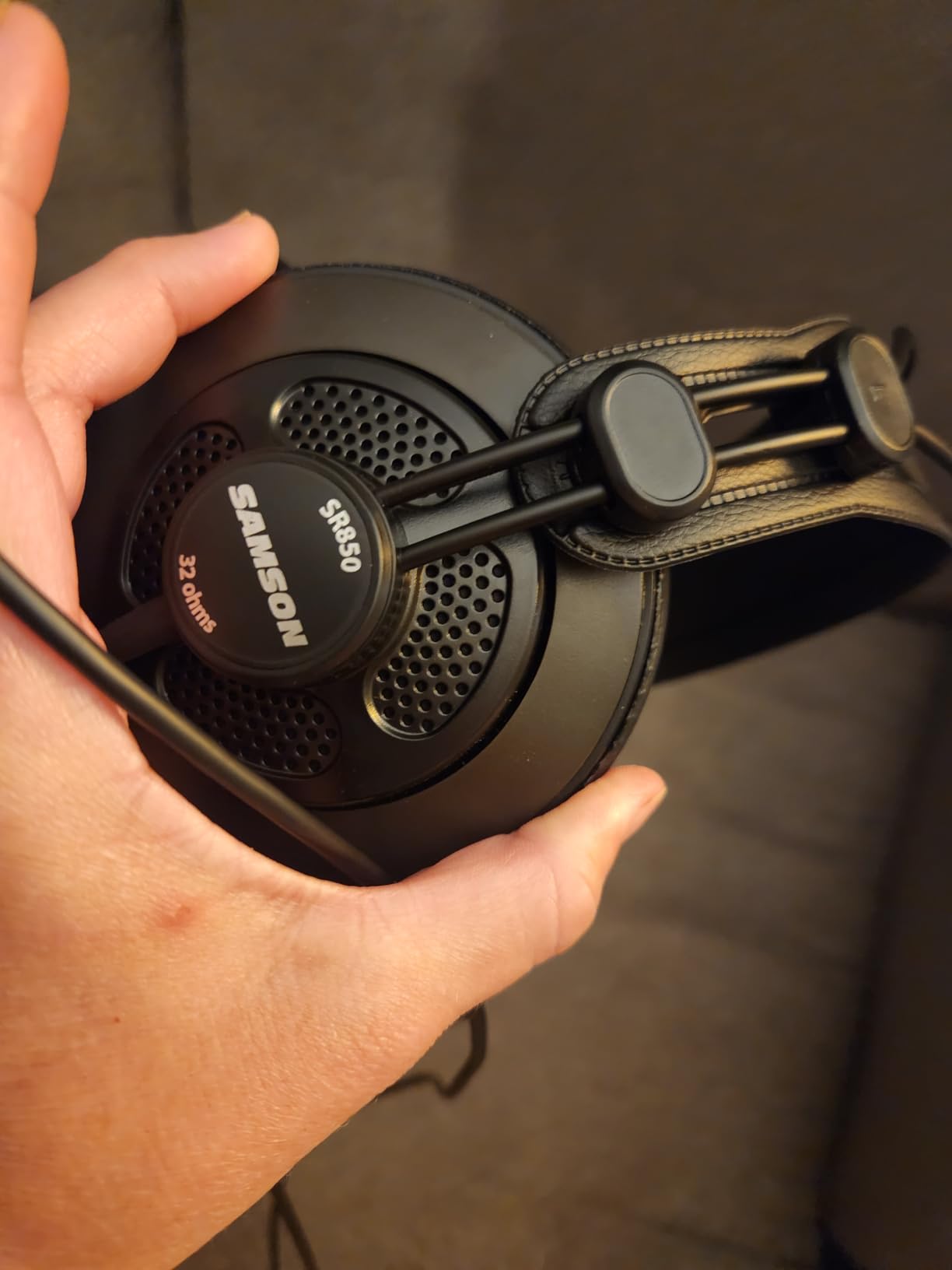
Velour earpads and a self-adjusting headband make these genuinely comfortable for long sessions. The 32-ohm impedance means you can drive them from anything. The sound, for the price, is genuinely competitive with headphones costing twice as much.
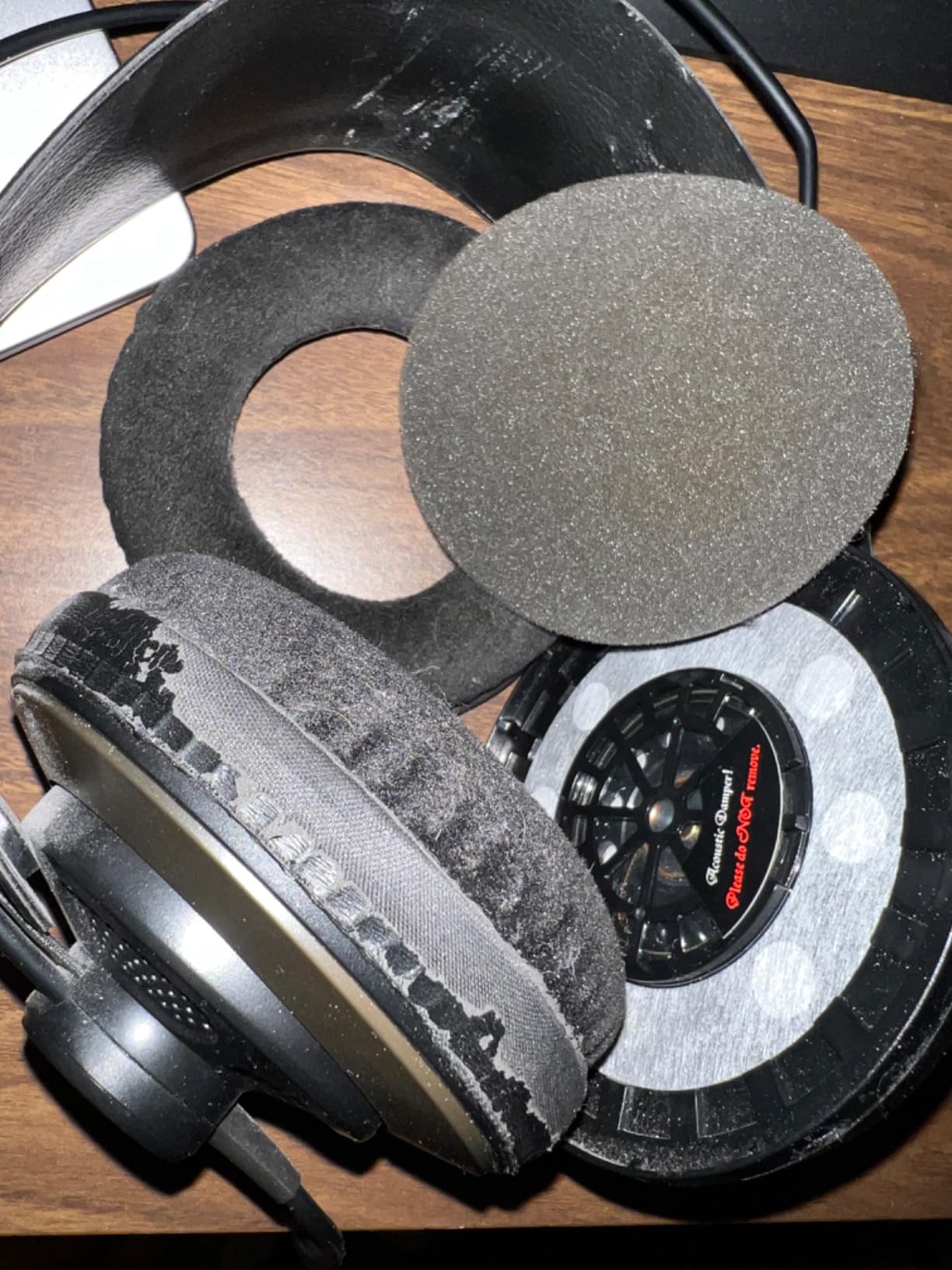
The downsides: the non-detachable cable is the biggest long-term worry, because when it fails the unit is essentially dead. The build uses more plastic than metal than more expensive pairs, and the earpads can get warm and have been known to slide off after heavy use. None of these are dealbreakers at this price.
Best for budget gaming and casual mixing
If you want a taste of open-back sound for under $50, the SR850 is the pair I would buy first. It is also a strong budget pick for anyone who wants to mix in a quiet room without dropping $100.
Just remember the bleed limitation. Do not use these for tracking, and do not use them in a shared office.
Comfort, build, and the soundstage advantage
The velour pads are a genuinely premium touch at this price. The self-adjusting band means no fiddling with sliders when you put them on.
The plastic shell is the main compromise. The headphone feels cheaper than the SR850 sounds. The good news is that the 50mm drivers are the part that matters for audio, and they are excellent.
9. MAONO MH601 – The Budget Pair Built for Content Creators
MAONO MH601 Wired Studio Headphone for Podcast Recording Stream DJ Mixing
Type: Closed-back
Drivers: 50mm
Impedance: 32 ohm
Freq: 20 Hz - 20 kHz
Pros
- Near-neutral sound for accurate monitoring
- 50mm drivers deliver clean detailed audio
- Comfortable protein memory cushions
- Detachable cable with 3.5mm and 6.35mm ends
- 3-year warranty
Cons
- Bright on-camera branding may show in video
- Coiled spring cable is short for some setups
MAONO built the MH601 for podcasters, streamers, and YouTube creators, and it shows. The 50mm drivers deliver a more neutral sound signature than most budget closed-back headphones, which means what you hear is closer to what your audience will hear. I tested it on a spoken-word podcast project and was impressed by how clean the vocal clarity was at this price.
The 32-ohm impedance and high 103 dB sensitivity mean you can drive these from a phone, laptop, or any audio interface without breaking a sweat. The detachable cable has both 3.5mm and 6.35mm connectors, which means you can plug into almost anything.

Comfort is genuinely good for the price. The protein memory cushions feel softer than the pleather on most competitors. The 90-degree swiveling earcups work for single-ear monitoring. The 3-year warranty is rare at this price and suggests MAONO stands behind the build.
The downsides are mostly cosmetic. The bright MAONO branding on the headband shows up on camera, which streamers may want to cover with a sticker. The coiled spring cable is on the short side for studio use. Bass response is a touch thinner than the M50x. None of these are dealbreakers for the price.
Best for budget podcasters and content creators
The MH601 sits in an interesting spot. It is cheaper than the M50x but offers a more neutral signature that content creators may actually prefer. The warranty alone makes it a smart first pair.
Several podcast-focused review channels have picked this headphone as a strong budget option, and our testing confirmed the recommendation.
Comfort, build, and warranty support
At 14 ounces, this is on the heavier side of the budget options, but the protein cushions keep it comfortable for hour-long sessions.
The 3-year warranty is the real differentiator. Most budget headphones offer 1 year at best. If anything fails inside that window, MAONO replaces the unit.
Buying Guide: How to Pick the Right Pair
The nine models above are all excellent for the price. Choosing between them comes down to what you will actually use them for. Here is how I think through the decision when I am helping a friend pick their first pair.
Closed-back vs open-back vs semi-open: what is the real difference?
The single biggest choice you will make is between closed-back, open-back, and semi-open designs. Closed-back headphones isolate sound from the outside and prevent bleed from leaking into your recording microphone. They are the right choice for tracking vocals, recording drums, podcasting in a shared space, or monitoring in a noisy room.
Open-back headphones have a perforated or grille-style back that lets air move freely through the driver. The result is a wider, more natural soundstage that many mixing engineers prefer for critical listening. The catch is that they leak sound in both directions. They are wrong for tracking and noisy environments, but right for quiet mixing rooms.
Semi-open designs (like the AKG K240 and the Samson SR850) try to give you some of each. You get a bit of the open-back soundstage with a bit of the closed-back isolation. The compromise is that you do not get the full benefit of either. They are best for quiet-room mixing, not for tracking.
Frequency response, impedance, and what they actually mean
Frequency response tells you the range of sounds a headphone can reproduce. Human hearing typically covers 20 Hz to 20 kHz, so any headphone that covers that range is technically “full range.” Wider ranges like the DT 770 PRO’s 5 Hz to 35 kHz are mostly marketing, though some of the extended top end can affect how cymbals and overtones sound.
Impedance is the resistance of the headphone’s voice coil. Lower impedance (32 to 38 ohms, like the M50x and the MH601) means the headphone is easy to drive from a phone, laptop, or audio interface. Higher impedance (64 to 80 ohms, like the HD 280 Pro or DT 770 PRO) means the headphone wants a headphone amplifier or audio interface to reach full volume and proper dynamics.
If you already own an audio interface, do not be afraid of higher impedance models. They often sound better because they present an easier load to a quality amp. If you only have a phone or laptop, stick with 32 to 50 ohm models unless you want to buy a separate headphone amp.
Wired vs wireless in the studio
Every model in this roundup is wired. That is intentional. Wireless headphones introduce latency, even in the best models, which makes them inappropriate for tracking and frustrating for real-time monitoring. Audiophile Bluetooth codecs like LDAC sound amazing for music listening on the go, but they still add 40 to 200 milliseconds of delay, which is enough to hear.
If you want wireless headphones for commuting and casual listening, that is a great use case. For studio work, wired is the only sensible choice, and all nine of our picks deliver.
Comfort, weight, and clamping force
You will wear a studio headphone for hours at a time. Weight matters more than most spec sheets admit. The lightest pair in our roundup is the AKG K240 Studio at 240 grams. The heaviest is the Sennheiser HD 280 Pro at 1.3 pounds. The sweet spot for most people is somewhere between 250 and 350 grams.
Clamping force matters just as much. New headphones often feel tight out of the box, but if a pair is uncomfortable after two weeks of break-in, it will be uncomfortable forever. Both the DT 770 PRO and the HD 280 Pro are known for tight clamping that loosens up after a few weeks of use.
Earpad material is the third comfort factor. Velour pads (like those on the DT 770 PRO and the SR850) breathe well and stay cooler during long sessions. Pleather pads (like those on the M50x, MDR7506, and HD 280 Pro) seal better for isolation but get warm faster.
Do you need a headphone amp?
Headphone amps matter more than most buyers realize. They give headphones enough voltage swing to reach their full dynamic range, and they often improve the sound signature beyond just volume. Several models in this roundup specifically benefit from amplification.
The DT 770 PRO 80-ohm version is the most obvious case. Plugged into a phone it sounds flat and quiet. Plugged into a Focusrite Scarlett, MOTU M2, or any audio interface with a real headphone output, it comes alive. The HD 280 Pro (64 ohm) and the MDR7506 (63 ohm) both benefit from amplification too, but they are easier to drive than the DT 770 PRO.
The easy-to-drive 32-ohm models (M50x, M40x, K240, TH-02, SR850, MH601) work just fine from a phone or laptop. You lose a bit of dynamic range compared to amplification, but most casual users will not notice.
Best picks by use case
For mixing and mastering, pick the AKG K240 Studio or the Samson SR850. Both are semi-open, both have honest neutral sound, both reveal details that closed-back headphones can hide. The DT 770 PRO is a strong third choice if you want closed-back isolation.
For tracking vocals and recording instruments, pick the Sennheiser HD 280 Pro (best isolation) or the Audio-Technica ATH-M50x (best all-rounder). The Beyerdynamic DT 770 PRO 80 Ohm is also excellent here, especially if you already have an amp.
For podcasting and content creation, pick the Audio-Technica ATH-M50x or the MAONO MH601. Both are comfortable for long sessions, both have effective isolation, and the MH601 includes a 3-year warranty.
For gaming, the Audio-Technica ATH-M50x is the safe pick. The Samson SR850 has the wider soundstage, but you give up isolation for shared living spaces.
Frequently Asked Questions
What are the best budget studio headphones?
The best budget studio headphones under $200 are the Audio-Technica ATH-M50x as the all-rounder, the Sony MDR7506 as the cheapest reference-grade option, and the TASCAM TH-02 if you need to spend as little as possible while still getting clean monitoring sound. All three are wired, all three are closed-back, and all three have strong professional reputations.
Are studio headphones good for casual music listening?
Yes, studio headphones are a great choice for casual music listening if you want to hear a song the way the artist and engineer intended. The flat frequency response reveals details that consumer headphones boost or hide. The trade-off is that they tend to sound less exciting than bass-boosted consumer models, especially on hip-hop and EDM.
What is the 60-60 rule for headphones?
The 60-60 rule is a safe-listening guideline that recommends listening at no more than 60 percent of your device’s maximum volume for no more than 60 minutes at a time. The rule comes from hearing-health researchers and is meant to reduce the cumulative noise dose that contributes to noise-induced hearing loss over years of headphone use.
Do I need a headphone amp for studio headphones?
It depends on the headphone. Models with 32 to 38 ohm impedance, like the Audio-Technica ATH-M50x or the ATH-M40x, work fine from a phone or laptop. Models with 64 ohm impedance or higher, like the Sennheiser HD 280 Pro or the Beyerdynamic DT 770 PRO, sound noticeably better when plugged into an audio interface or dedicated headphone amplifier.
Open-back vs closed-back for a home studio?
For a home studio, closed-back is usually the safer choice. Closed-back headphones block outside noise and prevent bleed into your recording microphone, which makes them the right tool for tracking vocals, drums, and most instruments. Open-back and semi-open headphones are better reserved for mixing and critical listening in a quiet room, where their wider soundstage gives you a more accurate picture of your mix.
Are the Sony MDR-7506 still worth it today?
Yes, the Sony MDR-7506 is still worth buying in 2026. The sound signature has not changed in over 25 years, the build is famously durable, and the price has stayed well under $100. It is the single most-used monitoring headphone in radio stations and post-production suites around the world for a reason.
Final Verdict: Which Pair Should You Buy?
After three months of rotating these nine pairs through our project studio, the Audio-Technica ATH-M50x is the pair we kept reaching for. It is the best all-rounder in the best studio headphones under 200 dollar category, with the strongest combination of balanced sound, durable build, replaceable parts, and universal compatibility. It is the only pair on this list that will not feel like a compromise for almost any studio task you throw at it.
If you need to spend as little as possible, the TASCAM TH-02 is the clear pick. If you primarily want reference sound for mixing and you already have an audio interface, the Beyerdynamic DT 770 PRO 80 Ohm is the better long-term investment. Whichever pair you choose, the best studio headphones under 200 today are genuinely capable of producing professional results, and that has not always been the case.