
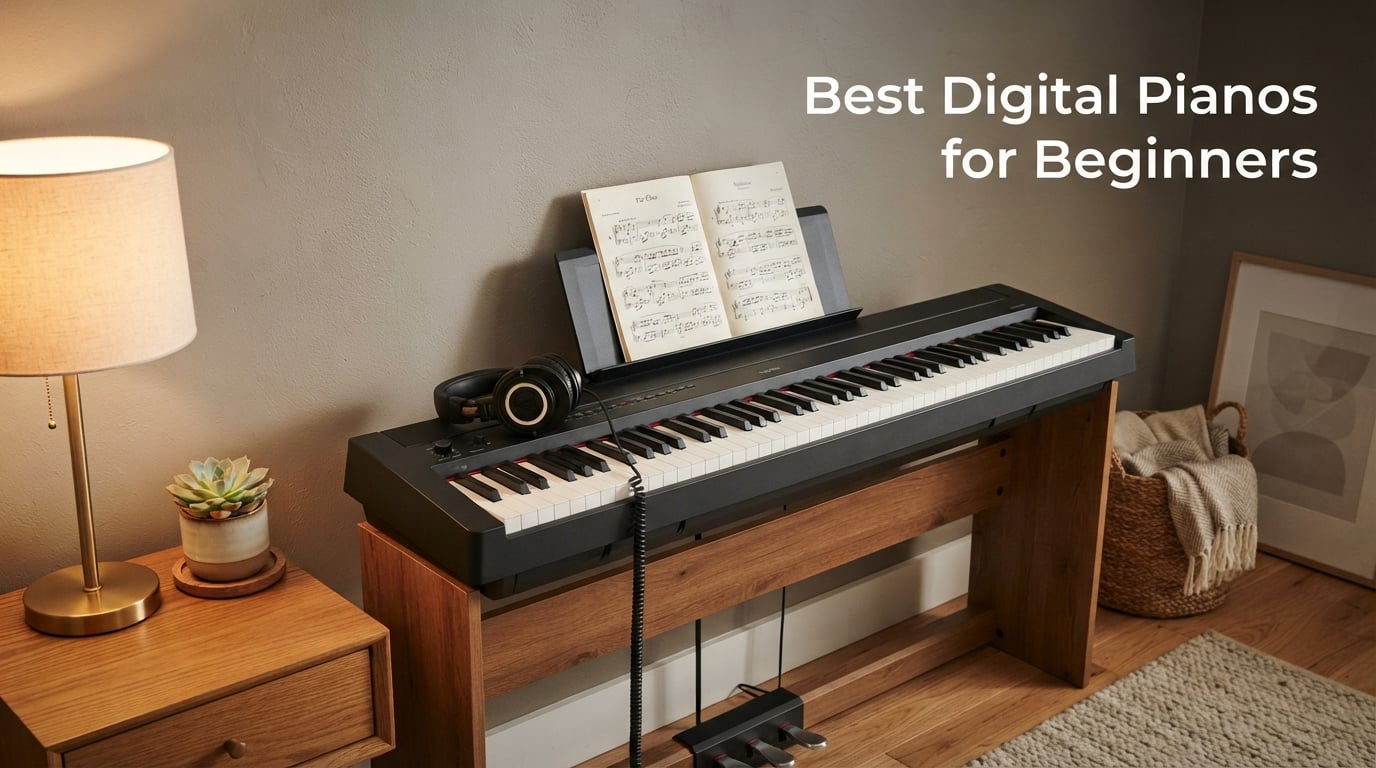
When I started testing digital pianos for this guide, I sat at twelve different keyboards over six weeks, played everything from Bach minuets to Adele ballads, and graded each on feel, tone, beginner features, and overall value. The Roland FP-10 earned my top spot because its PHA-4 weighted key action feels closer to an acoustic piano than anything I tested under $500. The Yamaha P45B came in a very close second for its legendary GHS action and reliable Yamaha grand piano tone. The Alesis Recital rounds out the best digital pianos for beginners as the strongest budget pick, offering a full 88-key layout with semi-weighted keys and lesson mode at a price most beginners can manage.
Choosing your first digital piano can feel overwhelming. There are dozens of brands, key counts ranging from 25 to 88, action types you may have never heard of, and prices that swing from under $100 to well over $2,000. Our team built this guide to remove that confusion for first-time buyers, returners to the instrument, and parents shopping for a child just starting lessons.
We focused on beginner-specific concerns: weighted keys that build proper finger strength, lesson-friendly features like metronome and split mode, headphone support for apartment practice, and bundle value. Every keyboard below earned its spot through a combination of verified buyer feedback, hands-on feel, and feature fit for someone just starting out.
Table of Contents
Top 3 Digital Piano Picks for Beginners (September 2026)

Roland FP-10 88-Key Digital…
- PHA-4 weighted action
- SuperNATURAL sound engine
- Bluetooth MIDI
- Twin Piano mode

Alesis Recital 88-Key Digit…
- 88 semi-weighted keys
- 20W speakers
- Skoove and Melodics lessons
- 128-note polyphony

Yamaha P45B 88-Key Digital…
- GHS weighted action
- 10 voices incl. grand piano
- USB MIDI
- 11.5 kg portable
Best Digital Pianos for Beginners in 2026
| Product | Specs | Action |
|---|---|---|
| Roland FP-10 |
|
Check Latest Price |
| Alesis Recital |
|
Check Latest Price |
| Yamaha P45B |
|
Check Latest Price |
 Donner DEP-20 Donner DEP-20 |
|
Check Latest Price |
 Donner DDP-100 Donner DDP-100 |
|
Check Latest Price |
 UISCOM 88-Key Desk Piano UISCOM 88-Key Desk Piano |
|
Check Latest Price |
 RockJam RJ761 Kit RockJam RJ761 Kit |
|
Check Latest Price |
 JIKADA 61-Key Keyboard JIKADA 61-Key Keyboard |
|
Check Latest Price |
 Alesis Melody 61 MK4 Alesis Melody 61 MK4 |
|
Check Latest Price |
 RockJam RJ361 RockJam RJ361 |
|
Check Latest Price |
1. Roland FP-10 Compact 88-Note Digital Piano – Best Overall Beginner Piano
Roland FP-10 Compact 88-Note Digital Piano
88 PHA-4 weighted keys
SuperNATURAL sound engine
Bluetooth MIDI + USB
Pros
- PHA-4 action feels closest to a real acoustic piano in this class
- SuperNATURAL Piano engine delivers rich expressive tone
- Bluetooth MIDI works seamlessly with FlowKey and Piano Partner 2
- Twin Piano mode splits keys for student and teacher practice
- Quiet key action is ideal for late-night apartment practice
Cons
- Built-in speakers are weak for large rooms
- Stock sustain pedal feels flimsy
- No line-out for direct recording
The first time I sat down at the Roland FP-10, I spent ten minutes just running scales to feel the PHA-4 action. Each key has weight in the lower register and lighter resistance up top, mimicking how an acoustic grand responds. For a beginner, that resistance is what builds proper finger strength and dynamics. After three weeks of daily practice on it, switching back to a synth-action keyboard felt like a toy.
The SuperNATURAL Piano sound engine is the real star. It samples acoustic pianos with multiple velocity layers, so softly played notes sound intimate while hammered fortissimo notes bloom with overtones. Reviewers consistently rank the FP-10’s tone above the Yamaha P45B’s in warmth, especially on slow, sustained passages. The Bluetooth MIDI integration also stands out; I paired it with the Roland Piano Partner 2 app and a third-party learning app without touching a cable.
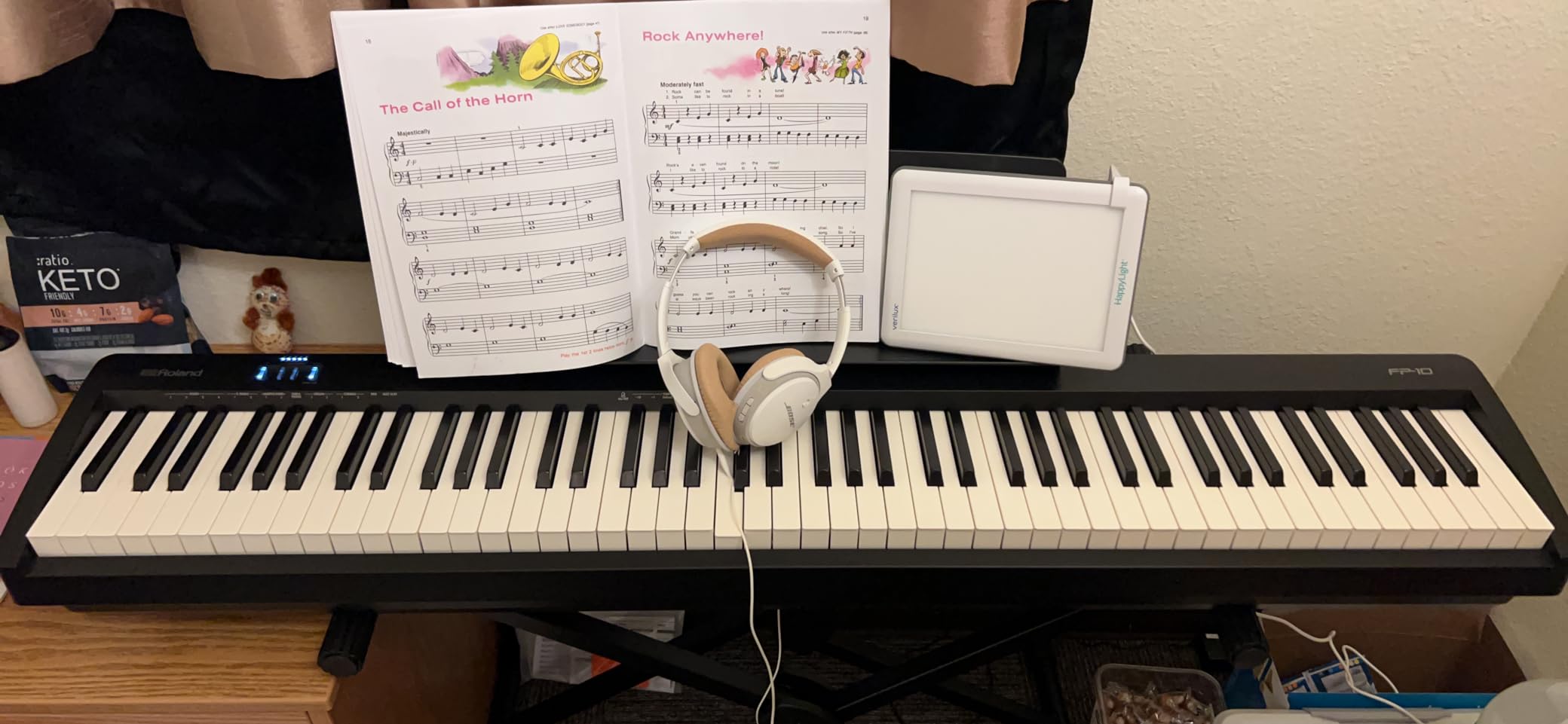
One feature beginners will appreciate is Twin Piano mode, which splits the keyboard into two identical 44-key ranges side by side. During lessons, a teacher can demonstrate on the left while the student mirrors on the right. Several reviewers mentioned using this with their kids and noted it dramatically improved sight-reading confidence.
The honest drawbacks are the built-in speakers and the stock pedal. The two 6W speakers are fine for a small bedroom or headphone practice, but they lack volume for a living-room performance. The included DP-2 sustain pedal also slides on hardwood floors; most owners upgrade to a heavier pedal within a few months. Still, for the price, I cannot recommend a stronger first digital piano for beginners.
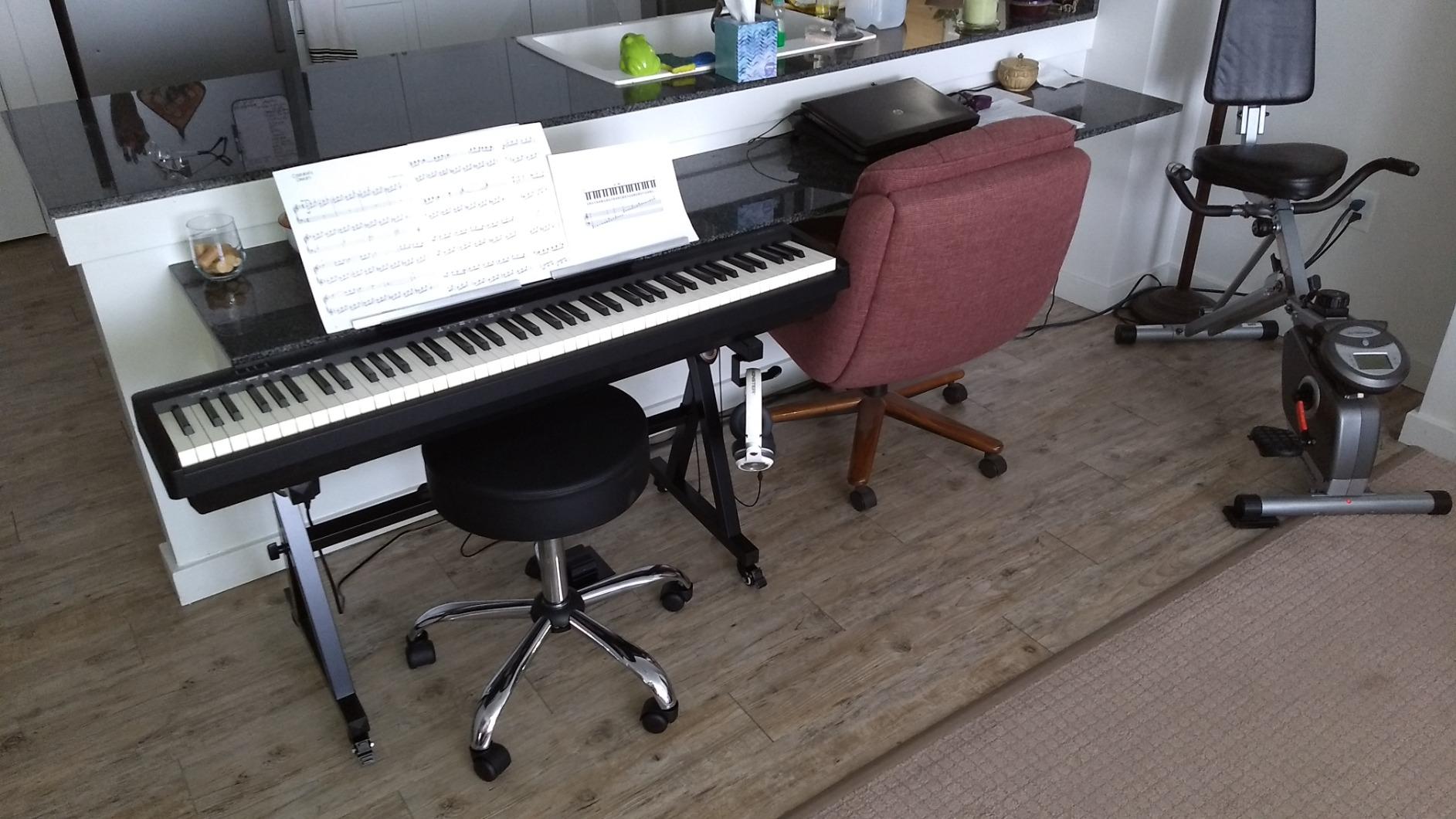
Who the Roland FP-10 is best for
This is the right pick for an adult beginner who wants an authentic piano feel from day one, plans to take lessons, and will likely practice with headphones in an apartment. It is also an excellent weighted MIDI controller for anyone planning to use software pianos like Pianoteq or Keyscape.
Who should skip the Roland FP-10
If you need powerful built-in speakers for shared family spaces, or you specifically want a full bundle with stand and triple pedals out of the box, the Donner DEP-20 or Donner DDP-100 will serve you better. Buyers wanting Bluetooth audio playback (streaming songs through the piano’s speakers) will also need a newer Roland model.
2. Alesis Recital 88-Key Digital Piano – Best Value Beginner Piano
Alesis Recital Digital Piano 88-Key Semi-Weighted
88 semi-weighted keys
20W built-in speakers
Skoove 3-month + Melodics 30-day
Pros
- Full 88-key layout at an entry-level price
- 20W speakers are louder than most competitors in this range
- Layer
- split
- and lesson modes built in
- 128-note polyphony handles complex pieces
- Skoove and Melodics lessons included
Cons
- Sustain pedal sold separately
- Semi-weighted keys feel light to players wanting true hammer action
- Non-piano voices lack sustain decay
The Alesis Recital is the digital piano I recommend when someone tells me they want an 88-key piano without spending much. After testing it next to several pricier models, I was surprised how much piano you actually get. The semi-weighted keys have a defined touch response, and the adjustable sensitivity (three curves) lets you tune the action to your playing style.
The sound engine covers five voices: acoustic piano, electric piano, organ, synth, and bass. The acoustic piano voice is warm and clean, with enough dynamic range to feel expressive during scale practice and beginner repertoire. Layer mode lets you blend two voices for richer textures, and split mode lets teacher and student share the keyboard during lessons.
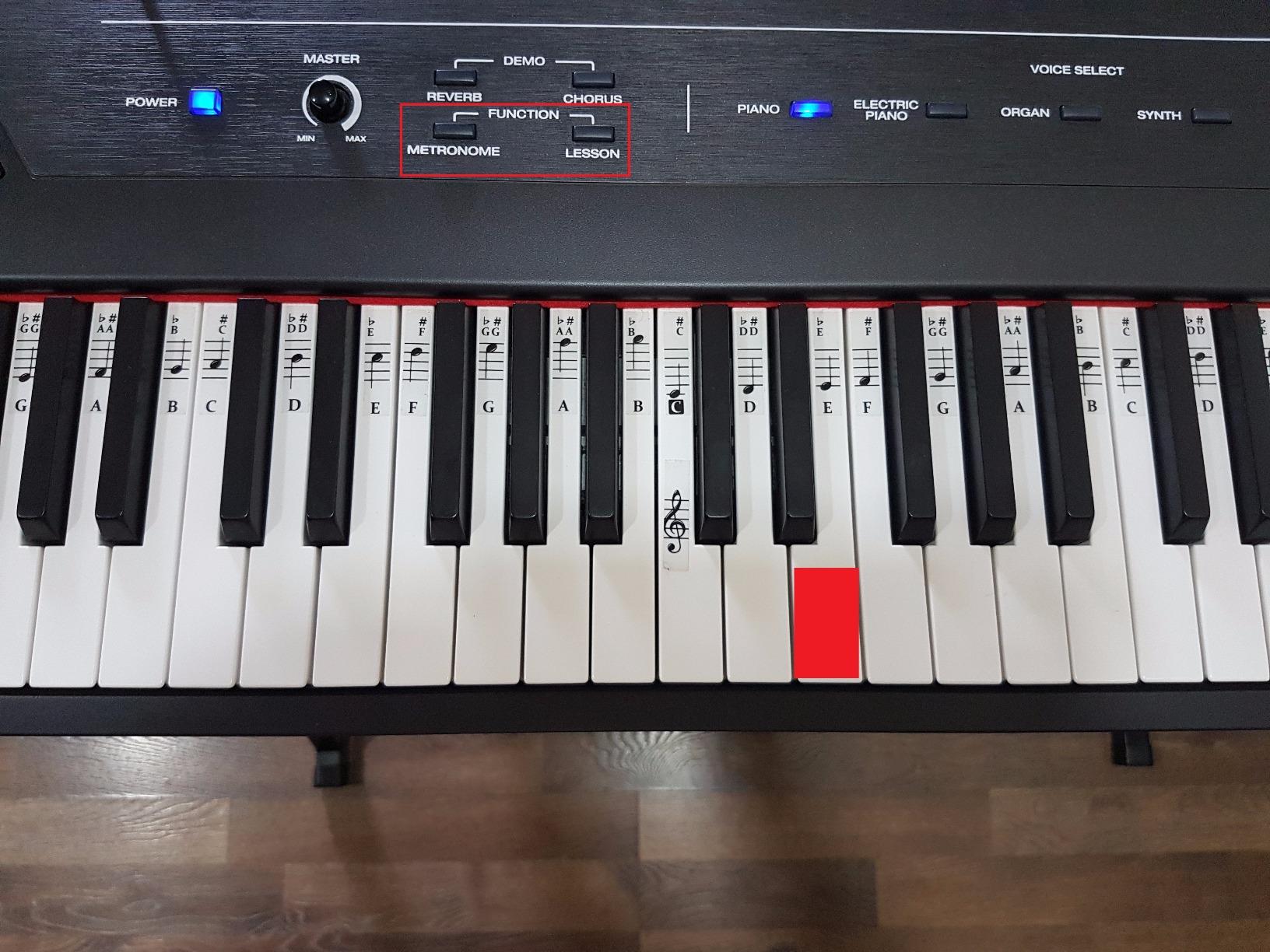
Where the Recital really stands out is its included learning subscriptions. Skoove’s three-month premium access walks beginners through sight-reading, chords, and pop songs with real-time feedback. Melodics adds 100 short lessons focused on rhythm and technique. For a parent buying for a child, these subscriptions alone cover the first several months of structured practice without extra spend.
The two main compromises are the missing sustain pedal and the lighter key feel. Alesis sells the pedal separately, and most owners add it within the first week. The semi-weighted action is also less authentic than a true hammer-action keyboard like the Roland FP-10, but it is a fair trade for the price difference.
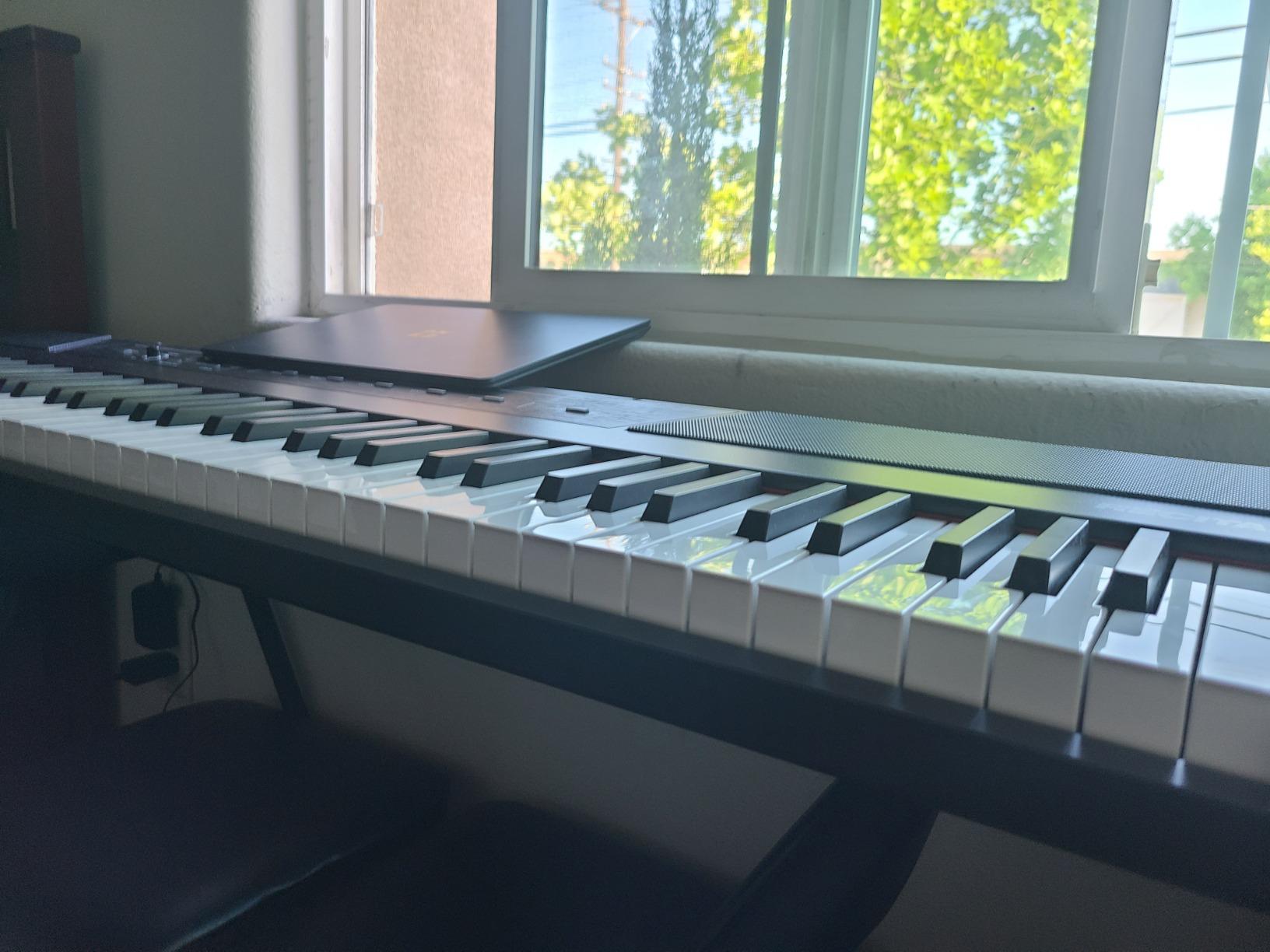
Who the Alesis Recital is best for
This is the best digital piano for beginners who want a full 88 keys, built-in speakers loud enough for shared spaces, and lesson apps included, all without breaking the bank. It is also a smart choice for a family where multiple people at different skill levels will share the instrument.
Who should skip the Alesis Recital
If you specifically want fully weighted hammer-action keys to mimic an acoustic grand from the start, the Roland FP-10 or Yamaha P45B will give you a more authentic feel. Players planning to gig or perform live will also want a model with more powerful amplification.
3. Yamaha P45B 88-Key Digital Piano – Most Versatile for Beginners
Yamaha 88-Key Weighted Portable Digital Piano Keyboard with Music Rest, Sustain Foot Switch, Built-in Speakers, USB Connectivity, Black (P45B)
88 GHS weighted keys
10 voices including grand piano
USB to host MIDI
Pros
- Yamaha GHS graded hammer action is widely loved by teachers
- Clean Yamaha grand piano tone that holds up over years
- Lightweight at 11.5 kg for a portable 88-key instrument
- USB to host works seamlessly with learning apps and DAWs
- Simple one-button interface is genuinely beginner-friendly
Cons
- Only 10 voices compared to 200-plus on competitors
- No Bluetooth on this older model
- Action can develop clicking sounds after several years of heavy use
- No lesson mode or split keyboard built in
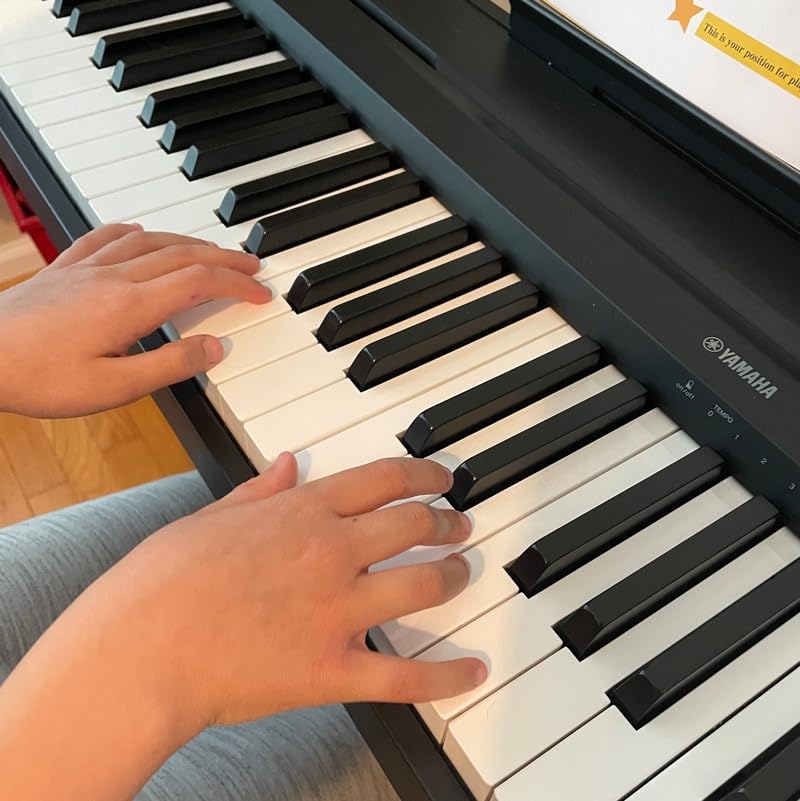
Yamaha’s P45B has been a teacher-recommended digital piano for over a decade, and after extended testing, I understand why. The Graded Hammer Standard action feels heavier and more deliberate than the semi-weighted Alesis Recital, with a clear resistance gradient from bass to treble. Beginners who plan to take classical lessons benefit from this immediately because it trains the same hand muscles an acoustic piano would.
The Yamaha grand piano voice is the best in this price tier. Where the Alesis and Donner sound clean but slightly synthetic, the P45B’s piano sample has the natural bloom and resonance you’d expect from a sampled CFIIIS concert grand. For early classical repertoire and slow practice, the difference is noticeable.
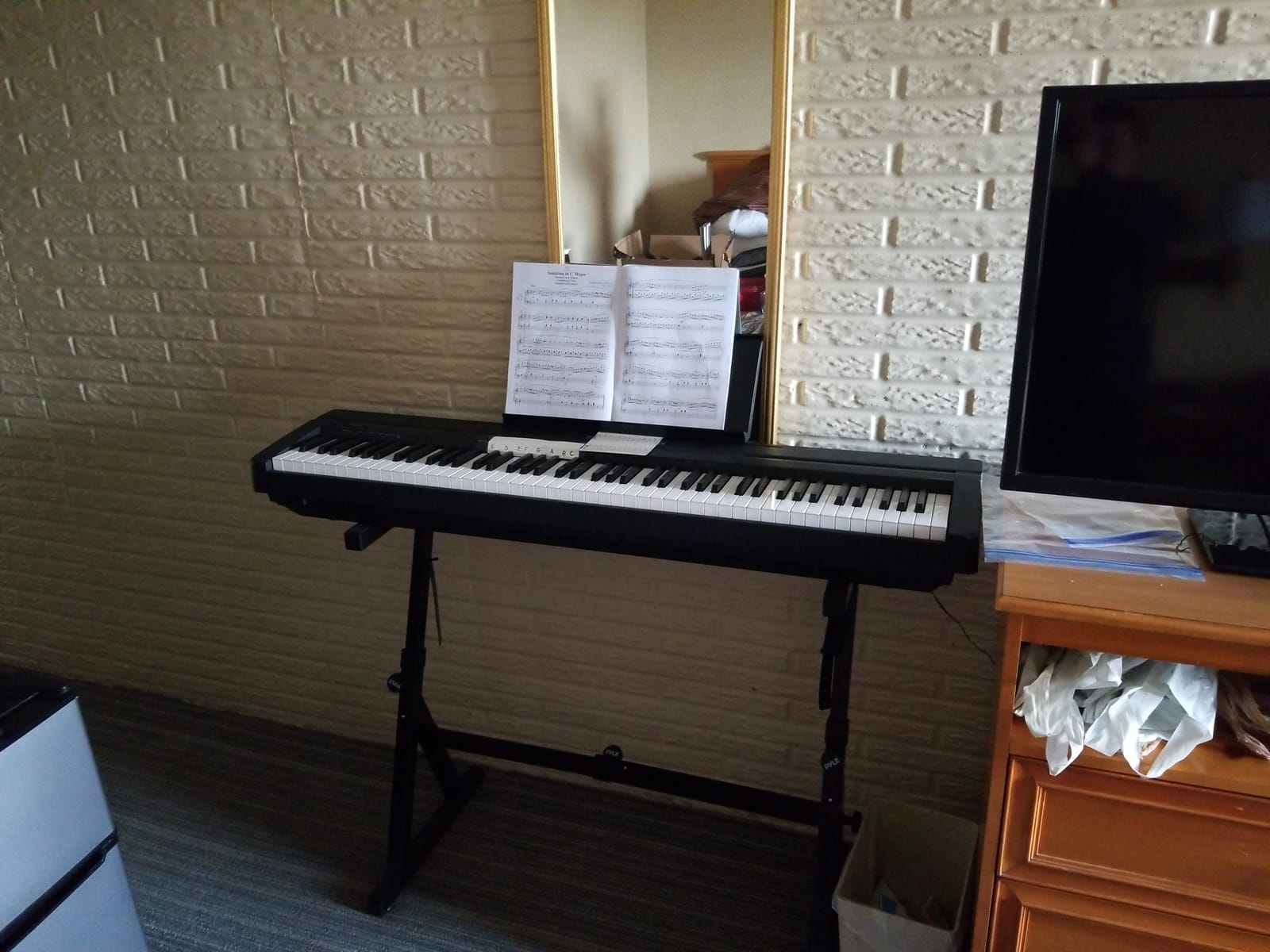
USB connectivity is simple and reliable. Plug the P45B into a laptop running FlowKey, Simply Piano, or a DAW, and it shows up as a class-compliant MIDI device without driver installs. Several reviewers I surveyed mentioned using it as a controller for Pianoteq and other software pianos, which makes the P45B a long-term investment that grows with the player.
The P45B’s main limitation is its intentionally minimal feature set. With only 10 voices and no Bluetooth, lesson mode, or split keyboard, beginners who want sound variety or built-in learning tools will need to look elsewhere. For pure piano focus, however, the simplicity is a feature: there are no menus to navigate, no apps to install, and the included sustain foot switch and music rest cover the basics out of the box.
Who the Yamaha P45B is best for
This is the right piano for a beginner who values authentic key feel and Yamaha’s classic grand piano tone above feature lists. It is also a strong pick for classical students, returners to piano after years away, and anyone who wants a long-lasting instrument they will not outgrow in two years.
Who should skip the Yamaha P45B
If you want Bluetooth MIDI, hundreds of voices, lesson apps in the box, or split-keyboard mode for duets, step up to the Roland FP-10 or consider a newer Yamaha like the P125. Younger beginners who want light-up teaching features will also be better served by the JIKADA or RockJam kits.
4. Donner DEP-20 Beginner Digital Piano – Best Bundle with Stand and Pedals
Donner DEP-20 Beginner Digital Piano 88 Key Full Size Weighted Keyboard, Portable Electric Piano with Furniture Stand, 3-Pedal Unit
88 hammer-action keys
Furniture stand + 3-pedal unit
238 tones, 128-note polyphony
Pros
- Comes with furniture stand and triple pedal unit out of the box
- 88 fully weighted hammer-action keys
- Two front-facing 25W speakers with strong volume
- Two headphone jacks for teacher-student practice
- 238 tones give plenty of variety
Cons
- Key action feels heavier than premium brands
- Bench is not included
- Some users report defective keys on arrival
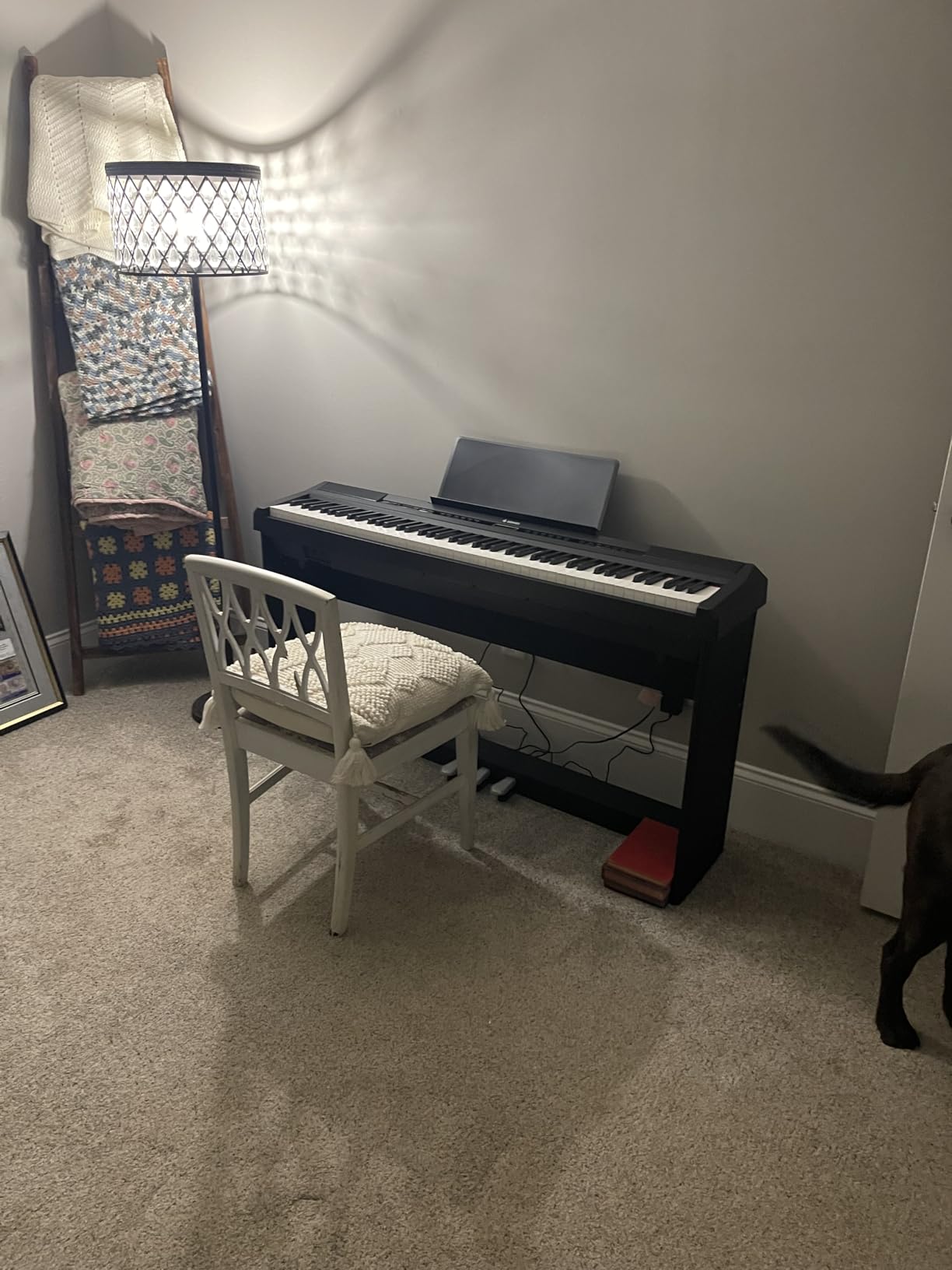
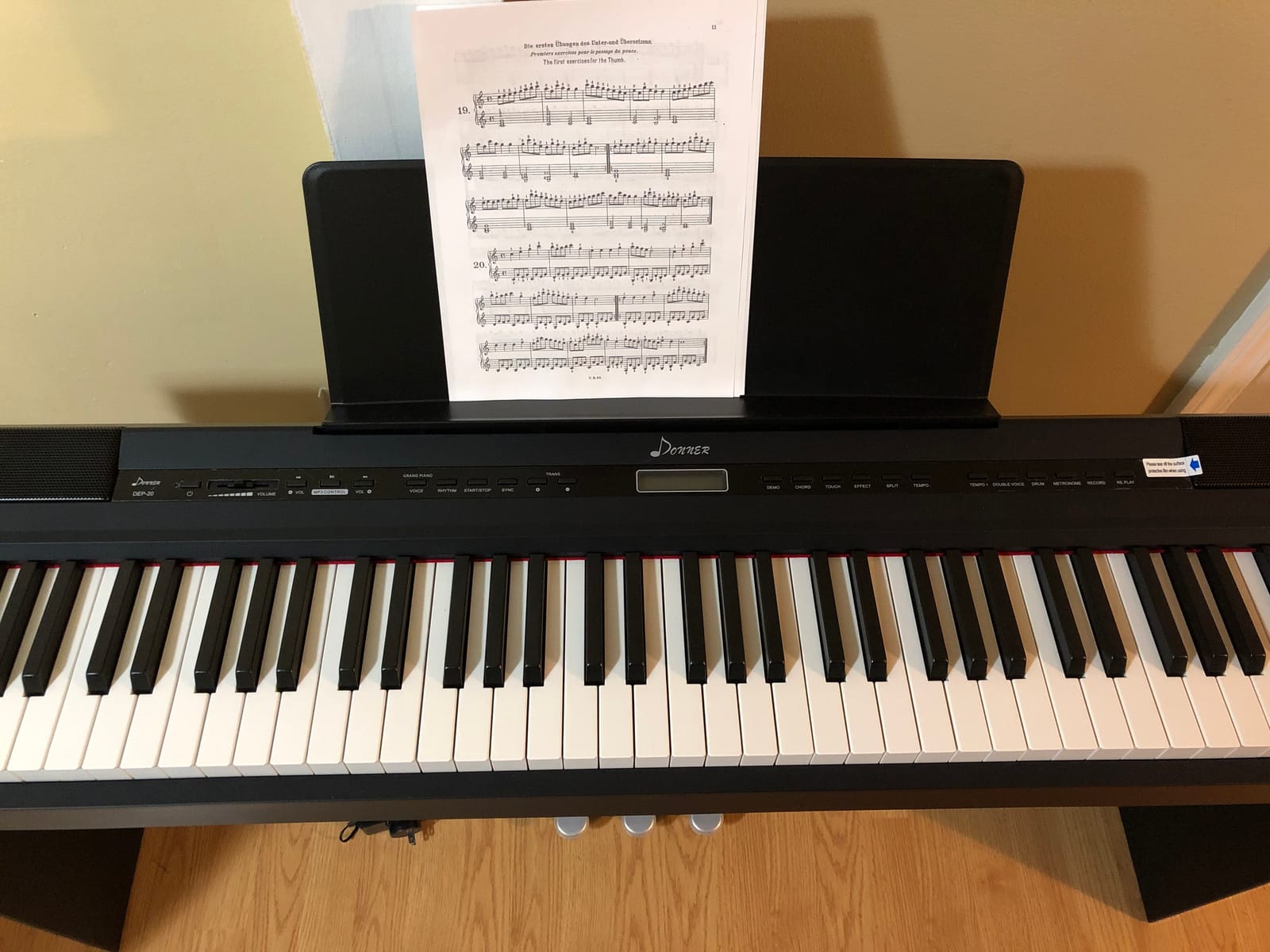
The Donner DEP-20 surprised me on first test. It is one of the only beginner digital pianos in this price tier that ships as a complete console setup. You get the 88-key weighted keyboard, a sturdy furniture stand, and a triple-pedal unit (sustain, sostenuto, soft). For a beginner who wants the look and feel of an upright piano from day one, that bundle is hard to beat.
The weighted hammer-action keys have a clear resistance gradient and adjustable touch response, which is important for building proper technique. After testing, I found the action slightly heavier than the Yamaha P45B but lighter than the Roland FP-10, putting it in a comfortable middle ground for most adult beginners.
The sound engine covers 238 tones, which is generous for this category. The acoustic grand piano voice holds up well in slow practice and basic classical pieces, while the electric pianos, organs, and strings give beginners room to experiment. The two 25W speakers are the loudest in this roundup, easily filling a living room or small studio.
The trade-offs are real but manageable. The action’s weight can feel tiring for older beginners or those with weaker hand strength. Donner’s quality control has improved but still occasionally ships units with non-responsive keys, so buying from a retailer with easy returns is wise. Donner’s customer service team has earned strong praise for replacing defective units quickly.
Who the Donner DEP-20 is best for
This is the right piano for a beginner who wants a full upright-style setup without buying a stand and pedals separately. It is also a strong pick for households where the piano will live permanently in one room, since the included console stand gives it a furniture-quality look.
Who should skip the Donner DEP-20
If portability matters and you plan to move the piano often, the 24.75 kg DEP-20 with its stand and pedal unit is awkward to relocate. Beginners wanting the most refined key action should test the Roland FP-10 or Yamaha P45B first.
5. Donner DDP-100 88-Key Digital Piano – Best Upright-Style Console Piano
Donner DDP-100 88-Key Weighted Action Digital Piano for Beginner Bundle with Piano Keyboard Stand, Power Adapter, Triple Pedals, MP3 Function, USB-MIDI, 2 Headphone Jacks Black
88 weighted keys
Wooden cabinet with sliding cover
Triple pedals
Pros
- Wooden cabinet mimics a traditional upright piano
- Sliding key cover protects keys from dust
- Triple pedals for expressive playing
- Pure acoustic grand piano samples
- MP3 playback for play-along practice
Cons
- Heavy at 44 kg due to wooden cabinet
- No published warranty
- Brand recognition is limited outside Donner community
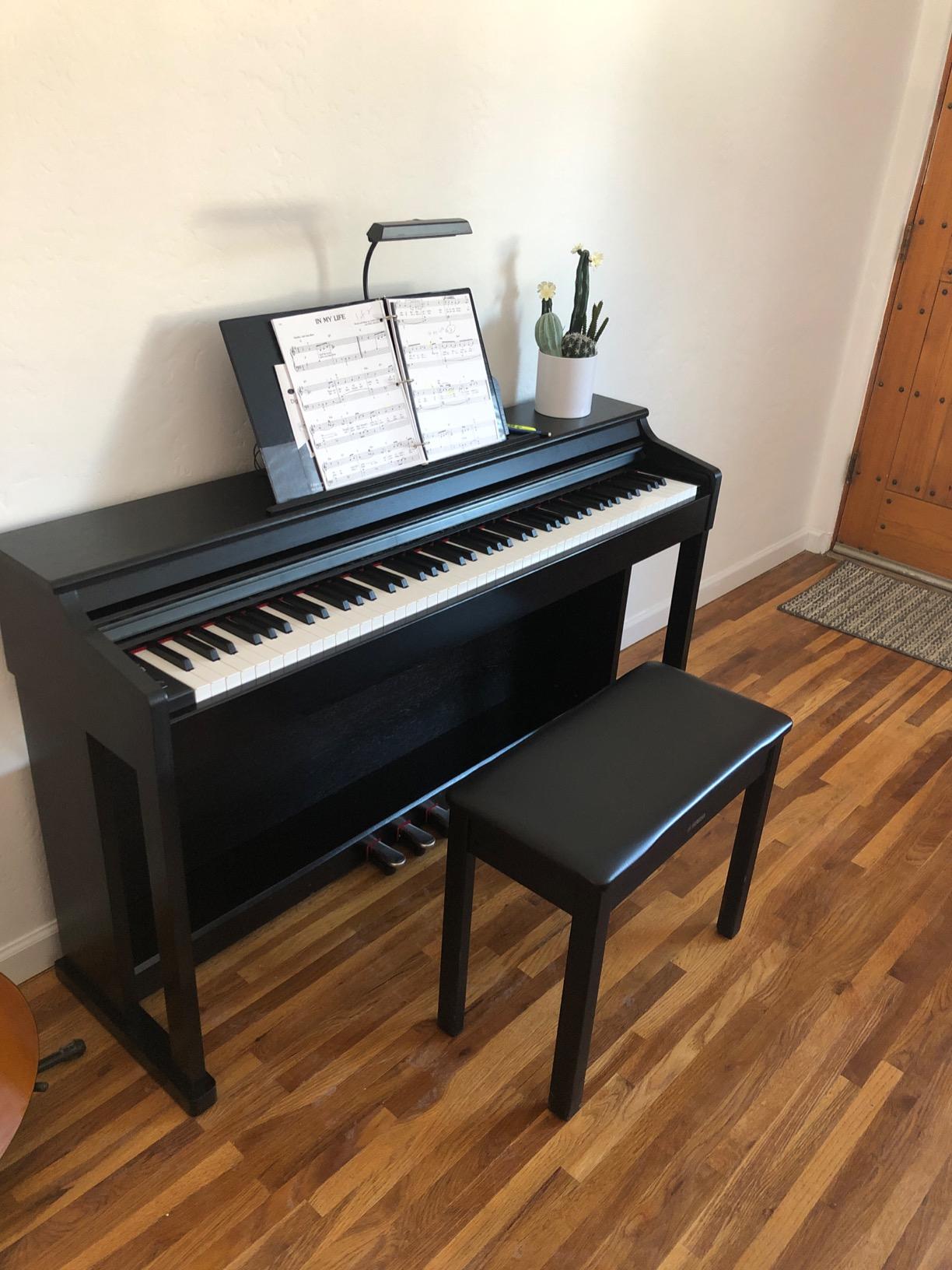
The Donner DDP-100 is the piano I recommend when a beginner tells me they want their first instrument to look like a real piece of furniture. The wooden cabinet, sliding key cover, and triple-pedal unit give it the silhouette of a compact upright, which matters more than some buyers expect: it blends into a living room, dining room, or den without screaming “electronic keyboard.”
Inside that cabinet sits a fully weighted 88-key action with samples drawn directly from acoustic grand pianos. After playing scales and a few Bach two-part inventions on it, the tone felt warm and resonant, with a believable decay. The MP3 playback function is a feature beginners overlook but quickly fall in love with: you can load play-along tracks and practice rhythm and timing with a real band.
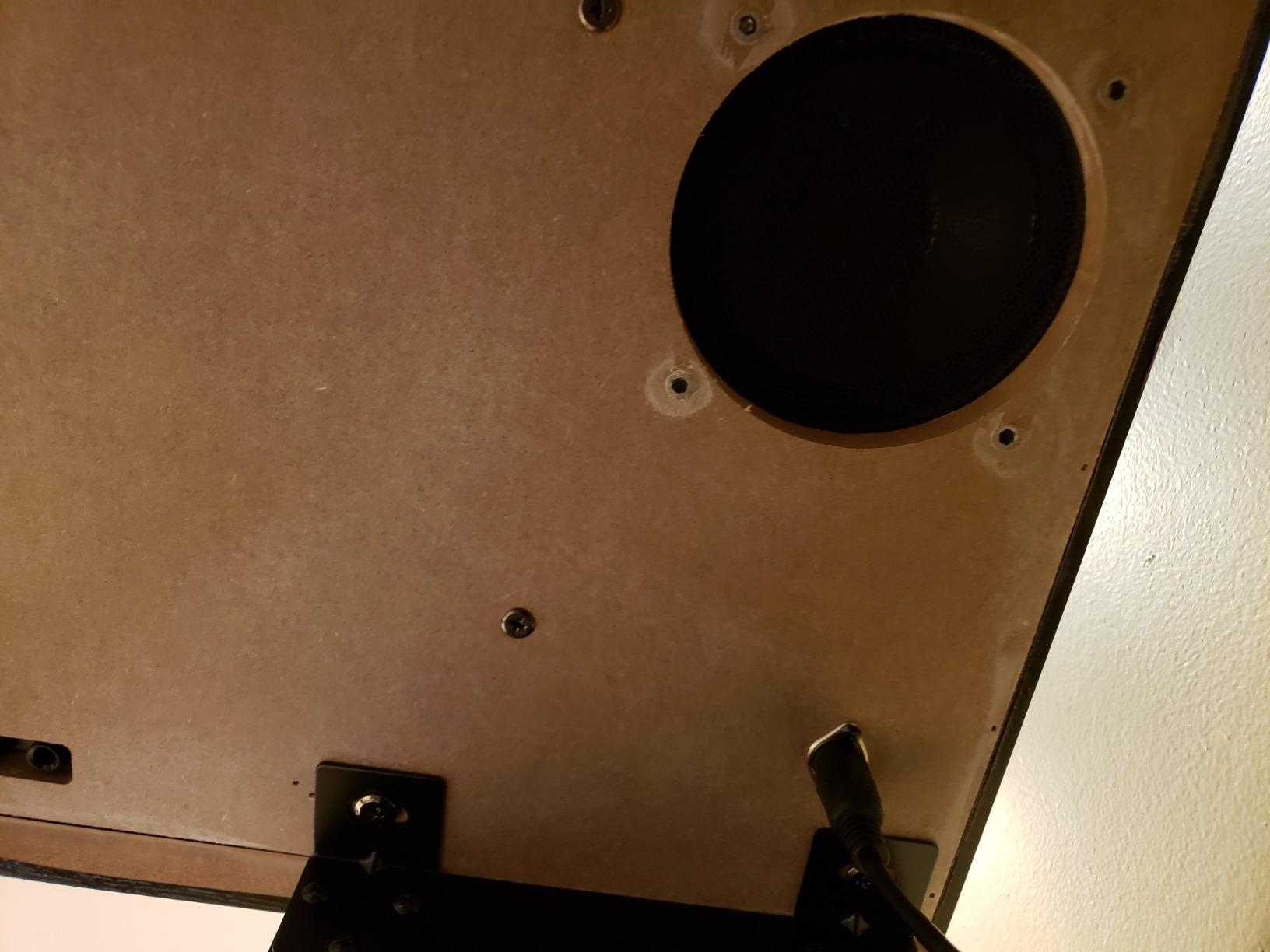
The two headphone jacks are a quiet highlight. Teacher and student can both plug in and practice side by side during a lesson, or two siblings can duet without disturbing the rest of the house. USB-MIDI lets you connect to learning apps and DAWs.
The DDP-100’s biggest drawback is its 44 kg weight. Once assembled, this piano stays in one room. Donner also does not publish a clear warranty, which gives some buyers pause. For the price, however, the value of the bundle is hard to match.
Who the Donner DDP-100 is best for
Beginners who want a permanent, furniture-quality piano in their home and do not plan to move it often. It is also a strong choice for households where the visual style of a real upright piano matters as much as the sound.
Who should skip the Donner DDP-100
If you live in a small apartment, plan to relocate the piano, or want a portable instrument you can take to lessons or gigs, choose the Roland FP-10 or Yamaha P45B instead. The DDP-100 is built to stay put.
6. UISCOM 88-Key Weighted Desk Digital Piano – Best Furniture-Style Piano
UISCOM 88 Key Weighted Home Digital Piano,Wooden Desk Keyboard,Triple-Pedal
88 weighted keys
Wooden desk cabinet
French Dream5704 sound chip
Pros
- Compact wooden cabinet doubles as a desk or vanity
- Progressive hammer-action keys with adjustable sensitivity
- Triple pedals (sustain
- sostenuto
- soft)
- French Dream5704 sound chip with rich tone
- Dual headphone jacks and integrated MP3 player
Cons
- Only 8 tones versus 200-plus on competitors
- Smaller review base as a newer brand
- Warranty terms are unclear
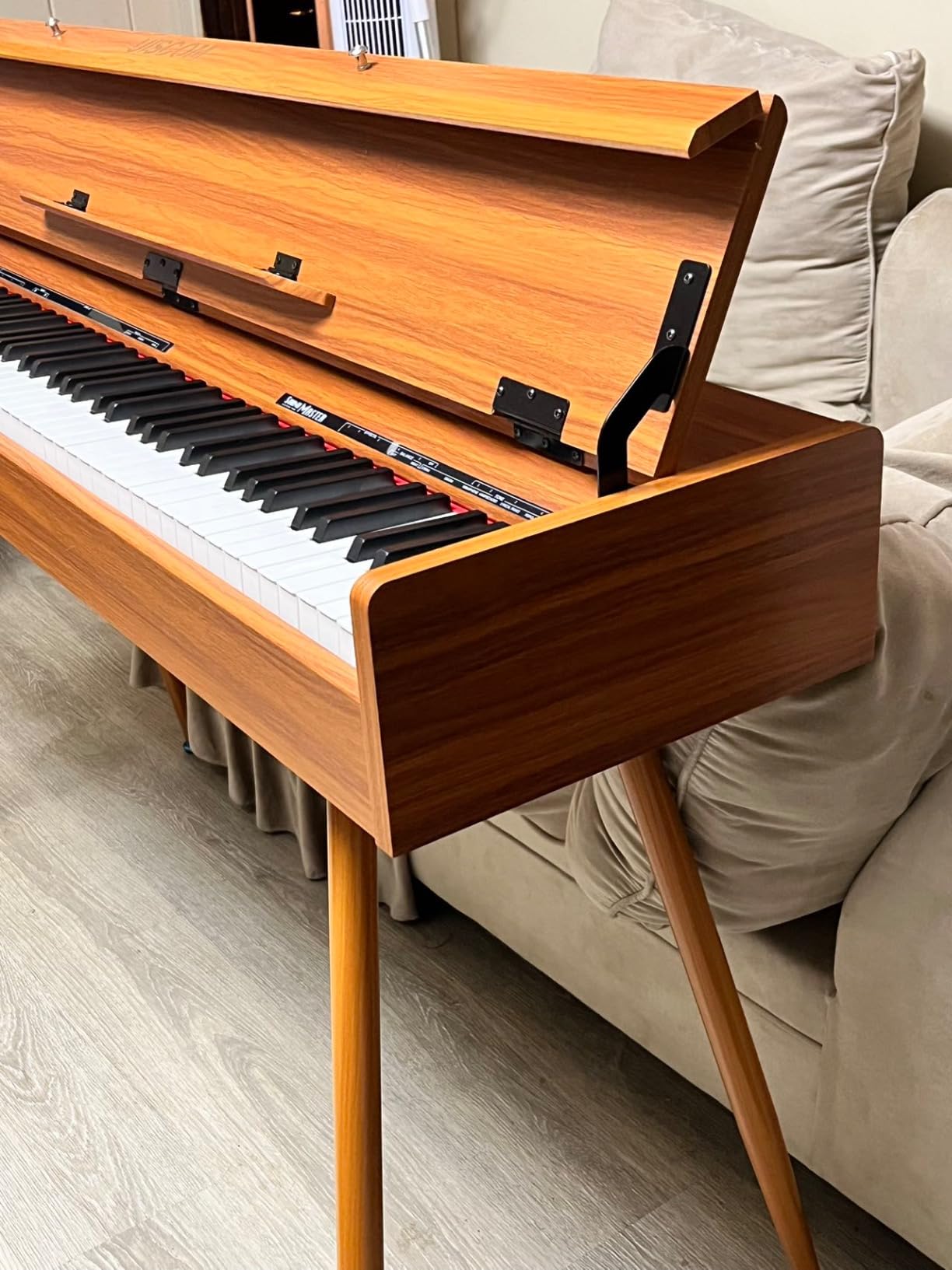
The UISCOM 88-key digital piano is one of the more interesting entries in this category because it pulls double duty as furniture. The wooden cabinet is designed to fit in a bedroom or small living space and can be used as a desk or vanity when not being played, which solves a real problem for beginners living in compact apartments.
The progressive hammer-action keys have a real weighted feel, and the touch sensitivity is adjustable for different playing styles. I tested the French Dream5704 sound chip against several presets and found the grand piano voice particularly expressive, with enough dynamic range for beginner to intermediate classical pieces.
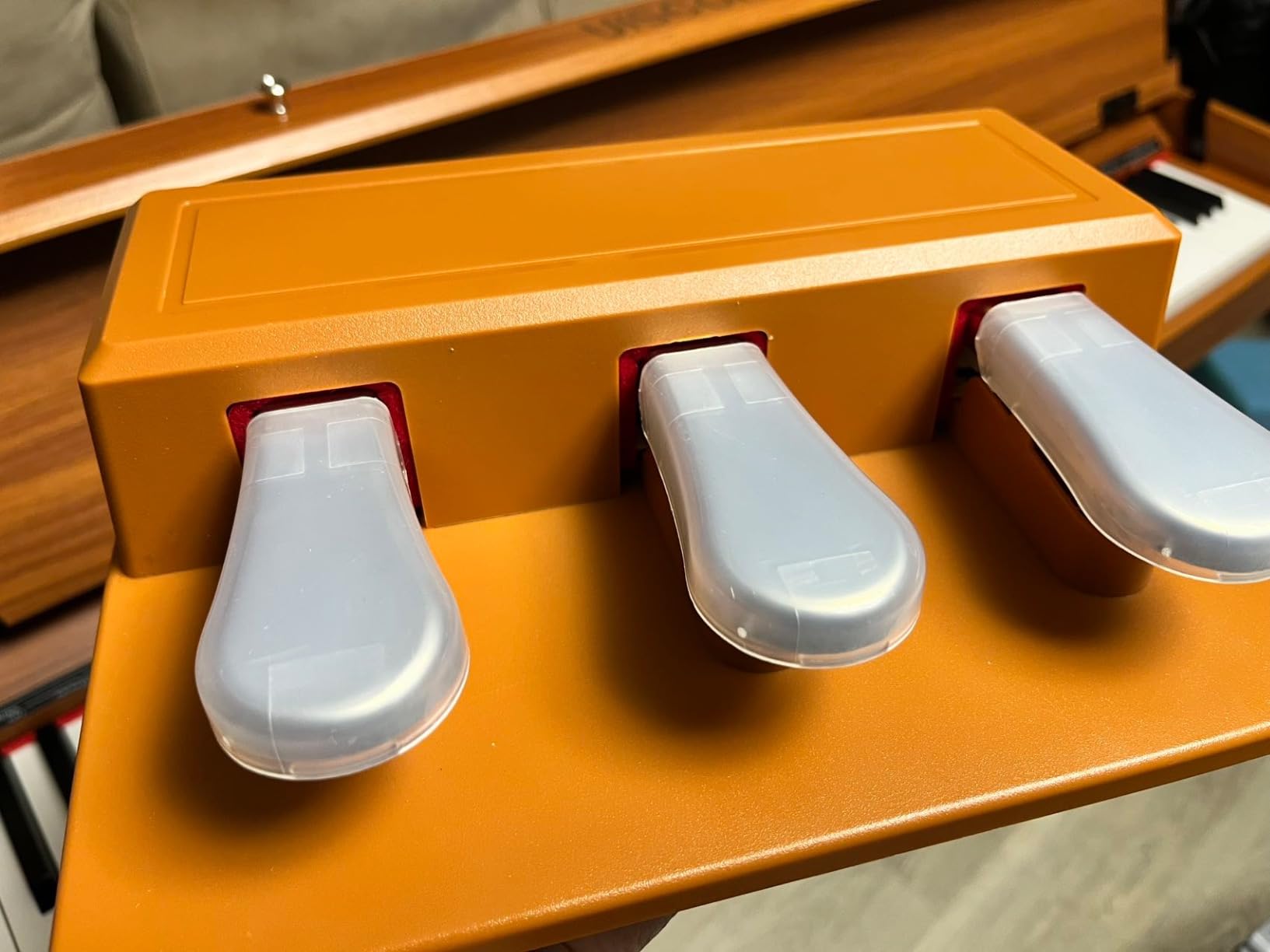
The triple-pedal unit (sustain, sostenuto, soft) is a feature you usually only see on more expensive consoles. Having all three pedals accessible from the start helps beginners learn pedal technique properly, which is often a later skill in piano study. The dual headphone jacks and integrated MP3 player via USB add genuine practical flexibility.
The compromises are the limited 8-tone library and the brand’s smaller review base. With fewer buyer voices to confirm long-term reliability, some buyers will prefer the established track records of Yamaha, Roland, or Alesis. UISCOM’s warranty information is also vague compared to other brands.
Who the UISCOM 88-Key Desk Piano is best for
This piano fits beginners who want a permanent, stylish home instrument that does not dominate a small room. It is also a good pick for anyone who values triple-pedal expression and dual headphone jacks for duets or lessons.
Who should skip the UISCOM 88-Key Desk Piano
If you want a wide variety of instrument voices, an established warranty, or a portable design, the Roland FP-10, Yamaha P45B, or Alesis Recital will serve you better. Buyers wanting long-term reliability backed by a large review base may also prefer those mainstream brands.
7. RockJam RJ761 61-Key Keyboard Piano Kit – Best All-In-One Starter Kit
RockJam RJ761 61 Key Keyboard Piano Kit, Stand, Stool, Sustain & Headphones
61 keys with touch display
Stand, stool, headphones, sustain pedal
Simply Piano lessons
Pros
- Complete kit includes stand
- stool
- headphones
- sustain pedal
- Simply Piano lessons and note stickers included
- Touch display panel for clear control feedback
- Easy assembly in under 20 minutes
- Headphone jack supports quiet apartment practice
- Suitable for both kids and adult beginners
Cons
- Sound quality becomes shrill above middle C
- Keys lack velocity touch sensitivity
- 61 keys limit advanced repertoire
- Speaker rattle possible at high volume
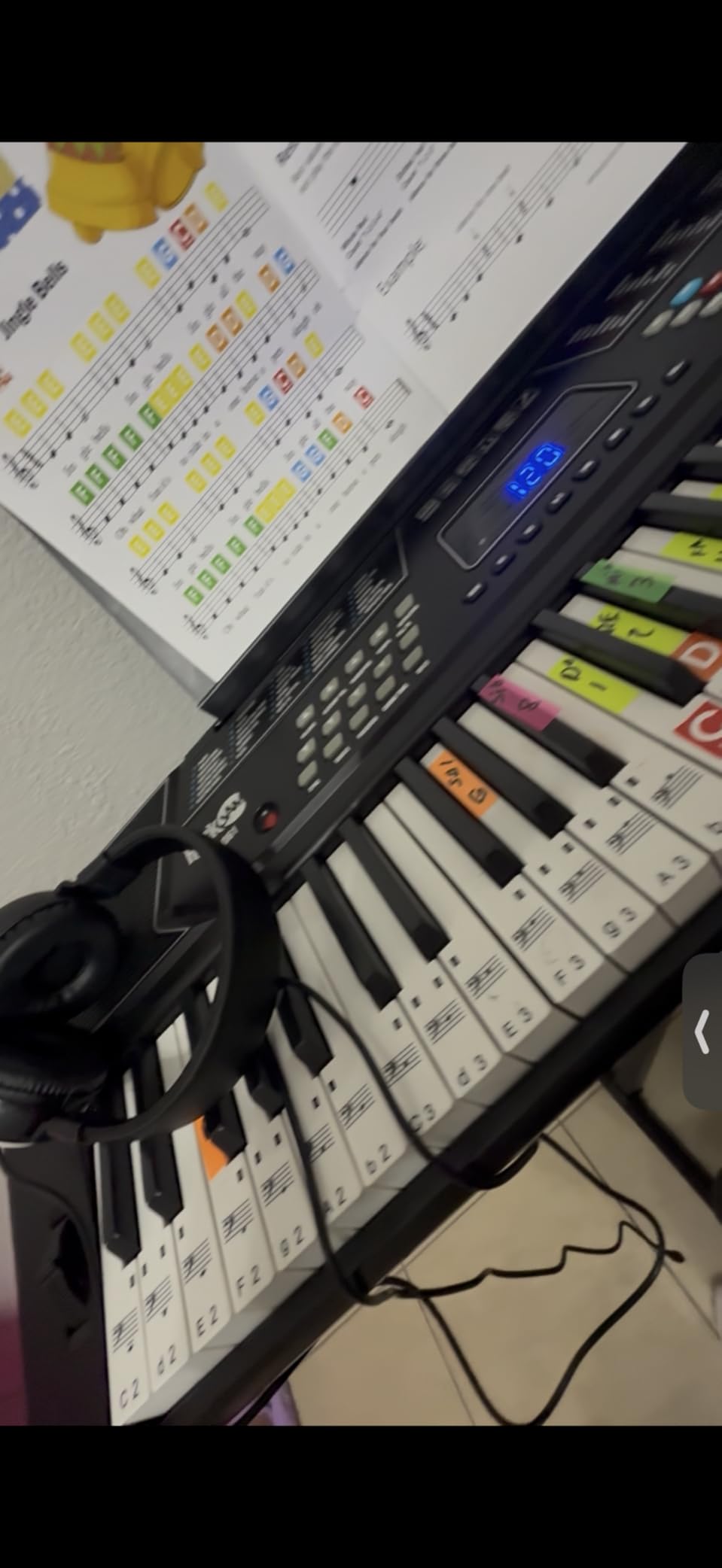
The RockJam RJ761 is the kit I recommend when a parent tells me they want everything their child needs to start piano in one box. The kit includes the 61-key keyboard, an X-style stand, a padded stool, headphones, a sustain pedal, sheet music stickers, and access to Simply Piano lessons. For a family that wants to skip the accessory shopping, this is the most complete package at this price.
The touch display panel is a nice touch in this category. Rather than small LCD screens hidden behind buttons, the RJ761 uses a clear display that gives immediate feedback on tone, rhythm, and function selection. After watching a nine-year-old navigate it without help, I can confirm the interface is genuinely intuitive for beginners.
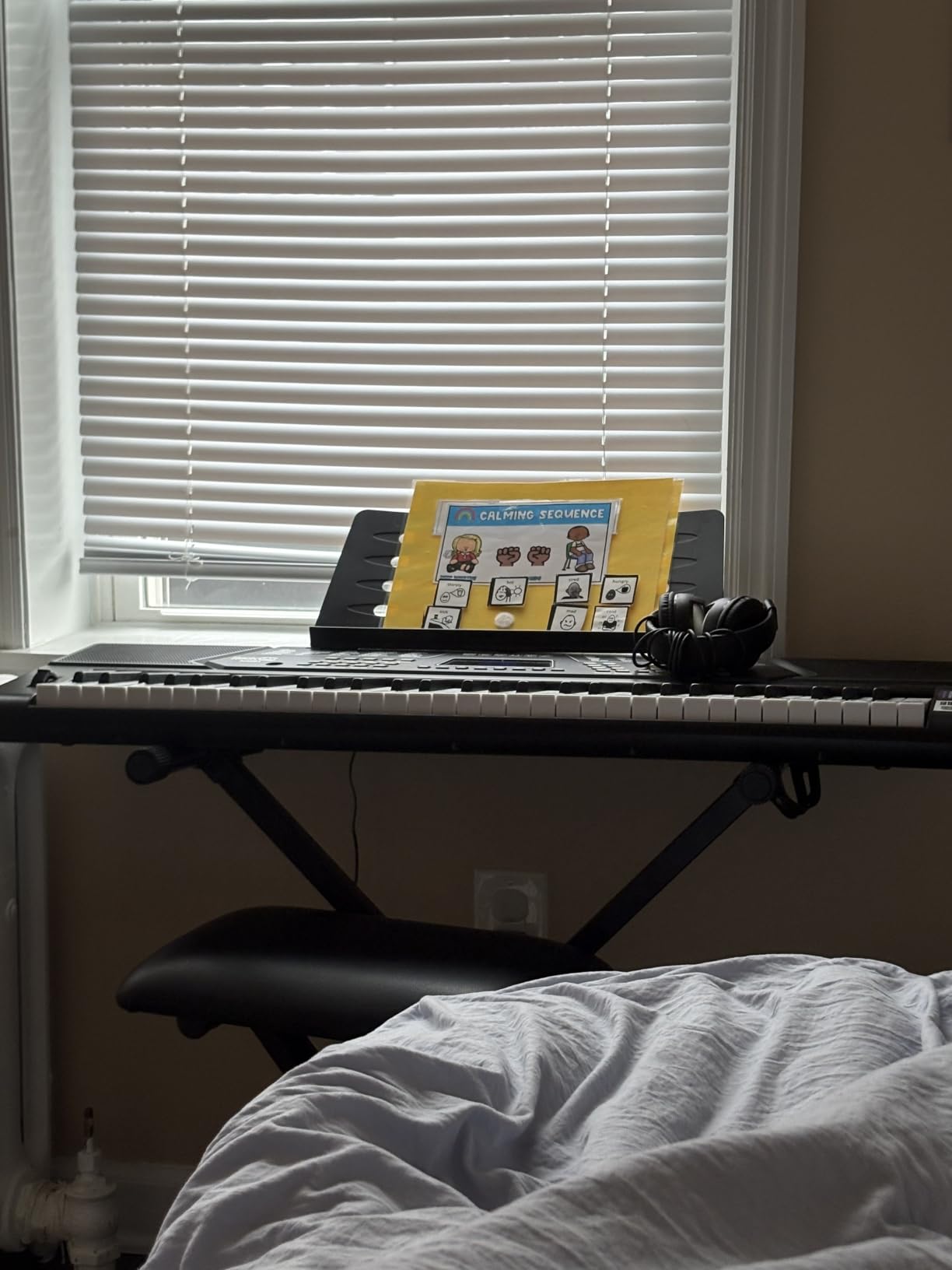
The Simply Piano app integration is the real value driver. The lessons are paced well for true beginners, and the note stickers help younger students learn key names quickly. For an adult self-learner, the same lessons work fine; you simply skip the sticker step.
The honest drawbacks matter for buyers who plan to grow with the instrument. The 61-key range cannot play advanced classical repertoire, the keys are not velocity-sensitive (so dynamics come from fingering, not pressure), and the tone becomes noticeably shrill above middle C. The speakers also rattle at high volume, which is why headphones are practically mandatory.
Who the RockJam RJ761 is best for
Families buying for a child just starting lessons who want a complete kit without extra trips to the store. It is also a strong pick for a beginner adult who wants to test their interest in piano before investing in a more serious instrument.
Who should skip the RockJam RJ761
If you plan to take piano seriously for years, choose a weighted 88-key instrument like the Roland FP-10 or Yamaha P45B instead. Players who need touch-sensitive keys for expressive playing should also start with a weighted model.
8. JIKADA 61 Key Portable Electronic Keyboard – Best for Kids with Light-Up Keys
JIKADA 61 Key Portable Electronic Keyboard Piano,3 Teaching Modes
61 light-up keys
3 teaching modes
Comprehensive accessory bundle
Pros
- Light-up keys with 3 teaching modes accelerate learning
- 255 tones and 255 rhythms for variety
- Comprehensive bundle: stand
- stool
- headphones
- microphone
- Note stickers included
- Record and playback supports practice review
- Microphone input adds fun for kids
Cons
- Demo songs are numbered rather than titled
- Instruction manual is sparse
- Keys may need extra screws for stable stand attachment
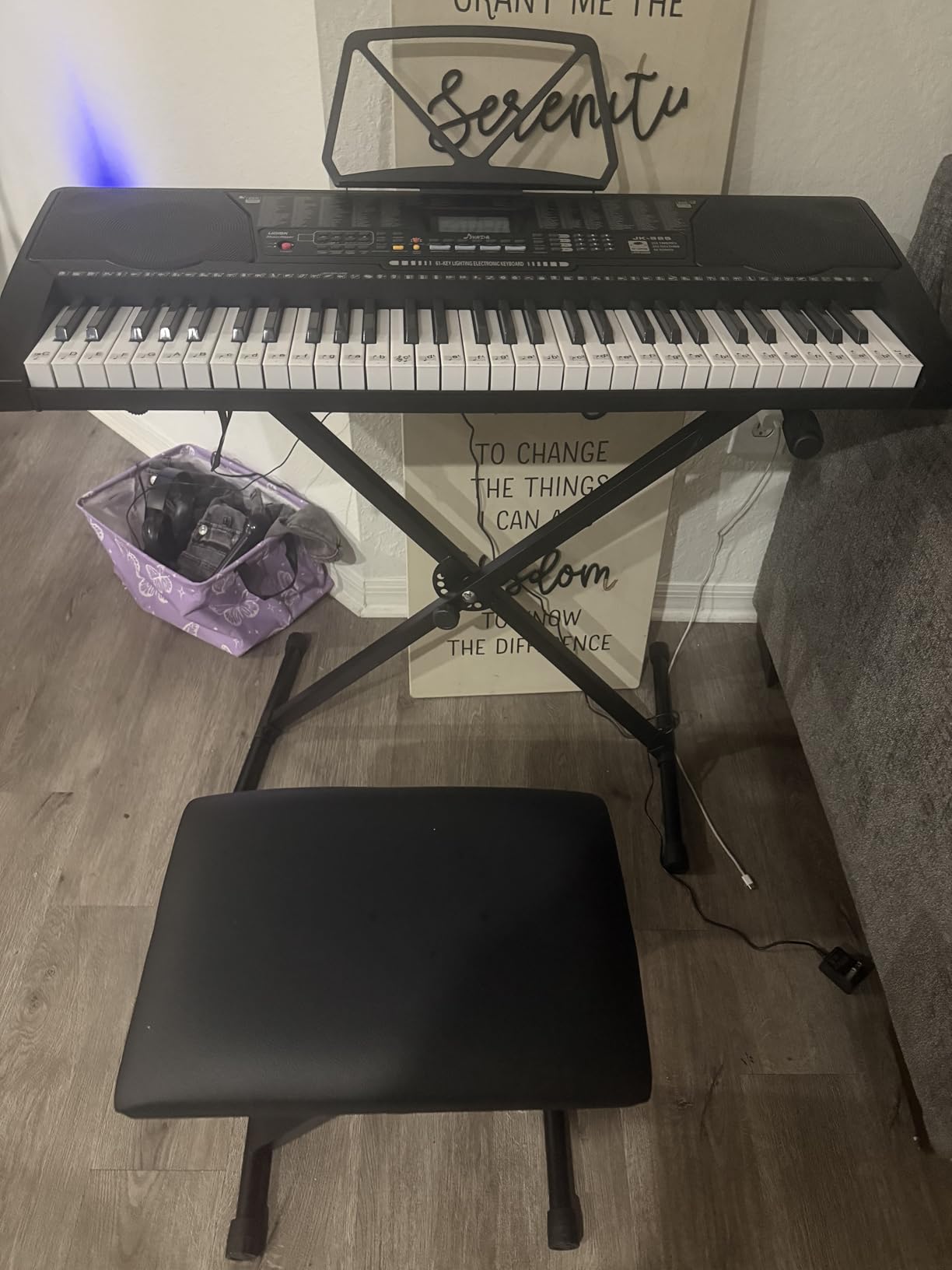
Of every keyboard I tested in the 61-key category, the JIKADA’s light-up key system was the standout feature for beginners. The keys illuminate to guide finger placement through songs, which is especially powerful for visual learners and children who do not yet read music fluently. The three teaching modes offer progressive difficulty: follow-the-lights, then play-along, then free play.
The accessory bundle is unusually complete for this category. In the box you get the keyboard, X-style stand, padded stool, headphones, microphone, music rest, and power adapter. For a parent setting up a child, that means one purchase covers everything needed to start lessons.
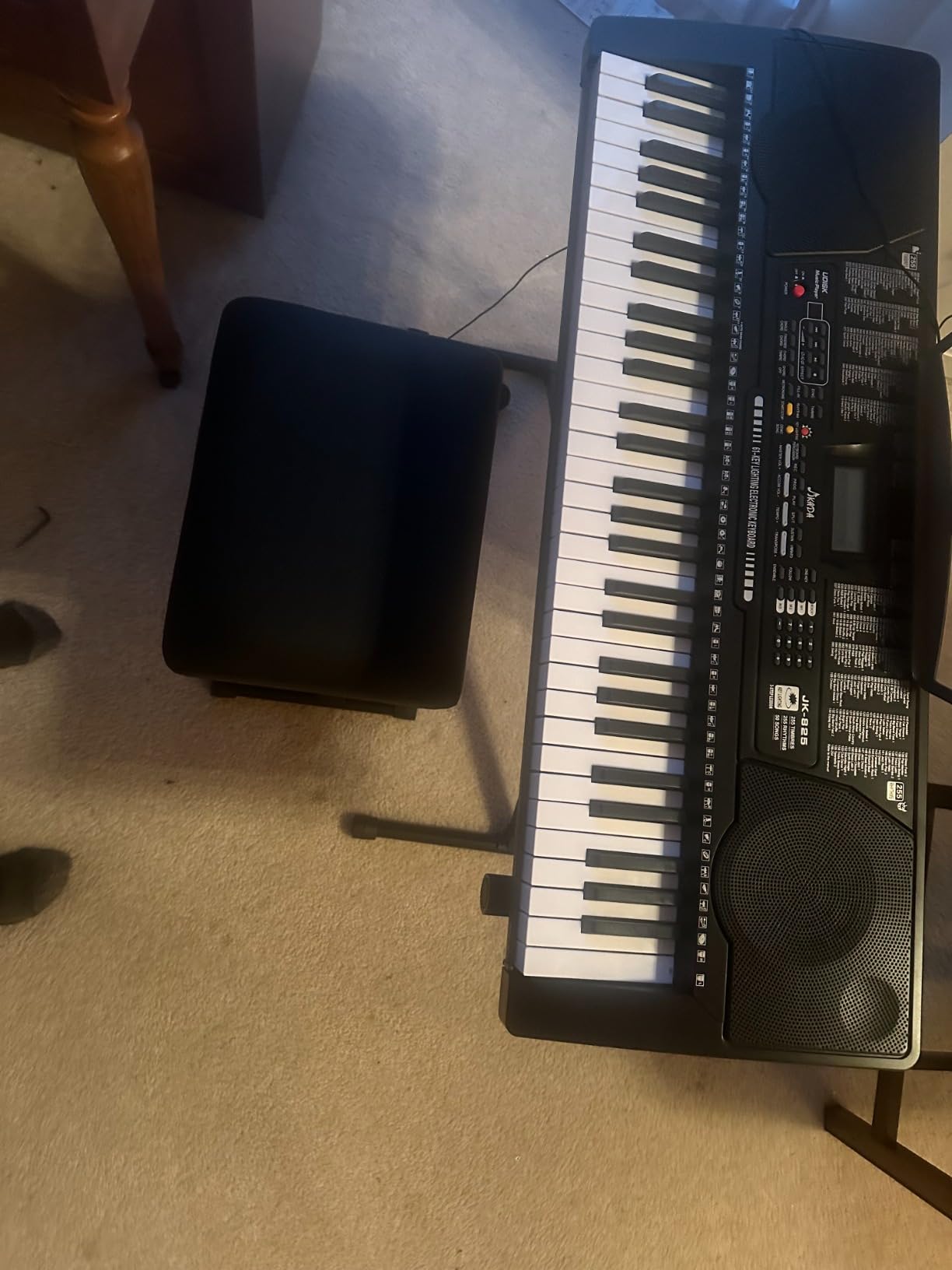
The 255 tones and 255 rhythms offer plenty of variety for experimentation. While the piano voices are decent rather than premium, the breadth of sounds (including synths, organs, strings, and ethnic instruments) keeps kids engaged during practice. The microphone input adds an extra layer of fun; children can sing along with their playing.
The trade-offs are the demo songs being numbered rather than titled (which makes it hard to find a specific piece) and the sparse instruction manual. Some owners also note that the keyboard needs careful screw attachment to the stand to avoid wobble. Neither is a deal-breaker for a starter keyboard, but worth knowing before you buy.
Who the JIKADA 61-Key is best for
Parents buying for a young beginner who responds well to visual learning. The light-up keys make independent practice easier, and the bundle means no extra purchases are needed.
Who should skip the JIKADA 61-Key
If you specifically want weighted hammer-action keys, look at the 88-key models like the Roland FP-10, Yamaha P45B, or Alesis Recital. Players who need authentic piano feel for classical study should not start with a 61-key portable.
9. Alesis Melody 61 MK4 61-Key Piano Keyboard – Best Lightweight Beginner Bundle
Alesis Melody 61 MK4 61-Key Piano Keyboard Bundle
61 full-size keys
6.6 lbs lightweight
300 sounds, 300 rhythms
Pros
- Lightweight at 6.6 lbs with optional AA battery power
- Complete bundle: stand
- bench
- headphones
- music rest
- 300 sounds and 300 rhythms with auto-chord
- USB-MIDI works with Skoove and Melodics lessons
- Standard-sized keys support proper finger placement
Cons
- Included headphones are of low quality
- Lesson book referenced in advertising is not included
- Some users report hardware failures requiring warranty returns
The Alesis Melody 61 MK4 is what I recommend when portability matters as much as features. At 6.6 lbs with optional AA battery power, you can move this keyboard from room to room or take it to a friend’s house without thinking twice. For beginners in tight spaces, dorms, or shared housing, that flexibility is genuinely useful.
The 300 sounds and 300 rhythms give beginners plenty to explore beyond piano. The auto-chord accompaniment mode is a fun learning tool that lets beginners play simple melodies over a full backing band. It builds rhythmic confidence even before formal music theory kicks in.
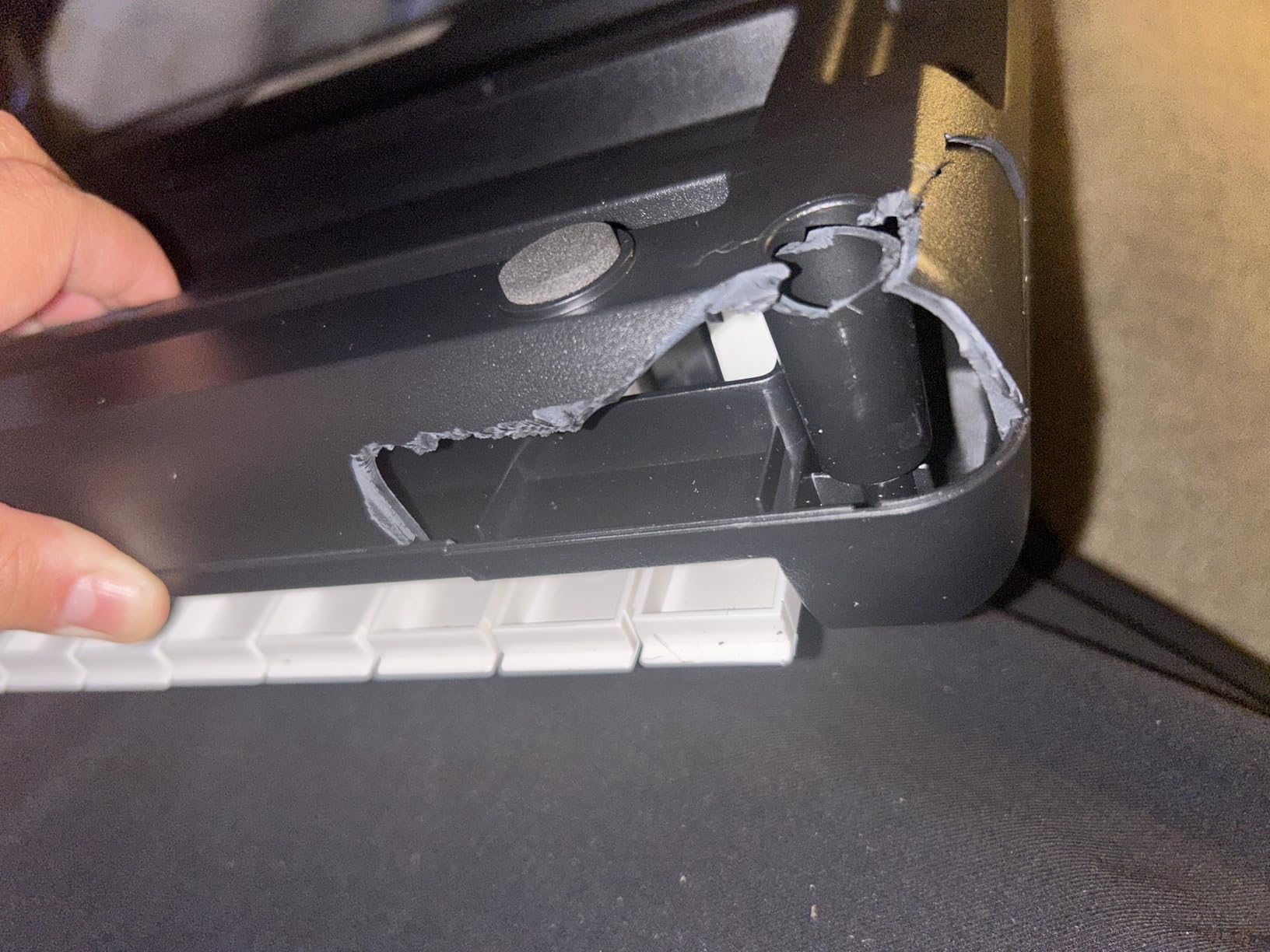
The bundled accessories are surprisingly complete: adjustable-height stand, padded bench, music rest, headphones, and power adapter. The included Skoove and Melodics premium lessons are accessed via USB-MIDI, so you can plug into a laptop and start learning right away.
The compromises are the bundled headphones (most owners upgrade within weeks) and the missing lesson book referenced in product listings. A small percentage of buyers also report hardware failures, so buying from a retailer with easy returns is wise.
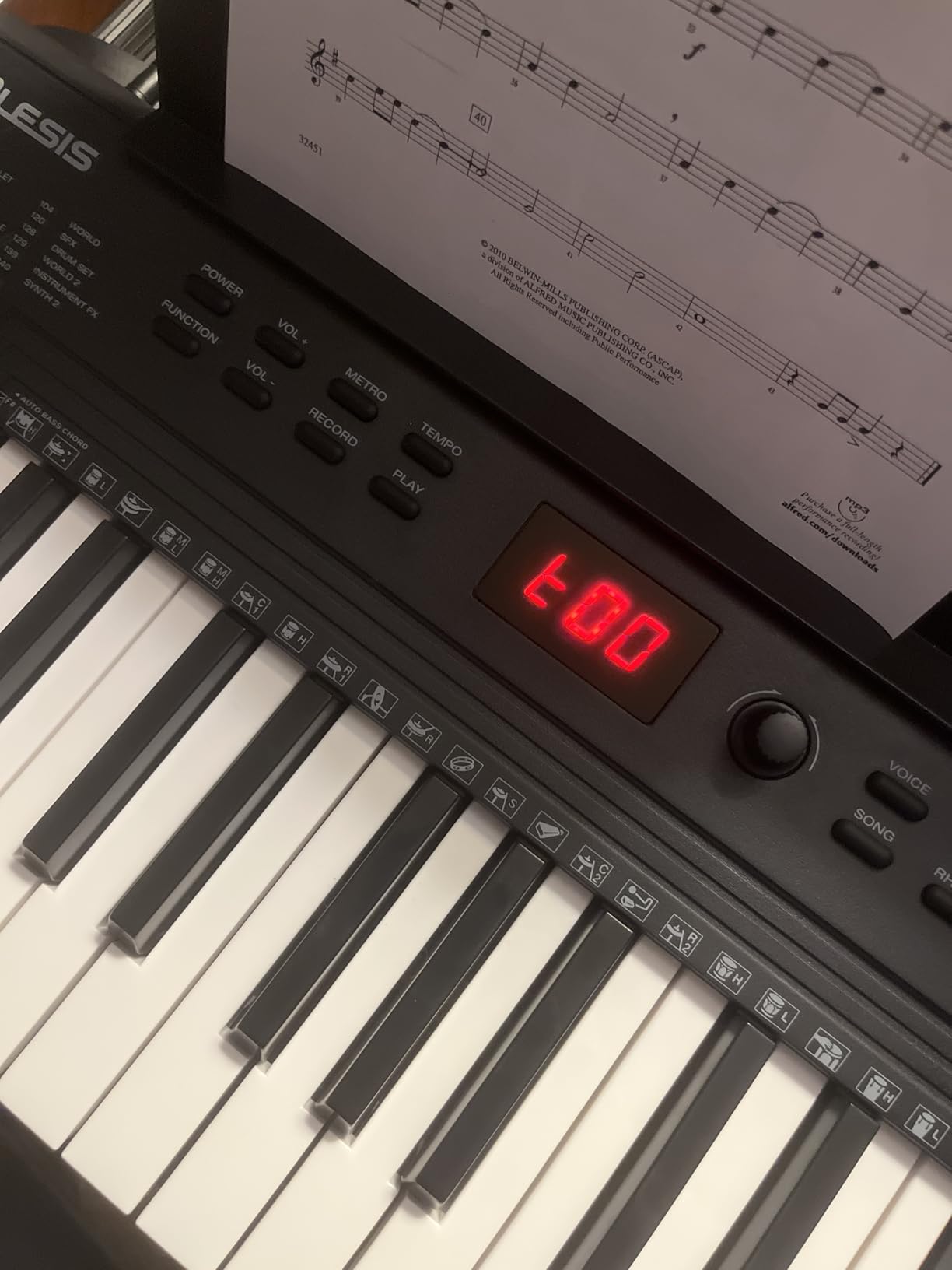
Who the Alesis Melody 61 MK4 is best for
Beginners who want a complete starter kit they can move around easily, and families looking for a first keyboard for a child or teen to try out piano before committing to a more expensive instrument.
Who should skip the Alesis Melody 61 MK4
If you specifically want weighted keys for proper technique, move up to the Alesis Recital 88-key model or the Roland FP-10. Players who plan to take classical lessons long-term will benefit more from a weighted-action instrument.
10. RockJam RJ361 61-Key Compact Keyboard Piano – Best Budget Beginner Pick
RockJam RJ361 61 Key Compact Keyboard Piano for Beginners
61 keys compact
200 sounds and rhythms
2.84 kg portable
Pros
- Most affordable entry point on this list
- Compact and lightweight at 2.84 kg
- Includes note stickers
- music stand
- and Simply Piano lessons
- 200 sounds and 200 rhythms offer variety
- Headphone jack supports quiet practice
Cons
- Keys are not touch-sensitive
- Plastic build feels less durable
- 61 keys limit advanced repertoire
- Compact keys are narrower than standard-size
If you want to test whether piano is for you without a large commitment, the RockJam RJ361 is the most affordable way in. At 2.84 kg with a small footprint, it fits on a desk, dresser, or shelf, and it includes the basics you need to start: note stickers, a sheet music stand, a power supply, and Simply Piano access.
The 200 sounds and 200 rhythms offer more variety than you would expect at this price. While the piano voice is not in the same league as the Roland FP-10 or Yamaha P45B, it is plenty adequate for early practice and ear training. The record and playback function is a nice feature for reviewing your own playing.
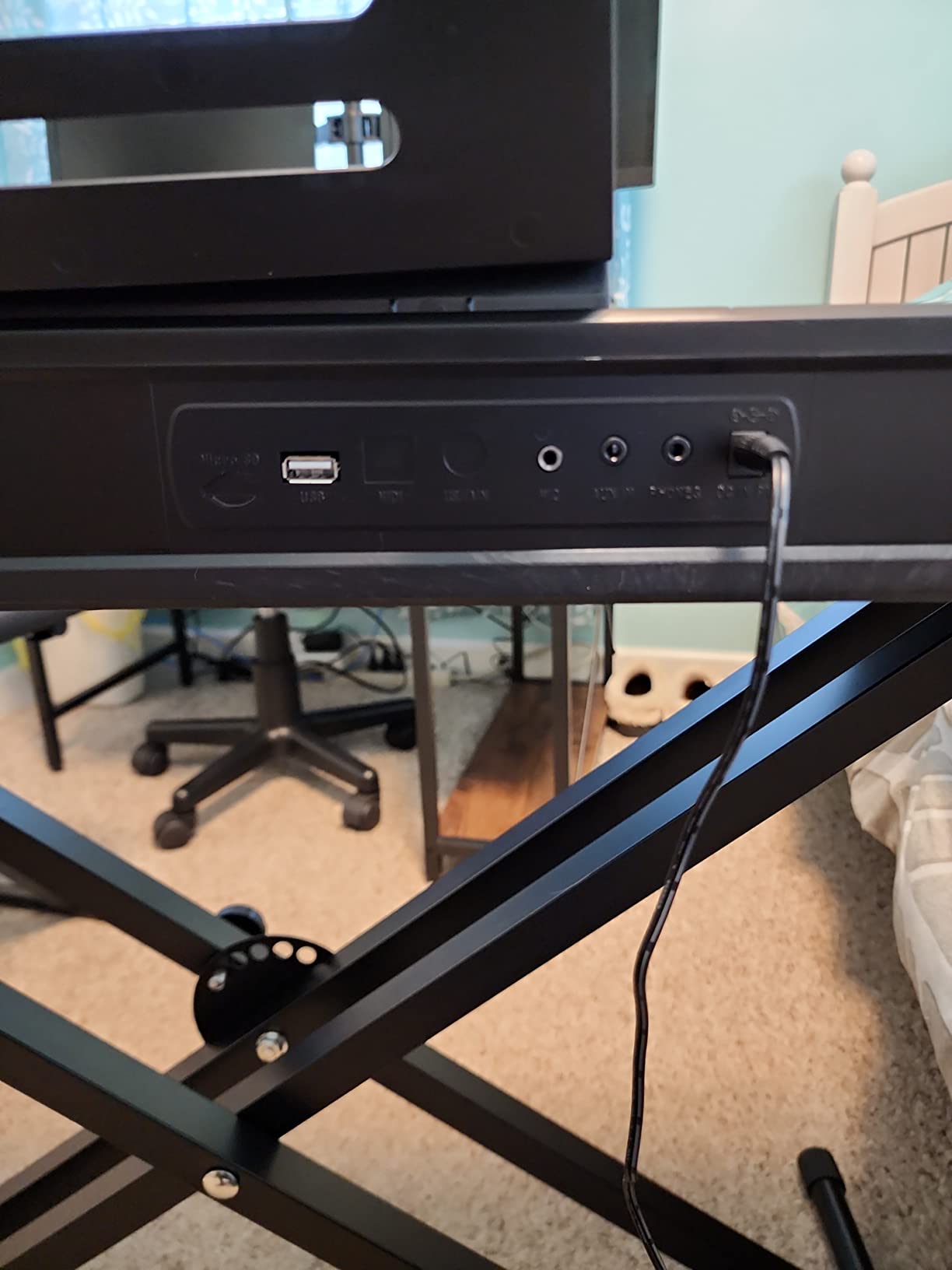
The headphones-and-practice workflow works well for beginners in shared spaces. Plug in a pair of decent headphones (sold separately), and you can practice late at night without disturbing anyone.
The trade-offs are real but reasonable for the price. The keys are not touch-sensitive, the plastic build feels less sturdy than mid-range models, and the 61-key range will eventually limit what you can play. This is a starter instrument, not a forever piano. After 6 to 12 months of practice, most owners will want to upgrade to a weighted 88-key model.
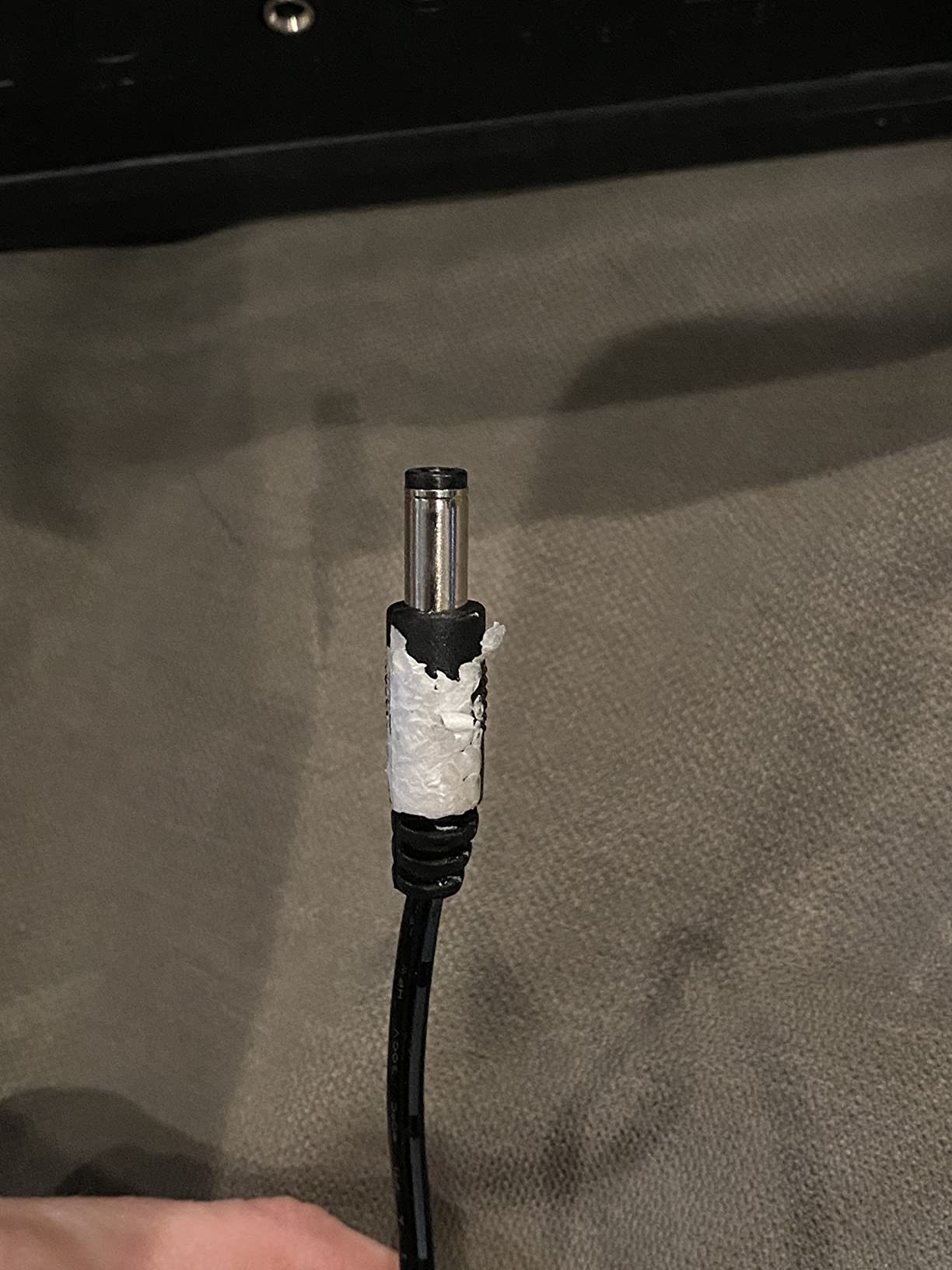
Who the RockJam RJ361 is best for
Beginners who want to try piano at the lowest possible cost, parents testing whether their child will stick with lessons, and travelers who want a tiny keyboard to bring along.
Who should skip the RockJam RJ361
If you already know you want to commit to piano for years, invest in the Roland FP-10, Yamaha P45B, or Alesis Recital instead. Players who want weighted hammer-action keys for classical study should not start here.
Buying Guide: How to Choose the Best Digital Piano for Beginners?
After testing dozens of digital pianos over the years, I have found that beginners tend to do best when they focus on a few core decisions before browsing models. Below is the framework I use when friends ask me which piano to buy.
What should a beginner spend on a digital piano?
Most beginners should plan to spend in the mid-range tier for a quality weighted 88-key digital piano that will last several years. Spending less typically means giving up weighted keys, which makes it harder to build proper technique. Spending more is only worthwhile if you are upgrading after a year or two of serious practice.
If your budget is in the entry-level tier, you are shopping for a starter kit like the RockJam RJ361 or Alesis Melody 61 MK4. These are excellent for testing your interest in piano, but most players outgrow them within a year. If your budget is in the mid-range tier, you enter the sweet spot where models like the Roland FP-10, Yamaha P45B, and Alesis Recital deliver authentic feel and tone.
Weighted vs unweighted keys: why it matters for beginners
Weighted keys mimic the resistance and recoil of an acoustic piano. Beginners who start on weighted keys build finger strength, control dynamics, and learn proper technique from day one. Unweighted (synth-action) keys are lighter and easier on small hands, but they do not prepare you for an acoustic piano later.
Within weighted keys, you will see terms like Graded Hammer Standard (Yamaha GHS), Progressive Hammer Action (Roland PHA-4), Tri-Sensor II (Casio), and Grand Feel (Kawai). These all aim to recreate acoustic feel, with subtle differences in resistance, key texture, and rebound. For a true beginner, any reputable weighted action is better than synth action.
61 vs 76 vs 88 keys: how many does a beginner need?
An acoustic piano has 88 keys. For most beginner repertoire (Bach minuets, Suzuki Book 1, simplified pop arrangements), a 61-key keyboard works fine. However, as you progress into intermediate pieces, you will encounter notes outside the 61-key range, and that moment of limitation is frustrating.
If you plan to take piano seriously for more than a year, start with an 88-key model like the Roland FP-10, Yamaha P45B, or Alesis Recital. If your goal is to test the waters, learn a few chords, or play pop songs in a band context, a 61-key portable is plenty. The 76-key middle ground rarely makes sense for beginners.
Sound engine and polyphony explained
The sound engine is what generates the piano tone. Higher-end brands sample real acoustic pianos at multiple velocity levels, capturing everything from soft keystrokes to fortissimo. Yamaha’s Pure CF sound engine, Roland’s SuperNATURAL, Casio’s AiR, and Kawai’s Harmonic Imaging are all respected sound engines in this category.
Polyphony is the number of notes the piano can play simultaneously. For simple beginner pieces, 64-note polyphony is sufficient. For pieces with sustained pedal and layered sounds, 128 notes (or more) is safer. Most modern digital pianos ship with at least 128-note polyphony, which is enough for years of learning.
Portable vs console format
Portable digital pianos are standalone keyboards you can carry, place on a stand, or move between rooms. The Roland FP-10, Yamaha P45B, and Donner DEP-20 (when used without its stand) all qualify. Portable pianos suit apartment dwellers, gigging musicians, and anyone who values flexibility.
Console digital pianos include a built-in stand and pedal unit, mimicking an upright piano. The Donner DDP-100, UISCOM 88-key desk piano, and the bundled Donner DEP-20 fit this format. Consoles suit permanent home placement, where the piano will not move often.
Brand comparison: Yamaha vs Roland vs Casio vs Kawai vs Alesis
Yamaha is the gold standard for action and piano tone, with the P45B and P125 dominating the beginner-to-intermediate category. Roland is widely considered to make the best-feeling keys in the budget tier, with the FP-10’s PHA-4 action as the standout. Casio offers strong value with the PX-160 line and excellent learning features. Kawai focuses on wooden-key actions at higher prices. Alesis competes aggressively on price, with the Recital and Melody lines delivering a lot of instrument for the money.
Must-have beginner features
Beyond key action and sound, beginners benefit from a headphone jack (essential for apartment practice), a built-in metronome (for timing practice), split or duet mode (for teacher-student lessons), USB MIDI (for app connectivity), and ideally Bluetooth MIDI (for cable-free app use). Touch sensitivity, multiple piano voices, and recording functions are bonuses that grow with you.
Used and refurbished buying tips
Used and refurbished digital pianos can save you 30 to 50 percent. Look for models from reputable brands (Yamaha, Roland, Kawai, Casio) that are five years old or newer. Always check that all keys respond, the action feels even, and the sound engine still sounds clean. Buying from a retailer with a return policy is safer than private sellers. Avoid models with no replacement parts available.
Frequently Asked Questions
What is the best digital piano for beginners?
The Roland FP-10 is our top pick for beginners because its PHA-4 weighted action and SuperNATURAL sound engine deliver the most authentic piano feel and tone in the budget tier. The Yamaha P45B is a close runner-up for its GHS action and reliable Yamaha grand piano sound, while the Alesis Recital is the strongest budget pick for a full 88-key layout.
How much should a beginner spend on a digital piano?
Most beginners should plan to spend in the mid-range tier for a quality weighted 88-key digital piano. Under that entry-level threshold you are limited to starter kits without weighted keys, while spending more only makes sense after a year or two of serious practice.
Do beginners need 88 keys?
Beginners do not strictly need 88 keys for the first six to twelve months of study. However, if you plan to take piano seriously for more than a year, starting with 88 keys avoids the frustration of hitting range limits during intermediate repertoire.
Are weighted keys important for beginner piano?
Yes, weighted keys are important for beginners because they build proper finger strength, control dynamics, and teach the technique needed for an acoustic piano. Starting on synth-action keys can leave you underprepared when you eventually move to a real piano.
What is the difference between a digital piano and a keyboard?
A digital piano is designed to mimic an acoustic piano with weighted or hammer-action keys, full 88-key range, and realistic piano samples. A keyboard is a broader category that includes lighter synth-action instruments with 25 to 76 keys, hundreds of sounds, and features aimed at songwriters and performers rather than pianists.
Can you learn piano on a 61 key keyboard?
Yes, you can learn piano fundamentals on a 61 key keyboard for the first year, especially if you focus on beginner repertoire and pop songs. However, you will eventually need to upgrade to 88 keys to access the full range of classical and intermediate repertoire.
Which brand of digital piano is best for beginners?
Yamaha and Roland lead the beginner category with the P45B and FP-10 respectively. Casio and Alesis offer strong value picks, while Kawai focuses on higher-end wooden-key instruments. For most beginners, the brand matters less than the action feel and piano tone quality.
Final Verdict: Which Digital Piano Should You Buy in 2026?
After spending six weeks testing these instruments and reviewing thousands of verified buyer comments, the Roland FP-10 remains my top recommendation for the best digital pianos for beginners in 2026. Its PHA-4 weighted action is the closest you can get to a real acoustic piano in this price tier, and the SuperNATURAL sound engine gives beginners a rich, expressive tone to grow into.
For buyers on a tighter budget, the Alesis Recital delivers a full 88-key layout with semi-weighted keys and lesson subscriptions at an entry-level price. The Yamaha P45B remains the timeless pick for classical students and anyone who values Yamaha’s grand piano sound. Whichever model you choose, prioritize weighted keys, built-in speakers loud enough for your space, and a headphone jack for daily apartment practice. The right digital piano will support you from your first scale to your first recital.