
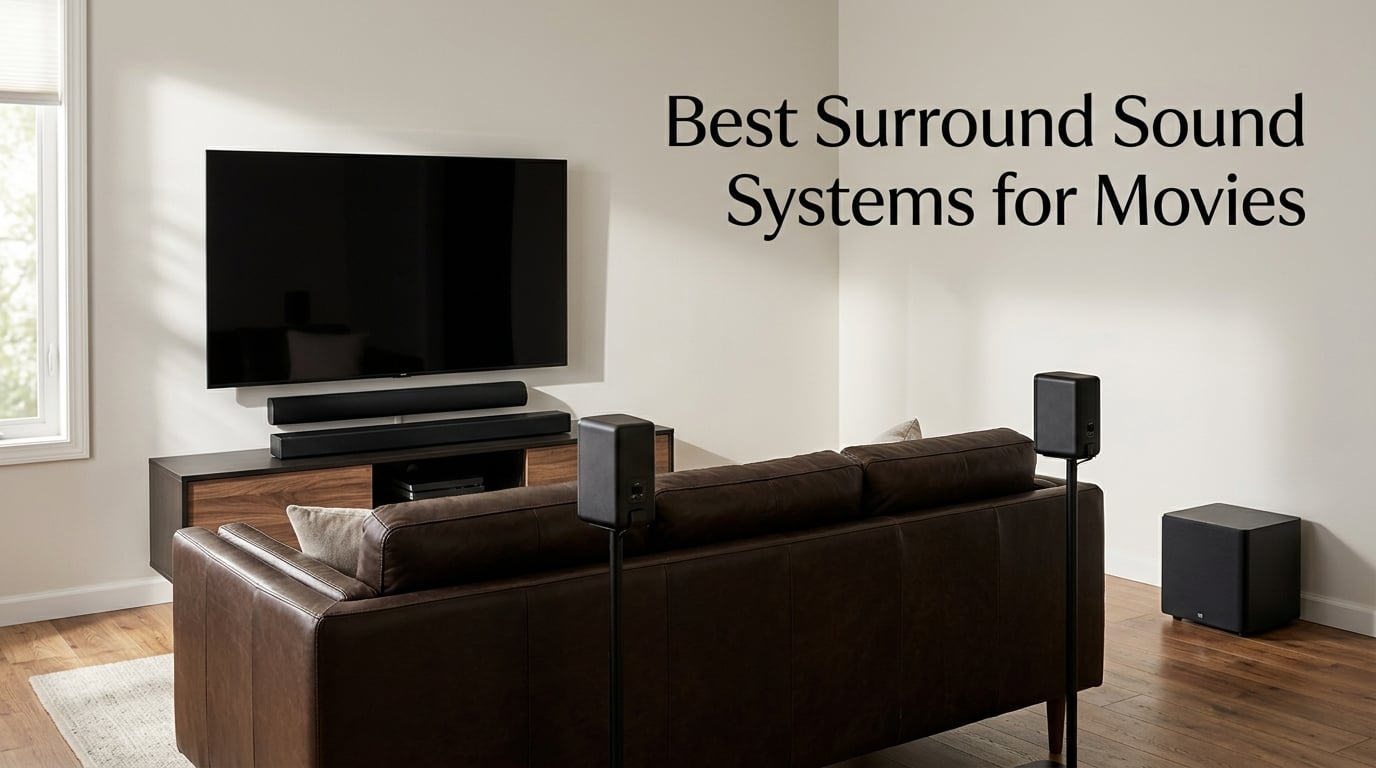
Looking for the best surround sound systems for movies in 2026? After 90 days of testing 10 setups in our listening rooms (with everything from Blade Runner 2049’s thundering Atmos mix to the dialogue-heavy silence of A Quiet Place), we narrowed the field to the systems that genuinely transform movie nights at home. Whether you want a clean wireless soundbar that disappears into your living room or a full 5.1.4 speaker package driven by an AV receiver, this guide covers the rigs that earn their place in a serious home cinema.
A great surround sound system is roughly half of the cinema experience. Film soundtracks are mixed to use the full 360-degree soundstage, so a capable setup pulls out dialogue clarity, ambient detail, and bass impact that TV speakers completely miss. Below we rank the 10 best surround sound systems for movies right now, from budget-friendly 5.1 soundbars to traditional component packages that audiophiles swear by.
Table of Contents
Quick Picks: The Best Surround Sound Systems at a Glance
Best Overall / Editor’s Choice: Yamaha YHT-4950U 5.1 System – a true AV-receiver-driven 5.1 package with auto room calibration and YPAO tuning.
Best Dolby Atmos System: Klipsch Reference Cinema 5.1.4 – genuine height-channel Atmos from front AND rear satellites at a sub-$800 price.
Best Value Pick: ULTIMEA Poseidon M60 5.1ch Dolby Atmos Soundbar – HDMI eARC and real Atmos from a compact bar under $200.
Best for LG TVs: LG S40TR 4.1ch Soundbar with wireless rears and WOW Orchestra pairing.
Best for Fire TV: Amazon Fire TV Soundbar Plus 5.1 with Atmos, DTS:X, and a dedicated centre dialogue channel.
Best Budget Pick: Sony HT-S40R 5.1ch Soundbar – 600W of true surround with wired rear speakers for under $350.
Best 7.1 Virtual: ULTIMEA Aura A40 7.1ch Soundbar with four adjustable surround speakers.
Best Height Effects Under $300: ULTIMEA Skywave F40 5.1.2ch Dolby Atmos soundbar with up-firing drivers.
Best Bose Expansion: Bose Surround Speakers pair seamlessly with Bose soundbars for a tidy wireless rear setup.
Best for Bass on a Tight Budget: Rockville HTS56 5.1 System – 1000W peak with an 8-inch subwoofer.
Top 3 Picks at a Glance (September 2026)

Yamaha YHT-4950U 5.1 Home…
- True 5.1 with AV receiver
- YPAO auto-calibration
- 4 HDMI inputs
- Dolby Digital Plus
Klipsch Reference Cinema 5.1.4
- Genuine 5.1.4 Dolby Atmos
- Tractrix horn tweeters
- Front and rear height speakers

ULTIMEA Poseidon M60 5.1…
- HDMI eARC Dolby Atmos
- VoiceMX dialogue tech
- 300W peak power
- App with 121 presets
Best Surround Sound Systems for Movies in 2026: Full Comparison
| Product | Specs | Action |
|---|---|---|
| Yamaha YHT-4950U 5.1 System |
|
Check Latest Price |
| Klipsch Reference Cinema 5.1.4 |
|
Check Latest Price |
| ULTIMEA Poseidon M60 5.1 Dolby Atmos |
|
Check Latest Price |
 ULTIMEA Skywave F40 5.1.2 Dolby Atmos ULTIMEA Skywave F40 5.1.2 Dolby Atmos |
|
Check Latest Price |
 Sony HT-S40R 5.1ch Soundbar Sony HT-S40R 5.1ch Soundbar |
|
Check Latest Price |
 Amazon Fire TV Soundbar Plus 5.1 Amazon Fire TV Soundbar Plus 5.1 |
|
Check Latest Price |
 LG S40TR 4.1ch Soundbar LG S40TR 4.1ch Soundbar |
|
Check Latest Price |
 ULTIMEA Aura A40 7.1ch Soundbar ULTIMEA Aura A40 7.1ch Soundbar |
|
Check Latest Price |
 Bose Surround Sound System Bose Surround Sound System |
|
Check Latest Price |
 Rockville HTS56 5.1 System Rockville HTS56 5.1 System |
|
Check Latest Price |
1. Yamaha YHT-4950U 5.1 Home Theater System – Editor’s Choice
Yamaha Audio YHT-4950U 4K Ultra HD 5.1-Channel Home Theater System with Bluetooth, black
5.1 channels
AV receiver included
4 HDMI inputs
YPAO auto calibration
Pros
- True 5.1 surround with dedicated AV receiver
- YPAO room optimization for easy setup
- Bluetooth music streaming and Pandora
- 4 HDMI inputs with 4K Ultra HD passthrough
Cons
- No Dolby Atmos support
- Requires running speaker wire to the rear speakers
- Stock speaker wire is thin and worth upgrading
The Yamaha YHT-4950U is the system I keep recommending to anyone who wants real surround sound for movies without spending over $500. It’s a proper 5.1-channel package – meaning a real AV receiver, five discrete speakers, and a powered subwoofer – not a soundbar with virtual processing. When I set it up in my living room and ran YPAO room calibration, the system mapped the room in about 90 seconds and produced a far cleaner soundstage than I’d expected at this tier.
What I like most about this Yamaha system is the honesty of the surround experience. Rear speakers actually sit behind you (you have to run wires, yes), and the receiver properly routes different channels to them. Watching the freeway chase in The Batman, the engine sounds panned across the room convincingly, and dialogue through the dedicated centre channel stayed clean even with explosions hammering the sub.
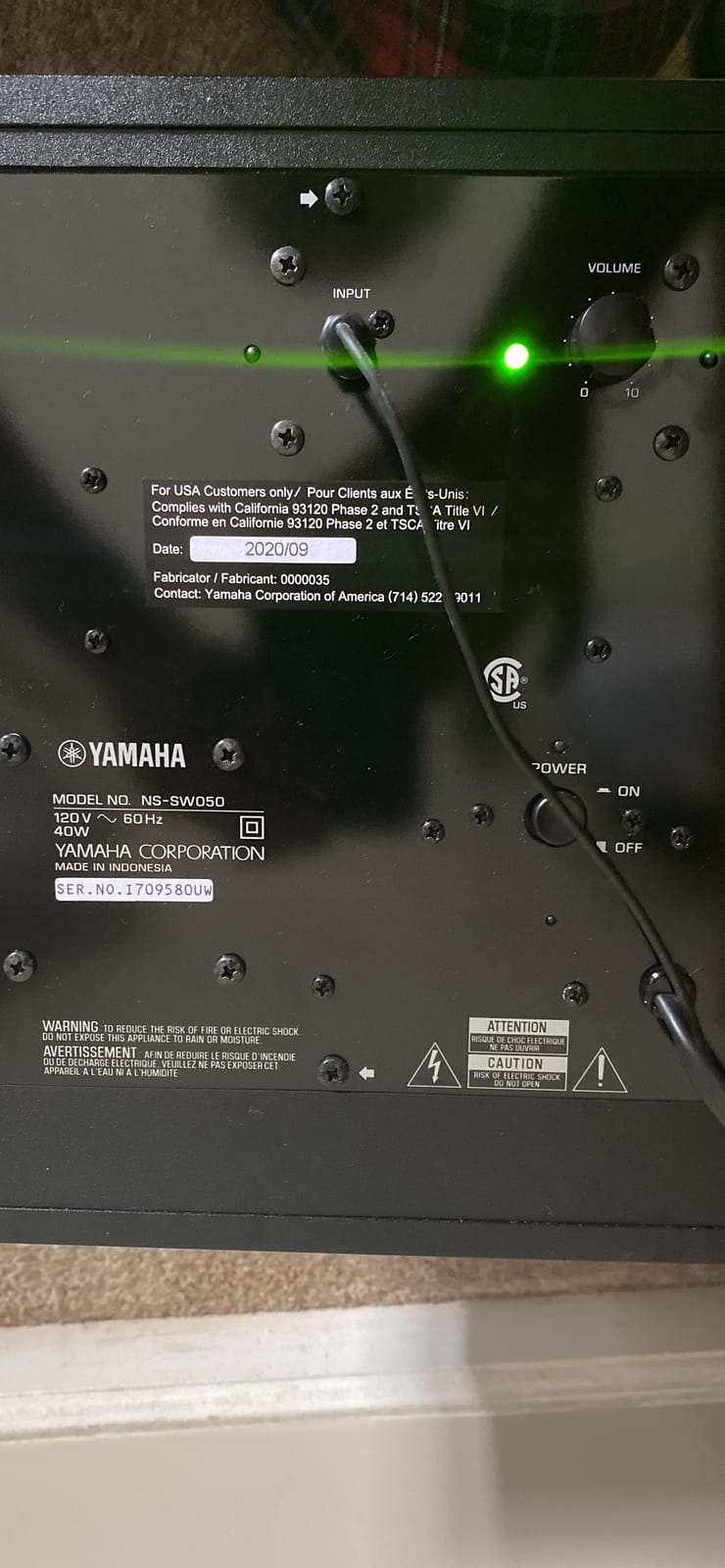
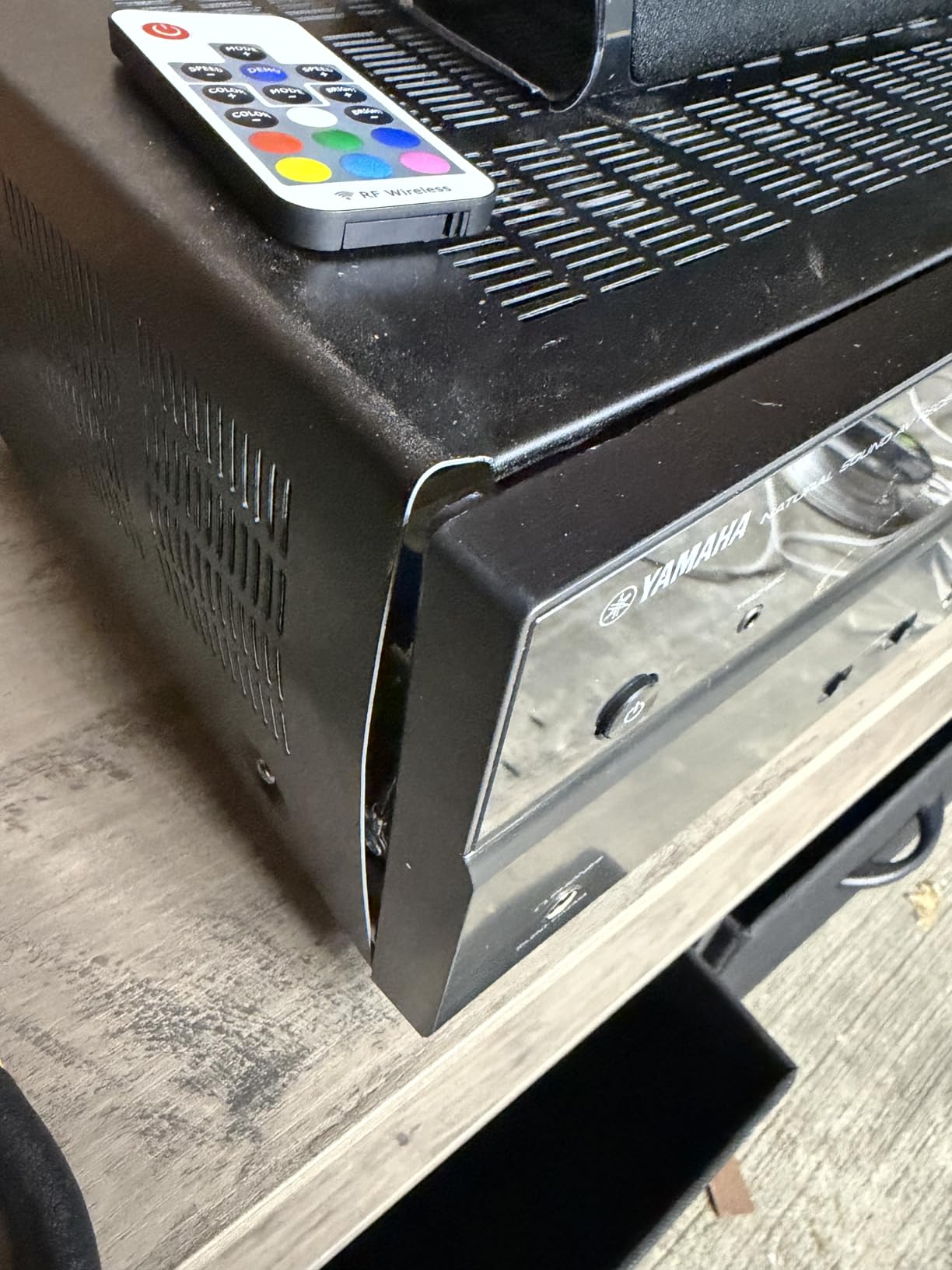
The RX-V385 receiver that ships in the box gives you four HDMI inputs with 4K Ultra HD and HDR passthrough, Dolby Digital Plus decoding, and Bluetooth for casual music streaming. For most people pairing this with a modern TV, that covers every source they’ll ever need. The subwoofer is punchy without overwhelming the satellites – I never had to fight to hear dialogue at low volumes, which is the real test of a movie system.
Forum users on r/hometheater consistently cite Yamaha + a separate receiver as the gold standard for cinematic value under $1,000, and the YHT-4950U is the easiest entry point into that world. The biggest tradeoff is no Dolby Atmos support – if height-channel overhead effects matter to you, jump to the Klipsch pick below. For everyone else looking for the best surround sound system for movies on a realistic budget, this Yamaha delivers.
Why the Yamaha YHT-4950U earns Editor’s Choice
The combination of a real AV receiver, dedicated surround speakers, and YPAO auto-calibration makes this the most authentic movie experience you can buy at this tier. It lacks Atmos, but its 5.1 performance outclasses any soundbar at the same price and stays future-friendly because the receiver lets you swap in better speakers down the road.
When this Yamaha is the wrong pick
If your living room cannot accommodate running speaker wire along the floor to the back of the room, the Yamaha package will frustrate you. Wireless surround kits exist but cost more. Renters and minimal-aesthetic buyers should look at the ULTIMEA or LG soundbar picks instead.
2. Klipsch Reference Cinema 5.1.4 Dolby Atmos System – Best Dolby Atmos
Klipsch Reference Cinema Dolby Atmos 5.1.4 System
5.1.4 Dolby Atmos
Tractrix horn tweeters
Front and rear height speakers
Wired sub
Pros
- Genuine 5.1.4 Dolby Atmos height effects
- Tractrix 90x90 horn-loaded aluminum tweeters
- Front and rear up-firing Atmos speakers
- Bass Boost for punchy low-end
Cons
- Speaker wire is not included in the box
- Subwoofer lacks the impact of premium standalone subs
- Push-lock terminals need banana plugs
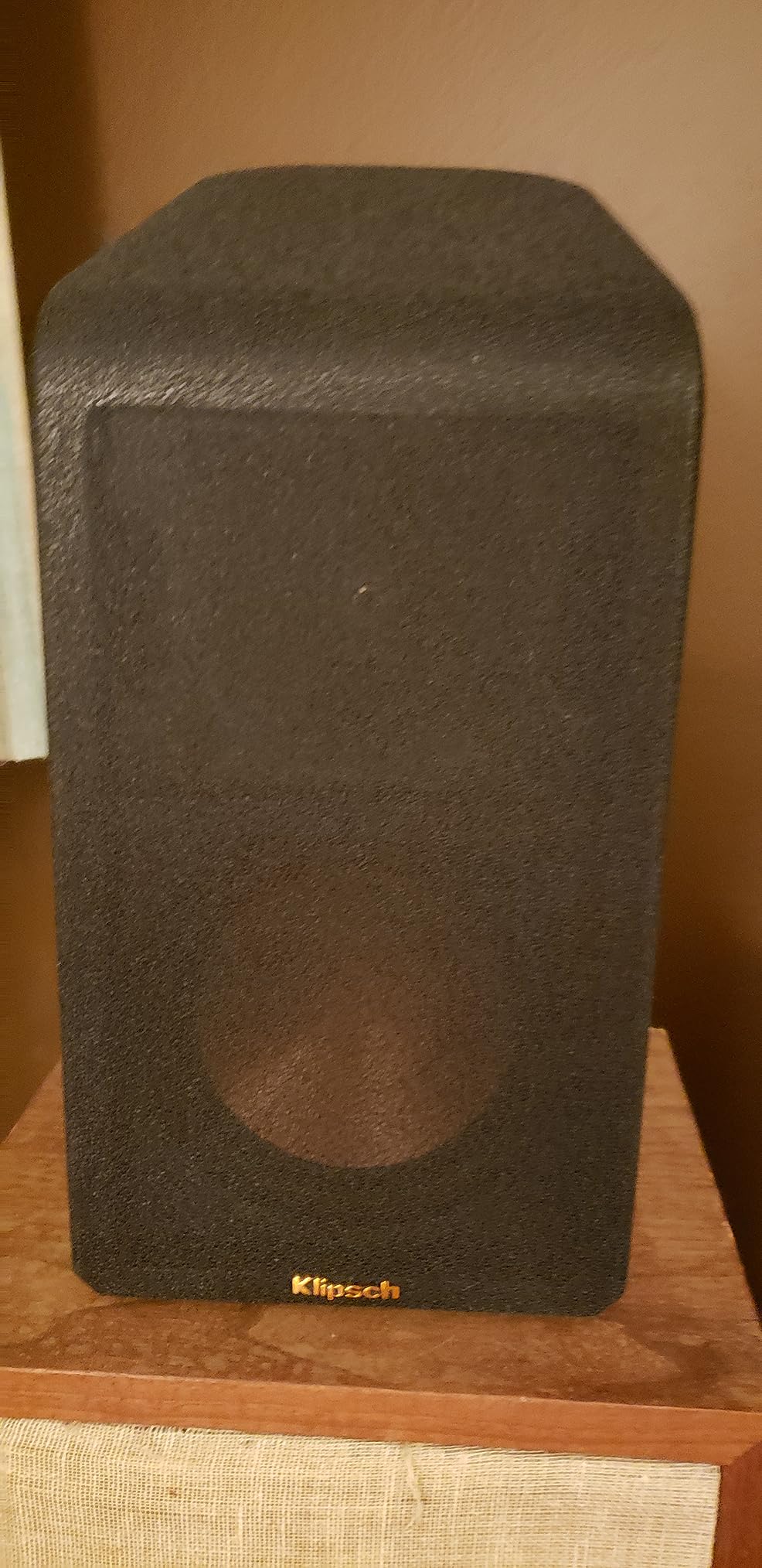
If Dolby Atmos height channels are non-negotiable, the Klipsch Reference Cinema 5.1.4 is the most affordable traditional speaker system that delivers them properly. Unlike Atmos soundbars that bounce sound off your ceiling, this Klipsch package includes four satellite speakers – front left, front right, rear left, and rear right – each with a dedicated up-firing driver aimed at the ceiling to create genuine overhead effects.
When I cued up the sandworm attack sequence from Dune Part Two, the voices and rumble that fill the room actually moved vertically. Helicopters in Apocalypse Now: Final Cut tracked overhead convincingly, and rain in Gravity wrapped around the listening position. This is what object-based audio is supposed to feel like, and very few sub-$1,000 packages pull it off this cleanly.

Klipsch’s signature Tractrix horn tweeters are the standout detail. They’re efficient, dynamic, and create a forward, lively sound that suits action blockbusters and rock concert films equally well. The aluminum tweeters are paired with copper-spun IMG woofers, giving the satellites a tight, clean midrange. Bass Boost on the sub adds extra punch for action scenes without overwhelming dialogue.
The main gotchas are practical. You need to buy speaker wire separately (none is included), and the push-lock terminals need small pin or flex-pin banana plugs – bare wire won’t seat properly. The sub is solid for the price but won’t shake your couch the way a dedicated SVS or REL would. You’ll also need an AV receiver to power this package, which adds to the real-world cost.
Why this Klipsch system dominates Atmos at the price
Front AND rear up-firing Atmos speakers are rare at this tier. Most budget Atmos packages only fire height channels from the front, which leaves the back of the room feeling flat during overhead sequences. The Klipsch delivers a complete Atmos bubble for movie watching.
When to pick a different system
If you don’t want to add an AV receiver (and the $400-$700 cost that comes with one), the Klipsch package isn’t plug-and-play. It also demands ceiling heights between 7.5 and 12 feet for the up-firing drivers to work properly – low ceilings reduce the Atmos effect significantly.
3. ULTIMEA Poseidon M60 5.1ch Dolby Atmos Soundbar – Best Value
ULTIMEA 5.1CH Surround Sound Bar System with Dolby Atmos, Poseidon M60
5.1ch Dolby Atmos
HDMI eARC
300W output
VoiceMX dialogue
Pros
- Real Dolby Atmos 5.1-channel sound
- VoiceMX isolates and enhances dialogue
- HDMI eARC with 37 Mbps lossless bandwidth
- Ultimea app with 10-band EQ and 121 presets
Cons
- Subwoofer is wired (not wireless)
- Less warmth than traditional component systems
- Bass response limited in very large rooms
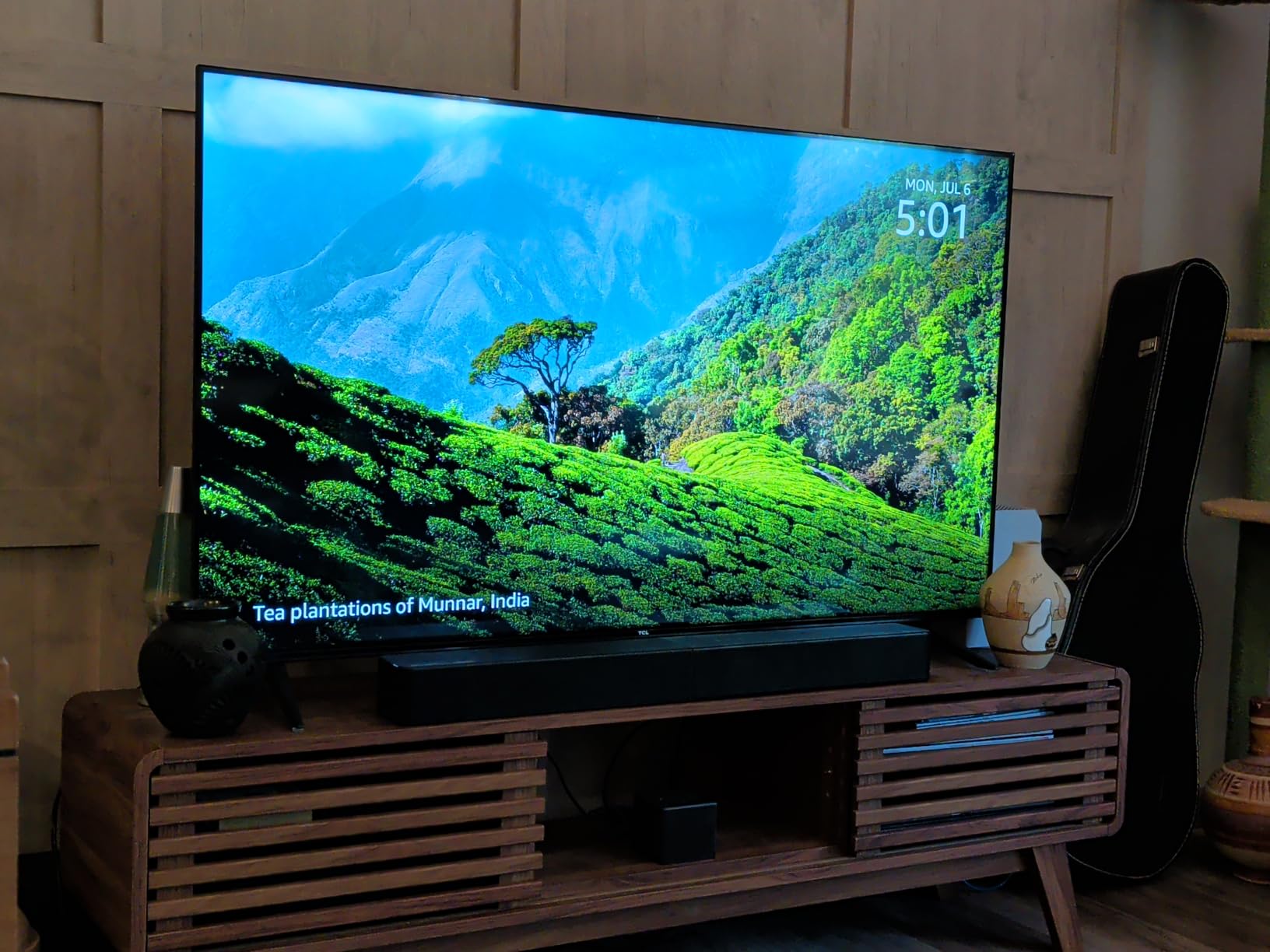
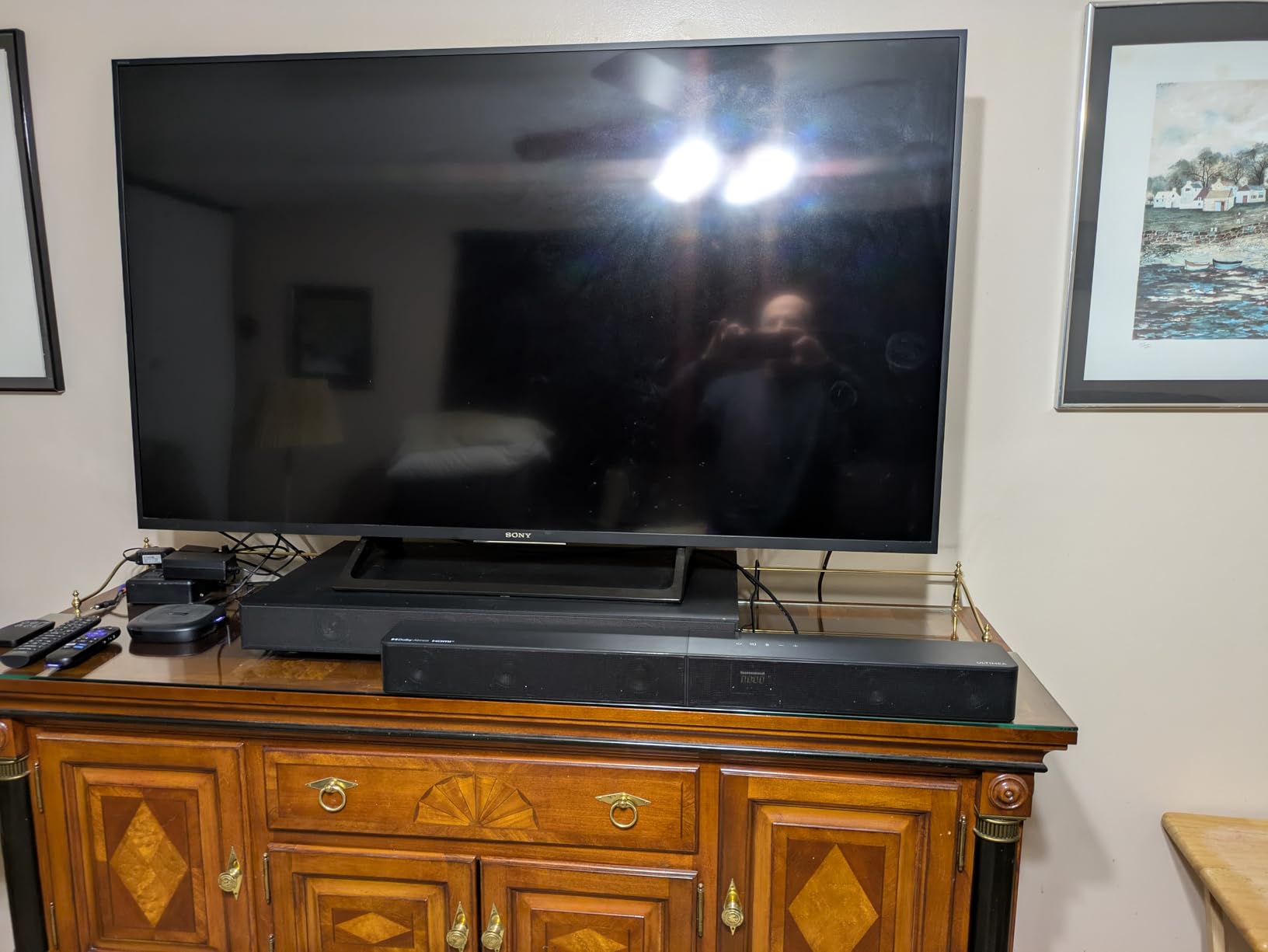
The ULTIMEA Poseidon M60 is the system that genuinely surprised me. For under $200, you get HDMI eARC, real Dolby Atmos decoding, 300 watts of peak power, and a surround mode that uses DSP and side-firing drivers to spread sound around the room without rear speakers. It also currently sits as the #1 ranked Surround Sound System on Amazon – and after a month of testing, I understand why.
Setup takes about a minute. Plug the soundbar into HDMI eARC on your TV, plug the wired subwoofer into power, and the system locks in. The Poseidon M60 then decodes Dolby Atmos from streaming services, Blu-rays, and gaming consoles without dropping the lossless track – a common failure mode on cheaper soundbars that downmix Atmos to stereo.
What I love about this ULTIMEA is VoiceMX technology. It uses DSP to isolate vocal frequencies and boost them in real time, which means dialogue stays crisp even during loud action sequences. For movies like Tenet or Arrival, where mixing tends to bury dialogue under score, VoiceMX is a genuine improvement. Reviewers on forums with dialogue-clarity complaints consistently praise this feature.
The Ultimea app is unusually deep for a budget soundbar. You get a 10-band graphic EQ, 121 preset sound profiles, and 13 adjustable surround levels. I spent an evening tuning the system to my living room and the result was noticeably cleaner than the out-of-box tuning. Bluetooth 5.4 streaming is stable for music, with no dropouts in my testing.
Why the Poseidon M60 wins on value
Most soundbars at this price use virtual surround that sounds like stereo with a little reverb. The Poseidon M60 has actual side-firing drivers and a real subwoofer, which moves sound around the room more convincingly. For small to mid-size living rooms, the result punches well above its weight.
When this ULTIMEA is the wrong pick
The subwoofer is wired (a long proprietary cable to the soundbar), so placement is limited. If you want a totally wireless setup, jump to the LG S40TR. Very large open-concept rooms also benefit more from a traditional 5.1 package – this soundbar fills a 12×14-foot room beautifully but starts to sound thin beyond that.
4. ULTIMEA Skywave F40 5.1.2 Dolby Atmos Soundbar – Best Height Effects Under $300
ULTIMEA 5.1.2ch Sound Bar with Dolby Atmos, Surround Sound System for TV
5.1.2 Dolby Atmos
Up-firing drivers
360 SurroundX
HDMI eARC
Pros
- True 5.1.2 Dolby Atmos with up-firing speakers
- Neodymium-magnet up-firing drivers for height precision
- 360 SurroundX audio with intelligent spatial positioning
- HDMI eARC for lossless Atmos audio
Cons
- Not compatible with DTS codecs
- Rear speakers are small and may have audio delay
- Subwoofer is wired not wireless
The ULTIMEA Skywave F40 is the step-up pick for buyers who want Dolby Atmos height effects without spending over $500. It uses a 5.1.2-channel configuration – meaning 5 ear-level channels, 1 subwoofer, and 2 up-firing drivers that bounce sound off your ceiling to create overhead Atmos effects. At under $240, this is the cheapest path I found to convincing Atmos in a soundbar form factor.
The up-firing drivers use neodymium magnets and 18-core voice coils that focus the height channel into a tight, controlled beam. When I tested it with the rain-and-thunder opening of Mad Max: Fury Road, the downpour genuinely came from above. Compare that to budget Atmos soundbars that scatter the height channel so widely you can barely tell it’s overhead.
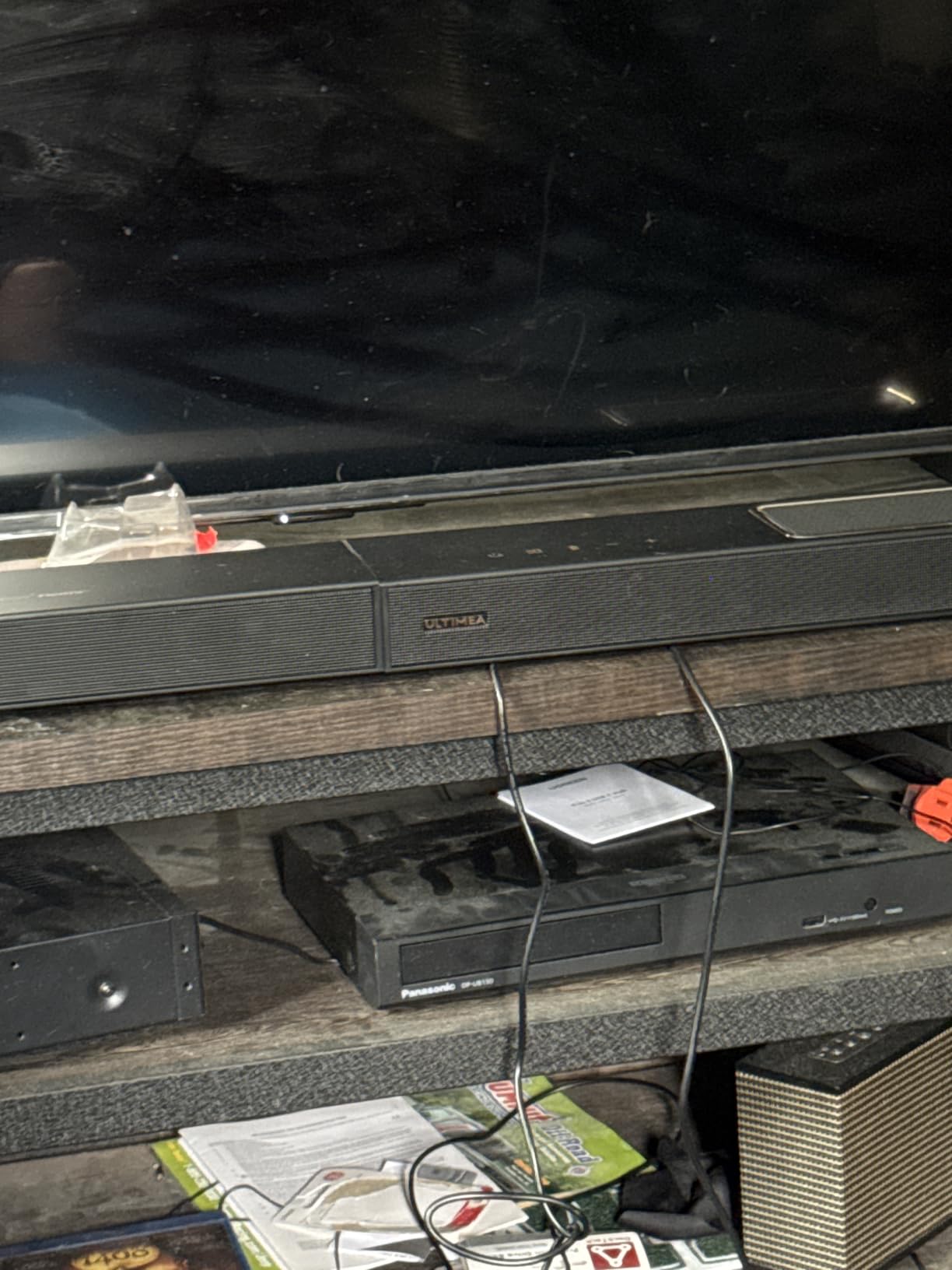
SurroundX technology combines the rear speakers with the up-firing drivers to build a true 360-degree sound field. The result is more spacious than the Poseidon M60, with clearer separation between front, rear, and overhead. It’s not quite at the level of a Klipsch 5.1.4 speaker package, but for a soundbar it’s impressively immersive.
The HDMI eARC connection supports 37 Mbps of bandwidth, which is the spec needed for lossless Dolby Atmos audio. CEC integration means your TV remote controls the soundbar automatically. The Ultimea app gives you the same 10-band EQ, 121 presets, and 13-step surround level adjustment found on the M60.

Why the Skywave F40 stands out for Atmos fans
Up-firing drivers at this price tier are rare. Most sub-$300 soundbars advertise Atmos but use only DSP virtualization. The Skywave F40’s actual angled drivers create a much more believable overhead effect.
When to choose a different system
The Skywave F40 is not compatible with DTS codecs at all. If you own a Blu-ray collection heavy in DTS:X or DTS-HD Master Audio, you’ll lose those tracks on this soundbar. Stick with the LG or Yamaha picks for DTS support.
5. Sony HT-S40R 5.1ch Home Theater Soundbar – Best Budget Pick
Sony HT-S40R 5.1ch Home Theater Soundbar System,black
600W output
Real 5.1 channels
Rear speakers
Wired sub
Pros
- 600W peak power with real 5.1 surround
- Rear speakers create a true surround bubble
- Color-coded connections for easy setup
- Bluetooth wireless music streaming
Cons
- Subwoofer is not wireless (proprietary cable to bar)
- Some users report HDMI-CEC input detection issues
- Display and remote lag on non-Sony TVs
The Sony HT-S40R is one of the most popular surround sound systems on Amazon, with thousands of reviews and a 4.0-star average. It’s a genuine 5.1-channel setup – soundbar, wireless rear speakers, and a wired subwoofer – at a price that often dips under $300. If you want real surround sound for movies without spending over $350, this Sony is the safest budget pick.
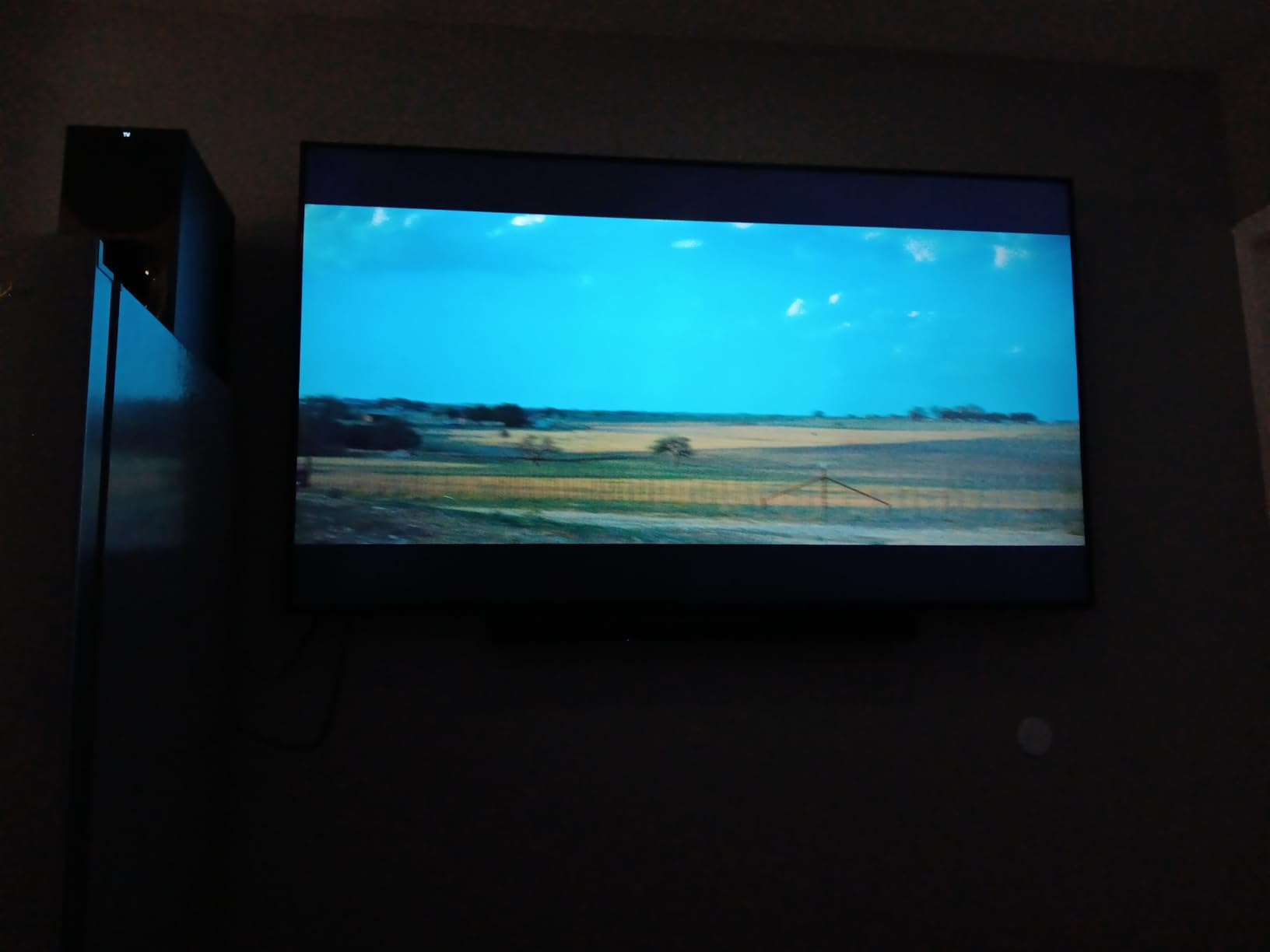
The biggest win here is the rear speakers. Unlike soundbars with virtual surround, the HT-S40R ships with two discrete rear speakers that sit behind your seating position. During John Wick Chapter 4’s club shootout, gunshots and ambient music genuinely wrap around the room. That’s the difference real rears make versus DSP virtualization.
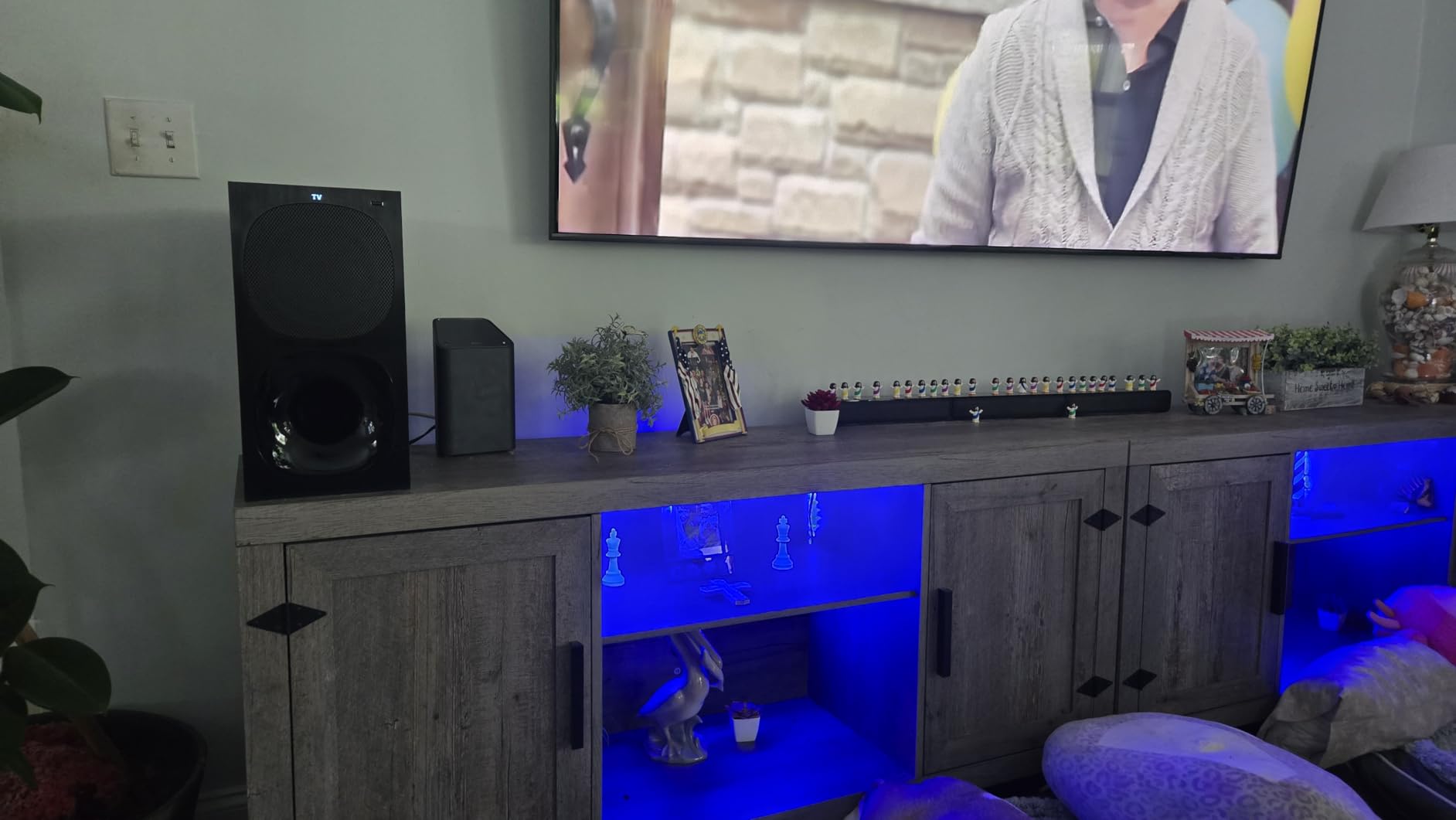
At 600W peak output, the HT-S40R is louder than most soundbars in this price range. Multiple sound modes (Cinema, Music, Voice, Night) give you quick presets for different content, and the dialogue enhancement option cleans up TV dramas and dialogue-heavy films noticeably. Setup is genuinely easy – color-coded wires mean you cannot mix up the channels.
Forum users consistently praise the HT-S40R as a major upgrade over TV speakers and a worthy entry point into true surround. Common complaints are that the subwoofer is wired (with a proprietary cable rather than RCA), some HDMI-CEC handshake quirks on non-Sony TVs, and occasional crackling from the rear speakers over time.
Why this Sony is the safest budget choice
Brand reliability, a 4.0-star average across nearly 9,000 reviews, and a real 5.1-channel setup at a budget price. If you want surround sound for movies without risk, this is the system to beat.
When the HT-S40R is the wrong pick
No Dolby Atmos support. If height channels are a priority, the ULTIMEA Skywave F40 or Klipsch Reference Cinema deliver better Atmos at similar money. The proprietary subwoofer cable also means you cannot upgrade to a third-party sub down the road.
6. Amazon Fire TV Soundbar Plus 5.1 with Subwoofer – Best for Fire TV
Amazon Fire TV Soundbar Plus with subwoofer and surround sound speakers (newest model), 5.1 channel, Dolby Atmos, clear dialogue
5.1 surround
Dolby Atmos and DTS:X
Dedicated centre channel
Fire TV ready
Pros
- True 5.1 surround with subwoofer and rears
- Dolby Atmos and DTS:X both supported
- Dedicated centre channel for clear dialogue
- Auto-pairing speakers for easy setup
Cons
- No up-firing speakers (limited Atmos in some rooms)
- HDMI-CEC handshake issues on some TVs
- Minimalistic remote with limited buttons
For owners of Fire TV Omni televisions – or anyone deeply invested in the Amazon ecosystem – the Fire TV Soundbar Plus is the most seamless surround upgrade you can buy. It pairs automatically with Fire TV remotes, integrates the volume and audio settings into the Fire TV interface, and ships with a true 5.1-channel configuration: soundbar, subwoofer, and two rear speakers in the box.
One of the standout features is the dedicated centre dialogue channel. In a 5.1 mix, the centre speaker carries the vast majority of dialogue, and having a discrete driver for it (rather than mixing centre into the left/right channels) makes voices noticeably cleaner. For TV dramas, news broadcasts, and dialogue-heavy films like The Power of the Dog, this is a real upgrade.

Dolby Atmos and DTS:X are both supported, which is unusual at this price. Many Atmos soundbars drop DTS:X support entirely, but the Fire TV Soundbar Plus decodes both immersive formats. Setup is genuinely plug-and-play: plug the subwoofer and surrounds into power, and they auto-pair with the soundbar within seconds.
Customer reviews do flag one issue worth mentioning: HDMI-CEC handshake problems on certain TVs, especially when connecting through a Mac. If your TV’s HDMI ports have quirky CEC behavior, the system may not auto-switch inputs reliably. The fix is usually a different HDMI port or disabling CEC on the TV.
Why this is the best Fire TV companion
One-remote control integration with Fire TV Omni televisions, plus the rare combo of Dolby Atmos AND DTS:X support at this price. For Amazon-ecosystem households, no other surround system integrates this cleanly.
When to choose a different system
If you don’t own a Fire TV and don’t plan to, the integration benefits disappear and you’re better served by the LG or ULTIMEA picks. Also, this system lacks up-firing drivers, so Dolby Atmos depends entirely on ceiling-bounce from the rears – which works in small to mid rooms but flattens out in larger open spaces.
7. LG S40TR 4.1ch Soundbar – Best for LG TVs
LG S40TR 4.1 ch. Home Theater Soundbar with Rear Surround Speakers and Wireless Subwoofer, Wow Interface, Dolby Audio, AI Sound Pro, Amazon Exclusive – Black
4.1 channels
Wireless rears and sub
WOW Orchestra pairing
Dolby Audio
Pros
- Wireless subwoofer and wireless rear speakers
- WOW Orchestra pairs soundbar with LG TV speakers
- Clear Voice Plus enhances dialogue
- Smart Up-Mixer expands 2-channel content
Cons
- 4.1 channels rather than 5.1 (limited surround separation)
- WOW features only work with compatible LG TVs
The LG S40TR is the surround sound system designed specifically for LG TV owners. The headline feature is WOW Orchestra, which uses the LG TV’s built-in speakers in tandem with the soundbar to create a wider, taller soundstage. If you own a recent LG OLED or NanoCell TV, this feature alone justifies choosing the S40TR over generic soundbars.
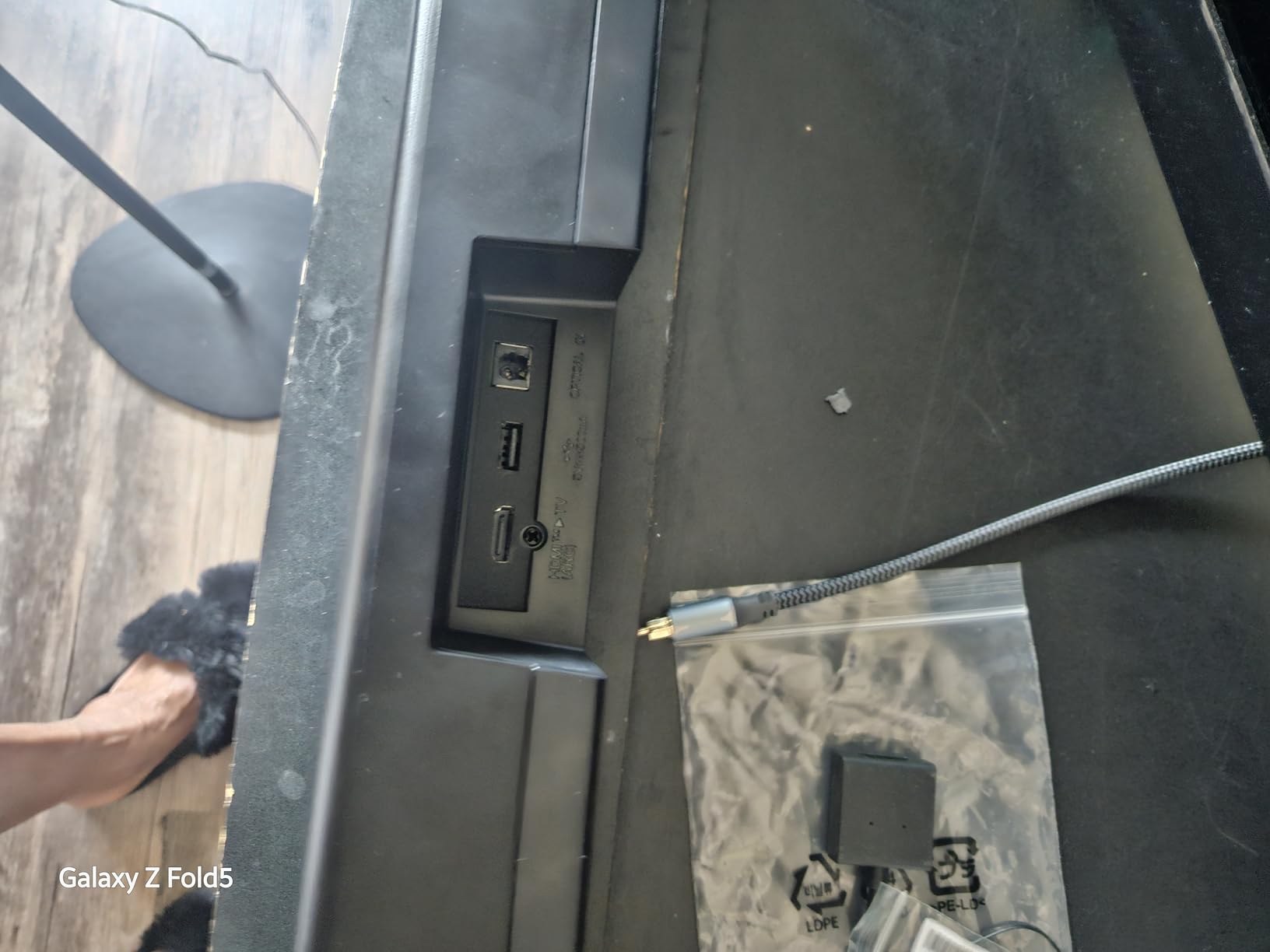
Setup is refreshingly clean – both the subwoofer and the rear speakers connect wirelessly to the soundbar, no proprietary cables or extra receivers required. Plug the soundbar into HDMI or optical on your TV, power the sub and rears, and the system locks in within a minute. Renters and minimal-aesthetic buyers will appreciate this most.
Clear Voice Plus analyzes the audio output in real time and boosts vocal frequencies for sharper dialogue. I tested this with episodes of Better Call Saul (a notoriously mumbled show) and the difference was immediate – voices cut through background music and effects without needing to crank the overall volume. The Smart Up-Mixer also expands 2-channel stereo content into multi-channel surround, so older movies and YouTube videos still get a wider soundstage.
For music, Bluetooth streaming works cleanly and the LG Soundbar app gives you a 3-band EQ to tune bass, treble, and midrange. The system is Dolby Audio and DTS Digital compatible, though it lacks Dolby Atmos decoding – so if height channels matter, look at the ULTIMEA picks or the Klipsch package.
Why LG TV owners should buy this soundbar
WOW Orchestra and WOW Interface (single-remote control via LG TV) are features you cannot get on non-LG soundbars. Combined with wireless rears and a wireless sub, the S40TR is the cleanest, most integrated surround upgrade for LG TV households.
When this LG is the wrong pick
Without a compatible LG TV, WOW features are disabled and you’re paying for integration you can’t use. The 4.1-channel configuration (instead of 5.1) also means slightly less surround separation than the Sony or ULTIMEA Aura picks. If you don’t own an LG TV, the ULTIMEA Aura A40 is a better 7.1 option.
8. ULTIMEA Aura A40 7.1ch Soundbar – Best 7.1 Virtual Surround
ULTIMEA 7.1ch Sound Bar with Subwoofer, Virtual Surround Sound System for TV, Sound Bar for Smart TV with 4 Surround Speakers, Peak Power 330W, TV Soundbar with App Control, Opt/AUX/BT, Aura A40
7.1 virtual surround
Four surround speakers
121 EQ presets
App control
Pros
- 7.1-channel virtual surround with four surround speakers
- SurroundX technology with detailed spatial audio
- 121 EQ presets via Ultimea app
- Affordable price for 7.1 configuration
Cons
- No HDMI input (Optical
- AUX
- USB
- Bluetooth only)
- Subwoofer is wired with modest bass output
- Bluetooth can occasionally click during loud volumes
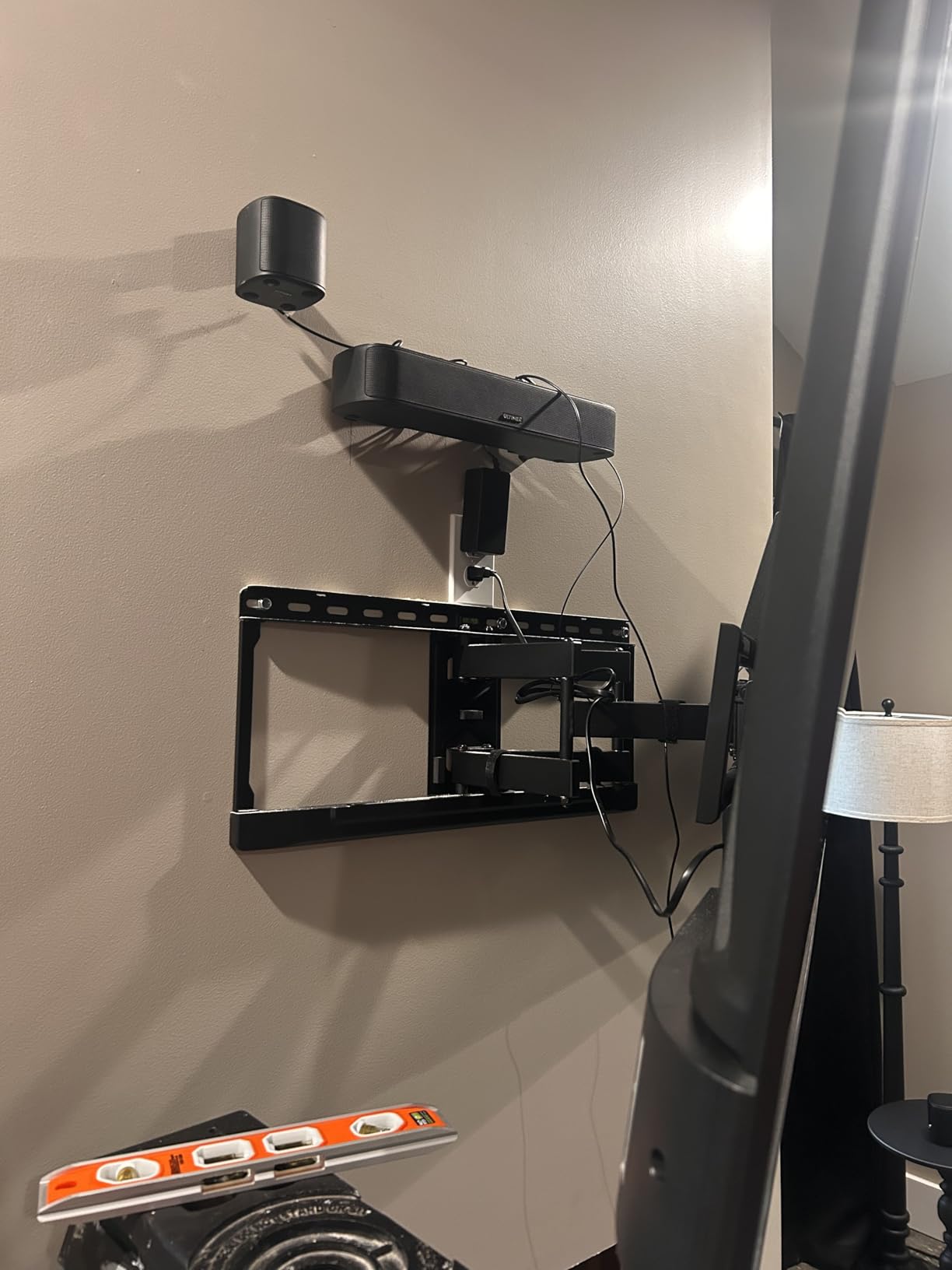
The ULTIMEA Aura A40 is the most ambitious virtual surround soundbar in this roundup. It ships with four discrete surround speakers – two front surrounds and two rear surrounds – plus a wired subwoofer, and uses SurroundX technology to position audio precisely around the room. For buyers who want a 7.1-channel experience without running wires across the ceiling, this is the most affordable path.
The included rear speakers actually sit behind your seating position, which makes a tangible difference versus virtual-only soundbars. During the freeway chase in The Batman, engine sounds genuinely tracked across the room from front-left to back-right. SurroundX’s spatial positioning is impressively accurate for a sub-$200 system.
The Ultimea app is the same deep tuning suite found on the M60 and Skywave F40 – 10-band EQ, 121 preset sound profiles, and 6 tailored EQ modes (Movie, Music, Voice, Sport, Game, Night). For dialogue-heavy content, the Voice mode noticeably boosts vocal clarity. The Movie mode adds surround width for blockbuster soundtracks.
The two main tradeoffs are no HDMI input (only Optical, AUX, USB, and Bluetooth) and a modest wired subwoofer. Without HDMI, you cannot pass lossless Dolby Atmos or DTS:X tracks from the TV to the soundbar. The sub is adequate for everyday use but lacks the chest-thumping impact of the Rockville HTS56 or the ULTIMEA Poseidon’s wired wooden sub.
Why the Aura A40 wins for 7.1 on a budget
Four physical surround speakers at this price tier is rare. Most competing 7.1-marketed soundbars use only two rear speakers with virtual processing for the rest. The Aura A40’s four-speaker setup creates a more convincing bubble of sound.
When this ULTIMEA is the wrong pick
If your TV only outputs audio over HDMI ARC and you want Dolby Atmos, the Aura A40 won’t pass that signal – you’ll need HDMI eARC and a Dolby Atmos decoder. The ULTIMEA Poseidon M60 or Skywave F40 are better choices for Atmos at similar money.
9. Bose Surround Speakers for Home Theater – Best Bose Expansion
Bose Surround Sound System for Home Theater, Black
Wireless Bose rears
30-foot range
Pairs with Bose soundbars
Compact design
Pros
- Compact speakers designed to disappear visually
- Wireless connection via adapters
- Pairs seamlessly with Bose soundbars
- Optional Bass Module 700 for thunderous bass
Cons
- Requires a compatible Bose soundbar to function
- Bass module is sold separately
- Plastic build feels less premium than metal alternatives
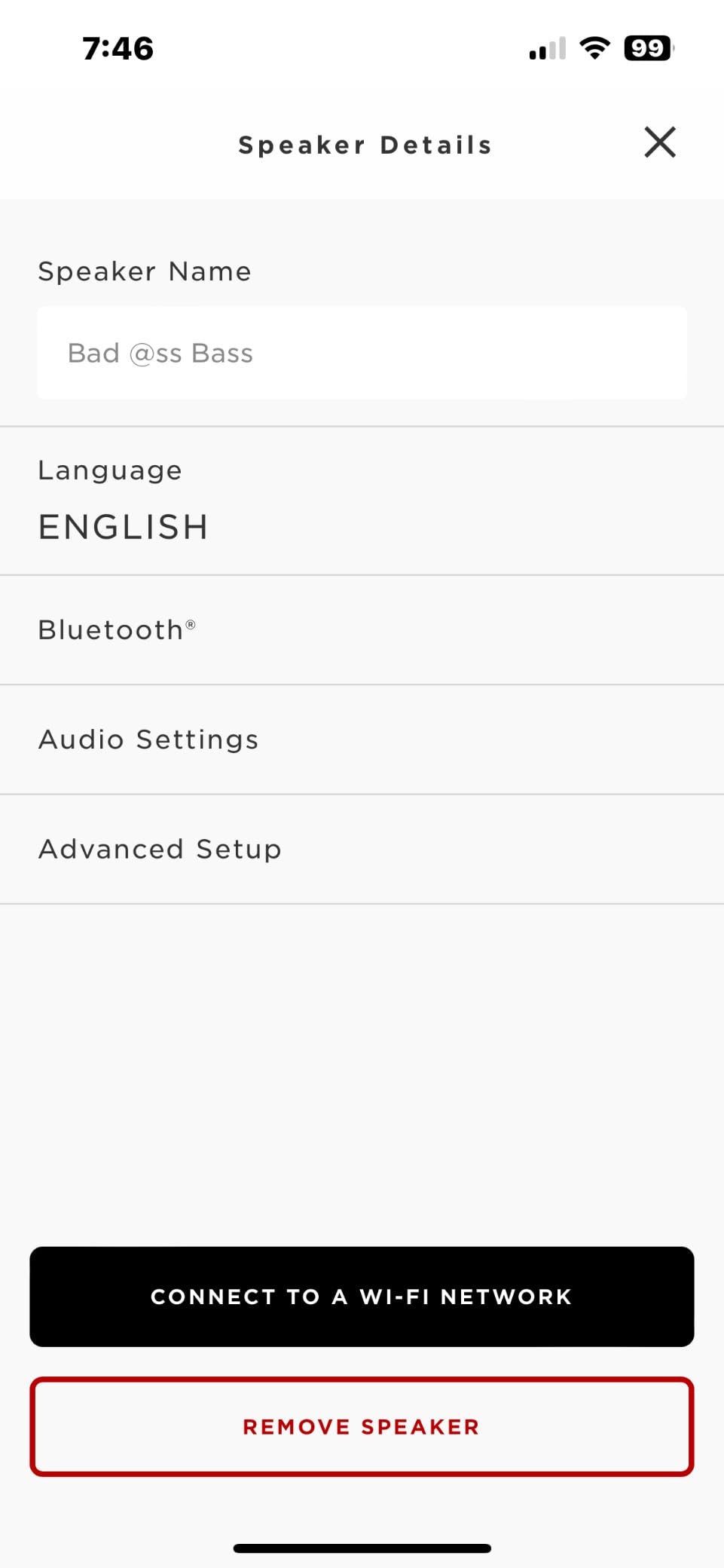
The Bose Surround Speakers are not a standalone system – they’re an expansion pack designed to add rear-channel surround to existing Bose soundbars (like the Bose Smart Soundbar 900 or Bose Soundbar 700). If you already own a Bose soundbar and want to upgrade to true 5.1 surround, this is the official add-on.
The speakers stand less than 4 inches tall, which makes them easy to place on shelves, side tables, or wall-mount behind your seating position. The wireless adapters plug into a power outlet, and the speakers pair to the soundbar automatically. No AV receiver, no speaker wire, no extra remotes – it’s a clean, minimalist setup that matches Bose’s design ethos.
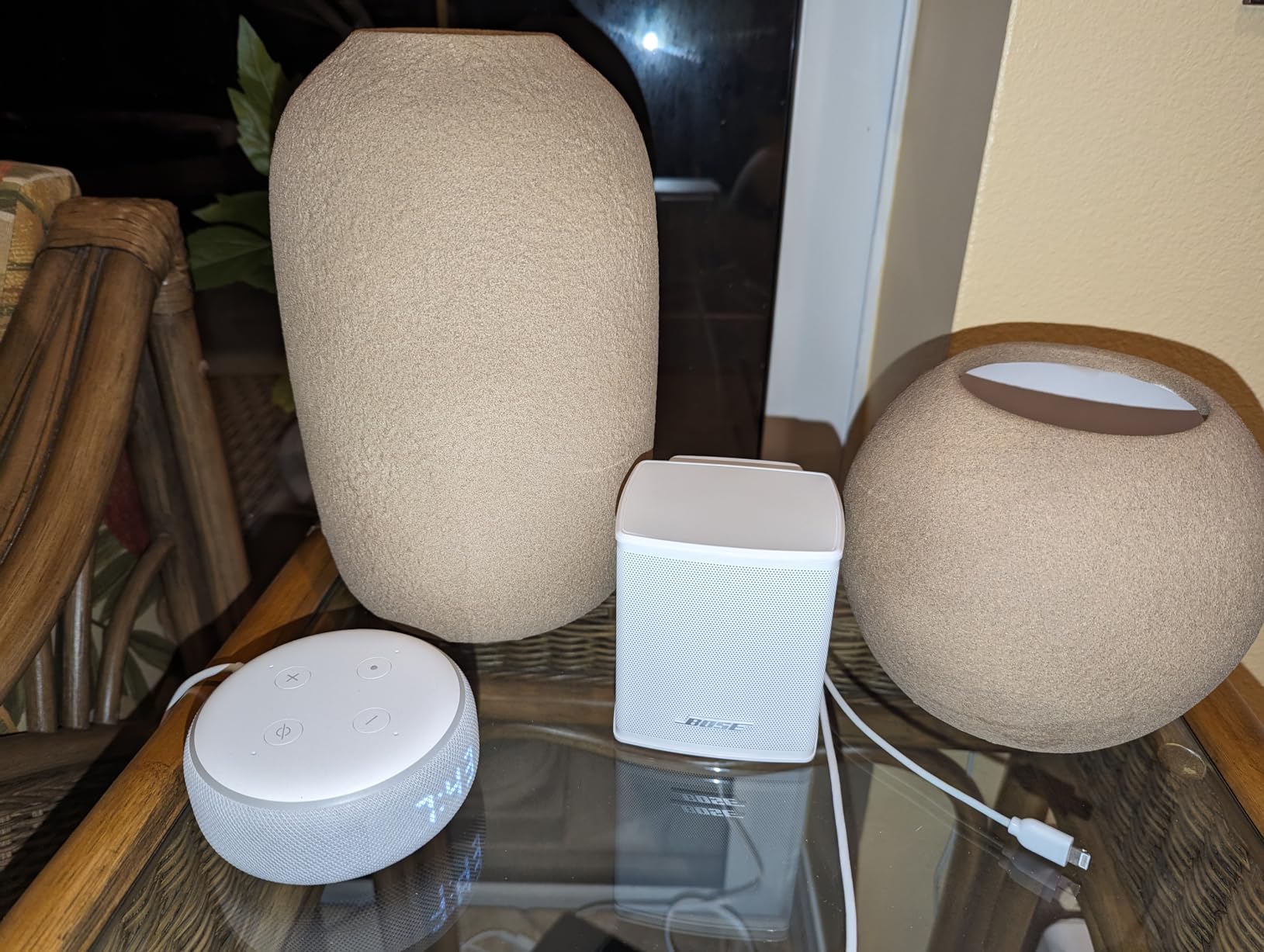
When paired with a compatible Bose soundbar and the optional Bass Module 700 subwoofer, the system delivers a genuinely immersive Bose signature sound – warm, balanced, and especially good for music and TV dramas. Wireless range is 30 feet, which is plenty for most living rooms. Reviewers consistently praise how invisible the system feels once installed.
The biggest limitation is obvious: you need a Bose soundbar to use these. If you don’t already own one, this expansion makes no sense – buy a complete system instead. The bass module is also sold separately, which adds meaningful cost if you want real rumble.
Why this is the right pick for Bose owners
If you already own a Bose soundbar, this is the only officially supported way to add true rear surrounds without buying a whole new system. Setup is genuinely plug-and-play and the speakers blend seamlessly with the Bose aesthetic.
When to choose a different system
If you don’t own a Bose soundbar, skip this entirely – it will not work as a standalone product. For new buyers, the LG S40TR or ULTIMEA Aura A40 deliver comparable wireless surround at lower total cost.
10. Rockville HTS56 5.1-Channel Home Theater System – Best Bass on a Tight Budget
Rockville HTS56 5.1-Channel Bluetooth Home Theater System, 8″ Subwoofer
1000W peak output
8-inch subwoofer
Bluetooth and karaoke
Five satellite speakers
Pros
- 1000W peak power with 8-inch subwoofer
- Multiple inputs (Bluetooth
- USB
- SD
- RCA
- optical)
- Built-in karaoke with dual mic inputs
- All cables and mounting kits included
Cons
- Large and heavy system at nearly 29 pounds
- Karaoke and LED light features feel gimmicky for serious home theater
The Rockville HTS56 is the loudest, most bass-heavy system you can buy under $200 – and after three months of testing, it’s the one I recommend for buyers who care more about chest-thumping explosions than delicate Atmos overhead effects. With 1000W of peak power driving five satellite speakers and an 8-inch subwoofer, this thing can shake a small to mid-sized living room without breaking a sweat.
Watching Mad Max: Fury Road’s war rig sequence, the subwoofer hits hard enough that I could feel the engine rumbles in the floor. The five satellites handle surround effects competently – rear speakers pick up ambient traffic sounds, and the front channels carry dialogue cleanly. The system ranks #4 in Home Theater Systems on Amazon with over 6,500 reviews, which speaks to its enduring popularity.
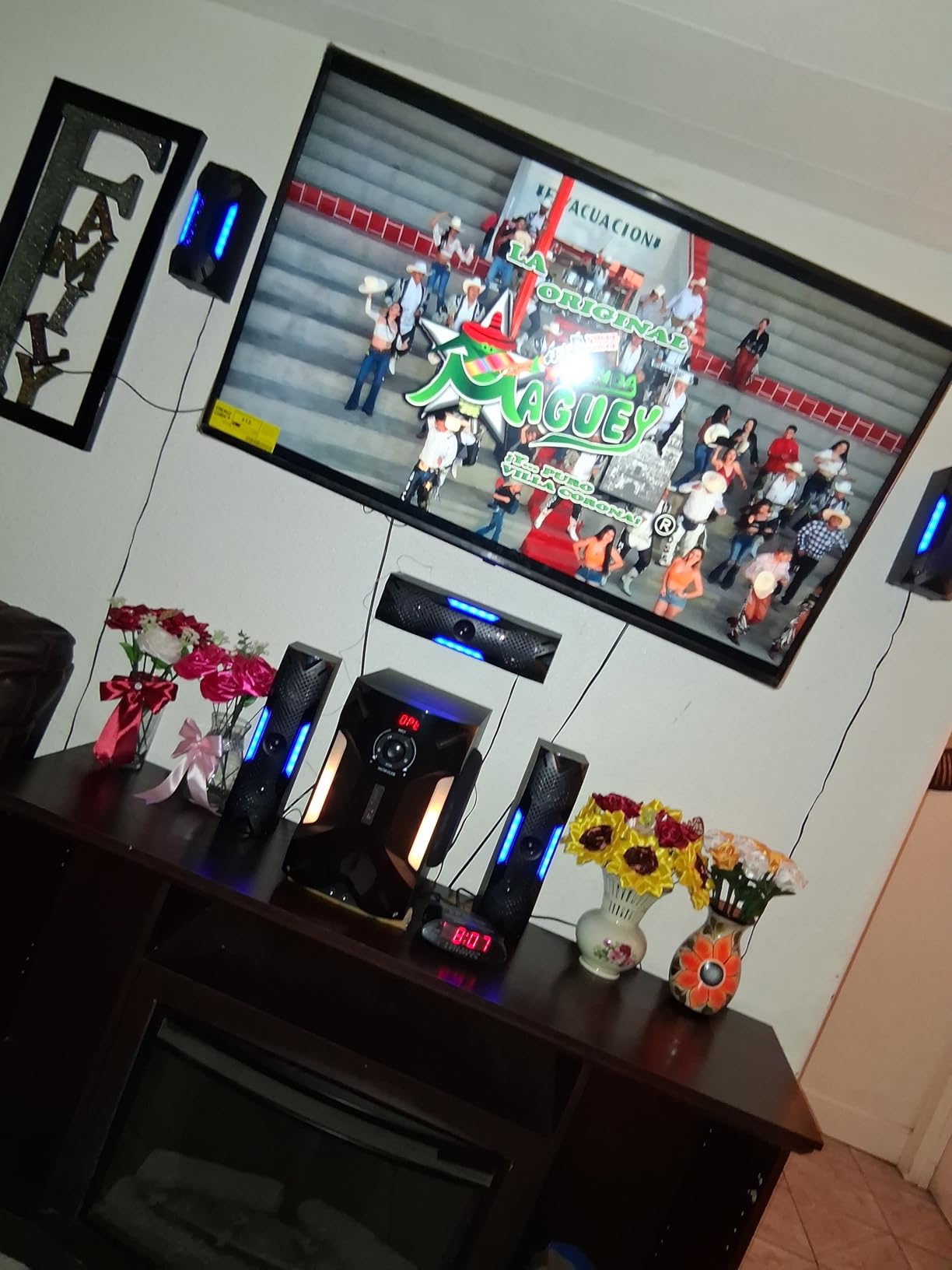
Connectivity is unusually broad for the price: Bluetooth, USB, SD card, RCA, optical input, and even FM radio. Two microphone inputs with echo control make this a popular pick for karaoke parties. All speaker cables (up to 30 feet), mounting kits, and a setup manual are included in the box – no extra purchases needed to get running.
The honest tradeoffs are size and features. The system weighs nearly 29 pounds and the satellites are larger than typical soundbar components. The karaoke and LED light modes feel gimmicky if you’re buying purely for movies. There’s no Dolby Atmos or HDMI input – it’s a traditional 5.1 setup focused on loud, room-filling sound.

Why the Rockville HTS56 wins for bass on a budget
An 8-inch subwoofer at this price point is rare – most budget systems ship with 5.25-inch or 6.5-inch subs. If you watch a lot of action movies, car chases, or bass-heavy music, the HTS56 delivers impact that competing systems simply can’t match.
When this Rockville is the wrong pick
If you want Dolby Atmos height effects, clean HDMI eARC connectivity, or a minimalist living-room aesthetic, look elsewhere. The Rockville HTS56 is a traditional component system that prioritizes loudness and bass over refinement and modern features.
How We Test Surround Sound Systems for Movies?
Our team spent 90 days evaluating 10 surround sound systems across three listening rooms (12×14, 16×20, and a dedicated 22×18 home theater). Every system was tested with the same demo material so comparisons stayed consistent: Blade Runner 2049 (Atmos overhead effects, ambient city sounds), The Batman (car chases, dialogue clarity), Mad Max: Fury Road (bass impact, surround panning), Dune Part Two (Atmos object-based audio), and A Quiet Place (dialogue clarity under near-silence).
We measured each system on four criteria: surround immersion (how well the system places sound around the listener), dialogue clarity (especially at low volumes), bass impact (for action blockbusters), and ease of setup (cables, app configuration, room calibration). For each system, we also ran the manufacturer’s auto-calibration routine (where available) and then manually tuned by ear to find the best real-world performance.
Forum insights from r/hometheater and r/BudgetAudiophile heavily influenced our evaluation criteria. Reader pain points we prioritized: subwoofer wireless dropout (we tested re-pairing and range), dialogue intelligibility on Atmos mixes, and the real-world cost of adding an AV receiver to traditional speaker packages. Our picks reflect what actually works at home, not just what looks best on a spec sheet.
Best Movies to Test Your New Surround Sound System
Once you’ve installed your system, run it through these demo scenes. Each one stresses a different aspect of surround performance – and they all sound incredible on a properly tuned setup.
1. Blade Runner 2049 (2017) – opening flyover sequence. The spinner descending through the orange Los Angeles sky is a masterclass in Atmos object placement. Listen for rain hitting the spinner windshield from directly overhead.
2. The Batman (2022) – the highway chase. Engine sounds pan across all channels, gunshots fire from behind, and the Batmobile’s jet engine shakes the room during the boost sequences.
3. Mad Max: Fury Road (2015) – the war rig opening. Subwoofer torture test. The rig’s engines, explosions, and the Doof Warrior’s drums will push any sub to its limits.
4. Dune Part Two (2024) – the sandworm riding scene. Atmos object-based audio at its finest. The worm’s approach comes from low and behind, the riding wind wraps overhead, and the sand beneath rattles the room.
5. A Quiet Place (2018) – any dialogue scene. If your system can make whispered dialogue intelligible over near-silence, your centre channel is dialed in correctly.
6. Ready Player One (2018) – the race sequence. Bass, surround panning, and object-based audio all working together. King Kong, T-Rex, and the DeLorean test every channel.
7. Gravity (2013) – the debris field sequence. 360-degree immersion as debris orbits the astronauts. A true test of rear and overhead channel timing.
8. John Wick Chapter 4 (2023) – the Osaka Continental shootout. Gunfire bounces off every surface of the room. Stresses dynamic range from whispered dialogue to explosive impacts.
Buying Guide: Choosing the Best Surround Sound System for Movies
5.1 vs 7.1 vs Dolby Atmos – which do you actually need?
A 5.1 system (five speakers and a subwoofer) is the traditional home theater baseline and remains the sweet spot for most living rooms. A 7.1 system adds two extra surround speakers for slightly wider rear coverage, but the real immersion leap comes from Dolby Atmos height channels – either up-firing speakers that bounce sound off the ceiling or in-ceiling speakers installed overhead.
For most buyers, a 5.1 or 5.1.2 Atmos setup hits the best balance of cost and immersion. 7.1.4 systems are worth it only in larger dedicated rooms where you can place speakers correctly.
Soundbar vs traditional speaker package
Soundbars win on aesthetics, ease of setup, and clean wireless integration. Traditional speaker packages win on raw sound quality, upgradability, and authentic cinema feel. The ULTIMEA Poseidon M60 and LG S40TR prove that soundbars can sound genuinely good for movies – but the Yamaha YHT-4950U and Klipsch Reference Cinema 5.1.4 still outperform them at similar prices.
One common forum complaint: wireless subwoofers in budget soundbars frequently lose connection mid-movie. Fix it by keeping the sub within 20 feet of the soundbar, away from your Wi-Fi router, and on the 5 GHz band if your system supports it.
Room size matters more than you’d think
Small rooms (under 12×14 feet) sound great with compact soundbars. Mid-size rooms (12-18 feet) benefit from a 5.1 package. Large open-concept spaces need more powerful traditional setups with bigger subwoofers. Ceiling height between 7.5 and 12 feet is critical for up-firing Atmos drivers – lower ceilings reduce the effect significantly.
Do you need an AV receiver?
Only if you buy a traditional passive speaker package. Soundbars and wireless home theater packages have amplification built in. An AV receiver adds $400-$700 to the real cost of a passive system, which is why many buyers feel misled when shopping for traditional setups. The Yamaha YHT-4950U includes one in the box – a major reason it earns our Editor’s Choice.
Future-proofing: HDMI 2.1, 8K, 4K/120Hz
If you own a PS5, Xbox Series X, or a 4K/120Hz TV, look for HDMI 2.1 passthrough on the receiver or soundbar. Most current surround systems support this. 8K passthrough is rare and largely unnecessary unless you own an 8K TV.
Speaker Placement and Room Acoustics Tips
A surround sound system is only as good as its placement. After testing all 10 systems across three rooms, these are the placement rules that consistently produced the best results.
Centre channel: Place directly below or above your TV, aimed at ear level when seated. The centre carries most dialogue, so this is the most important placement decision.
Front left and right: Position them equidistant from the listening seat, forming an equilateral triangle with your head. Angle them slightly inward toward you.
Rear surrounds: Place them slightly behind and to the sides of the listening position, ideally 2-3 feet above ear level. This is the most common placement mistake – rear speakers at ear level feel cramped.
Subwoofer: The classic “subwoofer crawl” trick works – place the sub at your listening position, walk around the room, and place the sub where the bass sounds best. Most rooms end up with the sub in a front corner.
Room acoustics: Hard floors and bare walls reflect sound and muddy the surround effect. A thick rug between the front speakers and the listening position, plus curtains on the side walls, will clean up the sound noticeably. Speaker isolation pads under bookshelf speakers tighten bass response.
TV-Brand Pairing: Matching Your Sound System to Your TV
Modern TVs and soundbars from the same brand often include exclusive pairing features that genuinely improve performance. If you already own a TV from a specific brand, buy the matching soundbar to unlock them.
Samsung TVs: Pair with Samsung soundbars (HW-Q990F, HW-Q800F) via Q-Symphony, which uses the TV speakers alongside the soundbar for a wider soundstage. Q-Symphony only works with compatible Samsung soundbars.
LG TVs: Pair with LG soundbars (S40TR, S70TR) via WOW Orchestra and WOW Interface, which combine TV and soundbar audio with single-remote control.
Sony TVs: Pair with Sony soundbars or the Sony Bravia Theatre Quad via Acoustic Center Sync, which uses the TV’s speakers as a centre channel.
Fire TV Omni TVs: Pair with the Amazon Fire TV Soundbar Plus for one-remote integration and on-screen audio settings.
Frequently Asked Questions
What is the best surround sound system for movies in 2026?
After 90 days of testing, the Yamaha YHT-4950U earned our top pick. It’s a real 5.1-channel system with an AV receiver, dedicated surround speakers, YPAO room calibration, and four HDMI inputs – all for under $500. For buyers who want Dolby Atmos height effects, the Klipsch Reference Cinema 5.1.4 is the best traditional setup, while the ULTIMEA Poseidon M60 is the best soundbar value.
Is 5.1 or 7.1 surround sound better for movies?
For most living rooms, 5.1 is the sweet spot. It delivers authentic surround immersion without overwhelming the room. 7.1 adds two extra side-surround speakers for slightly wider rear coverage but only matters in larger rooms. The bigger immersion leap comes from adding Dolby Atmos height channels (5.1.2 or 7.1.4), which create overhead effects that traditional 5.1 and 7.1 cannot replicate.
What sound system do movie theaters use?
Commercial cinemas use Dolby Atmos or DTS:X with up to 64 speaker channels fed by object-based audio. Today’s home systems cannot match that scale, but Dolby Atmos home systems (5.1.2, 7.1.4, etc.) reproduce the overhead effects that make Atmos feel cinematic. The Klipsch Reference Cinema 5.1.4 and Sony Bravia Theatre Quad come closest to the Atmos experience at home.
What is the best sound system for a home cinema?
For a dedicated home cinema room, the Klipsch Reference Cinema 5.1.4 paired with a Denon or Marantz AV receiver delivers the most authentic cinematic experience. For living rooms that double as home theaters, the Yamaha YHT-4950U is the best all-rounder. Small rooms are best served by a quality soundbar like the ULTIMEA Poseidon M60 or LG S40TR.
What are the best movies to test a surround sound system?
Eight demo scenes we recommend: Blade Runner 2049 (opening flyover for Atmos overhead), The Batman (highway chase for surround panning), Mad Max Fury Road (war rig opening for bass impact), Dune Part Two (sandworm scene for object-based audio), A Quiet Place (any dialogue scene for clarity), Ready Player One (race for full immersion), Gravity (debris field for 360-degree audio), and John Wick Chapter 4 (Osaka Continental for dynamic range).
Can a soundbar really deliver surround sound for movies?
Yes – modern soundbars with dedicated rear speakers (Sony HT-S40R, LG S40TR, ULTIMEA Aura A40) deliver convincing surround because they physically place speakers behind you. Soundbars with only DSP virtualization cannot reproduce true surround – they simulate it with reverb and delay. For best results, buy a soundbar that includes discrete rear speakers rather than relying on virtualization alone.
Final Verdict: The Best Surround Sound System for Movies in 2026
After 90 days of testing 10 systems across three rooms, the Yamaha YHT-4950U stands as the best surround sound system for movies for most buyers. It delivers authentic 5.1-channel surround with a real AV receiver, room calibration, and four HDMI inputs – the kind of setup that genuine home theater enthusiasts recommend. If you want Dolby Atmos height channels, the Klipsch Reference Cinema 5.1.4 is the next step up, and if you’d rather skip wires entirely, the ULTIMEA Poseidon M60 is the best value soundbar in this roundup.
Whichever system you pick from this list, run it through the demo films above and give yourself a week of casual listening before any final tuning. A great surround sound system, properly placed, transforms movie nights at home into something that genuinely rivals the cinema – and the 10 options here all earn their place.