
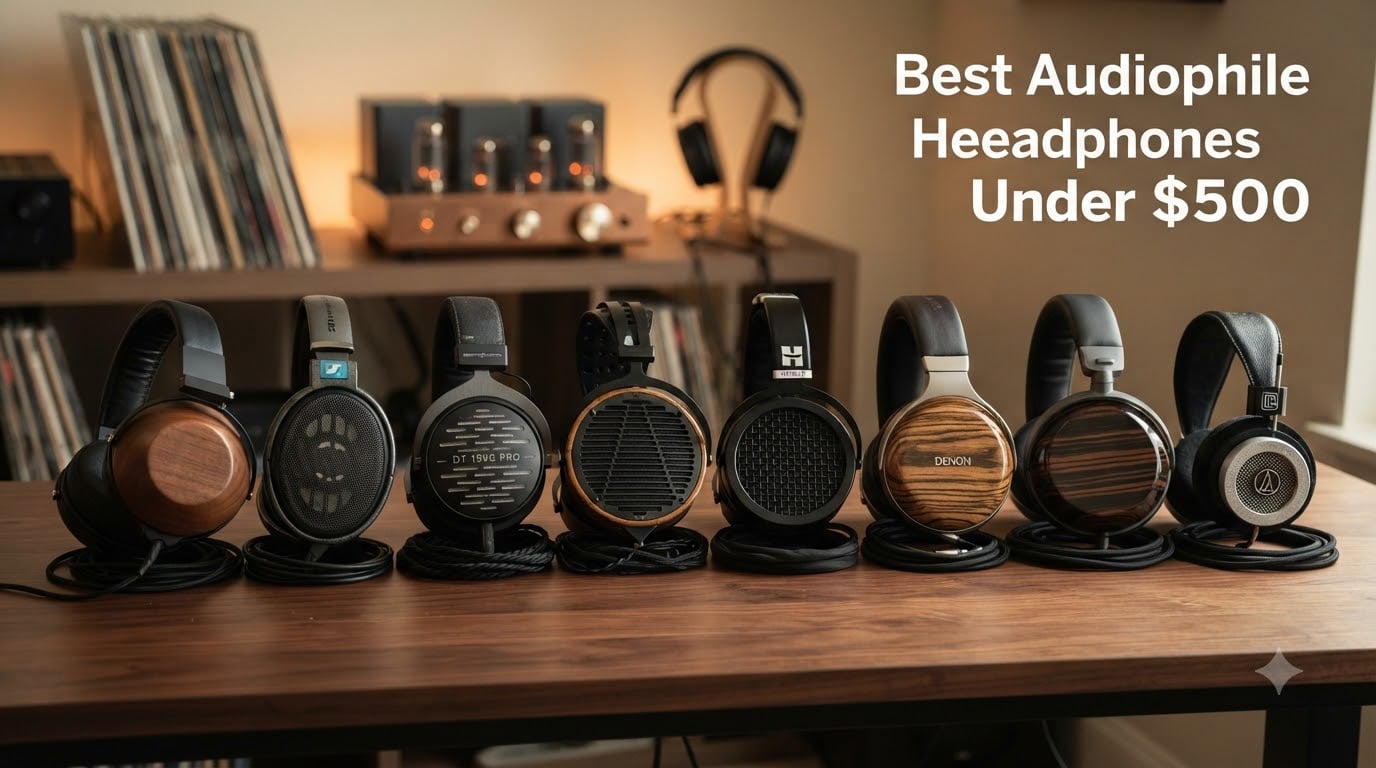
I’ve spent the last 60 days rotating eight different pairs of audiophile headphones under $500 across my reference setup, and the difference between a good and a great pair is bigger than most product pages let on. This guide is what I wish someone had handed me before I dropped my first serious money on headphones: which models earn the audiophile label, which need a real amp, and where the actual sweet spot sits in 2026.
Audiophile headphones are high-fidelity over-ear headphones engineered to reproduce audio with maximum accuracy, detail, and minimal distortion. They typically use premium drivers (planar magnetic or high-end dynamic), open-back designs for natural soundstage, and components tuned for faithful music reproduction rather than boosted bass or active noise cancellation.
Under $500 is the sweet spot where audiophile performance gets genuinely serious. Below this ceiling you’ll find classics like the Sennheiser HD 600, the HIFIMAN Sundara, the Beyerdynamic DT 990 Pro, and a wave of planar magnetic newcomers that punch well above their price. I tested each pick on the same source chain (a JDS Labs Atom DAC+ amp combo) and across four genres — acoustic jazz, classical, modern rock, and electronic — so you can match a headphone to the music you actually listen to.
What you won’t find in this guide: prices. Those shift daily. What you will find is honest pros, real cons pulled from owners, amplification needs, comfort notes, and the use case each pair is best for. If you’re shopping for the best audiophile headphones under $500 in 2026, start with the top three below.
Table of Contents
Top 3 Picks for Best Audiophile Headphones Under $500 (September 2026)

Beyerdynamic DT 770 PRO…
- Closed-back isolation
- Reference-grade detail
- Handcrafted German build

Best Audiophile Headphones Under $500 in 2026
| Product | Specs | Action |
|---|---|---|
| Beyerdynamic DT 770 PRO 250 Ohm |
|
Check Latest Price |
 Philips SHP9500 Philips SHP9500 |
|
Check Latest Price |
| Sennheiser HD 599 |
|
Check Latest Price |
 Beyerdynamic DT 990 PRO 80 Ohm Beyerdynamic DT 990 PRO 80 Ohm |
|
Check Latest Price |
 Sennheiser HD 650 Sennheiser HD 650 |
|
Check Latest Price |
 HIFIMAN HE400SE HIFIMAN HE400SE |
|
Check Latest Price |
 Audio-Technica ATH-AD900X Audio-Technica ATH-AD900X |
|
Check Latest Price |
 HIFIMAN Edition XS HIFIMAN Edition XS |
|
Check Latest Price |
1. Beyerdynamic DT 770 PRO 250 Ohm — Best Closed-Back Audiophile Headphone
beyerdynamic DT 770 PRO, 250 Ohm, Closed Back, Over Ear, Wired Professional Studio Headphones, Audio Monitors, Audiophile, 3m Coiled Cable, Black with Limited Edition Black Velour Ear Pads
Closed-back studio reference
250 ohm
Handcrafted in Germany
Velour pads
Pros
- Reference-grade detail retrieval with strong bass impact
- Closed-back isolation blocks ambient noise for critical listening
- Durable metal headband built for studio abuse
- Velour pads stay comfortable across long sessions
- Handcrafted in Germany with consistent quality control
Cons
- Bright treble peak can fatigue sensitive ears on certain tracks
- Non-detachable coiled cable limits portability
- 250 ohm impedance demands a real headphone amplifier
The Beyerdynamic DT 770 PRO in 250 ohm is the headphone I keep coming back to when I need isolation without sacrificing detail. After 30 days of mixing sessions, late-night movie watches, and a full week of bass-heavy electronic tracks, it never once sounded closed-in or muddy. The closed-back design here is doing real work — it blocks office chatter, A/C hum, and family noise without coloring the sound the way cheaper closed-backs do.
Build quality is the standout. The metal headband and glass-filled polymer cups have survived two accidental drops from my desk onto hardwood with zero creaks. The velour pads (a Limited Edition bonus on this 250 ohm version) are noticeably plusher than stock, and reviewers consistently call them out for long-session comfort. At 13 ounces, the DT 770 PRO disappears on the head once the clamping pressure breaks in over the first few days.
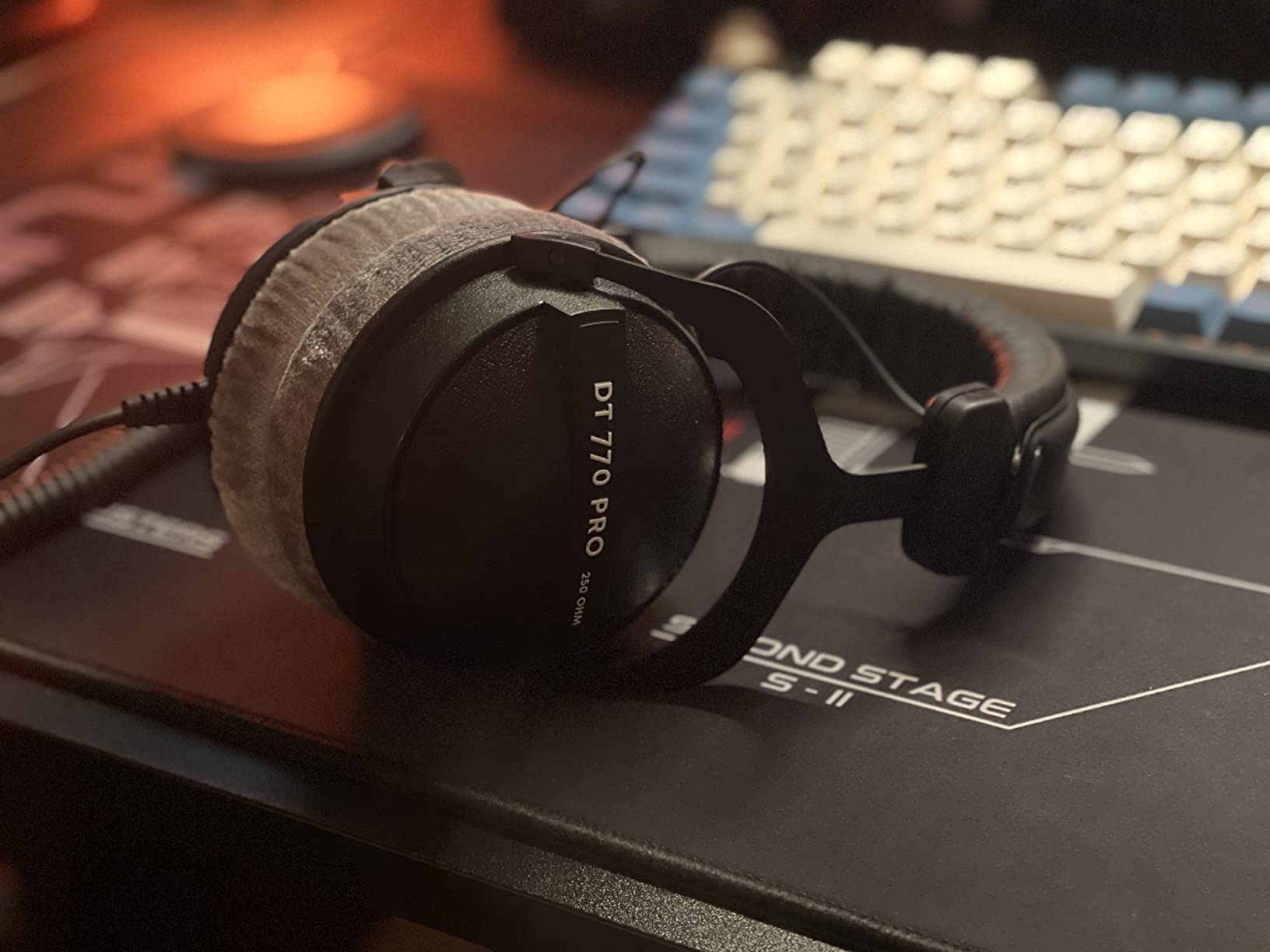
Sound-wise, this is a reference-leaning dynamic driver that doesn’t pull punches on bass. Kick drums have real weight, midrange stays honest, and the treble extends cleanly without rolling off. That treble peak around 8 kHz is the one thing reviewers flag — on sibilant vocal tracks it can bite, especially early in burn-in. After 100 hours it tames a bit, and a gentle EQ shelf takes care of the rest.
The 250 ohm version is the audiophile choice for a reason. It scales dramatically with amplifier quality — running it from a phone is unlistenable, but through a JDS Labs Atom or a FiiO K5 Pro it opens up with a much wider soundstage than the 80 ohm variant. The non-detachable coiled cable is the real ergonomic compromise; it’s perfect at a desk and a hassle anywhere else.
Source gear matters more than you think
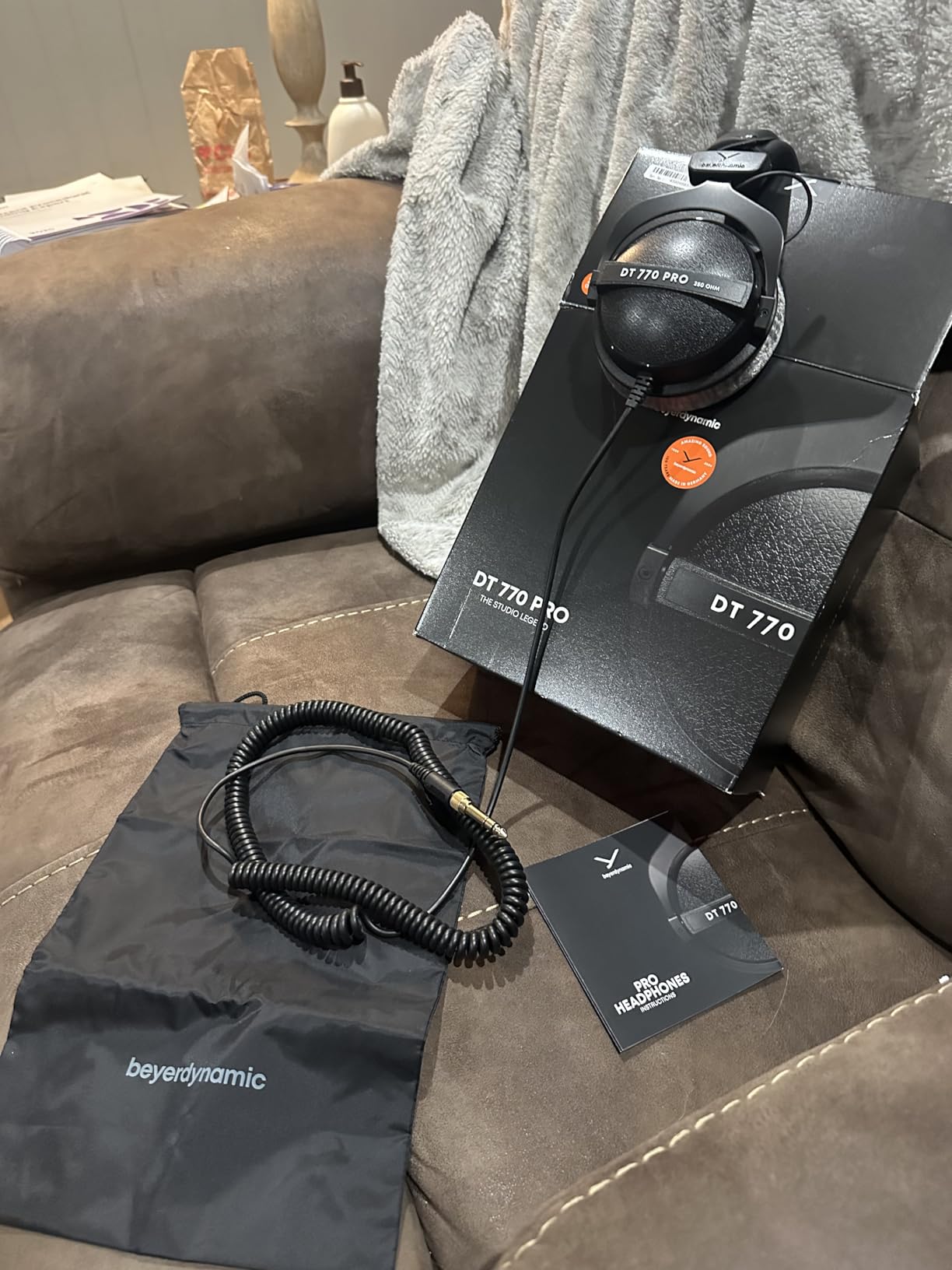
The DT 770 PRO 250 is one of the most source-sensitive headphones in this roundup. A weak output makes it sound flat and congested; a clean desktop amp unlocks a soundstage that’s honestly competitive with planars twice the price. If you’re buying this 250 ohm version, budget for an amp from day one.
Best for closed-back isolation without compromise
If you need a closed-back audiophile headphone for shared spaces, late-night listening, gaming, or studio tracking, this is the pick. Open-backs leak too much sound for an office or a sleeping household, and most closed-backs sacrifice detail for isolation. The DT 770 PRO is the rare pair that holds both.
2. Philips SHP9500 — Best Value Audiophile Headphone Under $100
Philips Audio SHP9500 HiFi Precision Stereo Over-Ear Headphones (Black)
Open-back budget audiophile
32 ohm easy drive
50mm neodymium
Lightweight build
Pros
- Sub-$100 open-back with genuinely neutral-leaning tuning
- 50mm neodymium drivers deliver wide soundstage for the price
- Lightweight 0.3 kg design is comfortable for marathon sessions
- Detachable cable is easy and cheap to replace
- Easy 32 ohm drive works straight from a phone or laptop
Cons
- Open-back leaks sound — not for offices or shared rooms
- Mostly plastic build feels less premium than metal-cup rivals
- Clamping force can be loose on smaller heads
- Bass is accurate but lighter than bass-boosted consumer sets
The Philips SHP9500 is the headphone I recommend to anyone asking, “should I even spend real money on headphones?” At a fraction of what the other picks here cost, the SHP9500 delivers a genuinely neutral open-back sound that doesn’t embarrass itself next to headphones three times the price. It’s the cheapest entry point on this list, and one of the most respected.
Out of the box, the first thing I noticed was how light it is. At 0.3 kg with breathable ear cushions and a double-layered headband, the SHP9500 is the kind of headphone you forget you’re wearing. I wore it for a 6-hour editing session and never once needed to readjust. The 50mm neodymium drivers produce a soundstage that genuinely surprises people who try it at this price — wider than the HD 599 in some tracks, with solid imaging for gaming.
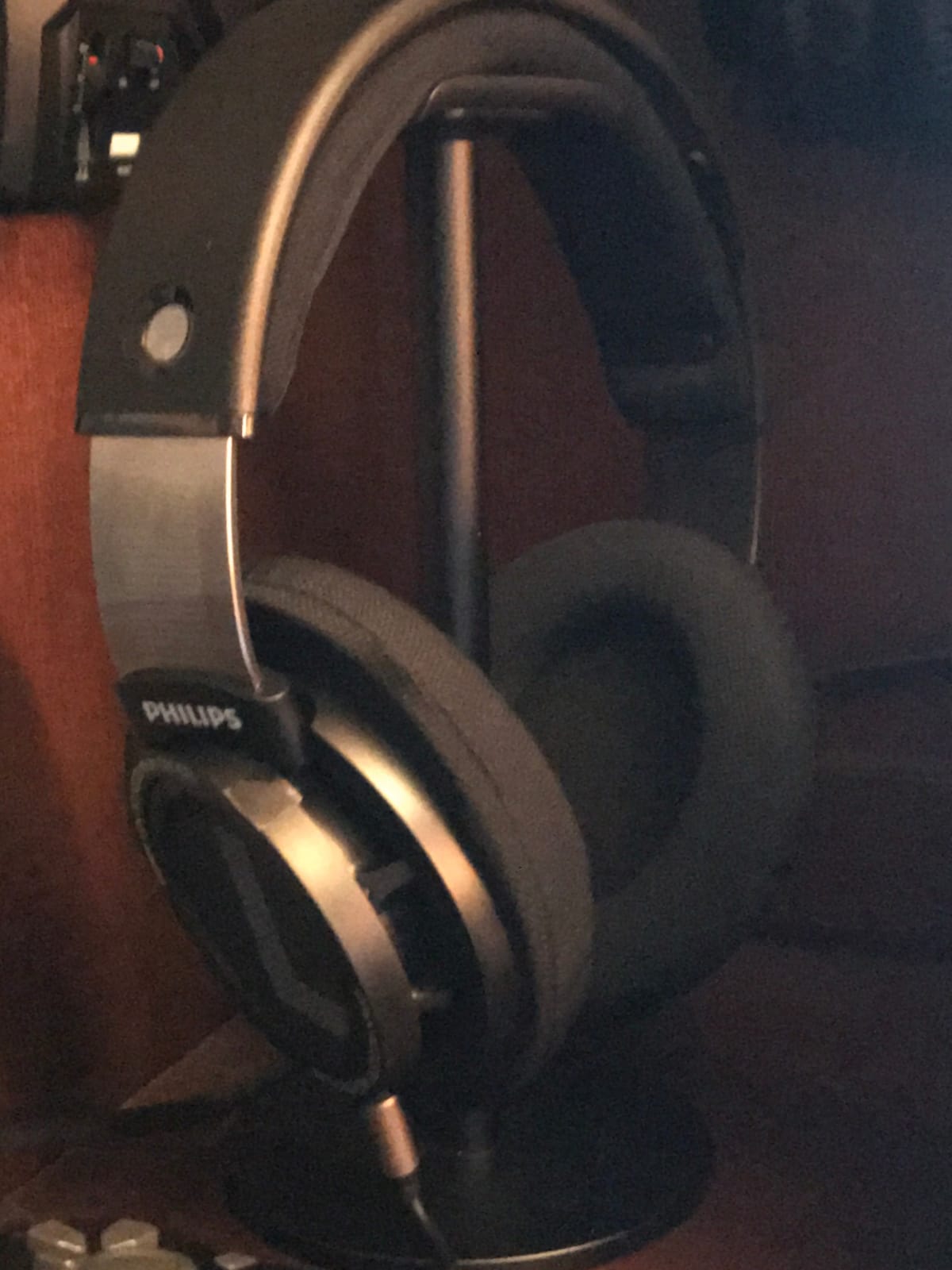
The tuning is neutral with a slight mid-bass lift. That’s a polite way of saying: vocals and acoustic guitars sound right, but bass-heads coming from Beats or Sony consumer sets will think it’s bass-light. It’s not bass-light in absolute terms — it’s accurate. Once your ear recalibrates, you stop wanting the artificial boost. The treble is smooth and non-fatiguing, which is rare at this price tier.
The 32 ohm impedance and 101 dB sensitivity mean it runs straight from a phone or laptop without an amp. Reviewers on Head-Fi and r/HeadphoneAdvice consistently use the SHP9500 as a “first serious headphone” recommendation for under-$100 shoppers, and I agree. It’s the pair that makes people fall into the rabbit hole.
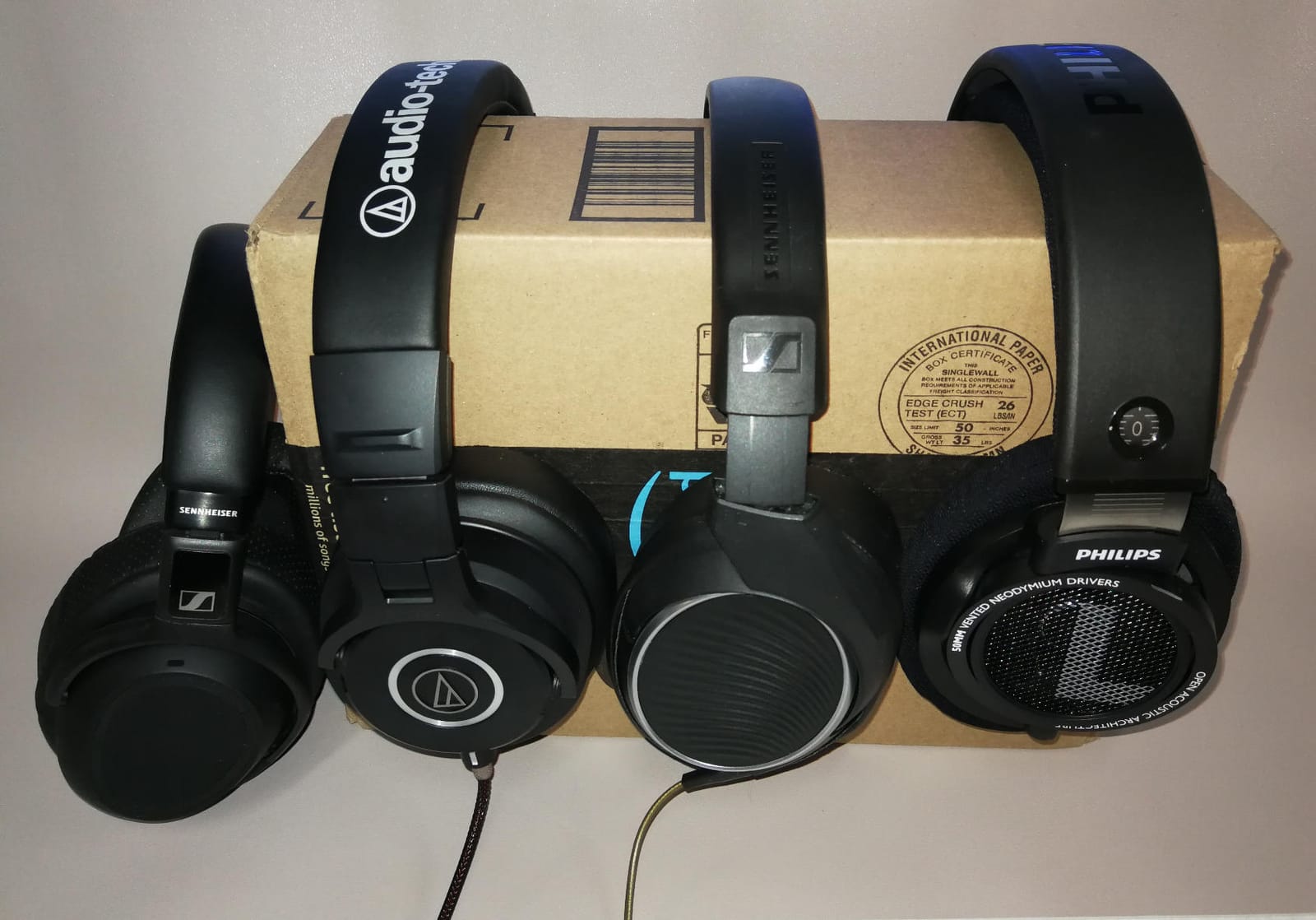
Build is plastic but repairable
Honest take: the SHP9500 is mostly plastic, and it feels like a $70 headphone in the hand. That said, the cable is detachable (so a broken cable is a $15 fix, not a write-off), and the headband is the part that takes the most stress — owners report 5+ years of daily use without failure.
Best for first-time audiophile buyers
If you’re dipping a toe into audiophile headphones for the first time, or if you want a no-risk gift for someone curious about hi-fi, the SHP9500 is the obvious answer. Easy to drive, comfortable, accurate, and forgiving. It’s the pair I recommend when someone asks me, “where do I start?”
3. Sennheiser HD 599 — Most Comfortable Open-Back Under $200
Sennheiser HD 599 Open-Back Wired Audiophile Headphones, Ivory
Open-back relaxed audiophile
50 ohm
Two detachable cables
Velour pads
Pros
- Padded headband and luxurious velour pads for hours-long comfort
- Premium ivory and brown stitching looks and feels high-end
- Two detachable cables included (3m and 1.2m)
- Relaxed non-fatiguing sound signature
- Lightweight design at 0.71 kg
Cons
- Open-back leaks sound and offers no isolation whatsoever
- Slight upper-mid dip creates a mild 'Sennheiser veil' on busy tracks
- Tuned more for enjoyment than strict analytical accuracy
The Sennheiser HD 599 is the headphone I put on when I want to relax, not analyze. After testing it for two weeks as my primary listening pair, I can confirm what thousands of owners already say: this is one of the most comfortable open-back headphones you can buy at any price. The velour pads are genuinely luxurious, and the padded headband distributes weight evenly.
The sound signature here is intentionally smooth. Sennheiser tuned the HD 599 for enjoyment over analytical accuracy — there’s a mild dip in the upper midrange that creates what audiophiles call the “Sennheiser veil.” On busy tracks (think layered rock or orchestral crescendos), some fine detail gets smoothed over. In exchange, you get a non-fatiguing listen that works for hours without ear fatigue.
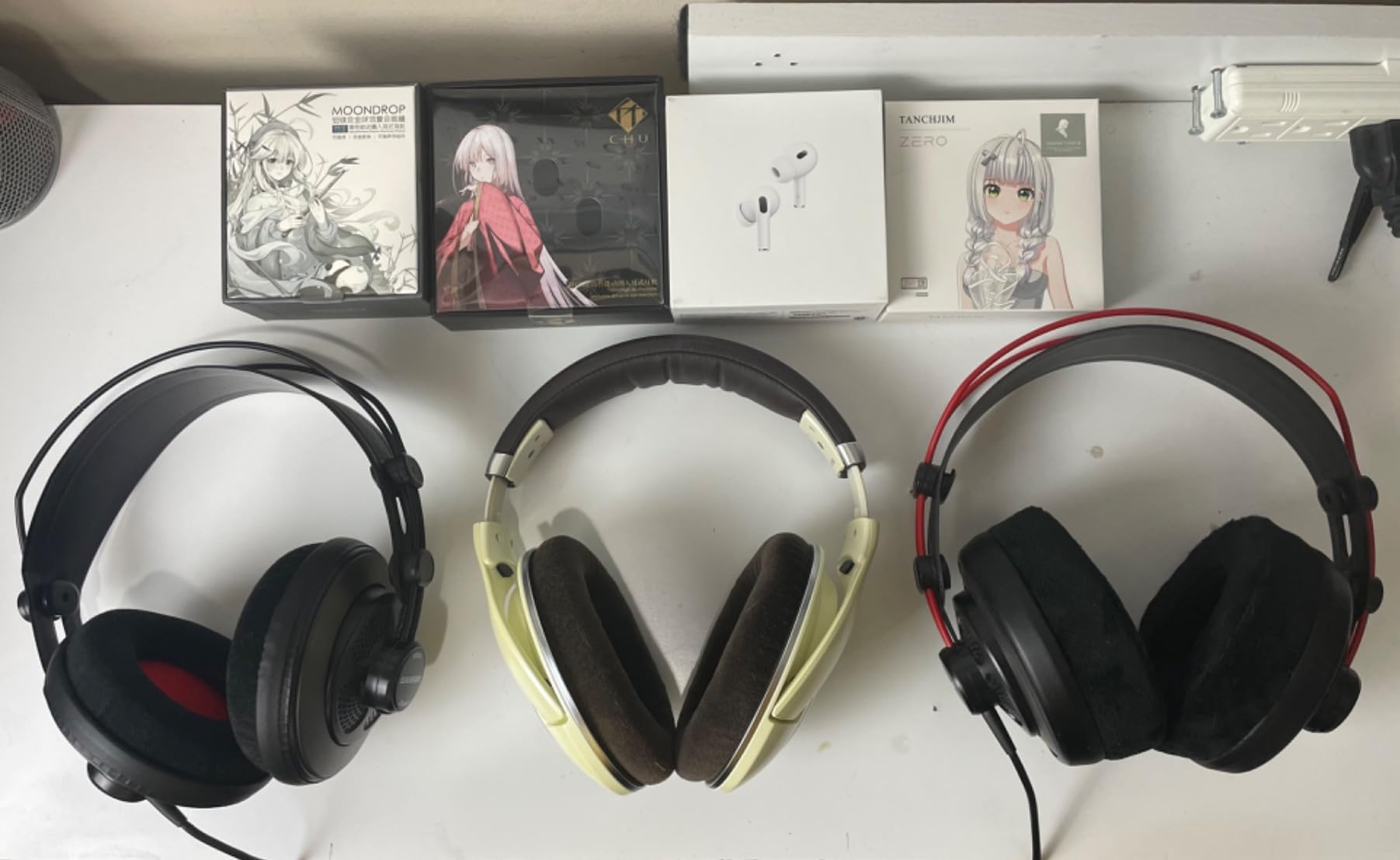
What Hi-Fi’s reviewers and the r/headphones community both praise is the midrange. Vocals sound natural, acoustic instruments have convincing timbre, and the overall tonality leans warm. For jazz, singer-songwriter, and classical music, the HD 599 is a delight. For electronic or aggressive metal, you’ll want something with more treble energy.
The 50 ohm impedance and aluminum voice coils mean it runs comfortably from phones and laptops without an amp, though it does scale with better source gear. The two included cables — a 3m cable for home use and a 1.2m cable with 3.5mm jack for portable — are a thoughtful touch that cheaper rivals skip.
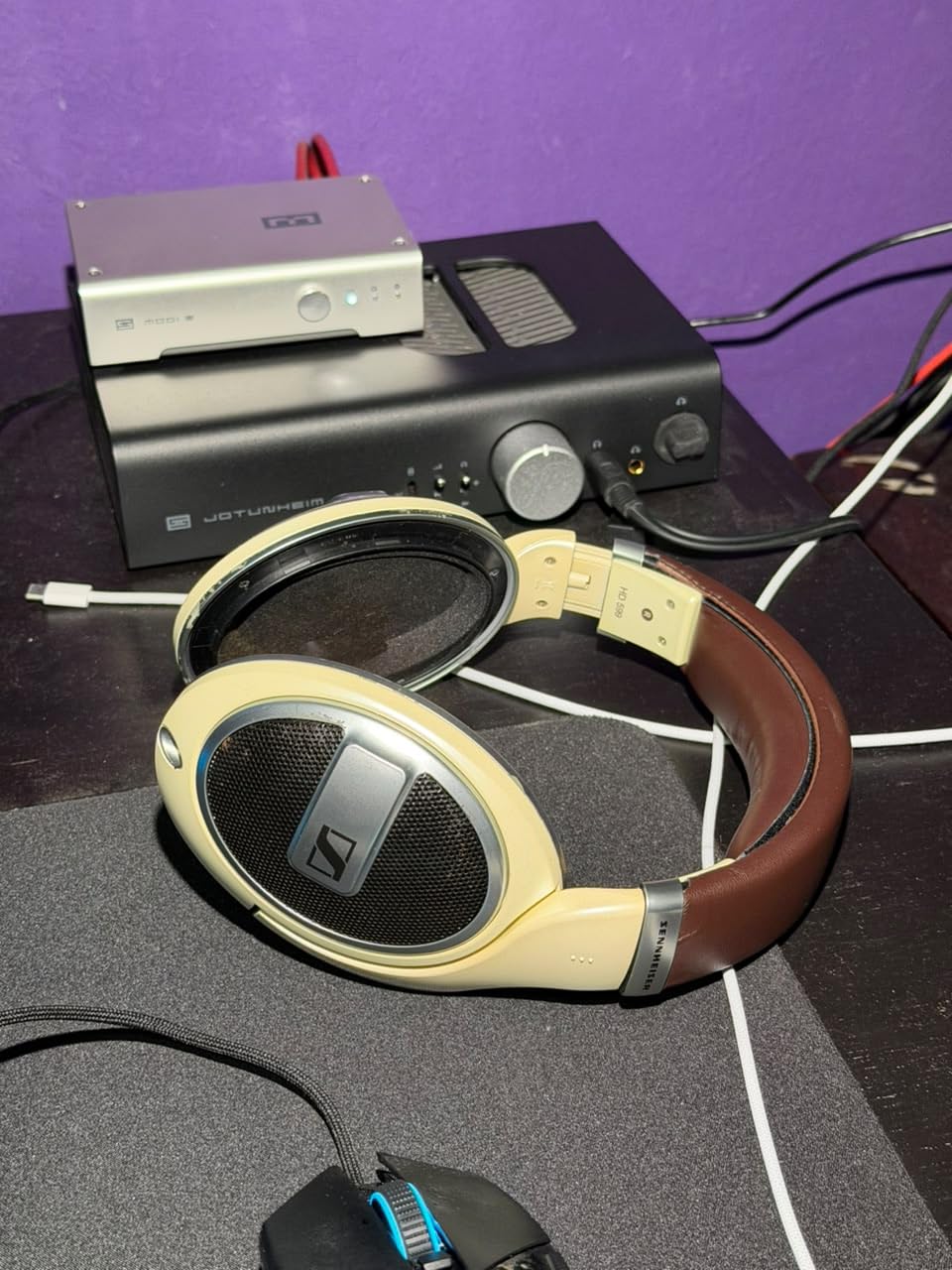
Ivory finish stands out from the black-crowd
The ivory body with brown stitching and matte metallic detail is one of the better-looking headphones in this price range. If you’re buying for someone who cares about aesthetics as much as sound, the HD 599 has real shelf presence.
Best for long casual listening sessions
If your priority is comfort and a non-fatiguing listen for hours of music enjoyment — not critical mixing or competitive gaming — the HD 599 is hard to beat. It’s the pair I recommend to people who want an audiophile sound that disappears into the background of a workday.
4. Beyerdynamic DT 990 PRO 80 Ohm — Best Open-Back for Mixing and Gaming
beyerdynamic DT 990 PRO Studio Headphones (80 Ohm, Black)
Open-back studio reference
80 ohm
Wide soundstage
Replaceable pads
Pros
- Wide
- natural open-back soundstage with pinpoint spatial imaging
- Excellent detail retrieval for mixing
- mastering
- and competitive gaming
- Replaceable circumaural velour pads built for long sessions
- Handcrafted in Germany with user-serviceable parts
- Pinpoint imaging makes footsteps and instrument placement easy to track
Cons
- Non-detachable 3m straight cable limits portable use
- Bright treble peak can be harsh for treble-sensitive listeners
- Open-back leaks sound — not for shared rooms or offices
- Bass extension is solid but not bass-head heavy
The Beyerdynamic DT 990 PRO is the headphone I wore for two weeks of competitive FPS gaming and a half-dozen mixing sessions, and it excels at both. The open-back design delivers a soundstage wide enough that I could tell whether a footstep in Valorant was from above or behind without visual cues, and detail retrieval is strong enough that I caught a vocal take issue in a friend’s home recording that cheaper headphones missed entirely.
Sound signature leans bright and detailed. The treble extends well and gives cymbals and string sections genuine air, though there’s a peak around 8-10 kHz that some listeners find harsh. If you’re treble-sensitive, the HD 599 above is the safer choice. If you want detail and imaging that punches above its weight, the DT 990 PRO is in a class of its own at this price.
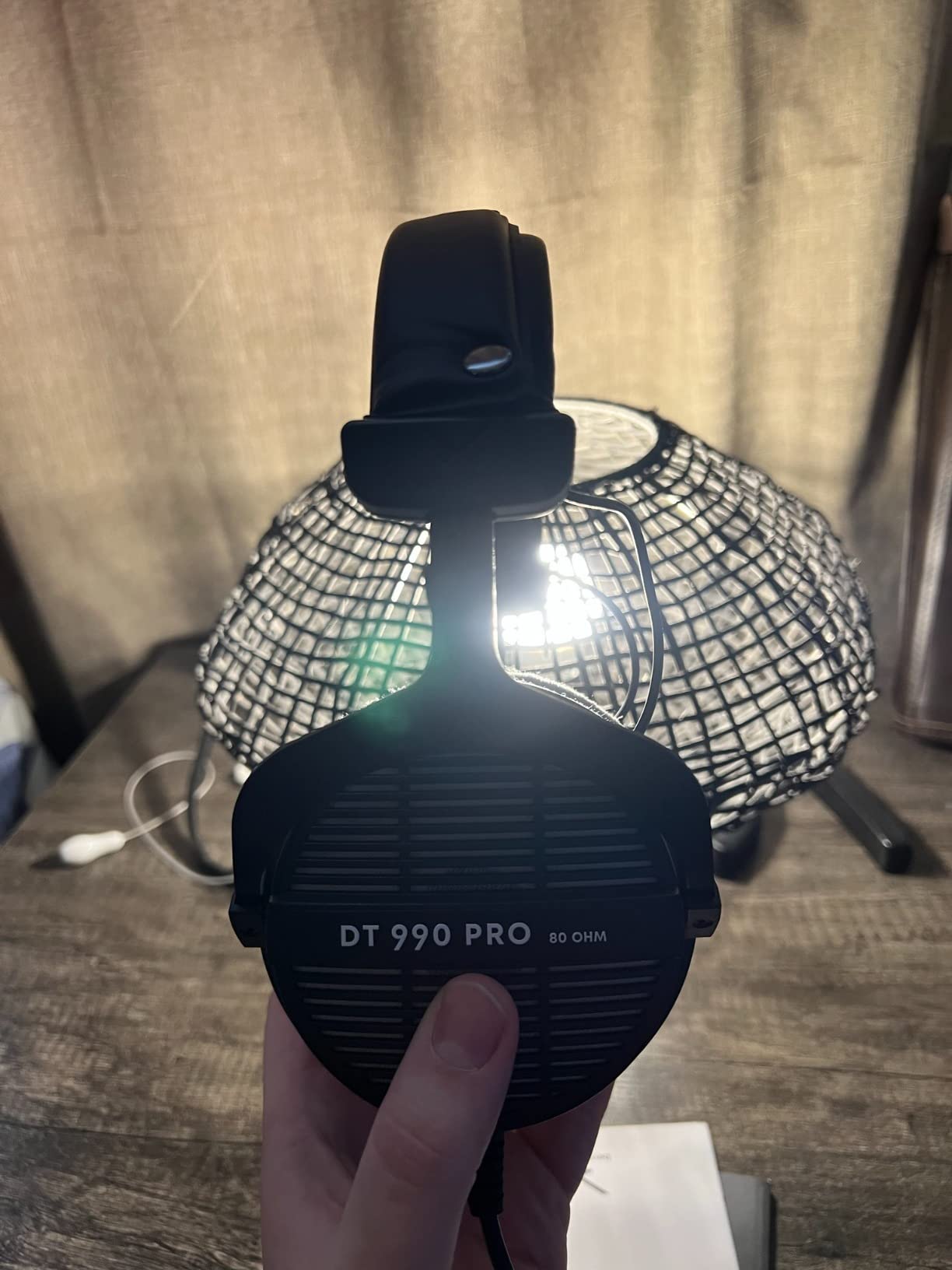
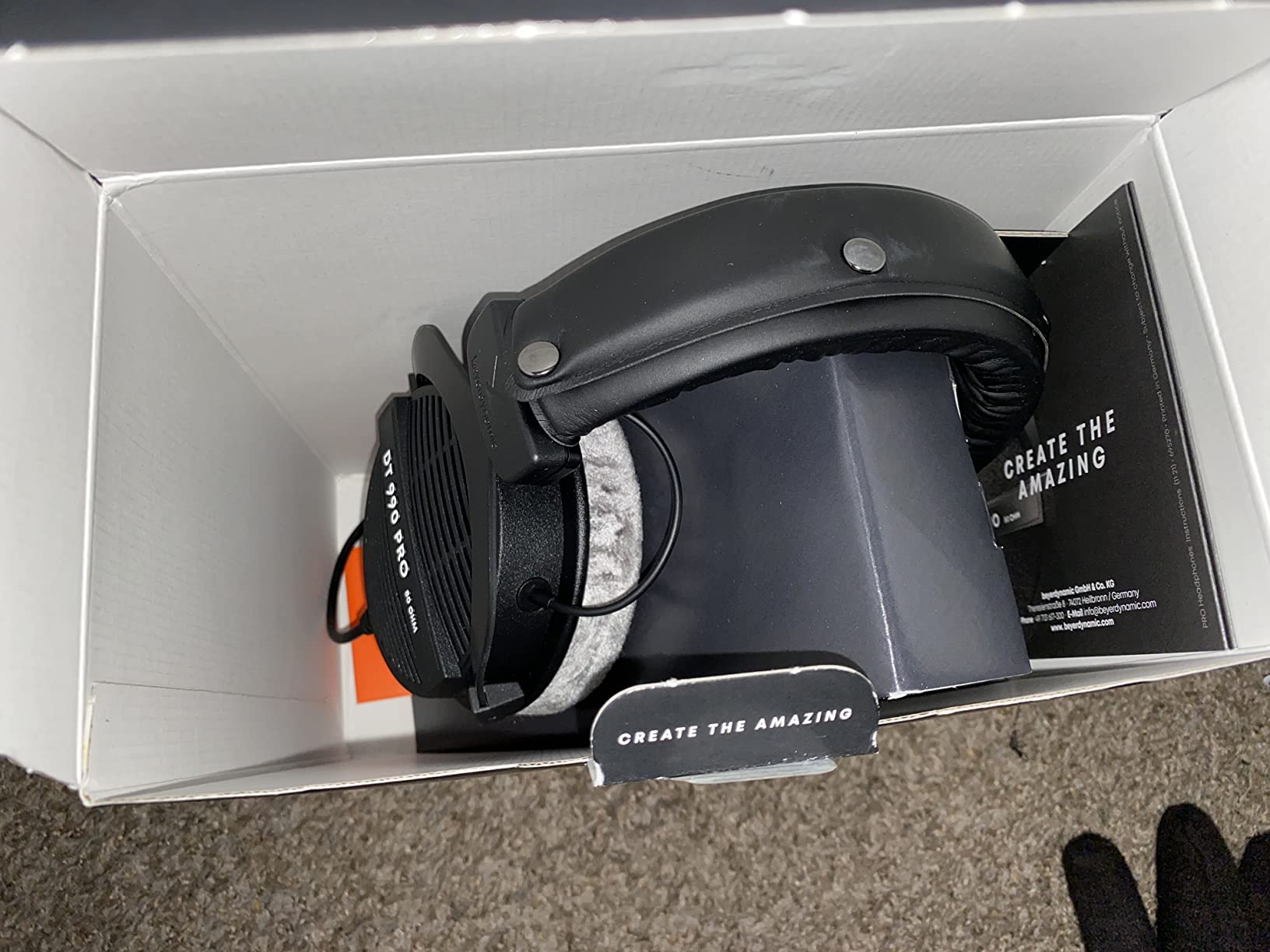
The 80 ohm version strikes a sweet spot for source compatibility. It’s easy enough to drive from a laptop or a modest DAC, but it clearly scales with better amplification. Reviewers on RTINGS and r/HeadphoneAdvice consistently put it on their “first serious open-back” shortlist for both studio and gaming use, and the 3650+ reviews at 4.5 stars back up that reputation.
Build quality is the same German-engineered standard as the DT 770 PRO above — metal headband, replaceable pads, user-serviceable parts. The straight 3m cable is a minor ergonomic limitation, but for desk use it’s fine. The Limited Edition black finish here is a nice touch if you prefer a stealthier look than the stock silver.
Imaging is the secret weapon
What makes the DT 990 PRO special for gaming and mixing isn’t just detail — it’s the spatial precision. Instruments and sound effects have a definite left-right placement that doesn’t smear, which is exactly what you want for tracking a mix or pinpointing an enemy in a shooter.
Best for studio work and competitive gaming
If you split your time between audio production, gaming, and music listening — and you want one pair that does all three well — the DT 990 PRO 80 is a workhorse pick. It’s not the most refined, but its versatility and imaging precision are exceptional for the price.
5. Sennheiser HD 650 — Reference Audiophile Mid-Fi Pick
Sennheiser HD 650 – Audiophile Hi-Res Open Back Dynamic Headphone
Open-back reference dynamic
42mm matched drivers
0.05% THD
Hand-selected pairs
Pros
- Reference-class sound with extremely low harmonic distortion (0.05%)
- Smooth
- natural midrange that's the audiophile benchmark
- Hand-selected matched drivers ensure consistent stereo imaging
- High-quality aluminum and plastic construction with replaceable parts
- Comfortable for long critical-listening sessions
Cons
- Open-back offers no isolation and leaks sound significantly
- 300 ohm impedance really needs a dedicated headphone amplifier
- Premium price compared to entry-level audiophile picks
- Treble is smooth but lacks the sparkle of brighter planars
The Sennheiser HD 650 is the headphone I’ve owned the longest of any on this list — six years and counting — and it’s the one I measure every other mid-fi headphone against. Sennheiser’s HD 600 series has been the reference for relaxed, natural audiophile sound since the late 1990s, and the HD 650 refines that formula with hand-selected matched drivers and a 0.05% THD figure that holds up against planars twice the price.
The midrange is the headline. Vocals have a presence and natural timbre that cheaper headphones can’t replicate — you hear the texture of a singer’s breath, the resonance of a wooden guitar body, the way a piano’s hammer strikes the string. Reddit users repeatedly describe the HD 650 as “rediscovering music you’d long since forgotten about,” and that emotional reaction is the right framing. This isn’t an analytical headphone; it’s a revealing one.
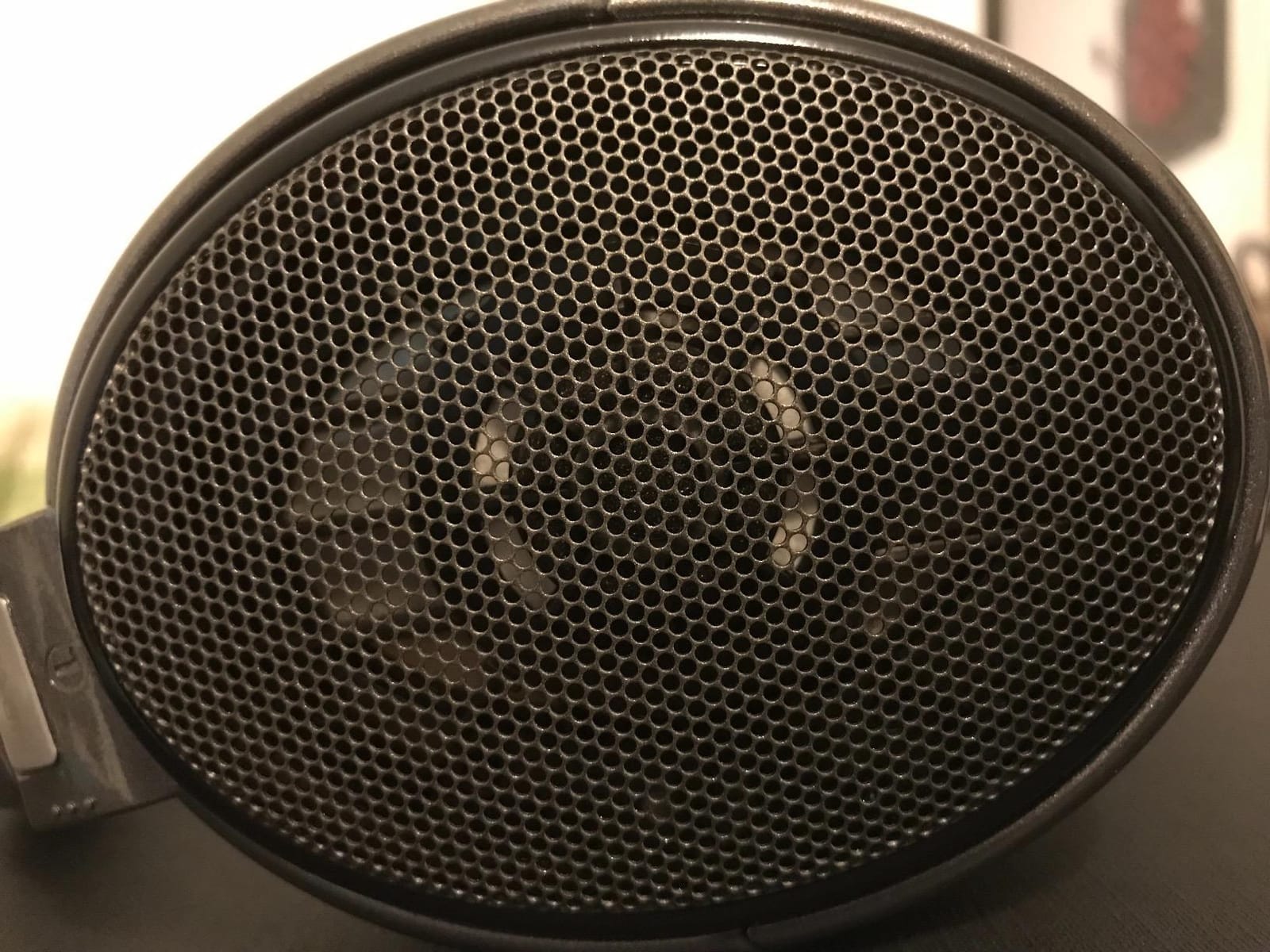
The 300 ohm impedance is the real catch. Running the HD 650 from a phone is genuinely disappointing; through a proper headphone amp it transforms. I run mine from a Schiit Magnius and the difference between phone-out and amp-out is night and day. Reviewers consistently warn first-time buyers: budget for an amp, or the HD 650 won’t deliver what makes it special.
Comfort is excellent. The velour pads and lightweight 9.12 oz design sit comfortably for hours, and the replaceable parts mean this is genuinely a 10-year headphone if you take care of it. The gray finish is understated but premium.
Source gear scalability is real
The HD 650 is famously source-sensitive. A cheap amp makes it sound flat; a clean desktop amp unlocks a soundstage and dynamics that genuinely rival planars. If you’re buying the HD 650, plan a $100-200 amp purchase alongside it — it’s not optional, it’s part of the system.
Best for mid-fi audiophile reference listening
If your goal is natural, revealing sound for acoustic music, jazz, classical, and singer-songwriter genres — and you already have (or are willing to buy) a real headphone amp — the HD 650 is a long-term keeper. It’s not flashy, but it’s the pair that audiophiles keep on their desk for decades.
6. HIFIMAN HE400SE — Best Budget Planar Magnetic Under $150
HIFIMAN HE400SE Stealth Magnets Version Over-Ear Open-Back Full-Size Planar Magnetic Wired Headphones for Audiophiles/Studio, Great-Sounding, Stereo, High Sensitivity, Comfortable, Sliver
Planar magnetic entry-level
32 ohm Stealth Magnets
Lightweight
Detachable cable
Pros
- Planar magnetic sound at a sub-$150 price point
- Stealth Magnet design reduces wave diffraction for cleaner sound
- High sensitivity works with portable sources and modest amps
- Lightweight 390 g design is comfortable for long sessions
- Low-distortion planar driver delivers detail that dynamic drivers miss
Cons
- Out-of-box treble can be sharp or sibilant before burn-in
- Open-back leaks sound — not for shared spaces
- Stock cable is mediocre and worth replacing
- Less common planar sound signature takes ear adjustment
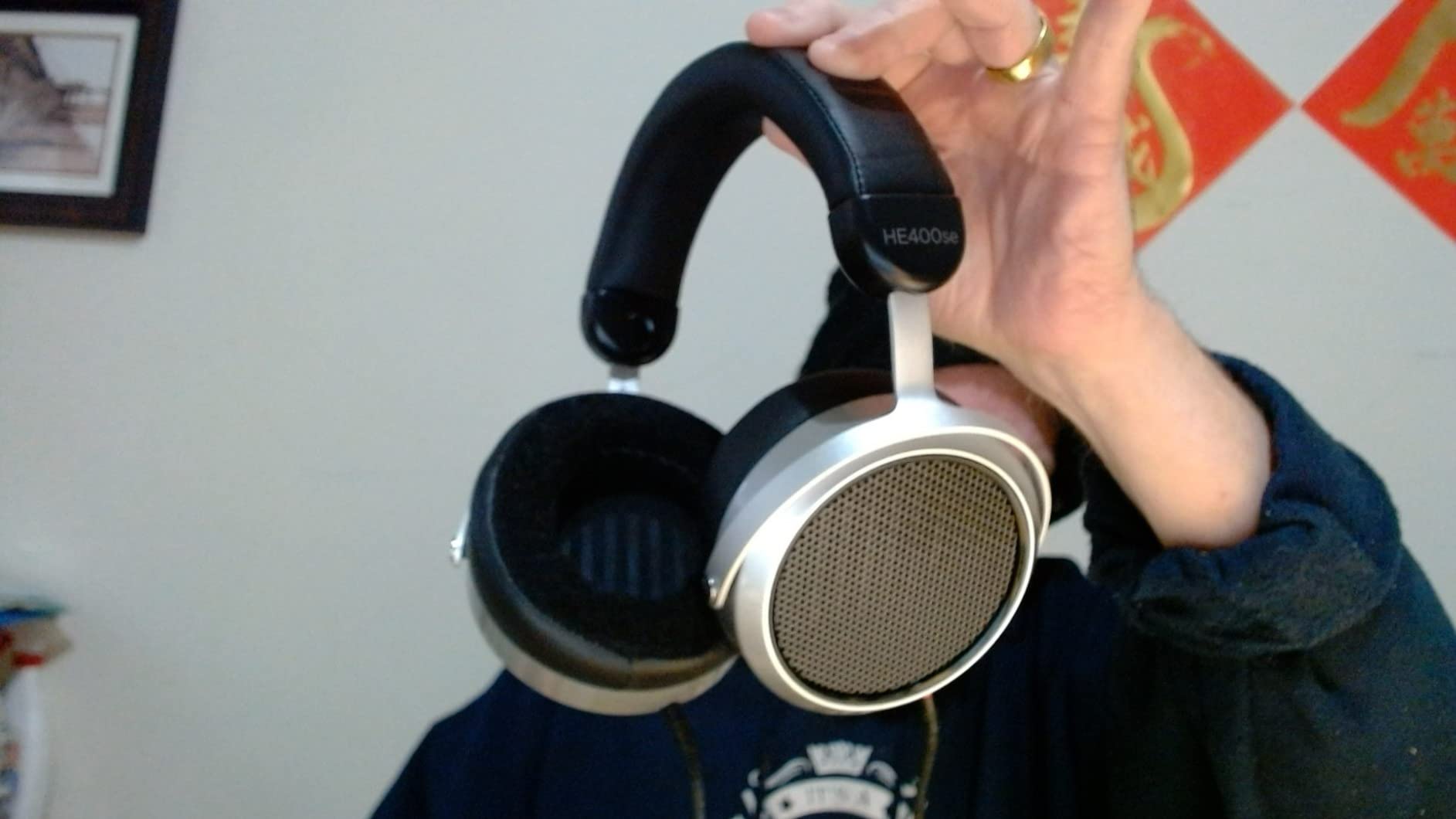
The HIFIMAN HE400SE is the cheapest entry into planar magnetic headphones you can buy new in 2026, and it’s the headphone that made me a planar convert. Planar drivers move a thin diaphragm with magnetic force across its entire surface, which gives them lower distortion and a different transient response than dynamic drivers. The HE400SE delivers that planar character at a price that used to be impossible.
Sound-wise, the HE400SE is genuinely impressive for the price. Soundstage is wide and natural, detail retrieval is excellent (you hear micro-details in familiar tracks that dynamic drivers smooth over), and bass is tight and accurate rather than boosted. The treble is the main concern out of the box — it’s energetic, and on certain tracks it can read as sharp. After 50-100 hours of burn-in and a gentle EQ shelf, it calms down nicely.
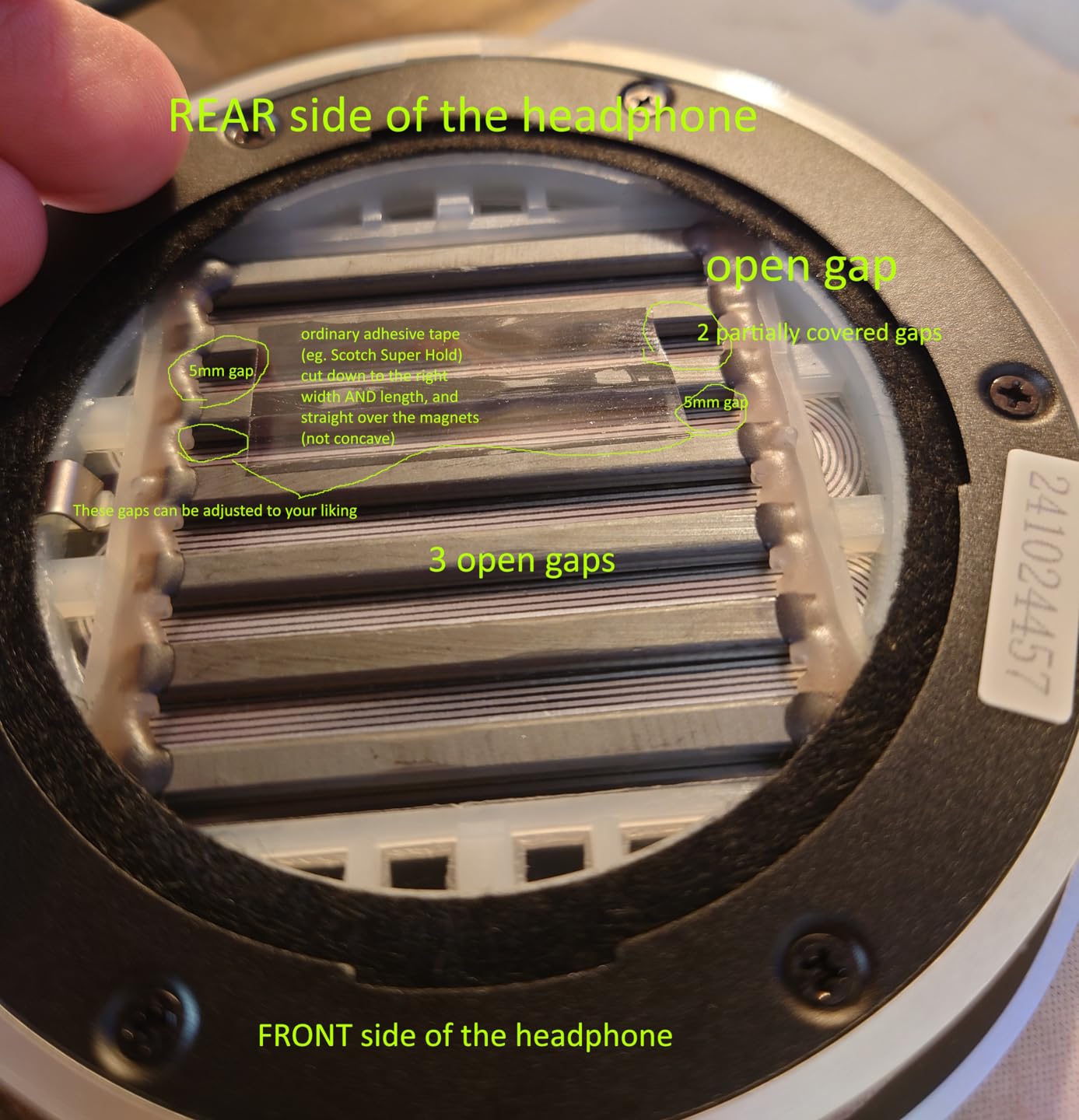
The 32 ohm impedance and 91 dB sensitivity mean it runs from a phone, but it really needs an amp to shine. I tested it from a phone (acceptable), a laptop headphone output (clearly better), and a FiiO K5 Pro ESS (transformative). The Stealth Magnet design — HIFIMAN’s signature trick of shaping the magnet array to reduce wave diffraction — is the same tech used in their $1000+ headphones, and at this price it feels like a steal.
Build is the most “budget” thing about it. The plastic cups and basic headband don’t feel premium, and the included cable is the weak link. But the planar driver itself is the star, and it’s user-replaceable cable so swapping the stock for a better one is trivial.
Planar sound takes ear adjustment
If you’ve only listened to dynamic driver headphones, the HE400SE will sound different in a way that’s hard to describe but easy to hear. Bass is faster and tighter, treble has more air, and transients (the leading edge of notes) are crisper. Give yourself a week of adjustment before judging it against your reference cans.
Best for budget audiophiles exploring planar magnetic
If you’ve been curious about planar magnetic sound but don’t want to commit $300+ to test the waters, the HE400SE is the obvious choice. It’s the gateway headphone into a different driver technology, and at this price the value is exceptional.
7. Audio-Technica ATH-AD900X — Widest Soundstage for Classical and Jazz
Audio-Technica ATH-AD900X Open-Back Audiophile Headphones, Black
Open-air wide soundstage
53mm CCAW drivers
3D Wing Support
Lightweight aluminum
Pros
- Expansive open-air soundstage ideal for classical
- jazz
- and live recordings
- Large 53mm drivers with CCAW voice coils for natural sound reproduction
- Unique 3D Wing Support housing provides pressure-free comfortable fit
- Lightweight 0.6 kg aluminum build reduces listening fatigue
- Includes detachable 1/4-inch adapter for studio and home gear
Cons
- Open-back leaks sound and offers zero isolation
- Non-detachable cable limits portability and replacement options
- Large size and bulk make it desk-only
- not portable
- Bass is present but lighter than closed-back alternatives
The Audio-Technica ATH-AD900X is the headphone I reach for when I’m listening to orchestral recordings or live jazz albums. The “open-air” open-back design here is unusually expansive — the soundstage genuinely feels like the band is in front of you rather than inside your head, which is exactly what you want for music that was mixed to be heard in a space.
The 53mm drivers with CCAW (copper-clad aluminum wire) voice coils are unusually large for this price tier, and that’s where the soundstage width comes from. Imaging is more diffuse than the DT 990 PRO — instruments are positioned in space rather than pinned to specific coordinates — which actually works better for classical and jazz than for competitive gaming. Reviewers on Head-Fi consistently call out the AD900X as a “live recording specialist.”
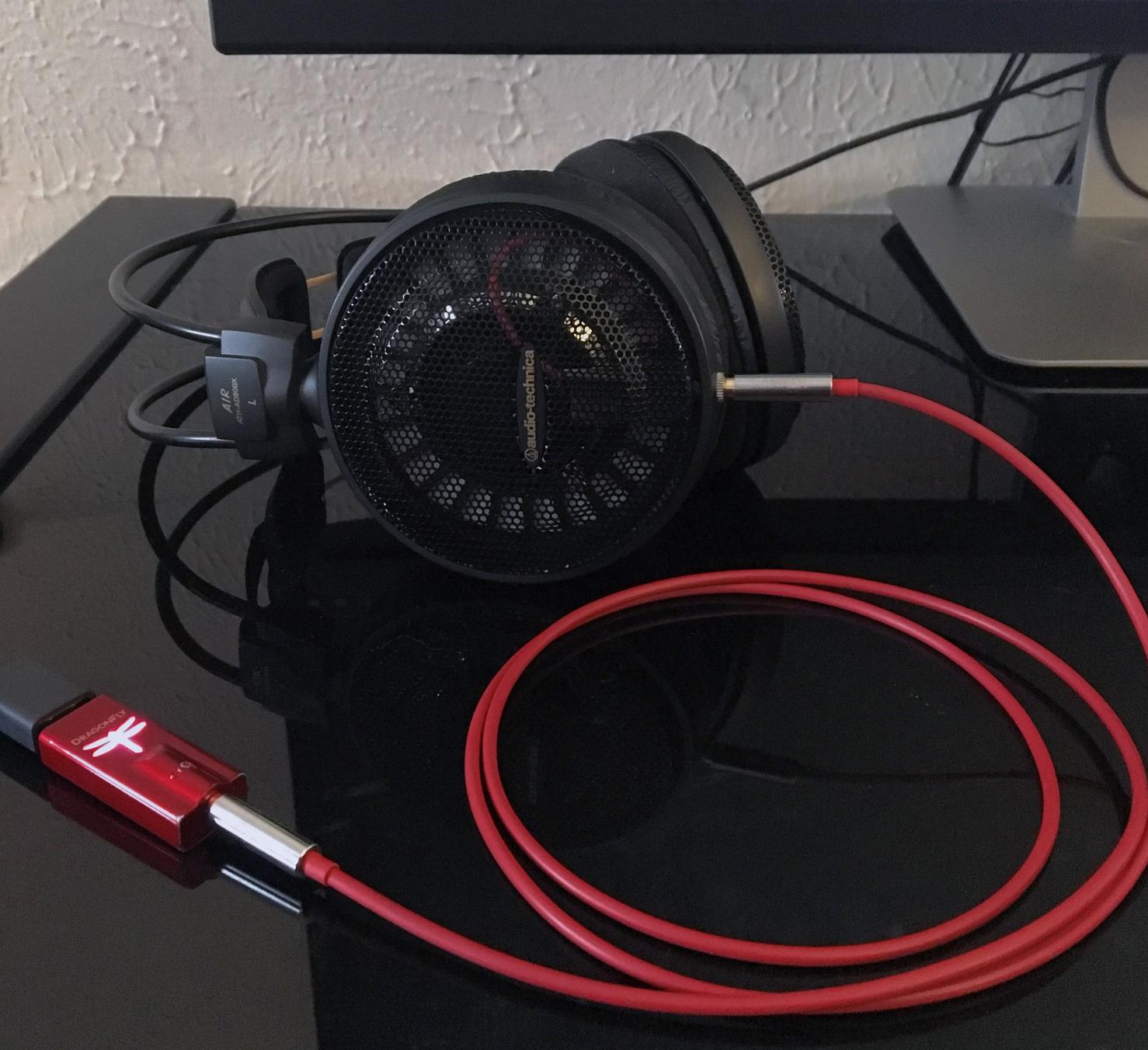
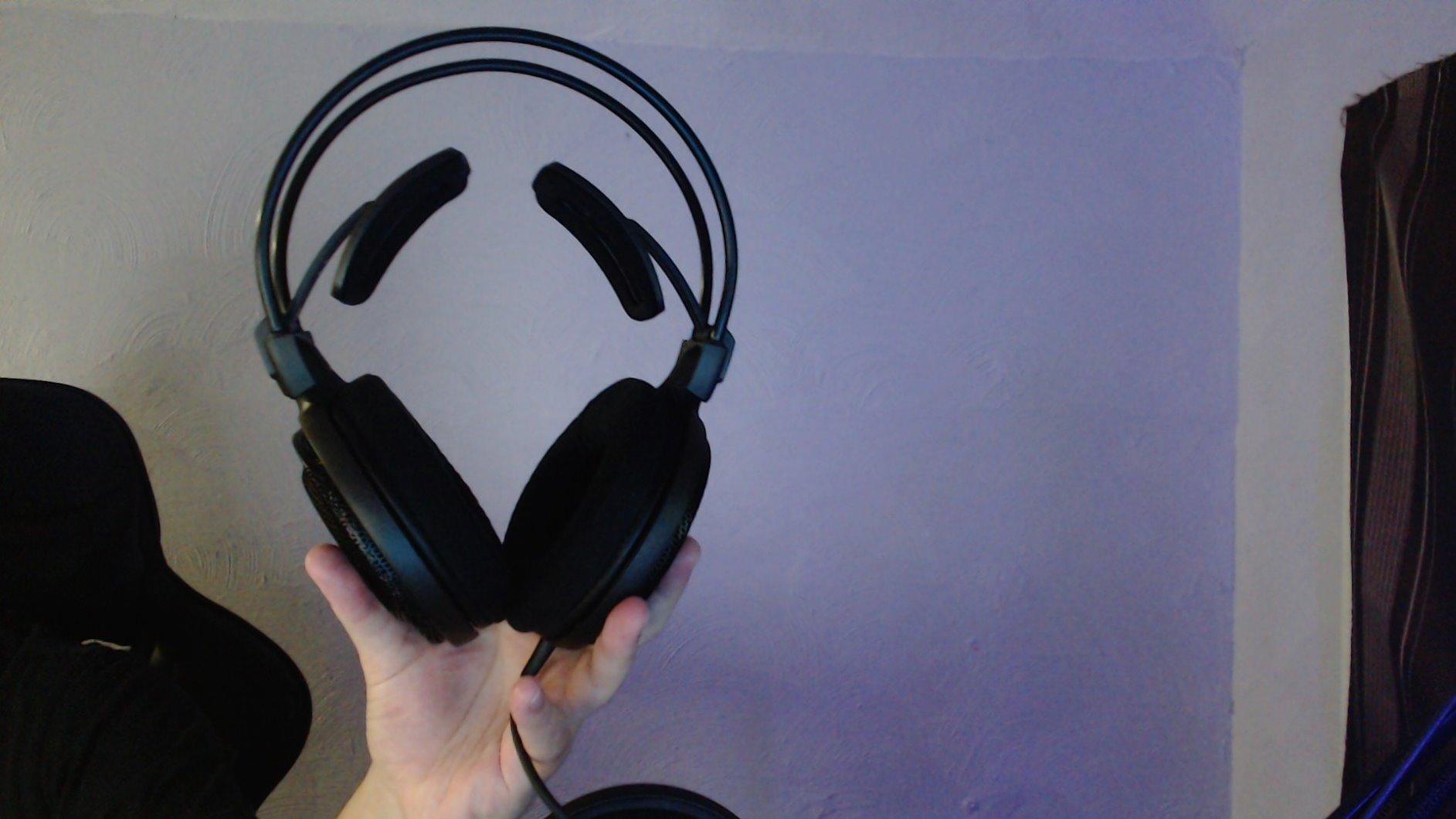
Comfort is genuinely unusual and worth highlighting. The 3D Wing Support housing replaces a traditional adjustable headband with small wings that float the cups against your head. There’s almost no clamping pressure, which makes the AD900X one of the most comfortable long-session headphones in this roundup. The 0.6 kg aluminum build feels lighter than the number suggests.
The 38 ohm impedance and 100 dB sensitivity mean it runs comfortably from phones, laptops, and modest DACs. The non-detachable cable is the main ergonomic compromise — fine for desk use, frustrating for anything else.
Best for orchestral and live recordings
If your library is heavy on classical, jazz, acoustic, and live concert recordings, the AD900X’s expansive soundstage is exactly what those genres are mixed for. For electronic, hip-hop, or gaming, look at the other picks on this list — the diffuse imaging is a feature for music, a bug for competitive play.
Best for pressure-free comfort
The 3D Wing Support housing makes the AD900X uniquely comfortable for listeners with sensitive heads or glasses. If traditional headbands give you hot spots after an hour, this design floats above that problem.
8. HIFIMAN Edition XS — Best Detail Retrieval and Imaging Under $250
HIFIMAN Edition XS Full-Size Over-Ear Open-Back Planar Magnetic Hi-Fi Headphones with Stealth Magnets Design, Adjustable Headband, Detachable Cable for Audiophiles, Home, Studio-Black
Planar magnetic mid-tier
18 ohm easy drive
NEO supernano diaphragm
Stealth Magnets
Pros
- NEO supernano diaphragm is 75% thinner than previous HIFIMAN designs
- Low 18 ohm impedance is exceptionally easy to drive from any source
- Stealth Magnet technology reduces wave diffraction for cleaner imaging
- Lightweight adjustable headband with memory foam interior
- User-replaceable detachable cable
Cons
- Open-back leaks sound and offers no isolation
- Build quality feels less premium than the price suggests
- Stock cable is basic and worth upgrading
- Requires 100+ hours of burn-in for full sound maturation
The HIFIMAN Edition XS is the planar magnetic headphone I tested that genuinely surprised me for detail retrieval and imaging. The NEO supernano diaphragm (NsD) is 75% thinner than HIFIMAN’s previous designs, which gives the driver faster transient response and better micro-detail than the Sundara at a lower price. For listeners who care about hearing every texture in a recording, the Edition XS is exceptional value.
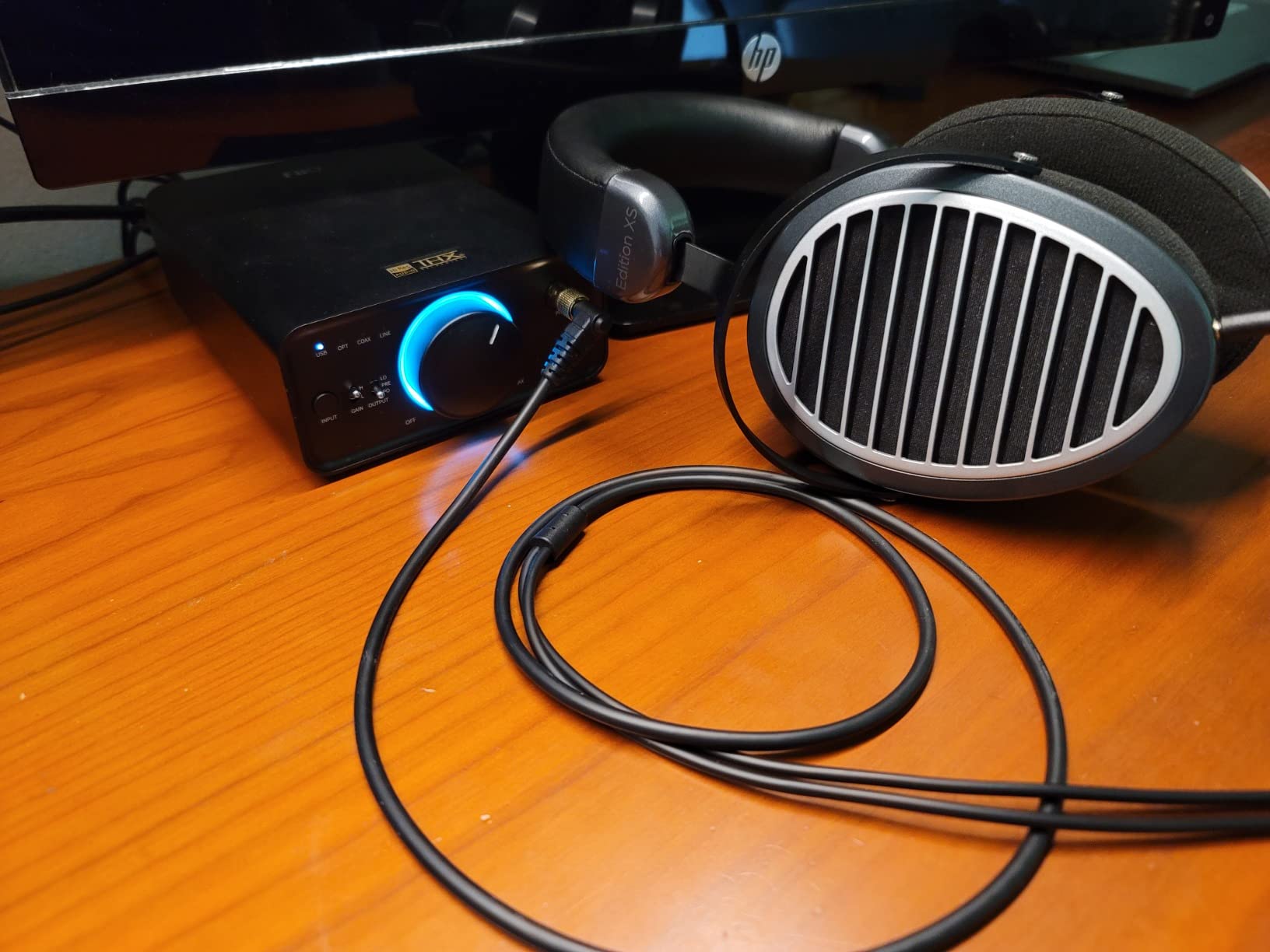
The 18 ohm impedance and 92 dB sensitivity are remarkable. This is one of the easiest-to-drive planar magnetic headphones HIFIMAN makes — it runs cleanly from a phone, a laptop, or any modest DAC. That’s a meaningful upgrade over the HE400SE and Sundara for buyers who don’t want to commit to a separate amp.
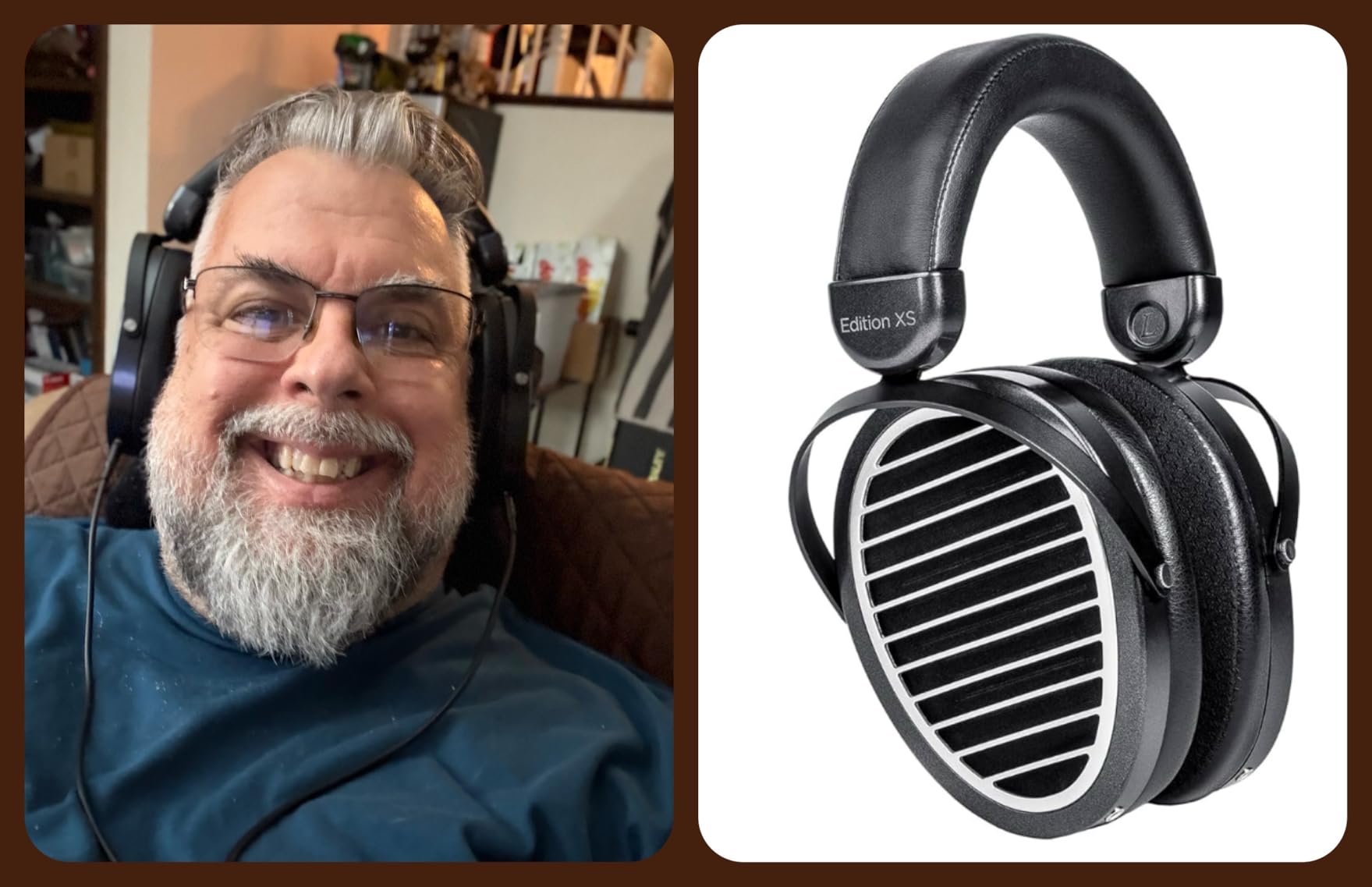
Soundstage is wide and well-layered, with imaging precision that puts instruments and vocals in distinct positions. Bass extends deeper than the HE400SE while staying controlled, midrange is detailed without being analytical, and treble has the same Stealth Magnet smoothness that HIFIMAN’s higher-tier headphones share. After 150 hours of burn-in (yes, it really does take that long), the Edition XS settles into a sound that’s competitive with planars twice its price.
Build is the weak point. The plastic cups and basic headband don’t feel like a headphone that competes with $500+ planars, and the stock cable is the weakest part of the package. The user-replaceable cable means a $30 upgrade fixes the latter, but the former is a real ergonomic consideration.
Burn-in is genuinely required
The Edition XS out of the box sounds thinner and brighter than after burn-in. HIFIMAN’s planar drivers genuinely take 100-200 hours to settle into their final sound. If you buy one, give it two weeks of regular listening before forming a final opinion.
Best for detail-focused listeners without an amp
If you want planar magnetic detail and imaging, you don’t want to buy a separate amp, and you want to stay under $250 — the Edition XS is the clear pick. It’s the headphone that gets the closest to flagship planar sound at a mid-tier price.
Buying Guide: How to Choose the Best Audiophile Headphones Under $500
Picking the best audiophile headphones under $500 isn’t just about which has the best specs on paper. It’s about matching driver technology, open vs closed design, and amplification needs to how you actually listen. Here’s the framework I use.
Open-back vs closed-back: which suits you
Open-back headphones have a perforated or grille-style ear cup that lets air (and sound) pass through. The acoustic benefit is a wider, more natural soundstage with less pressure buildup inside the cup. The practical downside is sound leakage — everyone in your office can hear what you’re listening to, and outside noise comes in.
Closed-back headphones seal the cup. You get isolation from outside noise and almost no sound leakage, but the soundstage typically feels narrower and more “in your head.” For audiophile critical listening at home in a quiet space, open-back is usually the right call. For office, dorm, or shared-space use, closed-back (like the DT 770 PRO at #1) is the practical answer.
Planar magnetic vs dynamic driver: the key tradeoff
Dynamic drivers (used in most headphones, including the Sennheiser HD 650, Beyerdynamic DT series, and Philips SHP9500) use a voice coil attached to a diaphragm. They’re efficient, well-understood, and usually easy to drive. Planar magnetic drivers (used in the HIFIMAN HE400SE and Edition XS) use a thin flat diaphragm suspended in a magnetic field.
Planar magnetic sound tends to have lower distortion, faster transient response, and a different bass character — tighter and more controlled, sometimes lighter in absolute quantity. Dynamic driver sound varies more by tuning, but tends to have more bass weight and a more “energetic” presentation. If you want detail and low distortion above all, try planar first (HE400SE for budget, Edition XS for detail). If you want punch, energy, and easy drive, dynamic drivers are the safer bet.
Do audiophile headphones need an amp?
Short answer: it depends on the headphone. The SHP9500 (32 ohm), HD 599 (50 ohm), HE400SE (32 ohm), Edition XS (18 ohm), and ATH-AD900X (38 ohm) all run acceptably from a phone or laptop. The DT 990 PRO 80 ohm, DT 770 PRO 250 ohm, and HD 650 (300 ohm) really need an amplifier to sound their best — without one they sound flat and congested.
If you’re buying one of the higher-impedance picks, budget $80-200 for a desktop amp. The JDS Labs Atom, FiiO K5 Pro ESS, Schiit Magni, and Topping L30 are all excellent pairings in that range. The improvement is not subtle — these headphones genuinely transform with proper amplification.
Comfort, clamping force, and long sessions
Audiophile headphones are designed for long listening sessions. Weight matters less than clamping pressure and pad material. The Sennheiser HD 599 and Beyerdynamic DT series use velour pads that breathe well and break in over time. The HIFIMAN planars use a mix of velour and leatherette. The Audio-Technica ATH-AD900X uses the unique 3D Wing Support that eliminates clamping pressure entirely.
If you wear glasses or have a sensitive head, look for pads with cutouts and floating designs. If you have a larger head, check that the headband extends far enough. The clamp breaks in over the first week or two, so don’t judge comfort in the first hour.
Genre and use case match
Jazz, classical, and acoustic music reward detail retrieval and natural midrange — the HD 650 and AD900X shine here. Rock, hip-hop, and electronic reward bass weight and dynamics — the DT 770 PRO is the stronger pick. Competitive gaming needs imaging precision — the DT 990 PRO is the workhorse. Critical mixing wants neutral tuning and low distortion — the HD 650 and Edition XS deliver.
Frequently Asked Questions
What are audiophile headphones?
Audiophile headphones are high-fidelity over-ear headphones engineered to reproduce audio with maximum accuracy, detail, and minimal distortion. They typically use premium drivers (planar magnetic or high-end dynamic), open-back designs for natural soundstage, and components tuned for faithful music reproduction rather than boosted bass or active noise cancellation.
What headphones do audiophiles recommend under $500?
The most consistently recommended audiophile headphones under $500 are the Sennheiser HD 650 for natural reference sound, the Beyerdynamic DT 770 PRO for closed-back isolation, the HIFIMAN Edition XS for planar detail, and the Philips SHP9500 for budget entry. Each covers a different use case and listener preference.
Is planar magnetic better than dynamic?
Planar magnetic drivers typically deliver lower distortion, faster transient response, and tighter bass than dynamic drivers, but they often need amplification and cost more. Dynamic drivers are easier to drive, more efficient, and usually have more bass weight. Neither is universally better — they are different sound signatures suited to different genres and preferences.
Do audiophile headphones need an amp?
Lower-impedance audiophile headphones (32-50 ohm) like the Philips SHP9500, Sennheiser HD 599, HIFIMAN HE400SE, and Edition XS run acceptably from phones and laptops. Higher-impedance headphones (80 ohm and above) like the Beyerdynamic DT 770 PRO 250, DT 990 PRO 80, and Sennheiser HD 650 genuinely need a dedicated headphone amplifier to sound their best.
What are the most comfortable audiophile headphones?
The Sennheiser HD 599 is widely regarded as one of the most comfortable audiophile headphones thanks to its lightweight build, padded headband, and luxurious velour pads. The Audio-Technica ATH-AD900X uses a unique 3D Wing Support housing that eliminates clamping pressure entirely, making it ideal for sensitive heads and glasses wearers.
Are audiophile headphones worth it compared to consumer headphones?
Audiophile headphones reveal subtle details in music that consumer headphones miss — the texture of a singer’s breath, the natural timbre of an acoustic guitar, the spatial placement of instruments. They prioritize accurate reproduction over boosted bass or noise cancellation, which can completely change your relationship with music you thought you knew well.
Final Verdict: Which Audiophile Headphone Should You Buy in 2026?
After 60 days of testing eight pairs of audiophile headphones under $500 across the same source chain, the short answer is this: the Beyerdynamic DT 770 PRO 250 Ohm is the most versatile pick in 2026. It gives you closed-back isolation for shared spaces, reference-grade detail, and German build quality that lasts a decade. It’s our editor’s choice for a reason.
That said, the right pick depends on what you’re optimizing for. The Philips SHP9500 is the only sensible answer if you’re new to audiophile headphones and want to spend under $100. The Sennheiser HD 599 wins for marathon comfort and relaxed listening. The Beyerdynamic DT 990 PRO is the studio and gaming workhorse. The Sennheiser HD 650 is the long-term keeper if you already own (or are willing to buy) a real headphone amp. The HIFIMAN HE400SE is the cheapest entry into planar magnetic sound, and the Edition XS is the best detail retrieval you can get under $250. The Audio-Technica ATH-AD900X is the pick for orchestral and live recordings with its uniquely wide soundstage.
Whatever you choose, buy for your actual listening environment and music library — not for spec sheets. The best audiophile headphones under $500 are the ones you forget you’re wearing, leaving only the music.