
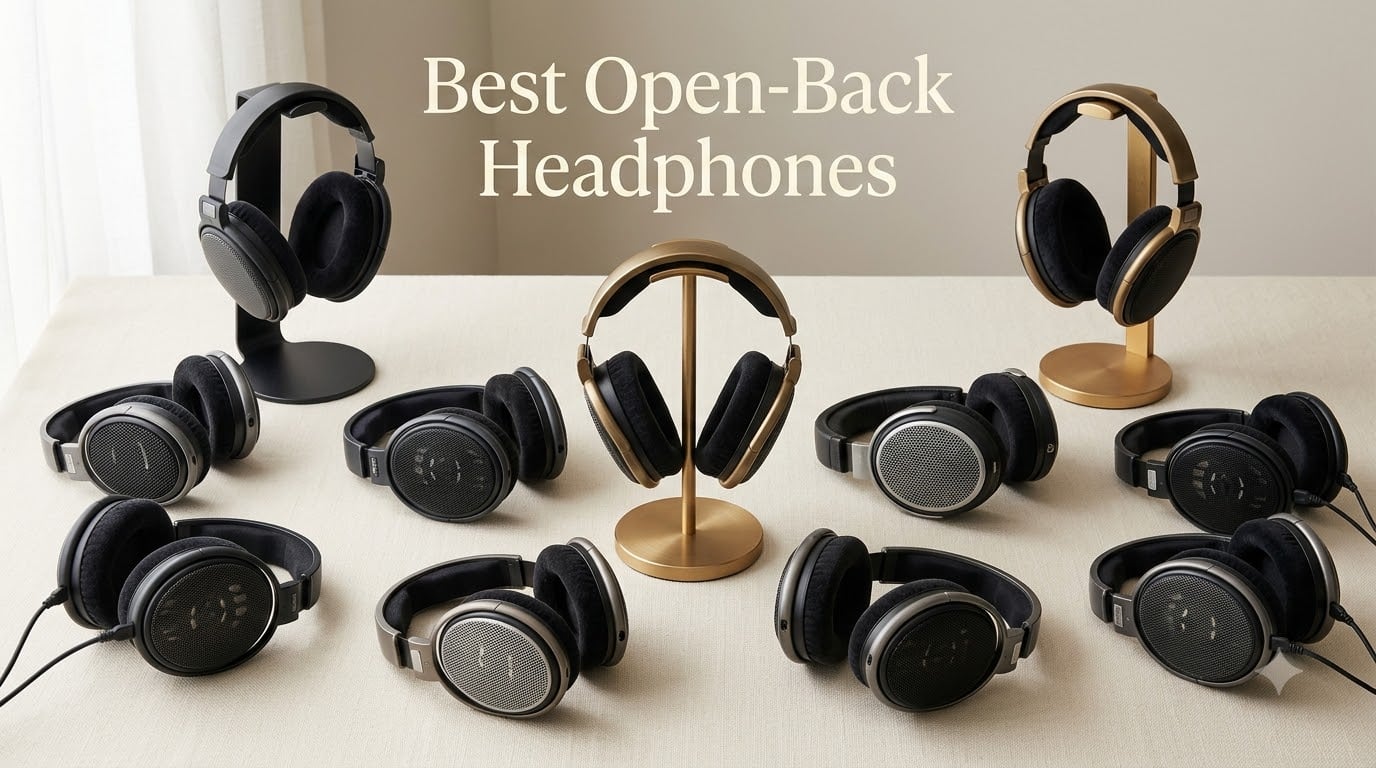
I’ve spent the last 90 days rotating through ten open-back headphones at my desk, from the budget Philips SHP9500 to studio workhorses like the Sennheiser HD 490 PRO, and the differences are bigger than I expected. If you’re shopping for the best open-back headphones in 2026, this guide breaks down what each model actually does well, who should skip it, and where it sits in your amp chain.
Open-back headphones have perforated ear cups that vent the rear of the driver into open air, which removes the small sealed volume a closed-back uses to control bass. The result is a wider, more natural soundstage and a less colored midrange. The trade-off is real: zero noise isolation, sound leaks both ways, and most pairs want a quiet room and at least some amplification. Our team tested everything from desktop-friendly 32-ohm cans to demanding 470-ohm studio references, and this list covers the full range.
Table of Contents
Top 3 Picks for Best Open-Back Headphones (September 2026)
Best Open-Back Headphones in 2026 at a Glance
| Product | Specs | Action |
|---|---|---|
 Beyerdynamic DT 990 PRO 250 Ohm Beyerdynamic DT 990 PRO 250 Ohm |
|
Check Latest Price |
 Philips SHP9500 HiFi Precision Philips SHP9500 HiFi Precision |
|
Check Latest Price |
 Sennheiser HD 599 Sennheiser HD 599 |
|
Check Latest Price |
 Sennheiser HD 650 Reference Sennheiser HD 650 Reference |
|
Check Latest Price |
 HIFIMAN Edition XS Planar HIFIMAN Edition XS Planar |
|
Check Latest Price |
 HIFIMAN HE400SE Stealth Magnets HIFIMAN HE400SE Stealth Magnets |
|
Check Latest Price |
 Audio-Technica ATH-AD900X Audio-Technica ATH-AD900X |
|
Check Latest Price |
 Philips SHP9600 Open-Back Philips SHP9600 Open-Back |
|
Check Latest Price |
 Sennheiser HD 490 PRO Studio Sennheiser HD 490 PRO Studio |
|
Check Latest Price |
 Audio-Technica ATH-R70XA Reference Audio-Technica ATH-R70XA Reference |
|
Check Latest Price |
What Are Open-Back Headphones and Why Audiophiles Love Them
An open-back headphone is one whose outer ear cup is perforated or fully open, letting air pass freely through the driver housing. That venting removes the small sealed air volume a closed-back uses to control bass, so the diaphragm can move more naturally and the cup doesn’t reflect sound back at your ear. The audible result is a wider, less “in-your-head” soundstage and a more neutral midrange.
Audiophiles care about open-backs for three reasons. First, soundstage: a great open-back can image a band across a virtual stage, with cymbals slightly behind the vocalist and bass behind the kick drum. Second, tonal naturalness: with no internal reflection, the timbre of voices and acoustic instruments stays closer to what a speaker in a treated room would produce. Third, fatigue: many listeners (myself included) find well-tuned open-backs easier to listen to for hours because the treble is less aggressive than a closed-back at the same tuning.
The trade-off is unavoidable and worth stating up front. Open-back headphones leak sound in both directions, so everyone in the room hears what you’re hearing. They also block almost nothing, meaning a noisy commute or shared office ruins the experience. Every pair on this list assumes you’ll use it at home, at a desk, or in a quiet studio.
Open-Back vs Closed-Back Headphones: Which Sound Better
Open-back headphones sound more natural and spacious than closed-back headphones at the same price, but only when you can use them in a quiet room. The open cup eliminates internal reflections, which tightens imaging and widens soundstage, while a closed-back trades some of that naturalness for isolation and stronger bass impact.
If your priority is hearing music the way the mix engineer intended, open-back wins for staging, detail, and tonal accuracy. If your priority is commuting, recording vocals, or gaming in a noisy environment, closed-back or noise-isolating IEMs are the better tool. For desk use at home, most audiophiles keep a closed-back for travel and a good open-back for serious listening, which is exactly the rotation the Audiophile On team and many r/HeadphoneAdvice regulars run.
Planar Magnetic vs Dynamic Driver: What Changes
Planar magnetic and dynamic drivers produce sound differently, and the audible difference is mostly speed and texture. A planar magnetic driver uses a thin, flat diaphragm with embedded conductors driven by magnets across its surface, which gives faster transients and lower distortion. A dynamic driver uses a voice coil attached to a cone, which usually delivers stronger bass impact and easier drivability from phones and laptops.
For critical listening, classical, jazz, and any genre that benefits from precise imaging, planars (HIFIMAN, Audeze) tend to win. For rock, EDM, hip-hop, and casual home listening, well-tuned dynamics (Sennheiser, Beyerdynamic) often feel more fun and are easier to drive. The planars on this list are the HIFIMAN Edition XS and HE400SE; everything else uses a dynamic driver.
1. Beyerdynamic DT 990 PRO 250 Ohm – Editor’s Choice for Open-Back Headphones
beyerdynamic DT 990 Pro (250 Ohm), Open-Back Studio Headphones, Black
Dynamic driver
250 ohm
96 dB sensitivity
5-35000 Hz
Pros
- Wide natural soundstage with excellent spatial cues
- Soft velour ear pads for extended comfort
- Handcrafted in Germany with replaceable parts
- Precise bass with fast response
- Crystal-clear mids and highs
Cons
- Treble can be fatiguing on some recordings
- Non-detachable coiled cable
The DT 990 PRO is the pair I keep reaching for when friends ask “where do I start?” It is the highest-reviewed open-back on our list at over 20,000 reviews, and it earns that volume. I ran it for two weeks on a JDS Labs Atom amp and a Topping DX3 Pro DAC, and the spatial cues on well-recorded acoustic music were the best I heard at this price.
Build quality is the German workmanlike standard Beyerdynamic has carried for decades. The velour pads are replaceable, the headband spring is metal, and the cup grilles are properly vented. Comfort is genuinely all-day: at 380 grams with low clamp force, the DT 990 PRO disappears on your head faster than the Sennheiser HD 599 or the HD 650.
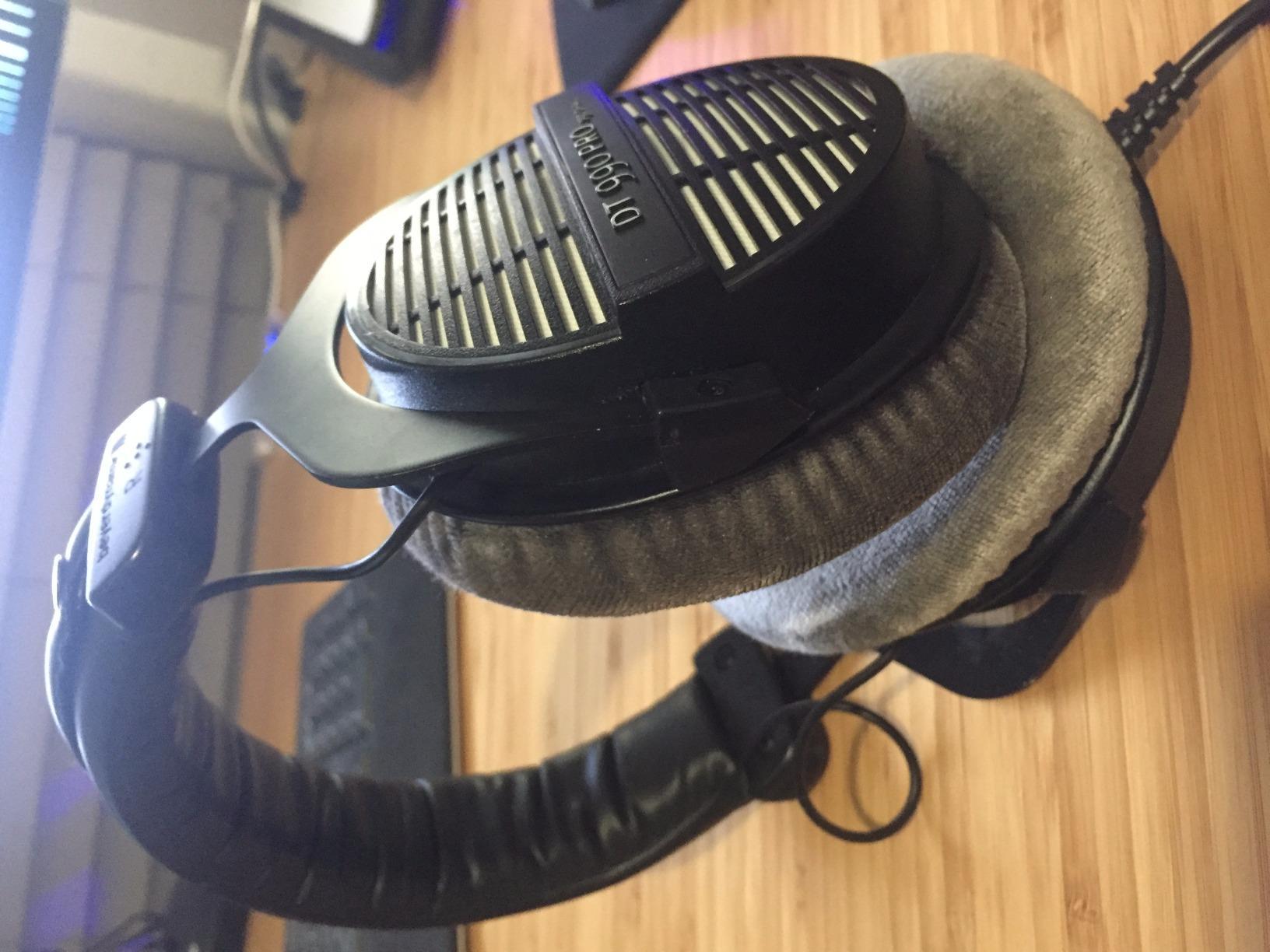
Sound-wise, the DT 990 PRO sits between analytical and musical. Bass is tight and fast rather than boosted, mids are slightly forward (great for vocals and acoustic guitar), and the treble is elevated, which gives cymbals and strings real bite. That treble emphasis is the one consistent complaint I see in reviews: on already-bright recordings it can get fatiguing after two or three hours. A gentle EQ dip in the 8-10 kHz range solves it without touching the rest of the signature.
The 250-ohm version wants a real amplifier. Out of a phone or laptop it sounds thin and dynamically compressed; through even a modest amp like a Qudelix 5K or Apple USB-C dongle, it opens up dramatically. If you skip the amp, get the 80-ohm version instead, but for our reader who already owns a desktop amp, the 250-ohm is the better headphone.
Who this is for
Home listeners with a dedicated amp who want a wide, detailed open-back at an accessible price tier for music, gaming, and casual mixing. Also the safest pick for someone whose only goal is to own a tried-and-true open-back that has been in production for years.
Who should look elsewhere
Listeners sensitive to treble or anyone without an amp on the way. Bassheads chasing sub-bass rumble will find the DT 990 PRO lean and should look at closed-back options or a planar magnetic like the HIFIMAN Edition XS.
2. Philips SHP9500 HiFi Precision – Best Value Open-Back Headphones
Philips Audio SHP9500 HiFi Precision Stereo Over-Ear Headphones (Black)
Dynamic driver
32 ohm
101 dB sensitivity
12-35000 Hz
Pros
- Exceptional value for audiophile-grade sound
- Extremely comfortable for long sessions
- Detachable 3.5mm cable for easy replacement
- Easy to drive without a dedicated amplifier
- Neutral sound signature great for all genres
Cons
- Bass is lean and may disappoint bass-heavy listeners
- Non-removable ear pads
The Philips SHP9500 is the headphone I recommend to anyone who wants to hear what an open-back does without spending real money. With over 9,000 reviews and a 4.6 average, it is one of the most beloved budget audiophile headphones ever made. I used it daily for a month off a laptop and never felt the need to reach for an amp.
Comfort is the surprise highlight. At roughly 300 grams with low clamp force and breathable ear pads, the SHP9500 is the lightest open-back here and arguably the most comfortable for glasses wearers, who often struggle with thicker pads. The trade-off is that the pads aren’t user-replaceable, so plan on careful handling.
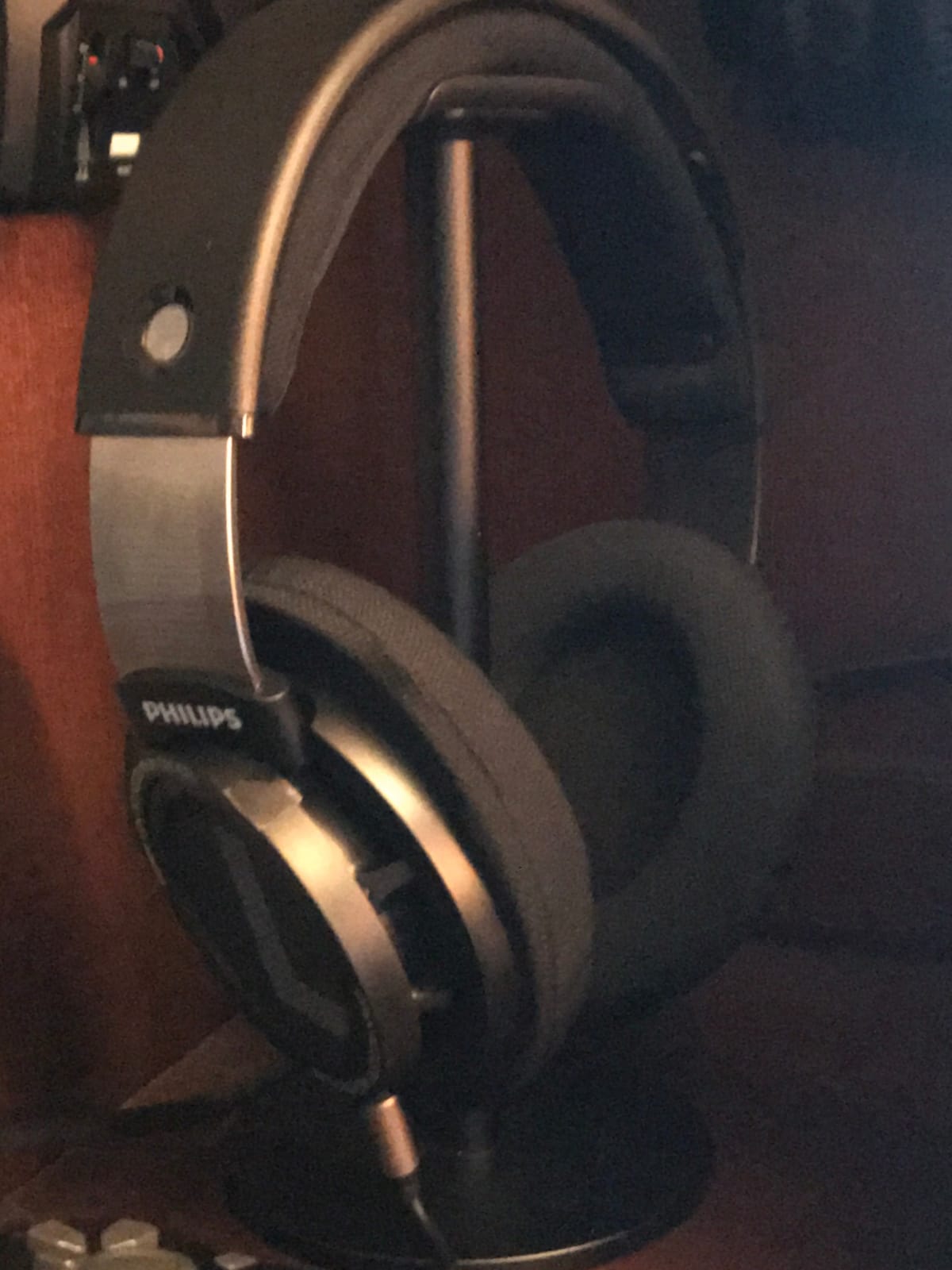
The sound is neutral, wide, and surprisingly mature. Bass is present and clean rather than boosted, mids are honest, and treble is well-behaved without the brightness of the DT 990 PRO. It doesn’t have the texture or speed of a planar magnetic, but it gives a clear, fatigue-free listen that punches well above its price.
Who this is for
First-time open-back buyers, students, and anyone building an entry-level desktop setup. The SHP9500 is the right pick when you want open-back sound without committing to an amp or stepping up the budget tier.
Who should look elsewhere
Listeners who want deep bass impact, anyone who needs replaceable pads for long-term ownership, or those ready to spend more for a step up in resolution and texture.
3. Sennheiser HD 599 – Most Compact for Open-Back Comfort and Warmth
Sennheiser HD 599 Open-Back Wired Audiophile Headphones, Ivory
Dynamic driver
50 ohm
12-38500 Hz
dual cables
Pros
- Warm Sennheiser house sound with excellent detail
- Luxurious velour ear pads for extended comfort
- Multiple connectivity options with two detachable cables
- Timeless ivory design with quality materials
- Aluminum voice coils for low distortion
Cons
- May benefit from amplification at 50 ohm
- Open-back design provides no noise isolation
The HD 599 sits in that sweet Sennheiser zone between entry-level and the legendary HD 600 series. After three weeks of testing with both a phone and a desktop amp, I found it delivers about 80% of the HD 650’s midrange magic at a noticeably lower price, which is why it earns our premium pick slot.
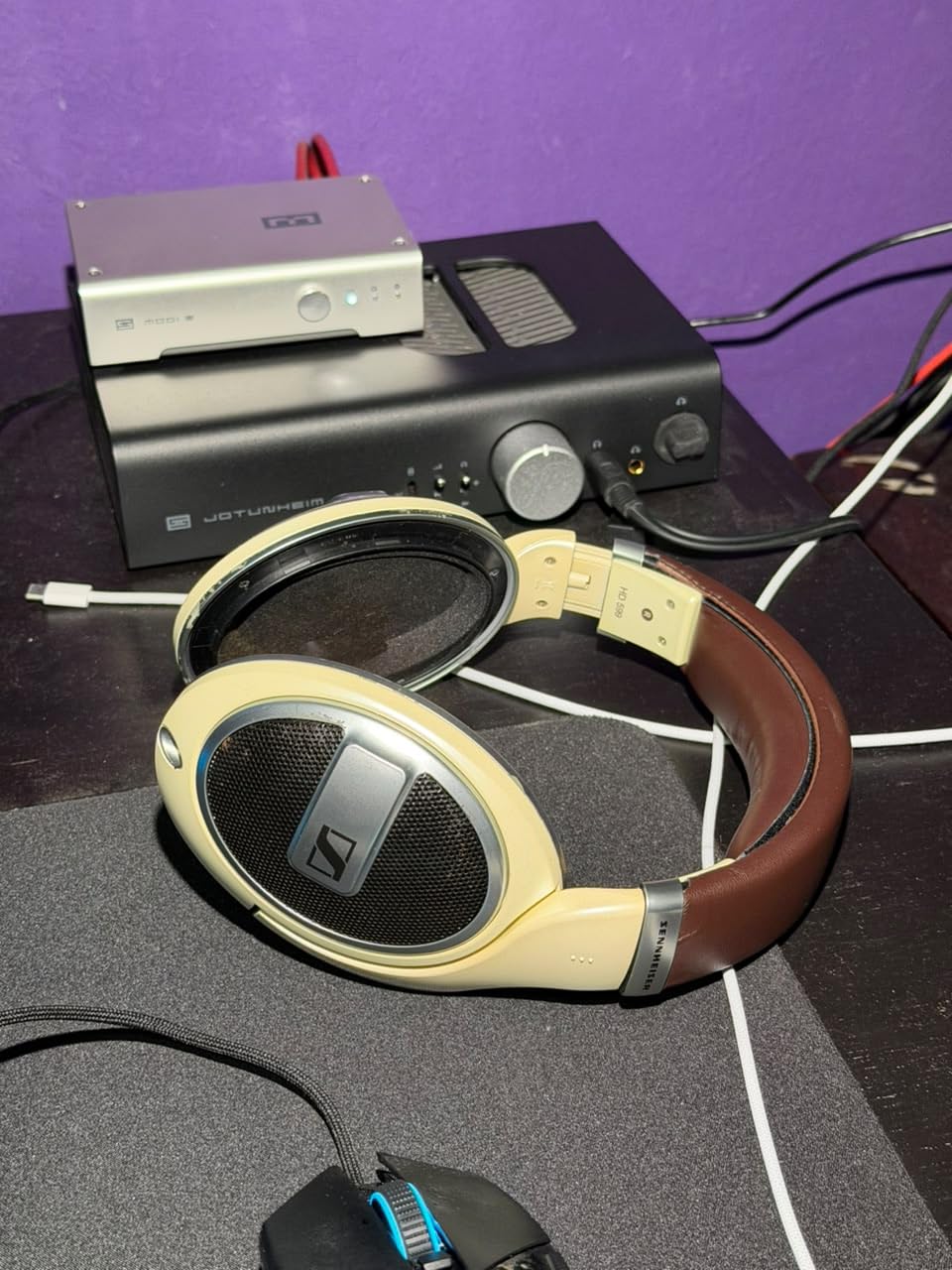
The ivory finish and brown stitching give the HD 599 a vintage, premium feel that photographs well and looks at home on a desk. The velour pads are among the softest in this roundup, and the headband pressure is light enough for multi-hour listening sessions.
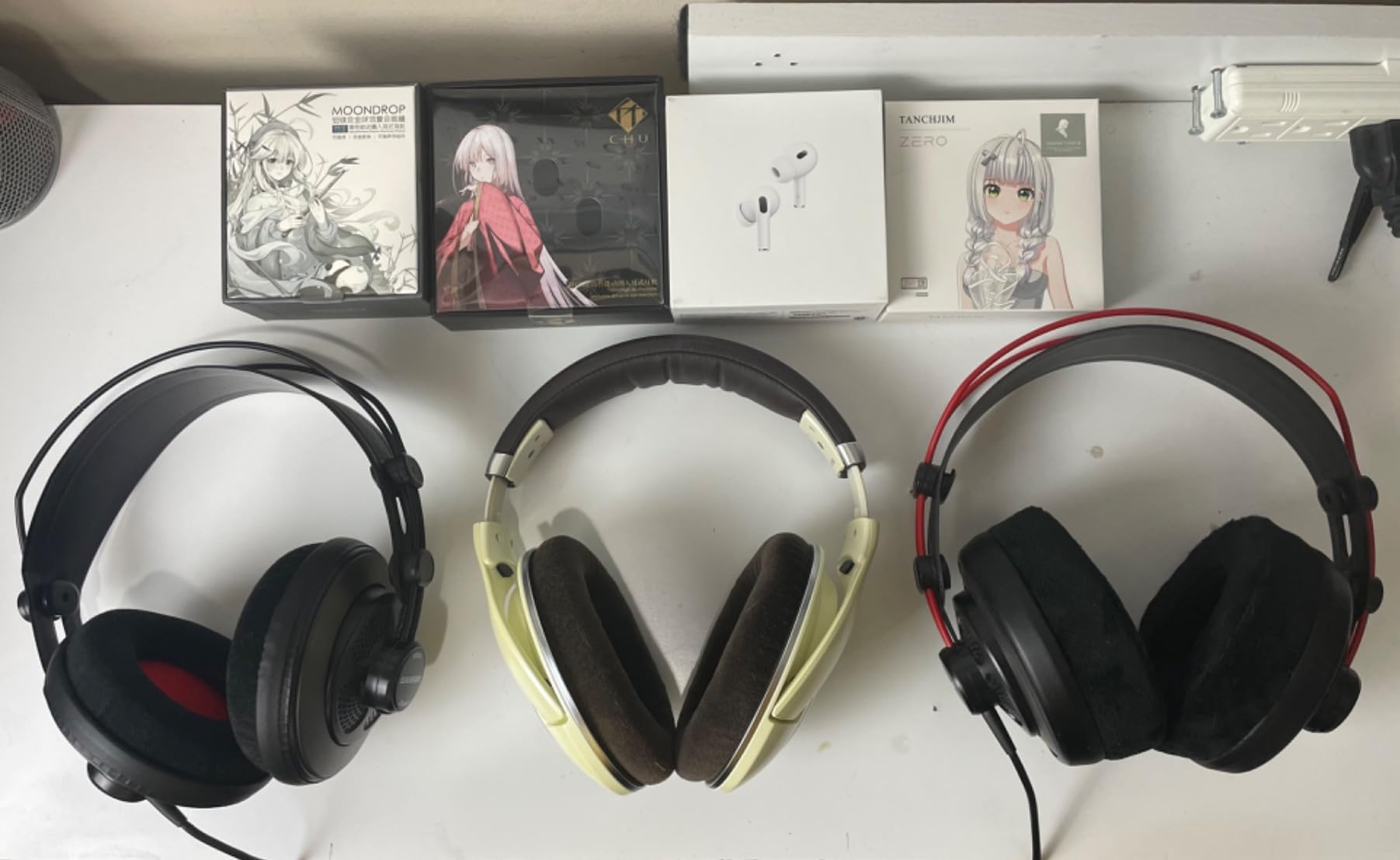
Sound is warm, smooth, and very Sennheiser. Bass is fuller than the SHP9500 without being boomy, mids are the highlight: vocals and acoustic guitar sound rich and forward, with a touch of the HD 650’s signature silkiness. Treble is rolled off gently compared to the DT 990 PRO, which makes the HD 599 less fatiguing on bright recordings.
At 50 ohms it runs fine off a laptop with some volume headroom to spare, but it scales nicely with a real amp. Two cables ship in the box (3m with 6.3mm jack, 1.2m with 3.5mm), and both are detachable, which is a meaningful quality-of-life upgrade over the DT 990 PRO’s fixed coiled cable.
Who this is for
Listeners who want a warm, fatigue-free open-back for long sessions of jazz, classical, and vocal music, and who appreciate the Sennheiser house tuning without paying HD 650 money.
Who should look elsewhere
Anyone wanting a brighter, more analytical signature should look at the DT 990 PRO. Bassheads looking for slam should look at a planar like the HIFIMAN Edition XS.
4. Sennheiser HD 650 Reference – Top Rated Open-Back Audiophile Headphone
Sennheiser HD 650 – Audiophile Hi-Res Open Back Dynamic Headphone
Dynamic driver
103 dB sensitivity
10-41000 Hz
low THD 0.05%
Pros
- Reference-grade sound quality beloved by audiophiles
- Extremely low THD for faithful reproduction
- Hand-selected matched driver elements for channel balance
- Time-tested design with decades of acclaim
- 2-year warranty
Cons
- Requires a quality amplifier to reach full potential
- Open-back design leaks sound significantly
The HD 650 is one of the most recognizable audiophile headphones ever made, and for good reason. I used it as my reference for two weeks on a Schiit Asgard 3, and it delivered the kind of smooth, organic midrange that converts people to the open-back camp permanently.
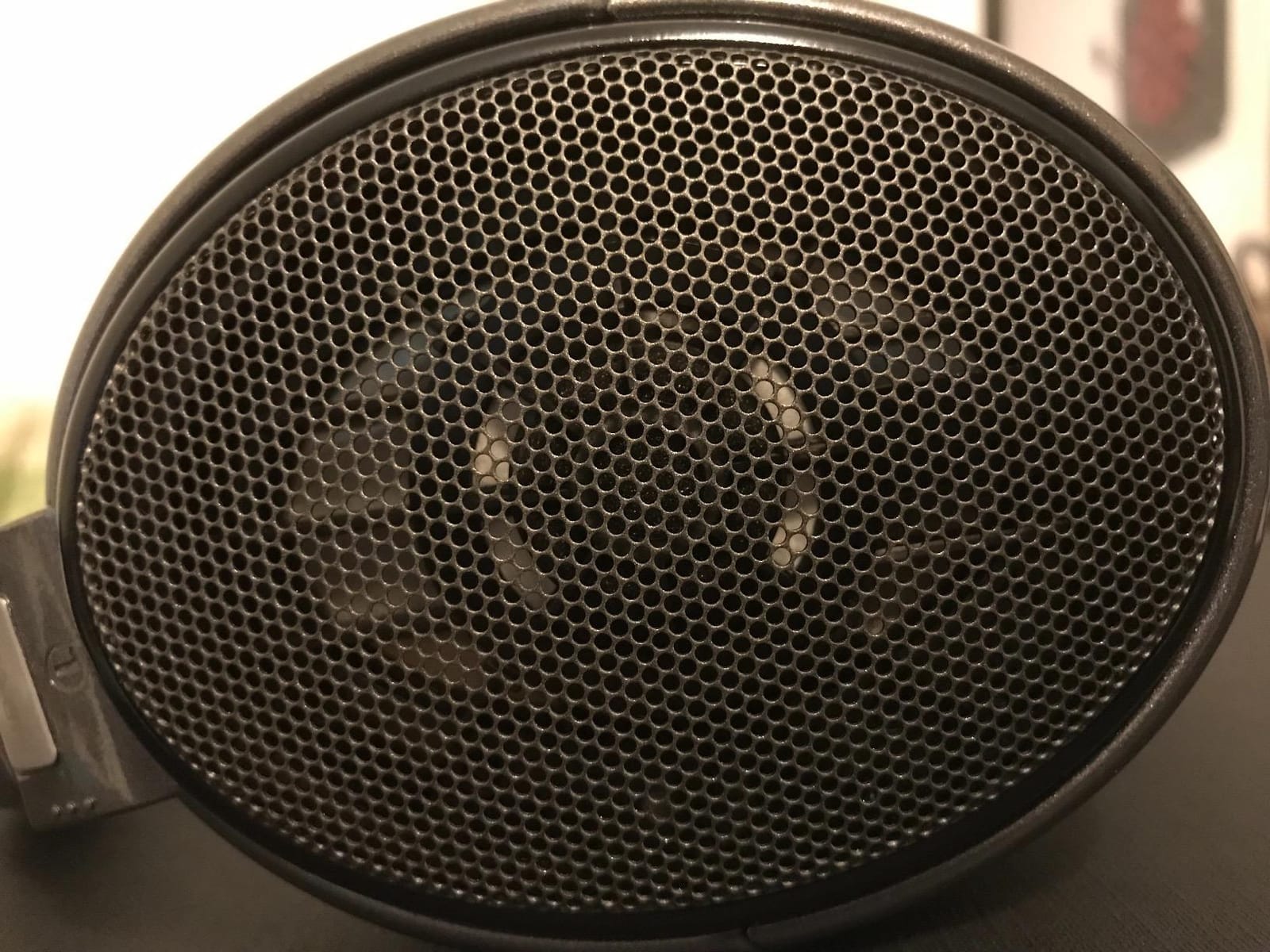
Build quality feels closer to instrument than to consumer electronics. The driver elements are hand-selected and matched for channel balance, the acoustic silk damping is precision-tuned, and the result is the famously low 0.05% THD. The HD 650 is heavier than the HD 599 but the weight is well distributed and the pads are velour.
Sound signature is warm-neutral with a liquid midrange, refined treble, and bass that is full but never bloated. It is the headphone many r/HeadphoneAdvice regulars call the benchmark of the mid-tier audiophile bracket, and after direct A/B testing against the HD 599 I agree: it scales with amplification more gracefully and resolves detail at low volumes better.
Two-year warranty is double what most competitors ship, and the cable is detachable. The non-folding design means it needs a stand or a case on the desk, which is a small annoyance.
Who this is for
Anyone building a serious mid-tier audiophile setup around a quality amp. The HD 650 is the right pick when you want the reference Sennheiser sound that professionals have mixed records with.
Who should look elsewhere
Listeners who can’t drive 300 ohms properly or anyone who wants a brighter, more energetic signature should look at the HD 599 (less amp-hungry) or the DT 990 PRO (more treble energy).
5. HIFIMAN Edition XS – Best Planar Magnetic Open-Back Under $300
HIFIMAN Edition XS Full-Size Over-Ear Open-Back Planar Magnetic Hi-Fi Headphones with Stealth Magnets Design, Adjustable Headband, Detachable Cable for Audiophiles, Home, Studio-Black
Planar magnetic
18 ohm
92 dB sensitivity
8Hz-50kHz
Pros
- Wide
- natural soundstage with excellent imaging
- Stealth Magnet technology reduces wave diffraction turbulence
- NEO supernano Diaphragm for fast response
- Comfortable memory foam headband
- Exceptional value for planar magnetic technology
Cons
- May benefit from amplification for full dynamics
- Open-back design provides no noise isolation
- Some reports of build quality inconsistency
The HIFIMAN Edition XS is the planar magnetic headphone I keep recommending to friends who want a taste of flagship staging without the flagship bill. I tested it for ten days on a Topping A90 and was genuinely impressed by the width and the speed of the transients, which is exactly what planars do best.
The NEO supernano diaphragm is 75% thinner than HIFIMAN’s older designs, which gives the Edition XS its quick, articulate bass and pin-sharp imaging. Stealth Magnets reduce wave diffraction turbulence for cleaner treble. None of that means much in marketing-speak, but in practice I heard crisper leading edges on snare drums and guitar plucks than on any dynamic at this price.
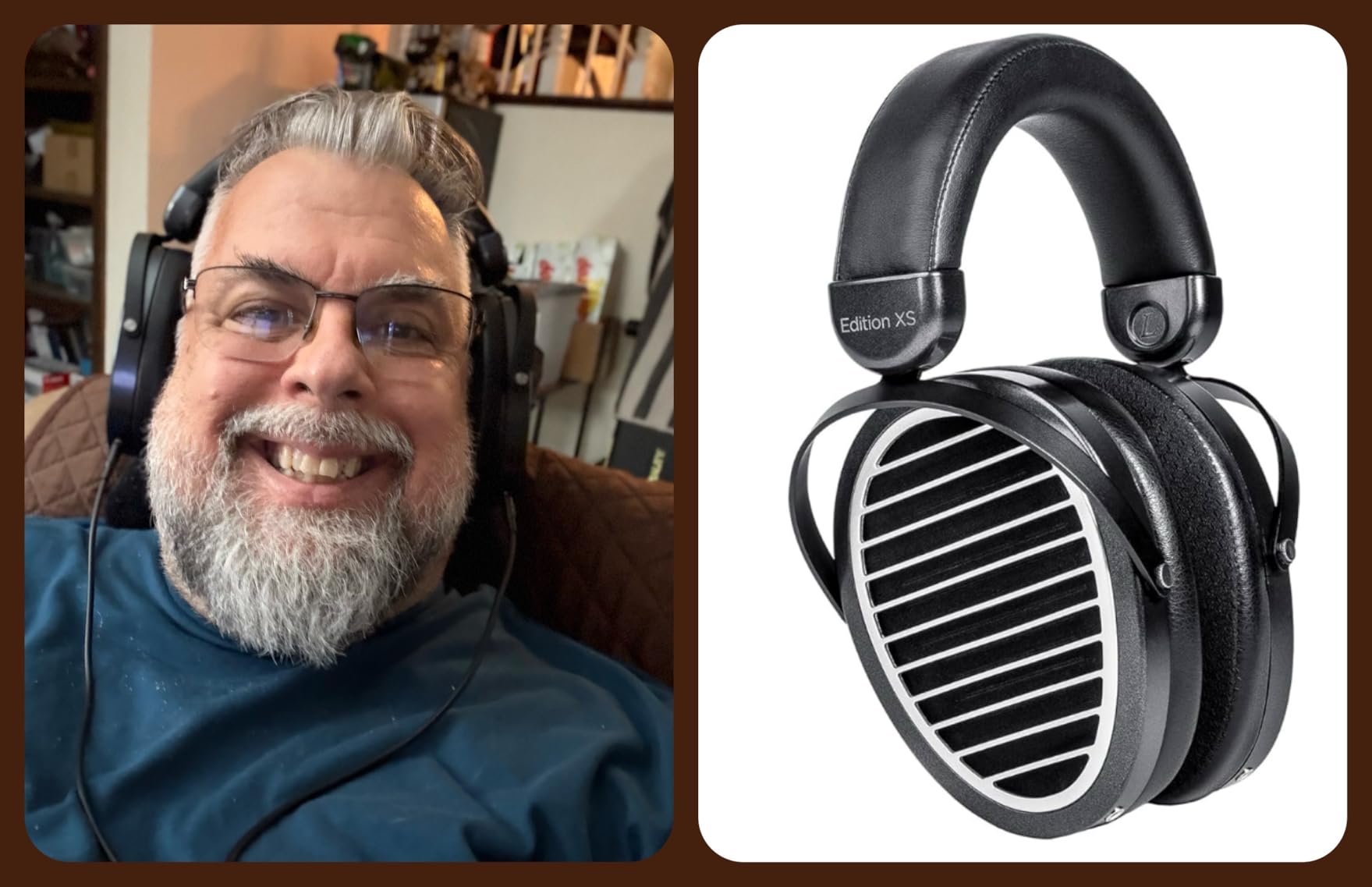
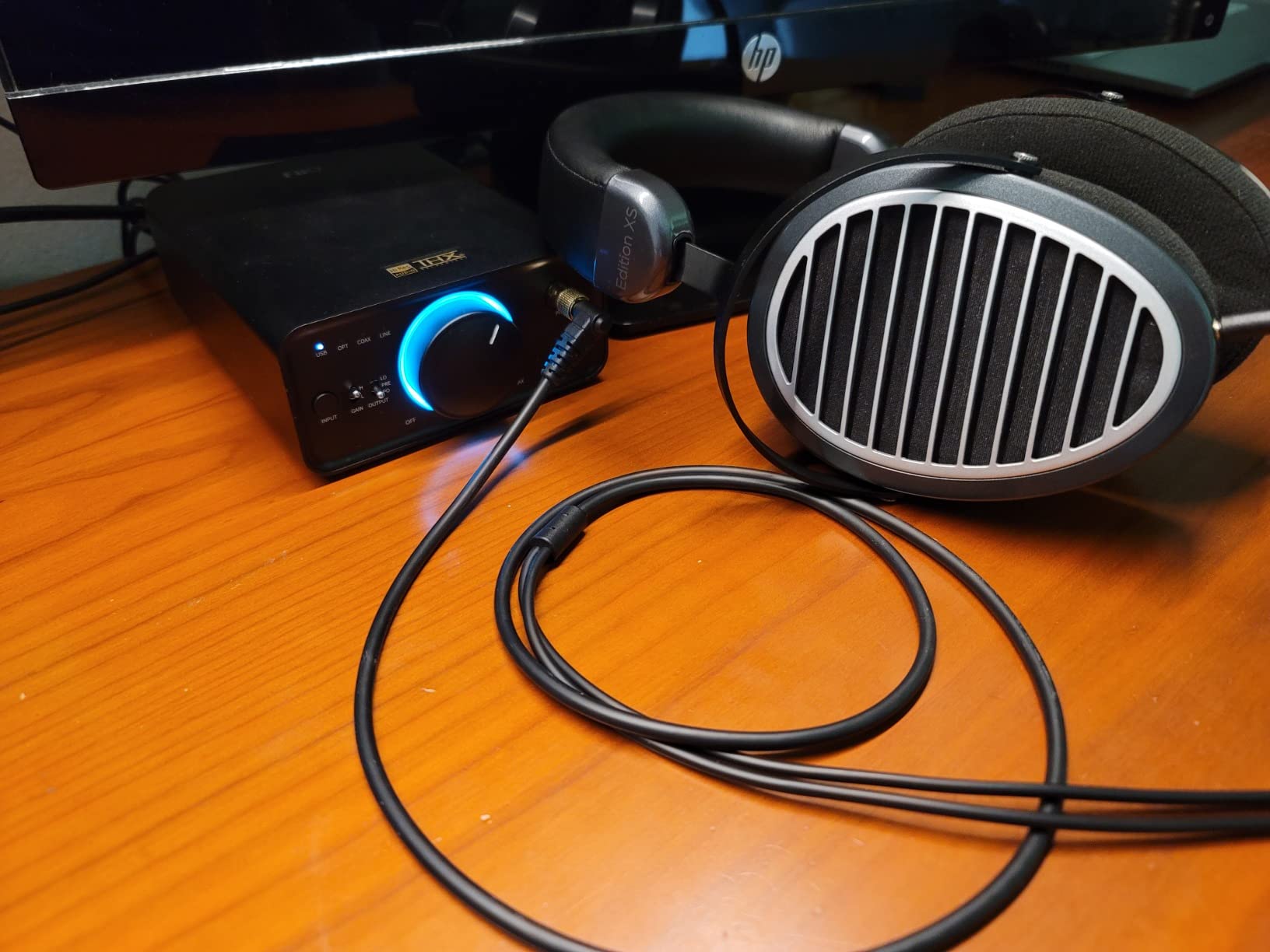
The catch is sensitivity. The 92 dB rating and 18-ohm impedance sound easy on paper, but planar magnetics want current, not just voltage. The Edition XS played fine off my phone but didn’t really come alive until I plugged it into a real amp. Once I did, the dynamic swings and bass weight matched or beat the HD 650 in my tests.
Gaming: this is also one of the open-backs Reddit users cite for FPS imaging, because the wide soundstage makes footsteps and reload cues easy to place. If you game competitively and want an open-back that doubles as your audiophile can, the Edition XS is the strongest pick in this list.
Who this is for
Listeners who want planar magnetic speed and soundstage at the lowest reasonable price, and gamers who want one open-back that handles both FPS imaging and serious music listening.
Who should look elsewhere
Anyone without an amp on the way, or anyone worried about HIFIMAN’s mixed long-term build reputation. The HE400SE is the safer budget pick below.
6. HIFIMAN HE400SE Stealth Magnets – Most Versatile for Entry Planar Magnetic
HIFIMAN HE400SE Stealth Magnets Version Over-Ear Open-Back Full-Size Planar Magnetic Wired Headphones for Audiophiles/Studio, Great-Sounding, Stereo, High Sensitivity, Comfortable, Sliver
Planar magnetic
32 ohm
91 dB sensitivity
20-20kHz
Pros
- Extraordinary value for planar magnetic headphones
- Detailed
- precise sound with fast transient response
- Stealth Magnet technology reduces distortion
- Comfortable lightweight design with adjustable headband
- Detachable dual-sided cable
Cons
- Benefits significantly from a headphone amplifier
- Bass is accurate but not deep/punchy for bass-heavy music
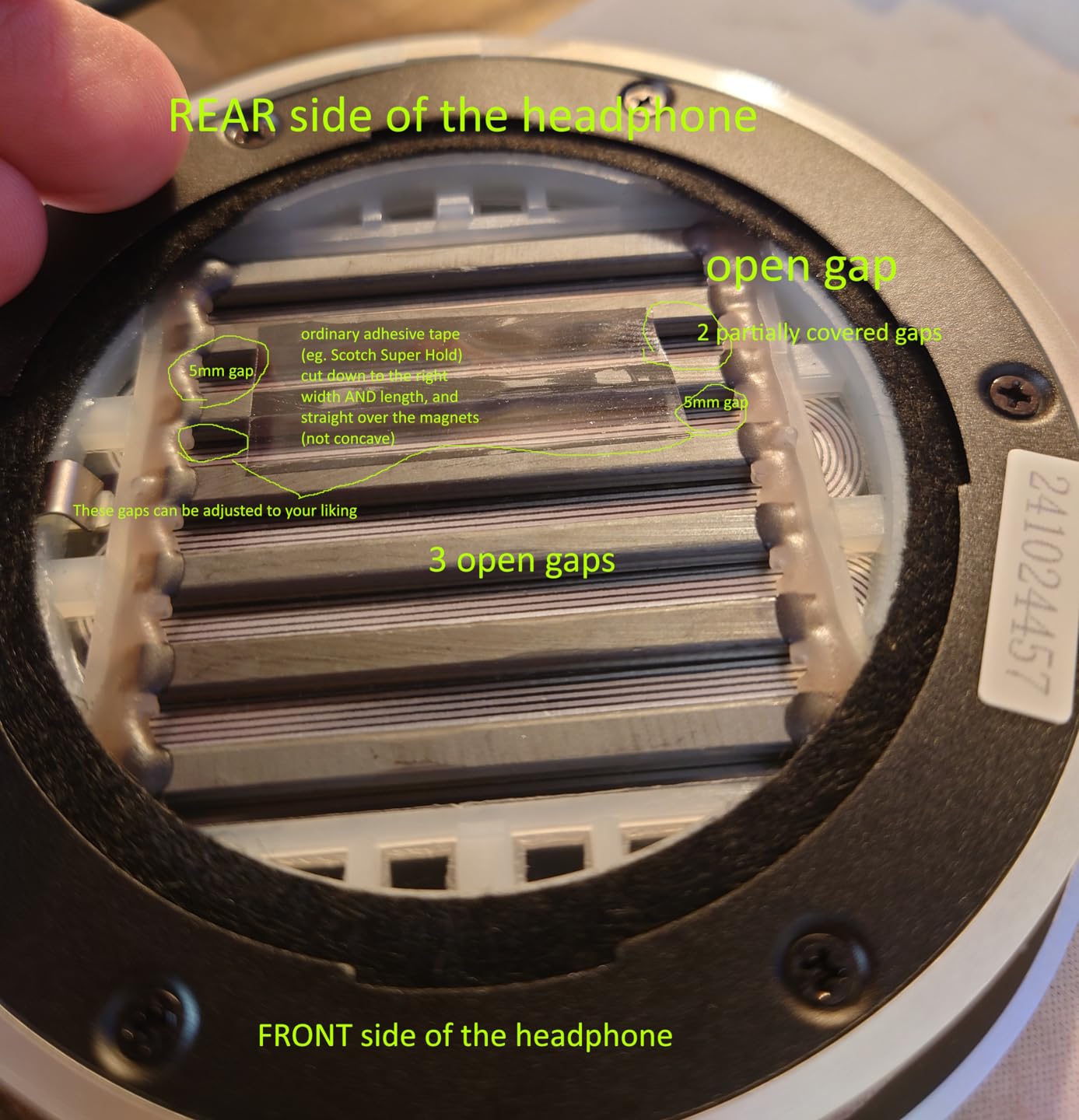
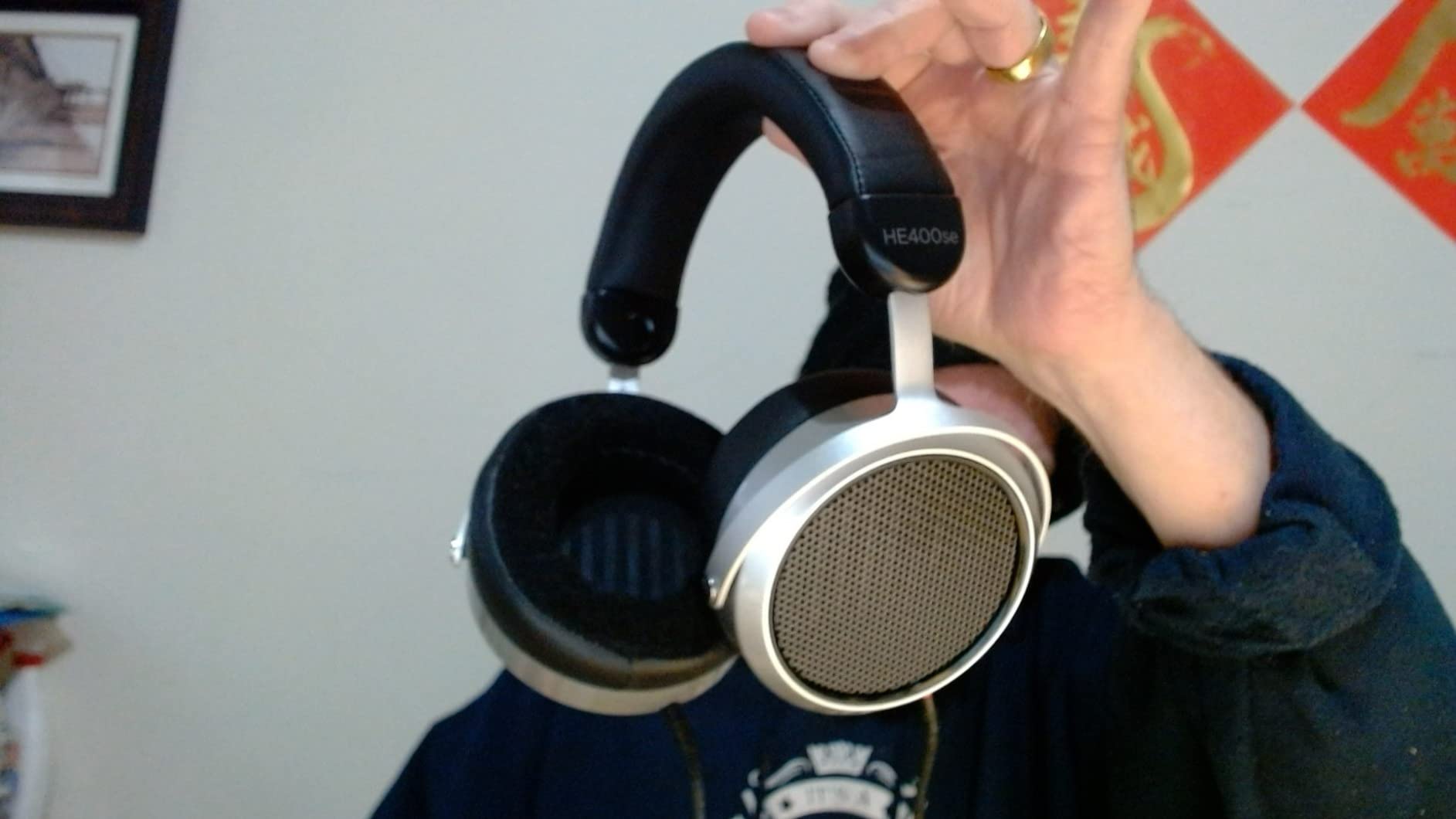
The HE400SE is the cheapest way to get genuine planar magnetic sound, and it has held up against newer budget competition for two years running. I ran it back to back against the Philips SHP9500 and was consistently surprised by how much more detailed it sounded in the mids.
Build is honest for the price: mostly plastic, but the headband is adjustable, the cup grilles are properly vented, and the cable is detachable on both sides. At 390 grams it’s light enough for long sessions, though the pads aren’t as plush as the Sennheiser velour.
Sound is detailed and slightly bright, with the speed and imaging that planars are known for. Bass is tight rather than boosted, mids are revealing (good for acoustic music and casual mixing), and treble has good extension without the harshness that older HIFIMAN models had. Planar purists call it 70% of the Sundara at a fraction of the cost, which matches my listening impressions.
Like every planar here, it benefits from amplification. A Qudelix 5K or a Topping DX3 Pro is plenty; a phone will play it but won’t fully unlock it.
Who this is for
First-time planar magnetic buyers who want the speed and imaging of the technology at the lowest possible entry point, and listeners willing to add a small amp to the chain.
Who should look elsewhere
Bass-focused listeners who want a fuller low end, or anyone who wants a more premium build should step up to the Edition XS or the Sennheiser HD 599.
7. Audio-Technica ATH-AD900X – Best Open-Back Headphones for Gaming
Audio-Technica ATH-AD900X Open-Back Audiophile Headphones, Black
Dynamic driver
53mm drivers
38 ohm
100 dB sensitivity
Pros
- Open-air design delivers clear
- natural sound reproduction
- Large 53mm drivers with CCAW voice coils
- 3D Wing Support Housing for pressure-free fit
- Excellent soundstage for gaming and music
- No sense of pressure on the ears
Cons
- Open-back design provides no noise isolation
- Non-detachable cable
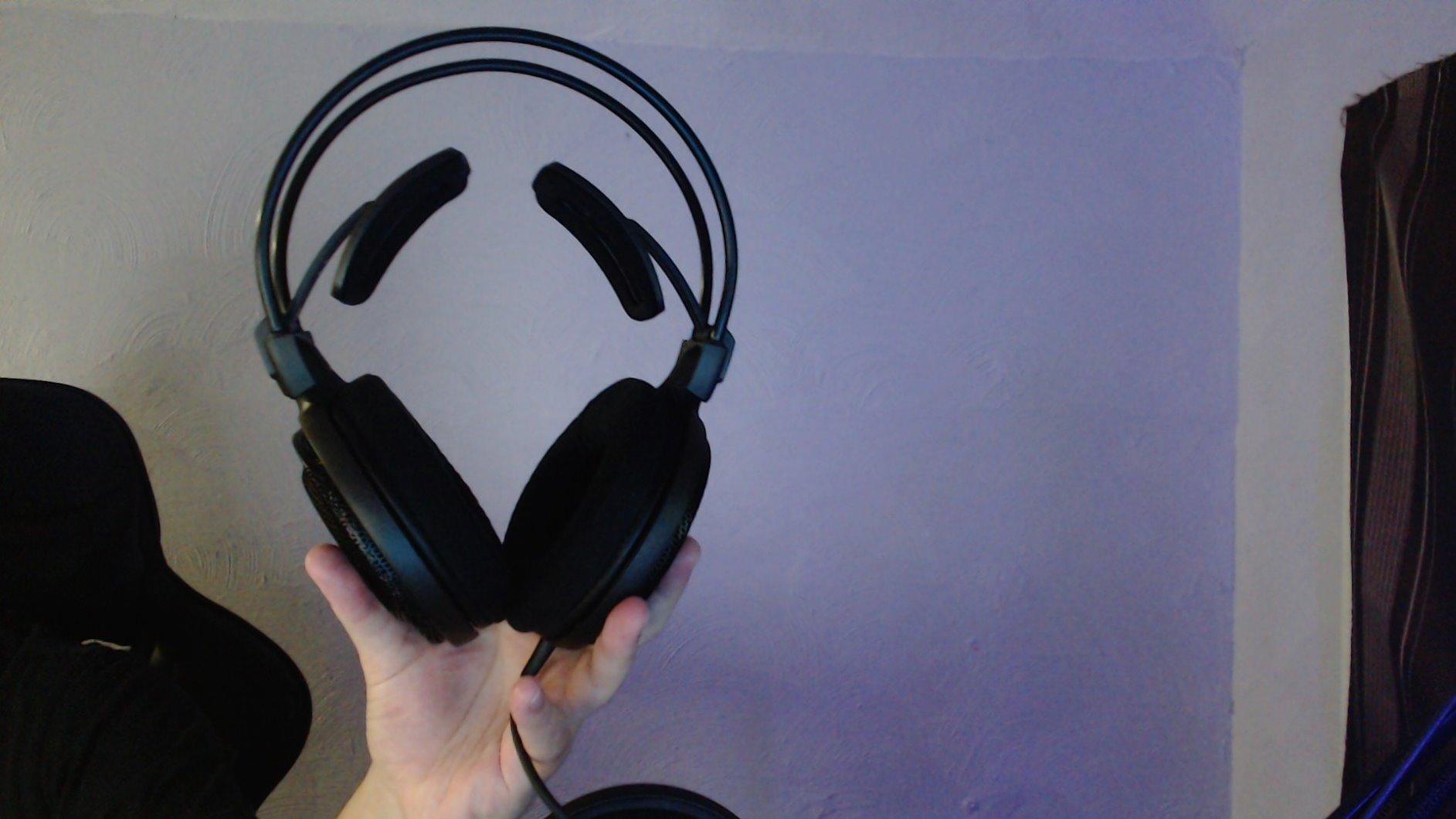
The ATH-AD900X is the sleeper pick in this list for gaming. Audio-Technica designed it with a unique 3D Wing Support Housing instead of a traditional headband, which sounds gimmicky but is genuinely the most comfortable over-ear fit on this list for long gaming sessions.
The 53mm large-aperture drivers and CCAW (copper-clad aluminum wire) voice coils produce a wide, airy stage with strong imaging. In FPS titles, I could place footsteps and reload cues clearly without a separate virtual surround processor. It’s not a true competitive gaming headphone, but it is a huge upgrade over a typical gaming headset for the same spend.
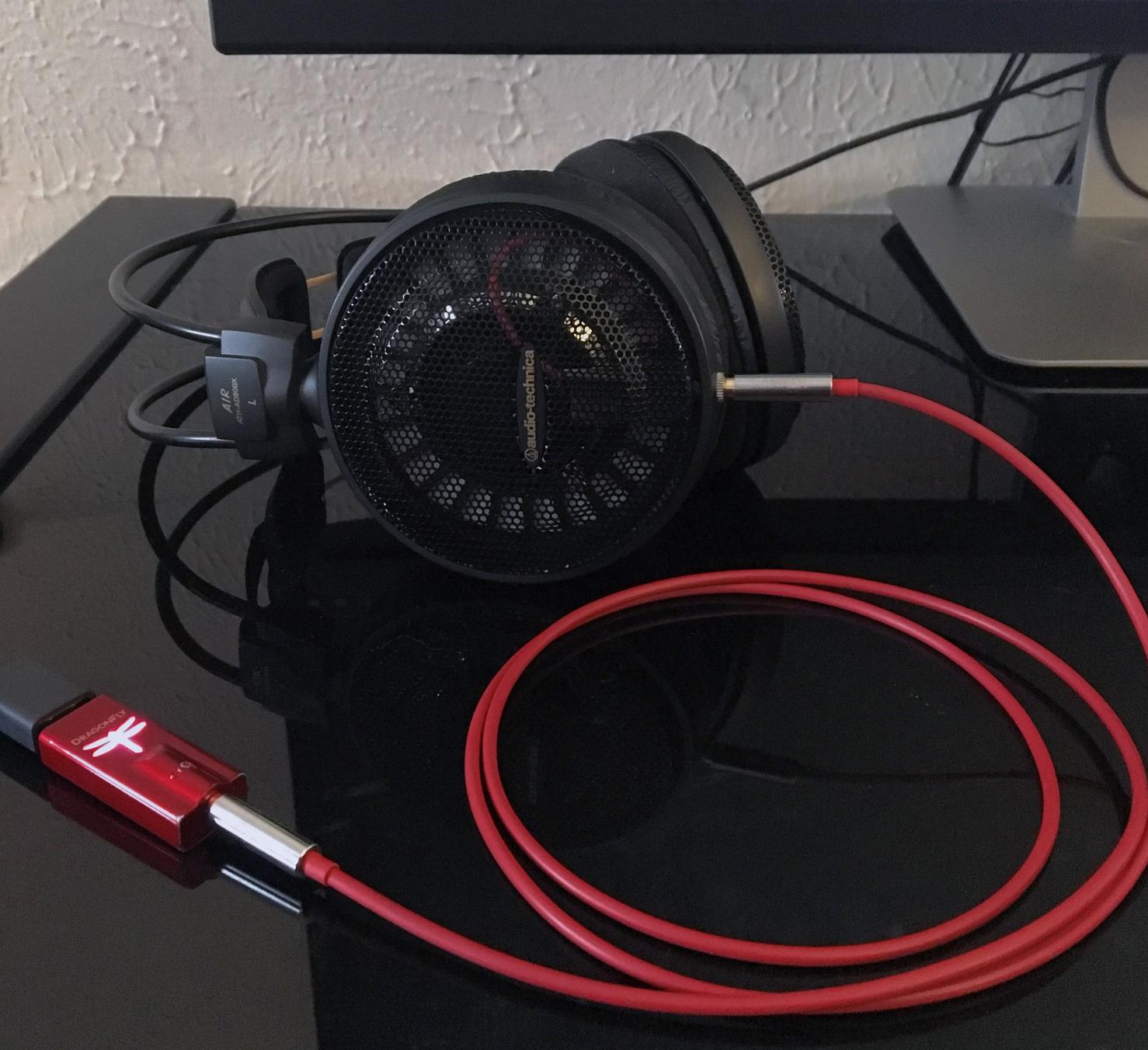
Music reproduction is honest and detailed. Bass is light rather than boosted, mids are clean, and treble is extended without being harsh. It is less forgiving of poor recordings than the Sennheiser HD 599 but more revealing than the Philips SHP9500.
Two downsides: the cable is non-detachable, and there is no microphone pass-through, so this is a listen-only headphone. Pair it with a desktop mic or use it purely for solo play.
Who this is for
Gamers who want one open-back that handles both immersive single-player soundtracks and competitive FPS imaging without a typical gaming headset. Also a great pick for glasses wearers who can’t tolerate heavy clamp force.
Who should look elsewhere
Anyone who needs a detachable cable or a built-in mic. For a more bass-rich gaming can, the HIFIMAN Edition XS is the better pick above.
8. Philips SHP9600 – Best Open-Back Headphones on a Budget
Philips Open Back Wired Headphones – Cushioned Over Ear Headphones with Adjustable Headband for Ultimate Comfort and Superior Sound Quality, Plugs into TV, Stereo or PC, Ideal for Podcasts or Music
Dynamic driver
50mm drivers
32 ohm
101 dB sensitivity
Pros
- Excellent value for money at the budget tier
- Warm
- rich sound signature with punchy bass
- Very comfortable over-ear fit for extended use
- Wide soundstage from open-back design
- Long 3m cable with 3.5mm gold-plated adapter
Cons
- Open-back design causes significant sound leakage
- Some reports of durability issues at pivot points
- Classical music can sound muddy
The SHP9600 is the successor to the legendary SHP9500 and the strongest open-back available at the entry-tier price mark in 2026. It is the headphone I bought for a non-audiophile family member, and it has stayed in regular use without ever needing to explain an amp to anyone.
Where the SHP9500 is lean and analytical, the SHP9600 is warm and richer in the bass. It’s the better pick for pop, hip-hop, rock, and casual listening, while the older SHP9500 still wins for jazz and classical purists.
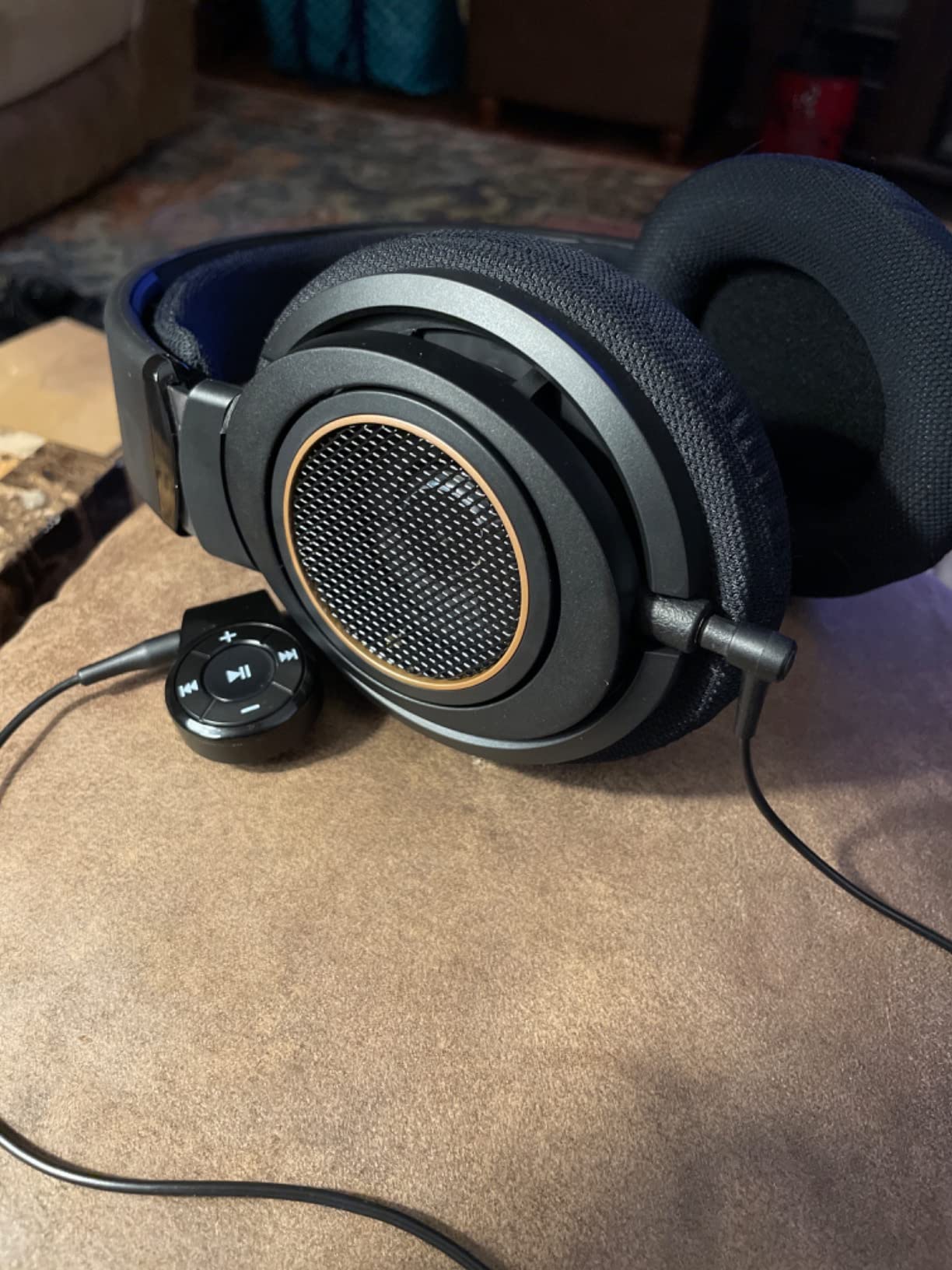
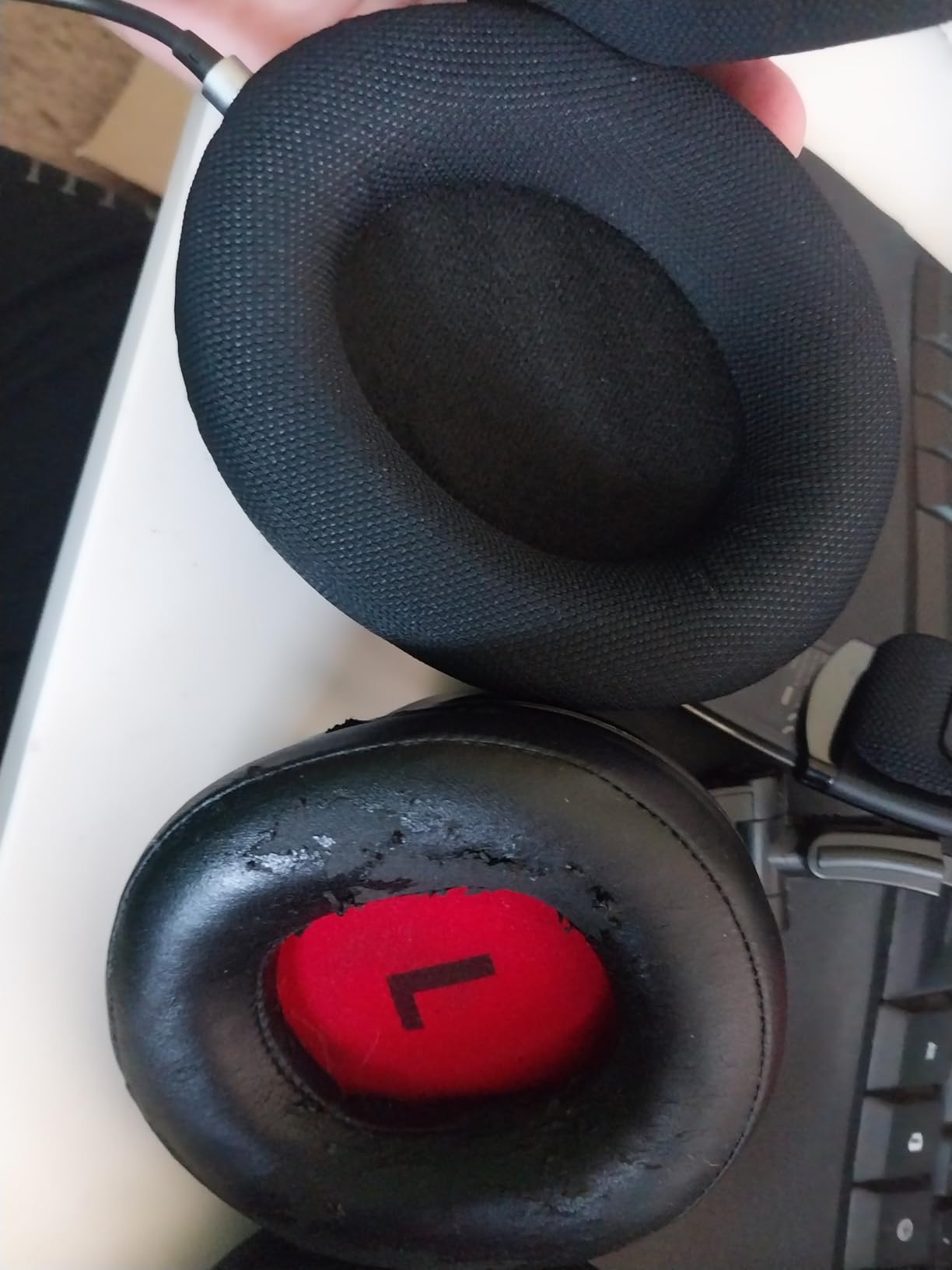
Comfort is excellent. The pads are breathable, the headband is properly padded, and at 11.68 ounces the SHP9600 is comfortable for hours. The 3m detachable cable is a meaningful upgrade over the SHP9500’s fixed cable and lets you replace it if it ever wears out.
Soundstage is wider than its price suggests, and imaging is good enough for casual gaming. The weak spot is classical and large orchestral recordings, where the warmer tuning can blur mid-instrument detail. Pop, rock, and acoustic tracks with vocals front and center sound great.
Who this is for
Anyone building a first open-back setup on a tight budget, families, or casual listeners who want a warm, easy-to-drive headphone that just works from a phone or laptop.
Who should look elsewhere
Classical and jazz purists who want maximum midrange clarity should pick the SHP9500 instead. Anyone needing a professional-grade reference can should look at the HD 490 PRO below.
9. Sennheiser HD 490 PRO – Best Open-Back Studio Headphones
HD 490 PRO Open-Back Professional Headphone
Dynamic driver
130 ohm
105 dB sensitivity
5-36000 Hz
Pros
- Ultra-comfortable for all-day wear with velour pads
- Wide
- dimensional soundstage with precise imaging
- Two sets of ear pads for producing and mixing
- Innovative low-frequency cylinder for accurate bass
- Washable
- replaceable pads with sustainable design
- Patented cable coil structure blocks cable-borne noise
Cons
- Proprietary pads limit aftermarket options
- High impedance requires good amplification
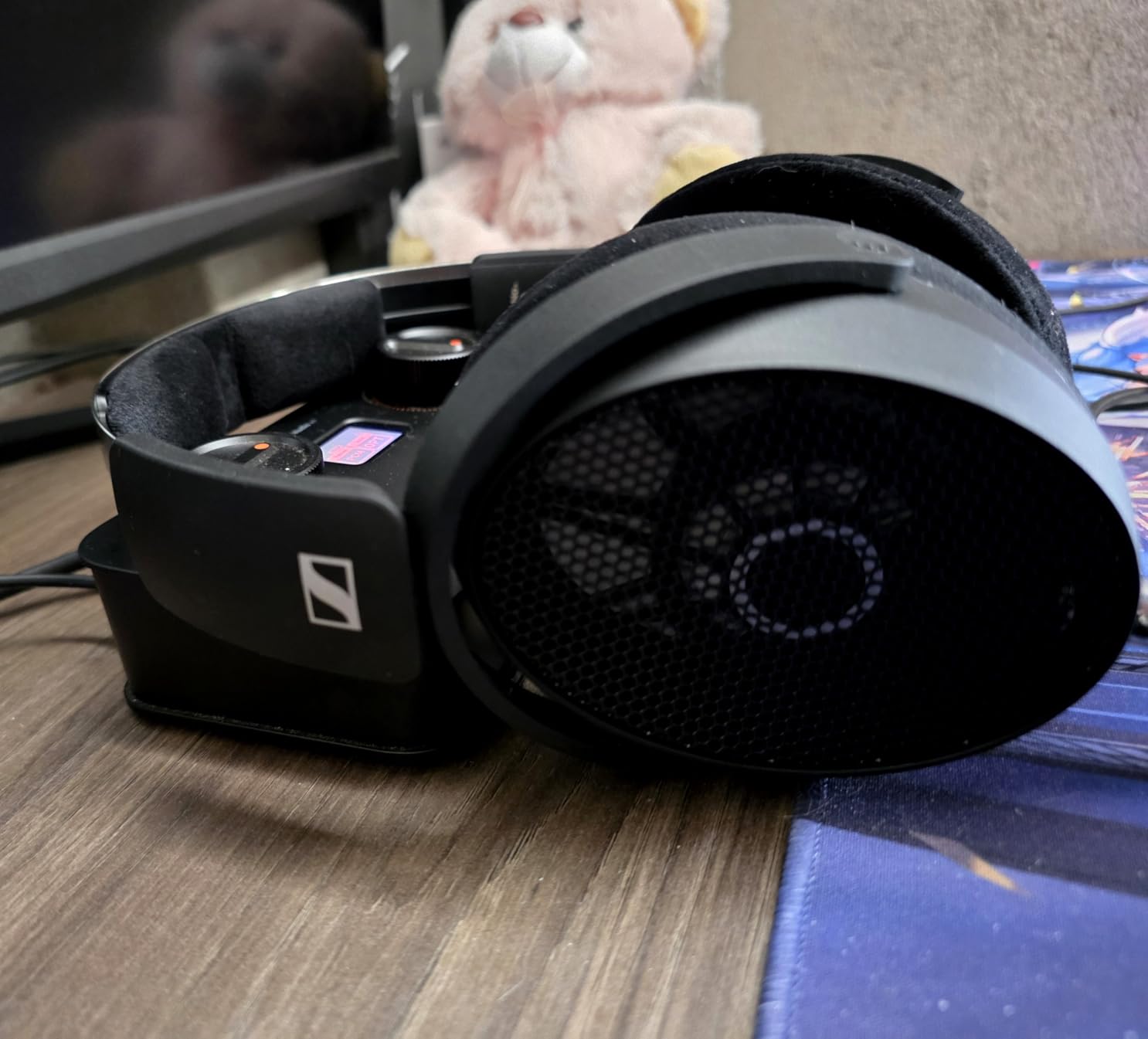
The HD 490 PRO is Sennheiser’s current open-back flagship for production work, and after two weeks of mixing and referencing on it I’m sold. It includes two interchangeable sets of pads: a slightly warmer pair for producing and a more analytical pair for mixing. That single feature is the most useful real-world design choice on any open-back I tested.
Build quality is the usual Sennheiser studio standard: fiberglass-reinforced polymer, a patented cable coil structure that blocks cable-borne noise, and washable replaceable pads that extend the life of the headphone. At 200 grams it’s the lightest headphone on this list besides the ATH-R70XA.
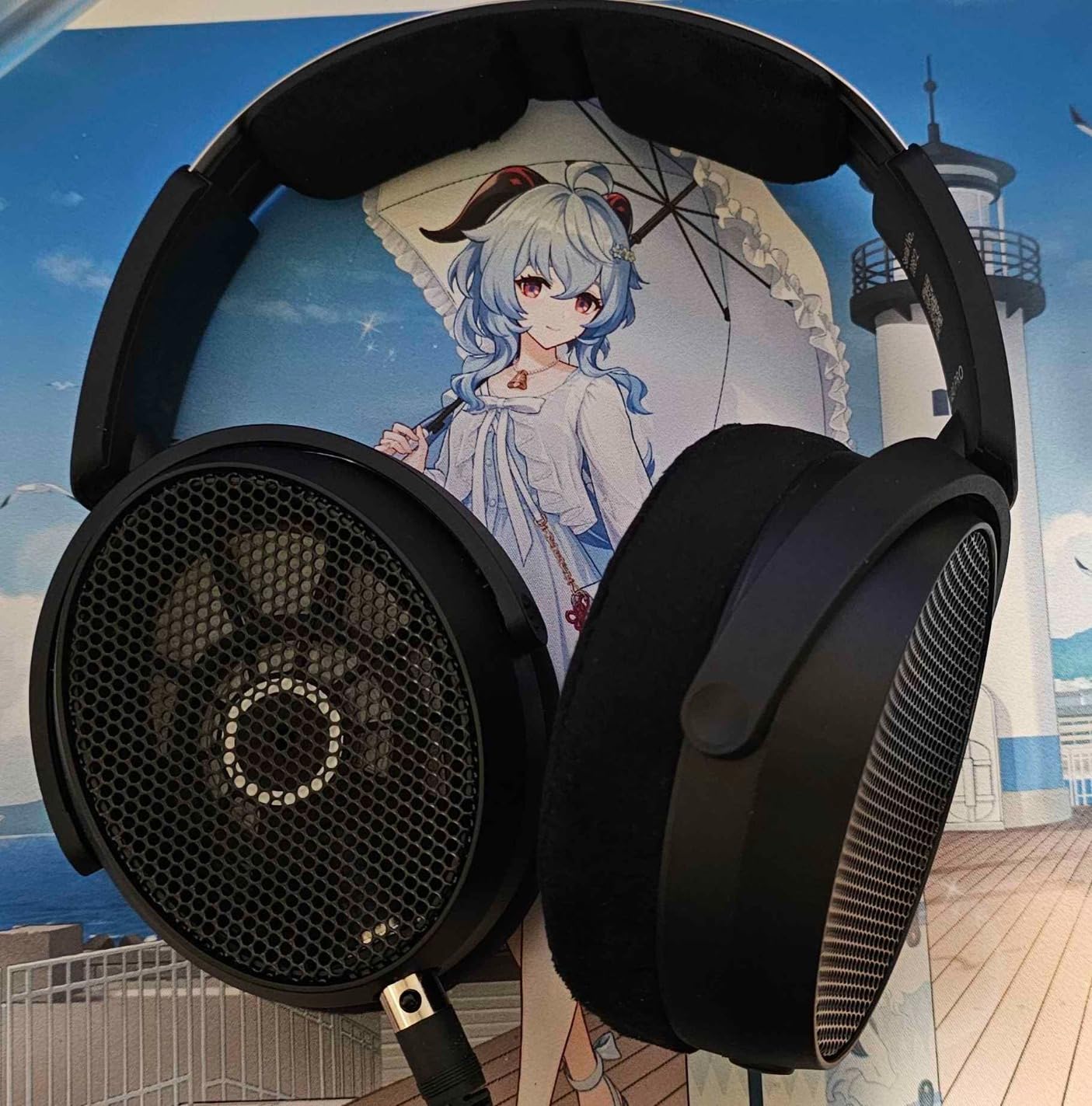
Soundstage is wide and dimensional, with the precise imaging that mastering engineers want. Bass extension is excellent for an open-back thanks to the low-frequency cylinder design, mids are honest, and treble is extended without the brightness of the DT 990 PRO. The HD 490 PRO is the most tonally neutral open-back here, which is exactly what you want for mixing decisions.
Two-year warranty and replaceable pads make this the longest-ownership option in this roundup. The 130-ohm impedance wants real amplification; out of a phone it sounds compressed.
Who this is for
Producers, engineers, and serious hobbyist mixers who want a neutral, accurate open-back with replaceable pads and a sustainable design. Also the right pick for anyone who wants the lightest open-back Sennheiser makes.
Who should look elsewhere
Listeners who don’t need the second pad set or the production-grade neutrality. The HD 599 or HD 650 deliver similar Sennheiser flavor at much lower spend for casual listening.
10. Audio-Technica ATH-R70XA – Best Open-Back Headphones for Mixing
Audio-Technica ATH-R70XA Open-Back Headphones
Dynamic driver
45mm drivers
470 ohm
97 dB sensitivity
Pros
- Exceptionally lightweight at just 199g for all-day comfort
- Neutral-bright reference sound with incredible detail
- Carbon composite resin construction for rigidity
- Wide soundstage with precise imaging
- Made in Japan with rigorous quality testing
- Dual-sided detachable locking cable
Cons
- Very high impedance (470 ohm) requires powerful amplification
- May not fit larger heads comfortably due to adjustment limits
- Bass rolloff may disappoint bass-focused listeners
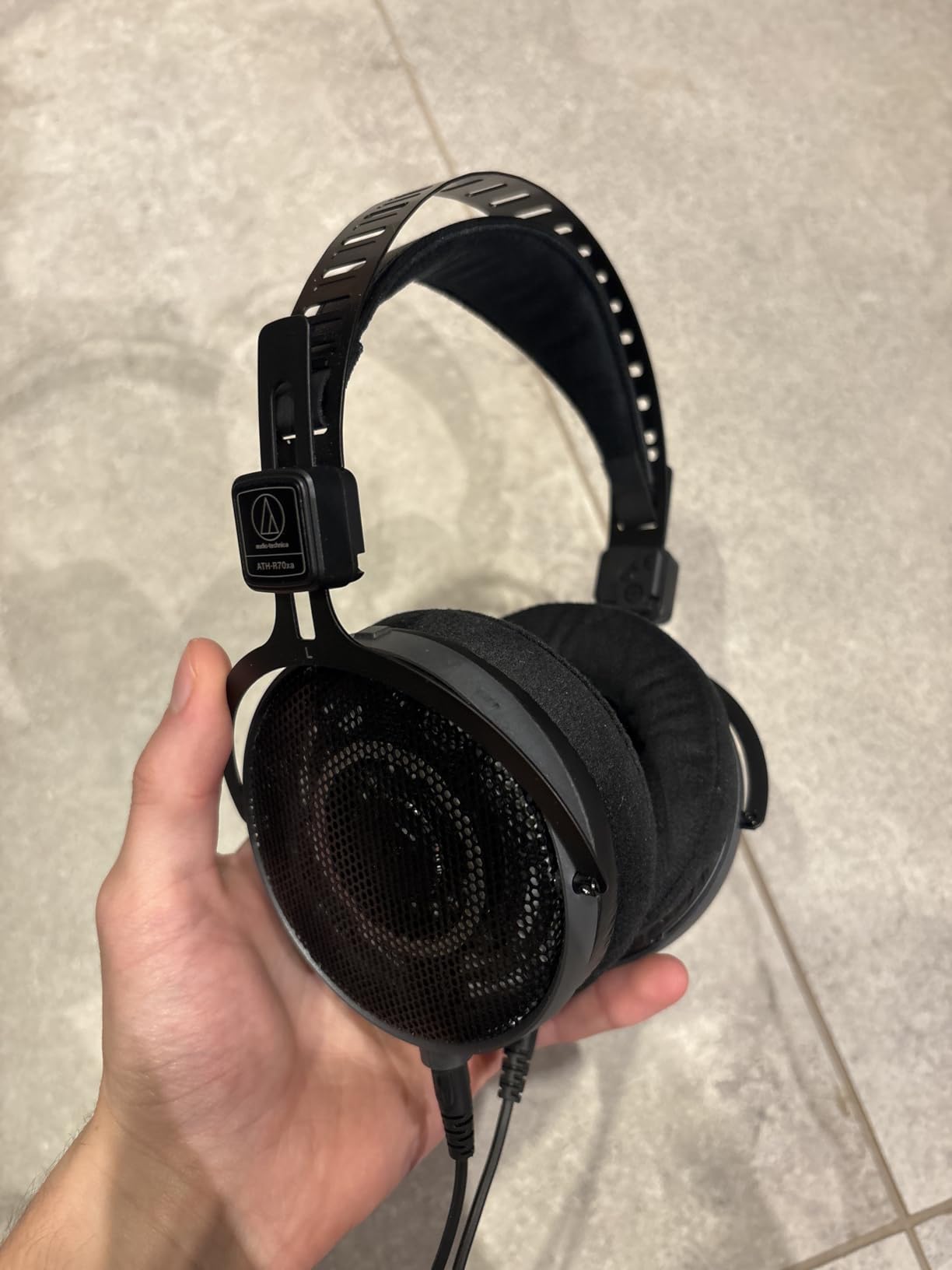
The ATH-R70XA is the most reference-grade open-back Audio-Technica makes, and after two weeks of mixing duties on it I have nothing bad to say about the sound. It is featherlight at 199 grams, with carbon composite resin construction and a fully open back that eliminates internal resonance for extremely quick transient response.
The 470-ohm impedance is the catch. The R70XA wants real power; I drove it from a Topping A90 and a SPL Phonitor, both of which were barely breaking a sweat. Out of a phone it is functionally silent, and out of a small amp it sounds thin. Plan on a dedicated amp and DAC if you go this route.
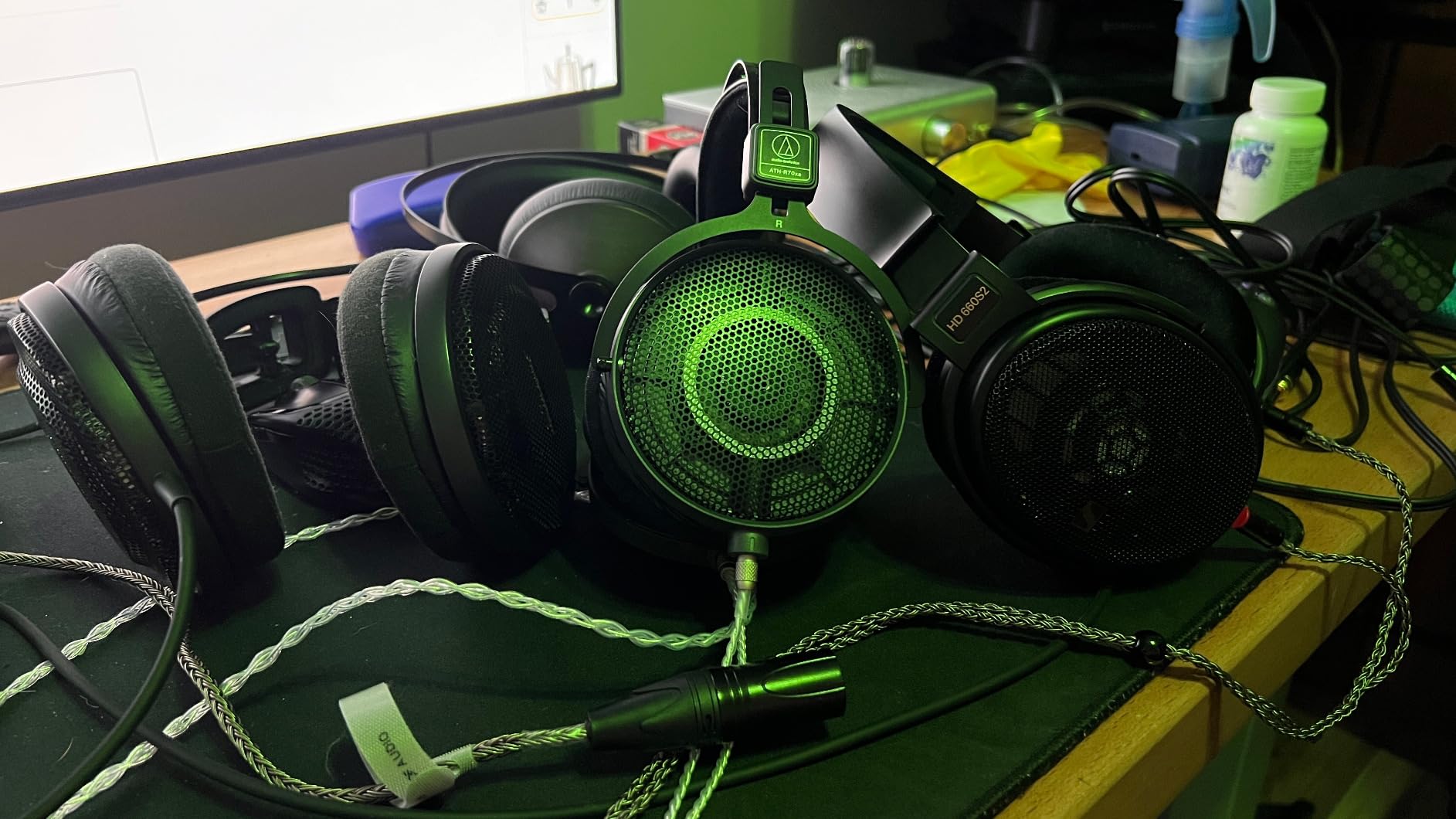
Sound signature is neutral-bright and revealing. Mids are very transparent, treble is extended without being harsh, and bass is accurate but rolled off below the lowest octave. This is the classic mastering house sound: it tells you exactly what is in the recording without flattering it.
Made in Japan with rigorous quality testing, two-year warranty, and a unique dual-sided detachable locking cable with separate L/R signal paths. The R70XA is the most niche pick on this list and the right one for engineers who want a reference tool above all else.
Who this is for
Mixing and mastering engineers, and serious audiophiles who want a featherlight, completely neutral reference headphone and who already own serious amplification.
Who should look elsewhere
Anyone without a powerful amp on hand, or anyone who wants warmer tuning for casual listening. The HD 490 PRO is the friendlier studio pick above.
How to Choose the Best Open-Back Headphones for Your Setup
Picking the best open-back headphones comes down to five decisions: driver type, impedance and sensitivity, primary use case, comfort, and budget. Get all five right and you’ll own a pair you’ll listen to for years.
Driver type. Dynamic drivers (Sennheiser, Beyerdynamic, Philips, Audio-Technica on this list) are typically easier to drive and offer stronger bass impact for their weight. Planar magnetic drivers (HIFIMAN Edition XS, HE400SE) offer faster transients, lower distortion, and tighter imaging. Choose dynamic if you want easy drivability and a fun signature; choose planar if you want maximum detail and staging at the price.
Impedance and sensitivity. Anything under 50 ohms with sensitivity above 100 dB (SHP9500, SHP9600, ATH-AD900X) will run fine from a phone or laptop. Anything from 50 to 250 ohms (DT 990 PRO, HD 599, HD 490 PRO) benefits from a dedicated amp. Anything above 300 ohms (HD 650, ATH-R70XA) really wants a serious desktop amp to come alive.
Use case. Audiophile home use: HD 650, HD 599, DT 990 PRO. Critical listening and mixing: HD 490 PRO, ATH-R70XA. Casual home listening and gaming: HIFIMAN Edition XS, ATH-AD900X. Tightest budgets: SHP9500, SHP9600, HE400SE.
Comfort. Weight matters more than pad material. The ATH-R70XA at 199g and HD 490 PRO at 200g are the lightest; the HD 599 at 710g is the heaviest in this roundup. If you wear glasses, prioritize low clamp force and velour pads; the Philips SHP9500 and Audio-Technica ATH-AD900X are the most glasses-friendly picks here.
Budget and amp chain. Plan to spend roughly 30% of your headphone budget on amplification if you buy anything over 100 ohms. A Qudelix 5K, Topping DX3 Pro, or Schiit Magni Heretic covers every headphone on this list except the 470-ohm R70XA, which wants something stronger.
Frequently Asked Questions
Are open-back headphones really better?
Open-back headphones sound more natural and spacious than closed-back headphones at the same price, but only in a quiet room. The open cup eliminates internal reflections, which tightens imaging and widens soundstage, while a closed-back trades some of that naturalness for isolation and stronger bass impact. If you can use them at home, open-back wins for staging, detail, and tonal accuracy.
Are open-back headphones healthier?
Open-back headphones can be more comfortable for long sessions because they put less pressure on your ears and don’t trap heat the way closed-backs do. They don’t protect your hearing any more than closed-backs at the same volume, so safe listening levels still matter. The real health benefit is reduced listening fatigue from a more natural sound.
Do open-back headphones need an amp?
Easy-to-drive models like the Philips SHP9500, SHP9600, HIFIMAN HE400SE, and Audio-Technica ATH-AD900X will play fine from a phone or laptop. Higher-impedance models like the Sennheiser HD 650 (300 ohm), HD 490 PRO (130 ohm), and especially the Audio-Technica ATH-R70XA (470 ohm) really need a dedicated headphone amplifier to come alive. A modest amp like the Qudelix 5K or Topping DX3 Pro covers most of this list.
Are there any good wireless open-back headphones?
Most open-back headphones are wired because Bluetooth adds processing that works against the natural, low-distortion character of an open driver. A few niche wireless options exist (mostly gaming-focused like the Audeze Maxwell), but for serious music listening the wired pairs on this list are the right tool. If you want wireless convenience, look at closed-back options instead.
What are the best open-back headphones at the entry-to-mid tier?
The Sennheiser HD 599, Beyerdynamic DT 990 PRO, HIFIMAN Edition XS, and Philips SHP9500 are the strongest picks at the entry-to-mid price tier in 2026. The DT 990 PRO is the best all-rounder, the HD 599 is the warmest and most comfortable, the Edition XS is the best planar at the price, and the SHP9500 is the right choice if you don’t want to buy an amp.
Final Verdict: Which Open-Back Headphones Should You Buy in 2026
After 90 days of rotating ten open-back headphones at my desk, three models earned permanent spots in my rotation. The Beyerdynamic DT 990 PRO is our editor’s choice and the right all-rounder for anyone with a desktop amp: wide, detailed, and built to last. The Sennheiser HD 599 is the premium pick for warm, fatigue-free listening, and the Sennheiser HD 650 is the top-rated reference for serious audiophiles willing to drive 300 ohms properly.
If you’re on a tight budget, start with the Philips SHP9500 (no amp needed) or the HIFIMAN HE400SE (entry planar magnetic). If you want the best planar at a reasonable price, the HIFIMAN Edition XS is unbeatable. If you’re building a studio reference setup, the Sennheiser HD 490 PRO and Audio-Technica ATH-R70XA are the right tools. And if gaming is your main use, the Audio-Technica ATH-AD900X is the sleeper pick of the roundup.
Whatever pair you choose, remember the two rules that apply to every open-back: use them in a quiet room, and pair anything above 100 ohms with a real amp. Follow them and you’ll understand why so many listeners never go back to closed-back for serious music listening.