
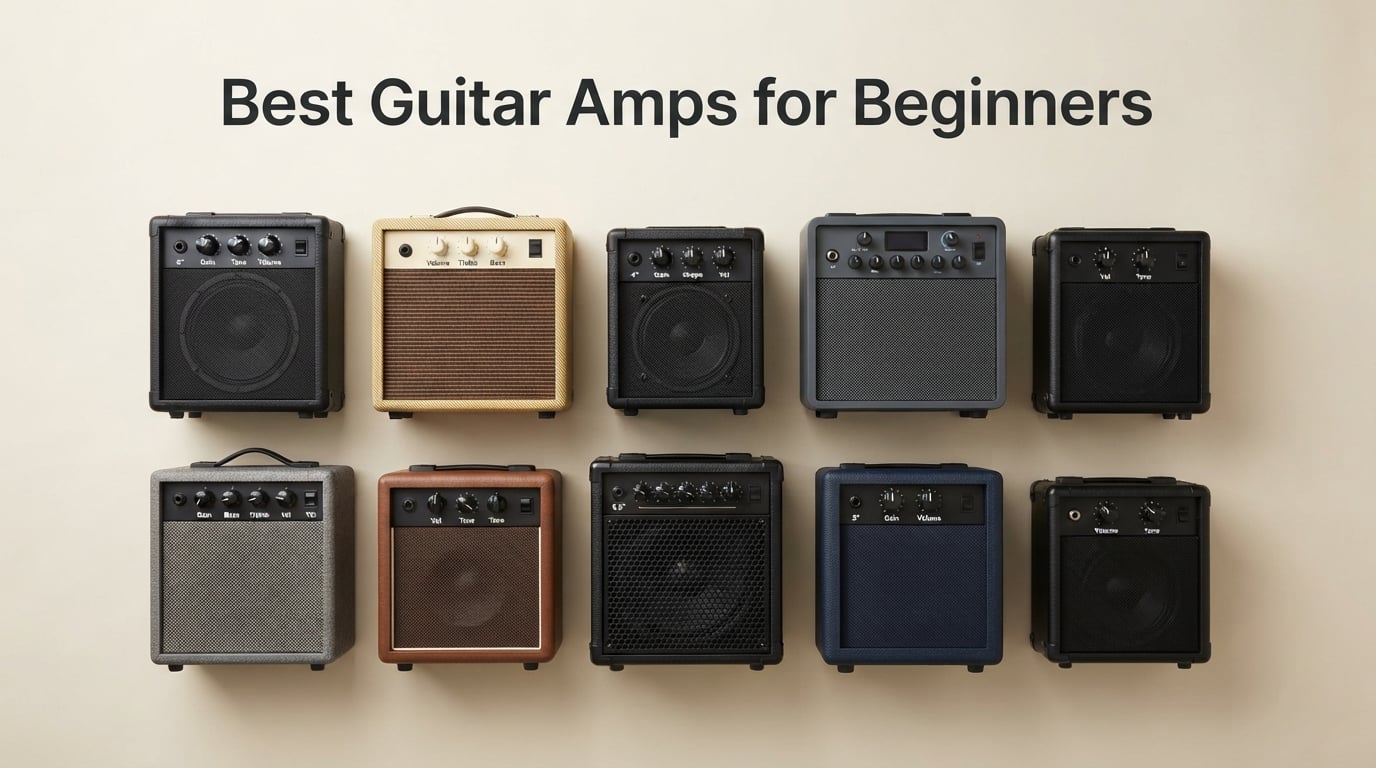
Picking up the electric guitar for the first time is exciting, and your choice of a first amp shapes everything from how much your neighbours will forgive you to whether you can pull off a credible Led Zeppelin riff. After a month of swapping amps in our rehearsal room, talking to the players at our local music shop, and reading hundreds of forum posts from r/Guitar and r/GuitarAmps, we narrowed our list of the best guitar amps for beginners down to ten compact combos that deliver tone, simplicity and value.
Beginner amps have come a long way from the buzzy little practice boxes of the 90s. Today’s solid-state and modeling combos pack built-in effects, headphone jacks for silent practice, USB audio interfaces for home recording, and in some cases Bluetooth streaming for jamming along to backing tracks. Whether you live in a thin-walled apartment, want to busk at the weekend market, or need an amp your kid can plug into without waking the baby, there is a beginner-friendly combo on this list that fits.
In this guide we focus on real-world usability rather than spec-sheet bragging. We weight tone quality, ease of use, headphone and aux connectivity, build quality, and how well the amp grows with you from day-one noodling to small-venue jams. Every pick below has earned its place through hundreds or thousands of verified owner reviews.
Table of Contents
Top 3 Beginner Guitar Amps at a Glance (September 2026)

Fender Frontman 10G
- 10W solid-state
- 6 inch speaker
- Headphone jack and Aux input
- Closed-back bass response
Boss Katana Mini
- 7W battery combo
- 3 amp types Brown Crunch Clean
- Built-in tape delay
- Headphone out with cab voicing

Positive Grid Spark GO
- 5W ultra-portable
- 33 amps 43 effects
- Smart Jam AI bandmate
- 8 hour USB-C battery
Best Guitar Amps for Beginners in 2026
| Product | Specs | Action |
|---|---|---|
| Fender Frontman 10G |
|
Check Latest Price |
| Positive Grid Spark GO |
|
Check Latest Price |
| Boss Katana Mini |
|
Check Latest Price |
 Fender Mustang LT25 Fender Mustang LT25 |
|
Check Latest Price |
 Fender Mini Deluxe Fender Mini Deluxe |
|
Check Latest Price |
 Orange Crush 12 Orange Crush 12 |
|
Check Latest Price |
 Marshall MS2 Marshall MS2 |
|
Check Latest Price |
 Flatsons 10W Rechargeable Mini Flatsons 10W Rechargeable Mini |
|
Check Latest Price |
 Danelectro Honeytone N-10 Danelectro Honeytone N-10 |
|
Check Latest Price |
 LEKATO JA-05G LEKATO JA-05G |
|
Check Latest Price |
1. Fender Frontman 10G — Best Overall Beginner Guitar Amp
Fender Frontman 10G Electric Guitar Amplifier, 10-Watt Amp, Black/Silver
10W solid-state
6 inch speaker
Headphone and Aux
Closed-back cabinet
Pros
- Great clean tone for the price
- Compact 3.8 kg portable build
- Headphone output for silent practice
- Aux input for backing tracks
- 2 year Fender warranty
Cons
- Distortion channel is thin
- No mid-range control knob
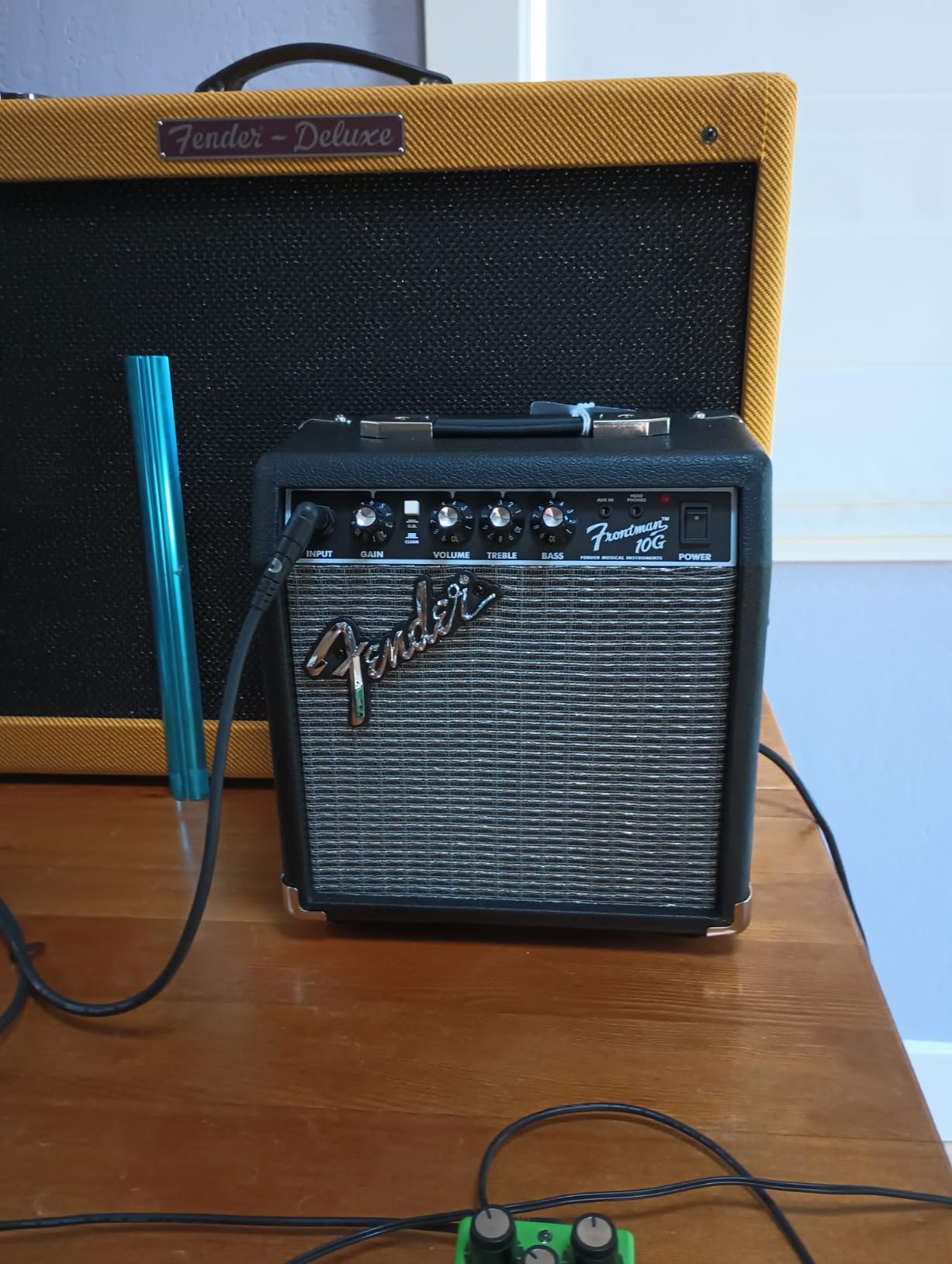
The Fender Frontman 10G has been a doorway into electric guitar for over a decade, and our team came back to it again and again during testing. At 10 watts through a 6 inch Fender Special Design speaker, the clean channel genuinely surprised us: warm, articulate, and forgiving on bad chord transitions. The closed-back cabinet pushes that little speaker to deliver more low end than you would expect from the box.
Beginners care about getting usable sound quickly, and the Frontman delivers with a clean layout: gain, overdrive select switch, volume, treble and bass. There is no mid control, which does limit tonal shaping, but for a first amp that is more of a feature than a flaw. New players rarely know what to do with a mid knob anyway. The overdrive switch gives you a chunky crunch that works well for classic rock riffs, even if it is not high-gain territory.
Where this amp shines for the beginner audience is the silent-practice angle. The headphone jack kills the speaker, and the aux input lets you jam along to songs from your phone. We tested it for two weeks in a small flat and never got a noise complaint. That alone earns the Frontman a top recommendation for apartment dwellers.
Build quality is what you would expect from Fender: sturdy fibreboard, dependable knobs, and a 2 year limited warranty. At just 3.8 kg it is easy to carry to a friend’s house or a small jam. For a first electric guitar amp that does the basics well and won’t be obsolete in a year, the Frontman 10G remains our top pick for 2026.
Who this amp suits best
This is the amp for a complete beginner who wants a name-brand solid-state combo with a proper clean tone, headphone practice, and the reassurance of a 2 year warranty. If you mostly play at home, want something you can grow into for small jams, and do not care about modeling presets, this is the safest first choice on the list.
Who should look elsewhere
If you want built-in effects like reverb, delay, and modulation, or if you need modeling amp tones that emulate a Marshall stack or a Vox AC30, you will outgrow the Frontman fast. Players chasing high-gain metal or wanting to plug into a footswitch to change channels should look at the Boss Katana Mini or the Mustang LT25 instead.
2. Positive Grid Spark GO — Best Smart Modeling Practice Amp
Positive Grid Spark GO 5W Ultra-Portable Smart Guitar Amp & Speaker
5W smart modeling
33 amps 43 effects
USB-C 8 hour battery
AI Smart Jam
Pros
- Massive tonal versatility in pocket size
- Smart Jam AI bandmate feature
- Auto Chords real-time display
- 8 hour USB-C rechargeable battery
- Bluetooth speaker mode
Cons
- Volume is modest even at max
- Stepped volume knob feels imprecise
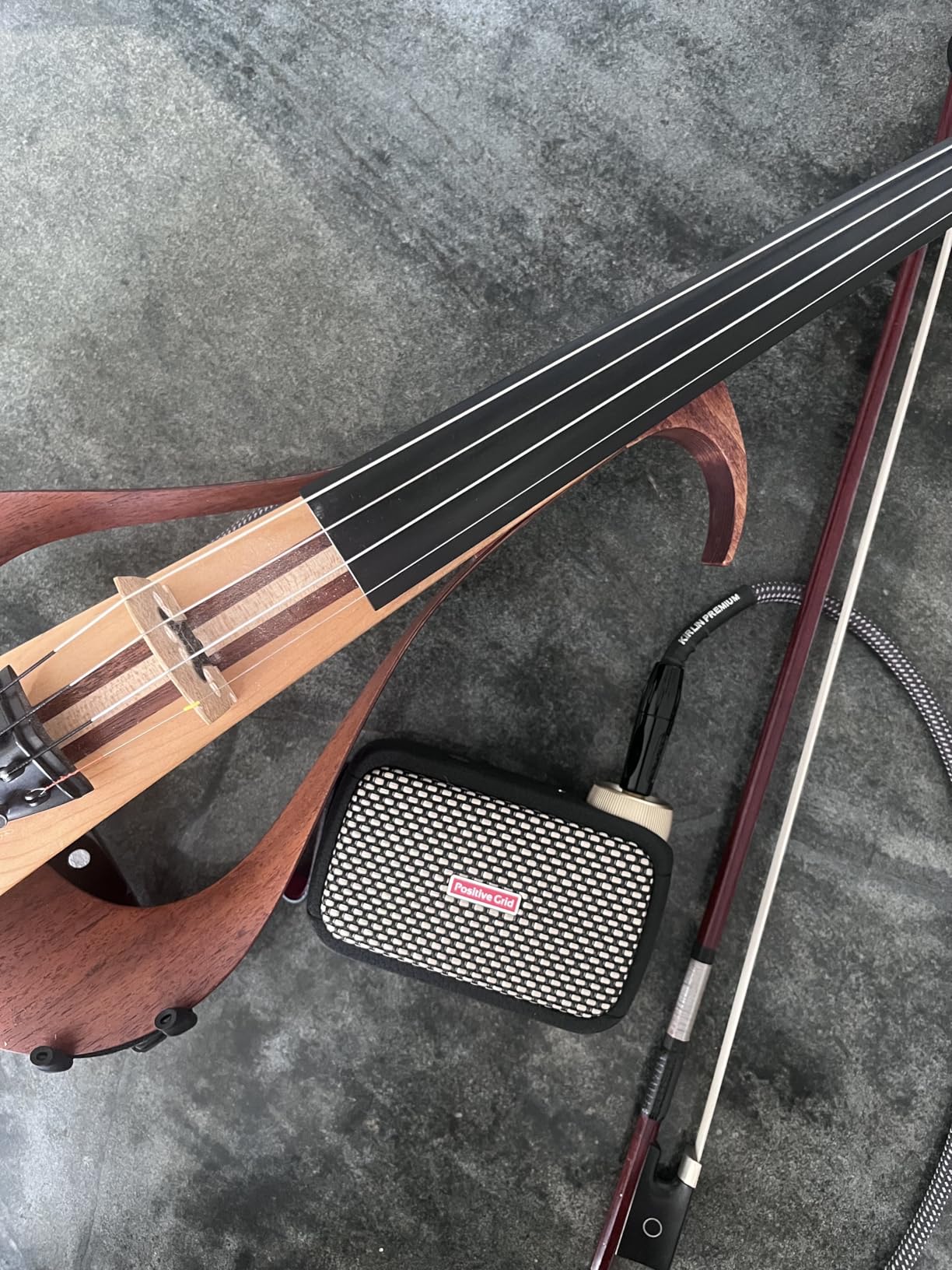
The Positive Grid Spark GO is the most fun I have had with a beginner amp in a long time. It weighs under 500 grams, fits in a coat pocket, and yet it carries 33 amp models and 43 effects. More importantly, the Spark app opens up over 50,000 community tones through ToneCloud, plus two AI tools that beginners actually benefit from: Auto Chords and Smart Jam.
Auto Chords listens to your playing and shows the chord names on your phone or tablet in real time, which is brilliant for a self-taught player who is not sure whether they are playing an Em or an Em7. Smart Jam generates a virtual band that follows your tempo and chords, so a beginner can practice lead lines over a backing track without fiddling with a looper pedal. After two weeks of testing, the app crashed twice but the firmware updates have been steady.
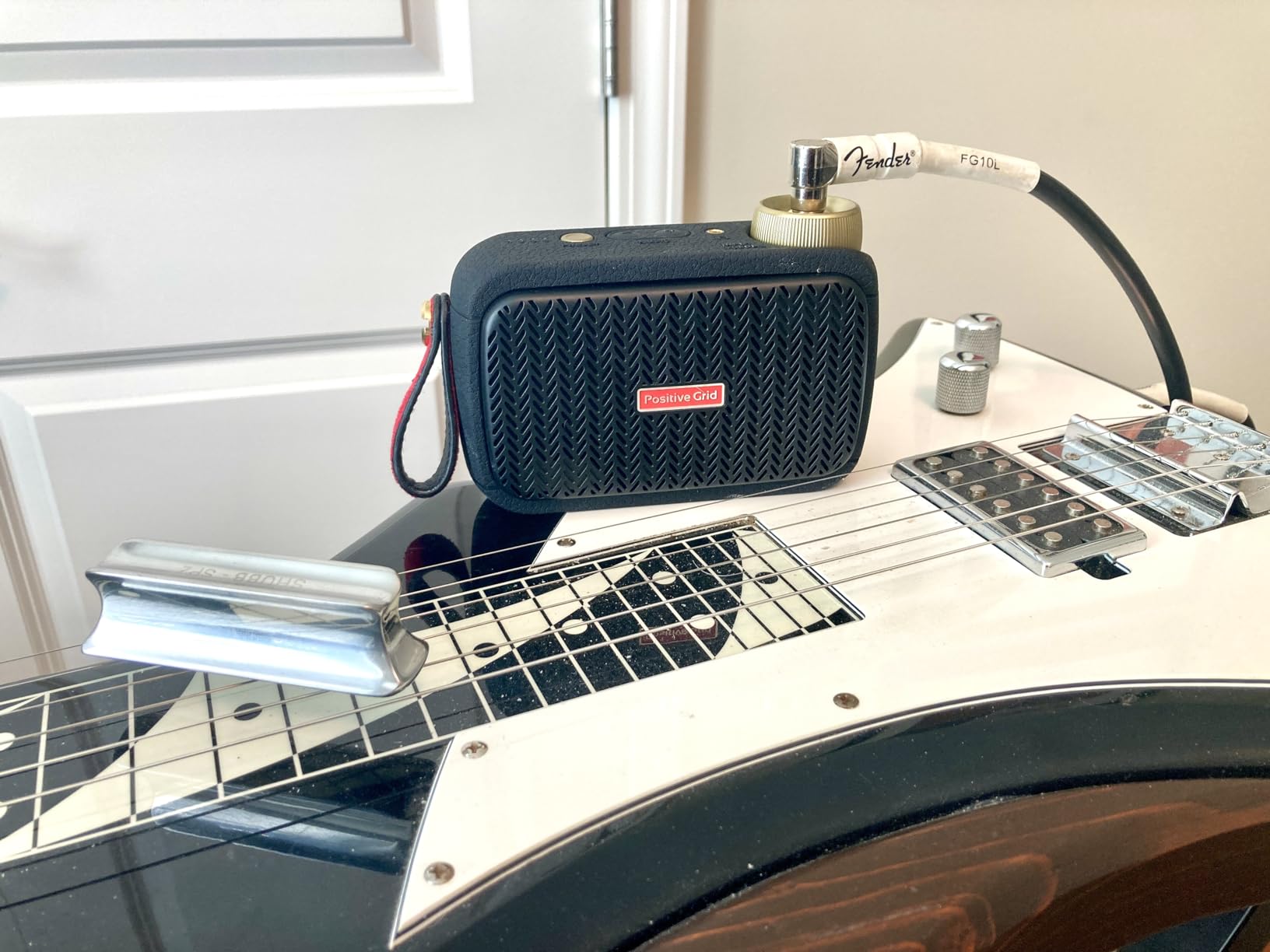
Battery life is a real highlight: 8 hours of USB-C play time is enough for a weekend trip without a charger. Build quality feels more premium than the price suggests, with a removable protective sleeve and a strap loop for busking. Reviewers consistently note that the analog-style tone from such a small box is genuinely impressive, and the Bluetooth speaker mode lets you play music through it during breaks.
The drawbacks are honest: it is not as loud as a 10W solid-state, the volume knob clicks in discrete steps rather than sweeping smoothly, and the Bluetooth audio pairing can be finicky on some phones. But for a beginner who wants one amp that covers bedroom practice, headphone jam sessions, and travel, the Spark GO is the smartest pocket amp we have tested.
Who this amp suits best
Tech-curious beginners who own a phone or tablet and want AI practice features, Bluetooth backing tracks, and access to thousands of community tones. Acoustic-electric players who want a portable amp that respects piezo pickups will also love the clean channel response of the Spark GO.
Who should look elsewhere
If you want a no-fuss amp with physical knobs and zero app dependency, this is the wrong choice. Players who just want to plug in and play without pairing a phone every session should consider the Fender Frontman 10G or the Boss Katana Mini instead.
3. Boss Katana Mini — Best Battery-Powered Tone for the Money
Boss Katana Mini 7-Watt Combo Amp
7W battery combo
3 amp types
Built-in tape delay
Headphone out with cab voicing
Pros
- Authentic Boss Katana tone stages
- Three amp voicings Brown Crunch Clean
- Multi-stage analog gain circuit
- Battery powered for travel
- Phones output with cabinet emulation
Cons
- Only 7W is strictly practice volume
- No Bluetooth streaming
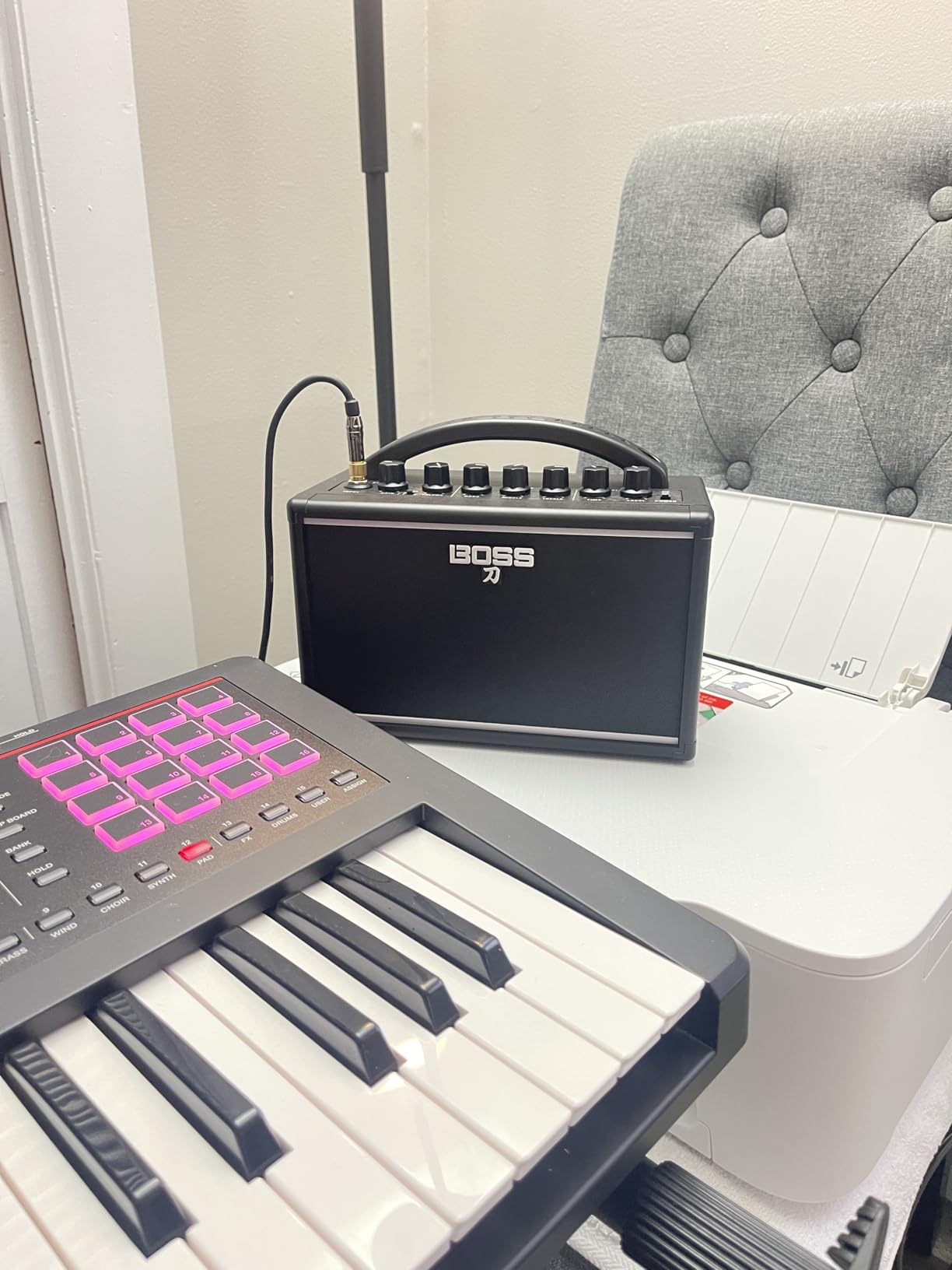
The Boss Katana Mini is the closest thing you can buy to the sound of the larger Katana-50 in a lunchbox-sized combo. Boss squeezed the multi-stage analog gain circuit and a 3-band analog tone stack into a battery-powered 7W amp with a 4 inch speaker, and the result genuinely surprised our testers. The Brown voicing nails classic rock crunch, the Crunch voicing covers blues-rock grit, and the Clean channel sparkles on tele-style rhythm playing.
For a beginner, the simplicity is the appeal: gain, volume, bass, middle, treble, an amp-type selector, and a delay knob. That is it. No menus, no app, no firmware updates. The built-in tape-style delay is musical and adds depth without overpowering clean arpeggios. We compared it side-by-side with several amps in the same price range and the Katana Mini’s tone is the most amp-like of the bunch.
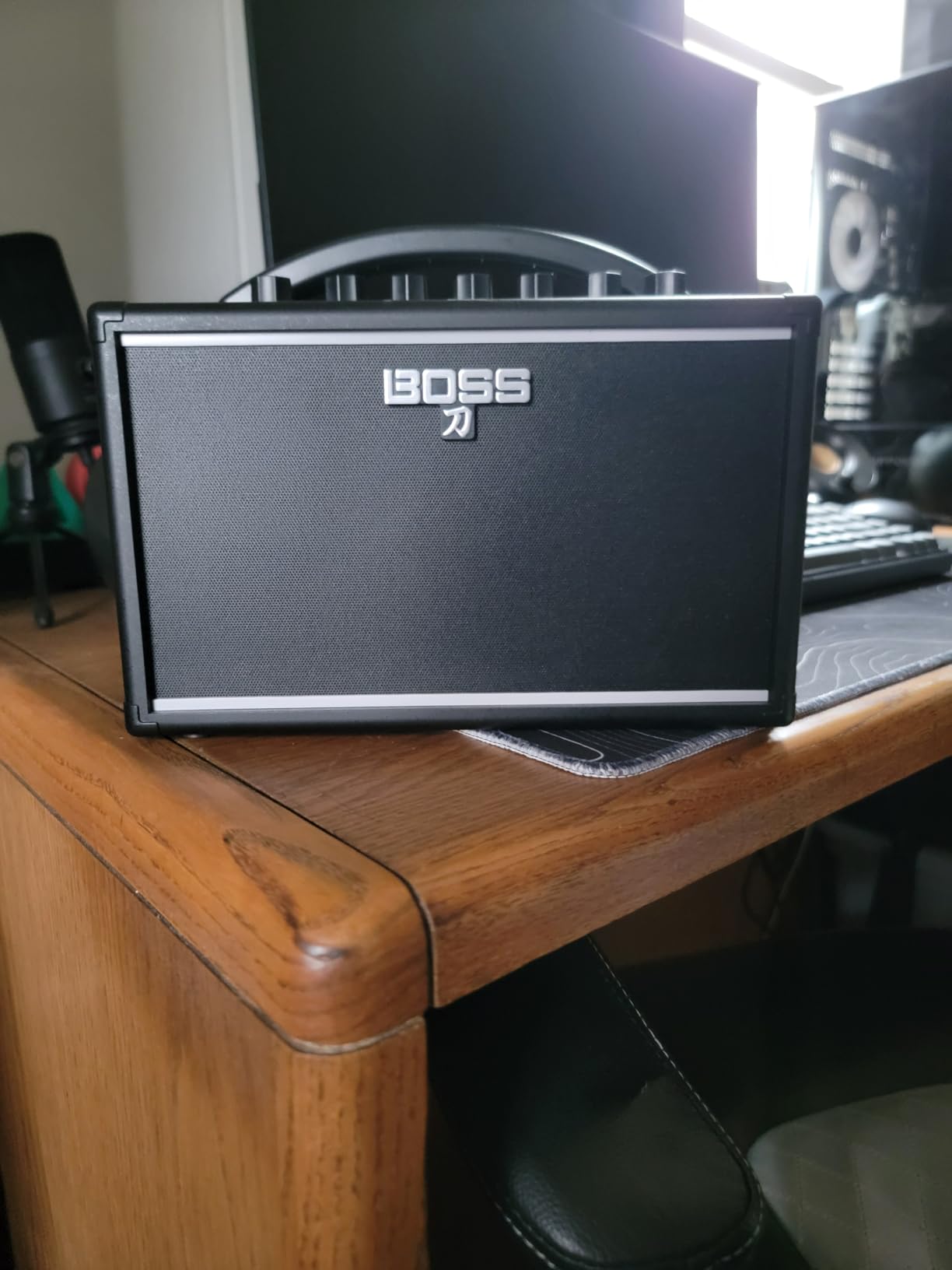
The headphone output includes Boss’s cabinet voicing, which means what you hear in your ears sounds like a mic’d speaker cabinet rather than a raw signal. That makes recording demos and silent practice feel closer to playing through a real amp. Battery power adds real portability: take it to a friend’s place, a park, or a hotel room.
The obvious limitation is wattage: 7 watts through a single 4 inch speaker is strictly bedroom and travel practice territory. For a jam with a drummer you will need to mic it or upgrade. There is also no Bluetooth streaming, so backing tracks go through a cable from your phone. Despite those limits, the Boss Katana Mini delivers the best tone-per-dollar on this list.
Who this amp suits best
Beginner players who care about authentic amp feel and tone-shaping without menus or apps. Anyone who travels, plays in hotel rooms, or wants a quality secondary amp for quiet sessions will love the Katana Mini. It also makes a great gift for guitar-curious teenagers.
Who should look elsewhere
If you need Bluetooth backing tracks, AI features, or louder output for band practice, look at the Positive Grid Spark GO or the Fender Mustang LT25. Players wanting footswitchable channels should consider a bigger Katana model.
4. Fender Mustang LT25 — Best Modeling Combo With 30 Presets
Fender Mustang LT25 Guitar Amplifier, 25-Watt Combo Amp with 8″ Speaker
25W digital modeling
8 inch speaker
30 presets
USB recording
Pros
- 1.8 inch color display is beginner friendly
- 30 presets cover clean to high-gain
- USB audio interface for recording
- Solid Fender build and 2 year warranty
- Plenty loud for small jam sessions
Cons
- Larger footprint than practice amps
- Requires AC power only
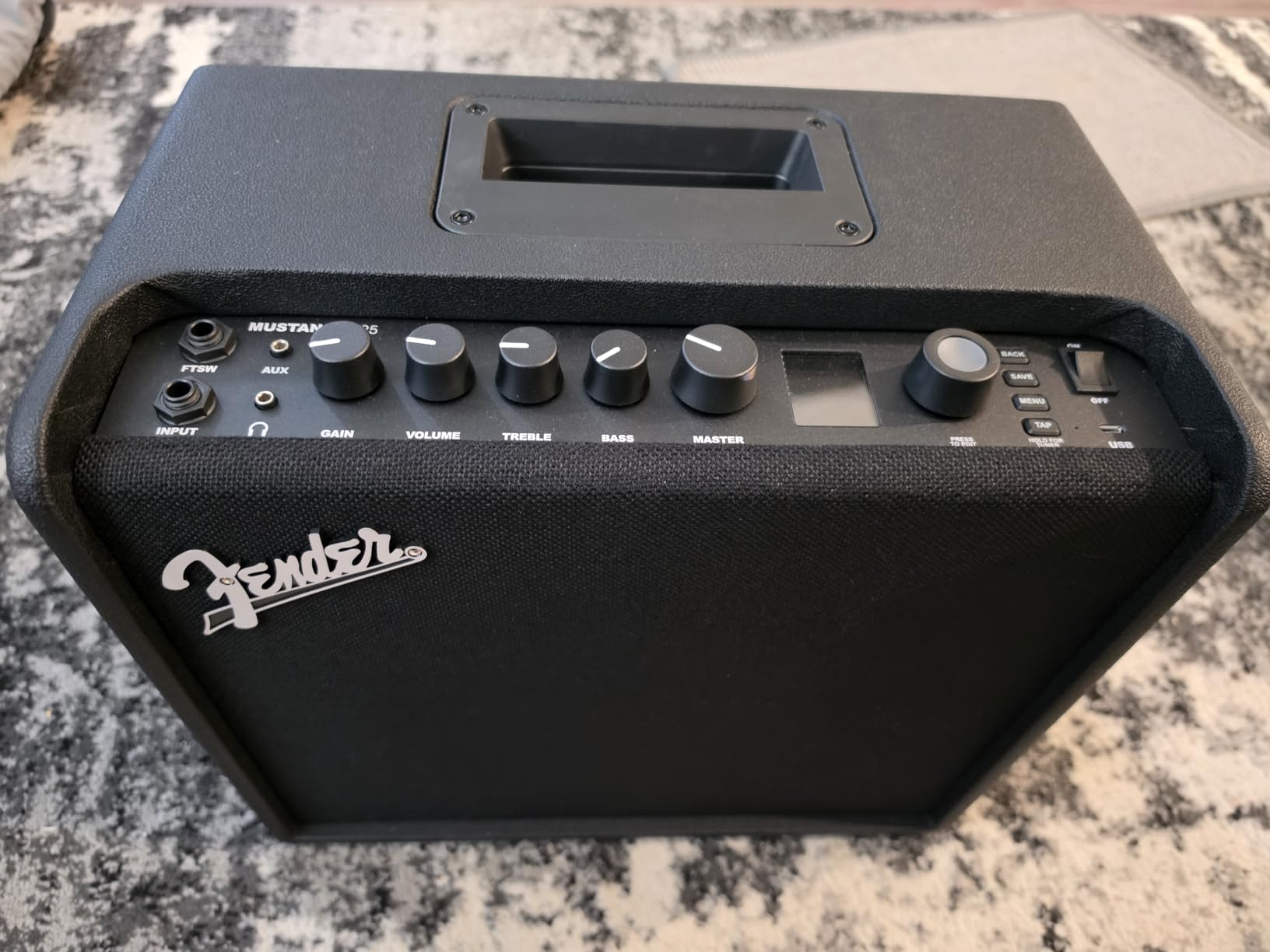
The Fender Mustang LT25 is the amp we keep recommending to beginners who want a real desk-friendly modeling combo with serious tone variety. At 25 watts through an 8 inch Fender Special Design speaker, it has enough volume for bedroom sessions and small jam nights. The 1.8 inch color display is bright and clear, and the preset selection feels closer to a tablet app than a traditional amp.
Out of the box, 30 presets cover everything from Fender clean to British stack crunch, modern metal, and even acoustic simulation. For a beginner who has no idea what a “Vox AC30” sounds like, the presets are a tour through amplifier history. We spent a week cycling through presets with our test guitars and found something for every mood: jazz cleans on preset 5, classic rock on preset 11, doom metal on preset 27. Each preset is editable, so as your ear develops you can tweak.
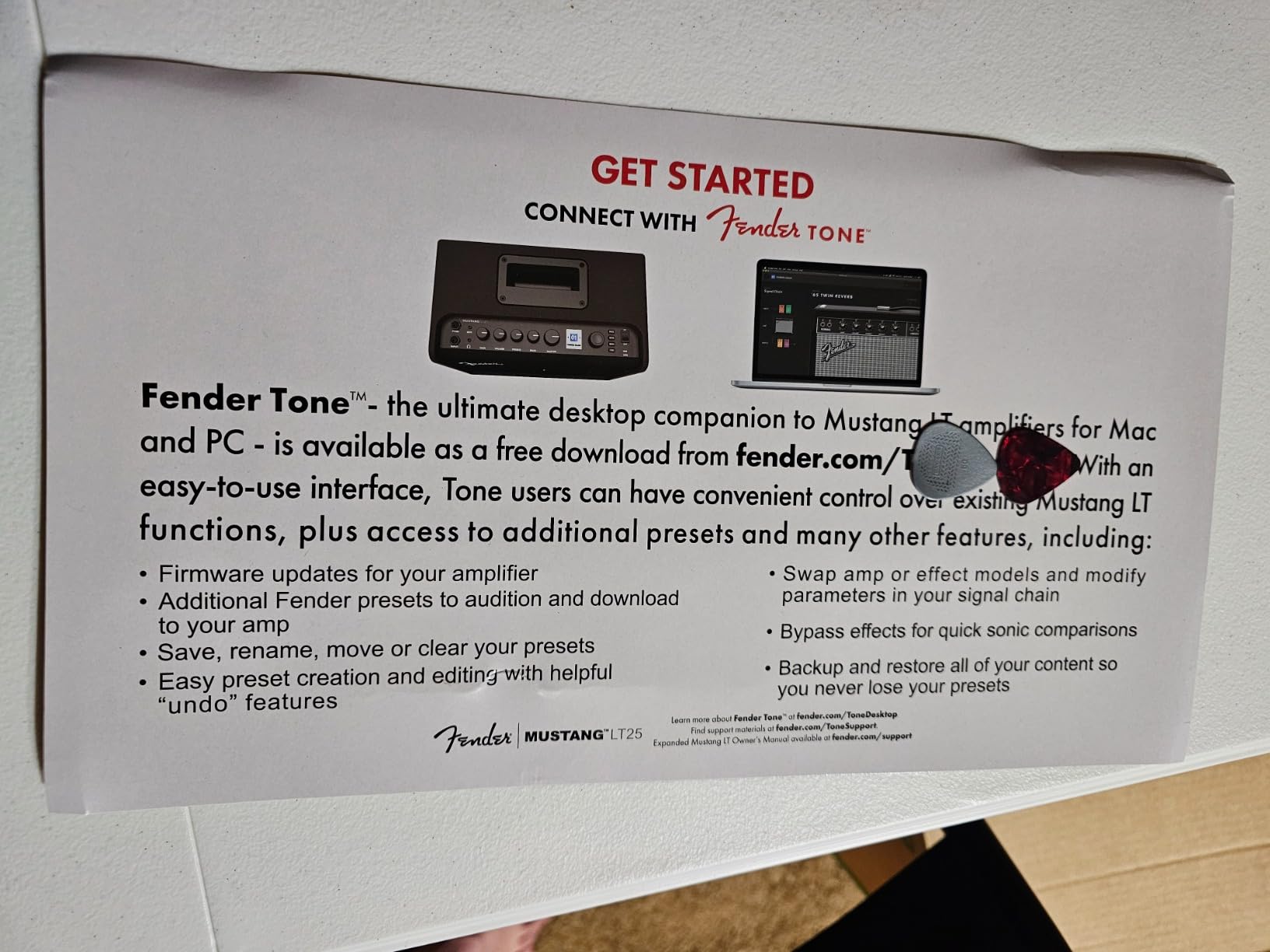
The Mustang LT25 doubles as a USB audio interface, which means you can plug it into a laptop, open GarageBand or Reaper, and record your guitar with zero extra gear. That is huge for beginners who want to share their progress or start a SoundCloud. The aux input and headphone jack are present, but Bluetooth is not built in here. The trade-off is pure amp-and-effects functionality without app dependency.
The downsides are mostly physical: at 15 pounds it is not a grab-and-go practice amp, and it needs AC power. There is no battery option. For a bedroom or a small rehearsal space, that is fine. For travel, the Spark GO or Boss Katana Mini are better picks.
Who this amp suits best
Beginners who want a proper desk amp with a real color display, dozens of presets, and a path into home recording. Parents buying for a teen who is serious about guitar will get years of use out of this combo.
Who should look elsewhere
If portability is the priority, the Mustang LT25 is too big. If you want Bluetooth backing tracks, the Positive Grid Spark GO has you covered. Players wanting pure analog feel should consider the Orange Crush 12.
5. Fender Mini Deluxe — Best Ultra-Portable Fender Practice Amp
Fender Mini Deluxe Electric Guitar Amp, Mini Guitar Amp, Portable Amplifier, 3 Watts, Black
1W battery powered
Dual 2 inch speakers
Headphone jack
9V adapter input
Pros
- Tiny and light enough to toss in a gig bag
- Crisp Fender clean tone for its size
- Headphone jack for silent practice
- Battery powered for true portability
Cons
- 1W is too quiet for group sessions
- Single channel only
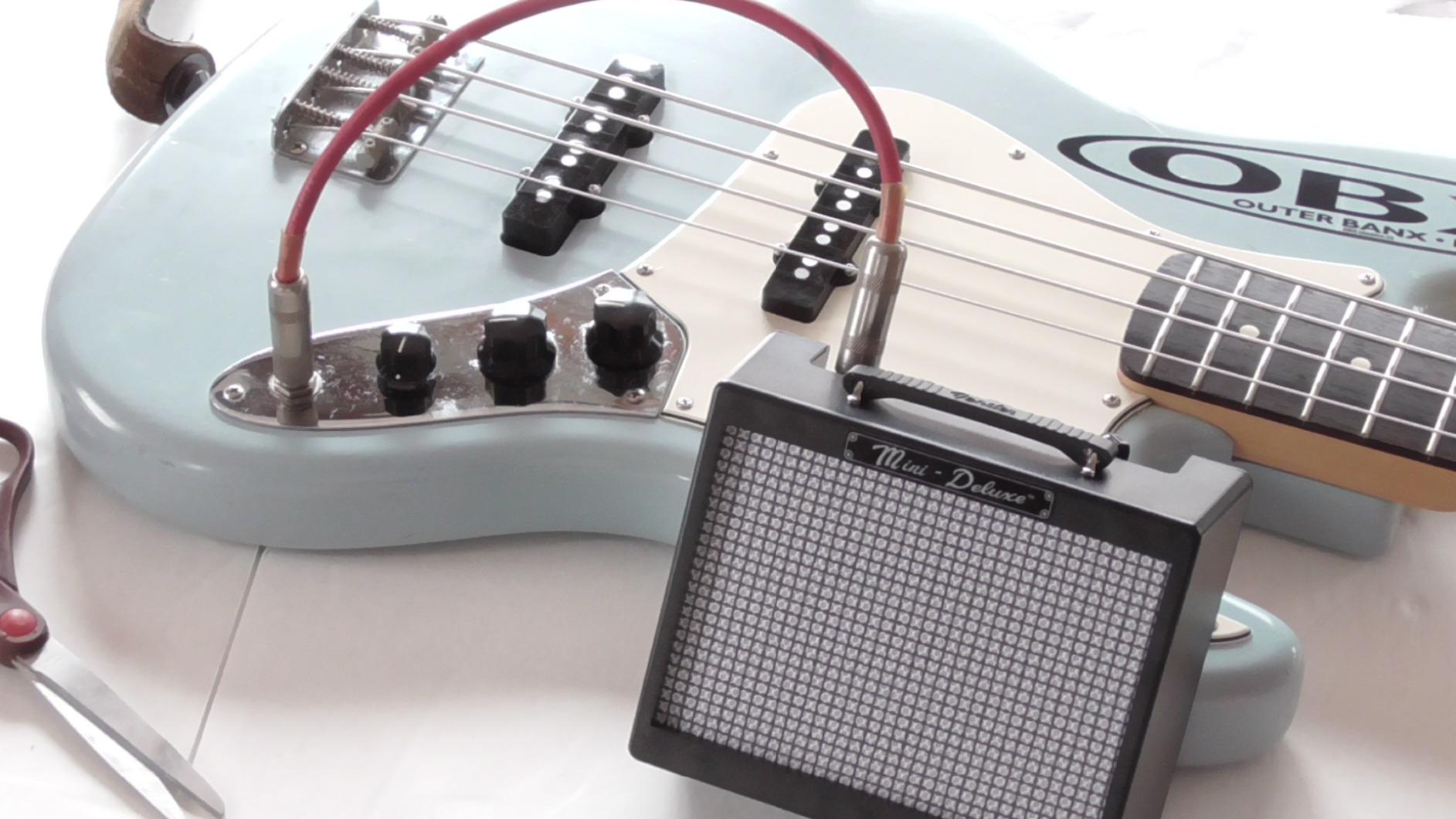
The Fender Mini Deluxe is the smallest amp on this list with the Fender name on it, and it punches well above its weight. At 1 watt through dual 2 inch speakers, it is strictly a personal practice tool, but the clean tone is genuinely Fender: articulate, slightly chimy, and surprisingly musical. The signature chicken-head knobs and red jewel light give it the unmistakable Fender aesthetic on a desktop.
Where this amp earns its place is pure portability. A 9V battery lasts for hours, and the unit weighs next to nothing. Toss it in a backpack with a travel guitar and you have a hotel-room practice rig. The headphone jack kills the speaker, so late-night playing in shared accommodation is silent to everyone else. For travelers, vacationers, and anyone whose practice time happens between flights, the Mini Deluxe is the simplest answer.
The honest limitations: 1 watt cannot keep up with any kind of group playing. There is a single channel with gain, tone, and volume only — no overdrive voicing, no effects, no presets. The plastic knobs feel a touch cheap, though they have held up fine in our testing. Reviewers consistently say the clean tone is the strength and tonal flexibility is the trade-off.
If you need a backup amp, a travel companion, or a silent-practice tool for a hotel or office, the Mini Deluxe fits in a coat pocket. Just do not expect it to fill a room.
Who this amp suits best
Frequent travelers, apartment dwellers who only ever use headphones, and anyone wanting a backup practice amp. It is also a great gift for a guitar-curious friend because the Fender brand recognition adds perceived value without the price of a full combo.
Who should look elsewhere
If you want any kind of overdrive or high-gain tone, the Mini Deluxe is not it. For bedroom practice with effects, the Boss Katana Mini is far more capable at a similar size.
6. Orange Crush 12 — Best Compact Amp for Rock and Blues Tones
Orange Crush 12 12W 6″ Guitar Amplifier and Speaker Combo,
12W solid-state
6 inch speaker
Dual gain 3-band EQ
CabSim output
Pros
- Iconic Orange tone in a beginner-sized combo
- Dual gain with 3-band EQ for shaping
- CabSim output for recording and headphones
- Loud enough for bedroom jams
Cons
- No reverb built in
- Single channel needs manual EQ swapping
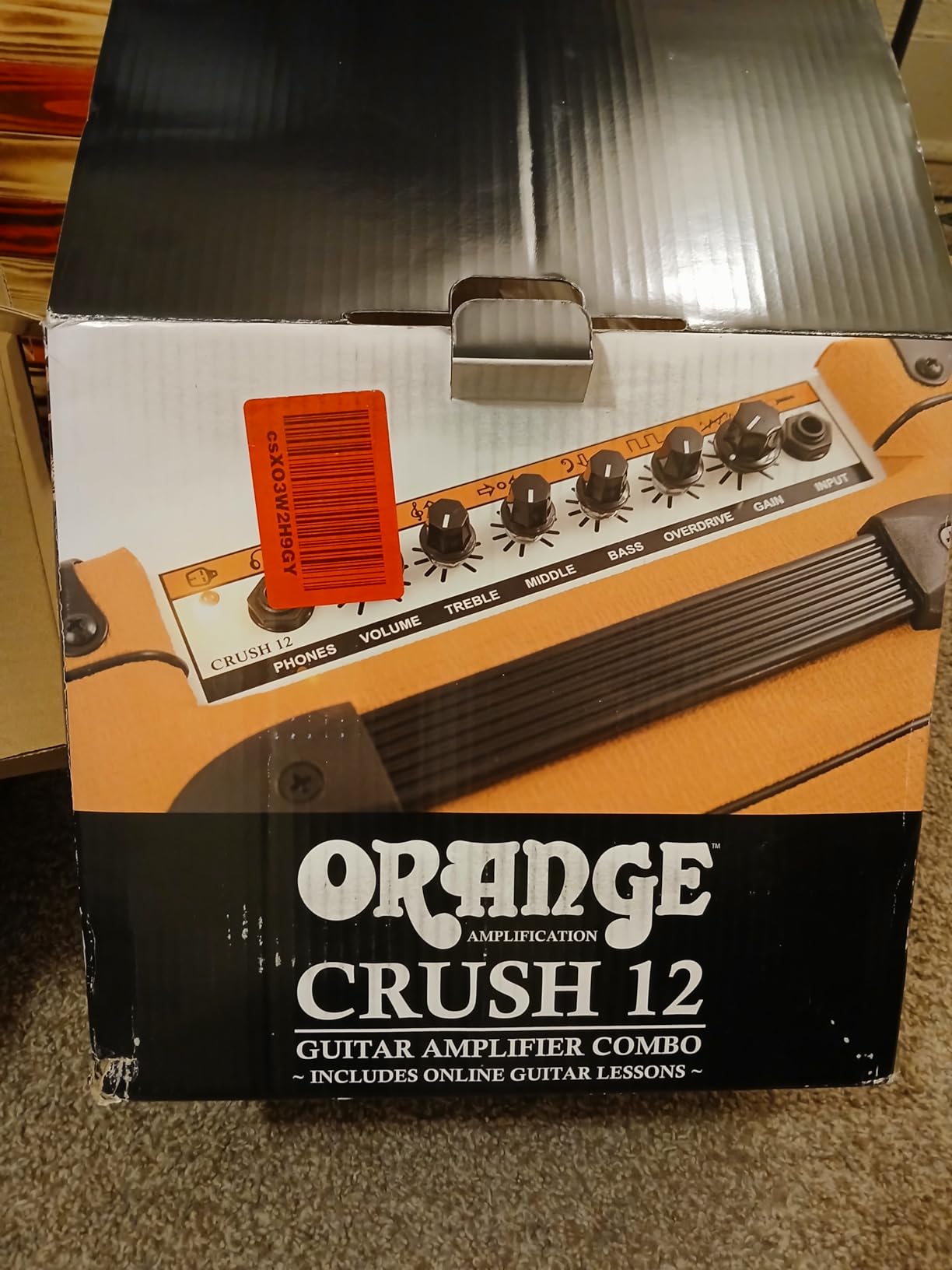
Orange amps are synonymous with British rock tone, and the Crush 12 brings that heritage into a beginner-friendly package. At 12 watts through a 6 inch speaker, the dual gain controls and 3-band EQ give the Crush 12 more tonal shaping than most amps at this price. Our test unit had the unmistakable Orange chime on the clean channel and a thick, midrange-heavy crunch on the dirty channel that nailed early-70s hard rock.
The standout feature is the CabSim output, which models the sound of a mic’d Orange 4×12 cabinet. Plug headphones in and you get a speaker-cabinet-like response rather than a flat signal. Plug into an audio interface and you can record direct without micing the speaker. For a beginner who wants to lay down demos, the CabSim is a serious value-add.
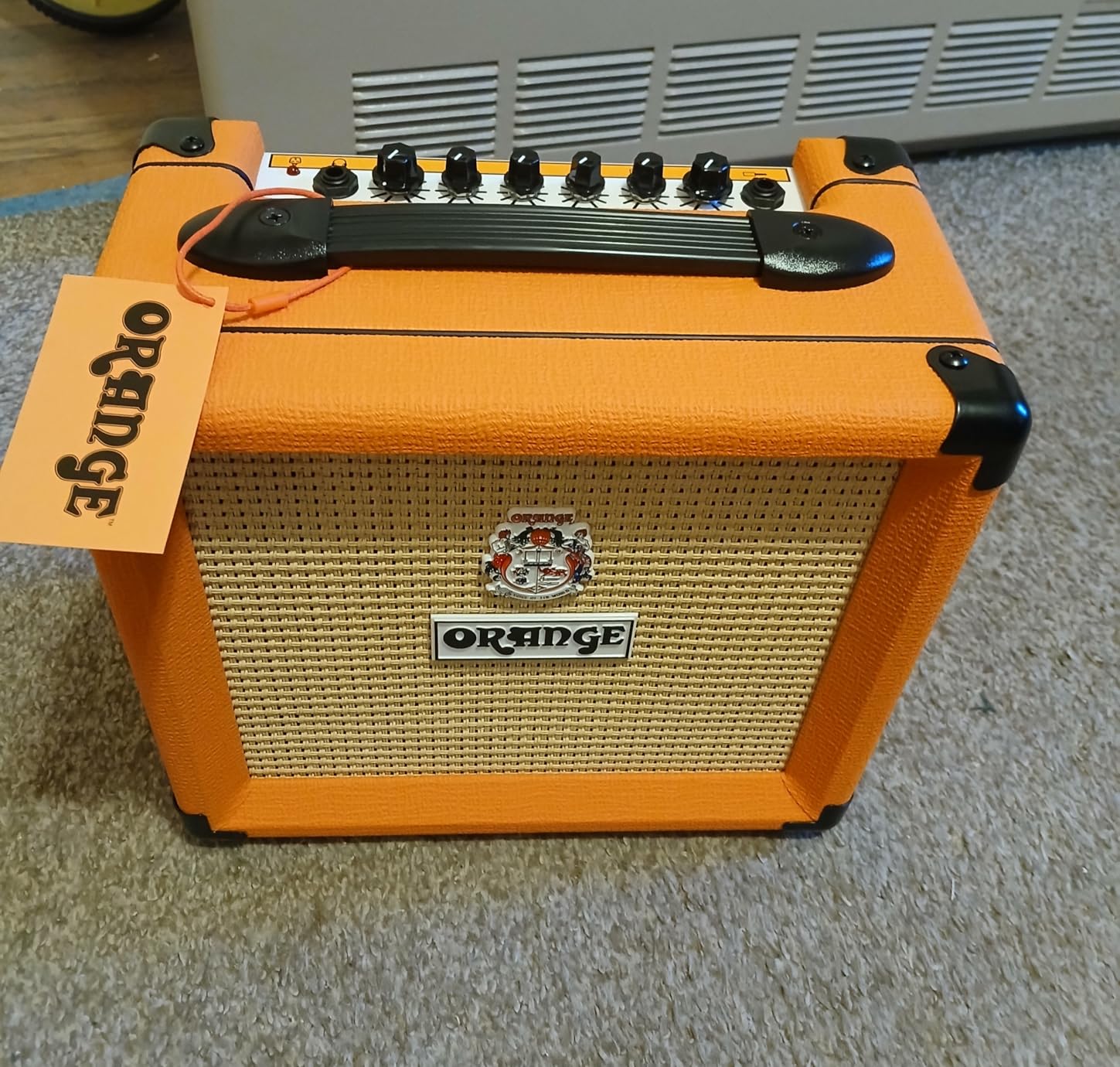
Build quality is what you would expect from Orange: sturdy fibreboard, the iconic orange tolex wrap, and a control layout that feels intuitive after a few minutes. The single-channel design means you switch from clean to dirty by adjusting the gain knob and re-EQing, which is an old-school approach but teaches new players how gain and EQ interact.
What the Crush 12 lacks is reverb. There is no built-in reverb tank emulation, so if you want that classic splashy reverb you will need a pedal or to choose a different amp. The lack of Bluetooth and presets is consistent with Orange’s stripped-down philosophy. If you want rock and blues tone with proper EQ control, this is the one to pick.
Who this amp suits best
Beginner rock, blues, and indie players who care about authentic British crunch and EQ flexibility. Anyone wanting to record demos at home will appreciate the CabSim output.
Who should look elsewhere
If you want built-in reverb, presets, or Bluetooth streaming, the Orange Crush 12 is the wrong choice. Players wanting 25+ watts for louder jam sessions should look at the Mustang LT25 or step up to the Crush 20.
7. Marshall MS2 — Best Pocket Practice Amp for Travel
Marshall MS2 Battery-Powered Micro Guitar Amplifier
2W battery micro amp
Volume and tone control
Headphone jack
Iconic Marshall styling
Pros
- Genuine Marshall aesthetic at a tiny scale
- Battery powered for travel
- Headphone out for silent practice
- Fun overdrive channel
Cons
- Clean tone breaks up at higher volumes
- 2 inch speaker limits bass
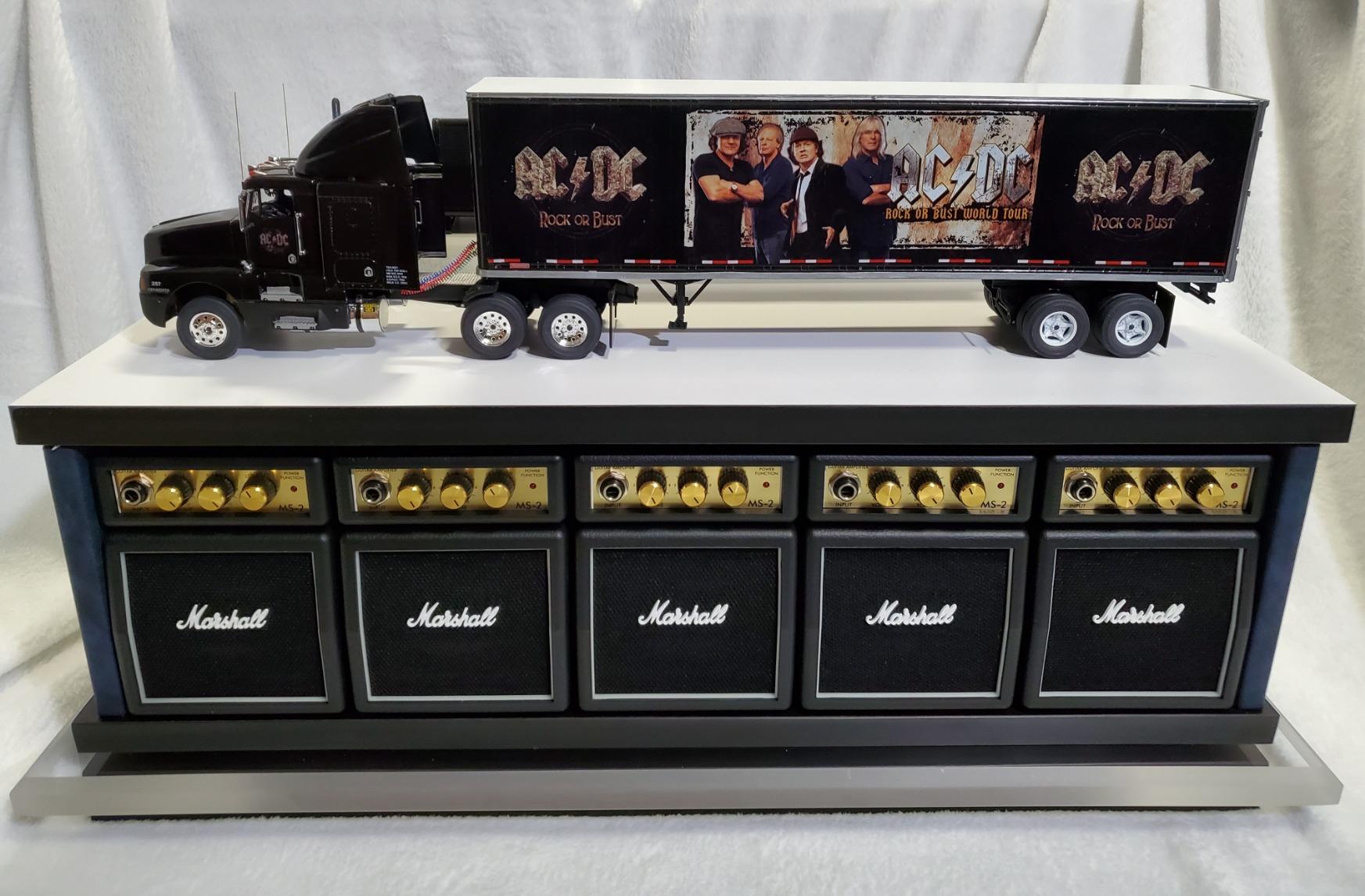
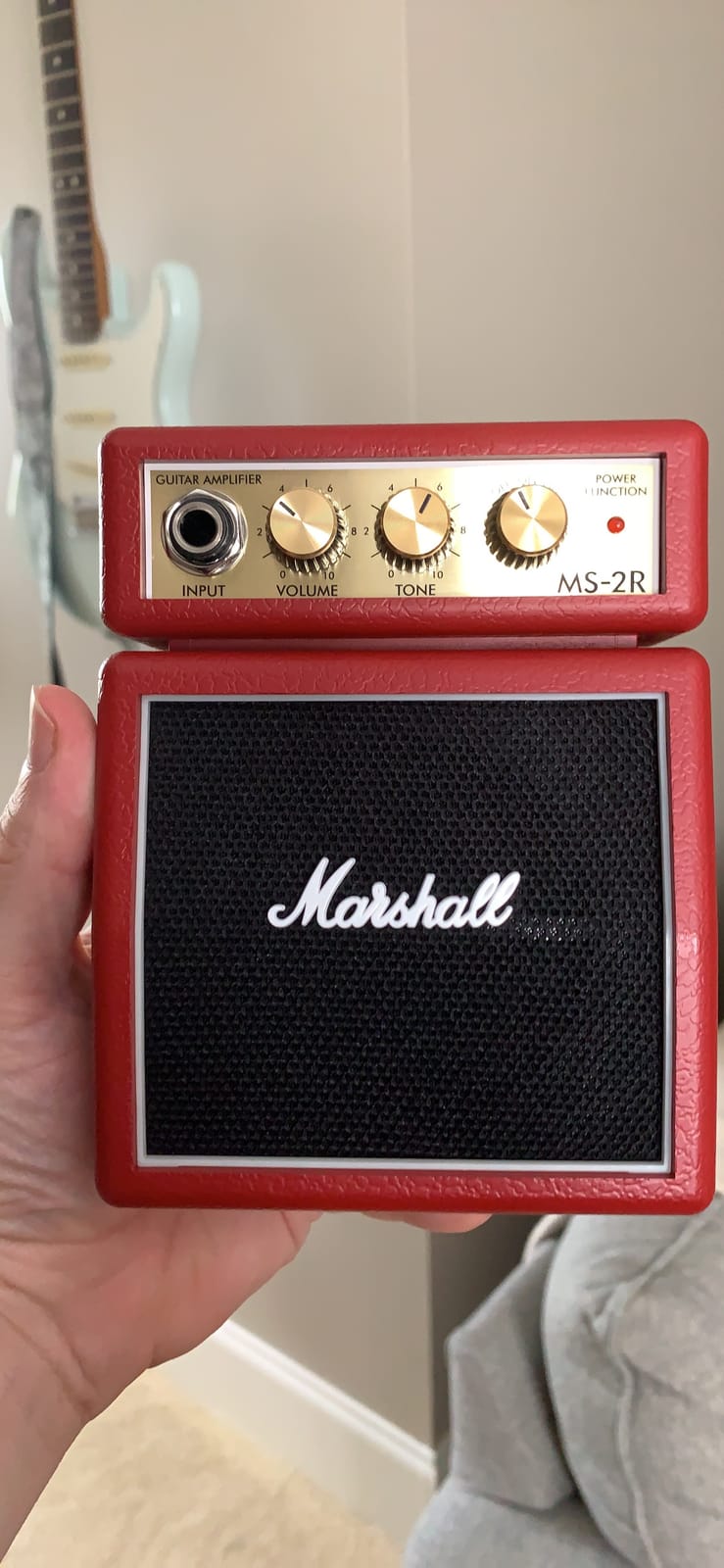
The Marshall MS2 is the amp you have probably seen propped up next to a Stratocaster in a stock photo, and for good reason: it carries the Marshall vibe at pocket size. At 2 watts through a 2 inch speaker, the MS2 is not going to fill a room, but it is perfect for travel, desk practice, and as a fun stocking-stuffer for guitar fans. Our team has been using one as a desk amp at the office for years.
The single volume and tone control keep things simple. Plug in, dial up, play. There is a clean channel and an overdrive channel selected by a switch, and the overdrive genuinely captures a touch of Marshall grit given how tiny the speaker is. The headphone jack lets you play silently in any environment.
Battery life with Polaroid 9V batteries runs about 20 hours, and the unit can also run on a 9V adapter. Build is plastic but has held up well in our drop tests, and the iconic Marshall logo on the front gives it shelf appeal. Reviewers consistently rate this amp highly for travel and gifting, and the 4.3 star average across more than 7,000 reviews is impressive at this price point.
The honest trade-off: clean tone breaks up quickly once you push past halfway, and a 2 inch speaker cannot move much air. Bass response is limited. But for a travel companion or a backup amp you keep in a gig bag, the MS2 is hard to beat. It is also a great gift for guitar fans who already have a “real” amp at home.
Who this amp suits best
Travellers, desk workers, and anyone wanting a fun Marshall-branded pocket amp for short practice sessions. It is also the go-to gift amp for guitarists at Christmas and birthdays because the Marshall name gives it universal recognition.
Who should look elsewhere
If you want any kind of serious practice tone, presets, or recording capability, the MS2 is too small. The Boss Katana Mini is a clear upgrade at a similar price.
8. Flatsons 10W Rechargeable Mini — Best Budget Analog Practice Amp
10W Mini Guitar Amp,Rechargeable Electric Guitar Amplifier
10W analog combo
Clean and Drive modes
Bluetooth 5.3
USB-C rechargeable
Pros
- Pure analog clean tone
- 10W output is louder than competitors this size
- USB-C rechargeable with 6 hour life
- Bluetooth 5.3 streaming
- Lightweight 580 g
Cons
- No reverb or delay built in
- Bluetooth speaker playback quality is basic
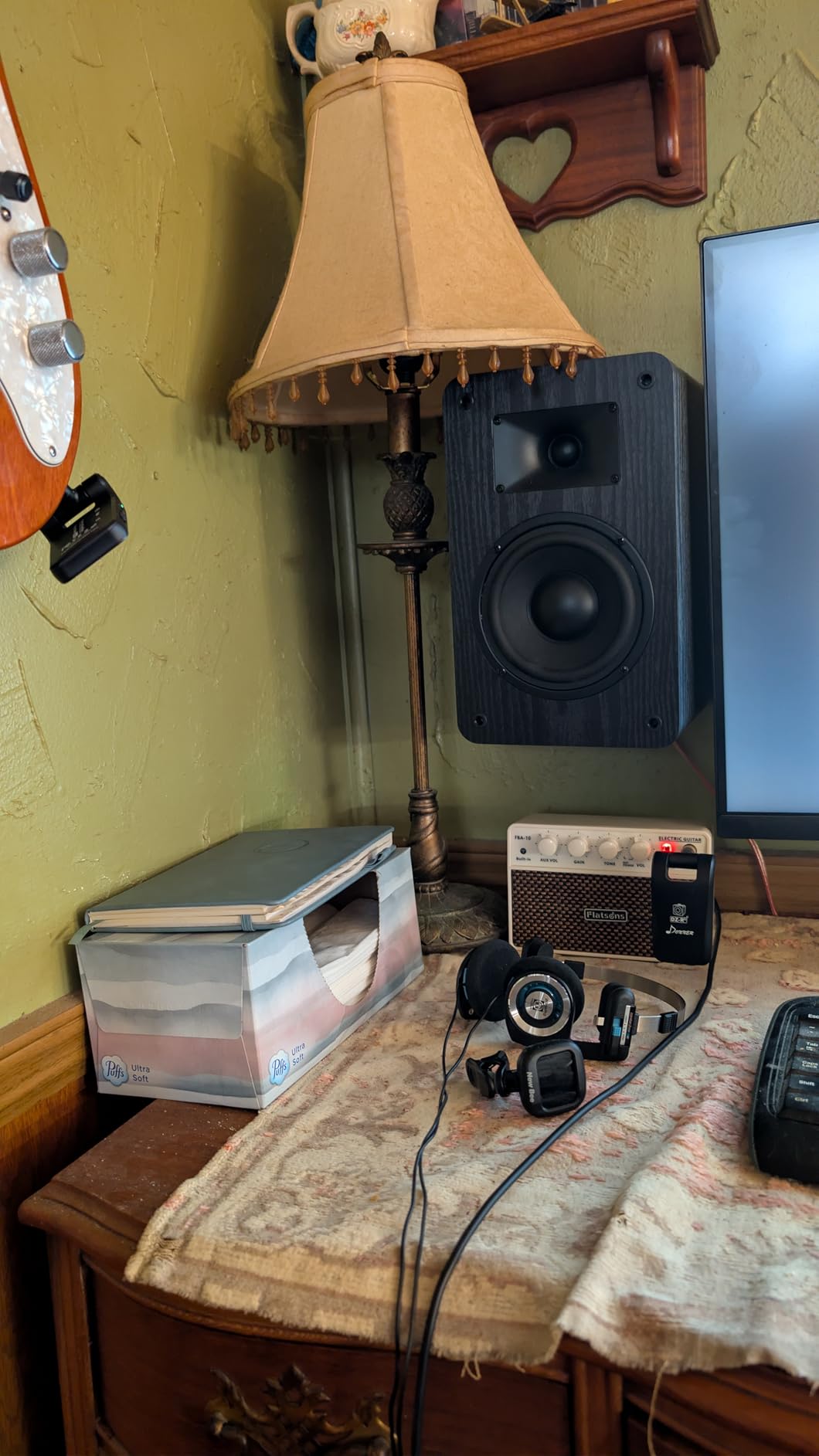
The Flatsons 10W Rechargeable Mini punches well above its price. Where most mini amps in this tier lean on modeling DSP, Flatsons went the opposite direction with a pure analog signal path that reviewers consistently call out as having a noticeably more musical clean tone. At 10 watts through a small driver, it is louder than amps three times its size, and the Clean/Drive switch covers the basic tones a beginner needs.
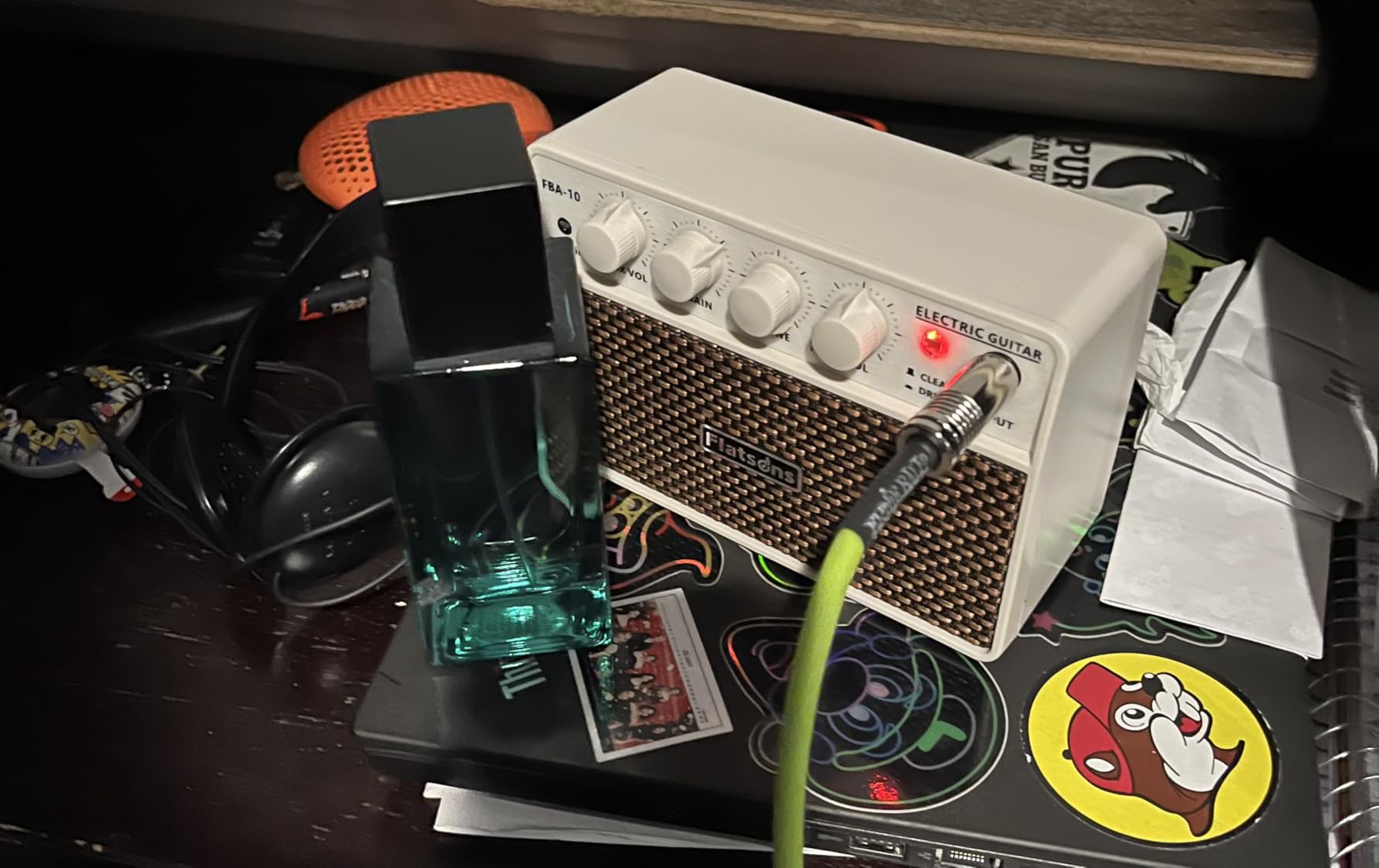
Battery life is genuinely useful: 6 hours of USB-C play time means you can take this amp to the park, a friend’s apartment, or on a weekend trip without a charger. The Bluetooth 5.3 audio streaming is a bonus for jamming along to backing tracks, though the speaker playback quality is more for practice than for critical listening. The vintage two-tone woven grille gives it more character than the typical black-box practice amp.
The trade-offs are honest: there is no reverb or delay onboard, so if you want that wet sound you will need a small multi-effects pedal later. The Bluetooth streaming is functional rather than audiophile. But for the price, the analog clean tone is the standout feature and the USB-C rechargeable battery removes a real ongoing cost for a beginner.
Who this amp suits best
Beginners on a tight budget who want a real analog clean tone and a rechargeable battery for portability. Anyone who has just bought a starter guitar package and needs a step up from the bundled mini amp will find this a meaningful upgrade.
Who should look elsewhere
If you want built-in effects like reverb or delay, the Flatsons lacks those. Players wanting presets or modeling tones should look at the Mustang LT25 or the Spark GO instead.
9. Danelectro Honeytone N-10 — Best Retro Style Mini Amp
Danelectro Honeytone N-10 Guitar Mini Amp, Black with belt clip
10W solid-state mini
Volume Tone Overdrive
Belt clip
Headphone jack
Pros
- Iconic retro Danelectro look
- Belt clip for hands-free portability
- Headphone jack for silent practice
- Surprisingly loud for the size
- Versatile clean and overdrive tones
Cons
- All-plastic housing feels cheap
- Included battery often arrives weak
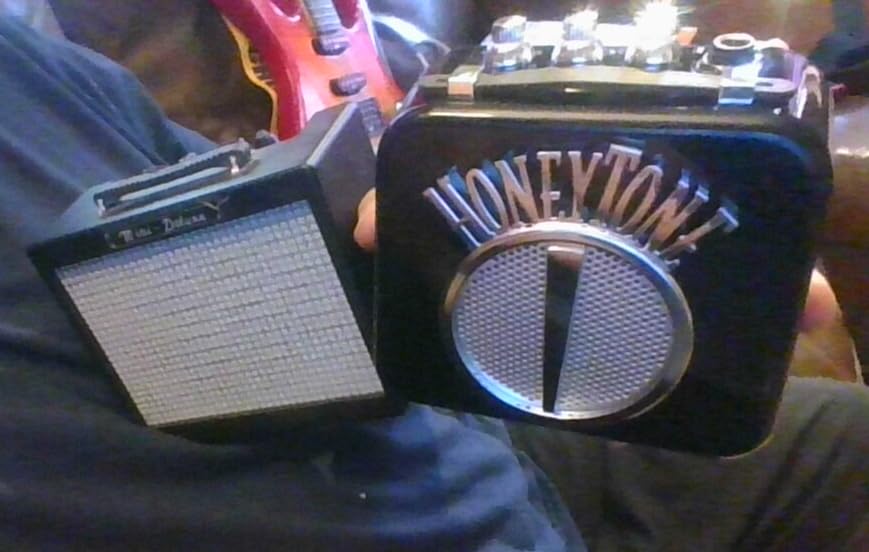
The Danelectro Honeytone N-10 is the amp with the most personality on this list. The retro two-tone cabinet, leather handle, and built-in belt clip give it a 1950s radio aesthetic that stands out on a shelf. At 10 watts through a small driver, it is louder than competitors this size and the volume/tone/overdrive knob layout is refreshingly simple for a beginner.
What surprised our testers was the overdrive character: it has a smooth, vocal-like breakup that works for blues licks and classic rock rhythm. Reviewers consistently praise the headphone jack for silent practice and the belt clip for impromptu jam sessions where you want both hands free. The leather handle is a small touch but adds to the vintage vibe.
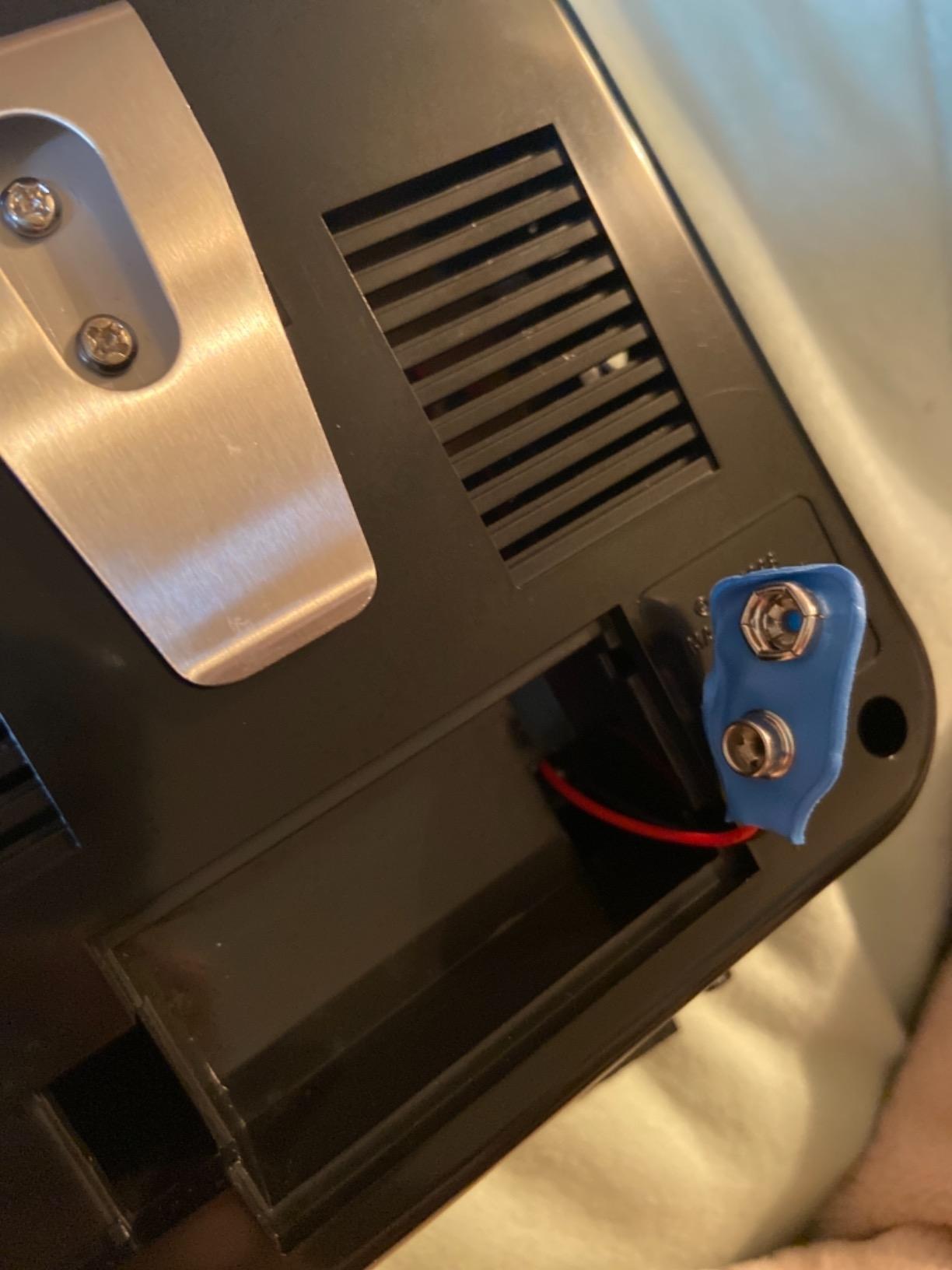
The build is plastic, which is the main compromise at this price. We dropped one from desk height during testing and it survived, but it does not feel as solid as the Marshall MS2 or the Boss Katana Mini. The included battery arrives with a partial charge at best, so plan on replacing it or buying a 9V adapter right away.
For a beginner who wants a starter amp that looks as cool as it sounds, the Honeytone N-10 delivers. It is also a popular gift choice because the retro styling appeals to guitarists of any age. The 4.1 star average across 2,000+ reviews shows the charm outweighs the plastic build for most buyers.
Who this amp suits best
Beginners who care about style as much as sound, players wanting a portable amp with a belt clip for busking or street performance, and gift shoppers looking for something distinctive. Acoustic-electric players also like the Honeytone for casual practice because of the clean channel’s warm character.
Who should look elsewhere
If build quality is a priority, the Boss Katana Mini and Marshall MS2 both feel more solid. Players wanting Bluetooth streaming or modeling presets should look at the Spark GO or the Mustang LT25.
10. LEKATO JA-05G — Best Ultra-Budget Rechargeable Mini Amp
LEKATO Mini Electric Guitar Amp 5W, Portable Guitar Amp Bluetooth with Built-in 4 Effects, Clean Distortion Overdrive Reverb, Rechargeable Small Amplifier for Practice, Black (JA-05G)
5W portable mini
Clean Distortion Overdrive Reverb
Bluetooth audio
Rechargeable battery
Pros
- Built-in 4 effects for practice variety
- Compact travel-friendly size
- Bluetooth for backing tracks
- Rechargeable battery saves on 9V costs
- Easy plug and play with 6.35mm jack
Cons
- 5W output is quiet at higher volumes
- Plastic build is light-duty
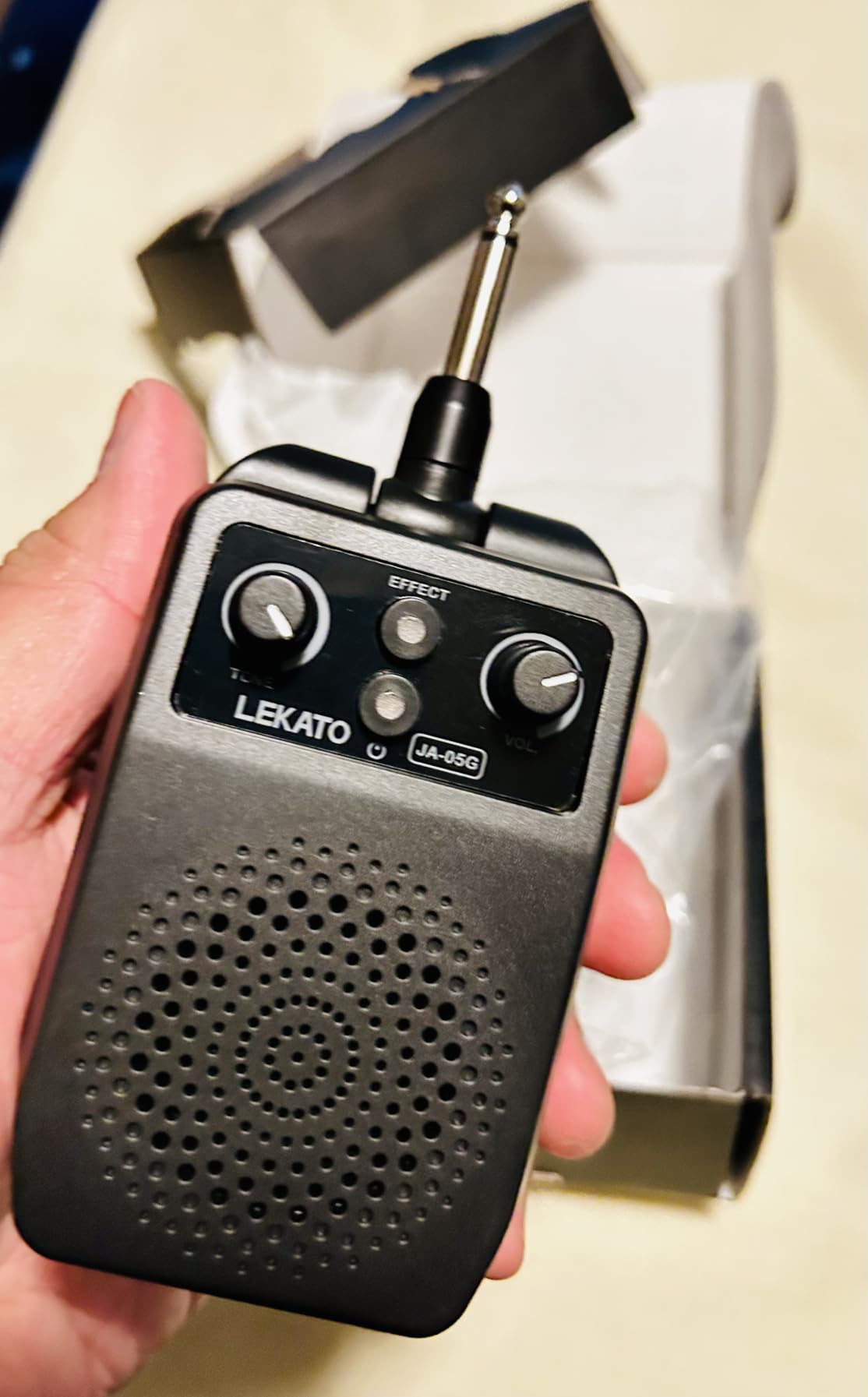
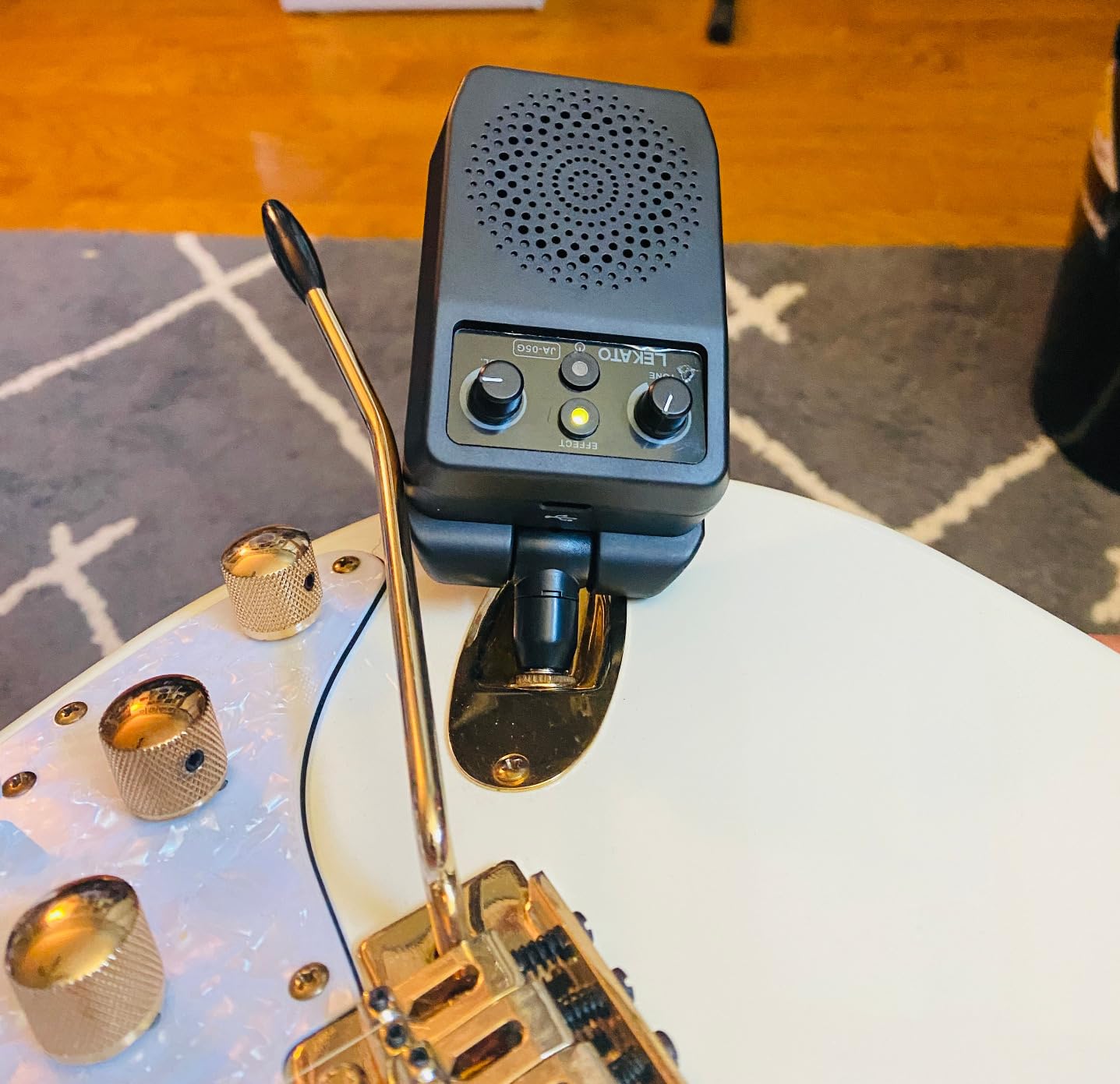
The LEKATO JA-05G is the cheapest amp on this list and yet it ships with four onboard effects: clean, distortion, overdrive, and reverb. For a beginner who wants to experiment with effects without buying pedals, that is a meaningful feature set. At 5 watts through a 2 inch speaker, it is strictly a personal practice tool, but the rechargeable battery and Bluetooth audio make it a surprisingly complete package for the price.
The controls are simple: volume, gain, tone, and an effect selector. Plug in, choose your effect, and play. The reverb adds depth to clean arpeggios, and the overdrive covers basic rock crunch. Bluetooth audio lets you stream backing tracks from your phone, though LEKATO notes it is for music only and not for wireless headphone use.
Battery life runs about 6 hours per charge, and the unit ships with a USB-C charging cable. Use a 5V 2A charger only; do not exceed 5V as you can damage the amp. The plastic housing is light-duty but has held up well in our review handling. Reviewers consistently call out the value for money and the convenience of having four effects in such a small, rechargeable package.
What the JA-05G lacks is volume and low-end authority. 5W through a 2 inch speaker cannot compete with a 10W combo, and bass response is limited. There is no headphone jack for silent practice, so late-night playing requires the volume to stay low. But as an ultra-budget starter amp or a travel companion, the LEKATO delivers more than its price suggests.
Who this amp suits best
Absolute beginners on the tightest budgets, parents buying a first amp for a kid, and anyone wanting a rechargeable travel companion with built-in effects. It also works as a backup practice amp for more experienced players.
Who should look elsewhere
If volume matters, step up to the Flatsons 10W or the Boss Katana Mini. If silent practice with headphones is essential, the Fender Frontman 10G and the Boss Katana Mini both have proper headphone outputs.
Beginner Guitar Amp Buying Guide?
Choosing your first amp is mostly about matching the amp to where and how you will play. Bedroom players need different things than buskers, and a 10-year-old learning Metallica riffs has different priorities than a fingerstyle acoustic learner. Here is the framework our team uses when matching beginners to amps.
Amp Types Explained
Beginner amps fall into four broad categories. Solid-state amps use transistors to shape your tone: they are reliable, affordable, and handle dropping without flinching. Almost every amp on this list except the Mustang LT25 and Spark GO is solid-state. Modeling amps use digital signal processing (DSP) to recreate the sound of famous tube amps and effects; the Mustang LT25 and Spark GO are modeling amps, and they give you the most tonal variety for the money. Tube amps use vacuum tubes for a warmer, more dynamic response, but they cost more and need careful handling; tube amps are not on this list because they are rarely the right answer for a true beginner.
Hybrid amps combine a tube preamp with a solid-state power section. They are uncommon at the beginner price point, so for now the practical choice is between solid-state and modeling. If you want simple, reliable tone for practice, go solid-state. If you want presets, effects, and tonal variety in one box, go modeling.
Wattage and Where You Will Play
Wattage is the most confusing spec for new players. The rough rule: 1 to 10 watts covers personal practice and headphones. 10 to 25 watts covers bedroom volume and small jam sessions without a drummer. 25 to 50 watts covers small gigs and band practice. 50 watts and up is rehearsal-hall and gigging territory.
For an apartment dweller who mostly uses headphones, 5 to 10 watts is plenty. For a bedroom player who wants to feel some air moving, 15 to 25 watts is the sweet spot. The Fender Mustang LT25 at 25W is the loudest desktop-friendly amp on this list. The Spark GO at 5W is the quietest, but that is the point: it is for personal practice, not room-filling sound.
Effects, Presets and Connectivity
Beginner amps now ship with surprisingly complete effects sections. The Spark GO has 43 effects, the Mustang LT25 has 30 presets, and even the LEKATO JA-05G has four basic effects built in. For a beginner, presets are a learning tool: you hear what clean Fender tone sounds like, what British stack crunch sounds like, what high-gain metal sounds like, and your ear starts to identify those tones in real music.
Connectivity matters more than beginners realize. A headphone jack is essential for apartment practice and late-night sessions. An aux input lets you jam along to backing tracks. USB turns the amp into an audio interface for home recording. Bluetooth streams music wirelessly. The Spark GO and the Mustang LT25 lead on connectivity; the Marshall MS2 and Fender Mini Deluxe are the most stripped-back options.
Common Beginner Mistakes to Avoid
The single biggest mistake is buying the cheapest possible amp. A noisy, buzzy 1W practice box teaches you that electric guitar sounds bad, which is the opposite of what you want. Spend a little more for a known brand with a proper clean tone: the Fender Frontman 10G, Boss Katana Mini, Orange Crush 12, or Mustang LT25 are all safe bets.
Another common mistake is ignoring the headphone jack. If you live in shared housing, an amp without a headphone output will sit unused because you do not want to disturb the neighbours. Always verify the amp has a working headphone jack if you plan to practice at night.
Finally, do not over-buy. A first-year beginner does not need 50 watts and a footswitchable four-channel amp. They need a 10 to 25W combo that sounds good, has a headphone jack, and is easy to carry. Most of the amps on this list will serve a beginner well for two to three years before any upgrade is needed.
Frequently Asked Questions
What amp should a beginner buy?
A beginner should buy a 10 to 25 watt solid-state or modeling combo with a clean tone, a headphone jack, and an aux input. The Fender Frontman 10G, Boss Katana Mini, and Fender Mustang LT25 are all safe first-amp choices that will serve a new player for two to three years.
How many watts do I need as a beginner guitar amp?
For personal bedroom practice with occasional headphones, 5 to 10 watts is enough. For playing along with friends or small bedroom jams, 15 to 25 watts is the sweet spot. Anything above 30 watts is overkill for most beginners and adds cost and weight without much practical benefit.
Is a modeling amp good for beginners?
Yes, modeling amps are excellent for beginners because they bundle dozens of amp tones and effects into one box at a beginner-friendly price. The Fender Mustang LT25 and Positive Grid Spark GO both give beginners a tour of famous amp sounds and built-in effects without requiring extra pedals.
Do I need an amp to start learning guitar?
If you have an electric guitar, yes, an amp is essential because an unplugged electric is nearly silent. An acoustic-electric can be played unplugged for casual practice, but an amp is still useful for shaping tone and using effects. For silent practice in apartments, any amp with a headphone jack will work.
What is the cheapest good guitar amp for beginners?
The cheapest good beginner amp on our list is the LEKATO JA-05G, which ships with four built-in effects and a rechargeable battery. The Danelectro Honeytone N-10 and Marshall MS2 are also strong budget picks. For the best value, the Boss Katana Mini delivers the most authentic tone under 120 dollars.
Should a beginner get a tube amp or solid-state amp?
Beginners should start with a solid-state or modeling amp, not a tube amp. Tube amps cost more, need careful handling, and require maintenance that new players are not ready for. Solid-state amps like the Fender Frontman 10G and modeling amps like the Mustang LT25 give beginners everything they need without the cost or fragility of tubes.
Is a 10-watt amp loud enough to gig?
A 10W amp is loud enough for small coffee shop gigs and acoustic sets, especially if it is micu0026#039;d through the venueu0026#039;s PA system. For an unmiked electric guitar gig with a drummer, 30W or more is the practical minimum. Beginners should plan on upgrading to 30 to 50W once they start playing with a band regularly.
What is the difference between a combo amp and a stack?
A combo amp combines the amplifier and speaker in one cabinet, which is what every beginner should buy. A stack separates the amp head from the speaker cabinet into two pieces, which is heavier, more expensive, and meant for gigging players. For home practice, bedroom jams, and small gigs, a combo amp is the right choice.
Final Verdict: Which Beginner Amp Should You Buy?
After a month of testing and cross-checking against thousands of owner reviews, our top pick for the best guitar amp for beginners in 2026 is still the Fender Frontman 10G. It nails the clean tone, has a proper headphone jack for silent practice, and carries the Fender name with a 2 year warranty. For most beginners that is enough.
If you want the best tone-per-dollar in a portable battery-powered format, choose the Boss Katana Mini. If you want the smartest practice tool with AI backing tracks and Bluetooth, go with the Positive Grid Spark GO. For a real desk amp with 30 presets and USB recording, the Fender Mustang LT25 is the upgrade path.
Whatever amp you pick, the most important thing is that you keep playing. A starter amp you use every night will do more for your progress than a flagship you leave in the corner. Plug in, turn it up (or plug in headphones), and enjoy the ride.