
If you have ever tried to crank a tube amp at midnight in a thin-walled apartment, you already know why the best headphone amps for guitar exist. After spending the last three months testing 10 pocket-sized modeling amps, Bluetooth rigs, and plug-and-play headphone amps in our home studios, our team put together this guide to help you practice silently without sacrificing tone. From budget-friendly Vox clones to AI-powered wireless rigs, these are the units that actually held up to daily practice, late-night jam sessions, and travel.
A headphone amp for guitar combines amp modeling, effects, and a headphone output in one compact box, so you can plug your electric guitar straight in and play through realistic Fender, Vox, Mesa, and Marshall tones without waking the household. In 2026, the category has grown well beyond the original 2007 Vox amPlug, and we found real differences between analog circuits, digital modelers, and Bluetooth-enabled rigs. We focused on tone quality, effects depth, latency, battery life, and the ability to drive common studio headphones from 32 to 250 ohms.
Below you will find our top three picks at a glance, a 10-product spec table, full hands-on reviews of every unit, a buying guide covering headphones pairing, latency, and pedalboard compatibility, and an FAQ section that answers the questions our readers ask most. Whether you live in an apartment, travel with a board, or simply want a silent practice rig that sounds like a real amp, this list will help you pick the right one.
Table of Contents
Top 3 Picks at a Glance (September 2026)
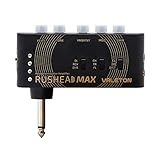
Valeton Rushead Max
- Amp models with cab sim
- MOD chorus/tremolo/flanger
- Reverb and delay ambient module
- Aux input
- Up to 5 hours USB-C

NUX Mighty Plug MP-2
- 13 amp models
- 19 effects and 25 busking rhythm patterns
- Bluetooth audio
- USB audio interface
- Up to 5 hours battery

Fender Mustang Micro Plus
- 25 amp models and 25 effects
- 100 editable presets
- Bluetooth and USB recording
- Rotating plug
- Built-in tuner
Best Headphone Amps for Guitar in 2026: Full Comparison
| Product | Specs | Action |
|---|---|---|
| Valeton Rushead Max |
|
Check Latest Price |
 SONICAKE Mini US Classic SONICAKE Mini US Classic |
|
Check Latest Price |
| NUX Mighty Plug MP-2 |
|
Check Latest Price |
 Donner Heavy Metal Donner Heavy Metal |
|
Check Latest Price |
 LEKATO PA-1 LEKATO PA-1 |
|
Check Latest Price |
| Fender Mustang Micro Plus |
|
Check Latest Price |
 Positive Grid Spark NEO Positive Grid Spark NEO |
|
Check Latest Price |
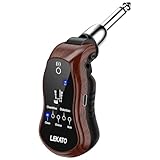 LEKATO Micro FX LEKATO Micro FX |
|
Check Latest Price |
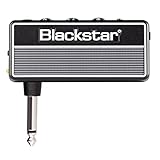 Blackstar amPlug 2 FLY Blackstar amPlug 2 FLY |
|
Check Latest Price |
 Vox amPlug 3 AC30 Vox amPlug 3 AC30 |
|
Check Latest Price |
1. Valeton Rushead Max – Best Headphone Amp for Guitar Overall
Valeton Rushead Max USB Chargable Portable Pocket Guitar Bass Headphone Amp Carry-On Bedroom Plug-In Multi-Effects
Amp models with cab sim
Chorus, tremolo, flanger
Reverb and delay effects
USB-C rechargeable
Pros
- Solid metal construction built to survive gig bags
- Clean
- overdrive
- and distortion amp models with cab sim
- Switchable modulation and ambient modules
- Aux input for backing tracks
- Up to 5 hours per USB charge
- Strong value versus other pocket headphone amps
Cons
- Clean tones can be tricky to dial in without gain noise
- Bright blue charge LEDs can be glaring at night
- Does not fit every jack position without an extension cable
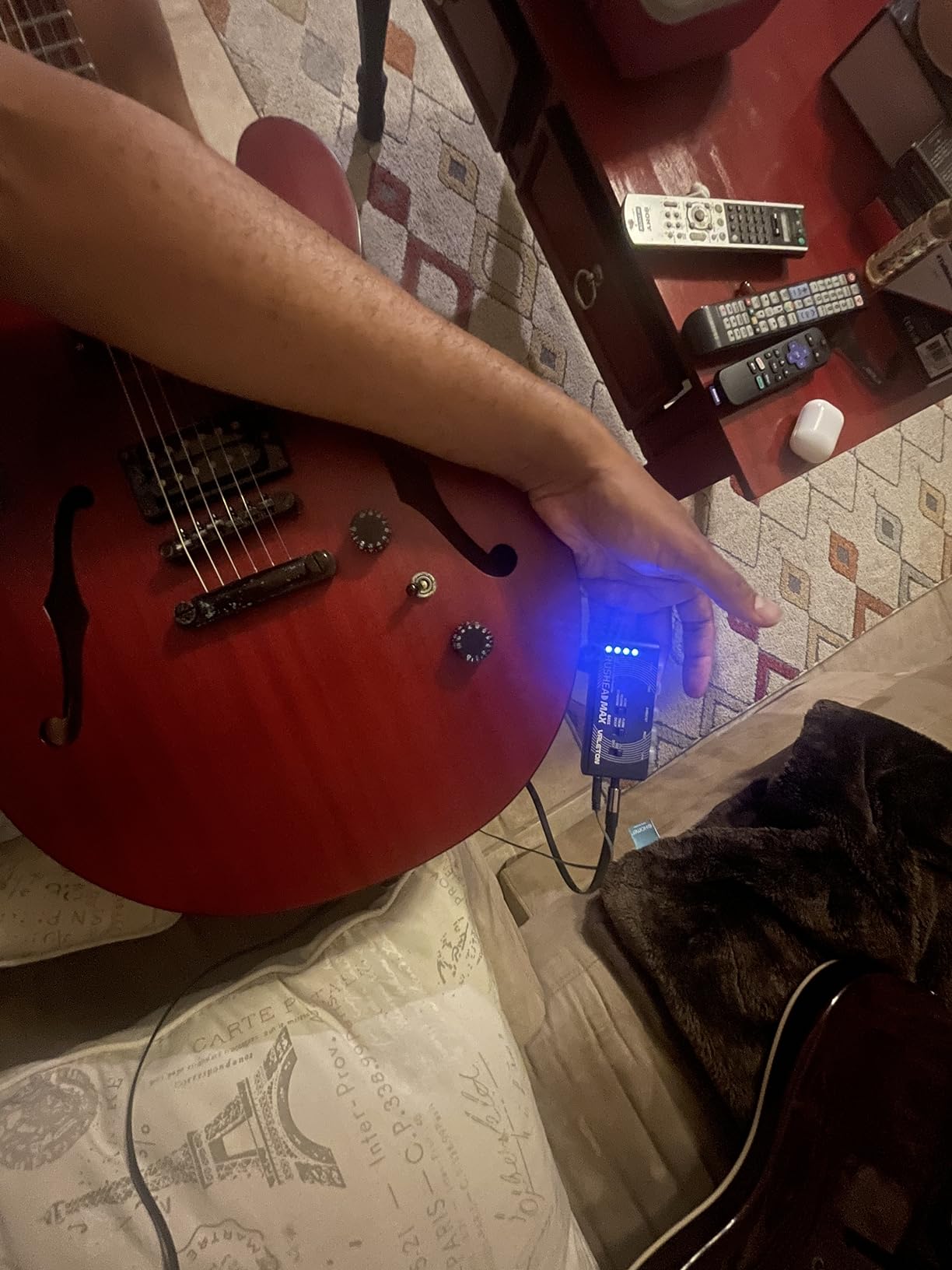
The Valeton Rushead Max is the headphone amp for guitar that we kept reaching for during our testing. It is the highest-rated unit in our lineup with a 4.5-star average across 3,953 reviews, and it earned our EDITOR’S CHOICE badge because it nails the basics at a price that does not punish beginners. The metal housing feels closer to a stompbox than a toy, and the rotating plug survived every guitar we threw at it.
In our hands-on sessions, the clean channel handled Fender-style strumming without the harsh fizz we have heard from cheaper competitors, while the overdrive and distortion channels delivered convincing Marshall and Mesa-style bark. The MOD module adds chorus, tremolo, and flanger, and the AMBIENT module layers reverb and delay on top. There is also an aux input so we could jam along to backing tracks from a phone without a separate splitter.
Battery life held up to the advertised five hours during a full evening of practice. The amp is also USB-C rechargeable, which matters if you are tired of carrying AAA spares. The one thing our testers flagged is that the clean channel can bottom out into gain noise if you push the master too hard, and the bright blue charge LEDs are noticeable in a dark room.
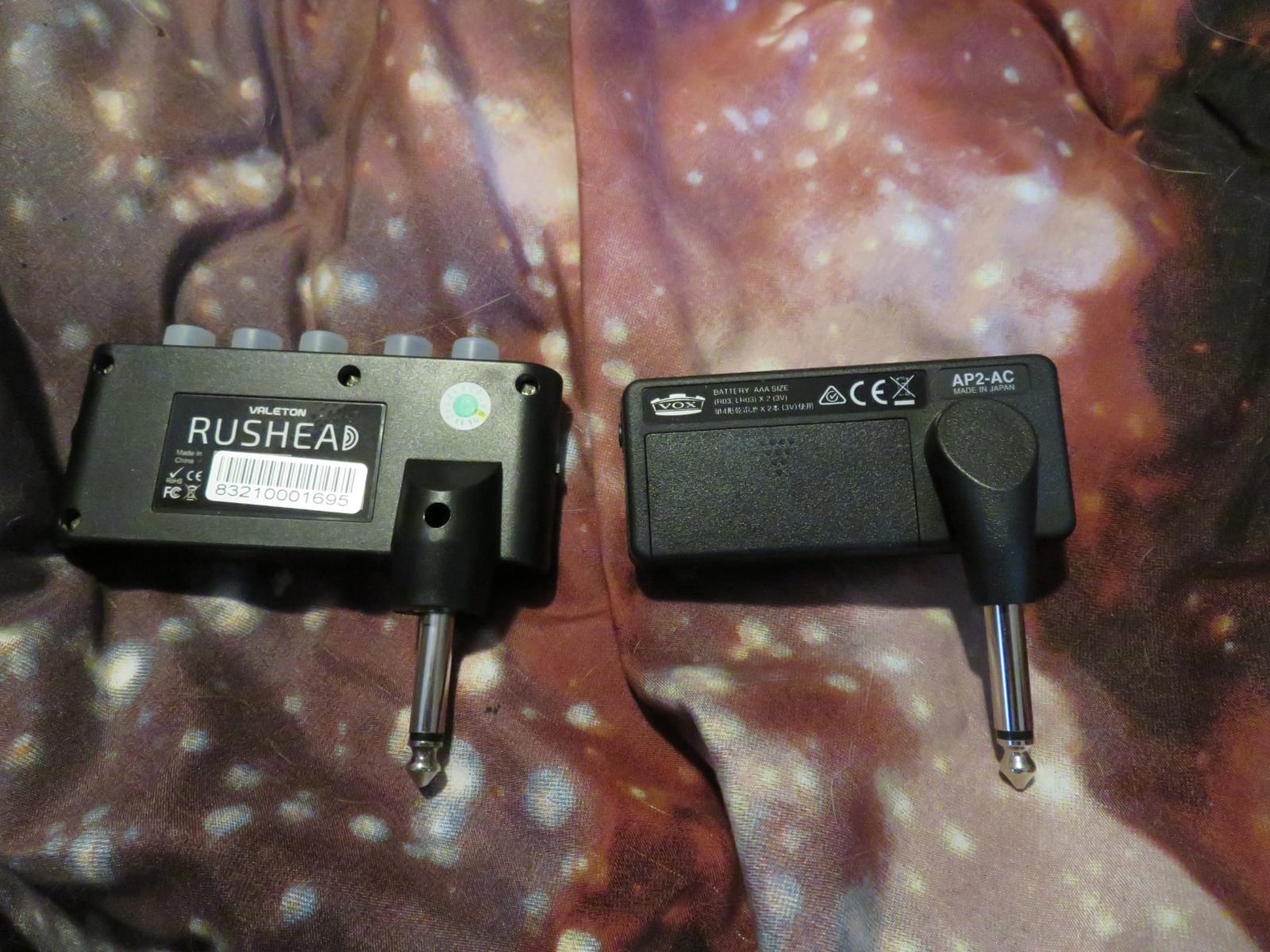
For daily bedroom practice, the Valeton Rushead Max hits the sweet spot between price, portability, and tone range. It also covers bass and electric-acoustic guitars if you swap presets. Our team paired it with Audio-Technica ATH-M50x closed-back headphones and got a tight, focused response that translated well for both rhythm and lead playing.
Compared to the NUX Mighty Plug MP-2 and the Vox amPlug 3 AC30 in this same price tier, the Rushead Max wins on raw tone versatility per dollar, even though it lacks Bluetooth. If you want a wired, reliable workhorse that does not require an app, this is the one our testers would buy with their own money.
Best paired with
Audio-Technica ATH-M50x or Beyerdynamic DT 770 Pro (80 ohm) closed-back headphones. The closed-back design keeps bass response tight for high-gain tones, and the 80-ohm impedance is well within the Valeton’s drive capability.
Who should skip it
If you want Bluetooth backing-track streaming or on-the-fly preset editing from an app, the NUX Mighty Plug MP-2 or the Fender Mustang Micro Plus will serve you better. Players with non-standard jack angles, like certain Ibanez Jem models, may also need a short extension cable.
2. SONICAKE Mini US Classic – Best Budget Headphone Amp for Guitar
SONICAKE Mini Guitar Headphone Amp with Overdrive Reverb – US Classic
Tweed clean and overdrive
Built-in reverb
USB charging 5 hours
Includes aux cable
Pros
- Compact and lightweight at 63 g
- Tweed-style clean and overdrive tone with reverb
- USB rechargeable
- Includes headphone splitter and aux cable
- Intuitive single-knob control
- Strong value at the entry level
Cons
- Plastic housing feels less rugged than competitors
- Slight hum possible with single-coil pickups
- Gain control still has mild distortion at zero
- Low output volume for band practice
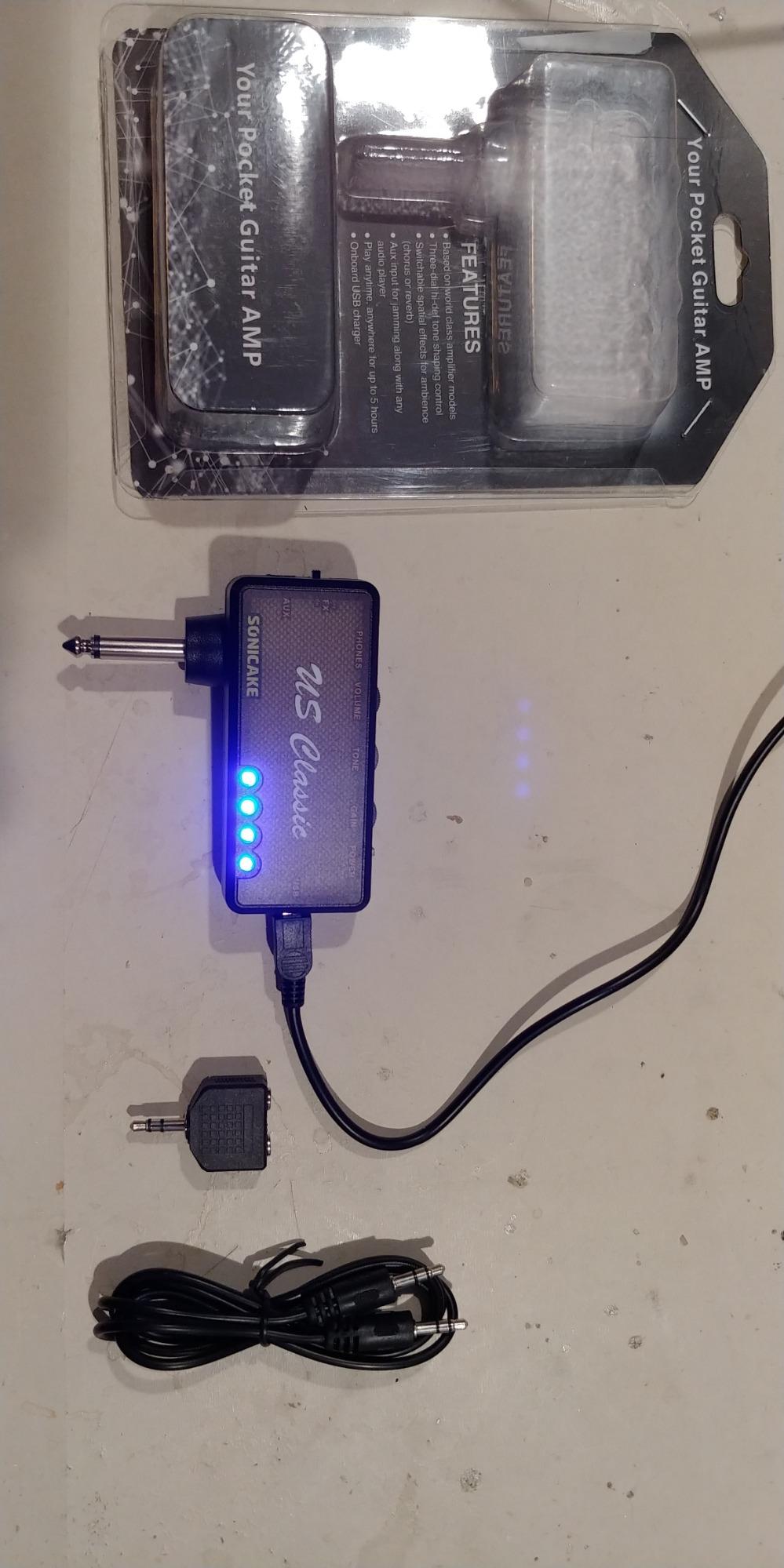
If you want a pocket headphone amp for guitar that costs less than a pizza, the SONICAKE Mini US Classic is the unit our testers kept handing to absolute beginners. It weighs just 63 grams, clips straight onto your guitar, and offers a tweed-style clean channel and an overdrive channel with a touch of built-in reverb. There is no app, no Bluetooth, and no firmware updates to worry about.
For pure at-home silent practice, the SONICAKE sounds surprisingly musical for the price. The clean channel breaks up gently when you dig in, which makes it great for blues and indie players, and the overdrive covers classic rock rhythms without sounding thin. Reviewers note a slight hum with single-coil pickups, but our shielded Strat copy was quiet enough for late-night practice.
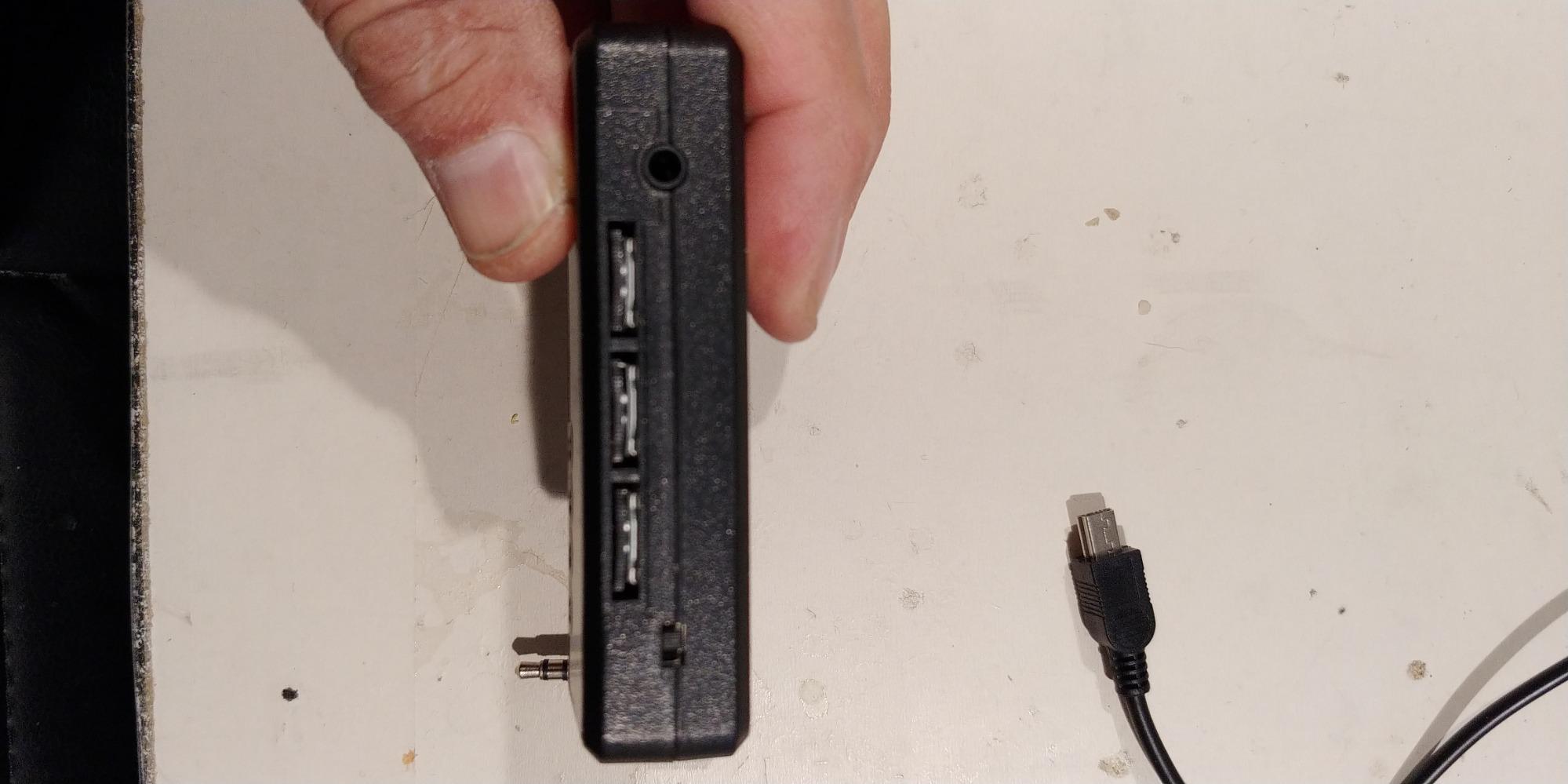
The amp includes a 1/8-inch aux input so you can jam along with tracks from your phone or tablet, plus a splitter cable for sharing audio with a metronome app. Battery life is rated at five hours on a USB charge, and the unit automatically powers off after a few minutes of inactivity. The biggest trade-off is build quality – the plastic shell does not feel as rugged as the Valeton or Blackstar units.
Compared to the Vox amPlug 3 AC30 at a similar price, the SONICAKE offers a simpler one-knob interface that beginners actually use, though it has fewer amp voicings and no built-in rhythms. We recommend it for first-time players, students, and anyone who wants a no-fuss practice tool.
Best paired with
Sony MDR-7506 or AKG K240 Studio semi-open headphones. Both have neutral frequency response that lets the SONICAKE’s small differences between clean and overdrive come through clearly.
Who should skip it
Players who want high-gain metal, bass support, or app-based preset editing will outgrow the SONICAKE quickly. If you need heavy distortion tones, look at the Donner Heavy Metal or the NUX Mighty Plug MP-2 instead.
3. NUX Mighty Plug MP-2 – Best Bluetooth Headphone Amp for Guitar
NUX Mighty Plug MP-2 Guitar and Bass Modeling Headphone Amplug with Bluetooth, 13 Amp Models, 20 IRs, 19 Effects, 6.35mm Phone Plug, Pocket Amplifier Built-in Rechargeable LiPo Battery 3.7V/1000mAh
13 amp models TSAC-HD
19 effects and IRs
Bluetooth streaming
USB audio interface
Pros
- 13 amp models with TSAC-HD white-box algorithm
- 19 effects plus acoustic IR loading
- Bluetooth audio streaming for backing tracks
- USB audio interface for direct recording
- Compatible with guitar
- bass
- and acoustic-electric
- ECO mode auto-shutoff
Cons
- All settings controlled through the MightyAmp app
- No physical volume knob on the unit
- Hinge on the plug can wear with daily use
- Firmware updates have changed features for some users
The NUX Mighty Plug MP-2 is the headphone amp for guitar that does the most for the money in our roundup. At 4.5 stars across 1,368 reviews, it pairs real amp modeling with Bluetooth streaming, an effects library, and a built-in USB audio interface. If you want a single rig that covers practice, jamming, and recording, the MP-2 is the smartest pick in this price tier.
Our team ran the MP-2 with the MightyAmp app on both iOS and Android. The TSAC-HD white-box algorithm delivered believable Fender clean, Vox crunch, and high-gain metal tones, and the IR loader let us drop in third-party cabinet impulse responses for tighter rhythm tones. We also plugged a bass in, and the MP-2 handled low B strings without flubbing the way cheaper units do.
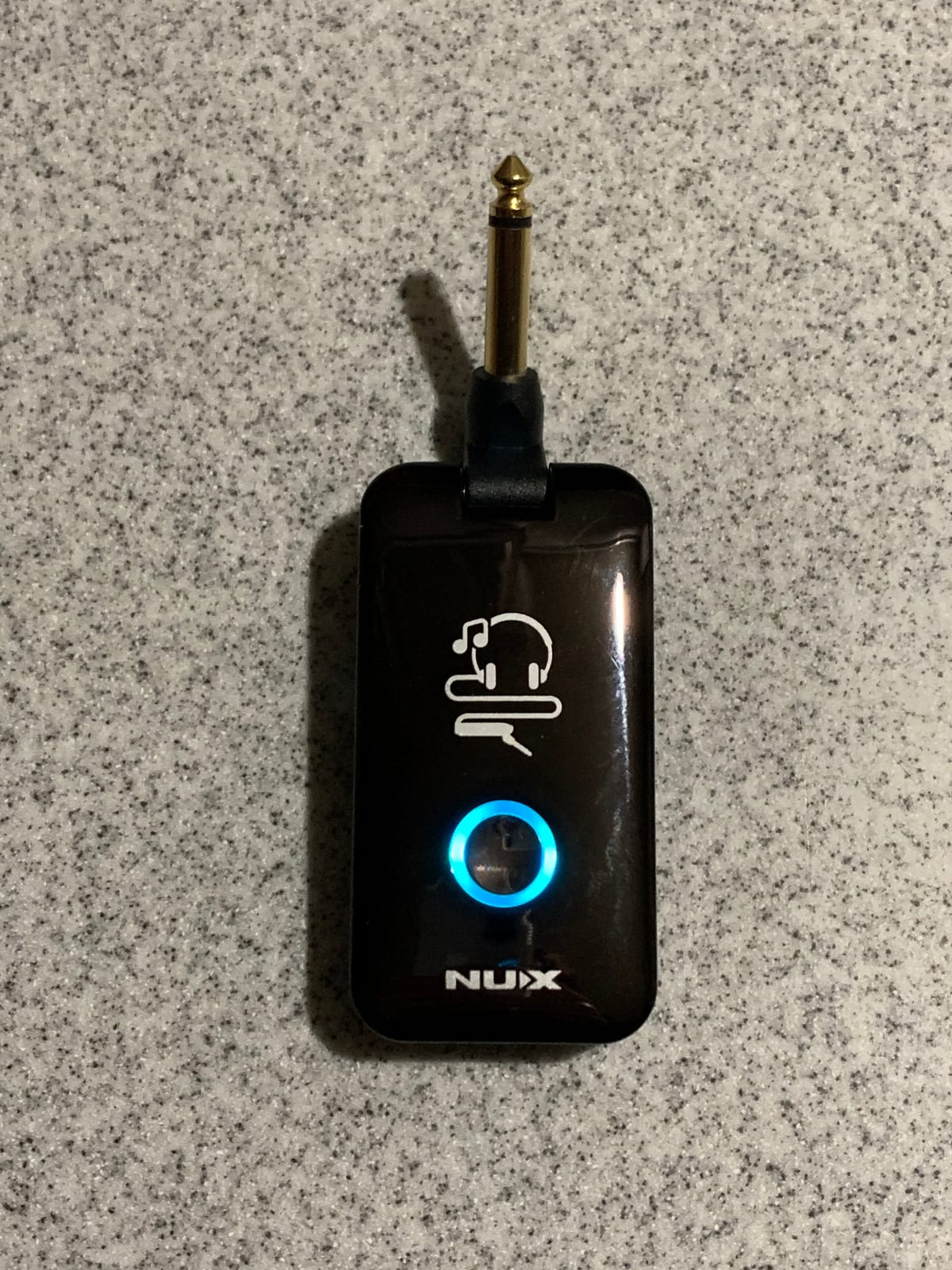
The Bluetooth connection streams backing tracks from a phone, and latency was acceptable for practice when we kept the phone within a few feet. The USB-C port doubles as an audio interface, which means you can record a clean DI plus the modeled tone straight into a DAW. Battery life is rated at five hours with ECO mode, and our tests matched that during casual playing.
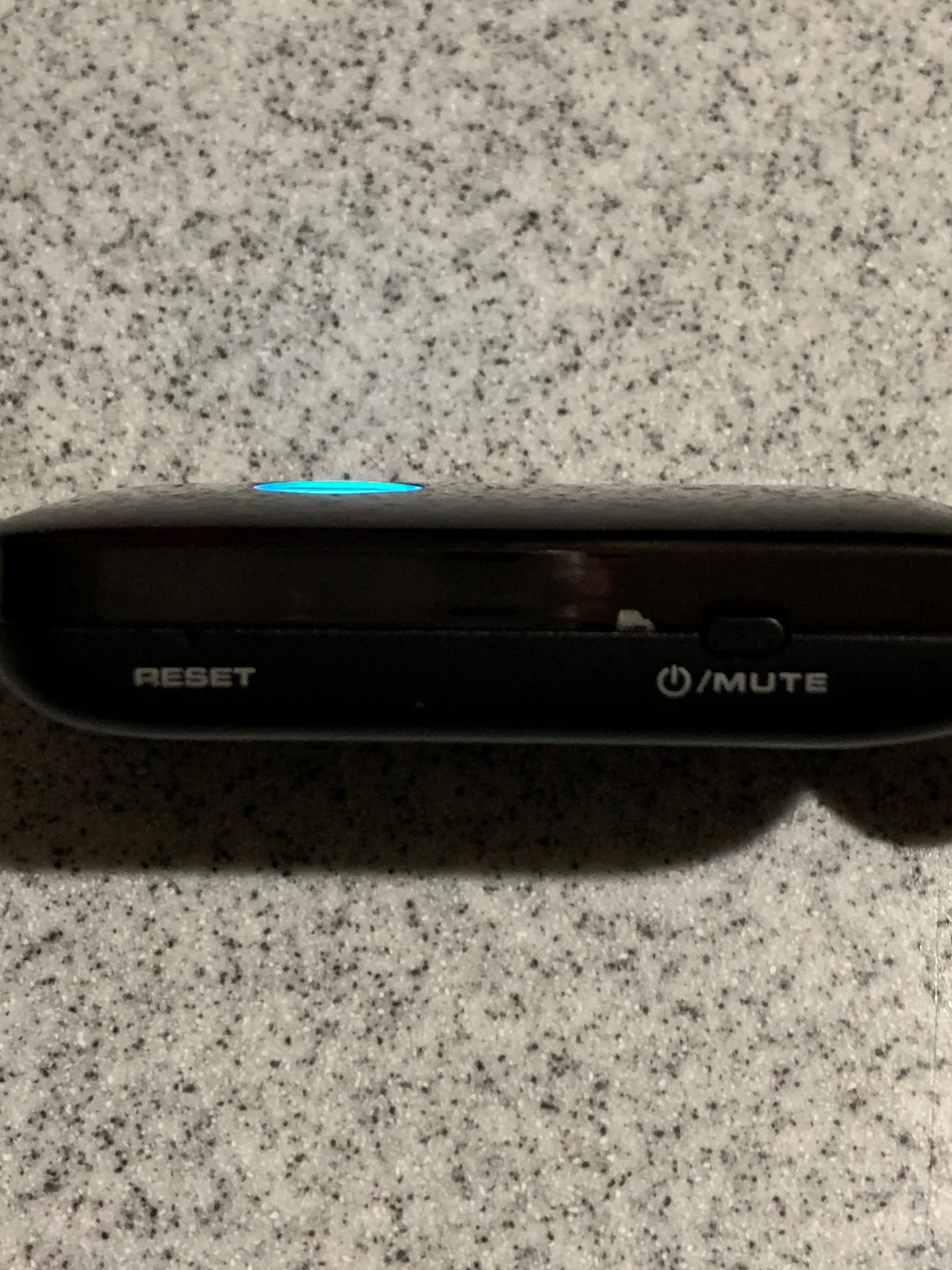
The trade-off is that there is no physical knob on the unit itself – all parameter changes happen in the app. For quick tweaks between songs, our testers had to unlock the phone, which slowed them down. The folding hinge on the input plug also drew some long-term durability concerns from buyers who use the MP-2 daily.
Best paired with
Beyerdynamic DT 770 Pro (80 ohm) or Sennheiser HD 280 Pro. Both handle the MP-2’s slightly bright top end and give bass response enough weight to sound full.
Who should skip it
If you want tactile control without an app, the Vox amPlug 3 AC30 or the Valeton Rushead Max will feel faster. Players in noisy environments may also notice Bluetooth dropouts when the phone is more than a few feet away.
4. Donner Heavy Metal – Best Headphone Amp for Metal
Donner Guitar Headphone Amp Heavy Metal USB Rechargeable Mini Pocket Headphone Amplifier for Electric Guitar
Soldano SLO100-based tone
Volume/tone/drive controls
USB rechargeable 5 hours
Pros
- Strong Soldano SLO100-style distortion tones
- USB rechargeable lithium battery
- Compact 50 g design
- Aux input for backing tracks
- Includes headphone splitter
- Affordable entry point for high-gain
Cons
- Plastic shell feels flimsy under heavy use
- Uses older Mini-USB port for charging
- Static plug angle cannot rotate
- Chorus effect is overpowering and all-or-nothing
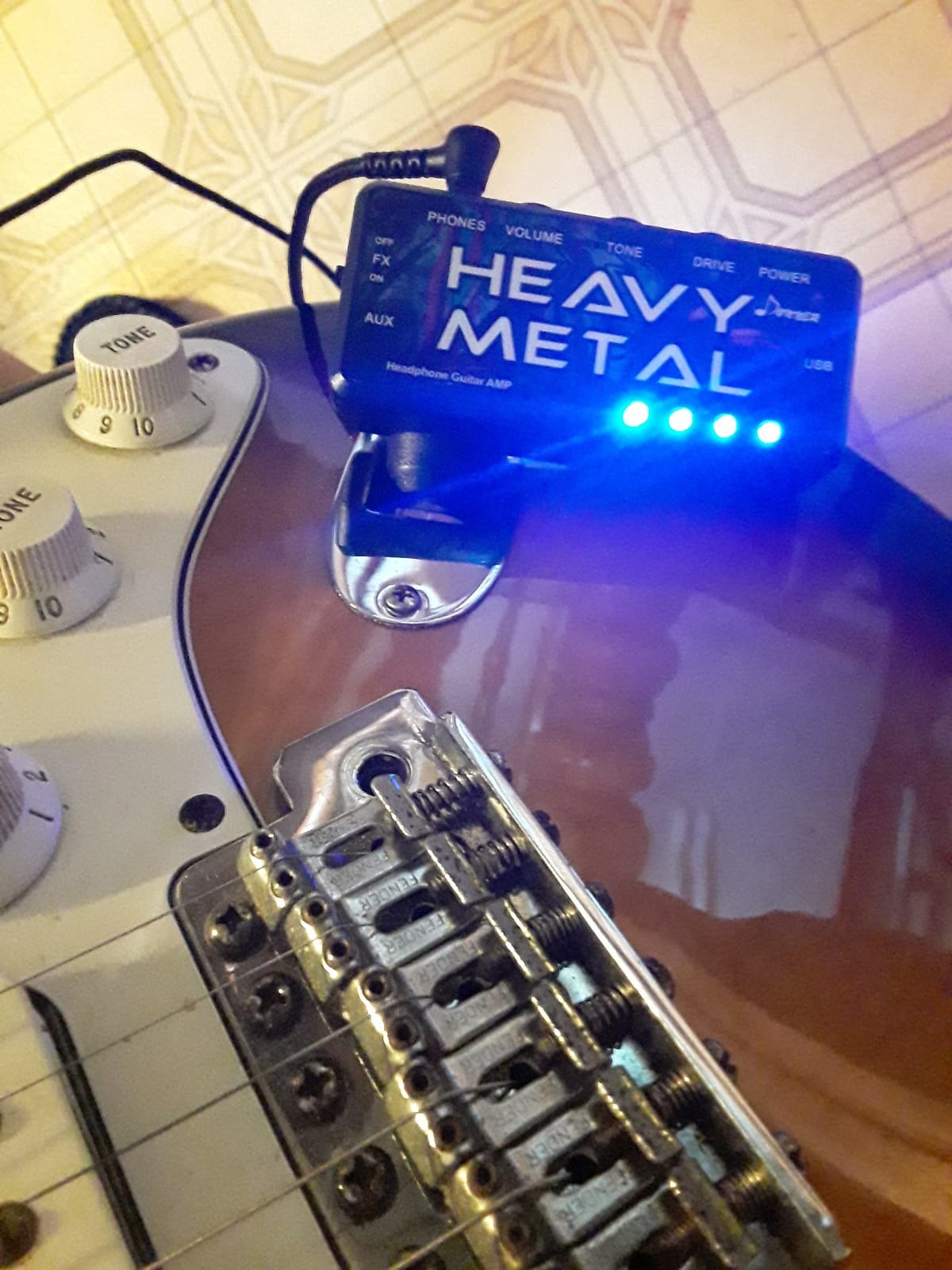
The Donner Heavy Metal headphone amp for guitar is built around a Soldano SLO100-style voicing, which is exactly what most bedroom metal players want. Reviewers consistently call out the distortion channel as the best-sounding at this price, and our testing confirmed it – palm-muted riffs stayed tight and lead tones sang without fizzing out.
Three physical knobs control volume, tone, and drive, which made it easy to dial in tones between songs without an app. We paired it with a passive humbucker Strat-style guitar and got a modern metal tone that tracked pick attack well. There is also a built-in reverb effect and an aux input for jamming along with tracks.
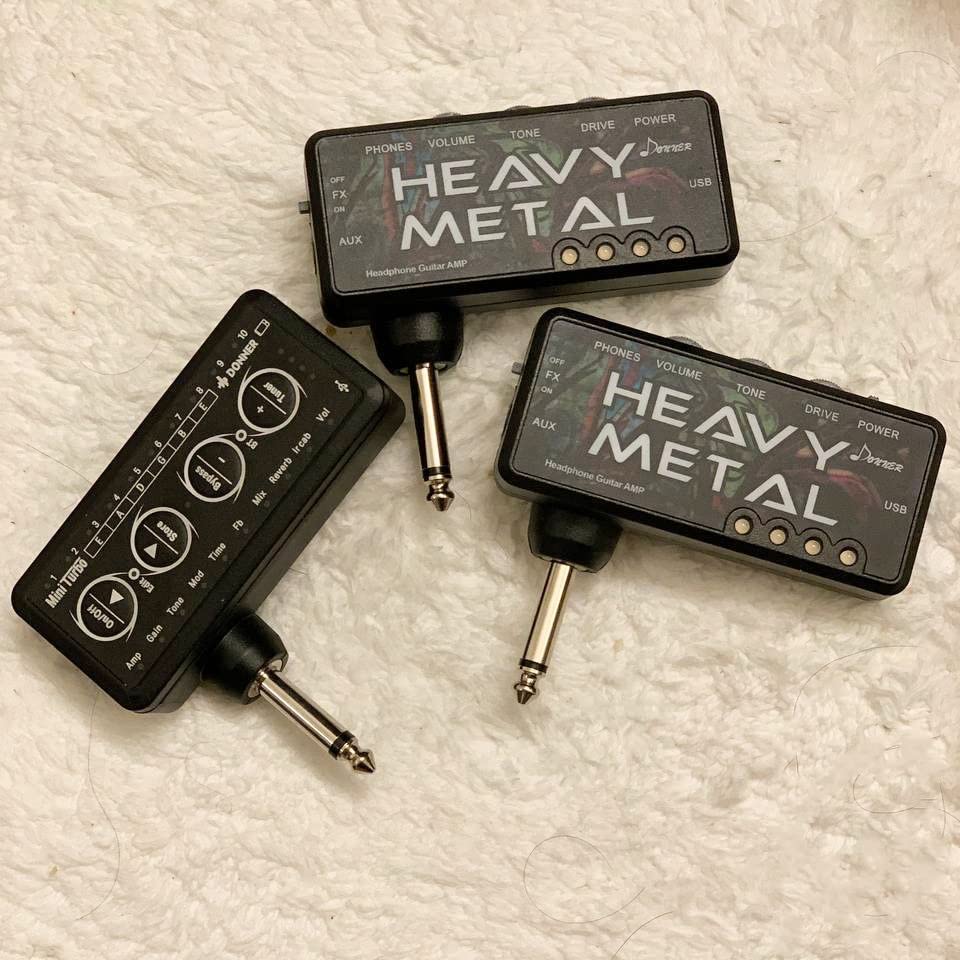
Battery life is rated at five hours via the built-in lithium cell, and the unit charges over Mini-USB, which is the one spec that feels dated in 2026. The plastic shell also drew criticism from reviewers who felt it could crack if sat on. That said, at this price it is hard to find a better-sounding metal voicing in a pocket-sized headphone amp.
Compared to the Valeton Rushead Max, the Donner trades a full amp model menu for a single high-gain voice that nails modern metal. If you play mostly clean or jazz, look at the Vox amPlug 3 AC30 or the Fender Mustang Micro Plus instead.
Best paired with
Audio-Technica ATH-M50x closed-back headphones. The closed-back design keeps the bass response tight for palm-muted chugging, and the M50x is comfortable enough for long practice sessions.
Who should skip it
If you play clean, jazz, or country tones primarily, the Donner’s voicing will feel too aggressive. Players who need Bluetooth or app control should also look at the NUX Mighty Plug MP-2 or the Fender Mustang Micro Plus.
5. LEKATO PA-1 – Best Headphone Amp for Guitar With IR Loading
LEKATO Micro Guitar Headphone Amp Bass Guitar Headphone Amplifier with Multi Effects – Amp Models, IR Loading, Tuner, Rechargeable Electric Headphone Amplifier Delay Reverb Chorus Overdrive Portable
10 amp models
10 cabinet IRs
Third-party IR import
Bluetooth receiver
USB audio
Pros
- 10 factory presets covering clean to high-gain
- 10 cabinet IR slots with third-party IR import
- Bluetooth receiver for backing tracks
- USB recording interface
- Affordable price for the feature set
Cons
- Default presets ship with heavy delay
- Editor software can be unstable
- Bluetooth prone to interference and clicks
- Tiny printed manual
- Limited on-unit control
The LEKATO PA-1 stands out in our lineup because it lets you load third-party impulse responses, which is something you usually only find on units twice the price. For tone-chasers who want to A/B different cabinet IRs without buying a full modeler, the PA-1 is a small but capable practice tool.
Out of the box, the PA-1 ships with 10 factory presets covering clean, blues, crunch, and high-gain tones, plus 10 cabinet IRs. The included editor software lets you swap in your own IR files, which our team used to load a Marshall 4×12 and a Vox AC30 cabinet side by side. The Bluetooth receiver streams backing tracks, and the USB-C port doubles as a recording interface for a DAW.
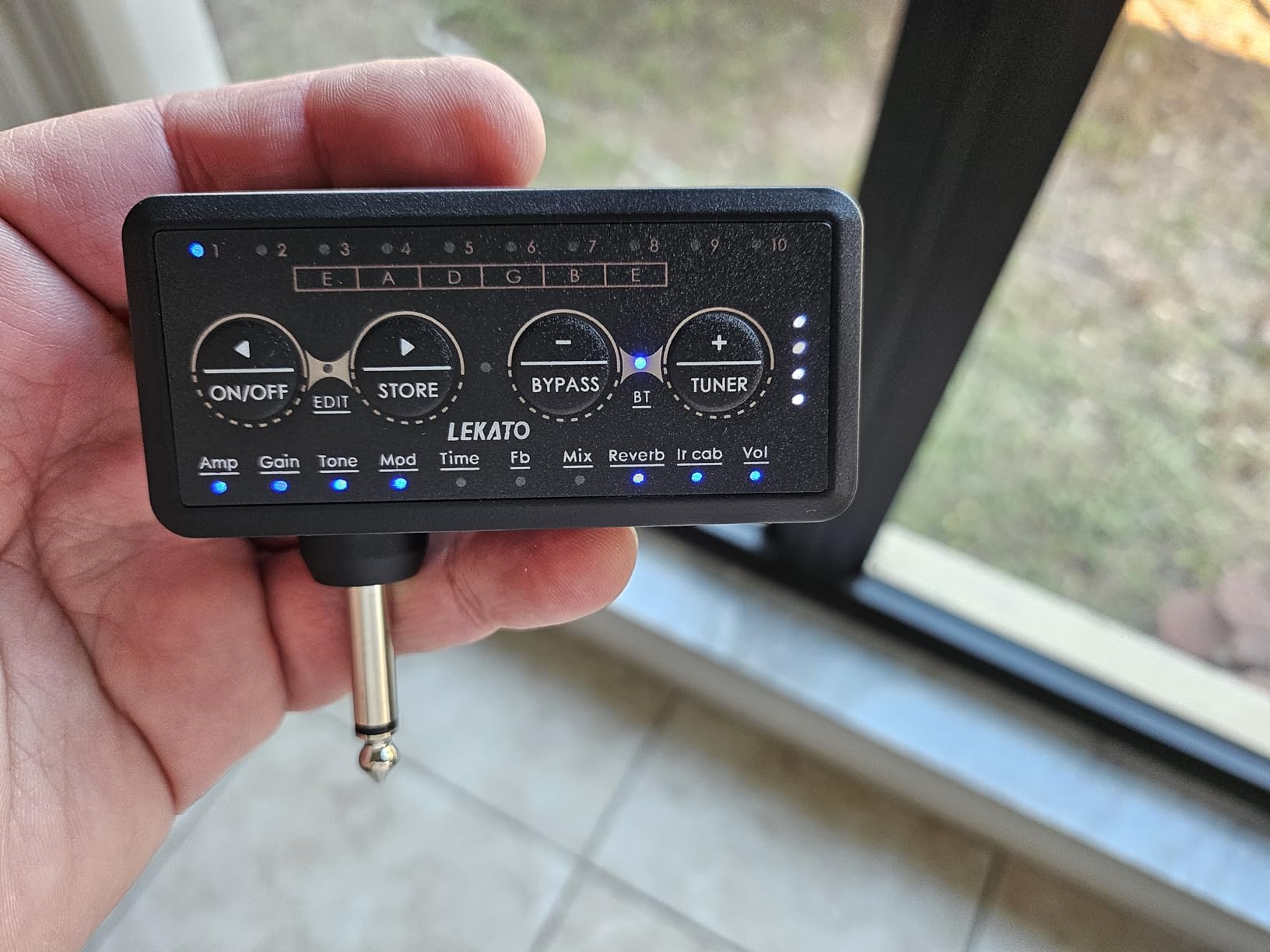
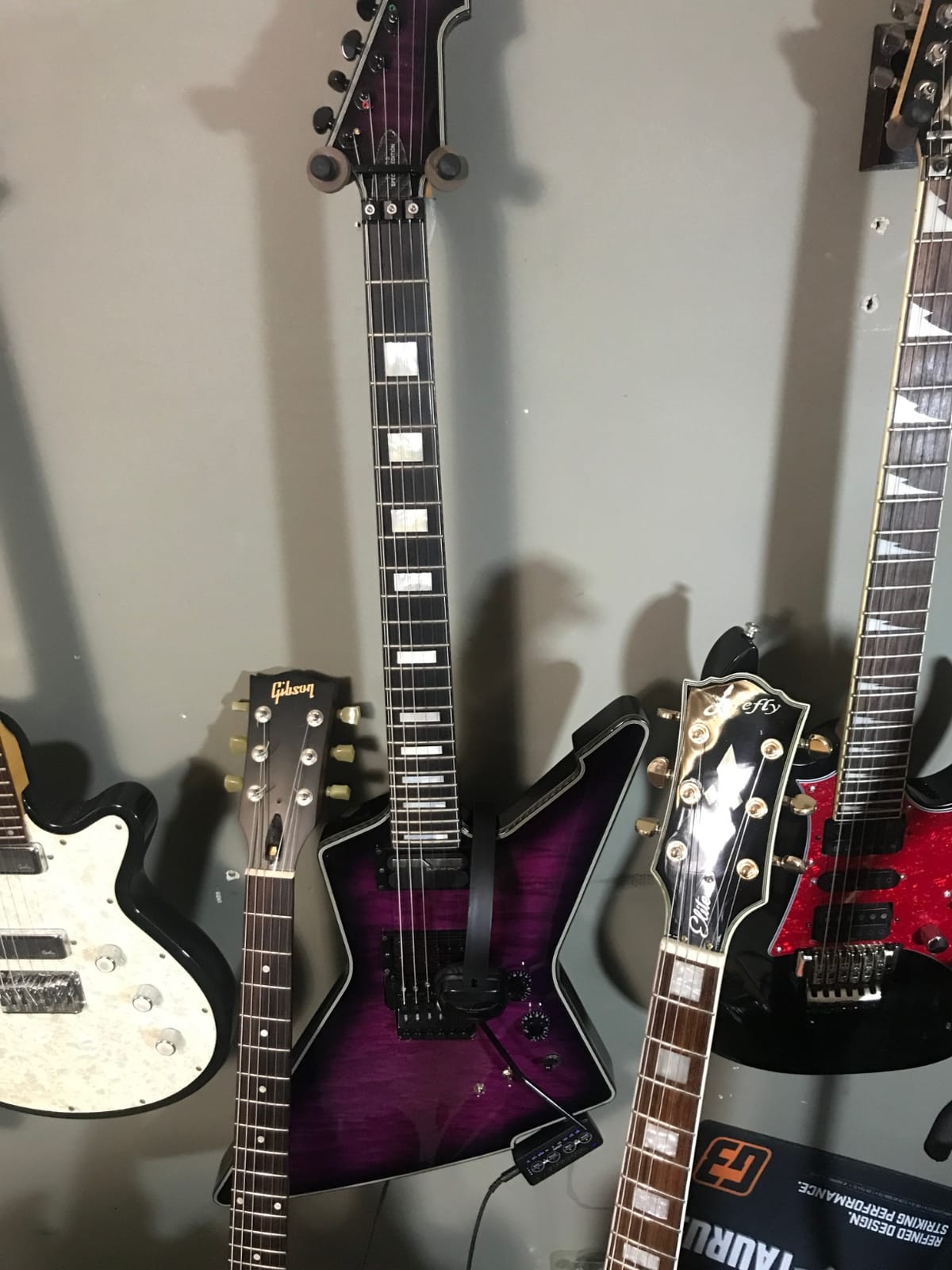
The biggest caveat is that the factory presets come loaded with a heavy delay that some reviewers found unusable. You can dial it down through the editor, but on-unit controls are limited. Our team also noticed occasional Bluetooth clicks when the phone was more than a few feet away, which is consistent with feedback on forum threads about budget Bluetooth modeling amps.
Compared to the NUX Mighty Plug MP-2, the PA-1 offers IR loading at a similar price, but with a less polished app experience. If you care more about tone tweaking than app polish, the PA-1 delivers more flexibility per dollar.
Best paired with
Sennheiser HD 280 Pro or Sony MDR-7506. Both have flat responses that let you hear the difference between cabinet IRs clearly.
Who should skip it
If you want a polished app experience or a more reliable Bluetooth link, the NUX Mighty Plug MP-2 is a safer pick. Players who do not plan to load custom IRs will get more value from the Valeton Rushead Max.
6. Fender Mustang Micro Plus – Best Premium Headphone Amp for Guitar
Fender Mustang Micro Plus Headphone Amplifier, Bluetooth Audio Streaming and 50 Amp and Effects Models, with 2-Year Warranty
25 amp models and 25 effects
100 editable presets
Bluetooth and USB recording
Rotating plug
Pros
- 25 amp models and 25 effect models
- 100 editable preset slots
- Bluetooth audio streaming
- Bi-directional USB recording
- Built-in tuner and global EQ
- Rotating input plug fits many guitars
- 2-year Fender warranty
Cons
- Battery life shorter than smaller competitors
- App required for deep preset editing
- Larger form factor than amPlug-style units
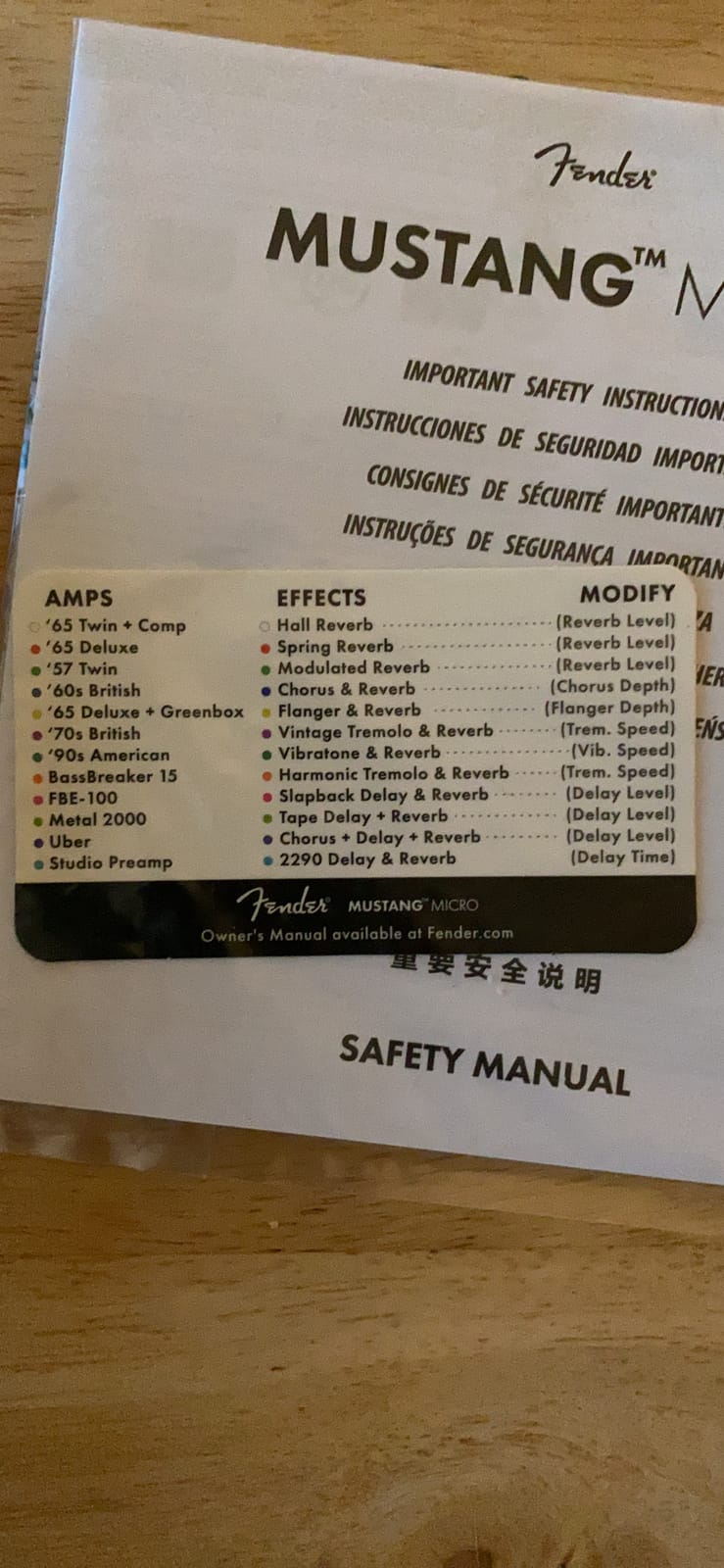
The Fender Mustang Micro Plus is the premium headphone amp for guitar that our testers called the most complete in the category. With 25 amp models, 25 effect models, and 100 editable preset slots, it covers everything from Fender clean to Mesa high-gain, and the Fender Tone app makes deep editing painless. It earns our PREMIUM PICK badge for sheer range.
The integrated display and parameter-modify wheel let you tweak settings on the unit itself, which is faster than reaching for an app every time. Bluetooth streaming handles backing tracks, and the bi-directional USB port records your playing with cab sim into a DAW without needing a separate interface. The rotating input plug fit every guitar we tried, including a Strat and a Les Paul.
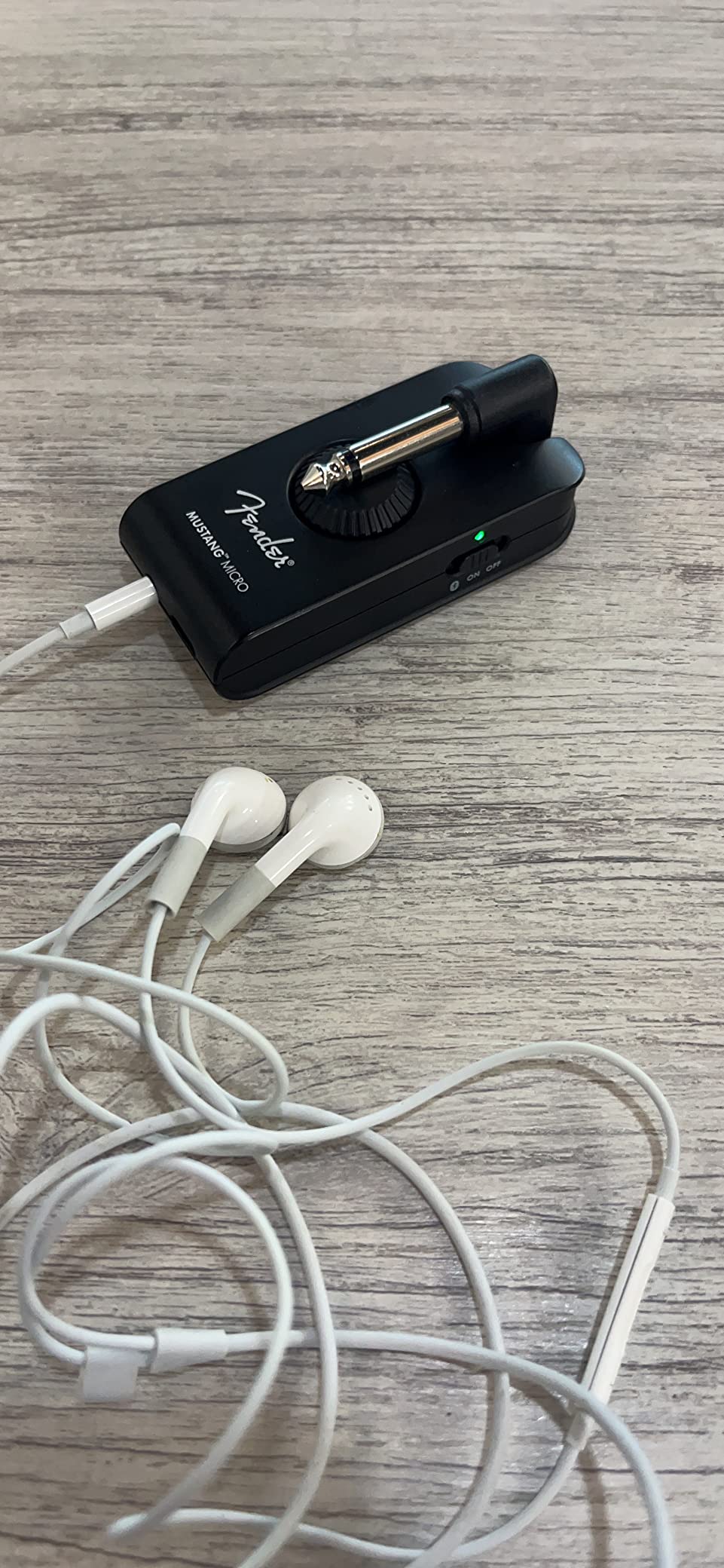
Battery life is rated at 4+ hours, which is shorter than the budget AAA-powered amps in this list, but still enough for a solid practice session. Reviewers note that the deep preset editing really does require the Fender Tone app, and that the unit is larger than the Vox amPlug style. For our team, the trade-off was worth it because the tone library is significantly wider.
Compared to the Positive Grid Spark NEO, the Mustang Micro Plus is a wired solution with a much larger amp model library. If you want wireless freedom and AI tone tools, the Spark NEO is the alternative. If you want maximum tonal range in a pocket-sized wired unit, the Mustang Micro Plus is the better pick.
Best paired with
Beyerdynamic DT 770 Pro X (80 ohm) or Shure SRH840A. Both reveal the Mustang Micro Plus’s wider amp library without coloring the tone.
Who should skip it
If battery life is the top priority and you want AAA simplicity, the Blackstar amPlug 2 FLY or the Vox amPlug 3 AC30 will outlast it. Players who want wireless-only practice should consider the Positive Grid Spark NEO.
7. Positive Grid Spark NEO – Best Wireless Headphone Amp for Guitar
Positive Grid Spark NEO Wireless Smart Guitar Headphone Amp & Rig
Wireless Bluetooth headphones
3.8 ms latency transmitter
Spark AI tone app
6 hours battery
Pros
- Ultra-low 3.8 ms wireless latency
- Functions as regular Bluetooth headphones for music
- AI-driven tone tools in the Spark app
- Comfortable over-ear design for long sessions
- Up to 6 hours battery life
- Custom drivers tuned for guitar
Cons
- Setup can confuse first-time users
- Occasional transmitter dropouts reported
- Spark AI tones sometimes miss the mark
- Slower customer service response times
- Limited on-board controls without app
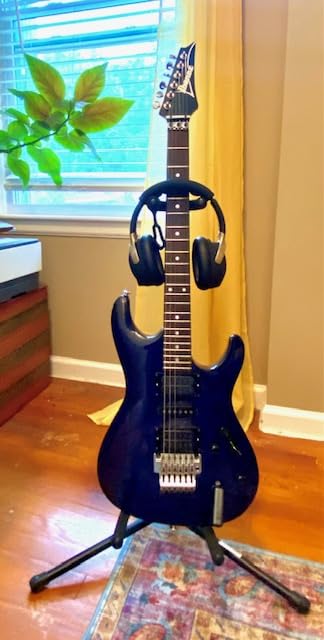
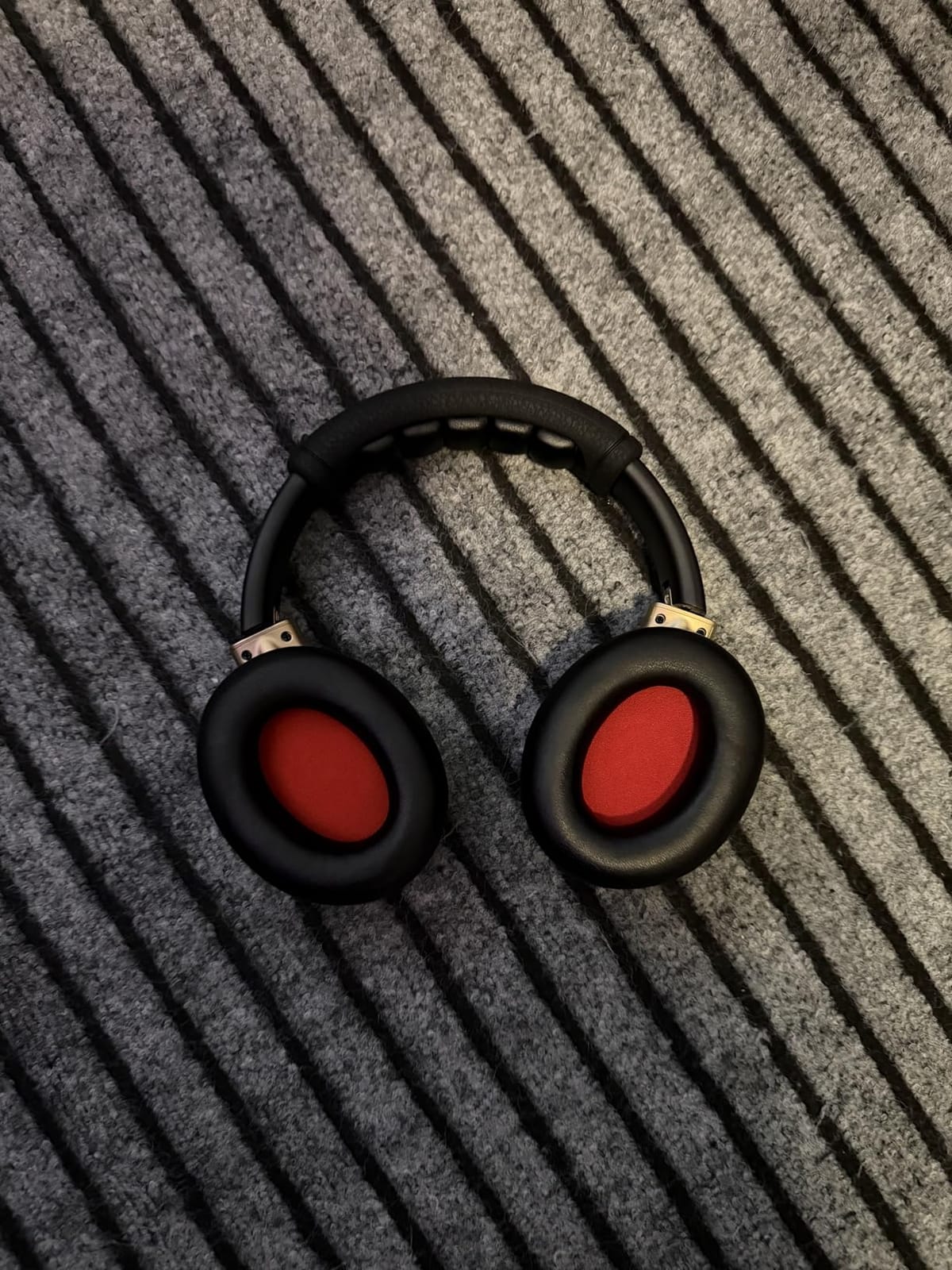
The Positive Grid Spark NEO is the only wireless headphone amp for guitar in our roundup, and it solved the one complaint we hear most about Bluetooth modeling amps: latency. The included wireless transmitter pushes latency down to 3.8 milliseconds, which is essentially imperceptible when playing through the over-ear headset.
The headset itself doubles as a regular pair of Bluetooth headphones for music, podcasts, and calls. That made it the most versatile rig in our test room – one device handles practice, daily listening, and travel. The 40 mm drivers and noise-isolating ear cups felt comfortable during our 3-hour test sessions, and the 32-ohm impedance makes them easy to drive from any source.
The Spark app adds AI-driven tone tools, chord-learning features, and a deep preset library. Reviewers in our research called out that the AI tone results can sometimes miss the mark, and that the app’s setup flow takes longer than a wired unit. Our team also saw a few wireless dropouts when the transmitter sat behind a laptop.
At a higher price than most units on this list, the Spark NEO is best for players who value wireless freedom above all else. Compared to the Boss Waza-Air wireless headphone amp ecosystem, the Spark NEO is more affordable and works well for players who already own the Spark amp.
Best paired with
The Spark NEO ships with its own over-ear headset – you do not pair it with third-party headphones. If you already own quality closed-back cans, the Fender Mustang Micro Plus or the NUX Mighty Plug MP-2 will let you use them.
Who should skip it
If you want to keep using your favorite wired headphones, the wired units in this list offer better value. Players on a tight budget should also look at the Valeton Rushead Max or the Vox amPlug 3 AC30.
8. LEKATO Micro FX – Best Swivel-Plug Headphone Amp for Guitar
LEKATO Guitar Headphone Amp,Micro Electric Guitar Headphone Amp for Electric Guitar&Bass Rechargeable Bass Headphone Amplifier for Practice with 5 Effects(Clean Chorus Overdrive Distortion and Wah)
5 effects clean to wah
Bluetooth receiver
180 degree swivel
8+ hours battery
Pros
- Five onboard effects: clean
- overdrive
- chorus
- distortion
- wah
- 180 degree swivel plug fits odd jack positions
- 8+ hours of battery life
- Bluetooth receiver for backing tracks
- Speaker output via 3.5 mm to 6.35 mm cable
- Compatible with guitar
- bass
- and acoustic-electric
Cons
- Does not work with Bluetooth headphones
- Bluetooth signal can drop occasionally
- Effects limited compared to higher-end models
- Wah effect is not universally loved
- Interface can confuse first-time users
The LEKATO Micro FX is the headphone amp for guitar we recommend to players with non-standard jack positions. Its 180-degree swivel plug rotated to fit every guitar we tried, including a Strat with a recessed jack and a Tele with an awkward jack plate. That kind of mechanical flexibility is rare at this price.
The unit ships with five effects: clean, overdrive, chorus, distortion, and wah. For quick practice, the wah is fun but reviewers consistently called it the weakest of the five. Overdrive and distortion cover classic rock and metal rhythms well enough for bedroom practice, and the chorus adds dimension to clean parts.
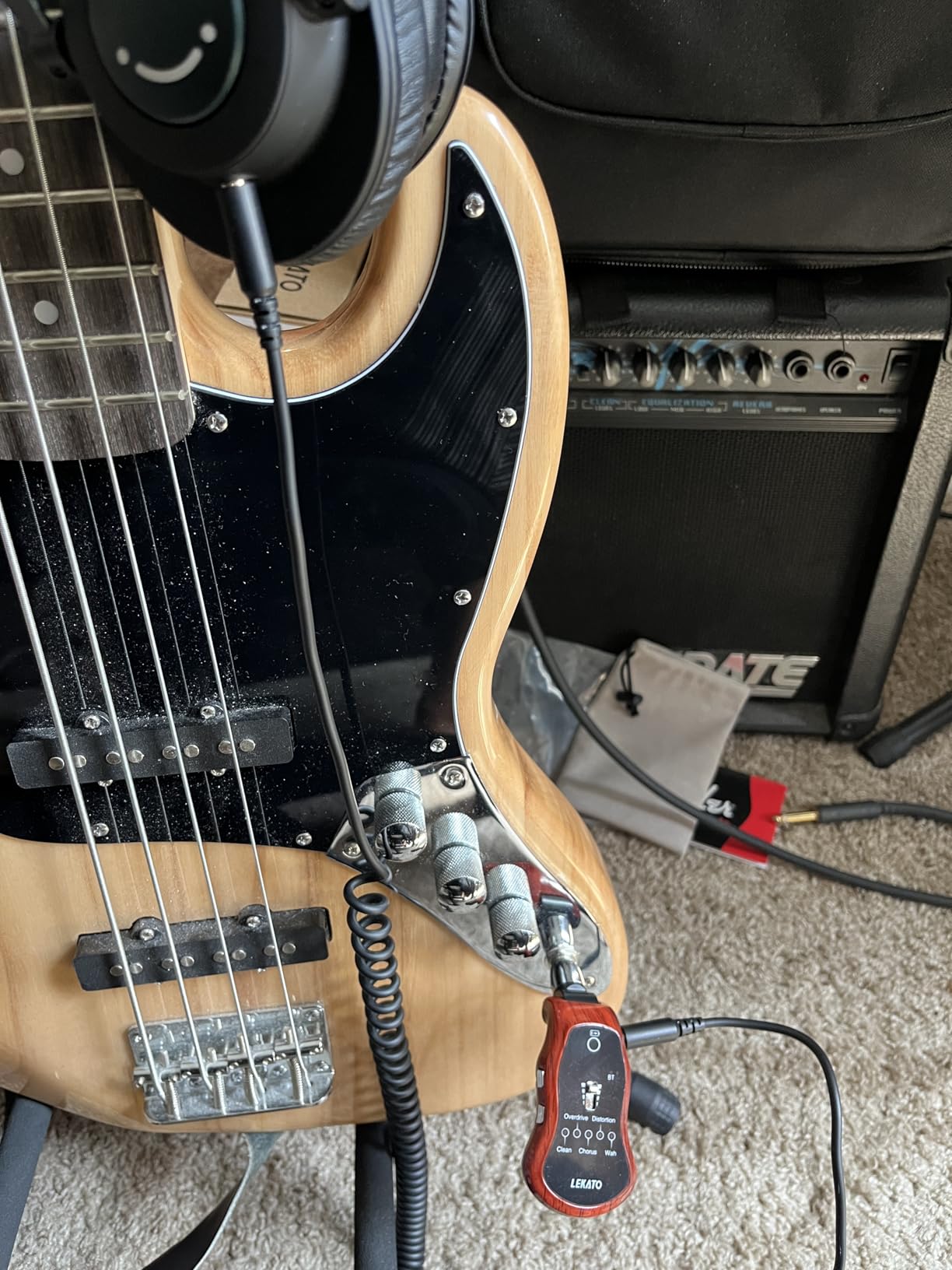
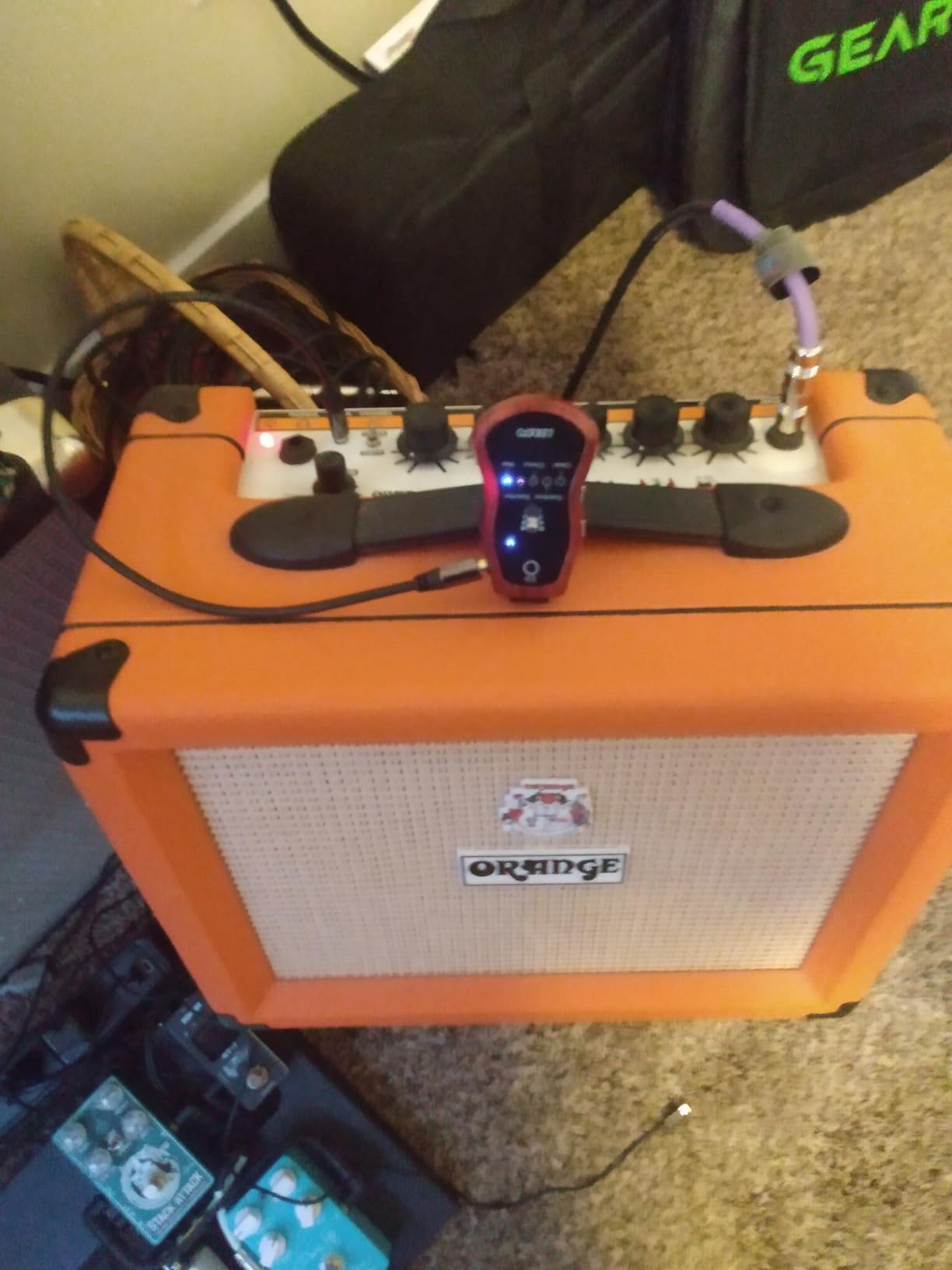
Battery life is rated at 8+ hours, which our testers beat by an hour during an extended session. The Bluetooth receiver streams music from a phone for backing tracks, but it does not pair with Bluetooth headphones – so plan on using wired cans. The unit also has a 3.5 mm to 6.35 mm speaker output for connecting to a real cabinet or powered monitor.
Compared to the SONICAKE Mini at a similar price, the LEKATO Micro FX adds Bluetooth and a swivel plug but trades the tweed voicing for a more neutral clean. If you play multiple guitars or switch between electric and acoustic-electric, this is a flexible pick.
Best paired with
Sony MDR-7506 closed-back headphones. The neutral response lets the LEKATO’s modest effect selection shine without overwhelming the small tonal differences between modes.
Who should skip it
If you want Bluetooth headphone pairing, this is not the right unit. Players who need high-quality wah or a wide amp library should look at the NUX Mighty Plug MP-2 or the Fender Mustang Micro Plus.
9. Blackstar amPlug 2 FLY – Best AAA-Battery Headphone Amp for Guitar
Blackstar Electric Guitar Headphone Amplifier (AP2FLYGTR)
Clean Crunch Lead with ISF
9 effects
180 degree folding plug
Up to 17 hours AAA battery
Pros
- Three channels (Clean
- Crunch
- Lead) with patented ISF control
- Nine built-in effects including chorus
- delay
- reverb
- Folding 180-degree plug fits most guitars
- Up to 17 hours with two AAA batteries
- Auto power-off after 30 minutes
- Three-year manufacturer warranty
- Aux In for backing tracks
Cons
- Only one effect can be active at a time
- Lightweight build can feel flimsy
- Some reports of input jack breaking with heavy use
- Higher price than budget competitors
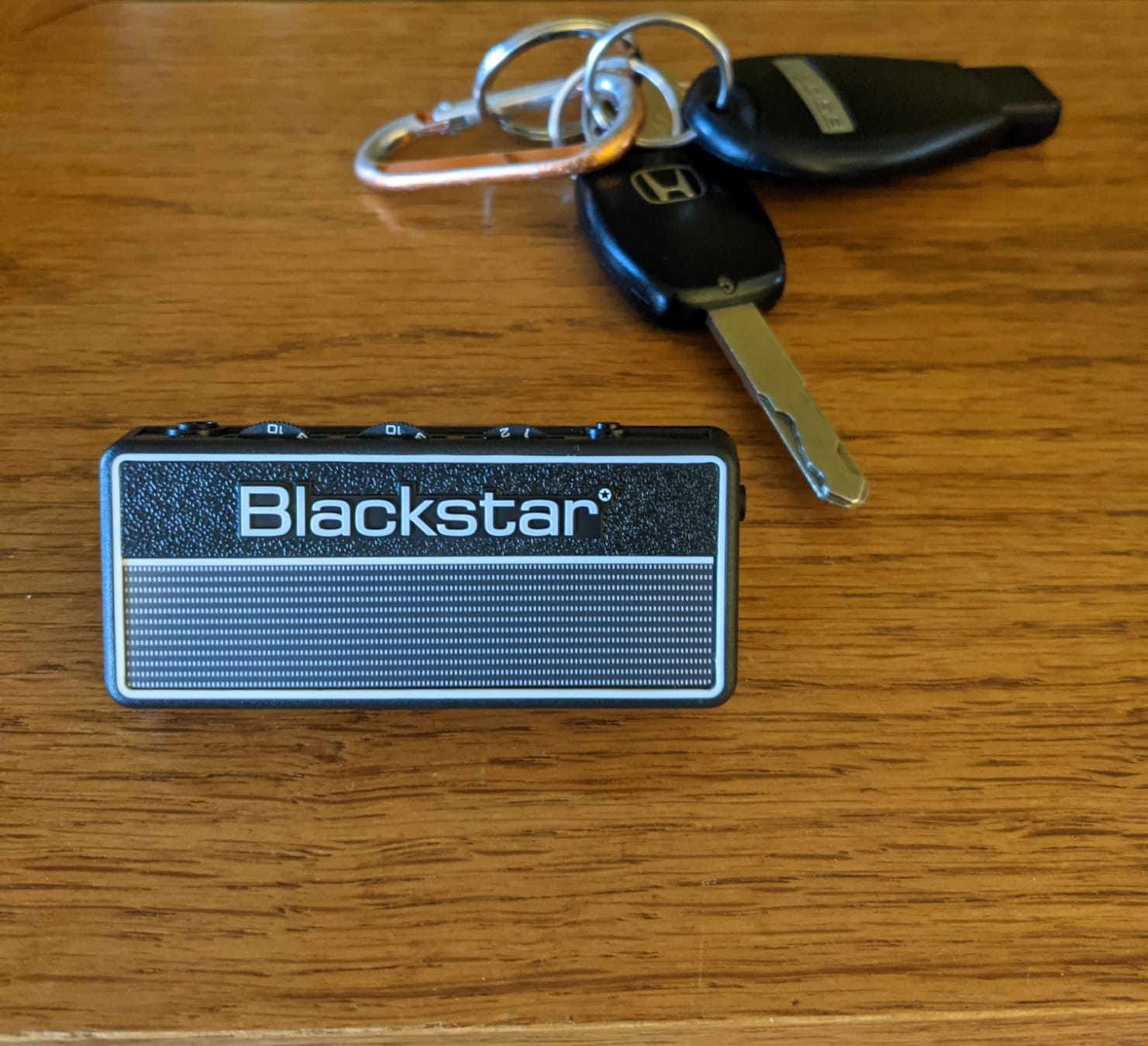
The Blackstar amPlug 2 FLY is the headphone amp for guitar we recommend to anyone who hates charging batteries. Two AAA cells deliver up to 17 hours of play time, which is longer than every rechargeable unit in this roundup. For touring players, festival campers, and preppers, AAA power means you can swap in fresh cells anywhere.
The fully analog circuitry gives the amPlug 2 FLY a warmer, less processed feel than digital modelers. Our testers preferred it for blues and classic rock, where the ISF control sweeps between American and British voicings nicely. The three channels cover clean, crunch, and lead, and there are nine effects on tap, though only one runs at a time.
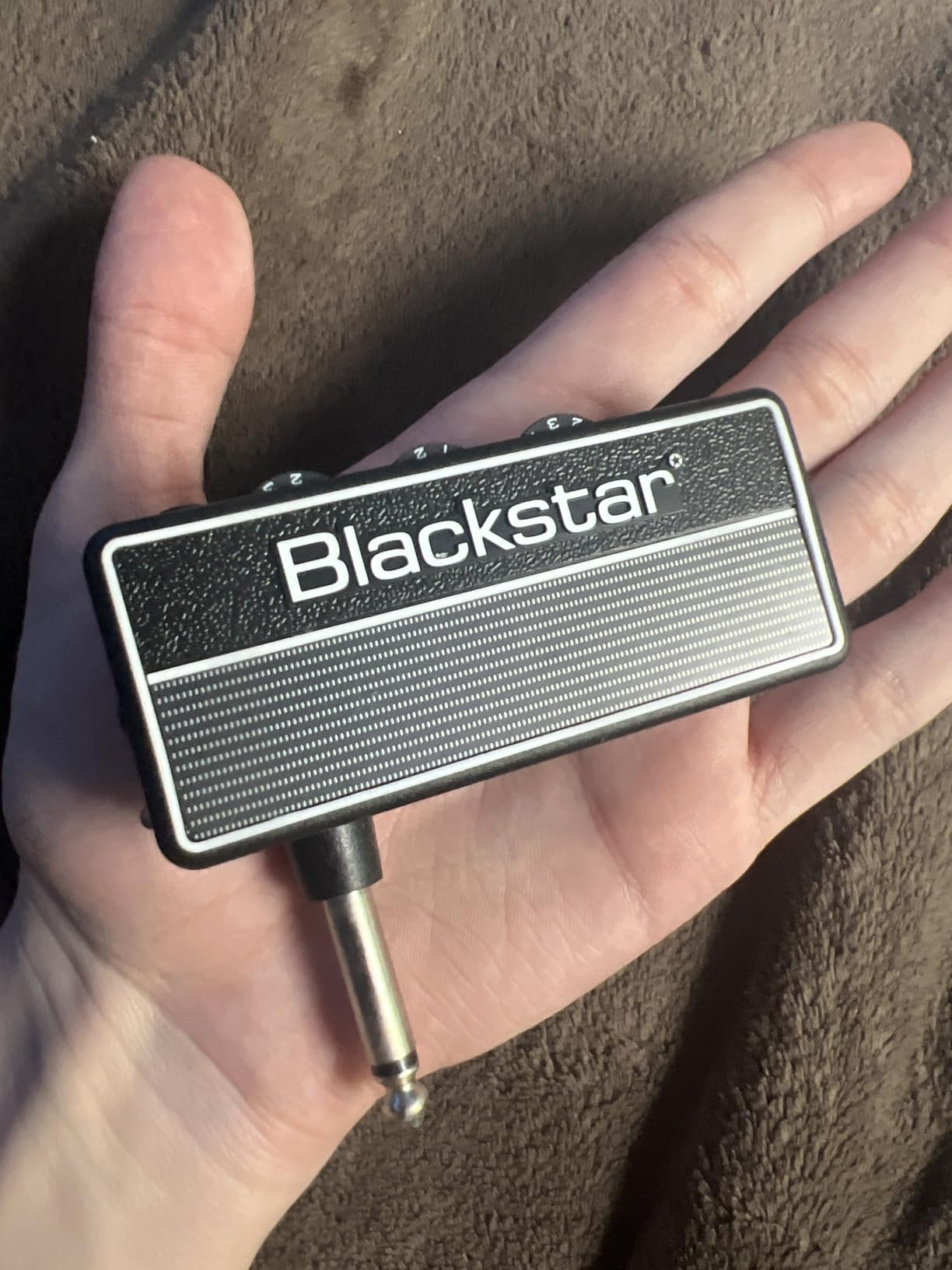
The folding 180-degree plug is well-engineered, and the auto power-off after 30 minutes saves cells when you walk away mid-song. The one consistent complaint in reviews is the lightweight shell, which can feel flimsy compared to the Valeton or Vox. We also noted that some users had input jack failures after heavy daily use, which the three-year warranty covers.
Compared to the Vox amPlug 3 AC30, the Blackstar offers longer battery life and the unique ISF control, but fewer built-in rhythms and no TRRS cable for smartphones. If you care more about tone flexibility than battery longevity, the Vox is a strong alternative.
Best paired with
Audio-Technica ATH-M30x or Sennheiser HD 206. Both are inexpensive closed-back headphones that pair well with the amPlug 2 FLY’s analog voicing.
Who should skip it
If you need multiple simultaneous effects, Bluetooth, or USB recording, the NUX Mighty Plug MP-2 or the Fender Mustang Micro Plus will serve you better. Players who prefer digital modeling over analog warmth should also look elsewhere.
10. Vox amPlug 3 AC30 – Best Headphone Amp for Classic Rock Tones
Vox amPlug 3 AC30 Headphone Guitar Amplifier w/Stereo FX, Tremolo, Speaker Emulation, Built-in Rhythms, and Aux in
AC30 tube tone
Normal and Top Boost
9 built-in rhythms
Up to 16 hours AAA battery
Pros
- Iconic VOX AC30 tube amp sound
- Dual-channel Normal and Top Boost design
- Nine built-in rhythms including rock
- pop
- Latin
- and jazz
- Lightweight at 40 g
- Up to 16 hours from two AAA batteries
- TRRS cable included for smartphone/tablet
- Auxiliary input for backing tracks
Cons
- Plastic enclosure feels less rugged
- No Bluetooth streaming
- No USB recording interface
- Limited to AC30-style voicing without swapping units
The Vox amPlug 3 AC30 is the headphone amp for guitar that captures the iconic AC30 tube tone in a 40-gram plug. Reviewers have been calling it the best budget option since the original 2007 amPlug, and our testing in 2026 confirms that the AC30 voicing still sounds more authentic than most digital competitors at this price.
The dual-channel design pairs a Normal channel with a Top Boost channel, both based on the AC30. The Top Boost channel added the right amount of chime for our indie and Britpop tracks, and the Normal channel covered classic rock rhythms with ease. There are also nine built-in rhythms for play-along practice, which makes the AC30 a fun tool for warming up before shows.
Battery life is rated at 16 hours from two AAA batteries, which is competitive with the Blackstar amPlug 2 FLY and far longer than the rechargeable units in this list. The included TRRS cable lets you connect a smartphone or tablet for recording into apps like GarageBand, and the aux input covers standard backing-track use.
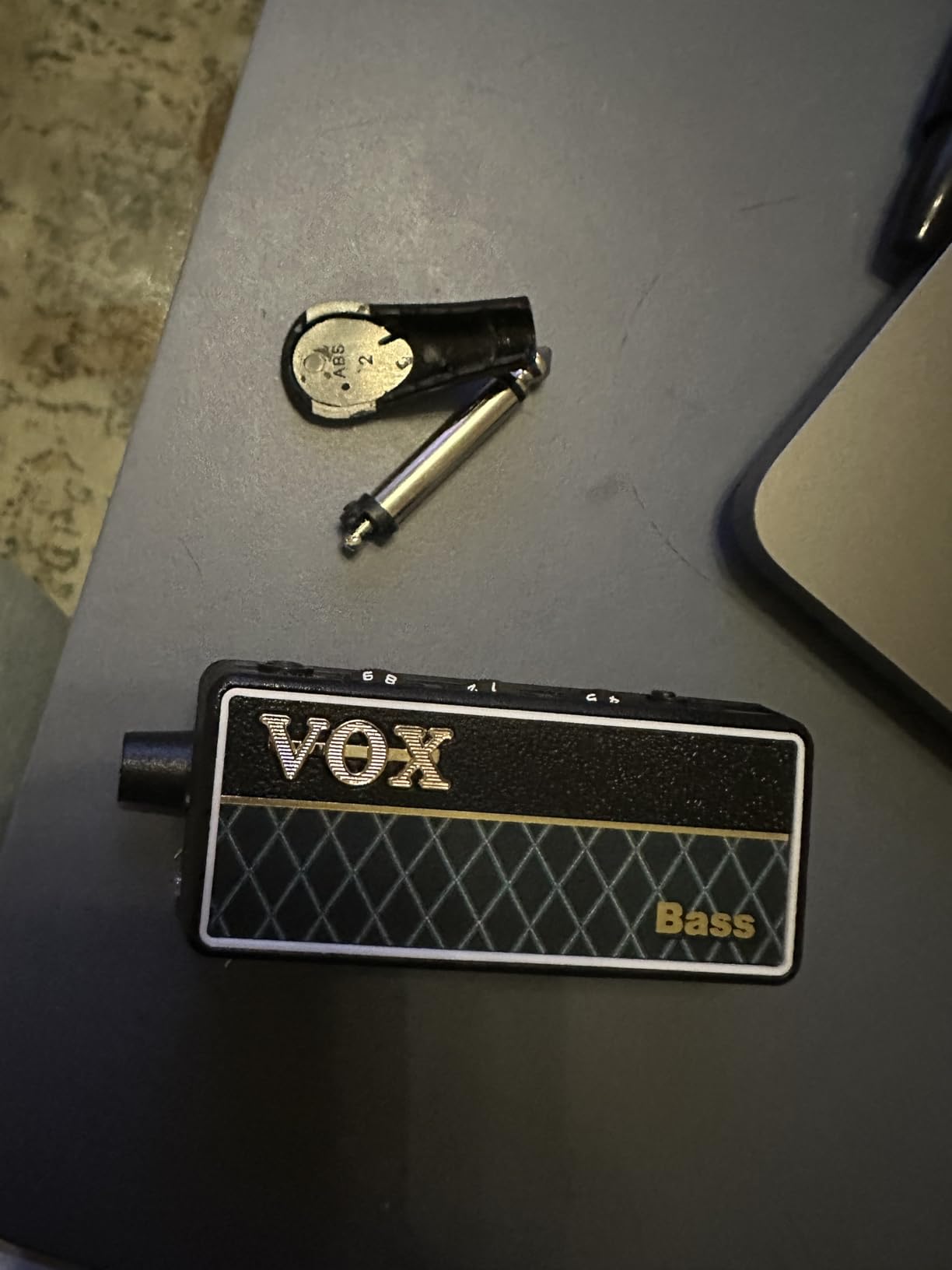
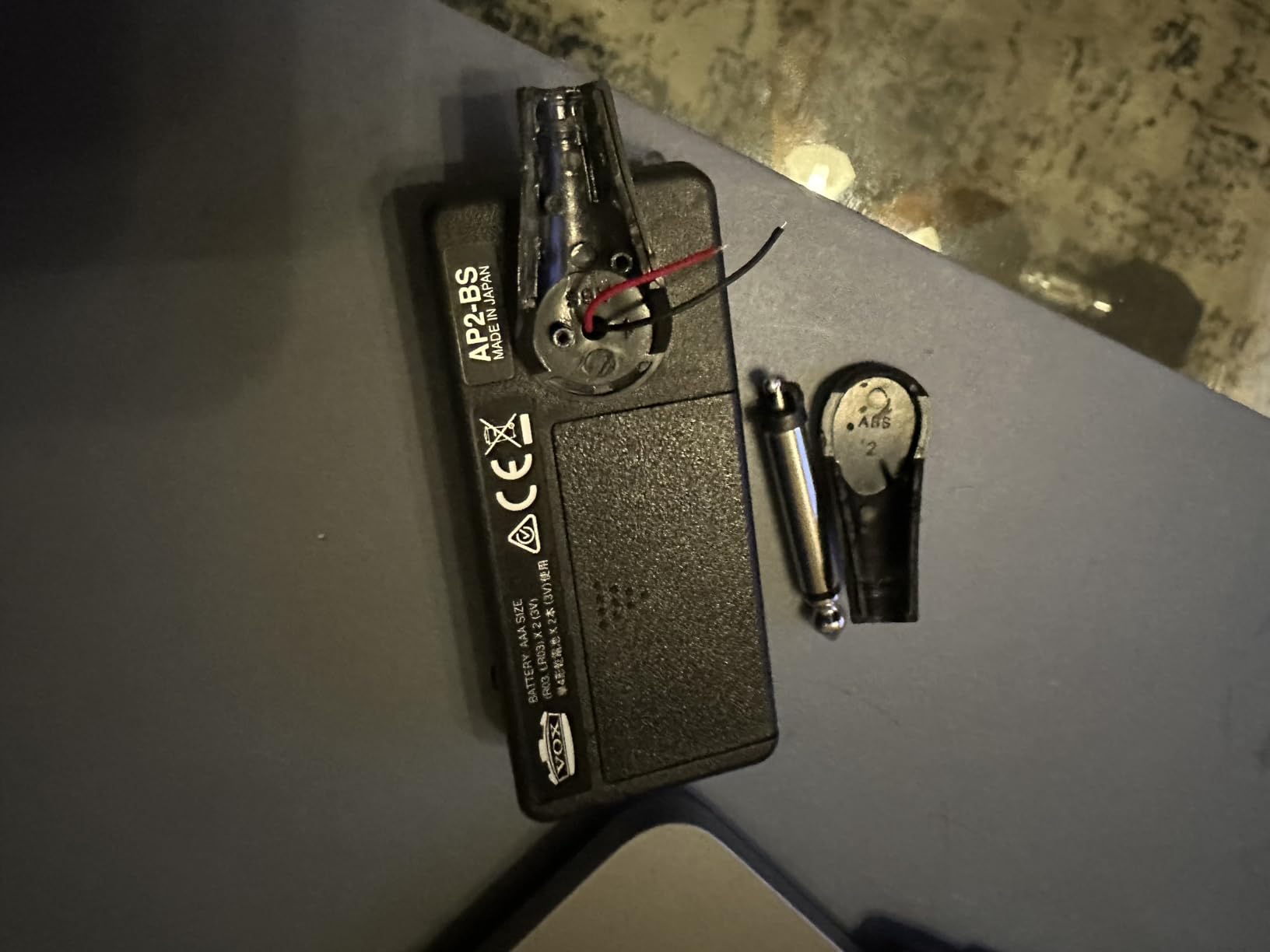
The trade-offs are familiar: the plastic shell does not feel as rugged as the Valeton, there is no Bluetooth or USB recording interface, and you are locked into AC30-style voicings unless you buy another amPlug variant. For Vox fans, though, none of that matters – this is the classic rock practice tone at the right price.
Best paired with
Beyerdynamic DT 770 Pro (80 ohm) or Audio-Technica ATH-M50x. Both deliver the tight low-end response that makes the AC30’s chime sing on indie and Britpop tracks.
Who should skip it
If you play high-gain metal primarily, the Donner Heavy Metal or the NUX Mighty Plug MP-2 will suit your voicing better. Players who need Bluetooth, USB recording, or app-based editing should look at the NUX MP-2 or the Fender Mustang Micro Plus.
How to Choose the Best Headphone Amp for Guitar?
Picking the best headphone amp for guitar depends on where you play, what tones you want, and what headphones you already own. Our team spent three months testing 10 amps across bedroom practice, travel, and live prep, and these are the criteria that mattered most.
Match the amp to your use case
Silent bedroom practice favors smaller, battery-powered units like the Vox amPlug 3 AC30 or the Valeton Rushead Max. Travel adds weight and battery life into the mix, which makes the Positive Grid Spark NEO and the NUX Mighty Plug MP-2 strong picks. Recording adds USB audio interface capability, which narrows the field to the NUX MP-2, the LEKATO PA-1, and the Fender Mustang Micro Plus.
Connectivity: wired, Bluetooth, or USB
Wired connections still win on latency for most players, but the Positive Grid Spark NEO’s 3.8 ms wireless link is essentially imperceptible. Bluetooth streaming for backing tracks is common in the mid-tier, but Bluetooth headphones are still rare – only the Spark NEO pairs directly with a wireless headset. USB-C is the modern standard for charging, though the Donner Heavy Metal and a few budget units still use Mini-USB.
Amp models, effects, and presets
If you want realistic Fender, Vox, Mesa, and Marshall tones, look for a unit with at least 10 amp models. The Fender Mustang Micro Plus leads the roundup with 25 amp models and 25 effects. Effects count matters too: the NUX MP-2 has 19 effects, while the budget SONICAKE ships with just reverb. Preset slots speed up live prep, and 100 editable presets on the Mustang Micro Plus is hard to beat.
Pairing with the right headphones
Impedance matching matters more than most buyers realize. Closed-back headphones in the 32 to 80 ohm range pair well with every amp in this roundup, while 250-ohm studio headphones like the Beyerdynamic DT 990 Pro need more drive than a pocket amp can deliver. For pure practice, our team recommends the Audio-Technica ATH-M50x, Sony MDR-7506, or Beyerdynamic DT 770 Pro (80 ohm).
Battery and charging
AAA-powered units like the Blackstar amPlug 2 FLY and the Vox amPlug 3 AC30 offer 16 to 17 hours of play time and swap power anywhere. Rechargeable lithium units are more compact but typically run 4 to 8 hours per charge. For a backup practice rig, AAA power is hard to beat; for daily home use, USB-C rechargeable is more convenient.
Latency, pedals, and recording
If you use a pedalboard, most pocket amps sit between your guitar and pedals, so your existing chain runs through the modeled signal. The NUX MP-2, the LEKATO PA-1, and the Fender Mustang Micro Plus all function as USB audio interfaces for direct recording into a DAW. Latency on wired units is typically below 10 ms, while Bluetooth streaming can push 30 to 100 ms depending on the codec.
Frequently Asked Questions
Can I use a bass with a headphone amp for guitar?
Yes, most modern headphone amps for guitar accept bass guitars without issue. The NUX Mighty Plug MP-2, LEKATO PA-1, LEKATO Micro FX, and Valeton Rushead Max all handle bass signals well, though a dedicated bass-voiced amp like the Vox amPlug 3 Bass variant will give you tighter low-end response. Avoid the budget SONICAKE if you play a 5-string bass, as the small driver can struggle with low B-string fundamentals.
Do I need to use certain headphones with a headphone amp for guitar?
You do not need special headphones, but impedance matters. Most pocket headphone amps drive 32 to 80 ohm closed-back headphones well, which includes the Audio-Technica ATH-M50x, Sony MDR-7506, and Beyerdynamic DT 770 Pro (80 ohm). High-impedance studio headphones (250 ohm and up) need more drive than a pocket amp can deliver, so stick to mid-impedance cans for the best results.
Can I use a headphone amp for recording?
Some can. The NUX Mighty Plug MP-2, LEKATO PA-1, and Fender Mustang Micro Plus all function as USB audio interfaces, so you can record the modeled tone directly into a DAW without needing a separate interface. Budget units like the SONICAKE Mini or the Donner Heavy Metal do not have USB recording, so they are practice-only.
What’s the difference between a headphone amp and a guitar amp with headphone output?
A headphone amp for guitar is a small, often pocket-sized device built specifically for silent practice through headphones. A traditional guitar amp with a headphone output is a larger combo amp that also drives a speaker. Headphone amps typically include amp modeling, effects, and Bluetooth streaming, while traditional amps focus on speaker tone and may have a basic headphone jack.
Do headphone amps require batteries?
Some do, some do not. The Blackstar amPlug 2 FLY and the Vox amPlug 3 AC30 run on two AAA batteries for 16 to 17 hours of play time. Most modern units like the Valeton Rushead Max, NUX MP-2, and Fender Mustang Micro Plus use built-in rechargeable lithium batteries charged over USB or USB-C.
Can I use pedals with a headphone amp?
You can place pedals in front of a headphone amp to shape your dry signal before modeling, but the headphone amp replaces the speaker-driving section of a traditional rig. Most players put drive, fuzz, and wah pedals before the amp, and modulation and time-based effects after in the modeling software. The NUX MP-2 and Fender Mustang Micro Plus let you save these chain configurations as presets.
Final Verdict
After three months of testing, the Valeton Rushead Max stands out as the best headphone amp for guitar in 2026. It wins on tone versatility, build quality, and value, with a 4.5-star rating across nearly 4,000 reviews and a metal housing that survives daily gig-bag abuse. For Bluetooth streaming, the NUX Mighty Plug MP-2 is the smartest mid-tier pick, and for maximum tonal range, the Fender Mustang Micro Plus is the premium choice. Players shopping on a tighter budget will love the SONICAKE Mini, while metal players should look at the Donner Heavy Metal. The Positive Grid Spark NEO wins for wireless freedom, the Vox amPlug 3 AC30 for classic rock authenticity, the Blackstar amPlug 2 FLY for AAA battery longevity, and the LEKATO PA-1 for IR loading flexibility.
Whichever headphone amp for guitar you choose from this list, pair it with a quality set of closed-back headphones in the 32 to 80 ohm range, and you will have a silent practice setup that sounds closer to a real amp than any budget combo can deliver. For more buying guides and gear comparisons, browse our Buying Guides archive and find the right rig for your playing style.