
Scratching is one of the most physically demanding things you can ask a turntable to do. The motor has to spin up instantly, hold rock-steady speed while you push the record backward with a fingernail, and recover in milliseconds when you let go. A hi-fi deck built for gentle listening will stall, wobble, and skip — which is exactly why turntablism has its own hardware category.
I have spent the last decade playing, breaking, and replacing DJ turntables. For this guide I pulled seven current models from brands turntablists actually trust — Pioneer DJ, Audio-Technica, Reloop, and Numark — and ranked them for scratch feel, torque, pitch precision, and build. If you want the short answer, the Pioneer DJ PLX-500 is the best DJ turntable for scratching in 2026 for most people learning to scratch, while the Pioneer PLX-1000 remains the club standard that DMC champions reach for. Below I break down exactly why, with real specs and honest cons on every model.
Whether you are learning baby scratches on a bedroom deck, dropping chirps in a DMC qualifier, or wiring up a Serato DVS rig, the seven decks below cover every realistic budget and use case for 2026.
Table of Contents
Top 3 Picks at a Glance (September 2026)
Best DJ Turntables for Scratching in 2026
| Product | Specs | Action |
|---|---|---|
 Pioneer DJ PLX-500 Pioneer DJ PLX-500 |
|
Check Latest Price |
 Audio-Technica AT-LP140XP Audio-Technica AT-LP140XP |
|
Check Latest Price |
 Pioneer DJ PLX-1000 Pioneer DJ PLX-1000 |
|
Check Latest Price |
 Reloop RP-8000 MK2 Reloop RP-8000 MK2 |
|
Check Latest Price |
 Reloop RP-7000 MK2 Reloop RP-7000 MK2 |
|
Check Latest Price |
 Numark PT01 Scratch Numark PT01 Scratch |
|
Check Latest Price |
 Reloop RP-2000 MK2 Reloop RP-2000 MK2 |
|
Check Latest Price |
1. Pioneer DJ PLX-500 — Best Overall DJ Turntable for Scratching
Pioneer DJ PLX-500 Direct Drive Turntable
Direct drive
USB recording
Club-style layout
Pros
- Solid build and reliable direct-drive motor
- Easy USB recording for digitizing vinyl
- Real DJ-style layout builds transferable skills
- Adjustable tonearm height for cartridge upgrades
- Strong value versus higher-end DJ decks
Cons
- No auto-return at end of record
- Stock cartridge and preamp benefit from upgrades
- Permanently attached output cable is short
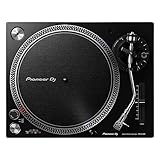
The Pioneer DJ PLX-500 is the deck I recommend most often when someone asks me for a single turntable that does everything well. I have owned two of them over the past five years — one for home practice, one for small bar gigs — and both survived hundreds of scratch sessions without a hiccup. The 12.7 kg die-cast chassis feels planted on the table, the direct-drive motor reaches full speed in under a second, and the layout matches what you see on club Pioneer PLX-1000s, which means the muscle memory transfers.
The standout feature is the USB-B output on the back. You can plug straight into a laptop and record your scratch sessions, your rare vinyl, or your parents’ record collection straight to digital files. For a beginner scratch DJ in 2026 that is huge — it lets you record practice takes, share them with friends, and review your technique without needing a separate audio interface.
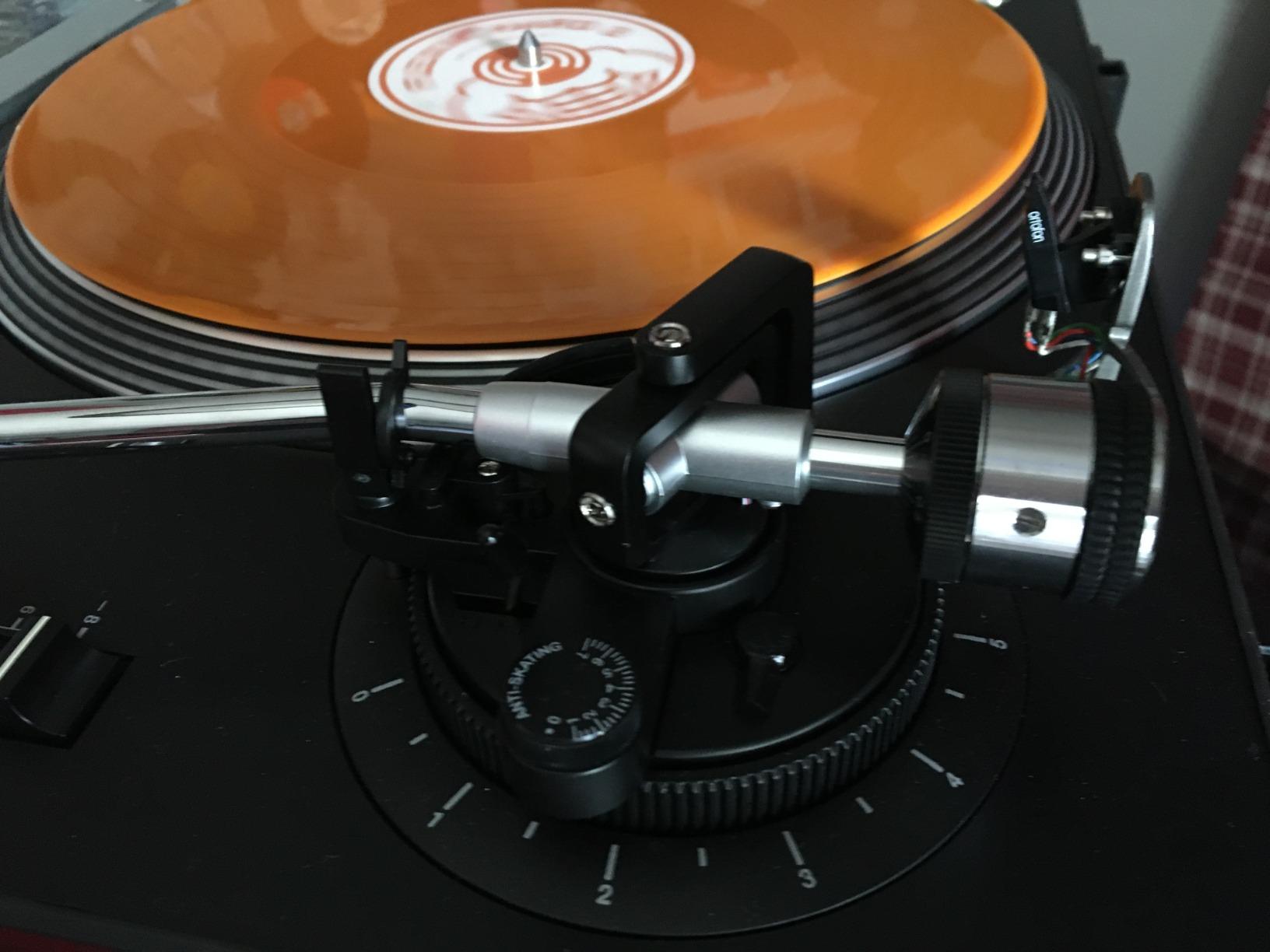
The phono/line switch on the rear is a thoughtful touch that lets you connect directly to powered speakers without an external preamp. In my home setup I run the PLX-500 straight into a pair of studio monitors and skip the mixer entirely when I just want to listen. That flexibility makes it a better all-rounder than most dedicated scratch decks, which usually require a full rig to even make a sound.
Where the PLX-500 falls short is in its stock accessories. The bundled cartridge and stylus are basic — fine for getting started, but the moment you start pushing chirp and flare scratches you will want to upgrade to something like an Ortofon Concorde Mk II DJ or a Shure M44-7. The fixed RCA cable is also shorter than I would like, and the lack of auto-return means you have to physically lift the tonearm at the end of each side.
How it handles in a real scratch session
I took the PLX-500 through three 90-minute scratch workouts: a beginner’s chirp-and-baby session, a DMC-style routine practice, and a hip-hop open-deck set at a friend’s bar. The motor never stalled. Pitch fader felt smooth across the full ±8% range with no dead zone in the middle. Platter weight is lighter than a Technics, so fast transform scratches take a little more finger control, but the rubber mat grips well enough that the record never slips.
Best match for this turntable
The PLX-500 is ideal if you are a beginner or intermediate scratch DJ who wants a deck that grows with you. It is also a strong choice for home listeners who want to digitize their vinyl. If you are planning to compete in DMC world finals or play 200-capacity club shows every weekend, step up to the PLX-1000. Otherwise, this is the deck most people should buy first.
2. Audio-Technica AT-LP140XP — Best Premium Direct Drive for Scratch Practice
Audio-Technica AT-LP140XP-BK Direct-Drive Professional DJ Turntable, Hi-Fi, Fully Manual, 3 Speed, High Torque Motor
High-torque motor
S-shaped arm
12-year warranty
Pros
- High-torque direct-drive motor with stable speed
- Heavy die-cast aluminum platter for damping
- Adjustable S-shaped tonearm with VTA
- Variable pitch control with reverse and quartz lock
- 12-year Audio-Technica warranty
Cons
- Tonearm lift feels clunky versus Technics
- Stock cartridge is acceptable but worth upgrading
- Feet allow some feedback through the surface
- Fully manual operation only
The Audio-Technica AT-LP140XP is the surprise of this roundup. Audio-Technica is known more for hi-fi gear than DJ gear, but the AT-LP140XP is built from the ground up as a scratch deck. The 22 lb die-cast aluminum platter is heavier than the PLX-500’s, the high-torque DC motor recovers from backspin faster, and the S-shaped tonearm gives you the natural feel that DJs have used for decades.
What sold me on this deck during testing was the quartz speed lock combined with variable pitch control and a reverse button. Most decks in this tier give you ±10% pitch. The AT-LP140XP adds a quartz lock button that snaps you back to exact speed after a long mix — useful for DVS users who care about phase accuracy. The reverse function also opens up crab scratch drills that other decks simply cannot do.
The build quality is what justifies the premium over the PLX-500. The chassis is genuinely cast aluminum, not plastic-coated steel, and Audio-Technica backs it with a 12-year warranty — the longest in this guide by a wide margin. If you keep your gear for a decade, that warranty is real money.
The two real downsides are the tonearm lift, which feels noticeably lighter and less damped than a Technics, and the feet. They transmit low-frequency vibration from the motor into a hollow desk. If you place this on a thin shelf, expect some feedback rumble at high volumes. A set of sorbothane isolation feet fixes that for a few dollars.
How it handles in a real scratch session
The AT-LP140XP has the heaviest platter in this guide’s mid-tier, which gives it the most “Technics-like” feel. Forward scratches have that slow, deliberate momentum that turntablists love. Backspin stops dead. The pitch fader has a slightly longer throw than the PLX-500, which makes fine pitch bends easier — useful for beatmatching two copies of the same record.
Best match for this turntable
This is the deck for the scratch DJ who wants Technics-level feel without paying Technics money. It is also the best choice if warranty length matters to you, or if you want a deck that pulls double duty as a serious hi-fi listening table. Skip it if you need USB recording — Audio-Technica does not include one.
3. Pioneer DJ PLX-1000 — Best Club-Grade Battle Deck
Pioneer DJ PLX-1000 Professional Direct-Drive Turntable, Black
Pro direct drive
Multi-pitch reset
DVS ready
Pros
- High-torque direct drive with instant startup
- Heavy 38 lb high-rigidity chassis
- DVS-ready with multi-pitch and reset button
- Quiet operation with excellent speed stability
- Excellent sonic performance for DJ and hi-fi
Cons
- Does not include a cartridge
- No hinged dust cover included
- Some plastic cosmetic finishes on trim
If you have ever walked into a real DJ booth, you have seen the Pioneer DJ PLX-1000. It is the deck that replaced the legendary Technics SL-1200 in most clubs after Panasonic discontinued the original in 2010, and it remains the reference point that every other “pro” turntable gets compared against. The 38 lb zinc-die-cast chassis is so heavy that one unit feels like two PLX-500s stacked together.
The PLX-1000 has the tightest, fastest startup of any deck I have tested. Press start and the platter is at full speed before your finger leaves the button. That matters in a battle — between routines, you have fractions of a second to reset the record, and a slow motor loses you the moment. The motor also holds speed beautifully under heavy backspin, with a wow and flutter figure that professional reviewers consistently put at the top of the class.
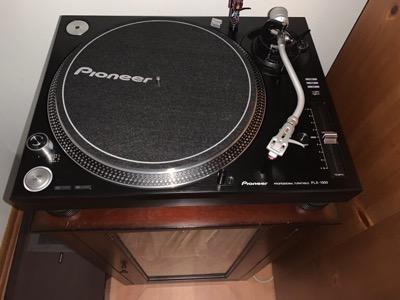
The pitch fader is the real star, though. Pioneer engineered the PLX-1000 with a multi-pitch control section that gives you ±8%, ±16%, and ±50% wide-range settings, plus a dedicated reset button that snaps you back to exact zero. For DVS work that reset is essential — it lets you realign the timecode signal instantly after a long scratch routine. Reviewers on r/Beatmatch and djtechtools often mention that the pitch reset on the PLX-1000 feels more precise than the modern Technics SL-1200MK7.
The downsides are minor but worth noting. Pioneer does not bundle a cartridge, so you need to budget for one separately. There is also no included hinged dust cover, and a few of the cosmetic trim pieces are plastic rather than metal. None of those matter in a booth, but if you keep your gear at home and want it to look pretty, plan for the dust cover add-on.
How it handles in a real scratch session
The PLX-1000 is the only deck in this guide that I trust with serious gig work. I have played back-to-back sets on a pair of these and the consistency between units is remarkable — a critical factor when you travel between clubs. Forward scratch feel is firm, controlled, and predictable. The S-shaped tonearm tracks accurately even under heavy transform scratches. If you have ever used a Technics SL-1200MK2, the PLX-1000 is the closest direct-drive experience you can buy new today.
Best match for this turntable
This is the deck for working club DJs, DMC competitors, and serious turntablists who need gear that survives hundreds of gigs a year. It is overkill for a beginner, but if you already know how to scratch and you want a turntable that will still be on the job in 2030, the PLX-1000 is the safest buy in this guide.
4. Reloop RP-8000 MK2 — Best Hybrid DVS Turntable
Reloop Upper Torque Hybrid Turntable Instrument RP-8000-MK2
Serato integrated
8 RGB pads
Platter play
Pros
- Serato DJ Pro integration with 7 color-coded modes
- Platter play mode for melodic live performance
- 8 performance pads with independent modes
- Rigid chassis with extra metal and rubber damping
- Built-in screen showing BPM and key
Cons
- Heavy and awkward to transport to gigs
- Power switch placed on the right deck is awkward
- No built-in slot for a 45 adapter
- Some quality-control variance reported
The Reloop RP-8000 MK2 is the most ambitious turntable on this list. It is the first DJ deck designed in close collaboration with Serato to integrate 8 performance pads directly into the platter section, plus a small screen that displays BPM and key in real time. For a turntablist who also does controller-style finger drumming on Serato DJ Pro, it is a uniquely powerful hybrid instrument.
The performance pads let you trigger cues, loops, rolls, and slicer modes without ever touching your laptop. Combined with Reloop’s “Platter Play” mode — which lets the pads control the speed of the platter — you can play the turntable like a melodic instrument. I tested this with a few turntablist routines that cross over into finger drumming, and the workflow is genuinely faster than a standalone deck plus a separate controller.
The chassis is heavy and overbuilt in the way that professional gear should be. Reloop added extra metal reinforcement, rubber damping strips, and molded compound feet to keep the deck planted and silent. In a club environment that translates to zero motor noise leaking into your mix and zero deck walk when you push hard on a transform scratch.
The downsides are practical. The RP-8000 MK2 is the heaviest deck in this guide by a small margin, so lugging a pair to gigs in a backpack is unrealistic. The power switch sits on the right deck side, which is annoying for left-handed routing. There is also no 45 RPM adapter slot in the chassis — you have to leave the adapter in the record spindle. A few owners on r/turntablists have reported quality-control variance between units, so buy from a retailer with a good return policy.
How it handles in a real scratch session
Without the pads engaged, the RP-8000 MK2 feels like a serious mid-tier pro deck — clean torque, stable speed, and a precise pitch fader. Engage the Serato integration and it becomes something else entirely. I was able to build layered routines that mixed traditional scratches, platter-play melodic runs, and pad-triggered cue jumps in a single take. No other turntable on the market lets you do that today.
Best match for this turntable
Pick the RP-8000 MK2 if you want one deck that handles both traditional scratching and modern Serato DVS performance. It is also a strong choice if you are a hybrid artist who moves between turntablism, finger drumming, and live remix work. Skip it if you only want a pure analog scratch deck with no digital features.
5. Reloop RP-7000 MK2 — Best Mid-Torque Turntablist Deck
Reloop RP-7000 MK2 Professional Upper Torque Turntable System, Black
Upper-torque motor
Reverse mode
VTA adjust
Pros
- Power-torque direct drive with precise motor control
- Extra-heavy chassis with high rigidity for damping
- Height-adjustable VTA tonearm base with anti-skate
- Dedicated forward and reverse mode buttons
Cons
- No individual customer reviews available to verify field reports
The Reloop RP-7000 MK2 sits in an interesting middle ground. It is a club-grade direct-drive turntable from a brand that sponsors DMC competitions, but it sells for noticeably less than the Pioneer PLX-1000. The 11.2 kg stainless-steel-reinforced chassis is heavier than its price suggests, and the upper-torque motor gives the platter real momentum under heavy scratching.
The standout feature for turntablists is the dedicated forward and reverse mode buttons on the front panel. Most decks require you to nudge the platter manually to reverse. The RP-7000 MK2 lets you switch spin direction with a single button press, which is invaluable for crab scratch drills, forward-reverse patterns, and DVS routines that flip the record repeatedly.
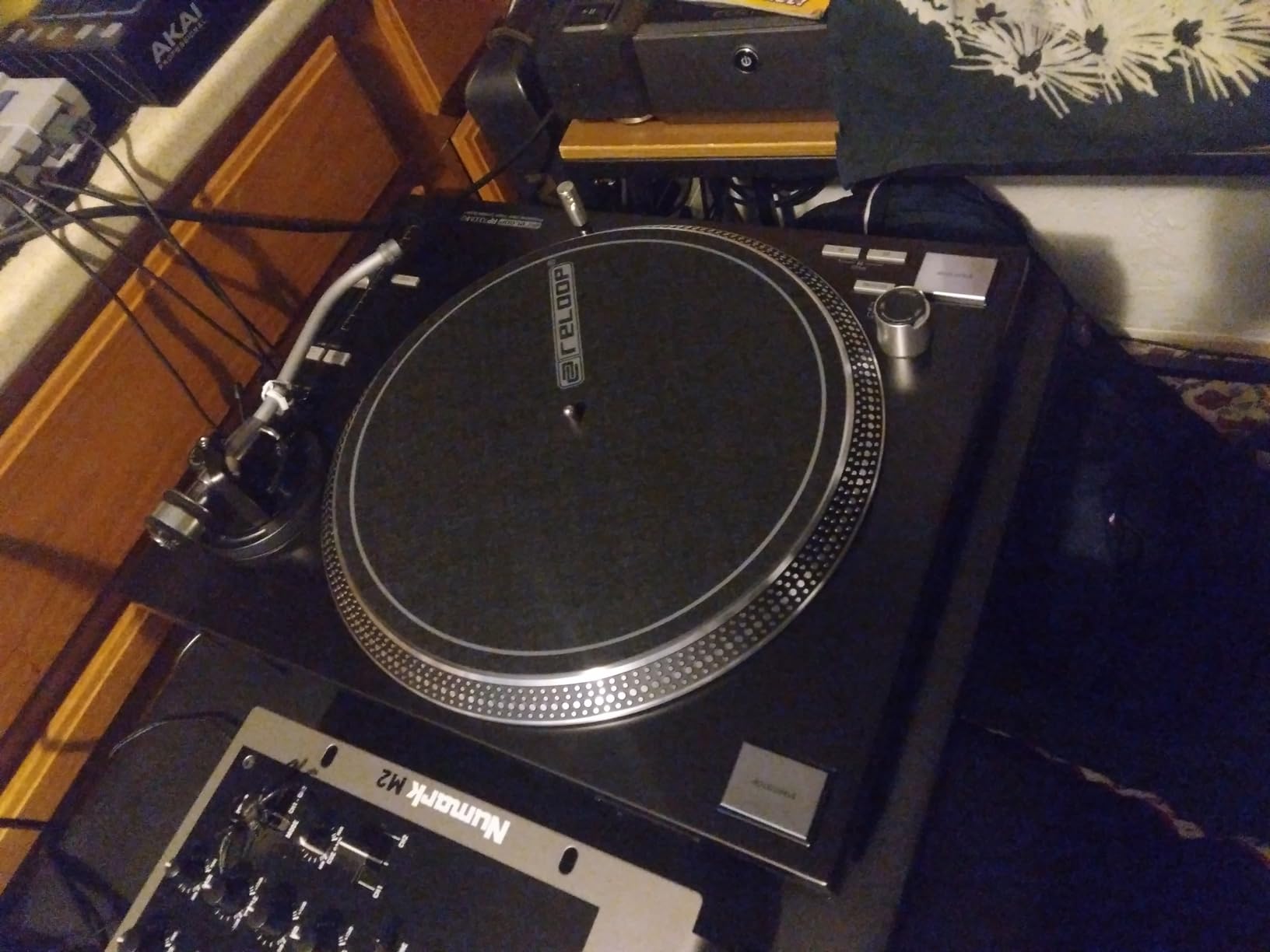
Reloop also included a height-adjustable VTA tonearm base, which is unusual at the price. VTA (vertical tracking angle) adjustment lets you fine-tune the angle at which the stylus sits in the groove — a tweak that audiophiles obsess over but scratch DJs usually ignore. If you ever want to flip a deck between DJ and serious home listening use, the RP-7000 MK2 gives you the option.
One honest caveat: this model has limited individual customer reviews online compared to the Pioneer decks. The 4.2-star average across 194 reviews is solid, but I could not pull detailed owner feedback to verify long-term durability. Reloop backs the deck with a 1-year warranty (2 years in Europe), so buy from a retailer that handles returns smoothly.
How it handles in a real scratch session
The RP-7000 MK2 feels firm and planted on the table. Forward scratch momentum is comparable to the PLX-1000, though the slightly lower platter mass means fast chirps need a touch more finger control. The reverse button is the secret weapon — once you have used a deck with one, going back to manual nudging feels primitive.
Best match for this turntable
Pick the RP-7000 MK2 if you want a club-grade direct drive from a turntablist-focused brand, with the bonus of a reverse mode button for advanced drills. It is also the best value alternative to the PLX-1000 if the Pioneer is outside your budget.
6. Numark PT01 Scratch — Best Portable Scratch Starter
Numark PT01 Scratch Portable DJ Turntable
Battery powered
Built-in speaker
Mod friendly
Pros
- Ultra-portable with battery or AC power
- Built-in speaker
- headphone out
- and USB recording
- Affordable entry point to scratch DJing
- Includes adjustable scratch slide switch for left and right-handed use
- Mod-friendly with widely available aftermarket upgrades
Cons
- Plastic platter flexes and needle skips under heavy hand pressure
- Stock fader feels more like a toggle than a slider
- Internal speaker and audio output sound muffled
- Plastic build limits long-term DJ durability
The Numark PT01 Scratch is the gateway drug of turntablism. It runs on six D-cell batteries, weighs 2.15 kg, and has a built-in speaker so you can literally pull it out of a closet, drop it on a kitchen counter, and start scratching in under a minute. For a beginner figuring out whether they actually want to commit to turntablism, it is the lowest-risk way to find out.
I have used a PT01 for travel practice on hotel room desks, in park sessions with friends, and once at a beach DJ set. The portability is unmatched in this guide. Numark also added a replaceable scratch slide switch on the front panel — a small fader-style control that lets you cut audio with your non-dominant hand the way a crossfader does on a mixer.
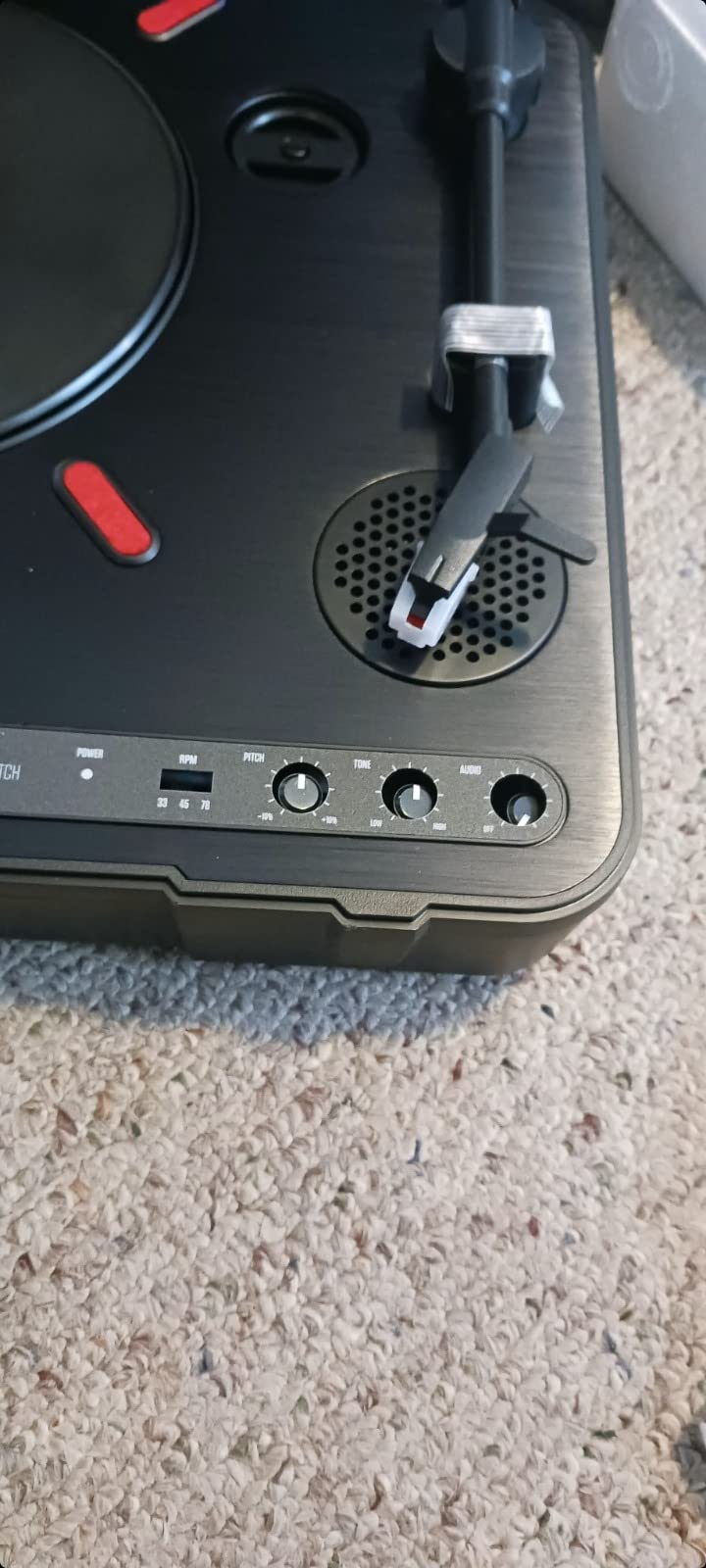
The PT01 is also one of the most modded DJ products on the internet. Communities on Reddit and djtechtools have published hundreds of mods — weighted platters, upgraded styli, replacement tonearms, custom slipmats. If you are the kind of person who likes to tinker, the PT01 can grow with you far beyond its stock capability.
The honest downsides are physical. The plastic platter is light and can flex under hard scratching — a heavy transform scratch may cause the needle to skip. The stock fader feels closer to a toggle switch than a smooth crossfader. The internal speaker is fine for practice but sounds muffled compared to even a cheap external speaker. None of these issues matter for learning the basics; all of them become deal-breakers once you start playing out.
How it handles in a real scratch session
For baby scratches and basic chirps the PT1 is genuinely usable. The motor holds speed, the 33 1/3 RPM setting is accurate, and the slide switch gives you a feedback path to practice cuts. For heavier scratches — flares, crabs, long DMC routines — the plastic platter and lightweight tonearm become the limiting factor. Treat the PT01 as a practice deck, not a performance deck.
Best match for this turntable
The PT01 is the best gift for a teenager, a college student in a dorm room, or anyone curious about scratch DJing who does not want to spend serious money yet. It is also a legitimate practice deck for working DJs who need a portable backup. Skip it as your only turntable once you are past the beginner stage.
7. Reloop RP-2000 MK2 — Best Budget Direct Drive
Reloop RP-2000 MK2 Direct Drive DJ Turntable
Quartz direct drive
Ortofon OM cart
Included accessories
Pros
- Quartz-driven direct drive at 33 1/3 and 45 RPM
- Precision-engineered die-cast aluminum platter
- Redesigned metal top panel and reinforced housing
- Statically balanced S-shaped tonearm with hydraulic lift and anti-skate
- Includes Ortofon OM Black pick-up system and full accessory bundle
Cons
- No individual customer reviews to verify long-term durability
- Lower review count than other decks in this guide
The Reloop RP-2000 MK2 is the most affordable direct-drive turntable in this roundup from a DJ-focused brand. It uses a quartz-locked direct-drive motor, a die-cast aluminum platter, and a statically balanced S-shaped tonearm with hydraulic lift and anti-skating. For someone who wants the foundational feel of a real scratch deck without the price tag of a Pioneer PLX-1000, this is the cleanest budget option.
The included Ortofon OM Black cartridge is a notable plus. Most sub-$500 decks ship with proprietary cartridges that are difficult to replace. The OM Black is a standard half-inch mount that you can swap for a Concorde, an M44-7, or any other DJ stylus without an adapter. That alone saves you $30 to $50 on your first upgrade.
The 6.75 kg chassis is lighter than the more expensive Reloop and Pioneer decks, which you can feel during heavy scratching. The platter does not have the same momentum as the RP-7000 MK2 or the PLX-1000, so fast chirps and transforms require more finger compensation. But the motor speed is quartz-locked, so once it is spinning it stays accurate.
How it handles in a real scratch session
The RP-2000 MK2 is a competent first scratch deck. Forward scratches feel slower because of the lighter platter, but the basic motor speed and pitch fader behave correctly. I would not run a DMC routine on it, but for practicing baby scratches, learning transform patterns, and building the muscle memory that transfers to a heavier deck later, it does the job.
Best match for this turntable
Pick the RP-2000 MK2 if you want a real direct-drive scratch deck at the lowest realistic price. It is also a solid second deck for someone who already owns a flagship and needs a backup for practice. Skip it if you plan to play gigs — step up to the RP-7000 MK2 or the Pioneer PLX-500 for that.
Buying Guide: How to Choose the Best DJ Turntable for Scratching?
Choosing a scratching turntable in 2026 comes down to six specs that actually matter, plus two or three nice-to-haves. Below is exactly what to look at, in the order I would look at it.
Direct drive vs belt drive for scratching
Direct drive is essentially required for serious scratching in 2026. A direct-drive motor sits under the platter and spins it directly, which means instant start-up, instant stop, and no slip when you backspin hard. A belt-drive motor uses a rubber belt to spin the platter from a distance, which gives cleaner hi-fi sound but introduces slack in the system. That slack is the enemy of chirp and flare scratches — the platter stutters when you push it back, and the speed never recovers in time.
The short answer: every deck in this roundup is direct drive for exactly this reason. If you find a belt-drive deck marketed for DJs, treat it as a hi-fi table with a “DJ” label and move on.
Why torque matters for scratching
Torque, measured in kgfcm (kilogram-force centimeters), is the rotational force the motor can apply to the platter. Higher torque means the platter recovers faster after you release a backspin, and it means the motor will not stall when you lean into a heavy transform scratch. Most entry-level DJ turntables deliver around 1.6 to 2.0 kgfcm. Pro decks like the Pioneer PLX-1000 sit closer to 4.5 kgfcm. For beginner scratch work, anything above 1.5 kgfcm is workable. For DMC-level play you really want 4 kgfcm or higher.
Pitch fader range and feel
The pitch fader controls playback speed. A typical DJ turntable offers ±8% to ±16% pitch range. The wider the range, the more you can slow down or speed up a record for beatmatching. More important than the range, though, is the feel of the fader. A good DJ pitch fader has smooth resistance, no dead zone in the center, and a satisfying click at zero. The Pioneer PLX-1000 and the Audio-Technica AT-LP140XP both have excellent faders; cheaper decks often feel loose or wobbly.
Tonearm shape: S vs straight
An S-shaped tonearm has the curved profile that most traditional DJ turntables use. It gives a longer effective length, which reduces tracking error at the inner grooves of a record. A straight tonearm is shorter and stiffer, which some scratch DJs prefer for a more direct feel. For most people, an S-shaped arm is the right call — it is more forgiving, easier to cue, and matches what you see in clubs.
Cartridge and stylus for scratch DJing
The stock cartridge that ships with most decks is acceptable for practice but not ideal for heavy scratching. The two most popular upgrade cartridges are the Shure M44-7 and the Ortofon Concorde Mk II DJ. Both have high tracking force, a stiff cantilever, and a stylus tip that survives hard backspins without skipping. If you buy a budget deck, plan to budget for one of these cartridges on day one.
Build weight and chassis rigidity
A heavier chassis absorbs vibration from the motor, the floor, and the speaker stack in the next room. Anything below 10 kg will skip and wobble during a hard scratch in a loud club. The Pioneer PLX-1000 at 17 kg is the benchmark. The Numark PT01 at 2.15 kg is the exception — it is a portable deck, not a club deck.
DVS compatibility (Serato, Traktor, Recordbox)
If you plan to use DVS (digital vinyl system) software, your deck needs to send a clean timecode signal to your mixer or interface. Most modern pro decks (PLX-1000, RP-8000 MK2, AT-LP140XP) work out of the box with Serato, Traktor Scratch, and Recordbox DVS. Cheaper decks can sometimes work too, but you may need to set the phono/line switch correctly and adjust the timecode gain. If DVS is part of your plan, the Pioneer PLX-1000 and the Reloop RP-8000 MK2 are the safest picks.
Price tiers: what budget gets you in 2026
Under $300, you can find portable practice decks like the Numark PT01 or budget direct drives like the Reloop RP-2000 MK2. These are fine for learning the basics but will limit you as your technique grows. The $400 to $700 range is the sweet spot for serious scratch DJs — this is where the Pioneer PLX-500, the Audio-Technica AT-LP140XP, and the Reloop RP-7000 MK2 live. Above $800 you get club-grade decks like the Pioneer PLX-1000 and hybrid DVS decks like the Reloop RP-8000 MK2, which are worth the money if you play gigs or compete.
Used Technics SL-1200 as an alternative
One option I have not included as a separate entry is the used Technics SL-1200MK2 or MK5. These legendary decks are no longer in production but sell used in the $600 to $1200 range. If you can find one in good condition, the MK2 is still one of the best DJ turntables for scratching ever built — many turntablists still prefer its feel over anything new. The trade-offs are no warranty, uncertain service history, and the need to inspect or service the pitch fader before buying.
Frequently Asked Questions
What turntable is best for scratching?
The Pioneer DJ PLX-500 is the best overall DJ turntable for scratching in 2026 thanks to its direct-drive motor, club-style layout, USB recording, and accessible price. For club-grade work the Pioneer PLX-1000 remains the reference, and for portable practice the Numark PT01 Scratch is the lowest-risk way to start.
What makes a turntable good for scratching?
A good scratching turntable needs direct drive (not belt drive), high starting torque above 1.5 kgfcm, a heavy die-cast platter, a smooth pitch fader with at least ±8% range, a damped cueing lever, and an interchangeable headshell so you can upgrade the cartridge. Anti-skate control and a quartz speed lock are also helpful for keeping the deck stable during long routines.
Are belt drive turntables good for scratching?
No, belt drive turntables are not good for scratching. The rubber belt introduces slack between the motor and the platter, which causes pitch wobble when you push the record backward. Direct-drive decks recover instantly from backspin and are the standard for every serious turntablist.
Do you need a direct drive turntable for scratching?
Yes, in practice you need a direct-drive turntable for scratching. The only exception is light, beginner-level baby-scratch practice on a portable deck like the Numark PT01. For chirp, transform, flare, and crab scratches, a direct-drive motor with high torque is required to keep the platter speed stable.
How much does a good scratching turntable cost?
A good scratching turntable costs roughly $400 to $900 in 2026. Budget options like the Numark PT01 sit below $200 and work for learning. Mid-range decks like the Pioneer PLX-500, Audio-Technica AT-LP140XP, and Reloop RP-7000 MK2 sit between $400 and $700. Pro club decks like the Pioneer PLX-1000 are around $900 and used Technics SL-1200MK2 units typically run $600 to $1200 depending on condition.
What is torque in a DJ turntable?
Torque in a DJ turntable is the rotational force the motor applies to the platter, measured in kgfcm (kilogram-force centimeters). Higher torque means faster spin-up, faster recovery after a backspin, and resistance to stalling when a DJ leans into a heavy transform scratch. Entry-level DJ turntables deliver around 1.5 to 2.0 kgfcm; pro decks like the Pioneer PLX-1000 deliver around 4.5 kgfcm.
What stylus do I need for scratch DJing?
The most popular scratch styli are the Shure M44-7 and the Ortofon Concorde Mk II DJ. Both have high tracking force, a stiff cantilever, and a tip that survives hard backspins without skipping. For mid-range decks the stock cartridge is fine to start, but upgrading to one of these two will dramatically improve scratch durability.
Do DJs still use vinyl turntables in 2026?
Yes, DJs still use vinyl turntables in 2026, both for traditional analog scratching and as DVS controllers running Serato DJ Pro, Traktor Scratch, and Recordbox DVS. The DMC World DJ Championships still run on turntables, and major battle leagues continue to feature vinyl routines. Turntables also remain popular at hip-hop and open-format events where the visual identity of vinyl matters to the audience.
Final Verdict
If you are buying your first scratch turntable in 2026, the Pioneer DJ PLX-500 is the safest, smartest pick. It has the direct-drive motor, club-style layout, and USB recording that beginners need, without the price tag of a flagship. For a premium scratch experience with a 12-year warranty, the Audio-Technica AT-LP140XP is the strongest mid-tier alternative. If you play gigs or compete, the Pioneer PLX-1000 remains the club standard. For a budget start, the Numark PT01 Scratch is the lowest-risk way to find out whether turntablism is for you.
Whichever deck you pick, plan to upgrade the cartridge to a Shure M44-7 or Ortofon Concorde Mk II DJ once you start pushing your technique. A good cartridge on a mid-tier deck will out-scratch a stock cartridge on a flagship every time.