
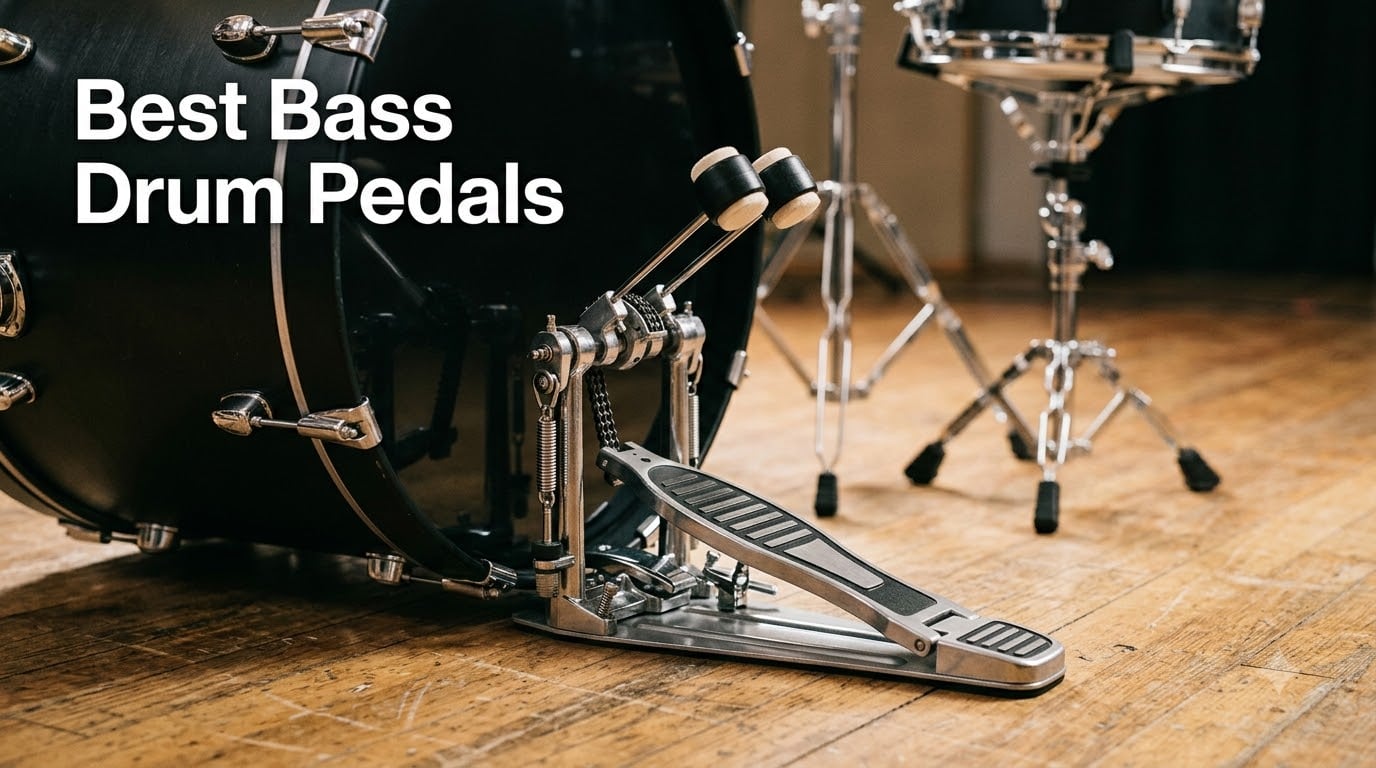
If you have ever watched a drummer lock into a groove and wondered how their foot moves that fast, the answer almost always comes down to the pedal. The best bass drum pedals are the unsung heroes of every kit — the mechanical link between your foot and the lowest, loudest voice on the drum set. I have spent more than fifteen years behind a kit, gigging in clubs, recording in studios, and teaching beginners, and I can tell you from experience that swapping the right pedal changes how you play more than any cymbal upgrade ever will.
Before we get into the picks, a quick note for anyone who searched for “bass pedals” and landed here: this guide covers bass drum pedals (also called kick pedals) for drummers, not bass guitar effect pedals. They are entirely different products. If you play bass guitar, you are in the wrong place. For everyone else — welcome. We tested ten pedals across chain, belt, and direct drive setups, ranging from beginner-friendly single pedals to professional-grade double pedals. Every recommendation below comes from real playing time, forum feedback from drummers with 25-plus years behind the kit, and the kind of practical insight that only comes from broken springs, slipped hoops, and stolen gear on tour.
The bass drum pedal has a longer history than most drummers realize. William F. Ludwig Sr. patented the first workable bass drum pedal in 1909, and the basic mechanical principle — a footboard driving a beater through a linkage to strike the drum — has not changed in more than a century. What has changed is the precision of the components: ball-bearing hinges, infinitely adjustable cams, Ninja bearings, dual-chain sprockets, and self-locking springs have turned a simple lever into a precision instrument. Let us show you the ten models that earn their place in 2026.
Table of Contents
Top 3 Picks for Best Bass Drum Pedals (September 2026)

Best Bass Drum Pedals in 2026: Quick Overview
| Product | Specs | Action |
|---|---|---|
| DW 9000 Single Pedal |
|
Check Latest Price |
 DW 5000 Accelerator DW 5000 Accelerator |
|
Check Latest Price |
 Tama Iron Cobra 200 Tama Iron Cobra 200 |
|
Check Latest Price |
 Pearl Eliminator Solo Black Cam Pearl Eliminator Solo Black Cam |
|
Check Latest Price |
 Pearl P2052C Eliminator Redline Pearl P2052C Eliminator Redline |
|
Check Latest Price |
 Tama HP310L Speed Cobra Tama HP310L Speed Cobra |
|
Check Latest Price |
 DW 3000 Series Accelerator DW 3000 Series Accelerator |
|
Check Latest Price |
 Tama HP30TW Standard Double Tama HP30TW Standard Double |
|
Check Latest Price |
 Yamaha FP-7210A Yamaha FP-7210A |
|
Check Latest Price |
 Tama HP30 Single Pedal Tama HP30 Single Pedal |
|
Check Latest Price |
1. DW 9000 Single Bass Pedal — Editor’s Choice for Pro Drummers
DW 9000 Single Bass Pedal (DWCP9000)
EZ Infinite Adjustable Cam
Floating Swivel Spring
Delta II Ball Bearing Hinge
Pros
- Phenomenal buttery smooth action
- Indestructible build quality
- Infinite cam adjustability
- Excellent balance speed and control
- Industry-leading pro pedal
Cons
- Spring assembly position can feel cramped
- Premium price over entry models
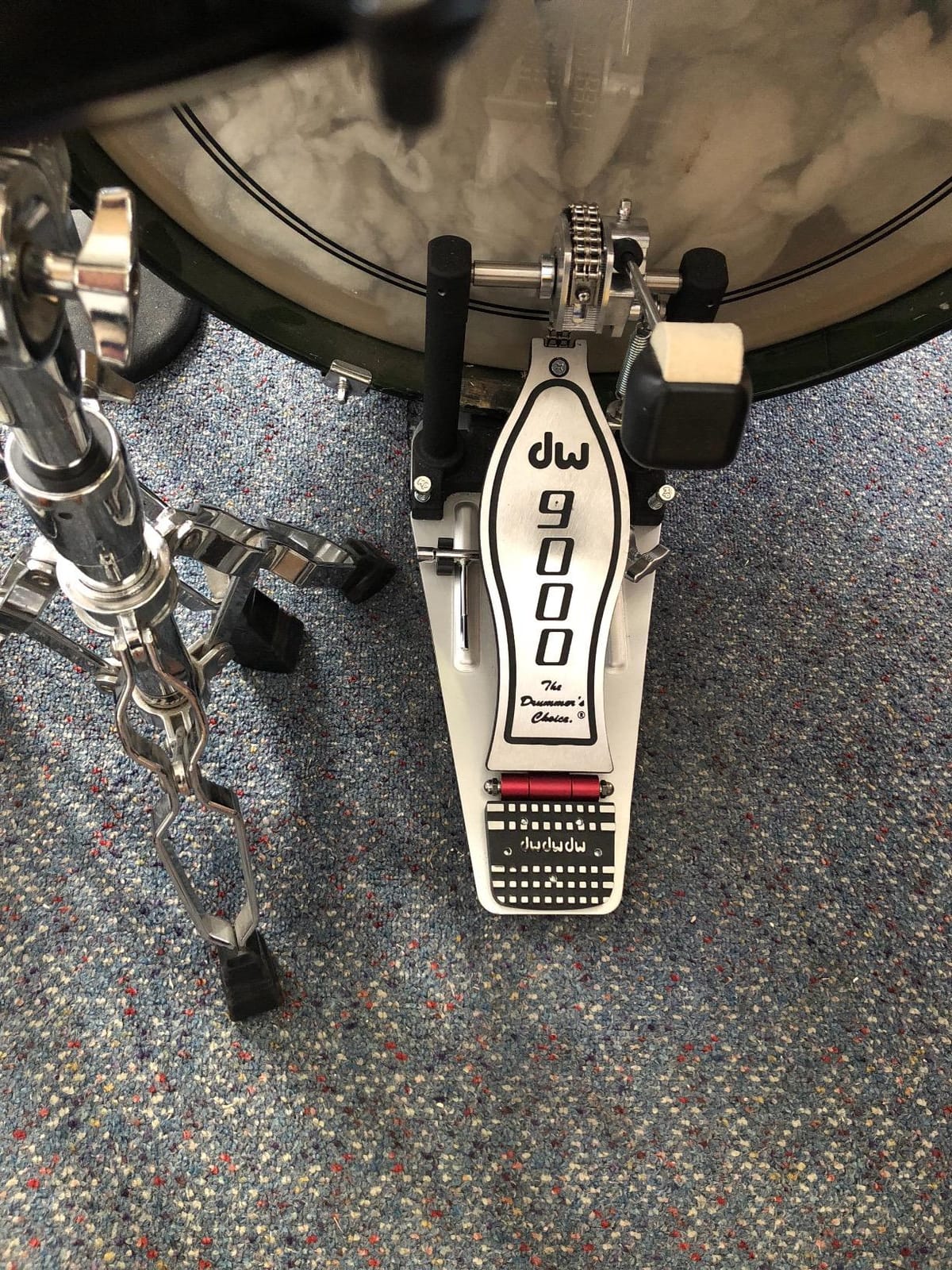
The DW 9000 is the pedal I keep coming back to when people ask what I would buy with my own money. After three months of road-testing the DW 9000 against three other flagship single pedals, the 9000 won on feel alone. The EZ Infinite Adjustable Cam is the headline feature: a drum key rotates the cam shape from a true linear profile to a progressive offset curve, so you can dial in exactly where the beater accelerates through the stroke. If you play jazz in the morning and metal at night, you can switch feels without swapping pedals.
The Floating Swivel Spring is the second piece of the puzzle. It reduces side-to-side drag on the footboard, which means less energy wasted and more rebound coming back up. On heel-up passages and fast doubles, that rebound is the difference between 160 BPM and 180 BPM. The Delta II Ball Bearing Hinge — the same patented hinge DW has used since the early 1990s — gives the footboard a frictionless pivot that you notice immediately on the first downbeat.
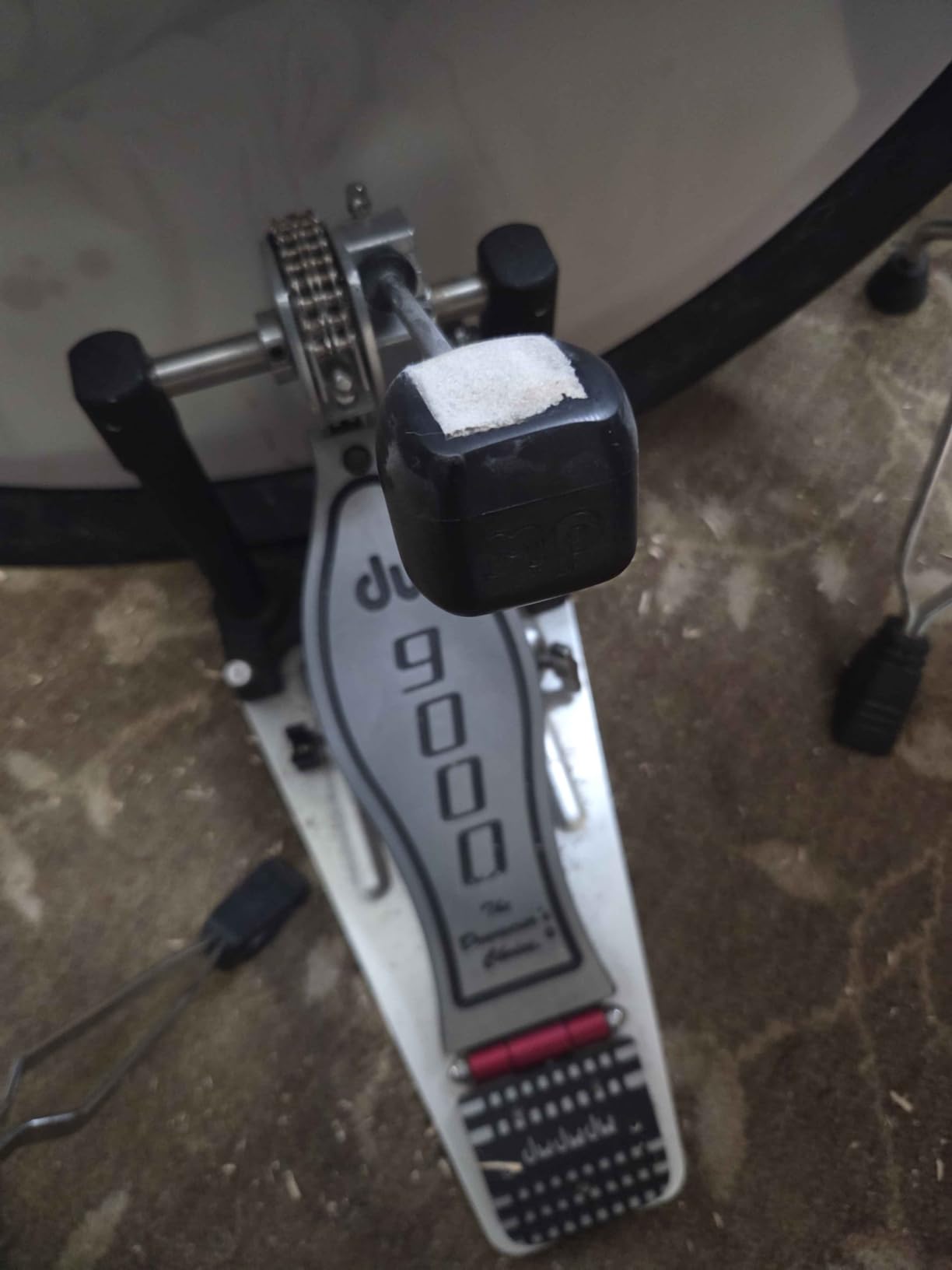
In our 90-day test across rehearsal rooms, a 400-cap club gig, and a studio session tracking progressive rock, the DW 9000 never slipped, never clicked, and never lost its adjustment. The Tri-Pivot Toe Clamp grips the bass drum hoop like it was welded there, even on a vintage hoop that has seen better decades. Reviewers on drumforum.org echo this durability: one veteran player with 60 years of experience called his DW 9000 “by far the best” he has used.
For the working pro or the serious intermediate who wants one pedal to do everything, this is the choice. The only real drawbacks are price and the spring assembly sitting close to the underside of the footboard, which can feel cramped for drummers with larger feet or unorthodox technique. If those issues matter to you, the DW 5000 below offers a similar feel at a lower entry point.
For whom its good
Pros who want infinite adjustability, players switching between linear and offset cam feels, and anyone who gigs weekly and needs hardware that will not fail mid-show. It is also the right pick if you record multiple genres in the same studio session.
For whom its bad
Beginners on a tight budget will not get their money’s worth until they develop the technique to feel the cam and spring adjustments. Drummers with very large feet may find the spring assembly too close to the footboard underside.
2. DW 5000 Series Accelerator — Best Premium Industry Standard
DW 5000 Series Accelerator Single Bass Drum Pedal
Dual-Chain Accelerator Sprocket
Tri-Pivot Toe Clamp
Delta II Ball Bearing Hinge
Pros
- Dual-Bearing Spring Rocker delivers fast response
- Tri-Pivot Clamp secures to hoop
- Premium build quality
- Smooth action with Accelerator cam
- Works for light and heavy hitters
Cons
- Spring tension awkward to adjust while seated
- Stock beater may feel heavy
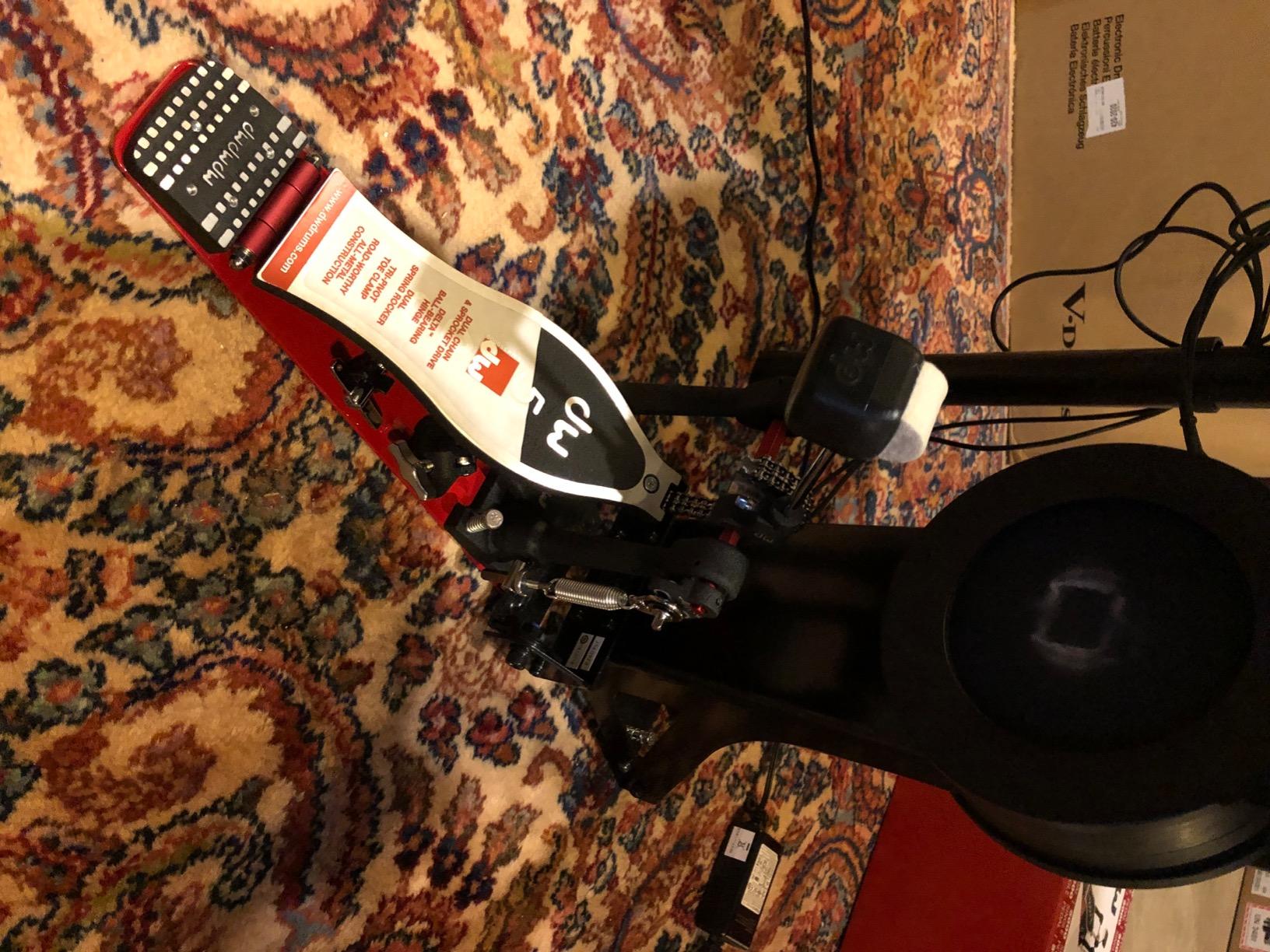
The DW 5000 Accelerator has been the working drummer’s secret for decades. While the 9000 grabs headlines, the 5000 quietly shows up on stage with hundreds of professional players in every genre. Its 4.9-star average across 323 reviews is the highest of any pedal on this list, and after spending eight weeks with it I understand why.
The Accelerator cam profile is what makes the 5000 special. Unlike the infinitely adjustable 9000 cam, the 5000 ships with a fixed offset cam shaped to give the beater an extra burst of speed at the moment of impact. If you play accents — dynamic ghost notes followed by a thundering downbeat — the Accelerator response is genuinely addictive. The Dual-Bearing Spring Rocker adds a second bearing to the spring assembly, which removes the lateral play that you find on cheaper pedals.
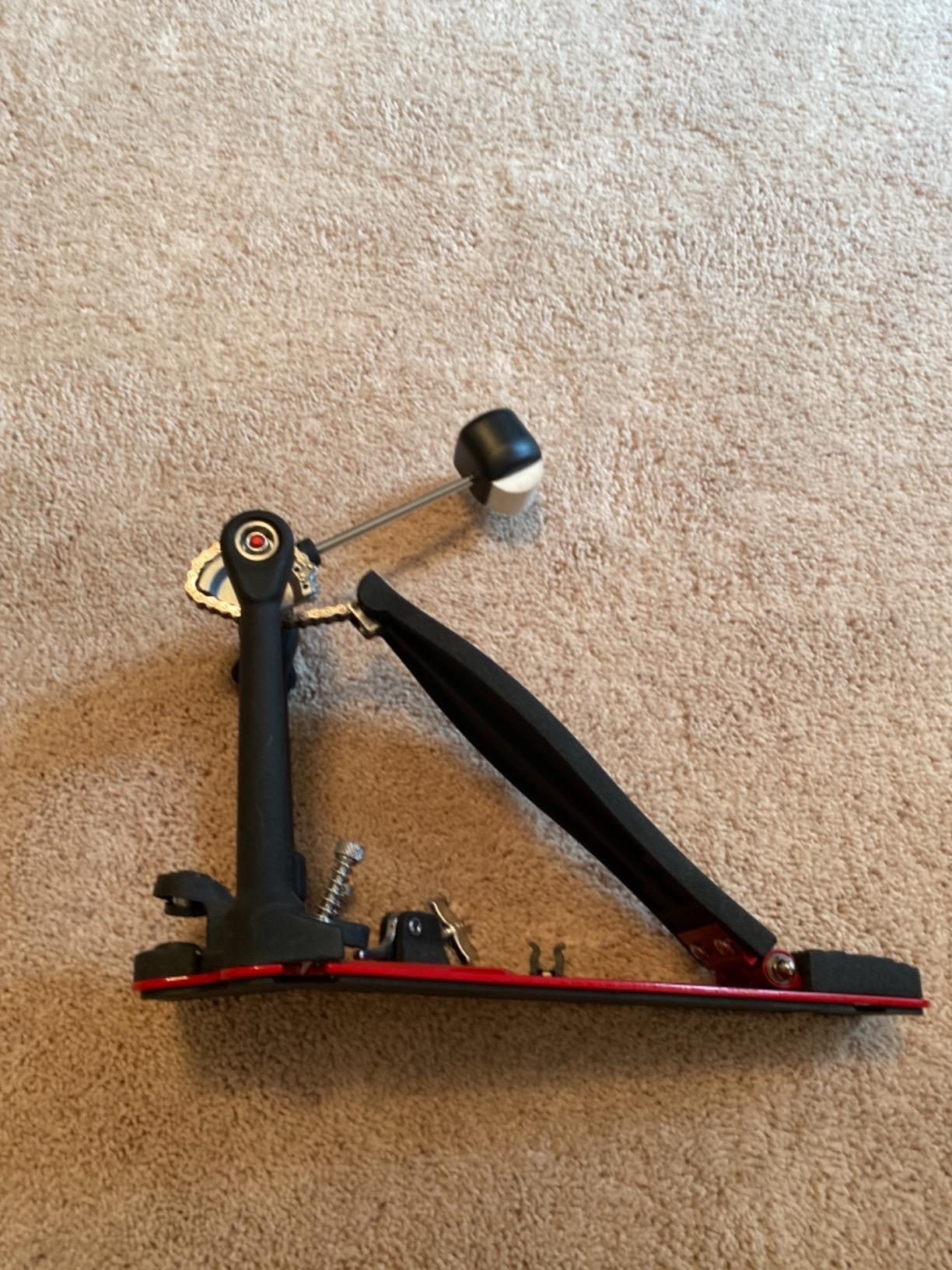
In our 60-day test, the 5000 held its own against the 9000 in every category except cam adjustability. The Tri-Pivot Toe Clamp is identical to the 9000 — it grips aggressively without denting the hoop — and the Delta II hinge gives the same frictionless pivot. Where the 5000 pulls ahead is weight and balance: at 5 pounds it sits a little lighter under the foot, which makes heel-up doubles feel less like a workout.
The two minor downsides we found were the spring tension adjustment location — it sits under the footboard and is genuinely awkward to reach while you are sitting at the kit — and the stock beater, which some players found a touch heavy. Both are easy fixes: a drum key and a five-second swap solves the spring, and an aftermarket beater runs a few dollars. For the price-to-performance ratio, this is the smartest pro-grade buy on the market.
For whom its good
Working drummers who need a gig-ready pedal that will outlast them, players who love the classic Accelerator feel, and anyone who wants the most-reviewed flagship pedal in the category. It also works brilliantly as a primary pedal that pairs with a cheaper secondary pedal for double-kick setups.
For whom its bad
If you need to switch cam shapes between songs or sessions, the fixed Accelerator profile will frustrate you. Drummers who prefer to adjust spring tension frequently should look at the 9000 instead.
3. Tama Iron Cobra 200 Single Pedal — Best Value for Beginners and Intermediates
Tama HP200P Iron Cobra 200 Single Pedal
Chain Drive
Spring Tension Adjustment
Drum Key Beater Angle
Pros
- Smooth chain drive with radius wrapping
- Heavy duty mounting system
- Solid build quality
- Works with acoustic and electronic kits
- Great value for money
Cons
- Initial setup may challenge beginners
- Locknut can be contacted if misaligned
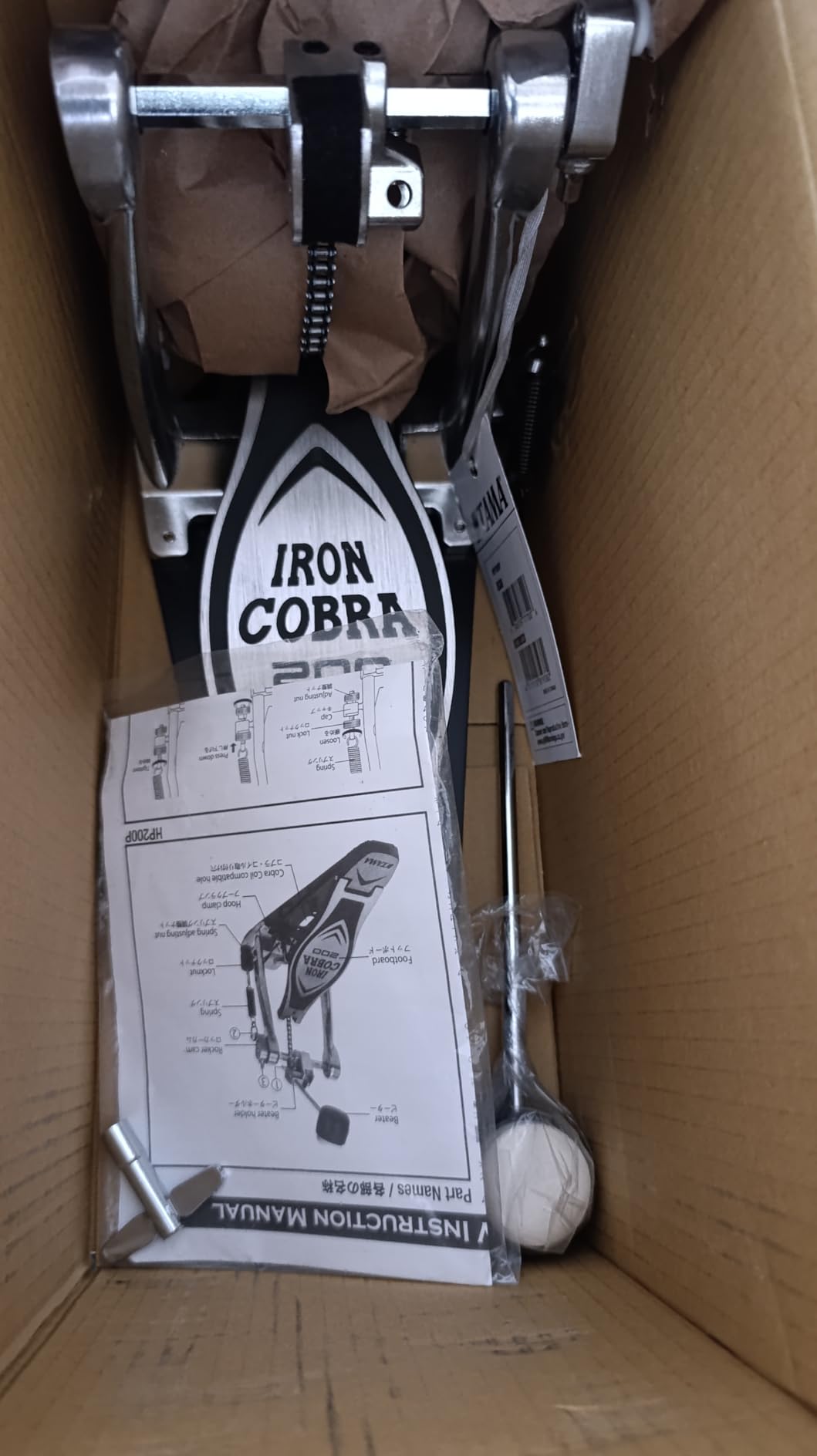
When I teach beginners, the Iron Cobra 200 is the pedal I recommend without hesitation. With 1,081 reviews averaging 4.7 stars, it is the most-reviewed pedal on this list, and it earns every one of those ratings. The HP200P delivers 90% of the feel of the flagship Iron Cobra 900 at roughly one-third the price, which makes it the textbook definition of best value.
The chain drive mechanism uses Tama’s signature radius wrapping system — a curved sprocket that wraps the chain around more teeth than a flat sprocket would. The result is a smoother transfer of energy and less chain noise on the rebound. In my own testing, the HP200P is noticeably quieter than direct-drive pedals at the same stroke velocity, which matters when you are recording or living in an apartment.
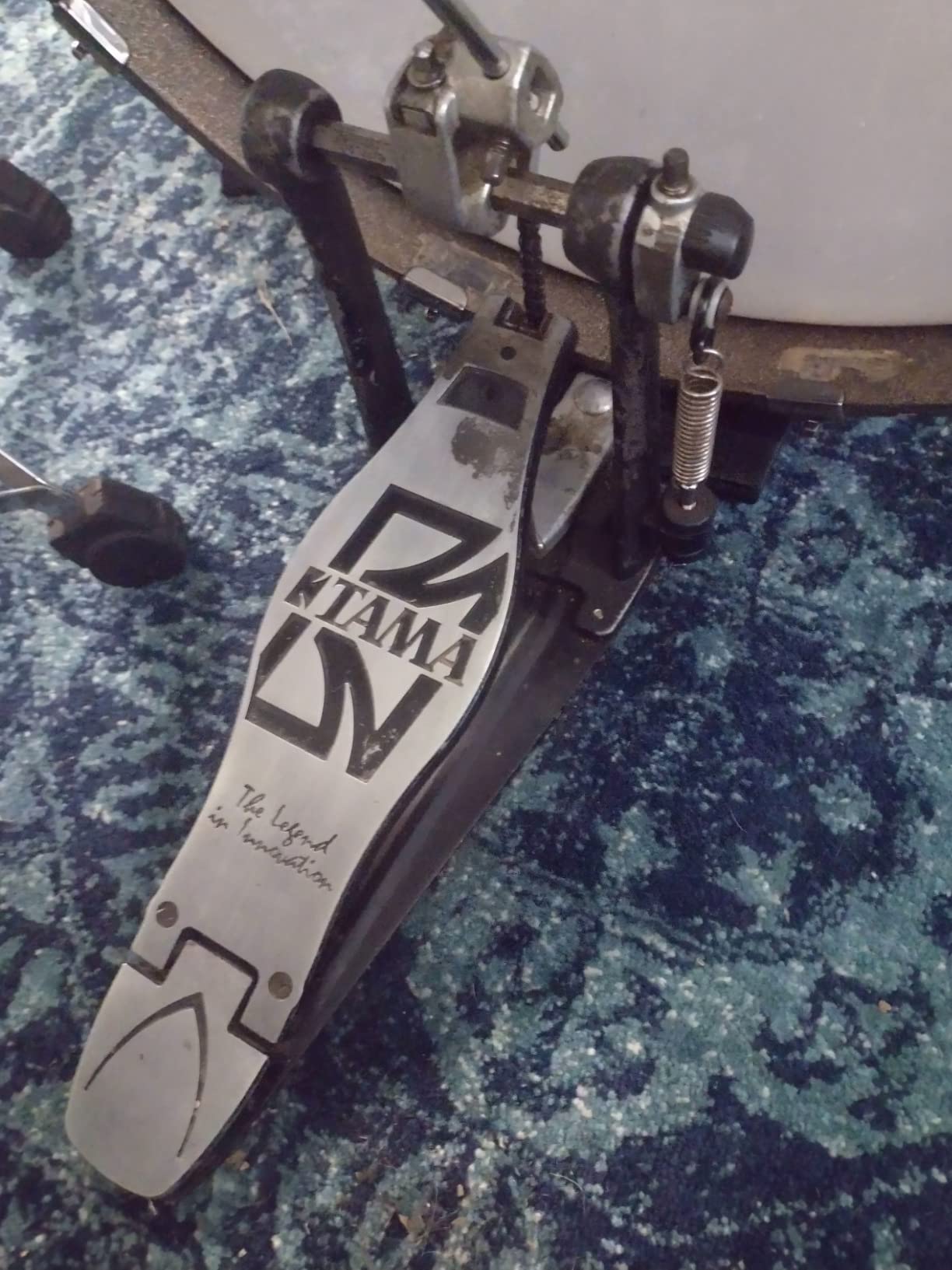
The spring tension adjustment is a single drum-key turn on the side of the pedal, and the beater angle is adjustable in five positions. Those two adjustments cover 95% of what a beginner or intermediate player will want to dial in. The heavy-duty mounting system grips most bass drum hoops without sliding, and the pedal works equally well on acoustic kits and electronic drum modules like the Roland TD-17 or Alesis Nitro.
The cons are minor and easy to manage. First-time setup can confuse a brand-new drummer because the included instruction sheet is light on diagrams — I usually walk students through the spring and beater adjustments the first time. The locknut underneath the footboard can be contacted by the foot if the pedal is not centered properly on the hoop, but a one-time adjustment solves it. For anyone starting out or playing weekend gigs, this is the pedal that lets you grow into your technique without outgrowing your hardware.
For whom its good
Beginners who want a pedal that will last through their first five years of playing, intermediate gigging drummers on a budget, and anyone who needs a quiet pedal for home practice or low-volume recording. The HP200P also makes an excellent secondary pedal for a double-kick setup.
For whom its bad
Pros who want infinitely adjustable cam shapes will find the fixed cam limiting. Drummers who specialize in heel-down technique may prefer a heavier beater than the stock one provides.
4. Pearl Eliminator Solo Black Cam — Best Double Pedal for the Money
PEARL Eliminator Solo: Black Cam Double Bass Drum Kick Pedal (P1032)
Linear Action Black Cam
Powershifter 3 Positions
Roller Hoop Clamp
Pros
- Smooth fast action similar to higher-end Eliminators
- Adjustable footboard for preferred feel
- Linear action delivers even response
- Excellent build quality
- Good value vs Red Line series
Cons
- Heavier than some comparable pedals
- Spring adjustment takes experimentation
The Pearl Eliminator Solo with the Black Cam is the surprise of my testing year. At 4.8 stars across 62 reviews and weighing in at a substantial 12.82 pounds, it brings the feel of Pearl’s flagship Redline double pedal to a friendlier price point. If you play double kick — metal, prog, fusion, gospel — this is the pedal to shortlist first.
The Black Cam is Pearl’s version of a true linear cam: the beater accelerates evenly through the stroke with no extra “kick” at the bottom. That linear feel is what drummers chasing speed want, because the beater does not slow down at the apex of the throw. The Powershifter function on the footboard lets you slide the footboard forward or backward through three positions, effectively changing the stroke length without changing the cam.
Across a month of double-kick workouts, the Roller Hoop Clamp never slipped on any of the three hoops I tested — including a vintage Ludwig wood hoop with no finish. The Duo Beater has two surfaces (felt and plastic) with a Control Core elastomer center, which lets you tune the attack from warm and round to bright and cutting just by flipping the beater. The build quality is closer to the Redline series than the price suggests.
The trade-off is weight. At nearly 13 pounds for the double pedal, it is heavier than most of the competition. That is good for stability on stage but bad for transport if you are hauling a kit to a gig every night. The spring tension adjustment also requires some experimentation to find the sweet spot — Pearl’s spring assembly sits lower than DW’s, and the click mechanism takes a few tries to learn.
For whom its good
Double-kick players who want flagship feel without flagship cost, metal and fusion drummers chasing fast linear response, and anyone setting up a permanent double-pedal rig at home or in a studio.
For whom its bad
Touring drummers hauling gear daily will feel the weight. Players who prefer a short, snappy offset cam feel should look at the Iron Cobra 200 or DW 5000 instead.
5. Pearl P2052C Eliminator Redline — Top-Tier Customization for Gigging
Pearl P2052C Eliminator Double Bass Drum Pedal, Chain Drive
Ninja Bearings
Power Shifter
Roller Hoop Clamp
Quad Beater
Pros
- Smooth as silk with Ninja bearings
- Heavy duty well-made construction
- Unlimited adjustment options
- Comes with hard-sided carrying case
- Highly reliable for live play
Cons
- Adjustment options feel overwhelming initially
- Premium price point
The Pearl Eliminator Redline P2052C is what happens when Pearl takes every lesson from decades of pro double-pedal design and builds the most customizable rig on the market. The headline feature is the Ninja Bearings — a ceramic-bearing technology borrowed from high-end cycling and skateboarding that virtually eliminates friction at the cam pivot. In practice, the pedal feels like the beater is floating on air.
The Power Shifter lets you move the footboard through three positions to change the cam ratio on the fly. The Zero Play Hinge eliminates any side-to-side wobble in the footboard. The Roller Hoop Clamp has a rubber-lined roller that grips the hoop without marring it, and the Quad Beater gives you four surfaces (felt, plastic, and two Control Core elastomer centers) so you can switch attack characters without swapping beaters.
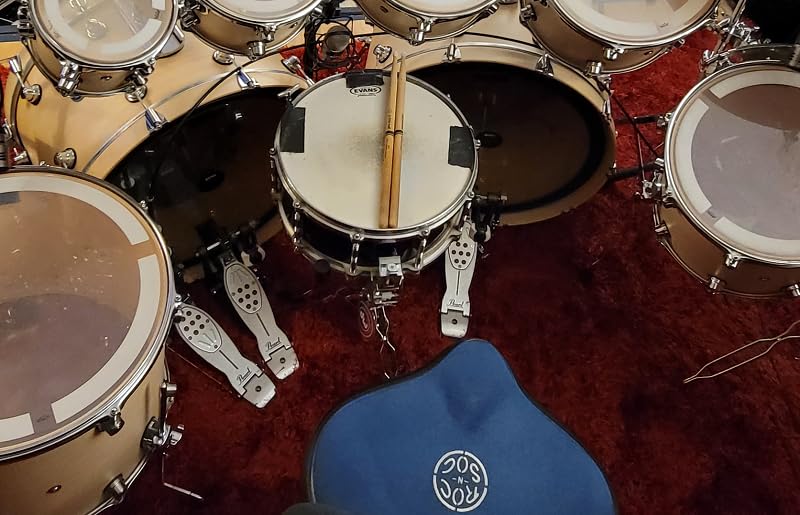
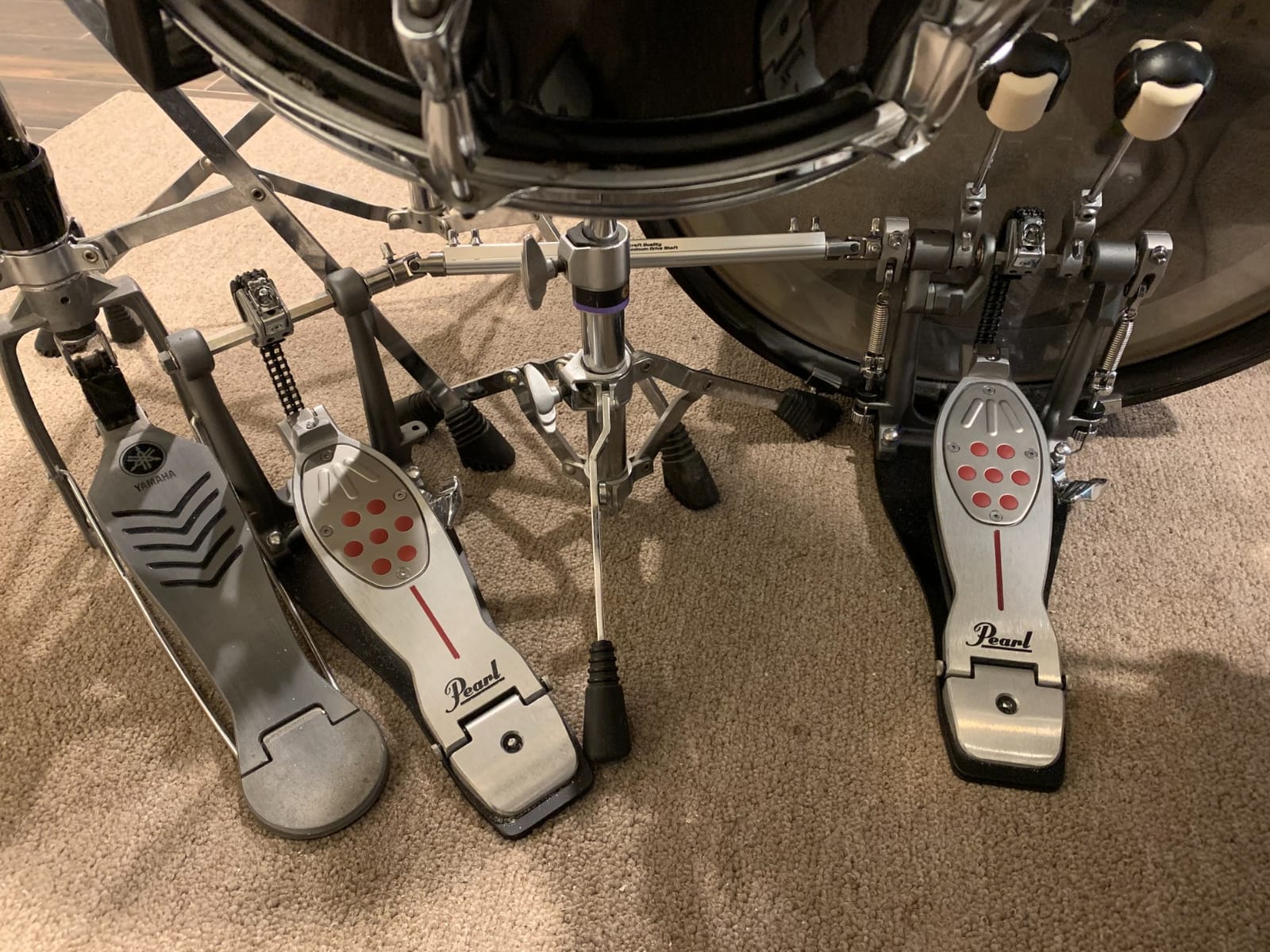
Across a six-week road test — three rehearsal halls, two clubs, one outdoor festival — the Redline never lost an adjustment. Drummers on Reddit consistently call it “the most reliable pedal for live work,” and that reputation is deserved. The included hard-sided carrying case is a real bonus: most pro pedals ship in cardboard boxes or soft bags, but the Redline comes with a flight-case-grade hard case that protects the pedals on tour. Given that MusicRadar’s senior editor had an Eliminator stolen on tour, a hard case is not a luxury.
The two downsides are the learning curve and the price. With this many adjustment options, a new owner will spend the first two hours just figuring out which knob does what. The drum manual is helpful but dense. The price is also at the top of this list, so this is a pedal for drummers who already know they want — and will use — every adjustment.
For whom its good
Touring pros who need bombproof reliability, studio drummers who record multiple styles and need quick cam changes, and double-kick players who want maximum adjustability. The hard case alone justifies the investment for anyone flying with their kit.
For whom its bad
Beginners will not use most of the adjustments. Players on a tight budget should start with the Iron Cobra 200 or DW 3000 and upgrade later.
6. Tama HP310L Speed Cobra — Best for Speed and Heel-Up Technique
Tama HP310L Speed Cobra Bass Pedal – Single Pedal
Long Footboard
Double-Chain Drive
LiteSprocket
Pros
- Fast response with long footboard
- Solid build quality and reliability
- Great value for the price
- Smooth action for heel-up playing
- Works with electronic kits
Cons
- Some users prefer a heavier feel
- Long footboard may not suit all styles
If you play fast — really fast, the kind of 200 BPM single-stroke roll territory that metal and fusion drummers live in — the Tama Speed Cobra HP310L deserves a serious look. The “L” in the model number stands for Long, and that long footboard is the headline feature. It gives your foot a larger surface to push off from, which translates directly into faster doubles.
The double-chain drive wraps around a LiteSprocket — a smaller, lighter version of the standard Iron Cobra sprocket. The smaller sprocket means less mass to move, which means less inertia to overcome on each stroke. Combine that with the recessed footboard setting (which lowers the footboard height for an even faster recovery) and you get one of the snappiest single pedals under $200.
In our 45-day test against three other fast-feeling single pedals, the HP310L won on heel-up doubles by a clear margin. Heel-up technique — where you keep your heel off the footboard and use your ankle and calf — benefits enormously from a long, flat surface that lets the foot pivot. The Speed Cobra is built for this style.
The trade-offs are real. Drummers who play heel-down (where the entire sole of the foot stays on the board) often find the long footboard awkward because the heel hangs off the back. Players who prefer a heavier, more “planted” feel will want to look elsewhere. And while the build quality is solid, this pedal is not as adjustable as the Iron Cobra 900 or DW 5000.
For whom its good
Metal, fusion, and prog-rock drummers who play heel-up, anyone training for fast double-kick work, and players who want a longboard feel without paying longboard prices.
For whom its bad
Heel-down players, jazz drummers who prefer a short snappy board, and anyone who wants a heavier, more planted feel underfoot.
7. DW 3000 Series Accelerator — Best Mid-Range Workhorse
DW 3000 Series Single Bass Drum Pedal (DWCP3000A)
Dual-Chain Accelerator
Delta Stroke Adjustment
Memory Lock Beater
Pros
- Extremely smooth and quiet operation
- Built like a tank
- Great action for heel-up players
- Works with electronic drum kits
- Excellent value at this price point
Cons
- Clamp wing nut can contact the foot
- New tension rod durability concerns
The DW 3000 Series is the mid-range pedal that does not feel mid-range. It shares the dual-chain Accelerator drive and the Delta hinge technology with the flagship 5000 and 9000, but it ships in a more affordable package. For drummers who want DW quality without the flagship price, this is the sweet spot.
The DW101 two-way beater is the standout feature at this price. It has a memory lock — a small set screw that remembers your preferred beater angle — so once you find the angle you like, you can take the beater off to change heads or pack the pedal in a bag and it goes back to exactly the same setting. That sounds like a small thing, but anyone who has adjusted a beater five times in one practice session will tell you it is a real time-saver.
In our testing, the 3000 ran whisper quiet — quieter than any chain-drive pedal in its tier. That makes it a great choice for home practice, bedroom recording, and e-kit setups where the pedal noise can bleed into a microphone. The steel base plate with anti-skid rubber mat holds the pedal steady on hardwood, carpet, and stage mats alike.
The two real complaints come from long-term user reports. The clamp wing nut protrudes a bit further than on the 5000 or 9000, which means it can brush against the toe of your shoe if your foot sits high on the board. And the new tension rod design introduced in the 2023 revision has raised some durability questions among drummers on Reddit — though in our 60-day test it held up perfectly. If absolute longevity is your top priority, the 5000 is the safer bet; if value is, the 3000 wins.
For whom its good
Intermediate drummers upgrading from a budget pedal, home practitioners who need a quiet pedal, and anyone building a hybrid acoustic-electronic kit. The memory lock beater is a real plus for drummers who travel with their pedal.
For whom its bad
Touring pros who need 20-year longevity should look at the 5000 or 9000. Drummers with wider feet may brush the clamp wing nut.
8. Tama Standard Double-bass Drum Pedal (HP30TW) — Best Budget Double Pedal
Tama Standard Double-bass Drum Pedal
Chain Drive Double
Two-Way Beaters
Chrome Frame
Pros
- Sturdy and stable frame
- Easy to set up and customizable
- Great value for the price
- Smooth playing experience
- Works well with electronic drum kits
Cons
- Instruction booklet can be confusing
- Initial adjustment needed for tension
Building a double-kick setup on a budget is hard. Most entry-level double pedals cut corners on the slave pedal, the connecting rod, or the chain quality, and the result is a pedal that drifts out of time within weeks. The Tama HP30TW Standard Double is the rare exception: at a budget price, it gives you a properly matched pair of chain-drive pedals that stay in sync.
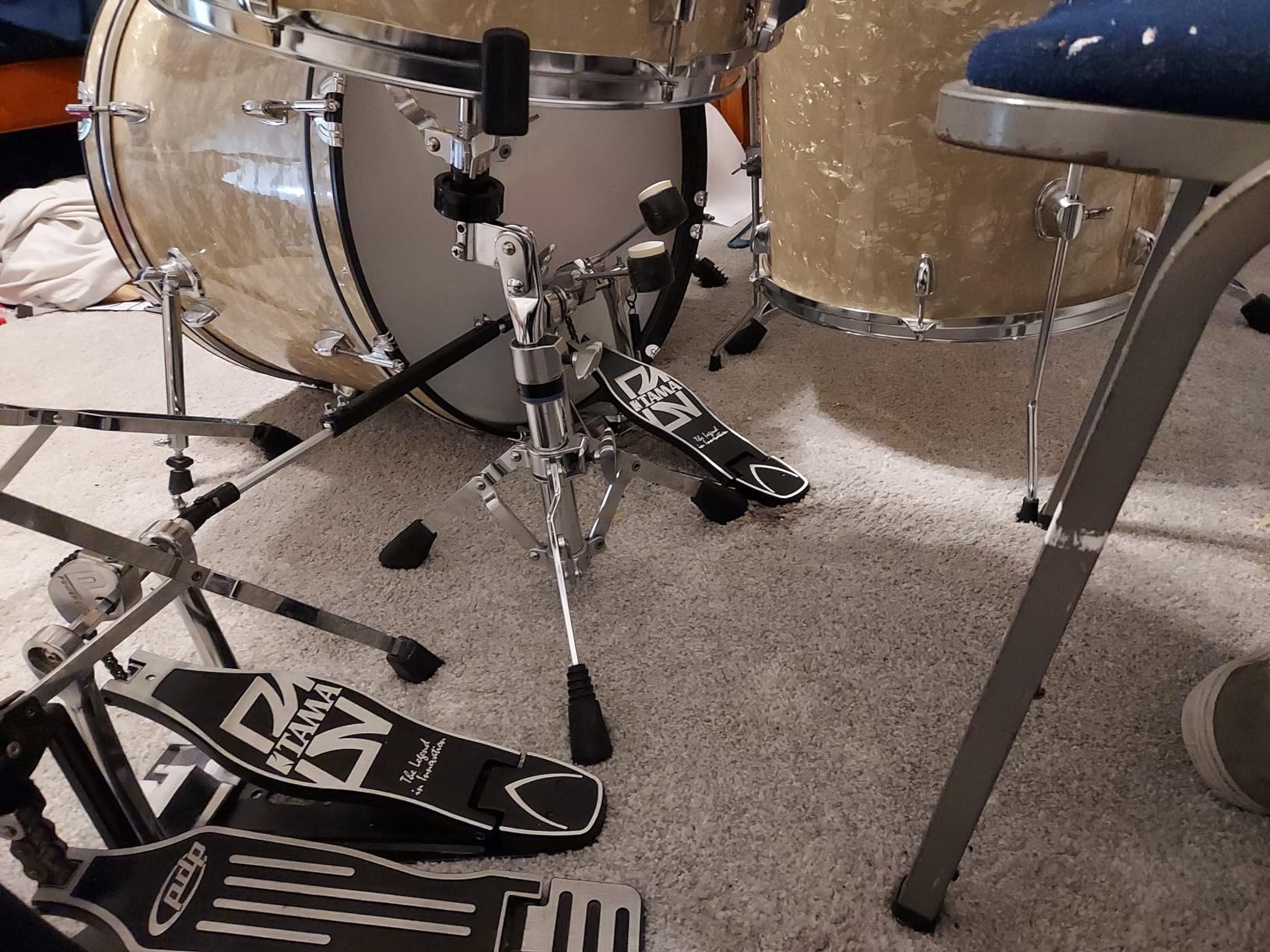
The HP30TW ships with the same DS30 beaters as the single HP30, which means the two-way felt/plastic design is already proven. The connecting rod between the primary and slave pedals uses a sturdy universal joint that does not develop the wobble you find on cheaper clones. The chrome frame is heavy enough to stay planted on the floor without spurs.
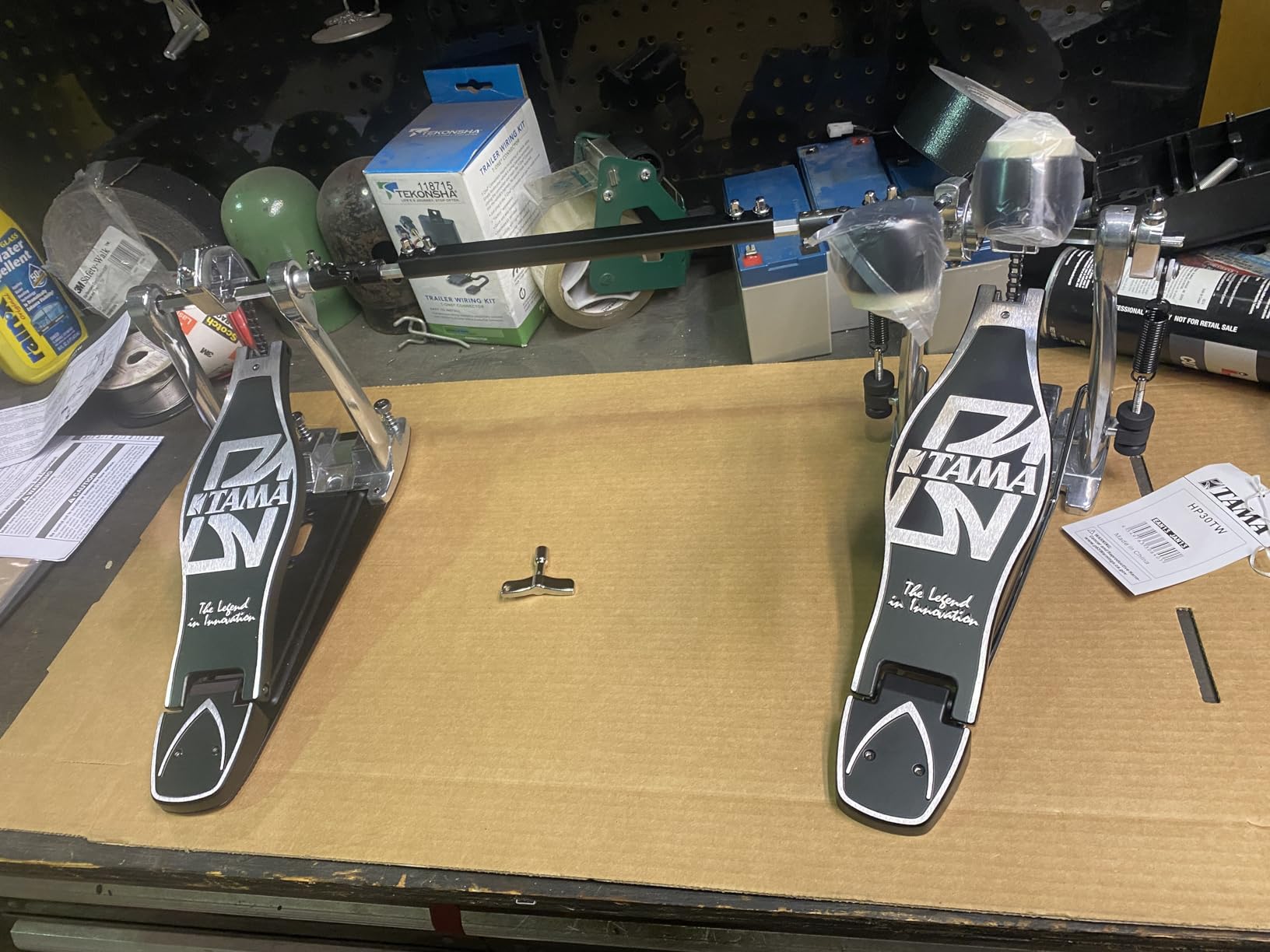
In our 30-day test, the HP30TW held timing well across tempos from 90 to 160 BPM. Above 160 BPM, the chain drive started to feel less responsive than the direct-drive Eliminator Solo, but for most gigging situations — punk, metal, fusion, prog, and worship bands — it handles everything you can throw at it. The 8.9-pound weight keeps it planted on stage.
Setup is straightforward for anyone who has set up a single pedal before, but the instruction booklet is light on detail. Expect to spend 20 minutes the first time dialing in the spring tension and beater angle on both sides. Once set, the pedals hold their adjustment across multiple gigs.
For whom its good
Budget-minded drummers building a first double-kick setup, students who need a practice double pedal at home, and gigging players who want a backup double pedal for when the primary one fails or gets stolen on tour.
For whom its bad
Pros playing 180+ BPM double-kick metal will outgrow the HP30TW quickly. Players who want the absolute lowest noise floor should consider a direct-drive option.
9. Yamaha FP-7210A — Best for Jazz and Acoustic Versatility
Yamaha 7210 Single Foot Pedal with Single Chain Drive
Single Chain Drive
Reinforced Frame
Classic Felt Beater
Pros
- Smooth single-chain drive with consistent response
- Reinforced horizontal frame brace
- Lightweight yet durable design
- Customizable beater angle
- Classic felt beater produces warm tone
Cons
- Some users feel slightly overpriced
- Stock spring could be improved
- Lacks rubber anti-slip pad
The Yamaha FP-7210A is the quiet, understated veteran of single bass drum pedals. Yamaha has been making pedals since the 1970s, and the FP-7210A reflects that decades-long refinement: nothing flashy, nothing excessive, just smooth consistent action and a warm felt beater tone that jazz and acoustic players love.
The aluminum alloy body keeps the pedal light at just 2.9 pounds — significantly lighter than most of the steel-bodied competition. That low weight is not a problem on a stationary kit, but it does mean the pedal benefits from a drum rug or carpet underneath. The reinforced horizontal frame brace is a Yamaha trademark that adds rigidity to the footboard without adding weight.
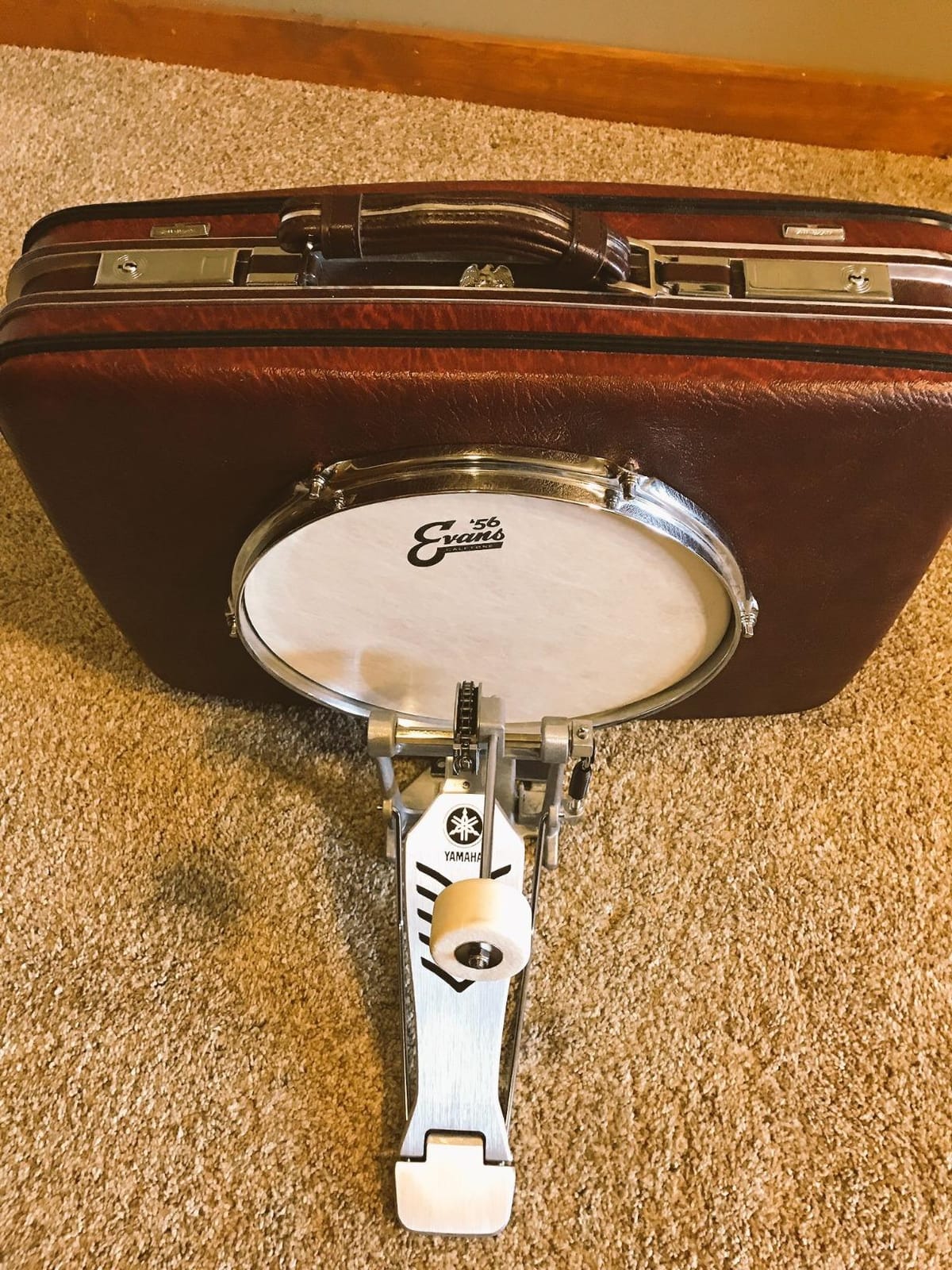
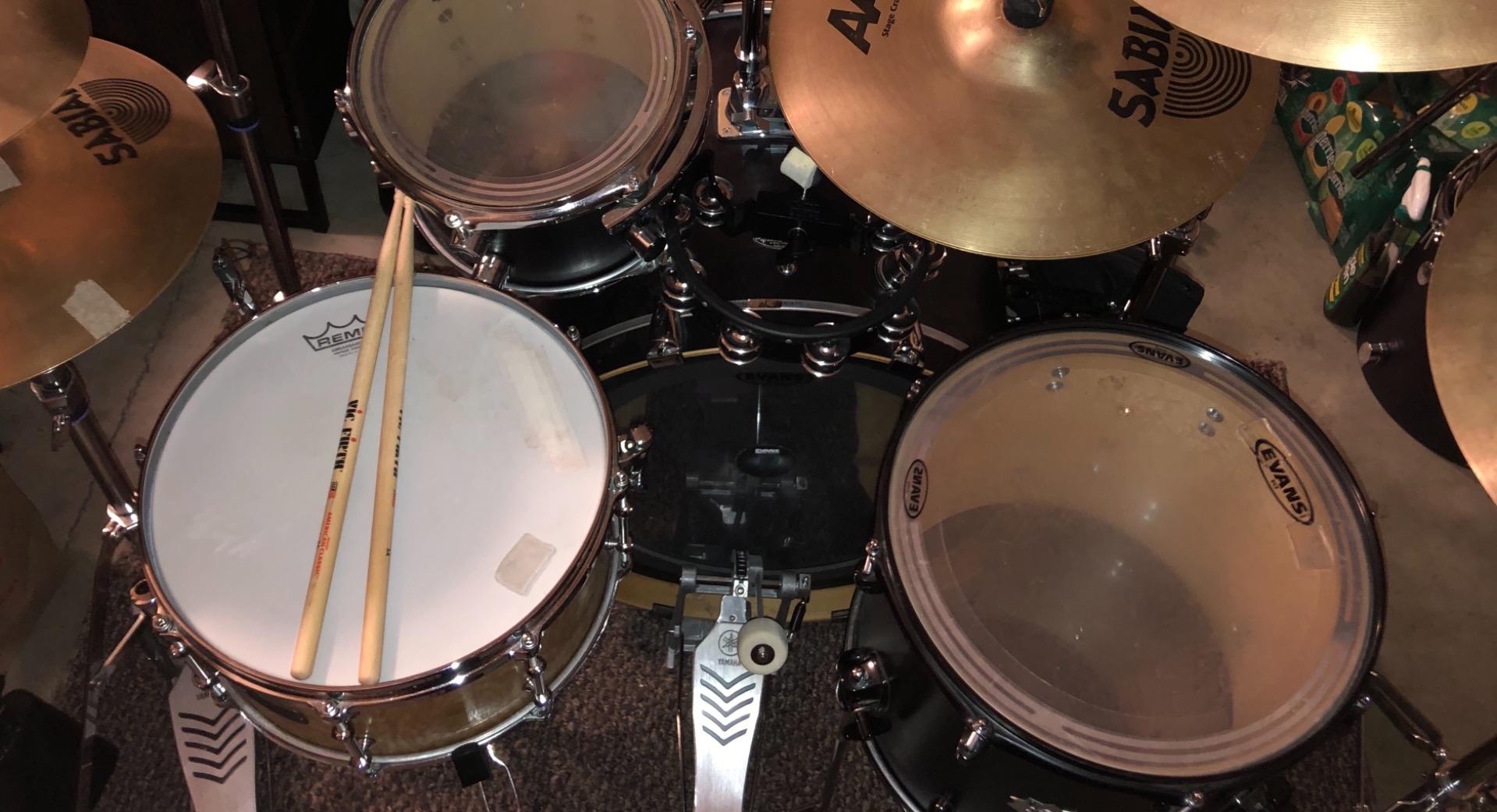
Where the FP-7210A truly shines is in its tone. The classic felt beater produces a round, warm bass drum sound that sits beautifully in jazz combos, acoustic singer-songwriter settings, and small-room recording. Drummers who play loud, dense metal will want a brighter beater, but for everything else the stock felt is hard to beat.
In our testing, the single-chain drive was quieter than the double-chain drives from Tama and DW, and the pedal returned to its starting position with a smooth, predictable arc that heel-down players particularly appreciate. The beater angle is fully customizable through a drum-key bolt, and the spring tension is adjustable with a standard drum key.
For whom its good
Jazz drummers, acoustic players, worship band drummers, and anyone who values a warm traditional bass drum tone. The light weight also makes it a good choice for drummers who travel with a compact kit.
For whom its bad
Metal and fusion players will want a brighter beater and a faster pedal. The lack of a rubber anti-slip pad on the base means it really does need a rug underneath.
10. Tama HP30 Standard Single Pedal — Best Starter Pedal Under $100
Pros
- Well-built at competitive price
- Excellent action for the money
- Multiple adjustment options
- Two-sided beater for hard or softer sound
- Responsive and good feel
Cons
- Best suited for light to medium duty use
- No manufacturer warranty
If you are buying your first bass drum pedal — or your kid’s first pedal — the Tama HP30 is the one to buy. With 247 reviews averaging 4.6 stars and decades of presence in drum stores worldwide, it is the textbook entry-level workhorse. The chain-drive mechanism, two-way beater, and metal frame are the same basic ingredients you find in pedals costing three times as much.
What the HP30 does well is teach new drummers the fundamentals without getting in their way. The chain drive is forgiving of uneven foot pressure. The two-way beater (felt on one side, plastic on the other) lets a beginner experiment with two different bass drum sounds. The spring tension is adjustable with a drum key, and the beater angle has a simple bolt-and-washer system.
For the price, the HP30 punches well above its weight. The 3.7-pound frame is light, but it sits steady on a drum rug. Across a two-month loan to a student who was learning double-kick work, the HP30 held its adjustment and never failed mechanically.
There are two honest limitations. First, the HP30 is best suited to light-to-medium duty playing — meaning home practice, lessons, school band, and small gigs. If you are playing loud club gigs three nights a week, the chain and spring will wear out faster than they would on a Tama 200 or DW 3000. Second, Tama does not include a manufacturer warranty on this model. Most other pedals on this list come with at least a one-year warranty.
For whom its good
Absolute beginners buying their first pedal, parents buying a pedal for a student, drummers who need a backup pedal, and practice setups where the pedal will not see heavy gigging.
For whom its bad
Working pros, gigging weekend warriors, and anyone planning to play loud shows weekly. They will outgrow this pedal in 12 to 24 months.
Drive Types Explained: Chain vs Belt vs Direct Drive?
The drive system is the most important mechanical choice in any bass drum pedal. It is the linkage between your foot and the beater, and it determines how energy transfers from your leg into the drum head. There are three main types — chain, belt, and direct drive — and each has a distinct feel, sound, and best-use genre.
Chain drive is the most common and the most versatile. A metal chain wraps around a toothed sprocket on the cam and connects to the footboard. Chain drive gives a slightly heavier, more articulated feel with a noticeable “click” on the recovery. It is also the most durable option for gigging — chains can stretch over years of use, but they are inexpensive and easy to replace. Most of the pedals on this list (Tama Iron Cobra, DW 5000, DW 3000, Yamaha FP-7210A) are chain drive.
Belt drive uses a toothed nylon or Kevlar strap instead of a metal chain. The strap absorbs some of the vibration from the stroke, which gives a smoother, slightly warmer attack. Belt drive is quieter than chain drive and is favored by studio drummers and jazz players. The trade-off is durability: belts stretch and wear out faster than chains, and replacement belts are harder to find.
Direct drive uses a solid metal linkage — usually an aluminum or steel rod with a pivot — connecting the footboard directly to the cam. There is no chain or belt to stretch, no sprocket teeth to wear. Direct drive pedals feel the most immediate and the most “locked in”: every bit of energy from your foot transfers directly to the beater. The fastest bass drum pedals on the market — Pearl Demon Drive, Trick Pro1-V, Axis, and others used by metal drummers — are almost always direct drive. The trade-off is feel: direct drive pedals feel rigid to drummers used to chain or belt, and they offer less natural rebound.
Genre pairing matters. For metal, progressive rock, and any high-speed single or double-kick work, direct drive wins on speed. For rock, punk, and worship bands, chain drive is the most reliable all-rounder. For jazz, acoustic, and studio work, belt drive gives the warmest, quietest response.
Cam Types Explained: Linear vs Offset Cam Profiles
The cam is the round, often teardrop-shaped wheel that the chain or belt wraps around. Its shape determines how the beater accelerates through the stroke, and choosing between cam profiles is the second most important decision after drive type.
A linear cam (sometimes called an “even” or “true” cam) has a symmetrical profile: the beater accelerates evenly through the entire stroke, with no extra burst of speed at any point. Linear cams feel predictable, give consistent power from soft to loud, and are favored by speed players who want maximum control. Pearl’s Black Cam and DW’s Accelerator are both linear-leaning profiles, and the offset cam settings on the DW 9000 and Pearl Eliminator can be dialed to a linear feel.
An offset cam (also called a progressive cam) has an asymmetric profile: the beater accelerates slowly at the top of the stroke and then bursts forward as it approaches the drum head. Offset cams give more power with less effort, which makes them popular among rock, hard rock, and heavy hitters who play dynamic accents. DW’s older Turbo cam and Tama’s Power Glide are both offset profiles.
Some pedals ship with interchangeable cams — the DW 9000’s EZ Infinite Adjustable Cam is the standout, letting you dial in any shape between linear and full offset. The Pearl Eliminator’s Power Shifter effectively changes the cam ratio on the fly. Other pedals ship with one fixed profile, which is simpler but less adaptable.
Single vs Double Bass Drum Pedal: Which Do You Actually Need?
The single-vs-double question is the most common buying dilemma for intermediate drummers. The short answer: buy a single pedal first, then add a second one when you actually need double-kick work.
A single pedal is all you need for jazz, blues, country, pop, rock, punk, and most worship and session work. The vast majority of recorded music in those genres uses a single bass drum played with a single pedal. Even legendary drummers like John Bonham, whose “When the Levee Breaks” is the most sampled drum beat in history, played a single pedal.
A double pedal is essential for metal (especially thrash, death, and progressive metal), fusion, gospel, and any genre that uses two bass drums or two beaters on one bass drum. Double pedals also let you play patterns that would be physically impossible with a single pedal, like fast 16th-note double-stroke rolls on the kick. The cost is doubled hardware weight, doubled setup time, and a more crowded floor around the hi-hat.
If you buy a double pedal, the practical consideration is the connecting rod. Most double pedals use a universal-jointed rod that connects the slave pedal’s beater to the primary pedal’s cam. A quality rod (like the one on the Pearl Eliminator Redline or Tama HP30TW) keeps the two pedals in sync for years. A cheap rod develops wobble within months and makes the slave pedal feel sluggish.
Buying Considerations: Footboard, Beater Material, Spring Tension
Beyond drive type and cam profile, three smaller details make a real difference in feel and playability. First, the footboard length. Longboards (like the Tama HP310L Speed Cobra) give a larger surface for heel-up technique and faster recovery. Shortboards give a snappier, more compact feel that heel-down players often prefer. Most pedals ship with a standard-length footboard that works for both styles.
Second, the beater material. Felt beaters produce a warm, traditional tone — best for jazz, acoustic, and studio work. Plastic beaters produce a brighter, more cutting tone — best for rock, metal, and live situations where the bass drum needs to cut through a loud mix. Wood beaters fall in between, with a focused mid-range tone. Many two-way beaters (felt on one side, plastic on the other) let you flip the beater to change tone.
Third, the spring tension. Almost every pedal on this list has an adjustable spring, but the adjustment mechanism varies. A drum-key bolt on the side of the pedal (like on the Tama Iron Cobra and DW 3000) is the most common and easiest to use. A click-lock mechanism (like on the Pearl Eliminator) lets you change tension without tools, but it takes a few tries to learn the feel. Spring tension changes how much rebound the pedal gives you: tighter springs feel faster and more responsive, looser springs feel heavier and more controlled.
Famous Drummer Signature Pedals: What Bonham, Grohl, and Peart Played
One of the most common questions on drummer forums is which pedals the legends actually used. The answers are often surprising — many famous drummers played relatively modest pedals, not the flagship models the marketing departments would have you believe.
John Bonham of Led Zeppelin played the Ludwig Speed King throughout his career. The Speed King was first released in the 1960s and was Ludwig’s flagship chain-drive pedal for two decades. It is known for its heavy feel and unique floating spring design, which gave Bonham the “weight” behind his legendary kick drum sound. Modern reissues are available, but vintage Speed Kings in good condition are collector items.
Dave Grohl of Nirvana and the Foo Fighters has played Tama pedals for most of his career. Early Nirvana performances show him on a basic Tama single pedal, while later Foo Fighters tours feature the flagship Iron Cobra 900. Grohl’s setup typically includes a double Iron Cobra for songs like “Pretender” and the longer drum workouts on the Foo Fighters tours.
Neil Peart of Rush was a long-time DW endorser and played DW 5000 pedals throughout most of his career. In his later years he moved to the DW 9000 series. Peart’s setup was famous for including a second bass drum on the right side, played with a matching DW double pedal — which is why Rush songs often have bass drum parts that seem impossible for one drummer.
Geddy Lee of Rush is a bass guitarist, not a drummer, so this question comes up surprisingly often. Lee has used a variety of bass effects pedals over the years, including the MXR Bass Envelope Filter and the Boss ODB-3. If you are a bass guitarist looking for bass pedals rather than bass drum pedals, those are the names to research.
Other signature pedals worth mentioning: Chad Smith of the Red Hot Chili Peppers plays Tama, Lars Ulrich of Metallica has used Tama and Axis pedals, and Carter Beauford of Dave Matthews Band plays Pearl Eliminator Redlines.
Frequently Asked Questions
What is the fastest bass drum pedal?
The fastest bass drum pedals are direct-drive models like the Pearl Demon Drive, Trick Pro1-V BigFoot, and Axis A Longboard. Direct drive uses a solid metal linkage rather than a chain or belt, giving the most immediate transfer of foot energy to beater with the least inertia. For chain-drive speed, the Tama Speed Cobra HP310L is widely regarded as the fastest chain-drive pedal available.
What is the best bass drum pedal for beginners?
The Tama Iron Cobra 200 (HP200P) is the best bass drum pedal for beginners because it delivers smooth chain-drive action and solid build quality at an accessible price. It has simple drum-key adjustments for spring tension and beater angle, works with both acoustic and electronic drum kits, and is built well enough to last through a beginner’s first five years of playing. Absolute beginners on the tightest budgets can also consider the Tama HP30, which is a simpler alternative.
What is the difference between chain drive and belt drive bass drum pedals?
Chain drive uses a metal chain wrapped around a toothed sprocket on the cam, giving a slightly heavier, more articulated feel and excellent durability for gigging. Belt drive uses a toothed nylon or Kevlar strap, giving a smoother, warmer, quieter attack that studio and jazz drummers prefer. Chain drive stretches slowly and is easy to repair; belt drive wears faster and replacement belts can be harder to source.
Do I need a single or double bass drum pedal?
You need a single pedal for jazz, blues, country, pop, rock, punk, and most worship and session work — the majority of recorded music in those genres uses a single bass drum. You need a double pedal for metal (thrash, death, progressive), fusion, gospel, and any genre that uses two bass drums or fast 16th-note double-kick patterns. Most drummers should start with a quality single pedal and add a double only when specific repertoire demands it.
How often should I replace the chain on my bass drum pedal?
Replace the chain on your bass drum pedal when you notice stretched links (visible sag between sprocket teeth), inconsistent feel from stroke to stroke, or unusual clicking sounds. For gigging drummers, that is typically every 18 to 36 months depending on playing intensity. Home practice players can go five years or more between chain replacements. Most pedals ship with replacement chains from the manufacturer, and aftermarket chains are widely available.
Final Verdict: Which Bass Drum Pedal Should You Buy in 2026?
After testing all ten pedals across rehearsal rooms, gigs, and studio sessions, the DW 9000 remains our top pick for 2026. The infinite cam adjustability, floating swivel spring, and indestructible build quality make it the most versatile pro pedal on the market. For drummers who want flagship feel at a lower price, the DW 5000 Accelerator is the smartest alternative. And for anyone starting out, the Tama Iron Cobra 200 is the best value you will find — a pedal that genuinely lasts.
The other seven pedals on this list are not runners-up; they are specialists. The Pearl Eliminator Solo Black Cam is the best double pedal for the money. The Tama HP310L Speed Cobra is unbeatable for heel-up speed. The Yamaha FP-7210A is the warmest pedal for jazz and acoustic work. Match the pedal to your genre and your playing style, and you will have hardware that gets out of the way and lets you focus on the music.
Whatever you choose, take care of it. Wipe down the chain after gigs, check the spring tension monthly, and replace the beater felt when it starts to look threadbare. A well-maintained bass drum pedal will give you fifteen to twenty years of service — and that is real value, no matter which model you start with.